Category Archives: John James Audubon

What’s in a name? Many American birds will get renamed by AOS

Photo by Veronika Andrews from Pixabay • Anna’s hummingbird, a species of hummingbird native to the coastal regions of western North America, is named after a 19th-century duchess. The bird, as well as almost 80 other species, will be renamed by the American Ornithological Society in the future.

What’s in a name? To paraphrase the Bard, a bird’s tweet would still sound as sweet, regardless of the name of the bird.

That theory’s about to get tested. The American Ornithological Society has decided to rename about 80 species of birds named for people. The birds, which can be found in the United States and Canada, range from songbirds to shorebirds, as well as woodpeckers and jays.

The best I can determine after some research is that the new names for some of our birds will be based on appearance or habitat preferences. I’d be more optimistic if it wasn’t the AOS that gave us the boring name of Eastern towhee and took away the accurate and descriptive name of rufous-sided towhee for a familiar backyard bird.

The towhee was renamed in 1995. Some of my birding friends have long memories, because I still hear people refer to this bird as “rufous-sided towhee.”

Photo by Bryan Stevens • A male Eastern towhee forages in the grass beneath a feeder.

I’m sure I will miss some of the former names. I’ll be waiting to see what name is given to Anna’s hummingbird, a species named for Anna Masséna, Duchess of Rivoli. As far as I can determine, the duchess had no particular strikes against her character. A French princess, the duchess was married to amateur ornithologist Prince Victor Masséna, the owner of an impressive collection of bird specimens.

Even royalty needs its hobbies, and birding’s certainly a worthy pursuit in my eyes. I do think the trivia associated with birds named for people can make interesting reading. For example, the duchess served as the Mistress of Robes for the Empress Eugénie, wife of Napoleon III.

Be careful what you find when doing online research. I found one article claiming that the duchess met John James Audubon, the famous American naturalist and painter, in Paris in 1882.

If true, it would have been quite the feat as Audubon died in 1857 in New York.

Then there’s Nuttall’s woodpecker. As explained on the website All About Birds, William Gambel named the small black-and-white woodpecker after Thomas Nuttall, an English botanist and ornithologist, back in 1843.

Photo by Bryan Stevens • The Wilson’s snipe is one of many birds likely to be renamed in the near future.

Nuttall was perhaps better known as a botanist, according to All About Birds, but he also published an early field guide on birds titled “A Manual of the Ornithology of the United States and Canada.”

All About Birds also notes that Nuttall’s book and his passion for nature also inspired the formation of the first organization in North America dedicated to birds in 1873, the Nuttall Ornithological Club.

It seems a shame to me to remove the woodpecker’s name when it honors such a relevant figure in the early history of birding.

Even birds — Clark’s nutcracker and Lewis’s woodpecker — named for the famed Meriwether Lewis and William Clark of the historic Lewis and Clark Expedition will likely lose their long-standing names.

Gambel’s quail also faces renaming. This small desert quail is named for William Gambel, an American naturalist, ornithologist and botanist from Philadelphia. As a young man Gambel worked closely with the renowned naturalist Thomas Nuttall, basically becoming an apprentice to the older man.

Photo by AZArtist from Pixabay • Gambel’s quail is named after William Gambel, an American naturalist, ornithologist and botanist from Philadelphia.

At the age of 18, Gambel traveled to California, becoming the first botanist to collect specimens in Santa Fe, New Mexico, as well as many parts of California. In late 1838, Gambel and Nuttall traveled together on a collecting trip to the Carolinas and the southern Appalachians.

Gambel accomplished a lot in his short lifespan. He tried unsuccessfully to establish a medial practice in Philadelphia and decided, like many Americans, to head west. Shortly after reaching California, he tried to help miners afflicted with typhoid at a camp along the Yuba River. He became sick himself and died Dec. 13, 1849, at age 26.

Animals named in the young man’s honor include Gambel’s quail and Gambelia, a genus of lizards. Also in 1848, a genus of flowering plants, Gambelia, native to California and Mexico, was named after him.

I feel that Shakespeare had it right. The names may change, but the stories of the birds and their namesakes will still be there for anyone who wants to do a little digging.

Some of the stories you might uncover make for interesting reading.

•••

Email Bryan Stevens at ahoodedwarbler@aol.com to share a bird sighting, ask a question or make a comment.

Bird of mystery, black rail famed for eluding birders

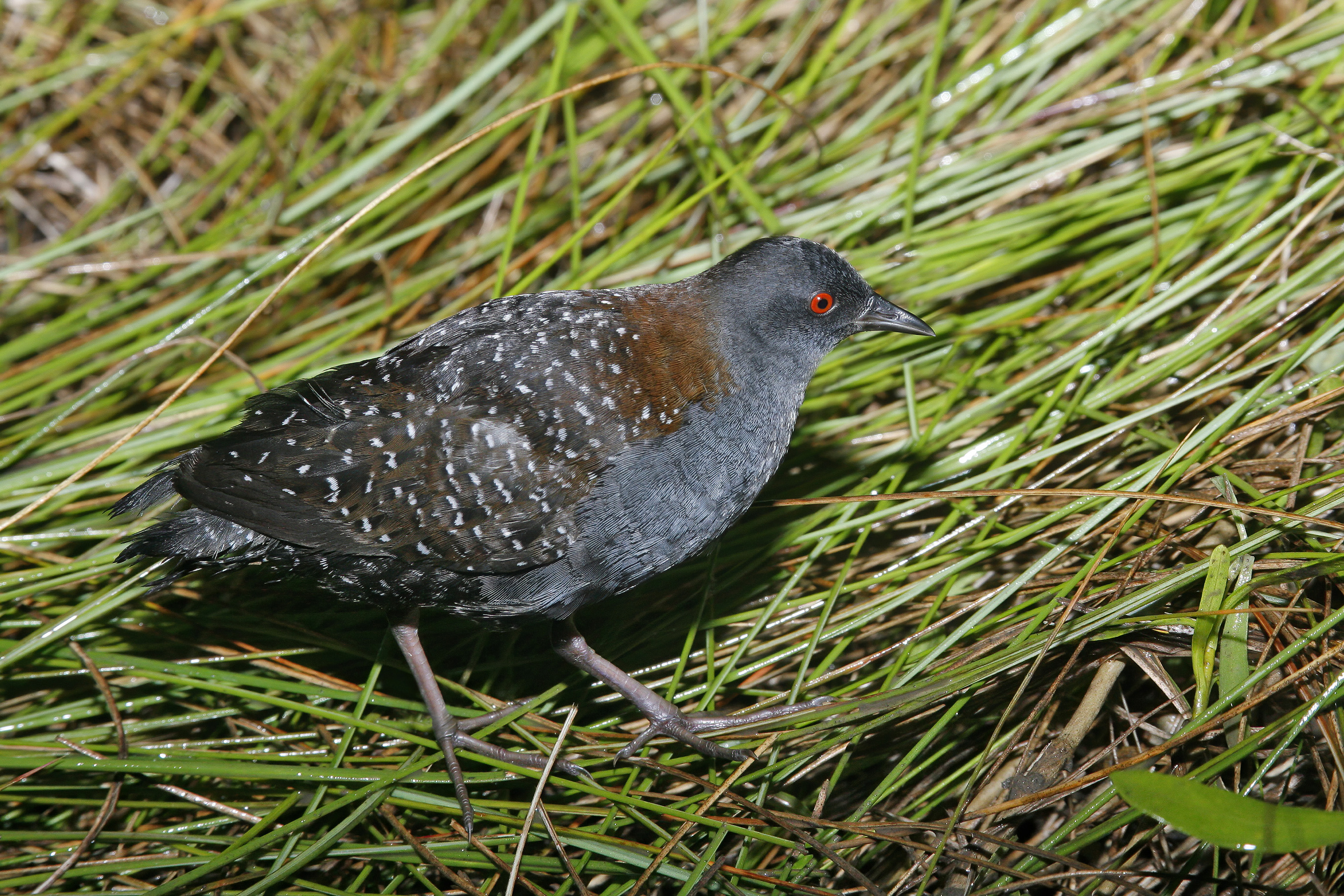
Photo by AGAMA/Adobe Stock • Adult male black rail (Laterallus jamaicensis) standing in a swamp during the night in Brazoria County, Texas. The black rail is a  secretive, rarely seen bird of wetlands and marshes. Much smaller than other members of the rail family, the bird doesn’t offer even determined birders any easy observations.

On Wednesday morning, Oct. 13, I fetched my mom’s newspaper before heading to work. Scanning the front page headlines while walking back from the mailbox, I missed a tiny bird.

The bird flushed into a panicked flight at the last possible second from right under my feet. At a glance, I knew at once that I’d seen something incredibly different. I can only describe the bird as a black, somewhat pear-shaped bird, perhaps a little larger than a typical sparrow, with a less than elegant flight that took it a couple of feet into a stand of cattails and other wet-loving vegetation.

Then, just like that, the bird was gone. After that brief encounter, which may have lasted at best a second or two, the bird vanished. With sparrows or warblers, an observer can squeak some notes to persuade a curious bird to come back into sight. I tried and got no response.

Of course, I didn’t think I’d seen a warbler or a sparrow. In an instant, perhaps one of the most significant bird sightings I’ve ever had at my home was concluded but hardly resolved.

I remained standing, staring, trying to determine what I’d just seen. I had an idea, but it was almost too unexpected and too unsupported to entertain. I won’t be adding it to my life list of birds seen, but I am fairly confident that I saw a black rail, one of the tiniest representatives in a family of birds that also include sora rail, Virginia rail, clapper rail and king rail.

When I describe the bird as tiny, it’s not an exaggeration. Adults are bigger than most sparrows but smaller than an American robin. They are gray-black birds speckled with white on the back. They have a black crown and chestnut patch evident on the back of the neck. The bill is black.The legs range from pink to wine-colored. The most striking feature of this bird, if observed under favorable conditions, is its bright red eyes.

Many birders have probably enjoyed a flight of fancy while imagining a beady pair of red eyes staring back at them from dense marsh vegetation. The black rail is so difficult to observe that it has become a sort of feathered “holy grail” for birders. I was certainly not expecting the possibility of my path crossing with this tiny wanderer.

The black rail has not been extensively studied by scientists, which means much about this elusive bird of marshes and wetland is poorly understood. There are different reasons behind the mysteries surrounding the bird.

For instance, although it does vocalize, black rails call mostly after dark. Not many people go wandering through marshes at night, so black rails largely go unheard.

In addition, when these small birds perceive a threat, they prefer running through dense vegetation instead of taking flight. Some black rails in northern areas are migratory, so these birds are capable of sustained flight. They simply don’t like to fly unless circumstances dictate flight upon them. They’d prefer to scurry through wetland, much like a small rodent. They are even known to take advantage of trails blazoned through marshes by mice and other small rodents.

A few aspects of my observation work in favor of the bird being a black rail. I’ve seen other rails — sora, Virginia rail and clapper rail — on multiple occasions. Virginia rail and clapper rail can be ruled out. They’re too large and too different in appearance to be mistaken for a black rail. The sora bears a certain similarity to a black rail, but it is mostly brown and gray with a yellow bill. It’s also larger than a black rail.

Once the black rail’s close kin are eliminated, there aren’t any other likely suspects that might be confused with it. It’s frustrating. I will likely always refer to this sighing as “the bird that looked a lot like a black rail.” My hesitation stems partly from the simple fact that so many birders are unable to ever get a look at this bird. Why should I have had better luck, even if only for a split second?

Incidentally, two of my best rail sighings have taken place in Erwin.

Back in 2000, I observed a Virginia rail stepping delicately and deliberately though some cattails and other vegetation on the fringes of the wetland area adjacent to the large pond at Erwin Fishery Park. I watched the bird move carefully and deliberately through the vegetation. It was only for a moment or two, but it was of longer duration than my recent “blink-and-you-missed-it” observation of the black rail in my driveway.

My best observation of a sora took place in the spring a few years ago during a visit to the boardwalk over the wetlands near the industrial park in Erwin. The boardwalk is part of the extended linear trail in town. I was birding that day with Margaret Roy, the former manager of Mountain Inn & Suites of Erwin.

Margaret wanted to learn more about birds, and we really got lucky when we found such an uncommon bird only minutes after we stepped onto the boardwalk. It was as simple as looking down on the mudflats and noticing an odd, plump bird walking without concern beneath us. From our elevated viewing platform, we got excellent looks through binoculars and I took some photos.

Early naturalists, even without benefit of binoculars, were aware of the black rail. John James Audubon, the famous painter and naturalist, painted a black rail and its chick. Audubon referred to the elusive denizen of wetlands depicted in his painting as the “least water-rail.” Others have called the bird by such names as “least water-hen,” “little black rail” and “black crake.” In some parts of the world, rails are referred to as crakes, but they are basically all the same type of bird.

According to the website, All About Birds, black rails have been eliminated from many saltwater tidal habitats. The website even encourages people to listen for black rails in spring in freshwater wetlands. Although they favor tidal habitats on the coast, black rails will nest in a variety of wet meadows, marshy edges, and even along creeks and rivers. Some event attempt to nest around farm ponds or fields of hay with standing water.

Black rails are scarce, but they do range throughout the United States and Canada. The two states with the most black rails are Florida and California. Unfortunately, those two states feature habitats under siege from human encroachment.

Because of their small size, black rails are limited water that is more shallow than used by most rails. They feed on seeds, insects, crustaceans and mollusks. In 2015, the black rail was confirmed as a nesting species in South Carolina after long being classified as a non-breeding migrant to the state.

High tides that force these birds from their dense cover make them vulnerable to predators ranging from herons and hawks to foxes and cats.

Rails belong to the family of birds known as Rallidae, which includes not only crakes and rails, but coots and gallinules, too. The entire family consists of about 150 species, including bird with such descriptive names as grey-throated rail, ash-throated crake, snoring rail, invisible rail, chestnut rail and striped crake. Many species of rails, particularly those that evolved on isolated islands, have become flightless.

There’s a saying that lightning never strikes twice. I’m hoping the saying is wrong. I’ve learned a lot about this fascinating bird while researching the topic of black rails after my all-too-brief sighting. I’d very much like to get a more satisfying look at a black rail some day.

Fingers crossed.


Birds made news headlines in 2019

Photo by Public Domain Photos/Pixabay.com • California condors have gradually returned to parts of their range beyond California. A family of condors now resides in Zion National Park, marking a return of these birds to Utah.


Birds made headlines in 2019. Some species, having been presumed extinct, were rediscovered — some in the mostly unlikely of places. One of the major bird-related stories of the year involved a stark warning about a sharp decline in overall bird numbers. Below, in no particular order, are some of last year’s top stories about our fine feathered friends.

69 years old and a mother again

The Laysan albatross known as Wisdom and her mate, Akeakamai, became parents again in 2010. Wisdom is at least 69 years old and ranks as the world’s oldest known banded wild bird. Her mate’s name, by the way, translates as “lover of wisdom.” The chick hatched in February at Midway Atoll National Wildlife Refuge and Battle of Midway National Memorial. Wisdom has raised more than 30 chicks in her lifetime. While Laysan albatrosses are not considered endangered, some of their kin are threatened with extinction.

Photo by J. Klavitter/USFWS • Wisdom, one of Midway Atoll’s oldest residents, became a mother again in 2019. The female Laysan albatross is approaching her 70th birthday.

While walking to church

The year started with some good birding news when a bird thought extinct was rediscovered in a suburb of Medellín, Colombia, on Jan. 7, 2019. Rodolfo Correa Peña was headed to a church service when he spotted an odd bird in a garden. The bird turned out to be an Antioquia brushfinch, a bird known previously only from museum specimens. Peña, an engineering student with an interest in birding, knew the local brushfinches and recognized that the bird was different. He secured photos of the bird and stunned the scientific community with the rediscovery of a bird presumed extinct.

Photo by U.S. Fish & Wildlife Service • Endangered California condors receives some good news in 2019..

Condors soaring high

California condors continue to delight with their success stories, even extending their range beyond California. Estimates indicate that 300 condors exist in the wild with about 200 more birds in captivity for use with breeding programs. Evidence that the work to preserve the species is working was provided this year in Utah’s Zion National Park, which became home to a condor named “1K” because it is the 1,000th chick hatched as part of an extensive condor restoration program. The chick hatched in May and took a rather clumsy first flight in September. The chick represents the first condor born within Zion National Park in more than a century. In 1987, when the condor population totaled only 27 known condors, wildlife officials captured the surviving wild birds and made them part of an existing captive breeding program. In 1992, the condor recovery program started to release the birds back into the wild. There are now more condors flying free in the wild than are maintained in captivity.

Photo by Bryan Stevens
A large flock of Great Egrets flies over the Watauga River in Elizabethton. There is mounting evidence that many bird populations are on the decline.

Fewer birds?

Bird enthusiasts were shaken by the publication in September of an article warning that the number of birds in the United States and Canada has fallen by 29 percent since 1970. The analysis, published in the journal “Science,” is an extensive attempt to determine what is happening to avian populations. The results shocked — there are 2.9 billion fewer birds taking wing now than there were 50 years ago.

A painting of an Ivory-billed Woodpecker by Mark Catesby, an English naturalist.

Hope

Yet, in words penned by poet Emily Dickinson, “Hope is the thing with feathers.” Birds are among the most resilient lifeforms on the planet. If humans can get out of the way and quit making life more difficult for the feathered inhabitants of the planet, birds are more than capable of rebounding. The federal government needs to maintain safeguards and regulations that are in place to protect birds while ordinary people must alter their ways by shunning pesticides, preserving a variety of habitats and simply giving more regard to the fellow creatures they share the Earth with. If we can do these things, the birds will be fine. Don’t take my word for it. Look at the examples of Wisdom the Laysan albatross and a California condor known as “1K.”

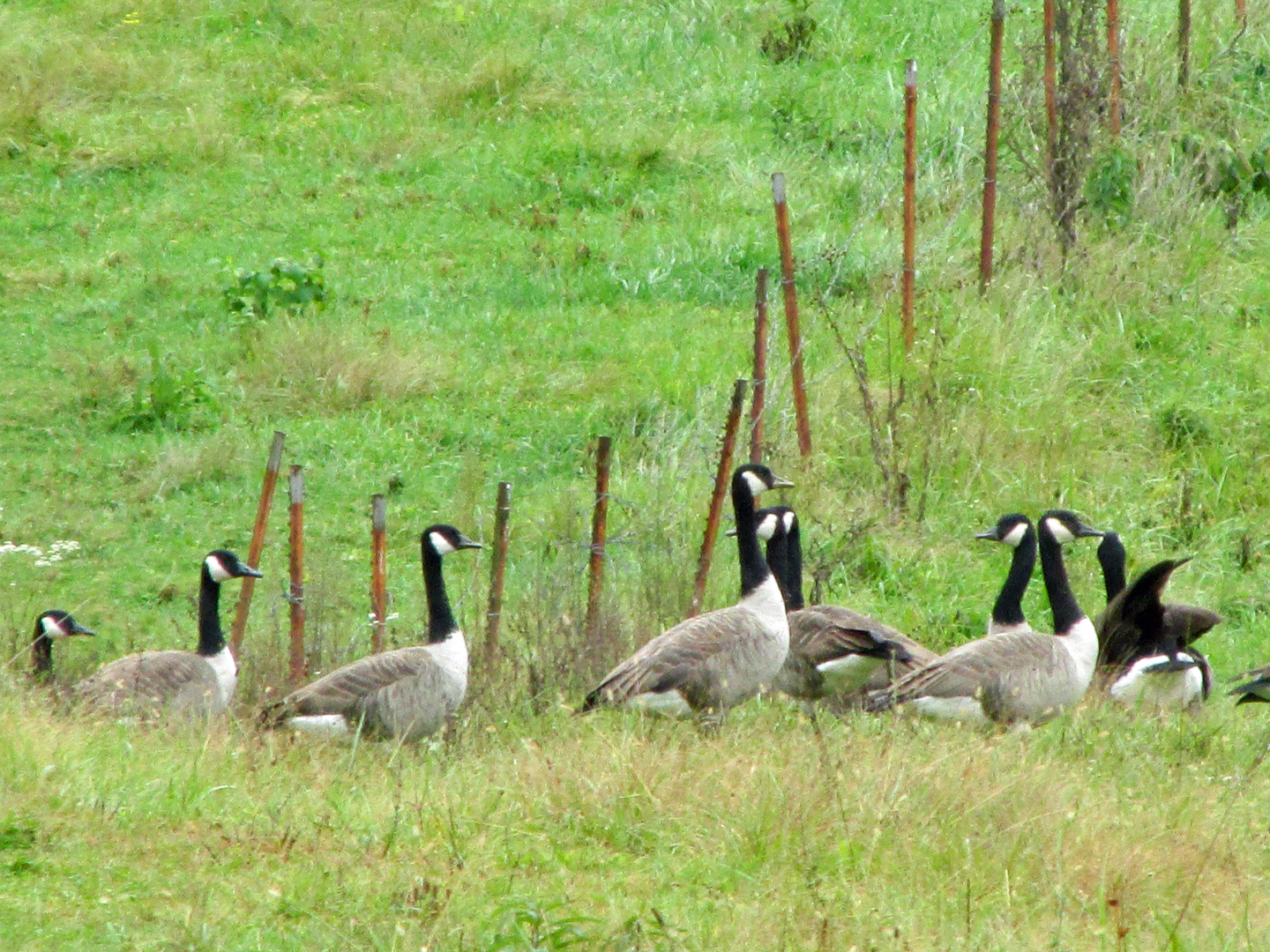
Photo by Bryan Stevens • Canada geese forage in a field in Unicoi County, Tennessee.

Despite its dark and misunderstood reputation, American crow one of nation’s success stories

Photo by Peter Pearsall/USFWS • American crows — large, intelligent, all-black birds with hoarse, cawing voices — are familiar over much of the continent. Crows are common sights in treetops, fields and roadsides and in habitats ranging from open woods and empty beaches to town centers.

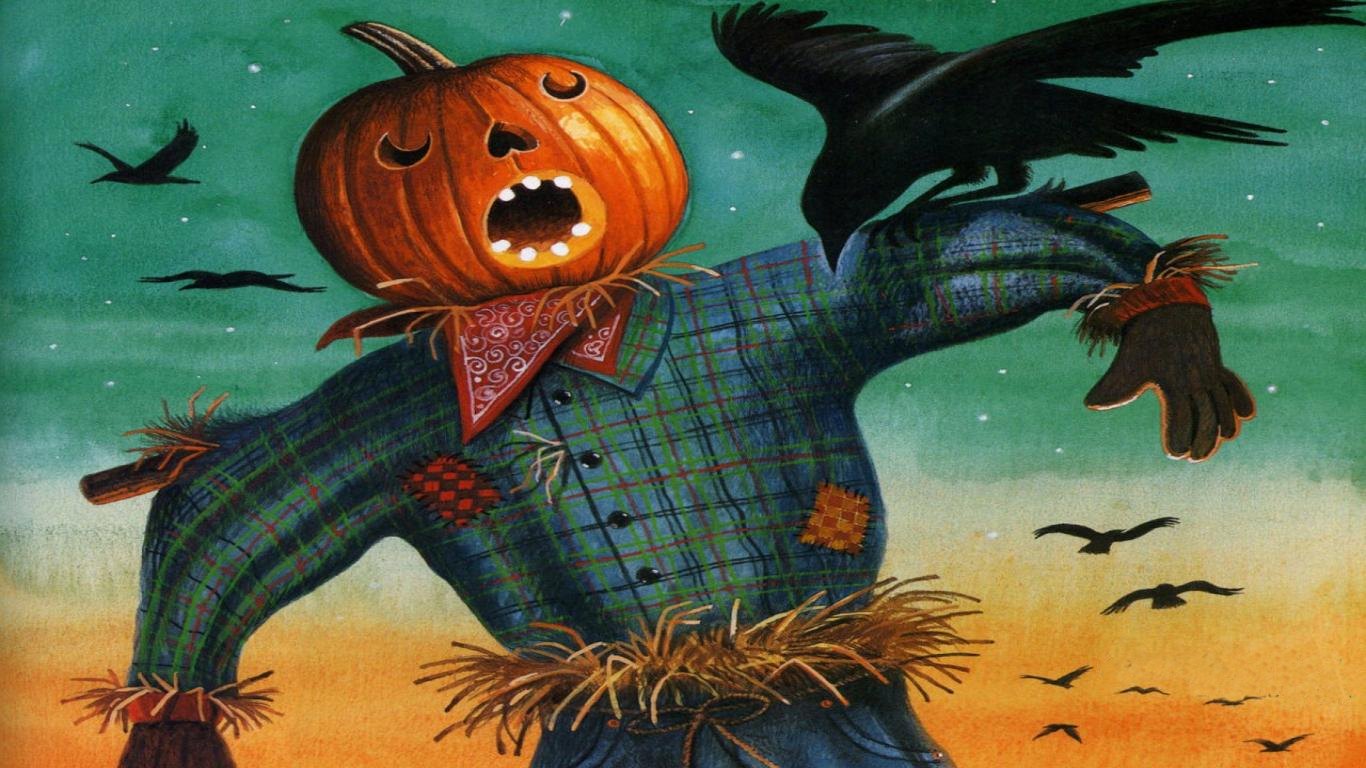
While seeking birds far afield, I have occasionally spotted some innovative scarecrows standing sentry in gardens and agricultural fields. I’m not sure if anyone still erects these human effigies for their original purpose of warding off crows and other feathered agricultural pests. These days, scarecrows likely serve an ornamental purpose and are often part of a yard’s whimsical Halloween or autumn decorations.

Regardless of the intention behind them, scarecrows have never been effective at driving crows away from human fields and crops. To put it simply, crows are too smart to get spooked by the human invention of the scarecrow. The bird with one of the smartest brains among all birds is more than a match for the brainless friend of Dorothy standing vigil in the proverbial cornfield.

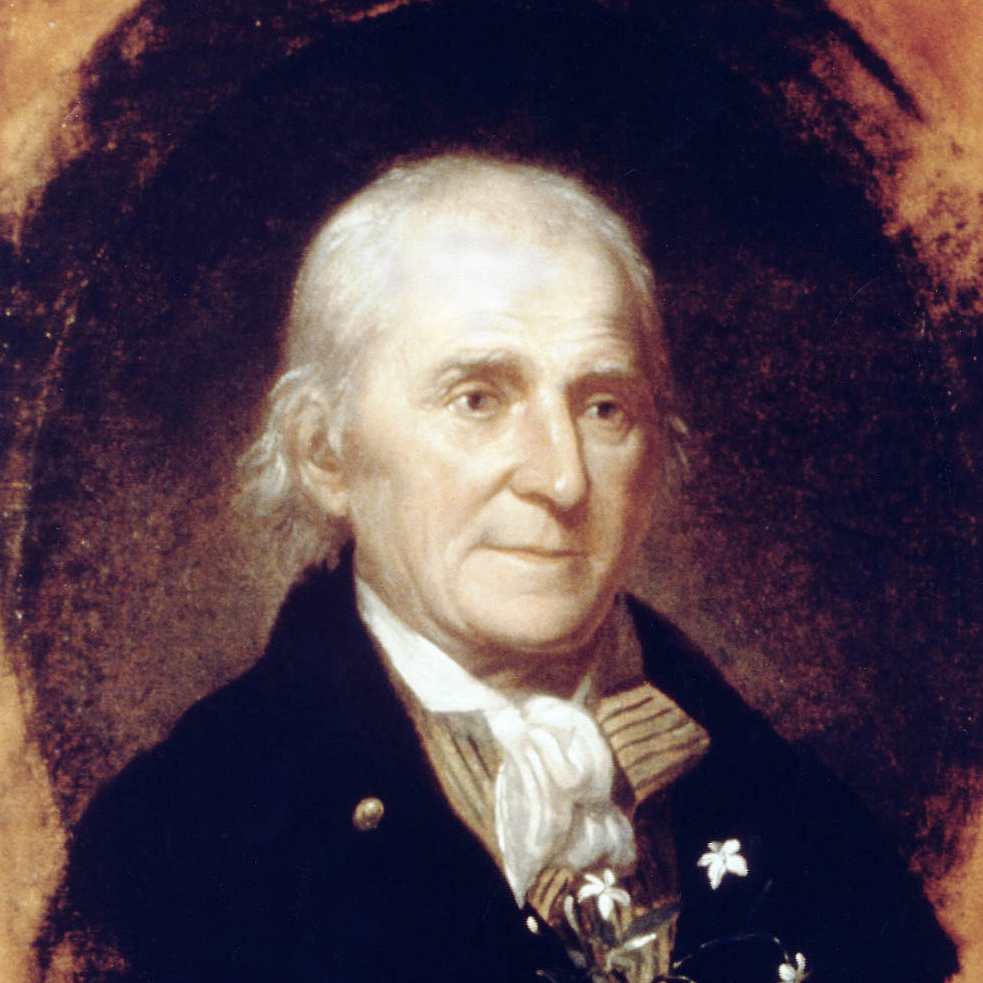
The intelligence of this bird has long been known. Early American naturalist William Bartram wrote about a crow named Tom in a highly entertaining essay titled “Anecdotes of an American Crow.” Bartram, who lived from 1739 to 1823, brought humorous observations and keen insight to his subject as he wrote about the joys — as well as tribulations — of living with Tom, a crow that enjoyed tormenting Bartram’s dog and purloining the writer’s spectacles and trying to hide them.

William Bartram

The essay demonstrates that almost as soon as Europeans arrived in North America, some of those with a bent toward the natural world recognized the intelligence and amazing adaptability of the American crow. As well as writing about the natural world, Bartram earned widespread acclaim for his drawings of botanical and ornithological subjects. Tom, the featured crow in Bartram’s brief essay, certainly exhibited intelligence of an impressive degree. Not only did the crow steal his owner’s eyeglasses, he foiled Bartram’s first attempt to reclaim them. The story makes very humorous reading. To read Bartram’s account, visit http://www.geocities.ws/jswortham/crow.

What else have crows done down through the ages to gain such a dark and much undeserved reputation? It probably doesn’t help matters that a flock of crows is known as a “murder.” Ancient Greeks considered crows as omens, which often foretold death and other disasters. The warrior goddess known as the Morrighan from Celtic mythology often appears in the form of a crow or raven. She is also often portrayed as being accompanied by a group of these black-plumaged birds. Many Native American tribes revere crows as communicators between worlds. Crows have been documented using tools and solving problems, which shows an uncanny ability to analyze and strategize. The early Celtic people also noted and admired these traits in crows.

Photo by Bryan Stevens / A trio of American crows forages on a grassy lawn.

Crows are very social birds, often forming family flocks. They may also form much larger flocks for the purpose of roosting. When nesting, this social behavior comes in useful for a mated pair. Offspring from previous successful nesting efforts often serve as helpers. In addition to gaining their own life experience on successful nesting and caring for chicks, these older siblings may protect the nest site from predators or even deliver food to fill hungry beaks and bellies.

While famous for their associations to humans and our agriculture, crows forage far beyond the cornfield for their food. Many crows scavenge road-killed wildlife, such as squirrels, opossums and rabbits. While they certainly don’t turn up their beaks at the notion of eating carrion, crows do so less often than birds such as turkey vultures, black vultures and the crow’s fellow corvid, the common raven.

Photo by Bryan Stevens / Wary American crows survey their surroundings.

The kinship to the raven is evident, but even moderately experienced birders rarely confuse these similar species. The raven is a large bird with a heavy beak, a distinctive profile and a wedge-shaped tail. In a direct comparison with a raven, a crow looks downright puny. Both are members of the corvid family, which consists of 120 species including jays, rooks, magpies and jackdaws. Some of the world’s other crows include the descriptively named little crow, hooded crow, carrion crow, collared crow, long-billed crow and violet crow. While most of the world’s crows are thriving, the Hawaiian crow, has been extinct in the wild since 2002, although the species still exists in captive-breeding programs in various zoos.

Thanks to its resourcefulness and intelligence, the crow is deserving of more respect and even admiration. The American crow is a uniquely American success story. Think more of Bartram’s story of Tom the crow and not the dark, misguided myths and legends about crows this Halloween. Long may the crows fly.

Early naturalist and artist John James Audubon painted this American crow.