Category Archives: Wood Duck

Summer bird count finds 114 species

Hans Toom/Pixabay • A chestnut-sided warbler was one of 18 species of warblers tallied on the annual survey.

The 31st Carter County Summer Bird Count was held on the first day of June with 23 observers in nine parties. The weather was generally favorable, but somewhat cool early in the morning and breezy at times.

Participants tallied 114 species, which is exactly the 30 year average, but slightly below the average of the last decade of 117 species. The all-time high was 123 species in 2017.

Abundant birds included European starling (471), American robin (372), cliff swallow (330), Canada goose (270), song sparrow (240) and American crow, 208.

The list:

Canada goose, 270; wood duck, 5; mallard, 52; and wild turkey, 13.

Photo by Bryan Stevens • Five wood ducks were found on count day.

Rock pigeon, 61; Eurasian collared-dove, 1; mourning dove, 130; yellow-billed cuckoo, 1; and chuck-will’s-widow, 1.

Eastern whip-poor-will, 13; chimney swift, 61; and ruby-throated hummingbird, 15.

Killdeer, 11; American woodcock, 4; double-crested cormorant, 7; great blue heron, 18; and green heron, 4.

Black vulture, 14; turkey vulture, 59; sharp-shinned hawk, 3; Cooper’s hawk, 1; bald eagle, 3; red-shouldered hawk 1; broad-winged hawk, 8; red-tailed hawk, 12; Eastern screech-owl 8; and barred owl, 2.

Belted kingfisher, 11; red-bellied woodpecker, 31; yellow-bellied sapsucker, 6; hairy woodpecker, 6; Northern flicker, 13; pileated woodpecker, 22; and American kestrel, 1.

Great crested flycatcher, 5; Eastern kingbird, 24; Eastern wood-pewee, 28;

Acadian flycatcher, 19; alder flycatcher, 1; least flycatcher, 10; and Eastern phoebe, 65.

White-eyed vireo, 6; blue-headed vireo, 47; warbling vireo, 1; and red-eyed vireo, 205.

Blue jay, 80; American crow, 208; fish crow, 5; and common raven, 14.

Photo by Bryan Stevens • A young titmouse visits a suet feeder.

Carolina chickadee, 49; tufted titmouse, 91; tree swallow, 88; Northern rough-winged swallow, 32; purple martin, 21; barn swallow, 135; and cliff swallow, 330.

Golden-crowned kinglet, 20; cedar waxwing, 58; Red-breasted nuthatch, 16 white-breasted nuthatch, 17; brown creeper, 6; and blue-gray gnatcatcher, 15.

Carolina wren, 126; house wren 48; and winter wren, 7.

Gray catbird, 36; brown thrasher, 34; Northern mockingbird, 62; European starling, 471; Eastern bluebird, 86; veery, 21; hermit thrush, 5; wood thrush, 56; and American robin, 372.

House sparrow, 40; house finch 86; pine siskin, 8; and American goldfinch, 77.

Chipping sparrow, 85; field sparrow, 25; dark-eyed junco, 51; song sparrow, 240; Eastern towhee, 135; yellow-breasted chat, 9; Eastern meadowlark, 9; orchard oriole, 7; Baltimore oriole, 7; red-winged blackbird, 68; brown-headed cowbird, 27; and common grackle, 87.

Ovenbird, 73; worm-eating warbler, 12; Louisiana waterthrush, 6; black-and-white warbler, 44; Swainson’s warbler, 9; common yellowthroat, 27; hooded warbler, 145; American redstart, 9; Northern parula, 48; blackburnian warbler, 4; yellow warbler, 5; chestnut-sided warbler, 30; black-throated blue warbler, 61; pine warbler, 4; yellow-rumped warbler, 4; yellow-throated warbler, 18; black-throated green warbler, 50; and Canada warbler, 20.

Scarlet tanager 28; Northern cardinal, 135; rose-breasted grosbeak, 13 blue grosbeak, 4; and indigo bunting, 141.

According to long-time count compiler Rick Knight, a few species were missed on count day, usually because they are very localized in distribution or occur in very low densities. And sometimes, he noted, the birds just don’t cooperate.

Some exciting observations include a family group of four American woodcocks at Carvers Gap on Roan Mountain. In addition, 18 species of warblers were found on the count.

Missed species: Common merganser – although a female with a brood of ducklings was seen the day prior to the count – as well as ruffed grouse, common niighthawkhawk, yellow-crowned night-heron, great horned owl, yellow-throated vireo, grasshopper sparrow, golden-winged warbler, Kentucky warbler, magnolia warbler and prairie warbler.

•••

To share a sighting, ask a question or make a comment, email ahoodedwarbler@aol.com. 
 

Waterfowl also known as ‘summer duck’ in much of the South

WoodDuckStanding

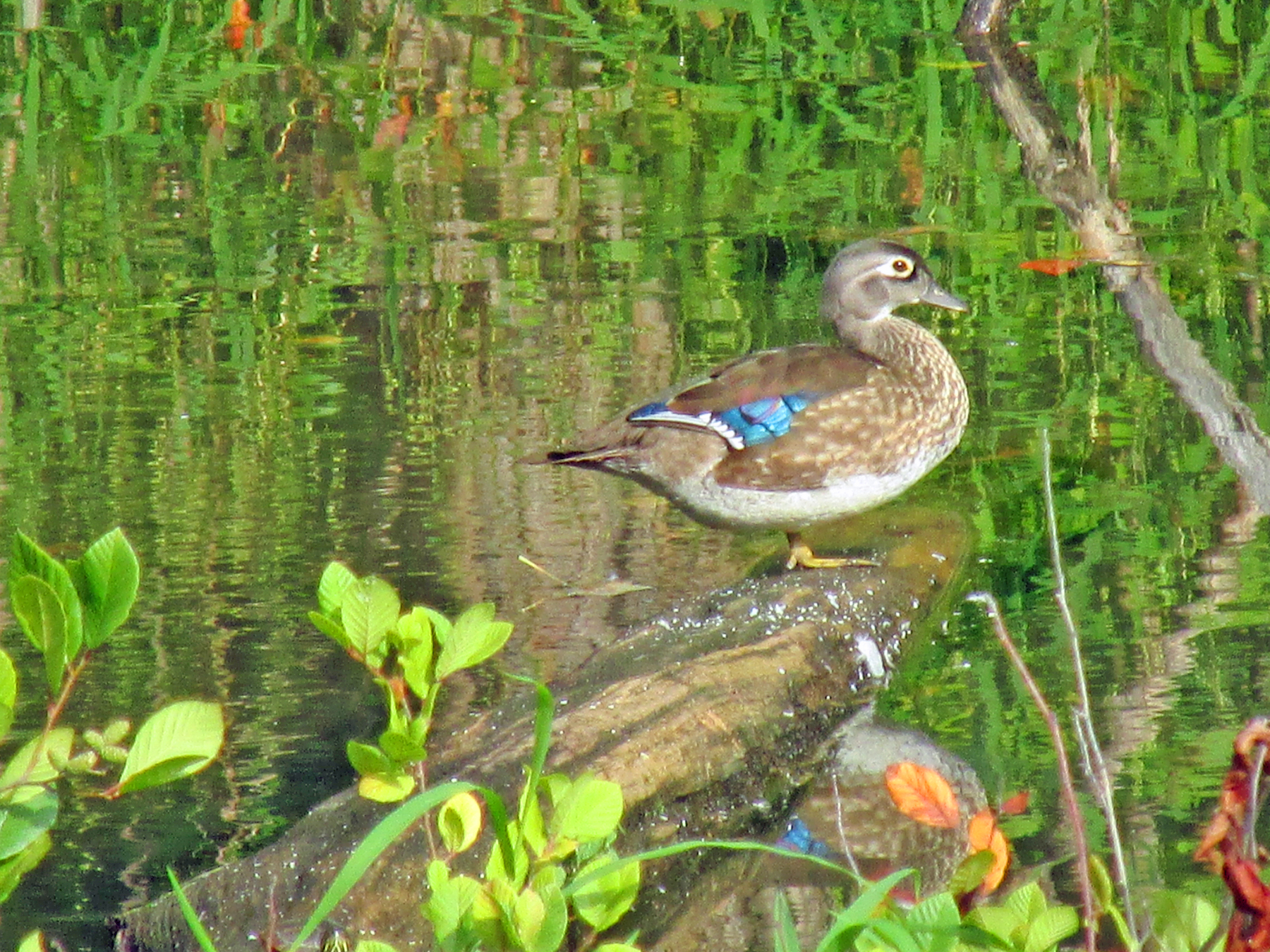
Photos by Bryan Stevens                                                       A Wood Duck perches on a log in a pond in Erwin, Tennessee.

A great many birds spend the spring and summer months in the region. Waterfowl, however, are usually scarce aside from the ubiquitous Canada geese and mallards found at ponds, local park, golf courses and many other locations. Waterfowl aren’t entirely absent, especially when you add the variety of domesticated waterfowl that are often found with the aforementioned geese and ducks.

WOod-Gloss

The wood duck is also known as the “summer duck” across much of the southeast, where it is the only wild nesting duck.

The small wood duck is a species of waterfowl that can be found, in suitable habitat, during the nesting season. Unlike Canada geese and mallards, which historically never nested in the region until recent decades, the wood duck is supposed to be present during the warmer months of the year. In many parts of their range, wood ducks are known as the “summer duck” since they are the only wild native nesting duck present during the season.

Another common name for this species is the Carolina duck, which refers to the southern stronghold of this species of waterfowl. Wood ducks are year-round residents across much of the southeastern United States, especially in suitable habitat such as small lakes, flooded woodlands, swamps and marshes.

WoodDuck-Mallards

A male Wood Duck is accompanied by two Mallards. The Wood Duck is considered one of North America’s most colorful ducks.

Like a handful of other North American waterfowl, the wood duck is a cavity-nesting bird. These ducks often occupy former nesting cavities created by woodpeckers, but they will also readily accept nesting boxes of suitable dimensions provided by human landlords. Because of their devotion to nesting in cavities, wood ducks have at least something in common with songbirds like Eastern bluebirds, tree swallows and house wrens, as well as larger birds such as American kestrels and Eastern screech-owls. Wood ducks aren’t the only waterfowl that nest in cavities. Buffleheads, hooded mergansers and common goldeneyes are also cavity-nesting ducks. None of those ducks, however, nest in the southeastern United States.

WoodDuck-March29

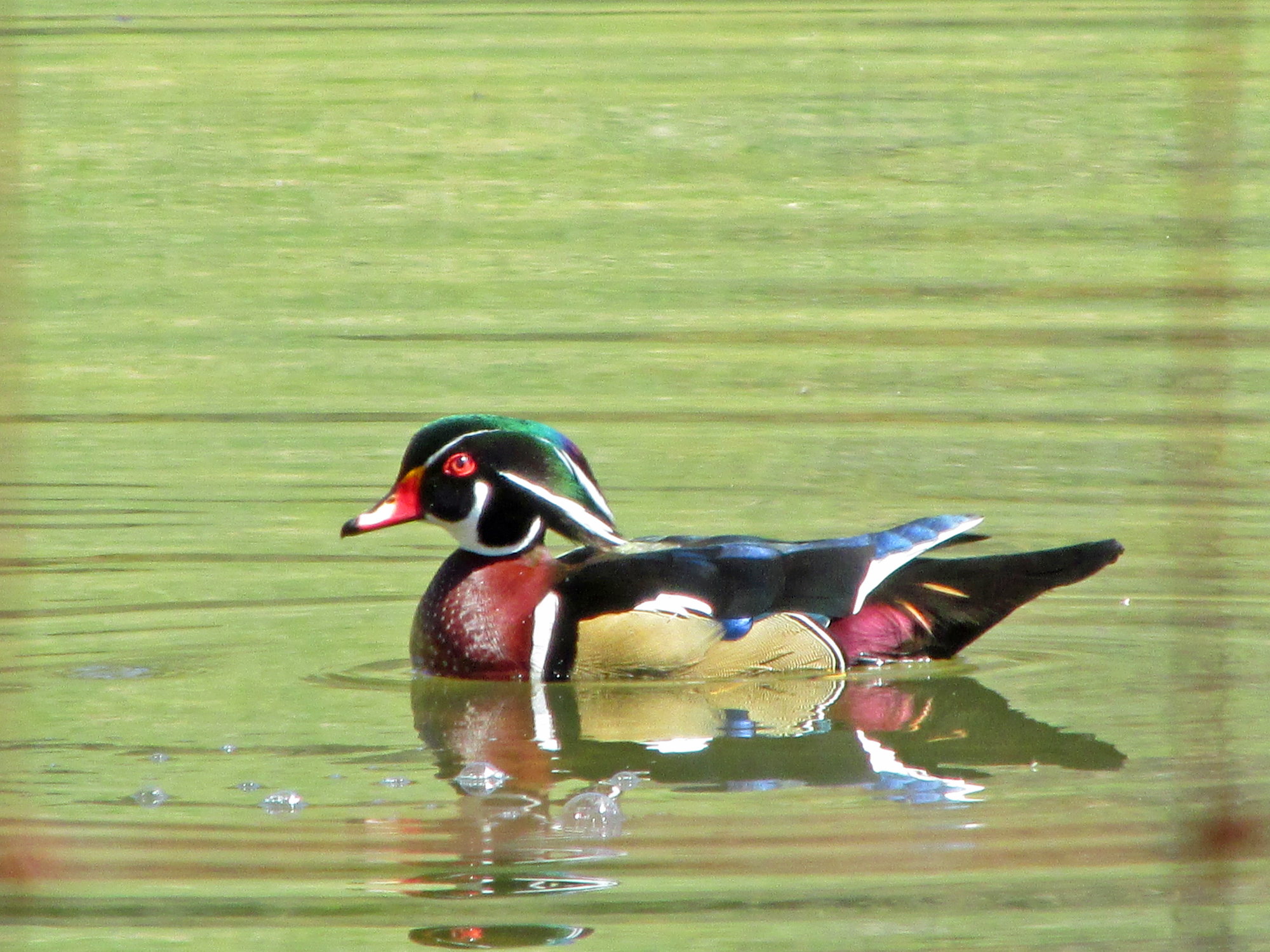
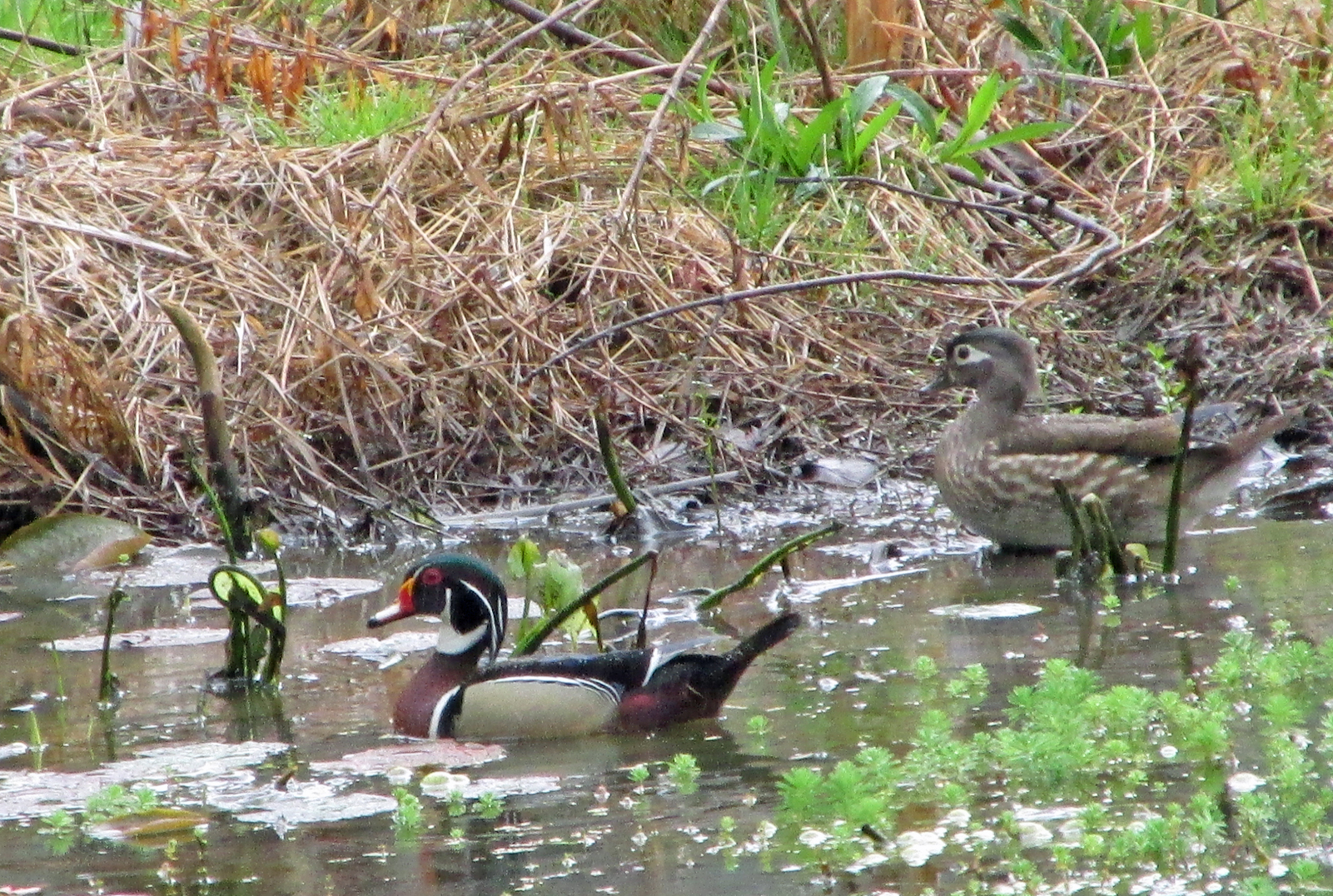
The male Wood Duck, such as this one on a pond in Hampton, Tennessee, is much more colorful than the female of the species.

Some wood duck nests can be located far above the ground, which poses a challenge for flightless young. Like most species of waterfowl, young wood ducks are born capable of immediately leaving the nest and being led by their mother to foraging areas. First, however, there’s that giant leap of faith that each of the ducklings must make. Nests are often built over water, so that first jump often ends in a splash-down. Some nests are built over land, but that doesn’t seem an obstacle. The ducklings make that leap without any difficulty. Just like the Abominable Snowmen in the old holiday favorite “Rudolph, The Red-nosed Reindeer,” wood duck babies bounce! Once the ducklings have departed their cozy nesting cavity, their mother will guard them from predators and lead them to prime foraging areas for a period of about two months.

summer_or_wood_duck_poster-r202a76c41b0943c6a2a73ee248ac00ca_wvy_8byvr_324

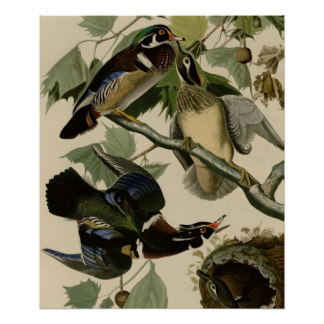
John James Audubon painted Wood Ducks to emphasize their comfort in perching in trees.

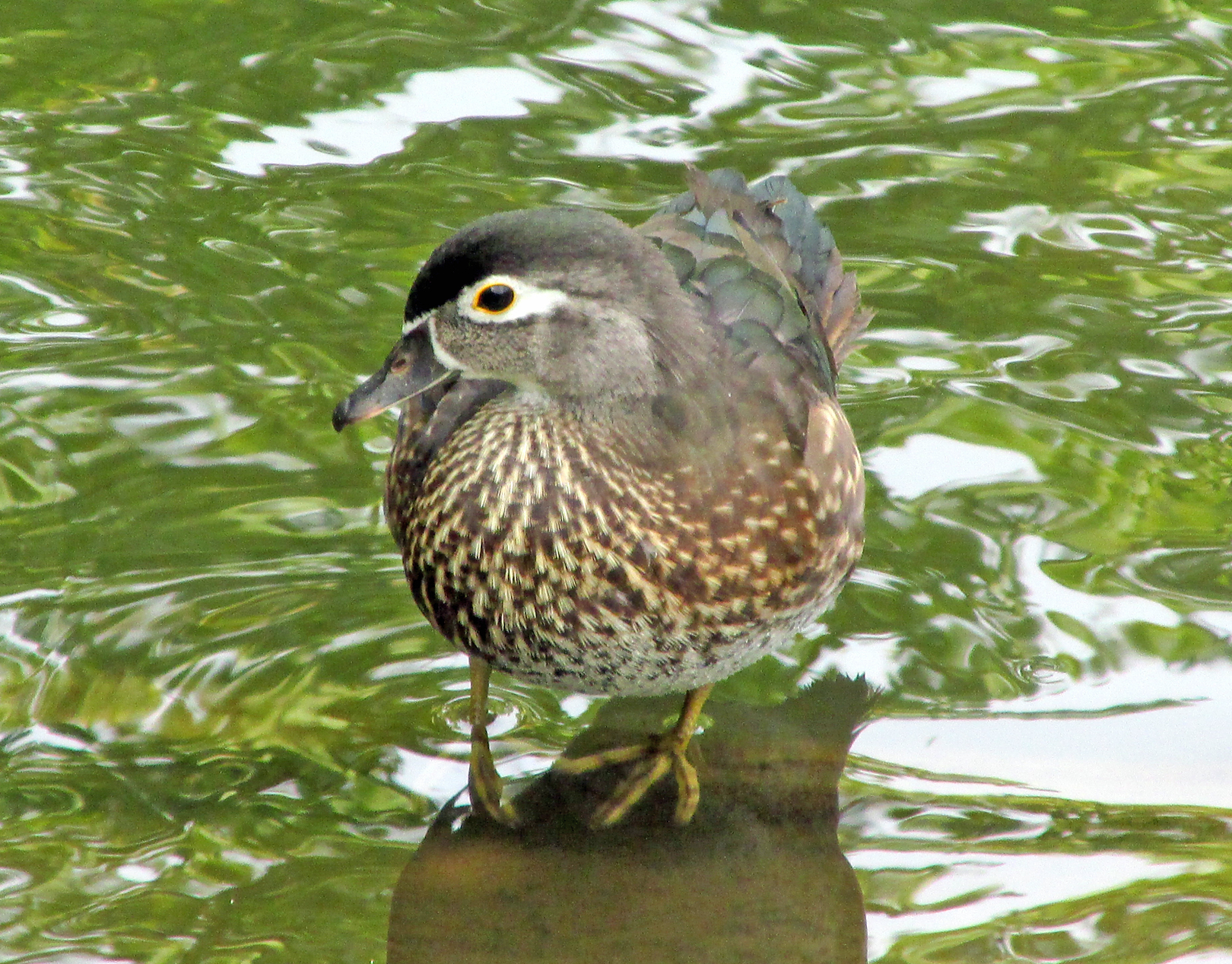
The wood duck belongs to the genus Aix. The only other species in the genus — the Mandarin duck —is native to East Asia. The two are classified as “perching ducks” by biologists. The males of both these species are among the most ornate ducks in the world. The male wood duck has red eyes and a dark-tipped red bill. The colors in a male’s plumage includes glossy, iridescent greens, purples and browns in dramatic patterns. The male also has a distinctive head crest. Female wood ducks also have crests, but their plumage is overall gray and brown with a teardrop-shaped white patch around the eyes, as well as a white chin and throat.

Wooder

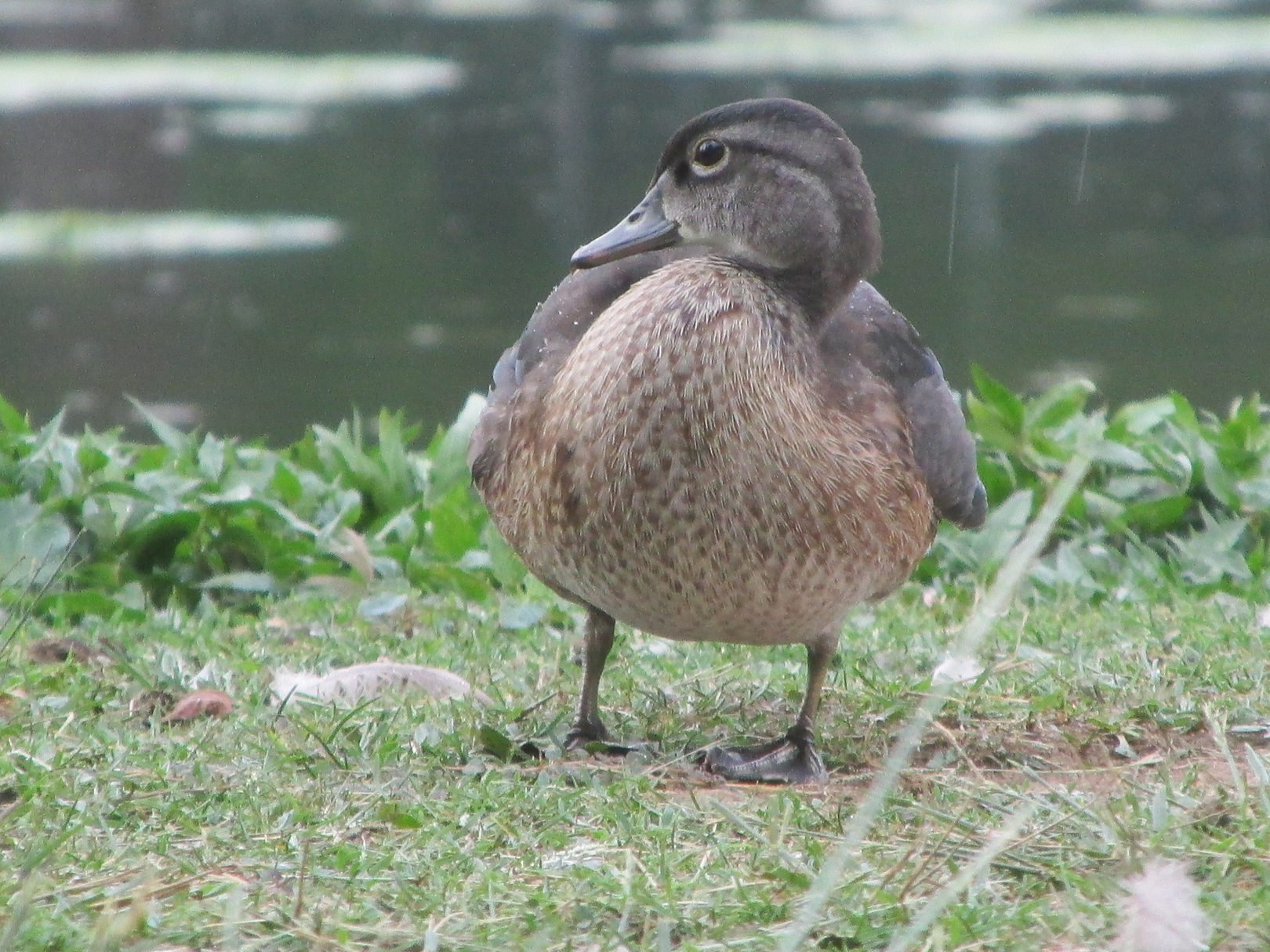
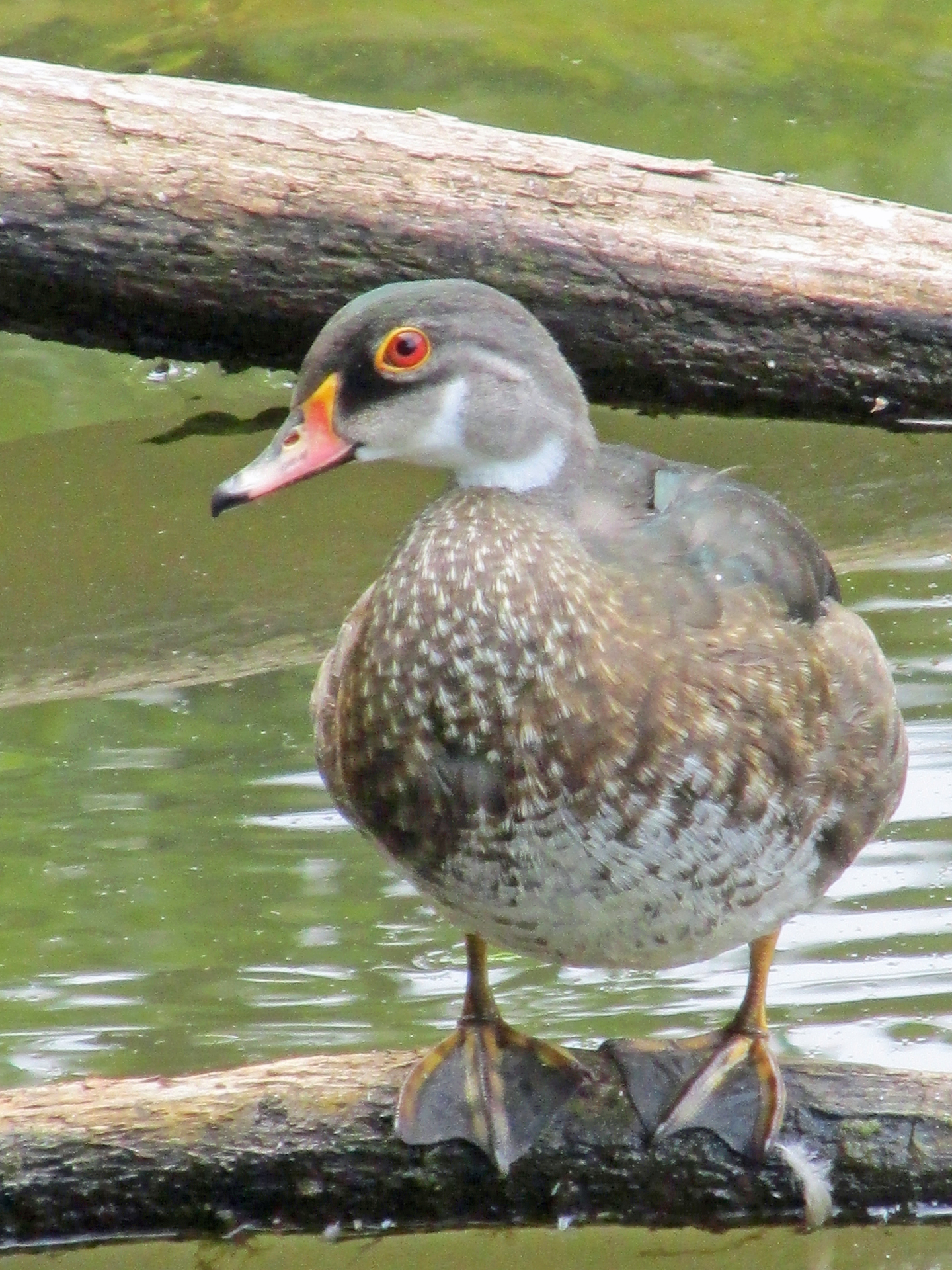
A young Wood Duck perches by a pond’s edge in a small-town park.

The majority of a wood duck’s diet consists of vegetable matter. In autumn, I’ve observed these ducks foraging with enthusiasm for acorns. The wood duck, and ducklings in particular, also feed on some insects and other small invertebrates.

In his book, “Birds of Lake, Pond and Marsh,” author John Eastman noted that the wood duck was the most abundant of North American ducks during the 19th century. In the late 19th century, pressures from hunting and habitat destruction combined to dramatically lower the numbers of this exclusively North American duck. Eastman noted that the Federal Migratory Bird Treaty Act of 1918 is largely credited with saving the wood duck from possible extinction.

One-leggedWoodie

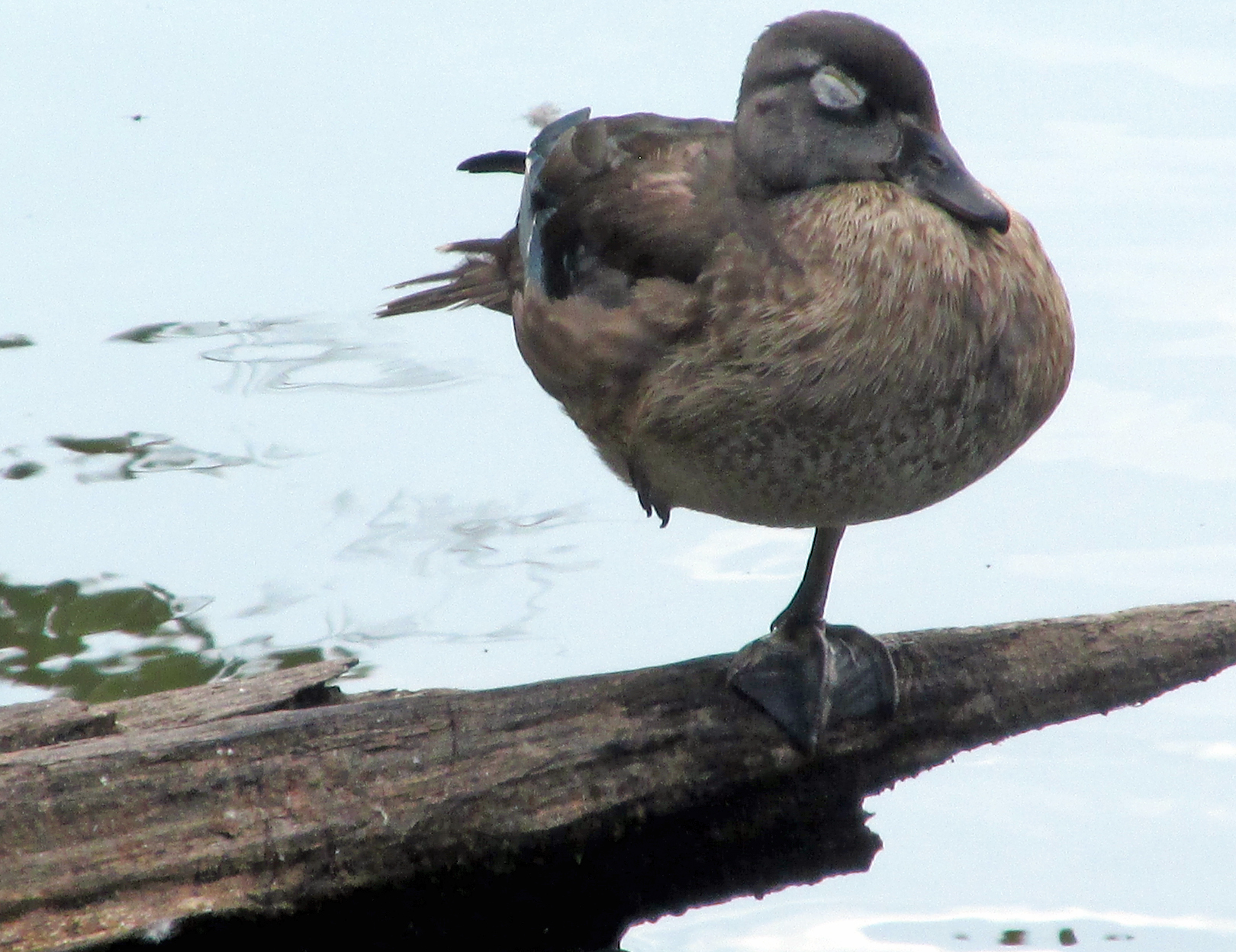
A napping Wood Duck perches on one leg upon a submerged log.

From 1918 to 1941, it was illegal to hunt wood ducks. Thanks to this temporary hunting ban and other conservation measures, the wood duck population recovered in dramatic fashion. Recent surveys all point to a species on the rebound with numbers of wood ducks rising for the past several decades.

The creek and the fish pond at my home have proven dependable magnets over the years for attracting visiting wood ducks. Most wood ducks in the southeastern United States do not migrate. Those that live farther north during the summer will migrate to areas as far south as Mexico in the fall. We’re fortunate to reside in a region where wood ducks are year-round resident waterfowl.

Woodie

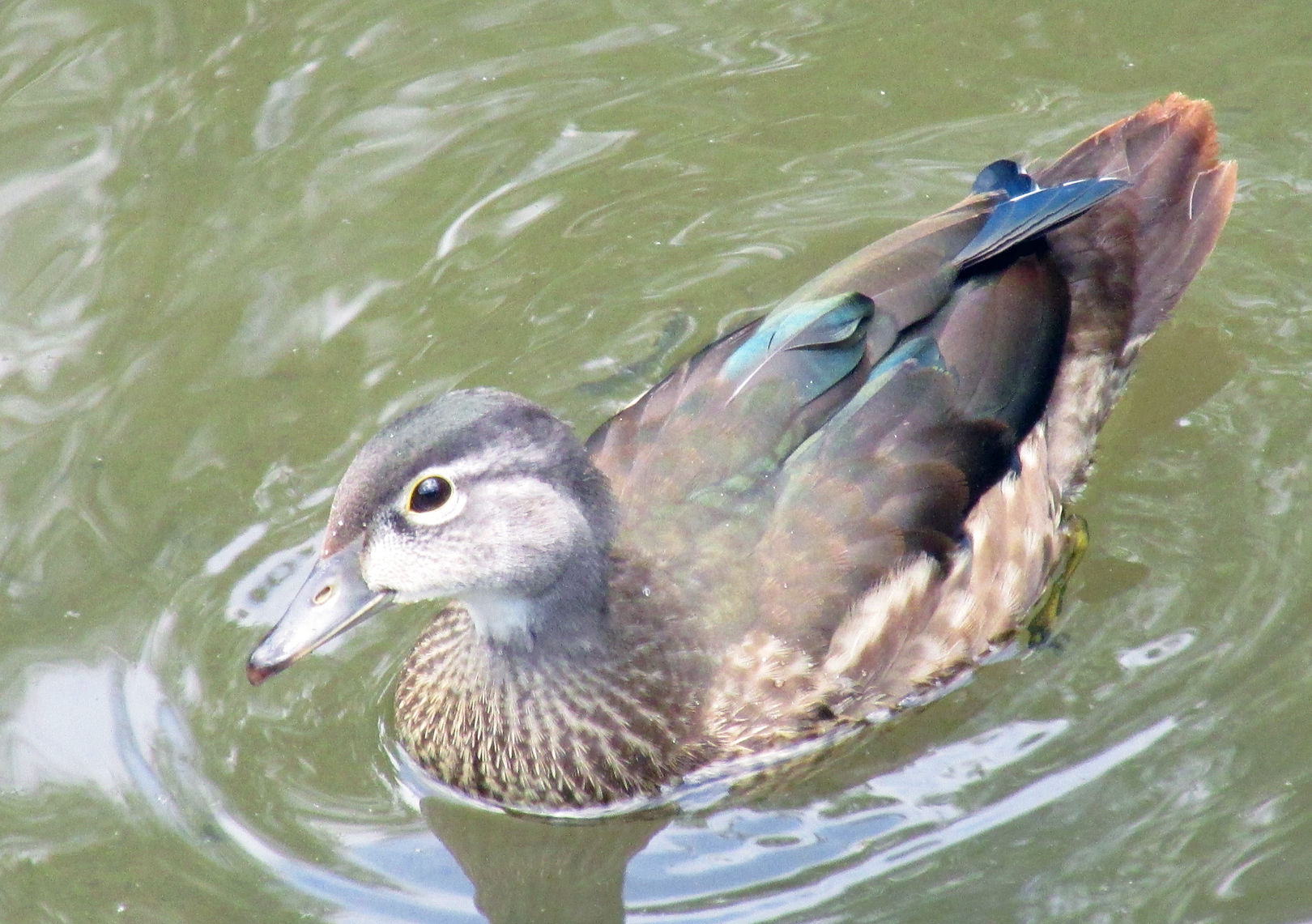
A Wood Duck takes a late summer swim.

Woodie-Sleeping

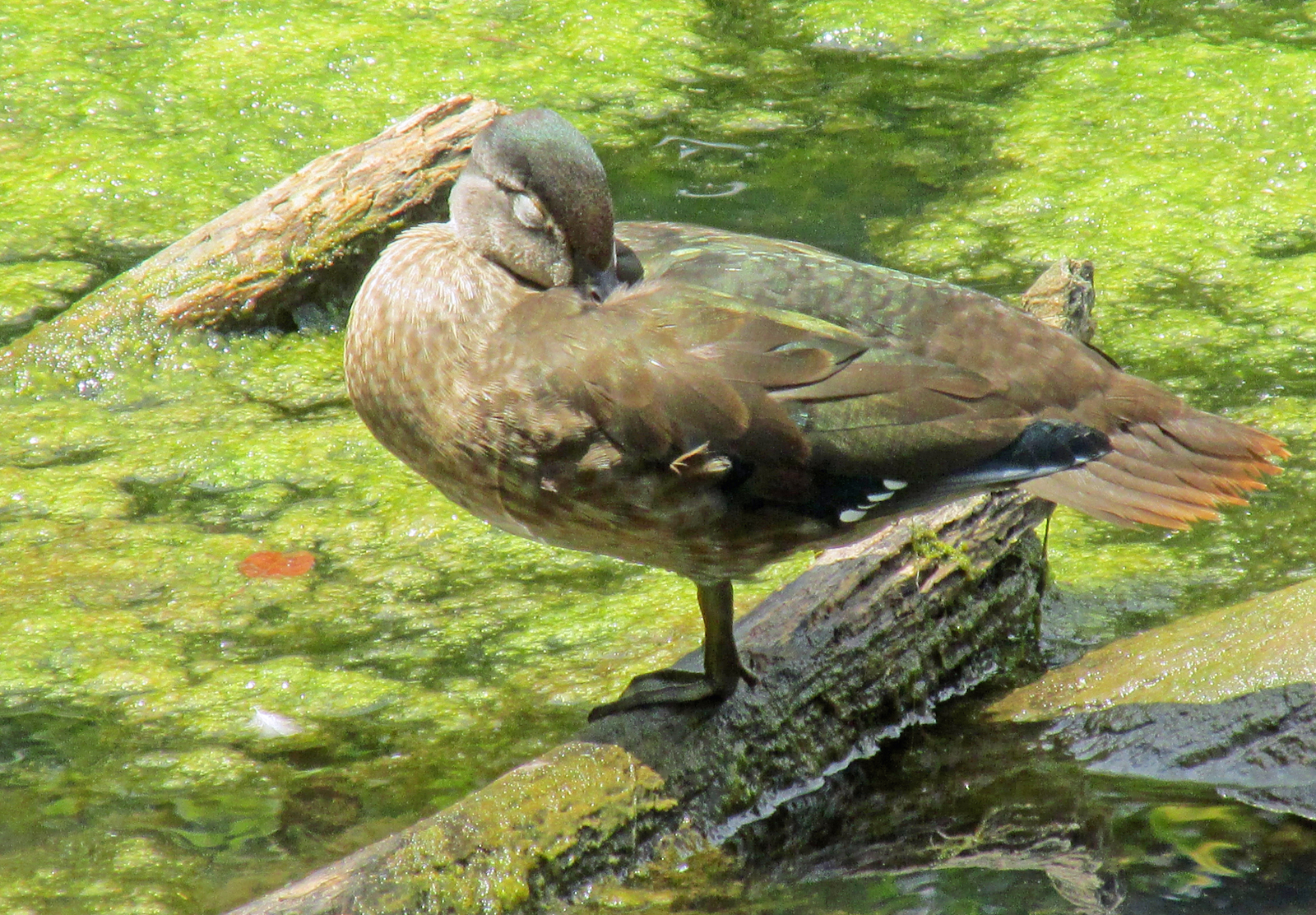
Wood Ducks often have a favorite log where they rest and relax when not foraging for food.

WoodDucks

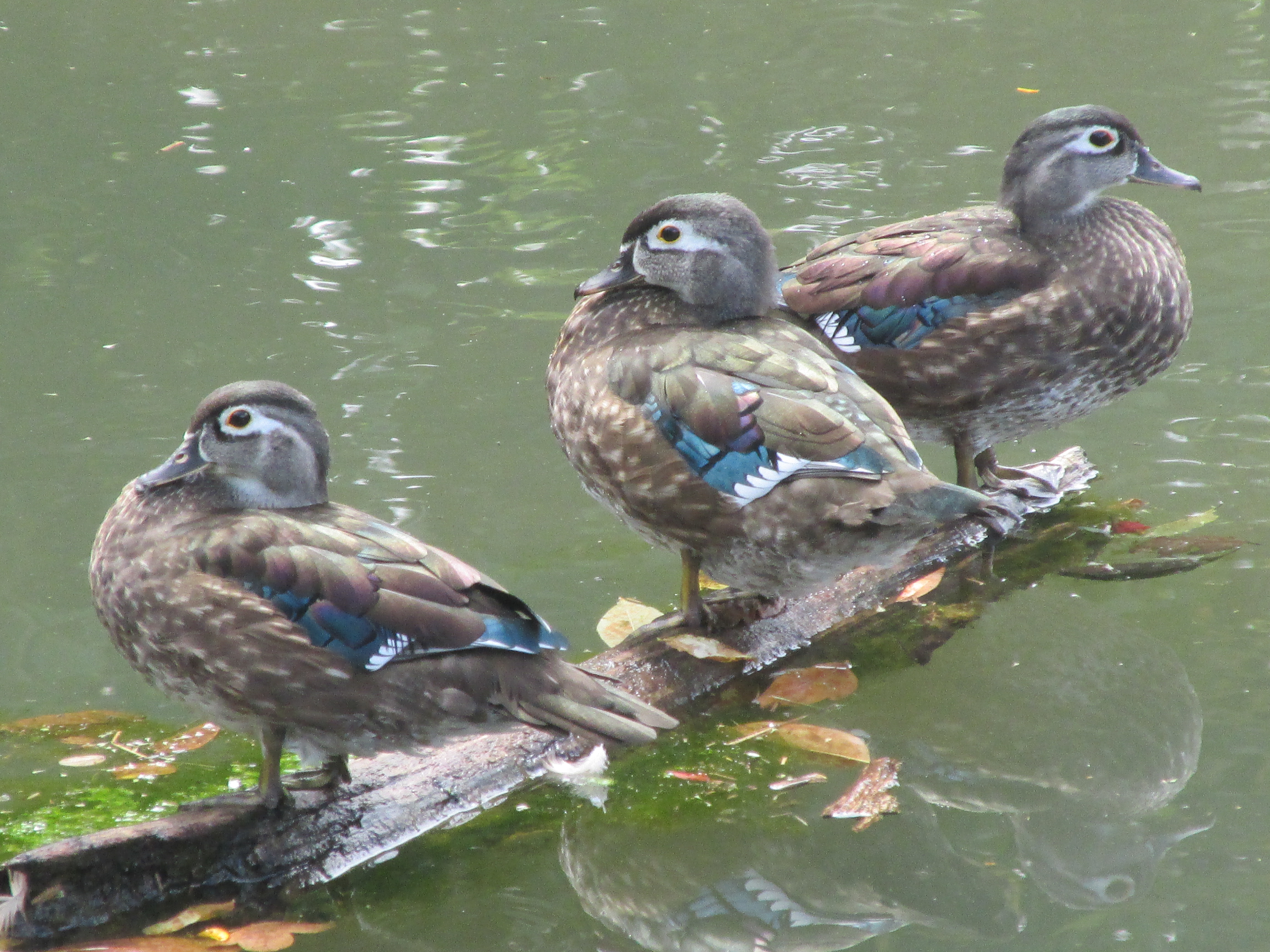
A trio of Wood Ducks in their summer plumage.

WoodDucks 2

A male and female Wood Duck makes a stop at a pond in Hampton, Tennessee, during spring migration.

WoodDuck-Eclipse

The Wood Duck, a favorite species of waterfowl for many people, is also known as the “Summer Duck” throughout much of its range.

Wood-Duck-Maley

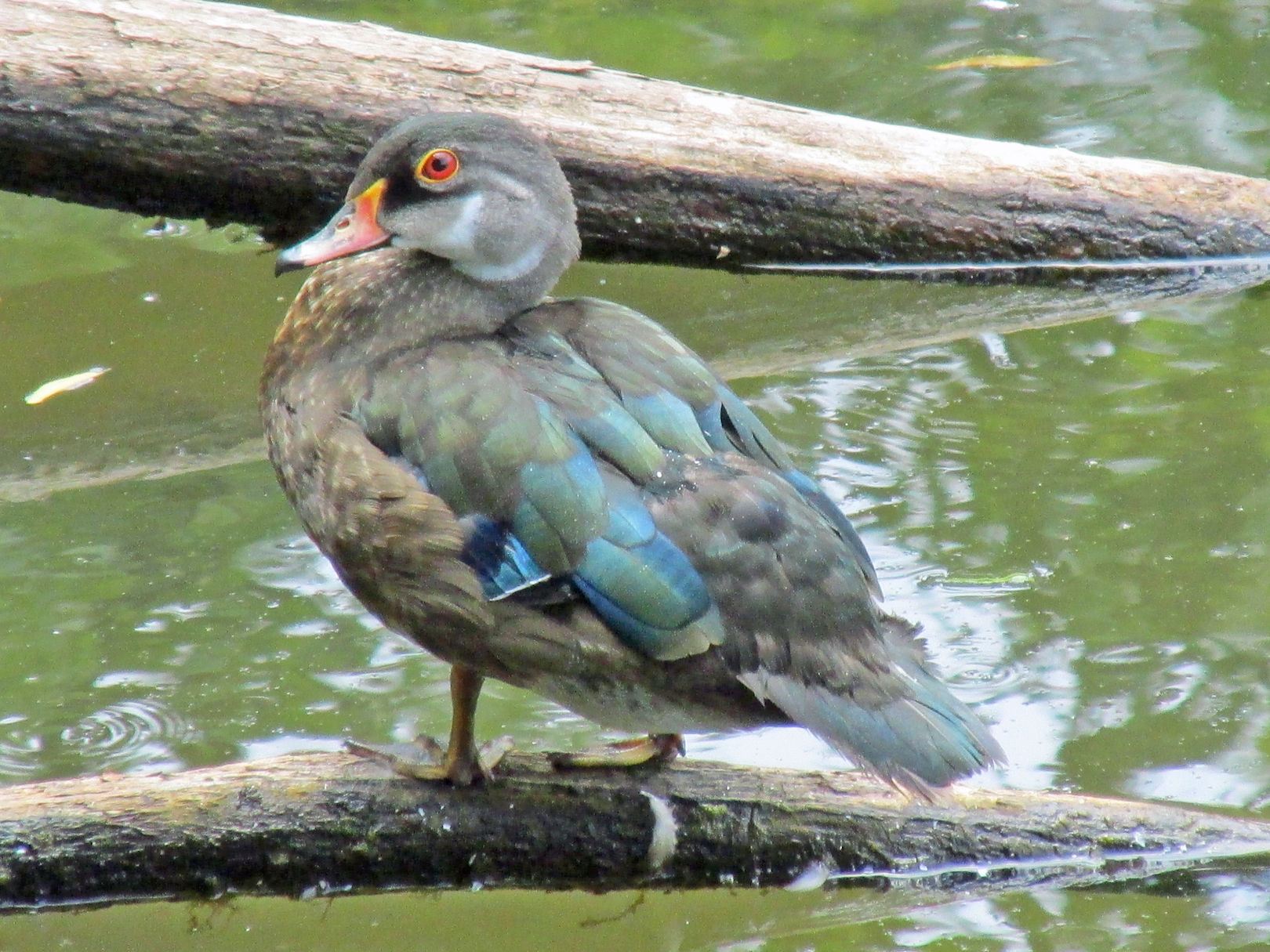
Wood Ducks molt their feathers during the summer months, giving them a less gaudy appearance for a brief time.

Woodie-Head

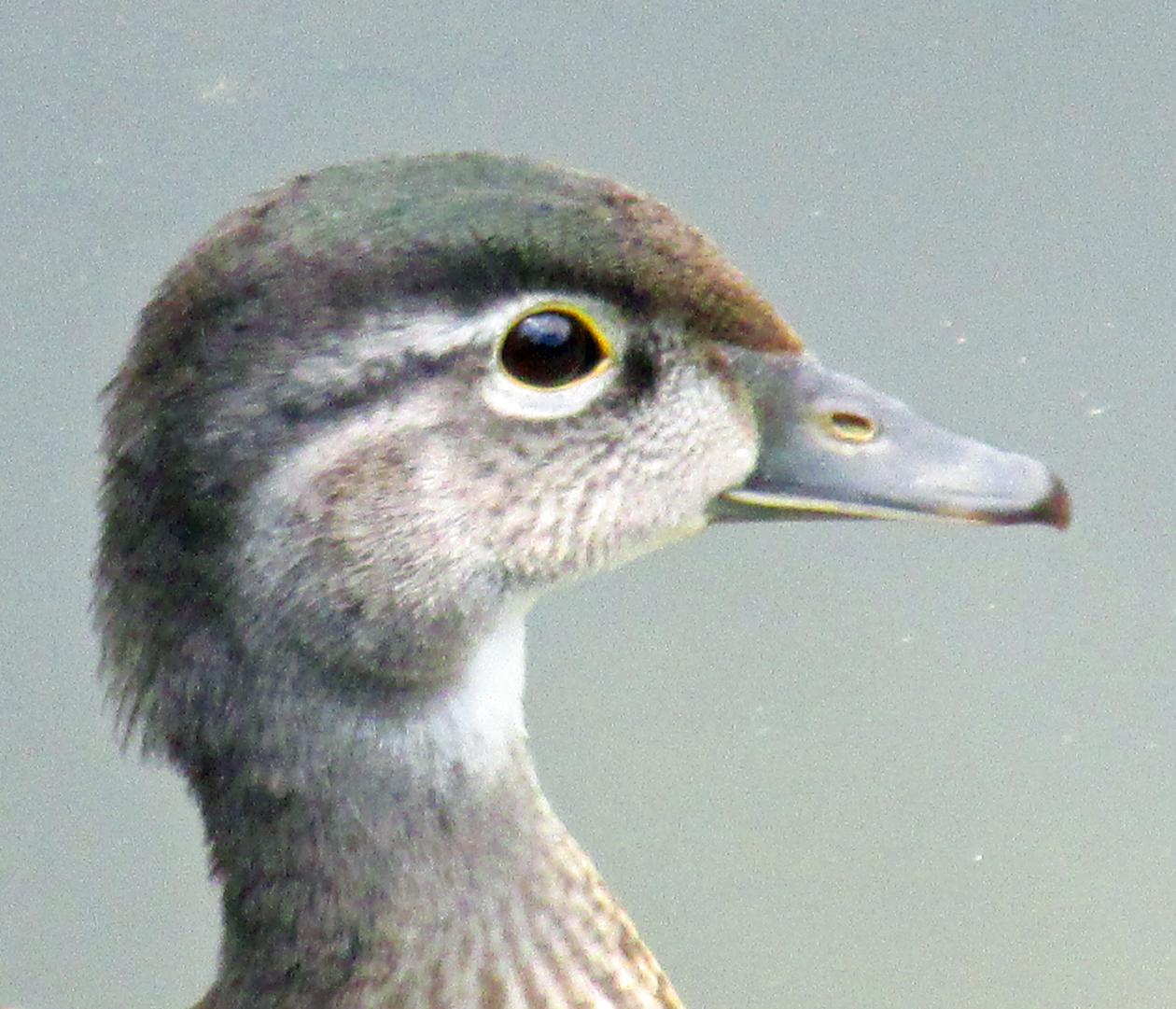
Young Wood Ducks will slowly acquire their adult plumage as summer advances to fall and winter.