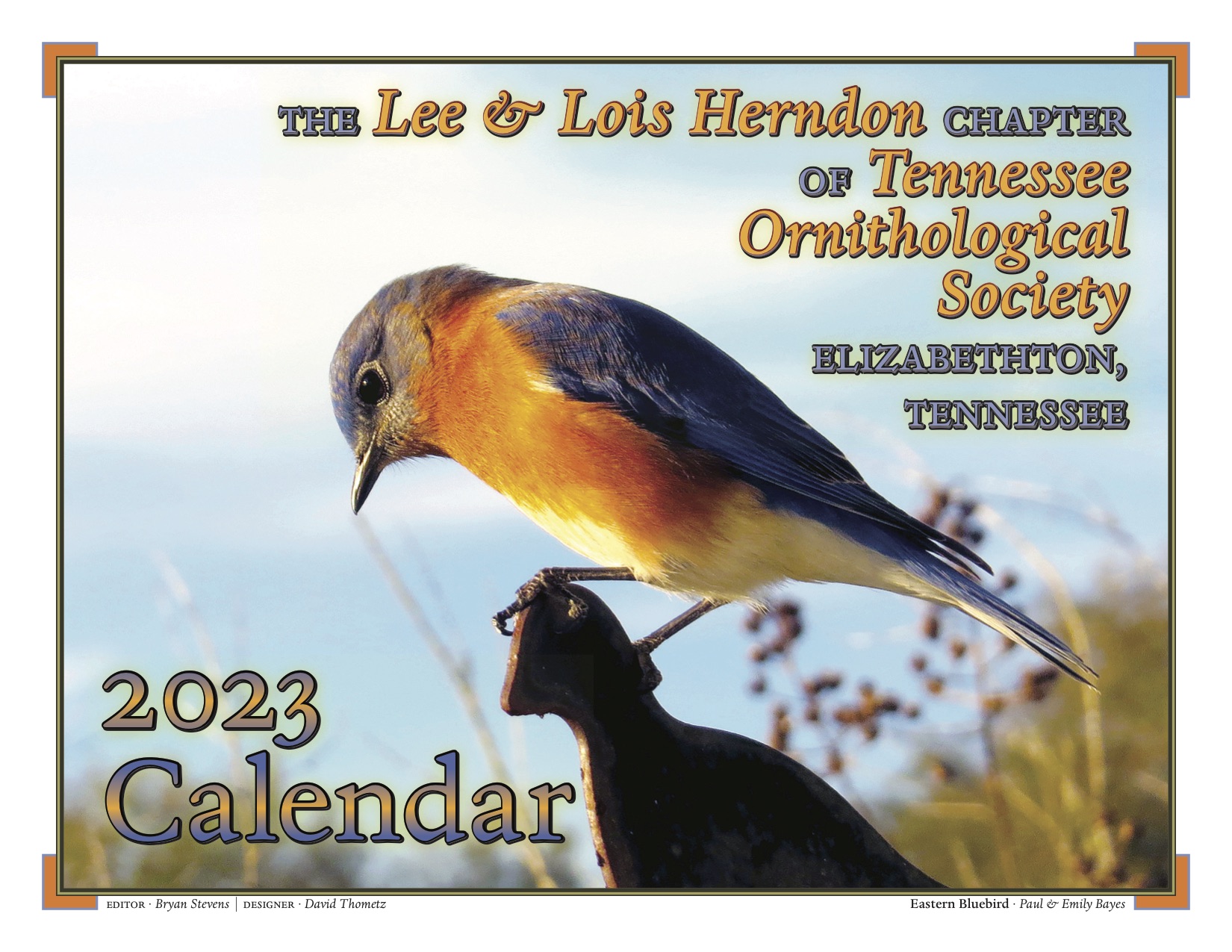
Bluebird makes debut on calendar’s front cover


Contributed Image • A male Eastern bluebird photographed by Paul and Emily Bayes adorns the cover of the Elizabethton Bird Club’s 2023 calendar. Sales of the calendars, which are $15 each, benefit projects of the Elizabethton Bird Club.


If you didn’t find all you needed on Black Friday for those on your shopping list, here’s a suggestion. The Lee and Lois Herndon Chapter of Tennessee Ornithological Society, also known as the Elizabethton Bird Club, has produced its annual calendar featuring bird photographs by its members and friends of the organization.

A bluebird sighting just can’t help brightening any day. The Eastern bluebird is a beloved bird, but this is the first time one has graced the cover of the club’s annual calendar. A cavity-nesting member of the thrush family, bluebirds will accept bird boxes for nesting provided by human landlords. The photo of the bluebird for the cover was provided by chapter members Paul and Emily Bayes, who also contributed numerous other photographs for the calendar.

The inside pages of the professionally-produced calendar feature dozens more full-color photographs and an informative and educational grid. These calendars sell for $15 plus $2 for shipping. All sales help the club fund birding programs, public park feeders, conservation efforts and other activities in upper Northeast Tennessee.
For more information on how to obtain a calendar, email me at ahoodedwarbler@aol.com.

Here’s a little more on the Eastern bluebird, which is a year-round resident in the region and can be found in open yards as well as the rural countryside. People have known for generations that bluebirds make good neighbors. A pair of bluebirds in your yard or garden provides hour upon hour of free entertainment as one watches these birds go about their daily routine. At this time of the year, much of that routine is focused on finding and claiming the best possible nesting location for the upcoming spring season.

Photo by Bryan Stevens
A male Eastern Bluebird perched on playground equipment at Winged Deer Park in Johnson City.

The Eastern bluebird is one of North America’s best-known cavity-nesting birds. About 85 species of North American birds use cavities in trees for nesting purposes. Cavity-nesting birds include ducks, such as buffleheads and wood ducks, as well as birds of prey such as Eastern screech-owls and American kestrels.

Over the years, I have found bluebirds nesting in cavities inside wooden fence posts, but there are fewer wooden fence posts every year. This reinforces the idea of how changing landscapes have affected these birds. Instead of wooden fence posts, many farmers now use metal ones, and dead or dying trees — a much sought-after resource for cavity-nesting birds — are often removed from woodlands.

Fortunately for bluebirds, this species will also accept lodging in a nest box, or birdhouse, provided for them by human landlords. One of the simplest ways to bring bluebirds close is to offer wooden boxes, constructed to their specific requirements, for their use as nesting locations.

Because of their trusting nature when it comes to their human neighbors, the Eastern bluebird is one of our most beloved birds. In fact, bluebirds are such popular birds that interest in them and their well-being has inspired the foundation of organizations such as the North American Bluebird Society. The Eastern bluebird has also been designated the official state bird for New York and Missouri, which provides more testimony to the immense popularity of this bird.

The bluebird belongs to the Sialia genus, which includes two other species: the mountain bluebird and the Western bluebird, both ranging throughout the western half of the North American continent.

Perhaps the poet Emily Dickinson summarized it best with these lines from her aptly named poem, “The Bluebird.”

“Before you thought of spring,
Except as a surmise,
You see, God bless his suddenness,
A fellow in the skies
Of independent hues,
A little weather-worn,
Inspiriting habiliments
Of indigo and brown.”

Other great American poets, including Robert Frost, have also waxed poetic about bluebirds. Before poets wrote their poems, many Native American tribes, including the Navajo and Cochiti, paid special reverence to bluebirds. Russian folklore and Chinese mythology also offer interesting tales about “blue birds,” but those are not species closely related to any of North America’s three species of native bluebirds.

Ruby-crowned kinglets make their winter return

Photo by Steve Carson/Pixabay • Only male ruby-crowned kinglets show the red crown patch that gives the bird is common name.

White-breasted nuthatch or red-breasted nuthatch? Common yellowthroat or yellow-throated warbler? Greater yellowlegs or lesser yellowlegs? These and others are some of the identification questions new birders struggle to answer. The coming winter season provides the perfect opportunity for getting to know the region’s birds better if for no other reason than there are fewer species in residence.
Color, markings and behavior are some of the things to consider when trying to identify a new bird. Another consideration is size. In our region, if the bird’s tiny (even smaller than a chickadee, for instance) the possibilities narrow to two related species known as kinglets.

As their name suggests, kinglets are tiny birds. In fact, the only birds in the eastern half of North America that are smaller than kinglets are some of the hummingbirds. Most of the kinglets, known outside North America as “flamecrests” or “firecrests,” belong to the family, Regulidae, and the genus, Regulus. The family and genus names are derived from a Latin word, regulus, which means “rex,” or “king.” The name was apparently inspired by the colorful crown patches, often red, orange or gold, that resemble the royal “crowns” of kings.

Photo by USFWS • Ruby-crowned kinglets are winter visitors throughout the region.

The two North American species — ruby-crowned kinglet and golden-crowned kinglet — can both be found in the region in winter. The ruby-crowned kinglet typically arrives for the winter season in the first weeks of October. The golden-crowned kinglet usually arrives later in the season.

Four other species of kinglets can be found in North Africa, Europe and Asia. Experts recently removed the ruby-crowned kinglet from the genus Regulus and placed this species in a separate genus, Corthylio. The reclassification was based on size (the ruby-crowned kinglet is actually the largest member of this family) and differences in vocalizations.

Circling back to the matter of identification, the two kinglets are easily distinguished from each other. Although roughly similar in size and overall coloration, the ruby-crowned and golden-crowned kinglets contrast enough that a snap identification is simple with a good look through binoculars. The golden-crowned kinglet has a striped facial pattern formed by bold black and white stripes. The ruby-crowned kinglet, on the other hand, has a bold white eye ring but no striping. The golden-crowned kinglet has an orange crown patch, while the ruby-crowned kinglet has a red crown patch that is, more often than not, kept concealed. Both sexes of the golden-crowned kinglet possess a yellow crown patch, but only the male ruby-crowned kinglet boasts a scarlet patch of feathers atop the head. Observers can expend a lot of energy trying to get a look at the crown patches, which are typically only displayed when the bird is agitated.

Kinglets are very active birds. If warblers can be described as energetic, the kinglets are downright frenetic in their activities. The kinglets almost never pause for long, flitting from branch to branch in trees and shrubs as they constantly flick their wings over their backs. These bursts of hyperactivity can make them difficult to observe. Although small in size, these birds more than compensate for it with a feisty spirit that does them well through the harsh winter months.

Kinglets often join mixed flocks comprised of other species of birds, some of which are regular feeder visitors. Perhaps by observing their flock counterparts, some kinglets have learned to accept feeder fare such as suet, mealworms and chopped nuts. Away from feeders, kinglets mostly feed on a range of small insects and arachnids. These tiny birds will also consume some fruit, such as the berries of poison oaks and dogwoods.

By learning the ruby-crowned kinglet’s call, which is a harsh, fast, two-parted scold that, to my ears, sounds like “Jit Jit,” birders can detect the presence of these tiny birds in thickets and other dense vegetation.

Normally, kinglets have a rather fleeting lifespan. These tiny birds can be considered old if they live three or four years. There are always exceptions. The oldest golden-crowned kinglet on record was six years and four months old. That individual, a male, was documented by a bird bander in 1976, according to the website All About Birds.
Overall, kinglets are trusting, tame birds and a welcome addition to any flocks visiting your yard and garden. These tiny feathered sprites are definitely worth getting to know.

Apologies to Arthur Carlson, but wild turkeys can indeed fly

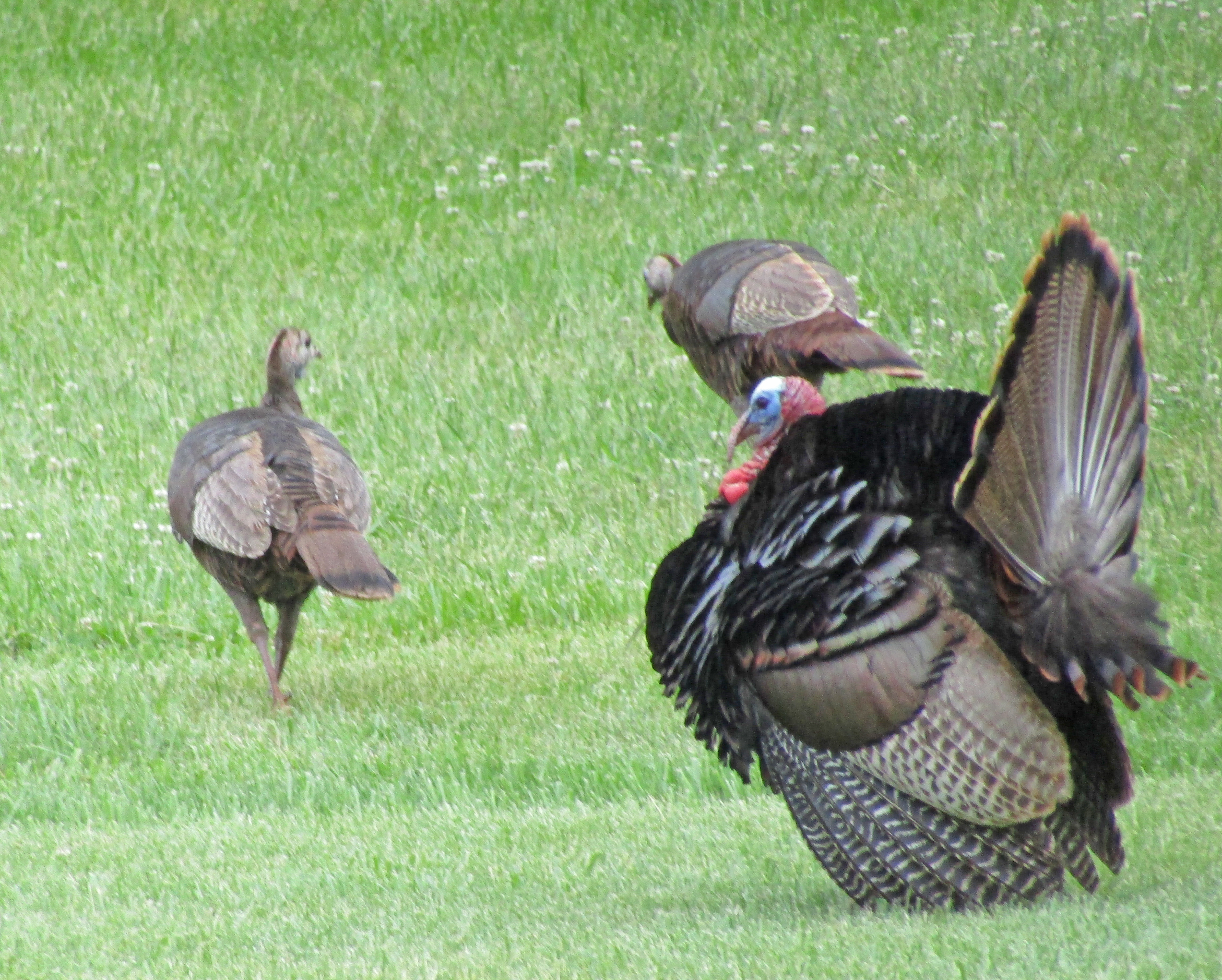
Photo by Bryan Stevens • A male gobbler seeks the attention of hens, as all these Wild Turkeys add to the number of this species found during the count.

NOTE: I wrote the original version of this column back in November of 2015. With some revisions, here’s a timely column on one of the nation’s premier fowls.
As Americans, we all have our holiday traditions. Personally, I will carve 30 minutes from my schedule to watch one of my favorite holiday sitcom episodes.

Not surprisingly, there’s an element linked to birds in the episode, which is often cited as one of the most ingenious sitcom episodes in the history of television. The episode is “Turkeys Away” from the first season of WKRP in Cincinnati, a sitcom that aired from 1978 to 1982 and revolved around the antics of the staff of a down-and-out radio station. The episode originally aired Oct. 30, 1978, early in the first season of the series. I especially like that every member of the ensemble cast was woven into the storyline for this classic Thanksgiving episode. The series is such a favorite I own all the seasons on DVD.

In the event that there are readers who haven’t seen the episode, I’ll try to avoid any blatant spoilers. The action involves a radio promotion that, in hindsight, was destined for disaster. The episode unfolds at the perfect pace, finally culminating in a hilarious series of scenes as the promotion backfires in spectacular fashion. I’ve memorized most of the lines of dialogue, but I still enjoy hearing them delivered by the talented actors Richard Sanders, Loni Anderson, Howard Hesseman and Gordon Jump. Hesseman passed away this year on Jan. 29 at age 81. Frank Bonner, the actor behind sleazy ad rep Herb Tarlek, died June 16, 2021, at age 79. Jump died Sept. 22, 2003, at age 71.

It’s Jump who gets the pivotal line with his perfectly delivered, “As God is my witness, I thought turkeys could fly!”

That classic line provides my segue into the subject of this week’s column, which is America’s wild turkey. I sometimes wonder if my favorite episode of WKRP, which aired 44 years ago, has had some influence in persuading many people that turkeys cannot fly. It’s a widely held misconception that the wild turkey cannot fly. The turkey is perfectly capable of flying at speeds up to 55 miles per hour, but they often prefer to walk and run over the ground. They’re good sprinters, in fact, and can reach a running speed of 25 miles per hour. Turkeys can even swim!

On the other hand, the domesticated barnyard turkey is a fowl of a completely different kind than its wild cousin. Although the wild turkey — the largest of North America’s game birds — can weigh as much as 37 pounds, it’s the domestic turkey that holds the record as a heavyweight. The largest domestic turkey on record tipped the scales at 86 pounds. That bird certainly could have provided an ample banquet for your Thanksgiving meal. Domestic turkeys are bred to be big, which means they are incapable of flight and are also poor runners. Of course, these domestic kin of wild turkeys don’t face a gauntlet of predators.

The wild turkey is a paradoxical fowl, fully capable of shifting from bravado to timidity to meet the situation. Strutting toms have no hesitancy about making themselves the center of attention when the reward is making a favorable impression on a bevy of hens. At other times, these same turkeys, both the performers and their audiences, adopt a more stealthy mode of life. Wild turkeys know that the world’s a dangerous place.

Wild turkeys face various perils at all points in their life cycles, from eggs to newly-hatched young to adult birds. Turkey eggs are a favorite food of such wild animals as raccoons, skunks, opossums and some snakes. Young turkeys, known as poults, are often the prey of domestic dogs and cats, a range of raptors, and other birds such as crows and ravens. Larger predators — bobcats, cougars, coyotes, foxes and eagles — prey on adult turkeys.

I remember the first time that I observed wild turkeys in flight. I was driving near Persimmon Ridge Park in Jonesborough, Tennessee, when about a dozen large, dark birds flew across the road just above the roof of my vehicle. I was definitely perplexed as my mind worked to figure out the identity of these birds. I had almost settled on vultures — although the flight pattern had been all wrong — when I saw that some of these flyers had landed in a field adjacent to the road. On the ground, they were easily recognized as wild turkeys.

The wild turkey’s scientific name is Meleagris gallopavo. The wild bird is exclusively resident in North America, but domesticated turkeys are now raised around the globe. The wild turkey has only one close relative, the ocellated turkey, or Meleagris ocellata, which ranges throughout the Yucatán Peninsula in Mexico as well as the northern parts of Belize and Guatemala. The extent of this fowl’s range is only about 50,000 square miles, while the wild turkey ranges throughout the United States, Canada and Mexico.

In addition to watching my Thanksgiving episode of “WKRP in Cincinnati” I may also take a drive to see if I can’t spy some wild turkeys in the countryside. If they take flight, that would be a bonus!

Update: I didn’t see any turkeys on Thanksgiving 2022, but three days later I had a flock of 14 wild turkeys visit the field next to my fish pond. I startled them and, no surprise here, they flew! Every member of the flock took flight and sailed across Simerly Creek Road and landed in a neighbor’s field.

Photo by Bryan Stevens • Wild Turkeys and Ruffed Grouse were found on this year’s count, but participants failed to locate any Northern Bobwhites.

Column began with visit from dark-eyed junco

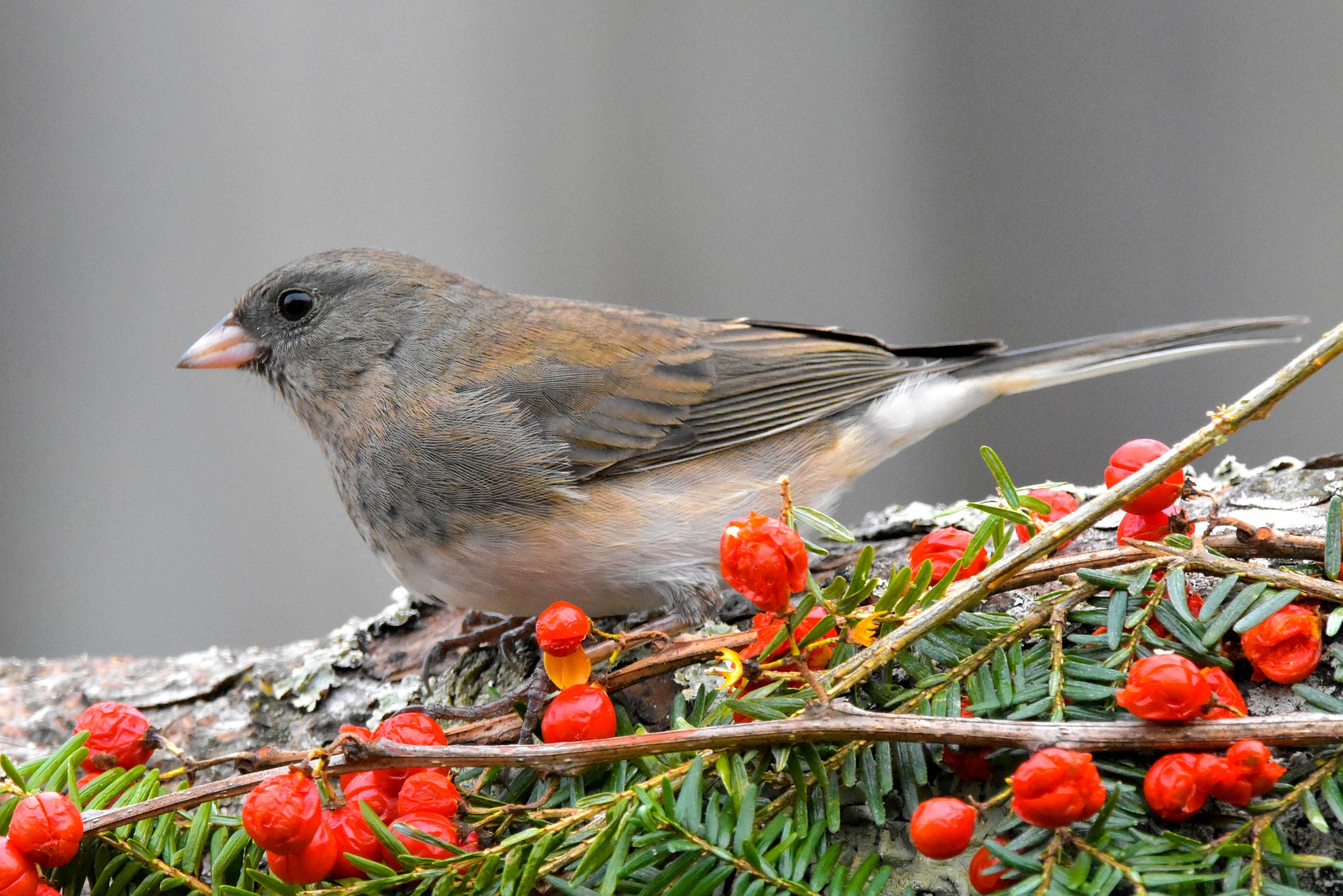
Photo by Jack Bulmer/Pixabay • The dark-eyed junco, or “snow bird” as it’s often known, is a winter visitor to many feeders in the region.

I wrote my first bird column on Sunday, Nov. 5, 1995, which means this weekly column is marking its 27th anniversary this week.

This column has appeared over the last three decades in various newspapers, which I regard as a personal achievement, as well as an accomplishment for our feathered friends. It’s on their behalf that I pen these weekly efforts to promote conservation and good will toward all birds. I have also posted the column as a weekly blog posting since February  2014 at www.ourfinefeatheredfriends.com.

I’ve played detective, helping people identify everything from “rain crows,” or cuckoos, to Muscovy ducks, chukars and double-crested cormorants. I’ve observed unusual birds, including whooping crane, black-necked stilt and clay-colored sparrow, in Northeast Tennessee, Southwest Virginia and Western North Carolina and spotlighted them in these columns.
I still take delight in the kaleidoscopic parade of colorful warblers that pass through the region each spring and fall.

Photo by Bryan Stevens • A dark-eyed Junco visits a hanging feeder.

I’ve covered a lot of terrain in my quest to see birds. I’ve made numerous trips to Musick’s Campground on South Holston Lake in Bristol to see bald eagles, merlins and other raptors, as well as various gulls, terns, shorebirds and waterfowl. I’ve pushed my way through Quarry Bog and Orchard Bog in Shady Valley in Johnson County in pursuit of elusive sparrows, wrens and rails. I’ve visited Winged Deer Park in Johnson City, Sycamore Shoals State Historic Park in Elizabethton and Steele Creek Park in Bristol looking for everything from tanagers, thrushes and terns to avocets and cackling geese.

At my home, I also provide sunflower seed and other supplemental food for the resident birds like Carolina chickadees, white-breasted nuthatches, song sparrows and downy woodpeckers.
Even as I tweak my anniversary column for “Feathered Friends,” the region’s residents have already experienced some heavy frosts and freezes. This prognostication of approaching winter weather is a perfect time to dust off this week’s column, which is a revision of the first bird column I ever wrote. This column focused on a common visitor to yards and feeders during the winter months. In fact, dark-eyed juncos should be returning to the region any day. In fact, I’ve already seen my first dark-eyed junco at home this year.

Here, with some revisions I have made through the years, is that first column.

•••

Of all the birds associated with winter weather, few are as symbolic as the dark-eyed junco, or “snow bird.” The junco occurs in several geographic variations.

John V. Dennis, author of “A Complete Guide to Bird Feeding,” captures the essence of the junco in the following description: “Driving winds and swirling snow do not daunt this plucky bird. The coldest winter days see the junco as lively as ever and with a joie de vivre that bolsters our sagging spirits.” The dark-eyed junco’s scientific name, hyemalis, is New Latin for “wintry,” an apt description of this bird.

Most people look forward to the spring return of some of our brilliant birds — warblers, tanagers and orioles — and I must admit that I also enjoy the arrival of these birds. The junco, in comparison to some of these species, is not in the same league. Nevertheless, the junco is handsome in its slate gray and white plumage, giving rise to the old saying “dark skies above, snow below.”

Just as neotropical migrants make long distance journeys twice a year, the junco is also a migrating species. But in Appalachia, the junco is a special type of migrant. Most people think of birds as “going south for the winter.” In a basic sense this is true. But some juncos do not undertake a long horizontal (the scientific term) migration from north to south. Instead, these birds merely move from high elevations, such as the spruce fir peaks, to the lower elevations. This type of migration is known as vertical migration. Other juncos, such as those that spend their breeding season in northern locales, do make a southern migration and, at times, even mix with the vertical migrants.

During the summer months, a visit to higher elevations mountaintops is almost guaranteed to produce sightings of dark-eyed juncos. Juncos may nest as many as three times in a season. A female junco usually lays three to six eggs for each nest, which she constructs without any assistance from her mate.

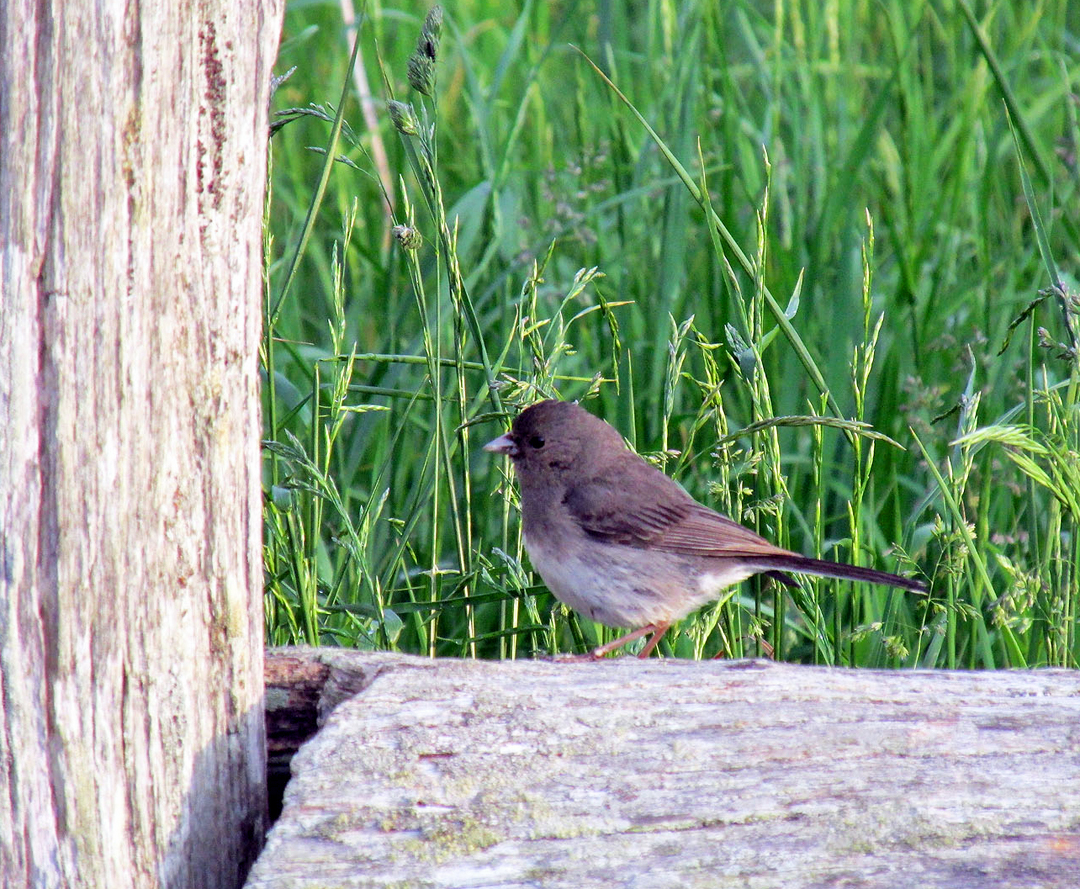
Photo by Bryan Stevens • A dark-eyed junco during the summer nesting season at Carver’s Gap on Roan Mountain.

Juncos are usually in residence around my home by early November. Once they make themselves at home I can expect to play host to them until at least late April or early May of the following year. So, for at least six months, the snow bird is one of the most common and delightful feeder visitors a bird enthusiast could want.

Juncos flock to feeders where they are rather mild-mannered — except among themselves. There are definite pecking orders in a junco flock, and females are usually on the lower tiers of the hierarchy. Females can sometimes be distinguished from males because of their paler gray or even brown upper plumage.

Since juncos are primarily ground feeders they tend to shun hanging feeders. But one winter I observed a junco that had mastered perching on a hanging “pine cone” feeder to enjoy a suet and peanut butter mixture.

Dark-eyed juncos often are content to glean the scraps other birds knock to the ground. Juncos are widespread. They visit feeders across North America. The junco is the most common species of bird to visit feeding stations. They will sample a variety of fare, but prefer such seeds as millet, cracked corn or black oil sunflower.

The juncos are a small branch of the sparrow clan. Some of the other juncos include the endangered Guadalupe junco, yellow-eyed junco, Baird’s junco and volcano junco. The last one on the list is endemic to the Talamancan montane forests of Costa Rica and western Panama. Baird’s junco is named for Spencer Fullerton Baird, an American ornithologist and naturalist.
Baird served as secretary  for the Smithsonian Institution from 1878 until  his death in 1887. He greatly expanded the natural history collections of the Smithsonian from 6,000 specimens in 1850 to over two million by the time of his death.

I hope you’ve enjoyed this introduction to juncos. There’s something about winter that makes a junco’s dark and light garb an appropriate and even striking choice, particularly against a backdrop of newly fallen snow.

Of course, the real entertainment from juncos come from their frequent visits to our backyard feeders. When these birds flock to a feeder and began a furious period of eating, I don’t even have to glance skyward or tune in the television weather forecast. I know what they know. Bad weather is on the way!

Photo by Bryan Stevens • A dark-eyed Junco is a common visitor when the weather turns wintry.

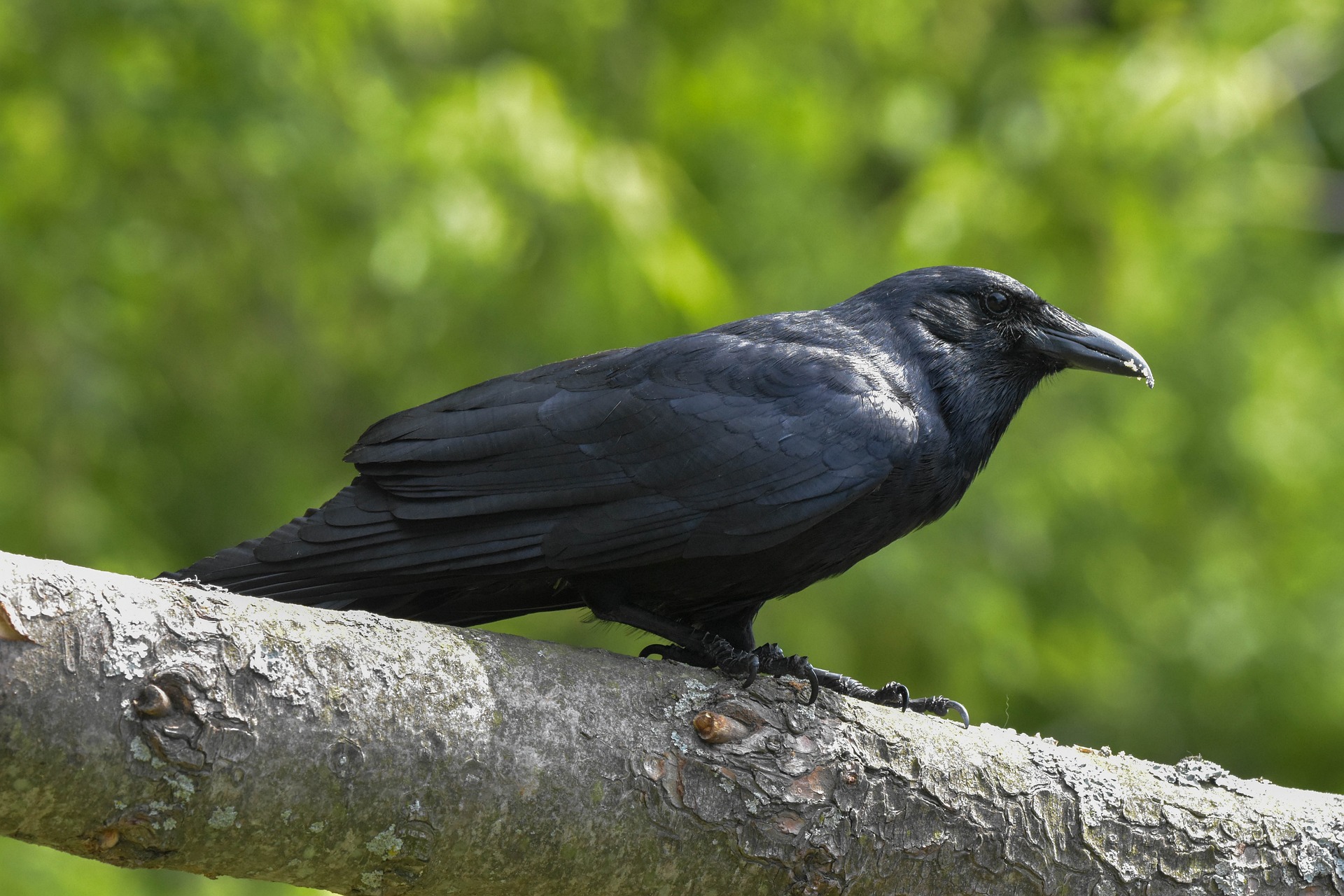
Crows and their dark kin conjure spooky associations

There’s something rather autumnal about watching a flock of American crows glean the last scattered kernels of corn from a harvested field as one of the flock stands sentry and ready to utter the alarm with some guttural “caws” should anything potentially threatening appear on the scene. Crows are such a part of the landscape that they would almost escape our notice if they didn’t come with centuries of accumulated baggage that makes us distrust them and suspect their every action.

While seeking birds far afield, I have occasionally spotted some innovative scarecrows standing guard in gardens and agricultural fields. I’m not sure if anyone still erects these human effigies for their original purpose of warding off crows and other feathered agricultural pests. These days, scarecrows likely serve an ornamental purpose and are often part of a yard’s whimsical Halloween or autumn decorations.

The crow, largely thanks to its glossy black feathers, but perhaps also with a nod to its avian intelligence, has long been associated with Halloween. Greeting cards and decorations for the holiday often feature depictions of bats, owls and black cats, as well as the inevitable crow and the accompanying scarecrow. With a brain about as big as a man’s thumb, the crow is renowned among ornithologists and other scientists for its keen intelligence. Crows are not fooled for a second by the charade of a straw-stuffed, brainless friend of Dorothy propped in a field.

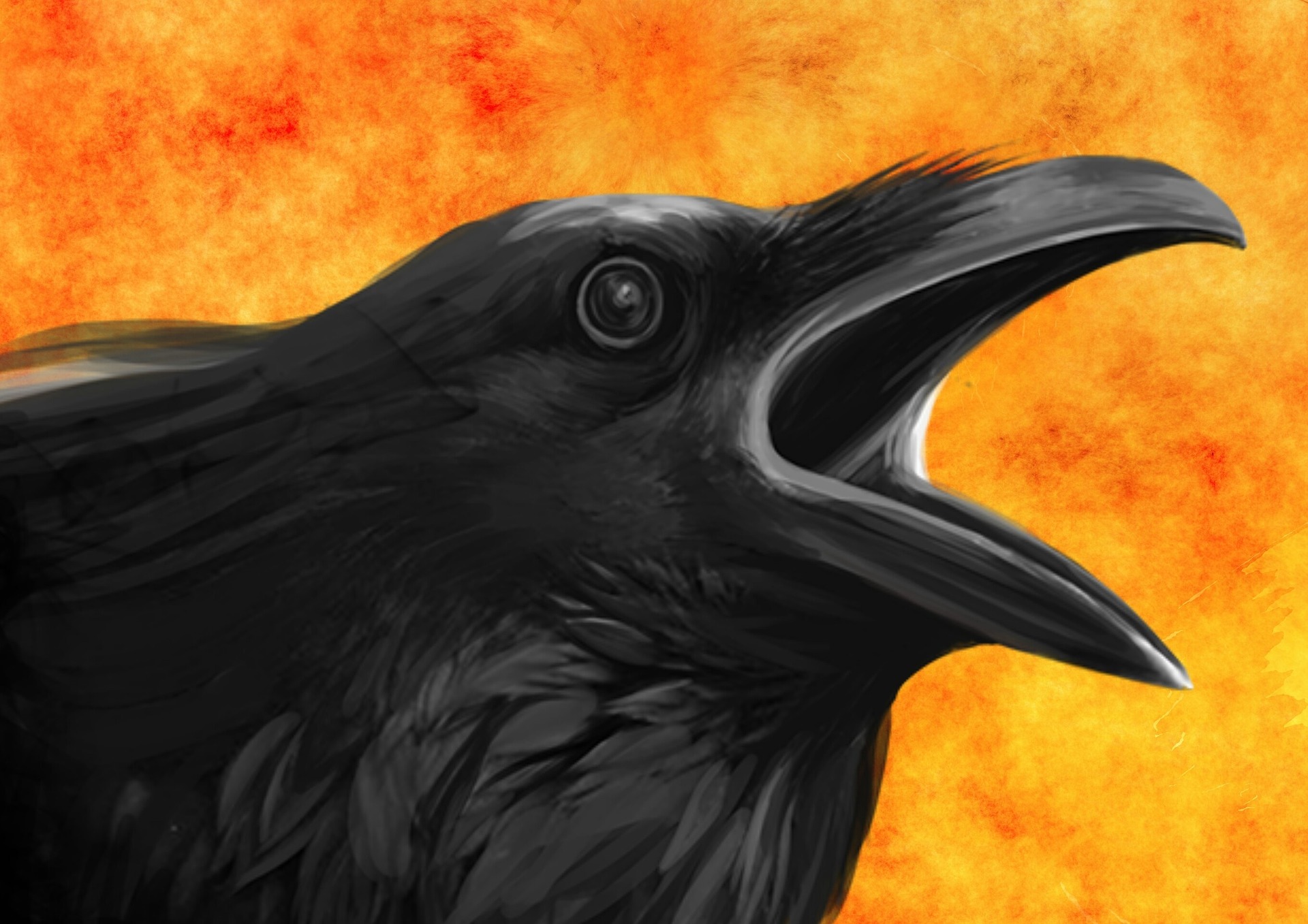
Photo by Jack Bulmer/Pixabay • American crows and their kin, albeit unfairly, have often been painted darkly because of their black plumage. These fascinating birds are worth a second look and not just during the Halloween season.

The intelligence of this bird has long been known. Early American naturalist William Bartram wrote about a crow named Tom in a highly entertaining essay titled “Anecdotes of an American Crow.” Bartram, who lived from 1739 to 1823, brought humorous observations and keen insight to his subject as he wrote about the joys — as well as tribulations — of living with Tom, a crow that enjoyed tormenting Bartram’s dog and purloining the writer’s spectacles and trying to hide them.

The essay demonstrates that almost as soon as Europeans arrived in North America, some of those with a bent toward the natural world recognized the intelligence and amazing adaptability of the American crow. As well as writing about the natural world, Bartram earned widespread acclaim for his drawings of botanical and ornithological subjects. Tom, the featured crow in Bartram’s brief essay, certainly exhibited intelligence of an impressive degree. Not only did the crow steal his owner’s eyeglasses, he foiled Bartram’s first attempt to reclaim them. The story makes very humorous reading. To read Bartram’s account, visit http://www.geocities.ws/jswortham/crow.

What else have crows done down through the ages to gain such a dark and much undeserved reputation? It probably doesn’t help matters that a flock of crows is known as a “murder.” Ancient Greeks considered crows as omens, which often foretold death and other disasters. The warrior goddess known as the Morrighan from Celtic mythology often appears in the form of a crow or raven. She is also often portrayed as being accompanied by a group of these black-plumaged birds. Many Native American tribes revere crows as communicators between worlds. Crows have been documented using tools and solving problems, which shows an uncanny ability to analyze and strategize. The early Celtic people also noted and admired these traits in crows.

I think the Celts and Native tribes had the right idea. Crows are admirable birds for many reasons. For instance, they are very social birds, often forming family flocks. They may also form much larger flocks for the purpose of roosting. When nesting, this social behavior comes in useful for a mated pair. Offspring from previous successful nesting efforts often serve as helpers. In addition to gaining their own life experience on successful nesting and caring for chicks, these older siblings may protect the nest site from predators or even deliver food to fill hungry beaks and bellies.

While famous for their associations to humans and our agriculture, crows forage far beyond the cornfield for their food. Many crows scavenge road-killed wildlife, such as squirrels, opossums and rabbits. While they certainly don’t turn up their beaks at the notion of eating carrion, crows do so less often than birds such as turkey vultures, black vultures and the crow’s fellow corvid, the common raven.

The kinship to the raven is evident, but even moderately experienced birders rarely confuse these similar species. The raven is a large bird with a heavy beak, a distinctive profile and a wedge-shaped tail. In a direct comparison with a raven, a crow looks downright puny. Both are members of the corvid family, which consists of 120 species including jays, rooks, magpies and jackdaws. Some of the world’s other crows include the descriptively named little crow, hooded crow, carrion crow, collared crow, long-billed crow and violet crow. While most of the world’s crows are thriving, the Hawaiian crow has been extinct in the wild since 2002, although the species still exists in captive-breeding programs in various zoos.

Thanks to its resourcefulness and intelligence, the crow is deserving of more respect and even admiration. The American crow is a uniquely American success story. Think more of Bartram’s story about Tom the crow and not the dark, misguided myths and legends about crows this Halloween. Long may the crows fly.


Owls haunt the dark of night while flying on silent wings

Photo by Pixabay • A perched Great Horned Owl appears to blend into the structure of a tree’s limbs, offering the nocturnal predator excellent camouflage.

There’s nothing to send shivers traveling along your spine like listening to the haunting hoots of a great horned owl hidden from human eyes by the cloak of darkness. It’s no wonder that owls have also become popular motifs for the celebration of the Halloween holiday. Just remember there’s more to these creatures of the night than perhaps meets the eye. Owls may be our neighbors, but we’ll never truly belong to their world, which must be why they continue to intrigue us.

While human culture has turned owls into beloved creatures, keep in mind these birds are fierce and ferocious predators. For young American crows in their nests, this owl is the stuff of their avian nightmares. It’s no wonder that crows, which no doubt witness their peers taken by the great horned owl as prey when young and helpless, grow up with an abiding hatred of this large nocturnal raptor. Flocks of adult crows form quickly when an owl is discovered at a roost during the daylight hours. With safety in numbers, the crows mercilessly hound and harry such unlucky owls.

Quite often, it does take a crow’s sharp eye to detect a motionless owl at its daytime roost. Great horned owls have a plumage of mottled grays and browns, as well as some white feathers on the chin and throat. This plumage helps them blend into their surroundings. Even when on the move, the great horned owl rarely attracts attention. They can fly in almost perfect silence on their wide wings. I know this from firsthand experience. Back in the early 2000s I visited Orchard Bog in Shady Valley in Johnson County in early spring for a chance to witness the evening display of American woodcocks from the nearby woodlands. While standing with some other birders, I noticed a large shadow moving low over the fields heading toward us. As the bird got closer, it became recognizable as a great horned owl. The owl barely diverted from its flight. In fact, it flew just over our heads, gliding silently on wide wings. I still marvel at how the owl’s wings made no noise whatsoever. The owl continued to glide over the fields until we lost it in the dusk. 

Photo by Alexas-Fotos/Pixabay • A great horned owl is capable of almost silent flight, which helps the predatory bird take prey by surprise. Many myths and superstitions surround the world’s owls, but the truth about owls is often more fascinating.

On another occasion I also witnessed how, when they want to do so, great horned owls can be absolutely silent. While vacationing on Fripp Island, South Carolina, in the 1990s, I would accompany my family members on dusk gold cart excursions. We liked to pull off the side of the road on a causeway that crossed a series of tidal creeks and marsh. On that occasion, a great horned owl flew from nearby woodlands to land on a gnarled snag that rose above the marshland vegetation. Although the owl arrived on silent wings, it soon interrupted the silence with resonant hoots that carried over the marshes. The owl returned to the same snag for two additional evenings during our vacation stay.

I’ve seen other great horned owl over the years in locations from South Carolina and Florida to Utah and Tennessee. I’ve heard many more of these large owls than I have ever been able to get into focus in my binoculars.

Here are a few other interesting facts about the great horned owl:

• This owl is one of the few predators that preys regularly on skunks. Lacking a well-defined sense of smell, owls aren’t bothered in the least by the skunk’s powerful arsenal of stink.

• A wild great horned owl’s longevity peaks at around 13 years of age. Captive owls have been reported reach ages of more than 30 years old.

• Various Native American tribes have held owls in high respect. Dwight G. Smith, author of Great Horned Owl, a book in the Wild Bird Guides series, noted that members of the Zuni tribe of the southwestern United States often hold owl feathers in their mouths to impart the owl’s ability to hunt silently onto their own hunting abilities.

• Great horned owls will eat other birds. They will eat other predatory birds, as well, including ospreys, peregrine falcon and various hawks. The smaller barred owl knows to stay out of their way, too.

• The David Lynch drama “Twin Peaks,” which ran originally on ABC from April of 1990 to June of 1991, spent considerable time dwelling on the mystery that “the owls are not what they seem.” Footage of great horned owls provided a sinister, mysterious mood that fascinated viewers. The series was resurrected in 2017 on Showtime. Alas, although owls returned in the revival of the series, fans still really don’t know the truth about the owls and their importance to the fictional town of Twin Peaks.

• The Celtic people believed that owls knew the paths that led into the underworld. Perhaps that is how owls became regarded as messengers capable of crossing realms. Many Native American tribes have stories about owls delivering messages from the supernatural spirit world to our own reality. 

I align with the cultures that regard an owl as an omen of good fortune. Any time you get a chance to observe an owl, it’s a good thing. It’s not often we get to glimpse these fascinating birds as they emerge from the shadows. Celebrate any opportunity.

•••

As always, email me at ahoodedwarbler@aol.com to share observations, make comments, or ask questions.

Region’s 53rd Fall Bird Count tallies one-day total of 125 species

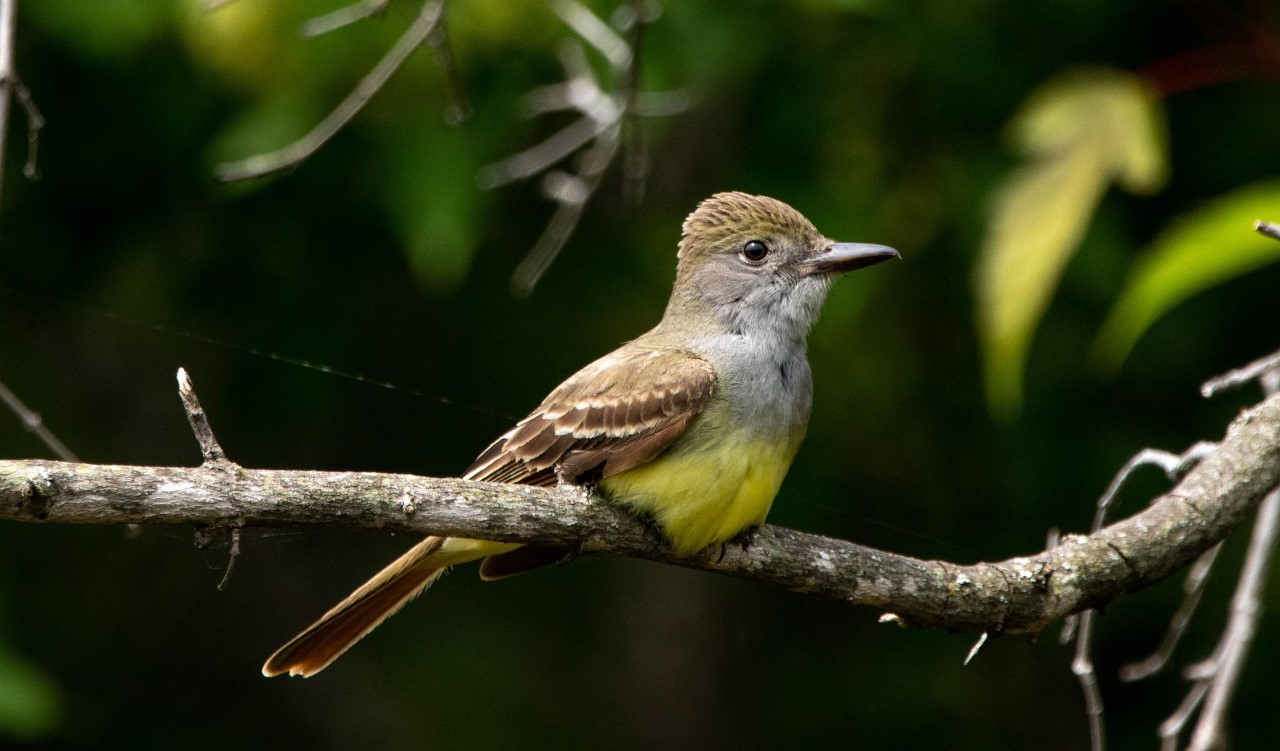
Photo by Image by simardfrancois/Pixabay • A single great crested flycatcher was tallied during this year’s Fall Bird Count conducted by members and friends of the Elizabethton Bird Club.

The 53rd consecutive Elizabethton Fall Count was held Saturday, Sept. 24, conducted by 26 observers in nine parties. The weather was cool and cloudy, with scattered light showers in most areas. Counters covered parts of Carter County and territory in the adjacent counties of Johnson, Sullivan, Unicoi and Washington.

According to long-time count compiler Rick Knight, participants tallied 125 species, which is exactly the average of the last 30 years.

The all-time high for the count was 137 species in 1993. Conversely, the lowest total in the last 30 years was 102 species in 1999.

Along with Rob Armistead, I counted birds around Sycamore Shoals State Historic Park and the linear walking trail along the Watauga River in Elizabethton.
The highlights of our morning included good looks at a male prairie warbler and some common mergansers on the river.

The list:
Canada goose, 881; wood duck, 50; blue-winged teal, 3; mallard, 195; American black duck, 1; and common merganser, 6.

Northern bobwhite, 6; wild turkey, 50; and pied-billed grebe, 1.

Rock pigeon, 477; Eurasian collared-dove, 8; mourning dove, 248; yellow-billed cuckoo, 3; common nighthawk, 1; chimney swift, 91; and ruby-throated hummingbird; 18.

Virginia rail, 2; sora, 1; killdeer, 12; semipalmated sandpiper, 1; and wilson’s snipe, 1.

Double-crested cormorant, 30; great blue heron, 25; great egret, 5; and green heron, 4, Black vulture, 43; turkey vulture, 82; osprey, 8; Northern harrier, 1; sharp-shinned hawk, 1; Cooper’s hawk, 5; bald eagle, 4; red-shouldered hawk, 7; and red-tailed hawk, 9.

Eastern screech-owl, 19; great horned owl, 7; barred owl, 4; belted kingfisher, 25; red-headed woodpecker, 8; Red-bellied woodpecker, 69; yellow-bellied sapsucker, 2; downy woodpecker, 32; hairy woodpecker, 24; Northern flicker, 50; and pileated woodpecker, 29.

American kestrel, 24; merlin, 1; and peregrine falcon, 2.

Great crested flycatcher, 1; Eastern wood-pewee, 12; Acadian flycatcher, 1; Empidonax species, 1; Eastern phoebe, 93; White-eyed vireo, 4; yellow-throated vireo, 3; blue-headed vireo, 15; and red-eyed vireo 11.

Blue jay, 415; American crow, 436; fish crow, 2; common raven, 11; tree swallow, 130; and barn swallow , 6.

Carolina chickadee, 167; tufted titmouse, 136; red-breasted nuthatch, 7; white-breasted nuthatch, 51; house wren, 9; winter wren, 1; marsh wren, 1; Carolina wren, 157; blue-gray gnatcatcher, 1; golden-crowned kinglet, 4; and ruby-crowned kinglet, 3.

Veery, 2; gray-cheeked thrush, 5; Swainson’s thrush, 85; American robin, 271; gray catbird, 37; brown thrasher, 9; Northern mockingbird, 69; and European starling, 453.

Cedar waxwing, 225; house sparrow, 28; house finch, 52; red crossbill, 2; and American goldfinch, 145.

Chipping sparrow, 72; field sparrow, 19; dark-eyed junco, 17; song sparrow, 83; Eastern towhee, 59; Eastern meadowlark, 17; and red-winged blackbird, 67.

Ovenbird, 4; worm-eating warbler, 1; Northern waterthrush, 2; black-and-white warbler, 13; Tennessee warbler, 57; Orange-crowned warbler, 1; Nashville warbler, 3; Common yellowthroat, 15; hooded warbler, 4; American redstart, 34; Cape May warbler, 18; Northern parula, 10; Magnolia warbler, 25; bay-breasted warbler, 16; Blackburnian warbler, 11; chestnut-sided warbler, 5; black-throated blue warbler, 15; palm warbler, 96; pine warbler, 6; Yellow-rumped warbler, 5; yellow-throated warbler, 1; Prairie warbler, 2; black-throated green warbler, 17; and Canada warbler, 1.

Summer tanager, 1; scarlet tanager, 14; rose-breasted grosbeak, 65; blue grosbeak, 2; and indigo bunting, 5.

Some notable misses, according to Knight, were ruffed grouse, broad-winged hawk, brown creeper, common grackle and brown-headed cowbird.

“Many thanks to all participants for another good count,” Knight remarked when posting the summary of the 2022 Fall Bird Count.

•••

To share a sighting, ask a question or make a comment, email me at ahoodedwarbler@aol.com.

Bristol park’s Wildlife Weekend returns Oct. 7-8 to celebrate 25th anniversary

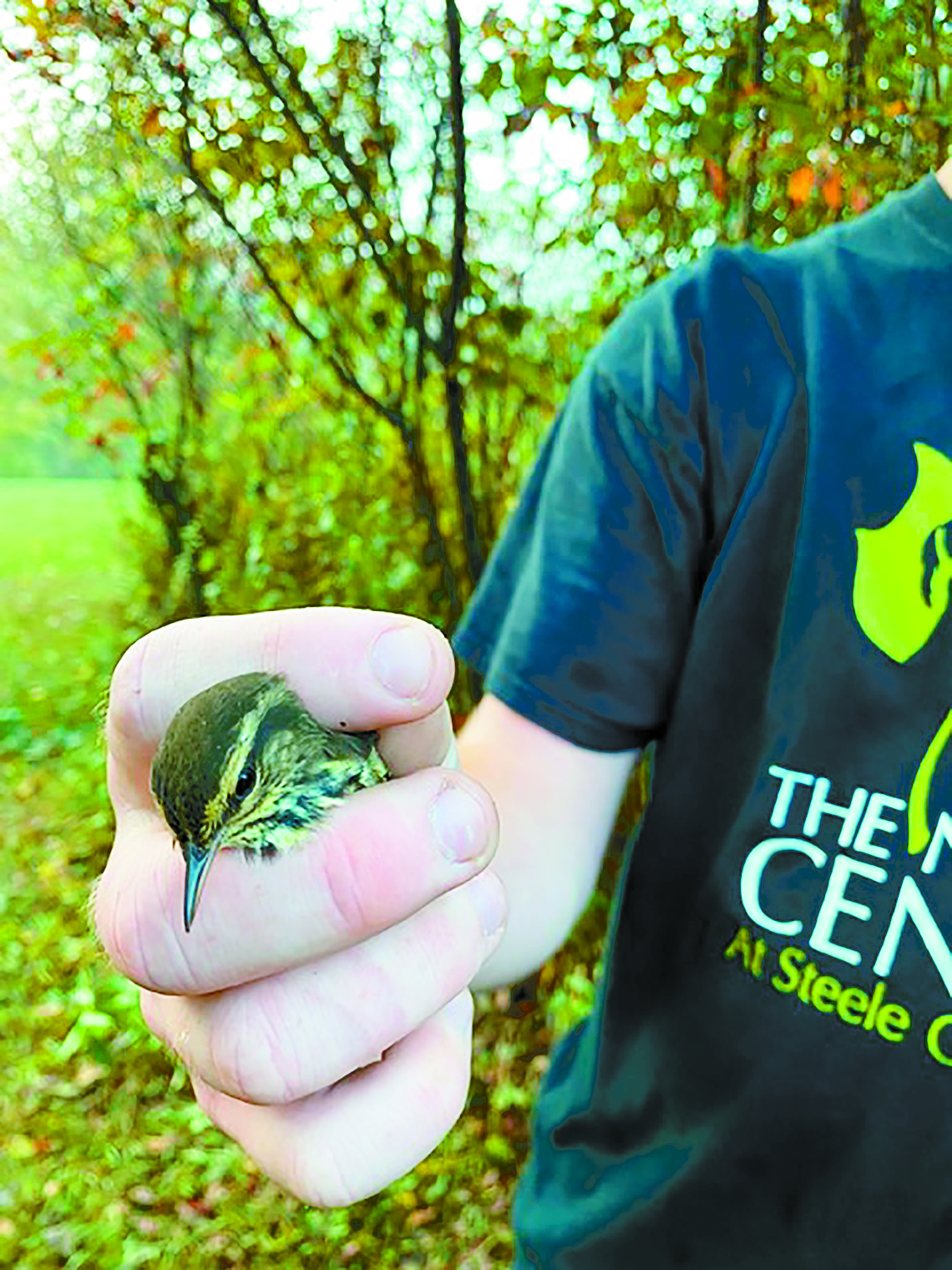
Contributed Photo by Michele Sparks • A Northern waterthrush is secured in a bander’s hand at a bird banding station operated at a previous Wildlife Weekend. Bird banders Richard Lewis and Rack Cross will also conduct a bird banding operation at this year’s Wildlife Weekend at Steele Creek Park in Brisol on Saturday, Oct. 8.

Members of the Friends of Steele Creek Nature Center and Park in Bristol are getting ready to observe a milestone in their yearly staging of Wildlife Weekend on Friday and Saturday, Oct. 7-8.

This year’s event, which will feature the theme “Plants and Pollinators,” will mark the 25th anniversary of the yearly celebration of wildlife in it many forms.

Birds will certainly be part of the mix, as will reptiles and honeybees, not to mention insects, spiders and more. Bird-specific activities scheduled for Oct. 8 include an Early Bird Walk, which will be conducted at 9 a.m. by Bristol Bird Club member Larry McDaniel, as well as a bird banding station located at the thicket near the Civitan Pavilion. Banding will get underway at 9:30 a.m. with longtime bird banders Richard Lewis and Rack Cross on site to introduce bird banding and its value to science to those attending this event.

If you’ve never observed bird banding, I would encourage you to attend this event. Banders receive training and are licensed by the federal government. These sessions also provide an opportunity to observe birds in a way that differs greatly from peering at them through binoculars. Of course, it’s rather hit or miss on what birds might show up in the nets used to capture the birds. Some of the expected birds that may be caught and banded include warblers, sparrows, thrushes, grosbeaks and other songbirds.

Other Saturday activities will include a walk at 10 a.m. to look for spiders and insects with naturalist Cade Campbell, and the two-hour Commander’s Morning Hike. The latter is a guided hike to the highest point in Steele Creek Park.

On Saturday afternoon, another Commander’s Hike will be offered with a different focus: this three-hour hike, which starts at 1 p.m., will give participants a chance to visit the oldest tree within the park.

Other afternoon walks, focused on honeybees, reptiles and mushrooms, will be led by Jeremy Stout, Lance Jessee and Mike Martin respectively. The mushroom walk commences at 1 p.m. The honeybee walk begins at 2 p.m., and the reptile walk will start at 3 p.m.

The popular Wildlife Weekend Passport is back. This scavenger hunt can be played via a downloadable Goosechase app or with a traditional printed hole punch version. Completed passports must be returned to the registration table by 4 p.m. to be eligible for prizes.

Saturday will also offer a variety of interactive exhibits and information tables, both at The Lodge and Nature Center’s lakeside porch from 10 a.m. to 4 p.m. Themes for some of the kiosks will include fossil casting, rocks and minerals, and skins and skulls. 

Wes Walker, who has helped organize the events for Wildlife Weekend, noted that Saturday’s events will also be documented by a local photography group.

“We should be having the Eastman Camera Club on-site that day, “Walker said. “This club, comprised of both amateur and professional photographers, captures various events across the Tri-Cites area.”

Walker touted Wildlife Weekend as a chance to learn more about Steele Creek Park, which is a gem featuring more than 2,000 acres in the middle of Bristol. 

“Most folks are aware of the ‘park’ area, but that only encompasses a fraction of the entire park,” Walker said. “Wildlife Weekend is an opportunity for individuals and families to explore this local treasure, and learn about the natural wonders from local experts.” 

The numerous interactive activities range from crafts, to several-mile hikes. Wildlife Weekend also serves as an excellent way to introduce children to the wonders of nature, as well as a knowledge supplementation for more experienced nature enthusiasts. 

The Bristol Bird Club will operate a kiosk offering information on the region’s varied birds. In addition, members of the Washington County Master Gardeners program will host a kiosk adjacent to their pollinator garden next to the Nature Center’s lakeside porch. The Campbells (Tracy, Cade and Chloe) will offer a family crafts kiosk featuring crafts for making “Critter Keepers” and “Mosaic Magnets.” Megan and David Christian will operate an owl pellet kiosk. By dissecting the pellets, participants can get a hint at the varied diets of owls residing in the park. 

The 25th Wildlife Weekend kicks off on Friday, Oct. 6, with an opening reception at 6 p.m. in the Steele Creek park Nature Center. After a brief overview of the history of Wildlife Weekend, keynote speaker Gerardo Arceo-Gomez will present a program titled “Pollination in Action: Fantastic Bees and Where to Find Them.” Friday’s activities will conclude with an awards ceremony for the 2022 Wildlife Weekend Amateur Photography Contest. 

For more information on the 25th annual Wildlife Weekend, visit http://www.friendsofsteelecreek.org. 


Prairie warbler bears a name unrelated to bird’s habits and habitat

Photo by Noppadol Paothong/Missouri Department of Conservation • A prairie warbler forages in a cedar.

I took part in the annual Fall Bird Count conducted Saturday, Sept. 24, by members and friends of the Elizabethton Bird Club. Some highlights of the count were migrating warblers that made for some exciting observations.

The 50 or so species of warblers that make their home in the eastern parts of the United States and Canada during the spring and summer months are now winging their way south.
The blackpoll warbler, which holds the distinction for the longest migration of any species of New World warbler, will journey from the forests of Canada to spend the colder months in northern South America. Because of a peculiarity of this bird’s fall migratory habits, birders in Northeast Tennessee are far more likely to see this late-arriving warbler in May than in the autumn.

A few warblers — pine warbler, magnolia warbler and palm warbler —are named for trees for the simple reason that their European discoverers happened to first observe them in the branches of their namesake trees.

For most of these warblers named to honor various trees, their common names are, at best, a misnomer. Throughout most of its life, the palm warbler doesn’t even encounter palm trees. Johann Friedrich Gmelin, a German naturalist who lived from 1748 to 1804, saddled the palm warbler with its inappropriate name. Gmelin based his naming of the bird on the fact that a specimen had been collected on Hispaniola, an island in the Caribbean with an abundance of palm trees. Gmelin published several textbooks in the fields of chemistry, pharmaceutical science, mineralogy and botany. He also had a hand in publishing a catalog of scientific names for various species, including some birds that had until that point never been given a species classification. Thanks to his efforts, the palm warbler has forever been linked with a type of tree that is, at best, entirely incidental to the bird’s life cycle.

The same is true for the magnolia warbler, which would have been more suitably named the spruce or fir Warbler, as the species is highly dependent on northern coniferous forests as nesting habitat. The pine warbler, at least, restores credibility to some of the early experts who have these tiny birds their common names. The pine warbler does indeed prefer stands of pine trees, showing particular favor for pitch pines.

While counting birds with Rob Armistead at Sycamore Shoals State Historic Park, as well as the linear walking trail along the linear trail in Elizabethton, we spotted and watched a striking and cooperative male prairie warbler. The prairie warbler is another warbler with a common name that doesn’t truly reflect any accuracy about the bird.

For instance, the prairie warbler is not affiliated with the vast plains and grasslands of the United States and Canada. According to the Tennessee Watchable Wildlife website, Alexander Wilson named the prairie warbler in 1810 from specimens collected in Kentucky in a habitat that was then called a prairie. The habitat is now referred to as a “barrens,” which are a mixture of scrubby vegetation and trees. Prairies, fin the generally accepted sense, are grassland habitats.

According to the website All About Birds, some prairie warblers in Florida have become non-migratory and differ in some subtle ways from other prairie warblers, including being slightly larger.

Photo by U.S. F&WS • A prairie warbler perches on a branch amid thick cover.

Red-eyed vireo take part in migratory parade


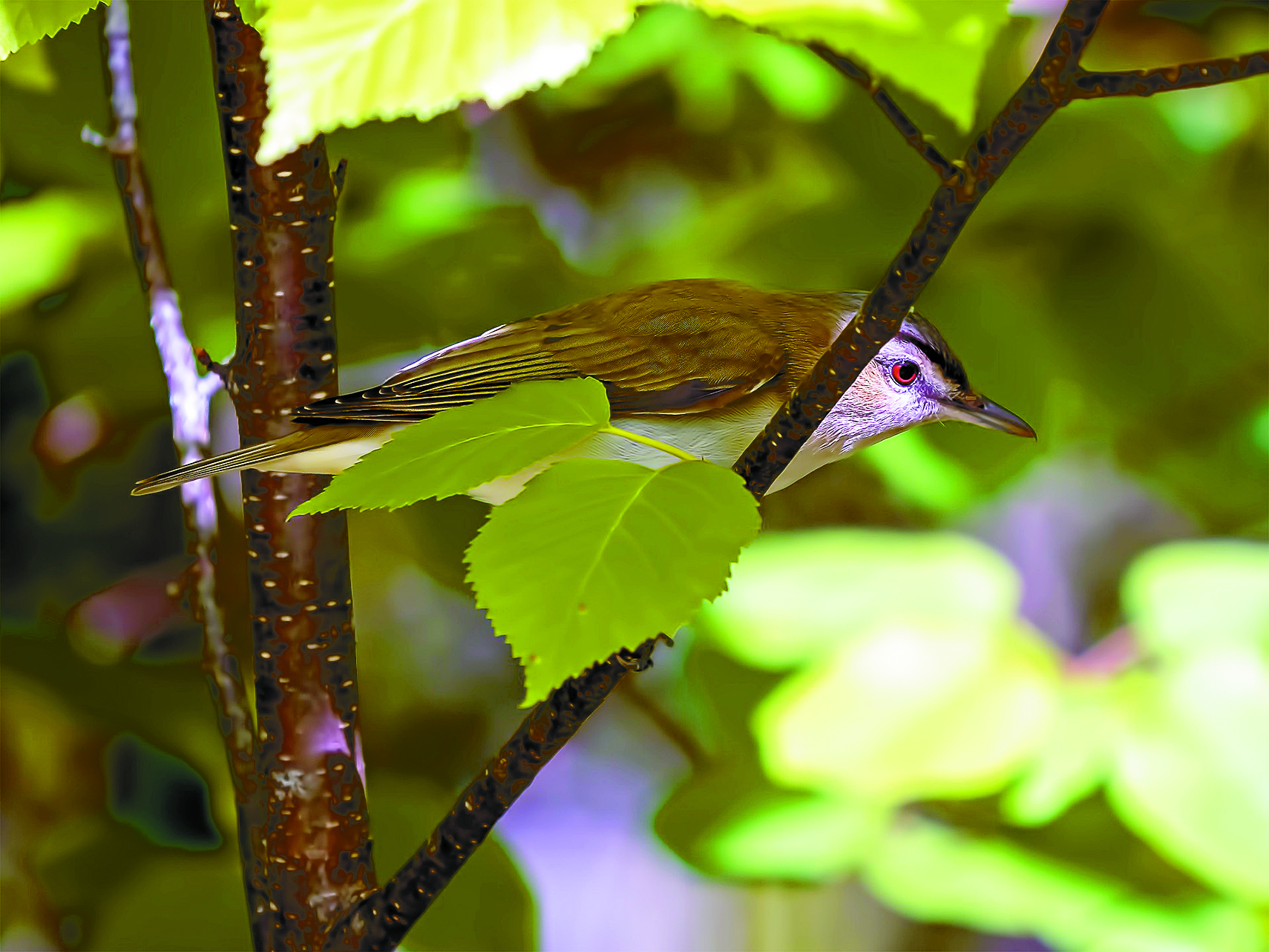
Photo by Hans Toom/Pixabay • Red eyes, readily apparent with a good look through binoculars, have provided the inspiration for the common name of the red-eyed vireo, a summer resident in Northeast Tennessee, Southwest Virginia and Western North Carolina.

The signs of migration are everywhere. Warblers and company have been active the past couple of days. On Labor Day, Sept. 5, I was treated to a visit by three young common yellowthroats (two females and a male) in jewelweed and shrubs just by the front porch. One little female was extremely curious, coming as close to me and the porch as she dared. 

A male common yellowthroat sang almost daily from late May to late August, leading me to speculate these three young birds were some of his offspring. In quick order, I also observed a black-and-white warbler, a couple of young chestnut-sided warblers, a couple of gray catbirds and an Empidomax flycatcher that, if pressed, I’d guess was an Acadian. 

The next morning, despite a steady rain, warblers started the show again, including more chestnut-sided warblers, a Northern parula and a Tennessee warbler. I also watched a red-eyed vireo dueling with an Eastern wood-pewee until they both earned the ire of a ruby-throated hummingbird that chased after both of them with determined zeal.

A session of lawn chair birding in the back yard found me grateful for quality if not quantity on Thursday, Sept. 8. A delightful highlight was a beautiful male black-throated blue warbler that provided great looks in my binoculars. I also saw a Tennessee warbler, Carolina chickadees, gray catbird, ruby-throated hummingbird and downy woodpecker.

On Sept. 9, a morning walk before walk on the linear trail in Erwin yielded observations of a black-throated green warbler, gray catbird, downy woodpecker, red-bellied woodpecker and belted kingfisher. 

Providing background noise on most of my recent birding forays have been red-eyed vireos with their strident, scolding calls punctuating the background of chip notes, songs and calls from many other birds.

Photo by Jean Potter • The Blue-headed Vireo prefers wooded habitats at higher elevations.

At a glance, vireos would appear related to the wood warblers. Research into DNA, however, has led many experts to contend that vireos are more closely related to crows and shrikes. Like the flycatcher and hummingbird families, the vireo family is exclusive to the New World. With a mere 50 species, vireos and their kin are vastly outnumbered by flycatchers and hummingbirds. The majority of vireos resides in the tropics, but about a dozen species nest in the United States.

In East Tennessee Southwest Virginia and Western North Carolina, vireos resident during the summer months include red-eyed vireo, white-eyed vireo, blue-headed vireo, yellow-throated vireo and warbling vireo. Most people are likely unaware of vireos. Although not uncommon, these birds are more frequently heard than seen. They spend much of their time in the forest canopy or in dense brush. When singing, they can remain at a perch, unmoving, for long periods of time.

The loud scolding calls of red-eyed vireos often heard this time of year are given apparently when the vireo is alarmed or irritated, such as when a vireo is chased or challenged by an uppity hummingbird. This scolding vocalization is quite unlike the usual ones produced by this bird. First and foremost, the call is louder than one would think could be produced by a bird that is only about six inches long. During the summer season, the red-eyed vireo is also one of the most persistent of singing songbirds. Another common name for the red-eyed vireo is “preacher bird,” so called because of its tendency to unceasingly deliver its song.

The red-eyed vireo is still considered one of eastern North America’s most common summer breeding birds. At one time, the red-eyed vireo was probably the most common breeding bird in eastern woodlands. That, sadly, is no longer the case. Red-eyed vireos are olive-green above and clean white below. These birds show a distinctive head pattern consisting of a gray crown and white eyebrow stripe bordered above and below by black lines. Adults also have the red eyes that give this particular vireo its common name. The term “vireo,” originating in Latin, can be translated into English as “green bird.” It’s an apt description, as many of these small birds are primarily dull green in coloration. Consider the vireos the “Plain Janes” of songbirds.

Other vireos that can be found in the United States, for at least part of the year, include Philadelphia vireo, plumbeous vireo and Cassin’s vireo. A specialty of Florida is the black-whiskered vireo, while the black-capped vireo is an endangered species found in Texas. Two others, Bell’s vireo and gray vireo, are identified as species of concern on the Audubon Watchlist.

Many species of vireo are also found in the islands of the Caribbean, including Jamaican vireo, Cuban vireo and Puerto Rican Vireo. The thick-billed vireo, which is very similar to the white-eyed vireo, is a native of the Bahamas. 

Some of the more colorful common names for vireos include the dwarf vireo, golden vireo and yellow-winged vireo.  In Central and South America, the vireo family expands to include many birds with common names such as shrike-vireo, greenlet and peppershrike. Some of the varied species include lemon-chested greenlet, green shrike-vireo and the black-bellied peppershrike.

•••

To share a sighting, ask a question or make a comment, email ahoodedwarbler@aol.com.