Tag Archives: Elizabethton Star

Sapsuckers are odd birds out among the woodpeckers


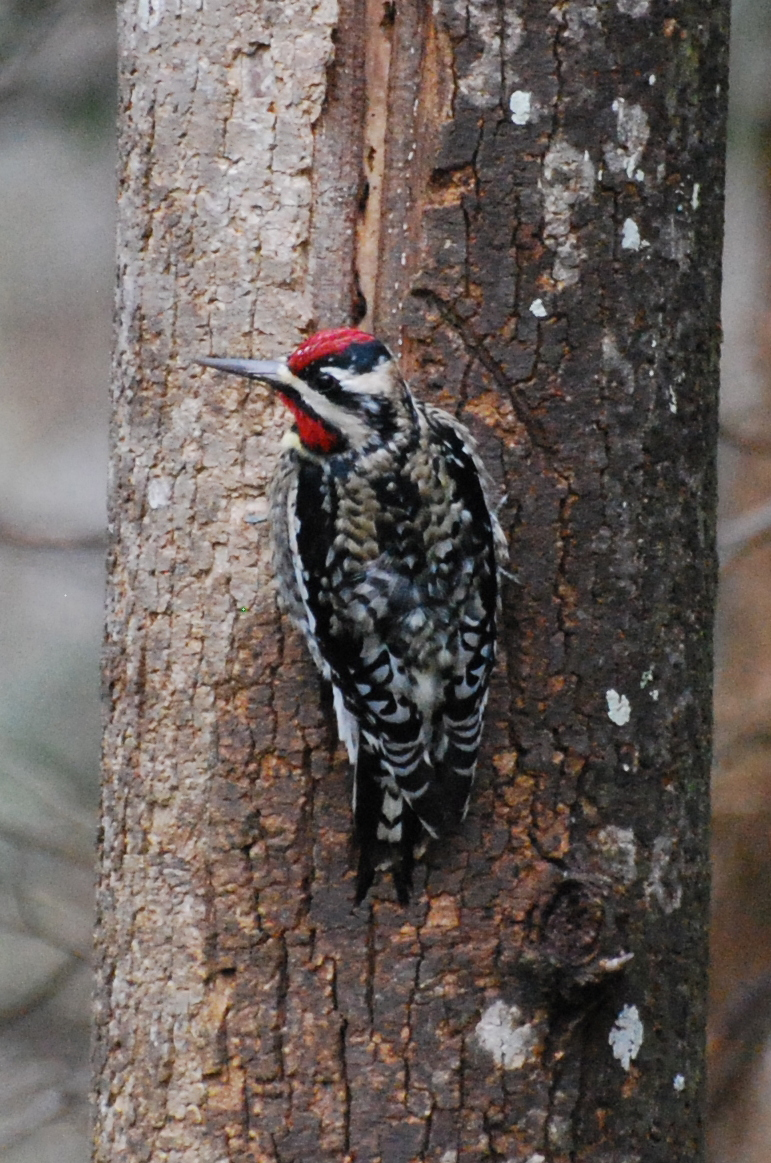
Sapsucker-Two

Photo courtesy of Jean Potter                            A male yellow-bellied sapsucker clings to the trunk of a tree.

Worldwide, there are almost 10,000 species of birds. After awhile, you begin to wonder if thinking of unique names for each of these species began to deplete creative reserves.

Then again, some of the names given to birds suggest someone really wanted just to have fun at the expense of birders and nature enthusiasts. After all, you have to be careful about shouting out bird names like blue-footed booby, great bustard and hoary redpoll in mixed company.

There are also bird names that just don’t make a lot of sense — names like dickcissel and phainopepla — even to birders. Then there are names that are oxymoronic, including greater pewee and giant hummingbird.

There are some bird names that sound like fighting words that bring into question concepts like courage and honor. Indeed, I sometimes think people are waiting for a punchline when I inform them there truly is a species of bird known as the yellow-bellied sapsucker.

Sapsucker-One

Photo courtesy of Jean Potter                                                                    A male yellow-bellied sapsucker visits a suet basket for a quick meal during a recent cold spell.

I focused on the downy woodpecker, the smallest member of the woodpecker clan in a post from a couple of weeks ago. This week I am exploring one of the family’s oddball members, the aforementioned (and much maligned) yellow-bellied sapsucker.

In profile clinging to the trunk of a tree, the yellow-bellied sapsucker is a rather pudgy, especially for a woodpecker. The sapsucker has black and white plumage enhanced by red foreheads in both sexes. Male sapsuckers also have a bright red throat patch. Both sexes also show a large white stripe on their black wings. And yes, there is enough of a pale yellow wash on the stomach of this odd woodpecker to justify the descriptive “yellow-bellied” as part of its common name.
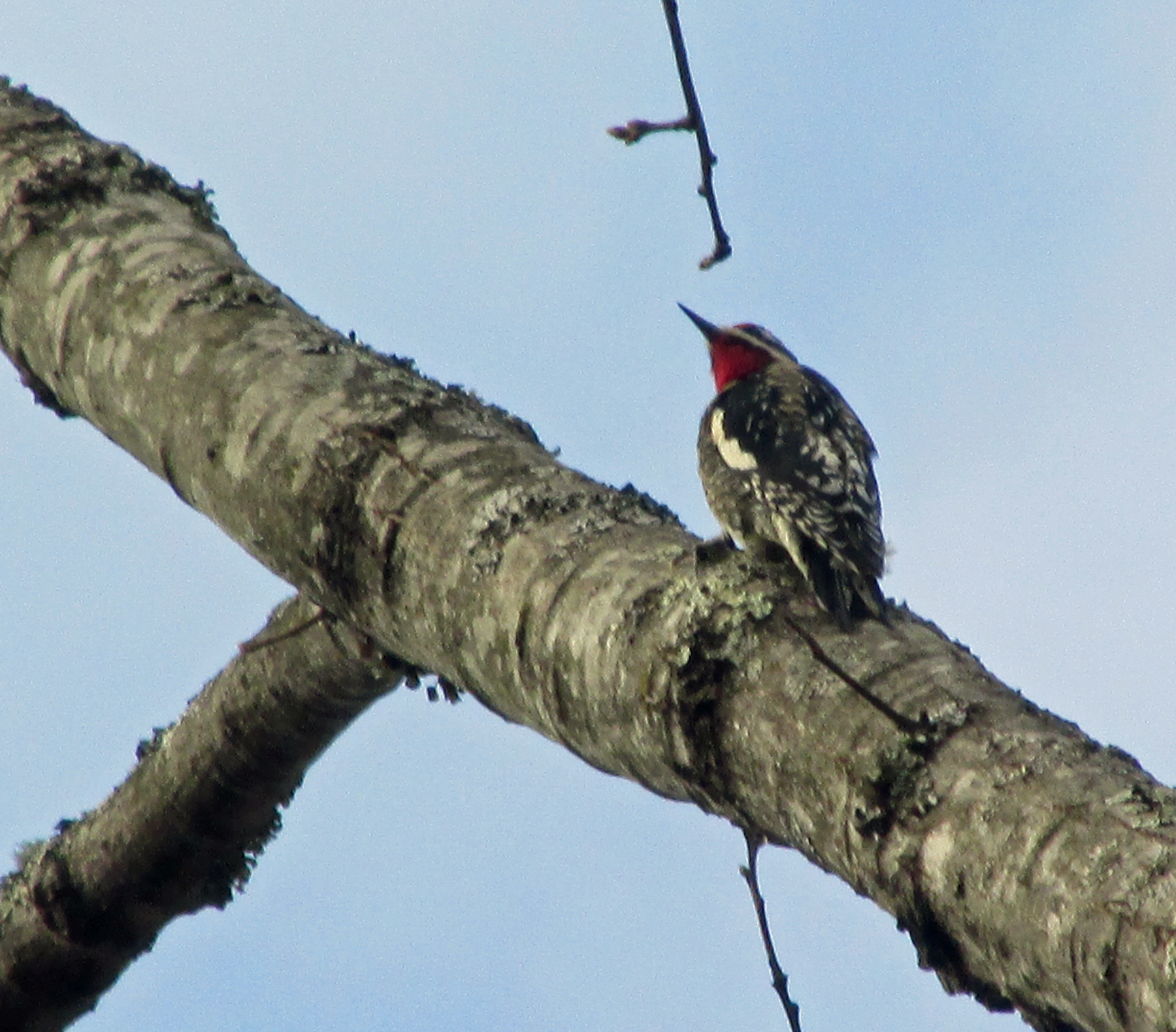
 

COUNT-Sapsucker

Photo by Bryan Stevens                                    This yellow-bellied sapsucker was photographed during a Christmas Bird Count.

Sapsuckers harvest sap by using their bills to drill various sorts of holes into the bark of a tree. Some of the more shallow holes, which are usually made in a rectangular fashion, must be maintained on a frequent basis for the bird to continue to derive sap from the tree. These holes — known as sap wells — not only provide nourishment to the sapsucker but to other birds, including hummingbirds, that appreciate a quick sugar fix. Insects also come to these wells, which function as sticky traps to capture the bugs so they can be eaten later when sapsuckers or other birds return to inspect the wells.

audubon-viii-gleaners-of-forest-and-meadow-yellow-bellied-sapsucker-aka-yellow-bellied-woodpecker

Early naturalist and artist John James Audubon painted the yellow-bellied sapsucker, known during his time as the yellow-bellied woodpecker.

Although they tend to prefer trees like maple and birch, sapsuckers are known to feed on more than 250 different varieties of trees. Indeed, they actually do feed on the trees. Not only do these birds subsist largely on sap, they also feed on the cambium layer in the bark of a tree. The sapsucker also supplements its diet with insects, fruits and seeds. Unlike other members of the woodpecker clan, sapsuckers do not visit feeders all that frequently. When a sapsucker does visit a feeder, it is often lured there by the promise of suet.

While most woodpeckers attempt to tough out the winter season in the same region where they spent the summer, the yellow-bellied sapsucker is migratory. Ahead of the coldest months of the year, sapsuckers migrate to the southeastern United States, as well as the West Indies and Central America. During the summer months, most sapsuckers nest in forests across Canada, Alaska and the northeastern U.S. states. There is also a small population of breeding sapsuckers in the Appalachian Mountains of Virginia, Tennessee and North Carolina.

The yellow-bellied sapsucker has a call that sounds amazingly like the meow of a cat. I know about this call from personal experience. While birding in South Carolina a few years ago, I searched diligently for the source of such a call. It sounded somewhat like a gray catbird — another mimic of the common household feline — but not quite. Now I know that when I hear this unusual call I can train my binoculars on the branches and trunks of nearby trees to scan for a sapsucker.
Redbreasted_Sapsucker

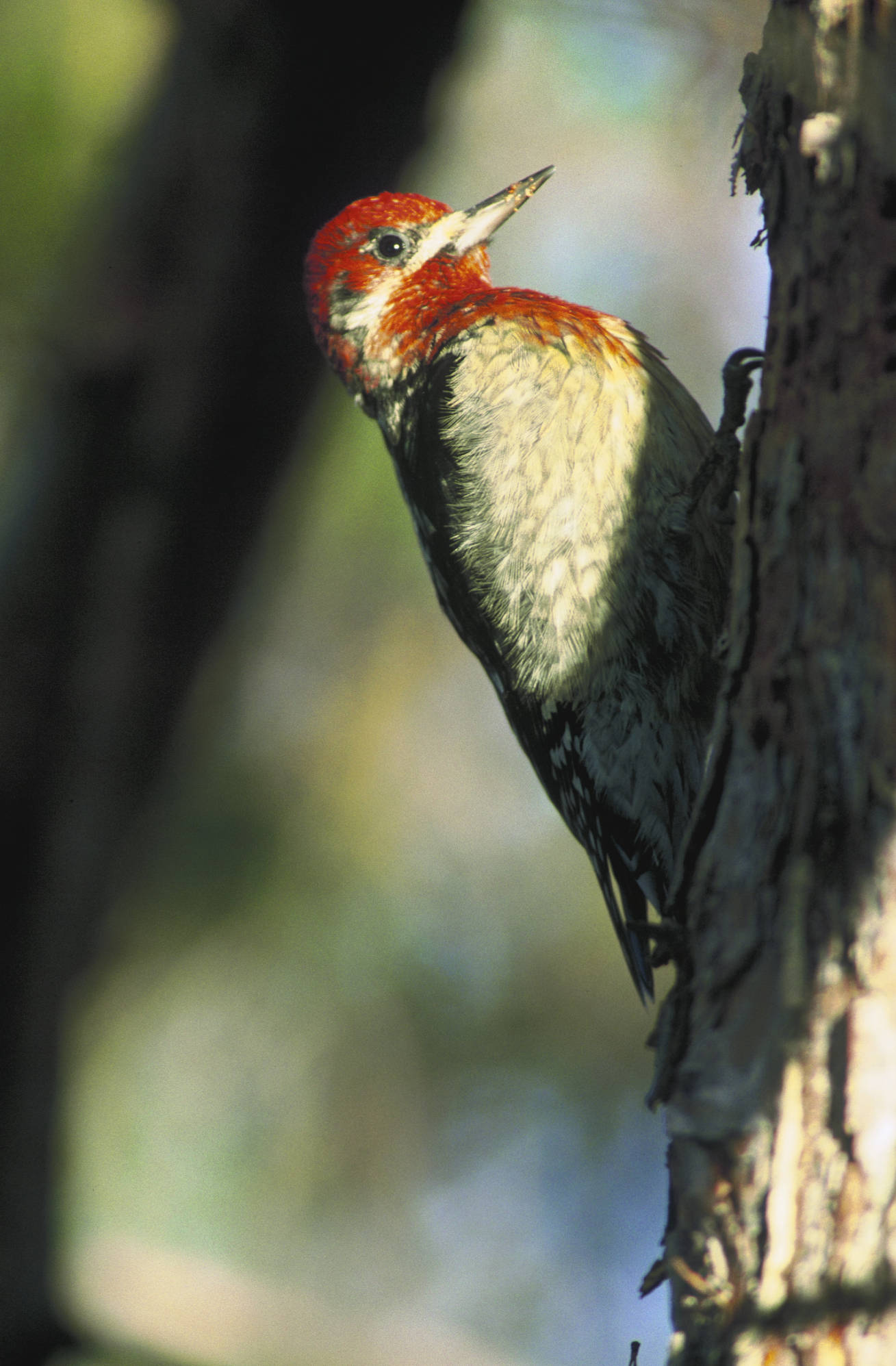
Photo by Dave Menke/U.S. Fish & Wildlife Service The red-breasted sapsucker, shown here, is a relative of the yellow-bellied sapsucker found in the western United States.

There are actually another three sapsucker species — Williamson’s, red-breasted and red-naped — in North America, but they are all birds of the western half of the continent.

It is true of many species of birds that males and females look different. In the case of the Williamson’s sapsucker, males and females look so different that early naturalists mistakenly believed the male and female were entirely different species! Only two decades after the initial discovery of this bird did scientists finally realize that both male and female Williamson’s sapsuckers were the same species. This particular sapsucker was named in honor of Lt. Robert Stockton Williamson, who led a surveying expedition that collected the first male. The intent of the expedition wasn’t focused on collecting birds. Williamson and his men had actually been assigned the job of identifying the best route west for a railway to the Pacific Ocean.

I’ve actually seen very few yellow-bellied sapsuckers at my home, but it isn’t too difficult to find this bird during fall migration and in the winter months at city and state parks in the region. If you observe a yellow-bellied sapsucker in your own yard, consider yourself lucky to get a glimpse of this oddball woodpecker.

••••••

To learn more about birds and other topics from the natural world, friend Stevens on Facebook at https://www.facebook.com/ahoodedwarbler. He is always posting about local birds, wildlife, flowers, insects and much more. If you have a question, wish to make a comment or share a sighting, email ahoodedwarbler@aol.com.

Winter Rally returns to Roan Mountain on Saturday, Feb. 13

Turkeys-Hillside

Photo by Bryan Stevens                                                                    Flock of Wild Turkeys forage on a hillside near Hampton, Tennessee.

As January moves into February, I’ve been seeing more of the birds I’ve come to associate with the winter months.

Ringneckers-Redheaders

Photo by Bryan Stevens                  Ring-necked Ducks and Redheads visit a pond at Erwin Fishery Park in Erwin, Tennessee.

During afternoon drives I’ve observed flocks of wild turkeys in fields near my home. The largest of these flocks consisted of at least two dozen birds. In addition to the turkeys, I’ve been seeing waterfowl at various ponds at local park. Some of these observations have included ducks like Redheads, Ring-necked Ducks, American Wigeons, American Black Ducks and Buffleheads, as well as Pied-billed Grebes, Common Coots and Great Blue Heron. I also found a large flock of Ring-billed Gulls at a large pond near the Elizabethton campus of Northeast Tennessee Community College.

FOXIE

Photo by Bryan Stevens                A Fox Sparrow arrived at feeders during a recent snowstorm.

Recent snowfall has also changed the makeup of the flocks of birds coming to my feeders. A Fox Sparrow has joined the Eastern Towhees I’ve watched foraging on the ground beneath the feeders hanging from the branches of a blue spruce outside my bedroom window.

GullsGreatLakes

Photo by Bryan Stevens                                Ring-billed Gulls at a pond in Elizabethton, Tennessee.

More Purple Finches, in addition to American Goldfinches, have joined the ranks of birds crowding around my black oil sunflower-stocked feeders. Other recent visitors have included European Starlings (a winter rarity at my home) and a male Red-winged Blackbird, which linger for only one snowy day.

•••••••

u25017404-o112351545-53

David Ramsey

It’s time once again to join the fun for a winter celebration of the Roan Highlands on Saturday, Feb. 13, at the Roan Mountain State Park Conference Center. The event will celebrate Roan Mountain’s grassy balds, rare plants, birds, ancient geology and ongoing conservation efforts. The inclusive event is planned as for all ages, so be sure to bring the kids. Presentations are planned by David Ramsey and Gary Kauffman.

Ramsey is a well-known area conservationist, photographer, and tireless fighter for the protection of the 10,000-acre Rocky Fork tract — now a 2,000-acre Tennessee State Park surrounded by 7,600 acres of U.S. National Forest. Ramsey will present a program on photography being one of the most important items in the conservationist’s toolbox. A native of Unicoi, he was Field & Stream’s 2011 “National Hero of Conservation” and a Southern Appalachian Highlands Conservancy’s Stan Murray award winner. Ramsey, whose great-great-grandfather walked these forest paths, brings a generational love to contemporary times on Roan Mountain.

Gary_Kauffman,_US_Forest_Service,_collects_Georgia_aster_seeds_(8057079764)

Photo by U.S. Forest Service                              Gary Kauffman collects seeds for a project for the U.S. Forest Service.

Gary Kauffman is the botanist/ecologist for the National Forests in North Carolina, which covers 1.1 million acres across four forests, the Nantahala and Pisgah National Forests in the mountains, the Uwharrie National Forest in the Piedmont, and the Croatan National Forest in the Coastal Plain. He will speak on the Roan’s rare plants in the balds and forests and the threats of balsam and hemlock wooly adelgid, beech bark disease, and non-native invasive plants.

Since you’re bringing the kids along, be sure to let them know that Xtreme Roan Adventures will have a table set up for owl pellet dissection. Of course, several afternoon hikes are also on the schedule for this year’s Winter Rally.

12615688_10207221841416752_570003004117826680_o

Photo by Bryan Stevens                                                                           The annual Roan Mountain Winter Naturalists Rally returns on Saturday, Feb. 13.

During lunch, Amanda “AJ” Smithson, Seasonal Interpretive Ranger at Roan Mountain State Park, will present a program on forests and fields’ edible plants. Smithson is a graduate from UNC Wilmington and NC State with degrees in Natural Resource Management and GIS.
For more information, on this annual event, visit http://friendsofroanmtn.org/winter%20rally%202016%20brochure.pdf

Winter storms can’t ruffle feathers of the downy woodpecker


Winter Storm Jonas was one for the history books, but the birds at my home weathered the wintry conditions without ruffling their feathers all that much.WinterStormJonas_Top-620x380

The storm reminded me of a major blizzard back in 1993 that set me on the path to becoming the enthusiast about birds that I am today. The Blizzard of ’93 — which was dubbed “a storm of the century” — killed more than 300 people and dumped more than 20 inches of snow across a vast swath of the Appalachians and the Northeastern United States. Fierce winds blew snow around into massive drifts. That storm developed on March 12, 1993, and dissipated by March 15, 1993.

Downy-Topsy

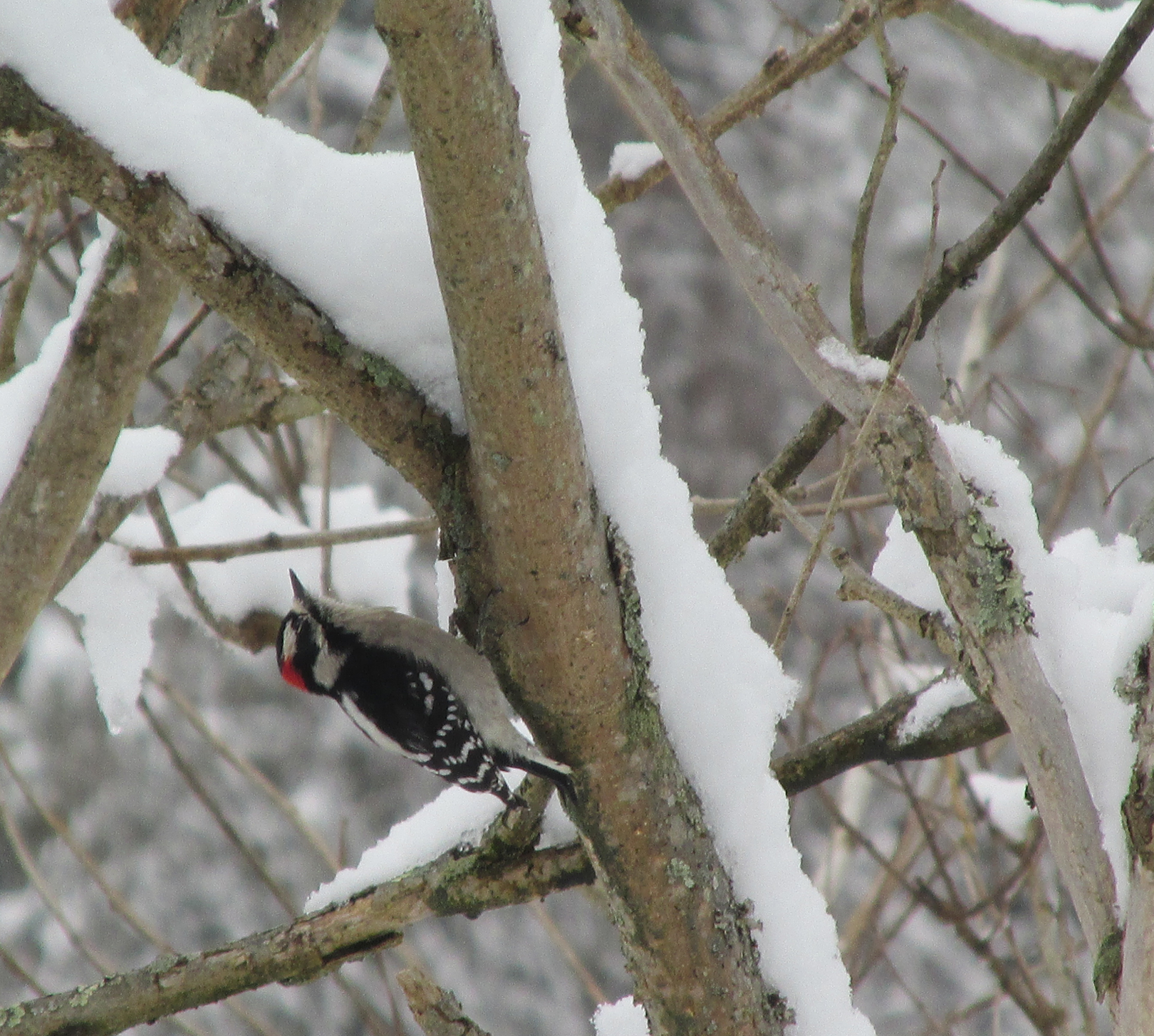
Photo by Bryan Stevens                                  Snow doesn’t deter a determined downy woodpecker.

Winter Storm Jonas dumped almost 11 inches of snow at my home, which was considerably less than back in 1993 when about three feet of snow accumulated. I remember the winds being more fierce with the ’93 storm, as well. Fortunately, my electric power never faltered through either of the storm, but my family was quite stranded for several days in 1993. With very little else to do, I watched my feeders. I remember observing birds like cardinals and juncos endured buffeting winds as they flocked to feeders that I had just placed in the yard earlier that winter. It was the beginning of my desire to learn more about birds, including training myself to identify the various species I encounter at home and afield.

More than 20 years later, the recent Winter Storm Jonas sent a variety of birds flocking to my feeders after what has been a lackluster start to the winter bird-feeding season. Some unexpected visitors — a male red-winged blackbird, two European starlings and a few purple finches — made their first appearance for the winter.

Downy-2

Photo by Bryan Stevens                                    Only the male downy woodpecker sports the red patch of feathers on the back of its head.

The most common visitors at the feeders were the dark-eyed juncos. I estimated that about two dozen of these “snow birds” spent most of the storm perched on my feeders or foraging on the ground beneath them. I also observed numerous Northern cardinals, Eastern towhees, American goldfinches, white-breasted nuthatches, Carolina chickadees, white-throated sparrows, song sparrows and more.

DUo-Downy-Titmouse

Photo by Bryan Stevens                                        A tufted titmouse and downy woodpecker share space at a suet feeder.

One bird that visited frequently also did so with amazing discretion. The downy woodpecker is a small black-and-white bird that often infiltrates a mixed flock of birds to nab a sunflower seed or grab a bit of suet before the other members of the flock are even aware of its presence. Perhaps because of its status as the smallest of the North American woodpeckers, the downy woodpecker is quite good at not drawing attention to itself.

Not only is the downy woodpecker the smallest of the woodpeckers in the United States, it’s also the most common. It’s the woodpecker that most bird lovers encounter in the yards and at their feeders. However, the downy is not the smallest woodpecker in the world. That distinction goes to species known as “piculets” that reside in Asia and South America. Worldwide, more than 180 species of woodpeckers thrive almost worldwide, only absent from the continents of Australia and Antarctica.

Hairy_woodpecker

Photo by U.S. Fish & Wildlife Service The hairy woodpecker is a larger look-alike relative of the downy woodpecker.

The dainty downy woodpecker has a larger lookalike relative. The hairy woodpecker not only bears a strong resemblance to the downy, but shares similar habitat, as well. Despite almost identical plumages, the two species are quite different in size. The downy, at six inches in length, is the size of a sparrow. The larger hairy woodpecker almost 10 inches in length, making it closer in size to a robin.

As most birders know, size is often difficult to determine, especially if you don’t have a downy and hairy woodpecker in close proximity. The deciding factor is usually a good look at the beak of these two birds. A downy woodpecker has a short, stubby, almost un-woodpecker-like bill. The hairy woodpecker, on the other hand, has a large bill like those of such relatives as red-bellied woodpecker and Northern flicker.

Downy-Male-Feb23

Photo by Bryan Stevens                                                    A downy woodpecker visits a feeder for a shelled peanut.

The downy woodpecker is a cavity-nesting bird, but the species does not usually accept man-made nesting boxes although they often utilize them for roosting purposes. Downy woodpeckers endure frigid nights not only by finding a cozy roosting spot but by also lowering their body temperature. This action is a form of controlled hypothermia that is also practiced by such small birds as chickadees, kinglets and hummingbirds.

Downy woodpeckers have a way of hitching themselves along trunks and branches in a jerky fashion. Although not silent by any means, the downy woodpecker limits its utterances to a range of “peents,” as well as a high-pitched jumble of descending notes often described as a “whinny.” Of course, they also make themselves heard by pounding against tree trunks and branches like their larger relatives.

Female-Downy1

Photo by Bryan Stevens                                Downy woodpeckers are quite comfortable climbing along tree trunks and branches.

A pair of downy woodpeckers makes a great addition to the diversity of birds in any yard. Don’t fret too much about them when the weather turns nasty. Despite their small sizes, they have a huge arsenal of adaptations to deal with the cold. Whether its a modest flurry or the “storm of a century,” the downy woodpecker’s not likely to ruffle many feathers in coping.

••••••

To learn more about birds and other topics from the natural world, friend Stevens on Facebook at https://www.facebook.com/ahoodedwarbler. He is always posting about local birds, wildlife, flowers, insects and much more. If you have a question, wish to make a comment or share a sighting, email ahoodedwarbler@aol.com.

Other regional Christmas Bird Counts post some good finds, including Say’s phoebe

Says_Phoebe

Photo by U.S. Fish & Wildlife Service                                         A Say’s phoebe, such as the individual pictured, was a remarkable find for the Blackford CBC in Virginia.

The Blackford Christmas Bird Count took place Jan. 2, 2016, with 65 species found. The highlight of the count was a Say’s Phoebe found by Laverne Hunter, Peggy Herbert, and Jane and Jerry Thornhill.

The Say’s phoebe, a member of the tyrant flycatcher family, is related to the Eastern phoebe. A common bird in the western United States, the Say’s phoebe typically resides in dry, desolate areas. This bird was named for early American naturalist Thomas Say. Several crustaceans and mollusks are also named in Say’s honor. Say was a descendant of other early American naturalists William Bartram and John Bartram.

One other phoebe — the black phoebe — nests in the United States, primarily in California and Oregon. The black phoebe also ranges throughout Central and South America.

Say’s phoebe is an exceptional find in the eastern United States and is definitely a stand-out bird for a Christmas Bird Count conducted in Virginia.

••••••
The Bristol Christmas Bird Count held Dec. 27, 2015, set a new record, but it wasn’t for the number of birds found.
A high temperature of 76 degrees represented the highest temperature ever recorded for a CBC. In fact, the count yielded fewer species than degrees on the thermometer. The 74 species found represented the lowest species total since 1991, according to count compiler Richard Lewis of Bristol, Tennessee. Lewis speculated that the high temperature is likely linked to the low number of species found on the recent CBC.

Marsh_hawk

Photo by U.S. Fish & Wildlife Service    Nine individual Northern harriers, such as the one pictured here, were good finds for the Bristol CBC.

The Bristol CBC has been conducted continuously since 1956. Lewis noted that the count was also conducted one other year, back in 1931. This year’s CBC marked his 35th year as the compiler.

Members and friends of the Bristol Bird Club conduct the annual Bristol CBC, which is the only seasonal bird population survey conducted by the club. Several other locations in southwest Virginia and northeast Tennessee also conduct their own CBCs.

According to Lewis, notable finds for the 2015 Bristol CBC included a common gallinule, Northern saw-whet owl, nine Northern harriers, and seven bald eagles. Other good species included gray catbird, red-headed woodpecker, eared grebe and pine warbler.

Canada_Geese

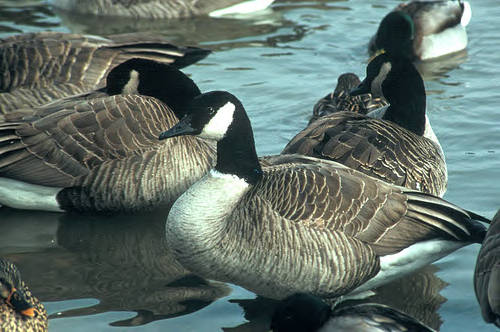
Photo by U.S. Fish & Wildlife Service            Canada Geese were a common bird for the Bristol CBC.


The most numerous bird on the count was the European starling with 8,982 individuals counted. Other common birds included American crow (857), Canada goose (612) and American robin (520). A total of 14,642 individual birds were counted.

The very first Christmas Bird Count, organized by ornithologist Frank Chapman, was held in December of 1900. For that first count, 27 observers looked for birds in 25 locations across the United States.

This annual survey of bird populations has evolved into a global undertaking. During the 113th count conducted in December-January of 2012–2013, 71,531 people participated in 2,369 locations in the United States, Canada and several other countries. This annual census provides valuable insights into trends in bird populations.

•••••

As counters participating in the recent Bristol CBC discovered, it hasn’t been a particularly exciting winter season for bird enthusiasts. Based on some communication with readers, I’m not alone in finding activity is down at my feeders.

FrogPhoto

Photo Courtesy of Sarah Smith                          The unseasonable mild December weather in the region produced unusual photo opportunities, such as this photo of a frog at an ornamental home at the Smith home in Abingdon, Virginia.

I received a recent email from Randy Smith of Abingdon, Virginia. I met Smith at last year’s birding festival at Hungry Mother State Park.

He sent me the email to share a couple of things, including photos of a real frog sitting on top of a ceramic frog at his goldfish fountain. What makes the photos remarkable is that they were taken the day after Christmas, which is usually a time of year when frogs have been absent already for a couple of months.

“Who would have imagined this much warm weather in December?” Smith wrote in his email. “I thought it was funny he was sitting on the artificial frog … perhaps seeking solace?”

Smith also had a bird-related question, which was basically an inquiry into whether I have noticed a downturn in birds at my feeders this fall/winter

He noted that he has been filling his thistle/nyger feeder only once a week or so, when in past winters he has usually re-filled it at least three to four times per week.

Even keeping the feeder stocked has produced almost no American goldfinches, one of the finch species attracted by nyger thistle seeds.

“The usual visitors are there — chickadees, nuthatches, titmice, woodpeckers,blue jays, cardinals — and a resident group of white-crowned sparrows that are fun to observe,” he wrote. “But overall, numbers and variety are way down. Any thoughts? Is it just the weather?”

I agreed completely with his assessment of bird activity.

This past December was an unusually warm winter month. I was still seeing dragonflies at my fish pond as late as the day after Christmas, which was coincidentally the same day Smith photographed the frog at his home.

I blame the warm weather on this decrease in bird-feeder activity. With such mild weather, birds don’t need to rely on our feeders to supplement their diet. The birds will probably return if and when the region ever experiences any sustained cold weather. So far, January has been slightly more typical in regard to temperatures, so perhaps some fun birds might start showing up at feeders soon.

••••••

At the time I was writing this week’s blog post, Winter Storm Jonas was making itself felt in the region. I will write about the spike in bird feeding as a result of the snowstorm in next week’s post.

•••••

To learn more about birds and other topics from the natural world, friend Stevens on Facebook at https://www.facebook.com/ahoodedwarbler. He is always posting about local birds, wildlife, flowers, insects and much more. If you have a question, wish to make a comment or share a sighting, email ahoodedwarbler@aol.com.

Despite unsavory reputation, vultures provide important function

I’ve always believed that all birds make good neighbors, although I will admit it’s easier to welcome certain birds than it is others.

BlackVultures

Photo by Bryan Stevens                                                                    Black vultures perch together in a tall tree.

Gene Sturgeon, a resident of Abingdon, Virginia, shared a Christmas Day bird observation he made. He wrote that a distant tree (maybe 250 yards from the Sturgeon home) held three large vultures. The birds were perched high in the tree, with their wings outstretched as if they were drying their wings.

“I thought initially they may be cormorants, but another was flying around the neighborhood and looked very much like a vulture,” he wrote. “I couldn’t tell for sure if they were turkey or black vultures, but my son said he saw turkey red heads.”

n_a (32)

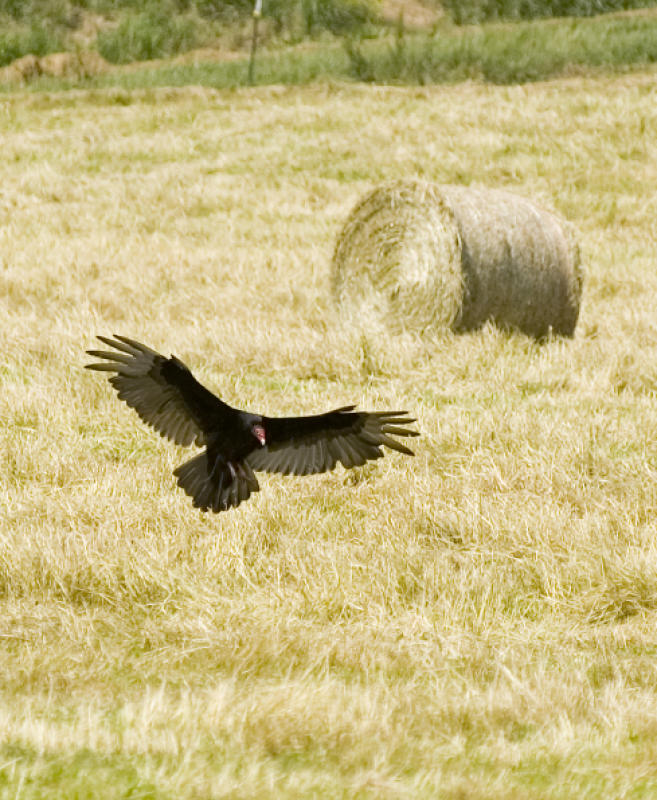
A turkey vulture lands in a pasture.

Curious about the behavior of the vultures, Gene also had a question. “Why would several vultures be drying their wings?” He asked in his email. “I think they are not water birds, and I don’t remember ever seeing vultures in the top of a tree. Perhaps migrating?”

In my response to his email, I told Gene that he had hit on the reason the vultures are there in his neighborhood. The tall tree offer them a perfect perching spot. Sometimes they will spread their wings out in that pose to soak up sunshine. The warmth from the sun’s rays sort of helps re-charge them. By maximizing the surface area of their bodies, morning sunshine can more easily warm them and get them ready to start the day. Basically, vultures are perfect examples of “green” energy in action.

3453851605_690d4883d2_o

Photo by Jean Potter                                                                 A black vulture spreads its wings to bask in the warm sunshine.

The pose described by Gene is actually one I have seen from time to time in other larger raptors. I’ve seen bald eagles perched with that sort of pose. I also informed Gene that his son was right. Turkey vultures have the red heads, and black vultures have black. The heads of both vultures are bare of feathers, which would quickly become soiled from the habit of these birds of pushing their heads into the carcasses of dead animals when feeding.

Gene wasn’t the only person who has sent me an email recently on the subject of vultures. Bettie Hite emailed with some questions she and her husband, Jim, have about vultures in their neighborhood along King College Road in Bristol.

TurkeyVulturesClean

Photo by Bryan Stevens                                  Turkey vultures are one of the few birds with a well developed sense of smell.

“You’ve probably already heard about this, but we have a huge flock of vultures gathering every evening in the trees around the intersection of Middlebrook, Graystone, The Reserve and the golf course on King College Road,” Bettie wrote in her email. “They begin flying in around 4 p.m. and before dark the trees are full of them.”

On the morning of Dec. 14, Bettie informed she counted 32 vultures in a maple tree on Carmack Circle (in Graystone) and six more vultures on the rooftop next to the tree. She noted that the vultures dispersed soon after that.

“There must be dozens of them roosting in the trees at night,” she wrote in her email. “Where are they coming from? Where are they finding enough food for so many of them? Why OUR neighborhood?”

Turkey_Vulture_edited-1

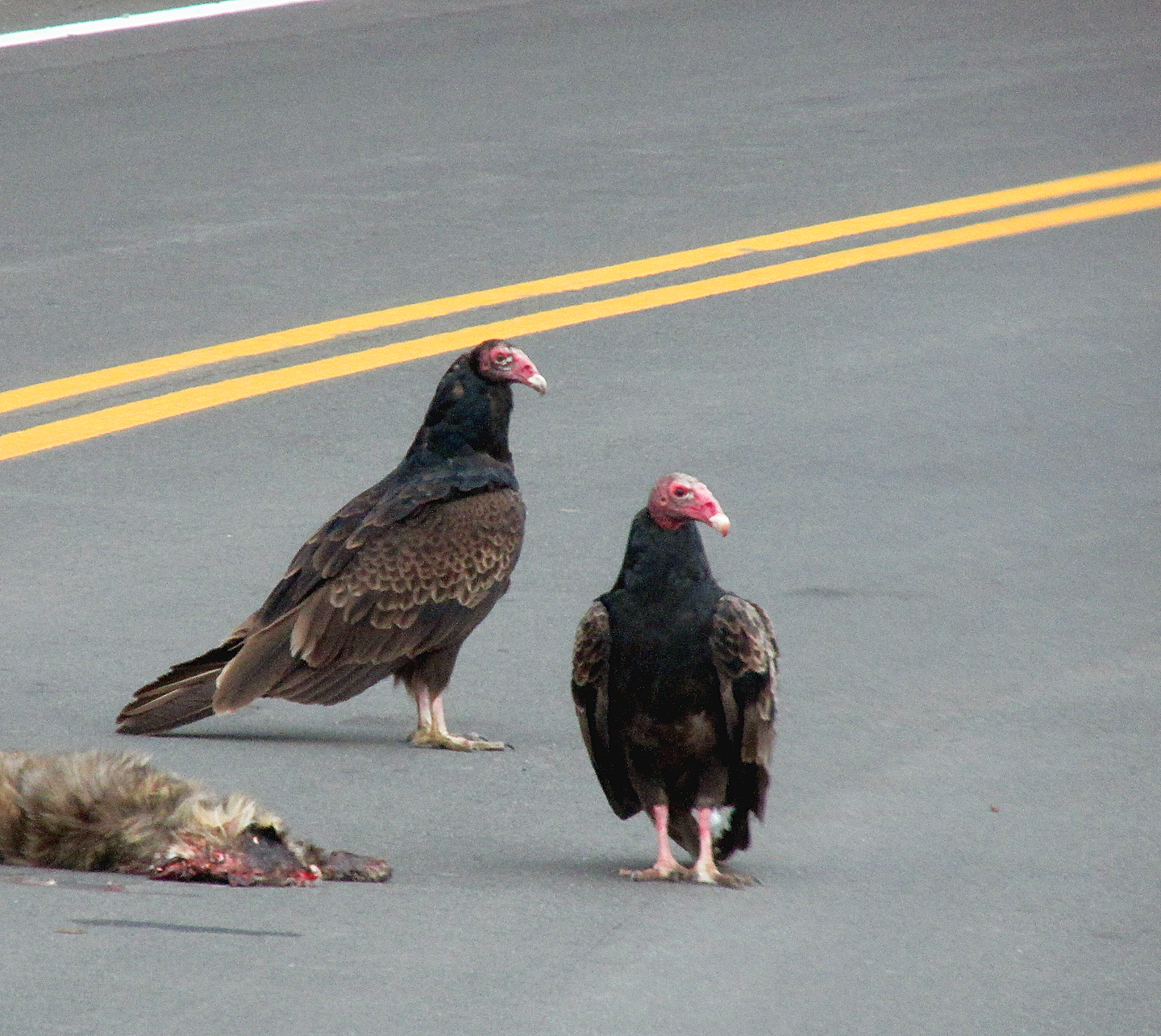
Photo by U.S. Fish and Wildlife Service              The red head of an adult turkey vulture distinguishes it from adult black vultures.

Vultures are year-round residents in the region, and they are sociable birds that tend to form flocks. They are also very efficient birds, and they can soar lazily in the sky until they find something to eat. This time of year, vultures scavenge a lot of the remains of deer dressed and left behind in the woods by hunters, but they also are quite skillful at making use of roadkill. They can fly long distances to look for food without actually depleting energy reserves.

For the most part, they’re harmless. If dozens grow to hundreds, the resulting mess at the roost could conceivably be a health concern. Why have they chosen to roost in the neighborhood where Bettie and her husband reside? That’s more difficult to answer, but I suspect that the trees in the neighborhood are extremely attractive to this particular flock of vultures.

IMG_8045

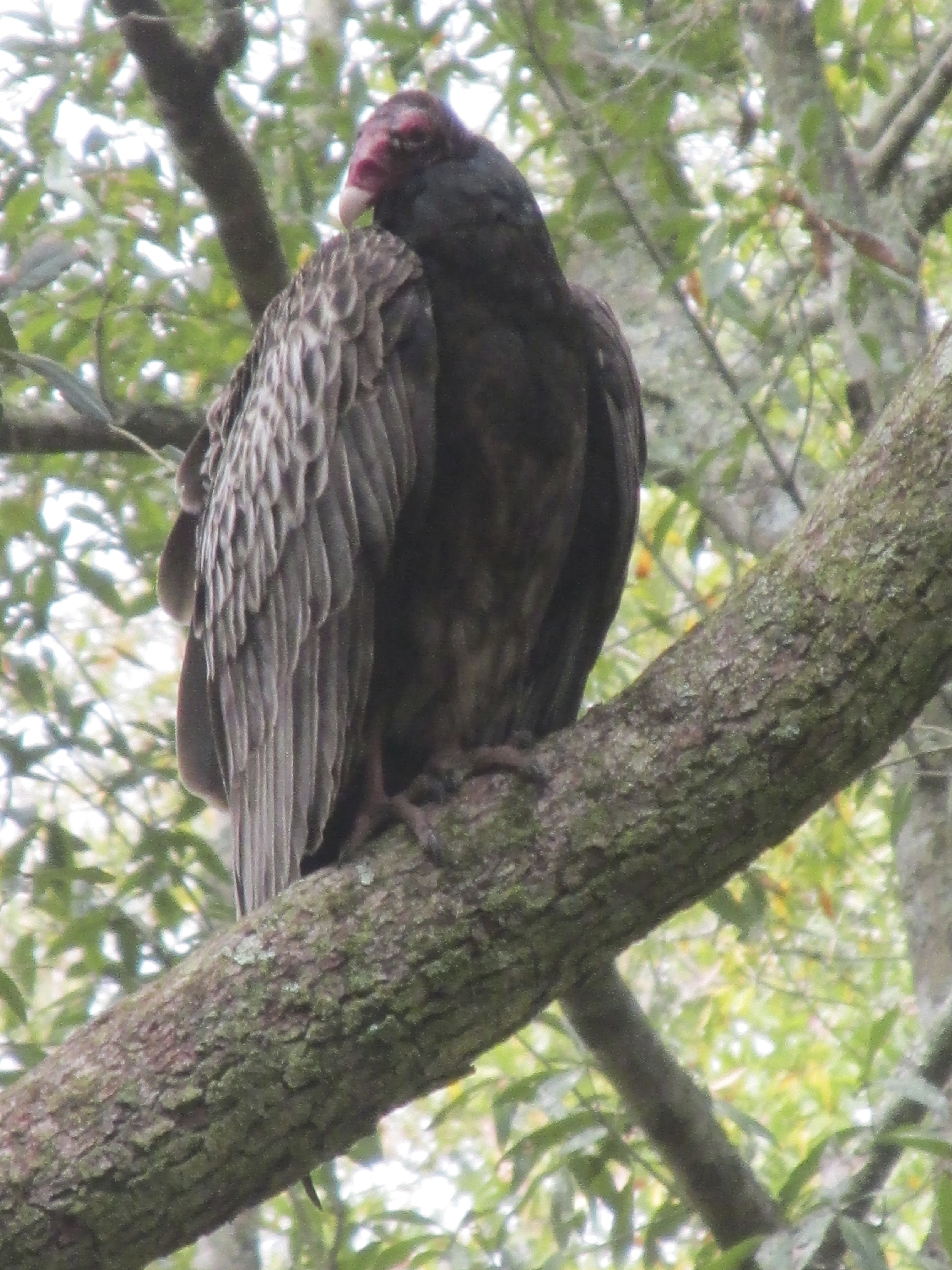
Photo by Bryan Stevens                      A turkey vulture perches quietly on a tree branch.

Turkey vultures are probably more common than black vultures, but I have seen both turkey and black vultures around Bristol. They’re never going to win any beauty contests, but vultures do actually provide a very useful function in the environment. When it comes to finding carrion, turkey vultures also have an advantage over black vultures. Turkey vultures are one of the few birds with a highly developed sense of smell, which helps them identify the wafting scent of decaying roadkill from long distances.

As surprising as it may seem, some American towns actually stage annual vulture festivals. For instance, Wenonah, New Jersey, holds an annual East Coast Vulture Festival every March. The Kern River Nature Preserve in California hosts a Fall Turkey Vulture Festival every September. Makanda, Illinois, is also considering holding a Vulture Fest this October.

••••••

TurkeyVultures

Photo by Bryan Stevens                                                                                                 A trio of turkey vultures share perches in a large tree.

Bryan Stevens lives near Roan Mountain, Tennessee. To learn more about birds and other topics from the natural world, friend Stevens on Facebook at https://www.facebook.com/ahoodedwarbler. He is always posting about local birds, wildlife, flowers, insects and much more. If you have a question, wish to make a comment or share a sighting, email ahoodedwarbler@aol.com.

Chapter’s Roan Mountain Christmas Bird Count finds 52 species

Siskin-PairAtFeeders

An abundance of Pine Siskins on the slopes of Roan Mountain made this small finch the most numerous bird on the recent Roan Mountain CBC.

The 62nd Roan Mountain Christmas Bird Count was held Sunday, Dec 20, with nine observers in two parties. The yearly count is conducted by the Lee and Lois Herndon Chapter of Tennessee Ornithological Society, otherwise known as the Elizabethton Bird Club.


A total of 52 species was tallied, which is is above the recent 30-year average of 45.4 species. The all-time high was 55 species in 1987.
Highlights included: Ruffed Grouse, 1; Peregrine Falcon, 1; Red-breasted Nuthatch, 24; Gray Catbird, 1; Chipping Sparrow, 4; Purple Finch, 2; and Pine Siskin, 282.
The most numerous bird on the count was Pine Siskin, with a total of 282 individuals found, followed by Dark-eyed Junco, 172; American Crow, 93; and European Starling, 57.


11265198_10205657576911117_8122867075059637054_o

Usually a summer bird in the region, a single Gray Catbird was found during the recent Roan Mountain CBC.

Compared to the mild weather for most of December, cold temperatures moved in ahead of the counts for Elizabethton and Roan Mountain were held. As a result, near normal temperatures reigned on the days the counts were conducted. There was even about an inch of snow on top of Roan Mountain.

Female-Redbellied

More common at low elevations, only a single Red-bellied Woodpecker was counted during the Roan Mountain CBC.

Species found on the Roan Mountain CBC follow:
Bufflehead, 11; Ruffed Grouse, 1, Wild Turkey, 1; Great Blue Heron, 1; Turkey Vulture, 1; Sharp-shinned Hawk, 1; Cooper’s Hawk, 1; Red-shouldered Hawk, 2; Red-tailed Hawk, 7; American Kestrel, 1; and Peregrine Falcon, 1.
Rock Pigeon, 23; Mourning Dove, 13; Eastern Screech-Owl, 1; and Barred Owl, 1.
Belted Kingfisher, 3; Red-bellied Woodpecker, 1; Yellow-bellied Sapsucker, 1; Downy Woodpecker, 7; Hairy Woodpecker, 2; and Pileated Woodpecker, 4.
Blue Jay 13; American Crow, 93; Common Raven, 15; Carolina Chickadee, 20, Tufted Titmouse, 13; Red-breasted Nuthatch, 24; White-breasted Nuthatch, 11; and Brown Creeper, 2.
Winter Wren, 6; Carolina Wren, 8; Golden-crowned Kinglet, 16; Eastern Bluebird, 5; American Robin, 19; Gray Catbird, 1; and Northern Mockingbird, 2.
European Starling, 57; Cedar Waxwing, 22; Eastern Towhee, 2; Chipping Sparrow, 4; Field Sparrow, 1; Song Sparrow, 43; Swamp Sparrow, 1; White-throated Sparrow, 6; and Dark-eyed Junco, 172.
Northern Cardinal, 15; House Finch, 2; Purple Finch, 2; Pine Siskin, 282; American Goldfinch, 14; and House Sparrow, 55.
••••••


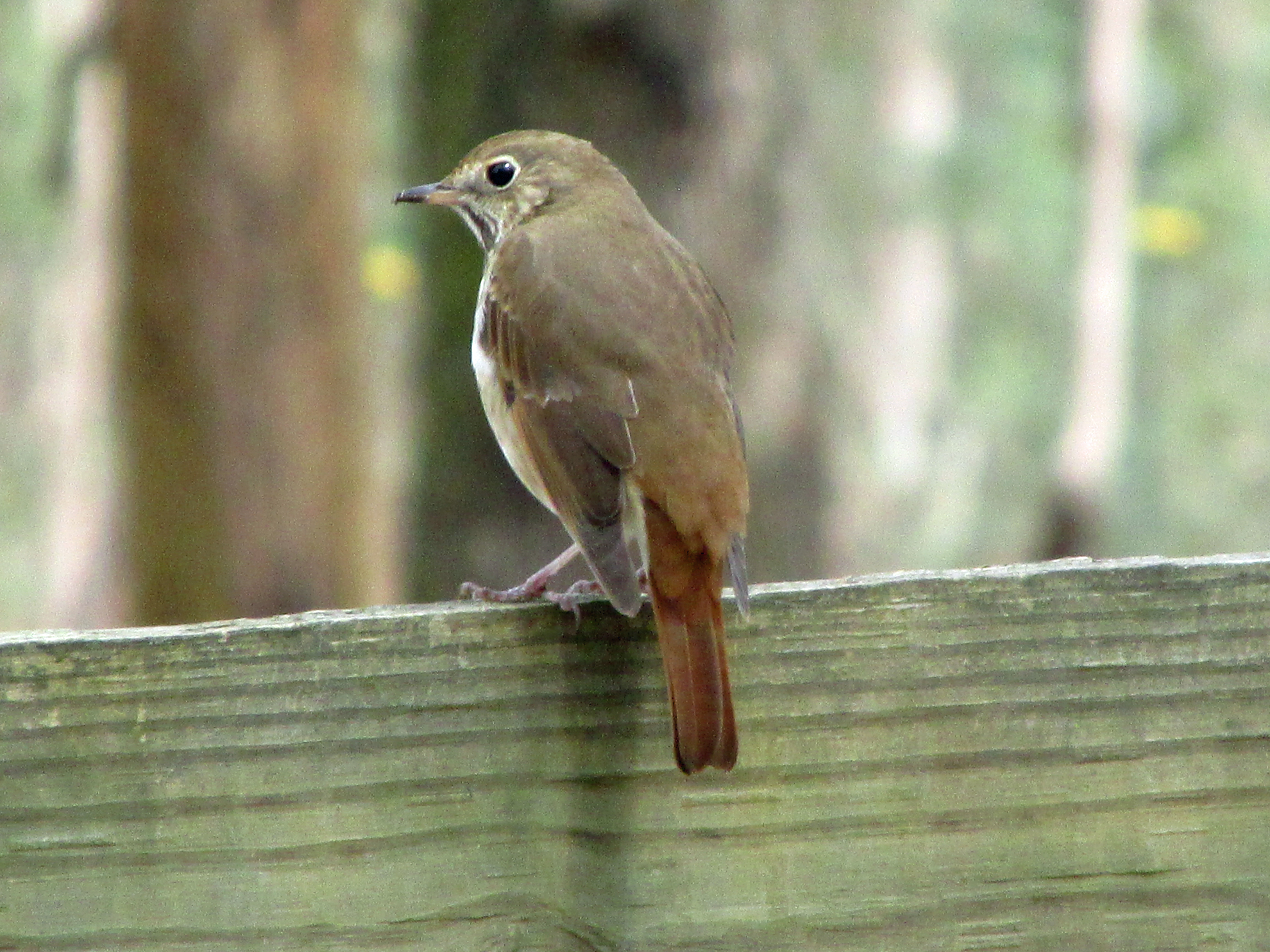
HermitThrush-April

A Hermit Thrush along Simerly Creek was the last bird found on my personal quest for 100 birds in my yard in 2015. This individual was photographed this past March in South Carolina.

My own personal Big Yard Year ended on Dec. 31, 2015. I found my last bird species of the year — Hermit Thrush — lurking in a tangle of rhododendrons on a slope overlooking Simerly Creek. The thrush was the 90th bird I found in my yard in 2015, which brought my quest to an end still shy 10 species of reaching my goal of 100 species in a calendar year.
The Hermit Thrush is the only brown thrush likely to remain in Northeast Tennessee during the winter months. Others, like the Wood Thrush and Veery, winter in the American tropics and return to the United States and Canada each spring for the summer nesting season.
The Hermit Thrush is well known for its song, which consists of a series of clear, musical notes, each on a different pitch, consisting of a piping introductory note and a reedy tremolo. The birds don’t usually sing in winter, but they do produce a call note when disturbed or alarmed that is described as a low “chuck.”
In the summer, the Hermit Thrush feeds on a variety of insects and spiders, but this bird switches to a diet of fruit and berries during the winter months.
The well-known American poet Walt Whitman used a Hermit Thrush as a powerful symbol in his famous poem, “When Lilacs Last in the Dooryard Bloom’d.” Whitman introduces the bird in his poem with the lines, “In the swamp in secluded recesses/A shy and hidden bird is warbling a song/Solitary the thrush/The hermit withdrawn to himself, avoiding the settlements/ Sings by himself a song.”


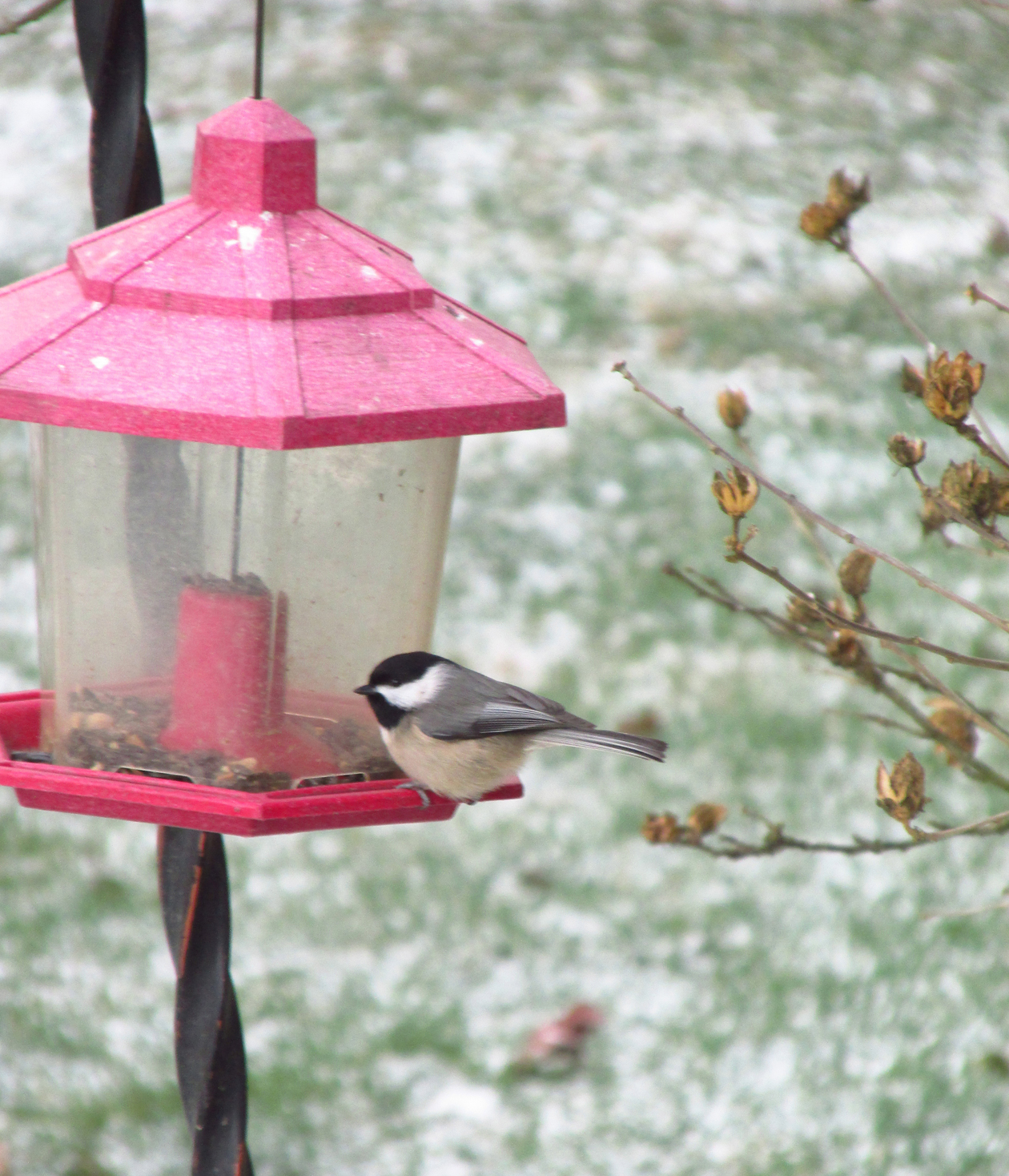
Winterchickadee

Many birds, such as Carolina Chickadees, are almost daily visitors to my yard.

Overall, I am quite pleased with finding the 90 species in my yard. After all, it broke my old record. I can’t help but think on those species that I missed. Winter species like Yellow-bellied Sapsucker and Brown Creeper, which have been relatively rare in my yard, simply didn’t make an appearance in 2015. House Wren was one bird that I had really expected to find. For some reason, however, no House Wrens took up residence at my home in 2015. Other birds that occasionally make migration stops but didn’t visit last year included Vesper Sparrow, Blue-winged Warbler, Kentucky Warbler, and Canada Goose.
I saw most of my birds in January, ending the first month of the year with 26 species. I also saw 14 species in both April and September, which testified to the strength of my yard to attract migrant birds.


Peregrine_Falcon (1)

Photo by U.S. Fish and Wildlife Service This Peregrine Falcon is a captive bird, unlike the one found during the Roan Mountain CBC.

I haven’t decided if I am setting any birding goals for 2016. I may simply enjoy birds without any specific aims. However, the year is still young. If I decide otherwise, I will announce it on my weekly blog.

Elizabethton Christmas Bird Count tallies 73 species

Cardinal-Blur

A blur of red feather signals the arrival of a male Northern Cardinal at a feeder. A total of 123 cardinals were found on the recent Elizabethton CBC.

The 73rd consecutive Elizabethton Christmas Bird Count was held on Saturday, Dec. 19, with 24 observers in six parties plus one feeder watcher.  A total of 73 species was tallied, with an additional four count-week species. This is slightly above the recent 30-year average of 71.7 species. The all-time high for this CBC was 80 species in 2012.

Long-time count compiler Rick Knight noted that some of the highlights from this year’s Elizabethton CBC included: five Blue-winged Teal, which represented only the fourth time this duck has been found for this count, as well as  Northern Shoveler and Greater Scaup.

BaldEagle-Sunning

Bald Eagle was represented by five individual birds on the recent CBC conducted by members of the Elizabethton Bird Club.

Other highlights included Bald Eagle, Eurasian Collared-Dove, Red-breasted Nuthatch, American Pipit and Palm Warbler.

The 72 Chipping Sparrows found during the CBC represented the most individuals of this species ever tallied for this count.

A few winter finches have also arrived in the area, based on the Purple Finch and Pine Siskins detected during the CBC.

Red-breastedNutHatchYAHOO

A single Red-breasted Nuthatch was found, assuring that this species made it onto the annual survey of bird populations in Elizabethton, Tennessee.

The European Starling was the most common bird with a total of 1,707 individual starlings represented on the count. Other common birds included American Crow (987), Canada Goose (511) and American Robin (450).

The total for the 2015 Elizabethton CBC follows:

Canada Goose, 511; Mallard, 129; Blue-winged Teal, 5; Northern Shoveler, 12; Greater Scaup, 2; Lesser Scaup, 1; Bufflehead, 172; and Hooded Merganser, 10.

Wild Turkey, 30; Pied-billed Grebe, 15; Horned Grebe, 10; and Great Blue Heron, 13.

Black Vulture, 16; Turkey Vulture, 26; Sharp-shinned Hawk, 2; Cooper’s Hawk, 5; Bald Eagle, 5; Red-shouldered Hawk, 2; Red-tailed Hawk, 22; and American Kestrel, 18.

American Coot, 7; Killdeer, 5; Ring-billed Gull, 65; Rock Pigeon, 349; Eurasian Collared Dove, 7; and Mourning Dove, 114.

Eastern Screech-Owl, 7; Great Horned Owl, 4; Barred Owl, 1; Belted Kingfisher, 13; Red-bellied Woodpecker, 27; Yellow-bellied Sapsucker, 7; Downy Woodpecker, 23; Hairy Woodpecker, 3; Northern Flicker, 11; and Pileated Woodpecker, 10.

Eastern Phoebe, 7; Blue Jay, 76; American Crow, 987; Common Raven, 6; Carolina Chickadee, 111; and Tufted Titmouse, 110.

Red-breasted Nuthatch, 1; White-breasted Nuthatch, 31; Brown Creeper, 2; Winter Wren, 3; and Carolina Wren, 60.

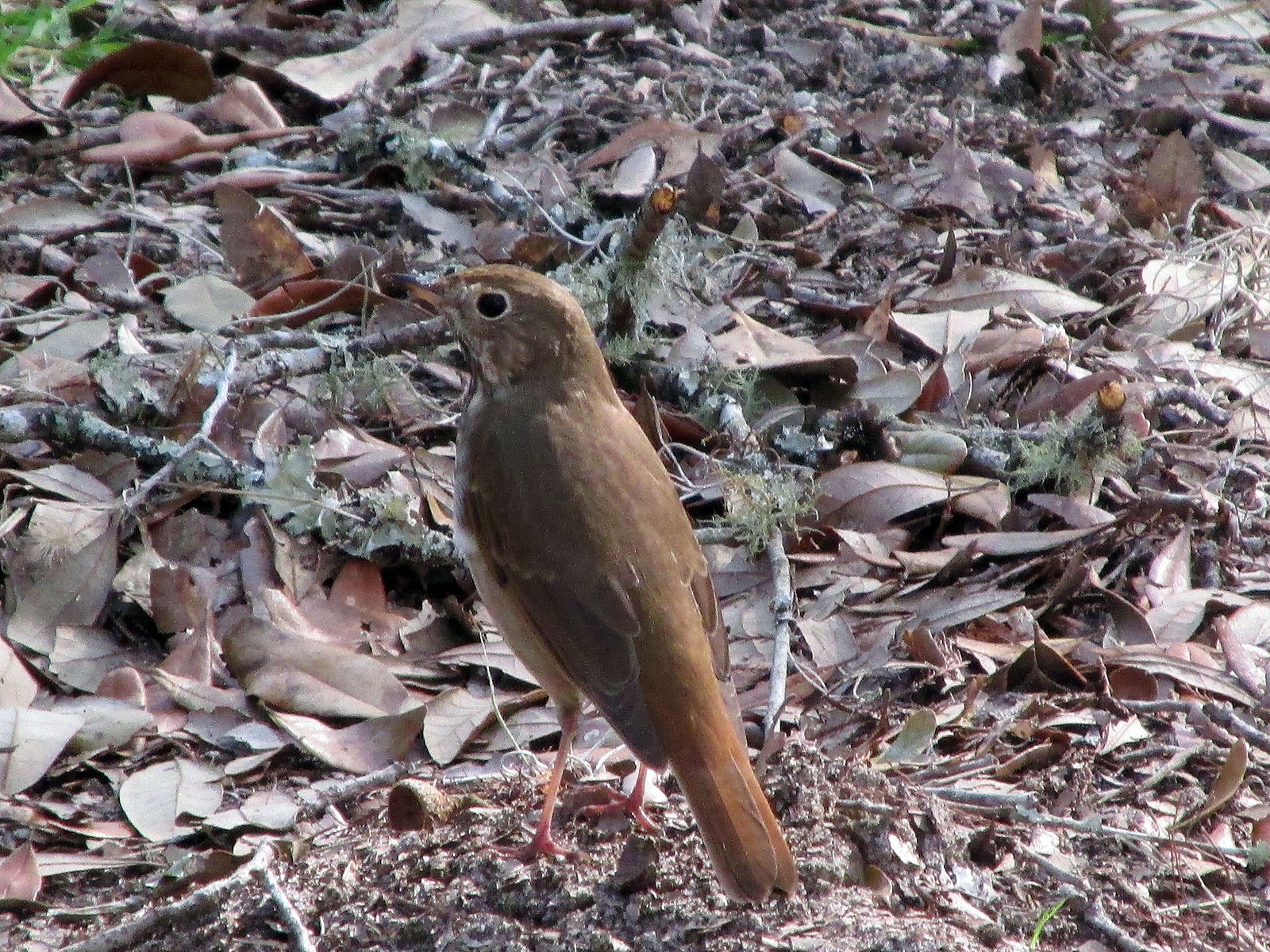
IMG_8437

Five Hermit Thrushes were among the many species found during the Elizabethton CBC.

Golden-crowned Kinglet, 32; Ruby-crowned Kinglet, 2; Eastern Bluebird, 114; Hermit Thrush, 5; American Robin, 450; and Northern Mockingbird, 27.

European Starling, 1,707; American Pipit, 40; Cedar Waxwing, 116; Palm Warbler, 3; and Yellow-rumped Warbler, 106.

Eastern Towhee, 12; Chipping Sparrow, 72; Field Sparrow, 31; Fox Sparrow, 3; Song Sparrow, 104; Swamp Sparrow, 104; White-throated Sparrow, 78; and Dark-eyed Junco, 74.

Northern Cardinal, 123; Eastern Meadowlark, 4; House Finch, 51; Purple Finch, 1; Pine Siskin, 25; American Goldfinch, 101; and House Sparrow, 41.

•••••

Fall-Yellowthroat

A Common Yellowthroat is a rare bird in Northeast Tennessee during the winter months.

It was strange to walk outside in short sleeves this past Christmas. This weird winter weather has also led to some unexpected bird sightings. I saw my first-ever winter warbler (other than Yellow-rumped Warbler) at home ton Dec. 30. The warbler was a male Common Yellowthroat lurking in the cattails near the fish pond. Several years ago, I found a female Common Yellowthroat at Wilbur Lake on a Christmas Bird Count. In addition to the yellowthroat, I found a Swamp Sparrow in the cattails. I also had a flock of Dark-eyed Juncos (as opposed to just one bird) in the backyard that same day.

I am pleased to find that the winter birds are gradually arriving. Now that it looks like more typical winter temperatures might prevail for awhile, I expect activity to increase at my feeders.

•••••

To learn more about birds and other topics from the natural world, friend Stevens on Facebook at https://www.facebook.com/ahoodedwarbler. He is always posting about local birds, wildlife, flowers, insects and much more. If you have a question, wish to make a comment or share a sighting, email ahoodedwarbler@aol.com.

••••••

This week’s post is dedicated to Sassy, a one-of-a-kind cat that shared my life from the summer of 2002 until Dec. 26, 2015.Sassy

Northern cardinal brightens holiday season and every other day of the year


Froze-FemCardinal

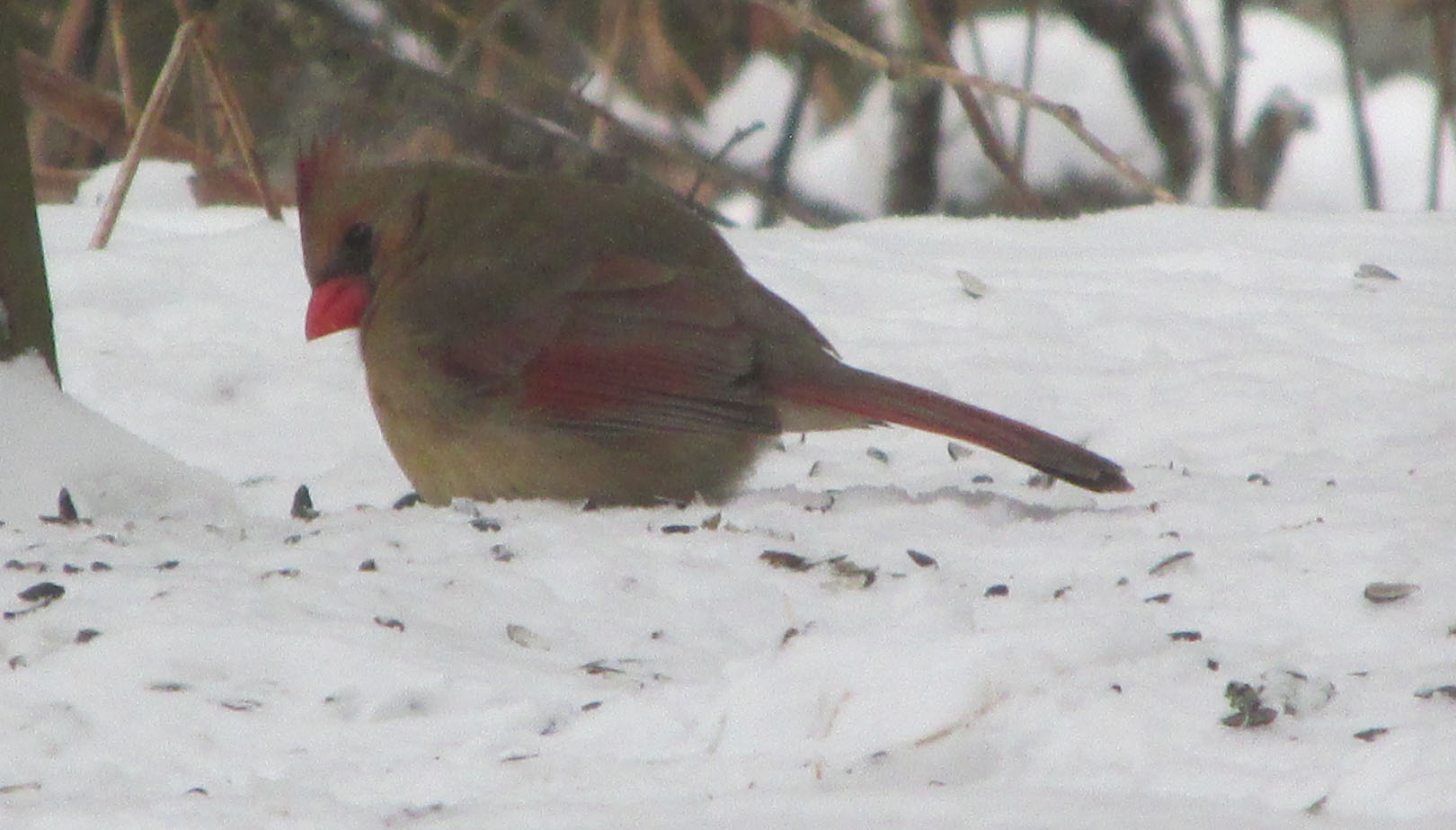
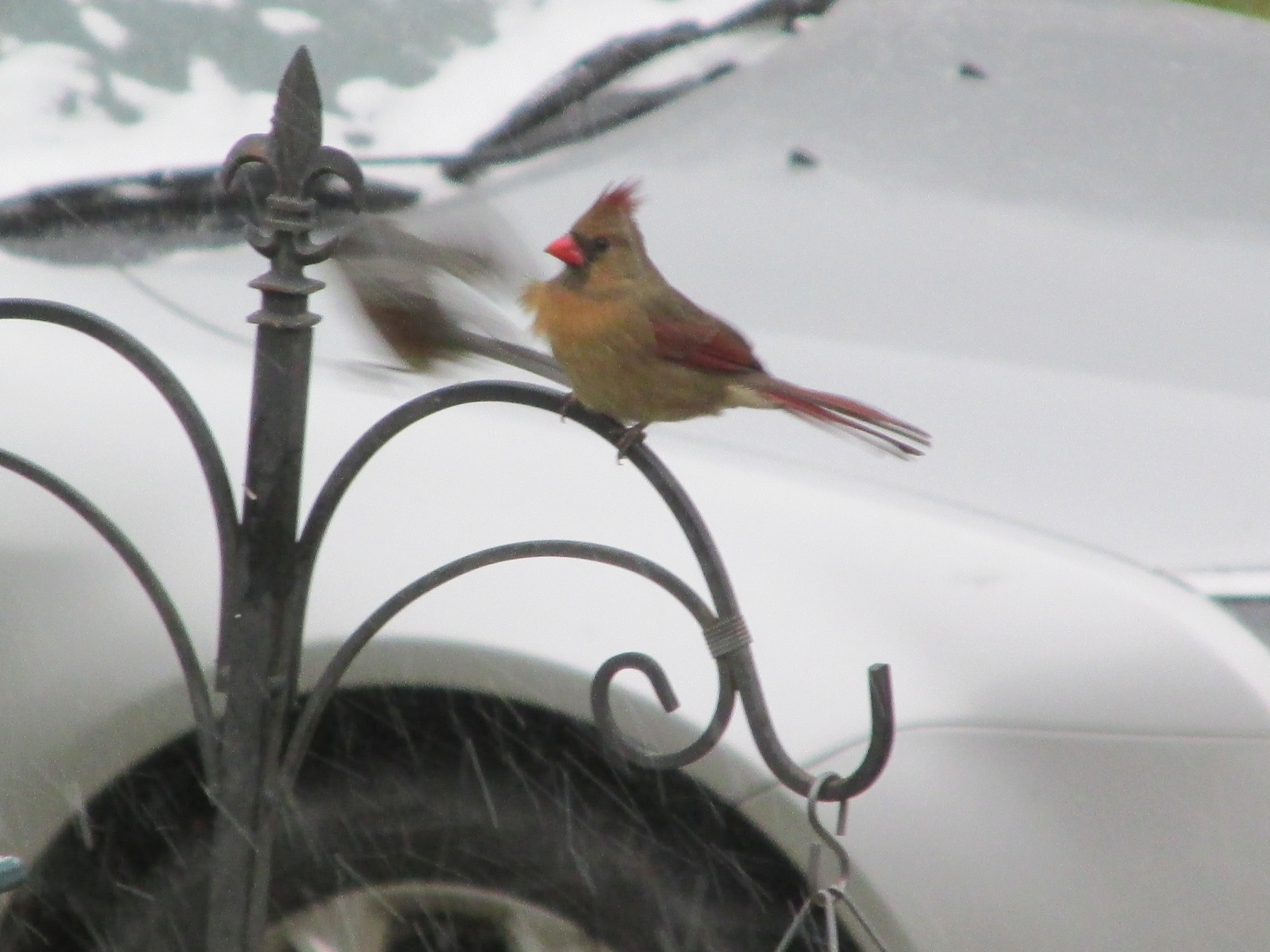
Photos by Bryan Stevens                                        A female Northern Cardinal visits a feeder during a snowstorm.

The shopping days before Christmas are getting fewer, so I hope everyone has had time to find gifts for everyone on their lists. My own sincere wish to readers is that everyone gets to enjoy a great holiday that just might also include watching some birds.


Cardinal-MorePlease

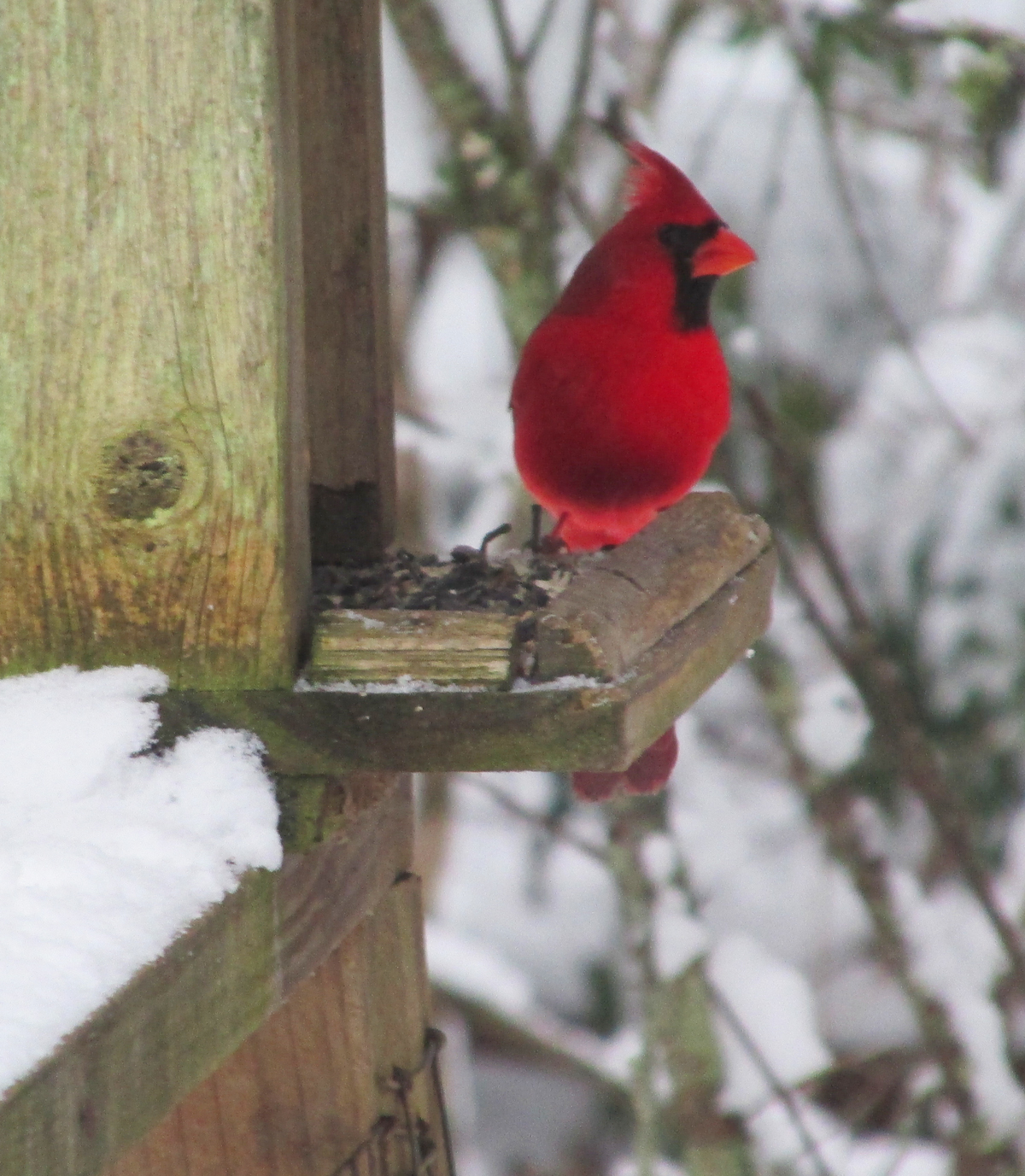
A male cardinal investigates a feeder.

Although I hate to see the colorful birds of spring and summer — scarlet tanagers, Baltimore orioles, indigo buntings, rose-breasted grosbeaks — depart every fall, the winter season offers some compensation.
Often, when we think of the birds of the winter season, our thoughts focus on some of the less-than-colorful feeder visitors — the brown sparrows and wrens, the black and white chickadees, the drab American goldfinches so unlike their summer appearance.


Cardinal-Enclosed

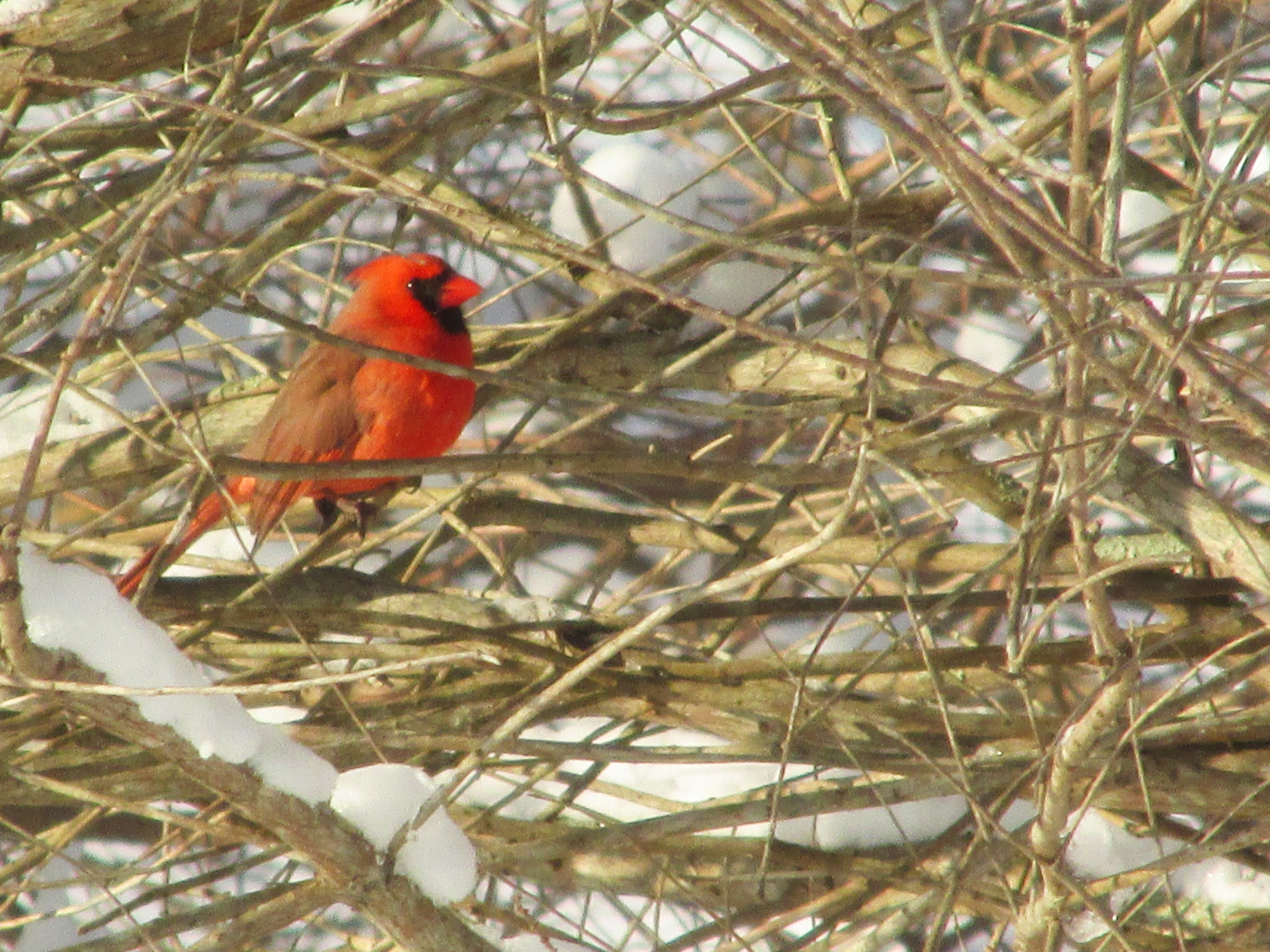
A male cardinal stays concealed within a thicket.

There’s one bird, however, that makes an impression in any season. The Northern cardinal, especially the brilliant red male, stands out against a winter backdrop of snow white, deep green or drab gray.
Over the years, the Northern cardinal has also become associated with the Christmas season. How many Christmas cards have you received this holiday season with a cardinal featured in the artwork? I’d wager that at least a few cards in any assortment of holiday greetings will feature the likeness of a bright red cardinal.


il_fullxfull.56973554

Early naturalist and artist John James Audubon painted the Northern Cardinal.

Cardinals, also known by such common names as redbird and Virginia nightingale, are easily recognized backyard birds. I never tire of observing these colorful birds. Cardinals are easily lured to any backyard with plentiful cover to provide a sense of security and a generous buffet of sunflower seed.
Cardinals accept a wide variety of food at feeders. Sunflower seed is probably their favorite, but they will also sample cracked corn, peanuts, millet, bakery scraps and even suet. The cardinal is also one of only a few birds that I have noticed will consistently feed on safflower seed.
While we may get the idea that cardinals feed largely on seed, that is a misconception based on our observation of the birds at our feeders. When away from our feeders, cardinals feed on insects and fruit, including the berries of mulberry, holly, pokeberry, elderberry, Russian olive, dogwood and sumac.


Cardinal-Blur

A flash of red signal a visit from a male Northern cardinal.

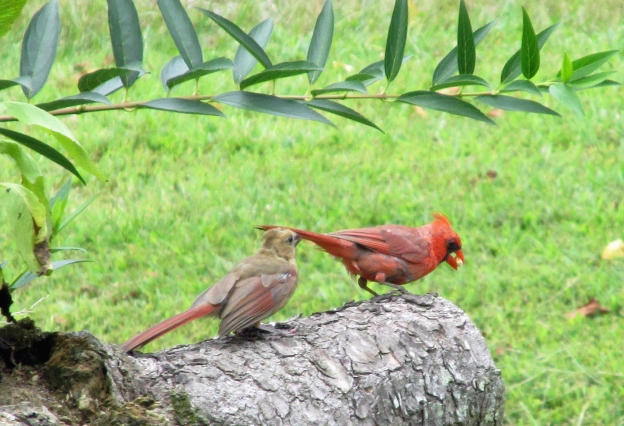
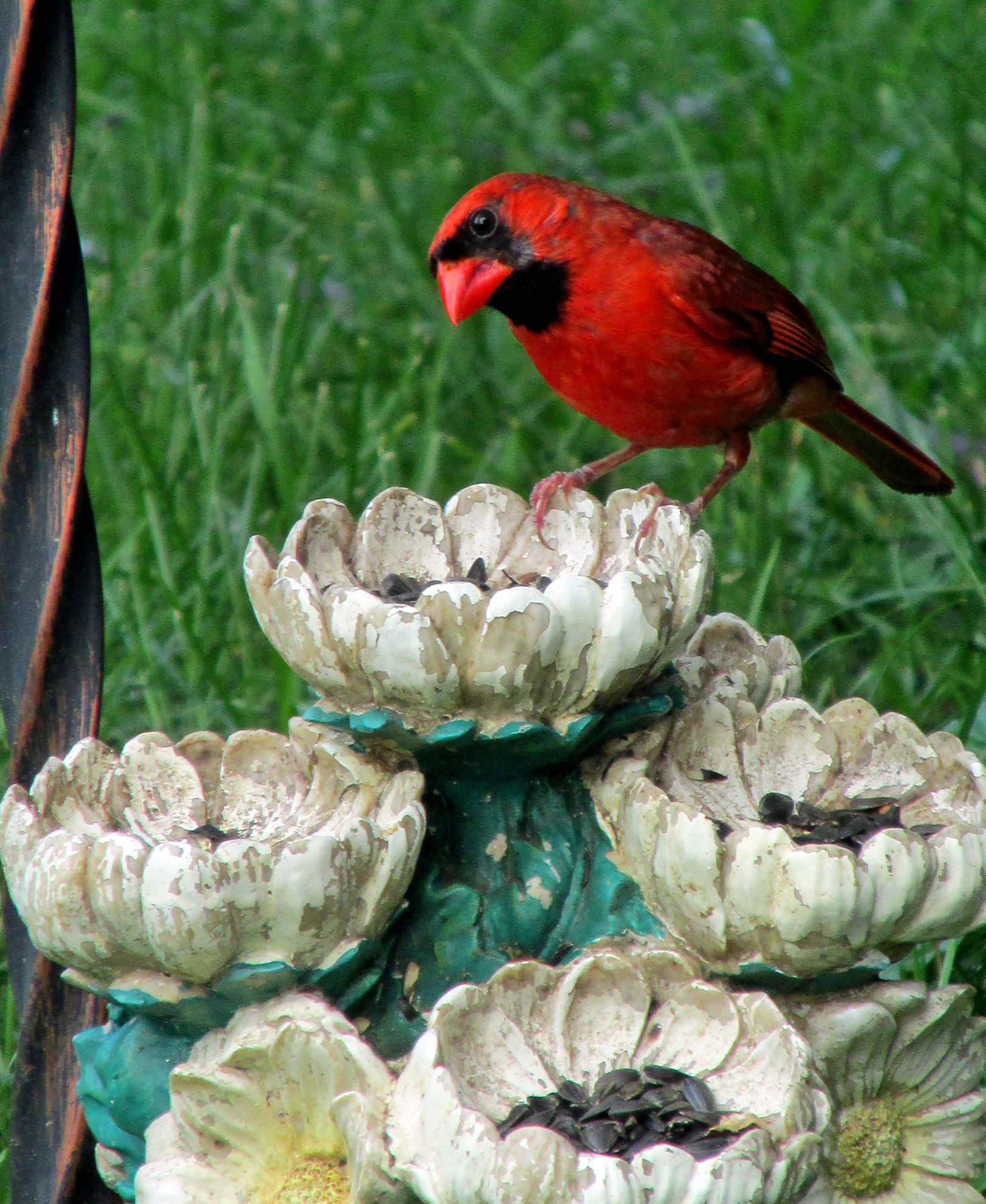
There’s no difficult in identifying a cardinal. The male boasts crimson plumage, a crest, a black face and orange bill. The female, although less colorful, is also crested. Female cardinals are soft brown in color, with varying degrees of a reddish tinge in their feathers, particularly in their wings. Immature cardinals resemble females except young cardinals have dark bills.


Cardinal-Two 2

A male Northern cardinal perches on a feeder.

Cardinals are a widespread species, ranging westward to the Dakotas and south to the Gulf Coast and Texas. The southeastern United States was once the stronghold of the cardinal population. In the past century, however, cardinals have expanded their range into New England and Canada.
At feeders, cardinals mingle with a variety of other birds. Their preference for dense, tangled habitat is one they share with such birds as brown thrashers, Eastern towhees, Carolina wrens and song sparrows. In general, however, cardinals directly associate only with their own kind. Cardinals will form loose flocks during the winter, but these flocks are never as cohesive as those of such flocking birds as American goldfinches. Cardinals are more often observed in pairs.
For such a bright bird, the male cardinal can be surprisingly difficult to detect as he hides in the thick brush that conceals his presence. Cardinals are nervous birds, however, and usually betray their presence with easily recognized chip notes.


Cardinales

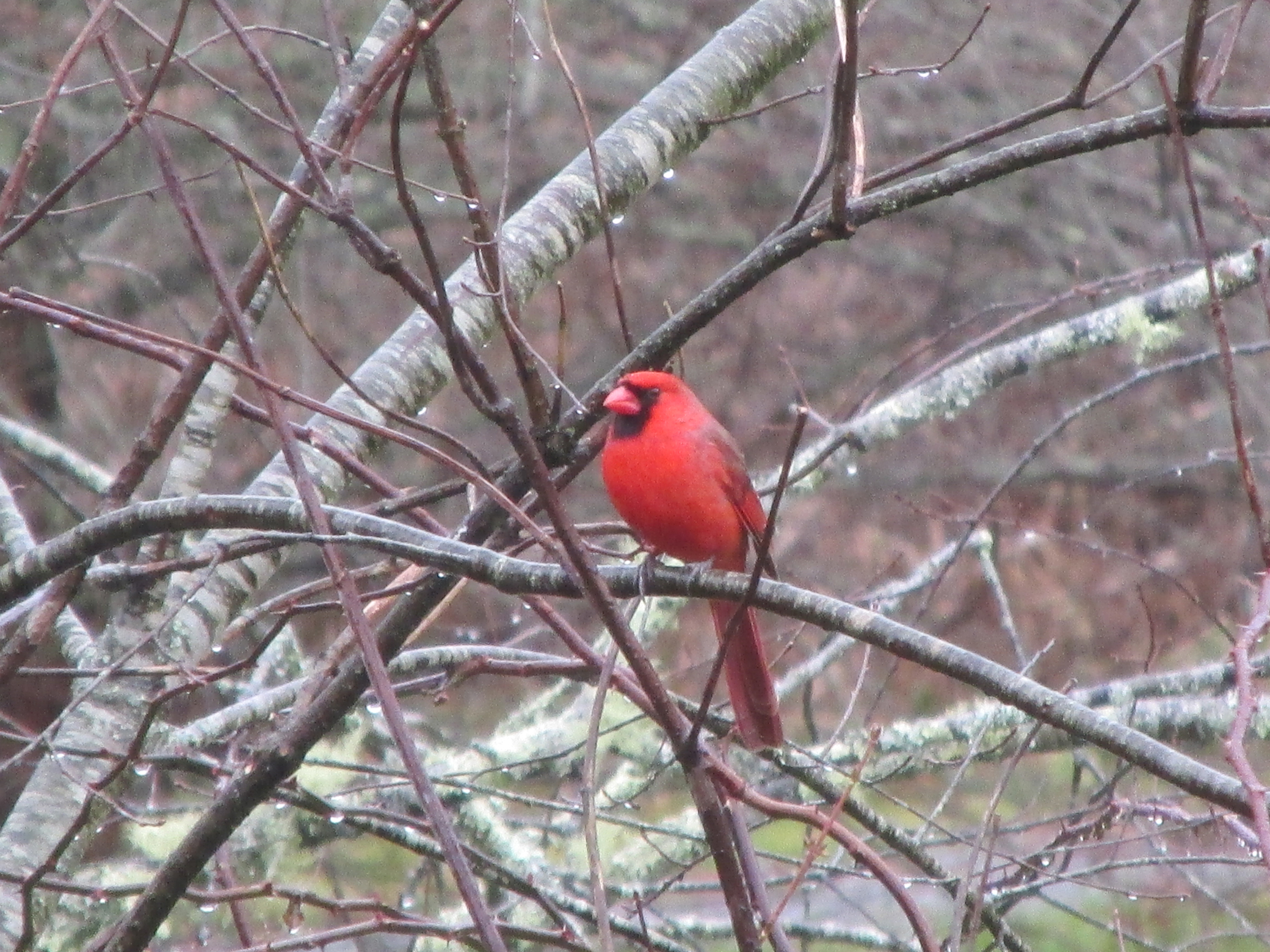
A male Northern cardinal on a gray December day.

It’s not surprising that such a popular bird has also become associated with many trappings of the Christmas season. “You see cardinals on greeting cards, stationery, paper plates, paper napkins and tablecloths, doormats, light switch plates, candles, candle holders, coffee mugs, plates, glasses, Christmas tree ornaments and lights, bookmarks, mailboxes, Christmas jewelry,” writes June Osborne in her book The Cardinal. “And the list goes on. Cardinals have become an integral part of the way that many people celebrate the holiday season.”

IMG_2431

Female cardinal grasps a perch on a blustery afternoon.

I can be included among such people. My Christmas decorations include an assortment of cardinal figurines and ornaments. There are other birds — doves and penguins for example — associated with the holiday season, but for me the holidays magnify the importance of one of my favorite birds. The cardinal, in its festive red plumage, appears made to order for a symbol of the holiday season.

 
There’s additional evidence to put forward as testimony to the popularity of the Northern cardinal. It’s the official state bird of seven states: Virginia, North Carolina, West Virginia, Ohio, Illinois, Indiana and Kentucky. Only the Northern mockingbird, which represents five states as official state bird, even comes close to the Northern cardinal in this respect.
Even once the holidays are past, there’s nothing like a glimpse of a Northern cardinal to add some cheer to a bleak winter day.
•••••
To learn more about birds and other topics from the natural world, friend Stevens on Facebook at https://www.facebook.com/ahoodedwarbler. He is always posting about local birds, wildlife, flowers, insects and much more. If you have a question, wish to make a comment or share a sighting, email ahoodedwarbler@aol.com.

Pelican surprises residents of Bristol neighborhood


Birders learn fairly quickly that sometimes you just have to trust your eyes. Residents near Middlebrook Lake in Bristol, Tennessee, might have been understandably surprised in the days leading up to Thanksgiving when they spied a large white bird on the small lake in their neighborhood.

Pelican-Coot

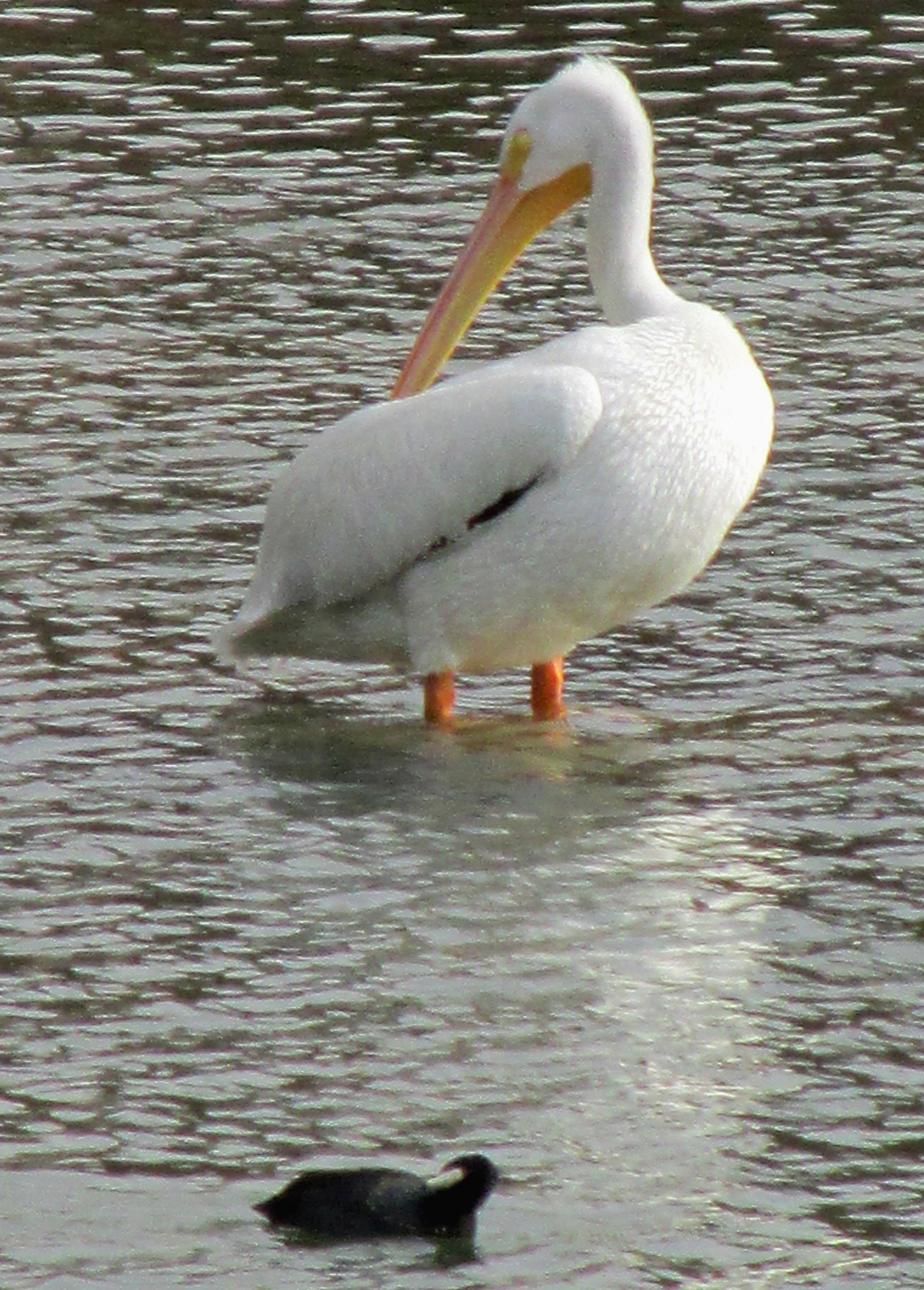
All Photos by Bryan Stevens  •  This American white pelican recently spent some time at Middlebrook Lake in Bristol, Tennessee.

Alice Morgan, a resident of the Middlebrook subdivision, was certainly surprised. “We are lucky to have a view of the lake,” she said in an email she sent to me on Sunday, Nov. 29.

She correctly identified the visiting bird. “We think that in the last few days we have been looking at an American White Pelican,” she reported in her email. “At first we thought it was a swan that comes and goes, but when we got our binoculars out, this bird has a very long orange beak that almost trails the water.”

The reference to a swan was made because of a small population of mute swans that have resided on the lake at least the past 20 years. However, the bird that generated the recent excitement among area birders and Middlebrook residents wasn’t a swan or even a Thanksgiving turkey. The bird was truly an American white pelican, a rare and accidental visitor in the region.

“We have yet to see it fly to see if it has the black feathers in its wings, but the beak seems to be the marking of a pelican,” Alice noted. “They are not supposed to be in this area. Could it be lost, or are we incorrect in our identification?”

Pelican-Geese

The pelican swam and associated with Canada geese at Middlebrook Lake.

In addition to the email from Alice, one of my Facebook friends, Joanne Campbell, tipped me off to the pelican’s presence.

“White Pelican on lake in Middlebrook,” Joanne wrote in a post to my page on Nov. 25. “I thought my neighbor was mistaken. I was within 25 feet of the pelican. Beautiful, but what the heck is he doing in Bristol?”

I responded to Alice’s email and Joanne’s Facebook post, informing them that their identifications were absolutely correct. Regarding whether the bird was “lost,” I am not sure of the answer. Middlebrook Lake most likely looked like a favorable location for a migrating pelican to stop in order to refuel and refresh itself.

Pelican-Itch

The pelican scratches at an itch.

Bristol resident Wallace Coffey made the first report of the American White Pelican on Tuesday, Nov. 24. His post on Bristol-Birds, an online forum for sharing regional bird sightings, brought my mom and me to Middlebrook Lake the next afternoon. It didn’t take long to locate the large white bird sharing the lake with large numbers of Canada geese, American coots and hooded mergansers. The pelican sort of stuck out like a proverbial sore thumb. It didn’t seem wary of people, but I remained in my car and still managed to get decent photographs of the bird. While my mom and I watched the pelican, it swam among the Canada geese and coots on the lake. It also took time to preen its feathers and flap its wings.

Pelican-Standing

The American white pelican certainly turned some heads during its brief stay at Middlebrook Lake.

The American White Pelican makes its home on large freshwater lakes and reservoirs across the prairie states — North Dakota, South Dakota, Nebraska, Kansas, Oklahoma, Montana and a few others — as well as the prairie provinces of Canada. They can be found along the Pacific and Gulf coasts during the winter, and as far inland as southern Minnesota and Wisconsin during the summer. By contrast, the smaller brown pelican generally does not leave coastal areas unless driven inland by hurricanes or other major storms.

Populations of American white pelicans residing east of the Rocky Mountains migrate along river valleys, including the Mississippi River, to their wintering grounds along the Gulf Coast and in Mexico. It is not unusual for a few to stray into the eastern United States. American white pelicans are social birds and prefer to travel in flocks, although some of the reported observations in the region have involved solitary birds.

The pelican at Middlebrook Lake represents the first sighting of an American white pelican in Bristol since May of 2010. At that time, a flock of seven of these large birds was reported at Musick’s Campground on South Holston Lake. Because the lake straddles the Virginia/Tennessee line, members of that flock of pelicans were observed in both Sullivan County, Tennessee, and Washington County, Virginia. There was also a sighting made by Patty Elton of three American white pelicans in Wythe County, Virginia, in May of 2014.

n_a

A flock of American white pelicans soars over Salt Lake City Utah in May of 2006.

In his book, “The Birds of Northeast Tennessee,” Rick Knight lists only five records of American white pelican sightings. The first-ever sighting in Northeast Tennessee took place on Nov. 3, 1981, at Austin Springs on Boone Lake. That observation, reported by Glen Eller and Harry Farthing, involved a single pelican.

Another ten years passed before another solitary pelican visited Boone Lake and South Holston Lake in December of 1991. One of the best-known sightings took place in February of 1995 when a single American white pelican took up residence at a small pond on the grounds of Mountain Home Veterans Affairs in Johnson City, Tennessee. After spending time at that pond, that pelican moved to nearby Austin Springs on Boone Lake and later the Holston River in Kingsport. Unfortunately, the pelican collided with power lines in the summer of 1996 while flying. It injured a wing, which had to be amputated by a wildlife rehabilitation expert to save the bird’s life. Since the pelican at that point was no longer able to survive in the wild, it was sent to a zoo in Bridgetown, New Jersey.

WhitePelicanFlock

A flock of American white pelicans fly over the surf at Huntington Beach State Park, South Carolina, in March of 2015.

Almost another decade passed before white pelicans were seen in Northeast Tennessee. That sighting involved my own observation of a single American white pelican soaring over my home in Hampton, Tennessee, on July 17, 2004. The actual credit for discovering the bird goes to my friend — David Thometz — who happened to look skyward and ask the question, “What is that big, white bird?” I think I must have been momentarily speechless when I focused my binoculars and immediately recognized an American white pelican. Eventually, I stammered out my identification

Two years later, on April 8, 2006, Coffey and Knight reported four American white pelicans at Spring Creek, which runs into South Holston Lake. After that observation, this large bird didn’t make another regional appearance until the 2010 sighting of the seven-member flock at Musick’s Campground mentioned earlier.

Plate-311-American-White-Pelican-final

Early naturalist John James Audubon captured the American white pelican in its rather bizarre, ungainly glory.

So, evidently, American white pelicans do migrate through the region in basically every season of the year. They are not, however, among birds one might expect to see in Northeast Tennessee or Southwest Virginia. I’m not surprised that the pelican selected Middlebrook Lake for its stopover. I’ve seen many unusual birds at this small lake over the years, including species such as common merganser, long-tailed duck, common goldeneye and tundra swan.

The American white pelican is one of North America’s largest birds. This pelican’s wingspan can span nine feet compared to the six- to eight-foot wingspan of its much smaller relative, the brown pelican. While the brown pelican dives into the water to capture fish, the American white pelican feeds while floating on the water’s surface. Flocks of American white pelicans will work cooperatively to corral and capture fish.

Worldwide, there are only eight species of pelicans. Some of the others include the great white pelican of southeastern Europe, Asia and Africa, as well as the pink-backed pelican of Arabia, Africa and southern India.

Pelicans, like most of our birds, have wings and are capable of long-distance flight. You never know what you might see. Keep your eyes open and a pair of binoculars handy.

••••••

To learn more about birds and other topics from the natural world, friend Stevens on Facebook at https://www.facebook.com/ahoodedwarbler. He is always posting about local birds, wildlife, flowers, insects and much more. If you have a question, wish to make a comment or share a sighting, email ahoodedwarbler@aol.com.

Feeding the birds during year’s colder months offers pleasant pastime

CTtalpeWIAE_sWM

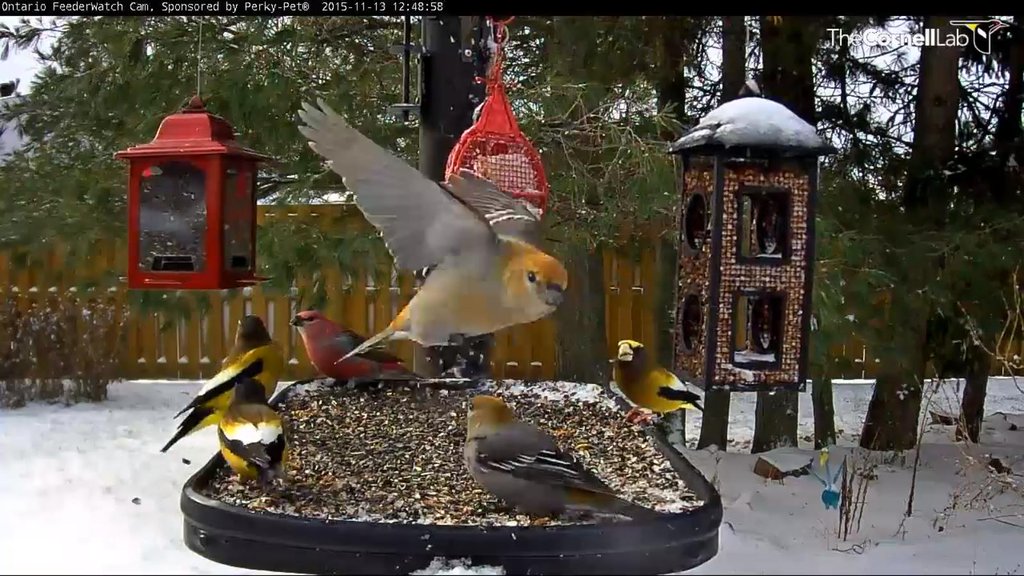
A still shot from the Feeder Watch cam in Ontario showing Evening Grosbeaks and Pine Grosbeaks.

Patricia Werth, a resident of Abingdon, Virginia, shared with me in an email that that she has been enjoying watching birds visit feeders for snacks of sunflower seeds and other tidbits. The feeders, however, are not her own. She has been watching online a camera focused on a family’s backyard feeders in Ontario, Canada. A couple named Tammie and Ben Haché are identified on the webpage as the hosts for the camera.

She informed me that the Cornell Laboratory of Ornithology placed the camera on the feeders. In similar projects, Cornell has also placed bird cams in positions that allow different moments of a bird’s life — such as hatching and fledging —to be shared with onlookers watching from the comfort of their living rooms or with the convenience of a smart phone.

“They have a flat tray as one of their feeders with shelled peanuts and sunflower seeds on it,” Patricia shared.

Finches-AtFeeder

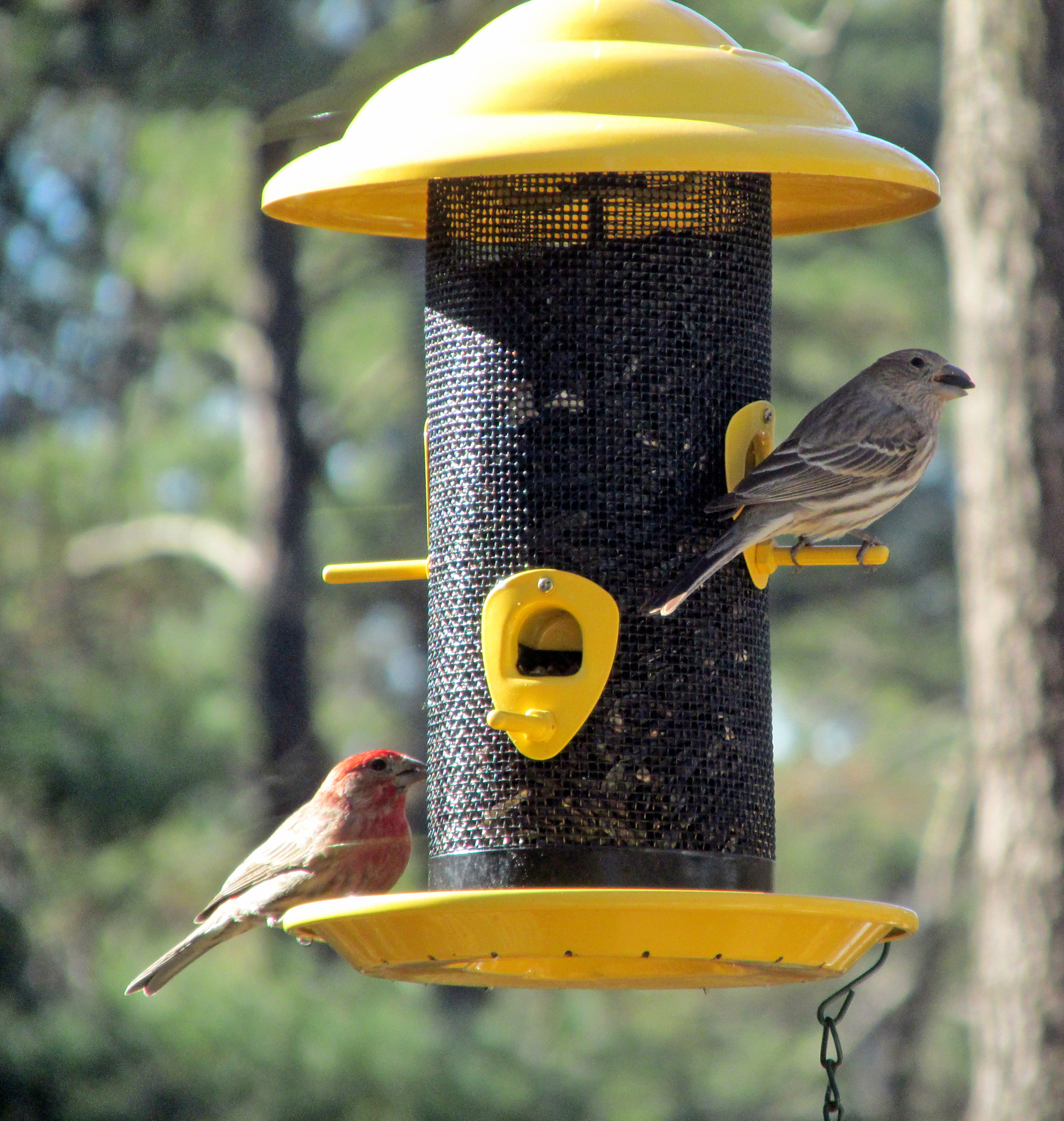
A pair of House Finches visit a feeder.

She noted that some of the birds at the feeders include a ruffed grouse. While the grouse was eating, a blue jay arrived and wanted the grouse to leave. In response, the grouse ruffled its neck feathers and spread its tail. “The blue jay decided to wait to eat,” she added.

Patricia has also enjoyed the habits of the crows and blue jays at the feeders, noting that a jay will pick up one shelled peanut and fly away but the crows won’t leave until they have at least three peanuts.

“Fun stuff to watch,” she said. Patricia has seen many species that don’t often reach Virginia and Tennessee, including birds like evening grosbeak and pine grosbeak.

Patricia also shared that she felt that others would like this site as much as she does. To observe the birds visiting the feeders in the yard in Ontario, Canada, just visit  http://cams.allaboutbirds.org/channel/38/Ontario_FeederWatch/

Patricia had also read my recent column on dark-eyed juncos. “I still haven’t seen any juncos yet, but I have been watching for them,” she shared.

••••••

Goldfinch-Face

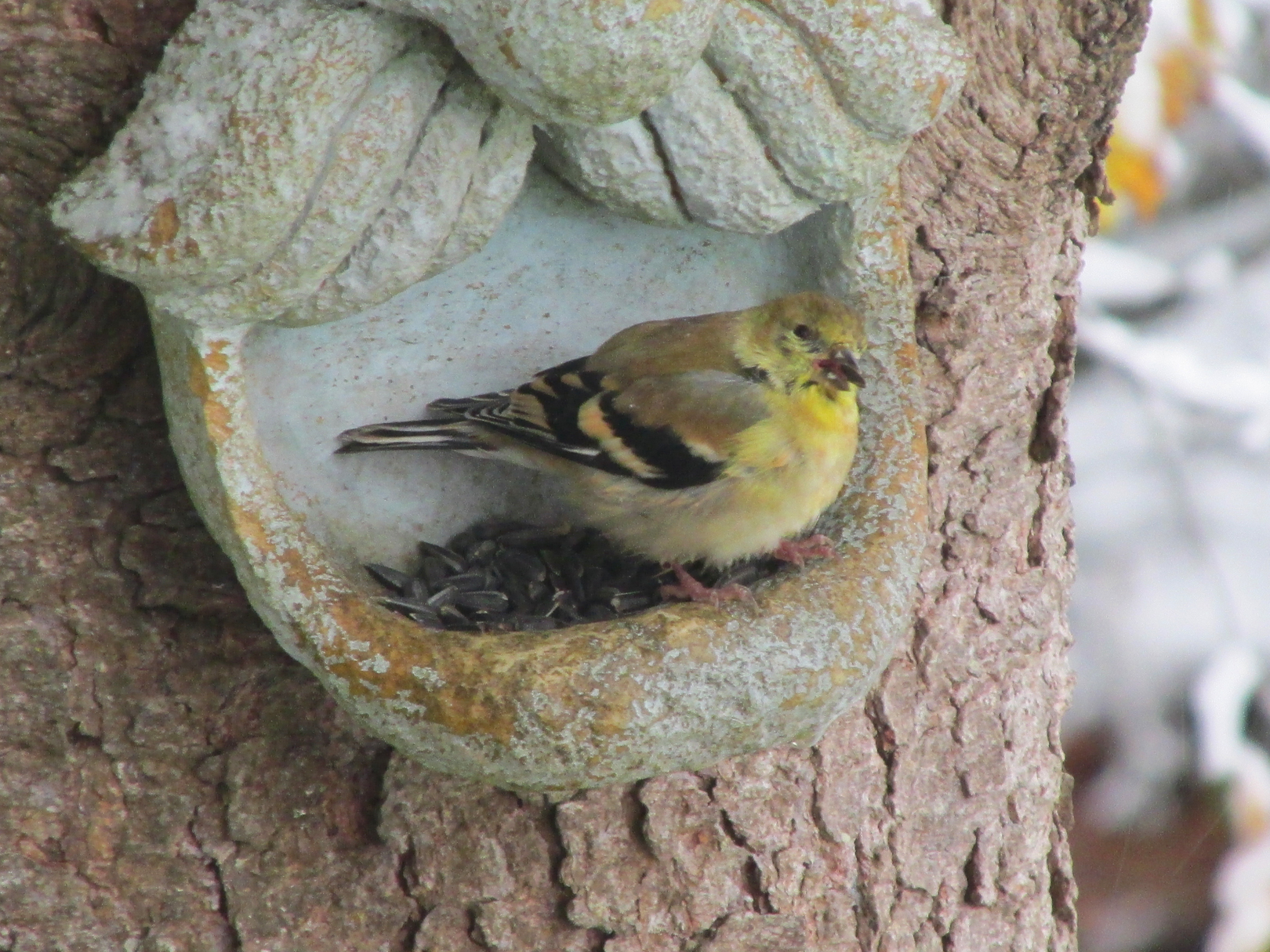
American Goldfinch eating sunflower seeds at a feeder.

It’s simple and relatively inexpensive to feed the birds. While a wide range of feeders of all shapes and sizes can be purchased at gardening centers and most retail stores, something as simple as a clay saucer can function as a dispenser of seeds. Of course, seeds can even be scattered on the ground. In fact, this is the preferred method of foraging for many of our ground-dwelling birds.

I like to provide a mixed variety of foods during the winter months. My main offering include black oil sunflower seeds (and plenty of them), as well as suet cakes and shelled, unsalted peanuts.

Some of our more common feeder visitors include Carolina chickadees, tufted titmice, blue jays, house finches, American goldfinches, as well as a variety of sparrows and woodpeckers. It’s still fairly early in the winter season, but it’s good to watch for more unexpected visitors such as purple finches, red-breasted nuthatches and evening grosbeaks.

Downy-Male

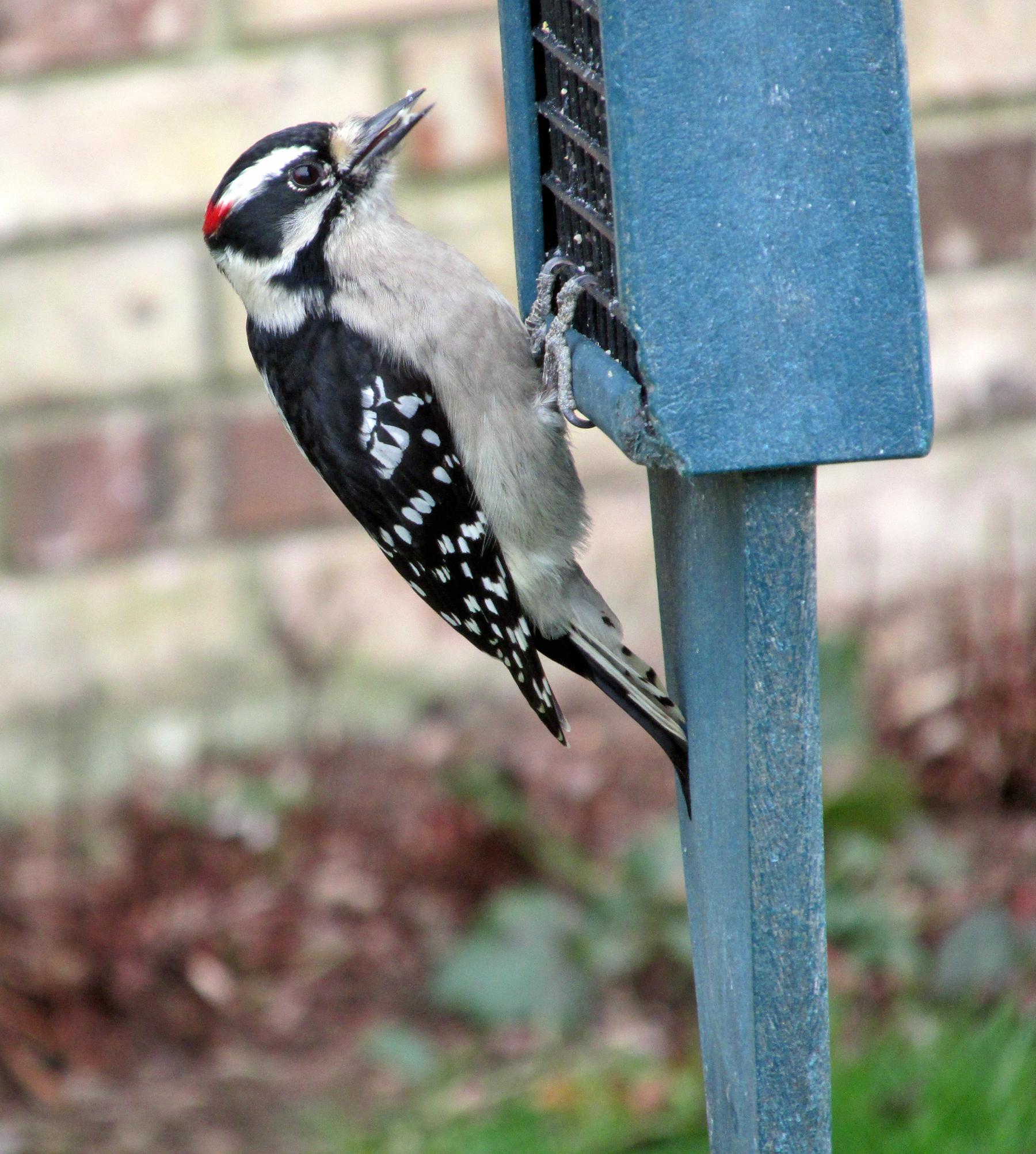
Downy Woodpecker obtains suet from a feeder.

In urban or suburban settings, expect to entertain such birds as house sparrows, European starlings and rock pigeons at your feeders. These non-native species can quickly overwhelm some feeders and crowd out native birds.

Whether or not the show is televised, it’s always great fun to watch the antics of birds at our feeders during the winter months. Many of the other aspects of the natural world that we enjoy, from flowers and butterflies to gardening and dragonflies, are absent during the winter months. Curious chickadees, feisty finches and wily wrens can definitely lift one’s spirits on gloomy winter days.

••••••

FemaleCard-Oct6

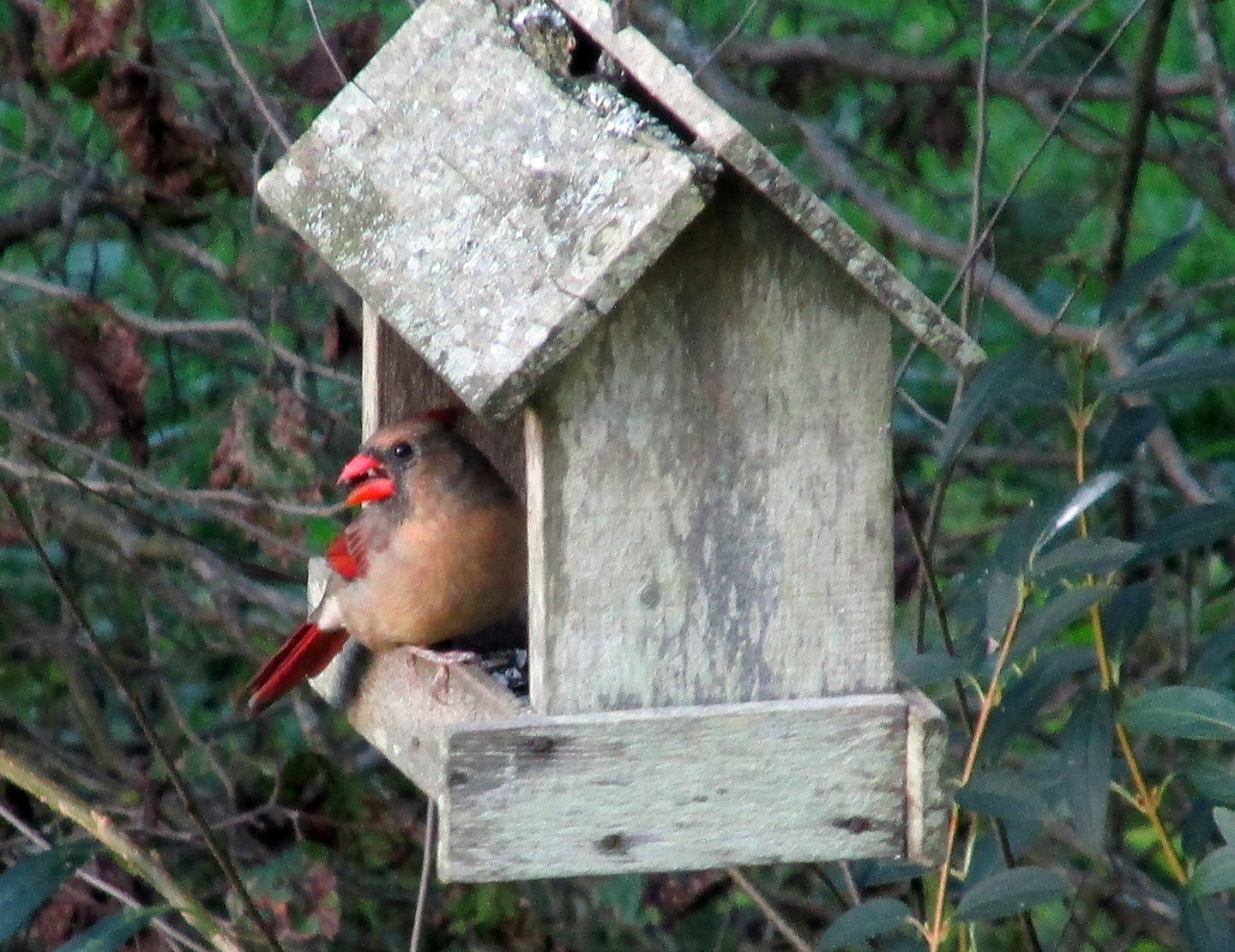
A female Northern Cardinal perches on the side of a rustic feeder.

To learn more about birds and other topics from the natural world, friend Stevens on Facebook at https://www.facebook.com/ahoodedwarbler. He is always posting about local birds, wildlife, flowers, insects and much more. If you have a question, wish to make a comment or share a sighting, email ahoodedwarbler@aol.com.

Wb-Nuttie

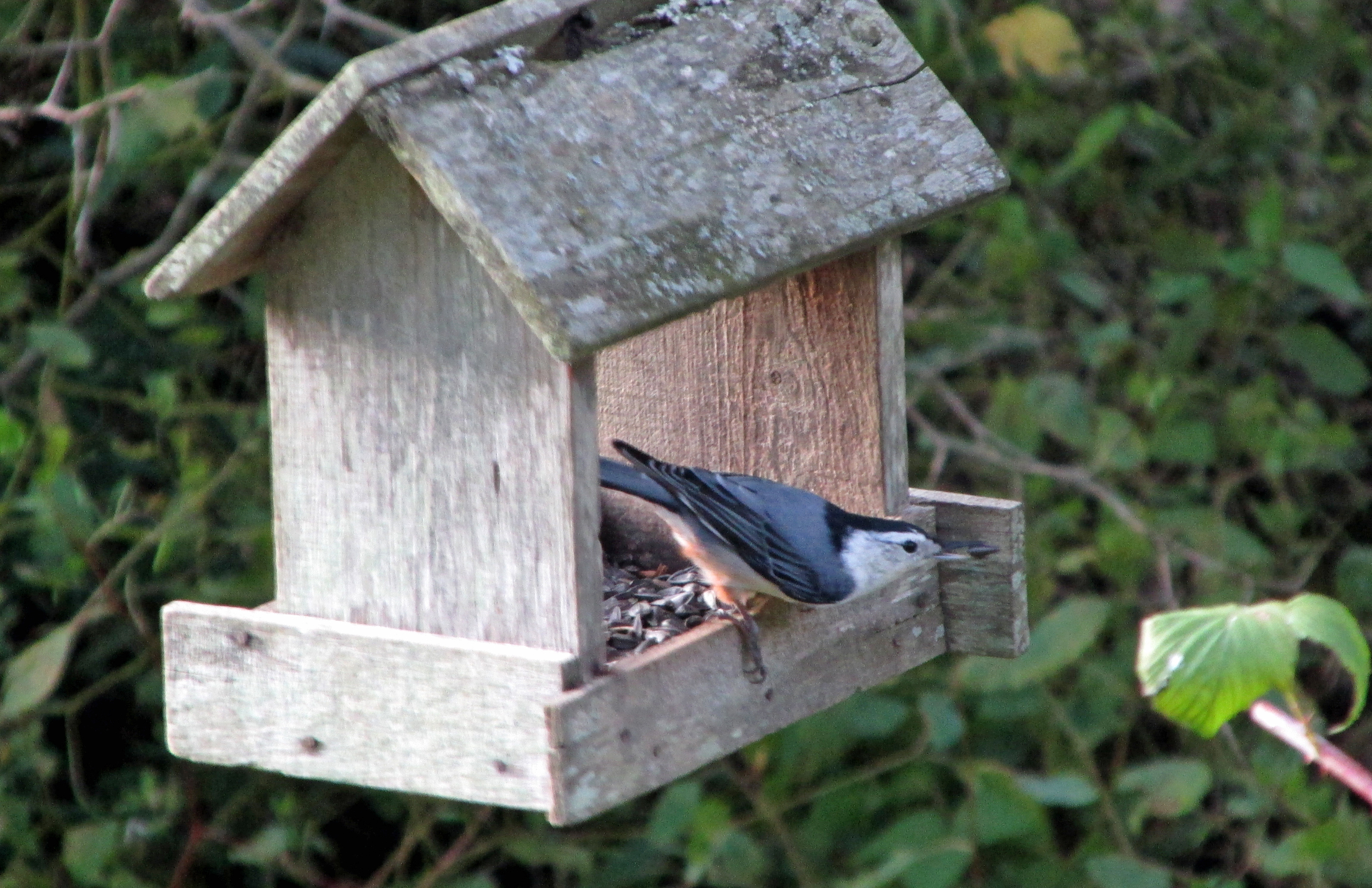
A White-breasted Nuthatch departs a feeder with a seed.