Tag Archives: Feathered Friends

Sighting a Siberian Superstar: Local birder secures rare red-flanked bluetail for life list

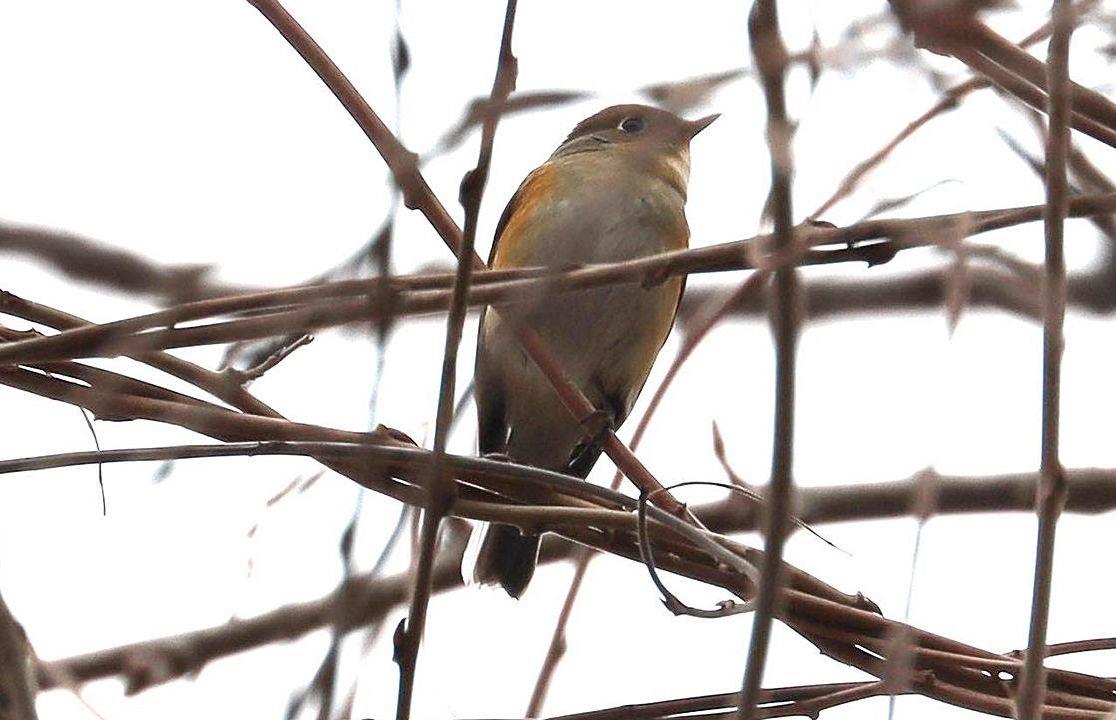
Photo by Tom McNeil • This red-flanked bluetail created quite a stir when it showed up in Fairfax County, Virginia, along the Potomac River.

Here’s confirmation that birds have wings and know how to use them to travel to some totally unexpected places. A good birding friend, fellow member of the Elizabethton Birding Club and, like me, an alumni of Hampton High School, has added a new bird – a species that I’d never even heard of – to his life list.

Tom McNeil posted on his Facebook page on Jan. 4 that he departed Winston-Salem, North Carolina, at 3 a.m. and drove to the Washington, D.C., Metro Area for a chance at seeing a little 5-inch-long bird.

From long acquaintance with Tom, I know he doesn’t hesitate to go after these “rare birds.” This particular bird – a red-flanked bluetail – had been generating a lot of excitement, Tom noted, since making its unlikely appearance in Fairfax County, Virginia.

The bird had already been present for four days when McNeil made his scramble to get binoculars on the bird.

I got the chance to discuss his sighting after he returned home just ahead of Winter Storm Fern after he had gone on another quick trip to add one of the common ground doves spotted in Sampson County to his North Carolina list.

“I came home to make sure the pipes didn’t freeze,” Tom said.

His wife, Cathy, works as a travel nurse and was working in Winston-Salem, North Carolina, for the weekend. “Unfortunately she is probably going to have to stay overnight at the hospital,” Tom said, explaining that the storm was expected to be really bad there.

North American Rarity

The rarity of the red-flanked bluetail is mind-boggling. Most sightings of this bird in North America have taken place in Alaska, but there are also 2023 records from California and New Jersey.

“This is only the second record in the eastern United States,” Tom said. “The first was in New Jersey, two years ago.”

He added, “I heard some people speculating that it was the same bird that was in New Jersey. I can’t even begin to speculate how it wound up here.”

This Eurasian species, according to Tom, should be hanging out around China, not just outside the capital of the United States. Tom noted that the bird represents only the second record of this species in the eastern United States.

That’s more than I knew. Thank goodness for Google. A little research and I soon learned that the red-flanked bluetail belongs to a group of insect-eating birds known as chats. Formerly, chats were thought to be thrushes. Genetic analysis has proven, however, that they are in fact a type of Old World flycatcher.

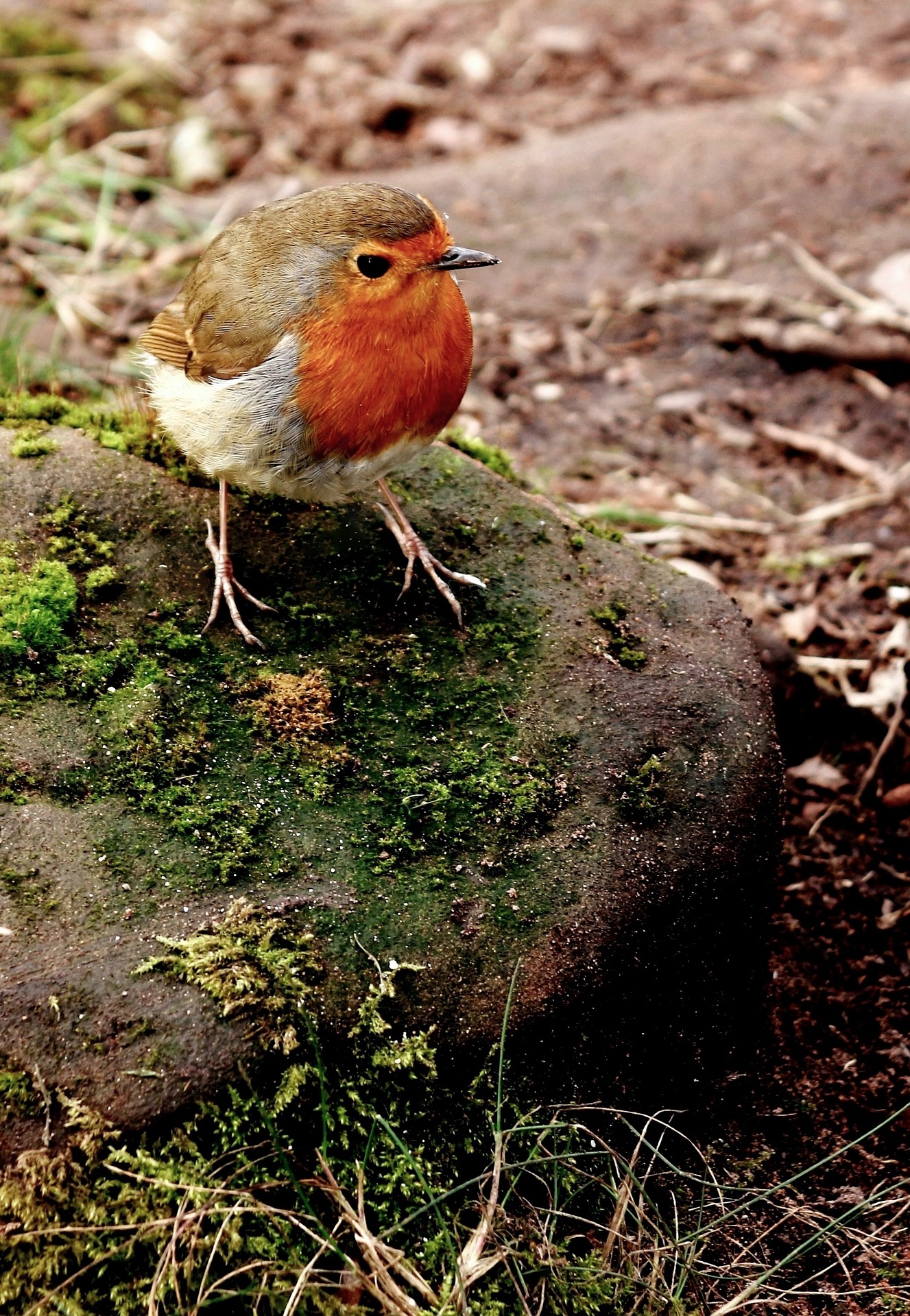
Photo by Andrew Poynton/Pixabay.com • The European robin is actually an Old World flycatcher and a relative of the red-flanked bluetail.

The fact that chats resemble Old World thrushes can be attributed to convergent evolution, which is the independent evolution of similar features and appearances in species of different lineages. Flycatchers and thrushes are birds, but that’s where the similarities end.

The red-flanked bluetail, known by the scientific name (Tarsiger cyanurus) is a small bird that breeds in mixed coniferous forests in northern Asia, parts of central Asia and northeastern Europe. It is migratory, nesting in Siberia and wintering mainly in southeast Asia, in the Indian subcontinent, the Himalayas, Taiwan and northern Indochina. In other words, it’s not supposed to be close to Washington. D.C.

What’s in a Name

You have to love this bird’s extremely descriptive common name. It was previously known as the orange-flanked bush-robin, which is also quite descriptive. Considering the bird is a flycatcher, however, calling it a bush-robin would not be accurate.

Tom added the bird to his life list with relative ease. His wife, Cathy, is a travel nurse and was working in Winston-Salem, North Carolina, when Tom learned that the bird was present in Great Falls Park in Virginia.

“From Winston-Salem, that is about 5.5 hours,” he said. “I left at 3 a.m. and got there about 8:30 a.m.,” he explained. “I only had to walk less than a quarter-mile to the area where it had been seen the most.”

He soon discovered that 75 or more people were already gathered and looking for the bird.

“They were spread out over a distance of about 200 yards,” he said. “After about an hour, someone spotted it and everyone converged on it. It was pretty exciting and humorous to watch.”

While the bird shows a blue tail and rump, it lacks the bright blue upperparts of an adult male red-flanked bluetail.

Based on the bird’s appearance, Tom said most observers have identified the bird as a female. “But it could be an immature male,” he added.

Birding Surprises

“Needless to say, it was a lifer,” he noted.

A “lifer” is birder slang for a species a birder has observed for the first time and added to a cumulative life list of species seen.

The bird has spent much of its time close to the Potomac River since its arrival in Fairfax County in Virginia.

“Apparently the Maryland state line passes very close to the shore,” Tom said. “Some folks were standing out in the river trying to add the bird to their Maryland lists.”

The red-flanked bluetail has certainly been his best bird so far in 2027.

“Back in December I picked up Swainson’s hawk, MacGillivray’s warbler and Brewer’s blackbird for my North Carolina life list,” Tom said.

“Cathy and I both went down to Chattanooga and got a great cormorant and Franklin’s gull for Tennessee,” he added.

He posted on Facebook that his biggest personal milestone for 2025 was getting his American Birding Association area 600th bird – a Townsend’s warbler – in a backyard in Charlotte, North Carolina.

Cathy had to work and didn’t get to go with Tom on the trip to get the bluetail.

“So if it’s still around in the next few days, we will probably go up and try for it together,” Tom said.

Here’s a recording someone made of a red-flanked bluetail in California in 2023.

Winging It

Birds have wings, as I’ve pointed out many times, and they know how to use them. It’s just more evidence that one never knows when an unexpected bird might make an appearance. This is the magic that keeps birding exciting.

•••

Bryan Stevens has written about birds, birding and birders since 1995. Email him at ahoodedwarbler@aol.com to share a sighting, ask a question or make a comment.

Chasing Zunzun: Bahamas cruise resulted in sightings of flying gems

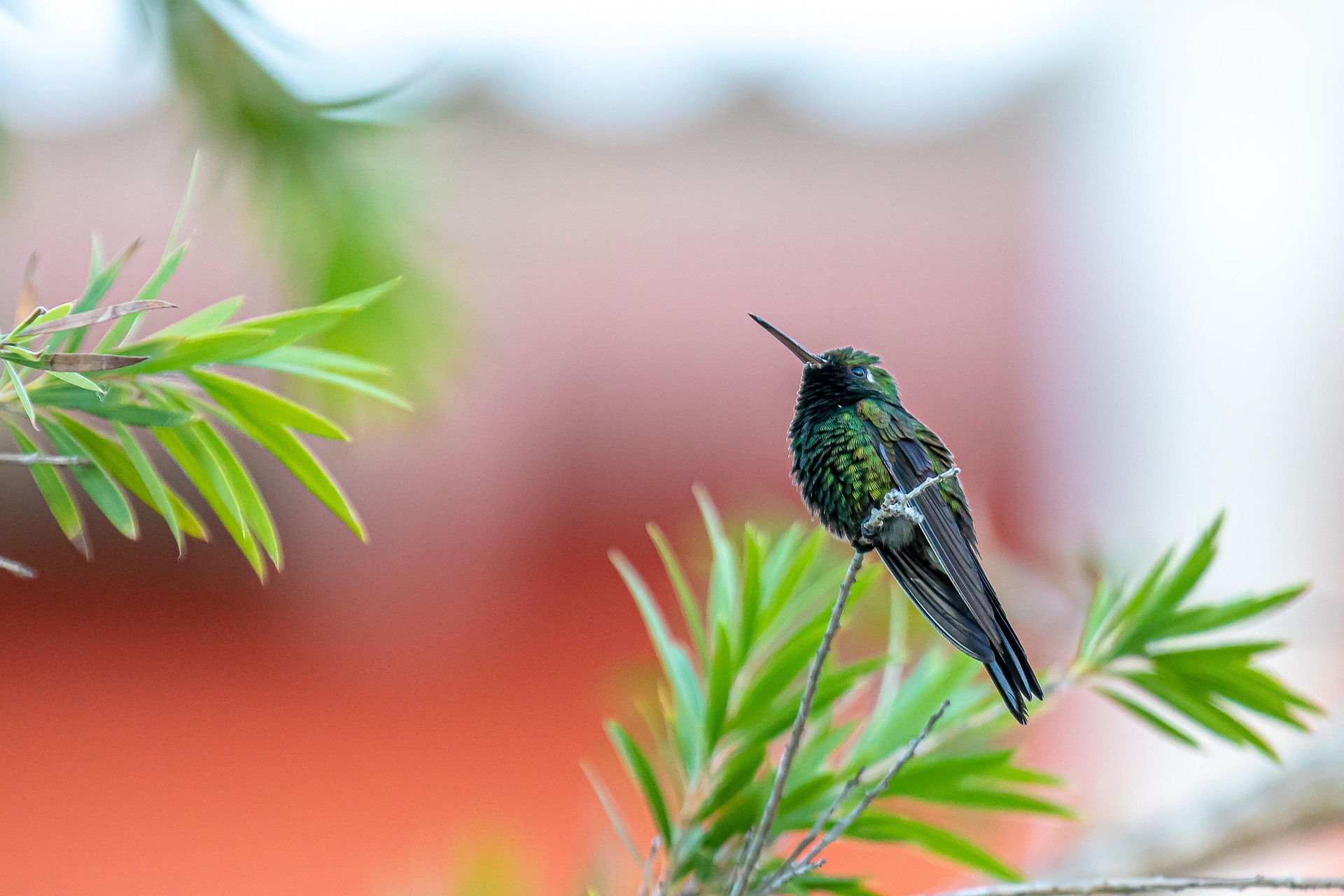
Photo by Pixabay • A Cuban emerald, a species of hummingbird native to Cuba and the Bahamas, perches and surveys its surroundings.

Continuing to bring you some vintage columns, I dug deep into my archives. I’ve traveled outside the United States on only one occasion from Jan. 22-24, 1999, during a family vacation. Sightseeing and shopping took a backseat to birding during a three-day cruise in the Bahamas. I fully documented my sightings in a “Feathered Friends” column published Feb. 14, 1999.

Two scheduled shore excursions during the cruise gave me opportunities to search for birds.

Two hummingbird species can be found in the Bahamas. The Cuban emerald, as its name suggests, is found in Cuba. It’s also found on several islands in the Bahamas. These dazzling birds are found in thickets and woodlands, as well as parks and gardens.

Another hummingbird species, the Bahama woodstar, is found nowhere else in the world.

Without much difficulty, I observed both species during my visit to the Bahamas. My observation of Cuban emeralds took place on Castaway Cay, a small island owned by Disney and reserved for use by those traveling aboard its cruise ships. Much of the island had been kept in a natural state with walking trails perfect for looking for birds. While others enjoyed the beach, I set off with my binoculars on the trails.

My mother and I observed a pair of Cuban emeralds that appeared to be a mother and her male offspring. On two occasions, we watched the female approach the young male for a feeding session. The young bird opened his bill in a wide gape and the female plunged her own long bill into his throat. The spectacle looked rather fearsome, but that’s how hummingbirds feed their young. I’ve observed one of our native ruby-throated hummingbird feeding her young in the same manner. Experts who have researched hummers insist there’s no danger that a mother hummingbird will skewer her offspring.

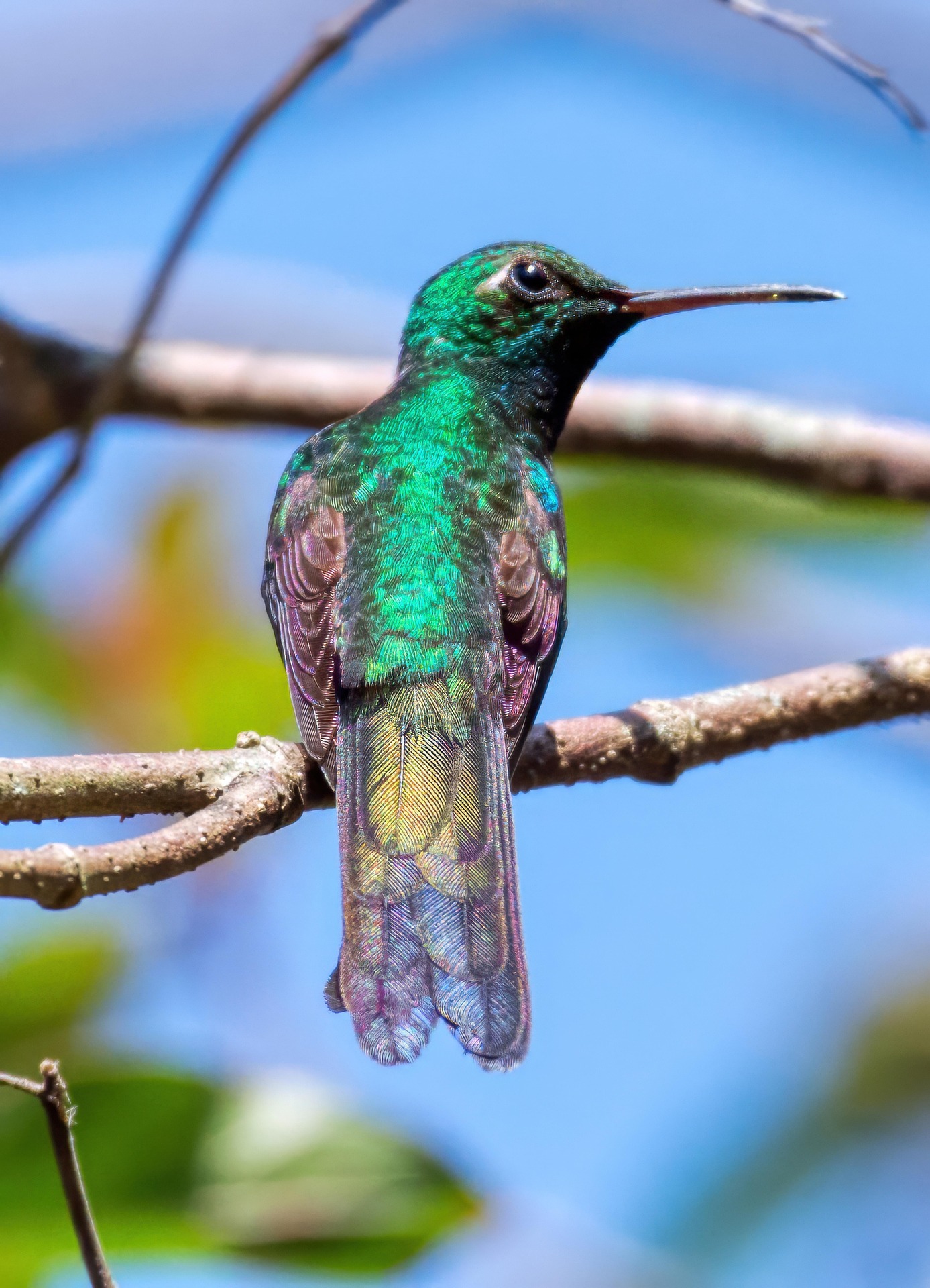
Photo by Daniel Stuhlpfarrer/Pixabay • The Cuban emerald is a vibrant hummingbird of the Caribbean.

The young male being fed put on quite a show. He appeared almost completely lacking in fear and allowed me to approach within inches of his perch. At times, he also exhibited his own curiosity and buzzed around my head and face for a better look of his own.

His mother, not quite as confiding, kept her distance. She perched on branches about 15 feet off the ground. She observed us, but she never descended to feed the young male unless we withdrew to a comfortable distance.

I learned later that my brother and sister-in-law saw some Cuban emeralds at another location on the island, leading me to suspect that the Cuban emerald may be quite common on Castaway Cay in the Bahamas.

Male Cuban emeralds sport an iridescent green throat and breast with a long forked tail, white undertail feathers, and a long thin bill that is black on top and reddish-pink on the underside. Females look similar to males except with green upperparts along with a grayish throat and breast, and a slightly shorter and less forked tail.

The term “emerald” describes many different species of hummingbirds. In the Caribbean, this family includes Hispaniolan emerald and Puerto Rican emerald. These hummingbirds belong to the genus Chlorostilbon, which is Greek for “green glitter,” a perfect description of the metallic green appearance of their feathers. Since my writing of the original column, experts have reconsidered the classification of the Cuban emerald. Based on a molecular phylogenetic study published in 2014 and a 2017 publication, the North American Classification Committee of the American Ornithological Society moved the species to the resurrected genus Riccordia. The Cuban emerald’s scientific name is now Riccordia ricordii.

Prior to seeing the Cuban emeralds I got a brief but close look at a male Bahama woodstar visiting hibiscus and other flowers in a garden surrounding a swimming pool at a resort in Nassau, the capital of the Bahamas located on New Providence Island.

The Bahama woodstar bears a resemblance to our own ruby-throated hummingbird. Male Bahama wood stars boast a reddish-purple throat, green upperparts and a white breast bordered by a tinge of rufous. The bird’s forked tail feathers are also trimmed with rufous color. Males and females have a white spot behind each eye. They also have black bills that curved downward slightly at the tip.

The Bahama woodstar, which is roughly the same size as a ruby-throated hummingbird, is a member of the genus Calliphlox, which is Greek for “beautiful flame.” Since my original writing of this column, the classification of the Bahama woodstar changed after a 2014 study.

A former subspecies of the Bahama woodstar has been made its own species. The Bahama woodstar itself was moved into a new genus and given the scientific name Nesophlox evelynae. That former subspecies was upgraded to full species status and is known as the Inagua woodstar (Nesophlox lyrura), also called the lyre-tailed hummingbird. The species is endemic to the two islands of the Inagua district of the Bahamas.

It’s the Bahama woodstar that occurs in Nassau, so the species I saw in 1999 was truly the Bahama woodstar. The good news is that if I ever travel to the Great or Little Inagua islands in the Bahama archipelago I will have a chance to add a third species of Bahama hummingbird to my life list.

There are many other species of woodstars, including the little woodstar of South America, the purple-throated woodstar restricted to the west slope of the Andes in Colombia and Ecuador, and the endangered Chilean woodstar.

There are about 360 species of hummingbirds, all found in the New World and reaching their greatest diversity in Central and South America.

Both Cuban emeralds and Bahama Woodstars have strayed into nearby Florida, so it is possible to observe these two species outside of the Bahamas. Experts have speculated that the Inagua woodstar had very likely also strayed into Florida.

I’ll always remember my trip to the Bahamas and the opportunity to chase after zunzún, which is a Spanish word, particularly used in the Caribbean, for hummingbird. I greatly enjoyed my observations of the two hummingbird species I observed in the Bahamas. These sightings remain among my most memorable in my nearly four decades of birding.

•••

Bryan Stevens has written about birds, birding and birders since 1995. Email him at ahoodedwarbler@aol.com to ask a question, make a comment or share a sighting. 


Waterfowl numbers help increase Elizabethton Christmas Bird Count total


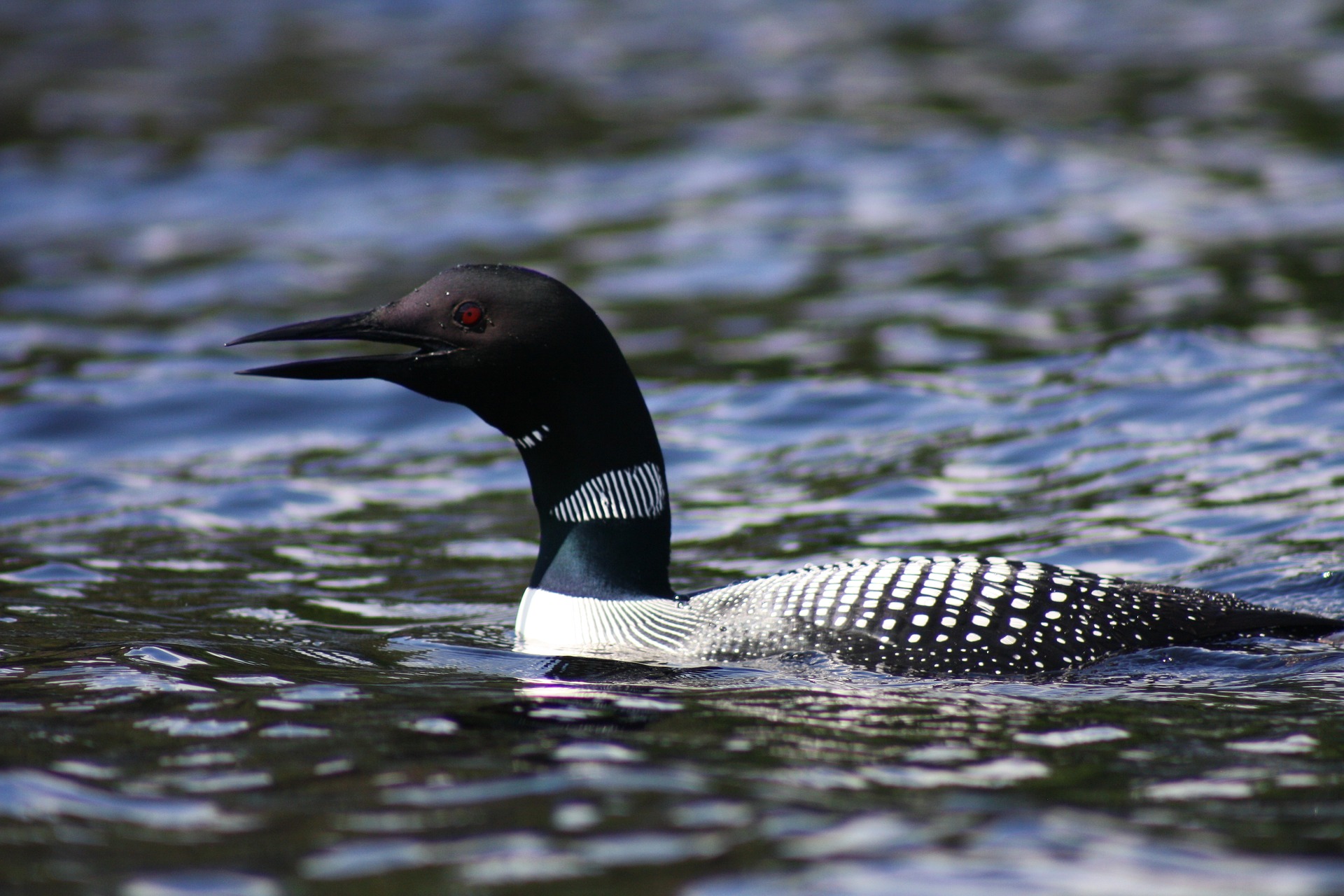
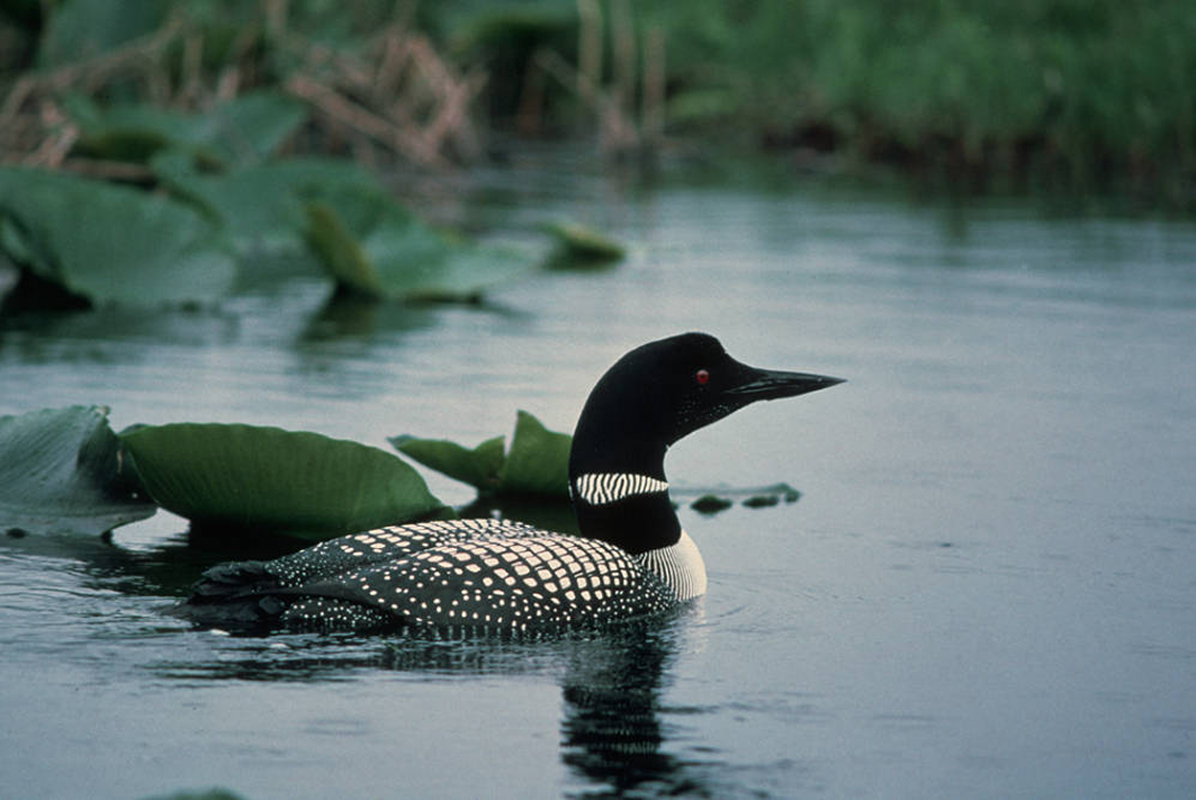
Photo by Krista-269/Pixabay.com • Common loons in summer breeding plumage are strikingly handsome birds that show much grace and agility in the water.

The 83rd consecutive Elizabethton Christmas Bird Count was held Saturday, Dec. 20, 2025. Twenty-four observers participated in seven parties found a total of 73 species, plus an additional species found during count week.

Compiler Rick Knight noted that the annual survey benefitted from good weather with a temperature range from 23 to 66 degrees coupled with clear and calm conditions.
The species total is right on the recent 30-year average for this CBC. The all-time high for the Elizabethton CBC was 85 species in 2017.

The list:
Canada goose, 372; mallard, 81; redhead, 3; ring-necked duck, 17; greater scaup, 2; lesser scaup, 1; bufflehead, 109; and hooded merganser, 26.

Wild turkey, 18; pied-billed grebe, 10; horned grebe, 14; rock pigeon, 208; mourning dove, 72; killdeer, 3; Wilson’s snipe, 7; ring-billed gull, 3; common loon, 1; and great blue heron, 11.

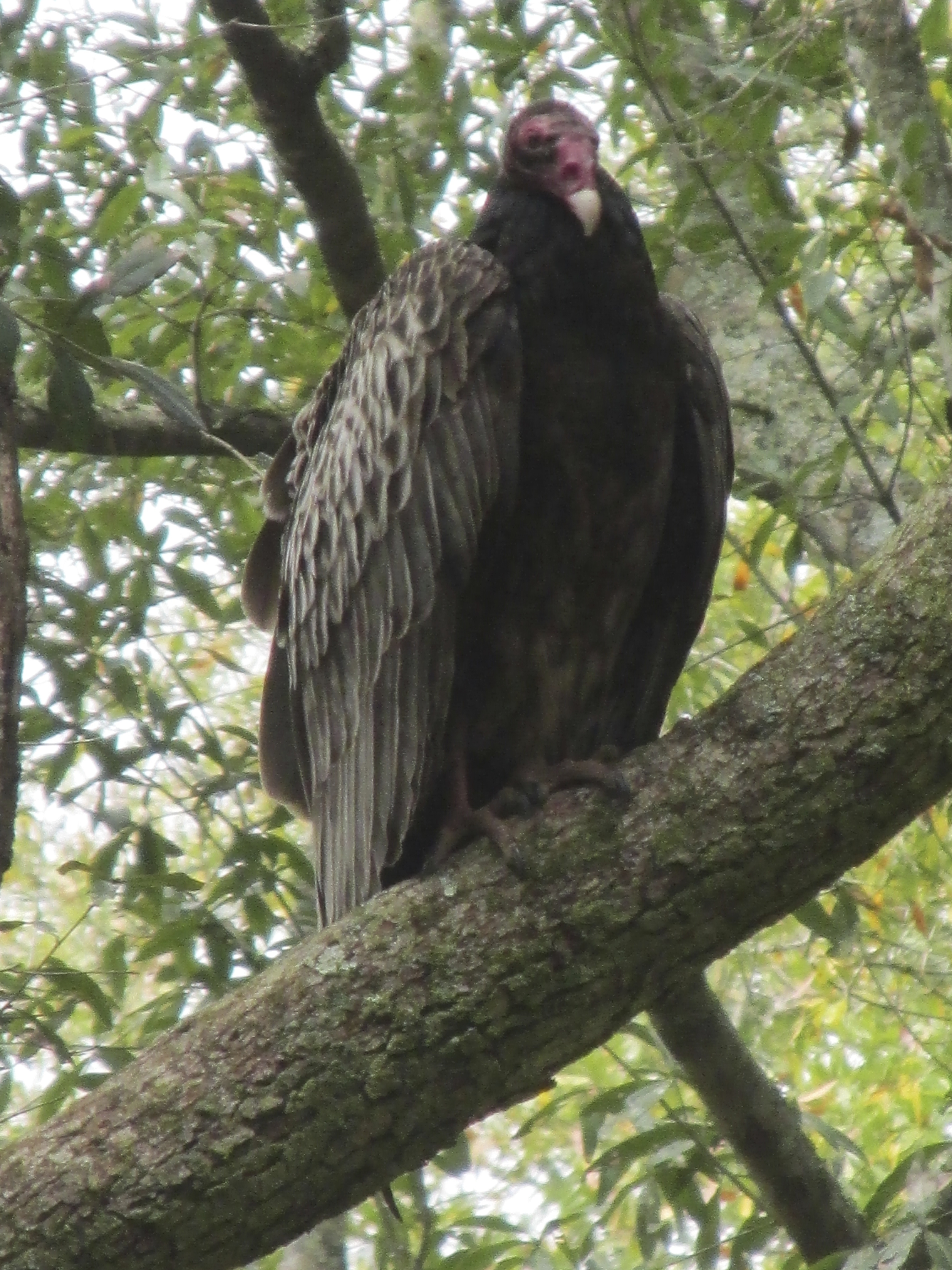
Black vulture, 26; turkey vulture, 131; sharp-shinned hawk, 1; Cooper’s hawk, 2; bald eagle, 4; red-shouldered hawk, 1; red-tailed hawk, 14; Eastern screech owl, 5; and great horned owl, 2.

Photo by Bryan Stevens
A flock of Wild Turkeys make their way across a snowy field.

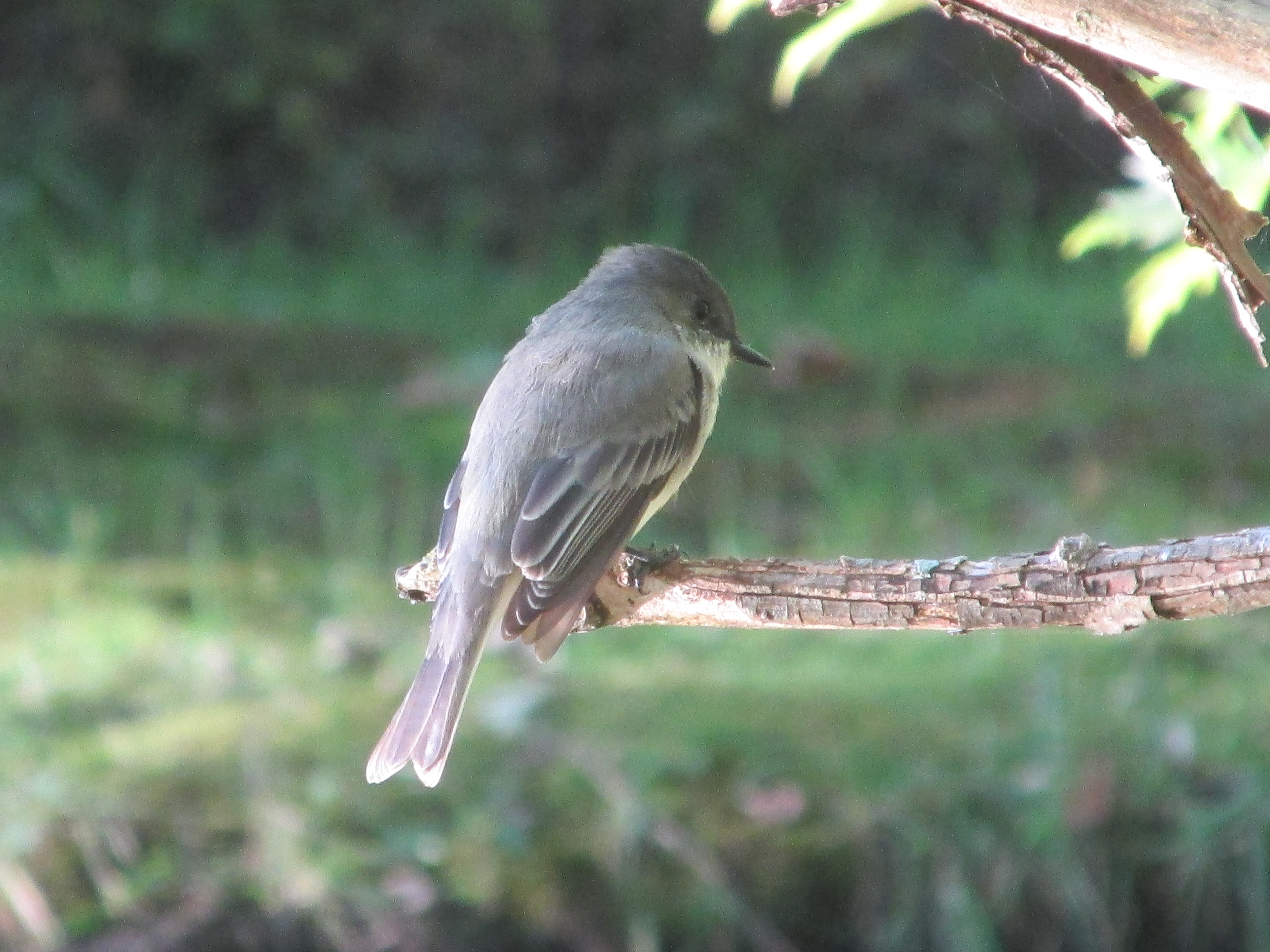
Belted kingfisher, 17; red-bellied woodpecker, 28; yellow-bellied sapsucker, 19; downy woodpecker, 15; hairy woodpecker, 4; Northern flicker, 27; pileated woodpecker, 15; American kestrel, 14; and Eastern phoebe, 13.

White-eyed vireo, 1; blue jay, 130; American crow, 343; common raven, 9; Carolina chickadee, 101; tufted titmouse, 66; ruby-crowned kinglet, 11; golden-crowned Kinglet, 24; and cedar waxwing, 18.

White-breasted nuthatch, 29; brown creeper, 1; Carolina wren, 74; and winter wren, 11.

Brown thrasher, 1; Northern mockingbird, 58; Eurasian starling, 1058; Eastern bluebird, 117; hermit thrush, 8; and American robin, 236.

Photo by Bryan Stevens • A white-breasted nuthatch grabs a sunflower seed.

House sparrow, 28; house finch, 135; purple finch, 4; American goldfinch, 74; and pine siskin. The siskin was listed as a count week find. Birds seen within the same count circle but outside of the specific count day are noted as “count week” birds and still tallied with the species found on the actual count day.

Chipping sparrow, 1; field sparrow, 20; fox sparrow, 1; dark-eyed junco, 24; white-throated sparrow, 87; Savannah sparrow, 1; song sparrow, 83; Swamp Sparrow, 3; and
Eastern towhee, 14.

Eastern meadowlark, 67; common grackle, 1; pine warbler, 3; yellow-rumped warbler, 55; and Northern cardinal, 102.

Knight singled out the white-eyed vireo as a species worthy of elaboration. The vireo was seen in Hampton at the watershed trail among a stand of pines. It was the third instance for this species on this particular CBC; white-eyed vireos were also seen in 1997 and 2001.

Notable misses, according to Knight, included barred owl, red-breasted nuthatch and white-crowned sparrow.

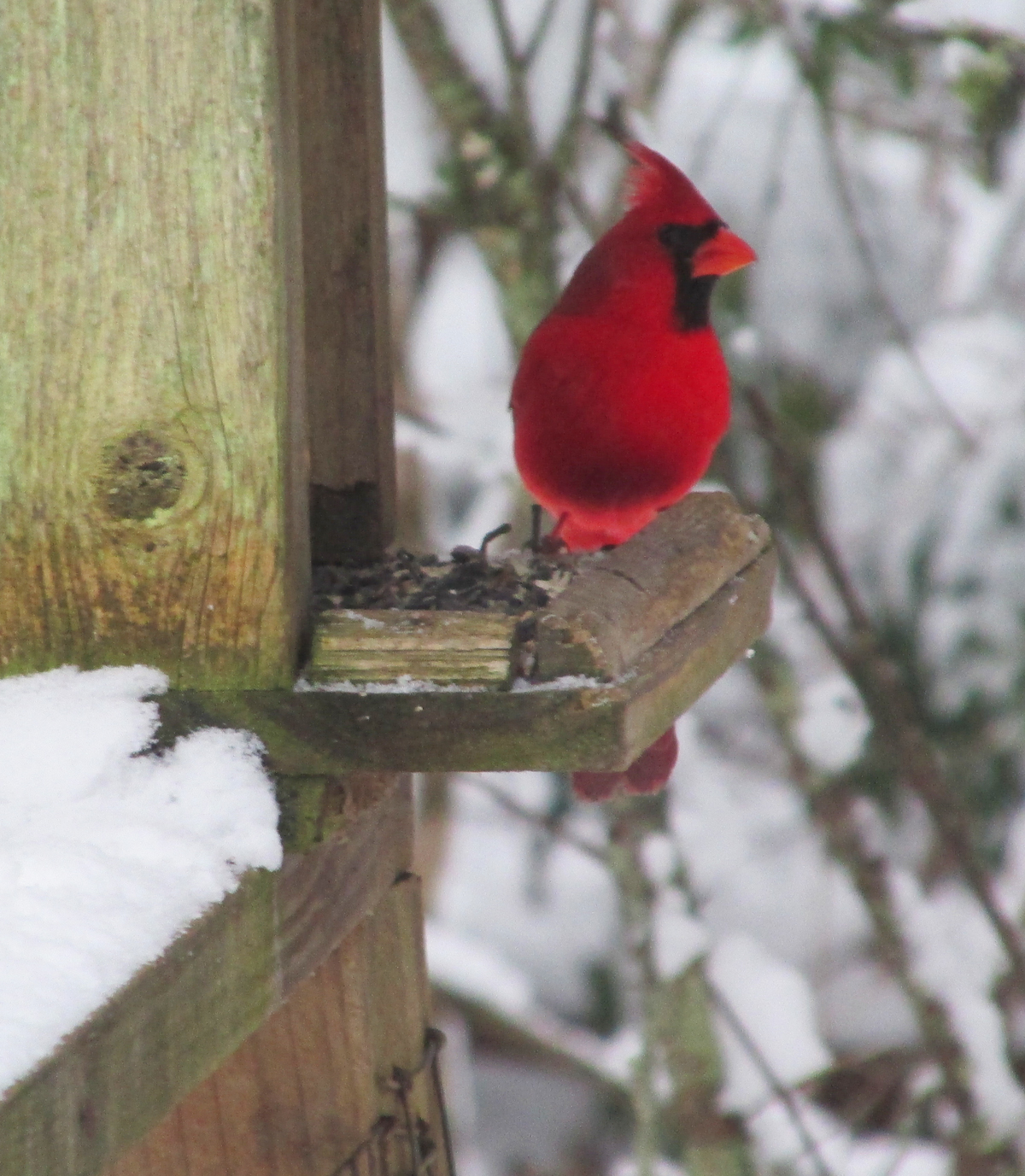
Photo by Bryan Stevens • A male Northern cardinal visits a feeder on a snowy afternoon.


Christmas Bird Count produces grebes, other finds

Photo by Bryan Stevens
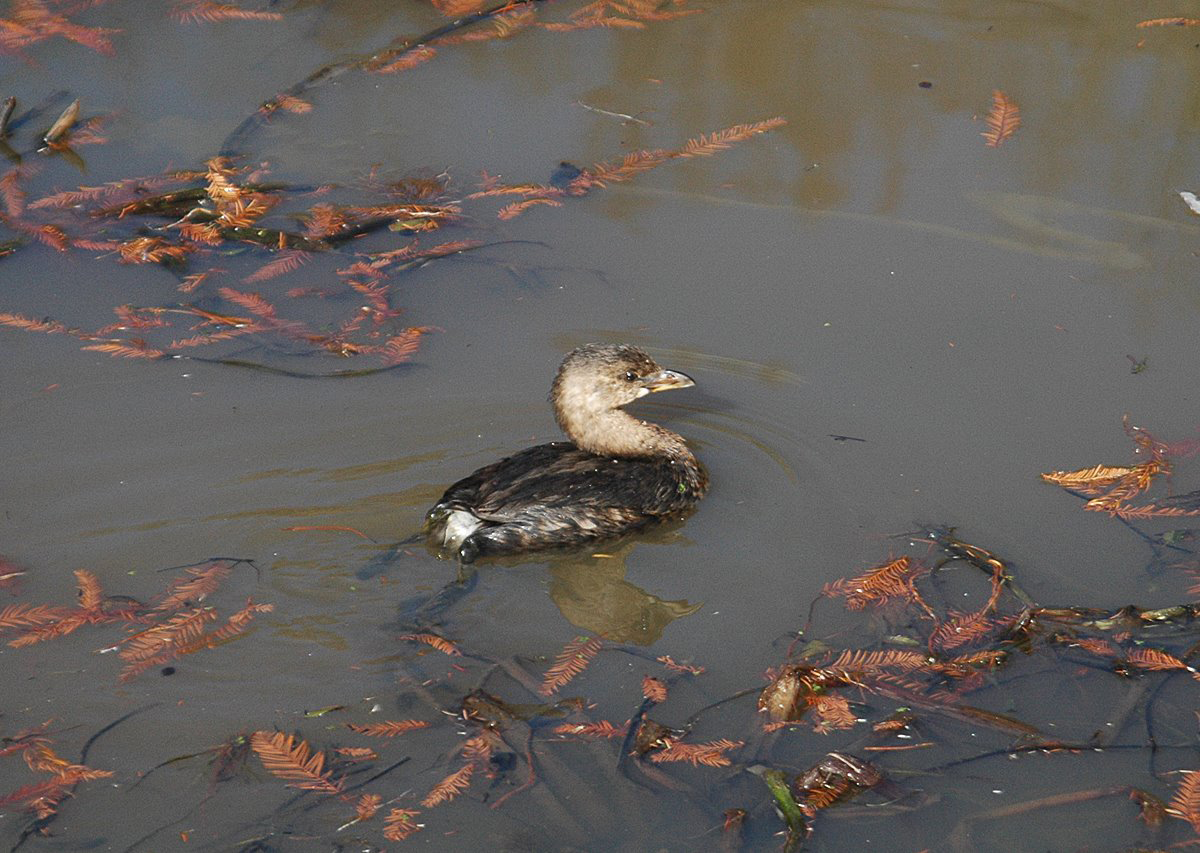
The pied-billed grebe paddles through the water after it was rescued after a stranding on a lawn.

I took part in the Elizabethton Bird Club’s 83rd annual Elizabethton Christmas Bird Count on Dec. 20.

The count focuses on a circle within Carter County with Elizabethton serving as the center. Consider the circle as a pie sliced into six pieces. Different groups bird within those “slices” of terrain. The groups rotate each year to vary the participation. As a result, it had been six years since I last led the count effort for the Butler/Little Milligan area that includes a great deal of Watauga Lake.

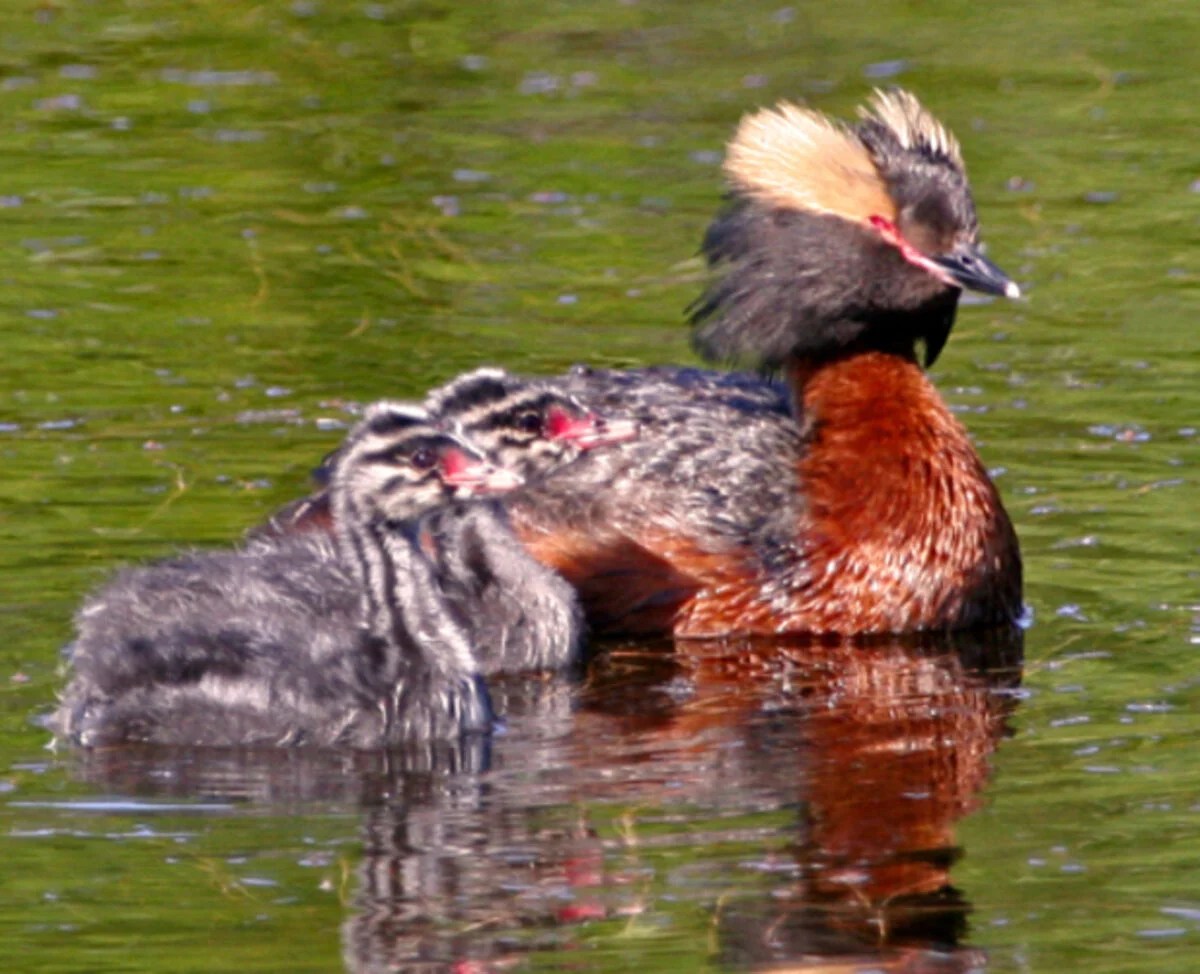
Donna Dewhurst/USFWS • A horned grebe parent tends chicks.

One of my favorite reasons for taking part in this particular count is the great mid-day lunch break at the Dry Run General Store and Deli in Butler. This marked my third time over the last 18 years having lunch at this great spot. The lunch break also gives the participants a chance to study the list of birds seen and calculate what other species can be added and where to best look for those species.

The counts conducted in areas with access to water have the potential for the most species, so it’s always a little more fun to bird around Watauga Lake or Wilbur Lake. The Watauga River in Elizabethton is also good.

We had good weather for this most recent count, but it was a slow effort to add birds to our list. Without a doubt, spring and fall bird counts are much more exciting than a Christmas Bird Count.

Below is the list for my group, which included Rob Armistead, Brookie and Jean Potter, David and Connie Irick and Chris Soto. This is only the list for Little Milligan and Butler. I hope to provide the complete list at a later date.

We found a total of 46 species:

Canada goose, 32; mallard, 7; greater scaup, 2; hooded Merganser, 4; wild turkey, 18; pied-billed grebe, 8; horned grebe, 14; rock pigeon, 52; mourning dove,1; ring-billed gull, 1; common loon, 1; and great blue heron, 2.

Photo by U.S. Fish & Wildlife Service • Common loons are quite at home in the air and on the water, but these birds are awkward if weather forces them to set down on land.

Red-tailed hawk, 3; belted kingfisher, 3; red-bellied woodpecker, 3; downy woodpecker, 2; Northern flicker, 1; pileated woodpecker, 3; American kestrel, 2; and Eastern phoebe, 1.

Blue jay: 14; American crow, 68; common raven, 2; Carolina chickadee, 2; tufted titmouse, 11; white-breasted nuthatch, 4; winter wren, 1; Carolina wren, 5; golden-crowned kinglet, 1; and ruby-crowned kinglet, 1.

Eastern bluebird, 14; hermit thrush, 1; American robin, 5; brown thrasher, 1; Northern mockingbird, 3; European starling, 43; and cedar waxwing, 2.

House finch, 2; American goldfinch, 25; dark-eyed junco, 5; white-throated sparrow, 8; song sparrow, 3; Eastern towhee, 3; Eastern meadowlark, 1; pine warbler, 1; and Northern cardinal, 7.

While birding in Little Milligan and Butler, we had plenty of views of Watauga Lake and opportunities for spotting birds often affiliated with water. The umbrella term of waterfowl can include such birds as ducks, geese, loons and grebes. We had representatives from all of these groups on our list. I was pleased to finally see some ducks and grebes this winter.

The grebes are a grouping of birds lumped together as waterfowl. Worldwide, there are 22 grebe species. This family also includes three extinct species — Alaotra grebe, Atitlán grebe and Colombian grebe.

Many people are unaware of the grebes. After all, they are oddball birds with not a lot in common with other waterfowl such as loons and ducks. In eastern Tennessee, southwestern Virginia and western North Carolina, the pied-billed grebe is the member of the grebe family most likely to come into contact with humans.

The pied-billed grebe’s scientific name, Podilymbus podiceps, can be roughly translated as “rear-footed diver.” The reference is to the fact that this grebe, as well as others of its kind, have their feet positioned so far back on their bodies that movement on land is difficult and awkward.

In winter, however, horned grebes can be somewhat abundant on area lakes. The common name of horned grebe refers to a yellow crest of feathers located above and behind the eyes, reminiscent of “horns” in the eyes of an imaginative observer. In winter these horns are absent and the colorful horned grebe of the nesting season is replaced by a bird in a dull white and dark gray plumage.

Grebes range in size from the least grebe, which weighs only about six ounces, to the great grebe, which can tip the scales at four pounds. North American grebes include red-necked grebe, horned grebe, eared grebe, Clark’s grebe and Western grebe. In extreme southern Texas, birders can find least grebes in suitable wetland habitats.

Other grebes found around the world include birds with such descriptive names as the great crested grebe, hooded grebe and silvery grebe.

Photo by Bryan Stevens • Brookie Potter spots a “bumble,” otherwise known as an abominable snowman, near Watauga Lake during the Christmas Bird Count.

With the exception of the least grebe, I’ve seen all of North America’s grebes. During visits to Utah in 2003 and 2006, I observed the sleek, long-necked Clark’s grebe and Western grebe. On a 2006 trip to Utah, I visited Antelope Island State Park and observed tens of thousands of eared grebes gathered on the Great Salt Lake for the nesting season. In Tennessee, one of the most reliable locations to find eared grebes is from viewing areas at Musick’s Campground on South Holston Lake, where a small number of these grebes have wintered for many years.

My Christmas Bird Count excursion proved a fun time with friends. We didn’t find a lot of birds, but we enjoyed finding the ones that we did see. Happy New Year to readers. I hope everyone finds some good birds in 2026.

•••

Bryan Stevens has written about birds, birding and birders since 1995.


Impossible to overlook the beauty of cardinals at Christmas

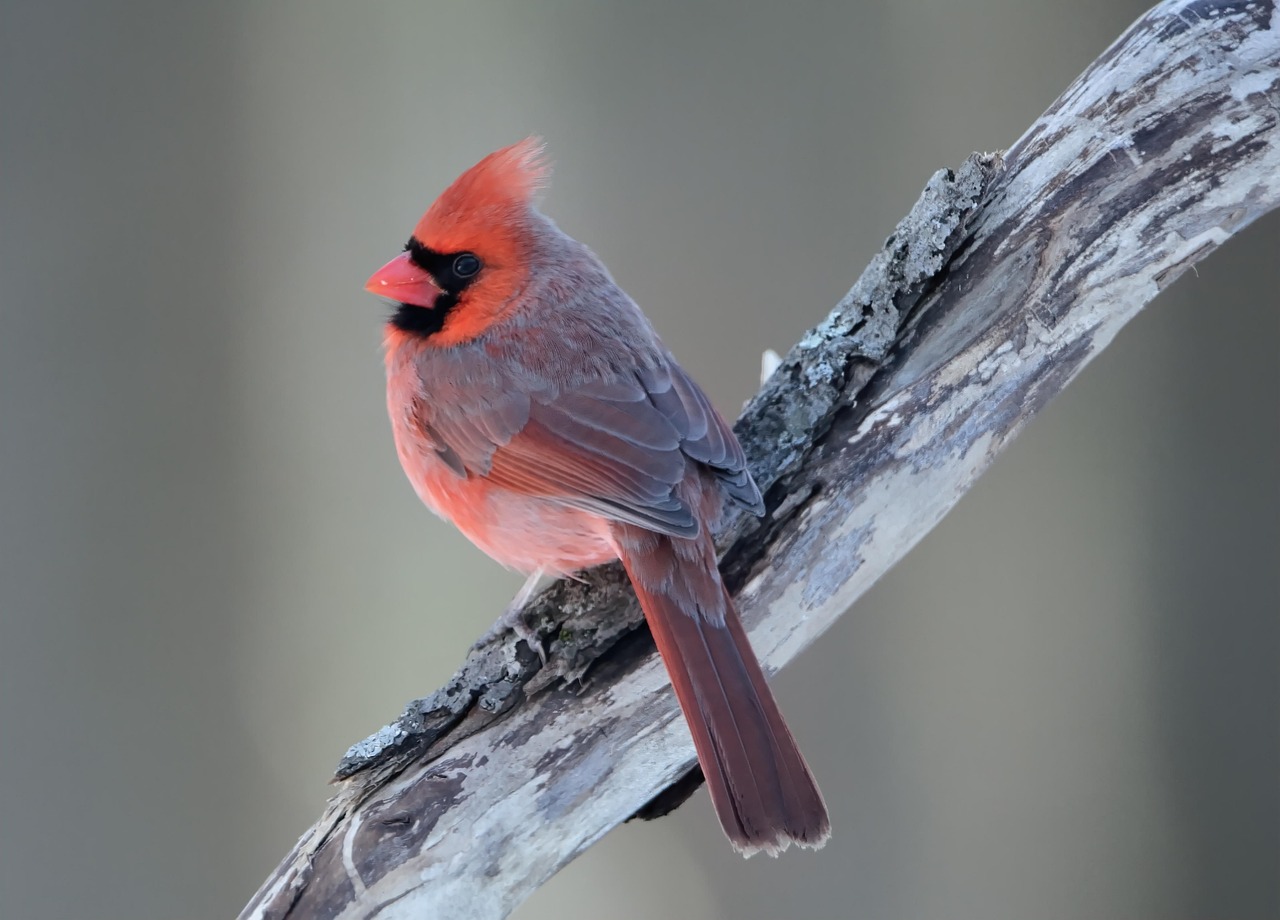
Photo by Nature Lady/Pixabay • A male Northern cardinal is always a welcome splash of brightness on wintry days.

Christmas Eve is upon us. I hope the hustle and bustle has died down and everyone can take delight in an enjoyable holiday. My own sincere wish to readers is that everyone gets to celebrate a great holiday that just might also include an interlude for watching some birds.

Often, when we think of winter birds, our thoughts focus on some of the less-than-colorful feeder visitors — the brown sparrows and wrens, the black and white chickadees, the drab American goldfinches that look so unlike their summer appearance.

There’s one bird, however, that makes an impression in any season. The Northern cardinal, especially the brilliant red male, stands out against a winter backdrop of snow white, deep green or drab gray.

Over the years, the Northern cardinal has also become associated with the Christmas season. How many Christmas cards have you received this holiday season with a cardinal featured in the artwork? I’d wager that at least a few cards in any assortment of holiday greetings will feature the likeness of a bright red cardinal.

Cardinals, also known by such common names as redbird and Virginia nightingale, are easily recognized backyard birds. I never tire of observing these colorful birds. Cardinals are easily lured to any backyard with plentiful cover to provide a sense of security and a generous buffet of sunflower seed.

Cardinals accept a wide variety of food at feeders. Sunflower seed is probably their favorite, but they will also sample cracked corn, peanuts, millet, bakery scraps and even suet. The cardinal is also one of only a few birds that I have noticed will consistently feed on safflower seed.

While we may get the idea that cardinals feed largely on seed, that is a misconception based on our observation of the birds at our feeders. When away from our feeders, cardinals feed on insects and fruit, including the berries of mulberry, holly, pokeberry, elderberry, Russian olive, dogwood and sumac.

Kevin Tipton/Pixabay • Female cardinals, more subdued than males, are still a sure means of providing some joy when glimpsed in wintry settings.

There’s no difficulty in identifying a cardinal. The male boasts crimson plumage, a crest, a black face and an orange bill. The female, although less colorful, is also crested. Female cardinals are soft brown in color, with varying degrees of a reddish tinge in their feathers, particularly in their wings. Immature cardinals resemble females except young cardinals have dark bills.

Cardinals are a widespread species, ranging westward to the Dakotas and south to the Gulf Coast and Texas. The southeastern United States was once the stronghold of the cardinal population. In the past century, however, cardinals have expanded their range into New England and Canada. These birds have even been introduced to Hawaii.

At feeders, cardinals mingle with a variety of other birds. Their preference for dense, tangled habitat is one they share with such birds as brown thrashers, Eastern towhees, Carolina wrens and song sparrows. In general, however, cardinals directly associate only with their own kind. Cardinals will form loose flocks during the winter, but these flocks are never as cohesive as those of such flocking birds as American goldfinches. Cardinals are more often observed in pairs. For such a bright bird, the male cardinal can be surprisingly difficult to detect as he hides in thick brush that conceals his presence. Cardinals are nervous birds, however, and usually betray their presence with easily recognized chip notes.

Photo by Bryan Stevens • A male Northern cardinal visits a feeder on a snowy afternoon.

It’s not surprising that such a popular bird has also become associated with many trappings of the Christmas season.

“You see cardinals on greeting cards, stationery, paper plates, paper napkins and tablecloths, doormats, light switch plates, candles, candle holders, coffee mugs, plates, glasses, Christmas tree ornaments and lights, bookmarks, mailboxes, Christmas jewelry,” writes June Osborne in her book “The Cardinal.”

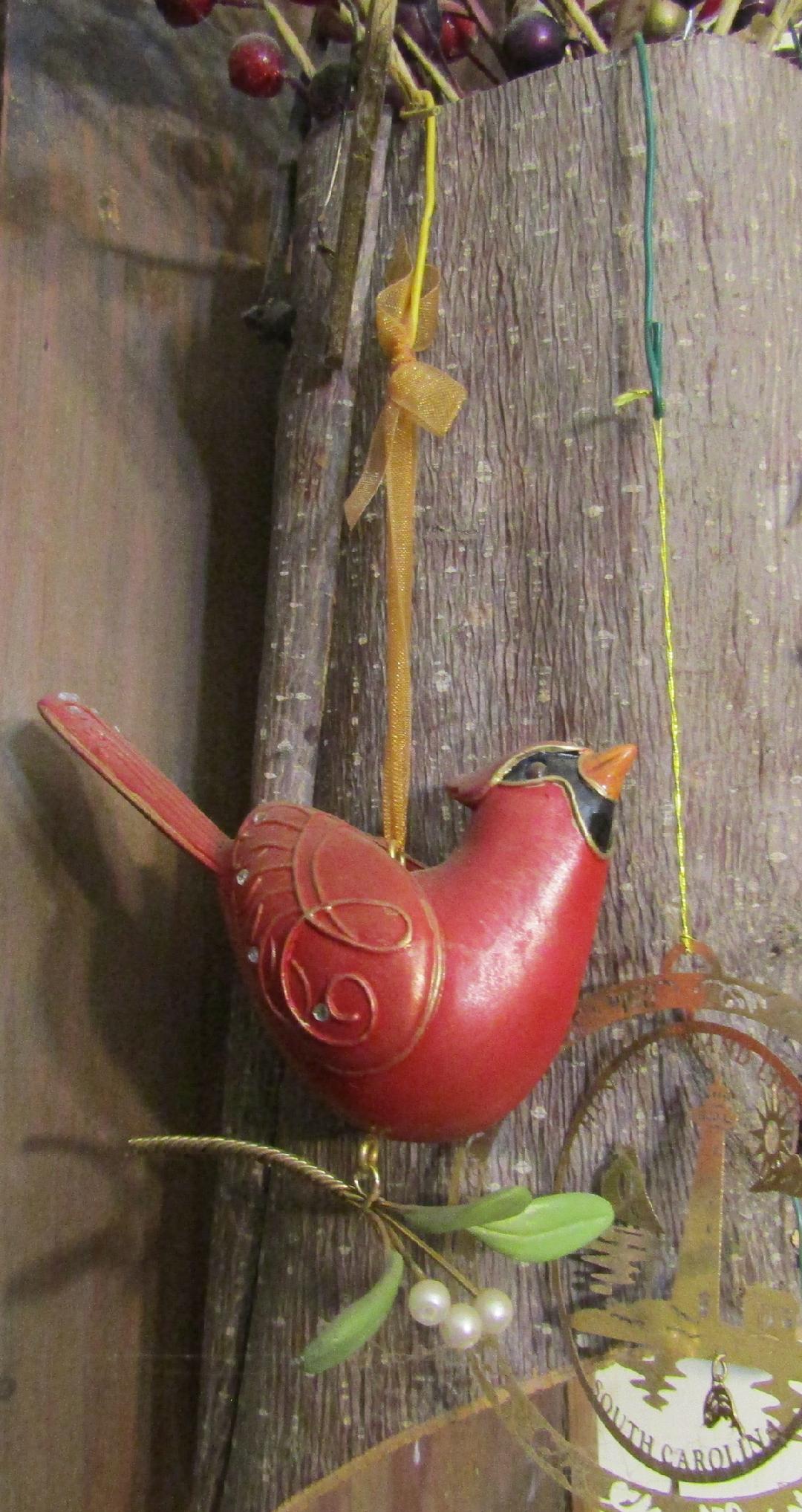
Osborne asserts that cardinals have become an integral part of the way that many people celebrate the holiday season. I can be included among such people. My Christmas decorations include an assortment of cardinal figurines and ornaments. There are other birds — doves and penguins for example — associated with the holiday season, but for me the holidays magnify the importance of one of my favorite birds. The cardinal, in its festive red plumage, appears made to order for a symbol of the holiday season.

There’s additional evidence to put forward as testimony to the popularity of the Northern cardinal. It’s the official state bird of seven states: Virginia, North Carolina, West Virginia, Ohio, Illinois, Indiana and Kentucky. Only the Northern mockingbird, which represents five states as official state bird, even comes close to the Northern cardinal in this respect.

Even once the holidays are past, there’s nothing like a glimpse of a Northern cardinal to add some cheer to a bleak winter day.

Photo by Bryan Stevens • Northern cardinals are a favorite for makers of Christmas ornaments.

Christmas Bird Count 2025

The usual post will go up this week on Christmas Eve (Dec. 24).

Photo by Bryan Stevens Scanning Watauga Lake for grebes, loons and other waterfowl.

I took part in the Elizabethton Bird Club’s Elizabethton Bird Club’s Christmas Bird Count on Dec. 20. My group found 46 species. Awaiting news on the overall total.

White-throated sparrows stand apart from their kin


Photo by Indigo Bunting/Pixabay                                                                                                                                 A perched white-throated sparrow display the yellow lores and white throat that helps contrast it from other sparrows.

Recent wild winds and an accompanying cold snap have claimed the last vestiges of fall color. We’ve already had the first snow of the season.

We’re quickly advancing toward winter, a season painted in muted shades of gray. Or brown, in the case of some of the “little brown birds” known as sparrows that enliven our yards and gardens during the colder months.

A brief snippet of song from a hidden location in a brushy corner of the yard caught my attention recently. The singer revealed the return of white-throated sparrows for the season. Although they call much more frequently in the spring, this particular white-throated sparrow must have wanted to announce his arrival.

Pixabay The blunt beak of a white-throated sparrow is useful for hulling seeds at feeders.

A few of this family of “little brown birds,” like the song sparrow, reside near us through all the seasons, but most of the sparrows are visitors only during the colder months of the year. This diverse family includes such birds as dark-eyed junco, chipping sparrow, white-throated sparrow, white-crowned sparrow, field sparrow, fox sparrow and Eastern towhee.

I host many of these sparrows every winter, but one of the most reliable visitors is the white-throated sparrow. The white-throated sparrow and the closely related white-crowned sparrow both belong to a genus of American sparrows known as Zonotrichia, which includes three other species. The other three — golden-crowned sparrow, rufous-collared sparrow, and Harris’s sparrow — range mostly outside the continental United States.

The genus name, Zonotrichia, refers to two ancient Greek words for zone and hair, which refers to the pattern of streaks on the backs of these five sparrow species. The Zonotrichia sparrows belong to a large group of birds known as Passerellidae, or American sparrows, which also includes birds such as juncos, towhees and brush finches. Some of the more descriptive names for American sparrows include orange-billed sparrow, white-eared ground sparrow, green-backed sparrow, olive sparrow, cinnamon-tailed sparrow, five-striped sparrow and golden-winged sparrow.

Photo by Skeeze/Pixabay • A white-throated sparrow perches on a branch to sing its easily recognizable song. Many Americans translate the sparrow’s song as “Ol’ Sam Peabody, Peabody, Peabody.”

Many sparrows, including the white-throated sparrow, prefer to forage for food on the ground. It’s often helpful to purchase a supply of millet seed. When filling feeders with sunflower seeds, scatter a couple of handfuls of millet seed on the ground beneath the feeders or at the edge of a brushy area. Sparrows like to have quick access to dense cover, so they will feed more securely if the scattered seeds are within quick reach of shelter.

In fact, food and shelter are probably the two most compelling factors sparrows take note of when selecting a yard for their winter residence. There are easy means of providing the shelter that gives these small birds peace of mind. Leave an edge or corner of your yard in a unkempt manner. Don’t cut down grass, weeds, and saplings. Even if human neighbors look askance, your feathered friends will be grateful. An alternative is to create a brush pile with discarded trimmings taken during periodic spruce-ups of the yard and garden. Sparrows, as well as other birds, will use the brushy cover as a shelter from the elements and as protection from visiting raptors such as sharp-shinned hawks.

The white-throated sparrow is so named for the patch of white feathers on the throat. While this field mark help with identification, there are other distinct features of this particular sparrow that helps contrast it from members of the “little brown bird” gang. For starters, adults have a bold face pattern of black and white crown stripes. The most obvious field mark for attentive observers is the yellow spot between the eye and the bill. It’s a vivid splash of color not commonly found in the plumage of most of its kin.

Most songbirds live a precarious life that can be measured in only a few years. However, an occasional individual defies the odds. According to the website allaboutbirds.com, the oldest recorded white-throated sparrow was at least 14 years, 11 months old, when it was recaptured and rereleased during banding operations in Alberta, Canada.

Although they are fairly common winter visitors in the region, the white-throated sparrow makes its presence known most strongly each spring when the birds begin to sing a familiar refrain that has been transcribed in a couple of different ways. Many Americans render the song of the white-throated sparrow as “Ol’ Sam Peabody, Peabody, Peabody.” For those living north of the border, the white-throated sparrow sings “O’Canada, O’Canada, O’Canada.” No matter how you translate this sparrow’s song, it’s a sweet and welcome addition to the spring aural landscape.

Most white-throated sparrows depart the region by late April to reach their summer nesting grounds throughout the forests across Canada, the northeastern U.S. and the northern Midwest. In the influx of more showy birds each spring, their absence sometimes goes unnoticed. Nevertheless, it always feels good to welcome them when they return in late October and early November as winter begins extending its grip for the season.

Share your own sightings. Email me at ahoodedwarbler@aol.com with observations, comments or questions.

Photo by Skeeze/Pixabay • A white-throated sparrow perches on a branch to sing its easily recognizable song. Many Americans translate the sparrow’s song as “Ol’ Sam Peabody, Peabody, Peabody.”


Black-throated blue warbler graces cover of club’s 2026 calendar

The front cover of this year’s Elizabethton Bird Club calendar features a gorgeous photo of a black-throated blue warbler taken by club members David and Connie Irick.

Avoid the crowded hassle of Black Friday and get a jumpstart on your shopping list with a gift all bird lovers will enjoy for 365 days.

The Lee and Lois Herndon Chapter of Tennessee Ornithological Society, also known as the Elizabethton Bird Club, has produced its annual calendar featuring bird photographs by its members and friends of the organization.

These calendars make wonderful Christmas gifts and stocking stuffers. This year’s front cover features a gorgeous photo of a black-throated blue warbler taken by club members David and Connie Irick.

The couple recently presented a program for the local bird club that focused heavily on the warblers they saw and photographed during a visit to Magee Marsh, a 2,000-acre wildlife area located in Oak Harbor, Ohio, situated on the southern shore of Lake Erie.

During the program, David Irick admitted that before he began to pursue birding as an interest, he wasn’t even aware of the existence of warblers. Now, he and his wife are hooked on this enchanting family of colorful and energetic songbirds.

The black-throated blue warbler gracing the calendar’s cover was photographed on Holston Mountain. Male black-throated blue warblers nesting in the Appalachian Mountains have black streaks on their backs, not solid blue like other populations, according to a profile on the species located at the website for Tennessee Wildlife Resources Agency.

Photo by U.S. Fish & Wildlife Service/Mark Musselman
Black-throated Blue Warblers are among the birds than can often be found at Hampton Creek Cove during a Spring Rally.

Female black-throated blue warblers are extremely different in appearance from males. Scientists call such dramatic physical appearance differences “sexual dimorphism.” Among the warblers, this species provides the most striking example of sexual dimorphism. The male and female do share one identifying mark — a white square near the outer edge of the middle of each wing. This square is usually more pronounced in the male, but it stands out enough that it helps distinguish the female black-throated blue from similar dull-plumaged birds such as vireos.

The radical differences in appearance of male and female black-throated blues even fooled some experts, according to the TWRA profile on the species.

The “Father of American Ornithology,” Alexander Wilson (1766-1813), first described the female black-throated blue warbler, he thought it was a separate species and named it the pine swamp warbler. Several years later, when artist John James Audubon painted this bird from specimens he collected in the Great Pine Swamp of Pennsylvania, he called the species by the same name.

Learn more about warblers and other birds with a purchase of the club’s 2026 calendar. More photographs by the Iricks, as well as other members and friends of the club, grace the inside pages of the calendar. The month of July features an amazing photo of a bald eagle and November is graced by wild turkeys.

The inside pages of the professionally-produced calendar feature dozens more full-color photographs and an informative and educational grid. These calendars sell for $15 plus $2.50 for shipping. All sales help the club fund birding programs, public park feeders, conservation efforts and other bird- and nature-related activities in upper Northeast Tennessee.

For more information on how to obtain a calendar, email me at ahoodedwarbler@aol.com.

Dark-eyed juncos deserving of affectionate ‘snowbirds’ nickname

Photo by Bryan Stevens Dark-eyed juncos are winter residents in the region.

As I mentioned in last week’s column, I published my first “Feathered Friends” on Sunday, Nov. 5, 1995.

In celebration of that milestone, here’s that first column with a few revisions that have been added over the years.

•••

Of all the birds associated with winter weather, few are as symbolic as the dark-eyed junco, or “snow bird.” The junco occurs in several geographic variations.

The cover of the classic “A Complete Guide to Bird Feeding” by John V. Dennis.

John V. Dennis, author of “A Complete Guide to Bird Feeding,” captures the essence of the junco in the following description: “Driving winds and swirling snow do not daunt this plucky bird. The coldest winter days see the junco as lively as ever and with a joie de vivre that bolsters our sagging spirits.”

The dark-eyed junco’s scientific name, hyemalis, is New Latin for “wintry,” an apt description of this bird.

Most people look forward to the spring return of some of our brilliant birds — warblers, tanagers and orioles — and I must admit that I also enjoy the arrival of these birds. The junco, in comparison to some of these species, is not in the same league. Nevertheless, the junco is handsome in its slate gray and white plumage, giving rise to the old saying “dark skies above, snow below.”

Just as neotropical migrants make long distance journeys twice a year, the junco is also a migrating species. But in Appalachia, the junco is a special type of migrant. Most people think of birds as “going south for the winter.” In a basic sense this is true. But some juncos do not undertake a long horizontal (the scientific term) migration from north to south. Instead, these birds merely move from high elevations, such as the spruce fir peaks, to the lower elevations. This type of migration is known as vertical migration. Other juncos, such as those that spend their breeding season in northern locales, do make a southern migration and, at times, even mix with the vertical migrants.

Photo by Bryan Stevens • Dark-eyed junco nests on high mountain slopes during the summer month. This dark-eyed junco was photographed at Carver’s Gap on Roan Mountain during the summer nesting season.

During the summer months, a visit to higher elevations mountaintops is almost guaranteed to produce sightings of dark-eyed juncos. Juncos may nest as many as three times in a season. A female junco usually lays three to six eggs for each nest, which she constructs without any assistance from her mate.

Juncos are usually in residence around my home by early November. Once they make themselves at home I can expect to play host to them until at least late April or early May of the following year. So, for at least six months, the snow bird is one of the most common and delightful feeder visitors a bird enthusiast could want.

Juncos flock to feeders where they are rather mild-mannered — except among themselves. There are definite pecking orders in a junco flock, and females are usually on the lower tiers of the hierarchy. Females can sometimes be distinguished from males because of their paler gray or even brown upper plumage.

Since juncos are primarily ground feeders they tend to shun hanging feeders. But one winter I observed a junco that had mastered perching on a hanging “pine cone” feeder to enjoy a suet and peanut butter mixture.

Photo by Ken Thomas • A dark-eyed junco perches on some bare branches on a winter’s day.

Dark-eyed juncos, widespread across North America, readily visit feeder but are often content to glean the scraps other birds knock to the ground. The junco is the most common species of bird to visit feeding stations. They will sample a variety of fare, but prefer such seeds as millet, cracked corn or black oil sunflower.

The juncos are a small branch of the sparrow clan. Some of the other juncos include the endangered Guadalupe junco, yellow-eyed junco, Baird’s junco and volcano junco.

The last one on the list is endemic to the Talamancan montane forests of Costa Rica and western Panama.

The endangered Guadalupe junco is confined to an island. Recent efforts to eliminate feral goats and cats from the island have shown some positive results for this species.

Baird’s junco is named for Spencer Fullerton Baird, an American ornithologist and naturalist. Baird served as secretary for the Smithsonian Institution from 1878 until his death in 1887. He greatly expanded the natural history collections of the Smithsonian from 6,000 specimens in 1850 to over two million by the time of his death.

I hope you’ve enjoyed this introduction to juncos. There’s something about winter that makes a junco’s dark and light garb an appropriate and even striking choice, particularly against a backdrop of newly fallen snow.

Of course, the real entertainment value of juncos comes from their frequent visits to our backyard feeders. When these birds flock to a feeder and begin a frenzied bout of feeding, I don’t even have to glance skyward or tune in the television weather forecast. I know what they know. Bad weather is on the way!

••••

I’ve not seen the first junco of the season, but I have observed some other late-autumn migrants, including ruby-crowned kinglets and a swamp sparrow.

If you’d like to share your first sighting this season of dark-eyed juncos, email me at ahoodedwarbler@aol.com. As always, the column is also a line of communication with fellow bird enthusiasts. I’ve enjoyed sharing stories about birds with countless readers over the past 30 years. I can also be reached on Facebook at https://www.facebook.com/ahoodedwarbler.

Photo by Bryan Stevens Dark-eyed juncos embrace feeders when weather takes a turn for the worse.

Celebrating 30 years of birds, birding and birders

Photo by Bryan Stevens A burrowing owl perches on a sign at Antelope Island State Park in Utah in May 2006.

For the past 29 years, I’ve published my first bird column as close to the anniversary date of its initial publication as possible.

I’m not doing that this year. Instead, in a celebration of writing “Feathered Friends” on a weekly basis for the past 30 years, I am devoting this week’s column to personal reflection.

Has it truly been 30 years? It’s the question I’ve asked myself as the date on the calendar approached, marking 30 years since I began writing my weekly “Feathered Friends” column. The column made its debut in the Elizabethton Star’s Sunday lifestyles section, but since that debut on Nov. 5, 1995, the column has appeared in most of the newspapers in the region, plus a couple in North Carolina.

The column ran from 1999 to 2003 in the Herald & Tribune in Jonesborough and began running in The Erwin Record in 2003. It has mostly run each week in Unicoi County’s weekly newspaper since that time. The column began another run in the Elizabethton Star from 2008 to 2014, followed by a run in the Bristol Herald Courier, as well as in Six Rivers Media publications such as The Tomahawk in Mountain City, as well as Johnson City Press and Kingsport Times.

The column went online via WordPress in 2014 and is still posted weekly on Sundays at ourfinefeatheredfriends.com. I’m still staggered by the fact I’ve been writing this column on a weekly basis for 30 years. Readers have followed my accomplishments in birding, including detailed columns every time I’ve added a new species to my life list.

Photo by Bryan Stevens A long-billed curlew calls in a grassland at Utah’s Antelope Island State Park in May 2006.

Those special columns have included birds such as burrowing owl, long-billed curlew, roseate spoonbill, black-necked stilt, Nelson’s sparrow, black rail, swallow-tailed kite, Mississippi kite, grey-cheeked thrush, limpkin, least bittern, American bittern, painted bunting, lazuli bunting, golden eagle, American dipper, Townsend’s solitaire, mourning warbler, clay-colored sparrow, black-headed grosbeak, Western tanager, Northern saw-whet owl, bananaquit and many other memorable species. Just this past summer I added scissor-tailed flycatcher when I observed a female of this species nesting in Jonesborough.

I’ve added several hummingbirds to my list over the years, including Cuban emerald and Bahama woodstar from a trip to the Bahamas in 2000, and black-chinned hummingbird and broad-winged hummingbird from a trip to Utah. I saw a far out-of-range green-breasted mango in Charlotte, North Carolina, and traveled to Nashville to see a Calliope hummingbird, which is also the smallest of North American birds. In Northeast Tennessee, I’ve seen numerous rufous hummingbirds and a couple of Allen’s hummingbirds, both of which are western species with a perplexing habit of migration through the region and showing up in unlikely locations.

Photo by Bryan Stevens A mountain bluebird at Sweetwater Trailer Park and Campground at Garden City, Utah, on the shores of Bear Lake. Despite the sign, this location was certainly no “dead end” when it came to birding.

Even more than the birds, however, are the people I’ve met through this weekly column. I’ve been able to share stories about birding with people like Howard Langridge, Reece Jamerson, Gilbert Derouen and Wallace Coffey. They’re all gone now, but I have my memories of our time together looking for and finding some memorable birds.

I’ve met people like Brookie and Jean Potter, Tess Cumbie, Gary Wallace, Barbara Lake, Rick Knight, Joe McGuinness, Charles Moore, Fred Alsop, Allan Trently, Brenda Richards, Chris Soto, Rob Biller and Brayden Paulk. I’ve left out names because in all honesty there are too many to list. I’ve shared stories about Tom and Cathy McNeil, a couple who have chased rare birds such as buff-breasted sandpiper, snowy owl and hurricane-displaced American flamingos.

I’ve had adventures. I got stuck in mud at Musick’s Campground with Howard Langridge at Holston Lake as Hurricane Frances passed through the region in 2004, but we got a sooty tern!

Photo by Bryan Stevens A least bittern slips through marsh vegetation at Huntington Beach State Park in South Carolina.

While birding with Reece Jamerson at Austin Springs on Boone Lake, an American bittern walked up to us from a flooded ditch, absolutely fearless, and got so close we didn’t even need binoculars. Of course, we also hadn’t brought cameras.

I stood in freezing conditions for hours with dozens of birders in 2009 Springfield, Tennessee, scanning a field littered with plastic and other debris hoping for a glimpse of a reported snowy owl. Just as everyone was ready to give up hope, the owl, present all along, transformed from a white plastic bag into a fully feathered owl. It even made a short flight as if to reward everyone for their patience.

Visiting Antelope Island State Park in the middle of the Great Salt Lake in May 2006 with David Thometz and his parents, we saw many birds, the highlight being a long-billed curlew. We were driving on a road bordering a huge expanse of grassland facing the Great Salt Lake. I remarked that this looked like great habitat — I had done my homework in advance – for long-billed curlews. The words had barely left my mouth when we heard some whistled notes and saw my first-ever (and, to date, only) long-billed curlew. Even better, I managed to get a photo of the bird. We also saw thousands of horned grebes, as well as a photogenic burrowing owl, Western meadowlarks, chukars, lark sparrows and many other interesting species. Later during that same trip while traveling through Logan Canyon near Salt Lake City, I was mesmerized by an American dipper and then some Townsend’s solitaires that crowded into the scene.

Photo by Bryan Stevens A painted bunting visits feeders at Huntington Beach State Park.

On a November visit to Boone Dam with Wallace Coffey, we scanned a flock of gulls on a sandbar. When these white birds suddenly dispersed, one larger white bird that stayed behind became my first-ever sighting of a snow goose. I think Wallace’s excitement that I had gotten a life bird was even greater than my own.

Of course, my birding memories go farther back than these 30 years I’ve been writing this column. I remember the yellow birds (American goldfinches), the red birds (Northern cardinals) and blue birds (Indigo buntings) that visited each summer of my childhood. I can still hear the nocturnal serenades of whip-poor-wills that called from the woodlands while I saw on the front porch with my paternal grandparents at their home. The headlights of passing vehicles would silence them momentarily, but then one would begin calling again, and soon others rejoined the chorus. When lighting bugs added their visuals to the audio, we had all the makings of a perfect evening in the pre-Internet era.

To offer perspective, my column got its start with a feature on dark-eyed juncos, also known as “snowbirds.” With the recent dip in temperatures, I have a feeling it won’t be long before we start seeing these winter visitors.

I’ve got some plans for digging up some vintage columns as I celebrate 30 years of writing this column during 2026. There may be some other special surprises. Stay tuned and thanks to all who have read these columns over the years.

Photo by Bryan Stevens
Two Black-necked Stilts forage along the causeway wetland at Huntington Beach State Park.