
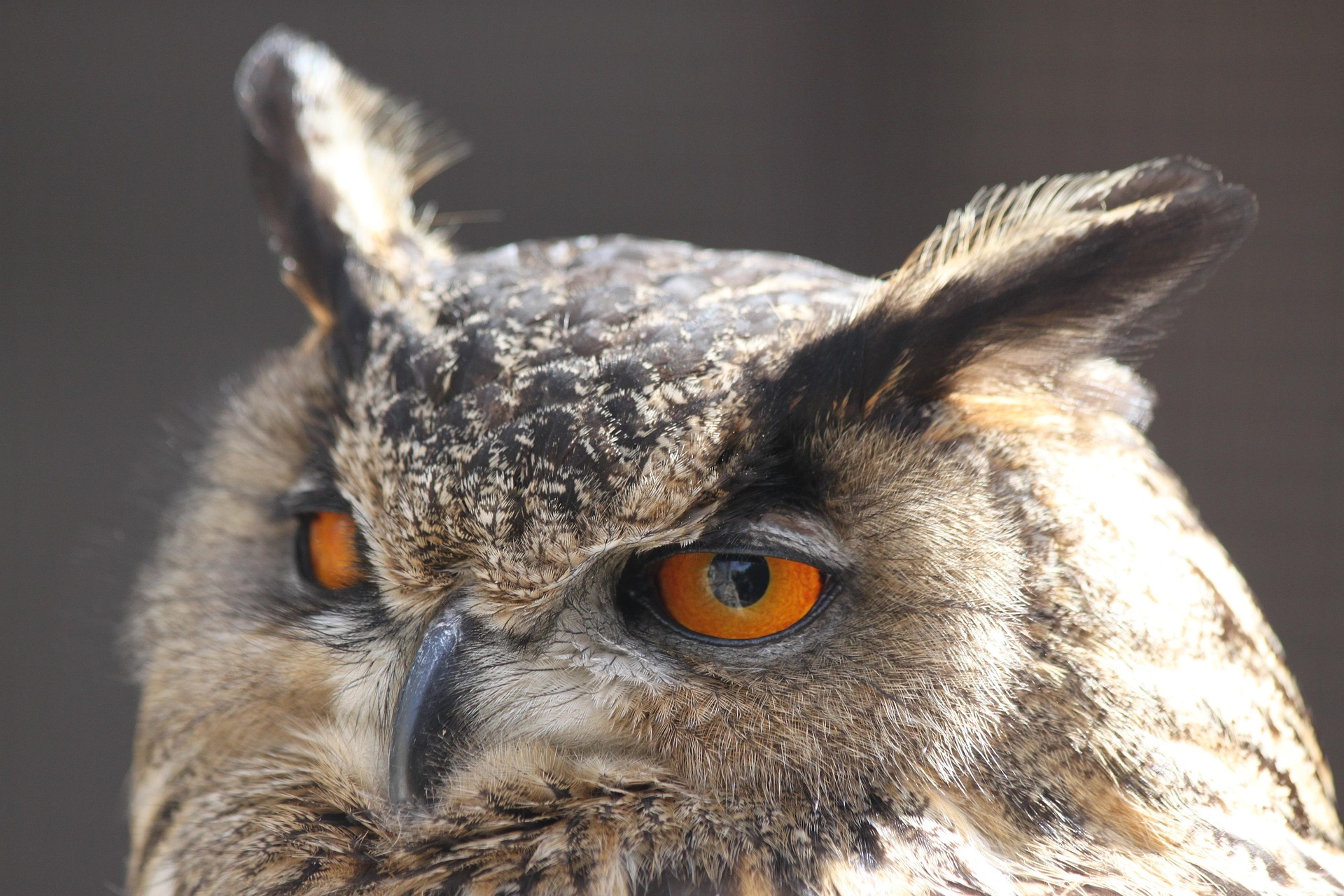
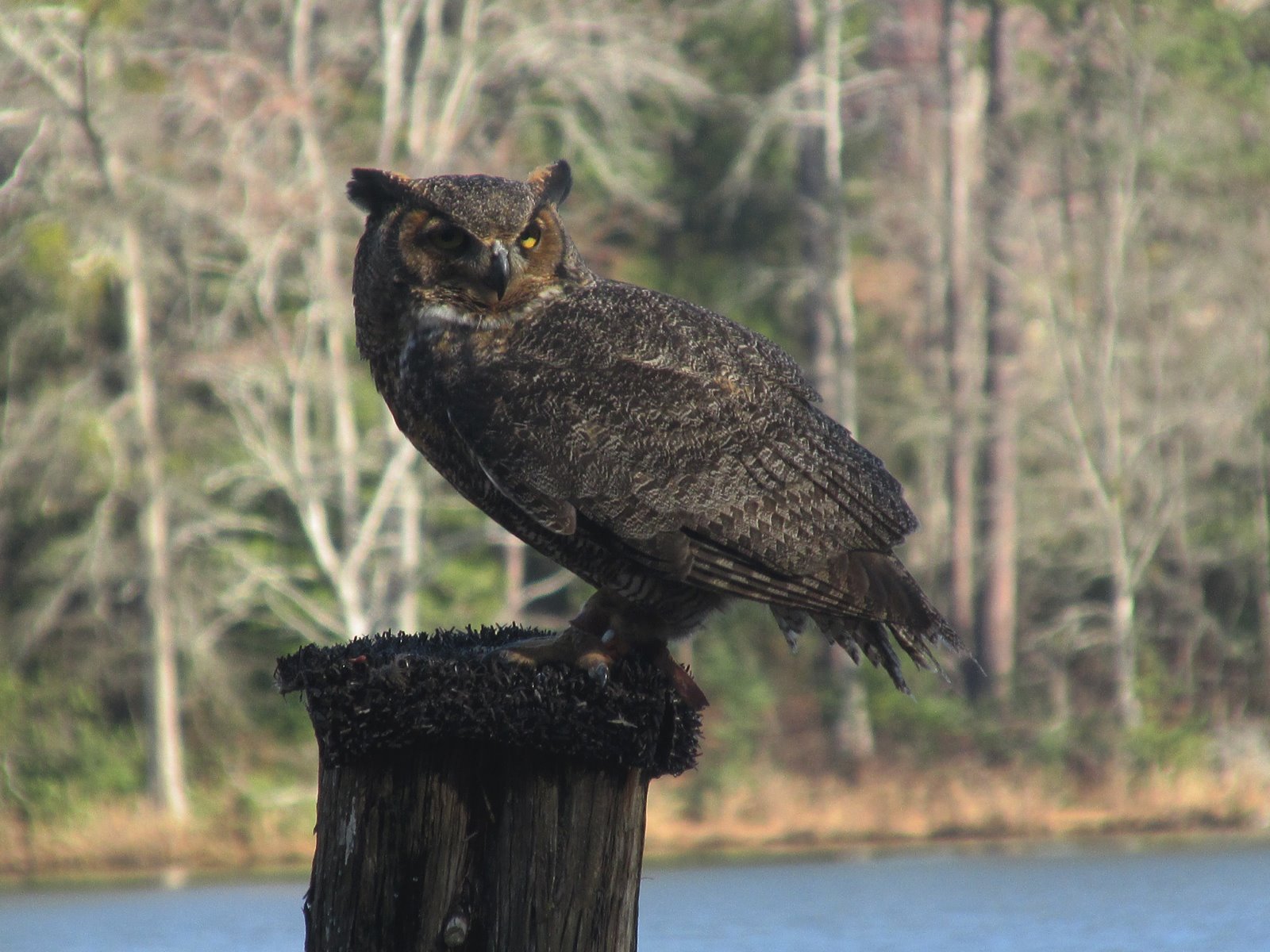
Dave Menke/USFWS Great horned owls, such as this individual, are effective predators after dark.
As September slid into October, the evening serenades began. At first, they consisted of a pair of Eastern screech-owls calling from the surrounding woodlands. On Oct. 2, the low hoots of a great horned owl joined the wailing calls of the two screech-owls.
I’ve gotten into the habit of 10-minute walks in the evening after dinner, and I posted about the owls on my Facebook account.
Several friends responded, including Tom McNeil, a fellow birders and an fellow alumna of Hampton High School.
“We’ve been hearing a pair (of great horned owls) hooting up on the ridge between you and us,” Tom wrote. “We also had a barred owl calling a few weeks ago, which was only the second time ever.”
Tom and his wife, Cathy, reside in the Piney Grove community of Hampton. As he indicated, only a steep mountain ridge separates his property from mine.
That ridge is a magnet for birds, ranging from pileated woodpeckers and wild turkeys to warblers, vireos, tanagers, flycatchers and many other songbirds. The bird population changes with the seasons, but there’s always a diversity of birds making their home on those wooded slopes.
Linda Cauley also responded to my Facebook post, sharing that she also had recently heard a great horned owl.

Larry A. Woodward/USFWS Eastern screech-owl chicks peer from the tree cavity that served as their first home.
Kaylynn Sanford Wilster has also been hearing a great horned owl. “First great horned owl I’ve had here in forever it seems like,” she wrote. “I think there’s just one but I’m not sure.”
Joanne Campbell commented on my post.
“We had a big hoot owl right outside our door last week,” Joanne wrote. “Closest I’ve ever been to one.”
I’d been surprised to hear screech-owls, which are considerably smaller than a great horned owl, calling at the same time as their larger kin. Great horned owls are not finicky and will dine on any smaller creature they can seize in their strong talons. I’d heard that smaller owls usually go silent in the presence of this large nocturnal predator.
Of course, the screech-owls were relatively close to my home while the great horned owl’s calls were notably distant. Perhaps they felt that enough space existed between them to ease any worries.
I also got to wondering why owls are so vocal. A little research came up with some answers.
First, it’s important to note that Eastern screech-owls produce different vocalizations for various purposes. One of my favorites is the “whinny,” a descending call that is, apparently, a territorial display to inform other owls that they have claimed a territory as their own.
At this time of the year, juvenile screech-owls are also striking out on their own away from parental care. These young owls deploy the whinny to establish their own territories. They will need a well-defined territory to ensure they can find enough prey during the lean, cold winter months.
The whinny itself is of short duration, lasting only a couple of seconds. Screech-owls also produce other sounds, which have been described as hoots, barks and squeal.
Another common screech-owl vocalization is an even-pitched trill, often called a “bounce song” or tremolo. I can do a decent job imitating this sound, and I’ve often stirred up songbirds by doing so. A flock will sometimes materialize as if from thin air, as the members of the flock scold and search for the owl. It’s a good way to draw some curious birds closer for observation.
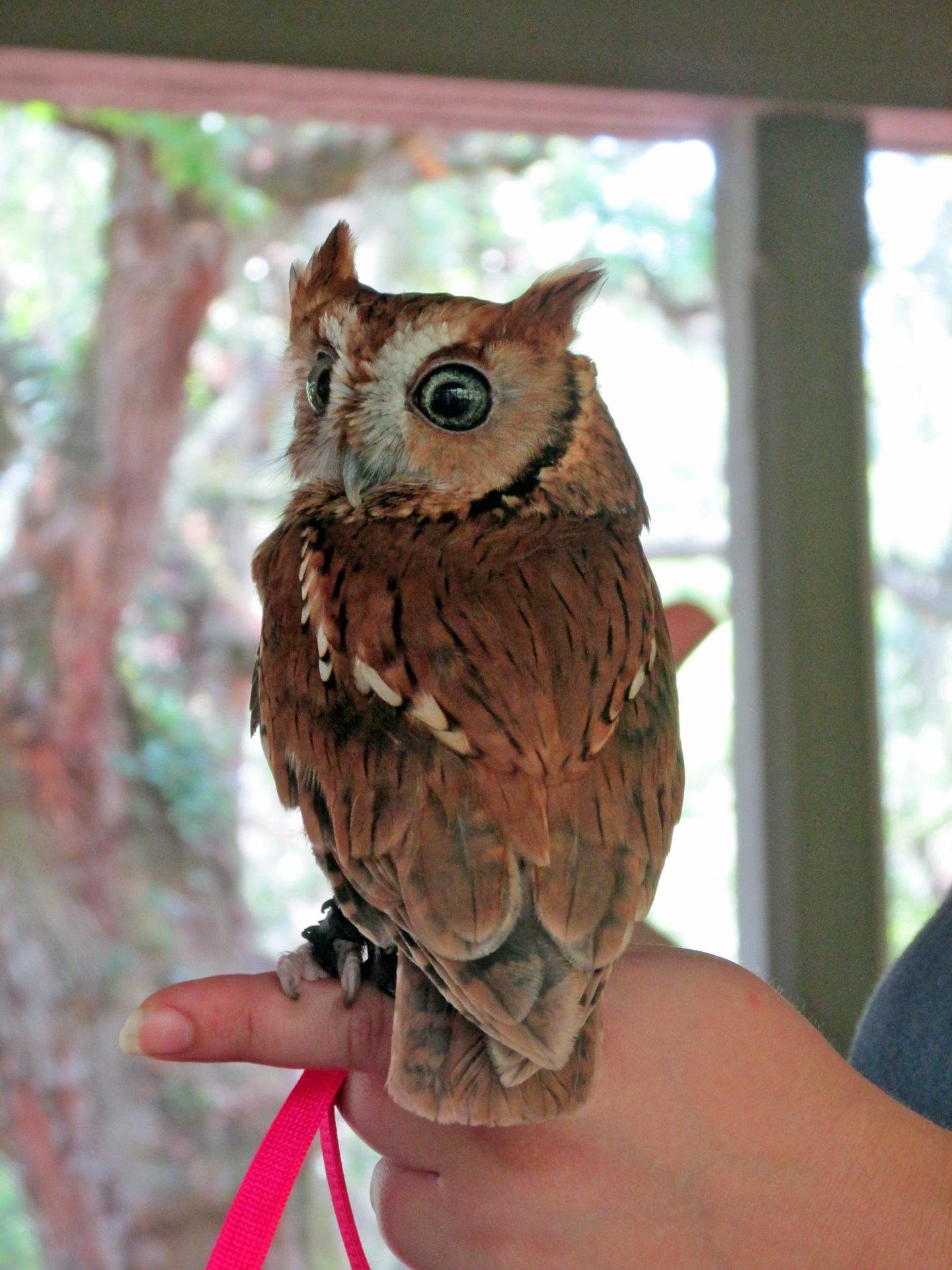
Bryan Stevens Lucy, a rehabilitated owl, helps programmers at Brookgreen Gardens provide educational programs about owls to the public.
Great horned owls, or “hoot owls” as they are widely known, also produce their low, nocturnal calls for many of the same reasons as screech-owls do. These large owls hoot to communicate, with the most common reasons being to define and defend territory, locate and attract a mate during breeding season and stay in contact with their young. Hooting also helps them establish boundaries with other owls and signals their presence, making their calls particularly energetic and frequent in the autumn and winter months when territories are being set up.
Pairs of great horned owls will hoot together as part of their courtship to strengthen their bond. A female owl’s voice is notably higher in pitch than the male’s, according to the website All About Birds. I’m hoping I will soon hear the duet that Tom and Cathy are enjoying on the other side of the ridge. So far, I’ve only detected the one great horned owl. I have heard these mesmerizing duets in the past, however. Listening can produce shivers down the spine. Of course, that is also helped by the fact they most often hoot on evenings once the weather had become more chilly.
The days are shorter, nights are longer, so now is a great time to get familiar with the owls. It can be as easy as stepping onto the front porch and listening.
•••
Bryan Stevens has been writing about birds, birding and birders since 1995. To share a sighting, ask a question or make a comment, email him at ahoodedwarbler@aol.com.

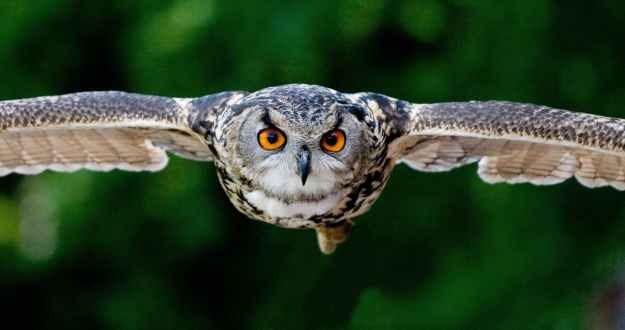
Photo by Irene K-s/Pixabay.com
An Eastern screech owl keeps an eye on its surroundings.






 Our Fine Feathered Friends