

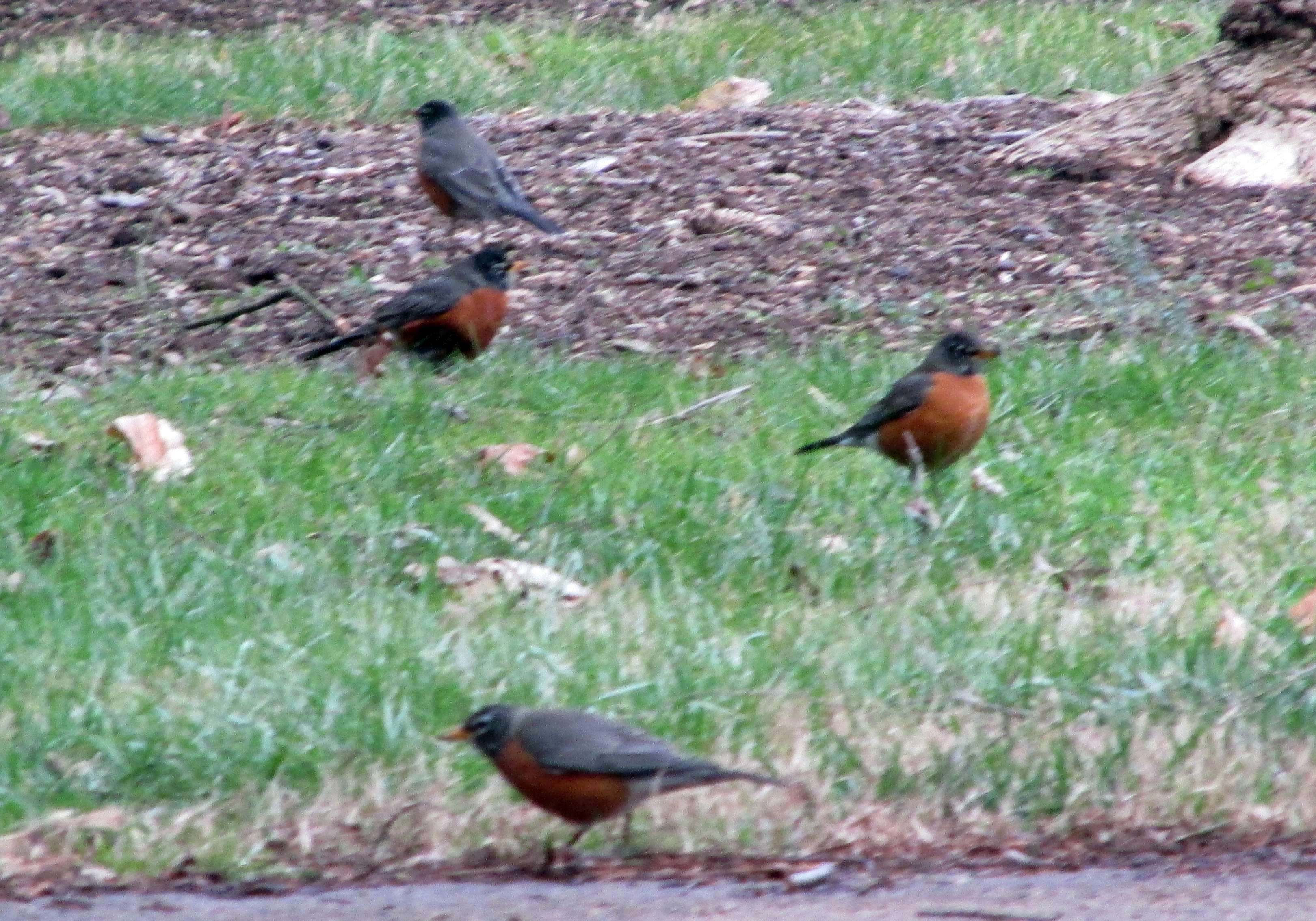
Robins – by the hundreds – poured into downtown Erwin last week. Most of them ended up on perches around the parking lot between the Clinchfield Senior Adult Center and the rear of the offices of The Erwin Record.

Photo by Bryan Stevens • While American robins like fruit when its available, they also spend a lot of time feeding on earthworms and insects.
The newspaper’s office manager Ken Silvers alerted me to the presence of the “huge flock” of robins. He even joked that he felt like he had stepped into a scene from the movie “The Birds.” Their arrival had been preceded by several nights of single digit temperatures.
In a few weeks, robins will likely be making their annual spring resurgence, but their mid-January appearance in such numbers was somewhat surprising. The fact is that, although we don’t think of robins very much in winter, they are still very much present in the region. The same is true of waxwings and is particularly true about European starlings.
While downtown Erwin would not usually be an ideal location for robins, there was something present to attract them: Berry-producing ornamental holly trees.
In the colder months of the year, robins form large, loosely organized flocks, often taking up residence in wooded lots. After several days of frigid weather, the robins were likely desperate to exploit an available food source. The flock spent a couple of hours gorging on holly berries. Even later in the day a few dozen robins lingered around the shrubs, gleaning the remaining berries from the branches.
The American robin is a large bird in the thrush family, which in North America also includes such birds as Eastern bluebird, wood thrush and Townsend’s solitaire. It’s probably a bird that is well-known to birders and non-birders alike.
In the British Isles, the European robin is simply known as “robin” or “robin redbreast.” When the first English colonists arrived in New England and other parts of colonial-era North America, they took pleasure in finding that some of the birdlife in the New World resembled familiar birds from their homeland. The red-breasted American robin looked like the bird they knew in the Old World as “robin,” which motivated them to name the New World bird “robin,” as well.

Sharkolot/Pixabay • Early American colonists from Europe, familiar with the European robin of their homeland, saw the red breast feathers on the American robin and named the large thrush robin as well.
Other than the red breast, however, the two robins are not all that similar. The American robin is the larger of the two birds. Farther separating these two birds is the fact that the European robin is not a thrush but rather a member of the family of Old World flycatchers.
In some other ways, the two robins are similar. Both are fond of earthworms, spending a great deal of their time on the ground foraging for worms. They will also follow human gardeners at their work, waiting patiently for the followed person to disturb the soil with a spade or hoe and expose earthworms for the waiting bird. They are also rather tolerant of humans and have learned to make their own homes close to human dwellings.
Some of the British transplants to North America must have felt homesick for familiar things because several unsuccessful attempts were made to introduce the European robin to the United States and Canada. European robins introduced in New York and Oregon failed to gain a foothold, unlike the introduction of such alien birds as the house sparrow and European starling.
On a few occasions, migrating American robins have overflown their destinations and ended up in the United Kingdom. For instance, an American robin became a first for London birdwatchers when one was found in that nation’s capital city in March of 2006. Whether of the European or American persuasion, robins have long been a favorite of birdwatchers and nature enthusiasts.
In a few weeks we will have more American robins pouring into our lawns, our gardens and our parks. The American robin has always been a perennial harbinger of spring. But it’s not always necessary to wait until winter’s waning to enjoy observation of this popular songbird.
•••
Bryan Stevens has written about birds and birding since 1995. To ask a question, make a comment or share a sighting, email him at ahoodedwarbler@aol.com.

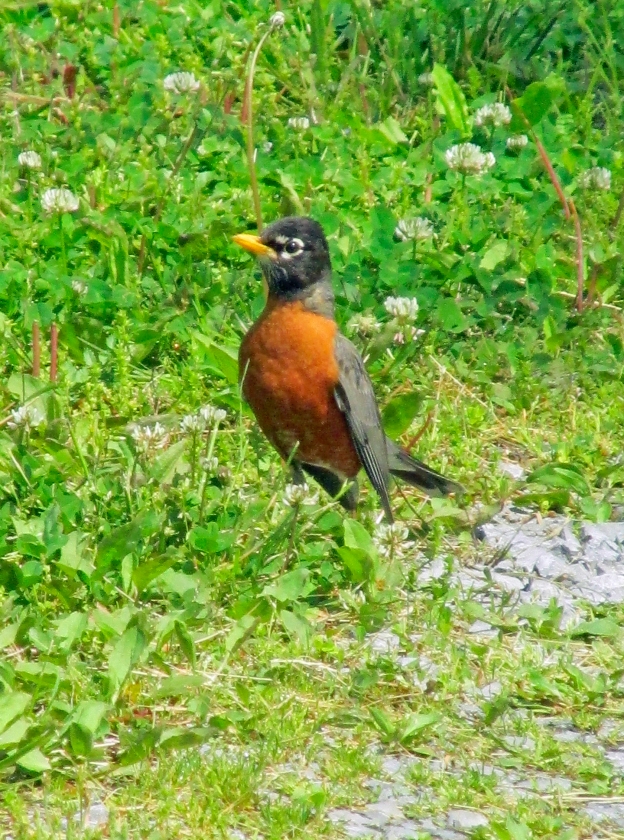
Tiffany/Pixabay • The American robin keeps a lower profile but is still present in the region during the winter months.




 Our Fine Feathered Friends