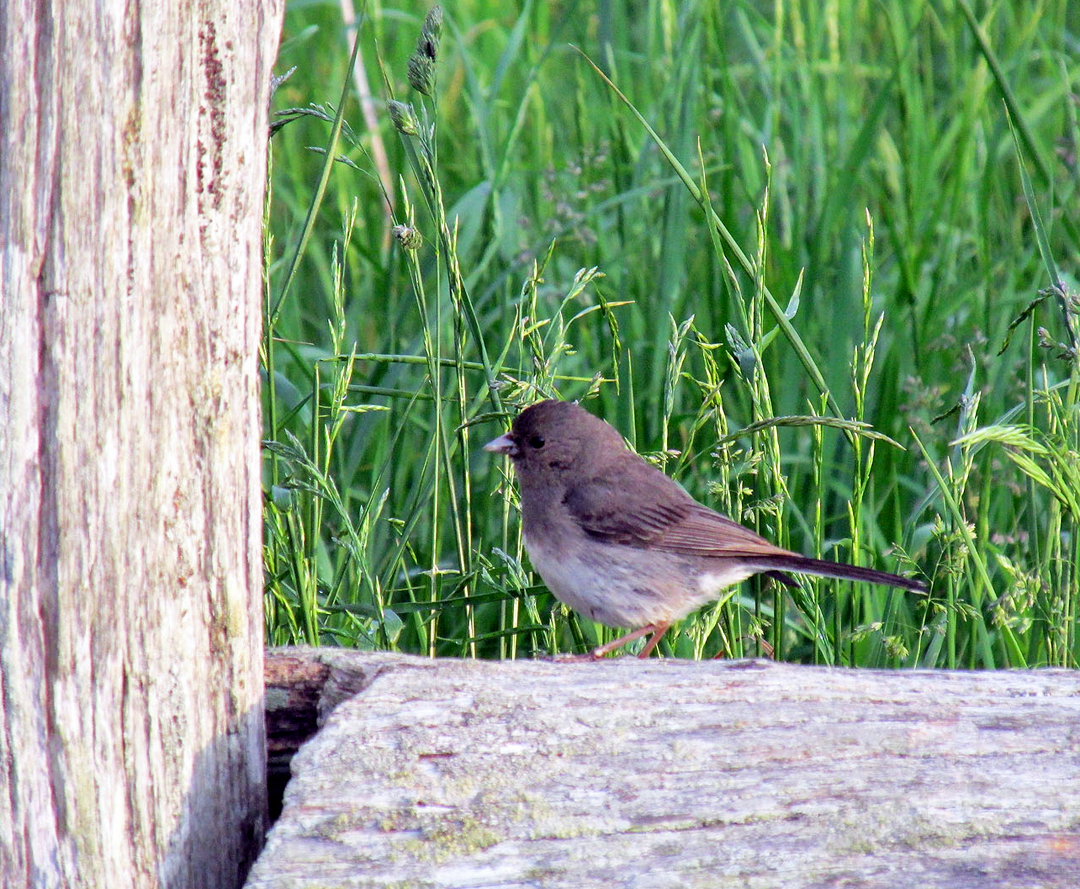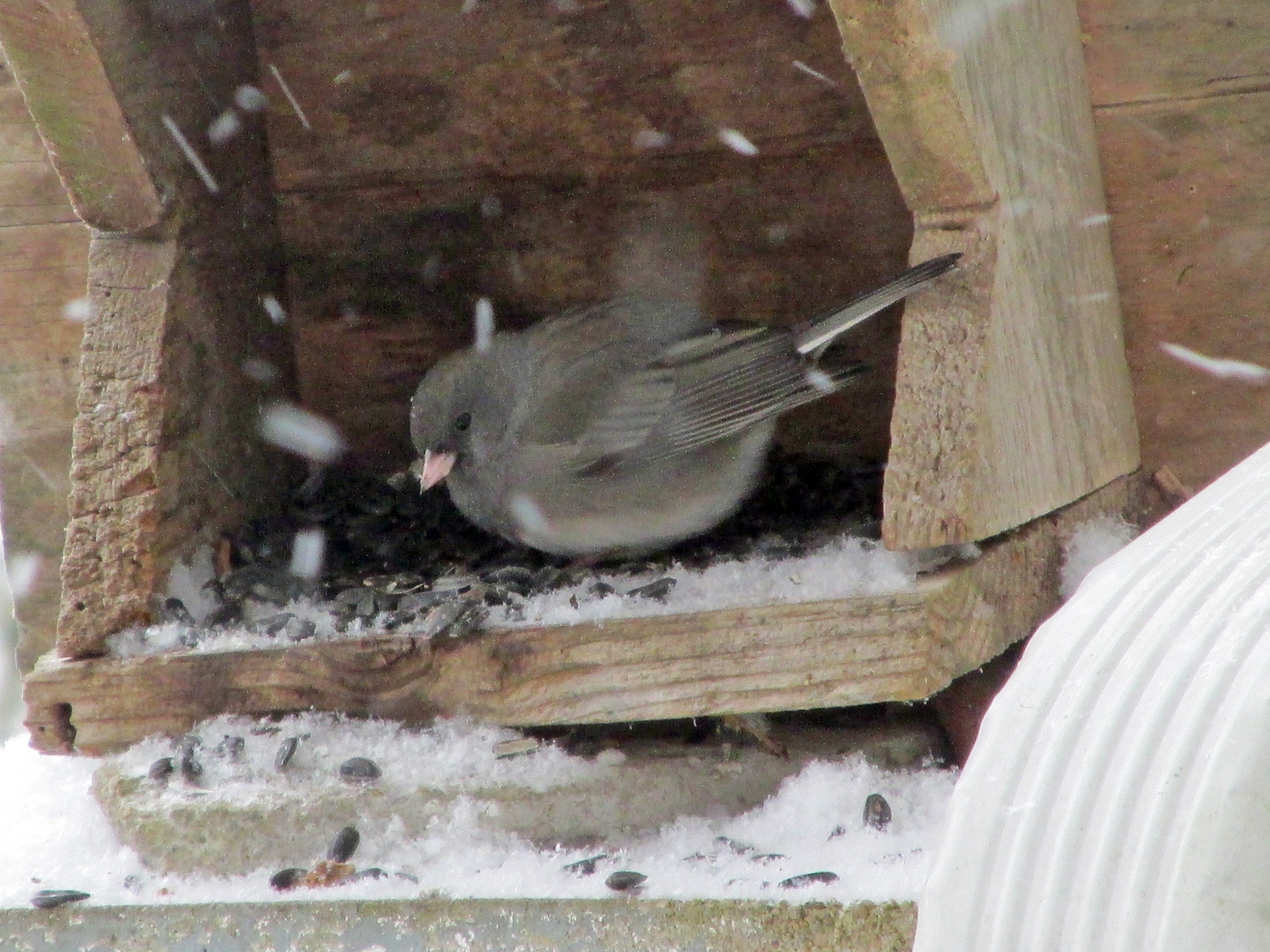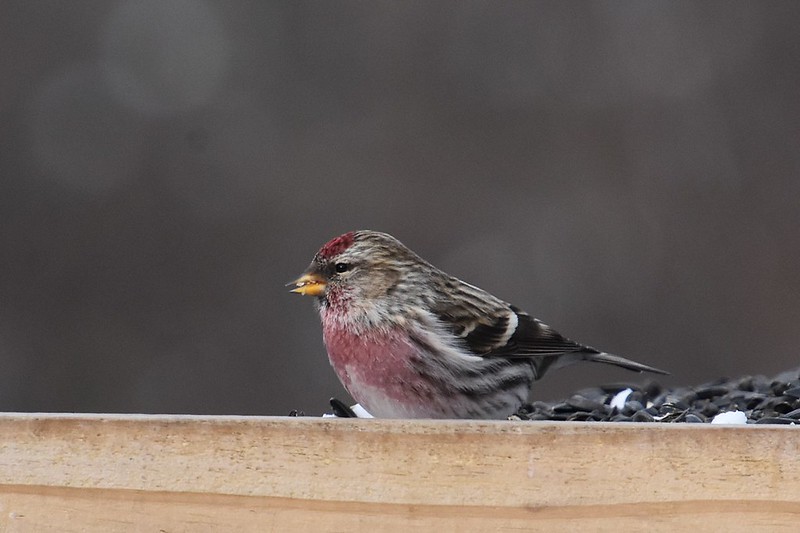
Tag Archives: Winter birds

Sighting a Siberian Superstar: Local birder secures rare red-flanked bluetail for life list

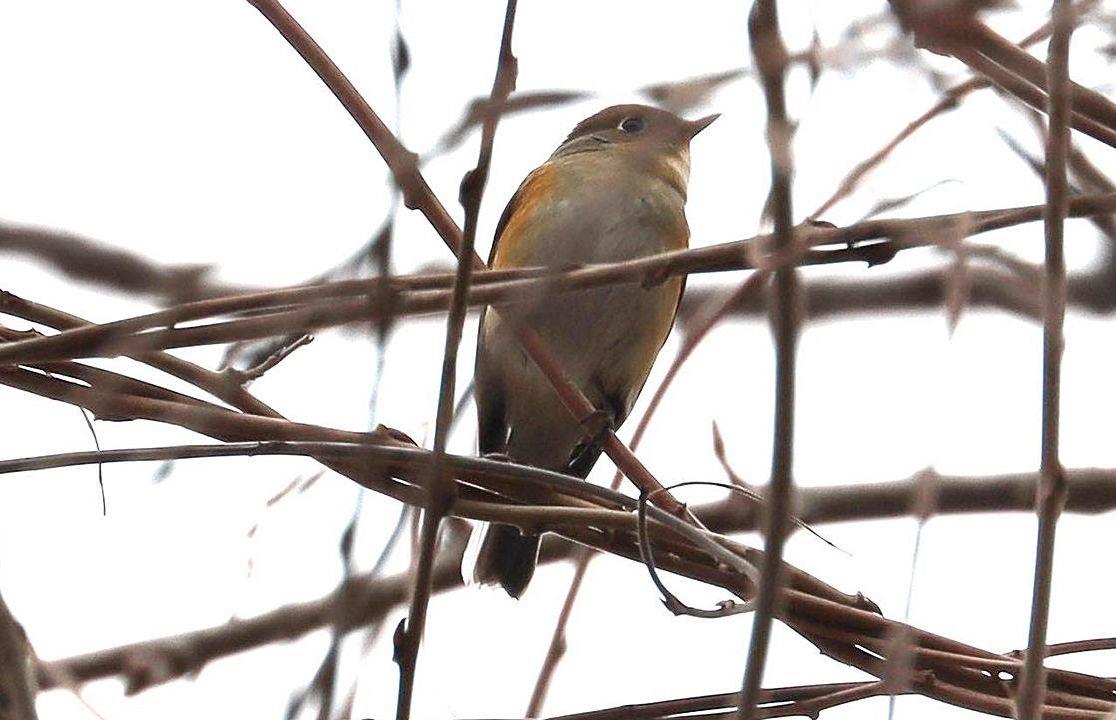
Photo by Tom McNeil • This red-flanked bluetail created quite a stir when it showed up in Fairfax County, Virginia, along the Potomac River.

Here’s confirmation that birds have wings and know how to use them to travel to some totally unexpected places. A good birding friend, fellow member of the Elizabethton Birding Club and, like me, an alumni of Hampton High School, has added a new bird – a species that I’d never even heard of – to his life list.

Tom McNeil posted on his Facebook page on Jan. 4 that he departed Winston-Salem, North Carolina, at 3 a.m. and drove to the Washington, D.C., Metro Area for a chance at seeing a little 5-inch-long bird.

From long acquaintance with Tom, I know he doesn’t hesitate to go after these “rare birds.” This particular bird – a red-flanked bluetail – had been generating a lot of excitement, Tom noted, since making its unlikely appearance in Fairfax County, Virginia.

The bird had already been present for four days when McNeil made his scramble to get binoculars on the bird.

I got the chance to discuss his sighting after he returned home just ahead of Winter Storm Fern after he had gone on another quick trip to add one of the common ground doves spotted in Sampson County to his North Carolina list.

“I came home to make sure the pipes didn’t freeze,” Tom said.

His wife, Cathy, works as a travel nurse and was working in Winston-Salem, North Carolina, for the weekend. “Unfortunately she is probably going to have to stay overnight at the hospital,” Tom said, explaining that the storm was expected to be really bad there.

North American Rarity

The rarity of the red-flanked bluetail is mind-boggling. Most sightings of this bird in North America have taken place in Alaska, but there are also 2023 records from California and New Jersey.

“This is only the second record in the eastern United States,” Tom said. “The first was in New Jersey, two years ago.”

He added, “I heard some people speculating that it was the same bird that was in New Jersey. I can’t even begin to speculate how it wound up here.”

This Eurasian species, according to Tom, should be hanging out around China, not just outside the capital of the United States. Tom noted that the bird represents only the second record of this species in the eastern United States.

That’s more than I knew. Thank goodness for Google. A little research and I soon learned that the red-flanked bluetail belongs to a group of insect-eating birds known as chats. Formerly, chats were thought to be thrushes. Genetic analysis has proven, however, that they are in fact a type of Old World flycatcher.

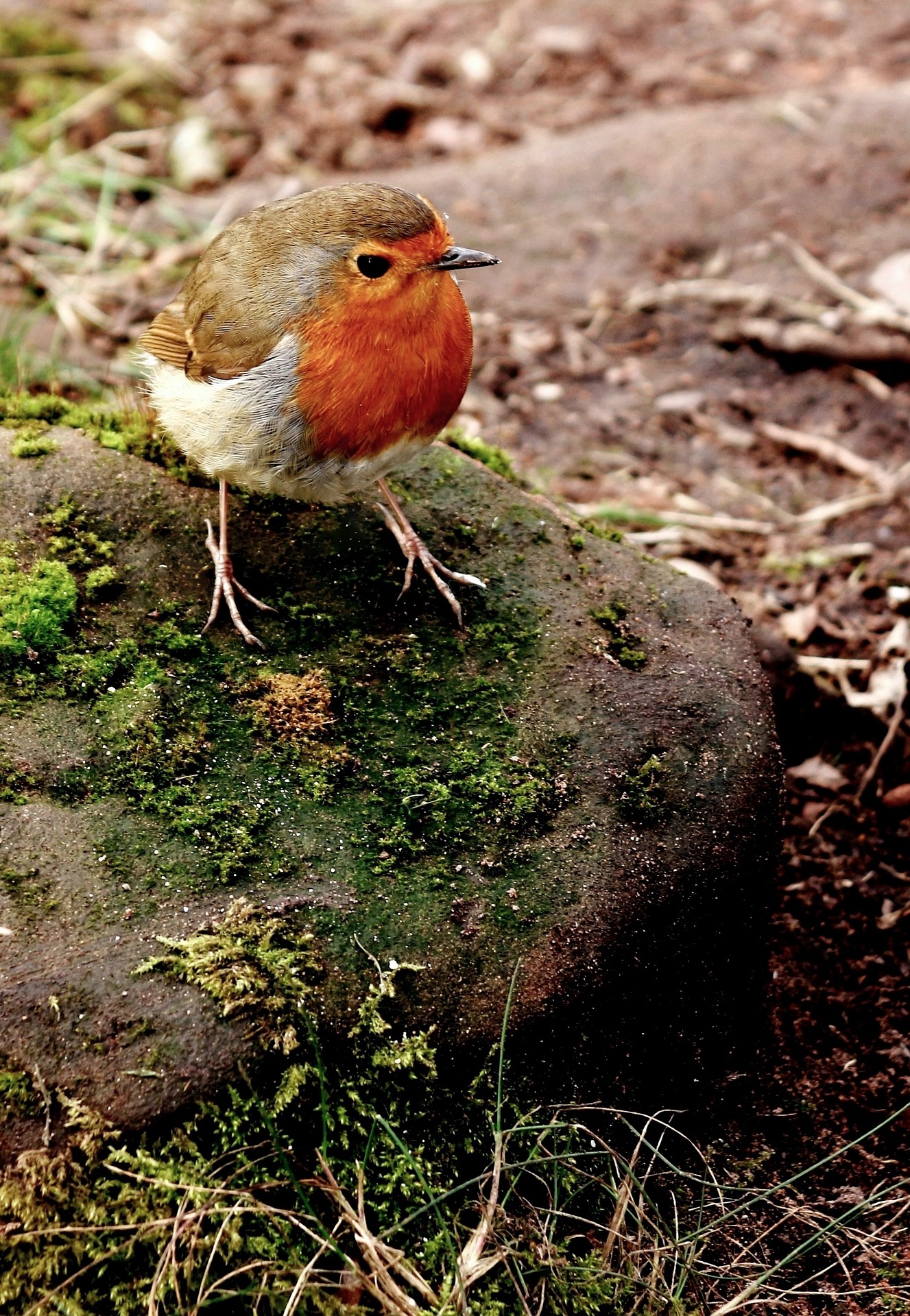
Photo by Andrew Poynton/Pixabay.com • The European robin is actually an Old World flycatcher and a relative of the red-flanked bluetail.

The fact that chats resemble Old World thrushes can be attributed to convergent evolution, which is the independent evolution of similar features and appearances in species of different lineages. Flycatchers and thrushes are birds, but that’s where the similarities end.

The red-flanked bluetail, known by the scientific name (Tarsiger cyanurus) is a small bird that breeds in mixed coniferous forests in northern Asia, parts of central Asia and northeastern Europe. It is migratory, nesting in Siberia and wintering mainly in southeast Asia, in the Indian subcontinent, the Himalayas, Taiwan and northern Indochina. In other words, it’s not supposed to be close to Washington. D.C.

What’s in a Name

You have to love this bird’s extremely descriptive common name. It was previously known as the orange-flanked bush-robin, which is also quite descriptive. Considering the bird is a flycatcher, however, calling it a bush-robin would not be accurate.

Tom added the bird to his life list with relative ease. His wife, Cathy, is a travel nurse and was working in Winston-Salem, North Carolina, when Tom learned that the bird was present in Great Falls Park in Virginia.

“From Winston-Salem, that is about 5.5 hours,” he said. “I left at 3 a.m. and got there about 8:30 a.m.,” he explained. “I only had to walk less than a quarter-mile to the area where it had been seen the most.”

He soon discovered that 75 or more people were already gathered and looking for the bird.

“They were spread out over a distance of about 200 yards,” he said. “After about an hour, someone spotted it and everyone converged on it. It was pretty exciting and humorous to watch.”

While the bird shows a blue tail and rump, it lacks the bright blue upperparts of an adult male red-flanked bluetail.

Based on the bird’s appearance, Tom said most observers have identified the bird as a female. “But it could be an immature male,” he added.

Birding Surprises

“Needless to say, it was a lifer,” he noted.

A “lifer” is birder slang for a species a birder has observed for the first time and added to a cumulative life list of species seen.

The bird has spent much of its time close to the Potomac River since its arrival in Fairfax County in Virginia.

“Apparently the Maryland state line passes very close to the shore,” Tom said. “Some folks were standing out in the river trying to add the bird to their Maryland lists.”

The red-flanked bluetail has certainly been his best bird so far in 2027.

“Back in December I picked up Swainson’s hawk, MacGillivray’s warbler and Brewer’s blackbird for my North Carolina life list,” Tom said.

“Cathy and I both went down to Chattanooga and got a great cormorant and Franklin’s gull for Tennessee,” he added.

He posted on Facebook that his biggest personal milestone for 2025 was getting his American Birding Association area 600th bird – a Townsend’s warbler – in a backyard in Charlotte, North Carolina.

Cathy had to work and didn’t get to go with Tom on the trip to get the bluetail.

“So if it’s still around in the next few days, we will probably go up and try for it together,” Tom said.

Here’s a recording someone made of a red-flanked bluetail in California in 2023.

Winging It

Birds have wings, as I’ve pointed out many times, and they know how to use them. It’s just more evidence that one never knows when an unexpected bird might make an appearance. This is the magic that keeps birding exciting.

•••

Bryan Stevens has written about birds, birding and birders since 1995. Email him at ahoodedwarbler@aol.com to share a sighting, ask a question or make a comment.

Waterfowl numbers help increase Elizabethton Christmas Bird Count total


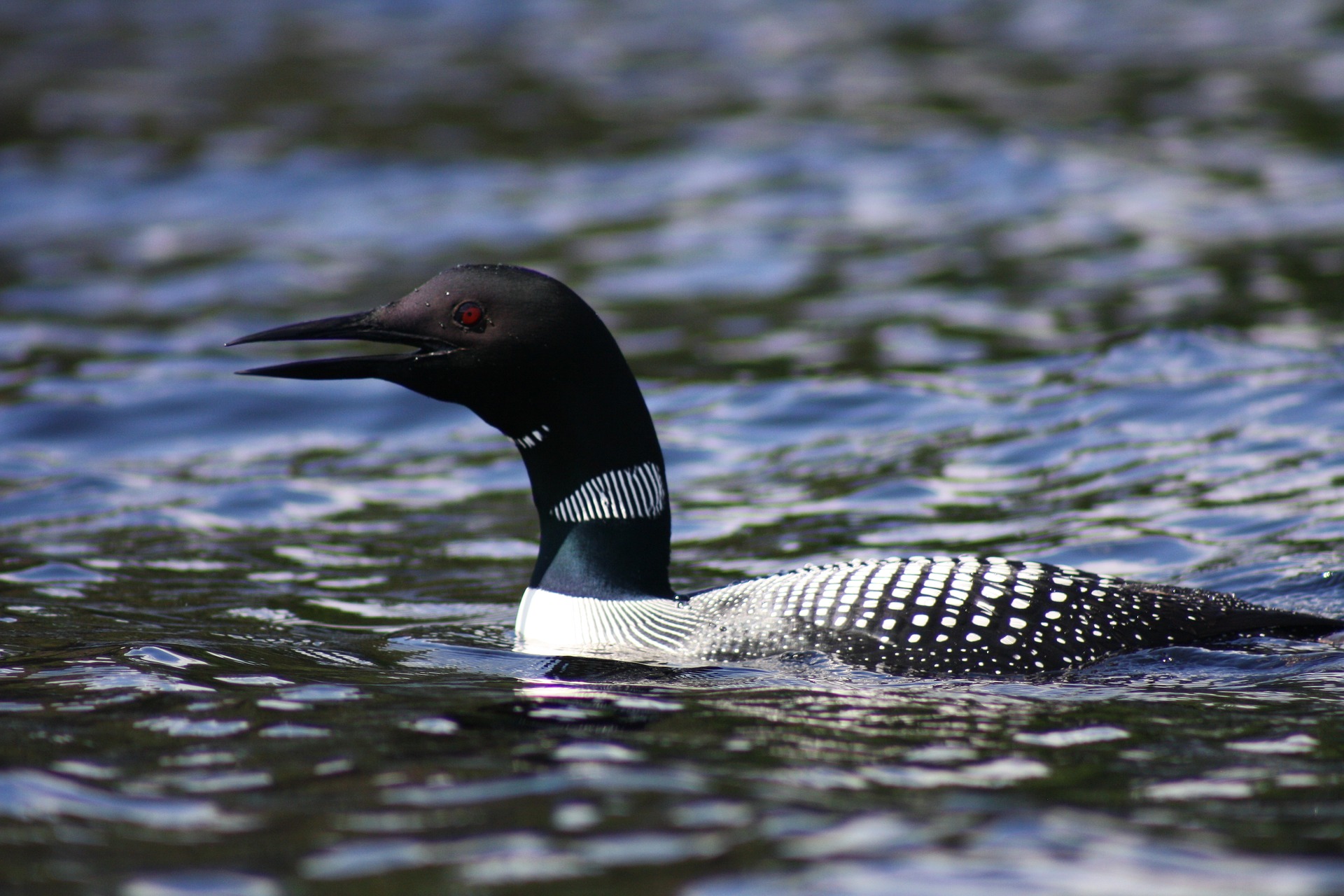
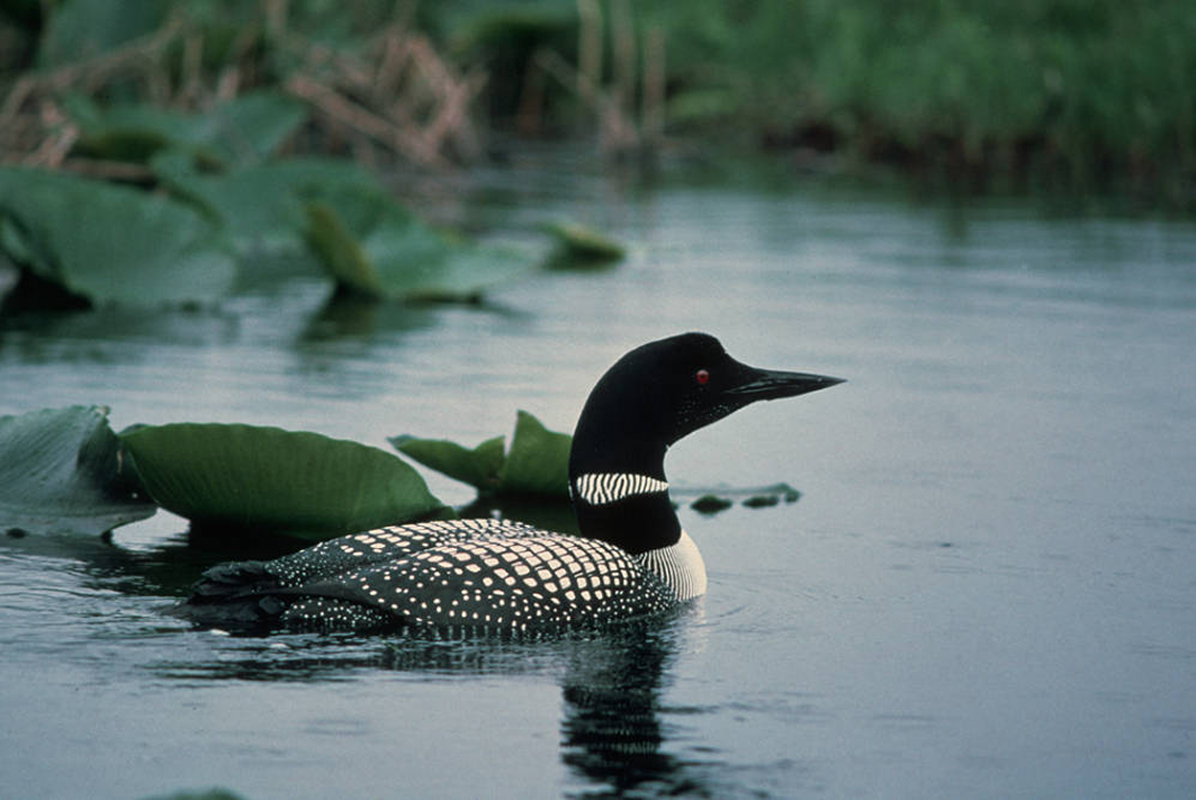
Photo by Krista-269/Pixabay.com • Common loons in summer breeding plumage are strikingly handsome birds that show much grace and agility in the water.

The 83rd consecutive Elizabethton Christmas Bird Count was held Saturday, Dec. 20, 2025. Twenty-four observers participated in seven parties found a total of 73 species, plus an additional species found during count week.

Compiler Rick Knight noted that the annual survey benefitted from good weather with a temperature range from 23 to 66 degrees coupled with clear and calm conditions.
The species total is right on the recent 30-year average for this CBC. The all-time high for the Elizabethton CBC was 85 species in 2017.

The list:
Canada goose, 372; mallard, 81; redhead, 3; ring-necked duck, 17; greater scaup, 2; lesser scaup, 1; bufflehead, 109; and hooded merganser, 26.

Wild turkey, 18; pied-billed grebe, 10; horned grebe, 14; rock pigeon, 208; mourning dove, 72; killdeer, 3; Wilson’s snipe, 7; ring-billed gull, 3; common loon, 1; and great blue heron, 11.

Black vulture, 26; turkey vulture, 131; sharp-shinned hawk, 1; Cooper’s hawk, 2; bald eagle, 4; red-shouldered hawk, 1; red-tailed hawk, 14; Eastern screech owl, 5; and great horned owl, 2.

Photo by Bryan Stevens
A flock of Wild Turkeys make their way across a snowy field.

Belted kingfisher, 17; red-bellied woodpecker, 28; yellow-bellied sapsucker, 19; downy woodpecker, 15; hairy woodpecker, 4; Northern flicker, 27; pileated woodpecker, 15; American kestrel, 14; and Eastern phoebe, 13.

White-eyed vireo, 1; blue jay, 130; American crow, 343; common raven, 9; Carolina chickadee, 101; tufted titmouse, 66; ruby-crowned kinglet, 11; golden-crowned Kinglet, 24; and cedar waxwing, 18.

White-breasted nuthatch, 29; brown creeper, 1; Carolina wren, 74; and winter wren, 11.

Brown thrasher, 1; Northern mockingbird, 58; Eurasian starling, 1058; Eastern bluebird, 117; hermit thrush, 8; and American robin, 236.

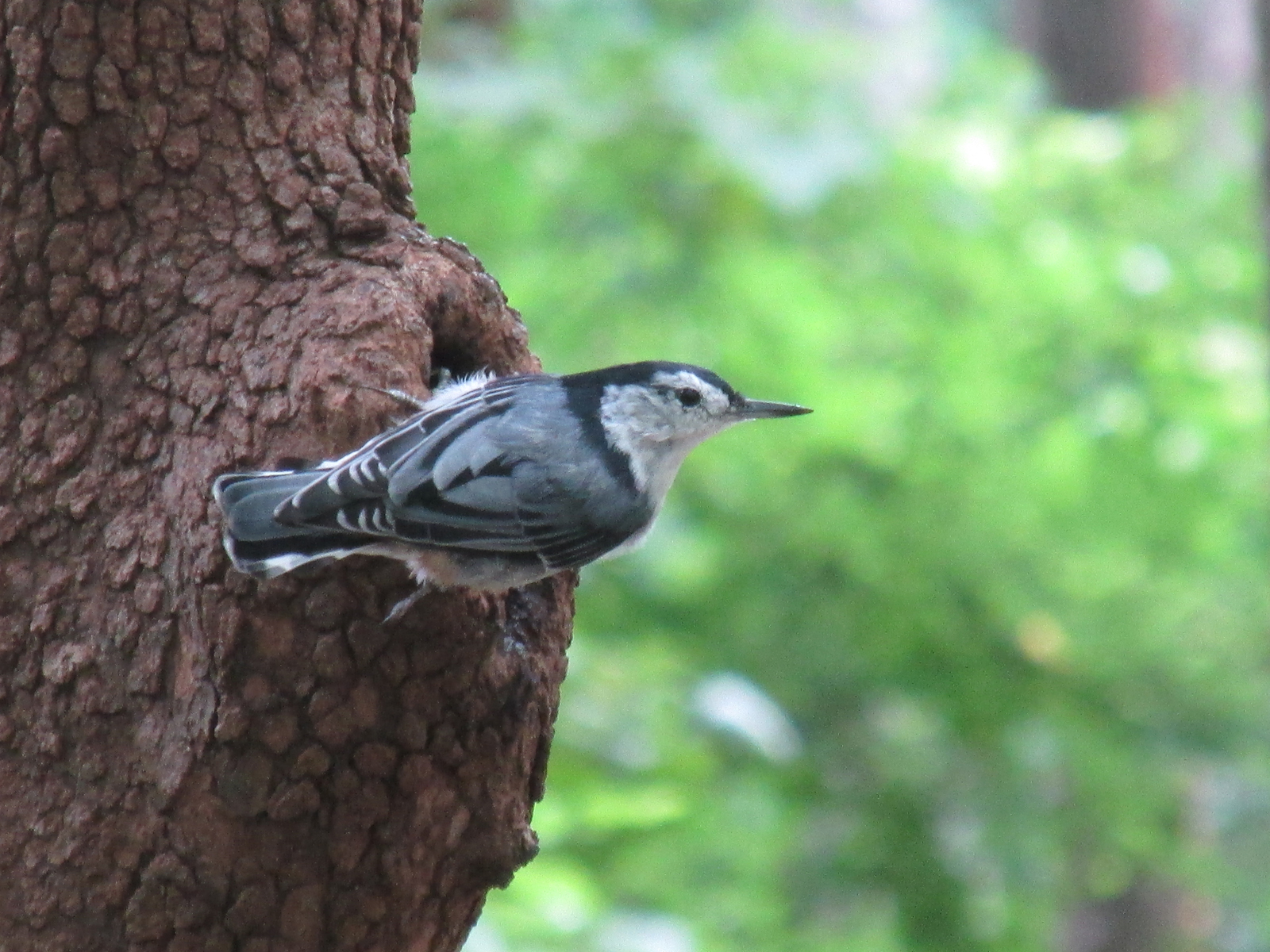
Photo by Bryan Stevens • A white-breasted nuthatch grabs a sunflower seed.

House sparrow, 28; house finch, 135; purple finch, 4; American goldfinch, 74; and pine siskin. The siskin was listed as a count week find. Birds seen within the same count circle but outside of the specific count day are noted as “count week” birds and still tallied with the species found on the actual count day.

Chipping sparrow, 1; field sparrow, 20; fox sparrow, 1; dark-eyed junco, 24; white-throated sparrow, 87; Savannah sparrow, 1; song sparrow, 83; Swamp Sparrow, 3; and
Eastern towhee, 14.

Eastern meadowlark, 67; common grackle, 1; pine warbler, 3; yellow-rumped warbler, 55; and Northern cardinal, 102.

Knight singled out the white-eyed vireo as a species worthy of elaboration. The vireo was seen in Hampton at the watershed trail among a stand of pines. It was the third instance for this species on this particular CBC; white-eyed vireos were also seen in 1997 and 2001.

Notable misses, according to Knight, included barred owl, red-breasted nuthatch and white-crowned sparrow.

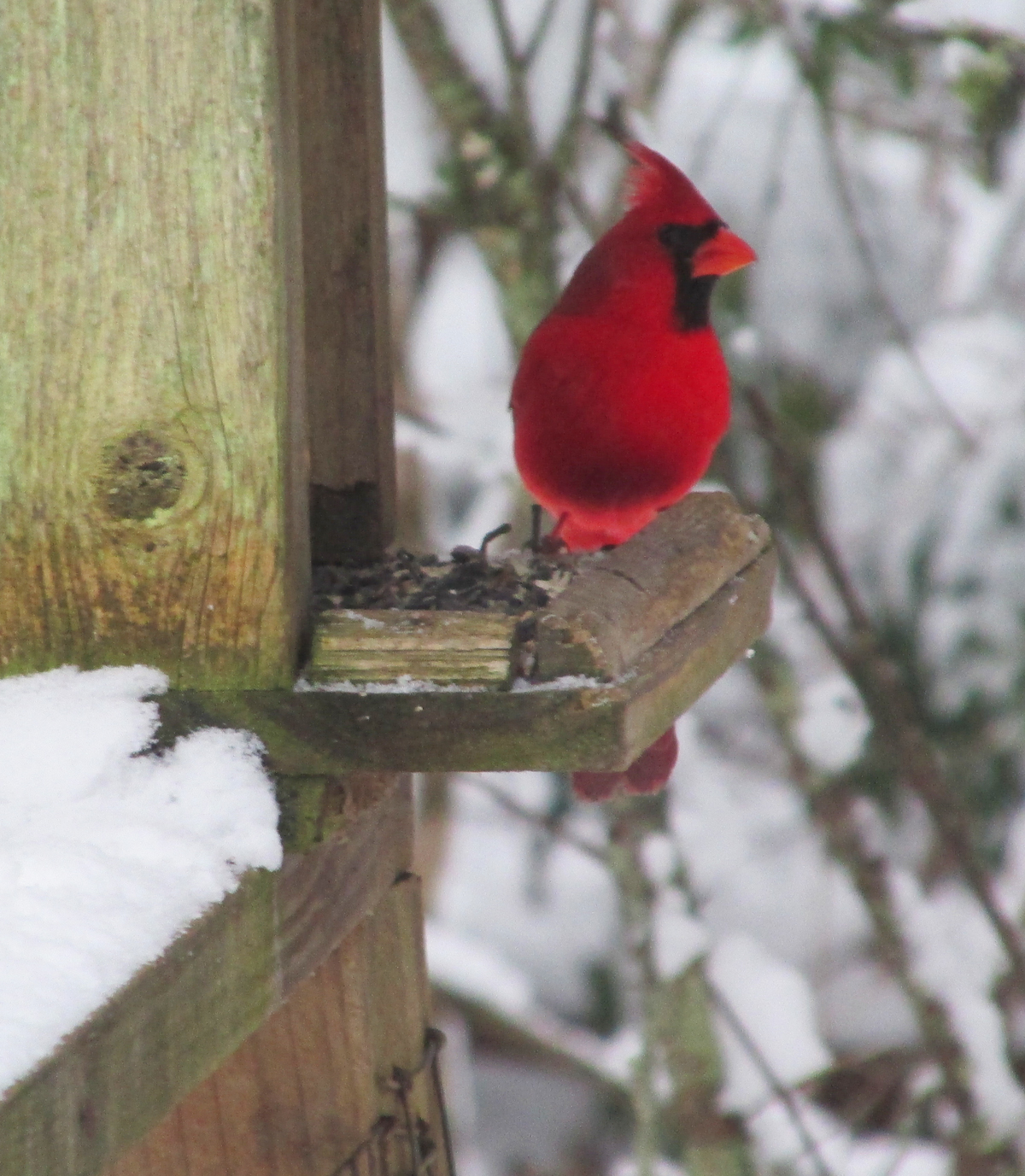
Photo by Bryan Stevens • A male Northern cardinal visits a feeder on a snowy afternoon.


Roan Mountain Christmas Bird Count finds 43 species plus another during ‘count week’

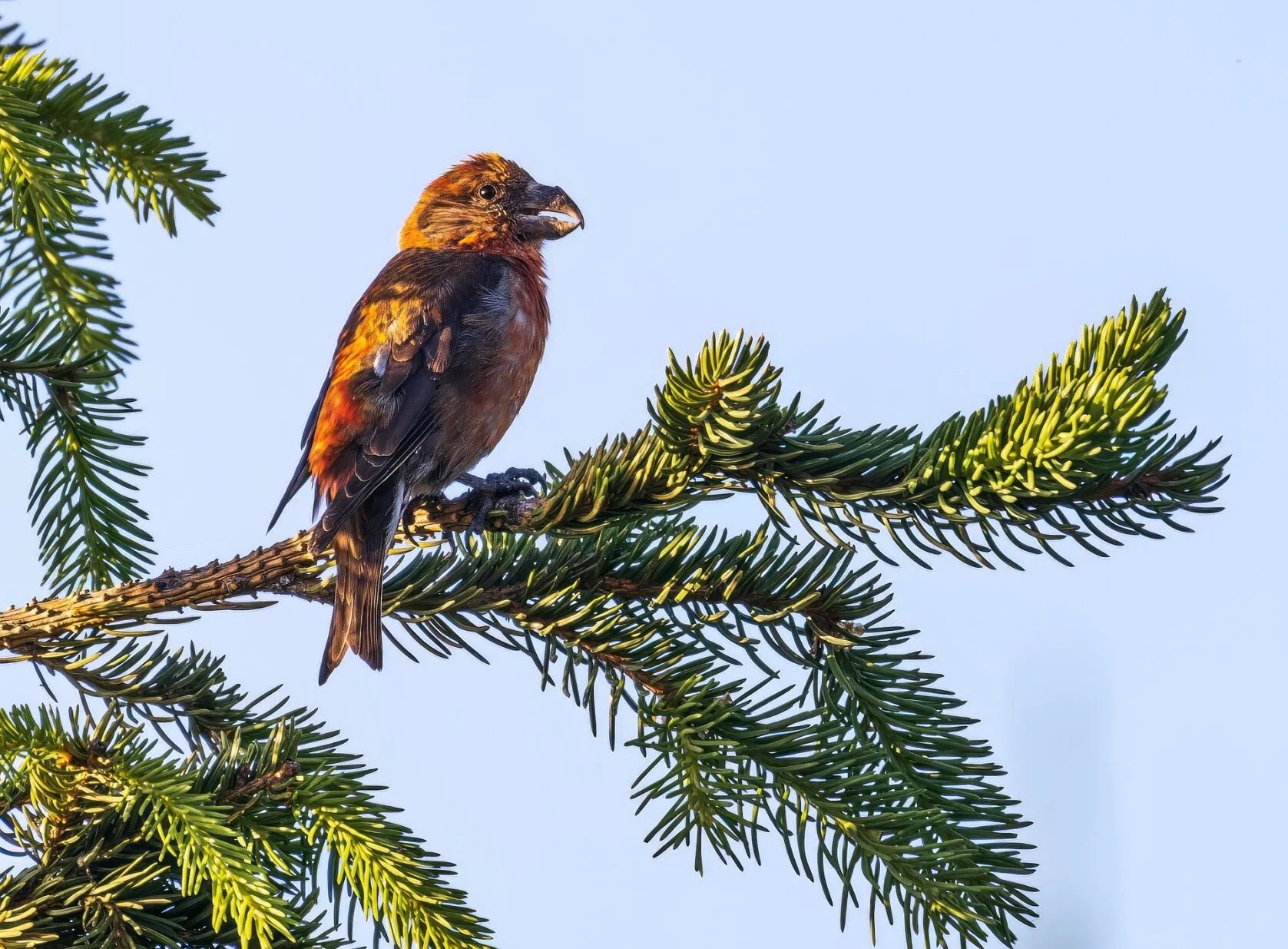
GYRLI1981/Pixabay • With its high elevation and unique habitats, Roan Mountain often produces good birds, such as red crossbills, for Christmas Bird Counts. Many of the species are difficult to find in other locations.

Unpredictable December weather makes the Roan Mountain Christmas Bird Count one of Tennessee’s most challenging surveys. This year was no exception, and the count had to postponed to a later date when a winter storm impacted the region.

The 73rd Roan Mountain Christmas Bird Count was eventually held Tuesday, Dec. 16, with six observers in two parties.

Count compiler Rick Knight noted that weather for this count was generally favorable (clear conditions and a temperature range from 17 to 46 degrees), but it was quite windy on top of the mountain making bird-finding difficult. At lower elevations, the winds were light. One to four inches of snow covered the ground, but roads were clear.

Participants tallied 43 species, plus one species added during the count week.

The list:

Canada goose, 30; American black duck, 17; wild turkey, 11; mourning dove, 17.

Sharp-shinned hawk, 1; Cooper’s hawk, 1; red-shouldered hawk, 2; and red-tailed hawk, 2.

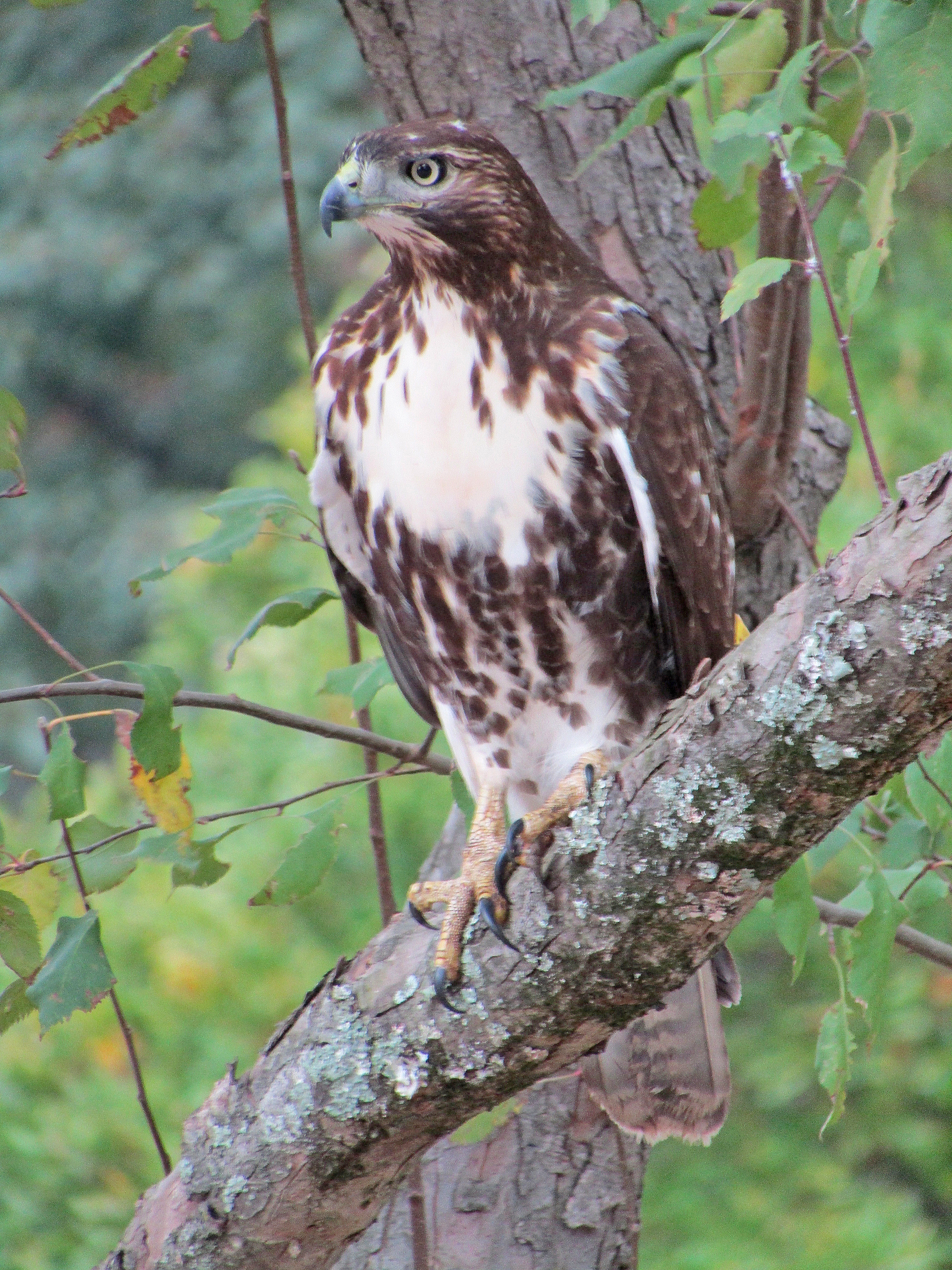
Photo by Bryan Stevens • Two red-tailed hawks made this year’s Roan Mountain CBC. 

Red-bellied woodpecker, 6; yellow-bellied sapsucker, 1; downy woodpecker, 4; hairy woodpecker,1; Northern flicker, 1: and pileated woodpecker, 3.

Eastern phoebe, 1; blue jay, 25; American crow, 120; and common raven, 8.

Carolina chickadee, 21; tufted titmouse, 24; golden-crowned kinglet, 6; red-breasted nuthatch, 3; white-breasted nuthatch, 14; brown creeper, 1; Carolina wren, 5; and winter wren, 2.

Northern mockingbird, 7; Eurasian starling, 23; Eastern bluebird, 8; and American robin, 2.

House sparrow, 5; house finch, 5; red crossbill, 2; pine siskin, 2; and American goldfinch, 119.

Field sparrow, 7; fox sparrow, 4; dark-eyed junco, 25, white-throated sparrow, 5; song sparrow, 35; Eastern towhee, 5; yellow-rumped warbler, 1; and Northern cardinal, 22.

In addition, a purple finch was found during the count week. CBC circles do accept birds seen during “Count Week, which is defined as the three days before and after the official count day, but they are recorded separately as count week birds and do not count towards the official count day totals. Their inclusion still provides important data.

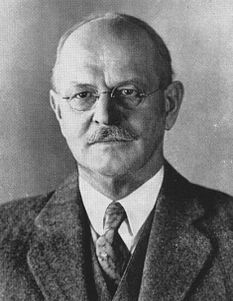
The first Christmas Bird Counts were conducted on Christmas Day (Dec. 25) in 1900. The annual census arose from a proposal made by famed ornithologist Frank M. Chapman. According to Audubon.org, these yearly counts, conducted throughout the country, have provided a wealth of data over the past century.

Observations made due to CBCs have helped Audubon researchers, conservation biologists, wildlife agencies and other interested individuals to study the long-term health and status of bird populations across North America. When combined with other surveys such as the Breeding Bird Survey, the data provides a picture of how the continent’s bird populations have changed in time and space over the past hundred years.

Frank W. Chapman

The concept of the Christmas Bird Count, according to the website for the National Audubon Society, arose from a less than bird-friendly custom prevalent at the turn of the 20th century. So-called sportsmen would conduct a “Side Hunt,” a rather blood-thirsty Christmas custom that saw hunters competing to see who could score the largest amount of feathered and furred corpses.

The annual holiday bird survey may even have arisen from an earlier custom with roots in Europe that came to the United States of America with early colonists. The “Side Hunt” has some similarity to a peculiar celebration in Ireland and other European countries known as “Wren Day” or “Hunt the Wren Day.” The event was conducted the day after Christmas, the date of Dec. 26 being consigned as Saint Stephen’s Day. By the 20th century, the hunt consisted of tracking down a fake wren carried atop a decorated pole. Crowds would parade through towns in masks and colorful attire. These groups were referred to as “wren boys.”

Whether or not the “Side Hunt and “Wren Hunt” shared any connections, it was a huge step forward for conservation when Chapman, the preeminent ornithologist of his day, proposed a new holiday tradition. His radical idea was to count birds during the Christmas season rather than hunting and killing them.

I will report on the total for the Elizabethton Christmas Bird Count in next week’s column.

•••

Bryan Stevens has written about birds, birders and birding since 1995. Email him at ahoodedwarbler@aol.com.

Christmas Bird Count produces grebes, other finds

Photo by Bryan Stevens
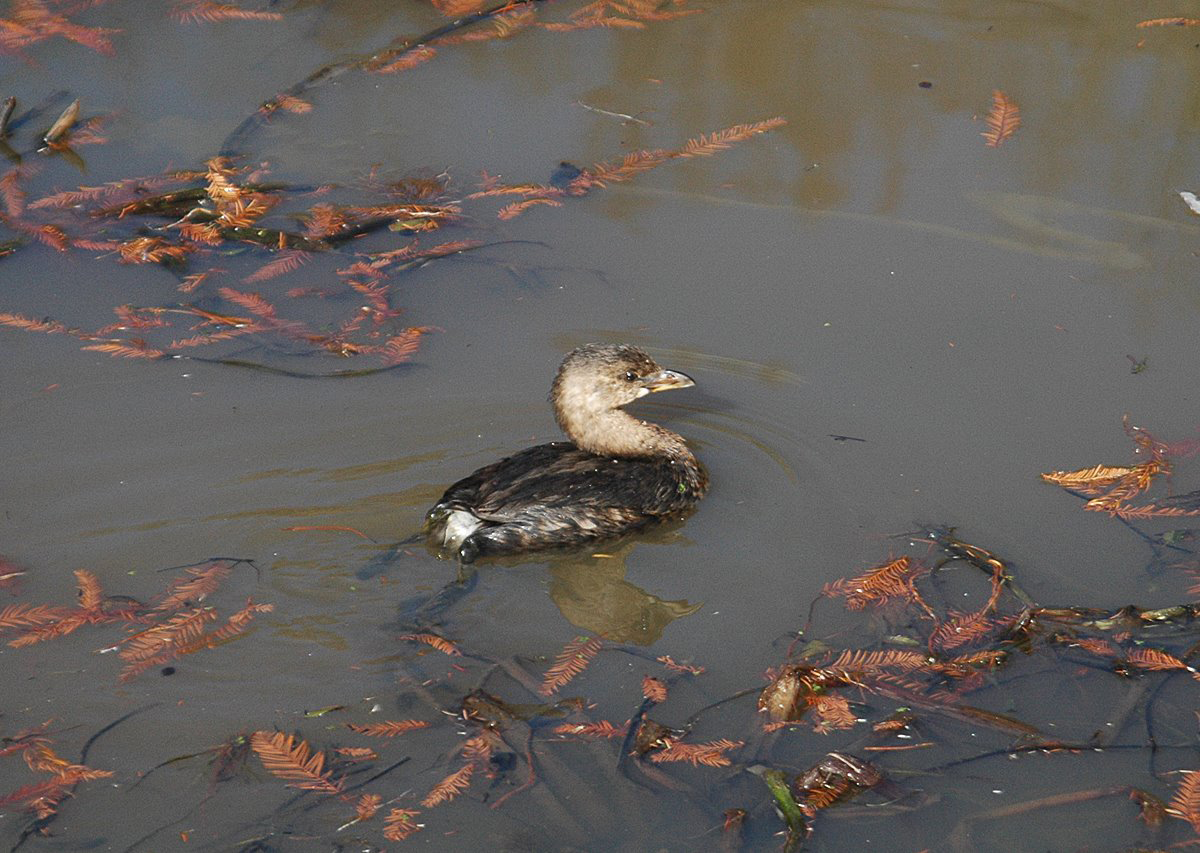
The pied-billed grebe paddles through the water after it was rescued after a stranding on a lawn.

I took part in the Elizabethton Bird Club’s 83rd annual Elizabethton Christmas Bird Count on Dec. 20.

The count focuses on a circle within Carter County with Elizabethton serving as the center. Consider the circle as a pie sliced into six pieces. Different groups bird within those “slices” of terrain. The groups rotate each year to vary the participation. As a result, it had been six years since I last led the count effort for the Butler/Little Milligan area that includes a great deal of Watauga Lake.

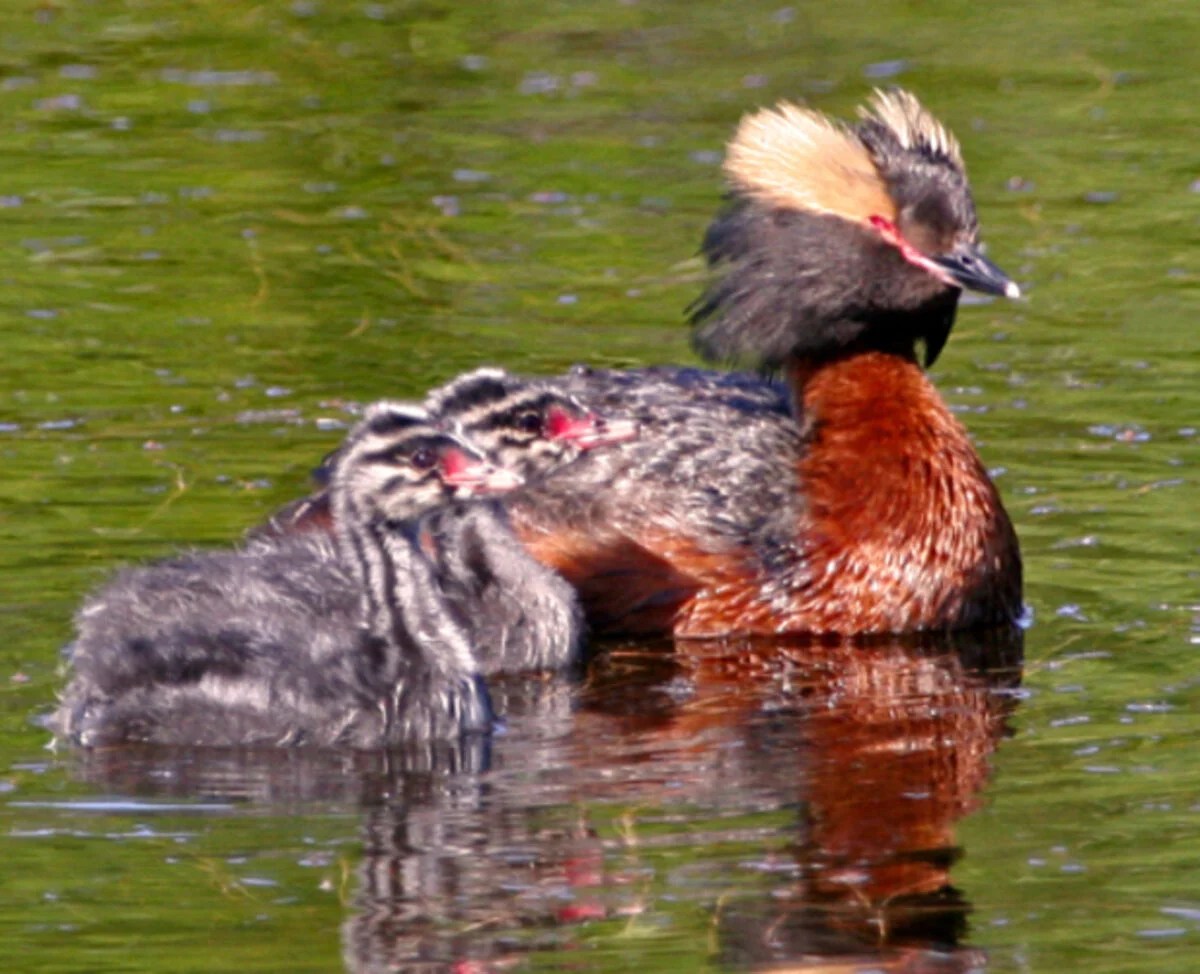
Donna Dewhurst/USFWS • A horned grebe parent tends chicks.

One of my favorite reasons for taking part in this particular count is the great mid-day lunch break at the Dry Run General Store and Deli in Butler. This marked my third time over the last 18 years having lunch at this great spot. The lunch break also gives the participants a chance to study the list of birds seen and calculate what other species can be added and where to best look for those species.

The counts conducted in areas with access to water have the potential for the most species, so it’s always a little more fun to bird around Watauga Lake or Wilbur Lake. The Watauga River in Elizabethton is also good.

We had good weather for this most recent count, but it was a slow effort to add birds to our list. Without a doubt, spring and fall bird counts are much more exciting than a Christmas Bird Count.

Below is the list for my group, which included Rob Armistead, Brookie and Jean Potter, David and Connie Irick and Chris Soto. This is only the list for Little Milligan and Butler. I hope to provide the complete list at a later date.

We found a total of 46 species:

Canada goose, 32; mallard, 7; greater scaup, 2; hooded Merganser, 4; wild turkey, 18; pied-billed grebe, 8; horned grebe, 14; rock pigeon, 52; mourning dove,1; ring-billed gull, 1; common loon, 1; and great blue heron, 2.

Photo by U.S. Fish & Wildlife Service • Common loons are quite at home in the air and on the water, but these birds are awkward if weather forces them to set down on land.

Red-tailed hawk, 3; belted kingfisher, 3; red-bellied woodpecker, 3; downy woodpecker, 2; Northern flicker, 1; pileated woodpecker, 3; American kestrel, 2; and Eastern phoebe, 1.

Blue jay: 14; American crow, 68; common raven, 2; Carolina chickadee, 2; tufted titmouse, 11; white-breasted nuthatch, 4; winter wren, 1; Carolina wren, 5; golden-crowned kinglet, 1; and ruby-crowned kinglet, 1.

Eastern bluebird, 14; hermit thrush, 1; American robin, 5; brown thrasher, 1; Northern mockingbird, 3; European starling, 43; and cedar waxwing, 2.

House finch, 2; American goldfinch, 25; dark-eyed junco, 5; white-throated sparrow, 8; song sparrow, 3; Eastern towhee, 3; Eastern meadowlark, 1; pine warbler, 1; and Northern cardinal, 7.

While birding in Little Milligan and Butler, we had plenty of views of Watauga Lake and opportunities for spotting birds often affiliated with water. The umbrella term of waterfowl can include such birds as ducks, geese, loons and grebes. We had representatives from all of these groups on our list. I was pleased to finally see some ducks and grebes this winter.

The grebes are a grouping of birds lumped together as waterfowl. Worldwide, there are 22 grebe species. This family also includes three extinct species — Alaotra grebe, Atitlán grebe and Colombian grebe.

Many people are unaware of the grebes. After all, they are oddball birds with not a lot in common with other waterfowl such as loons and ducks. In eastern Tennessee, southwestern Virginia and western North Carolina, the pied-billed grebe is the member of the grebe family most likely to come into contact with humans.

The pied-billed grebe’s scientific name, Podilymbus podiceps, can be roughly translated as “rear-footed diver.” The reference is to the fact that this grebe, as well as others of its kind, have their feet positioned so far back on their bodies that movement on land is difficult and awkward.

In winter, however, horned grebes can be somewhat abundant on area lakes. The common name of horned grebe refers to a yellow crest of feathers located above and behind the eyes, reminiscent of “horns” in the eyes of an imaginative observer. In winter these horns are absent and the colorful horned grebe of the nesting season is replaced by a bird in a dull white and dark gray plumage.

Grebes range in size from the least grebe, which weighs only about six ounces, to the great grebe, which can tip the scales at four pounds. North American grebes include red-necked grebe, horned grebe, eared grebe, Clark’s grebe and Western grebe. In extreme southern Texas, birders can find least grebes in suitable wetland habitats.

Other grebes found around the world include birds with such descriptive names as the great crested grebe, hooded grebe and silvery grebe.

Photo by Bryan Stevens • Brookie Potter spots a “bumble,” otherwise known as an abominable snowman, near Watauga Lake during the Christmas Bird Count.

With the exception of the least grebe, I’ve seen all of North America’s grebes. During visits to Utah in 2003 and 2006, I observed the sleek, long-necked Clark’s grebe and Western grebe. On a 2006 trip to Utah, I visited Antelope Island State Park and observed tens of thousands of eared grebes gathered on the Great Salt Lake for the nesting season. In Tennessee, one of the most reliable locations to find eared grebes is from viewing areas at Musick’s Campground on South Holston Lake, where a small number of these grebes have wintered for many years.

My Christmas Bird Count excursion proved a fun time with friends. We didn’t find a lot of birds, but we enjoyed finding the ones that we did see. Happy New Year to readers. I hope everyone finds some good birds in 2026.

•••

Bryan Stevens has written about birds, birding and birders since 1995.


Impossible to overlook the beauty of cardinals at Christmas

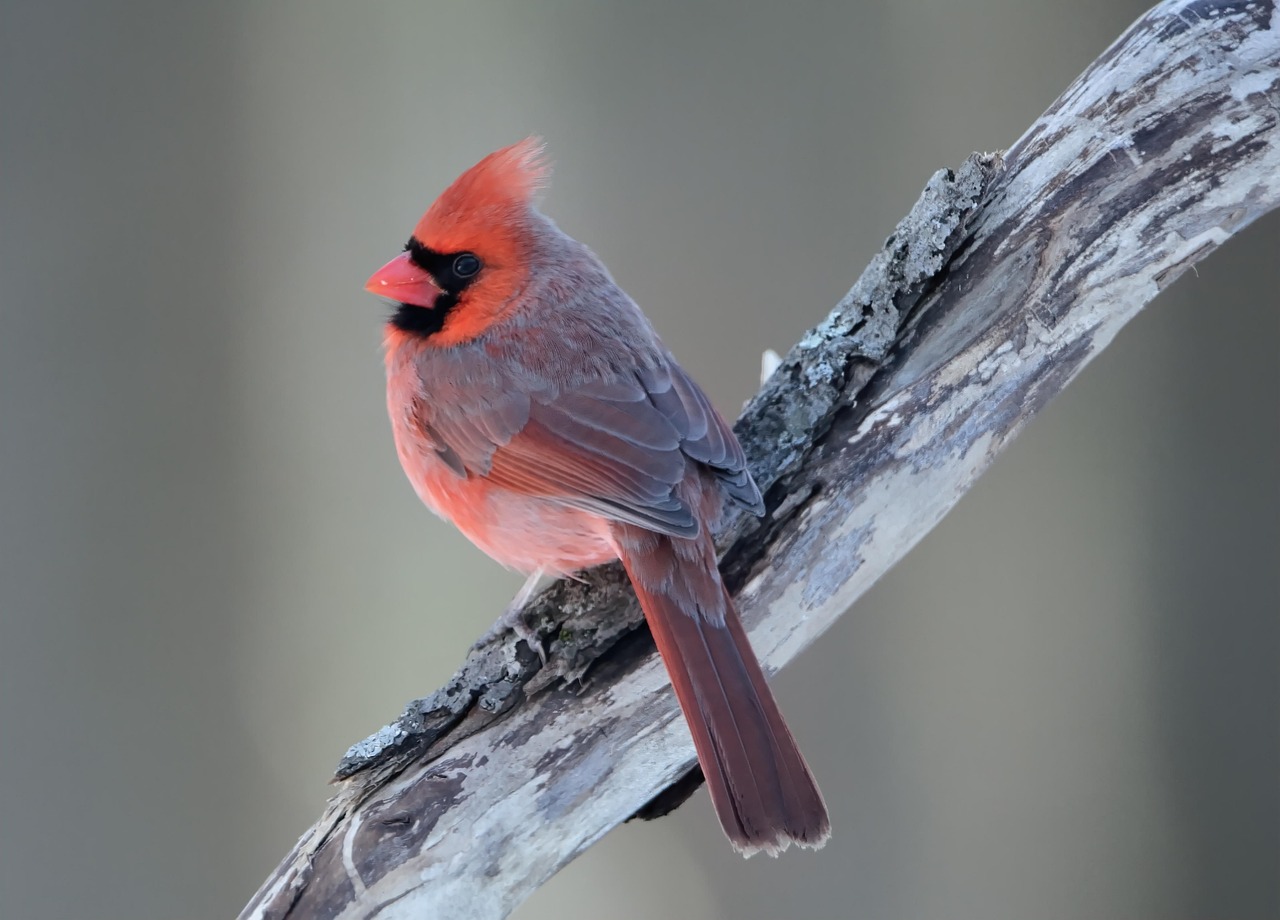
Photo by Nature Lady/Pixabay • A male Northern cardinal is always a welcome splash of brightness on wintry days.

Christmas Eve is upon us. I hope the hustle and bustle has died down and everyone can take delight in an enjoyable holiday. My own sincere wish to readers is that everyone gets to celebrate a great holiday that just might also include an interlude for watching some birds.

Often, when we think of winter birds, our thoughts focus on some of the less-than-colorful feeder visitors — the brown sparrows and wrens, the black and white chickadees, the drab American goldfinches that look so unlike their summer appearance.

There’s one bird, however, that makes an impression in any season. The Northern cardinal, especially the brilliant red male, stands out against a winter backdrop of snow white, deep green or drab gray.

Over the years, the Northern cardinal has also become associated with the Christmas season. How many Christmas cards have you received this holiday season with a cardinal featured in the artwork? I’d wager that at least a few cards in any assortment of holiday greetings will feature the likeness of a bright red cardinal.

Cardinals, also known by such common names as redbird and Virginia nightingale, are easily recognized backyard birds. I never tire of observing these colorful birds. Cardinals are easily lured to any backyard with plentiful cover to provide a sense of security and a generous buffet of sunflower seed.

Cardinals accept a wide variety of food at feeders. Sunflower seed is probably their favorite, but they will also sample cracked corn, peanuts, millet, bakery scraps and even suet. The cardinal is also one of only a few birds that I have noticed will consistently feed on safflower seed.

While we may get the idea that cardinals feed largely on seed, that is a misconception based on our observation of the birds at our feeders. When away from our feeders, cardinals feed on insects and fruit, including the berries of mulberry, holly, pokeberry, elderberry, Russian olive, dogwood and sumac.

Kevin Tipton/Pixabay • Female cardinals, more subdued than males, are still a sure means of providing some joy when glimpsed in wintry settings.

There’s no difficulty in identifying a cardinal. The male boasts crimson plumage, a crest, a black face and an orange bill. The female, although less colorful, is also crested. Female cardinals are soft brown in color, with varying degrees of a reddish tinge in their feathers, particularly in their wings. Immature cardinals resemble females except young cardinals have dark bills.

Cardinals are a widespread species, ranging westward to the Dakotas and south to the Gulf Coast and Texas. The southeastern United States was once the stronghold of the cardinal population. In the past century, however, cardinals have expanded their range into New England and Canada. These birds have even been introduced to Hawaii.

At feeders, cardinals mingle with a variety of other birds. Their preference for dense, tangled habitat is one they share with such birds as brown thrashers, Eastern towhees, Carolina wrens and song sparrows. In general, however, cardinals directly associate only with their own kind. Cardinals will form loose flocks during the winter, but these flocks are never as cohesive as those of such flocking birds as American goldfinches. Cardinals are more often observed in pairs. For such a bright bird, the male cardinal can be surprisingly difficult to detect as he hides in thick brush that conceals his presence. Cardinals are nervous birds, however, and usually betray their presence with easily recognized chip notes.

Photo by Bryan Stevens • A male Northern cardinal visits a feeder on a snowy afternoon.

It’s not surprising that such a popular bird has also become associated with many trappings of the Christmas season.

“You see cardinals on greeting cards, stationery, paper plates, paper napkins and tablecloths, doormats, light switch plates, candles, candle holders, coffee mugs, plates, glasses, Christmas tree ornaments and lights, bookmarks, mailboxes, Christmas jewelry,” writes June Osborne in her book “The Cardinal.”

Osborne asserts that cardinals have become an integral part of the way that many people celebrate the holiday season. I can be included among such people. My Christmas decorations include an assortment of cardinal figurines and ornaments. There are other birds — doves and penguins for example — associated with the holiday season, but for me the holidays magnify the importance of one of my favorite birds. The cardinal, in its festive red plumage, appears made to order for a symbol of the holiday season.

There’s additional evidence to put forward as testimony to the popularity of the Northern cardinal. It’s the official state bird of seven states: Virginia, North Carolina, West Virginia, Ohio, Illinois, Indiana and Kentucky. Only the Northern mockingbird, which represents five states as official state bird, even comes close to the Northern cardinal in this respect.

Even once the holidays are past, there’s nothing like a glimpse of a Northern cardinal to add some cheer to a bleak winter day.

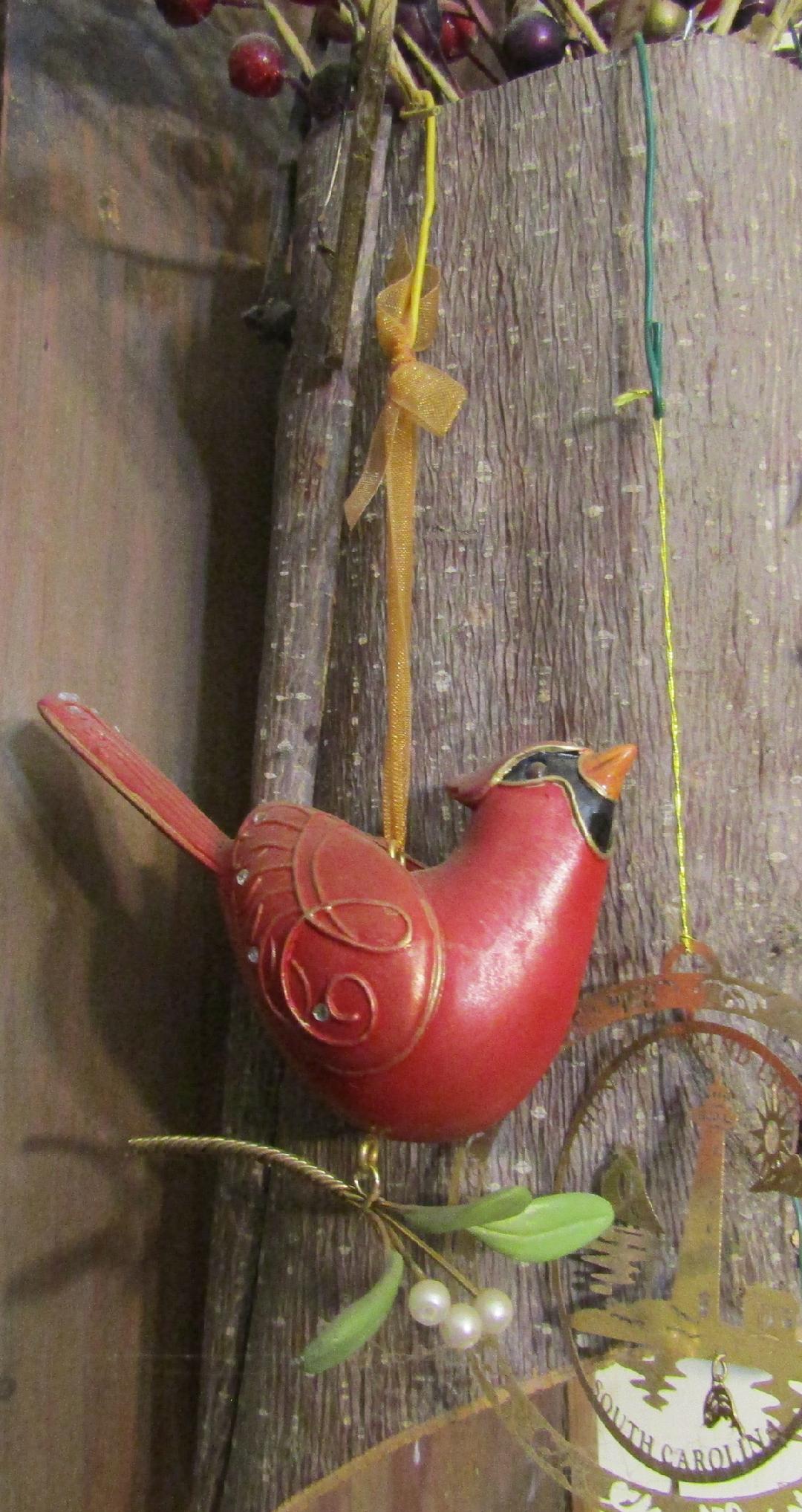
Photo by Bryan Stevens • Northern cardinals are a favorite for makers of Christmas ornaments.

With apologies to Arthur Carlson, wild turkeys can fly

Larry Smith/USFWS • A trio of wild tom (male) turkeys parade with fanned tail feathers at Wichita Mountains Wildlife Refuge in Oklahoma. Toms are also known as gobblers.

NOTE: I wrote the original version of this column back in November 2015. With some revisions, here’s a timely column on one of the nation’s premier fowls.

As Americans, we all have our holiday traditions. I will carve 30 minutes from my schedule to watch one of my favorite holiday sitcom episodes.

Not surprisingly, there’s an element linked to birds in the episode, which is often cited as one of the most ingenious sitcom episodes in the history of television. The episode is “Turkeys Away” from the first season of WKRP in Cincinnati, a sitcom that aired from 1978 to 1982 and revolved around the antics of the staff of a down-and-out radio station. The episode originally aired Oct. 30, 1978, early in the first season of the series. I especially like that every member of the ensemble cast was woven into the storyline for this classic Thanksgiving episode. The series is such a favorite I own all the seasons on DVD.

Turkeys Away” aired during the first season of WKRP in Cincinnati, a sitcom broadcast from 1978 to 1982 that revolved around the antics of the staff of a down-and-out radio station.

In the event that there are readers who haven’t seen the episode, I’ll try to avoid any blatant spoilers. The action involves a radio promotion that, in hindsight, was destined for disaster. The episode unfolds at the perfect pace, finally culminating in a hilarious series of scenes as the promotion backfires in spectacular fashion. I’ve memorized most of the lines of dialogue, but I still enjoy hearing them delivered by the talented actors Richard Sanders, Loni Anderson, Howard Hesseman and Gordon Jump. Hesseman passed away in 2022 on Jan. 29 at age 81. Frank Bonner, the actor behind sleazy ad rep Herb Tarlek, died June 16, 2021, at age 79. Jump died Sept. 22, 2003, at age 71. Anderson died this year on Aug. 3, two days shy of her 80th birthday.

Anderson’s character, Jennifer Marlowe, delivers one of my favorite lines while on the phone trying to appease an official outraged by the station’s “turkey drop” stunt. “Mister mayor, many turkeys don’t make it through Thanksgiving,” she says into the phone as the station’s staff deals with fallout from the promotional catastrophe. The line perfectly showcases Anderson’s comic timing and in-character demeanor.

With Anderson’s death, the living cast members now consist of Gary Sandy, Jan Smithers, Richard Sanders and Tim Reid.

In the Thanksgiving episode it’s Jump who gets the pivotal line with his perfectly delivered, “As God is my witness, I thought turkeys could fly!”

That classic line provides my segue into the subject of this week’s column, which is America’s wild turkey. I sometimes wonder if my favorite episode of WKRP, which first aired 47 years ago, has had some influence in persuading many people that turkeys cannot fly. It’s a widely held misconception that the wild turkey cannot fly. The turkey is perfectly capable of flying at speeds up to 55 miles per hour, but they often prefer to walk and run over the ground. They’re good sprinters, in fact, and can reach a running speed of 25 miles per hour. Turkeys can even swim!

On the other hand, the domesticated barnyard turkey is a fowl of a completely different kind than its wild cousin. Although the wild turkey — the largest of North America’s game birds — can weigh as much as 37 pounds, it’s the domestic turkey that holds the record as a heavyweight. The largest domestic turkey on record tipped the scales at 86 pounds. That bird certainly could have provided an ample banquet for your Thanksgiving meal. Domestic turkeys are bred to be big, which means they are incapable of flight and are also poor runners. Of course, these domestic kin of wild turkeys don’t face a gauntlet of predators.

I remember the first time that I observed wild turkeys in flight. I was driving near Persimmon Ridge Park in Jonesborough, Tennessee, when about a dozen large, dark birds flew across the road just above the roof of my vehicle. I was definitely perplexed as my mind worked to figure out the identity of these birds. I had almost settled on vultures — although the flight pattern had been all wrong — when I saw that some of these flyers had landed in a field adjacent to the road. On the ground, they were easily recognized as wild turkeys.

In addition to watching my Thanksgiving episode of “WKRP in Cincinnati” I may also take a drive to see if I can’t spy some wild turkeys in the countryside. If they take flight, that would be a bonus!

•••

Bryan Stevens has written about birds, birders and birding since 1995. Email him at ahoodedwarbler @aol.com to share sightings, ask questions or make comments.

Bryan Stevens • Wild turkeys cross a snowy field.

Dark-eyed juncos deserving of affectionate ‘snowbirds’ nickname

Photo by Bryan Stevens Dark-eyed juncos are winter residents in the region.

As I mentioned in last week’s column, I published my first “Feathered Friends” on Sunday, Nov. 5, 1995.

In celebration of that milestone, here’s that first column with a few revisions that have been added over the years.

•••

Of all the birds associated with winter weather, few are as symbolic as the dark-eyed junco, or “snow bird.” The junco occurs in several geographic variations.

The cover of the classic “A Complete Guide to Bird Feeding” by John V. Dennis.

John V. Dennis, author of “A Complete Guide to Bird Feeding,” captures the essence of the junco in the following description: “Driving winds and swirling snow do not daunt this plucky bird. The coldest winter days see the junco as lively as ever and with a joie de vivre that bolsters our sagging spirits.”

The dark-eyed junco’s scientific name, hyemalis, is New Latin for “wintry,” an apt description of this bird.

Most people look forward to the spring return of some of our brilliant birds — warblers, tanagers and orioles — and I must admit that I also enjoy the arrival of these birds. The junco, in comparison to some of these species, is not in the same league. Nevertheless, the junco is handsome in its slate gray and white plumage, giving rise to the old saying “dark skies above, snow below.”

Just as neotropical migrants make long distance journeys twice a year, the junco is also a migrating species. But in Appalachia, the junco is a special type of migrant. Most people think of birds as “going south for the winter.” In a basic sense this is true. But some juncos do not undertake a long horizontal (the scientific term) migration from north to south. Instead, these birds merely move from high elevations, such as the spruce fir peaks, to the lower elevations. This type of migration is known as vertical migration. Other juncos, such as those that spend their breeding season in northern locales, do make a southern migration and, at times, even mix with the vertical migrants.

Photo by Bryan Stevens • Dark-eyed junco nests on high mountain slopes during the summer month. This dark-eyed junco was photographed at Carver’s Gap on Roan Mountain during the summer nesting season.

During the summer months, a visit to higher elevations mountaintops is almost guaranteed to produce sightings of dark-eyed juncos. Juncos may nest as many as three times in a season. A female junco usually lays three to six eggs for each nest, which she constructs without any assistance from her mate.

Juncos are usually in residence around my home by early November. Once they make themselves at home I can expect to play host to them until at least late April or early May of the following year. So, for at least six months, the snow bird is one of the most common and delightful feeder visitors a bird enthusiast could want.

Juncos flock to feeders where they are rather mild-mannered — except among themselves. There are definite pecking orders in a junco flock, and females are usually on the lower tiers of the hierarchy. Females can sometimes be distinguished from males because of their paler gray or even brown upper plumage.

Since juncos are primarily ground feeders they tend to shun hanging feeders. But one winter I observed a junco that had mastered perching on a hanging “pine cone” feeder to enjoy a suet and peanut butter mixture.

Photo by Ken Thomas • A dark-eyed junco perches on some bare branches on a winter’s day.

Dark-eyed juncos, widespread across North America, readily visit feeder but are often content to glean the scraps other birds knock to the ground. The junco is the most common species of bird to visit feeding stations. They will sample a variety of fare, but prefer such seeds as millet, cracked corn or black oil sunflower.

The juncos are a small branch of the sparrow clan. Some of the other juncos include the endangered Guadalupe junco, yellow-eyed junco, Baird’s junco and volcano junco.

The last one on the list is endemic to the Talamancan montane forests of Costa Rica and western Panama.

The endangered Guadalupe junco is confined to an island. Recent efforts to eliminate feral goats and cats from the island have shown some positive results for this species.

Baird’s junco is named for Spencer Fullerton Baird, an American ornithologist and naturalist. Baird served as secretary for the Smithsonian Institution from 1878 until his death in 1887. He greatly expanded the natural history collections of the Smithsonian from 6,000 specimens in 1850 to over two million by the time of his death.

I hope you’ve enjoyed this introduction to juncos. There’s something about winter that makes a junco’s dark and light garb an appropriate and even striking choice, particularly against a backdrop of newly fallen snow.

Of course, the real entertainment value of juncos comes from their frequent visits to our backyard feeders. When these birds flock to a feeder and begin a frenzied bout of feeding, I don’t even have to glance skyward or tune in the television weather forecast. I know what they know. Bad weather is on the way!

••••

I’ve not seen the first junco of the season, but I have observed some other late-autumn migrants, including ruby-crowned kinglets and a swamp sparrow.

If you’d like to share your first sighting this season of dark-eyed juncos, email me at ahoodedwarbler@aol.com. As always, the column is also a line of communication with fellow bird enthusiasts. I’ve enjoyed sharing stories about birds with countless readers over the past 30 years. I can also be reached on Facebook at https://www.facebook.com/ahoodedwarbler.

Photo by Bryan Stevens Dark-eyed juncos embrace feeders when weather takes a turn for the worse.

Use autumn to get ready for bird-feeding season

Bryan Stevens • A female Northern cardinal visits a hanging platform feeder for a winter meal of sunflower seeds.

I’ve enjoyed a decent amount of activity in my yard this fall, enjoying visits from ruby-throated hummingbirds and American goldfinches as well as brown thrashers and gray catbirds. I’ve also glimpsed a few warblers. As much as I enjoy fall, crowding into my awareness is the fact that cold weather will soon be with us again.

Even that fact, however, is not totally unwelcome. Winter’s a fine season for peering through the windows at the birds that flock to feeders. So, with the winter season looming just around the corner, now might be a good time to take some steps to make your yard and feeders more attractive and welcoming to our feathered friends.

Photo Courtesy of Byron Tucker
A Rose-breasted Grosbeak joins a Red-bellied Woodpecker at a feeder in Atlanta.

Seeing all the activity in my yard during fall migration made me want to ensure that it remains attractive for those birds that choose to eke out a living during the colder months of the year in our region.

Here are a few suggestions of things to do this fall to make your winter bird feeding more productive. It’s better to do these outdoor chores now before winter truly put a nip in the air.

• Plant native trees that bear fruit. Autumn’s a recommended planting time for many trees, so consider checking with a local nursery about the selection of such native trees as American holly, serviceberry and red mulberry. It’s always good to select trees that provide fruit at different seasons to maximize the appeal of your plantings to birds. A flock of American robins or cedar waxwings, or even a pair of Northern mockingbirds, can quickly strip berries from a holly tree when conditions turn snowy and icy.

• Build or refurbish a brush pile. Fall’s a season for pruning, so take those discarded limbs and twigs to construct a protective shelter for songbirds. Shy birds that naturally avoid open spaces can be coaxed closer to feeders by having access to a tangle of sticks and brush. A brush pile offers a degree of protection should songbirds at your feeder need to find a quick hiding place when a hawk or other predator makes an unexpected appearance.

• Evaluate feeders. The winter season brings snow, ice and a flurry of renewed interest in bird feeders, so now is the time to clean and replace feeders. The elements are not always kind on feeders, so when it becomes apparent that a feeder is in poor condition, consider replacing it with a new one. It’s also important to give feeders a thorough cleaning. Using a mild bleach solution will help disinfect them and make feeding from them safe for our feathered friends. Just be sure to rinse throughly and then dry the feeder before hanging it back out.

Photo by Bryan Stevens • Field guides are an essential tool for bird identification.

• Take some steps to increase your enjoyment of the birds coming to your feeders. Invest in a good bird identification guide or app. I am a fan of a good field guide that I can hold in my hands while thumbing through the pages, but I know that many people prefer the convenience of an app that’s accessible through their smartphone. Some popular apps would include the Audubon Bird Guide, eBird and Merlin Bird ID. Some of my recommended field guides include Peterson Field Guide to Birds of North America and The Sibley Field Guide to Birds of Eastern North America. Identifying birds congregated in the winter at a feeder is often easier than trying to track them through the green canopy during the other seasons. Of course, you’ll want to be aware that some birds wear different plumages during the winter months. The guides and apps can help with these identification challenges.

• Upgrade your optics. Place a pair of binoculars on your Christmas list. Bring the birds closer to you with a reliable pair of binoculars. It will make all the difference.

• Don’t take down the sugar water feeders just yet. Although ruby-throated hummingbirds almost all depart in early October, other species of hummingbirds normally found in the western United States have reliably made appearances in the region in October, November and other winter months. Through the years, I have seen several of these seemingly out-of-place hummingbirds. Some of them remain at their host’s feeders for a brief stay of a few days or a couple of weeks, but some of these hummingbirds have extended their stay for several months, lingering throughout the winter months before eventually departing in February or March. The big question concerns whether these hummingbirds are truly lost and out of place. The answer, based on everything I have managed to learn, is that these hummingbirds are precisely where they want to be. For still unknown reasons, some of these western hummingbirds make a migration swing through the eastern United States. One thing is certain: You won’t see one of these “strays” unless you keep out a feeder with fresh sugar water. It’s not that difficult. After all, the ants and wasps that made a nuisance of themselves during warmer temperatures are no longer active. If it gets too cold, you can always move your feeders inside at night and put back outdoors at daylight. If you do happen to attract a winter hummingbird, please let me know. I love helping to document these rare visitors.

•••

Bryan Stevens has written about birds, birders and birding since 1995. Share sightings, ask questions or make a comment by emailing him at ahoodedwarbler@aol.com.

Photo by Bryan Stevens • Male and female purple finches share space at a feeder.

Red-bellied woodpeckers, other birds raise their profile during recent snowstorm

Photo by Bryan Stevens • A red-bellied woodpecker makes a tentative approach to a feeder stocked with sunflower seeds. Red-bellied woodpeckers are fairly common in the region.

I’m sure many share my sentiment that with February almost in the rear-view mirror it could be hoped that winter might be nearly at an end.

That misguided hope was dashed last week when another winter storm struck the region, accompanied by another blast of Arctic chill. At least the birds didn’t seem to mind terribly.

Dark-eyed juncos, Eastern towhees, song sparrows and American goldfinches flocked to my feeders. Another bird’s persistent “churr” call made the presence of a red-bellied woodpecker known even before I managed to sight one visiting one of my feeders.

Among the woodpecker family, the red-bellied and red-headed woodpeckers are close cousins, belonging to a genus of those tree-clinging birds known as Melanerpes. The term, translated from Latin, means “black creeper.” Indeed, many of the two dozen members of the Melanerpes genus have an extensive amount of black feathers in their plumage.

Other members of the genus include woodpeckers from the Caribbean, as well as from Central and South America. Some of them have quite colorful names, such as yellow-tufted woodpecker, golden-cheeked woodpecker and the accurately named beautiful woodpecker, a native of Colombia.

Photo by Bryan Stevens • Red-bellied woodpeckers are common throughout the southeastern United States.

The red-bellied woodpecker is one of the most widespread members of this genus with a range that extends from southern Canada to northeastern Mexico, as well as the eastern United States as far south as Florida and as far west as Texas. A century ago the red-bellied woodpecker was almost exclusively a southeastern bird, but it has expanded its range northward and westward considerably in the last 100 years. Its southern origins are hinted at in its scientific name of Melanerpes carolinus, which can be roughly translated as “black creeper of the Carolinas.”

It’s also named for a characteristic of its appearance that is not particularly prominent and difficult to observe. The faint tint of red that tinges the white belly feathers is extremely difficult to observe when this woodpecker is hitching up the trunk of a large tree. Because males, and females to a certain extent, have a red cap, the species has been erroneously referred to as a “red-headed woodpecker” by many casual observers. The true red-headed woodpecker, however, has an entirely red head and a plumage pattern that, considering its color trio of red, white and blue-black, is downright patriotic. The red-headed woodpecker (Melanerpes erythrocephalus) is about the same size as the red-bellied woodpecker.

All woodpeckers are noisy when the mood strikes them, but the red-headed and red-bellied have always struck me as rather more clamorous than some of their relatives. The most common call of the red-bellied woodpecker is a sort of rolling “churr” repeated frequently while the bird is on the move from tree to tree.

To enjoy close views of the red-bellied woodpecker, provide plenty of peanuts, sunflower seeds and suet cakes. During the recent snowstorm I would no doubt have enjoyed even more views of the visiting red-bellied woodpecker if I hadn’t been out of suet cakes. The offerings of sunflower seeds and peanuts, I’m happy to report, were gratefully accepted.

Photo by Bryan Stevens • A red-bellied woodpecker climbs snow-covered branches.

If there are any of these woodpeckers in the woods nearby, they will find these food offerings in short order. All my research indicates the same is true of red-headed woodpeckers, but I’ve never observed this woodpecker at my home. I’ve seen red-headed woodpeckers in Tennessee, Virginia and South Carolina, but their populations are somewhat localized. Woodlands dominated by oak trees are often inhabited by both these woodpeckers, which are fond of the acorns produced by these trees.

One reason the red-headed woodpecker may be less common than its cousin relates to its fondness for hawking for flying insects along roadsides. The woodpeckers are frequently struck by cars when swooping after their winged prey. Historically, the American chestnut and beech trees also provided much of the mast crops consumed by these birds. With the extermination of the chestnut and the scarcity of beech in some locations, the red-headed woodpecker now depends on oaks and acorns. In fact, this woodpecker is rarely encountered outside of woodlands with an abundance of oak trees.

At feeders, red-bellied woodpeckers are prickly customers that often refuse to play nice with other birds. I’ve seen them stare down other large feeder birds, including blue jays, mourning doves and evening grosbeaks. With its large bill, the red-bellied woodpecker commands some respect.

Anyone who has hosted these birds knows they are a welcome visitor to any yard. Who knows? Some day I may even get a visit from the elusive red-headed woodpecker, which is the only woodpecker that resides in the region to thus far avoid my yard.

•••

To ask a question, make a comment or share a bird sighting, email me at ahoodedwarbler@aol.com.

Red-winged blackbird, other birds set to return in coming weeks

Photo by Bryan Stevens • A male red-winged blackbird sings to attract mates and ward off rivals.

February’s the shortest month, and it is more than halfway over. There are already signs that some birds are ready to embrace the shift in seasons as winter advances, albeit in fits and starts, toward spring.

On Feb.11, three mallards visited my fish pond. The presence of mallards at any pond is not all that surprising. The mallard is arguably the most recognized of North America’s native ducks. But these were wild birds, as indicated by their wary behavior and their ability to spring into strong flight when I surprised them quite by accident.

Spring migration begins as early as February and March. Eastern bluebirds, which for the most part are not migratory, are already checking out nesting boxes.

The months of March, April and May will bring an influx of migrants. Ruby-throated hummingbirds will soon make their annual crossing of the Gulf of Mexico. These tiny birds usually make landfall in the United States as early as February, but they don’t usually venture as far north as Northeast Tennessee, Western North Carolina and Southwest Virginia until early April.

Bryan Stevens • On Feb.11, three mallards visited my fish pond. I am hoping they are the start of more migrating birds arriving in the coming weeks.

Warblers, orioles, thrushes, flycatchers, tanagers and many other migrants also return in April and May. A variety of waterfowl, raptors and shorebirds pass through the region during these months, as well.

March brings the early birds, including species such as brown thrasher, blue-gray gnatcatcher and red-winged blackbird.

Red-winged blackbirds return with a venegeance in early March or sometimes in late February.

I’m ready to hear their loud, familiar “kon-ke-ree” sounds again from the tops of the cypress trees at the fish pond. It’s always a fun moment to welcome these birds back.

Red-winged blackbirds return yearly in early spring and begin to seek out nesting habitat in local wetland areas, such as the cattail marshes near my fish pond.

My first returning male red-winged blackbird arrived on the evening of March 3 in 2022. The first red-winged blackbird arrived on the morning of March 6 the following year. I heard his unmistakable song from inside my house.

The showy and loud red-winged blackbird males soon take up residence at my fish pond and adjacent stands of cattails after their return.

Male blackbirds arrive ahead of the females. They immediately search out prominent perches and begin singing every day in anticipation of an intended audience. Female blackbirds lag a week or so behind the males in returning to their familiar territory.

Any wet field or marsh, especially those offering a stand of cattails, is almost certain to attract red-winged blackbirds at this time of year. I’d almost wager on that certainty.

The blackbirds arriving in spring behave much differently than the quiet, furtive flocks that often make brief visits to feeders during late winter snowstorms.

“The kon-ke-ree song of the male red-winged blackbird is a sure indication that spring is on the way,” according to a profile located at the Tennessee Watchable Wildlife website.

At this time of year, the male red-winged blackbirds seek elevated perches to display and vocalize. Their loud antics are not designed solely to attract mates. Male red-winged blackbirds also sing to warn rival males from intruding into their territories.

The male red-winged blackbird is a very aptly named bird. Glossy black males sport red wing patches that are often trimmed with a narrow band of yellow feathers. By contrast, female red-winged blackbirds are mostly brown birds that could easily be mistaken for large sparrows. Both sexes have sharply pointed bills.

Red-winged blackbirds are fond of wetlands. Any marsh or even a damp field or flooded pasture is likely to attract a few resident red-winged blackbirds. Females choose nesting locations in cattails or other marsh vegetation. She usually lays three or four eggs. Although she does receive some help from the male, most of the responsibility for raising the young is left to her.

There is a reason that male red-winged blackbirds are not always quite as engaged as females in feeding and tending their young. Males are often polygynous, which means that males will often court multiple mates. His time is often occupied defending females and their respective nests from the advances of other male red-winged blackbirds.

According to the website All About Birds, male red-winged blackbirds spend much of the breeding season sitting on a high perch over their territories and singing almost without ceasing from dawn to dusk.

The website also notes that female blackbirds shirk the high profile of the males. They tend to skulk in wetland vegetation as they collect food or nest material.

Bryan Stevens • Female red-winged blackbirds lack the showy plumage of males. They look more like an overgrown sparrow.

Both males and females defend nests from intruders and predators. They take this duty quite seriously, as I know personally from being dive-bombed by parent blackbirds when I have gotten a little too close to their nests.

Other relatives of the red-winged blackbird in the United States include the tricolored blackbird found along the Pacific Coast and the yellow-headed blackbird resident in wetlands west of the Great Lakes. Rusty blackbird, common grackle and brown-headed cowbird are other species of blackbirds found in Tennessee, Virginia and North Carolina.

For birders, the weeks ahead are an exciting time. In spirit, I think others often join our excitement if for no other reason than to celebrate that spring is just around the corner. These “early bird” arrivals are merely the harbingers of the season.

Share a sighting, ask a question or make a comment by emailing me at ahoodedwarbler@aol.com.

Bryan Stevens • In fall, male red-winged blackbird are bereft of the striking glossy plumage of spring.