Monthly Archives: January 2026

Chasing Zunzun: Bahamas cruise resulted in sightings of flying gems

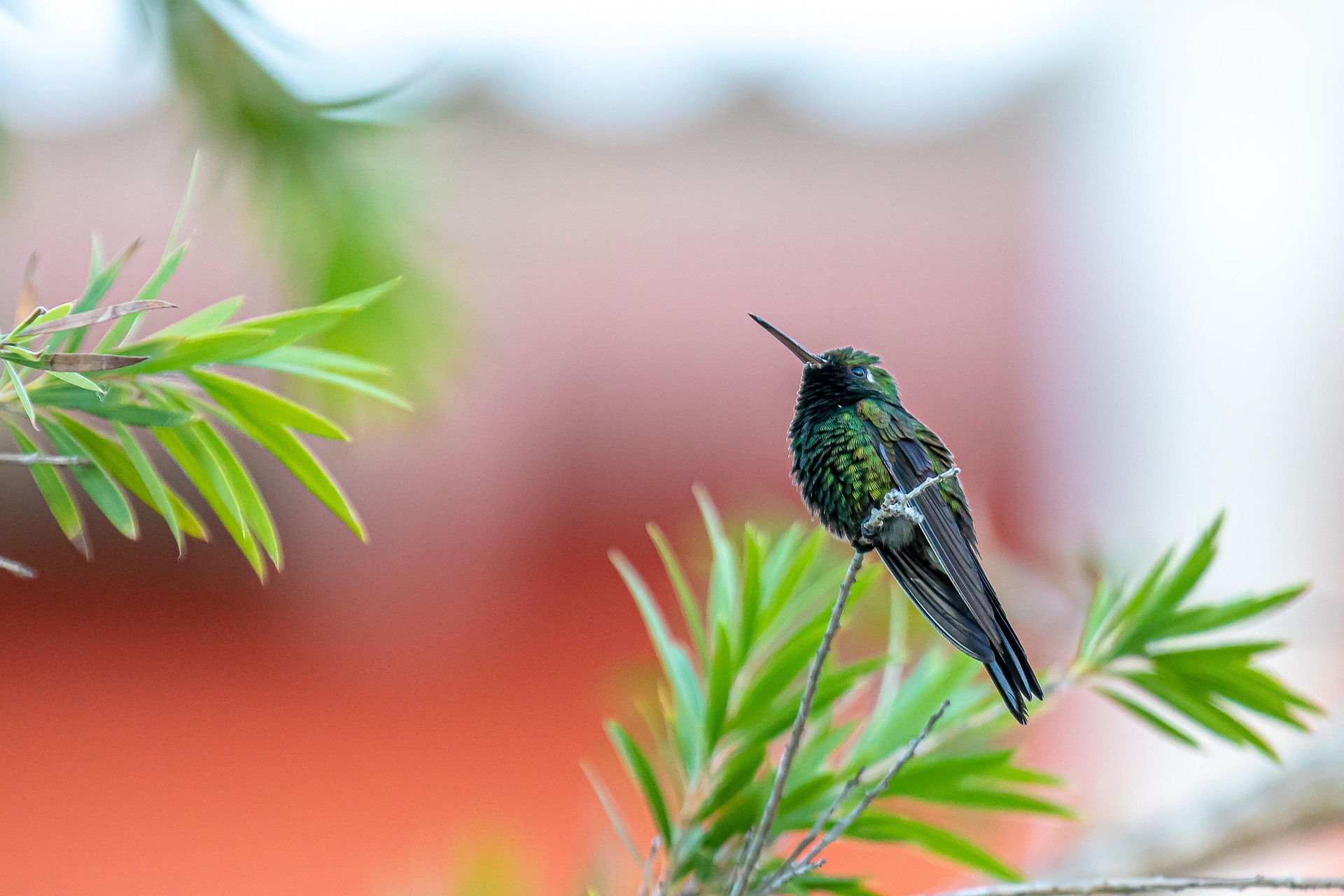
Photo by Pixabay • A Cuban emerald, a species of hummingbird native to Cuba and the Bahamas, perches and surveys its surroundings.

Continuing to bring you some vintage columns, I dug deep into my archives. I’ve traveled outside the United States on only one occasion from Jan. 22-24, 1999, during a family vacation. Sightseeing and shopping took a backseat to birding during a three-day cruise in the Bahamas. I fully documented my sightings in a “Feathered Friends” column published Feb. 14, 1999.

Two scheduled shore excursions during the cruise gave me opportunities to search for birds.

Two hummingbird species can be found in the Bahamas. The Cuban emerald, as its name suggests, is found in Cuba. It’s also found on several islands in the Bahamas. These dazzling birds are found in thickets and woodlands, as well as parks and gardens.

Another hummingbird species, the Bahama woodstar, is found nowhere else in the world.

Without much difficulty, I observed both species during my visit to the Bahamas. My observation of Cuban emeralds took place on Castaway Cay, a small island owned by Disney and reserved for use by those traveling aboard its cruise ships. Much of the island had been kept in a natural state with walking trails perfect for looking for birds. While others enjoyed the beach, I set off with my binoculars on the trails.

My mother and I observed a pair of Cuban emeralds that appeared to be a mother and her male offspring. On two occasions, we watched the female approach the young male for a feeding session. The young bird opened his bill in a wide gape and the female plunged her own long bill into his throat. The spectacle looked rather fearsome, but that’s how hummingbirds feed their young. I’ve observed one of our native ruby-throated hummingbird feeding her young in the same manner. Experts who have researched hummers insist there’s no danger that a mother hummingbird will skewer her offspring.
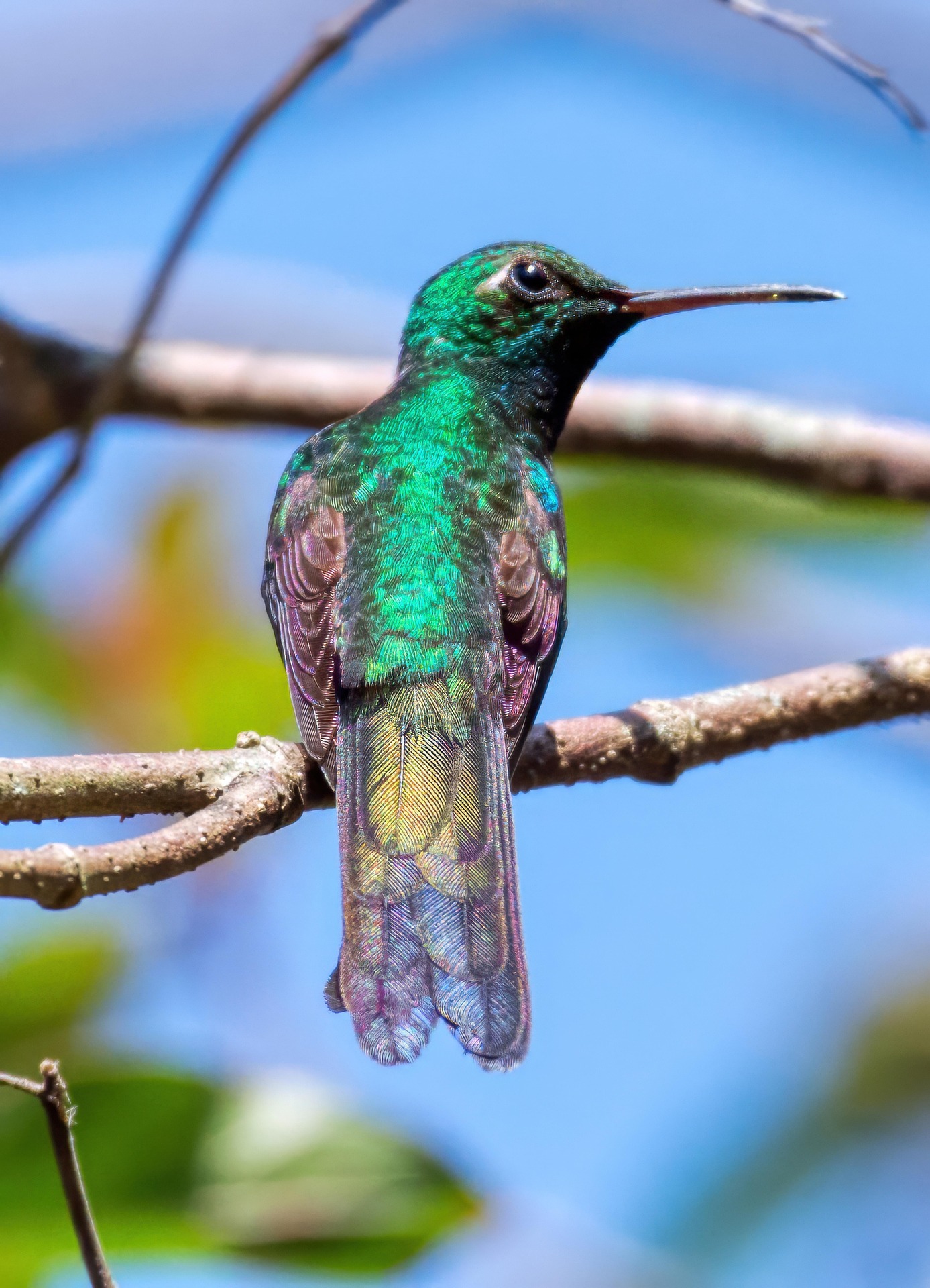
Photo by Daniel Stuhlpfarrer/Pixabay • The Cuban emerald is a vibrant hummingbird of the Caribbean.

The young male being fed put on quite a show. He appeared almost completely lacking in fear and allowed me to approach within inches of his perch. At times, he also exhibited his own curiosity and buzzed around my head and face for a better look of his own.

His mother, not quite as confiding, kept her distance. She perched on branches about 15 feet off the ground. She observed us, but she never descended to feed the young male unless we withdrew to a comfortable distance.

I learned later that my brother and sister-in-law saw some Cuban emeralds at another location on the island, leading me to suspect that the Cuban emerald may be quite common on Castaway Cay in the Bahamas.

Male Cuban emeralds sport an iridescent green throat and breast with a long forked tail, white undertail feathers, and a long thin bill that is black on top and reddish-pink on the underside. Females look similar to males except with green upperparts along with a grayish throat and breast, and a slightly shorter and less forked tail.

The term “emerald” describes many different species of hummingbirds. In the Caribbean, this family includes Hispaniolan emerald and Puerto Rican emerald. These hummingbirds belong to the genus Chlorostilbon, which is Greek for “green glitter,” a perfect description of the metallic green appearance of their feathers. Since my writing of the original column, experts have reconsidered the classification of the Cuban emerald. Based on a molecular phylogenetic study published in 2014 and a 2017 publication, the North American Classification Committee of the American Ornithological Society moved the species to the resurrected genus Riccordia. The Cuban emerald’s scientific name is now Riccordia ricordii.

Prior to seeing the Cuban emeralds I got a brief but close look at a male Bahama woodstar visiting hibiscus and other flowers in a garden surrounding a swimming pool at a resort in Nassau, the capital of the Bahamas located on New Providence Island.

The Bahama woodstar bears a resemblance to our own ruby-throated hummingbird. Male Bahama wood stars boast a reddish-purple throat, green upperparts and a white breast bordered by a tinge of rufous. The bird’s forked tail feathers are also trimmed with rufous color. Males and females have a white spot behind each eye. They also have black bills that curved downward slightly at the tip.

The Bahama woodstar, which is roughly the same size as a ruby-throated hummingbird, is a member of the genus Calliphlox, which is Greek for “beautiful flame.” Since my original writing of this column, the classification of the Bahama woodstar changed after a 2014 study.

A former subspecies of the Bahama woodstar has been made its own species. The Bahama woodstar itself was moved into a new genus and given the scientific name Nesophlox evelynae. That former subspecies was upgraded to full species status and is known as the Inagua woodstar (Nesophlox lyrura), also called the lyre-tailed hummingbird. The species is endemic to the two islands of the Inagua district of the Bahamas.

It’s the Bahama woodstar that occurs in Nassau, so the species I saw in 1999 was truly the Bahama woodstar. The good news is that if I ever travel to the Great or Little Inagua islands in the Bahama archipelago I will have a chance to add a third species of Bahama hummingbird to my life list.

There are many other species of woodstars, including the little woodstar of South America, the purple-throated woodstar restricted to the west slope of the Andes in Colombia and Ecuador, and the endangered Chilean woodstar.

There are about 360 species of hummingbirds, all found in the New World and reaching their greatest diversity in Central and South America.

Both Cuban emeralds and Bahama Woodstars have strayed into nearby Florida, so it is possible to observe these two species outside of the Bahamas. Experts have speculated that the Inagua woodstar had very likely also strayed into Florida.

I’ll always remember my trip to the Bahamas and the opportunity to chase after zunzún, which is a Spanish word, particularly used in the Caribbean, for hummingbird. I greatly enjoyed my observations of the two hummingbird species I observed in the Bahamas. These sightings remain among my most memorable in my nearly four decades of birding.

•••

Bryan Stevens has written about birds, birding and birders since 1995. Email him at ahoodedwarbler@aol.com to ask a question, make a comment or share a sighting. 
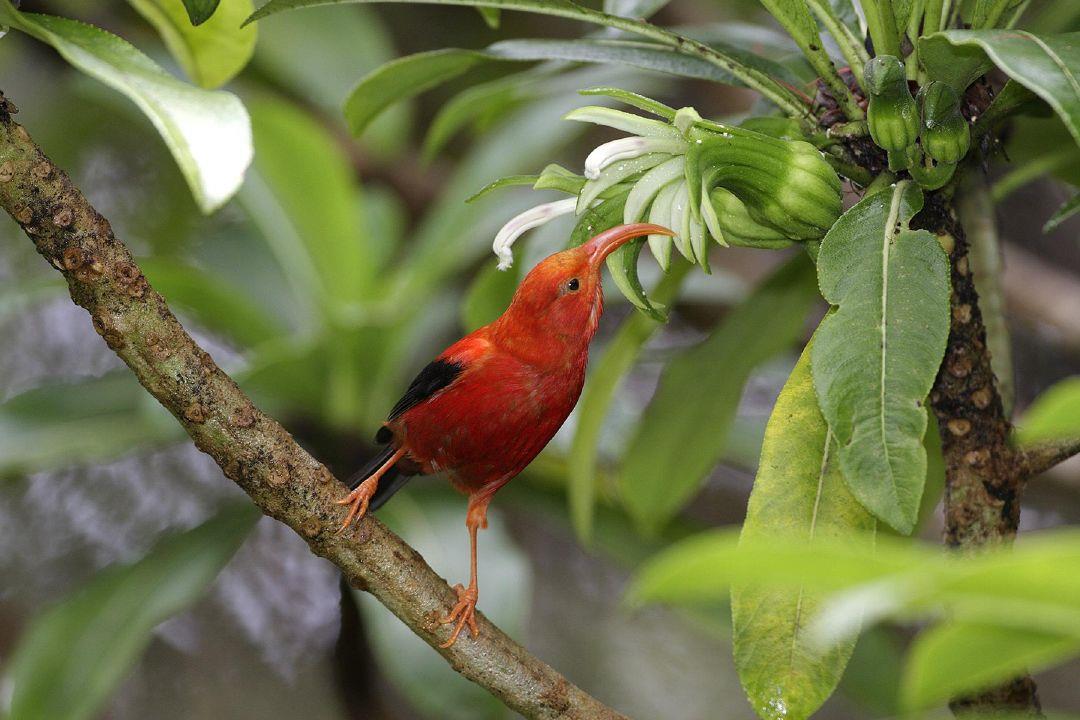
 

Remember the po’ouli in fight to conserve our birds

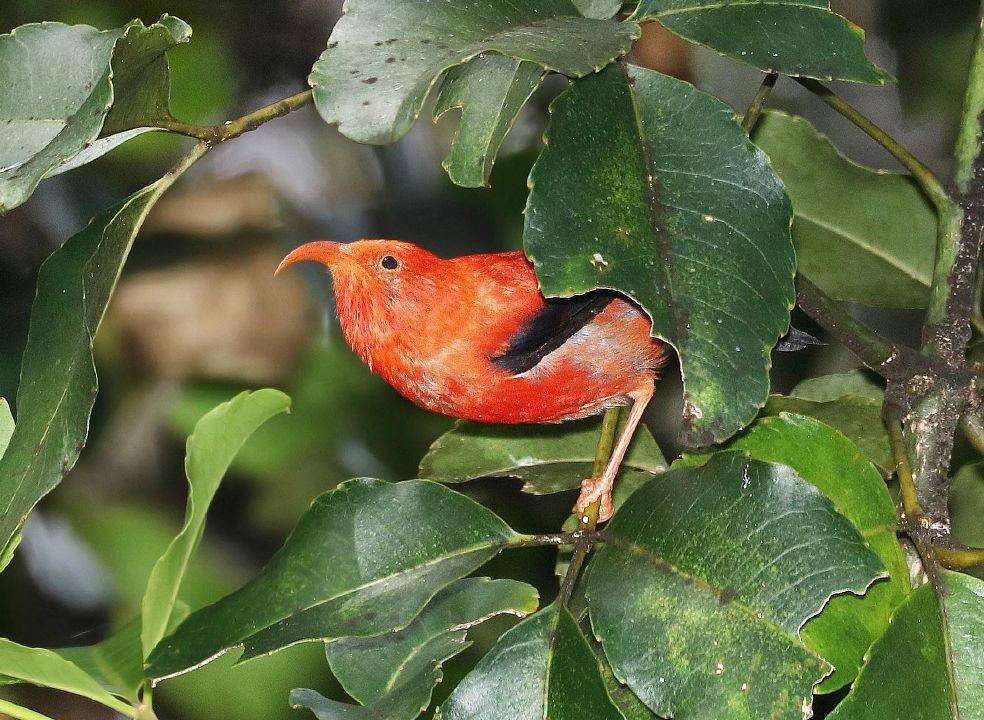
Photo by Jack Jeffrey/USFWS • A po’ouli relative, an ‘I’iwi forages in the Hakalau Forest National Wildlife Refuge, Hawaii. The bird’s long, downcurved, orange bill is specialized for sipping nectar from tubular flowers.

I’m celebrating 30 years of writing my weekly “Feathered Friends” column by occasionally showcasing some vintage compositions from throughout that time period. I published this column on Jan. 2, 2005. I’ve made some revisions and edits to this version. I’m more saddened now than at the time I wrote the original column, but I still think there is some cause for optimism that we’ll be able to share the planet without causing any more tragic stories for our birds. I think that message is just as important as ever.

•••

A tiny bird called the po’ouli, no bigger than some of the sparrows that visit bird feeders here in East Tennessee, failed to move forward into the year 2005.

A bird native to the Hawaiian island of Maui, the po’ouli went undiscovered by modern science until 1973. Barely three decades later, what may very well have been the last po’ouli in the world died Nov. 26, 2004.

The exact date of the demise of both the species and this last survivor can be known because the individual bird had been living in captivity in a research center on Maui. The hope had been to secure two other individuals known to exist in the wild in order to initiate a last-ditch attempt to save the po’ouli through a captive breeding program.

Nature moved faster than man. The other two po’ouli living in the wild hadn’t been seen in several months when the search launched. The lives of all small birds are fleeting and precarious. In all likelihood, these two individuals were gone even before the search commenced. With their demise, another thread had simply been snipped from nature’s tapestry.

The irony is that we knew this small bird, seen in the wild by a relatively small number of people, for only a blink in the overall scope of the universe. We did manage to learn a few things about the po’ouli in the span of time from 1973 to its extinction in late 2004.

According to a U.S. Fish and Wildlife Service press release, the po’ouli’s name in Hawaiian meant “black head,” a reference to the bird’s black mask and its other common name of black-faced honeycreeper. Its scientific name was Melamprosops phaeosoma. A Po’ouli’s most distinctive feature was a large black face mask accented by white cheeks, throat and underparts with brown wings and back; no other Hawaiian forest bird was similarly colored. Females were similar in appearance, displaying a grayish throat and breast.

The po’ouli belonged to a family known as the Hawaiian honeycreepers. Unlike other forest birds in Hawaii, the po’ouli’s diet included many native tree snails. The fact that many Hawaiian tree snails are endangered or threatened may have played a role in the rapid decline of the po’ouli.

The U.S. Fish and Wildlife Service tried to look for a silver lining in the wake of this tragedy.

“Our goal of saving the po’ouli is now very difficult and may not be achievable,” said Gina Shultz, acting field supervisor for the Fish and Wildlife Service’s Pacific Islands office, in a remark that can be fairly described as classic understatement.

She added, “But we must continue to try to save the species we have left.”

At that time, Hawaii had 31 other endangered bird species threatened by loss of habitat, introduced predators and disease.

In the years since 2004, eight more species have been lost, including the Maui ʻakepa, Maui nukupuʻu, Kauai ʻŌʻō, Kauai akialoa, large Kauai thrush, Kauai nukupuʻu and Molokai creeper, also known as Kākāwahie. Some of these species had not been seen for decades when officially declared extinct in 2023.

The demise of the little-known po’ouli probably didn’t mean much to many people. It’s hard to get excited about a small, drab bird that once lived on an island thousands of miles away.

We should, however, learn a lesson from its story. When it comes to the rapid decline in birds, we’re a major part of the problem. We’re going to need to be a part of the solution, too.

Photo by Alan Schmierer • The ‘I’iwi, a relative of the po’ouli, is another of the Hawaiian honeycreeper species. These birds evolved in the forests of Hawai’i and are found nowhere else in the world. Unlike ‘the po’ouli, a few thousand I’iwi still survive but face existential threats that have intensified in recent years.

What will we do? Will we wait until another bird species dwindles to a mere three individuals in the entire world and take desperate, unsuccessful measures?

We are more than a quarter way through this new century. These problems require new thinking. The issues are too complex to be more than hinted at in one column. But perhaps we can adopt a slogan: “Remember the po’ouli.” Keep this lost little bird in mind to help us in this constant battle to see to it that no other birds follow the po’ouli into the darkness of extinction.

•••

Bryan Stevens has been writing about birds, birding and birders since 1995. Email him at ahoodedwarbler@aol.com to share a sighting, ask a question or make a comment.

Waterfowl numbers help increase Elizabethton Christmas Bird Count total


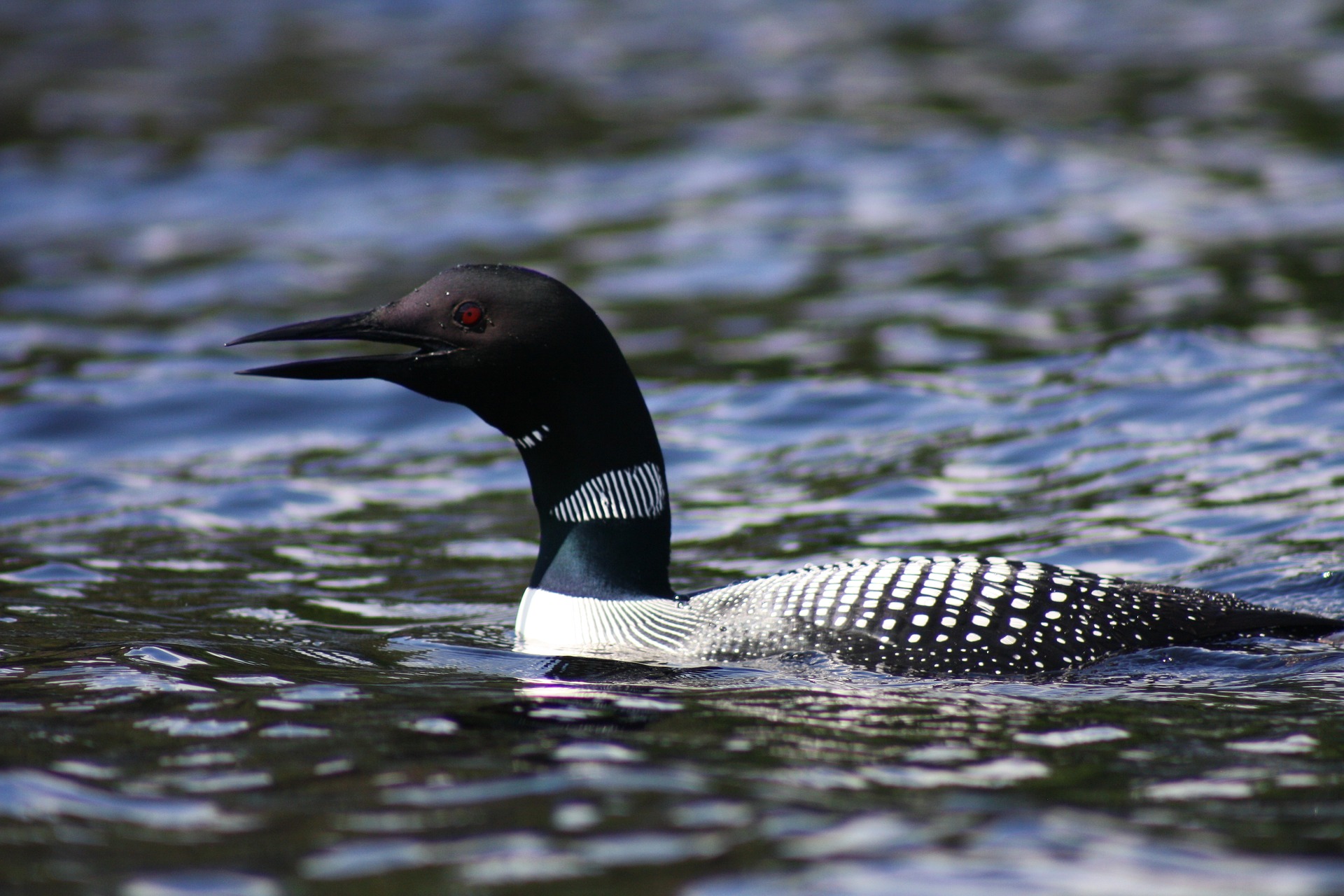
Photo by Krista-269/Pixabay.com • Common loons in summer breeding plumage are strikingly handsome birds that show much grace and agility in the water.

The 83rd consecutive Elizabethton Christmas Bird Count was held Saturday, Dec. 20, 2025. Twenty-four observers participated in seven parties found a total of 73 species, plus an additional species found during count week.

Compiler Rick Knight noted that the annual survey benefitted from good weather with a temperature range from 23 to 66 degrees coupled with clear and calm conditions.
The species total is right on the recent 30-year average for this CBC. The all-time high for the Elizabethton CBC was 85 species in 2017.

The list:
Canada goose, 372; mallard, 81; redhead, 3; ring-necked duck, 17; greater scaup, 2; lesser scaup, 1; bufflehead, 109; and hooded merganser, 26.

Wild turkey, 18; pied-billed grebe, 10; horned grebe, 14; rock pigeon, 208; mourning dove, 72; killdeer, 3; Wilson’s snipe, 7; ring-billed gull, 3; common loon, 1; and great blue heron, 11.

Black vulture, 26; turkey vulture, 131; sharp-shinned hawk, 1; Cooper’s hawk, 2; bald eagle, 4; red-shouldered hawk, 1; red-tailed hawk, 14; Eastern screech owl, 5; and great horned owl, 2.

Photo by Bryan Stevens
A flock of Wild Turkeys make their way across a snowy field.

Belted kingfisher, 17; red-bellied woodpecker, 28; yellow-bellied sapsucker, 19; downy woodpecker, 15; hairy woodpecker, 4; Northern flicker, 27; pileated woodpecker, 15; American kestrel, 14; and Eastern phoebe, 13.

White-eyed vireo, 1; blue jay, 130; American crow, 343; common raven, 9; Carolina chickadee, 101; tufted titmouse, 66; ruby-crowned kinglet, 11; golden-crowned Kinglet, 24; and cedar waxwing, 18.

White-breasted nuthatch, 29; brown creeper, 1; Carolina wren, 74; and winter wren, 11.

Brown thrasher, 1; Northern mockingbird, 58; Eurasian starling, 1058; Eastern bluebird, 117; hermit thrush, 8; and American robin, 236.

Photo by Bryan Stevens • A white-breasted nuthatch grabs a sunflower seed.

House sparrow, 28; house finch, 135; purple finch, 4; American goldfinch, 74; and pine siskin. The siskin was listed as a count week find. Birds seen within the same count circle but outside of the specific count day are noted as “count week” birds and still tallied with the species found on the actual count day.

Chipping sparrow, 1; field sparrow, 20; fox sparrow, 1; dark-eyed junco, 24; white-throated sparrow, 87; Savannah sparrow, 1; song sparrow, 83; Swamp Sparrow, 3; and
Eastern towhee, 14.

Eastern meadowlark, 67; common grackle, 1; pine warbler, 3; yellow-rumped warbler, 55; and Northern cardinal, 102.

Knight singled out the white-eyed vireo as a species worthy of elaboration. The vireo was seen in Hampton at the watershed trail among a stand of pines. It was the third instance for this species on this particular CBC; white-eyed vireos were also seen in 1997 and 2001.

Notable misses, according to Knight, included barred owl, red-breasted nuthatch and white-crowned sparrow.

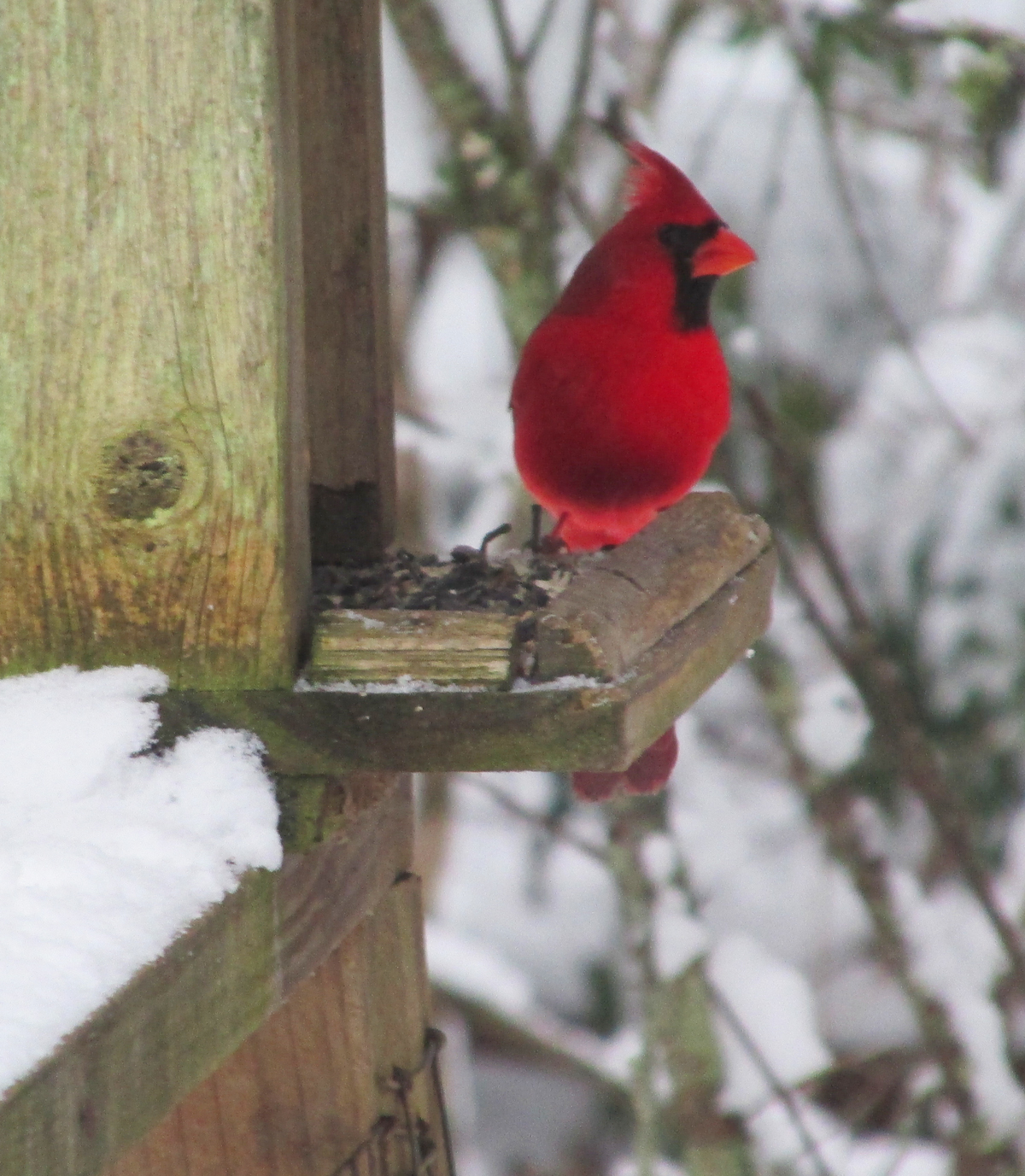
Photo by Bryan Stevens • A male Northern cardinal visits a feeder on a snowy afternoon.


Roan Mountain Christmas Bird Count finds 43 species plus another during ‘count week’

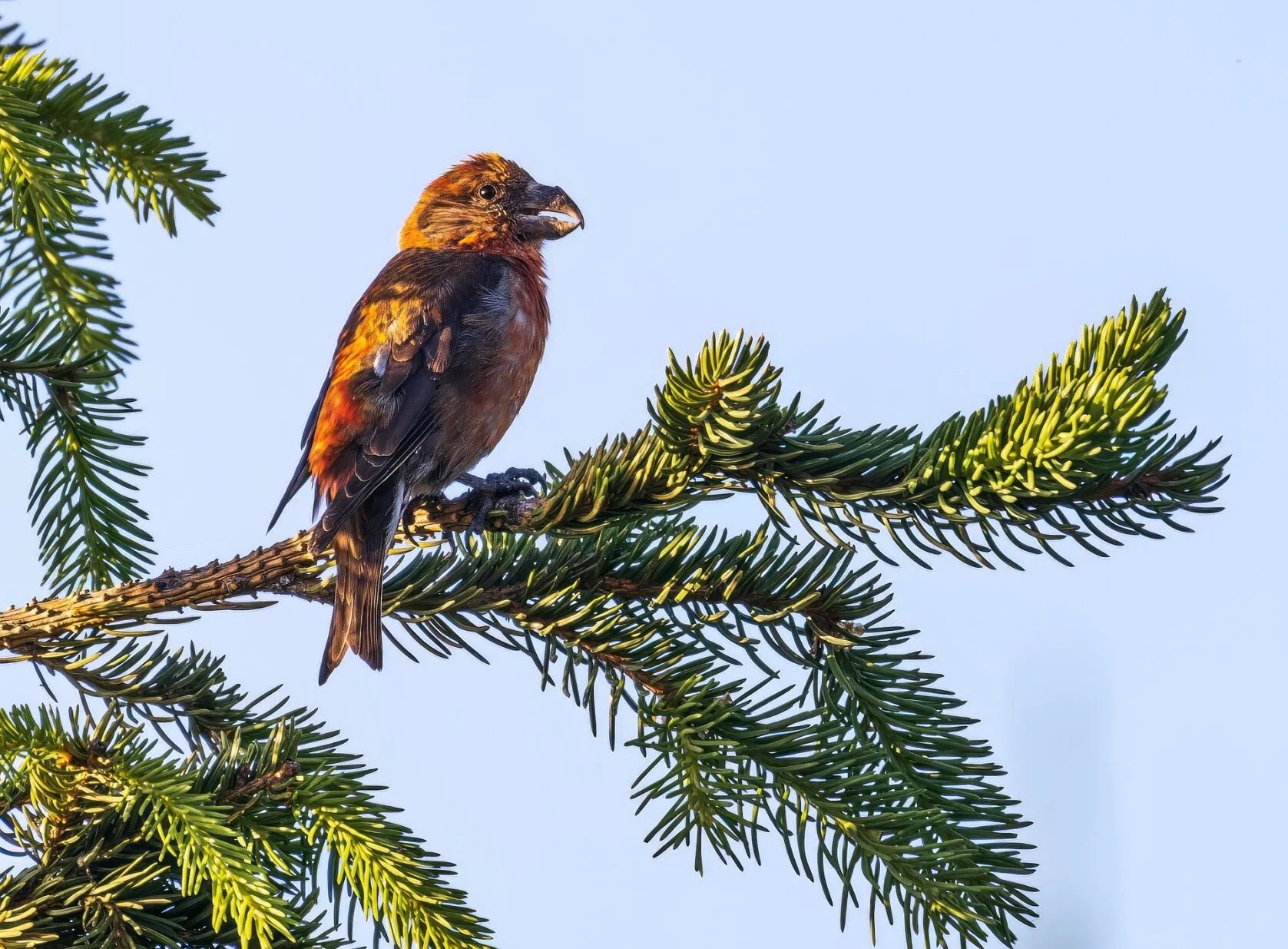
GYRLI1981/Pixabay • With its high elevation and unique habitats, Roan Mountain often produces good birds, such as red crossbills, for Christmas Bird Counts. Many of the species are difficult to find in other locations.

Unpredictable December weather makes the Roan Mountain Christmas Bird Count one of Tennessee’s most challenging surveys. This year was no exception, and the count had to postponed to a later date when a winter storm impacted the region.

The 73rd Roan Mountain Christmas Bird Count was eventually held Tuesday, Dec. 16, with six observers in two parties.

Count compiler Rick Knight noted that weather for this count was generally favorable (clear conditions and a temperature range from 17 to 46 degrees), but it was quite windy on top of the mountain making bird-finding difficult. At lower elevations, the winds were light. One to four inches of snow covered the ground, but roads were clear.

Participants tallied 43 species, plus one species added during the count week.

The list:

Canada goose, 30; American black duck, 17; wild turkey, 11; mourning dove, 17.

Sharp-shinned hawk, 1; Cooper’s hawk, 1; red-shouldered hawk, 2; and red-tailed hawk, 2.

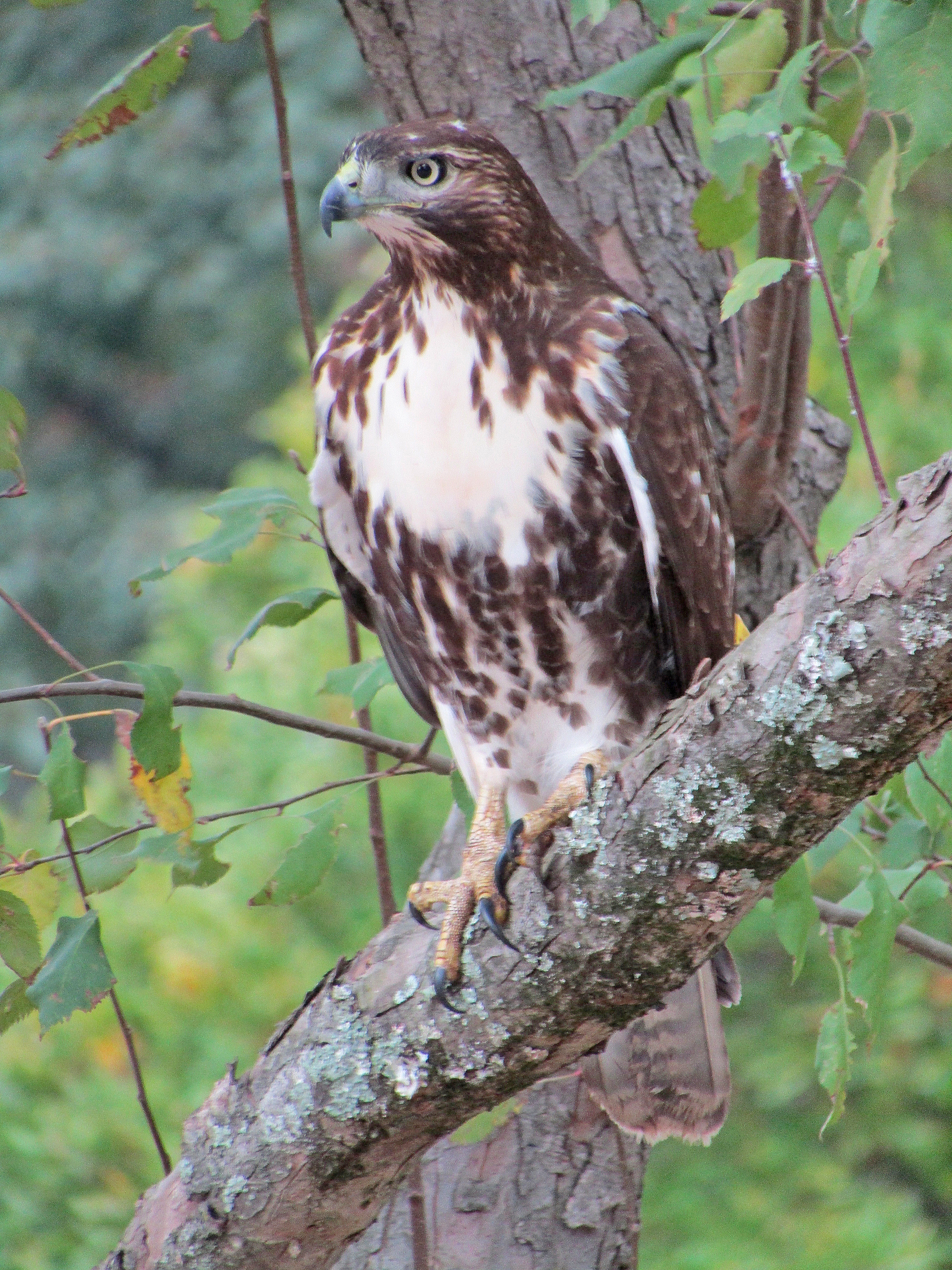
Photo by Bryan Stevens • Two red-tailed hawks made this year’s Roan Mountain CBC. 

Red-bellied woodpecker, 6; yellow-bellied sapsucker, 1; downy woodpecker, 4; hairy woodpecker,1; Northern flicker, 1: and pileated woodpecker, 3.

Eastern phoebe, 1; blue jay, 25; American crow, 120; and common raven, 8.

Carolina chickadee, 21; tufted titmouse, 24; golden-crowned kinglet, 6; red-breasted nuthatch, 3; white-breasted nuthatch, 14; brown creeper, 1; Carolina wren, 5; and winter wren, 2.

Northern mockingbird, 7; Eurasian starling, 23; Eastern bluebird, 8; and American robin, 2.

House sparrow, 5; house finch, 5; red crossbill, 2; pine siskin, 2; and American goldfinch, 119.

Field sparrow, 7; fox sparrow, 4; dark-eyed junco, 25, white-throated sparrow, 5; song sparrow, 35; Eastern towhee, 5; yellow-rumped warbler, 1; and Northern cardinal, 22.

In addition, a purple finch was found during the count week. CBC circles do accept birds seen during “Count Week, which is defined as the three days before and after the official count day, but they are recorded separately as count week birds and do not count towards the official count day totals. Their inclusion still provides important data.

The first Christmas Bird Counts were conducted on Christmas Day (Dec. 25) in 1900. The annual census arose from a proposal made by famed ornithologist Frank M. Chapman. According to Audubon.org, these yearly counts, conducted throughout the country, have provided a wealth of data over the past century.

Observations made due to CBCs have helped Audubon researchers, conservation biologists, wildlife agencies and other interested individuals to study the long-term health and status of bird populations across North America. When combined with other surveys such as the Breeding Bird Survey, the data provides a picture of how the continent’s bird populations have changed in time and space over the past hundred years.

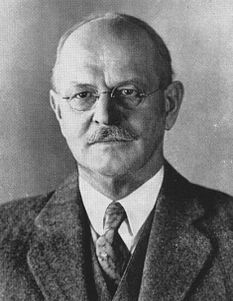
Frank W. Chapman

The concept of the Christmas Bird Count, according to the website for the National Audubon Society, arose from a less than bird-friendly custom prevalent at the turn of the 20th century. So-called sportsmen would conduct a “Side Hunt,” a rather blood-thirsty Christmas custom that saw hunters competing to see who could score the largest amount of feathered and furred corpses.

The annual holiday bird survey may even have arisen from an earlier custom with roots in Europe that came to the United States of America with early colonists. The “Side Hunt” has some similarity to a peculiar celebration in Ireland and other European countries known as “Wren Day” or “Hunt the Wren Day.” The event was conducted the day after Christmas, the date of Dec. 26 being consigned as Saint Stephen’s Day. By the 20th century, the hunt consisted of tracking down a fake wren carried atop a decorated pole. Crowds would parade through towns in masks and colorful attire. These groups were referred to as “wren boys.”

Whether or not the “Side Hunt and “Wren Hunt” shared any connections, it was a huge step forward for conservation when Chapman, the preeminent ornithologist of his day, proposed a new holiday tradition. His radical idea was to count birds during the Christmas season rather than hunting and killing them.

I will report on the total for the Elizabethton Christmas Bird Count in next week’s column.

•••

Bryan Stevens has written about birds, birders and birding since 1995. Email him at ahoodedwarbler@aol.com.