
The power of flight gives most birds a perfectly valid reason to disregard the law
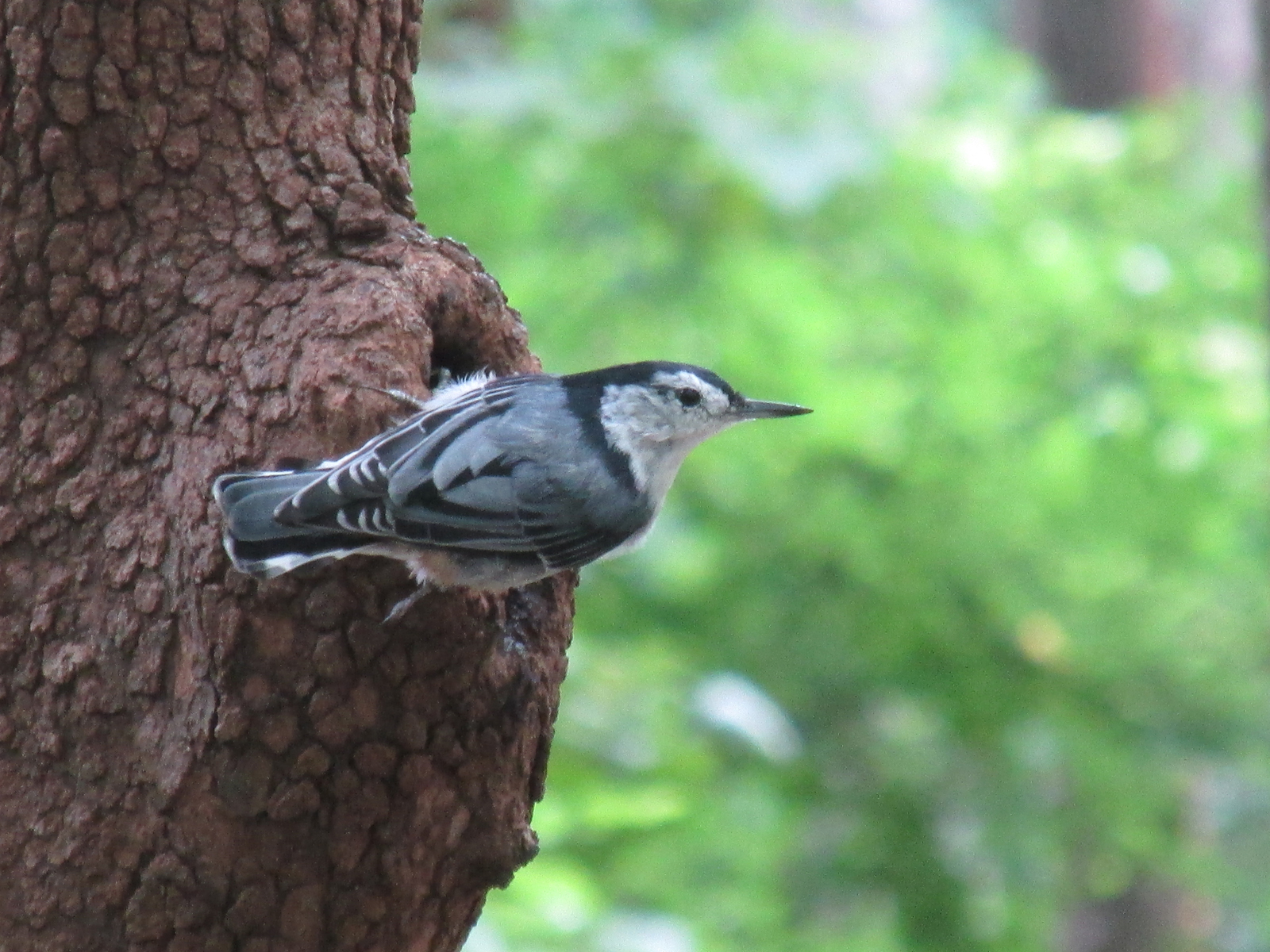
Photo by Bryan Stevens • A white-breasted nuthatch clings to the bark of a tree.
of gravity. A tree-clinging family of birds known as nuthatches live an even more topsy-turvy lifestyle than many other of their winged kin. Nuthatches often prefer a headfirst stance as they search for food in the nooks and crannies of tree trunks and branches.
The United States is home to four species of nuthatches: white-breasted, red-breasted, brown-headed and pygmy. White-breasted nuthatches are probably the most familiar nuthatch to backyard birders in this area.
These birds are named “nuthatch” for the habit of some species to wedge a large seed in a crack and hack at it with their strong bills. I like to refer to them as “upside-down birds” because gravity doesn’t seem much of a factor in their daily lives. They are content to walk headfirst down a tree trunk or probe the underside of a large branch. It must give them an interesting perspective on the world around them.

Photo by Bryan Stevens • A white-breasted nuthatch grabs a single seed from a feeder.
Because of their gravity-defying antics, the white-breasted nuthatch and other members of the family can provide hours of entertainment at our bird feeders. That was certainly the case during the recent bouts of snow, ice and cold temperatures inflicted on our region by successive winter storms.
White-breasted nuthatches will follow a single-minded path along the trunk of a tree or a branch on the way to a feeder. An individual nuthatch rarely varies from this path. It’s amusing to watch the jerky progress along the trunk as this bird prepares for a flight to a feeder holding sunflower seeds or a hanging wire basket of suet.
At my home, nuthatches typically remain aloof from the rivalry always ongoing between the chickadees and titmice. The white-breasted nuthatch is mostly a no-nonsense visitor. Rarely distracted by disturbances among other birds, this nuthatch is content to grab a seed and go or hang on to the wire frame of a suet basket and peck off chunks of suet.

Photo by Bryan Stevens • A window strike left this white-breasted nuthatch temporarily grounded.
The stubby red-breasted nuthatch is another member of the family that occasionally finds its way to our yards. Smaller than the related white-breasted nuthatch and, as far as I can tell, complacent in the company of chickadees and titmice, the red-breasted nuthatch is always a welcome visitor. It has a tell-tale “yank yank” call that it produces when excited that sounds very much like tiny tin horns. The red-breasted nuthatch, perhaps because it spends so much of the year in more remote areas, can also be amazingly tame when it pays a winter visit.
Both of these nuthatches can be attracted to feeders by offering peanuts, sunflower seeds and suet. They are also cavity-nesting birds, but are more reluctant about accepting a nesting box as a place to rear young. They will gladly accept an old woodpecker hole or other natural cavity in a tree.
The brown-headed nuthatch is a specialist of pine woodlands throughout the southeastern United States, favoring loblolly-shortleaf pines and longleaf-slash pines. This nuthatch requires standing dead trees for nesting and roosting. They forage for food, however, on live pines. The birds are more abundant in older pine stands. This small nuthatch is not at all common in the region, but there are some records. I’ve had much better luck finding the brown-headed nuthatch during visits to coastal South Carolina or suburban Atlanta in Georgia. In these southern locations, it can be a quite common bird.
I also want to complete my list of North American nuthatches by adding the fourth species — pygmy nuthatch — to my life list. I have made two trips to western North America, where this species ranges, but haven’t managed to find this bird. Both the pygmy and brown-headed are among the smallest members of the nuthatch family.
On the other end of the size scale is the appropriately named giant nuthatch, which reaches a length of almost eight inches. The giant nuthatch ranges through China, Thailand and Burma. This nuthatch is bigger than a downy woodpecker, another common visitor at backyard feeders in our region.

Photo by Bryan Stevens • White-breasted nuthatches are faithful feeder visitors.
Worldwide, there are about 25 species of nuthatches, some of which have surprisingly descriptive names for birds that spend most of their lives creeping in obscurity along the trunks and branches of trees. Some of the more creative common names for these little birds include beautiful nuthatch, blue nuthatch, velvet-fronted nuthatch, sulphur-billed nuthatch, chestnut-bellied nuthatch, snowy-browed nuthatch and chestnut-vented nuthatch.
•••
Bryan Stevens has written about birds, birding and birders since 1995. Email him at ahoodedwarbler@aol.com to make a comment, ask a question or share a sighting.
 Our Fine Feathered Friends