
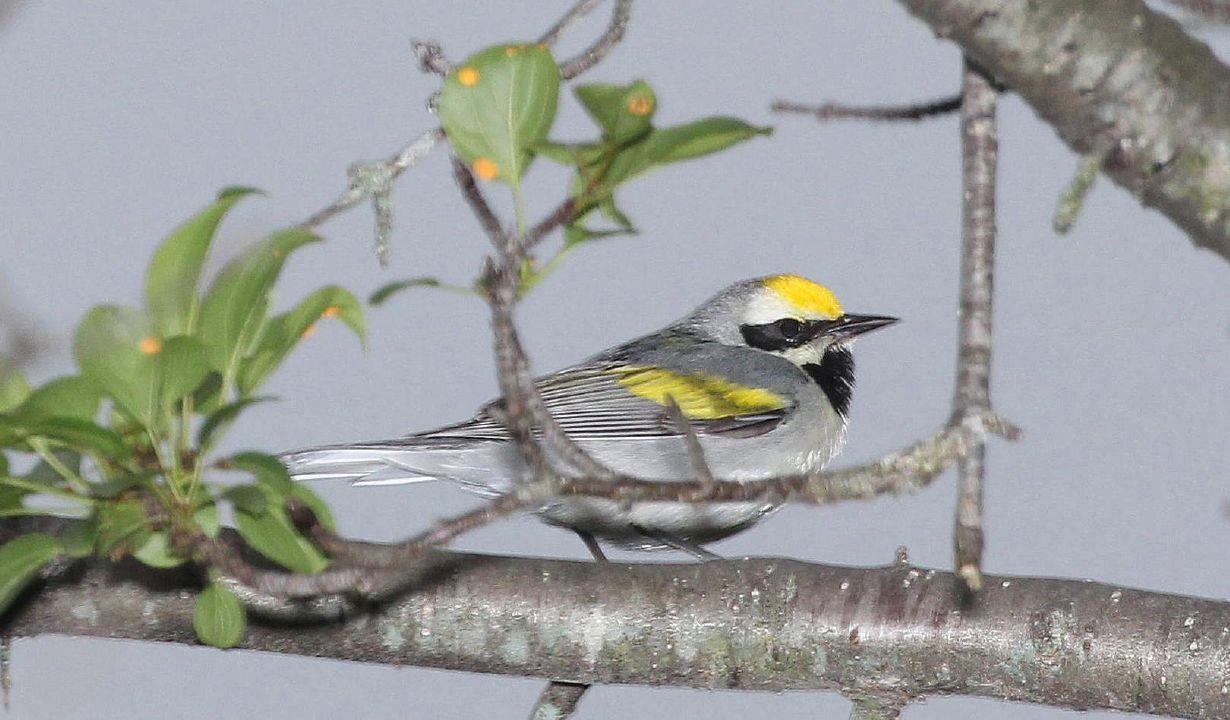
Alan Schmierer/USFWS • The golden-winged warbler is listed as a species In Need of Management in Tennessee due to significant population declines.
I’ve not glimpsed my first hummingbird of spring. I’ve not even heard that telltale buzz from a rapidly beating pair of wings that signals the arrival of one of our most annually anticipated birds.
Of course, hummingbirds are not the only returning birds that I await with eagerness. In fact, my favorite family of birds consists of about 45 species of warbler reliably found in the eastern United States. The warblers, from my perspective, are in a class of their own compared to other birds. Here’s a list of warblers that I fully hope to see in the coming weeks.
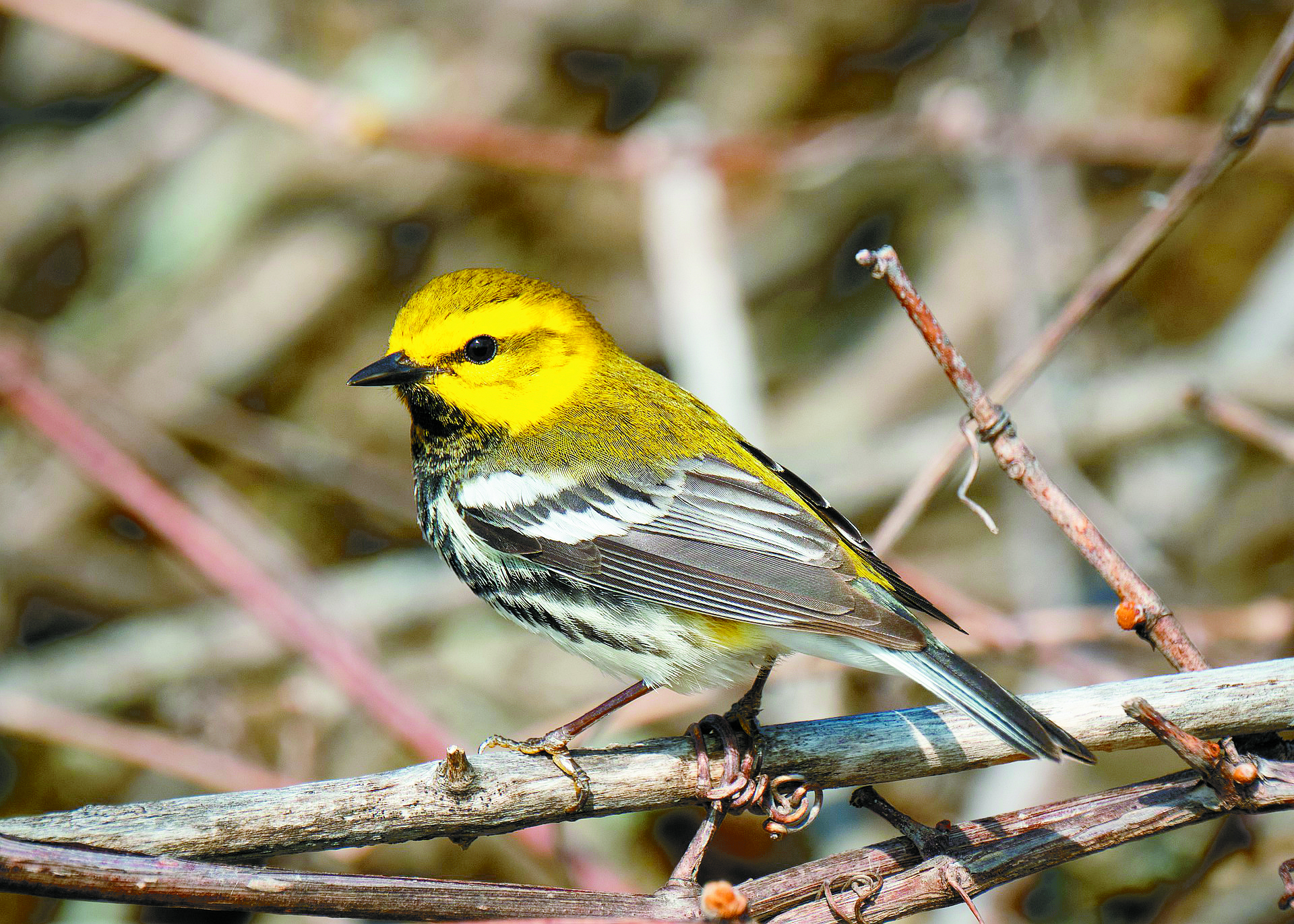
Photo by Howard Walsh/Pixabay • The black-throated green warbler nests in local mountains in coniferous and mixed woodlands during the summer months. Once the nesting season concludes, these warblers wing their way back to wintering grounds in Mexico and Central America, as well as the West Indies and southern Florida.
Black-throated green warbler: Males of this species have a bright yellow face with olive-green cheeks, crown and back. Only adult males have the namesake solid black throat. These warblers like the treetops where males repetitively sing a breezy, buzzy song that sounds sort of like “zoo-zee-zoo-zoo-zee.”

Photo by Jean Potter • A male hooded warbler flits through the foliage of a rhododendron thicket.
Hooded warbler: Find this shy warbler close to the ground. The species is a specialist of the understory. In Southern Appalachia, they’re quite at home in rhododendron thickets. The markings of males consist of a lemon-yellow face and underparts framed by a jet-black hood and throat. Females are mostly olive-green above with yellow underparts. Most females lack a hood, but some older individuals show a faint or incomplete black hood. Males sing a loud, ringing series of musical notes that are often described as “weeta-weeta-wee-TEE-o.” A fun mnemonic translation of the song has the male hooded warbler singing “I want to rent a video.”
Black-and-white Warbler: This aptly named warbler’s plumage consists of only black and white feathers. Females are less vibrant than males but are still striking birds in a black-and-white ensemble. An early arrival, this bird returns to the southern United States by late March. In behavior, they are more like nuthatches or creepers, sticking close to the trunks and branches of trees as they forage in crevices for insect prey. Male black-and-whites produce a “squeaky wheel” song that sounds like “weesee-weesee-weesee.”

Photo by Diana Lynn Tucker • A worm-eating warbler perches on the edge of a flower pot.
Worm-eating warbler: This species is not named for its appearance. Being saddled with the phrase “worm-eating” is also not entirely accurate. While fond of caterpillars, they do not consume earthworms. Its diet also consists of a range of small insects and spiders. Males and females are similar in appearance, blending in well with an “earth-tone” plumage of olive-brown with a warm buffy wash on their underside. Four bold black stripes border a buffy face. This warbler has a sharp bill that is longer than the bills of most other warblers. Don’t listen for any semblance of a musical song from this bird. Males produce a distinctive dry trill that could easily be mistaken for a sound produced by an insect.
Golden-winged warbler: This is not a species I expect to see at home, but I did once see one during fall migration. The male golden-winged warbler features a distinctive black throat and eye patch, a bright yellow crown and prominent yellow patches on its silvery-gray wings. The female is a “washed out” version of the male. Males produce a “bee-buzz-buzz-buzz” song that is often helpful in locating this bird in its favored successional habitats of shrubby fields and regenerating woodlands. Because such habitats are fleeting, this warbler can be rather sporadic in distribution. Although its population has drastically declined, the species is not officially listed as endangered on a federal level, although many states have designated it such. One hates to think pessimistically in terms of birds, but this might be a species that you should seek out while it is still present in Northeast Tennessee.
•••
As I have in years past, I await notices from readers to let me know about their first hummingbird sightings of spring. Share a sighting, or ask a question or make a comment, by emailing me a ahoodedwarbler@aol.com. I’m also on Facebook at http://www.facebook.com/ahoodedwarbler.
 Our Fine Feathered Friends