Category Archives: Bird names

Remember the po’ouli in fight to conserve our birds

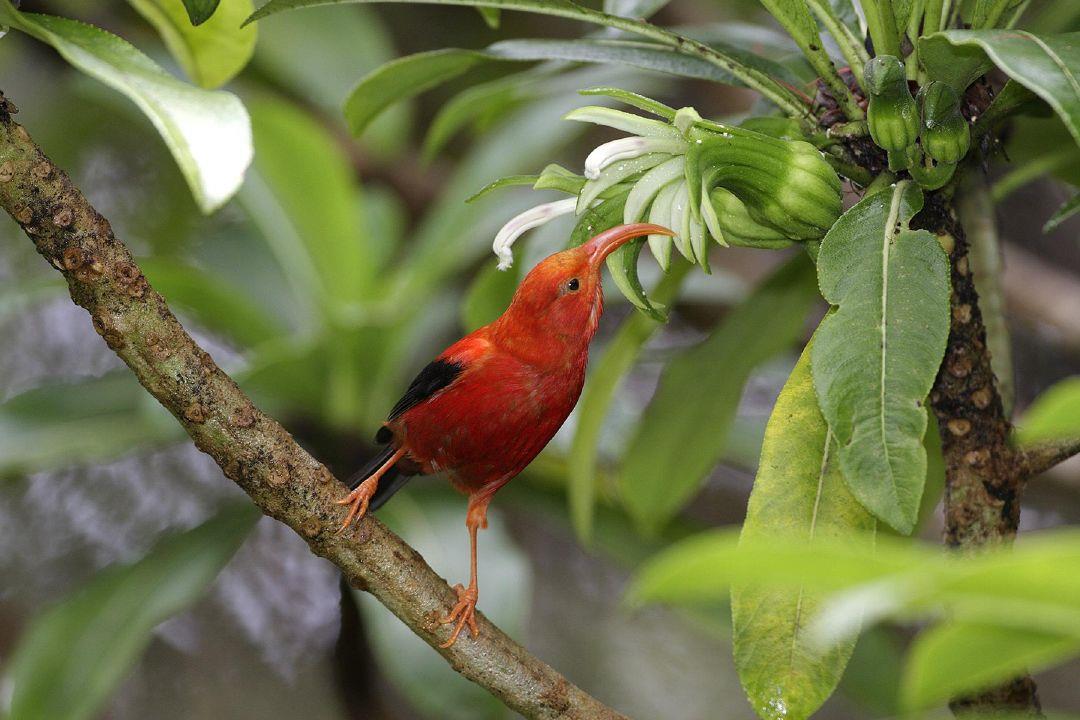
Photo by Jack Jeffrey/USFWS • A po’ouli relative, an ‘I’iwi forages in the Hakalau Forest National Wildlife Refuge, Hawaii. The bird’s long, downcurved, orange bill is specialized for sipping nectar from tubular flowers.

I’m celebrating 30 years of writing my weekly “Feathered Friends” column by occasionally showcasing some vintage compositions from throughout that time period. I published this column on Jan. 2, 2005. I’ve made some revisions and edits to this version. I’m more saddened now than at the time I wrote the original column, but I still think there is some cause for optimism that we’ll be able to share the planet without causing any more tragic stories for our birds. I think that message is just as important as ever.

•••

A tiny bird called the po’ouli, no bigger than some of the sparrows that visit bird feeders here in East Tennessee, failed to move forward into the year 2005.

A bird native to the Hawaiian island of Maui, the po’ouli went undiscovered by modern science until 1973. Barely three decades later, what may very well have been the last po’ouli in the world died Nov. 26, 2004.

The exact date of the demise of both the species and this last survivor can be known because the individual bird had been living in captivity in a research center on Maui. The hope had been to secure two other individuals known to exist in the wild in order to initiate a last-ditch attempt to save the po’ouli through a captive breeding program.

Nature moved faster than man. The other two po’ouli living in the wild hadn’t been seen in several months when the search launched. The lives of all small birds are fleeting and precarious. In all likelihood, these two individuals were gone even before the search commenced. With their demise, another thread had simply been snipped from nature’s tapestry.

The irony is that we knew this small bird, seen in the wild by a relatively small number of people, for only a blink in the overall scope of the universe. We did manage to learn a few things about the po’ouli in the span of time from 1973 to its extinction in late 2004.

According to a U.S. Fish and Wildlife Service press release, the po’ouli’s name in Hawaiian meant “black head,” a reference to the bird’s black mask and its other common name of black-faced honeycreeper. Its scientific name was Melamprosops phaeosoma. A Po’ouli’s most distinctive feature was a large black face mask accented by white cheeks, throat and underparts with brown wings and back; no other Hawaiian forest bird was similarly colored. Females were similar in appearance, displaying a grayish throat and breast.

The po’ouli belonged to a family known as the Hawaiian honeycreepers. Unlike other forest birds in Hawaii, the po’ouli’s diet included many native tree snails. The fact that many Hawaiian tree snails are endangered or threatened may have played a role in the rapid decline of the po’ouli.

The U.S. Fish and Wildlife Service tried to look for a silver lining in the wake of this tragedy.

“Our goal of saving the po’ouli is now very difficult and may not be achievable,” said Gina Shultz, acting field supervisor for the Fish and Wildlife Service’s Pacific Islands office, in a remark that can be fairly described as classic understatement.

She added, “But we must continue to try to save the species we have left.”

At that time, Hawaii had 31 other endangered bird species threatened by loss of habitat, introduced predators and disease.

In the years since 2004, eight more species have been lost, including the Maui ʻakepa, Maui nukupuʻu, Kauai ʻŌʻō, Kauai akialoa, large Kauai thrush, Kauai nukupuʻu and Molokai creeper, also known as Kākāwahie. Some of these species had not been seen for decades when officially declared extinct in 2023.

The demise of the little-known po’ouli probably didn’t mean much to many people. It’s hard to get excited about a small, drab bird that once lived on an island thousands of miles away.

We should, however, learn a lesson from its story. When it comes to the rapid decline in birds, we’re a major part of the problem. We’re going to need to be a part of the solution, too.

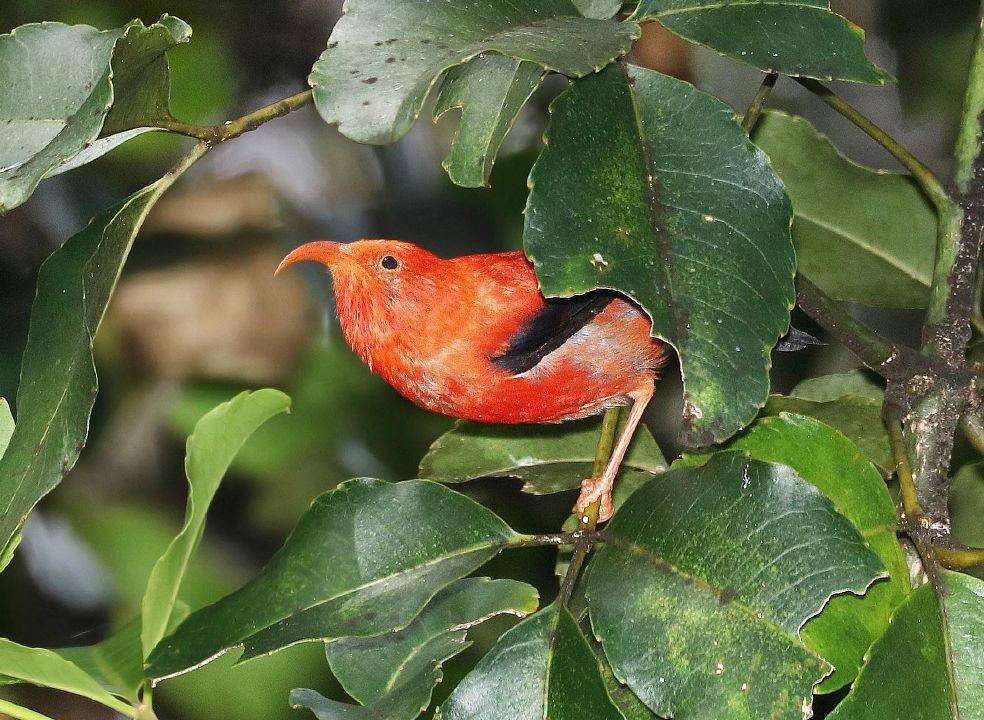
Photo by Alan Schmierer • The ‘I’iwi, a relative of the po’ouli, is another of the Hawaiian honeycreeper species. These birds evolved in the forests of Hawai’i and are found nowhere else in the world. Unlike ‘the po’ouli, a few thousand I’iwi still survive but face existential threats that have intensified in recent years.

What will we do? Will we wait until another bird species dwindles to a mere three individuals in the entire world and take desperate, unsuccessful measures?

We are more than a quarter way through this new century. These problems require new thinking. The issues are too complex to be more than hinted at in one column. But perhaps we can adopt a slogan: “Remember the po’ouli.” Keep this lost little bird in mind to help us in this constant battle to see to it that no other birds follow the po’ouli into the darkness of extinction.

•••

Bryan Stevens has been writing about birds, birding and birders since 1995. Email him at ahoodedwarbler@aol.com to share a sighting, ask a question or make a comment.

Yellow-breasted chat is a songbird that stands apart


Photo by Bryan Stevens • A yellow-breasted chat sings from the top of a tree.

I’ve always been a warbler fan, celebrating every opportunity that comes my way for seeing these colorful, energetic feathered sprites.

On May 9, the first indigo bunting (a male) showed up on at my home. A day later, I hosted a Baltimore oriole (a rare visitor at my home) and an even rarer visitor with a singing (more like caterwauling) male yellow-breasted chat.

I’ve had only one of these birds in the yard since I began birding in the mid-1990s. That one was a passing fall migrant that showed up in 2000 and then disappeared as soon as it came.

I had hopes that the persistently singing yellow-breasted chat that showed up May 10 might stay longer, and it did. For five days, he sang from dawn to dusk. Then the daily serendades ended. I assume he moved on, but it was fun hosting this bird, even for such a brief span.

Hans Toom/Pixabay • Yellow-breasted chats spend a great deal of their time skulking in thick tangles of vegetation.

According to the website All About Birds, male chats give display flights in the presence of females, other males or human intruders. According to the website, this behaviour entails descending from a high perch while singing, often with exaggerated wingbeats and a drooping tail. At the end of the flight they make a thumping sound, presumably with their wings.

While the yellow-breasted chat is no longer considered a member of the warbler family, my sentimental attachment to this oddball bird will always recall when this species was considered the largest member of the warbler family.

The chat’s declassification as a warbler took place back in 2017. I’ve always been a warbler fan, celebrating every opportunity that comes my way for seeking out these colorful, energetic feathered sprites.

The yellow-breasted chat, although no longer considered closely related to the New World wood-warblers, is still a bit of an oddity. Many experts always harbored doubts about whether chat is truly a warbler. Personally, I felt some disappointment at the reclassification. After all, what family doesn’t need its big, goofy oddball? If nothing else, the yellow-breasted chat is truly an the odd bird out among the little birds known as warblers that spend most of their time constantly on the move, flitting from branch to branch in hyperactive bursts of activity.

Yellow-breasted chats aren’t more sedate than other warblers, but they don’t dart about in the treetops in the same way as might a Northern parula or blackpoll warbler. During the spring ritual of attracting a mate, the males are obsessed with constant singing and performing. The performance portion of the program consists of awkward, drooping flights into the open before plunging back into thick cover. Males will also select an elevated perch in the open to proclaim their availability through song for any listening females.

There are many other ways they stand out on from other birds. For instance, yellow-breasted chats are bigger than all other warblers, as well as many of our songbirds. The chat reaches a length of 7.5 inches with a wingspan of almost 10 inches. The two sexes look alike, which is something else that separates them from many, but not all, warblers, which are generally known for the differences in appearance between males and females. The yellow-breasted chat has olive-green upperparts with white bellies and bright yellow throats and breasts. These chats also have long tails and heavy bills. A prominent characteristic is a spectacle-shaped white eye-ring.

Although only two have visited my home over the years, I have observed yellow-breasted chats in many locations in the region, but during my early years birding this was a very elusive bird for me. It took me a couple of years to get my first satisfactory look at this interesting bird in a tangle of vegetation along a walking trail at Persimmon Ridge Park in Jonesborough. I have also found chats in Unicoi County in the Sciota community. Some fields that comprise a part of Sycamore Shoals State Historic Park in Elizabethton have also been a reliable location for observing this species.

Chats prefer habitats such as dense thickets and other underbrush, which offers remarkable concealment from prying eyes. Chats are loud birds at most times, producing a variety of odd vocalizations, which means they are often heard before they are seen. The online Audubon Guide to North American Birds describes these sounds as “a bizarre series of hoots, whistles and clucks, coming from the briar tangles” and labels them a reliable means for determining the presence of a yellow-breasted chat. By learning these vocalizations, you’ll increase the chances of finding one of these birds during time spent outdoors.

The chat’s habitat preferences and its repertoire of vocalizations makes it easy to associate these birds with others that share the same dense, brushy habitats and a penchant for making unusual vocalizations. Birds often found in proximity to chats include brown thrashers, gray catbirds, white-eyed vireos and Eastern towhees.

Habitat loss has resulted in a steady decline of yellow-breasted chats in some parts of their range. It is a widely distributed bird, spending the nesting season from southern Canada to Mexico. Most chats retreat to Mexico and Central America for the winter months. This chat mostly feeds on insects, supplementing its diet with berries that ripen during the summer months.

Female chats usually lay three to four eggs, but both parents care for the young. Young chats are usually ready to leave the nest only eight days after hatching, but they will remain dependent on their parents for food for a couple of weeks. Chats usually nest twice each during the nesting season.

The yellow-breasted chat is usually a bird that I have to make a special effort to find. It’s worth the effort to gain a good look at this big, brash songbird.

Three other chats, all birds of tropical regions, were moved out of the warbler clan in 2009 by the American Ornithologists’ Union. Experts now believe that the rose-breasted chat of South America, the gray-throated chat of Mexico, Guatemala and Belize and the red-breasted chat of the Pacific slope of Mexico are more closely related to cardinals and tanagers than warblers. The yellow-breasted chat has been stuck in its own family, Icteriidae, not to be confused with New World blackbirds in the family Icteridae.

Even if we can no longer consider the yellow-breasted chat a warbler, the bird still remains unique enough to warrant its own family.

•••

To share a sighting, make a comment or ask a question, email me at ahoodedwarbler@aol.com.


Seasonal snipe hunts can be productive

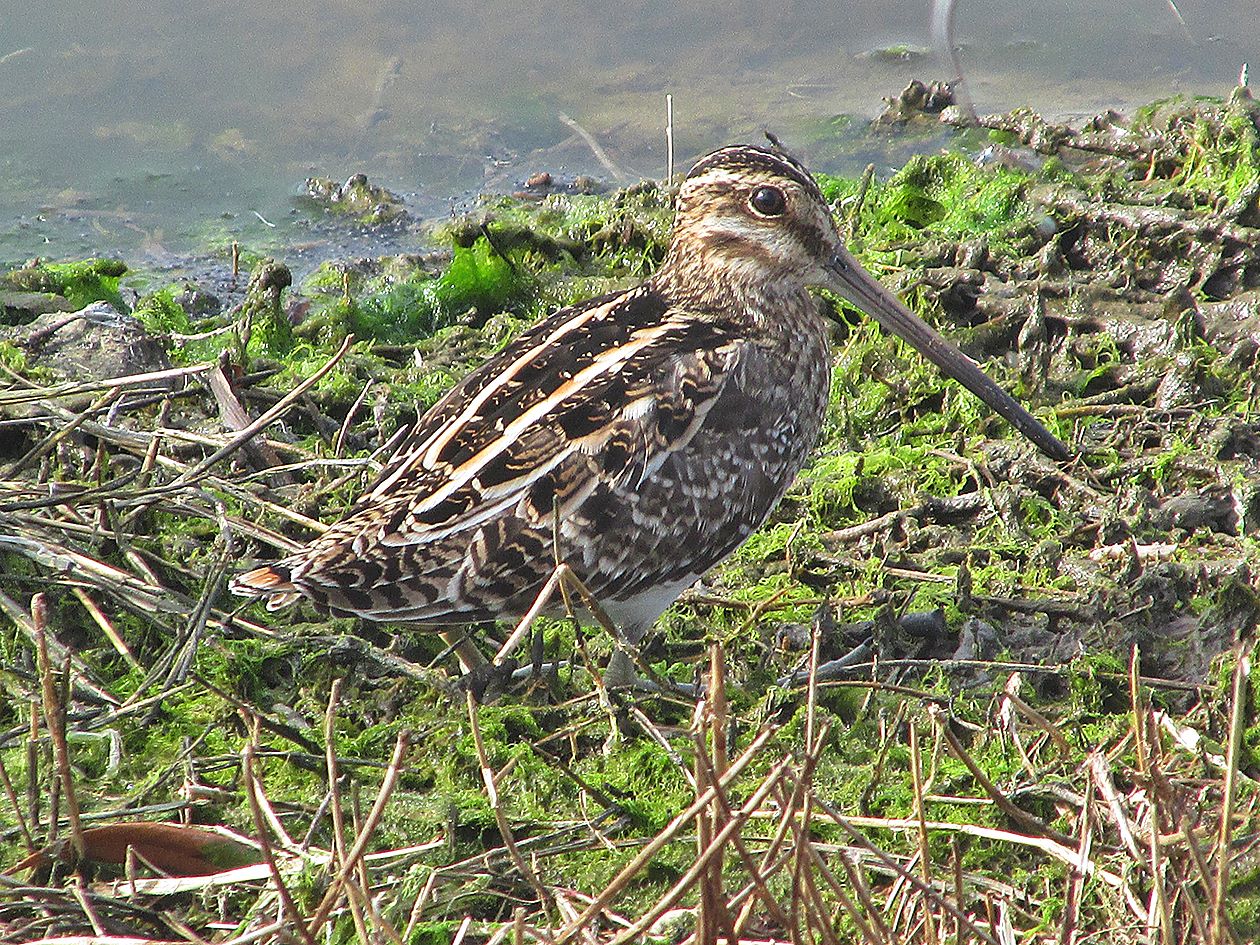
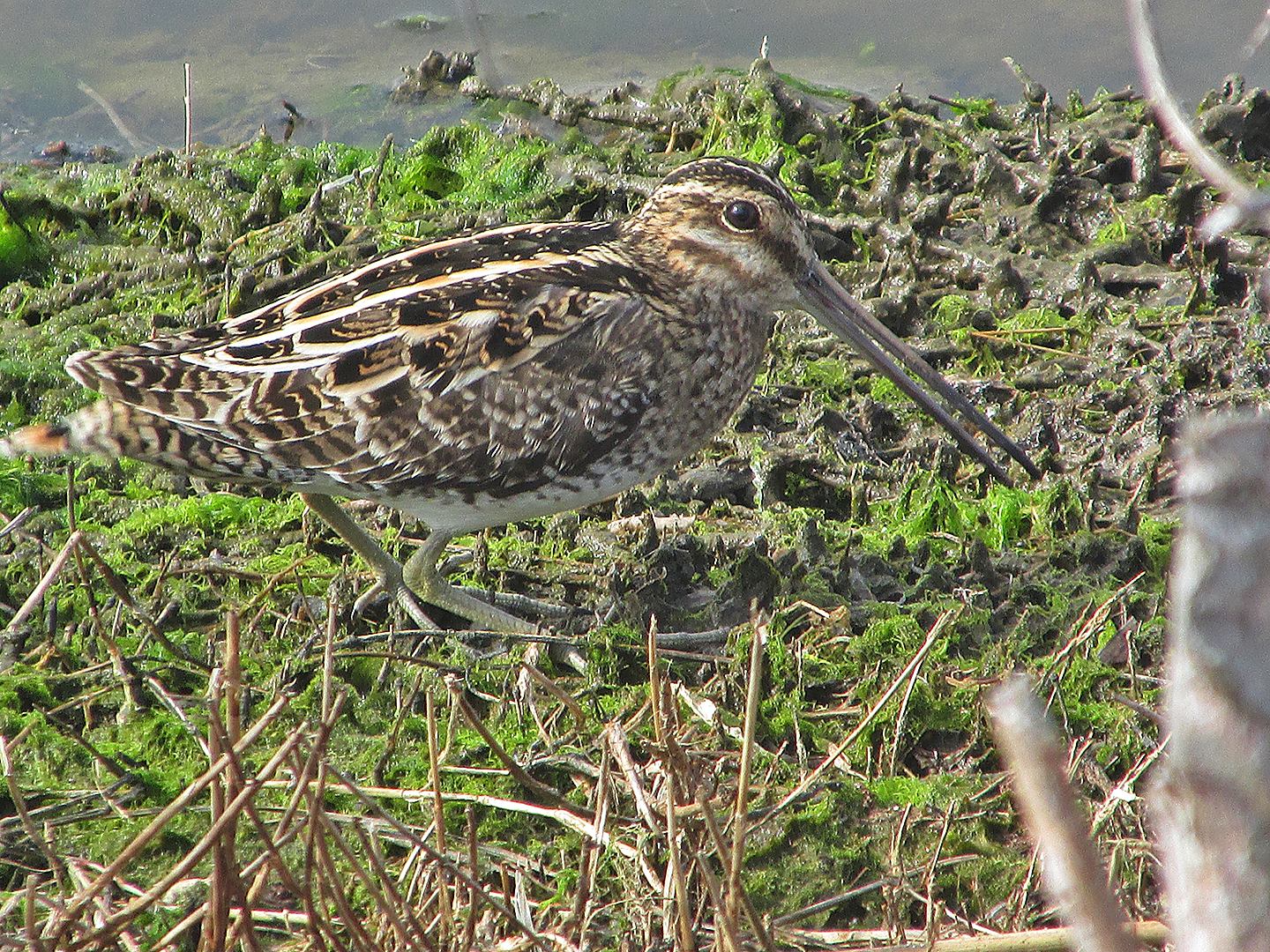
Photo by Bryan Stevens • A Wilson’s snipe forages on muddy ground in a wetland at Huntington Beach State Park in South Carolina.

Have you ever gone on a wild goose chase? Perhaps you have memories of being taken on a snipe hunt?

If so, I don’t need to tell you that our feathered friends have inspired a lot of unusual sayings and activities. The snipe hunt is widely regarded as a rite of passage. I’m not sure if these “hunts” are still organized on moonless nights to pull a playful prank on unsuspecting or naive adolescents. The gist of this practical joke is that these would-be snipe hunters are given a bag or sack to use in capturing the supposedly elusive, perhaps mythical snipe.

The “snipe hunt” has also come to symbolize a lesson in futility since the target of the hunt is never found despite some diligent efforts. It’s all harmless fun, but what bothers me is that the tradition of the snipe hunt reinforces the mistaken idea that this elusive creature is a make-believe bird.

That’s not the case! I know of what I speak, having seen plenty of snipes over the years. There are some things about this unusual bird that makes it understandable how this creature became the focus of the long-running tradition of the snipe hunt.

The Wilson’s snipe is one of North America’s more elusive birds. It’s an aberrant shorebird that doesn’t exactly fit the mold of the birds any coastal visitor has probably seen running along the surf’s edge on a beach.

The snipe is an odd, gangly bird with long legs and an even more absurdly long bill. It’s also remarkably well camouflaged to blend with its preferred surroundings in flooded fields and wetland marshes. It is one of those shorebirds that usually makes its home far from beaches and the crash of the ocean’s surf.

So, to reiterate, there really is such a bird as a snipe. In fact, there are several species of snipes, although only one — Wilson’s snipe — can be found in Northeast Tennessee. Some of the world’s other 25 species of snipe include jack snipe, wood snipe, pintail snipe, noble snipe and imperial snipe. What makes the noble and imperial snipes worthy of such pretentious names isn’t quite clear.

Photo by Bryan Stevens • The Wilson’s snipe can blend well with wetland vegetation.

Any wet field or pasture may conceal hidden Wilson’s snipes during the spring. A few of these hardy shorebirds sometimes spend the winter in the region. Flushing a snipe from a tangle of grass right at your feet as you walk through a wet field always works to get the heart pumping faster.

The Wilson’s snipe uses its long bill to probe in the mud for prey, which can include earthworms, insects and other invertebrates.

Formerly known as the common snipe, the Wilson’s snipe nests in wetland habitats across Canada and the northern United States. The bird’s common name pays homage to Alexander Wilson, an early American ornithologist. In addition to his expertise on birds, Wilson was also a poet and an illustrator. He was born in Scotland in 1766, but he died at age 47 in 1813 in Philadelphia, Pennsylvania.

I’ve located Wilson’s snipes in all of the Northeastern Tennessee counties. I still hold the record for most snipes seen at one time. I was birding in Johnson County with the late Wallace Coffey when we encountered a flock consisting of 126 Wilson’s snipes overrunning Quarry Bog in Shady Valley.

I’ve also observed this snipe in coastal South Carolina, including a close-range observation while visiting Huntington Beach State Park. My South Carolina birding over the years has yielded observations of other shorebirds, including willet, greater yellowlegs, black-bellied plover, short-billed dowitcher and Wilson’s plover, yet another shorebird named in honor of Wilson.

Looking back through my records helped resurface a memory of a fun trip back in 2003 to look for snipe and its even odder relative, the American woodcock. On Tuesday, March 11, I traveled with Tess Cumbie, Reece Jamerson and Howard Langridge to Johnson County’s Shady Valley. Our first stop at Quarry Bog yielded lots of red-winged blackbirds, Eastern meadowlarks and song sparrows. We also flushed about a dozen or so snipe. Other birds seen during our visit included a great blue heron, swamp sparrow, three common grackles, a wood duck and a flock of American robins.

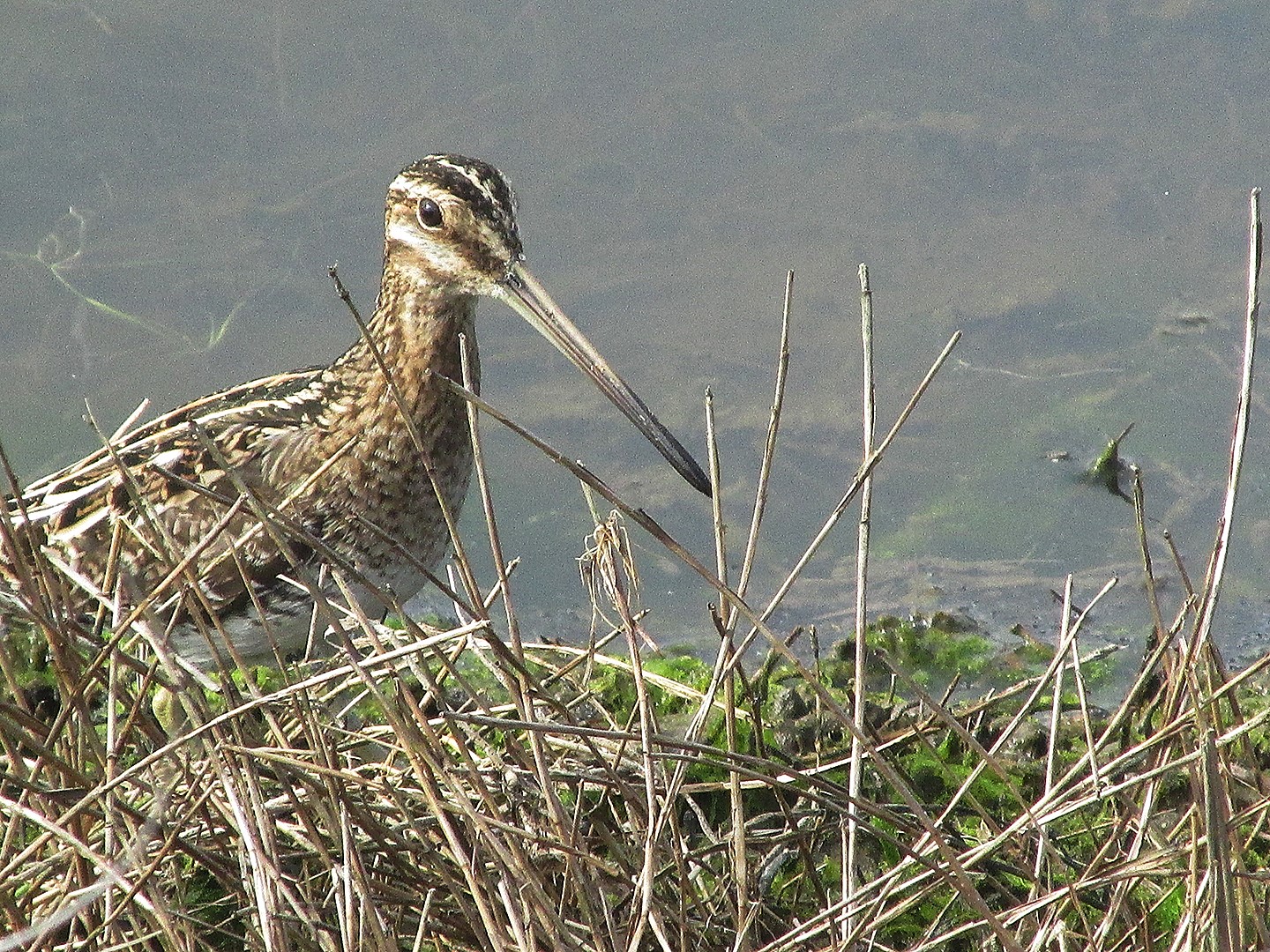
Photo by Bryan Stevens • Although only one species — Wilson’s snipe — can be found in Northeast Tennessee, there are 25 species of snipe found worldwide, including jack snipe, wood snipe, pintail snipe, noble snipe and imperial snipe.

We arrived at Orchard Bog to settle in before twilight with our hope for a show by the American woodcocks, also known by such names as bogsucker and timber doodle. Before the timberdoodles began their show, several wood ducks flew overhead and a flock of eight Canada geese splashed down in the bog. At least two American woodcocks began making their “peent” calls shortly before 7 p.m. Then one of the timberdoodles took to the air, giving a fine show in his display flight. The timberdoodles seemed to give anywhere between 18 to 34 “peent” calls before they would take to the air in a display that also let us hear the “twittering” feathers as they ascended and descended. When it got too dark to really see their flights, we left, but the timberdoodles were still “peenting” in the bog.

As spring advances in the region, many of these shorebirds will make migratory stops along the shores of lakes and rivers or by the edges of farm ponds. Look for snipes around puddles in flooded fields or even along the banks of small streams. The family of shorebirds is dazzling in its diversity, and they’re definitely worth seeking out.

•••

If you have a question, wish to make a comment or share a sighting, email ahoodedwarbler@aol.com.

Photo by Bryan Stevens • Although not rare, Wilson’s snipes are not likely to be encountered unless people actively seek them out in their wetland habitats.

Look for wintering kestrels in open habitats

David Antonio Carrillo/Pixabay • American kestrel numbers increase in winter in the region as cold weather farther north usually drives more of these small falcons into the area.

The region’s already had several cold snaps since the new year’s dawning and we’re not even at the end of January. The colder temperatures and snow have helped bring an increase in the number of wintering American kestrels.

These small falcons can be found in the region throughout the year, but their numbers usually rise in early winter as kestrels from other areas take up residence for the colder months.

Any open habitat is enough to attract these falcons. I often find them in Limestone Cove in Unicoi County. The fields near Bell Cemetery are a reliable place to look for them in winter. They are also fairly common in in agricultural fields in western Washington County.

The American kestrel is a small member of the falcon family, which includes such relatives as merlin, peregrine falcon and gyrfalcon. All falcons, regardless of size, share a similar aerodynamic design that includes sleek, streamlined bodies and long, slim wings which taper to pointed tips. They fly with rapid wingbeats and are capable of swift flight.

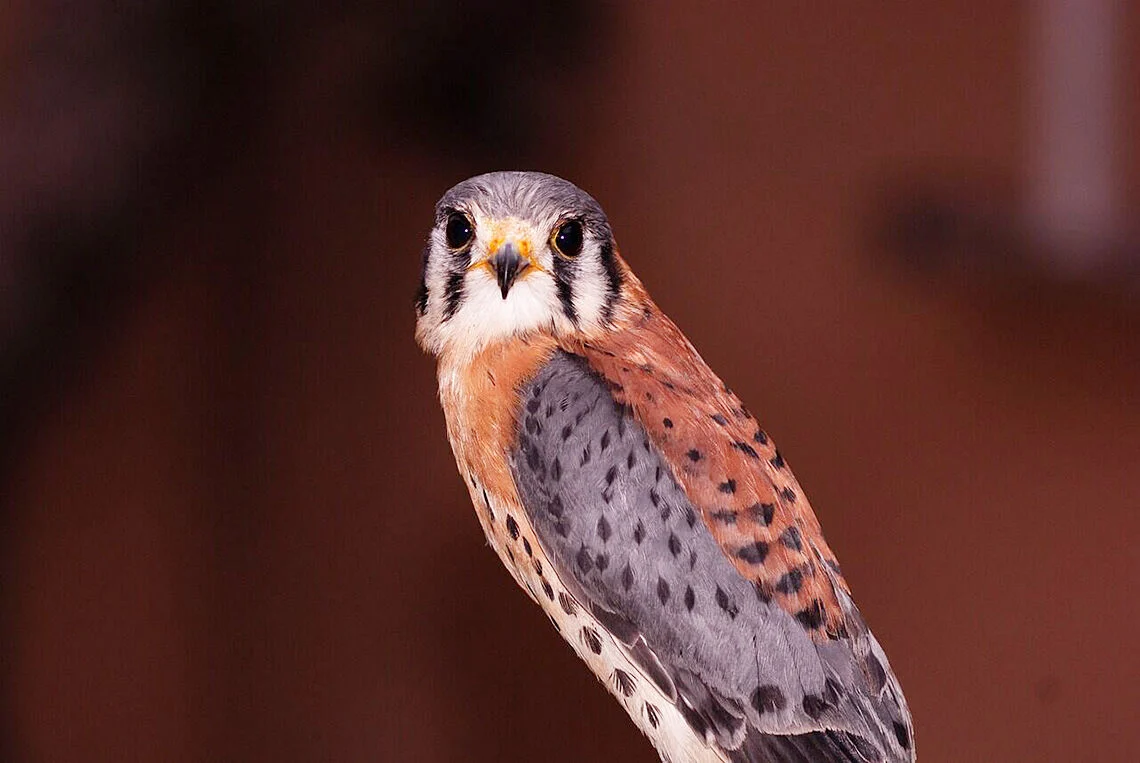
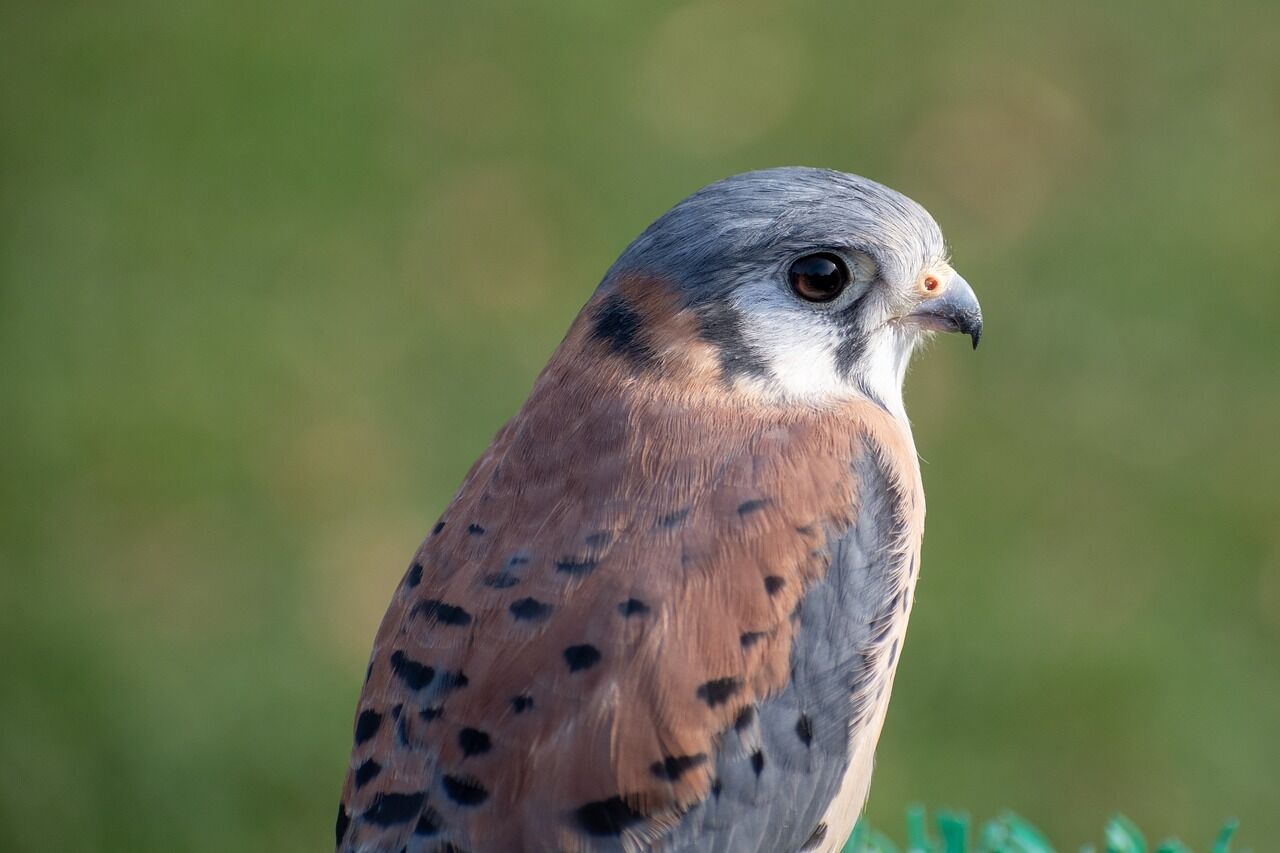
The male American kestrel is a colorful bird. He shows a rusty back with some black barring, a rusty tail and steel blue-gray wings. The female kestrel is brownish with black barring on her back and tail. She also shows a buff-colored wash streaked with brown on her under- parts. Both sexes show a strong facial pattern marked by two black “sideburns” on the side of the face.

reitz27 from Pixabay • Any open, spacious habitat is enough to attract American kestrels.

The American kestrel has long been one of my favorite raptors. They’re seldom as skittish as many other raptors and will permit close observation. Formerly known by the name “Sparrow Hawk,” the American kestrel does not feed entirely on other birds. In fact, a large part of this small falcon’s diet includes rodents and insects.

In its nesting preference, the American kestrel is unusual among other native falcons and hawks. Kestrels nest in cavities, including abandoned woodpecker holes and nest boxes provided by humans.

Like many raptors, the American kestrel likes to hunt from a perch, swooping down on unsuspecting prey. The kestrel, however, is also capable of hovering, a type of flight that only a relatively few birds, including the belted kingfisher and the ruby-throated hummingbird, are capable of performing.

The falcons comprise a family of birds with a long history with humans. The sport of falconry, although not as widely practiced today, long ago became associated with royalty and nobility. In fact, falconry has been called “the sport of kings.” The sport basically involved hunting prey, usually other birds, with birds of prey such as falcons. As a pastime, falconry never became as popular in the United States as in other parts of the world.

There are more than 60 species of falcons found worldwide. While the peregrine falcon’s endangered status became well-known in the United States, other falcons have been threatened with extinction. The Mauritius Kestrel once dwindled to a population of only six individuals. Today, the population, due to intensive human effort, has greatly recovered.

Other members of the falcon family can be found in the region, including the peregrine falcon and the merlin. Other falcons in North America include the prairie falcon and the Aplomado falcon. Worldwide, some of the more descriptively named falcons include spotted kestrel, rock kestrel, greater kestrel, lesser kestrel, red-footed falcon, red-necked falcon, sooty falcon and brown falcon.

•••

To share observations, ask questions, or make a comment, email me at ahoodedwarbler@aol.com.


Carolina chickadees are cheerful backyard birds

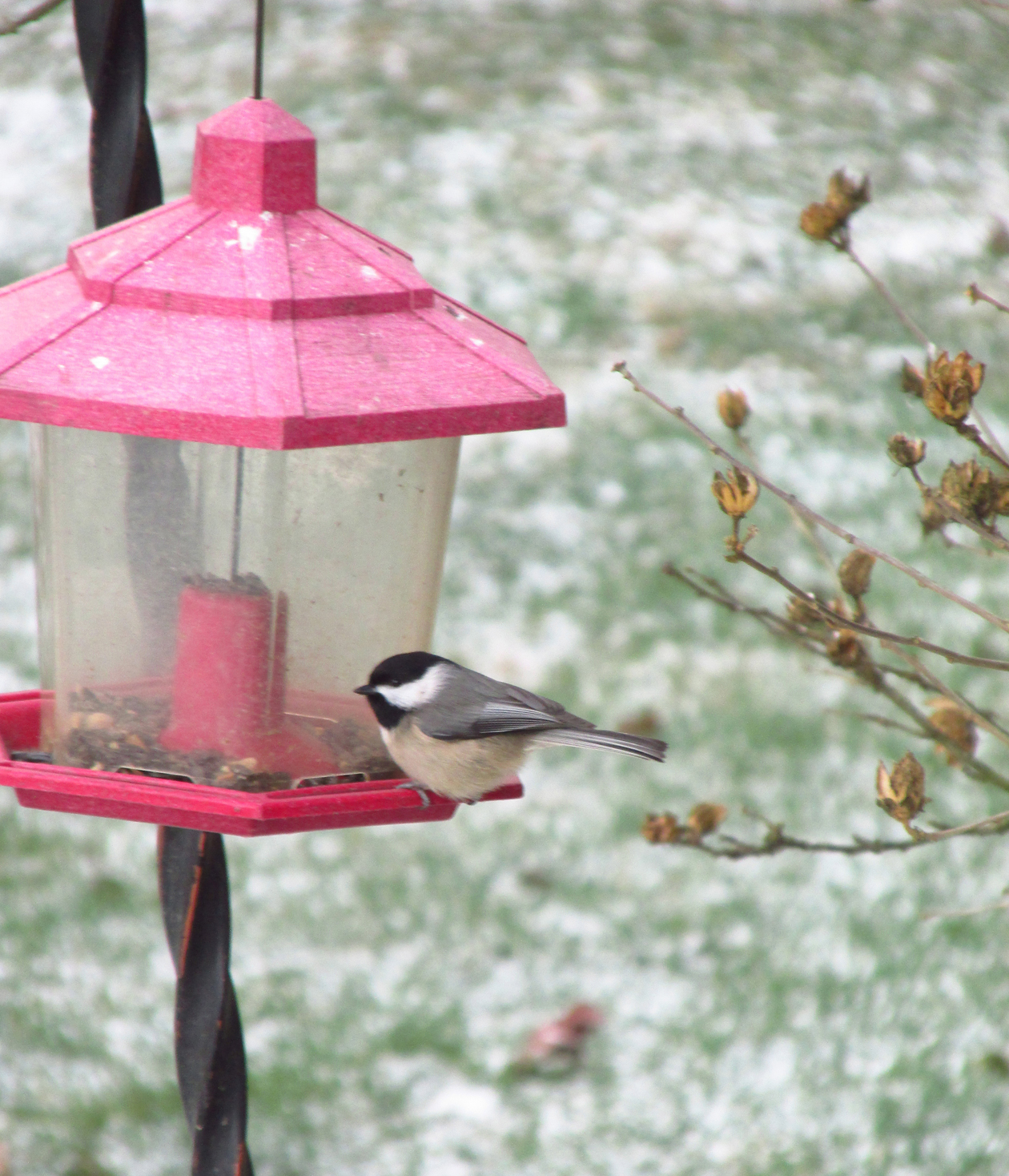
Photo by Bryan Stevens • A Carolina chickadee visits a feeder for sunflower seeds.

I’ve learned not to leave my house without an offering for the local birds. Should I neglect to bring sunflower seed to fill the feeders in the yard as I leave for work in the morning, I must face a scolding from the resident Carolina chickadees.

I think I’ve become familiar enough with these tiny black, white and gray birds that I can tell the difference between a disappointed scolding, the result of leaving the house empty handed, and their jubilant and excited chattering as they invite other birds near and far to come and partake of the bounty when I remember to fill the feeders.

Chickadees have a namesake scolding vocalization — a strident chick-a-dee-dee-dee — that they use to communicate with each other as the move through dreary winter woodlands.

They and the tufted titmice, a closely related species, are among the birds most easily acclimated to human presence and activity.

Photo by Bryan Stevens • A Carolina chickadee endures a cold winter’s day.

On the mornings when I remember their sunflower seeds, the waiting chickadees are doing tiny hoppity dances in the branches of nearby trees and shrubs, barely able to contain their excitement. They barely give me time to move away from the feeders before they dart in, grab a seed and carry it off to quickly shell on a safe perch.

In the spring, the Carolina chickadee has a familiar “fee-bee-fee-bo” song that rings out in the woodlands around my home. Cavity-nesters, chickadees readily take to nest boxes provided by human landlords. We are about five months away from spring of 2025, but that’s all right. Early winter is a great time to make the acquaintance of the Carolina chickadee.

This diminutive songbird is at home in mixed or deciduous woods in the United States from New Jersey west to southern Kansas and south to Florida and Texas. The Carolina chickadee also ranges along the Appalachian Mountains, but on some of the higher peaks they are replaced by their cousin, the black-capped chickadee. In Tennessee, birders need to visit some of the higher peaks in the Great Smoky Mountains National Park in order to find black-capped chickadees.

Sunflower seeds are a favorite offering. They are also attracted by peanuts, suet and other varieties of bird seed. They comprise the nucleus of mixed flocks of various species, so they will also bring other birds into your yard and within easy viewing range. Some other members of the flock might include wrens, nuthatches, titmice and perhaps a couple of kinglets or a downy woodpecker.

It’s easy to attract chickadees to your yard. Shrubs and small trees, feeders stocked with sunflower seeds and perhaps a mesh cage offering a suet cake are sure to make these small birds feel welcome. If you want to witness the family life of chickadees, build or buy a box suitable for wrens and other smaller birds. That task can wait until February of March of next year. Chickadees will happily take up residence in the offered nesting boxes.

Once a pair of chickadees settles down into domestic bliss in the spring, they almost at once start work on the construction of a nest. These little songbirds, looking quite smart in their handsome black, white and gray feathers, build an exquisite nest. The primary nesting material is green moss, which they stuff into a natural cavity or bird box in great quantities. The female chickadee fashions a depression in the collection of moss. She lines this shallow basin with plant fibers as well as strands of fur or hair to provide soft cushioning for her eggs.

A female chickadee can lay a large number of eggs, with the clutch size ranging between three and ten eggs. Once the young hatch, both parents are kept busy delivering food to a large brood of hungry, noisy chicks. The young grow quickly, but they take advantage of the safety of their cavity nest and don’t depart for the wider world until 20 days after their hatching.

North America’s other chickadees include the aforementioned black-capped chickadee, as well as boreal chickadee, chestnut-backed chickadee, grey-headed chickadee, Mexican chickadee, and mountain chickadee. On a trip to Utah in 2003 and 2006, I saw both black-capped chickadees and mountain chickadees.

In other parts of the world, chickadees are known as “tits,” which is from an Old English word denoting small size. Worldwide, there are about 60 species of chickadees and tits, which are classified collectively under the scientific family name, Paridae. Other members of this family range into Europe, Asia and Africa, including species with colorful names like fire-capped tit, yellow-bellied tit, azure tit, green-backed tit and cinnamon-breasted tit.

Alas, in Northeast Tennessee, western North Carolina and southwest Virginia, we have only the Carolina chickadee, but these entertaining birds are sure to become the star attractions in yard and garden once they discover your feeders and begin providing their cheerful antics.

•••

If you have a question, wish to make a comment or share a sighting, email me at ahoodedwarbler@aol.com.

Photo by Bryan Stevens • A young Carolina chickadee, not long out of the nest, explores the world.

Mockingbird has been Tennessee state bird since 1933

By George/Pixabay • The Northern mockingbird serves as the state bird for Tennessee, as well as four other states. These songbirds are renowned for having a spirited nature.

We know some birds by their colorful feathers and others by a distinctive song. The Northern mockingbird demands attention not so much from brilliant plumage or a unique song — this bird actually copies the songs of other birds — but from an indomitable spirit all out of proportion to its size.

The mockingbird is a relatively common bird in most of the region, but it has always been rather scarce bird at my home. This year has been no exception. I’ve observed gray catbirds and brown thrashers as summer transitioned into autumn, but there’s been no sign of any Northern mockingbirds.

Mockingbirds don’t usually visit my yard and gardens outside of late fall and early winter. Close relatives like the gray catbird and brown thrasher, however, are usually fairly common birds in spring, summer and fall. I’ve even had thrashers visit during the winter months, as well as an unexpected December sighting of a catbird in 2015.

These three species are lumped together in a family of birds known as the “mimic thrushes,” so named because of their talent for mimicry. The group provides a convenient umbrella for some related songbirds capable of imitating the songs of other birds.

Mimidae, the Latin root for “mimic,” provides the scientific name for the family, which includes mockingbirds and the New World catbirds, as well as thrashers. The Northern mockingbird is best known for the ability to mimic, but relatives like the gray catbird and brown thrasher are also talented mimics.

The varied repertoire of a mockingbird has always impressed human listeners. Laura C. Martin notes in her book, “The Folklore of Birds,” that the Choctaw Indians referred to the mockingbird as hushi balbaha, or “the bird that speaks a foreign language.”

Mockingbirds will break into song — their own and those of other birds — at almost any time of day or night. Both sexes sing. Biologists have speculated that there might not be a limit to the songs mockingbirds can learn to imitate, while other experts believe that the mockingbird’s mimicry might not be quite so extensive.

The Northern mockingbird is the only mockingbird found in North America, but Central America, South America and some of the Caribbean islands are also home to 16 other species of mockingbirds. Several endemic species of mockingbirds also inhabit some of the islands in the Galápagos archipelago.

Some of these other mockingbirds include brown-backed mockingbird, white-banded mockingbird, blue mockingbird, blue-and-white mockingbird, chalk-browed mockingbird, Bahama mockingbird and tropical mockingbird.

Anyone with much experience with mockingbirds would probably agree that these birds are bold, courageous and sometimes fiercely assertive.

The aggression of the mockingbird was on full display on an occasion when I observed a pair of these birds attempting to defend a berry-laden holly tree from a voracious flock of cedar waxwings. Badly outnumbered, the two mockingbirds would successfully chase off several waxwings only for another dozen or so waxwings to take the place of their vanquished flock mates. Although the flock of waxwings consisted of about 80 individual birds, the mockingbird pair put up a valiant struggle to defend the food represented by those holly berries.

Nesting mockingbirds are also very defensive of both their nest and young. They will attack anything that moves in the vicinity, including domestic cats and dogs, as well as humans.

I once observed a young red-tailed hawk perched in a tree while crows and blue jays were screaming in protest at the large raptor’s presence. The only bird to actually make contact with the hawk, however, was a single mockingbird that swiped the back of the hawk’s head in a persuasive effort to convince the raptor to move along.

Perhaps not surprisingly, these aggressive songbird can reach a ripe old age. According to the website All About Birds, the oldest Northern mockingbird on record was at least 14 years, 10 months old when it was found in Texas.

Early American naturalist and artist John James Audubon painted a famous depiction of mockingbirds attacking a rattlesnake. He painted the dramatic scene to demonstrate the fearless nature of the mockingbird in defending its young.

It’s that feisty attitude that impresses most people about mockingbirds. Even people who don’t like this bird — some consider it a bully — usually give grudging credit that the bird doesn’t lack in courage or spirit.

Perhaps that’s the reason five states — Tennessee, Texas, Florida, Arkansas and Mississippi — have made the mockingbird their official state bird. The southern makeup of these states reflects that the mockingbird has always been a bird of the southern United States even as it has expanded its range northward and westward.

The mockingbird was designated the state bird by the Tennessee General Assembly in 1933. The mockingbird’s designation had been decided earlier that same year in an election conducted by the Tennessee Ornithological Society. Florida and Texas both selected the mockingbird in 1927, Arkansas in 1929, and Mississippi in 1944. The mockingbird was once the official state bird of South Carolina but was replaced by the Carolina wren in 1948.

I find mockingbirds fascinating, partly because they remain a bit of a rarity at my home. I realize that the militant nature of this bird may distress those wanting peace and harmony among the feathered occupants of their yards and gardens.

If the mockingbird had a slogan, it might be something like “don’t mess with me.” The mockingbird in your yard or garden considers the territory its own little kingdom. Intruders beware.

•••

To share a sighting, make a comment or ask a question, email me at ahoodedwarbler@aol.com.


Elizabethton Bird Club announces speakers for fall programs

Brayden Paulk will speak to the Elizabethton Bird Club on Sept. 3 on the topic of microfishing.

The Lee and Lois Herndon Chapter of Tennessee Ornithological Society, also known as the Elizabethton Bird Club, will soon begin its schedule of monthly meetings for 2024-25.

The brief business meetings are always accompanied by an informative and entertaining program on birds, birding or other subjects from the natural world.

These programs are a great way to learn more about our feathered friends as well as other related subjects from the natural world. They are free, open to the public and hosted by a welcoming group of people.

Here’s the schedule for Fall 2024:

September

Brayden Paulk, a young naturalist with family ties in Unicoi County, will present the first program on Tuesday, Sept. 3, with a talk on “Microfishing,” which involves anglers focusing on a diverse array of tiny species of fish.

Paulk has also been working as a naturalist with Lamar Alexander Rocky Fork State Park this summer and fall. He gave a program a couple of years ago for the club on “Trash Fishing,” which explored other angling options other than the typical gamefish species. As both fishing and birding are among his interests, he will no doubt find a way to work something into his program about birds.

October

The guest speaker for the meeting on Tuesday, Oct. 1, will be Mark Stevens. A former publisher for The Erwin Record, he will present a program titled “Building a Birding Festival” that will focus on his development of the Hammock Coast Birding Festival in South Carolina. Stevens, who works as tourism director for the Georgetown County Chamber of Commerce, will be giving the program remotely from his home in South Carolina, but the hybrid meeting also offers a chance to attend in-person with other birding enthusiasts. The festival is organized by the South Carolina Hammock Coast, the marketing arm for the Georgetown County Chamber. The third annual Hammock Coast Birding Festival is scheduled for Feb. 6-9, 2025.

November

Vern Maddux, the treasurer for the club, will be the speaker on Tuesday, Nov. 5. Maddux is a world traveler when it comes to seeing birds and will present a program on one of his recent international birding adventures to South Georgia and Falklands. South Georgia is a mountainous barren island in the South Atlantic Ocean, 800 miles east-southeast of the remote South Atlantic archipelago that makes up the Falkland Islands. With rugged terrain and cliff-lined coasts, the hundreds of islands and islets in the Falklands are home to sheep farms and abundant birdlife.

December

In the busy month of December, yours truly will give the program. I will present a powerpoint presentation titled “What’s in a Name?” on North American birds named after people. Among our native birds, we have quail, woodpeckers, sparrows, finches, warblers, hawks and other birds are known by names of historical figures ranging from John James Audubon to William Clark and Meriwether Lewis.

My program will be held on Tuesday, Dec. 3. I will discuss the American Ornithological Society’s decision in 2023 to end what are known as eponyms, in which species names honor people. The renaming of dozens of species will be a gradual process.

The club’s 2025 schedule has not been completed, but will include a program by local naturalist Lewis Tester in the spring on dragonflies.

The public is always welcome to attend these programs. Programs begin at 7 p.m.

The club meets at the Elizabethton campus of Northeast State Community College in Room 135 when the school’s schedule permits. When school is not in session, meetings are held on Zoom or at other announced locations. To receive updates on the club’s schedule, events and activities, email elizabethtonbirtdingclub@gmail.com and ask to be placed on a free mailing list.

The Elizabethton Bird Club holds seasonal birds count in spring, summer, fall and winter. The club also organizes and sponsors regular field trips to destinations through Northeast Tennessee. These activities are also open to interested members of the public.

•••

To share a sighting, make a comment or ask a question, email me at ahoodedwarbler@aol.com.

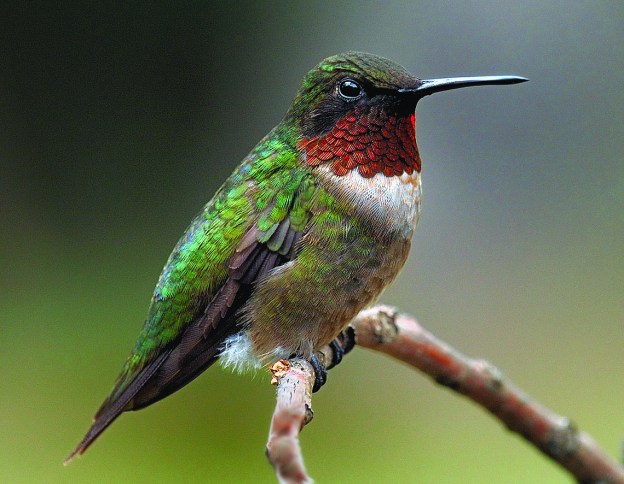
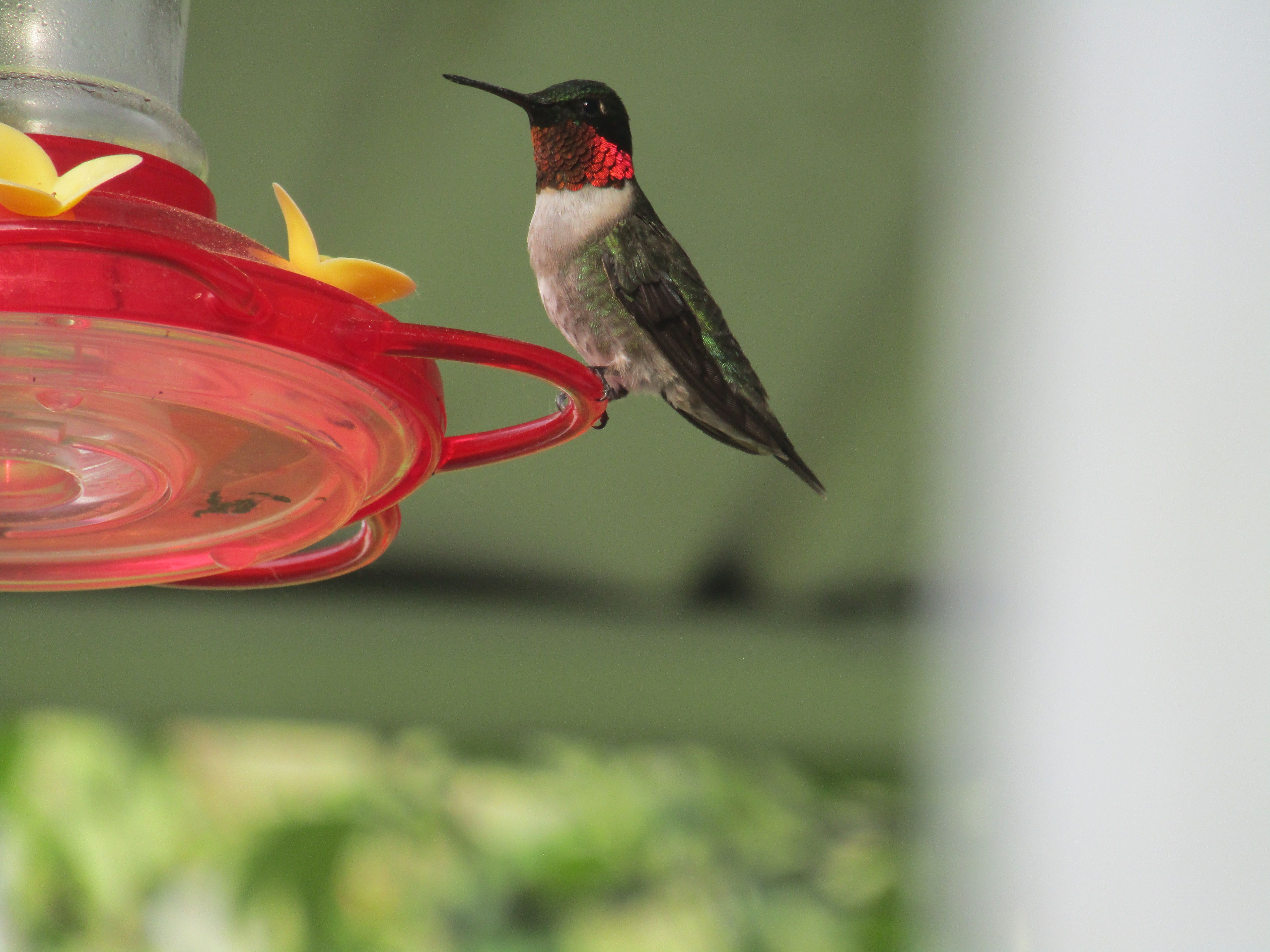
Surprise! Hummingbirds come in variety of sizes

This week’s column is about hummingbirds, the big and the small ones. Frances Lamberts in Jonesborough sent me an email earlier this month that got the ball rolling for this week’s hummingbird column.

“Two hummingbirds were here for a good week long,

at the end of April,” Frances wrote. “Then they were gone, and I haven’t seen any since. Despite the heat/drought (and with some watering), the

property has many favorite flowers in bloom, including the blue salvia, red pole beans, monarda, many others come and gone, the cardinal flowers about to bloom.”

Her question was a simple one: “Where are the hummers?”

She noted that she has kept a “first sightings” record for about 20 year. One year the hummingbirds didn’t arrive until mid June, which worried her at the time.

“What is happening now?” Frances asked.

The simple and honest answer is that it’s not really possible to land on any single answer. Birds have wings, and hummingbirds are capable to long-distance flights.

Still, a setting such as the one Frances described with such a wide variety of blooms should be teeming with hummingbirds.

Personally, it’s been a perplexing season. My hummingbirds arrived back in April, stuck around for perhaps a week, and then almost disappeared. They returned in mid-June, remained visible for a couple of weeks, but have since pulled another vanishing act.

In any given year, the numbers of hummingbirds passing thorough is going to fluctuate. Some years, these tiny flying gems will be present in good numbers on an almost daily basis. Other years, hummingbirds can become quite scarce.

I usually enjoy my best hummingbird numbers in the fall as these little birds begin their leisurely journey back south. Late August and the month of September is usually a great time to watch hummingbirds. I’m optimistic that the same will hold true this fall.

In some other hummingbird news, the world added another species of hummingbird this year when the giant hummingbird of South America got split into two distinct species.

Abi Cole, writing for Audubon Magazine, reported in an article on June 7, 2024, that scientists have considered two distinct populations of giant hummingbird — a migratory southern population in Chile, Argentina and Bolivia, and a non-migratory northern population in Chile, Ecuador and Peru — to be the same species.

Now, scientists have reconsidered that belief and learned that the two species have been able to fool scientists for so long by basically, as Cole’s article phrases it, by hiding in plain sight.

Cole’s article details the elaborate process by which giant hummingbirds were captured and fitted with geolocator devices. The article credits Jessie Williamson, lead author of the new study and a National Science Foundation postdoctoral research fellow, with unraveling the mystery.

Williamson did so by intensively studying the Chilean population. The resulting research also revealed some huge surprises.

For centuries, there has been speculation about where the Chilean giant hummingbirds go to spend the winter. Now we know – they make an astonishing, record-breaking 5,200-mile round trip to spend several months with their cousins in the Peruvian Andes.

Because the Chilean and Peruvian birds look so much alike, no one had ever realized that they were co-existing with each other during the winter season.

Of course, the name “giant hummingbird” is almost an oxymoron for a family of birds famous for their diminutive size. Now that we have two species of giant hummingbirds, they can’t both hold the title of world’s biggest hummingbird.

So, which is the bigger bird? As it turns out, the giant hummingbirds living year round in the Andes, now known as the northern giant hummingbird, is slightly bigger than the migratory southern giant hummingbird.

The article about these discoveries is fascinating. To read it for yourself, visit http://www.audubon.org/magazine/scientists-discover-worlds-largest-hummingbird-hiding-plain-sight.

The giant hummingbird does earn the right to that name. Both of the two species weigh between 18 and 24 grams and have a wingspan of about 8.5 inches. They have a body length of 9.1 inches. For a useful comparison, they are about equal to the size of a European starling or a Northern cardinal.

They are not the dazzling beauties most people associate with hummingbirds. Giant hummingbirds have a drab greenish plumage above with a whitish rump patch and dingy coloration below with variable rusty tones and dusky spotting. They do have the long bills and overall physical shape of other hummingbirds. The scientific name is Patagona gigas, roughly translated as the giant of Patagonia.

Photo by Bryan Stevens • Welcoming hummingbirds also involves making sure that they remain healthy and safe while spending time in our yards and gardens.

Count the giant hummingbird (either of the two species) as birds I’d like to see some day. The world’s diversity of hummingbirds is dazzling, but I feel fortunate to enjoy the ruby-throated hummingbird from April to October every year. As anyone knows who hosts these tiny birds, ruby-throated hummingbirds are dazzling and engaging guests during their all-too-brief.

•••

To ask a question, make a comment or share a sighting, email me at ahoodedwarbler@aol.com.


Summer bird count finds 114 species

Hans Toom/Pixabay • A chestnut-sided warbler was one of 18 species of warblers tallied on the annual survey.

The 31st Carter County Summer Bird Count was held on the first day of June with 23 observers in nine parties. The weather was generally favorable, but somewhat cool early in the morning and breezy at times.

Participants tallied 114 species, which is exactly the 30 year average, but slightly below the average of the last decade of 117 species. The all-time high was 123 species in 2017.

Abundant birds included European starling (471), American robin (372), cliff swallow (330), Canada goose (270), song sparrow (240) and American crow, 208.

The list:

Canada goose, 270; wood duck, 5; mallard, 52; and wild turkey, 13.

Photo by Bryan Stevens • Five wood ducks were found on count day.

Rock pigeon, 61; Eurasian collared-dove, 1; mourning dove, 130; yellow-billed cuckoo, 1; and chuck-will’s-widow, 1.

Eastern whip-poor-will, 13; chimney swift, 61; and ruby-throated hummingbird, 15.

Killdeer, 11; American woodcock, 4; double-crested cormorant, 7; great blue heron, 18; and green heron, 4.

Black vulture, 14; turkey vulture, 59; sharp-shinned hawk, 3; Cooper’s hawk, 1; bald eagle, 3; red-shouldered hawk 1; broad-winged hawk, 8; red-tailed hawk, 12; Eastern screech-owl 8; and barred owl, 2.

Belted kingfisher, 11; red-bellied woodpecker, 31; yellow-bellied sapsucker, 6; hairy woodpecker, 6; Northern flicker, 13; pileated woodpecker, 22; and American kestrel, 1.

Great crested flycatcher, 5; Eastern kingbird, 24; Eastern wood-pewee, 28;

Acadian flycatcher, 19; alder flycatcher, 1; least flycatcher, 10; and Eastern phoebe, 65.

White-eyed vireo, 6; blue-headed vireo, 47; warbling vireo, 1; and red-eyed vireo, 205.

Blue jay, 80; American crow, 208; fish crow, 5; and common raven, 14.

Photo by Bryan Stevens • A young titmouse visits a suet feeder.

Carolina chickadee, 49; tufted titmouse, 91; tree swallow, 88; Northern rough-winged swallow, 32; purple martin, 21; barn swallow, 135; and cliff swallow, 330.

Golden-crowned kinglet, 20; cedar waxwing, 58; Red-breasted nuthatch, 16 white-breasted nuthatch, 17; brown creeper, 6; and blue-gray gnatcatcher, 15.

Carolina wren, 126; house wren 48; and winter wren, 7.

Gray catbird, 36; brown thrasher, 34; Northern mockingbird, 62; European starling, 471; Eastern bluebird, 86; veery, 21; hermit thrush, 5; wood thrush, 56; and American robin, 372.

House sparrow, 40; house finch 86; pine siskin, 8; and American goldfinch, 77.

Chipping sparrow, 85; field sparrow, 25; dark-eyed junco, 51; song sparrow, 240; Eastern towhee, 135; yellow-breasted chat, 9; Eastern meadowlark, 9; orchard oriole, 7; Baltimore oriole, 7; red-winged blackbird, 68; brown-headed cowbird, 27; and common grackle, 87.

Ovenbird, 73; worm-eating warbler, 12; Louisiana waterthrush, 6; black-and-white warbler, 44; Swainson’s warbler, 9; common yellowthroat, 27; hooded warbler, 145; American redstart, 9; Northern parula, 48; blackburnian warbler, 4; yellow warbler, 5; chestnut-sided warbler, 30; black-throated blue warbler, 61; pine warbler, 4; yellow-rumped warbler, 4; yellow-throated warbler, 18; black-throated green warbler, 50; and Canada warbler, 20.

Scarlet tanager 28; Northern cardinal, 135; rose-breasted grosbeak, 13 blue grosbeak, 4; and indigo bunting, 141.

According to long-time count compiler Rick Knight, a few species were missed on count day, usually because they are very localized in distribution or occur in very low densities. And sometimes, he noted, the birds just don’t cooperate.

Some exciting observations include a family group of four American woodcocks at Carvers Gap on Roan Mountain. In addition, 18 species of warblers were found on the count.

Missed species: Common merganser – although a female with a brood of ducklings was seen the day prior to the count – as well as ruffed grouse, common niighthawkhawk, yellow-crowned night-heron, great horned owl, yellow-throated vireo, grasshopper sparrow, golden-winged warbler, Kentucky warbler, magnolia warbler and prairie warbler.

•••

To share a sighting, ask a question or make a comment, email ahoodedwarbler@aol.com. 


Unicoi County summer bird count finds 109 species

Photo Hans Toom/ Pixabay • The aptly named yellow warbler was one of 18 warbler species found on this year’s Unicoi County Summer Bird Count.

The 11th annual Unicoi County summer bird count was held Saturday, June 8, with 19 observers in seven parties. The count has been conducted yearly since its inception by members of the Elizabethton Bird Club.

I have taken part on this count from the first one held, missing only once when I was out of town. It’s an enjoyable count and, for me, it’s very close to home. This count also provides a reliable snapshot of the birds present in Unicoi County in early summer. 

Counters tallied 109 species which is slightly above the average of 108 species. The all-time high was 112 species in 2016. 

Abundant birds included European starling (314), American robin (246), song sparrow (175), American crow (174), red-eyed vireo (172), Northern cardinal (128) and cliff swallow, 126. Eighteen species of warblers were found, the most abundant being hooded warbler with 84 individuals tallied. 

As always a few low-density or very localized species were missed, including yellow-billed cuckoo, bald eagle, great horned owl, American kestrel, grasshopper sparrow, golden-winged warbler and prairie warbler.

The list:

Canada goose, 18; wood duck, 3; mallard, 20; wild turkey, 7; and ruffed grouse, 1.

Rock pigeon, 61; mourning dove, 56; chuck-will’s-widow,1; Eastern whip-poor-will, 18; chimney swift, 29; and ruby-throated hummingbird, 8.

Killdeer, 8; great blue heron, 3; and green heron, 2.

Photo by Bryan Stevens
A green heron elevates a shaggy crest of feathers, a behavior often initiated when the bird feels alarmed.

Black vulture, 1; turkey vulture 37; sharp-shinned hawk, 1;

Cooper’s hawk 3; red-shouldered hawk, 4; broad-winged hawk, 10; red-tailed hawk, 2; Eastern screech-owl, 5; barred owl, 4; and Northern saw-whet owl, 1.

Belted kingfisher, 5; red-bellied woodpecker, 15; yellow-bellied sapsucker, 9;

downy woodpecker, 8; hairy woodpecker, 5; Northern flicker, 10; and pileated woodpecker, 20.

Great crested flycatcher, 3; Eastern kingbird, 11; Eastern wood-pewee, 10; Acadian flycatcher, 32; least flycatcher, 5; and Eastern phoebe, 65.

White-eyed vireo, 3; yellow-throated vireo, 1; blue-headed vireo, 38; warbling vireo, 3; and red-eyed vireo, 172.

Blue jay, 61; American crow, 174; fish crow, 5; common raven, 8; Carolina chickadee, 71; and tufted titmouse, 60.

Photo by Bryan Stevens • A tree swallow visits a nest box to check on young.

Tree swallow, 49; Northern rough-winged swallow, 20; purple martin, 25; barn swallow, 78; and cliff swallow, 126.

Golden-crowned kinglet, 2; cedar waxwing, 36; red-breasted nuthatch, 2; white-breasted nuthatch, 18; brown creeper, 4; and blue-gray gnatcatcher, 23.

Carolina wren, 84; house wren, 31; and winter wren, 3.

Gray catbird, 34; brown thrasher, 14; Northern mockingbird, 17; European starling, 314; Eastern bluebird, 59; veery, 12; hermit thrush, 2; wood thrush, 34; and American robin, 246.

House sparrow, 14; house finch, 33; American goldfinch, 56; chipping sparrow, 54; field sparrow, 6; dark-eyed junco, 20; song sparrow, 175; Eastern towhee, 6; and yellow-breasted chat, 1.

Eastern meadowlark, 14; orchard oriole, 4; Baltimore oriole, 1; red-winged blackbird, 60; brown-headed cowbird, 16; and common grackle, 63.

Ovenbird, 38; worm-eating warbler, 10; Louisiana waterthrush, 10; black-and-white warbler, 19; Swainson’s warbler, 16; Kentucky warbler, 1; common yellowthroat, 6; hooded warbler, 84; American redstart, 12; Northern parula, 41; magnolia warbler, 2; Blackburnian warbler, 10; yellow warbler, 3; chestnut-sided warbler, 17; black-throated blue warbler, 45; yellow-throated warbler, 17; black-throated green warbler, 45; and Canada warbler, 13.

Scarlet tanager, 20; Northern cardinal, 128; rose-breasted grosbeak, 4; blue grosbeak, 1; and indigo bunting, 77.

•••

Bryan Stevens has birded since the early 1990s and has written about birds and birding since 1995. To ask a question, make a comment or share a sighting, email him at ahoodedwarbler@aol.com.