Category Archives: Birds

Indigo bunting’s blue appearance is a trick of the light

Photo by heronworks/Pixabay • A male indigo bunting visits a feeder for a meal of seeds. These birds are fairly common in the region during the summer months.


The indigo bunting is one of the reasons I love to pay attention to the clientele visiting my feeders. This small songbird likes to reside in the boundary region where forests and woodlands meet fields and pastures. Personally, the indigo bunting has always been a bird that is suggestive of the long, hot days of summer.

One of my earliest and still quite vivid birding memories is a recollection of a shockingly blue bird atop a blue spruce tree in my yard. Several decades later, the tree is no longer standing, but these beautiful birds — I now know those long-ago summer visitors were indigo buntings — still return each year to my yard and gardens.

Indigo buntings usually arrive in the region in late April, and I’ve seen them linger until late October, although most indigo buntings have left the region by late September.

Upon arrival, male indigo buntings become tenacious singers, repeating their jumbled notes even during the hottest hours of summer afternoons. The preference of this small songbird is to sing from the tops of tall trees, where they are often concealed by the green leaves. When I do get a glimpse of the obscured songster, often all I see is a dark shape silhouetted against the bright sky. Sometimes, if he plunges from the upper branches into the woodland understory, I get that telltale glimpse of blue feathers.

The male indigo bunting is the only solid blue bird in the eastern United States, but it’s all an illusion — literally a trick of the light. The indigo bunting’s feathers are not really blue; the male’s brilliant azure plumage is caused by the process of diffraction of light around the structure of the bird’s feathers. This process scatters all but the blue light, and the resulting color shifts from black to blue to turquoise as the angle of reflected light changes. In bright light, it can even look unnaturally vivid blue. In poor light, however, an indigo bunting male can appear black. Fortunately, indigo buntings have both a characteristic body shape and song, so even if the birds are not seen in their best light, they can still be recognized.

Like many species of songbirds, the male is by far the most colorful. In this instance, the male is also responsible for the species’ name. Indigo is a blue dye that was once an important crop in the South. The drab female may boast some blue highlights in her plumage. Juvenile birds just out of the nest also resemble the female. Pay close attention to any indigo buntings you observe as summer progresses. Juvenile birds will look mostly brown with just a hint of blue in the wings and the tail. These will be the young buntings that were hatched in spring and early summer. They will often accompany their parents to feeders.

Photo by Bryan Stevens • The male indigo bunting is a resplendent bird.

Indigo buntings are particularly fun birds to observe in late summer. Indigo bunting juveniles, like the young of many other birds, beg for tidbits from parents by “bowing,” spreading their wings and shivering. These actions usually prompt a parent to pop some morsel into an impatient youngster’s open bill. Indigo buntings are relatively easy to view. They frequent weedy fields and roadside brush.

The indigo bunting belongs to a genus of birds known as Passerina, which is included the family Cardinalidae, which includes birds like Northern cardinal and rose-breasted grosbeak. They are often lumped into a group known as North American buntings, although they are not closely related to such birds as snow bunting and lark bunting. The latter is even recognized as the official state bird for Colorado, a unique honor for this group of birds. The other members of the Passerina genus include lazuli bunting, varied bunting, painted bunting, rose-bellied bunting, orange-breasted bunting and blue grosbeak.

Worldwide, other birds known as buntings include such descriptively named species as slaty bunting, corn bunting, white-capped bunting, gray-necked bunting, cinereous bunting, lark-like bunting, cinnamon-breasted bunting, chestnut-eared bunting, little bunting, yellow-throated bunting, golden-breasted bunting, black-headed bunting, red-headed bunting and yellow bunting.

The male indigo bunting is one of the most colorful birds to visit feeders in the region. This species is also extremely fond of millet seed. I like to have some feeders stocked with millet when the buntings begin to return each spring. They will also feed on thistle and sunflower seeds. Away from our feeders, they also devour plenty of seeds from various noxious weeds. Because of the indigo bunting’s appetite for the seeds of destructive weeds, it is considered a beneficial bird.
••••
Bryan Stevens has been birding since the 1990s and has written about birds and birding since 1995. Email him at ahoodedwarbler@aol.com to share sightings, ask questions or make comments.
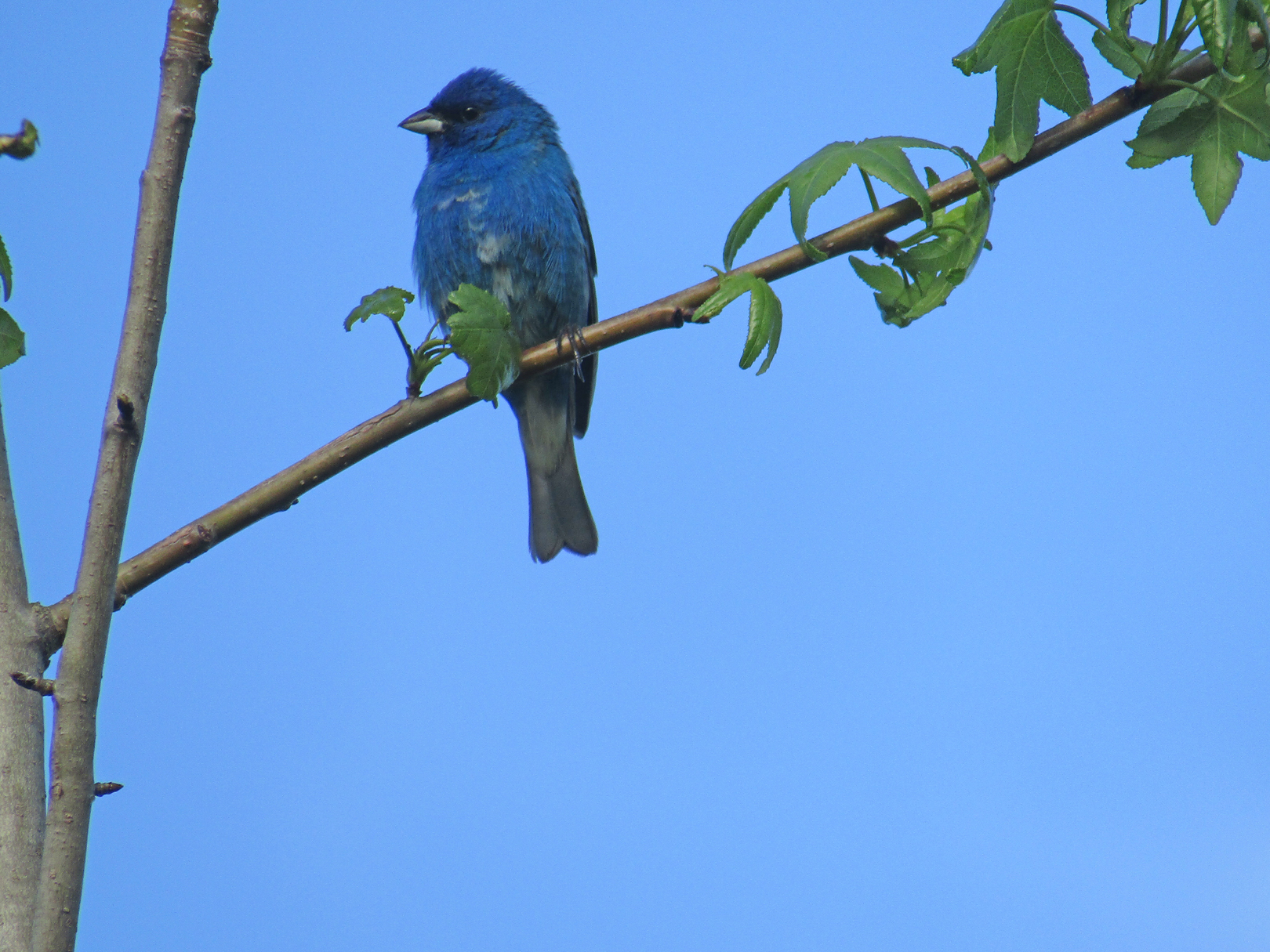
Photo by Bryan Stevens • Newly-returned neotropical migrants, such as this Indigo Bunting, increased the total number of species for the annual spring count.

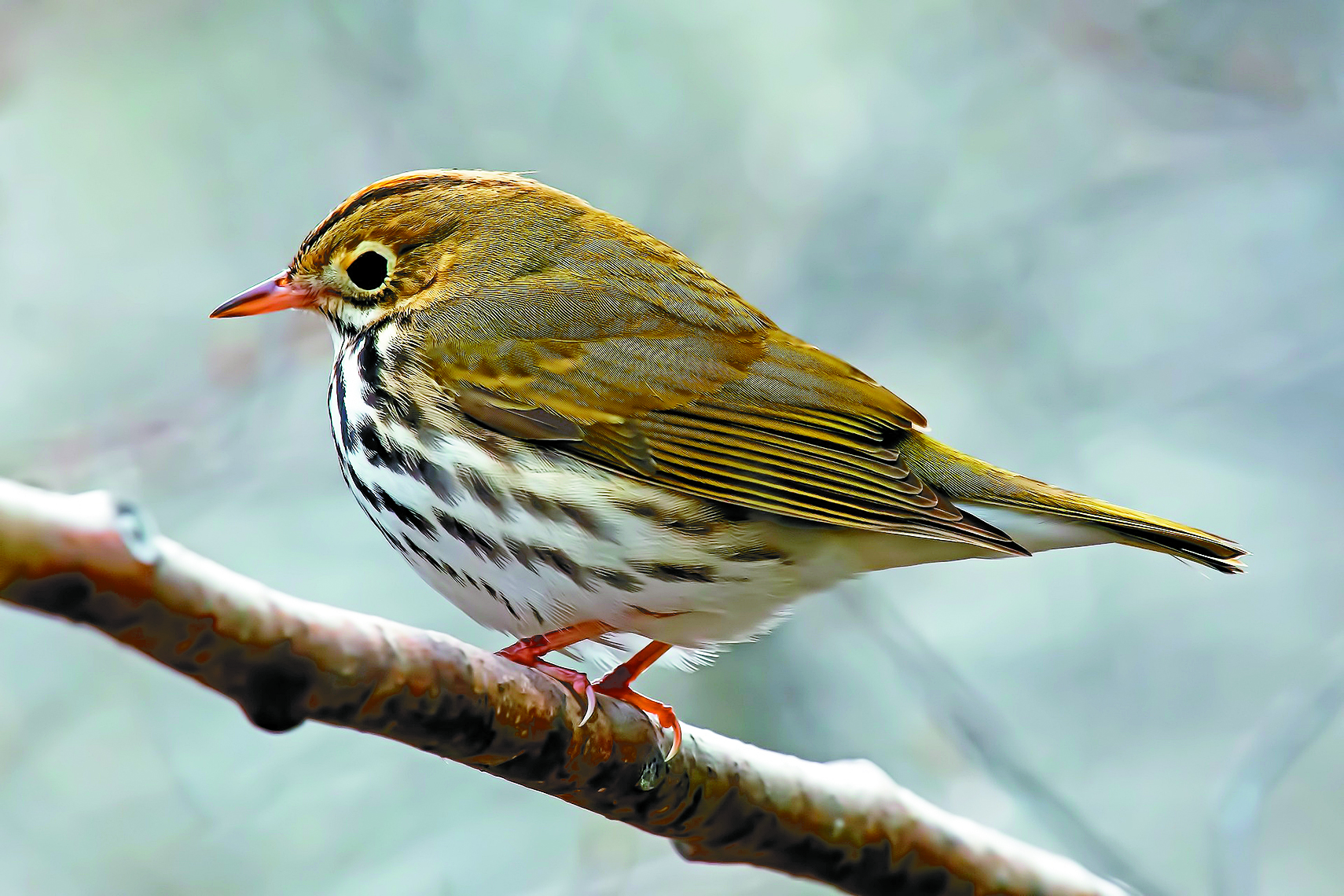
Ovenbird is season’s first returning warbler

By Hans Toom from Pixabay • A patch of orange feathers on the crown of an overbid’s head often goes unseen. This shy and retiring bird is more often heard than seen.

It’s gotten to be a bit of a guessing game every spring about which of the warblers will be the first to return to my home.

In 2021, the first warbler to return in the spring was a male Northern parula that arrived on April 9. In 2022, this same species was the first to return, albeit a few days later than the previous year’s date.

The Northern parula didn’t used to be one of the first returning warblers at my home. That honor used to go to hooded warbler or black-throated green warbler. This year, an ovenbird beat all of its kin to arrive on Friday, April 7, in the woodlands around my home, followed a few days later by a black-throated green warbler. This year’s first hooded warbler was a bit tardy and didn’t return until April 23.

The ovenbird is not one of the brightly colored warblers, such as black-throated blue warbler or yellow warbler. The ovenbird is a small brown bird with a white breast marked with dark streaking — an appearance that bears a superficial resemblance to the larger thrushes that share the same woodland habitat. The only hint of color is an orange crown patch bordered by dark stripes atop the bird’s head. Even this orange crown patch is not easily seen. When agitated, an ovenbird may raise its head feathers, which makes this orange mark easier to detect. The ovenbird also shows a distinct white ring around each eye, as well as pink legs and a pinkish bill.

By Hans Toom from Pixabay • The ovenbird gets its name from the shape of its nest, which is said to resemble an old-fashioned Dutch oven.

The resemblance to North America’s brown thrushes didn’t go unnoticed by some early American naturalists. Painter and famous naturalist John James Audubon painted a pair of ovenbirds, which he knew as “golden-crowned thrushes.” When comparing the two names, one can’t help but wish that the inaccurate but more romantically descriptive golden-crowned thrush had stuck.

Unfortunately, ovenbirds are stubborn about letting themselves be seen. They’re easily heard. The males begin singing a loud, rollicking “Teacher! Teacher! Teacher” song almost as soon as they arrive on potential nesting grounds.

The ovenbird, unlike many warblers, is not named for its appearance. Instead, the bird’s name derives from the shape of the nest it builds. The nest is a domed structure placed on the ground, woven from vegetation and containing a side entrance. Early European settlers in North America thought the nest looked like a Dutch oven, hence the name “ovenbird” for the small warbler with the intricate nest.

In April and continuing into May, a couple of dozen warbler species will pass through Tennessee. Some of these warblers find area woodlands and other habitats to their liking. They will pause, explore and perhaps decide to spend their summer nesting season in Northeast Tennessee and Western North Carolina rather than continue migrating farther north.

Many of the warblers that pass through each spring, however, are destined to travel a much longer distance before settling down in their favored habitats for the summer nesting season. These warblers include the Tennessee warbler, Nashville warbler, Cape May warbler, blackpoll warbler and Connecticut warbler. Most of these species nest as far north as New England and Canada.

Others find the Southern Appalachians to their liking. Some of the first warblers to return each year include the Louisiana waterthrush, which favors rushing mountain streams, as well as species such as black-throated green warbler, hooded warbler, ovenbird, black-and-white warbler, worm-eating warbler and common yellowthroat.

The Northern parula offers an abundance of identifying characteristics. Adult males are bluish gray overall with a yellow-green patch on the back and two white wingbars. A chestnut band separates the male’s bright yellow throat and chest. Adult females are often a bit paler and typically lack the male’s breast band. Both males and females have distinctive white eye crescents.

Most warblers lead frenetic lives. They often sing high in the tops of trees, but they do occasionally venture closer to the ground, particularly when foraging for prey, which consists of a variety of insects and small spiders. The Northern parula is even more restless than most of its kin.

The more reliable means of locating a Northern parula is to listen for the male’s buzzy, ascending song. He is a persistent singer from the time of his arrival until mid-summer.

A quirk involving nesting material is somewhat unique to this warbler. In much of the southern United States, the Northern parula conceals its nest inside strands of Spanish moss draped from the limbs of live oaks and other trees. In the Southern Appalachians and other locations farther to the north, the absence of Spanish moss means that the birds rely on various Usnea lichens, which are sometimes referred to as “Old Man’s Beard.”

A pair of Northern parulas will attempt to raise two broods in a nesting season. The female lays two to seven eggs and does most of the nest construction.

Look for spring’s warblers in the coming weeks. Feel free to share any sightings with me by emailing ahoodedwarbler@aol.com.

Photo by Bryan Stevens • The Northern parula’s geographic location during the nesting season determines its use of nesting materials.


Share your first sightings of spring hummingbirds

Photo by Georgia Lens / Pixabay

The website Journey North noted in a post on March 15, that hummingbird migration along the Pacific Coast has been impacted by the crazy weather that California has experienced in recent weeks.

In the eastern United States, however, the annual migration of ruby-throated hummingbirds is proceeding pretty much on schedule.

According to Journey North, volunteers along the Gulf Coast and in the Southeast have been reporting arriving ruby-throated hummingbirds since early March.
I fully expect that ruby-throated hummingbird migration will bring the first individuals to Northeast Tennessee, Southwest Virginia, and Western North Carolina in early April.

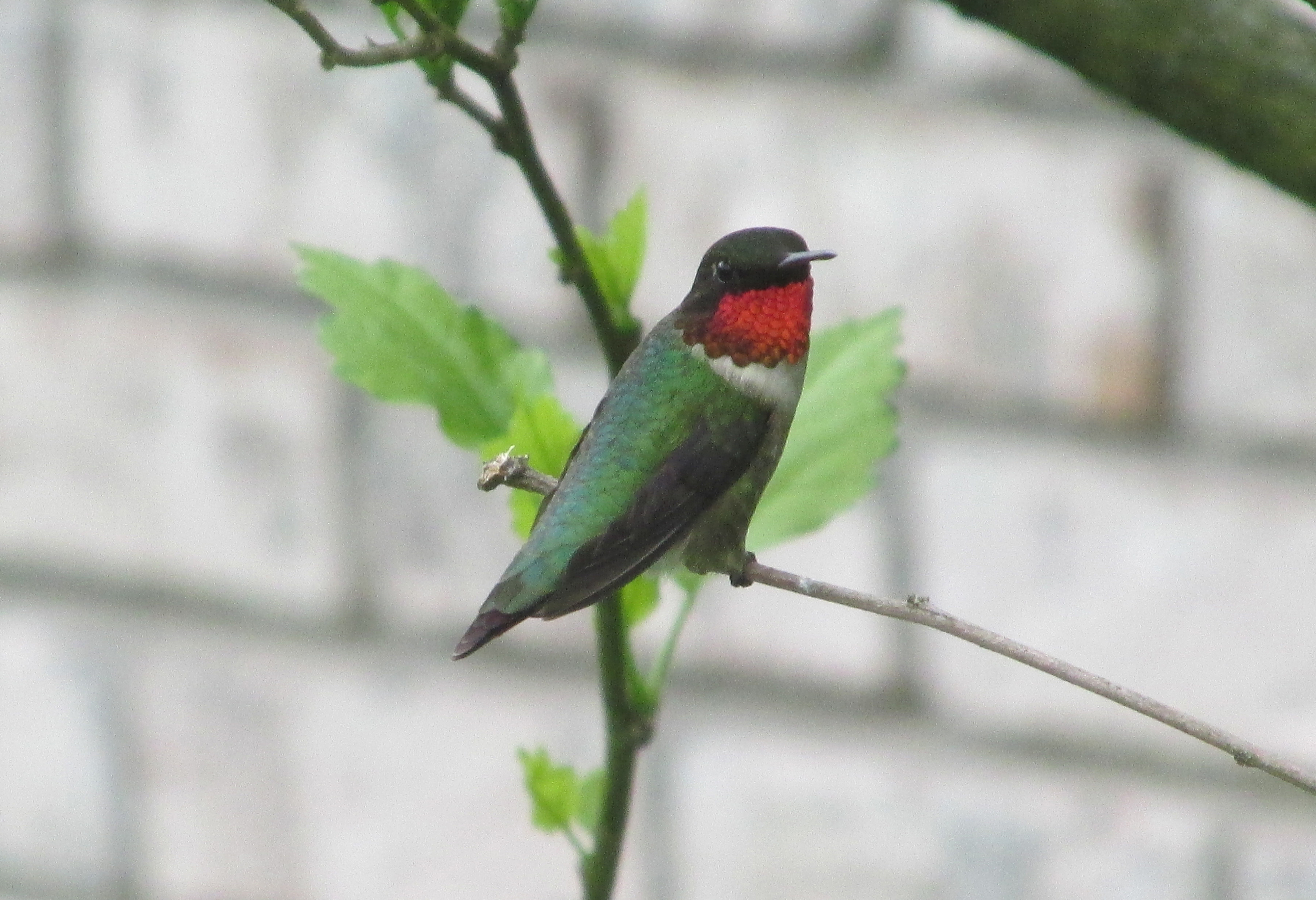
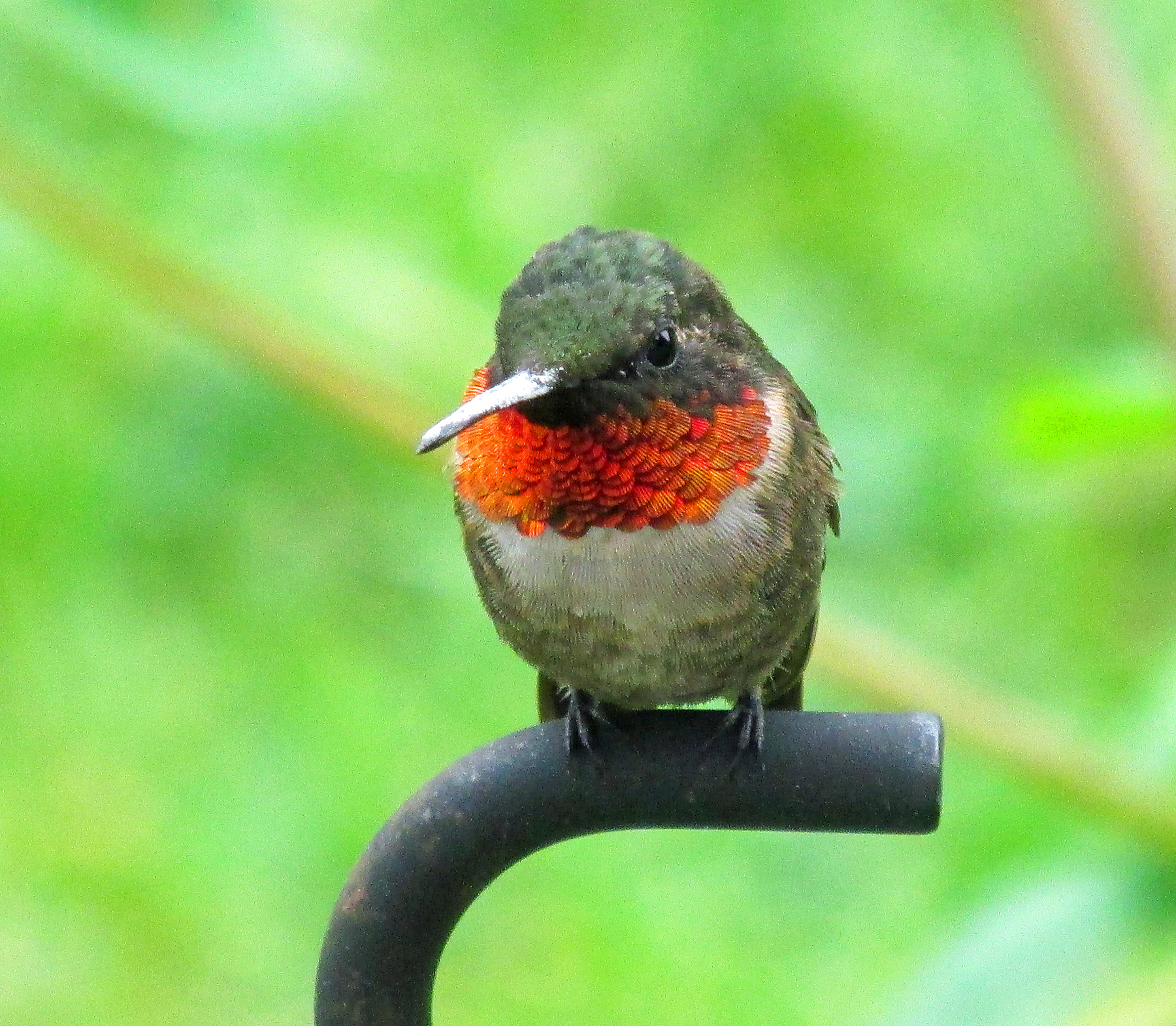
Photo by Bryan Stevens • Male ruby-throated hummingbird show the namesake red throat. The feathers on a male’s throat are iridescent, which means they can change when seen from different angles. In poor light, the ruby-red throat can look almost black.

According to the website, most first spring observations of hummingbirds are males, although a few females are being spotted. Male hummingbirds, the posting noted, arrive first so they can find and defend a territory.

As always, spring migration can be a challenging time for hummingbirds. Temperature, wind patterns and storms can influence the pace of migration.
Even once these tiny birds make their epic spring crossing of the Gulf of Mexico, they will need time to rest and refuel before moving northward. By mid-March, the advance of ruby-throated hummingbirds has usually reached states as Georgia and South Carolina. By the end of March, these tiny flying gems have reached states such as Tennessee and North Carolina.

It’s time to get those sugar water feeders outside and waiting for the early arrivals. Once the chance of late-season freezes has passed, consider planting some colorful native flowers to provide nectar sources for hummingbirds.

Northeast Tennessee usually gets its first spring hummingbirds the first week of April. If you’re seeing hummingbirds, I’d love to know. I have tracked arrivals for several years now. To share your first spring sighting of a ruby-throated hummingbird, email me at ahoodedwarbler@aol.com or contact me on Facebook at http://www.facebook.com/ahoodedwarbler. Please include the date and time of your sighting. I also welcome the sharing of other details about your sightings.
In the meantime, take steps now to welcome hummingbirds back and keep them safe during their stay.

Some ways of ensuring that our hummingbird guests are kept healthy and secure are simply common sense. For instance, don’t use pesticides, herbicides or any other sort of toxin anywhere close to the vicinity of a sugar water feeder or a flower garden. Hummingbirds are such tiny creatures with such intense metabolisms that it only takes a small amount of any harmful substance to sicken or kill one of these little flying gems.

Feeding hummingbirds is easy, but many people try to complicate the process. Only common, pure cane sugar, mixed to a ratio of four parts water to one part sugar, is a safe choice for these birds.

For emphasis, I’ll repeat again that only common, pure cane sugar is safe for hummingbirds. There are no safe substitutes. Do not use organic, raw or brown sugar. Confectioner’s sugar, which contains an anti-caking substance (often corn starch, silicates or stearate salts), is also hazardous to hummingbirds.
The ratio of four parts water to one part sugar utilizing pure cane sugar most closely duplicates the nectar that hummingbirds obtain from some of their favorite flowers. Why try to mess with nature’s perfection?

I cannot imagine why anyone would supplement sugar water for hummingbirds with such human beverages as a sports drink or Kool-aid, but there have been reports of people doing so. Be aware that such additives will only risk the health of these tiny birds.

Photo by Bryan Stevens • Despite a perceived disadvantage of size, ruby-throated hummingbirds are quite capable of thriving in a giant world.

Most experts also suggest avoiding red dyes or food colorings, which are often found in commercially marketed hummingbird sugar water. Don’t risk the health of hummingbirds for a little convenience.

It’s easy to make your own sugar water mix, which can be stored in the refrigerator in an empty plastic juice jug. Boil some water and then add one cup of sugar for every four cups of water in your pot. Stir thoroughly. Bottle the mixture until it cools. Fill your feeders and store any remaining sugar water in the fridge in the aforementioned jug. Refrigerated, the mix should stay good to use for at least a week.

In our milder spring weather, changing the sugar water in feeders can probably be done on a weekly basis. When hotter summer temperatures prevail, it’s usually necessary to change the sugar water every two or three days.

•••

Remember to send me those first sightings of returning spring hummingbirds. I’ll be doing my usual roundup to share who gets graced with a visit from one of these tiny beauties.

Man hits a bonanza with recent sighting of eagles

Photo Courtesy of Jim Kroll • These four bald eagles were observed along Mendota Road near Abingdon, Virginia.

Jim Kroll sent me a recent email about a Jan. 30 sighting he made on Mendota Road in Abingdon, Virginia.

“I saw three hawks and an eagle close together in the same tree,” he wrote in his email. “The eagle and one hawk appear to be almost side-by-side on the same limb.”

He added that he had never observed such a combination in the same tree.

“I did not know they got along that well with each other,” Jim wrote.

He noted that he regularly sees hawks near his home in Abingdon and occasionally sees eagles on Mendota Road.

“There was a second eagle,” he added. “The two eagles would fly off together to the river, swooping around each other along the way.”

He said that he watched the hawks and eagles for probably 30 to 45 minutes as they would fly away from the tree multiple times and then return.

He also reported that the hawks were larger than the eagles. This bit of information got me to thinking about his sighting due to the fact that there are no hawks bigger than a bald eagle.

Once I looked at the photo that Jim shared with his email, I realized that his sighting was more remarkable than he realized.

“All four of the birds are eagles,” I wrote to him after viewing the photo. “The dark ones are immature eagles.”

“All four of the birds are eagles,” I wrote to him after viewing the photo. “The dark ones are immature eagles.”

According to information from the East Tennessee State University Eagle Cam project, it typically requires four to five years before young eagles develop the characteristic yellow bill with white head and tail of an adult bird.

Remember that Jim saw a second adult eagle that does not appear in the photograph he shared.

I’m not sure what was taking place with this appearance by multiple eagles. I’m favoring the possibility that the young dark eagles might have been the young of the adult pair of birds. Female eagles are larger than male eagles, so it is also likely the adult bird in the photo is a male and the other eagles in your photo are all females.
The fact that Jim saw five eagles at a single location at the same time is worth commending.

I informed him that I feel lucky when I see one eagle or a pair. I told Jim that to see five eagles at one spot is exceptional and congratulated him.
After I shared my opinion that all the birds in his photo were eagles, he emailed me again.

“We were probably a football field length away from the tree the eagles were in and just jumped to the conclusion that the darker birds were hawks,” he wrote to me.
He had considered how large the birds looked in flight, and he noted that their size and wingspan had not seem right for hawks, but he said he never thought about the other three birds also being eagles. He also shared another photo of the adult eagles flying toward the river.

“Their wingspan was impressive,” he wrote. “It was cool watching them swoop around each other near the river.”

He also shared that he saw another eagle recently near the Nordyke Bridge, five to six miles from where he saw the group of eagles.

Jim added that he has seen eagles at the top of South Holston Dam and along the Virginia Creeper Trail near Alvarado.

The ETSU Eagle Cam project operates eagle cams in Johnson City near Winged Deer Park and in Bluff City.

https://www.etsu.edu/cas/biology/eagle-cam/cameras.php

Here’s some more information about bald eagles from the ETSU Eagle Cam website.
Haliaeetus leucocephalus, better known as the bald eagle, is the United States’ national bird and is an easily recognizable species even to the casual observer. No other bird has a bright white head and tail with a massive yellow bill.
Bald Eagles belong to the family Accipitridae, which also includes hawks, kites, harriers and Old World vultures.

The scientific name roughly translates to “white-headed sea eagle,” which is appropriate because these birds are almost always found nesting near water.

•••

To share a sighting, ask a question or make a comment, email me at ahoodedwarbler@aol.com.

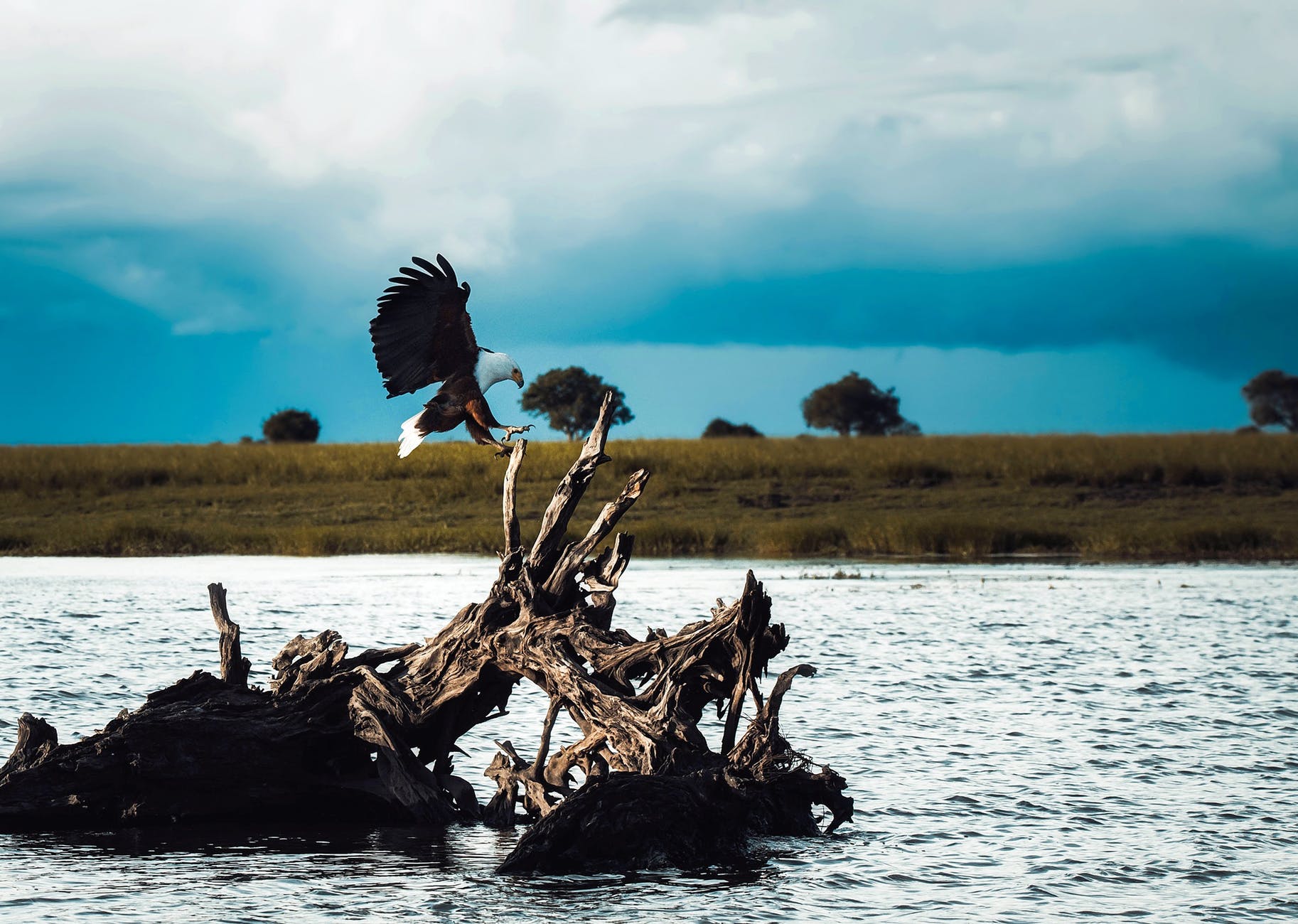
Photo by Pixabay on Pexels.com Bald eagles are often associated with wetland habitats.

Couple shares story about nesting mourning doves

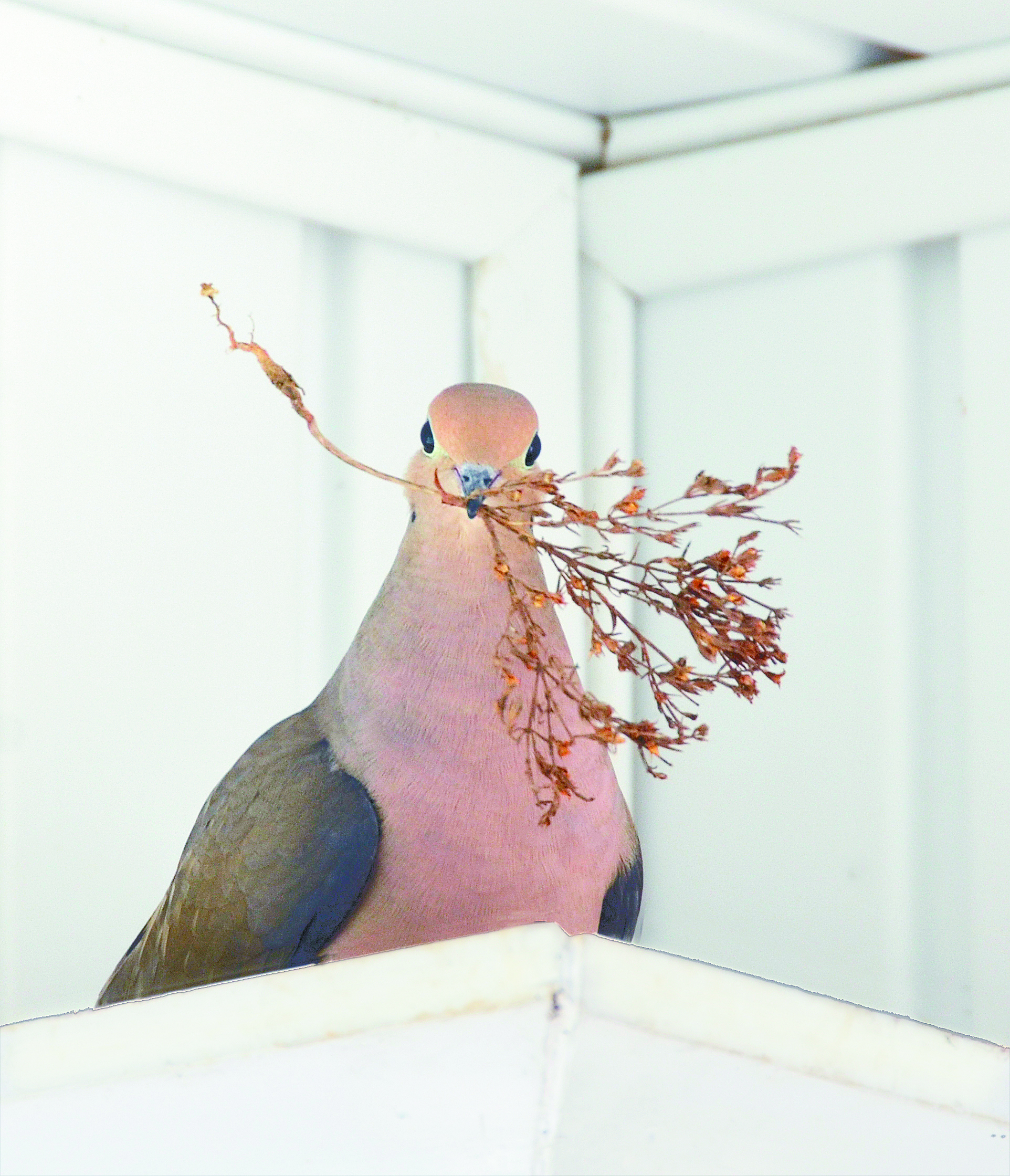
Contributed Photo by Tim Barto • One of the mourning doves nesting atop a porch column at the home of Star and Tim Barton in Telford arrives with a sprig of nesting material held in its beak. Tim’s photo of the dove even impressed the editors at “Smoky Mountain Living.” The magazine published the photo earlier this year.

Star Barto, a resident of Telford in Washington County, contacted me after reading my column on the Eastern phoebes nesting on my  front porch. Incidentally, the phoebes have now successfully fledged their young.

Star began her email by sharing that she and her husband, Tim, have been blessed with mourning doves building their nests on the top of one of their porch columns.  

“This is our fifth year with a ring side seat,” Star wrote. “They usually have two nestings per season that produce two babies each time.”

This year, the birds changed things up and the Bartos are celebrating  a third nest — atop the same porch column.  

“We call it our special version of an Airbnb,” she noted.

At first, the doves would fly each time Star or Tim opened the front door, but the birds gradually grew accustomed to their human landlords.  

Star wrote that their nest is in such a ideal location — safe, dry, under cover, high up — that the doves return year after year and do not doubt the safety of their habitat.  

“We turn off the porch light, of course, and work hard at minimizing disruption,” she wrote.  

“And they thrive,” Star added. “It is beyond thrilling to be able to see so up close and personal the magic of Mother Nature.”

The mourning dove is a common backyard bird across the country. It’s also considered a game bird.

According to the website, All About Birds, the mourning dove is the most widespread and abundant game bird in North America. According to the website, hunters harvest more than 20 million of these birds every year, but the mourning dove remains one of the most abundant birds with a U.S. population estimated at 350 million. The mourning dove also ranges into Canada and Mexico. 

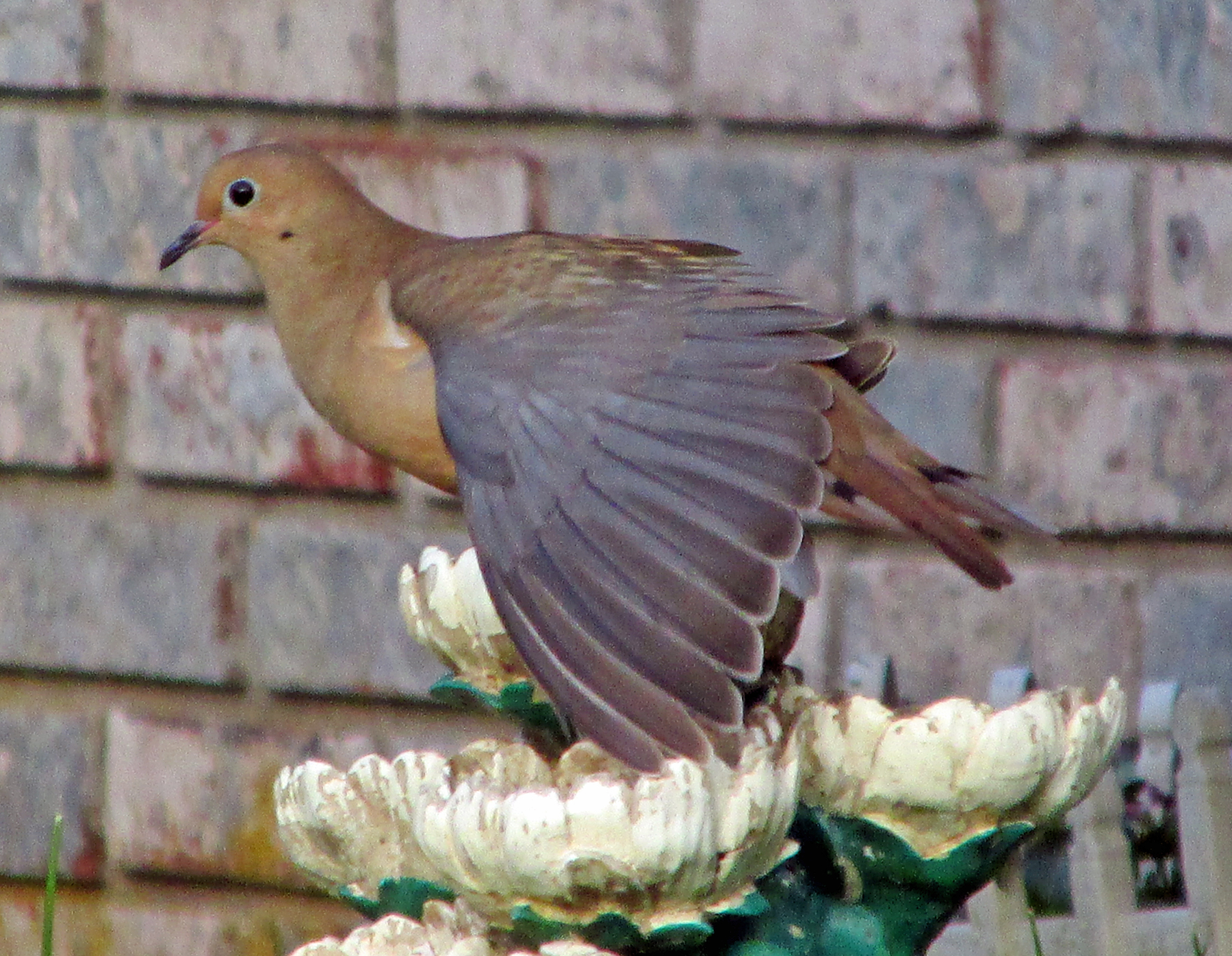
Photo by Bryan Stevens • A mourning dove stretches a wing while perched on a feeder.

The mourning dove gets its name from its mournful cooing, which has been likened to a lament. Birds are more vocal during the nesting season. 

Former common names for this dove include Carolina pigeon, rain dove and turtle dove. The mourning dove is a member of the dove family, Columbidae, which includes 344 different species worldwide.

From the standpoint of a scientist, there’s no real difference between doves and pigeons. In general, smaller members of the family are known as doves and the larger ones are classified as pigeons, but that’s not a firm rule.

Some of the more descriptively named doves and pigeons include blue-eyed ground dove, purplish-backed quail dove, ochre-bellied dove, red-billed pigeon, emerald-spotted wood dove, pink-necked green pigeon, sombre pigeon, topknot pigeon, white-bellied imperial pigeon, cinnamon ground dove, pheasant pigeon, crested cuckoo-dove and crowned pigeon.

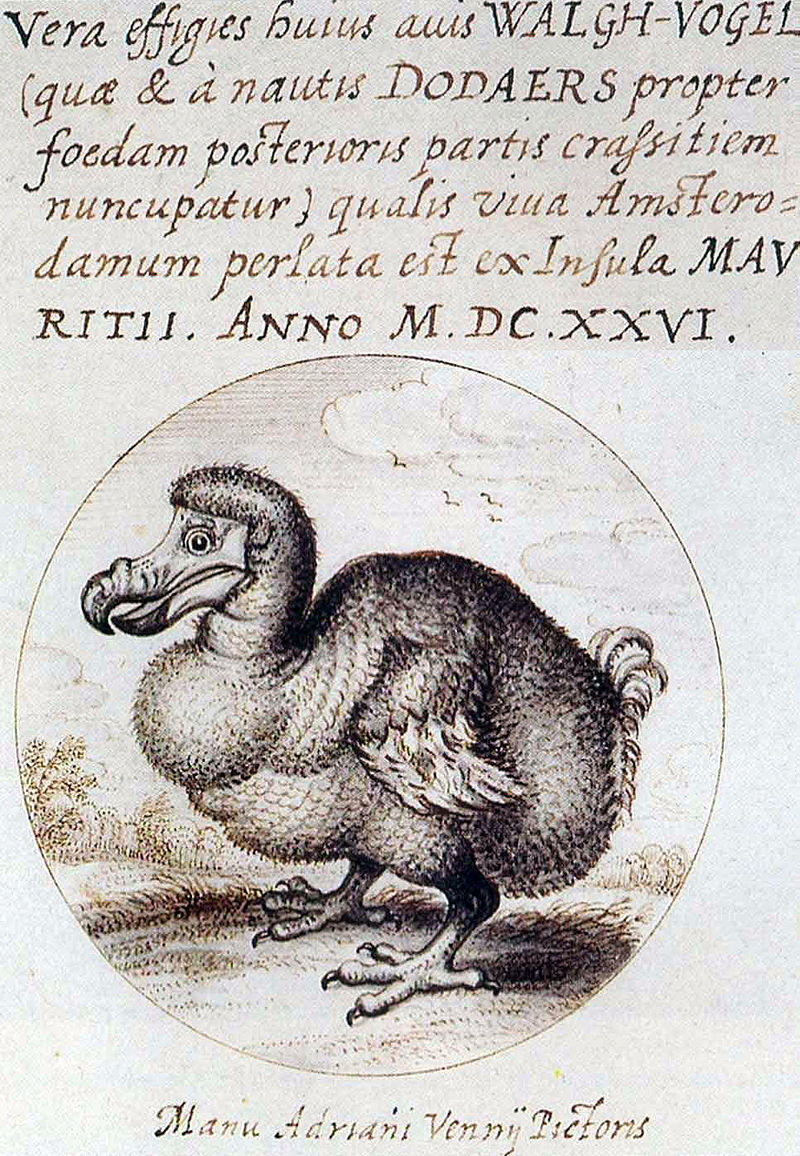
An early illustration of the dodo.

Arguably the most famous dove is the extinct dodo, a bird renowned as being  almost too stupid to live. The dodo almost certainly doesn’t deserve its reputation as a “bird brain.” The reason for the bird’s swift extinction after encountering humans can be explained by the fact that this large, flightless dove evolved on the island of Mauritius in the Indian Ocean. Largely defenseless, the dodo’s fate was sealed from the moment this bird was confronted with new arrivals — humans and affiliated animals such as rats, pigs and cats — at its home.  The results of these first encounters were catastrophic for the species.

The first mention of the three-foot-tall dodo in the historic record occurred in 1598 when Dutch sailors reached Mauritius. By 1662, the bird vanishes from the historic record. The bird disappeared so swiftly that for some time after it was often considered a mythical creature.

Other native doves in the United States include common ground-dove, Inca dove, white-winged dove and Key West quail-dove. The Eurasian collared-dove is an introduced species that has spread rapidly across the country and occurs in Northeast Tennessee. 

Doves are unusual among birds in feeding young a type of milk. Known as “crop milk,” both parents feed young in the nest with this substance produced in the crop, which is simply an enlargement of the bird’s esophagus. The crop is usually used for storage of surplus food, which is usually seeds. 

Young doves are known as squabs, and the crop milk they are fed early in life is rich in antioxidants, fats and proteins, allowing them to thrive and grow quickly. 

To share a sighting, make a comment or ask a question, please email me at ahoodedwarbler@aol.com. 

Tanagers are among world’s most colorful birds

Photo Courtesy of Jean Potter
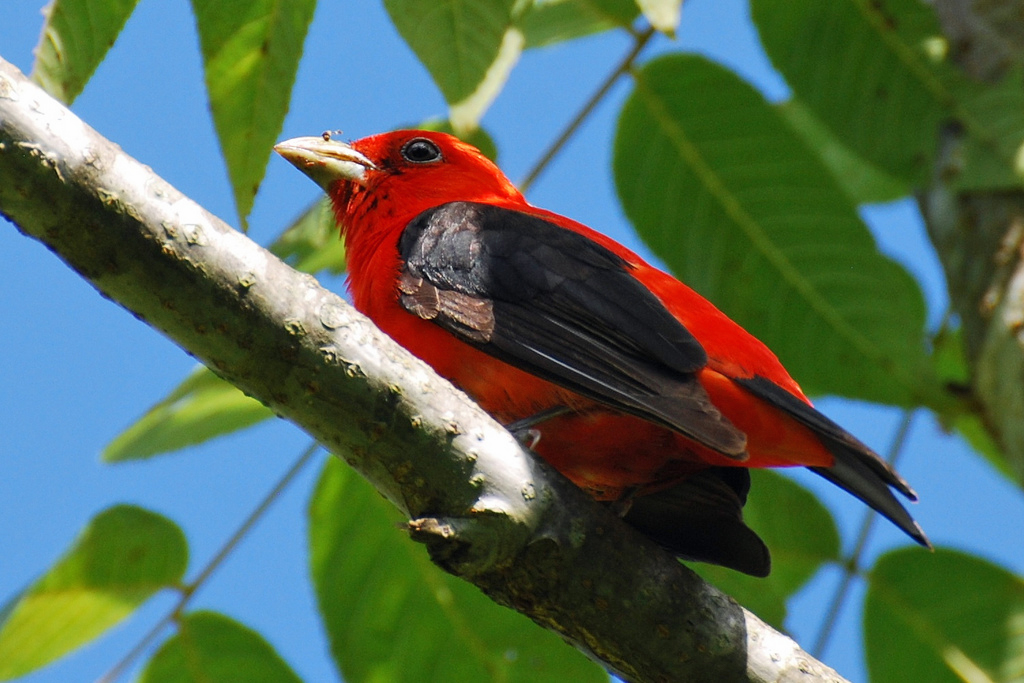
A male scarlet tanager brightens shadowy woodlands with a flash of tropical colors yet remains mostly inconspicuous in the forest canopy.

The daily chorus of songbirds greeting the dawn is usually welcome unless I’m feeling particularly sleepy. Carolina wrens are one of the first birds in residence to sing each day. This time of year they get plenty of accompanists, including American robins, Eastern phoebes, Carolina chickadees, Northern cardinals, Eastern towhees, red-eyed vireos, indigo buntings, hooded warblers, ovenbirds and others.

As June arrived, however, I began to take notice of the absent voice of scarlet tanagers. It wasn’t until June 9 that I heard the first male scarlet tanager of the season singing from the wooded ridge behind my home.

In late April and throughout May, once the oaks, the maples, the poplars and other trees begin spreading out new green leaves to create a concealing woodland canopy, a familiar song can be heard from the treetops. 

Upon first hearing it, listeners might mistake the hidden singer for an American robin. Listen a little closer, however, and the song sounds as if it is being delivered by a robin stricken a bit hoarse with a sore throat.

The producer of the hoarse but melodic song is a scarlet tanager, one of the most showy birds of Eastern woodlands from April to early October. Like the warblers, vireos, flycatchers and other songbirds, the scarlet tanager is migratory. They spend the winter months in the tropical forests of Central and South America. The scarlet tanager is better attired than most birds to provide us a glimpse of what life must be like in the tropical rain forests, which are a riot of color and sound.

It takes only one sighting to sear the vision of these vibrant birds into our retinas, as well as into our memories. The scarlet tanager boasts a brilliant plumage of crimson red paired with black wings and tail. Of course, this is the male. The female scarlet tanager makes no real claim to the common name with her comparatively drab greenish plumage. However, the scientific name, Piranga olivacea, gives a nod to the olive-green plumage of females, young males and even adult males when molting their feathers.

Although once nominated as a candidate for state bird by the school children of Minnesota, the scarlet tanager ultimately failed to gain the designation. Instead, as perhaps is fitting for the “Land of 10,000 Lakes,” the common loon represents Minnesota as official state bird.

The related summer tanager is less widespread in Northeast Tennessee, but males of this species are no less dramatic in appearance than the Scarlet Tanager. Male summer tanagers are a rosy-red over all their body. Females, with a dull greenish plumage, are relegated to the background. She can be distinguished from her counterpart, the scarlet tanager, because of their darker wings and larger bills.

The summer tanager holds the distinction of being the only all-red bird in North America. Birds like Northern cardinals and scarlet tanagers also have some black in their plumage.

I’ve seen summer tanagers at Steele Creek Park in Bristol and Willow Springs Park in Johnson City. Sadly, over the years my sightings of this attractive songbird have been few and far between. My most memorable observation of a male summer tanager took place many years ago during a spring visit to Fripp Island, South Carolina. Most of the summer tanagers I have observed in Northeast Tennessee have been females.

On the other hand, I usually have a few scarlet tanagers in residence around my home during the summer months. If the woodlands at my home fail to attract this bird, I can usually make a visit to higher elevations on Roan Mountain, Unaka Mountain or Holston Mountain to gain an exciting glimpse of this beautiful bird.

Worldwide, there have traditionally been about 240 species of tanagers. Experts have changed some of the ways they classify tanagers, so that figure is no longer set in stone. Tanagers are a New World family of birds, concentrated mainly in the tropics.

In the western United States, the scarlet and summer tanagers are replaced by Western tanagers and hepatic tanagers. During a visit to Salt Lake City in Utah in 2006 I saw several Western tanagers.

Some of the world’s other tanagers are known by extremely descriptive names, including flame-colored tanager, green-headed tanager, golden-chevroned tanager, azure-shouldered tanager, fawn-breasted tanager, saffron-crowned tanager, metallic-green tanager, turquoise tanager, scarlet-bellied mountain tanager and diademed tanager.

A print of Scarlet Tanagers by early North American naturalist and painter John James Audubon.

Scientists have recently given fresh consideration to the relationship of many tanagers to the other birds of the world. As a result, many of the North American tanagers are now closely allied with such birds as Northern cardinal and have been pushed into a tenuous relationship with tropical tanagers.

The scarlet tanager is not typically a feeder visitor, but you can lure these birds with orange slices placed in special feeders or simply spiked onto the branches of backyard trees. As an added bonus, orange slices can also attract birds such as baltimore orioles and gray catbirds.

Fond of fruit, the scarlet tanager incorporates various berries into its diet. Landscape around your home with fruit-bearing trees such as mulberry, serviceberry and wild cherry to make your yard more inviting to these elusive bird.

Yes, the scarlet tanager is more often heard than seen, but it is a bird worth seeking out. A sighting is guaranteed to impress. Seeing a scarlet tanager will almost make observers feel like they’ve been dropped into a tropical jungle instead of standing beneath a woodland canopy in the Southern Appalachians.

I’ll be participating in some summer bird counts over the next few weeks, so I am hopeful that my 2022 drought of scarlet tanager sightings will soon be at an end.

Culprit emerges in ‘murder mystery’

Photo by Tom Ferguson/Pixabay • A sharp-shinned hawk perches at the edge of a bird bath. The raptor’s talons, which are on full display, help explain this bird’s efficiency as a predator. 

Darlene Bloomfield emailed me from her home in Parry Sound, Ontario, in Canada. She wanted my help in solving an avian “whodunnit” type of mystery. 

“We had both a robin and a brown thrasher nesting in our cedar hedge,” Darlene wrote in her email.

“Both seemed to have babies,” she added. “The other morning we found a mound of robin feathers on the ground in front of the hedge along with many tiny feathers.”

She also noted that the robins are no longer around.

“Would a thrasher kill a robin?” Darlene asked. “We have seen them chasing each other.”

She also noted that they didn’t find the bodies of the dead robins.

So, in a case perhaps best filed under NCIS Ontario, I looked at the clues and responded.

Robins and thrashers are about the same size and will skirmish if they have to defend their territory, but sadly the evidence points to another culprit.

The little mound of feathers sounds like what a hawk (likely a sharp-shinned hawk or Cooper’s hawk) would leave behind after grabbing a meal in a yard or garden.

The absence of the bodies is also explained. The predatory hawk likely dined on robin and left only the plucked feathers as evidence. 

I expressed sympathy that the incident happened. I’ve been somewhat light-hearted in my relation of the mystery in this column, but it’s important to note that hawks and other predatory creature are not evil. They are not villains. They are doing what they were designed to do. 

The sharp-shinned hawk and its larger relative, the Cooper’s hawk, are classified as accipiter hawks. The sharp-shinned hawk and Cooper’s hawk are the two raptors most often encountered by people who feed birds. Part of the family of Accipiter hawks, these two species are widespread in woodlands.

The Cooper’s hawk is larger, often described as similar in size to an American crow. The Sharp-shinned, on the other hand, is usually described as the size of a dove. There’s some overlap in size, so it is not the only reliable means of identifying these hawks. For example, female Sharp-shinned hawks are roughly equivalent in size to a male Cooper’s hawk. As with many raptors, the female is larger than the male in both these species.

There are some other things to look for in telling these species apart. For instance, adult Sharp-shinned hawks often look like they have a dark cap or hood. The eyes on a sharp-shinned hawk also look like they are halfway between the front and back of the head. In addition, the head itself looks small in comparison to the overall size of this hawk’s body.

These two species feed heavily on songbirds, which causes some bird-lovers distress. I like to view predation incidents as good examples of how the the natural world is good at keeping things balanced. 

The sharp-shinned is really beautiful, especially for a hawk. Preying on songbirds doesn’t make them “bad” birds. They’re extremely efficient predators, and if you’ve ever witnessed one of these raptors in action, you can’t help but be impressed by both the power and precision deployed by these raptors in capturing prey.

The Accipiter genus of hawks includes about 50 species. In Northeast Tennessee, as well as across much of North America, the two common species are sharp-shinned hawk and Cooper’s hawk. A third species, the Northern goshawk, is a rare visitor to the region.


The Northern goshawk is a large, powerful hawk, and it is also fiercely defensive of its nest. This hawk is known to attack other raptors, mammals and even humans that stray too close to its nesting site.

Goshawk is a term derived from “goose hawk,” referring to the ability of this bird when utilized in falconry to take down such large prey as geese.

Other Accipiter hawks around the world include spot-tailed sparrowhawk, rufous-chested sparrowhawk, grey-headed goshawk, chestnut-flanked sparrowhawk, semi-collared hawk, red-thighed sparrowhawk and tiny hawk, which is one of the world’s smallest raptors. This diminutive hawk is about the size of a European starling and lives in Central and South America.

The sharp-shinned hawk will feed on a variety of birds, ranging in size from sparrows, warblers and thrushes to birds as large as ruffed grouse and mourning dove. This hawk also feeds on small mammals, reptiles and insects.

•••

To share a sighting, make a comment or ask a question, please email me at ahoodedwarbler@aol.com.

Brown thrashers return to rude, cold awakening

Photo by Bryan Stevens
Brown Thrasher perched in a Mimosa Tree.

Just when it appears safe to welcome spring, nature throws a curveball in the form of a snowstorm and a frigid but brief cold snap.

At least the snowstorm had a silver lining at my home when a pair of brown thrashers chose to make their spring arrival at the same time.

Many of the resident birds looked a bit peeved to find snow and ice after a bout of mild spring weather, but the two thrashers outside my window on March 12 looked absolutely stunned.

I’ve always thought that brown thrashers are expressive birds, but the expressions of these birds looked like a mix of bewilderment and consternation to find that their return coincided with a short-lived dip into temperatures in the single digits.

Karen Fouts, who resides in Marion, Virginia, commiserated with the thrashers, agreeing with my post that the poor birds appeared stunned by the change in the weather.

“I’ve been waiting for ours but hope they wait a week or so,” Karen wrote in a comment to my post.

Although a few brown thrashers linger in Northeast Tennessee through the winter season, the majority of these birds fly a little farther south for the cold months. Invariably, brown thrashers make their return in March and can be considered another of our feathered friends whose arrival represents more evidence that spring is returning.

Photo by Bryan Stevens
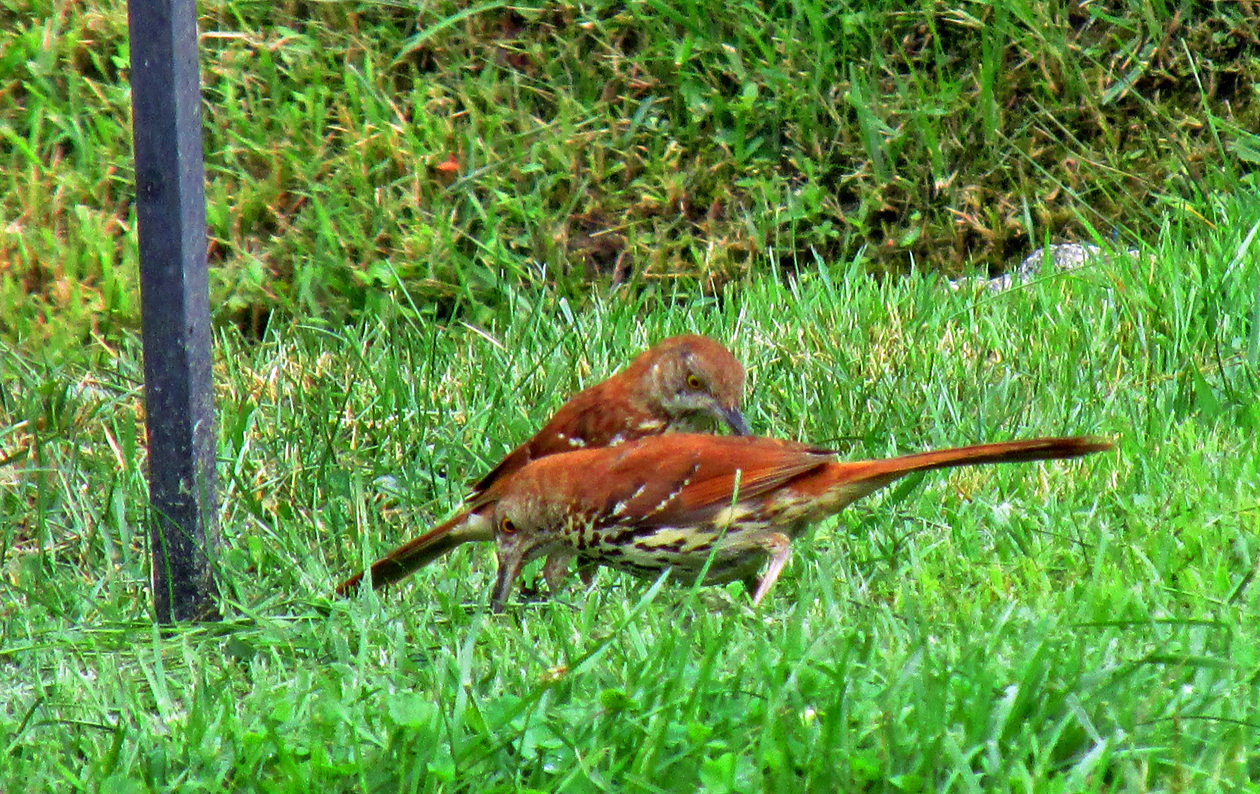
A pair of Brown Thrashers forage for food on the ground below a feeder.

A few years ago, quite by accident, I came across a brown thrasher nest. I hadn’t gone looking for it. The nest, expertly woven into a thicket of honeysuckle vines, was tucked beneath a sheltering eave of an outdoor storage building. I don’t think anything but a fortunate accident could have ever revealed the nest. I still remember peeking into that tangle of vines and seeing a golden eye staring back. The bird didn’t look in the least pleased that I had accidentally stumbled across her nest.

The otherwise extroverted brown thrasher, which prefers to nest in difficult-to-access, tangled messes, found the cluster of vines a perfect location.

For those not familiar with brown thrashers — relatives of the Northern mockingbird — they are known for their feisty and fearless protection of their nest and young. I’m probably fortunate the thrasher on her nest decided to choose stealth instead of attack. Sometimes, discretion is truly the better part of valor and the bird probably decided that, if she remained motionless, she would blend in well with her surroundings.

The brown thrasher (Toxostoma rufum) belongs to the family of “mimic thrushes,” which provides a label for a group of songbirds capable of imitating the songs of other birds. Mimidae, the Latin root for “mimic,” provides the scientific name for the family, which includes mockingbirds and the New World catbirds, as well as thrashers. The Northern mockingbird is best known for the ability to mimic, but relatives like the gray catbird and brown thrasher are also talented mimics.

The thrasher is a fairly large songbird about 11.5 inches long with a wingspan of 13 inches. Much of the body length comes from the bird’s long tail feathers. A thrasher weighs, however, only about 2.5 ounces.

Early American naturalist and artist John James Audubon painted a dramatic scene of Brown Thrashers defending their nest from an attacking snake.

The brown thrasher is not a picky eater. It’s known to eat everything from berries and nuts to insects and small lizards. It’s also aggressive in defending its nest and young. John James Audubon, a French-American ornithologist, naturalist and painter, painted quite a dramatic scene of a group of brown thrashers valiantly defending a nest from an attacking snake. The painting is so detailed that one must imagine Audubon based his work on a real-life experience. His work, originally painted in the early decades of the 1800s, still holds up today.

Incidentally, Audubon knew the brown thrasher as the “ferruginous thrush.” Another former common name for this species was “brown thrush.”

They are familiar birds in southern gardens. In fact, the brown thrasher is the official state bird of Georgia and also provided the name for Atlanta’s National Hockey League team, the Atlanta Thrashers. The thrasher became Georgia’s state bird due to passage of a Joint Resolution of the Georgia General Assembly in 1970.

Returning to the expressive nature of brown thrashers, I think it’s the bird’s golden eyes that make them seem so alert and attentive. Once they feel secure in a lawn or garden, they become less shy. As one might expect from a large songbird, thrashers have voracious appetites. Among the feeder fare I offer, thrashers seem to prefer suet cakes. They’re not woodpeckers, however, so the awkward attempts of these long-tailed birds to access the suet offer some comic antics for observers.

More birds are due to make their spring returns soon. The return of ruby-throated hummingbirds is a highly anticipated arrival for many people. These birds usually get back in the first weeks of April. As always, I hope to track the return of these tiny flying gems.

To share your first spring hummingbird sighting, send me an email at ahoodedwarbler@aol.com or contact me on Facebook. Please provide the date, time and location for your sightings.

Turkeys strutting their stuff as spring begins to take hold

Photo by Robert Pos/USFWS • A tom turkey displays to a hen in a ritual meant to attract the female turkey as a potential mate. Winter’s flocks will break up as the nesting season progresses. Raising young is a solitary affair for a hen turkey.

In my experience, rainy days always seem to bring out wild turkeys. 

I saw five of these large wild fowl in the fields adjacent to Bell Cemetery in Limestone Cove on my drive to work on the morning of March 16. I posted my sighting on Facebook and got some responses from friends who have had their own recent encounters with turkeys.

Erwin resident Michael Briggs posted that on another recent rainy day he counted 17 turkeys in his yard. 

Kaylynn Sanford Wilster, a resident of Piney Flats, posted photos of a large flock of wild turkeys roaming her yard. 

Few birds have featured so prominently in the history of the United States as the wild turkey. Thanks to the federal government eventually moving to protect the wild turkey population, this bird today is quite common across the nation. Fields bordering woodlands are a great place to observe wild turkeys strutting their stuff, especially during the autumn and winter seasons when turkeys form large flocks, which are also known as “rafters.” Watching a male turkey, or tom, fan his impressive tail feathers to get the attention of hens or intimidate other male rivals offers a peek into the thinking some of the nation’s founders held regarding the wild turkey.

While turkeys are often associated with early winter and the Thanksgiving holiday, they are actually rather active in the springtime. The large flocks are still holding together, albeit loosely, as male turkeys, known as toms, strut and fan their impressive tail feathers in an attempt to make an impression on as many hens as possible. 

Once this business of attraction is settled with successful matings, the tom turkey will go his own way and leave the hard work of incubating eggs and caring for young entirely to the hen. 

The Tennessee Watchable Wildlife website puts it like this: “The male wild turkey provides no parental care. The female alone incubates the eggs. The young follow her immediately after hatching and quickly learn to catch food for themselves. Several females and their broods may form flocks of 30 or more birds.”

The website also points out that the wild turkey is the largest nesting bird found within the Volunteer State. Males can tip the scales at a little over 16 pounds while the average female weighs slightly more than nine pounds. 

According to Watchable Wildlife, males begin competing to attracts females in late winter and early spring. The tom’s efforts feature both an audio and visual component. The male turkey produces his trademark “gobble” to attract any listening hens. When the female appears, he puffs up his body feathers and struts around her with his tail spread and wingtips dragging on the ground.

Tom turkey also compete with each other. The dominant males will mate with several females in one season, but the hen alone is left to usher a new generation of turkeys into the world.

The Watchable Wildlife site reveals that a turkey’s nest is a simple affair, usually fashioned inside a slight depression in the ground that is lined with dead leaves or grass, usually placed at the base of a tree or bush and concealed in thick vegetation.

The hen will lay from seven to 14 eggs, which she will then spend about 28 days incubating. 

According to Tennessee Watchable Wildlife, the young depart the nest shortly after hatching and follow the female. She will take them to favorable spots to forage for food. Young turkeys, known as poults, begin to fly at six to 10 days old. Male young remain with the female until the fall; female young remain with the female until the spring.

It’s always fun to follow the progress of a hen and her brood throughout the spring and summer. Fortunately, wild turkeys are fairly common these days, but that hasn’t always been the case. 

Although an important food source for early settlers and Native Americans, the wild turkey was subjected to extensive over-hunting. The population crashed, and by the beginning of the 1900s was on the verge of extermination in many areas of the country.

Reintroduction efforts by various government game agencies helped the wild turkey recover. Today, the wild turkey is found in every county in the state of Tennessee. The wild turkey population has also recovered nationwide. 

To share your own sighting, make a comment or ask a question, please email me at ahoodedwarbler@aol.com. 

Common raven is no bird brain

Photo by Alexas-Fotos/Pixabay • Common ravens, although native to the region, were not so common only a few decades ago. This much larger relative of the American crow is slowly becoming more commonplace in the area once again.

Since back in November, a common raven has been lurking in the woodlands around my home. I even hear the raven’s loud croaking when I’m inside the house. The local American crows have not rolled out a warm welcome for the interloping raven, but there seems to be an uneasy truce between the crows and the much larger raven.

Ravens are vocal birds. I got reminded of the many unusual vocalizations a raven’s capable of when the resident bird flew over, croaking loudly, on a recent brisk and sunny late afternoon. Between the croaks, the raven produced an uncanny imitation of a tinkling bell. The bird produced this bell sound several times before flying out of sight.

I’m not pulling any legs. Among their vocal repertoire, ravens can produce, usually in flight, a “bell” call. I’m not sure if this is a common vocalization. I only remember ever hearing a raven’s “bell” on only one other occasion. I was with a group of more established birders at Roan Mountain State Park when a raven flew overhead. Someone called out, “Listen to that.” I listened and heard my first raven “bell” call.

The strange thing is that I can find little about this strange vocalization when I researched the subject. According to the website “All About Birds,” common ravens calls vary from a low, gurgling croak to harsh grating sounds and shrill alarm calls. Scientists have placed their vocalizations into as many as 33 different categories based on sound and context. The most commonly heard is the classic gurgling croak, rising in pitch and seeming to come from the back of the throat.

The croak is their standby vocalization, which they produce often. The raven’s croak can be heard from a mile away. And, in defense of the poet Edgar Allan Poe and his “ominous bird of yore,” ravens are accomplished mimics. According to “All About Birds,” ravens can imitate other birds. Raven raised in captivity can even learn words. “Nevermore?”

From the opening refrain of “once upon a midnight dreary” in his poem, “The Raven,” Edgar Allan Poe established a somber mood and also helped cement the dark reputation of one of North America’s most misunderstood birds. Poe describes the bird that provides the title of his famous poem with adjectives such as “grim, ungainly, ghastly, gaunt and ominous.” His raven also speaks, although it has the limited vocabulary of a single word, “Nevermore.”

How else does the real common raven resemble the “bird of yore” in Poe’s classic poem? For starters, the raven is an intelligent bird. Authors of a scientific study conducted about 15 years ago posited the claim that ravens and crows are just as intelligent as some of the great apes. Although parrots are more famous for the ability to mimic human speech, captive ravens have proven capable of learning more words than even the most impressive vocabulary-endowed parrots. So, Poe was not wide of the mark when he gave the gift of gab to the raven in his poem.

In the United States, the raven is quite common in Alaska. In the lower 48 states, raven populations are somewhat more sporadic. These large birds have established strongholds along the Appalachian Mountains and in the American Southwest. The raven is a cosmopolitan bird known to range from North America and Greenland to Europe and Asia, as well as North Africa and the Canary Islands.

The common raven is mainly a scavenger, but this bird is also an opportunistic predator and will prey on a wide variety of animals, including arthropods, amphibians, small mammals, birds, reptiles, and carrion. Ravens are attracted to carrion and are not finicky eaters. They adapt quickly and are known to even consume garbage.

Its black plumage has undoubtedly contributed to the raven’s sinister reputation and its affiliation with many dark superstitions. According to Laura C. Martin’s book, “The Folklore of Birds,” notes that the raven is “loathed throughout Europe as a symbol of impending death and war.” She explains that the raven probably acquired these connotations because these birds fed on battlefield corpses. As indicated earlier, the raven is not a picky eater. Martin also points out that legend maintains that England will remain a powerful nation as long as ravens live in the infamous Tower of London.

Establishing the raven’s closest relatives is helpful in fully becoming acquainted with this species. The raven is a member of the corvid family, which includes birds such as crows, magpies, nutcrackers and jackdaws. The common raven is the largest bird among the corvids. This bird can achieve a wingspan of almost four feet. The average raven weighs about two-and-a-half pounds. Large individuals have been recorded with a weight of slightly more than four pounds, making the raven a contender for the title of world’s largest songbird.

Poe’s poem offers a dramatic introduction to a bird that has once again become rather common in the region, particularly at higher elevations. This bird is well-known for nesting on inaccessible cliffs. However, ravens are proving adaptable. In recent years, a pair of ravens has repeatedly nested beneath the grandstands at Bristol Motor Speedway. Ravens have nested annually at this location at least since the spring of 2013.

Poe’s well-known poem, first published in 1845, is often cited as evidence for Poe’s genius for rhyme and his ability to create a believable supernatural universe populated by dark forces and one particularly persistent raven. It’s more than a little sad and ironic that the magazine that chose to publish Poe’s poem paid him a mere pittance of $9 for his brilliant contribution to literature.

The Bible also offers some interesting tales involving ravens. The prophet Elijah, after falling afoul of a wicked king, went into hiding and was provided food by cooperative ravens. In the story of the Biblical flood, Noah first released a raven to determine if the waters had receded. When the raven didn’t return to the ark, Noah next released a dove. This bird later returned to the ark clutching an olive leaf, which proved that the flood waters had subsided.

Many cultures also consider the raven as a “bringer of magic,” and the bird is associated with many creation stories in Native American cultures. Unlike the European custom of designating black as an “evil” color, Native Americans teach that black can hold various meanings, including resting, healing and prophetic dreaming, but evil is not one of them.

Ravens and crows are similar, but ravens are much larger birds. In addition, ravens have wedge-shaped tails and crows have fan-shaped tails. The common raven also has a well-developed ruff of feathers on the throat, commonly called its “hackles.”

A “murder of crows” is a fairly well known collective noun for a flock of these birds. On the other hand, a group of ravens has many collective nouns, including a “bazaar,” “constable” and “rant” of ravens. For its alliteration, I’m fond of “a rant of ravens” and think it’s a shame that Poe’s raven was apparently a solitary bird.

Other species of ravens found around the world include dwarf raven, thick-billed raven, fan-tailed raven, brown-necked raven, little raven and forest raven.

I like ravens. I find them fascinating, but there’s still something that causes some shivers when one hears the guttural, loud croak of a raven. It remains difficult to completely dismiss the raven’s long history of association with the darker niches of the world.

On that note, here’s one final tidbit regarding the raven taken from Martin’s book. Cherokee tribes believed that ravens would visit villages where ill or dying people were present. In the absence of a village shaman to drive away the bird, the raven would invariably snatch the life of the ailing individual.

••••••

To learn more about birds and other topics from the natural world, friend Bryan Stevens on Facebook at https://www.facebook.com/ahoodedwarbler. He is always posting about local birds, wildlife, flowers, insects and much more. If you have a question, wish to make a comment or share a sighting, email ahoodedwarbler@aol.com.