

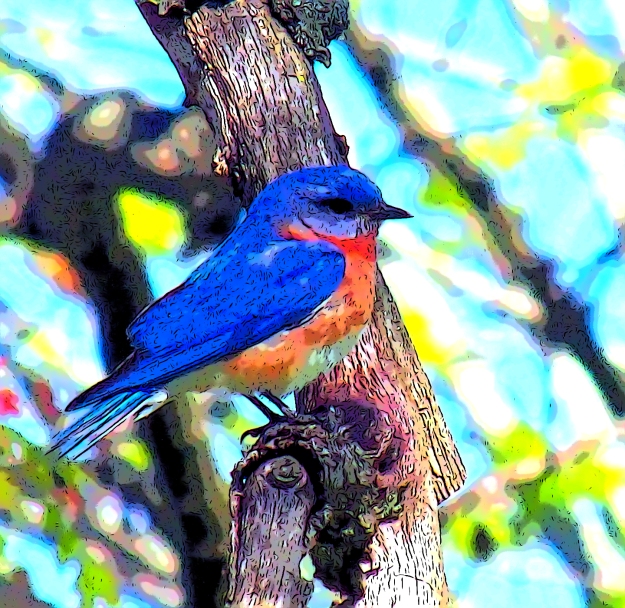
The Eastern bluebird is one of the most beloved American songbirds.
As we turn the calendar page from February to March, it’s usually cause for optimism. After some serious wintry weather in January and February, I’m getting my hopes up that winter’s worst is waning.
Regardless, some of our feather friends are already acting like spring has sprung. Perhaps it’s simply confusion caused by days that can veer from sunny, short-sleeve conditions to frigid snowstorms, but I tend to trust the instincts of our fine feathered friends.
One prominent bird in recent days has been the Eastern bluebird. I’ve heard male bluebirds singing whenever I venture outdoors. It’s no surprise. Bluebirds begin to scout for nesting locations as early as February, if not sooner. Especially on sunny mornings, male Eastern bluebirds produce their enthusiastic, warbling song even if there’s been a touch of frost overnight.
The Eastern bluebird is one of North America’s best-known cavity-nesting birds. About 85 species of North American birds use cavities in trees for nesting purposes. Cavity-nesting birds include ducks, such as buffleheads and wood ducks, as well as birds of prey such as Eastern screech-owls and American kestrels. Woodpeckers and nuthatches can excavate their own cavity in a dead or decaying tree.

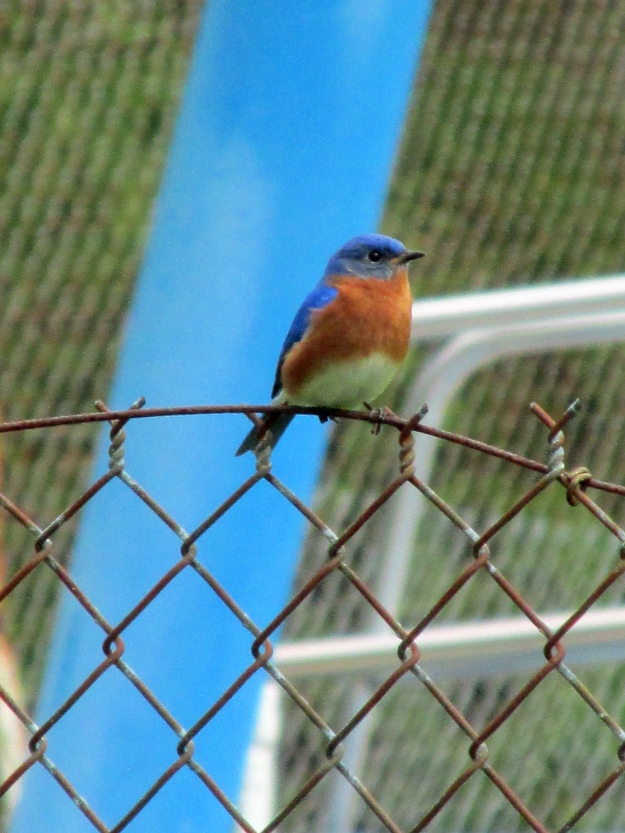
Photo by Bryan Stevens
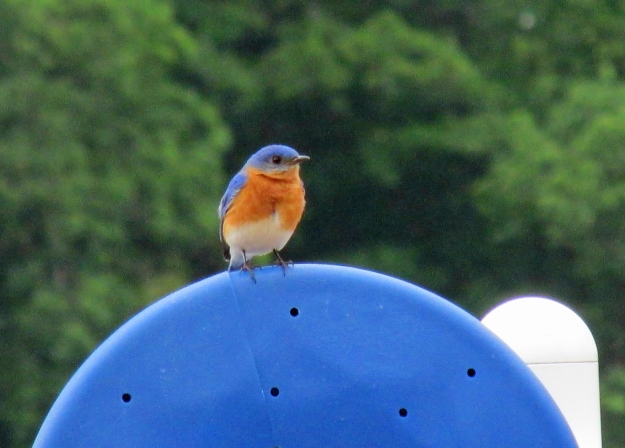
A male Eastern Bluebird perched on playground equipment at Winged Deer Park in Johnson City.
Due to compassion on the part of human landlords, bluebirds and other cavity-nesting birds don’t have to rely solely on natural cavities, which can be scarce real estate subject to some intense competition.
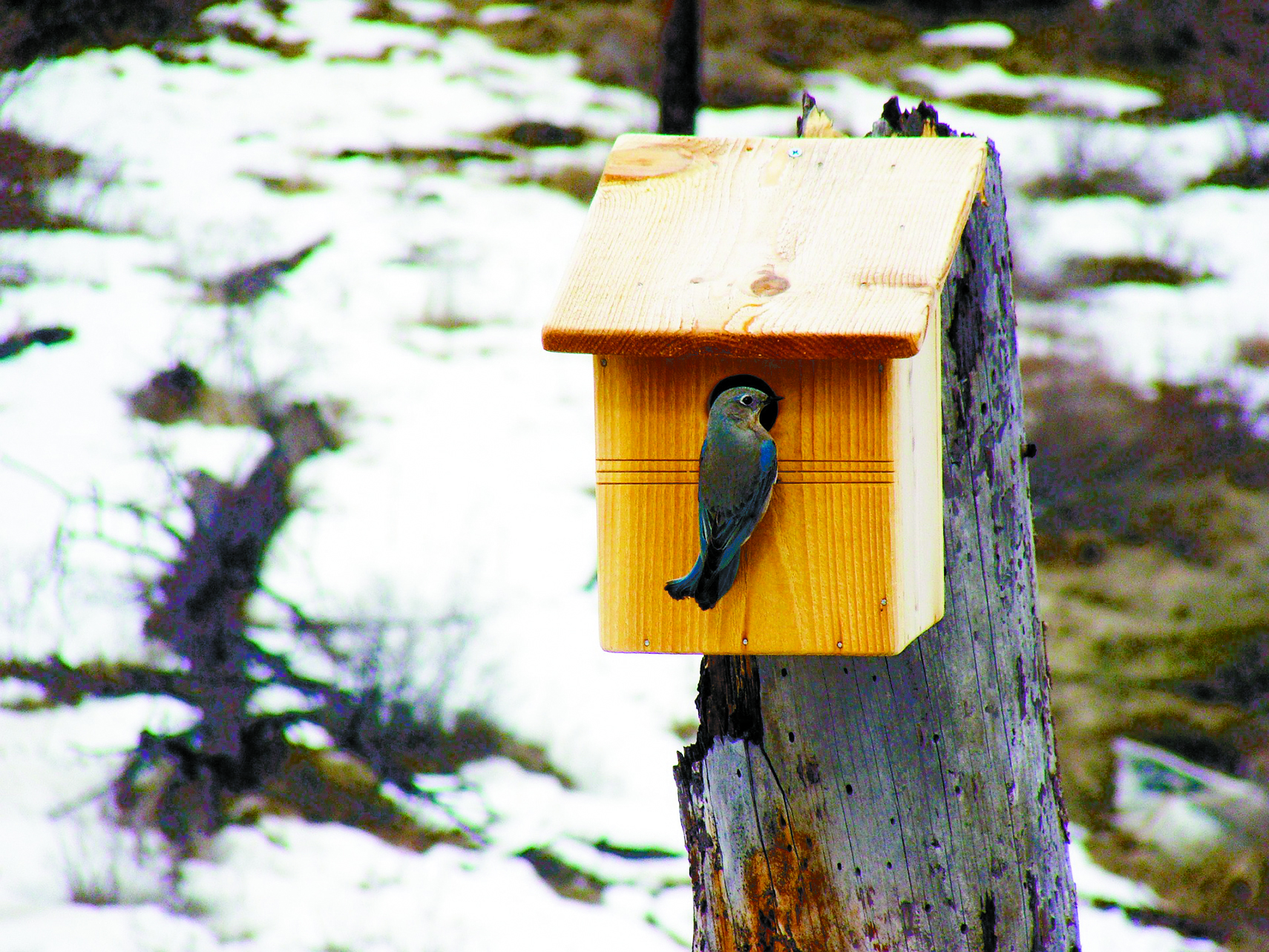
It’s easy to provide a nest box for bluebirds. When it comes to choosing a nesting cavity or a manmade bird box, male bluebirds take the lead, investigating and exploring potential sites before introducing females to the chosen real estate. If she accepts his choice, she will build the nest.
Tree cavities and bird boxes can also find use by bluebirds for secure locations for roosting overnight. According to the website Tennessee Watchable Wildlife, observers have documented bluebirds using nest boxes to stay warm during cold winter nights, packing eight to 12 individuals into one box. With the generated body heat from all those birds, I imagine that was one cozy box!
The website also noted that the oldest known Eastern bluebird in the wild reached an age of 10 years and six months. Given that most songbird live fairly short lives, that was quite an achievement.

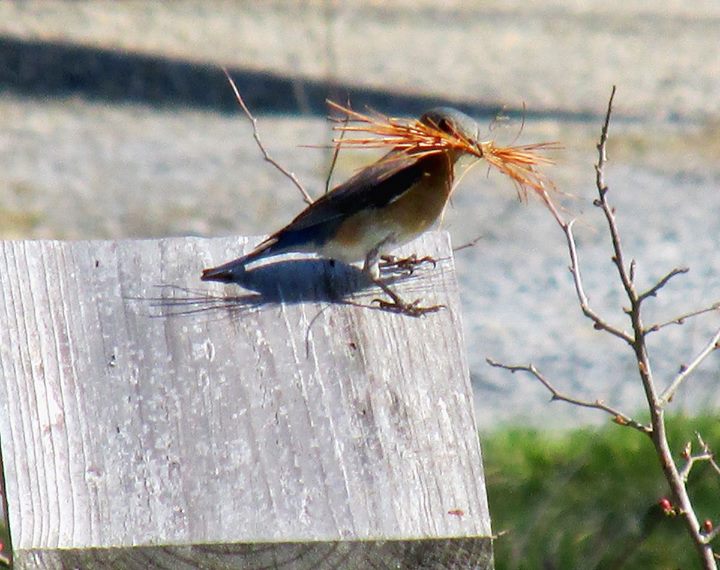
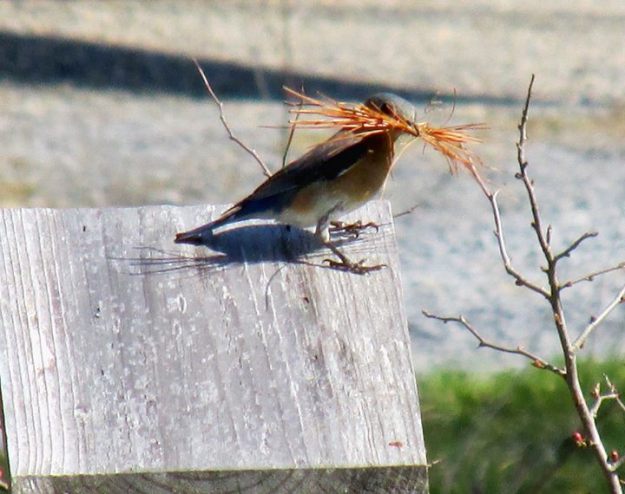
Photo by Bryan Stevens
A female Eastern Bluebird is shown with a beakful of pine needles gathered for nest construction.
For those interested in becoming bluebird landlords, check out nest box designs at the Tennessee Watchable Wildlife website. Several different nest box designs are available at the profile for the Eastern bluebird at tnwatchablewildlife.org.
If you’re not a do-it-yourself individuals, most lawn and garden centers, farm supply stores and speciality bird shops carry readymade bluebird boxes for purchase.
In addition to housing, food and water can be used to lure Eastern bluebirds closer. This bird doesn’t eat seeds, but it can be attracted with an offering of mealworms — live or freeze-dried – or commercially prepared peanut butter nuggets or suet cakes. A water feature in a yard is also a magnet for bluebirds and a variety of other bird species.
•••
Bryan Stevens has written about birds, birding and birders since 1995. To ask a question, make a comment or share an observation, please email him at ahoodedwarbler@aol.com.

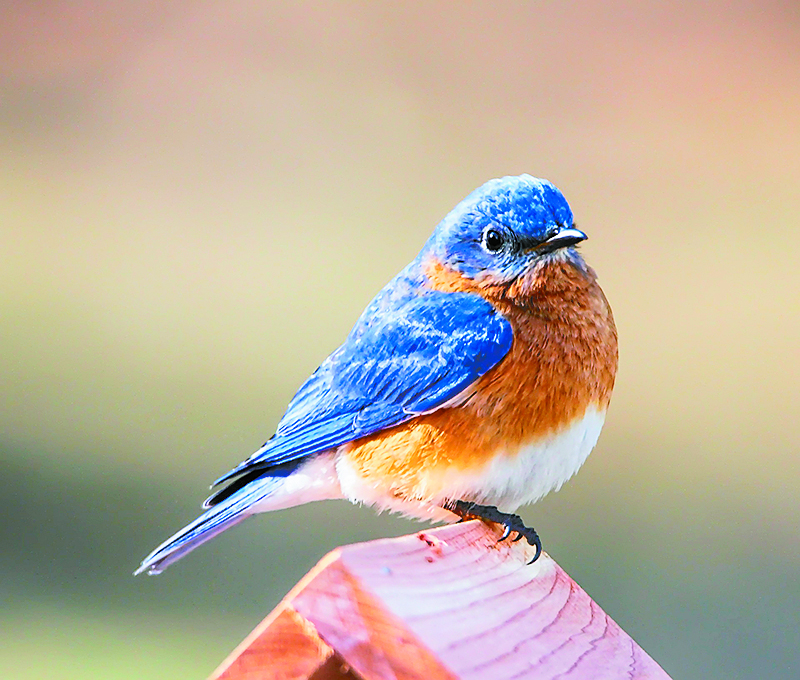
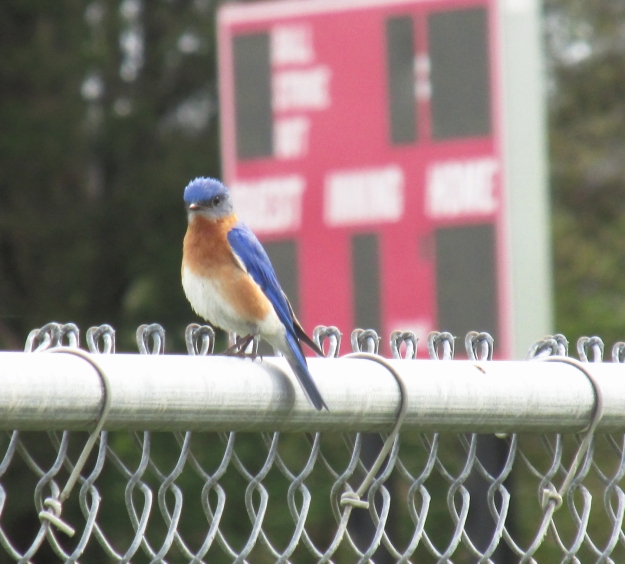
Photo by Bryan Stevens
Eastern Bluebirds are year-round residents in Northeast Tennessee.









 Our Fine Feathered Friends