Tag Archives: Bryan Stevens

Tiny kinglets, gnatcatchers lead the charge among spring’s returning birds

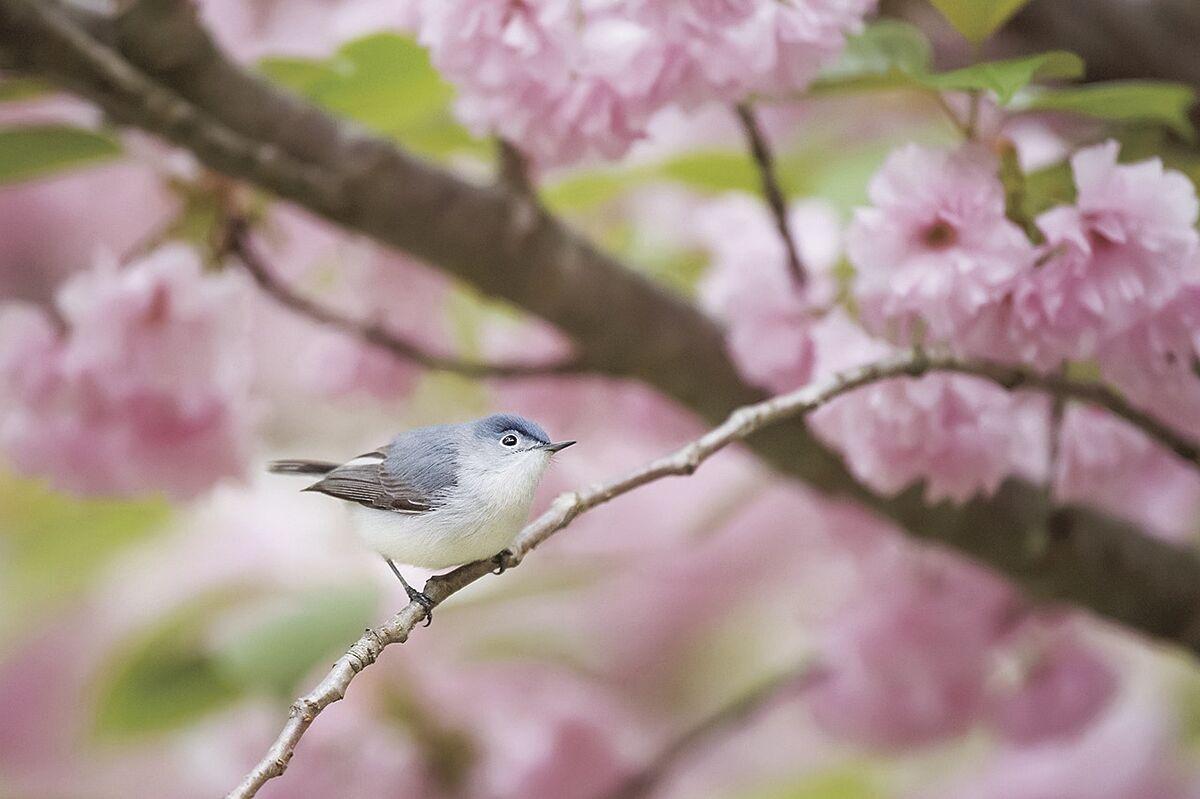
Photo by Pixabay • The blue-gray gnatcatcher’s diminutive size belies its defiant attitude. These birds are intensely territorial and brooks no intruders.

The ruby-crowned kinglets, which passed through last fall in October and November, have returned, retracing their migratory path for the spring season and making their presence felt at my home with their jittery call notes and songs.

Most of the more recent returning birds have been on the smaller side. In addition to ruby-crowned kinglets, which arrived on April 1, I saw and heard a tiny blue-grey gnatcatcher on March 31.

As their name suggests, kinglets are tiny birds. In fact, about the only North American birds smaller than kinglets are some of the hummingbirds. The kinglets, known outside North America as “flamecrests” or “firecrests,” belong to the family, Regulidae, and the genus, Regulus. The family and genus names are derived from a Latin word, regulus, which means “rex,” or “king.” The name was apparently inspired by the colorful crown patches, often red, orange or gold, that resemble the royal “crowns” of kings. In addition to the two North American species, four other species of kinglets can be found in North Africa, Europe and Asia.

The gnatcatcher is also one of our smaller birds. I’ve always though that blue-gray gnatcatchers resemble a shrunken mockingbird. Like quarrelsome mockingbirds, gnatcatchers are noisy, scolding songbirds.

They are also determined to protect their nesting territories at all costs and will attack much larger birds. In North America, the gnatcatcher ranks in size with birds like kinglets and hummingbirds. Despite its diminutive status, the gnatcatcher acknowledges no superiors. According to the All About Birds website, blue-gray gnatcatchers are “fiercely territorial” and use vocal displays and postures to in intimidate other birds. They may chase a rival as far as 70 feet. If all this fails to deter an intruder, a gnatcatcher will escalate to midair confrontations.

Gnatcatchers don’t hesitate to call for reinforcements when warranted. With persistent squeaking they will drum up a brigade of feisty, feathered fighters to repel intrusions by potential predators too large for a gnatcatcher and its mate to handle on their own.

Ruby-crowned Kinglet

There are two species of kinglets in North America.

Although similar in size and overall coloration, the ruby-crowned and golden-crowned kinglets are easily distinguished from each other. Side by side, the two North American kinglets are easy to identify. The golden-crowned kinglet has a striped facial pattern formed by bold black and white stripes. The ruby-crowned kinglet, on the other hand, has a bold white eye ring but no striping. The golden-crowned kinglet has an orange crown patch, while the ruby-crowned kinglet has a red crown patch that is, more often than not, kept concealed. Both sexes of the golden-crowned kinglet possess a yellow crown patch, but only the male ruby-crowned kinglet boasts a scarlet patch of feathers atop the head. Observers can expend a lot of energy trying to get a look at the crown patches, which are typically only displayed when the bird is agitated.

There are 17 species of gnatcatchers. Most of these species reside in Central and South America. Some of the other species found in North America include California gnatcatcher and black-capped gnatcatcher.

Kinglets are very active birds. If warblers can be described as energetic, the kinglets are downright frenetic in their activities. The kinglets almost never pause for long, flitting from branch to branch in trees and shrubs as they constantly flick their wings over their backs. These bursts of hyperactivity can make them difficult to observe. Although small in size, these birds more than compensate for it with a feisty spirit that does them well through the harsh winter months.

Gnatcatchers are also constantly on the move, flicking their tails and darting through the branches of trees just starting to put out new green leaves. They glean caterpillars and small insects from the undersides of leaves to help fuel their demanding metabolism.

Kinglets and gnatcatchers often join mixed flocks comprised of other species of birds, some of which are regular feeder visitors. Perhaps by observing their flock counterparts, some kinglets have learned to accept feeder fare such as suet, meal worms and chopped nuts. Away from feeders, kinglets mostly feed on a range of small insects and arachnids. Gnatcatchers are strictly eaters of insects, but while a feeder holds no attraction for them, their curious nature often makes these tiny bird quite approachable.

Normally, kinglets have a rather fleeting lifespan. These tiny birds can be considered old if they live three or four years. There are always exceptions. The oldest golden-crowned kinglet on record was six years and four months old. That individual, a male, was documented by a bird bander in 1976, according to the website All About Birds.

Likewise, gnatcatchers live brief lives. The oldest known blue-gray gnatcatcher was a male, and at least four years, two months old, when it was recaught at a banding station in Pennsylvania and rereleased, according to the All About Birds website.

•••

I’m still waiting for the smallest of the small to make its spring appearance. Ruby-throated hummingbirds are back, although I haven’t seen one yet. To share your first hummingbird sighting of spring, email me at ahoodedwarbler@aol.com.

 

Blue jays bold, bossy backyard visitors

Photo by edbo23/Pixabay A blue jay grabs a peanut from a feeder.

At my own home, blue jays have an easy life. They’re so much bigger than most of the other birds that visit my feeders that they can be a little bossy toward their smaller kin. All are welcome, though.

The blue jay is the smallest member of the Corvid family in Tennessee. This bird’s larger relatives in the state include the American crow, fish crow and common raven.

The blue jay, which is typically 10 to 12 inches long, is one of the largest songbirds to visit our feeders. They’re fond of sunflower seed, peanuts, suet and other feeder fare. Blue jays are quite noisy and produce a variety of vocalizations. They’re also capable of mimicry and can mimic in convincing fashion the calls of red-tailed and red-shouldered hawks.

While they are primarily woodland birds, blue ays are very adaptable and capable of thriving in suburban parks and other less wild areas. In the fall, acorns are a favorite food. There are times in autumn when almost every blue jay I see has an acorn n its bill. They also tend to stash food for future days, and this habit has also helped re-forest oak woodlands.

Jays are social birds and form flocks, which offers some protection from predators. It only takes one sharp-eyed bird in a flock to sound an alarm to protect the entire group.
Other birds can also detect blue jay alarm calls and react accordingly.

Accipiter hawks — Northern goshawk, Cooper’s hawk, sharp-shinned hawk — are the primary predators on blue jays. They share some of the same habitat and the agile hawks are usually able to outmaneuver the slower flying jays.

I was a little surprised to discover that the blue jay has never been chosen as an official state bird, although it does serve as the official bird for the province of Prince Edward Island in Canada.

Blue jays are undeniably striking birds. They are bright blue on top and white to gray on its throat, chest and belly. They have white wing bars and black and white banding on the tail. Its bill, legs and feet are black. The bird also has a black collar on its lower throat. At a glance, all blue jays — male and female — look alike. However, experts have determined that the black throat collars are subtly different from bird to bird and may help members of a flock recognize each other.

Larger birds typically have longer life spans than small ones. The medium- sized blue jay will probably live longer than a wren or sparrow. The oldest known wild, banded blue jay was at least 26 years, 11 months old when it was found dead after being caught in fishing gear, according to the website All About Birds. It had been banded in 1989 around Saint Pierre and Miquelon, which is a French archipelago south of the Canadian island of Newfoundland. He dead individual was found in the same area in 2016.

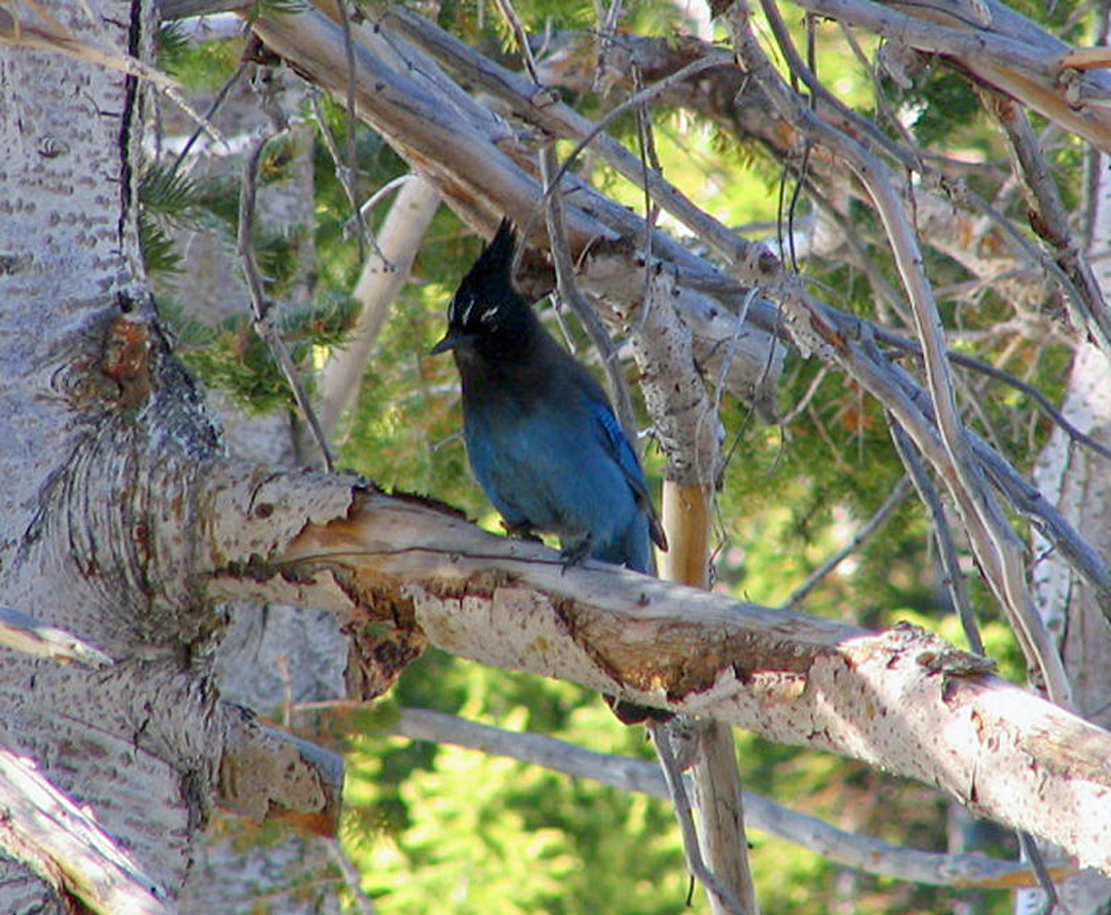
There are other species of jays in the United States, including the Steller’s jay, which is the western counterpart of the bue jay, as well as Western scrub-jay, Florida scrub-jay and pinyon jay. Worldwide, there are about 50 species of jays, which are closely related to crows, magpies and other species in the genus of Corvidae.

Some of the descriptive names for other jays include white-throated magpiejay, gray jay, green jay, purplish jay, azure jay, violaceous jay, turquoise jay, beautiful jay, silvery-throated jay, azure hooded jay and black-headed jay.

The smallest of the world’s jays is, appropriately enough, named the dwarf jay. It is eight to nine inches long and weighs about 1.4 ounces.

During two visits to Salt Lake City in Utah in 2003 and 2006, I added a couple of jays to my life list, including Western scrub-jay and Steller’s jay. I also saw black-billed magpies, a close relative of jays.

Photo by Bryan Stevens • A Steller’s jay found at Snowbird, a ski resort town near Salt Lake City, Utah.

•••

To share sightings, ask a question or make a comment, email me at ahoodedwarbler@aol.com.
Majestic canvasback among region’s wintering waterfowl

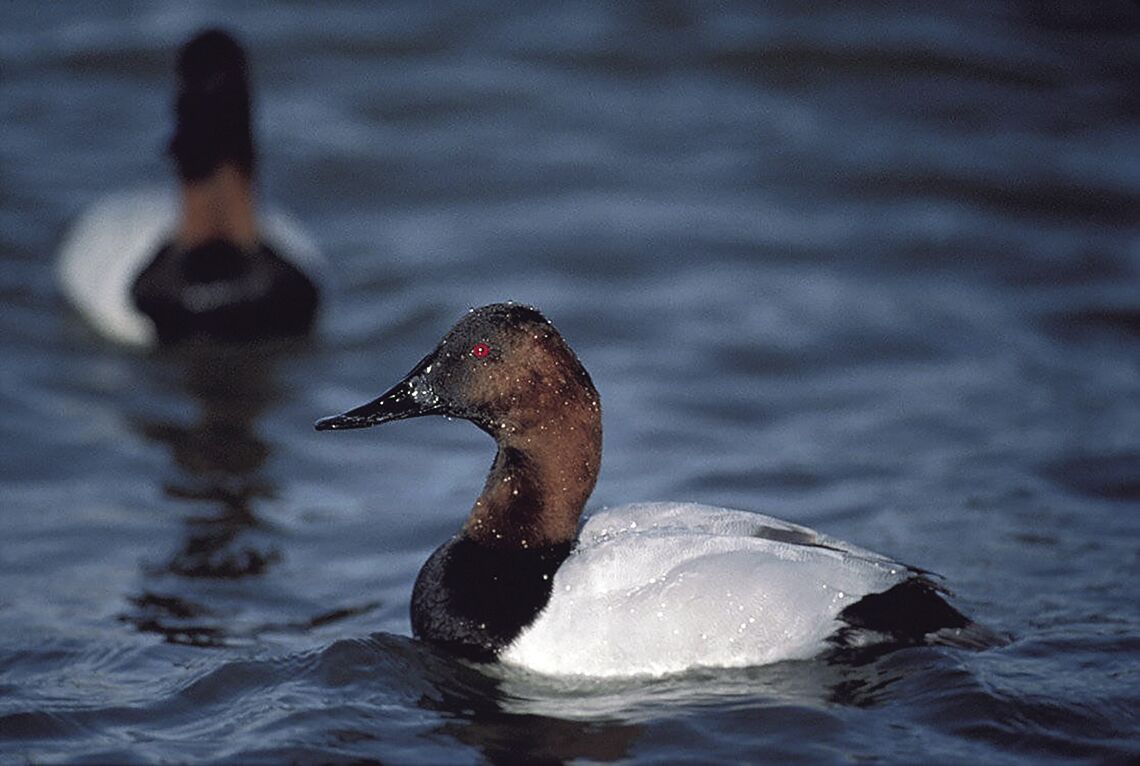
Photo by U.S. Fish & Wildlife/Eugene Hester • The red eye of a male canvasback stands out in as striking a fashion as does the duck’s dark and light plumage.

Erwin resident Joe McGuiness, who is also a fellow member of the Elizabethton Bird Club, alerted me recenntly to the presence of a canvasback drake at a pond along the town’s linear trail.

This duck was with a couple of redheads, also a species of duck, in the pond spanned by a boardwalk in the industrial park on the south side of Erwin. Some birds hold special meaning with me. Although its a natural question for a bird lover to be asked, I have difficulty pinpointing a single bird as my favorite. One of my overall favorite birds is the Northern cardinal. Among the summer-visiting warblers, the hooded warbler has long been my favorite. With shorebirds, the marbled godwit has long been at the top of my rankings. My favorite bird of prey is the American kestrel or, as I first learned of this raptor in the little “Golden Guide to Birds,” the sparrow hawk. Among owls, I have a soft spot for Eastern screech-owls.

I have a favorite duck, too. It’s the canvasback, which is a species of waterfowl that I don’t see very often, which makes observations even more special. I saw my first canvasback in the mid 1990s during a winter visit with my parents to Wilbur Lake near Elizabethton, Tennessee. We always liked visiting this small reservoir during the colder months to view the buffleheads and any other ducks that happened to visit this small mountain lake. On this particular occasion, a flock of redheads had also arrived. While viewing these ducks, we noticed a member of the flock that looked different from the others. Specifically, it was larger and whiter than the redheads. After a brief consultation with my copy of Roger Tory Peterson’s “A Field Guide to the Birds of Eastern and Central North America,” I identified my very first canvasback.

Since that time, I’ve observed canvasbacks at other locations in northeast Tennessee and southwest Virginia. It’s been awhile, but I have observed these ducks at Osceola Island Recreation Area below Holston Dam and at Musick’s Campground at South Holston Lake. Back in January and February of 2014, some canvasbacks took a liking to the pond at Erwin Fishery Park. I’ve also observed canvasbacks on the Watauga River in Elizabethton and on the Holston River in Kingsport. I saw eight canvasbacks on Feb. 22, 2015, on the Watauga River, not very far from where I saw my very first one back in the 1990s. The flock, which consisted of all males, represented a rather high number for this duck in the region.

Recent winter storms that have plowed through the region have brought some unusual ducks. A few days before he notified me of the canvasback, Joe also informed me about a pair of Northern shovelers at Erwin Fishery Park.

A male canvasback is unmistakably regal with a sloping profile that instantly distinguishes it from other ducks. Males, or drakes, have chestnut-red heads, white bodies, black breasts and rears and bright red eyes. The distinctive bill is also black. Females, like many other ducks, are drab and brown but share the distinctive bill, helping to separate them from such relatives as female redheads.

Photo by Bryan Stevens • Canvasbacks on the Watauga River in Elizabethton.

The canvasback is also a fairly large duck with males reaching a body length of 21 inches. Females are only an inch shorter in body length. Drakes weigh an average of 2.7 pounds while hens can weigh 2.5 pounds.

Canvasback breed in prairie potholes in the western United States and Canada. I got the chance to see many of these ducks in their nesting habitat during a trip to Utah in May of 2006. My visit provided very memorable observations of large flocks of these impressive diving ducks. I found them in temporary ponds in flooded fields. Utah had enjoyed abundant rainfall that spring, which was no doubt welcomed by breeding ducks. The trip also yielded observations of such ducks as cinnamon teal, redhead, red-breasted mergansers, ring-necked ducks and gadwalls, as well as other unique wetland-loving species as white-faced ibis, yellow-headed blackbird and Wilson’s phalarope.

During winter, the canvasback usually prefers large open bodies of water, including lakes, ponds and sheltered bays. These ducks are largely vegetarian, although they do consume some animal matter, including insect larvae, snails and other mollusks. This duck’s scientific name, Aythya valisineria, which refers to a species of plant that canvasbacks consume in great quantities. Vallisneria americana, which is often called wild celery or water-celery, doesn’t resemble the vegetable known as celery. These wild plants are long, limp and flat, which led to other common names such as “tape grass” and “eelgrass.”

The canvasback is member of the genus, Aythya, which is comprised of a dozen species of diving ducks. The other members of the genus in North America include greater scaup, lesser scaup, redhead and ring-necked duck. The related tufted duck is a rare visitor to the United States. They’re described diving ducks because they dive under the surface to search for food, rather than dabble around pond edges and shorelines like the ducks known as “dabblers.”

Two members of the genus — Madagascan pochard and Baer’s pochard — are endangered species. In March of 2013, a survey found the population of the Madagascan pochard was about 80 individuals. When surveys found a worldwide population of perhaps fewer than 1,000 individuals, Baer’s pochard was reclassified as “critically endangered” in 2012. The canvasback has never declined to the low levels of these relatives, but it has been a bird that has required some protective oversight from the federal government. At times, this has included exemptions from duck hunting seasons.

Canvasback populations are stronger these days but haven’t been robust for quite some time. According to the Duck Unlimited website, the population of this stately duck has seen some improvement. In 2009, a population survey by the U.S. Department of Fish and Wildlife showed an increase in canvasbacks from 488,000 to 662,000 individuals. According to the Ducks Unlimited website, this population spike took place in the wake of a hunting ban on canvasbacks during the 2008-09 waterfowl season.

•••

To share a sighting, ask a question or make a comment, email me at ahoodedwarbler@aol.com.


Column, which is turning 28 years old, began with a profile on juncos

Photo by simardfrancois from Pixabay • The dark-eyed junco is a winter visitor at many bird feeders in the region, but this bird also nests every summer on some high elevation mountains in the region.

I wrote my first bird column on Sunday, Nov. 5, 1995, which means this weekly column is marking its 28th anniversary this week.

This column has appeared in a total of six different newspapers, which I regard as a personal achievement, as well as an accomplishment for our feathered friends. It’s on their behalf that I pen these weekly efforts to promote conservation and good will toward all birds. I have also posted the column as a weekly blog posting since February 2014 at http://www.ourfinefeatheredfriends.com.

I’ve played detective, helping people identify everything from “rain crows,” or cuckoos, to Muscovy ducks, chukars and double-crested cormorants. I’ve observed unusual birds, including white pelicans, brants and roseate spoonbills, in Northeast Tennessee, Southwest Virginia and Western North Carolina and spotlighted them in these columns.

While I’ve had some vision challenges this past year, I still take delight in the kaleidoscopic parade of colorful warblers that pass through the region each spring and fall as well as the fast-paced duel of ruby-throated hummingbirds and the occasional rufous hummingbirds straying through the region.

At my home, I also provide sunflower seed and other supplemental food for the resident birds like Carolina chickadees, white-breasted nuthatches, song sparrows and downy woodpeckers.

Even as I tweak my anniversary column for “Feathered Friends,” parts of the region just experienced the first heavy frost. This prognostication of approaching winter weather is a perfect time to dust off this week’s column, which is a revision of the first bird column I ever wrote. This column focused on a common visitor to yards and feeders during the winter months. In fact, dark-eyed juncos should be returning to the region any day. Here, with some revisions I have made through the years, is that first column.

Photo by Ken Thomas • A dark-eyed junco perches on some bare branches on a winter’s day.

•••

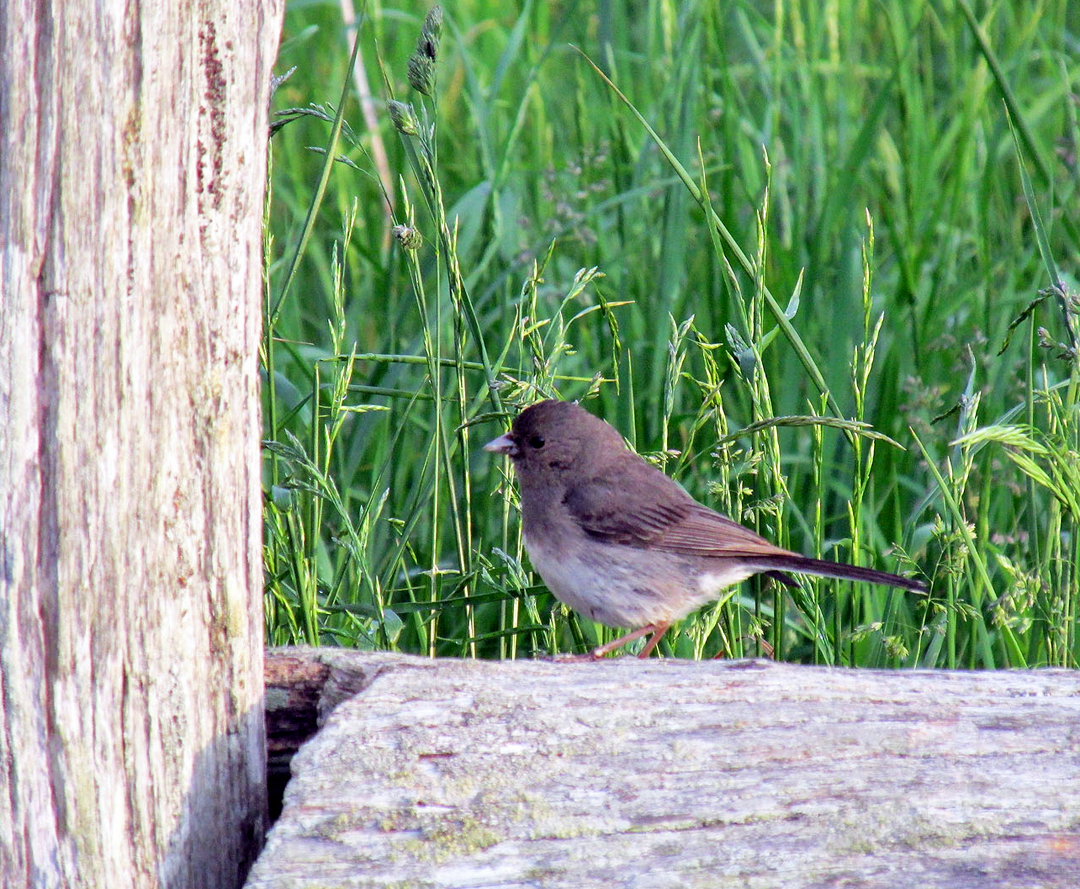
Of all the birds associated with winter weather, few are as symbolic as the dark-eyed junco, or “snow bird.” The junco occurs in several geographic variations.

John V. Dennis, author of “A Complete Guide to Bird Feeding,” captures the essence of the junco in the following description: “Driving winds and swirling snow do not daunt this plucky bird. The coldest winter days see the junco as lively as ever and with a joie de vivre that bolsters our sagging spirits.” The dark-eyed junco’s scientific name, hyemalis, is New Latin for “wintry,” an apt description of this bird.

Most people look forward to the spring return of some of our brilliant birds — warblers, tanagers and orioles — and I must admit that I also enjoy the arrival of these birds. The junco, in comparison to some of these species, is not in the same league. Nevertheless, the junco is handsome in its slate gray and white plumage, giving rise to the old saying “dark skies above, snow below.”

Just as neotropical migrants make long distance journeys twice a year, the junco is also a migrating species. But in Appalachia, the junco is a special type of migrant. Most people think of birds as “going south for the winter.” In a basic sense this is true. But some juncos do not undertake a long horizontal (the scientific term) migration from north to south. Instead, these birds merely move from high elevations, such as the spruce fir peaks, to the lower elevations. This type of migration is known as vertical migration. Other juncos, such as those that spend their breeding season in northern locales, do make a southern migration and, at times, even mix with the vertical migrants.

During the summer months, a visit to higher elevations mountaintops is almost guaranteed to produce sightings of dark-eyed juncos. Juncos may nest as many as three times in a season. A female junco usually lays three to six eggs for each nest, which she constructs without any assistance from her mate.

Juncos are usually in residence around my home by early November. Once they make themselves at home I can expect to play host to them until at least late April or early May of the following year. So, for at least six months, the snow bird is one of the most common and delightful feeder visitors a bird enthusiast could want.

Juncos flock to feeders where they are rather mild-mannered — except among themselves. There are definite pecking orders in a junco flock, and females are usually on the lower tiers of the hierarchy. Females can sometimes be distinguished from males because of their paler gray or even brown upper plumage.

Since juncos are primarily ground feeders they tend to shun hanging feeders. But one winter I observed a junco that had mastered perching on a hanging “pine cone” feeder to enjoy a suet and peanut butter mixture.

Dark-eyed juncos often are content to glean the scraps other birds knock to the ground. Juncos are widespread. They visit feeders across North America. The junco is the most common species of bird to visit feeding stations. They will sample a variety of fare, but prefer such seeds as millet, cracked corn or black oil sunflower.

The juncos are a small branch of the sparrow clan. Some of the other juncos include the endangered Guadalupe junco, yellow-eyed junco, Baird’s junco and volcano junco. The last one on the list is endemic to the Talamancan montane forests of Costa Rica and western Panama. Baird’s junco is named for Spencer Fullerton Baird, an American ornithologist and naturalist.

Photo by Bryan Stevens • A dark-eyed junco visits a hanging feeder.

Baird served as secretary for the Smithsonian Institution from 1878 until his death in 1887. He greatly expanded the natural history collections of the Smithsonian from 6,000 specimens in 1850 to over two million by the time of his death.

I hope you’ve enjoyed this introduction to juncos. There’s something about winter that makes a junco’s dark and light garb an appropriate and even striking choice, particularly against a backdrop of newly fallen snow.

Of course, the real entertainment from juncos come from their frequent visits to our backyard feeders. When these birds flock to a feeder and began a furious period of eating, I don’t even have to glance skyward or tune in the television weather forecast. I know what they know. Bad weather is on the way!

••••

I’ve not seen the first junco of the season, but I did observe a close relative (white-throated sparrow) on the morning of Oct. 24 at my home.

If you’d like to share your first sighting this season of dark-eyed juncos, email me at ahoodedwarbler@aol.com. As always, the column is also a line of communication with fellow bird enthusiasts. I’ve enjoyed sharing stories about birds with countless readers over the past 28 years. I can also be reached on Facebook at https://www.facebook.com/ahoodedwarbler.
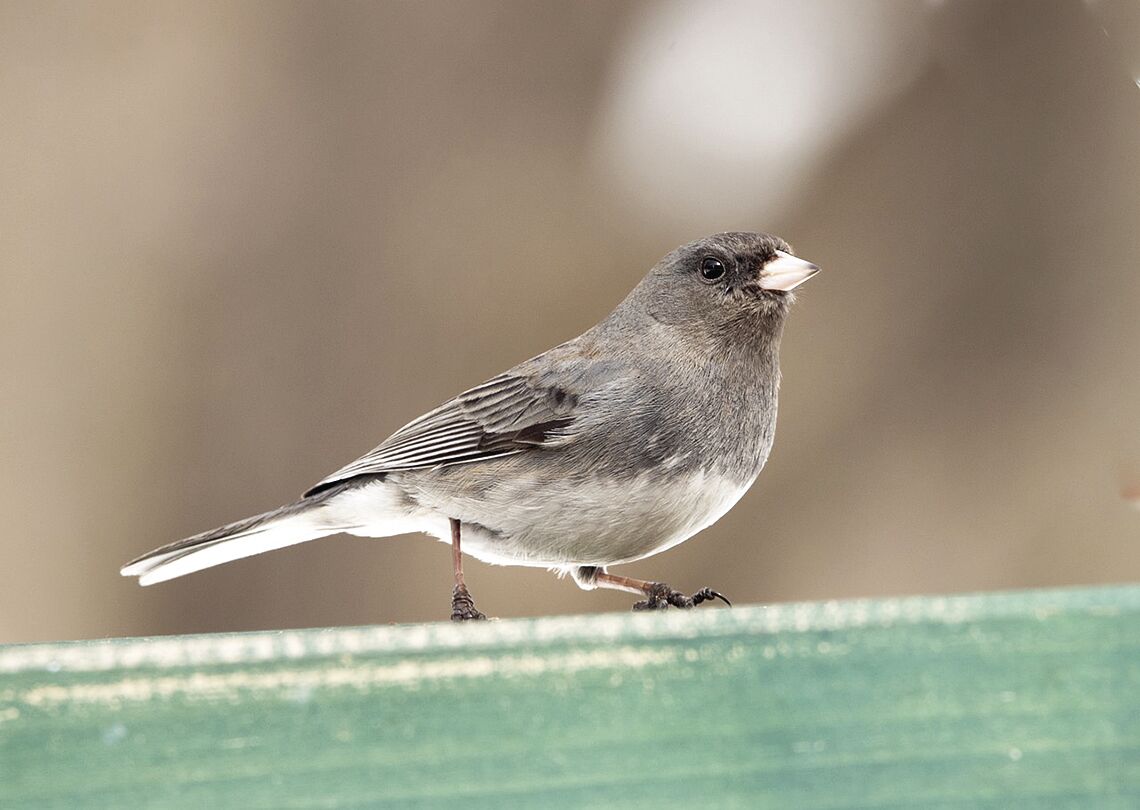
Photo by Bryan Stevens • Dark-eyed junco nests on high mountain slopes during the summer month. This dark-eyed junco was photographed at Carver’s Gap on Roan Mountain during the summer nesting season.

Raucous ravens, hooting owls and more contribute to the autumn soundscape

Photo by LoggaWiggler from Pixabay • Ravens are extremely vocal birds. Captive-raised ravens have even learned words.

The spring bird chorus is deservedly famous, but the birds don’t exactly go silent in the autumn.

Although recent mornings have started out with a definite chill over the past couple of weeks since the calendar officially turned the page into fall, the birds have simply fluffed their feathers and continued with business as usual.

The birds have been active despite these morning chills that I have been somewhat reluctant to acknowledge. Carolina wrens scold from tangles of vines and weeds. As of Oct. 5, I am still hearing the soft whirr of hummingbird wings, too, although I know that the curtain’s closing on their yearly stay. Other vocalizations I’ve detected early in the day have included the rattle of a belted kingfisher at the fish pond, the quarrelsome mews of a gray catbird plucking pokeberries one at a time from an overladen plant and a vigorous Eastern Phoebe repeating its “fee-bee” name continuously from the edge of the woods.

Some other birds also make their presence known while remaining concealed from direct visual observation, including a great horned owl that regularly produces resonant, distant hoots from a nearby ridge. From the ridge behind my home, the croaks of common ravens have added a bit of a spooky vibe to fog-shrouded mornings.

Photo by Bryan Stevens • A great horned owl grasps a post with its talons. This bird was part of a show at Callaway Gardens in Georgia featuring rehabilitated raptors.

Ravens are extremely vocal birds. In addition to the harsh croaks usually associated with these birds, raven can also produce an uncanny imitation of a tinkling bell.

I’m not pulling any legs. Among their vocal repertoire, ravens can produce, usually in flight, a “bell” call. I’m not sure if this is a common vocalization. I only remember ever hearing a raven’s “bell” on a few occasions. I was with a group of more established birders at Roan Mountain State Park when a raven flew overhead. Someone called out, “Listen to that.” I listened and heard my first raven “bell” call.

The strange thing is that I can find little about this unusual vocalization when I researched the subject. According to the website All About Birds, common ravens calls vary from a low, gurgling croak to harsh grating sounds and shrill alarm calls. Scientists have placed their vocalizations into as many as 33 different categories based on sound and context. The most commonly heard is the classic gurgling croak, rising in pitch and seeming to come from the back of the throat.

The croak is their standby vocalization, which they produce often. The raven’s croak can be heard from a mile away. And, in defense of the poet Edgar Allan Poe and his “ominous bird of yore,” ravens are accomplished mimics. According to All About Birds, ravens can imitate other birds. Raven raised in captivity can even learn words. “Nevermore?”

This is the time of year when departures appear to outpace new arrivals, but there are some birds that will soon make their return after a lengthy absence, including white-throated sparrows, dark-eyed juncos and winter wrens. The local ravens, on the other hand, appear to have chosen to reside near my home year-round.

From the opening refrain of “once upon a midnight dreary” in his poem, “The Raven,” Edgar Allan Poe established a somber mood and also helped cement the dark reputation of one of North America’s most misunderstood birds. Poe describes the bird that provides the title of his famous poem with adjectives such as “grim, ungainly, ghastly, gaunt and ominous.” His raven also speaks, although it has the limited vocabulary of a single word, “Nevermore.”

How else does the real common raven resemble the “bird of yore” in Poe’s classic poem? For starters, the raven is an intelligent bird. Authors of a scientific study conducted about 15 years ago posited the claim that ravens and crows are just as intelligent as some of the great apes. Although parrots are more famous for the ability to mimic human speech, captive ravens have proven capable of learning more words than even the most impressive vocabulary-endowed parrots. So, Poe was not wide of the mark when he gave the gift of gab to the raven in his poem.

The sounds of autumn are definitely richer for having the croaking calls of ravens in the mix. Keep your eyes (and ears) open for new arrivals as the transition of seasons continues.

•••

To share a sighting, ask a question or make a comment, email me at ahoodedwarbler@aol.com.

Spring signs less clear than in seasons past

Photo by Bryan Stevens * A male mallard lounges by the edge of a fish pond in a previous spring season.

Signs of spring are, as the old saying goes, popping up all over. Daffodils and crocuses unfurling their blooms, a pair of mallards paying a visit to my fish pond and the blue skies overhead on sunny days have signaled the transition toward spring as surely as the turning of the calendar page to March.

Some of these familiar sights have been hazy for me during this season of transition. In early February I lost vision in my right eye. After visits to various medical experts, an MRI, blood tests and other procedures, I got a diagnosis of optic papillitis, a form of optic neuritis. In simpler terms, I suffered a stroke of the eye that aggravated and inflamed the optic nerve.

The good news, as I see it, tests have not found any evidence of underlying conditions like cancer or a brain tumor. The bad news, also as I see it, is that recovery is not guaranteed and can take time. The process is usually measured in weeks and months, not days.

It’s been unsettling, to describe it mildly. Reading requires the assistance of a magnifying glass. Too much time focused on a bright screen brings discomfort.

I’m carrying on with birding as best I can. Binoculars, as birders know, are made for use by two eyes. I have feeders to lure the birds in close, but my favorite cardinals, chickadees and wrens are a bit blurry.

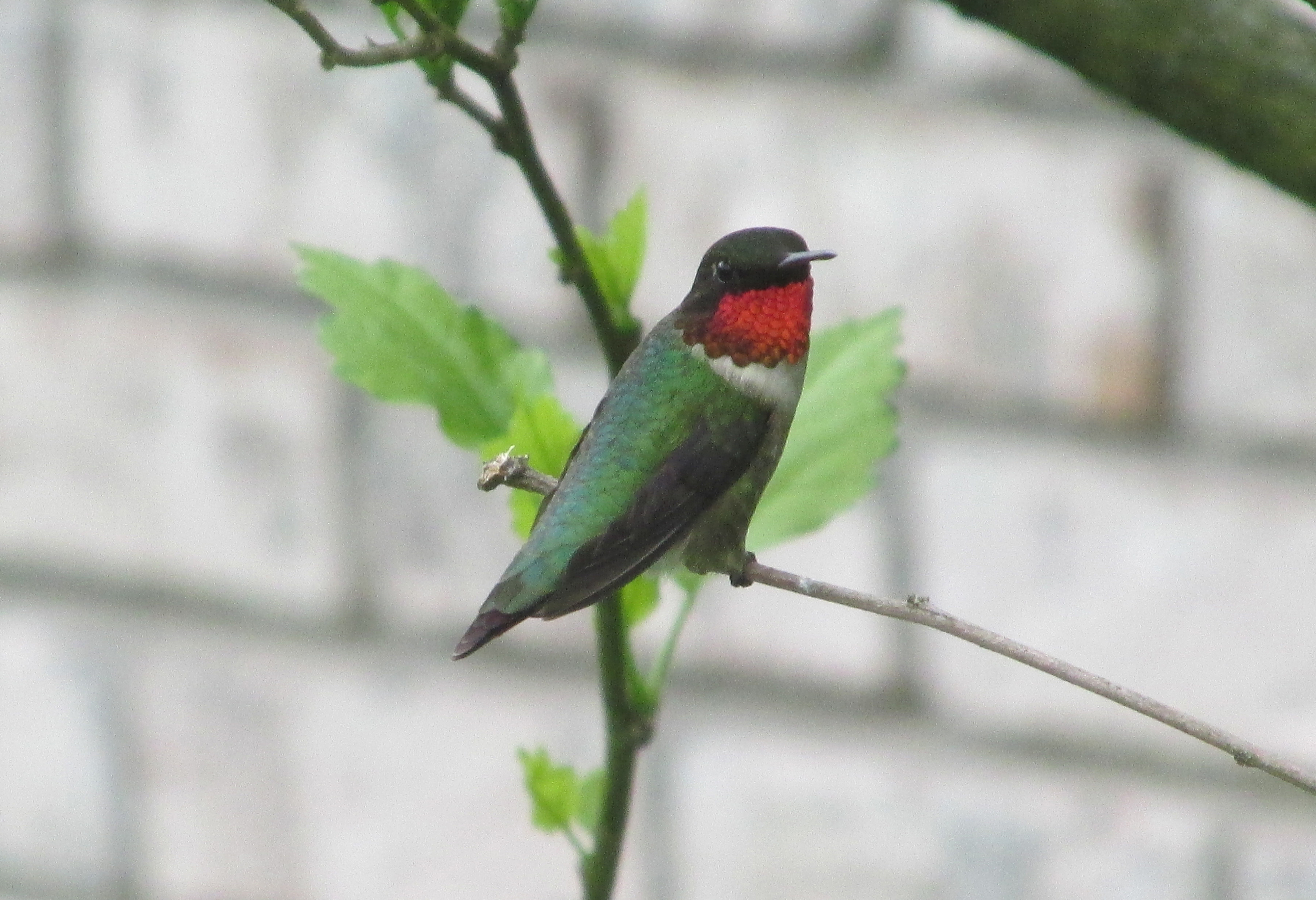
I’ve always tried to stay optimistic. I’m hopeful that by the time the ruby-throated hummingbirds return for a sip of sugar water at my feeders in April, my sight will be good enough to enjoy the beauty of their green and white plumage and the brilliant red throat if the visiting hummer is a male.

Photo by Bryan Stevens • Male ruby-throated hummingbird show the namesake red throat. The feathers on a male’s throat are iridescent, which means they can change when seen from different angles. In poor light, the ruby-red throat can look almost black.

If spring’s too soon, I’ll push the goal farther along in the 2023 calendar and hope to be ready to identify the annual fall parade of warblers.

As I wait, nothing’s stopping me from enjoying the sounds of spring. On rainy days, the chorus of spring peepers produce their amphibious cacophany at dusk and throughout the night. Many of the birds are also singing their hearts out. Eastern phoebes, tufted titmice, Carolina chickadees and Northern cardinals all make their presence with their loud, persistent songs.

On Monday, Feb. 20, I watched as the fuzzy shapes of two dozen red-winged blackbirds dropped down into the cattails in the marshy area near the fish pond. It’s not February for me until I’ve seen a migrating flock of blackbirds benefitting from an overnight stay in the cattails.

Photo by Bryan Stevens * A mallard drake looks vibrant with his green, glossy head.

On Sunday, Feb. 26, a mallard pair visited the fish pond. They were the first mallards that I’ve observed at my fish pond for many years. In full disclosure, my mom spotted them and informed me of their arrival. Mallards are big enough that I saw the male of the pair easily enough. His green head and chestnut breast stood out from the brown cattails and other vegetation bordering the pond. The female mallard blended nicely with the background and evaded my gaze. Regardless, I was thrilled to welcome mallards back to the pond. They only lingered for a single day, but they have me hoping that other ducks, such as blue-winged teal or wood ducks, will make similar visits as the season progresses.

On March 1, I saw my first spring butterfly. The seasonal first was a spring azure, a tiny, delicate butterfly. The sighting reminded me that nature will provide plenty of incentive to work on regaining my full vision. I still have more butterflies, as well as dragonflies, damselflies, moths and June bugs to look forward to seeing as we progress through spring and summer.

I’ve always believed that nature is a restorative force. Now I am going to test that theory in my goal to have my vision back at or near normal capacity by the time I hear the buzzy whir of hummingbird wings in April.

In the meantime, there will still be plenty of time to focus on our myriad feathered friends. I have someone who has been great at taking down my dictated words for my weekly column.

As always, make a comment, share an observation or ask a question by emailing me at ahoodedwarbler@aol.com.


Man hits a bonanza with recent sighting of eagles

Photo Courtesy of Jim Kroll • These four bald eagles were observed along Mendota Road near Abingdon, Virginia.

Jim Kroll sent me a recent email about a Jan. 30 sighting he made on Mendota Road in Abingdon, Virginia.

“I saw three hawks and an eagle close together in the same tree,” he wrote in his email. “The eagle and one hawk appear to be almost side-by-side on the same limb.”

He added that he had never observed such a combination in the same tree.

“I did not know they got along that well with each other,” Jim wrote.

He noted that he regularly sees hawks near his home in Abingdon and occasionally sees eagles on Mendota Road.

“There was a second eagle,” he added. “The two eagles would fly off together to the river, swooping around each other along the way.”

He said that he watched the hawks and eagles for probably 30 to 45 minutes as they would fly away from the tree multiple times and then return.

He also reported that the hawks were larger than the eagles. This bit of information got me to thinking about his sighting due to the fact that there are no hawks bigger than a bald eagle.

Once I looked at the photo that Jim shared with his email, I realized that his sighting was more remarkable than he realized.

“All four of the birds are eagles,” I wrote to him after viewing the photo. “The dark ones are immature eagles.”

“All four of the birds are eagles,” I wrote to him after viewing the photo. “The dark ones are immature eagles.”

According to information from the East Tennessee State University Eagle Cam project, it typically requires four to five years before young eagles develop the characteristic yellow bill with white head and tail of an adult bird.

Remember that Jim saw a second adult eagle that does not appear in the photograph he shared.

I’m not sure what was taking place with this appearance by multiple eagles. I’m favoring the possibility that the young dark eagles might have been the young of the adult pair of birds. Female eagles are larger than male eagles, so it is also likely the adult bird in the photo is a male and the other eagles in your photo are all females.
The fact that Jim saw five eagles at a single location at the same time is worth commending.

I informed him that I feel lucky when I see one eagle or a pair. I told Jim that to see five eagles at one spot is exceptional and congratulated him.
After I shared my opinion that all the birds in his photo were eagles, he emailed me again.

“We were probably a football field length away from the tree the eagles were in and just jumped to the conclusion that the darker birds were hawks,” he wrote to me.
He had considered how large the birds looked in flight, and he noted that their size and wingspan had not seem right for hawks, but he said he never thought about the other three birds also being eagles. He also shared another photo of the adult eagles flying toward the river.

“Their wingspan was impressive,” he wrote. “It was cool watching them swoop around each other near the river.”

He also shared that he saw another eagle recently near the Nordyke Bridge, five to six miles from where he saw the group of eagles.

Jim added that he has seen eagles at the top of South Holston Dam and along the Virginia Creeper Trail near Alvarado.

The ETSU Eagle Cam project operates eagle cams in Johnson City near Winged Deer Park and in Bluff City.

https://www.etsu.edu/cas/biology/eagle-cam/cameras.php

Here’s some more information about bald eagles from the ETSU Eagle Cam website.
Haliaeetus leucocephalus, better known as the bald eagle, is the United States’ national bird and is an easily recognizable species even to the casual observer. No other bird has a bright white head and tail with a massive yellow bill.
Bald Eagles belong to the family Accipitridae, which also includes hawks, kites, harriers and Old World vultures.

The scientific name roughly translates to “white-headed sea eagle,” which is appropriate because these birds are almost always found nesting near water.

•••

To share a sighting, ask a question or make a comment, email me at ahoodedwarbler@aol.com.
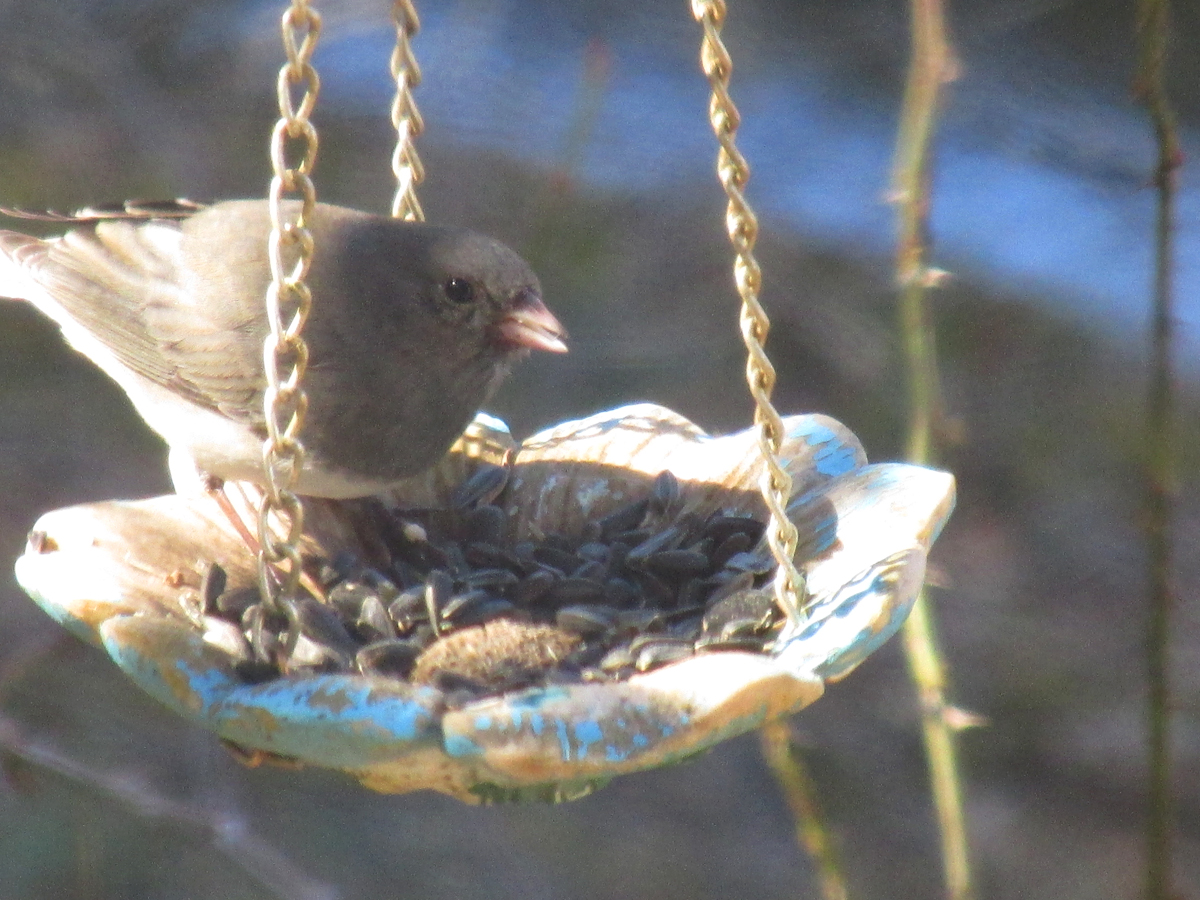
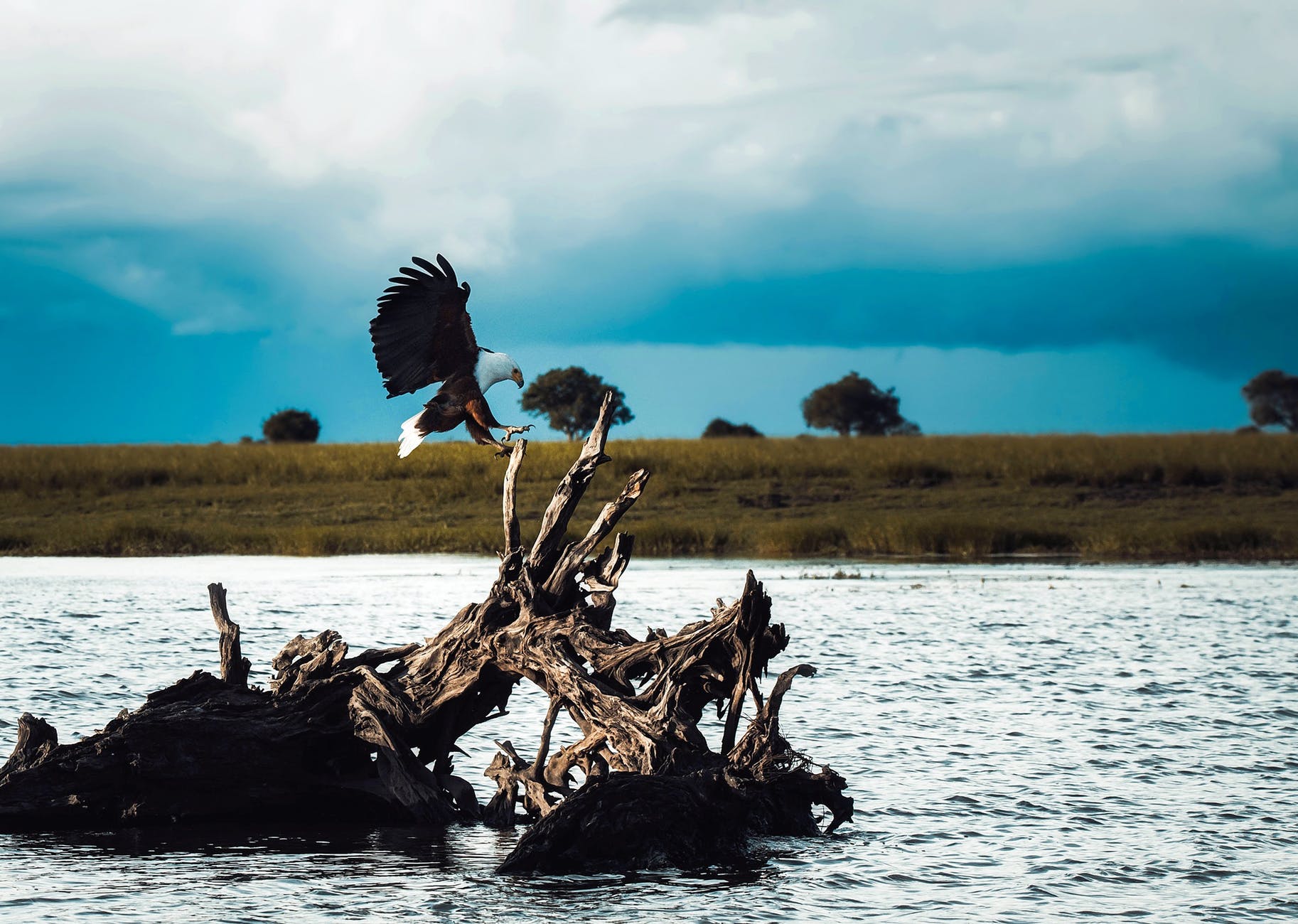
Photo by Pixabay on Pexels.com Bald eagles are often associated with wetland habitats.

Give bluebirds a hand as they scout for nesting locations

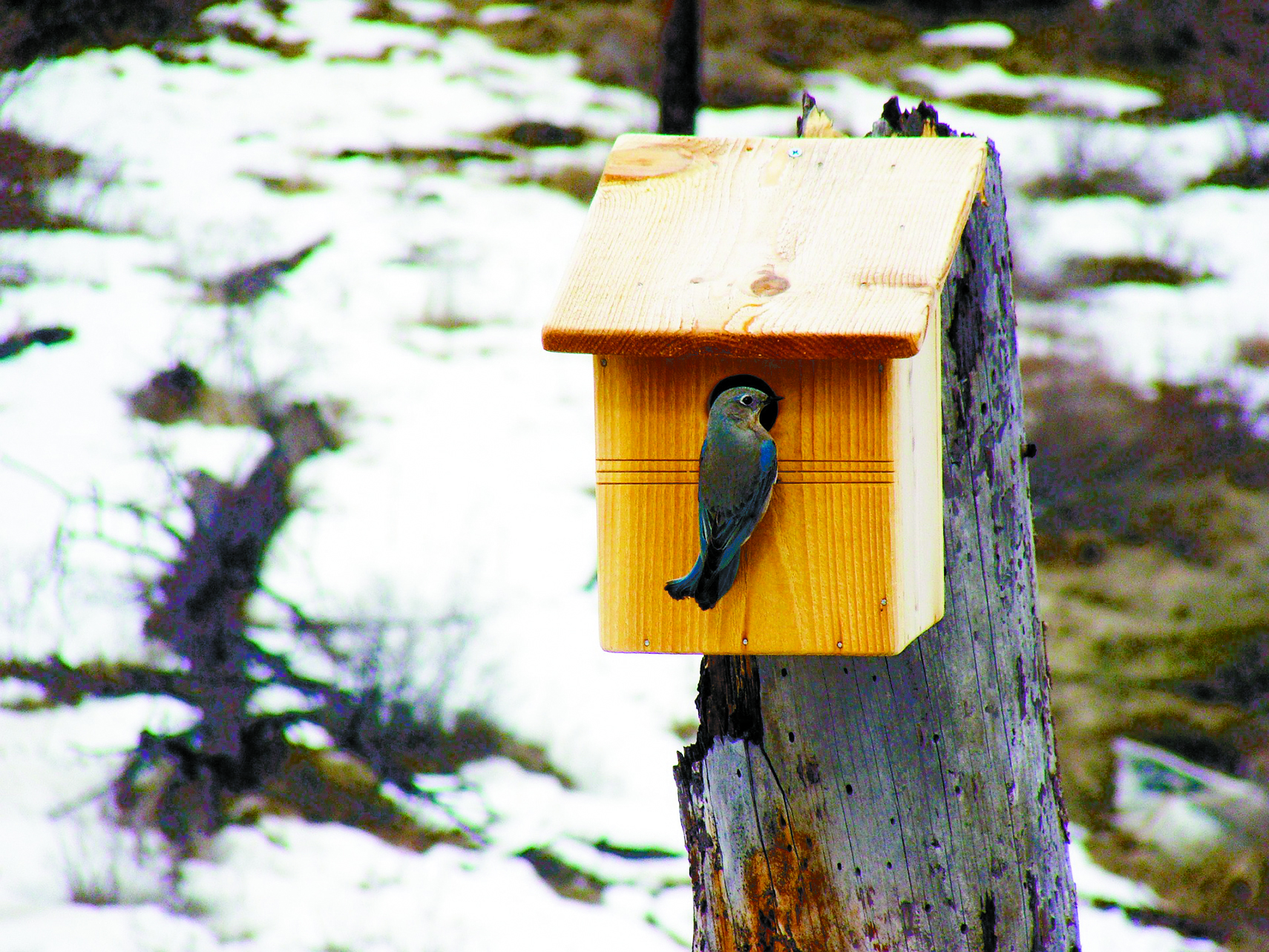
Photo by Matthew Saulsbury/Pixabay • Bluebirds are likely already scouting for nesting cavities and nest boxes in the region.

It’s time to turn the calendar page to February and, depending on the prognostication of the groundhog, winter may or may not be on the wane. Regardless, some of our feather friends are already acting like spring has sprung.
Perhaps it’s simply confusion when days can veer from sunny, short-sleeve conditions to frigid snowstorms, but I tend to trust the instincts of our fine feathered friends.

An email from Unicoi County resident Amanda Austwick proved timely.
“I saw a post on Facebook from a woman in Ontario, Canada, and she had a photo of a bluebird in a tree surrounded by red berries, with a touch of snow on them,” Amanda wrote. “I thought bluebirds migrated south in winter.”

I responded to Amanda’s email and will share some information in this week’s column. For the most part, local bluebirds do not migrate out of the region in winter. Bluebirds living farther north do often, but not always, migrate farther south.
As I mentioned to Amanda, I notice bluebirds almost daily on my drive from home to work. On sunny mornings, male Eastern bluebirds are producing their enthusiastic, warbling song even if there’s been a touch of frost overnight.

The Eastern bluebird is one of North America’s best-known cavity-nesting birds. About 85 species of North American birds use cavities in trees for nesting purposes. Cavity-nesting birds include ducks, such as buffleheads and wood ducks, as well as birds of prey such as Eastern screech-owls and American kestrels. Woodpeckers and nuthatches can excavate their own cavity in a dead or decaying tree.

Others, such as the bluebirds, must find a cavity already in existence. Such cavities are scarce real estate and can be subject to some intense competition.
The Eastern bluebird is at a disadvantage when forced to compete with non-native introduced birds such as aggressive European starlings and house sparrows. Even native competitors such as house wrens and tree swallows are serious rivals when it comes down to staking a claim to prime nesting sites.

Over the years, I have found bluebirds nesting in cavities inside wooden fence posts, but there are fewer wooden fence posts every year. This reinforces the idea of how changing landscapes have affected these birds. Instead of wooden fence posts, many farmers now use metal ones, and dead or dying trees — a much sought-after resource for cavity-nesting birds — are often removed from woodlands. Winter storms this season, along with accompanying high winds, have brought down numerous trees in the woodlands around my home, no doubt removing some current or future nesting possibilities.

When it comes to choosing a nesting cavity, male bluebirds take the lead, investigating and exploring potential sites before introducing females to the chosen real estate. If she accepts his choice, she will build the nest.

Cavities can also find use by bluebirds for secure locations for roosting overnight. According to the website Tennessee Watchable Wildlife, observers have documented bluebirds using nest boxes to stay warm during cold winter nights, packing eight to 12 individuals into one box. With the generated body heat from all those birds, I imagine that was one cozy box!

The website also noted that the oldest known Eastern bluebird in the wild reached an age of 10 years and six months. Given that most songbird live fairly short lives, that was quite an achievement.

For those interested in becoming bluebird landlords, check out nest box designs at the Tennessee Watchable Wildlife website. Several different nest box designs are available at the profile for the Eastern bluebird at tnwatchablewildlife.org.
If you’re not a do-it-yourself individuals, most lawn and garden centers, farm supply stores and speciality bird shops carry readymade bluebird boxes for purchase.
In addition to housing, food and water can be used to lure Eastern bluebirds closer. This bird doesn’t eat seeds, but it can be attracted with an offering of mealworms — live or freeze-dried – or commercially prepared peanut butter nuggets. A water feature in a yard is also a magnet for bluebirds and a host of other bird species.

•••
To ask a question, make a comment or share an observation, please email me at ahoodedwarbler@aol.com.
Cardinals provide a great symbol for Christmas season

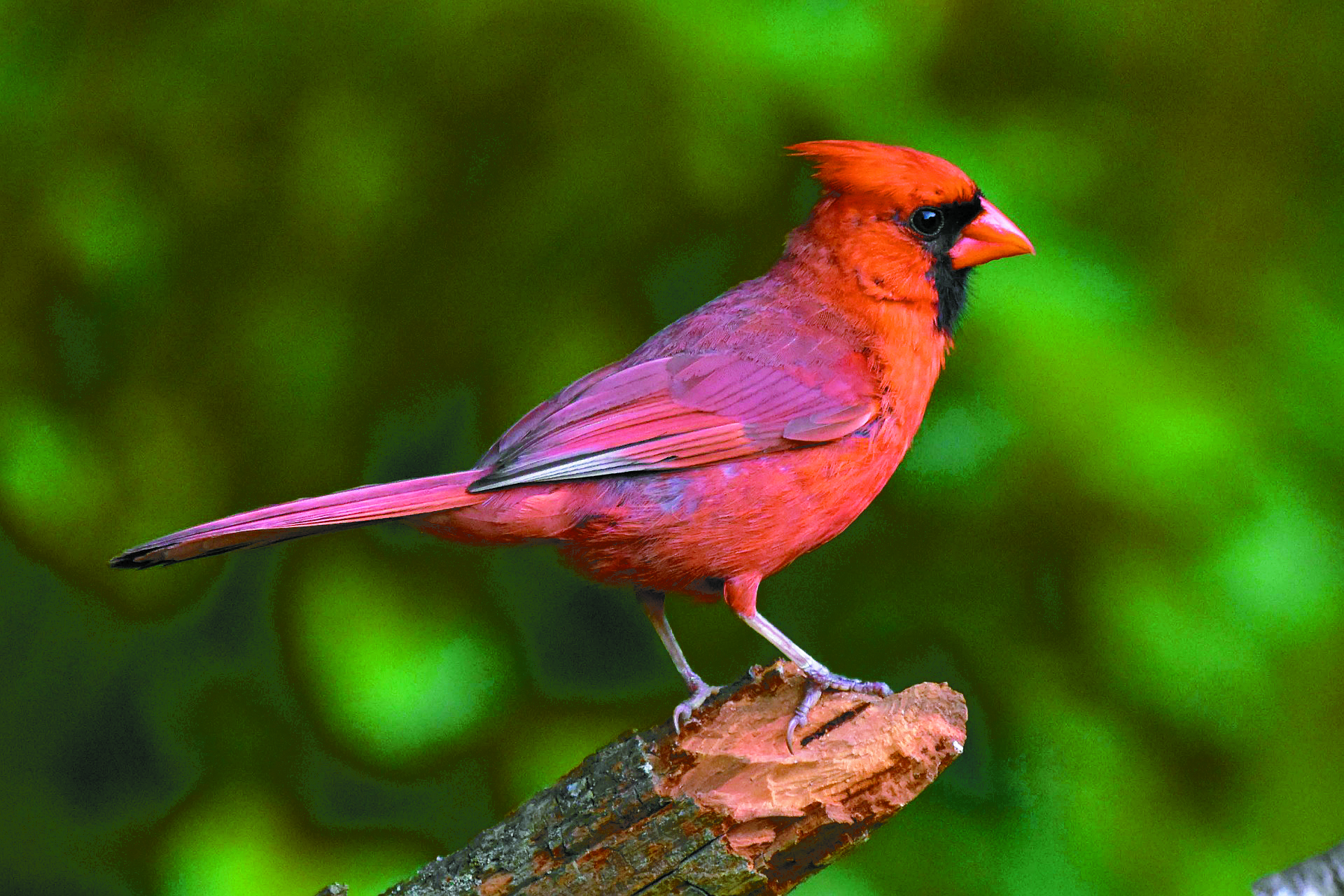
Photo by Jack Bulmer/Pixabay • A male Northern cardinal is a cheerful feathered ambassador on even a dreary day. While fairly commonplace, cardinals are worth getting to know and are easily attracted with sunflower seed.

Christmas 2022 is almost upon us. As is my usual custom, I want to share my enthusiasm for the Northern cardinal, one of my favorite birds. One male cardinal around my home as become very accustomed to my presence. He has even learned my routine and knows when to anticipate my daily stocking of the feeders with sunflower seeds.

At first, he kept an eye on my actions from a safe distance, but he gradually grew bolder. Soon, he began to land on the feeder before I even had my back turned and was heading back inside the house. His familiarity also bred impatience. He began to detect my routine. Once I get home from work in the evening, I head first to the mailbox. More often than not, I glimpse a flash of red feathers near the feeders while retrieving the most recent postal deliveries. My dependable cardinal always makes me smile. The bird has learned that a meal is imminent once I have completed this one chore.

If I don’t immediately return to the feeders with sunflower seeds, he will wait until I emerge from the house. He isn’t quite so brave that he will stay perched on the feeder as I replenish the supply, but he has definitely learned that his human friend is the source of all the free seeds.

I have always enjoyed watching cardinals. The beauty of both male and female cardinals is undeniable. They’re usually nervous, twitchy birds, so it has been fun watching this particular male cardinal grow accepting of my presence.
The Northern cardinal, especially the brilliant red male, stands out against a winter backdrop of snow white, deep green or drab gray. Over the years, the cardinal has also become associated with the Christmas season. How many Christmas cards have you received this holiday season with a cardinal featured in the artwork? I’d wager that at least a few cards in any assortment of holiday greetings will feature the likeness of a Northern cardinal.

There is a possible reason that male cardinals try to outshine each other when it comes to their bright red plumage. According to the website Tennessee Watchable Wildlife, brighter red male cardinals are able to hold territories that have denser vegetation, feed young at higher rates and have greater reproductive success than males with feathers of a duller hue.

The Northern cardinal belongs to a genus of birds known as Cardinalis in the family Cardinalidae. There are only two other species in this genus, and they range across North America and into northern South America. The two relatives are the pyrrhuloxia, or Cardinalis sinuatus, of the southwestern United States, and the Vermilion cardinal, or phoeniceus, a bird found in Colombia and Venezuela.
The Northern cardinal is a native and abundant bird. Cardinals are a widespread species, ranging westward to the Dakotas and south to the Gulf Coast and Texas. The southeastern United States was once the stronghold of the cardinal population. In the past century, however, cardinals have expanded their range into New England and Canada.

The cardinal accepts a wide variety of food at feeders. Sunflower seed is probably their favorite, but they will also sample safflower seed, cracked corn, peanuts, millet, bakery scraps and even suet. While we may get the idea that cardinals feed largely on seed, that is a misconception based on our observation of the birds at our feeders. Cardinals away from our feeders eat insects and fruit, including the berries of mulberry, holly, pokeberry, elderberry, Russian olive, dogwood and sumac.
The cardinal uses its large beak to efficiently hull sunflower seeds or deal with other foods foraged in field and forest away from our feeders. The large, heavy beak hints at the cardinal’s kinship with birds such as tanagers and grosbeaks. In fact, some of America’s early naturalists referred to the bird as “cardinal grosbeak.” Other common names include the apt “redbird” moniker and “Virginia nightingale.”

Even once the holidays are past, there’s nothing like a glimpse of a Northern cardinal to add some cheer to a bleak winter day. It’s not surprising that such a popular bird has also become associated with many trappings of the Christmas season.
“You see cardinals on greeting cards, stationery, paper plates, paper napkins and tablecloths, doormats, light switch plates, candles, candle holders, coffee mugs, plates, glasses, Christmas tree ornaments and lights, bookmarks, mailboxes, Christmas jewelry,” writes June Osborne in “The Cardinal,” a book about this popular bird.

“And the list goes on,” Osborne writes. “Cardinals have become an integral part of the way that many people celebrate the holiday season.”

I can be included among such people. My Christmas decorations include an assortment of cardinal figurines and ornaments. There are other birds — doves and penguins for example — associated with the holiday season, but for me the holidays magnify the importance of one of my favorite birds. The cardinal, in its festive red plumage, appears made to order for a symbol of the holiday season.


Belted kingfisher is a member of an interesting family of birds

Photo by Pexels/Pixabay A common kingfisher, also known as river kingfisher, perches near a water source. The common kingfisher ranges widely across Europe, Asia and North Africa.

Fishing is a favorite pastime for many people, who like nothing better than to spend a lazy summer afternoon trying their luck at their favorite fishing spot. Some of our feathered friends are skilled anglers.

The belted kingfisher’s nature as an angler rules out this bird ever visiting feeders in the backyard, but that doesn’t mean you’re unlikely to see this bird. For most of June and now July a belted kingfisher has been lurking around the creek and pond at my home.  With a little strategic effort, an observation of a belted kingfisher is fairly easy to obtain, especially during the summer months. If you live near a stream, pond, river or other body of water, you have probably been fortunate enough to observe a belted kingfisher as it goes about its daily routine.

If you are a fishing enthusiast yourself, you’ve likely shared some favorite fishing holes with this bird. The belted kingfisher is patient in its pursuit of fish. The birds prefer to perch on an exposed branch or a wire that overlooks a body of water that offers ample fishing opportunities. The belted kingfisher, however, is capable of hovering in place in order to spot and then capture its prey in an impressive plunge and lunge into the water.

Most of my observations of hunting kingfishers have involved the birds in their ambush approach to fishing — perching and diving on the unsuspecting fish. I have on a few occasions, however, also observed kingfishers as they hover over the water in a quest for a meal.

The belted kingfisher, like most of its kin, looks to have a head and bill that are slightly too large for the rest of the body. It’s the long, heavy bill that the kingfishers uses to snatch fish from their watery homes.

Photo by Bryan Stevens • A belted kingfisher perches on a branch along the Erwin Linear Trail.

Speaking of kin, the belted kingfisher is only one of 114 species found worldwide. Worldwide, these amazing birds range in size from the 16-inch-long laughing kookaburra of Australia to the tiny African dwarf kingfisher, which at four inches in length is smaller than most sparrows. This family of birds is divided into three groupings, the river kingfishers, the tree kingfishers and the water kingfishers. Kingfishers are a cosmopolitan family of birds with species present on every continent except Antarctica.

Despite the name “kingfisher,” not all kingfishers exist on a diet of fish. Some members of the kingfisher family instead prey on other quarry, such as snakes, lizards and insects.

Some interesting common names have been used to identify the world’s kingfishers, including half-collared kingfisher, shining blue kingfisher, blue-eared kingfisher, azure kingfisher, indigo-banded kingfisher, silvery kingfisher, malachite kingfisher, white-bellied kingfisher, cerulean kingfisher, rufous-backed kingfisher, spangled kookaburra, rufous-bellied kookaburra, shovel-billed kookaburra, lilac kingfisher, brown-winged kingfisher, stork-billed kingfisher, great-billed kingfisher, striped kingfisher, lazuli kingfisher, ultramarine kingfisher, cinnamon-banded kingfisher, sacred kingfisher, mewing kingfisher, chattering kingfisher, glittering kingfisher, red-breasted paradise kingfisher, pied kingfisher and green-and-rufous kingfisher.

The three North American kingfishers, however, are exclusively fish-eaters. The belted kingfisher, with a range that spans most of the United States, is the only kingfisher encountered by most Americans. Two others, the ringed kingfisher and the green kingfisher, are found in Texas and occasionally in other locations near the Mexican border.

In her book “The Folklore of Birds,” Laura C. Martin writes that in some accounts the kingfisher, not the dove, was the second bird Noah released from the ark after the Biblical flood. Instead of looking for land, the kingfisher flew too high and the sun scorched the bird’s feathers. After his setback with the raven and now the kingfisher, Noah made the kingfisher remain on the ark’s deck to catch its food from the water.

Halcyon days, a term meaning a period of peaceful quiet, is derived from Greek legend. According to the legend, the god Zeus restrained the storms during the period when the kingfishers nest. The scientific name for the belted kingfisher is Megaceryle alcyon, a variation on the term “halcyon.”

Again in Martin’s book, there is an account of a Cherokee legend about how the kingfisher acquired its angling lifestyle. The poor bird wanted to be a waterbird, but lacked the equipment to make a living at fishing. The other animals convened a council and, in pity for the kingfisher’s plight, endowed the bird with its spear-like bill. Since that time, the bird has been known as “king of the fishers.”

The “king of the fishers” is indeed to be envied by human anglers. Although not successful in every attempt, the belted kingfisher is certainly exceptional in its pursuit of fish. According to John Eastman in his book, “Birds of Lake, Pond and Marsh,” the belted kingfisher typically captures about 10 fish per day. Some human anglers would envy a success rate like that.

To observe this bird for yourself, stake out a pond or section of river -— the linear trail in Erwin and the pond at Fishery Park are good locations. In my experience, however, the belted kingfisher is somewhat wary of humans, so observe from a respectful distance or you’re likely to scare off the bird, which will depart giving its rattling call that sounds so much like a sound of pure annoyance.