
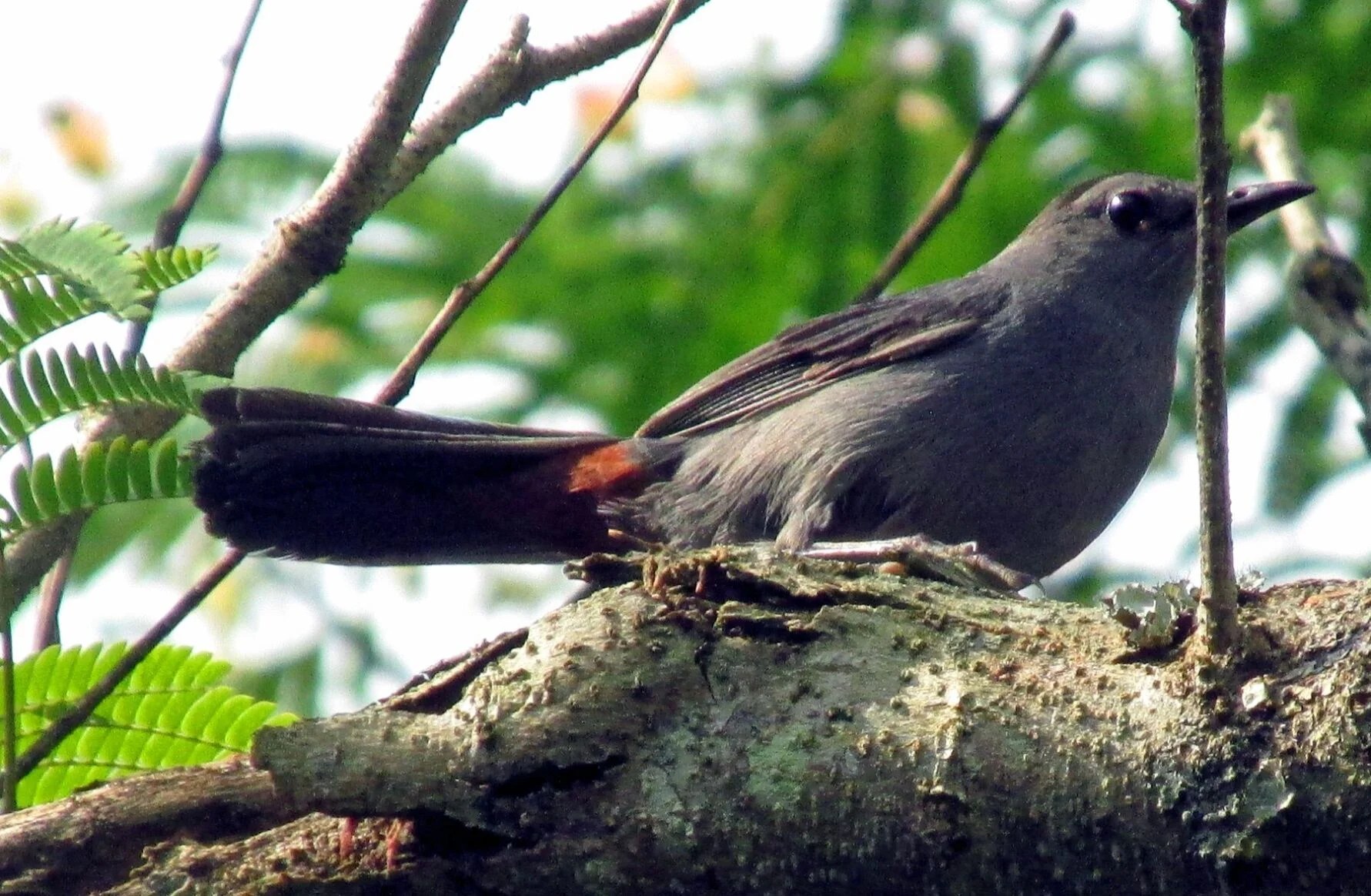
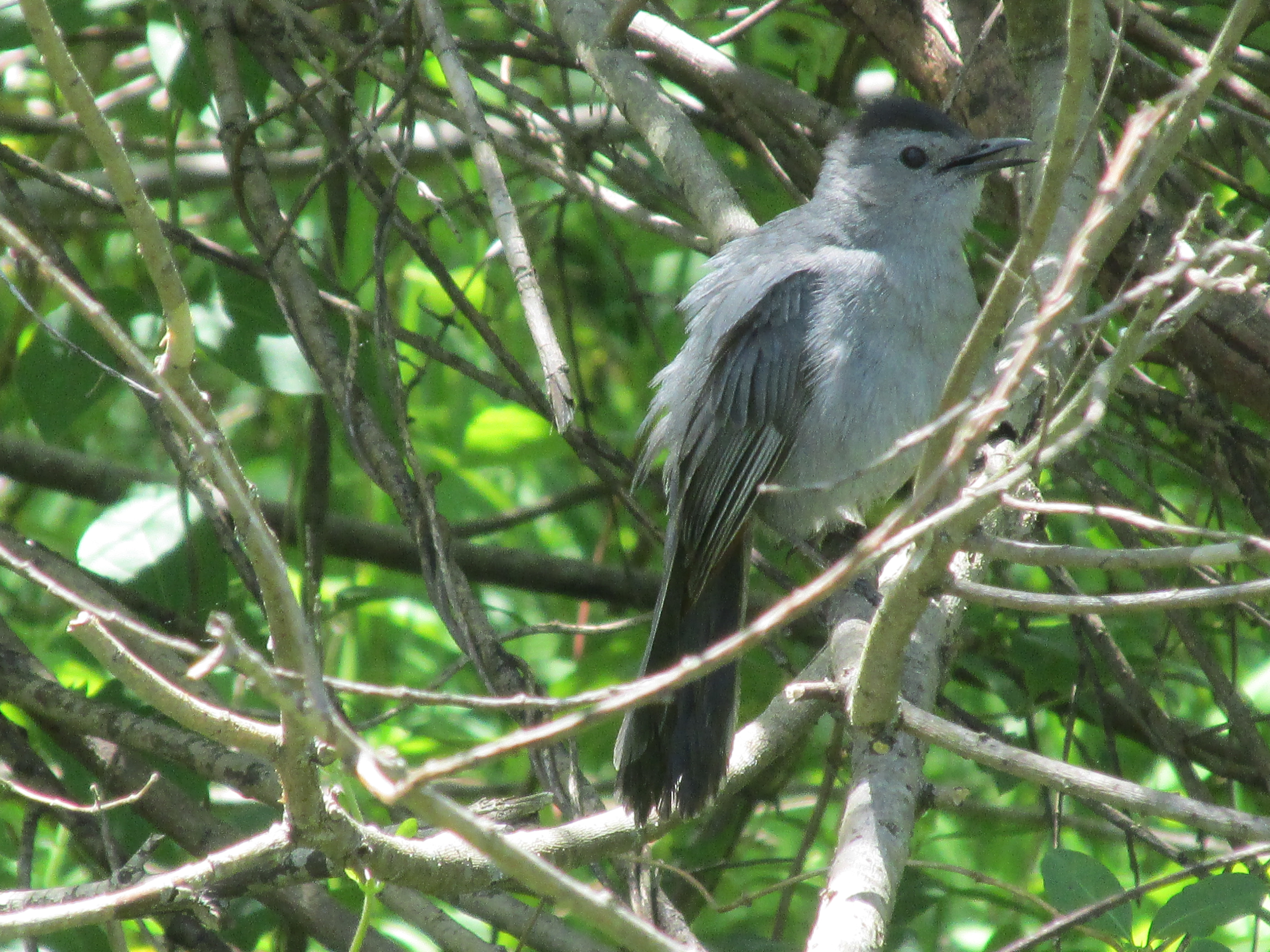
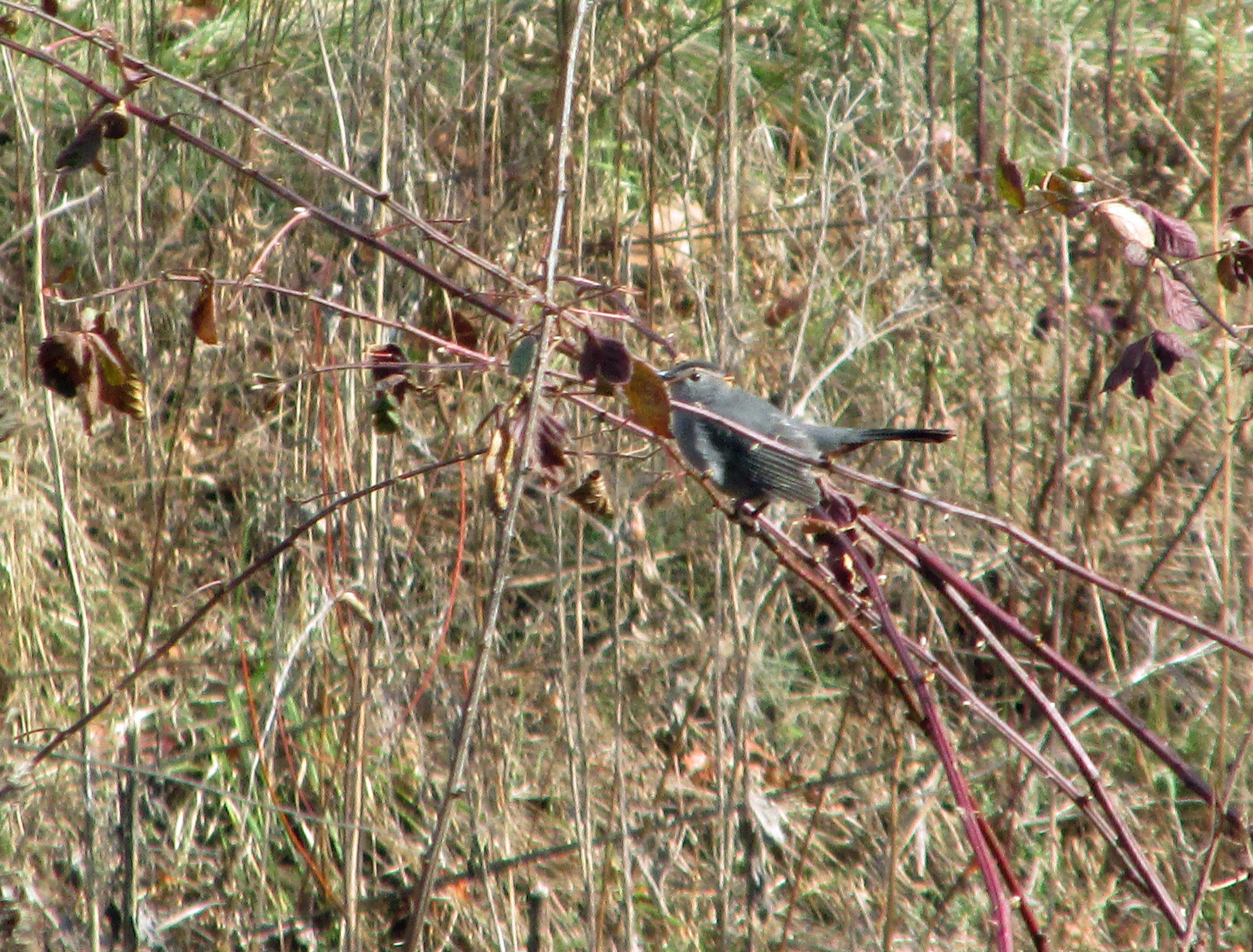
Photo by Bryan Stevens • A gray catbird perches in a mimosa tree. These birds alternate between extreme shyness and determined curiosity.
Catbirds are experts at concealing themselves from prying eyes. This birds charcoal gray plumage blends into the shadowy sections of tangles and thickets where the bird likes to hide itself.
However, even when gray catbirds are reluctant to be seen, they’re almost eager to be heard. The catbird is extremely vocal with several calls and songs in its repertoire, including the rather faithful rendering of a fussy cat’s meow that provides this bird its common name.
This is also a bird with strong curiosity. Despite its retiring nature, curiosity often wins out, as demonstrated when I had a front porch “conversation” with a catbird on a recent morning.
The named catbird came from the fact that this mimic, related to mockingbirds and thrashers, has an uncanny vocalisation that sounds just like a cat’s meow.

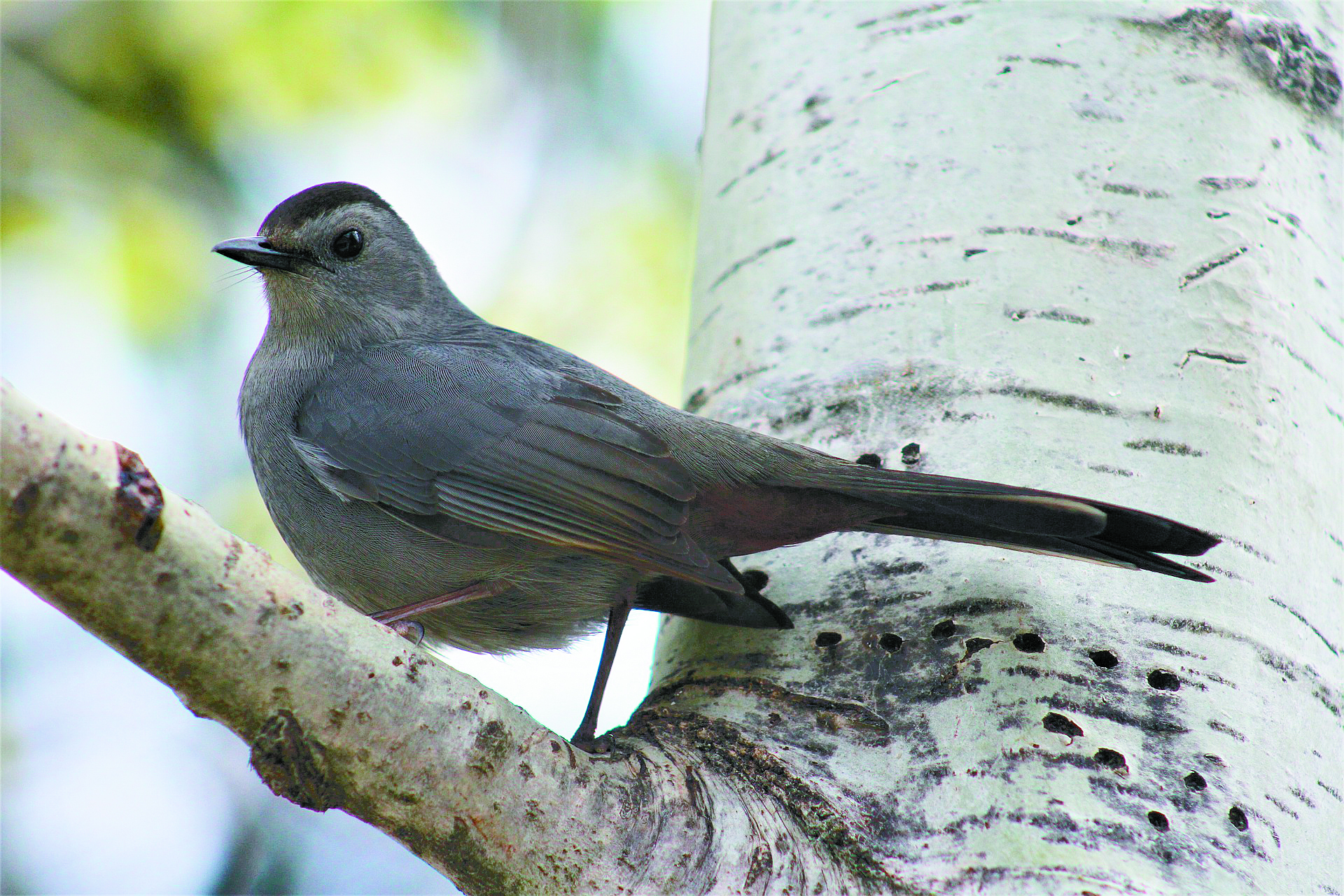
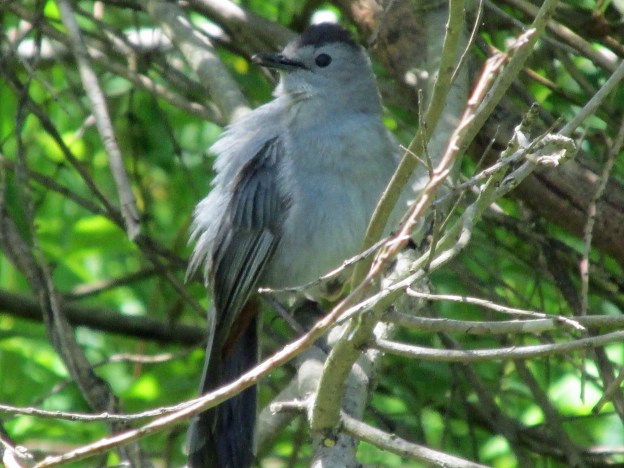
Photo by Bryan Stevens • A gray catbird emerged from cover long enough to have its photo taken.
I’m not particularly good at bird imitations. I can do a decent imitation of Eastern screech owls. I’ve even succeeded at getting these small owls to call back, and I’ve incited a mob of small songbirds, convinced that a “real” owl has gotten far too close for comfort.
And I can also do a passable imitation of the catbirds “meow” vocalization, which I proceeded to spontaneously do as I stood on my front porch on a cool early September morning listening to a gray catbird hidden in the dense foliage of a blooming althea, also known as a “rose of Sharon.”
Every time the catbird meowed, I meowed back. The intervals sped up. Within a short time, the bird popped into view, the better to get a look at me. That’s when something remarkable happened. Clearly still in the bird’s view, I called back. The bird called and continued to stare at me, albeit nervously, from its perch. We continued to converse, although I’m not really sure what we were discussing. I claim to be able to imitate the bird’s language, not understand it. Despite what must have been a strong urge to dive back into cover, the bird continued to remain in the open and meow back every time I returned its meow with one of my own.
Only when I moved to go back inside did the bird plunge back into dense cover. Even as I stepped back inside the house, the catbird continued to meow.
This species is part of a family related to thrushes that are known as “mimic thrushes.” Besides its surprisingly accurate rendition of a feline, the catbird has several other common vocalizations. Despite a shy nature, they’re extremely curious. Imitating their calls or simply producing a squeaky sound will usually persuade the bird to move out of cover and search for the source of the noise.

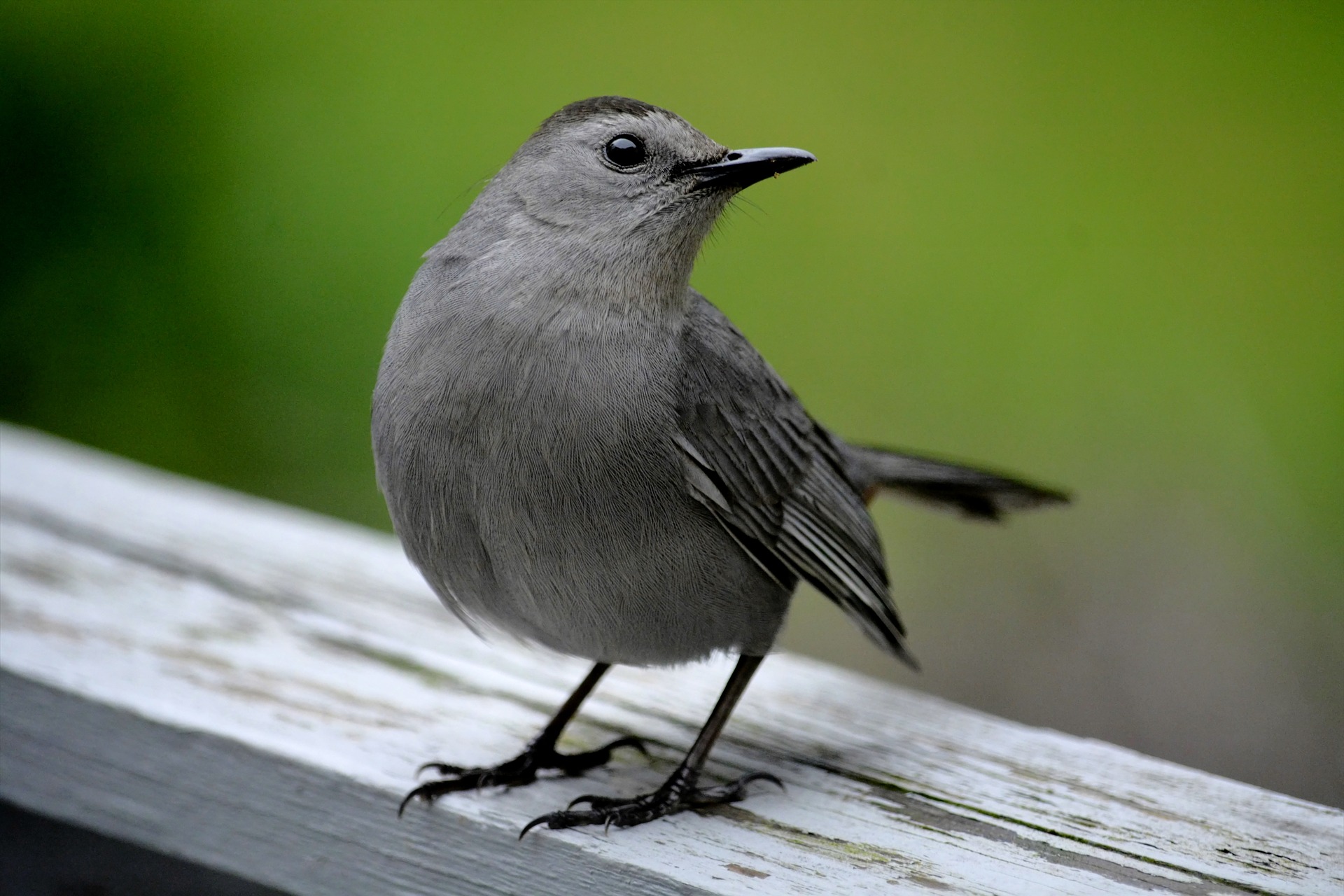
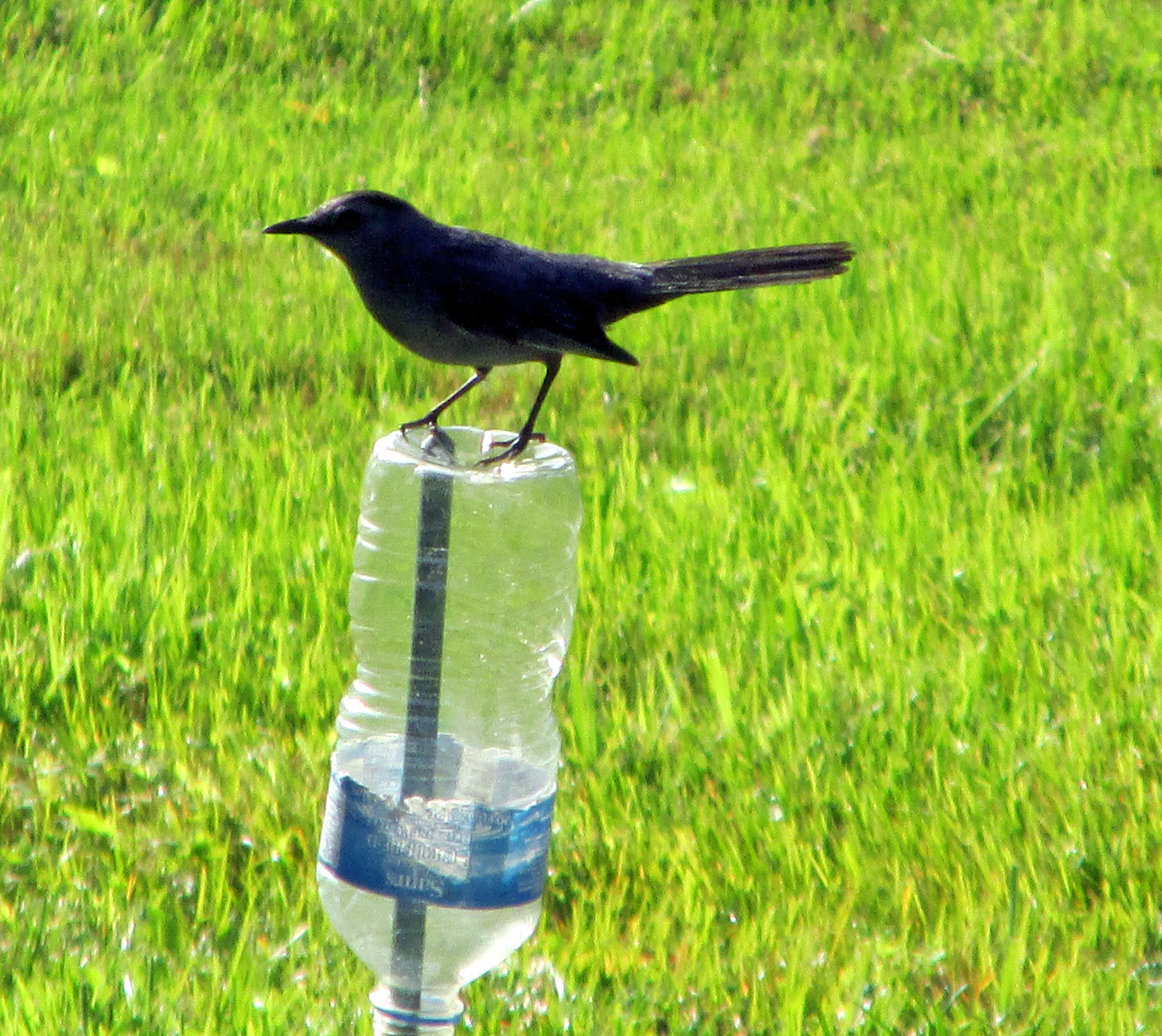
Photo by Bryan Stevens • The gray catbird resides in Northeast Tennessee April through October, although there are a few winter records for the species. Most depart in fall, choosing to spend the winter months in more hospitable locations.
Catbirds are part of the parade of the departing birds like rose-breasted grosbeaks, scarlet tanagers, Baltimore orioles and indigo buntings that will soon wing their way south for the winter.
Because they lack the brilliant plumages of some of these other summer visitors, catbirds could often go unnoticed if not for the fact they are extremely noisy.
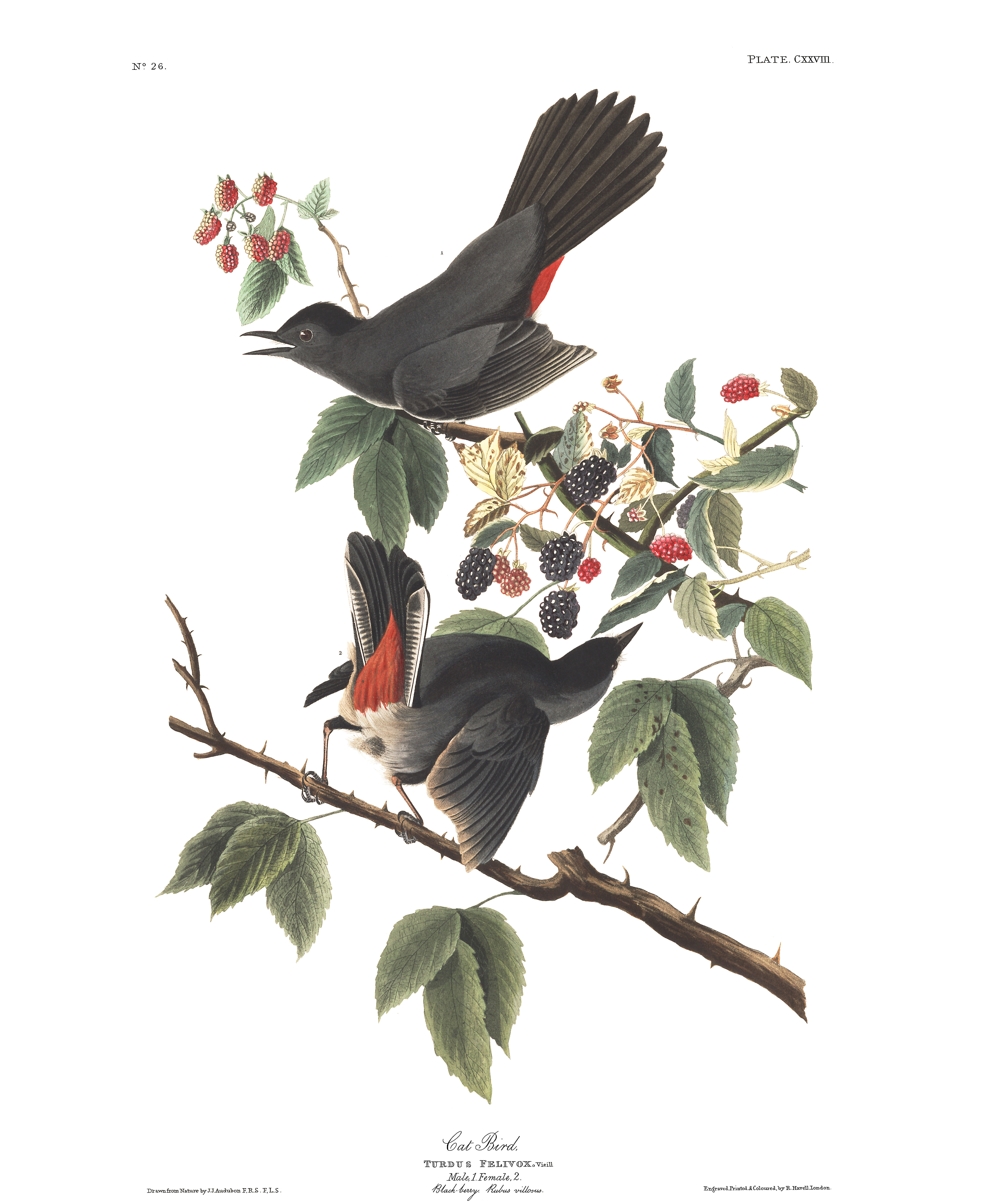
Although the catbird is related to thrashers and mockingbirds, scientists find them just different enough to warrant placing the gray catbird in its own genus. A relative known as the black catbird, which ranges throughout the Yucatan Peninsula of Mexico as well as northern Guatemala and northern Belize, also belongs to a genus of its own. Both catbirds are classified as “mimic thrushes,” or Mimidae, of which there are about 30 species in the New World. There is also a totally unrelated family of catbirds that ranges through Australia, Asia and parts of Africa. Some of these birds include the ochre-breasted catbird, tooth-billed catbird and spotted catbird.
The gray catbird is not as an accomplished mimic as some of its relatives, such as the Northern mockingbird. Nevertheless, experts have documented that the gray catbird can produce more than 100 different sounds. Males have motivation to constantly expand their repertoire, however, as doing so increases the likelihood of attracting a mate. They imitate other birds, but some have been recorded imitating frogs and other non-avian singers.
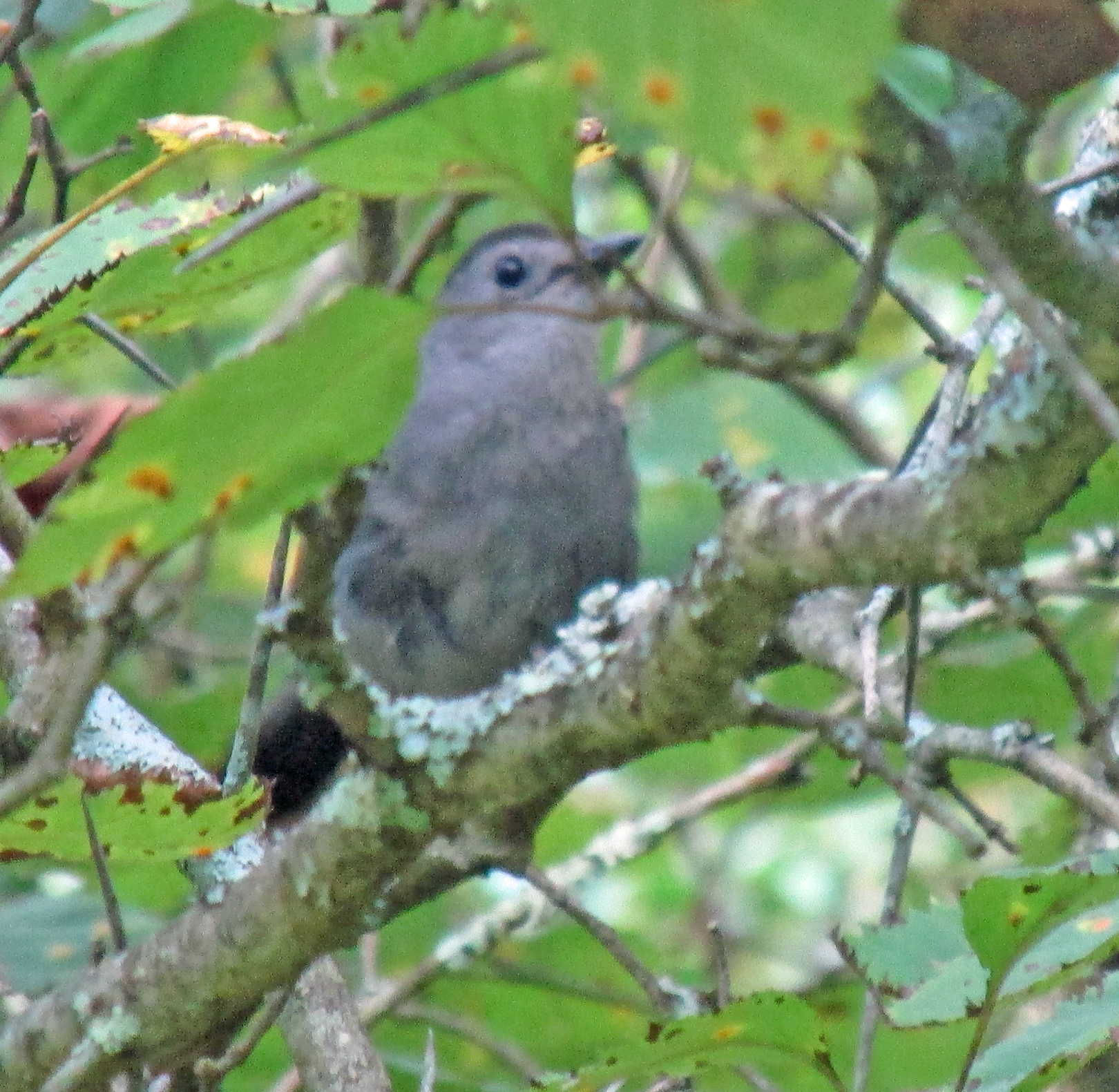
Photo by Bryan Stevens A curious Gray Catbird peeks from dense cover. Attendees at the fall rally can look for catbirds and other species at any of the offered bird hikes.
While not generally considered a bird to visit feeders, people have succeeded in attracting catbirds to feeders designed to offer grape jelly or orange slices. Planting fruit-bearing shrubs and trees is the best means of attracting these fascinating birds to your yard and garden. It’s also best not to clear away brush and tangles from your yard if you wish to attract catbirds. These are shy birds and will avoid areas that are too open and brightly lit.
An occasional catbird lingers in the region into the winter season, but most head out for more comfortable climates by the end of October. Enjoy this entertaining bird while you can but know they’ll return without fail next spring in April and May.
•••
Bryan Stevens has written about birds, birding and birders since 1995. Ask a question, share a sighting or make a comment by emailing him at ahoodedwarbler@aol.com.ahoodedwarbler@aol.com


 Our Fine Feathered Friends