
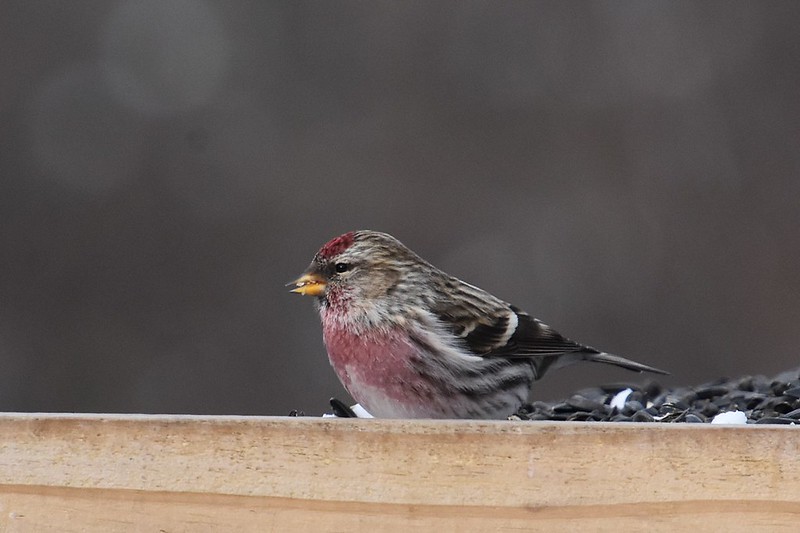
Jean Potter • A redpoll at a feeder in Sax-Zim Bog in Minnesota.
Like postal carriers, birders endure the elements, including snow and cold. Elizabethton couple Brookie and Jean Potter took this up a notch during a sub-zero birding expedition to northern Minnesota back in January to expand their list of life birds.
They were accompanied by another Elizabethton couple, David and Connie Irick. While coping with temperatures far below zero with a recorded wind chill of -34 degrees Fahrenheit, the Potters managed to add five news species to their life lists. The Iricks saw nine new species.
They enjoyed three full days of birding from Jan. 19 to Jan. 22, but it took two days of driving each way. They left Tennessee on Saturday, Jan. 17, and returned Jan. 24.
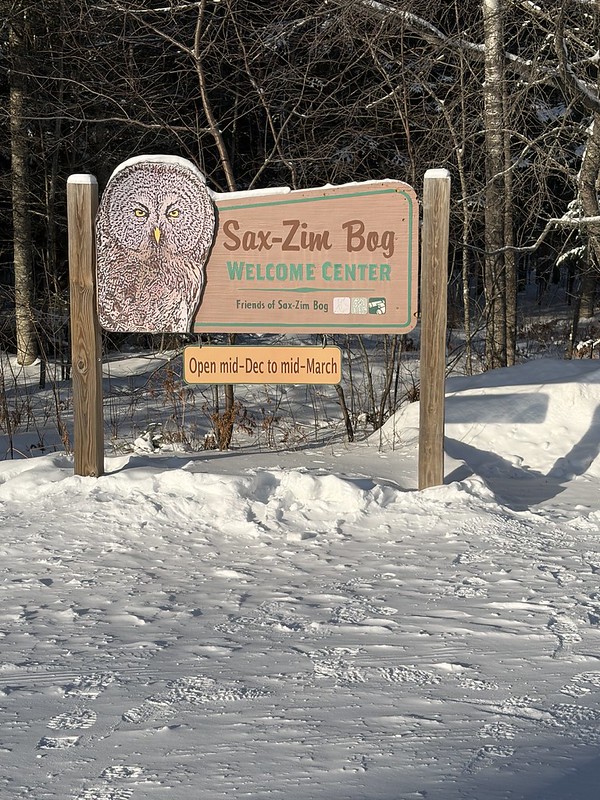
Photo by Jean Potter • Sax-Zim Bog offers specialty habitats for cold-weather species.
I’ve been friends with Brookie and Jean, and birded with them, since the late 1990s when I visited their home to observe a nesting great crested flycatcher. They’ve traveled the country to add species to their growing life lists.
They have long had a bucket list target of seeing 500 species, according to Jean. With their recent excursion to Sax-Zin Bog in northern Minnesota, they surpassed this goal.
Sax-Zin Bog is about an hour north of Duluth, Minnesota, and Lake Superior. It’s also about 100 miles north from Minneapolis.
“It’s a very popular winter destination for birders,” Jean said. “It offers cold weather habitats you can find anywhere else.”
Those habitats attract some specialty birds, including Northern finches, several owls and some other hard-to-find birds.
Their five new bird species were: Northern hawk-owl, boreal chickadee, Northern shrike, Canada jay and black-backed woodpecker.
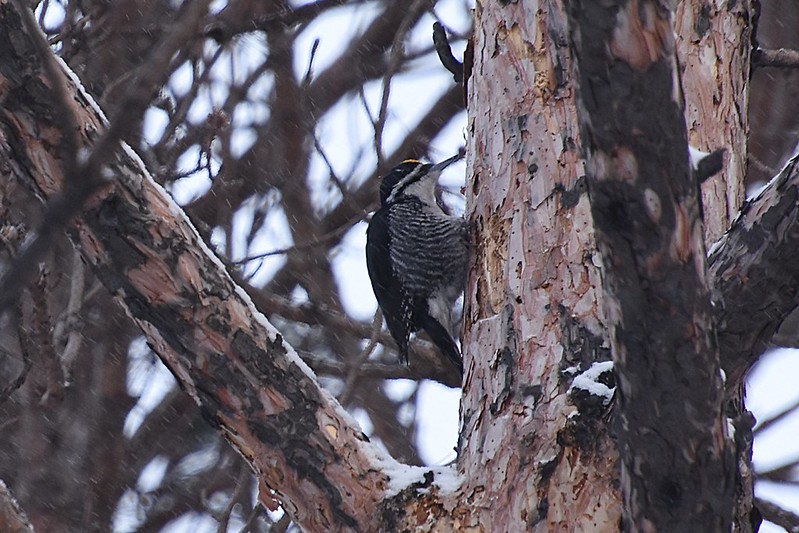
Photo by Jean Potter • A black-backed woodpecker spotted in Minnesota by two visiting couples from Tennessee.
Some of their target birds failed to appear.
“We hoped to see a great gray owl and boreal owl, but this year they were not present,” Jean noted. “They had an irruption there last year.”
A bird irruption is a large-scale southward migration of northern-breeding birds (finches, nuthatches and owls) moving far beyond their typical winter range. Triggered by food scarcity in the boreal forest, these massive, sporadic movements often bring unusual species to unexpected locations.
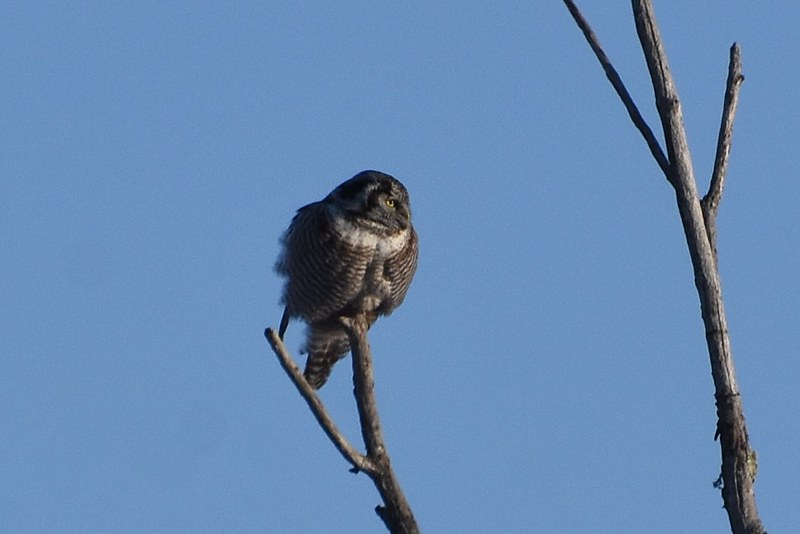
Photo by Jean Potter • The trip to Sax-Zim Bog produced sightings of two individual Northern hawk-owls.
They did see short-eared owl and the Northern hawk-owls.
“We saw a total of 25 species, and we were very happy with it,” Jean said.
She added that most the birds were different than what they would normally see in Northeast Tennessee in winter.
They’re used to getting 100 species on some of their birding trips.
“It was quality over quantity,” Brookie said of their January trip to Minnesota.
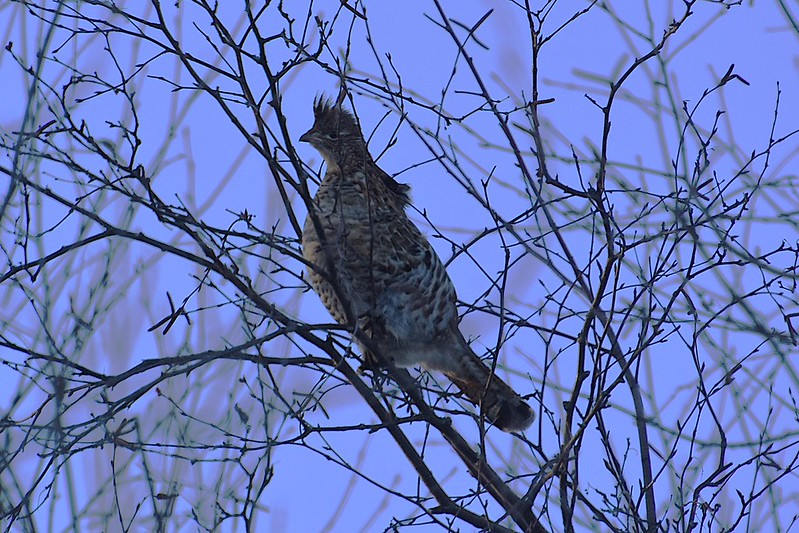
Photo by Jean Potter • A ruffed grouse in the branches of a tree.
The same five species that were new for the Potters were also new to the Iricks. The Potters, however, had already seen in different locations four other birds that were new for the Iricks.
David and Connie also added Northern goshawk, black-capped chickadee, pine grosbeak and redpoll to their life list.
Birds that are rare in winter here were common there.
We had tons of evening grosbeaks,” Jean said. “People put out feeders in the bog. There are houses located in the bog. There is also a welcome center.”
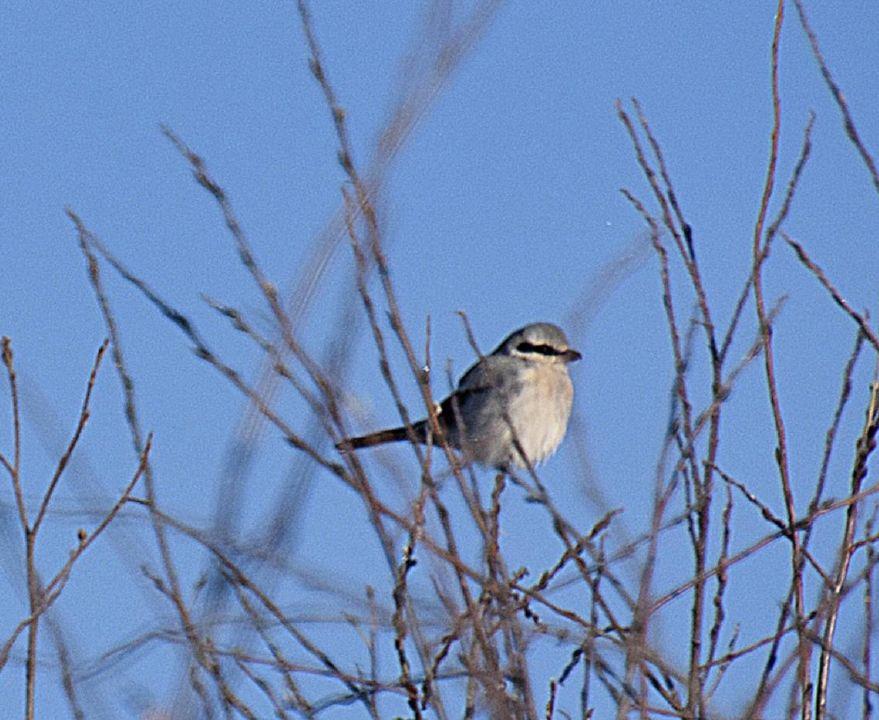
Photo by Jean Potter • A Northern shrike spotted at Sax-Zim Bog.
At some stops, they saw as many as 75 evening grosbeaks at a time crowded around some of the feeders.
“The owners used big buckets to fill up feeders,” Brookie said.
They found all their birds in the 300-square-mile Sax-Zim Bog, except for the black-backed woodpecker.
The woodpecker they found in Superior National Forest in Duluth.
“We went looking for it on the boardwalks in the bog, but we met some other birders and a woman told me that she had got it the day before,” Jean said.
She wrote down the coordinates provided by the woman, who guaranteed they’d see the woodpecker.
“We drove snow-covered roads in big pine forests to find it,” Brookie said.
“A big truck had the road blocked with a module home,” Brookie added. From the backseat, Connie Irick actually saw the bird while their vehicle was stopped and alerted everyone to its presence.
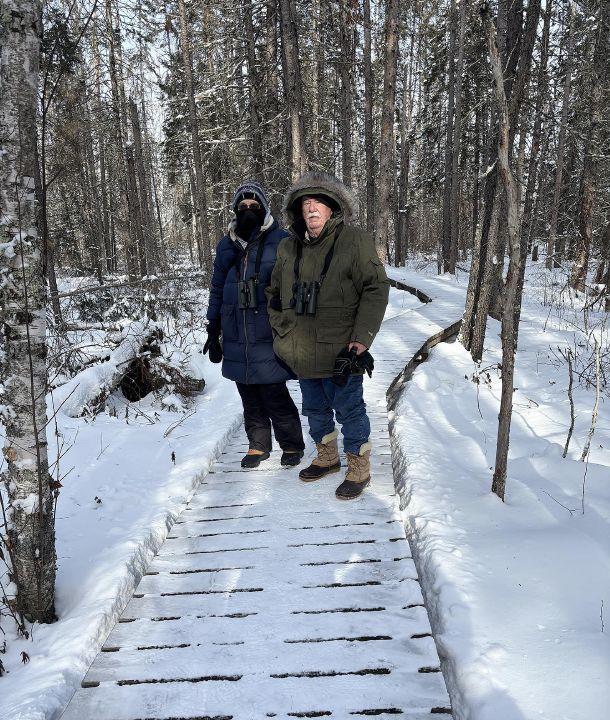
Contributed • Brookie and Jean Potter on a snow-covered boardwalk at Sax-Zim Bog.
“It stayed there and we studied it for awhile,” Brookie said.
Birding in such extreme temperatures took some adjustment.
“The first day we were there, our endurance was tested,” Jean reported. “We got up well before sunrise. It was -16 degrees and a windchill of -34.”
Most of their birding was done from inside a vehicle.
She reported that they were prepared, clothing wise. “But it was still a shock,” she added.
“All the roads were white. No blacktop,” she explained. “We had a four-wheel drive. They had well-maintained roads. The land is flat, so that helps.”
The big challenge when driving was avoiding snow-covered ditches.
“We saw a truck stuck in a deep ditch,” Jean said. “People in trouble got into ditches at turn-offs.”
They did venture outside of the car occasionally.
“We walked half-mile on the boardwalk in sub-zero weather,” Jean said. “That was about the longest we were outdoors.”
They also birded outside of Sax-Zin Bog.
“We drove through the North Woods of Wisconsin and saw Rough-legged Hawks,” Jean said.
“We could see Lake Superior, but it was frozen,” Jean said. “It just looked like a big white field.”
They might have seen more, but they had to cut the trip short.
“We had to come home a day early to get ahead of Winter Storm Vern,” Jean said.
They stayed in Hibbing, Minnesota, a town northwest of the bog.
They ate their meals in Cotton, Minnesota.
“It just had gas station and a restaurant called Wilbert Cafe,” Brookie said. “It had a good variety of home-cooked food.”
Jean added, “We met other birders from all over. Everyone comes here at the coldest time of the year.”
Brookie added, “The manager said birders keep the restaurant going in winter.”
Brookie also noted one other pertinent fact. “Bob Dylan was raised in Hibbing, Minnesota,” he said.
Sax-Zin Bog has no bathroom facilities, other than Port-o-johns, so the restaurant also provided restrooms.
Dealing with the cold was simple.
“We had Arctic coats and boots, and we dressed in many layers,” Jean said. “It was a challenge just to use a camera in my heavy gloves. I didn’t take as many pics as I normally do.”
They did most of their birding in daylight hours, but they did venture out after dark to look for owls.
“We were so proud to get Northern hawk-owl on our first day,” Jean said.
They also spotted a second of these owls in another part of the bog.
“We saw ruffed grouse in the trees,” she said.
Spruce grouse and sharp-tailed grouse had been target birds, but like the great gray owl they never showed themselves.
“We missed Bohemian waxwings,” Brookie said. “We might have gone looking for them if we’d had one more day. There was a report of them near Lake Erie.”
They found the landscape of northern Minnesota interesting.
“I saw enough windmills to last me a lifetime,” Brookie said.
“I added four new states: Wisconsin, Illinois, Indiana and Minnesota,” Jean said, noting she has now visited 35 states.
Brookie has visited 36 states. He was stationed in San Diego, California, during his time in the U.S. Marine Corps in the Vietnam Era, which gives him one more state than his wife.
Jean, who likes lighthouses, did see one from the car near Lake Superior.
They would have liked to have seen a couple of mammals that reside in that region.
Brookie wanted to see pine martens while Jean hoped to see a snowshoe hare, but those will have to wait for a future trip.
They also traveled past Monoquet, Indiana. “We passed hundreds of sandhill cranes in that area, but we didn’t stop,” Jean said.
By the time they departed, they were handling the cold like pros.
“On that first day, I wondered what in the world am I doing here?” Jean said. “But by the time we left, I figured we can do it again some time.”
 Our Fine Feathered Friends