Tag Archives: warblers

October Saturday Bird Walks at Sycamore Shoals producing interesting sightings

Yellowthroated

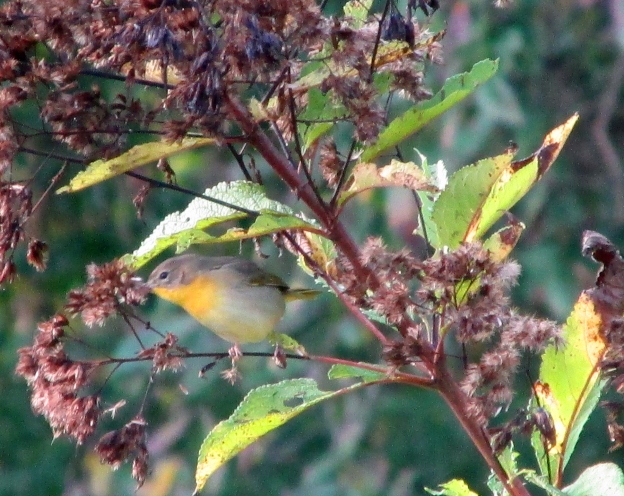
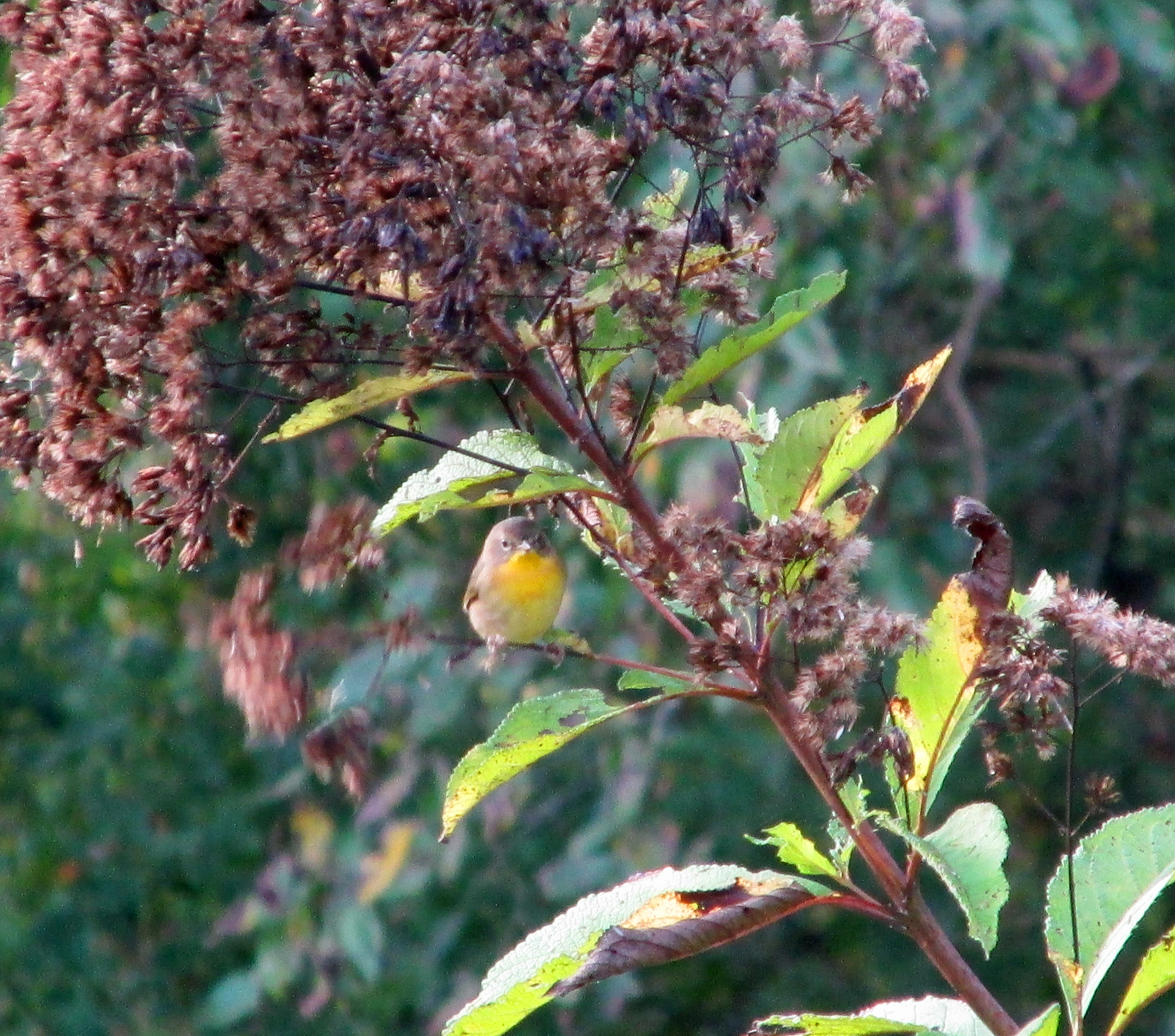
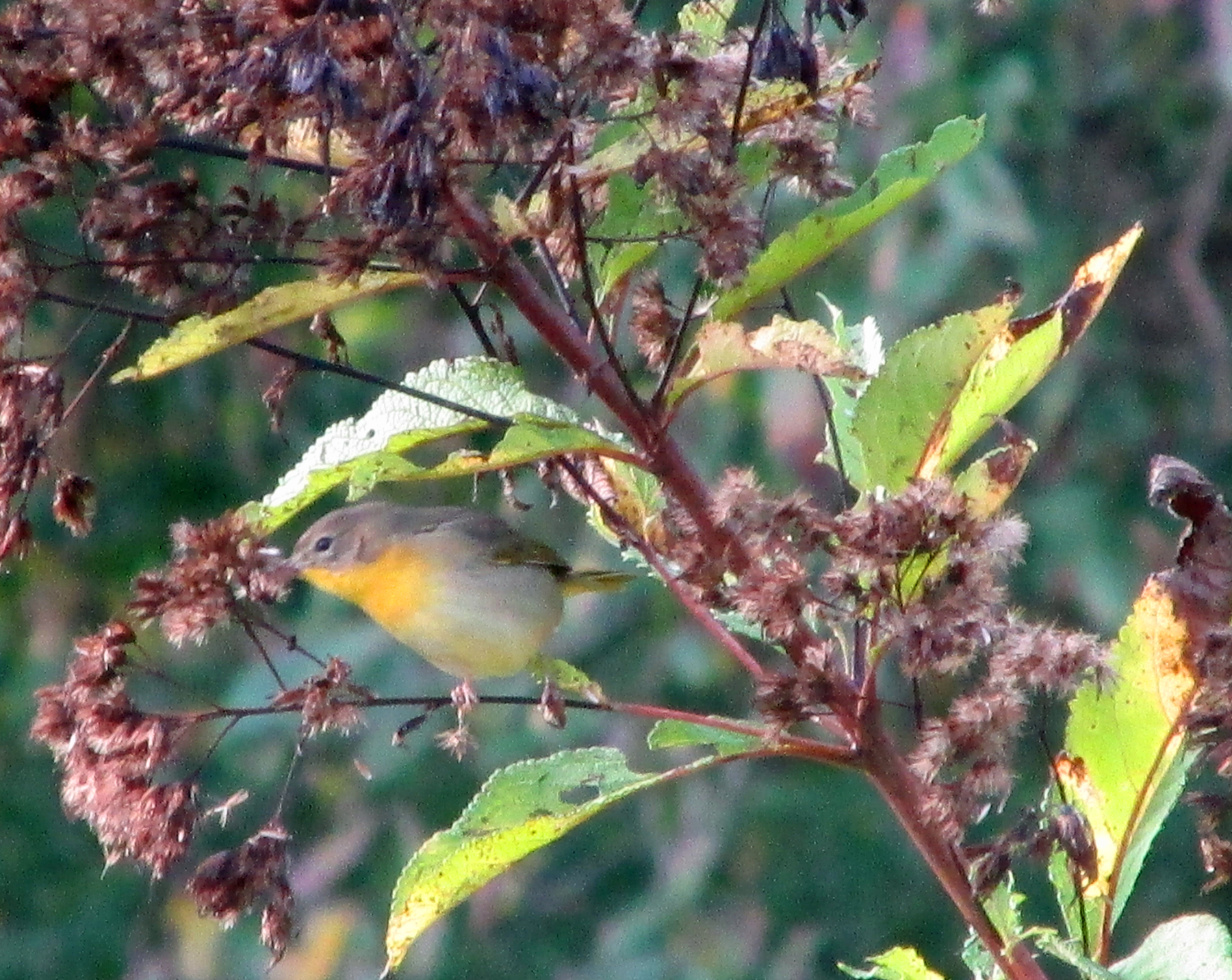
Photo by Bryan Stevens                                                                    A female Common Yellowthroat entertained bird walk attendees as she foraged among Joe-Pye Weed in the butterfly garden at Sycamore Shoals State Historic Park.

It’s funny how you can go most of the year without seeing a certain bird. Then, the drought ends and you enjoy a spike in the numbers of sighting within a short amount of time.

A female Common Yellowthroat became a highlight of the first of this year’s October bird walks at Sycamore Shoals State Historic Park, which was well attended with nine participants. The bird was foraging in the flower heads of Joe-Pye Weed in the butterfly garden at the park.

The Elizabethton Bird Club has offered these hikes for more than a decade at the park. Prior to conducting the walks at Sycamore Shoals, the club also led October hikes at Winged Deer Park in Johnson City and along the linear walking trail in Erwin.

BWteal-Flock

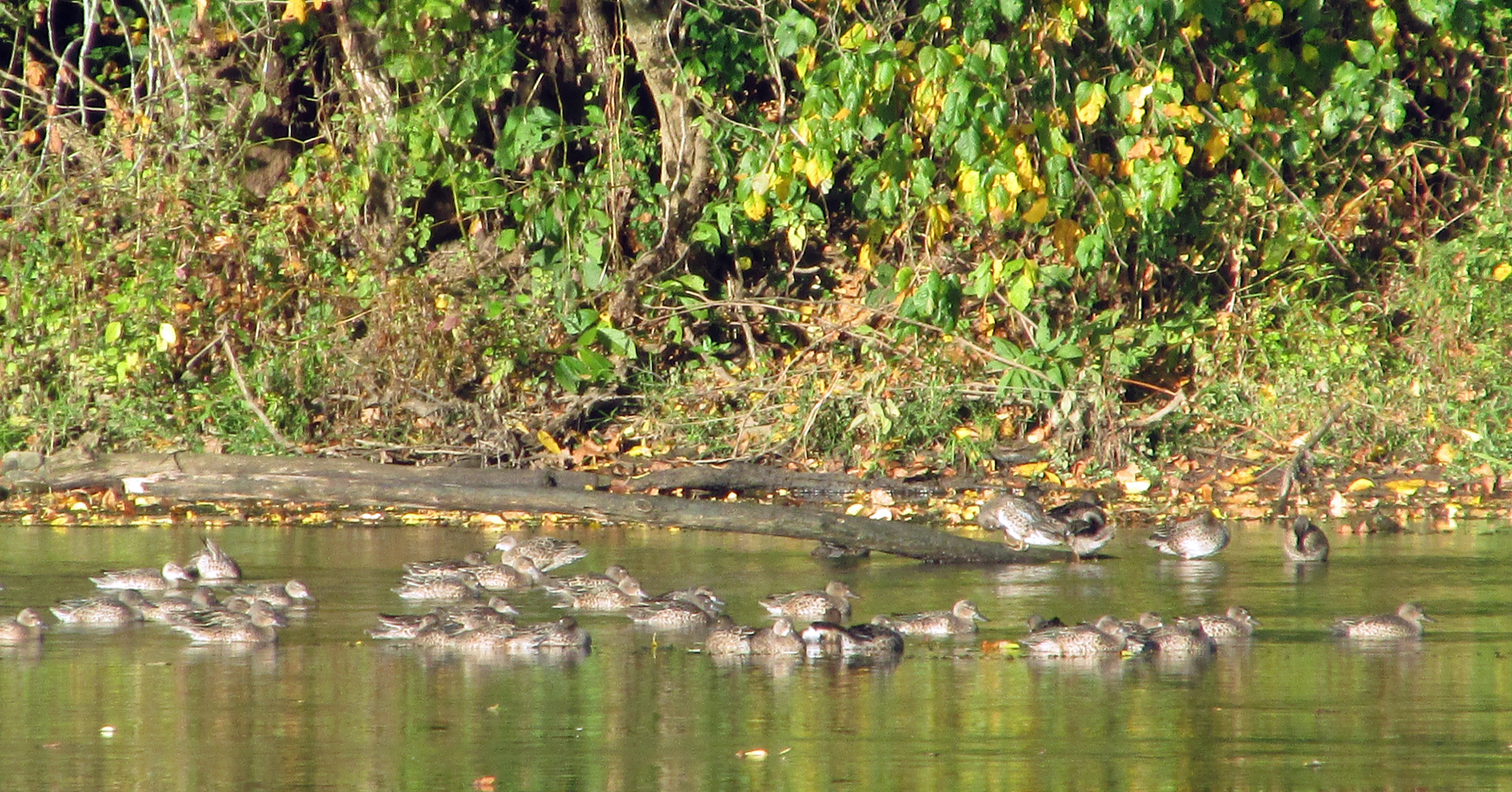
Photo by Bryan Stevens                                                 A portion of the flock of 104 Blue-winged Teal found on the first of this year’s October Saturday Bird Walks.

Tess Cumbie, a former resident of Buladean, N.C., came up with the idea for the walks back in the late 1990s.

The first of this year’s walks at Sycamore Shoals took place on Saturday, Oct. 4. A raft of 104 Blue-winged Teal on the Watauga River ranked as another highlight of that morning’s bird walk. Pied-billed Grebes, Mallards, Wood Ducks and Canada Geese were also present on the river.

1618145_10203999628743449_4835781711182007808_o

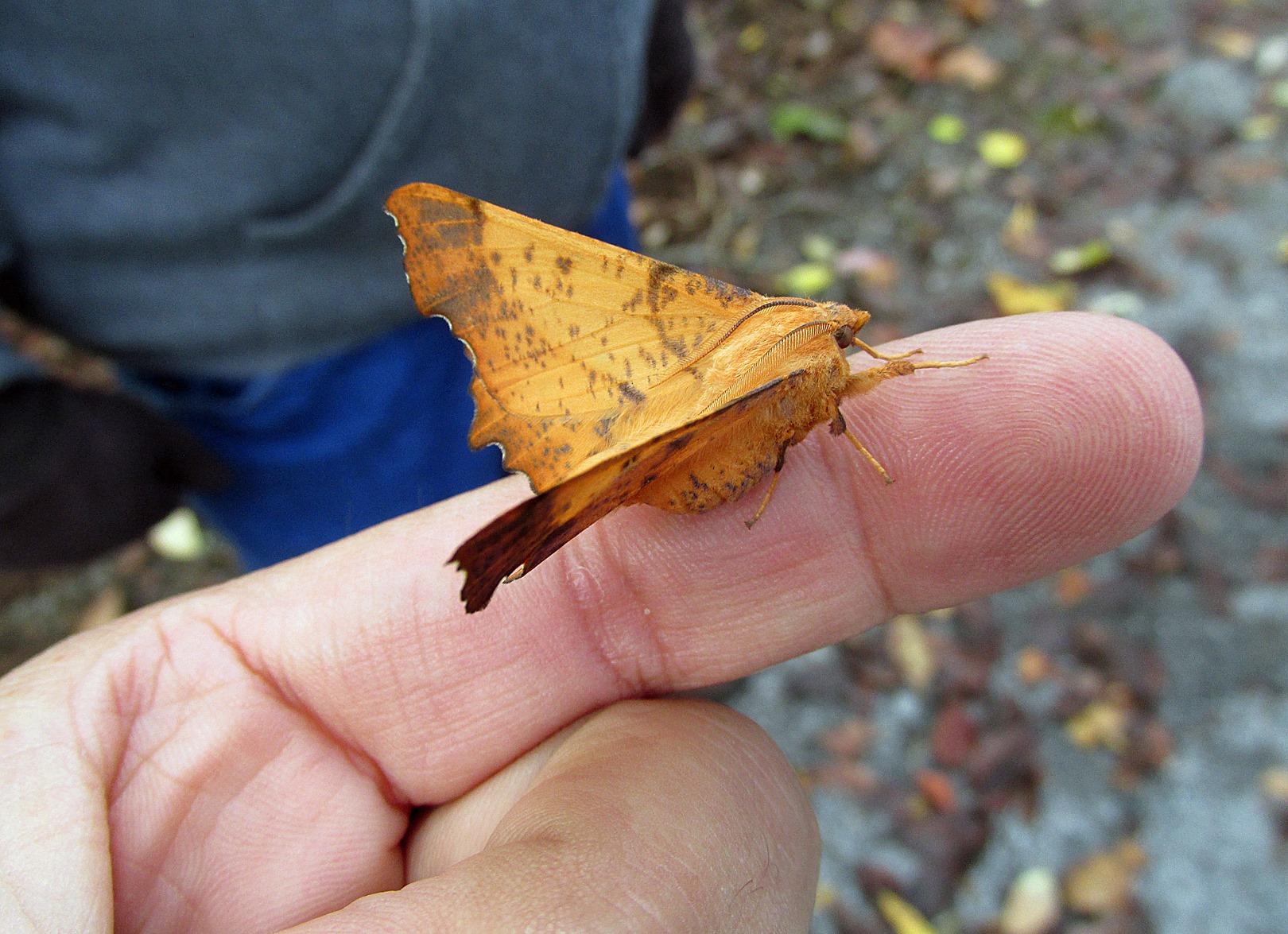
Photo by Bryan Stevens                                     A Maple Spanworm Moth warms itself during the chilly morning bird walk.

Other birds found included  Black Vulture, Turkey Vulture, Chimney Swift, Red-bellied Woodpecker, Yellow-bellied Sapsucker, Downy Woodpecker, Northern Flicker, Eastern Wood-Pewee, Blue Jay, American Crow, Carolina Chickadee, Tufted Titmouse, Carolina Wren, Eastern Bluebird, Swainson’s Thrush, American Robin, Gray Catbird,  European Starling, Cedar Waxwing, Magnolia Warbler,  Song Sparrow, Northern Cardinal, Rose-breasted Grosbeak, Indigo Bunting, Eastern Meadowlark, House Finch and American Goldfinch.

When not looking at birds, participants enjoyed diversions such as the Maple Spanworm Moth blending with the fallen leaves on the gravel walking trails. I had never seen this particular moth, which spent some time warming itself on one of my fingers.

Although well attended by participants from as far as Abingdon, Va., the weather that greeted us was quite frigid. The cold appeared to bother us more than it affected the birds.

••••••

A male Wood Duck landed, briefly, on the fish pond on the morning of Oct. 5. If I hadn’t been outdoors at the time, he might have stayed longer. When I moved, he flew. It’s the first visit here at home from a Wood Duck in several years. Coincidentally, the last visit also took place in early October.

Flower-bed

Photo by Bryan Stevens              This densely-planted flower bed on the ETSU campus provided cover for a migrating Common Yellowthroat.

••••••

I am beginning to find that the campus at East Tennessee State University can produce some fun bird sightings. After witnessing a Cooper’s Hawk nearly catch a squirrel from the top branches of a tall tree near Gilbreath Hall, I have been paying closer attention to those feathered friends that visit the campus.

During a Sunday evening stroll on Oct. 6, I found a Common Yellowthroat in a well-planted flower bed. So, I have added my first warbler to my ETSU list. I also saw a Red-bellied Woodpecker flying over the Culp Center during the same walk.

It also got me to thinking about how many Common Yellowthroats I have been seeing this fall.

When I posted about the sighting on Facebook, Cathy Myers commented and informed me that she had recently observed a Rose-breasted Grosbeak on the campus.

•••••••

Catbird

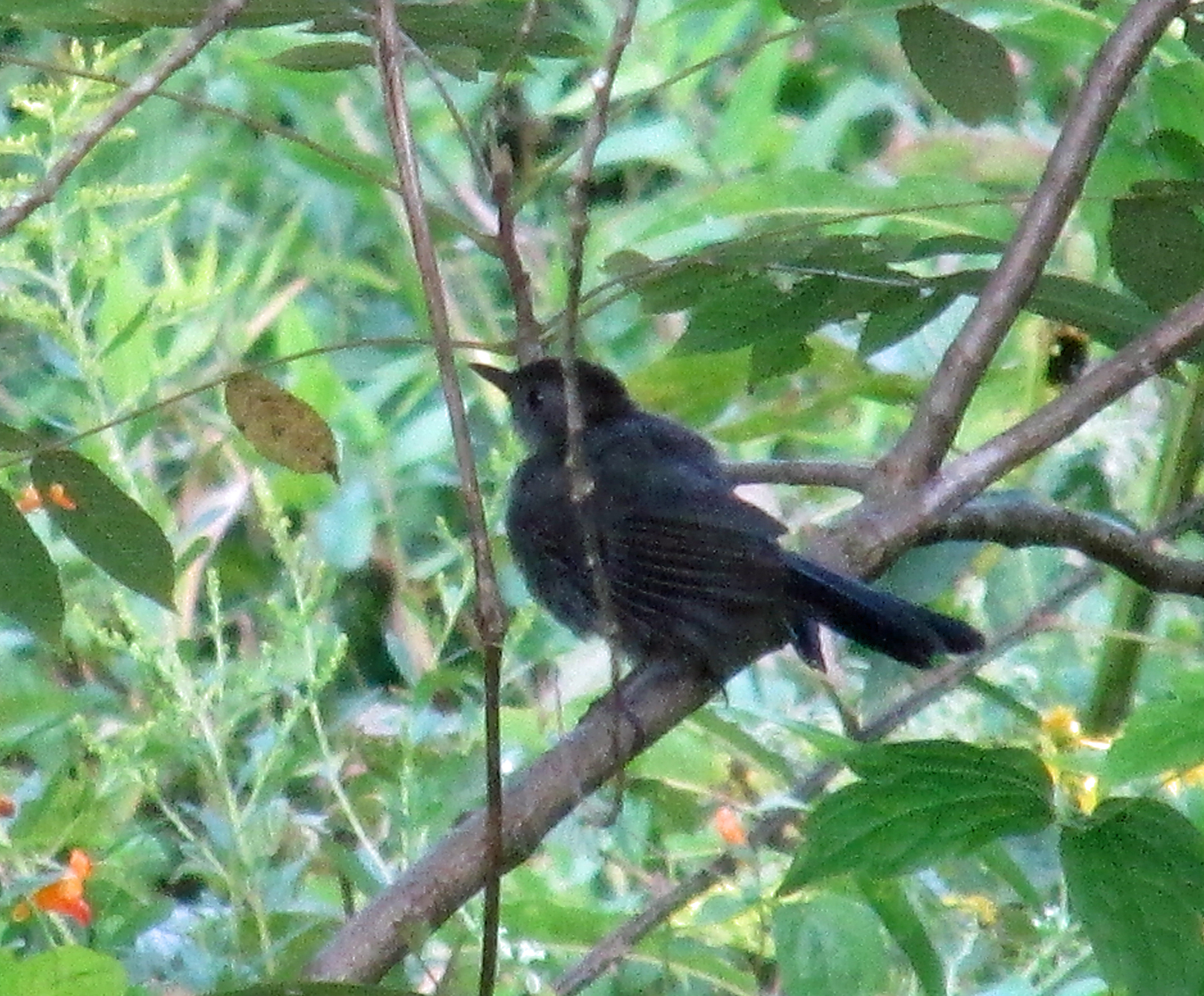
Photo by Bryan Stevens                                          Gray Catbirds, such as this one, have been found on the first of the Saturday Bird Walks this October at Sycamore Shoals.

At the second of the four Saturday Bird Walks scheduled this October, rain threatened to impede the stroll. Fortunately, the showers held off until after the walk on Oct. 11 concluded at about 9:30 a.m.

The second of the October Saturday Bird Walks produced several highlights, including a duel between an Osprey and an adult Bald Eagle over the Watauga River, as well as four species of warblers — Tennessee, Bay-breasted, Palm and Yellow-rumped — and other birds, including Chimney Swift, Mockingbird, Starling, Northern Flicker, Blue Jay, Carolina Wren, Mourning Dove, Eastern Bluebird, Mallard, Carolina Chickadee, Canada Goose, Goldfinch, Red-tailed Hawk, Red-bellied Woodpecker, Crow, Yellow-bellied Sapsucker, American Robin, Northern Cardinal, Song Sparrow and Downy Woodpecker.

Although we had fewer participants on this walk, we enjoyed better observations of the birds. One exciting moment involved the flock of irate Blue Jays gathered to scold a Red-tailed Hawk that had flown too close for comfort.

••••••

Two more Saturday Bird Walks remain during October. They will be held on Oct. 18 and Oct. 25. The public is welcome to these free strolls along the walking trails at Sycamore Shoals State Historic Park. Bring binoculars to increase your viewing enjoyment.

••••••

Common_Yellowthroat (1)

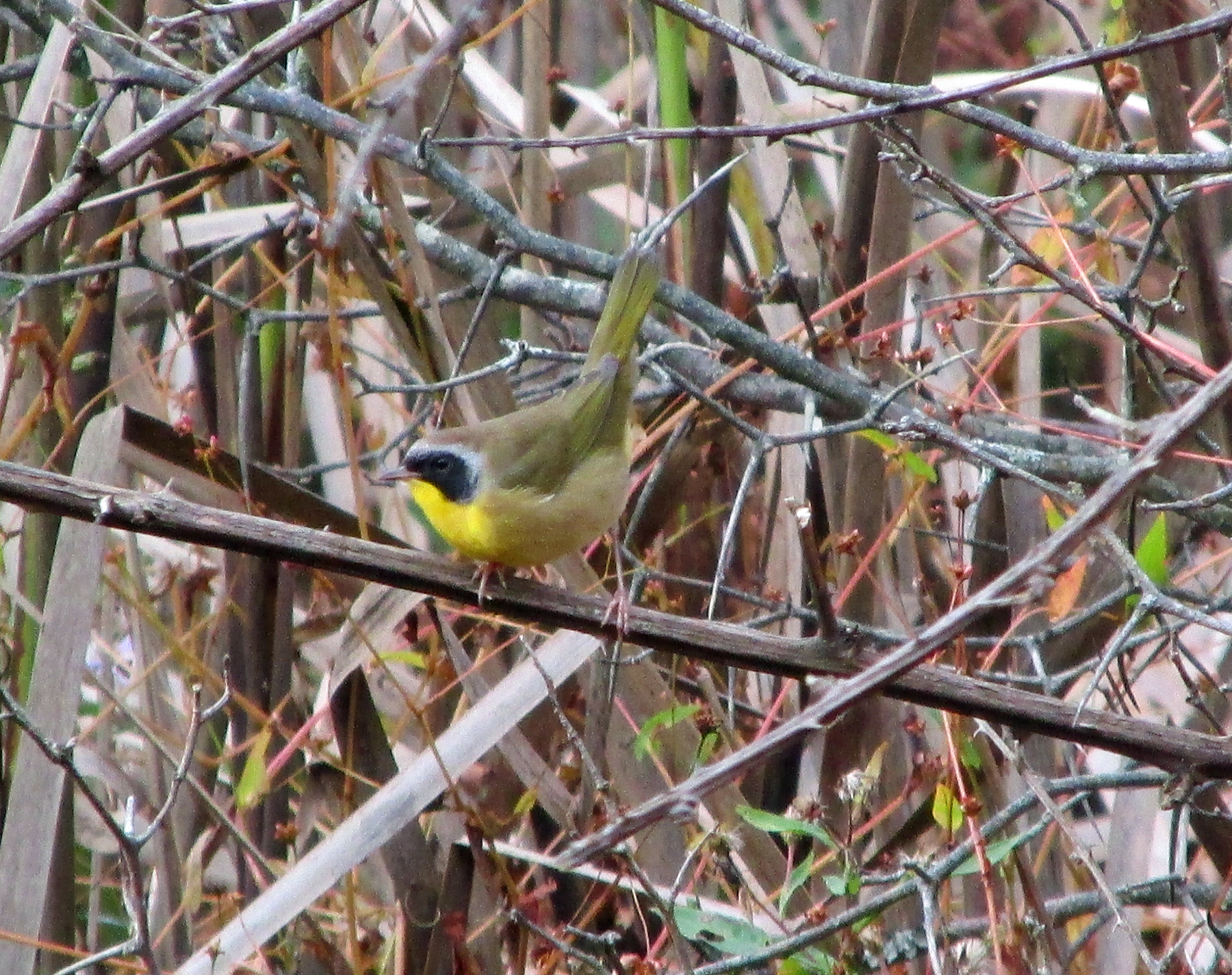
Photo by U.S. Fish & Wildlife Service                                                  A male Common Yellowthroat surveys his surroundings from a prominent perch.

The Common Yellowthroat is a warbler that is quite fond of weedy, damp habitats. Marshes and other wetlands are preferred habitat during the nesting season, although a few of these birds are also present in more dry habitats.

In migration, any weedy corner might attract one of these warblers. In fact, the one I found on the ETSU campus remained elusive in a raised concrete bed containing a thick planting of flowers and shrubs.

Photo by Bryan Stevens A male Common Yellowthroat visits an overgrown thicket during fall migration. Photo by Bryan Stevens A male Common Yellowthroat visits an overgrown thicket during fall migration.

Photo by Bryan Stevens
A male Common Yellowthroat visits an overgrown thicket during fall migration.

The Common Yellowthroat belongs to the genus of warblers known as Geothlypis, which also includes the related Bahama Yellowthroat, Hooded Yellowthroat, Masked Yellowthroat, Black-polled Yellowthroat and Gray-crowned Yellowthroat. These other species are found in Central and South America, as well as the Caribbean.

Recent classification of the Geothlypis warblers has led to the inclusion of three other warblers — MacGillivray’s, Mourning and Kentucky — being shuffled into this genus.

Although fond of skulking in deep vegetation, most Common Yellowthroats are curious birds and will allow brief glimpses. The males also betray their presence with a loud, easily recognized song that sounds very much like “Witchety, Witchety, Witchety, Witch.”

Yellowthroat-PyeWeeDForage

Photo by Bryan Stevens                                                    The female Common Yellowthroat lacks the male’s black face mask.

Male and female yellowthroats show a bright, yellow throat. Males also sport a black mask bordered with a silvery-white line, and the male’s throat is usually a brighter yellow. Although males will sing in the open during the nesting season, these birds usually prefer to remain hidden from view as they go about their daily routines.

••••••

To learn more about birds and other topics from the natural world, friend Stevens on Facebook at https://www.facebook.com/ahoodedwarbler. He is always posting about local birds, wildlife, flowers, insects and much more. If you have a question, wish to make a comment or share a sighting, email ahoodedwarbler@aol.com.

Photo by Bryan Stevens

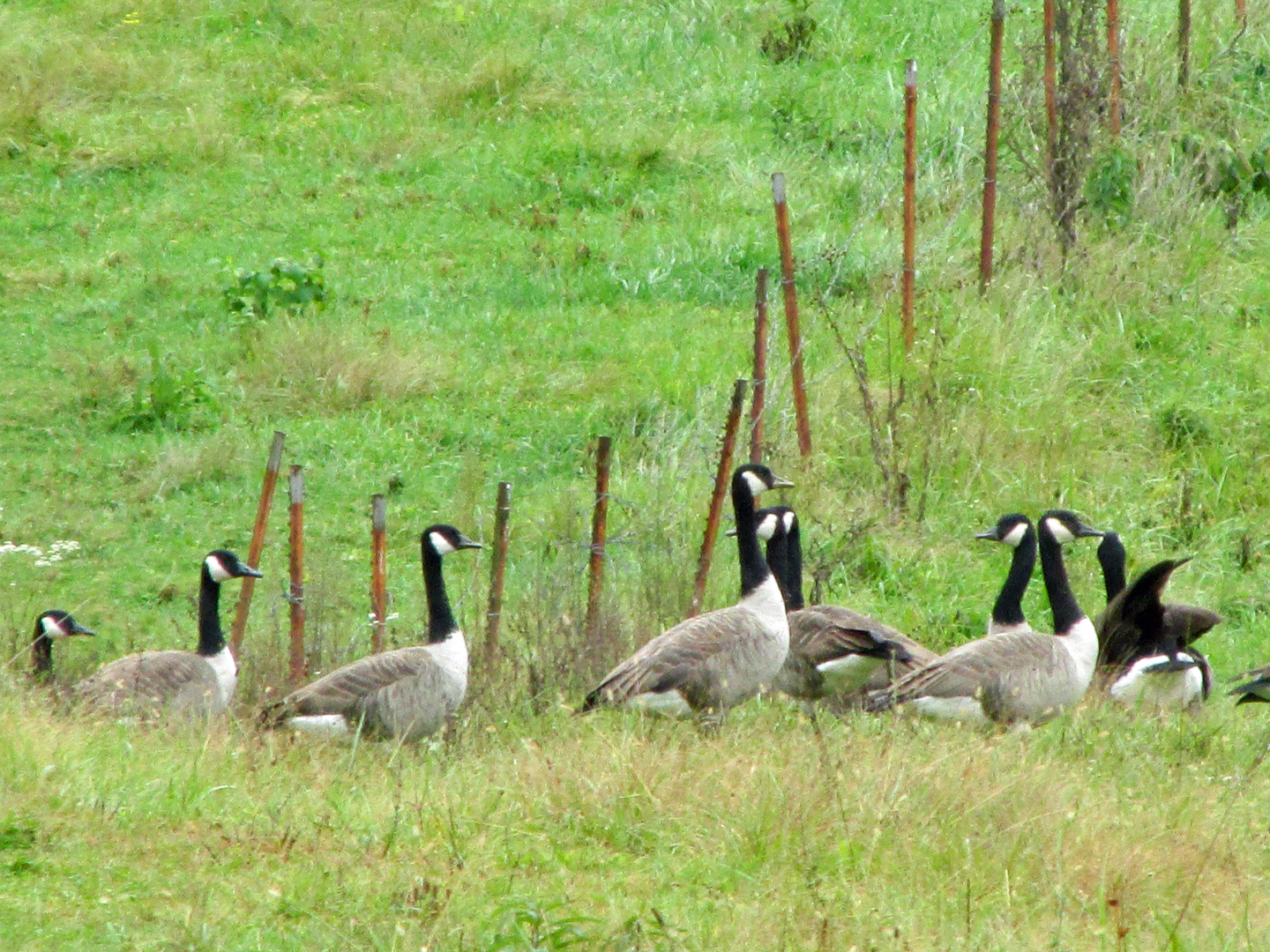
Photo by Bryan Stevens                                                                                                                            A flock of Canada Geese forage in a field near the Bell Cemetery in the Limestone Cove community of Unicoi County on a recent October afternoon.

As September draws to a close, time to reflect on month of migrants

As September comes to a close this week, I decided to look back and see how the pace of fall migration proceeded throughout the month here at my home in Hampton, Tennessee.

On the first day of September, which doubled as Labor Day this year, I saw a single Common Nighthawk, as opposed to the flock of 50 nighthawks I observed on the final day of August. I only saw one warbler, but it was a Chestnut-sided Warbler and different than the three species — Yellow-throated Warbler, Northern Parula and Magnolia Warbler — I saw on the final day of August.
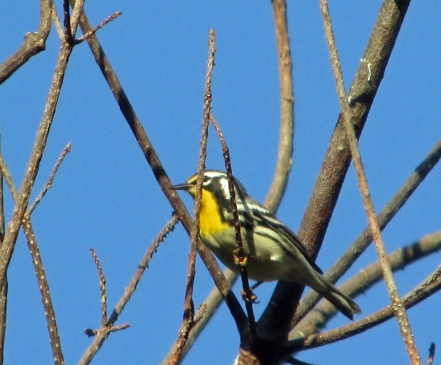
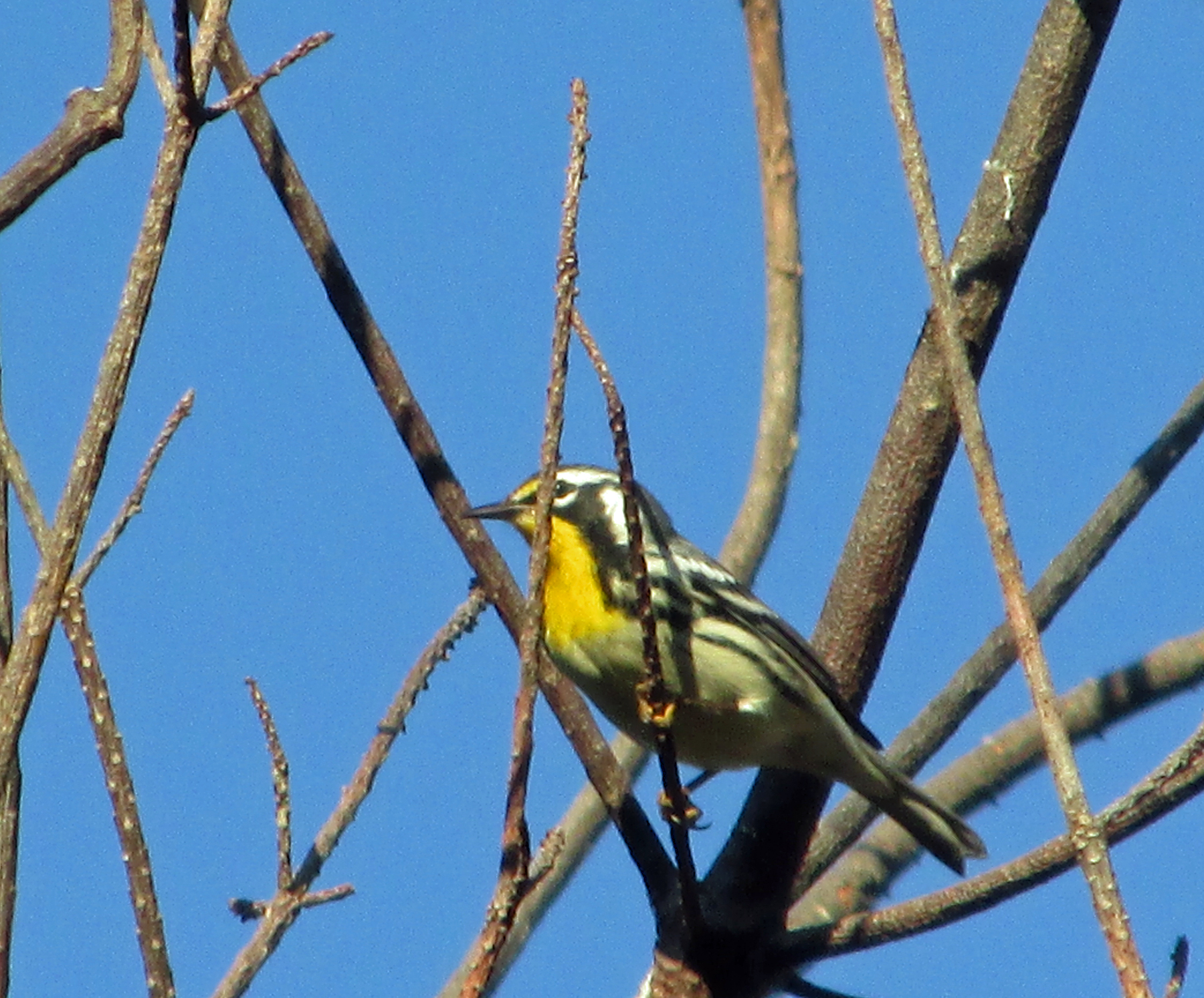
Photo by Bryan Stevens  A Yellow-throated Warbler makes a migratory stop in my yard on the first day of September.

Photo by Bryan Stevens                                                                                                           A Yellow-throated Warbler makes a migratory stop in my yard on the first day of September.

Other birds that helped me welcome September included several Gray Catbirds and Blue-gray Gnatcatchers, Eastern Wood-Pewee, Brown Thrasher and family flocks of American Goldfinches and House Finches. Earlier in the day, I also watched and listened as a Common Raven flew overhead. The Ruby-throated Hummingbirds are also still numerous.

I tried to carve out some time each day in September to look for migrants visiting my yard, but the weather and my work schedule didn’t always make that possible. Nevertheless, I spent a good amount of time scanning for migrants at every opportunity this past month.

I call my “migrant watching” my “lawn chair birding” because some of the time I am seated in a plastic lawn chair scanning trees and shrubs for any sign of movement. I spent a lot of time on my feet, however, since a flash of color or an unknown chip note sends me searching. My mother joins me much of the time, and she has a welcome ability to detect movement among the green leaves of the trees.
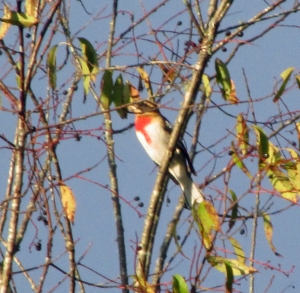
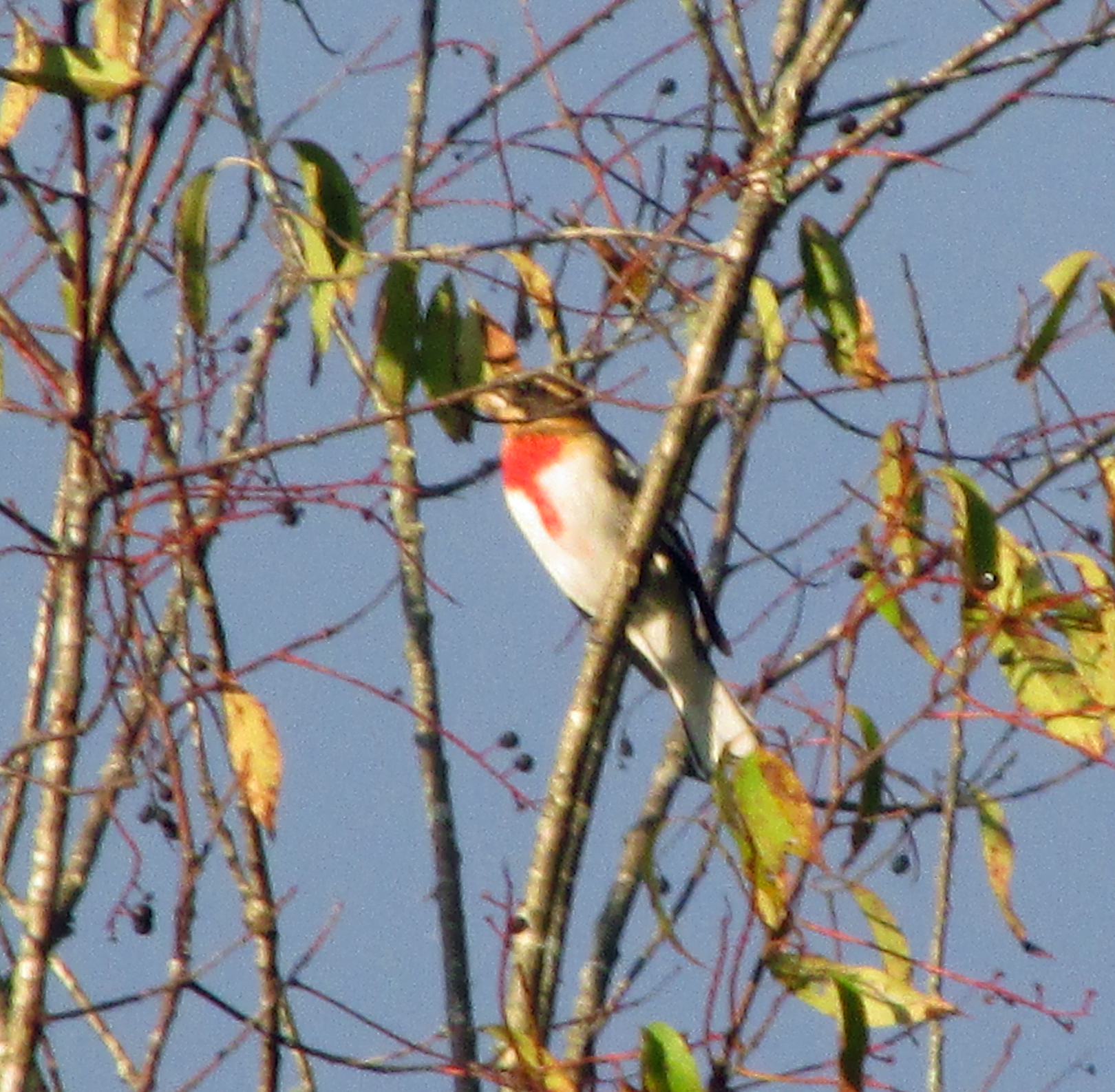
Photo by Bryan Stevens Some of the Rose-breasted Grosbeaks migrating through this fall still retain some of their rosy color.

Photo by Bryan Stevens
Some of the Rose-breasted Grosbeaks migrating through this fall still retain some of their rosy color.

One particular spot in the yard seems better than others for detecting migrating visitors. Some hawthorn and willow trees, as well as an American holly and wild cherry trees, line the creek that flows past the yard. On the other side, the fish pond borders these trees. The branches of dead conifers offer attractive perches for such birds as Eastern Wood-Pewees and Cedar Waxwings, as well as the occasional warbler.

On Sept. 5, I enjoyed another good evening of lawn chair birding, adding a few new warblers for the fall to my list. I saw four species, but two of them — immature Black-and-White Warbler and Black-throated Green Warbler — were new for the fall. I also saw Chestnut-sided Warbler and Northern Parula. A sizable flock of at least 50 Common Nighthawks passed overhead at one point in the evening. Other sightings included Eastern Phoebe, Brown Thrasher, Gray Catbirds, Wood Thrush, Pileated Woodpecker, Red-eyed Vireo and Ruby-throated Hummingbirds. All the resident feeder birds have enjoyed a good nesting seasons. The numbers of Song Sparrows in the yard are showing a definite increase. Three Mallards, which often spend the winter on the creek and fish pond, also made their return on Sept. 5 after an absence of a couple of months.
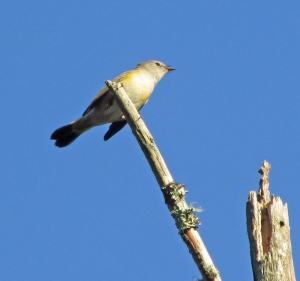
Redstart-Perch

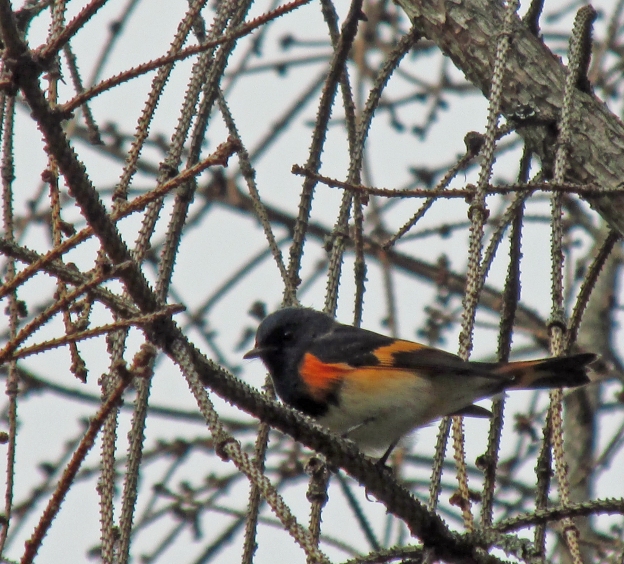
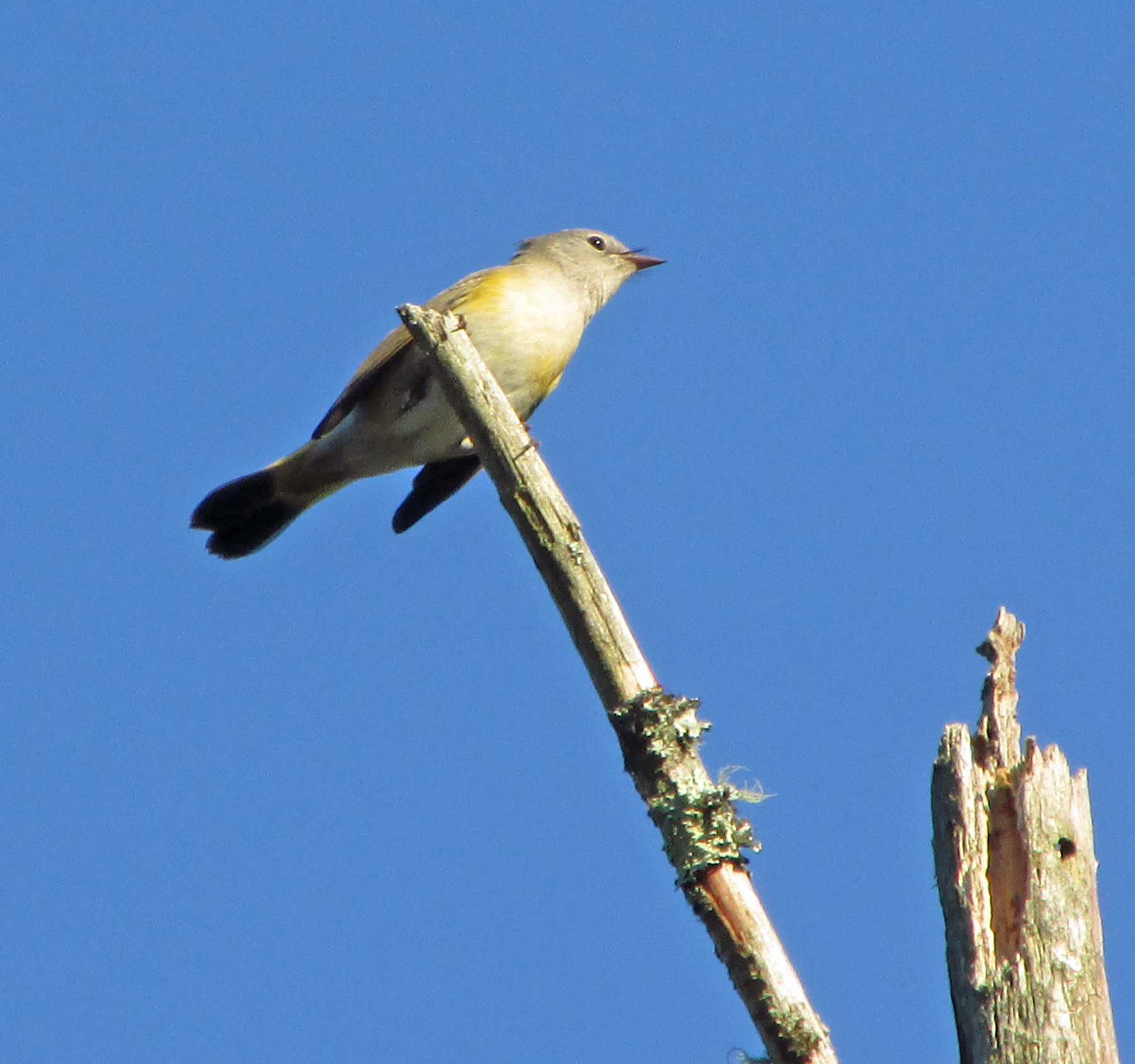
Photo by Bryan Stevens                                                              A young American Redstart perches on high to hawk for insects.

On Sept. 6, I saw a Cape May Warbler (young male) feeding low in vegetation in the swampy area near the old rock springhouse in the backyard. It might seem odd to find a Cape May feeding so low to the ground, but it was at the base of the large Norway Spruce growing in my shady backyard. This is a new warbler for the fall migration season. The day also brought sightings of Magnolia Warblers and a Northern Parula. An Eastern Phoebe spent a lot of time snapping up flying insects. A few Common Nighthawk returned, and were joined in their soaring overhead by Chimney Swifts.

Sept. 8 was a little slow as far as migration goes, but I did manage to glimpse an American Redstart and a Cape May Warbler, as well as a Blue-gray Gnatcatcher. The biggest excitement of the evening came with the discovery of a hatchling Snapping Turtle that had dug its way out of the nest that the mother turtle dug back in June.

Before a deluge of rain arrived on Sept. 11, my mom and I did some lawn chair birding and found six warblers — Wilson’s, Tennessee, Magnolia, Cape May, Chestnut-sided and Hooded — as well as a female Rose-breasted Grosbeak, a flock of five Chimney Swifts, Gray Catbirds, Brown Thrasher, Ruby-throated Hummingbirds and all our feeder birds.
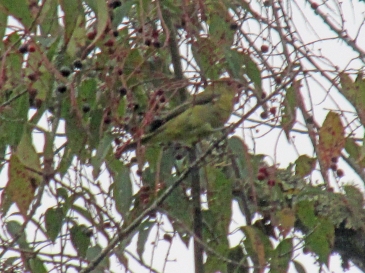
Photo by Bryan Stevens A Scarlet Tanager feeds on wild cherries.

Photo by Bryan Stevens
A Scarlet Tanager feeds on wild cherries.

The Wilson’s Warbler, a male, was only the third of its kind that I have seen here at home. This was also the second male; a female Wilson’s also visited one fall.

I didn’t have a lot of time for lawn chair birding on Sept. 12, but I did enjoy observations of Gray Catbirds, Chimney Swift, Ruby-throated Hummingbirds and a Brown Thrasher.

In addition, I encountered a large flock of Common Nighthawks over Bell Cemetery in Limestone Cove, Unicoi County. I also encountered a “swarm” of dragonflies over the now-closed swimming pool at Erwin Fishery Park. The swarm didn’t consist of just dozens or hundreds of these insects. There must have been thousands of dragonflies. I think the majority of them were Green Darners. They were harvesting some sort of flying gnats. At the same time, Chimney Swifts were plunging through the swarm, but I think the swifts were after the same gnats as the dragonflies. A flock of Cedar Waxwings also got joined the scene for awhile.

The rain brought out the warblers and other migrants on Sept. 13. I observed two Cape May Warblers, a Chestnut-sided Warbler, male Black-throated Blue Warbler, male Hooded Warbler, Tennessee Warbler and an American Redstart. I also watched Cedar Waxwings, Brown Thrashers, Gray Catbirds, Ruby-throated Hummingbirds, Blue-gray Gnatcatchers, Downy Woodpecker, Pileated Woodpecker, American Goldfinches, House Finches, Song Sparrows, Eastern Towhees, Carolina Wren, Carolina Chickadees, Tufted Titmice, White-breasted Nuthatches and probably a few other birds. I guess that it’s true that foul weather brings out the birds. This makes sense. Under conditions such as bad weather, the birds probably have to work harder to find enough food.

On Sept. 14 — an overcast Sunday — I had time to do a little lawn chair birding before leaving for work. A new warbler for the fall list, a female Common Yellowthroat, put in an appearance, joined by a Cape May Warbler and two American Redstarts. A Belted Kingfisher also stopped by the fish pond.

I had time to do two sessions of lawn chair birding on Sept. 15. The afternoon session of lawn-chair birding with my mom really paid off. New for the fall was a Swainson’s Thrush. Warblers included three American Redstarts (including an adult male), as well as Tennessee Warbler, Magnolia Warbler and Chestnut-sided Warbler. We also observed were Indigo Buntings, Brown Thrashers, Gray Catbirds, Rose-breasted Grosbeaks, Cedar Waxwings and an Eastern Phoebe. I hope to go back out for another session before dark.
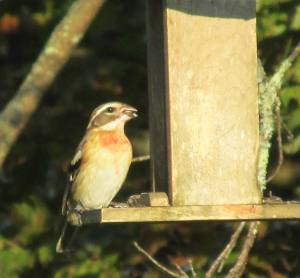
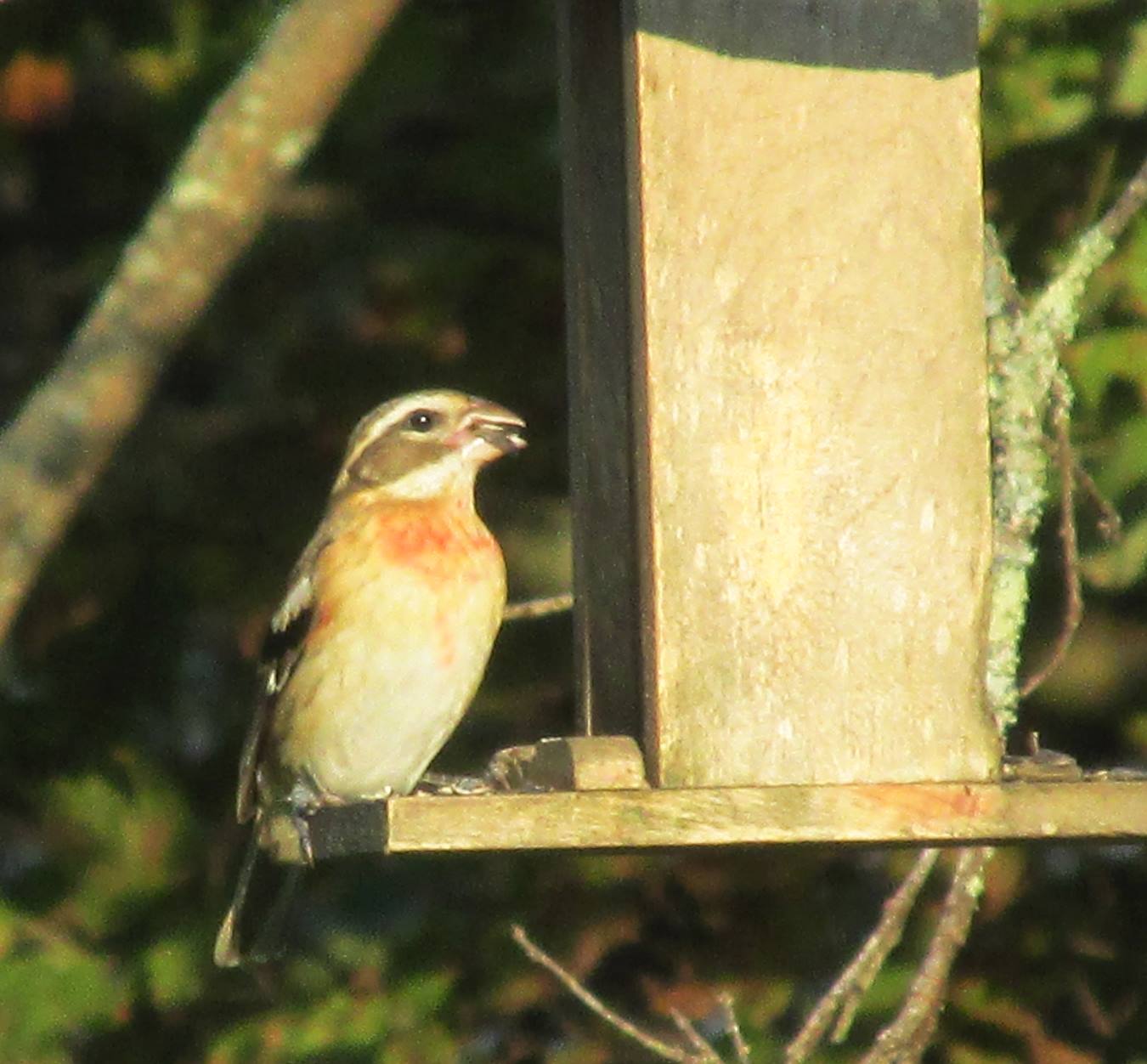
Photo by Bryan Stevens A young male Rose-breasted Grosbeak visits a feeder in September of 2013. Young males resemble females but show a splash of orange on the breast that will be replaced the following spring by the familiar rosy-red patch.

Photo by Bryan Stevens
A young male Rose-breasted Grosbeak visits a feeder in September of 2013. Young males resemble females but show a splash of orange on the breast that will be replaced the following spring by the familiar rosy-red patch.

The evening session of lawn-chair birding on Sept. 15 delivered some results, too. Male Hooded Warbler and Black-throated Blue Warbler showed up, as did a rather drab Cape May Warbler. A Scarlet Tanager showed up to compete with the Gray Catbirds, Rose-breasted Grosbeaks and Cedar Waxwings for wild cherries.

I also had a close encounter with a young Ruby-throated Hummingbird, which hovered in front of me as it turned the tables and observed me for a moment. I wanted to try for a photo, but was sure if I moved I would scare it off. I did manage to get photos of the Hooded Warbler, a Rose-breasted Grosbeak and a pair of “kissing” American Goldfinch. Actually, it’s a photo of a female goldfinch feeding one of her insistently begging young. A nearby male goldfinch was besieged by six hungry youngsters.

This evening of Sept 20 will likely prove the peak for warbler migration in the yard this fall. We’ll see if any of September’s remaining days can top it. New migrants for the fall season included a Bay-breasted Warbler, Summer Tanager and a Blue-headed Vireo. The other warblers for an evening of lawn chair birding with my mom included Tennessee, Magnolia, Northern Parula, Chestnut-sided, Cape May, Black-throated Blue, Black-throated Green, Yellow-throated, Black-and-White and American Redstart. So, 10 species in one evening is rather good! In addition, we watched Rose-breasted Grosbeaks, Gray Catbirds, Ruby-throated Hummingbirds, Cedar Waxwings and three Common Nighthawks soaring overhead. There was also an Eastern Wood-Pewee and, calling but not seen, a Red-eyed Vireo. All the feeder birds were present, too. We had Northern Cardinals, Eastern Towhees (including two recently fledged young), American Goldfinches, House Finches, Carolina Chickadees, Tufted Titmice, Carolina Wrens, White-breasted Nuthatches, Mourning Doves, Blue Jays, Downy Woodpecker and a Pileated Woodpecker calling on the ridge.
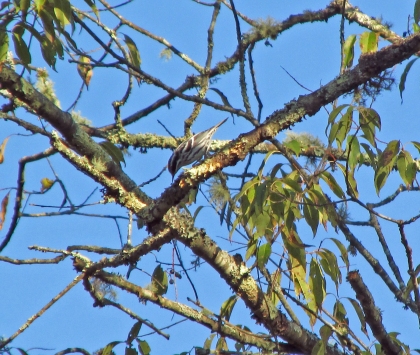
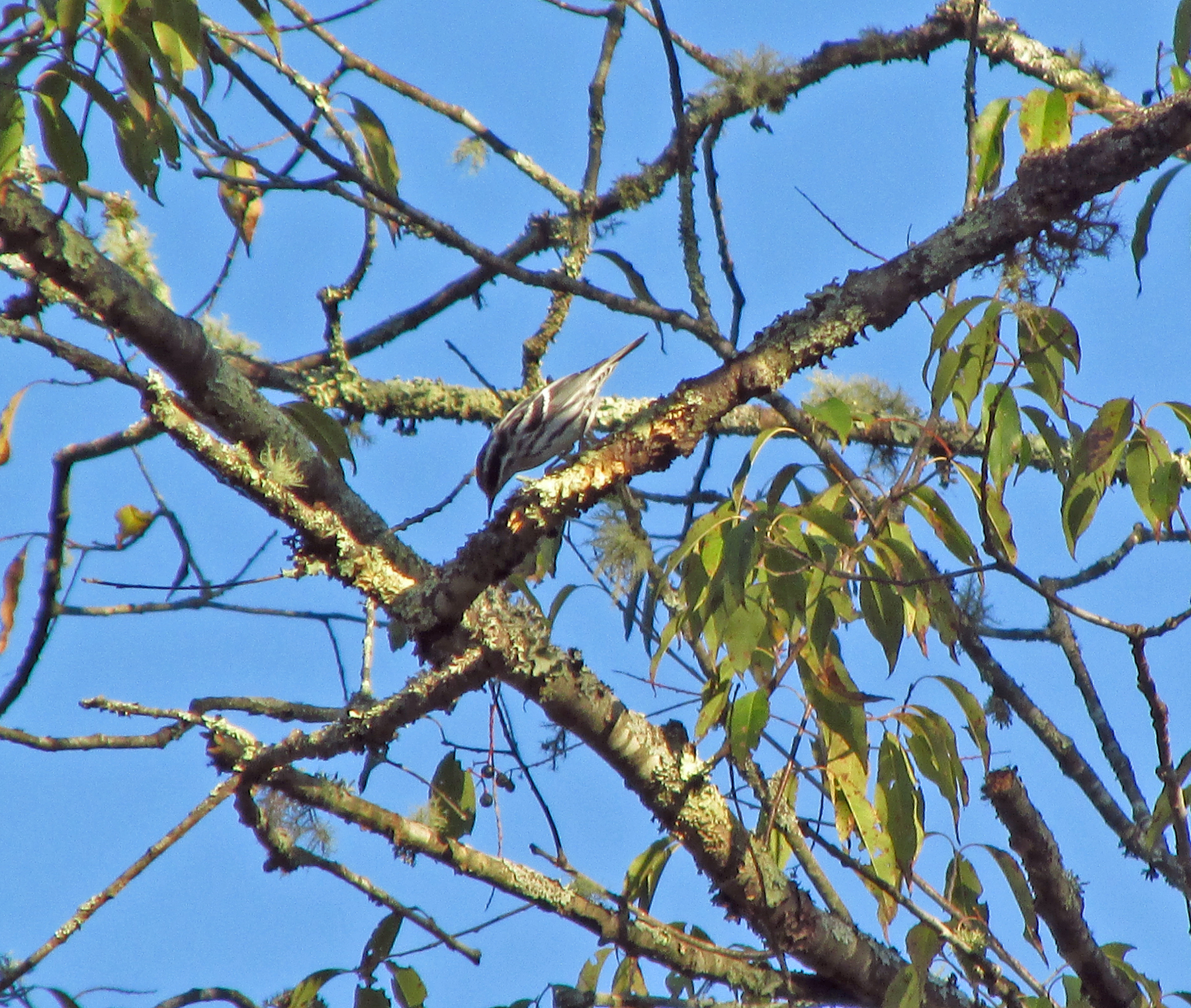
Photo by Bryan Stevens A Black-and-white Warbler forages along a branch.

Photo by Bryan Stevens
A Black-and-white Warbler forages along a branch.

Lawn chair birding was interrupted by rain on Sept. 21, but before then I did see some Rose-breasted Grosbeaks, a Brown Thrasher, Ruby-throated Hummingbirds, Gray Catbirds and a Tennessee Warbler. I have a feeling there would have been more to see if not for the rain.

The chill in the air on Sept. 22 ensured that fall’s imminent arrival would bring some cooler temperatures. The birds were rather active during lawn chair birding, but the diversity had decreased. I did see Tennessee Warbler, Magnolia Warbler and American Redstart, as well as Cedar Waxwings, Rose-breasted Grosbeaks, Gray Catbirds, Ruby-throated Hummingbirds and assorted feeder visitors.

Lawn chair birding on Sept. 23 produced one new species — Palm Warbler — for the first day of fall. Other warblers included several Tennessee Warblers, well-marked Bay-breasted Warblers, American Redstart and Magnolia Warbler. I also saw Indigo Buntings, Rose-breasted Grosbeaks (including males still showing quite a bit of color), Cedar Waxwings, Gray Catbirds, Eastern Phoebe, Eastern Towhee and more. I also observed a male American Goldfinch taking some of his young to a sunflower head for a do-it-yourself snack. Young goldfinches must be very experimental in their tastes. This afternoon, I watched some clinging to branches over the pond so they could feed on pond slime/algae. Unless they were extracting bugs from the stuff, it seemed like an odd behavior to me.
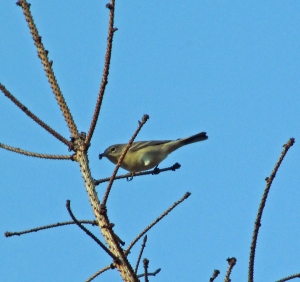
Photo by Bryan Stevens  A migrating Blue-headed Vireo has captured a prey item for a quick snack.

Photo by Bryan Stevens                                                              A migrating Blue-headed Vireo has captured a prey item for a quick snack.

Bird activity was subdued on Sept. 26, but during lawn chair birding I did get a new fall arrival with the Palm Warbler in the gnarled remains of a peach tree. I also saw a Tennessee Warbler, Chestnut-sided Warbler, Cedar Waxwings, Downy Woodpecker, Eastern Phoebe, White-breasted Nuthatches, American Goldfinches, Eastern Towhee, Carolina Wrens, Carolina Chickadees and Tufted Titmice.

On Sept. 27, I took part in the annual Fall Bird Count conducted by the Lee and Lois Herndon Chapter of Tennessee Ornithological Society. The day produced some warblers, especially along the linear walking trail adjacent to the Watauga River. The species include Magnolia, Common Yellowthroat, Cape May and Northern Parula. You shoulI got home in time to add a few warbler species from my own yard, including Tennessee Warbler and Magnolia Warbler.

••••••

Michael Briggs of Erwin asked me via Facebook when he should curtail feeding hummingbirds for the season.

I informed Michael that I usually keep feeders up through at least late November, hoping to attract western “stray” hummers such as Rufous and Allen’s that come through in late fall and early winter. Depending on temperatures, I may keep at least one feeder available even later.
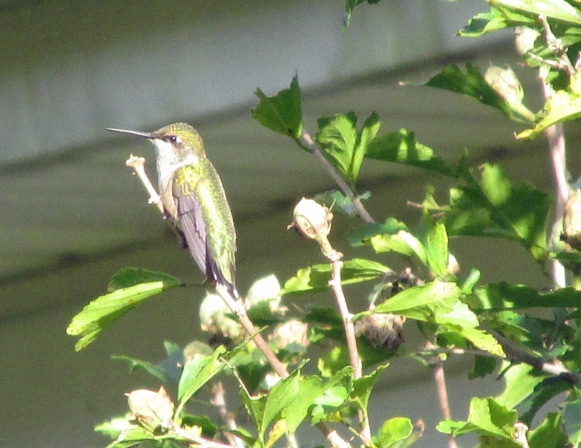
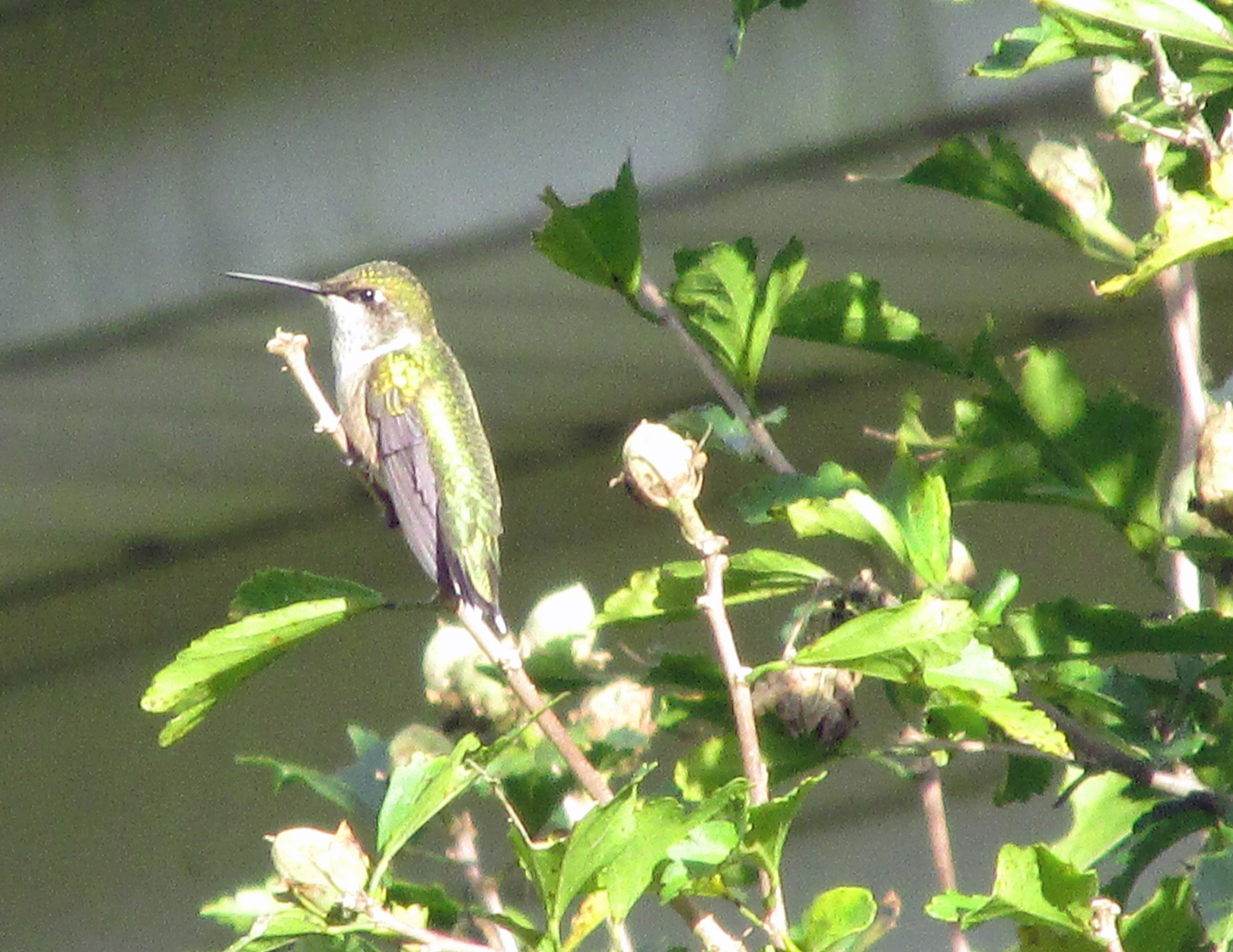
Photo by Bryan Stevens Although Ruby-throated Hummingbirds usually depart in early October, keep your feeders available to benefit stragglers and to attract western species of hummingbirds that migrate through the region.

Photo by Bryan Stevens
Although Ruby-throated Hummingbirds usually depart in early October, keep your feeders available to benefit stragglers and to attract western species of hummingbirds that migrate through the region.

Parade of fall warblers has begun

I love warblers!

Among my birding friends, it’s no secret the warblers are among my favorite birds. I impatiently await the start of fall migration each year knowing that it holds the potential of bringing about two dozen warbler species to my yard. The trickle of fall migrants has already started with the arrival of juvenile Chestnut-sided Warblers and American Redstarts to my yard on Aug. 19.

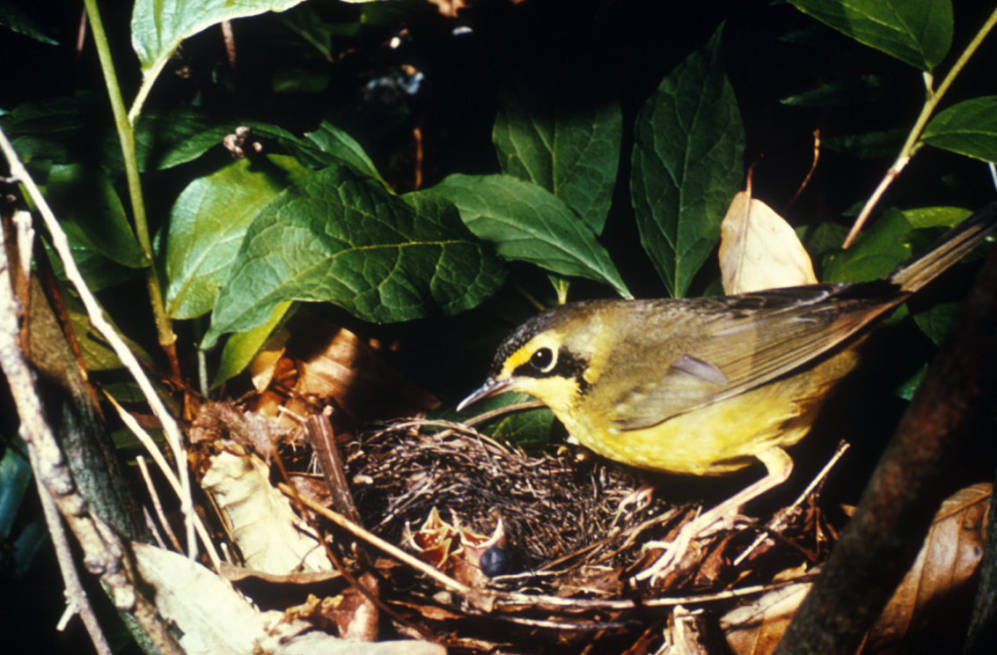
Photo by U.S Fish and Wildlife Service A Kentucky Warbler brings food to young in a nest.

Photo by U.S Fish and Wildlife Service
A Kentucky Warbler brings food to young in a nest.

The wood-warblers, the more clinical name for this group of birds, consist of 116 species exclusive to the New World. About half of the species collectively make their home in North America for at least a few months out of the year. The others range throughout the Caribbean, as well as Central and South America. Most of them are noted for leading frantic, fast-paced lives that are far from sedentary. For this reason, they can be extremely challenging to observe with a pair of binoculars.

Hooded_Warbler

Photo by U.S. Fish and Wildlife Service A female Hooded Warbler sits tight on her nest.

The Chestnut-sided Warbler and American Redstart nest at various locations in Southwest Virginia and Northeastern Tennessee, but they are not usually present during the summer months. I do host a few species of warblers that nest in the woodlands around my home. These include Hooded Warbler, Northern Parula, Black-throated Green Warbler, Black-and-white Warbler and Ovenbird.

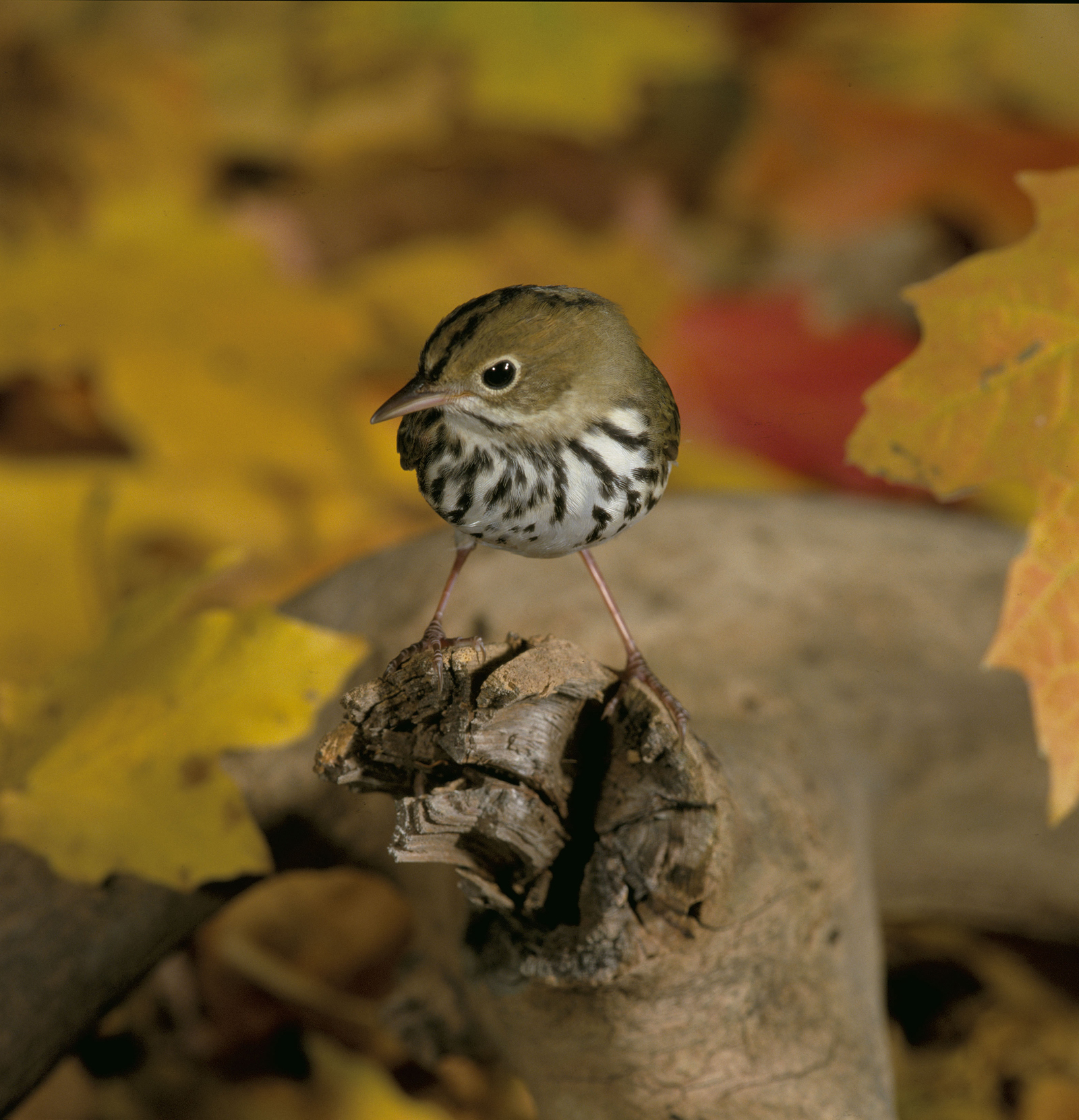
OvenBird-Photo

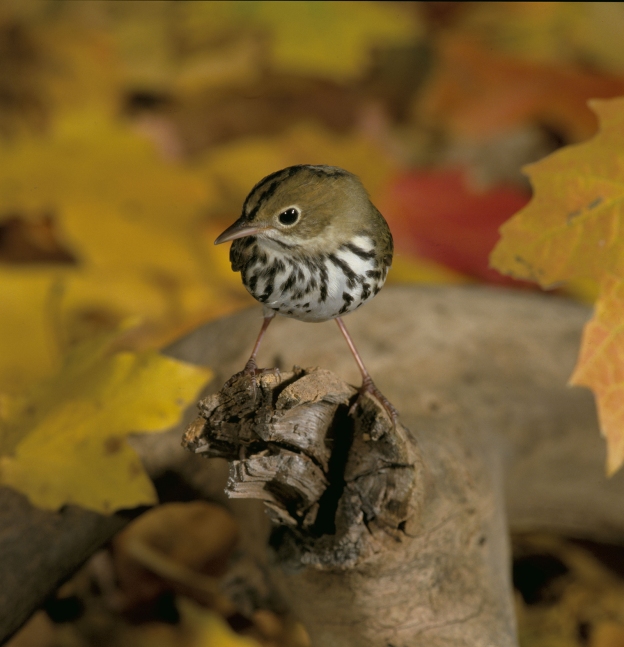
Photo by U.S. Fish and Wildlife Service Although usually silent in the fall, Ovebirds have a distinctive, ringing song they sing constantly in the spring.

One of the last warblers to arrive at my home this spring was the enigmatic Ovenbird. With its loud, ringing song — “Teacher! Teacher! Teacher!” — it’s impossible not to notice the arrival of this warbler. So, even after the other summer warblers had already been present for a couple of weeks, I finally heard the song of an Ovenbird ringing from the woods.

Why do I describe this warbler as enigmatic? For starters, Ovenbirds do not easily permit even stealthy birders to glimpse them. I have gotten good looks at Ovenbirds throughout the years, but they are still difficult to observe. They are one of the warblers more easily heard than seen. When they are observed, it’s usually no more than a fleeting look before the bird dives back into heavy cover.

The Ovenbird is not one of the brightly colored warblers, such as Blackburnian Warbler or Yellow Warbler. The Ovenbird is a small brown bird with a white breast with dark streaking — an appearance that bears a superficial resemblance to the larger thrushes that share the same woodland habitat. The only hint of color is an orange crown bordered by dark stripes atop the bird’s head. Even this orange crown patch is not easily seen. When agitated, an Ovenbird may raise its head feathers, which makes this orange mark easier to detect. The Ovenbird also has a distinct white ring around its eyes. They also have pink legs and a pinkish bill.

The Ovenbird, unlike many warblers, is not named for its appearance. Instead, the bird’s name derives from the shape of the nest it builds. The nest is a domed structure placed on the ground, woven from vegetation and containing a side entrance. Early European settlers in North America thought the nest looked like a Dutch oven, hence the name “ovenbird” for the small warbler with the intricate nest.

Rather than hopping along the length of a branch or limb, an Ovenbird walks in a deliberate fashion. This bird feeds on insects, spiders and other small prey items foraged from the woodland floor. On rare occasions, a lingering Ovenbird shows up at feeders during the winter months.

Ovenbirds spend the summer nesting season in mature deciduous and mixed forests across Canada and the eastern United States. Ovenbirds migrate each fall to the southeastern United States, the West Indies, and from Mexico to northern South America for the winter season.

The two warblers most closely related to the ovenbird are the Louisiana Waterthrush and Northern Waterthrush. These atypical warblers share a preference for leading lives spent mostly near the ground adjacent to streams. The Louisiana Waterthrush seeks out the rushing water of our mountain streams during early spring while the Northern Waterthrush prefers quiet pools of water farther north during its nesting season. The Ovenbird, however, is not as closely associated with water.

*****

14349093215_520933ef20_b

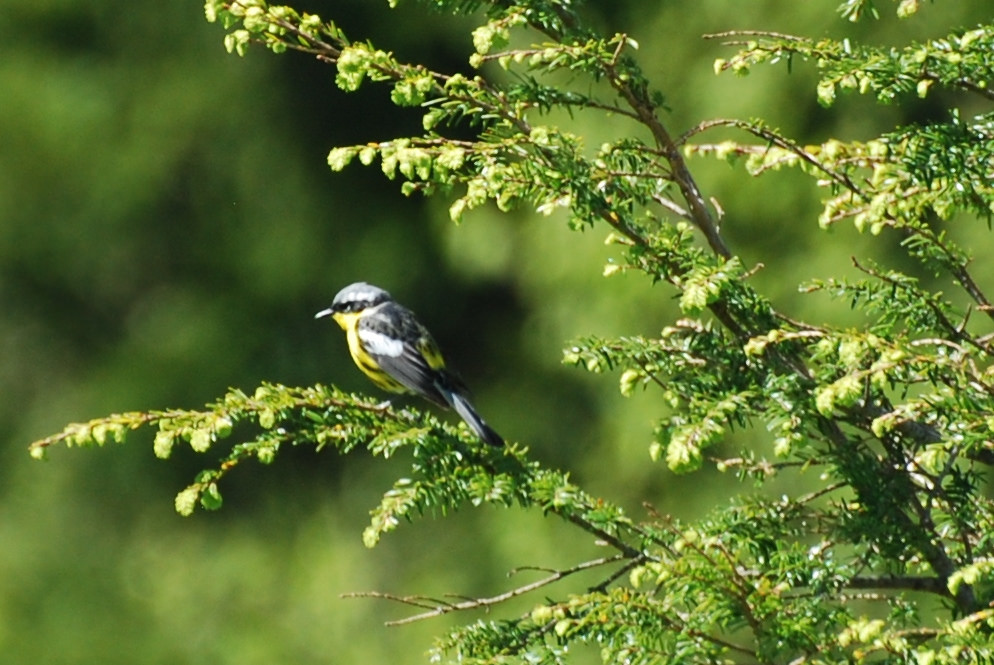
Photo Courtesy of Jean Potter A Magnolia Warbler perched on an evergreen bough.

The last day of August provided fantastic lawn chair birding here at home. I saw a Scarlet Tanager, Red-eyed Vireo, Eastern Phoebe, Eastern Wood-Pewee, an Epidomax “empid” flycatcher species and a flock of at least 50 Common Nighthawks. I also added three fall warblers to my list: Yellow-throated Warbler, Chestnut-sided Warbler, Northern Parula and Magnolia Warbler. I also saw plenty of Ruby-throated Hummingbirds, Gray Catbirds, a Brown Thrasher, Cedar Waxwings, Downy Woodpecker and many of the regular feeder visitors.

The arrival of September brought even more warblers to my yard as they make brief visits during their fall migration. I had better luck with lawn chair birding while saying goodbye to August than I did welcoming September. On this first day of September that was also Labor Day, I saw a single Common Nighthawk, as opposed to last night’s flock of 50. I only saw one warbler, but it was a Chestnut-sided Warbler and different than the species I saw last night. Other birds that I observed including several Gray Catbirds and Blue-gray Gnatcatchers, Eastern Wood-Pewee, Brown Thrasher and family flocks of American Goldfinches and House Finches. Earlier that same day, I watched and listened as a Common Raven flew overhead. The Ruby-throated Hummingbirds are also still numerous.

NorthernParula

Photo by Bryan Stevens A migrating Northern Parula forages for insects in the branches of a Blue Spruce.

My lawn chair birding on Sept. 3 was brief but interesting. One new warbler, a male Canada Warbler, showed up, as well as two Northern Parulas that spent all their time chasing each other through the holly and the willow trees. I also got a fleeting glimpse of a Magnolia Warbler. In the sky overhead, a single Chimney Swift glided through the air with a trio of Common Nighthawks.

The cast of migrants changes almost daily. I enjoyed a good evening of lawn chair birding on Sept. 5, adding a few new warblers for the fall to my list. Only saw four species, but two of them — immature Black-and-White Warbler and Black-throated Green Warbler — were new for the fall. I also saw Chestnut-sided Warbler and Northern Parula. A sizable flock of at least 50 Common Nighthawks passed overhead. Other sightings included Eastern Phoebe, Brown Thrasher, Gray Catbirds, Wood Thrush, Pileated Woodpecker, Red-eyed Vireo and Ruby-throated Hummingbirds. All the resident feeder birds have enjoyed a good nesting seasons with numbers of Song Sparrows in the yard are showing an increase.

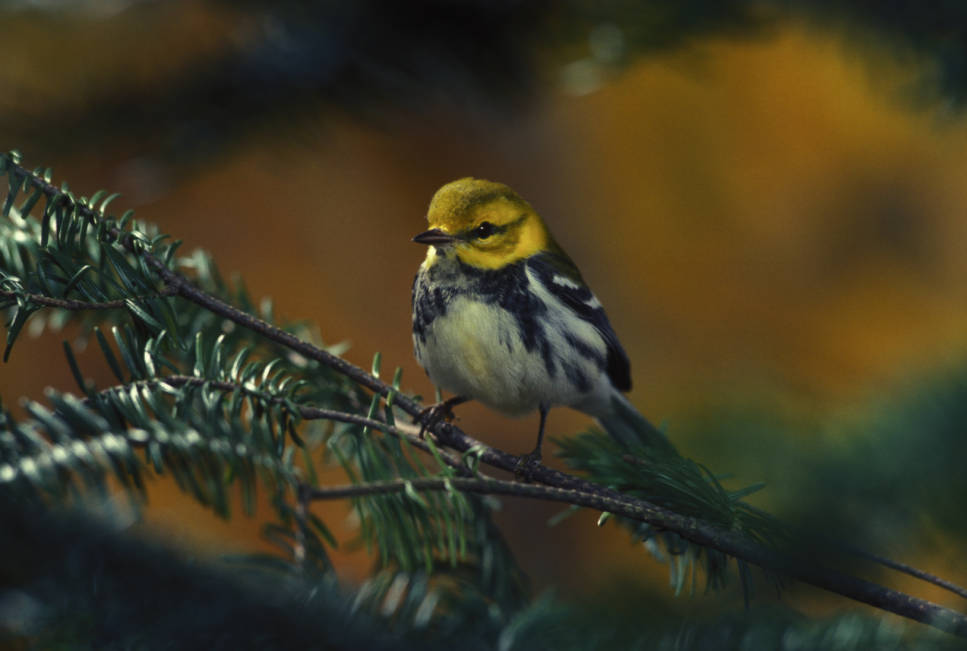
BlackThroated_Green_Warbler_Female

Photo by U.S. Fish and Wildlife Service A female Black-throated Green Warbler perches in a conifer.

I was surprised On Sept. 6 with an observation of a Cape May Warbler (a young male) feeding low in vegetation in the swampy area of the backyard. It might seem odd to find a Cape May feeding so low to the ground, but it was at the base of a large Norway Spruce. This was a new warbler for the fall migration season. That same day, I observed two Magnolia Warblers and a Northern Parula. In the evening, small flocks of Chimney Swifts and Common Nighthawks flew over my home.

So, the first week in September has seen fall migration off to a good start. I love to hear  what others are seeing as the fall season advances. Email me at ahoodedwarbler@aol.com or comment here at my blog.

13961818378_065f8f0125_o

Photo Courtesy of Jean Potter A female Black-and-white Warbler gathers nesting material.

Increased global effort makes 2014 Great Backyard Bird Count a huge success

Image

Photo by Bryan Stevens
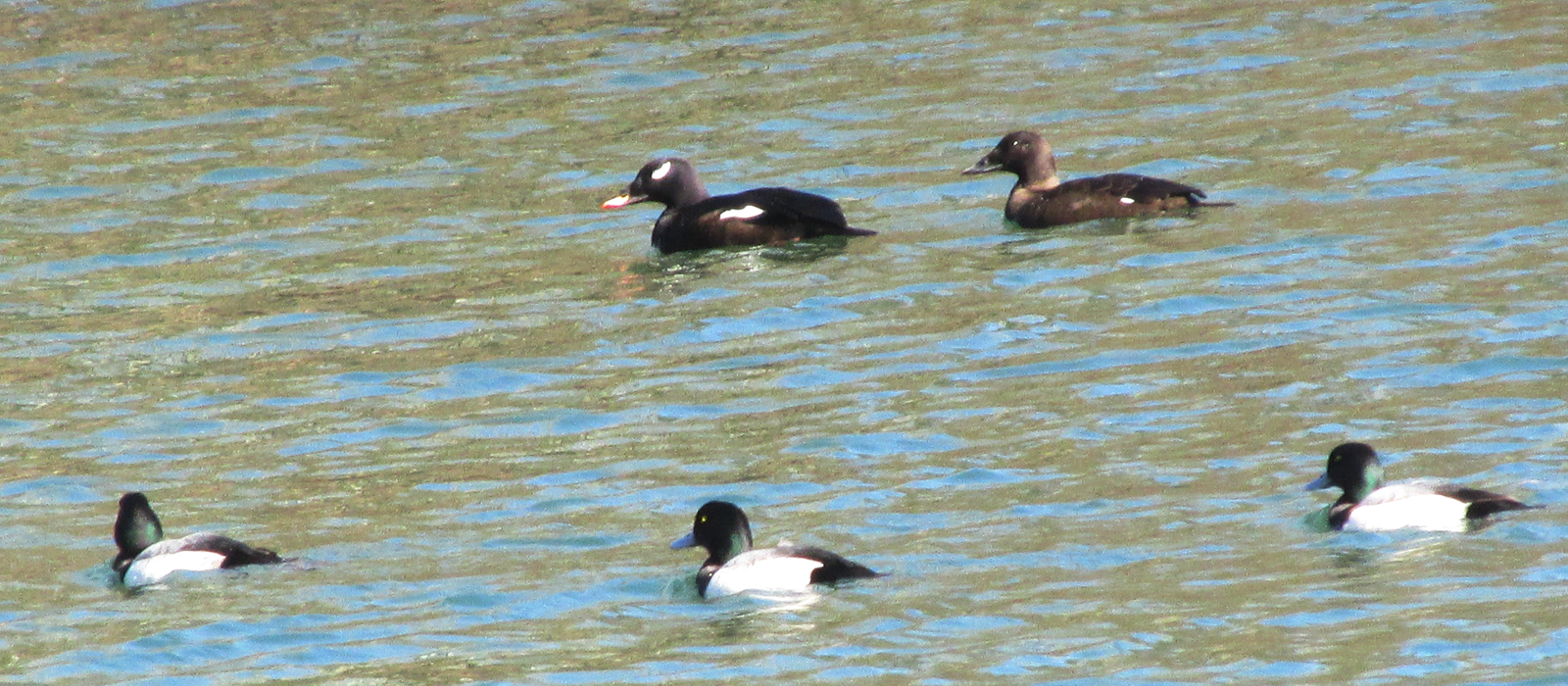
A pair of White-winged Scoters, back, swim on the Watauga River in Elizabethton with three Greater Scaups.

Last month’s Great Backyard Bird Count certainly merited description as a global affair. Checklists came in from more than 103 countries, including Australia, China, Argentina, Kazakhstan, Iceland, India, Kenya, as well as Canada, the United States and Mexico. Birders fanned out at hot spots around the world to count birds from Friday, Feb. 14 to Monday, Feb. 17.

Participants in the 2013 GBBC tallied more than 40 percent of the world’s bird species, with organizers setting a goal to take that figure to 50 percent this year.

A total of 644 species were found within the United States during the 2014 GBBC. California, Texas and Florida led the count with 364, 349 and 305 species found within those states, respectively.

In Tennessee, a total of 139 species were found during the GBBC. That’s a far cry from the 201 species located by sharp-eyed birders in Georgia, 200 species found in North Carolina, 184 species identified in both Alabama and Mississippi, as well as the 180 species counted in Virginia.

Arkansas eked past Tennessee with 141 species found, but Tennesseans did better than Missouri, where GBBC participants tallied 133 species, and Kentucky, where counters found 128 species.

A total of 2,357 checklists were completed by Tennessee GBBC participants, which provided some extensive coverage across the Volunteer State.

With 100 species, Hamilton County proved the most productive Tennessee county, followed closely by Shelby and Knox, with 98 and 97 species, respectively.

Closer to home, results were less dramatic but still important.

In Unicoi County, nine participants, including myself, found 39 species of birds during the four-day count period. In Carter County, 49 species of birds were found by 14 participants, including myself.

I mostly counted at home during this year’s GBBC, but I did make trips to the pond at Erwin Fishery Park and Roan Mountain State Park to expand my birding territory.

•••••

As checklists poured in from GBBC participants, a few trends became clear from the early stages of this year’s count. For instance, this year lacked any evidence of a “superflight” of irruptive finches.  Last year the GBBC documented such a phenomenon, which was driven by food shortages in Canada. Ten species of irruptive birds (mostly finches) staged a record invasion in areas where they don’t usually show up.

This year lacked huge numbers of White-winged Crossbills, Red Crossbills, Common and Hoary Redpolls, Pine and Evening grosbeaks, Pine Siskin, Purple Finch, Red-breasted Nuthatch and Bohemian Waxwing, birds that were more numerous farther south last year as well.

On the other hand, the 2014 GBBC has confirmed that this has been a great year for spotting Snowy Owls across the United States.

A massive irruption of Snowy Owls into the northeastern, mid-Atlantic and Great Lakes states had already been producing headlines for the past several months.

Halfway through the GBBC, with 327 checklists reporting a total of 476 Snowy Owls in 20 states and provinces of the United States and Canada, it was clear that many of the Snowy Owls had found their winter homes to their liking. Last year, 392 owls from eight provinces and 14 states were all that were counted during all four days of the 2013 GBBC.

As an illustration of how the owls have moved, in 2013 Canada had 46 percent of the Snowy Owl reports, but this year that number has dropped to 32 percent. Despite this year’s impressive numbers, these large, white owls can still be hard to find. Many GBBC participants succeeded by checking seashores and lakeshores, farm fields and even cities, where the owls often choose a prominent perch with a good view, such as a utility pole or even the roof of a city building.

In much of North America, people (and birds) have been shivering through bone-chilling blasts of arctic air also called the “polar vortex” phenomenon. The impact of this extended cold on birds has beens most apparent in areas such as the Great Lakes, which are almost completely frozen. Only Lake Ontario has any significant open water now and that has resulted in major movements of waterfowl such as ducks, geese and grebes. The GBBC is capturing these patterns well.

For example, the White-winged Scoter is not usually found inland in February, but has been widely reported from interior locations over the past few days as has the Long-tailed Duck. Both these species showed up in unusual numbers in Northeast Tennessee during late January and throughout February.

Image

Photo by Bryan Stevens
These two White-winged Scoters spent several days in late January and early February on the Watauga River near Meredith Cabins in Elizabethton.

A pair of White-winged Scoters spent several days on the Watauga River near Meredith Cabins in late January and early February. My mom and I managed to get good looks at the two ducks on Feb. 1. By climbing down a tangled bank, I also managed to get some decent photographs of them.

White-winged Scoters are large, solidly built ducks. Males can weigh three-and-a-half pounds while females can reach a weight of two-and-a-half pounds. Both sexes have the vivid white wing patch that gives the duck its common name.

This duck nests on freshwater lakes and wetlands in the northwestern interior of the United States and Canada.

Other scoters include Surf Scoter, Velvet Scoter, Black Scoter and Common Scoter. Surf and Black Scoters are also occasional visitors to Northeast Tennessee.

A total of 62 White-winged Scoters were found in Tennessee during this year’s GBBC. Three Surf Scoters were also found.

••••••

The scoters are classified with the diving ducks. To learn more about scoters and other diving ducks, here’s a helpful link to a PDF with detailed information about various species, including White-winged Scoter.

http://extension.umd.edu/sites/default/files/_docs/programs/riparianbuffers/FS611.pdf

••••••

According to an update regarding the GBBC posted at birdcount.org, one of the more exciting rare birds reported in this year’s GBBC was spotted across the pond. A Yellow-rumped Warbler has been visiting a feeder in, of all places, central England! This is the first New World warbler ever recorded for the GBBC from the Eastern Hemisphere.

Image

Photo by Bryan Stevens
This Yellow-rumped Warbler was photographed on Fripp Island, S.C., several years ago.

In northeast Tennessee, the Yellow-rumped Warbler, many years ago known as Myrtle’s Warbler, is a common winter bird. Indeed, it is the only warbler that typically attempts to spend the winter months in the eastern United States.

••••••

I would love to hear from readers. Just post comments on my new blog at ourfinefeatheredfriends.wordpress.com. You can also reach me on Facebook or send email to ahoodedwarbler@aol.com. Please share the link to the blog with others who might be interested in the topic of birds and birding in Northeast Tennessee.