Tag Archives: Wilson’s snipe

Seasonal snipe hunts can be productive

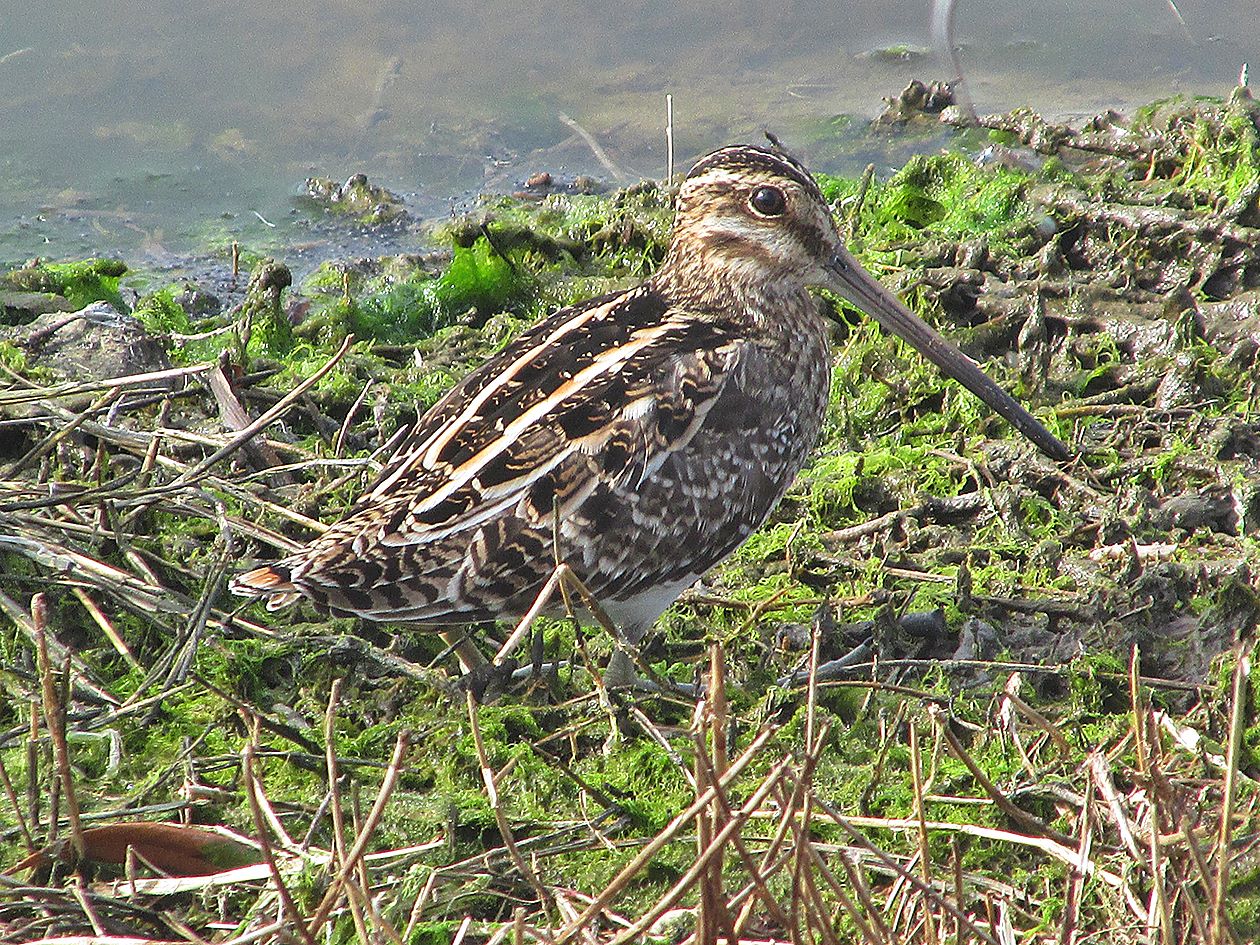
Photo by Bryan Stevens • A Wilson’s snipe forages on muddy ground in a wetland at Huntington Beach State Park in South Carolina.

Have you ever gone on a wild goose chase? Perhaps you have memories of being taken on a snipe hunt?

If so, I don’t need to tell you that our feathered friends have inspired a lot of unusual sayings and activities. The snipe hunt is widely regarded as a rite of passage. I’m not sure if these “hunts” are still organized on moonless nights to pull a playful prank on unsuspecting or naive adolescents. The gist of this practical joke is that these would-be snipe hunters are given a bag or sack to use in capturing the supposedly elusive, perhaps mythical snipe.

The “snipe hunt” has also come to symbolize a lesson in futility since the target of the hunt is never found despite some diligent efforts. It’s all harmless fun, but what bothers me is that the tradition of the snipe hunt reinforces the mistaken idea that this elusive creature is a make-believe bird.

That’s not the case! I know of what I speak, having seen plenty of snipes over the years. There are some things about this unusual bird that makes it understandable how this creature became the focus of the long-running tradition of the snipe hunt.

The Wilson’s snipe is one of North America’s more elusive birds. It’s an aberrant shorebird that doesn’t exactly fit the mold of the birds any coastal visitor has probably seen running along the surf’s edge on a beach.

The snipe is an odd, gangly bird with long legs and an even more absurdly long bill. It’s also remarkably well camouflaged to blend with its preferred surroundings in flooded fields and wetland marshes. It is one of those shorebirds that usually makes its home far from beaches and the crash of the ocean’s surf.

So, to reiterate, there really is such a bird as a snipe. In fact, there are several species of snipes, although only one — Wilson’s snipe — can be found in Northeast Tennessee. Some of the world’s other 25 species of snipe include jack snipe, wood snipe, pintail snipe, noble snipe and imperial snipe. What makes the noble and imperial snipes worthy of such pretentious names isn’t quite clear.
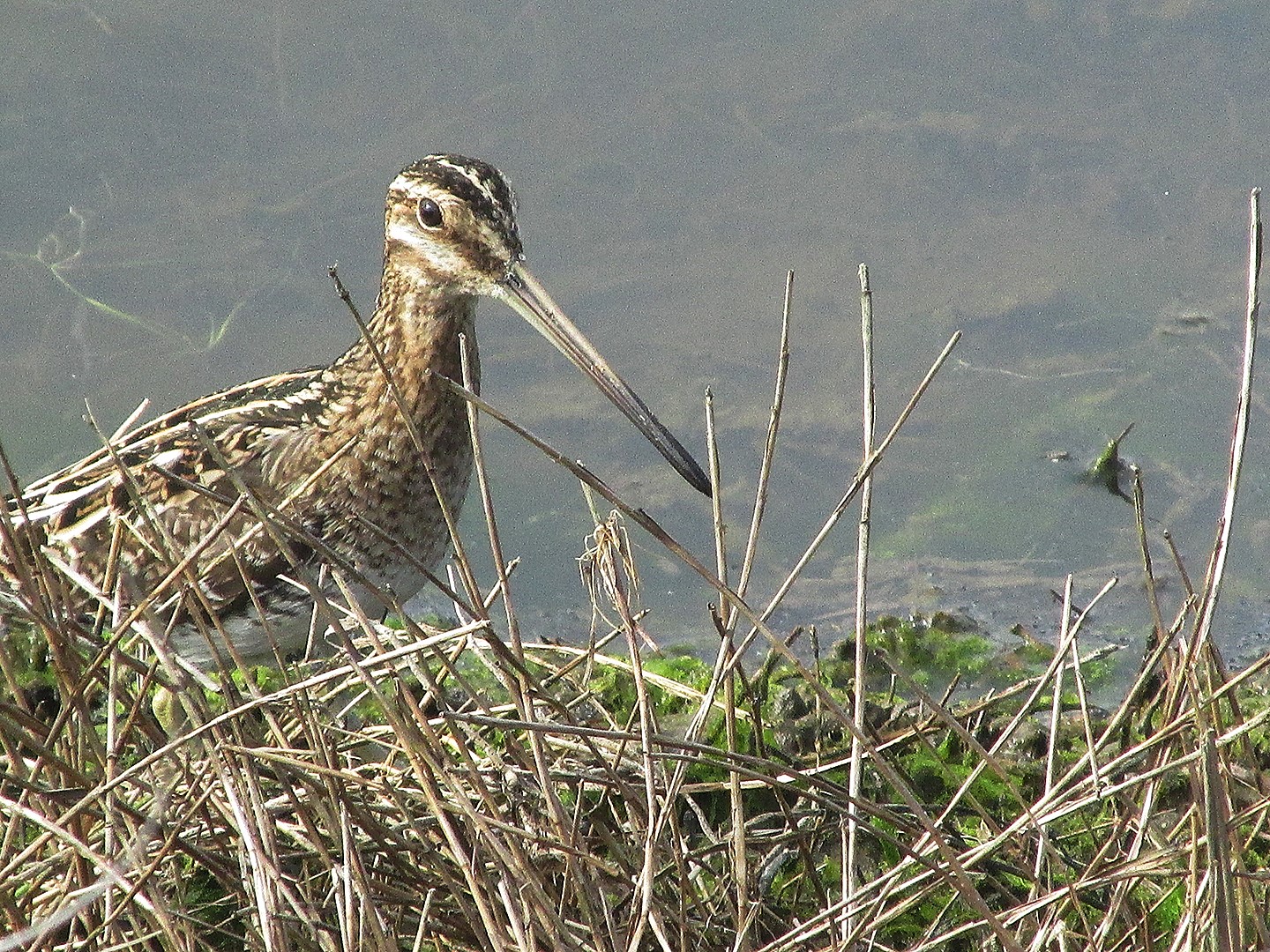
Photo by Bryan Stevens • The Wilson’s snipe can blend well with wetland vegetation.

Any wet field or pasture may conceal hidden Wilson’s snipes during the spring. A few of these hardy shorebirds sometimes spend the winter in the region. Flushing a snipe from a tangle of grass right at your feet as you walk through a wet field always works to get the heart pumping faster.

The Wilson’s snipe uses its long bill to probe in the mud for prey, which can include earthworms, insects and other invertebrates.

Formerly known as the common snipe, the Wilson’s snipe nests in wetland habitats across Canada and the northern United States. The bird’s common name pays homage to Alexander Wilson, an early American ornithologist. In addition to his expertise on birds, Wilson was also a poet and an illustrator. He was born in Scotland in 1766, but he died at age 47 in 1813 in Philadelphia, Pennsylvania.

I’ve located Wilson’s snipes in all of the Northeastern Tennessee counties. I still hold the record for most snipes seen at one time. I was birding in Johnson County with the late Wallace Coffey when we encountered a flock consisting of 126 Wilson’s snipes overrunning Quarry Bog in Shady Valley.

I’ve also observed this snipe in coastal South Carolina, including a close-range observation while visiting Huntington Beach State Park. My South Carolina birding over the years has yielded observations of other shorebirds, including willet, greater yellowlegs, black-bellied plover, short-billed dowitcher and Wilson’s plover, yet another shorebird named in honor of Wilson.

Looking back through my records helped resurface a memory of a fun trip back in 2003 to look for snipe and its even odder relative, the American woodcock. On Tuesday, March 11, I traveled with Tess Cumbie, Reece Jamerson and Howard Langridge to Johnson County’s Shady Valley. Our first stop at Quarry Bog yielded lots of red-winged blackbirds, Eastern meadowlarks and song sparrows. We also flushed about a dozen or so snipe. Other birds seen during our visit included a great blue heron, swamp sparrow, three common grackles, a wood duck and a flock of American robins.
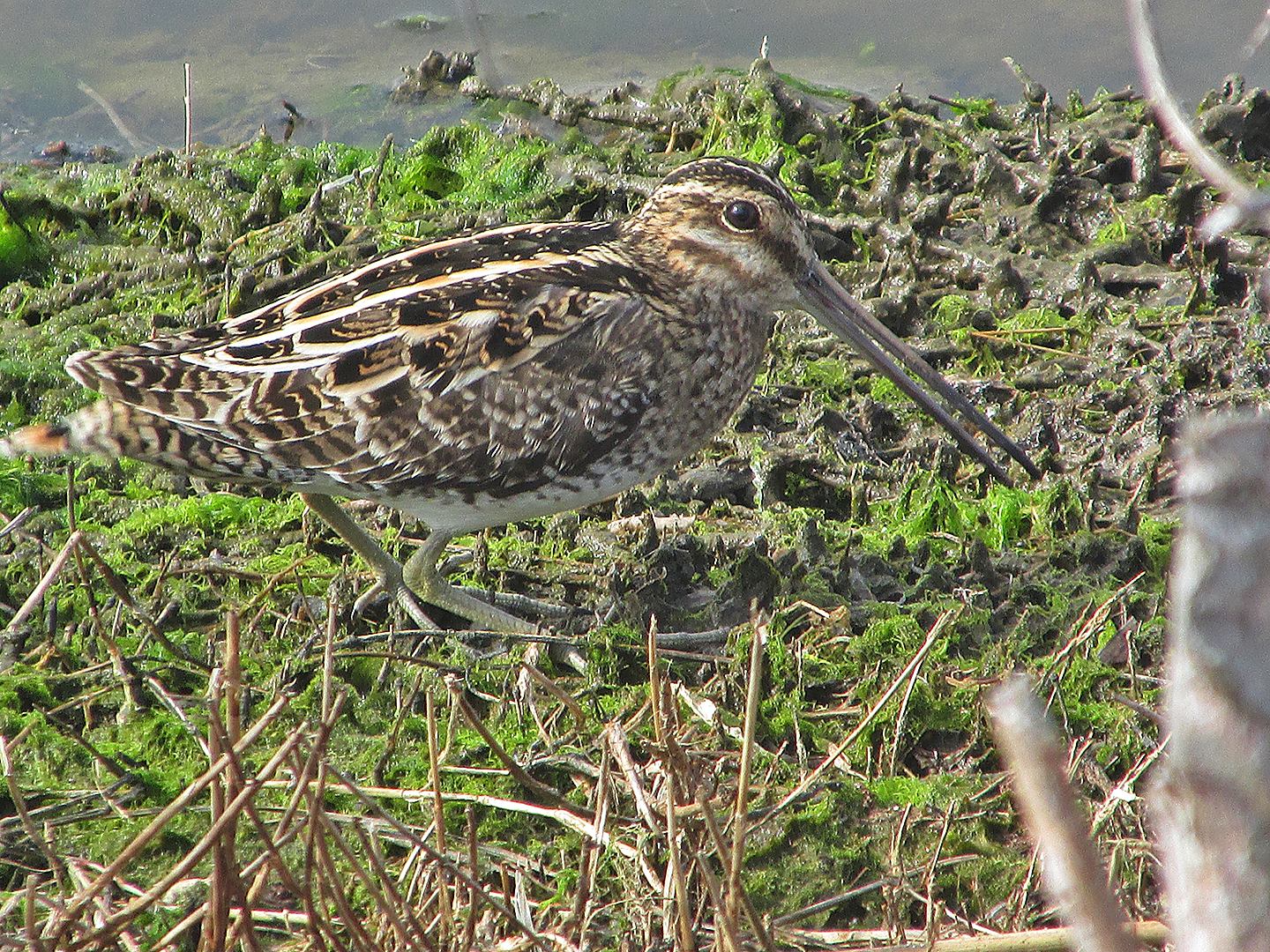
Photo by Bryan Stevens • Although only one species — Wilson’s snipe — can be found in Northeast Tennessee, there are 25 species of snipe found worldwide, including jack snipe, wood snipe, pintail snipe, noble snipe and imperial snipe.

We arrived at Orchard Bog to settle in before twilight with our hope for a show by the American woodcocks, also known by such names as bogsucker and timber doodle. Before the timberdoodles began their show, several wood ducks flew overhead and a flock of eight Canada geese splashed down in the bog. At least two American woodcocks began making their “peent” calls shortly before 7 p.m. Then one of the timberdoodles took to the air, giving a fine show in his display flight. The timberdoodles seemed to give anywhere between 18 to 34 “peent” calls before they would take to the air in a display that also let us hear the “twittering” feathers as they ascended and descended. When it got too dark to really see their flights, we left, but the timberdoodles were still “peenting” in the bog.

As spring advances in the region, many of these shorebirds will make migratory stops along the shores of lakes and rivers or by the edges of farm ponds. Look for snipes around puddles in flooded fields or even along the banks of small streams. The family of shorebirds is dazzling in its diversity, and they’re definitely worth seeking out.

•••

If you have a question, wish to make a comment or share a sighting, email ahoodedwarbler@aol.com.

Photo by Bryan Stevens • Although not rare, Wilson’s snipes are not likely to be encountered unless people actively seek them out in their wetland habitats.

Woodcocks, snipe among the more oddball members of a diverse shorebird clan

Photo by Leah Hawthorn/U.S. Fish & Wildlife Service • An American woodcock probes for food among fallen leaves on the woodland floor.

March is traditionally a month of erratic weather, characterized by blustery winds and occasional drenching rainstorms. While the month is also a signal to get ready for the return of migrant songbirds, they are hardly the only birds on the wing each spring. Birds from waterfowl to raptors migrate through the region in March, April and May, but the real migratory champs are the shorebirds.

Known for migrating incredible distances, the shorebirds are often referred to as “wind birds,” a romantic allusion to their habit of taking wing for the epic journeys that astound scientists and birders alike. Among the far-flung family are birds known as sandpipers and plovers, as well as whimbrels, willets, tattlers and turnstones.
Still, among the general public, as well as some birders, the shorebirds are a much misunderstood group of birds. For example, most people could hardly be blamed for believing that shorebirds are inhabitants of only the beach and shore. In fact, some species are at home in an array of habitats, ranging from woodlands and prairies to the Arctic tundra and mudflats. Some are notoriously elusive, their camouflage and low-key behavior allowing them to escape casual notice at most times.
In late winter and early spring, a true oddball among the shorebirds begins courting. The American woodcock, also known by such whimsical names as “bog sucker” and “timberdoodle,” is a shorebird that has completely abandoned the shore in favor of woodlands and fields. Beginning as early as February, American woodcocks in the region conduct nightly courtship displays, starting at dusk, that combines aerial acrobatics with an assortment of unusual acoustical flourishes. Any wet field adjacent to a wooded area could offer a stage for these evening displays, but unless you know where to look and make an effort to do so, the American woodcock might as well remain a phantom of the night.
John-James-Audubon-American-Woodcock.-1.-Male.-2.-Female.3.-Young-in-Autumn

John James Audubon, an early American naturalist and artist, painted this scene of American woodcocks feeding in damp earth.

These mating rituals provide almost the only time that this bird makes itself visible to us. It’s only during this brief window that opens into their lives that we can be assured a glimpse. Even then, our peek at woodcocks often consists of a fuzzy twilight escapade as the bird flings itself heavenward only to make a spiraling descent a few seconds later. The displays begin with a distinct vocalization, a type of “pent,” that also has the quality of sounding like some sort of mechanical buzzer.
Once the displays conclude for the season, the birds assume nesting duties, usually unobserved by humans. The rest of the year, almost nothing but blind, sheer luck would allow a birder to stumble across an American woodcock. It’s almost as if they disappear after these spring flights of fancy.

For the most part, the “wind birds” leave lives in habitats that keep them separate from humans. On occasion, however, one of these shorebirds pays an unexpected visit to members of the public. Tom and Helen Stetler, residents of Elizabethton, Tennessee, shared an account of one such visit in a recent email.

Snipe-Stetler

Photo by Tom Stetler • A Wilson’s snipe visits the yard at the home of Tom and Helen Stetler in Elizabethton, Tennessee.

“We had a visit from a very unusual bird today,” Tom wrote in the email. “It was a woodcock. It stayed quite a while this morning.”
He estimated that the bird stayed in their yard for about 15 to 20 minutes.  “I kept trying to get a good picture of its long bill and finally did,” he said, enclosing a photo of the visiting bird with his email.
He credited his wife, Helen, with having spotted the bird. After seeing the bird, Helen called to her husband to come have a look “at this bird with a very long beak!”
After I examined the photo, I noticed that the unusual visitor was actually not a woodcock but a closely related bird known as a Wilson’s snipe. The confusion of the two birds is quite understandable. The snipe and the woodcock bear a superficial resemblance to each other.

The American woodcock belongs to the genus of Scolopax, a Latin term for this group of eight oddball shorebirds. Other members of the genus include the Eurasian woodcock, the New Guinea woodcock and the Sulawesi woodcock.

Snipe-One

Photo by Bryan Stevens • The Wilson’s snipe is remarkably capable of blending with its surroundings.

Wilson’s snipe, which is closely related to the woodcock, inspired the term “snipe hunt.” Regarded as lessons in futility, these hunts are not seeking some mythical quarry, although some people mistakenly believe there’s no such bird as a snipe. In fact, there are several species of snipes, although only one — Wilson’s snipe — can be found in much of the United States. Some of the world’s other 25 species of snipe include Jack snipe, wood snipe, pintail snipe, noble snipe and imperial snipe.
Any wet field or pasture may conceal hidden snipes during the spring. A few sometimes spend the winter in the region. Flushing a snipe from a tangle of grass right at your feet as you walk through a wet field always works to get the heart pumping faster. Snipe also stage spring mating displays that are not quite as elaborate as those of the woodcock. I suspect that recent heavy rains made the yard at the Stetler home similar enough to a flooded field to attract the visiting snipe.

While both the Wilson’s snipe and American woodcock are elusive birds able to easily conceal themselves from view, other shorebirds definitely stand out in a crowd. For example, the gangly black-necked stilt and the spindly American avocet are surely two of the most striking, almost comical shorebirds in North America.

poster-amerikanische-waldschnepfe-1295823

The American woodcock is also known by such whimsical common names as bogsucker and timberdoodle.

In addition, members of the shorebird family vary greatly in size. North America’s smallest shorebird, appropriately enough, is the least sandpiper, a tiny shorebird less than six inches in length and weighing barely an ounce. The least sandpiper breeds widely across northern Canada and Alaska and winters across the southern United States and Mexico.
The largest shorebird — depending on how “largest” is defined — is either the Far Eastern curlew or the beach thick-knee. The Far Eastern Curlew is a large shorebird most similar in appearance to North America’s long-billed curlew, but slightly larger. This bird definitely has the longest bill of any shorebird and ranks as the world’s largest member of the sandpiper clan. The Far Eastern curlew is 25 inches in body length, although the Eurasian curlew is almost the same size. If it comes down to weight, the heaviest shorebird is the beach thick-knee, a bird native to Australia and the islands of Southeast Asia and India. This unusual shorebird can weigh as much as 2.2 pounds, but is only 22 inches long. The Far Eastern curlew, in comparison, weighs a mere 27 ounces.
In the coming weeks, check the edges of ponds, the banks of rivers and shorelines of lakes for migrating shorebirds. Don’t forget to keep an eye on your yard, too. Spring migration is always full of surprises.
••••••
Bryan Stevens lives near Roan Mountain, Tennessee. To ask a question, share an observation or make a comment, email him at ahoodedwarbler@aol.com.