Monthly Archives: February 2026

Welcoming the blues: Inviting bluebirds into your life

The Eastern bluebird is one of the most beloved American songbirds.

As we turn the calendar page from February to March, it’s usually cause for optimism. After some serious wintry weather in January and February, I’m getting my hopes up that winter’s worst is waning.

Regardless, some of our feather friends are already acting like spring has sprung. Perhaps it’s simply confusion caused by days that can veer from sunny, short-sleeve conditions to frigid snowstorms, but I tend to trust the instincts of our fine feathered friends.

One prominent bird in recent days has been the Eastern bluebird. I’ve heard male bluebirds singing whenever I venture outdoors. It’s no surprise. Bluebirds begin to scout for nesting locations as early as February, if not sooner. Especially on sunny mornings, male Eastern bluebirds produce their enthusiastic, warbling song even if there’s been a touch of frost overnight.

The Eastern bluebird is one of North America’s best-known cavity-nesting birds. About 85 species of North American birds use cavities in trees for nesting purposes. Cavity-nesting birds include ducks, such as buffleheads and wood ducks, as well as birds of prey such as Eastern screech-owls and American kestrels. Woodpeckers and nuthatches can excavate their own cavity in a dead or decaying tree.

Photo by Bryan Stevens
A male Eastern Bluebird perched on playground equipment at Winged Deer Park in Johnson City.

Due to compassion on the part of human landlords, bluebirds and other cavity-nesting birds don’t have to rely solely on natural cavities, which can be scarce real estate subject to some intense competition.

It’s easy to provide a nest box for bluebirds. When it comes to choosing a nesting cavity or a manmade bird box, male bluebirds take the lead, investigating and exploring potential sites before introducing females to the chosen real estate. If she accepts his choice, she will build the nest.

Tree cavities and bird boxes can also find use by bluebirds for secure locations for roosting overnight. According to the website Tennessee Watchable Wildlife, observers have documented bluebirds using nest boxes to stay warm during cold winter nights, packing eight to 12 individuals into one box. With the generated body heat from all those birds, I imagine that was one cozy box!

The website also noted that the oldest known Eastern bluebird in the wild reached an age of 10 years and six months. Given that most songbird live fairly short lives, that was quite an achievement.

Photo by Bryan Stevens
A female Eastern Bluebird is shown with a beakful of pine needles gathered for nest construction.

For those interested in becoming bluebird landlords, check out nest box designs at the Tennessee Watchable Wildlife website. Several different nest box designs are available at the profile for the Eastern bluebird at tnwatchablewildlife.org.

If you’re not a do-it-yourself individuals, most lawn and garden centers, farm supply stores and speciality bird shops carry readymade bluebird boxes for purchase.

In addition to housing, food and water can be used to lure Eastern bluebirds closer. This bird doesn’t eat seeds, but it can be attracted with an offering of mealworms — live or freeze-dried – or commercially prepared peanut butter nuggets or suet cakes. A water feature in a yard is also a magnet for bluebirds and a variety of other bird species.

•••

Bryan Stevens has written about birds, birding and birders since 1995. To ask a question, make a comment or share an observation, please email him at ahoodedwarbler@aol.com.

Photo by Bryan Stevens
Eastern Bluebirds are year-round residents in Northeast Tennessee.
Nuthatches live topsy-turvy existence among fellow backyard birds

The power of flight gives most birds a perfectly valid reason to disregard the law

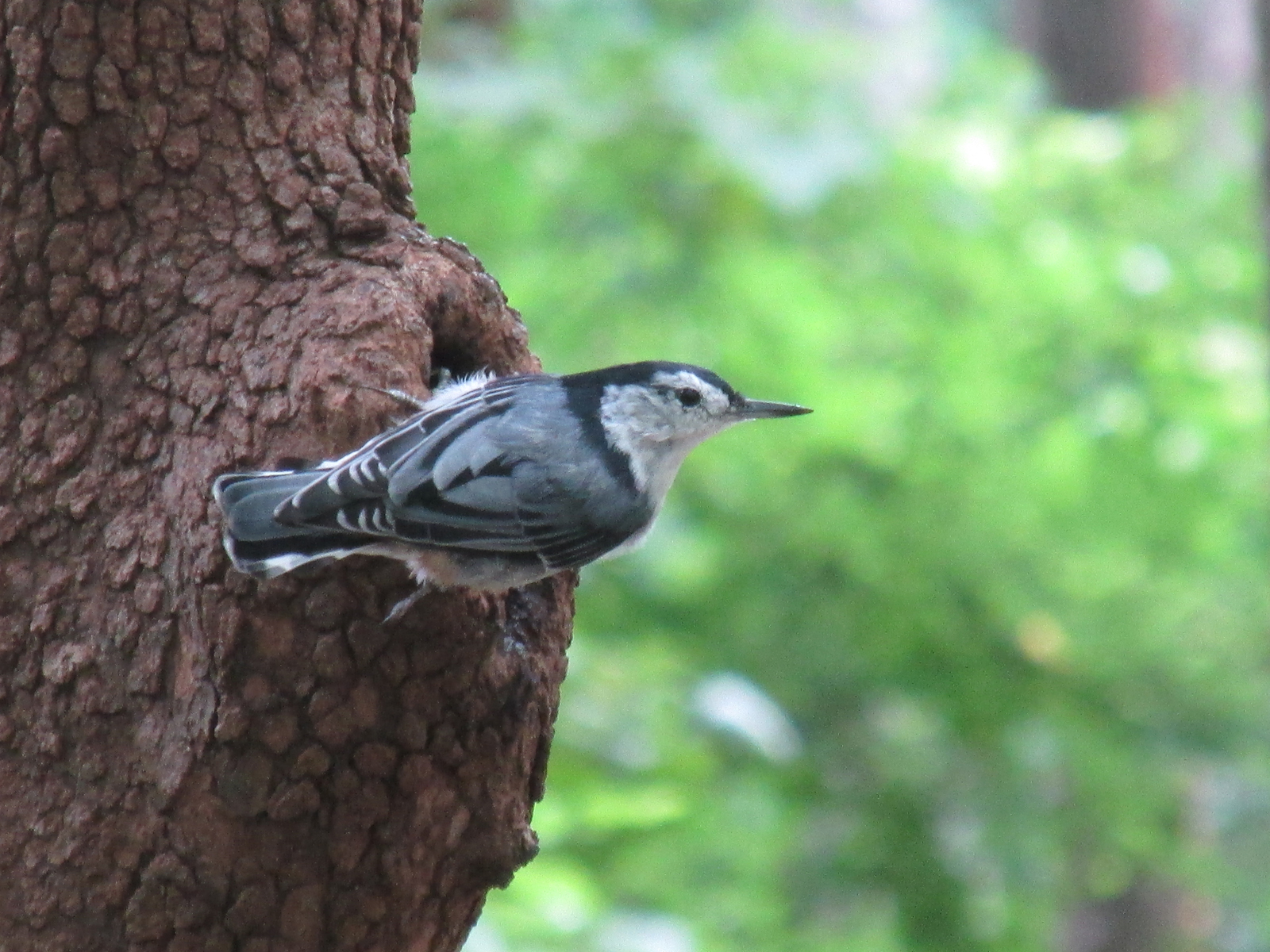
Photo by Bryan Stevens • A white-breasted nuthatch clings to the bark of a tree.

of gravity. A tree-clinging family of birds known as nuthatches live an even more topsy-turvy lifestyle than many other of their winged kin. Nuthatches often prefer a headfirst stance as they search for food in the nooks and crannies of tree trunks and branches.

The United States is home to four species of nuthatches: white-breasted, red-breasted, brown-headed and pygmy. White-breasted nuthatches are probably the most familiar nuthatch to backyard birders in this area.

These birds are named “nuthatch” for the habit of some species to wedge a large seed in a crack and hack at it with their strong bills. I like to refer to them as “upside-down birds” because gravity doesn’t seem much of a factor in their daily lives. They are content to walk headfirst down a tree trunk or probe the underside of a large branch. It must give them an interesting perspective on the world around them.

Photo by Bryan Stevens • A white-breasted nuthatch grabs a single seed from a feeder.

Because of their gravity-defying antics, the white-breasted nuthatch and other members of the family can provide hours of entertainment at our bird feeders. That was certainly the case during the recent bouts of snow, ice and cold temperatures inflicted on our region by successive winter storms.

White-breasted nuthatches will follow a single-minded path along the trunk of a tree or a branch on the way to a feeder. An individual nuthatch rarely varies from this path. It’s amusing to watch the jerky progress along the trunk as this bird prepares for a flight to a feeder holding sunflower seeds or a hanging wire basket of suet.

At my home, nuthatches typically remain aloof from the rivalry always ongoing between the chickadees and titmice. The white-breasted nuthatch is mostly a no-nonsense visitor. Rarely distracted by disturbances among other birds, this nuthatch is content to grab a seed and go or hang on to the wire frame of a suet basket and peck off chunks of suet.

Photo by Bryan Stevens • A window strike left this white-breasted nuthatch temporarily grounded.

The stubby red-breasted nuthatch is another member of the family that occasionally finds its way to our yards. Smaller than the related white-breasted nuthatch and, as far as I can tell, complacent in the company of chickadees and titmice, the red-breasted nuthatch is always a welcome visitor. It has a tell-tale “yank yank” call that it produces when excited that sounds very much like tiny tin horns. The red-breasted nuthatch, perhaps because it spends so much of the year in more remote areas, can also be amazingly tame when it pays a winter visit.

Both of these nuthatches can be attracted to feeders by offering peanuts, sunflower seeds and suet. They are also cavity-nesting birds, but are more reluctant about accepting a nesting box as a place to rear young. They will gladly accept an old woodpecker hole or other natural cavity in a tree.

The brown-headed nuthatch is a specialist of pine woodlands throughout the southeastern United States, favoring loblolly-shortleaf pines and longleaf-slash pines. This nuthatch requires standing dead trees for nesting and roosting. They forage for food, however, on live pines. The birds are more abundant in older pine stands. This small nuthatch is not at all common in the region, but there are some records. I’ve had much better luck finding the brown-headed nuthatch during visits to coastal South Carolina or suburban Atlanta in Georgia. In these southern locations, it can be a quite common bird.

I also want to complete my list of North American nuthatches by adding the fourth species — pygmy nuthatch — to my life list. I have made two trips to western North America, where this species ranges, but haven’t managed to find this bird. Both the pygmy and brown-headed are among the smallest members of the nuthatch family.

On the other end of the size scale is the appropriately named giant nuthatch, which reaches a length of almost eight inches. The giant nuthatch ranges through China, Thailand and Burma. This nuthatch is bigger than a downy woodpecker, another common visitor at backyard feeders in our region.

Photo by Bryan Stevens • White-breasted nuthatches are faithful feeder visitors.

Worldwide, there are about 25 species of nuthatches, some of which have surprisingly descriptive names for birds that spend most of their lives creeping in obscurity along the trunks and branches of trees. Some of the more creative common names for these little birds include beautiful nuthatch, blue nuthatch, velvet-fronted nuthatch, sulphur-billed nuthatch, chestnut-bellied nuthatch, snowy-browed nuthatch and chestnut-vented nuthatch.

•••

Bryan Stevens has written about birds, birding and birders since 1995. Email him at ahoodedwarbler@aol.com to make a comment, ask a question or share a sighting.

Canvasback visits often correspond with frigid temperatures

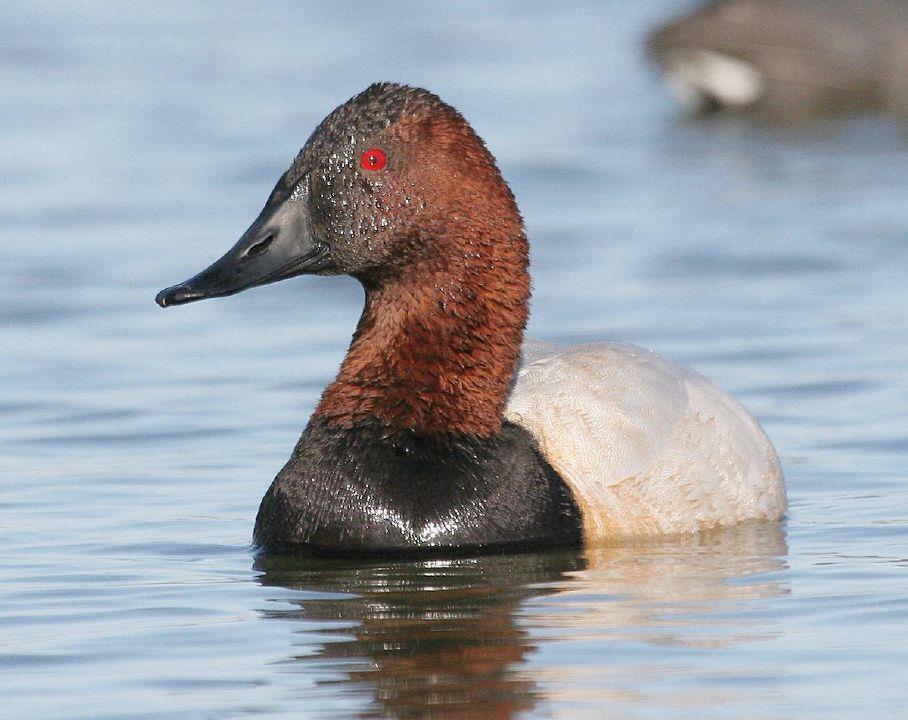
Clayton Ferrell/USFWS • Male canvasbacks cut a regal profile that makes them quite distinct from other species of ducks. Several of these impressive ducks made a recent winter stopover at the pond at Erwin Fishery Park.

The one-two punch of recent winter storms that slammed through the region appears to have brought some unusual ducks with them.

At an online meeting of the Elizabethton Bird Club, Rick Knight noted that a species of duck know as a canvasback has turned up in numerous locations throughout the region.

Erwin resident Joe McGuiness, a fellow member of the Elizabethton Bird Club, called me on Feb. 10 to let me know that some of those visiting canvasbacks have made a stopover at the large pond at Erwin Fishery Park. These majestic ducks remained at the pond long enough for me to see them for myself on Feb. 11.

Over the years this pond had been a magnet for waterfowl. I’ve seen numerous ducks, including bufflehead, ring-necked duck, green-winged teal, blue-winged teal, redhead, American wigeon, Northern pintail, scaup and gadwall, as well as several species of geese, including Canada goose, cackling goose, snow goose and Ross’s goose. I’ve also observed pied-billed grebe, horned grebe, double-crested cormorant, belted kingfisher and other birds that are associated with water.

Photo by Bryan Stevens • Canvasbacks on the Watauga River during a previous winter season.

Canvasbacks can fairly be described as rare visitors.The last time I saw canvasbacks at this pond was in February of 2024. I recall a small flock of canvasbacks and redheads also spent several weeks at this pond in January and February of 2014.

Some birds hold special meaning with me. Although it is a natural question for a bird lover to be asked, I have difficulty pinpointing a single bird as my favorite. One of my overall favorite birds is the Northern cardinal. Among the summer-visiting warblers, the hooded warbler has long been my favorite. With shorebirds, the marbled godwit has long been at the top of my rankings. My favorite bird of prey is the American kestrel or, as I first learned of this raptor in the little “Golden Guide to Birds,” the sparrow hawk. Among owls, I have a soft spot for Eastern screech-owls. I have a favorite duck, too. It’s the canvasback.

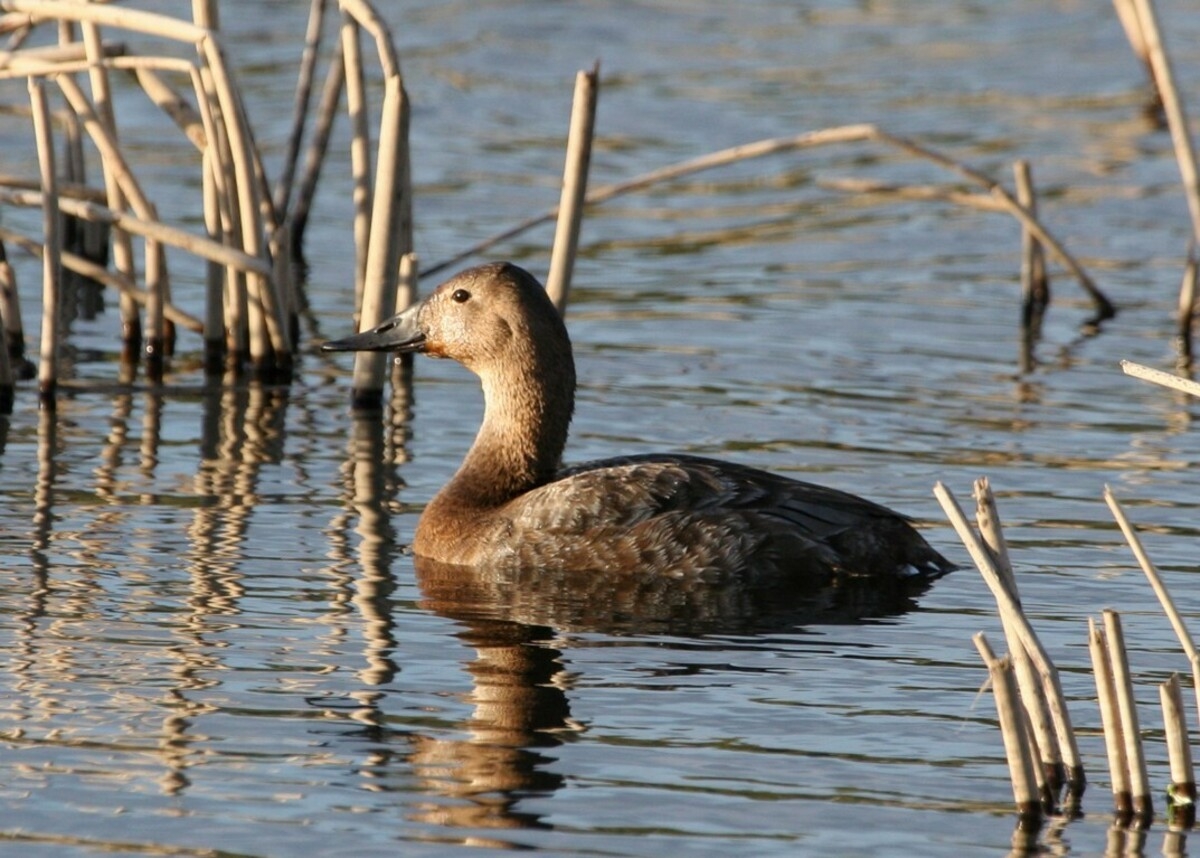
I think several factors make canvasbacks special. First and foremost, they don’t show up every winter. It often takes some seriously cold weather to force them into landlocked Tennessee. A male canvasback is also one of our more regal birds. The male has a distinctive profile enhanced by a sloping bill that instantly distinguishes it from other ducks. Males, or drakes, have chestnut-red heads, white bodies, black breasts and rears and bright red eyes. The distinctive bill is also black. Females, like many other ducks, are drab and brown but they share the male’s distinctive sloping bill, helping to separate them from such relatives as female redheads.

I saw my first canvasback in the mid 1990s during a winter visit with my parents to Wilbur Lake near Elizabethton, Tennessee. We always liked visiting this small reservoir during the colder months to view the buffleheads and any other ducks that happened to visit this small mountain lake. On this particular occasion, a flock of redheads had also arrived. While viewing these ducks, we noticed a member of the flock that looked different from the others. Specifically, it was larger and whiter than the redheads. After a brief consultation with my copy of Roger Tory Peterson’s “A Field Guide to the Birds of Eastern and Central North America,” I identified my very first canvasback.

Since that time, I’ve observed canvasbacks at other locations in northeast Tennessee and southwest Virginia. It’s been awhile, but I have observed these ducks at Osceola Island Recreation Area below Holston Dam and at Musick’s Campground at South Holston Lake. I’ve also observed canvasbacks on the Watauga River in Elizabethton and on the Holston River in Kingsport. I saw eight canvasbacks on Feb. 22, 2015, on the Watauga River, not very far from where I saw my very first one back in the 1990s. The flock, which consisted of all males, represented a rather high number for this duck in the region.

Donna A. Dewhurst/USFWS • While lacking a male’s distinctive coloration, a female canvasback does bear the dark sloping bill.

Canvasback nest in North American prairie potholes across the United States, including Alaska, as well as Canada. I encountered canvasbacks during a visit to Utah in 2008. A rainy season in the state had produced an abundance of flooded fields and temporary ponds that attracted these ducks and other waterfowl.

•••

Bryan Stevens has written about birds, birding and birders since 1995. Email him at ahoodedwarbler@aol.com to share a sighting, ask a question or make a comment.

Sighting a Siberian Superstar: Local birder secures rare red-flanked bluetail for life list

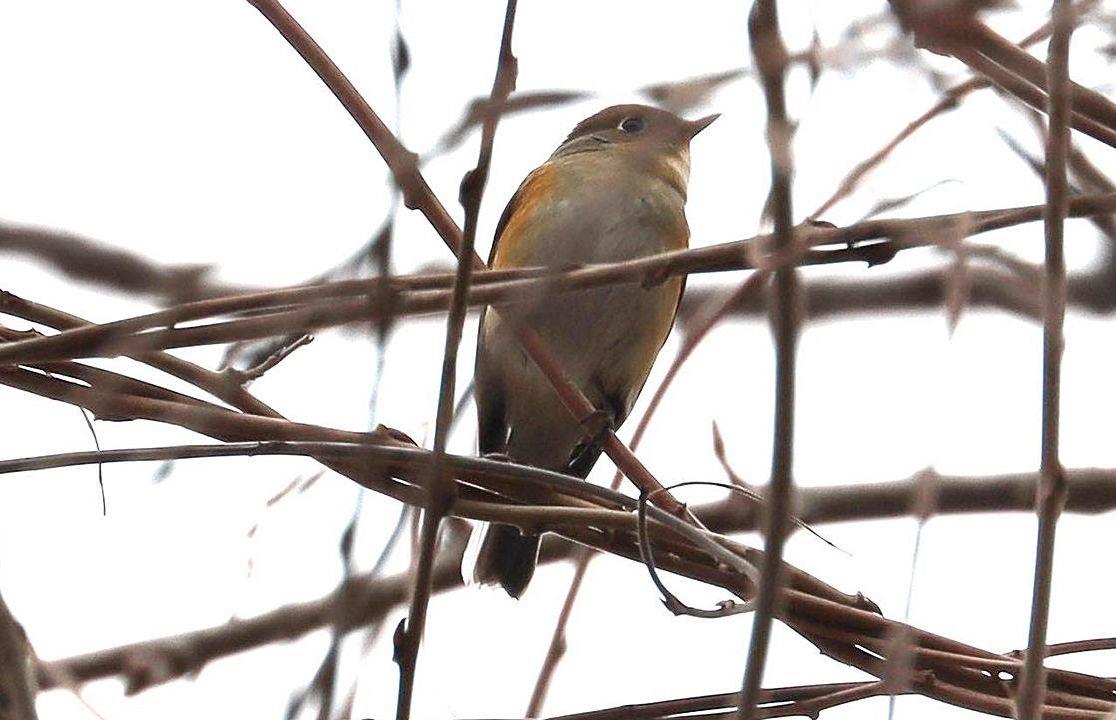
Photo by Tom McNeil • This red-flanked bluetail created quite a stir when it showed up in Fairfax County, Virginia, along the Potomac River.

Here’s confirmation that birds have wings and know how to use them to travel to some totally unexpected places. A good birding friend, fellow member of the Elizabethton Birding Club and, like me, an alumni of Hampton High School, has added a new bird – a species that I’d never even heard of – to his life list.

Tom McNeil posted on his Facebook page on Jan. 4 that he departed Winston-Salem, North Carolina, at 3 a.m. and drove to the Washington, D.C., Metro Area for a chance at seeing a little 5-inch-long bird.

From long acquaintance with Tom, I know he doesn’t hesitate to go after these “rare birds.” This particular bird – a red-flanked bluetail – had been generating a lot of excitement, Tom noted, since making its unlikely appearance in Fairfax County, Virginia.

The bird had already been present for four days when McNeil made his scramble to get binoculars on the bird.

I got the chance to discuss his sighting after he returned home just ahead of Winter Storm Fern after he had gone on another quick trip to add one of the common ground doves spotted in Sampson County to his North Carolina list.

“I came home to make sure the pipes didn’t freeze,” Tom said.

His wife, Cathy, works as a travel nurse and was working in Winston-Salem, North Carolina, for the weekend. “Unfortunately she is probably going to have to stay overnight at the hospital,” Tom said, explaining that the storm was expected to be really bad there.

North American Rarity

The rarity of the red-flanked bluetail is mind-boggling. Most sightings of this bird in North America have taken place in Alaska, but there are also 2023 records from California and New Jersey.

“This is only the second record in the eastern United States,” Tom said. “The first was in New Jersey, two years ago.”

He added, “I heard some people speculating that it was the same bird that was in New Jersey. I can’t even begin to speculate how it wound up here.”

This Eurasian species, according to Tom, should be hanging out around China, not just outside the capital of the United States. Tom noted that the bird represents only the second record of this species in the eastern United States.

That’s more than I knew. Thank goodness for Google. A little research and I soon learned that the red-flanked bluetail belongs to a group of insect-eating birds known as chats. Formerly, chats were thought to be thrushes. Genetic analysis has proven, however, that they are in fact a type of Old World flycatcher.

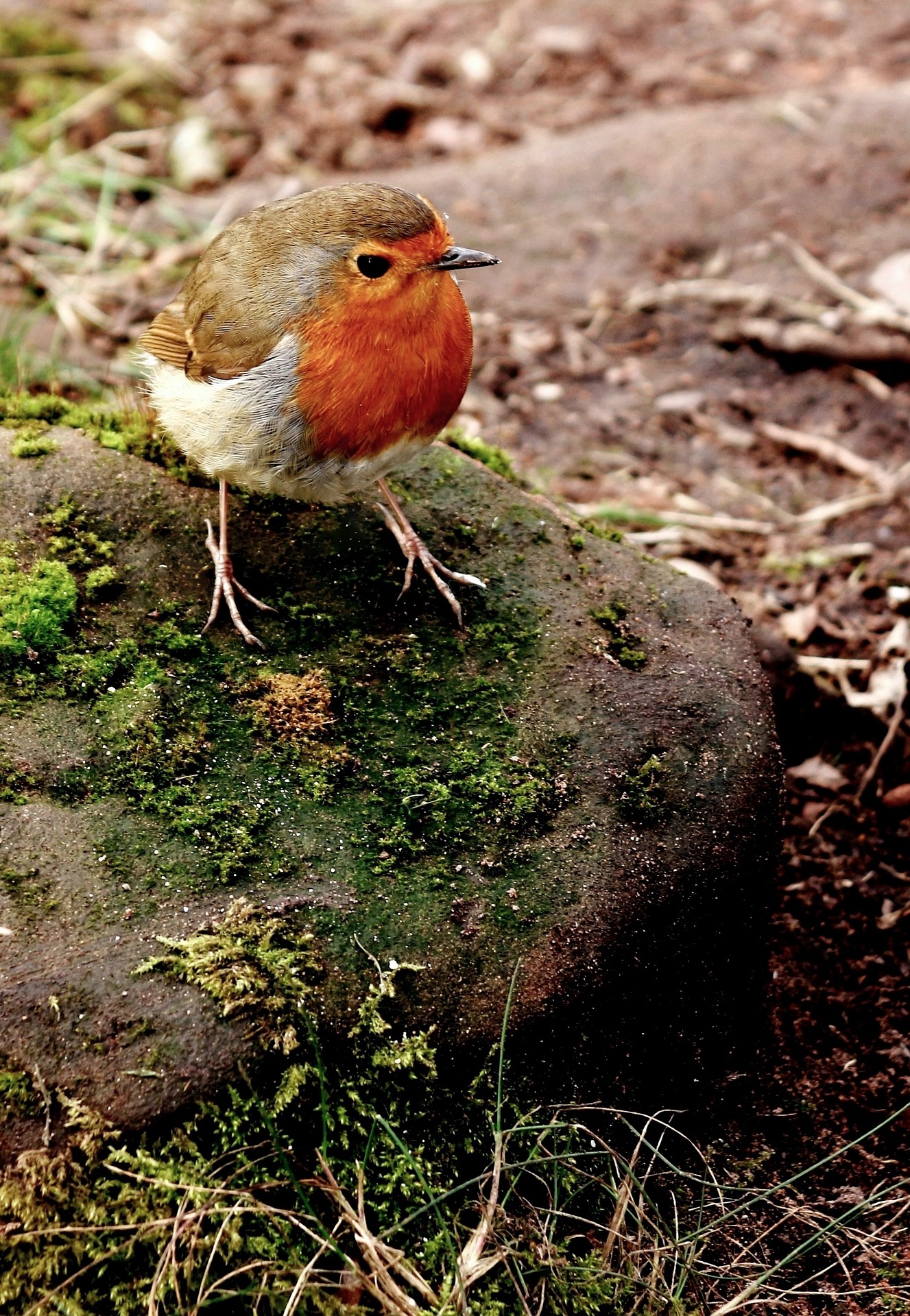
Photo by Andrew Poynton/Pixabay.com • The European robin is actually an Old World flycatcher and a relative of the red-flanked bluetail.

The fact that chats resemble Old World thrushes can be attributed to convergent evolution, which is the independent evolution of similar features and appearances in species of different lineages. Flycatchers and thrushes are birds, but that’s where the similarities end.

The red-flanked bluetail, known by the scientific name (Tarsiger cyanurus) is a small bird that breeds in mixed coniferous forests in northern Asia, parts of central Asia and northeastern Europe. It is migratory, nesting in Siberia and wintering mainly in southeast Asia, in the Indian subcontinent, the Himalayas, Taiwan and northern Indochina. In other words, it’s not supposed to be close to Washington. D.C.

What’s in a Name

You have to love this bird’s extremely descriptive common name. It was previously known as the orange-flanked bush-robin, which is also quite descriptive. Considering the bird is a flycatcher, however, calling it a bush-robin would not be accurate.

Tom added the bird to his life list with relative ease. His wife, Cathy, is a travel nurse and was working in Winston-Salem, North Carolina, when Tom learned that the bird was present in Great Falls Park in Virginia.

“From Winston-Salem, that is about 5.5 hours,” he said. “I left at 3 a.m. and got there about 8:30 a.m.,” he explained. “I only had to walk less than a quarter-mile to the area where it had been seen the most.”

He soon discovered that 75 or more people were already gathered and looking for the bird.

“They were spread out over a distance of about 200 yards,” he said. “After about an hour, someone spotted it and everyone converged on it. It was pretty exciting and humorous to watch.”

While the bird shows a blue tail and rump, it lacks the bright blue upperparts of an adult male red-flanked bluetail.

Based on the bird’s appearance, Tom said most observers have identified the bird as a female. “But it could be an immature male,” he added.

Birding Surprises

“Needless to say, it was a lifer,” he noted.

A “lifer” is birder slang for a species a birder has observed for the first time and added to a cumulative life list of species seen.

The bird has spent much of its time close to the Potomac River since its arrival in Fairfax County in Virginia.

“Apparently the Maryland state line passes very close to the shore,” Tom said. “Some folks were standing out in the river trying to add the bird to their Maryland lists.”

The red-flanked bluetail has certainly been his best bird so far in 2027.

“Back in December I picked up Swainson’s hawk, MacGillivray’s warbler and Brewer’s blackbird for my North Carolina life list,” Tom said.

“Cathy and I both went down to Chattanooga and got a great cormorant and Franklin’s gull for Tennessee,” he added.

He posted on Facebook that his biggest personal milestone for 2025 was getting his American Birding Association area 600th bird – a Townsend’s warbler – in a backyard in Charlotte, North Carolina.

Cathy had to work and didn’t get to go with Tom on the trip to get the bluetail.

“So if it’s still around in the next few days, we will probably go up and try for it together,” Tom said.

Here’s a recording someone made of a red-flanked bluetail in California in 2023.

Winging It

Birds have wings, as I’ve pointed out many times, and they know how to use them. It’s just more evidence that one never knows when an unexpected bird might make an appearance. This is the magic that keeps birding exciting.

•••

Bryan Stevens has written about birds, birding and birders since 1995. Email him at ahoodedwarbler@aol.com to share a sighting, ask a question or make a comment.