Category Archives: Birding

Birding is a popular pastime for many Americans.

Woman gets glimpse into life of a nesting ruby-throated hummingbird

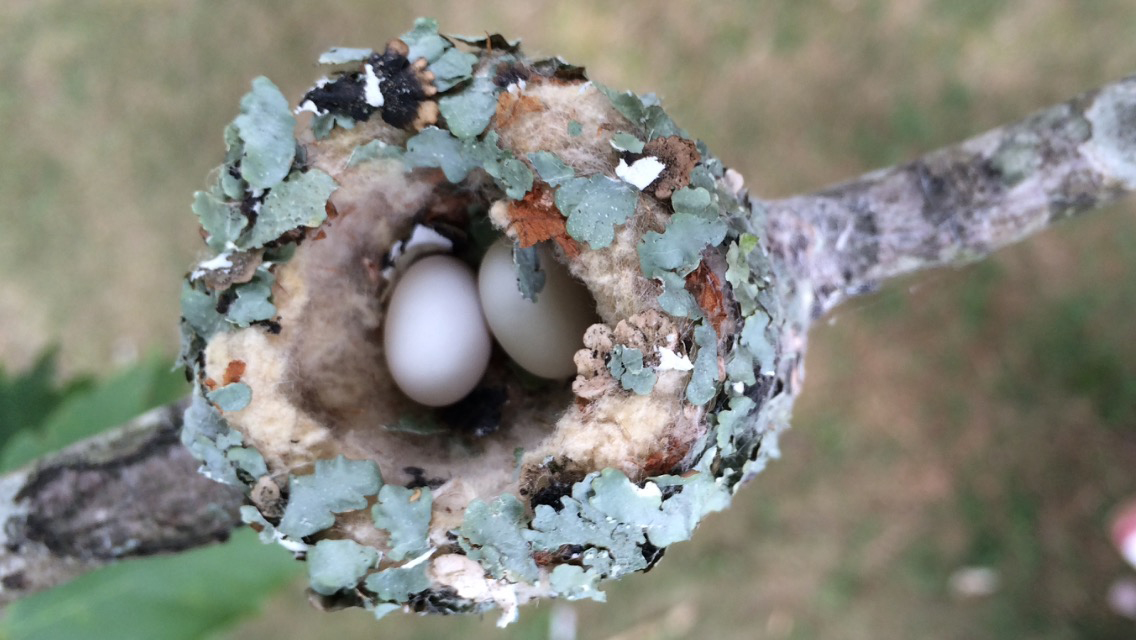
eggs-in-nest

Photo Courtesy of Donna Ottinger                        This nest, filled with two tiny eggs, was discovered in a maple tree in a Bluff City yard by Donna Ottinger.

For Bluff City, Tennessee, resident Donna Ottinger, the show in her front yard beats anything you might find on television this summer. Since late July, Donna has been watching a female ruby-throated hummingbird that she has named Bliss carry out her nesting duties.
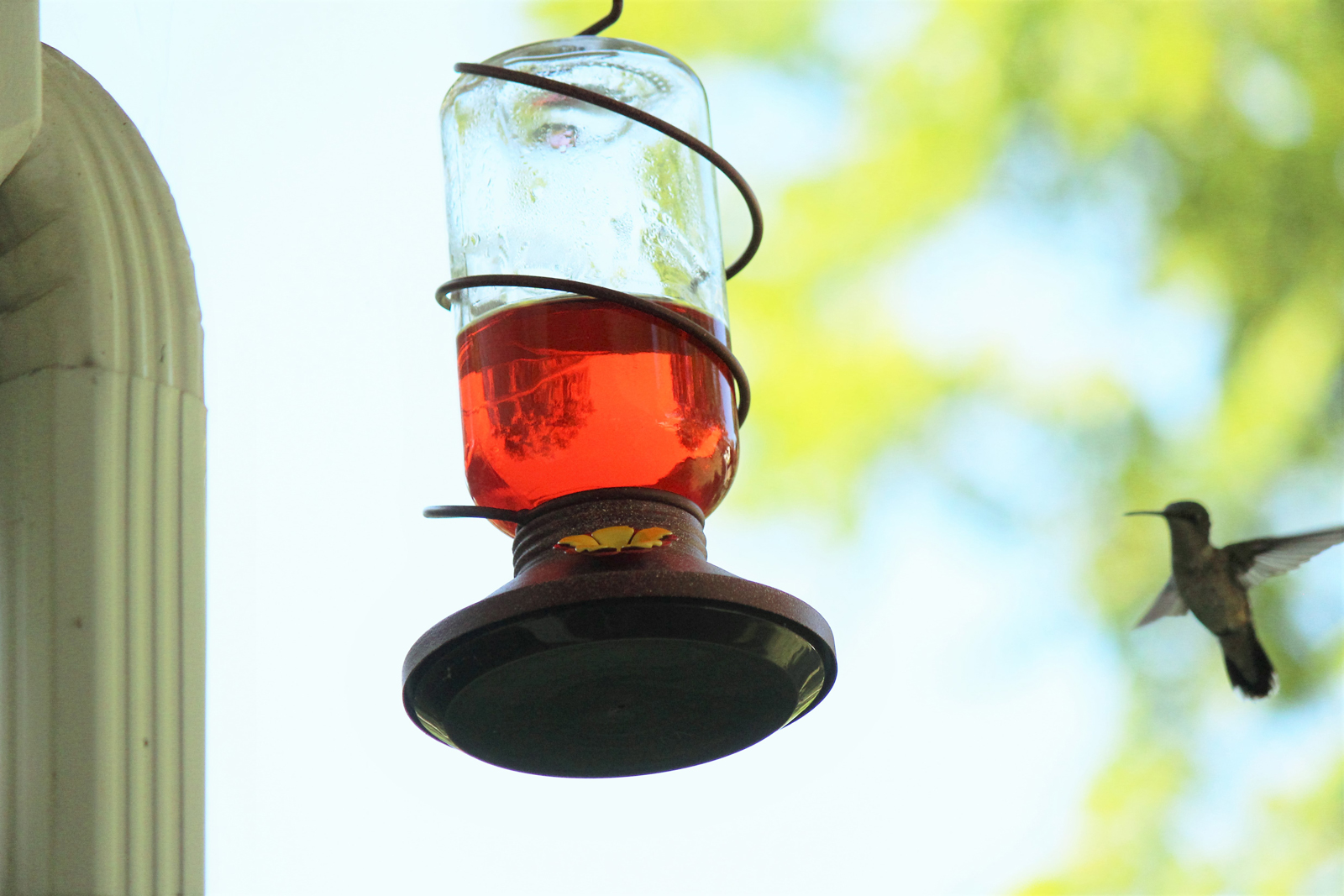
bliss-feeder

Photo Courtesy of Donna Ottinger                  Bliss the ruby-throated hummingbird visits a feeder for a sip of sugar water.

Like all female ruby-throated hummingbirds, Bliss produced two eggs for containment in a delicate nest of spiderweb, lichen and plant fibers woven onto a maple tree branch. There are some reasons why it’s always a pair of eggs for hummingbirds. First, the nest is so small — about the size of a walnut half-shell — that there is barely room for two eggs, let alone more. Second, once the young hatch, the nest has just enough room to accommodate them as they grow, fed well by their mother. Third, feeding two hungry young hummingbirds is a demanding task. A female hummingbird has to find enough food to fuel her own body and help her young in the nest grow and thrive. It’s a full-time job during the daylight hours. She’s pressed hard to succeed at raising two young. Attempting to rear more would most likely prove impossible.

Donna compared the two tiny eggs to Tic Tac mints. The entire process — from building the nest to incubating eggs to tending hatchlings — requires a commitment of more than two months. Donna noted that even after the young hummingbirds hatched, Bliss continued to reinforce the nest with collected silk from spider webs.

Donna kept the nest under observation after she discovered it in late July. As she noted on her Facebook page, finding a hummingbird nest is not an everyday occurrence. The nest is on one of the lower branches of a large maple tree in her front yard only a short distance from her porch. She was able to sit comfortably while watching Bliss come and go to her tiny nest.
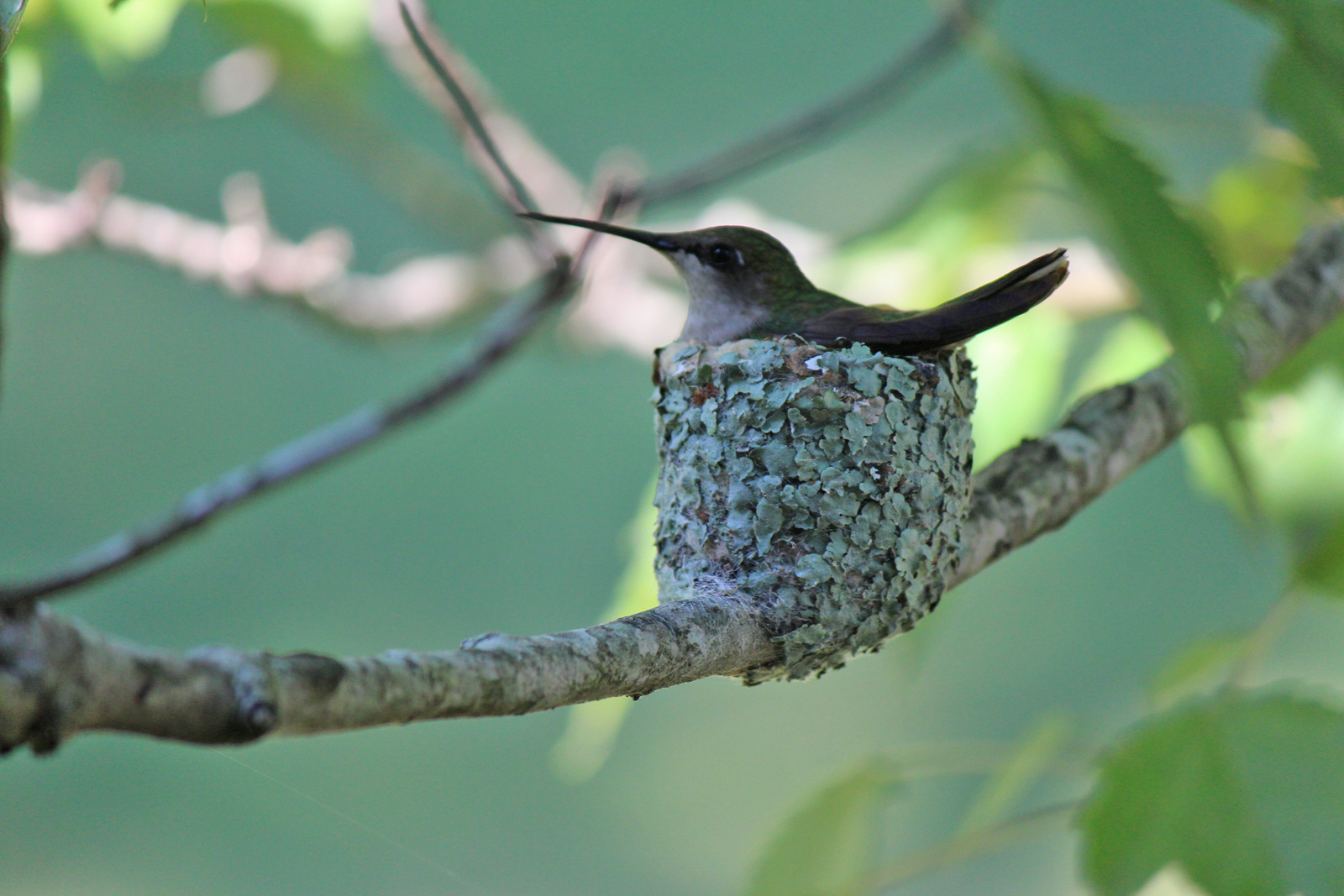
bliss-incubating

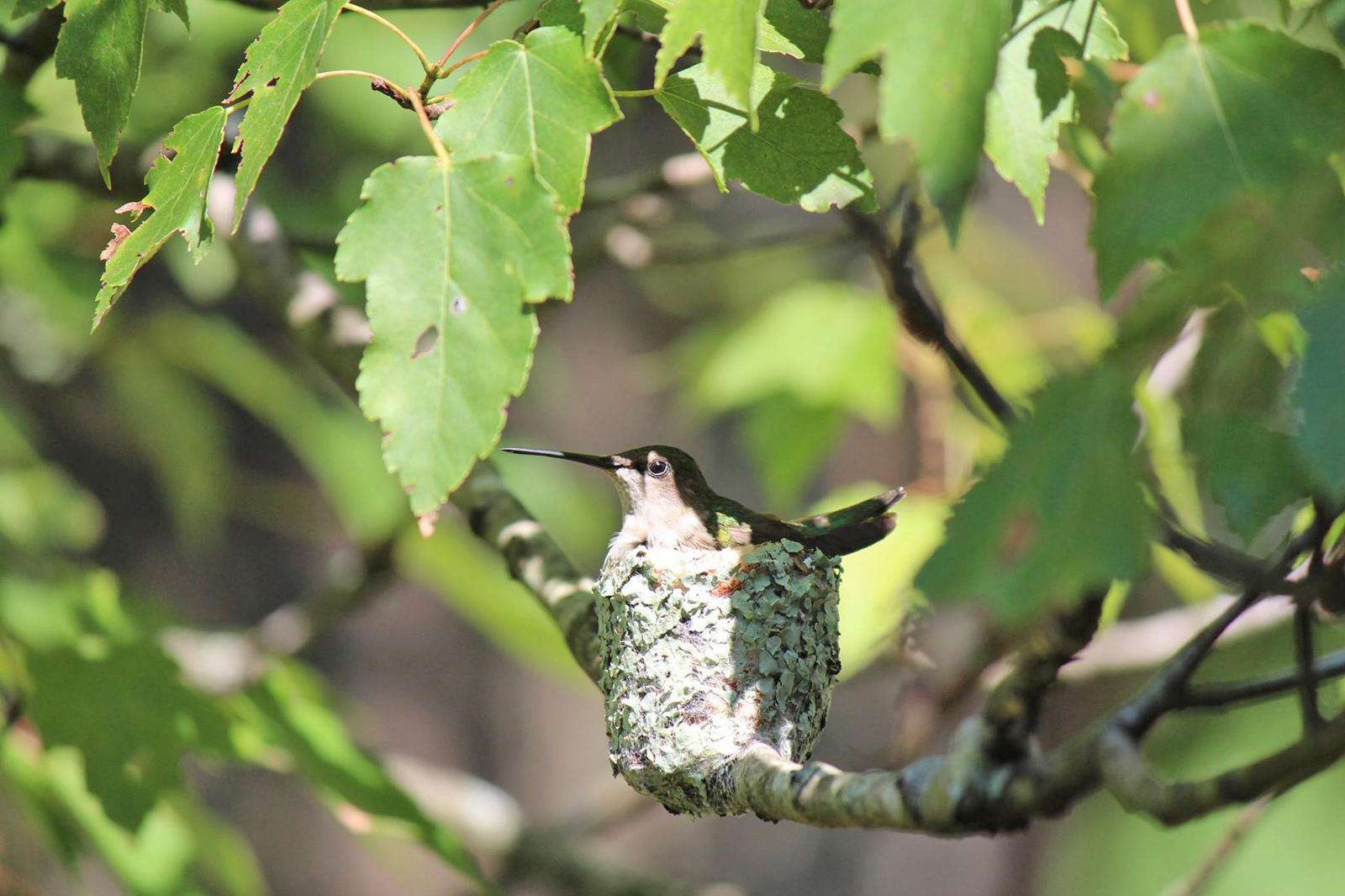
Photo Courtesy of Donna Ottinger                                           Bliss, a ruby-throated hummingbird, sits on her nest to incubate her two eggs.

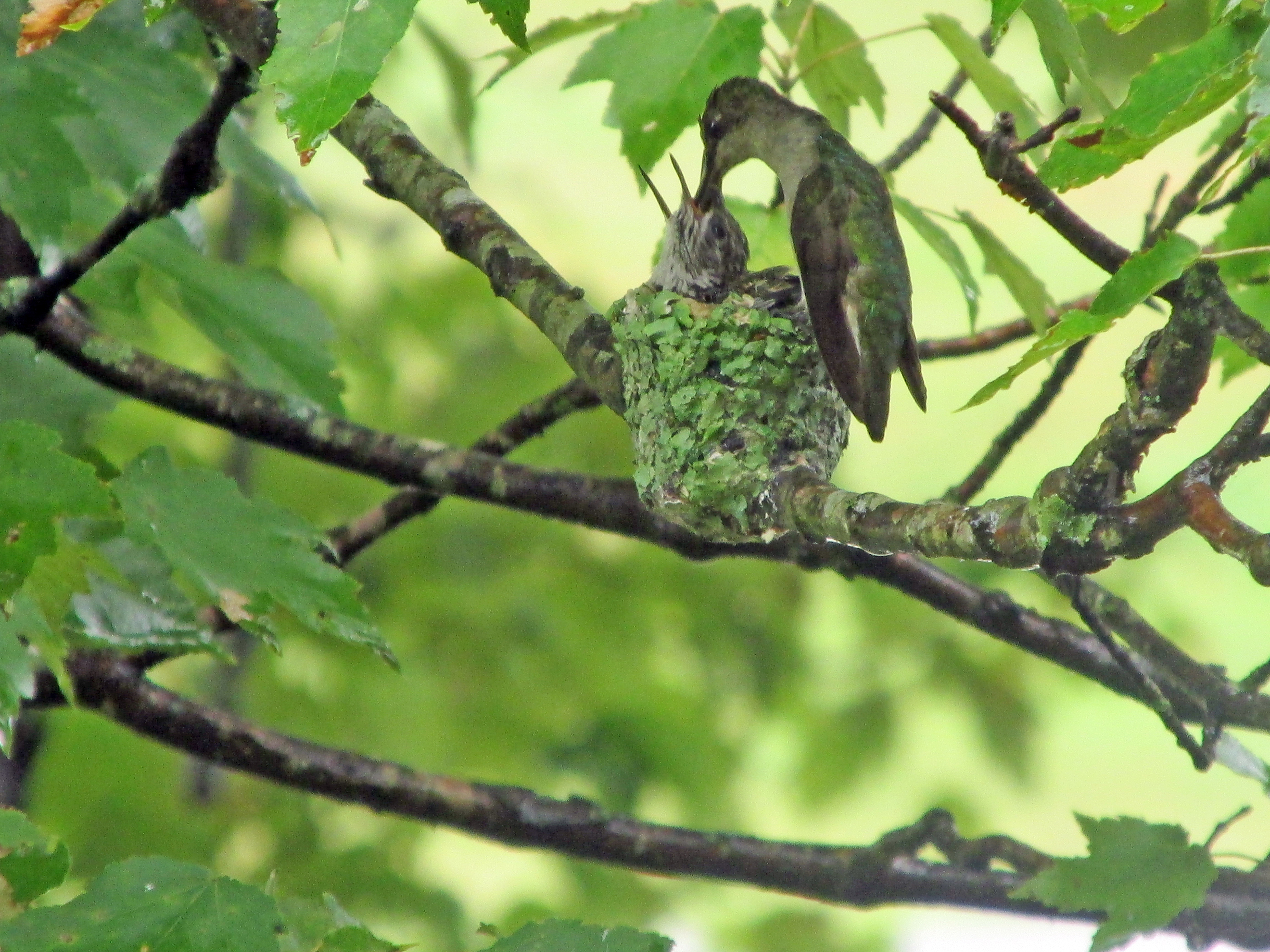
“It’s been a real blessing,” Donna told me when we met in person on Aug. 19. She was gracious enough to permit my mom and me to sit on her front porch and enjoy the show. During our visit, we got to watch as Bliss arrived to feed the babies. It’s not a spectacle for the squeamish. Bliss plunged her long bill deep into the throats of each baby bird in turn and pumped some nutritious contents into the growing youngsters. Despite the fact that it looked like she could easily impale the babies, they suffered no ill effects and looked quite full and satisfied after the visit.
aug-1-monday-just-hatched-this-morning

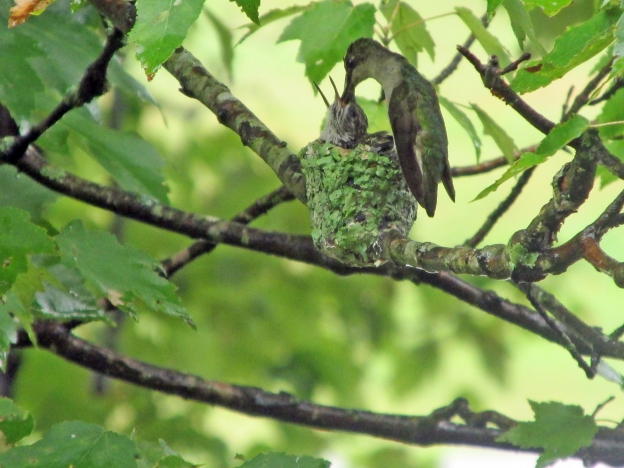
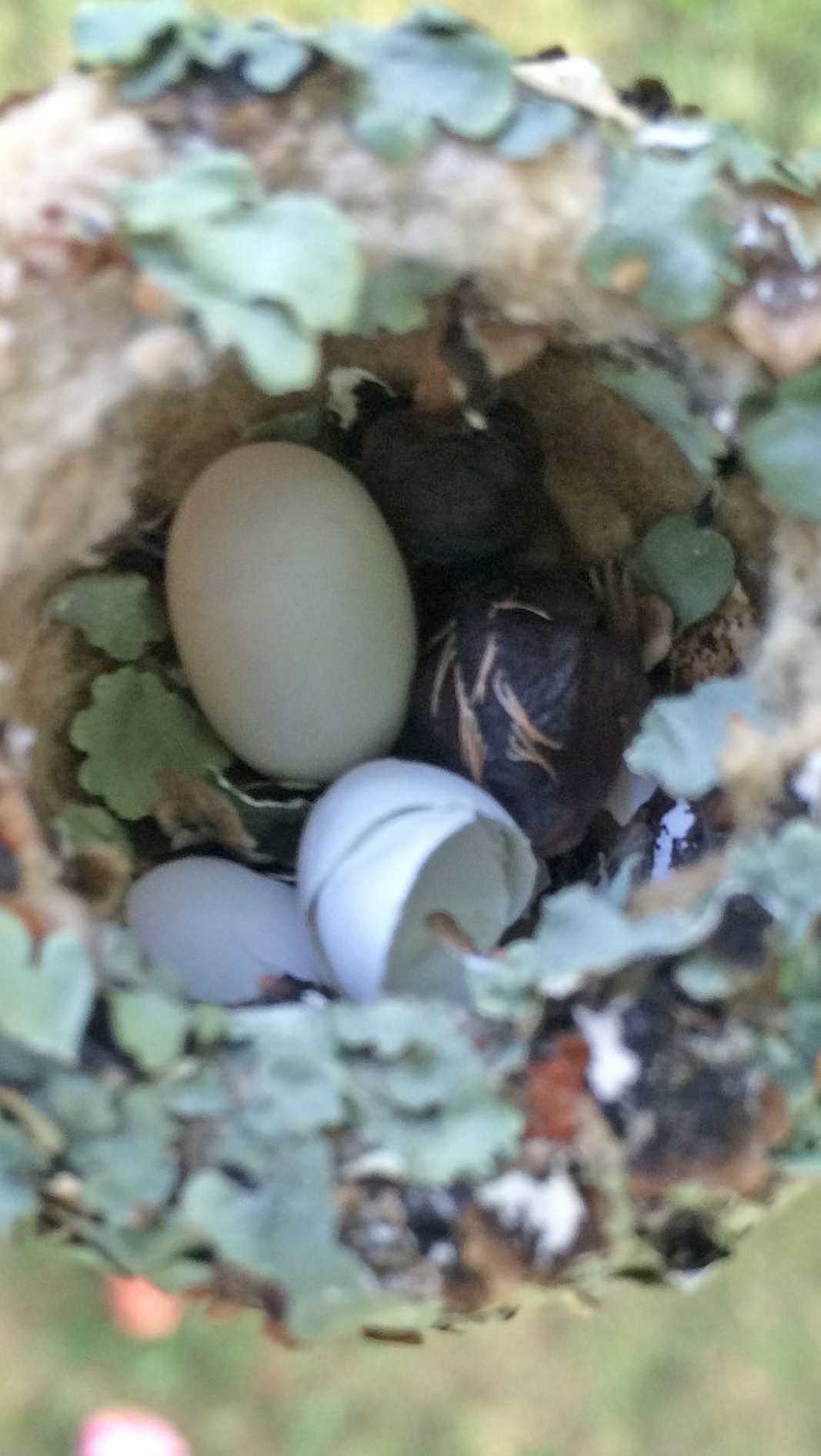
Photo Courtesy of Donna Ottinger              On Aug. 1, one chick hatched. The second chick hatched the following day, making for a very full nest.

The two babies were hatched on Aug. 1 and Aug. 2, respectively. The staggered hatching reflects the fact that Bliss also laid the eggs on separate days. Not knowing the gender of the babies, Donna named the Aug. 1 hatchling Monday for the day of the week hatching took place. In turn, the second baby, which escaped its shell on Aug. 2, was named Tuesday.

Once hatched, young hummingbirds remain in the nest about 28 days (nearly a month) and depend on their mother to bring them regular meals. If that’s not enough, the ruby-throated hummingbird is known to nest twice in a season. It certainly must rank a female hummingbird as one of the busiest of our summer birds. At the time I wrote this column, Monday and Tuesday had still not left the nest.

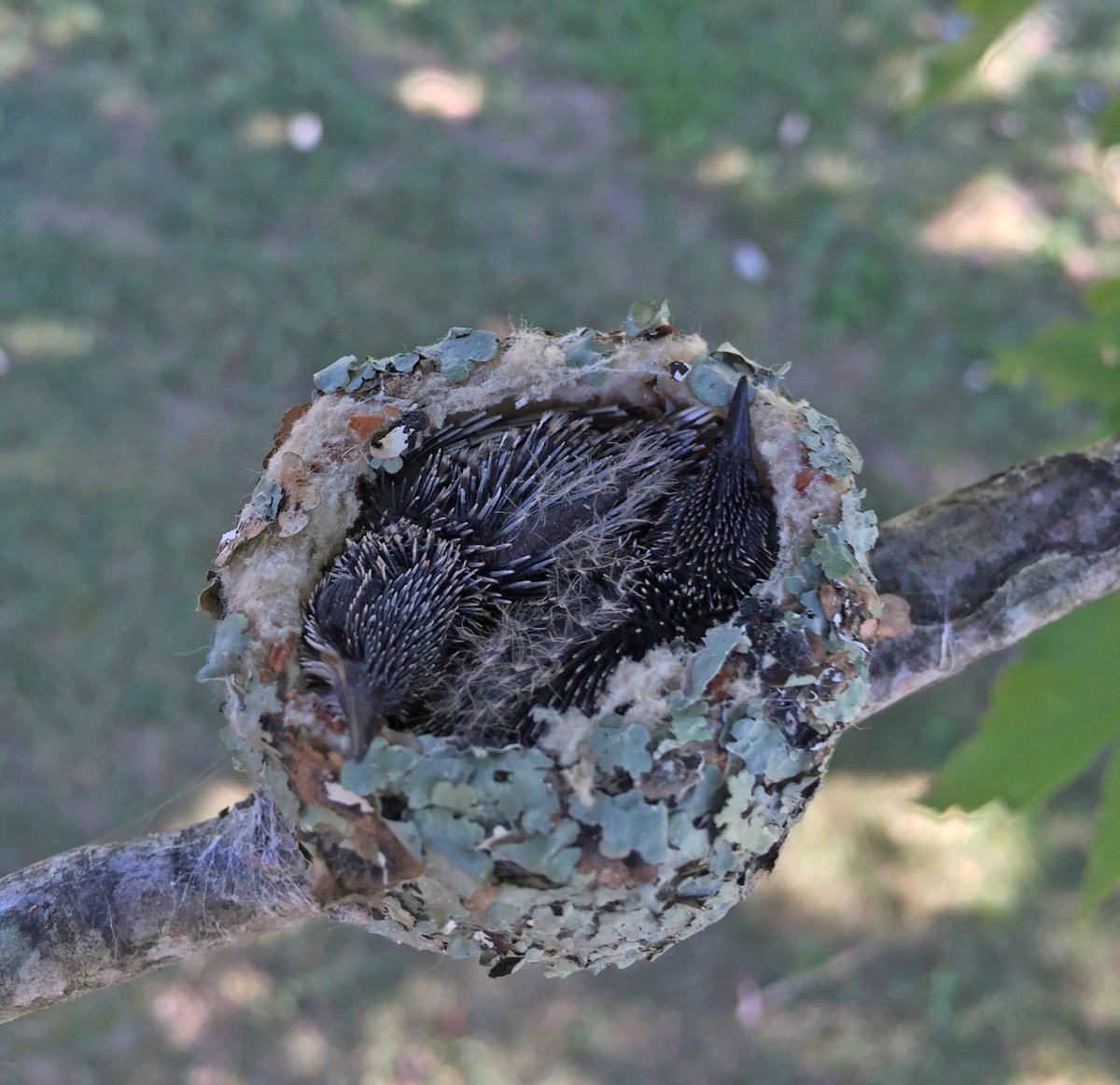
The young hummers have grown at an astonishing rate and Donna has witnessed their progress day by day. She noted that young hummers start off life with a short bill. Like the rest of their bodies, however, their bills have grown accordingly as Monday and Tuesday received regular feedings from Bliss.
aug-13-monday-and-tuesday-with-more-feathers

Photo Courtesy of Donna Ottinger                Having grown at a rapid pace, hummingbird chicks Monday and Tuesday find their nest growing rather cramped by mid-August.

Female hummingbirds receive no assistance from their mates. Males don’t assist with the rearing of their own young. For male hummingbirds, summer is mainly a time to thrive on the abundance of nectar-bearing blooms, as well as a profusion of tiny insects and spiders that also make up a good portion of their diet.

When I saw them, I knew that little Monday and Tuesday would be out of the nest in a short time. It would also be necessary for them to soon begin fall migration. On Aug. 23, Donna reported on her Facebook page that the young hummers had left the nest.
hummer-mother

Photo by Bryan Stevens                                   Bliss feeds her two young hummingbirds.

“Just three weeks after hatching, the baby hummers have both left the nest,” she wrote in her post. “They didn’t go far, and Bliss is still feeding them in a nearby tree where they have taken up new residence.”

The next generation of hummingbirds always helps swell the number of these tiny birds in our yards in late summer and early fall. Keeping visiting ruby-throated hummingbirds can be as simple as planting an abundance of the flowers they love, but offering multiple sugar water feeders also helps. Keep the sugar water mix at a four parts water to one part sugar ratio. Don’t offer honey in your feeders. When mixed with water, it can spoil and spread fungal diseases. Remember that hummingbirds don’t subsist on sugar water alone. They also eat numerous tiny insects and spiders to obtain the protein they need for their dietary needs, so don’t use insecticides near feeders or flowers that hummers are likely to visit.
aug-17-monday-and-tuesday-with-color-showing-on-feathers

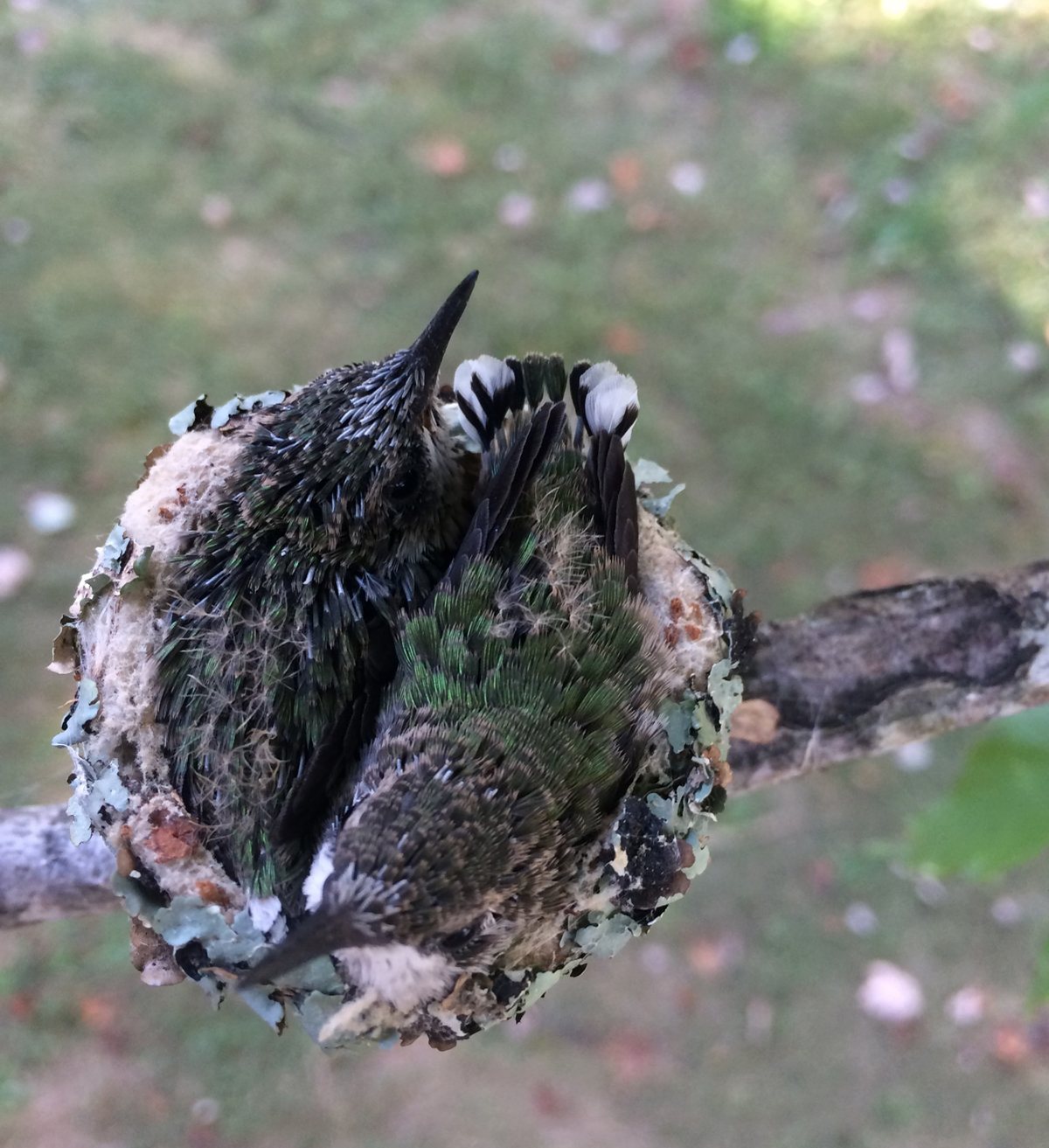
Photo Courtesy of Donna Ottinger  Monday and Tuesday find the nest increasingly crowded in the days before they fledged.

It was absolutely wondrous to observe Bliss and her babies. The experience has motivated me to keep a closer watch on the hummingbirds in my yard. There are female hummers present every summer. They have to be nesting somewhere, and I’d like to find a nest in my own yard.

•••••

To learn more about birds and other topics from the natural world, friend Stevens on Facebook at https://www.facebook.com/ahoodedwarbler. He is always posting about local birds, wildlife, flowers, insects and much more. If you have a question, wish to make a comment or share a sighting, email ahoodedwarbler@aol.com.

aug-13-monday-and-tuesday-with-more-feathers

Photos Courtesy of Donna Ottinger            Monday and Tuesday share a compact nest.
13661895_1230239206996666_2874895669499226165_o

Bliss incubates her eggs at her nest in Bluff City, Tennessee.
Grosbeaks in region include blue, rose-breasted representatives of family


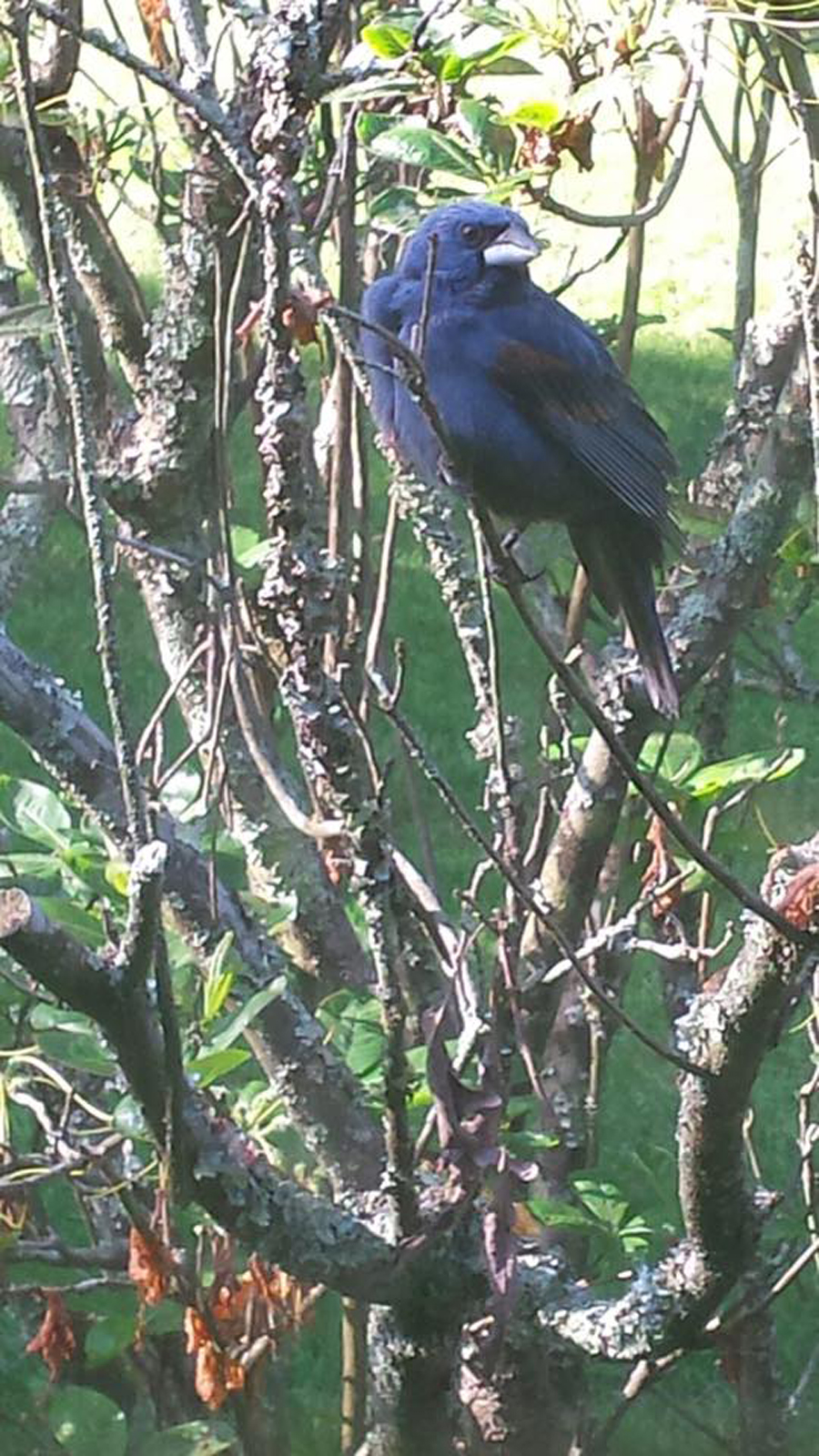
Daryl Herron, a real-life friend as well as a Facebook one, posted a photo of a bird on my page recently, seeking help with identifying the bird. His sister, Monica Cody, took the photo at her Kingsport home. The stunning bird depicted in the photo, as I happily reported back to Daryl, was a blue grosbeak. The grosbeak is an impressive bird, with males showing off an overall blue plumage save for some brown and black feathers in the wings.

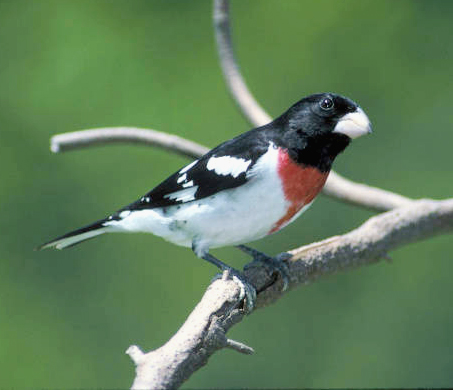
Photo by U.S. Fish & Wildlife Service/ David Brezinski Rose-breasted Grosbeaks will likely be among the colorful birds present for this year's rally.

Photo by U.S. Fish & Wildlife Service/ David Brezinski
Rose-breasted Grosbeaks will likely be among the colorful birds present for this year’s rally.

Blue grosbeaks are mostly southern birds with Tennessee, Kentucky and Virginia representing the northern tier of this bird’s range in the southeastern part of the country. Look for these chunky, blue birds in brushy fields or along hedgerows in fairly open country. They favor the same habitats as such birds as yellow-breasted chat, brown thrasher and loggerhead shrike.

BlueGrosbeak-CODY

Photo by Monica Cody                    This male blue grosbeak showed up near Monica Cody’s home in Kingsport, Tennessee. The blue grosbeak is an uncommon visitor in the region.

It’s a shame this bird isn’t more common in the region. Blue grosbeaks will visit feeders, but in more than 20 years of maintaining well-stocked feeders, I’ve managed to attract only one of these birds. If more common, it would surely be a favorite bird among the people offering free seed for their feathered friends.

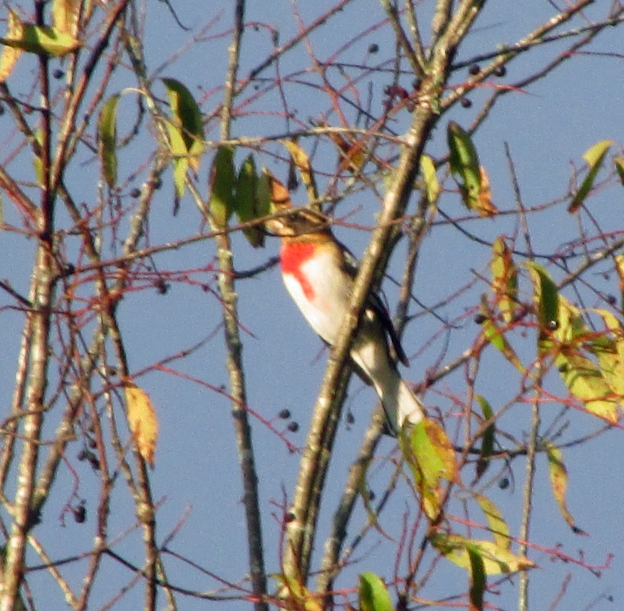
The blue grosbeak is related to the better-known rose-breasted grosbeak. Male rose-breasted grosbeaks are absolutely stunning, especially for people getting their first-ever glimpse of this bird. It’s the adult male with his vibrant black and white feathers and the large rosy-red splash of color across the breast that gives this bird its common name. Females are brown, streaked birds that are larger than but easily confused with some of our sparrows.

Among grosbeaks, both sexes have a massive bill, which they use to hull sunflower seeds at feeders or glean insects from leaves and branches. It’s the heavy, blunt bill for which the term “grosbeak” is derived. “Gros” is a German term for large or big, so grosbeak simply means a large-beaked bird. People who band birds to further the study of them will tell you that rose-breasted grosbeaks have a wicked bite and are capable of delivering quite a nip. Bird banders in the region frequently encounter rose-breasted grosbeaks in their mist nets — and some bear the scars to prove it.

Tammie-RBGrosbeak

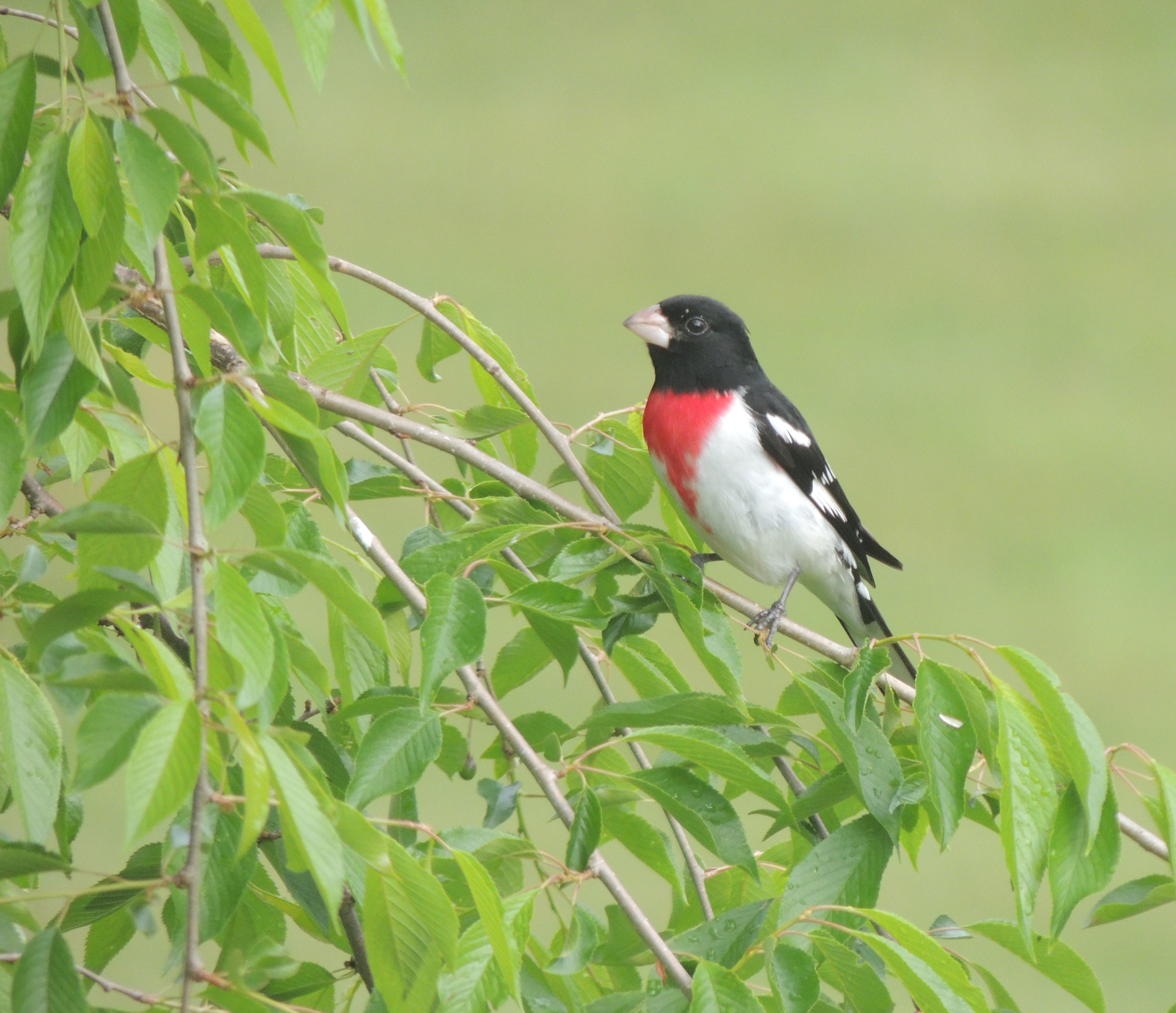
Photo by Tammie Kroll                                      The male rose-breasted grosbeak is probably one of the least difficult songbirds to identify with his unmistakable plumage pattern.

The spring arrival of rose-breasted grosbeaks is usually a fleeting visit. Finding suitable arrangements, which can consist of well-stocked feeders and perhaps a convenient water source, the migrating birds may linger for several days. These birds nest at higher elevations, however, and are usually impatient to continue the journey to where they will spend the summer months tending to their young.

This spring, Tammie Kroll was one of the lucky people to receive visits from rose-breasted grosbeaks. Tammie emailed me to share a beautiful photo she took of the male grosbeak that visited her home in Washington County, Virginia, near Exit 13 off Interstate 81.

There’s good news for those who didn’t receive springtime visits from these pretty birds. The rose-breasted grosbeak is also a common fall migrant and can again be attracted to yards offering sources of food and water. While males usually don’t look quite as dramatic by August and September, they’re still sure to cause a stir when visiting a feeder.

RM-RBGrosbeak

Photo by Bryan Stevens                                         A rose-breasted grosbeak sings from a tree on Roan Mountain, Tennessee.


Plenty of rose-breasted grosbeaks pass through northeast Tennessee, southwestern Virginia and western North Carolina, and a few even decide to make their summer homes in the mountains in these regions. However, these birds spread out widely across the eastern half of the North American continent, ranging from northeastern British Columbia to Quebec and Nova Scotia in Canada. They also range south from New Jersey to Georgia. The rose-breasted grosbeak also reaches Colorado, Oklahoma and Kansas.

blue-grosbeak-john-james-audubon

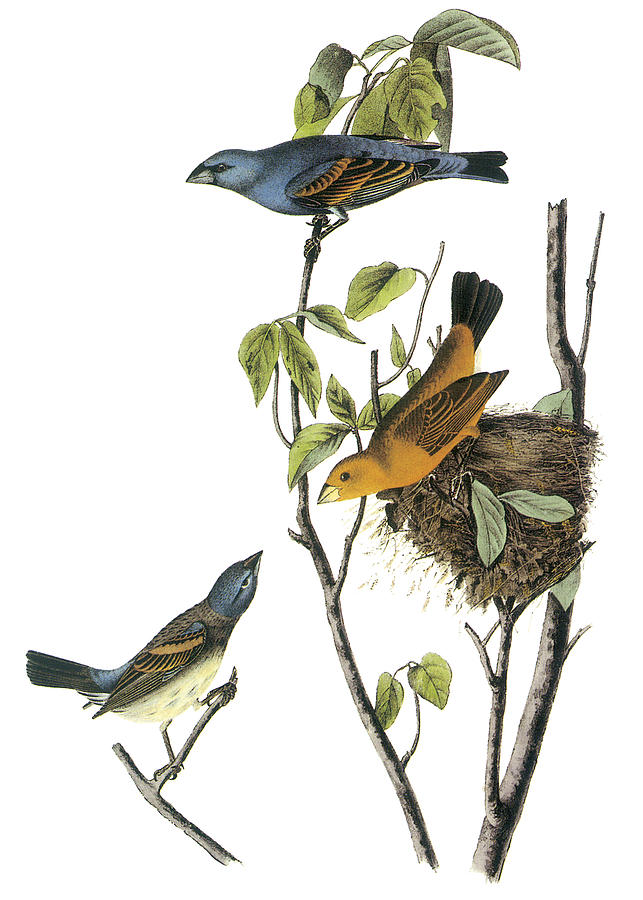
John James Audubon painted this family of  blue grosbeaks.

For the most part, however, the rose-breasted grosbeak is replaced in the western United States by the closely related black-headed grosbeak. I saw several of these birds during a trip to Salt Lake City, Utah, back in 2006. Other grosbeaks in the United States include the evening grosbeak and pine grosbeak. In the American tropics other grosbeaks are found, including the descriptively named yellow-green grosbeak, crimson-collared grosbeak, ultramarine grosbeak and yellow-shouldered grosbeak.

•••••

Bryan Stevens lives near Roan Mountain, Tennessee. To learn more about birds and other topics from the natural world, friend Stevens on Facebook at https://www.facebook.com/ahoodedwarbler. He is always posting about local birds, wildlife, flowers, insects and much more. If you have a question, wish to make a comment or share a sighting, email ahoodedwarbler@aol.com.

Tremulous call of Eastern screech-owl baffles couple

Photo by Bryan Stevens An Eastern Screech-Owl at rest in a roosting hole in a large sycamore tree.

Photo by Bryan Stevens
An Eastern Screech-Owl at rest in a roosting hole in a large sycamore tree.

I received a recent email from Lewis Chapman seeking help in solving the identity of a nocturnal caller. Chapman and his wife moved to Laurel Bloomery in Johnson County, Tennessee, in late June.

“Shortly after we arrived we started hearing a strange night bird call that could best be described as an eerie winnowing,” he wrote in his email. After the couple conducted some Internet research into the mysterious after-hours vocalist, his wife suggested the caller might be a snipe.

As mentioned in previous columns, the snipe is a real bird despite its reputation as a mythical creature thanks to the rural tradition of the “snipe hunt.” While the calling bird at their home did remind them of a Wilson’s snipe, they were not convinced.

“Is this the right time of year to be hearing one in our area?” Lewis asked in his email. “Is there another bird that makes this kind of winnowing?” Both of his astute questions helped me narrow the possibilities.

In my reply, I did inform Lewis that the Wilson’s snipe, as well as the closely related American woodcock, make their home in the region. The summer season, however, isn’t the best time of year to hear either of these relatively elusive shorebirds. These birds are most vocal at the peak of their breeding season, which usually occurs much earlier in the year.

Screech-Owl-LUCY

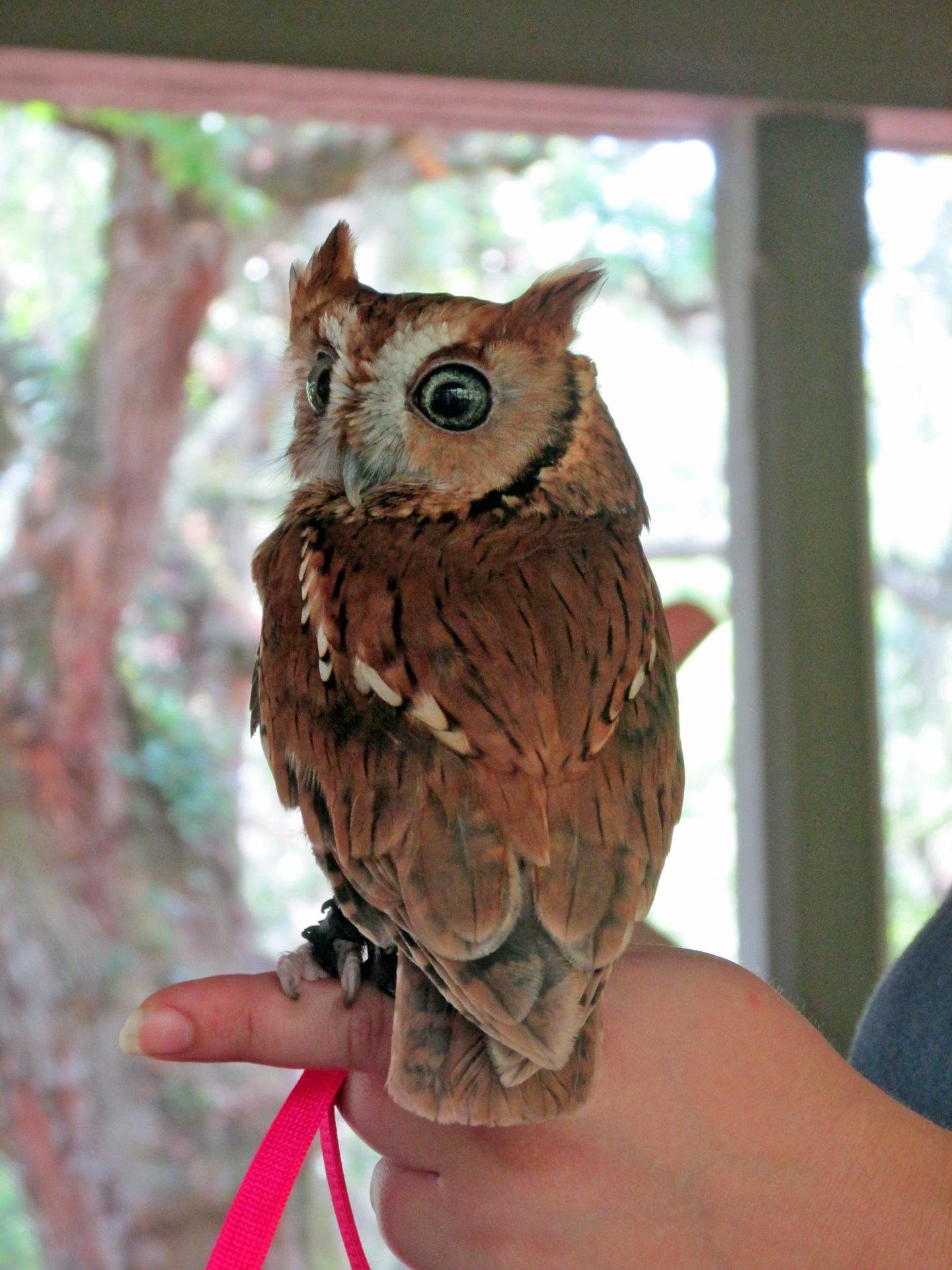
Photo by Bryan Stevens                     Lucy, an Eastern screech-owl, is part of an educational program at Brookgreen Gardens in South Carolina that teaches audiences some fascinating information about native wildlife. For instance, despite her small size, Lucy is an adult owl, not a baby.


It was his second question, especially the description of the “winnowing” sound, that got me thinking in an entirely different direction. It also helped that I’ve heard some of these small, nocturnal vocalists at my own home in recent weeks. I suggested that the Chapmans get online and look up the song and other vocalizations of the Eastern Screech-owl.

An adult Eastern screech-owl is usually only between six and nine inches in length. Many people upon first seeing a screech-owl assume it’s a baby owl. On a recent South Carolina trip I made several visits to Brookgreen Gardens near Pawleys Island. On several of these visits I attended the daily educational programs conducted by the zoo staff at the gardens that are designed to introduce visitors to various examples of native wildlife. The presenter usually introduced a couple of animals to the audience. On several occasions, the show featured birds of prey, including hawks and owls.

Two of the shows featured Lucy, an Eastern screech-owl, and people in the audience invariably asked if she was a baby owl. To their astonishment, they learned that Lucy was an adult screech-owl and unlikely to grow any bigger. There are larger owls in our region, including the great horned owl and barred owl. Lucy and her kin must avoid these much larger owls, which would have no hesitation at trying to make a meal of the much smaller owl.

Because of their small size, screech-owls prey on some comparatively small creatures, including insects, small rodents, amphibians and reptiles. The Eastern screech-owl is also a cavity-nesting bird and will accept bird boxes provided by humans so long as the box’s entrance hole is customized to their size.

Screech-Owl

Photo by Bryan Stevens                                      An Eastern Screech-owl perches among some hemlock branches.

The screech-owl is probably the owl most likely to encounter human beings. It’s an adaptable little feathered predator, fully as at home in the backyard and garden as it is in parks and woodlands. In addition to nesting in cavities, this owl roosts in them during the daytime hours. Look for roosting screech-owls in knotholes of trees or in unoccupied wood duck boxes. Although they come in two color phases — red and gray — both variations are quite capable of camouflage. When perched or roosting, these small owls blend remarkably with their surroundings.

The Eastern screech owl also produces a variety of odd wails and other vocalizations including a distinctive, trembling “whinny” call that is often made when the owl feels curious or alarmed. It’s a wavering, haunting call that is made after dark, most often at the hours closer to dawn and dusk. Imitating the call of a screech-owl or playing a recording is also a trick for getting some shy songbirds to show themselves. Screech-owls are unwelcome neighbors among songbirds, which will flock to this owl’s call and band together to “mob” the predator and try to convince it to depart the immediate area.

In addition to the Eastern screech-owl, the United States is also home to several other small owls, including Western screech-owl, Northern pygmy-owl, Northern saw-whet owl, flammulated owl and elf owl.

After I pointed to the screech-owl as the identity of the unseen caller at the Chapman home, I did receive another email from Lewis. My suggestion of the screech-owl proved correct. “It’s fun having the Eastern screech-owl in our woods,” he wrote back. “It has a beautiful call and most nights it does it for quite awhile.”

Audubon-Owls

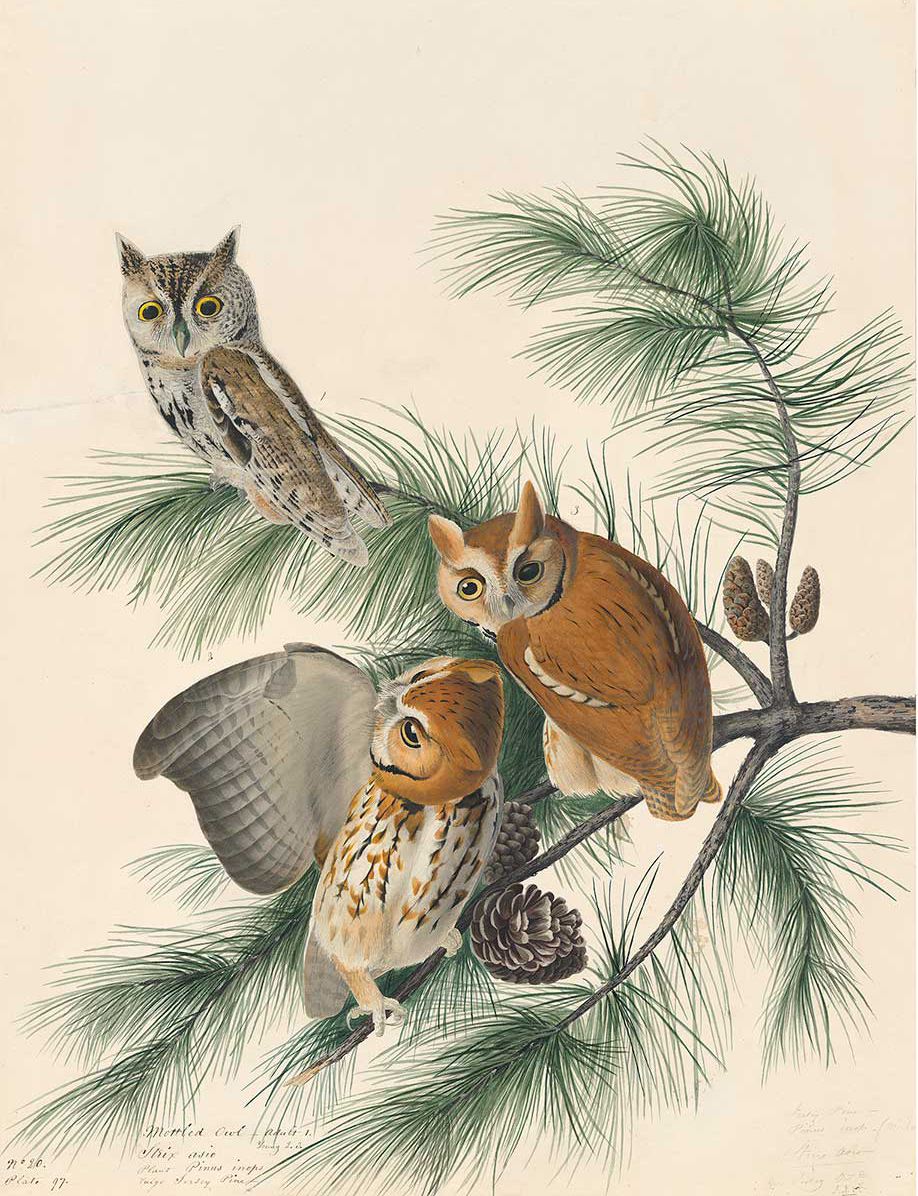
Early naturalist and artist John James Audubon painted a family of Eastern Screech-owls.

Screech-owls do make good neighbors. Their prey preferences remove many nuisance insects and rodents from the habitat they share with humans as well as other wildlife. If you’re hearing an odd, winnowing call from the edge of the woods at your own home, there’s a good chance that you have one of these small owls as a neighbor.

Since moving to Laurel Bloomery, the Chapmans have already seen many great backyard birds, including indigo bunting, great crested flycatcher, ruby-throated hummingbird, house wren, black-and-white warbler, pileated woodpecker and chipping sparrow. Now they can also add Eastern screech-owl to the list. Who knows? They may some day also add a Wilson’s snipe to their yard list of birds.

•••••

To learn more about birds and other topics from the natural world, friend Stevens on Facebook at https://www.facebook.com/ahoodedwarbler. He is always posting about local birds, wildlife, flowers, insects and much more. If you have a question, wish to make a comment or share a sighting, email ahoodedwarbler@aol.com.

Family of brown thrushes excels at birdsong

WoodThrush-ONE

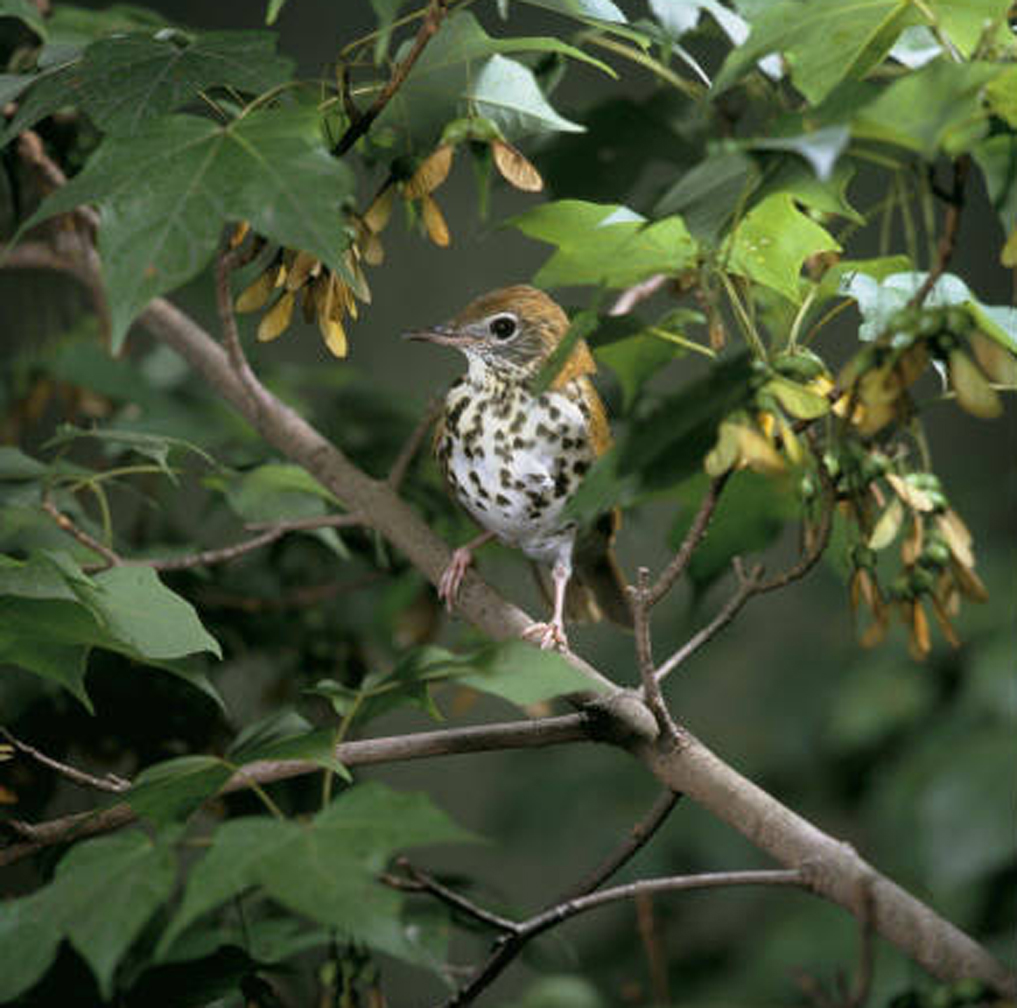
Photo by Jean Potter                                                        A wood thrush perches in the upper branches of a tree. This thrush’s flute-like notes produce a haunting song from shaded woodlands.

Kathy Shearer, who resides in Emory, Virginia, sent me a recent email asking for help with bird identification.
“My husband and I hear this lovely bird song in the evenings and early morning close to our house, which is in the woods at Emory,” she explained in her email. She also attached an audio recording of the mystery singer and asked me to listen to the file.


I did so, and from the very first of the flute-like notes, I recognized the singing bird as a wood thrush, one of the most talented avian songsters in North America.I’ve been hearing singing wood thrushes in the woods near my home during the evenings, often in the wake of some energetic but short-lived July thunderstorms.


WoodThrush-TWO

Photo by U.S. Fish & Wildlife Service                  The wood thrush is a shy, retiring bird that prefers to sing its melodic song from dense cover.

The wood thrush has a well-developed organ called a syrinx, which is the human equivalent of a larynx or voice box. For many songbirds, such as the thrushes, this specialized organ is more like a double voice box that permits the birds to produce two notes simultaneously while singing its song.

 
The wood thrush is one of the larger brown thrushes, which also includes such related birds as Swainson’s thrush, veery, gray-cheeked thrush and hermit thrush. Other less closely related members of the thrush family include the American robin, Eastern bluebird and Townsend’s solitaire.

 
The wood thrush is a fairly common bird in the region from April to October. Wood thrushes migrate south in the fall, dispersing to Mexico and Central America for the winter months.

 
The shy wood thrush does not usually venture too far from its preferred woodland habitat, but freshly disturbed soil in a garden will attract these birds as they seek out earthworms and insect larvae. Wood thrushes also feed on various fruits and berries, which means they can be attracted by plantings of suitable trees and shrubs.


Whitman_at_about_fifty

The poet Walt Whitman incorporated the hermit thrush and its melancholic song in his elegy to the assassinated President Abraham Lincoln.

The wood thrush, like many of its relatives, sings mainly in the early morning and again in the evening hours. Listening to the song of this bird from a comfortable seat on a deck or porch is a great way to conclude the day.

 
Naturalists often point to one of the wood thrush’s close kin — the hermit thrush — as the most gifted singer in this clan of gifted songsters. For discerning listeners, the hermit thrush’s flute-like notes are somewhat more melancholy, haunting and ethereal than even the enchanting notes of the wood thrush’s song.

 
The poet Walt Whitman employed a thrush as a symbol in his poem, “When Lilacs Last in the Dooryard Bloom’d,” a moving pastoral elegy in honor of the assassinated President Abraham Lincoln.

 
Whitman evidently knew his birds, and it’s not difficult to identify that he referred to the hermit thrush when he wove this songbird as a symbol into his stanzas honoring Lincoln.

 
“Sing on there in the swamp,” Whitman wrote in his poem. “O singer bashful and tender, I hear your notes, I hear your call. I hear, I come presently, I understand you…”

HermitThrush-One

Photo by Bryan Stevens The hermit thrush, pictured, and wood thrush are rivals for title of best singer among North America’s songbirds.

Whitman and many other Americans have been made fans of this gifted songbird. In fact, the citizens of Vermont even proclaimed the hermit thrush as their official state bird.
•••••
Bryan Stevens lives near Roan Mountain, Tennessee. To learn more about birds and other topics from the natural world, friend Stevens on Facebook at https://www.facebook.com/ahoodedwarbler. He is always posting about local birds, wildlife, flowers, insects and much more. If you have a question, wish to make a comment or share a sighting, email ahoodedwarbler@aol.com.

Making the acquaintance of a special ruffed grouse with lots of personality

Although I’ve seen many birds over the years, it’s not often that I’m introduced on a first-name basis with one. So, I’m happy to report that I’ve now made the acquaintance of Rufous, a resident of the woodlands around Flag Pond, a small community in Unicoi County, Tennessee.


Rufuous-Two (1)

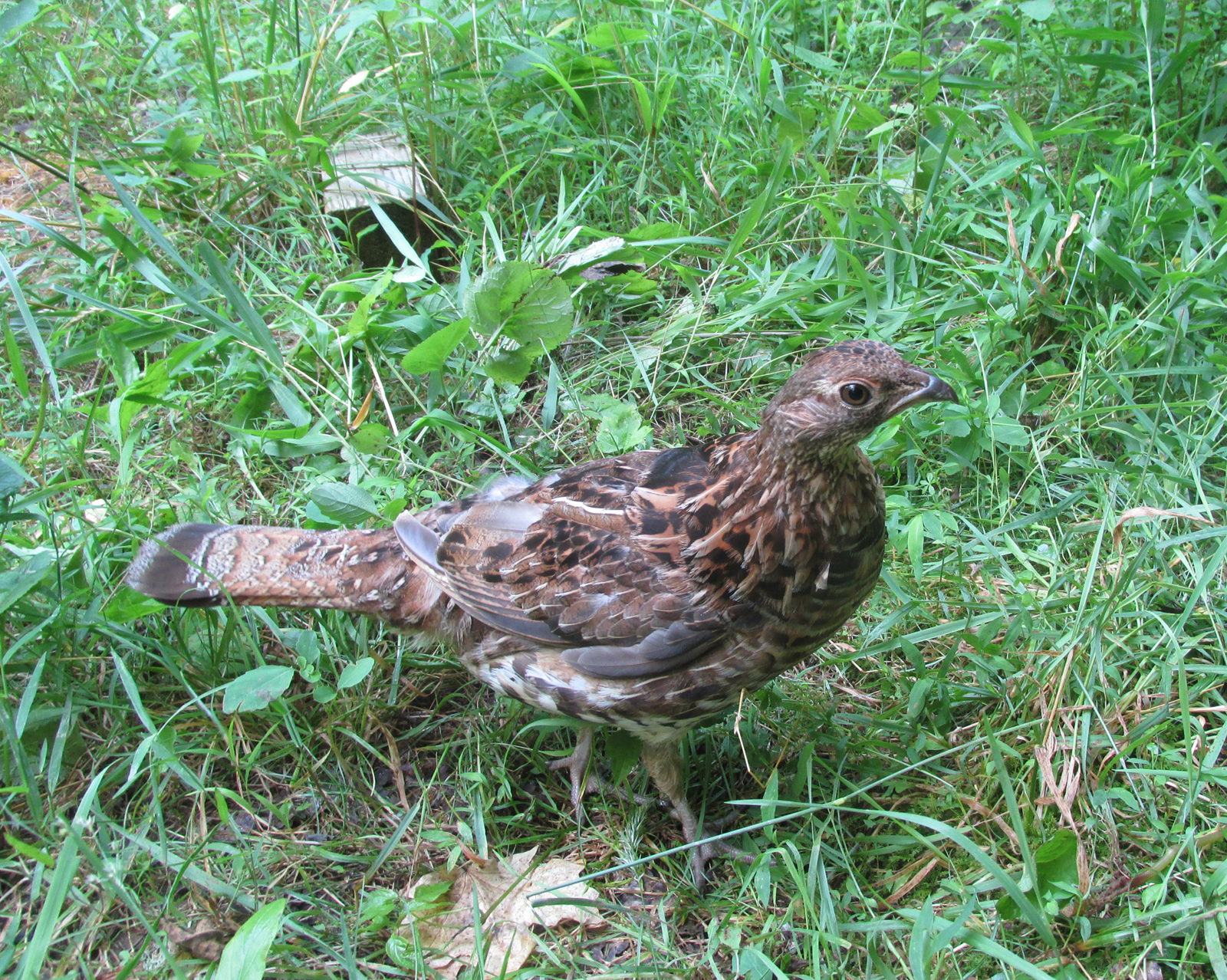
Photo by Bryan Stevens                               Rufous the ruffed grouse has been visiting the farm of Leon and Janice Rhodes for the past couple of years, apparently showing little fear of his human neighbors.

Rufous is a ruffed grouse that has been a fascinating and funny neighbor to Leon and Janice Rhodes for the past couple of years. I met Rufous on Saturday, June 25, at the Rhodes family farm. Brayden Paulk, a grandson of the couple, invited me to visit and attempt to meet Rufous.


This particular grouse is apparently a creature of habit, and Brayden suggested that a morning visit might be more conducive to my chances of getting to know Rufous.
I arrived around 9 a.m. and met Brayden and his grandfather. We went to a nearby barn, which apparently serves as a familiar meeting spot for Rufous and those people lucky enough to have gotten to know him over the past couple of years.
Rufous is only one member of a family of ruffed grouse in residence on the Rhodes property. In an email to me, Brayden told me that the mountain farm is a good place to see ruffed grouse. The 17-year-old doesn’t live in Tennessee, but he is a frequent visitor, spending time with his grandparents as often as possible. He and his family live in Oxford, Alabama. He also told me that his grandparents send him every one of my bird columns in the mail.

Brayden-Rufous

Photo by Bryan Stevens                Inside his grandfather’s barn, Brayden Paulk spends a moment with Rufous, a ruffed grouse with an abundance of charisma.

“I do happen to live in a great place for birds,” he informed me in an email. His home is located close to the Mountain Longleaf National Wildlife Refuge, which Brayden said is known for breeding blue-headed vireos, red-headed woodpeckers, and Swainson’s warblers.
“It has a lot of longleaf [pine] habitat, so I hope soon that red-cockaded woodpeckers might be reintroduced there, and establish a colony,” he added. The red-cockaded woodpecker is classified as an endangered species across much of the southeastern United States.
Brayden is a volunteer working in the Talladega National Forest in the foothills of the Appalachians on a study focused on the effects of controlled burns on cavity-nesting birds, such as red-cockaded woodpeckers.
He is an enthusiastic and, as I learned after meeting him, quite an accomplished birder. Warblers are his favorite family of birds, followed by ducks and sparrows.
“I enjoy where I live because I get to enjoy species such as the black-throated green warbler, blue-headed vireo and even red crossbill in the summer,” he said.
We have also exchanged emails in a discussion about why some of these birds, which are usually found in the boreal forests much farther north, stay much farther south along the spine of the Southern Appalachians.
His future plans are to major in Conservation Biology. “I hope to get a masters in ornithology from Cornell,” Brayden shared.

Rufous-Three

Photo by Bryan Stevens                               Leon Rhodes uses his cap to challenge Rufous to a friendly duel.

Of course, during our recent meeting, his focus was on arranging a meeting with Rufous, a bird with “a lot of personality.” Both Brayden and his grandfather cautioned that Rufous doesn’t follow a schedule. In other words, the meeting would take place only if Rufous was so inclined.

Although he has a very tame nature, Rufous is most definitely a wild bird.
Fortunately, I didn’t have to wait too long. Brayden was the first to detect the soft clucks as Rufous made his way cautiously toward the old barn. He emerged from the surrounding woodlands and walked into the barn where I was seated and waiting with Brayden and his grandfather.
Rufous immediately noticed my presence, identifying me as a stranger in the midst of some more familiar friends. He kept a wary eye turned on me during his visit. After a few moments of watching Rufous strut around the barn like he owned it — and perhaps he does in his own mind — I removed my camera from my pocket. I made sure that my actions didn’t alarm Rufous. When he didn’t object, I proceeded to take photos and videos of this very personable ruffed grouse.

Chick-Grouse

Photo by Bryan Stevens                              Rufous would have started out life much like this ruffed grouse chick, which was photographed on Holston Mountain in Carter County, Tennessee.

One of his favorite activities during these visits is to duel with a red baseball cap worn by Leon Rhodes. Whenever Brayden’s grandfather removed the cap and waved it in front of Rufous, the grouse became very focused. He channeled his attention almost exclusively on the cap until, with a startlingly swift attack. The entire sequence reminded me of a bull attacking a matador’s red cape.
For probably a half hour, Rufous put on quite a show, and I think Brayden and his grandfather were thrilled that the grouse proved so cooperative during my visit.

ruffed_grouse_audubon

Early American naturalist and painter John James Audubon painted these ruffed grouse as a familym unit.

After my visit with Rufous, I took Brayden for a brief birding trip to Rock Creek Recreation Area near Erwin, Tennessee. I was hopeful we might get to see a black-throated blue warbler, which has been an elusive warbler for Brayden. We did get some good birds at Rock Creek, including hooded warbler, Northern parula, blue-headed vireo, red-eyed vireo, black-throated green warbler and blue-gray gnatcatcher.
We didn’t, however, find a black-throated blue warbler. We didn’t give up, though, and proceeded to the Cherokee National Forest on Unaka Mountain. We made one very productive stop, finding a singing veery, a scarlet tanager and a dark-eyed junco. We also found more warblers, including black-and-white warbler, worm-eating warbler and black-throated green warbler. I’m happy to report we also found a male black-throated blue warbler. So, the productive morning resulted in my meeting with a grouse with a lot of personality and Brayden getting a new species for his life list of birds.
I don’t have any theory to explain Rufous and his acceptance of his human neighbors. I do believe birds, like humans, are individuals. Some of them have quirks that set them apart from others. Although he acts tame, Rufous is still a wild bird. Most ruffed grouse are extremely wary birds that go out of their way to avoid humans. Meeting a grouse that took humans in stride was a fascinating experience.

Grouse 2

Photo Courtesy of Jean Potter                          This photo shows the ruff of feathers that gives this grouse its common name.

The ruffed grouse is named for the male’s neck ruff. These feathers around the neck can be erected in mating displays, creating an impressive “collar.”  The ruffed grouse has served since 1931 as the state bird of Pennsylvania.

Many years ago, a ruffed grouse boldly walked into my front yard and then ventured onto the front porch. Only my timely intervention rescued the visiting grouse from a cat that belonged to my parents.
The unusual behavior of Rufous has persisted for two years. That, in my book, makes him a very unique grouse. I’ll always remember the day that I made his acquaintance.

Rufous-One

Photo by Bryan Stevens       Rufous proved to be a grouse with a unique personality.

••••••

To learn more about birds and other topics from the natural world, friend Stevens on Facebook at https://www.facebook.com/ahoodedwarbler. He is always posting about local birds, wildlife, flowers, insects and much more. If you have a question, wish to make a comment or share a sighting, email ahoodedwarbler@aol.com.

Unmistakable majesty of bald eagle imminently suitable for America’s official bird


Eagle-HEAD

Photo by U.S. Fish & Wildlife Service                  The Bald Eagle’s name originates with the adult bird’s all-white head that so contrasts with the dark body.

In addition to an abundance of red, white and blue decorations, the recent celebration of the Fourth of July likely featured various images and depictions of the bald eagle, which has served as the official bird of the United States of America since the latter decades of the 18th century.

During a trip last month to Pawleys Island, South Carolina, I saw a single bald eagle. I haven’t observed any bald eagles in the region so far this year, but I did monitor via nest cams the progress of a couple of eagle pairs as they raised their chicks. The resurgence of the once-endangered bald eagle in the lower 48 states has been a laudable accomplishment that all Americans should view with pride.

31_White-headed_Eagle

Artist and naturalist John James Audubon knew, as did Benjamin Franklin, that the Bald Eagle frequently scavenged its meals. Audubon’s painting of an eagle with a large catfish doesn’t clearly indicate whether the bird caught the fish or scavenged an already dead one.

I thought that readers would be better prepared to celebrate Independence Day with some interesting information on our national bird, the American bald eagle, which officially became the national emblem in 1782 when the great seal of the United States was adopted. Although Benjamin Franklin famously expressed reservations about making the bald eagle our national bird, in hindsight it’s clear that Americans made the right choice.

Despite elevating this native bird to such lofty status, we have not always been kind to the bald eagle. We allowed habitat destruction and toxic pesticides to bring this eagle to the brink of extinction. With well-deserved protection, however, the bald eagle rebounded, and the Department of Interior finally took the eagle off the threatened species list on June 28, 2007.

The bald eagle has been more frequently observed by birders in Northeast Tennessee in recent years. Some of the region’s rivers and lakes are good places to look for bald eagles, particularly in the fall and winter. A few lakes even regularly host nesting bald eagles. I’ve observed bald eagles in Tennessee, South Carolina, Florida and Virginia.

BaldEagle-Watauga

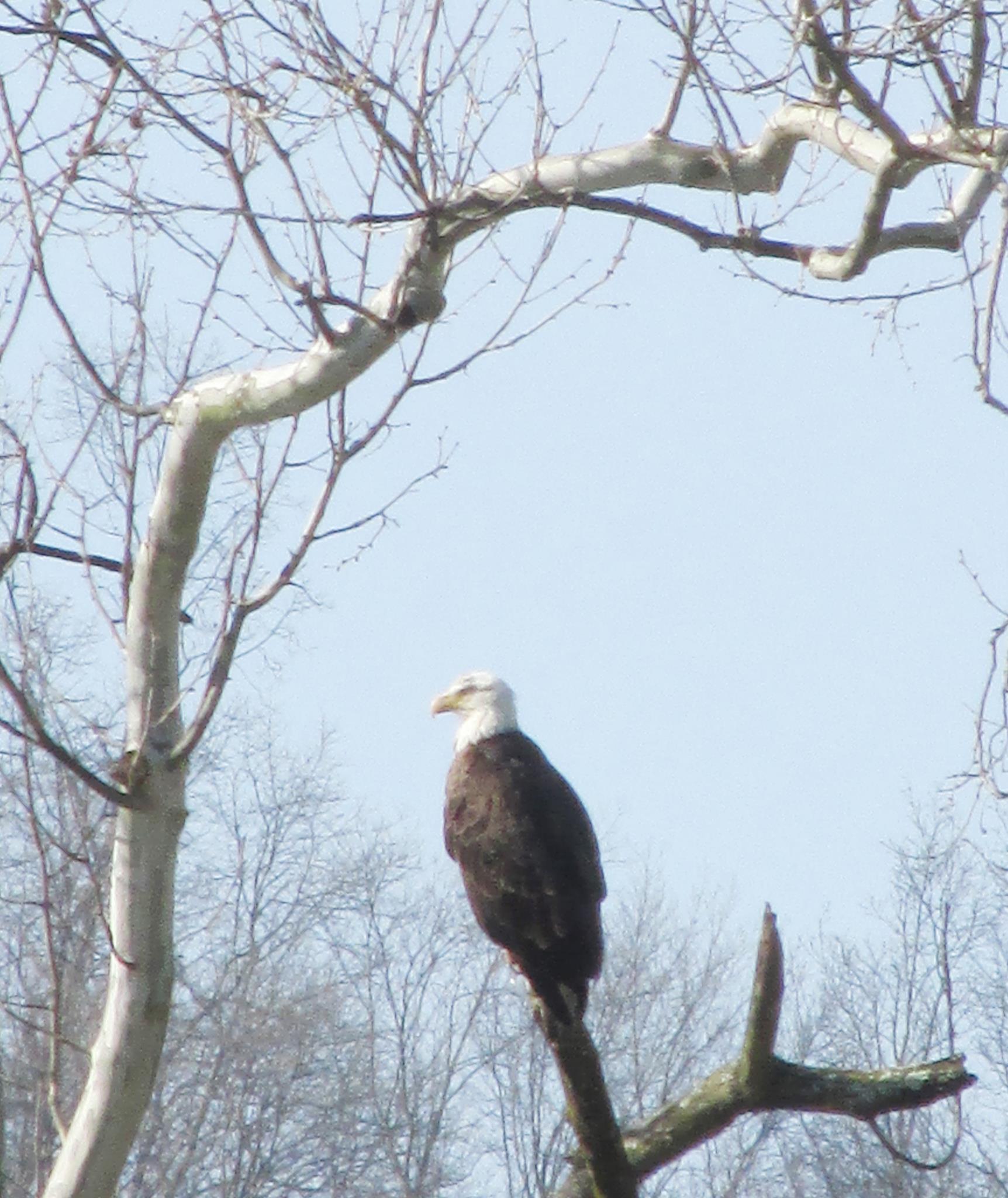
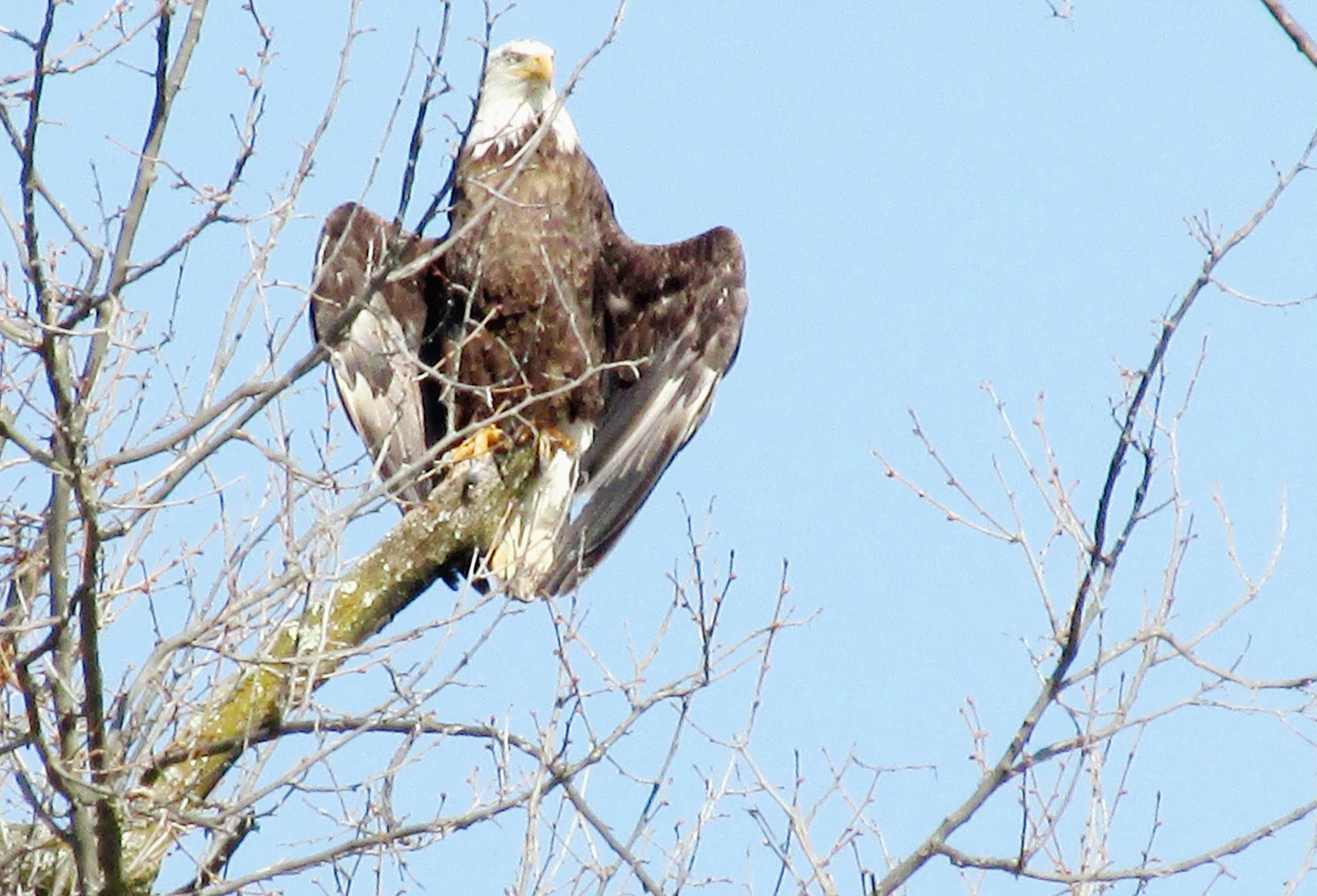
Photo by Bryan Stevens                            A Bald Eagle perched in a tree along the Watauga River in Elizabethton, Tennessee.
The bald eagle (Haliaeetus leucocephalus) is a member of a genus known as Haliaeetus, or sea eagles. There are seven other living species in the genus: the white-bellied sea eagle, Sanford’s sea eagle, African fish eagle, Madagascar fish eagle, Pallas’s fish eagle, white-tailed eagle and Steller’s sea eagle. The eagles are incredibly majestic birds and important symbols of the value of natural places and creatures.

Steller’s sea eagle is named for the German naturalist Georg Wilhelm Steller, who is renowned for his work as a pioneer in the natural history of Alaska. The 49th state to join the union is also the stronghold for the bald eagle. On occasion, Steller’s sea eagle has strayed into U.S. territory at Alaskan locations including the Pribilof Islands and Kodiak Island. Steller’s sea eagle is bigger than the bald eagle. In fact, it is the largest member of the Haliaeetus genus of eagles, making this bird one of the largest raptors in the entire world.

StellerJay1

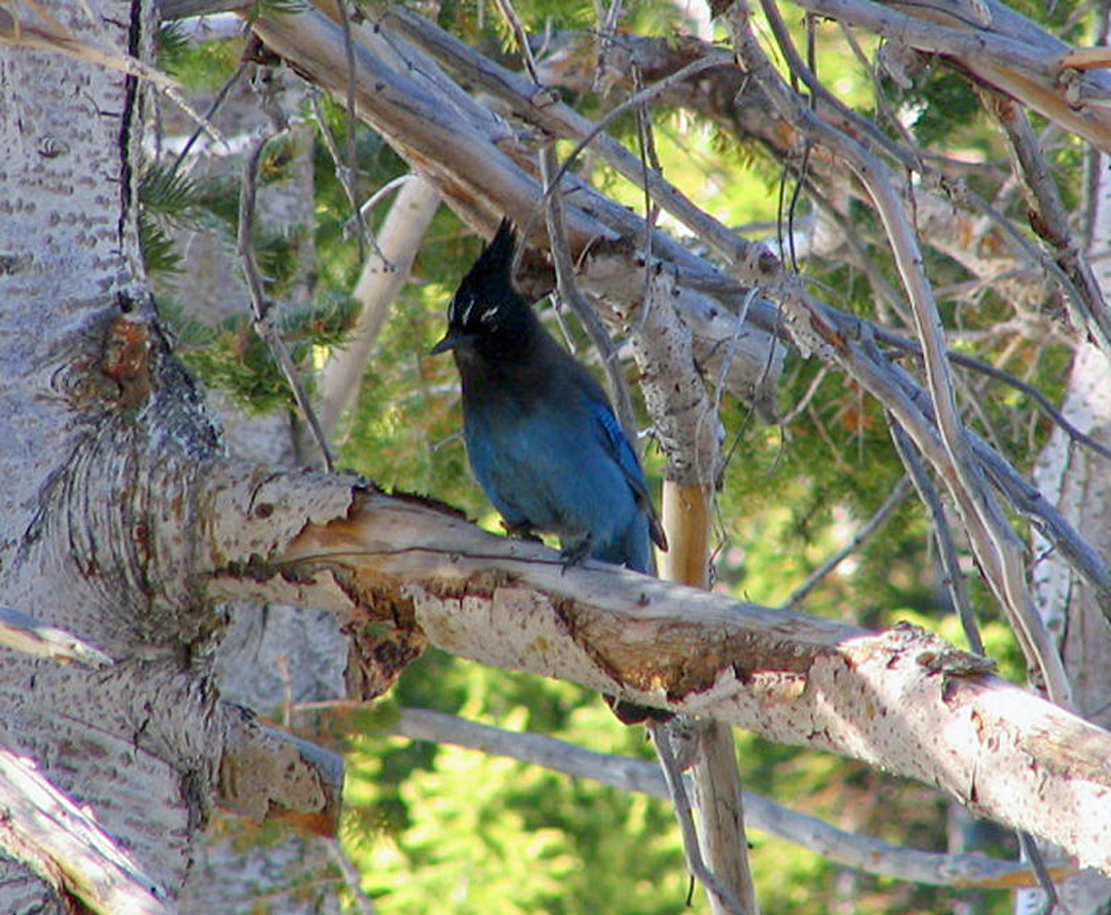
Photo by Bryan Stevens                                    The Steller’s Jay is named in honor of German naturalist Georg Wilhelm Steller.

The naturalist for which the bird is named has also been honored by the naming of other creatures, including Steller’s sea lion and the now-extinct Steller’s sea cow, as well as several birds, including Steller’s jay and Steller’s eider. He was the first naturalist to describe several creatures native to Alaska, although two of these, the sea cow (a relative of the manatees) and the spectacled cormorant, are now extinct. The latter, which was the largest cormorant to ever live, is a particularly sad story. These cormorants were basically eaten into extinction, exploited as a food source by sailors and fur traders. The last spectacled cormorants perished around 1850 on a Russian island off the coast of the Kamchatka Peninsula.

Fortunately, we have proven a little more far-sighted in our treatment of the bald eagle, which was removed from the U.S. government’s list of endangered species on July 12, 1995, and transferred to the list of threatened species. In 2007, bald eagle numbers had rebounded enough in the Lower 48 states to also allow for the bald eagle to be removed from the list of threatened species.

The bald eagle, however, is not considered closely related to eagles in the genus Aquila, or “true eagles,” in which the golden eagle is included. North America’s other eagle is a very rare visitor to the region. The golden eagle is primarily a bird of the western United States while the bald eagle ranges widely across the United States as well as into Canada and Mexico. Other true eagles include the Spanish imperial eagle, tawny eagle and wedge-tailed eagle.

BaldEagle-Sunning

Photo by Bryan Stevens                                        A Bald Eagle basks in sunshine from a perch in a tree along the Watauga River.

Both male and female adult bald eagles have a blackish-brown back and breast; a white head, neck and tail; and yellow feet and bill. Juvenile bald eagles are a mixture of brown and white and reach full maturity in four to five years. The female bald eagle is 35 to 37 inches in length, slightly larger than the male, with a wingspan that ranges from 72 to 90 inches. Bald eagles weigh from 10 to 14 pounds. The bald eagle’s diet consists mostly of fish, some of which are scavenged, but these large raptors are also capable of preying on everything from muskrats and ducks to rabbits and snakes. The bald eagle will also feed on carrion.

Two-hundred and thirty-four years after it was declared an official emblem of the United States, the bald eagle has become an instantly recognizable American symbol. Long may the eagles fly.

•••••

Bryan Stevens lives near Roan Mountain, Tennessee. To learn more about birds and other topics from the natural world, friend him on Facebook at https://www.facebook.com/ahoodedwarbler. He is always posting about local birds, wildlife, flowers, insects and much more. If you have a question, wish to make a comment or share a sighting, email ahoodedwarbler@aol.com.
Elusive least bittern provides big addition to life list

I observed a new life bird during a recent trip to coastal South Carolina. Birders like to make additions to their life list, which is a compilation of all the species of birds observed over the years. I haven’t made any additions to my life list since 2013, so adding this new bird felt long overdue.

Least Bittern Painting by John James Audubon; Least Bittern Art Print for sale

These least bitterns were painted by early American naturalist and artist John James Audubon.

The new bird technically belongs to the group of long-legged waders — herons, egrets and a few other allied birds — often seen in South Carolina coastal areas. Most of these birds are often described as elegant, majestic or stately, but that’s not the case with this particular bird. My sighting also helped me cross a family of birds off my list. The least bittern I observed on June 11, 2016, in the marsh at Huntington Beach State Park near Pawleys Island, South Carolina, represented the final member of the heron family in the United States that I needed for my life list.

Least-Bittern-Photo

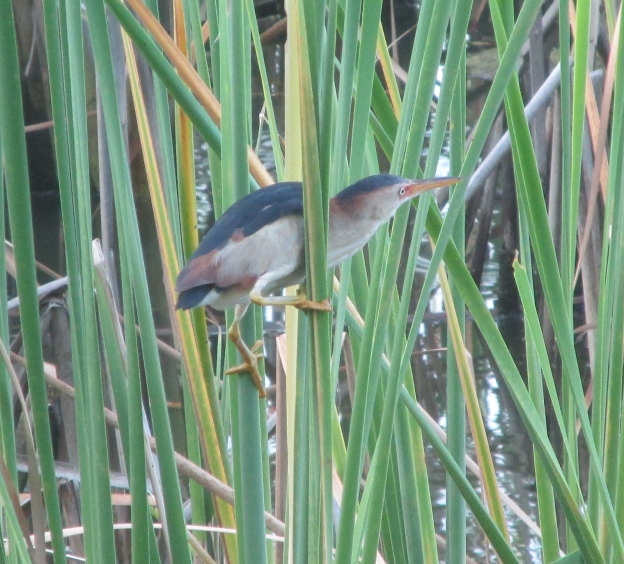
Photo by Bryan Stevens                                            Least bitterns, the smallest member of the heron family in North America, possess special adaptations for life in marshes and wetlands.

Some life birds on my list are rare birds that have unaccountably strayed into the region while others are birds I deliberately set out to find during visits to area where they are prevalent. I wasn’t actively looking to add any life birds to my list during my recent South Carolina visit, so the least bittern also represented a very pleasant surprise.

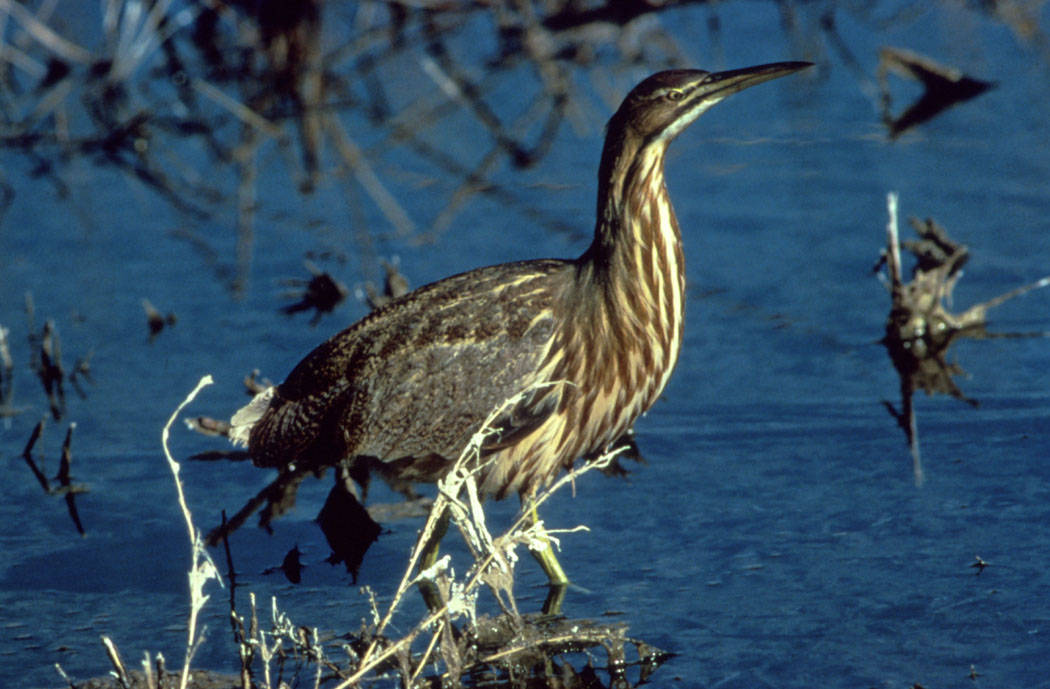
The least bittern has been found in wetlands in southwest Virginia and northeast Tennessee, but I’ve never been in the right place at the right time to find this bird closer to home. I have seen a few American bitterns, which are a larger relative of this diminutive member of the heron clan. I didn’t have the same degree of difficult adding an American bittern to my list. Years ago, while birding with Reece Jamerson, an American bittern emerged from vegetation at the edge of a ditch in a flooded pasture and proceeded to put on quite the show. To my eternal regret, that sighting predated my habit of always carrying a camera with me while birding.

American_Bittern

Photo by U.S. Fish & Wildlife Service/Gary Zahm     The American bittern, a larger relative of the least bittern, has a habit of freezing into place when spotted in the open, trusting that it will blend into the background. The trick doesn’t always work.

The least bittern is the smallest of North America’s herons and is one of the smallest of the world’s herons. Although it achieves a body length of 11 to 14 inches, this bird weighs only about three-and-a-half ounces. If you’re wondering how birds can achieve this lightness of being, remember that they’re comprised mostly of hollow bones and feathers. By way of comparison, the chipmunks so fond of raiding our bird feeders weigh a couple more ounces than the heaviest least bittern. The dwarf bittern of Africa and the black-backed bittern of Australia rival our native least bittern for the title of world’s smallest heron. In flight, the least bittern’s wings can unfurl as much as 18 inches.

One ironic twist is that I saw a least bittern a few days prior to what I am listing as the official date of observation for this life list addition. When I visited Huntington Beach State Park on June 5 upon first arriving I was walking the marsh causeway when a small heron flew into a dense area of vegetation. I got only an instant’s glimpse of a small heron that I was convinced was a least bittern. However, with such a short duration for the sighting, I chose not to count that sighting. When I observed the species again a few days later, however, that boosted my confidence in my call on that first sighting.

????????????????????????????????????

Photo by Jean Potter                                            This Least Bittern was photographed in a wetland in Texas.

The wetlands at the park provide perfect habitat for nesting least bitterns. The least bittern is not a rare bird, but its lifestyle makes it an exceptionally difficult bird to observe. This bird acquired its reputation for elusiveness almost as soon as it was first encountered by European settlers. Early ornithologists agree that the least bittern is a master at concealment. Several of them write about the ability of these tiny herons to blend with the reeds and other vegetation in their wetland abodes. John James Audubon, the early naturalist and famous painter of North America’s birds, is credited with discovering that the least bittern possesses the ability to compress its body in order to facilitate its passage through a space no more than an inch wide.

Wild-NightHeron-Adult

Photo by Bryan Stevens                                    This Black-crowned night-heron was also found and photographed at Huntington Beach State Park in South Carolina, close to the location where the least bittern was observed.

These birds usually shun flight. Their preferred mode of getting through the dense vegetation of the marsh is to straddle reeds and cattails as they climb the vegetation. While some marsh birds, such as clapper rails, are fairly vocal, the least bittern’s elusive manner extends even to its vocalizations. The least bittern is rarely heard outside of the nesting season, although a startled bird may produce an excited cackling. The least bittern I observed was completely silent as it slowly merged back into the dense cattails of the marsh.

In appearance, the least bittern is a distinctive bird with a dark crown patch, a rusty-orange neck and sides, a white chin patch and an orange and white striped throat. Its eyes and bill are yellow. The legs are green in the front and yellow in the back. Males and females are similar in appearance with males looking slightly more vibrant.

American_Bittern-2 copy

Photo by U.S. Fish & Wildlife Service/Sallie Gentry                 The American bittern, which is also a member of the heron family in North America, is larger and slightly more frequently observed than its smaller relative.

A female least bittern will lay between five and seven eggs, but a range of threats face her hatchlings. Crows and raptors, marsh mammals and alligators and other reptiles are potential predators. An unlikely peril is posed by the small marsh wren, which will puncture the eggs of least bitterns and other wetland birds nesting in its territory.

Incidentally, the previous bird added to my life list back was a black-legged kittiwake observed on Oct. 29, 2013, at Holston Dam in Sullivan County, Tennessee.
•••••

Wild-NightHeron-Young

Photo by Bryan Stevens This young Black-crowned Night-heron does a good job blending with its surroundings.

To learn more about birds and other topics from the natural world, friend Stevens on Facebook at https://www.facebook.com/ahoodedwarbler. He is always posting about local birds, wildlife, flowers, insects and much more. If you have a question, wish to make a comment or share a sighting, email ahoodedwarbler@aol.com.
Field guides crucial components to improving your bird knowledge

Earlier this spring, I received an email from Jill Henderson, who resides in Saltville, Virginia, asking for some advice on obtaining a good field guide to help enhance her knowledge of the region’s birds.

“I appreciate your expertise and thank you for helping me learn about the many different types of birds that we have here in southwest Virginia,” Jill wrote in her email. “Can you recommend a good field guide/reference book for a novice bird watcher?”

Photo-FieldGuides

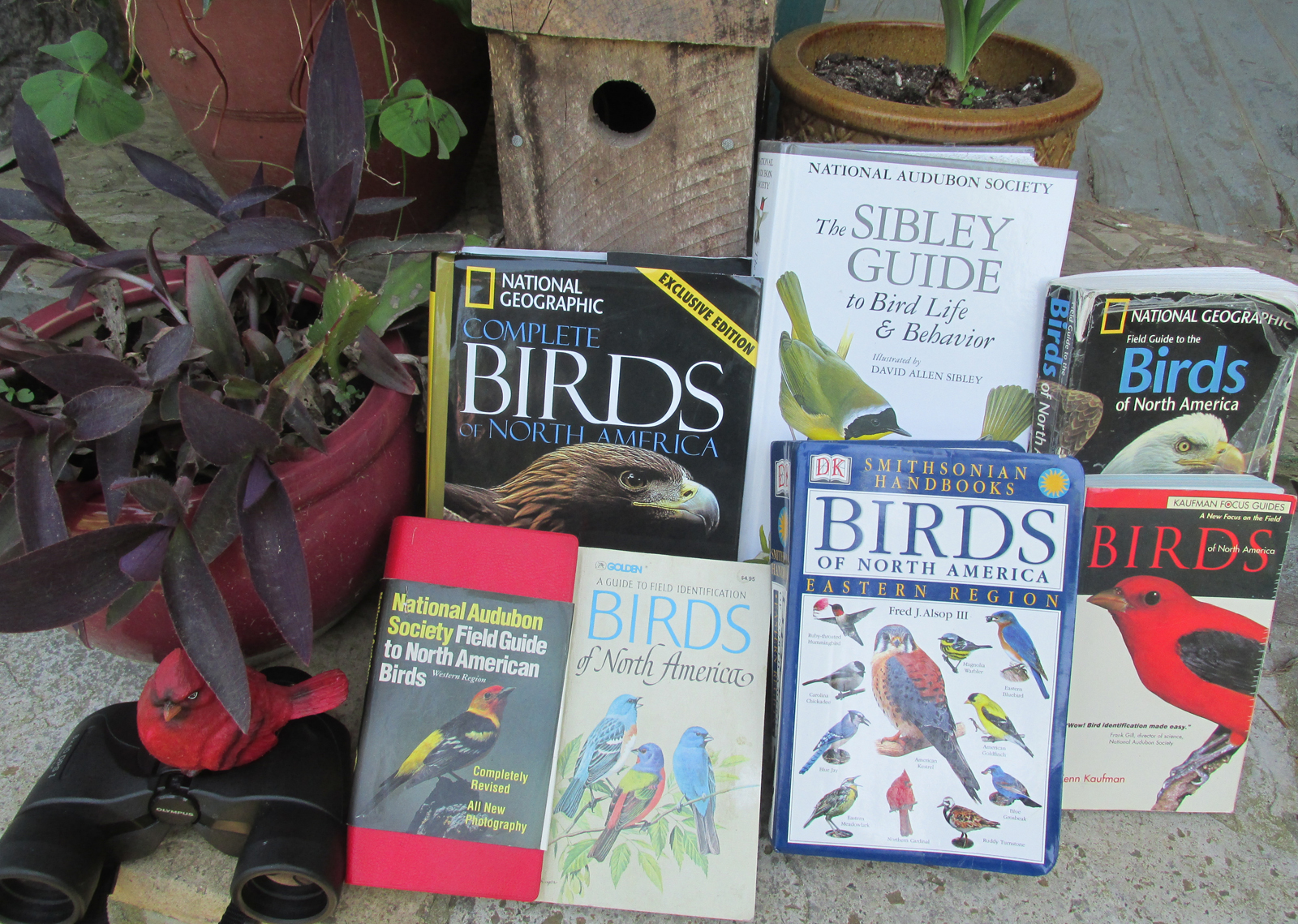
Photo by Bryan Stevens                                                                  A variety of birding field guides are available to help beginners hone their identification skills. Peruse and choose the guide that works best for you.

I provided Jill with some information about field guides especially valuable for beginning birdwatchers.

In my own experience, I look for three things in a field guide: detailed illustrations, convenient size and complete listings of birds likely to be encountered. I prefer field guides with paintings/illustrations of birds rather than book featuring photographs. It’s a personal preference, of course, but I believe a good painting beats a photograph for capturing and conveying the important details to look for when trying to identify a bird.

With those criteria in mind, some of my favorite guides are David Sibley’s The Sibley Field Guide to Birds of Eastern North America; The National Geographic Field Guide to the Birds of North America by Jon L. Dunn and Jonathan Alderfer; and A Field Guide to the Birds of Eastern and Central North America by the late Roger Tory Peterson. The latter is a classic among bird texts and helped kick off birdwatching for the average individual. The Sibley and National Geographic field guides are more modern takes on a field reference guide to assist in bird identification.9780307370020-us 2

All these books have counterparts featuring Western species of birds. Sibley also has a large guide (too large to easily take into the field) that has both Eastern and Western species in it.

I also suggested to Jill that before she makes a purchase, she should thumb through the pages of some of the guides available at a local book store or, even better, borrow a copy from a library. It’s always good to get some hands-on time with these books in order to decide which guide fits your own personal preferences. For instance, some people may prefer a guide with photographs. I’ve always liked painted illustrations better than photos. However, I own some field guides that rely on photos. I often use these guides as secondary references to consult for confirmation of a particularly puzzling identification. Among the best photo field guides available are the Kaufman Field Guide to Birds of North America by Kenn Kaufman and the Stokes Field Guide to Birds Eastern Region by Donald and Lillian Stokes.517doMN-H7L._SX333_BO1,204,203,200_

Overall, field guides are a valuable investment and crucial for individuals looking to expand their knowledge of birds. Best of all, most field guides are not expensive. Most guides cost around $20. It’s sometimes possible to pick up a good guide at a store specializing in used books for an even more modest price.

One thing to keep in mind is that we’re living in a technology-driven age. Some tech-savvy birders have begun to rely on electronic guides on mobile devices for use in the field while birding. I’m a little more old-fashioned and still prefer a portable book while looking for birds.1071890

Not all guides are dedicated to using visual cues to identify birds. Once beginners have mastered some of the visual means of identifying birds, they will perhaps want to advance to some of the excellent “birding by ear” guides to help develop the ability to match bird songs with the birds that produce these audio clues to their identities. There are literally dozens of marvelous field guides.

Although birding helped kick off the demand for nature field guides, the industry has branched out in the past couple of decades. It’s easy to obtain extensive and informative field guides on a variety of subjects, ranging from butterflies and moths to dragonflies, wildflowers, trees, reptiles, fish, mammals and much more.81a1885b-80a6-4e50-a941-f0079f122a97_1000

Jill sent me her email with the query about field guides about the time the first ruby-throated hummingbirds were returning to the region, and she shared a story about her efforts to attract hummingbirds that was sidetracked by an unwelcome visitor.

“Also, as an avid hummingbird watcher, I was so excited to prepare and hang two feeders,” she wrote. “However, the only thing attracted to them at this point has been a local bear who proceeded one night to tear down and destroy both feeders!”

Jill said that the offending bear left paw prints on her porch and sticky, red remnants of hummingbird food on the side of her house underneath the garage sconce light (also destroyed by the bruin), which he mistook for a third feeder.

“Oh well, I will try again with the feeders here soon,” she added. The incident did prompt her to change her strategy. This time, she wrote, she planned to locate the feeders a little farther from her house.

I sympathized with her about the bear’s attack on her feeders, and shared an account of an incident that befell one of my feeders. A bear mangled one of my peanut feeders this past winter, bending the mesh tube into a pretzel shape.

I added a postscript to my email reply to Jill, prompted by learning where she lives.

“I love the wetlands in Saltville,” I wrote to her. “Great habitats for birds!”

Through the years, I have observed some interesting birds in the Saltville wetlands, including surf scoter, Caspian tern, great egret and spotted sandpiper. During those visits, I always had a trusted field guide with me for consultation.e34fe1ca-5b5d-4c45-956c-41ff096610d0_1.58baeab0e8cc1f26ab894e3cbcf9f22d

••••••

To learn more about birds and other topics from the natural world, friend Stevens on Facebook at https://www.facebook.com/ahoodedwarbler. He is always posting about local birds, wildlife, flowers, insects and much more. If you have a question, wish to make a comment or share a sighting, email ahoodedwarbler@aol.com.

Newest attraction at the Native Wildlife Zoo at Brookgreen Gardens introduces public to migratory waterfowl

FlightsOfPassage

All Photos by Bryan Stevens                                                    The entrance to the new waterfowl habitat at Brookgreen Gardens.

During my recent vacation to Pawleys Island in South Carolina, I’ve been able to visit Brookgreen Gardens, which is one of my favorite attractions in the area.

I was particularly eager to visit “Flights of Passage: Migratory Waterfowl of the Lowcountry,” which is the latest habitat to be added to the Native Wildlife Zoo and Domestic Animal Exhibit at Brookgreen Gardens in South Carolina.

“Flights of Passage” joins the popular Cypress Aviary, an enclosed habitat housing several species of wading birds, such as Black-crowned Night-heron, Great Blue Heron, Snowy Egret, White Ibis and Cattle Egret.

FulvousesSleeping

Fulvous Whistling Ducks take a nap in the afternoon.

Among the waterfowl on display in the “Flights of Passage” habitat are Wood Duck, Redhead, Blue-winged Teal, Ruddy Duck, Hooded Merganser, Northern Pintail, Black-bellied Whistling Duck and Fulvous Whistling Duck.

The Fulvous Whistling Duck, also known as Fulvous Tree Duck, breeds across the world’s tropical regions in Mexico and South America. It is a widespread duck, ranging across four of the world’s continents. This duck has also expanded its range into the West Indies and into the southern United States.

BB-Whistler

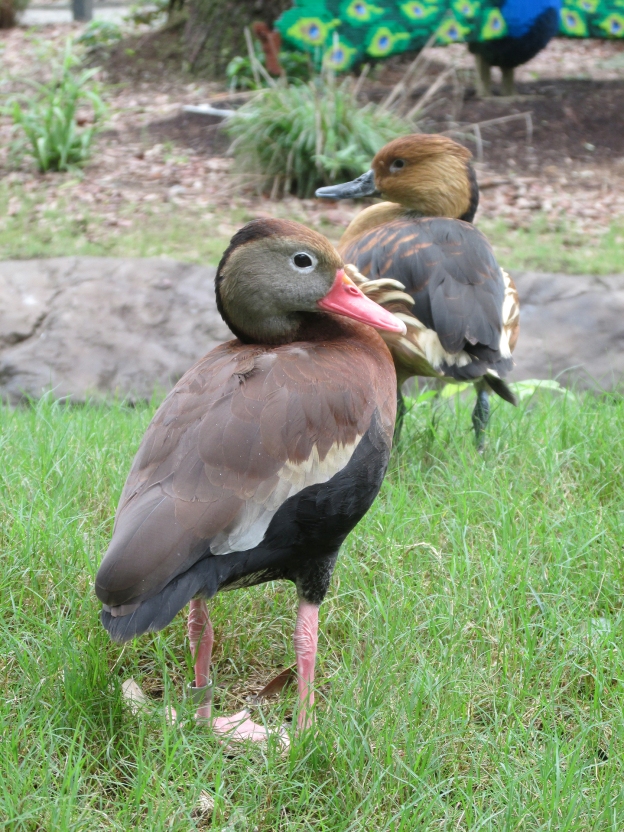
Black-bellied Whistling Duck stands at attention to greet visitors.

The Black-bellied Whistling Duck, formerly also called Black-bellied Tree Duck, is a whistling duck that breeds from the southernmost United States and tropical Central to south-central South America. In the United States, it can be found year-round in parts of southeast Texas, and seasonally in southeast Arizona and Louisiana’s Gulf Coast. It is a rare breeder in Florida, Arkansas, Georgia, Tennessee and South Carolina. In the wild, this duck usually forages for food at night.

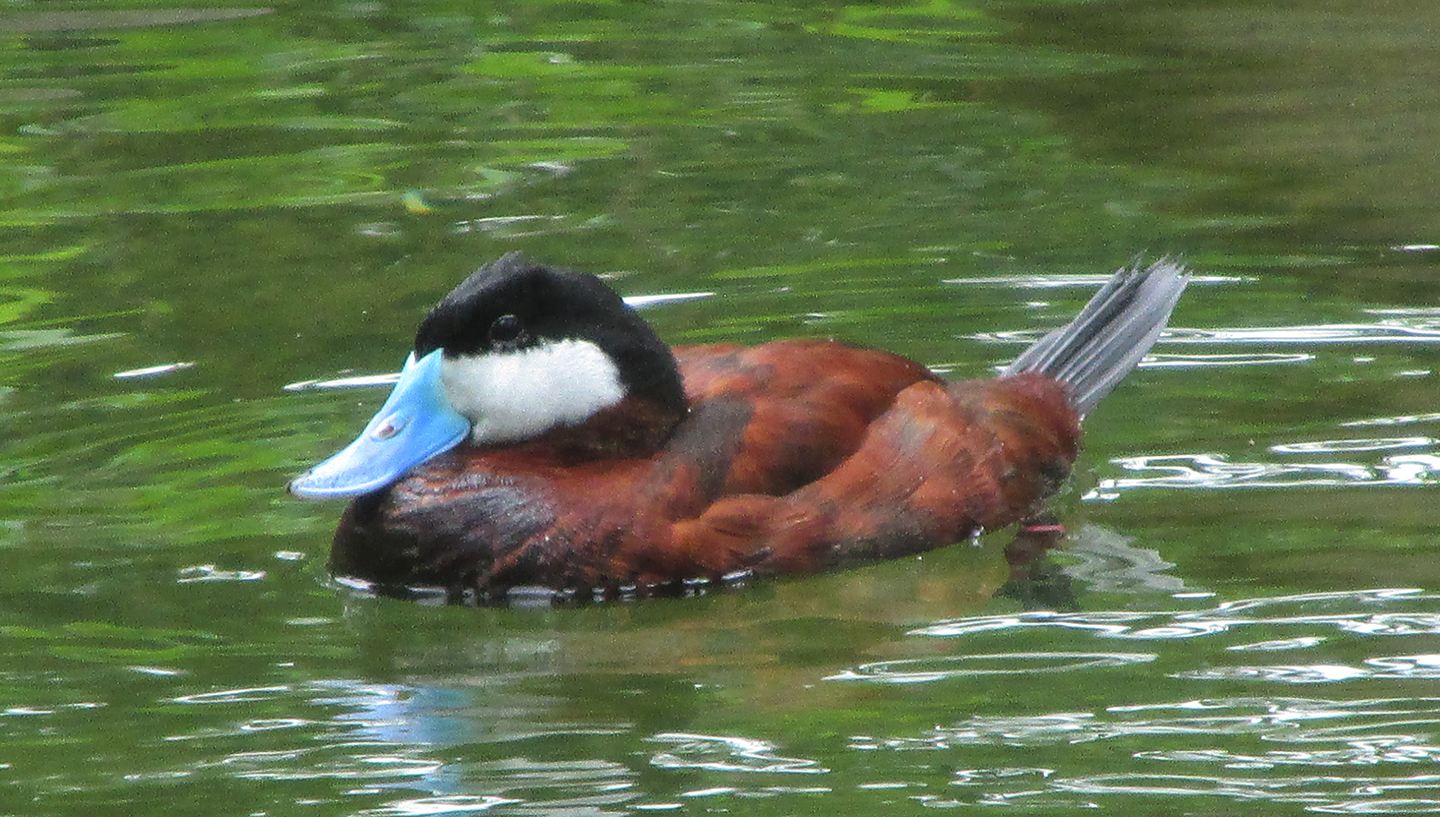
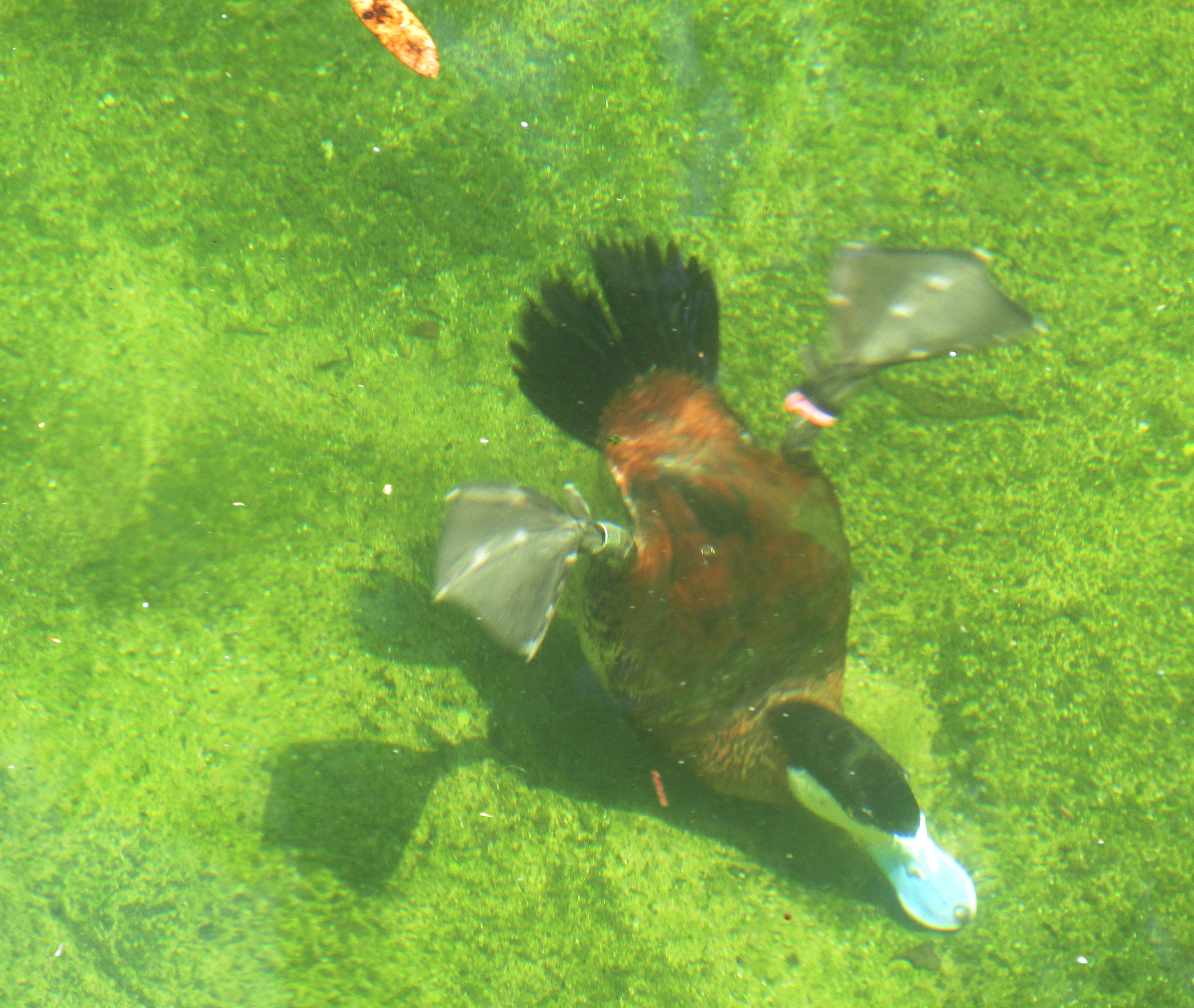
The Ruddy Ducks, especially the male with his bright blue bill, wins many fans among visitors to “Flights of Passage.” The Ruddy Duck is a native of North America, but can also be found in South America along the Andes Mountains. This duck belongs to a family known as the “stiff-tailed ducks.” These ducks migrate to avoid the colder winter conditions, usually spending the winter months on coastal bays or unfrozen lakes and ponds.

WoodDuck-Head

The male Wood Duck is one of North America’s most colorful ducks.

The Wood Duck, also known as the Summer Duck and the Carolina Duck, is one of the few ducks that breeds in the southeastern United States. It is a cavity-nesting bird and will accept nesting boxes provided by humans. Males, or drakes, are considered among the most colorful of North American waterfowl. The Wood Duck is one of two ducks in the genus Aix. Its only close relative is the Mandarin Duck of East Asia and Japan.

The Redhead is a species of diving duck that nests on prairie wetlands across the United States and Canada. It belong to a family of ducks known as “pochards,” which are adapted to foraging underwater. While the Redhead can be legally hunted, the federal government has in place restrictions on the number that can be taken during a hunting season.

Pintails

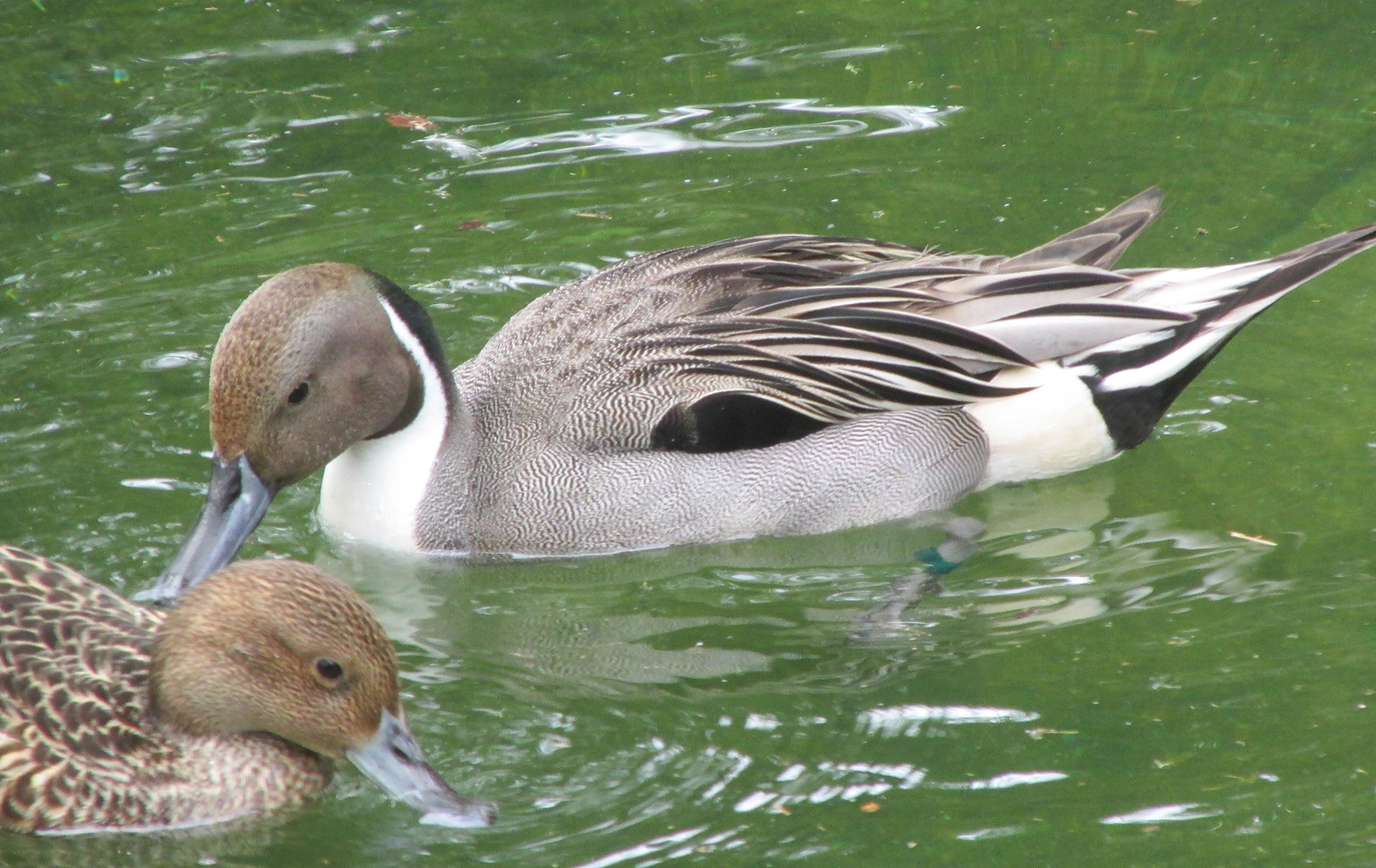
A pair of Northern Pintails enjoys a swim in their pool.

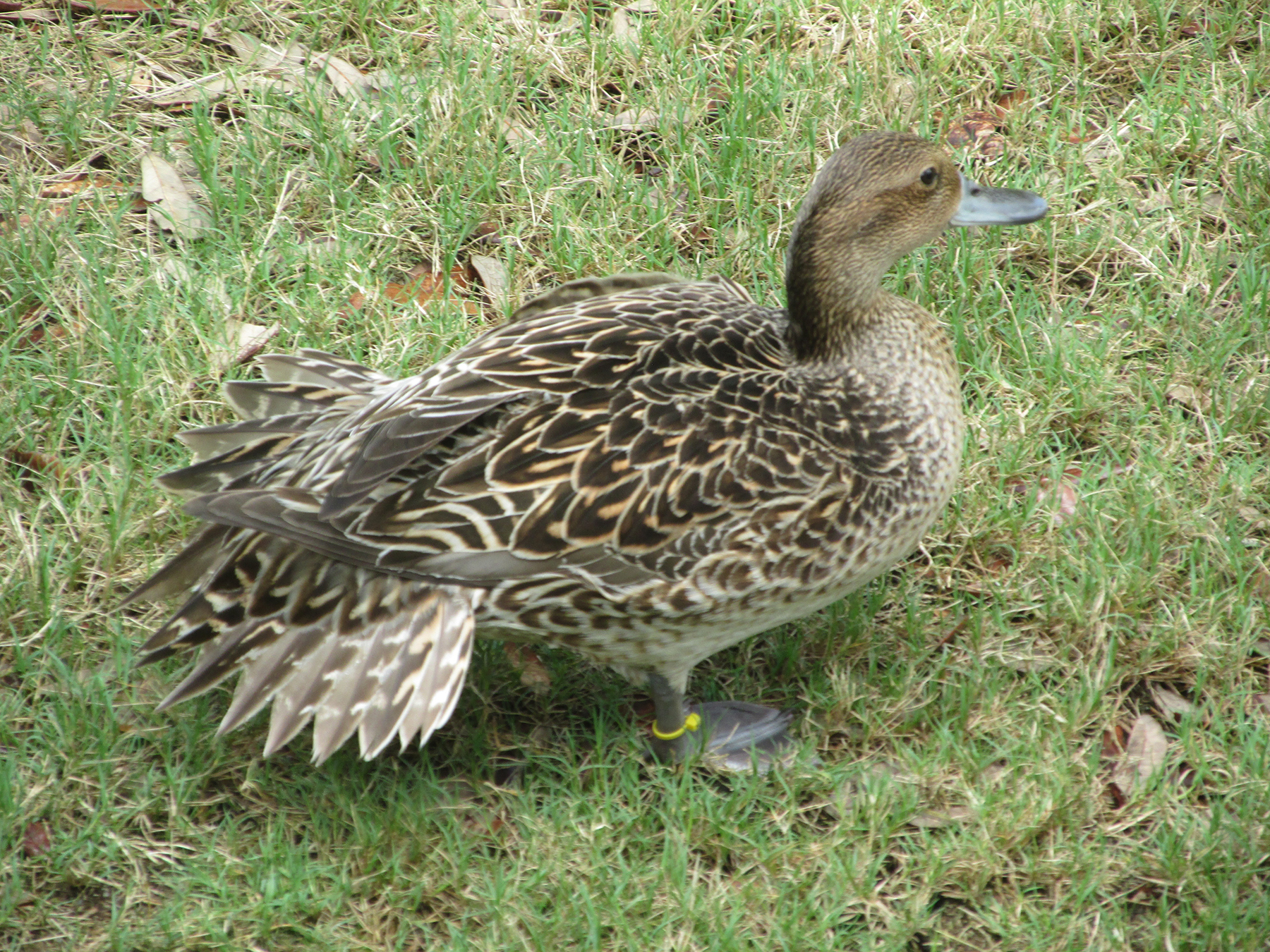
The Northern Pintail is a duck with a wide geographic distribution. Pintails breed in the northern areas of Europe, Asia and North America, but this waterfowl is migratory and winters south of its breeding range to the equator.

Peacock-LegoAndDucks

This Lego sculpture of a peacock is located in the waterfowl habitat as part of the “Nature Connects” exhibition.

The Hooded Merganser, according to the website All About Birds, are excellent divers and can catch numerous aquatic insects, crayfish, and small fish. Males court females by expanding their white, sail-like crests and making very low, gravelly, groaning calls. Hooded Mergansers fly distinctively, with shallow, very rapid wingbeats. Like the Wood Duck, the Hooded Merganser is also a cavity-nesting bird.
Since March 5, visitors to the zoo have also been able to see 12 larger-than-life LEGO® brick sculpture installations in the Native Wildlife Zoo. Created by Sean Kenney, renowned artist and children’s author, “Nature Connects” is an award-winning exhibit currently touring the country. The exhibit is open daily and is included in garden admission through Sept. 5.

Made from almost a half million LEGO® bricks, the sculptures bring nature to life with a six-foot tall hummingbird hovering over a trumpet flower, a deer family made from 48,000 bricks, a giant tortoise, a seven-foot-long giant dragonfly, a bird bath attracting cardinals, bees and a squirrel and much more.

The exhibit features interpretive panels with an educational message for each sculpture to connect children with the natural world and promote conservation.In addition, there are educational activities such as a LEGO® sculpture building contest, scavenger hunts, and 30,000 LEGO® bricks available for guests to play with when you are here.

Ruddy-One

Ruddy Duck keeps one eye open to monitor visitors to the enclosed waterfowl aviary.

Other animals displayed throughout the Native Wildlife Zoo are Great Horned Owl, Turkey Vulture, Bald Eagle, Red-tailed Hawk, Barred Owl, River Otter, American Alligator, Grey Fox, Red Fox and White-tailed Deer.

The grounds and walking trails of Brookgreen Gardens also offer birding opportunities. In the early summer months, visitors can observe Prothonotary Warbler, Common Yellowthroat, Yellow-billed Cuckoo, Great Crested Flycatcher, Brown Thrasher, Brown-headed Nuthatch, Red-headed Woodpecker and many other wild birds.

Redhead

The male Redhead shows the namesake coloration on the drake’s head.

Brookgreen Gardens is a National Historic Landmark and non-profit organization located on U.S. 17 between Murrells Inlet and Pawleys Island. For more information, visit the website at http://www.brookgreen.org or call (843) 235-6000.

According to the attraction’s website, the Native Wildlife Zoo has been an important element of the mission for Brookgreen Gardens since its inception. It is the only zoo accredited by the Association of Zoos and Aquariums on the coast of North and South Carolina. The AZA is America’s most respected organization for zoos and aquariums. All of the native animals in the Native Wildlife Zoo were either bred and raised in captivity or have sustained a major disability due to injury. In either case, these animals could not survive in the wild.

WoodieHen-Branch

Female Wood Duck perched on a tree branch.

Whistlers

Black-bellied Whistling Duck, foreground, with a Fulvous Whistling Duck.

Ruddy-Water

Male Ruddy Duck sporting his blue bill.

Mergansers

Hooded Merganser flaps her wings.

Fulvous-Woodie

Wood Duck, background, and a Fulvous Whistling Duck.

BluewingTeal-SPLASH

Blue-winged Teal splashes in the pool.

Redhead-Hen

A female Redhead rests by the side of the pool.

Redhead

Male Redhead takes a swim in the pool.

Pintail-Head

Northern Pintail

MERG-Hen

Hooded Merganser stands next to the pool.

Woodie-Cute

Wood Duck rests at side of the pool.

RuddyDuck-Swimming

Ruddy Duck dives beneath the surface of the pool.

Pintail-Hen

Female Northern Pintail.

PintailDrake

Male Northern Pintail.

Ruddy-Hen

A female Ruddy Duck takes a refreshing dip in the pool.

Rose-breasted grosbeaks always wow observers

Connie Jackson sent me a note on my blog, “Our Fine Feathered Friends,” about the excitement caused by her first-ever sighting this spring of Rose-breasted Grosbeaks.

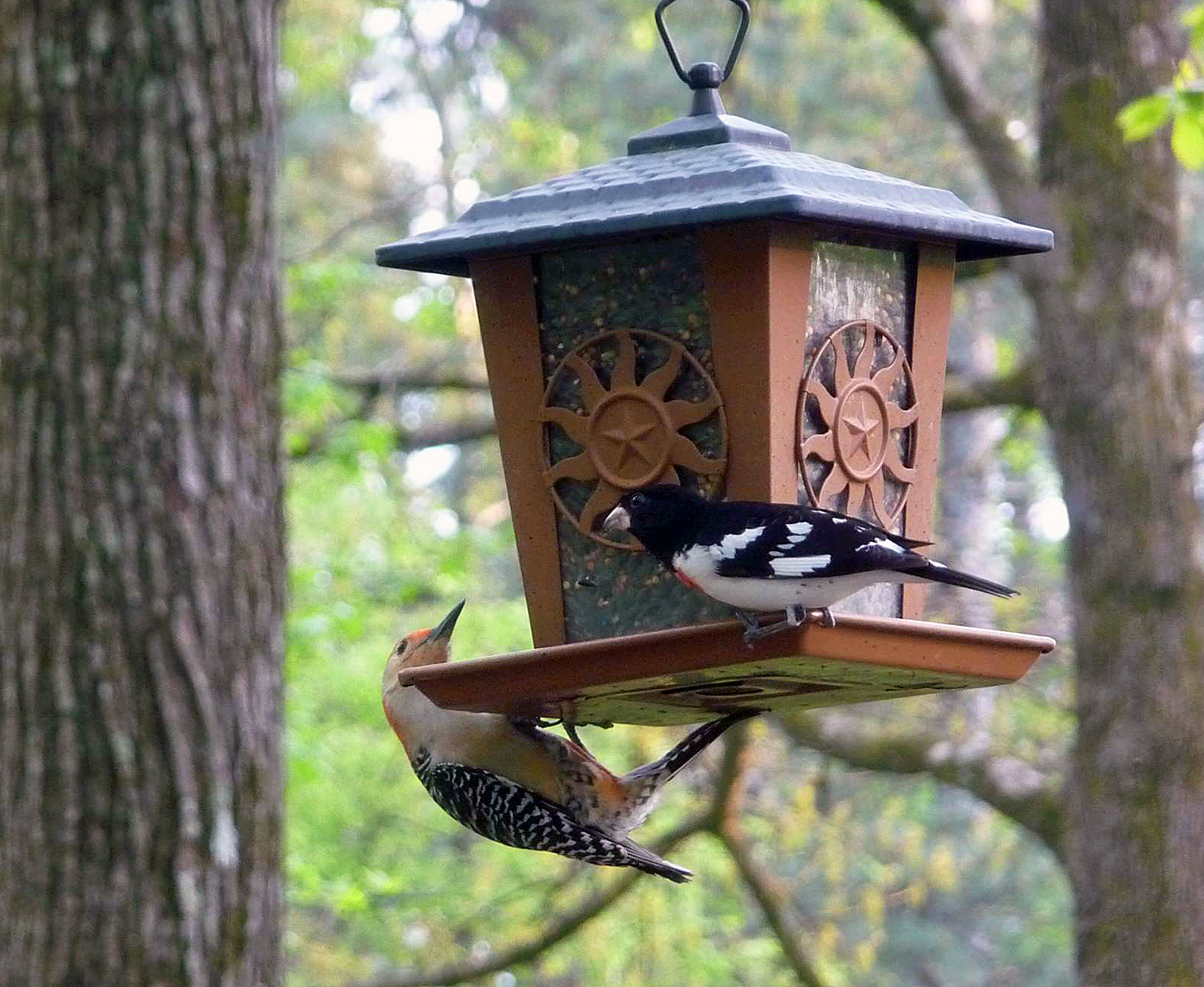
Photo Courtesy of Byron Tucker A Rose-breasted Grosbeak joins a Red-bellied Woodpecker at a feeder in Atlanta.

Photo Courtesy of Byron Tucker
A Rose-breasted Grosbeak joins a Red-bellied Woodpecker at a feeder in Atlanta.

“Thank you. Thank you. I’m an amateur bird watcher for the first time this year,” Connie wrote. “My feeders are drawing many birds to my delight. Today, for the first time, I saw both a male and female grosbeak. It took me two hours on-line to come across your article and picture to find out what they were. They are beautiful. I have taken many pictures.”

Danny Baker, who lives in northwest Tennessee in Clarksville, also wrote to me about visiting Rose-breasted Grosbeaks.

“I have had several grosbeaks at my feeders for three weeks now,” Danny wrote. “I was just wondering why the change from normal? They are very pretty and have a wonderful song, and everyday I return from work hoping they will still be here.”

Other than Ruby-throated Hummingbirds, the one bird whose return in the spring is guaranteed to generate excitement is the Rose-breasted Grosbeak. Every spring, I get phone calls and emails from people wanting to share the thrill of seeing these vibrant birds in their back yards.

Photo by Bryan Stevens A Rose-breasted Grosbeak finds a meal of sunflower seeds at a feeder.

Photo by Bryan Stevens
A Rose-breasted Grosbeak finds a meal of sunflower seeds at a feeder.

The spring arrival of Rose-breasted Grosbeaks is a temporary visit. Finding suitable arrangements, which can consist of well-stocked feeders and perhaps a convenient water source, the migrating birds may linger for several days. These birds nest at higher elevations, however, and are usually impatient to continue the journey to where they will spend the summer months tending to their young.

Single birds are occasionally the first to arrive, but Rose-breasted Grosbeaks do form flocks when migrating. Even if a scout shows up alone at your feeders, he will often soon be joined by other grosbeaks. My recent visit by a single male led to two and then three males visiting the feeders. Eventually a female Rose-breasted Grosbeak also made an appearance.

Plenty of Rose-breasted Grosbeaks pass through Northeast Tennessee, and a few even decide to make mountains like Unaka, Holston and Roan their home for the summer. However, these birds spread out widely across the eastern half of the North American continent, ranging from northeastern British Columbia to Quebec and Nova Scotia in Canada. They also range south from New Jersey to Georgia. The Rose-breasted Grosbeak also reaches Colorado, Oklahoma and Kansas.

For the most part, however, the Rose-breasted Grosbeak is replaced in the western United States by the closely related Black-headed Grosbeak.

Photo by U.S. Fish & Wildlife Service/ David Brezinski Rose-breasted Grosbeaks will likely be among the colorful birds present for this year's rally.

Photo by U.S. Fish & Wildlife Service/ David Brezinski
Rose-breasted Grosbeaks will likely be among the colorful birds present for this year’s rally.

Both sexes have a massive bill, which they use to hull sunflower seeds at feeders or glean insects from leaves and branches. It’s the heavy, blunt bill for which the term “grosbeak” is derived. “Gros” is a German term for large or big, so grosbeak simply means a large-beaked bird. People who band birds to further the study of them will tell you that Rose-breasted Grosbeaks have a wicked bite and are capable of delivering quite a nip. In Northeast Tennessee, bird banders frequently encounter Rose-breasted Grosbeaks in their mist nets — and bear the scars to prove it.

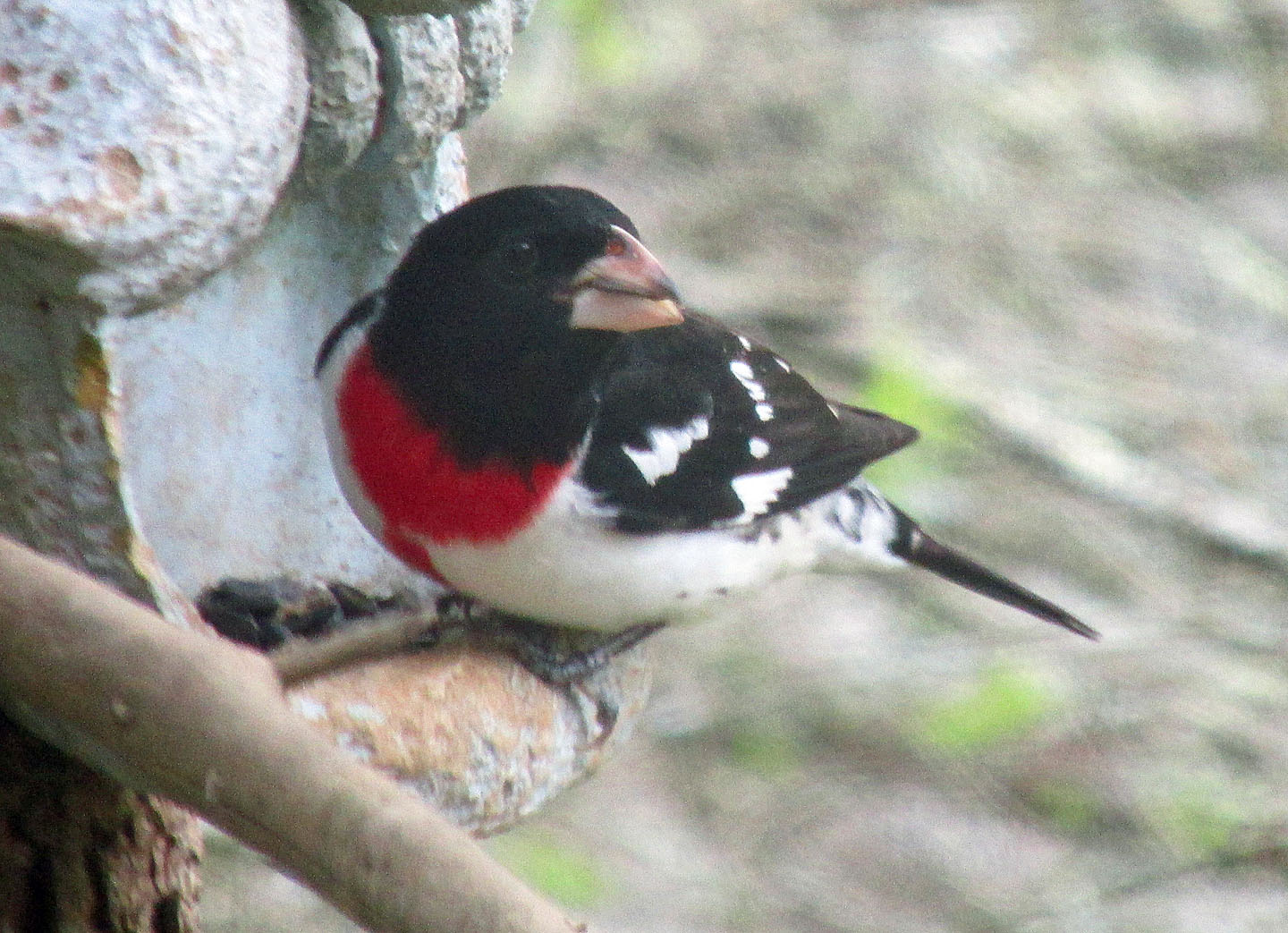
It’s the adult male with his vibrant black and white feathers and the large rosy-red splash of color across the breast that gives this bird its common name. Females are brown, streaked birds that are larger than but easily confused with some of our sparrows.