
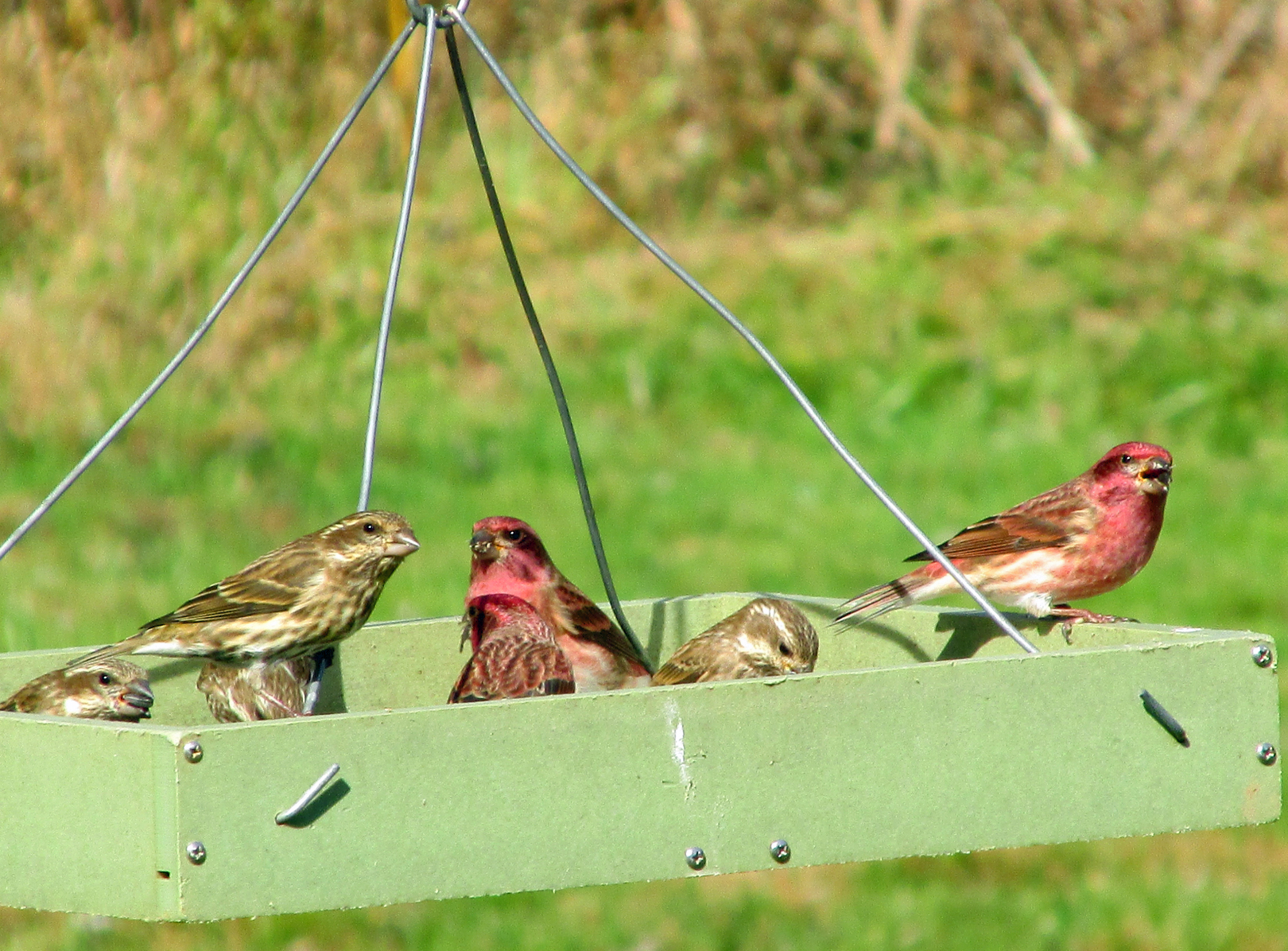
BRYAN STEVENS/SIX RIVERS MEDIA Photo by Bryan Stevens • A flock of purple finches visits a feeder. Bird feeders, which come in a variety of shapes and sizes, make great Christmas gifts for bird enthusiasts.
It’s been a tradition of mine to offer a column of last-minute gift suggestions for bird enthusiasts in the weeks leading up to Christmas.
This year I thought I’d share some discoveries I made while browsing for ideas to provide to family members for the requisite wish list of suggestions for Christmas gifts for yours truly. Needless to say, all of these finds made it to the top of my 2025 list.

Photo by karosieben/Pixabay Gift ideas for the bird lover on your Christmas list are abundant.
BOOKS
Two book titles caught my eye: “The Field Guide to Dumb Birds of North America” and “Human Watching: A Field Guide to Humans for Birds — By Birds.”
From the titles alone, you may have guessed these are offerings leaning heavily on the humor interwoven into the pastime of birding.
Author Matt Kracht, the writer behind “The Field Guide to Dumb Birds of North America,” is also the man behind related titled such as “The Field Guide to Dumb Birds of the Whole Stupid World” and “A Dumb Birds Field Guide to the Worst Birds Ever.”

“Human Watching: A Field Guide to Humans for Birds — By Birds” puts things into perspective for birders.
His latest title received 4.6 out of 5 stars at Amazon. According to a summary at the Amazon website, Kracht’s latest book is perfect for “those who have a disdain for birds, or for bird lovers with a sense of humor.” The book is further described as “a snarky illustrated handbook” that is “equal parts profane, funny, and — let’s face it — true.”
As for “Human Watching,” the cover alone sparks curiosity. The book features the following:
• 20 vibrant full-color images: Full-page color portraits of the adorable (and judgmental) googly-eyed clay birds
• 20 Witty Observations: Short, hilarious “field notes” that can be enjoyed in a single sitting or flipped through casually
• Glossy cover: A shiny, durable finish that looks great on a coffee table or bookshelf
• A “To/From” Dedication Page: Integrated directly into the front to make this an instant gift, no separate card required.
BIRD CAMS
For some time I’ve been aware of smart bird feeders/cameras that people can purchase for their own backyard. There are also types that monitor bird boxes with an attached camera feed. Barbara Lake, a friend and longtime reader, introduced me to this concept many years ago with a camera feed that brought the secrets of the interiors of her bluebird boxes to her own television. I don’t know if these are new, but there are also apparently now hummingbird feeders that come with a camera. Many of these offerings are operated on solar power. Some can capture photos as well as video. I found several that are available for about $40.
MAGICAL MUGS
I actually got one of these a few years ago for Christmas. An ordinary coffee mug decorated with silhouettes of birds becomes emblazoned with full-color images of different birds as soon as the mug is filled with hot coffee — or some other hot beverage of choice. It’s a novelty gift, but a clever one that’s also available for under $20.
APPAREL & ATTIRE
Pithy slogans about birds, birders and birding can adorn anything from T-shirts and socks to oven mitts and towels, as well as baseball caps, tote bags and throw pillows. Many of these are affordable enough to be treated as stocking stuffers. Some of the slogans that really nailed the essence of birders included “I Watch Birds And I Know Things,” “Not All Who Wander Are Lost: Some Are Just Looking For Cool Birds” and “The Fellowship of the Wing.”
•••
On a more serious note, there are many helpful and useful birding gifts available if that’s more your style.
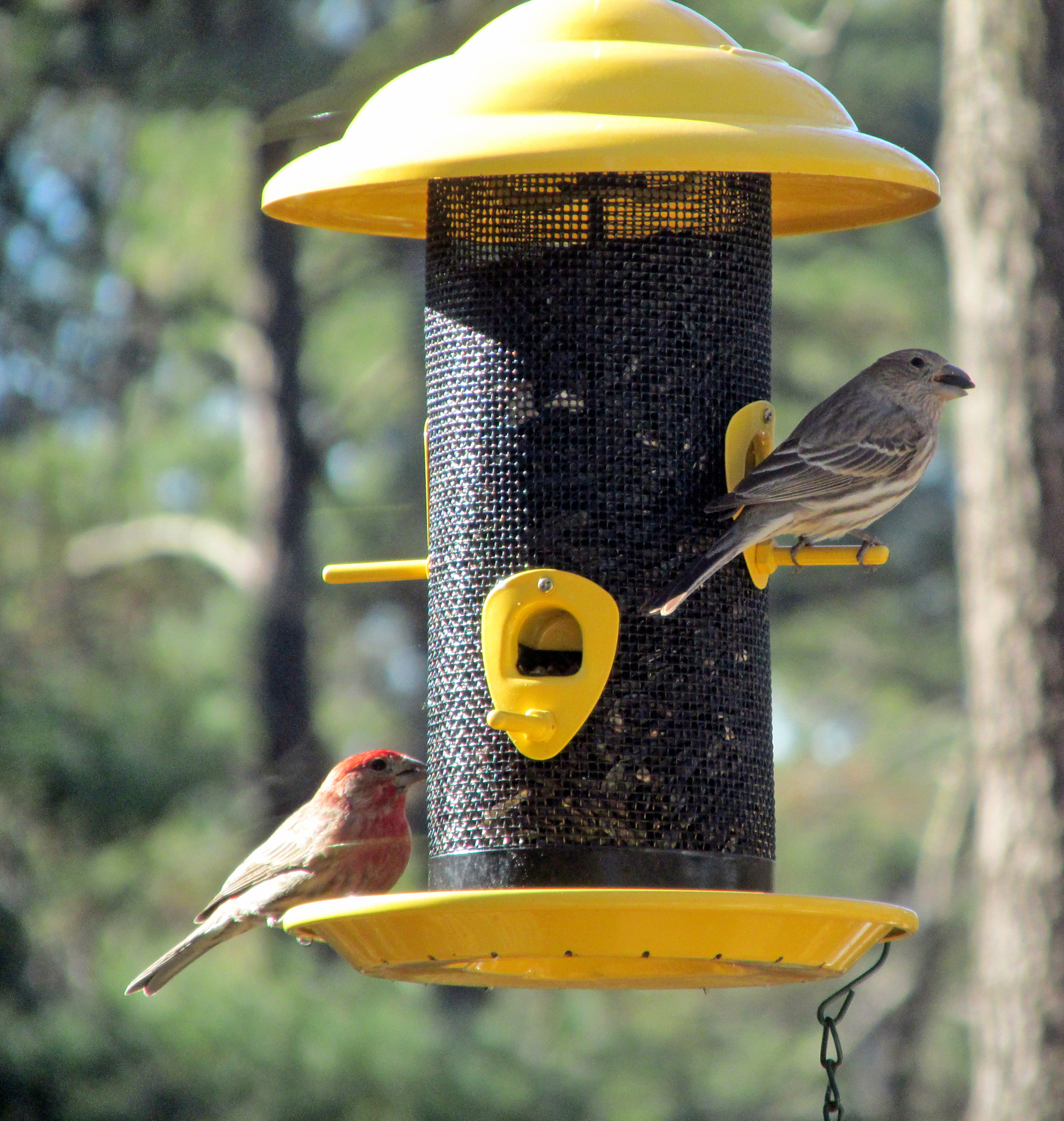
Photo by Bryan Stevens • Add a bag of sunflower seed to a gift of a bird feeder and the recipients are set to start enjoying birds immediately.
BIRD FEEDERS
One of the best ways to bring birds closer is to put up a feeder. For that reason, a Christmas present of a bird feeder will never be remiss. Whether shopping online or in garden centers or department stores, there’s no shortage of feeders for purchase. Bird feeding brings hours of entertainment to human hosts for only the cost of a sack of sunflower seed.
The most successful feeder that I’ve used in recent years is a type of hanging tray manufactured by such brands as Woodlink and PerkyPet and available on Amazon.com and other retail outlets for about $20. The one at my home is made from recycled plastic. Cardinals, sparrows, finches, and even the shy Eastern towhees love this open-air feeder. The mesh bottom of the feeder allows for good drainage.
There are so many designs, from extremely practical to awesomely whimsical, that choosing a feeder as a gift isn’t at all difficult. The birds and that friend on your list will thank you for the gift of a feeder. If you’re feeling in the giving spirit, throw in a bag of black oil sunflower seed to help get the recipient’s feeder off to a great start.
 365 DAYS OF BIRDS
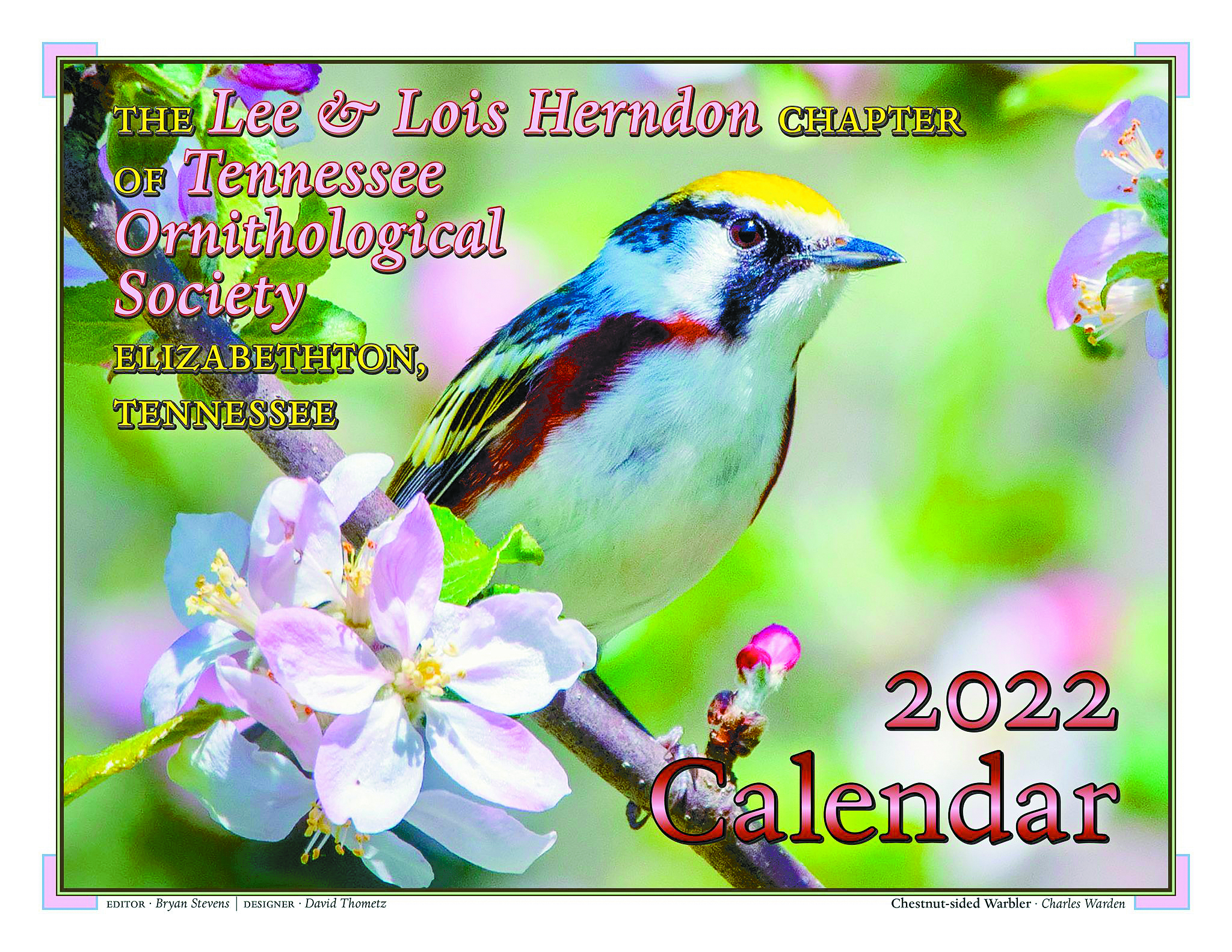
The Lee and Lois Herndon Chapter of Tennessee Ornithological Society (Elizabethton Bird Club) produces a calendar as part of a long-standing holiday fund-raising effort. The 2026 calendar’s cover features a stunning photograph of a black-throated blue warbler. The inside pages feature dozens more full-color photographs and an informative and educational grid. These calendars sell for $15 plus $2.50 if shipping is needed. All sales help the club fund birding programs, public park feeders, conservation efforts and other activities in upper Northeast Tennessee. To obtain a calendar, email me at ahoodedwarbler@aol.com.
•••
Bryan Stevens has written about birds, birders and birding since 1995. To ask a question, share a sighting or make a comment, email him at ahoodedwarbler@aol.com.
 Our Fine Feathered Friends