Category Archives: Cardinals

56th annual Fall Bird Count finds 120 species in Northeast Tennessee

Photo by Jean Potter A single Wilson’s warbler made it onto the tally for this year’s Fall Bird Count

The 56th annual Elizabethton Fall Bird Count was held Saturday, Oct. 4. A total of 25 observers participated in about 13 parties. The weather was good, with clear skies, no wind and temperatures ranging from 42 to 82 degrees.

This year’s count tallied 120 species, plus two gull species and one Empidonax species of flycatcher. This total is slightly below the recent 30 year average of 124 species, according to compiler Rick Knight The all-time high on this count was 137 species in 1993.

The count is conducted in the Northeast Tennessee counties of Carter, Johnson, Sullivan, Unicoi and Washington.

Photo by Bryan Stevens A total of four pied-billed grebes were found during the recent Fall Bird Count. Numbers of this species will increase as the season advances.

The list:

Canada goose, 466; wood duck, 34; blue-winged teal, 21; mallard, 64; common merganser, 12; wild turkey, 15; and pied-billed grebe, 4.

Rock pigeon, 183; Eurasian collared-dove, 2; mourning dove, 145; yellow-billed cuckoo, 3; chimney swift, 176; and ruby-throated hummingbird, 1.

Killdeer, 41; spotted sandpiper, 3; solitary sandpiper, 2; and two gull species that could not be positively identified.

Double-crested cormorant, 30; green heron, 3; great egret, 5; great blue heron, 26; black vulture, 39; and turkey vulture, 195.

Osprey, 5; sharp-shinned hawk, 1; Cooper’s hawk, 6; bald eagle, 7; red-shouldered hawk, 6; broad-winged hawk, 1; red-tailed hawk, 17; American barn owl, 1; Eastern screech-owl, 24; great horned owl, 5; barred owl, 7; and Northern saw-whet owl, 3.

Belted kingfisher, 22; red-headed woodpecker, 5; red-bellied woodpecker, 71; yellow-bellied sapsucker, 9; downy woodpecker, 41; hairy woodpecker, 17; Northern flicker, 54; and pileated woodpecker, 17.

American kestrel, 14; merlin, 4; Eastern wood-pewee, 17; unidentifiable Empidonax species, 1; Eastern Phoebe, 82; yellow-throated vireo, 6; blue-headed vireo, 23; Philadelphia vireo, 4; red-eyed vireo, 10; and loggerhead shrike, 1.

Blue jay, 360; American crow, 416; fish crow, 4; and common raven, 21.

Carolina chickadee, 158; tufted titmouse, 140; tree swallow, 120; ruby-crowned kinglet, 13; golden-crowned kinglet, 4; cedar waxwing, 126; red-breasted nuthatch, 13; white-breasted nuthatch, 70; and brown creeper, 1.

Carolina wren, 135; house wren, 3; gray catbird, 27; brown thrasher, 9; Northern mockingbird, 74; and European starling, 560.

Photo by Jean Potter A Carolina wren creeps along a fence. A total of 135 of these wrens made it onto the recent Fall Bird Count.

Eastern bluebird, 157; veery, 1; gray-cheeked thrush, 5; Swainson’s thrush, 42; wood thrush, 7; American robin, 233.

House sparrow, 34; house finch, 50; red crossbill, 3; American goldfinch, 64; chipping sparrow, 51; field sparrow, 6; dark-eyed junco, 30; white-crowned sparrow, 1; white-throated sparrow, 2; savannah sparrow, 1; song sparrow, 98; swamp sparrow, 2; Eastern towhee, 47; and yellow-breasted chat, 1.

Eastern meadowlark, 20; red-winged blackbird, 70; brown-headed cowbird, 208; and common grackle, 24.

Ovenbird, 2; Northern waterthrush, 2; black-and-white warbler, 6; Tennessee warbler, 47; orange-crowned warbler, 1; Nashville warbler, 1; common yellowthroat, 12; hooded warbler, 5; American redstart, 21; Cape May warbler, 9; Northern parole, 21; magnolia warbler, 28; bay-breasted warbler, 47; Blackburnian warbler, 4; chestnut-sided warbler, 3; black-throated blue warbler, 11; palm warbler, 26; pine warbler, 4; yellow-rumped warbler, 4; yellow-throated warbler, 2; black-throated green warbler, 14; and Wilson’s warbler, 1.

Photo by Bryan Stevens • Male American redstarts are unmistakable warblers in their orange, black and white plumage.

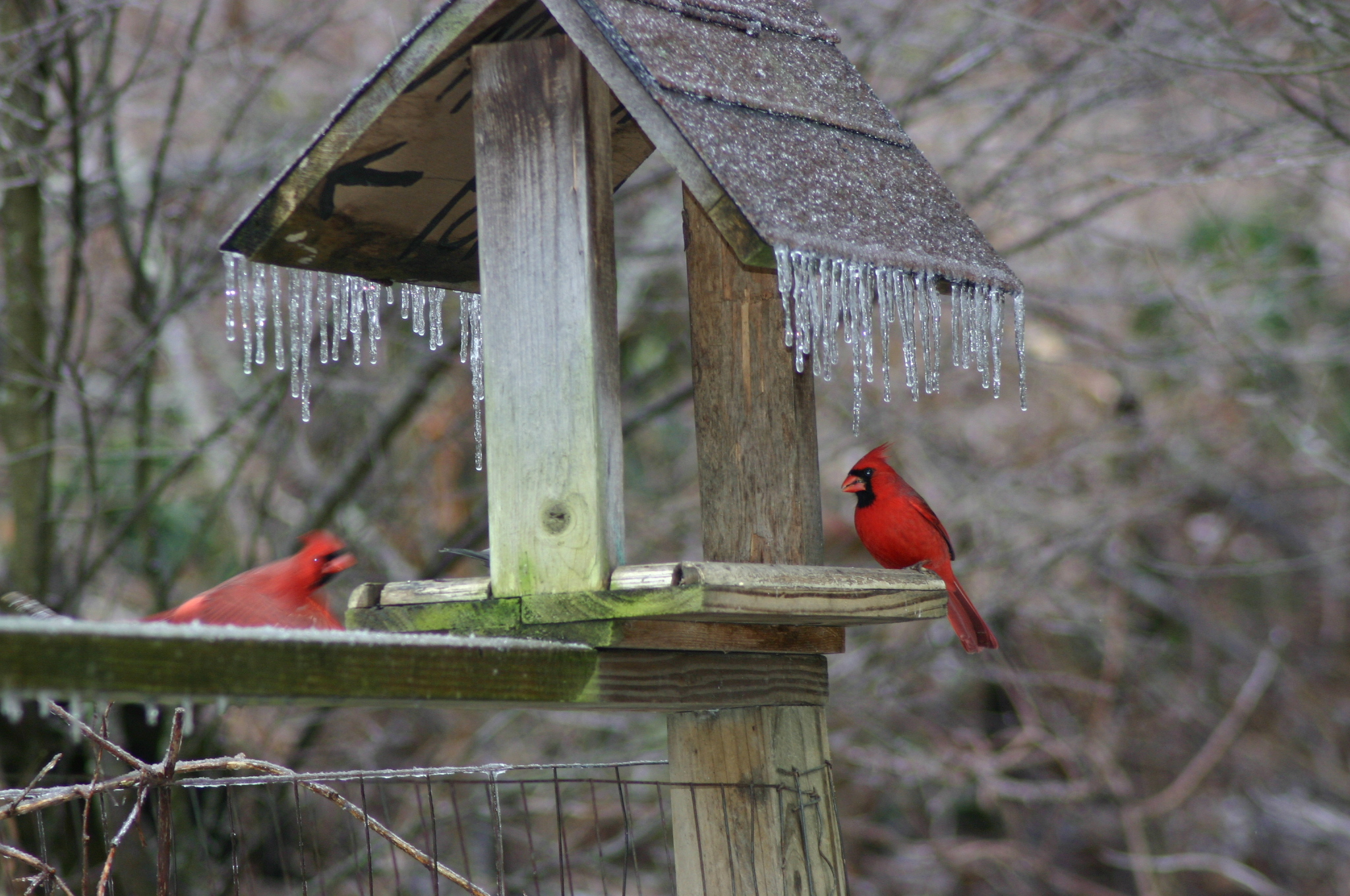
Scarlet tanager, 9; Northern cardinal, 165; Rose-breasted grosbeak, 13; and indigo bunting, 9.

Some species were noteworthy in their absence. Notable misses included white-eyed vireo, blue-gray gnatcatcher, winter wren, hermit thrush and blue grosbeak.

The count was held a week later than usual due to the fall meeting of the Tennessee Ornithological Society in

Johnson City. This may have accounted for some of the misses or low numbers for some species , such as the single hummingbird. On the other hand, the later date may have contributed to finding some of the later migrants, including orange-crowned warbler and white-throated sparrow.

The count has been held on the first Saturday in October a few times previously.

•••

Bryan Stevens began writing about birds, birders and birding in 1995. To share a sighting, ask a question or make a comment, email him at ahoodedwarbler@aol.com.

Hummingbirds, other summer birds get ready to depart

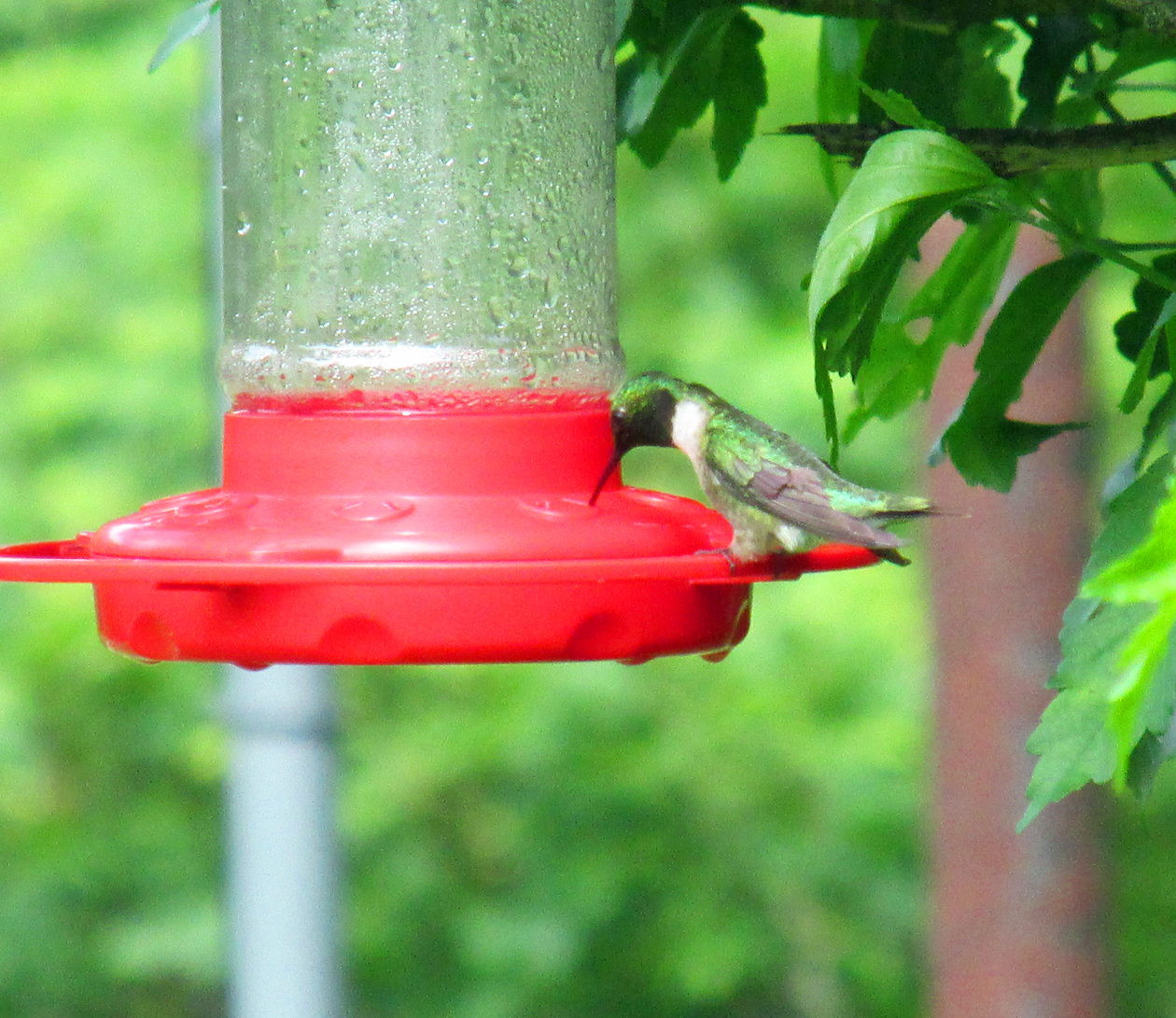
Photo by Bryan Stevens • A ruby-throated hummingbird visits a feeder for a sip of sugar water.

I always feel some reluctance and regret when I turn the calendar page from August to September.

I don’t have anything against fall – it’s my favorite season. But I know that our ruby-throated hummingbirds, which returned only five months ago in early April, will soon be departing.

It won’t be only the hummingbirds. Warblers, orioles, tanagers and other migrants will also fly south to spend the winter season somewhere more hospitable.

Most of the hummingbirds that visited our gardens over the summer are getting ready to migrate back to their winter homes in Central America.

I’m seeing only a few adult male hummingbirds with the namesake red throat. They are outnumbered by females and young hummingbirds that hatched in late spring and throughout the summer. It’s fun to watch young hummingbirds. They often have something to prove. In many ways, they’re even more feisty than adult birds.

Photo by Bryan Stevens • A male ruby-throated hummingbird perches at a feeder for a sip of sugar water.

In any given year, the numbers of hummingbirds passing thorough is going to fluctuate. Some years, these tiny flying gems will be present in good numbers on an almost daily basis. Other years, hummingbirds can become quite scarce.

I usually enjoy my best hummingbird numbers in the fall as these little birds begin their leisurely journey back south. Late August and the month of September is usually a great time to watch hummingbirds.

During August, the feeders at my home and my mother’s home saw a great deal of activity. Blooms of wildflowers and cultivated flowers also attracted them. Earlier in the summer the hummingbirds went gaga for the crocosmia blooms and the flowering bee balm. For the past month, the tube-shaped flowers of orange jewelweed has kept them coming back for more.

The New World is home to about 360 species of hummingbirds. We’ve expended many adjectives in finding names of them all. Sometimes, words fail. Mere adjectives are somewhat inadequate in providing common names for many of the world’s more hummingbirds, but that doesn’t keep us from trying to give descriptive names to each hummingbird species. For instance, we have the beautiful hummingbird of Mexico; the charming hummingbird of Costa Rica and Panama; the festive coquette of northwestern South America; and the magnificent hummingbird of the southwestern United States.

Photo by Bryan Stevens • A ruby-throated hummingbird sips from a sugar water feeder.

Other names are even more elaborate and occasionally outlandish, such as the white-tufted sunbeam of Peru; the violet-throated metaltail of Ecuador; the violet-throated starfrontlet of Peru and Bolivia; the hyacinth visorbearer of Brazil; and the rainbow-bearded thornbill of Colombia and Ecuador.

As for our own ruby-throated hummingbirds, wish them well as they begin that long trek back to their wintering grounds. For the young birds, this will be their first epic crossing of the Gulf of Mexico, something the species must do twice a year to get to and from their summer home in eastern North America.

•••

Bryan Stevens has written about birds, birding and birders since 1995.

Scissor-tailed flycatchers making Jonesborough a summer home

Photo Courtesy of Lowell Christian • The female scissor-tailed flycatcher in Jonesborough shows the namesake tail feathers and some colorful plumage while in flight.

It’s been a good while since I’ve seen a new life bird to add to my species list.

“Life birds” are simply a new species that a birder has never encountered. Many birders list their “lifers,” which I do in a casual manner. My “lifers” are always documented in my weekly birding column.

I encountered my last life bird back in May 2020 during the pandemic when I observed my first-ever Mississippi Kite at Sycamore Shoals State Historic Park in Elizabethton.

Now, after a trip to Jonesborough, I’ve added scissor-tailed flycatcher. It’s a bird that I’ve wanted to see since I began birding back in the 1990s. I figured I’d have to make a trip to Texas or Oklahoma to add this to my list, however. I never imagined seeing this bird so close to home.

Photo by Bryan Stevens • The tail of the scissor-tailed flycatcher makes it difficult to confuse this bird with any other.

I actually saw two birds, a mated pair, tending their nest in Tennessee’s oldest town. The scissor-tailed flycatcher is the official state bird of Oklahoma, where this species would normally be expected.

This is the third consecutive summer season that this flycatcher’s been confirmed in Washington County. This streak of annual sightings started in 2023 when Dan Huffine, a sharp-eyed birder, saw one while baling hay.

A profile of the species on the Tennessee Wildlife Resources Agency website observes that the scissor-tailed flycatcher has significantly expanded its breeding range in the past several decades and now nests in Tennessee.

The first scissor-tailed flycatcher was reported in the state in 1964, the first nesting attempt was discovered in 1978 and the first successful nest was documented in 1983 in Rutherford County, according to the TWRA website.

I want to thank fellow birder Lowell Christian for providing great directions for finding the parents and their nest. He’s also a fantastic bird photographer. Check out his photos on his Facebook page.

The scissor-tailed flycatcher feeds largely on winged insects, earning its place within the flycatcher family. However, this species will also eat fruit when its available.

Photo Courtesy of Lowell Christian • The female scissor-tailed flycatcher forages in a parking lot.

This flycatcher is placed by experts within the genus Tyrannus, which includes the kingbirds. Other relatives in North America include Eastern kingbird, Western kingbird, tropical kingbird, Couch’s kingbird and Cassin’s kingbird. There’s also a giant kingbird native to Cuba and a loggerhead kingbird that is found throughout the Caribbean and on rare occasions in Florida.

Kingbirds are famous for their pugnacious behavior, not hesitating to attack larger birds such as hawks, vultures and crows in defense of their territory. Scissor-tailed flycatchers are also considered aggressive toward a variety of other birds.

Photo by Bryan Stevens • An Eastern kingbird perches on a fence post.

According to the website All About Birds, scissor-tailed flycatcher numbers declined by about 31% between 1966 and 2014. The estimate comes from statistics gathered by the North American Breeding Bird Survey.

The website also noted that Partners in Flight estimates a global breeding population of 9.5 million scissor-tailed flycatchers, with 92% breeding in the United States, and 50% spending some part of the year in Mexico.

A scissor-tailed flycatcher is unlikely to be confused with any other bird. Adult males are pale gray birds with blackish wings and black tails with white edges. Adults show salmon-pink flanks that extend to underwing patches that are very conspicuous in flight.

As is the case with so many species of birds, males are more colorful than females. The bird’s body is about the size of an American robin, but it looks bigger due to the long tail that gives this species its common name.

The All About Birds website notes that the scissor-tailed flycatcher isn’t always content to stay within its expected range. As I’ve mention on previous occasions in this column, birds have wings and will fly where they wish to fly.

The species tends “to wander widely on their way to and from the wintering grounds, a habit they share with relatives like the fork-tailed flycatcher and tropical kingbirds,” according to a profile of the species on the website.

Scissor-tailed flycatchers may makes appearances almost anywhere in North America, according to the website. I’m delighted to report that evidently also holds true for Northeast Tennessee.

One place that the bird is definitely expected is Oklahoma. Since May 26, 1951, the scissor-tailed flycatcher has been the officially designated Oklahoma state bird.

Jonesborough is known for storytelling, and I hope you agree that these Oklahoma migrants making a new home for themselves and their young in Tennessee’s oldest town is a terrific tale.

•••

Bryan Stevens has written about birds and birding since 1995. To ask a question, make a comment or share a sighting, email him at ahoodedwarbler@aol.com.
Cardinals provide a great symbol for Christmas season

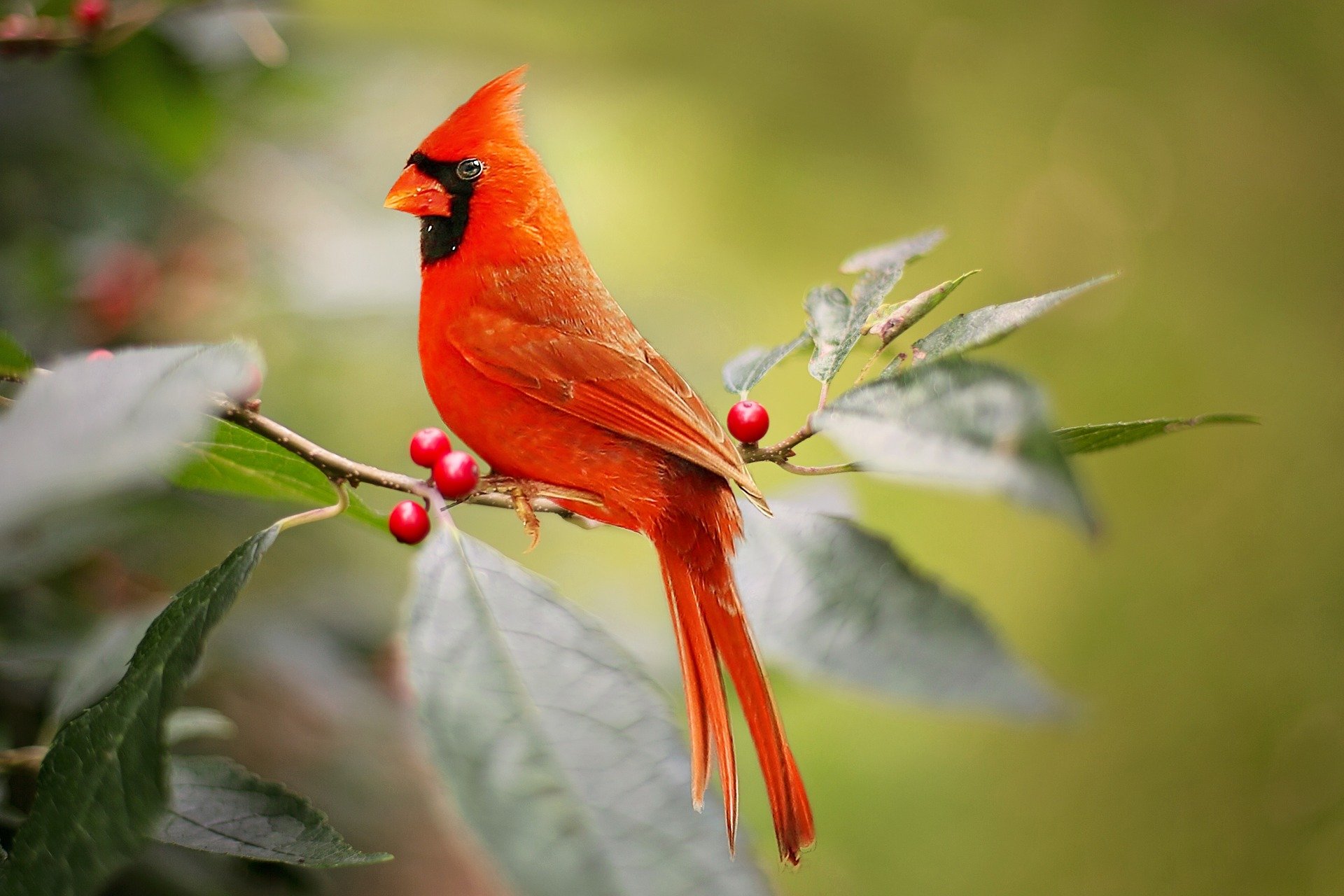
Photo by Jack Bulmer/Pixabay • A male Northern cardinal is a cheerful feathered ambassador on even a dreary day. While fairly commonplace, cardinals are worth getting to know and are easily attracted with sunflower seed.

Christmas 2022 is almost upon us. As is my usual custom, I want to share my enthusiasm for the Northern cardinal, one of my favorite birds. One male cardinal around my home as become very accustomed to my presence. He has even learned my routine and knows when to anticipate my daily stocking of the feeders with sunflower seeds.

At first, he kept an eye on my actions from a safe distance, but he gradually grew bolder. Soon, he began to land on the feeder before I even had my back turned and was heading back inside the house. His familiarity also bred impatience. He began to detect my routine. Once I get home from work in the evening, I head first to the mailbox. More often than not, I glimpse a flash of red feathers near the feeders while retrieving the most recent postal deliveries. My dependable cardinal always makes me smile. The bird has learned that a meal is imminent once I have completed this one chore.

If I don’t immediately return to the feeders with sunflower seeds, he will wait until I emerge from the house. He isn’t quite so brave that he will stay perched on the feeder as I replenish the supply, but he has definitely learned that his human friend is the source of all the free seeds.

I have always enjoyed watching cardinals. The beauty of both male and female cardinals is undeniable. They’re usually nervous, twitchy birds, so it has been fun watching this particular male cardinal grow accepting of my presence.
The Northern cardinal, especially the brilliant red male, stands out against a winter backdrop of snow white, deep green or drab gray. Over the years, the cardinal has also become associated with the Christmas season. How many Christmas cards have you received this holiday season with a cardinal featured in the artwork? I’d wager that at least a few cards in any assortment of holiday greetings will feature the likeness of a Northern cardinal.

There is a possible reason that male cardinals try to outshine each other when it comes to their bright red plumage. According to the website Tennessee Watchable Wildlife, brighter red male cardinals are able to hold territories that have denser vegetation, feed young at higher rates and have greater reproductive success than males with feathers of a duller hue.

The Northern cardinal belongs to a genus of birds known as Cardinalis in the family Cardinalidae. There are only two other species in this genus, and they range across North America and into northern South America. The two relatives are the pyrrhuloxia, or Cardinalis sinuatus, of the southwestern United States, and the Vermilion cardinal, or phoeniceus, a bird found in Colombia and Venezuela.
The Northern cardinal is a native and abundant bird. Cardinals are a widespread species, ranging westward to the Dakotas and south to the Gulf Coast and Texas. The southeastern United States was once the stronghold of the cardinal population. In the past century, however, cardinals have expanded their range into New England and Canada.

The cardinal accepts a wide variety of food at feeders. Sunflower seed is probably their favorite, but they will also sample safflower seed, cracked corn, peanuts, millet, bakery scraps and even suet. While we may get the idea that cardinals feed largely on seed, that is a misconception based on our observation of the birds at our feeders. Cardinals away from our feeders eat insects and fruit, including the berries of mulberry, holly, pokeberry, elderberry, Russian olive, dogwood and sumac.
The cardinal uses its large beak to efficiently hull sunflower seeds or deal with other foods foraged in field and forest away from our feeders. The large, heavy beak hints at the cardinal’s kinship with birds such as tanagers and grosbeaks. In fact, some of America’s early naturalists referred to the bird as “cardinal grosbeak.” Other common names include the apt “redbird” moniker and “Virginia nightingale.”

Even once the holidays are past, there’s nothing like a glimpse of a Northern cardinal to add some cheer to a bleak winter day. It’s not surprising that such a popular bird has also become associated with many trappings of the Christmas season.
“You see cardinals on greeting cards, stationery, paper plates, paper napkins and tablecloths, doormats, light switch plates, candles, candle holders, coffee mugs, plates, glasses, Christmas tree ornaments and lights, bookmarks, mailboxes, Christmas jewelry,” writes June Osborne in “The Cardinal,” a book about this popular bird.

“And the list goes on,” Osborne writes. “Cardinals have become an integral part of the way that many people celebrate the holiday season.”

I can be included among such people. My Christmas decorations include an assortment of cardinal figurines and ornaments. There are other birds — doves and penguins for example — associated with the holiday season, but for me the holidays magnify the importance of one of my favorite birds. The cardinal, in its festive red plumage, appears made to order for a symbol of the holiday season.


Northern cardinals serve as wonderful Christmas ambassadors

Photo by Jack Bulmer/Pixabay • With sunlight shining on this male Northern cardinal’s wing, the bird looks even more splendid. These beloved birds have been made the official birds for seven U.S. states, a recognition not surpassed by any other North American bird.

Christmas 2021 is almost upon us. If you’ve not finished your holiday shopping, you’d best get moving.

As is my usual custom, I want to share my enthusiasm for the Northern cardinal, one of my favorite birds and a deserving bird to serve as a symbol for the Christmas season.

I have enjoyed watching as cardinals visit my feeders in recent weeks. The beauty of both male and female cardinals is undeniable, but it’s their behavior that’s worth a second look. Nervous, twitchy birds, they are always anxiously surveying their surroundings even as they linger on a feeder long enough to hull a sunflower kernel from its shell. It’s almost as if they know their bright plumage stands out in a drab winter landscape dominated by shades of gray.

One particular male cardinal over the past few months has grown accepting of my close presence. When I stock my feeders with sunflower seed, he barely gives me time to get back to the front porch before he is landing on the feeder to enjoy a meal of seeds. It’s great to see that these beautiful birds can be acclimated to be less timid.

The Northern cardinal, especially the brilliant red male, stands out against a winter backdrop of snow white, deep green or drab gray. Over the years, the cardinal has also become associated with the Christmas season. How many Christmas cards have you received this holiday season with a cardinal featured in the artwork? I’d wager that at least a few cards in any assortment of holiday greetings will feature the likeness of a Northern cardinal.

Photo by Skeeze/Pixabay.com • A male Northern cardinal lands on a snowy perch. Cardinals are perfect symbols for the Christmas season with their bright red plumage.

The Northern cardinal belongs to a genus of birds known as Cardinalis in the family Cardinalidae. There are only two other species in this genus, and they range across North America and into northern South America.

The two relatives are the pyrrhuloxia, or Cardinalis sinuatus, of the southwestern United States, and the Vermilion cardinal, or phoeniceus, a bird found in Colombia and Venezuela. Two other South American birds — red-crested cardinal and yellow-billed cardinal — are more closely related to tanagers than to our familiar Northern cardinal. Both the Northern cardinal and red-crested cardinal have been introduced into the state of Hawaii, so two non-native birds from different parts of the globe are now resident in the Aloha State.

The Northern cardinal is a native and abundant bird. Cardinals are a widespread species, ranging westward to the Dakotas and south to the Gulf Coast and Texas. The southeastern United States was once the stronghold of the cardinal population. In the past century, however, cardinals have expanded their range into New England and Canada.

The cardinal accepts a wide variety of food at feeders. Sunflower seed is probably their favorite, but they will also sample safflower seed, cracked corn, peanuts, millet, bakery scraps and even suet. While we may get the idea that cardinals feed largely on seed, that is a misconception based on our observation of the birds at our feeders. Cardinals away from our feeders eat insects and fruit, including the berries of mulberry, holly, pokeberry, elderberry, Russian olive, dogwood and sumac.

The cardinal uses its large beak to efficiently hull sunflower seeds or deal with other foods foraged in field and forest away from our feeders. The large, heavy beak hints at the cardinal’s kinship with birds such as tanagers and grosbeaks. In fact, some of America’s early naturalists referred to the bird as “cardinal grosbeak.” Other common names include the apt “redbird” moniker and “Virginia nightingale.”

Even once the holidays are past, there’s nothing like a glimpse of a Northern cardinal to add some cheer to a bleak winter day. People can also choose to further the cause of science by taking part in studies such as Project FeederWatch, a nationwide survey of bird populations focused on birds coming to feeders maintained by project participants. In the 2015-16 winter season, 1,373 individuals participated in Project FeederWatch in the southeastern United States. The most common birds reported by observers were Northern cardinal, Carolina chickadee, mourning dove, American goldfinch and tufted titmouse. Finishing out the Top 10 feeder birds in this section of the nation were Carolina wren, house finch, blue jay, red-bellied woodpecker and downy woodpecker. Almost 98 percent of participants reported Northern cardinals at their feeders, which means the cardinal has become an almost universal feeder visitor in the southeast.

It’s not surprising that such a popular bird has also become associated with many trappings of the Christmas season.

“You see cardinals on greeting cards, stationery, paper plates, paper napkins and tablecloths, doormats, light switch plates, candles, candle holders, coffee mugs, plates, glasses, Christmas tree ornaments and lights, bookmarks, mailboxes, Christmas jewelry,” writes June Osborne in her book The Cardinal. “And the list goes on. Cardinals have become an integral part of the way that many people celebrate the holiday season.”

I can be included among such people. My Christmas decorations include an assortment of cardinal figurines and ornaments. There are other birds — doves and penguins for example — associated with the holiday season, but for me the holidays magnify the importance of one of my favorite birds. The cardinal, in its festive red plumage, appears made to order for a symbol of the holiday season.

Photo by Bryan Stevens • Northern cardinal seems much less descriptive of this popular bird than such common names as Virginia nightingale and Kentucky redbird.

Here’s some more cardinal trivia:

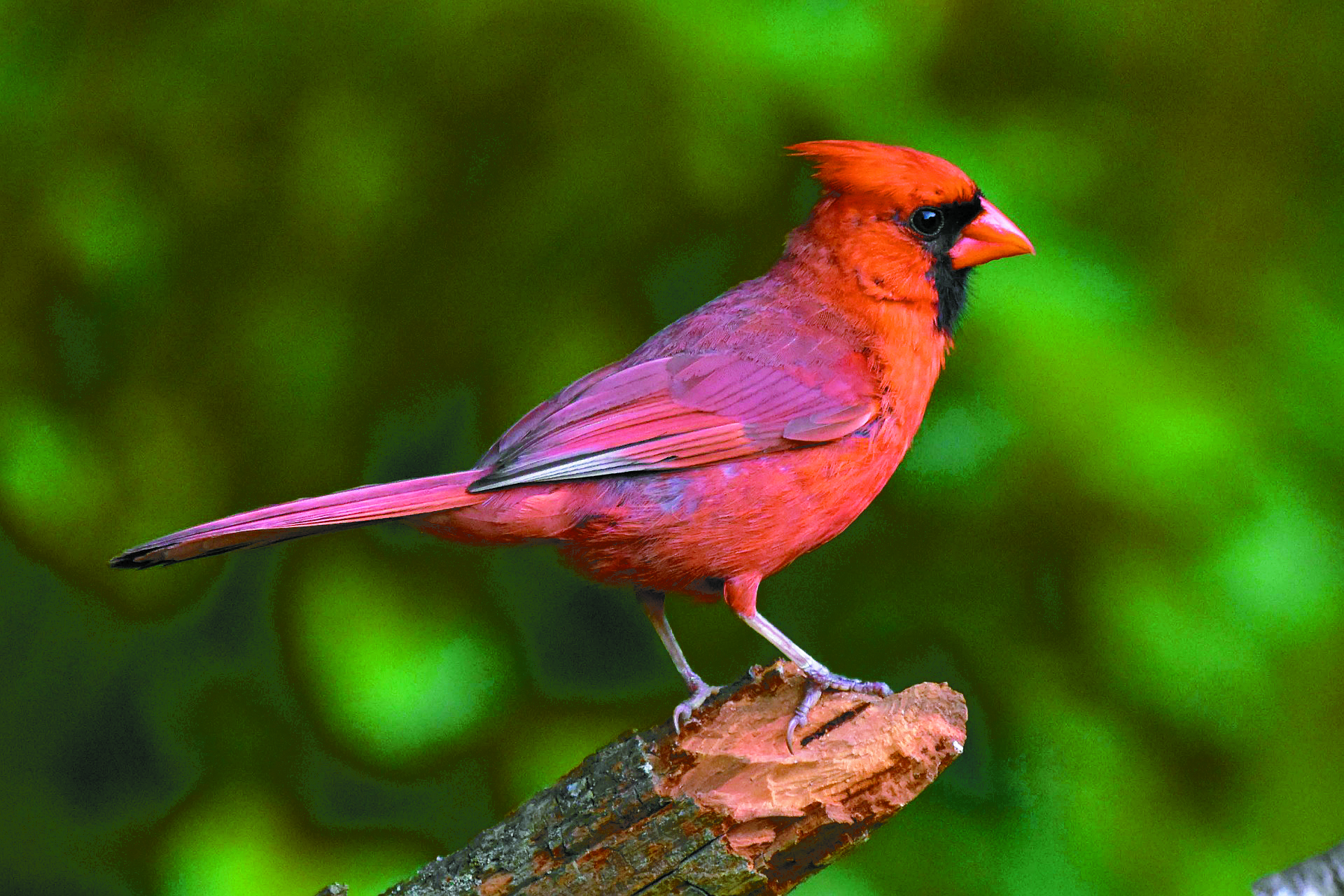
• Cardinals differ in appearance based on gender. The male boasts crimson plumage, a crest, a black face and orange bill. The female, although less colorful, is also crested. Female cardinals are soft brown in color, with varying degrees of a reddish or rosy tinge in their feathers, particularly in their wings.

The cardinal is a beloved bird. As testimony to the popularity of the Northern cardinal, just consider the fact that it’s the official state bird of seven states: North Carolina, West Virginia, Ohio, Illinois, Indiana, Kentucky and Virginia. Only the Northern mockingbird, which represents five states as official state bird, even comes close to the Northern cardinal in this respect.

• The cardinal’s preference for dense cover makes them likely neighbors for such birds as Carolina wrens, Eastern towhees and brown thrashers.

• The oldest recorded Northern Cardinal was a female, and she was 15 years, nine months old when she was found in Pennsylvania, according to the website, All About Birds.

• An uncommon genetic variation sometimes produces a cardinal with yellow or orange feathers instead of the typical red. The scientific name for the condition that produces yellow cardinals is known as xanthochroism.

• Nests are built by the female cardinal, but her mate delivers food as she incubates her clutch of eggs, which usually numbers three or four.

Photo by Bryan Stevens
Cardinals are common visitors to backyard feeders.

Winter season wouldn’t be complete without the splendor of cardinals

Photo by Jill Wellington/Pixabay.com • A male Northern cardinal grasps a branch of winter greenery.

I have enjoyed an opportunity to observe the many Northern cardinals visiting my feeders in recent weeks. The beauty of both male and female cardinals is undeniable, but it’s their behavior that’s worth a second look. Nervous, twitchy birds, they are always anxiously surveying their surroundings even as they linger on a feeder long enough to hull a sunflower kernel from its shell. It’s almost as if they know their bright plumage stands out in a drab winter landscape dominated by shades of gray.

The Northern cardinal, especially the brilliant red male, stands out against a winter backdrop of snow white, deep green or drab gray. Over the years, the cardinal has also become associated with the Christmas season. How many Christmas cards have you received this holiday season with a cardinal featured in the artwork? I’d wager that at least a few cards in any assortment of holiday greetings will feature the likeness of a Northern cardinal.

There’s some more evidence to put forward as testimony to the popularity of the Northern Cardinal. It’s the official state bird of seven states: North Carolina, West Virginia, Ohio, Illinois, Indiana, Kentucky and Virginia. Only the Northern mockingbird, which represents five states as official state bird, even comes close to the Northern cardinal in this respect.

The Northern cardinal belongs to a genus of birds known as Cardinalis in the family Cardinalidae. There are only two other species in this genus, and they range across North America and into northern South America.

The two relatives are the pyrrhuloxia, or Cardinalis sinuatus, of the southwestern United States, and the Vermilion cardinal, or phoeniceus, a bird found in Colombia and Venezuela. Two other South American birds — red-crested cardinal and yellow-billed cardinal — are more closely related to tanagers than to our familiar Northern cardinal. Both the Northern cardinal and red-crested cardinal have been introduced into the state of Hawaii, so two non-native birds from different parts of the globe are now resident in the Aloha State.

Photo by Jack Bulmer/Pixabay.com • A male cardinal grips a branch to make a quick survey of its surroundings.

The Northern cardinal is a native and abundant bird. Cardinals are a widespread species, ranging westward to the Dakotas and south to the Gulf Coast and Texas. The southeastern United States was once the stronghold of the cardinal population. In the past century, however, cardinals have expanded their range into New England and Canada.

The cardinal accepts a wide variety of food at feeders. Sunflower seed is probably their favorite, but they will also sample safflower seed, cracked corn, peanuts, millet, bakery scraps and even suet. While we may get the idea that cardinals feed largely on seed, that is a misconception based on our observation of the birds at our feeders. Cardinals away from our feeders eat insects and fruit, including the berries of mulberry, holly, pokeberry, elderberry, Russian olive, dogwood and sumac.

The cardinal uses its large beak to efficiently hull sunflower seeds or deal with other foods foraged in field and forest away from our feeders. The large, heavy beak hints at the cardinal’s kinship with birds such as tanagers and grosbeaks. In fact, some of America’s early naturalists referred to the bird as “cardinal grosbeak.” Other common names include the apt “redbird” moniker and “Virginia nightingale.”

Photo by Skeeze/Pixabay.com • A male Northern cardinal lands on a snowy perch. Cardinals are perfect symbols for the Christmas season with their bright red plumage.

Even once the holidays are past, there’s nothing like a glimpse of a Northern cardinal to add some cheer to a bleak winter day. People can also choose to further the cause of science by taking part in studies such as Project FeederWatch, a nationwide survey of bird populations focused on birds coming to feeders maintained by project participants.

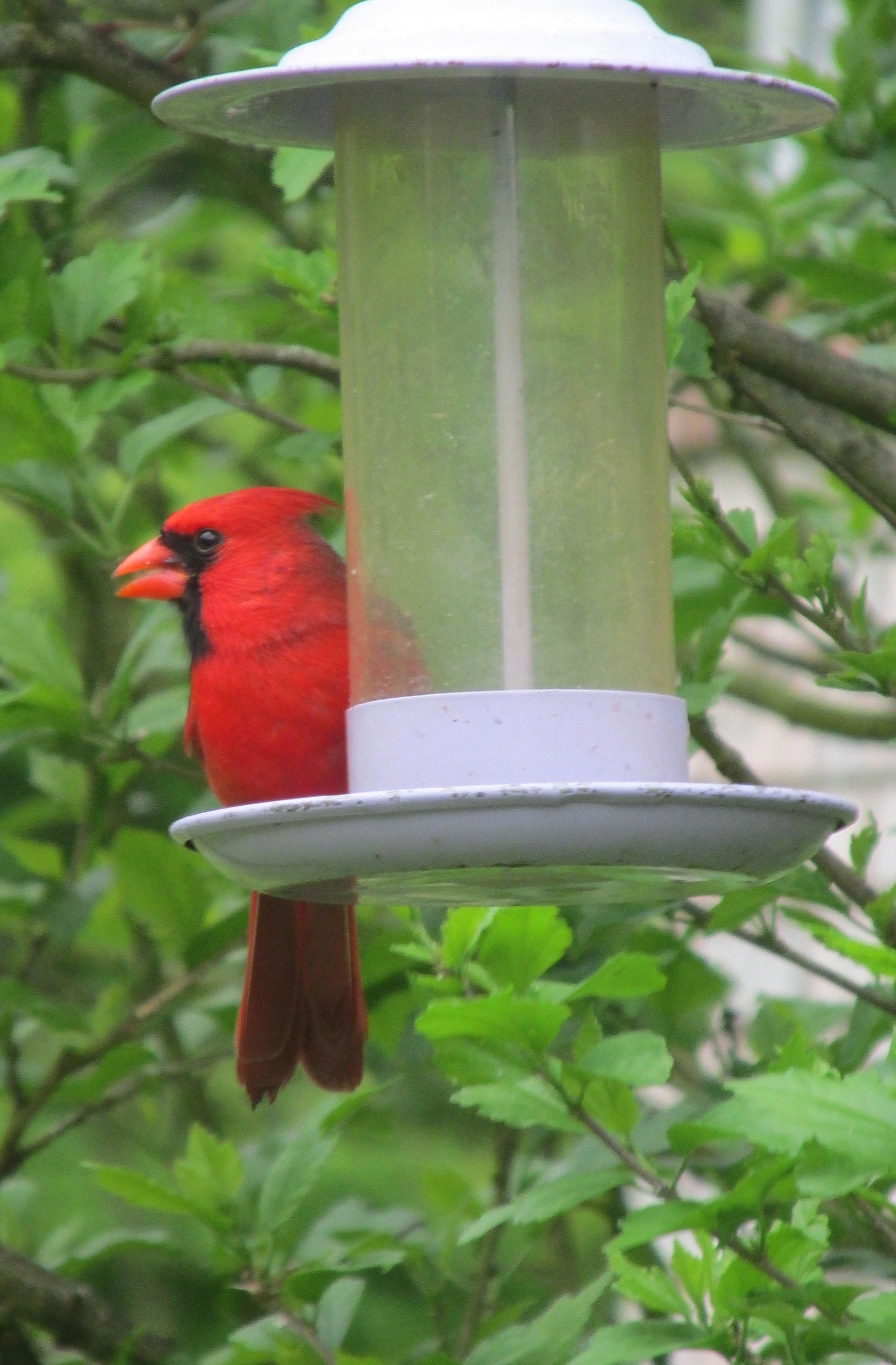
Photo by Bryan Stevens • A male Northern cardinal pays a visit to a feeder.

In the 2015-16 winter season, 1,373 individuals participated in Project FeederWatch in the southeastern United States. The most common birds reported by observers were Northern cardinal, Carolina chickadee, mourning dove, American goldfinch and tufted titmouse. Finishing out the Top 10 feeder birds in this section of the nation were Carolina wren, house finch, blue jay, red-bellied woodpecker and downy woodpecker. Almost 98 percent of participants reported Northern cardinals at their feeders, which means the cardinal has become an almost universal feeder visitor in the southeast.

It’s not surprising that such a popular bird has also become associated with many trappings of the Christmas season.

“You see cardinals on greeting cards, stationery, paper plates, paper napkins and tablecloths, doormats, light switch plates, candles, candle holders, coffee mugs, plates, glasses, Christmas tree ornaments and lights, bookmarks, mailboxes, Christmas jewelry,” writes June Osborne in her book The Cardinal. “And the list goes on. Cardinals have become an integral part of the way that many people celebrate the holiday season.”

I can be included among such people. My Christmas decorations include an assortment of cardinal figurines and ornaments. There are other birds — doves and penguins for example — associated with the holiday season, but for me the holidays magnify the importance of one of my favorite birds. The cardinal, in its festive red plumage, appears made to order for a symbol of the holiday season.

Photo by Bryan Stevens • Northern cardinal seems much less descriptive of this popular bird than such common names as Virginia nightingale and Kentucky redbird.

Here’s some additional cardinal trivia to increase your knowledge of this fascinating bird:

• Cardinals differ in appearance based on gender. The male boasts crimson plumage, a crest, a black face and orange bill. The female, although less colorful, is also crested. Female cardinals are soft brown in color, with varying degrees of a reddish tinge in their feathers, particularly in their wings.

• The cardinal’s preference for dense cover makes them likely neighbors for such birds as Carolina wrens, Eastern towhees and brown thrashers.

• The oldest recorded Northern Cardinal was a female, and she was 15 years, nine months old when she was found in Pennsylvania, according to the website, All About Birds.

• An uncommon genetic variation sometimes produces a cardinal with yellow or orange feathers instead of the typical red. The scientific name for the condition that produces yellow cardinals is known as xanthochroism. This condition also often occurs in house finches.

• Nests are built by the female cardinal, but her mate delivers food as she incubates her clutch of eggs, which usually numbers three or four.

Photo by Bryan Stevens • A female Northern Cardinal feeds during a snowstorm at a hanging tray filled with sunflower seeds.