Category Archives: Fall migration

Plovers among migration champions of vast and varied shorebird clan

0815171646c (1)

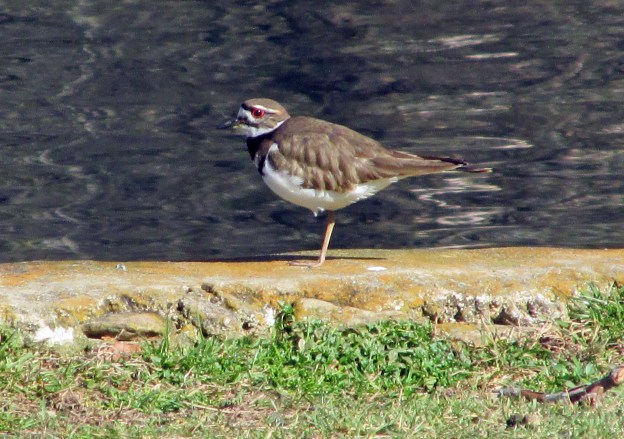
Photo by Janice Humble • A killdeer wanders in a grassy area near the Wal-Mart on Volunteer Parkway in Bristol. The killdeer, a species of plover, is one of the more common shorebirds found in the region.

I’m always glad to lend a hand at identifying birds. If you’re uncertain of a bird’s identification and have a photo of the bird in question, assistance is an email away. Janice Humble emailed me seeking some help with identifying the bird in a photograph attached with her message. She noted that the bird was accompanied by a companion in the grassy area near the Wal-Mart on Volunteer Parkway in Bristol. She also noted that the two birds uttered loud “peeps” during her observation.

The bird turned out to be a killdeer, a species of plover native to North America. Plovers belong to the family of shorebirds that include various sandpipers, curlews, dowitchers, stilts, avocets and other species. The killdeer is a rather common shorebird that finds itself at home far from the seashore, often present in habitats such as pastures and golf courses, as well as the grassy areas near the concrete and asphalt jungles that surround Wal-Marts and other such shopping complexes.

The killdeer’s famous for its faking of an injured wing. When its nest or young is threatened, a killdeer will go into an elaborate display, fluttering the “injured” wing and uttering shrill peeps to distract the potential predator. If successful, the bird will lure the predator away from the nest or vulnerable young. Once at a safe distance, the killdeer undergoes a miraculous recovery and takes wing, leaving behind a bewildered and perhaps chagrined predator.
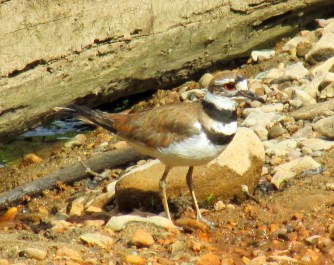
Killdeer_AgainstLog

Photo by Bryan Stevens • A Killdeer explores near a stream bank.

Other North American plovers related to the killdeer include American golden-plover, black-bellied plover, Pacific golden plover, Wilson’s plover, piping plover, snowy plover, mountain plover and semipalmated plover. About 70 different species of plovers exist around the world, including such descriptively named birds as little ringed plover, red-capped plover, three-banded plover and white-fronted plover.

Musick’s Campground on Holston Lake has been one of the best area locations for seeking shorebirds during their migrations. The shore near the campground has been a magnet for persuading unusual shorebirds to pause their journey to rest, refresh and refuel. The location’s privately owned, but individual wishing to bird the shoreline can enter by signing the guest book located a small but well-marked kiosk. Some of the most memorable shorebirds I’ve seen at Musick’s Campground over the years include whimbrel, dunlin, sanderling, greater yellowlegs, short-billed dowitcher, American avocet, black-bellied plover and semipalmated plover. In recent weeks, the location has hosted such unexpected shorebirds as red knot and red-necked phalarope.

While the neighboring states of Virginia and North Carolina offer coastal birding opportunities, my native Tennessee remains quite landlocked. This fact poses a challenge for birders looking to capitalize on the seasonal migrations of shorebirds. Fortunately ponds, mudflats on the shorelines of lakes, riverbanks and even flooded fields offer adequate substitute habitat for many shorebirds. While the Mountain Empire region may lack a seashore, migrating shorebirds have learned to make do.

6300749922_099f28ae81_o (1)

Photo by Jean Potter • The American golden-plover, like this individual, is a long-distance migrant among the varied family of shorebirds.

This varied and far-flung family is also known as “wind birds,” a term which is an allusion to the capacity of many species of shorebirds to undertake nothing less than epic migrations. Many of the shorebirds that pass through in the spring are in haste to reach their nesting grounds as far north as the edge of the Arctic tundra. In fall, many of the same birds are eager to return to destinations in Central and South America ahead of cold weather and times of scarcity.

The plovers — the sedentary killdeer excepted — are among the champions of long-distance migration. According to the Audubon website, the black-bellied plover spends the brief summer season nesting in the world’s high Arctic zones but disperses to spend the winter months on the coasts of six of the globe’s seven continents.

The Pacific golden-plover’s twice yearly migrations represent an even more impressive feat. This shorebird often nests in Alaska and winter in Hawaii. The website Phys.org notes that research on this plover has revealed that the bird is capable of flying almost 3,000 miles in a mere four days. The website also reveals that those plovers wintering in Hawaii cannot lay claim to longest migrations. Some Pacific golden-plovers nest even farther south in the Pacific, reaching the Marshall Islands.

Black-belliedPlover

Photo by Jean Potter • A black-bellied plover stands out from most relatives when it wears its nesting season breeding plumage.

Shorebirds represent only a single family of birds migrating through the region in the fall. Songbirds from warblers and thrushes to vireos and flycatchers, as well as raptors and waterfowl, wing their way through the region every fall. Get outdoors with a pair of binoculars and have a look. It’s almost impossible not to see something, which may turn out to be a delightful and unanticipated surprise.

••••••

To learn more about birds and other topics from the natural world, friend Stevens on Facebook at https://www.facebook.com/ahoodedwarbler. To ask a question, make a comment or share a sighting, email him at ahoodedwarbler@aol.com.
Annual Fall Bird Count finds 125 species

rthawk-one

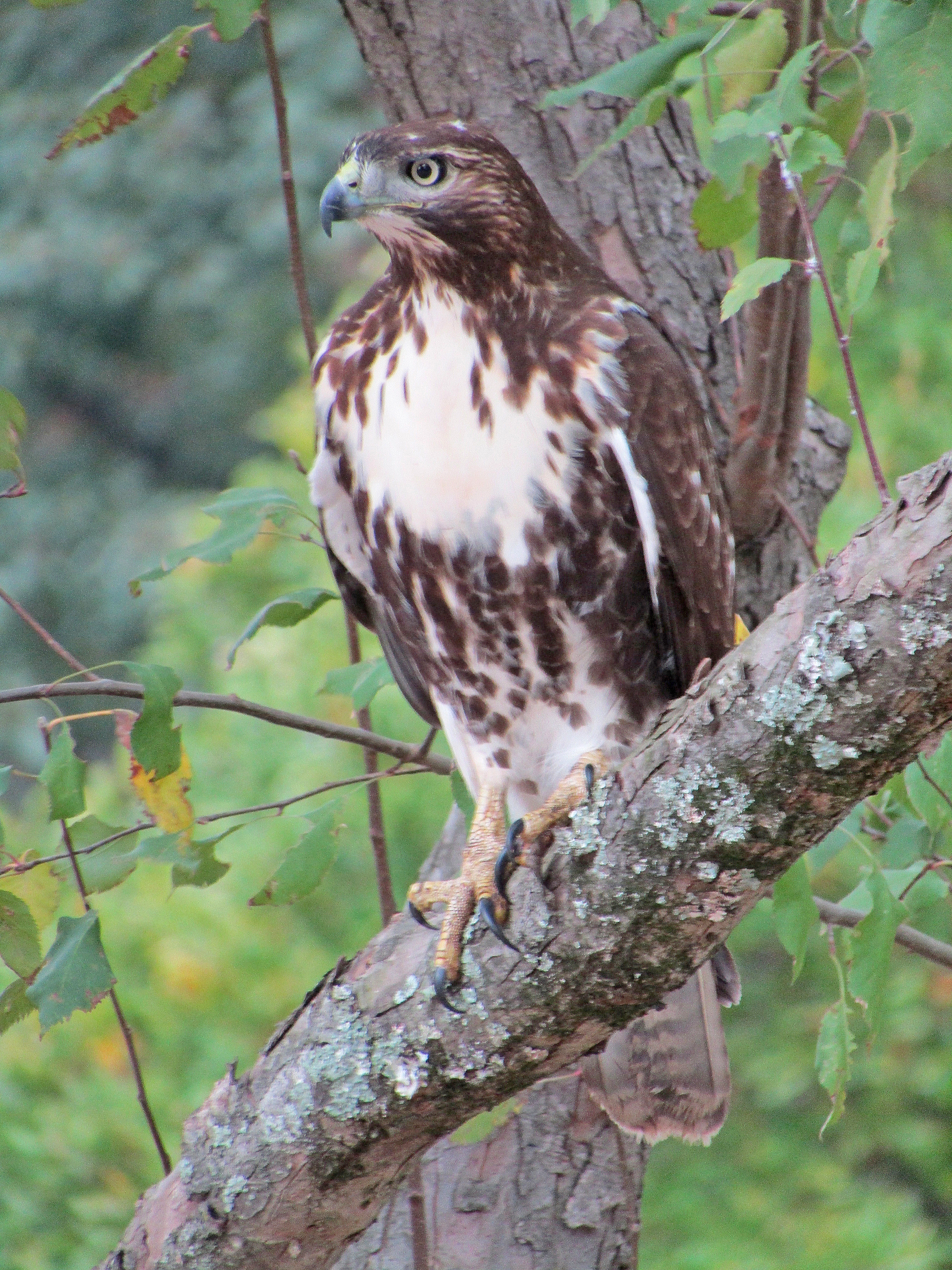
Photo by Bryan Stevens                  Red-tailed Hawks were found in good numbers on the recent fall count, but the species was outnumbered by migrating Broad-winged Hawks.

The Lee and Lois Herndon Chapter of Tennessee Ornithological Society held its annual Fall Bird Count back in September. The chapter’s five-county Fall Bird Count, the 47th consecutive survey conducted by the chapter, was held Sept. 24. A total of 39 observers (and two yard watchers) found a total of 125 species. Oppressive heat on the day of the count probably negatively affected bird numbers.
The Fall Bird Count, as well as the chapter’s annual Spring Bird Count, surveys bird populations in the upper Northeast Tennessee counties of Carter, Johnson, Sullivan, Unicoi and Washington.
The annual count is compiled by long-time chapter statistician Rick Knight.
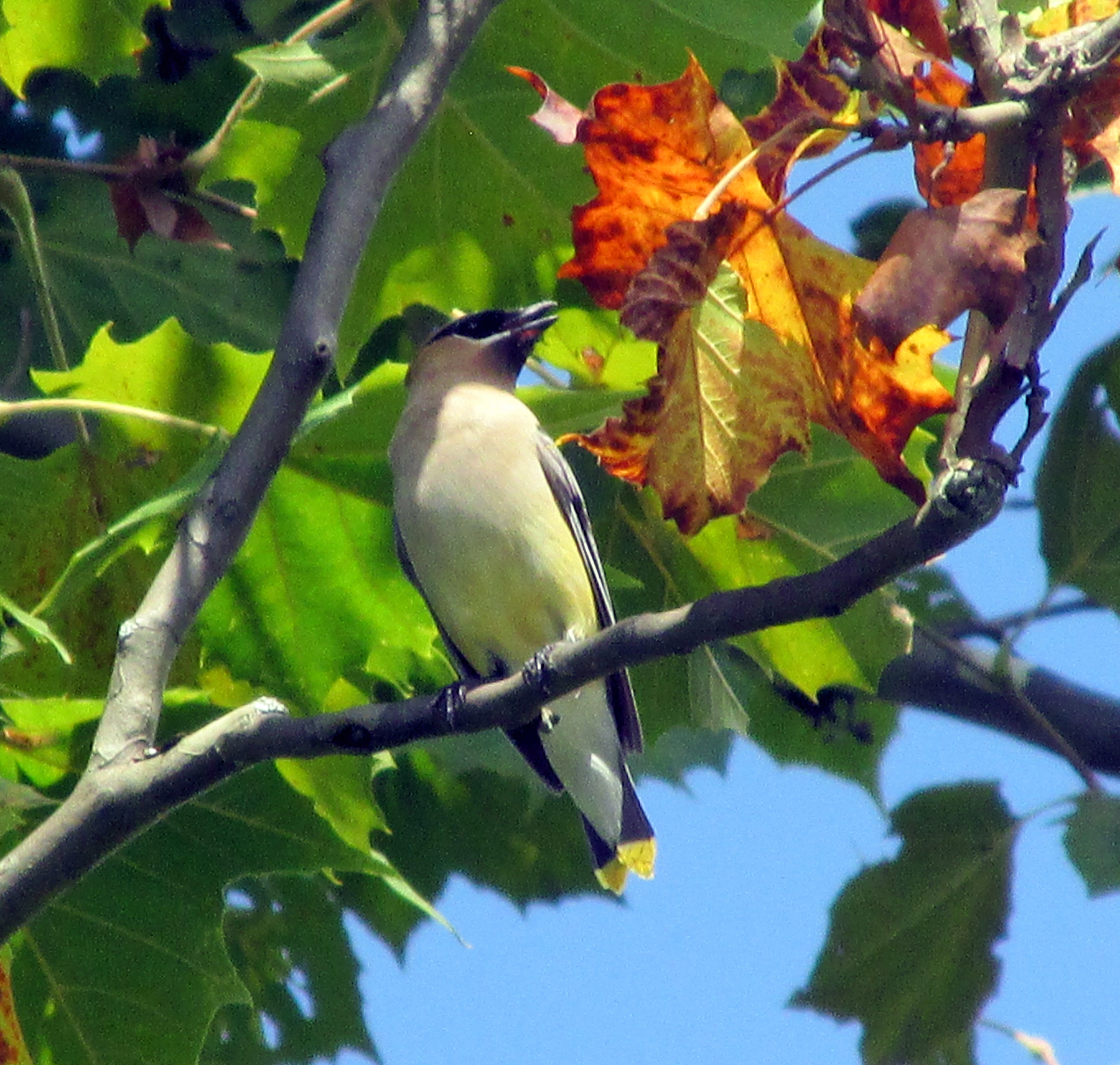
The recent count was most notable for low numbers of many species. “A curious statistic: we had more Cedar Waxwings than European Starlings,” Knight remarked.
The all-time high on for a Fall Bird Count was 137 species in 1993.
•••••

bluewingteal-splash

Photo by Bryan Stevens                                     Blue-winged Teal were among the migratory waterfowl found during the recent Fall Bird Count conducted by the Elizabethton Bird Club.

The total for this year’s Fall Bird Count follows:
Canada Goose, 1,118; Wood Duck, 40; Mallard, 224; Blue-winged Teal, 4; Green-winged Teal, 1; Ruffed Grouse, 2; Wild Turkey, 23; Pied-billed Grebe, 3; Double-crested Cormorant, 16; Great Blue Heron, 30; Great Egret, 10; Green Heron, 2; Black-crowned Night-Heron, 2; and Yellow-crowned Night-Heron, 1.
Black Vulture, 159; Turkey Vulture, 222; Osprey, 7; Bald Eagle, 4; Sharp-shinned Hawk, 2; Cooper’s Hawk, 10; Red-shouldered Hawk, 5; Broad-winged Hawk, 25; and Red-tailed Hawk, 22.
Killdeer, 66; Spotted Sandpiper, 3; Least Sandpiper, 4; Pectoral Sandpiper, 6; American Woodcock, 4.
Rock Pigeon, 365; Eurasian Collared Dove, 2; Mourning Dove, 174; Yellow-billed Cuckoo, 1; Eastern Screech-Owl, 14; Great Horned Owl, 8; Barred Owl, 8, and Northern Saw-whet Owl, 1.


Downy-Male-Feb23

Photo by Bryan Stevens Downy Woodpecker was the most numerous woodpecker tallied on the fall count.

Common Nighthawk, 3; Chimney Swift, 379; Ruby-throated Hummingbird, 30; Belted Kingfisher, 33; Red-headed Woodpecker, 1; Red-bellied Woodpecker, 61; Yellow-bellied Sapsucker, 5; Downy Woodpecker, 42; Hairy Woodpecker, 10; Northern Flicker, 28; and Pileated Woodpecker, 32.
American Kestrel, 14; Peregrine Falcon, 2; Eastern Wood-pewee, 12; Acadian Flycatcher, 1; Empid species, 3; Eastern Phoebe, 68; and Eastern Kingbird, 1.
White-eyed Vireo, 2; Yellow-throated Vireo, 2; Blue-headed Vireo, 20; Red-eyed Vireo, 15; Blue Jay; 329; American Crow, 376; and Common Raven; 26.
Purple Martin, 1; Tree Swallow, 163; Barn Swallow, 1; Carolina Chickadee, 152; Tufted Titmouse, 124; Red-breasted Nuthatch, 12; and White-breasted Nuthatch, 36.

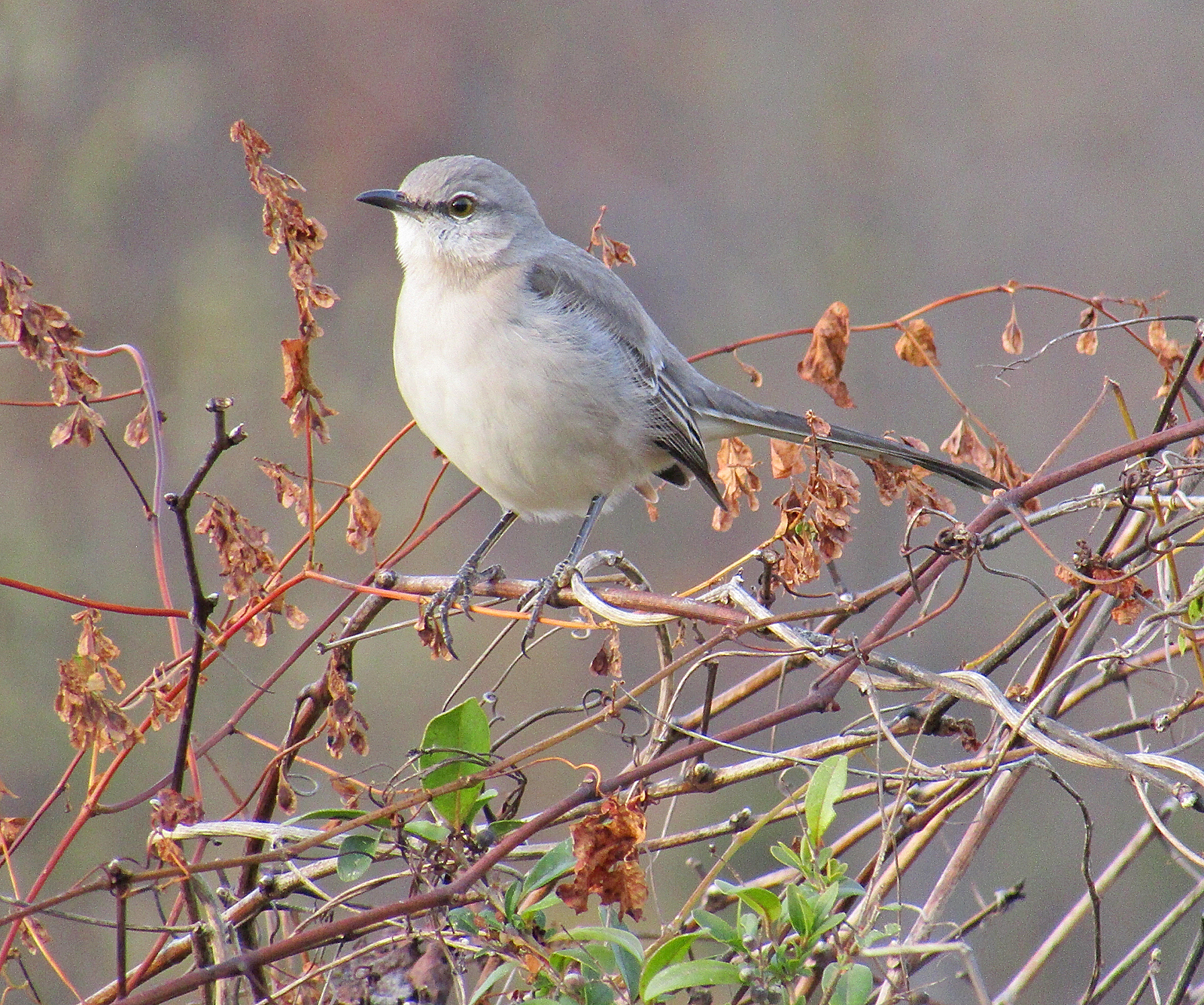
mockingbird-nov11

Photo by Bryan Stevens                                                 A total of 54 Northern Mockingbirds, Tennessee’s official state bird, was found on the count.

Brown Creeper, 5; House Wren, 3; Carolina Wren, 139; Blue-gray Gnatcatcher, 2; Golden-crowned Kinglet, 23; and Ruby-crowned Kinglet, 5.
Eastern Bluebird, 91; Veery, 4; Gray-cheeked Thrush, 6; Swainson’s Thrush, 89; Hermit Thrush, 1; Wood Thrush, 16; American Robin, 343, Gray Catbird, 48; Brown Thrasher, 14; and Northern Mockingbird, 54.

crossbills

Photo by Bryan Stevens                                    Red Crossbills were among the finches tallied on this year’s Fall Bird Count.

European Starling, 426; Cedar Waxwing, 506; Ovenbird, 4; Worm-eating Warbler, 1; Northern Waterthrush, 1; Black-and-white Warbler, 4; Tennessee Warbler, 12; Orange-crowned Warbler, 1; Common Yellowthroat, 10; Hooded Warbler, 4; American Redstart, 13; Cape May Warbler, 7; Northern Parula, 3; Magnolia Warbler, 11; Bay-breasted Warbler, 6; Blackburnian Warbler, 3; Chestnut-sided Warbler, 2; Black-throated Blue Warbler, 3; Palm Warbler, 16; Pine Warbler, 11; Yellow-rumped Warbler, 2; Yellow-throated Warbler, 2; Prairie Warbler, 1; and Black-throated Green Warbler, 8.
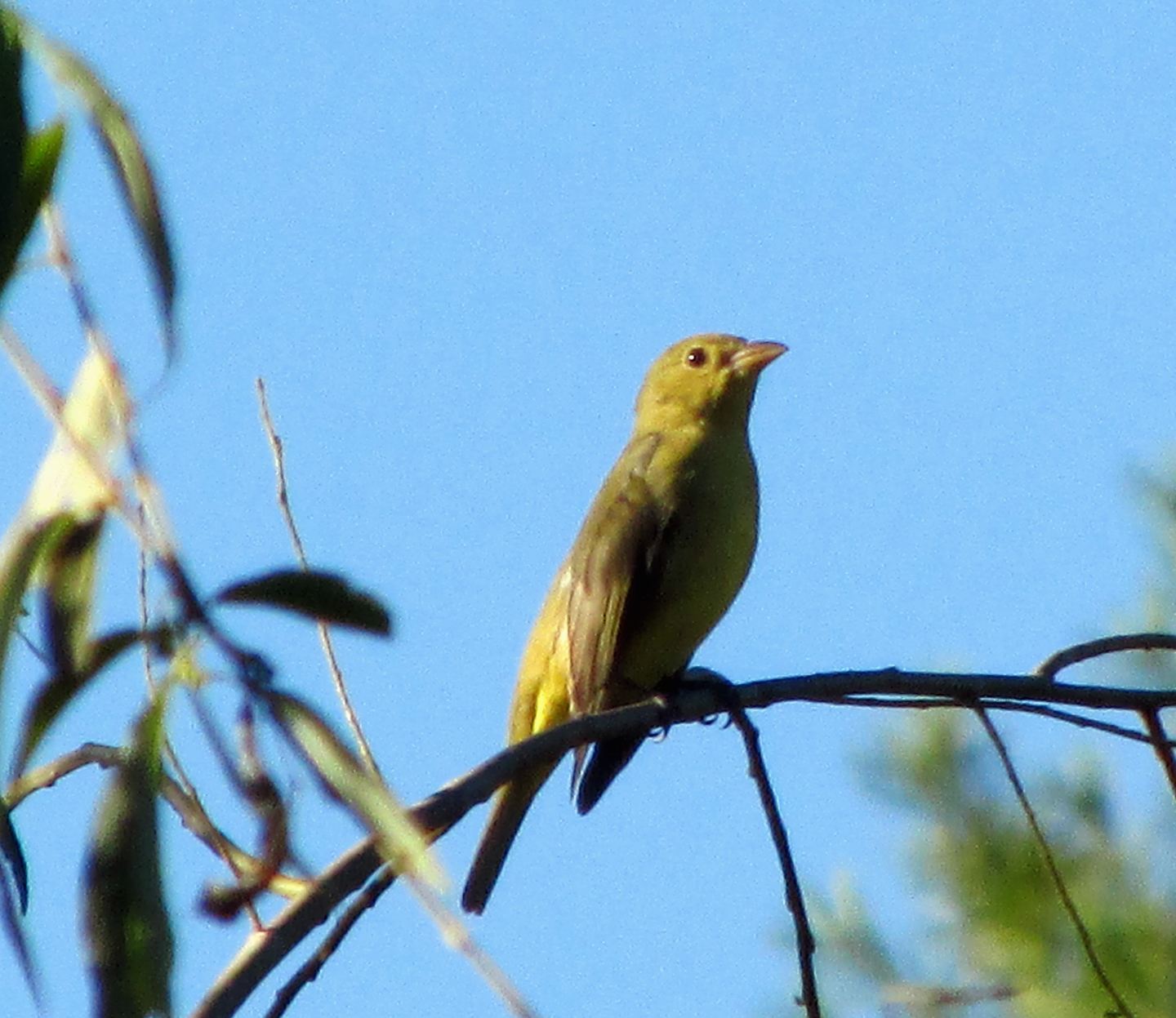
Eastern Towhee, 65; Chipping Sparrow, 24; Field Sparrow, 11; Song Sparrow, 83; Dark-eyed Junco, 95; Summer Tanager, 2; Scarlet Tanager, 15; Northern Cardinal, 138, Rose-breasted Grosbeak, 43; and Indigo Bunting, 13.
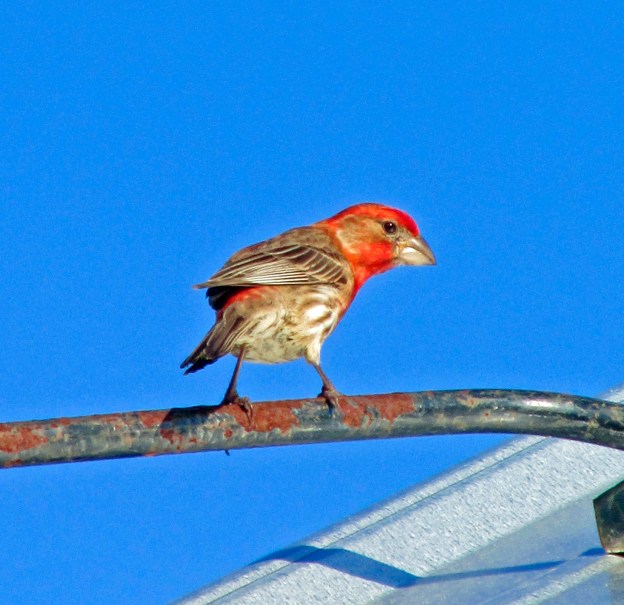
Red-winged Blackbird, 61; Eastern Meadowlark, 10; Common Grackle, 156; House Finch, 51; Red Crossbill, 2; Pine Siskin, 10; American Goldfinch, 231; and House Sparrow, 38.

••••••
The season’s first White-throated Sparrow showed up at my home on Oct. 30. I’m hopeful that the sparrow is but the first of many new arrivals ahead of the winter season. To share a sighting, ask a question or make a comment, send an email to ahoodedwarbler@aol.com.
Arduous migration journeys by some birds represent wondrous natural achievements

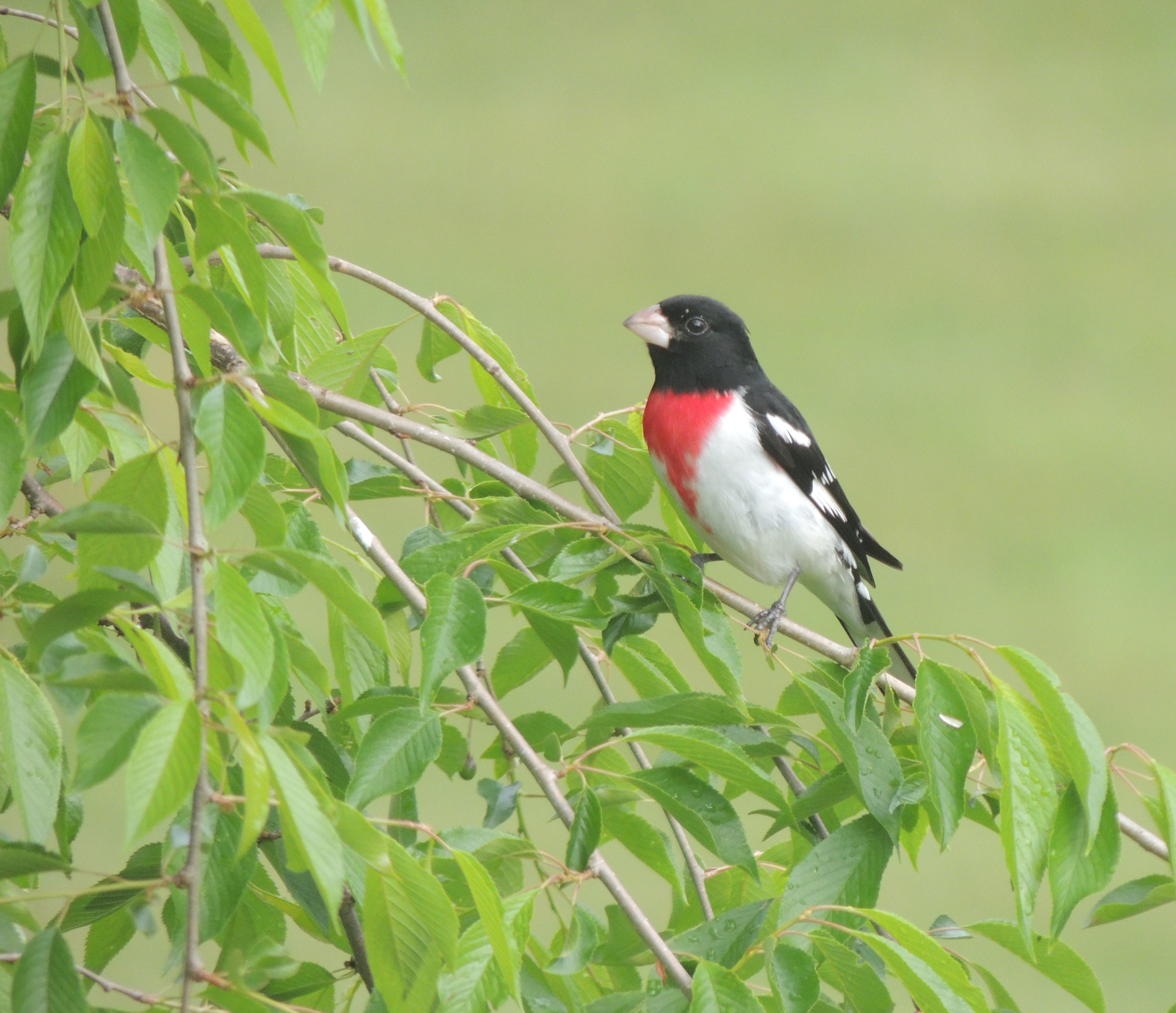
grosbeak-photo

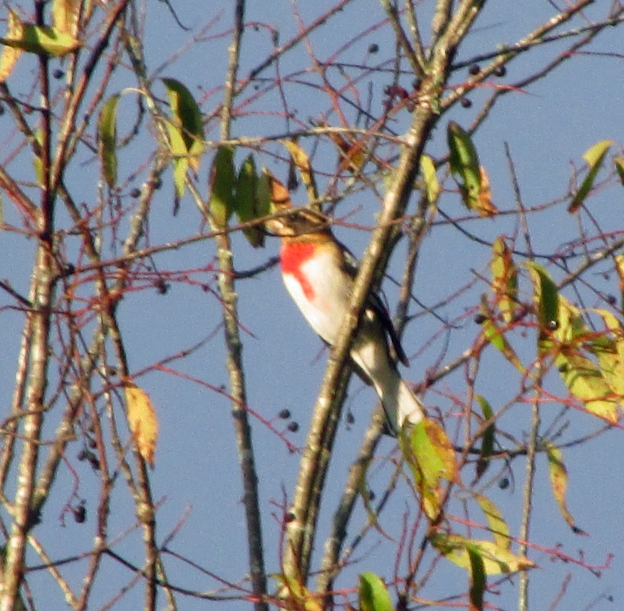
Photo by Bryan Stevens                                                          This rose-breasted grosbeak struck a window Monday, Oct. 3, during fall migration. Although this bird rested and later recovered, many birds are felled by similar perils and obstacles as they migrate south each fall.

A stunned rose-breasted grosbeak recuperating on the front porch on Oct. 3 provided a reminder that migrating birds face a variety of perils and obstacles as they wing their way back south. Now that we’re into October, many of the birds of summer — orioles, tanagers, warblers and hummingbirds — are becoming scarce in our yards and gardens. These neotropical migrants are temporary visitors, remaining in North America only long enough to nest and raise young before they take to the wing to return to more tropical regions for the winter months that will grip their summer home in snow and ice for several months.

Some of these birds migrate out of the tropics to avoid competition. Others find North America a land of abundant, albeit temporary, resources. This land of plenty offers a wealth of insects, seeds, fruit and other nourishing, nutritious food to help parent birds keep their strength while they work to ensure their young thrive. The phenomenon of migration isn’t exclusive to the neotropical migrants of the New World. Birds in other parts of the world migrate, too.

rubythroated_hummingbird

Photo by U.S. Fish & Wildlife Service                 The tiny ruby-throated hummingbird crosses the Gulf of Mexico twice yearly to migrate from Central America to North America in the spring and back again in the fall.

The Arctic tern, for example, truly takes migration to extremes. This small seabird travels each year from its Arctic nesting grounds to the Antarctic region, where it spends the winter months. Put into terms of mileage, the Arctic tern can travel about 50,000 miles in a single year. For a bird with a body length of about 15 inches and a wingspan of about 28 inches, this incredible migration is an astonishing feat.

The ruby-throated hummingbird, a favorite of many bird enthusiasts living in the eastern United States, makes an impressive migration each year. Just to reach the United States, these tiny birds undertake a strenuous journey. They leave their wintering grounds in Central America to return to the United States and Canada for the nesting season. Most of these tiny birds, which are barely four inches long, make a non-stop flight of more than 500 miles across the Gulf of Mexico. The journey can take almost an entire day! With the end of summer, the entire population of ruby-throated hummingbirds, increased by a new generation of young birds, makes the Gulf crossing for a second time in a year to return to the American tropics for the winter months.

The broad-winged hawk, a raptor found in the region during the summer, makes a fall migration back to South America every fall that astonishes human onlookers who gather along mountain peaks to witness the spectacle. The hawks form large flocks, also called kettles, that can number thousands of birds.

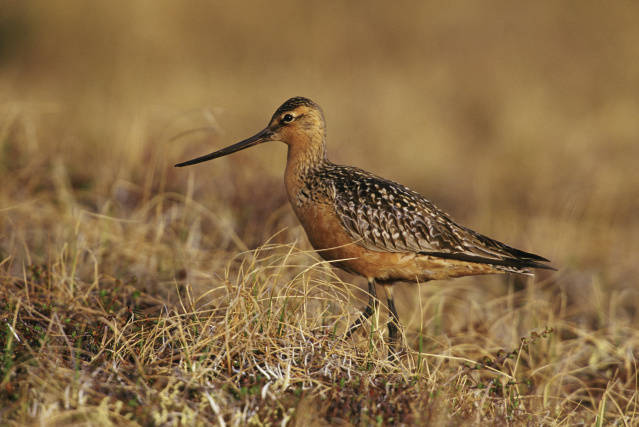
bartailed_godwit_on_tundra

Photo by U.S. Fish & Wildlife Service/Steve Maslowski The bar-tailed godwit stages migrations that can take nine days of non-stop flight spanning nearly 6,000 miles.

Shorebirds, which in North America can consist of birds ranging from plovers and godwits to dowitchers and avocets, are champion migrants. The bar-tailed godwit makes an even more impressive non-stop migratory flight. This shorebird nests in parts of Scandinavia, northern Asia and Alaska. Some of these godwits make a nine-day non-stop migratory flight that takes them from New Zealand to the Yellow Sea of China, a distance of almost 6,000 miles. Needless to say, since the godwits make no stops along the way, they must also go without food for the duration of their journey.

Most of the warblers that nest in North America retreat to Central and South America during the winter months. Few warblers, however, make as great a journey as the blackpoll warbler. Instead of migrating over land, this five-inch-long warbler undertakes a two-stage migration. The first half of the migration is a non-stop flight of about 1,500 miles. Every fall, these tiny birds fly over the ocean during this part of their migration, departing from Canada or the northern United States and not stopping until they reach various locations in the Caribbean. There they will spend some time recovering from the exhausting first half of their journey before they continue their way to such South American countries as Colombia and Venezuela. Once again, during the time they spend flying over open ocean, these tiny warblers do not feed.

Even birds that cannot fly undertake migrations. For instance, flightless penguins swim hundreds or thousands of miles to reach preferred ranges for feeding or nesting. The Australian emu, a smaller relative of the ostrich, makes seasonal migrations on foot to ensure access to abundant food supplies at all seasons.

arctic_tern

Photo by U.S. Fish & Wildlife Service/Kirk Rogers         The Arctic tern’s migration, which takes it from the Arctic to the Antarctic, keeps this small seabird in the sky for about 50,000 miles each year.

Birds are not even the only animals to migrate. Many creatures, from whales and wildebeest to dragonflies and butterflies, impress humans with their endurance as they stage regular migrations.

Even as some of our summer favorites depart, we should prepare to welcome back some winter favorites, including dark-eyed juncos, yellow-rumped warblers, white-throated sparrows and yellow-bellied sapsuckers. Fall is indeed a time of departure for many birds, but it’s also a time to make new friends with the other birds that should soon start arriving in our yards and gardens.

As for the rose-breasted grosbeak on the porch, that story had a happy ending. After taking some time to recover after apparently striking a window, the bird hopped around the porch for a moment and then took wing and flew to nearby hawthorn trees. The bird’s flight — strong and straight — delighted me. The grosbeak could have been badly injured or even killed. I wished it the best for the remainder of its journey.

•••••

I’m dedicating this week’s column to the memory of J. Wallace Coffey, a great birder and wonderful individual who died Tuesday, Sept. 27. I met Wallace, a native of Bristol, Tennessee, back in the late 1990s. He introduced me to some wonderful birding destinations in the region, including such Virginia locations as Burke’s Garden, Steele Creek Park in Bristol, the wetlands of Saltville and Musick’s Campground on Holston Lake. Wallace was a tireless promoter of birds, birding and birders, and he loved to encourage young people to explore nature. He was also a great leader for the Bristol Bird Club, as well as the Elizabethton Bird Club. He will be greatly missed.
•••••

Bryan Stevens lives near Roan Mountain, Tennessee. To learn more about birds and other topics from the natural world, friend Stevens on Facebook at https://www.facebook.com/ahoodedwarbler. He is always posting about local birds, wildlife, flowers, insects and much more. If you have a question, wish to make a comment or share a sighting, email ahoodedwarbler@aol.com.

Summer’s bright American goldfinches will soon transform into their dull winter plumage

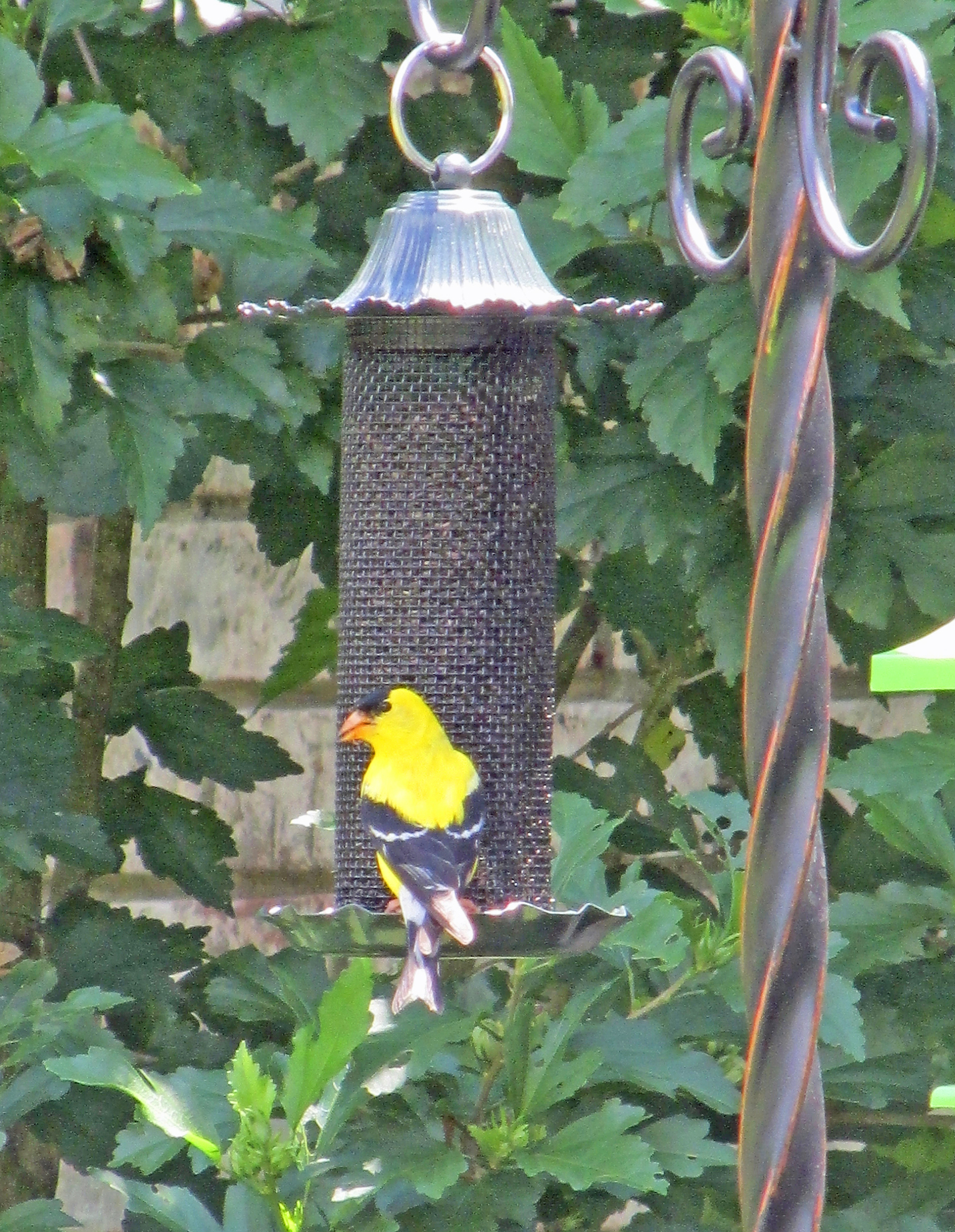
goldfinch-thistlefeed

Photo by Bryan Stevens                            An American goldfinch feeds on thistle seeds from a feeder designed to contain these tiny seeds.

I received a phone call recently from Allan Vance, who had a question about American goldfinches. Allan told me he moved back to Bristol about nine years ago after living for about 30 years in Savannah, Georgia. He now resides in the community of Middlebrook, where he feeds the various birds that flock to his yard.

Allan explained that the goldfinches had become conspicuous in their absence from his yard starting a few weeks ago. “I haven’t seen a single one in weeks,” he said.

1451693-center-1

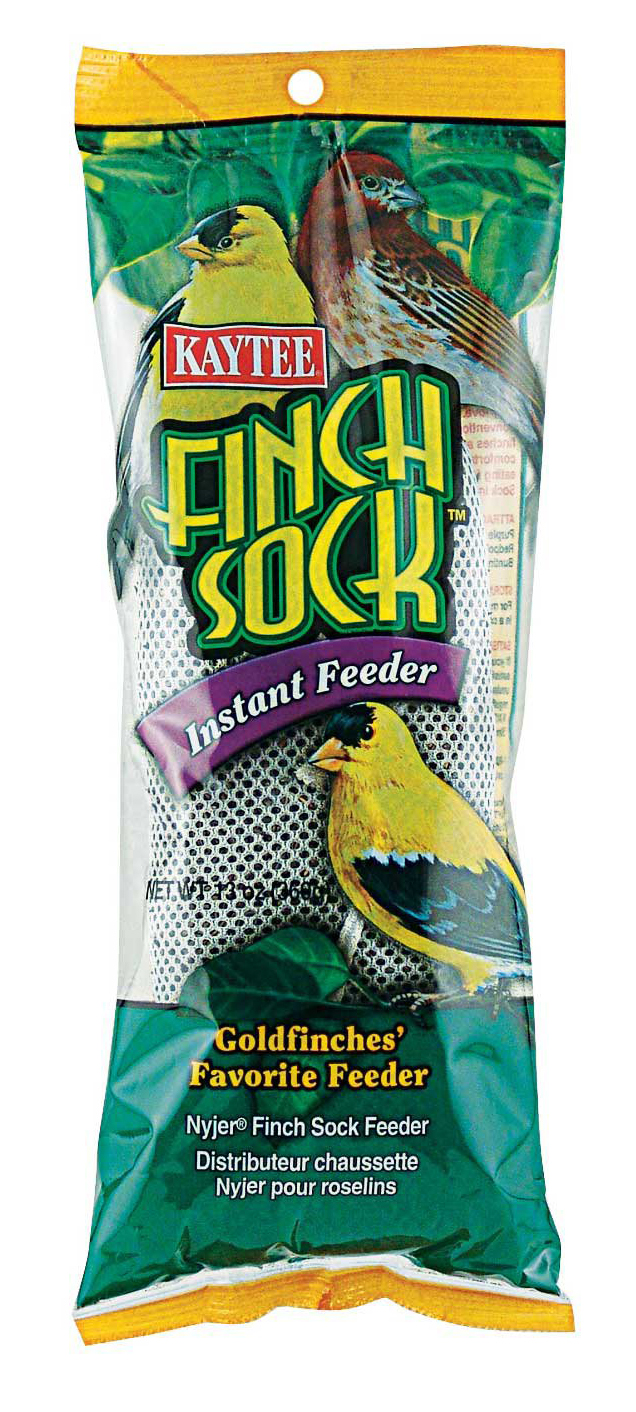
A thistle sock with seeds favored by American goldfinches.

Allan purchases thistle socks for the flock of goldfinches at his home. These “socks” are actually long, mesh bags holding the tiny seeds of the nyjer plant. Although these seeds are also known as thistle seeds, they are not related to the thistle plants that are sometimes classified as noxious weeds. Finches are able to cling to the sides of the mesh socks as they carefully remove the seeds. The tiny seeds are quite securely held within the mesh socks. Special feeders with small ports for dispensing of these tiny seeds are also available.

After he purchased his most recent thistle sock, Allan expected the birds to visit it as is their usual custom.     After several weeks, only one bird — not a goldfinch — had visited the sock. He wondered if there might be some explanation behind the goldfinches suddenly turning their backs on these favorite seeds.

I explained that there were two possible reasons, which are somewhat connected to each other, for the goldfinches suddenly shunning the sock. It’s early fall and there’s an abundance of natural food sources available to fold finches. Many roadside, fields and gardens are filled with plants that are already producing a banquet of fresh seeds for finches and other seed-loving birds. It’s possible that, faced with a smorgasbord of other foods, the goldfinches are no longer quite as reliant on the seeds in Allan’s thistle socks.

goldfinch

Photo by Bryan Stevens                                    An American goldfinch showing its bright summer plumage.

The American goldfinch is also one of the last songbirds to nest each season. Some goldfinches don’t even start to think about nesting until late July and early August. Their nesting season is timed to coincide with a time of natural abundance. Goldfinches feed their young mostly on insects, as opposed to most songbirds that work so hard to gather insects to feed their young a protein-rich diet.

It’s a satisfying irony that, although brown-headed cowbird females sometimes slip their eggs into a goldfinch nest, any young hatched in those nests rarely survive. While goldfinch hatchlings are adapted to thrive on a diet of seeds, the fostered young cowbirds fail to thrive on a diet so lacking in insects.

In addition to feeding birds, his yard serves as a place for them to nest. He noted that wrens have successfully nested at his home over the years. He said a funny memory from years ago involved a white-tailed deer at a feeder. “I saw this doe raiding my feeder,” he said, adding that the deer used its tongue to lick seeds from the feeder.

goldfinch-twigs

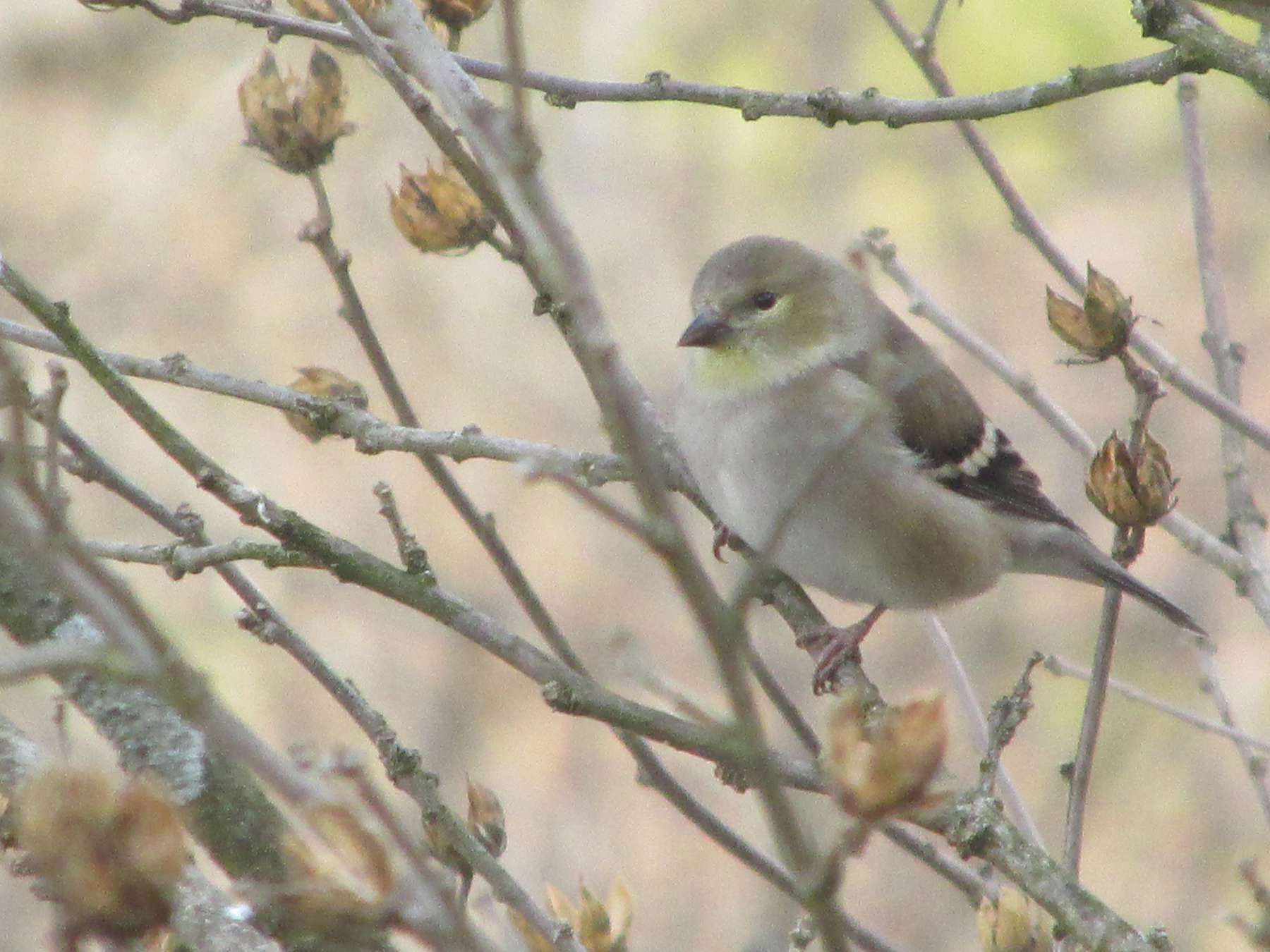
Photo by Bryan Stevens                                        A fall American goldfinch looks quite different than it does at the height of summer.

The male American goldfinch during the breeding season is unmistakable in his bright yellow and black plumage. Female goldfinches are more subdued in coloration. Males also sing a bubbly, cheerful song when seeking to win the attention of a potential mate. Outside of the nesting season, goldfinches are quite sociable and form large flocks. Dozens of these small songbirds can descend on feeders at almost any time of the year, but they are primarily attracted to our feeders during the lean times of the winter months.

For these and other reasons, goldfinches are favorites of many bird lovers. There are actually three species of goldfinches in North America. The two related species are Lawrence’s goldfinch of California and the lesser goldfinch, which ranges through the southwestern United States as well as Central and South America.

summer-goldfinch

Photo by Bryan Stevens                                            A male American Goldfinch perches on a barbed wire fence.

The American goldfinch is also known by other common names, including wild canary, yellowbird and willow goldfinch. I’ve also heard the goldfinch referred to as “lettuce bird.” This nickname, which was one my maternal grandmother applied to the bird, relates to the bird’s fondness for seeds. Apparently the goldfinches would flock to lettuce plants in the garden once they had gone to seed.

Come winter, this vibrant bird undergoes a transformation into a dull, drab bird with grayish feather. In fact, this annual molt usually begins in September. During the fall and winter, the American goldfinch looks almost like an entirely different bird.

It’s understandable why people love to entertain flocks of these finches in their yards and gardens. Three states — Washington, Iowa and New Jersey — have made the American goldfinch their official state bird.

•••••

To learn more about birds and other topics from the natural world, friend Stevens on Facebook at https://www.facebook.com/ahoodedwarbler. He is always posting about local birds, wildlife, flowers, insects and much more. If you have a question, wish to make a comment or share a sighting, email ahoodedwarbler@aol.com.

goldfinches-iced

Photo by Bryan Stevens                                                                                                                  Winter goldfinches are not the birds of splendid appearance that they wear during the summer months.

Hooded warbler favorite member from an exceptional family of birds

hooded-hidden

Photo by Bryan Stevens                                   Hooded Warblers, like this male, prefer to remain in the shadows of shrubs and thickets.

hoodedwarbler

A plushie Hooded Warbler.

I watched a male hooded warbler flitting among the branches of a forsythia shrub during a soft rainfall on Sept. 18. As I watched the small bird dash after unseen insects among the thicket formed by the forsythia branches, I marveled at the bird’s exquisite appearance. The gold and green feathers seemed to glow brightly in the dim light as a drizzle of rain wet both bird and leaves. The black hood and bib surrounding the male’s yellow face stood out by virtue of its stark contrast from the brighter feathers.

The appearance of the male bird provides this species with its common name. The female has an identical yellow-green coloration as the male, although she is slightly more drab. She lacks the black hood and bib, although older females may acquire some dark plumage on the head and around the face. Both sexes also show white tail feathers that they constantly flick as the move about in thick vegetation and shrubbery.

I know that every migrant passing through my yard is making its way south and it may be another five to six months before I again see any of my favorite songbirds. The hooded warbler will make itself at home in the forests of Mexico, as well as Belize, Costa Rica and other Central American nations. Most hooded warblers begin returning to their winter haunts as early as mid-September, but lingering individuals continue to entertain birders in the United States throughout October.

hooded-warbler-at

Photo by Jean Potter                                            A male Hooded Warbler perches in a rhododendron thicket.

Like many of the ruby-throated hummingbirds that make their home in the United States for the summer, the hooded warbler’s fall migration takes it across the vast open waters of the Gulf of Mexico, crossing to the Yucatan and then dispersing from there to various points in Central America. That birds as small as hummingbirds and warblers make this incredible migration twice yearly is one of nature’s most phenomenal feats of endurance.

The warblers, also known as wood-warblers, are an exclusively New World family of birds, numbering approximately 116 species. About 50 of these species of warblers make their home in the eastern United States and Canada for the spring and summer, departing in the fall and returning to tropical wintering grounds. Some of them are extremely bright and colorful birds. As I’ve indicated in recent columns, however, some members of the family show more subdued plumages of tan, beige and brown. The hooded warbler would have to be included among the more brightly colored warblers.

Other colorful warblers that share similar tastes in range and habitat with the hooded warbler include the American redstart, black-throated blue warbler and black-throated green warbler. None of the eastern warblers show any true red in their plumage, but red and pink warblers can be found south of the border. The pink-headed warbler, red warbler and red-faced warbler all make their home in Mexico and and Central America.

????????????????????????????????????

Photo by Bryan Stevens                                        A male Hooded Warbler perches in a thicket during a fall migration stopover.

While some of the neotropical migrants that venture into North America boast even brighter kin in the tropics, we need not feel cheated with the warblers that make their home in the United States for half of the year. Some of their relatives are beautiful birds, including the white-faced whitestart, golden-bellied warbler, three-striped warbler and rose-breasted chat, but few can really hold a candle to their relatives that venture north and brighten the lives of the lucky humans fortunate enough to observe them during the summer nesting season or the seasonal migration journeys.

hooded-peek

Photo by Bryan Stevens                                   The male Hooded Warbler isn’t likely to be mistaken for any other warbler.

The hooded warbler has long been my favorite member of this family of interesting, energetic and engaging songbirds. Hooded warblers reside in the woodlands around my home, nesting and rearing young each year. I’ve never found a nest, but many years ago I watched a pair of hooded warblers fend off a song sparrow that ventured too close to one of their fledglings. Of course, the sparrow posed no realistic threat to the young warbler, but that didn’t make the conflict with the hooded warblers any less intense. The poor sparrow looked completely befuddled and uncertain about its offense. After the warblers drove the sparrow from the vicinity, I watched both parents deliver some food to the young bird.

Like most warblers, the hooded warbler feeds almost exclusively on small insects and arachnids. Some warblers will also feed on fruit, seeds and even nectar. The hooded warbler favors habitats featuring woodlands with an understory of smaller trees and shrubs, such as stands of willows or rhododendron thickets. Of course, a tangle of forsythia is enough to attract a visit from a migrating hooded warbler.

9781408134610The warblers have become such popular songbirds that they warrant field guides devoted exclusively to their ranks. My long-time favorite guide is Warblers of the Americas by Jon Curson, David Quinn and David Beadle published in 1994. More recently, other guides have been published, including A Field Guide to Warblers of North America, a book in the Peterson Field Guide series, and the Stokes Field Guide to Warblers. If you want a book to enlighten you about the magic of this family of birds, consider Chasing Warblers, a book by Bob and Vera Thornton about an adventure to find and photograph all 52 species of warblers that nest in the United States.

plate-110-hooded-warbler-final-2

John James Audubon painted this image of Hooded Warblers about two centuries ago.

The warblers are, in short, an incredible family of birds. I’ve seen all but a handful of the species that reside for part of the year in the eastern United States. I still want to see a Connecticut warbler and cerulean warbler, as well as the endangered Kirtland’s warbler of Michigan and the golden-cheeked warbler of Texas. I’ll miss the warblers once fall migration has run its course. For those few months they are here, the warblers belong to us. They seem like “our” birds. They’re only on loan, though. Our winter birds bring their own favorites back to our yards, but I’ll be impatiently awaiting that flash of gold in the shadows of a rhododendron thicket next April.

••••••

To learn more about birds and other topics from the natural world, friend Stevens on Facebook at https://www.facebook.com/ahoodedwarbler. He is always posting about local birds, wildlife, flowers, insects and much more. If you have a question, wish to make a comment or share a sighting, email ahoodedwarbler@aol.com.

hoodedwarbler-inhand

Photo by Bryan Stevens                                                                                             A female Hooded Warbler poses for her picture after being banded at Carver’s Gap on Roan Mountain.

Grosbeaks in region include blue, rose-breasted representatives of family


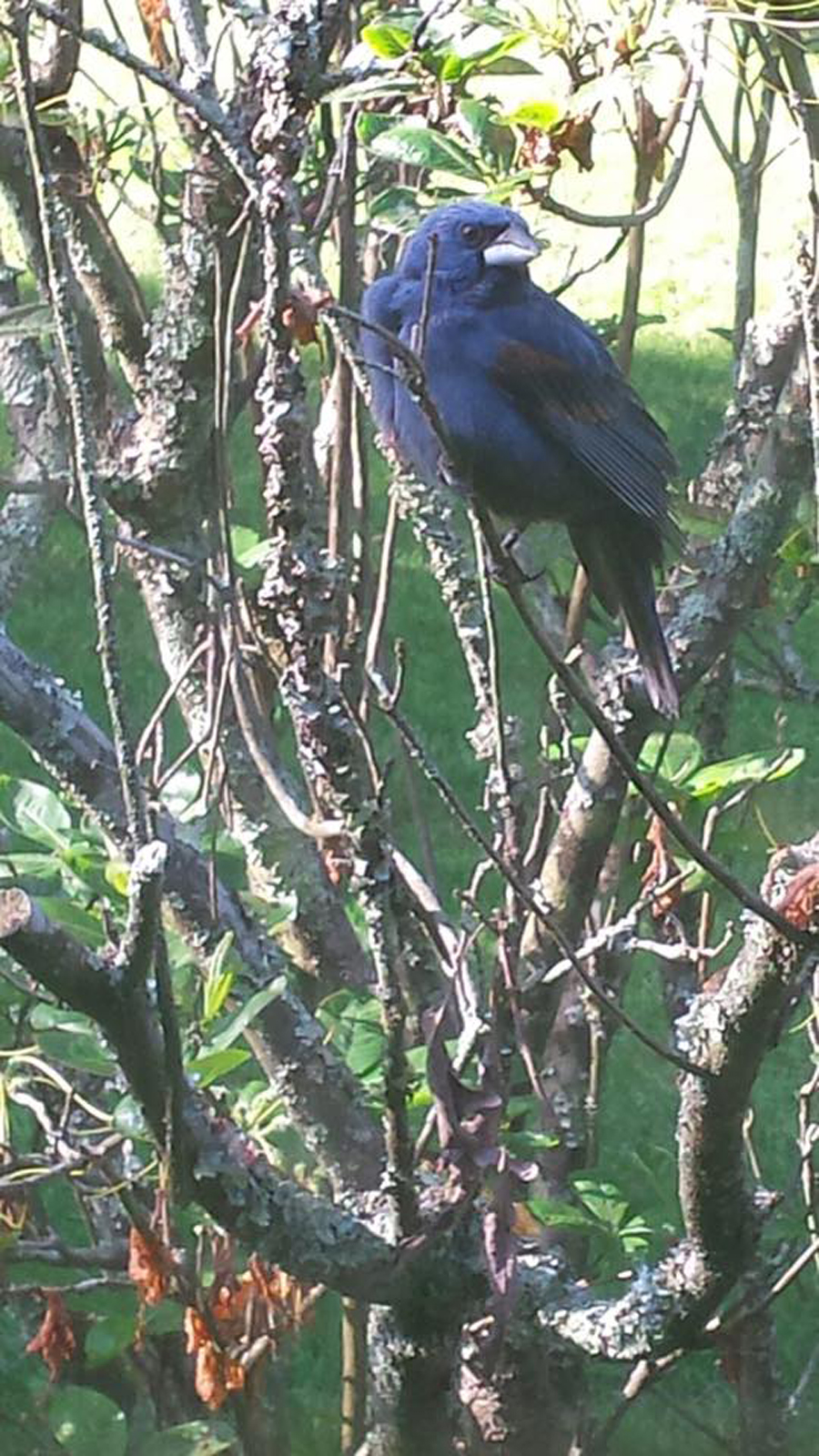
Daryl Herron, a real-life friend as well as a Facebook one, posted a photo of a bird on my page recently, seeking help with identifying the bird. His sister, Monica Cody, took the photo at her Kingsport home. The stunning bird depicted in the photo, as I happily reported back to Daryl, was a blue grosbeak. The grosbeak is an impressive bird, with males showing off an overall blue plumage save for some brown and black feathers in the wings.

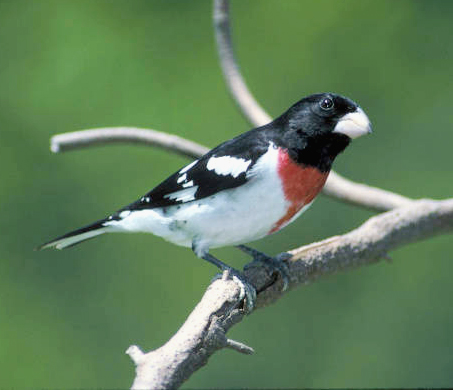
Photo by U.S. Fish & Wildlife Service/ David Brezinski Rose-breasted Grosbeaks will likely be among the colorful birds present for this year's rally.

Photo by U.S. Fish & Wildlife Service/ David Brezinski
Rose-breasted Grosbeaks will likely be among the colorful birds present for this year’s rally.

Blue grosbeaks are mostly southern birds with Tennessee, Kentucky and Virginia representing the northern tier of this bird’s range in the southeastern part of the country. Look for these chunky, blue birds in brushy fields or along hedgerows in fairly open country. They favor the same habitats as such birds as yellow-breasted chat, brown thrasher and loggerhead shrike.

BlueGrosbeak-CODY

Photo by Monica Cody                    This male blue grosbeak showed up near Monica Cody’s home in Kingsport, Tennessee. The blue grosbeak is an uncommon visitor in the region.

It’s a shame this bird isn’t more common in the region. Blue grosbeaks will visit feeders, but in more than 20 years of maintaining well-stocked feeders, I’ve managed to attract only one of these birds. If more common, it would surely be a favorite bird among the people offering free seed for their feathered friends.

The blue grosbeak is related to the better-known rose-breasted grosbeak. Male rose-breasted grosbeaks are absolutely stunning, especially for people getting their first-ever glimpse of this bird. It’s the adult male with his vibrant black and white feathers and the large rosy-red splash of color across the breast that gives this bird its common name. Females are brown, streaked birds that are larger than but easily confused with some of our sparrows.

Among grosbeaks, both sexes have a massive bill, which they use to hull sunflower seeds at feeders or glean insects from leaves and branches. It’s the heavy, blunt bill for which the term “grosbeak” is derived. “Gros” is a German term for large or big, so grosbeak simply means a large-beaked bird. People who band birds to further the study of them will tell you that rose-breasted grosbeaks have a wicked bite and are capable of delivering quite a nip. Bird banders in the region frequently encounter rose-breasted grosbeaks in their mist nets — and some bear the scars to prove it.

Tammie-RBGrosbeak

Photo by Tammie Kroll                                      The male rose-breasted grosbeak is probably one of the least difficult songbirds to identify with his unmistakable plumage pattern.

The spring arrival of rose-breasted grosbeaks is usually a fleeting visit. Finding suitable arrangements, which can consist of well-stocked feeders and perhaps a convenient water source, the migrating birds may linger for several days. These birds nest at higher elevations, however, and are usually impatient to continue the journey to where they will spend the summer months tending to their young.

This spring, Tammie Kroll was one of the lucky people to receive visits from rose-breasted grosbeaks. Tammie emailed me to share a beautiful photo she took of the male grosbeak that visited her home in Washington County, Virginia, near Exit 13 off Interstate 81.

There’s good news for those who didn’t receive springtime visits from these pretty birds. The rose-breasted grosbeak is also a common fall migrant and can again be attracted to yards offering sources of food and water. While males usually don’t look quite as dramatic by August and September, they’re still sure to cause a stir when visiting a feeder.

RM-RBGrosbeak

Photo by Bryan Stevens                                         A rose-breasted grosbeak sings from a tree on Roan Mountain, Tennessee.


Plenty of rose-breasted grosbeaks pass through northeast Tennessee, southwestern Virginia and western North Carolina, and a few even decide to make their summer homes in the mountains in these regions. However, these birds spread out widely across the eastern half of the North American continent, ranging from northeastern British Columbia to Quebec and Nova Scotia in Canada. They also range south from New Jersey to Georgia. The rose-breasted grosbeak also reaches Colorado, Oklahoma and Kansas.

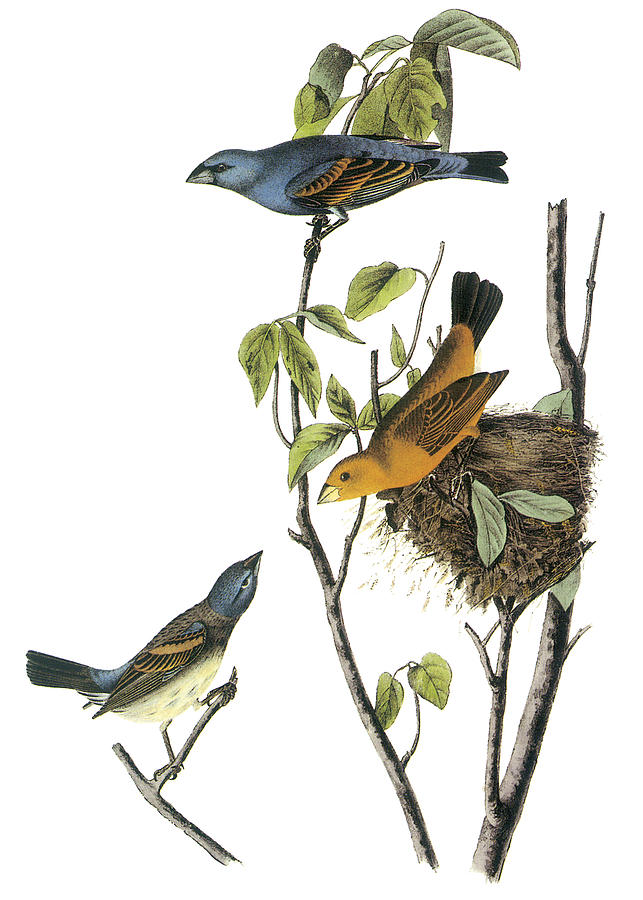
blue-grosbeak-john-james-audubon

John James Audubon painted this family of  blue grosbeaks.

For the most part, however, the rose-breasted grosbeak is replaced in the western United States by the closely related black-headed grosbeak. I saw several of these birds during a trip to Salt Lake City, Utah, back in 2006. Other grosbeaks in the United States include the evening grosbeak and pine grosbeak. In the American tropics other grosbeaks are found, including the descriptively named yellow-green grosbeak, crimson-collared grosbeak, ultramarine grosbeak and yellow-shouldered grosbeak.

•••••

Bryan Stevens lives near Roan Mountain, Tennessee. To learn more about birds and other topics from the natural world, friend Stevens on Facebook at https://www.facebook.com/ahoodedwarbler. He is always posting about local birds, wildlife, flowers, insects and much more. If you have a question, wish to make a comment or share a sighting, email ahoodedwarbler@aol.com.

Moths, songbirds share top billing for programs at this year’s Roan Mountain Fall Naturalists Rally

BALTIMORE-MOTH

Photo by Bryan Stevens                                       The Baltimore Snout Moth, or Baltimore Hypena, is a moth found in the Eastern part of the United States, west and south to Wisconsin, Missouri and Florida and Texas. The larvae feed on maple leaves, mainly red and silver maple.

For 54 years the annual Roan Mountain Fall Naturalists Rally has brought nature enthusiasts from near and far to the slopes of Roan on the weekend after Labor Day. The tradition continues this year Friday-Sunday, Sept. 9-11, with two area naturalists presenting evening program on moths and songbird behavior.


For this year’s rally, the program spotlight will shine on local moths and songbirds. As always, a variety  of walks, hikes, strolls and workshops will also be offered on Saturday and Sunday. Top naturalists volunteer their time and energy to make the event both enjoyable and educational for people of all ages.

Larry-McDaniel

Larry McDaniel and some goats in residence at the farm he owns with his wife, Janet Brown.

This fall rally continues to celebrate the natural world by providing two top speakers for this year’s event. Larry McDaniel, a naturalist at Steele Creek Park in Bristol, Tennessee and a long-time member of the Friends of Roan Mountain, will deliver the program on “Moths of Roan Mountain and Northeast Tennessee.” Dr. Steven Hopp, naturalist and teacher at Emory and Henry College in Virginia, will present a program titled “Beyond Birding: A Look at the Life History of Local Songbirds.”


shopp

Steven Hopp teaches at Emory and Henry College in Virginia.

Because of the continued support of the Friends of Roan Mountain, the seasonal rallies have the resources they need to prosper and grow and the FORM provides support for research and restoration projects on the Roan, as well as support for Roan Mountain State Park. Consider joining the Friends of Roan Mountain, if you are not a member. Members get free admission to all Naturalists Rally events and the organization’s newsletter, “Friends of Roan Mountain.” Gary Barrigar, director for the fall rally, said many thanks are due to Roan Mountain State Park’s staff for long-time support of the rallies, as well as the speakers and the trip leaders who donate their time and expertise.


HaploaMoth

Clymene Moth

Evening and lunch programs will take place in Roan Mountain State Park’s Conference Center and field trips will leave from the field located on the left before the cabins in the park. A variety of morning and afternoon field trips are planned on topics ranging from butterflies and salamanders to birds and wildflowers.

 
McDaniel, the Friday evening speaker, grew up in College Park, Maryland, where he spent a great deal of time exploring in the woods. It was there that he developed a lifelong love for nature. He started birding while in high school and has been going at it ever since. He spent 15 years living and birding in Florida. It was during those years that he started traveling all over North America to see birds. He moved to Bristol, Tennessee, in 1993 and started attending the Roan Mountain Naturalists Rallies within weeks of having moved to the area. Legendary Bristol birder Wallace Coffey introduced him to the area and the birding community where he has met and spent time in the field with many outstanding birders and naturalists. While working as a letter carrier in Bristol he began volunteering to lead bird walks in the area.


Large Maple Spanworm Moth

Large Maple Spanworm Moth

He eventually became involved with the Bristol and Elizabethton bird clubs and served several years as the president of the Bristol club. Like many birders, during the 1990s he branched out and began studying butterflies, dragonflies and damselflies, reptiles and amphibians, wildflowers and a little of just about everything. Soon he began leading bird hikes for the Roan rallies and before long became a board member of the Friends of Roan Mountain. In 2006, having retired from the Postal Service, he started working as a naturalist at Steele Creek Park, where he has been for ten years. He increased his interest of insects during this time and in 2008 he started studying and photographing moths. Local naturalist Don Holt helped to get him started in that endeavor.


10514455_10203509534131390_8664880627904952175_o

Hummingbird Moth

McDaniel, lives with his wife, Janet Brown, on a hobby farm near Johnson City, where they tend a menagerie of mini-farm animals. Larry and Janet met at a Roan Rally and in 2003 got married in Roan Mountain State Park.

 
His presentation will discuss many aspects of the natural history of moths and the growing trend of studying them. It will include many of his photographs of moths from Roan Mountain State Park and the Tri-Cities area. He has photographed about a thousand species of moths, but he promises he won’t include them all in the presentation.

 
Dr. Steven Hopp will be the feature Saturday evening speaker. Hopp is broadly trained in the life sciences, and received his Ph.D. in Animal Behavior from Indiana University. He moved to southwest Virginia in 1984 to teach at Emory and Henry College, and has been tied to this region ever since. He taught ornithology courses at the University of Arizona from 1994 to 2004, at which time he moved back to Virginia full time. He teaches courses in wildlife management and sustainable agriculture in the Environmental Studies program at Emory and Henry.


Blue-headedVireo

Blue-headed Vireo

Dr. Hopp has studied different species of vireos for over 25 years. His main interest is in their vocal behavior, but he has broadly studied their natural history including life history strategies, breeding ecology and behavior on their wintering grounds. More recently, he has become interested in Sustainable Agriculture, and is co-author of the national best-selling book, Animal Vegetable Miracle, with his wife, Barbara Kingsolver. The book is about local food systems and sustainable agriculture. He is founder and director of The Meadowview Farmers’ Guild, a community development project devoted to promoting local products, with an emphasis on agriculture. He serves on the board of Appalachian Sustainable Development. Hopp and his wife live in Meadowview, Virginia, on a mostly wooded farm with Icelandic Sheep and Dexter Cattle.

 
The evening programs are scheduled for 7:30 p.m. Prior to the programs, evening meals catered by City Market of Elizabethton, Tennessee, will also be served on Friday and Saturday, Sept. 9-10. Cost is $9.50 for adults and $5 for children 12 and under. A bag lunch is also available on Saturday for field trip participants for $6. Advance reservations are required for the meals and bag lunch.

Eight-spottedForesterMoth

Eight-spotted Forester Moth

For a brochure with information on making reservations, write to: Treasurer Nancy Barrigar, 708 Allen Ave., Elizabethton, TN 37643, or visit the organization’s website at http://www.friendsofroanmtn.org/Fall%20Rally%20Brochure%202016web.pdf for a downloadable PDF of the brochure. For more information about the fall rally, call Gary Barrigar at 543-7576 or email him at gbarrigar@friendsofroanmtn.org.

White-spottedSableMoth

White-spotted Sable Moth


Departures, new arrivals signal approach of winter

October represented a transitional time for the region’s birds. Many of our summer birds have now departed for wintering grounds, which means we won’t be seeing them again until April or May of 2016.

Hummer-Oct17

The last Ruby-throated Hummingbird of 2015.

I saw hummingbirds daily in my yard during October through the 17th day of the month, when I saw only a single bird at the feeders. The following day no hummingbirds appeared in the yard.
I am still hanging sugar water feeders in the unlikely chance I might attract a visit from one of the Selasphorus hummingbirds, a genus of these tiny birds that spends the nesting season in the western United States. A few of these species appear to migrate through the southeastern United States each fall and early winter. Rufous hummingbird is the species most likely to make an appearance, but other species — Allen’s hummingbird and black-chinned hummingbird — are a possibility.

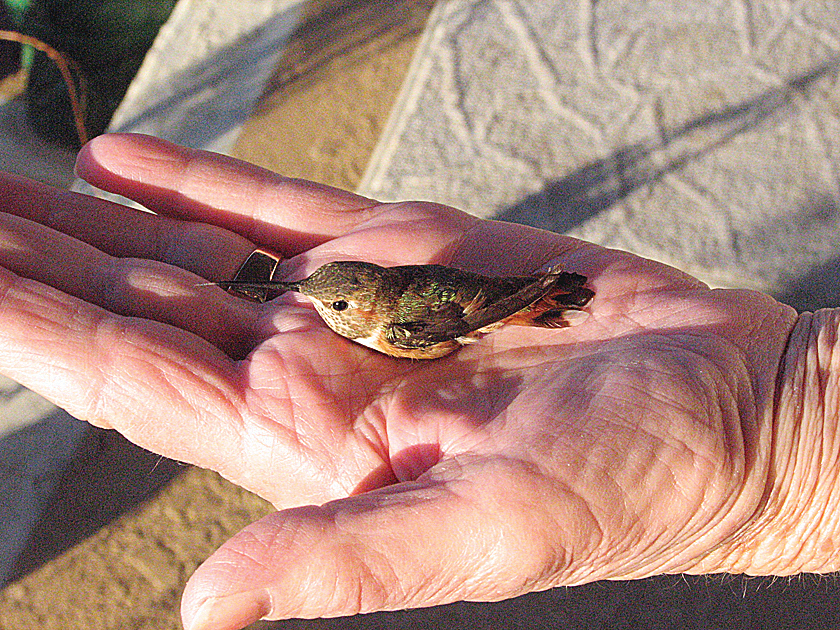
Rufous-BettyKirby-Three-Program

A Rufous Hummingbird I observed being banded several years ago in Hampton, Tennessee.

These “winter” hummingbirds are easy to recognize. Their plumage is more brown than green, making them quite distinguishable from the usual ruby-throated hummingbird, which is not usually present in the region after the end of October.
•••••
Most of the warblers have also departed. I saw a couple of common yellowthroats on Oct. 10, but they represented the last gasp of warbler migration. Most of the warblers winter in Central America or the Caribbean, although a few travel only as far as Florida.


Yellow-Rump-Frippy

The Yellow-rumped Warbler is one of the few warblers that remains in the region for the winter months.

Of course, there’s always an exception to the rule. The aptly-named yellow-rumped warbler is a winter resident throughout much of Virginia and Tennessee. I had a couple of yellow-rumped warblers in the yard on Oct. 25. The winter diet of this warbler includes the berries of poison ivy, so the bird helps with the spread of this noxious plant.
••••••
I often think of October as the season for sparrows, and this year proved no exception. Three different species marked their return during October.
Of all the birds associated with winter weather, few are as symbolic as the dark-eyed junco, or “snow bird.” The junco occurs in several geographic variations.
John V. Dennis, author of “A Complete Guide to Bird Feeding,” captures the essence of the junco in the following description: “Driving winds and swirling snow do not daunt this plucky bird. The coldest winter days see the junco as lively as ever and with a joie de vivre that bolsters our sagging spirits.” The dark-eyed junco’s scientific name, hyemalis, is New Latin for “wintry,” an apt description of this bird.
Most people look forward to the spring return of some of our brilliant birds — warblers, tanagers and orioles — and I must admit that I also enjoy the arrival of these birds. The junco, in comparison to some of these species, is not in the same league. Nevertheless, the junco is handsome in its slate gray and white plumage, giving rise to the old saying “dark skies above, snow below.”
The first junco showed up this year on Halloween. Sheila Boyd, a Facebook friend who lives in Marion, North Carolina, sent me a message to let me know she saw her first juncos on Oct. 29.


Swamp_Sparrow

The Swamp Sparrow is most often found in wetland habitats.

My junco sighting on Oct. 31 followed observations earlier in the month of some other wintering sparrows. I have allowed a stand of cattails to grow unmolested on my property, and now my action is paying dividends. I’ve seen numerous swamp sparrows in my small cattail marsh, beginning with one that I saw on Oct. 11.
The cattails also persuaded a marsh wren to pay a visit on Oct. 4. Marsh wrens and swamp sparrows are not the only birds fond of cattails. These plants also attract birds as diverse as rails and snipes, as well as red-winged blackbirds, common yellowthroats and various waterfowls.
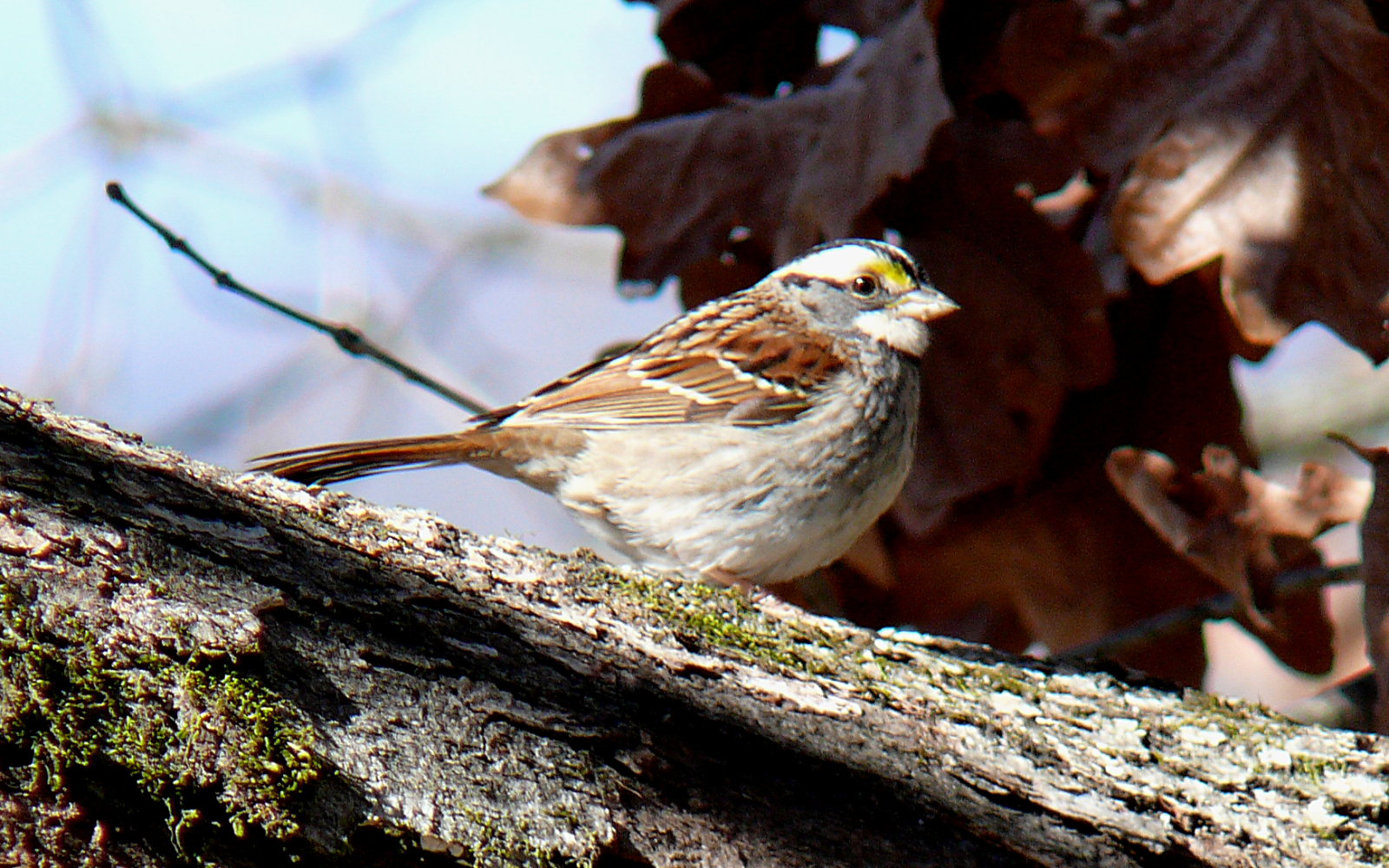
White-throated sparrows showed up on Oct. 15, which is fairly typical for this winter resident. The numbers of this attractive sparrow have been increasing since that date.


White-throated_Sparrow-27527

Photo by Ken Thomas                                            A White-throated Sparrow shows off its namesake white throat.

While I have learned to associate this bird with winter’s arrival, some Native American tribes connected the white-throated sparrow with the annual return of spring. According to Laura C. Martin, author of “The Folklore of Birds,” the Blackfoot Indians called the white-throated sparrows “summer-bringers.” The members of this tribe believed that the message of the sparrow’s song was “the leaves are budding and summer is coming.”
The song of the white-throated sparrow has also earned distinctive translations among the residents of Canada and the United States. Those translations can be described as “Oh sweet Canada, Canada, Canada” or “Old Sam Peabody, Peabody, Peabody.”
While the shy swamp sparrows usually maintain a reclusive presence in the cattails, white-throated sparrows and dark-eyed juncos are regular visitors at my feeders once they arrive. Both the junco and the white-throated sparrow prefer to feed on the ground beneath the feeders. A few other sparrows will visit feeders, including song sparrow, field sparrow, chipping sparrow and white-crowned sparrow.


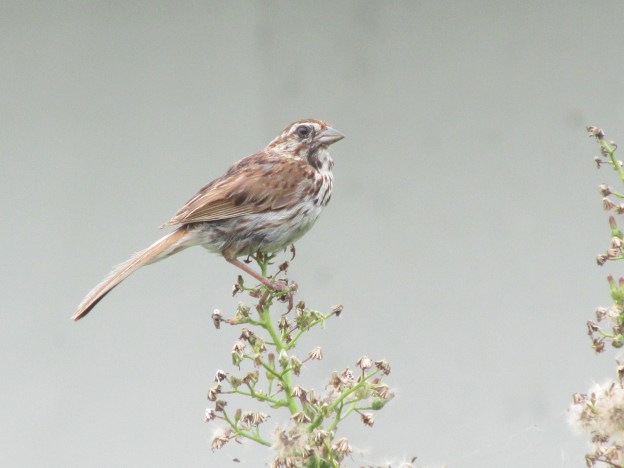
SongSparrow-Cattailss

A Song Sparrow perches on a dry cattail stalk.

Of course, the real entertainment from our sparrows comes from their frequent visits to our backyard feeders. When these birds flock to a feeder and began a furious period of eating, I don’t even have to glance skyward or tune in the television weather forecast. I know what they know. Bad weather is on the way!


With our winter birds beginning to arrive, I’d love to hear what readers are seeing at their own feeders. Send me an email at ahoodedwarbler@aol.com to ask questions, share observations or makes a comment.

Fall Bird Count finds above-average total of 129 species

Geese-Flock 2

Photo by Bryan Stevens                                                                   A flock of Canada Geese in a field near the Watauga River in Elizabethton on the day of the Fall Bird Count.

The 46th annual Elizabethton Fall Count was held on Saturday, Sept. 26.

 
A total of 37 observers in nine parties covered Carter County and parts of adjacent Johnson, Sullivan, Unicoi and Washington counties in this yearly count conducted by the Lee and Lois Herndon Chapter of Tennessee Ornithological Society, or the Elizabethton Bird Club. This year’s count included new territory around Kingsport that has not traditionally been a part of this annual fall survey.

 
A total of 129 species were found, which is slightly above the average of 125 over the last 30 years. The all-time high of 137 species was achieved in 1993.
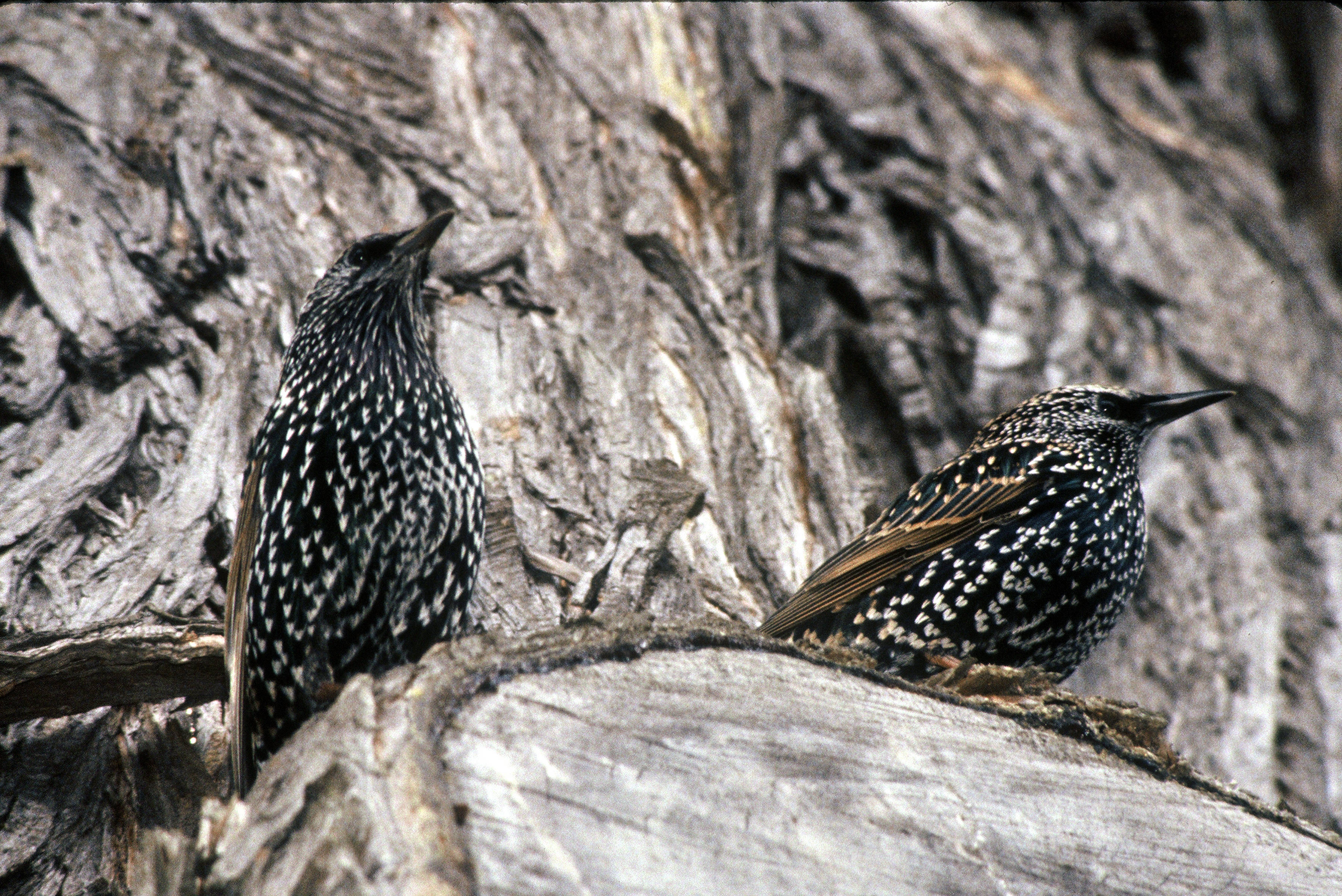
The most numerous bird on the count was the European Starling (1,347) followed closely by Canada Goose (1,182) and American Crow (896).


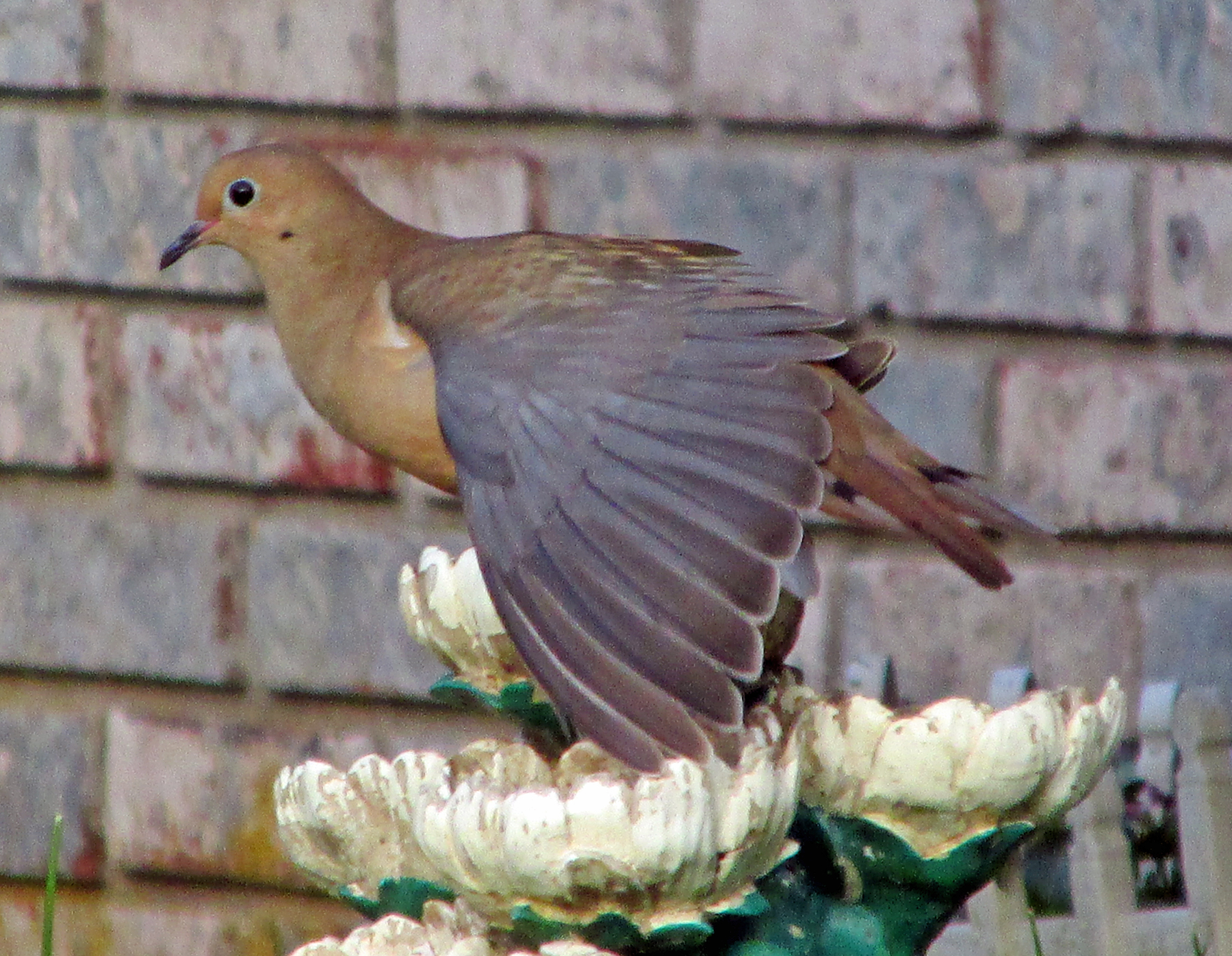
Dove-Wing

Photo by Bryan Stevens                              Mourning Doves were one of the more abundant birds on this year’s Fall Bird Count.

Other numerous birds included Mourning Dove (529), Chimney Swift (490), Blue Jay (432) and Rock Pigeon (375).

 
Of course, some birds were represented by only one individual, such as Northern Harrier, Great Egret, American Wigeon, Ruffed Grouse, Peregrine Falcon, Olive-sided Flycatcher, Eastern Kingbird, Worm-eating Warbler, Northern Waterthrush, Nashville Warbler and Yellow-breasted Chat.

Turkey-Flock

Photo by Bryan Stevens                                         A flock of Wild Turkeys near the Elizabethton Municipal Airport.

The total follows:
Canada Goose, 1,182; Wood Duck, 90; American Wigeon, 1; Mallard, 254; Blue-winged Teal, 13; Ruffed Grouse, 1; Wild Turkey, 161; Pied-billed Grebe, 9; and Double-crested Cormorant, 31.

 
Great Blue Heron, 39; Great Egret, 1; Green Heron, 7; Black-crowned Night-heron, 4; Black Vulture, 172; and Turkey Vulture, 189.
Osprey, 19; Northern Harrier, 1; Sharp-shinned Hawk, 5; Cooper’s Hawk, 10; Bald Eagle, 8; Red-shouldered Hawk, 3; and Red-tailed Hawk, 16.


Photo by Bryan Stevens A curious Gray Catbird peeks from dense cover. Attendees at the fall rally can look for catbirds and other species at any of the offered bird hikes.

Photo by Bryan Stevens                                        A curious Gray Catbird peeks from dense cover.

Sora, 4; American Coot, 2; Killdeer, 87; Spotted Sandpiper, 3; Solitary Sandpiper, 5; Willet, 1; Sanderling, 2; Least Sandpiper, 1; and American Woodcock, 1.

 
Ring-billed Gull, 4; Forster’s Tern, 1; Rock Pigeon, 375; Eurasian Collared-Dove, 5; Mourning Dove, 529; and Black-billed Cuckoo, 1.

 
Eastern Screech-owl, 27; Great Horned Owl, 3; Barred Owl, 1; Northern Saw-whet Owl, 1; Chimney Swift, 490; Ruby-throated Hummingbird, 36; and Belted Kingfisher, 33.

 
Red-headed Woodpecker, 1; Red-bellied Woodpecker, 73; Yellow-bellied Sapsucker, 1; Downy Woodpecker, 53; Hairy Woodpecker, 7; Northern Flicker, 54; and Pileated Woodpecker, 28.


Photo by U.S. Fish & Wildlife Service The European Starling ranked as the most common species on the count.

Photo by U.S. Fish & Wildlife Service
The European Starling ranked as the most common species on the count.

American Kestrel, 24; Merlin, 2; Peregrine Falcon, 1; Olive-sided Flycatcher, 1; Eastern Wood-Pewee, 14; Acadian Flycatcher, 2; Eastern Phoebe, 71; and Eastern Kingbird, 1.

 
White-eyed Vireo, 3; Yellow-throated Vireo, 1; Blue-headed Vireo, 6; Red-eyed Vireo, 4; Blue Jay, 432; American Crow, 896; and Common Raven, 8.

 
Northern Rough-winged Swallow, 1; Tree Swallow, 231; Cliff Swallow, 2; Carolina Chickadee, 128; Tufted Titmouse, 111; Red-breasted Nuthatch, 1; and White-breasted Nuthatch, 43.

 
House Wren, 6; Marsh Wren, 1; Carolina Wren, 152; Blue-gray Gnatcatcher, 2; Golden-crowned Kinglet, 2; and Ruby-crowned Kinglet, 2.


NoWaterthrush

Photo by Bryan Stevens                                A total of 21 species of warblers, such as this Northern Waterthrush, were counted during the Fall Bird Count.

Eastern Bluebird, 230; Veery, 1; Gray-cheeked Thrush, 1; Swainson’s Thrush, 23; Wood Thrush, 12; American Robin, 312; Gray Catbird, 60; Brown Thrasher, 19; Northern Mockingbird, 76; European Starling, 1,347; and Cedar Waxwing, 132.

 
Ovenbird, 2; Worm-eating Warbler, 1; Northern Waterthrush, 1; Black-and-white Warbler, 6; Tennessee Warbler, 12; Nashville Warbler, 1; Common Yellowthroat, 25; Hooded Warbler, 4; American Redstart, 51; Cape May Warbler, 8; Northern Parula, 2; Magnolia Warbler, 24; Bay-breasted Warbler, 8; Blackburnian Warbler, 7; Chestnut-sided Warbler, 7; Black-throated Blue Warbler, 2; Palm Warbler, 54; Pine Warbler, 2; Yellow-throated Warbler, 1; Black-throated Green Warbler, 4; and Yellow-breasted Chat, 1.


Tanager-Sept18

Photo by Bryan Stevens                                  Scarlet Tanagers were still present in good numbers for the Fall Bird Count on Sept. 26.

Eastern Towhee, 59; Chipping Sparrow, 37; Field Sparrow, 14; Song Sparrow, 99; Dark-eyed Junco, 31; Scarlet Tanager, 16; Northern Cardinal, 188; Rose-breasted Grosbeak, 28; Blue Grosbeak, 1; and Indigo Bunting.


Red-winged Blackbird, 60; Eastern Meadowlark, 41; Common Grackle, 67; Brown-headed Cowbird, 15; Baltimore Oriole, 3; House Finch, 55; American Goldfinch, 188; and House Sparrow, 56.

September brings more lawn chair birding opportunities

IMG_9403

Photos by Bryan Stevens                                                                        A Northern Waterthrush perches in a tree growing along Simerly Creek.

The following post represents my second compilation of Facebook posts about my annual lawn chair birding experiences. My mom and I have made lawn chair birding an annual tradition every fall. It’s a great way to enjoy the warblers and other migrants that stream through the yard in September and October. For the most part, you can even avoid the neck sprain that comes with long period of scanning the treetops for glimpses of energetic and evasive warblers.

Goldfinch-BABY

A young American Goldfinch perches on a twig.

Sept. 9
Some clouds and drizzle made for a very productive evening of lawn chair birding, bring a bonanza of warblers and other migrants. I added four new birds, all warblers, to my 2015 yard list. Bird No. 73 for the year was a Golden-winged Warbler. This makes two consecutive falls I have seen this warbler at home. Bird No. 74 turned out to be a dazzling male Prairie Warbler, as opposed to the more drab female Black-throated Blue Warbler that became Bird No. 75 for the year.

A Pine Warbler also made the list as Bird No. 76. Other warblers included Tennessee, Magnolia, Chestnut-sided, Cape May, Hooded, Black-and-white and Black-throated Green. The rest of the migrant parade consisted of Eastern Phoebe, Eastern Wood-pewee, Ruby-throated Hummingbird, Eastern Towhee, as well as the usual residents such as House Finch, American Goldfinch, White-breasted Nuthatch, Downy Woodpecker, Carolina Chickadee, Northern Cardinal and lots of Tufted Titmice. Most of the warblers refused to stay in place long enough for photos, but at one point the Pine Warbler actually landed on the roof of the house and allowed a few photos which provided nice documentation for a fun evening that ended when the rain began to come down harder.

PineWarbler

A Pine Warbler takes a break on the roof of the house.

Sept. 10
No new birds this evening during lawn chair birding with mom. That doesn’t mean we didn’t have some fun observations, including a baby Song Sparrow screaming his head off for a morsel from mom or dad. We also saw Indigo Buntings, Eastern Phoebe, Eastern Towhee, Scarlet Tanager, Ruby-throated Hummingbirds, as well as several warblers,including male Hooded, female American Redstart, young Chestnut-sided and a female Magnolia.

Waxwing-Sept11

Cedar Waxwing at Erwin Fishery Park.

Sept. 11
Saw this Cedar Waxwing, part of a large flock, at Erwin Fishery Park on Friday afternoon.

Sept. 13
Warblers on Saturday evening included Black-throated Green, Tennessee and Magnolia, as well as an American Redstart. We also had a Broad-winged Hawk hanging around the fish pond. We startled him several times on Saturday. My mom and I extended birding to a visit to Limestone Cove and the Bell Cemetery, where we spotted a Red-tailed Hawk being mobbed by around 50 American Crows. No new yard birds, though.

Wrennie 2

A noisy Carolina Wren scolds from a Blue Spruce.

Sept. 16
Had a good day of migrants in the yard, including a lot of male warblers — Black-throated Green, Hooded, American Redstart — and some other migrants. Some young or female warblers included Cape May, Chestnut-sided, Tennessee and Magnolia. There was also a family of noisy young American Goldfinches hanging around. No new species this evening, but I managed this photo of a Carolina Wren to stay in practice.

YT-Vireo

A Yellow-throated Vireo makes a migration stop along Simerly Creek.

Sept. 18
“Yellow throats” was the evening’s theme for lawn chair birding. I added two new species to the yard list for the year. First came the Yellow-throated Vireo as Bird No. 77. Next came the young Common Yellowthroat for Bird No. 78. The day has also included observations of Scarlet Tanager, Indigo Bunting, Eastern Towhee, Magnolia Warbler, Black-throated Green Warbler, Tennessee Warbler, Eastern Phoebe, Brown Thrasher, Gray Catbird, Ruby-throated Hummingbird and noisy young American Goldfinches.

RT-Hummer_Sept21

Ruby-throated Hummingbirds continue to compete for their claims to the sugar water feeders.

Sept. 20
No new birds in the yard this evening, but lawn chair birding produced lots of good looks at warbler like Magnolia, Northern Parula, Tennessee, Black-throated Green Warbler, Hooded, Chestnut-sided and a adult male Cape May in very vibrant plumage. Other observations included Wood Thrush, Brown Thrasher, Gray Catbird, Eastern Wood-Pewee, Eastern Towhee, Chipping Sparrow, Ruby-throated Hummingbird and lots of the usual feeder birds. I managed a photo of the Eastern Wood-Pewee.

NoWaterthrush

A Northern Waterthrush in the branches of a hawthorn tree along Simerly Creek.

Sept. 21
An overcast day brought plenty of migrants for the show during multiple sessions of lawn chair birding with my mom. The new species for the yard in 2015 included a Northern Waterthrush, pictured, and Bay-breasted Warblers. The waterthrush becomes Bird No. 79 and the Bay-breasted Warblers represent Bird No. 80, helping me move into another stretch in my Big Yard Year. We also saw Brown Thrasher, Gray Catbirds, Magnolia Warbler, Hooded Warbler, Chestnut-sided Warbler, Cape May Warbler, Tennessee Warbler, American Redstart and Pine Warbler, as well as Yellow-throated Vireo and Red-eyed Vireo. Ruby-throated Hummingbirds are also active at the feeders. The usual birds are visiting the feeders for sunflower seeds.

Sept. 22
Before leaving for work this morning, I heard a duet by Great Horned Owls from the surrounding woodlands. It was an extremely foggy morning, which might have made a difference since the owls were calling about an hour after sunrise.

Tanager-Sept18

A Scarlet Tanager without the red feathers that provide the birds its common name.

Phoebe-Sept18

An Eastern Phoebe perches on top of a weed stalk.

Katydid-Zinnia

A katydid perched atop a zinnia bloom.