Category Archives: Spring birds

Spring Bird Count participants deal with unseasonal cold snap

The 74th annual Elizabethton Spring Bird Count was held on Saturday, May 6. A total of 43 observers in nine parties took part in the annual survey, which consists Carter County and parts of adjacent Johnson, Sullivan, Unicoi and Washington counties. In addition to Elizabethton, the count includes territory in such cities as Elizabethton, Erwin, Kingsport, Bristol and Johnson City.

Count-Gobbler

Photo by Bryan Stevens • A male gobbler seeks the attention of hens, as all these Wild Turkeys add to the number of this species found during the count.

The most unusual aspect of this year’s count involved rather cold conditions, according to long-time count compiler Rick Knight. Although held nearly a week into May, this was one of the coldest days ever experienced on a spring count. The temperature range was 36 to 54 degrees. Light rain fell before sunrise; the morning was partly cloudy to cloudy, then the afternoon saw light rain, with light snow showers at the higher elevations and a half-inch accumulation of snow on Roan Mountain.

Knight noted that previous cold spring counts included: 32 to 55 degrees in 1979, 44 to 52 degrees in 1987, and 27 to 54 degrees in 1992. Despite the weather, participants managed to find 148 species, which is exactly the average over the last 30 years, but below the average over the last decade, which stands at 154 species.

The most common species on this year’s Spring Bird Count was the Cliff Swallow with 1,046 individuals — a new record for this species — found this year. Other common species include European Starling (704), American Robin (693) and Tree Swallow (526).

A Stilt Sandpiper found in Washington County represented only the third time this species has been observed during the Elizabethton Spring Bird Count. As always, Knight said there were a few notable misses, such as Northern Bobwhite, Ruffed Grouse, Pied-billed Grebe, Brown Creeper, Winter Wren, Swamp Sparrow and Pine Siskin. In addition, no gulls were found on any of the area lakes.

Count-MaleMartin

Photo by Bryan Stevens • Purple Martins, like this male, were sluggish on the day of the count thanks to cold temperatures and steady rainfall.

In addition, several species of warblers that nest in the region showed rather low numbers. Some of the low numbers for some species may be attributable to the weather. Nevertheless, the count produced observations of 28 different warbler species.

The total is listed below:
Canada Goose, 390; Wood Duck, 27; Mallard, 93; Blue-winged Teal, 5; and Hooded Merganser, 2.
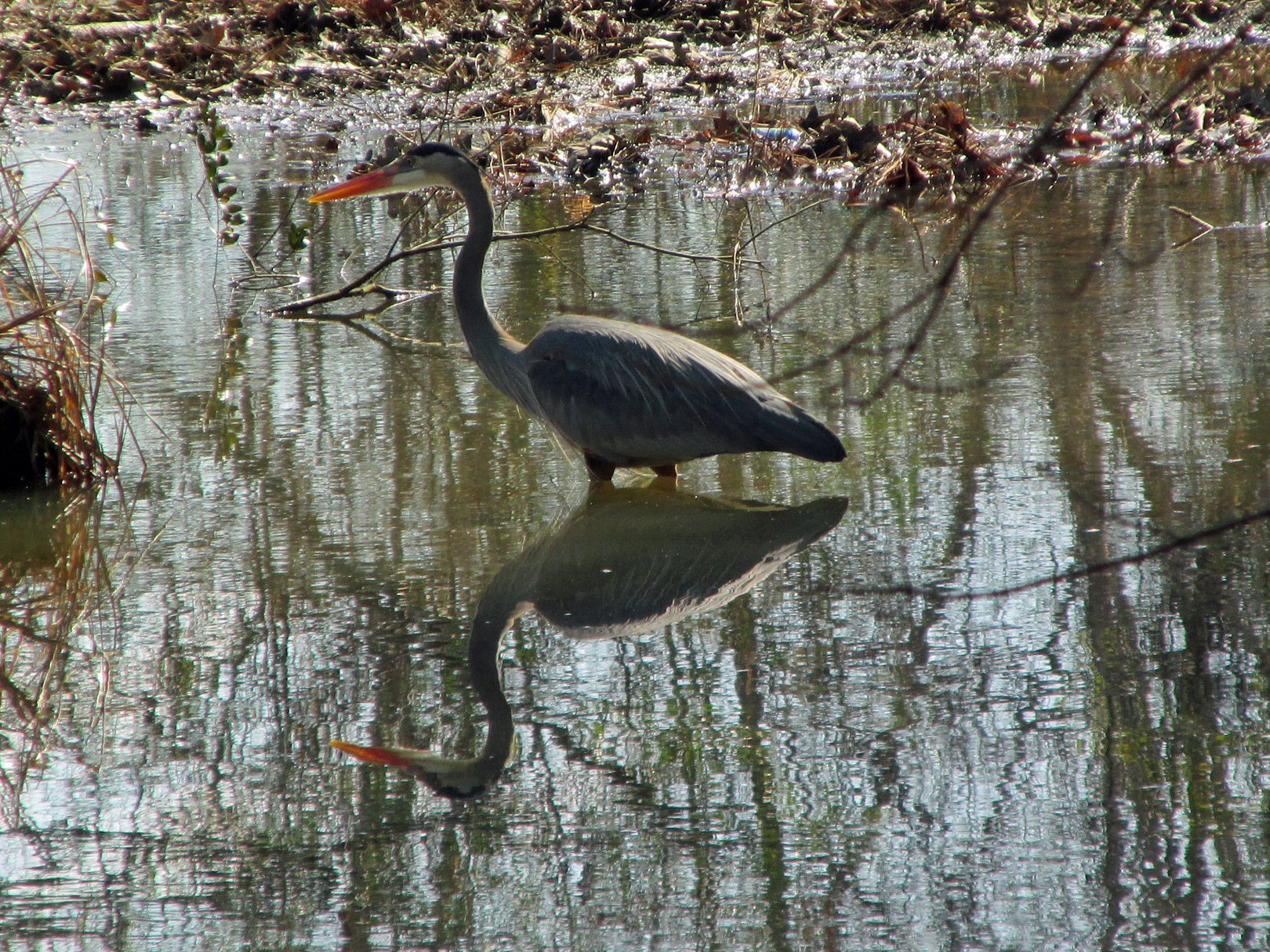
Wild Turkey, 54; Common Loon, 2; Double-crested Cormorant, 42; Great Blue Heron, 115; Great Egret, 1; Green Heron, 13; Yellow-crowned Night-Heron, 8; and Black-crowned Night-heron, 1.
Black Vulture, 74; Turkey Vulture, 108; Osprey, 10; Sharp-shinned Hawk, 1; Cooper’s Hawk, 5; Bald Eagle, 13; Broad-winged Hawk, 5; Red-winged Hawk, 25; and American Kestrel, 11.
Virginia Rail, 4; Killdeer, 35; Spotted Sandpiper, 27; Solitary Sandpiper, 19; Greater Yellowlegs, 1; Lesser Yellowlegs, 1; Stilt Sandpiper, 1; and Least Sandpiper, 6.
Forster’s Tern, 1; Rock Pigeon, 155; Eurasian Collared-Dove, 3; Mourning Dove, 224; Yellow-billed Cuckoo, 4; Black-billed Cuckoo, 1; Eastern Screech-owl, 6; Great Horned Owl, 1; Barred Owl, 2; Common Nighthawk, 1; Chuck-will’s-widow, 2; Whip-poor-will, 10.
Chimney Swift, 66; Ruby-throated Hummingbird, 23; Belted Kingfisher, 23; Red-headed Woodpecker, 5; Red-bellied Woodpecker, 54; Yellow-bellied Sapsucker, 3; Downy Woodpecker, 23; Hairy Woodpecker, 5; Northern Flicker, 30; and Pileated Woodpecker, 34.

Count-NightHeron

Several species of herons, including this Yellow-crowned Night Heron, were found for this year’s Spring Bird Count.

Eastern Wood-pewee, 1; Acadian Flycatcher, 5; Willow Flycatcher, 1; Least Flycatcher, 6; Eastern Phoebe, 42; Great Crested Flycatcher, 13; Eastern Kingbird, 43; and Loggerhead Shrike, 1.
White-eyed Vireo, 5; Yellow-throated Vireo, 10; Blue-headed Vireo, 41; Warbling Vireo, 9; Red-eyed Vireo, 122; Blue Jay, 138; American Crow, 301; Fish Crow, 2; and Common Raven, 22.
Northern Rough-winged Swallow, 345; Purple Martin, 36; Tree Swallow, 526; Barn Swallow, 259; and Cliff Swallow, 1,046.
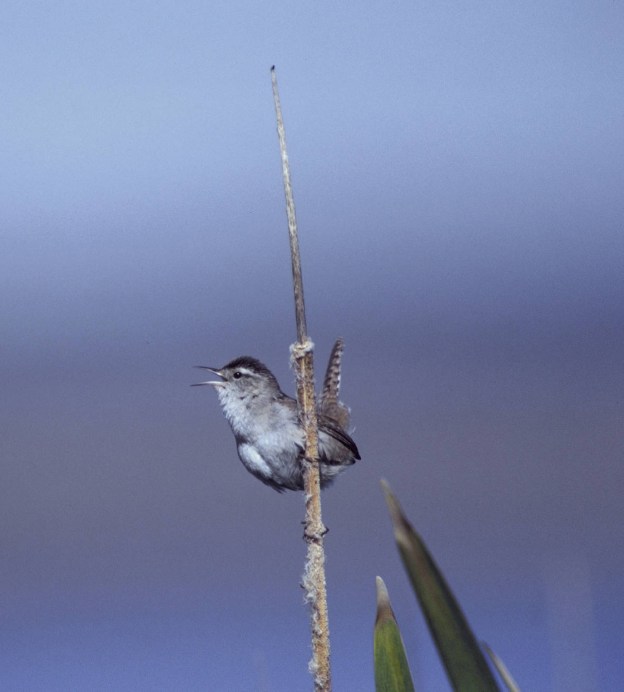
Carolina Chickadee, 82; Tufted Titmouse, 140; Red-breasted Nuthatch, 3; White-breasted Nuthatch, 13; House Wren, 30; Marsh Wren, 1; Carolina Wren, 99; Blue-gray Gnatcatcher, 39; Golden-crowned Kinglet, 11; and Ruby-crowned Kinglet, 2.
Eastern Bluebird, 136; Veery, 44; Swainson’s Thrush, 5; Hermit Thrush, 1; Wood Thrush, 82; American Robin, 693; Gray Catbird, 35; Brown Thrasher, 51; Northern Mockingbird, 95; European Starling, 704; and Cedar Waxwing, 272.
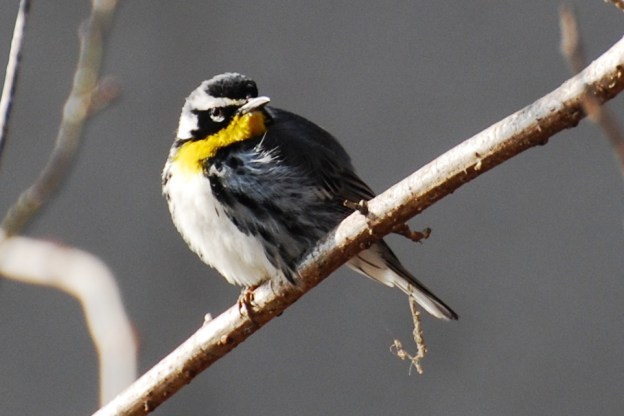
Ovenbird, 117; Worm-eating Warbler, 19; Louisiana Waterthrush, 18, Northern Waterthrush, 1; Golden-winged Warbler, 3; Black-and-White Warbler, 47; Swainson’s Warbler, 2; Tennessee Warbler, 1; Kentucky Warbler, 1; Common Yellowthroat, 17; Hooded Warbler, 95; American Redstart, 6; Cape May Warbler, 7; Northern Parula, 25; Bay-breasted Warbler, 4; Blackburnian Warbler, 1; Yellow Warbler, 3; Chestnut-sided Warbler, 9; Blackpoll Warbler, 1; Black-throated Blue Warbler, 25; Palm Warbler, 1; Pine Warbler, 15; Yellow-rumped Warbler, 18; Yellow-throated Warbler, 20; Prairie Warbler, 4; Black-throated Green Warbler, 53; Canada Warbler, 1; and Yellow-breasted Chat, 11.

SolitarySandpiper-One

Photo by Bryan Stevens • Migrating shorebirds, such as this Solitary Sandpiper, added diversity to this year’s Spring Bird Count in Northeast Tennessee.

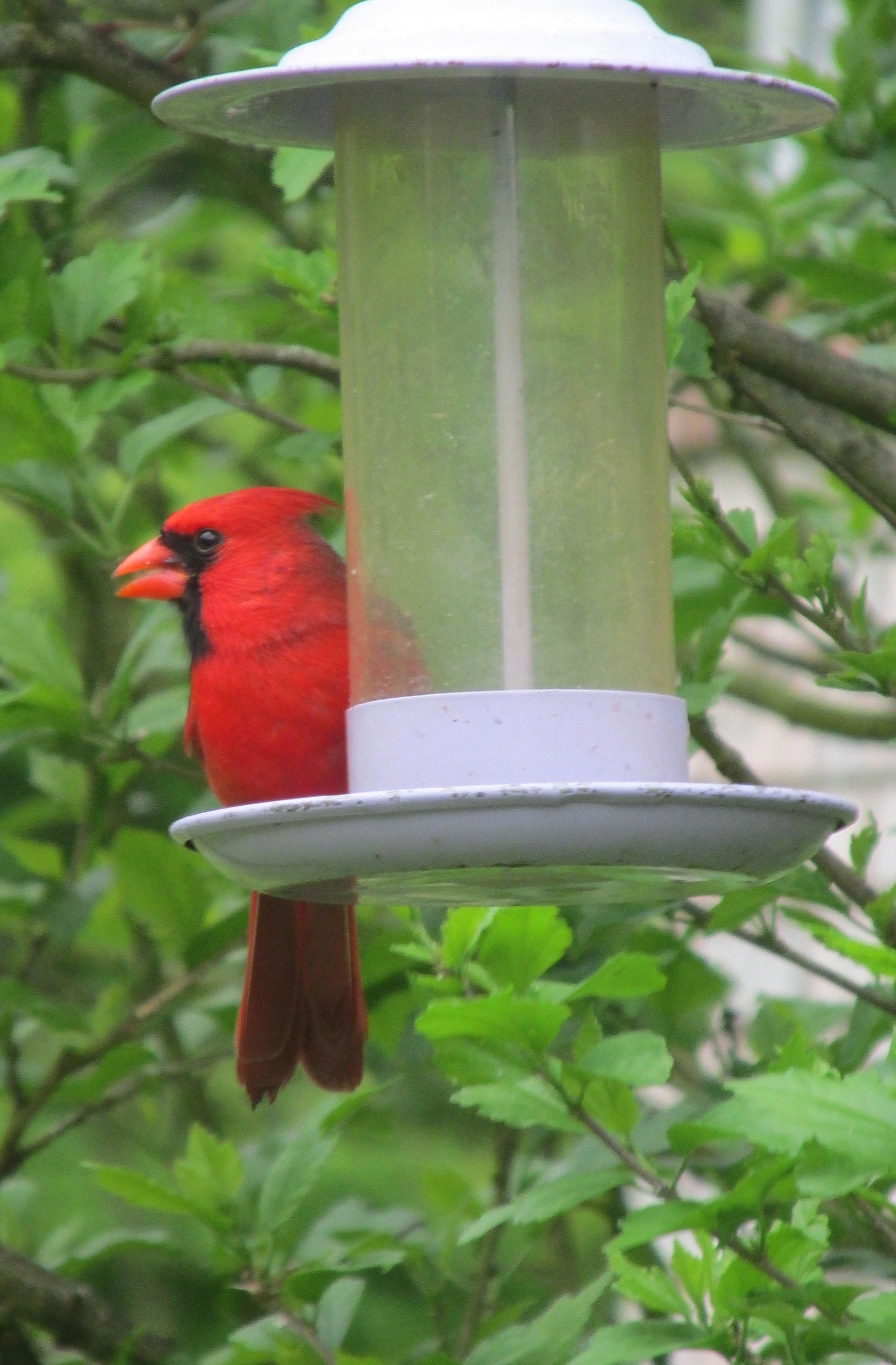
Eastern Towhee, 132; Chipping Sparrow, 67; Field Sparrow, 35; Savannah Sparrow, 4; Grasshopper Sparrow, 1; Song Sparrow, 166; White-throated Sparrow, 4; White-crowned Sparrow, 2; Dark-eyed Junco, 28; Summer Tanager, 2; Scarlet Tanager, 60; Northern Cardinal, 212; Rose-breasted Grosbeak, 19; Blue Grosbeak, 5; Indigo Bunting, 79; Bobolink, 22; Red-winged Blackbird, 271; Eastern Meadowlark, 89; Common Grackle, 327; Brown-headed Cowbird, 97; Orchard Oriole, 21; Baltimore Oriole, 16; House Finch, 64; American Goldfinch, 228; and House Sparrow, 52.

•••••

To learn more about birds and other topics from the natural world, friend Stevens on Facebook at https://www.facebook.com/ahoodedwarbler. He is always posting about local birds, wildlife, flowers, insects and much more. If you have a question, wish to make a comment or share a sighting, email ahoodedwarbler@aol.com.

Count-IndigoBunting

Photo by Bryan Stevens • Newly-returned neotropical migrants, such as this Indigo Bunting, increased the total number of species for the annual spring count.
Writer and artist Julie Zickefoose to share wisdom at Abingdon program, nature walk


With the nesting season for some of our favorite birds kicking off, the timing is especially fortuitous for an upcoming program. Acclaimed nature writer and wildlife illustrator Julie Zickefoose will be the a featured speaker for Sunday with Friends at the Washington County Public Library in Abingdon, Virginia, later this month. Her talk will be followed by a book sale and signing.

JulieZickefoose

Julie Zickefoose and a feathered friend. — Photo Contributed

In addition, Zickefoose will take part in a bird walk along the Virginia Creeper Trail at 8 a.m. on Saturday, April 22. Those wishing to participate in this Earth Day event are invited to meet at the trailhead in downtown Abingdon. I’m planning on attending the walk, which I hope will produce many interesting migrant birds. The walk is free and open to the public.

Zickefoose, the author of the new book, “Baby Birds: An Artist Looks into the Nest,” will speak Sunday, April 23, at 3 p.m. at the Washington County Public Library. Her event is free and will be held in the Conference Room at the Main Library in Abingdon, Virginia.

The public is invited to meet Zickefoose on the day after Earth Day to celebrate her new book. Life-sized baby birds wriggle, crawl and flutter off the pages of this beautiful book, the product of 13 years of deep involvement and close observation of nesting birds. Lively writing describes the development of 17 bird species from egg to fledgling, with the wonder, humor and relentless curiosity that Zickefoose is known for. She provided commentary on National Public Radio’s “All Things Considered” for five years and for 12 years has written a thrice-weekly natural history blog.

She has written several other books, including “The Bluebird Effect: Uncommon Bonds with Common Birds,” “Natural Gardening for Birds: Create a Bird-friendly Habitat in Your Backya26312954._UY1628_SS1628_rd,” and “The Young Birder’s Guide to Birds of North America,” a co-writing venture with Bill Thompson.
 

According to Zickefoose’s website, she began her career as a field biologist for The Nature Conservancy. She became a magazine and book illustrator. Eventually, she began illustrating her own stories. She writes and paints from Indigo Hill, her 80-acre sanctuary in Appalachian Ohio. Zickefoose also writes a blog. To read entries, visit juliezickefoose.blogspot.com.

Ben Jennings helped secure Zickefoose’s lecture. He has worked for the past 15 years organizing “Sunday with Friends,” a series of book and author events hosted by the Washington County Public Library’s Friends of the Library organization.

“I get tips from lots of folks about writers, as well as doing research on my own,” Jennings said.

He also noted that Kate Foreman persuaded him to invite Zickefoose to take part in the series. “Kate is a longtime friend, and currently the director of advancement at Barter Theatre,” Jennings said. “I certainly trust her judgment. Kate had to remind me — but I did remember — Julie’s commentary on NPR several years ago. Julie was thrilled to come to be with Kate for the weekend.”

The Friends of the Washington County Public Library is a voluntary, non-profit organization whose purpose is to help strengthen the resources of the library and to make it a dynamic force in the community. Friends’ activities generally fall into four main categories— advocacy, fundraising, programming and volunteerism. First organized in the mid-1960s, the Friends groups has made an important contribution over the years by helping to raise funds to improve library facilities and providing financial support for special projects. The Washington County Public Library is located at 205 Oak Hill St., Abingdon, Virginia. For more information, visit http://www.wcpl.net.

Bluebird-Box

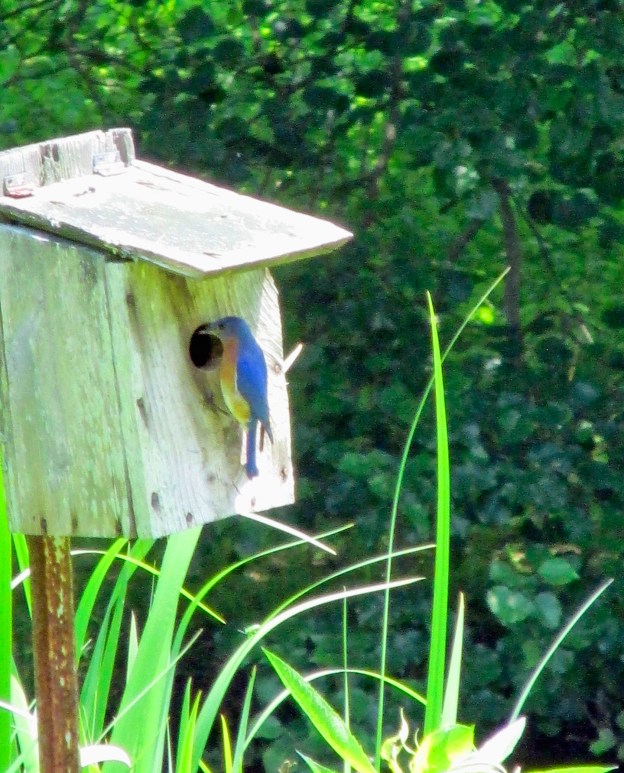
A female bluebird checks out a potential nesting box. — Photo by Bryan Stevens

••••••

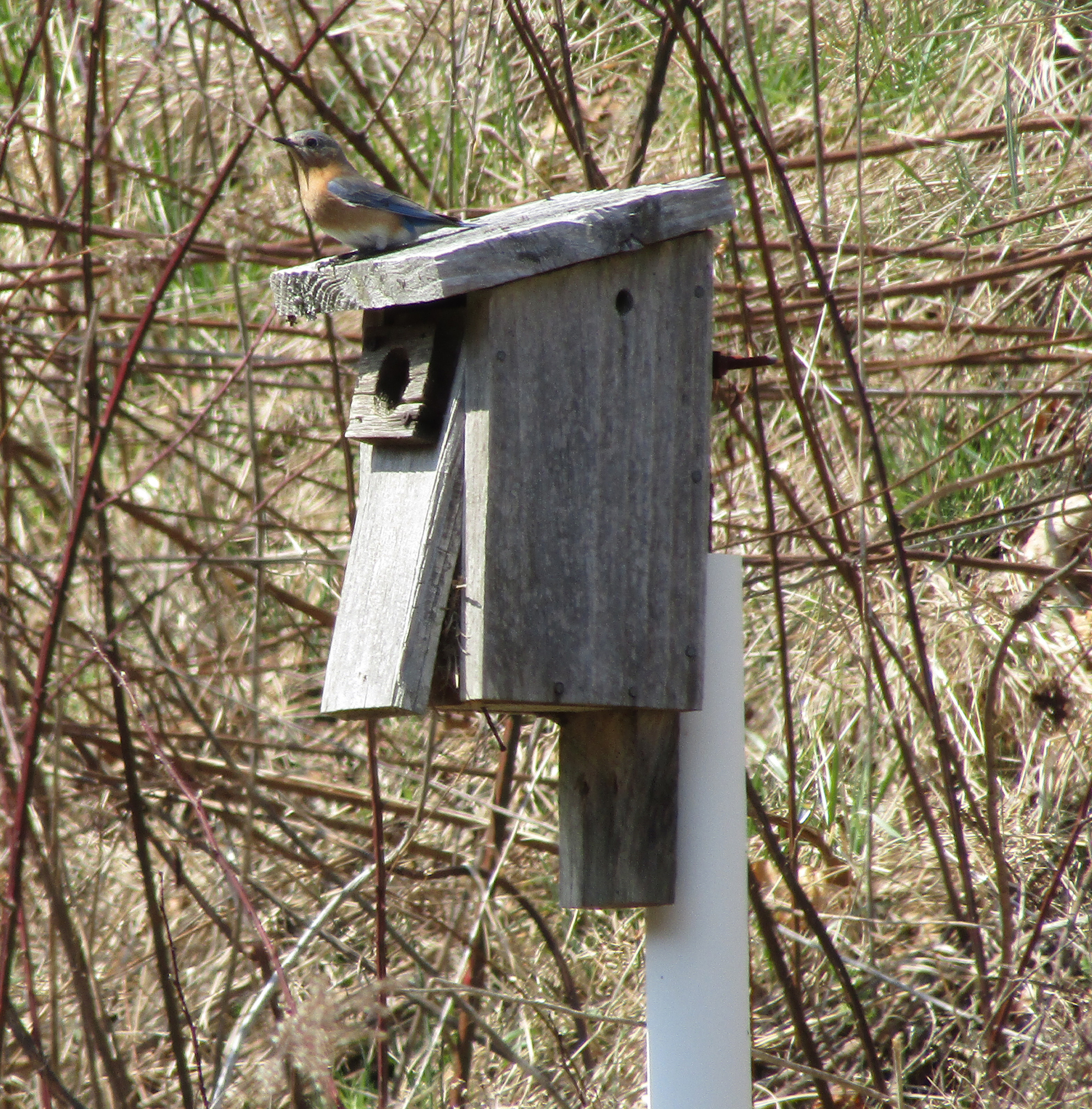
A pair of Eastern bluebirds, a species of birds often featured in Zickefoose’s writings, has been exploring the nest box options available at my home. The bluebirds actually started checking the boxes in late February. With the arrival of March, the pair has had to contend with as many as three tree swallow interlopers. I’m not sure of the status of the third tree swallow, but it definitely gives the swallows an edge in numbers.

While bluebirds are not totally loyal to previous nesting locations, studies indicate that as many as 30 percent of bluebirds return to previous nesting sites the following season. So, if you can attract a pair of bluebirds to your yard, that’s half the battle. The same pair, or perhaps some of their offspring, will quite possibly return to yard in future years.
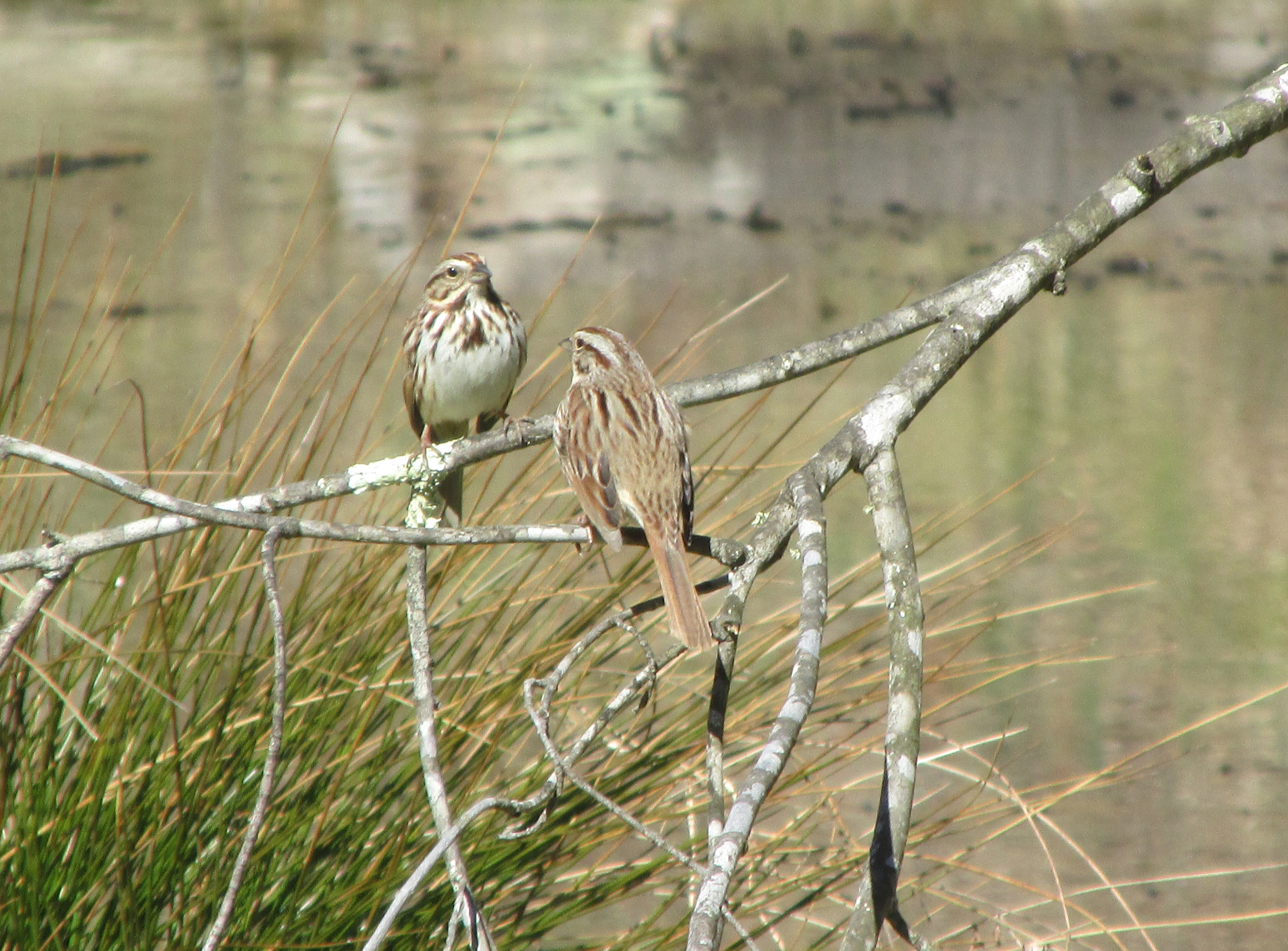
Habitats with spacious areas of short grass are perfect for bluebirds. So, homes with large lawns or that are located adjacent to fields, will attract bluebirds looking for a place to nest. If you lack any trees with natural cavities, a bluebird nesting box is necessary to secure their extended stay. Nesting box plans are easily obtained online if you want to build your own boxes, or you can purchase boxes at many farm supply stores and garden centers.

To keep the bluebirds happy and safe, avoid using herbicides or pesticides on your lawn to prevent accidental poisoning of adult bluebirds and their young. A few small trees and shrubs spaced throughout the yard will provide convenient perches for bluebirds as they hunt for insects to feed themselves and their young.

Get ready to welcome spring’s returning hummingbirds

All bird enthusiasts have their personal favorites among our feathered friends. Cardinals, bluebirds, robins and chickadees would certainly find a place in any Top 10 lists. What bird would top the list? I have no qualms predicting that the ruby-throated hummingbird would be a frontrunner for such a ranking.

rubythroated_hummingbird

A male Ruby-throated Hummingbird seeks nectar at tiny blooms. — Photo by U.S. Fish & Wildlife Service


The popularity of hummingbirds in general, and the ruby-throated hummingbird specifically, is simple to understand. These tiny birds are perfectly willing to insert themselves into our lives, offering hours of fascinating entertainment as they visit our gardens, duel at our sugar water feeders and occasionally even nest in trees and shrubs in our yards.

Individuals who feed birds know that it can be an expensive undertaking. The cost of providing sunflower seeds and suet cakes for hungry flocks during the winter months can nibble at the monthly budget, but hardly anyone would begrudge the sparrows, finches, wrens and woodpeckers. After all, they return the favor, putting on daily shows just outside our windows.

Attracting hummingbirds is generally much less expensive than feeding other birds. After all, you need only a mixture of sugar water — four parts water to one part sugar — to fill a feeder and catch the attention of a visiting hummer. A few pounds of sugar will last a lot longer than that bag of sunflower seeds and it’s much less expensive to purchase at the grocery store.

If you do want to take extra steps to attract these diminutive, feathered saccharine junkies, consider supplementing your landscape with a variety of flowering plants. To explore some of the best choices for flowers to tempt hummingbirds, visit the website of The Hummingbird Society at http://www.hummingbirdsociety.org.

Hummer-CloserUp

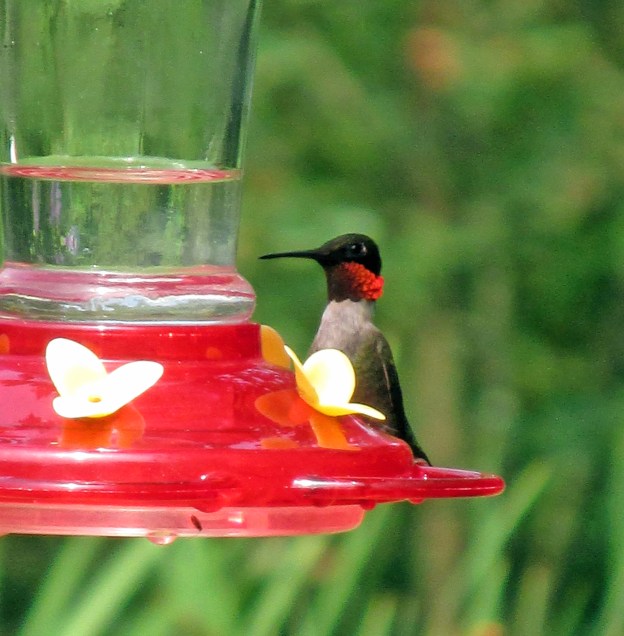
A male ruby-throated hummingbird surveys his territory from a convenient perch. — Photo by Bryan Stevens

Nevertheless, few bird enthusiasts are truly frugal when it comes to our feathered friends. Even if the cost of bringing hummingbirds and other birds was much higher, I don’t think we would abandon the undertaking. Quite simply, the birds mean too much to us. They fascinate us with their speed and agility, their pugnacious relations with each other, and of course their tiny size. The irony is that, although hummingbirds are so small, they don’t seem to recognize that fact as they zig and zag through yard and garden.

While the ruby-throated hummingbird is the only hummer that nests in the eastern United States, which is what brings these tiny birds into our lives every year from April to October, there are more than 300 species of hummingbirds. Much creativity has gone into giving each of these hummingbirds a descriptive common name.

Sometimes, words fail. Mere adjectives are somewhat inadequate in providing common names for many of the world’s more than 300 hummingbirds, but that doesn’t keep us from trying to give descriptive names to each hummingbird species. For instance, we have the beautiful hummingbird of Mexico; the charming hummingbird of Costa Rica and Panama; the festive coquette of northwestern South America; and the magnificent hummingbird of the southwestern United States.

Other names are even more elaborate and occasionally outlandish, such as the white-tufted sunbeam of Peru; the violet-throated metaltail of Ecuador; the violet-throated starfrontlet of Peru and Bolivia; the hyacinth visorbearer of Brazil; and the rainbow-bearded thornbill of Colombia and Ecuador.

RT-Male-April15

A male ruby-throated hummingbird ignores honeybees for a sip of sugar water. — Photo by Bryan Stevens

It would seem then that our own ruby-throated hummingbird is in good company. After spending the winter months in Central America, ruby-throated hummingbirds are already streaming north. Just to reach the United States, these tiny birds undertake an arduous journey. Most of these tiny birds, which are barely four inches long, make a non-stop flight of more than 500 miles across the Gulf of Mexico. The journey can take almost an entire day!

Sightings are already being reported, and ruby-throats typically arrive in the region in early April. In fact, a male ruby-throated hummingbird showed up at my feeders on Saturday, April 15.

If you don’t have your feeders outdoors and waiting for them, it’s time to do so. As always, I love to hear from readers about their first hummingbird sighting of the year. Jot down the time and date and contact me by email at ahoodedwarbler@aol.com. I can hardly wait for one of our favorite birds to get back. Let’s give them a hearty welcome.

••••••

To learn more about birds and other topics from the natural world, friend Bryan Stevens on Facebook at https://www.facebook.com/ahoodedwarbler. He is always posting about local birds, wildlife, flowers, insects and much more.


Arrival of tree swallows one of season’s firsts among spring’s returning birds

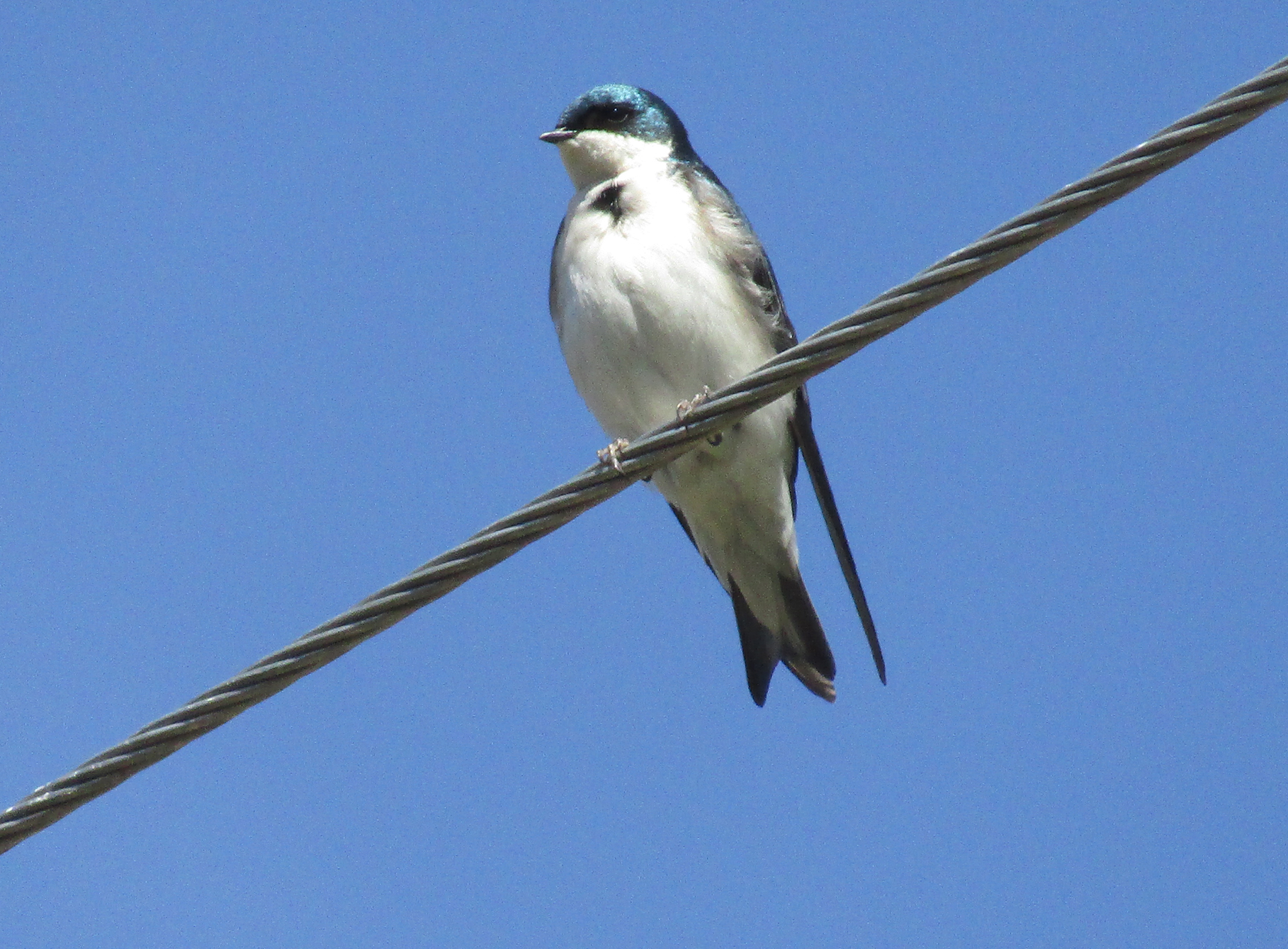
Photo by Bryan Stevens • Tree swallows are among the different species of birds returning to the region after spending the winter months farther south. These birds will be looking for nesting boxes or natural cavities in the coming weeks.

Waiting for spring? Join the club. Between alternating bouts of unseasonably warm temperatures and frigid blasts, the weather cannot seem to decide if winter’s hanging in there a little longer or if it’s time to proceed with spring’s arrival.

You might think that would translate into a messy arrival timetable for some of our returning birds, but so far my own personal observations indicate a different story. For instance, a pair of tree swallows arrived at my home on March 8. Curious, I explored my Facebook newsfeed and discovered that the first tree swallows returned in 2016 on the very same date! These punctual arrivals never cease to amaze me. It’s almost like clockwork for some of the birds that I have observed for many years at my home.

When John James Audubon painted these tree swallows, he knew them as “white-bellied swallows.”

When I posted about the arrival of the swallows on Facebook, some other people shared their own arrival stories. Paul Elmore in Bristol, Tennessee, mentioned the arrival of the first brown-headed cowbirds at his home. “Their sounds got my attention first,” he noted in his reply to my post, describing the sound as similar to “a marble being dropped into a pail of water.”

In addition to tree swallows and brown-headed cowbirds, other recent returns have included red-winged blackbirds and American robins, which have both been hailed as traditional harbingers of spring. Over the next few weeks, I look for the pace to pick up as returning birds like chipping sparrows, brown thrashers, blue-gray gnatcatchers and yellow-throated warblers mingle with lingering winter birds such as dark-eyed juncos, purple finches and yellow-rumped warblers.

The pair of swallows that returned on March 8 probably regretted the timing. Arriving during a warm spell that saw temperatures climb into the high 70s, the swallows were soon enduring a chilly blast that saw the mercury in outdoor thermometers dipping into the 20s. The swallows are insect-eating birds, so extended cold spells often force them to retreat to the area’s lakes and larger rivers, where they can swoop over the water and have an easier time plucking cold-numbed flying insects out of the air.

Photo by Bryan Stevens • Tree swallows usually return to the region in late February and early March. Look for other birds, such as brown thrashers and chipping sparrows, to return in the coming weeks.

Once milder spring temperatures prevail, the flocks of swallows forced into these necessary habitats will disperse as pairs begin seeking nesting sites. Tree swallows are cavity-nesting birds, which often puts them into competition with Eastern bluebirds. The two species usually manage to work out a truce and settle down to nest in close proximity to each other.

The iridescent blue-green male tree swallow, complete with white underparts and a forked tail, is a handsome bird and a welcome addition to the bird population in any yard or garden. Tree swallows enjoy water, so a nearby pond or creek is a boon for attracting these birds.

Tree swallows nesting in southwest Virginia are a relatively recent happening. According to Tony Decker’s The Birds of Smyth County, Virginia, tree swallows have only been common summer residents since about 1975. Some of the early records of these birds nesting in the region took place at locations like the ponds in Saltville, Virginia, and Laurel Bed Lake in Russell County, Virginia.

Photo by Bryan Stevens • A female Eastern bluebird stakes claim to a box to ward off inquisitive tree swallows. The two cavity-nesting species are often competitors for prime nesting real estate.

A decade later, tree swallows began nesting in northeast Tennessee. The first nesting record took place at Austin Springs on Boone Lake in Washington County, Tennessee, according to The Birds of Northeast Tennessee by Rick Knight. Tree swallows soon became regular nesting birds every summer in all five counties that comprise Northeast Tennessee.

It’s usually not too difficult to find five of the six species of swallows that are known to make Northeast Tennessee and Southwest Virginia their home from spring to fall. In addition to tree swallows, other swallows such as barn swallows, purple martins, cliff swallows and northern rough-winged swallows are fairly common summer birds in the region. The barn swallow and tree swallow are the two members of the family that are probably best known to people. They have adapted to life in both suburban and rural areas, which brings them into frequent contact with people.

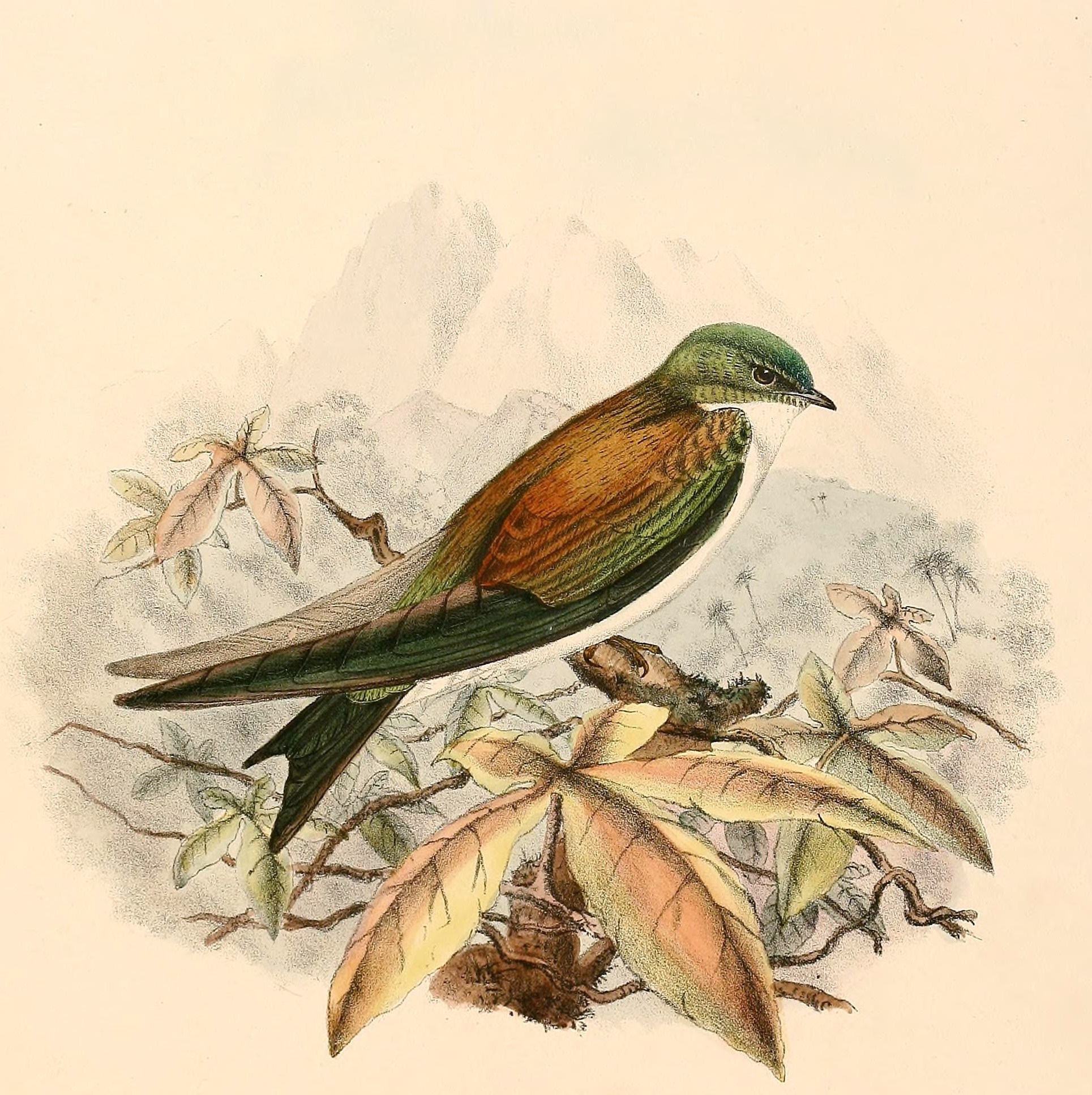
The golden swallow, which today exists only on the island of Hispaniola.

While only a few swallows range into the United States and Canada, a total of 83 species of swallows can be found worldwide. Some of the common names for these different swallows (also called martins in other parts of the world) are quite descriptive. A sampling includes white-eyed river martin, grey-rumped swallow, white-backed swallow, banded martin, blue swallow, violet-green swallow, golden swallow, brown-throated martin, brown-bellied swallow, pale-footed swallow, white-bibbed swallow, pearl-breasted swallow, red-breasted swallow, mosque swallow, fairy martin and streak-throated swallow.

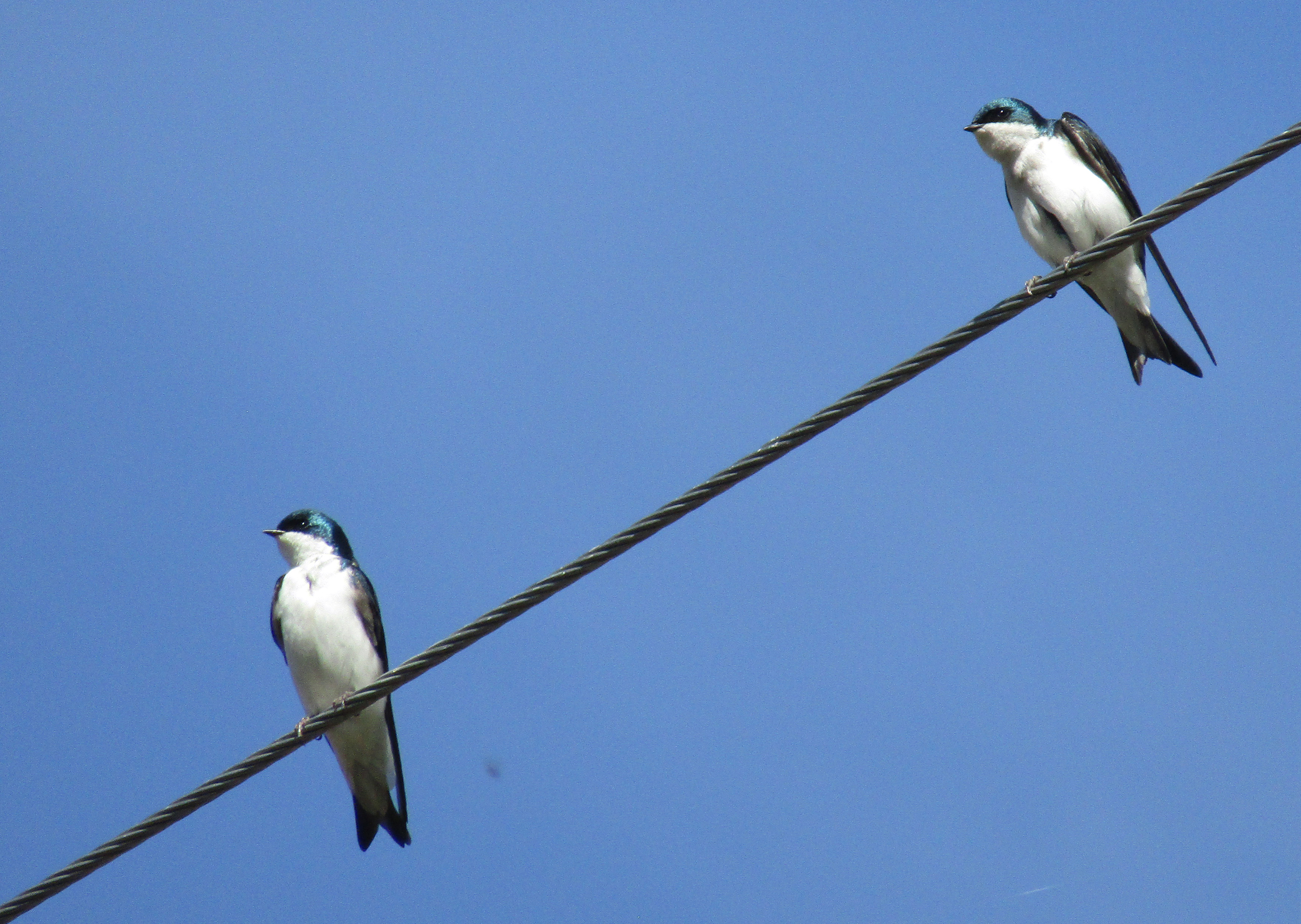
Photo by Bryan Stevens • A male tree swallow perches on a utility wire extending over a fish pond.

While many swallows and martins have proven highly adaptive when faced with human disturbances to their habitat, a few species have experienced declines. One species — the white-eyed river martin — was last seen in Thailand in the 1980s and very well may be extinct. Closer to home, the golden swallow is now found only on the island of Hispaniola after disappearing from Jamaica in the 1980s. The Bahama swallow, which nests on only four islands in the Bahamas, is also vulnerable. Incidentally, both these swallows are closely related to the tree swallow, with all of them belonging to the genus Golden Swallow. Translated from Greek, the genus name means “fast mover,” a quite accurate description of these graceful and agile flyers.

With their enthusiastic twittering to each other, tree swallows make for friendly neighbors. It’s also a pleasant diversion to watch them swoop over fields and ponds. To increase your chances of hosting your own tree swallows, offer a bird box placed in an open area. Right now is the time to attract their attention with some prime real estate.

•••••

To learn more about birds and other topics from the natural world, friend Stevens on Facebook at https://www.facebook.com/ahoodedwarbler. He is always posting about local birds, wildlife, flowers, insects and much more. If you have a question, wish to make a comment or share a sighting, email ahoodedwarbler@aol.com.

Regional spring bird count sets several new records

IndigoBunt

Photo by Bryan Stevens                                  Newly-arrived migrant birds such as Indigo Bunting were well represented on the 73rd annual Elizabethton Spring Bird Count.

The 73rd consecutive Elizabethton Spring Bird Count, which was held Saturday, April 30, set numerous records for this long-running survey of the region’s birds. The 59 observers in 13 parties (both representing record highs for participation) enjoyed favorable weather over the coverage area, which included Carter County and parts of adjacent Johnson, Sullivan, Unicoi and Washington Counties.


Rose-breastedGrosbeak

Photo Courtesy of Jean Potter                              A total of 166 species of birds, including Rose-breasted Grosbeak, pictured, helped participants in the Elizabethton Spring Bird Count, establish a new record high for this annual survey. The old record of 161 species was set back in 2005.

Long-time count compiler Rick Knight announced that the annual count tallied 166 species, eclipsing the previous record of 161 set in 2005. By comparison, the average number over the last 30 years has been 147 species.

Highlights for this year’s Spring Bird Count included American Golden-Plover and Fish Crow, which were new to this annual survey of birds in the region.

Heron-CandlerMurphy

Photo by Bryan Stevens                           The presence of several nesting colonies of Great Blue Herons could help explain a new record-high for this species on this year’s count.
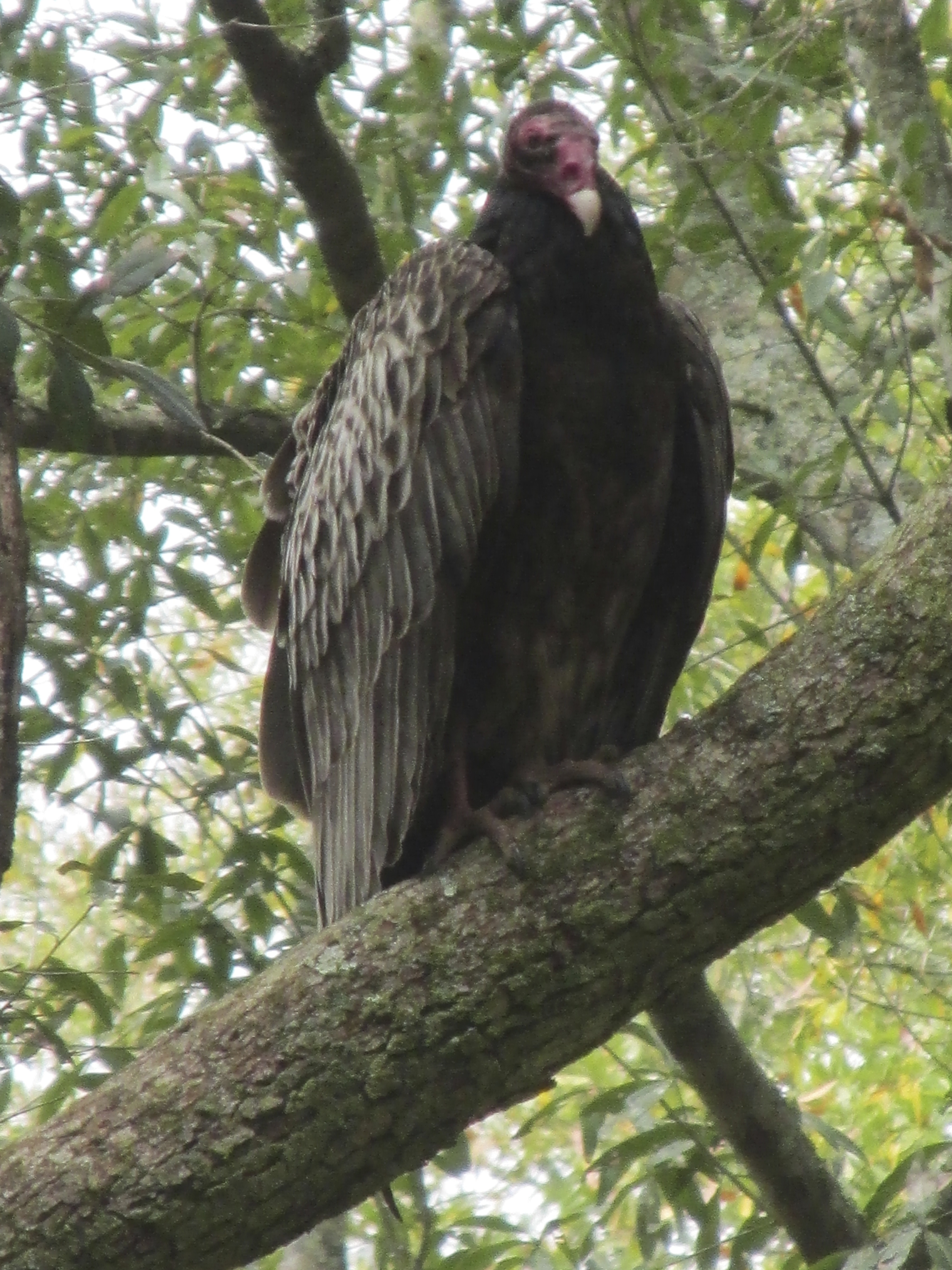
Other notable find included Hooded Merganser (a hen with two young), a lingering pair of Common Mergansers, Virginia Rail, Black-billed Cuckoo, Northern Saw-whet Owl, Peregrine Falcon, Sedge Wren and Cerulean Warbler.

Amazingly, given the long history of this count, 21 species occurred in record high numbers this year. Knight said the increased number of observers and parties certainly contributed to this.

Sora-Jean

Photo Courtesy of Jean Potter                      Although the Sora is rarely found during this annual count, the four individuals found this year represented an all-time high for the species on this yearly survey.

The record highs were for the following species:  Canada Goose (653), Mallard (332), Wild Turkey (57), Great Blue Heron (107), Yellow-crowned Night-Heron (14), Black Vulture (152), Spotted Sandpiper (83), Barred Owl (12), Belted Kingfisher (30), Red-bellied Woodpecker (97), Warbling Vireo (20), Red-eyed Vireo (257), Ovenbird (244), Worm-eating Warbler (39), Yellow-throated Warbler (44), Eastern Towhee (222), Scarlet Tanager (82), and Baltimore Oriole (38). Three species — Orchard Oriole (42), Northern Saw-whet Owl (3) and Sora (4) — tied previous high counts.

Several of these good finds were made by observers counting in Unicoi County at such locations as Rock Creek Recreation Area and Unaka Mountain. The final total follows:

Cardinal_CloseCrop

Photo by Bryan Stevens Common backyard birds, such as Northern Cardinal, were among the record-high 166 species found.

Canada Goose,  653; Wood Duck, 85; American Wigeon, 2; Mallard, 332; Blue-winged Teal, 6; Bufflehead, 5; Hooded Merganser, 3; and Common Merganser, 2.
Northern Bobwhite, 1; Ruffed Grouse, 1; Wild Turkey, 57; Common Loon, 1; Pied-billed Grebe, 5; Horned Grebe, 1; and Double-crested Cormorant, 65.
Great Blue Heron, 107; Green Heron, 16; Black-crowned Night-heron, 1; Yellow-crowned Night-Heron, 14; Black Vulture,  152; and Turkey Vulture,  212.
Osprey,  15; Bald Eagle, 10; Sharp-shinned Hawk,  2; Cooper’s Hawk, 7; Broad-winged Hawk, 16; and Red-tailed Hawk,  38.
Virginia Rail,  1; Sora , 4; American Coot, 3; American Golden-Plover, 1; Killdeer,  46; Spotted Sandpiper,  83; Solitary Sandpiper,  34; Greater Yellowlegs,  2; Lesser Yellowlegs , 2; Least Sandpiper, 5; and Pectoral Sandpiper, 2.
Bonaparte’s Gull, 1; Ring-billed Gull, 7; Forster’s Tern, 7; Rock Pigeon, 166; Eurasian Collared-Dove,  3; Mourning Dove,  254; Yellow-billed Cuckoo,  9; and Black-billed Cuckoo, 1.
Eastern Screech-Owl, 10; Great Horned Owl,  6; Barred Owl,  12; Northern Saw-whet Owl, 3; Common Nighthawk, 1; Chuck-will’s-widow, 10; Eastern Whip-poor-will, 32; Chimney Swift , 209; Ruby-throated Hummingbird, 31; and Belted Kingfisher, 30.
Red-headed Woodpecker, 2; Red-bellied Woodpecker,  97; Yellow-bellied Sapsucker, 4; Downy Woodpecker,  37; Hairy Woodpecker, 10; Northern Flicker,  33; Pileated Woodpecker, 43; American Kestrel, 19; and Peregrine Falcon, 1.
Eastern Wood-Pewee,  7; Acadian Flycatcher, 12; Least Flycatcher, 6; Eastern Phoebe, 77; Great Crested Flycatcher, 15; and Eastern Kingbird, 57.
Loggerhead Shrike, 1; White-eyed Vireo, 12; Yellow-throated Vireo, 9; Blue-headed Vireo,  78; Warbling Vireo, 20; Red-eyed Vireo,  257; Blue Jay, 320; American Crow, 338; Fish Crow, 1; Common Raven,  and 14; Horned Lark,  2.
Purple Martin, 81; Tree Swallow, 426; Northern Rough-winged Swallow, 133; Barn Swallow, 217; and Cliff Swallow, 807.
Carolina Chickadee,  173; Tufted Titmouse, 166; Red-breasted Nuthatch, 16; White-breasted Nuthatch, 26; and Brown Creeper,  4.
House Wren,  45; Winter Wren, 4; Sedge Wren, 1; Carolina Wren,  129; Blue-gray Gnatcatcher,  97; Golden-crowned Kinglet, 5; and Ruby-crowned Kinglet, 4.

RedeyedVireo-Jean

Photo Courtesy of Jean Potter                        Vireos, such as this Red-eyed Vireo on a nest, were quite abundant. The numbers of Red-eyed Vireos and Warbling Vireos set all-time highs for the count.

Eastern Bluebird, 157; Veery, 13; Swainson’s Thrush,  2; Wood Thrush, 138; American Robin,  888; Gray Catbird, 55; Brown Thrasher, 45; Northern Mockingbird, 122; European Starling,  986; and Cedar Waxwing, 44.
Ovenbird, 244; Worm-eating Warbler, 39; Louisiana Waterthrush, 32; Golden-winged Warbler, 2; Black-and-white Warbler, 90; Swainson’s Warbler, 6; Nashville Warbler, 1; Kentucky Warbler, 5; Common Yellowthroat, 27; Hooded Warbler, 208; American Redstart, 21; Cape May Warbler, 4; Cerulean Warbler, 2; Northern Parula, 56; Magnolia Warbler, 3; Bay-breasted Warbler, 2; Blackburnian Warbler, 7; Yellow Warbler, 15; Chestnut-sided Warbler, 36; Blackpoll Warbler, 1; Black-throated Blue Warbler, 85; Palm Warbler, 8; Pine Warbler, 10; Yellow-rumped Warbler, 62; Yellow-throated Warbler, 44; Prairie Warbler, 5; Black-throated Green Warbler, 81; Canada Warbler, 44; and Yellow-breasted Chat, 8.
Eastern Towhee, 222; Chipping Sparrow, 126; Field Sparrow, 72; Savannah Sparrow, 1; Grasshopper Sparrow, 4; Song Sparrow, 276; Swamp Sparrow, 5; White-throated Sparrow, 13; White-crowned Sparrow, 11; and Dark-eyed Junco, 63.

Hairy_Male

Photo by Bryan Stevens While some species set record highs, only 10 Hairy Woodpeckers, like this male, were found by participants in the annual Elizabethton Spring Bird Count.

Summer Tanager, 1; Scarlet Tanager, 82; Northern Cardinal, 299; Rose-breasted Grosbeak, 30; Blue Grosbeak, 6; and Indigo Bunting, 126.
Bobolink, 1; Red-winged Blackbird,  480; Eastern Meadowlark, 142; Rusty Blackbird, 2; Common Grackle, 477; Brown-headed Cowbird, 91; Orchard Oriole, 42; and Baltimore Oriole, 38.
House Finch, 56; Pine Siskin, 59; American Goldfinch, 354; and House Sparrow, 80.
•••••

To learn more about birds and other topics from the natural world, friend Stevens on Facebook at https://www.facebook.com/ahoodedwarbler. He is always posting about local birds, wildlife, flowers, insects and much more. If you have a question, wish to make a comment or share a sighting, email ahoodedwarbler@aol.com.

Migrating warblers offer surprises for alert birders


BlackThroated_Green

Photo by Steve Maslowski/U.S. Fish & Wildlife Service Black-throated green warblers are nesting birds in the region. Other warblers wing their way much farther north to habitats where they prefer to nest and raise young.

April kicked off with some excitement when I heard my first warbler of the spring season singing on the first day of the month from the woodlands near my home. Although I never managed to catch sight of the singer, I identified the bird as a black-throated green warbler by the whistled syllables of its song.

The black-throated green warbler is a common nesting bird in the region’s mountains. Warblers are exclusively birds of the New World. The majority of the world’s 118 species of warblers live in Central and South America, as well as in the Caribbean, but about 50 species spend the nesting season in the United States and Canada before retreating to southern strongholds for the winter months.

3481076952_b3ac2ffab6_o (1)

Photo Courtesy of Jean Potter                           A male Hooded Warbler lurks in a thicket of rhododendron.

The warblers have long been one of my favorite bird families, partly because of their ephemeral natures when it comes to visits in the region. Several of these small songbirds only pass through the region for a few weeks each spring and autumn as they migrate from their wintering grounds to breeding habitats spread across North America. The warblers are, for the most part, birds of the fast-moving, insect-eating persuasion.

Many of these energetic birds will bypass the region except for occasional migratory stops as they wing their way quickly to bug-ridden bogs or coniferous forests farther north. Species with names like mourning warbler, bay-breasted warbler and Wilson’s warbler shoot past northeast Tennessee and southwest Virginia in their haste to reach suitable habitat for raising young in the provinces of Canada or the New England states.

Bachman's_Warbler

The last verified sightings of Bachman’s Warbler took place in the 1970s and the species is probably extinct.

A couple of endangered warblers — Kirtland’s warbler of Michigan and the golden-cheeked warbler of Texas — require extensive management by the federal government to protect their nesting habitat and ensure successful nesting. These two warblers, along with a handful of others, are the only members of the warblers nesting in eastern North America that I haven’t added to my birding life list.

BachmanJohnMugColor01t 2

The Rev. John Bachman

Only one of the warblers known to nest in the United States has ever gone extinct. Bachman’s warbler hasn’t been seen since the late 1970s, although there have been sporadic and unconfirmed sightings since the 1980s. The bird was named in honor of the Rev. John Bachman, an early naturalist and friend of John James Audubon. The species was first collected by Bachman in his native South Carolina in the early 1830s. Historically, Bachman’s warbler bred as far north as Virginia, but the bird’s stronghold was in the states along the Atlantic southern coastal plain. Almost the entire population spends the winter months in Cuba. The disappearance of this small, yellowish bird has never been fully explained and will likely linger as a biological mystery. From its discovery to the plunge toward extinction, Bachman’s warbler was known for only slightly more than a century.

BlackNWhite-Warbler

Photo Courtesy of Jean Potter                              A female Black-and-White Warbler gathers nesting materials.


Most warblers have managed to adapt to changing landscapes brought out by human activity. Some, like the yellow warbler and the yellow-rumped warbler, are quite widespread. The yellow warbler nests across most the continental United States and also reaches Alaska. Closer to home, a few of these warblers nest in the woodlands around my house. The expected species each summer include hooded warbler, black-and-white warbler, ovenbird and Northern parula.

I usually have better luck observing migrating warblers in the fall. I think part of the reason rests with the fact that warblers migrating in the spring are in a hurry to reach their destinations. In contrast, the fall migration is a more leisurely activity that affords these tiny birds the luxury of spending a few days in different locations. If one of those locations happens to be my backyard, I take great pleasure in getting my binoculars on species ranging from Kentucky warbler to blue-winged warbler.

13524560525_278623081f_o

Photo Courtesy of Jean Potter                              A Pine Warbler visits a suet feeder. Most warblers ignore feeders, but these energetic songbirds will visit fountains and water features.

Most warblers will ignore offerings at our feeders, although the occasional pine warbler learns the advantages of visiting suet feeders during the cold months. The most reliable means to attract these tiny, energetic birds is with a water feature, such as a bird bath, ornamental pool or even a bubbling fountain or artificial waterfall. On my property, I have a cattail marsh, a fish pond and a modest creek. As a result, I don’t spend much time working on providing supplemental water sources. For those not blessed with such resources, I highly recommend some sort of water source to increase your chances of visits from warblers.

3947702376_eae6a174fc_o (2)

Photo Courtesy of Jean Potter                            A Black-throated Blue Warbler is captured in preparation for banding.

These tiny birds are not the easiest ones to learn to identify. However, only about four dozen species migrate through the region or stop to spend the summer months. With a good field guide and some practice, it’s not that difficult to learn the different species. The reward is that undeniable spark of magic imparted by an observation of a bird as glorious as a fiery-throated Blackburnian warbler or a handsome black-throated blue warbler.

Returning birds add their songs to the spring’s chorus

Singing-Towhee

Photo by Bryan Stevens                                Eastern Towhee sings from a limb on a sapling.

As we welcome April, I’ve noticed the additions to the early morning chorus produced by the birds in residence around my home. From American robins and Eastern towhees to song sparrows and Carolina chickadees, all our feathered friends produce their own unique serenades to greet each new day.

Songbirds sing to attract mates, discourage rivals, establish territories and for a variety of other reasons.

Of course, the songs of birds play important roles in their daily lives. Half of the world’s bird species are known as passerines, or songbirds; in itself a good indication of the importance of song in the day-to-day routines of birds.

The scientific definition of a songbird is that it is a species with a specialized voice box known as a syrinx. This amazing organ allows for the production of some of the melodic and complex songs characteristic of birds such as wood thrush, Northern cardinal and Carolina wrens. Many of the warblers — a family of birds that should be beginning to returning to the region — produce a diverse range of songs.

Singiong-Grackle

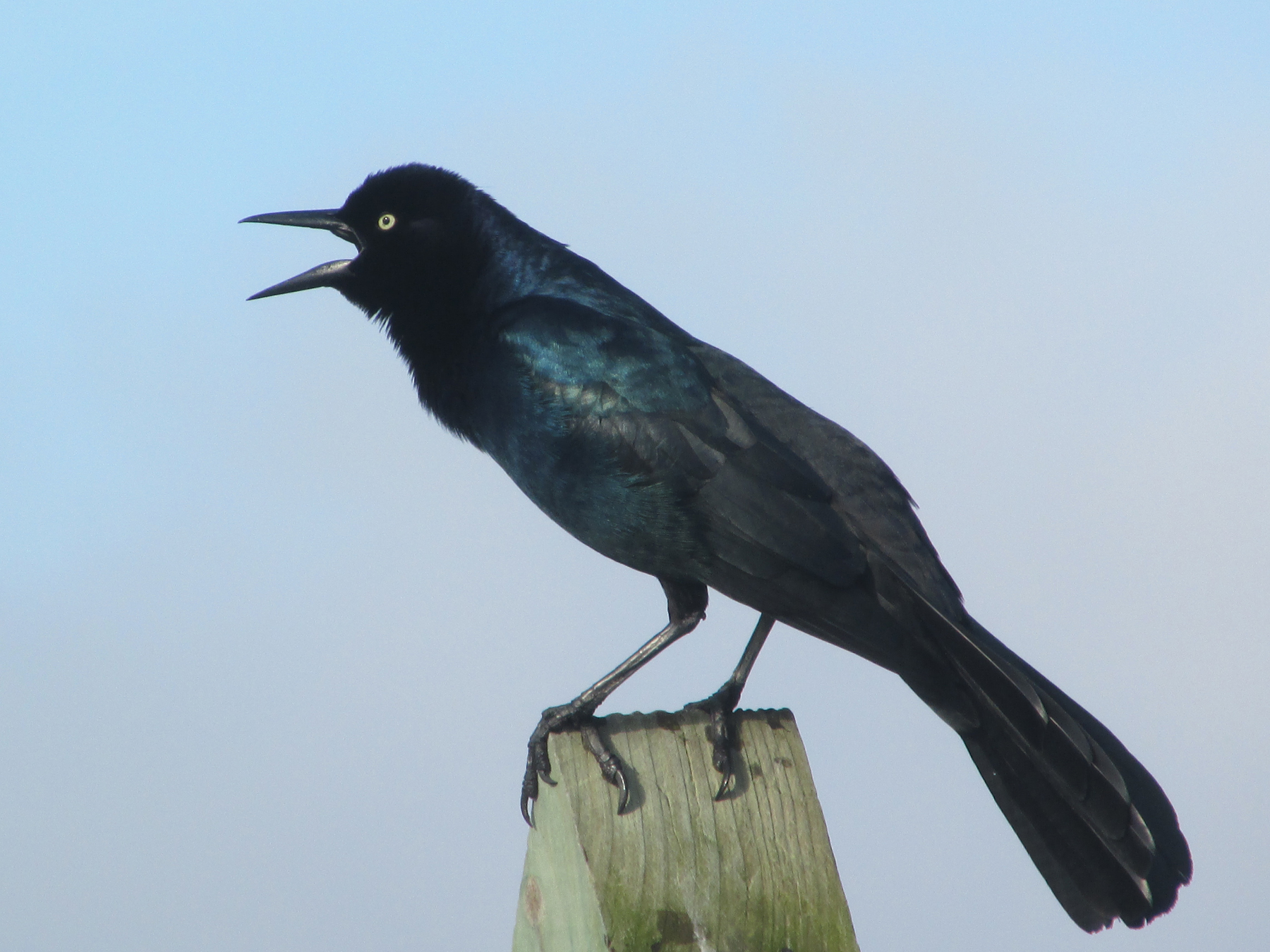
Photo by Bryan Stevens                                        A Boat-tailed Grackle sings from a South Carolina wetland.

Among other purposes, attracting mates, intimidating rivals and signaling territorial borders are some of the reasons birds sing. For human listeners, it’s easy to think that birds also sing for the sheer joy of producing these amazing choruses. That belief, however, is probably based more on the ear of the beholder.

We would probably be unaware of the presence of many birds if it wasn’t for their vocalizations. This fact is particularly true of nocturnal birds or denizens of inaccessible habitats such as swamps and marshes.

I was reminded of this fact when Facebook friend Kenneth Oakes sent me a message on March 23 about the arrival of the first whip-poor-will of the spring.

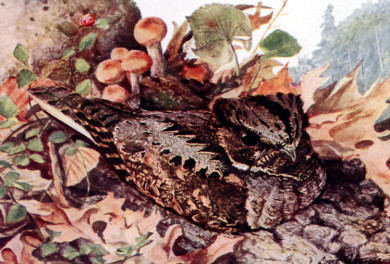
Caprimulgus_vociferus-Louis-Agassiz-Fuertes-390x264

A painting of a Whip-poor-will by the artist Louis Agassiz Fuertes.

“A whip-poor-will has just arrived,” he wrote in his message. “It is about 12 days early.” Kenneth noted that usually the arrival date for whip-poor-wills, as well as for hummingbirds, is about April 5.

“This is the earliest I’ve ever seen them arrive in this area,” Kenneth wrote. For the past two years, he noted that whip-poor-wills have been a week to 12 days late in arriving in the spring.

Kenneth is not the only person who has reported “early bird” whip-poor-wills. Brookie Potter, who lives with his wife, Jean, near Wilbur Lake in Carter County, Tennessee, heard two calling whip-poor-wills near his home on Easter Sunday, March 27. He reported his observation on bristol-birds, an online list-serve forum for sharing area bird sightings.

Ironically, the whip-poor-will is not one of the world’s many passerine, or songbird, species. Nevertheless, this bird’s nocturnal serenades are one of my fondest childhood memories. I remember sitting on my grandparents’ front porch to listen for hours to the whip-poor-wills as they sang the syllables of their own names from the nearby edges of the woodlands.

Kenneth also reported that he thinks the juncos have departed. “Winter is not over until they leave,” he wrote. “Let’s hope for an early spring.”

All indications, such as the early arrivals of birds such as whip-poor-wills, are that an early spring could be in the works. This is also the time of year when I keep my eyes open for the arrival of the first ruby-throated hummingbirds of spring. In fact, I put out my sugar water feeders the last week of March.

According to websites that track the annual northward migration of these tiny birds, the first hummingbirds should start arriving in Tennessee, Virginia and North Carolina any day now. As always, I invite readers to share with me the date and time of these first sightings.

Email me at ahoodedwarbler@aol.com or send me a message on Facebook to notify me when you observe your first hummingbird of spring 2016.

••••••

WoodDucks-1

Photo by Bryan Stevens                                        A pair of Wood Ducks visited the fish pond several times in March and April.

While I haven’t yet seen hummingbirds, plenty of other birds have been making appearances. My fish pond has been visited twice by pairs of wood ducks. My other recent sightings have included tree swallows, brown thrashers and chipping sparrows. I love spring for the simple fact you never know when a new bird will surprise you with an unanticipated arrival.

••••••

Bryan Stevens lives near Roan Mountain, Tennessee. To learn more about birds and other topics from the natural world, friend Stevens on Facebook at https://www.facebook.com/ahoodedwarbler. He is always posting about local birds, wildlife, flowers, insects and much more. If you have a question, wish to make a comment or share a sighting, email ahoodedwarbler@aol.com.

New bird arrivals signal spring’s imminent approach

Ring-neckedDuck

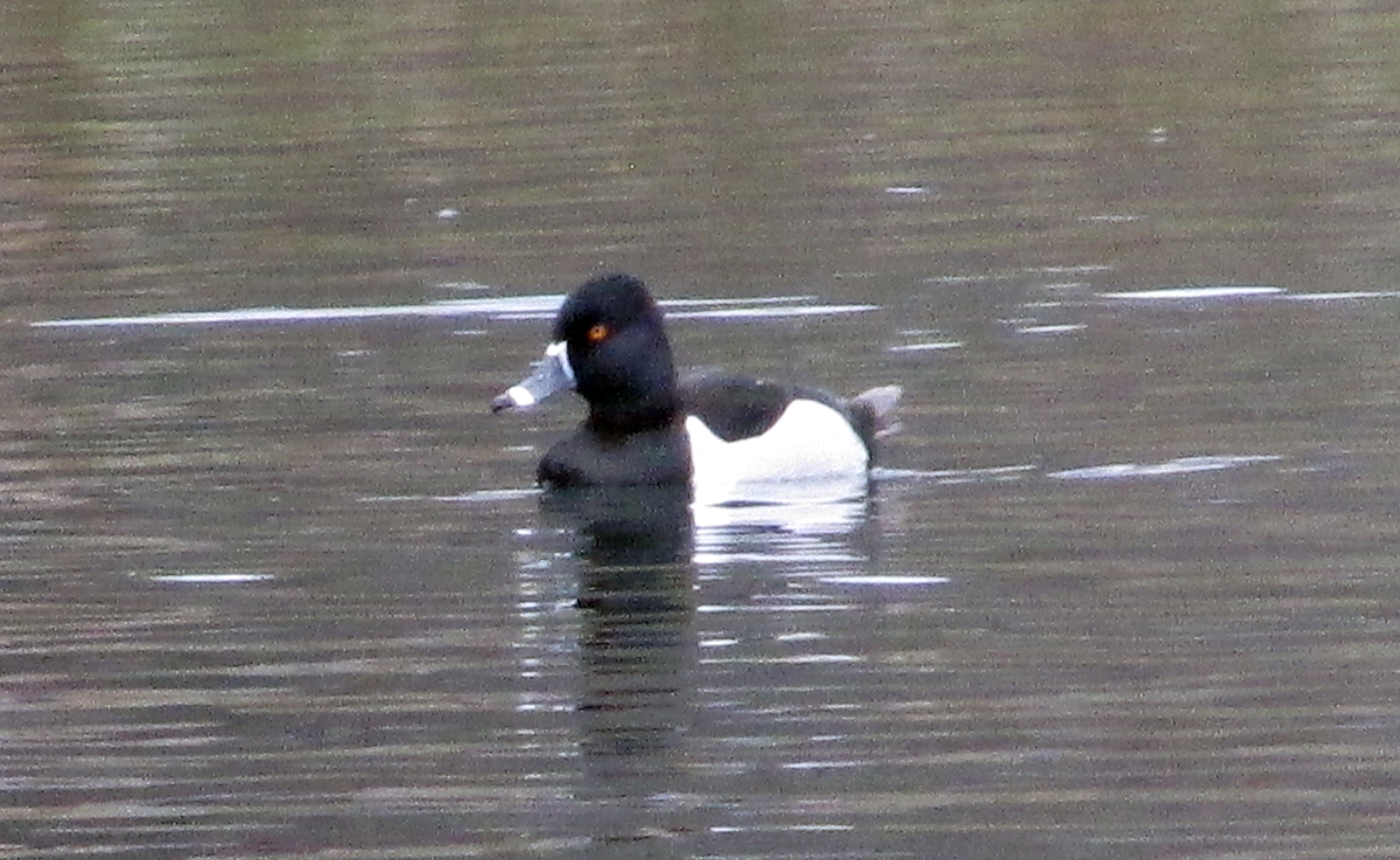
Photo by Bryan Stevens                                        A Ring-necked Duck visits a pond at Erwin Fishery Park.

The recent extremely warm weather — well, warm for the month of March — may have finally broken the back of winter. Signs of spring are becoming easier to detect, especially among our feathered friends. The pond at Erwin Fishery Park had been a great location to view migrating waterfowl for the past few weeks, but most of the visiting ducks — redheads, ring-necked ducks and American wigeon — appear to have concluded their late-winter visit.

Redheads-Erwin

Photo by Bryan Stevens                                        A raft of Redheads floats on the surface of the pond at Erwin Fishery Park in Unicoi County, Tennessee.

Signs of spring are becoming easier to detect, especially among our feathered friends. I’ve heard from numerous readers about flocks of American robins making welcome visits. While not the only harbinger of spring among our birds, robins are probably foremost among the birds we like to associate with the arrival of spring weather. The numerous large flocks of robins I observed during the last couple of weeks of February and early March, however, consisted mostly of birds coping with heavy snowfalls.

AmericanRobin

Photo by Bryan Stevens                                American robins are a familiar sight on lawns in spring. While the robin is widely believed to be a harbinger of spring, many other birds can also lay claim to this distinction.

The month of March is usually a time of transition, with many winter birds making ready to depart as some of our summer favorites return from their more southern wintering grounds. At home, I have noted the spring arrivals of Eastern phoebes and belted kingfishers. On March 6, a wary pair of wood ducks made a brief visit to the fish pond on my property. A couple of other bird species will probably make their appearance at some point in March. At my home, brown thrashers, tree swallows and red-winged blackbirds have returned and are already making themselves comfortable. These species and a handful of others are usually in the vanguard of spring arrivals. Let me know what you’re seeing as spring advances. I always enjoy hearing from readers.

Among the readers who have written to me recently was Shelly Jones, a resident of north Abingdon, Virginia.

LookinAmirror

Photo by Bryan Stevens                                    Song Sparrows are already making efforts to attract mates for the first spring nesting attempts.

“I have many bird feeders, with all kinds of seeds and suet cakes to attract as many different bird species that I can,” Shelly wrote in an email. “Like you, I have had all the common woodpeckers come to my feeders.”

Shelly commiserated with my never having been fortunate enough to get a visit from a red-headed woodpeckers at my home. She added that not only has she never been visited by a red-headed woodpecker at home, she has never seen one of these woodpeckers at all.

“I have seen the great pileated woodpecker flying through the tree tops,” she noted.

TreesWallows

Photo by Bryan Stevens                                   Tree Swallows perch on a wire over a pond in Hampton, Tennessee.

Her luck changed shortly after I ran the last installment on a series focused on the members of the woodpecker family.

“Today, when looking out at my feeders, there it was!” Shelly reported. It turned out to be a red-headed woodpecker. “My husband saw it, too,” she wrote. “I tried to get a photo, but it flew away before I could capture it. I’ll keep trying.”

Shelly and her husband live on five acres, mostly pasture for their two horses, but they are surrounded by woods on three sides, with many oak trees thriving in the woods. The habitat she described sounded imminently suitable for attracting red-headed woodpeckers.

I wrote an email back to Shelly congratulating her on the home visit from this woodpecker and joked that I was a little envious of her good fortune.

•••••••


BeckyGale-Eagle

Photo Courtesy of Gayle Riddervold      This photo of an adult Bald Eagle was taken this past winter along Simerly Creek Road.

Gayle Riddervold and Rebecca Kinder recently shared a photo of an adult Bald Eagle that they had taken along Simerly Creek Road in Hampton. They had been leaving for a trip to Gatlinburg, Tennessee, when they saw the eagle and stopped to get a photo.  Bald Eagles are often seen along lakes and rivers in Carter County during the winter, but finding an eagle at higher elevations is somewhat unusual.

••••••

Other readers have been sharing bird sightings that, if we’re fortunate, offer a signal of the changing seasons as winter wanes and spring nears.

Adelaide Moss in Abingdon, Virginia, wrote with a question about vultures. Vultures, by the way, are considered a harbinger of spring in some sections of the country. The two species — turkey vulture and black vulture — are year-round residents in our region.

“I am very curious about the vultures that hang out in trees in winter,” Adelaide wrote. “What on earth do they all eat? There are so many of them I can’t imagine there is enough roadkill to feed them all.

She added that she never sees vultures eating except occasionally on roads where they are eating roadkill.

“I would love to know more about them,” she wrote.

Bryan-Vulture

Photo by Bryan Stevens                    Turkey Vultures, unlike most birds, have a well-developed sense of smell.

I’ll focus on the turkey vulture, which benefits from a sense of smell that is absent in most other birds, the related black vulture included. With its finely-tuned olfactory senses, the turkey vulture can detect roadkill and other carrion from a distance of a mile.

These birds can also use their large wings to soar for hours. Soaring is much more energy-efficient than the flapping of wings. Experts who have studied turkey vultures estimate the birds may travel 200 miles or more in a single day in foraging for a meal such as a deer’s carcass or even an opossum squashed on the side of the road. Like many a scavenger, the turkey vulture’s not finicky and will eat almost anything. Pairing excellent eyesight with a good sense of smell means very little edible roadkill goes unnoticed by these birds.

••••••

I recently received an email from Tom and Helen Stetler in Elizabethton, Tennessee.

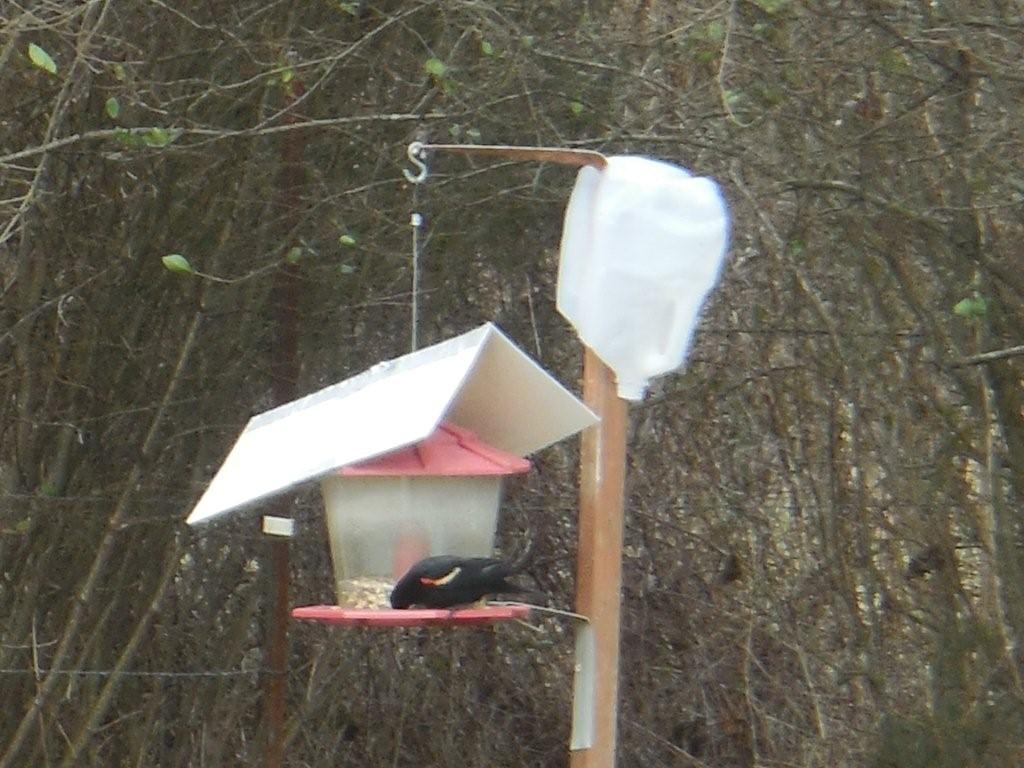
They reported seeing several “early birds” in their yard recently, including a total of six Red-winged Blackbirds. “One even went up on the bird feeder,” they wrote.

Stetler-Blackbirds

Photo courtesy of Tom and Helen Stetler     Red-winged Blackbirds, such as this bird, began returning to the region in February.

The couple noted that Red-winged Blackbirds are usually harbingers of spring, but they arrived with some of the last of the winter weather in February.

“Oh well, better days are coming, Lord willing,” the Stetlers wrote. They also added they have seen Song Sparrows and an Eastern Towhee at their feeder in recent days.

••••••

To learn more about birds and other topics from the natural world, friend Stevens on Facebook at https://www.facebook.com/ahoodedwarbler. He is always posting about local birds, wildlife, flowers, insects and much more. If you have a question, wish to make a comment or share a sighting, email ahoodedwarbler@aol.com.