Category Archives: Titmice

Carolina chickadees are cheerful backyard birds

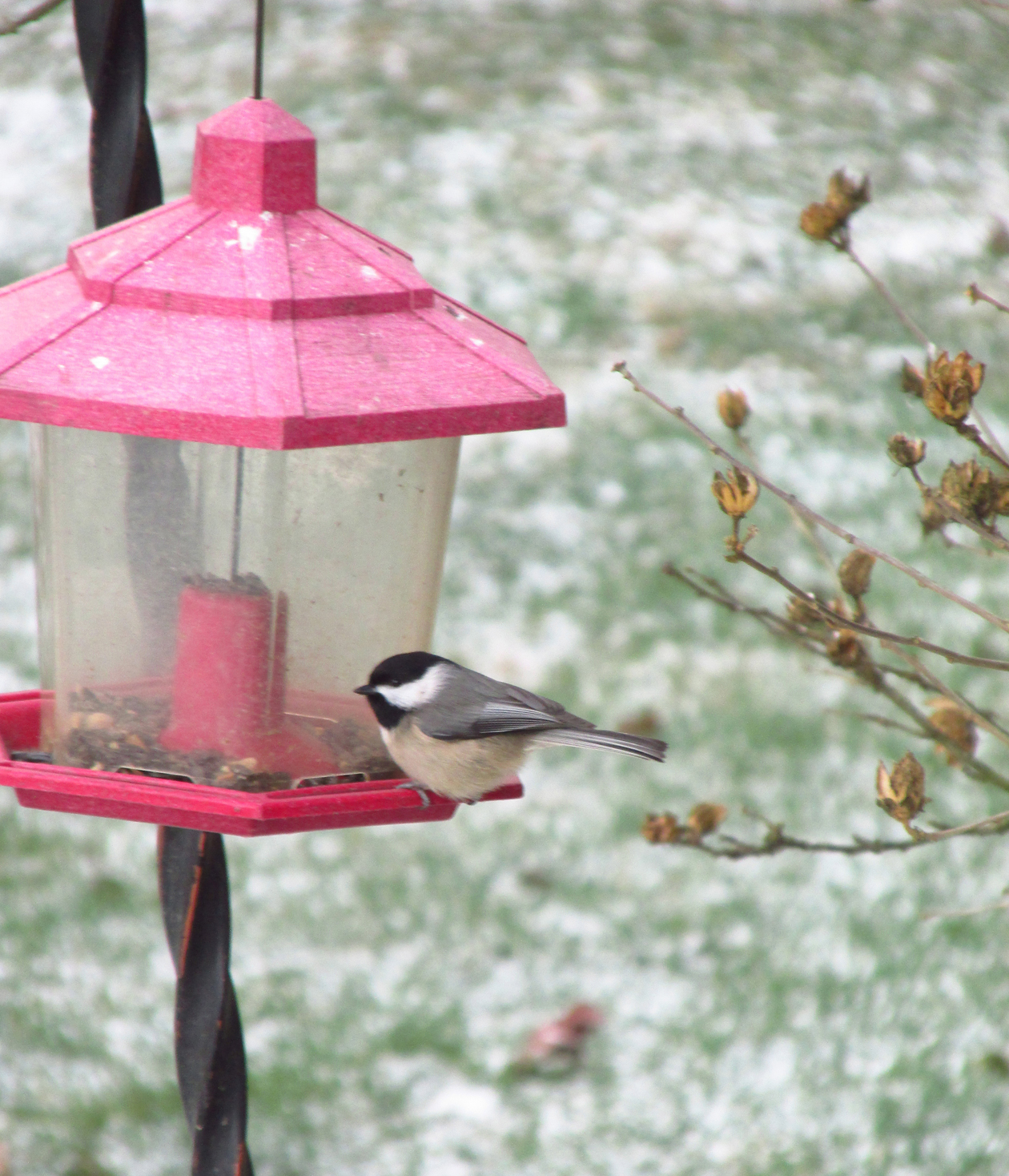
Photo by Bryan Stevens • A Carolina chickadee visits a feeder for sunflower seeds.

I’ve learned not to leave my house without an offering for the local birds. Should I neglect to bring sunflower seed to fill the feeders in the yard as I leave for work in the morning, I must face a scolding from the resident Carolina chickadees.

I think I’ve become familiar enough with these tiny black, white and gray birds that I can tell the difference between a disappointed scolding, the result of leaving the house empty handed, and their jubilant and excited chattering as they invite other birds near and far to come and partake of the bounty when I remember to fill the feeders.

Chickadees have a namesake scolding vocalization — a strident chick-a-dee-dee-dee — that they use to communicate with each other as the move through dreary winter woodlands.

They and the tufted titmice, a closely related species, are among the birds most easily acclimated to human presence and activity.

Photo by Bryan Stevens • A Carolina chickadee endures a cold winter’s day.

On the mornings when I remember their sunflower seeds, the waiting chickadees are doing tiny hoppity dances in the branches of nearby trees and shrubs, barely able to contain their excitement. They barely give me time to move away from the feeders before they dart in, grab a seed and carry it off to quickly shell on a safe perch.

In the spring, the Carolina chickadee has a familiar “fee-bee-fee-bo” song that rings out in the woodlands around my home. Cavity-nesters, chickadees readily take to nest boxes provided by human landlords. We are about five months away from spring of 2025, but that’s all right. Early winter is a great time to make the acquaintance of the Carolina chickadee.

This diminutive songbird is at home in mixed or deciduous woods in the United States from New Jersey west to southern Kansas and south to Florida and Texas. The Carolina chickadee also ranges along the Appalachian Mountains, but on some of the higher peaks they are replaced by their cousin, the black-capped chickadee. In Tennessee, birders need to visit some of the higher peaks in the Great Smoky Mountains National Park in order to find black-capped chickadees.

Sunflower seeds are a favorite offering. They are also attracted by peanuts, suet and other varieties of bird seed. They comprise the nucleus of mixed flocks of various species, so they will also bring other birds into your yard and within easy viewing range. Some other members of the flock might include wrens, nuthatches, titmice and perhaps a couple of kinglets or a downy woodpecker.

It’s easy to attract chickadees to your yard. Shrubs and small trees, feeders stocked with sunflower seeds and perhaps a mesh cage offering a suet cake are sure to make these small birds feel welcome. If you want to witness the family life of chickadees, build or buy a box suitable for wrens and other smaller birds. That task can wait until February of March of next year. Chickadees will happily take up residence in the offered nesting boxes.

Once a pair of chickadees settles down into domestic bliss in the spring, they almost at once start work on the construction of a nest. These little songbirds, looking quite smart in their handsome black, white and gray feathers, build an exquisite nest. The primary nesting material is green moss, which they stuff into a natural cavity or bird box in great quantities. The female chickadee fashions a depression in the collection of moss. She lines this shallow basin with plant fibers as well as strands of fur or hair to provide soft cushioning for her eggs.

A female chickadee can lay a large number of eggs, with the clutch size ranging between three and ten eggs. Once the young hatch, both parents are kept busy delivering food to a large brood of hungry, noisy chicks. The young grow quickly, but they take advantage of the safety of their cavity nest and don’t depart for the wider world until 20 days after their hatching.

North America’s other chickadees include the aforementioned black-capped chickadee, as well as boreal chickadee, chestnut-backed chickadee, grey-headed chickadee, Mexican chickadee, and mountain chickadee. On a trip to Utah in 2003 and 2006, I saw both black-capped chickadees and mountain chickadees.

In other parts of the world, chickadees are known as “tits,” which is from an Old English word denoting small size. Worldwide, there are about 60 species of chickadees and tits, which are classified collectively under the scientific family name, Paridae. Other members of this family range into Europe, Asia and Africa, including species with colorful names like fire-capped tit, yellow-bellied tit, azure tit, green-backed tit and cinnamon-breasted tit.

Alas, in Northeast Tennessee, western North Carolina and southwest Virginia, we have only the Carolina chickadee, but these entertaining birds are sure to become the star attractions in yard and garden once they discover your feeders and begin providing their cheerful antics.

•••

If you have a question, wish to make a comment or share a sighting, email me at ahoodedwarbler@aol.com.

Photo by Bryan Stevens • A young Carolina chickadee, not long out of the nest, explores the world.

Sounds of spring grow more varied as season advances

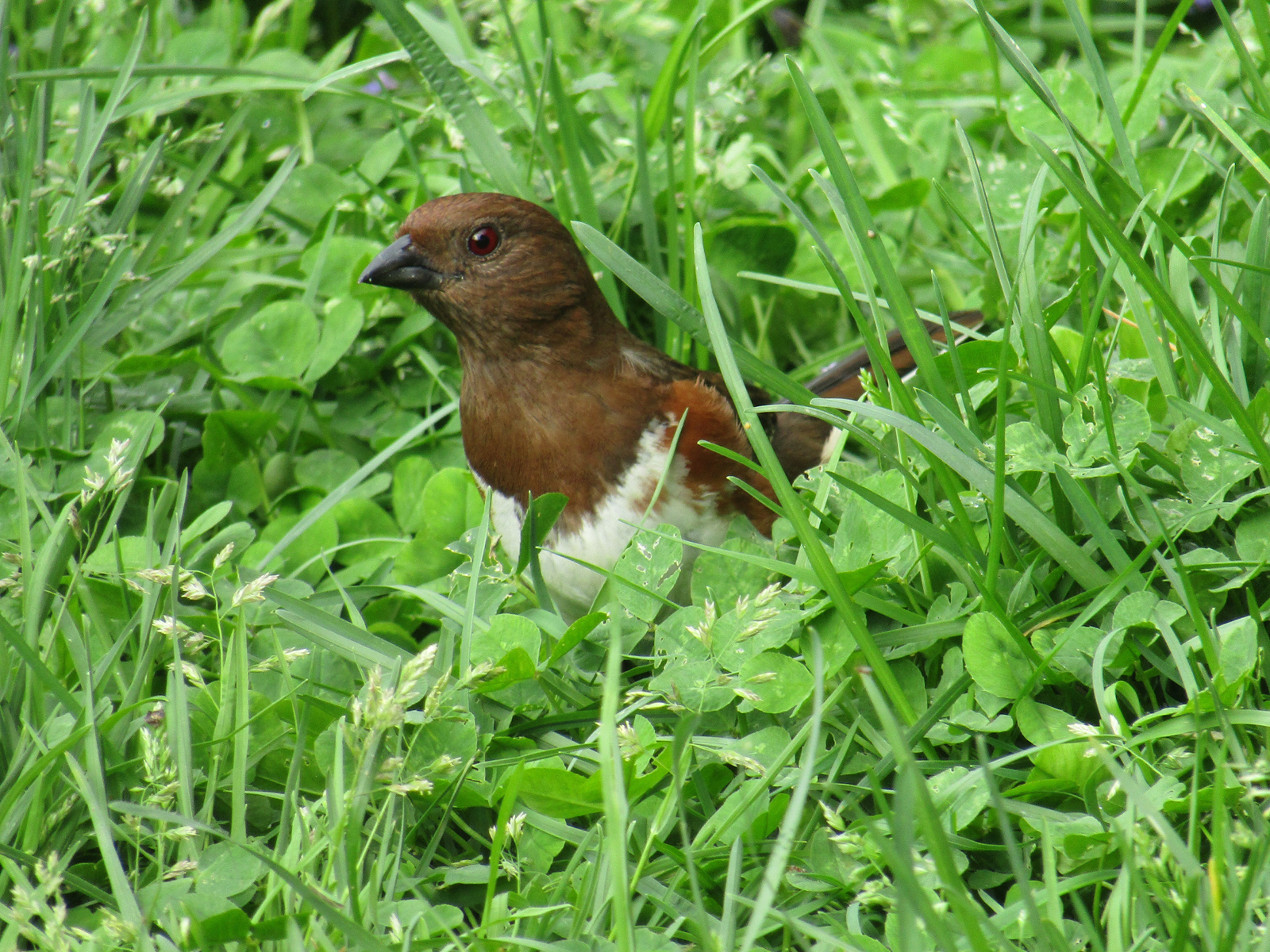
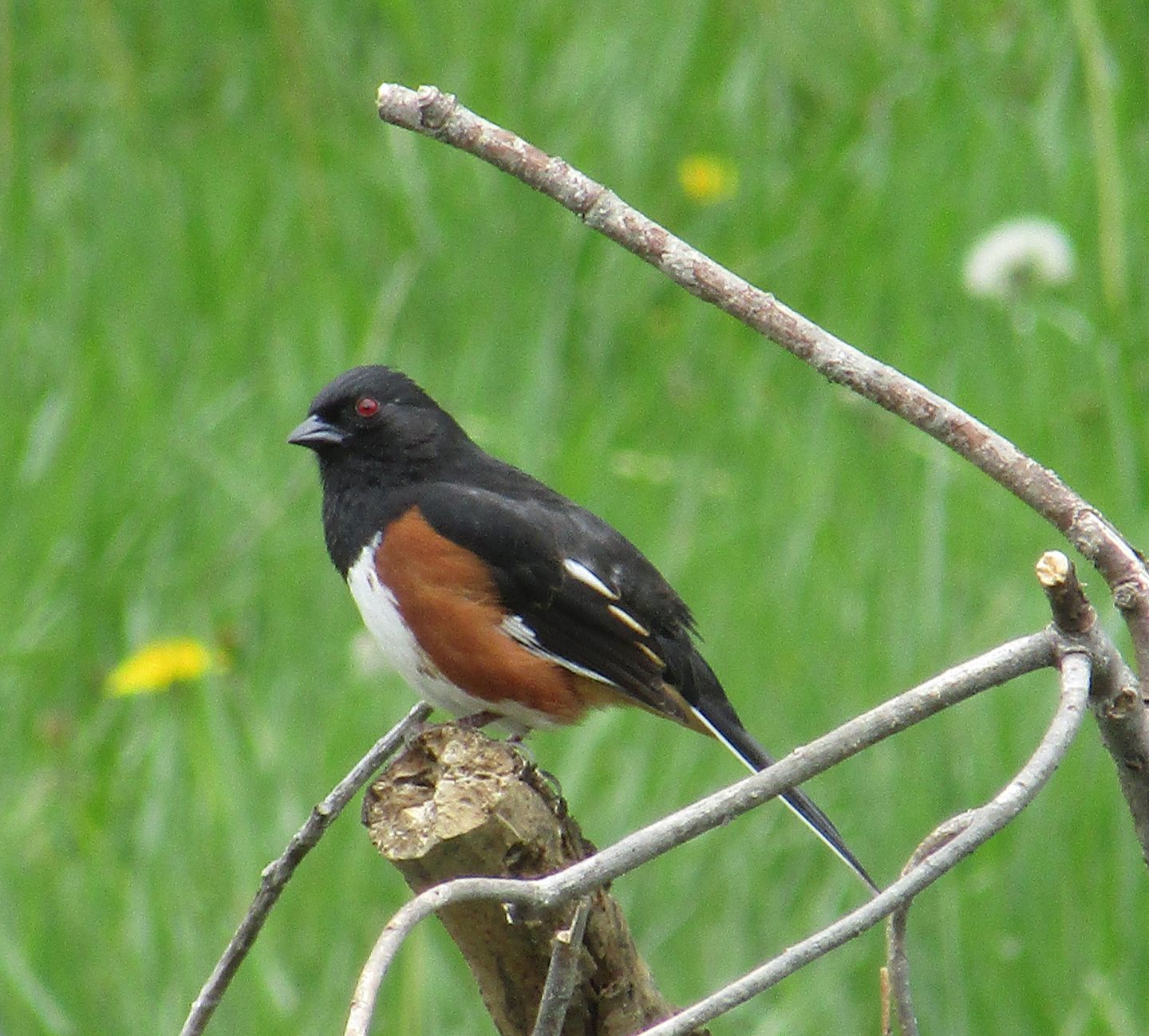
Photo by Bryan Stevens • Former common name rufous-sided towhee became Eastern towhee, which is far less descriptive of the bird’s appearance. In spring, male towhees become persistent singers. Listen for their “drink-your-tea” song as the males perch on elevated branches and twigs.

The sounds of spring surround us from sunrise to sunset with much of this seasonal chorus being provided by our feathered friends, the birds. In these weird weeks in need of something distracting, I’ve been letting nature’s sounds, as well as sights, provide some measure of relief from stressful headlines and anxious thoughts.

The mornings around my home often begin with a loud, insistent “Peter! Peter! Peter!” uttered from the woods or even just outside my bedroom window. Male tufted titmice, little gray relatives of chickadees with a distinctive crest and large, dark eyes, sing their urgent “Peter! Peter! Peter!” as a constant refrain in their efforts to attract mates now that they feel spring in their blood.

A series of rat-a-tat-tats echoes from deeper in the woods as woodpeckers tap their sturdy bills against the trunks of trees. The three most common woodpeckers at my home are red-bellied, downy, and pileated, and they all have their own unique vocalizations, as well.

Photo by Bryan Stevens • Woodpeckers not only vocalize, they also add to the spring cacophony by drumming against the trunks of trees.

The pileated woodpecker produces clear, far-carrying resonant piping sounds that can last for a few seconds each blast. The much smaller downy woodpecker produces a whinny of high-pitched notes that descend in pitch toward their conclusion. The red-bellied call is probably the one that stands out the most. The call’s a harsh, rolling “Churr, churr, churr” given almost like an expression of exasperation as they circle tree trunks and explore branches.

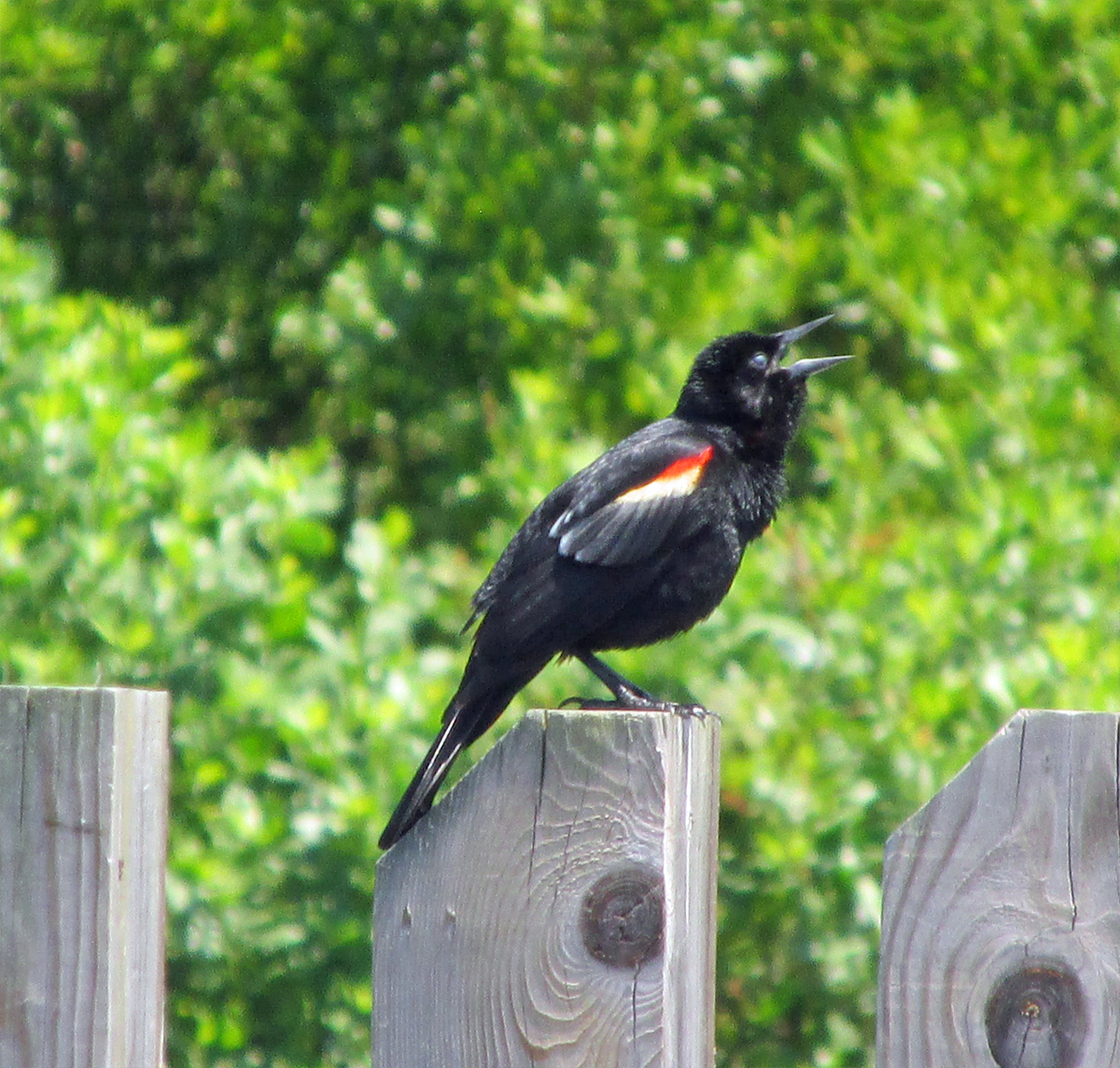
Since their return earlier this month, the resident red-winged blackbirds are often some of the earliest singers these days. According to the website All About Birds, the male red-winged blackbird’s “conk-la-ree!” is a classic sound of wetlands across the continent of North America. According to the website, the one-second song starts with an abrupt note that transforms quickly into a musical trill.

Photo by Bryan Stevens • A male red-winged blackbird sings to attract mates and ward off rivals.

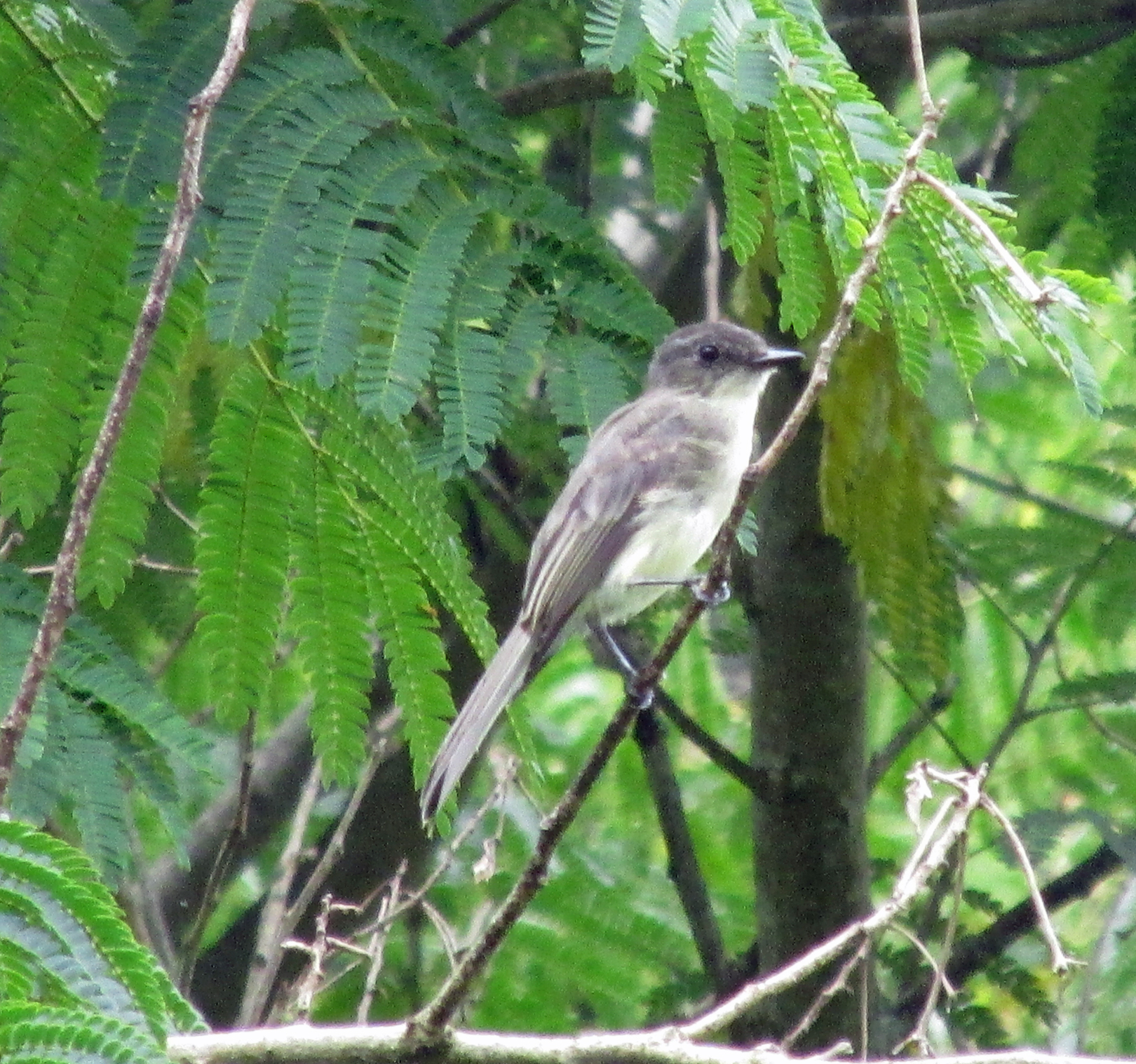
Some birds helpfully introduce themselves with a song that repeats their name. One such common bird is the Eastern phoebe. In recent weeks, a pair has been checking out the rafters of my garage for potential nest sites. The male spends much of the day producing his strident “fee-bee” call, which is a perfect phonetic rendition of the bird’s common name.

Photo by Bryan Stevens • The Eastern Phoebe’s song is a repetitive rendition of its own name — “fee-bee” — given over and over.

Then there’s one of my favorite songs of spring, which is produced by the Eastern towhee, which is also known by such common names as “ground robin” and “swamp robin.” These birds, which are actually a species of sparrow, also have some instantly recognizable vocalizations. With the arrival of spring, the males seek elevated perches for extensive singing bouts to attract mates and establish territories. Their song has been interpreted, quite accurately, as “drink your tea!” They also have some alarm notes, such as “€œChew-ink”€ and “€œToe-Hee,” of which the latter provides the basis for this bird’s common name.

Of course, other wildlife joins the chorus. I have so many spring peepers at the fish pond and in the wet fields around my house that the noise from these tiny amphibians can reach deafening levels. The chorus is bound to grow more diverse and louder as spring advances. Take some time to enjoy the sounds of nature at your own home.

••••••

To share your own sighting, make a comment or ask a question, send email to ahoodedwarbler@aol.com. I’m also on Facebook.

Photo by Bryan Stevens • An alert Eastern towhee female forages on a lawn.


Tufted titmouse small songbird with big personality

In last week’s post I wrote about chickadees. These friendly little birds have an impish cousin that is also a frequent visitor to feeders in the region. If chickadees are active woodland sprites, their relative, the titmouse, is a curious imp with mischievous tendencies.

Titmouse-2

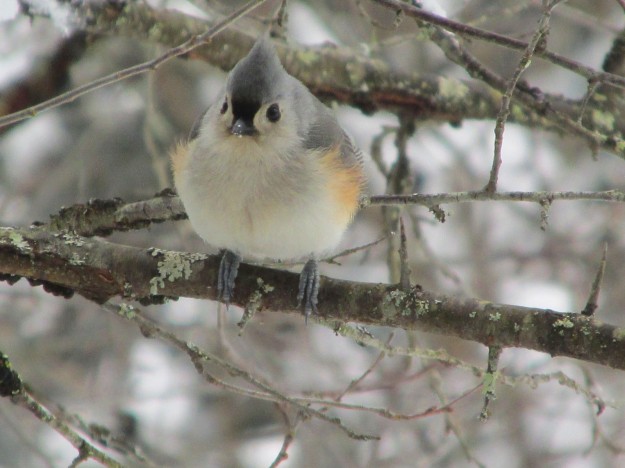
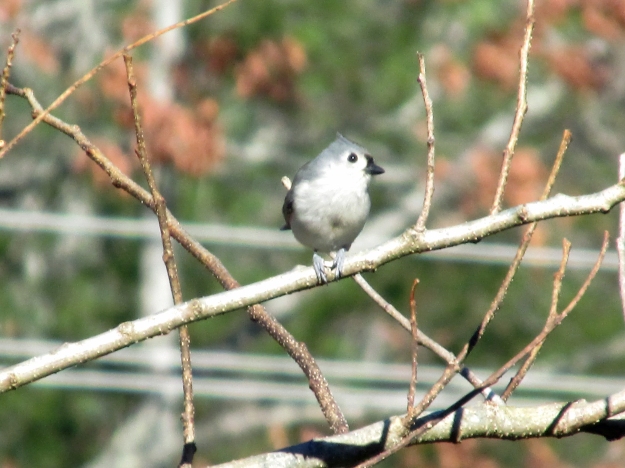
Photo by Bryan Stevens • A tufted titmouse puffs up its feathers on a cold day.

The tufted titmouse’s song — a persistent repetition of “Peter! Peter! Peter!” — is ringing through the woodlands around my home along with the urgent “fee-be fee-bo” of the Carolina chickadee. These birds form mixed flocks with each other and other species to explore their surroundings and search for food. They know that spring, despite the usual false starts, is drawing nearer with each passing day.

In addition to singing, titmice are enthusiastic scolders. They will scold over any transgression, real or imagined, focusing their ire on their fellow titmice or other birds, potential predators and even human observers. They’re quite persistent at their raucous scolding, which is just another reason I label them as imps of the woods.

Titmouse-Suet

Photo by Bryan Stevens • A young titmouse visits a suet feeder.

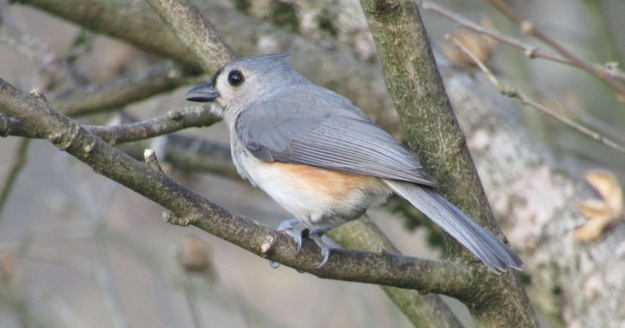
The tufted titmouse is a mostly gray bird with a distinctive crest and a pinkish-rusty coloration along the flanks. Titmouse eyes are black as coal and look large in proportion to their heads, which lends them an expressive appearance as they explore in yards and gardens. The term “titmouse” refers to the old English word “tit” meaning “small,” as well as the old English “mase,” also a reference to small size. Eventually, probably because of the bird’s small size and gray coloration, “mase” evolved into “mouse” and combined to form the word “titmouse.”

The titmice living in my yard visit my house windows at times, which drives my cats to distraction. I’ve wondered if the titmice are curious and trying to peek inside the house, but I believe I have a more down-to-earth explanation. These little birds are very thorough when foraging for food, and I’ve watched them pluck spiders and other insects from the window frames.

Titmouse-Creek

Photo by Bryan Stevens • A tufted titmouse approaches a stream for a quick drink.

Like chickadees, titmice are fond of sunflower seeds. No other offering will so readily lure them to feeders, although they do develop a fondness for suet cakes. I’ve also had great success attracting titmice to my feeders by offering unsalted, shelled peanuts. I sometimes break up the peanuts into smaller, more manageable pieces for the benefit of the titmice. These foods and a few trees or saplings around your home is all you really need to welcome titmice.

In the early 1900s, the tufted titmouse would have been considered a southern bird with its stronghold in states like Tennessee, Virginia, the Carolinas and Georgia. Perhaps it is the titmouse’s innate curiosity that has pushed the species to expand successfully beyond the southern United States. The titmouse has steadily expanded its range northward, thriving in new locations. Experts credit this expansion to more readily available access to supplemental food at feeders.

Titmouse-Eye

Photo by Bryan Stevens • A tufted titmouse turns an eye on the camera.

During the nesting season, titmice forage for a variety of insects. Many spiders, beetles, caterpillars and other small bugs will be fed to hungry young titmice in a tree cavity or a nesting box. Like chickadees, titmice build exquisite nests, often using mostly moss with other materials, such as bark, cloth scraps, dry leaves and shed snakeskins. These small birds line their nests with hair or fur of other animals.

Over the years, many readers have shared observations documenting the fur-collecting skills of tufted titmice. The birds are not content to simply collect shed fur. They seem to prefer collecting the fur fresh from a living animal. Many dogs fall victim to impish titmice that boldly pluck strands of fur from the canine’s coat.

In another funny story, a woman once told me about a titmouse that flew onto her head every time she stepped outside her home. Perhaps the bird sensed her affection for birds since it never failed to pluck strands of hair from her head to carry back to its nest. For any would-be skeptics, the woman provided photographic documentation of the incidents. In addition to dogs and humans, animals ranging from squirrels and opossums to mice and woodchucks have also been observed “sacrificing” fur for the nesting success of tufted titmice.

Titmouse-PHOTO

Photo by Bryan Stevens • The tufted titmouse is a backyard bird with an impish personality.

The female tufted titmouse incubates the eggs. She lays between three and nine eggs, although a usual clutch size is five to six eggs. The female titmouse is protective of her nest and is known for a behavior known as a “snake display.” I’ve observed titmice perform this display when I’ve peeked into nesting boxes. She remains tightly seated on her eggs, or young, while she hisses loudly and strikes in a manner very much like a striking serpent. Not all titmice engage in this display. Some remain still and try to “blend” with the nest, while others will fly away if a nest box is opened. Regardless, it’s a convincing display of bravado on the part of such a small bird. If it looks scary to people, I am sure it could succeed at repelling a squirrel or mouse. I’m uncertain if the behavior would deter an actual snake.

Other titmice in North America include bridled titmouse in Arizona and New Mexico; oak titmouse of the Pacific Coast region; juniper titmouse from the Great Basin, which consists of Wyoming, Idaho, Utah, Nevada, Oregon and California; and the black-crested titmouse, which ranges from Missouri into east-central Mexico.

Titmouse-WithPeanut

Photo by Bryan Stevens • A tufted titmouse pounds at a peanut held in its feet.

Titmice occur exclusively in North America and belong to the genus Baeolophus. Europe, Asia and Africa are home to some other crested birds in the family of chickadees and titmice. For instance, the European crested tit and the grey crested tit are species that sport a crest of feathers like titmice but are more closely related to chickadees.

Yes, the tufted titmouse is one of nature’s imps, but it’s also one of our more entertaining birds. Get to know these visitors by offering sunflower seeds or other fare and, if you want to go the extra step, place some bird boxes around your yard as potential nesting sites. By next winter, you may have an entire flock of these feathered imps as your guests.

•••••

Bryan Stevens lives near Roan Mountain, Tennessee. To learn more about birds and other topics from the natural world, friend Stevens on Facebook at https://www.facebook.com/ahoodedwarbler. If you have a question, wish to make a comment or share a sighting, email ahoodedwarbler@aol.com.

Titmouse-OnSuet

Photo by Bryan Stevens • A tufted titmouse makes a quick visit to a suet feeder.