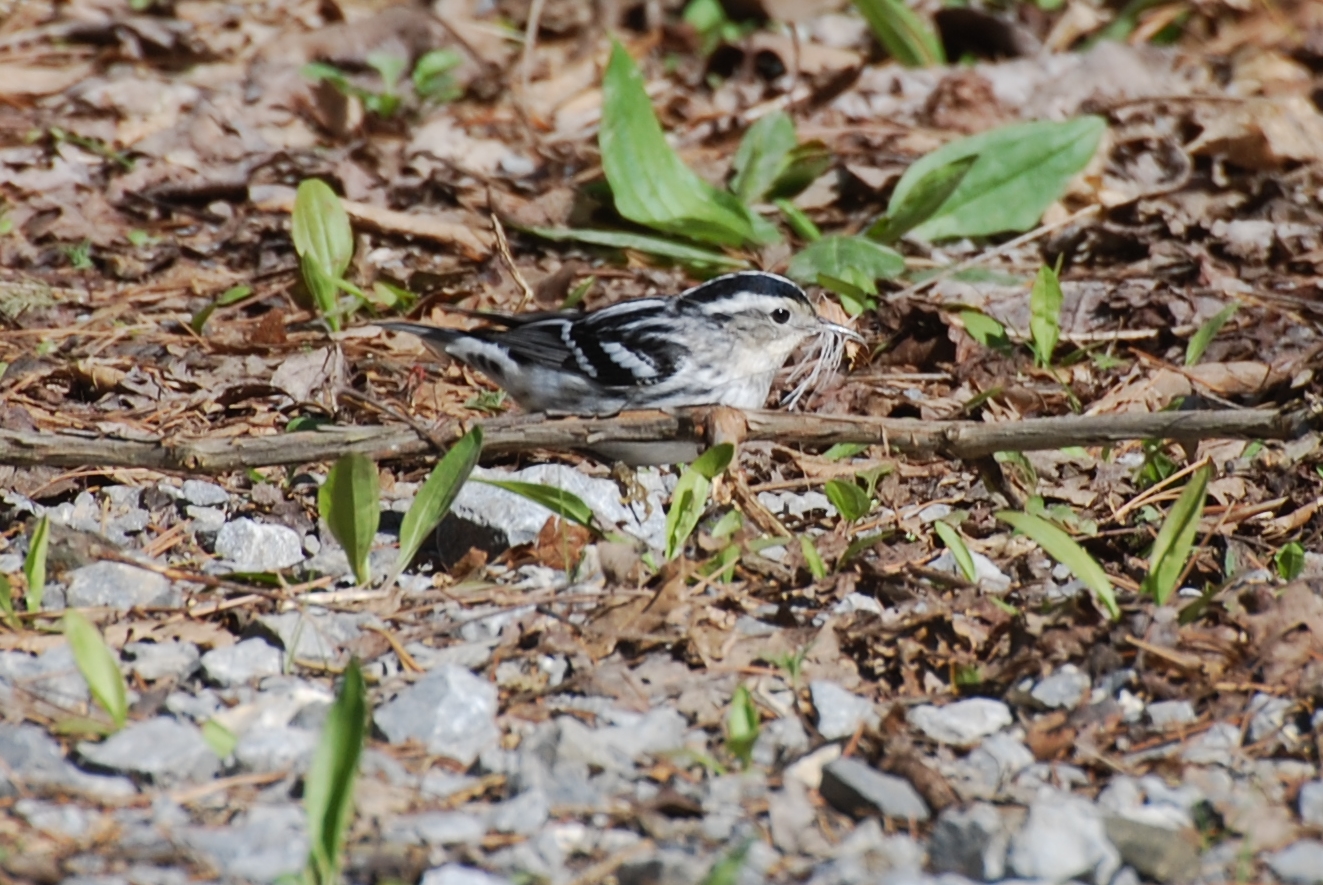
Category Archives: Warblers

Worm-eating warbler less conspicuous member of family of bright, active migratory songbirds

worm-eating-warbler

Photo by U.S. Fish & Wildlife Service                The worm-eating warbler is one of the more nondescript warblers.

It’s September, which for me signals the autumn migration season of warblers and other neotropical birds. The warblers are a family of small songbirds that also happens to be the main reason I enjoy bird watching. Although warblers can be a challenge to observe and a puzzler to identify, they’re bundles of multi-colored feathers brimming with high-octane energy as they forage in treetops, along woodland edges, in weedy fields and around ponds and streams.

Like all migrating birds, warblers face numerous obstacles and hazards as they fly back south every fall after spending most of the spring and the entire summer spread across the United States and Canada for the season of nesting and raising young. Storms, such as the recent Hurricane Hermine, can be a hazard. Predatory raptors, like peregrine falcons and merlins, follow the migration routes and pick off various migrants. Even something as mundane as a window pane can bring a tragic halt to migration each year for thousands of our smaller songbirds.

worm-eating-2

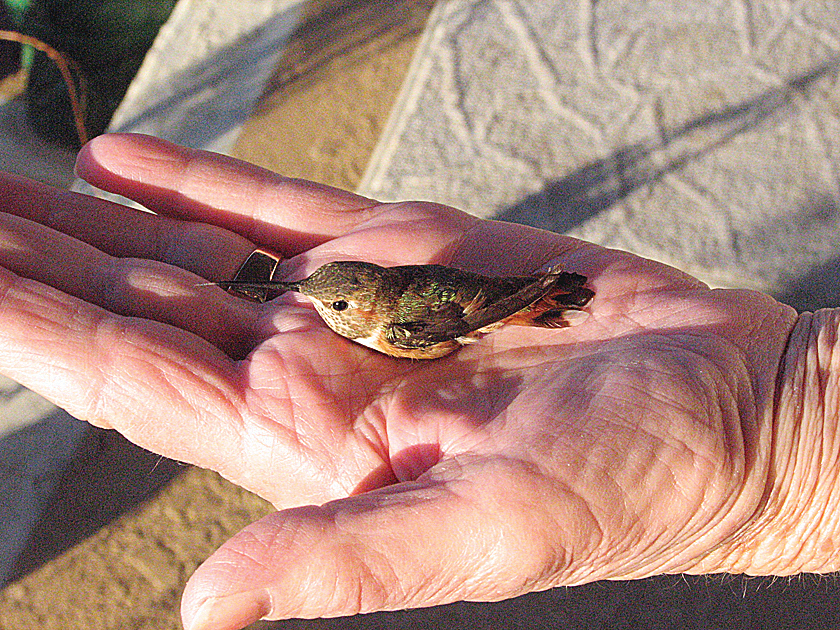
Photo Courtesy of Dianna Lynne Tucker           This worm-eating warbler perched on a flower pot while recovering from an impact with a window.

I recently received an email from Chris Soto, a fellow member of the Lee and Lois Herndon Chapter of the Tennessee Ornithological Society. Her sister, Dianna Lynne Tucker, resides in Elizabethton, Tennessee, near Holston Mountain. Her home has a yard that is a magnet for a variety of songbirds. One of the birds passing through her yard had an unfortunate impact with a window. Chris and Dianna already suspected the identity of the bird, but they emailed me asking for help to confirm it. I concurred that the bird was a worm-eating warbler.

“After a brief rest, the bird recovered,” Chris noted in the email. I always like a story with a happy ending.

The scientific name for this warbler is interesting. The worm-eating warbler, or Helmitheros vermivorum, is in a genus of one. It’s the only species contained within the genus. Vermi means “of or relating to worms” while vorum is related to eating. Hence, vermivorum is quite literally an “eater of worms.” The worms in this warbler’s diet, however, are not earthworms. Instead this bird feeds on caterpillars, the larval form of moths and caterpillars. The worm-eating warbler has one unusual foraging method to look for caterpillars. This warbler will often cling to a cluster of dead leaves while probing into the tangle to seek out any concealed caterpillars, as well as small insects and spiders. All in all, the worm-eating warbler doesn’t feed any more exclusively on caterpillars than other warblers.

worm-eating-1

Photo Courtesy of Dianna Lynne Tucker         Like other songbirds, the migratory worm-eating warbler faces many perils during its annual fall migration.

This warbler’s non-musical song is a dry trill that compares with the songs of chipping sparrows and dark-eyed juncos. Since these other birds can be found in similar habitats, it can be a bit of a challenge for beginners to identify this warbler by sound alone. The worm-eating warbler isn’t one of the more colorful members of the family. It has a subtle beauty, however, with a plumage of brown and buff feathers. The most distinctive part of its appearance are the black stripes that run along the crown and a dark stripe through the eye. This warbler has a pinkish bill. Both males and females look alike.

abc-worm-eaterprogram

Photo Courtesy of Brian Rovira                        This worm-eating warbler recovered after striking a window at the home of Brian Rovira in Unicoi, Tennessee.

According to the website All About Birds, the oldest worm-eating warbler ever documented was a male that was at least eight years, one month old when he was recaptured and rereleased during banding operations in Connecticut. I’ve seen fewer of this particular warbler over the past ten years, but the overall population figures for this species have actually trended slightly upward. The worm-eating warbler’s population is concentrated in the southeastern United States. It favors deciduous woodland habitat with shaded banks, steep gullies and ravines. The habitat around my home must have changed enough that they are no longer a frequent visitor. The worm-eating warblers will migrate to Mexico and Central America this fall, electing to spend the winter months in warmer terrain.

1-brown-headed-worm-eating-warbler-john-james-audubon

Early American naturalist and painter John James Audubon painted the worm-eating warbler in company with some native butterflies.

Warblers and their active lifestyles can be a challenge for human observers. Nevertheless, it’s worth the effort to seek out these colorful, energetic and interesting songbirds. Many people like to look for returning spring warblers, but I’ve always found the fall season the best time to look for these birds. September is the month when the majority of these warblers will migrate through our region. Warblers ignore offerings of seeds at our feeders, but a bird bath, ornamental fountain, pond or stream is like a magnet drawing these migrants to stop, enjoy a cool drink and a vigorous splash in the inviting water.

Keep a pair of binoculars at hand and your eyes open. If you’d like to share your observations of migrants passing through your yard this fall, I’d love to hear from you.

•••••

Bryan Stevens lives near Roan Mountain, Tennessee. To learn more about birds and other topics from the natural world, friend Stevens on Facebook at https://www.facebook.com/ahoodedwarbler. He is always posting about local birds, wildlife, flowers, insects and much more. If you have a question, wish to make a comment or share a sighting, email ahoodedwarbler@aol.com.
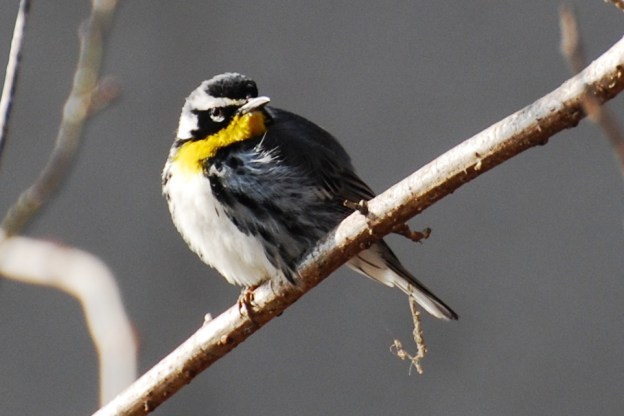
Migrating warblers offer surprises for alert birders


BlackThroated_Green

Photo by Steve Maslowski/U.S. Fish & Wildlife Service Black-throated green warblers are nesting birds in the region. Other warblers wing their way much farther north to habitats where they prefer to nest and raise young.

April kicked off with some excitement when I heard my first warbler of the spring season singing on the first day of the month from the woodlands near my home. Although I never managed to catch sight of the singer, I identified the bird as a black-throated green warbler by the whistled syllables of its song.

The black-throated green warbler is a common nesting bird in the region’s mountains. Warblers are exclusively birds of the New World. The majority of the world’s 118 species of warblers live in Central and South America, as well as in the Caribbean, but about 50 species spend the nesting season in the United States and Canada before retreating to southern strongholds for the winter months.

3481076952_b3ac2ffab6_o (1)

Photo Courtesy of Jean Potter                           A male Hooded Warbler lurks in a thicket of rhododendron.

The warblers have long been one of my favorite bird families, partly because of their ephemeral natures when it comes to visits in the region. Several of these small songbirds only pass through the region for a few weeks each spring and autumn as they migrate from their wintering grounds to breeding habitats spread across North America. The warblers are, for the most part, birds of the fast-moving, insect-eating persuasion.

Many of these energetic birds will bypass the region except for occasional migratory stops as they wing their way quickly to bug-ridden bogs or coniferous forests farther north. Species with names like mourning warbler, bay-breasted warbler and Wilson’s warbler shoot past northeast Tennessee and southwest Virginia in their haste to reach suitable habitat for raising young in the provinces of Canada or the New England states.

Bachman's_Warbler

The last verified sightings of Bachman’s Warbler took place in the 1970s and the species is probably extinct.

A couple of endangered warblers — Kirtland’s warbler of Michigan and the golden-cheeked warbler of Texas — require extensive management by the federal government to protect their nesting habitat and ensure successful nesting. These two warblers, along with a handful of others, are the only members of the warblers nesting in eastern North America that I haven’t added to my birding life list.

BachmanJohnMugColor01t 2

The Rev. John Bachman

Only one of the warblers known to nest in the United States has ever gone extinct. Bachman’s warbler hasn’t been seen since the late 1970s, although there have been sporadic and unconfirmed sightings since the 1980s. The bird was named in honor of the Rev. John Bachman, an early naturalist and friend of John James Audubon. The species was first collected by Bachman in his native South Carolina in the early 1830s. Historically, Bachman’s warbler bred as far north as Virginia, but the bird’s stronghold was in the states along the Atlantic southern coastal plain. Almost the entire population spends the winter months in Cuba. The disappearance of this small, yellowish bird has never been fully explained and will likely linger as a biological mystery. From its discovery to the plunge toward extinction, Bachman’s warbler was known for only slightly more than a century.

BlackNWhite-Warbler

Photo Courtesy of Jean Potter                              A female Black-and-White Warbler gathers nesting materials.


Most warblers have managed to adapt to changing landscapes brought out by human activity. Some, like the yellow warbler and the yellow-rumped warbler, are quite widespread. The yellow warbler nests across most the continental United States and also reaches Alaska. Closer to home, a few of these warblers nest in the woodlands around my house. The expected species each summer include hooded warbler, black-and-white warbler, ovenbird and Northern parula.

I usually have better luck observing migrating warblers in the fall. I think part of the reason rests with the fact that warblers migrating in the spring are in a hurry to reach their destinations. In contrast, the fall migration is a more leisurely activity that affords these tiny birds the luxury of spending a few days in different locations. If one of those locations happens to be my backyard, I take great pleasure in getting my binoculars on species ranging from Kentucky warbler to blue-winged warbler.

13524560525_278623081f_o

Photo Courtesy of Jean Potter                              A Pine Warbler visits a suet feeder. Most warblers ignore feeders, but these energetic songbirds will visit fountains and water features.

Most warblers will ignore offerings at our feeders, although the occasional pine warbler learns the advantages of visiting suet feeders during the cold months. The most reliable means to attract these tiny, energetic birds is with a water feature, such as a bird bath, ornamental pool or even a bubbling fountain or artificial waterfall. On my property, I have a cattail marsh, a fish pond and a modest creek. As a result, I don’t spend much time working on providing supplemental water sources. For those not blessed with such resources, I highly recommend some sort of water source to increase your chances of visits from warblers.

3947702376_eae6a174fc_o (2)

Photo Courtesy of Jean Potter                            A Black-throated Blue Warbler is captured in preparation for banding.

These tiny birds are not the easiest ones to learn to identify. However, only about four dozen species migrate through the region or stop to spend the summer months. With a good field guide and some practice, it’s not that difficult to learn the different species. The reward is that undeniable spark of magic imparted by an observation of a bird as glorious as a fiery-throated Blackburnian warbler or a handsome black-throated blue warbler.

Departures, new arrivals signal approach of winter

October represented a transitional time for the region’s birds. Many of our summer birds have now departed for wintering grounds, which means we won’t be seeing them again until April or May of 2016.

Hummer-Oct17

The last Ruby-throated Hummingbird of 2015.

I saw hummingbirds daily in my yard during October through the 17th day of the month, when I saw only a single bird at the feeders. The following day no hummingbirds appeared in the yard.
I am still hanging sugar water feeders in the unlikely chance I might attract a visit from one of the Selasphorus hummingbirds, a genus of these tiny birds that spends the nesting season in the western United States. A few of these species appear to migrate through the southeastern United States each fall and early winter. Rufous hummingbird is the species most likely to make an appearance, but other species — Allen’s hummingbird and black-chinned hummingbird — are a possibility.

Rufous-BettyKirby-Three-Program

A Rufous Hummingbird I observed being banded several years ago in Hampton, Tennessee.

These “winter” hummingbirds are easy to recognize. Their plumage is more brown than green, making them quite distinguishable from the usual ruby-throated hummingbird, which is not usually present in the region after the end of October.
•••••
Most of the warblers have also departed. I saw a couple of common yellowthroats on Oct. 10, but they represented the last gasp of warbler migration. Most of the warblers winter in Central America or the Caribbean, although a few travel only as far as Florida.


Yellow-Rump-Frippy

The Yellow-rumped Warbler is one of the few warblers that remains in the region for the winter months.

Of course, there’s always an exception to the rule. The aptly-named yellow-rumped warbler is a winter resident throughout much of Virginia and Tennessee. I had a couple of yellow-rumped warblers in the yard on Oct. 25. The winter diet of this warbler includes the berries of poison ivy, so the bird helps with the spread of this noxious plant.
••••••
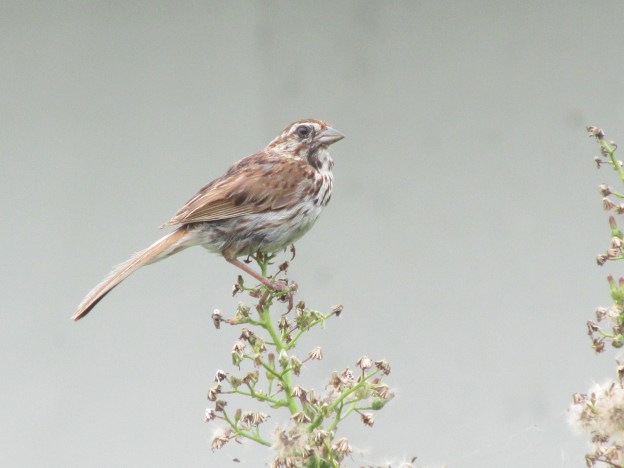
I often think of October as the season for sparrows, and this year proved no exception. Three different species marked their return during October.
Of all the birds associated with winter weather, few are as symbolic as the dark-eyed junco, or “snow bird.” The junco occurs in several geographic variations.
John V. Dennis, author of “A Complete Guide to Bird Feeding,” captures the essence of the junco in the following description: “Driving winds and swirling snow do not daunt this plucky bird. The coldest winter days see the junco as lively as ever and with a joie de vivre that bolsters our sagging spirits.” The dark-eyed junco’s scientific name, hyemalis, is New Latin for “wintry,” an apt description of this bird.
Most people look forward to the spring return of some of our brilliant birds — warblers, tanagers and orioles — and I must admit that I also enjoy the arrival of these birds. The junco, in comparison to some of these species, is not in the same league. Nevertheless, the junco is handsome in its slate gray and white plumage, giving rise to the old saying “dark skies above, snow below.”
The first junco showed up this year on Halloween. Sheila Boyd, a Facebook friend who lives in Marion, North Carolina, sent me a message to let me know she saw her first juncos on Oct. 29.


Swamp_Sparrow

The Swamp Sparrow is most often found in wetland habitats.

My junco sighting on Oct. 31 followed observations earlier in the month of some other wintering sparrows. I have allowed a stand of cattails to grow unmolested on my property, and now my action is paying dividends. I’ve seen numerous swamp sparrows in my small cattail marsh, beginning with one that I saw on Oct. 11.
The cattails also persuaded a marsh wren to pay a visit on Oct. 4. Marsh wrens and swamp sparrows are not the only birds fond of cattails. These plants also attract birds as diverse as rails and snipes, as well as red-winged blackbirds, common yellowthroats and various waterfowls.
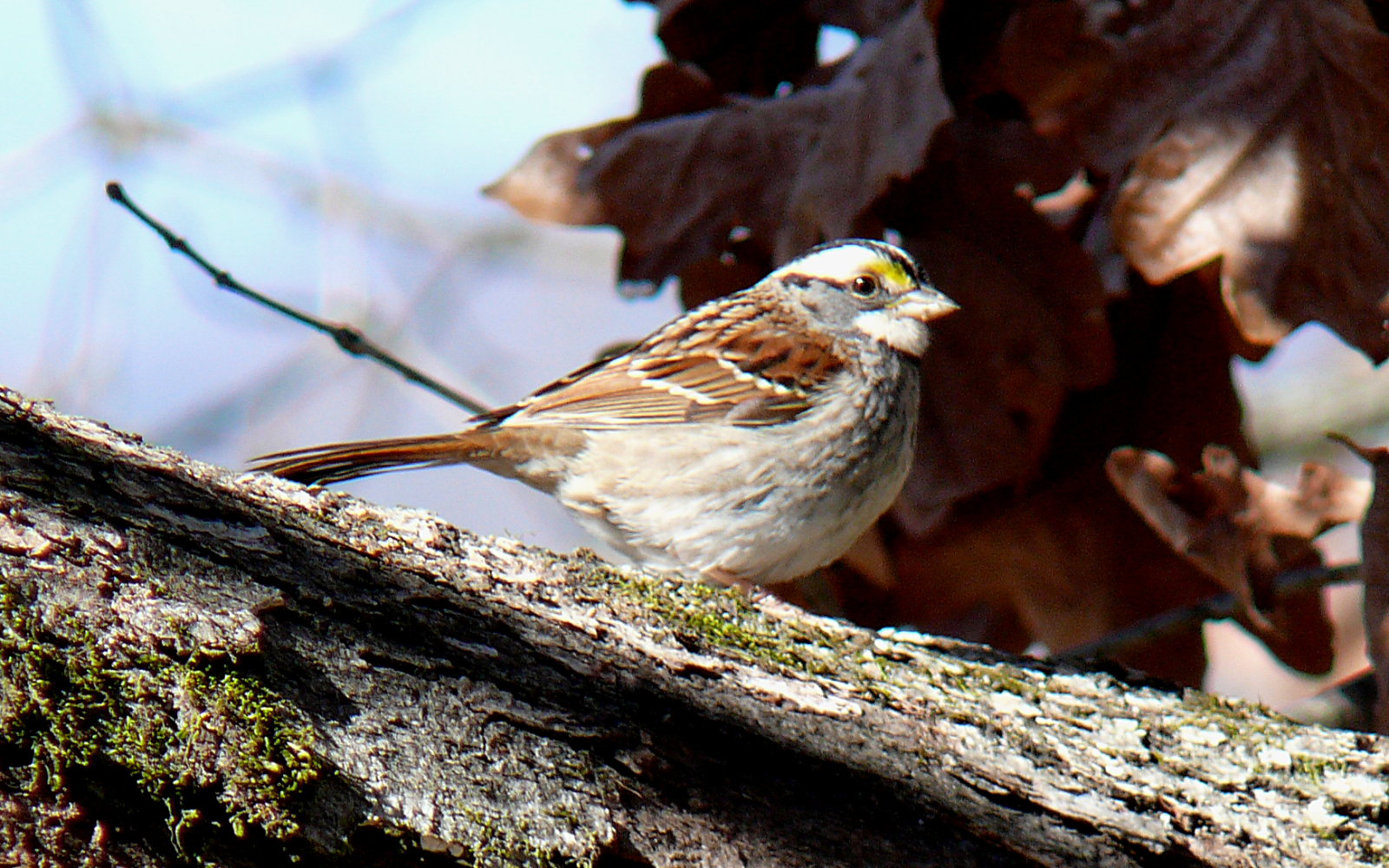
White-throated sparrows showed up on Oct. 15, which is fairly typical for this winter resident. The numbers of this attractive sparrow have been increasing since that date.


White-throated_Sparrow-27527

Photo by Ken Thomas                                            A White-throated Sparrow shows off its namesake white throat.

While I have learned to associate this bird with winter’s arrival, some Native American tribes connected the white-throated sparrow with the annual return of spring. According to Laura C. Martin, author of “The Folklore of Birds,” the Blackfoot Indians called the white-throated sparrows “summer-bringers.” The members of this tribe believed that the message of the sparrow’s song was “the leaves are budding and summer is coming.”
The song of the white-throated sparrow has also earned distinctive translations among the residents of Canada and the United States. Those translations can be described as “Oh sweet Canada, Canada, Canada” or “Old Sam Peabody, Peabody, Peabody.”
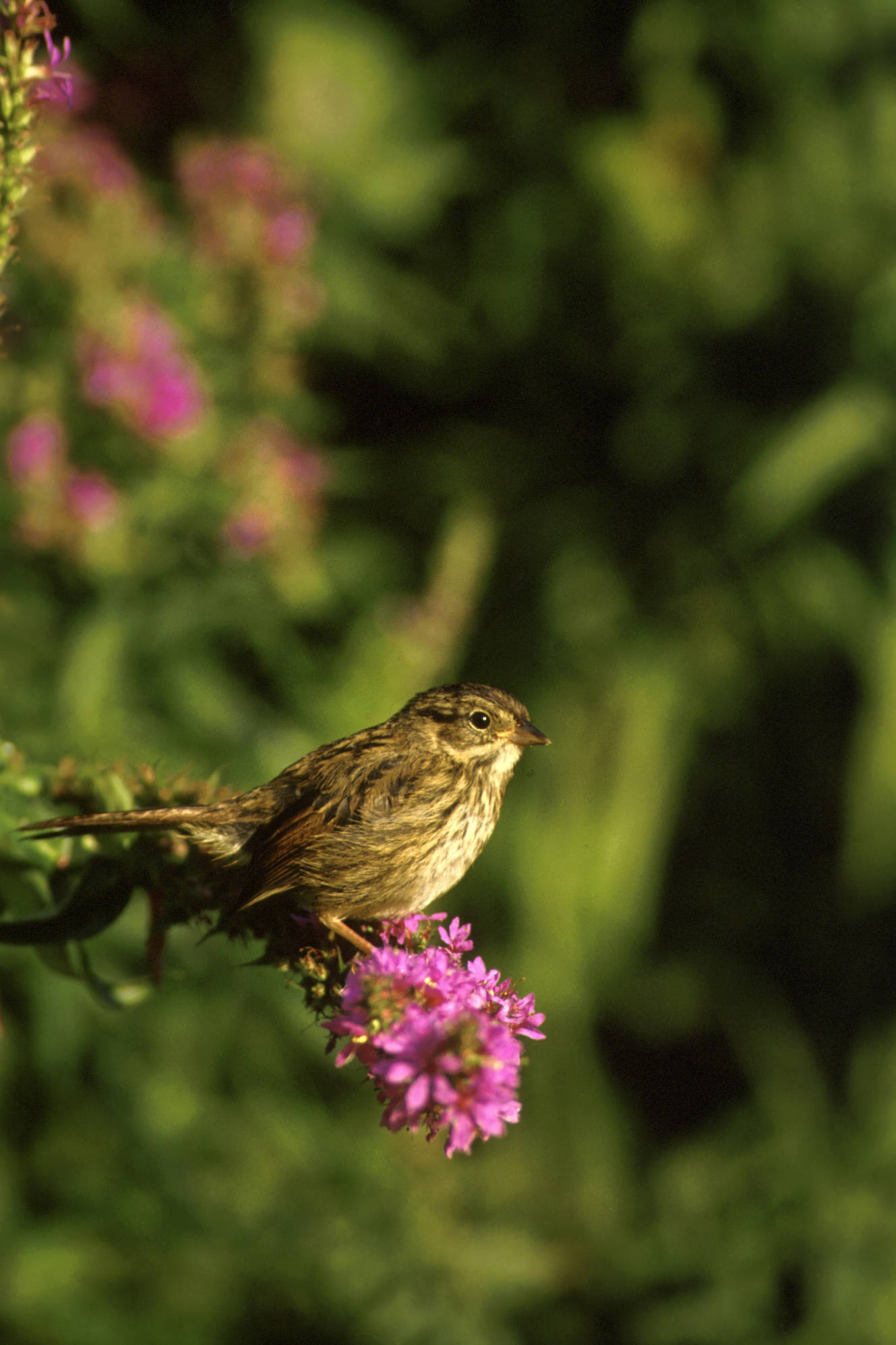
While the shy swamp sparrows usually maintain a reclusive presence in the cattails, white-throated sparrows and dark-eyed juncos are regular visitors at my feeders once they arrive. Both the junco and the white-throated sparrow prefer to feed on the ground beneath the feeders. A few other sparrows will visit feeders, including song sparrow, field sparrow, chipping sparrow and white-crowned sparrow.


SongSparrow-Cattailss

A Song Sparrow perches on a dry cattail stalk.

Of course, the real entertainment from our sparrows comes from their frequent visits to our backyard feeders. When these birds flock to a feeder and began a furious period of eating, I don’t even have to glance skyward or tune in the television weather forecast. I know what they know. Bad weather is on the way!


With our winter birds beginning to arrive, I’d love to hear what readers are seeing at their own feeders. Send me an email at ahoodedwarbler@aol.com to ask questions, share observations or makes a comment.

September brings more lawn chair birding opportunities

IMG_9403

Photos by Bryan Stevens                                                                        A Northern Waterthrush perches in a tree growing along Simerly Creek.

The following post represents my second compilation of Facebook posts about my annual lawn chair birding experiences. My mom and I have made lawn chair birding an annual tradition every fall. It’s a great way to enjoy the warblers and other migrants that stream through the yard in September and October. For the most part, you can even avoid the neck sprain that comes with long period of scanning the treetops for glimpses of energetic and evasive warblers.

Goldfinch-BABY

A young American Goldfinch perches on a twig.

Sept. 9
Some clouds and drizzle made for a very productive evening of lawn chair birding, bring a bonanza of warblers and other migrants. I added four new birds, all warblers, to my 2015 yard list. Bird No. 73 for the year was a Golden-winged Warbler. This makes two consecutive falls I have seen this warbler at home. Bird No. 74 turned out to be a dazzling male Prairie Warbler, as opposed to the more drab female Black-throated Blue Warbler that became Bird No. 75 for the year.

A Pine Warbler also made the list as Bird No. 76. Other warblers included Tennessee, Magnolia, Chestnut-sided, Cape May, Hooded, Black-and-white and Black-throated Green. The rest of the migrant parade consisted of Eastern Phoebe, Eastern Wood-pewee, Ruby-throated Hummingbird, Eastern Towhee, as well as the usual residents such as House Finch, American Goldfinch, White-breasted Nuthatch, Downy Woodpecker, Carolina Chickadee, Northern Cardinal and lots of Tufted Titmice. Most of the warblers refused to stay in place long enough for photos, but at one point the Pine Warbler actually landed on the roof of the house and allowed a few photos which provided nice documentation for a fun evening that ended when the rain began to come down harder.

PineWarbler

A Pine Warbler takes a break on the roof of the house.

Sept. 10
No new birds this evening during lawn chair birding with mom. That doesn’t mean we didn’t have some fun observations, including a baby Song Sparrow screaming his head off for a morsel from mom or dad. We also saw Indigo Buntings, Eastern Phoebe, Eastern Towhee, Scarlet Tanager, Ruby-throated Hummingbirds, as well as several warblers,including male Hooded, female American Redstart, young Chestnut-sided and a female Magnolia.

Waxwing-Sept11

Cedar Waxwing at Erwin Fishery Park.

Sept. 11
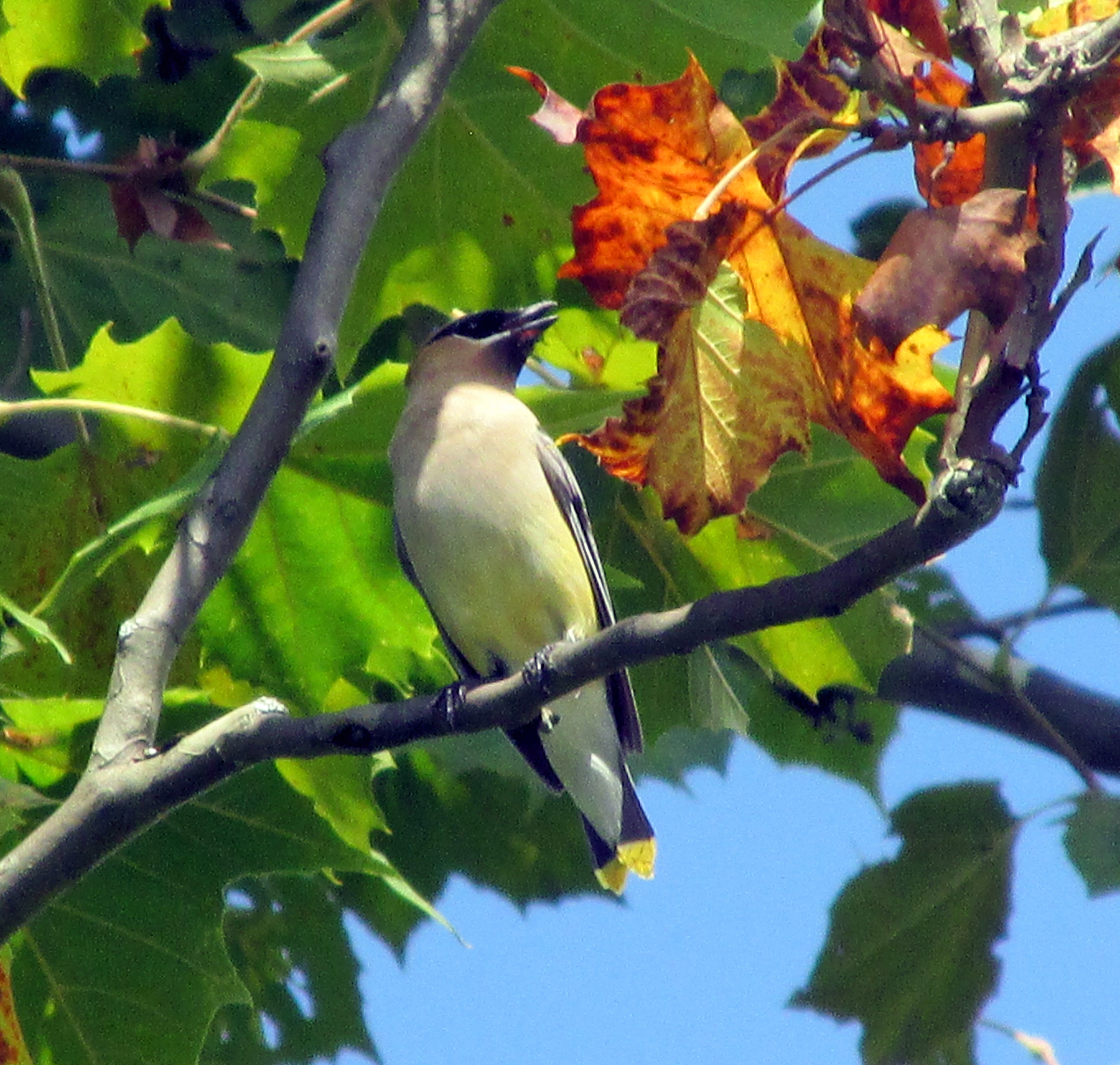
Saw this Cedar Waxwing, part of a large flock, at Erwin Fishery Park on Friday afternoon.

Sept. 13
Warblers on Saturday evening included Black-throated Green, Tennessee and Magnolia, as well as an American Redstart. We also had a Broad-winged Hawk hanging around the fish pond. We startled him several times on Saturday. My mom and I extended birding to a visit to Limestone Cove and the Bell Cemetery, where we spotted a Red-tailed Hawk being mobbed by around 50 American Crows. No new yard birds, though.

Wrennie 2

A noisy Carolina Wren scolds from a Blue Spruce.

Sept. 16
Had a good day of migrants in the yard, including a lot of male warblers — Black-throated Green, Hooded, American Redstart — and some other migrants. Some young or female warblers included Cape May, Chestnut-sided, Tennessee and Magnolia. There was also a family of noisy young American Goldfinches hanging around. No new species this evening, but I managed this photo of a Carolina Wren to stay in practice.

YT-Vireo

A Yellow-throated Vireo makes a migration stop along Simerly Creek.

Sept. 18
“Yellow throats” was the evening’s theme for lawn chair birding. I added two new species to the yard list for the year. First came the Yellow-throated Vireo as Bird No. 77. Next came the young Common Yellowthroat for Bird No. 78. The day has also included observations of Scarlet Tanager, Indigo Bunting, Eastern Towhee, Magnolia Warbler, Black-throated Green Warbler, Tennessee Warbler, Eastern Phoebe, Brown Thrasher, Gray Catbird, Ruby-throated Hummingbird and noisy young American Goldfinches.

RT-Hummer_Sept21

Ruby-throated Hummingbirds continue to compete for their claims to the sugar water feeders.

Sept. 20
No new birds in the yard this evening, but lawn chair birding produced lots of good looks at warbler like Magnolia, Northern Parula, Tennessee, Black-throated Green Warbler, Hooded, Chestnut-sided and a adult male Cape May in very vibrant plumage. Other observations included Wood Thrush, Brown Thrasher, Gray Catbird, Eastern Wood-Pewee, Eastern Towhee, Chipping Sparrow, Ruby-throated Hummingbird and lots of the usual feeder birds. I managed a photo of the Eastern Wood-Pewee.

NoWaterthrush

A Northern Waterthrush in the branches of a hawthorn tree along Simerly Creek.

Sept. 21
An overcast day brought plenty of migrants for the show during multiple sessions of lawn chair birding with my mom. The new species for the yard in 2015 included a Northern Waterthrush, pictured, and Bay-breasted Warblers. The waterthrush becomes Bird No. 79 and the Bay-breasted Warblers represent Bird No. 80, helping me move into another stretch in my Big Yard Year. We also saw Brown Thrasher, Gray Catbirds, Magnolia Warbler, Hooded Warbler, Chestnut-sided Warbler, Cape May Warbler, Tennessee Warbler, American Redstart and Pine Warbler, as well as Yellow-throated Vireo and Red-eyed Vireo. Ruby-throated Hummingbirds are also active at the feeders. The usual birds are visiting the feeders for sunflower seeds.

Sept. 22
Before leaving for work this morning, I heard a duet by Great Horned Owls from the surrounding woodlands. It was an extremely foggy morning, which might have made a difference since the owls were calling about an hour after sunrise.

Tanager-Sept18

A Scarlet Tanager without the red feathers that provide the birds its common name.

Phoebe-Sept18

An Eastern Phoebe perches on top of a weed stalk.

Katydid-Zinnia

A katydid perched atop a zinnia bloom.

October Saturday Bird Walks at Sycamore Shoals producing interesting sightings

Yellowthroated

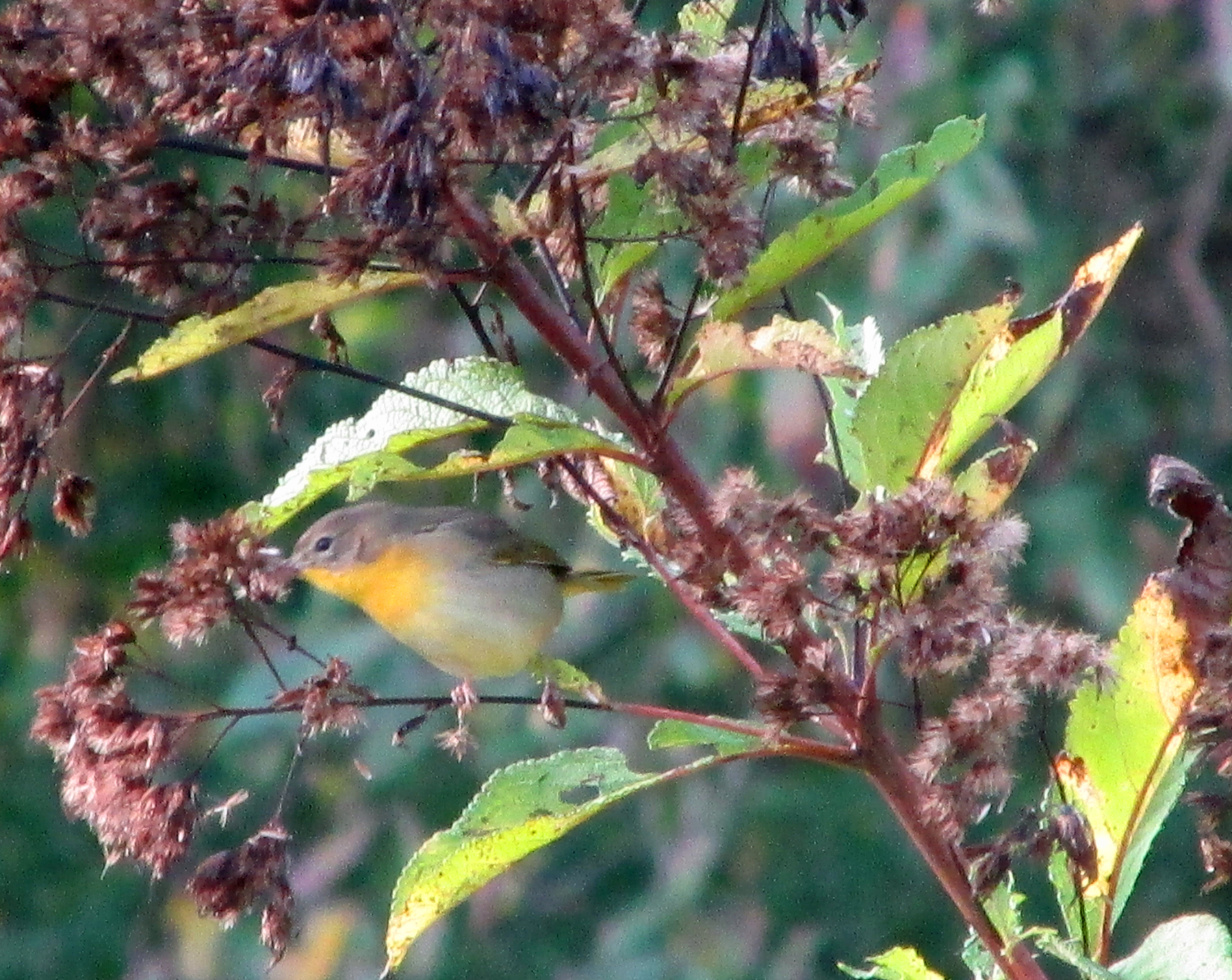
Photo by Bryan Stevens                                                                    A female Common Yellowthroat entertained bird walk attendees as she foraged among Joe-Pye Weed in the butterfly garden at Sycamore Shoals State Historic Park.

It’s funny how you can go most of the year without seeing a certain bird. Then, the drought ends and you enjoy a spike in the numbers of sighting within a short amount of time.

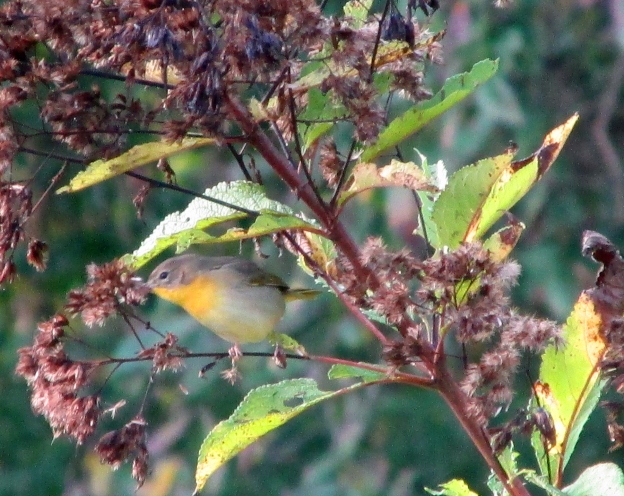
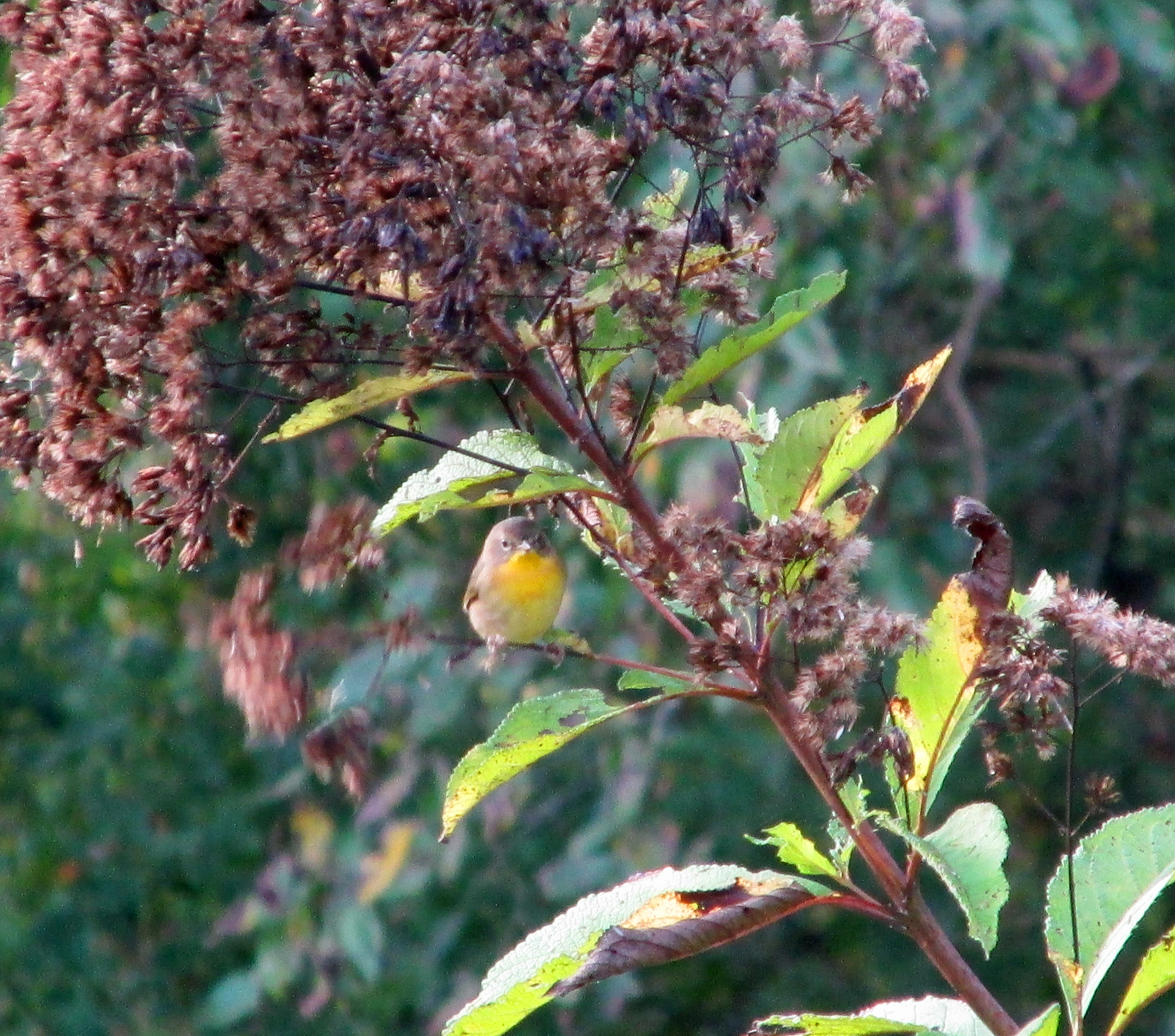
A female Common Yellowthroat became a highlight of the first of this year’s October bird walks at Sycamore Shoals State Historic Park, which was well attended with nine participants. The bird was foraging in the flower heads of Joe-Pye Weed in the butterfly garden at the park.

The Elizabethton Bird Club has offered these hikes for more than a decade at the park. Prior to conducting the walks at Sycamore Shoals, the club also led October hikes at Winged Deer Park in Johnson City and along the linear walking trail in Erwin.

BWteal-Flock

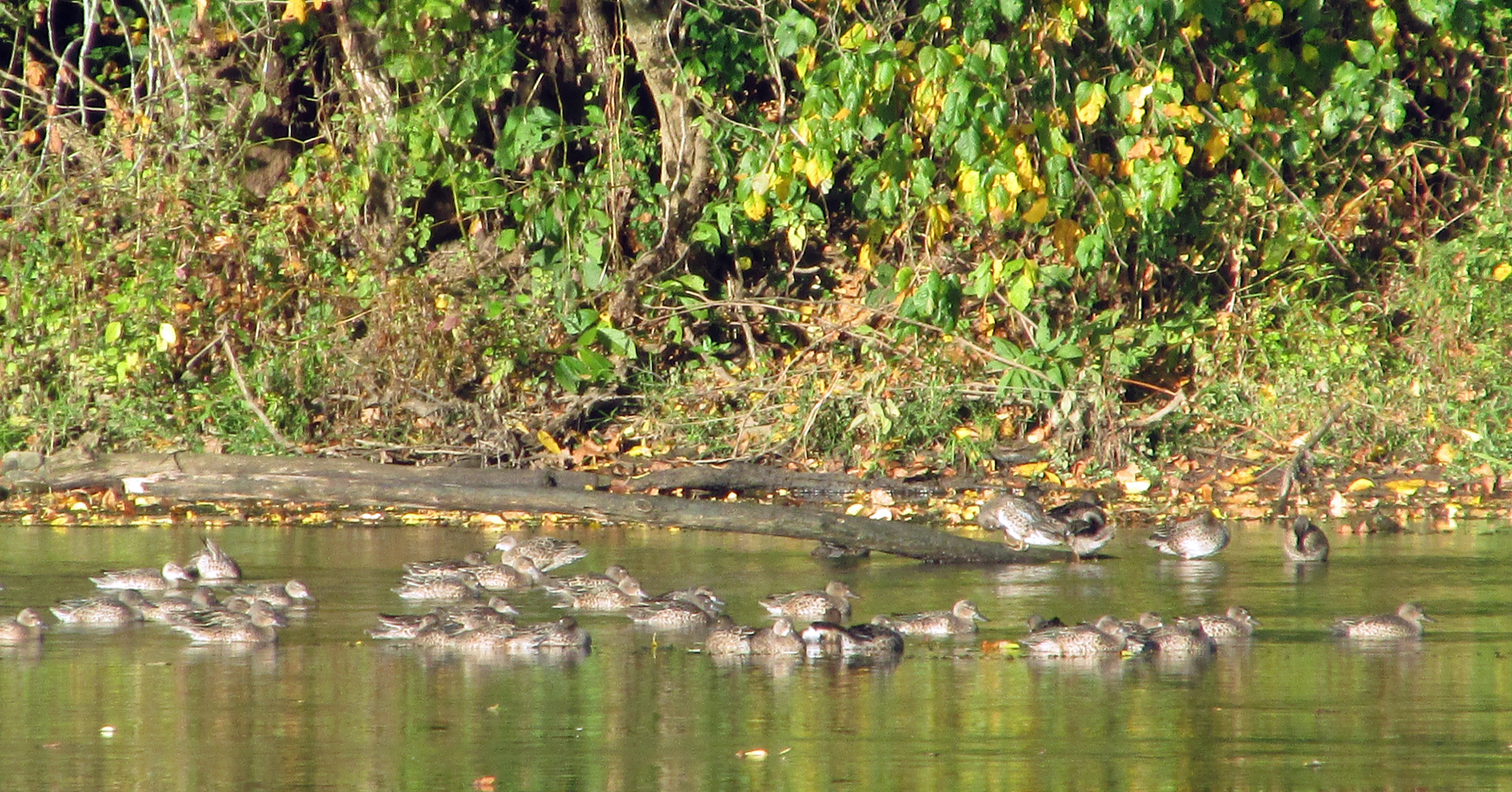
Photo by Bryan Stevens                                                 A portion of the flock of 104 Blue-winged Teal found on the first of this year’s October Saturday Bird Walks.

Tess Cumbie, a former resident of Buladean, N.C., came up with the idea for the walks back in the late 1990s.

The first of this year’s walks at Sycamore Shoals took place on Saturday, Oct. 4. A raft of 104 Blue-winged Teal on the Watauga River ranked as another highlight of that morning’s bird walk. Pied-billed Grebes, Mallards, Wood Ducks and Canada Geese were also present on the river.

1618145_10203999628743449_4835781711182007808_o

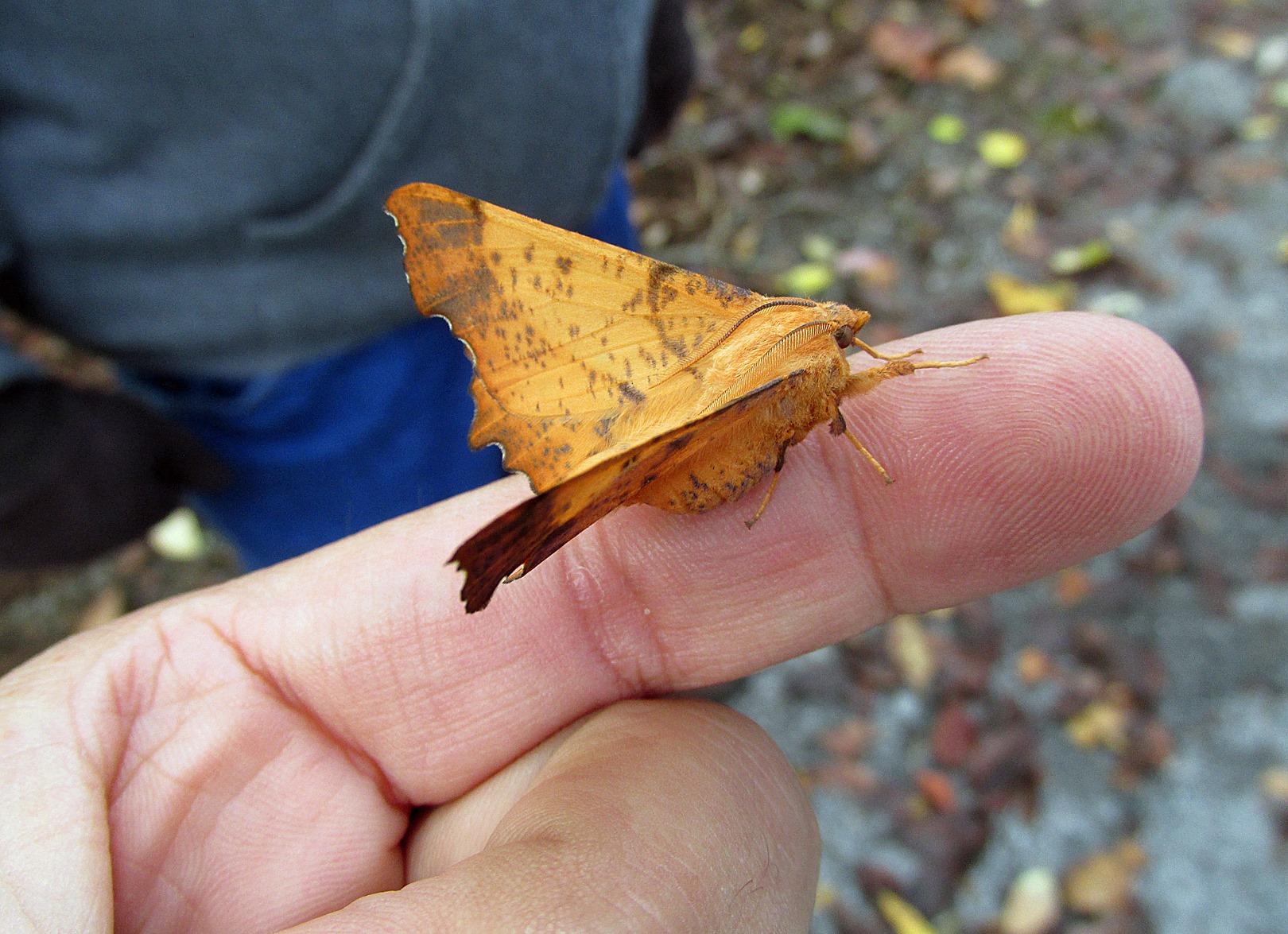
Photo by Bryan Stevens                                     A Maple Spanworm Moth warms itself during the chilly morning bird walk.

Other birds found included  Black Vulture, Turkey Vulture, Chimney Swift, Red-bellied Woodpecker, Yellow-bellied Sapsucker, Downy Woodpecker, Northern Flicker, Eastern Wood-Pewee, Blue Jay, American Crow, Carolina Chickadee, Tufted Titmouse, Carolina Wren, Eastern Bluebird, Swainson’s Thrush, American Robin, Gray Catbird,  European Starling, Cedar Waxwing, Magnolia Warbler,  Song Sparrow, Northern Cardinal, Rose-breasted Grosbeak, Indigo Bunting, Eastern Meadowlark, House Finch and American Goldfinch.

When not looking at birds, participants enjoyed diversions such as the Maple Spanworm Moth blending with the fallen leaves on the gravel walking trails. I had never seen this particular moth, which spent some time warming itself on one of my fingers.

Although well attended by participants from as far as Abingdon, Va., the weather that greeted us was quite frigid. The cold appeared to bother us more than it affected the birds.

••••••

A male Wood Duck landed, briefly, on the fish pond on the morning of Oct. 5. If I hadn’t been outdoors at the time, he might have stayed longer. When I moved, he flew. It’s the first visit here at home from a Wood Duck in several years. Coincidentally, the last visit also took place in early October.

Flower-bed

Photo by Bryan Stevens              This densely-planted flower bed on the ETSU campus provided cover for a migrating Common Yellowthroat.

••••••

I am beginning to find that the campus at East Tennessee State University can produce some fun bird sightings. After witnessing a Cooper’s Hawk nearly catch a squirrel from the top branches of a tall tree near Gilbreath Hall, I have been paying closer attention to those feathered friends that visit the campus.

During a Sunday evening stroll on Oct. 6, I found a Common Yellowthroat in a well-planted flower bed. So, I have added my first warbler to my ETSU list. I also saw a Red-bellied Woodpecker flying over the Culp Center during the same walk.

It also got me to thinking about how many Common Yellowthroats I have been seeing this fall.

When I posted about the sighting on Facebook, Cathy Myers commented and informed me that she had recently observed a Rose-breasted Grosbeak on the campus.

•••••••

Catbird

Photo by Bryan Stevens                                          Gray Catbirds, such as this one, have been found on the first of the Saturday Bird Walks this October at Sycamore Shoals.

At the second of the four Saturday Bird Walks scheduled this October, rain threatened to impede the stroll. Fortunately, the showers held off until after the walk on Oct. 11 concluded at about 9:30 a.m.

The second of the October Saturday Bird Walks produced several highlights, including a duel between an Osprey and an adult Bald Eagle over the Watauga River, as well as four species of warblers — Tennessee, Bay-breasted, Palm and Yellow-rumped — and other birds, including Chimney Swift, Mockingbird, Starling, Northern Flicker, Blue Jay, Carolina Wren, Mourning Dove, Eastern Bluebird, Mallard, Carolina Chickadee, Canada Goose, Goldfinch, Red-tailed Hawk, Red-bellied Woodpecker, Crow, Yellow-bellied Sapsucker, American Robin, Northern Cardinal, Song Sparrow and Downy Woodpecker.

Although we had fewer participants on this walk, we enjoyed better observations of the birds. One exciting moment involved the flock of irate Blue Jays gathered to scold a Red-tailed Hawk that had flown too close for comfort.

••••••

Two more Saturday Bird Walks remain during October. They will be held on Oct. 18 and Oct. 25. The public is welcome to these free strolls along the walking trails at Sycamore Shoals State Historic Park. Bring binoculars to increase your viewing enjoyment.

••••••

Common_Yellowthroat (1)

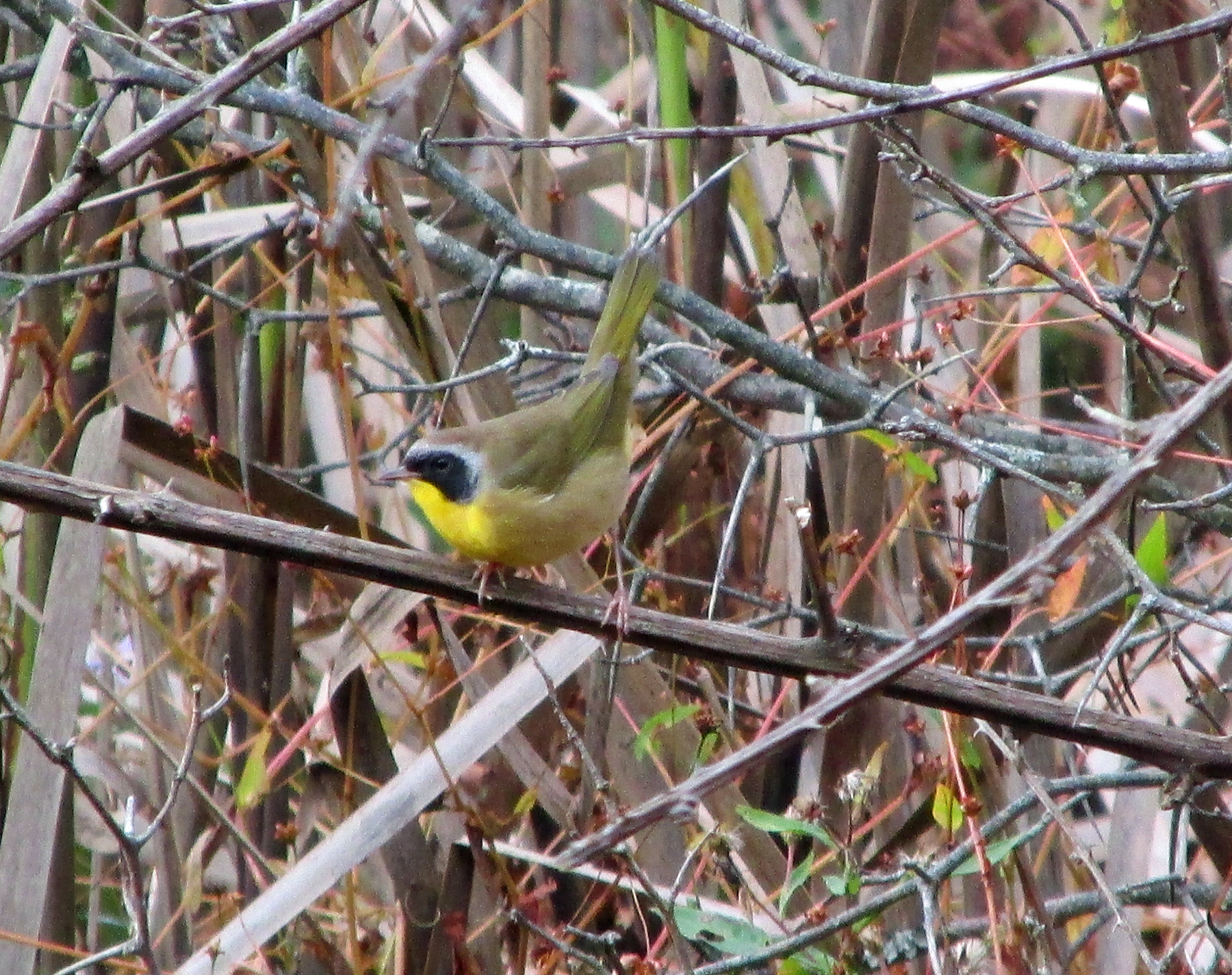
Photo by U.S. Fish & Wildlife Service                                                  A male Common Yellowthroat surveys his surroundings from a prominent perch.

The Common Yellowthroat is a warbler that is quite fond of weedy, damp habitats. Marshes and other wetlands are preferred habitat during the nesting season, although a few of these birds are also present in more dry habitats.

In migration, any weedy corner might attract one of these warblers. In fact, the one I found on the ETSU campus remained elusive in a raised concrete bed containing a thick planting of flowers and shrubs.

Photo by Bryan Stevens A male Common Yellowthroat visits an overgrown thicket during fall migration. Photo by Bryan Stevens A male Common Yellowthroat visits an overgrown thicket during fall migration.

Photo by Bryan Stevens
A male Common Yellowthroat visits an overgrown thicket during fall migration.

The Common Yellowthroat belongs to the genus of warblers known as Geothlypis, which also includes the related Bahama Yellowthroat, Hooded Yellowthroat, Masked Yellowthroat, Black-polled Yellowthroat and Gray-crowned Yellowthroat. These other species are found in Central and South America, as well as the Caribbean.

Recent classification of the Geothlypis warblers has led to the inclusion of three other warblers — MacGillivray’s, Mourning and Kentucky — being shuffled into this genus.

Although fond of skulking in deep vegetation, most Common Yellowthroats are curious birds and will allow brief glimpses. The males also betray their presence with a loud, easily recognized song that sounds very much like “Witchety, Witchety, Witchety, Witch.”

Yellowthroat-PyeWeeDForage

Photo by Bryan Stevens                                                    The female Common Yellowthroat lacks the male’s black face mask.

Male and female yellowthroats show a bright, yellow throat. Males also sport a black mask bordered with a silvery-white line, and the male’s throat is usually a brighter yellow. Although males will sing in the open during the nesting season, these birds usually prefer to remain hidden from view as they go about their daily routines.

••••••

To learn more about birds and other topics from the natural world, friend Stevens on Facebook at https://www.facebook.com/ahoodedwarbler. He is always posting about local birds, wildlife, flowers, insects and much more. If you have a question, wish to make a comment or share a sighting, email ahoodedwarbler@aol.com.

Photo by Bryan Stevens

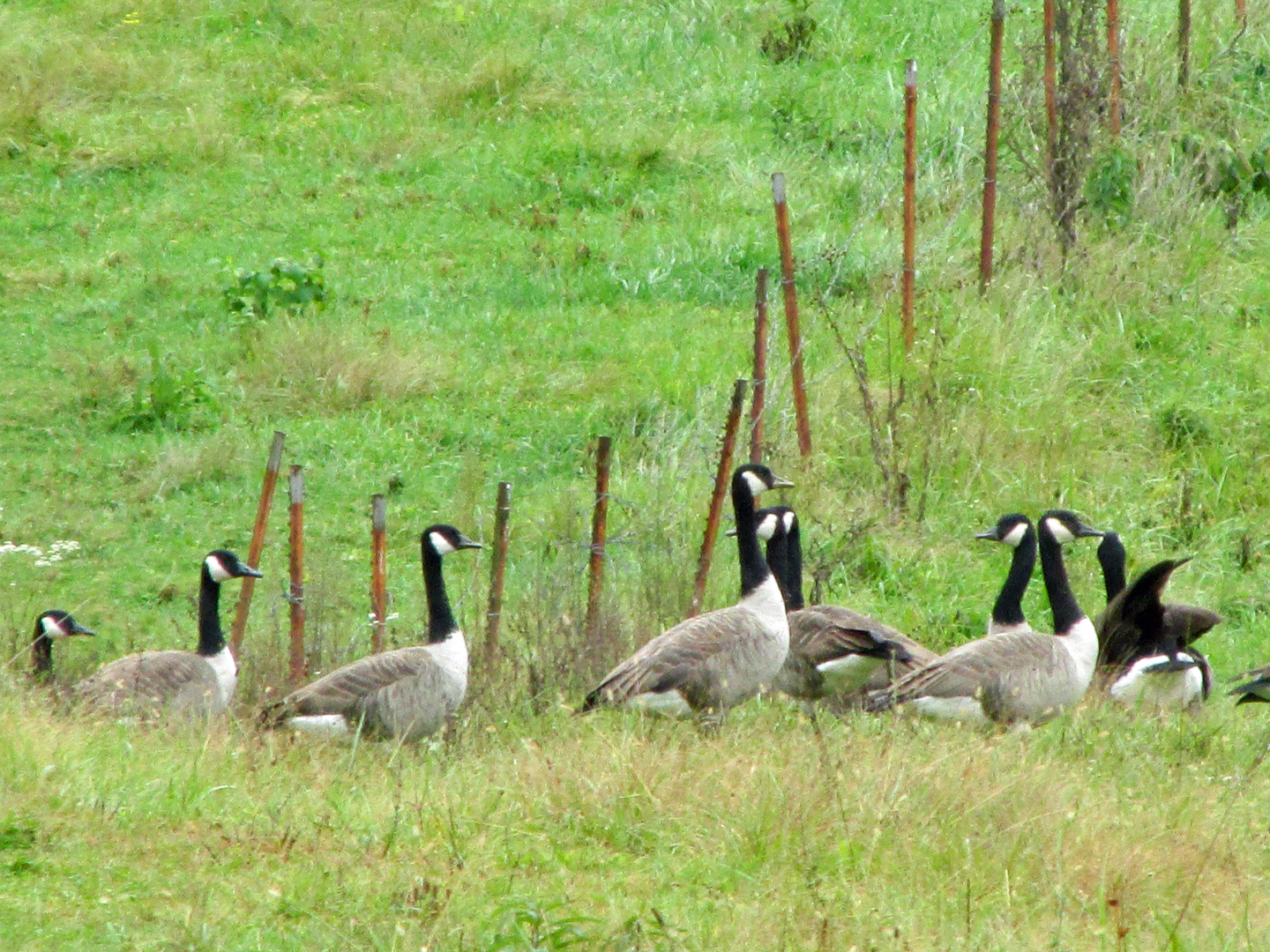
Photo by Bryan Stevens                                                                                                                            A flock of Canada Geese forage in a field near the Bell Cemetery in the Limestone Cove community of Unicoi County on a recent October afternoon.

Parade of fall warblers has begun

I love warblers!

Among my birding friends, it’s no secret the warblers are among my favorite birds. I impatiently await the start of fall migration each year knowing that it holds the potential of bringing about two dozen warbler species to my yard. The trickle of fall migrants has already started with the arrival of juvenile Chestnut-sided Warblers and American Redstarts to my yard on Aug. 19.

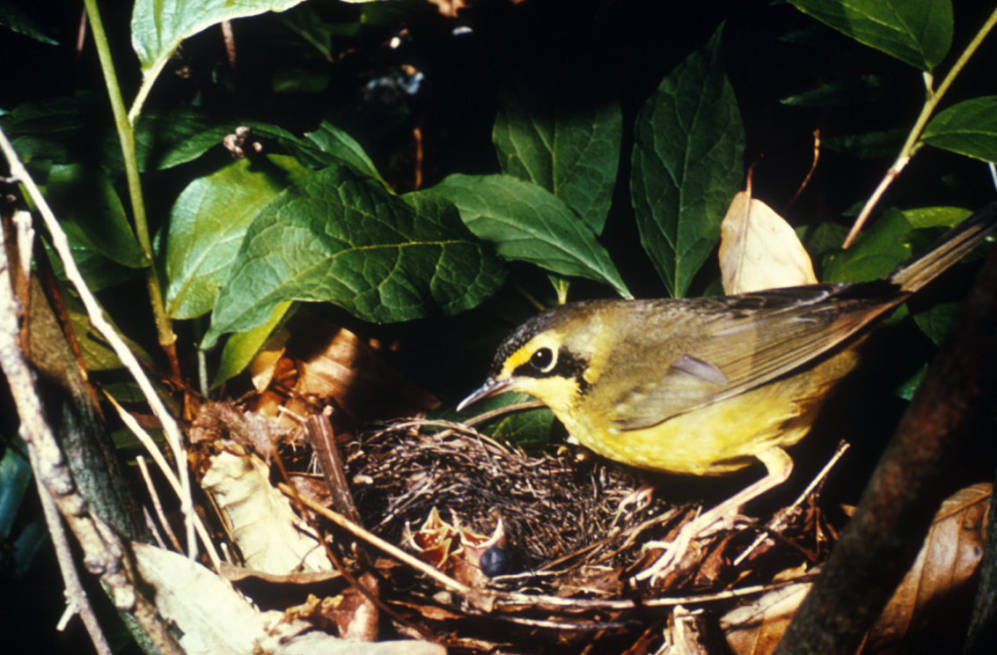
Photo by U.S Fish and Wildlife Service A Kentucky Warbler brings food to young in a nest.

Photo by U.S Fish and Wildlife Service
A Kentucky Warbler brings food to young in a nest.

The wood-warblers, the more clinical name for this group of birds, consist of 116 species exclusive to the New World. About half of the species collectively make their home in North America for at least a few months out of the year. The others range throughout the Caribbean, as well as Central and South America. Most of them are noted for leading frantic, fast-paced lives that are far from sedentary. For this reason, they can be extremely challenging to observe with a pair of binoculars.

Hooded_Warbler

Photo by U.S. Fish and Wildlife Service A female Hooded Warbler sits tight on her nest.

The Chestnut-sided Warbler and American Redstart nest at various locations in Southwest Virginia and Northeastern Tennessee, but they are not usually present during the summer months. I do host a few species of warblers that nest in the woodlands around my home. These include Hooded Warbler, Northern Parula, Black-throated Green Warbler, Black-and-white Warbler and Ovenbird.

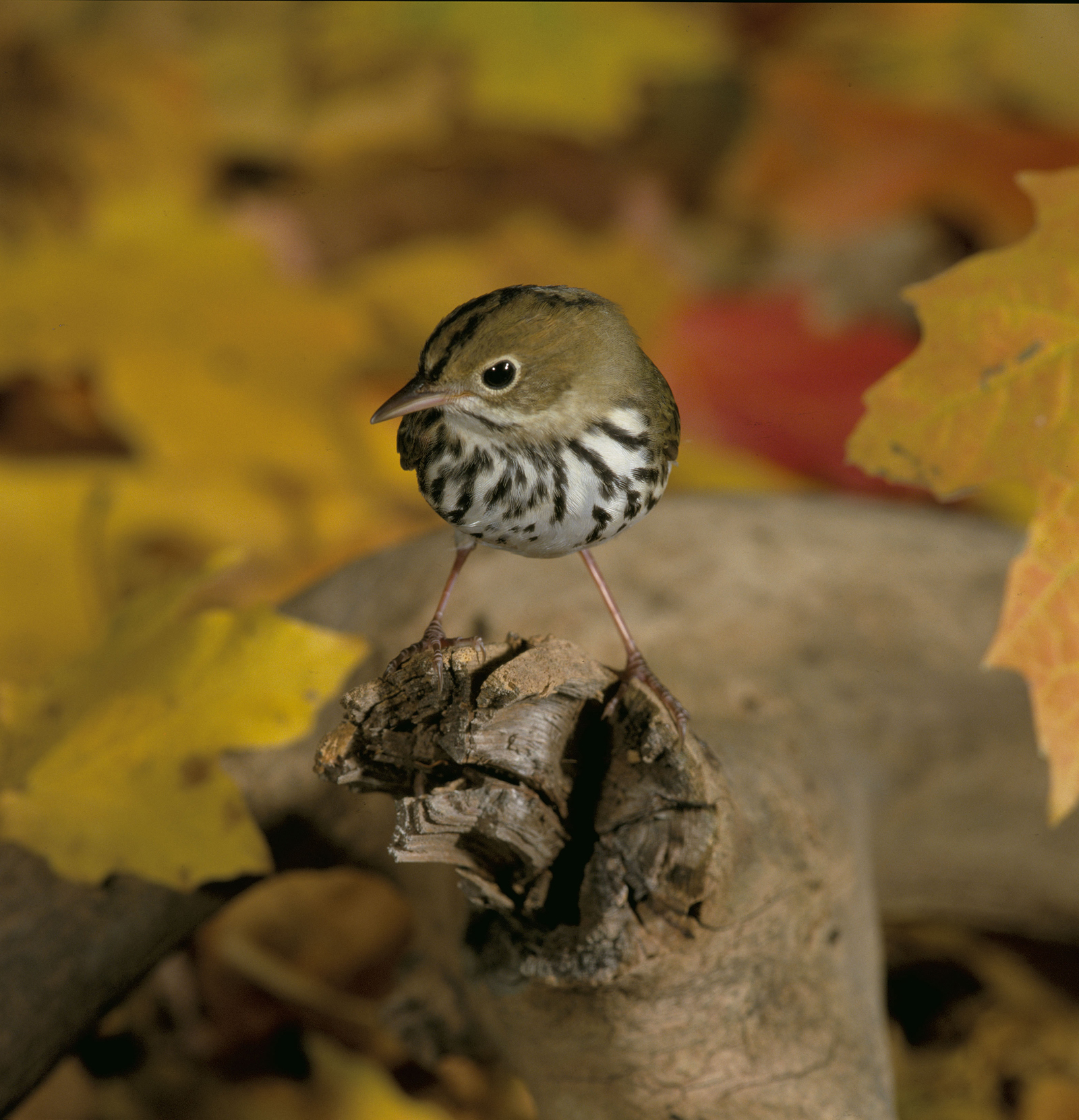
OvenBird-Photo

Photo by U.S. Fish and Wildlife Service Although usually silent in the fall, Ovebirds have a distinctive, ringing song they sing constantly in the spring.

One of the last warblers to arrive at my home this spring was the enigmatic Ovenbird. With its loud, ringing song — “Teacher! Teacher! Teacher!” — it’s impossible not to notice the arrival of this warbler. So, even after the other summer warblers had already been present for a couple of weeks, I finally heard the song of an Ovenbird ringing from the woods.

Why do I describe this warbler as enigmatic? For starters, Ovenbirds do not easily permit even stealthy birders to glimpse them. I have gotten good looks at Ovenbirds throughout the years, but they are still difficult to observe. They are one of the warblers more easily heard than seen. When they are observed, it’s usually no more than a fleeting look before the bird dives back into heavy cover.
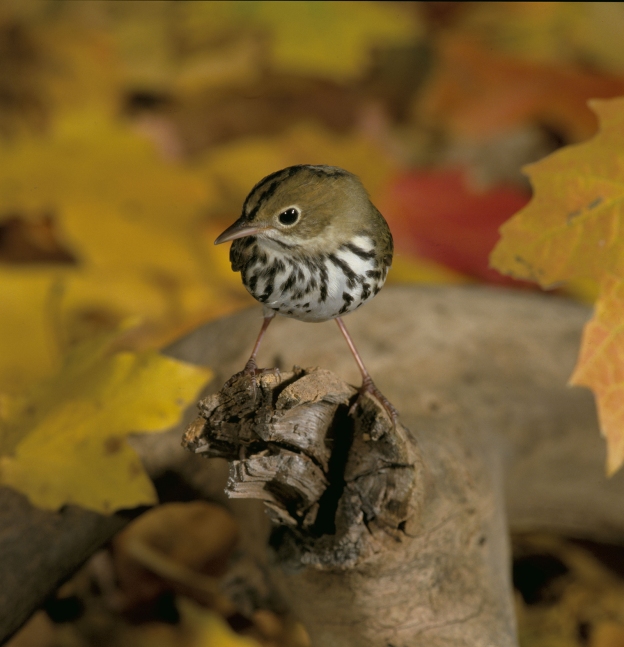
The Ovenbird is not one of the brightly colored warblers, such as Blackburnian Warbler or Yellow Warbler. The Ovenbird is a small brown bird with a white breast with dark streaking — an appearance that bears a superficial resemblance to the larger thrushes that share the same woodland habitat. The only hint of color is an orange crown bordered by dark stripes atop the bird’s head. Even this orange crown patch is not easily seen. When agitated, an Ovenbird may raise its head feathers, which makes this orange mark easier to detect. The Ovenbird also has a distinct white ring around its eyes. They also have pink legs and a pinkish bill.

The Ovenbird, unlike many warblers, is not named for its appearance. Instead, the bird’s name derives from the shape of the nest it builds. The nest is a domed structure placed on the ground, woven from vegetation and containing a side entrance. Early European settlers in North America thought the nest looked like a Dutch oven, hence the name “ovenbird” for the small warbler with the intricate nest.

Rather than hopping along the length of a branch or limb, an Ovenbird walks in a deliberate fashion. This bird feeds on insects, spiders and other small prey items foraged from the woodland floor. On rare occasions, a lingering Ovenbird shows up at feeders during the winter months.

Ovenbirds spend the summer nesting season in mature deciduous and mixed forests across Canada and the eastern United States. Ovenbirds migrate each fall to the southeastern United States, the West Indies, and from Mexico to northern South America for the winter season.

The two warblers most closely related to the ovenbird are the Louisiana Waterthrush and Northern Waterthrush. These atypical warblers share a preference for leading lives spent mostly near the ground adjacent to streams. The Louisiana Waterthrush seeks out the rushing water of our mountain streams during early spring while the Northern Waterthrush prefers quiet pools of water farther north during its nesting season. The Ovenbird, however, is not as closely associated with water.

*****

14349093215_520933ef20_b

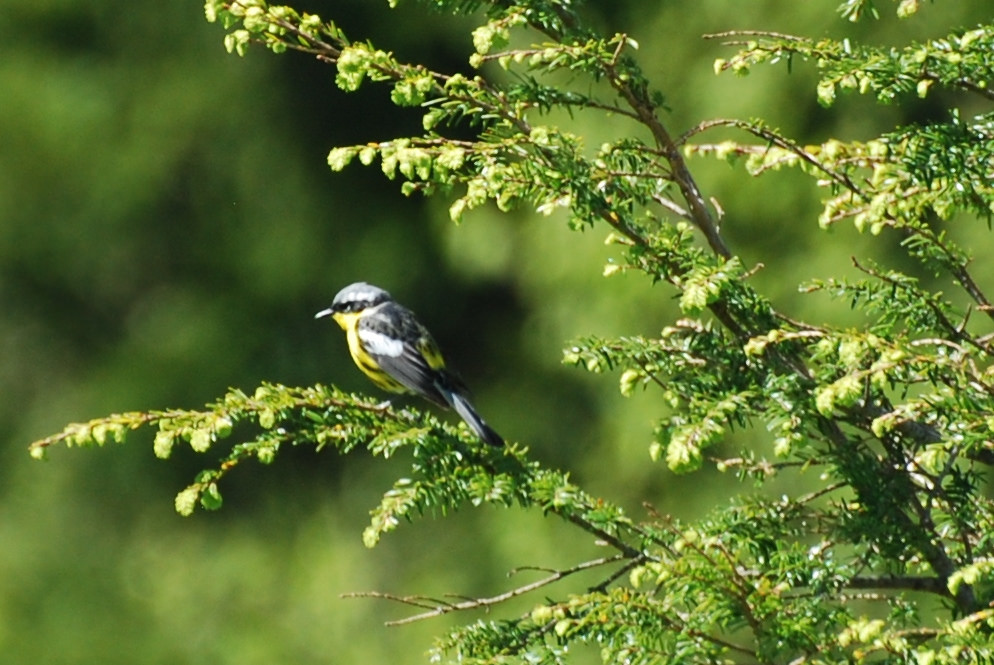
Photo Courtesy of Jean Potter A Magnolia Warbler perched on an evergreen bough.

The last day of August provided fantastic lawn chair birding here at home. I saw a Scarlet Tanager, Red-eyed Vireo, Eastern Phoebe, Eastern Wood-Pewee, an Epidomax “empid” flycatcher species and a flock of at least 50 Common Nighthawks. I also added three fall warblers to my list: Yellow-throated Warbler, Chestnut-sided Warbler, Northern Parula and Magnolia Warbler. I also saw plenty of Ruby-throated Hummingbirds, Gray Catbirds, a Brown Thrasher, Cedar Waxwings, Downy Woodpecker and many of the regular feeder visitors.

The arrival of September brought even more warblers to my yard as they make brief visits during their fall migration. I had better luck with lawn chair birding while saying goodbye to August than I did welcoming September. On this first day of September that was also Labor Day, I saw a single Common Nighthawk, as opposed to last night’s flock of 50. I only saw one warbler, but it was a Chestnut-sided Warbler and different than the species I saw last night. Other birds that I observed including several Gray Catbirds and Blue-gray Gnatcatchers, Eastern Wood-Pewee, Brown Thrasher and family flocks of American Goldfinches and House Finches. Earlier that same day, I watched and listened as a Common Raven flew overhead. The Ruby-throated Hummingbirds are also still numerous.

NorthernParula

Photo by Bryan Stevens A migrating Northern Parula forages for insects in the branches of a Blue Spruce.

My lawn chair birding on Sept. 3 was brief but interesting. One new warbler, a male Canada Warbler, showed up, as well as two Northern Parulas that spent all their time chasing each other through the holly and the willow trees. I also got a fleeting glimpse of a Magnolia Warbler. In the sky overhead, a single Chimney Swift glided through the air with a trio of Common Nighthawks.

The cast of migrants changes almost daily. I enjoyed a good evening of lawn chair birding on Sept. 5, adding a few new warblers for the fall to my list. Only saw four species, but two of them — immature Black-and-White Warbler and Black-throated Green Warbler — were new for the fall. I also saw Chestnut-sided Warbler and Northern Parula. A sizable flock of at least 50 Common Nighthawks passed overhead. Other sightings included Eastern Phoebe, Brown Thrasher, Gray Catbirds, Wood Thrush, Pileated Woodpecker, Red-eyed Vireo and Ruby-throated Hummingbirds. All the resident feeder birds have enjoyed a good nesting seasons with numbers of Song Sparrows in the yard are showing an increase.

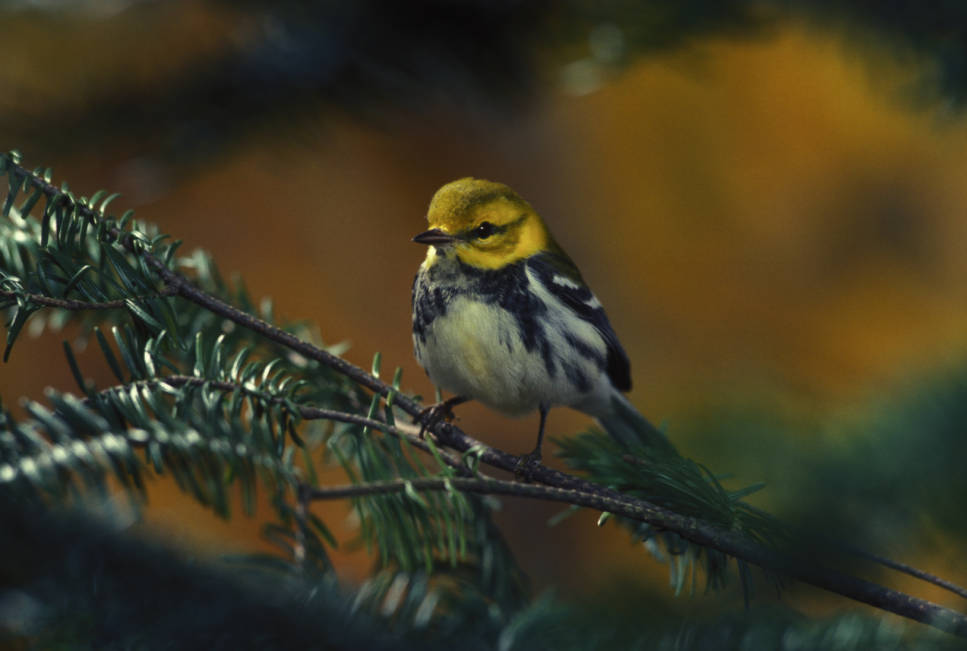
BlackThroated_Green_Warbler_Female

Photo by U.S. Fish and Wildlife Service A female Black-throated Green Warbler perches in a conifer.

I was surprised On Sept. 6 with an observation of a Cape May Warbler (a young male) feeding low in vegetation in the swampy area of the backyard. It might seem odd to find a Cape May feeding so low to the ground, but it was at the base of a large Norway Spruce. This was a new warbler for the fall migration season. That same day, I observed two Magnolia Warblers and a Northern Parula. In the evening, small flocks of Chimney Swifts and Common Nighthawks flew over my home.

So, the first week in September has seen fall migration off to a good start. I love to hear  what others are seeing as the fall season advances. Email me at ahoodedwarbler@aol.com or comment here at my blog.

13961818378_065f8f0125_o

Photo Courtesy of Jean Potter A female Black-and-white Warbler gathers nesting material.