Sounds of spring remain one of the season’s pleasures

Photo by Bryan Stevens • Blue-headed vireos, such as this bird, are high-elevation summer residents in the region. In the fall, they are also common migrants.

In modern life, it can seem like we’re always looking for ways to relax and de-stress. For me, nothing works quite so well as letting nature’s sounds, as well as sights, provide some measure of relief from stressful situations and anxious thoughts.

I instantly notice when a new vocalization is added to the usual mix. Such occurred on March 26 when I heard the syllabic song of a blue-headed vireo from the upper reaches of a large tree near the fish pond.

The blue-headed vireo’s song has been described as “Hear me! See me! Here I am!” It’s similar to the song of the related red-eyed vireo, but it’s slower and the paired syllables are separated by a brief pause.

În a couple more weeks, the songs of blue-headed vireos will ring out all over the high-elevation forested slopes of many of our local mountains, but these are just starting to get back to the region after an absence during the colder months. Many other feathered singers will be arriving in their wake, including warblers, tanagers and grosbeaks.
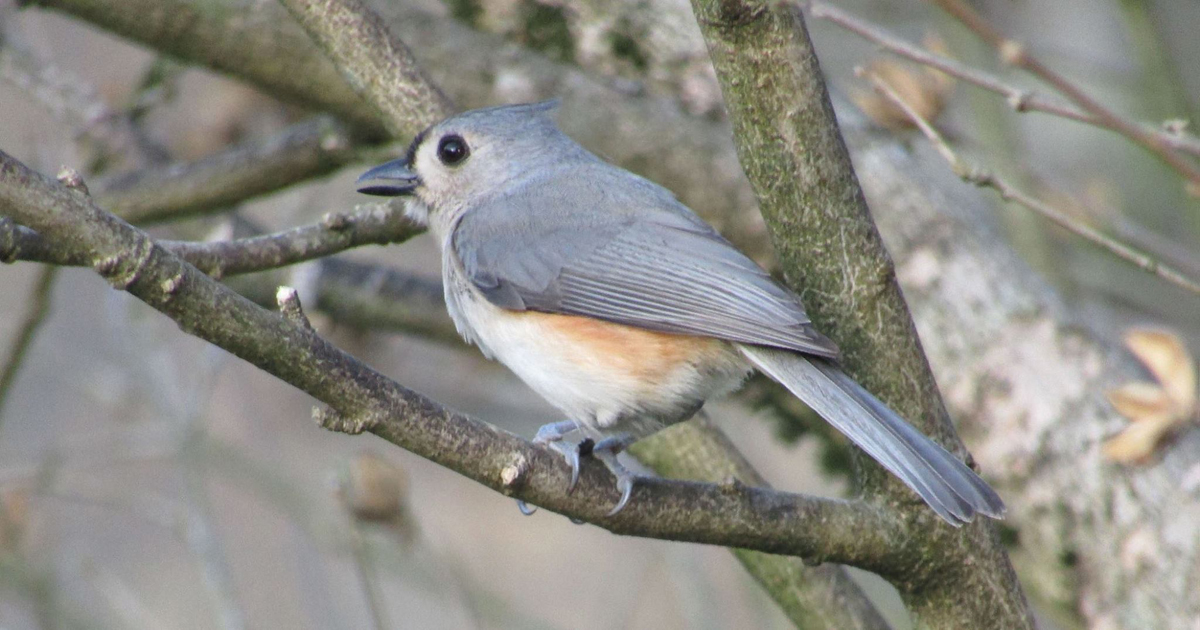
Photo by Bryan Stevens • The tufted titmouse is a backyard bird with an impish personality and a loud song.

The mornings around my home often begin with a loud, insistent “Peter! Peter! Peter!” uttered from the woods or even from shrubbery just outside my bedroom window. Male tufted titmice, little gray relatives of chickadees with a distinctive crest and large, dark eyes, sing their urgent “Peter! Peter! Peter!” as a constant refrain in their efforts to attract mates now that they feel spring in their blood.

A series of rat-a-tat-tats echoes from deeper in the woods as woodpeckers tap their sturdy bills against the trunks of trees. The three most common woodpeckers at my home are red-bellied, downy, and pileated, and they all have their own unique vocalizations, as well.

The pileated woodpecker produces clear, far-carrying resonant piping sounds that can last for a few seconds each blast. The much smaller downy woodpecker produces a whinny of high-pitched notes that descend in pitch toward their conclusion. The red-bellied call is probably the one that stands out the most. The call’s a harsh, rolling “Churr, churr, churr” given almost like an expression of exasperation as they circle tree trunks and explore branches.

Since their return earlier this month, the resident red-winged blackbirds are often some of the earliest singers these days. According to the website All About Birds, the male red-winged blackbird’s “conk-la-ree!” is a classic sound of wetlands across the continent of North America. According to the website, the one-second song starts with an abrupt note that transforms quickly into a musical trill.
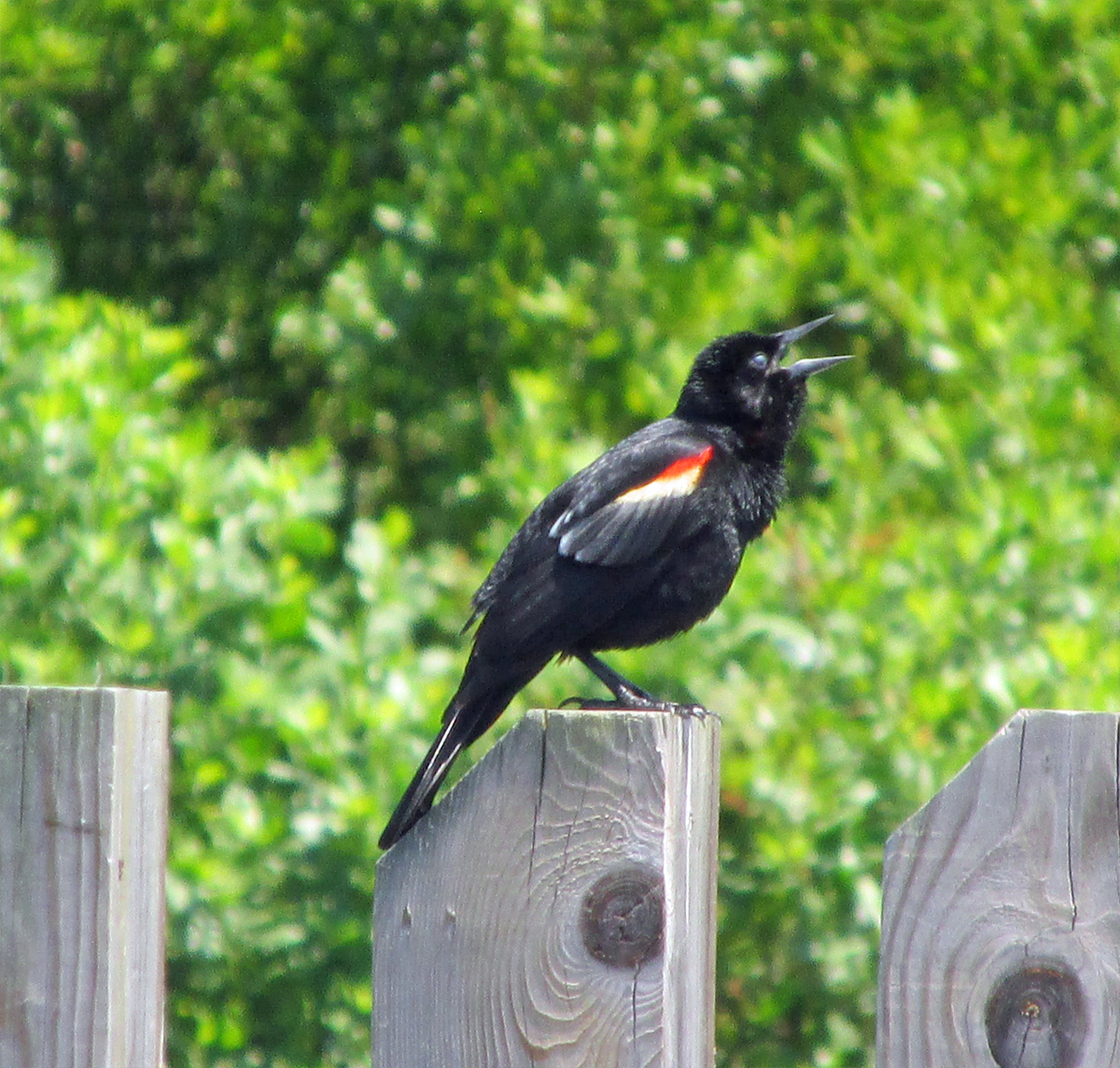
Photo by Bryan Stevens • A male red-winged blackbird sings to attract mates and ward off rivals.

Some birds helpfully introduce themselves with a song that repeats their name. One such common bird is the Eastern phoebe. In recent weeks, a pair has been checking out possible nesting sites. In past years, they have made use of the rafters of my garage and blades on a porch ceiling fan for potential nest sites. The male spends much of the day producing his strident “fee-bee” call, which is a perfect phonetic rendition of the bird’s common name.

Then there’s one of my favorite songs of spring, which is produced by the Eastern towhee, also known by such common names as “ground robin” and “swamp robin.” These birds, which are actually a species of sparrow, also have some instantly recognizable vocalizations. With the arrival of spring, the males seek elevated perches for extensive singing bouts to attract mates and establish territories. Their song has been interpreted, quite accurately, as “drink your tea!” They also have some alarm notes, such as “€œChew-ink”€ and “€œToe-Hee,” of which the latter provides the basis for this bird’s common name.
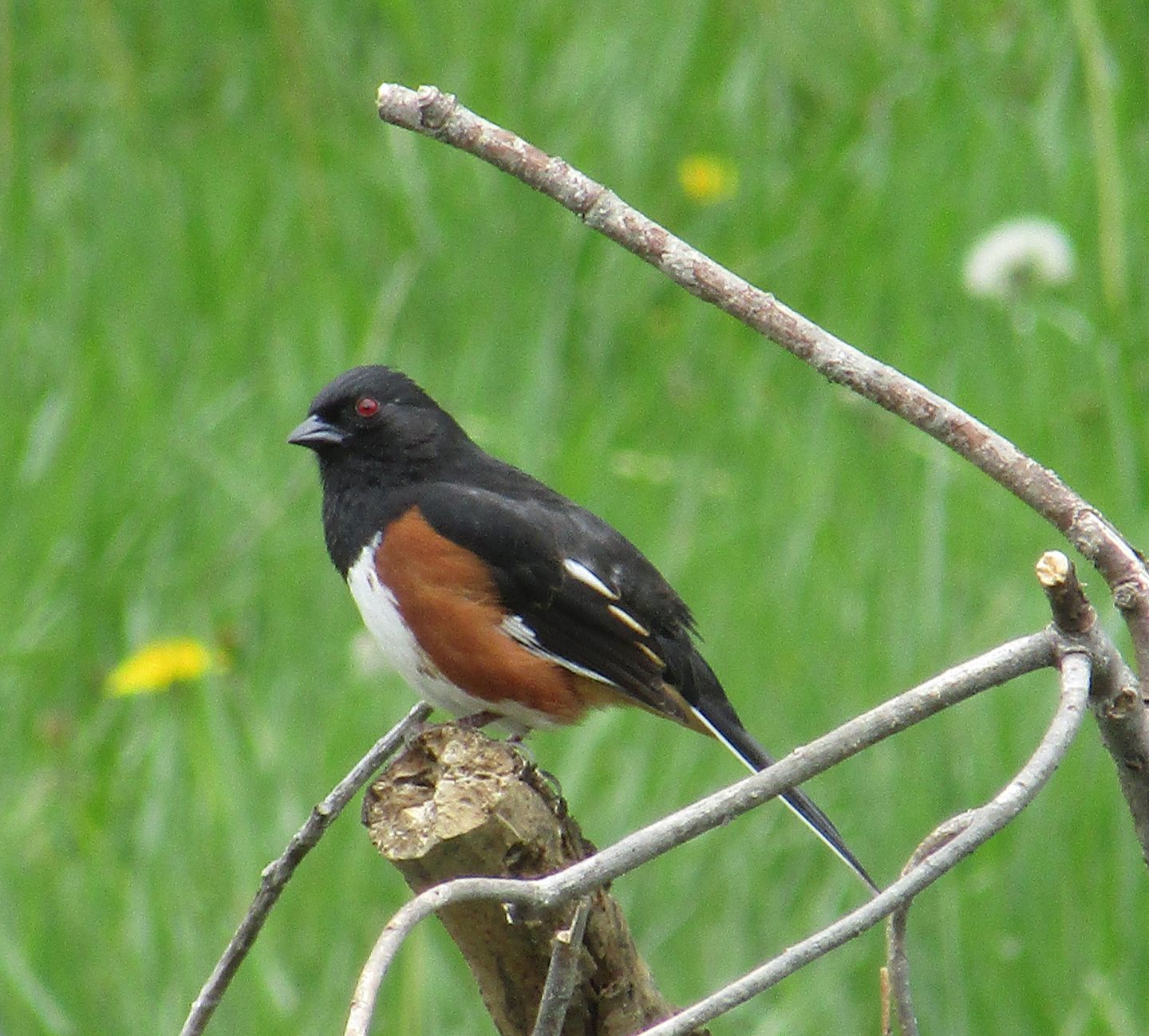
Photo by Bryan Stevens • Male Eastern towhees are persistent singers once they establish  a spring territory.

Towhees occasionally spend the winter, but I’ve not noticed any during the winter of 2023-24. They are back now, and have been keeping a high profile for the past couple of weeks.

Of course, other wildlife is keen to join the springtime chorus. I have so many spring peepers at the fish pond and in the wet fields around my house that the noise from these tiny amphibians can reach deafening levels. The chorus is bound to grow more diverse and louder as spring advances. Take some time to enjoy the sounds of nature at your own home.

••••••

To share your own sighting, make a comment or ask a question, send email to ahoodedwarbler@aol.com. I’m also on Facebook.
Hummingbirds due to make spring return


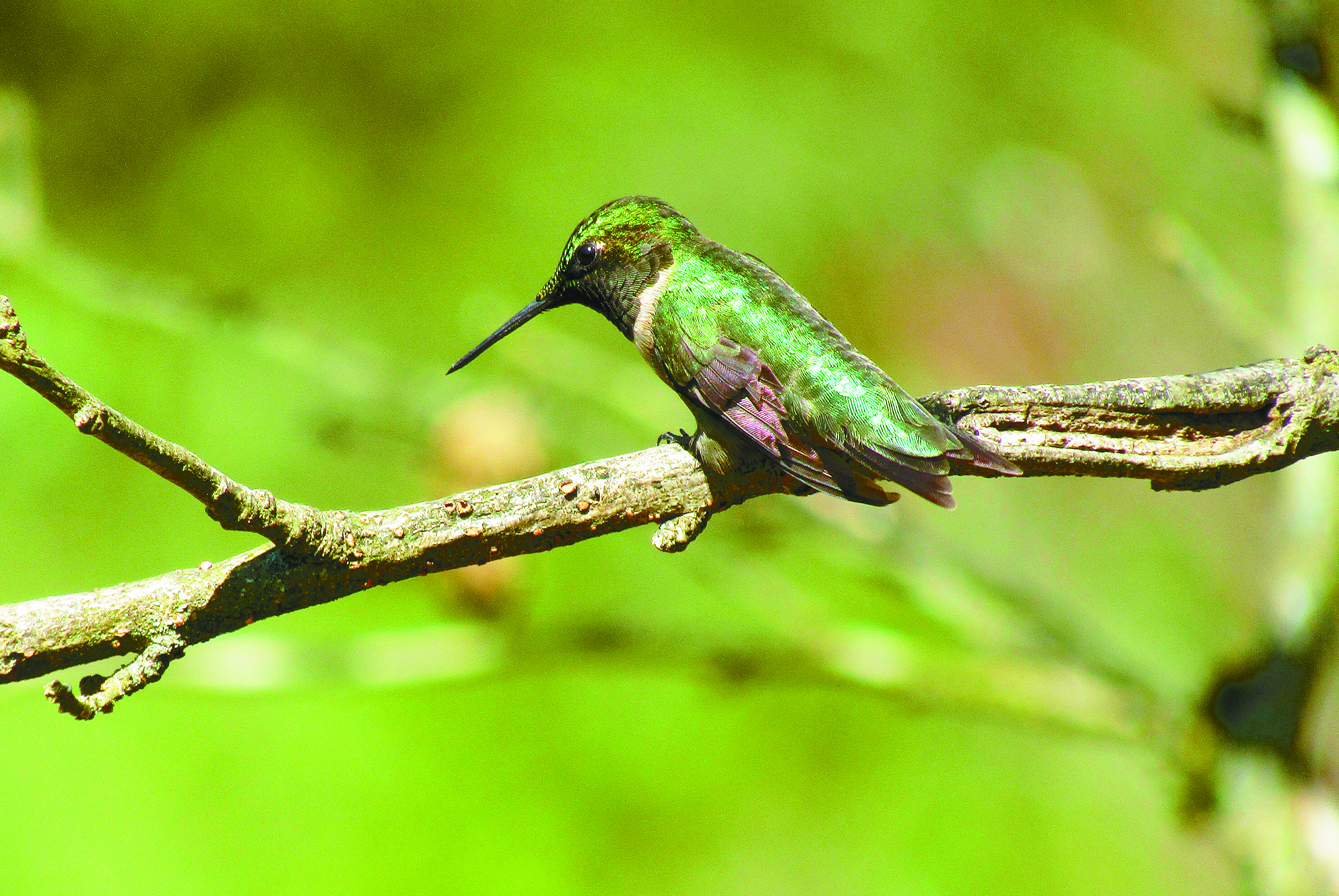
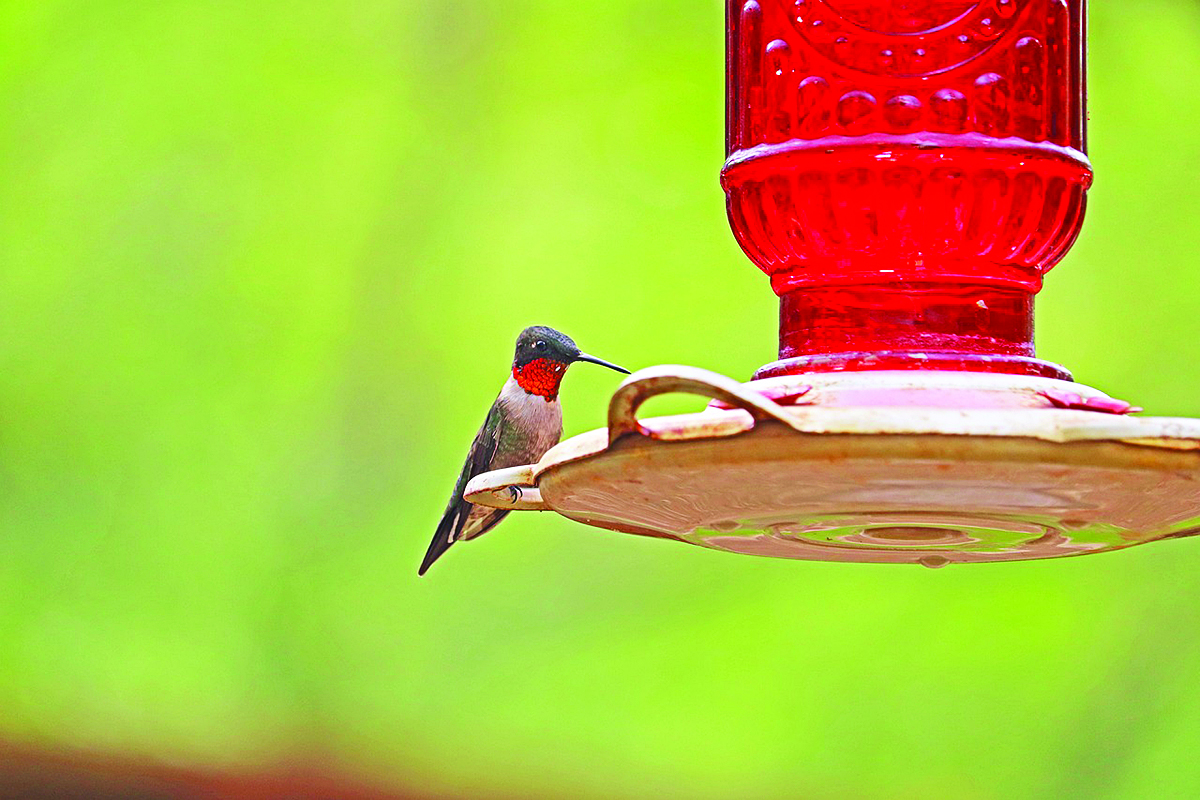
Photo by George from Pixabay • A male ruby-throated hummingbird obtains a dainty perch on a feeder offering sips of sugar water.

On March 4, Nancy Sheehan, a program coordinator for the Journey North website that tracks the migration of hummingbirds, as well as other wild creatures, posted on the project’s website.

“A small number of reports indicate that spring migrating hummingbirds are slowly arriving in southern regions of the United States,” she wrote.

In her post, she also wondered how weather patterns are impacting the pace of migration along the west coast?

That’s an interesting aspect of Journey North. The project tracks migration in both the eastern and western halves of the nation.

Sheehan noted that in the eastern United States, the annual migration of ruby-throated hummingbirds is proceeding pretty much on schedule.

“A small number of reports indicate that spring migrating hummingbirds are slowly arriving in southern regions,” Sheehan wrote. “It is time to put your feeders and potted nectar plants out. These nectar sources provide crucial energy for migrating hummingbirds. Depending on your location, start planting brightly colored native flowers to provide pollinator habitat for hummingbirds and other species such as monarch butterflies. Don’t delay – hummingbirds are here in many locations in the southern U.S.”

It’s fun to monitor hummingbird progress at Journey North, which also tracks the arrival of different hummingbird species in the western United States. There the first arrivals could include Allen’s, Anna’s, Broad-tailed, Black-chinned, Costa’s, Rufous and Allen’s hummingbirds.

I fully expect that ruby-throated hummingbird migration will bring the first individuals to Northeast Tennessee, Southwest Virginia, and Western North Carolina in early April if not late March. It’s even possible there will be some Easter arrival of hummingbirds in the region.

Most first spring observations of hummingbirds are males, although a few females are also early arrivals. Male hummingbirds arrive first so they can find and defend a territory.

As always, spring migration can be a challenging time for hummingbirds. Temperature, wind patterns and storms can influence the pace of migration.

Even once these tiny birds make their epic spring crossing of the Gulf of Mexico, they will need time to rest and refuel before moving northward.

By mid-March, the advance of ruby-throated hummingbirds has usually reached states such as Georgia and South Carolina. By the end of March, these tiny flying gems have reached states such as Tennessee and North Carolina.

It’s time to get those sugar water feeders outside and waiting for the early arrivals. Once the chance of late-season freezes has passed, consider planting some colorful native flowers to provide nectar sources for hummingbirds. In addition, some hanging baskets of flowers can be purchased from garden centers with the benefit that these baskets can be brought indoors during unseasonable cold snaps.

Northeast Tennessee usually gets its first spring hummingbirds the first week of April. If you’re seeing hummingbirds, I’d love to know. I have tracked arrivals for several years now. To share your first spring sighting of a ruby-throated hummingbird, email me at ahoodedwarbler@aol.com or contact me on Facebook at http://www.facebook.com/ahoodedwarbler. Please include the date and time of your sighting. I also welcome the sharing of other details about your sightings.

In the meantime, take steps now to welcome hummingbirds back and keep them safe during their stay.

Most experts also suggest avoiding red dyes or food colorings, which are often found in commercially marketed hummingbird sugar water. Don’t risk the health of hummingbirds for a little convenience.

It’s easy to make your own sugar water mix, which can be stored in the refrigerator in an empty plastic juice jug. Boil some water and then add one cup of sugar for every four cups of water in your pot. Stir thoroughly. Bottle the mixture until it cools. Fill your feeders and store any remaining sugar water in the fridge in the aforementioned jug. Refrigerated, the mix should stay good to use for at least a week.

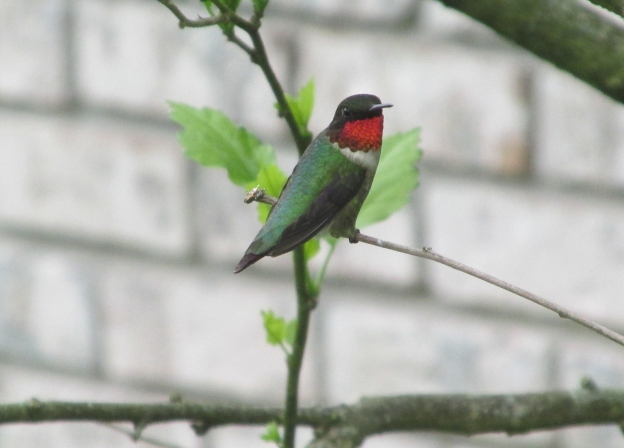
Photo by Bryan Stevens • A male ruby-throated hummingbird surveys his domain.

In our milder spring weather, changing the sugar water in feeders can probably be done on a weekly basis. When hotter summer temperatures prevail, it’s usually necessary to change the sugar water every two or three days.

Some ways of ensuring that our hummingbird guests are kept healthy and secure are simply common sense. For instance, don’t use pesticides, herbicides or any other sort of toxin anywhere close to the vicinity of a sugar water feeder or a flower garden. Hummingbirds are such tiny creatures with such intense metabolisms that it only takes a small amount of any harmful substance to sicken or kill one of these little flying gems.

For emphasis, I’ll repeat again that only common, pure cane sugar is safe for hummingbirds. There are no safe substitutes. Do not use organic, raw or brown sugar. Confectioner’s sugar, which contains an anti-caking substance (often corn starch, silicates or stearate salts), is also hazardous to hummingbirds.

The ratio of four parts water to one part sugar utilizing pure cane sugar most closely duplicates the nectar that hummingbirds obtain from some of their favorite flowers. Why try to mess with nature’s perfection?

I cannot imagine why anyone would supplement sugar water for hummingbirds with such human beverages as a sports drink or Kool-aid, but there have been reports of people doing so. Be aware that such additives will only risk the health of these tiny birds.

•••

Remember to send me those first sightings of returning spring hummingbirds. I’ll be doing my usual roundup to share who gets graced with a visit from one of these tiny beauties.

Blue jays bold, bossy backyard visitors

Photo by edbo23/Pixabay A blue jay grabs a peanut from a feeder.

At my own home, blue jays have an easy life. They’re so much bigger than most of the other birds that visit my feeders that they can be a little bossy toward their smaller kin. All are welcome, though.

The blue jay is the smallest member of the Corvid family in Tennessee. This bird’s larger relatives in the state include the American crow, fish crow and common raven.

The blue jay, which is typically 10 to 12 inches long, is one of the largest songbirds to visit our feeders. They’re fond of sunflower seed, peanuts, suet and other feeder fare. Blue jays are quite noisy and produce a variety of vocalizations. They’re also capable of mimicry and can mimic in convincing fashion the calls of red-tailed and red-shouldered hawks.

While they are primarily woodland birds, blue ays are very adaptable and capable of thriving in suburban parks and other less wild areas. In the fall, acorns are a favorite food. There are times in autumn when almost every blue jay I see has an acorn n its bill. They also tend to stash food for future days, and this habit has also helped re-forest oak woodlands.

Jays are social birds and form flocks, which offers some protection from predators. It only takes one sharp-eyed bird in a flock to sound an alarm to protect the entire group.
Other birds can also detect blue jay alarm calls and react accordingly.

Accipiter hawks — Northern goshawk, Cooper’s hawk, sharp-shinned hawk — are the primary predators on blue jays. They share some of the same habitat and the agile hawks are usually able to outmaneuver the slower flying jays.

I was a little surprised to discover that the blue jay has never been chosen as an official state bird, although it does serve as the official bird for the province of Prince Edward Island in Canada.

Blue jays are undeniably striking birds. They are bright blue on top and white to gray on its throat, chest and belly. They have white wing bars and black and white banding on the tail. Its bill, legs and feet are black. The bird also has a black collar on its lower throat. At a glance, all blue jays — male and female — look alike. However, experts have determined that the black throat collars are subtly different from bird to bird and may help members of a flock recognize each other.

Larger birds typically have longer life spans than small ones. The medium- sized blue jay will probably live longer than a wren or sparrow. The oldest known wild, banded blue jay was at least 26 years, 11 months old when it was found dead after being caught in fishing gear, according to the website All About Birds. It had been banded in 1989 around Saint Pierre and Miquelon, which is a French archipelago south of the Canadian island of Newfoundland. He dead individual was found in the same area in 2016.

There are other species of jays in the United States, including the Steller’s jay, which is the western counterpart of the bue jay, as well as Western scrub-jay, Florida scrub-jay and pinyon jay. Worldwide, there are about 50 species of jays, which are closely related to crows, magpies and other species in the genus of Corvidae.

Some of the descriptive names for other jays include white-throated magpiejay, gray jay, green jay, purplish jay, azure jay, violaceous jay, turquoise jay, beautiful jay, silvery-throated jay, azure hooded jay and black-headed jay.

The smallest of the world’s jays is, appropriately enough, named the dwarf jay. It is eight to nine inches long and weighs about 1.4 ounces.

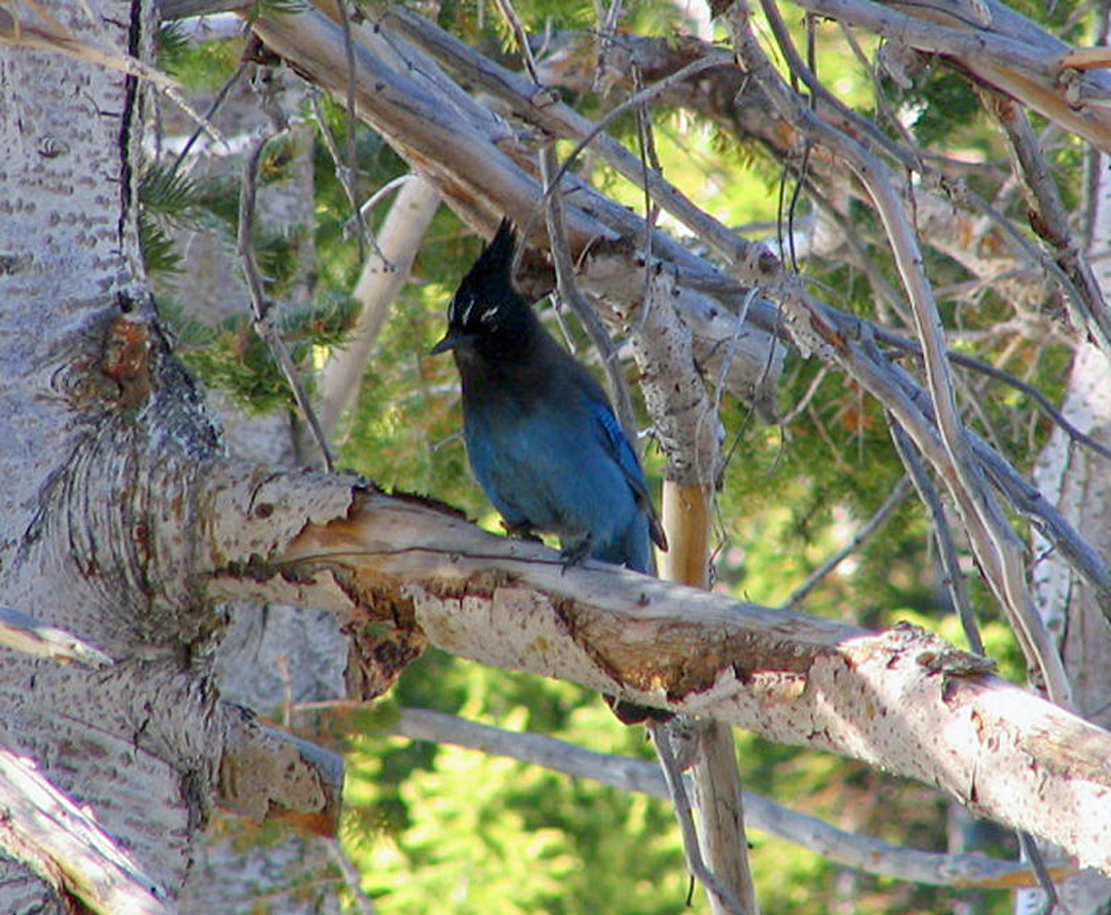
During two visits to Salt Lake City in Utah in 2003 and 2006, I added a couple of jays to my life list, including Western scrub-jay and Steller’s jay. I also saw black-billed magpies, a close relative of jays.

Photo by Bryan Stevens • A Steller’s jay found at Snowbird, a ski resort town near Salt Lake City, Utah.

•••

To share sightings, ask a question or make a comment, email me at ahoodedwarbler@aol.com.

Majestic canvasback among region’s wintering waterfowl

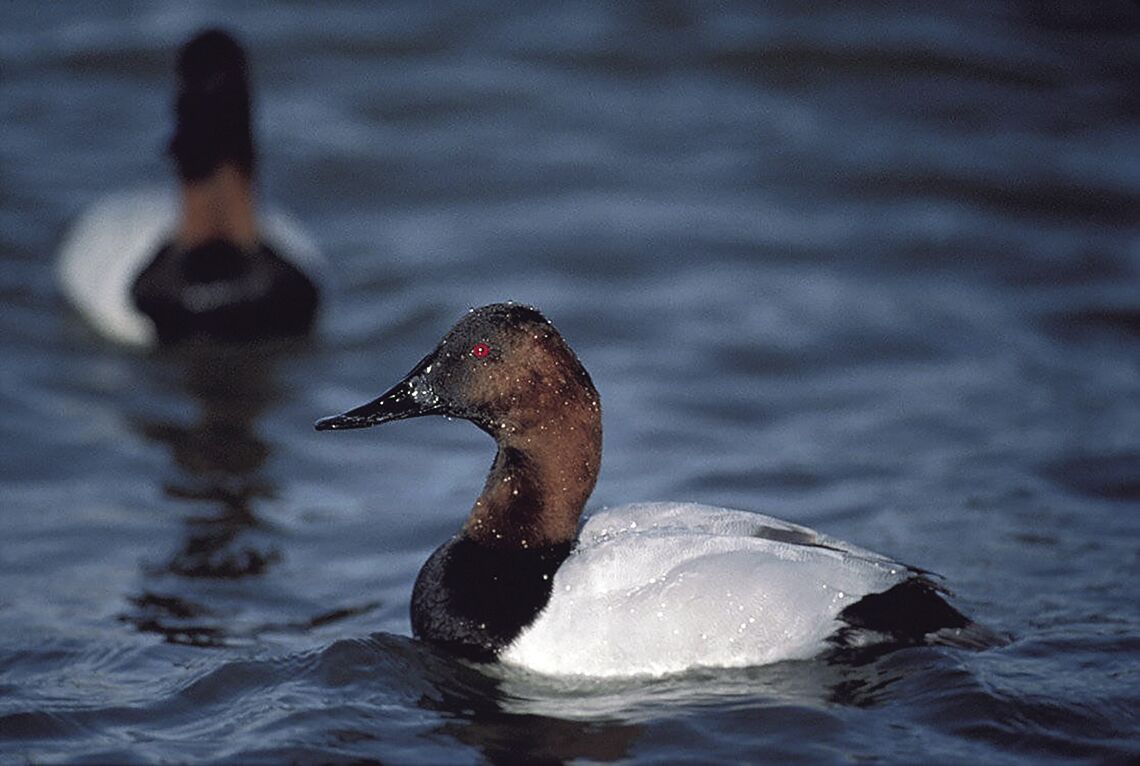
Photo by U.S. Fish & Wildlife/Eugene Hester • The red eye of a male canvasback stands out in as striking a fashion as does the duck’s dark and light plumage.

Erwin resident Joe McGuiness, who is also a fellow member of the Elizabethton Bird Club, alerted me recenntly to the presence of a canvasback drake at a pond along the town’s linear trail.

This duck was with a couple of redheads, also a species of duck, in the pond spanned by a boardwalk in the industrial park on the south side of Erwin. Some birds hold special meaning with me. Although its a natural question for a bird lover to be asked, I have difficulty pinpointing a single bird as my favorite. One of my overall favorite birds is the Northern cardinal. Among the summer-visiting warblers, the hooded warbler has long been my favorite. With shorebirds, the marbled godwit has long been at the top of my rankings. My favorite bird of prey is the American kestrel or, as I first learned of this raptor in the little “Golden Guide to Birds,” the sparrow hawk. Among owls, I have a soft spot for Eastern screech-owls.

I have a favorite duck, too. It’s the canvasback, which is a species of waterfowl that I don’t see very often, which makes observations even more special. I saw my first canvasback in the mid 1990s during a winter visit with my parents to Wilbur Lake near Elizabethton, Tennessee. We always liked visiting this small reservoir during the colder months to view the buffleheads and any other ducks that happened to visit this small mountain lake. On this particular occasion, a flock of redheads had also arrived. While viewing these ducks, we noticed a member of the flock that looked different from the others. Specifically, it was larger and whiter than the redheads. After a brief consultation with my copy of Roger Tory Peterson’s “A Field Guide to the Birds of Eastern and Central North America,” I identified my very first canvasback.

Since that time, I’ve observed canvasbacks at other locations in northeast Tennessee and southwest Virginia. It’s been awhile, but I have observed these ducks at Osceola Island Recreation Area below Holston Dam and at Musick’s Campground at South Holston Lake. Back in January and February of 2014, some canvasbacks took a liking to the pond at Erwin Fishery Park. I’ve also observed canvasbacks on the Watauga River in Elizabethton and on the Holston River in Kingsport. I saw eight canvasbacks on Feb. 22, 2015, on the Watauga River, not very far from where I saw my very first one back in the 1990s. The flock, which consisted of all males, represented a rather high number for this duck in the region.

Recent winter storms that have plowed through the region have brought some unusual ducks. A few days before he notified me of the canvasback, Joe also informed me about a pair of Northern shovelers at Erwin Fishery Park.

A male canvasback is unmistakably regal with a sloping profile that instantly distinguishes it from other ducks. Males, or drakes, have chestnut-red heads, white bodies, black breasts and rears and bright red eyes. The distinctive bill is also black. Females, like many other ducks, are drab and brown but share the distinctive bill, helping to separate them from such relatives as female redheads.

Photo by Bryan Stevens • Canvasbacks on the Watauga River in Elizabethton.

The canvasback is also a fairly large duck with males reaching a body length of 21 inches. Females are only an inch shorter in body length. Drakes weigh an average of 2.7 pounds while hens can weigh 2.5 pounds.

Canvasback breed in prairie potholes in the western United States and Canada. I got the chance to see many of these ducks in their nesting habitat during a trip to Utah in May of 2006. My visit provided very memorable observations of large flocks of these impressive diving ducks. I found them in temporary ponds in flooded fields. Utah had enjoyed abundant rainfall that spring, which was no doubt welcomed by breeding ducks. The trip also yielded observations of such ducks as cinnamon teal, redhead, red-breasted mergansers, ring-necked ducks and gadwalls, as well as other unique wetland-loving species as white-faced ibis, yellow-headed blackbird and Wilson’s phalarope.

During winter, the canvasback usually prefers large open bodies of water, including lakes, ponds and sheltered bays. These ducks are largely vegetarian, although they do consume some animal matter, including insect larvae, snails and other mollusks. This duck’s scientific name, Aythya valisineria, which refers to a species of plant that canvasbacks consume in great quantities. Vallisneria americana, which is often called wild celery or water-celery, doesn’t resemble the vegetable known as celery. These wild plants are long, limp and flat, which led to other common names such as “tape grass” and “eelgrass.”

The canvasback is member of the genus, Aythya, which is comprised of a dozen species of diving ducks. The other members of the genus in North America include greater scaup, lesser scaup, redhead and ring-necked duck. The related tufted duck is a rare visitor to the United States. They’re described diving ducks because they dive under the surface to search for food, rather than dabble around pond edges and shorelines like the ducks known as “dabblers.”

Two members of the genus — Madagascan pochard and Baer’s pochard — are endangered species. In March of 2013, a survey found the population of the Madagascan pochard was about 80 individuals. When surveys found a worldwide population of perhaps fewer than 1,000 individuals, Baer’s pochard was reclassified as “critically endangered” in 2012. The canvasback has never declined to the low levels of these relatives, but it has been a bird that has required some protective oversight from the federal government. At times, this has included exemptions from duck hunting seasons.

Canvasback populations are stronger these days but haven’t been robust for quite some time. According to the Duck Unlimited website, the population of this stately duck has seen some improvement. In 2009, a population survey by the U.S. Department of Fish and Wildlife showed an increase in canvasbacks from 488,000 to 662,000 individuals. According to the Ducks Unlimited website, this population spike took place in the wake of a hunting ban on canvasbacks during the 2008-09 waterfowl season.

•••

To share a sighting, ask a question or make a comment, email me at ahoodedwarbler@aol.com.


No native parakeets roam North America

Apologies for the delay in posting.

Photo by Bryan Stevens • Monk parakeets, like this pair at a feeder in Newland, North Carolina, are increasingly common in North America, but they are not a native species.

One hundred and six years ago to the day, the only native North American parakeet went extinct when the last surviving Carolina parakeet died in captivity at the Cincinnati Zoo on Feb. 21, 1918.

This sad historic footnote got me to thinking. What things with feathers are missing from the landscape when birders look back on some of the avian potential lost before Americans became more protective of their wildlife?

Obviously, we lament the loss of birds like the ivory-billed woodpecker or the Labrador duck. Losses of bird life in the Hawaiian islands have been staggering. We also lost tiny birds — dusky seaside sparrow and Bachman’s warbler — that would have gone unnoticed by most people. Other birds to have gone extinct include the heath hen and the passenger pigeon.

Another lost bird was the Carolina parakeet. Many people don’t realize that North America was once home to its own species of parakeet. A few individuals — all that remained of once massive flocks of colorful, noisy native parakeets — made it into the 20th century.

Carolina parakeets once roamed from southern New York and Wisconsin to Kentucky, Tennessee and the Gulf of Mexico, from the Atlantic Seaboard to as far west as eastern Colorado. That’s right – the Carolina parakeet once roamed wild within the borders of the Volunteer State.

As indicated already, the last specimen died in the Cincinnati Zoo on Feb. 21, 1918. That bird, a male by the name of Incas, died alone in the same cage as Martha, the last passenger pigeon.

Martha had died four years earlier on Sept. 1, 1914. The fact that these birds died alone, caged, is not how anyone would like to think of the conclusion of their story.

There are no scientific studies or surveys of Carolina parakeets by American naturalists; most information about the bird is from anecdotal accounts and museum specimens, so details of its prevalence and decline are unverified or speculative.

Although not declared officially extinct until 1939, the population of the Carolina parakeets crashed suddenly and for reasons still not fully understood.

Early American naturalist and artist John James Audubon observed the birds in the wild and painted works inspired by flocks of Carolina parakeets.

For instance, large flocks of these birds still flew free until the final years of the 1800s, but in the first decade of the 1900s, these flocks disappeared.

The survivor at the zoo – Incas – died a year after his mate, who had been named Lady Jane by the zoo’s staff.

The only other native parrot — the thick-billed parrot of the American southwest — no longer flies north of the Mexican border. An attempt to re-introduce this parrot to Arizona in the 1980s ended in disappointing failure.

To look for parrots in the United States, one usually needs to travel to Florida. The Sunshine State has become a place to find exotic wildlife, from pythons to caymans, as well as a multitude of unusual birds that have escaped from captivity and now find the warm climate of Florida suitable for a feral existence.

When it comes to parrots, however, there is one species, perhaps tougher than its kin, that has expanded its range across the country. Called the monk parakeet (or quaker parakeet in the pet trade) this bird is not a native species, but it has proved tenacious in making itself at home in such far-flung locations as Delaware and Michigan, as well as Connecticut and Rhode Island. These green beauties have even made themselves at home in New York City. The monk parakeet has also established colonies in Canada’s British Columbia.

Closer to home, these parakeets have also established colonies in Virginia and North Carolina, although I cannot confirm any such attempts in Tennessee.

I got to see my first monk parakeets in the wild on Feb. 19, 2016, after learning on the Facebook page Carolina Birders that a pair of these parakeets had been found in Newland, North Carolina.

Being only about a 20-minute drive from Roan Mountain, Tennessee, it was not difficult for me to make two trips to Newland to look for these two birds, which were residing at an electrical sub-station. I failed to find them on my first trip on a rainy, windy day. When the weather improved, I tried again and was successful. I saw the parakeets seated on their nest, perched on wires and visiting a feeder at a home near the sub-station.

The origin of feral monk parakeets in the United States dates back to the 1960s when birds brought from their native Argentina for sale in the pet trade escaped and subsequently thrived in various locations in the country.

In researching this bird, I discovered that in North Carolina there are known colonies in Wilmington and Charlotte. Perhaps the pair in Newland are individuals expanding from those colonies. Monk parakeets are most abundant in Florida, but these birds have been found in numerous states, from Texas and Ohio to New Jersey and Delaware. These parakeets have also established feral populations in Europe in Belgium, Spain and Great Britain.

The origin of “monk” for this bird’s name is believed to stem from the gray-colored swath of feathers found on the bird’s breast, throat and forehead. The rest of the bird’s plumage is a bright green in color. The monk parakeet also has an orange bill. The birds are comparable in size to a mourning dove.

Monk parakeets differ from most other parrots, which are almost exclusively cavity-nesting birds. Monk parakeets form nesting colonies and use twigs and branches to build large, bulky nests. Even a single pair of monk parakeets can build a substantial nest. A colony of these nesting birds usually builds a nest featuring several compartments. The pair of parakeets in Newland have already build a large nest among the transformers of an electrical sub-station. The industrious birds create some large stick structures, and nests weighing 90 pounds have been found.

In the wild, these sociable birds form large flocks. In captivity, the monk parakeet can be taught an extensive vocabulary of words. The monk parakeet can live 20 to 30 years, with captive birds usually living longer than wild ones.

I was thrilled to see this pair of monk parakeets, but it also made me somewhat wistful for what might have been.

It would be wonderful to have native parrots still flying free. If only the dawning of a more environmentally aware age had arrived slightly sooner, the Carolina parakeet might have been saved and now keeping company with species like the California condor and whooping crane.

This native parakeet, if it had endured, might today be considered an ordinary backyard bird that flocks to feeders throughout Northeast Tennessee, Western North Carolina and Southwest Virginia.


Region is home for several species of hawks

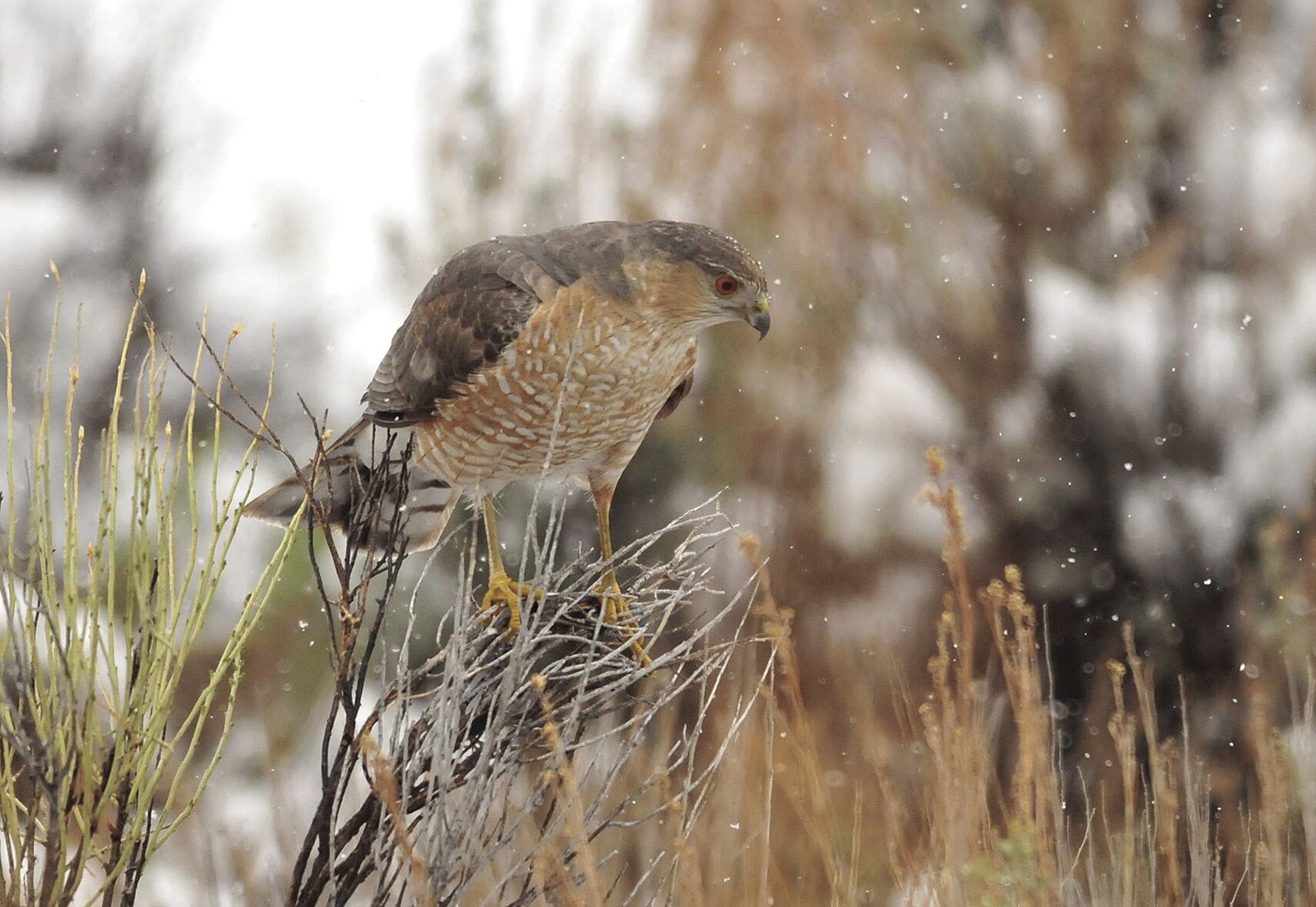
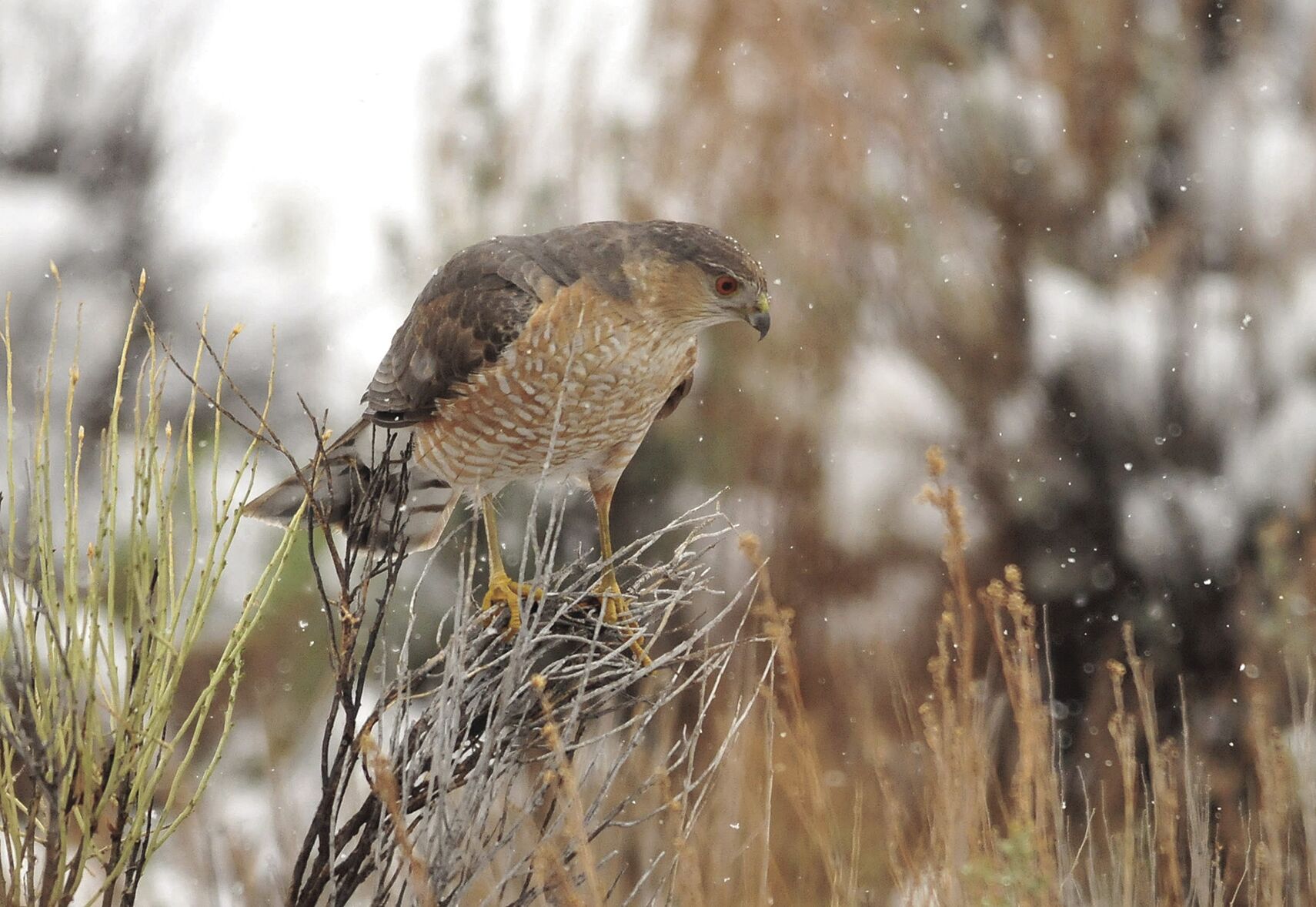
Tom Koerner/USFWS • An adult Cooper’s hawk, such as this individual, is a crow-sized woodland raptor that breeds throughout much of the United States, southern Canada and northern Mexico.

Barbara Lake, a resident in Hampton, emailed me recently to share a sighting of a large hawk in her yard.

“This hawk was in our yard today and flew up to a tree when I opened the door,” she wrote. “(Its) back and the back of the head are black and the rest appears to be white. He didn’t cooperate by turning around.”

Barbara enclosed some photos with her email. I’ve known Barbara for about 20 years. We first met when she invited me to her home to view some nesting bluebirds on a television screen. She had placed nest cams in some of her bluebird nesting boxes, capturing real-time footage of the nesting activity of these songbirds.

I’ve enjoyed some observations of the region’s larger raptors, including red-tailed hawks and red-shouldered hawks, as winter has settled in for the long haul. I’ve also spotted a few American kestrels.

Based on the raptor’s relatively long tail in the photos provided by Barbara, I hazarded a guess that her visiting raptor was a Cooper’s hawk.

Anyone who travels along the region’s Interstate Highway System has probably noticed hawks perched in trees or on utility lines adjacent to the roadway. The section of Interstate 26 that runs between Unicoi and Johnson City is often a productive area for keeping alert for raptors. The raptor I have most often observed along this stretch of road is the red-tailed hawk, although I have also observed Cooper’s hawk, sharp-shinned hawk and American kestrel. In the time of spring and fall migration, it’s also possible to observe broad-winged hawks.

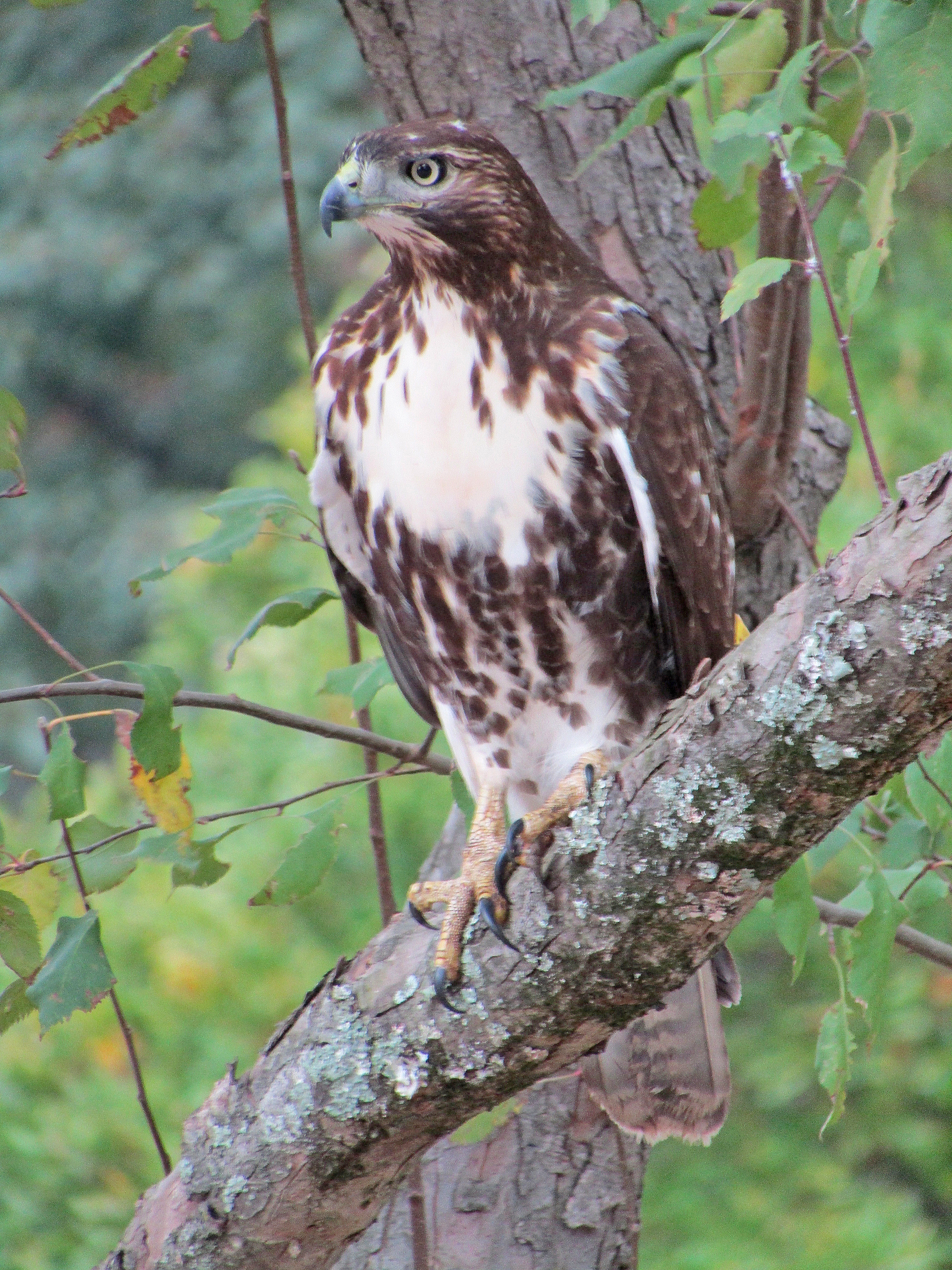
Photo by Bryan Stevens • Raptors, like this red-tailed hawk, are  plentiful oin the region.

The red-tailed hawk is named for its prominent red tail. However, only adults show the characteristic red tail. The affinity red-tailed hawks demonstrate for roadsides is a double-edged sword. Viewing a large hawk from your car is an easy way to watch birds. For inexperienced or careless raptors, however, roadside living is often rife with the chance for a collision with a car or truck. The red-tailed hawk, which prefers open countryside, is attracted to the margins of roads and highways because these locations also attract their favorite prey, which includes rodents like rats, squirrels and mice and other small mammals such as rabbits.

Human behavior contributes to some of the problems that hawks encounter in the zone that brings them too close for comfort to motorized vehicles. When people toss trash from a car, the scent of the litter will lure curious and hungry rodents. In turn, hunting hawks are brought to the edges of roads in search of their preferred prey, increasing the likelihood of colliding with automobiles.

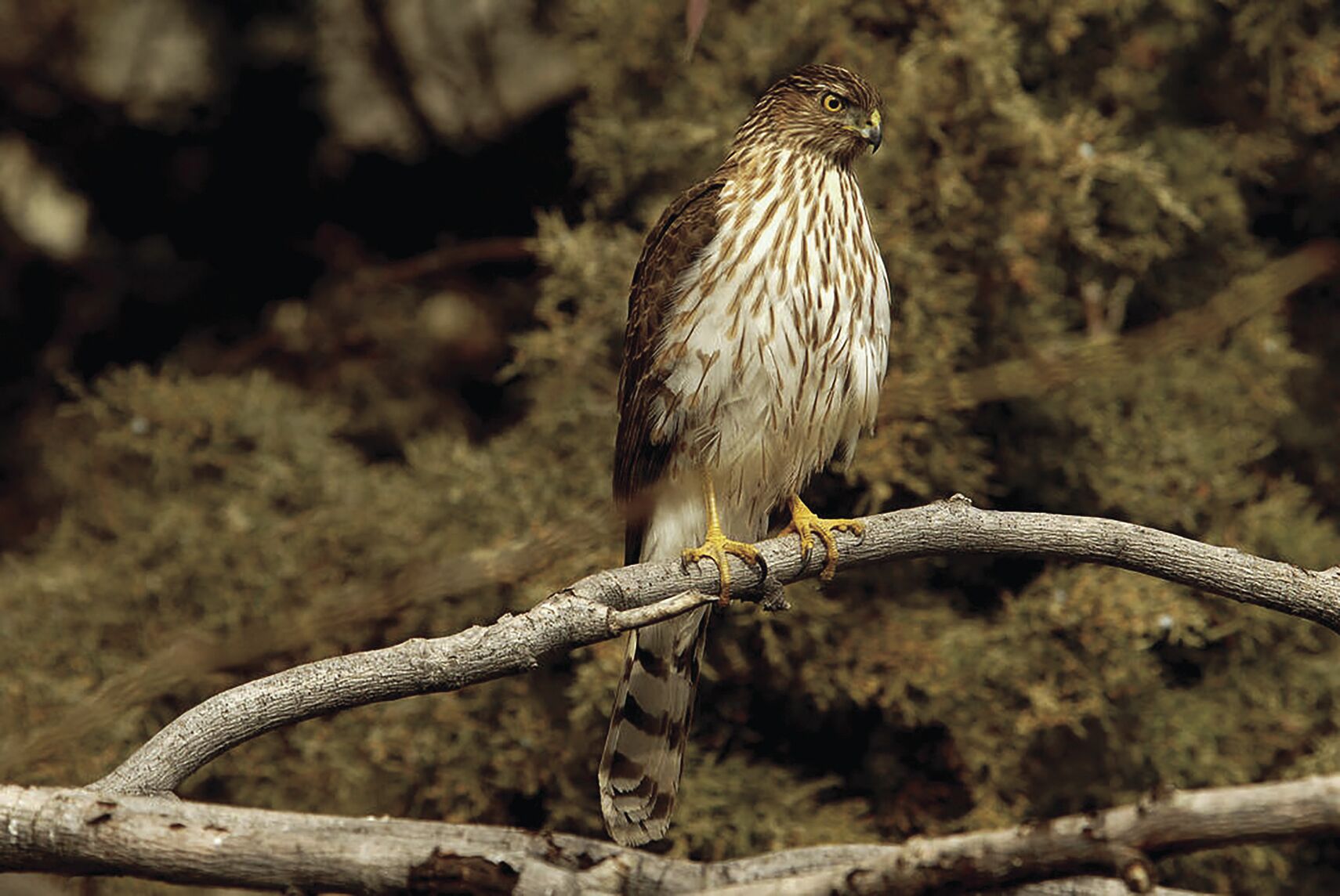
The Cooper’s hawk is a large accipiter hawk. A smaller relative, the sharp-shinned hawk, is also found in the region. The accipiter hawks are graceful and aerodynamic, designed to pursue prey through woodlands. Buteo hawks, such as the red-tailed hawk and red-shouldered hawk, are more of an ambush predator and not designed for the agile maneuvers that the accipiters can use to capture prey.

Some of the buteo species have adapted to life on islands, including the Galapagos hawk and the Hawaiian hawk. Some of these hawks have quite descriptive names, including the white-throated hawk, gray-lined hawk, zone-tailed hawk and short-tailed hawk. Outside the United States, raptors in the buteo genus are often known as “buzzards.” When the first European colonists came to the New World, they applied the term buzzard to types of native vultures as well as the large raptors like Swainson’s hawk and broad-winged hawk that reminded them of the ones back in Europe.

USFWS • An immature Cooper’s hawk perches on a branch in a tree located in the Klamath Basin National Wildlife Refuge Complex.

Accipiter hawks are also widespread. Accipiter is a genus of birds of prey in the family Accipitridae. With 49 recognized species, it is the most diverse genus in its family. Most species are called goshawks or sparrowhawks, although almost all New World species (excepting the Northern goshawk) are simply known as hawks.

Most accipiter hawks, including Cooper’s and sharp-shinned, prey mostly on other birds. The website All About Birds notes that small songbirds are usually safe around a Cooper’s hawk. Medium-sized birds, however, are not. Studies list European starlings, mourning doves and rock pigeons as common prey. Other birds that are often targeted by Cooper’s hawk include American robins, blue jay, Northern flicker, quail, grouse and pheasants. Cooper’s hawks sometimes rob nests and also eat chipmunks, rabbits, mice, squirrels and bats. According to All About Birds, mammals are more common in diets of Cooper’s hawks in the western United States.

Some of the more descriptively named accipiter hawks include crested goshawk, grey-bellied hawk, spot-tailed sparrowhawk, plain-brested hawk and little sparrowhawk.

All too often, our large hawks don’t receive the love they deserve from the public. They may even run afoul of misinformed individuals who may regard all predatory birds as “bad.” The reality is that all hawks are valuable components of a healthy, working ecosystem, with each species filling a certain niche.

•••

To share a sighting, ask a question or make a comment, email me at ahoodedwarbler@aol.com.


Couple achieves birding milestone with help of red-breasted nuthatch

Photo from Pixabay • The red-breasted nuthatch is more common some winters but can be absent in others.

Two good friends and fellow members of the Elizabethton Bird Club, Brookie and Jean Potter, achieved a personal birding milestone at the end of January.

Both Brookie and Jean managed to see 100 birds in the first month of 2024 in the five-county area. Brookie had already accomplished this feat many years ago, but Jean had never been able to do it — until now.

“We did it today on the last day of the month,” she shared in an email.

Brookie ended the month with 101 species of birds, and Jean reached 100.

Their final bird of the month was the red-breasted nuthatch. They had to put in some effort to find the species, finally traveling to Carver’s Gap on the state line between North Carolina and Tennessee on Roan Mountain.

Photo by Bryan Stevens • A red-breasted nuthatch seeks a morsel from seeds and peanuts at a feeder.

“We kept waiting for this bird to come to our feeder, but when it didn’t come, we had to go to Carver’s Gap, which had snow, fog and a temperature of 29 degrees,” she said.

According to Jean, they located two of these little nuthatches close to the parking area.

“The things we do to find birds,” Jean remarked.

If they can find another 100 or more species of birds in the remaining 11 months of 2024, the couple will be eligible for the Howard P. Langridge Award. The Elizabethton Bird Club presents this award to any member who manages to see 200 or more species in a single year in the five-county area.

The award commemorates the contributions of the late Langridge to birding in the region. In 2000, Langridge broke the record for most species seen in a single year in Northeast Tennessee. The record was later broken again by Rick Knight.

In our region, the stubby red-breasted nuthatch is another member of a family that often finds its way to our yards. Smaller than the related white-breasted nuthatch and, as far as I can tell, complacent in the company of chickadees and titmice, the red-breasted nuthatch is always a welcome visitor.

This little feeder visitors has a telltale “yank yank” call that it produces when excited that sounds very much like a little tin horn. The red-breasted nuthatch, perhaps because it spends so much of the year in more remote areas, can also be amazingly tame when it pays a winter visit.

Photo by Bryan Stevens • A red-breasted nuthatch clings to the mesh of a feeding tube to get at the peanuts contained within.

Both red-breasted and white-breasted nuthatches can be attracted to feeders by offering peanuts, sunflower seeds and suet. They are also cavity- nesting birds but are more reluctant about accepting a nesting box as a place to rear young. They will gladly accept an old woodpecker hole or other natural cavity in a tree.

The website All About Birds notes that red-breasted nuthatches are common, and their populations have increased throughout most of their range between 1966 and 2019, according to the North American Breeding Bird Survey.

The website also points out that Partners in Flight estimates a global breeding population of 20 million and rates the species a 6 out of 20 on the Continental Concern Score, indicating a species of low conservation concern.

While the red-breasted nuthatch is a small bird, some members of its family aren’t so petite. On the other end of the size scale is the appropriately named giant nuthatch, which reaches a length of almost 8 inches. The giant nuthatch ranges through China, Thailand and Burma and is bigger than a downy woodpecker, another of our more common visitors at backyard feeders in our region.

Worldwide, there are about 25 species of nuthatches, some of which have surprisingly descriptive names for birds that spend most of their lives creeping in obscurity along the trunks and branches of trees. Some of the more creative common names for these little birds include beautiful nuthatch, velvet-fronted nuthatch, sulphur-billed nuthatch, chestnut-bellied nuthatch, snowy-browed nuthatch and chestnut-vented nuthatch.

These birds are named “nuthatch” for the habit of some species to wedge a large seed in a crack and hack at it with their strong bills.

In some winters, red-breasted nuthatches can be quite common in the region. That’s not been the case this winter, as shown by the difficulty Brookie and Jean had in locating this bird.

•••

For those interested, there’s a great chance to get outdoors and look for red-breasted nuthatches and other birds. The annual Great Backyard Bird Count will be held Friday, Feb. 16, through Monday, Feb. 19.

It’s easy to take part in this global survey of bird populations all around the planet.

The first step is to choose a location for looking.

A favorite park, walking trail or your own backyard will work.

Next, actively watch for birds for 15 minutes or more, at least once over the four days from Feb. 16-19.

You will need to identify all the birds you see or hear within your planned time/location and use the best tool for sharing your bird sightings.

For a beginning bird admirer and those who are new to bird identification, try using the Merlin Bird ID app to pinpoint what birds you are seeing or hearing.

If you have participated in previous GBBCs before and want to record numbers of birds, try the eBird Mobile app or enter your bird list on the eBird website using a desktop/laptop computer.

If you already contribute to Merlin or eBird, continue what you are doing. All entries over the 4-day period count towards GBBC.

For more information on the GBBC, visit www.birdcount.org.

•••

To share a sighting, ask a question or make a comment, email me at ahoodedwarbler@aol.com.

Red-breasted nuthatch helps couple achieve milestone

Photo by Bryan Stevens • A red-breasted nuthatch clings to the mesh of a feeding tube to get at the peanuts contained within.

Good friends and fellow members of the Elizabethton Bird Club, Brookie and Jean Potter achieved a personal birding milestone at the end of January.

Both Brookie and Jean managed to see 100 birds in the first month of 2024 in the five-county area. Brookie had already accomplished this feat many years ago, but Jean had never been able to do it – until now.

“We did it today on the last day of the month,” she shared in an email.

Brookie ended the month with 101 species of birds, and Jean reached 100.

Their final bird of the month was red-breasted nuthatch. They had to put in some effort to find the species, finally traveling to Carver’s Gap on the state line between North Carolina and Tennessee on Roan Mountain.

“We kept waiting for this bird to come to our feeder, but when it didn’t come, we had to go to Carver’s Gap, which had snow, fog and a temperature of 29 degrees,” she said.

According to Jean, they located two of these little nuthatches close to the parking area.

“The things we do to find birds,” Jean remarked.

If they can find another 100 or more species of birds in the remaining 11 months of 2024, the couple will be eligible for the Howard P. Langridge Award. The Elizabethton Bird Club presents this award to any member who manages to see 200 or more species in a single year in the five-county area. The award commemorates the contributions of the late Langridge to birding in the region. In 2000, Langridge broke the record for most species seen in a single year in Northeast Tennessee. The record was later broken again by Rick Knight.

Photo by Bryan Stevens • A red-breasted nuthatch picks through seeds and peanuts at a feeder.

In our region, the stubby red-breasted nuthatch is another member of a family that often finds its way to our yards. Smaller than the related white-breasted nuthatch and, as far as I can tell, complacent in the company of chickadees and titmice, the red-breasted nuthatch is always a welcome visitor.

This little feeder visitors has a tell-tale “yank yank” call that it produces when excited that sounds very much like a little tin horn. The red-breasted nuthatch, perhaps because it spends so much of the year in more remote areas, can also be amazingly tame when it pays a winter visit.

Both red-breasted and white-breasted nuthatches can be attracted to feeders by offering peanuts, sunflower seeds and suet. They are also cavity-nesting birds, but are more reluctant about accepting a nesting box as a place to rear young. They will gladly accept an old woodpecker hole or other natural cavity in a tree.

The website All About Birds notes that red-breasted nuthatches are common, and their populations have increased throughout most of their range between 1966 and 2019, according to the North American Breeding Bird Survey.

The website also points out that Partners in Flight estimates a global breeding population of 20 million and rates the species a 6 out of 20 on the Continental Concern Score, indicating a species of low conservation concern.

While the red-breasted nuthatch is a small bird, some members of its family aren’t so petite. On the other end of the size scale is the appropriately named giant nuthatch, which reaches a length of almost eight inches. The giant nuthatch ranges through China, Thailand and Burma and is bigger than a downy woodpecker, another of our more common visitors at backyard feeders in our region.

Worldwide, there are about 25 species of nuthatches, some of which have surprisingly descriptive names for birds that spend most of their lives creeping in obscurity along the trunks and branches of trees. Some of the more creative common names for these little birds include beautiful nuthatch, velvet-fronted nuthatch, sulphur-billed nuthatch, chestnut-bellied nuthatch, snowy-browed nuthatch and chestnut-vented nuthatch.

These birds are named “nuthatch” for the habit of some species to wedge a large seed in a crack and hack at it with their strong bills.

In some winters, red-breasted nuthatches can be quite common in the region. That’s not been the case this winter, as shown by the difficulty Brookie and Jean had in locating this bird.

•••

For those interested, there’s a great chance to get outdoors and look for red-breasted nuthatches and other birds. The annual Great Backyard Bird Count will be held Friday, Feb. 16, through Monday, Feb. 19.

It’s easy to take part in this global survey of bird populations all around the planet.

The first step is to choose a location for looking. A favorite park, walking trail or your own back yard will work.

Next, actively watch for birds for 15 minutes or more, at least once over the four days from February 16–19.

You will need to identify all the birds you see or hear within your planned time/location and use the best tool for sharing your bird sightings.

For a beginning bird admirer and those who are new to bird identification, try using the Merlin Bird ID app to pinpoint what birds you are seeing or hearing.

If you have participated in previous GBBCs before and want to record numbers of birds, try the eBird Mobile app or enter your bird list on the eBird website using a desktop/laptop computer.

If you already contribute to Merlin or eBird, continue what you are doing. All entries over the 4-day period count towards GBBC.

For more information on the GBBC, visit http://www.birdcount.org.

•••

To share a sighting, ask a question or make a comment, email me at ahoodedwarbler@aol.com.


Melodic song sparrow makes a good neighbor in any season

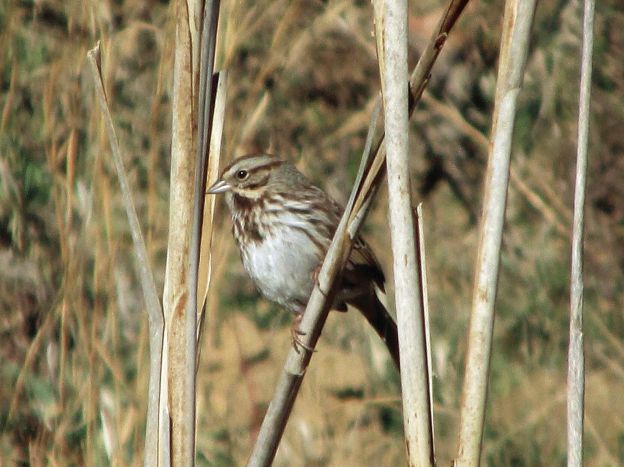
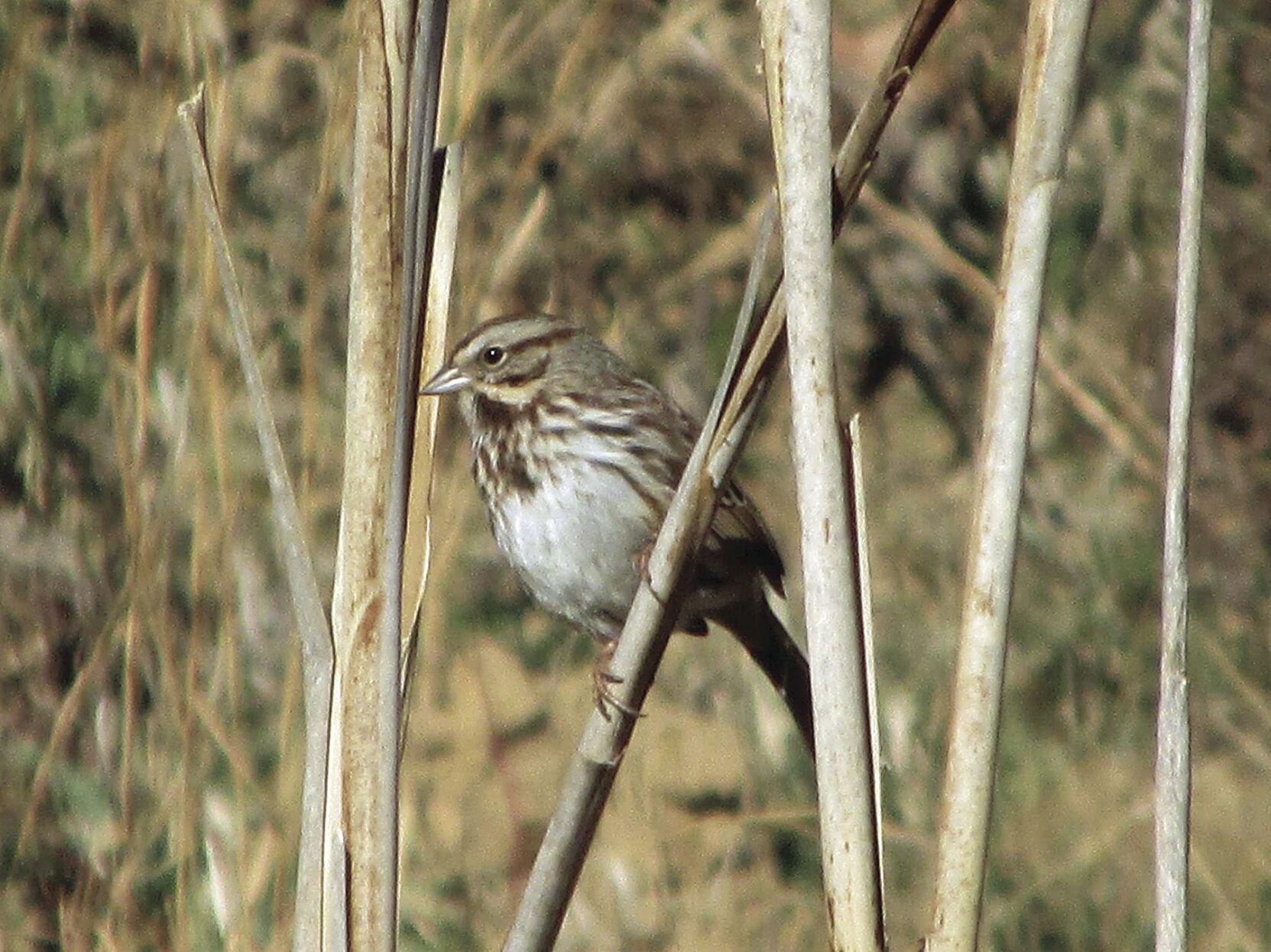
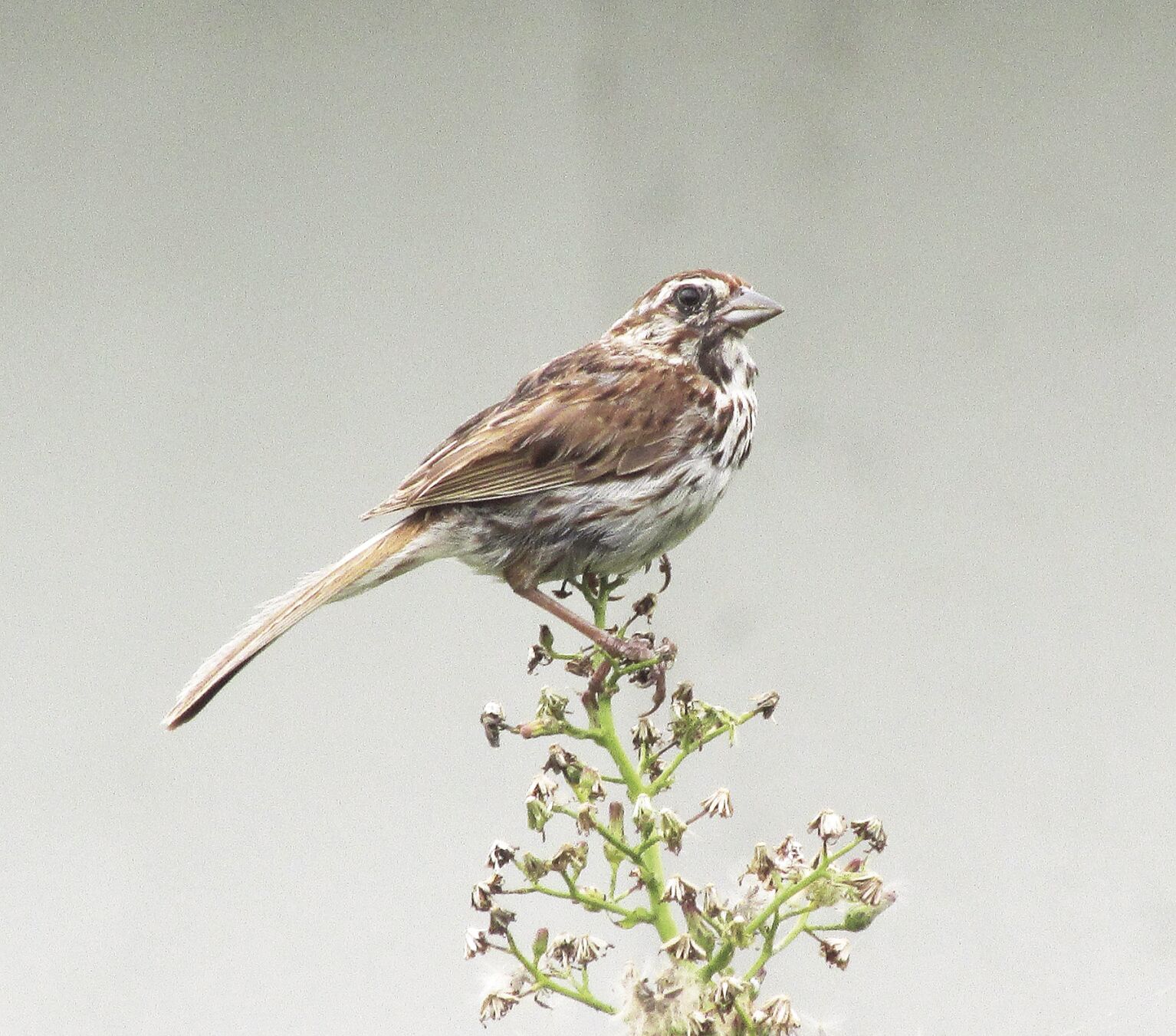
Photo by Bryan Stevens • Song sparrows show a stripe breast that comes together in a large, central dot. This field mark is diagnostic in distinguishing the song sparrow from other little brown birds.

Recent cold and snow meant elevated activity at my bird feeders. Among the birds flocking to my feeders were several species of sparrows, including white-throated sparrow, song sparrow and dark-eyed junco.

Other sparrows in the region include field sparrow, chipping sparrow, swamp sparrow and white-crowned sparrow.

The white-crowned sparrow and the white-throated sparrow are both members of the genus known as Zonotrichia, which refers to two ancient Greek words for zone and hair, which refers to the pattern of streaks on the backs of these five sparrow species. The Zonotrichia sparrows belong to a large group of birds known as Passerellidae, or American sparrows, which also includes birds such as juncos, towhees and brush finches.

The song sparrow, unlike some of the other sparrows that made appearances at my feeders, is a year-round resident in the region.

Song sparrows, according to the website All About Birds, eat many insects and other invertebrates in the summer, as well as seeds and fruits in all seasons.

All About Birds also makes note of the fact that this widespread sparrow occurs in a variety of habitats, including tidal marshes, arctic grasslands, desert scrub, pinyon pine forests, aspen parklands, prairie shelterbelts, Pacific rainforest, chaparral, agricultural fields, overgrown pastures, freshwater marsh and lake edges, forest edges and suburbs.

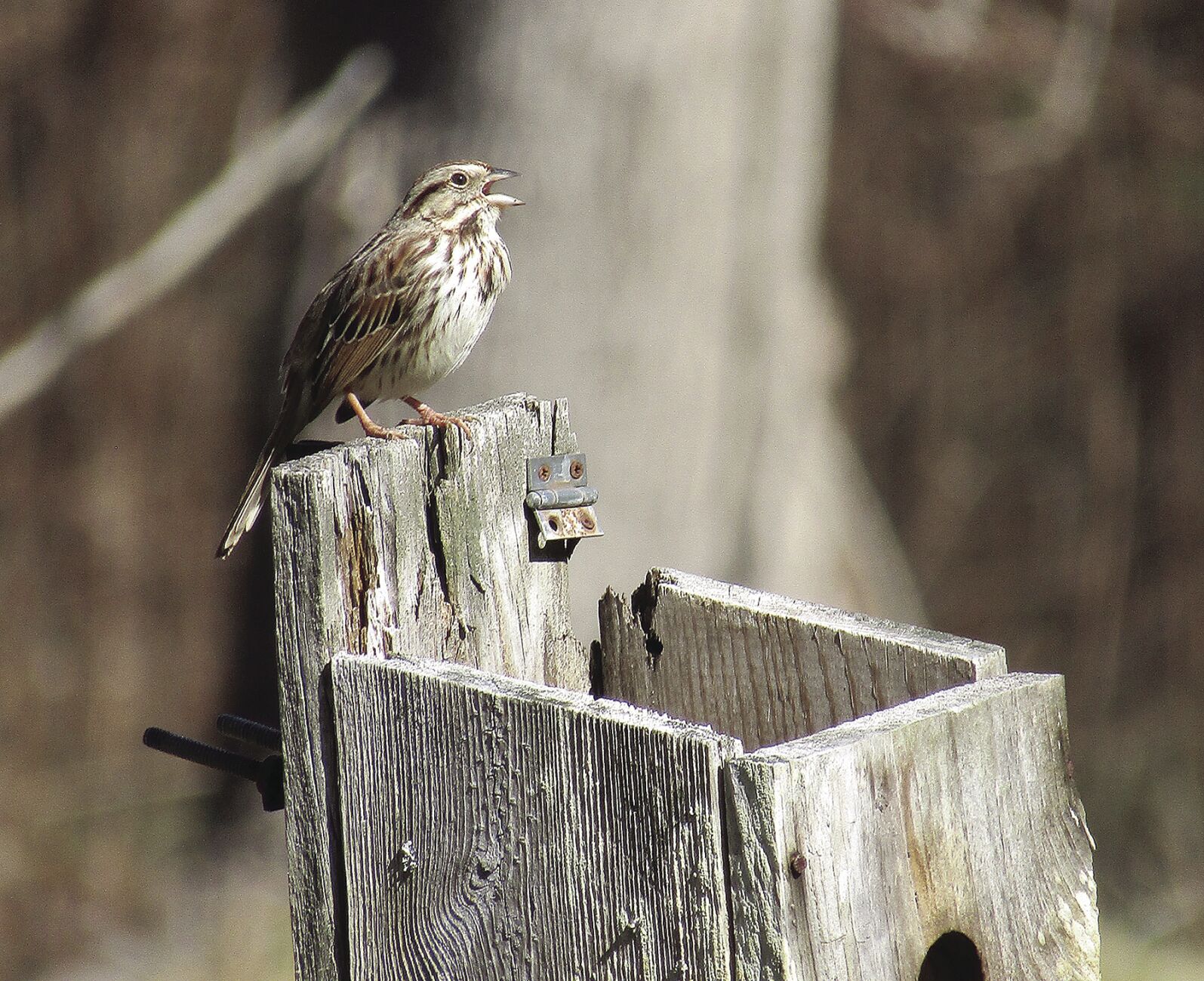
Photo by Bryan • A song sparrow sings from the perch of a dilapidated bird box.

The scientific name for the song sparrow is Melospiza melodia, which translated from the Greek means “melodic song-finch.” It’s an apt name for a persistent, enthusiastic singer. The commonplace nature of the bird also makes it easy to learn to detect and identify the bird by its song alone.

According to All About Birds, male song sparrow use song to attract mates as well as defend territory. Laboratory studies have shown that the female song sparrow is attracted not just to the song itself, but to how well it reflects the ability of the male to learn.

Other sparrows produce well-known songs. Many Americans render the song of the white-throated sparrow as “Ol’ Sam Peabody, Peabody, Peabody.” For those living north of the border, however, the white-throated sparrow sings “O Canada, O Canada, O Canada.”

No matter how you translate this sparrow’s song, it’s a sweet and welcome addition to the spring aural landscape.

Some of the more descriptive names for American sparrows include orange-billed sparrow, white-eared ground sparrow, green-backed sparrow, olive sparrow, cinnamon-tailed sparrow, five-striped sparrow and golden-winged sparrow.

Many sparrows prefer to forage for food on the ground. It’s often helpful to purchase a supply of millet seed. When filling feeders with sunflower seeds, scatter a couple of handfuls of millet seed on the ground beneath the feeders or at the edge of a brushy area. Sparrows like to have quick access to dense cover, so they will feed more securely if the scattered seeds are within quick reach of shelter.

Although they are fairly common winter visitors in the region, white-throated sparrows, dark-eyed juncos and white-crowned sparrows depart the area in spring.

With the song sparrow, it’s not difficult to realize why the sparrows are often lumped together under the categorization of “little brown birds.”

The adult song sparrow has brown upperparts with dark streaks on the back and are white underneath with dark streaking and a dark brown spot in the middle of the breast. That dark spot is often considered a field mark that makes identifying this bird easier in the field. The song sparrow has a brown cap and a long brown rounded tail. Their face is gray with a brown streak through each eye.

White-crowned sparrows, in contrast to the song sparrow, are medium-sized birds with considerable gray on the breast and back of the neck. Adults of both sexes are adorned with bold black and white head stripes, which gives this bird its common name. Thanks to this distinctive feature, this sparrow truly stands out among a family of rather drab birds.

The white-crowned sparrow is known by the scientific name Zonotrichia leucophrys, which translates into English from Ancient Greek as “white eyebrow.”

Sparrows can be a challenge for beginners, but the winter season is a good time to learn how to differentiate these feeder visitors. The lure of food makes it possible to draw the sparrows in close for observation.

The sparrows will eat a variety of seeds, but I’ve had the best luck with black oil sunflower seeds. Just keep in mind that sparrows are ground feeders. It pays to also scatter some seeds directly on the ground for them. They will scratch and kick with their legs as they forage for the seeds we provide them during wintry days.

Once spring arrives, song sparrows will remain in your yards and gardens. They nest several times a season, so there’s the added opportunity of watching these little birds tend their young. They’re never going to compete with our more colorful birds, but song sparrows make great neighbors.

•••

Mary Anna Wheat will present a program on a trip to Arizona, Utah, Colorado and New Mexico in late September and early October 2023 at the next meeting of the Elizabethton Bird Club.

She traveled with a friend and former co-worker from Sept. 19 to Oct. 16, 2023, in those four states. Their focus was on scenery, archeology (Wheat’s friend is an archaeologist with experience doing archaeological work at Canyon de Chelly National Monument) and the annular solar eclipse. Birding was incidental, although Wheat noted that they saw or heard more than 60 species.

The club’s meeting will be held Tuesday, Feb. 6, at the Northeast State Community College’s Elizabethton campus at 7 p.m. The front desk can direct visitors to the meeting room.

•••

Photo by Bryan Stevens • A song sparrow perches on a weed stalk near a river.

Bryan Stevens has been writing about birds and birding since 1995. Email him at ahoodedwarbler@aol.com to ask a questing, share a sighting or make a comment.

Region provides home for several species of hawks

Tom Koerner/USFWS * An adult Cooper’s hawk, such as this individual, is a crow-sized woodland raptor that breeds throughout much of the United States, southern Canada and northern Mexico.

Barbara Lake, a resident in Hampton, emailed me recently to share a sighting of a large hawk in her yard.

“This hawk was in our yard today and flew up to a tree when I opened the door,” she wrote. “(Its) back and the back of the head are black and the rest appears to be white. He didn’t cooperate by turning around.”

Barbara enclosed some photos with her email. I’ve known Barbara for about 20 years. We first met when she invited me to her home to view some nesting bluebirds on a television screen. She had placed nest cams in some of her bluebird nesting boxes, capturing real-time footage of the nesting activity of these songbirds.

I’ve enjoyed some observations of the region’s larger raptors, including red-tailed hawks and red-shouldered hawks, as winter has settled in for the long haul. I’ve also spotted a few American kestrels.

Based on the raptor’s relatively long tail in the photos provided by Barbara, I hazarded a guess that her visiting raptor was a Cooper’s hawk.

Anyone who travels along the region’s Interstate Highway System has probably noticed hawks perched in trees or on utility lines adjacent to the roadway. The section of Interstate 26 that runs between Unicoi and Johnson City is often a productive area for keeping alert for raptors. The raptor I have most often observed along this stretch of road is the red-tailed hawk, although I have also observed Cooper’s hawk, sharp-shinned hawk and American kestrel. In the time of spring and fall migration, it’s also possible to observe broad-winged hawks.

USFWS * An immature Cooper’s hawk perches on a branch in a tree located in the Klamath Basin National Wildlife Refuge Complex.

The red-tailed hawk is named for its prominent red tail. However, only adults show the characteristic red tail. The affinity red-tailed hawks demonstrate for roadsides is a double-edged sword. Viewing a large hawk from your car is an easy way to watch birds. For inexperienced or careless raptors, however, roadside living is often rife with the chance for a collision with a car or truck. The red-tailed hawk, which prefers open countryside, is attracted to the margins of roads and highways because these locations also attract their favorite prey, which includes rodents like rats, squirrels and mice and other small mammals such as rabbits.

Human behavior contributes to some of the problems that hawks encounter in the zone that brings them too close for comfort to motorized vehicles. When people toss trash from a car, the scent of the litter will lure curious and hungry rodents. In turn, hunting hawks are brought to the edges of roads in search of their preferred prey, increasing the likelihood of colliding with automobiles.

The Cooper’s hawk is a large accipiter hawk. A smaller relative, the sharp-shinned hawk, is also found in the region. The accipiter hawks are graceful and aerodynamic, designed to pursue prey through woodlands. Buteo hawks, such as the red-tailed hawk and red-shouldered hawk, are more of an ambush predator and not designed for the agile maneuvers that the accipiters can use to capture prey.

Some of the buteo species have adapted to life on islands, including the Galapagos hawk and the Hawaiian hawk. Some of these hawks have quite descriptive names, including the white-throated hawk, gray-lined hawk, zone-tailed hawk and short-tailed hawk. Outside the United States, raptors in the buteo genus are often known as “buzzards.” When the first European colonists came to the New World, they applied the term buzzard to types of native vultures as well as the large raptors like Swainson’s hawk and broad-winged hawk that reminded them of the ones back in Europe.

Accipiter hawks are also widespread. Accipiter is a genus of birds of prey in the family Accipitridae. With 49 recognized species, it is the most diverse genus in its family. Most species are called goshawks or sparrowhawks, although almost all New World species (excepting the Northern goshawk) are simply known as hawks.

Most accipiter hawks, including Cooper’s and sharp-shinned, prey mostly on other birds. The website All About Birds notes that small songbirds are usually safe around a Cooper’s hawk. Medium-sized birds, however, are not. Studies list European starlings, mourning doves and rock pigeons as common prey. Other birds that are often targeted by Cooper’s hawk include American robins, blue jay, Northern flicker, quail, grouse and pheasants. Cooper’s hawks sometimes rob nests and also eat chipmunks, rabbits, mice, squirrels and bats. According to All About Birds, mammals are more common in diets of Cooper’s hawks in the western United States.

Some of the more descriptively named accipiter hawks include crested goshawk, grey-bellied hawk, spot-tailed sparrowhawk, plain-brested hawk and little sparrowhawk.

All too often, our large hawks don’t receive the love they deserve from the public. They may even run afoul of misinformed individuals who may regard all predatory birds as “bad.” The reality is that all hawks are valuable components of a healthy, working ecosystem, with each species filling a certain niche.

•••

To share a sighting, ask a question or make a comment, email me at ahoodedwarbler@aol.com.