

Photo by Bryan Stevens • A green heron captures a tadpole at a pond’s edge.
Retrieving the mail from my mailbox requires a slight trek, but there’s always something to see in the few minutes it takes to complete this task six out of seven days every week.
On a recent stroll to fetch the mail I startled a green heron from the vegetation surrounding the fish pond. The heron made a startled cry and flew to a horizontal branch in a tree adjacent to the pond.
It’s been so long since I’ve seen this small wading bird up close that I’d forgotten its diminutive nature. Although the official name is green heron, I’ve almost always referred to this species as “little green heron” or simply “little green.” It’s not completely uncalled for. After all, there’s a little blue heron. As far as my research tells me, however, there is no great green heron.

Photo by Bryan Stevens • Upcoming programs in the region will focus on topics such as songbirds, raptors and the basics of beginning birdwatching. Plan to attend one or more of the programs to learn more about birds, such as this green heron.
Green herons are not restricted to coastal areas, but it was still somewhat unexpected. I’m hoping I didn’t frighten the bird too badly and it will continue to haunt the edges of the fish pond. The vegetation around the pond makes it easy for this heron to conceal itself. The pond is also a great place for the heron to forage. There’s an abundance of some of its favorite prey, including tadpoles and dragonflies.
Green herons and other wading birds are usually quite abundant in wetlands across the country in late summer. The scientific name — Butorides virescens – of this bird comes from a mix of Middle English and Ancient Greek and roughly translates as “greenish bittern.”
There are only two other species in the genus Butorides — the lava heron, which occurs on some of the Galapagos Islands of Ecuador, and the striated heron, which is found in wetlands throughout the Old World tropics from West Africa to Japan and Australia. This heron, which is also known as the mangrove heron, also occurs in South America.
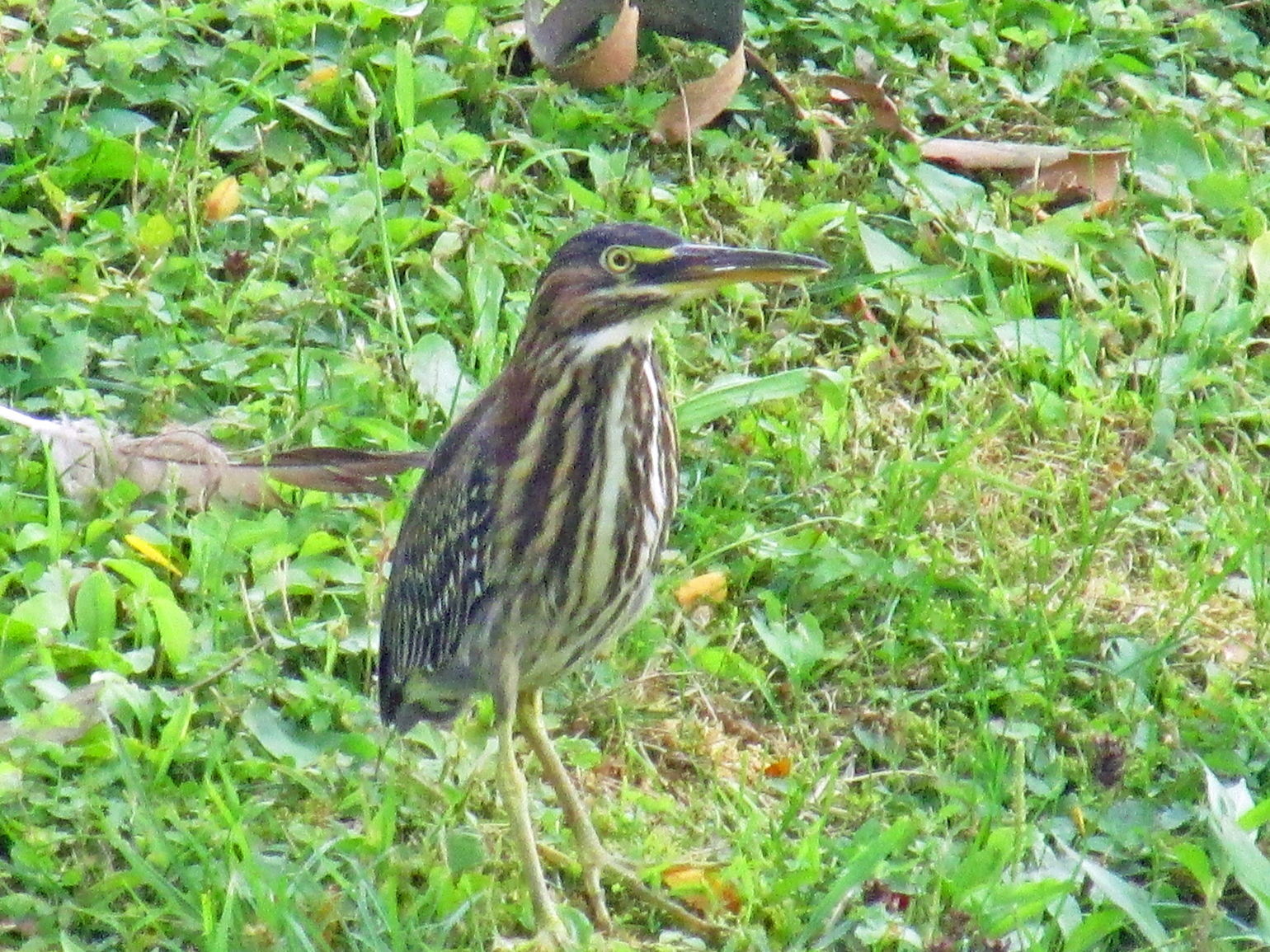
The green in the bird’s plumage appears as a dark green cap, as well as a greenish back and wings. Adult birds also have chestnut-colored neck feathers and a line of white feathers along the throat and belly. These herons often assume a hunched position, making them look smaller than they actually are.
It’s been a good summer for wading birds. In addition to the green heron, a great blue heron has been lurking in the creekand at the fish pond. Much larger than the green heron, it’s not as easy for the great blue heron to escape notice.
Other locations to look for both these herons are at the pond at Erwin Fishery Park. You’ll also want to keep alert when walking along the linear trail in Erwin. This is the time of year when interesting herons or egrets are not all that scarce.
Farm ponds in the countryside around Jonesborough, as well as wetland habitat around the town’s Persimmon Ridge Park, are also good places to look for green herons. The wetlands at Sugar Hollow Park in Bristol, Virginia, is another dependable location for seeing this small heron. Most green herons will depart in late September and early October. This small heron retreats from the United States during the winter season but returns each spring in April and May.
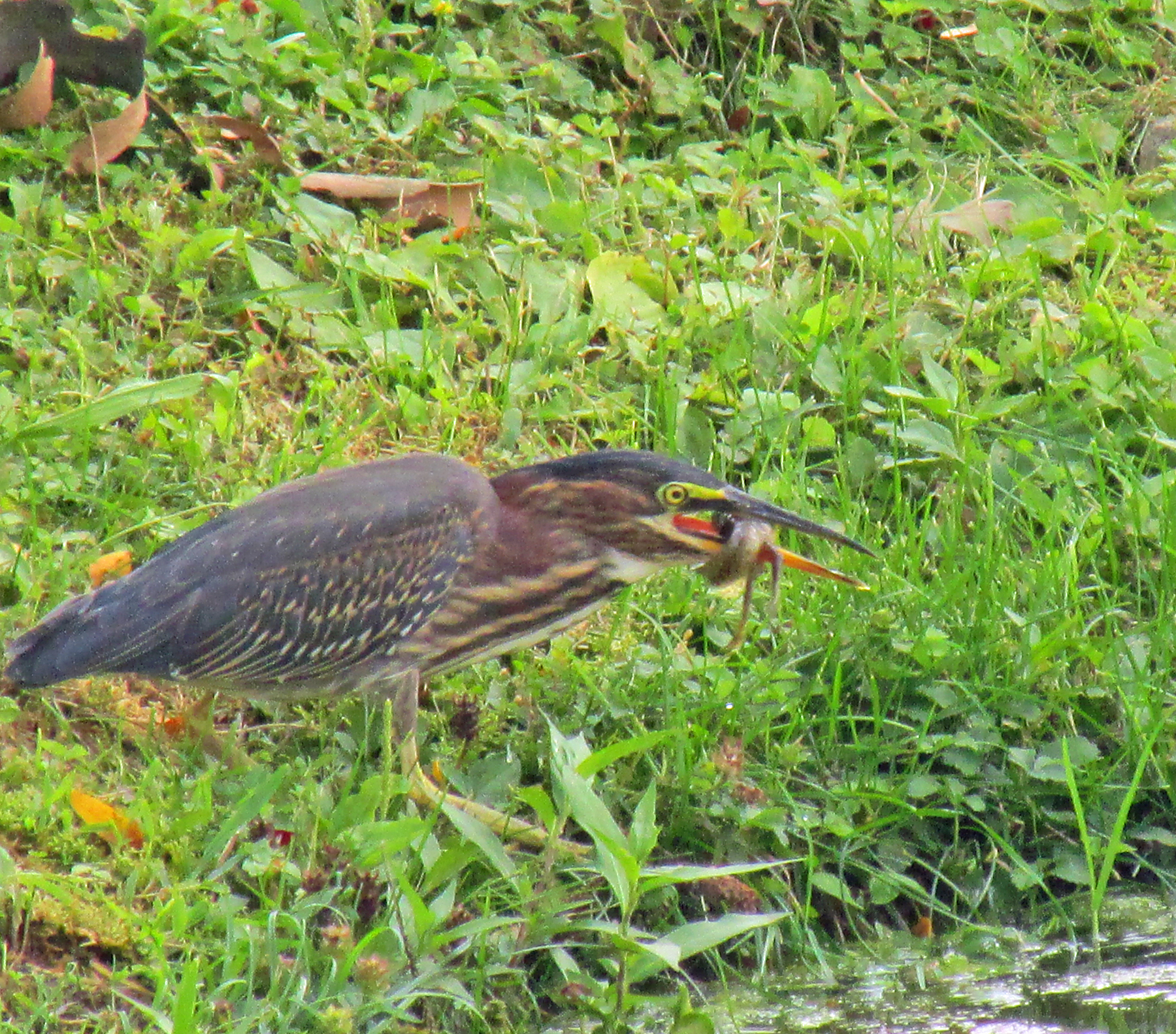
Photo by Bryan Stevens • A green heron finesses a captured tadpole in its bill.
The green heron’s range during the nesting season includes Canada and much of the United States. Green herons will sometimes form loose nesting colonies, but at other times a pair will choose a secluded location as a nest site. The female will usually lay from three to five eggs. Snakes, raccoons and other birds such as crows and grackles are potential threats to eggs.
For the most part, the population migrates to Central and South America for the winter months. A few herons — great blue heron and black-crowned night heron — remain in the region throughout the year, even enduring the cold winter months in Northeast Tennessee, Southwest Virginia and Western North Carolina.
Green herons are probably more common than we realize. They are skilled at blending with their surroundings, but sharp eyes can find these herons around almost any body of water, whether it is pond, marsh, river, creek or lake.
Keep looking for green herons and their larger kin for the next few months. To share a sighting, ask a question or make a comment, send me an email at ahoodedwarbler@aol.com.
•••
Bryan Stevens is the managing editor of The Erwin Record. He has written about birds, birding and birders since 1995.

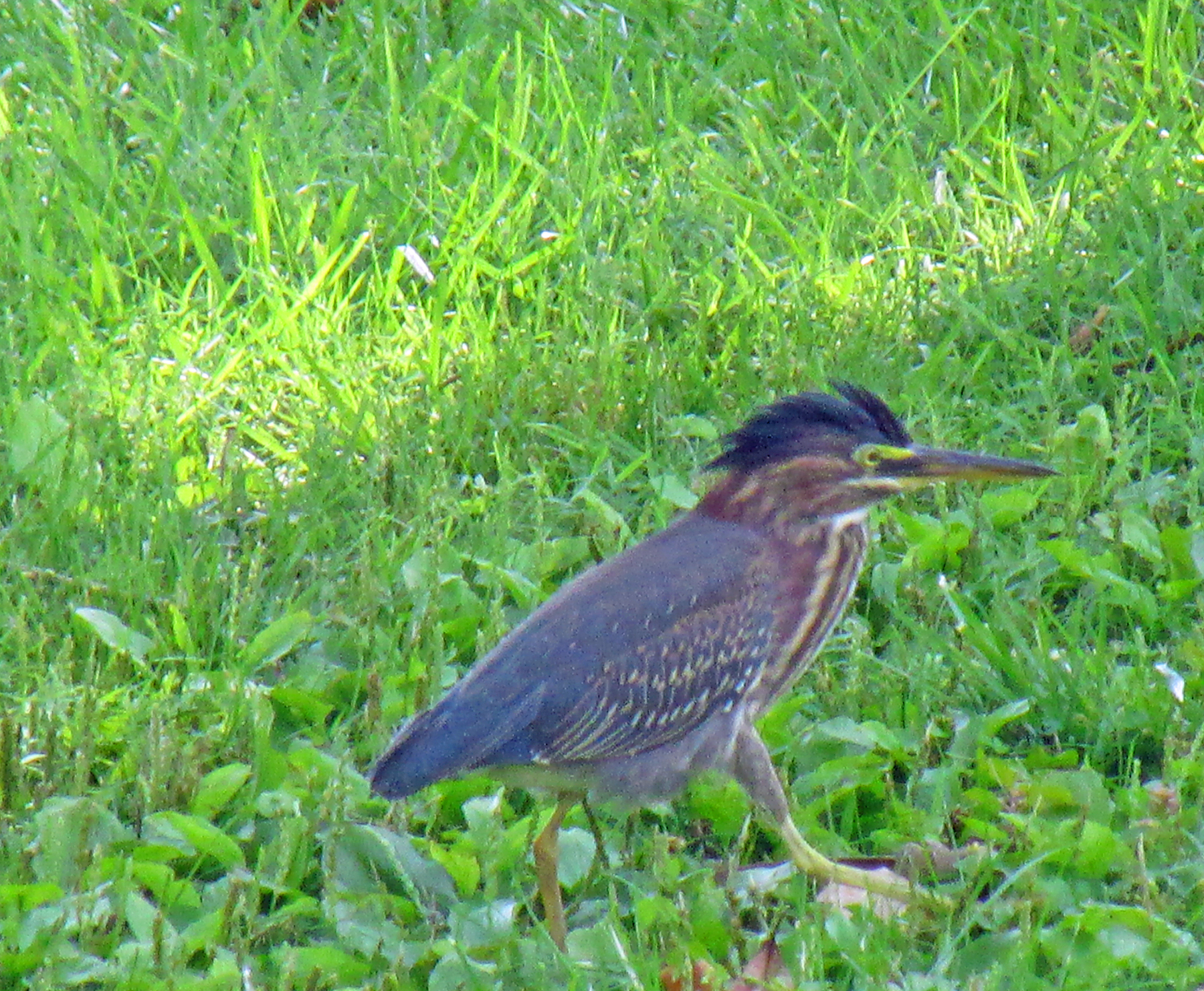
Photo by Bryan Stevens • A green heron hunches next to a pond.



 Our Fine Feathered Friends