Tag Archives: Kingsport Times

Virginia woman hosting wintering ruby-throated hummingbird

female-Hummer

Photo by Mariedy/Pixabay.com • The ruby-throated hummingbird is the expected hummingbird in the eastern United States spring through fall. These birds are rare winter visitors, however, which makes the one living in a yard in Fall Church, Virginia.

I have been corresponding by email with Ellen Haberlein since around Thanksgiving of last year about a hummingbird that is wintering at her home in Fall Church, Virginia, which is located only a few miles from Washington, D.C.

The hummingbird’s presence has brightened the winter season for the Haberlein family since it showed up in late October of 2018.

Through the years, I have seen several of these seemingly out-of-place hummingbirds. Some of them remain at their host’s feeders for a brief stay of a few days or a couple of weeks, but some of these hummingbirds have extended their stay for several months, lingering throughout the winter months before eventually departing in February or March.

IMG_0471

Photo by Larry Golfer • This male ruby-throated hummingbird has resided at the home of Ellen Haberlein since around Thanksgiving of last year. Haberlein lives in Fall Church, Virginia, which is located only a few miles from Washington, D.C.

The big question is: are these hummingbirds truly lost and out of place? The answer, based on everything I have managed to learn, is that these hummingbirds are precisely where they want to be. For still unknown reasons, some of these western hummingbirds make a migration swing through the eastern United States.

Many of the visiting winter hummingbirds turn out to be rufous hummingbirds, which is a species native to the western United States. The bird visiting Ellen’s feeder, however, is a ruby-throated hummingbird. In the summer months, the ruby-throated is the expected species of hummingbird in the eastern United States. In the winter months — not so much. However, in some regions in Virginia, as well as along the Gulf Coast, a few ruby-throated hummingbirds are attempting to overwinter.

The rufous hummingbird has basically become an expected winter visitor with a few reports being received each winter. I have observed Rufous Hummingbirds in many different locations, including Bristol, Blountville, Flag Pond, Elizabethton and Hampton. I have also observed Allen’s hummingbirds in Mountain City and Johnson City. I know of records of these small birds from Erwin, Roan Mountain, Johnson City and many other locations throughout the region. Winter hummingbirds are a delightful surprise for their hosts, but their presence no longer shock long-time birders.

rufous-handy

Photo by Bryan Stevens • Rufous hummingbirds have been extensively documented as wintering throughout the southeastern United States. This male rufous hummingbird was documented in Hampton, Tennessee, a couple of years ago.

“Hosting a hummingbird in winter is a first for us, so we enjoy having him here,” Ellen wrote. “I feel that I am responsible to keep the little guy alive through the cold months.”

Doing so has meant staying atop some challenges.

“I monitor the feeder to make sure it doesn’t freeze,” Ellen wrote. “I have read the nectar doesn’t need to be replaced as often in winter, but I still change it every 2-3 days.”

She’s taking no chance with the health of her tiny visitor. “I think he needs to have fresh to stay in good health,” Ellen wrote. “I have two feeders, so when I remove one, I immediately replace it with another. That way his food source is not disrupted.”

Ellen noted that the hummingbird seems to be able to stand the cold nights. “I take in the feeder at night, and he looks for it just at dawn in the morning,” she wrote.

She contacted Bruce Peterjohn at the Patuxent Wildlife Research Center. Her visiting ruby-throated hummingbird is the first he has heard of in Virginia for the winter season this year, although Peterjohn informed Ellen that some ruby-throated hummingbirds usually overwinter close to the Chesapeake Bay in Virginia.

Bruce Peterjohn

Bruce Peterjohn

Peterjohn, the chief of the US Bird Banding Laboratory for USGS, is the person responsible for administering the national bird banding program and the data management system for bird banding and band encounter datasets. His personal banding activities are focused on banding hummingbirds in the mid-Atlantic region, especially hummingbirds that appear during late autumn and winter.

With the dawning of the new year, Ellen’s visiting hummingbird remained present. “I am happy to help this little bird get through the winter,” Ellen said.

I checked back with Ellen on Jan. 29 to see if the hummingbird remains in residence.

“He made it through the last storm with wind chills at zero or below,” she replied to my email. “Now we have more cold coming and I am hoping for the best.”

I imagine Ellen is a good host for many birds, not just the unseasonable hummingbird, that visit her yard and gardens.

In our correspondence, she shared some sightings of warblers, which is my favorite family of birds.

“By the way, I have not seen a hooded warbler,” Ellen wrote. “I see warblers pass through during spring, like Tennessee warblers and black-and-white warblers.”

I’m hopeful that she will spy a migrating hooded warbler, perhaps this spring. In the meantime, she’s hosting a wintering hummingbird. “I am happy to help this little bird get through the winter,” Ellen wrote.

hooded-warbler-at

Photo by Jean Potter • A male hooded warbler flits through the foliage of a rhododendron thicket.

HMSP plans Great Backyard Bird Count events

Hungry Mother State Park in Marion, Virginia, plans some bird walks on Saturday, Feb. 16, to coincide with the Great Backyard Bird Count.

The GBBC is a free, fun and easy event that engages bird watchers of all ages in counting birds to create a real-time snapshot of bird populations. Participants are asked to count birds for as little as 15 minutes (or as long as they wish) on one or more days of the four-day event and report their sightings online at birdcount.org. Anyone can take part in the Great Backyard Bird Count, from beginning bird watchers to experts, and you can participate from your backyard, or anywhere in the world.

Evening_Grosbeak_Ted_Schroeder_OR09

Photo by Ted Schroeder/Great Backyard Bird Count • Evening grosbeaks may be more common on this year’s GBBC, according to early reports on the movements of these large, colorful finches.

Each checklist submitted during the GBBC helps researchers at the Cornell Lab of Ornithology and the National Audubon Society learn more about how birds are doing, and how to protect them and the environment we share. Last year, more than 160,000 participants submitted their bird observations online, creating the largest instantaneous snapshot of global bird populations ever recorded.

To help participants become better citizen scientists, some field guides and binoculars will be provided during the activities at Hungry Mother State Park. Supplies of these items, however, are limited.

The walk will commence at 8 a.m. Either Master Naturalist Randy Smith or Hungry Mother volunteer Mike Evans will conduct the walk. Participants are also welcome to bird solo or with a few friends to cover more territory.

At 9 a.m., participants will return to parking lot five for “Breakfast in a Bag” with the Holston Rivers Master Naturalists. While enjoying breakfast, attendees will be invited to wander over to the park’s restaurant to check out various hands-on birding activities.

IMG_3196

Photo by Bryan Stevens • Hungry Mother State Park near Marion, Virginia, has long offered a variety of birding and nature activities and programs, such as the ones planned around the upcoming Great Backyard Bird Count scheduled for Feb. 15-18.

The special event will wrap up when Smith teaches participants a little more about backyard birding with an informative session at 10:30 a.m. at the restaurant.

All ages and skill levels are welcome. Attendees are encouraged to dress warmly as the event will be held rain or shine.

For more information, call HMSP at (276) 781-7400. The park is located at 2854 Park Blvd., Marion, Virginia. Details are also available by calling 1-800-933-7275 or visit http://www.virginiastateparks.gov.

The 21st annual GBBC will be held Friday, Feb.15, through Monday, Feb. 18. Please visit the official website at birdcount.org for more information.

GreatBlueHeron-Serene

Photo by Bryan Stevens • Participate in the Great Backyard Bird Count and help document populations of birds, including great blue herons.
Man saves common loon after bird makes crash landing

loon-dkbach

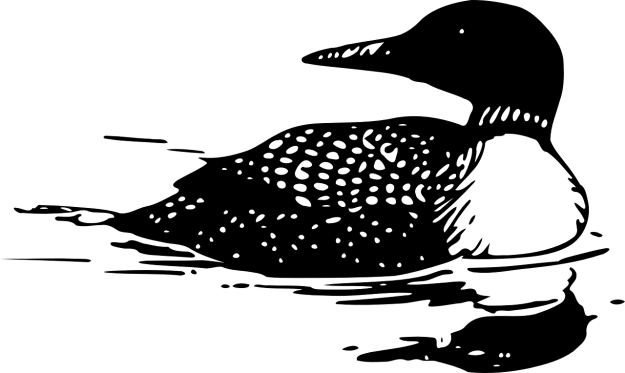
Photo by dkbach/Pixabay.com • The common loon is a masterful diver and swimmer, but these birds are awkward and nearly helpless on land.

An early December snowstorm had deposited a blanket of snow over the landscape, but milder temperatures quickly melted the snow on roadways when a weary — or perhaps disoriented — traveler made a crash landing.

Complete disaster was avoided thanks to the efforts of Joe McGuiness, a resident of Erwin, Tennessee, as well as an employee of the U.S. Forest Service. Joe shared the story at a recent meeting of the Elizabethton Bird Club.

Joe discovered the stranded traveler just after he finished having lunch on Dec. 6. He looked out his window and saw a “dark blob” in the driveway.loon-30901_1280

Joe recognized that the blob was actually an immature common loon. As he went to investigate, the bird tried to slide downhill on some of the recent snow.

Waterfowl like loons and grebes occasionally make landings on wet roadways. These birds mistake the dark, damp asphalt for water and don’t realize their error until it is too late.

“It probably landed on a neighborhood road by mistake,” explained Joe, who resides in the Rolling Hills residential community in Erwin. Over the years, Joe has been a magnet for some unusual birds. Several years ago, an American woodcock became a daily visitor for a spell in the community where Joe lives. Several birders got an opportunity to see that particular bird, which is usually extremely elusive and difficult to observe at close range.

loon_rescue

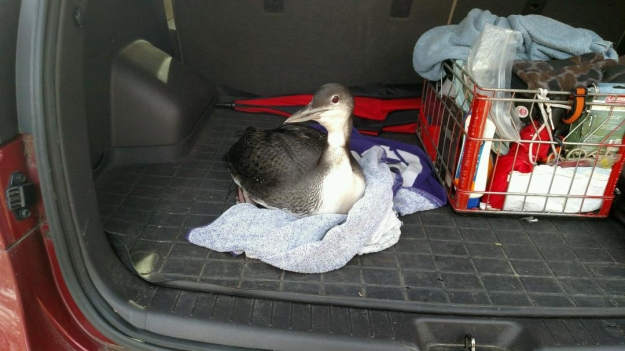
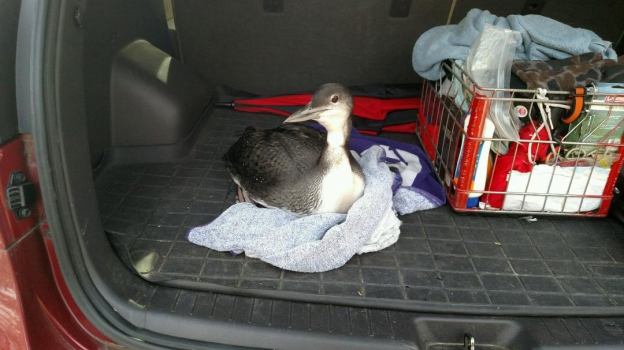
Photo courtesy of Joe McGuiness • When this common loon stranded itself, Erwin resident Joe McGuiness went into action, collecting the bird for transport to a nearby pond. Because of the position of their feet on their bodies, loons are almost incapable of walking on land.

Once he identified the loon, Joe still faced the challenge of rescuing it. Without human intervention, the bird would have been doomed. Loons, while so graceful and powerful in their element, are clumsy and almost helpless on land. According to loons.org, the official website for The Loon Preservation Committee, the placement of a loon’s legs at the far back of the body ensures that loons are excellent divers and swimmers. It also means that loons can not easily walk on land. This difficulty is one reason why loons nest right next to the water. At night, loons sleep over deep water, away from land, for protection from predators.

Once a loon lands on any body of water, it requires a considerably long “runway” to take off again. They sort of run along the surface of the water to gain the momentum to become airborne again. Obviously, that’s not going to happen for one of these birds if they’ve made the mistake of putting down on dry land. Fortunately, Joe realized he would need to help the loon reach water.

loon-krista-269

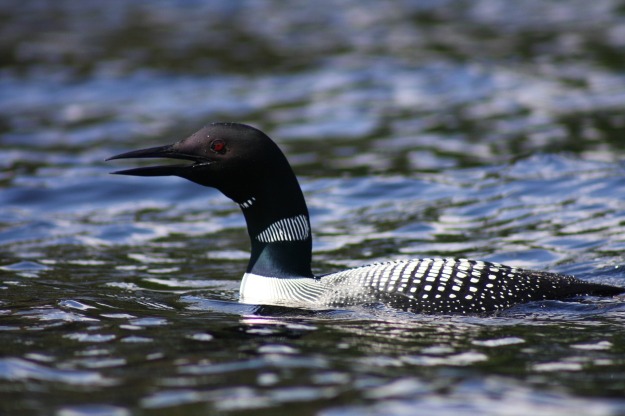
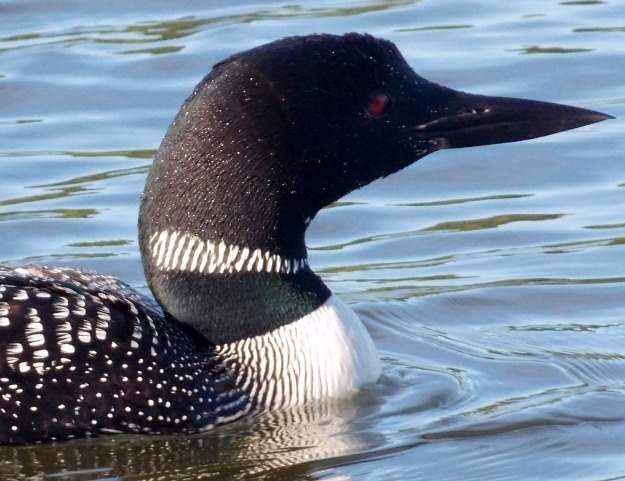
Photo by Krista-269/Pixabay.com • Common loons in summer breeding plumage are strikingly handsome birds that show much grace and agility in the water.

By tossing a coat over the loon, Joe managed to subdue the bird and transport it to a local pond for release. As he placed the bird at the edge of the pond, the loon surprised him and didn’t budge. Joe gave the bird a helpful nudge. In response, the bird turned and whacked him in the face with its beak. I suppose no good deed goes unpunished.

Eventually, the frightened loon moved into the water. The loon has remained on the pond recuperating for several weeks, which has allowed people to see the rescued creature.

In the northern United States and Canada, the common loon is often put forward as a symbol of the wilderness areas where it likes to reside on ponds and lakes for the summer nesting season. In Europe and Asia, the common loon is known by the more descriptive name “great northern diver.”

Common_Loon_on_Water

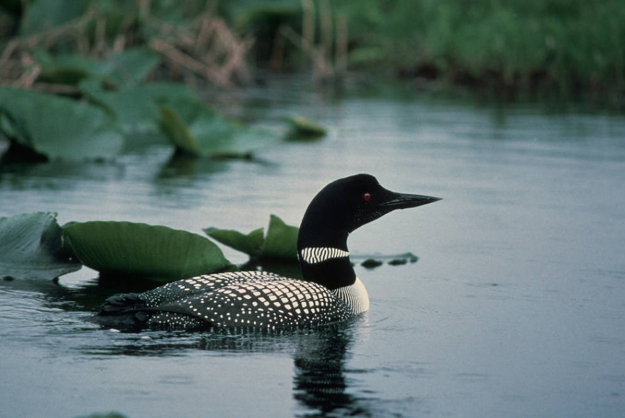
Photo by U.S. Fish & Wildlife Service • Common loons are quite at home in the air and on the water, but these birds are awkward if weather forces them to set down on land.

A common loon can reach a length of 3 feet. This bird’s wingspan can stretch out to almost 5 feet. They can attain a weight between 9 and 12 pounds, which is quite heavy for most birds.

All five living species of loons are members of the genus Gavia, which in addition to the common loon also includes red-throated loon, Arctic loon, Pacific loon and yellow-billed loon. All loons feed chiefly on fish.

It’s usually human behavior that puts loons at risk. For example, ingested lead fishing tackle is a leading cause of mortality for loons in New Hampshire. Joe’s encounter with a loon, and its happy ending, spotlights how people can sometimes help these beautiful birds instead of harming them.

Pacific_loon

Photo by U.S. Fish & Wildlife Service • A Pacific loon if breeding plumage.

Bristol’s CBC records low total of species, but still makes some interesting finds

brown-headnuthatch

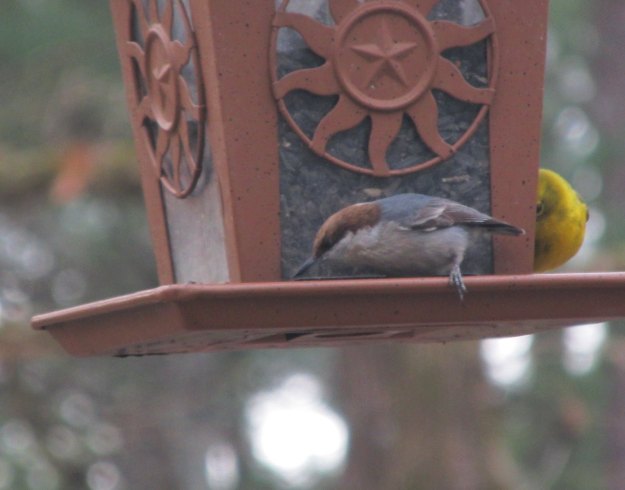
Photo by SOARnet/Pixabay.com • The brown-headed nuthatch favors stands of loblolly pine, which are not common in the region. A record number of these small nuthatches were found on the recent Bristol TN-VA Christmas Bird Count.

Just before the end of last year, 21 participants gathered to conduct the Bristol TN-VA Christmas Bird Count. Count compiler Richard Lewis noted that the CBC found 71 species and a total of 5,700 individual birds.

“This was the 63rd year the count has been run since 1956,” Lewis posted on Bristol-Birds. “It was the lowest total number of species recorded in 27 years.”

Lewis could not explain the low total of species other than to note that the area doesn’t seem to have the usual influx of wintering birds from up north. In addition, waterfowl numbers were low. “Some species are not coming as far south this year,” he added.

The best find of the count was the discovery of a new bald eagle nest on South Holston Lake. Other noteworthy species recorded were black-crowned night-heron, red-shouldered hawk, merlin and brown-headed nuthatch. The four individuals found represent a new high count for the brown-headed nuthatch on the Bristol CBC. The species had only been seen on the count three other times.

The brown-headed nuthatch is a specialist of pine woodlands throughout the southeastern United States, favoring loblolly-shortleaf pines and longleaf-slash pines. This nuthatch requires standing dead trees for nesting and roosting. They forage for food, however, on live pines. The birds are more abundant in older pine stands.

This small nuthatch is not at all common in the region, but there are some records, including other Bristol records. I’ve had much better luck finding the brown-headed nuthatch during visits to coastal South Carolina or suburban Atlanta in Georgia. In these southern locations, it can be a quite common bird.

Spring-Nuthatch

Photo by Bryan Stevens • In some areas, brown-headed nuthatches are feeder visitors. These small nuthatches are specialists that favor stands of loblolly pine.

These small birds will occasionally forage close to the ground, but they are often in the upper branches of pine trees. Their presence is often revealed by their call, which sounds amazingly like a squeeze toy. They produce their “squeaky toy” call persistently when agitated or curious. Brown-headed nuthatches often associate with mixed flocks in company with Carolina chickadees, tufted titmice, pine warblers and other small songbirds. White-breasted nuthatches and red-breasted nuthatches are more likely visitors to yards and gardens in the region.

Participants in the CBC included Ron Carrico, Rob Biller, Rack Cross, Angela Cross, Robert Hunter, Terry Hunter, Rick Knight, Roy Knispel, Cade Campbell, Larry McDaniel, Ruth Clark, Mary Clark, Randy Smith, Ron Harrington Sam Evans, Kevin Hamed, Rick Phillips, Adrianna Nelson, Michelle Sparks, Richard Lewis and Phillip Lewis.

The total for the Bristol TN-VA CBC follows:

Canada goose, 730; gadwall, 49; American wigeon, 11; American black duck, 1; mallard, 294; ring-necked duck, 245; bufflehead, 51; and hooded merganser, 25.

Wild turkey, 53; common loon, 4; pied-billed grebe, 18; horned grebe, 2; great blue heron, 22; and black-crowned night-heron, 1.

Black vulture, 75; turkey vulture, 52; sharp-shinned hawk, 2; Cooper’s hawk, 5; bald eagle, 2; red-shouldered hawk, 1; and red-tailed hawk, 27.


American coot, 12; killdeer, 14; Bonaparte’s gull, 6; ring-billed gull, 143; rock pigeon, 607; mourning dove, 253; Eastern screech owl, 4; and great horned owl, 2.

Belted kingfisher, 15; red-bellied woodpecker, 30; yellow-bellied sapsucker, 6; down woodpecker, 21; Northern flicker, 12; pileated woodpecker, 12; American kestrel, 11; and merlin, 1.

Eastern phoebe, 5; loggerhead shrike, 1; blue jay, 176; American crow, 404; common raven, 5; Carolina chickadee, 145; tufted titmouse, 93; red-breasted nuthatch, 1; white-breasted nuthatch, 62; and brown-headed nuthatch, 4.

Brown creeper, 5; Carolina wren, 130; winter wren, 5; golden-crowned kinglet, 33; ruby-crowned kinglet, 6; Eastern bluebird, 167; hermit thrush, 8; American robin, 93; Northern mockingbird, 90; European starling, 816; and cedar waxwing, 12.

Yellow-rumped warbler, 18; field sparrow, 15; dark-eyed junco, 41; white-crowned sparrow, 17; white-throated sparrow, 68; song sparrow, 115; swamp sparrow, 7; and Eastern towhee, 22.

Eastern meadowlark, 13; house finch, 47; American goldfinch, 89; and house sparrow, 25.

Glade Spring CBC finds 63 species

A Christmas Bird Count is also conducted annually in Glade Spring, Virginia. This year’s Glade Spring CBC took place Dec. 27 and found a total of 63 species and 6,696 individual birds. The total and individual count both dropped slightly from last year’s count, which found 71 species and 6,891 individual birds. Twenty-three people participated on the 2018 Glade Spring CBC.

Count compiler Ron Harrington noted that one new species — a common loon found on a private pond just off Old Saltworks Road — made its Glade Spring CBC debut. Six common mergansers, a new count circle high, were found on the North Fork of the Holston River. A single common merganser was found in that same river last year for the first time.

rthawk-one

Photo by Bryan Stevens • Raptors, like this Red-tailed Hawk, proved plentiful on Christmas Bird Counts conducted throughout the region.

Other highlights noted by Harrington included 48 red-tailed hawks (a new high count total), 10 hairy woodpeckers (tying the record high) and three palm warblers, which represented a new high count for this warbler species. The CBC also recorded a high count for wood ducks with seven individuals being found. Other notable finds include swamp sparrow, brown creeper, brown thrasher, loggerhead shrike, winter wren, hermit thrush, Eurasian collared dove and common grackle.

•••••

With these snapshots of winter bird populations in the area, readers can use these references to see if they can find some of these same birds visiting their yards, gardens and favorite birding spots. As always, I enjoy hearing from readers about the sightings they are making. Email me at ahoodedwarbler@aol.com to share sightings, make comments or ask questions.

Cardinales

Photo by Bryan Stevens • A male Northern Cardinal perches in a tangle of branches on a rainy day.

Cardinals seem tailor-made for Christmas season

cardinal-1998407_1920

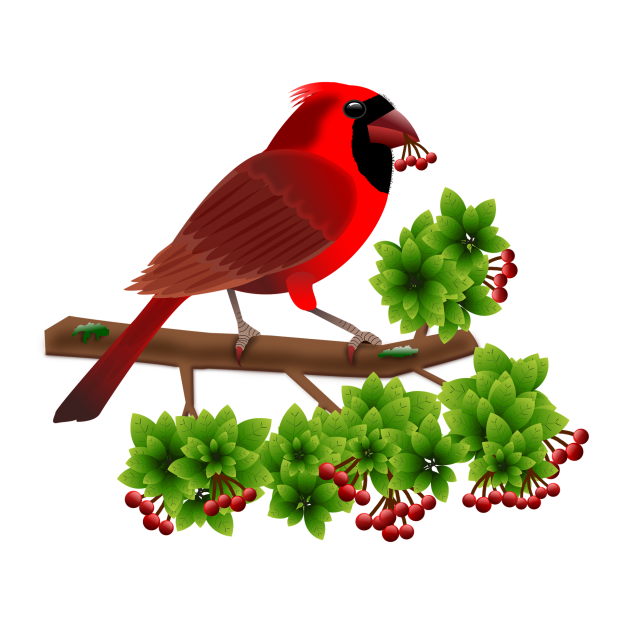
The Northern cardinal, a familiar backyard bird in many sections of the United States, is a perfect symbol of the Christmas season.

The shopping days before Christmas are getting fewer, so I hope everyone has had time to find gifts for everyone on their lists. My wish to readers is that everyone gets to enjoy a great holiday that just might also include watching some birds.

Although I hate to see the colorful birds of spring and summer — scarlet tanagers, Baltimore orioles, indigo buntings, rose-breasted grosbeaks — depart every fall, the winter season offers some compensation.

Often, when we think of the birds of the winter season, our thoughts focus on some of the less-than-colorful feeder visitors — the brown sparrows and wrens, the black and white chickadees and the drab American goldfinches, so unlike their summer appearance.

northern-cardinal-938377_1920

Photo by Skeeze/Pixabay.com • A male Northern cardinal lands on a snowy perch. Cardinals are perfect symbols for the Christmas season with their bright red plumage.

There’s one bird, however, that makes an impression in any season. The Northern cardinal, especially the brilliant red male, stands out against a winter backdrop of snow white, deep green or drab gray. On a recent snowy afternoon, I spent some time watching a pair of Northern cardinals from my window. Cardinals are wary birds. They make cautious approaches to feeders, never rushing to the seed in the manner of a Carolina chickadee or tufted titmouse.

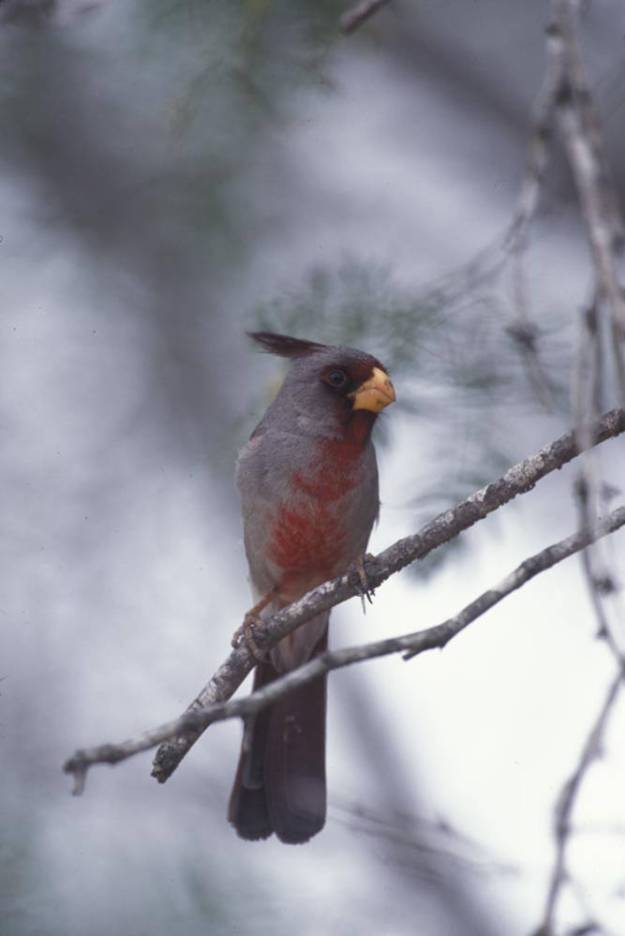
The Northern cardinal belongs to a genus of birds known as Cardinalis in the family Cardinalidae. There are only two other species in this genus, and they range across North America and into northern South America. The two relatives are the pyrrhuloxia, or Cardinalis sinuatus, a bird of the southwestern United States, and the Vermilion Cardinal, or phoeniceus, a bird found in Colombia and Venezuela.

WO3919__Pyrrhuloxia

Photo by U.S. Fish & Wildlife Service • The Pyrrhuloxia, or desert cardinal, is a counterpart to the Northern cardinal in the American southwest.

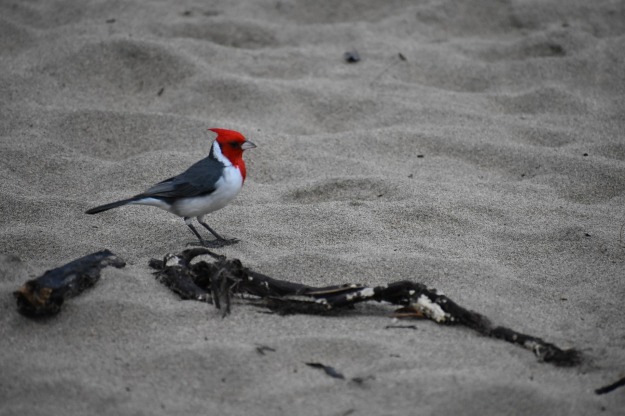
Two other South American birds — red-crested cardinal and yellow-billed cardinal — are more closely related to tanagers than to our familiar Northern cardinal. Both the Northern cardinal and red-crested cardinal have been introduced into the state of Hawaii, so two non-native birds from different parts of the globe are now resident in the Aloha State.

bird-3354768_1920

Photo by Pixabay.com • A red-crested cardinal forages on a sandy beach. This bird has been introduced to such exotic locations as Hawaii.

Over the years, the Northern cardinal has also become associated with the Christmas season. How many Christmas cards have you received this holiday season with a cardinal featured in the artwork? I’d wager that at least a few cards in any assortment of holiday greetings will feature the likeness of a bright red cardinal.

Cardinals, also known by such common names as redbird and Virginia nightingale, are easily recognized backyard birds. I never tire of observing these colorful birds. Cardinals are easily lured to any backyard with plentiful cover to provide a sense of security and a generous buffet of sunflower seed.

northern-cardinal-female

Photo by Skeeze/Pixabay.com • A female Northern cardinal lands on a deck railing. Female cardinals are not as brightly colorful as males, but they do have their own subtle beauty.

Cardinals accept a wide variety of food at feeders. Sunflower seed is probably their favorite, but they will also sample cracked corn, peanuts, millet, bakery scraps and even suet. The cardinal is also one of only a few birds that I have noticed will consistently feed on safflower seed.

While we may get the idea that cardinals feed largely on seed, that is a misconception based on our observation of the birds at our feeders. When away from our feeders, cardinals feed on insects and fruit, including the berries of mulberry, holly, pokeberry, elderberry, Russian olive, dogwood and sumac.


There’s no difficulty in identifying a cardinal. The male boasts crimson plumage, a crest, a black face and orange bill. The female, although less colorful, is also crested. Female cardinals are soft brown in color, with varying degrees of a reddish tinge in their feathers, particularly in their wings. Immature cardinals resemble females except young cardinals have dark bills.

Cardinals are a widespread species, ranging westward to the Dakotas and south to the Gulf Coast and Texas. The southeastern United States was once the stronghold of the cardinal population. In the past century, however, cardinals have expanded their range into New England and Canada.

The familiar Northern Cardinal is not the only bird to bear the name cardinal. Others include the yellow cardinal of Argentina, Brazil, Paraguay and Uruguay, the vermilion cardinal of Colombia and Venezuela, and the red-crested cardinal, a songbird native of South America that has also been introduced to Puerto Rico and Hawaii.

DaddyCardinal

Photo by Bryan Stevens • Northern cardinals will visit feeders stocked with sunflower seeds at any season.

At feeders, cardinals mingle with a variety of other birds. Cardinals are common visitors to backyard feeders. For such a bright bird, the male cardinal can be surprisingly difficult to detect as he hides in the thick brush that conceals his presence. Cardinals are nervous birds, however, and usually betray their presence with easily recognized chip notes. Their preference for dense, tangled habitat is one they share with such birds as brown thrashers, Eastern towhees, Carolina wrens and song sparrows. In general, however, cardinals directly associate only with their own kind. Cardinals will form loose flocks during the winter, but these flocks are never as cohesive as those of such flocking birds as American goldfinches. Cardinals are more often observed in pairs.

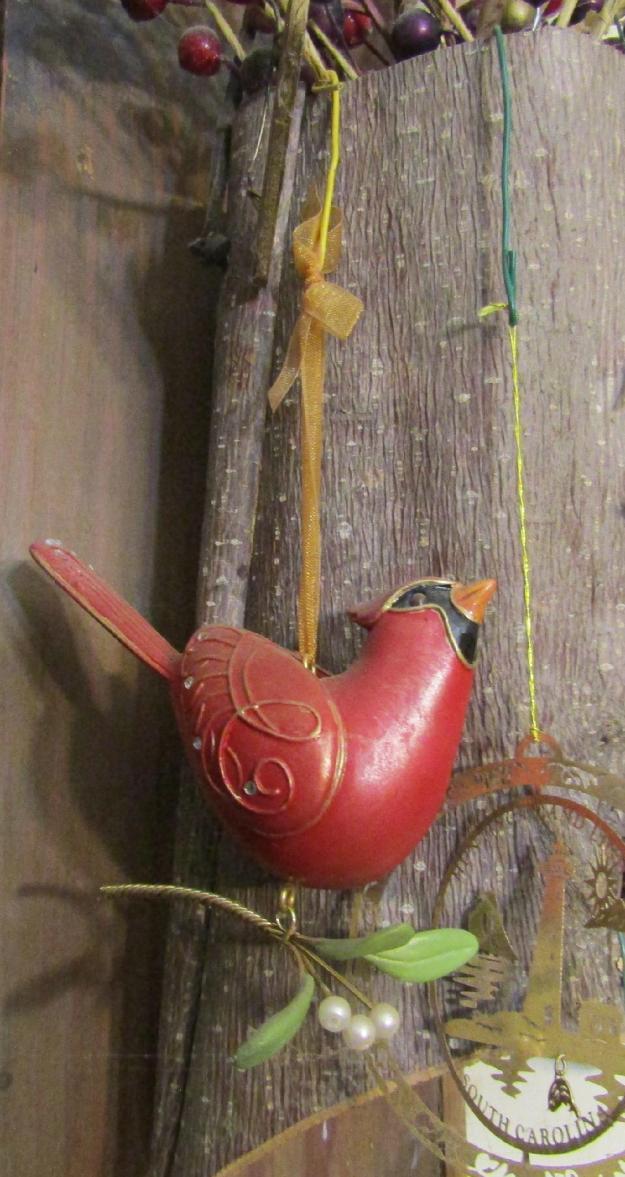
It’s not surprising that such a popular bird has also become associated with many trappings of the Christmas season.

“You see cardinals on greeting cards, stationery, paper plates, paper napkins and tablecloths, doormats, light switch plates, candles, candle holders, coffee mugs, plates, glasses, Christmas tree ornaments and lights, bookmarks, mailboxes, Christmas jewelry,” writes June Osborne in her book The Cardinal. “And the list goes on. Cardinals have become an integral part of the way that many people celebrate the holiday season.”

I can be included among such people. My Christmas decorations include an assortment of cardinal figurines and ornaments. There are other birds — doves and penguins for example — associated with the holiday season, but for me the holidays magnify the importance of one of my favorite birds. The cardinal, in its festive red plumage, appears made to order for a symbol of the holiday season.

Cardinal-Ornament

Photo by Bryan Stevens • Northern cardinals are a favorite for makers of Christmas ornaments.

There’s additional evidence to put forward as testimony to the popularity of the Northern cardinal. It’s the official state bird of seven states: Virginia, North Carolina, West Virginia, Ohio, Illinois, Indiana and Kentucky. Only the Northern mockingbird, which represents five states as official state bird, even comes close to the Northern cardinal in this respect.

Even once the holidays are past, there’s nothing like a glimpse of a Northern cardinal to add some cheer to a bleak winter day. Simply add some black oil sunflower seeds to your feeders to welcome this beautiful bird to your yard.

Cardinal-Two 2

Photo by Bryan Stevens • A male Northern cardinal visits a feeder on a snowy afternoon.

Hawk spoils start of winter bird feeding season

According to a recent Census Report, Americans are feeding birds in epic numbers — 63 million people in this country make life less of a struggle for birds by filling bird feeders with sunflower seeds, peanuts and other goodies. In fact, watching and feeding birds ranks second only to gardening as one of America’s popular pastimes.

Unfortunately, bringing wild birds into our lives means we are occasional witnesses to the darker side of nature that dictates there’s a survival of the fittest competition taking place in our own backyards and gardens.

sharp-shinned-hawk-dbadry

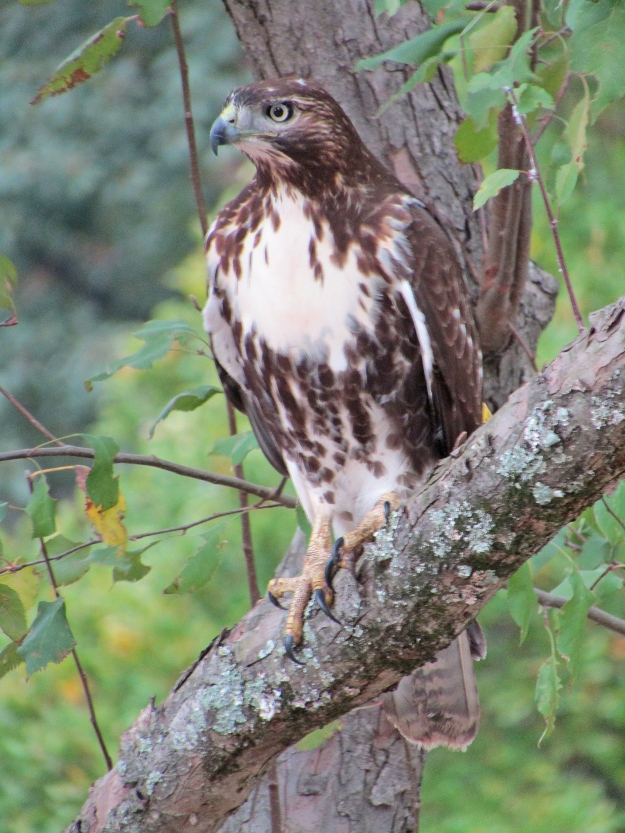
Photo by Dbadry/Pixabay.com • A sharp-shinned hawk visits a bird bath during the Christmas season. These small hawks, designed to prey on songbirds, sometimes learn to stalk feeders, which creates distress for the human landlords.

Welcoming birds into our yards and lives means inviting all birds, include predatory raptors such as sharp-shinned hawk, merlin, Cooper’s hawk and American kestrel. It’s a problem Elizabeth Laing has had to cope with in recent weeks. We’ve commiserated over Facebook about her conflicted feelings about the predatory nature of the hawk that’s been stalking birds at her feeders.
Elizabeth sent me a message via Facebook on Nov. 21 about a situation unfolding at her home in Abingdon, Virginia.

“Please help me to know what to do,” she wrote as the start of her message. “Right now I an absolutely devastated and in tears. I have about eight feeders up year round. I feed a lot of small birds in my backyard and even crows in my front yard. I have at least 15 American goldfinches right now at several sunflower chip feeders.”

Elizabeth noted that for the past few days she had seen a small hawk in her backyard for the first time ever.

“I was worried and tried to scare it off,” she wrote. “I realize they have to eat, too, and are beautiful birds, but I don’t want them killing birds on my feeders.”

1-sharp-shinned-hawk-john-james-audubon

John James Audubon painted this pair of sharp-shinned hawk and shows the size difference between males and females. Many people are surprised to learn that female hawks are typically much larger than males, which is also true of the Cooper’s hawk.

Unfortunately, that’s what happened right as she watched through a window as a goldfinch feeding at her feeder.

“The hawk swooped in and grabbed him off the feeder,” she reported.In the wake of the hawk’s action, Elizabeth took some sensible steps, including immediately taking down her feeders.

Some of her birds, such as the tufted titmice, came back quickly and perched on the empty feeder poles. “I felt so bad,” she said. “I want to feed them, but I can’t stand the thought of them being snatched off my feeders.”

She concluded her message by asking my advice. I responded and told her that when hawks do make a habit of raiding feeders, it can be necessary to curtail feeding for a couple of weeks or longer. Most authorities on birding insist that the hawks will lose interest and move to more productive feeding grounds. Unfortunately, the raptor visiting Elizabeth’s yard proved persistent.

bird-2154147_1920

Photo by NatureLady/Pixabay.com Immature sharp-shinned hawk look different than adults, but once they learn to hunt, they are very efficient predators.


“I wanted to update you on my hawk problem,” Elizabeth wrote back in another message on Nov. 26. “I took all my feeders down, but not long enough. After five days, I put them back.

She had also invested in brand new, expensive caged feeders. She purchased the caged feeders thinking the goldfinches would be safe inside.

For flocking birds, like American goldfinches, the caged feeders offered security only to birds inside the caging. Those birds waiting outside of the caging for their own turns at the feeder remained vulnerable.

“I found feathers on the side of one cage this morning,” she wrote. “Then, as I was watching a bunch eat, that hawk swooped in and took another one off the side.”

The entire situation has made her discouraged and sad. “I hope this doesn’t mean I will have to stop feeding birds entirely. I actually have bags of seeds and peanuts (for the titmice) coming in the mail later this week,” she wrote.

In the wake of the latest attacks, she has taken down the feeders again. “I will leave them down for two weeks this time,” she wrote. “I know the hawk has to eat, too, and it’s a beautiful bird, but I can’t do this to my little goldfinches.”

I agreed that it would be senseless, as well as rather cruel, to provide food for songbirds while knowing a hawk is lurking in the vicinity.

FirstHawk

Photo by Bryan Stevens • A sharp-shinned hawk photographed after capturing and killing a Northern cardinal feeding on the ground beneath a feeder.


Elizabeth also asked if I have had birds killed at my feeders. Although it has been a thankfully rare occurrence, hawks have snatched birds visiting my feeders. I’ve not often witnessed the actual predation, often finding only a pile of feathers on the ground as evidence of the hawk’s success.

A few years ago, however, I witnessed a rather dramatic attack on New Year’s Day. As I watched a female Northern cardinal feeding on sunflower seeds spilled onto the ground by the birds visiting a hanging feeder, a sharp-shinned hawk suddenly slammed into the cardinal. In an instant, I saw my first and second bird species of the New Year. The cardinal, however, didn’t get to live and enjoy the unfolding year.

The website allaboutbirds.org described the sharp-shinned hawk as “a tiny hawk that appears in a blur of motion — and often disappears in a flurry of feathers.” It’s an apt description of this pint-sized predatory bird.

The website also notes that studies indicate that feeders don’t make it more likely that our favorite songbirds will be preyed upon by a sharp-shinned hawk or other raptor. Although feeders might temporarily attract a raptor, these birds will catch the majority of their prey elsewhere.

The sharp-shinned hawk belongs to a genus of raptors known as accipiters, which are slender raptors with rounded wings and long tails. They are highly maneuverable in flight. A characteristic of accipiters is long legs and sharp talons. In fact, the genus is named from the Latin word for hawk, “accipere,” which can be translated as, “to grasp.”

shikra-336751_1920

Photo by Sarangib/Pixabay.com • A shikra (Accipiter badius) is a small bird of prey in the family Accipitridae found widely distributed in Asia and Africa where it is also called the little banded goshawk.

Other members of the accipiters in North America include the Cooper’s hawk and Northern goshawk. Other accipiters around the world include such raptors as chestnut goshawk, red-chested goshawk, crested goshawk, little sparrowhawk, spot-tailed sparrowhawk, black sparrowhawk and red-thighed sparrowhawk.

Elizabeth sent me one other message, informing me that she had also advised her neighbor to take down his feeder, which he did. Shortly after he did so, Elizabeth saw the hawk attack a squirrel, which, thanks to Elizabeth rapping on a windowpane, apparently survived the attack.

coopers-hawk-570341_1920

Photo by Skeeze/Pixabay.com The Cooper’s hawk, like this individual, is a larger relative of the sharp-shinned hawk. It’s larger size allows this raptor to prey on larger birds, such as mourning doves.

In addition, if the hawk in her yard is attacking squirrels, her visitor is probably a Cooper’s hawk, a bird almost identical to a sharp-shinned hawk except for its larger size. I’m hopeful that an extended hiatus will convince the hawk to leave Elizabeth and her goldfinches in peace.

It’s still good to remember that hawks view smaller birds flocking to a feeder in the same way those small songbirds view the abundance of seeds. For both hawks and songbirds, our offerings represent easy meals. It’s not easy, but the best choice is to co-exist — if not at peace, then at terms with nature’s reality.

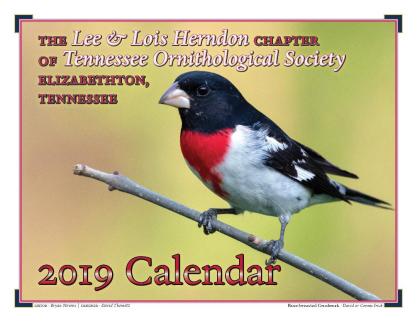
CalendarCover

Bird club selling calendars

The Lee & Lois Herndon Chapter of Tennessee Ornithological Society is selling its 2019 calendar for $15 each. All proceeds are used to support birding opportunities and bird-related causes in Northeast Tennessee. The calendar’s pages feature more than 80 full-color photographs of area birds, including common favorites and some not-so-common visitors. The front cover features a dazzling photograph of a gorgeous male rose-breasted grosbeak. If you’re interested in obtaining a calendar, contact ahoodedwarbler@aol.com by email or send a message via Facebook at http://www.facebook.com/ahoodedwarbler. Calendars can be mailed to any destination in the United States for an additional charge of $2 for shipping and postage.

Overwintering birds make their return to some familiar area haunts

Mergansers

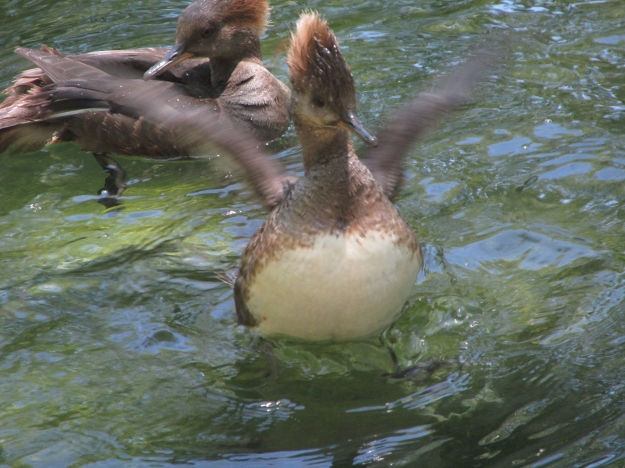
Photo by Bryan Stevens • A female hooded merganser flaps her wings as another preens her feathers behind her.

Now that the warblers, hummingbirds and other birds of summer have, for the most part, departed, new arrivals have filtered into the region to take their place and prevent the winter months from seeming too bleak.

At my own home, these new arrivals have included a field sparrow — the first I’ve seen at home in several years — and a swamp sparrow. I’ve not caught sight of white-throated sparrows or dark-eyed juncos so far, but these hardy sparrows often don’t arrive until the first incidents of truly snowy weather. However, Helen Whited of Richlands, Virginia, emailed me to let me know that she saw her first dark-eyed junco of the season on Monday, Nov. 5.

Different species of waterfowl have also returned to some familiar haunts, and I’m grateful to readers who have kept me informed about some of these arrivals. Joanne Campbell of Bristol, Tennessee, posted on my Facebook page that hooded mergansers have returned to Middlebrook Lake near her home on Saturday, Nov. 3. The hooded merganser, Joanne noted, is one of her favorite birds. Brookie and Jean Potter of Elizabethton, Tennessee, reported that four male buffleheads returned to Wilbur Lake near their home on Oct. 27.

Middlebrook Lake has served as a winter home for hooded mergansers since 1987, while buffleheads have congregated on Wilbur Lake for decades. Another good location to look for buffleheads during the winter months is in the weir below South Holston Dam around the Osceola Island Recreation Area. Several hundred of these ducks have been reported in past winters at these various locations.

Although classified as sea ducks, the mergansers are more at home in river habitats. There are six closely related species in three genera: Mergus, Mergellus and Lophodytes. The latter two genera have only a single species each: the hooded merganser (Lophodytes cucullatus) and the smew (Mergellus albellus).

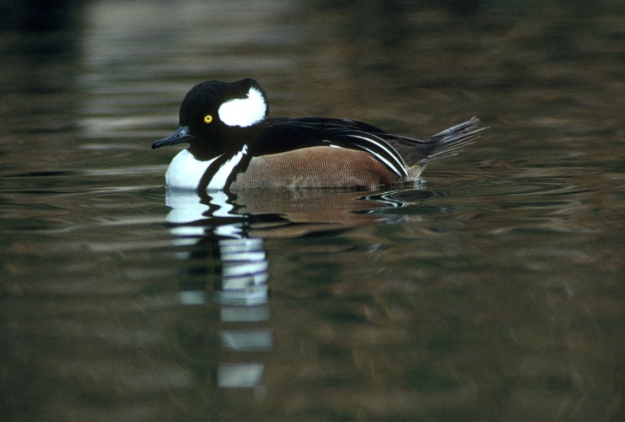
The typical mergansers are fish-eating waterfowl in the genus known as Mergus. The hooded merganser’s genus name of Lophodytes is derived from Greek and, roughly translated, means “crested diver.” Both male and female hooded mergansers have crests capable of being raised or lowered. Females are mostly brown, but males have a striking plumage in a pattern of brown, white and black.

Hooded_Merganser___Drake

Photo by Photo by Tim McCabe/U.S. Fish & Wildlife Service • The male hooded merganser stands out among ducks with his black, white, and brown plumage.

Everyone has probably heard the phrase “as scarce as hen’s teeth.” It means almost exactly what you think. Birds don’t have teeth, so it’s a way to describe something exceptionally rare. It’s a characteristic that sets birds apart from other creatures, such as mammals.

There are some birds, however, that come closer to having teeth than their other beaked counterparts. Mergansers would definitely fall into that category. The mergansers are a type of duck known collectively as “sawbills,” a reference to their long, thin bills with serrated edges that help them grip prey. The “sawbills” come closer than any of our other birds in having teeth, although not in the same sense as mammals have teeth.

merganser-Bill-ALexas-fotos

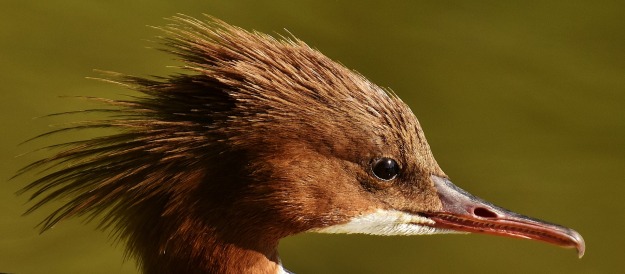
Photo by Alexas-fotos/Pixabay.com • This closeup of a female common merganser shows in detail the serrated bill, which assists this duck in seizing and grasping the fish that makes up a good portion of the bird’s diet.

The other mergansers in the Mergus genus consist of four species: common merganser, Brazilian merganser, red-breasted Merganser and scaly-sided Merganser. The last of these is an endangered species with only about 5,000 birds in the worldwide population. These remaining scaly-sided mergansers are found in the border regions of China, North Korea and Russia.

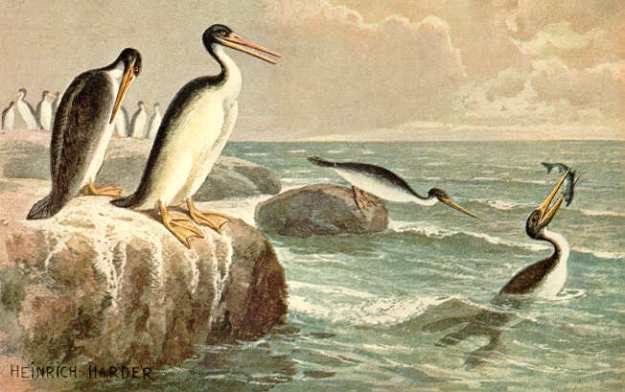
While today’s birds, even mergansers, all lack teeth, that hasn’t always been the case. About 80 million years ago, a bird known as Hesperornis (“western bird”) swam the inland seas that stretched over areas from Kansas to Canada. They swam through those ancient seas because they could not fly.

The body plan of Hesperornis was similar to modern loons and mergansers. Instead of a serrated bill, however, this ancient bird had actual teeth in its long beak. Just like today’s loons and mergansers, it probably fished for its food. At almost six feet in length, however, it dwarfed our modern mergansers and loons and probably fed on larger piscine prey.

Hesperornis_Heinrich_Harder

This early 20th century illustration of Hesperornis is no longer considered scientifically accurate by scientists, but it does demonstrate one striking feature – the toothed jaws of this ancient bird.

Hooded mergansers are content to seek smaller fish. According to the website for the Ducks Unlimited organization, the hooded merganser is the smallest of the three North American mergansers. In addition to fish, hooded mergansers feed on crayfish and other crustaceans, as well as aquatic insects.

The hooded merganser prefers forested wetlands. As a cavity-nesting bird, it seeks out natural cavities in trees for nesting, although it will also accept nest boxes provided by human landlords. This duck breeds from as far north as Alaska and Canada and as far south as Louisiana and Georgia.

IMG_5909

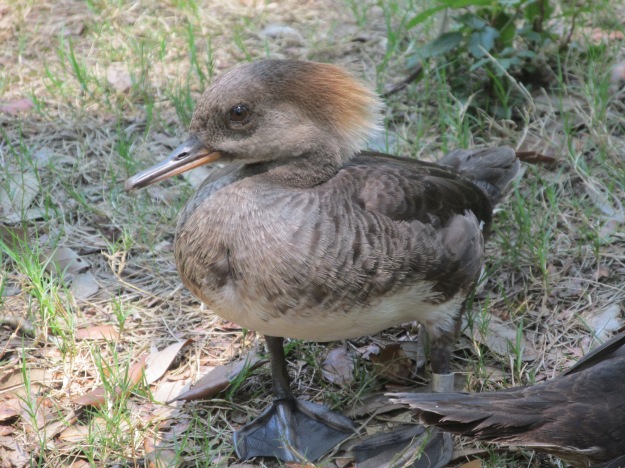
Photo by Bryan Stevens • Hooded merganser females, or hens, have a gray-brown head and neck with a reddish-brown crest, which marks quite a contrast from the male’s appearance.

Late fall and winter are good times to see ducks in the region. Some will spend a good portion of the winter season on area lakes, rivers and ponds, while others will make only brief stops during their migration to their preferred wintering grounds. Some of the other ducks that are usually somewhat common in the region in winter include ring-necked duck and American wigeon. If you live or work near a body of water, stay alert for the comings and goings of waterfowl as winter approaches. You may be afforded an opportunity to see a hooded merganser or bufflehead for yourself.

IMG_5191

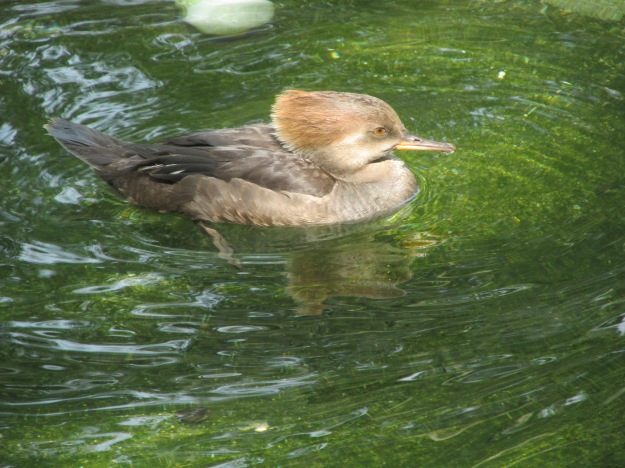
Photo by Bryan Stevens • Female hooded merganser enjoys a swim.

•••••

The Lee & Lois Herndon Chapter of Tennessee Ornithological Society produces an annual calendar featuring some exceptional bird photography from its members. This 2019 calendar will feature full-color photographs of some of the region’s most colorful and engaging birds. The club sells the calendars for $15 each. All proceeds are used to support birding opportunities and bird-related causes here in Northeast Tennessee. For instance, the club pays for bird seed to stock the feeders at Sycamore Shoals State Historic Park in Elizabethton, Tennessee. The club also regularly supports causes that benefit birds.HerndonCalendar2019(Cover) (1)
The calendar also features an informative calendar grid with highlights for major holidays, as well as important bird-related dates. The calendar’s pages feature more than 80 full-color photographs of area birds, including common favorites and some not-so-common visitors. The front cover features a dazzling photograph of a gorgeous male rose-breasted grosbeak. If you’re interested in obtaining a calendar, contact ahoodedwarbler@aol.com by email or send a message via Facebook at http://www.facebook.com/ahoodedwarbler. Calendars can be mailed to any destination in the United States for an additional charge of $2 for shipping and postage.


Dark-eyed junco heralds winter’s approach and marks milestone in weekly bird musings

junco-feb9

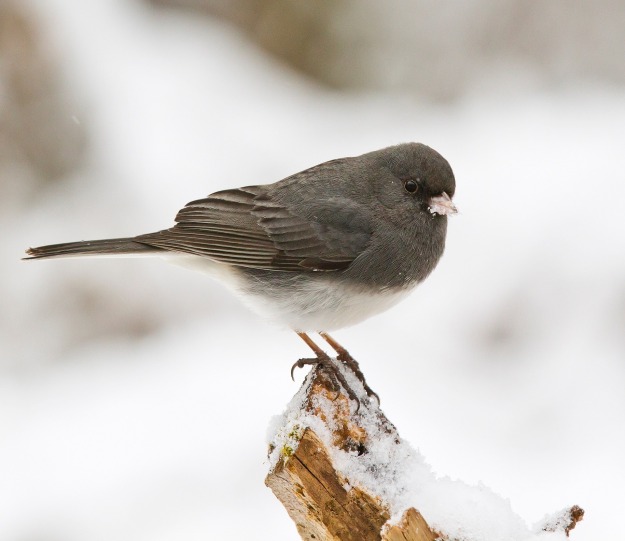
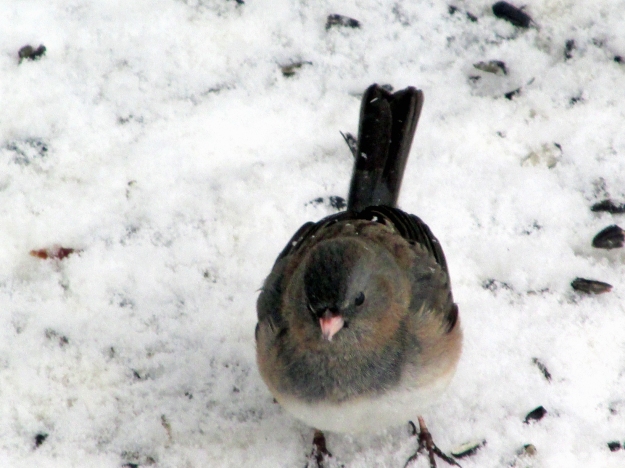
Photo by Bryan Stevens • A dark-eyed junco, usually a harbinger of wintry weather and snowy days, shells sunflower seeds beneath a feeder.

I wrote my first column about our “feathered friends” on Sunday, Nov. 5, 1995, which means this column will soon celebrate its 23rd anniversary.

This column has appeared on a weekly basis for the last 23 years in a total of five different newspapers, and in recent years it has been syndicated to several more. The column has also been a great conduit for getting to know other people interested birds and birding. I always enjoy hearing from readers, and I hope to continue to do so in the coming years as well. Since February 2014, I’ve also been posting the column as a weekly blog on birds and birding.

I saw my first swamp sparrow of the fall on Oct. 23. Autumn’s a time when many of those so-called “little brown birds,” also known as the sparrows, return to live in the fields, gardens, yards and woodlands around our home. Two of the other anticipated arrivals are white-throated sparrows and dark-eyed juncos.

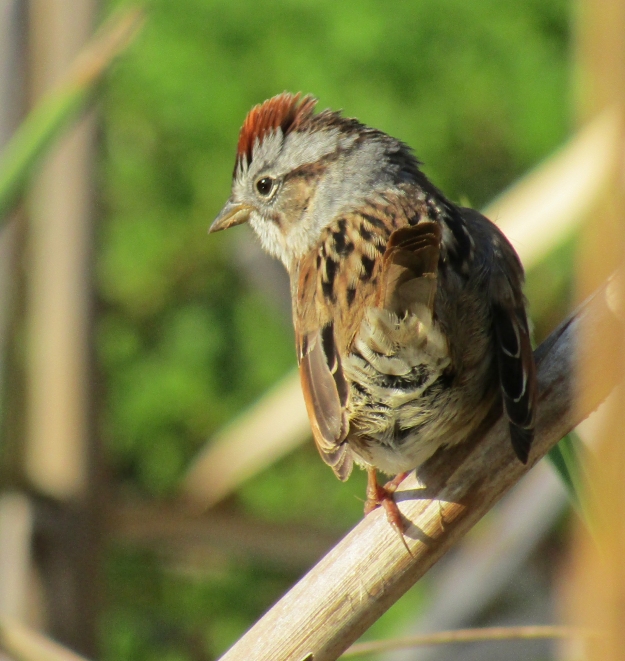
SwampSparrow-April11

Photo by Bryan Stevens • Sparrows, like this swamp sparrow, often spend the winter months in fields, woods, and wetlands, sometimes visiting feeders in our homes and gardens.

In fact, that first column I wrote back in 1995 focused on one of the region’s most prevalent winter residents— the dark-eyed junco. Experts place juncos among the varied sparrow family. All juncos are resident of the New World, ranging throughout North and Central America. Scientists are continually debating precisely how many species of junco exist, with estimates ranging from a mere three species to about a dozen species.

Some of the other juncos include the volcano junco, yellow-eyed junco, Chiapas junco, Guadalupe junco, pink-sided junco, Oregon junco and Baird’s junco, which is named in honor Spencer Fullerton Baird, a 19th century American naturalist and a former Secretary of the Smithsonian Institution.

With that introduction and with some revisions I have made through the years, here is that very first column that I ever wrote about birds.

dark-eyed-junco-Skeeze-Pixabay

Photo by Skeeze-Pixabay • A dark-eyed junco clings to a snowy perch.

…..

Of all the birds associated with winter weather, few are as symbolic as the dark-eyed junco, or “snow bird.” The junco occurs in several geographic variations.

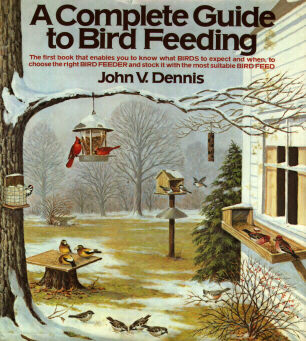
John V. Dennis, author of “A Complete Guide to Bird Feeding,” captures the essence of the junco in the following description: “Driving winds and swirling snow do not daunt this plucky bird. The coldest winter days see the junco as lively as ever and with a joie de vivre that bolsters our sagging spirits.” The dark-eyed junco’s scientific name, hyemalis, is New Latin for “wintry,” an apt description of this bird.

dennisjl 2

Most people look forward to the spring return of some of our brilliant birds — warblers, tanagers and orioles — and I must admit that I also enjoy the arrival of these birds. The junco, in comparison to some of these species, is not in the same league. Nevertheless, the junco is handsome in its slate gray and white plumage, giving rise to the old saying “dark skies above, snow below.”

Just as neotropical migrants make long distance journeys twice a year, the junco is also a migrating species. But in Appalachia, the junco is a special type of migrant. Most people think of birds as “going south for the winter.” In a basic sense this is true. But some juncos do not undertake a long horizontal (the scientific term) migration from north to south. Instead, these birds merely move from high elevations, such as the spruce fir peaks, to the lower elevations. This type of migration is known as vertical migration. Other juncos, such as those that spend their breeding season in northern locales, do make a southern migration and, at times, even mix with the vertical migrants.

Juncos are usually in residence around my home by early November. Once they make themselves at home I can expect to play host to them until at least late April or early May of the following year. So, for at least six months, the snow bird is one of the most common and delightful feeder visitors a bird enthusiast could want.

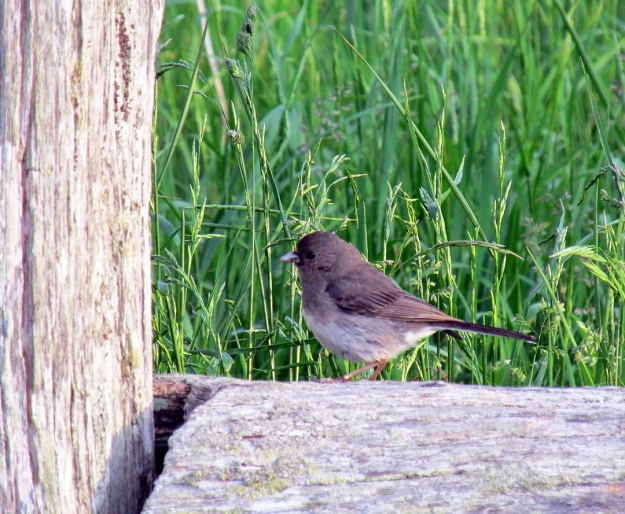
Juncos flock to feeders where they are rather mild-mannered — except among themselves. There are definite pecking orders in a junco flock, and females are usually on the lower tiers of the hierarchy. Females can sometimes be distinguished from males because of their paler gray or even brown upper plumage.

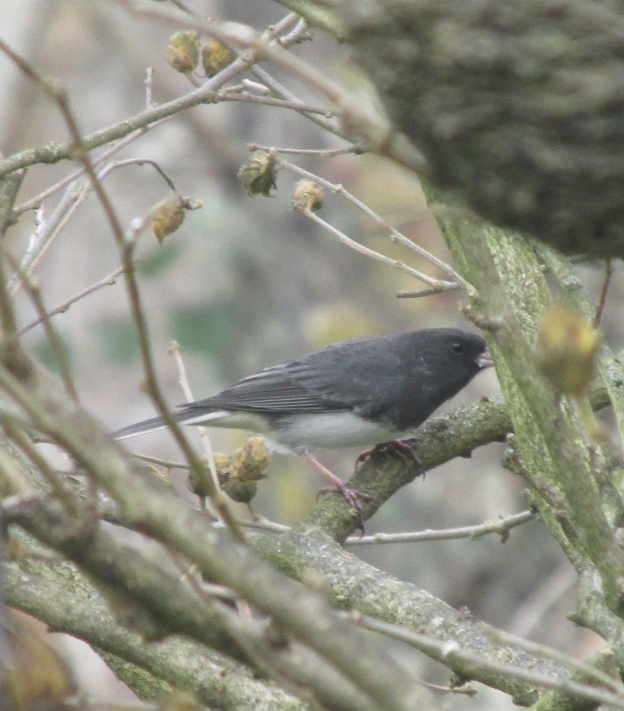
Junco

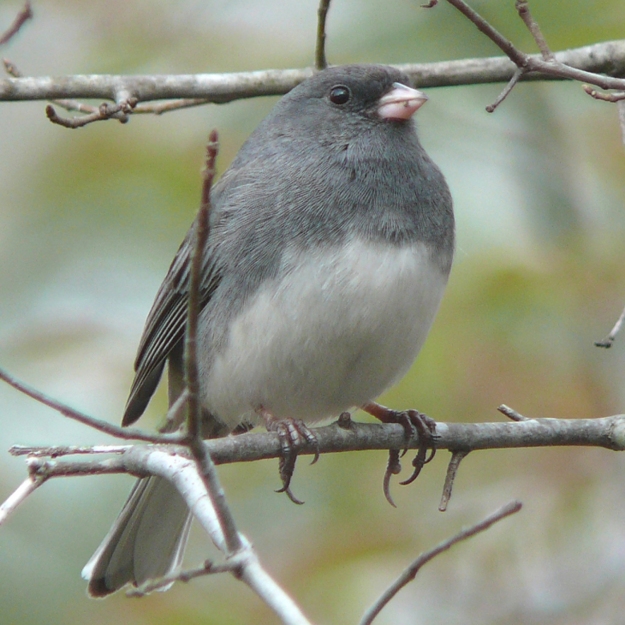
Photo by Ken Thomas • A dark-eyed junco perches on some bare branches on a winter’s day.

Since juncos are primarily ground feeders, they tend to shun hanging feeders. But one winter I observed a junco that had mastered perching on a hanging “pine cone” feeder to enjoy a suet and peanut butter mixture.

Dark-eyed juncos often are content to glean the scraps other birds knock to the ground. Juncos are widespread. They visit feeders across North America. The junco is the most common species of bird to visit feeding stations. They will sample a variety of fare, but prefer such seeds as millet, cracked corn or black oil sunflower.

There’s something about winter that makes a junco’s dark and light garb an appropriate and even striking choice, particularly against a backdrop of newly fallen snow.

Junco-Carver

Photo by Bryan Stevens • Dark-eyed junco nests on high mountain slopes during the summer month. This dark-eyed junco was photographed at Carver’s Gap on Roan Mountain during the summer nesting season.

Of course, the real entertainment from juncos come from their frequent visits to our backyard feeders. When these birds flock to a feeder and begin a furious period of eating, I don’t even have to glance skyward or tune in the television weather forecast. I know what they know. Bad weather is on the way!

•••••

Back when I wrote that original column, juncos often returned each fall in the final days of October or first days of November. In the last few years, however, their arrival times have grown consistently later in November. At times, it takes a serious snowfall to drive these hardy birds to seek out easy fare at my feeders. I’m hoping they’ll return soon. In the meantime, if you want to share your first dark-eyed junco sighting of the fall, I’d love to hear from you. If you want to share a sighting, have a question or wish to make a comment, email ahoodedwarbler@aol.com.

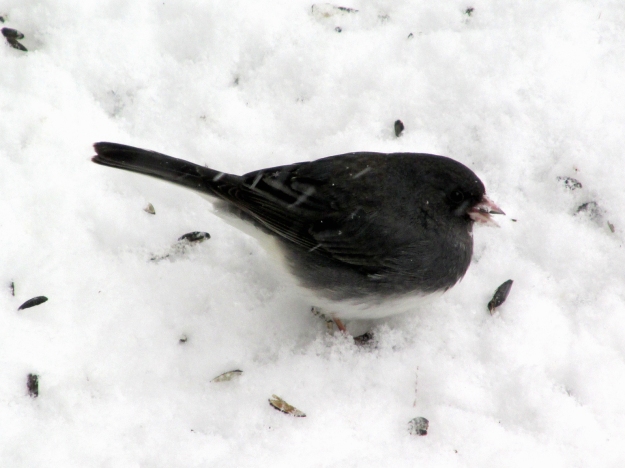
dark-eyedjunco-female

Photo by Bryan Stevens • A female dark-eyed junco scrambles for sunflowers seeds in the snow.

Some birds expert at conjuring Halloween-style thrills and chills

nature bird cute wildlife

The  greater tit, a European relative of the Carolina chickadee, has learned to hunt and kill a species of small bat in the Hungarian mountains. • Photo by Pixabay on Pexels.com

Here’s a repost from November of 2018. The timing seems appropriate. 

My ruby-throated hummingbirds set a new record this year, lingering until Oct. 17. Although present on the morning of that date, I didn’t see any that evening. The next morning, their absence — quite notable and somewhat saddening — continued. In all likelihood, I won’t see any more ruby-throated hummingbirds until next April. I hope they arrive early.

Carolyn Baker Martin commented on the post I made on Facebook about the departure of the hummers. Carolyn noted that 2018 has been an interesting year for birds and flowers. Carolyn, who lives in Elizabethton, Tennessee, also shared a recent observation she made of a hummingbird behavior that I’ve never personally witnessed.

“I had a hummer recently in torpor,” Carolyn wrote in her post. “It sat on the feeder a long time without moving or feeding. Finally, a tail feather began to move. It fed constantly for one more day and was gone.”

Despite their small size, most hummingbirds, including the ruby-throated hummingbirds, are less frail than they appear. Torpor is a biological adaptation possessed by hummingbirds and some other creatures that lets them survive a serious cold spell. It’s not quite the same thing, but think of these tiny birds as voluntarily going into a coma when they enter torpor. Comatose or catatonic creatures are a staple of some horror and suspense films, so perhaps a look at how some birds can induce shivers along the spine is in order in view of the celebration of Halloween this week.

Image by Josep Monter Martinez from Pixabay • Bats, like birds, have the power of flight. Scientists have also learned that some unlikely birds have also developed a liking for feasting on bat brains.

The ultimate coma victim is the fabled zombie, but that’s not likely to afflict any of our feathered friends, right? Well, consider the great tits of Hungary, which are relatives of our tufted titmouse and Carolina chickadee. These birds — at least the Hungarian ones — have apparently acquired a taste for brains.

Not human brains, thankfully. The victims of these brain-hungry great tits are a species of bat — a flying creature often associated with the modern celebration of Halloween, as well as legends about vampires — that shared the habitat of these birds in the Bükk Mountains of Hungary. As it turns out, the tits only hunted bats, in this case a tiny species known as common pippistrelle, out of dire necessity.

Bat ecologists Péter Estók and Björn M. Siemers, after observing the odd behavior of the great tits during some winter seasons, conducted a study to see if great tits are consistent devourers of bats’ brains. They discovered that the birds did hunt the bats and had even learned to detect a special call the bats make as they emerge from hibernation. The ecologists conducted their study over two years and learned that the great tits teach others of their kind the special art of hunting bats. They also learned that the birds made efficient killers, dragging the bats from their roosts and cracking their skulls to get at their brains.

However, when provided with plenty of alternative food, including such favorite items as bacon and sunflower seeds, the great tits chose to eat these items rather than actively hunt bats. The researchers concluded that great tits only resort to harvesting the brains of small bats during times of scarcity during harsh winters. The bizarre story is even featured in the title of a fascinating book by Becky Crew titled “Zombie Birds, Astronaut Fish, and Other Weird Animals.”

Cassowary

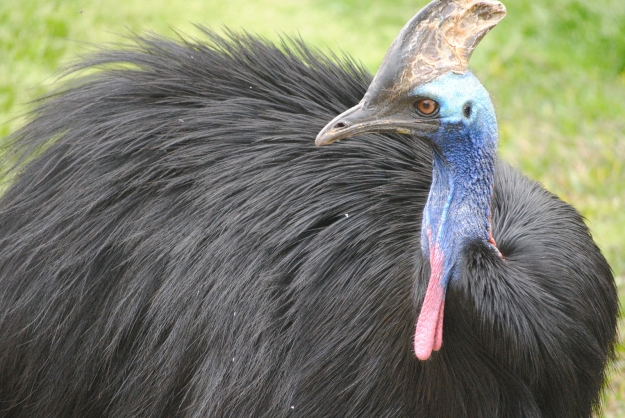
Photo by lailajuliana / Pixabay.com • The southern cassowary reaches a height of more than five feet and weighs 120 pounds. The bird has a fearsome but perhaps undeserved reputation for attacks on humans.

So, if humans have nothing to fear from brain-hungry birds, are there any birds that we should fear? Some experts suggest that precautions might be in order if one expects to come into close proximity with a southern cassowary, which is the third-tallest and second-heaviest living bird, smaller only than the ostrich and emu.

The cassowary, a native of New Guinea and northeastern Australia, has developed a reputation as a fearsome bird capable of injuring or killing humans. According to ornithologist Ernest Thomas Gilliard, cassowaries deserve their reputation. In his 1958 book, “Living Birds of the World,” he explained that the second of the three toes of a cassowary is fitted with a long, straight, dagger-like claw which can sever an arm or eviscerate an abdomen with ease. According to Gilliard, there have been many records of natives being killed by this bird.

A thorough study, however, has partly exonerated the cassowary from these misdeeds. In a total of 150 documented attacks against humans, cassowaries often acted in self-defense or in defense of a nest or chicks. The only documented death of a human took place in 1926 when two teenaged brothers attacked a cassowary with clubs. The 13-year-old brother received a serious kick from the bird, but he survived. His 16-year old brother tripped and fell during the attack, which allowed the cassowary to kick him in the neck and sever the boy’s jugular vein.

Mesembriornis_model

Model of the terror bird Mesembriornis at the Chicago Field Museum, prepared by taxidermist Leon L. Pray, seen on the left.

So we can rest easier knowing that murderous birds that reach a height of almost six feet tall are unlikely to terrorize us should we travel to the lands down under. A more ancient relative of the cassowary, however, might have been a different story had humans lived during the same time period. Phorusrhacids, also known as “terror birds,” were a group of large carnivorous flightless birds that once had some members reign as an apex predator in South America before they went extinct around two million years ago. The tallest of the terror birds reached a height of almost 10 feet. Titanis walleri, one of the larger species, even ranged into what is now the United States in Texas and Florida.

web-terror

Terror birds were equipped with large, sharp beaks, powerful necks and sharp talons. Their beaks, which would have been used to kill prey, were attached to exceptionally large skulls. Despite their fearsome appearance, these birds probably fed on prey about the size of rabbits. Perhaps not knowing this, Hollywood has cast these birds as monsters in such films as 2016’s “Terror Birds” and 2008’s “10,000 BC.”

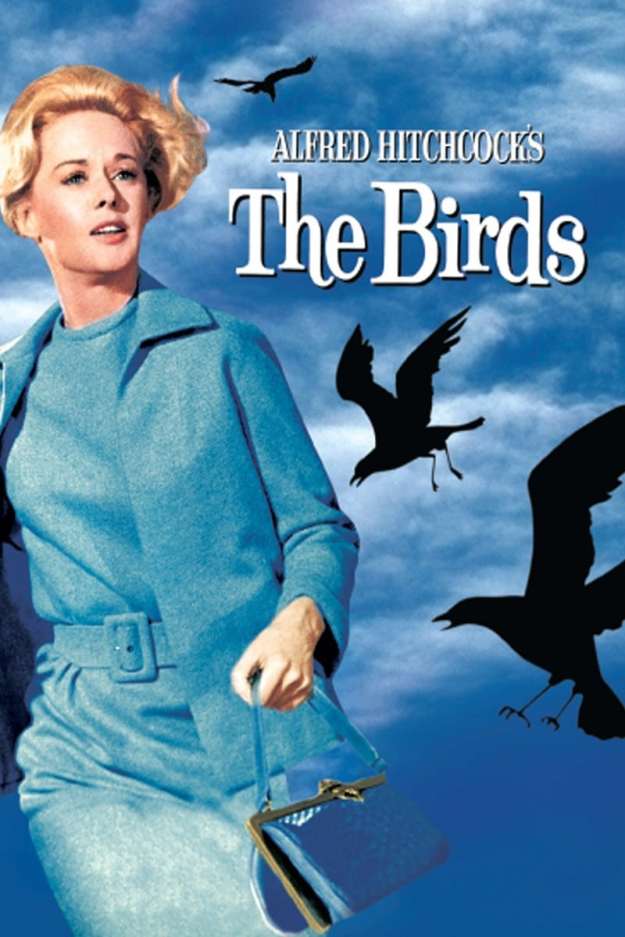
Besides, casting birds as the villains had already been done back in 1963 when Alfred Hitchcock released his film, “The Birds,” based loosely on a short story by Daphne du Maurier. The film, which starred some big Hollywood names such as Rod Taylor, Tippi Hedren, Jessica Tandy, Suzanne Pleshette and Veronica Cartwright, cast a whole new light on a “murder” of crows. Today, the film has achieved the status of a Hollywood classic. I guess it just goes to show that werewolves, zombies, and other Halloween monsters have nothing on our fine feathered friends.

TheBIRDS!

Male scarlet tanager stands out from other birds

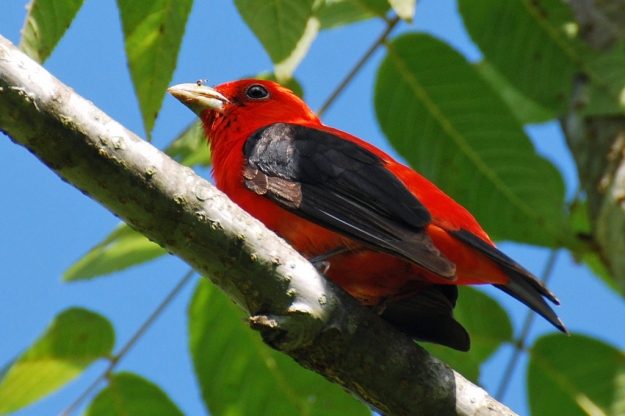
Scarlet Tanager02

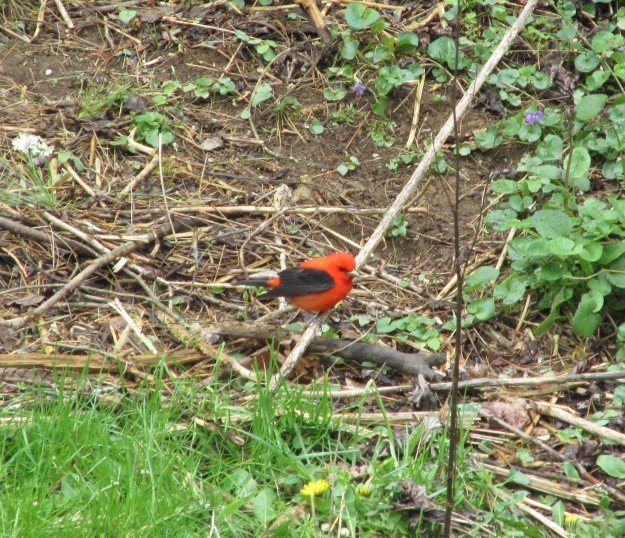
Photo by Jeana Chapman • A male scarlet tanager forages close to the ground, which is not typical behavior for these birds. Tanagers, although brightly colored, spend most of their time in the tree canopy obscured from view.

I received an email from Lewis and Jeana Chapman detailing a dazzling discovery they made.

The couple have been adding a few new birds to their bird list and decided to give me an update on what they’ve been seeing. The Chapmans reside in the community of Laurel Bloomery in Johnson County, Tennessee. The wooded slopes of Pond Mountain where they make their home provide an attractive location for migrating birds, as well a summer residents.

“The tree swallows returned this spring to nest in our bluebird box,” Lewis wrote in his email reporting his new sightings. “The great crested flycatcher has moved its nest from the front porch to the barn. Last year the flycatchers raised five chicks on the front porch. The nest got so full the chicks were perched around the edge.”

Some new additions to their list have included golden-crowned kinglet and the Northern flicker. “Most recently we spotted a scarlet tanager,” Lewis continued.

Scarlet-Tanager

Photo Courtesy of Jean Potter A male scarlet tanager brightens shadowy woodlands with a flash of tropical colors yet remains mostly inconspicuous in the forest canopy.

They had never seen a scarlet tanager at their home. Over the years I have heard from other readers left stunned by the tropical beauty of the male scarlet tanager. That description would not be that far off. While the scarlet tanager resides in the United States and Canada from April to October each year, this bird spends the rest of the year in South America. Citizens of the United States and Canada get the better part of the bargain when it comes to hosting this bird. After the summer nesting season, male scarlet tanagers lose their brilliant red plumage and look more like the greenish females. By the time they get back to the tropics for the winter, this striking bird has transformed into a rather drab specimen.

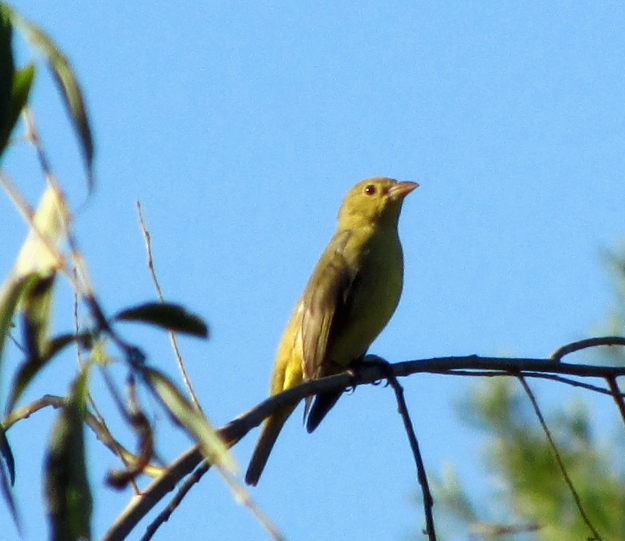
I’ve written in previous columns about the scarlet tanager, which is one of those birds that always takes an observer’s breath away upon first seeing it. Of course, it’s the male scarlet tanager that bewitches observers with his dazzling feathers of vivid red and jet black. Female and immature tanagers are a dull olive-yellow in coloration with dark wings and tails.

Tanager-Sept18

A female scarlet tanager is a study in contrast from her mate with her dull greenish-yellow plumage being much less vibrant than the male’s bright red and black feathers.

During their summer stay in the region, scarlet tanagers largely prey on insects. Although renowned as a fruit-eating bird, the scarlet tanager primarily feeds on fruit during its migration flights and on its wintering range in the tropics. This tanager breeds in deciduous and mixed deciduous-evergreen woodlands across the eastern half of North America. I’ve often heard that oaks are a favorite tree for this woodland dweller.

It’s unlikely that you’ll run across the nest of a scarlet tanager. These birds nest high in trees, often locating their nests 50 feet or more above the ground. After building a nest, a female tanager will incubate her three to five eggs for about two weeks. It’s during this time that her inconspicuous appearance is a plus, helping her blend well with her surroundings. After the young hatch, the parents are kept busy feeding the nestlings for another 10 to 15 days.

The website All About Birds notes that the population of scarlet tanagers has declined in the last half-century. Between 1966 and 2014, according to the North American Breeding Bird Survey, scarlet tanager numbers declined by 14 percent. The environmental organization Partners in Flight estimates a global breeding population of 2.2 million, with 93 percent of these birds spending some part of the year in the United States and the other seven percent breeding in Canada. These birds do poorly in forests that have been harvested for lumber. Other causes of habitat fragmentation probably also affect the well-being of scarlet tanagers. It’s worth keeping an eye out for any other signs of decline in this beautiful birds.

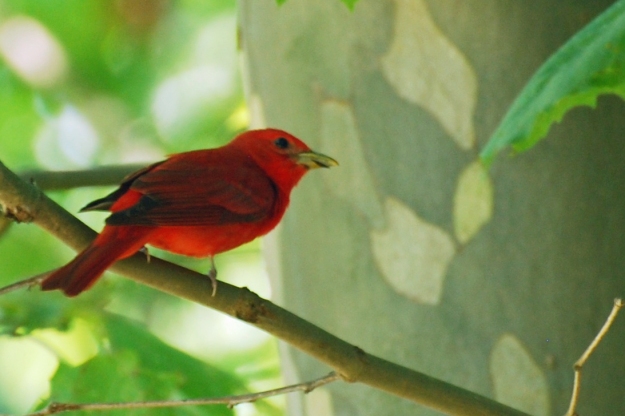
The scarlet tanager is a fairly common songbird during the summer months, but it also has a less common relative that can be found in northeast Tennessee, southwest Virginia and western North Carolina. The male summer tanager is the only entirely red bird found in North America. Lacking the scarlet tanager’s black wings, the summer tanager’s red feathers are also of a rosier hue.

Summer-Tanager

Photo Courtesy of Jean Potter The Summer Tanager is the only all-red bird in North America. It is less common in Northeast Tennessee than the related Scarlet Tanager.


While I have seen summer tanagers in Tennessee on occasion, most recently at Steele Creek Park in Bristol, Tennessee, I saw my first summer tanager during a spring trip to South Carolina many years ago. Overall, the summer tanager has more of a southern stronghold than the scarlet tanager, as the summer tanager’s range also extends into the southwestern United States.

Both of these tanagers are birds fond of dense, undisturbed woodlands. Most of the time, unfortunately, these tanagers reside in the dense woodland canopy. They’re more often heard than seen, producing a song similar to an American robin’s, but usually described as somewhat more raspy. The apt description I like for these two tanagers is that their songs sound like one sung by a hoarse robin with a sore throat.

Some of the world’s other tanagers are known by extremely descriptive names, including seven-colored tanager, flame-colored tanager, lemon-rumped tanager, green-headed tanager, golden-chevroned tanager, azure-shouldered tanager, fawn-breasted tanager, metallic-green tanager, emerald tanager, gilt-edged tanager, golden-naped tanager, opal-crowned tanager, blue-gray tanager and silver-beaked tanager.

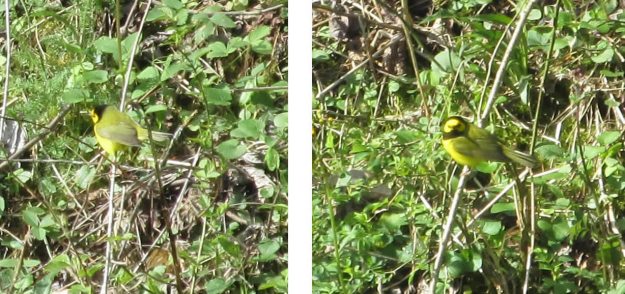
The tanager wasn’t the only unexpected feathered visitor to the Chapman home this spring. The same week the tanager made its appearance, a male hooded warbler also visited with the Chapmans. “This we found ironic because of your email address,” Lewis wrote. For readers who may not have noticed, my email address is ahoodedwarbler@aol.com. I’ve used this email address for many years to celebrate one of my favorite birds.

HoodedWarbler01 (5)

Photo by Lewis Chapman • A male hooded warbler also impressed the Chapmans during this small songbird’s recent visit.

The Chapmans also provided me with photos of all their colorful birds. In subsequent emails, they also informed me of some other unusual visitors. “One of our strangest visitors was an albino American goldfinch,” Lewis also revealed in his email. “Over this past weekend, we had rose-breasted grosbeak and indigo bunting show up.”

Many of these birds — the rose-breasted grosbeak, the scarlet tanager, the indigo bunting — always wow observers experiencing their first observation of them. Our two native tanagers — scarlet and summer — are definitely two memorable birds for anyone who has had the pleasure of seeing one. It’s a great time of year to get outdoors and keep your eyes open for a splash of bright color. You never know what you may see when you lift your binoculars.


White-faced ibis creates birding stir with rare visit to region

When I awoke on April 19, I didn’t expect that I’d end up seeing a new state bird before the day ended. Thanks to timely notices of a new bird sighting by email, I used my work break to drive to Elizabethton, Tennessee, to see a white-faced ibis at the Carter County Rescue Squad pond. The opportunity for unexpected appearances by birds like the white-faced ibis is why I love spring migration.

White-FacedIbis

Photo by Bryan Stevens • The red eye of this white-faced ibis allowed observers to confirm the identity of the bird. The similar glossy ibis does not have red eyes.

Tom McNeil spotted the bird at a much larger pond on the campus of Northeast State Community College in Elizabethton. After he reported the bird, I was able to use a work break to travel to the location and find the bird nearby at the smaller pond, where several area birders had already arrived. The ibis had moved to this smaller pond after departing the larger pond where it was first detected.

This is only the second record of a white-faced ibis for Northeast Tennessee.

The white-faced ibis is a widespread wading bird, nesting from the western United States and Canada south through Mexico, as well as from southeastern Brazil and southeastern Bolivia south to central Argentina, and along the coast of central Chile.

I saw white-faced ibises for the first time during a trip to Utah in May of 2006. The state had enjoyed a spring with ample rainfall, and every flooded field and pasture contained flocks of these distinctive wading birds. These flooded fields provided temporary habitat for numerous other birds, including cinnamon teal and Wilson’s phalarope.

UtahIbis

Photo by Bryan Stevens • A flooded field in northern Utah near the border with Wyoming provided foraging habitat for this white-faced ibis.

The white-faced ibis is almost identical in appearance to the glossy ibis, which is the most widespread ibis in the world. The glossy ibis ranges across six continents, absent only from Antarctica. In the United States, the glossy ibis ranges mostly along the southern Atlantic coastal area. I have observed this bird at several locations in South Carolina.

The similar appearances of white-faced and glossy ibis presents challenges to identification, which was the case with this recent visitor. The bird found in Elizabethton lacked the white plumage in the face that gives the species its common name. Fortunately, the bird did plainly show one physical trait — red eyes — that easily distinguishes it from the related glossy ibis. Sometimes, all it takes to clinch an identification is a simple physical characteristic such as, in this case, a red eye.

A third ibis native to North America is the white ibis. The Audubon Society identifies the white ibis as one of the most numerous wading birds in Florida, but the bird is common also in other parts of the southeast with appropriate wetland habitat. Like the wood stork, the ibis has declined in Florida in recent decades largely as a result of human encroachment.

BRYAN-IBIS

Photo by Bryan Stevens • A white ibis forages for food by probing in water and mud.

The white ibis looks like a humorously absurd bird that could have been invented by Dr. Seuss. The extravagant, all-white plumage is contrasted by pinkish-orange legs, an extremely long, downcurved, reddish-pink bill and bright blue eyes. In flight, the white ibis shows black feathers on the edges of its wings.

I’ve seen white ibises in Tennessee as well as in South Carolina and Florida. In the Sunshine State, another relative — the unmistakable scarlet ibis — is sometimes observed in the wild. The scarlet ibis inhabits tropical South America and islands of the Caribbean, but the species if often held in zoos and other attractions. Escaped birds rather than strays are often the source of sightings in Florida of this vibrant scarlet-feathered ibis.

Glossy-Flock

Photo by Bryan Stevens • A glossy ibis flock feeds in a wetland located at Huntington Beach State Park in South Carolina.

All ibises have long, downcurved bills. These birds usually feed in small flocks, probing wetlands for prey such as crustaceans, small fish, amphibians, insects, and various invertebrates. Worldwide, there are about 34 species of ibis, including the red-naped ibis, black-faced ibis, green ibis, straw-necked ibis and African sacred ibis, which is the bird often depicted in tombs and other monuments of ancient Egypt. This ibis was associated with the Egyptian god, Thoth, who was often depicted as a man with the head of an ibis.

The brief visit from the white-faced ibis provides a good reminder that we’re in the midst of spring migration. Stay alert for those unexpected birds. You never know what you might see.

IMG_5931

Photo by Bryan Stevens • The white-faced ibis found in Elizabethton, Tennessee, is shown walking past a domestic duck and a mallard.

Readers continue to report hummer arrivals

A few other readers have shared their first spring hummingbird sightings.
• Bunny Medeiros of Abingdon, Virginia sent me an email to announce her first sighting. “To my delight, the day after I put out my feeder a hummer appeared,” she wrote. The bird, a male, made his appeared on April 14.
• Rhonda Eller of Chilhowie, Virginia, saw her first ruby-throated hummingbird of spring on April 18. “Surely spring is going to come and stay!” Rhonda predicted on her post of my Facebook page.

Bird survey seeks volunteers

The Virginia Breeding Bird Atlas is getting ready for a third year of surveying the state’s birds. The atlas is a citizen science project, and volunteers conduct most of the key data collection. Organizers are hopeful that Virginia’s strong birding community will partner with the Virginia Ornithological Society and Virginia Department of Game and Inland Fisheries to accomplish the largest bird conservation effort in the state to date.
“This is our third year, and we can always use more volunteers to participate,” said Steven Hopp with Environmental Studies at Emory and Henry College. “Our region down here in the corner is one of the least-covered areas of the state.”
Anyone interested in participating and learning more about the atlas is welcome to email Hopp at shopp@ehc.edu.

IMG_5909

Photo by Bryan Stevens • The white-faced ibis probed the edge of a pond in its search for food, occasionally catching and consuming tadpoles.