Monthly Archives: April 2024

More readers share their hummingbird arrival stories

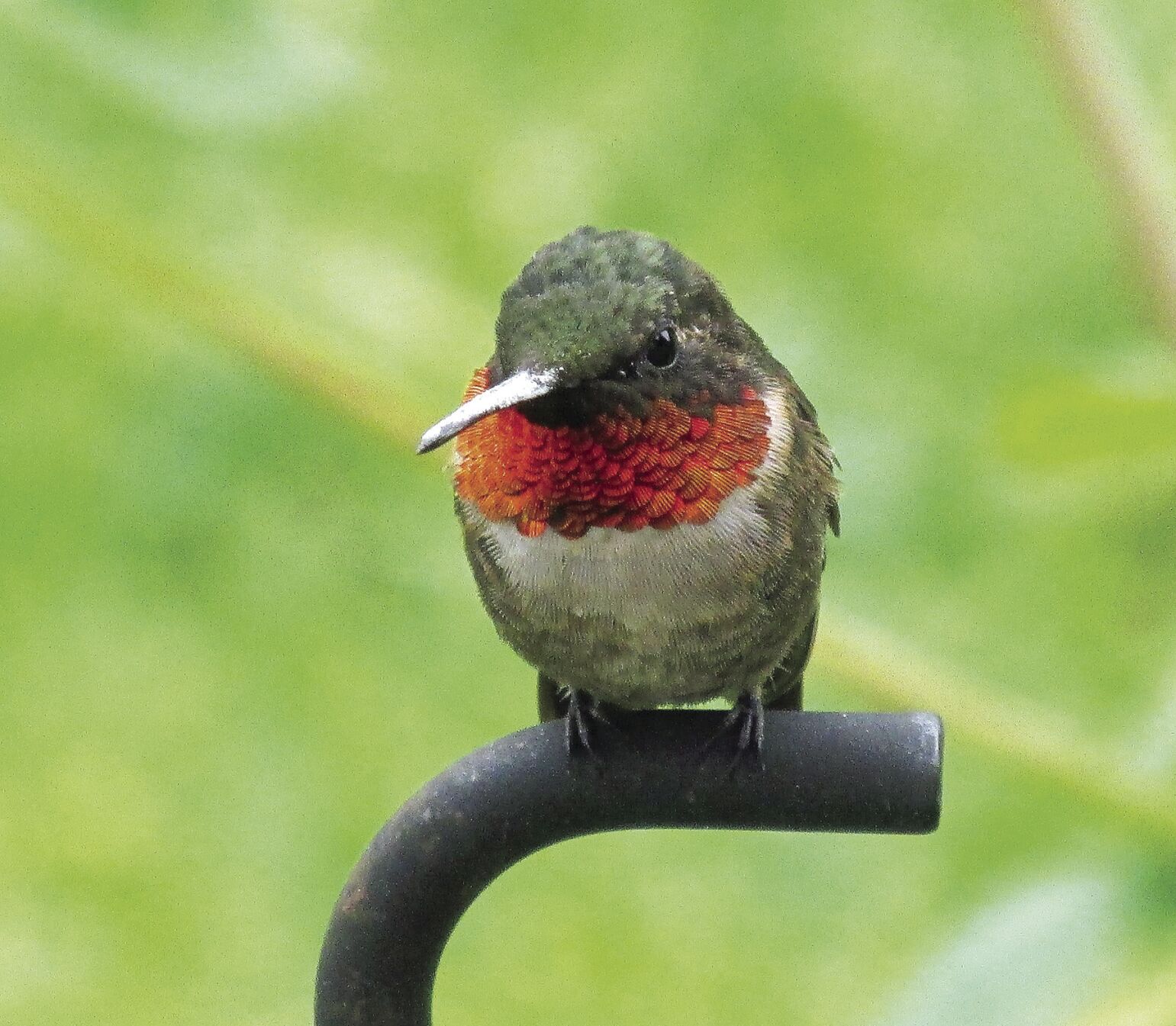
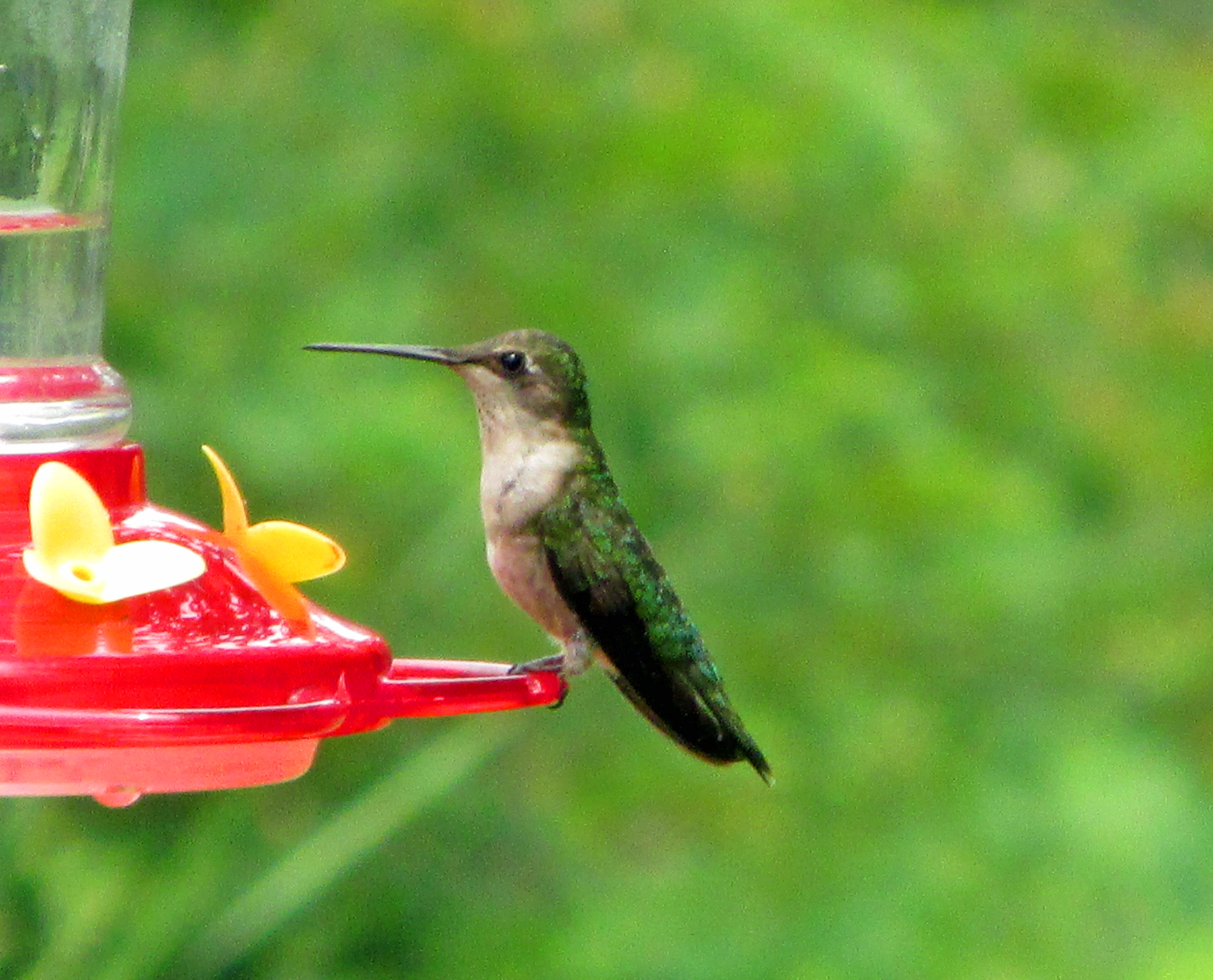
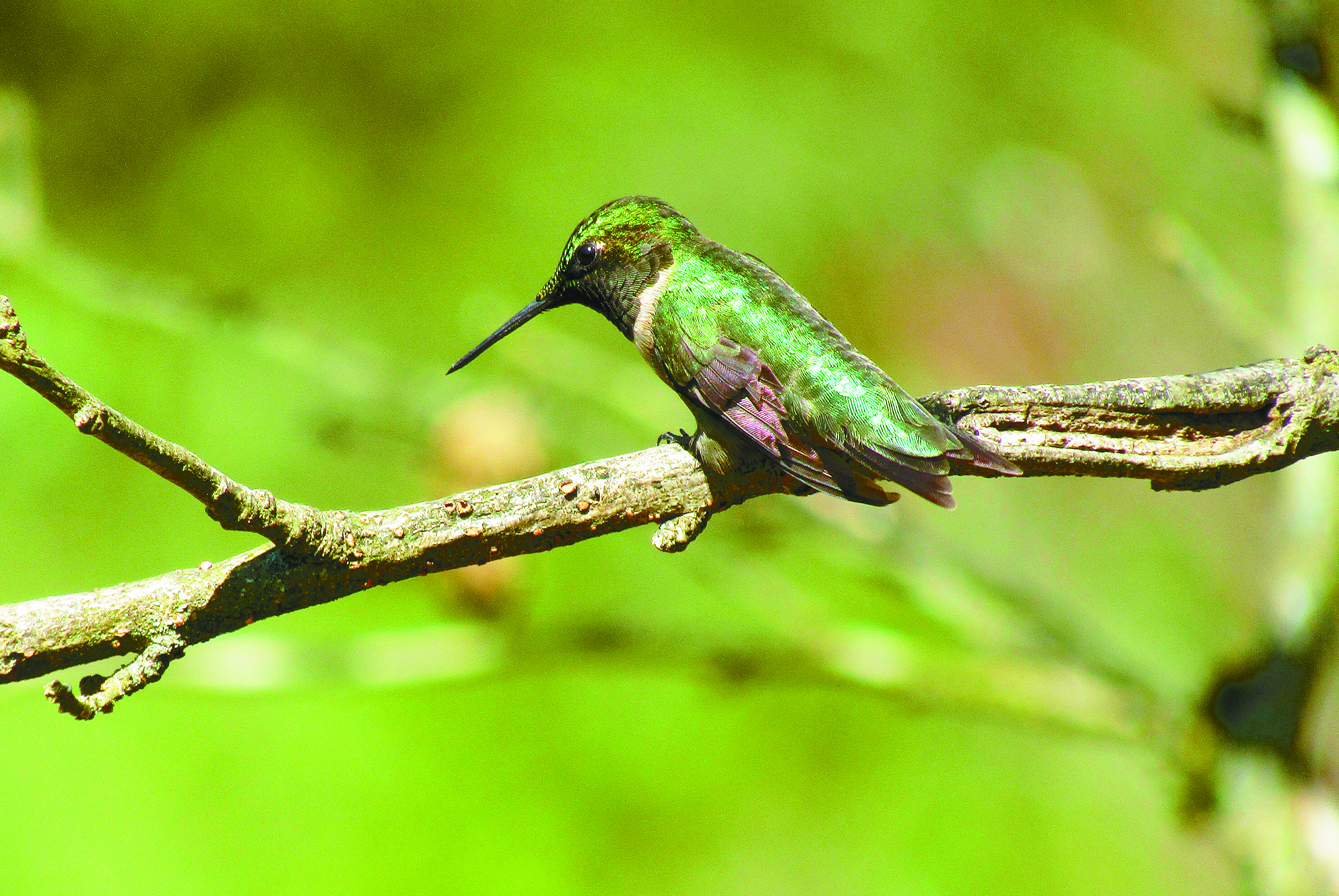
Photo by Bryan Stevens • A male ruby-throated hummingbird perches on a branch. These tiny birds returned to the region earlier this month.

Ruby-throated hummingbirds are back in the region for another season. This male takes a sip of nectar from the blooms of a potted plant.

I reported last week on a handful of people who saw the “early bird” ruby-throated hummingbirds making their return to local yards and gardens. Many more readers have contacted me this past week to share more hummingbird sightings.

For those who haven’t seen a hummingbird yet, just remain patient. They’re definitely arriving for another season with us. 

•••

Gina Kinney emailed me on behalf of her mom, Ginger Brackins, as she has done for several years, to share news of her mom’s hummingbird sighting.

“She said she saw her first hummingbird on Saturday, April 13, at around 5:30 p.m. in Erwin,” Ginger wrote.

•••
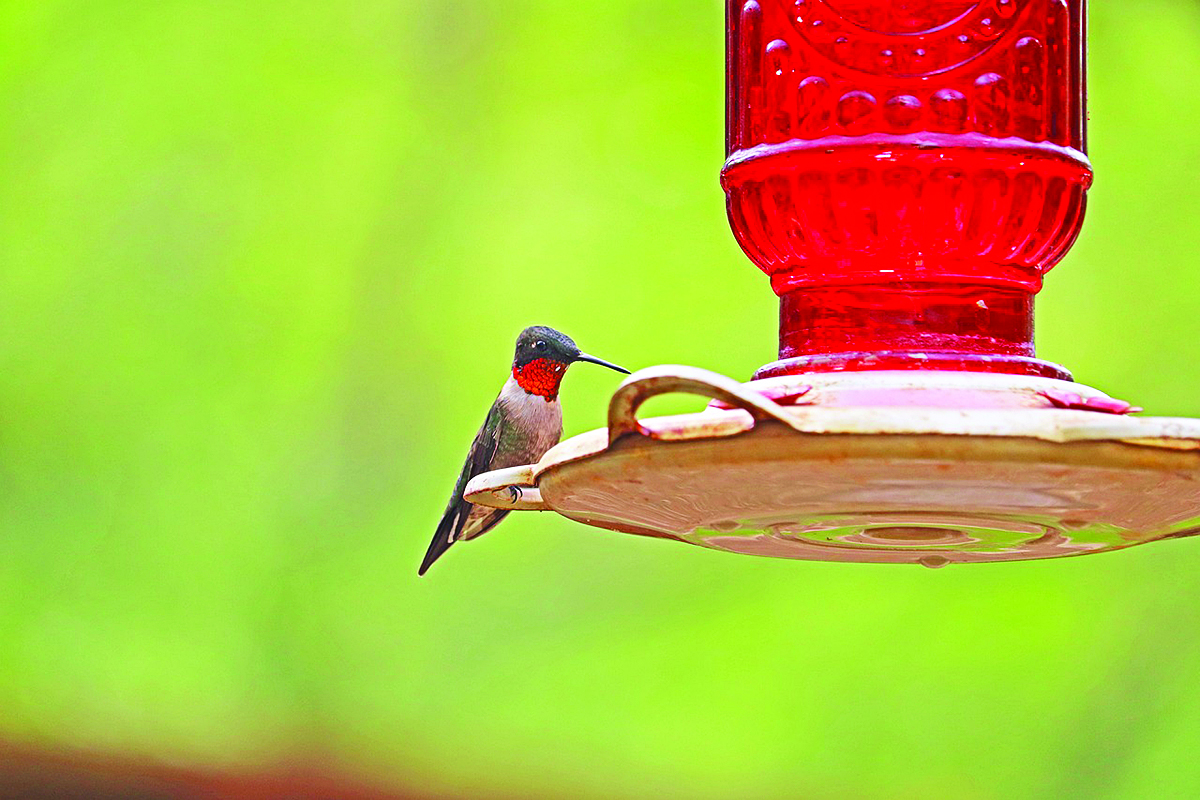
Only the male ruby-throated hummingbird shows the bright red throat patch.

“I put my feeder out on April 1 and took it down this morning (April 14) to clean it and put new feed in it,” wrote Joan Chipokas in an email. “About 30 minutes later, a male hummer came to the feeder. Didn’t see him again today, but I was busy so really wasn’t watching. Hopefully I’ll start seeing him on a regular basis and the female will show up too.”

Joan wrote that she lives on Suncrest Village Lane in Gray.

•••

Kingsport resident Ray Chandler reported a sighting of a first spring hummingbird on April 14 . “They are regular visitors to the feeders now,” he shared in an email.

•••

Lonnie Hale reported a first of spring hummingbird sighting in an email to me.

“We saw our first hummingbird yesterday (April 14),” Lonnie wrote. “I put the feeders out in the morning, bought four hanging baskets of flowers and BAM.”

Lonnie lives near Big Stone Gap, Virginia. “Love these little guys,” Lonnie added.

•••

April Fain in Unicoi also saw her first ruby-throated hummingbird of the season on April 14. “We had our first hummingbird this morning,” April wrote in a Facebook message to me. “I saw him three times.”

•••
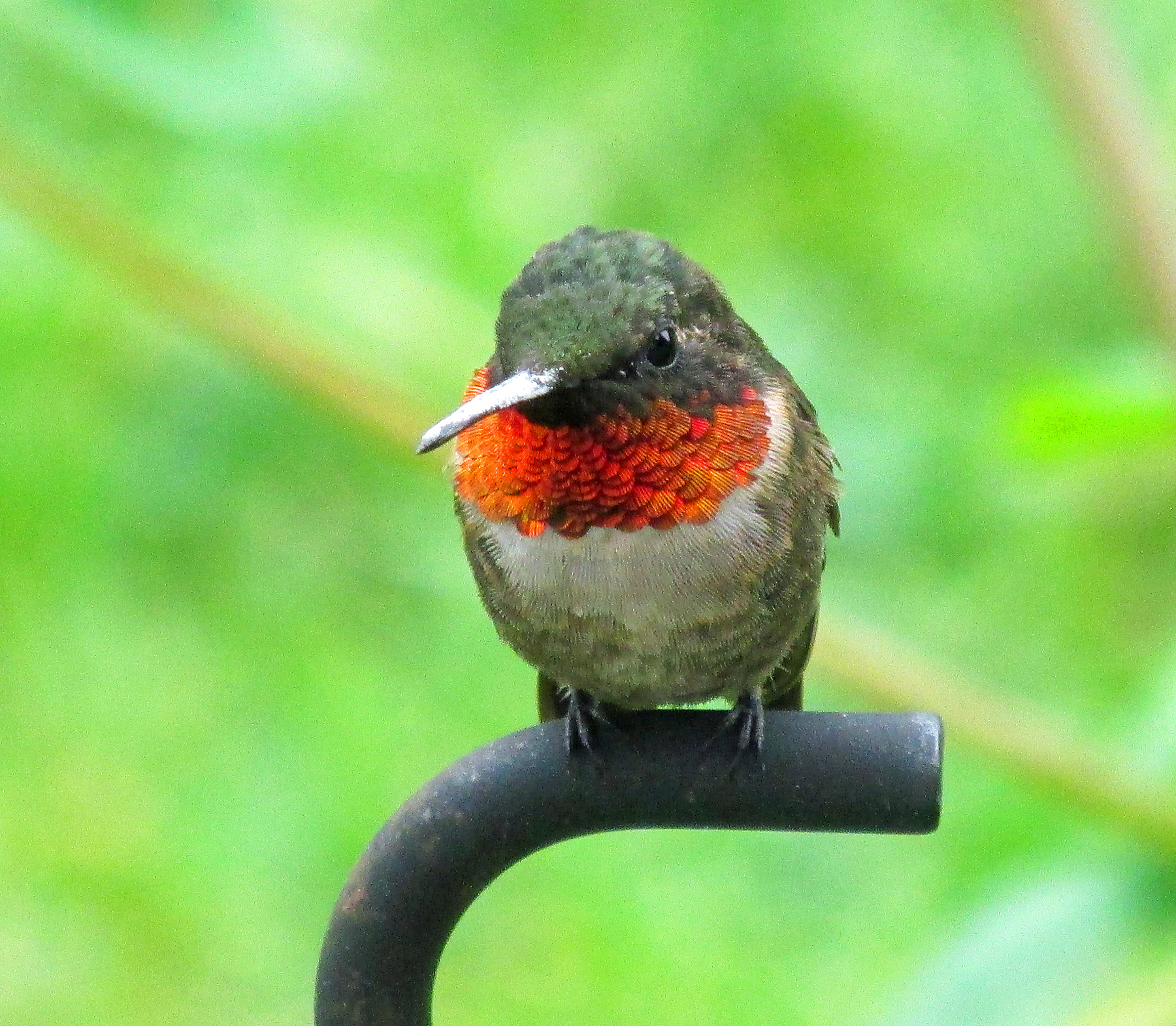
Photo by Bryan Stevens • Despite a perceived disadvantage of size, ruby-throated hummingbirds are quite capable of thriving in a giant world.

Amy Tipton sent me a message on Facebook to report that her parents had observed their first spring hummingbird.

“The hummingbirds are back in Unicoi County,” she wrote. “My parents, Edison and Emma Jean Wallin, spotted their first one of the season this evening (April 14) at 6:30 at the feeder on their front porch in Limestone Cove. Mama just put her feeder out today.”

•••

“My first hummer just came in,” Karen and Bobby Andis of Kingsport reported via Facebook Messenger on April 14. “A small female…very hungry.”

I got a followup message the following day. “A male showed this morning,” they wrote.

•••

Erwin resident Donna Barnes Kilday shared a post on my Facebook page to report the arrival of her first hummingbird. “Saw my first hummingbird today,” she wrote on April 15.

•••

Priscilla Gutierrez shared in a Facebook comment that she saw her first hummingbird of spring on April 16.

•••

“I’ve had my feeder out for 2 weeks,” Virginia Martin commented on a Facebook post. Virginia, who resides in East Carters Valley in Scott County, added that she saw her first ruby-throated hummingbird on April 13 at 3:15 p.m.

“I believe they are a couple of days behind schedule for my area, possibly weather-related since we’ve had a spell of cooler temperatures and a few very windy storms recently,” she added.

Virginia noted that she has fed hummers for years, and use only the homemade sugar water in a common inexpensive feeder.

“It’s located just outside my dining area window, so I have literally a ‘bird’s eye’ view,” she wrote. “There’s a dogwood tree close by, and other good perching places for them to monitor and protect their territory.”

•••

Jan Bostrom sent me an email to share her first spring hummingbird sighting. She wrote, “I saw my first hummingbird yesterday (April 17) around 6 p.m.” Jan wrote that she been on the lookout because her neighbor saw her first hummingbird on April 15.

“I’m thrilled to be retired and to have time to enjoy God’s beauty around me,” Jan shared.

•••

I’ve finally joined the ranks of those who have welcomed hummingbirds back for another season.

The hummingbirds returned to my own home on April 17 at 7:15 p.m. I heard the telltale buzz of the bird’s wings before I spotted him. I stayed still and he zipped to my feeders for a quick sip. He returned a few times before dusk. When I posted my success on Facebook, several other people commented to let me know that hummingbirds had returned at their homes on April 17.

The following day I enjoyed watching two male ruby-throated hummingbirds in a prickly standoff about control of the front porch feeders.

•••

Vivian C. Tester in Bristol, Tennessee, posted a comment on one of my Facebook posts to let me know of her first spring sighting.

“Just saw my first hummingbird of spring,” she wrote on April 17.

•••

Rosalie Sisson in Jackson, Tennessee, commented on my Facebook page that she saw her first hummingbird of the season at about 6 Central time on April 17.

•••

Lauri Sneyd Garland in Unicoi, also on April 17, noted in a comment on my Facebook page she has been seeing hummingbirds for the last couple of days.

•••

Tina Jefferson Reese in Bristol, Tennessee, reported via a comment on my Facebook page that she also saw her first hummingbird on April 17.

•••

Linda C. Robinette wrote, “Ours fluttered in around 11:30 this morning (April 17),” in a comment on my Facebook page.

•••

Kaylynn Sanford Wilster at Boone Lake saw her first spring hummingbird on April 18. “Saw my first one yesterday,” she wrote on April 19 in a Facebook comment on a post of mine.

•••

Spring migration is in full swing. At least six different species of warblers have returned to the woodlands around my home. A broad-winged hawk has also returned to a favorite field less than a quarter of a mile from my home. Keep your eyes open for new arrivals. Chimney swifts have been zipping over the rooftops of downtown Erwin since April 17.

To share a sighting, make a comment or ask a question, email me at ahoodedwarbler@aol.com.


Ruby-throated hummingbirds mark their spring return

Photo by Bryan Stevens • A male ruby-throated hummingbird surveys his surroundings.

I am still waiting (at the time this post was written) for the first ruby-throated hummingbird of spring. Every year I hope they will make an early appearance, but I am almost always disappointed. These tiny birds always arrive in their own good time and my home is apparently not located within their primary migratory path.

As a consolation prize, however, I have welcomed the first of the spring warblers. I had two black-and-white warblers singing at home on April 9. The black-and-white warbler sings a repetitive song that has been described as a “squeaky wheel” based on the rising pattern of the song’s notes.

Other recent arrivals have included brown thrasher and tree swallow.

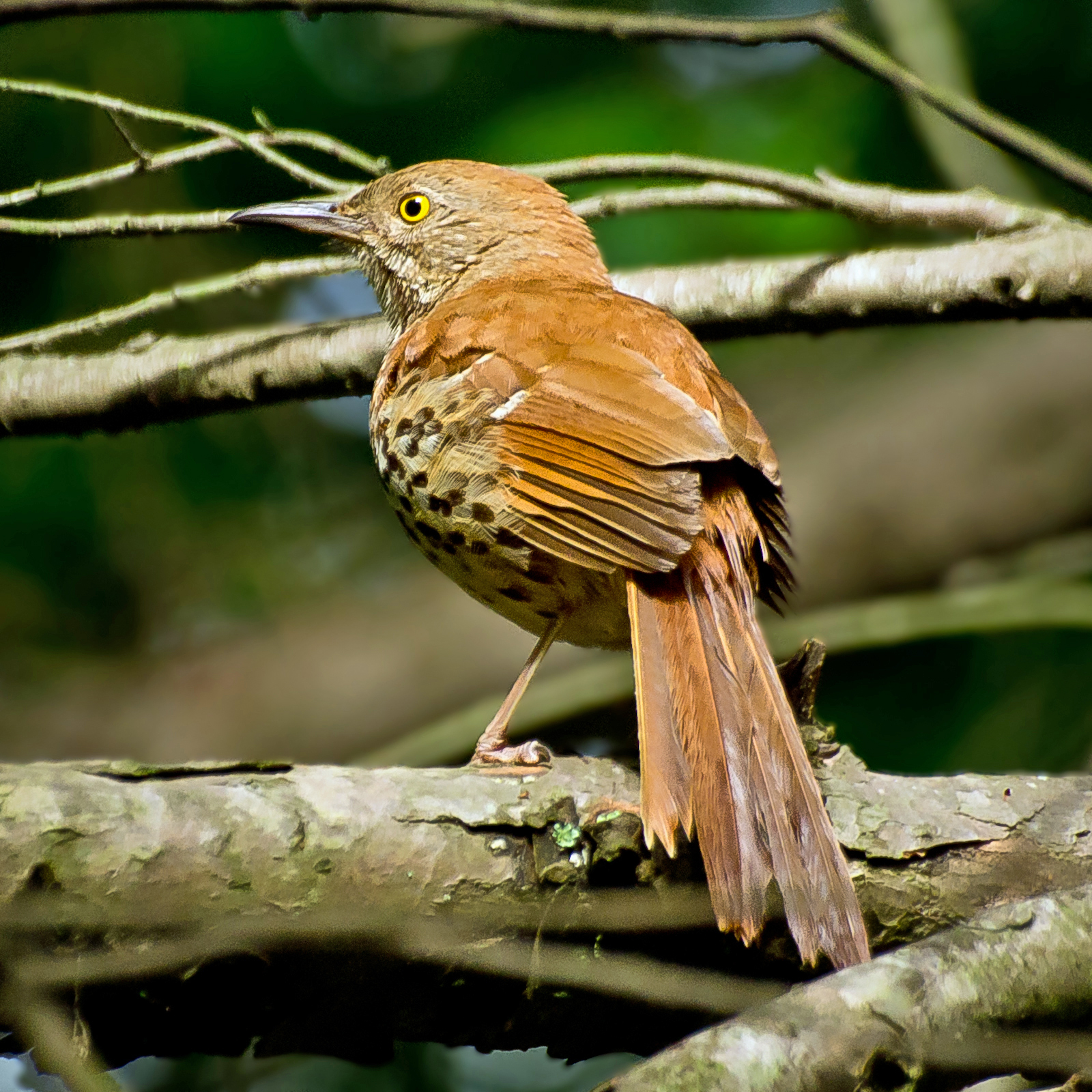
Photo by Ken Thomas
The Brown Thrasher is an alert, sharp-eyed observer of its surroundings.

While I cannot claim to have seen my first spring hummingbird – yet – I can report that hummingbirds are officially back. Some of my Facebook friends have reported their first sightings. Other readers have emailed me to share their sightings.

Nancy Light welcomed back a ruby-throated hummingbird on Sunday, April 7. “I have my sugar water feeders hanging off my fruit trees in the front yard,” Nancy wrote in an email. “I live in Kingsport, but this sighting was at my farm in Duffield, Virginia, in the Fairview community.”

•••

Patricia Faye Wagers in Kingsport saw her first hummingbird of spring on April 8.

“With one, I know more are on the way,” she wrote in a Facebook post announcing her sighting.

•••

Dianne Draper in Jonesborough reported her first hummingbird sighting of spring on April 9 in a Facebook post.

“Never did get a picture of the bird,” she wrote. “Also saw the first broad-winged hawk in the yard,” she added.

Broad-winged hawks, like ruby-throated hummingbirds, are migratory and return to the region in late March and early April.

•••

It’s in Central and South America where the world’s more than 300 species of hummingbirds reach their greatest diversity. In Eastern North America, the only hummingbird known to nest is the ruby-throated hummingbird.

The western half of the United States and Canada can claim about a dozen nesting species, including rufous hummingbird, Allen’s hummingbird, Anna’s hummingbird, broad-tailed hummingbird, black-chinned hummingbird, calliope hummingbird, buff-bellied hummingbird, broad-billed hummingbird and violet-crowned hummingbird.

Hummingbirds, regardless of species, occupy a tough spot in the food chain. A bird not much bigger than many large insects is going to be a target for opportunistic predators that will attempt to kill and consume anything small enough for them to make the effort.

To make matters worse for ruby-throated hummingbirds, some large spiders and mantids, as well as bigger dragonflies, have also been documented as hummingbird predators. When ruby-throated hummingbirds retreat to Central America for the winter months, they also face threats from lizards and snakes.

The list of predators that have been known to eat ruby-throated hummingbirds extends to bullfrogs, as well as many raptors, including kestrels, merlins and sharp-shinned hawks. Blue jays and other birds will raid hummingbird nests for eggs or young. Squirrels and chipmunks are also nest predators.

Photo by Bryan Stevens • Every hummingbird that arrives at your feeder is a survivor.

In essence, every hummingbird visiting your feeders and gardens is a survivor.

And evading an assortment of predators is not their only obstacle. These tiny birds make an awesome yet grueling migratory flight – twice a year – across the Gulf of Mexico. This achievement is a grueling finale for such a tiny creature’s migration. This direct flight alone can take 18 to 22 hours of non-stop flying before reaching land on the other side of the Gulf in states like Mississippi and Texas.

Hummingbirds have fascinated for centuries. Early European explorers sent back reports of amazing little birds that seemed halfway between birds and insects.

In the 1550s, French explorer Jean de Léry published a journal of his travels in Brazil. His account provided the first written description of hummingbirds to reach readers back in the Old World.

This painting, “The Inspiration of Christopher Columbus” by José María Obregón, was painted in 1856 well after the explorer sailed the ocean blue. It’s a reminder that from the moment that European explorers arrived, they were amazed at many discoveries in the New World, including tiny birds that buzzed and hummed around their heads like insects.

Of course, the natives of North America also knew about hummingbirds. In fact, many native tribes held hummingbirds in high regard. Some regarded them as healers. An Aztec deity by the name of Huitzilopochtli had a physical form supposedly comprised of hummingbird feathers that fell from the sky. The Aztecs also believed that fallen warriors were reincarnated as hummingbirds, no doubt because of the feisty and often downright militant attitudes of these tiny birds. Anyone who has ever witnessed hummingbirds dueling at their feeders will know what I mean.

It won’t be long before we have these tiny flying jewels back with us. Once they return, their antics will entertain us for several months before it’s time for them to head south again this fall.

•••

Feel free to continue to share hummingbird sightings with me. Provide the time and date of their arrival. Email me at ahoodedwarbler@aol.com to share a sighting, ask a question or make a comment.

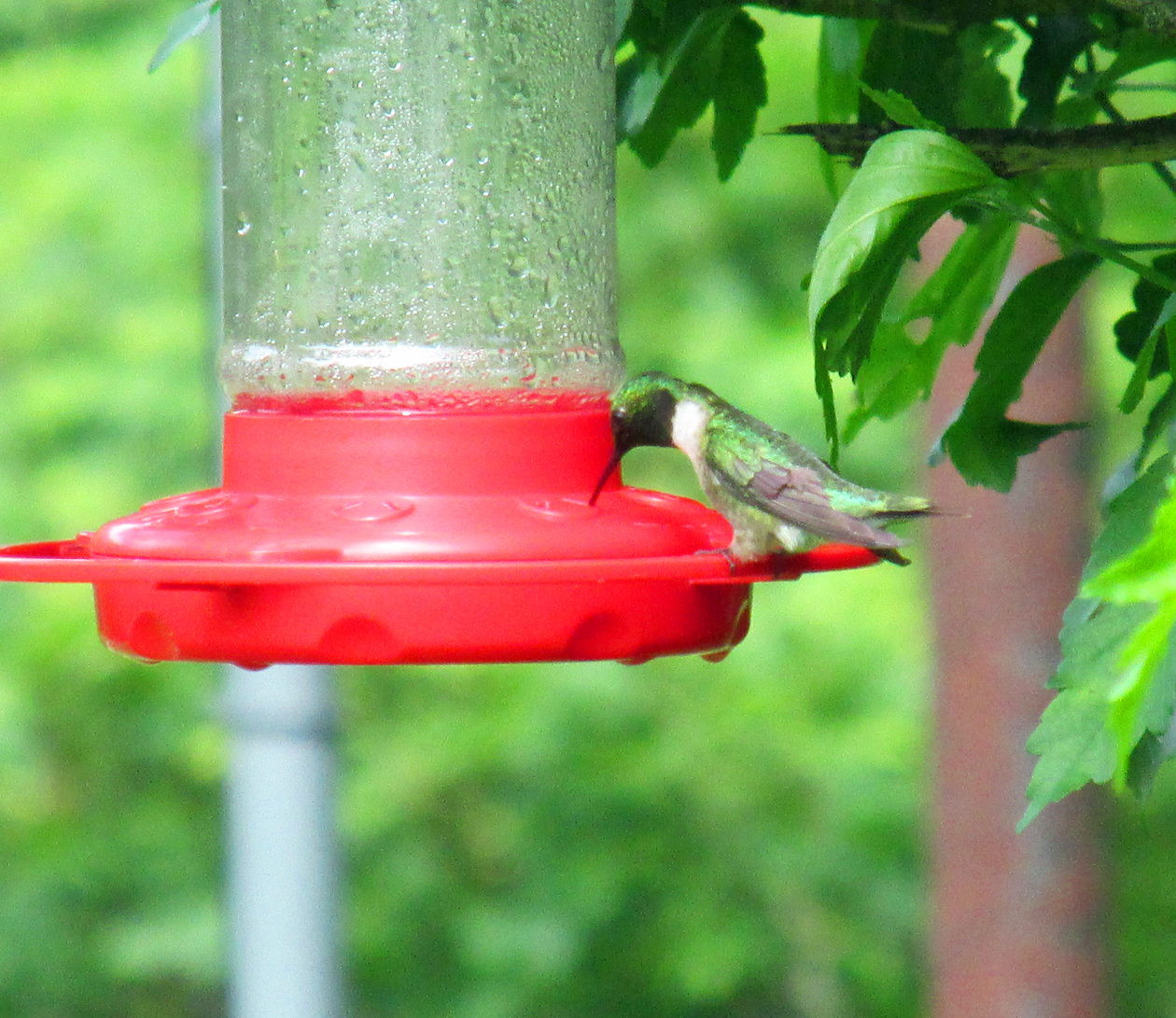
Photo by Bryan Stevens • A ruby-throated hummingbird sips from a sugar water feeder.


Tiny kinglets, gnatcatchers lead the charge among spring’s returning birds

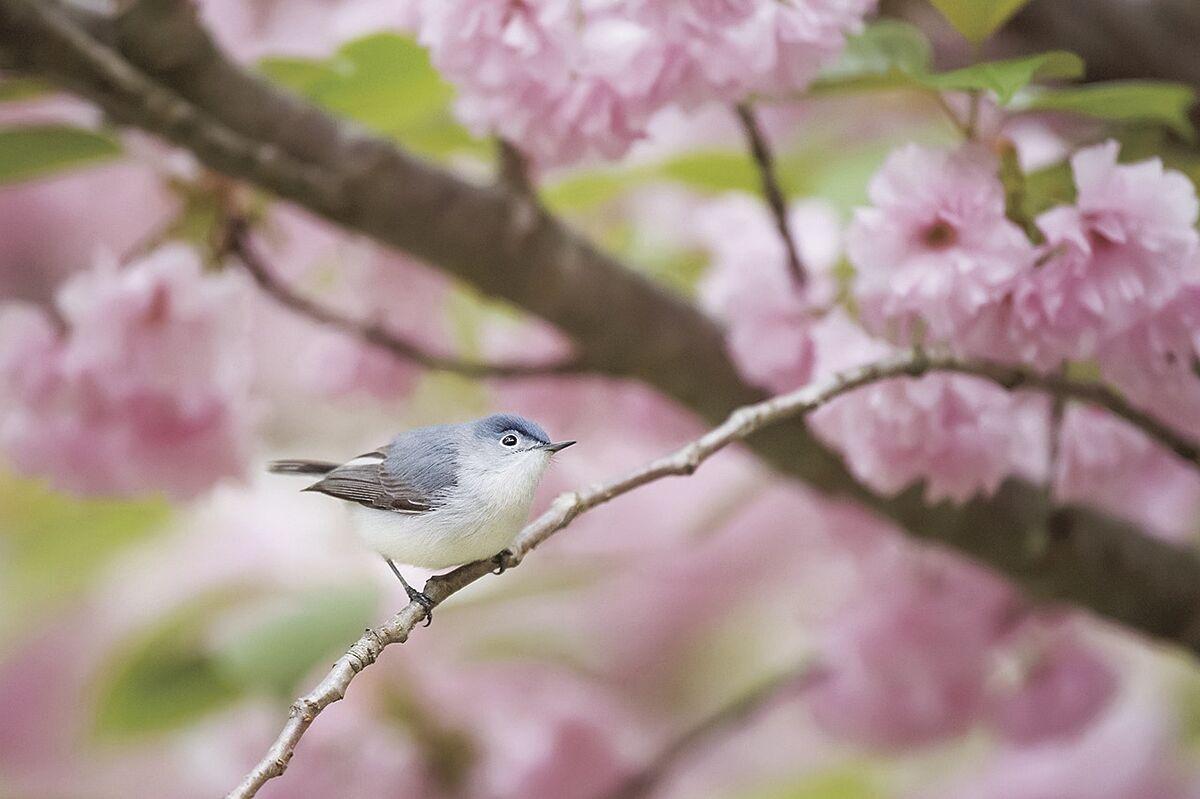
Photo by Pixabay • The blue-gray gnatcatcher’s diminutive size belies its defiant attitude. These birds are intensely territorial and brooks no intruders.

The ruby-crowned kinglets, which passed through last fall in October and November, have returned, retracing their migratory path for the spring season and making their presence felt at my home with their jittery call notes and songs.

Most of the more recent returning birds have been on the smaller side. In addition to ruby-crowned kinglets, which arrived on April 1, I saw and heard a tiny blue-grey gnatcatcher on March 31.

As their name suggests, kinglets are tiny birds. In fact, about the only North American birds smaller than kinglets are some of the hummingbirds. The kinglets, known outside North America as “flamecrests” or “firecrests,” belong to the family, Regulidae, and the genus, Regulus. The family and genus names are derived from a Latin word, regulus, which means “rex,” or “king.” The name was apparently inspired by the colorful crown patches, often red, orange or gold, that resemble the royal “crowns” of kings. In addition to the two North American species, four other species of kinglets can be found in North Africa, Europe and Asia.

The gnatcatcher is also one of our smaller birds. I’ve always though that blue-gray gnatcatchers resemble a shrunken mockingbird. Like quarrelsome mockingbirds, gnatcatchers are noisy, scolding songbirds.

They are also determined to protect their nesting territories at all costs and will attack much larger birds. In North America, the gnatcatcher ranks in size with birds like kinglets and hummingbirds. Despite its diminutive status, the gnatcatcher acknowledges no superiors. According to the All About Birds website, blue-gray gnatcatchers are “fiercely territorial” and use vocal displays and postures to in intimidate other birds. They may chase a rival as far as 70 feet. If all this fails to deter an intruder, a gnatcatcher will escalate to midair confrontations.

Gnatcatchers don’t hesitate to call for reinforcements when warranted. With persistent squeaking they will drum up a brigade of feisty, feathered fighters to repel intrusions by potential predators too large for a gnatcatcher and its mate to handle on their own.

Ruby-crowned Kinglet

There are two species of kinglets in North America.

Although similar in size and overall coloration, the ruby-crowned and golden-crowned kinglets are easily distinguished from each other. Side by side, the two North American kinglets are easy to identify. The golden-crowned kinglet has a striped facial pattern formed by bold black and white stripes. The ruby-crowned kinglet, on the other hand, has a bold white eye ring but no striping. The golden-crowned kinglet has an orange crown patch, while the ruby-crowned kinglet has a red crown patch that is, more often than not, kept concealed. Both sexes of the golden-crowned kinglet possess a yellow crown patch, but only the male ruby-crowned kinglet boasts a scarlet patch of feathers atop the head. Observers can expend a lot of energy trying to get a look at the crown patches, which are typically only displayed when the bird is agitated.

There are 17 species of gnatcatchers. Most of these species reside in Central and South America. Some of the other species found in North America include California gnatcatcher and black-capped gnatcatcher.

Kinglets are very active birds. If warblers can be described as energetic, the kinglets are downright frenetic in their activities. The kinglets almost never pause for long, flitting from branch to branch in trees and shrubs as they constantly flick their wings over their backs. These bursts of hyperactivity can make them difficult to observe. Although small in size, these birds more than compensate for it with a feisty spirit that does them well through the harsh winter months.

Gnatcatchers are also constantly on the move, flicking their tails and darting through the branches of trees just starting to put out new green leaves. They glean caterpillars and small insects from the undersides of leaves to help fuel their demanding metabolism.

Kinglets and gnatcatchers often join mixed flocks comprised of other species of birds, some of which are regular feeder visitors. Perhaps by observing their flock counterparts, some kinglets have learned to accept feeder fare such as suet, meal worms and chopped nuts. Away from feeders, kinglets mostly feed on a range of small insects and arachnids. Gnatcatchers are strictly eaters of insects, but while a feeder holds no attraction for them, their curious nature often makes these tiny bird quite approachable.

Normally, kinglets have a rather fleeting lifespan. These tiny birds can be considered old if they live three or four years. There are always exceptions. The oldest golden-crowned kinglet on record was six years and four months old. That individual, a male, was documented by a bird bander in 1976, according to the website All About Birds.

Likewise, gnatcatchers live brief lives. The oldest known blue-gray gnatcatcher was a male, and at least four years, two months old, when it was recaught at a banding station in Pennsylvania and rereleased, according to the All About Birds website.

•••

I’m still waiting for the smallest of the small to make its spring appearance. Ruby-throated hummingbirds are back, although I haven’t seen one yet. To share your first hummingbird sighting of spring, email me at ahoodedwarbler@aol.com.
 

Sounds of spring remain one of the season’s pleasures

Photo by Bryan Stevens • Blue-headed vireos, such as this bird, are high-elevation summer residents in the region. In the fall, they are also common migrants.

In modern life, it can seem like we’re always looking for ways to relax and de-stress. For me, nothing works quite so well as letting nature’s sounds, as well as sights, provide some measure of relief from stressful situations and anxious thoughts.

I instantly notice when a new vocalization is added to the usual mix. Such occurred on March 26 when I heard the syllabic song of a blue-headed vireo from the upper reaches of a large tree near the fish pond.

The blue-headed vireo’s song has been described as “Hear me! See me! Here I am!” It’s similar to the song of the related red-eyed vireo, but it’s slower and the paired syllables are separated by a brief pause.

În a couple more weeks, the songs of blue-headed vireos will ring out all over the high-elevation forested slopes of many of our local mountains, but these are just starting to get back to the region after an absence during the colder months. Many other feathered singers will be arriving in their wake, including warblers, tanagers and grosbeaks.

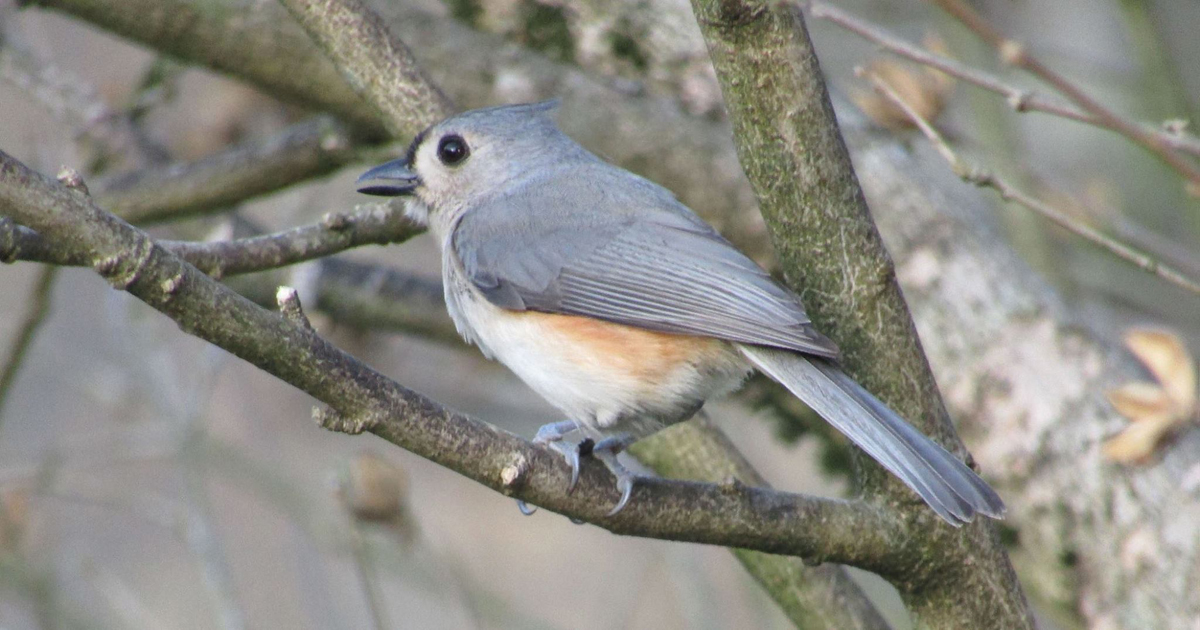
Photo by Bryan Stevens • The tufted titmouse is a backyard bird with an impish personality and a loud song.

The mornings around my home often begin with a loud, insistent “Peter! Peter! Peter!” uttered from the woods or even from shrubbery just outside my bedroom window. Male tufted titmice, little gray relatives of chickadees with a distinctive crest and large, dark eyes, sing their urgent “Peter! Peter! Peter!” as a constant refrain in their efforts to attract mates now that they feel spring in their blood.

A series of rat-a-tat-tats echoes from deeper in the woods as woodpeckers tap their sturdy bills against the trunks of trees. The three most common woodpeckers at my home are red-bellied, downy, and pileated, and they all have their own unique vocalizations, as well.

The pileated woodpecker produces clear, far-carrying resonant piping sounds that can last for a few seconds each blast. The much smaller downy woodpecker produces a whinny of high-pitched notes that descend in pitch toward their conclusion. The red-bellied call is probably the one that stands out the most. The call’s a harsh, rolling “Churr, churr, churr” given almost like an expression of exasperation as they circle tree trunks and explore branches.

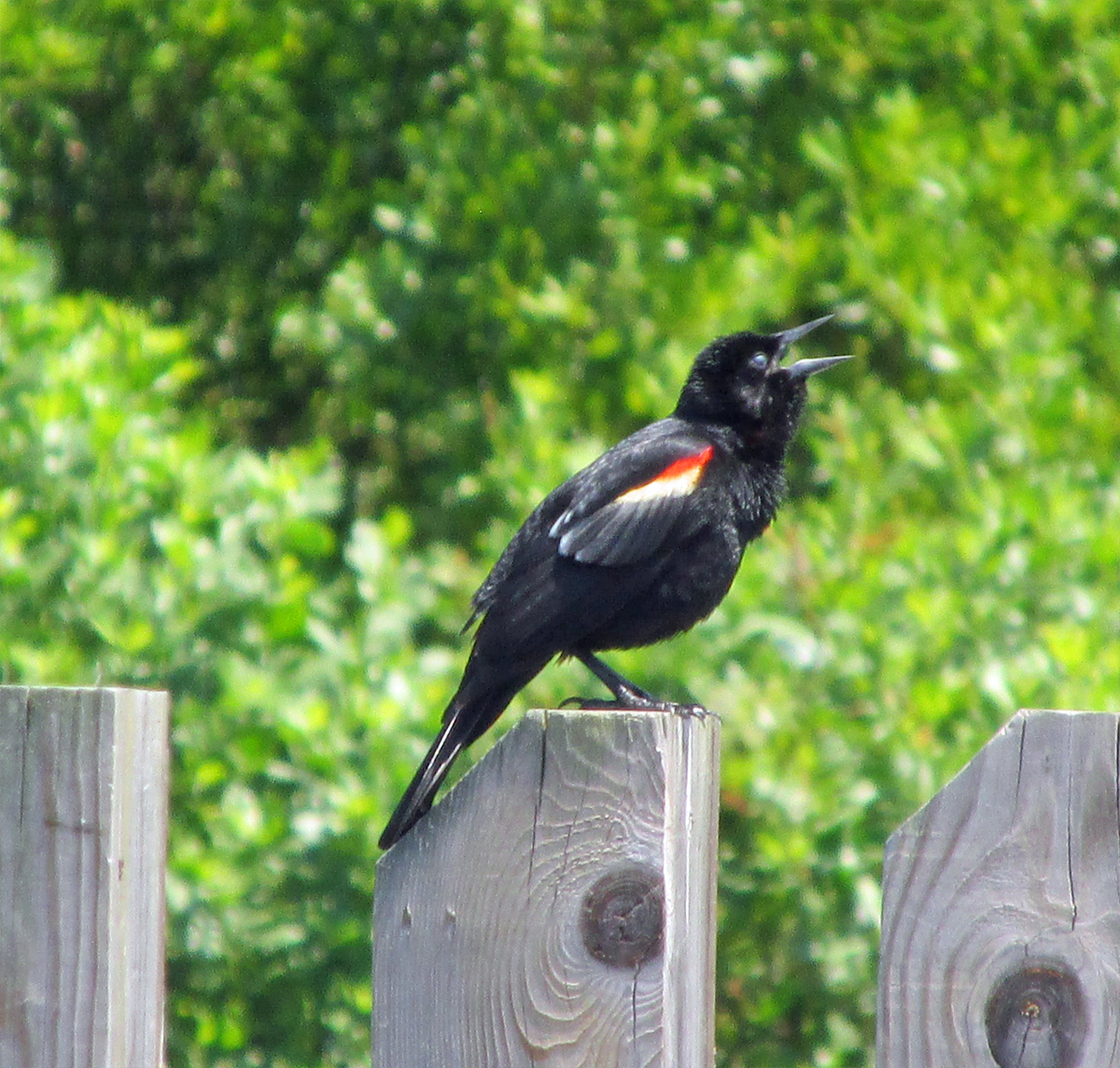
Since their return earlier this month, the resident red-winged blackbirds are often some of the earliest singers these days. According to the website All About Birds, the male red-winged blackbird’s “conk-la-ree!” is a classic sound of wetlands across the continent of North America. According to the website, the one-second song starts with an abrupt note that transforms quickly into a musical trill.

Photo by Bryan Stevens • A male red-winged blackbird sings to attract mates and ward off rivals.

Some birds helpfully introduce themselves with a song that repeats their name. One such common bird is the Eastern phoebe. In recent weeks, a pair has been checking out possible nesting sites. In past years, they have made use of the rafters of my garage and blades on a porch ceiling fan for potential nest sites. The male spends much of the day producing his strident “fee-bee” call, which is a perfect phonetic rendition of the bird’s common name.

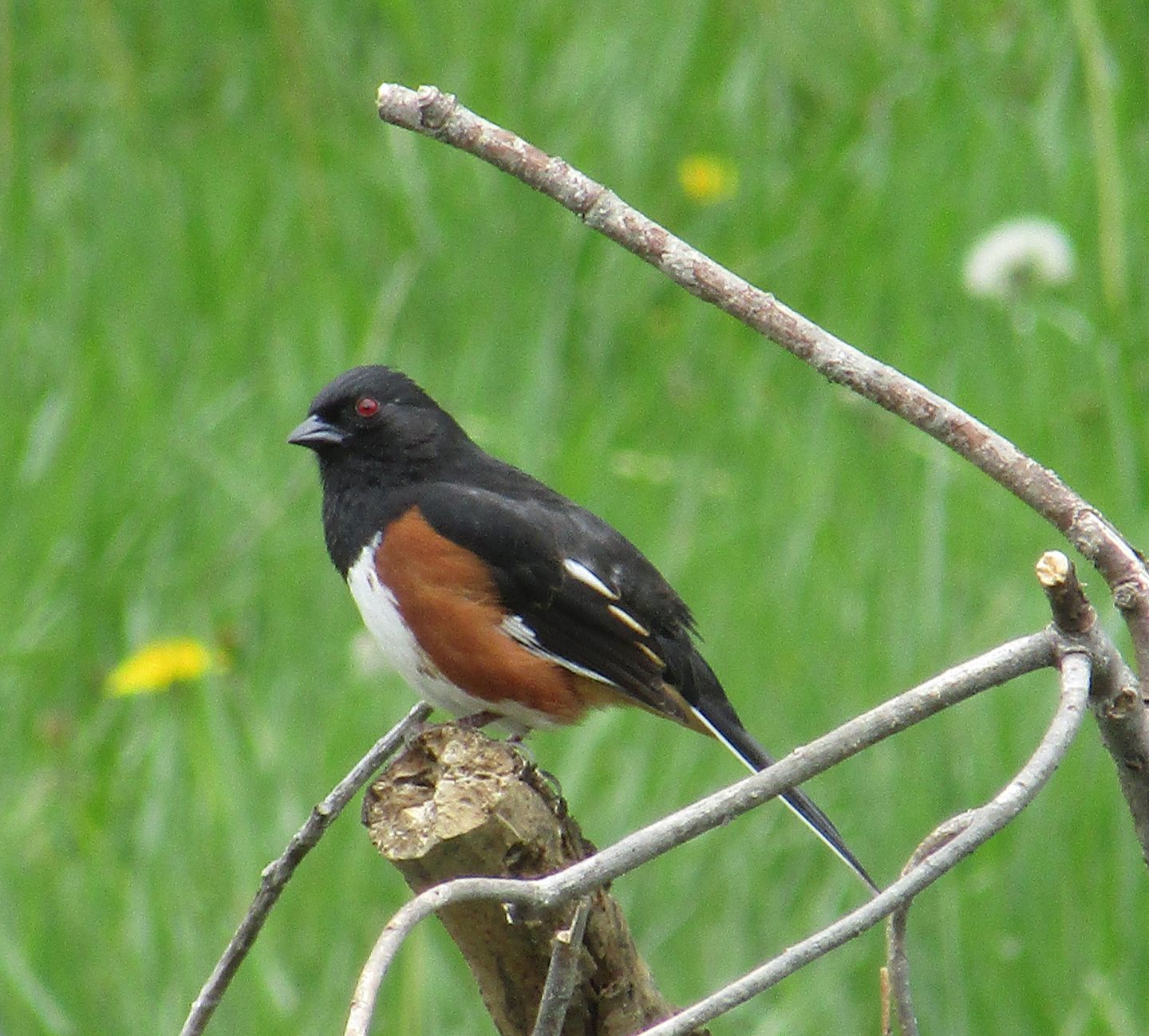
Then there’s one of my favorite songs of spring, which is produced by the Eastern towhee, also known by such common names as “ground robin” and “swamp robin.” These birds, which are actually a species of sparrow, also have some instantly recognizable vocalizations. With the arrival of spring, the males seek elevated perches for extensive singing bouts to attract mates and establish territories. Their song has been interpreted, quite accurately, as “drink your tea!” They also have some alarm notes, such as “€œChew-ink”€ and “€œToe-Hee,” of which the latter provides the basis for this bird’s common name.

Photo by Bryan Stevens • Male Eastern towhees are persistent singers once they establish  a spring territory.

Towhees occasionally spend the winter, but I’ve not noticed any during the winter of 2023-24. They are back now, and have been keeping a high profile for the past couple of weeks.

Of course, other wildlife is keen to join the springtime chorus. I have so many spring peepers at the fish pond and in the wet fields around my house that the noise from these tiny amphibians can reach deafening levels. The chorus is bound to grow more diverse and louder as spring advances. Take some time to enjoy the sounds of nature at your own home.

••••••

To share your own sighting, make a comment or ask a question, send email to ahoodedwarbler@aol.com. I’m also on Facebook.