Category Archives: Abingdon

Mother Nature’s whims can produce major impacts on birds

Sooty_tern_flying

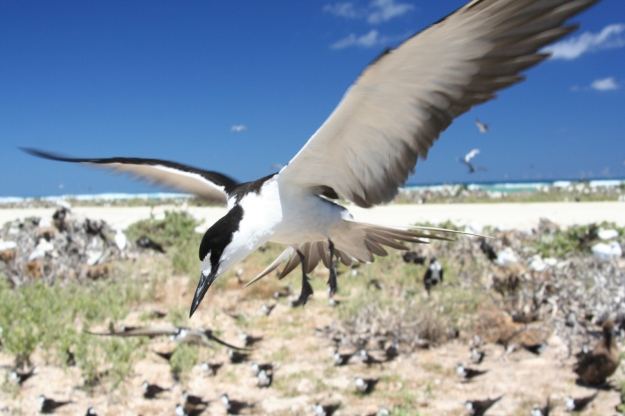
Photo by U.S. Fish and Wildlife Service/Duncan Wright The sooty tern, pictured, nests mainly in Hawaii, but some also nest on the islands of the Dry Tortugas, west of the Florida Keys. In 2004, Hurricane Frances blew one of these tropical birds to Holston Lake in Bristol. Severe storms also present devastating obstacles for other birds.

With Hurricane Florence dominating the headlines in recent weeks, it’s only natural to speculate on whether such storms can impact birds in a negative way.

According to a 2011 blog post made on the National Wildlife Federation website, hurricanes can be bad news for some birds. Naturally enough, sea birds and waterfowl are most exposed to the forces of a hurricane. Some birds will move inland to avoid the incoming storm. The birds that inhabit our yards and gardens will ride out the storm using special adaptations. Songbirds will automatically tighten their toes around their perches, riding out the winds of a hurricane by holding onto a branch with a death grip. It’s the same adaptation that lets them sleep on a branch without letting go and falling off during the night.

The blog points out that the news often covers the appearance of rare species after a major storm. Some of these birds transported to unusual locations are probably younger or weaker birds. Once transported far from their usual range by a hurricane, it can take weeks to return home — if they can find the right foods on their way back.
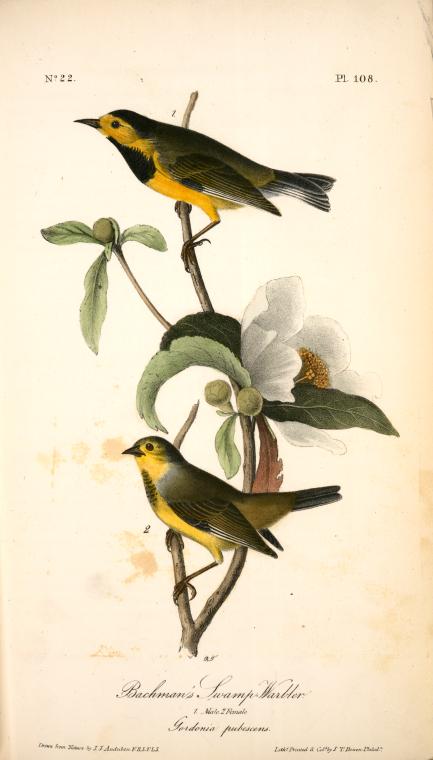
John-James-Audubon-Bachman_s-Swamp-Warbler.-1.-Male.-2.-Female.-Gordonia-pubescens.- (1)

Early naturalist and accomplished artist John James Audubon painted Bachman’s warbler without ever seeing a living one. A friend sent him some skins of the warbler collected near Charleston, South Carolina. A hurricane may have contributed to the extinction of Bachman’s warbler.

In a worst case scenario, hurricanes may have dealt fatal blows to some bird species. For instance, a hurricane may have delivered the knock-out blow to a species of warbler that went extinct last century, according to the website, Field Guide to Extinct Birds. A hurricane that slammed into Cuba in the 1930s when most of the Bachman’s warbler population was wintering on the island might have wiped out enough of the population to make the survivors too rare and far-flung to find each other to breed. The warbler, sensitive to habitat destruction from logging and already in a steep decline, never seemed to recover. It was the ultimate example of keeping all of one’s eggs — or birds — in one unlucky basket.

Discovered in 1832 near Charleston, South Carolina, by the Reverend John Bachman, this warbler attracted little attention for the first half century after its discovery. Bachman sent some skins of the bird to his friend, the artist and early naturalist John James Audubon. Subsequently, Audubon painted this warbler by using those skins and Bachman’s description of the bird’s habits for inspiration. Ironically, considering he described the species for science, Audubon never actually laid eyes on an actual living Bachman’s warbler.

The last specimens of Bachman’s warbler were collected in Mississippi in the early 1940s. The last strongholds for breeding Bachman’s warblers in the United States were Fairfax County, Virginia, in the 1950s and South Carolina’s I’on Swamp in the early 1960s. The last photograph documenting a Bachman’s warbler was taken in 1954. in Charleston, South Carolina, bringing the story of this warbler full circle from its discovery in the same vicinity back in 1832. No Bachman’s warbler sightings have been confirmed since 1961, despite reports in the 1970s and 1980s, as well as reports made in the spring of 2000 and 2001 in the Congaree Swamp National Monument in Richland County, South Carolina. None of those sightings could be confirmed.

Like the ivory-billed woodpecker and Eskimo curlew, Bachman’s warbler is another bird likely to be labeled for the near future with the tag “likely extinct” associated with its name. Like the large woodpecker and the shorebird with a penchant for long-distance migration, the Bachman’s warbler went out with a whimper, not a bang, with most of its viable population snuffed out by an October hurricane just as the species returned to Cuba for the winter season.
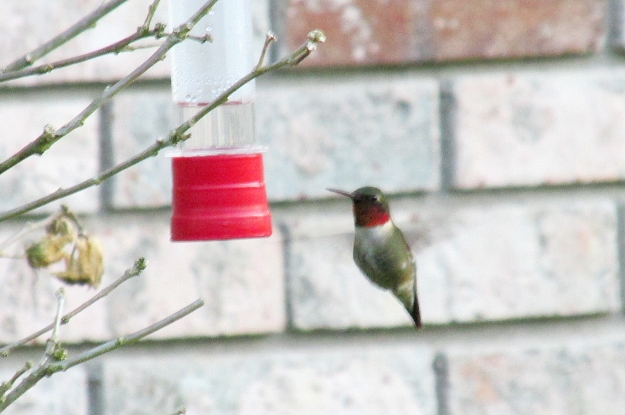
Ruby-throat

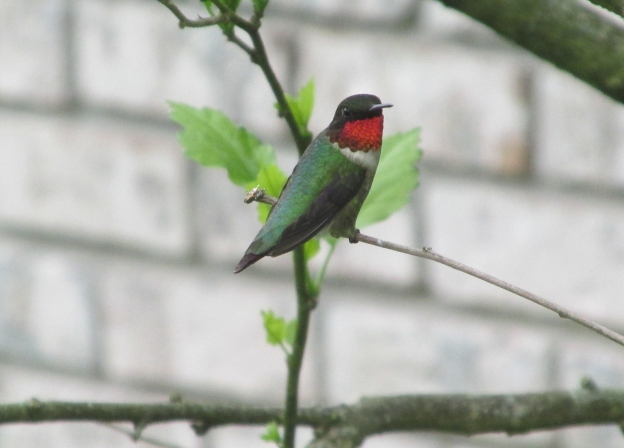
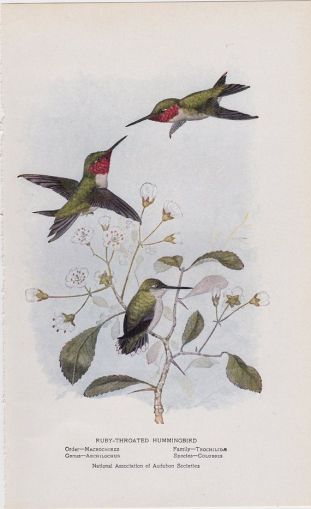
Photo by Bryan Stevens • Ruby-throated Hummingbirds make a non-stop crossing of the Gulf of Mexico. A hurricane in the Gulf during migration could have serious consequences for this small bird.

More recently, experts worried Hurricane Irma might have delivered a knockout blow to the population of another tiny species of warbler. The Barbuda warblers on the tiny Caribbean island of Barbuda were feared exterminated in the wake of Irma. When the storm hit the island in September of 2017, its path affected more than 90 percent of the island and nearly wiped out the available habitat for the warbler, which already had a Near Threatened status. After the passage of the storm, participants in searches for the warbler turned up sightings of the bird. Nevertheless, the population status and ability to fully recover remains uncertain.

Science keeps adding to its knowledge of how birds are affected by hurricanes and other storms. A 2017 study showed possible consequences for a seabird known as the sooty tern in relation to hurricanes.

The study, published in the peer-reviewed open-access journal PeerJ, is the first to map the birds’ annual migratory path and demonstrate how its timing and trajectory place them in the direct path of hurricanes moving into the Caribbean after forming over the Atlantic.

Climate change threatens to bring about more frequent and powerful hurricanes, which could be bad news for the terns. Migration is a stressful undertaking for birds. If they encounter a strong storm in a weakened state, the results could be catastrophic. The study revealed a strong relationship between the numbers and locations of bird deaths and the numbers and locations of hurricanes. The study also showed that it isn’t just monster storms with the potential to cause devastation. Tropical Storm Delia, a small storm in the Gulf of Mexico in 1973, killed a lot of sooty terns. Essentially, the terns were in the wrong place at the wrong time.

Shorebirds

Photo by Bryan Stevens • A mixed flock of Short-billed and Long-billed Dowitchers and a Ruddy Turnstone at Huntington Beach State Park in South Carolina. Hurricanes can interrupt the migrations of even these long-distance migrants.

Of course, the sooty tern is not a rare bird. About 80,000 or more of these terns are estimated to breed in the Dry Tortugas each year. That’s the entire point, however; Bachman’s warbler was also once considered a common bird.

All of these examples point to the resilience of birds, but there’s also a lesson to learn. We should never take any of our feathered friends for granted. While the winds and rains from a hurricane can decimate human lives, wildlife is not immune. Sadly, birds can weather many a storm, but sometimes they get swamped.
 

Common nighthawk flocks form part of fall migration spectacle

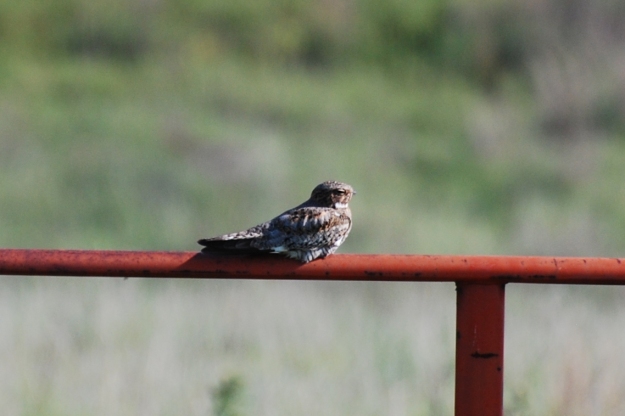
Nighthawk

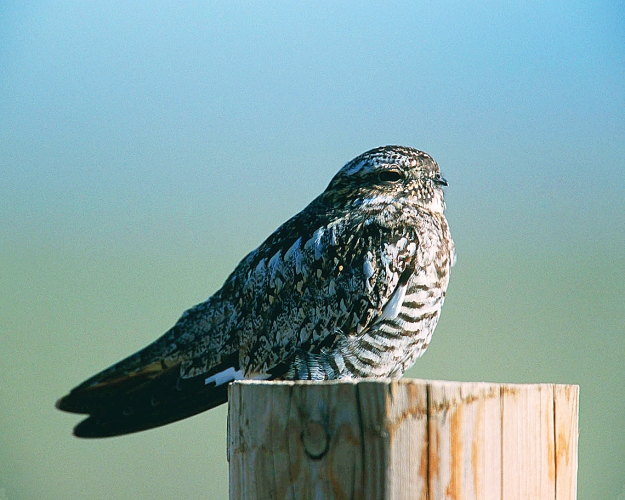
Photo by Jean Potter • A common nighthawk rests on a metal railing.

With September advancing on the calendar, I have been keeping an eye on the skies. For the most part, I focus on the upper branches of trees and feeders during the migration season, but I don’t forget the need to look skyward from time to time.

The reason? Well, that’s the best way to detect soaring raptors or flocks of migrating common nighthawks. The autumn sky is also a popular flyway for other birds, including chimney swifts and swallows.

So, what is a common nighthawk? First, this bird, despite what is implied by its name, is not a hawk. It’s also not strictly nocturnal. Particularly in the fall, nighthawks are active during daylight hours when engaged in catching winged insects. Outside of fall migration, these birds can often be observed over large parking lots or well-lit streets, snatching up insects swarming around the light poles.

The common nighthawk is one of three members of the nightjar family found in the region during the summer months. The other two nightjars are the whip-poor-will and chuck-will’s-widow, birds that produce their namesake vocalizations in the nocturnal hours. Both of these species migrate, but they don’t take the dramatic approach employed by nighthawks. Each fall, common nighthawks form large flocks, ranging in size from dozens to hundreds or even thousands of individuals, as they migrate south for the winter.

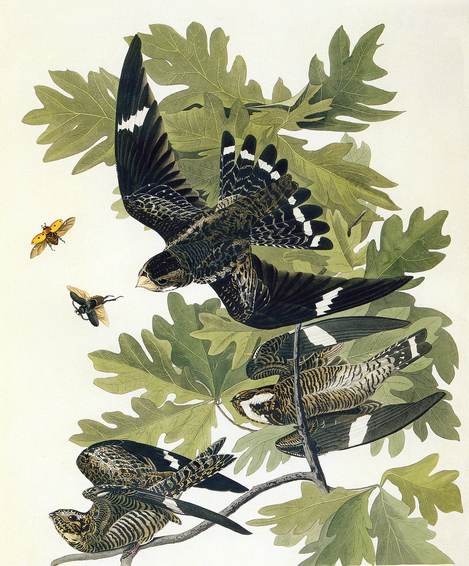
john_james_audubon_common_nighthawk_bird_print

Early American naturalist and artist painted this dynamic scene of common nighthawks.

The whip-poor-will, after the common nighthawk, is the second most widespread member of its family to spend its breeding season in North America. The whip-poor-will ranges from southern Canada to the Gulf states. This bird also occurs in Arizona, New Mexico and southwestern Texas. The whip-poor-will favors habitat consisting of deciduous woodlands and the edges of forests.

All members of the nightjar family feed exclusively on insects that are caught on the wing. In this respect, the nightjars can be considered the nocturnal counterparts of the swallows. The nightjars have comparatively large, gaping mouths they use to scoop up flying insects. They also have large eyes, an adaptation to their nocturnal lifestyle.

Whip-poor-will numbers have been declining in the past few decades. These nocturnal birds frequent woodland edges, but they seem to be rather particular about such habitats. A forest that is too mature seems to hold little interest for them. Disturbed habitats, such as those created by logging, are acceptable to the birds once secondary growth begins. As this new growth matures, however, the whip-poor-will apparently abandons such territory. Because of these requirements, whip-poor-wills can be somewhat localized in their distribution and sometimes difficult to locate.

Nighthawk-PHOTO

Photo by U.S. Fish and Wildlife Service • A common nighthawk finds a perch for a brief rest.

When I was a kid, one of my favorite summer activities was sitting on the front porch of my grandparents’ home and listening to the whip-poor-wills call after dark. I remember how the plaintive call would be repeated for long intervals before a passing automobile’s headlights might frighten the bird into silence. Then, after a brief pause, the “whip-poor-will” calls would, tentatively at first, begin again and continue throughout the night.

Today, I’m living in my grandparents’ old home, and the whip-poor-wills no longer call. I heard a single individual that called for a single evening back in May of 1997, but that was apparently a migrating bird that did not remain in the surrounding woodlands. The only member of the nightjar family that I dependably encounter at home these days is the common nighthawk, and then only during that narrow window of late summer and early autumn.

Unlike whips and chucks, the common nighthawk isn’t active only after dark, which makes it much easier to observe these birds. They look somewhat like swifts and swallows but are much larger. They are brownish-gray birds with pointed wings and forked tails. They are easily identified by distinctive white patches on the underside of their wings.

The nightjar, or Caprimulgidae, family of birds is also sometimes known as “goatsuckers.” There are almost 80 species of nightjars in the world. Less than 10 occur in North America. The common nighthawk, whip-poor-will and the chuck-will’s widow are neotropical migrants. While they breed in a wide range of territory in North America, they spend their winters in Central and South America. Like all nightjars, nighthawks feed almost exclusively on insects, which they catch on the wing.

Many of the common nighthawk’s relatives have been given descriptive names, such as long-trained nightjar, collared nightjar, spot-tailed nightjar, red-necked nightjar, golden nightjar, fiery-necked nightjar, swamp nightjar, pennant-winged nightjar, lyre-tailed nightjar, little nightjar, sickle-winged nightjar, rufous-bellied nighthawk, short-tailed nighthawk, sand-coloured nighthawk and least nighthawk.

So, keep looking skyward. The next flock of migrating common nighthawks may fly over your home. These flocks are usually on the move throughout September although they begin to appear as early as late August. They can also appear almost magically, as if out of thin air. First, observers may see one of two birds, then several, followed quickly by dozens or sometimes hundreds as they wheel and cavort in the skies overhead with impressive grace and agility. I’ve seen flocks that would easily number more than 500 birds in locations throughout the region, although flocks often number only a couple of dozen birds. The two flocks I’ve observed so far this migration season numbered about thirty and fifty birds, respectively.

41004068_10215014667832542_3336138056443887616_o

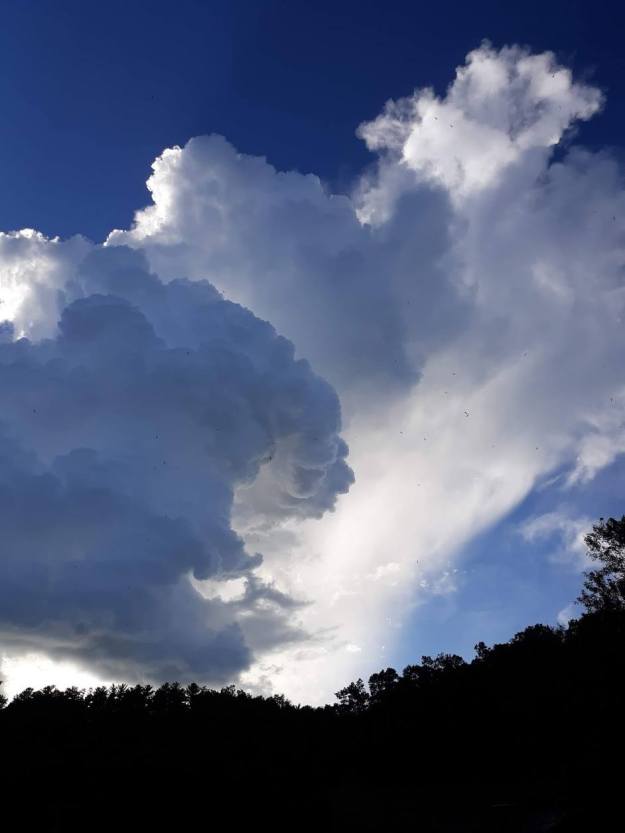
Photo by Bryan Stevens • Rising clouds provide a backdrop for a flock of migrating nighthawks.


Family of pigeons, doves features one famous member

Vivian Tester of Bristol, Tennessee, sent me an email seeking help with a pigeon problem.

“I need your advice on trying to keep the pigeons off my bird feeders,” Vivian wrote. “They are chasing off the birds I want to feed and devouring all the seed. My neighbor says they are doves but whatever they are, they are annoying. I don’t know if the squirrel-proof feeder would work or not. I would appreciate any help.”

animal animal photography avian beak

Photo of a rock pigeon by Pixabay on Pexels.com

I recommended that Vivian offer only black oil sunflower seeds to see if that might can discourage the unwanted guests. While pigeons will eat sunflower seeds, they much prefer smaller seeds like milo and millet often found in mixed seed packages. If their preferred food source dries up, they may be convinced to move elsewhere.

Stopping feeding for a trial period is another possibility. Remove food for a week and then slowly start offering seeds again. If the pigeons have moved to other feeding grounds, perhaps they will be slow to return.

It’s a tough problem to solve. Although some feeders can be designed to prevent a large bird like a pigeon or dove from perching, the birds are going to still make the attempt. In doing so, they knock seed to the ground below and will happily feed on the spillage. The best option for avoiding pigeons would be to use tube feeders designed for minimal spillage if jostled. Doves and pigeons prefer to feed on the ground, so scattering seeds there, intentionally or inadvertently, is an invitation for flocks to gather.

PIGEON-PIC

Photo by Jean Potter • The widespread rock pigeon is one of the most successful members of the bird family Columbidae, which is comprised of some 310 species of doves and pigeons. One of the most famous representatives of the family is the dodo, an extinct relative of such common birds as the mourning dove and rock pigeon.

Nature, too, offers a solution. Several species of raptors prey readily on doves and pigeons. Peregrine falcons and Cooper’s hawks are two effective controls on such birds, but it is not easy to issue an invitation for one of these birds to take up residence in your yard.

The two mostly likely offenders in the region are the mourning dove and the rock pigeon. Mourning doves are an abundant native species at home in both rural areas and suburbs. The rock pigeon is not a native species but has thrived in the United States since it first arrived with early colonists from Europe. Rock pigeons are mostly a problem for people attempting to feed birds in urban and suburban areas.

Pigeons and doves constitute the animal family Columbidae, which is comprised of some 310 species. One of the most famous members of this family is the extinct bird known as the dodo. The well-known story of the dodo doesn’t often make reference to the relations this bird had to living doves and pigeons.

Roelant_Savery_-_Landscape_with_Birds_-_WGA20885 2

In the lower right corner of this illustration, a dodo is visible along with such birds                        as macaws, cranes, and even a wild turkey. Titled “Landscape with Birds,” this painting            was done by artist Roelant Savery in 1628.

Early scientists did not know what to make of the dodo and theorized that the unusual flightless bird was everything from a small ostrich to flightless versions of an albatross or a vulture. Johannes Theodor Reinhardt, a zoologist from Denmark, hinted at the dodo’s relationship to the world’s pigeons and doves as early as 1842. At first his theory was ridiculed, but other biologists and zoologists eventually came to accept the fact that the dodo was indeed a large, flightless pigeon.

The dodo stood a few inches over three feet tall and could weigh close to 40 pounds. Most of what is known about the dodo comes from paintings and drawings of the bird made by early explorers in the 17th century. Some of the humans who observed the bird also left behind valuable written accounts. First discovered by Dutch sailors who visited the Indian Ocean island of Mauritius in 1598, the dodo became extinct only 64 years later. So about the same time the rock pigeon was establishing itself as an introduced species of bird in North America, around the world one of its cousins slid quietly into extinction.800px-Van_den_Venne_dodo 2

The dodo has acquired a reputation in popular culture as slow-witted, lethargic, fat, clumsy and stupid, dooming the bird as a creature too ill-suited to exist. Today, most scientists believe that the dodo was adapted perfectly to its island habitat. Having evolved as a flightless bird, the arrival of humans in its paradise meant its doom. The reputation for stupidity is unfair. Having never encountered humans, dodos did not have an instinctive fear of them. This lack of fear made it easy for the early explorers of their island home to quickly render them extinct.

Modern science has even pinpointed the dodo’s closest living relative. Thanks to DNA analysis, the Nicobar pigeon of southeast Asia has been identified as the closest relation of the dodo. The Nicobar pigeon is much smaller (only 16 inches long) and, unlike its famous relative, is capable of flight. This pigeon feeds mostly on fruit and seed. When grain of any kind is available, it will also make use of such a food source.

Most contemporary sources reveal that the dodo enjoyed a diet rich in fruit, but modern biologists speculate the dodo probably also foraged for nuts, seeds and tubers. It’s ironic that the dodos were slaughtered to extinction to provide food for early explorers of their island. An English explorer by the name of Sir Thomas Herbert recognized the dodo’s exploitation as a food source, but disparaged the bird’s taste. “To the delicate they are offensive and of no nourishment,” Herbert wrote in his published work, “A Relation of Some Years Travel into Africa and the Greater Asia.”

Lophopsittacus.mauritianus

This sketch, completed in 1634 by Sir Thomas Herbert, shows a broad-billed parrot, a red rail and possibly one of the last dodos to exist on the planet. Herbert described the dodo as a rather poor food source for early explorers to its island home. 

Like the pigeons that have become a scourge on Vivian’s feeders, it’s very likely that, had they survived, dodos might visit feeders today on the island of Mauritius. For the most part, the world’s doves and pigeons are considered successful birds.

In the United States, some other native doves include the widespread mourning dove, as well as white-winged dove, common ground dove and Inca dove. The Eurasian collared-dove, introduced into the Bahamas and Florida, has now spread extensively into the United States and is known to have established populations through northeast Tennessee and southwest Virginia.

Dove-Wing

Photo by Bryan Stevens • A mourning dove stretches a wing while perched on a feeder.

Some descriptive names for some of the world’s doves include purple-winged ground dove, lemon dove, zebra dove, ochre-bellied dove, tambourine dove, white-faced cuckoo-dove, ring-necked dove, little cuckoo-dove and sapphire quail-dove. Pigeons have also been bestowed with such colorful names as snow pigeon, speckled pigeon, yellow-eyed pigeon, pale-capped pigeon, metallic pigeon, crested pigeon, pink pigeon and squatter pigeon.

We all like to attract as many birds as possible to our yards and gardens. A variety of food will help achieve that objective. Be aware, though, that such free buffets will also encourage messy birds like pigeons that make feathered pigs of themselves and almost always overstay their welcome. There’s also the option to admire pigeons and doves as survivors with a lineage worthy of some admiration. Hang some tube feeders accessible to smaller songbirds but toss some seeds into a corner of the yard for the ground-feeding pigeons and doves. They’re birds, too, after all.

Dodo_head

English naturalists dissected a dodo skull, shown in this sketch, in 1848 to help prove the relationship of the dodo to pigeons.

Roelandt_Savery_-_'Dodo_Birds',_Chalk,_black_and_amber_on_cream_paper


White-faced ibis creates birding stir with rare visit to region

When I awoke on April 19, I didn’t expect that I’d end up seeing a new state bird before the day ended. Thanks to timely notices of a new bird sighting by email, I used my work break to drive to Elizabethton, Tennessee, to see a white-faced ibis at the Carter County Rescue Squad pond. The opportunity for unexpected appearances by birds like the white-faced ibis is why I love spring migration.

White-FacedIbis

Photo by Bryan Stevens • The red eye of this white-faced ibis allowed observers to confirm the identity of the bird. The similar glossy ibis does not have red eyes.

Tom McNeil spotted the bird at a much larger pond on the campus of Northeast State Community College in Elizabethton. After he reported the bird, I was able to use a work break to travel to the location and find the bird nearby at the smaller pond, where several area birders had already arrived. The ibis had moved to this smaller pond after departing the larger pond where it was first detected.

This is only the second record of a white-faced ibis for Northeast Tennessee.

The white-faced ibis is a widespread wading bird, nesting from the western United States and Canada south through Mexico, as well as from southeastern Brazil and southeastern Bolivia south to central Argentina, and along the coast of central Chile.

I saw white-faced ibises for the first time during a trip to Utah in May of 2006. The state had enjoyed a spring with ample rainfall, and every flooded field and pasture contained flocks of these distinctive wading birds. These flooded fields provided temporary habitat for numerous other birds, including cinnamon teal and Wilson’s phalarope.

UtahIbis

Photo by Bryan Stevens • A flooded field in northern Utah near the border with Wyoming provided foraging habitat for this white-faced ibis.

The white-faced ibis is almost identical in appearance to the glossy ibis, which is the most widespread ibis in the world. The glossy ibis ranges across six continents, absent only from Antarctica. In the United States, the glossy ibis ranges mostly along the southern Atlantic coastal area. I have observed this bird at several locations in South Carolina.

The similar appearances of white-faced and glossy ibis presents challenges to identification, which was the case with this recent visitor. The bird found in Elizabethton lacked the white plumage in the face that gives the species its common name. Fortunately, the bird did plainly show one physical trait — red eyes — that easily distinguishes it from the related glossy ibis. Sometimes, all it takes to clinch an identification is a simple physical characteristic such as, in this case, a red eye.

A third ibis native to North America is the white ibis. The Audubon Society identifies the white ibis as one of the most numerous wading birds in Florida, but the bird is common also in other parts of the southeast with appropriate wetland habitat. Like the wood stork, the ibis has declined in Florida in recent decades largely as a result of human encroachment.

BRYAN-IBIS

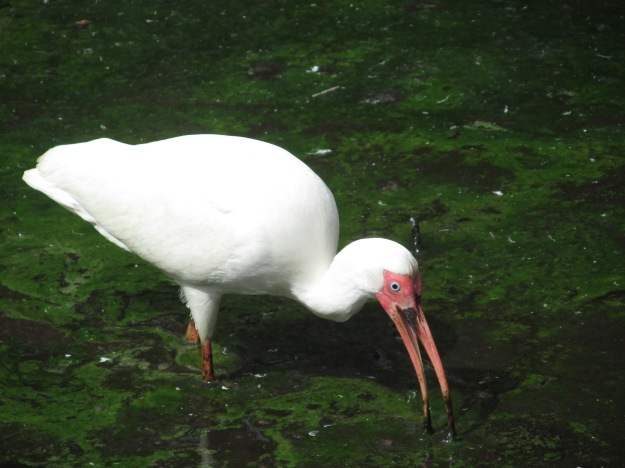
Photo by Bryan Stevens • A white ibis forages for food by probing in water and mud.

The white ibis looks like a humorously absurd bird that could have been invented by Dr. Seuss. The extravagant, all-white plumage is contrasted by pinkish-orange legs, an extremely long, downcurved, reddish-pink bill and bright blue eyes. In flight, the white ibis shows black feathers on the edges of its wings.

I’ve seen white ibises in Tennessee as well as in South Carolina and Florida. In the Sunshine State, another relative — the unmistakable scarlet ibis — is sometimes observed in the wild. The scarlet ibis inhabits tropical South America and islands of the Caribbean, but the species if often held in zoos and other attractions. Escaped birds rather than strays are often the source of sightings in Florida of this vibrant scarlet-feathered ibis.

Glossy-Flock

Photo by Bryan Stevens • A glossy ibis flock feeds in a wetland located at Huntington Beach State Park in South Carolina.

All ibises have long, downcurved bills. These birds usually feed in small flocks, probing wetlands for prey such as crustaceans, small fish, amphibians, insects, and various invertebrates. Worldwide, there are about 34 species of ibis, including the red-naped ibis, black-faced ibis, green ibis, straw-necked ibis and African sacred ibis, which is the bird often depicted in tombs and other monuments of ancient Egypt. This ibis was associated with the Egyptian god, Thoth, who was often depicted as a man with the head of an ibis.

The brief visit from the white-faced ibis provides a good reminder that we’re in the midst of spring migration. Stay alert for those unexpected birds. You never know what you might see.

IMG_5931

Photo by Bryan Stevens • The white-faced ibis found in Elizabethton, Tennessee, is shown walking past a domestic duck and a mallard.

Readers continue to report hummer arrivals

A few other readers have shared their first spring hummingbird sightings.
• Bunny Medeiros of Abingdon, Virginia sent me an email to announce her first sighting. “To my delight, the day after I put out my feeder a hummer appeared,” she wrote. The bird, a male, made his appeared on April 14.
• Rhonda Eller of Chilhowie, Virginia, saw her first ruby-throated hummingbird of spring on April 18. “Surely spring is going to come and stay!” Rhonda predicted on her post of my Facebook page.

Bird survey seeks volunteers

The Virginia Breeding Bird Atlas is getting ready for a third year of surveying the state’s birds. The atlas is a citizen science project, and volunteers conduct most of the key data collection. Organizers are hopeful that Virginia’s strong birding community will partner with the Virginia Ornithological Society and Virginia Department of Game and Inland Fisheries to accomplish the largest bird conservation effort in the state to date.
“This is our third year, and we can always use more volunteers to participate,” said Steven Hopp with Environmental Studies at Emory and Henry College. “Our region down here in the corner is one of the least-covered areas of the state.”
Anyone interested in participating and learning more about the atlas is welcome to email Hopp at shopp@ehc.edu.

IMG_5909

Photo by Bryan Stevens • The white-faced ibis probed the edge of a pond in its search for food, occasionally catching and consuming tadpoles.

Hummingbirds are back, and readers share first spring sightings

30425329_10214061548565156_3810521485761143823_o 3

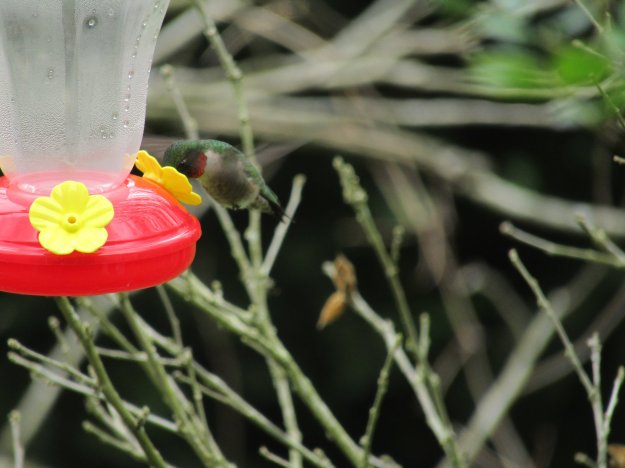
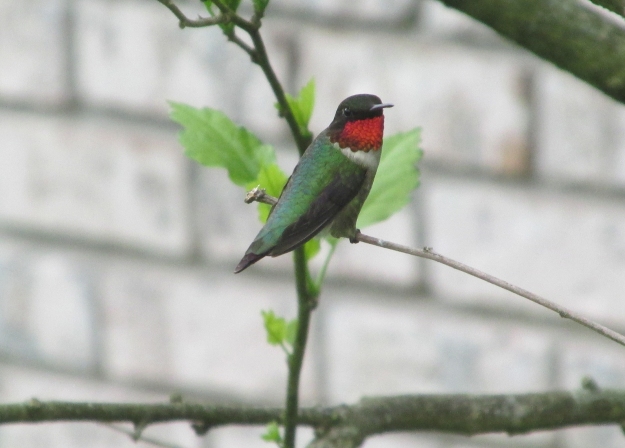
Photo by Bryan Stevens • Ruby-throated hummingbirds returned to the region earlier this month. This male, sipping sugar water from a feeder, shows its namesake red throat patch.

As many readers have already noticed, the ruby-throated hummingbirds are back. These tiny flying gems began returning to the region in the first days of April, but reports of their arrival spiked during the second week of April.

What do the hummingbirds that make their homes in our yards from April to October do during the five months they are absent from the region?

Most ruby-throated hummingbirds retreat to southern Mexico and Central America, some winging their way as far south as extreme western Panama, as well as the West Indies and southern Florida. They utilize a variety of habitats, ranging from citrus groves and forest edges to tropical deciduous forests and the edges of rivers and wetlands.

Those ruby-throated hummingbirds that make it as far south as Panama may find that they must compete with 59 other species of hummingbirds that call the Central America country home. In their winter home, the ruby-throated hummingbirds are definitely just another face in the crowd when its comes to their kin. In Panama, a ruby-throated hummingbird might encounter violet-headed hummingbirds, white-necked jacobins, black-throated mangos and green violet ears.

Ruby-OneSpot

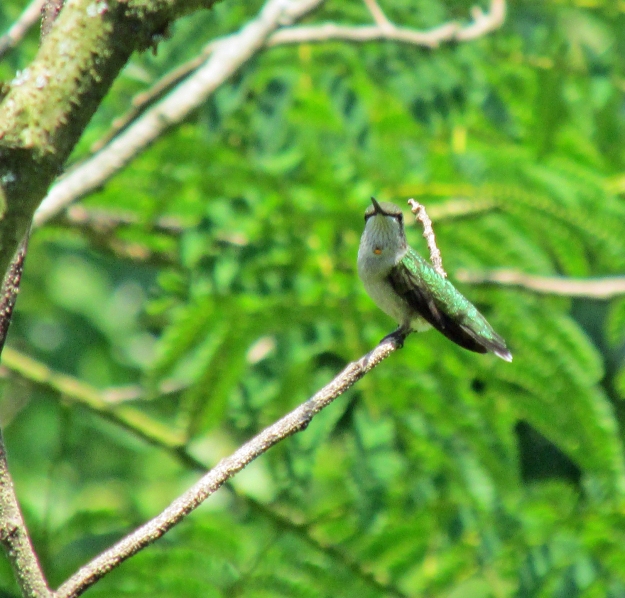
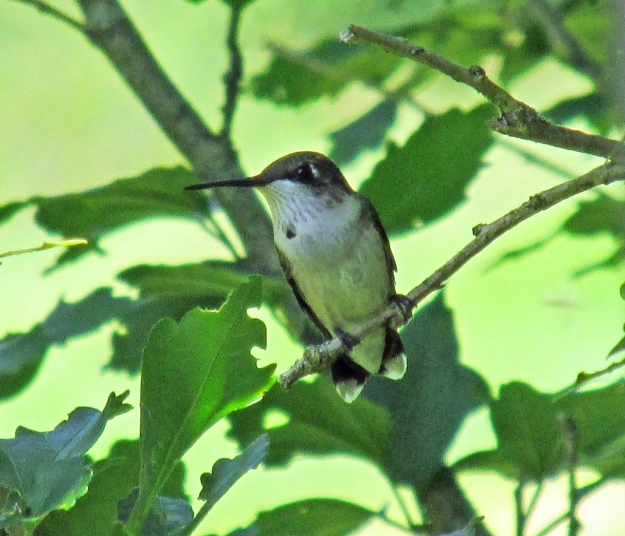
Photo by Bryan Stevens • A young ruby-throated hummingbird shows a hint of the red throat gorget that gives this bird its common name.

It must be nice to live among so many hummingbirds. Closer to home, the ruby-throated hummingbird is the only one of its kind to nest in the eastern United States. Some of the ones arriving at our feeders now will speed their way farther north, but some will settle in our yards and gardens as they bring forth the next generation of ruby-throated hummingbirds.

Dianne Draper reported the earliest observation of which I am aware. A friend on Facebook and a fellow birder, Dianne posted that the first hummingbird of spring arrived at her home in Jonesborough, Tennessee, on the morning of April 4. Her sighting was seven days earlier than any of the others I received.

Harold and Elizabeth Willis in Marion, North Carolina, reported their first hummingbird at 5 p.m. on Wednesday, April 11.

Helen Whited in Richland, Virginia, saw her first hummingbird at 12:40 p.m. on Thursday, April 12.

Judy and Bill Beckman saw their first spring hummer at 7:25 p.m. on April 12 at their home in Unicoi, Tennessee.

Ruby-throatedFemale-EYE

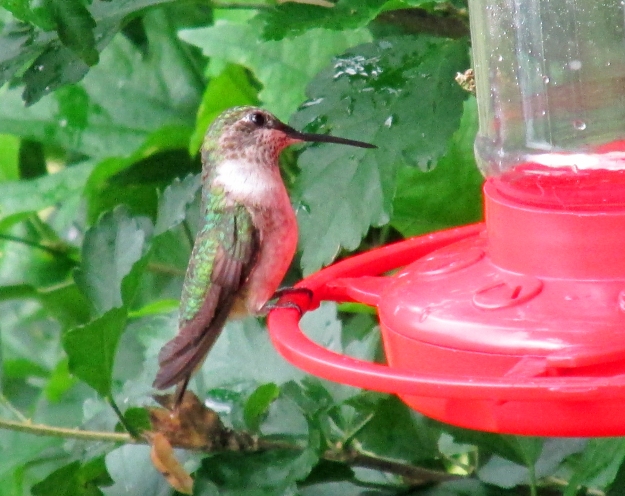
Photo by Bryan Stevens • A female ruby-throated hummingbird settles onto the perch of a sugar water feeder.

Lois Wilhelm, who lives on Little Bald Creek Road on Spivey Mountain in Erwin, Tennessee, saw her first hummingbird of 2018 at 3:30 p.m. on April 12.

Glen Eller in Kingsport, Tennessee, saw his first spring hummingbird around 5 p.m. on April 12. The bird — a male — drank for about four minutes. “I guess he needed a good fill up,” Glen commented.

Nola Martin from Nebo, North Carolina, reported her first hummer arrived just before 11 a.m. on April 12.

“He was a little green bird….not sure which kind or which sex,” she wrote in her email. “It certainly remembered where one of my feeders was last year, though, as it was looking for it in that spot, I didn’t have that one out yet.”

Nola said she now has five of her seven feeders filled and placed out for the returning hummingbirds.

Betty Poole saw her first male hummingbird of spring when the bird arrived at 9:05 a.m. on Friday, April 13, at her home in Bristol, Virginia. Her daughter, Jane P. Arnold, emailed me the information about her mother’s sighting. Jane is still awaiting her own first spring sighting of a hummingbird.

Ruby-WingLift

Photo by Bryan Stevens • A ruby-throated hummingbird lifts its wings to shake water droplets off its back.

Debbie Oliver, while watching Wheel of Fortune on the evening of April 12, got her first glimpse of a spring hummer at her deck feeders in Bristol, Tennessee.

“I couldn’t observe if it was male or female due to the dimming light,” she wrote in an email.

“It was a curious ruby-throated hummingbird just flying around the feeder without taking a sip of nectar,” she added.  Around 9 a.m. the following morning, she spotted a male ruby-throated hummer drinking nectar at the feeder.

She speculated about whether the bird was the same individual that visited the previous evening. “We’ll never know,” she decided.

Joneen Sargent emailed me to let me know that her husband, Dale, saw a ruby-throated hummingbird on April 12 at 7 a.m. The Sargents live off of Booher Drive in Bristol, Tennessee.

Bob Cheers of Bristol, Virginia, saw his first ruby-throated hummingbird at 6:45 a.m. on April 13. Bob keeps a record of the arrival dates for this tiny bird. In 2015, he saw the first hummer on April 9. Last year, he saw his first hummer on April 11. In 2016, the first bird arrived on April 13. In 2014, he had to wait until April 14 to see the first hummer of spring.

RubyRed

Photo by Bryan Stevens • A male ruby-throated hummingbird perches near a feeder that he is ready to defend from all comers.

Mark Hurt, who lives on Glenway Avenue in Bristol near Virginia High School, said that his “little buddy,” the ruby-throated hummingbird, returned about 1 p.m. on April 13.

Sandra Loving reported that her first hummer sighting took place at 6:17 p.m. on April 13 at South Holston Lake in Tennessee.

Peggy Oliver saw her first male ruby-throated hummingbird of spring at 6:15 p.m. on April 13.

Ashley Russ of Abingdon, Virginia, emailed me to share that she spotted her first hummingbird of the season at 7:20 p.m. on April 13.

Terry Fletcher saw her first male ruby-throated hummingbird at her feeder at 6:50 a.m. on April 14 at home in the First Colony subdivision in Bristol, Tennessee. Away from home the previous day, Terry was told by a next-door neighbor that the hummingbirds actually showed up on April 13.

Janice Denton, who lives on Canthook Hill Road in Bristol, Tennessee, emailed me news of her first sighting.

“I’m excited to let you know that I saw my first ruby-throated hummingbird on Friday, April 13,” she wrote. “I have had my feeders out for about two weeks and was sitting on my front porch in the afternoon hoping to see a hummingbird.”

On April 15 around noon, Janice also reported that she saw a male ruby-throated on a feeder outside her kitchen window, and another one came along and chased it off.  “I hope they all stick around for the summer,” she wrote.

Ruby-Spot-Two

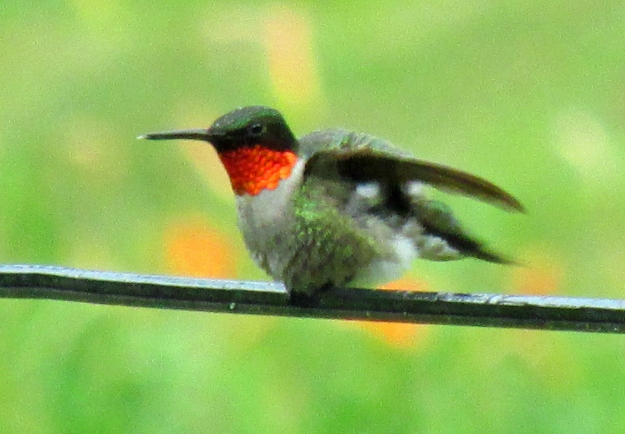
Photo by Bryan Stevens • Only adult male ruby-throated hummingbirds show the namesake ruby-red throat patch.

Lynne Reinhard reported via Facebook that she had her first hummingbird sighting at her home on the upper end of South Holston Lake on April 14. She noted that the hummingbird arrived a day earlier than last spring.

Linda Sproles, who lives on Hunter Hills Circle in Bristol, Tennessee, observed the first arrival of a hummingbird at her deck feeder at 10:43 a.m. on April 14. “It was a female, I believe, because it did not have a red throat patch,” she added.

Kathy Maggio, who lives between Benhams and Mendota in Washington County, Virginia, spotted her first hummingbird of spring at 1:15 p.m. on April 14.

Phyllis Moore of Bristol, Virginia, saw her first ruby-throated hummingbird of the spring at 4 p.m. on April 14.

Pat Stakely Cook, who resides in Marion, North Carolina, reported two ruby-throated hummingbirds at her feeders on April 14. The two male hummers stayed busy feeding and chasing each other.

32183fcb801d3cdbd206582ffb25517d 2

Early American naturalist and painter John James Audubon painted this work featuring the ruby-throated hummingbird. From the moment New World explorers arrived in the New World from Europe, they were impressed by the tiny, dazzling hummingbirds, a family of birds unknown in the Old World.

Amy Wallin Tipton, a resident of Erwin, Tennessee, saw her first hummingbird, a male, at 4 p.m. on April 14. She shared her sighting via Facebook.

Judi Sawyer, a resident of Roan Mountain, Tennessee, saw her first spring hummingbird, a male, at her home on the morning of April 14. Some house wrens decided to make their arrival the same day, she reported on Facebook.

Ginger Wertz-Justis in Baileyton, Tennessee, saw a male hummingbird at 6:30 p.m. on April 14.

Richard Trinkle emailed me to report that he saw a male ruby-throated hummingbird at 6:15 p.m. on April 14 at his Bristol home near Friendship Ford.

Robin Small saw the first hummer at 6:15 p.m. on April 14. “As I was looking at the snow falling and the cardinals, woodpeckers and regular visitors to my deck feeders, I saw my first hummingbird of 2018,” Robin wrote in an email. Robin put the feeder out the previous day when temperatures had been in the 80s and added that the hummer visited several times as the snow fell the evening of its arrival.

Janice Humble, who lives near South Holston Lake, put out her feeder on April 14. “It wasn’t 15 minutes until I had a hummingbird,” she wrote in her email.  “I saw two others that same evening.”

Lewis Spicer of Abingdon, Virginia, had both a male and female hummingbird visit his home for the first time this spring on the same day on April 15. He saw the male at 9:35 a.m. The female hummer arrived during afternoon rain at 12:45.

Frank and Myra Renault of Abingdon, Virginia, saw their first hummingbird of spring — a female — at 12:06 p.m. on April 16.

Sheila Myers, who lives on Porter Valley Road in Marion, Virginia, saw her first hummer at noon on April 16.

Rhonda Eller in Chilhowie, Virginia, saw her first spring hummingbird at 4:53 p.m. on April 18.

I am pleased to report that my own first hummingbird sighting for 2018 took place when a feisty male zipped into the yard while I was seated on the front porch. He sipped at four different feeders before he zoomed off. He arrived at 5:40 p.m. on April 14, one day earlier than last year’s first arrival. My feeders had been waiting for the arrival of hummingbirds for about a week when he first appeared.

Ruby-throated-WILLOWS

Photo by Bryan Stevens • Numbers of Ruby-throated Hummingbird in the region tend to fluctuate each year, but people should see a spike in their numbers as the hummingbirds end summer nesting and start migrating south again.


Reader reports visit from rufous hummingbird

An email from Bristol resident Ralph Beamer offered a timely reminder about the need to keep a watchful eye on our sugar water feeders even as most of the ruby-throated hummingbirds depart the region.

“For the past week, I have had a red humming bird coming to the feeder,” Ralph explained in his email. He added that he had never seen a hummingbird like this recent visitor.

“Have you had any reports of a similar sighting?” Ralph asked.

Ralph is the first person to make such a report this fall, but sightings of a species of hummingbird other than the expected ruby-throated hummingbird are becoming more commonplace each year. Once the numbers of ruby-throated hummingbirds are reduced as these tiny birds migrate from the region, noticing an unusual hummingbird at a feeder becomes even easier.

In a reply to Ralph’s email, I sought more information on the hummingbird’s coloration. He confirmed that the bird’s feathers looked more reddish brown than bright red, which supports my belief that he has received a visit from a rufous hummingbird.Ruf-Drawing

I speak from personal experience. My yard has attracted rufous hummingbirds on a couple of occasions. In October of 2016 I received my most recent visit from a rufous hummingbird, which lingered into November and was banded by Mark Armstrong. A former curator of birds for the Knoxville Zoo, Armstrong has devoted several years to studying the phenomenon of rufous hummingbirds that appear to migrate on a regular basis through the eastern United States every fall and early winter. Mark’s efforts have largely focused on Tennessee reports of rufous hummingbirds, but other banders operating from the Gulf Coast to New England have confirmed rufous hummingbirds in their respective regions.

The possibility of attracting a rufous hummingbird is the reason I encourage others to keep a sugar water feeder available into October and November. Experts who have studied the matter note that the presence of a feeder will not encourage ruby-throated hummingbirds to linger. These tiny birds know instinctively when it’s time to depart. Without the attraction of a feeder, however, a visiting rufous hummingbird might reject any extended stay in your yard.

Selasphorus rufus, or the rufous hummingbird, is about the same size as the ruby-throated hummingbird. Both species reach a body length of a little more than three inches and weigh only a few grams. In fact, one of these small hummingbirds might weigh the equivalent of a dime. Female rufous hummingbirds are slightly bigger than males, so a well-fed female rufous hummingbird might weigh as much as a nickel. So, to get an accurate impression of this sort of size, simply think of these tiny birds as weighing less than some of the spare change in your pocket.

Although hummingbirds are not known for their longevity, the website for Tennessee Watchable Wildlife notes that the oldest rufous hummingbird on record reached an age of eight years and 11 months. For the most part, hummingbirds blaze like tiny comets and enjoy typically brief but fast-paced lives. Despite a prevalent impression, hummingbirds are not delicate creatures. For instance, the rufous hummingbird’s tolerance for cold allows it to survive temperatures that dip briefly below zero. This adaptation has allowed the rufous hummingbird to breed as far north as Alaska.

The Selasphorus genus of hummingbirds consists of the rufous and six other species. Of those species, the Allen’s hummingbird, broad-tailed hummingbird and calliope hummingbird are known to also migrate through the eastern United States although with less frequency than the rufous. The remaining Selaphorus hummers — scintillant hummingbird, glow-throated hummingbird and volcano hummingbird — range in the tropical regions of Costa Rica and Panama. Those rufous hummingbirds that don’t spend the fall and early winter in the southeastern United States choose to overwinter in the region of Mexico around the city of Acapulco. This majority of the rufous hummingbird population migrates north again in the spring to claim nesting territory that can range from the Rocky Mountains of the western United States, as well as the Pacific Coast states of California, Oregon and Washington, all the way north to southern Alaska, as well as British Columbia in Canada.

Those rufous hummingbirds that continue to migrate through the southeastern United States each autumn constitute more evidence that we still have a lot to learn about birds. Even an abundant species like the rufous hummingbird offers mysteries that curious humans can attempt to understand.

While I can’t guarantee hummingbirds, I want to remind readers of the bird walks at 8 a.m. each Saturday in October at Sycamore Shoals State Historic Park in Elizabethton, Tennessee. Remaining walks, which are free and open to the public, are scheduled for Oct. 21 and Oct. 28. Meet at the parking lot at the park’s visitors center. Bring binoculars to increase your viewing pleasure.

•••••

Bryan Stevens lives near Roan Mountain, Tennessee. To ask a question, make a comment or share a sighting, email him at ahoodedwarbler@aol.com.

World’s coffee drinkers owe debt to pest-eating warbler

Do you like to have a morning cup of coffee as you watch the early-bird arrivals at your backyard feeders? If so, you may want to thank some of the warblers and other neotropical migrants that consume tiny insect pests injurious to coffee farms.

The website Coffeehabitat.com provides an archive of interesting reading material about the connections between coffee farming and many neotropical birds. According to a profile on the black-throated blue warbler at the website, this particular warbler has a strong affinity for wintering on coffee farms.

Coffee.jpg

Photo by Bryan Stevens • Coffee drinkers owe a debt to the black-throated blue warbler.

The black-throated blue warbler is a nesting bird in hardwood and mixed forests in many mountainous regions of eastern Tennessee, southwestern Virginia and western North Carolina. In fact, the species nests as far south as northern Georgia along the Appalachian Mountains. Those birds not nesting in the Appalachians make their summer home in southern Canada, as well as northern states like New York and Pennsylvania.

Thanks to scientific tests of the birds’ feathers, scientists now know that most of the black-throated blue warblers that spend the summer nesting season in the Appalachians are in turn wintering in Puerto Rico and Hispaniola. The black-throated blue warblers from the northern part of the range for the species spend the winter months in Cuba and Jamaica.

I’ve been spending more time than usual in my yard since the arrival of September, and I’ve been rewarded with glimpses of numerous migrating warblers, including Tennessee warbler, Blackburnian warbler, Cape May warbler, black-and-white warbler, chestnut-sided warbler, hooded warbler, Northern waterthrush and black-throated green warbler, as well as a dazzling male black-throated blue warbler.

Warbler-InHand

Photo by Jean Potter • A male black-throated blue warbler, banded for a study on songbirds, is examined closely. This is one of the most beautiful of the warblers.

If you recall the 1980s hit song, “Sharp Dressed Man,” by ZZ Top, perhaps I can give an accurate impression of the male black-throated blue warbler. He a dapper, sprightly fellow with a blue topcoat that dominates first impressions. It’s only after seeing the shock of blue that the observer takes notice of the black throat and the black feathers forming a dark facial mask, as well as a clean divide between the bird’s blue crown and back and the clean white underparts. The male even carries a fresh pocket “handkerchief” in the form of a white block on each wing. This becomes a diagnostic mark in the female’s less impressive version.
The sexes of black-throated blue warbler are the most markedly different among all the warblers. Even the famous early naturalist and painter John James Audubon got confused by the black-throated blue warbler male and female. He even made the mistake of painting a young black-throated blue warbler and misidentifying it as “pine swamp warbler.” The female black-throated blue has nary a trace of black in her feathers. Her plumage is mainly a dull olive-gray with dingy white underparts. Her only tie to her mate when it comes to appearance is her much more modest version of the “pocket handkerchief” on each wing.
In Jamaica, black-throated blue warblers are identified by Coffeehabitat.com as the number one predator of the dreaded coffee berry borer. So, as you raise that cup of affordable morning coffee, thank the black-throated blue warbler for eating all of those harmful pests that, left unchecked, would cause coffee prices to spike.
••••••
Bryan Stevens lives near Roan Mountain, Tennessee. To learn more about birds and other topics from the natural world, friend Stevens on Facebook at https://www.facebook.com/ahoodedwarbler. He is always posting about local birds, wildlife, flowers, insects and much more. If you have a question, wish to make a comment or share a sighting, email ahoodedwarbler@aol.com.
Blackthroated_Blue_Warbler

Photo by U.S. Fish & Wildlife Service/Mark Musselman • Black-throated Blue Warblers are among the birds than call the mountains of Southern Appalachia home during the summer months.

Plovers among migration champions of vast and varied shorebird clan

0815171646c (1)

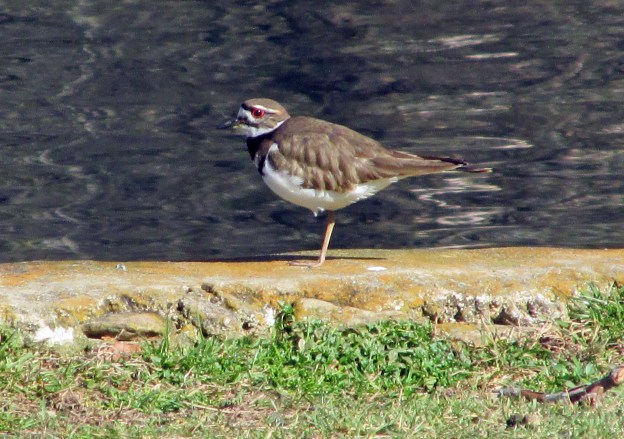
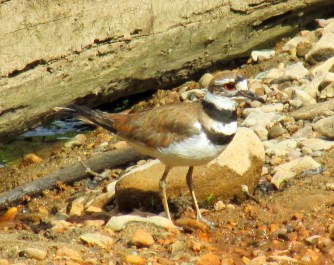
Photo by Janice Humble • A killdeer wanders in a grassy area near the Wal-Mart on Volunteer Parkway in Bristol. The killdeer, a species of plover, is one of the more common shorebirds found in the region.

I’m always glad to lend a hand at identifying birds. If you’re uncertain of a bird’s identification and have a photo of the bird in question, assistance is an email away. Janice Humble emailed me seeking some help with identifying the bird in a photograph attached with her message. She noted that the bird was accompanied by a companion in the grassy area near the Wal-Mart on Volunteer Parkway in Bristol. She also noted that the two birds uttered loud “peeps” during her observation.

The bird turned out to be a killdeer, a species of plover native to North America. Plovers belong to the family of shorebirds that include various sandpipers, curlews, dowitchers, stilts, avocets and other species. The killdeer is a rather common shorebird that finds itself at home far from the seashore, often present in habitats such as pastures and golf courses, as well as the grassy areas near the concrete and asphalt jungles that surround Wal-Marts and other such shopping complexes.

The killdeer’s famous for its faking of an injured wing. When its nest or young is threatened, a killdeer will go into an elaborate display, fluttering the “injured” wing and uttering shrill peeps to distract the potential predator. If successful, the bird will lure the predator away from the nest or vulnerable young. Once at a safe distance, the killdeer undergoes a miraculous recovery and takes wing, leaving behind a bewildered and perhaps chagrined predator.

Killdeer_AgainstLog

Photo by Bryan Stevens • A Killdeer explores near a stream bank.

Other North American plovers related to the killdeer include American golden-plover, black-bellied plover, Pacific golden plover, Wilson’s plover, piping plover, snowy plover, mountain plover and semipalmated plover. About 70 different species of plovers exist around the world, including such descriptively named birds as little ringed plover, red-capped plover, three-banded plover and white-fronted plover.

Musick’s Campground on Holston Lake has been one of the best area locations for seeking shorebirds during their migrations. The shore near the campground has been a magnet for persuading unusual shorebirds to pause their journey to rest, refresh and refuel. The location’s privately owned, but individual wishing to bird the shoreline can enter by signing the guest book located a small but well-marked kiosk. Some of the most memorable shorebirds I’ve seen at Musick’s Campground over the years include whimbrel, dunlin, sanderling, greater yellowlegs, short-billed dowitcher, American avocet, black-bellied plover and semipalmated plover. In recent weeks, the location has hosted such unexpected shorebirds as red knot and red-necked phalarope.

While the neighboring states of Virginia and North Carolina offer coastal birding opportunities, my native Tennessee remains quite landlocked. This fact poses a challenge for birders looking to capitalize on the seasonal migrations of shorebirds. Fortunately ponds, mudflats on the shorelines of lakes, riverbanks and even flooded fields offer adequate substitute habitat for many shorebirds. While the Mountain Empire region may lack a seashore, migrating shorebirds have learned to make do.

6300749922_099f28ae81_o (1)

Photo by Jean Potter • The American golden-plover, like this individual, is a long-distance migrant among the varied family of shorebirds.

This varied and far-flung family is also known as “wind birds,” a term which is an allusion to the capacity of many species of shorebirds to undertake nothing less than epic migrations. Many of the shorebirds that pass through in the spring are in haste to reach their nesting grounds as far north as the edge of the Arctic tundra. In fall, many of the same birds are eager to return to destinations in Central and South America ahead of cold weather and times of scarcity.

The plovers — the sedentary killdeer excepted — are among the champions of long-distance migration. According to the Audubon website, the black-bellied plover spends the brief summer season nesting in the world’s high Arctic zones but disperses to spend the winter months on the coasts of six of the globe’s seven continents.

The Pacific golden-plover’s twice yearly migrations represent an even more impressive feat. This shorebird often nests in Alaska and winter in Hawaii. The website Phys.org notes that research on this plover has revealed that the bird is capable of flying almost 3,000 miles in a mere four days. The website also reveals that those plovers wintering in Hawaii cannot lay claim to longest migrations. Some Pacific golden-plovers nest even farther south in the Pacific, reaching the Marshall Islands.

Black-belliedPlover

Photo by Jean Potter • A black-bellied plover stands out from most relatives when it wears its nesting season breeding plumage.

Shorebirds represent only a single family of birds migrating through the region in the fall. Songbirds from warblers and thrushes to vireos and flycatchers, as well as raptors and waterfowl, wing their way through the region every fall. Get outdoors with a pair of binoculars and have a look. It’s almost impossible not to see something, which may turn out to be a delightful and unanticipated surprise.

••••••

To learn more about birds and other topics from the natural world, friend Stevens on Facebook at https://www.facebook.com/ahoodedwarbler. To ask a question, make a comment or share a sighting, email him at ahoodedwarbler@aol.com.

Elizabethton summer bird count sets new record

The Lee and Lois Herndon Chapter of Tennessee Ornithological Society, also known as the Elizabethton Bird Club, conducts two summer surveys of area bird life. Last week, the results of the Unicoi County Summer Bird Count were explored. This week, the focus is on the Carter County Summer Bird Count, which set a new record. The 24th Carter County Summer Bird Count was held Saturday, June 10, under favorable weather conditions with twenty observers in six parties. A record high of 123 species were tallied, besting the previous high of 121 species set in 2013. The average over the previous 23 years was 112 species, ranging from a low of 105 to as many as 121.

Long-time count compiler Rick Knight said highlights of the count included seven Ruffed Grouse, including chicks, as well as such species as Yellow-crowned Night-heron, Bald Eagle, Red-shouldered Hawk and 21 species of warblers.

The American Robin, with 392 individuals counted, barely edged out European Starling, with 389 individuals counted, for most numerous bird on this year’s summer count.

Making the Summer Bird Count for the first time was Red-headed Woodpecker, represented by a pair of birds nesting at Watauga Point Recreation Area on Watauga Lake near Hampton. Other notable songbirds found included Vesper Sparrow, Blue Grosbeak, Red Crossbill and Pine Siskin. I counted birds with Chris Soto, Mary Anna Wheat, and Brookie and Jean Potter at such locations as Wilbur Lake, Holston Mountain and Sycamore Shoals State Historic Park.

IMG_4530

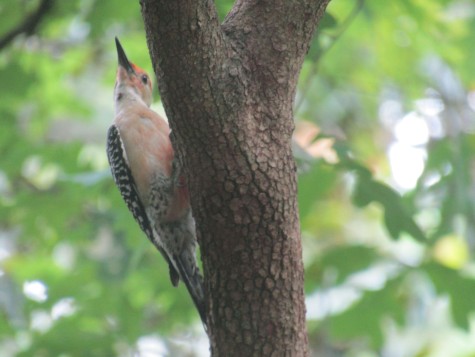
Photo by Bryan Stevens • Birds like this Red-bellied Woodpecker helped set a new record for most species on one of the Elizabethton Summer Bird Counts.

The count’s total follows:
Canada Goose, 258; Wood Duck, 7; Mallard, 125; Ruffed Grouse, 7; Wild Turkey, 21; and Double-crested Cormorant, 1.
Great Blue Heron, 10; Green Heron, 1; Yellow-crowned Night-heron, 1; Black Vulture, 7; and Turkey Vulture, 28.
Sharp-shinned Hawk, 1; Cooper’s Hawk, 7; Bald Eagle, 2; Red-shouldered Hawk, 3; Broad-winged Hawk, 7; and Red-tailed Hawk, 5.
Killdeer, 2; Rock Pigeon, 37; Eurasian Collared Dove, 1; Mourning Dove, 137; Yellow-billed Cuckoo, 4; Eastern Screech-owl, 2; Great Horned Owl, 2; Barred Owl, 2; Common Nighthawk, 1; Chuck-will’s-widow, 5; and Whip-poor-will, 8.
Chimney Swift, 80; Ruby-throated Hummingbird, 17; Belted Kingfisher, 3; Red-headed Woodpecker, 2; Red-bellied Woodpecker, 16; Yellow-bellied Sapsucker, 2; Downy Woodpecker, 12; Hairy Woodpecker, 4; Northern Flicker, 18; and Pileated Woodpecker, 24.
American Kestrel, 1; Eastern Wood-Pewee, 17; Eastern Phoebe, 71; Acadian Flycatcher, 20; Alder Flycatcher, 2; Willow Flycatcher, 1; Least Flycatcher, 5; Great Crested Flycatcher, 5; and Eastern Kingbird, 17.
White-eyed Vireo, 2; Yellow-throated Vireo, 2; Warbling Vireo, 1; Blue-headed Vireo, 41; Red-eyed Vireo, 126; Blue Jay, 69; American Crow, 227; and Common Raven, 7.
Northern Rough-winged Swallow, 45; Purple Martin, 53; Tree Swallow, 149; Barn Swallow, 129; and Cliff Swallow, 113.
Carolina Chickadee, 54; Tufted Titmouse, 71; Red-breasted Nuthatch, 12; White-breasted Nuthatch, 16; Brown Creeper, 2; House Wren, 79; Carolina Wren, 67; Blue-gray Gnatcatcher, 28; and Golden-crowned Kinglet, 12.
Eastern Bluebird, 88; Veery, 32; Hermit Thrush, 4; Wood Thrush, 43; American Robin, 392; Gray Catbird, 38; Brown Thrasher, 21; Northern Mockingbird, 42; European Starling, 389; and Cedar Waxwing, 64.
Ovenbird, 70; Worm-eating Warbler, 9; Louisiana Waterthrush, 9; Golden-winged Warbler, 13; Black-and-white Warbler, 26; Swainson’s Warbler, 2; Common Yellowthroat, 28; Hooded Warbler, 95; American Redstart, 6; Northern Parula, 25; Magnolia Warbler, 3; Blackburnian Warbler, 7; Yellow Warbler, 13; Chestnut-sided Warbler, 36; Black-throated Blue Warbler, 38; Pine Warbler, 3; Yellow-rumped Warbler, 1; Yellow-throated Warbler, 14; Black-throated Green Warbler, 26; Canada Warbler, 16; and Yellow-breasted Chat.
Eastern Towhee, 121; Chipping Sparrow, 78; Field Sparrow, 50; Vesper Sparrow, 1; Song Sparrow, 178; Dark-eyed Junco, 69; Scarlet Tanager, 31; Northern Cardinal, 94; Rose-breasted Grosbeak, 12; Blue Grosbeak, 2; and Indigo Bunting, 169.
Red-winged Blackbird, 77; Eastern Meadowlark, 11; Common Grackle, 84; Brown-headed Cowbird, 22; Orchard Oriole, 10; and Baltimore Oriole, 2.
House Finch, 26; Red Crossbill, 1; Pine Siskin, 5; American Goldfinch, 134; and House Sparrow, 27.

•••••

I had a recent phone call with Erwin resident Don Dutton, who wanted to know why hummingbirds have been scarce around his home this summer. I’ve noticed fewer hummers at my own home this summer, but it’s natural for numbers to fluctuate from year to year. I anticipate that numbers will rise as hummingbirds begin migrating south again in the coming weeks. At that time, the adult hummers will be joined by the young birds from this season’s successful nesting attempts.

Ruby-throated-WILLOWS

Photo by Bryan Stevens • Numbers of Ruby-throated Hummingbird in the region tend to fluctuate each year, but people should see a spike in their numbers as the hummingbirds end summer nesting and start migrating south again.

Don shared that when he lived out west, he often visited Mount Charleston near Las Vegas, Nevada, where he saw swarms of hummingbirds comprised of various different species. In the eastern United States, the only nesting species is the Ruby-throated Hummingbird.

If you have felt slighted by hummers so far this year, keep a sugar water feeder available to attract them on their way south later this summer and into the fall. To share a sighting, make a comment, or ask a question, send email to ahoodedwarbler@aol.com.


Writer and artist Julie Zickefoose to share wisdom at Abingdon program, nature walk


With the nesting season for some of our favorite birds kicking off, the timing is especially fortuitous for an upcoming program. Acclaimed nature writer and wildlife illustrator Julie Zickefoose will be the a featured speaker for Sunday with Friends at the Washington County Public Library in Abingdon, Virginia, later this month. Her talk will be followed by a book sale and signing.

JulieZickefoose

Julie Zickefoose and a feathered friend. — Photo Contributed

In addition, Zickefoose will take part in a bird walk along the Virginia Creeper Trail at 8 a.m. on Saturday, April 22. Those wishing to participate in this Earth Day event are invited to meet at the trailhead in downtown Abingdon. I’m planning on attending the walk, which I hope will produce many interesting migrant birds. The walk is free and open to the public.

Zickefoose, the author of the new book, “Baby Birds: An Artist Looks into the Nest,” will speak Sunday, April 23, at 3 p.m. at the Washington County Public Library. Her event is free and will be held in the Conference Room at the Main Library in Abingdon, Virginia.

The public is invited to meet Zickefoose on the day after Earth Day to celebrate her new book. Life-sized baby birds wriggle, crawl and flutter off the pages of this beautiful book, the product of 13 years of deep involvement and close observation of nesting birds. Lively writing describes the development of 17 bird species from egg to fledgling, with the wonder, humor and relentless curiosity that Zickefoose is known for. She provided commentary on National Public Radio’s “All Things Considered” for five years and for 12 years has written a thrice-weekly natural history blog.

She has written several other books, including “The Bluebird Effect: Uncommon Bonds with Common Birds,” “Natural Gardening for Birds: Create a Bird-friendly Habitat in Your Backya26312954._UY1628_SS1628_rd,” and “The Young Birder’s Guide to Birds of North America,” a co-writing venture with Bill Thompson.
 

According to Zickefoose’s website, she began her career as a field biologist for The Nature Conservancy. She became a magazine and book illustrator. Eventually, she began illustrating her own stories. She writes and paints from Indigo Hill, her 80-acre sanctuary in Appalachian Ohio. Zickefoose also writes a blog. To read entries, visit juliezickefoose.blogspot.com.

Ben Jennings helped secure Zickefoose’s lecture. He has worked for the past 15 years organizing “Sunday with Friends,” a series of book and author events hosted by the Washington County Public Library’s Friends of the Library organization.

“I get tips from lots of folks about writers, as well as doing research on my own,” Jennings said.

He also noted that Kate Foreman persuaded him to invite Zickefoose to take part in the series. “Kate is a longtime friend, and currently the director of advancement at Barter Theatre,” Jennings said. “I certainly trust her judgment. Kate had to remind me — but I did remember — Julie’s commentary on NPR several years ago. Julie was thrilled to come to be with Kate for the weekend.”

The Friends of the Washington County Public Library is a voluntary, non-profit organization whose purpose is to help strengthen the resources of the library and to make it a dynamic force in the community. Friends’ activities generally fall into four main categories— advocacy, fundraising, programming and volunteerism. First organized in the mid-1960s, the Friends groups has made an important contribution over the years by helping to raise funds to improve library facilities and providing financial support for special projects. The Washington County Public Library is located at 205 Oak Hill St., Abingdon, Virginia. For more information, visit http://www.wcpl.net.

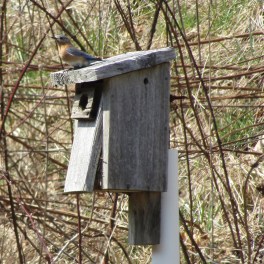
Bluebird-Box

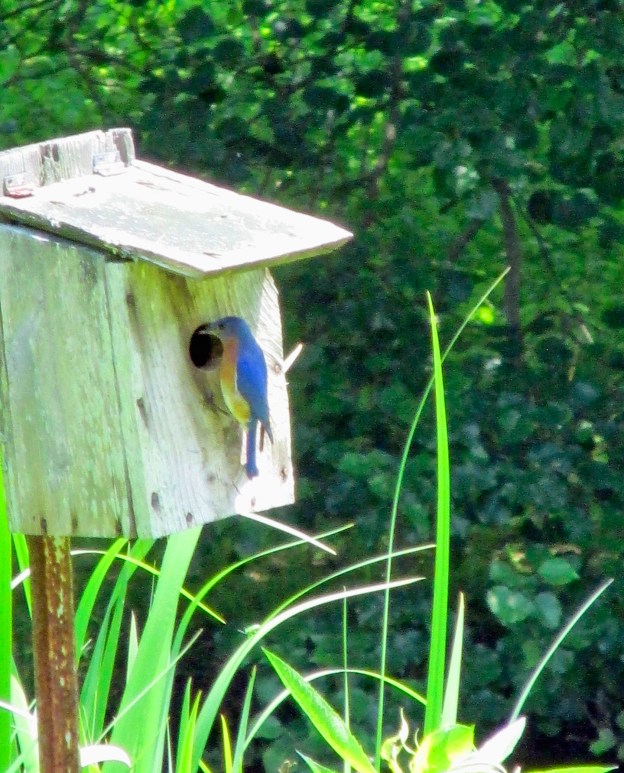
A female bluebird checks out a potential nesting box. — Photo by Bryan Stevens

••••••

A pair of Eastern bluebirds, a species of birds often featured in Zickefoose’s writings, has been exploring the nest box options available at my home. The bluebirds actually started checking the boxes in late February. With the arrival of March, the pair has had to contend with as many as three tree swallow interlopers. I’m not sure of the status of the third tree swallow, but it definitely gives the swallows an edge in numbers.

While bluebirds are not totally loyal to previous nesting locations, studies indicate that as many as 30 percent of bluebirds return to previous nesting sites the following season. So, if you can attract a pair of bluebirds to your yard, that’s half the battle. The same pair, or perhaps some of their offspring, will quite possibly return to yard in future years.

Habitats with spacious areas of short grass are perfect for bluebirds. So, homes with large lawns or that are located adjacent to fields, will attract bluebirds looking for a place to nest. If you lack any trees with natural cavities, a bluebird nesting box is necessary to secure their extended stay. Nesting box plans are easily obtained online if you want to build your own boxes, or you can purchase boxes at many farm supply stores and garden centers.

To keep the bluebirds happy and safe, avoid using herbicides or pesticides on your lawn to prevent accidental poisoning of adult bluebirds and their young. A few small trees and shrubs spaced throughout the yard will provide convenient perches for bluebirds as they hunt for insects to feed themselves and their young.