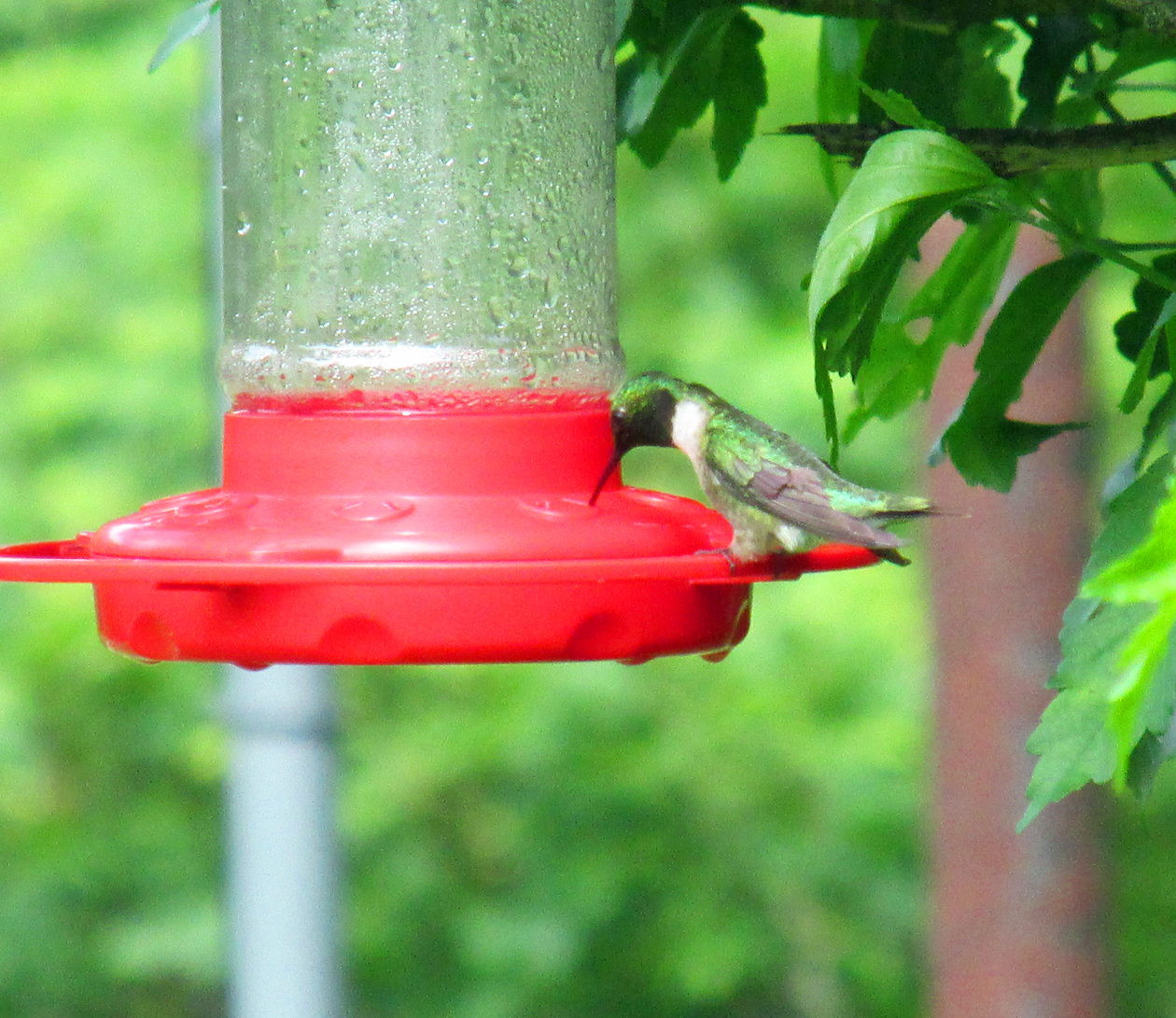
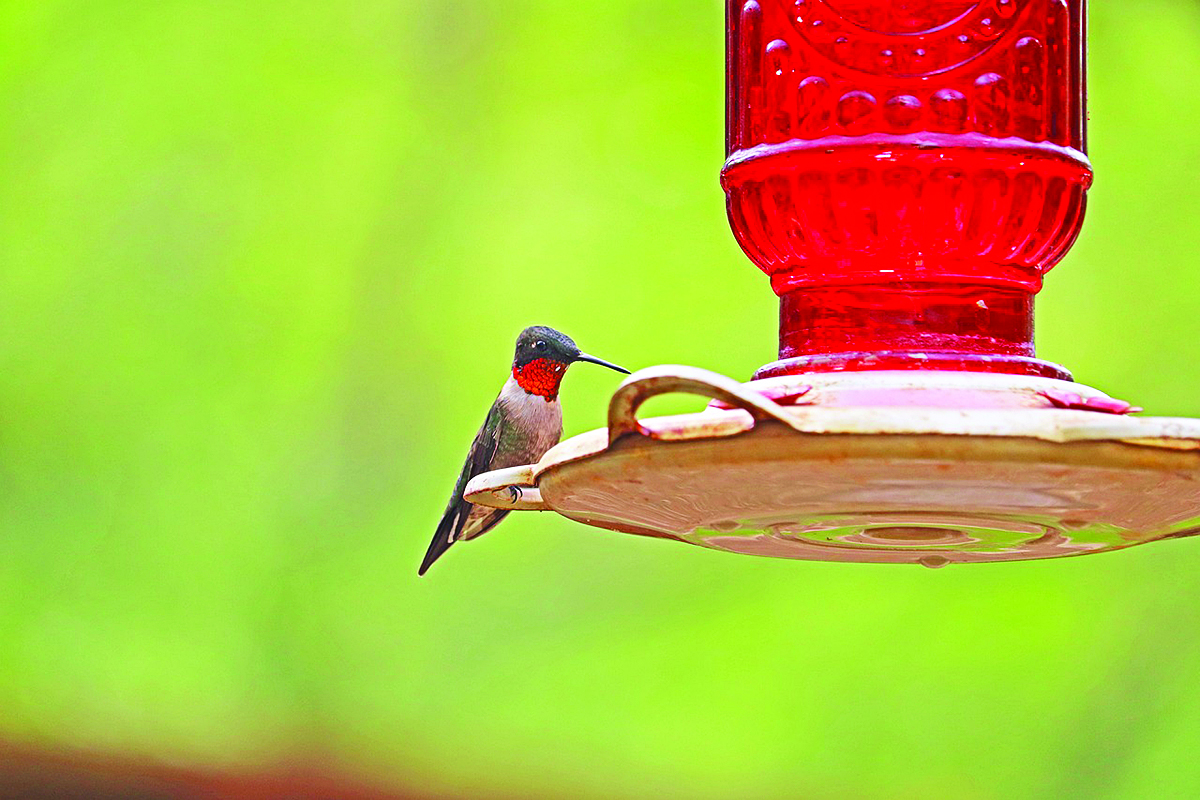
Photo by Bryan Stevens • A ruby-throated hummingbird visits a feeder for a sip of sugar water.
I always feel some reluctance and regret when I turn the calendar page from August to September.
I don’t have anything against fall – it’s my favorite season. But I know that our ruby-throated hummingbirds, which returned only five months ago in early April, will soon be departing.
It won’t be only the hummingbirds. Warblers, orioles, tanagers and other migrants will also fly south to spend the winter season somewhere more hospitable.
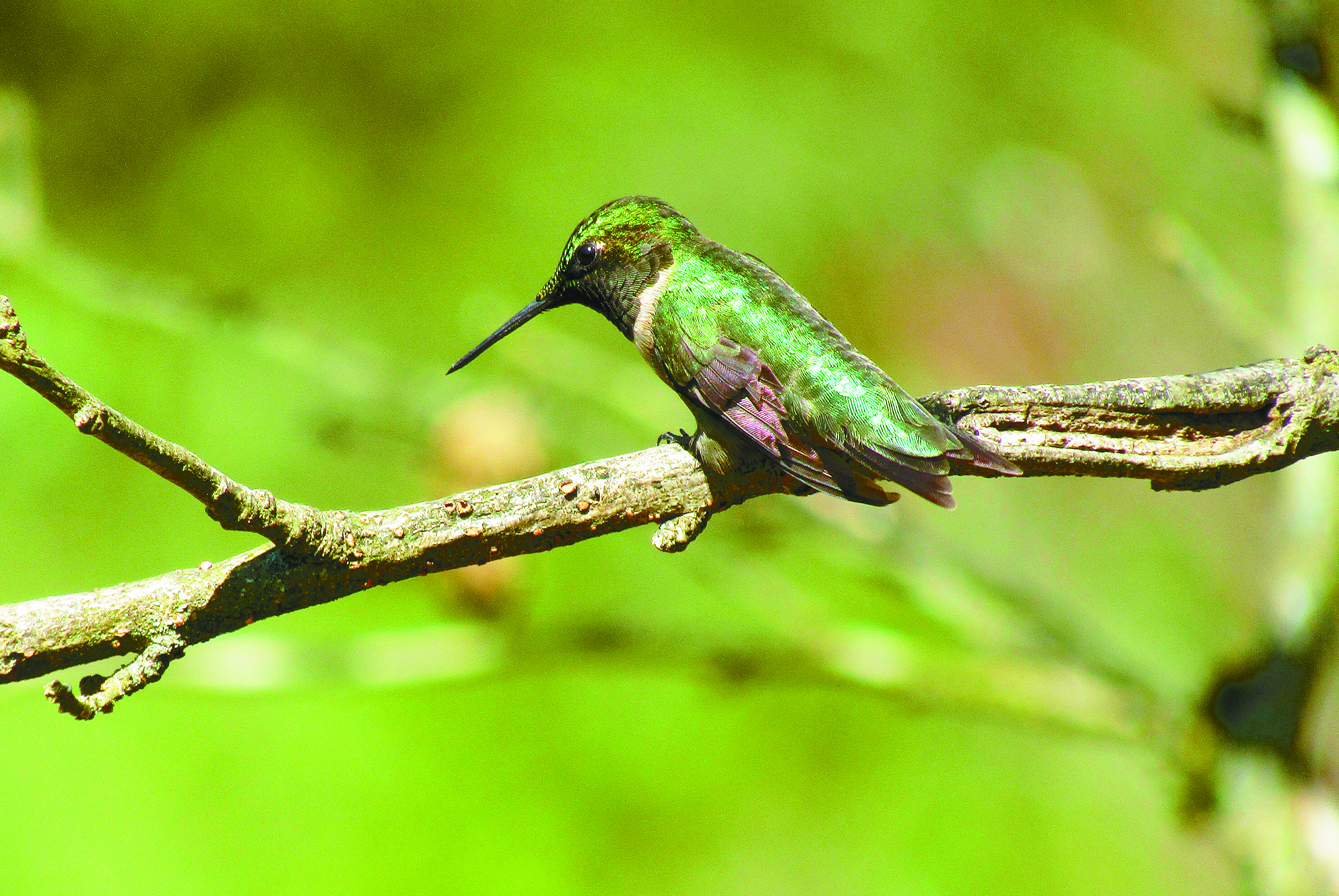
Most of the hummingbirds that visited our gardens over the summer are getting ready to migrate back to their winter homes in Central America.
I’m seeing only a few adult male hummingbirds with the namesake red throat. They are outnumbered by females and young hummingbirds that hatched in late spring and throughout the summer. It’s fun to watch young hummingbirds. They often have something to prove. In many ways, they’re even more feisty than adult birds.
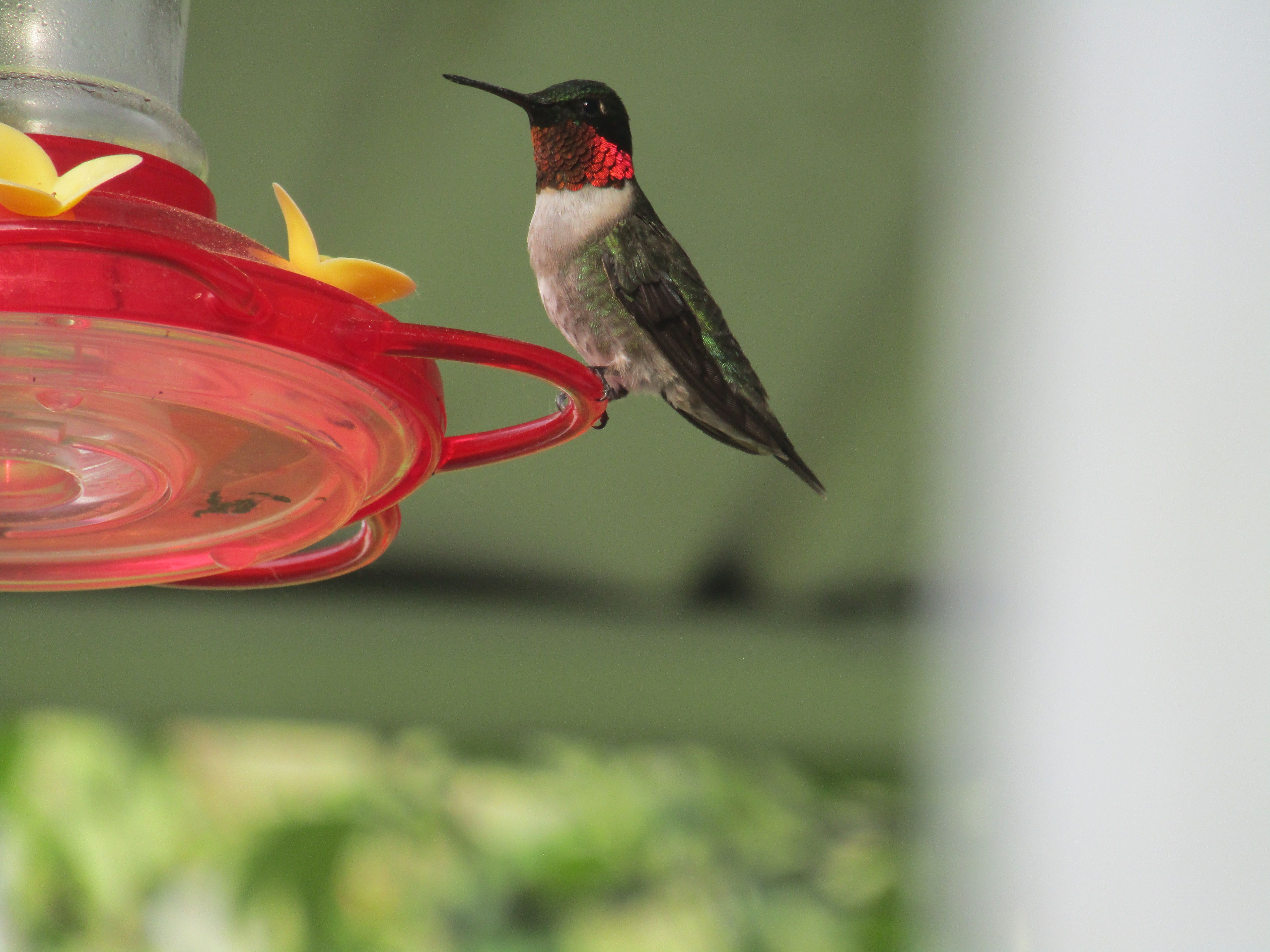
Photo by Bryan Stevens • A male ruby-throated hummingbird perches at a feeder for a sip of sugar water.
In any given year, the numbers of hummingbirds passing thorough is going to fluctuate. Some years, these tiny flying gems will be present in good numbers on an almost daily basis. Other years, hummingbirds can become quite scarce.
I usually enjoy my best hummingbird numbers in the fall as these little birds begin their leisurely journey back south. Late August and the month of September is usually a great time to watch hummingbirds.
During August, the feeders at my home and my mother’s home saw a great deal of activity. Blooms of wildflowers and cultivated flowers also attracted them. Earlier in the summer the hummingbirds went gaga for the crocosmia blooms and the flowering bee balm. For the past month, the tube-shaped flowers of orange jewelweed has kept them coming back for more.
The New World is home to about 360 species of hummingbirds. We’ve expended many adjectives in finding names of them all. Sometimes, words fail. Mere adjectives are somewhat inadequate in providing common names for many of the world’s more hummingbirds, but that doesn’t keep us from trying to give descriptive names to each hummingbird species. For instance, we have the beautiful hummingbird of Mexico; the charming hummingbird of Costa Rica and Panama; the festive coquette of northwestern South America; and the magnificent hummingbird of the southwestern United States.
Photo by Bryan Stevens • A ruby-throated hummingbird sips from a sugar water feeder.
Other names are even more elaborate and occasionally outlandish, such as the white-tufted sunbeam of Peru; the violet-throated metaltail of Ecuador; the violet-throated starfrontlet of Peru and Bolivia; the hyacinth visorbearer of Brazil; and the rainbow-bearded thornbill of Colombia and Ecuador.
As for our own ruby-throated hummingbirds, wish them well as they begin that long trek back to their wintering grounds. For the young birds, this will be their first epic crossing of the Gulf of Mexico, something the species must do twice a year to get to and from their summer home in eastern North America.
•••
Bryan Stevens has written about birds, birding and birders since 1995.
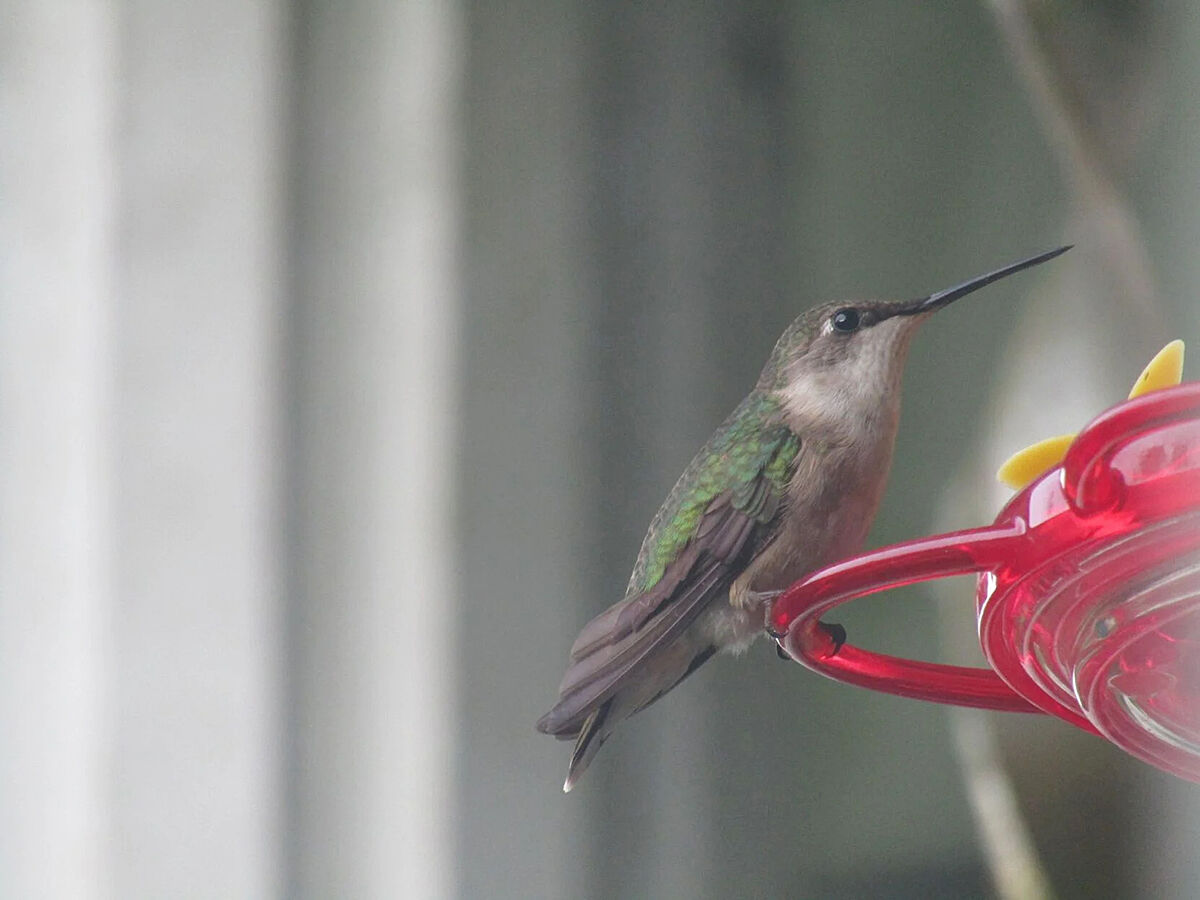
Michele Spark • Female ruby-throated hummingbirds lack the red throat patch, known as a gorget, that is present on adult males.
Readers continue to welcome back hummingbirds and share their first spring sightings of these tiny birds.
•••
“My husband Marvin and I saw our first hummingbird March 31 in Rogersville, Tennessee,” Mary Powers wrote in an email.
“We’ve been seeing them most days since then,” she added.
Mary said she put the feeder up a week before her sighting.
“Of course I change the syrup every week and clean it,” she noted.
•••
Kenneth Oakes commented on my Facebook page about his first sighting.
“I’ve just seen my first this year about 30 minutes ago on April 6 in an area near Sunshine, North Carolina,” Kenneth wrote.
•••
Dianne Rebmann emailed me to share her first spring hummingbird sighting.
“I saw my first hummingbird April 8,” she wrote. “There were actually two of them, and I caught them on Trailcam.”
Dianne lives in the Willowbrook community in Kingsport near the Meadowview Convention Center.
•••
Annie Morton and Pete Fredrick emailed me information about their first spring sighting.
“We wanted to share the news that we saw our first ruby-throated hummingbird (male) at home on April 9,” they wrote. “We live off Dry Creek Road in Unicoi County.”
They added that they hung a feeder last week after reading my article in The Erwin Record about the pending arrival time for hummingbirds.
“What a thrill to see the first one at the feeder while eating our breakfast yesterday morning,” they added to the end of their email.
•••
Diane Graham, a Jonesborough resident, spotted her first little one Wednesday morning (April 9) at her feeder.
“I think he was passing through,” she wrote in her email.
Diane also recorded two other visiting hummingbirds, one each on April 10 and April 11.
“None are yet making multiple visits during the day,” she added.
•••
April Kerns Fain commented on my Facebook page about her first sighting. “I saw the first one on April 9,” commented April, who lives in Unicoi.
•••
Sue Schreiner posted on my Facebook page about her first spring sighting.
“Just spotted my first hummingbird today (April 11) in Bluff City. Yay!” Sue wrote.
•••
Felicia Mitchell in Meadowview, Virginia, shared her first spring hummingbird sighing via a Facebook message. Felicia saw her first hummingbird on Sunday, April 13.
•••
In a Facebook comment on April 13, Flag Pond resident Regina Ray reported that she has seen her first spring hummingbird.
•••
Paula Elam Booher commented on my Facebook page that she saw her first hummingbird of spring in Bristol on April 13.
•••
Gina Kinney emailed to let me know that her mom Ginger Brackins saw her first hummingbird on April 14 at 6:25 p.m. in Erwin.
“She wanted me to email you right away,” Gina wrote.
•••
“I’ve had my hummingbird feeders up for a few weeks, but finally this afternoon (April 14) at 4 p.m. a female hummer had one all to herself,” Michelle Sparks, a resident of Bluff City, wrote to me by email.
•••
“Yesterday (April 14) I saw a hummingbird check out our feeder,” Donald Beck emailed me.
“It did not drink and I have not seen it any time since,” Donald, a resident of Bray Road in Stanley Valley in Rogersville, reported.
“Was it just on its way north?” Donald also asked.
It’s true, I noted in my response to his question, that many of these first hummingbird sightings are not the birds that will spend the summer months with us. Many of these “early” hummingbirds will continue migrating farther north, but others will arrive, like what they see and decide to stick around.
•••
Diane Hensley Silvers posted on April 16 in a Facebook comment that hummingbird numbers have only increased since the first one arrived.
“I have several now,” Diane wrote. “They arrived at my house in Washington County about 10 days ago.”
•••
Photo by Bryan Stevens • Ruby-throated hummingbirds such as this male are returning to the region.
Tennessee’s Watchable Wildlife offers an online profile for the ruby-throated hummingbird, including interesting information about how such a tiny bird makes its phenomenal crossing of the Gulf of Mexico each spring to return to the eastern United States.
To accomplish this tremendous migratory crossing, a hummingbird will double its body mass by fattening on nectar and insects in the weeks prior to departure.
No hummingbird species other than ruby-throated hummingbird breeds in Tennessee, but several Western species have been found in the state during the non-breeding season. They arrive anytime after late August and usually depart in April. At least seven western species of hummingbird has been recorded in the Volunteer State, including rufous, black-chinned, Allen’s, Anna’s, calliope and broad-tailed hummingbirds.
There’s also a couple of reports of a green violet-ear, a species that is usually found in forested regions of Mexico and Nicaragua. The species has ventured into Tennessee twice, being documented in Memphis in September of 2007 and in Montgomery County in July of 2020.
I’ve seen several of these western “visitors” throughout the years, but my greatest affection is still attached to the ruby-throated hummingbird.
Most hummingbirds impress with their size, or rather the lack of it. It’s that tiny size that has prompted people to describe them as “miracles” from the time the first European explorers sailed to the New World in the late 1400s. When Spanish explorers first encountered them, they had no equivalent birds in Europe to use as a reference. They referred to hummingbirds as “joyas voladoras,” or flying jewels.
If your yard offers some trees and shrubs, necessary for perching, you can attract ruby-throated hummingbirds. It pays to have a feeder available with a fresh mixture of one part sugar to four parts water. This is the formula that closely matches the sweetness of nectar available from flowers. In warm conditions, you’ll need to change out the mixture every few days. Give the feeders a scrubbing and rinse while changing out the sugar water. Then sit back and enjoy the antics of these pint-sized delights.
•••
To share a sighting, ask a question or make a comment, email me at ahoodedwarbler@aol.com.
Photo by Bryan Stevens • Despite a perceived disadvantage of size, ruby-throated hummingbirds are quite capable of thriving in a giant world.
Bryan Stevens • A male ruby-throated hummingbird perches on a sugar water feeder.
In an article posted on March 27, Journey North, an organization and website that tracks migrating hummingbirds, announced that so far this spring, bird-watchers in 12 states had reported ruby-throated hummingbirds, but it’s still early in the season.
“So far, we have one sighting each in Kentucky and Tennessee and two in Arkansas, but we’re expecting more in the coming weeks,” noted the blog post by Journey North.
One week later, hummingbirds arrived in locations in Unicoi County, Carter County and Washington County in Northeast Tennessee.
Journey North is a citizen science project that engages citizen scientists in a global study of wildlife migration and seasonal change. It’s a fun way to track the migration of everything from hummingbirds to butterflies like monarchs.
•••
“Hummingbirds are here!” Beverly King, a resident on Marbleton Road in Unicoi, wrote in an email. “We saw our first hummingbird today, Saturday, April 5.”
Beverly noted that she was excited to see hummingbirds slightly early this year.
“We usually see them about the 15th of the month,” she added. “Well, my feeders are now up. We could not tell if it was a female or a male.”
Bryan Stevens • A female ruby-throated hummingbird perches on a feeder.
•••
Erwin resident Amy Tipton sent me a Facebook message announcing that her parents had enjoyed a visit from a returning hummingbird.
“My parents, Edison and Emma Jean Wallin, had their first hummingbird of the season visit today, Saturday, April 5 at 4:30,” Amy wrote. “They live about a mile up Limestone Cove in Unicoi.”
•••
Dianne Draper in Jonesborough shared on my Facebook page about her first hummingbirds of the season.
“Our first ones showed up on April 5,” she noted. “We had two.”
•••
I’ve already seen my first hummingbird, as well. I have a bed of tulips blooming at my home. I planted them last fall and have been thrilled with their performance. I was outdoors admiring the tulips when I heard a brief but tantalizing buzzing noise. Although I scanned all around me, I failed to confirm that I’d heard a hummingbird.
A half hour later, however, while reading on my front porch, I saw my first hummingbird of 2025 when a male zipped up to one of my sugar water feeders. He returned twice while I stayed outdoors reading on a misty afternoon. He arrived at 4:14 p.m. on Sunday, April 6.
In 2024, I saw my first hummingbird on April 17 at 7:15 p.m. This year’s bird is certainly arriving earlier than is typical, but I was thrilled to see him.
•••
Gayle Riddervold, who lives only a few miles from my home on Simerly Creek Road in Hampton, reported that she and Becky Kinder saw their first spring hummingbird on April 8.
“We just saw our first hummingbird today,” Gayle wrote in a Facebook message. “Yesterday we saw a belted kingfisher on our road.”
•••
Brookie and Jean Potter, residents at Wilbur Lake in Elizabethton, sent me a text about the arrival of their first spring hummingbird on Wednesday, April 9, at 5:45 p.m.
They added, “It came back to feed again around 7 p.m.”
•••
Technically, TD, a follower of my “Our Fine Feathered Friends” blog, provided the earliest report of a hummingbird this spring. Of course, TD has the benefit of living in Texas, close to the Gulf of Mexico that these tiny birds must cross to return to the United States each spring.
The bird TD spotted arrived on Wednesday March 26, at 2:34 p.m. central time.
“A ruby-throated hummingbird male stopped at my feeder on my front porch a mile from Corpus Christi Bay after an hour of a rain shower,” TD wrote in a comment.
TD also reported that Corpus Christi has been in a drought so severe that residents have not been allowed to water outside since last fall.
TD’s hummingbird arrived with the first rainfall in more than two months.
“So I was watching the lovely rain when this hummingbird perched onto my hummingbird feeder,” TD wrote. “I have a very large window and hang four hummingbird feeders along the front porch.”
TD noted that the male’s iridescent ruby red around his neck resembled a scarf. “I named him Texas Tuxedo,” TD shared.
TD also saw a female hummingbird on Wednesday, April 2, at 7:15 a.m.
TD said the female hummer acted shy and fluttered around the feeder before feeling safe to perch for feeding.
It’s usually the case that females lag behind males in their annual migration back to the United States.
•••
Photo by Bryan Stevens • A male ruby-throated hummingbird perches at a feeder for a sip of sugar water.
The hummingbirds are an amazing family of birds. There are an estimated 330 species of hummingbirds, all of which are found in the New World. Consider that these dazzling little birds have been given vividly descriptive names, such as cinnamon-throated hermit, red-tailed comet, blue-chinned sapphire, lazuline sabrewing, sparkling violetear, fiery topaz, green-tailed goldenthroat, bronze-tailed plumeleteer, amethyst-throated mountain-gem, peacock coquette, red-billed emerald, empress brilliant, purple-backed sunbeam, green-backed hillstar, orange-throated sunangel, black metaltail, marvelous spatuletail and blue-tufted starthroat.
The only hummingbird species to inhabit the eastern United States from spring to fall each year is the ruby-throated hummingbird, which is currently arriving at various points from Florida to Maine and westward to states like Illinois, Minnesota and Oklahoma and north into Canada.
To return each year, ruby-throated hummingbirds make an awe-inspiring and non-stop crossing of the Gulf of Mexico. Even more incredible, they make the trip again in the fall when they return to warmer locations in Central America to spend the winter months.
Ruby-throated hummingbirds lead relatively brief lives. The oldest known ruby-throated hummingbird was a female, according to the website All About Birds. She was at least 9 years, 2 months old when she was recaptured and rereleased in 2014 during banding operations in West Virginia.
•••
These shared sightings represent some of the “early bird” sightings of hummingbirds. I welcome more reports as other people continue to observe returning hummingbirds. Email me at ahoodedwarbler@aol.com or find me on Facebook to share your sightings. Provide a date and time, if possible. Good luck with the hummingbird watching.
Photo by Bryan Stevens • Welcoming back hummingbirds also involves making sure that they remain healthy and safe while spending the next six months in our yards and gardens. Readers are also invited to share the time and date of their first spring hummingbird arrivals.
We’ve reached the middle of March. Some of our favorite birds are on their way back to spend the warmer months with us. I’ve always been impressed that our smallest birds — ruby-throated hummingbird, blue-grey gnatcatcher and ruby-crowned kinglets — lead the charge in returning to the region after an absence of several months.
Of course, a few larger birds also tend to arrive early. The most prominent of these is probably the broad-winged hawk. These medium-sized raptors usually arrive in late March and early April.
But it’s the noisy and bold brigade of tiny birds that will capture our attention. By the end of March, the blue-grey gnatcatcher will be back, buzzing its zee-zee notes as it flits about branches budding with new green leaves. These tiny birds seem to time their arrival to coincide with the emergence of some of the first greenery of the season.
In the first days of April, ruby-throated hummingbirds will return, checking to see whether the feeders or a stand of early spring flowers are still in place.
Ruby-crowned kinglets, which make a similar passage in the fall, will transit through the region again in the spring as they make their way north to breeding grounds in spruce-fir forests in the northern regions of the United States and Canada.
These are not the only small “early birds.” Some other pint-sized songbirds that arrive in early spring include Louisiana waterthrush and yellow-throated warbler.
There are 17 species of gnatcatchers. Most of these species reside in Central and South America. Some of the other species found in North America include California gnatcatcher and black-capped gnatcatcher.
Kinglets are very active birds. If warblers can be described as energetic, the kinglets are downright frenetic in their activities. The kinglets almost never pause for long, flitting from branch to branch in trees and shrubs as they constantly flick their wings over their backs. These bursts of hyperactivity can make them difficult to observe. Although small in size, these birds more than compensate for it with a feisty spirit that does them well through the harsh winter months.
Gnatcatchers are also constantly on the move, flicking their tails and darting through the branches of trees just starting to put out new green leaves. They glean caterpillars and small insects from the undersides of leaves to help fuel a demanding metabolism.
Photo Courtesy of Jean Potter • Blue-gray Gnatcatchers are tiny, energetic bundles of feathers.
Kinglets and gnatcatchers often join mixed flocks comprised of other species of birds, some of which are regular feeder visitors. Perhaps by observing their flock counterparts, some kinglets have learned to accept feeder fare such as suet, meal worms and chopped nuts. Away from feeders, kinglets mostly feed on a range of small insects and arachnids. Gnatcatchers are strictly eaters of insects, but while a feeder holds no attraction for them, their curious nature often makes these tiny birds quite approachable.
Normally, kinglets have a rather fleeting lifespan. They pay a price for their frantic, fast-paced lifestyles and can be considered old if they live three or four years. There are always exceptions. The oldest golden-crowned kinglet on record was six years and four months old. That individual, a male, was documented by a bird bander in 1976, according to the website All About Birds.
Likewise, gnatcatchers live brief lives. The oldest known blue-gray gnatcatcher was a male, and at least four years, two months old, when it was recaptured at a banding station in Pennsylvania and rereleased, according to the All About Birds website.
Of course, the smallest of the small is the ruby-throated hummingbird, which is officially the most diminutive of all birds found in the Eastern United States. This hummingbird is only 2.8 to 3.5 inches in length and weighs less than half an ounce.
The oldest known ruby-throated hummingbird, according to All About Birds, was a female, and at least 9 years, 2 months old when she was recaptured and rereleased in 2014 during banding operations in West Virginia.
The effort these tiny birds expend to return each year to entertain us during the warmer months is nothing short of extraordinary.
Information on the website for Perky Pet, which markets hummingbird feeders and other items for birds, describes the stages of spring migration. Once they respond to the urge to head north, most ruby-throated hummingbirds have reached Mexico’s Yucatan Peninsula by February.
The jungles of the Yucatan are rich with food and these tiny birds begin to feast on insects as they prepare for one of the toughest migrations for any bird. The majority of these hummingbirds will make a nonstop crossing of the Gulf of Mexico. This epic journey can take them 18 to 22 hours to complete. Some individuals cross the Gulf as early as February, but most of these little birds will wait to cross in March. A month or so later, the first wave of these migrants have usually reached Northeast Tennessee, Southwest Virginia and Western North Carolina.
•••
As always, I like to track the arrival dates of ruby-throated hummingbirds and appreciate readers sharing this information with me every spring. To share your first hummingbird sighting of spring, email me at ahoodedwarbler@aol.com. Please provide the date and time of the bird’s arrival. Other details, such as whether the bird is a male or female, is also appreciated.
•••
Bryan Stevens has written about birds and birding since 1995. Contact him at ahoodedwarbler@aol.com.
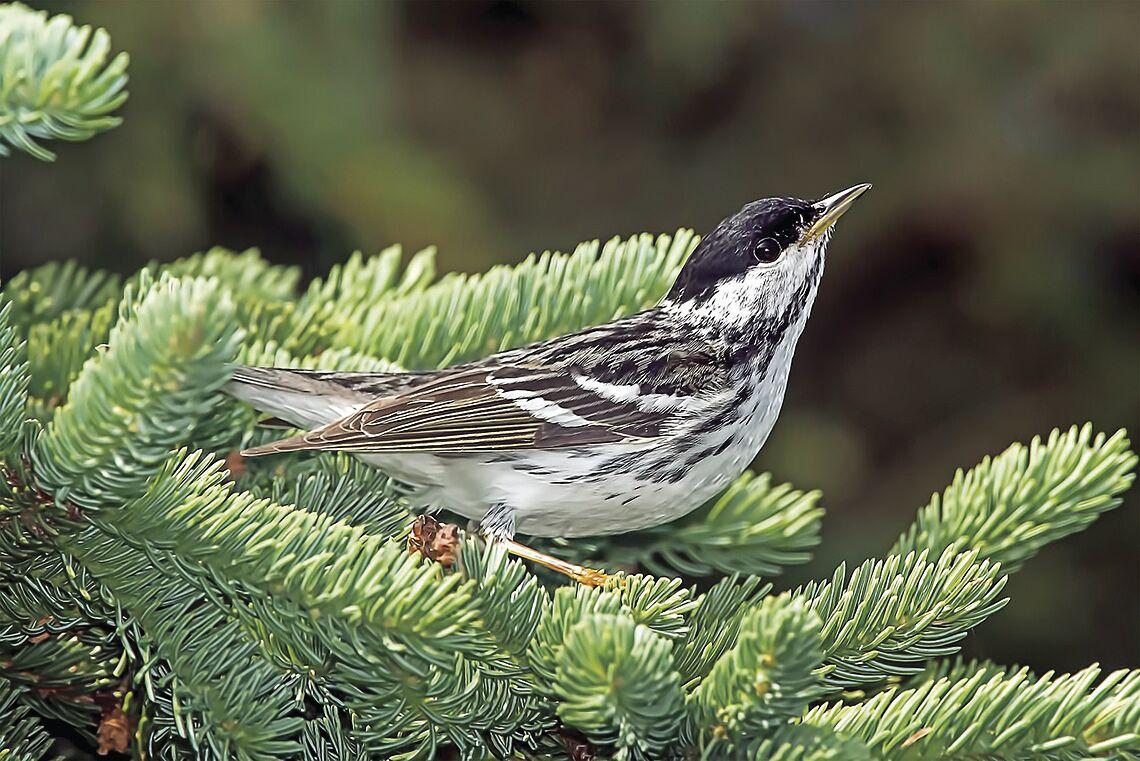
Hans Toom/Pixabay • Few warblers make as great a journey as the blackpoll warbler. This small songbird makes a roundtrip flight of 12,400 miles for its seasonal migrations each year.
September’s arrival puts fall migration into sharp focus. The birds that returned this past spring — the warblers, vireos, tanagers, grosbeaks, flycatchers, hawks, hummingbirds and many more — have begun or are beginning to make their way back to the locations where they will spend the winter months far from the cold, bleak conditions over most of North America.
Every morning as I leave for work I hear the buzz of hummingbird wings. When I return in the evening, I am often greeted by the scolding calls of red-eyed vireos from the woodlands around my home.
Some of these birds migrate out of the tropics every spring to avoid competition. Others find North America a land of abundant, albeit temporary, resources. This land of plenty offers a wealth of insects, seeds, fruit and other nourishing, nutritious food to help parent birds keep their strength while they work to ensure their young thrive. Of course, once the bountiful period concludes, they return to the tropics of Central and South America to winter. Those that do so successfully will make the journey back to the United States and Canada in the spring. It’s an ongoing cycle, repeating year after year, season after season.
The phenomenon of migration isn’t exclusive to the neotropical migrants of the New World. Birds in other parts of the world migrate, too. Waterfowl, shorebirds and raptors are among some of the families of birds that stage impressive migrations.
Photo by Jonathan Cannon/Pixabay.com • The Arctic tern outdoes all other birds when it comes to migration. These seabirds journey from their Arctic nesting grounds to spend the winter around the Antarctic, a journey of some 50,000 miles a year.
The Arctic tern, for example, truly takes migration to extremes. This small seabird travels each year from its Arctic nesting grounds to the Antarctic region, where it spends the winter months. Put into terms of mileage, the Arctic tern can travel about 50,000 miles in a single year. For a bird with a body length of about 15 inches and a wingspan of about 28 inches, this incredible migration is an astonishing feat. These statistics permit the Arctic tern to easily lay claim to the title of champion migrant among our feathered friends.
According to the website for National Geographic, Arctic terns face a serious threat from climate change. In a profile on the tern at its website, National Geographic warns that Arctic terns are projected to lose 20 to 50 percent of their habitat due to the temperature changes linked to climate change. They also face loss of habitat due to encroachment by human activities such as oil drilling.
The ruby-throated hummingbird, a favorite of many bird enthusiasts living in the eastern United States, makes an impressive migration each year. Just to reach the United States, these tiny birds undertake a strenuous journey. They leave their wintering grounds in Central America to return to the United States and Canada for the nesting season. Most of these tiny birds, which are barely four inches long, make a non-stop flight of more than 500 miles across the Gulf of Mexico. The journey can take almost an entire day. With the end of summer, the entire population of ruby-throated hummingbirds, increased by a new generation of young birds, makes the Gulf crossing for a second time in a year to return to the American tropics for the winter months.
Photo by Bryan Stevens • A ruby-throated hummingbird perches at a feeder for a sip of sugar water.
Among North America’s buteo hawks, which includes raptors such as red-shouldered hawk and red-tailed hawk, the broad-winged hawk stands out as a dedicated migrant. These hawks form flocks that at times number in the hundreds or thousands as they sail and glide on thermals rising over various mountain ranges. These hawks and other raptors are well-known in the region for migrating past the Mendota Fire Tower in Southwest Virginia every September and early October.
The broad-winged hawk’s counterpart in the western United States is Swainson’s hawk, which shares the broad-winged hawk’s inclination for migrating in large flocks. Swainson’s hawk is named for William Swainson, the famous 19th century English naturalist for which Swainson’s thrush is also named.
The hooded warbler, my favorite member of the migratory New World warblers, migrates back to Mexico and Central America for the winter months after nesting during the spring and summer in a range concentrated in the southeastern United States. The males, after going quiet in late summer, have started singing on occasion from the shaded woods around my house. I think this has more to do with restlessness as they prepare for to depart on a migration flight that will take them to the balmy Caribbean, Mexico and Central America while we shiver through the months between October and April. It’s not a migration of an incredible distance, but it’s still quite an accomplishment for a bird only five inches long and weighing less than half an ounce.
Another warbler is a true migratory champion. Few warblers make as great a journey as the blackpoll warbler. Instead of migrating over land, this five-inch-long warbler undertakes a two-stage migration. The first half of the migration is a non-stop flight of about 1,500 miles. Every fall, these tiny birds fly over the Atlantic Ocean during this part of their migration, departing from Canada or the northern United States and not stopping until they reach various locations in the Caribbean. There they will spend some time recovering from the exhausting first half of their journey before they continue their way to such South American countries as Colombia and Venezuela. Once again, during the time they spend flying over open ocean, these tiny warblers do not feed.
Fall’s a great time to witness the variety of avian life. Look for some of these migrants passing through your yards, gardens or favorite birding spots.
For those wanting suggestions for seeking out migrating birds, the linear trail in Erwin, Rocky Fork State Park in Flag Pond and Limestone Cove Recreation Area are some good bets.
•••
To ask a question, make a comment or share a sighting, email me at ahoodedwarbler@aol.com.
This week’s column is about hummingbirds, the big and the small ones. Frances Lamberts in Jonesborough sent me an email earlier this month that got the ball rolling for this week’s hummingbird column.
“Two hummingbirds were here for a good week long,
at the end of April,” Frances wrote. “Then they were gone, and I haven’t seen any since. Despite the heat/drought (and with some watering), the
property has many favorite flowers in bloom, including the blue salvia, red pole beans, monarda, many others come and gone, the cardinal flowers about to bloom.”
Her question was a simple one: “Where are the hummers?”
She noted that she has kept a “first sightings” record for about 20 year. One year the hummingbirds didn’t arrive until mid June, which worried her at the time.
“What is happening now?” Frances asked.
The simple and honest answer is that it’s not really possible to land on any single answer. Birds have wings, and hummingbirds are capable to long-distance flights.
Still, a setting such as the one Frances described with such a wide variety of blooms should be teeming with hummingbirds.
Personally, it’s been a perplexing season. My hummingbirds arrived back in April, stuck around for perhaps a week, and then almost disappeared. They returned in mid-June, remained visible for a couple of weeks, but have since pulled another vanishing act.
In any given year, the numbers of hummingbirds passing thorough is going to fluctuate. Some years, these tiny flying gems will be present in good numbers on an almost daily basis. Other years, hummingbirds can become quite scarce.
I usually enjoy my best hummingbird numbers in the fall as these little birds begin their leisurely journey back south. Late August and the month of September is usually a great time to watch hummingbirds. I’m optimistic that the same will hold true this fall.
In some other hummingbird news, the world added another species of hummingbird this year when the giant hummingbird of South America got split into two distinct species.
Abi Cole, writing for Audubon Magazine, reported in an article on June 7, 2024, that scientists have considered two distinct populations of giant hummingbird — a migratory southern population in Chile, Argentina and Bolivia, and a non-migratory northern population in Chile, Ecuador and Peru — to be the same species.
Now, scientists have reconsidered that belief and learned that the two species have been able to fool scientists for so long by basically, as Cole’s article phrases it, by hiding in plain sight.
Cole’s article details the elaborate process by which giant hummingbirds were captured and fitted with geolocator devices. The article credits Jessie Williamson, lead author of the new study and a National Science Foundation postdoctoral research fellow, with unraveling the mystery.
Williamson did so by intensively studying the Chilean population. The resulting research also revealed some huge surprises.
For centuries, there has been speculation about where the Chilean giant hummingbirds go to spend the winter. Now we know – they make an astonishing, record-breaking 5,200-mile round trip to spend several months with their cousins in the Peruvian Andes.
Because the Chilean and Peruvian birds look so much alike, no one had ever realized that they were co-existing with each other during the winter season.
Of course, the name “giant hummingbird” is almost an oxymoron for a family of birds famous for their diminutive size. Now that we have two species of giant hummingbirds, they can’t both hold the title of world’s biggest hummingbird.
So, which is the bigger bird? As it turns out, the giant hummingbirds living year round in the Andes, now known as the northern giant hummingbird, is slightly bigger than the migratory southern giant hummingbird.
The giant hummingbird does earn the right to that name. Both of the two species weigh between 18 and 24 grams and have a wingspan of about 8.5 inches. They have a body length of 9.1 inches. For a useful comparison, they are about equal to the size of a European starling or a Northern cardinal.
They are not the dazzling beauties most people associate with hummingbirds. Giant hummingbirds have a drab greenish plumage above with a whitish rump patch and dingy coloration below with variable rusty tones and dusky spotting. They do have the long bills and overall physical shape of other hummingbirds. The scientific name is Patagona gigas, roughly translated as the giant of Patagonia.
Photo by Bryan Stevens • Welcoming hummingbirds also involves making sure that they remain healthy and safe while spending time in our yards and gardens.
Count the giant hummingbird (either of the two species) as birds I’d like to see some day. The world’s diversity of hummingbirds is dazzling, but I feel fortunate to enjoy the ruby-throated hummingbird from April to October every year. As anyone knows who hosts these tiny birds, ruby-throated hummingbirds are dazzling and engaging guests during their all-too-brief.
•••
To ask a question, make a comment or share a sighting, email me at ahoodedwarbler@aol.com.
Photo by George from Pixabay • A male ruby-throated hummingbird obtains a dainty perch on a feeder offering sips of sugar water.
On March 4, Nancy Sheehan, a program coordinator for the Journey North website that tracks the migration of hummingbirds, as well as other wild creatures, posted on the project’s website.
“A small number of reports indicate that spring migrating hummingbirds are slowly arriving in southern regions of the United States,” she wrote.
In her post, she also wondered how weather patterns are impacting the pace of migration along the west coast?
That’s an interesting aspect of Journey North. The project tracks migration in both the eastern and western halves of the nation.
Sheehan noted that in the eastern United States, the annual migration of ruby-throated hummingbirds is proceeding pretty much on schedule.
“A small number of reports indicate that spring migrating hummingbirds are slowly arriving in southern regions,” Sheehan wrote. “It is time to put your feeders and potted nectar plants out. These nectar sources provide crucial energy for migrating hummingbirds. Depending on your location, start planting brightly colored native flowers to provide pollinator habitat for hummingbirds and other species such as monarch butterflies. Don’t delay – hummingbirds are here in many locations in the southern U.S.”
It’s fun to monitor hummingbird progress at Journey North, which also tracks the arrival of different hummingbird species in the western United States. There the first arrivals could include Allen’s, Anna’s, Broad-tailed, Black-chinned, Costa’s, Rufous and Allen’s hummingbirds.
I fully expect that ruby-throated hummingbird migration will bring the first individuals to Northeast Tennessee, Southwest Virginia, and Western North Carolina in early April if not late March. It’s even possible there will be some Easter arrival of hummingbirds in the region.
Most first spring observations of hummingbirds are males, although a few females are also early arrivals. Male hummingbirds arrive first so they can find and defend a territory.
As always, spring migration can be a challenging time for hummingbirds. Temperature, wind patterns and storms can influence the pace of migration.
Even once these tiny birds make their epic spring crossing of the Gulf of Mexico, they will need time to rest and refuel before moving northward.
By mid-March, the advance of ruby-throated hummingbirds has usually reached states such as Georgia and South Carolina. By the end of March, these tiny flying gems have reached states such as Tennessee and North Carolina.
It’s time to get those sugar water feeders outside and waiting for the early arrivals. Once the chance of late-season freezes has passed, consider planting some colorful native flowers to provide nectar sources for hummingbirds. In addition, some hanging baskets of flowers can be purchased from garden centers with the benefit that these baskets can be brought indoors during unseasonable cold snaps.
Northeast Tennessee usually gets its first spring hummingbirds the first week of April. If you’re seeing hummingbirds, I’d love to know. I have tracked arrivals for several years now. To share your first spring sighting of a ruby-throated hummingbird, email me at ahoodedwarbler@aol.com or contact me on Facebook at http://www.facebook.com/ahoodedwarbler. Please include the date and time of your sighting. I also welcome the sharing of other details about your sightings.
In the meantime, take steps now to welcome hummingbirds back and keep them safe during their stay.
Most experts also suggest avoiding red dyes or food colorings, which are often found in commercially marketed hummingbird sugar water. Don’t risk the health of hummingbirds for a little convenience.
It’s easy to make your own sugar water mix, which can be stored in the refrigerator in an empty plastic juice jug. Boil some water and then add one cup of sugar for every four cups of water in your pot. Stir thoroughly. Bottle the mixture until it cools. Fill your feeders and store any remaining sugar water in the fridge in the aforementioned jug. Refrigerated, the mix should stay good to use for at least a week.
Photo by Bryan Stevens • A male ruby-throated hummingbird surveys his domain.
In our milder spring weather, changing the sugar water in feeders can probably be done on a weekly basis. When hotter summer temperatures prevail, it’s usually necessary to change the sugar water every two or three days.
Some ways of ensuring that our hummingbird guests are kept healthy and secure are simply common sense. For instance, don’t use pesticides, herbicides or any other sort of toxin anywhere close to the vicinity of a sugar water feeder or a flower garden. Hummingbirds are such tiny creatures with such intense metabolisms that it only takes a small amount of any harmful substance to sicken or kill one of these little flying gems.
For emphasis, I’ll repeat again that only common, pure cane sugar is safe for hummingbirds. There are no safe substitutes. Do not use organic, raw or brown sugar. Confectioner’s sugar, which contains an anti-caking substance (often corn starch, silicates or stearate salts), is also hazardous to hummingbirds.
The ratio of four parts water to one part sugar utilizing pure cane sugar most closely duplicates the nectar that hummingbirds obtain from some of their favorite flowers. Why try to mess with nature’s perfection?
I cannot imagine why anyone would supplement sugar water for hummingbirds with such human beverages as a sports drink or Kool-aid, but there have been reports of people doing so. Be aware that such additives will only risk the health of these tiny birds.
•••
Remember to send me those first sightings of returning spring hummingbirds. I’ll be doing my usual roundup to share who gets graced with a visit from one of these tiny beauties.
Photo by Janet Woodward • This male ruby-throated hummingbird arrived at the home of Janet Woodward on April 3. She resides near the Pamlico River in Bath, North Carolina.
My yearly roundup of the first hummingbird sightings of spring has been a doozy so far. I’ve heard from readers in the states of Washington, New Mexico, Texas, Arkansas and Alabama. Closer to home, I’ve also gotten reports from readers in the Carolinas, Georgia and Tennessee. I’ll continue the round-up next week and will keep fingers crossed that perhaps I will have spotted my own first spring hummingbird at my home in Hampton, Tennessee, by then.
••••
Mike Haynes saw his first hummingbird in early March, but he lives a tad outside the region in Odessa, Texas.
“A note to let you know we get hummingbirds here in west Texas around March 5 each year,” he wrote in an email.
Mike is apparently not getting visits from male hummingbirds with their bright red throats.
“They all are unattractive gray birds,” he noted. “We get zero pretty birds.”
Regardless, he makes the best of it and pays close attention to their actions.
“They nest high in the trees,” he wrote. “They are here all summer.”
He also noted that the hummingbirds are “very hostile little guys” and noted that in In the hot (108 degrees) days, they drink a lot. “
“All of these guys are very skittish and fly off even if you open a door,” he said. But it’s all we have.”
Mike shared that he grows tons of bright and colorful flowers and plants to attract hummingbirds.
“We bring our feeders in on Nov. 1 each year,” he wrote.
••••
Patsy Stewart emailed me to report that she saw ruby-throated hummingbirds on March 30 and April 2. The visits took place early in the morning and late in the evening at Patsy’s home in Rossville, Tennessee.
••••
Wanda Dugan shared that she saw a male ruby-throated hummingbird on March 31 at her home in western North Carolina.
••••
“I saw my first hummingbird April 1,” Judy Steele wrote in an email. “Possibly he had been here before I spotted him. I have had a feeder out for a couple of weeks and change it every five to six days and notice less feed when I go out to exchange my feeder. “
All doubts were erased on Saturday, April 1, when she saw a visiting male hummingbird. “He stayed at the feeder for half a minute or so,” she added.
Judy noted that she lives in Loudon, Tennessee, close to Watts Bar Lake.
••••
“Saw the first hummingbird in Gainesboro, Tennessee, today (April 2),” Glenda Stafford wrote in an email. She helpfully noted that Gainesboro is located 100 miles between Nashville and Knoxville.
“We just got our first hummingbird yesterday,” Donna Snyder wrote to me by email. on April 3. “I’ve had our feeders out for two weeks, and I’m so excited to finally have one arrive.” She noted that her family resides in Kings Mountain, North Carolina, in the western part of the state.
••••
“I saw my first hummingbird April, 2 in Albany, Georgia,” wrote Rena Parker in an email to me.
••••
Debra Roy reported her first sighting of a male ruby-throated hummer on April 3 at her home in Richmond Hill, Georgia.
••••
“Saw our first this afternoon (April 3) at 5:57 p.m. central time in Clarksville, Arkansas,” wrote Dr. Buckley T. Foster in an email about his first spring hummingbird sighting.
••••
Reader Janie Balzano lives in New Mexico, so her first spring sighting was not of the ruby-throated hummingbird prevalent in the eastern United States.
“First sighting on Monday (April 3),” Janie wrote. “The feeders were put out three days prior.”
Janie resides at Seven Rivers, New Mexico, halfway between Carlsbad and Artesia.
“We are seeing three males,” she noted.
She shared that two of the tiny visitors are Anna’s hummingbirds and the third is a rufous hummingbird.
••••
Elaine Hallgarth, also of New Mexico, shared that she saw two black-chinned hummingbirds on April 3 at her feeders. An earlier sighting by a non-birder on March 31 was also likely a black-chinned hummingbird. Elaine resides in San Lorenzo, New Mexico.
••••
“The juice is out,” reported Mark Praschak in North Carolina.
“I’ve had my feeder out in New Bern, North Carolina, for a week now,” he wrote on April 3. “No arrivals yet. Their nest from last year is still pretty exposed. Giving it another week or so before the leaves can hide it better. Will advise.”
••••
Fred Rauh of Myrtle Beach, South Carolina, emailed me to let me know that he saw his first spring hummingbird on March 25 at 3 p.m.••••
Frank Alegria emailed me that he saw his first spring hummingbird on March 30 at his home in Pottsboro, Texas.
••••
Rufus Milam in Jacksonville, North Carolina, wrote that he put his feeder out last week and saw one hummingbird on Thursday, March 30. On April 3, he also had a visitor at his feeder on and off since about 9 a.m.
••••
Eleanor Donahue wrote to me to share her first spring sighting.
“Male ruby-throated hummer feeding at our lake home on High Rock Lake, Lexington North Carolina, on April 2 around 3 p.m.,” she noted.
••••
Cody Songs in Foley, Alabama, shared his hummingbird sightings. On April 3, he saw one male.The following day, two males showed up at his feeder.
••••
Richard in Williston, South Carolina, reported that he saw his first spring hummingbird, a male, on March 31.
••••
Lynette Feldbush takes the honors for earliest sighting. She saw a hummingbird back on Feb 28. “I had this one for only two days,” she noted.
Lynette, who lives at Moses Lake, Washington, said she felt saddened when the brief visit ended. Now she is waiting for another hummingbird to arrive. As Lynette lives along the West Coast, her visitor is probably one of about a half dozen different species, including rufous hummingbird, black-chinned hummingbird and broad-tailed hummingbird. In Washington, the Anna’s hummingbird is a year-round resident.
She did share a viideo of her tiny visitor.
••••
Carl Davenport of Calera, Alabama, wrote me on April 5 to inform me that he has had three hummingbirds regularly visiting his feeders since March 30.
••••
Janet Woodward also wrote to share news of the first hummingbird’s arrival.
“I love my hummers and can’t wait for them each year,” she wrote. “Last year I was blessed to see then first on my birthday, March 23, but this year my first sighting was April 3.”
Janet shared that she resides near the Pamlico River in Bath, North Carolina.
••••
Anar Mirkar in Raleigh, North Carolina, shared the news of a first spring hummingbird sighting, which took place on April 4.
••••
Chris Holroyd in Bridgeport, Texas, has seen hummingbird numbers rising since their arrival. “First noticed March 30,” Chris wrote to me on April 4. “Now we have five!
••••
Ellen Decker has had hummingbirds at her feeder since March 23 when they arrived at about 10 a.m. “I am in Longs, South Carolina,” she added. “I see them every day now.”
••••
Cathy Miller in Brevard, North Carolina, got a visit from her first spring hummingbird at 4:45 p.m. on April 5. “It makes me so happy when I see one,” she shared.
••••
“After reading your article about hummers, we put our feeder out and just spotted our first visitor on April 12,” wrote Rick Newell of Jonesborough, Tennessee,
••••
Lydia Davidson reported her first hummingbird at 9 a.m. on April 7 at her home in the Sulphur Springs area of Washington County, Tennessee. “This was a week earlier than 2022,” she noted.
••••
Mary Ellen Higinbotham shared that her first hummingbird arrived at 4:50 p.m. on April 10 at her home on Little Dry Run between Butler and Mountain City, Tennessee.
“I was ready and waiting, thanks to your promptings,” she added.
••••
Photo by Bryan Stevens • A ruby-throated hummingbird visits a feeder for a sip of sugar water.
“Saw our first hummingbird, a male, today (April 13),” Peggy Rogers of Trade, Tennessee, shared. “Just put the feeder out yesterday.
••••
Gail Rogers from Enterprise, Alabama, sent me an email on April 10 about her first hummingbird sighting of spring. She also shared a video of the bird, which happened to be a female ruby-throated hummingbird.
••••
The Mayfields of Forest Falls, California, wrote about their first hummingbird sighting. The Mayfields live at an elevation of 4,800 feet. “Saw our first hummingbird on Easter (April 9) at 2:30 p.m. How exciting. I filled our feeder immediately.”
Being in California, the Mayfields would have seen a different species than the ruby-throated hummingbird, but they did not specify.
••••
Carolyn Keifer of Roswell, Georgia, saw her first hummingbird on April 5.
••••
Linda Vollmoeller in Pittsboro, North Carolina, shared that her first visit from a hummingbird took place April 6. “I’ve put the first of several feeders out,” she wrote. “So excited!”
••••
Linda Dousharm, who lives in South River, North Carolina, saw her first hummingbird on March 28.
••••
Theresa Nelson saw her first hummingbird (a male) in Charlotte, Tennessee, on April 3. She also shared a movie of her tiny visitor.
••••
Denis Young of Morristown, Tennessee, saw the first spring hummer on April 6, the same arrival date that Denis recorded last year. Denis also reported hosting between 30 and 40 hummingbirds each year.
••••
Linda Gomez of Toano, Virginia, reported two male ruby-throated hummingbirds feeding at her feeder on April 6 at 6 p.m.
••••
“After reading your column in the Herald & Tribune, we put out our feeder on March 30,” wrote Dan M. Johnson of White Oak Court, Johnson City. “I just saw the first hummingbird this morning (April 8).”
••••
Jill LeVin of Loudon, Tennessee, spotted her first hummingbird on April 8.
••••
Dorothy Lane saw a ruby-throated hummingbird on April 4 in Lufkin in East Texas.
••••
J. saw a male ruby-throated hummingbird in Knoxville, Tennessee, on April 8.
••••
Shellye Stone of Decatur Texas, saw a single hummingbird on April 5 and saw two hummingbirds the following day.
Photo by TheSOARnet / Pixabay.com • Male ruby-throated hummingbirds usually migrate ahead of females. These tiny birds must cross the Gulf of Mexico, without stopping, to reach their nesting grounds in the eastern United States. The journey across the Gulf can take them 18 to 22 hours, dependent on weather conditions.
••••
Sharon Underwood of Woodlands, Texas, saw her first hummer feeding on the patio at her home on March 31.
••••
Donald Frazell reported three families of hummingbirds battling on April 9 from his balcony eight miles from downtown Los Angeles.
••••
Paul Isgett of Florence, South Carolina, saw his first spring hummingbirds on April 7.
••••
Steve Ritter shared that his first hummingbird arrived April 9 at his home in Scottsboro, Alabama.
••••
Emil Kunze reported a male ruby-throated hummingbird at mid-day April 9 in Tuscaloosa, Alabama.
••••
Cherie Ramsey hadn’t yet seen a hummingbird, but she shared a nice note. “Thank you for the information on hummingbirds,” she wrote. “This year is the first time I’m putting out a feeder for them. I can’t wait to see them feed.”
••••
Jane Weems reported that she had her first ruby-throated hummingbird on April 6 in Hayden, Alabama. “Beautiful!” Jane wrote.
••••
Ernest Ragan reported his first hummingbird in Ruidoso, New Mexico, on April 8.
••••
Val Bennett noticed a first-of-spring hummingbird at the feeder on April 3. Val lives in Walling, Tennessee.
••••
Cindy Pye saw her first hummingbird on the morning of April 9 at her home in Hephzibah, Georgia.
“So excited,” Cindy wrote. “Waiting for the others.”
••••
Della shared that she saw a male ruby-throated hummingbird on April 6 in Harriman, Tennessee.
••••
Diana Fischer, no address provided, noted that a male ruby-throated hummingbird visited her feeders at 10 a.m. on Easter (April 9).
••••
Nancy Monk has had hummingbirds for awhile at her home in Las Vegas, Nevada. “We have nests with babies,” she wrote. “Babies are two weeks old. Anxiously awaiting flight training to start.”
••••
Ginger Brackins in Erwin, Tennessee, sent me an email about her first sighting. “I just wanted to let you know that I saw my first hummingbird April 11 on Valley Avenue.”
••••
“Spotted male at the feeder on April 5 after a rain,” wrote Patty Everding. The bird returned for the next two days after its arrival, she noted. Patty lives in Central Virginia in Appomattox County.
••••
Lisa Freiss shared that her first hummingbird, a small male, arrived April 7. Lisa lives on William Hawkins Lane, off of Pleasant Valley Road in Mountain City, Tennessee. She also posted her sighting on Facebook. “Then I saw two at the feeder a couple days later,” she added. “Only see them early morning or dusk.”
Of course, the birds were not about to share the feeder. Lisa noted that they chased each other away.
This is the second year her hummers have returned on April 7. She also noted she puts out her feeder on April 5.
••••
Dale Reynolds, who lives just outside Mountain City, Tennessee, saw male ruby-throated hummingbirds on April 11-12.
••••
Alicia R. in Tucker, Georgia, had a visit from a male hummingbird at her two feeders on April 8.
••••
Phillip Jones in Savannah, Georgia, reported in an email on April 8 three sightings of a ruby-throated hummingbird feeding at his feeders during the week.
••••
“I live in the mountains of Western North Carolina, in Canton,” wrote Debby James. “I have had my feeder up for about two weeks.” She saw her first hummingbird on April 7.
Her tiny red-throated visitor arrived on a cold morning with the temperature at 41 degrees. “I enjoy watching these little birds,” she added. “They are amazing.”
••••
Sissy in Eddyville, Kentucky, shared a photo of her first hummingbird of spring in an email sent on April 8.
A photo of Sissy’s hummingbird.
••••
Karen O’Cain wrote that she saw her first hummingbird on April 6 in Nebo, North Carolina, near Marion, North Carolina, in the foothills.
••••
Rebecca Chester saw her first hummingbird on April 6. “I am in Bethesda, Tennessee. I saw your article and you said to let you know when we saw our first hummingbird,” she added.
••••
Mark Bronder reported that ruby-throated hummingbirds arrived at his feeders April 6 at his Asheville, North Carolina, residence at Mills Gap and Pinner’s Cove Road.
••••
The Rogers family of Marshall, North Carolina, reported that the first hummingbird arrived April 6.
••••
Shelia Boyd saw her first hummingbird on April 6 in Northern Mcdowell County, North Carolina. “It was a male ruby-throated,” she added. “I have yet to spot a female.”
••••
Starr Yeager wrote on April 12 that she has seen two hummers in Clarktown in Carter County, Tennessee.
••••
The response has been so incredible I will continue sharing sightings in next week’s column. Keep sharing those stories of first arrivals by emailing me at ahoodedwarbler@aol.com.
Photo by Bryan Stevens • Keep hummingbirds happy with a sugar water solution of four parts water to one part sugar.
The website Journey North noted in a post on March 15, that hummingbird migration along the Pacific Coast has been impacted by the crazy weather that California has experienced in recent weeks.
In the eastern United States, however, the annual migration of ruby-throated hummingbirds is proceeding pretty much on schedule.
According to Journey North, volunteers along the Gulf Coast and in the Southeast have been reporting arriving ruby-throated hummingbirds since early March.
I fully expect that ruby-throated hummingbird migration will bring the first individuals to Northeast Tennessee, Southwest Virginia, and Western North Carolina in early April.
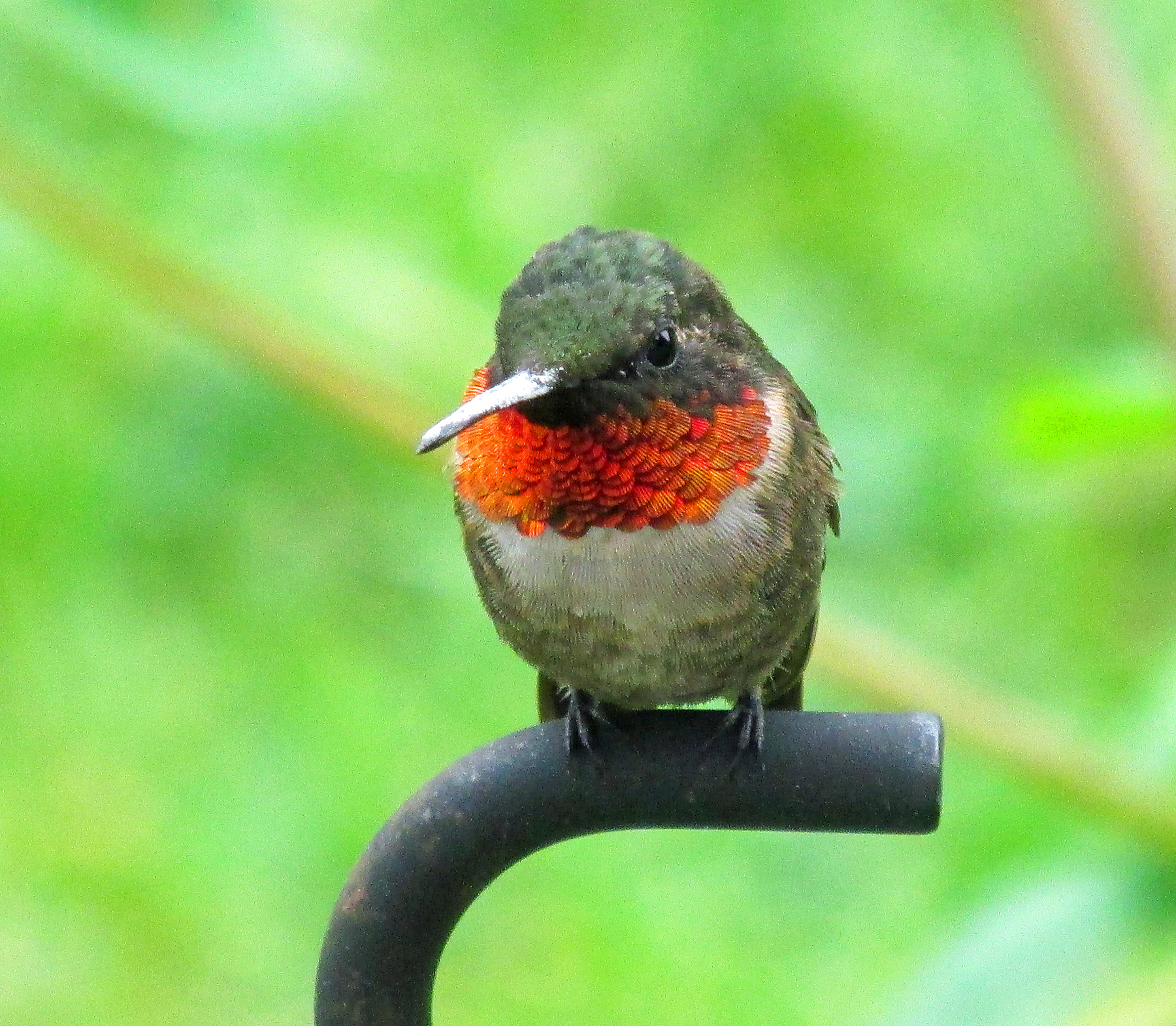
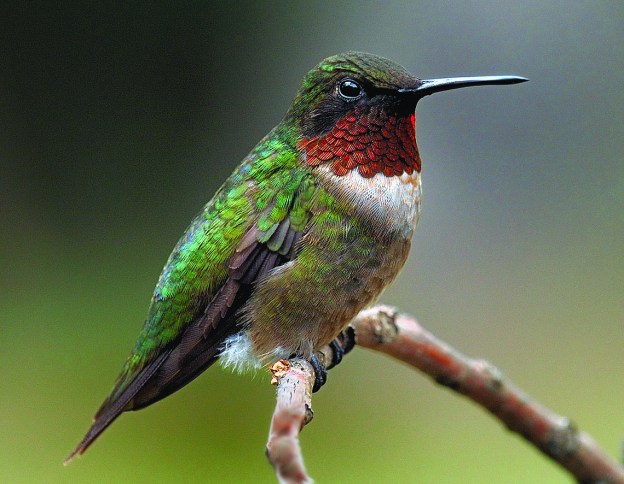
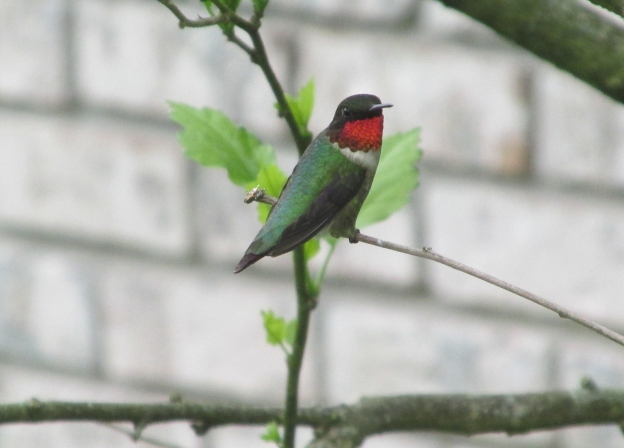
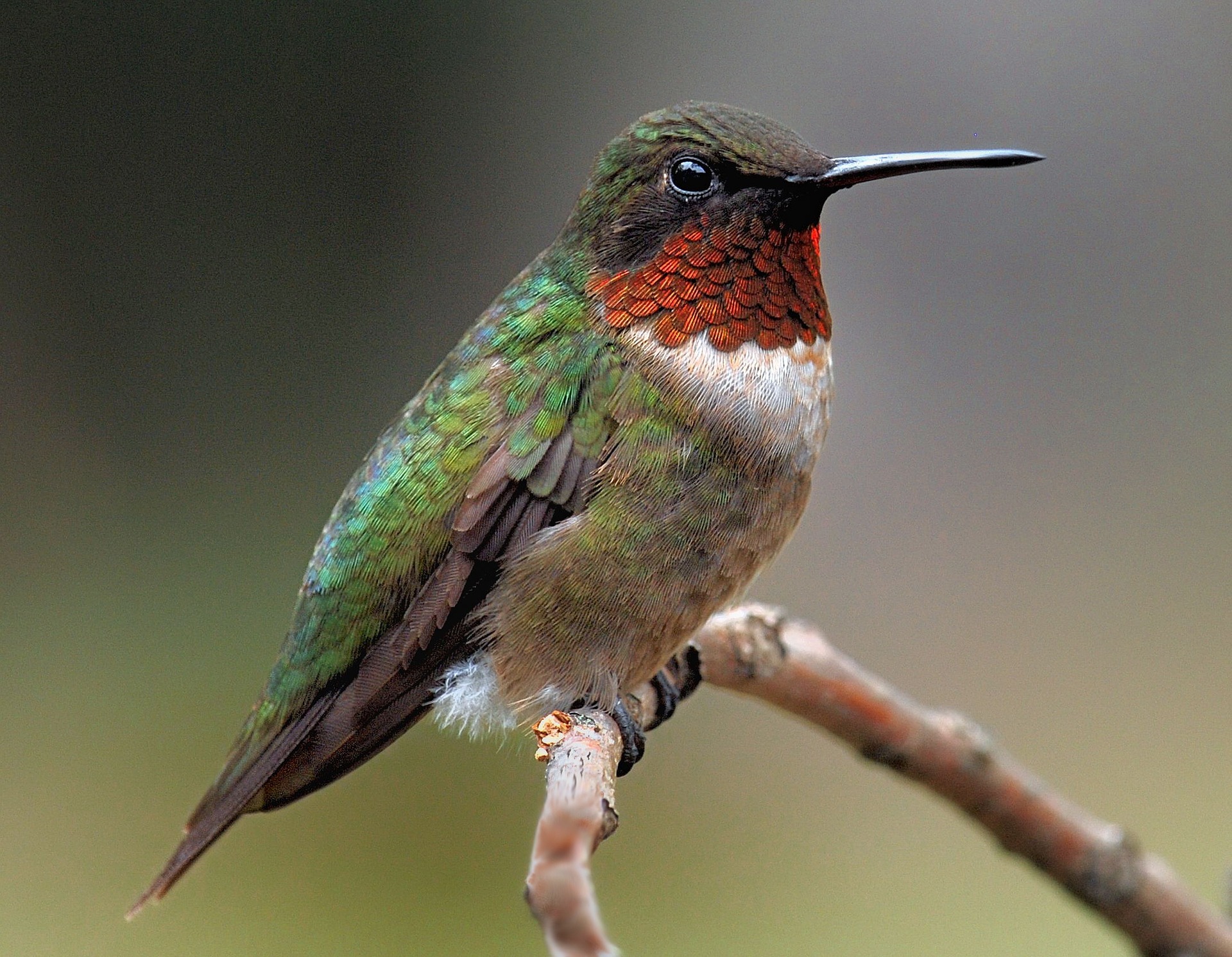
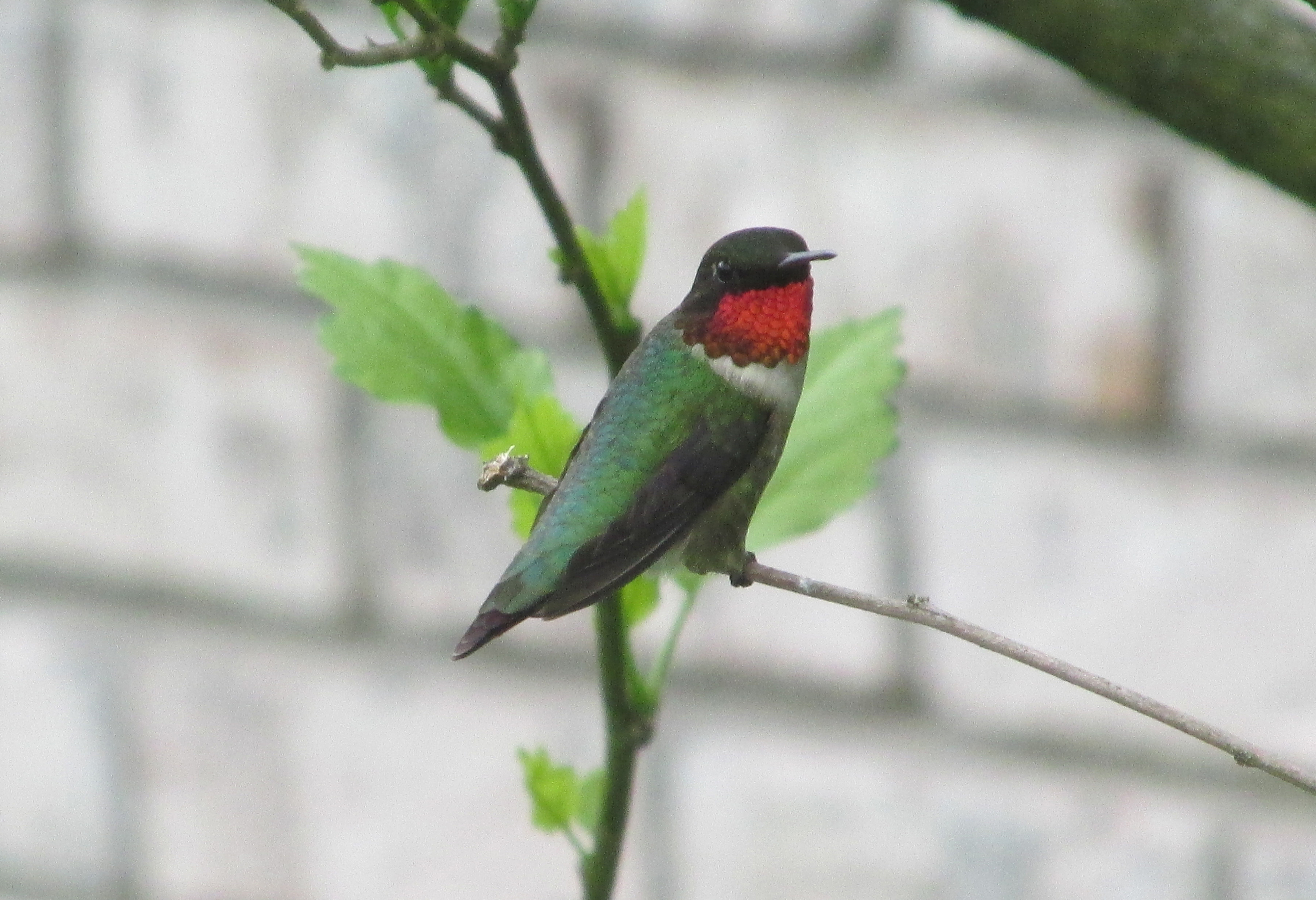
Photo by Bryan Stevens • Male ruby-throated hummingbird show the namesake red throat. The feathers on a male’s throat are iridescent, which means they can change when seen from different angles. In poor light, the ruby-red throat can look almost black.
According to the website, most first spring observations of hummingbirds are males, although a few females are being spotted. Male hummingbirds, the posting noted, arrive first so they can find and defend a territory.
As always, spring migration can be a challenging time for hummingbirds. Temperature, wind patterns and storms can influence the pace of migration.
Even once these tiny birds make their epic spring crossing of the Gulf of Mexico, they will need time to rest and refuel before moving northward. By mid-March, the advance of ruby-throated hummingbirds has usually reached states as Georgia and South Carolina. By the end of March, these tiny flying gems have reached states such as Tennessee and North Carolina.
It’s time to get those sugar water feeders outside and waiting for the early arrivals. Once the chance of late-season freezes has passed, consider planting some colorful native flowers to provide nectar sources for hummingbirds.
Northeast Tennessee usually gets its first spring hummingbirds the first week of April. If you’re seeing hummingbirds, I’d love to know. I have tracked arrivals for several years now. To share your first spring sighting of a ruby-throated hummingbird, email me at ahoodedwarbler@aol.com or contact me on Facebook at http://www.facebook.com/ahoodedwarbler. Please include the date and time of your sighting. I also welcome the sharing of other details about your sightings.
In the meantime, take steps now to welcome hummingbirds back and keep them safe during their stay.
Some ways of ensuring that our hummingbird guests are kept healthy and secure are simply common sense. For instance, don’t use pesticides, herbicides or any other sort of toxin anywhere close to the vicinity of a sugar water feeder or a flower garden. Hummingbirds are such tiny creatures with such intense metabolisms that it only takes a small amount of any harmful substance to sicken or kill one of these little flying gems.
Feeding hummingbirds is easy, but many people try to complicate the process. Only common, pure cane sugar, mixed to a ratio of four parts water to one part sugar, is a safe choice for these birds.
For emphasis, I’ll repeat again that only common, pure cane sugar is safe for hummingbirds. There are no safe substitutes. Do not use organic, raw or brown sugar. Confectioner’s sugar, which contains an anti-caking substance (often corn starch, silicates or stearate salts), is also hazardous to hummingbirds.
The ratio of four parts water to one part sugar utilizing pure cane sugar most closely duplicates the nectar that hummingbirds obtain from some of their favorite flowers. Why try to mess with nature’s perfection?
I cannot imagine why anyone would supplement sugar water for hummingbirds with such human beverages as a sports drink or Kool-aid, but there have been reports of people doing so. Be aware that such additives will only risk the health of these tiny birds.
Photo by Bryan Stevens • Despite a perceived disadvantage of size, ruby-throated hummingbirds are quite capable of thriving in a giant world.
Most experts also suggest avoiding red dyes or food colorings, which are often found in commercially marketed hummingbird sugar water. Don’t risk the health of hummingbirds for a little convenience.
It’s easy to make your own sugar water mix, which can be stored in the refrigerator in an empty plastic juice jug. Boil some water and then add one cup of sugar for every four cups of water in your pot. Stir thoroughly. Bottle the mixture until it cools. Fill your feeders and store any remaining sugar water in the fridge in the aforementioned jug. Refrigerated, the mix should stay good to use for at least a week.
In our milder spring weather, changing the sugar water in feeders can probably be done on a weekly basis. When hotter summer temperatures prevail, it’s usually necessary to change the sugar water every two or three days.
•••
Remember to send me those first sightings of returning spring hummingbirds. I’ll be doing my usual roundup to share who gets graced with a visit from one of these tiny beauties.
Photo by Bryan Stevens • An Eastern kingbird perches atop a metal fence post.
Migration continues and offers up a few surprises. Such was the case of the morning of April 20 when I spotted an Eastern kingbird near the fish pond.
This is a rare bird at my home, but one that is easily found in other locations in the area. My recollection is this is only the second time an Eastern Kingbird has visited my home.
I didn’t have time to observe the bird for long and I didn’t find the bird when I returned home later that evening, but it was a timely reminder that spring migration can bring plenty of unexpected birdwatching delights.
Many readers continue to be delighted by the return of ruby-throated hummingbirds. Based on the sightings shared with me this past week, I think the pace of migration has definitely spiked for this tiny bird.
•••
Gwen Straub, who lives in Nebo, North Carolina, near Lake James, sent me an email to share that she had a “double” arrival with a male and female hummingbird showing up at her feeder at 10 am on April 12.
“The male has been back every day since then,” she wrote. “Today he drank for five full minutes with his beak in the hole many times for seven to eight seconds.”
•••
April Kerns Fain posted a Facebook comment on my page to notify me that she saw her first hummingbird on April 12. A few days later, she also shared a photo of a beautiful male rose-breasted grosbeak that arrived at her feeders on April 19. Her sightings are a good reminder that it’s not just hummingbirds on the move. Many colorful birds are returning this month.
•••
Tammy Jones Adcock, Erwin, shared via a Facebook comment that she saw her first hummingbird of spring on April 13.
•••
Jeanne Siler Lilly shared on Facebook that she saw her first spring hummingbird on April 15.
•••
Daniel Washinski from Houston, Delaware, also had a Good Friday sighting. “First hummingbird this morning (April 15) in Delaware!” Daniel shared on my Facebook page.
I found it interesting that some hummingbirds have already reached Delaware before I’ve seen one at my home. Just goes to show that these tiny guys are in a hurry to get to their final destinations for the summer season.
•••
Lois Bridges of Unicoi shared via a Facebook comment that she saw her first spring hummingbird on April 16.
•••
Helen Whited of Richlands, Virginia, shared her first spring hummingbird sighting in an email.
“Just had our first hummingbird!” Helen wrote. The bird arrived at 10:58 a.m. on April 16.
•••
Priscilla Gutierrez shared with a Facebook comment that she saw her first hummingbird on April 16 on Carver Road in Roan Mountain.
•••
Angie Fletcher, a high school friend of mine, shared on Facebook that she saw her first hummingbird on April 16.
•••
Cheri Miller shared on the Tri-Cities Young Naturalists Facebook page that she saw her first hummingbird of the season on April 17 at her home in Hampton.
•••
Starr Yeager, a resident of Tiger Creek in Hampton, saw five hummingbirds at her feeders on April 18. Starr’s another friend of mine from high school who notified me of the sighting on Facebook.
•••
Lowell Christian, Jonesborough, shared on Facebook that he officially saw his first spring hummingbird at 8:25 a.m. on April 20. “I am quite sure I have missed it being here before,” he noted.
•••
Russ MacIntyre, a resident of the Embreeville section of Jonesborough, sent me an email to let me know he saw his first spring hummingbird at 5:35 p.m. on April 20.
•••
Frances Lamberts in Jonesborough got her first sightings on April 24 between about 6:30 and 7:30 p.m. while sitting on the patio eating supper.
In her email, Frances said the hummingbird visited three times.
“During one of the visits, I counted its sips on the feeder — 42.”
Frances noted that she has a few flowers — columbine, bleeding heart and larkspur — in bloom in her garden.
Frances is dedicated to the cause of preserving pollinators, including hummingbirds as well as butterflies and other insects.
She also writes a column titled “Conservation in Mind” twice a month for The Erwin Record.
•••
Keeping these tiny guests happy isn’t difficult. It’s easy to make your own sugar water mix, which can be stored in the refrigerator in a plastic juice jug. Boil some water and then add one cup of sugar for every four cups of water in your pot. Stir thoroughly. Bottle the mixture until it cools. Fill your feeders and store any remaining sugar water in the fridge in the aforementioned jug. Refrigerated, the mix should stay good to use for at least a week.
Kingbird tyranny
Here’s some more information on the Eastern kingbird that I observed. Kingbirds are a part of an extensive family of birds known as flycatchers that are exclusively found in the New World. Other flycatchers that are relatively common in the region include Eastern phoebe and Eastern wood-pewee.
The Eastern kingbird is easy to recognize and identify. The bird’s plumage is a study in contrast, being black above and white below. In addition, there’s a noticeable white edge to the tip of the bird’s otherwise all-black tail.
There is a red patch of feathers on top of the bird’s head, which gives this pint-sized tyrant a “crown,” but most birders would tell you that this colorful patch is rarely seen and is instead kept concealed at most times.
The scientific name of the Eastern kingbird is Tyrannus tyrannus, a good clue to the bird’s militant nature.
Photo by Bryan Stevens • An Eastern kingbird perches on a fence.
These birds, which are about the size of an American robin, are famous for displaying aggressive behavior against much larger birds such as crows and hawks.
While some birds are all bluff, the Eastern kingbird often follows through with its attacks. According to the website All About Birds, kingbirds have been known to known blue jays right out of a tree.
I’ve observed kingbirds tormenting such large birds as red-tailed hawks and turkey vultures. I once watched a kingbird get so close to a red-tailed hawk that it almost looked like the smaller bird was hitching a ride on the hawk’s back. I suspect the hawk even lost a feather or two in the encounter.
Other North American kingbirds include Western kingbird, tropical kingbird, Couch’s kingbird, Cassin’s kingbird and the thick-billed kingbird. On a trip to Salt Lake City in Utah many years back I got the chance to see the Western kingbird, the counterpart to the Eastern kingbird in that part of the country.
Look for the Eastern kingbird in open terrain that offers plenty of perches. These birds spend most of their time chasing and catching flying insects, which provide the bulk of the bird’s food during the summer months.
•••
Have a sighting to share, a comment to make or a question to ask? Email me at ahoodedwarbler@aol.com.
Photo by Pixabay
The Eastern kingbird is a pugnacious member of the widespread family of New World birds known as the flycatchers. Other members of the family in the region include the Eastern phoebe and the Eastern wood-pewee.















 Our Fine Feathered Friends