Tag Archives: Birding

October brings bird walks and new arrivals

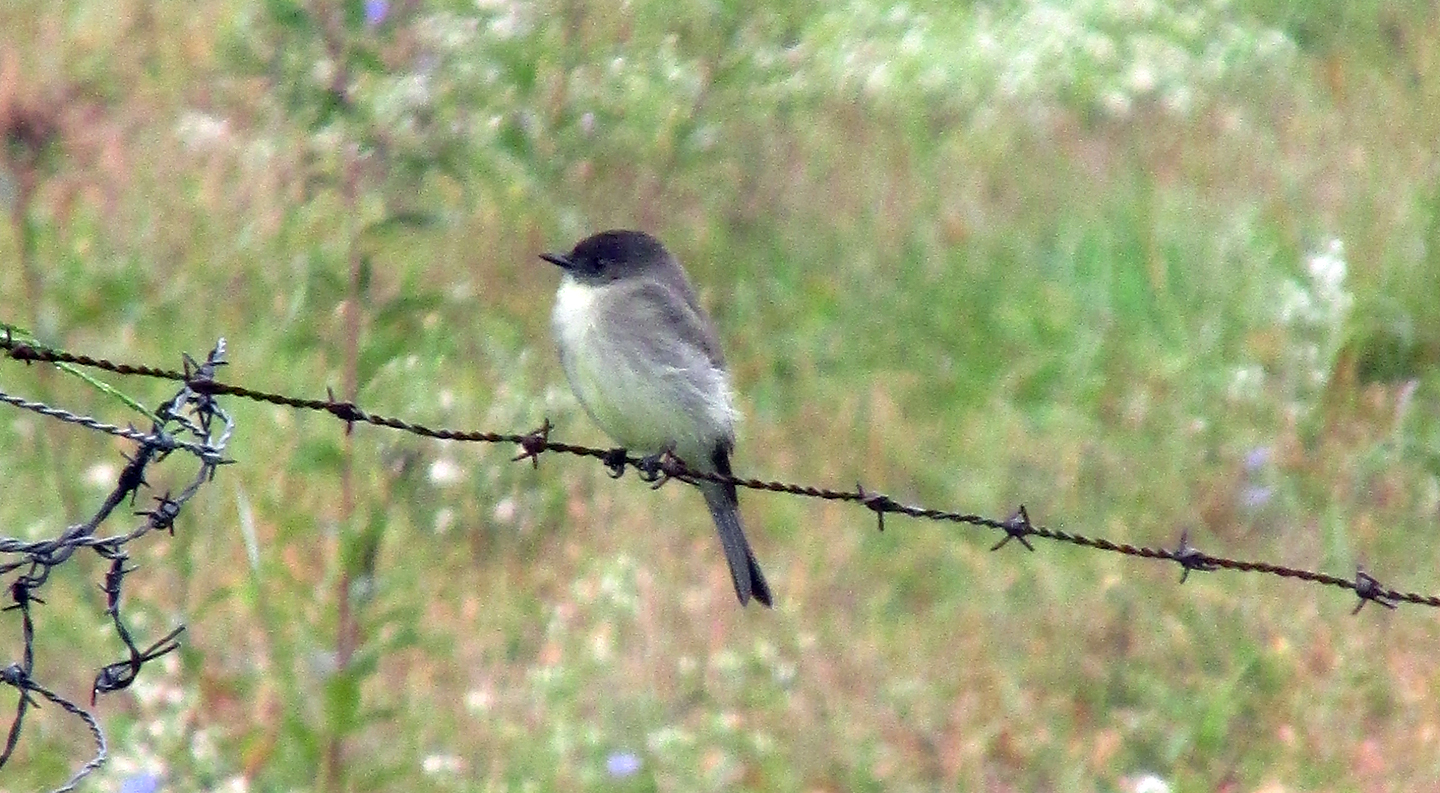
Phoebe-Cove

Photo by Bryan Stevens                                      An Eastern Phoebe perched on a barbed wire fence.

The end of October punctuates the annual spectacle of fall migration. By the end of the month, most of the summer residents — hummingbirds, vireos, tanagers, warblers —will have migrated out of the region to distant wintering grounds. In the waning days of October, winter residents — Brown Creepers, Winter Wrens, Dark-eyed Juncos, Hermit Thrushes and much more — take up residence in our yards, where they will keep a low profile during the fewer hours of daylight during the long winter months.

So far, I have already welcomed a Marsh Wren and Winter Wren to my yard, and I am looking forward to the arrival of winter sparrows.

I have once again been leading bird walks every Saturday in October at Sycamore Shoals State Historic Park in Elizabethton. There are still two walks — Oct. 24 and Oct. 31 — for interested persons to attend and try to get a look at some of the late-fall migrants passing through the region. The walks begin at 8 a.m. Bring binoculars to increase your viewing enjoyment.
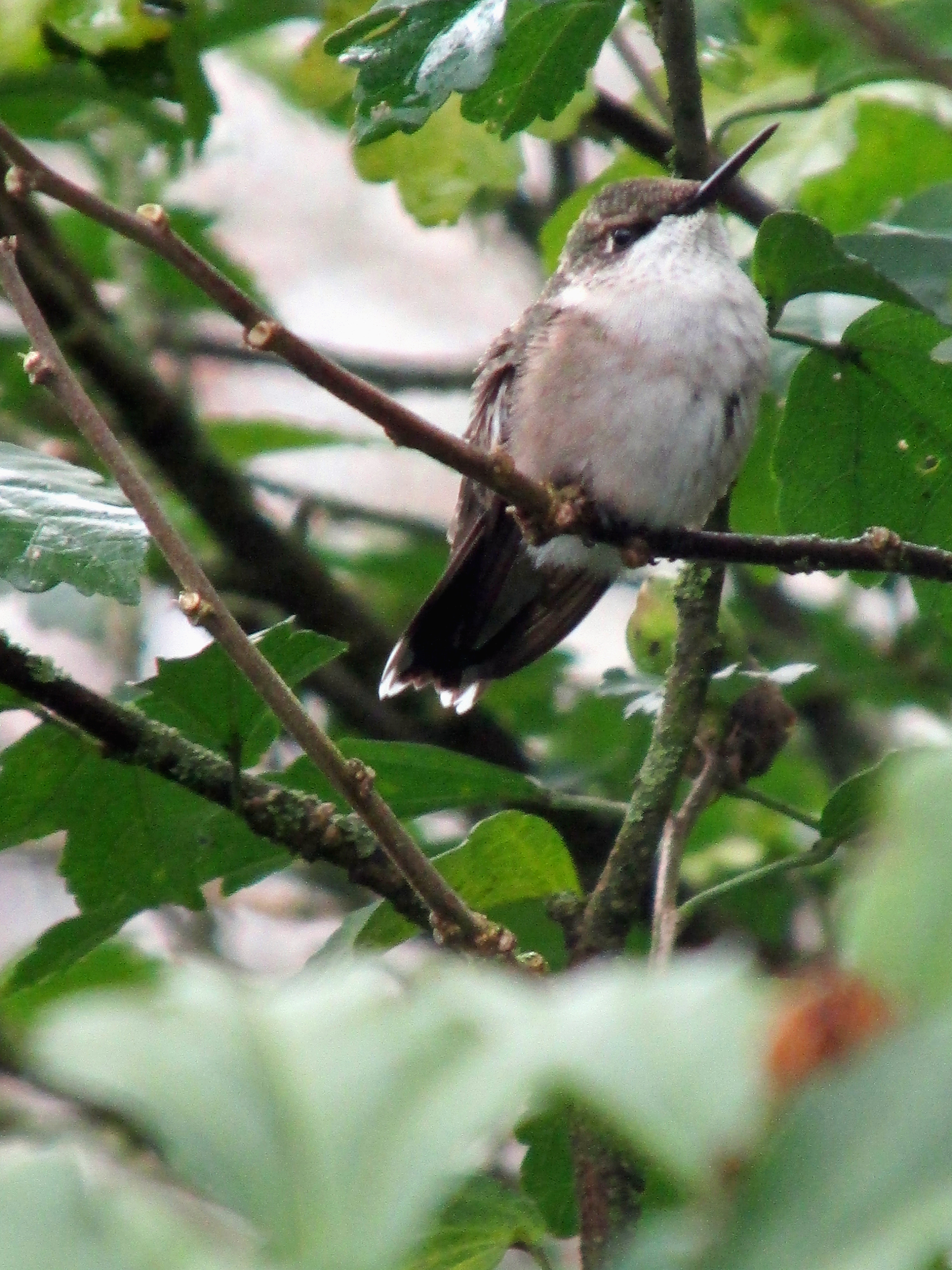
Hummer-Awake

Photo by Bryan Stevens                One of the lingering Ruby-throated Hummingbirds perches in branches near a hanging feeder.

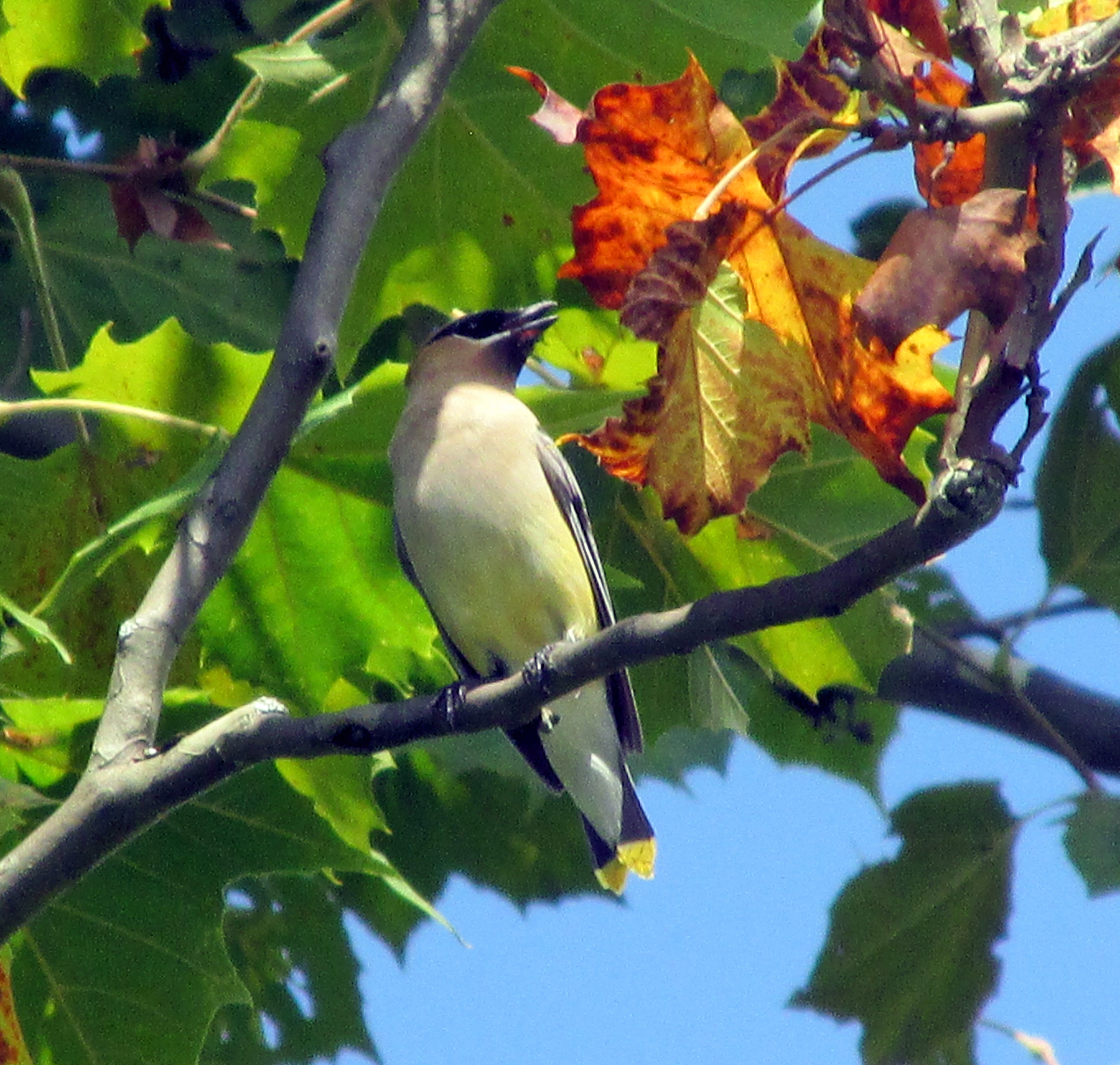
The first two walks were cancelled due to rain, but on a very chilly morning on Oct. 18 the first walk finally commenced. Five participants joined me for a morning stroll on the park trails and along the Watauga River. We saw Wood Ducks, Mallards and Canada Geese, as well as several flocks of Cedar Waxwings, along with Blue-headed Vireo, Yellow-rumped Warbler and several woodpeckers, including Downy, Red-bellied, Pileated, Northern Flicker and Yellow-bellied Sapsucker.

At home, the seasons are definitely shifting. Although a few Ruby-throated Hummingbirds lingered (as of Oct. 18), the first White-throated Sparrow put in an appearance on Oct. 14. Winter residents are gradually displacing departing summer visitors.

Last year’s bird walks at Sycamore Shoals produced some good birds, including a female Common Merganser that was discovered in the Watauga River. Other good finds have been found in past years.

On Sunday, Oct. 11, my mother and I enjoyed watching a female Common Merganser on the Watauga River.
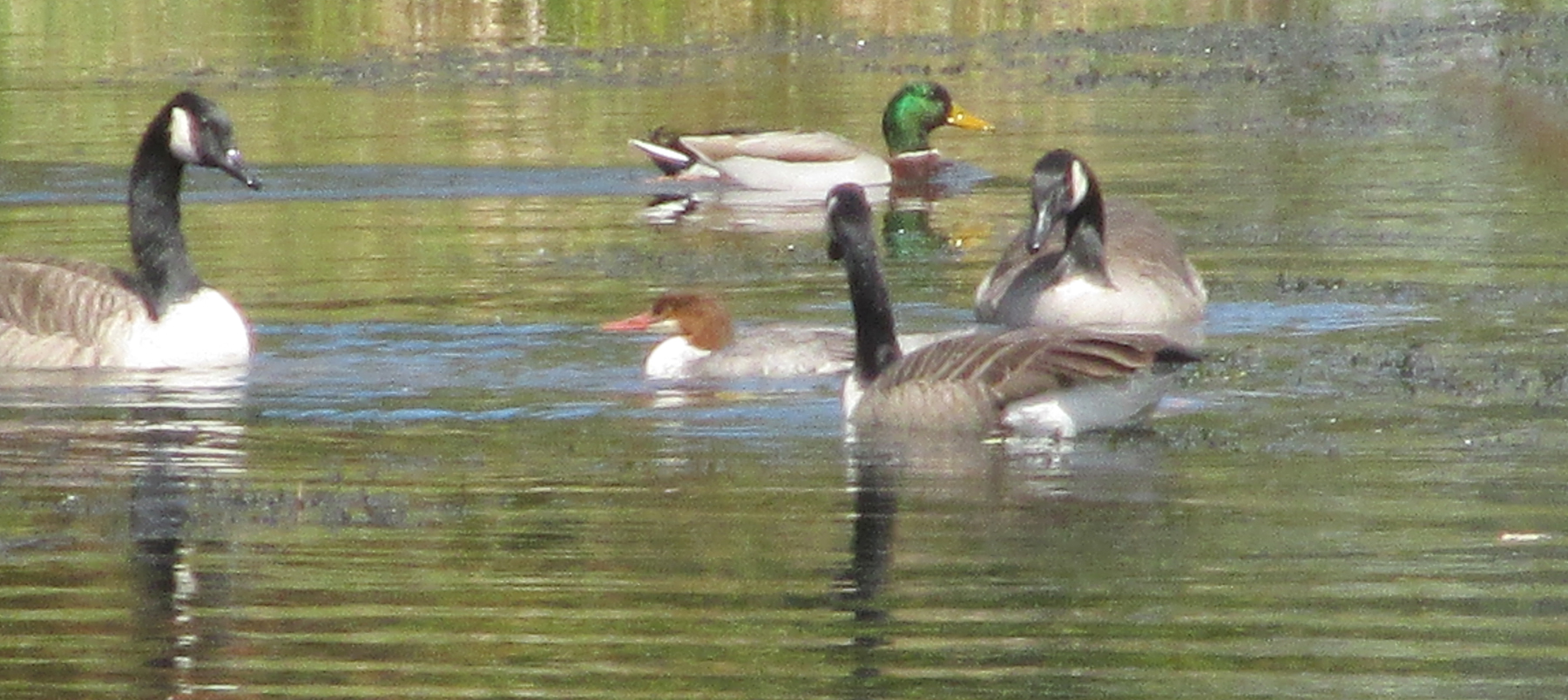
MergAndOthers

Photo by Bryan Stevens                                                                    A Common Merganser on the Watauga River associated with Canada Geese and Mallards.

In Europe, the Common Merganser is called a Goosander, probably a nod to its large size that makes this bird superficially more similar to geese than ducks. Early naturalists such as John James Audubon also provided this bird with a different name, referring to it as the “Buff-breasted Merganser.”

For many years, the Common Merganser was one of my target birds. Finally, more than 10 years ago, I saw my first Common Mergansers during a visit to Middlebrook Lake in Bristol with Reece Jamerson, Gil Derouen and the late Howard Langridge.

Despite the word “common” in its name, this merganser isn’t particularly common in Northeast Tennessee. Its relatives, Hooded Merganser and Red-breasted Merganser, are much more regular visitors to the region.
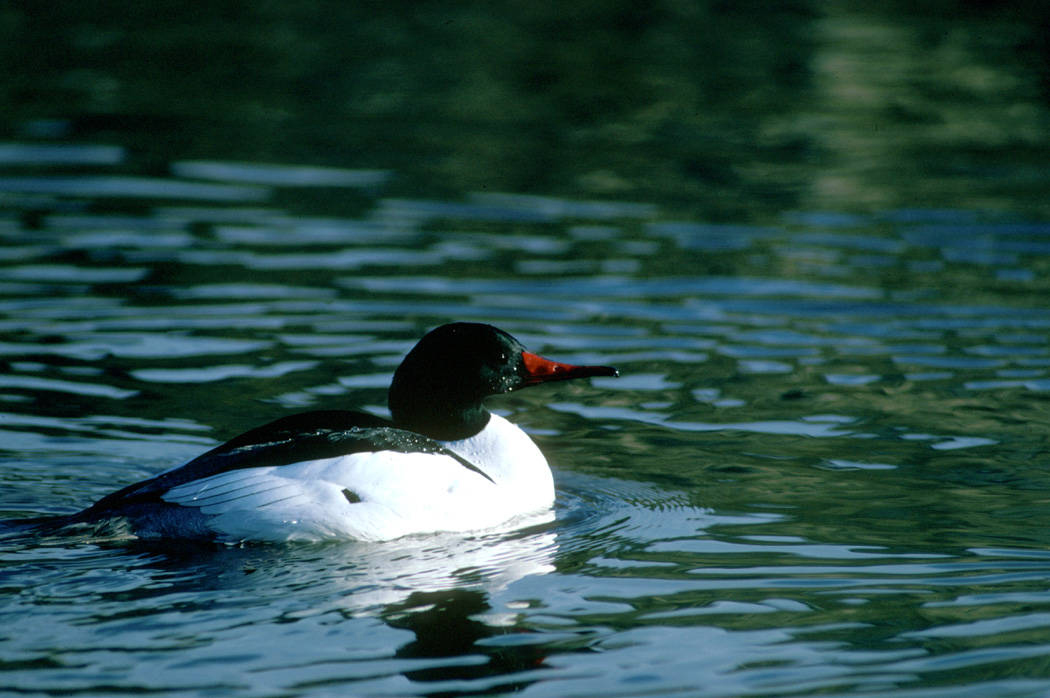
Common_Merganser (1)

Photo by U.S. Fish & Wildlife Service                    A male Common Merganser takes a swim.

The Common Merganser, particularly the males, are easily identified. Apart from their large size, which is about 26 inches long for males, males of this duck have a dark green head and upper neck. The lower neck, breast and underparts are creamy-white with a varying amounts of a pink or reddish wash. The back is black, while the bill, legs and feet are red. Females are similar to female Red-breasted Mergansers but show a clearly defined white chin patch lacking in their close relative.

According to the website Ducks Unlimited, Common Mergansers breed from Alaska, the southern Yukon, Labrador and Newfoundland south to central California, Arizona, New Mexico, southern Chihuahua and east of the Rockies to Minnesota, Michigan, New York, New England and Nova Scotia.

They are also one of the biggest of North America’s cavity-nesting birds, utilizing natural cavities in trees, as well as man-made nesting boxes. They will also nest on the ground.

Common Mergansers feed mainly on fish, amphibians, crustaceans, mollusks and other aquatic organisms.

The last extensive population surveys of Common Mergansers took place during the 1970s, when the population in North America was estimated at 1.5 million birds.

May population surveys during 1970-’79, suggested a continental population of 1.5 million birds. Population tracking has been lacking in recent decades, but experts believe that Common Mergansers have a stable population.
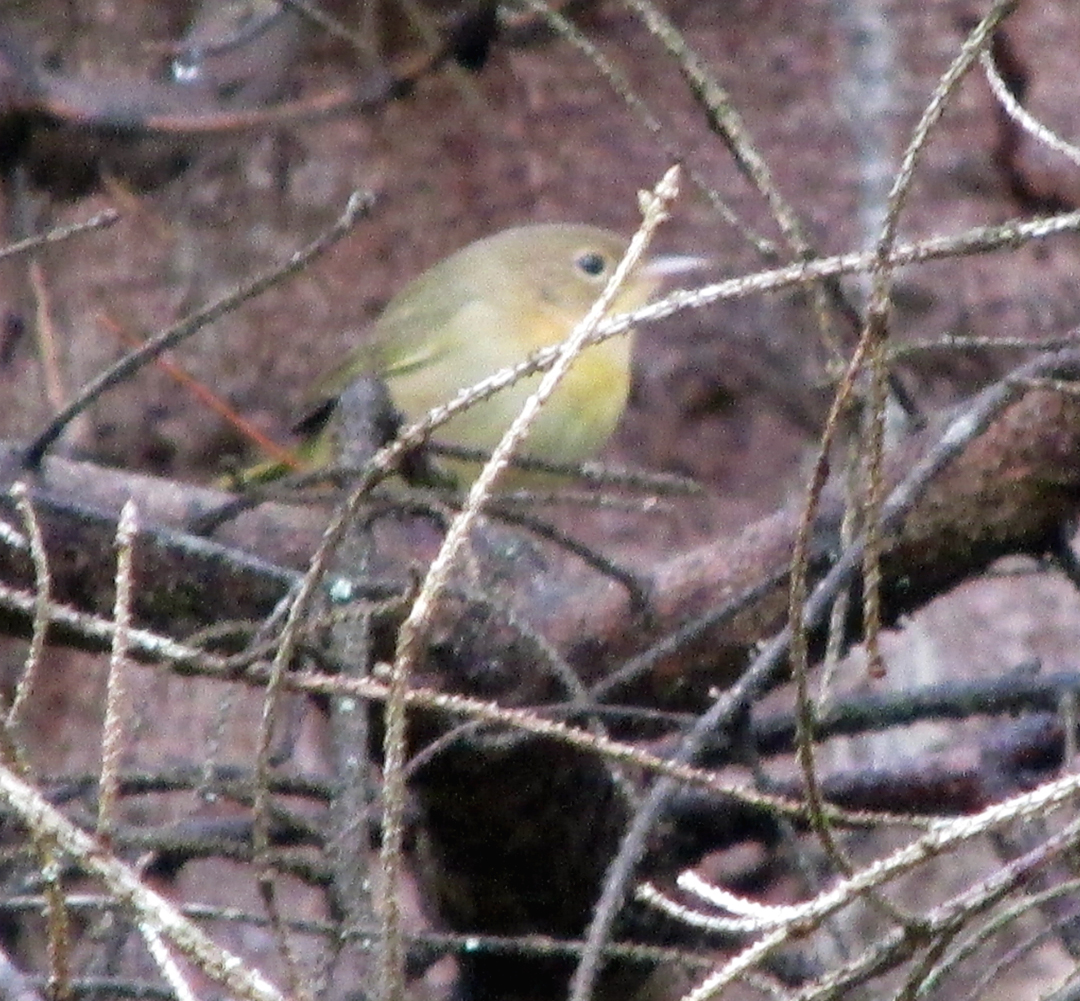
CommonYellowthroat

Photo by Bryan Stevens                                        A Common Yellowthroat hides in a tangle of brush during a migration stop.

When November arrives, I’ll be keeping watch for ducks making stops at the pond at Erwin Fishery Park or along the series of ponds located along the linear walking trail in Erwin. I’ll also make a journey to Wilbur Lake, one of my favorite destinations, to look for returning Buffleheads.

•••••

To learn more about birds and other topics from the natural world, “friend” Bryan on Facebook at https://www.facebook.com/ahoodedwarbler. He is always posting about local birds, wildlife, flowers, insects and much more. If you have a question, wish to make a comment or share a sighting, email ahoodedwarbler@aol.com.
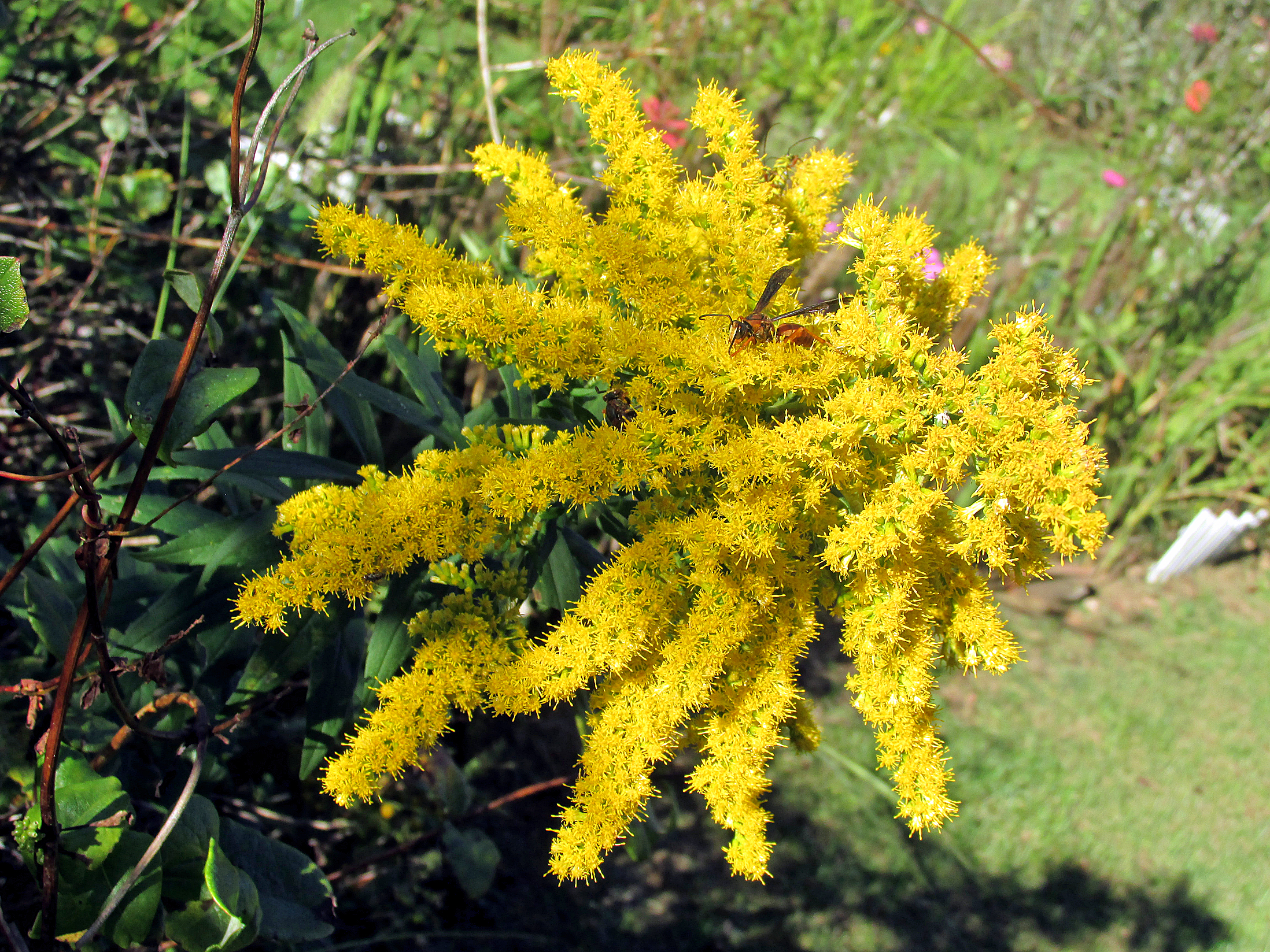
Goldenrod

Photo by Bryan Stevens                                                                                        Blooming Goldenrod looks splendid in fall sunshine.
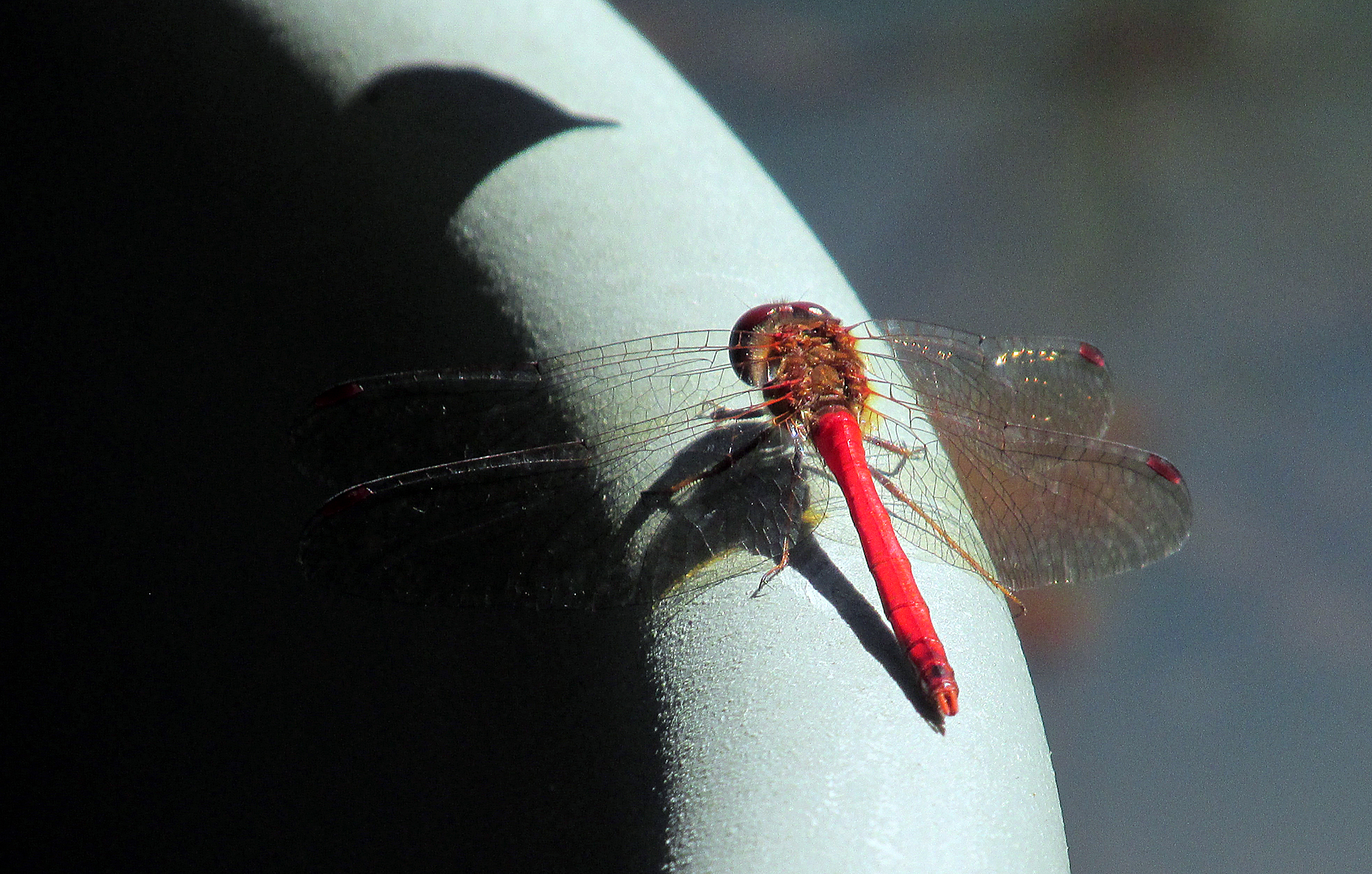
WeirdsHadow

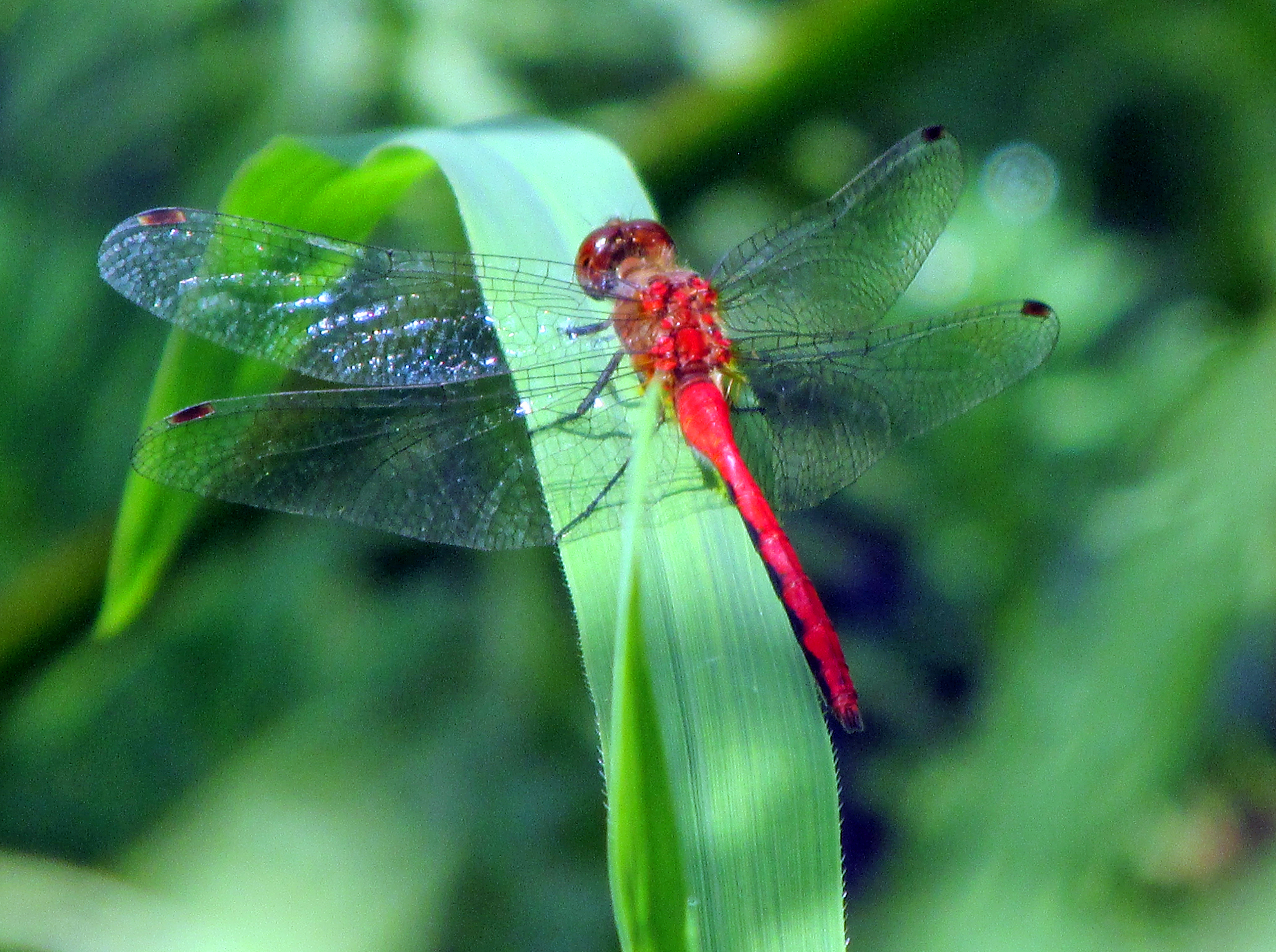
Photo by Bryan Stevens                                      The Autumn Meadowhawk, pictured, and Shadow Darners are some of the final dragonflies flying around the fish pond as cooler weather arrives.
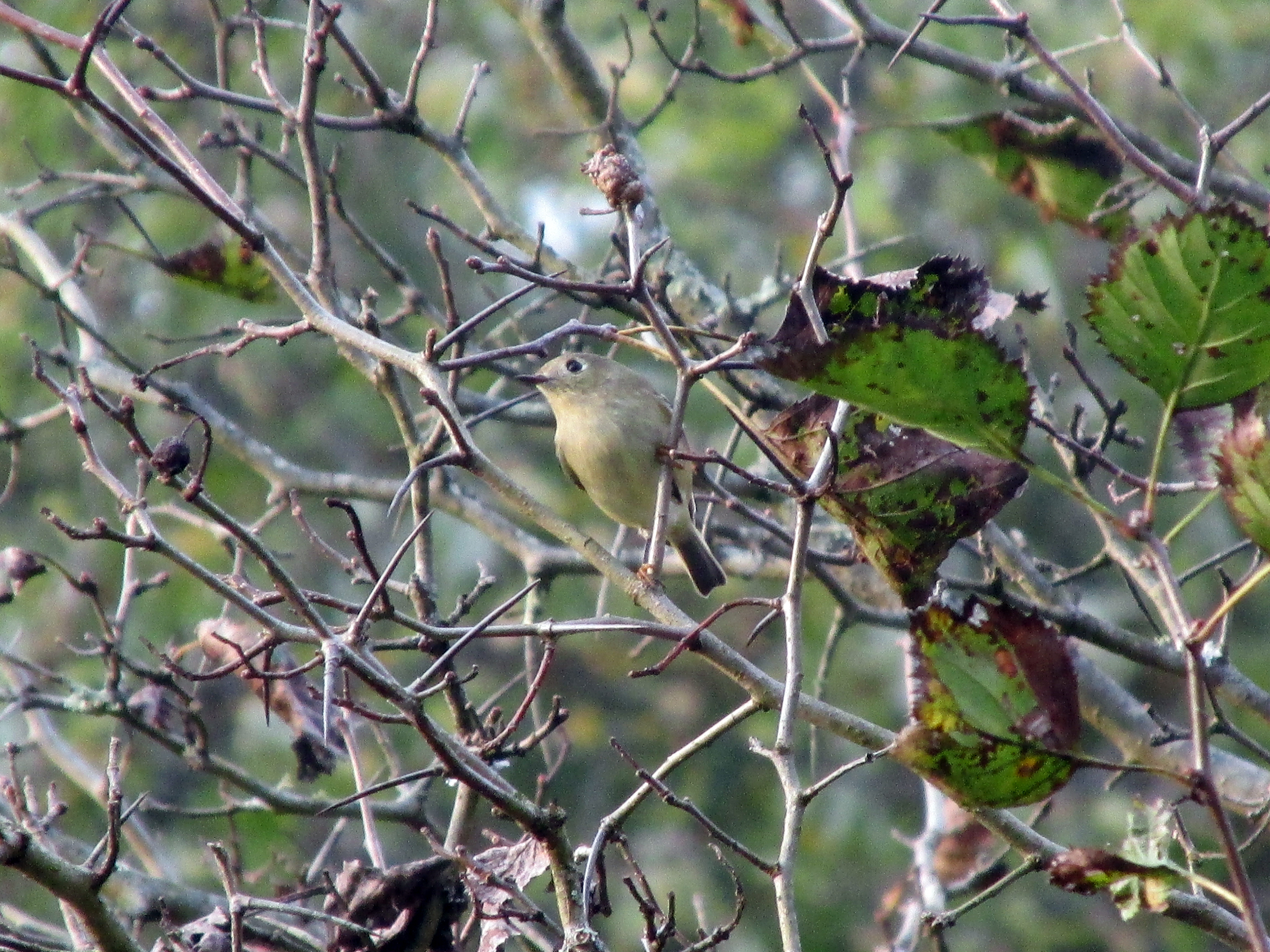
BRYAN-Ruby-crownedKinglet-Oct9

Photo by Bryan Stevens                                                    Some Ruby-crowned Kinglets, such as this individual, may overwinter in Northeast Tennessee.


Fall Bird Count finds above-average total of 129 species

Geese-Flock 2

Photo by Bryan Stevens                                                                   A flock of Canada Geese in a field near the Watauga River in Elizabethton on the day of the Fall Bird Count.

The 46th annual Elizabethton Fall Count was held on Saturday, Sept. 26.

 
A total of 37 observers in nine parties covered Carter County and parts of adjacent Johnson, Sullivan, Unicoi and Washington counties in this yearly count conducted by the Lee and Lois Herndon Chapter of Tennessee Ornithological Society, or the Elizabethton Bird Club. This year’s count included new territory around Kingsport that has not traditionally been a part of this annual fall survey.

 
A total of 129 species were found, which is slightly above the average of 125 over the last 30 years. The all-time high of 137 species was achieved in 1993.
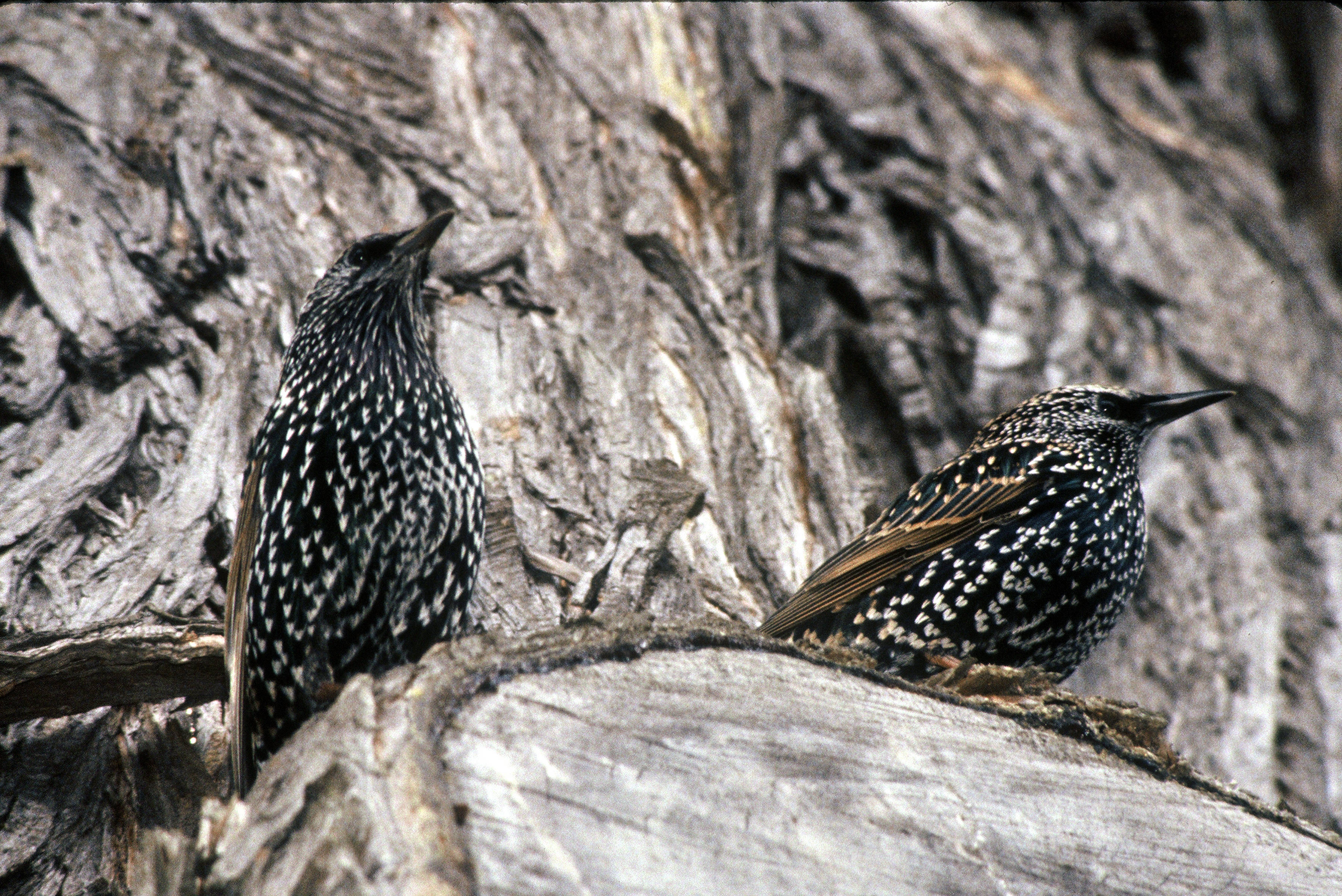
The most numerous bird on the count was the European Starling (1,347) followed closely by Canada Goose (1,182) and American Crow (896).


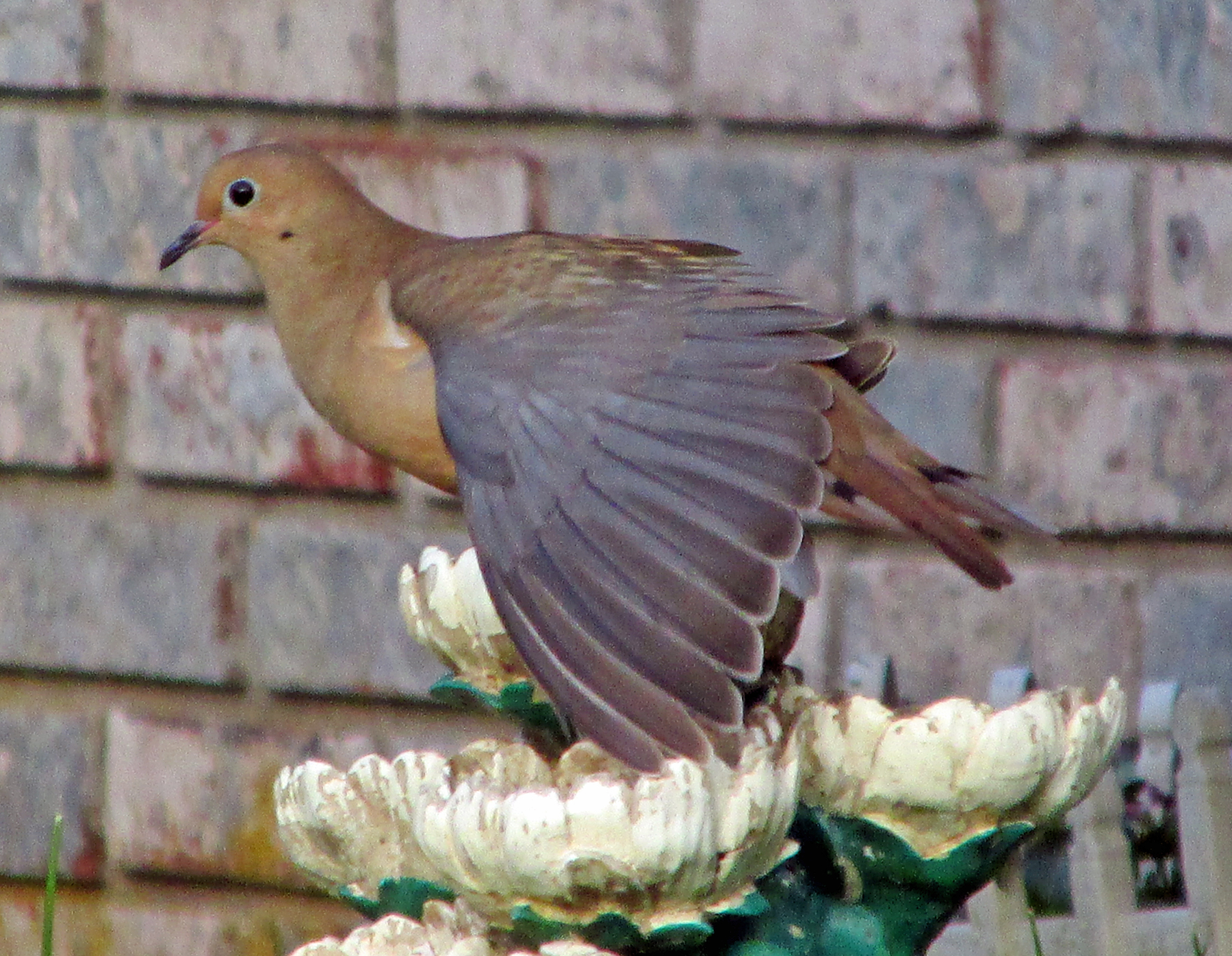
Dove-Wing

Photo by Bryan Stevens                              Mourning Doves were one of the more abundant birds on this year’s Fall Bird Count.

Other numerous birds included Mourning Dove (529), Chimney Swift (490), Blue Jay (432) and Rock Pigeon (375).

 
Of course, some birds were represented by only one individual, such as Northern Harrier, Great Egret, American Wigeon, Ruffed Grouse, Peregrine Falcon, Olive-sided Flycatcher, Eastern Kingbird, Worm-eating Warbler, Northern Waterthrush, Nashville Warbler and Yellow-breasted Chat.

Turkey-Flock

Photo by Bryan Stevens                                         A flock of Wild Turkeys near the Elizabethton Municipal Airport.

The total follows:
Canada Goose, 1,182; Wood Duck, 90; American Wigeon, 1; Mallard, 254; Blue-winged Teal, 13; Ruffed Grouse, 1; Wild Turkey, 161; Pied-billed Grebe, 9; and Double-crested Cormorant, 31.

 
Great Blue Heron, 39; Great Egret, 1; Green Heron, 7; Black-crowned Night-heron, 4; Black Vulture, 172; and Turkey Vulture, 189.
Osprey, 19; Northern Harrier, 1; Sharp-shinned Hawk, 5; Cooper’s Hawk, 10; Bald Eagle, 8; Red-shouldered Hawk, 3; and Red-tailed Hawk, 16.


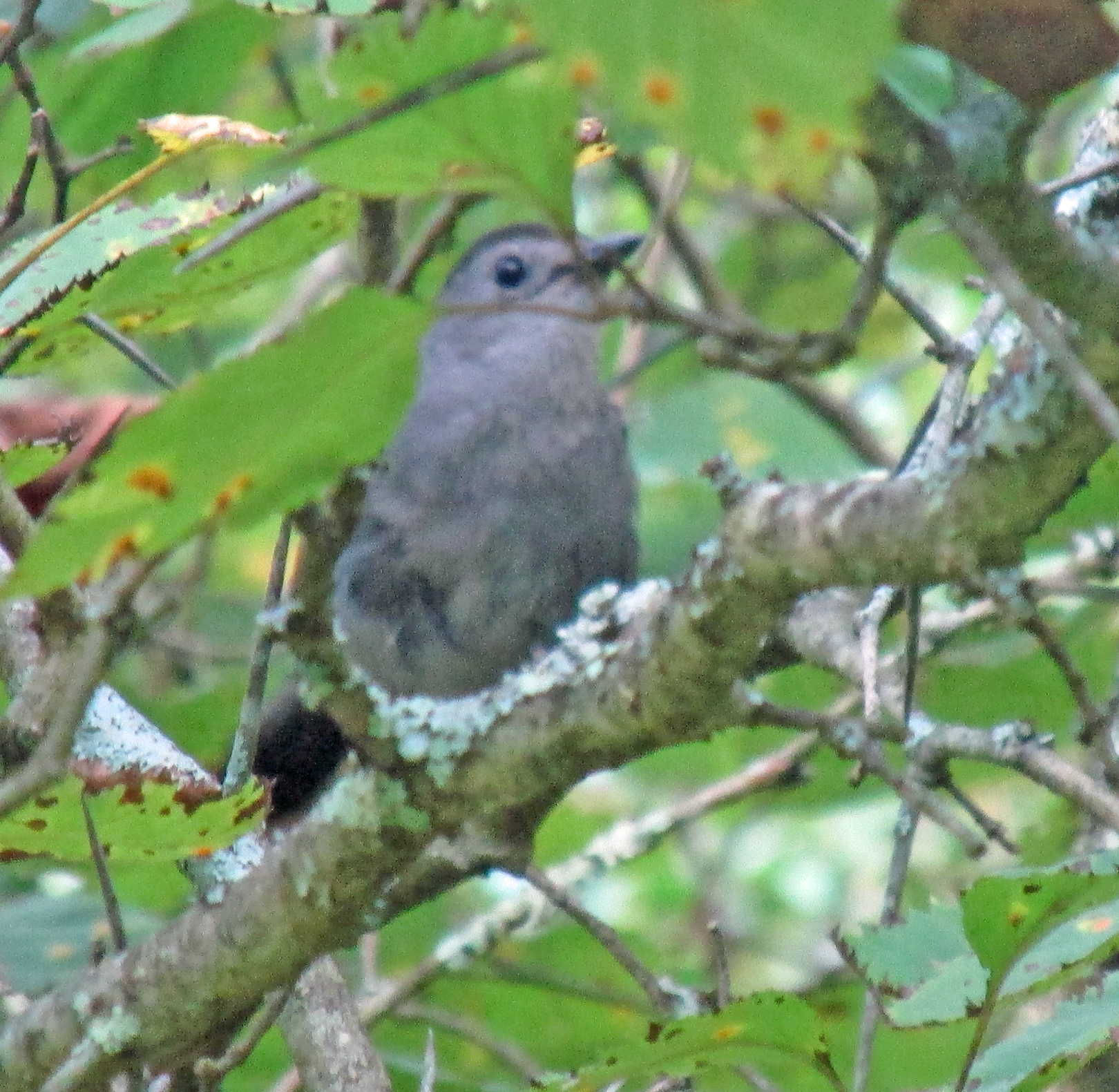
Photo by Bryan Stevens A curious Gray Catbird peeks from dense cover. Attendees at the fall rally can look for catbirds and other species at any of the offered bird hikes.

Photo by Bryan Stevens                                        A curious Gray Catbird peeks from dense cover.

Sora, 4; American Coot, 2; Killdeer, 87; Spotted Sandpiper, 3; Solitary Sandpiper, 5; Willet, 1; Sanderling, 2; Least Sandpiper, 1; and American Woodcock, 1.

 
Ring-billed Gull, 4; Forster’s Tern, 1; Rock Pigeon, 375; Eurasian Collared-Dove, 5; Mourning Dove, 529; and Black-billed Cuckoo, 1.

 
Eastern Screech-owl, 27; Great Horned Owl, 3; Barred Owl, 1; Northern Saw-whet Owl, 1; Chimney Swift, 490; Ruby-throated Hummingbird, 36; and Belted Kingfisher, 33.

 
Red-headed Woodpecker, 1; Red-bellied Woodpecker, 73; Yellow-bellied Sapsucker, 1; Downy Woodpecker, 53; Hairy Woodpecker, 7; Northern Flicker, 54; and Pileated Woodpecker, 28.


Photo by U.S. Fish & Wildlife Service The European Starling ranked as the most common species on the count.

Photo by U.S. Fish & Wildlife Service
The European Starling ranked as the most common species on the count.

American Kestrel, 24; Merlin, 2; Peregrine Falcon, 1; Olive-sided Flycatcher, 1; Eastern Wood-Pewee, 14; Acadian Flycatcher, 2; Eastern Phoebe, 71; and Eastern Kingbird, 1.

 
White-eyed Vireo, 3; Yellow-throated Vireo, 1; Blue-headed Vireo, 6; Red-eyed Vireo, 4; Blue Jay, 432; American Crow, 896; and Common Raven, 8.

 
Northern Rough-winged Swallow, 1; Tree Swallow, 231; Cliff Swallow, 2; Carolina Chickadee, 128; Tufted Titmouse, 111; Red-breasted Nuthatch, 1; and White-breasted Nuthatch, 43.

 
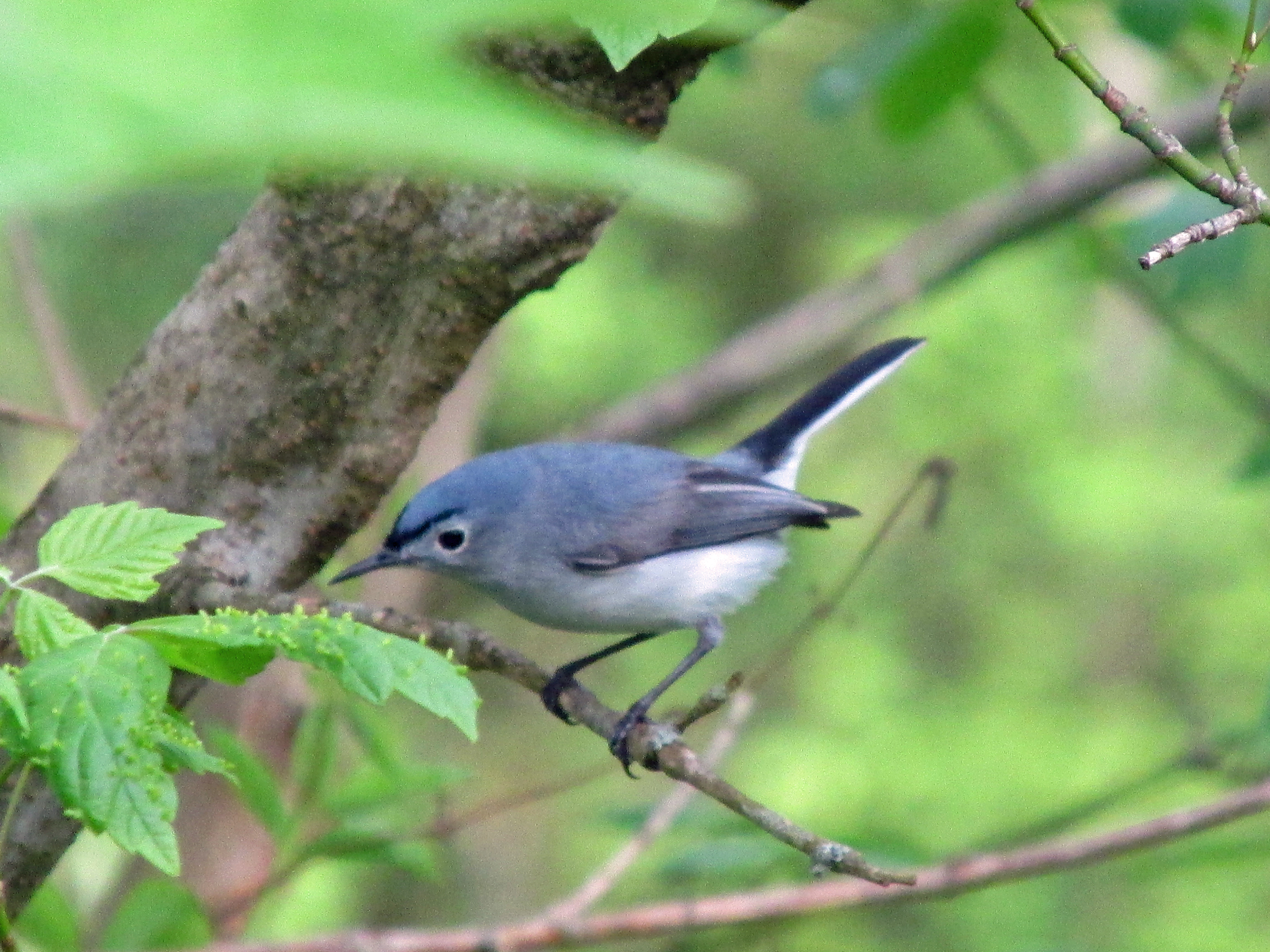
House Wren, 6; Marsh Wren, 1; Carolina Wren, 152; Blue-gray Gnatcatcher, 2; Golden-crowned Kinglet, 2; and Ruby-crowned Kinglet, 2.


NoWaterthrush

Photo by Bryan Stevens                                A total of 21 species of warblers, such as this Northern Waterthrush, were counted during the Fall Bird Count.

Eastern Bluebird, 230; Veery, 1; Gray-cheeked Thrush, 1; Swainson’s Thrush, 23; Wood Thrush, 12; American Robin, 312; Gray Catbird, 60; Brown Thrasher, 19; Northern Mockingbird, 76; European Starling, 1,347; and Cedar Waxwing, 132.

 
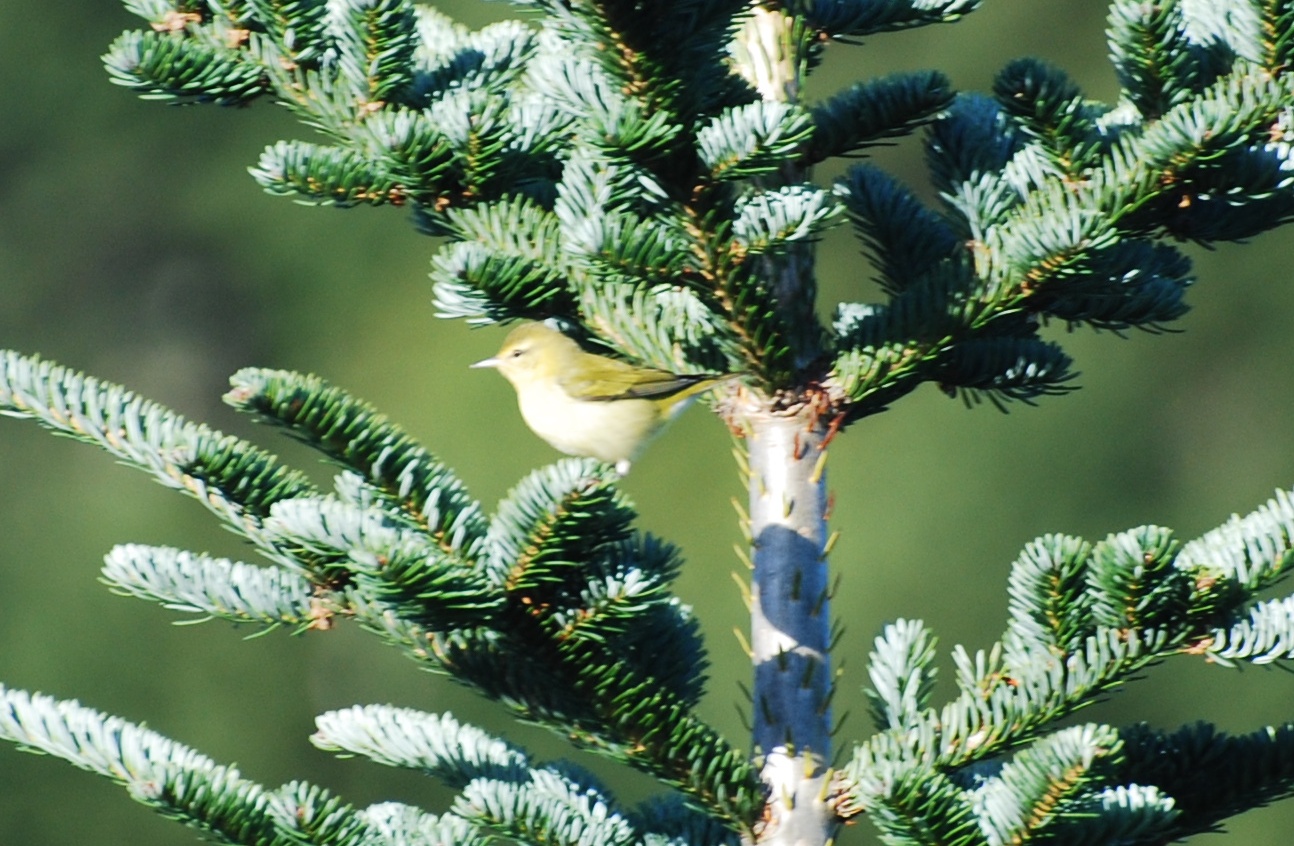
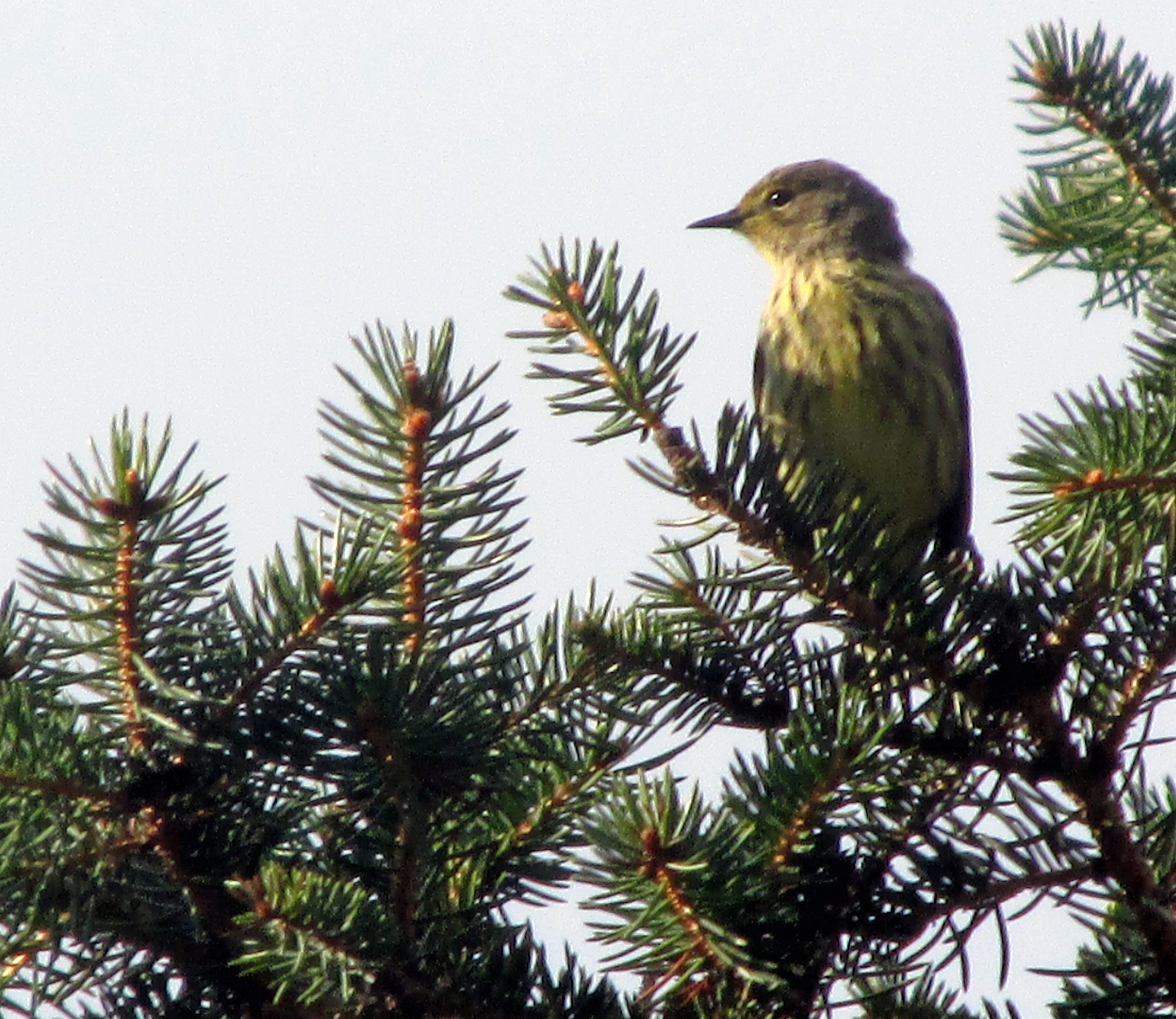
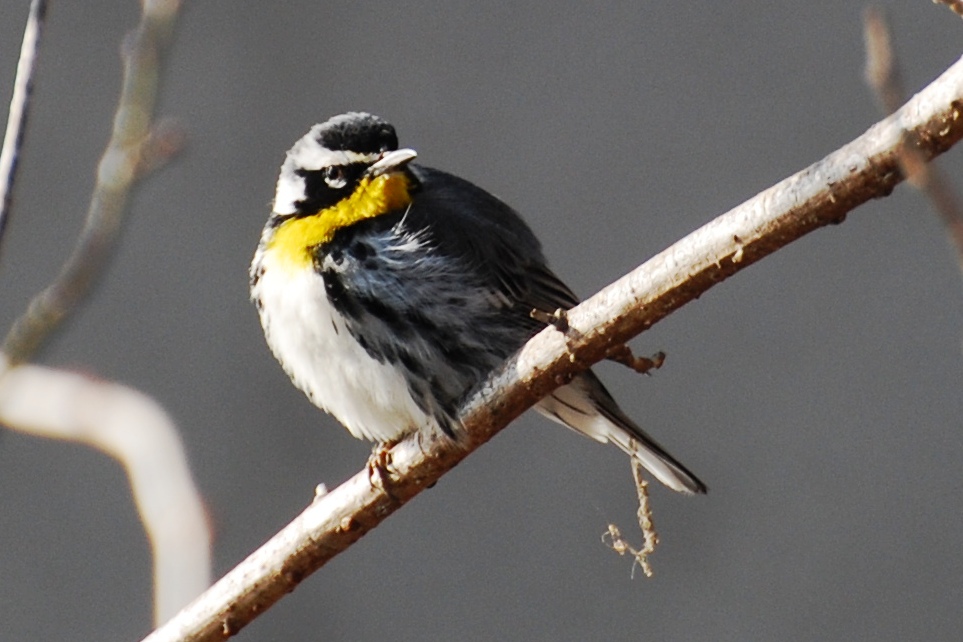
Ovenbird, 2; Worm-eating Warbler, 1; Northern Waterthrush, 1; Black-and-white Warbler, 6; Tennessee Warbler, 12; Nashville Warbler, 1; Common Yellowthroat, 25; Hooded Warbler, 4; American Redstart, 51; Cape May Warbler, 8; Northern Parula, 2; Magnolia Warbler, 24; Bay-breasted Warbler, 8; Blackburnian Warbler, 7; Chestnut-sided Warbler, 7; Black-throated Blue Warbler, 2; Palm Warbler, 54; Pine Warbler, 2; Yellow-throated Warbler, 1; Black-throated Green Warbler, 4; and Yellow-breasted Chat, 1.


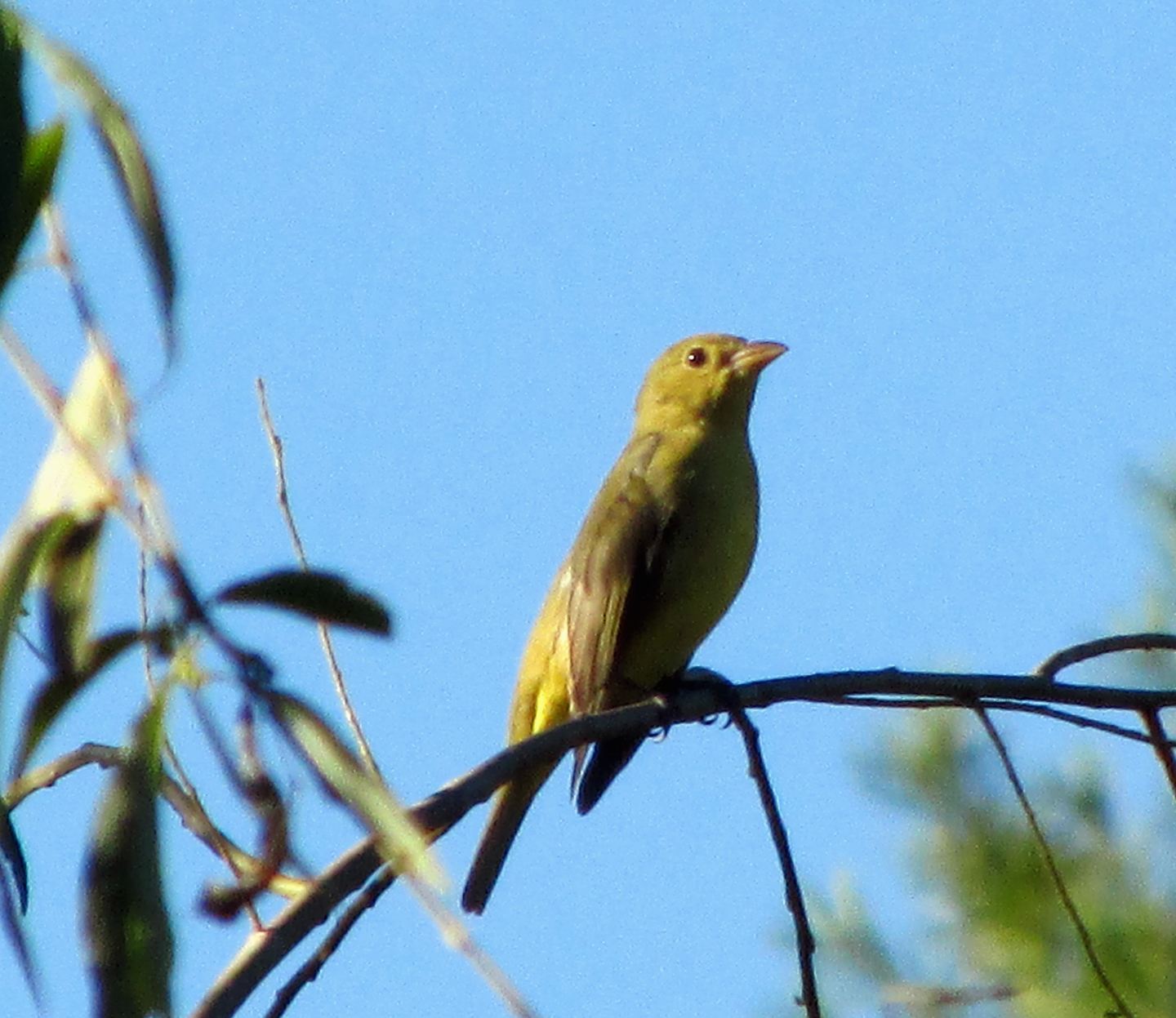
Tanager-Sept18

Photo by Bryan Stevens                                  Scarlet Tanagers were still present in good numbers for the Fall Bird Count on Sept. 26.

Eastern Towhee, 59; Chipping Sparrow, 37; Field Sparrow, 14; Song Sparrow, 99; Dark-eyed Junco, 31; Scarlet Tanager, 16; Northern Cardinal, 188; Rose-breasted Grosbeak, 28; Blue Grosbeak, 1; and Indigo Bunting.


Red-winged Blackbird, 60; Eastern Meadowlark, 41; Common Grackle, 67; Brown-headed Cowbird, 15; Baltimore Oriole, 3; House Finch, 55; American Goldfinch, 188; and House Sparrow, 56.

Double-crested cormorants not unexpected visitors to region


Cormorant-Swimming

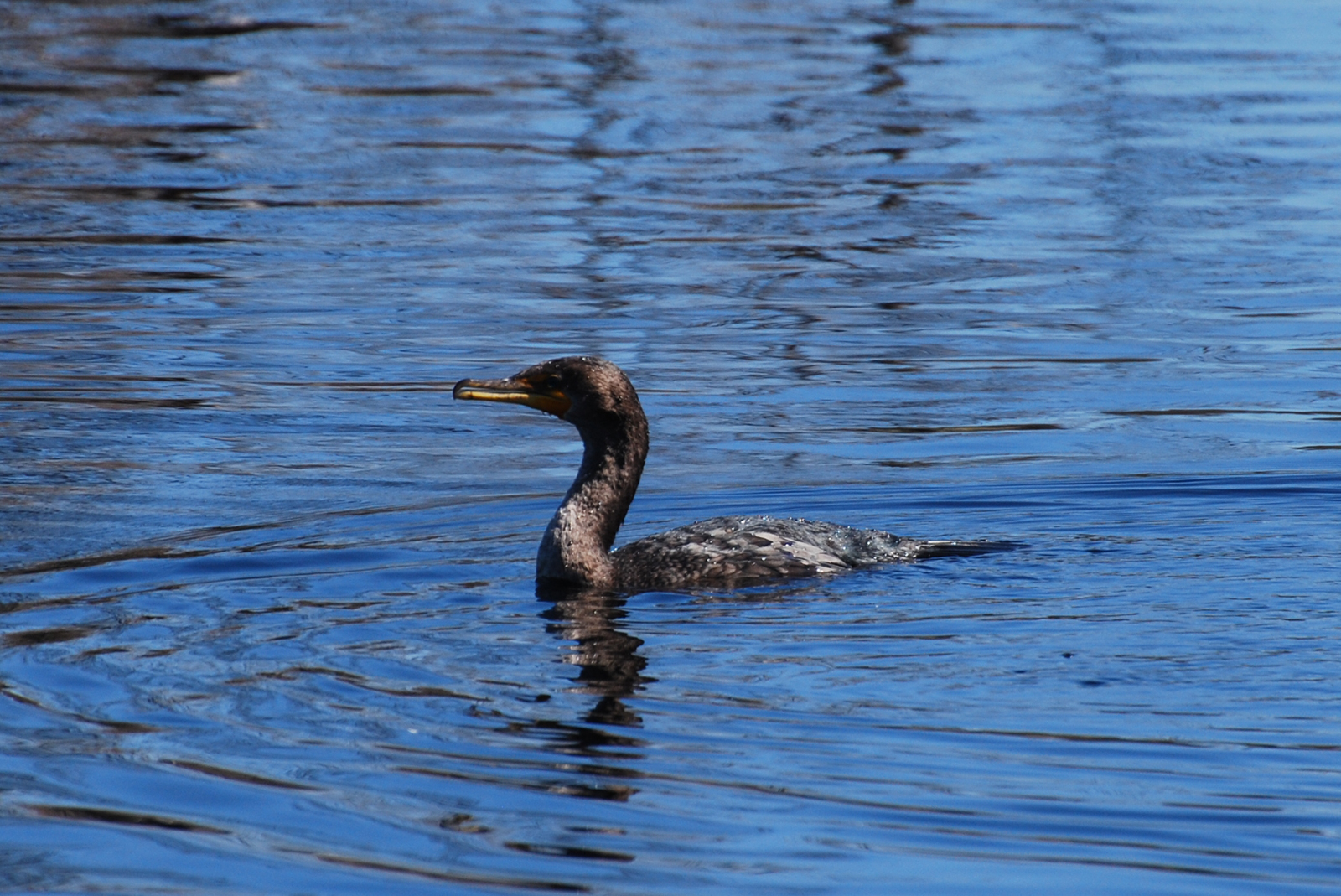
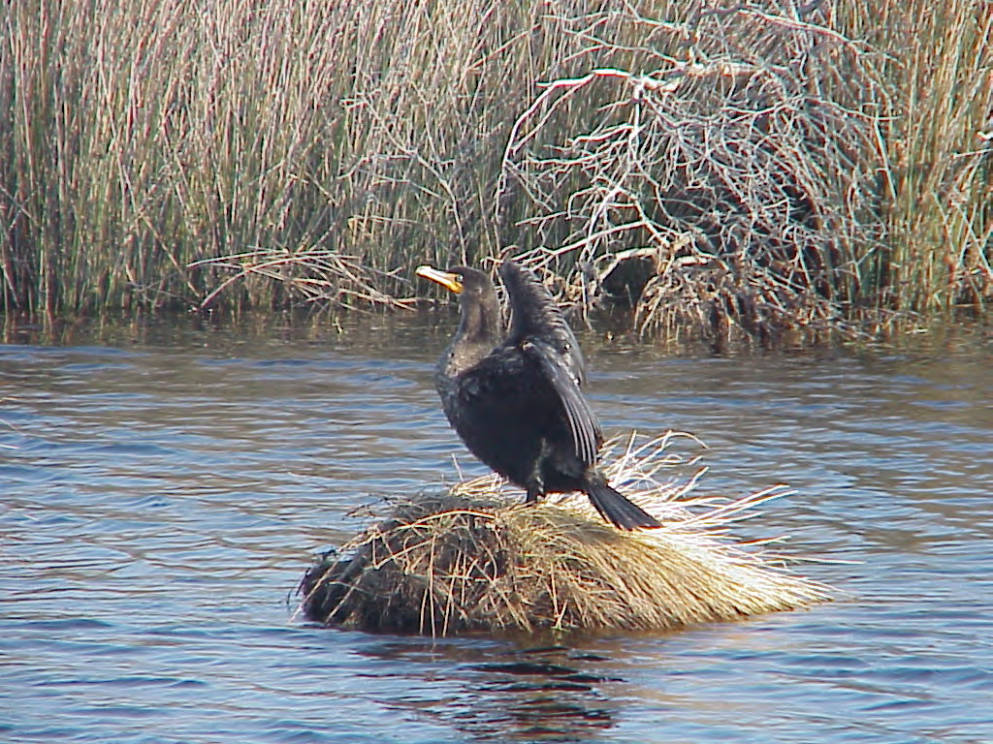
Photo courtesy of Jean Potter                                                          Double-crested cormorants are quite at home in the water, where they hunt for fish using their hooked bills.

In the waning days of summer and these early days of fall, I’ve been seeing a welcome diversity of birds, including warblers, flycatchers, tanagers and even some unusual waterfowl.

The ponds along the linear walking trails in Erwin are good locations for seeking migrating double-crested cormorants. These large, fish-eating birds also show up occasionally at the large pond at Erwin Fishery Park. Some people mistake these aquatic birds for anhingas, or “snake birds,” which are named for their habits of swimming with only their necks and heads above the surface of the water. The anhinga, a bird of southern wetlands and swamps, is not all that closely related to cormorants. These two species merely share a superficial appearance, differing mostly in the shape of their bills. Cormorants have a serrated, hooked bill good for grasping slippery fish while anhingas have a sharp bill similar to a herons that is useful for spearing fish.

DC-Cormorant

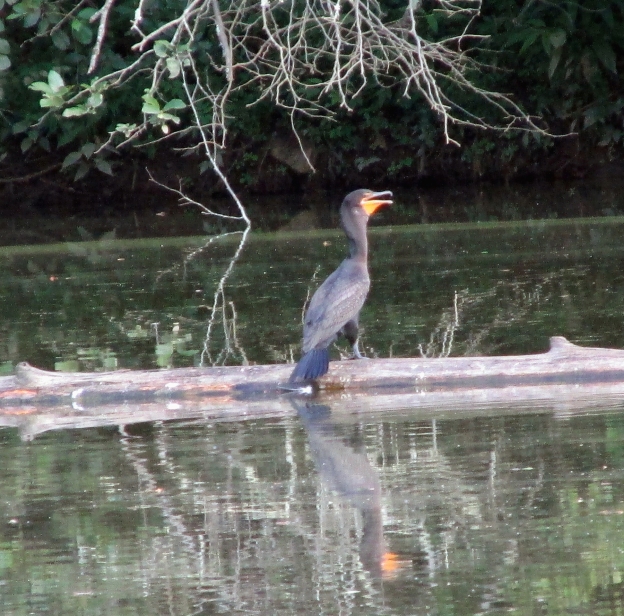
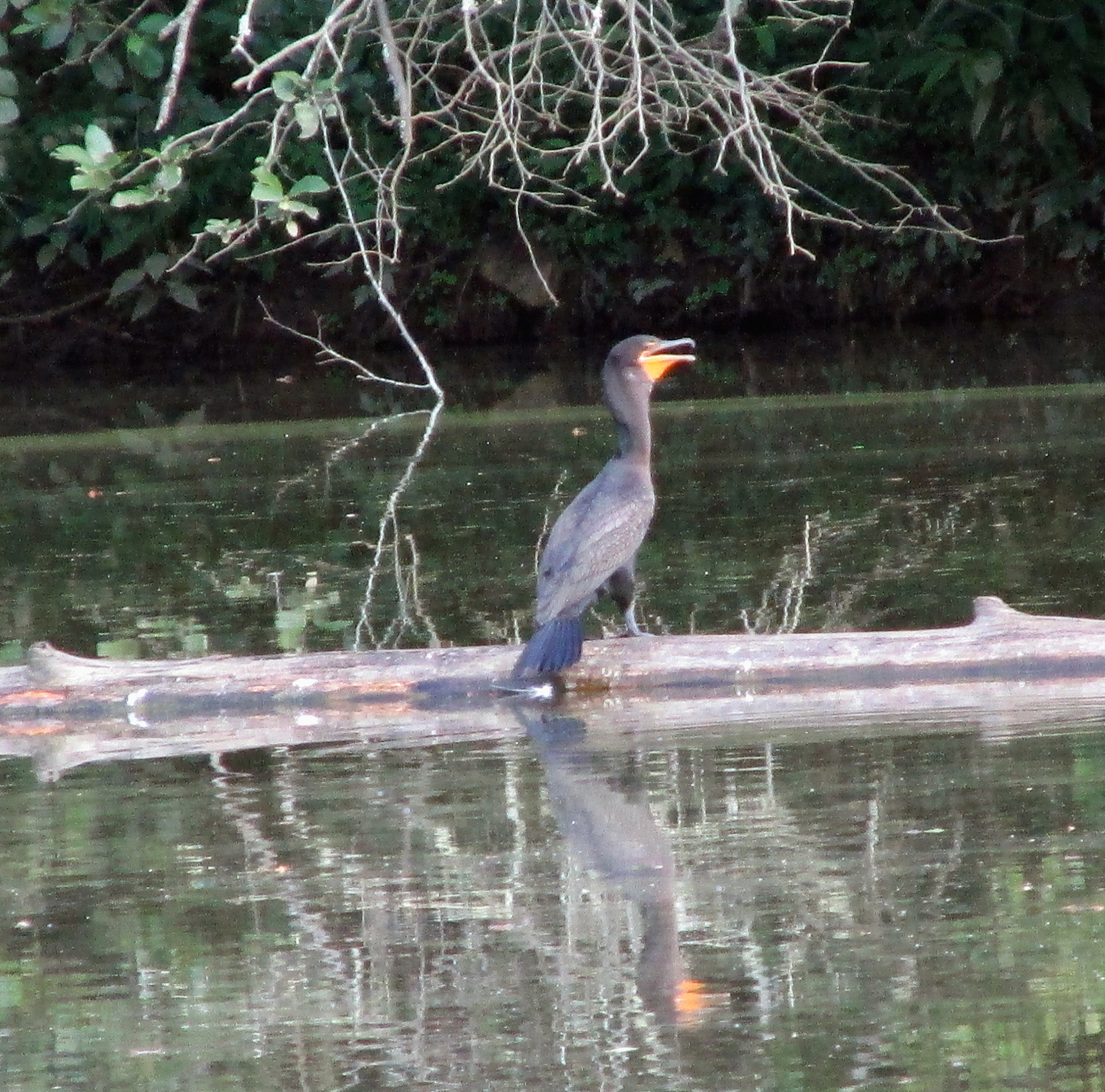
Photo by Bryan Stevens                                        A Double-crested Cormorant perches on a fallen log in a pond.

The double-crested cormorant is widely distributed across North America, ranging from the Aleutian Islands in Alaska down to Florida and Mexico. These fish-eating birds are also abundant on inland lakes across the United States.

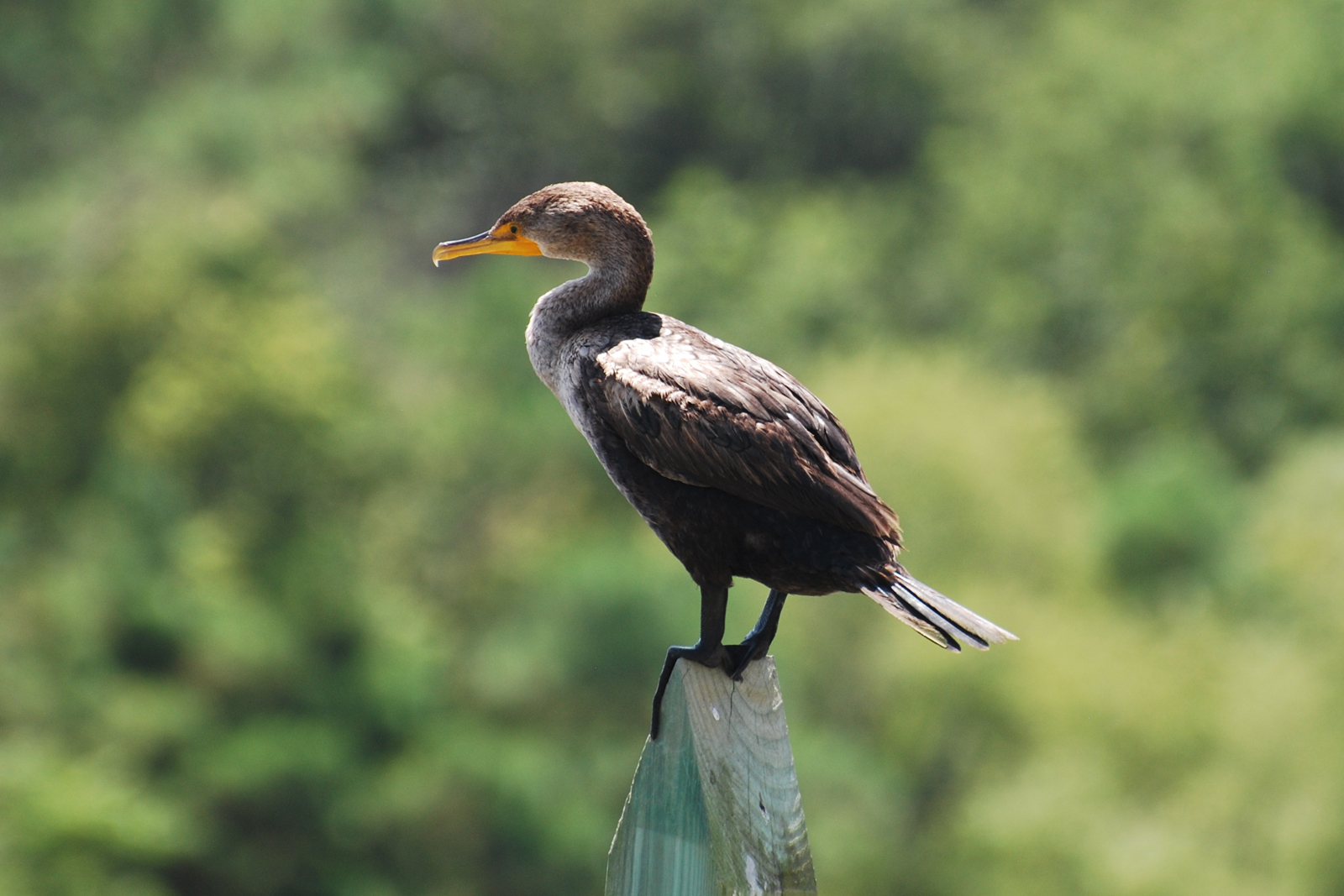
The double-crested cormorant can reach a body length of almost three feet and is a dark bird. Adults have black plumage, but young birds are brownish or gray in coloration. The bird gets its common name from the double crest of black and white feathers displayed during the breeding season.

Cormorant-Perched

Photo Courtesy of Jean Potter                          The double-crested cormorant is a fish-eating bird perfectly adapted to its aquatic lifestyle.

Cormorants lead a mostly aquatic lifestyle. Unlike many types of waterfowl, such as ducks and geese, cormorants do not have waterproof feathers. After a dive into the water for a fish, all cormorants have to spend time out of the water to dry their feathers. Fish compose the majority of a cormorant’s diet, but these birds may also take an occasional amphibian or crustacean. While the double-crested cormorant can be found on local lakes and rivers at almost any time of the year, these birds are most often encountered during migration in the spring and fall. In recent years, instances of nesting have been increasing in the area. I have even observed double-crested cormorants at large ponds and small lakes at city parks.

DoubleCrested_Cormorant

Photo by U.S. Fish & Wildlife Service                    A double-crested cormorant takes time to dry its feathers after spending time in the water searching for fish.

Worldwide, there are about 40 different species of cormorants, which are also known by the common name “shag,” which refers to the crest of feathers evident on many of these waterfowl. Experts have not had an easy time defining relatives of the cormorants. Many experts include gannets, anhingas, pelicans and even penguins as possible close relatives of the cormorants.

The flightless cormorant, also known as the Galapagos cormorant, is native to the Galapagos Islands. It is a unique member of the cormorant family in that it is the only one that has lost the ability to fly. Other species of cormorants include spectacled cormorant, reed cormorant, white-breasted cormorant, king shag, red-footed shag, crowned cormorant and pygmy cormorant.

1863_17_252_DoublecrestedCormorant_OE

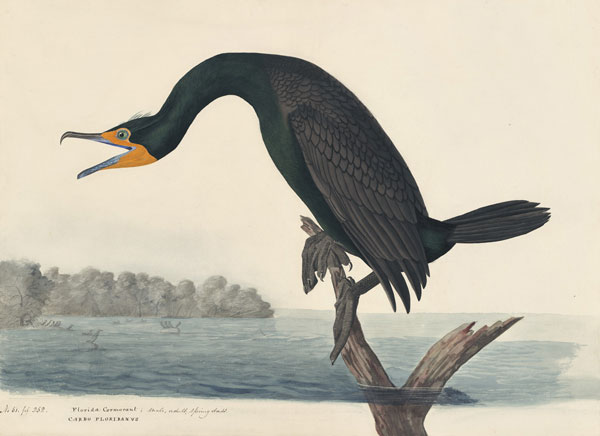
Early naturalist and artist John James Audubon painted this double-crested cormorant.

North America is home to a few other species of cormorants, but none are as widespread as the double-crested cormorant. Others include the great cormorant, pelagic cormorant, Brandt’s cormorant, red-faced Cormorant and the Neotropic cormorant, which is found along the southeast areas of Texas down into Mexico.

20090819-Cormorant_fishing_by_Eisen in Japan

A painting of humans using cormorants to catch fish.

In some parts of the world — Japan, China and Macedonia — humans have trained cormorants to capture fish for them. A cord or ring around the cormorant’s neck prevents the bird from swallowing anything other than small fish. Larger specimens captured by the cormorants are retrieved by the human angler.

In Japan, fishing with cormorants is a tradition dating back 1,300 years. Even today, Japanese cormorant fishermen are important as a tourist attraction. Elsewhere, fishing with cormorants has become less common as more modern means of catching fish have become readily available.

I don’t expect we will see people using cormorants to catch fish from Holston Lake, but you can probably visit the lake with at least a likelihood of seeing these unusual birds catch fish for their own consumption.

September brings more lawn chair birding opportunities

IMG_9403

Photos by Bryan Stevens                                                                        A Northern Waterthrush perches in a tree growing along Simerly Creek.

The following post represents my second compilation of Facebook posts about my annual lawn chair birding experiences. My mom and I have made lawn chair birding an annual tradition every fall. It’s a great way to enjoy the warblers and other migrants that stream through the yard in September and October. For the most part, you can even avoid the neck sprain that comes with long period of scanning the treetops for glimpses of energetic and evasive warblers.

Goldfinch-BABY

A young American Goldfinch perches on a twig.

Sept. 9
Some clouds and drizzle made for a very productive evening of lawn chair birding, bring a bonanza of warblers and other migrants. I added four new birds, all warblers, to my 2015 yard list. Bird No. 73 for the year was a Golden-winged Warbler. This makes two consecutive falls I have seen this warbler at home. Bird No. 74 turned out to be a dazzling male Prairie Warbler, as opposed to the more drab female Black-throated Blue Warbler that became Bird No. 75 for the year.

A Pine Warbler also made the list as Bird No. 76. Other warblers included Tennessee, Magnolia, Chestnut-sided, Cape May, Hooded, Black-and-white and Black-throated Green. The rest of the migrant parade consisted of Eastern Phoebe, Eastern Wood-pewee, Ruby-throated Hummingbird, Eastern Towhee, as well as the usual residents such as House Finch, American Goldfinch, White-breasted Nuthatch, Downy Woodpecker, Carolina Chickadee, Northern Cardinal and lots of Tufted Titmice. Most of the warblers refused to stay in place long enough for photos, but at one point the Pine Warbler actually landed on the roof of the house and allowed a few photos which provided nice documentation for a fun evening that ended when the rain began to come down harder.

PineWarbler

A Pine Warbler takes a break on the roof of the house.

Sept. 10
No new birds this evening during lawn chair birding with mom. That doesn’t mean we didn’t have some fun observations, including a baby Song Sparrow screaming his head off for a morsel from mom or dad. We also saw Indigo Buntings, Eastern Phoebe, Eastern Towhee, Scarlet Tanager, Ruby-throated Hummingbirds, as well as several warblers,including male Hooded, female American Redstart, young Chestnut-sided and a female Magnolia.

Waxwing-Sept11

Cedar Waxwing at Erwin Fishery Park.

Sept. 11
Saw this Cedar Waxwing, part of a large flock, at Erwin Fishery Park on Friday afternoon.

Sept. 13
Warblers on Saturday evening included Black-throated Green, Tennessee and Magnolia, as well as an American Redstart. We also had a Broad-winged Hawk hanging around the fish pond. We startled him several times on Saturday. My mom and I extended birding to a visit to Limestone Cove and the Bell Cemetery, where we spotted a Red-tailed Hawk being mobbed by around 50 American Crows. No new yard birds, though.

Wrennie 2

A noisy Carolina Wren scolds from a Blue Spruce.

Sept. 16
Had a good day of migrants in the yard, including a lot of male warblers — Black-throated Green, Hooded, American Redstart — and some other migrants. Some young or female warblers included Cape May, Chestnut-sided, Tennessee and Magnolia. There was also a family of noisy young American Goldfinches hanging around. No new species this evening, but I managed this photo of a Carolina Wren to stay in practice.

YT-Vireo

A Yellow-throated Vireo makes a migration stop along Simerly Creek.

Sept. 18
“Yellow throats” was the evening’s theme for lawn chair birding. I added two new species to the yard list for the year. First came the Yellow-throated Vireo as Bird No. 77. Next came the young Common Yellowthroat for Bird No. 78. The day has also included observations of Scarlet Tanager, Indigo Bunting, Eastern Towhee, Magnolia Warbler, Black-throated Green Warbler, Tennessee Warbler, Eastern Phoebe, Brown Thrasher, Gray Catbird, Ruby-throated Hummingbird and noisy young American Goldfinches.

RT-Hummer_Sept21

Ruby-throated Hummingbirds continue to compete for their claims to the sugar water feeders.

Sept. 20
No new birds in the yard this evening, but lawn chair birding produced lots of good looks at warbler like Magnolia, Northern Parula, Tennessee, Black-throated Green Warbler, Hooded, Chestnut-sided and a adult male Cape May in very vibrant plumage. Other observations included Wood Thrush, Brown Thrasher, Gray Catbird, Eastern Wood-Pewee, Eastern Towhee, Chipping Sparrow, Ruby-throated Hummingbird and lots of the usual feeder birds. I managed a photo of the Eastern Wood-Pewee.

NoWaterthrush

A Northern Waterthrush in the branches of a hawthorn tree along Simerly Creek.

Sept. 21
An overcast day brought plenty of migrants for the show during multiple sessions of lawn chair birding with my mom. The new species for the yard in 2015 included a Northern Waterthrush, pictured, and Bay-breasted Warblers. The waterthrush becomes Bird No. 79 and the Bay-breasted Warblers represent Bird No. 80, helping me move into another stretch in my Big Yard Year. We also saw Brown Thrasher, Gray Catbirds, Magnolia Warbler, Hooded Warbler, Chestnut-sided Warbler, Cape May Warbler, Tennessee Warbler, American Redstart and Pine Warbler, as well as Yellow-throated Vireo and Red-eyed Vireo. Ruby-throated Hummingbirds are also active at the feeders. The usual birds are visiting the feeders for sunflower seeds.

Sept. 22
Before leaving for work this morning, I heard a duet by Great Horned Owls from the surrounding woodlands. It was an extremely foggy morning, which might have made a difference since the owls were calling about an hour after sunrise.

Tanager-Sept18

A Scarlet Tanager without the red feathers that provide the birds its common name.

Phoebe-Sept18

An Eastern Phoebe perches on top of a weed stalk.

Katydid-Zinnia

A katydid perched atop a zinnia bloom.

Bald cardinals a temporary late summer phenomenon

Cardinal-Fam

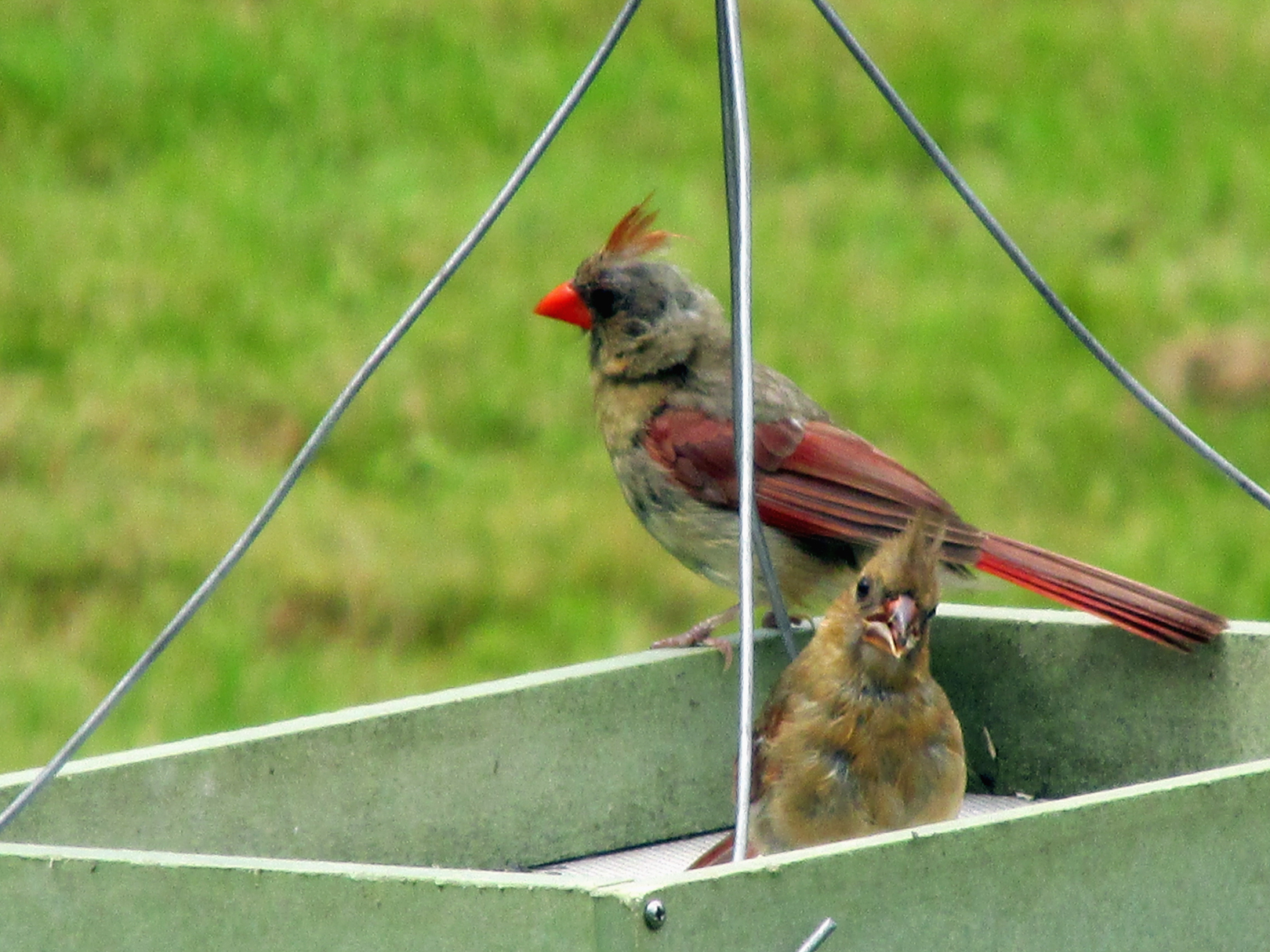
Photo by Bryan Stevens                               A female Northern Cardinal brings a young bird to a feeder.

I received an email recently from Dick Abrams, a resident of Bristol, Tennessee.

“We love our birds and other local critters,”

Dick wrote. “I have a question for you. Why are so many cardinals this year bald headed?”

Dick noted that some of these beloved backyard birds “are bald as buzzards!”

07933-1

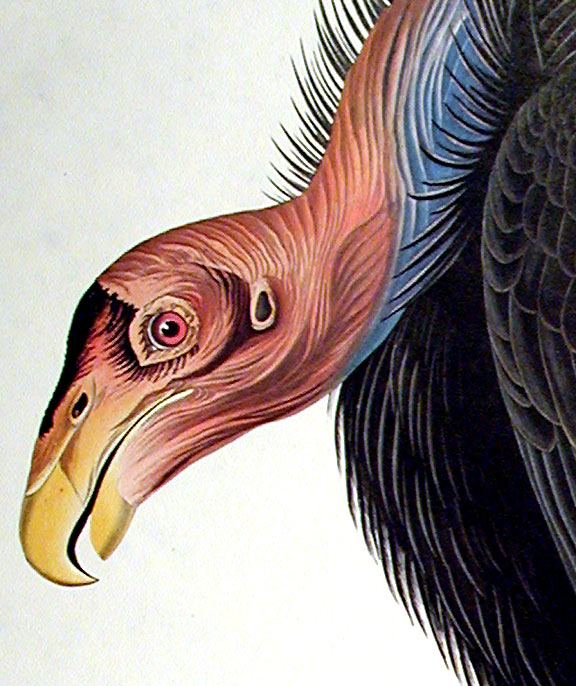
Many people compare cardinals afflicted with the loss of their head feathers with the look of vultures, such as this painting by John James Audubon of a California Condor.

He concluded his email by asking if anyone else had mentioned the strange phenomenon of bald cardinals.

•••••••

In addition, Gail Adler of Johnson City, Tennessee, sent me a message on Facebook on the same subject of “bald cardinals.”

“I love gardening and birdwatching,” Gail wrote in her message. “I have noticed this summer that many of my cardinals have lost the feathers on their head. Some of my other ones look a little rough, as well. I tried to look up causes but was unable to find a definite reason. Have you experienced this? Any thoughts?”

••••••••

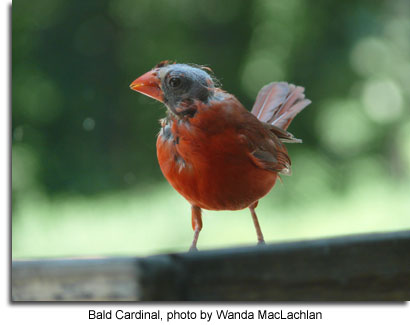
First, I let Dick and Gail know that I’ve heard of these strange instances for many years. Bald-headed cardinals seem to be a summer occurrence. I usually get some emails or calls this time of year about people surprised by visits from “weird bald-headed” cardinals. I first began to get calls and email from readers in the late 1990s about this unusual phenomenon, although I have also seen blue jays suffering from this same ailment.

Bald Cardinal

A “bald cardinal” featured on the Maryland Department of Natural Resources website.

I have studied the opinions of various bird experts. Some speculate that the condition is caused by an infestation of mites, which are small relatives of spiders and other arachnids. Others believe that the loss of feathers around the head is a part of a normal molting process. This theory is supported by the fact this is the time of year when cardinals are molting.

The process of molting removes old feathers, which simply drop from the body as new feathers emerge to take their place. For some reason, some cardinals and jays lose all their head feathers at one time before new feathers are ready to take their place. That’s why the condition is typically observed in the summer months. Both male and female cardinals can be afflicted with “bald” heads. It’s strange that the condition primarily affects these two birds, cardinals and jays, both with feather crests, while cedar waxwings are also crested birds, but I have never observed or received a report on a “bald-headed” cedar waxwing.

Whatever the cause, a “bald-headed” cardinal is an ugly bird. Without feathers, a cardinal is transformed from a popular favorite among bird enthusiasts to a rather grotesque oddity. Dick got his description right when he described the bird as resembling a buzzard. Buzzards, better known as vultures, have heads bare of feathers for a very important reason. As scavengers, a feathered head would become quickly fouled as the bird reaches into the carcasses of dead animals to feed.

Cardinal_DadAndYoung

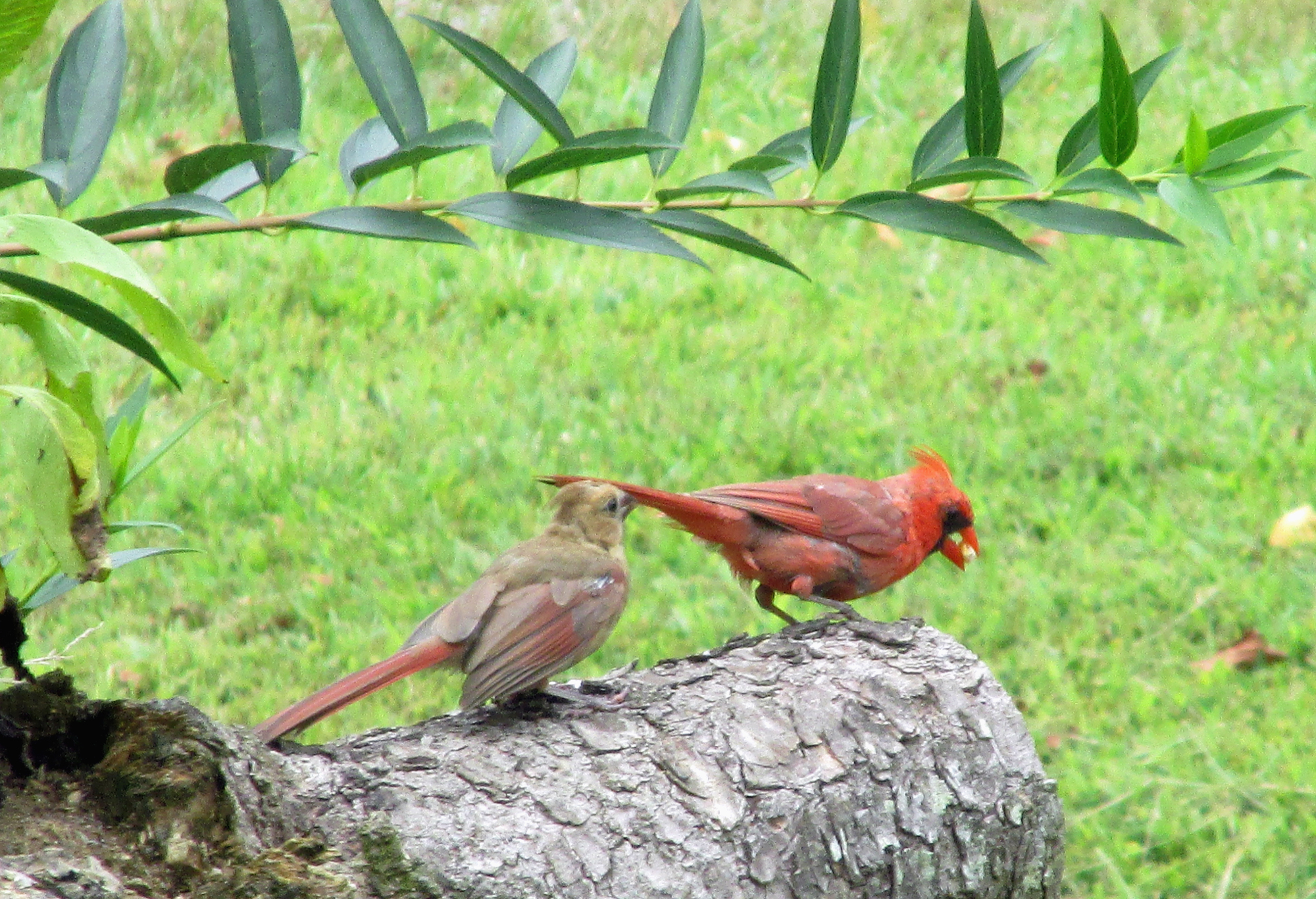
Photo by Bryan Stevens                                                                    A male Northern Cardinal escorts a young bird to the area around a feeder to teach it to fend for itself.

Those cardinals I have seen with “bald” heads have been visiting feeders stocked with sunflower seeds or perhaps a holder offering a suet cake. So, the absence of feathers is not a hygienic adaptation on the part of cardinals and jays similar to the hygienic necessity of bald heads among vultures. The good news is that the condition lasts only a couple of weeks. The feathers on the head do emerge eventually, which is probably very fortunate for the afflicted birds. Feathers serve as insulation during cold weather. A “bald-headed” cardinal would probably not survive winter cold spells.

••••••

We’re all accustomed to seeing cardinals at our feeders. You may be surprised by how much food they obtain away from our well-stocked feeders. During the summer months, cardinals eat a variety of wild seeds, fruit and insects. Some of the fruit consumed by cardinals include elderberry, dogwood, blackberry and wild grapes. Young cardinals still in the nest (and fledglings for some time after leaving the nest) are fed mostly insects, including crickets, spiders, moths and flies.

FemaleCardinal-AndYoung

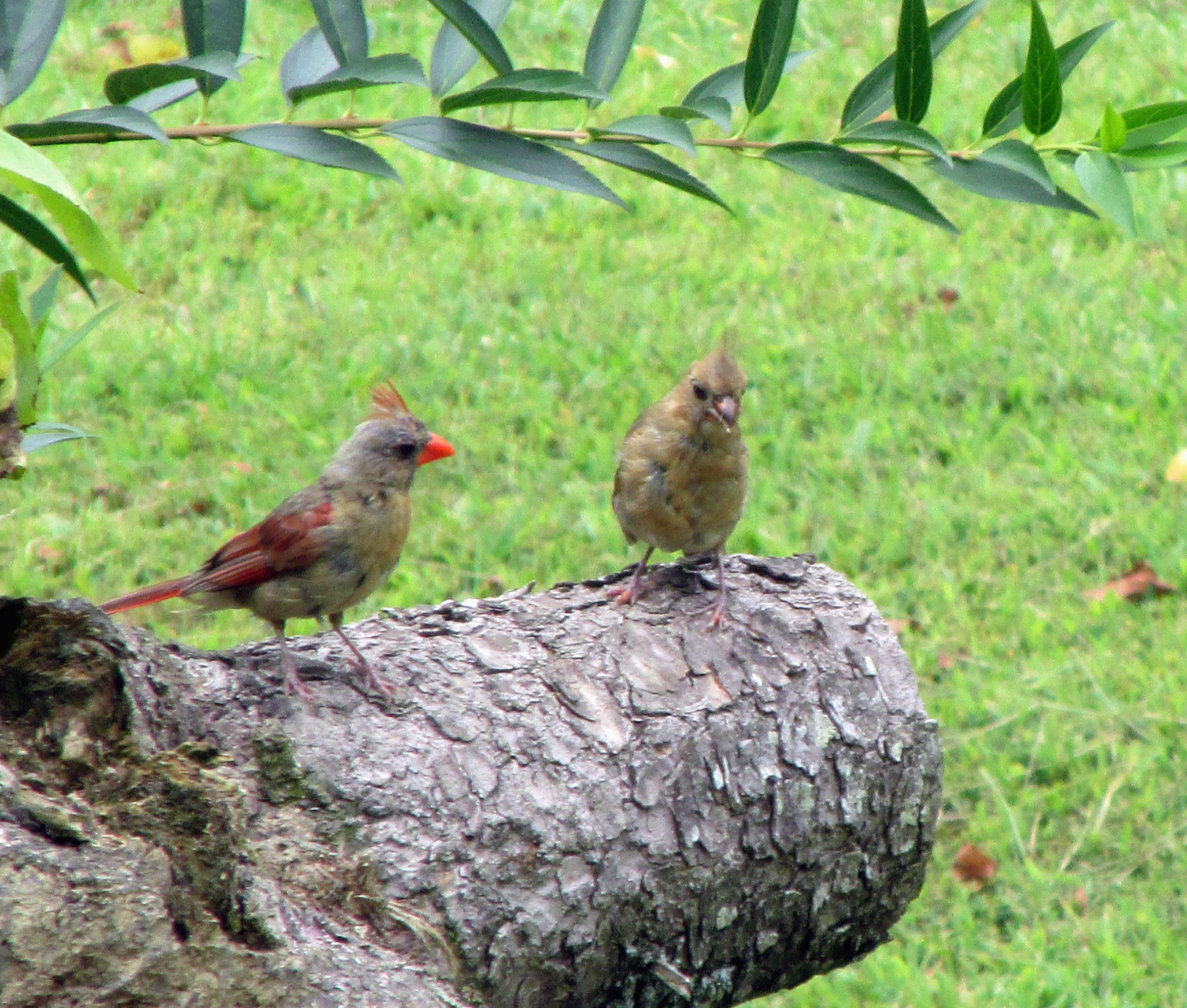
Photo by Bryan Stevens                                                                A female Northern Cardinal perches on a log with one of young, which recently left the nest.

To make cardinals comfortable in spring, summer and fall, as well as winter, offer plenty of thick vegetation, such as a hedge or row of shrubs, and consider planting some of the fruit trees and shrubs that will help these beautiful birds supplement their diet.

••••••

Bryan Stevens lives near Roan Mountain, Tennessee. To learn more about birds and other topics from the natural world, friend Stevens on Facebook at https://www.facebook.com/ahoodedwarbler. He is always posting about local birds, wildlife, flowers, insects and much more. If you have a question, wish to make a comment or share a sighting, email ahoodedwarbler@aol.com.
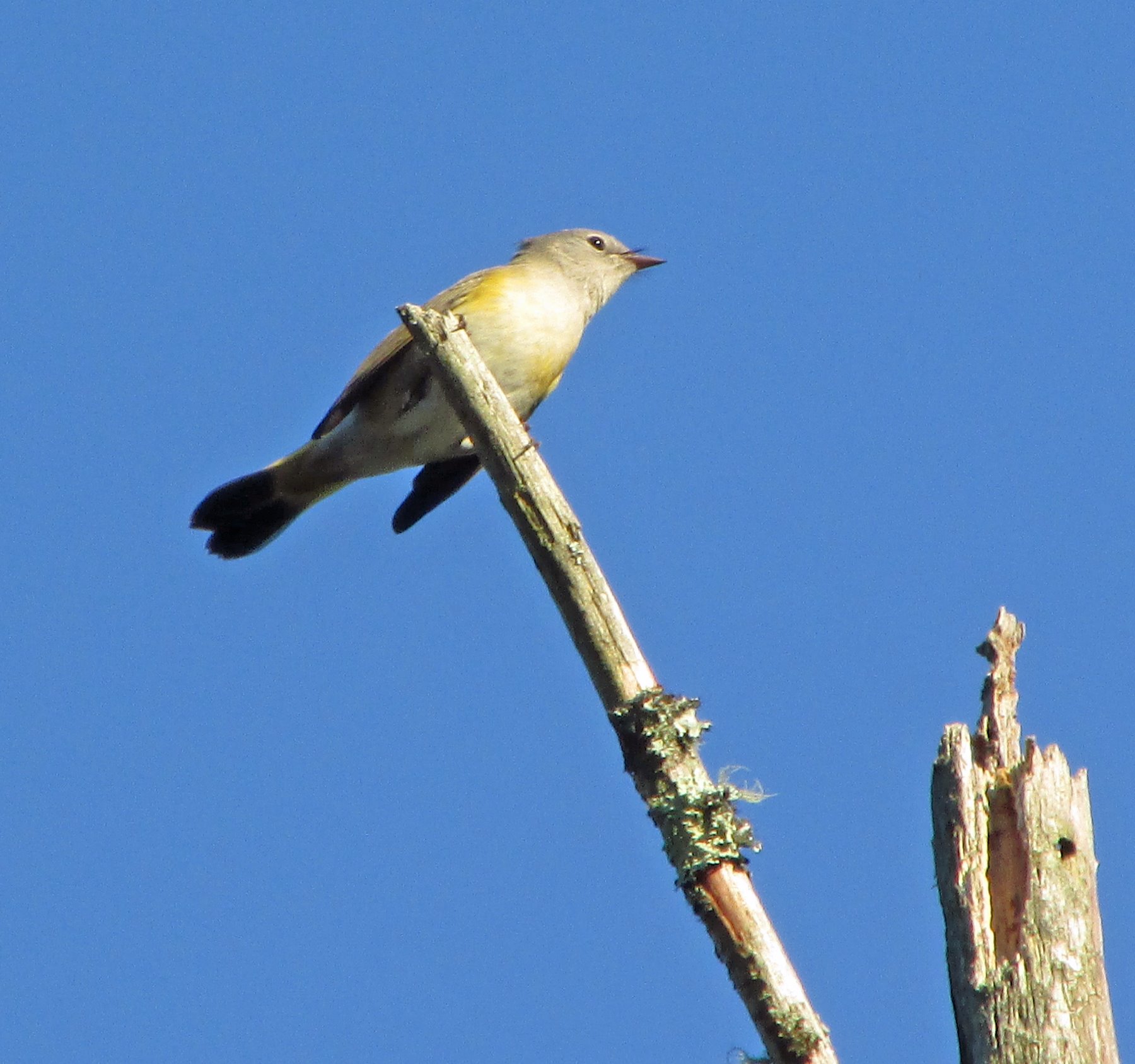
Lawn chair birding entries

Chestnut-sided

Photo by Bryan Stevens                                                        A young Chestnut-sided Warbler conceals itself in a holly tree.

The following are all Facebook posts about my annual lawn chair birding experiences. My mom and I have made lawn chair birding an annual tradition every fall. It’s a great way to enjoy the warblers and other migrants that stream through the yard in late August, September and October. For the most part, you can even avoid the neck sprain that comes with long period of scanning the treetops for glimpses of energetic and evasive warblers.


Aug. 20

Fall-AmRedstart

Photo by Bryan Stevens                                                  A young American Redstart selects a perch.

It’s been almost three months since I added a new species to my 2015 yard list. I had last added Chimney Swift back on May 29 and Yellow-billed Cuckoo on June 2. This evening I added White-eyed Vireo as Bird No. 60 for the year. I also saw a pair of Indigo Buntings, two Black-throated Green Warblers, three Blue-gray Gnatcatchers and several Ruby-throated Hummingbirds. I think fall migration must be underway.

Aug. 26

MommyHummer

Photo by Bryan Stevens                                       A Ruby-throated Hummingbird perches on a feeder.

Two new birds for the yard list made appearances today. I have heard a Common Raven calling several times today. Around 7 p.m. my mom called and alerted me to a flock of Wild Turkeys (two adults and eight young birds) in the field. The raven and turkeys are No. 62 and No. 63, respectively, on the list for Yard Birds in 2015.

Aug. 28

The first fall warbler — a young American redstart — showed up this evening, and it’s also a new bird for my 2015 Yard List. The redstart is No. 64 for the year. I also saw Blue-gray Gnatcatcher, Chimney Swifts and Ruby-throated Hummingbirds.

Aug. 29

3936410366_ae853e10a0_o

Photo by Jean Potter                                                                A Tennessee Warbler makes a fall migration stop.

Just got in from lawn chair birding with my mom. We enjoyed several warbler sightings, including some new yard birds for 2015. A gorgeous male Canada Warbler treated us to some great views and became Bird No. 65 in the yard this year. Three young Chestnut-sided Warblers will represent Bird No. 66. Finally, a Cape May Warbler is Bird No. 67 for the yard this year. We also saw Black-throated Green Warblers, American Redstarts, Red-eyed Vireos, Ruby-throated Hummingbirds, Blue-gray Gnatcatchers and an Eastern Phoebe. I managed photos of the Cape May and the American Redstart.

Aug. 30

BG-Gnat-April25

Photo by Bryan Stevens                Blue-gray Gnatcatchers are common during fall migration.

I’m closing in on 70 yard birds for the year. This evening, while lawn chair birding with my mom, I added two more new ones. The Magnolia Warbler was Bird No. 68, while the Eastern Wood-Pewee was Bird No. 69 for 2015. I didn’t get photos of the new birds, but I did photograph a young Chestnut-sided Warbler, a young Ruby-throated Hummingbird and a Chipping Sparrow.

Sept. 2

CapeMay-Aug29

Photo by Bryan Stevens                                      A Cape May Warbler perches in a spruce tree.

No new yard birds this evening, but lawn chair birding with mom wasn’t entirely uneventful. We got a look at a Scarlet Tanager, saw several hummingbirds, including an adult male, and Blue-gray Gnatcatchers. Earlier today, mom said she spotted a yellowish warbler but the bird didn’t make a second appearance.

Sept. 5

Lawn chair birding today has produced three new birds for the 2015 yard list. They’re all warblers! Bird No. 70 for the year is a Blackburnian Warbler. Bird No. 71 was a Tennessee Warbler, while Bird No. 72 was an impressive Yellow-throated Warbler. Evening’s still young, so may be some others show up. I also saw a Scarlet Tanager, Ruby-throated Hummingbirds and a Red-eyed Vireo.

3262118976_31abee6bae_o

Photo by Jean Potter                                                                                                                              A Yellow-throated Warbler sits on a twig perch.


Annual rally will feature programs by educators from Cornell, ETSU


WoodyNymph

A Common Wood-Nymph photographed in late August in Roan Mountain State Park.

For many naturalists in Northeast Tennessee, heading to Roan Mountain has become an annual trek every September.

Gary Barrigar, long-time director of the Roan Mountain Fall Naturalists Rally, knows that after more than half a century the annual event has become a tradition for many people. For 53 years the Fall Naturalists’ Rally has drawn nature enthusiasts from far and wide to Roan Mountain on the weekend after Labor Day.Top naturalists volunteer their time and energy to make the event both enjoyable and educational for people of all ages.

143_150

Charles Smith

Barrigar said this year’s fall rally will continue to celebrate the natural world by providing two top speakers, retired Cornell naturalist and educator Charles R. Smith and T.J. Jones, an ETSU Behavioral Ecology, Neuroethology and Science educator.


Because of the continued support of the Friends of Roan Mountain, all the Naturalists’ Rallies have the resources they need to prosper and grow and the FORM provides support for research and restoration projects on the Roan. Consider joining the Friends of Roan Mountain, if you are not a member. Members get free admission to all Naturalists’ Rally events and our newsletter, “Friends of Roan Mountain.”

EComma-August

An Eastern Comma suns near a picnic shelter in Roan Mountain State Park.

Barrigar added that many thanks are due to Roan Mountain State Park for its long standing support of the Naturalists’ Rallies, as well as the speakers and the trip leaders who donate their time and expertise.

Evening and lunch programs will take place in Roan Mountain State Park’s Conference Center and field trips will leave from the field on the left before the cabins in the park.

Charles R. Smith will present “This View of Life,” the program for Friday evening. Charles R. “Charlie” Smith was born and raised in Carter County, near Milligan College. He is a naturalist, educator, and conservationist who lives with his wife, Claudia Melin, and their Border Terrier, Brodie, near Ithaca, N.Y. His serious study of natural history did not begin until he was 15 years old, when he joined the Tennessee Ornithological Society, after studying birds on his own for several years.


RedSalamander

Fall rallies offer hikes on a variety of topics from salamanders and mushrooms to butterflies and birds.

About that time, he decided he wanted to attend Cornell University. He earned his undergraduate degree at East Tennessee State University, with a double major in botany and zoology and minor studies in geology, meteorology, physical geography, and photography. Graduate studies at Cornell University concluded with his Ph.D. in wildlife ecology. He retired in 2012 from Cornell University, where he served in various administrative, research, and teaching capacities, including Executive Director of the Laboratory of Ornithology, for nearly 40 years. As an advisor and collaborator on science-based conservation, Smith has worked with a number of state and federal agencies. Though an ornithologist for most of his career, his current interests as a naturalist include studying dragonflies, damselflies, butterflies, and vascular plants; and nature photography. Some of his photographs of butterflies were published in Smokies Life magazine in 2012. Currently he is working with a former student on a field guide to the butterflies of Great Smoky Mountains National Park and the southern Appalachians.

Smith offered his own description for the yearly brochure put out by organizers of the rally to promote his Friday evening program. “A naturalist can be described as a person whose curiosity about nature is boundless,” he said. “This presentation will examine the history, philosophy, and practice of natural history studies from a number of perspectives.”

Now is a great time to be a naturalist, according to Smith.

“Today, we have more good field guides to help us identify plants and animals than ever before,” he added. “With time, persistence, and self-discipline, detailed knowledge of a group of plants or animals is possible for most of us.”

In addition to the personal satisfaction they provide, Smith noted that natural history studies can guide conservation.

CapeMay-Aug29

Cape May atop a spruce tree in Hampton, Tennessee, during fall migration.

“Unless we know what a plant or animal is, where it is found, and how much of it we have, preserving and protecting it can be difficult, if not impossible,” he explained. “We can go beyond just knowing what it is, however, to understanding how plants and animals live, what are their needs, and how we might contribute to their long-term conservation for future generations to enjoy and appreciate.”

He is disappointed by one recent trend in the field of science.

“Ironically, at a time when knowledge and understanding of the needs of plants and animals is more important than ever, it is disappointing that colleges and universities are abandoning the teaching of natural history in the field, and few real field biologists are being schooled,” he said.

Smith said his talk will offer suggestions to help attendees become better naturalists or even be inspired to become a new naturalist. Some of Smith’s photographs will be used to illustrate the talk, and the origin of the title, “This View of Life,” will be revealed at the end of the presentation.


TJ

Thomas “T.J.” Jones

Thomas “T.J.” Jones will present “Elegance and Efficiency: Spiders of Southern Appalachia” as the Saturday evening program. Jones also elaborated on his program for the annual brochure on the rally.

“When I was very young I remember my mother carefully catching a spider that had gotten into the house and tossing it onto the back patio, only to have a bird immediately fly down and carry it off.”

The incident was traumatic for a young boy. “My mother comforted me by explaining that the bird was probably going to use it to feed its babies,” he remembered. “Perhaps that was foreshadowing of my future career studying how spiders negotiate the challenges of world in which they are both predators and prey. I have always been fascinated by animal behavior, and through high school and college worked at zoos, aquariums, and even Sea World.”

Jones has bachelor’s and master’s degrees from Cleveland State University, where he did research on the morphology of ciliated protists and physiological ecology of garter snakes.

“From there I went on to get a PhD from Ohio State University studying the evolution of social behavior in spiders. I continued that work as a post-doc at The University of Tennessee which is where I fell in love with the southern Appalachians, and I am now on the faculty at East Tennessee State University.”

Jones said his research group takes an integrated approach to studying aggression-related behaviors in spiders.
“We are studying how brain chemistry and circulating hormones regulate behaviors, and how these behaviors affect the spider’s success in nature,” he explained. “We currently have projects exploring social behavior, circadian rhythm, and the effect of environmental contaminates on behavior.

Orb-Weaver-August

Spiders will provide the focus for the Saturday evening program by T.J. Jones.

He offered a brief description of his program, which is admittedly about a creature that gives some people the shivers.
“Some say they are beautiful, some say they are terrifying, but most would agree that spiders are fascinating,” Jones said. “Spiders are among the oldest and most diverse group of predators; this is because they are extremely good at what they do.”

His evening program will provide general information on the biology and ecology of spiders including how they use their key adaptations of silk and venom. He will discuss species commonly found in southern Appalachia, including some interesting species which are only found here. Along with photos, there will be live specimens on hand and a guided night hike to follow.

“My hope is that the program will foster appreciation, and perhaps love, for this amazing group of animals,” Jones said.

Redstart-Aug29

An American Redstart photographed in Hampton, Tennessee, during fall migration.

Buffet meals will be served on Friday and Saturday at 6:30 p.m., followed by the evening programs. Reservations are necessary for the meals, which cost $9.50 for adults and $5 for children 12 and under. Deadline for reservations is Tuesday, Sept. 8. For more information, call Barrigar at 423-543-7576 or email him at gbarrigar@friendsofroanmtn.org.

Mail prepaid meal reservations to: Nancy Barrigar, Treasurer, 708 Allen Avenue, Elizabethton, TN 37643.

For a detailed schedule of hikes, programs and other rally activities, visit http://www.friendsofroanmtn.org/Fall%20Rally%20Brochure%20web%202015.pdf

Vireo sighting helps kick off fall migration


If pressed to give a date to the start of this year’s fall migration, I would choose Aug. 20. It’s the day I finally added a new bird to my 2015 yard list after being stuck at No. 59 since June 2 when I heard a Yellow-billed Cuckoo calling from the woods behind my house. Needless to say, the months of June and July had not been very productive for adding new species to my list.
 

Yard Bird No. 60 turned out to be a White-eyed Vireo, which is not a summer nesting bird in my yard. Migrating White-eyed Vireos have often made visits in the past, so I was glad to welcome this species and add it to my list. 

????????????????????????????????????

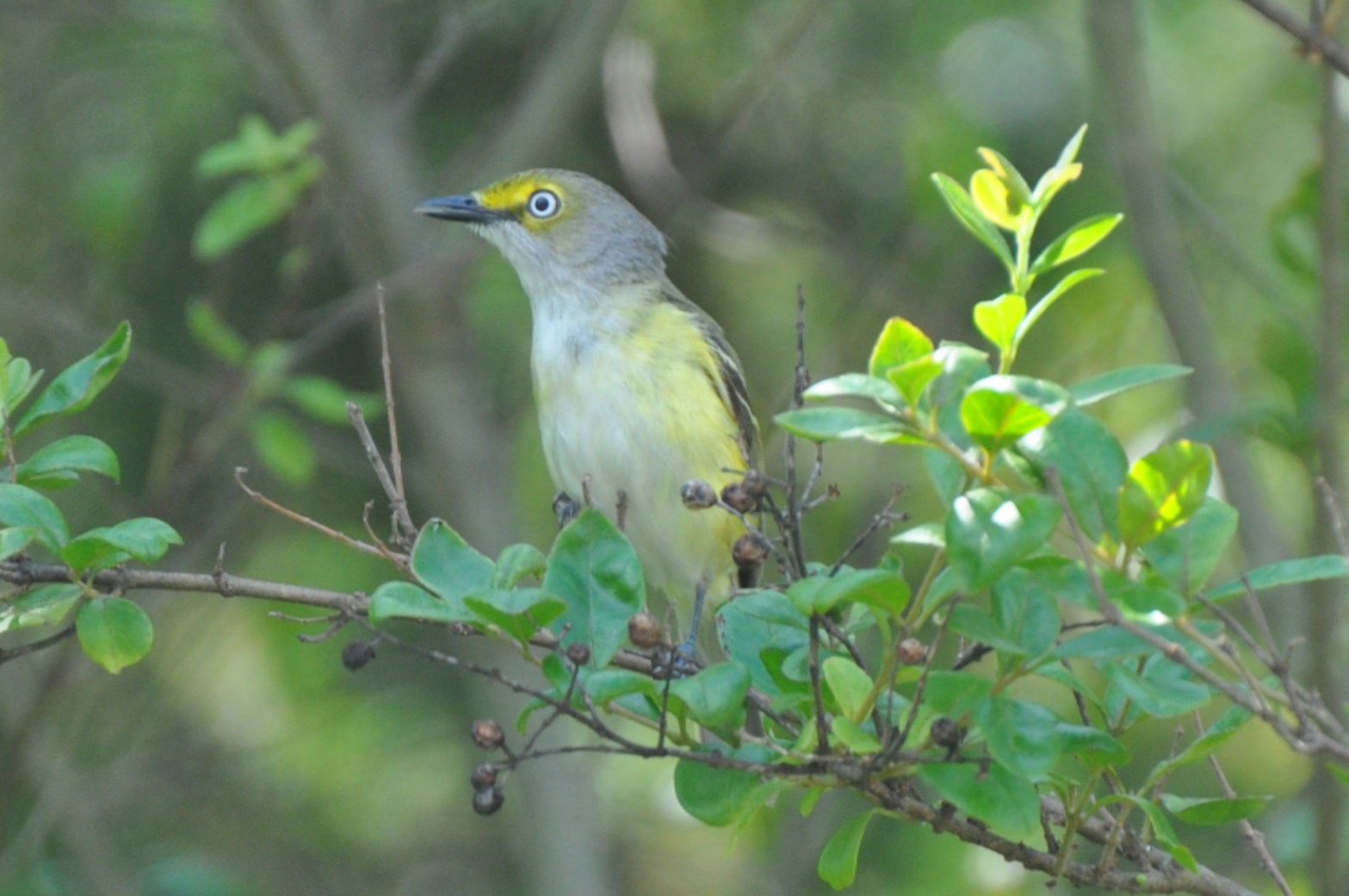
Photo Courtesy of Roy Knispel                                   The White-eyed Vireo gets its name from the white iris of its eye.

 
On the same evening I observed the vireo, I also watched Ruby-throated Hummingbirds chase Blue-gray Gnatcatchers through the thin branches of a dead spruce tree. I also took delight in observing a family of Northern Cardinals — father, mother and two young birds — visit the feeders. 
 
Known by the scientific name, Vireo griseus, the White-eyed Vireo is a member of a family of songbirds with several species that make their home in the region. This vireo gets its common name from the fact that it does indeed have white eyes.
 
Unlike some of its treetop-dwelling relatives, the White-eyed Vireo prefers to stay close to the ground in thickets and dense shrubbery. I often find these birds in the same habitats favored by such birds as Yellow-breasted Chat and Brown Thrasher. Like these larger birds, the White-eyed Vireo is a very vocal bird. The security of thick, inaccessible brushy habitats must give these birds, which are only a little more than five inches long, the confidence to go about their lives in a brash, noisy manner. 
 
The term “vireo,” originating in Latin, can be translated into English as “green bird.” It’s an apt description, as many of these small birds are primarily dull green in coloration. The White-eyed Vireo adds some dull yellow, gray and white feathers to the mix in a distinctive pattern that should easily separate this bird from other vireos. 
 
White-eyed Vireos spend the summer nesting season in the eastern United States south of a line extending from eastern Nebraska across Indiana and New York. Each fall, they retreat to spend the winter in locales ranging from the extreme southeastern United States through Central America. Some of these vireos also winter on Caribbean islands such as Cuba.


There is an endangered vireo, the black-capped vireo, a bird with a limited breeding range in Texas. Black-capped vireos numbers have dwindled to perilous levels due to the loss of low growing woody cover these birds need for breeding purposes. The cause of the loss of habitat varies, but includes the clearance of land for livestock as well as overgrazing by livestock and deer. In the past, fires regularly opened up such habitats. Due to modern fire control practices, such fires are no longer a natural occurrence. Since this species is already endangered, brown-headed cowbirds have also contributed to the problem since the cowbirds slip their own eggs into the nests of black-capped vireos.

IMG_2502 2

When early naturalist John James Audubon painted the White-eyed Vireo, he knew it by the name “White-eyed Flycatcher.”

 
Two others, Bell’s vireo and gray vireo, are identified as species of concern on the Audubon Watchlist. This listing spotlights species that may bear intense scrutiny to make certain they don’t become endangered.
 
Other vireos that can be found in the United States, for at least part of the year, include Philadelphia vireo, plumbeous vireo and Cassin’s vireo. A specialty of Florida is the black-whiskered vireo. 
 
Many species of vireo are also found in the islands of the Caribbean, including Jamaican vireo, Cuban vireo and Puerto Rican vireo. Some of the more colorful common names for vireos include the yellow-green vireo, golden vireo and yellow-winged vireo. 
 
In Central and South America, the vireo family expands to include many birds with common names such as “Shrike-Vireo,” “Greenlet” and “Peppershrike.” Some of the varied species include the lemon-chested greenlet, green shrike-vireo and the black-bellied peppershrike.
 

Many vireos construct deep cup- or basket-shaped nests, often in the higher branches of tall trees. Male and female share incubation duties and work together to feed their young. 

BG-Gnat-April25

Photo by Bryan Stevens                              Blue-gray Gnatcatcher have been abundant again, another sign of the approaching fall migration.

 
Most vireos feed on in­sects during their summer stay north of the border. However, during migration they often feed on berries and continue to do so on their wintering grounds. Experts have noted that the White-throated Vireo is particularly fond of gumbo-limbo seeds. This tropical tree can be found from southern Florida and Mexico, as well as throughout the Caribbean and in South America in Brazil and Venezuela.
 
••••••
 
To learn more about birds, birding and other topics from the natural world, be sure to friend Bryan Stevens on Facebook at https://www.facebook.com/ahoodedwarbler. He is always posting about local birds, wildlife, flowers, insects and much more. If you have a question, wish to make a comment or share a sighting, email him at ahoodedwarbler@aol.com.
RUbyMeahowhawk-2015

Photo by Bryan Stevens                                                                                                              A dragonfly sighting that turned out to be a Ruby Meadowhawk is another sign that the fall migration season is at hand.

Buckeye-Mud

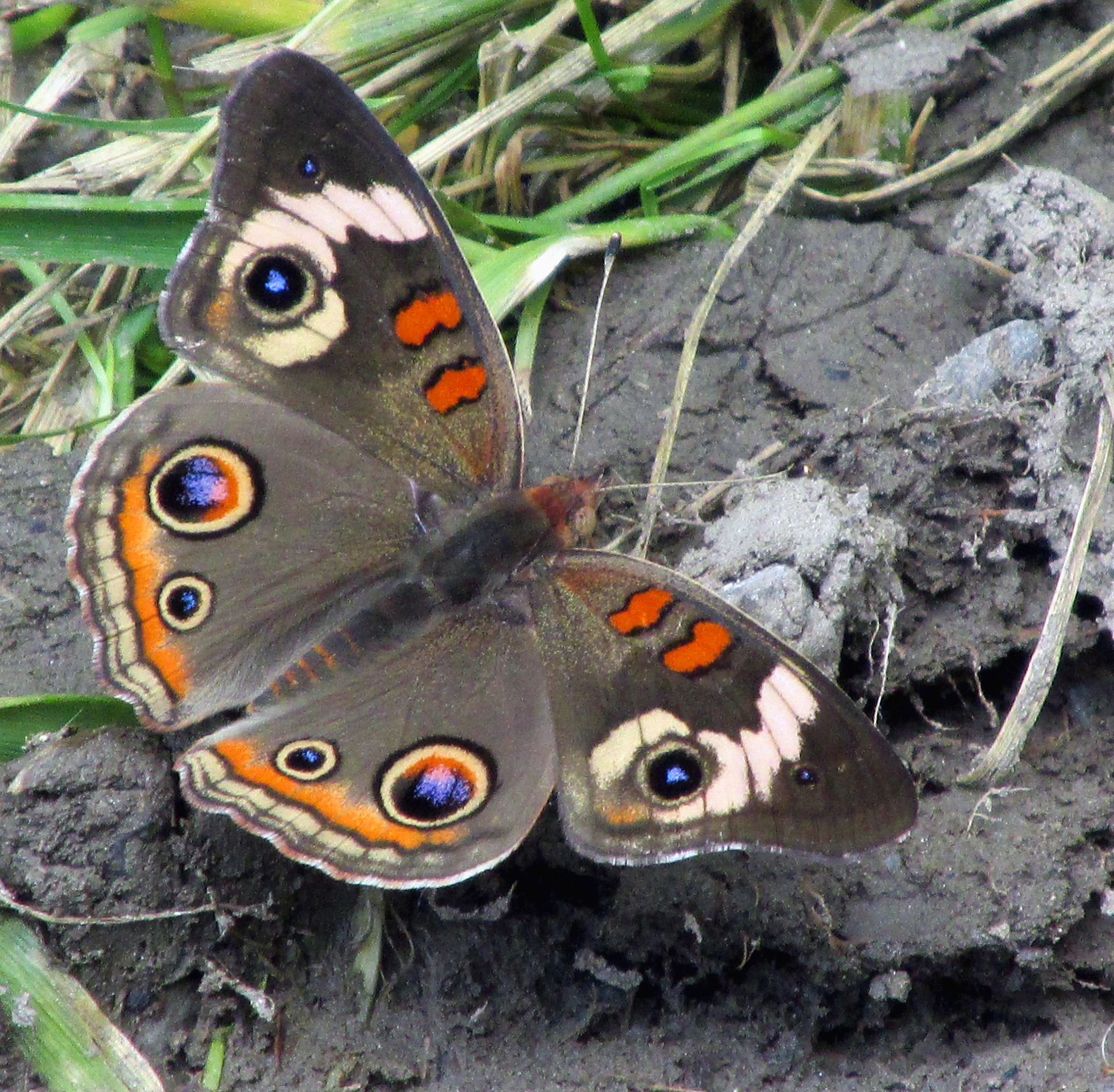
Photo by Bryan Stevens                                       A Common Buckeye seeks nutrients in damp mud on a recent August afternoon.

Waterfowl also known as ‘summer duck’ in much of the South

WoodDuckStanding

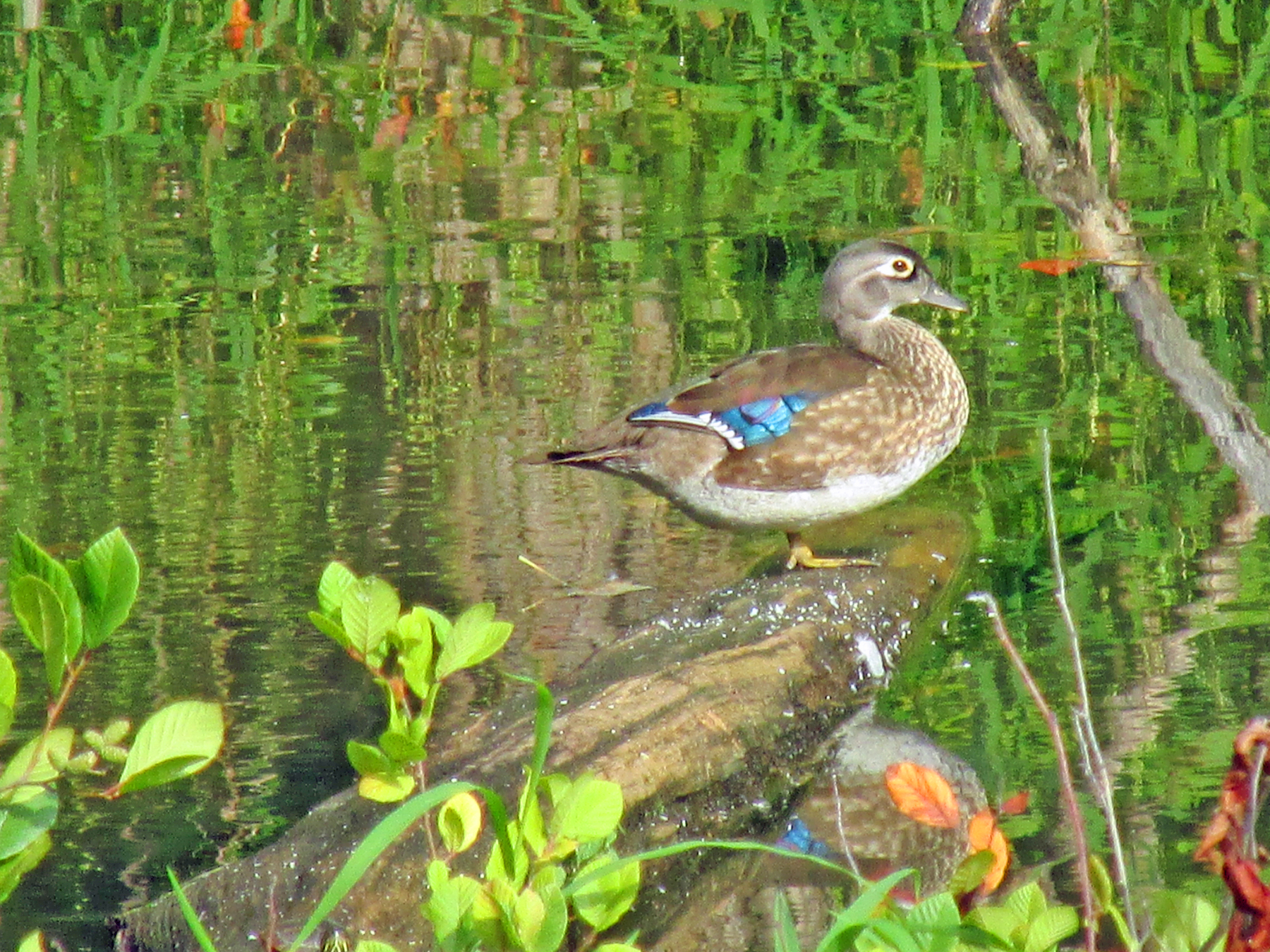
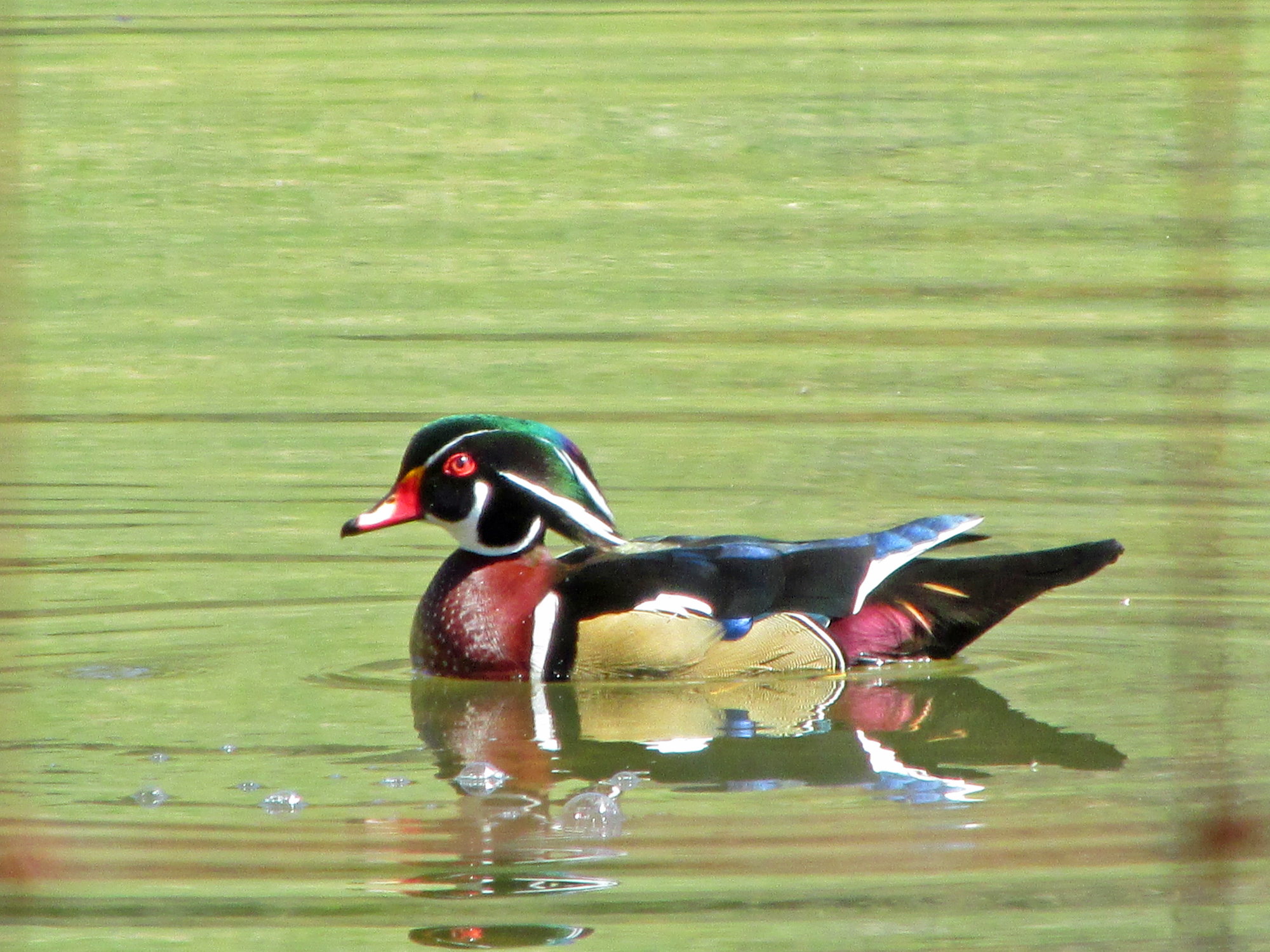
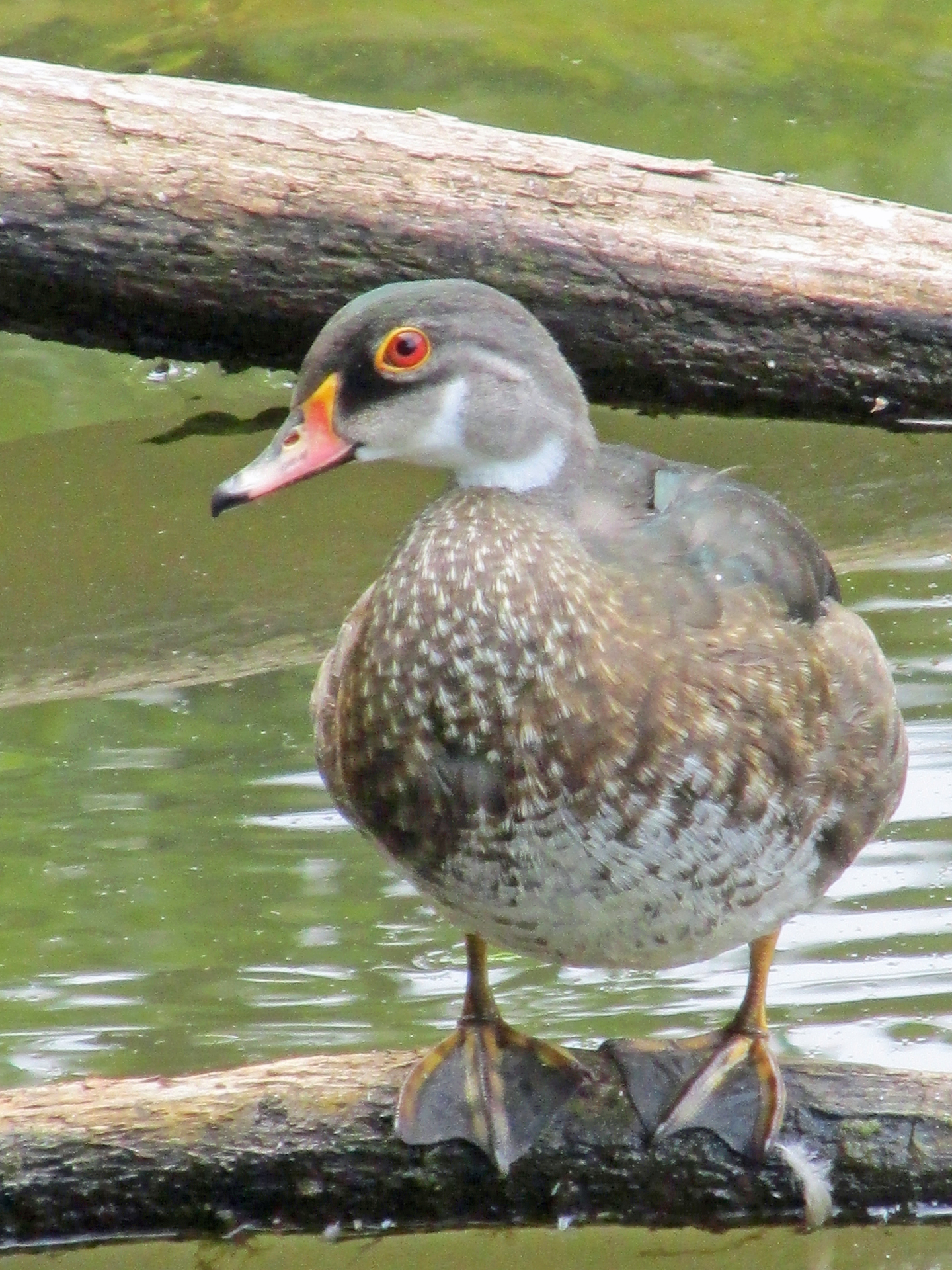
Photos by Bryan Stevens                                                       A Wood Duck perches on a log in a pond in Erwin, Tennessee.

A great many birds spend the spring and summer months in the region. Waterfowl, however, are usually scarce aside from the ubiquitous Canada geese and mallards found at ponds, local park, golf courses and many other locations. Waterfowl aren’t entirely absent, especially when you add the variety of domesticated waterfowl that are often found with the aforementioned geese and ducks.

WOod-Gloss

The wood duck is also known as the “summer duck” across much of the southeast, where it is the only wild nesting duck.

The small wood duck is a species of waterfowl that can be found, in suitable habitat, during the nesting season. Unlike Canada geese and mallards, which historically never nested in the region until recent decades, the wood duck is supposed to be present during the warmer months of the year. In many parts of their range, wood ducks are known as the “summer duck” since they are the only wild native nesting duck present during the season.

Another common name for this species is the Carolina duck, which refers to the southern stronghold of this species of waterfowl. Wood ducks are year-round residents across much of the southeastern United States, especially in suitable habitat such as small lakes, flooded woodlands, swamps and marshes.

WoodDuck-Mallards

A male Wood Duck is accompanied by two Mallards. The Wood Duck is considered one of North America’s most colorful ducks.

Like a handful of other North American waterfowl, the wood duck is a cavity-nesting bird. These ducks often occupy former nesting cavities created by woodpeckers, but they will also readily accept nesting boxes of suitable dimensions provided by human landlords. Because of their devotion to nesting in cavities, wood ducks have at least something in common with songbirds like Eastern bluebirds, tree swallows and house wrens, as well as larger birds such as American kestrels and Eastern screech-owls. Wood ducks aren’t the only waterfowl that nest in cavities. Buffleheads, hooded mergansers and common goldeneyes are also cavity-nesting ducks. None of those ducks, however, nest in the southeastern United States.

WoodDuck-March29

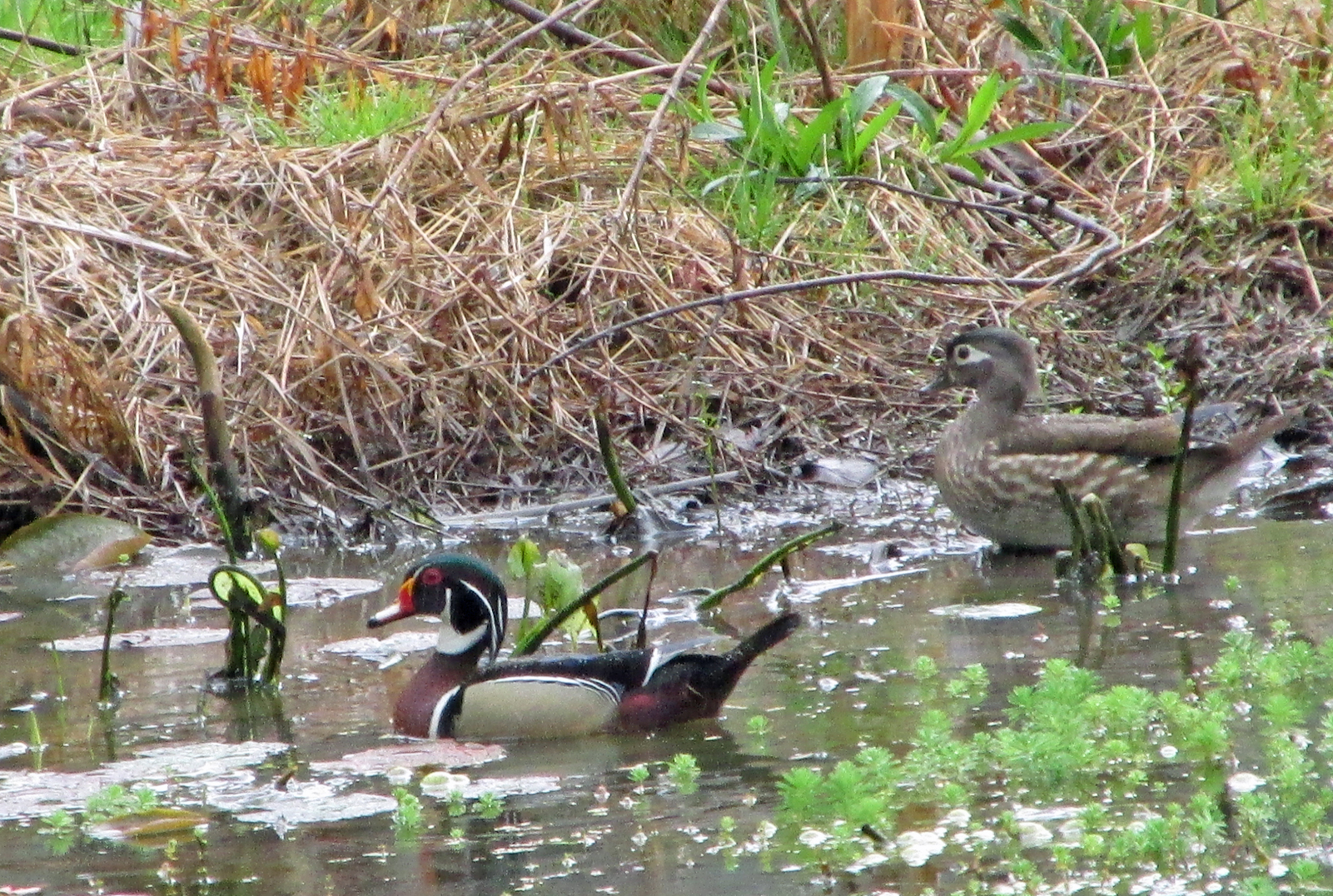
The male Wood Duck, such as this one on a pond in Hampton, Tennessee, is much more colorful than the female of the species.

Some wood duck nests can be located far above the ground, which poses a challenge for flightless young. Like most species of waterfowl, young wood ducks are born capable of immediately leaving the nest and being led by their mother to foraging areas. First, however, there’s that giant leap of faith that each of the ducklings must make. Nests are often built over water, so that first jump often ends in a splash-down. Some nests are built over land, but that doesn’t seem an obstacle. The ducklings make that leap without any difficulty. Just like the Abominable Snowmen in the old holiday favorite “Rudolph, The Red-nosed Reindeer,” wood duck babies bounce! Once the ducklings have departed their cozy nesting cavity, their mother will guard them from predators and lead them to prime foraging areas for a period of about two months.

summer_or_wood_duck_poster-r202a76c41b0943c6a2a73ee248ac00ca_wvy_8byvr_324

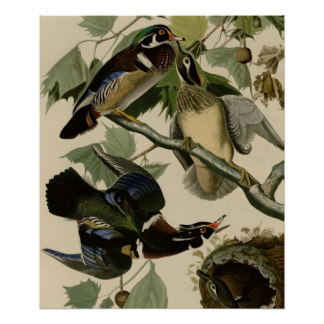
John James Audubon painted Wood Ducks to emphasize their comfort in perching in trees.

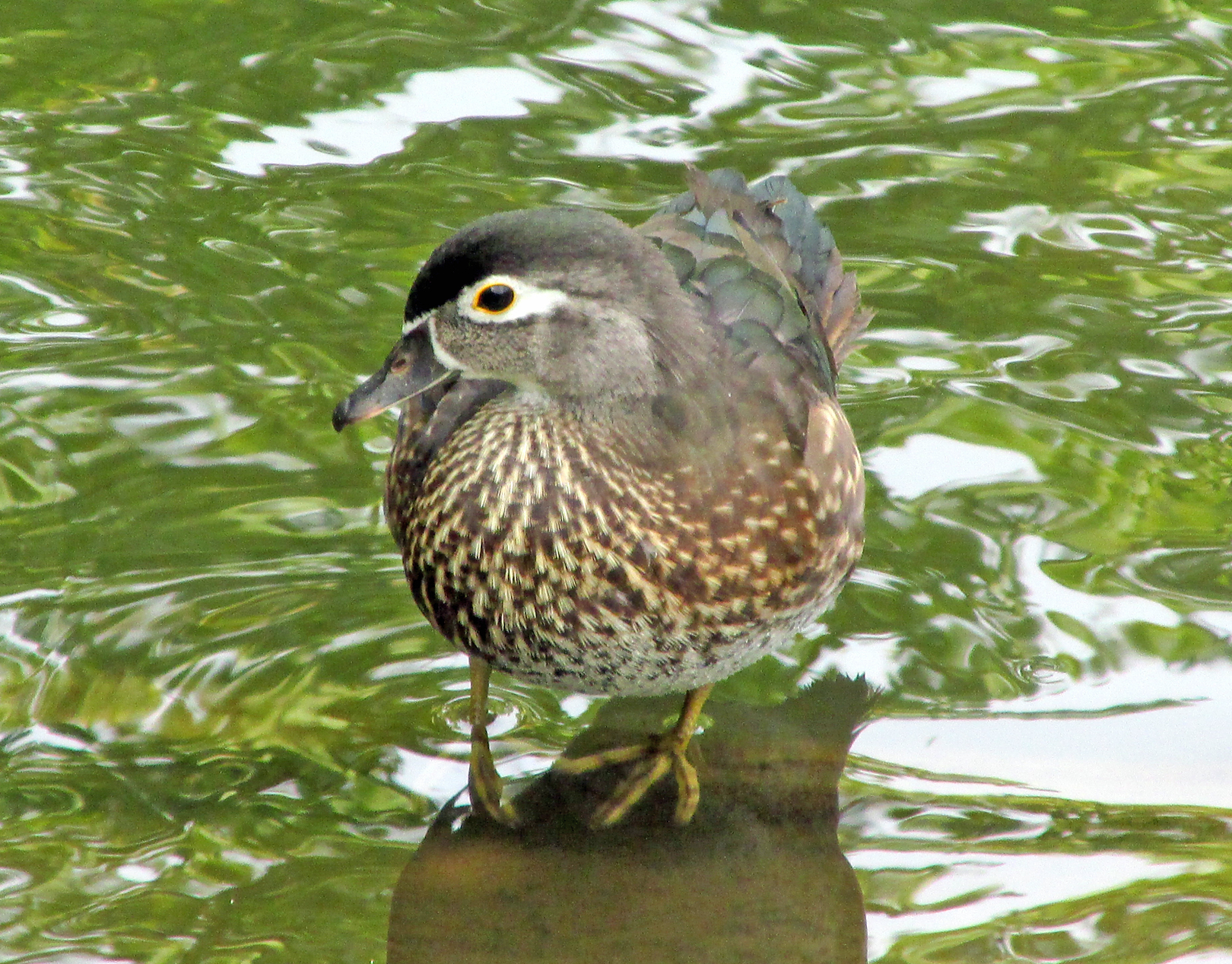
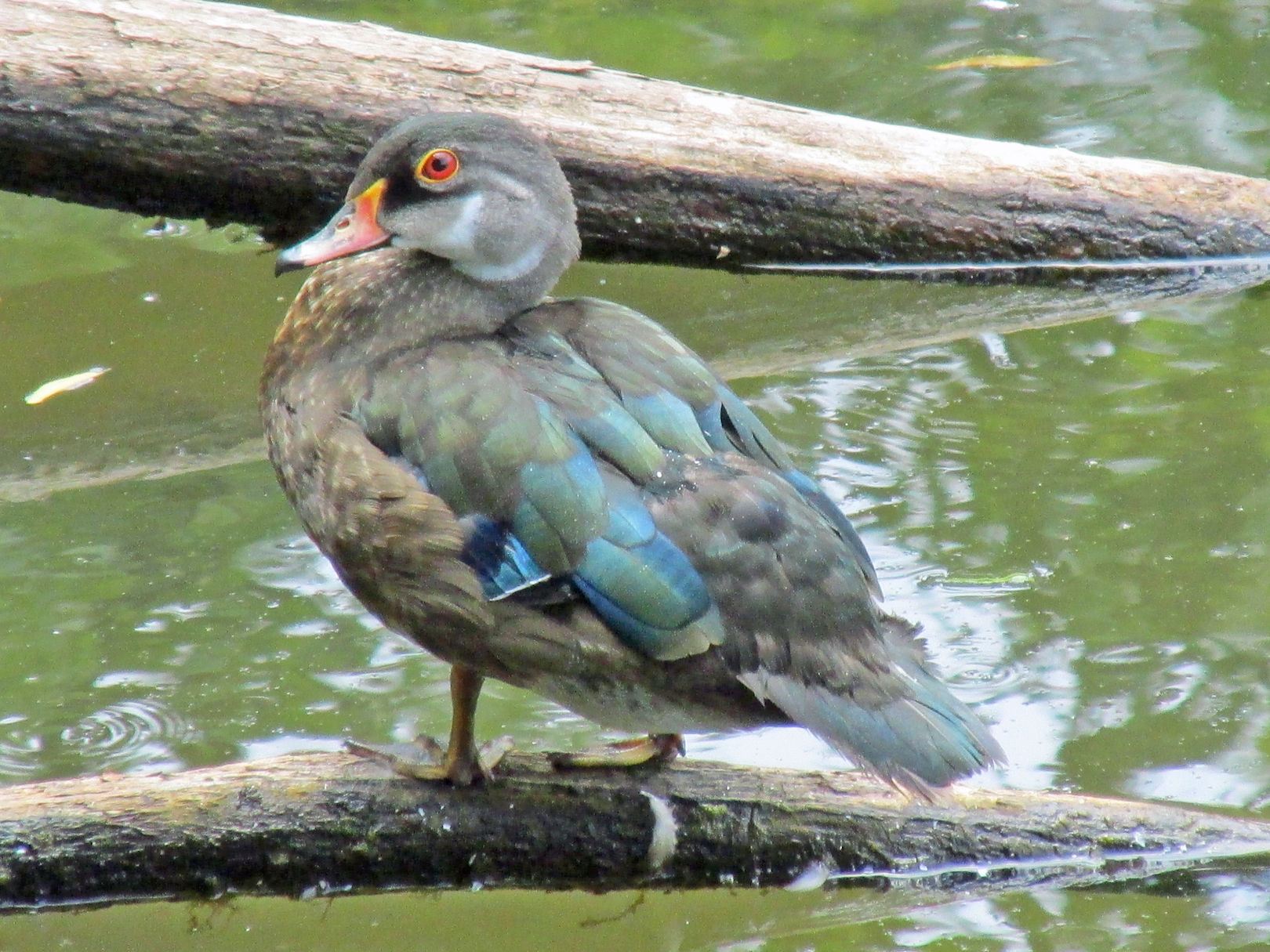
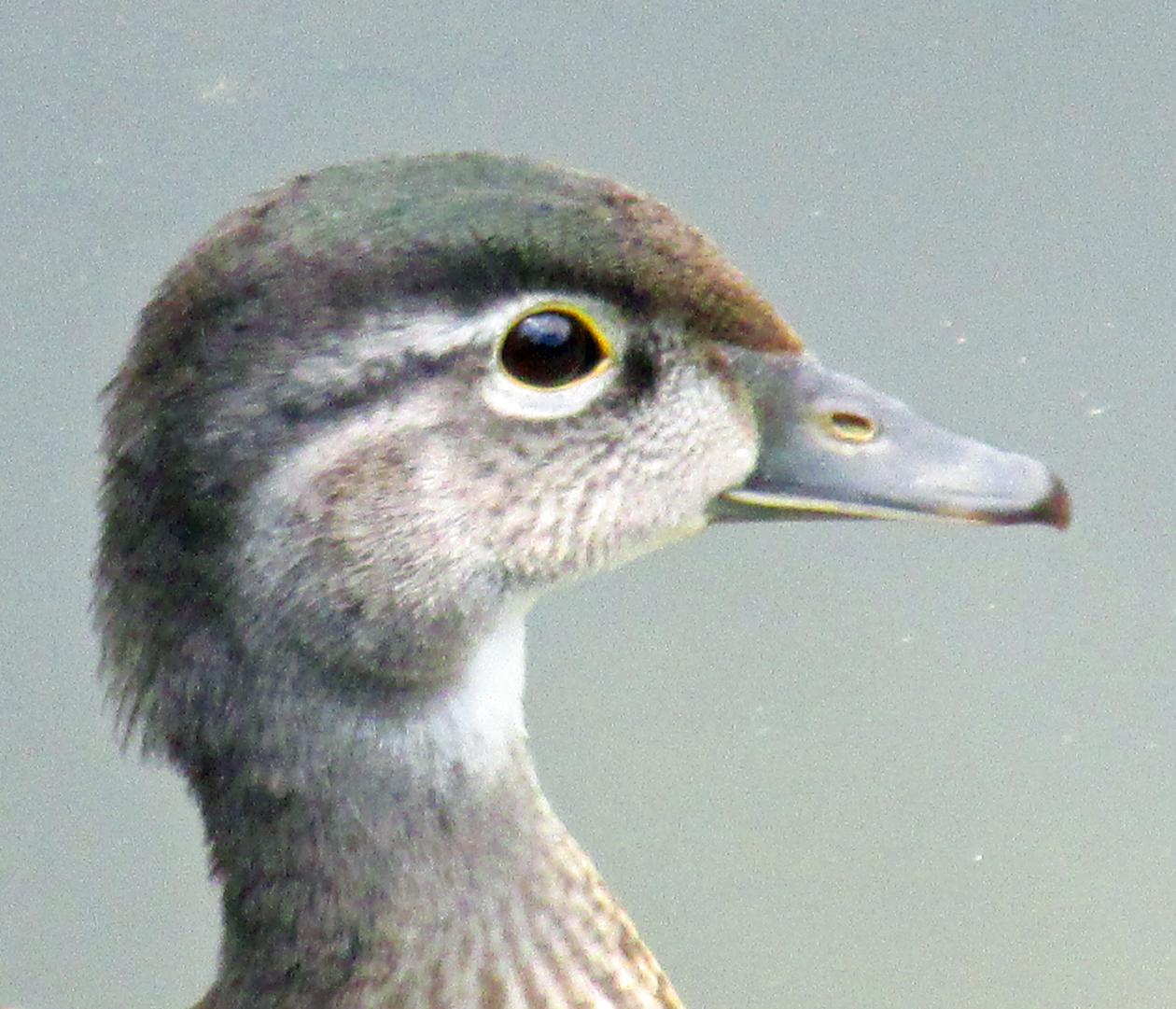
The wood duck belongs to the genus Aix. The only other species in the genus — the Mandarin duck —is native to East Asia. The two are classified as “perching ducks” by biologists. The males of both these species are among the most ornate ducks in the world. The male wood duck has red eyes and a dark-tipped red bill. The colors in a male’s plumage includes glossy, iridescent greens, purples and browns in dramatic patterns. The male also has a distinctive head crest. Female wood ducks also have crests, but their plumage is overall gray and brown with a teardrop-shaped white patch around the eyes, as well as a white chin and throat.

Wooder

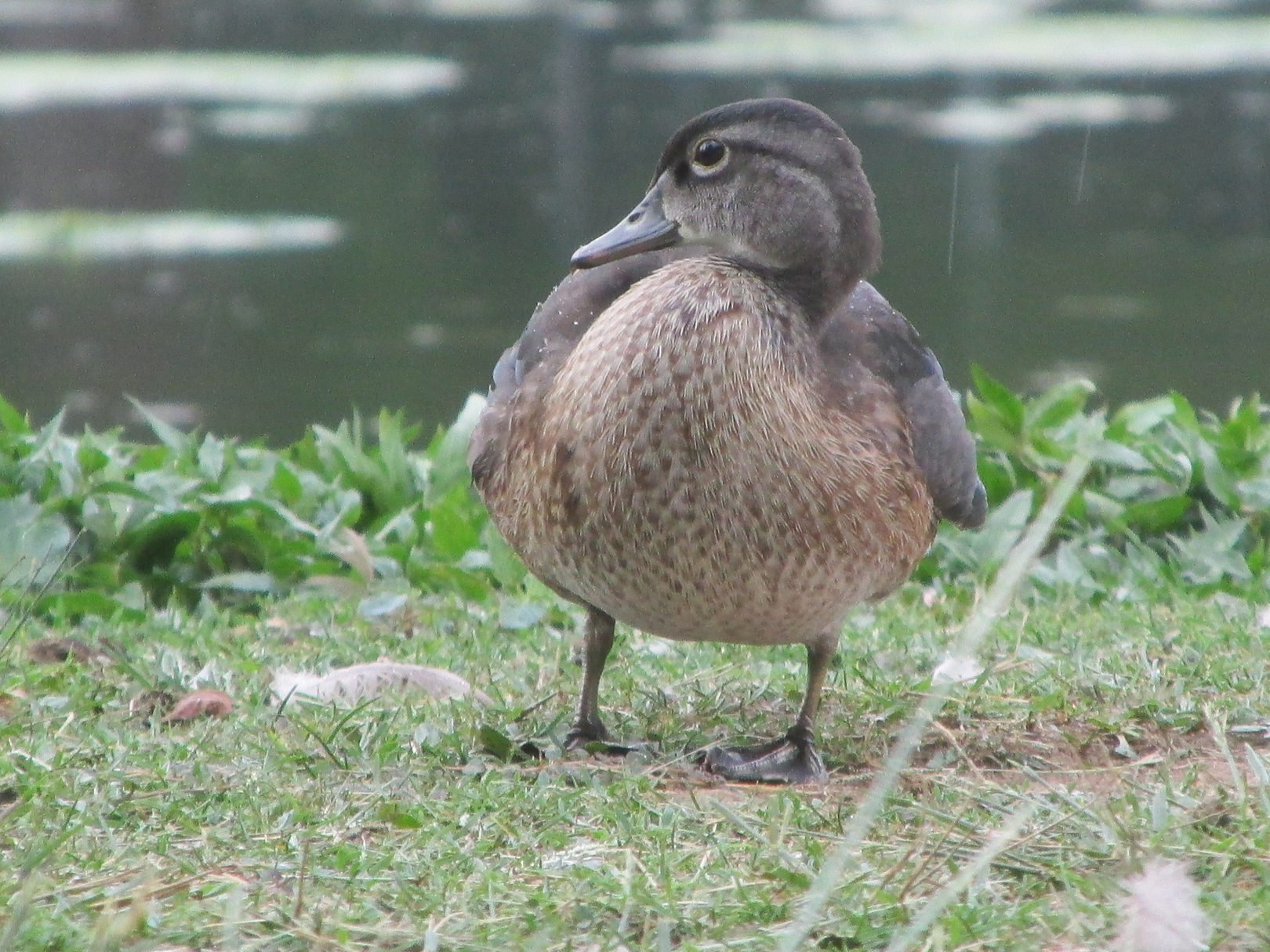
A young Wood Duck perches by a pond’s edge in a small-town park.

The majority of a wood duck’s diet consists of vegetable matter. In autumn, I’ve observed these ducks foraging with enthusiasm for acorns. The wood duck, and ducklings in particular, also feed on some insects and other small invertebrates.

In his book, “Birds of Lake, Pond and Marsh,” author John Eastman noted that the wood duck was the most abundant of North American ducks during the 19th century. In the late 19th century, pressures from hunting and habitat destruction combined to dramatically lower the numbers of this exclusively North American duck. Eastman noted that the Federal Migratory Bird Treaty Act of 1918 is largely credited with saving the wood duck from possible extinction.

One-leggedWoodie

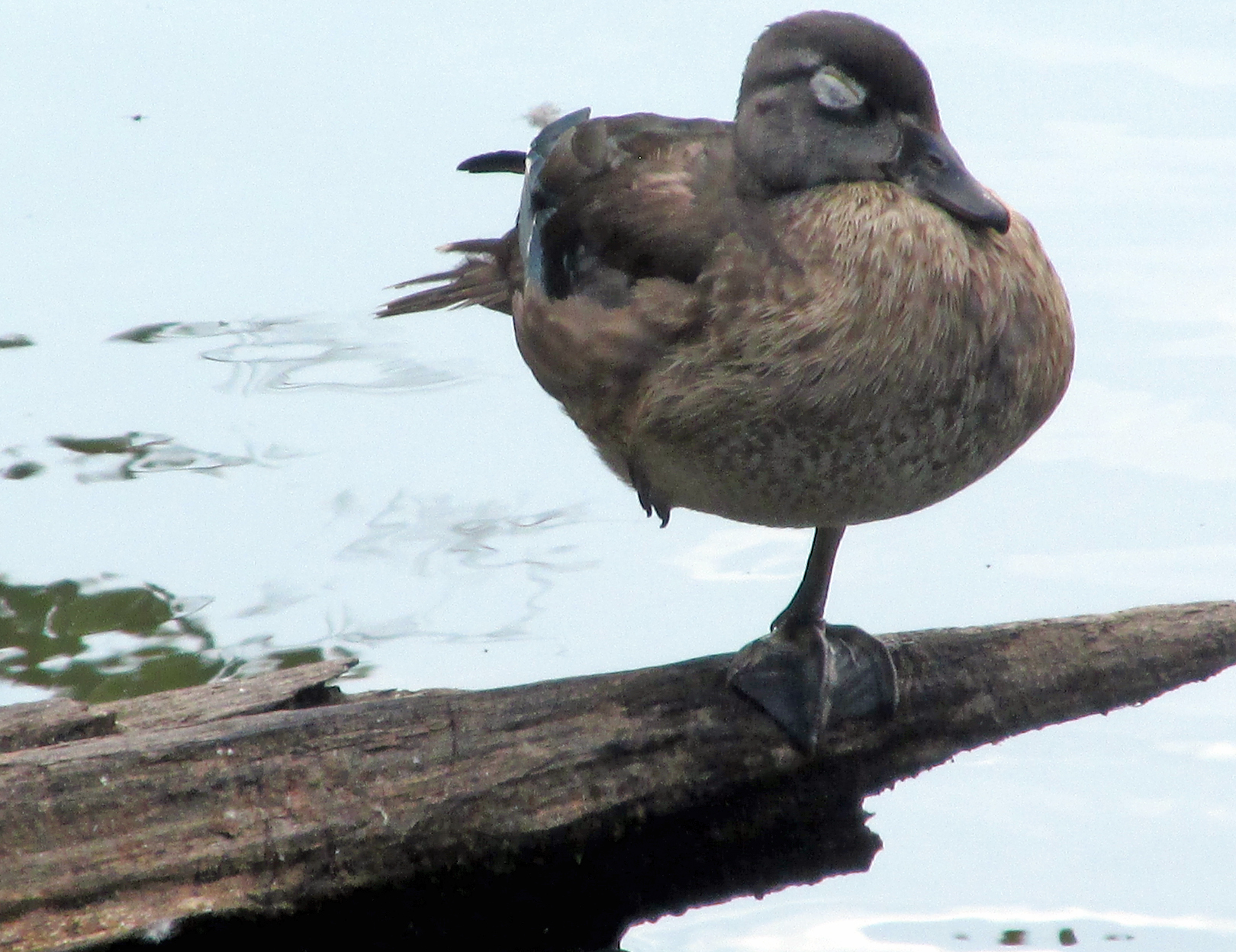
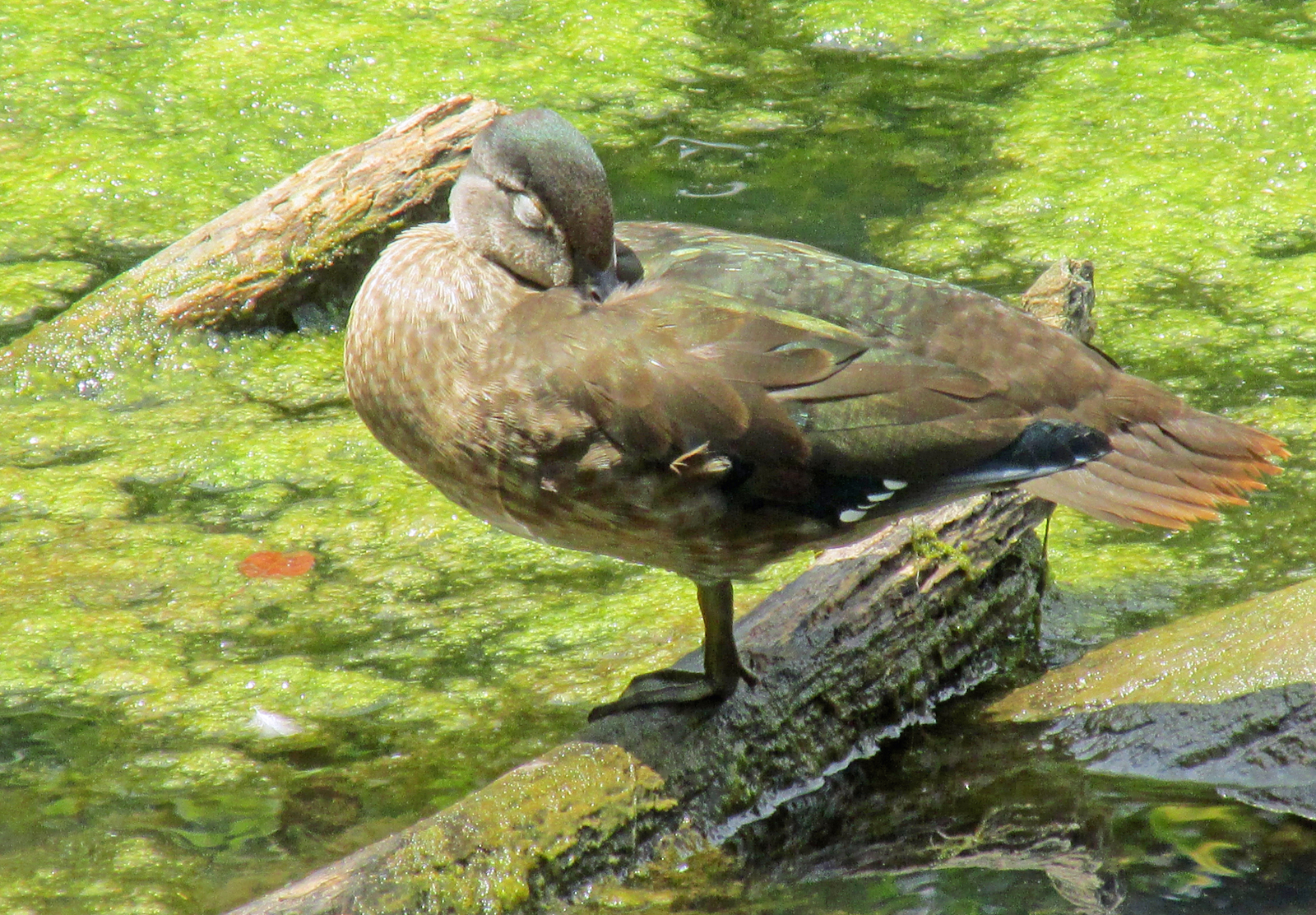
A napping Wood Duck perches on one leg upon a submerged log.

From 1918 to 1941, it was illegal to hunt wood ducks. Thanks to this temporary hunting ban and other conservation measures, the wood duck population recovered in dramatic fashion. Recent surveys all point to a species on the rebound with numbers of wood ducks rising for the past several decades.

The creek and the fish pond at my home have proven dependable magnets over the years for attracting visiting wood ducks. Most wood ducks in the southeastern United States do not migrate. Those that live farther north during the summer will migrate to areas as far south as Mexico in the fall. We’re fortunate to reside in a region where wood ducks are year-round resident waterfowl.

Woodie

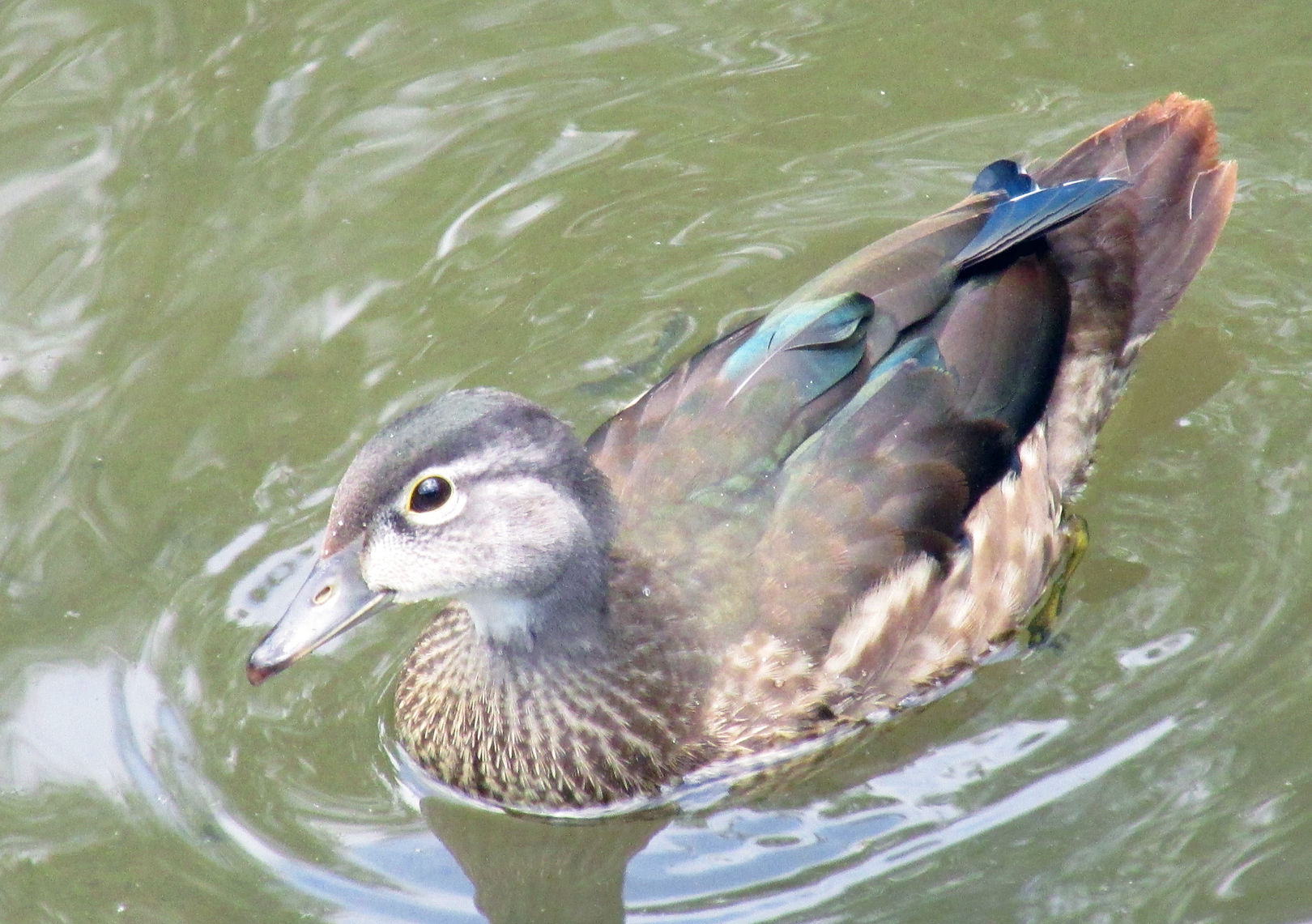
A Wood Duck takes a late summer swim.

Woodie-Sleeping

Wood Ducks often have a favorite log where they rest and relax when not foraging for food.

WoodDucks

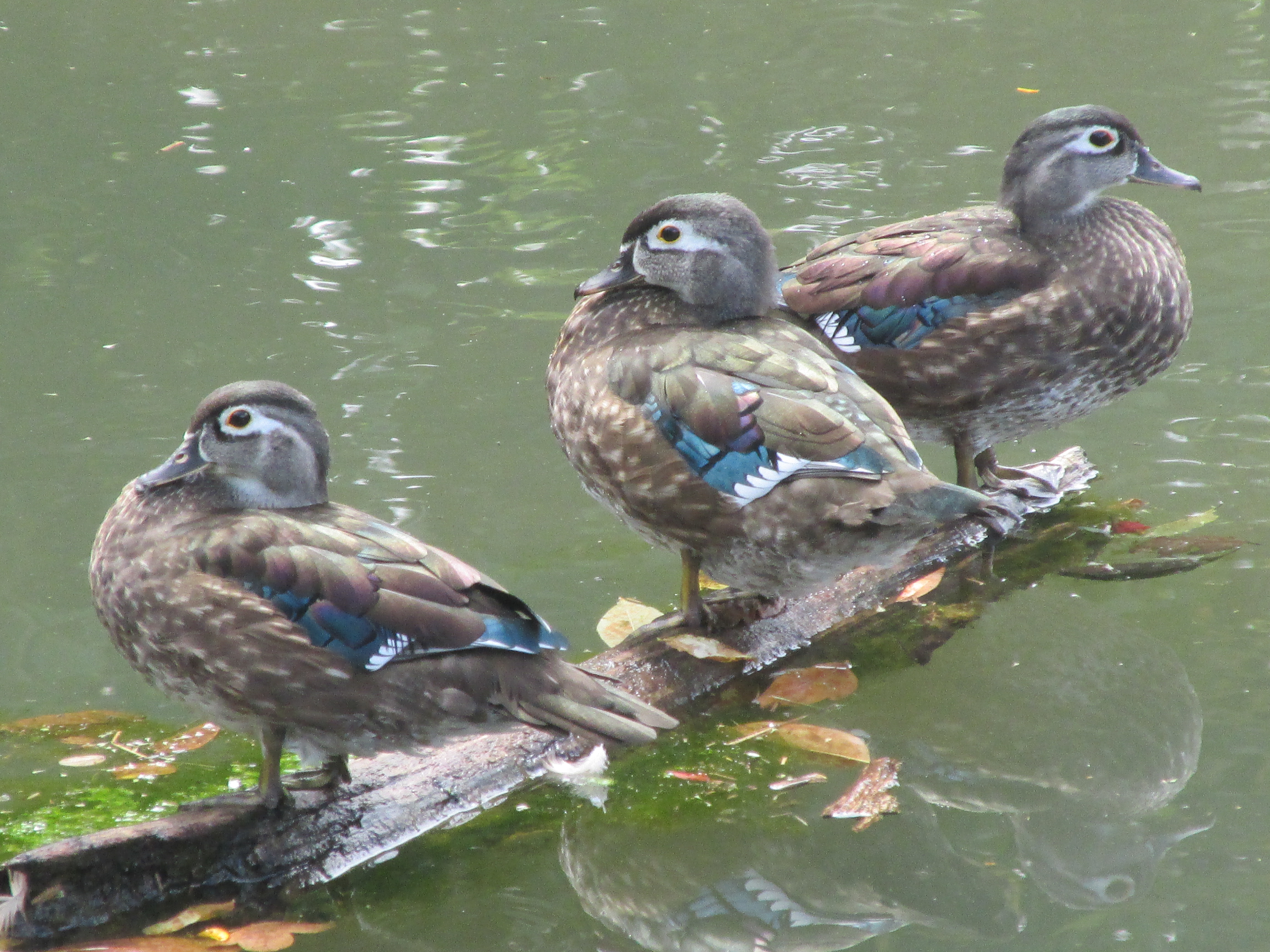
A trio of Wood Ducks in their summer plumage.

WoodDucks 2

A male and female Wood Duck makes a stop at a pond in Hampton, Tennessee, during spring migration.

WoodDuck-Eclipse

The Wood Duck, a favorite species of waterfowl for many people, is also known as the “Summer Duck” throughout much of its range.

Wood-Duck-Maley

Wood Ducks molt their feathers during the summer months, giving them a less gaudy appearance for a brief time.

Woodie-Head

Young Wood Ducks will slowly acquire their adult plumage as summer advances to fall and winter.


Rescued insect turns out to be one of region’s largest moths


Polyphemus-Two

Photos by Bryan Stevens                                                                The Polyphemus Moth rode to safety in the inside of an automobile after being rescued from a busy parking lot.

My mom and I were heading toward the drive-thru at McDonald’s in Erwin when I saw something fluttering across the asphalt of the parking lot. The creature was brown and as big as a small bird — it even had wings! But, it wasn’t a bird. I realized that I was watching one of the largest of our native moths.

It was a little surprising to find the moth in the middle of a parking lot in the afternoon on a hot summer day. I pulled my vehicle into a parking space and captured the moth without too much difficulty. If left in the parking lot, the moth would likely have been run over. Although my mom agreed with the rescue — in theory — she wasn’t certain about sharing the car with a large, winged insect. After some persuasion, she accepted that the moth was absolutely harmless.

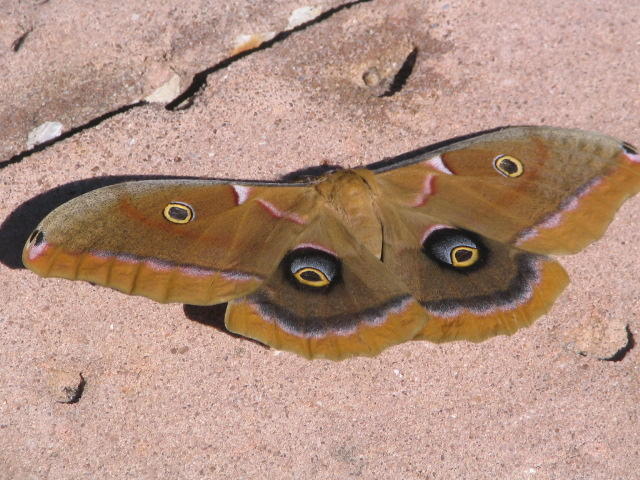
Specifically, the large insect was a Polyphemus Moth, which is one of the biggest moths in the United States. These large moths often attain a wingspan of five and a half inches.

Polyphemus-Four

The rescued Polyphemus Moth clings to the side of a McDonald’s paper bag.

Our rescued moth clung to the side of a McDonald’s paper bag that held one of the sandwiches in our order for the entire trip home. Once we arrived, I released the moth on a small oak-leaf hydrangea, took a few more photos and was pleased to see the large insect fly to freedom. I lost track of the moth once it landed in the thick branches of a yew tree. I was happy to secure the impressive moth a little more time to fly and perhaps even attract a mate.
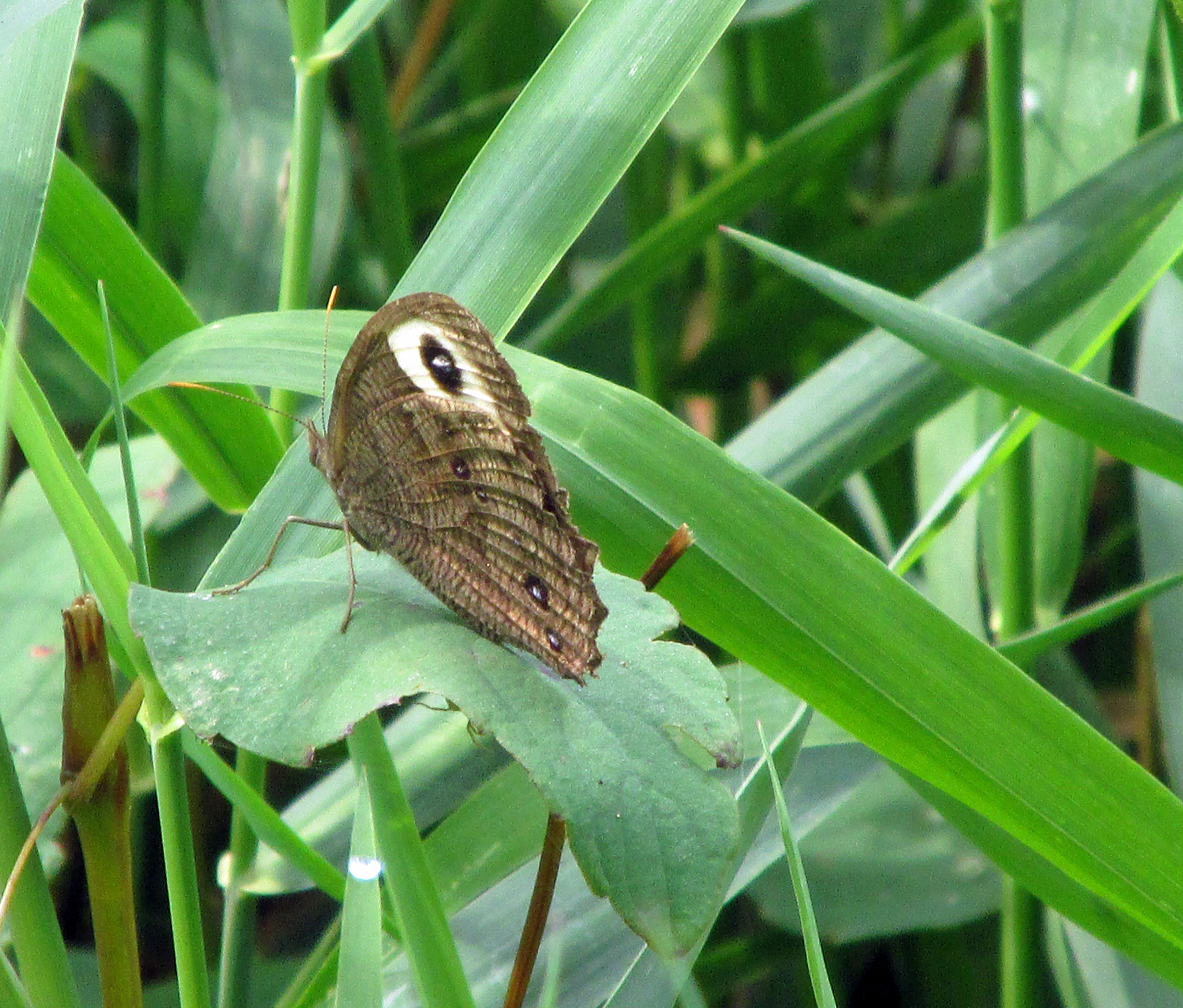

The brownish-yellow wings of the Polyphemus Moth show wavy, black and white lines. Each forewing is also decorated with a small, mostly yellow eyespot, as well as larger blue, black, and yellow eyespots on the hindwings. The underside of the moth’s wings look like dead leaves, which provides excellent protective camouflage.

The eyespots are important in warding off potential predators. When a Polyphemus Moth spreads its wings, the eyespots resemble the large eyes of owls and other predatory birds. This display may be more than enough to discourage many predators, which can include mice, squirrels and small birds.

Polyphemus-One

The rescued Polyphemus Moth rests on the leaves of an oak-leaf hydrangea. This large moth is a member of the family of “giant silkworm moths.”

Like most moths, they are usually nocturnal, which makes me wonder what happened to the moth I rescued to have it fluttering around on a sunny afternoon. After dark, bats are major predators on these large moths. Polyphemus Moths are usually found in forests, but they are also present in such habitats as marshes and parks.

Like all moths and butterflies, the Polyphemus Moth starts life as a caterpillar. Host plants fed upon by the caterpillars of this species include many trees and shrubs, including oaks, maples, pines, birches, American hornbeam, hawthorns, American beech, ash, witch hazel, black walnut, yellow poplar, black cherry, quaking aspen, elderberry, alders, sassafras, blueberries, grapes, willows, hickories, elms, chestnuts and American sycamore.

Polyphemus-Three

The rescued Polyphemus Moth got a ride to safety.

Polyphemus caterpillars grow rapidly as they feed on the leaves of any of these host plants. As they grow, they will molt their skin four times. After the final molt, the caterpillar will fold a leaf around itself to enclose and protect its silken cocoon.

Caterpillars that enter a cocoon early in the season will emerge during the summer months as moths. However, caterpillars that proceed to the cocoon stage of their life cycle in late summer or early fall will spend the winter months inside this silken enclosure. In such cases, adult moths will not emerge until the following spring, usually in May.

Adult Polyphemus Moths do not feed. Their only focus during the entirety of their short lives as moths are to find mates and reproduce. Female moths attract mates with pheromones, which are chemicals emitted by a creature that triggers a social response in members of the same species. Male moths even have specialized feathery antennae to help them detect the pheromones released by females.cyclop10c 2

The moth is named for Polyphemus, one of the prominent giant Cyclopes in Greek mythology. Captured by the enormous Cyclops, Greek hero Odysseus and his men blinded the giant’s one eye before escaping his cave.

n_a (31)

The Pandora sphinx moth, also called the Pandorus Sphinx Moth, is a North American moth in the Sphingidae family. It is a large, greenish gray moth, but it isn’t closely related to the “giant silkworm moths.”

The Polyphemus moth is a member of the family Saturniidae, also known as “the giant silk moths.” Other well known moths in this family include the Luna Moth, Imperial Moth, Promethea Moth, and Regal Moth.

••••••

In order to learn more about birds, birding and various other topics related to the natural world, friend Bryan Stevens on Facebook at https://www.facebook.com/ahoodedwarbler. He is always posting about local birds, wildlife, flowers, insects and much more. If you have a question, wish to make a comment or share a sighting, email him at ahoodedwarbler@aol.com.

n_a (30)

This Polyphemus Moth was photographed at Walt Disney World Resorts in Florida in 2007.