Tag Archives: elizabethton bird club

Christmas Bird Count produces grebes, other finds

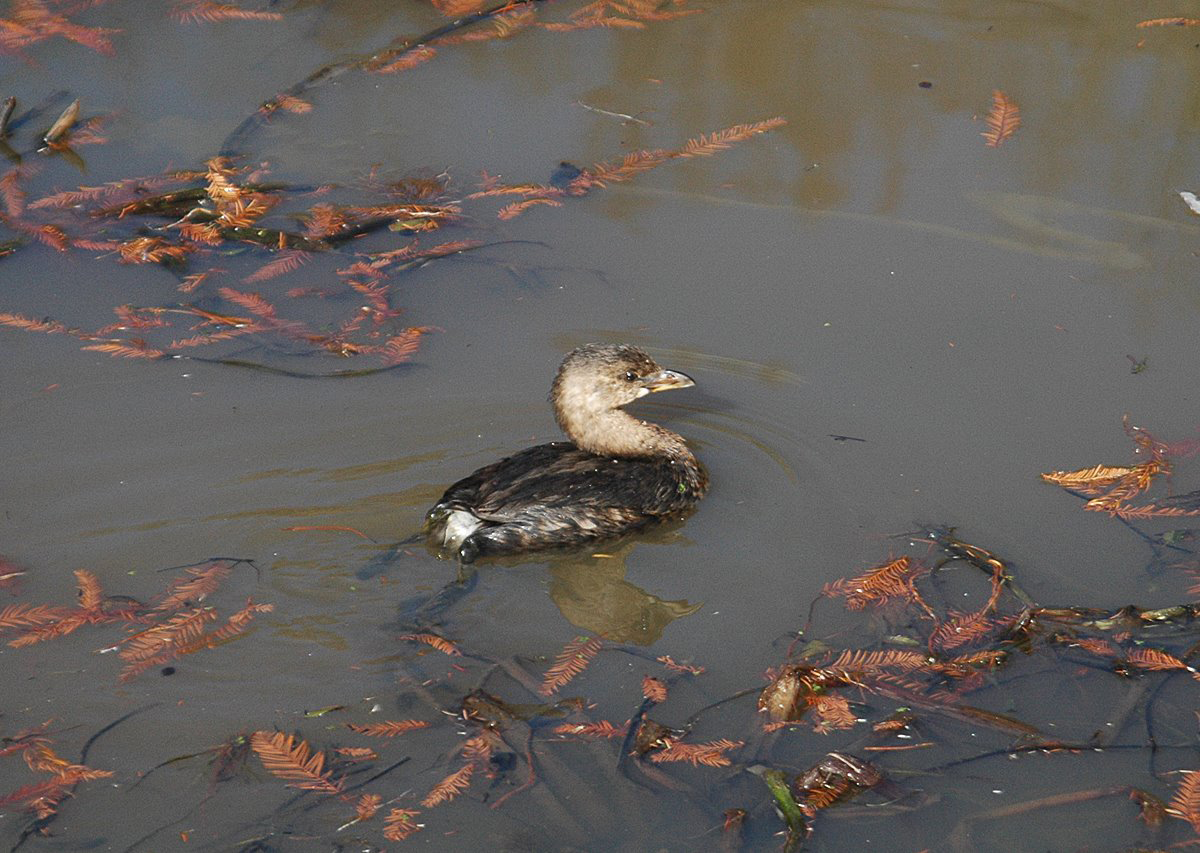
Photo by Bryan Stevens
The pied-billed grebe paddles through the water after it was rescued after a stranding on a lawn.

I took part in the Elizabethton Bird Club’s 83rd annual Elizabethton Christmas Bird Count on Dec. 20.

The count focuses on a circle within Carter County with Elizabethton serving as the center. Consider the circle as a pie sliced into six pieces. Different groups bird within those “slices” of terrain. The groups rotate each year to vary the participation. As a result, it had been six years since I last led the count effort for the Butler/Little Milligan area that includes a great deal of Watauga Lake.

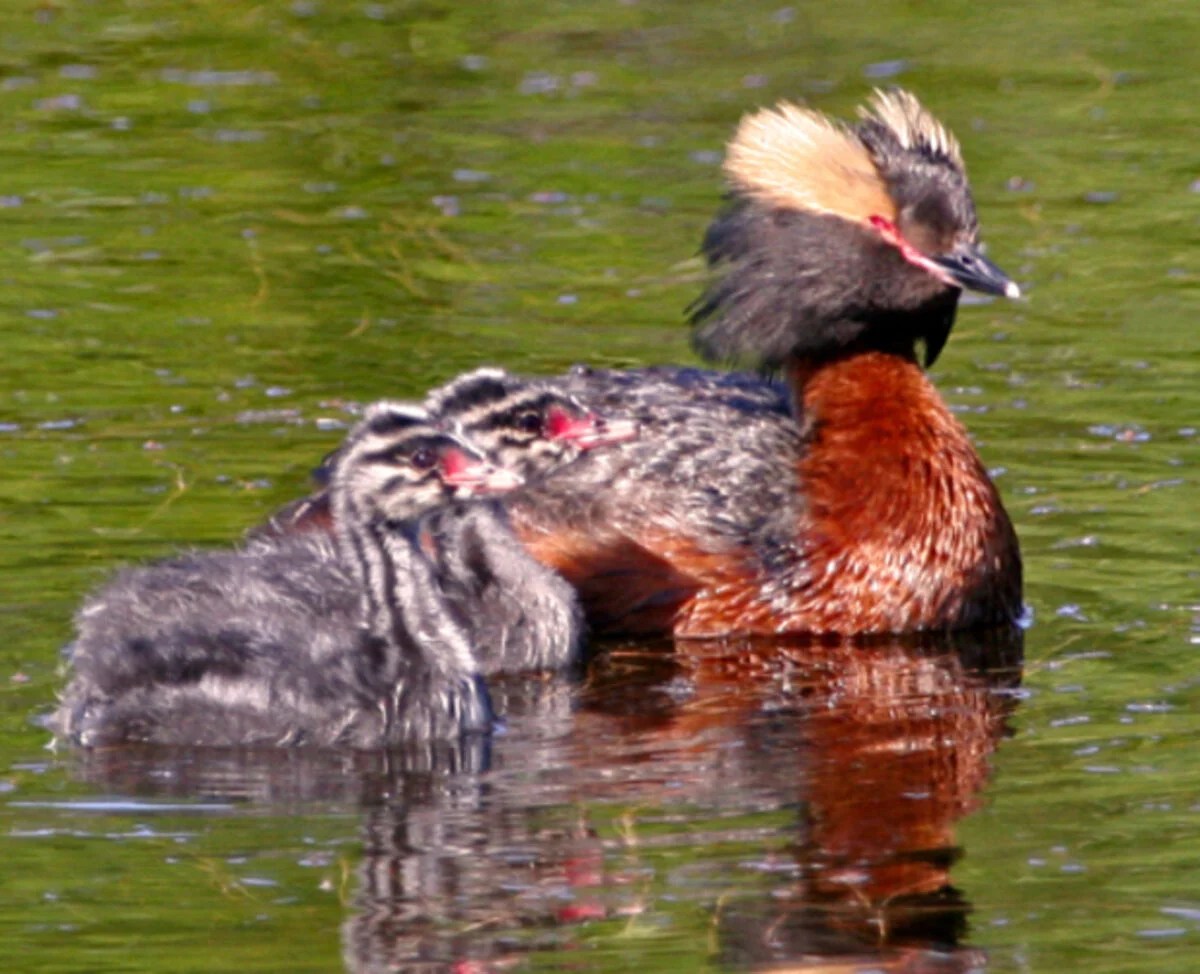
Donna Dewhurst/USFWS • A horned grebe parent tends chicks.

One of my favorite reasons for taking part in this particular count is the great mid-day lunch break at the Dry Run General Store and Deli in Butler. This marked my third time over the last 18 years having lunch at this great spot. The lunch break also gives the participants a chance to study the list of birds seen and calculate what other species can be added and where to best look for those species.

The counts conducted in areas with access to water have the potential for the most species, so it’s always a little more fun to bird around Watauga Lake or Wilbur Lake. The Watauga River in Elizabethton is also good.

We had good weather for this most recent count, but it was a slow effort to add birds to our list. Without a doubt, spring and fall bird counts are much more exciting than a Christmas Bird Count.

Below is the list for my group, which included Rob Armistead, Brookie and Jean Potter, David and Connie Irick and Chris Soto. This is only the list for Little Milligan and Butler. I hope to provide the complete list at a later date.

We found a total of 46 species:

Canada goose, 32; mallard, 7; greater scaup, 2; hooded Merganser, 4; wild turkey, 18; pied-billed grebe, 8; horned grebe, 14; rock pigeon, 52; mourning dove,1; ring-billed gull, 1; common loon, 1; and great blue heron, 2.

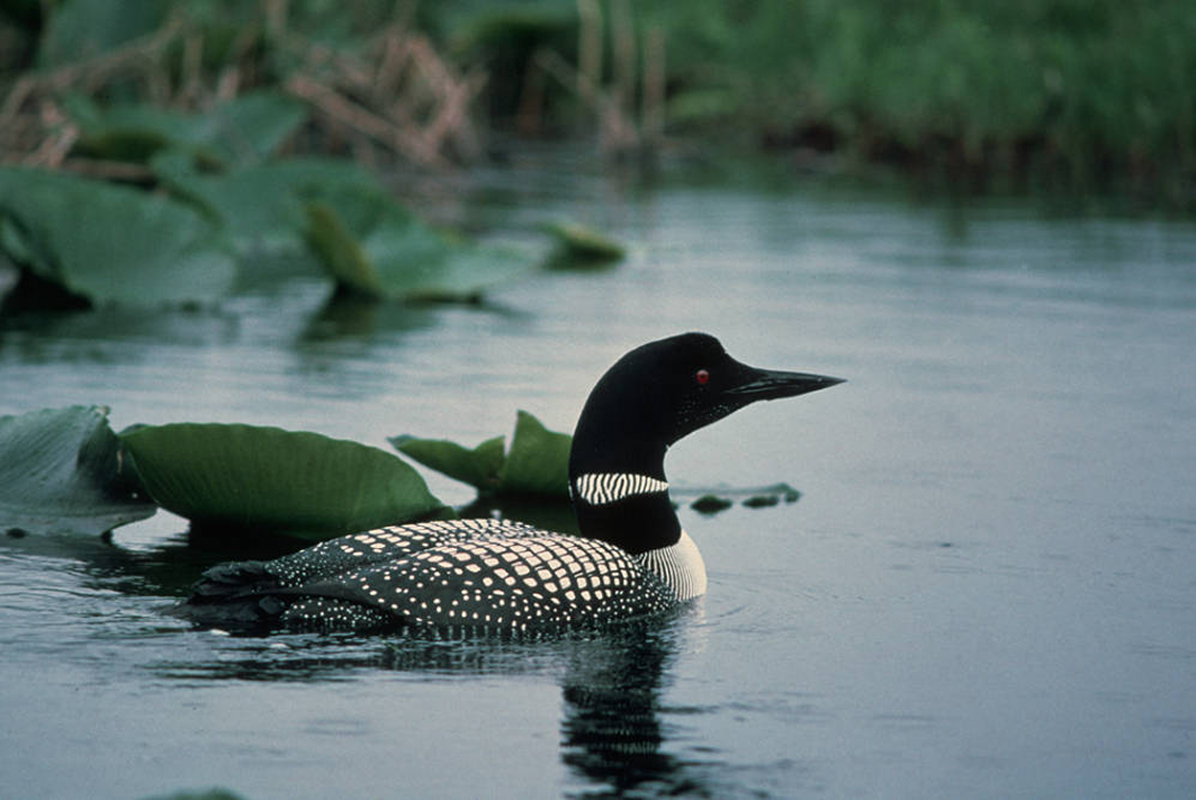
Photo by U.S. Fish & Wildlife Service • Common loons are quite at home in the air and on the water, but these birds are awkward if weather forces them to set down on land.

Red-tailed hawk, 3; belted kingfisher, 3; red-bellied woodpecker, 3; downy woodpecker, 2; Northern flicker, 1; pileated woodpecker, 3; American kestrel, 2; and Eastern phoebe, 1.

Blue jay: 14; American crow, 68; common raven, 2; Carolina chickadee, 2; tufted titmouse, 11; white-breasted nuthatch, 4; winter wren, 1; Carolina wren, 5; golden-crowned kinglet, 1; and ruby-crowned kinglet, 1.

Eastern bluebird, 14; hermit thrush, 1; American robin, 5; brown thrasher, 1; Northern mockingbird, 3; European starling, 43; and cedar waxwing, 2.

House finch, 2; American goldfinch, 25; dark-eyed junco, 5; white-throated sparrow, 8; song sparrow, 3; Eastern towhee, 3; Eastern meadowlark, 1; pine warbler, 1; and Northern cardinal, 7.

While birding in Little Milligan and Butler, we had plenty of views of Watauga Lake and opportunities for spotting birds often affiliated with water. The umbrella term of waterfowl can include such birds as ducks, geese, loons and grebes. We had representatives from all of these groups on our list. I was pleased to finally see some ducks and grebes this winter.

The grebes are a grouping of birds lumped together as waterfowl. Worldwide, there are 22 grebe species. This family also includes three extinct species — Alaotra grebe, Atitlán grebe and Colombian grebe.

Many people are unaware of the grebes. After all, they are oddball birds with not a lot in common with other waterfowl such as loons and ducks. In eastern Tennessee, southwestern Virginia and western North Carolina, the pied-billed grebe is the member of the grebe family most likely to come into contact with humans.

The pied-billed grebe’s scientific name, Podilymbus podiceps, can be roughly translated as “rear-footed diver.” The reference is to the fact that this grebe, as well as others of its kind, have their feet positioned so far back on their bodies that movement on land is difficult and awkward.

In winter, however, horned grebes can be somewhat abundant on area lakes. The common name of horned grebe refers to a yellow crest of feathers located above and behind the eyes, reminiscent of “horns” in the eyes of an imaginative observer. In winter these horns are absent and the colorful horned grebe of the nesting season is replaced by a bird in a dull white and dark gray plumage.

Grebes range in size from the least grebe, which weighs only about six ounces, to the great grebe, which can tip the scales at four pounds. North American grebes include red-necked grebe, horned grebe, eared grebe, Clark’s grebe and Western grebe. In extreme southern Texas, birders can find least grebes in suitable wetland habitats.

Other grebes found around the world include birds with such descriptive names as the great crested grebe, hooded grebe and silvery grebe.

Photo by Bryan Stevens • Brookie Potter spots a “bumble,” otherwise known as an abominable snowman, near Watauga Lake during the Christmas Bird Count.

With the exception of the least grebe, I’ve seen all of North America’s grebes. During visits to Utah in 2003 and 2006, I observed the sleek, long-necked Clark’s grebe and Western grebe. On a 2006 trip to Utah, I visited Antelope Island State Park and observed tens of thousands of eared grebes gathered on the Great Salt Lake for the nesting season. In Tennessee, one of the most reliable locations to find eared grebes is from viewing areas at Musick’s Campground on South Holston Lake, where a small number of these grebes have wintered for many years.

My Christmas Bird Count excursion proved a fun time with friends. We didn’t find a lot of birds, but we enjoyed finding the ones that we did see. Happy New Year to readers. I hope everyone finds some good birds in 2026.

•••

Bryan Stevens has written about birds, birding and birders since 1995.


Eastern screech-owls are ‘beautiful little hunters’

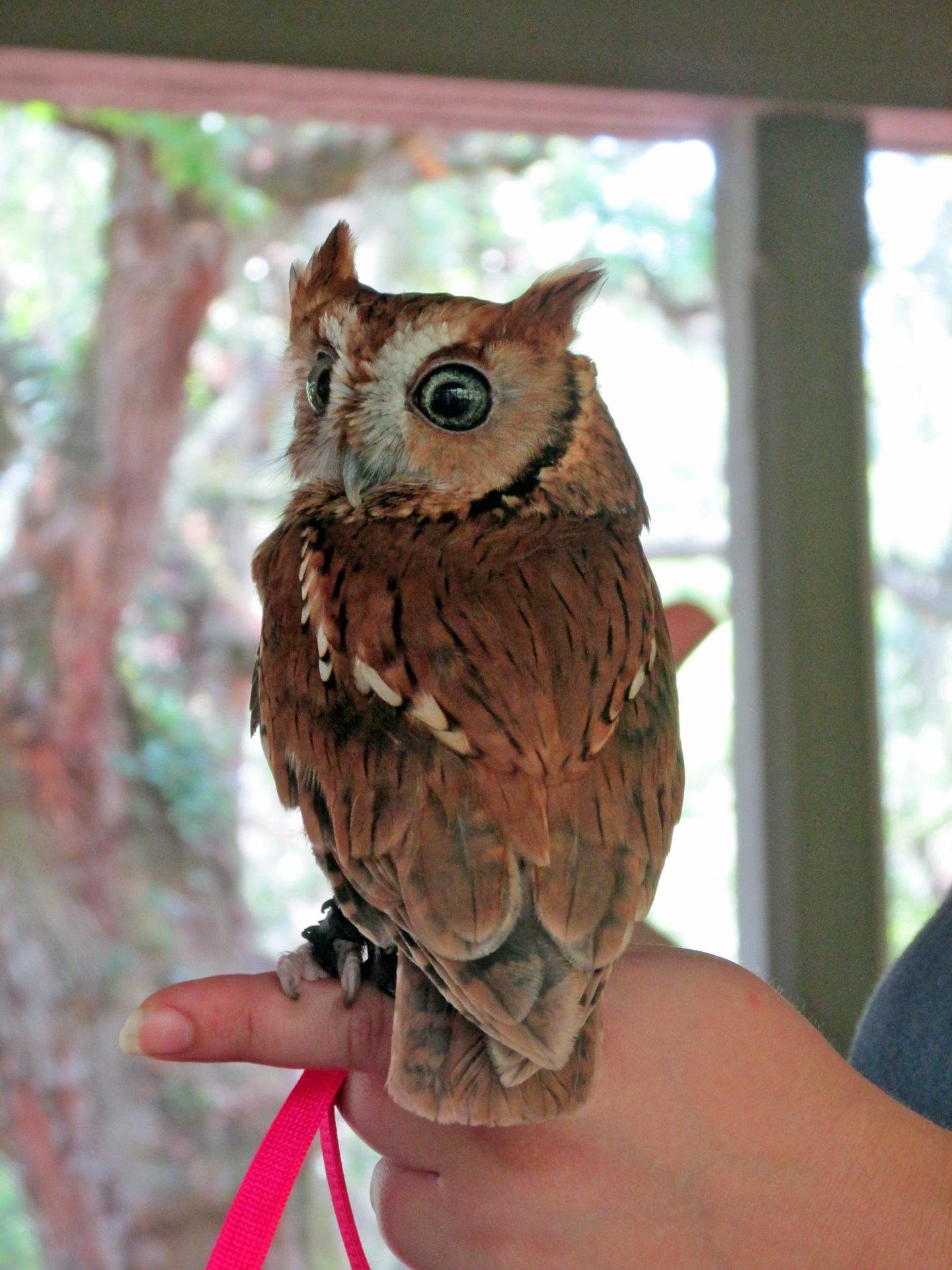
Courtesy of Carl Peters • An Eastern screech owl perches on a shepherd’s hook holding bird feeders in an Erwin yard.

I received an email from Susan Peters, an Elizabethton resident, along with a photo taken of a small owl by her brother, Erwin resident Carl Peters.

The photo was taken at a friend’s home in Erwin when the owl perched on a shepherd’s hook used for holding a hanging bird feeder.

Photo by Bryan Stevens • Lucy, a rehabilitated owl living in captivity at Brookgreen Gardens in South Carolina, educates the public about her fellow owls.

“It’s a beautiful little hunter,” Susan remarked in her email, adding that she would love to have the owl identified. She speculated that the visitor might be a Northern saw-whet owl or boreal owl. The latter would have been far out of range. Saw-whet owl was a possibility considering these tiny owls are known to reside on Unaka Mountain, but a closer study pointed to the identity of the visitor being an Eastern screech-owl.

As Susan pointed out in her email, no ear tufts are prominently visible on the bird in the photo. But any number of reasons could explain the absence of the ear tufts. These tufts, which are actually feathers that the ow can control, help with camouflage or to signal an individual owl’s mood. They can raise their tufts if they want to appear larger and more intimidating or flatten them to blend in with a tree trunk, and they may also flatten them when agitated or in a state of attentiveness.

There’s not a lot in the photo for a size comparison with the bird, but it seemed more the size of a screech-owl than the slightly smaller saw-whet owl. I’ve seen both owls and the saw-whet always strikes me as more dainty than a screech-owl.

An adult Eastern screech-owl is about 10 inches long, which is about the same size as an American robin. The owl, however, is much more sturdily built than the robin. This owl’s wingspan is usually between 18 and 24 inches. Weight varies, but a heavy screech owl weighs only 6 to 8 ounces. That’s equivalent to a cup of water.

Eastern screech-owls come in two color variations, sometimes referred to as “morphs.” These are red or rufous and gray. There is a rare brown variation that may be a hybrid of a red owl and a gray owl. The highest percentage of red screech owls occurs in Tennessee, of all places, with an estimated 79 percent of owls in the Volunteer State being of the red variety. I’ve actually not seen a red morph in many years. My recent sightings have been of gray individuals. The owl in Carl’s photo appears to be a red morph.

Eastern screech-owls are effective predators, or as Susan described them, “beautiful little hunters,” but they mostly tackle small prey, such as house sparrows, mice and large insects.

Owls are more common than we think; we simply don’t encounter them often because of their nocturnal lifestyle. The Eastern screech-owl has proven very adaptable to living in close proximity to human beings.

Many myths have taken root about owls. Some of these are more grounded in reality than others.

Photo by Bryan Stevens
An Eastern Screech-Owl at rest in a roosting hole in a large sycamore tree.

A prevalent belief is that owls are wise. Of course, that’s a relative term. Is it meant they are wiser than other birds or wiser than human beings. According to the website for the International Owl Center, owls are probably seen as wise due to their large eyes, resolute posture and relatively silent behavior. The website acknowledges that owls are good at being owls, but they are stubborn birds when people attempt to train captive specimens to perform tasks.

Not all owls, despite persistent claims, are nocturnal. It’s true, according to the International Owl Center, that a large proportion of owls are nocturnal, meaning they are active at night.

But there are always exceptions. According to the International Owl Center, a few owls are diurnal, meaning they are active during the day, and some others are crepuscular, meaning they are most active at dawn and dusk.

There are approximately 230 to 250 species of owls. There’s some debate among the experts about the exact number. Here are some interesting common names for some of those species: Golden masked owl, ashy-faced owl, white-fronted scops owl, black-capped screech-owl, cinnamon screech owl, snowy owl, Eurasian eagle owl, spectacled owl, mottled wood owl, great grey owl, pearl-spotted owlet, little owl, barking owl, powerful owl, Tasmanian boobook, chocolate boobook, laughing owl, long-eared owl and short-eared owl.

I’ve been hearing two species of owl – Eastern screech-owl and great horned owl – at home this fall. That’s the other thing. You’re much more likely to hear an owl than see one. I don’t mind. It makes this little bird a bit more mysterious, and there’s something to be said to being able to put on an air of mystery.

•••

Share a sighting, ask a question or make a comment by emailing me at ahoodedwarbler@aol.com.

Photo by Bryan Stevens
An Eastern Screech-Owl perches in the branches of an Eastern hemlock.

Elizabethton Bird Club announces speakers for fall programs

Brayden Paulk will speak to the Elizabethton Bird Club on Sept. 3 on the topic of microfishing.

The Lee and Lois Herndon Chapter of Tennessee Ornithological Society, also known as the Elizabethton Bird Club, will soon begin its schedule of monthly meetings for 2024-25.

The brief business meetings are always accompanied by an informative and entertaining program on birds, birding or other subjects from the natural world.

These programs are a great way to learn more about our feathered friends as well as other related subjects from the natural world. They are free, open to the public and hosted by a welcoming group of people.

Here’s the schedule for Fall 2024:

September

Brayden Paulk, a young naturalist with family ties in Unicoi County, will present the first program on Tuesday, Sept. 3, with a talk on “Microfishing,” which involves anglers focusing on a diverse array of tiny species of fish.

Paulk has also been working as a naturalist with Lamar Alexander Rocky Fork State Park this summer and fall. He gave a program a couple of years ago for the club on “Trash Fishing,” which explored other angling options other than the typical gamefish species. As both fishing and birding are among his interests, he will no doubt find a way to work something into his program about birds.

October

The guest speaker for the meeting on Tuesday, Oct. 1, will be Mark Stevens. A former publisher for The Erwin Record, he will present a program titled “Building a Birding Festival” that will focus on his development of the Hammock Coast Birding Festival in South Carolina. Stevens, who works as tourism director for the Georgetown County Chamber of Commerce, will be giving the program remotely from his home in South Carolina, but the hybrid meeting also offers a chance to attend in-person with other birding enthusiasts. The festival is organized by the South Carolina Hammock Coast, the marketing arm for the Georgetown County Chamber. The third annual Hammock Coast Birding Festival is scheduled for Feb. 6-9, 2025.

November

Vern Maddux, the treasurer for the club, will be the speaker on Tuesday, Nov. 5. Maddux is a world traveler when it comes to seeing birds and will present a program on one of his recent international birding adventures to South Georgia and Falklands. South Georgia is a mountainous barren island in the South Atlantic Ocean, 800 miles east-southeast of the remote South Atlantic archipelago that makes up the Falkland Islands. With rugged terrain and cliff-lined coasts, the hundreds of islands and islets in the Falklands are home to sheep farms and abundant birdlife.

December

In the busy month of December, yours truly will give the program. I will present a powerpoint presentation titled “What’s in a Name?” on North American birds named after people. Among our native birds, we have quail, woodpeckers, sparrows, finches, warblers, hawks and other birds are known by names of historical figures ranging from John James Audubon to William Clark and Meriwether Lewis.

My program will be held on Tuesday, Dec. 3. I will discuss the American Ornithological Society’s decision in 2023 to end what are known as eponyms, in which species names honor people. The renaming of dozens of species will be a gradual process.

The club’s 2025 schedule has not been completed, but will include a program by local naturalist Lewis Tester in the spring on dragonflies.

The public is always welcome to attend these programs. Programs begin at 7 p.m.

The club meets at the Elizabethton campus of Northeast State Community College in Room 135 when the school’s schedule permits. When school is not in session, meetings are held on Zoom or at other announced locations. To receive updates on the club’s schedule, events and activities, email elizabethtonbirtdingclub@gmail.com and ask to be placed on a free mailing list.

The Elizabethton Bird Club holds seasonal birds count in spring, summer, fall and winter. The club also organizes and sponsors regular field trips to destinations through Northeast Tennessee. These activities are also open to interested members of the public.

•••

To share a sighting, make a comment or ask a question, email me at ahoodedwarbler@aol.com.

Join a bird club to gain birding experience

Photo Courtesy of Michele Sparks • Joining a bird club is a great way of gaining expertise in birding by meeting like-minded people of various experience levels.

Where does a beginning birder look for help getting started in the engaging pastime of birding?

In my own case, I turned to local birding organizations in Elizabethton and Bristol in Northeast Tennessee. 

Today, those two organizations that helped nurture my interest in birding are known as the Lee & Lois Herndon Chapter of Tennessee Ornithological Society, also known as Elizabethton Bird Club, and the J. Wallace Coffey Chapter of TOS, also known as the Bristol Bird Club.

I didn’t know the namesakes for the Elizabethton club, but I knew J. Wallace Coffey from the late 1990s until his death in 2016. Coffey and many other individuals helped guide and polish my birding skills with helpful advice, suggestions and, above all else, friendship. Any novice birder needs to extend some feelers to local birding groups. No online resources, smart phone apps or printed field guides can match the reservoir of experience that veteran birders have to offer.

Today the Bristol Bird Club is headed by President Larry McDaniel. 

He echoed my advice to new birders.

Photo Courtesy of Michele Sparks • George Larkins, Larry McDaniel and Teresa Hutson watch for hawks from atop Mendota Mountain in Southwest Virginia.

“Becoming a part of a local bird club such as the Bristol Bird Club is a great way for new and beginning birders to be around experienced birders who love to help you learn about birding,” McDaniel said. 

“You can quickly learn where to find birds in the area, how to know the birds you see in your own yard and many ways of learning how to identify different species,” he added. 

McDaniel noted that joining a birding group is also a great way to meet new friends who share a common interest. 

“We offer many outings where you will get to be in the field with other birders,” he said. “All of our outings are suitable for all levels including kids.”

McDaniel noted that many of those outing will focus on some of the region’s birding hot spots.

“Some of our favorite places to bird include South Holston Lake, Osceola Island (Recreation Area) below South Holston Dam, Paddle Creek Pond, Steele Creek Park, Holston Mountain, Shady Valley, Jacob’s Nature Park in Johnson City, Roan Mountain, Whitetop Mountain and Burke’s Garden,” he said. “There are many other spots that we like to frequent.”

Later this fall, a seasonally popular spot will come into play.

“Another favorite destination is the Mendota Hawk Watch where Ron Harrington and others have been conducting hawk counts in September for many years,” McDaniel said. “There are days when we can observe thousands of broad-winged hawks fly over as they make their way south.”

In addition, the Mendota Hawk Watch is a great way to look for other migrating raptors, including ospreys, bald eagles and occasionally golden eagles. 

“The club has a master bird bander,” McDaniel added. “Richard Lewis bands birds at his property and does an annual public demonstration during Wildlife Weekend at Steele Creek Park.”

Photo Courtesy of Michele Sparks • Birding clubs organize bird walks to various locations known for producing good birding opportunities.

McDaniel also shared some of the club’s rich history.

“The Bristol Bird Club has a long history,” he noted. “The club has been active since 1950. We are the J. Wallace Coffey chapter of the Tennessee Ornithological Society and an affiliate club of the Virginia Society of Ornithology. 

“Wallace was a major force in leading the club for over 50 years,” McDaniel added. “When he passed away a few years ago, members decided to rename the club in his honor.”

McDaniel said that the club has also worked with local landowners over the years to establish some of the most important birding hotspots in the area. 

“We also sponsor several Christmas Bird Counts,” he said.

McDaniel said that the club meets at 7 p.m. on the third Tuesday of each month in the Expedition Room of The Summit Building located at 1227 Volunteer Parkway in Bristol, Tennessee. 

“The meetings can also be joined on Zoom,” McDaniel said. “Zoom meeting invitations are sent to the BBC email group and posted on our Facebook group. To join the email group, send a request to BristolBirdClub2022@gmail.com. You can also find us and join our Facebook group to get more information and current news about the club. We also sponsor an email list serve called Bristol-Birds that you may join to receive information on recent sightings.”

He pointed out that the club does not have regular meetings during the months when the group hosts a club picnic and yearly banquet. 

“These dates are announced well ahead of time,” he said. 

“There is no regular meeting in December, but we do usually have a BBC Christmas party some time in December.”

The club will also participate in the 25th anniversary of the annual Wildlife Weekend at Steele Creek Park on Friday and Saturday, Oct. 7-8.  

McDaniel will lead a walk starting at 9 a.m. on Oct. 8 to the bird banding station operated by banders Richard Lewis and Rack Cross. “Plants and Pollinators” will provide the theme for this year’s Wildlife Weekend. Guest speaker for the Oct. 7 evening program will be Gerardo Arceo-Gomez, an associate professor in the biology department at East Tennessee State University.

Members of the Bristol Bird Club are also automatically members of the Tennessee Ornithological Society. 

“Membership with the Virginia Society of Ornithology requires individuals to join VOS on their own,” he noted.

Current BBC membership rates, including TOS membership, are family, $32; individual, $28; and student (K-12), $15. 

To make a comment, share a sighting or ask a question, email me at ahoodedwarbler@aol.com.

•••

Bryan Stevens has been writing weekly about birds since November of 1995.

Photo Courtesy of Michele Sparks • Getting to know other birds can be a rewarding experience on many levels.

It all began with a dark-eyed junco

Photo by Jack Bumer from Pixabay • For many people, the dark-eyed junco is a winter bird, not arriving until the first frost or snowfall of the season. These songbirds typically remain until late spring when they disperse to their nesting grounds.

I wrote my first bird column on Sunday, Nov. 5, 1995, which means this weekly column is marking its 26th anniversary this week.

This column has appeared over the last three decades in a total of six different newspapers, which I regard as a personal achievement, as well as an accomplishment for our feathered friends. It’s on their behalf that I pen these weekly efforts to promote conservation and good will toward all birds. I have also posted the column as a weekly blog posting since February  2014 at www.ourfinefeatheredfriends.com.

I’ve played detective, helping people identify everything from “rain crows,” or cuckoos, to Muscovy ducks, chukars and double-crested cormorants. I’ve observed unusual birds, including white pelicans, brants and roseate spoonbills, in Northeast Tennessee, Southwest Virginia and Western North Carolina and spotlighted them in these columns. I still take delight in the kaleidoscopic parade of colorful warblers that pass through the region each spring and fall as well as the fast-paced duel of ruby-throated hummingbirds and the occasional rufous hummingbirds straying through the region.

At my home, I also provide sunflower seed and other supplemental food for the resident birds like Carolina chickadees, white-breasted nuthatches, song sparrows and downy woodpeckers.

Even as I tweak my anniversary column for “Feathered Friends,” parts of the region just experienced the first heavy frost. This prognostication of approaching winter weather is a perfect time to dust off this week’s column, which is a revision of the first bird column I ever wrote. This column focused on a common visitor to yards and feeders during the winter months. In fact, dark-eyed juncos should bereturning to the region any day. Here, with some revisions I have made through the years, is that first column.

•••

Of all the birds associated with winter weather, few are as symbolic as the dark-eyed junco, or “snow bird.” The junco occurs in several geographic variations.

John V. Dennis, author of “A Complete Guide to Bird Feeding,” captures the essence of the junco in the following description: “Driving winds and swirling snow do not daunt this plucky bird. The coldest winter days see the junco as lively as ever and with a joie de vivre that bolsters our sagging spirits.” The dark-eyed junco’s scientific name, hyemalis, is New Latin for “wintry,” an apt description of this bird.

Most people look forward to the spring return of some of our brilliant birds — warblers, tanagers and orioles — and I must admit that I also enjoy the arrival of these birds. The junco, in comparison to some of these species, is not in the same league. Nevertheless, the junco is handsome in its slate gray and white plumage, giving rise to the old saying “dark skies above, snow below.”

Just as neotropical migrants make long distance journeys twice a year, the junco is also a migrating species. But in Appalachia, the junco is a special type of migrant. Most people think of birds as “going south for the winter.” In a basic sense this is true. But some juncos do not undertake a long horizontal (the scientific term) migration from north to south. Instead, these birds merely move from high elevations, such as the spruce fir peaks, to the lower elevations. This type of migration is known as vertical migration. Other juncos, such as those that spend their breeding season in northern locales, do make a southern migration and, at times, even mix with the vertical migrants.

During the summer months, a visit to higher elevations mountaintops is almost guaranteed to produce sightings of dark-eyed juncos. Juncos may nest as many as three times in a season. A female junco usually lays three to six eggs for each nest, which she constructs without any assistance from her mate.

Juncos are usually in residence around my home by early November. Once they make themselves at home I can expect to play host to them until at least late April or early May of the following year. So, for at least six months, the snow bird is one of the most common and delightful feeder visitors a bird enthusiast could want.

Juncos flock to feeders where they are rather mild-mannered — except among themselves. There are definite pecking orders in a junco flock, and females are usually on the lower tiers of the hierarchy. Females can sometimes be distinguished from males because of their paler gray or even brown upper plumage.

Since juncos are primarily ground feeders they tend to shun hanging feeders. But one winter I observed a junco that had mastered perching on a hanging “pine cone” feeder to enjoy a suet and peanut butter mixture.

Dark-eyed juncos often are content to glean the scraps other birds knock to the ground. Juncos are widespread. They visit feeders across North America. The junco is the most common species of bird to visit feeding stations. They will sample a variety of fare, but prefer such seeds as millet, cracked corn or black oil sunflower.

The juncos are a small branch of the sparrow clan. Some of the other juncos include the endangered Guadalupe junco, yellow-eyed junco, Baird’s junco and volcano junco. The last one on the list is endemic to the Talamancan montane forests of Costa Rica and western Panama. Baird’s junco is named for Spencer Fullerton Baird, an American ornithologist and naturalist.

Baird served as secretary  for the Smithsonian Institution from 1878 until  his death in 1887. He greatly expanded the natural history collections of the Smithsonian from 6,000 specimens in 1850 to over two million by the time of his death.

I hope you’ve enjoyed this introduction to juncos. There’s something about winter that makes a junco’s dark and light garb an appropriate and even striking choice, particularly against a backdrop of newly fallen snow.

Of course, the real entertainment from juncos come from their frequent visits to our backyard feeders. When these birds flock to a feeder and began a furious period of eating, I don’t even have to glance skyward or tune in the television weather forecast. I know what they know. Bad weather is on the way!

•••

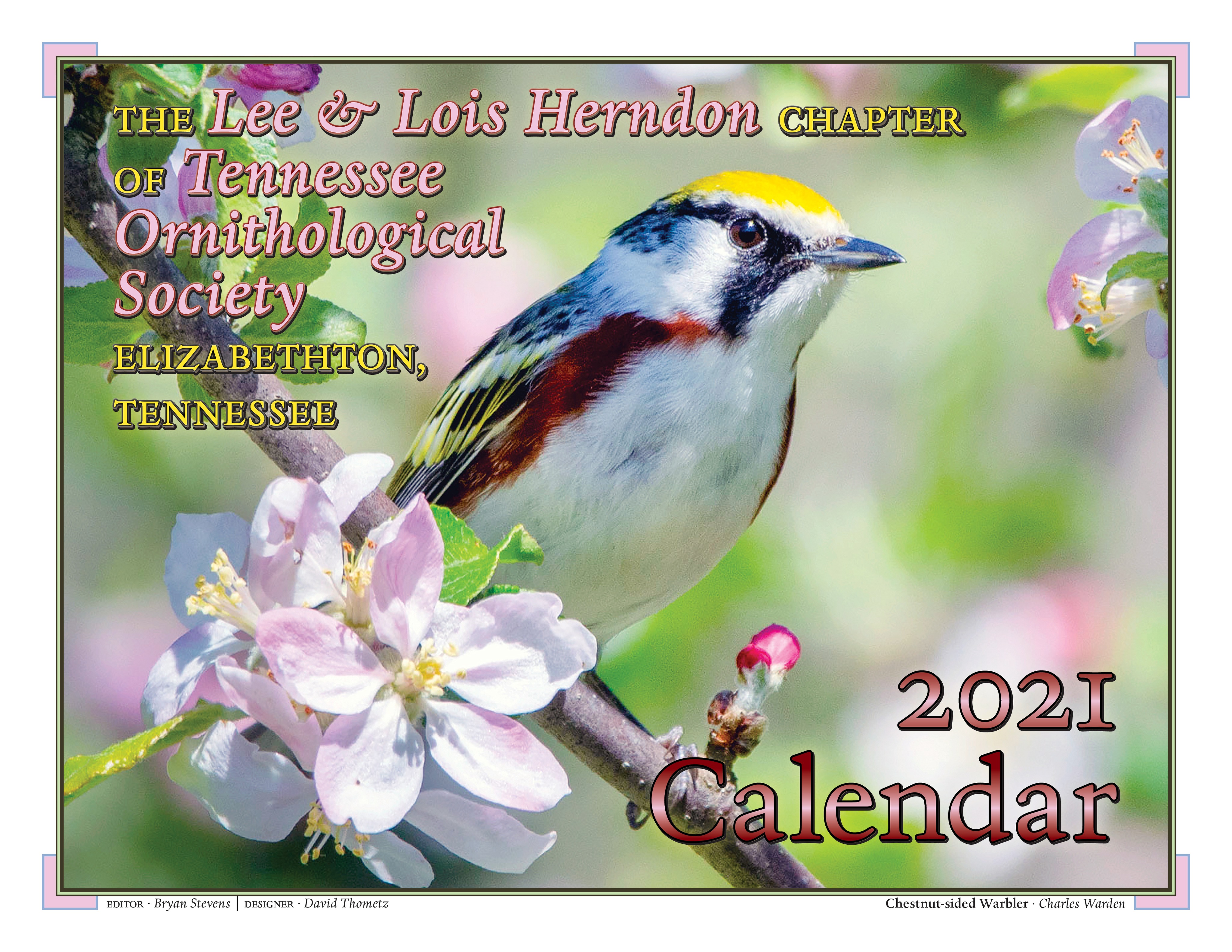
Orders are being accepted for the 2022 bird calendar produced by Elizabethton Bird Club members. Calendars feature bird photographs taken by club members. The calendars sell for $15, plus $2 for postage and handling for those needing a calendar mailed to them. This year’s cover features a beautiful photograph of a chestnut-sided warbler among spring blossoms taken by Charles Warden. Anyone interested in the purchase of a calendar can email Bryan Stevens at ahoodedwarbler@aol.com for more information.

•••

If you’d like to share your first sighting this season of dark-eyed juncos as the temperatures get colder, email me at ahoodedwarbler@aol.com. As always, the column is also a line of communication with fellow bird enthusiasts. I’ve enjoyed sharing stories about birds with countless readers over the past 26 years. I can also be reached on Facebook at https://www.facebook.com/ahoodedwarbler.


Club holds 51st annual Fall Bird Count

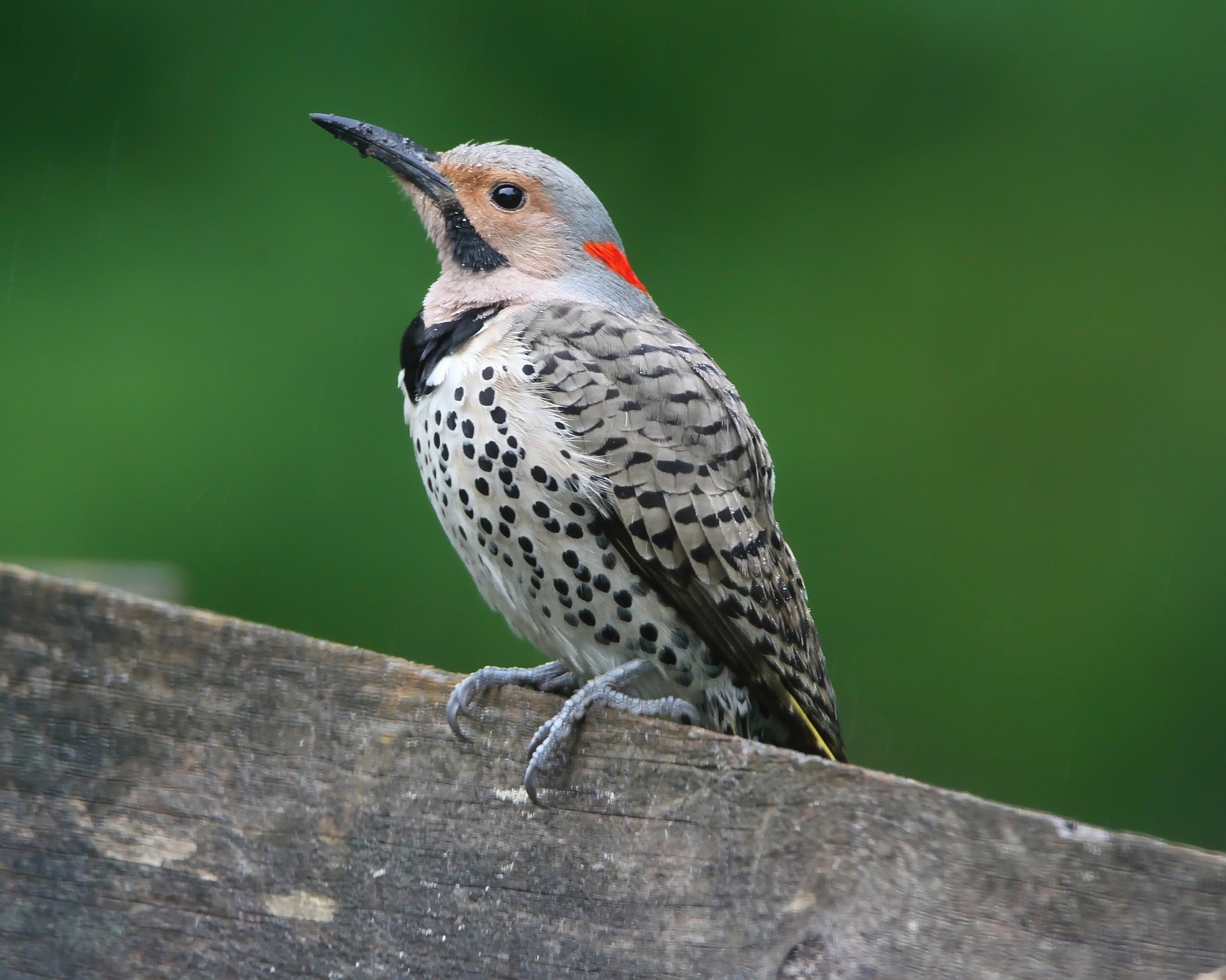
Photo by NatureLady/Pixabay.com • Northern flickers made a strong showing on the 51st consecutive Fall Bird Count. Eighty of these woodpeckers were found by count participants spread across the five-county area of Northeast Tennessee.

The 51st  consecutive Elizabethton Fall Count was held on Saturday, Sept. 26, with 48 observers in 18 parties. The participants were dispersed more than normal due to social distancing protocols. This is the third seasonal count conducted since the start of the Covid 19 pandemic.

The area covered included all of Carter County, as well as parts of the adjacent counties of Johnson, Sullivan, Unicoi and Washington.

A total of 132 species were tallied, which is above the recent 30-year average of 125 species. The all-time high on this count was 137 species set in 1993.

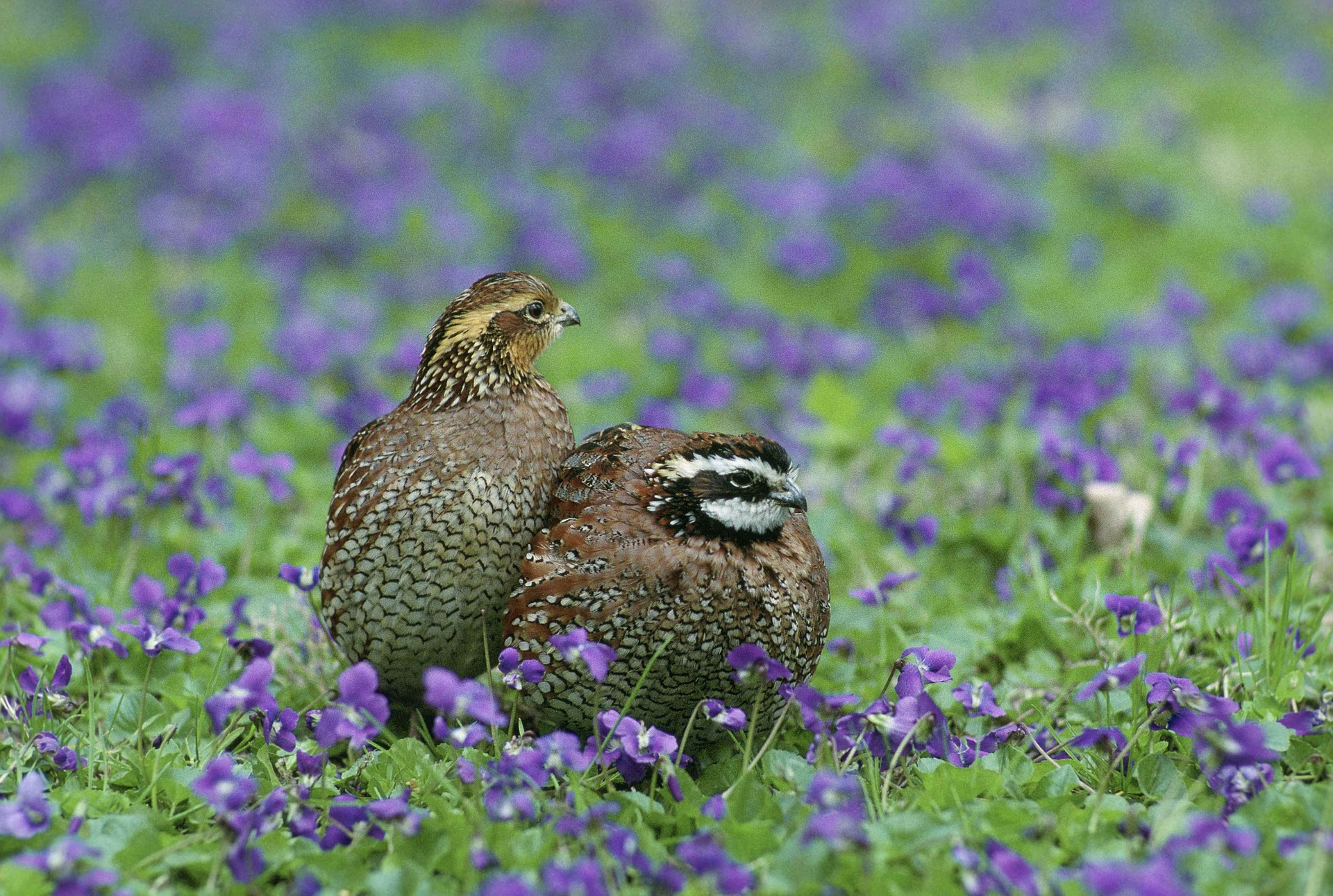
Photo by U.S. FWS   Many birds, such as Northern bobwhites, have seen alarming population crashes in the last half century.

Some interesting finds included a Northern bobwhite covey near the community of Bowmantown in Washington County. Such high numbers of bobwhites have become increasingly rare in recent years.Thirteen unidentified species of Empidonax flycatchers were found, but these birds do not count into the total of species. These small flycatchers are so similar in appearance that their song is usually needed to confirm identification. In fall migration, however, these flycatcher go silent for the most part. A yellow-bellied flycatcher and two least flycatchers were identified.

A total of 23 species of warblers were found, including such interesting finds as golden-winged warbler, blackpoll warbler and Wilson’s warbler.

European starling proved the most abundant bird with 1,757b individuals counted. Other common birds for the count included Canada goose (1,220), Rock Pigeon (629) and Chimney Swift (478).

Photo by Jean Potter • The rock pigeon is one of the most successful members of the bird family Columbidae, which is comprised of some 310 species of doves and pigeons. One of the most famous representatives of the family is the dodo, an extinct relative of such common birds as the mourning dove and rock pigeon.

The participants for the 2020 Fall Bird Count included: Fred Alsop, Rob Armistead, Betty Bailey, Gary Bailey, Jerry Bevins, Rob Biller, Debi Campbell, J.G. Campbell, Ron Carrico, Robin Cooper, Catherine Cummins, Dianne Draper, Glen Eller, Harry Lee Farthing, Bambi Fincher, Dave Gardner, Tammy Griffey, Bill Grigsby, Jean Henson, Neal Henson, Jacki Hinshaw, Don Holt, David Kirschke, Rick Knight, Roy Knispel, Richard Lewis, Dianna Lynne, Vern Maddux, Joe McGuiness, Cathy McNeil, Tom McNeil, Eric Middlemas, Harry Norman, Susan Peters, Brookie Potter, Jean Potter, Sherrie Quillen, Pete Range, Ken Rea, Judith Reid, Judi Sawyer, Chris Soto, Michele Sparks, Bryan Stevens, Kim Stroud, Scott Turner, Charles Warden, Joyce Watson; plus Connie Irick, David Irick, and Peggy Stevens as feeder watchers.

There were no glaring misses, but shorebirds were scarce with not much available habitat this year. Birds that might have been expected for a fall count but were not found included Loggerhead Shrike, Winter Wren, Yellow-rumped Warbler, Savannah Sparrow, Blue Grosbeak and Bobolink.

“All in all, it was a very good count,” said long-time compiler Rick Knight. “Thanks to all who participated.”

The list:

Canada Goose, 1,220; Wood Duck, 71; Mallard, 219; Blue-winged Teal, 27, Northern Bobwhite, 10; Ruffed Grouse, 2; and Wild Turkey, 66.

Common Loon, 1; Pied-billed Grebe, 11; Double-crested Cormorant, 62; Great Blue Heron, 37; Great Egret, 5; Green Heron  4; Black-crowned Night-Heron, 2; and Yellow-crowned Night-Heron, 1.

Black Vulture, 141; Turkey Vulture, 191; Osprey, 14; Northern Harrier, 1; Sharp-shinned Hawk, 3; Cooper’s Hawk, 11; Bald Eagle, 15; Red-shouldered Hawk, 2; Broad-winged Hawk, 4; and Red-tailed Hawk, 14.

Killdeer, 54; Greater Yellowlegs, 1; American Woodcock, 1; Caspian Tern, 3; Rock Pigeon, 629; Eurasian Collared-Dove, 11; and Mourning Dove, 355.

Yellow-billed Cuckoo, 4; Eastern Screech-Owl, 28; Great Horned Owl, 2; Barred Owl, 6; Northern Saw-whet Owl, 1; and Common Nighthawk, 46.

Chimney Swift, 478; Ruby-throated Hummingbird, 34; Belted Kingfisher, 29; Red-headed Woodpecker, 2; Red-bellied Woodpecker, 103; Yellow-bellied Sapsucker,  6; Downy Woodpecker, 82; Hairy Woodpecker, 18; Northern Flicker, 80; and Pileated Woodpecker, 36.

American Kestrel, 17; Merlin, 2; Peregrine Falcon, 1; Eastern Wood-Pewee, 34; Yellow-bellied Flycatcher, 1; Least Flycatcher, 2; Empidonax species, 13; Eastern Phoebe, 124; and Eastern Kingbird, 4.

White-eyed Vireo, 3; Yellow-throated Vireo, 5; Blue-headed Vireo, 16; Warbling Vireo, 1; Philadelphia Vireo, 1; Red-eyed Vireo, 34; Blue Jay, 578; American Crow, 503; Common Raven, 14.

Tree Swallow, 274; Barn Swallow, 15; Carolina Chickadee,  251; Tufted Titmouse, 208; Red-breasted Nuthatch, 18; White-breasted Nuthatch, 80; and Brown Creeper, 1.

House Wren, 10; Carolina Wren, 285; Blue-gray Gnatcatcher, 10; Golden-crowned Kinglet, 7; and Ruby-crowned Kinglet.

Eastern Bluebird, 246; Veery, 3; Gray-cheeked Thrush, 10; Swainson’s Thrush, 193; Hermit Thrush, 1; Wood Thrush, 19; American Robin,  574; Gray Catbird,  85; Brown Thrasher, 27; Northern Mockingbird, 126; European Starling, 1,757; American Pipit, 2; and Cedar Waxwing, 312.

Ovenbird, 2; Northern Waterthrush, 12; Golden-winged warbler, 1; Black-and-white warbler, 2; Tennessee warbler, 52; Common Yellowthroat, 32; Hooded warbler, 9; American Redstart, 90; Cape May Warbler, 32; Northern Parula,12; Magnolia  warbler, 29; Bay-breasted warbler, 45; Blackburnian Warbler,16; Chestnut-sided warbler, 15; Blackpoll warbler, 3; Black-throated Blue  Warbler, 4; Palm warbler,  65; Pine warbler, 16; Yellow-throated warbler, 7; Prairie warbler, 2; Black-throated Green warbler, 18; Canada warbler,  2; and Wilson’s warbler,  2.

Eastern Towhee, 80; Chipping Sparrow,  41; Field Sparrow, 26; Song Sparrow, 116; Swamp Sparrow, 1; and Dark-eyed Junco, 26.

Summer Tanager,  3; Scarlet Tanager. 40; Northern Cardinal, 251; Rose-breasted Grosbeak, 119; and Indigo Bunting, 37.

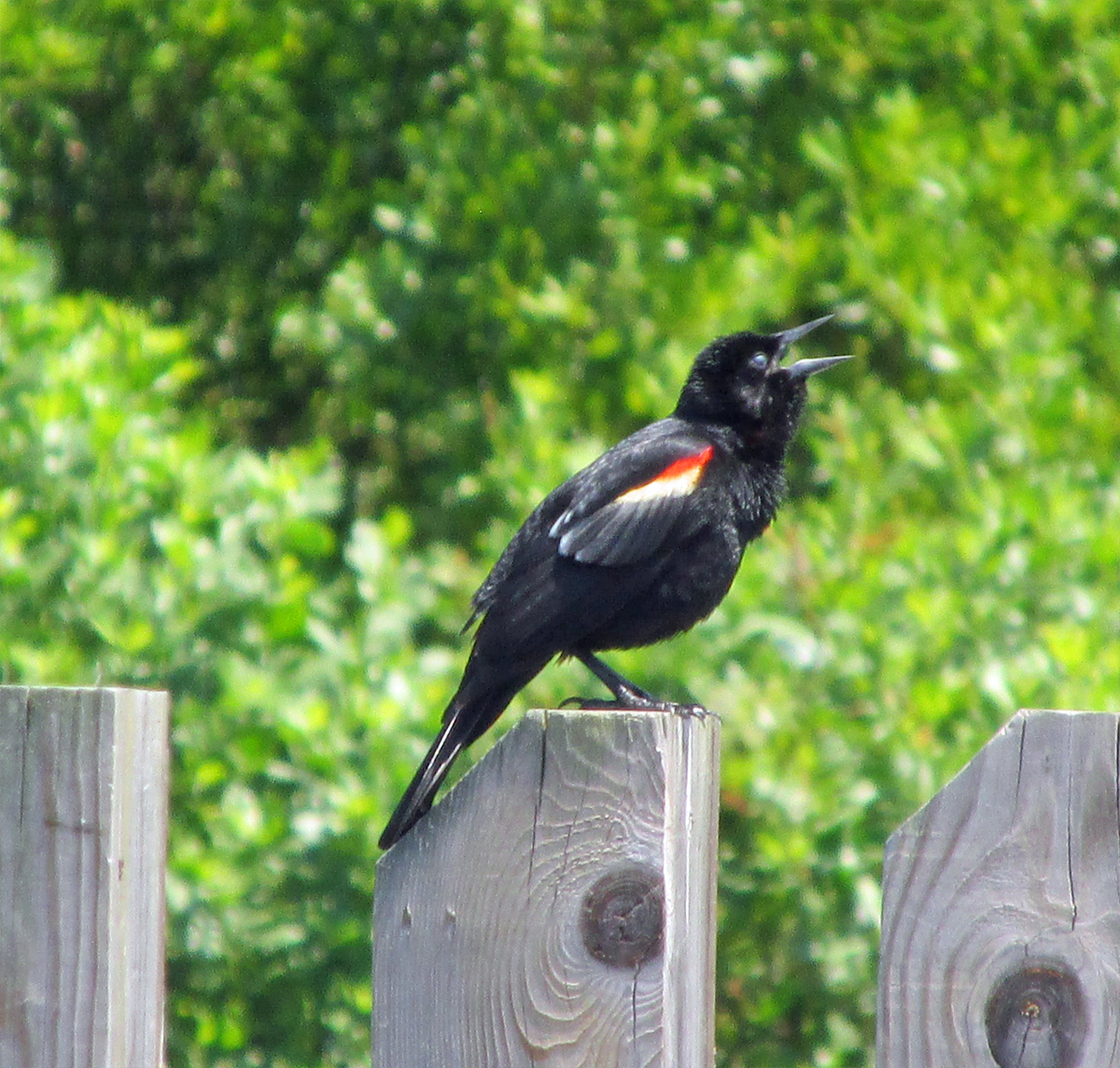
Red-winged Blackbird, 209; Eastern Meadowlark,  17; Common Grackle,  54; Brown-headed Cowbird,  8; House Finch, 76; Pine Siskin, 4; American Goldfinch, 303; and House Sparrow, 18.

Cardinals do their part to make the winter season brighter

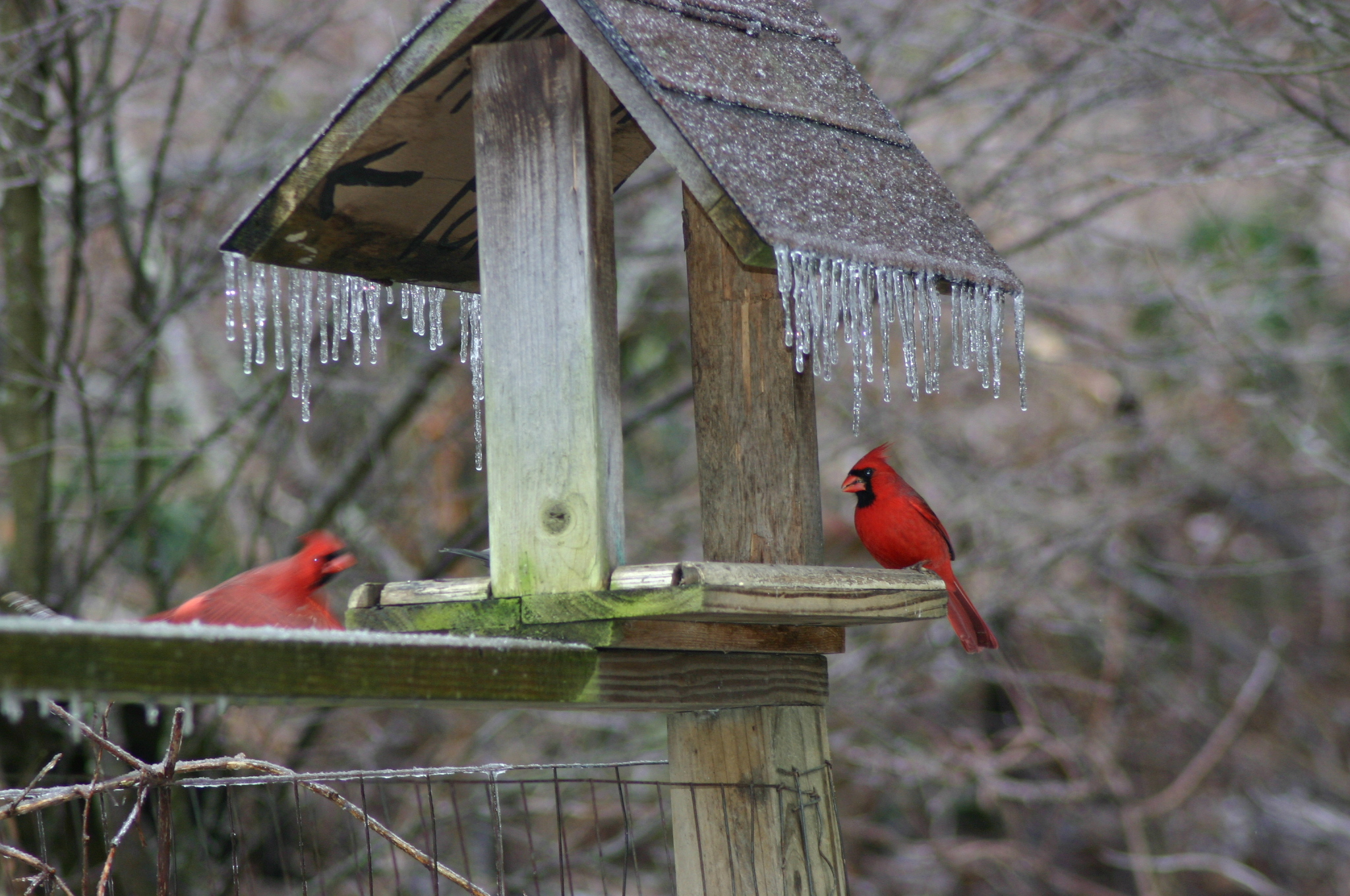
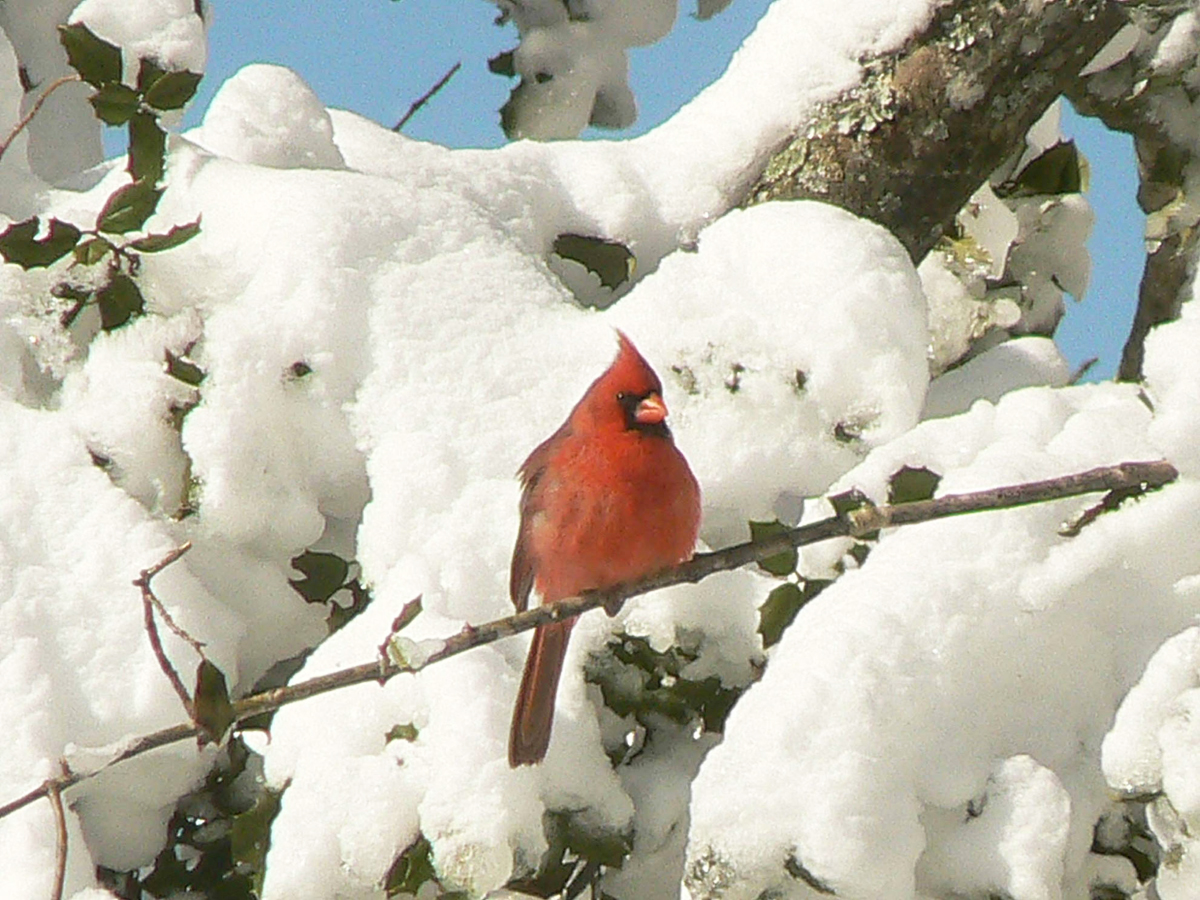
Photo by Skeeze/Pixabay.com • A male Northern cardinal lands on a snowy perch. Cardinals are perfect symbols for the Christmas season with their bright red plumage.

The shopping days before Christmas are getting fewer, so I hope everyone has had time to find gifts for everyone on their lists. My own sincere wish to readers is that everyone gets to enjoy a great holiday that just might also include watching some birds.

Often, when we think of the birds of the winter season, our thoughts focus on some of the less-than-colorful feeder visitors — the brown sparrows and wrens, the black and white chickadees, the drab American goldfinches that look so unlike their summer appearance.

There’s one bird, however, that makes an impression in any season. The Northern cardinal, especially the brilliant red male, stands out against a winter backdrop of snow white, deep green or drab gray.

Photo by Bryan Stevens • Northern cardinal seems much less descriptive of this popular bird than such common names as Virginia nightingale and Kentucky redbird.

Over the years, the Northern cardinal has also become associated with the Christmas season. How many Christmas cards have you received this holiday season with a cardinal featured in the artwork? I’d wager that at least a few cards in any assortment of holiday greetings will feature the likeness of a bright red cardinal.

Cardinals, also known by such common names as redbird and Virginia nightingale, are easily recognized backyard birds. I never tire of observing these colorful birds. Cardinals are easily lured to any backyard with plentiful cover to provide a sense of security and a generous buffet of sunflower seed.

Photo by Bryan Stevens • Even the female Northern cardinal offers a subtle beauty not quite as showy as the male.

Cardinals accept a wide variety of food at feeders. Sunflower seed is probably their favorite, but they will also sample cracked corn, peanuts, millet, bakery scraps and even suet. The cardinal is also one of only a few birds that I have noticed will consistently feed on safflower seed.

While we may get the idea that cardinals feed largely on seed, that is a misconception based on our observation of the birds at our feeders. When away from our feeders, cardinals feed on insects and fruit, including the berries of mulberry, holly, pokeberry, elderberry, Russian olive, dogwood and sumac.

There’s no difficulty in identifying a cardinal. The male boasts crimson plumage, a crest, a black face and orange bill. The female, although less colorful, is also crested. Female cardinals are soft brown in color, with varying degrees of a reddish tinge in their feathers, particularly in their wings. Immature cardinals resemble females except young cardinals have dark bills.

Cardinals are a widespread species, ranging westward to the Dakotas and south to the Gulf Coast and Texas. The southeastern United States was once the stronghold of the cardinal population. In the past century, however, cardinals have expanded their range into New England and Canada. These birds have even been introduced to Hawaii.

Photo by U.S. Fish and Wildlife Service • A male cardinal looks splendid against a snowy background.

At feeders, cardinals mingle with a variety of other birds. Their preference for dense, tangled habitat is one they share with such birds as brown thrashers, Eastern towhees, Carolina wrens and song sparrows. In general, however, cardinals directly associate only with their own kind. Cardinals will form loose flocks during the winter, but these flocks are never as cohesive as those of such flocking birds as American goldfinches. Cardinals are more often observed in pairs. For such a bright bird, the male cardinal can be surprisingly difficult to detect as he hides in thick brush that conceals his presence. Cardinals are nervous birds, however, and usually betray their presence with easily recognized chip notes.

It’s not surprising that such a popular bird has also become associated with many trappings of the Christmas season.

“You see cardinals on greeting cards, stationery, paper plates, paper napkins and tablecloths, doormats, light switch plates, candles, candle holders, coffee mugs, plates, glasses, Christmas tree ornaments and lights, bookmarks, mailboxes, Christmas jewelry,” writes June Osborne in her book The Cardinal. “And the list goes on. Cardinals have become an integral part of the way that many people celebrate the holiday season.”

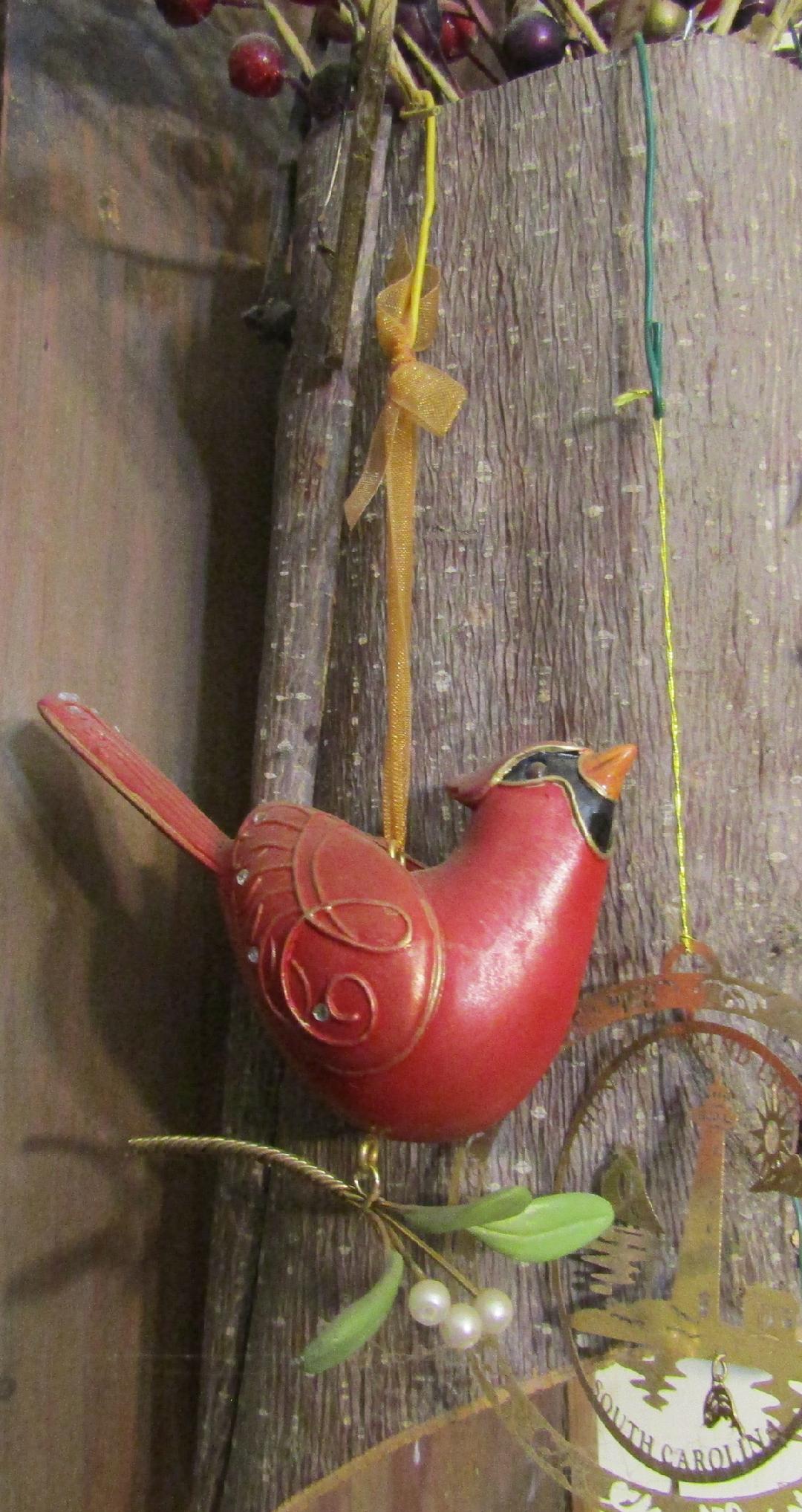
Photo by Bryan Stevens • Northern cardinals are a favorite for makers of Christmas ornaments.

I can be included among such people. My Christmas decorations include an assortment of cardinal figurines and ornaments. There are other birds — doves and penguins for example — associated with the holiday season, but for me the holidays magnify the importance of one of my favorite birds. The cardinal, in its festive red plumage, appears made to order for a symbol of the holiday season.

There’s additional evidence to put forward as testimony to the popularity of the Northern cardinal. It’s the official state bird of seven states: Virginia, North Carolina, West Virginia, Ohio, Illinois, Indiana and Kentucky. Only the Northern mockingbird, which represents five states as official state bird, even comes close to the Northern cardinal in this respect.

Even once the holidays are past, there’s nothing like a glimpse of a Northern cardinal to add some cheer to a bleak winter day.

Palm warbler’s name an unfortunate misnomer that has stuck

Photo by Jean Potter The palm warbler’s name is a mistaken assumption that this warbler held special affinity for palm trees. It doesn’t.

The warbler parade that begins each autumn with such brightly colored migrants as Blackburnian warbler, black-throated blue warbler and magnolia warbler usually ends with some of the less vibrant members of this family of New World birds.

On a recent bird walk at Sycamore Shoals State Historic Park in Elizabethton, Tennessee, I helped locate a flock of 13 palm warblers and a single yellow-rumped warbler. These two warblers, which look rather brownish and nondescript in the fall, pass through the region later than most other migrating warblers. In fact, the yellow-rumped warbler is one of the few warblers that routinely spends the winter months in the region.

The yellow-rumped warbler has a most suitable name thanks to the yellow patch of feathers on the bird’s rump. The resemblance of the patch to a pat of butter is uncanny enough to have encouraged birders to nickname this often abundant winter warbler the “butter butt.”

The palm warbler’s name is, at best, a misnomer. Throughout most of its life, the palm warbler doesn’t even encounter palm trees. Johann Friedrich Gmelin, a German naturalist who lived from 1748 to 1804, saddled the palm warbler with its inappropriate name. Gmelin based his naming of the bird based on the fact that a specimen had been collected on Hispaniola, an island in the Caribbean with an abundance of palm trees.

Photo by Bryan Stevens
A Palm Warbler forages along a chain-link fence.

Gmelin published several textbooks in the fields of chemistry, pharmaceutical science, mineralogy, and botany. He also had a hand in publishing a catalog of scientific names for various species, including some birds that had until that point never been given a species classification. Thanks to his efforts, a warbler has forever been linked with a type of tree that is, at best, entirely incidental to the bird’s life cycle.

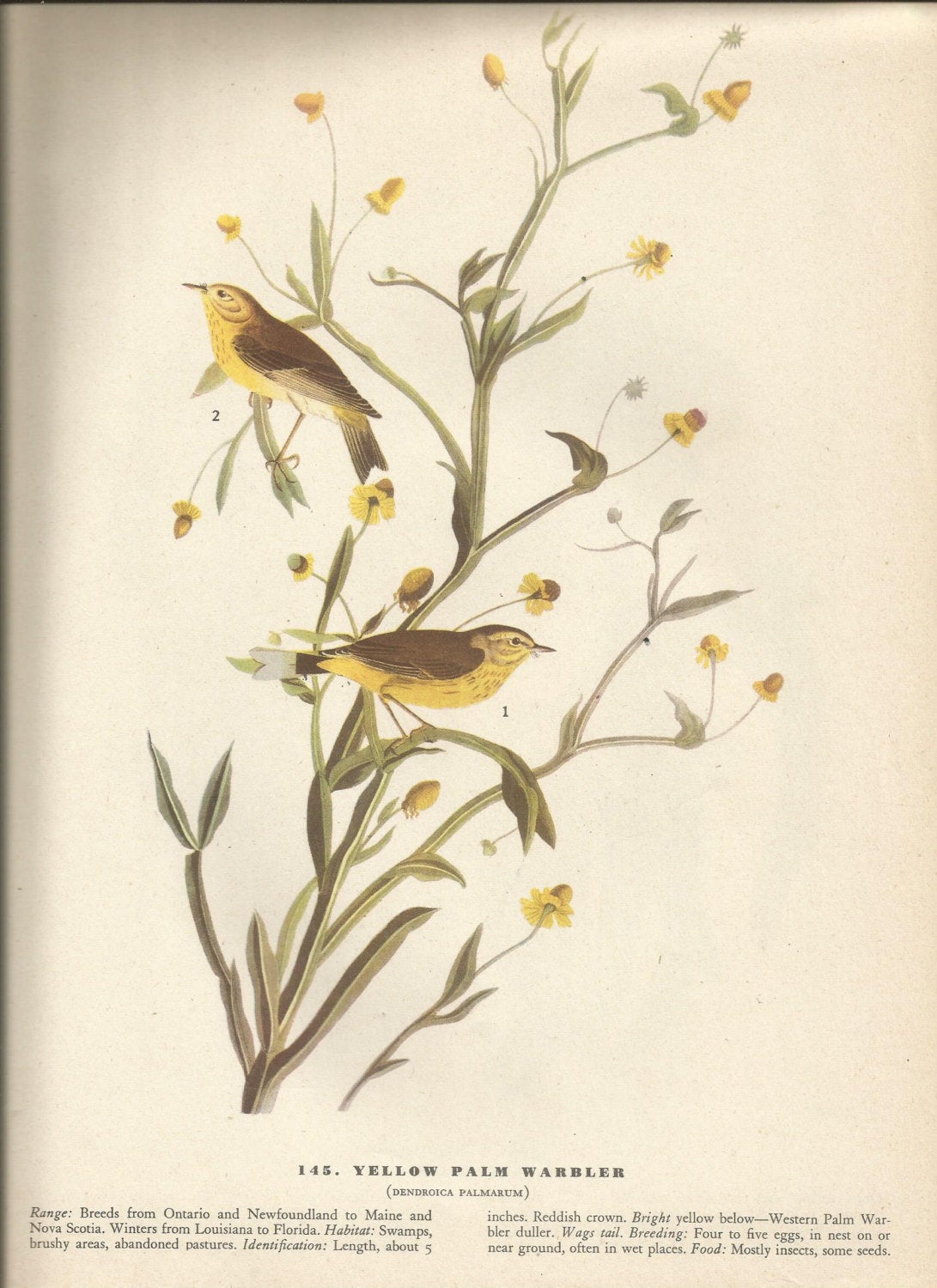
Early naturalist and painter John James Audubon painted these palm warblers.

Palm warblers do seek out warmer domains during the winter months, including the islands of the Caribbean. Some of them do not even migrate that far, choosing to remain along the Gulf and Atlantic coastlines of the southern United States. On occasion, individual palm warblers choose to remain in northeast Tennessee, southwest Virginia or western North Carolina during the winter months.

Every spring, however, palm warblers make a long migration flight north. This warbler is one of the northernmost breeding warblers, spending the summer months in the boreal forests of Canada. They build their nests in the thickets surrounding the many bogs along the edges of the great coniferous forests of this region of Canada.

The female palm warbler lays four to five eggs, but both parents will stay busy collecting insects once the young hatch. On an insect-rich diet, the young birds develop quickly and are able to leave the nest in 12 days. They will remain with their parents as their wings strengthen and they learn to fend for themselves.

While not able to flaunt vibrant plumage like such relatives as the Cape May warbler or the American redstart, the palm warbler is not truly as unattractive as a first glance might suggest. In fact, one subspecies, known as the “yellow palm warbler,” is quite dramatic in appearance with a profusion of yellow feathers accented with a bold russet cap and dramatic rufous striping across the yellow underparts. Even in autumn, the other palm warblers are not devoid of color. Most palm warbler show a splash of bright yellow on the throat and beneath the tail.

Photo by Bryan Stevens • A black-and-white warbler creeps over the bark of a pine in search of insect prey. The reason for this warbler’s common name is self-evident in its appearance.

In fall migration and during the winter season, palm warblers often inhabit weedy fields, grasping the dried stalks of tall weeds as they forage for berries, seeds and insects and their larvae. Look for the spot of yellow beneath the warbler’s tail, which is constantly bobbed up and down as the bird goes about its routine. The tail-bobbing behavior is a good way to distinguish this warbler from the sparrows of similar size and brown coloration that often share the fields and woodland edges.

The last of the October Saturday bird walks will be held at Sycamore Shoals State Historic Park on Oct. 26. Participants should meet in the parking lot at the park’s visitors center at 8 a.m. for a 90-minute stroll along the gravel walking trails. The walks are conducted by the Elizabethton Bird Club and are free and open to the public. Bring binoculars to increase viewing enjoyment. There’s a chance that palm warblers will be seen on the walk, but with our fine feathered friends, nothing is ever guaranteed.

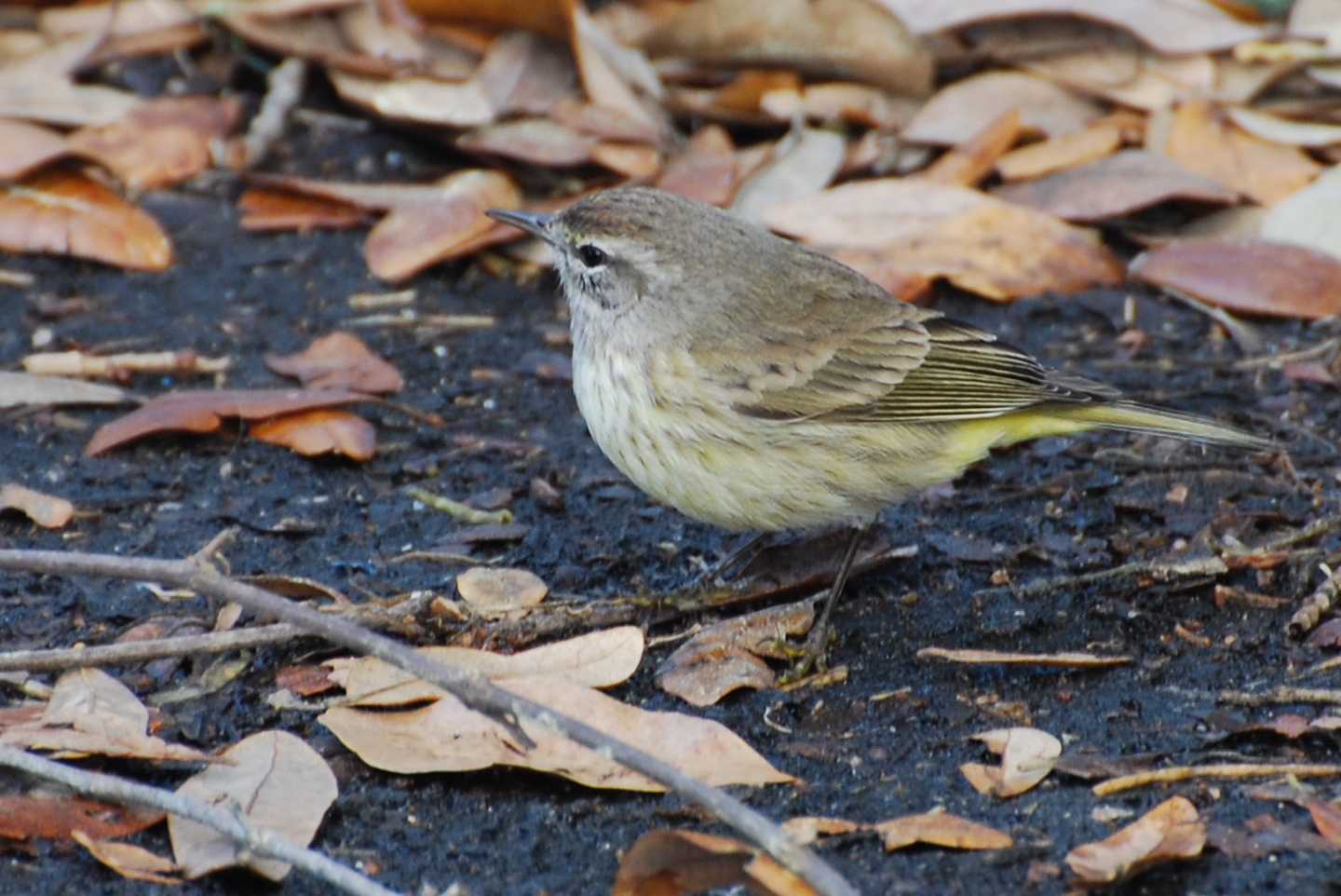
Photo by Jean Potter • A “yellow” palm warbler searches leaf litter for insects and other prey items.


Hooded warbler and its kin bring tropical splash to area woodlands

Photo by Jean Potter • A male hooded warbler flits through the foliage of a rhododendron thicket.

I came away from a recent program on bird migration given by Kenn and Kimberly Kaufman learning a few new nuggets of information about warblers, which are one of my favorite bird families. The Kaufmans, well-known birders and activists on the behalf of birds, spoke Saturday, Aug. 31, on the topic of bird migration during the evening program at the Roan Mountain Fall Naturalists Rally. They confirmed some things I have always suspected to be true about fall migration in the region. For instance, warbler migration in the Southern Appalachians is indeed often more productive in the fall than in the spring. The Kaufmans also noted that fall migration takes place at a more leisurely pace for most of the migrating warblers. They even pointed out that some of the warblers, such as magnolia warbler and Tennessee warbler, which are uncommon fall migrants at their home in Ohio, are actually quite common in East Tennessee.

Hooded warblers nest in the woodlands around my home. So, from the time my favorite warbler returns in April until the last individual departs in October, I enjoy regular glimpses of this colorful and interesting bird. Like all warblers, the hooded warbler is quite energetic, dashing after tiny insects in the branches of shrubs and trees. Hooded warblers often forage close to the ground, which makes observing them easier.

Every time I behold a hooded warbler, I marvel at the bird’s exquisite appearance. The gold and green feathers seem to glow brightly in the dim light of the shadowy thickets of rhododendron they prefer to inhabit. The black hood and bib surrounding the male’s yellow face stands out by virtue of its stark contrast from the brighter feathers. Large coal-black eyes complete the effect. The appearance of the male bird provides this species with its common name. The female has an identical yellow-green coloration as the male, although she is slightly more drab. She lacks the black hood and bib, although older females may acquire some dark plumage on the head and around the face. Both sexes also show white tail feathers that they constantly fan and flick as they move about in thick vegetation and shrubbery.

Photo by Bryan Stevens  • Only males show the well-formed black hood and bib that gives the hooded warbler its common name.

I know that every migrant passing through my yard at this time of year is making its way southward, and it will likely be another five to six months before I again see any of my favorite songbirds. The hooded warbler will make itself at home in the forests of Mexico, as well as in Belize, Costa Rica and other Central American nations, throughout the winter season. Most hooded warblers begin returning to their winter haunts as early as mid-September, but lingering individuals continue to entertain birders in the United States throughout October.

Like many of the ruby-throated hummingbirds that make their home in the United States for the summer, the hooded warbler’s fall migration takes it across the vast open waters of the Gulf of Mexico, crossing to the Yucatan and then dispersing from there to various points in Central America. That birds as small as hummingbirds and warblers make this incredible migration twice yearly is one of nature’s most phenomenal feats of endurance. In their presentation, the Kaufmans explained that these tiny birds put on incredible fat reserves to help fuel their efforts.

The warblers, also known as wood-warblers, are an exclusively New World family of birds, numbering approximately 116 species. About 50 of these species of warblers make their home in the eastern United States and Canada for the spring and summer, departing in the fall and returning to tropical wintering grounds. Some of them are extremely bright and colorful birds. The hooded warbler would have to be included among the more brightly colored warblers.

Other colorful warblers that share similar tastes in range and habitat with the hooded warbler include the American redstart, black-throated blue warbler and black-throated green warbler.

While some of the neotropical migrants that venture into North America boast even brighter kin in the tropics, we need not feel cheated with the warblers that make their home in the United States for half of the year. Some of their relatives are beautiful birds, including the white-faced whitestart, golden-bellied warbler, three-striped warbler and rose-breasted chat, but few can really hold a candle to their relatives that venture north and brighten our lives.

The warblers are, in short, an incredible family of birds. I’ve seen all but a handful of the species that reside for part of the year in the eastern United States. I still want to see a Connecticut warbler and cerulean warbler, as well as the endangered Kirtland’s warbler of Michigan and the golden-cheeked warbler of Texas. I’ll miss the warblers once fall migration has run its course. For those months they are here, the warblers belong to us. They seem like “our” birds. They’re only on loan, though. Our winter birds will offer some compensation in their absence, but I’ll be impatiently awaiting that flash of gold from the recesses of a rhododendron thicket next April.

Photo by U.S. Fish & Wildlife Service • A female hooded warbler sits tightly on her eggs in the cup-shaped nest she has build within the concealing branches of a shrub.

Some birds stand out from the flock with their amazing migratory feats

Photo by jasonjdking/Pixabay.com • The bobolink is also known as the “rice bird” for its tendency to feed on cultivate grains such as rice. Even the bird’s scientific name, oryzivorus, means “rice eating” and refers to this bird’s appetite for many of the same grains consumed by humans. This small songbird also undertakes yearly migration flights equalling more than 12,400 miles.

The peak of fall migration is approaching. Birds of all species are winging their way southward ahead of the months of cold and scarcity. September and October are months of flux and transition. Like a bear fattening for hibernation, I gorge on sightings of warblers, hummingbirds, tanagers and other favorites, knowing that I won’t be seeing many of these birds again until next spring. Their memories will sustain me, as will my feeders, which will still bring plenty of colorful and entertaining birds into my yard even in times of snow and ice.
Bird migration at any season is a spectacle. Many of the birds that nested in mountain hollows or vegetation-choked wetlands will winter in Central and South America, the Caribbean or other distant but warmer destinations. The following snapshots of fall’s bird migration capture the phenomenon’s drama.

Bobolink
The bobolink is a small bird in the family of blackbirds, which includes grackles, orioles and cowbirds. Nesting across North America during the summer, bobolinks retreat to South America for the winter. These small birds undertake amazing migrations, making a round-trip of about 12,400 miles to regions south of the equator in Bolivia, Paraguay and Argentina each fall. Come spring, they make the trip again, but in a northerly direction.
According to the website All About Birds, migrating bobolinks orient themselves with the earth’s magnetic field. These small birds are able to accomplish this feat due to iron oxide in bristles of its nasal cavity and in tissues around the olfactory bulb and nerve. Bobolinks also use the stars scattered across the night sky to guide their migratory flights. Capable of living as long as nine years, a long-lived bobolink will rack up some serious miles simply migrating to its nesting grounds and back to its wintering habitat each year.

Bar-tailed godwit
Shorebirds, which in North America can consist of birds ranging from turnstones and sandpipers to willets and avocets, are champion migrants. For instance, the bar-tailed godwit makes an impressive non-stop migratory flight. This shorebird nests in the United States only in parts of remote Alaska, but this godwit also ranges into Scandinavia and northern Asia. Some of these godwits make a nine-day, non-stop migratory flight that takes them from New Zealand to the Yellow Sea of China and beyond, a distance of almost 6,000 miles each way.
Needless to say, since the godwits make no stops along the way, they must also go without food for the duration of their journey. The female godwit is larger than the male, but she still weighs only 12 ounces. The long-billed, long-legged bird is about 17 inches in length from the tip of the bill to its tail. That a creature so small can make such a distant, arduous trip and be the none the worse for wear is truly inspiring.

Broad-winged hawk
Many North American raptors migrate, but the broad-winged hawk dislikes the lonely aspects of solitary travel. Instead, these hawks form large flocks during migration, and in autumn the majority of these raptors travel past human-staffed hawk migration observation points, which are dubbed “hawk watches,” during a brief and concentrated period of only a few weeks. Observing the phenomenon locally is possible at the Mendota Fire Tower Hawk Watch site atop Clinch Mountain at an abandoned fire tower near Mendota, Virginia.
Broad-winged hawks are part of the family Accipitridae, which includes 224 species of hawks, eagles, vultures and other birds of prey. Broad-winged hawks are truly long-distance migrants. Many hawks passing over Mendota may end their migration as far south as Brazil. These hawks travel in flocks that can consist of hundreds or thousands of individuals. The birds conserve energy by soaring on thermals and mountain updrafts.

Photo by Bryan Stevens • Warblers, such as this American redstart, stage impressive migratory flights. The blackpoll warbler makes an incredibly arduous journey for a bird that is less than five inches long.

Blackpoll warbler
Most of the warblers that nest in North America retreat to Central and South America during the winter months. Few warblers, however, make as great a journey as the blackpoll warbler. Instead of migrating over land, this five-inch-long warbler undertakes a two-stage migration. The first half of the migration is a non-stop flight of about 1,500 miles. Every fall, these tiny birds fly over the ocean during this part of their migration, departing from Canada or the northern United States and not stopping until they reach various locations in the Caribbean. There they will spend some time recovering from the exhausting first half of their journey before they continue their way to such South American countries as Colombia and Venezuela. Once again, during the time they spend flying over open ocean, these tiny warblers do not feed.

* * * * *

Photo by Bryan Stevens • A migrating Great Egret makes a stop at a golf course pond.

Wading birds topic for program
I’ll be presenting a program on herons, egrets and other wading birds at the September meeting of the Elizabethton Bird Club. The meeting will be held at 7 p.m. Tuesday, Sept. 6, at the Elizabethton campus of Northeast State Community College, 386 Highway 91. The meeting will be held on the second floor in Room 208. The free program is open to the public and will follow a brief business meeting.

Readers with questions are welcome to email me at ahoodedwarbler@aol.com or send a friend request on Facebook at facebook.com/ahoodedwarbler. I also love to receive comments and hear about bird observations.

Photo by Bryan Stevens • A spotted sandpiper and a solitary sandpiper rest at the edge of a pond during a migration rest stop.