Tag Archives: facebook

Seasonal transitions raise profiles of flickers, other birds

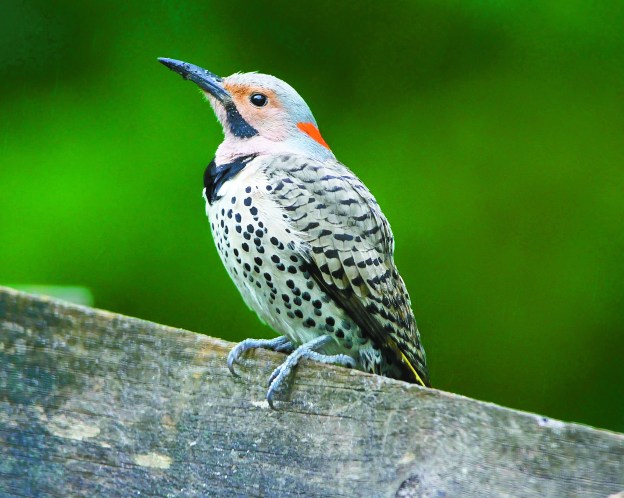
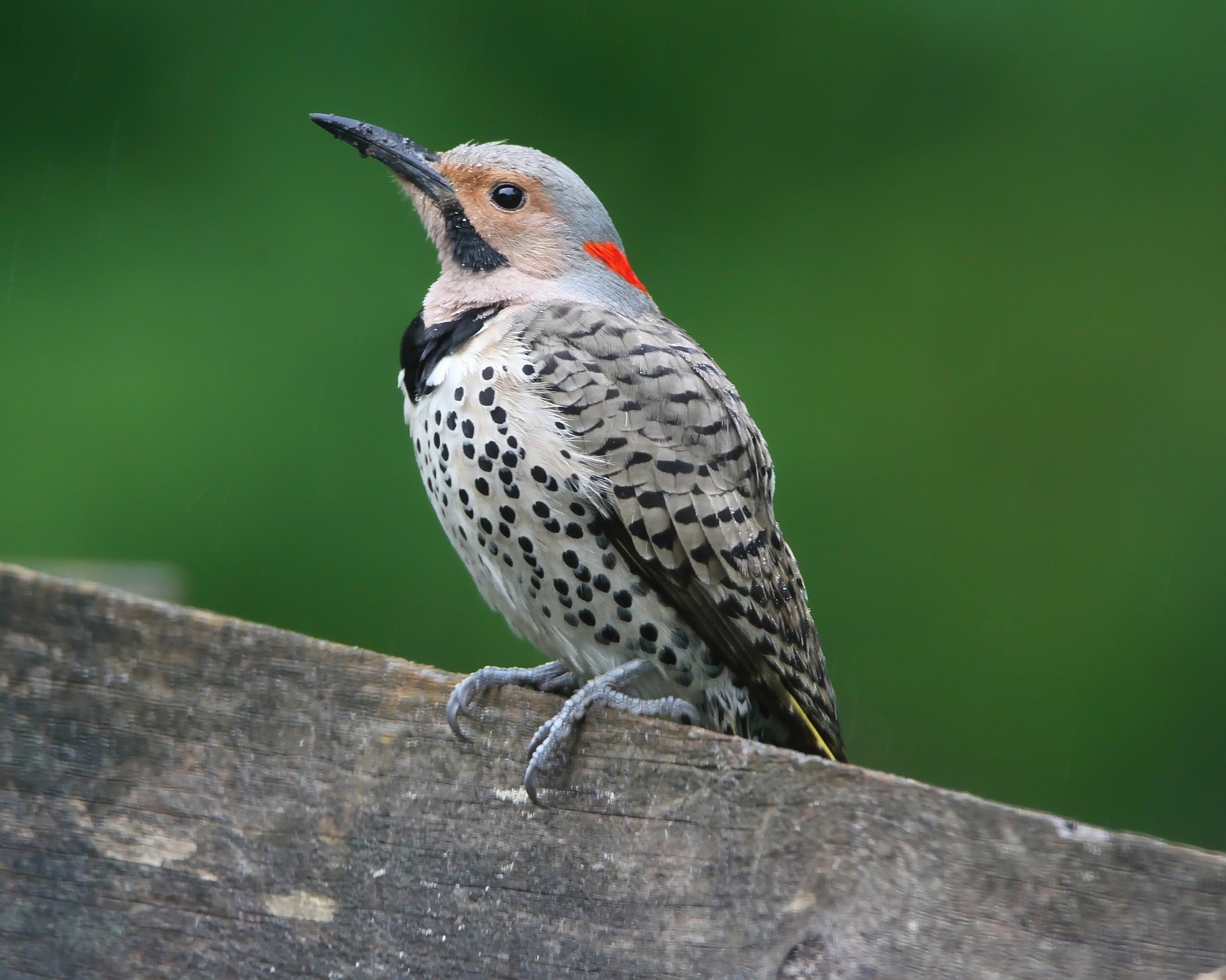
NatureLady/Pixabay • Northern flickers belong to the woodpecker family. Relatives living in the region include the pileated woodpecker, yellow-bellied sapsucker and downy woodpecker. Unlike most woodpeckers, flickers spend an extensive amount of time foraging on the ground for various insects.

Robin Free, a resident of Scott County, Virginia, emailed me after reading a recent column about owls. She told me she was interested in attracting more owls to her property, which she noted boasts an abundance of ground squirrels and mice.

I congratulated her on the fact that with all those ground squirrels and mice her home should make for happy hunting grounds for any owls in the vicinity.

I suggested she could play a recording of a screech-owl call at dusk to see if she can get a real owl to respond. These small owls are very curious and will readily respond.

Photo by Bryan Stevens
An Eastern Screech-Owl at rest in a roosting hole in a large sycamore tree.

The owl that Robin and most os us are likely to attract is the Eastern screech-owls. Since screech-owls are cavity-nesters, people can offer a roosting/nesting box. Obviously, these boxes have to be a little larger than for songbirds. Simply do a Google search to find screech-owl boxes for purchase.

Here’s some info I found online about screech-owl boxes. Placement is crucial. Mount the box at least 10 feet high in a tree, on a pole or on the edge of woods, fields or wetlands. Keep it away from trees where squirrels can jump to it. Add a couple of inches of wood chips or saw dust for nesting material.


•••

In this transition from fall to winter, some birds have adopted higher profiles around my home. I hear and see ruby-crowned kinglets and white-throated sparrows almost every morning as I leave for work. I am also seeing and hearing Northern flickers.

Flickers are woodpeckers, but there are some differences between them and other members of this clan. While flickers can be found during all seasons in the region, this woodpecker is one of the migratory ones. I see the most Northern flickers during fall migration. This woodpecker is one of the few of its kind that usually migrates to warmer climates during the colder months, although the species is not completely absent from the region in the winter season.

This species also has many other common names, including yellow-hammer — a popular name in the Deep South — and harry-wicket, heigh-ho and gawker bird. The Northern flicker is also the only woodpecker to serve a state — Alabama — as an official bird. The flicker earned this distinction back in 1927. Alabama soldiers who fought for the Confederacy were nicknamed “yellowhammers” because of their grey-and-yellow uniforms, which matched the colors of the bird. Incidentally, Alabama was one of the first states to ever name an official state bird.

There are two races of Northern flicker — yellow-shafted and red-shafted — found in the United States. Eastern flickers show yellow feather shafts beneath the wings while western counterparts show red beneath the wings. A trip to Utah several years ago gave me a chance to also see the red-shafted race of this bird.

The Northern flicker is also not the only flicker in the United States. The gilded flicker inhabits many of the deserts — Sonoran, Yuma and Colorado — in the United States. Of course, trees are scarce in deserts, but that hasn’t proven an obstacle for this woodpecker. The bird is closely associated with saguaro cactus. Other desert dwellers depend on this woodpecker. Once the flickers are no longer making use of their nest and roost holes in the multi-armed cacti, other wildlife moved into the chambers.
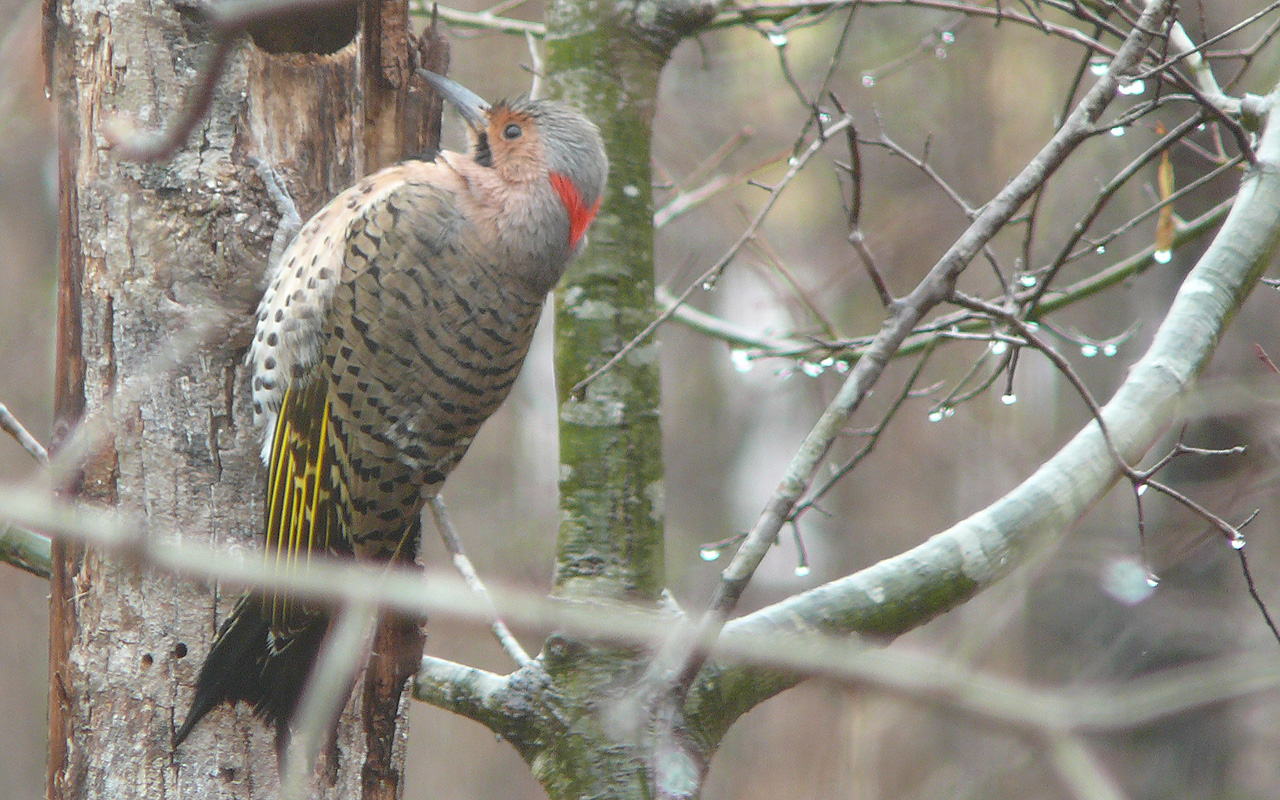
The Northern flicker is an enthusiastic drummer, pounding loudly on the sides of trees with its stout bill. The purpose of the drumming is to communicate with mates and signal potential rivals that they’re intruding. Toward that objective, flickers sometimes substitute metal utility poles or the sides of buildings for the trunks of trees. In addition to drumming, the flicker also employs a variety of loud vocalizations that are fairly distinctive. A loud, repeated vocalization, often translated as “wicka-wicka-wicka,” is similar to the cluck-like call of the larger pileated woodpecker. The flicker is also known for emitting a sharp, loud “kleeer” call that can be heard from a considerable distance. It’s that call that I’ve been hearing most mornings in the woodlands around my home.

The adult flicker is a brown bird with black bars on the back and wings. A distinctive black patch occupies the upper breast, while the lower breast and belly are beige with black spots. Males can be identified by a black or red mustache stripe at the base of the beak. They also have a red stripe on the back of their gray heads. The flicker’s dark tail is set apart by a white rump patch that is conspicuous when the bird takes flight..

Look for Northern flickers in fields, orchards, city parks and well-planted suburban yards. These woodpeckers are usually not too shy around human observers and will sometimes allow for extended observation. If you’re even more fortunate, you could find one visiting your yard or garden. Just remember to scan the ground. This is one woodpecker that’s not a consistent tree-hugger like many of its kin.

•••

Bryan Stevens has written weekly about birds and birding since 1995. Email him at ahoodedwarbler@aol.com to share sightings, ask questions or make comments.


Spotlight on dark-eyed junco launched weekly column 29 years ago

Pixabay • A dark-eyed junco visits a deck for birdseed.

I wrote my first bird column on Sunday, Nov. 5, 1995, which means this weekly column is marking its 29th anniversary this week.

Looking back, it seems almost unbelievable that I’ve written anything on a regular weekly basis for almost 30 years. This column has appeared in a total of six different newspapers, which I regard as a personal achievement, as well as an accomplishment for our feathered friends. It’s on their behalf that I pen these weekly efforts to promote conservation and good will toward all birds. I have also posted the column as a weekly blog posting since February 2014 at http://www.ourfinefeatheredfriends.com.

I’ve played detective, helping people identify everything from “rain crows,” or cuckoos, to Muscovy ducks, rose-breasted grosbeaks and house finches. I’ve observed unusual birds, including white pelicans, brants and roseate spoonbills, in Northeast Tennessee, Southwest Virginia and Western North Carolina and spotlighted them in these columns.

Photo by Ken Thomas • A dark-eyed junco perches on some bare branches on a winter’s day.

While my vision challenges remain, I find that looking through binoculars works just fine, allowing me to spin the focus wheel and still take delight in the kaleidoscopic parade of colorful warblers that pass through the region each spring and fall as well as the fast-paced duels of ruby-throated hummingbirds. My main problem these days is the inability to spot movement, especially in treetops where many birds like to hang out.

At my home, I continue to provide sunflower seed and other supplemental food for the resident birds like Carolina chickadees, white-breasted nuthatches, song sparrows and downy woodpeckers.

Even as I tweak my anniversary column for “Feathered Friends,” I’m looking forward to the winter bird feeding season. The prognostication of approaching winter weather is a perfect time to dust off this week’s column, which is a revision of the first bird column I ever wrote. This column focused on a common visitor to yards and feeders during the winter months. In fact, dark-eyed juncos should be returning to the region any day. Here, with some revisions I have made through the years, is that first column.

•••

Of all the birds associated with winter weather, few are as symbolic as the dark-eyed junco, or “snow bird.” The junco occurs in several geographic variations.

John V. Dennis, author of “A Complete Guide to Bird Feeding,” captures the essence of the junco in the following description: “Driving winds and swirling snow do not daunt this plucky bird. The coldest winter days see the junco as lively as ever and with a joie de vivre that bolsters our sagging spirits.” The dark-eyed junco’s scientific name, hyemalis, is New Latin for “wintry,” an apt description of this bird.

Most people look forward to the spring return of some of our brilliant birds — warblers, tanagers and orioles — and I must admit that I also enjoy the arrival of these birds. The junco, in comparison to some of these species, is not in the same league. Nevertheless, the junco is handsome in its slate gray and white plumage, giving rise to the old saying “dark skies above, snow below.”

Just as neotropical migrants make long distance journeys twice a year, the junco is also a migrating species. But in Appalachia, the junco is a special type of migrant. Most people think of birds as “going south for the winter.” In a basic sense this is true. But some juncos do not undertake a long horizontal (the scientific term) migration from north to south. Instead, these birds merely move from high elevations, such as the spruce fir peaks, to the lower elevations. This type of migration is known as vertical migration. Other juncos, such as those that spend their breeding season in northern locales, do make a southern migration and, at times, even mix with the vertical migrants.

During the summer months, a visit to higher elevations mountaintops is almost guaranteed to produce sightings of dark-eyed juncos. Juncos may nest as many as three times in a season. A female junco usually lays three to six eggs for each nest, which she constructs without any assistance from her mate.

Juncos are usually in residence around my home by early November. Once they make themselves at home I can expect to play host to them until at least late April or early May of the following year. So, for at least six months, the snow bird is one of the most common and delightful feeder visitors a bird enthusiast could want.

Juncos flock to feeders where they are rather mild-mannered — except among themselves. There are definite pecking orders in a junco flock, and females are usually on the lower tiers of the hierarchy. Females can sometimes be distinguished from males because of their paler gray or even brown upper plumage.

Since juncos are primarily ground feeders they tend to shun hanging feeders. But one winter I observed a junco that had mastered perching on a hanging “pine cone” feeder to enjoy a suet and peanut butter mixture.

Dark-eyed juncos often are content to glean the scraps other birds knock to the ground. Juncos are widespread. They visit feeders across North America. The junco is the most common species of bird to visit feeding stations. They will sample a variety of fare, but prefer such seeds as millet, cracked corn or black oil sunflower.

The juncos are a small branch of the sparrow clan. Some of the other juncos include the endangered Guadalupe junco, yellow-eyed junco, Baird’s junco and volcano junco. The last one on the list is endemic to the Talamancan montane forests of Costa Rica and western Panama. Baird’s junco is named for Spencer Fullerton Baird, an American ornithologist and naturalist.

Baird served as secretary for the Smithsonian Institution from 1878 until his death in 1887. He greatly expanded the natural history collections of the Smithsonian from 6,000 specimens in 1850 to over two million by the time of his death.

I hope you’ve enjoyed this introduction to juncos. There’s something about winter that makes a junco’s dark and light garb an appropriate and even striking choice, particularly against a backdrop of newly fallen snow.

Of course, the real entertainment from juncos comes from their frequent visits to our backyard feeders. When these birds flock to a feeder and began a furious period of eating, I don’t even have to glance skyward or tune in the television weather forecast. I know what they know. Bad weather is on the way!

•••

I’ve already seen the first of the season’s white-throated sparrows, a reliable precursor to juncos. If you’d like to share your first sighting this season of dark-eyed juncos, email me at ahoodedwarbler@aol.com. As always, the column is open as a line of communication with fellow bird enthusiasts. I’ve enjoyed sharing stories about birds with countless readers over the past 29 years. I can also be reached on Facebook at https://www.facebook.com/ahoodedwarbler.


Surprise! Hummingbirds come in variety of sizes

This week’s column is about hummingbirds, the big and the small ones. Frances Lamberts in Jonesborough sent me an email earlier this month that got the ball rolling for this week’s hummingbird column.

“Two hummingbirds were here for a good week long,

at the end of April,” Frances wrote. “Then they were gone, and I haven’t seen any since. Despite the heat/drought (and with some watering), the

property has many favorite flowers in bloom, including the blue salvia, red pole beans, monarda, many others come and gone, the cardinal flowers about to bloom.”

Her question was a simple one: “Where are the hummers?”

She noted that she has kept a “first sightings” record for about 20 year. One year the hummingbirds didn’t arrive until mid June, which worried her at the time.

“What is happening now?” Frances asked.

The simple and honest answer is that it’s not really possible to land on any single answer. Birds have wings, and hummingbirds are capable to long-distance flights.

Still, a setting such as the one Frances described with such a wide variety of blooms should be teeming with hummingbirds.

Personally, it’s been a perplexing season. My hummingbirds arrived back in April, stuck around for perhaps a week, and then almost disappeared. They returned in mid-June, remained visible for a couple of weeks, but have since pulled another vanishing act.

In any given year, the numbers of hummingbirds passing thorough is going to fluctuate. Some years, these tiny flying gems will be present in good numbers on an almost daily basis. Other years, hummingbirds can become quite scarce.

I usually enjoy my best hummingbird numbers in the fall as these little birds begin their leisurely journey back south. Late August and the month of September is usually a great time to watch hummingbirds. I’m optimistic that the same will hold true this fall.

In some other hummingbird news, the world added another species of hummingbird this year when the giant hummingbird of South America got split into two distinct species.

Abi Cole, writing for Audubon Magazine, reported in an article on June 7, 2024, that scientists have considered two distinct populations of giant hummingbird — a migratory southern population in Chile, Argentina and Bolivia, and a non-migratory northern population in Chile, Ecuador and Peru — to be the same species.

Now, scientists have reconsidered that belief and learned that the two species have been able to fool scientists for so long by basically, as Cole’s article phrases it, by hiding in plain sight.

Cole’s article details the elaborate process by which giant hummingbirds were captured and fitted with geolocator devices. The article credits Jessie Williamson, lead author of the new study and a National Science Foundation postdoctoral research fellow, with unraveling the mystery.

Williamson did so by intensively studying the Chilean population. The resulting research also revealed some huge surprises.

For centuries, there has been speculation about where the Chilean giant hummingbirds go to spend the winter. Now we know – they make an astonishing, record-breaking 5,200-mile round trip to spend several months with their cousins in the Peruvian Andes.

Because the Chilean and Peruvian birds look so much alike, no one had ever realized that they were co-existing with each other during the winter season.

Of course, the name “giant hummingbird” is almost an oxymoron for a family of birds famous for their diminutive size. Now that we have two species of giant hummingbirds, they can’t both hold the title of world’s biggest hummingbird.

So, which is the bigger bird? As it turns out, the giant hummingbirds living year round in the Andes, now known as the northern giant hummingbird, is slightly bigger than the migratory southern giant hummingbird.

The article about these discoveries is fascinating. To read it for yourself, visit http://www.audubon.org/magazine/scientists-discover-worlds-largest-hummingbird-hiding-plain-sight.

The giant hummingbird does earn the right to that name. Both of the two species weigh between 18 and 24 grams and have a wingspan of about 8.5 inches. They have a body length of 9.1 inches. For a useful comparison, they are about equal to the size of a European starling or a Northern cardinal.

They are not the dazzling beauties most people associate with hummingbirds. Giant hummingbirds have a drab greenish plumage above with a whitish rump patch and dingy coloration below with variable rusty tones and dusky spotting. They do have the long bills and overall physical shape of other hummingbirds. The scientific name is Patagona gigas, roughly translated as the giant of Patagonia.

Photo by Bryan Stevens • Welcoming hummingbirds also involves making sure that they remain healthy and safe while spending time in our yards and gardens.

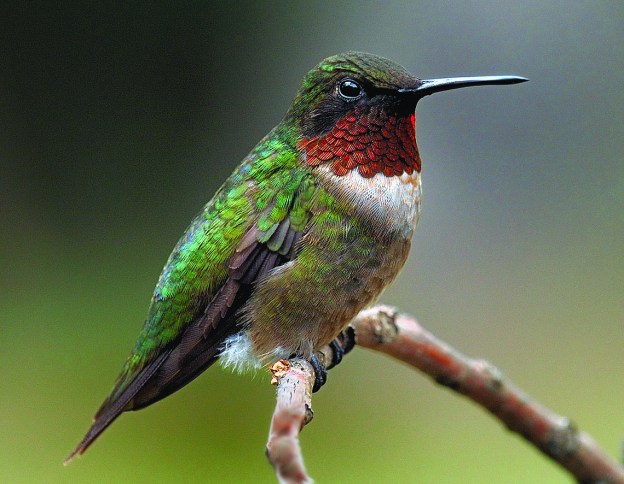
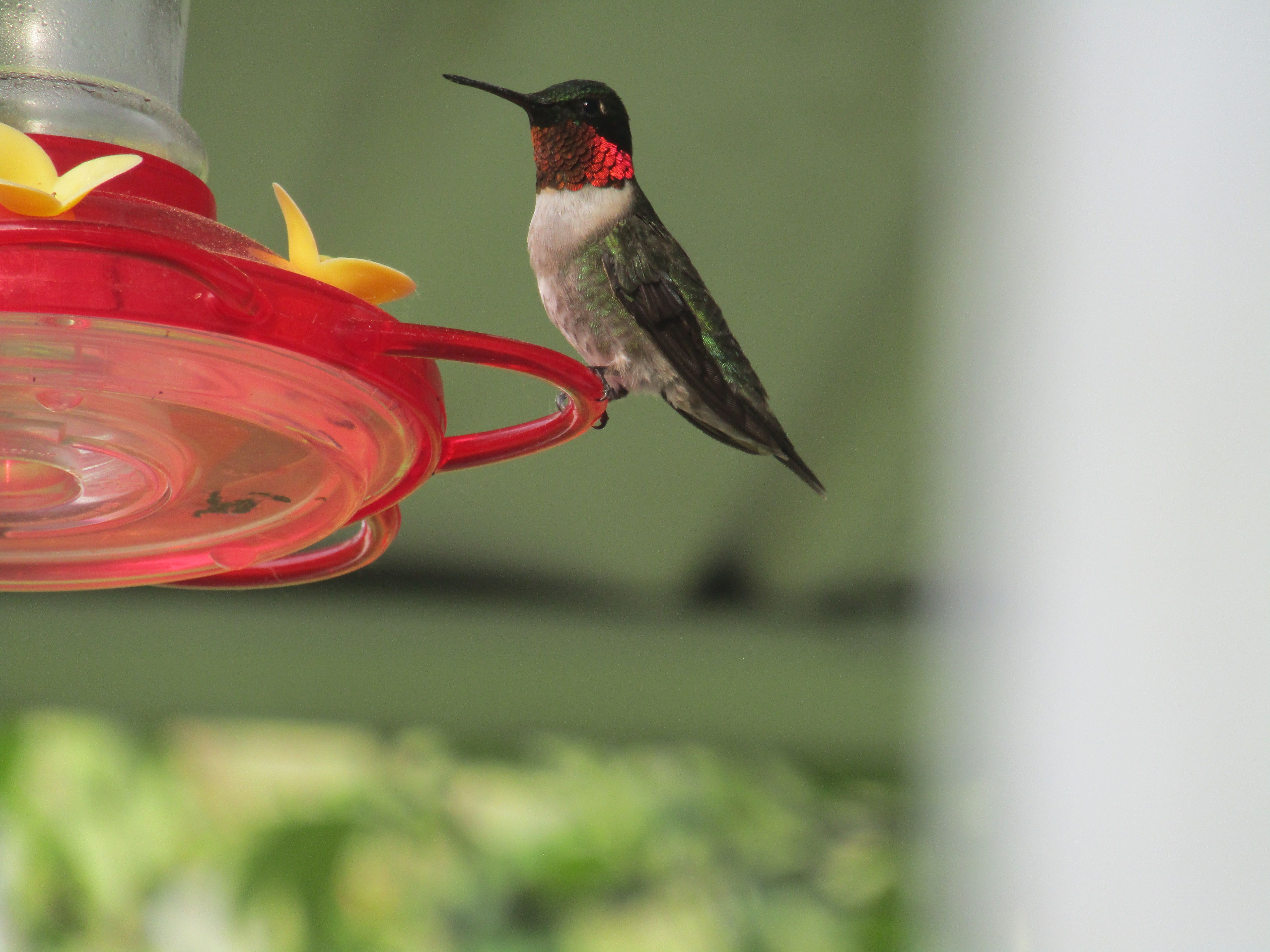
Count the giant hummingbird (either of the two species) as birds I’d like to see some day. The world’s diversity of hummingbirds is dazzling, but I feel fortunate to enjoy the ruby-throated hummingbird from April to October every year. As anyone knows who hosts these tiny birds, ruby-throated hummingbirds are dazzling and engaging guests during their all-too-brief.

•••

To ask a question, make a comment or share a sighting, email me at ahoodedwarbler@aol.com.


Unicoi County summer bird count finds 109 species

Photo Hans Toom/ Pixabay • The aptly named yellow warbler was one of 18 warbler species found on this year’s Unicoi County Summer Bird Count.

The 11th annual Unicoi County summer bird count was held Saturday, June 8, with 19 observers in seven parties. The count has been conducted yearly since its inception by members of the Elizabethton Bird Club.

I have taken part on this count from the first one held, missing only once when I was out of town. It’s an enjoyable count and, for me, it’s very close to home. This count also provides a reliable snapshot of the birds present in Unicoi County in early summer. 

Counters tallied 109 species which is slightly above the average of 108 species. The all-time high was 112 species in 2016. 

Abundant birds included European starling (314), American robin (246), song sparrow (175), American crow (174), red-eyed vireo (172), Northern cardinal (128) and cliff swallow, 126. Eighteen species of warblers were found, the most abundant being hooded warbler with 84 individuals tallied. 

As always a few low-density or very localized species were missed, including yellow-billed cuckoo, bald eagle, great horned owl, American kestrel, grasshopper sparrow, golden-winged warbler and prairie warbler.

The list:

Canada goose, 18; wood duck, 3; mallard, 20; wild turkey, 7; and ruffed grouse, 1.

Rock pigeon, 61; mourning dove, 56; chuck-will’s-widow,1; Eastern whip-poor-will, 18; chimney swift, 29; and ruby-throated hummingbird, 8.

Killdeer, 8; great blue heron, 3; and green heron, 2.

Photo by Bryan Stevens
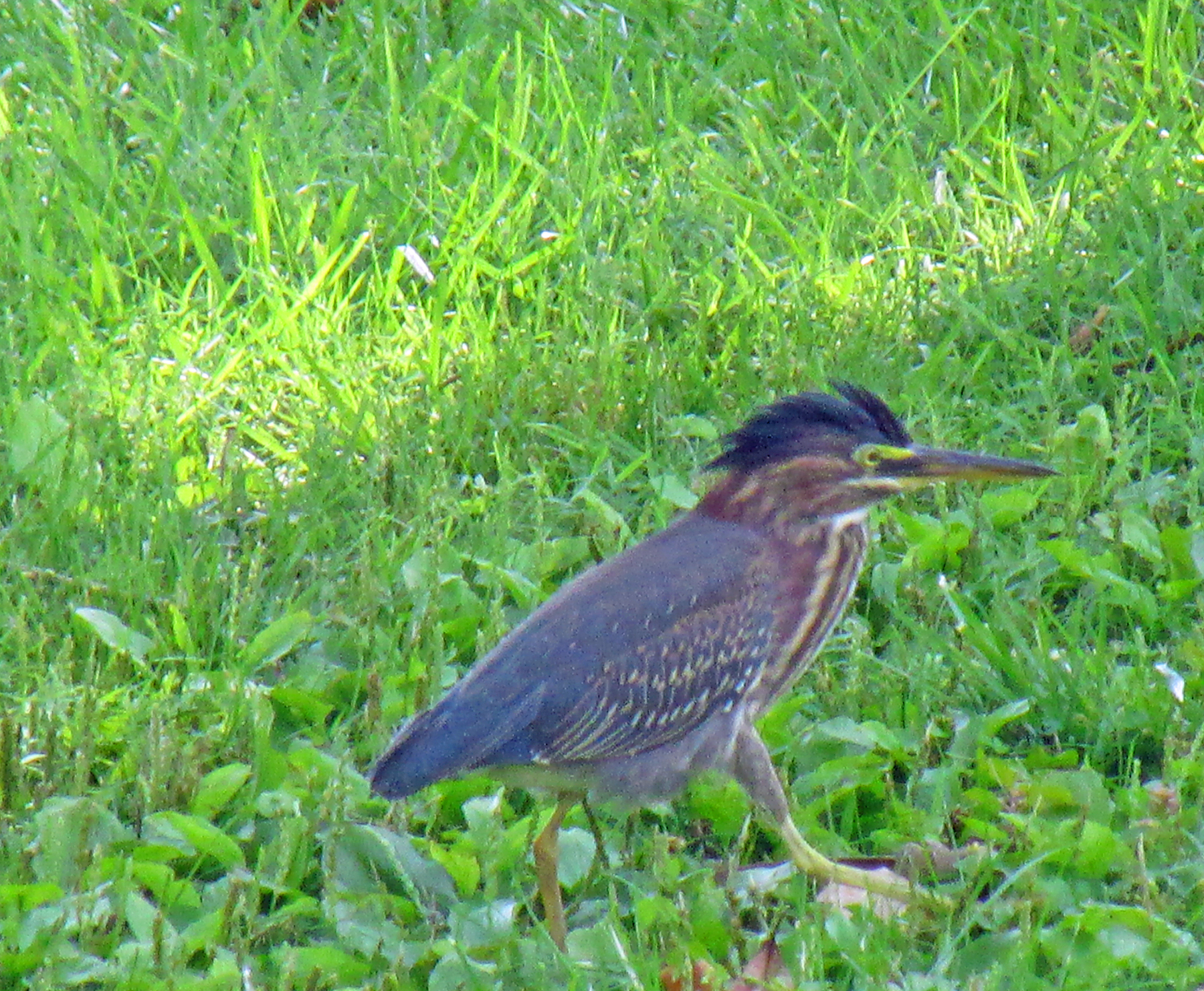
A green heron elevates a shaggy crest of feathers, a behavior often initiated when the bird feels alarmed.

Black vulture, 1; turkey vulture 37; sharp-shinned hawk, 1;

Cooper’s hawk 3; red-shouldered hawk, 4; broad-winged hawk, 10; red-tailed hawk, 2; Eastern screech-owl, 5; barred owl, 4; and Northern saw-whet owl, 1.

Belted kingfisher, 5; red-bellied woodpecker, 15; yellow-bellied sapsucker, 9;

downy woodpecker, 8; hairy woodpecker, 5; Northern flicker, 10; and pileated woodpecker, 20.

Great crested flycatcher, 3; Eastern kingbird, 11; Eastern wood-pewee, 10; Acadian flycatcher, 32; least flycatcher, 5; and Eastern phoebe, 65.

White-eyed vireo, 3; yellow-throated vireo, 1; blue-headed vireo, 38; warbling vireo, 3; and red-eyed vireo, 172.

Blue jay, 61; American crow, 174; fish crow, 5; common raven, 8; Carolina chickadee, 71; and tufted titmouse, 60.

Photo by Bryan Stevens • A tree swallow visits a nest box to check on young.

Tree swallow, 49; Northern rough-winged swallow, 20; purple martin, 25; barn swallow, 78; and cliff swallow, 126.

Golden-crowned kinglet, 2; cedar waxwing, 36; red-breasted nuthatch, 2; white-breasted nuthatch, 18; brown creeper, 4; and blue-gray gnatcatcher, 23.

Carolina wren, 84; house wren, 31; and winter wren, 3.

Gray catbird, 34; brown thrasher, 14; Northern mockingbird, 17; European starling, 314; Eastern bluebird, 59; veery, 12; hermit thrush, 2; wood thrush, 34; and American robin, 246.

House sparrow, 14; house finch, 33; American goldfinch, 56; chipping sparrow, 54; field sparrow, 6; dark-eyed junco, 20; song sparrow, 175; Eastern towhee, 6; and yellow-breasted chat, 1.

Eastern meadowlark, 14; orchard oriole, 4; Baltimore oriole, 1; red-winged blackbird, 60; brown-headed cowbird, 16; and common grackle, 63.

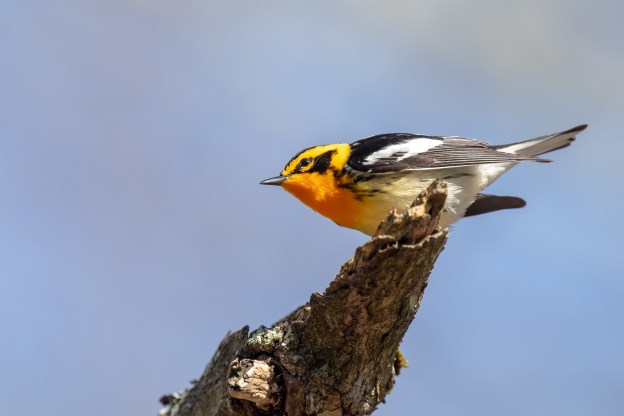
Ovenbird, 38; worm-eating warbler, 10; Louisiana waterthrush, 10; black-and-white warbler, 19; Swainson’s warbler, 16; Kentucky warbler, 1; common yellowthroat, 6; hooded warbler, 84; American redstart, 12; Northern parula, 41; magnolia warbler, 2; Blackburnian warbler, 10; yellow warbler, 3; chestnut-sided warbler, 17; black-throated blue warbler, 45; yellow-throated warbler, 17; black-throated green warbler, 45; and Canada warbler, 13.

Scarlet tanager, 20; Northern cardinal, 128; rose-breasted grosbeak, 4; blue grosbeak, 1; and indigo bunting, 77.

•••

Bryan Stevens has birded since the early 1990s and has written about birds and birding since 1995. To ask a question, make a comment or share a sighting, email him at ahoodedwarbler@aol.com.


Sounds of spring remain one of the season’s pleasures

Photo by Bryan Stevens • Blue-headed vireos, such as this bird, are high-elevation summer residents in the region. In the fall, they are also common migrants.

In modern life, it can seem like we’re always looking for ways to relax and de-stress. For me, nothing works quite so well as letting nature’s sounds, as well as sights, provide some measure of relief from stressful situations and anxious thoughts.

I instantly notice when a new vocalization is added to the usual mix. Such occurred on March 26 when I heard the syllabic song of a blue-headed vireo from the upper reaches of a large tree near the fish pond.

The blue-headed vireo’s song has been described as “Hear me! See me! Here I am!” It’s similar to the song of the related red-eyed vireo, but it’s slower and the paired syllables are separated by a brief pause.

În a couple more weeks, the songs of blue-headed vireos will ring out all over the high-elevation forested slopes of many of our local mountains, but these are just starting to get back to the region after an absence during the colder months. Many other feathered singers will be arriving in their wake, including warblers, tanagers and grosbeaks.

Photo by Bryan Stevens • The tufted titmouse is a backyard bird with an impish personality and a loud song.

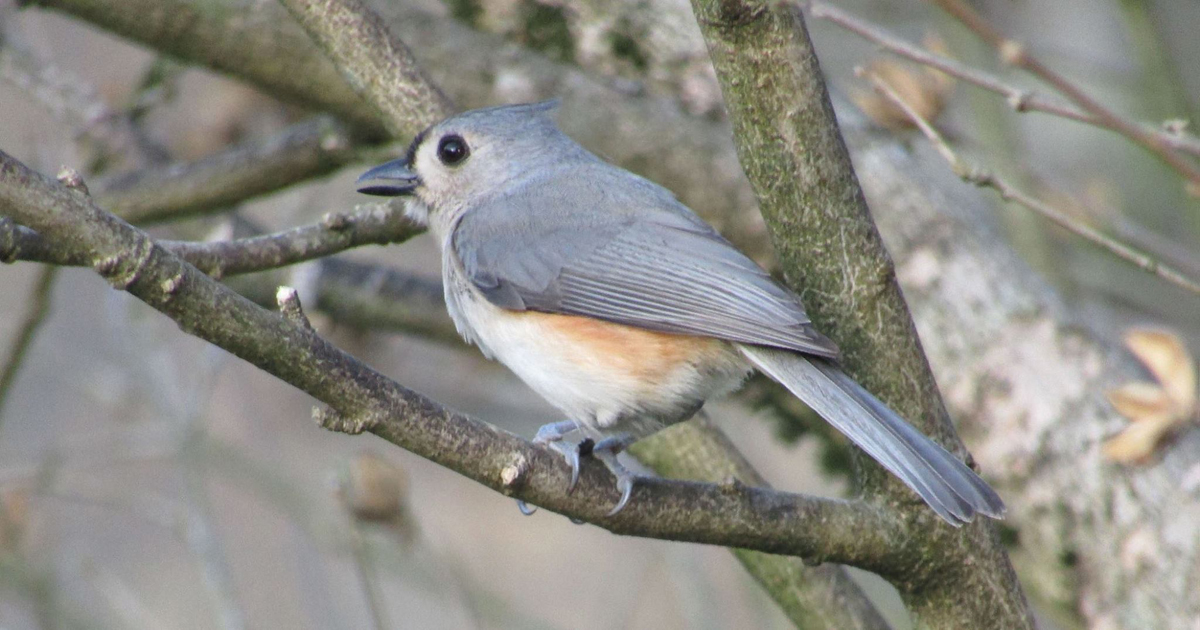
The mornings around my home often begin with a loud, insistent “Peter! Peter! Peter!” uttered from the woods or even from shrubbery just outside my bedroom window. Male tufted titmice, little gray relatives of chickadees with a distinctive crest and large, dark eyes, sing their urgent “Peter! Peter! Peter!” as a constant refrain in their efforts to attract mates now that they feel spring in their blood.

A series of rat-a-tat-tats echoes from deeper in the woods as woodpeckers tap their sturdy bills against the trunks of trees. The three most common woodpeckers at my home are red-bellied, downy, and pileated, and they all have their own unique vocalizations, as well.

The pileated woodpecker produces clear, far-carrying resonant piping sounds that can last for a few seconds each blast. The much smaller downy woodpecker produces a whinny of high-pitched notes that descend in pitch toward their conclusion. The red-bellied call is probably the one that stands out the most. The call’s a harsh, rolling “Churr, churr, churr” given almost like an expression of exasperation as they circle tree trunks and explore branches.

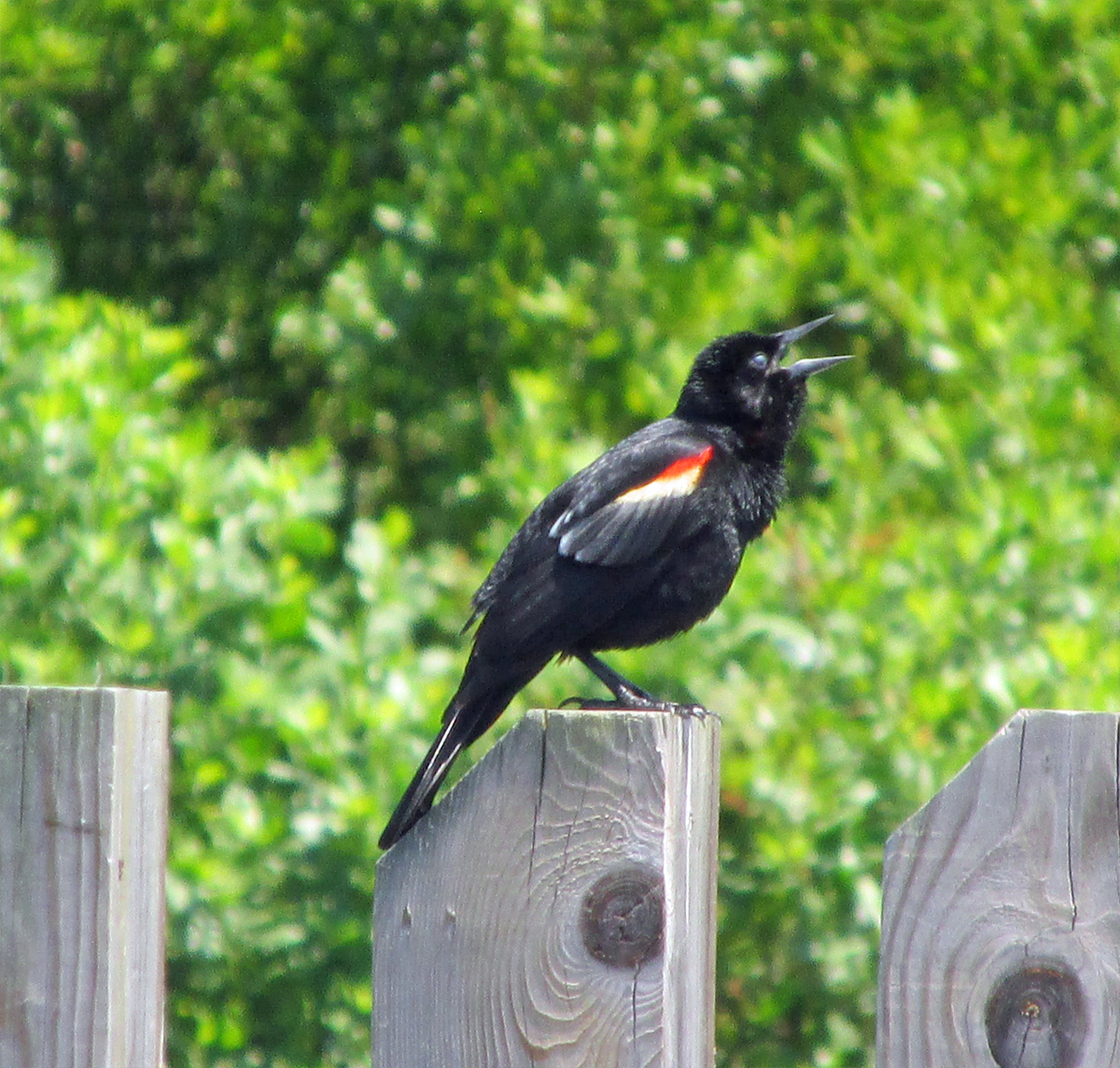
Since their return earlier this month, the resident red-winged blackbirds are often some of the earliest singers these days. According to the website All About Birds, the male red-winged blackbird’s “conk-la-ree!” is a classic sound of wetlands across the continent of North America. According to the website, the one-second song starts with an abrupt note that transforms quickly into a musical trill.

Photo by Bryan Stevens • A male red-winged blackbird sings to attract mates and ward off rivals.

Some birds helpfully introduce themselves with a song that repeats their name. One such common bird is the Eastern phoebe. In recent weeks, a pair has been checking out possible nesting sites. In past years, they have made use of the rafters of my garage and blades on a porch ceiling fan for potential nest sites. The male spends much of the day producing his strident “fee-bee” call, which is a perfect phonetic rendition of the bird’s common name.

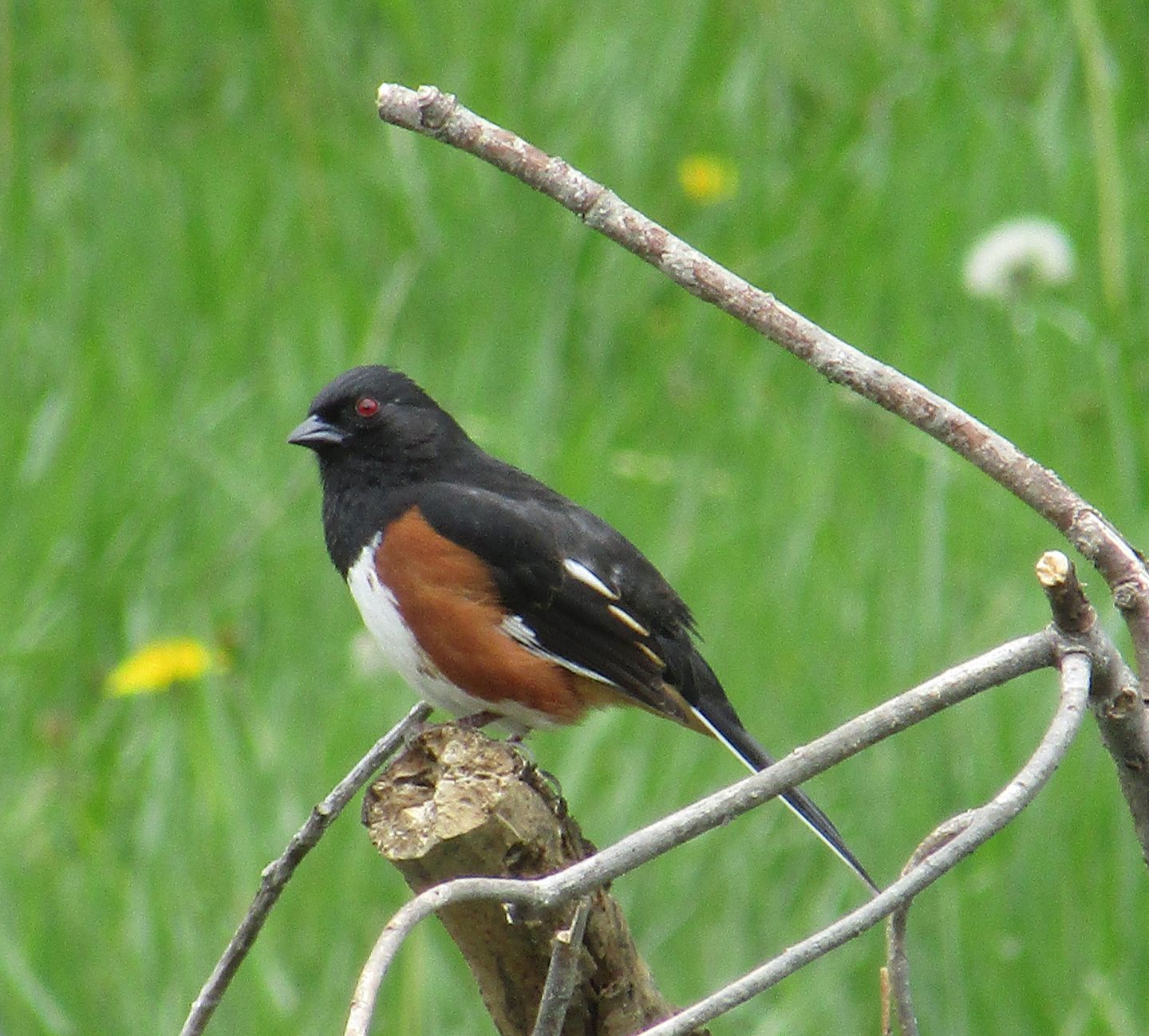
Then there’s one of my favorite songs of spring, which is produced by the Eastern towhee, also known by such common names as “ground robin” and “swamp robin.” These birds, which are actually a species of sparrow, also have some instantly recognizable vocalizations. With the arrival of spring, the males seek elevated perches for extensive singing bouts to attract mates and establish territories. Their song has been interpreted, quite accurately, as “drink your tea!” They also have some alarm notes, such as “€œChew-ink”€ and “€œToe-Hee,” of which the latter provides the basis for this bird’s common name.

Photo by Bryan Stevens • Male Eastern towhees are persistent singers once they establish  a spring territory.

Towhees occasionally spend the winter, but I’ve not noticed any during the winter of 2023-24. They are back now, and have been keeping a high profile for the past couple of weeks.

Of course, other wildlife is keen to join the springtime chorus. I have so many spring peepers at the fish pond and in the wet fields around my house that the noise from these tiny amphibians can reach deafening levels. The chorus is bound to grow more diverse and louder as spring advances. Take some time to enjoy the sounds of nature at your own home.

••••••

To share your own sighting, make a comment or ask a question, send email to ahoodedwarbler@aol.com. I’m also on Facebook.

It all began with a dark-eyed junco

Photo by Jack Bumer from Pixabay • For many people, the dark-eyed junco is a winter bird, not arriving until the first frost or snowfall of the season. These songbirds typically remain until late spring when they disperse to their nesting grounds.

I wrote my first bird column on Sunday, Nov. 5, 1995, which means this weekly column is marking its 26th anniversary this week.

This column has appeared over the last three decades in a total of six different newspapers, which I regard as a personal achievement, as well as an accomplishment for our feathered friends. It’s on their behalf that I pen these weekly efforts to promote conservation and good will toward all birds. I have also posted the column as a weekly blog posting since February  2014 at www.ourfinefeatheredfriends.com.

I’ve played detective, helping people identify everything from “rain crows,” or cuckoos, to Muscovy ducks, chukars and double-crested cormorants. I’ve observed unusual birds, including white pelicans, brants and roseate spoonbills, in Northeast Tennessee, Southwest Virginia and Western North Carolina and spotlighted them in these columns. I still take delight in the kaleidoscopic parade of colorful warblers that pass through the region each spring and fall as well as the fast-paced duel of ruby-throated hummingbirds and the occasional rufous hummingbirds straying through the region.

At my home, I also provide sunflower seed and other supplemental food for the resident birds like Carolina chickadees, white-breasted nuthatches, song sparrows and downy woodpeckers.

Even as I tweak my anniversary column for “Feathered Friends,” parts of the region just experienced the first heavy frost. This prognostication of approaching winter weather is a perfect time to dust off this week’s column, which is a revision of the first bird column I ever wrote. This column focused on a common visitor to yards and feeders during the winter months. In fact, dark-eyed juncos should bereturning to the region any day. Here, with some revisions I have made through the years, is that first column.

•••

Of all the birds associated with winter weather, few are as symbolic as the dark-eyed junco, or “snow bird.” The junco occurs in several geographic variations.

John V. Dennis, author of “A Complete Guide to Bird Feeding,” captures the essence of the junco in the following description: “Driving winds and swirling snow do not daunt this plucky bird. The coldest winter days see the junco as lively as ever and with a joie de vivre that bolsters our sagging spirits.” The dark-eyed junco’s scientific name, hyemalis, is New Latin for “wintry,” an apt description of this bird.

Most people look forward to the spring return of some of our brilliant birds — warblers, tanagers and orioles — and I must admit that I also enjoy the arrival of these birds. The junco, in comparison to some of these species, is not in the same league. Nevertheless, the junco is handsome in its slate gray and white plumage, giving rise to the old saying “dark skies above, snow below.”

Just as neotropical migrants make long distance journeys twice a year, the junco is also a migrating species. But in Appalachia, the junco is a special type of migrant. Most people think of birds as “going south for the winter.” In a basic sense this is true. But some juncos do not undertake a long horizontal (the scientific term) migration from north to south. Instead, these birds merely move from high elevations, such as the spruce fir peaks, to the lower elevations. This type of migration is known as vertical migration. Other juncos, such as those that spend their breeding season in northern locales, do make a southern migration and, at times, even mix with the vertical migrants.

During the summer months, a visit to higher elevations mountaintops is almost guaranteed to produce sightings of dark-eyed juncos. Juncos may nest as many as three times in a season. A female junco usually lays three to six eggs for each nest, which she constructs without any assistance from her mate.

Juncos are usually in residence around my home by early November. Once they make themselves at home I can expect to play host to them until at least late April or early May of the following year. So, for at least six months, the snow bird is one of the most common and delightful feeder visitors a bird enthusiast could want.

Juncos flock to feeders where they are rather mild-mannered — except among themselves. There are definite pecking orders in a junco flock, and females are usually on the lower tiers of the hierarchy. Females can sometimes be distinguished from males because of their paler gray or even brown upper plumage.

Since juncos are primarily ground feeders they tend to shun hanging feeders. But one winter I observed a junco that had mastered perching on a hanging “pine cone” feeder to enjoy a suet and peanut butter mixture.

Dark-eyed juncos often are content to glean the scraps other birds knock to the ground. Juncos are widespread. They visit feeders across North America. The junco is the most common species of bird to visit feeding stations. They will sample a variety of fare, but prefer such seeds as millet, cracked corn or black oil sunflower.

The juncos are a small branch of the sparrow clan. Some of the other juncos include the endangered Guadalupe junco, yellow-eyed junco, Baird’s junco and volcano junco. The last one on the list is endemic to the Talamancan montane forests of Costa Rica and western Panama. Baird’s junco is named for Spencer Fullerton Baird, an American ornithologist and naturalist.

Baird served as secretary  for the Smithsonian Institution from 1878 until  his death in 1887. He greatly expanded the natural history collections of the Smithsonian from 6,000 specimens in 1850 to over two million by the time of his death.

I hope you’ve enjoyed this introduction to juncos. There’s something about winter that makes a junco’s dark and light garb an appropriate and even striking choice, particularly against a backdrop of newly fallen snow.

Of course, the real entertainment from juncos come from their frequent visits to our backyard feeders. When these birds flock to a feeder and began a furious period of eating, I don’t even have to glance skyward or tune in the television weather forecast. I know what they know. Bad weather is on the way!

•••

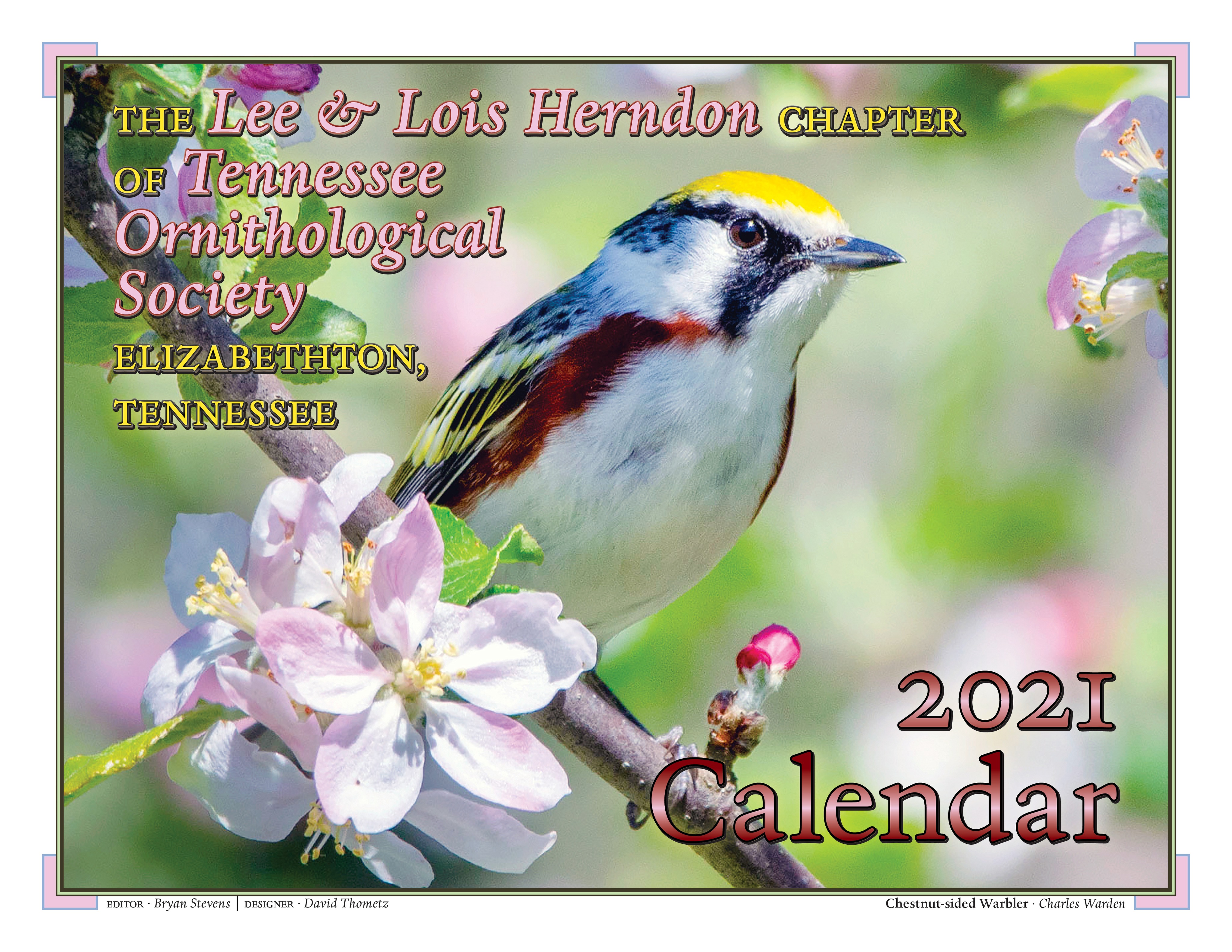
Orders are being accepted for the 2022 bird calendar produced by Elizabethton Bird Club members. Calendars feature bird photographs taken by club members. The calendars sell for $15, plus $2 for postage and handling for those needing a calendar mailed to them. This year’s cover features a beautiful photograph of a chestnut-sided warbler among spring blossoms taken by Charles Warden. Anyone interested in the purchase of a calendar can email Bryan Stevens at ahoodedwarbler@aol.com for more information.

•••

If you’d like to share your first sighting this season of dark-eyed juncos as the temperatures get colder, email me at ahoodedwarbler@aol.com. As always, the column is also a line of communication with fellow bird enthusiasts. I’ve enjoyed sharing stories about birds with countless readers over the past 26 years. I can also be reached on Facebook at https://www.facebook.com/ahoodedwarbler.


Annual fall bird count tallies 129 species for Northeast Tennessee

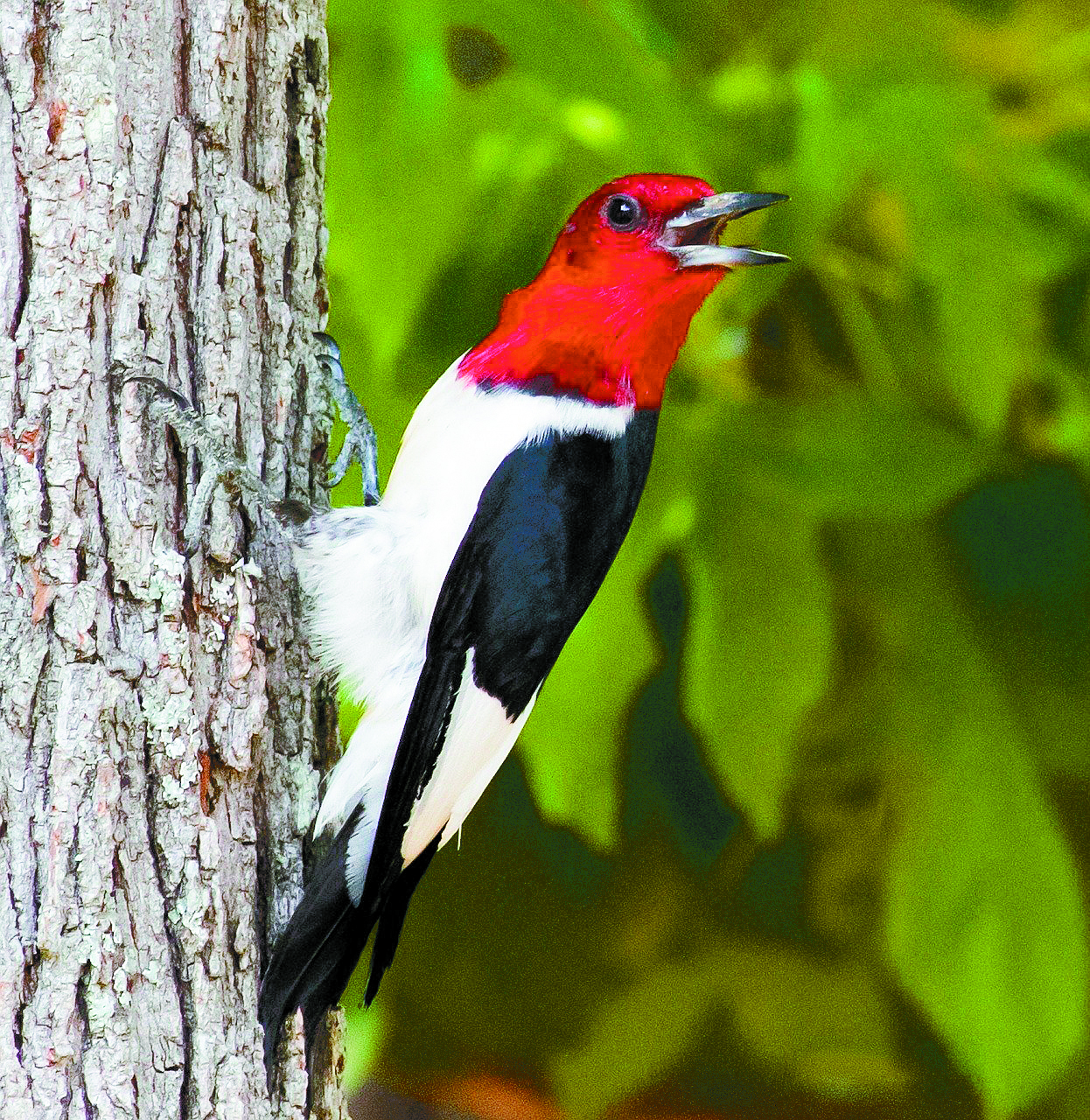
Photo from Pixabay • A red-headed woodpecker clings to the trunk of a tree. During the recent Fall Bird Count for Northeast Tennessee, all the region’s seven woodpecker species were tallied. The medium-sized red-headed woodpecker is found only in isolated locations in the region. They prefer more open country than most of their kin. Habitat containing dead or dying trees is vital if these woodpeckers are to thrive.

I wrote last week about my participation in the recent 52nd annual Fall Bird Count conducted by the Elizabethton Bird Club.

This week I want to dive into the results of what turned out to be a great count. The five-county tally of the birds in Northeast Tennessee was held on Saturday, Sept. 25, with 34 observers in 14 parties, plus two feeder watchers. Participants covered Carter County, as well as parts of adjacent Johnson, Sullivan, Unicoi and Washington counties.

This year’s count tallied 129 species, which is slightly above the recent 30 year average of 125 species. The all-time high was reached in 1993 when 137 species were tallied.

Participants for this year’s count included Fred Alsop, Jerry Bevins, Rob Biller, Debi Campbell, J.G. Campbell, Ron Carrico, Catherine Cummins, Dianne Draper, Cindy Ehrhardt, Harry Lee Farthing, Dave Gardner, Tammy Griffey, Don Holt, Connie Irick, David Irick, David Kirschke, Rick Knight, Roy Knispel, Richard Lewis, Dianne Lynne, Vern Maddux, Joe McGuiness, Tom McNeil, Eric Middlemas, Susan Peters, Brookie Potter, Jean Potter, Pete Range, Judith Reid, Judi Sawyer, Chris Soto, Bryan Stevens, Peggy Stevens, Kim Stroud, Charles Warden and Rex Whitfield.

The four most commonly observed species, in descending order, included European starling, 838; Canada goose, 744; American crow, 502; and blue jay, 437. No surprises there.

Somewhat surprising was the total of 222 brown-headed cowbirds. Other abundant birds that numbered more than 200 individuals included mourning dove (316), rock pigeon (285), chimney swift (227), Eastern bluebird (208), American robin (222), cedar waxwing (230) and American goldfinch (216).

A total of 24 species of warblers was found, including 172 individual Tennessee warblers. These greenish-yellow warblers can be quite abundant as they pass through the region each autumn.

Some families of birds, such as falcons and woodpeckers, were well represented on this count with all the expected species being found by count participants.

Five Empidonax species, often referred to as “empids” by birders were found during the count but do not contribute to the total. These small flycatchers are nearly identical in appearance and silent during the fall. Faced with an inability to positive identify them, birders simply noted that they were seen.

The list follows:

Canada goose, 744; wood duck, 42; mallard, 182; blue-winged teal, 4; Northern shoveler, 2; and common merganser, 4.

Wild turkey, 18; pied-billed grebe, 3; double-crested cormorant, 43; great blue heron, 39; great egret, 4; green heron, 1; black vulture, 61; and turkey vulture, 183.

Osprey, 7; bald eagle, 9; sharp-shinned hawk, 3; Cooper’s hawk, 8; red-shouldered hawk, 6; broad-winged hawk, 11; and red-tailed hawk, 25.

American coot, 1; killdeer, 45; spotted sandpiper, 2; rock pigeon, 285; Eurasian collared-dove, 22; mourning dove,  316; and yellow-billed cuckoo, 2.

Eastern screech-owl, 11; great horned owl  7; barred owl, 3; American kestrel, 28; merlin, 8; and peregrine falcon, 3.

Common nighthawk, 3; chimney swift, 227; ruby-throated hummingbird, 23; and belted kingfisher, 32.

Red-headed woodpecker, 2; red-bellied woodpecker, 83; yellow-bellied sapsucker, 1; downy woodpecker, 51; hairy woodpecker, 11; Northern flicker, 54; and pileated woodpecker, 39.

Eastern wood-pewee, 31; Acadian flycatcher, 1; Eastern phoebe, 92; Eastern kingbird, 1; and loggerhead shrike, 1.

White-eyed vireo, 7; yellow-throated vireo, 5; blue-headed vireo, 21; Philadelphia vireo, 1; and red-eyed vireo, 6.

Blue jay, 437; American crow, 502; fish crow, 3; common raven, 13; tree swallow, 160; barn swallow, 29; and cliff swallow, 1.

Carolina chickadee, 145; tufted titmouse, 109; red-breasted nuthatch, 9; white-breasted nuthatch, 52; brown-headed nuthatch, 3; and brown creeper, 1.

House wren, 8; winter wren, 4; Carolina wren, 179; blue-gray gnatcatcher, 6; golden-crowned kinglet, 5; ruby-crowned kinglet, 9.

Eastern bluebird, 208; veery, 2; gray-cheeked thrush, 2; Swainson’s thrush, 46; wood thrush, 19; American robin, 222; gray catbird, 34; brown thrasher, 14; Northern mockingbird, 80; European starling, 838; and cedar waxwing, 230.

Ovenbird, 2; worm-eating warbler, 4; Northern waterthrush, 1; black-and-white warbler, 3; prothonotary warbler, 1; Tennessee warbler, 172; Nashville warbler, 3; common yellowthroat, 19; hooded warbler, 4; American redstart,  29; Cape May warbler,  40; Northern parula, 5; magnolia warbler, 24; bay-breasted warbler, 76; Blackburnian warbler, 9; chestnut-sided warbler,  9; black-throated blue warbler,  10; palm warbler,  171; pine warbler, 30; yellow-rumped warbler, 2; yellow-throated warbler, 5; prairie warbler  1; black-throated green warbler, 11; and Wilson’s warbler,  1.

Eastern towhee, 71; chipping sparrow, 76; field sparrow, 14; Savannah sparrow, 1; song sparrow, 131; and dark-eyed junco, 45.

Summer tanager, 1; scarlet tanager, 36; Northern cardinal, 160; rose-breasted grosbeak, 89; Blue Grosbeak,  2; and indigo bunting, 13.

Red-winged blackbird  61; Eastern meadowlark, 6; common grackle,  66; and brown-headed cowbird, 222.

House finch, 100; red crossbill, 2; American goldfinch, 216; and house sparrow, 114.

Many of the species observed on this county will be taking a temporary leave of Northeast Tennessee until next spring. Tanagers, warblers, vireos and other birds will seek out locations farther south to spend the winter months.

They’ll be back, though, and just in time for the 2022 Spring Bird Count. To make a comment, ask a question or share an observation, send an email to ahoodedwarbler@aol.com.

Common nighthawks share autumn skies with many other migrants

Autumn’s a chance for me to indulge my passion for warblers, with a few dozen species of these songbirds passing through the region in the span of a few weeks. I always try to keep in mind, however, that the warblers are not the only migrating birds winging through the region.

The Elizabethton Bird Club had planned a “nighthawks and hot dogs” party at the home of Larry McDaniel near Jonesborough, but that event had to be cancelled because of the recent surge in COVID-19 cases in the region.

My silver lining was that I saw a large flock of common nighthawks at my home on Aug. 29. It was an evening of birding dominated by insect-eaters and fruit-eaters.

Cedar waxwings and one American robin perched in the wild cherry trees and plucked ripening fruit from the branches.

Swooping overhead a handful of Chimney Swifts and about 30 Common Nighthawks (the first I have seen this fall) collected insects just over the treetops. Flycatching from a dead blue spruce was an Eastern Wood-Pewee, another fall first.

Other birds included a pair of Northern cardinals feeding three young, an Eastern towhee and one hooded warbler. At one point an irritable ruby-throated hummingbird chased the pewee round and round the trunk of the dead spruce. They almost looked like they were characters in a zany cartoon.

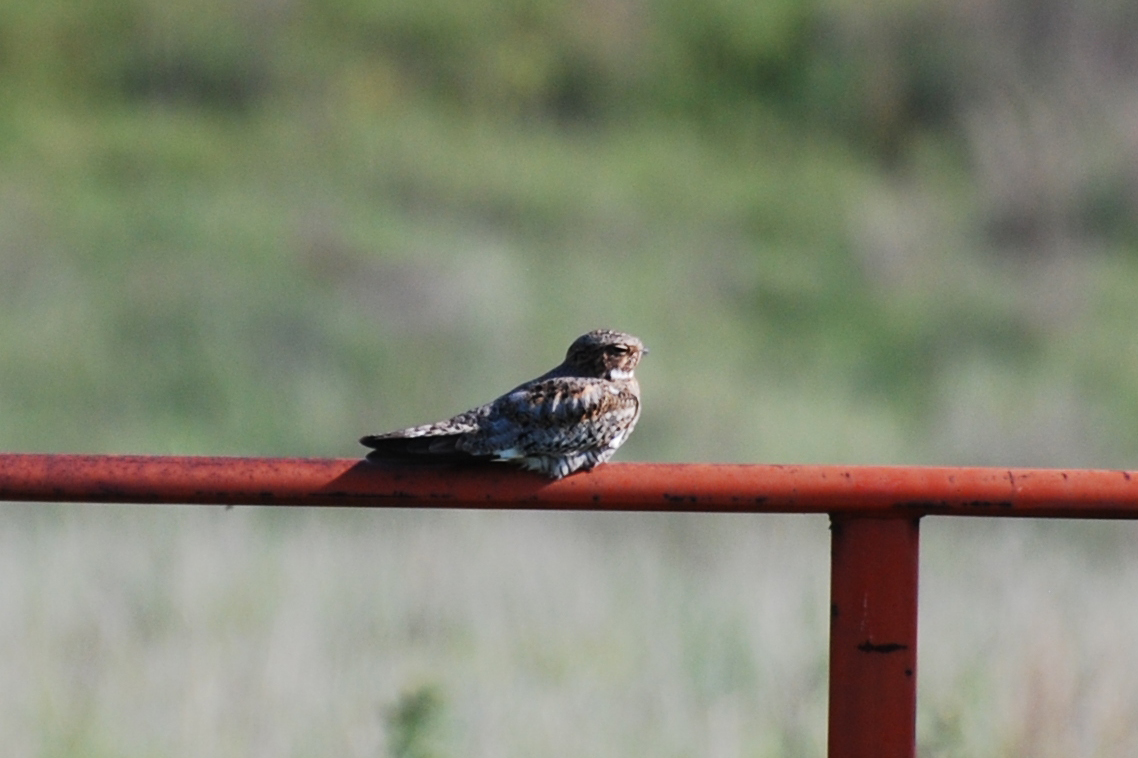
Photo by Jean Potter • A common nighthawk rests on a metal railing.

Like such birds as warblers, vireos, thrushes, tanagers, flycatchers and hummingbirds, the common nighthawk is a neotropical migrant. In addition, this nighthawk has one of the longest migration routes of any North American bird. Twice a year, these birds migrate for distances ranging from 1,600 to 4,200 miles. Nighthawks that spend the spring and summer in Canada travel to southern South America for the winter months.

With September advancing on the calendar, I have been keeping an eye on the treetops for passing warblers, vireos and tanagers, but I also remember to direct my gaze to the skies. Forgetting to look skyward could result in missing the passage of such varied migrants as chimney swifts, broad-winged hawks and common nighthawks.

So, what is a common nighthawk? First, this bird, despite what is implied by its name, is not a hawk. It’s also not strictly nocturnal. Particularly in the fall, nighthawks are active during daylight hours when engaged in catching winged insects. Outside of fall migration, these birds can often be observed over large parking lots or well-lit streets, snatching up insects swarming around the light poles.

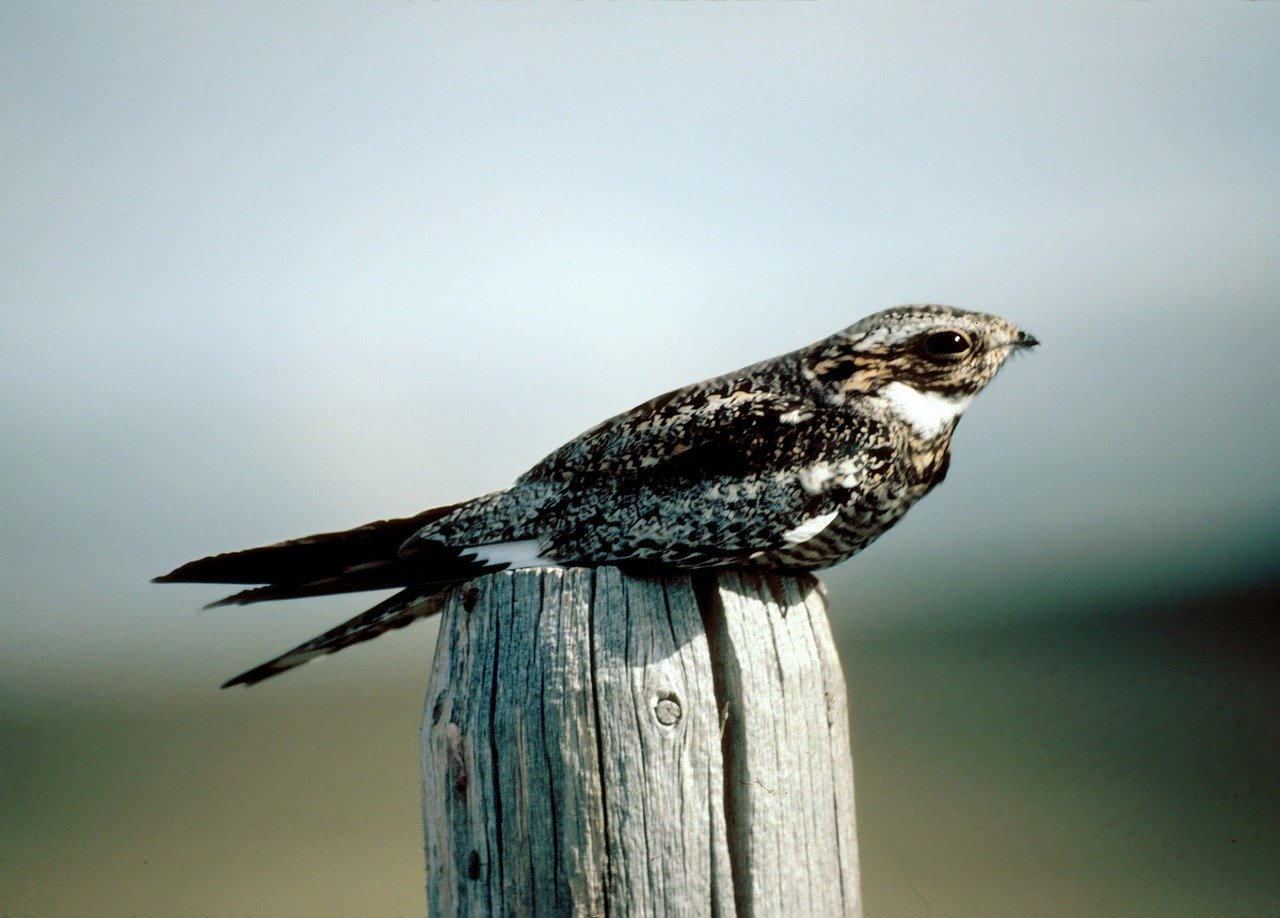
Photo by Skeeze/Pixabay • A common nighthawk adopts an elongated pose atop a fencepost.

The common nighthawk is one of three members of the nightjar family found in the region during the summer months. The other two nightjars are the whip-poor-will and chuck-will’s-widow, birds that produce their namesake vocalizations in the nocturnal hours. Both of these species migrate, but they don’t take the dramatic approach employed by nighthawks. Each fall, common nighthawks form large flocks, ranging in size from dozens to hundreds or even thousands of individuals, as they migrate south for the winter.

Unlike whips and chucks, the common nighthawk isn’t active only after dark, which makes it much easier to observe these birds. They look somewhat like swifts and swallows but are much larger. They are brownish-gray birds with pointed wings and forked tails. They are easily identified by distinctive white patches on the underside of their wings.

A perplexing nickname for the common nighthawk is “bull-bat.” This merger of the words “bull” and “bat” makes sense when you explore a little deeper. The common nighthawk earned the nickname “bull-bat” because of its perceived “bat-like” flight and a “bull-like” boom produced by its wings as it pulls out of a dive.

The nightjar, or Caprimulgidae, family of birds is also sometimes known as “goatsuckers.” Apparently, in trying to explain the nocturnal tendencies of these birds, the Greeks came up with the imaginative but erroneous idea that birds like nighthawks liked to sneak into barns and have a meal of fresh goat’s milk. In reality, nighthawks feed almost exclusively on insects, including ants, wasps, beetles, caddisflies, moths, mayflies, flies, crickets, grasshoppers, and other insects. They capture much of their insect prey on the wing.

There are almost 80 species of nightjars in the world. Less than 10 occur in North America. Many of the common nighthawk’s relatives have been given descriptive names, such as long-trained nightjar, collared nightjar, spot-tailed nightjar, red-necked nightjar, golden nightjar, fiery-necked nightjar, swamp nightjar, pennant-winged nightjar, lyre-tailed nightjar, little nightjar, sickle-winged nightjar, rufous-bellied nighthawk, short-tailed nighthawk, sand-coloured nighthawk and least nighthawk.

So, keep looking skyward. The next flock of migrating common nighthawks may fly over your home. These flocks are usually on the move in August and throughout September.

I will keep watching the skies. Nighthawks can also appear almost magically, as if out of thin air. First, observers may see one of two birds, then several, followed quickly by dozens or sometimes hundreds as they wheel and cavort in the skies overhead with impressive grace and agility. I’ve seen flocks that would easily number more than 500 birds in locations throughout the region, although flocks often number only a couple of dozen birds.

To share a sighting, ask a question or make a comment, email me at ahoodedwarbler@aol.com.

Photo by Bryan Stevens • Rising clouds provide a backdrop for a flock of migrating nighthawks.

Wood duck one of few ducks that’s an area resident in summer months

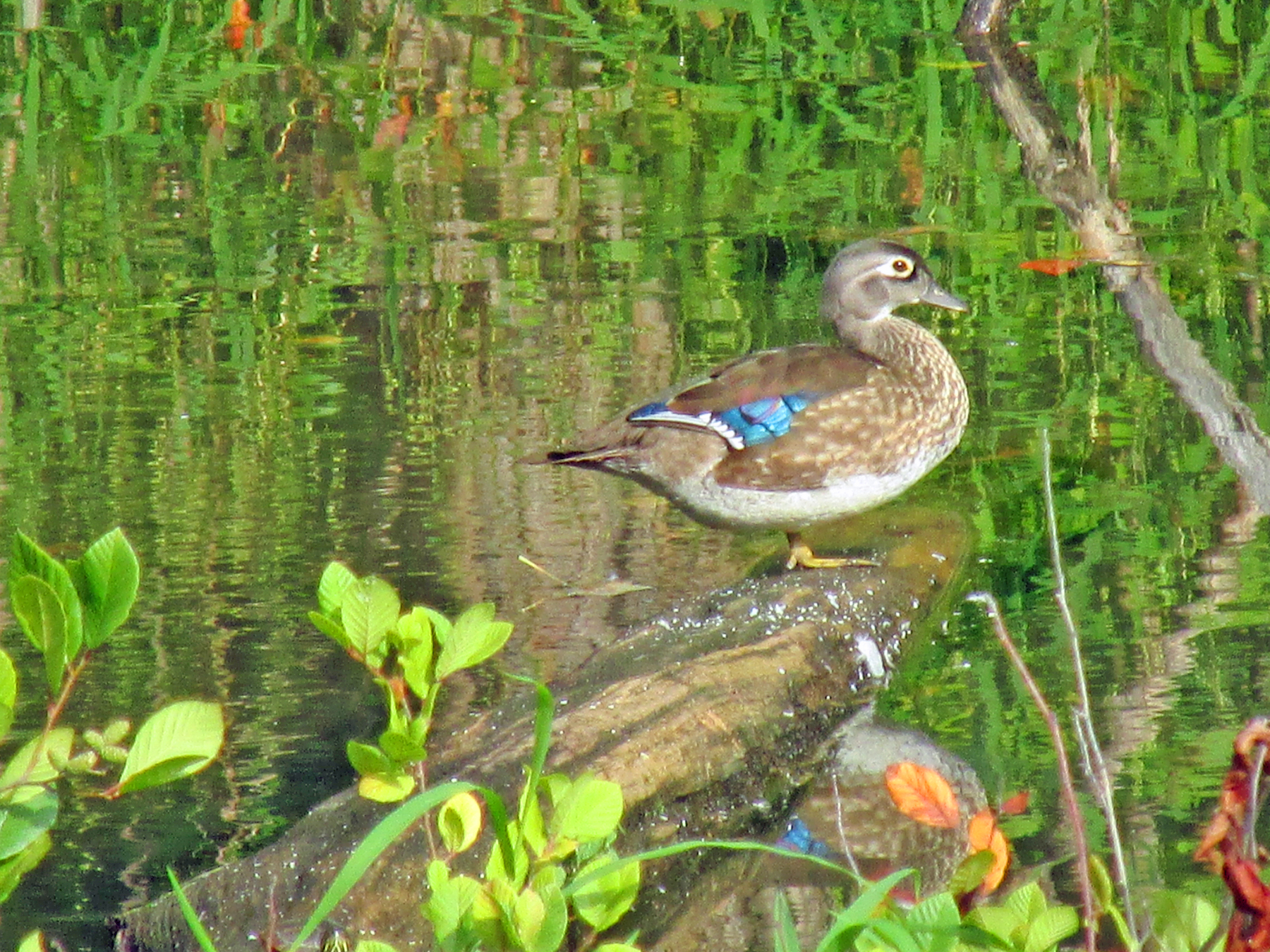
Photo by Bryan Stevens • A wood duck, also known as the summer duck or Carolina duck in some locations, perches on a submerged log.

I’ve enjoyed sporadic observations of a family of wood ducks living at the fish pond this summer. A wood duck hen chose to raise four ducklings at my pond, which is cloaked in abundant cattails and waterlilies. I think the dense vegetation offers concealment that makes the little family feel at ease.

Nevertheless, the ducks have remained elusive. I get glimpses of them, but the moment they become aware of me the ducklings form a single line and file one by one into the stands of cattails. The hen is always the last to seek the shelter of the cattails, no doubt ensuring the safety of her young before she thinks of herself.

Waterfowl are usually scarce in the region in summer aside from the ubiquitous Canada geese and mallards found at ponds, local park, golf courses and many other locations. Waterfowl aren’t entirely absent, however, especially when you add the variety of domesticated waterfowl that are often found with the aforementioned geese and ducks.

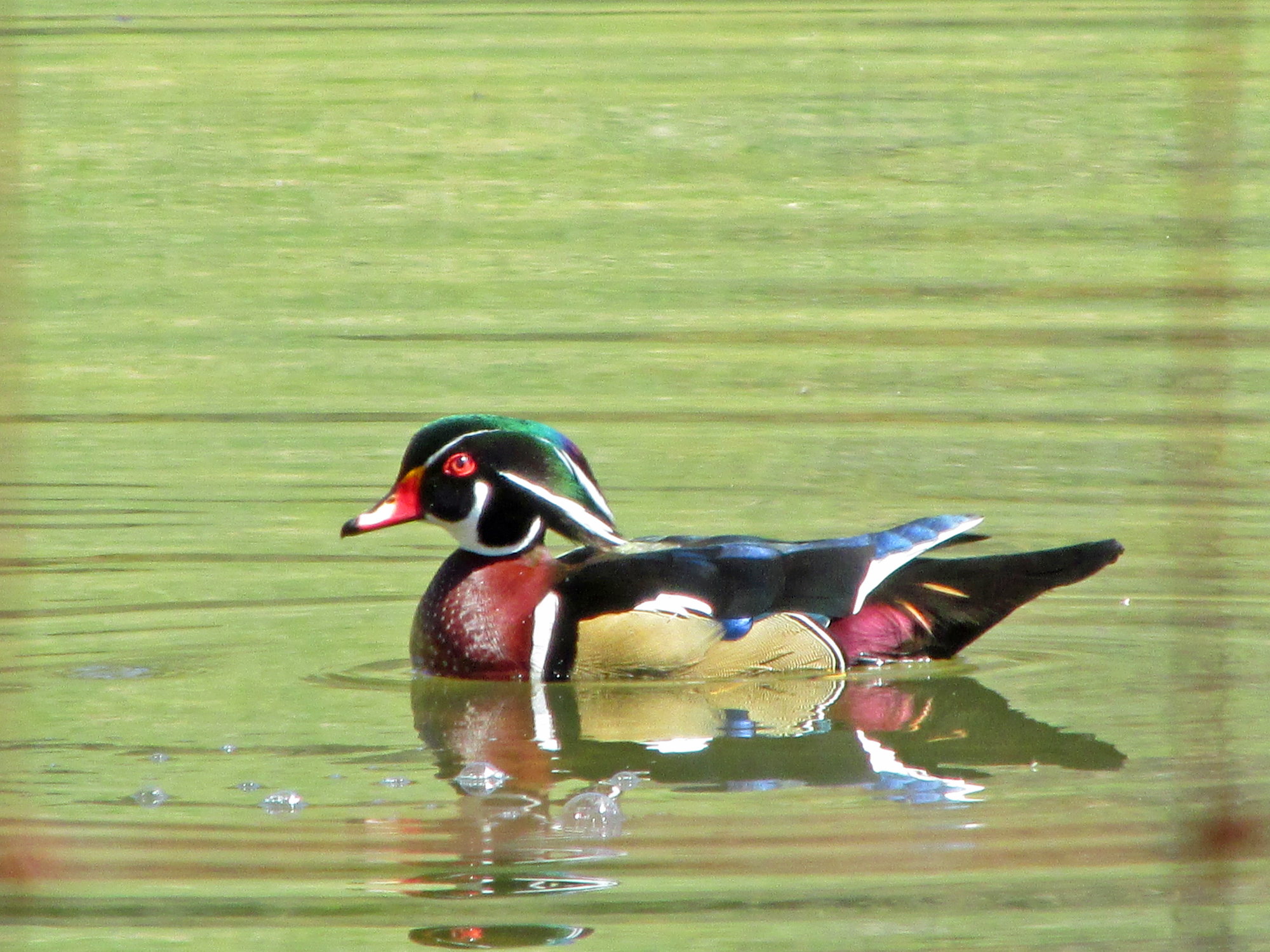
Photo by Bryan Stevens • Male wood ducks are one of the most stunning of North America’s waterfowl.

The small wood duck is an exception. This duck is a species of waterfowl that can be found, in suitable habitat, during the summer nesting season throughout the southeastern United States. Unlike Canada geese and mallards, which historically never nested in the region until recent decades, the wood duck is actually supposed to be present during the warmer months of the year. In many parts of their range, wood ducks are known as the “summer duck” since they are the only wild native nesting duck present during the season.

Another common name for this species is the Carolina duck, which refers to the southern stronghold of this species of waterfowl. Wood ducks are year-round residents across much of the southeastern United States, especially in suitable habitat such as small lakes, flooded woodlands, swamps and marshes.

Like a handful of other North American waterfowl, the wood duck is a cavity-nesting bird. These ducks often occupy former nesting cavities created by woodpeckers, but they will also readily accept nesting boxes of suitable dimensions provided by human landlords. Because of their devotion to nesting in cavities, wood ducks have at least something in common with songbirds like Eastern bluebirds, tree swallows and house wrens, as well as larger birds such as American kestrels and Eastern screech-owls. Wood ducks aren’t the only waterfowl that nest in cavities. Buffleheads, hooded mergansers and common goldeneyes are also cavity-nesting ducks. None of those ducks, however, nest in the southeastern United States.

Some wood duck nests can be located far above the ground, which poses a challenge for flightless young. Like most species of waterfowl, young wood ducks are born capable of immediately leaving the nest and being led by their mother to foraging areas. First, however, there’s that giant leap of faith that each of the ducklings must make. Nests are often built over water, so that first jump often ends in a splash-down. Some nests are built over land, but that doesn’t seem an obstacle. The ducklings make that leap without any difficulty. Just like the Abominable Snowmen in the old holiday favorite “Rudolph, The Red-nosed Reindeer,” wood duck babies bounce! Once the ducklings have departed their cozy nesting cavity, their mother will guard them from predators and lead them to prime foraging areas for a period of about two months.

Photo by Jack Bulmer/Pixabay • A wood duck hen keeps watch as one of her ducklings forages in the thick duckweed covering a pond’s surface.

The wood duck belongs to the genus Aix. The only other species in the genus — the Mandarin duck — is native to East Asia. The two are classified as “perching ducks” by biologists. The males of both these species are among the most ornate ducks in the world. The male wood duck has red eyes and a dark-tipped red bill. The colors in a male’s plumage includes glossy, iridescent greens, purples and browns in dramatic patterns. The male also has a distinctive head crest. Female wood ducks also have crests, but their plumage is overall gray and brown with a teardrop-shaped white patch around the eyes, as well as a white chin and throat.

The majority of a wood duck’s diet consists of vegetable matter. In autumn, I’ve observed these ducks foraging with enthusiasm for acorns. Summer, however, is a time for gorging on insects. The wood duck hen, and her ducklings in particular, have been happy to forage for insects and other small invertebrates among the floating lily pads.

In his book, “Birds of Lake, Pond and Marsh,” author John Eastman noted that the wood duck was the most abundant of North American ducks during the 19th century. In the late 19th century, pressures from hunting and habitat destruction combined to dramatically lower the numbers of this exclusively North American duck. Eastman noted that the Federal Migratory Bird Treaty Act of 1918 is largely credited with saving the wood duck from possible extinction.

From 1918 to 1941, it was illegal to hunt wood ducks. Thanks to this temporary hunting ban and other conservation measures, the wood duck population recovered in dramatic fashion. Recent surveys all point to a species on the rebound with numbers of wood ducks rising for the past several decades.

The creek and the fish pond at my home have proven dependable magnets over the years for attracting visiting wood ducks. I also have good luck finding wood ducks at the large pond at Erwin Fishery Park. Most wood ducks in the southeastern United States do not migrate. Those that live farther north during the summer will migrate to areas as far south as Mexico in the fall. We’re fortunate to reside in a region where wood ducks are year-round resident waterfowl.

I feel even more fortunate that a stealthy visit to the fish pond at my home has given me numerous opportunities over the past few months to glimpse the lives of these fascinating ducks of summer.

••••

To share an observation, make a comment or ask a question, email me at ahoodedwarbler@aol.com.

Photo by Bryan Stevens • A wood duck family shares a fallen log.

Wandering birds provide some surprising moments for birders

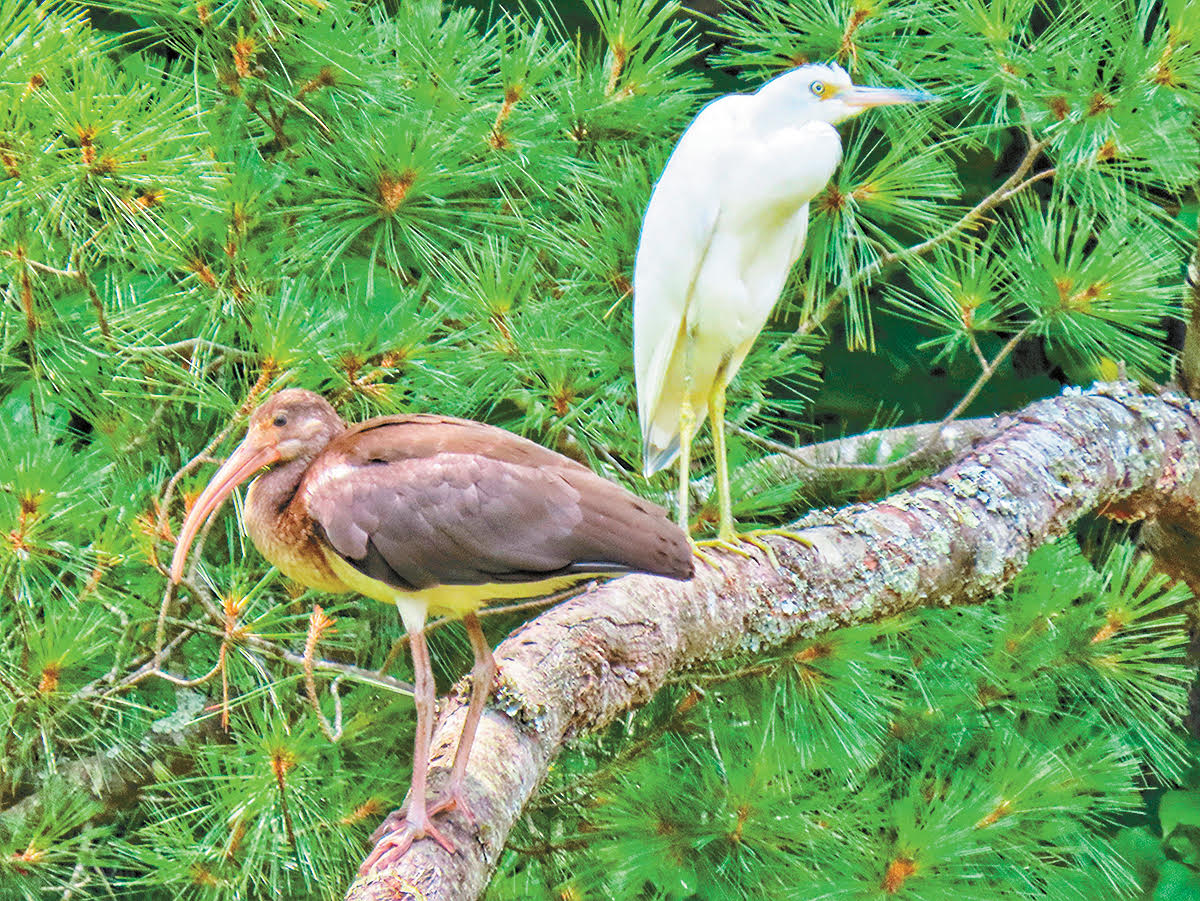
Photo by Roger Mullins • A little blue heron, right, shares a perch with a white ibis at the Buffalo Valley Golf Course in Unicoi. These wading birds are usually found near the coast, but individuals tend to disperse and wander widely after the summer nesting season comes to an end.

Late summer has a sort of lazy feel. Most birds are finishing up their nesting season. Hungry fledglings appear at feeders in the company of adults. In recent weeks, I’m starting to notice a slight uptick in the number of hummingbirds visiting my feeders and garden flowers. It helps that I’ve got dense stands of naturalized bee balm at the edge of my woods. The cedar waxwings have finished off the mulberries, but I suspect they will stick around for the wild cherries. I’ve also noticed the vanguard of migrant birds that are starting to make appearances as fall migration approaches. It’s not just songbirds, however, that are on the move. Some large and rather conspicuous birds have been attracting attention in recent weeks, including a variety of wading birds.

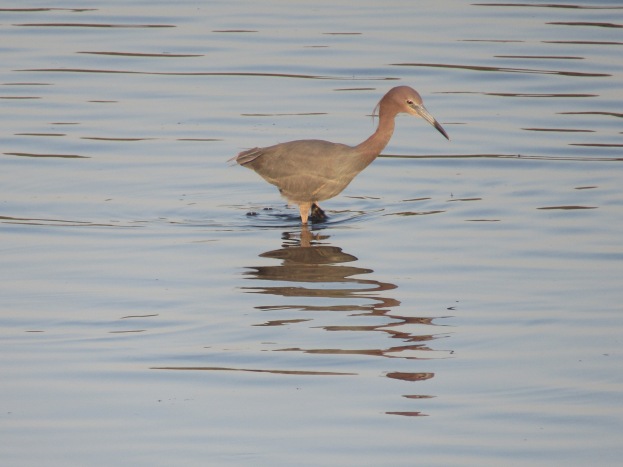
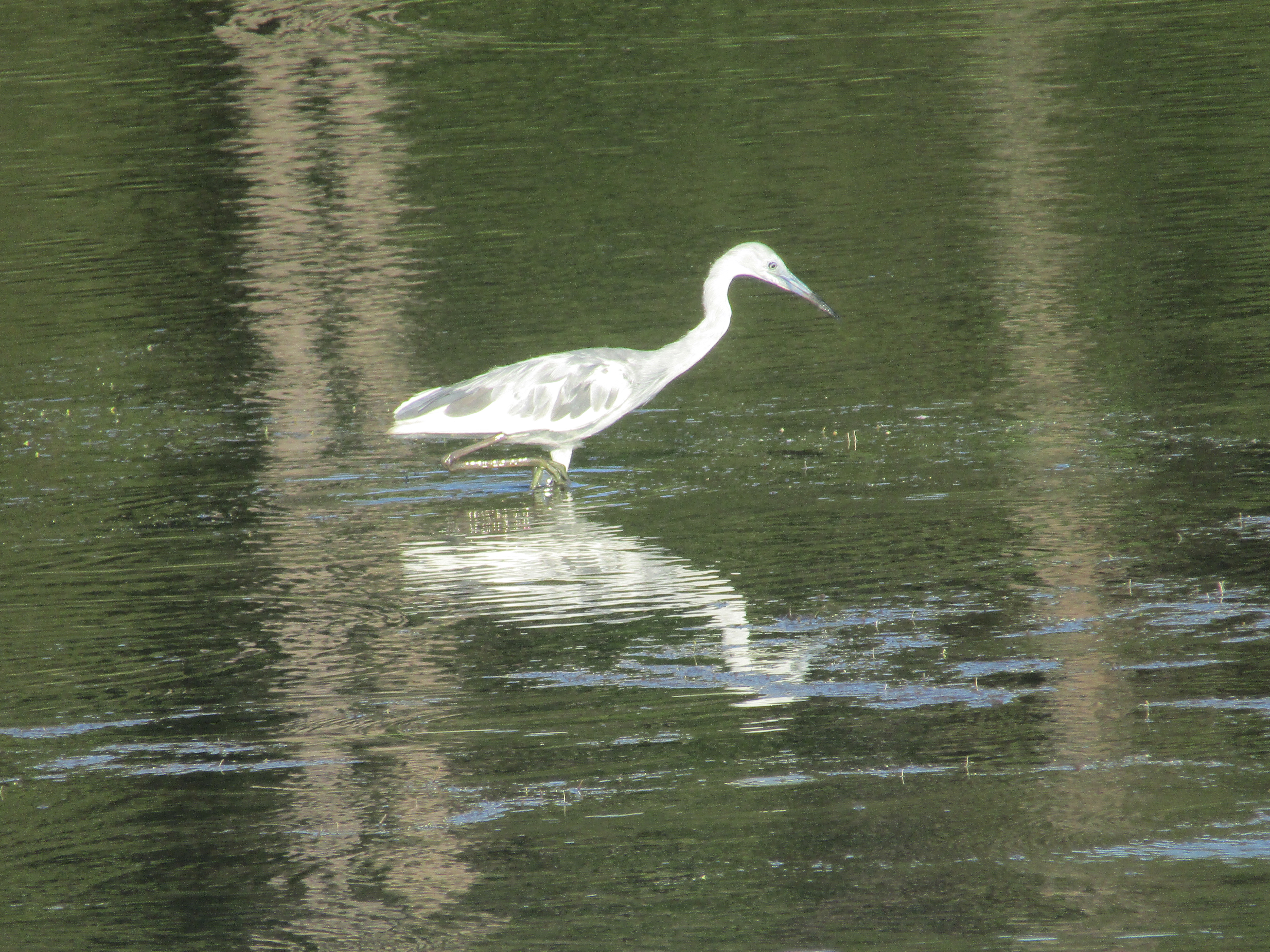
Sightings this summer of long-legged wading birds in Northeast Tennessee that are outside of their usual range have included little blue herons, white ibis and great egrets. The little blue heron and ibis have been recent visitors to Unicoi County. To toss another species into the mix, Tom and Cathy McNeil recently found an American anhinga near Austin Springs at Boone Lake in Washington County. Their anhinga sighting followed their discovery of seven or eight little blue herons and 14 great egrets at this well-known birding hot spot.

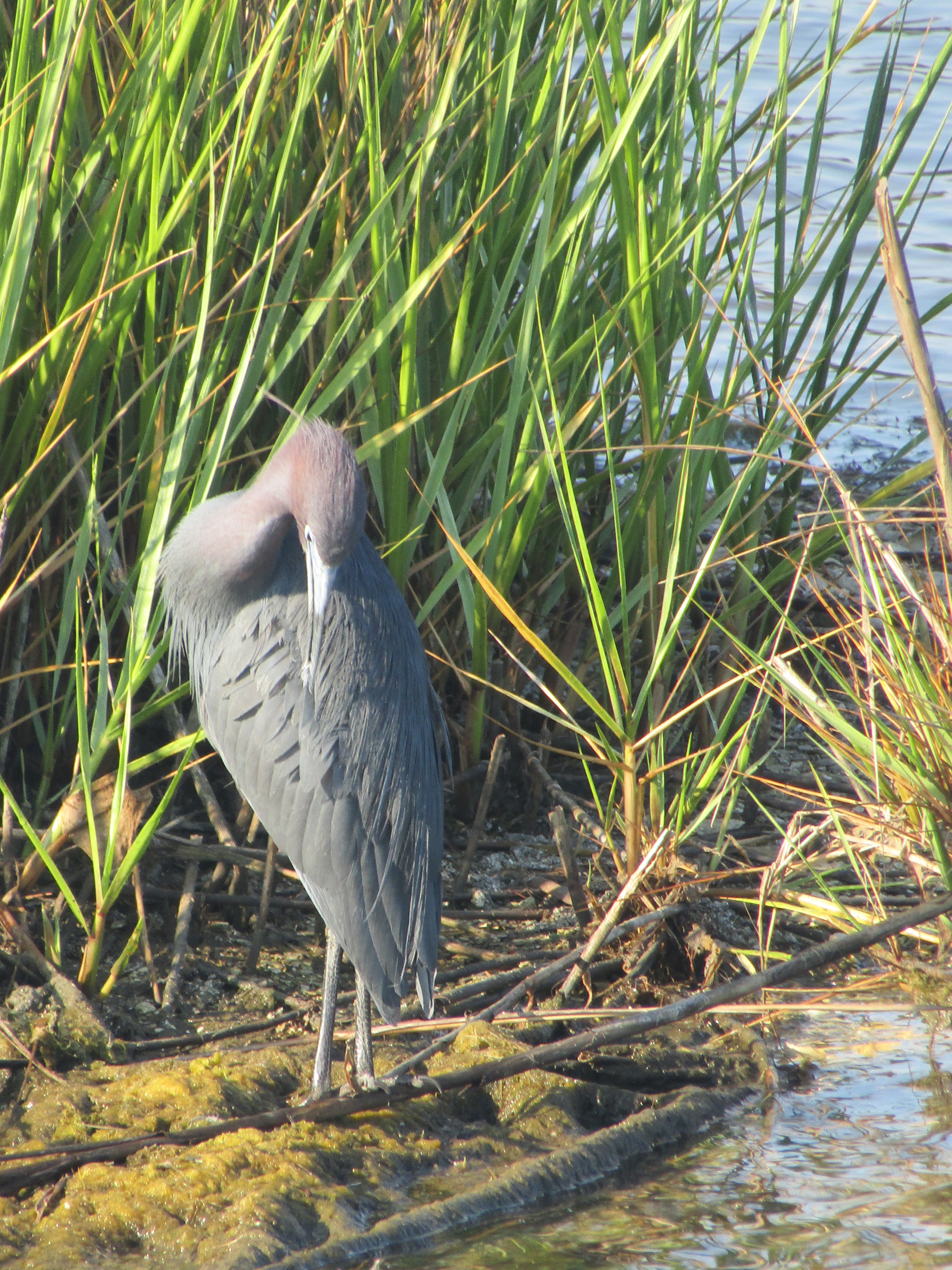
Photo by Bryan Stevens • Adult little blue herons, like this adult preening at Huntington Beach State Park, South Carolina, have a mix of blue and purple feathers.

Roger Mullins discovered both an immature little blue heron and an immature white ibis during one of his regular visits to scan the ponds along the former Buffalo Valley Golf Course in Unicoi.

“I first spotted the little blue on July 5, and then on July 10 I saw the white ibis standing just a few feet away on the same limb.

“Within minutes they were standing next to each other,” he continued. “They were even following each other from place to place, almost like they were siblings.”

Roger noted that the little blue heron gradually learned to trust him, but he could only get so close without making the bird feel uncomfortable.

“Being extremely patient, taking it slow and easy, is pretty much how I approach all wildlife, and it usually pays off well,” Roger shared.

“I first started visiting the golf course ponds back in the winter when someone told me about seeing a male hooded merganser there,” he noted. “There is not always an abundance of wildlife present, but I always check it out just in case. The best thing about these ponds is the consistent peace and tranquility, since people don’t usually go there for family recreation or to walk their dogs.”

Roger added that he doubted that the little blue heron would have lingered at a public park with more activity.

Most of my own observations of little blue herons have taken place in SouthCarolina, Georgia and Florida, although I have seen this species a couple of times in Tennessee. I have also found little blue herons more skittish than some herons and egrets.

Photo by Bryan Stevens • This photo of a little blue heron at Huntington Beach State Park, South Carolina, shows the intermediate phase of plumage that makes identification even more of a challenge.

While diverting storms can’t be ruled out for causing some unexpected birds to detour into the region, it’s also normal behavior for young wading birds to disperse far and wide after leaving the nest. North American waders, or wading birds, include such long-legged species as herons, egrets, bitterns, ibises, storks and spoonbills. Most species are associated with wetlands or coastal areas.

Late summer birding is usually a period of doldrums as heat and humidity can discourage birders as well as diminish bird activity. However, it’s also the time of year when birders can make some unexpected surprises as wandering waders explore uncharted territory.

The great egret – a larger relative of the little blue heron – became a motivational symbol for conservation with the foundation of the National Audubon Society in 1905. Today, the organization has nearly 500 local chapters, each of which is an independent non-profit organization voluntarily affiliated with the National Audubon Society. These chapters often organize birdwatching field trips and conservation-related activities. The National Audubon Society spearheaded efforts to end the mass slaughter of various bird species. Some birds were killed for food, but millions were also killed for their showy feathers that were destined to decorate stylish attire worn as a symbol of high fashion. As early as 1910, some states began passing legislation to abolish trade in bird plumes. The federal government also came to the assistance of birds with the Migratory Bird Treaty Act, which was a law first enacted in 1916 to implement measures to protect and conserve migratory birds.

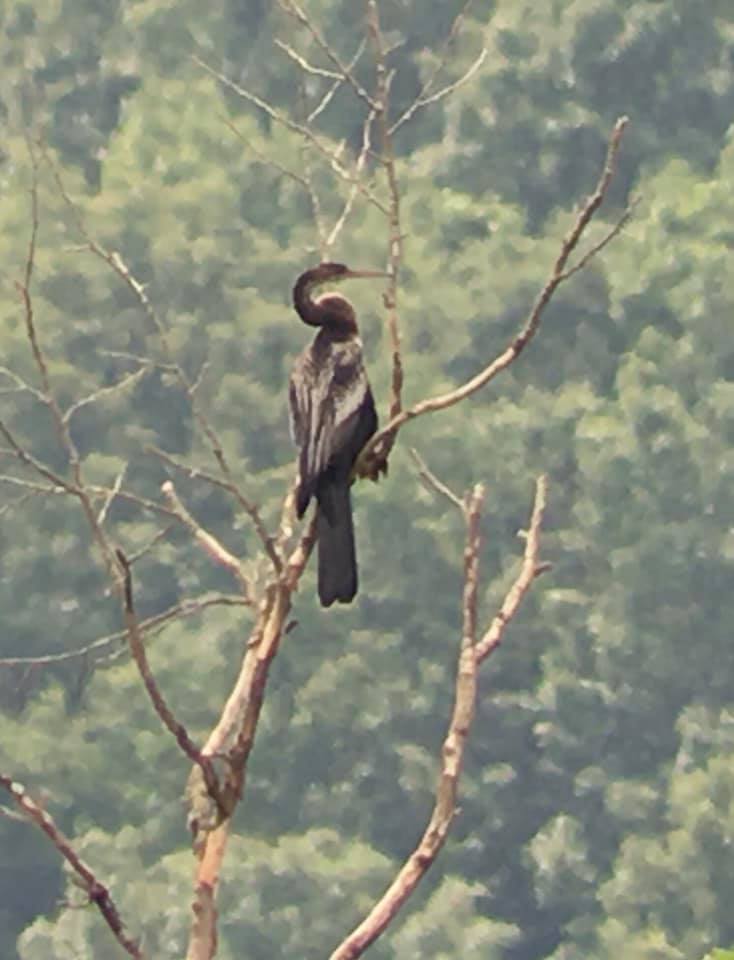
Photo by Tom McNeil • An American anhinga at Boone Lake found by Tom and Cathy McNeil represents an unusual find for the region. Even more unusual, Tom McNeil found another anhinga in Johnson County, Tennessee, a few days later.

Scientifically speaking, the little blue heron would be more accurately described as an egret. With the scientific name of Egretta caerulea, the little blue heron’s closest relatives are other members of the genus Egretta, which includes such other North American wading birds as snowy egret, reddish egret and tricolored heron. Other members of the genus found in other global localities include little egret, slaty egret and Chinese egret. I’m not sure why the tricolored heron and little blue heron were not named tricolored egret and little blue egret, but there are some Egretta species that also bear the name heron, including black heron, white-faced heron, Pacific reef heron and Western reef heron. It’s probably important to note that there are no real physical differences between herons and egrets. They are all classified together in the family Ardeidae.

I’m fairly confident that Roger’s sighting of a little blue heron is the first documented occurrence of the species in Unicoi County. His white ibis is unexpected but not unprecedented. An immature white ibis spent several days in July of 2011 at the ponds and fields at the home and farm of former Unicoi mayor Johnny Lynch.

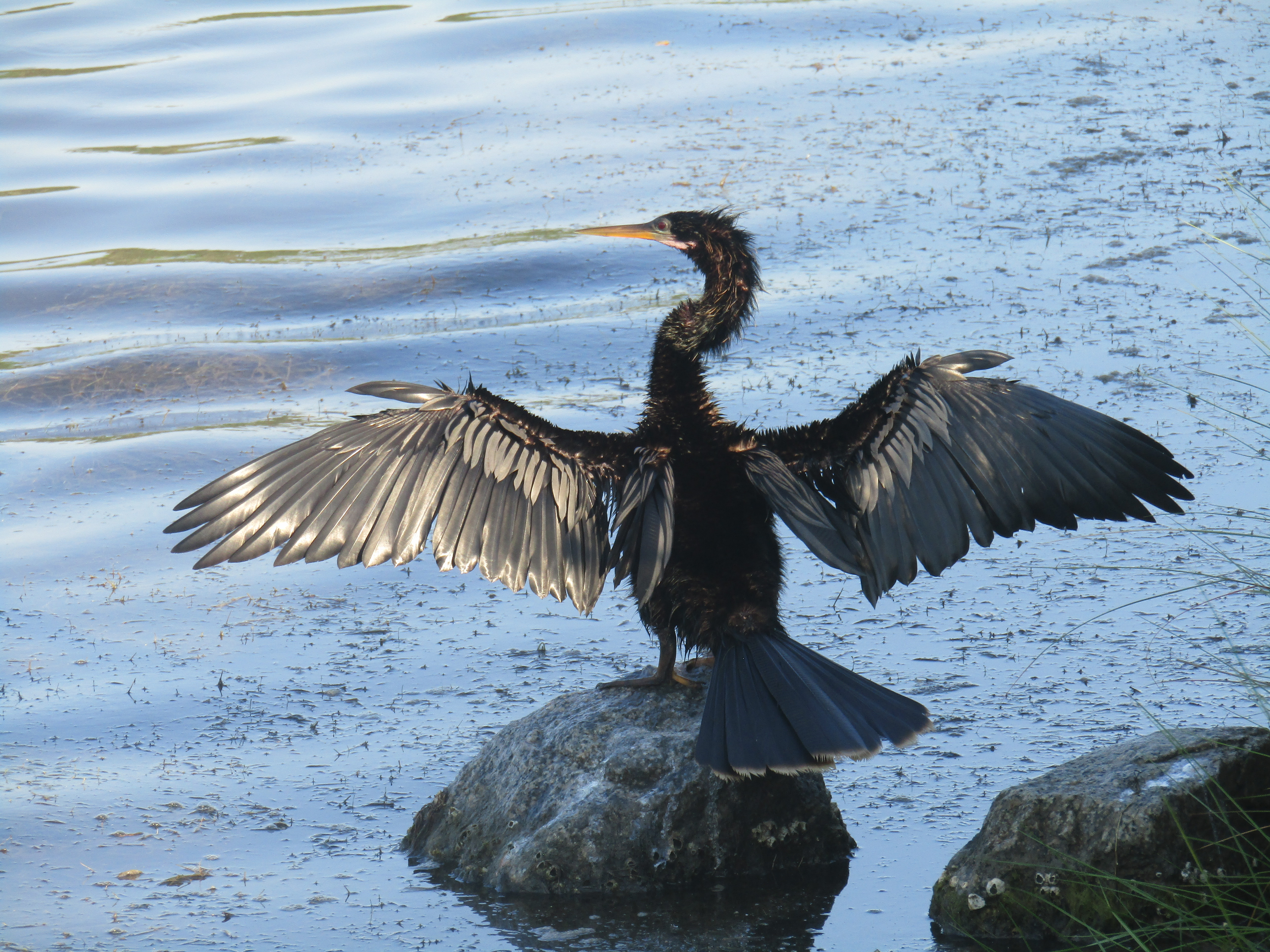
Photo by Bryan Stevens • An American Anhinga dries off feathers after a swim at Huntington Beach State Park in South Carolina.

As for the anhinga spotted by the McNeils, this rare visitor was found the following day by several area birders, including Michelle Sparks who relocated the anhinga from her kayak. The anhinga is a large waterbird with a slender neck and a dagger-shaped bill reminiscent of a heron’s bill. These birds spend much of their time swimming beneath the water, often with only their neck and bill above the surface. Apparently the term “anhinga” comes from a native tribe in Brazil. Anhingas prefer fresh water, but they are often found in coastal areas. Most reports from Tennessee come from near Reelfoot Lake in the western portion of the state. Other common names for the anhinga include “water turkey,” “snake bird,” “American darter” and “devil bird.” Worldwide, there are only four species of anhingas, or darters as they are called in other parts of the world. The other three are the Indian darter, the African darter and the Australian darter.

Tom shared an amusing anecdote on Facebook about their sighting of the anhinga.

“Cathy and I found this bird (the anhinga) yesterday evening out of absolute luck,” he wrote. “We had already birded the area and had some great fun observing the little blue herons and great egrets.  We stopped at the Austin Springs bridge for a few moments and saw four river otters playing under the bridge and then just decided to drive back the way we came.”

On their way back, Cathy had Tom stop so she could look at the “white birds” in the top of the trees across the water.

“We both pulled up our binoculars to look at them, but it was the bird perched below them that was the star of the show,” he reported. “We shouted ‘anhinga’  at the exact same time!”

That’s the beauty of birding – those “anhinga” moments. I’m hoping readers are enjoying some fun birds this summer. Share sightings, ask questions or make comments by emailing me at ahoodedwarbler@aol.com.