Tag Archives: Johnson City Press

Prepare to welcome returning hummingbirds as migrating birds make their way back

Rubythroat-TheSoarNet

Photo by TheSOARnet / Pixabay.com • Male ruby-throated hummingbirds usually migrate ahead of females. These tiny birds must cross the Gulf of Mexico, without stopping, to reach their nesting grounds in the eastern United States. The journey across the Gulf can take them 18 to 22 hours, dependent on weather conditions.

As it has done for many years now, the website journeynorth.org is tracking the progress of ruby-throated hummingbirds as they return to the United States.

Most of the first sightings of hummingbirds made each spring are of male hummingbirds. The males arrive first so they can find and defend a choice territory for the purpose of attracting females. Indeed, there are many more sightings this week for male ruby-throated hummingbirds from Journey North citizen scientists who live along the Gulf Coast states.

Hummingbird-Ventral

Photo by Bryan Stevens • A ruby-throated hummingbird perches at a feeder for a sip of sugar water.

On Facebook, I have been doing my own tracking based on posts from friends living farther south. For instance, Marcie McGehee Daniels in Summerville, South Carolina, made a Facebook post on March 22 to share news of her first-of-season ruby-throated hummingbird.

“He drank for a few seconds and then rested in the shade for about 10 minutes, worn out from his trip!” Marcie posted on her Facebook page. She also posted a fantastic photo of the intrepid migrant.

As demonstrated by Marcie’s post, the migration of ruby-throated hummingbirds is drawing closer to our region. They cross the Gulf of Mexico without stopping to reach the Gulf States. Once they make that difficult flight, they will spend some time recuperating before they spread out to make their way northward. Residents in Virginia, Tennessee and North Carolina should soon be making their first sightings of ruby-throated hummingbirds since these tiny flying gems departed last October.
Ruby-throated-WILLOWS

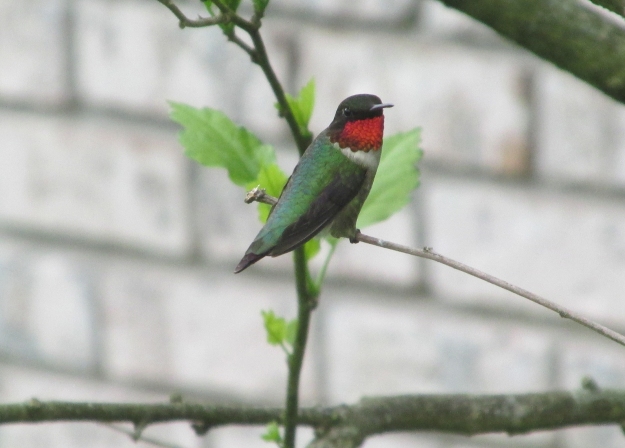
Photo by Bryan Stevens • Numbers of ruby-throated hummingbirds in the region tend to fluctuate each year, but people should see a spike in their numbers as the hummingbirds pass through the region this month as they migrate north for another nesting season.

On a recent visit to Fripp Island, South Carolina, I didn’t see any ruby-throated hummingbirds, but I did observe other birds that reminded me that many of my favorite birds should be returning to my home within the next few weeks. I enjoyed sightings of several species of warblers, as well as various shorebirds. Many warblers return to the region in April, and shorebirds may make migration stops at area lakes and rivers as they push rapidly toward breeding grounds in regions far to the north in Canada and Alaska.

Some of the first of the resident summer birds to return to the region each year includes species such as Louisiana waterthrush, brown thrasher, chipping sparrow, tree swallow and blue-gray gnatcatcher. Not too long after these “early birds” have returned, people can expect to start seeing the vanguard of the ruby-throated hummingbird spring migration as these tiny birds, which weigh no more than a nickel, return to their summer nesting grounds across the eastern United States and Canada.

Jean-Thrasher

Photo Courtesy of Jean Potter •  A brown thrasher scans the grass for insect prey.

As one might imagine, such tiny birds face a range of threats. In addition to offering sugar water feeders and planting gardens with nectar-bearing plants, there are other ways to help ruby-throated hummingbirds thrive.

The American Bird Conservancy recommends paying attention to our buying habits. In the winter months when they are far from their summer homes, ruby-throated hummingbirds are known to winter on shade coffee farms. Unlike today’s typical “sun” coffee farm, which razes all trees but the coffee itself, these traditional farms grow coffee in the shade of native trees. By doing so, they produce superior coffee and provide habitat for dozens of migratory songbirds, according to the ABC.

The importance of shade coffee for migratory birds was confirmed by naturalists Kenn and Kim Kaufman, who estimated that a single shade coffee farm in Nicaragua sheltered more than 1,200 migratory bird species—including the ruby-throated hummingbird—on just 90 acres. The ABC notes that buying bird-friendly coffee is an easy way people can help hummingbirds and many other migratory birds.

rufous-oct13

Photo by Bryan Stevens • A rufous hummingbird hovers nears a feeder.

While the eastern United States is home only to the ruby-throated hummingbird as a nesting hummingbird species, the western half of the United States and Canada can claim about a dozen nesting species, including rufous hummingbird, Allen’s hummingbird, Anna’s hummingbird, broad-tailed hummingbird, black-chinned hummingbird, calliope hummingbird, buff-bellied hummingbird, broad-billed hummingbird and violet-crowned hummingbird.

To track the progress of ruby-throated hummingbird migration for yourself, visit http://www.journeynorth.org to monitor their approach to our region. Ruby-throats typically arrive in our region in early April. The early date for a ruby-throated hummingbird arrival in 2018 took place on April 4. If you don’t have your feeders outdoors and waiting for them, it’s time to do so.

As always, I love to hear from readers about their first hummingbird sighting of the year. Jot down the time and date and contact me by email at ahoodedwarbler@aol.com. You can also report your sightings on Facebook at http://www.facebook.com/ahoodedwarbler. I can hardly wait for one of our favorite birds to get back. Let’s give them a hearty welcome.
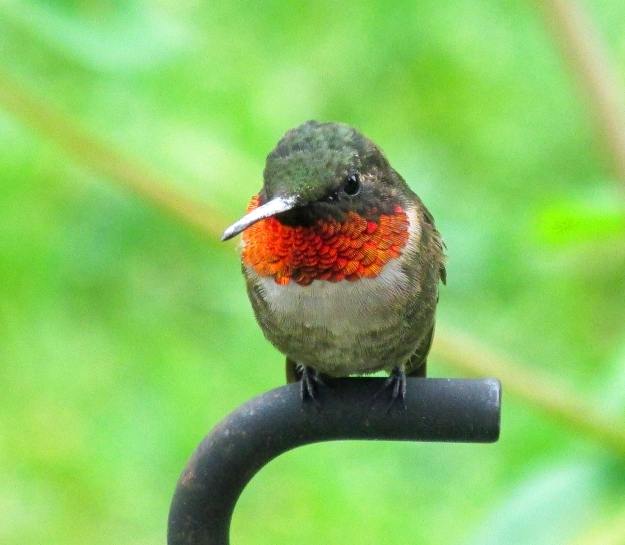
Rubythroat

Photo by Bryan Stevens • Despite a perceived disadvantage of size, ruby-throated hummingbirds are quite capable of thriving in a giant world.
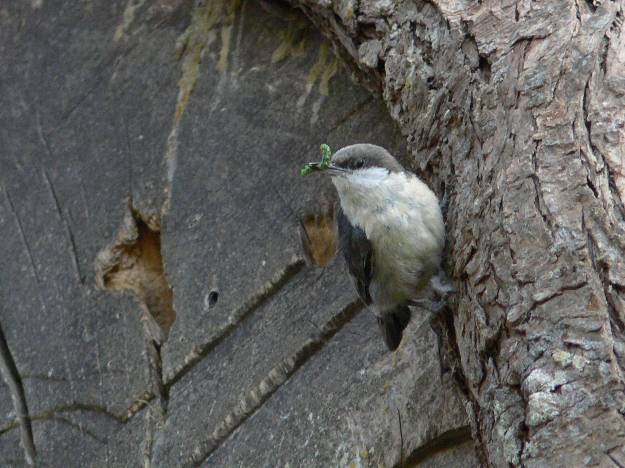
Smallest of the nuthatches finds a niche at woman’s feeders

natdiglib_6802_extralarge

Photo by Lee Karmey/USFWS • A pygmy nuthatch captures a caterpillar.

Veronica Rausch contacted me by email to share a story of the nuthatches that frequent the feeders at her home in central Oregon.

“I have a small flock of pygmy nuthatches coming into the feeders next to my dining room window on a regular basis,” Veronica wrote, adding that the nuthatches began their visits about three weeks ago.

Veronica wrote that she lives in the pine forests of Central Oregon at an elevation of about 4,200 feet.

“The pygmy nuthatches are delightful little birds and share the feeders with the chickadees and juncos,” she wrote. “The bigger birds such as the Stellar’s jays and the woodpeckers will cause them to leave.”

Veronica has also enjoyed observing their unusual antics. “I saw one do a little dance on a branch by the suet feeder,” she described in her email. “Unfortunately, I wasn’t able to grab the camera fast enough! I hope they stick around.”

I replied to Veronica’s email, noting how I consider her fortunate to be hosting the smallest of North America’s nuthatches at her home. Admitting to some envy at her good fortune, I explained that I hope to some day add this species to my life list so I can check all of the continent’s nuthatches off my list of target birds.

Even by nuthatch standards, the pygmy nuthatch is a small bird. In appearance, this nuthatch shows buffy-white underparts contrasted with a brown head and a slate-gray back. They often breed in large extended family flocks, so the four individuals observed by Veronica might very well have been closely related to each other.

Nesting pygmy nuthatches are often assisted in their chores by “nest helpers,” which are close relatives that help the busy parents gather food and feed hungry young. These nest helpers also deliver food to females as they incubate eggs and will mount a spirited defense of a nest threatened by intruders. Their communal nature extends to nocturnal roosting when many individuals will huddle together to ensure their combined body heat helps them survive extremely cold nights.

So how small is the pygmy nuthatch? The adults are barely four inches long and weigh only a third of an ounce. A common fountain pen weighs more than this tiny nuthatch, which goes a long way towards explaining the bird’s scientific name, sitta pygmaea.

brown-headNuthatch

Photo by theSOARnet/Pixabay.com • The brown-headed nuthatch, the southeastern counterpart to the pygmy nuthatch that ranges throughout the Rocky Mountain states, is strongly associated with various types of pine trees.

Pygmy nuthatches are not at all likely to be found in the Mountain Empire or any adjacent areas, but there is another small nuthatch that is found in some extremely localized habitats in the region. The brown-headed nuthatch is a specialist of pine woodlands throughout the southeastern United States, favoring loblolly-shortleaf pines and longleaf-slash pines. This nuthatch requires standing dead trees for nesting and roosting. They forage for food, however, on live pines. The birds are more abundant in older pine stands.

I saw several brown-headed nuthatches during a recent stay on Fripp Island in South Carolina. I’ve also observed this small nuthatch during visits to Chattanooga, Tennessee, and Atlanta, Georgia, as well as various other locations in South Carolina. This nuthatch even occurs in the Mountain Empire region, most recently with four of these birds being found at Washington County Park on South Holston Lake near Bristol during the 2018 Christmas Bird Count conducted by the Bristol Bird Club.

These small birds will occasionally forage close to the ground, but they are often in the upper branches of pine trees. Their presence is often revealed by their call, which sounds amazingly like a squeeze toy. They produce their “squeaky toy” call persistently when agitated or curious. Brown-headed nuthatches often associate with mixed flocks in company with Carolina chickadees, tufted titmice, pine warblers and other small songbirds.

The power of flight gives most birds a perfectly valid reason to disregard the power of gravity. The family of tree-clinging birds known as nuthatches lives an even more topsy-turvy lifestyle than many other of their winged kin. Nuthatches prefer a headfirst stance, even “walking” upside down as they search for food in the nooks and crannies of tree trunks and branches.

The United States is home to four species of nuthatches: white-breasted, red-breasted, brown-headed and pygmy. White-breasted nuthatches are probably the most familiar nuthatch to backyard birders in this area.

WB-Nuthatch

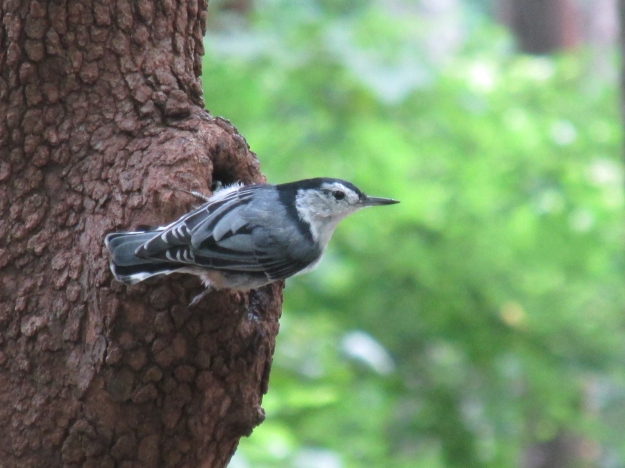
Photo by Bryan Stevens • A white-breasted nuthatch clings to the bark of a tree.

Because of their gravity-defying antics, the white-breasted nuthatch and other members of the family can provide hours of entertainment at our bird feeders. Individual white-breasted nuthatches will follow a single-minded path along the trunk of a tree or a branch on the way to a feeder. An individual nuthatch rarely varies from this path. It’s amusing to watch the jerky progress along the trunk as this bird prepares for a flight to a feeder holding sunflower seeds or a hanging wire basket of suet.

At my home, nuthatches typically remain aloof from the always-ongoing rivalry between the chickadees and titmice. The white-breasted nuthatch is also a no-nonsense visitor. Rarely distracted by disturbances among other birds, this nuthatch is content to grab a seed and go or hang on to the wire frame of a suet basket and peck off chunks of suet.

The more numerous titmice and chickadees give way when a white-breasted nuthatch claims a feeder. At times, however, among the frantic activity, a tufted titmouse or a Carolina chickadee will forget itself and fly to a position on a feeder already claimed by a nuthatch. If surprised enough to retreat to a nearby perch, the nuthatch will go through a rather comical little dance to express its displeasure. Wings spread out in a rigid pose, the bird will turn around in tight circles, showing definite resentment at being displaced by an offending chickadee or titmouse.

The stubby red-breasted nuthatch is another member of the family that occasionally finds its way to our yards. Smaller than the related white-breasted nuthatch and, as far as I can tell, complacent in the company of chickadees and titmice, the red-breasted nuthatch is always a welcome visitor. It has a tell-tale “yank yank” call that it produces when excited that sounds very much like little tin horns. The red-breasted nuthatch, perhaps because it spends so much of the year in more remote areas, can also be amazingly tame when it pays a winter visit.

Red-breastedNuthatch

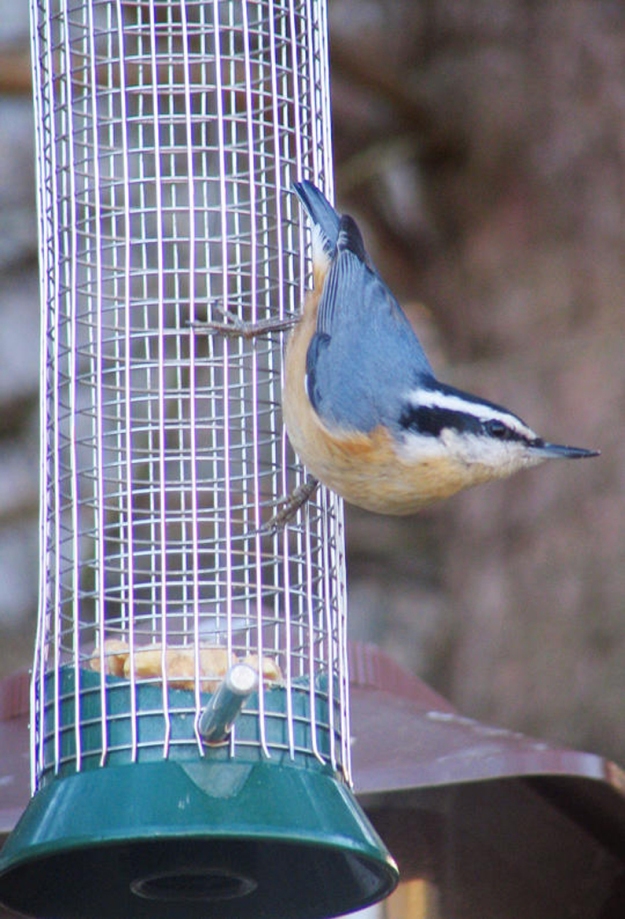
Photo by Bryan Stevens • A red-breasted nuthatch clings to the mesh of a feeding tube to get at the peanuts contained within.

Nuthatches can be attracted to feeders by offering peanuts, sunflower seeds and suet. They are also cavity-nesting birds, but are more reluctant about accepting a nesting box as a place to rear young. They will gladly accept an old woodpecker hole or other natural cavity in a tree.

I also want to complete my list of North American nuthatches by adding the fourth species — pygmy nuthatch — to my life list. I have made two trips to western North America, where this species ranges, but haven’t managed to find this bird. Both the pygmy and brown-headed are among the smallest members of the nuthatch family.

On the other end of the size scale is the appropriately named giant nuthatch, which reaches a length of almost eight inches. The giant nuthatch ranges through China, Thailand and Burma. This nuthatch is bigger than a downy woodpecker, one of our more common visitors at backyard feeders in our region.

Worldwide, there are about 25 species of nuthatches, some of which have surprisingly descriptive names for birds that spend most of their lives creeping in obscurity along the trunks and branches of trees. Some of the more creative common names for these little birds are inspired by locations around the globe, giving us species like Siberian nuthatch, Kashmir nuthatch, Burmese nuthatch, Bahama nuthatch, Algerian nuthatch, Indian nuthatch and Chinese nuthatch.

These birds are named “nuthatch” for the habit of some species to wedge a large seed in a crack and hack at it with their strong bills. I like to refer to them as “upside-down birds” because of their gravity-defying nature. It must give them an interesting perspective on the world around them.

Spring-Nuthatch

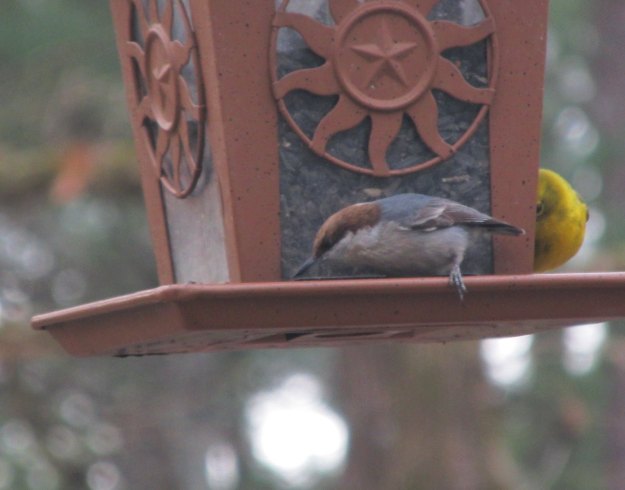
Photo by Bryan Stevens • In some areas, brown-headed nuthatches are feeder visitors. These small nuthatches are specialists that favor stands of loblolly pine.

High school senior looking out for interests of the region’s bluebirds

Bluebird-Pool

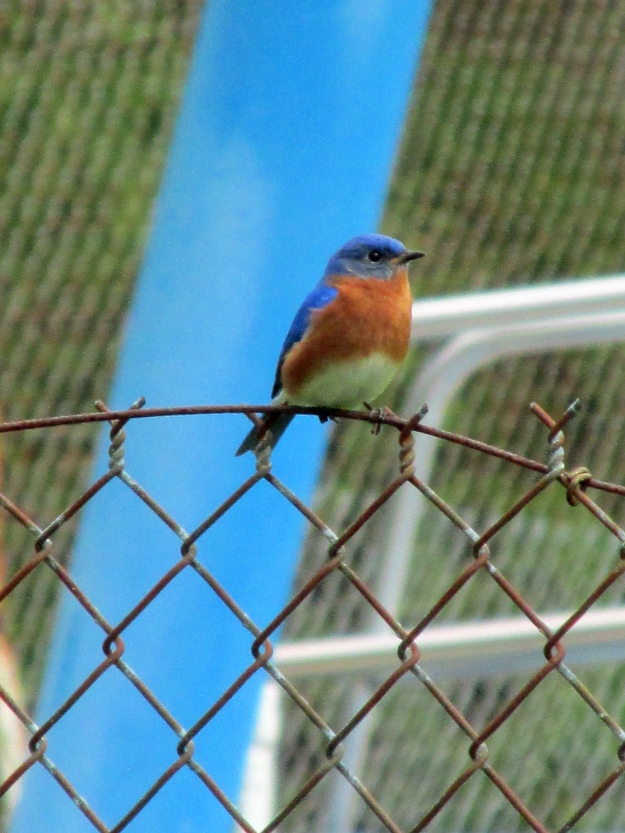
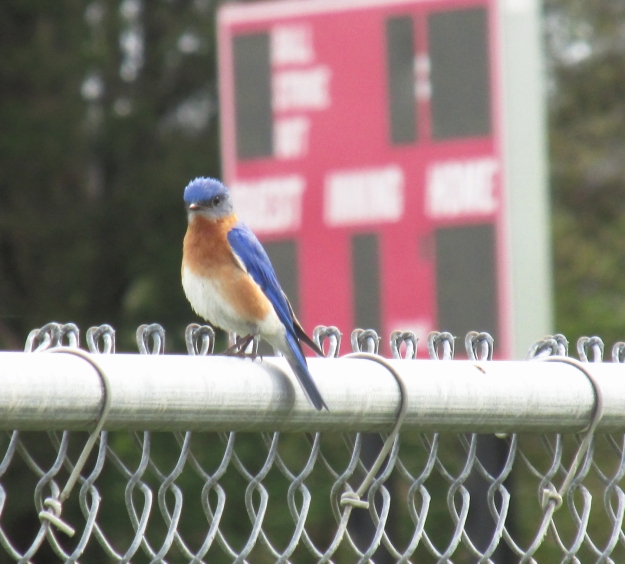
Photo by Bryan Stevens • A handsome male Eastern bluebird perches on a chain-link fence.

Observant people have probably noticed Eastern bluebirds already checking out possible nesting locations. These cavity-nesting birds begin scouting for possible nest sites in February and March. By April, female bluebirds may be incubating a clutch of eggs.

Although bluebirds will nest in natural cavities in trees, they respond readily to the availability of nesting boxes provided by human landlords. Many people are devoted to the cause of seeing that bluebirds — a favorite of many — continue to thrive in the face of certain challenges.

Bluebird-BeakFull

Photo by Adrianna Nelson • Bluebirds are skillful at foraging for insects.

Eighteen-year-old Adrianna Nelson is one such person. A senior at John S. Battle High School, Adrianna said she recently became involved with the Tennessee Bluebird Society as a way to become active with a conservation-related activity involving birds.

“I only recently got involved with TBS,” she said.

She began looking last summer for a way to contribute locally to the welfare of birds.

“I came across the TBS website,” she said. “They didn’t have a coordinator for Sullivan County, so I decided to fill the position.”

Nelson said she is interested in all birds but enjoys focusing on bluebirds and other cavity nesters to spread knowledge about their importance.

“TBS focuses on bluebirds,” she said.

Bluebird-FencePost

Photo by Bryan Stevens A male Eastern Bluebird inspects a nesting cavity in a wooden fence post. When such cavities are scarce, bluebirds readily build in nest boxes.

Bluebirds are like the “poster child” for the organization, Nelson noted, but she also pointed out that TBS also promotes the conservation of other native cavity nesters.

As county coordinator for TBS, her job primarily involves giving presentations to raise awareness about bluebirds and other cavity-nesting bird species.

“I have already presented to the Bristol Bird Club, and I plan to still give a few more presentations,” she said.

“I can also set up bluebird trails,” Nelson said. “I have not done any trails this year, but I have plans for next year. Part of my responsibilities is also to maintain trails and answer questions from the community.”


There are some good reasons for people to offer extra support to help bluebirds thrive.

“Eastern bluebirds are native cavity nesters,” Nelson said. “They are not strong enough to excavate their own cavities, so starlings and house sparrows can take over natural and man-made structures very quickly. It is important to promote the longevity of native species. Not only are they important, they are very beautiful.”

There are several things that people can do to make their yards and gardens more attractive to bluebirds.

“One of the most important is to make sure that there is proper habitat,” Nelson explained. “Bluebirds prefer open areas with some trees or other perches for spotting insects.”

Bluebird-withPineNeedles

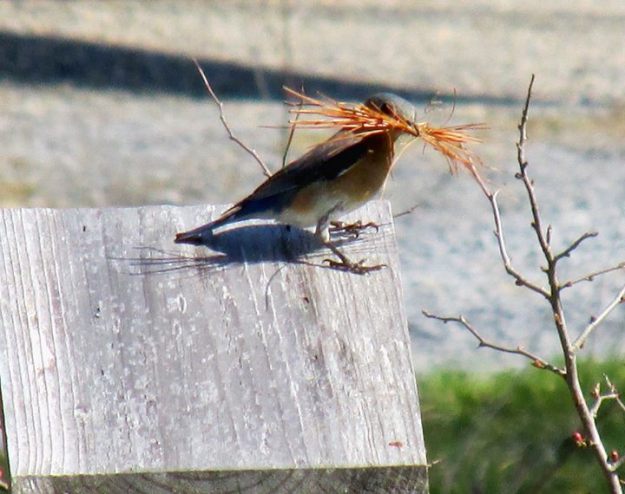
Photo by Bryan Stevens • A female Eastern Bluebird gathers pine needles to use as nesting material. Bluebirds are a cavity-nesting species that will use natural or manmade cavities.

For those interested in attracting nesters, Nelson said that picking the right nest box and proper placement is important.

She helps maintain nesting boxes along a bluebird trail at Steele Creek Park in Bristol.

IMG_4196

Photo by Adrianna Nelson • Eastern bluebirds are a beautiful bird to welcome into the backyard.

In addition, providing plenty of water helps. “Bluebirds also like meal worms, but plants such as dogwoods, sumac, pokeweed, viburnum, and others can provide food, especially in the winter,” Nelson said.

Keeping predators away is crucial. According to Nelson, this can be achieved with simple actions such as keeping cats indoors.

“There are more details about bluebirds, boxes, nesting, predators, habitat and more online on the North American Bluebird Society website,” Nelson added.

Nelson shared some fascinating facts about bluebirds.

“They can spot insects from over 50 yards away,” she said.

EasternBluebird_Score

Photo by Bryan Stevens • Eastern Bluebirds are year-round residents in Northeast Tennessee.

Bluebirds are bigger than small songbirds like chickadees, wrens and warblers, yet they weigh only about one ounce.

Bluebirds are truly “early birds,” according to Nelson. “Eggs usually hatch within the first two hours after dawn,” she said.

There are no local meetings of the Tennessee Bluebird Society, but an annual meeting for TBS is held in November. The meeting is open to the public.

TBS and North American Bluebird Society members get quarterly journals and newsletters. There is also information on the websites of the two organizations for anyone interested in bluebirds.md19917207443

NABS was founded in 1978 by Dr. Lawrence Zeleny in order to promote the preservation of bluebirds, a cavity-nesting species in decline at that time. Zeleny, with the support of his wife, Olive, dedicated much of his life to providing nestboxes and managing bluebird trails. He promoted bluebird conservation through hundreds of talks and articles in many periodicals.

The Eastern bluebird has two close relatives — the Western bluebird and the mountain bluebird. These species belong to the genus, Sialia, which is counted among the world’s thrushes.The Western bluebird ranges throughout California, the southern Rocky Mountains, Arizona and New Mexico. The mountain bluebird is widespread in the western United States, as well. Two states — Idaho and Nevada — have bestowed official status on the mountain bluebird as their official state bird. The Eastern bluebird has also been honored with that designation by the states of Missouri and New York.

The Eastern bluebird suffered serious decline from 1940 into the 1960s, but it is now a common bird in the region. Rick Knight, author of The Birds of Northeast Tennessee, notes that nest boxes were instrumental in the recovery of the Eastern bluebird.

Nelson is continuing the work pioneered by others to conserve the Eastern bluebird. She lives in Bristol, Virginia, with her parents, Sandi and Shawn Nelson. She welcomes the public to contact her about bluebirds by emailing adriannan1@hotmail.com.

To learn more about the Tennessee Bluebird Society, visit http://www.tnbluebirdsociety.org. For more information on the North American Bluebird Society, visit wwwna.bluebirdsociety.org.

Bluebird-BabeInMimosa

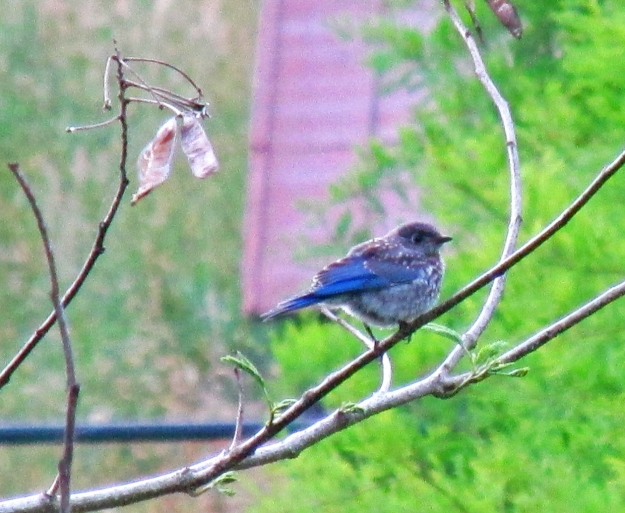
Photo by Bryan Stevens A young Eastern Bluebird slowly gains independence after leaving the nest.

Many birds plan ahead for times of scarcity

bird-Struza

Photo by Struza/Pixabay.com • A chickadee plucks a peanut from its shell. Chickadees, like many other songbirds, often store food that they can utilize during lean times.

Ernie Marburg sent me an email last month about an article he had read on chickadees that he thought might be of interest. The article’s main focus involved the fact that chickadees are apparently capable of remembering 1,000 cache sites and retrieving food several months after having placed it in various scattered locations.

“Their memories are better than ours,” Ernie wrote. “Mine, anyway.”

Ernie also had a question for me about observations he and his wife have made at their home in Abingdon, Virginia, about birds and the practice of caching food.

“My wife and I have both observed crows taking bread (five or six pieces at a time) in their beaks and flying off and burying it in lawns among the grass,” he wrote. “We have also observed that they march through the lawn apparently looking for such food caches. Is this something that is commonly known? Are we correct in our observation of this?”

BlueJay-Dbadry

Photo by dbadry/Pixabay.com • Blue Jays often create food caches for acorns and other items. This jay is leaving a feeder with several peanuts thanks to an expandable esophagus.

Experts have indeed noticed this behavior. In fact, it’s fairly well known that crows are methodical in their approach to storing food. Crows, which belong to the corvid family that includes birds such as jays, ravens and magpies, are also highly intelligent animals. Their intelligence shows in the extra step they take after they have buried food. The crow will often take a leaf or twig and place it over the spot where the food has been buried. Experts suspect the bird takes this action to mark the spot and attract attention to the location when they return to look for the buried food.

Birds store food for convenience when they have more food than they can finish, but they also cache food in anticipation of periods such as inclement winter weather when food is likely to become scarce.

The blue jay, a relative of the American crow, is fond of acorns. The jay is so enamored of acorns — a nutrient-rich food for many birds and other animals — and so dedicated to caching acorns that the bird actually helps oak forests expand. A single jay may cache thousands of acorns each fall. Inevitably, some of the cache will be forgotten, to go uneaten and give the acorn the chance to sprout into a seedling in the spring that may grow into a mighty oak in a new stand of oaks.

The jay even has some modifications to help with the storing of food. Blue jays have a flexible esophagus that can distend and allow them to stuff multiple acorns down their throats. Caching food is hard work, so it helps reduce energy consumption if the jay can transport several acorns at a time instead of a single acorn on each trip to a cache site.

carolina-chickadee-2501531_1920

Photo by Anne773/Pixabay.com • A Carolina chickadee visits a feeder for a sunflower seed. Chickadees are a songbird that’s known for storing surplus seeds as insurance against lean times.

Now, back to chickadees for a moment. Research has shown that the brains of black-capped chickadees grow in anticipation of the need to remember where these tiny songbirds cache their sunflower seeds and other foods. The interesting finding is that only the part of the brain associated with memory grows. After all, it doesn’t do much good to store food for a rainy or snowy day if the bird promptly forgets where the food has been hidden.

natdiglib_28233_extralarge

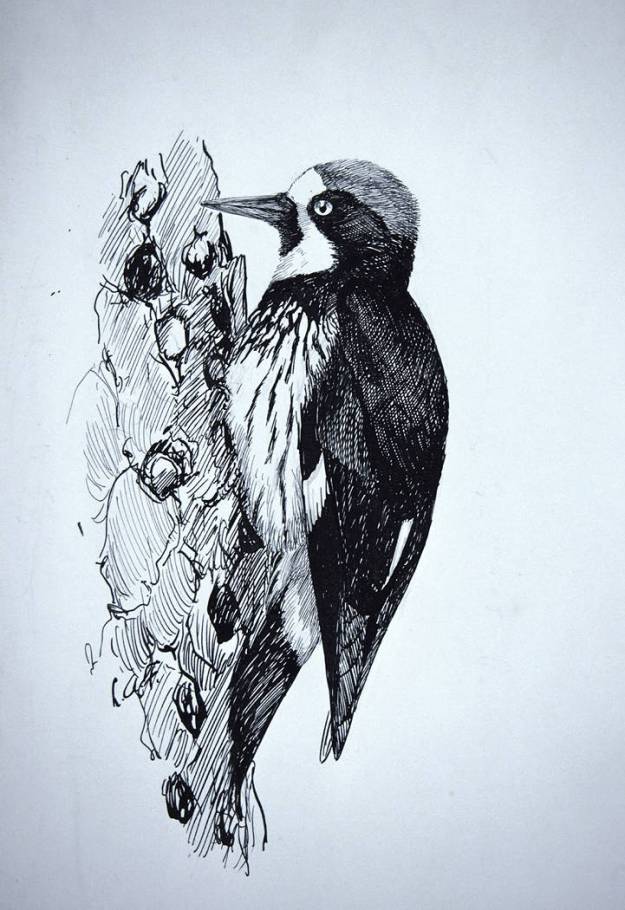
This image illustrates an acorn woodpecker’s visit to a food cache. These woodpeckers are famous for storing acorns in dead and living trees, as well as substitutes such as telephone poles.

The acorn woodpecker might qualify as a world-class cacher of food. As the bird’s name suggests, this woodpecker loves acorns. An acorn woodpecker will devote a significant amount of its time to establishing granaries. In this case, the granaries are holes drilled in the trunks of trees (or sometimes in a telephone pole or the side of a wooden building) for the storing of acorns. Some of these trees have hundreds of holes drilled into them with each hole containing an acorn placed there by the woodpecker. The woodpeckers often use dead trees, but they also utilize living trees. Surprisingly, the holes do not seem to affect the health of the trees.

From chickadees and woodpeckers to crows and jays, birds manage to continually surprise with seemingly infinite resourcefulness.

black crow bird

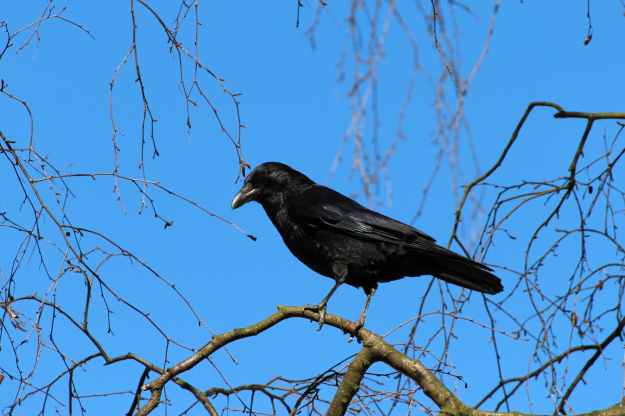
Photo by Pixabay on Pexels.com • The American crow is also known for caching food.

Brief stay of Virginia’s warbler along Kingsport’s Holston River leaves birders amazed

At times, there’s nothing left to do but scratch your head and wonder. It’s a gesture many birders have been making around the Holston River in Kingsport as walks in the area along Netherland Inn Drive on the greenbelt have produced numerous warbler sightings in recent weeks.

Virginia'sWarbler-TWO

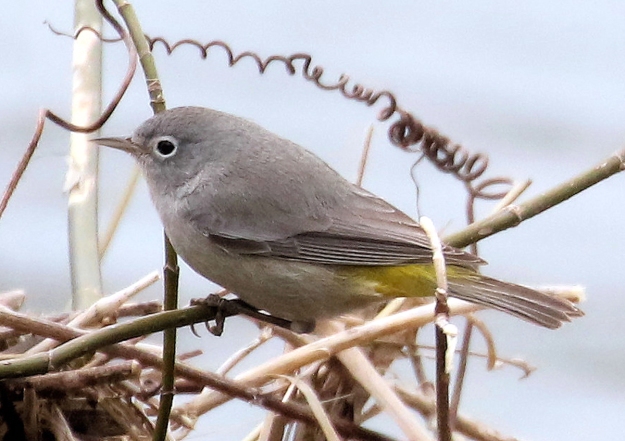
Photo by Sherrie Quillen • The Virginia’s warbler found in January in Kingsport represented the first Tennessee record for the species and one of only a few records east of the Mississippi River.

The list includes expected winter warblers such as orange-crowned, pine, and yellow-rumped, as well as such off-season puzzlers as American redstart, common yellowthroat, Northern parula, Cape May warbler and Nashville warbler; these warblers really should be wintering far to the south in locations around the Caribbean and in Central America. So far this winter, sharp-eyed birders have seen at least 12 different warbler species on the Riverfront Greenbelt. None of them have generated the level of excitement that has been produced by a small plain gray and yellow bird that is doggedly devoted to its daily routine. Birders have rushed from all parts of Tennessee, as well as from as far afield as Virginia and New Jersey, for a chance to see a visiting Virginia’s warbler, a bird that has only been observed on a handful of occasions east of the Mississippi River.

This warbler is not named for the state of Virginia. Spencer F. Baird, who first described the Virginia’s Warbler in 1860, named the species after Virginia Anderson, the wife of Dr. W. W. Anderson, who collected the first specimen in 1858 in New Mexico. Virginia’s warbler is not all that exceptional in appearance. While gray overall the bird shows a white eyering and some yellow highlights to feathers on the chest and under the tail. The bird also wags its tail, a behavior that can be helpful in identifying it.

Virginia's-Warbler_map

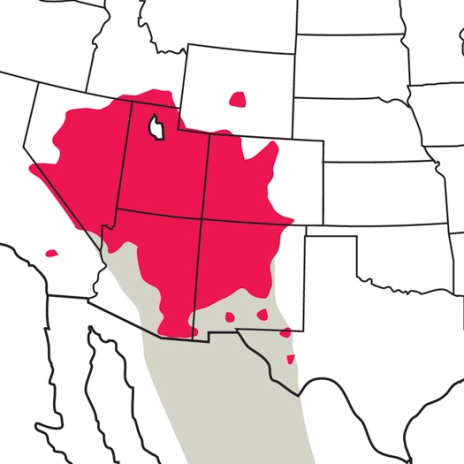
Northeast Tennessee is outside of the expected range in the American southwest of Virginia’s warbler.

The Virginia’s warbler is a species known for showing up in some rather odd locations. Back in 2012, one of these warblers generated birding excitement around New York City when one was found in Alley Pond Park in the New York City borough of Queens. In their usual range, however, Virginia’s warblers nest in arid terrain, including open pinyon-juniper and oak woodlands in the southwestern Rocky Mountain states, which is a far cry from the banks of the Holston River in Kingsport or Queens in New York.

The Kingsport specimen pulled a vanishing act when the weather turned milder in early February. Well-known birder Rick Knight, who lives in Johnson City, Tennessee, addressed the status of the bird in a post he made to the list-serve, “TN-Bird”:

“The Virginia’s Warbler and the other unusual warblers present at Riverfront Park in Kingsport seem to wander some on warm days and then return to the water’s edge on cold days to take advantage of the milder microclimate there.” Knight went on to speculate that the bird may still be in the vicinity and will return to its usual haunts when cold temperatures return. So far, despite a mix of warm days with colder ones, the Virginia’s warbler hasn’t been seen since Feb. 2.

Virginia'sWarbler-ONE

Photo by Sherrie Quillen • The influx of birders to view the Virginia’s warbler led to other unexpected finds along the Kingsport greenbelt, including such out-of-season birds as blue-gray gnatcatchers, Nashville warbler and Northern parula. More than a few birders referred to the famous Patagonian Picnic Table Effect to describe the sightings.

Several birders who found the bird and added it to their life lists commented on the fact that so many other unexpected species were found at the same time in the same location. It wasn’t long before people began evoking the famous birding phenomenon known as the Patagonia Picnic Table Effect, which is a birding phenomenon named for a famous hotspot in southeast Arizona. The lure of a bird called the rose-throated becard at the location attracted a rush of birders to the area. More eyes resulted in more discoveries of other rare birds. In turn, the additional finds continued attracting even more birders and resulted in the discovery of even more rare bird species.

So, who first noticed the presence of the out-of-place warbler? The credit for the discovery goes to two Kingsport residents. On a post to Facebook, the two women who discovered the bird shared details of their exciting find. Bambi “Birdfinder” Fincher posted the notice of the bird’s discovery.

BGGnatcatcher

Photo by Bryan Stevens • A couple of blue-gray gnatcatchers, such as this invidiual, represented an unusual find in winter in the region. The gnatcatchers were spotted by sharp-eyed birders in their quest to observe the Virginia’s warbler in Kingsport.

“Yesterday (Saturday, Jan. 19) in the pouring rain, Sherrie Quillen and I found a Virginia’s warbler on Kingsport Birding Trail-Riverfront Greenbelt,” she wrote in a post to the Birding Kingsport Facebook page. “This is the first record of this bird in the state of Tennessee.”

Bambi explained her birding success simply. “I’m always looking! Keeps me birding!”

She also invited other birders to join her some time. “It can be pretty amazing,” she wrote. “No promises of a state record or life bird, but I can promise you that you will learn something about your surroundings and yourself.”

She earned her nickname “birdfinder” about 10 years ago when she first started birding. “I was out birding with Bill Moyle or Bill Grigsby — one of the Bill’s, anyway — and I was really ‘finding’ birds but didn’t know what they were.”

The Bills didn’t let her get discouraged. “They said, ‘That’s OK, you will learn the birds, but you are a birdfinder.’ It stuck.”

I met both Bambi and Sherrie for the first time on the day I traveled to Kingsport to try my luck at observing this warbler. Bambi quickly proved her “birdfinder” talents. Although I had to wait for about an hour for the bird to make an appearance, when it did arrive, it flew right to the spot by the river that Bambi had recommended I keep under observation. The specific spot consisted of a thin stand of privet rooted in the riverbank only a few yards from a bench located near the paved walking path. When the bird arrived, making telltale chip notes, I got my binoculars on it and enjoyed a satisfying but brief look at the bird. Birds are rarely as cooperative as this particular Virginia’s warbler turned out to be. Several other birders waiting with me also got to see the warbler at the same time. As warblers are my favorite family of birds, getting to observe this unexpected visitor has been the highlight of my birding year thus far.

Goldencheeked_Warbler_wood-2

Photo by U.S. Fish & Wildlife Service • The author of the blog hasn’t yet seen a handful of species among the Eastern warblers, including the endangered golden-cheeked warbler, pictured here. The remaining elusive eastern warblers include Connecticut, Kirtland’s and cerulean.

In the Eastern United States, there are only a handful of warblers I haven’t yet observed. I need to see a cerulean warbler and Connecticut warbler, as well as a Kirtland’s warbler and golden-cheeked warbler. The latter two species are considered endangered and highly localized warblers occurring mostly in Michigan and Texas, respectively — two states I’ve not yet visited.

I’ll always remember my first look at a Virginia’s warbler just before noon on Jan. 28, 2019. The bird had already been present for ten days by the time I made the drive to Kingsport to try my luck. In addition, I saw many other interesting birds while waiting for my target bird to arrive. Some of the other observed birds included palm warbler, blue-gray gnatcatcher, ruby-crowned kinglets and golden-crowned kinglets.

PalmWarblerrr

Photo by Bryan Stevens • A palm warbler forages along a chain-link fence. This warbler is often a wintering bird in the region and a few were seen by observers who trekked to the Kingsport greenbelt to view the visiting Virginia’s warbler.

Man saves common loon after bird makes crash landing

loon-dkbach

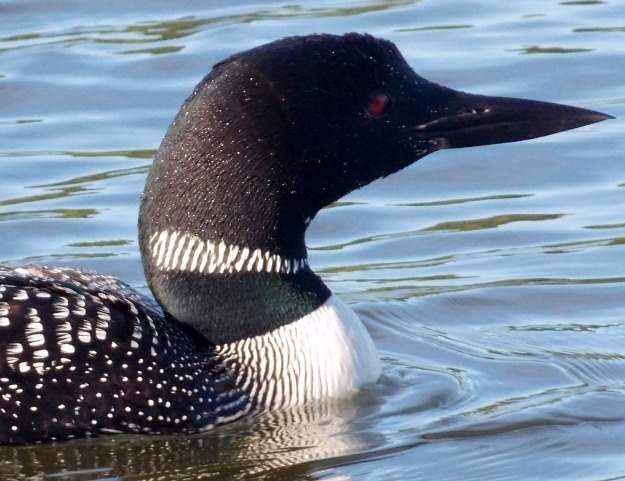
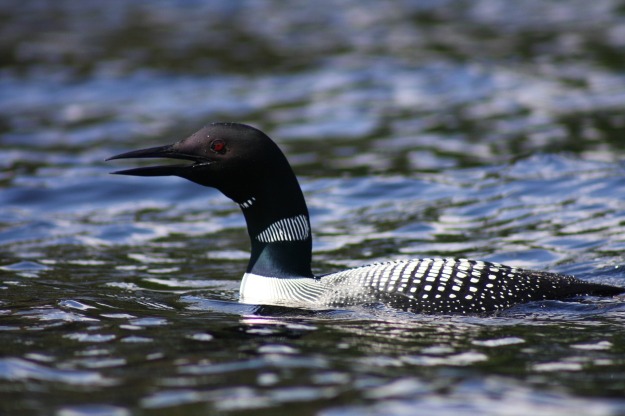
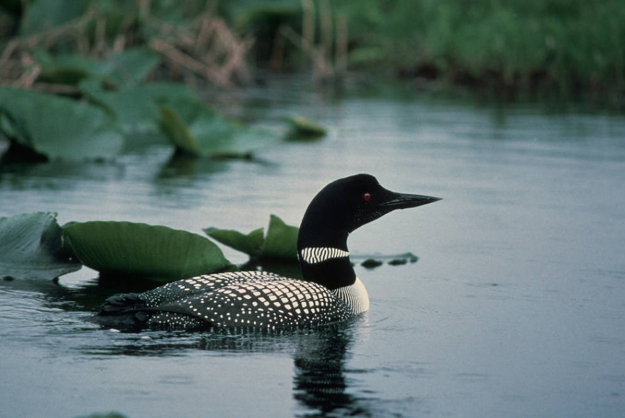
Photo by dkbach/Pixabay.com • The common loon is a masterful diver and swimmer, but these birds are awkward and nearly helpless on land.

An early December snowstorm had deposited a blanket of snow over the landscape, but milder temperatures quickly melted the snow on roadways when a weary — or perhaps disoriented — traveler made a crash landing.

Complete disaster was avoided thanks to the efforts of Joe McGuiness, a resident of Erwin, Tennessee, as well as an employee of the U.S. Forest Service. Joe shared the story at a recent meeting of the Elizabethton Bird Club.

Joe discovered the stranded traveler just after he finished having lunch on Dec. 6. He looked out his window and saw a “dark blob” in the driveway.loon-30901_1280

Joe recognized that the blob was actually an immature common loon. As he went to investigate, the bird tried to slide downhill on some of the recent snow.

Waterfowl like loons and grebes occasionally make landings on wet roadways. These birds mistake the dark, damp asphalt for water and don’t realize their error until it is too late.

“It probably landed on a neighborhood road by mistake,” explained Joe, who resides in the Rolling Hills residential community in Erwin. Over the years, Joe has been a magnet for some unusual birds. Several years ago, an American woodcock became a daily visitor for a spell in the community where Joe lives. Several birders got an opportunity to see that particular bird, which is usually extremely elusive and difficult to observe at close range.

loon_rescue

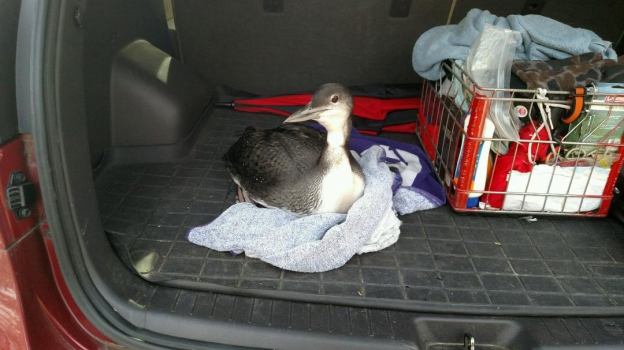
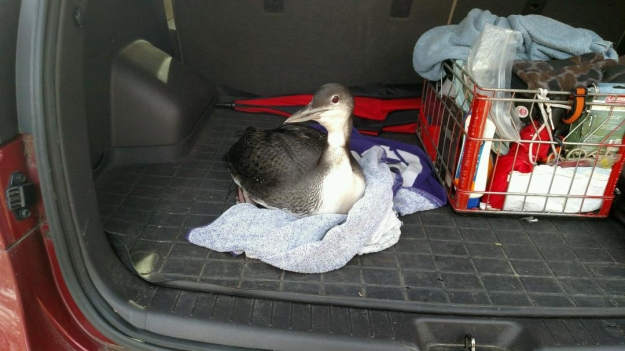
Photo courtesy of Joe McGuiness • When this common loon stranded itself, Erwin resident Joe McGuiness went into action, collecting the bird for transport to a nearby pond. Because of the position of their feet on their bodies, loons are almost incapable of walking on land.

Once he identified the loon, Joe still faced the challenge of rescuing it. Without human intervention, the bird would have been doomed. Loons, while so graceful and powerful in their element, are clumsy and almost helpless on land. According to loons.org, the official website for The Loon Preservation Committee, the placement of a loon’s legs at the far back of the body ensures that loons are excellent divers and swimmers. It also means that loons can not easily walk on land. This difficulty is one reason why loons nest right next to the water. At night, loons sleep over deep water, away from land, for protection from predators.

Once a loon lands on any body of water, it requires a considerably long “runway” to take off again. They sort of run along the surface of the water to gain the momentum to become airborne again. Obviously, that’s not going to happen for one of these birds if they’ve made the mistake of putting down on dry land. Fortunately, Joe realized he would need to help the loon reach water.

loon-krista-269

Photo by Krista-269/Pixabay.com • Common loons in summer breeding plumage are strikingly handsome birds that show much grace and agility in the water.

By tossing a coat over the loon, Joe managed to subdue the bird and transport it to a local pond for release. As he placed the bird at the edge of the pond, the loon surprised him and didn’t budge. Joe gave the bird a helpful nudge. In response, the bird turned and whacked him in the face with its beak. I suppose no good deed goes unpunished.

Eventually, the frightened loon moved into the water. The loon has remained on the pond recuperating for several weeks, which has allowed people to see the rescued creature.

In the northern United States and Canada, the common loon is often put forward as a symbol of the wilderness areas where it likes to reside on ponds and lakes for the summer nesting season. In Europe and Asia, the common loon is known by the more descriptive name “great northern diver.”

Common_Loon_on_Water

Photo by U.S. Fish & Wildlife Service • Common loons are quite at home in the air and on the water, but these birds are awkward if weather forces them to set down on land.

A common loon can reach a length of 3 feet. This bird’s wingspan can stretch out to almost 5 feet. They can attain a weight between 9 and 12 pounds, which is quite heavy for most birds.

All five living species of loons are members of the genus Gavia, which in addition to the common loon also includes red-throated loon, Arctic loon, Pacific loon and yellow-billed loon. All loons feed chiefly on fish.

It’s usually human behavior that puts loons at risk. For example, ingested lead fishing tackle is a leading cause of mortality for loons in New Hampshire. Joe’s encounter with a loon, and its happy ending, spotlights how people can sometimes help these beautiful birds instead of harming them.

Pacific_loon

Photo by U.S. Fish & Wildlife Service • A Pacific loon if breeding plumage.

Bristol’s CBC records low total of species, but still makes some interesting finds

brown-headnuthatch

Photo by SOARnet/Pixabay.com • The brown-headed nuthatch favors stands of loblolly pine, which are not common in the region. A record number of these small nuthatches were found on the recent Bristol TN-VA Christmas Bird Count.

Just before the end of last year, 21 participants gathered to conduct the Bristol TN-VA Christmas Bird Count. Count compiler Richard Lewis noted that the CBC found 71 species and a total of 5,700 individual birds.

“This was the 63rd year the count has been run since 1956,” Lewis posted on Bristol-Birds. “It was the lowest total number of species recorded in 27 years.”

Lewis could not explain the low total of species other than to note that the area doesn’t seem to have the usual influx of wintering birds from up north. In addition, waterfowl numbers were low. “Some species are not coming as far south this year,” he added.

The best find of the count was the discovery of a new bald eagle nest on South Holston Lake. Other noteworthy species recorded were black-crowned night-heron, red-shouldered hawk, merlin and brown-headed nuthatch. The four individuals found represent a new high count for the brown-headed nuthatch on the Bristol CBC. The species had only been seen on the count three other times.

The brown-headed nuthatch is a specialist of pine woodlands throughout the southeastern United States, favoring loblolly-shortleaf pines and longleaf-slash pines. This nuthatch requires standing dead trees for nesting and roosting. They forage for food, however, on live pines. The birds are more abundant in older pine stands.

This small nuthatch is not at all common in the region, but there are some records, including other Bristol records. I’ve had much better luck finding the brown-headed nuthatch during visits to coastal South Carolina or suburban Atlanta in Georgia. In these southern locations, it can be a quite common bird.

Spring-Nuthatch

Photo by Bryan Stevens • In some areas, brown-headed nuthatches are feeder visitors. These small nuthatches are specialists that favor stands of loblolly pine.

These small birds will occasionally forage close to the ground, but they are often in the upper branches of pine trees. Their presence is often revealed by their call, which sounds amazingly like a squeeze toy. They produce their “squeaky toy” call persistently when agitated or curious. Brown-headed nuthatches often associate with mixed flocks in company with Carolina chickadees, tufted titmice, pine warblers and other small songbirds. White-breasted nuthatches and red-breasted nuthatches are more likely visitors to yards and gardens in the region.

Participants in the CBC included Ron Carrico, Rob Biller, Rack Cross, Angela Cross, Robert Hunter, Terry Hunter, Rick Knight, Roy Knispel, Cade Campbell, Larry McDaniel, Ruth Clark, Mary Clark, Randy Smith, Ron Harrington Sam Evans, Kevin Hamed, Rick Phillips, Adrianna Nelson, Michelle Sparks, Richard Lewis and Phillip Lewis.

The total for the Bristol TN-VA CBC follows:

Canada goose, 730; gadwall, 49; American wigeon, 11; American black duck, 1; mallard, 294; ring-necked duck, 245; bufflehead, 51; and hooded merganser, 25.

Wild turkey, 53; common loon, 4; pied-billed grebe, 18; horned grebe, 2; great blue heron, 22; and black-crowned night-heron, 1.

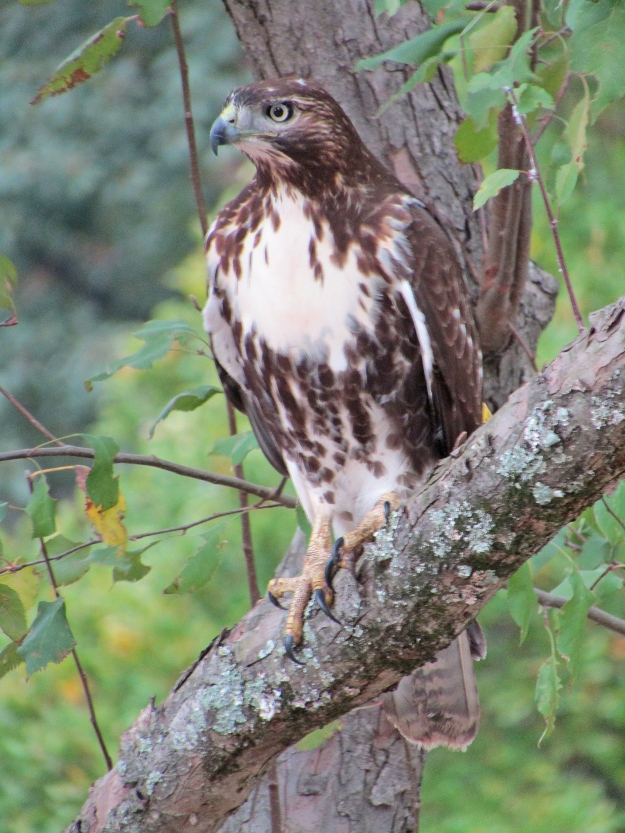
Black vulture, 75; turkey vulture, 52; sharp-shinned hawk, 2; Cooper’s hawk, 5; bald eagle, 2; red-shouldered hawk, 1; and red-tailed hawk, 27.


American coot, 12; killdeer, 14; Bonaparte’s gull, 6; ring-billed gull, 143; rock pigeon, 607; mourning dove, 253; Eastern screech owl, 4; and great horned owl, 2.

Belted kingfisher, 15; red-bellied woodpecker, 30; yellow-bellied sapsucker, 6; down woodpecker, 21; Northern flicker, 12; pileated woodpecker, 12; American kestrel, 11; and merlin, 1.

Eastern phoebe, 5; loggerhead shrike, 1; blue jay, 176; American crow, 404; common raven, 5; Carolina chickadee, 145; tufted titmouse, 93; red-breasted nuthatch, 1; white-breasted nuthatch, 62; and brown-headed nuthatch, 4.

Brown creeper, 5; Carolina wren, 130; winter wren, 5; golden-crowned kinglet, 33; ruby-crowned kinglet, 6; Eastern bluebird, 167; hermit thrush, 8; American robin, 93; Northern mockingbird, 90; European starling, 816; and cedar waxwing, 12.

Yellow-rumped warbler, 18; field sparrow, 15; dark-eyed junco, 41; white-crowned sparrow, 17; white-throated sparrow, 68; song sparrow, 115; swamp sparrow, 7; and Eastern towhee, 22.

Eastern meadowlark, 13; house finch, 47; American goldfinch, 89; and house sparrow, 25.

Glade Spring CBC finds 63 species

A Christmas Bird Count is also conducted annually in Glade Spring, Virginia. This year’s Glade Spring CBC took place Dec. 27 and found a total of 63 species and 6,696 individual birds. The total and individual count both dropped slightly from last year’s count, which found 71 species and 6,891 individual birds. Twenty-three people participated on the 2018 Glade Spring CBC.

Count compiler Ron Harrington noted that one new species — a common loon found on a private pond just off Old Saltworks Road — made its Glade Spring CBC debut. Six common mergansers, a new count circle high, were found on the North Fork of the Holston River. A single common merganser was found in that same river last year for the first time.

rthawk-one

Photo by Bryan Stevens • Raptors, like this Red-tailed Hawk, proved plentiful on Christmas Bird Counts conducted throughout the region.

Other highlights noted by Harrington included 48 red-tailed hawks (a new high count total), 10 hairy woodpeckers (tying the record high) and three palm warblers, which represented a new high count for this warbler species. The CBC also recorded a high count for wood ducks with seven individuals being found. Other notable finds include swamp sparrow, brown creeper, brown thrasher, loggerhead shrike, winter wren, hermit thrush, Eurasian collared dove and common grackle.

•••••

With these snapshots of winter bird populations in the area, readers can use these references to see if they can find some of these same birds visiting their yards, gardens and favorite birding spots. As always, I enjoy hearing from readers about the sightings they are making. Email me at ahoodedwarbler@aol.com to share sightings, make comments or ask questions.

Cardinales

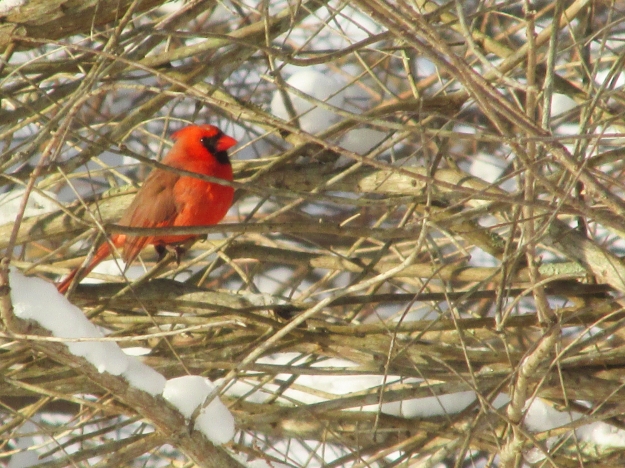
Photo by Bryan Stevens • A male Northern Cardinal perches in a tangle of branches on a rainy day.

Christmas Bird Count makes for fun outing during the holiday season

carolinawren-snow

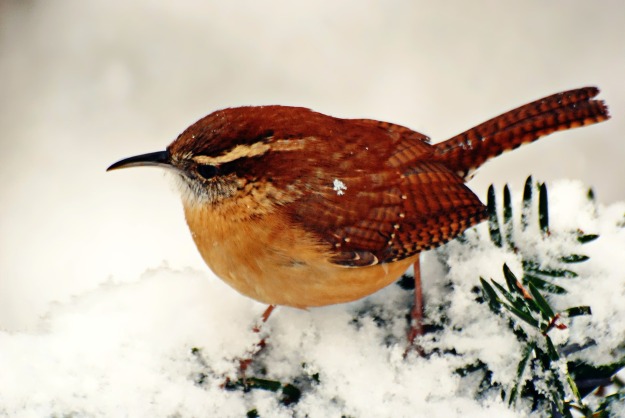
Photo by RetyiRetyi/Pixabay.com • Carolina wrens are small, inquisitive and hardy songbirds. The recent Elizabethton Christmas Bird Count found a record number of this wren during its annual survey of bird populations.

I participated in the 76th consecutive Elizabethton Christmas Bird Count, which was held Saturday, Dec. 15. This annual count is one of the oldest Christmas Bird Counts in the region, as well as in Tennessee.

I was one of twenty-eight observers in six parties. Together, we tallied 77 species, which is above the recent 30-year average of 72 species. The all-time high was set last year when 85 species were counted on this annual survey.

Osprey-LYNNValley

Photo by Bryan Stevens • An osprey perches in a tree along the Watauga River in Elizabethton, Tennessee. These fish-eating raptors are rare in winter in Northeast Tennessee.

Two species — osprey and orange-crowned warbler — were found on this CBC for the first time. Longtime count compiler Rick Knight observed that one noticeable difference between last year’s count and the 2018 Elizabethton CBC was the number of ducks. Last year’s CBC yielded 13 species, but only six species of ducks were found this year.

Knight also noted that a record number — 139 — of Carolina wrens was spotted by CBC participants.

A single bald eagle was found, but it was enough to continue a recent trend. This eagle has appeared for 19 of the last 20 on the Elizabethton CBC. Counts more than 20 years ago rarely produced any bald eagles.

A single red-shouldered hawk represented a good find since this hawk has only been found on six of the previous 25 years. A single merlin represented an even more exceptional find for this CBC. Merlin has been represented only two times in the last 25 years for this particular count.

Red-shoulderHawk

Photo by Bryan Stevens • This captive red-shouldered hawk was rehabilitated after suffering an injury and now works in an educational program at Brookgreen Gardens in South Carolina to teach the public about raptors, other birds, and various types of wildlife.

Knight noted that two shorebirds — killdeer and Wilson’s snipe — have experienced a steady decline in making this annual count. This year’s count produced only a single killdeer and snipe.

Knight speculated that low numbers of cedar waxwings and American robins on this year’s CBC probably indicates a poor wild fruit crop. These two species depend heavily on fruit to supplement their diet during the winter months.

Chipping sparrow has now been found for 15 straight years, but had only previously been reported six times in the first 50 years of the history of the Elizabethton CBC.

Without fail, some species manage to evade counters. According to Knight, some of the conspicuous misses this year included ruffed grouse, common loon and barred owl.

Mom-Grouse

Photo by Bryan Stevens • Although found during counts held in other seasons, no ruffed grouse was found on the 2018 Elizabethton Christmas Bird Count.

The Elizabethton Bird Club has been holding its annual Christmas count in Elizabethton, Tennessee, since 1942. The tradition of the Christmas Bird Count dates back much farther and originates from a less than bird-friendly custom. According to the National Audubon Society’s website, so-called sportsmen in the late 19th century would conduct a “Side Hunt,” a rather blood-thirsty Christmas custom that saw hunters competing to see who could score the largest amount of feathered and furred corpses.

The annual holiday bird survey may even have arisen from an earlier custom with roots in Europe that came to the United States of America with early colonists. The “Side Hunt” has some similarity to a peculiar celebration in Ireland and other European countries known as “Wren Day” or “Hunt the Wren Day.” The event was conducted the day after Christmas, the date of Dec. 26 being consigned as Saint Stephen’s Day. By the 20th century, the hunt consisted of tracking down a fake wren carried atop a decorated pole. Crowds would parade through towns in masks and colorful attire. These groups were referred to as “wren boys.”

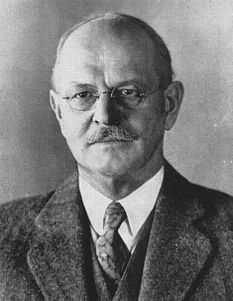
Whether or not the “Side Hunt and “Wren Hunt” shared any connections, it was a huge step forward for conservation when preeminent ornithologist Frank M. Chapman proposed a new holiday tradition. His radical idea was to count birds during the Christmas season rather than hunting and killing them

chapman

Frank M. Chapman

The Christmas Bird Count is now conducted each year on dates between Dec. 14 and Jan. 5. The first CBC took place in December of 1900 with 27 observers participating at 25 locations in the United States and Canada. Fifteen of the counts were conducted in the northeastern United States from Massachusetts to Philadelphia. Results from that first count in 1900 didn’t truly reflect the diversity of North America’s birds, but they were nonetheless interesting. The Greater Boston CBC boasted only one participant and only found 17 species. However, some of those species included such good birds as American tree sparrow, brown creeper, Northern shrike and Northern bobwhite.

For me, the Christmas Bird Count is a fun holiday outing with friends. There’s also satisfaction in knowing the results gathered from these nationwide counts will also contribute to the body of citizen science that helps experts determine the status of our feathered friends.

For a complete tally of this year’s Elizabethton Christmas Bird Count, please see the online sidebar to this week’s column at HeraldCourier.com.

Elizabethton Christmas Bird Count

Canada goose, 459; wood duck, 1; American wigeon, 1; American black duck, 1; mallard, 150; bufflehead, 182; and hooded merganser, 11.

Wild turkey, 57; pied-billed grebe, 16; horned grebe, 11; double-crested cormorant, 1; and great blue heron, 29.

Black vulture, 5; turkey vulture, 19; osprey, 1; sharp-shinned hawk, 1; Cooper’s hawk, 4; bald eagle, 1; red-shouldered hawk, 1; and red-tailed hawk, 17.

Snipe-One

Photo by Bryan Stevens • Wilson’s snipe are not often found in the winter in Northeast Tennessee.

American coot, 1; killdeer, 1; Wilson’s snipe, 1; and ring-billed gull, 14.

Rock pigeon, 296; Eurasian collared-dove, 4; mourning dove, 126; Eastern screech-owl, 4; and great horned owl, 2.

Belted kingfisher, 21; red-bellied woodpecker, 26; yellow-bellied sapsucker, 11; downy woodpecker, 30; hairy woodpecker, 4; Northern flicker, 25; and pileated woodpecker, 20.

American kestrel, 16; merlin, 1; Eastern phoebe, 11; blue jay, 128; American crow, 291; and common raven, 10.

Carolina chickadee, 80; tufted titmouse, 72; red-breasted nuthatch, 1; white-breasted nuthatch, 29; and brown creeper, 10.

Winter wren, 4; Carolina wren, 139; golden-crowned kinglet, 38; and ruby-crowned kinglet, 15.

Eastern bluebird, 122; hermit thrush, 7; American robin, 17; brown thrasher, 1; and Northern mockingbird, 50.

mockingbird-nov11

Photo by Bryan Stevens • The Northern Mockingbird has been the official state bird for Tennessee since 1933.

European starling, 592; cedar waxwing, 30; orange-crowned warbler, 1; palm warbler, 1; and yellow-rumped warbler, 32.

Eastern towhee, 22; chipping sparrow, 29; field sparrow, 34; Savannah sparrow, 4; fox sparrow, 3; song sparrow, 129; swamp sparrow, 8; white-throated sparrow, 70; white-crowned sparrow, 20; and dark-eyed junco, 66.

Northern cardinal, 159; red-winged blackbird, 25; Eastern meadowlark, 4; house finch, 34; American goldfinch, 46; and house sparrow, 8.

Cardinal-Enclosed

Photo by Bryan Stevens • A total of 159 Northern cardinals made this species a common bird on the recent Elizabethton CBC.

Yellow-rumped warblers are wild about poison ivy berries

WARBLER

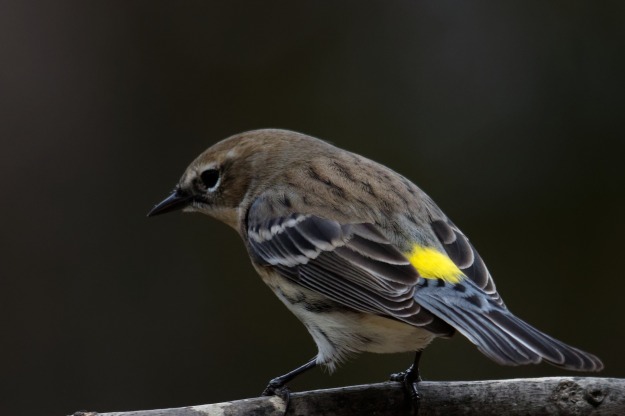
Photo by Edbo23/Pixabay.com • The yellow-rumped warbler is one of the few warblers that attempts to reside in the region during the winter months. Switching from a diet of insects to one of fruit and seeds helps the birds manage to find enough to eat during the lean months. This species is particularly fond of poison ivy berries.


November and December are bleak months for birders as we experience a bit of a letdown after the joys of fall migration. Many of the favorite birds that spend the summer months with us have departed and will not return until spring. Hummingbirds, tanagers, vireos and most warblers, despite a few lingering individuals, have left the scene.

I really feel the pinch since warblers are one of my favorite families of birds. In northeast Tennessee, southwestern Virginia and western North Carolina, there are only three warblers that bird enthusiasts are likely to see in the winter. The yellow-rumped warbler is by far the most common winter warbler, but palm warblers and pine warblers are also occasional winter residents. A few other warblers are occasional stragglers, attempting to eke out a living during the cold months. For instance, I’ve seen a few common yellowthroats during the winter over the years

Yellow-RUMP

Photo by Edbo23/Pixabay.com • During the winter months, a yellow-rumped warbler is a dull bird in mostly brown and gray plumage except for the rump patch of bright yellow feathers that provides the bird its common name.

With the exception of the yellow-rumped warbler, however, the chances of enjoying warblers during the winter are rather slim. At least the yellow-rumped warbler is common and I encounter flocks of these birds on most occasions when I walk woodland trails in the region any time from November to April.

Until 1973, the yellow-rumped warbler was divided by scientists into two distinct species: the myrtle warbler in the eastern United States and Audubon’s warbler in the western United States. During a visit to Salt Lake City, Utah, in 2003, I saw my first and only “Audubon’s” warbler. This western counterpart is more colorful than the version birders know so well in the eastern half of the country. In addition to yellow plumage on the rear and flanks, the Audubon’s warbler also boasts a yellow crown and a yellow throat patch. Otherwise, the two birds are remarkably similar in appearance.

Of course, it’s the creamy yellow rump patch — looking like a small pat of butter — that gives this species its common name. Birders have adopted another nickname for the species, often referring to them simply as “butter-butts.”

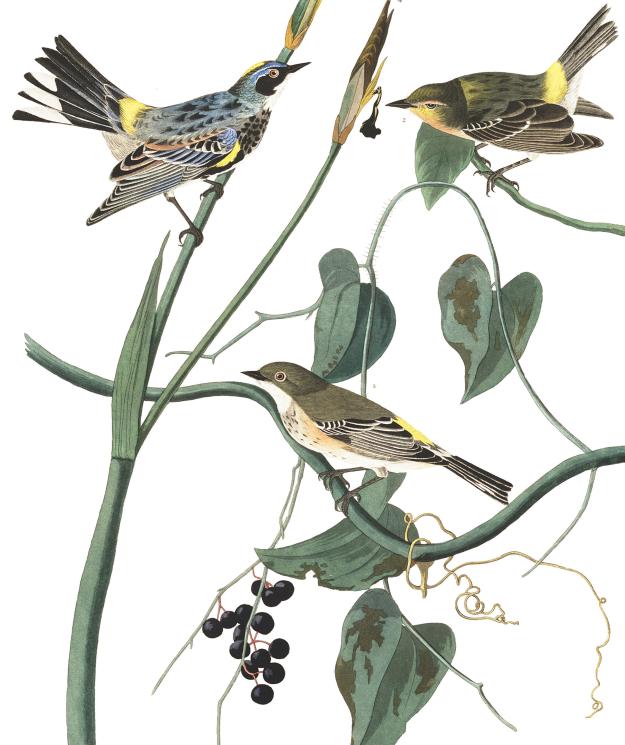
There is now some discussion in scientific circles of dividing the species into not two distinct species, but four. The other two species would be the black-fronted warbler of mountains in Northern Mexico and Goldman’s warbler, which resides in Guatemala. I wouldn’t mind seeing Audubon’s warbler resurrected as a full species, since it would place an additional species on my life list of birds seen. In addition, it seems fitting that we have at least one bird that honors the name of the famed naturalist and painter John James Audubon.

The scientific name for the yellow-rumped warbler is Setophaga coronata, which are terms derived from ancient Greek that when roughly translated mean “crowned moth-eater.” Like most warblers, the yellow-rumped warbler is fond of insects, but there’s another food source these birds turn to during times of scarcity.

Yellow-rumpWarbler (1)

Photo by Bryan Stevens • A wintering yellow-rumped warbler clings to palm fronds in coastal South Carolina.

So, how does a warbler make it through the winter season in the region? After all, most warblers exist on a diet heavy on insects and other small invertebrates. The yellow-rumped warbler, however, supplements its diet with different seasonal berries, including juniper berries, Virginia creeper berries and dogwood berries. They also feed on berries from one unlikely source. These birds love to gorge themselves on poison ivy berries that, fortunately, produce no ill effects. I’ve long noticed that many of the trails I enjoy walking during the winter season wind through woodlands overrun by poison ivy. Of course, by eating the berries, the warbler also help spread the noxious vines.

The yellow-rumped warbler is not the only bird known to feed on poison ivy berries. Other birds seen eating these berries include Northern flickers, bobwhites, Eastern phoebes, Cedar waxwings, tufted titmice and American robins. White-tailed deer show a preference for dining on poison ivy leaves over other types of vegetation. The berries are high in fat and calories, which makes them an ideal food source for creatures with high metabolisms like songbirds. The berries also ripen in fall and early winter when many other types of berries are scarce. While it is best for humans to avoid contact with this plant, it is a valuable fall and winter food source for wildlife.

IMG_6339

Photo by Bryan Stevens • A male yellow-rumped in spring plumage looks quite different than his subdued winter appearance.

While the yellow-rumped warbler is quite capable of dealing with some frost and snow, more than half of the world’s warblers live in more tropical climates outside the borders of the United States and Canada. Not all yellow-rumped warbler attempt to tough out winter conditions in the United States. Some do migrate to the tropics, where they utilize a variety of habitats, including mangroves, thorn scrub, pine-oak-fir forests and shade coffee plantations.

All warblers are exclusively New World bird species. The family numbers about 120 species. Some of the descriptively named species of warblers not seen within the United States or its northern neighbor include citrine warbler, white-striped warbler, black-crested warbler, pale-legged warbler, buff-rumped warbler, golden-bellied warbler and black-eared warbler.

During your next woodland stroll, keep your eyes peeled for small brown birds in the branches of nearby trees. If the last thing you see before they dive for cover is a bright yellow rump patch, you’ll know you’ve observed a yellow-rumped warbler.

plate-153-yellow-rump-warbler-final

Early naturalist and painter John James Audubon painted these yellow-rumped warblers.


Cardinals seem tailor-made for Christmas season

cardinal-1998407_1920

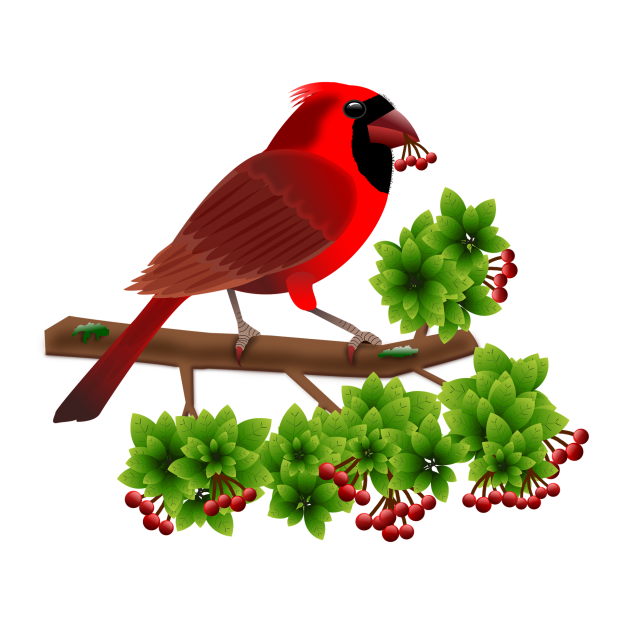
The Northern cardinal, a familiar backyard bird in many sections of the United States, is a perfect symbol of the Christmas season.

The shopping days before Christmas are getting fewer, so I hope everyone has had time to find gifts for everyone on their lists. My wish to readers is that everyone gets to enjoy a great holiday that just might also include watching some birds.

Although I hate to see the colorful birds of spring and summer — scarlet tanagers, Baltimore orioles, indigo buntings, rose-breasted grosbeaks — depart every fall, the winter season offers some compensation.

Often, when we think of the birds of the winter season, our thoughts focus on some of the less-than-colorful feeder visitors — the brown sparrows and wrens, the black and white chickadees and the drab American goldfinches, so unlike their summer appearance.

northern-cardinal-938377_1920

Photo by Skeeze/Pixabay.com • A male Northern cardinal lands on a snowy perch. Cardinals are perfect symbols for the Christmas season with their bright red plumage.

There’s one bird, however, that makes an impression in any season. The Northern cardinal, especially the brilliant red male, stands out against a winter backdrop of snow white, deep green or drab gray. On a recent snowy afternoon, I spent some time watching a pair of Northern cardinals from my window. Cardinals are wary birds. They make cautious approaches to feeders, never rushing to the seed in the manner of a Carolina chickadee or tufted titmouse.

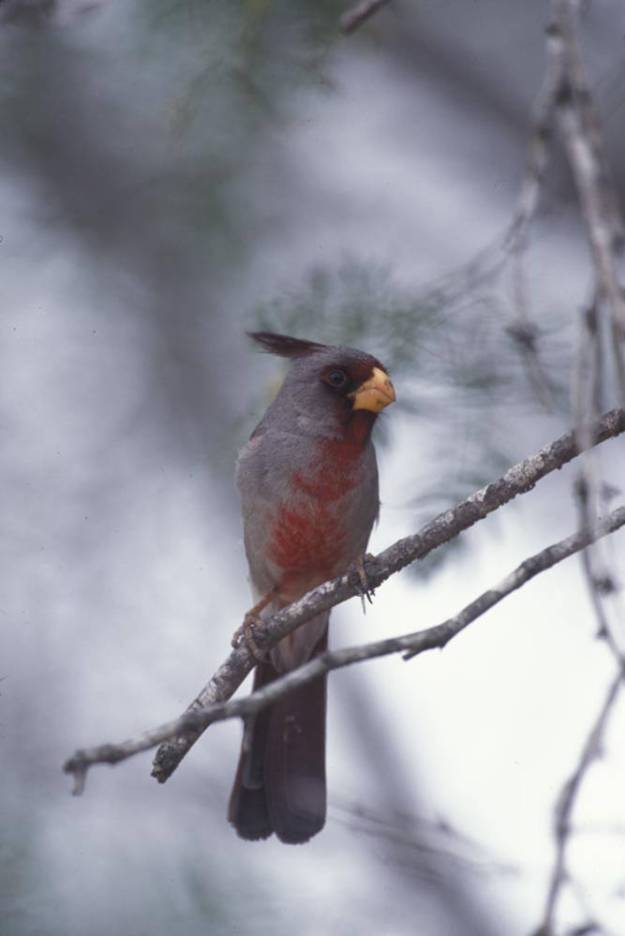
The Northern cardinal belongs to a genus of birds known as Cardinalis in the family Cardinalidae. There are only two other species in this genus, and they range across North America and into northern South America. The two relatives are the pyrrhuloxia, or Cardinalis sinuatus, a bird of the southwestern United States, and the Vermilion Cardinal, or phoeniceus, a bird found in Colombia and Venezuela.

WO3919__Pyrrhuloxia

Photo by U.S. Fish & Wildlife Service • The Pyrrhuloxia, or desert cardinal, is a counterpart to the Northern cardinal in the American southwest.

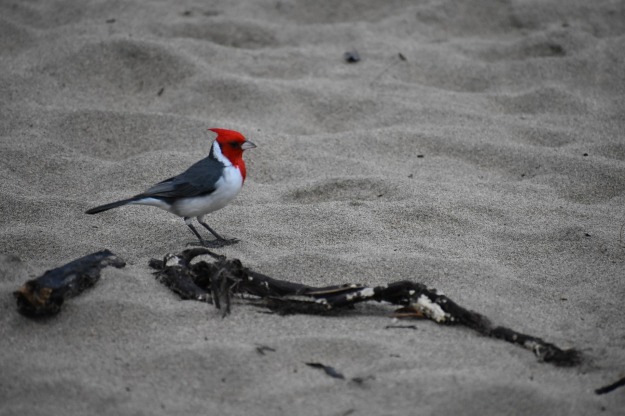
Two other South American birds — red-crested cardinal and yellow-billed cardinal — are more closely related to tanagers than to our familiar Northern cardinal. Both the Northern cardinal and red-crested cardinal have been introduced into the state of Hawaii, so two non-native birds from different parts of the globe are now resident in the Aloha State.

bird-3354768_1920

Photo by Pixabay.com • A red-crested cardinal forages on a sandy beach. This bird has been introduced to such exotic locations as Hawaii.

Over the years, the Northern cardinal has also become associated with the Christmas season. How many Christmas cards have you received this holiday season with a cardinal featured in the artwork? I’d wager that at least a few cards in any assortment of holiday greetings will feature the likeness of a bright red cardinal.

Cardinals, also known by such common names as redbird and Virginia nightingale, are easily recognized backyard birds. I never tire of observing these colorful birds. Cardinals are easily lured to any backyard with plentiful cover to provide a sense of security and a generous buffet of sunflower seed.

northern-cardinal-female

Photo by Skeeze/Pixabay.com • A female Northern cardinal lands on a deck railing. Female cardinals are not as brightly colorful as males, but they do have their own subtle beauty.

Cardinals accept a wide variety of food at feeders. Sunflower seed is probably their favorite, but they will also sample cracked corn, peanuts, millet, bakery scraps and even suet. The cardinal is also one of only a few birds that I have noticed will consistently feed on safflower seed.

While we may get the idea that cardinals feed largely on seed, that is a misconception based on our observation of the birds at our feeders. When away from our feeders, cardinals feed on insects and fruit, including the berries of mulberry, holly, pokeberry, elderberry, Russian olive, dogwood and sumac.


There’s no difficulty in identifying a cardinal. The male boasts crimson plumage, a crest, a black face and orange bill. The female, although less colorful, is also crested. Female cardinals are soft brown in color, with varying degrees of a reddish tinge in their feathers, particularly in their wings. Immature cardinals resemble females except young cardinals have dark bills.

Cardinals are a widespread species, ranging westward to the Dakotas and south to the Gulf Coast and Texas. The southeastern United States was once the stronghold of the cardinal population. In the past century, however, cardinals have expanded their range into New England and Canada.

The familiar Northern Cardinal is not the only bird to bear the name cardinal. Others include the yellow cardinal of Argentina, Brazil, Paraguay and Uruguay, the vermilion cardinal of Colombia and Venezuela, and the red-crested cardinal, a songbird native of South America that has also been introduced to Puerto Rico and Hawaii.

DaddyCardinal

Photo by Bryan Stevens • Northern cardinals will visit feeders stocked with sunflower seeds at any season.

At feeders, cardinals mingle with a variety of other birds. Cardinals are common visitors to backyard feeders. For such a bright bird, the male cardinal can be surprisingly difficult to detect as he hides in the thick brush that conceals his presence. Cardinals are nervous birds, however, and usually betray their presence with easily recognized chip notes. Their preference for dense, tangled habitat is one they share with such birds as brown thrashers, Eastern towhees, Carolina wrens and song sparrows. In general, however, cardinals directly associate only with their own kind. Cardinals will form loose flocks during the winter, but these flocks are never as cohesive as those of such flocking birds as American goldfinches. Cardinals are more often observed in pairs.

It’s not surprising that such a popular bird has also become associated with many trappings of the Christmas season.

“You see cardinals on greeting cards, stationery, paper plates, paper napkins and tablecloths, doormats, light switch plates, candles, candle holders, coffee mugs, plates, glasses, Christmas tree ornaments and lights, bookmarks, mailboxes, Christmas jewelry,” writes June Osborne in her book The Cardinal. “And the list goes on. Cardinals have become an integral part of the way that many people celebrate the holiday season.”

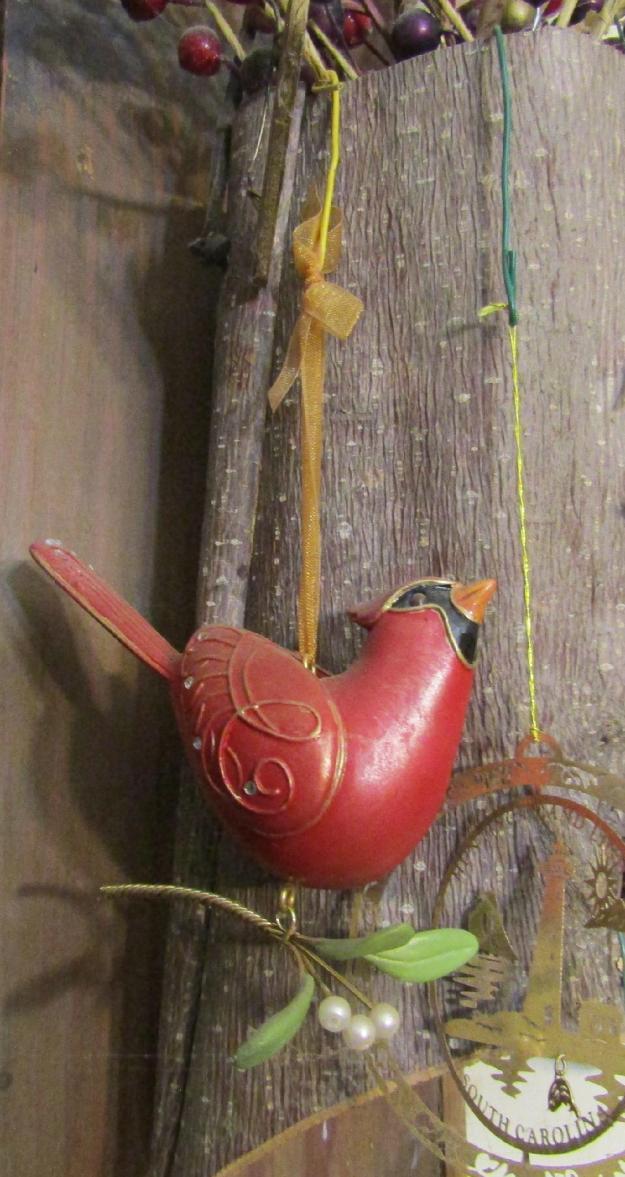
I can be included among such people. My Christmas decorations include an assortment of cardinal figurines and ornaments. There are other birds — doves and penguins for example — associated with the holiday season, but for me the holidays magnify the importance of one of my favorite birds. The cardinal, in its festive red plumage, appears made to order for a symbol of the holiday season.

Cardinal-Ornament

Photo by Bryan Stevens • Northern cardinals are a favorite for makers of Christmas ornaments.

There’s additional evidence to put forward as testimony to the popularity of the Northern cardinal. It’s the official state bird of seven states: Virginia, North Carolina, West Virginia, Ohio, Illinois, Indiana and Kentucky. Only the Northern mockingbird, which represents five states as official state bird, even comes close to the Northern cardinal in this respect.

Even once the holidays are past, there’s nothing like a glimpse of a Northern cardinal to add some cheer to a bleak winter day. Simply add some black oil sunflower seeds to your feeders to welcome this beautiful bird to your yard.

Cardinal-Two 2

Photo by Bryan Stevens • A male Northern cardinal visits a feeder on a snowy afternoon.