Tag Archives: Mimic Thrushes

Gray catbird’s personality veers from shyness to curiosity

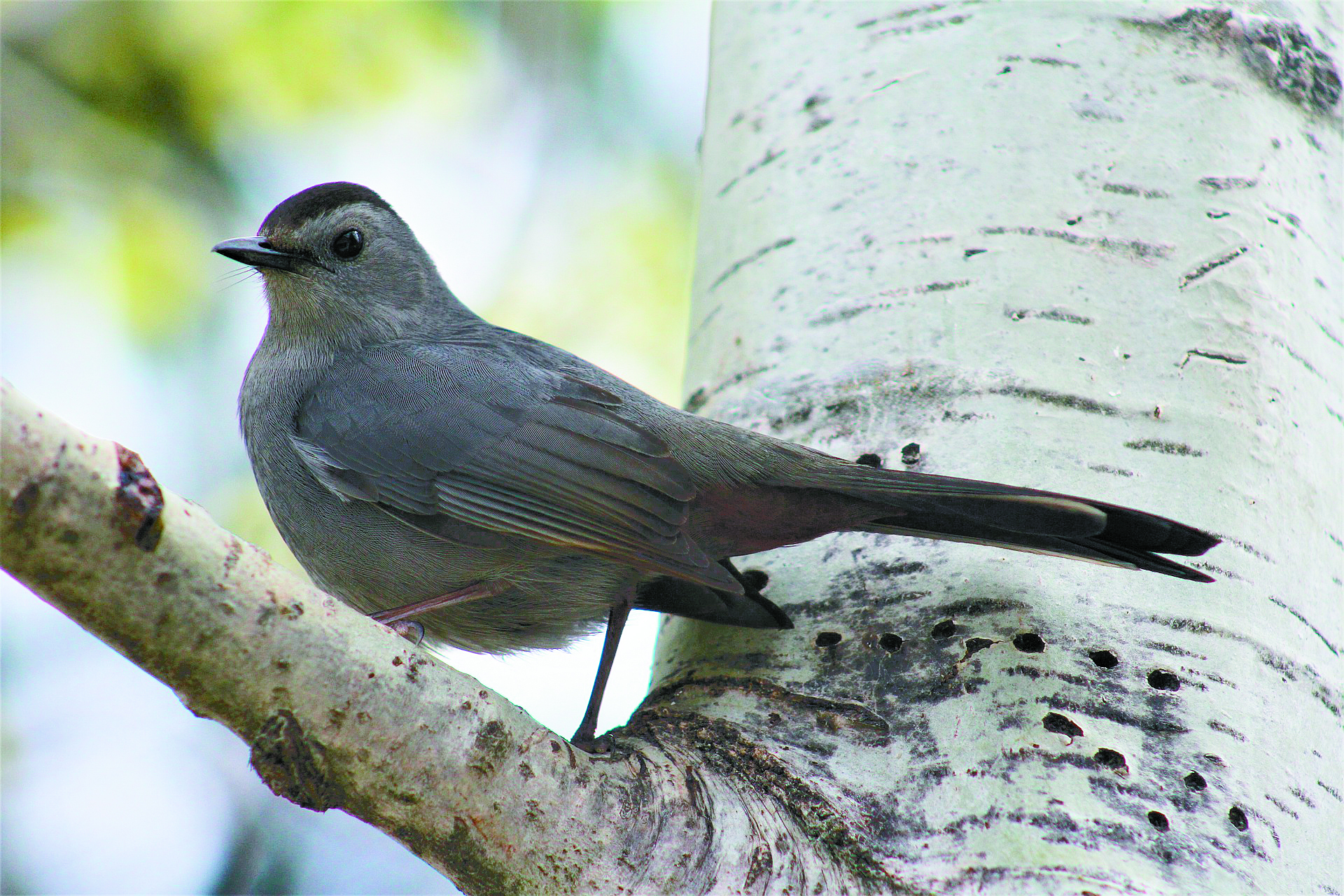
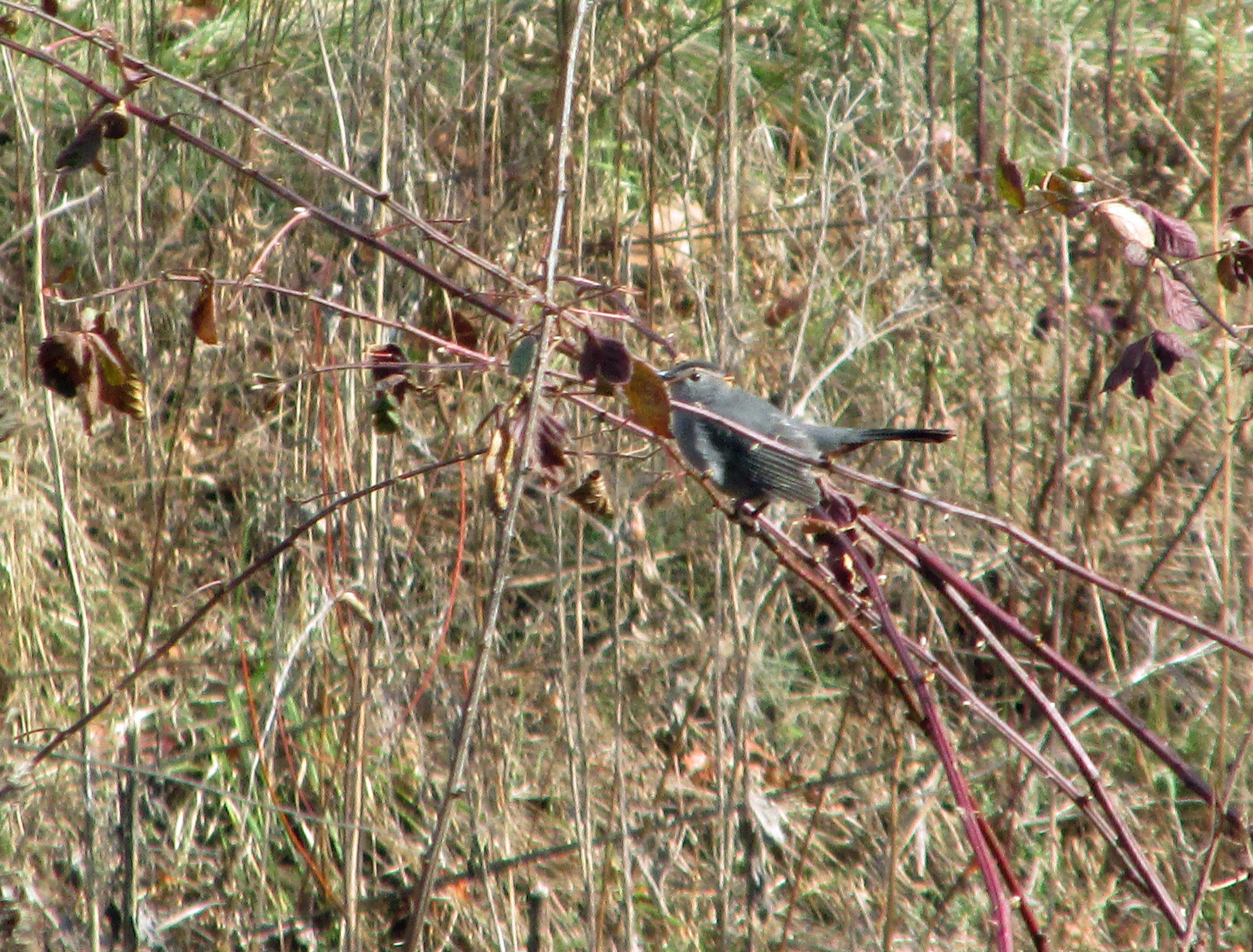
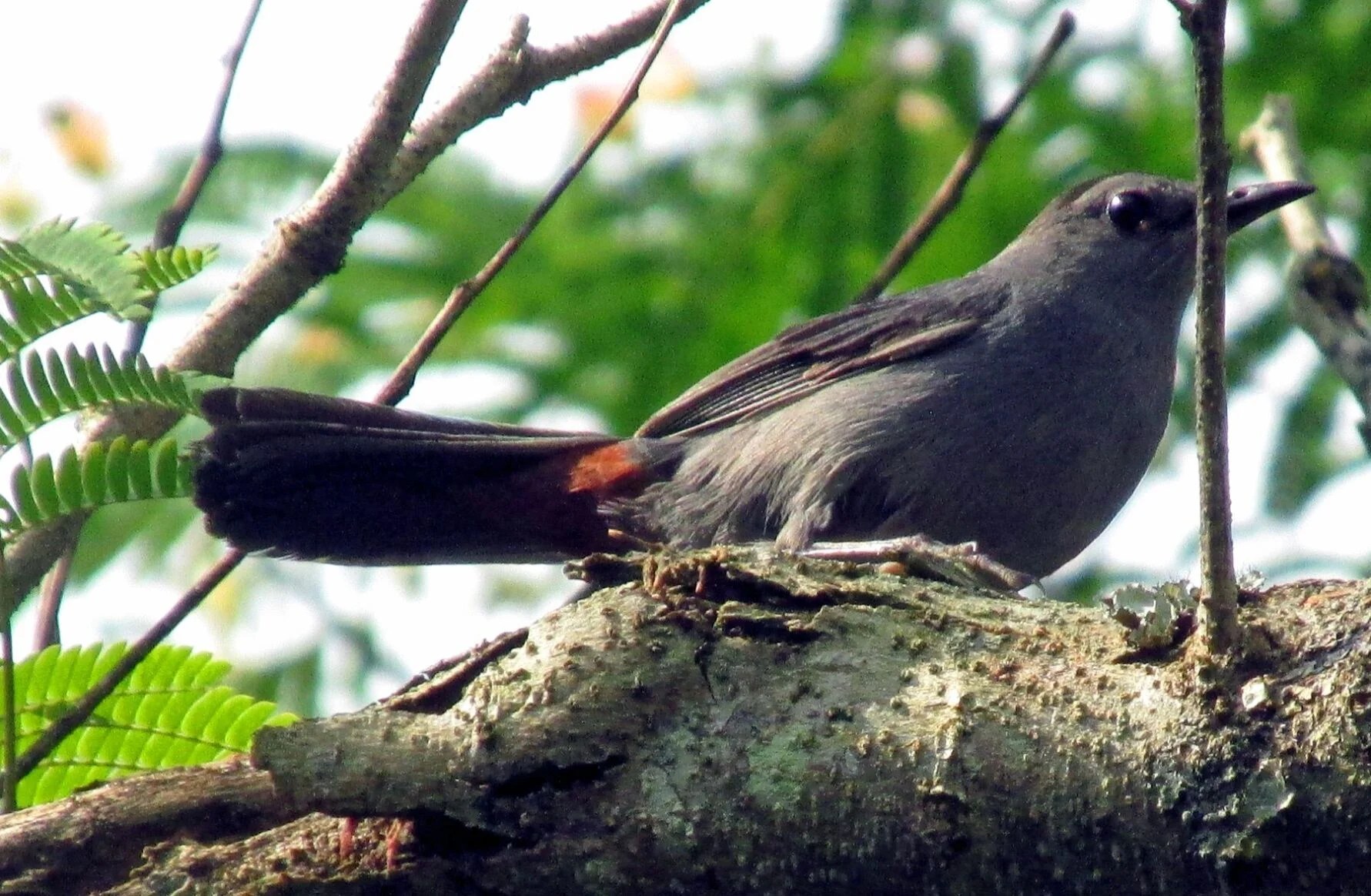
Photo by Bryan Stevens • A gray catbird perches in a mimosa tree. These birds alternate between extreme shyness and determined curiosity.

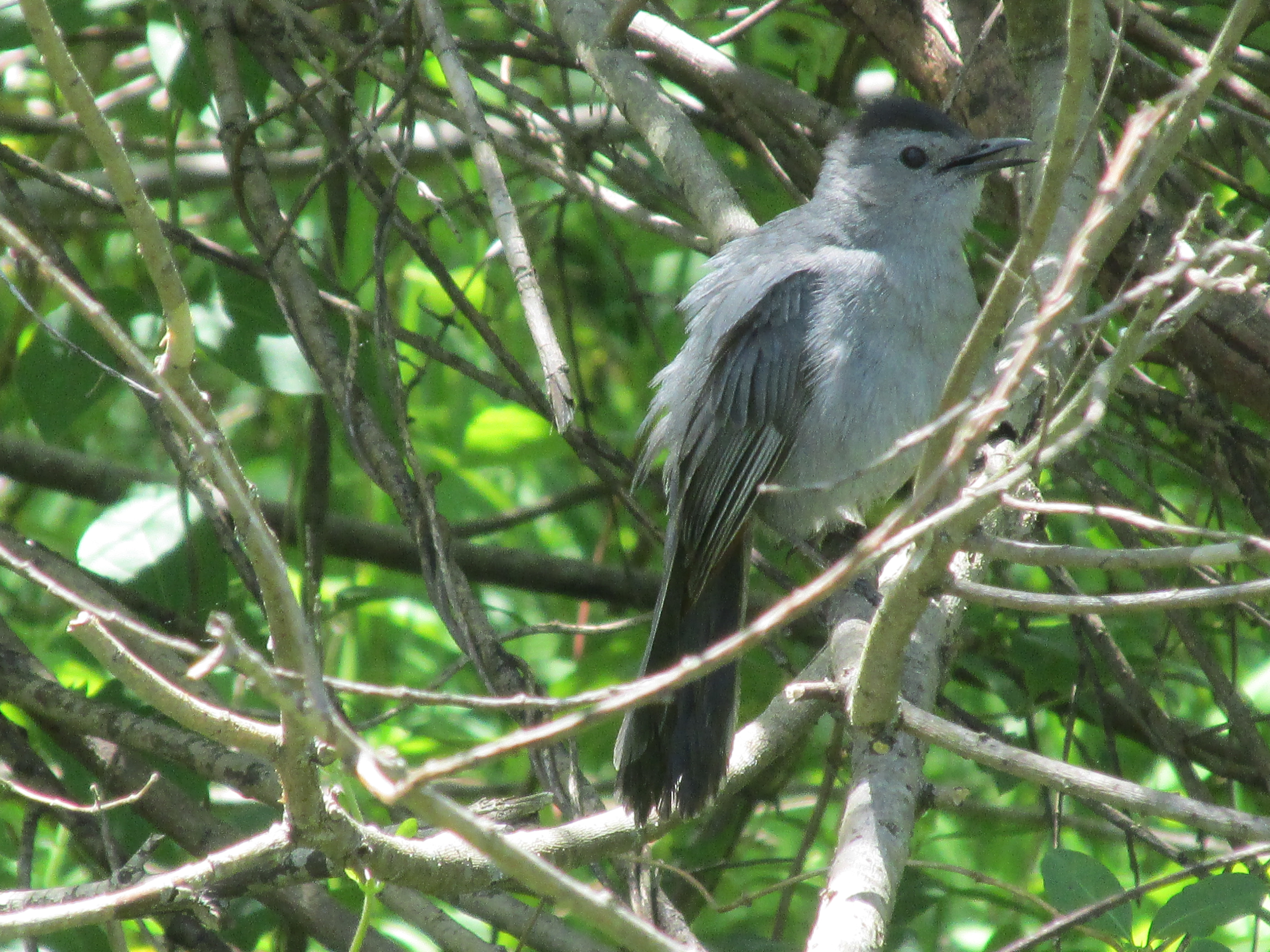
Catbirds are experts at concealing themselves from prying eyes. This birds charcoal gray plumage blends into the shadowy sections of tangles and thickets where the bird likes to hide itself.

However, even when gray catbirds are reluctant to be seen, they’re almost eager to be heard. The catbird is extremely vocal with several calls and songs in its repertoire, including the rather faithful rendering of a fussy cat’s meow that provides this bird its common name.

This is also a bird with strong curiosity. Despite its retiring nature, curiosity often wins out, as demonstrated when I had a front porch “conversation” with a catbird on a recent morning.

The named catbird came from the fact that this mimic, related to mockingbirds and thrashers, has an uncanny vocalisation that sounds just like a cat’s meow.

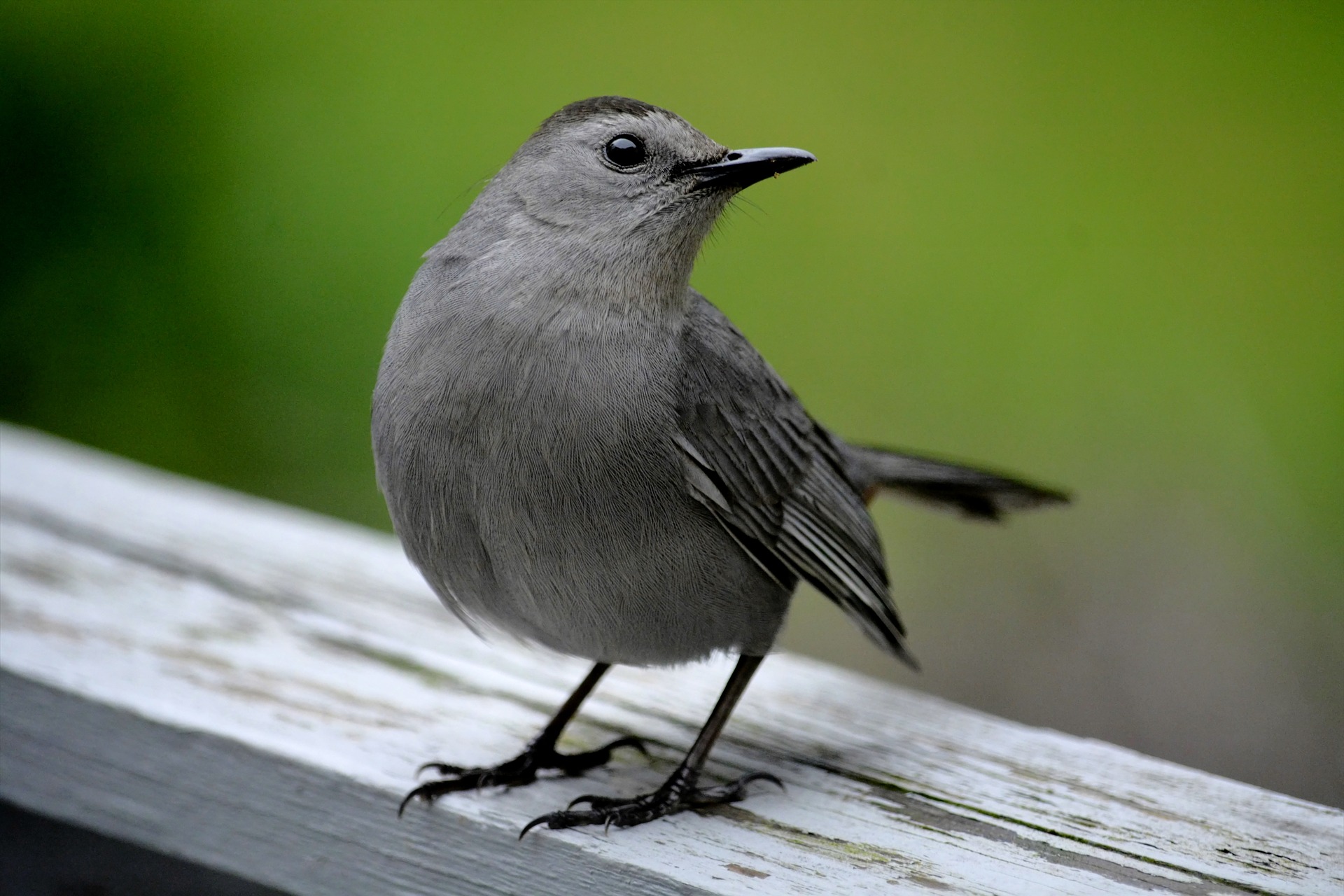
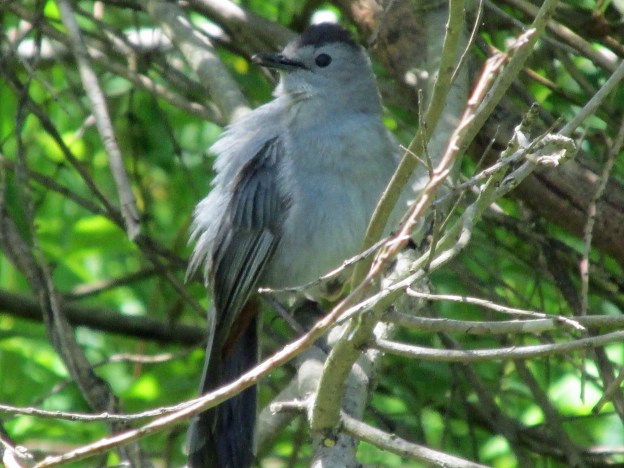
Photo by Bryan Stevens • A gray catbird emerged from cover long enough to have its photo taken.

I’m not particularly good at bird imitations. I can do a decent imitation of Eastern screech owls. I’ve even succeeded at getting these small owls to call back, and I’ve incited a mob of small songbirds, convinced that a “real” owl has gotten far too close for comfort.

And I can also do a passable imitation of the catbirds “meow” vocalization, which I proceeded to spontaneously do as I stood on my front porch on a cool early September morning listening to a gray catbird hidden in the dense foliage of a blooming althea, also known as a “rose of Sharon.”

Every time the catbird meowed, I meowed back. The intervals sped up. Within a short time, the bird popped into view, the better to get a look at me. That’s when something remarkable happened. Clearly still in the bird’s view, I called back. The bird called and continued to stare at me, albeit nervously, from its perch. We continued to converse, although I’m not really sure what we were discussing. I claim to be able to imitate the bird’s language, not understand it. Despite what must have been a strong urge to dive back into cover, the bird continued to remain in the open and meow back every time I returned its meow with one of my own.

Only when I moved to go back inside did the bird plunge back into dense cover. Even as I stepped back inside the house, the catbird continued to meow.

This species is part of a family related to thrushes that are known as “mimic thrushes.” Besides its surprisingly accurate rendition of a feline, the catbird has several other common vocalizations. Despite a shy nature, they’re extremely curious. Imitating their calls or simply producing a squeaky sound will usually persuade the bird to move out of cover and search for the source of the noise.

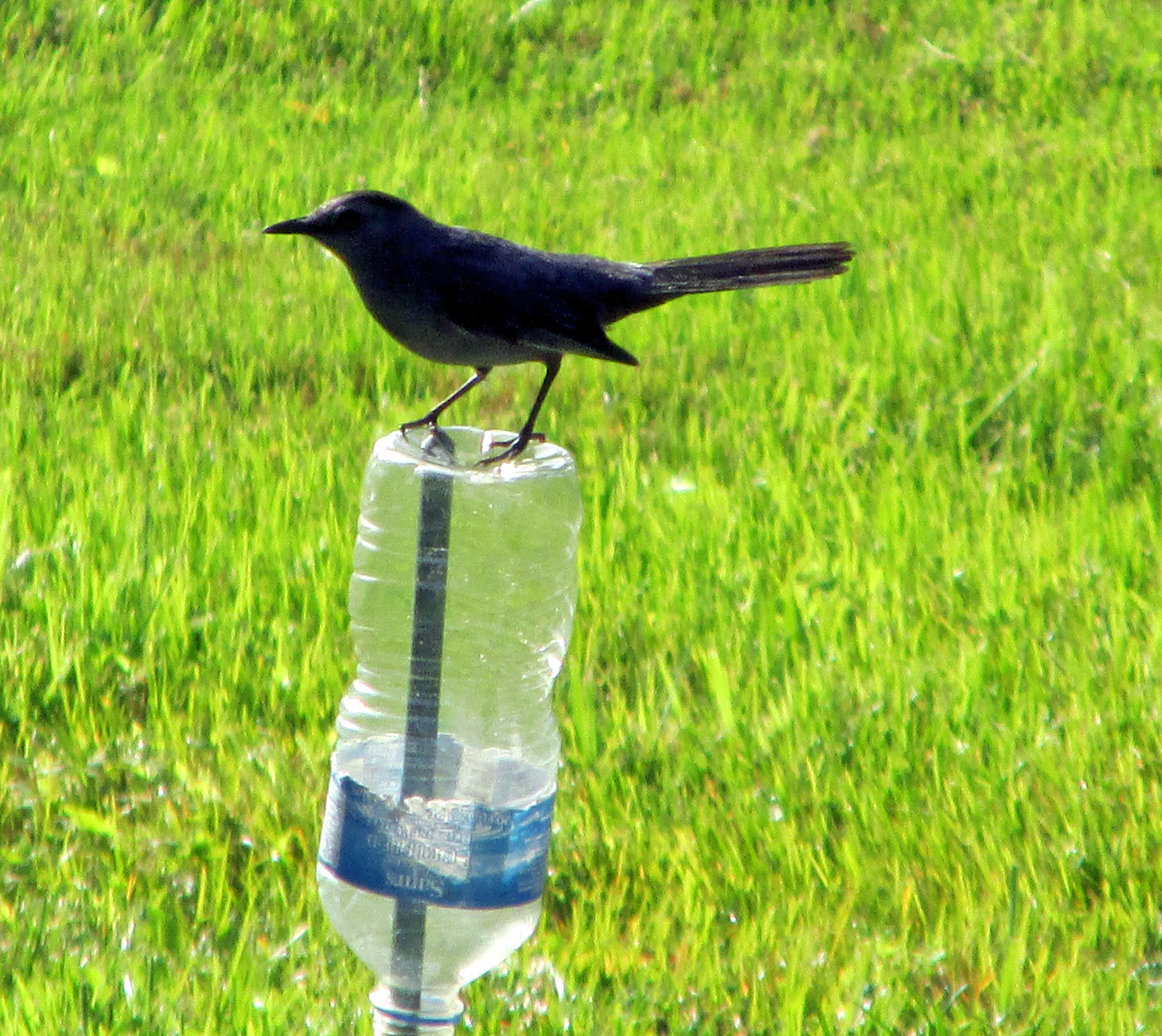
Photo by Bryan Stevens • The gray catbird resides in Northeast Tennessee April through October, although there are a few winter records for the species. Most depart in fall, choosing to spend the winter months in more hospitable locations.

Catbirds are part of the parade of the departing birds like rose-breasted grosbeaks, scarlet tanagers, Baltimore orioles and indigo buntings that will soon wing their way south for the winter.

Because they lack the brilliant plumages of some of these other summer visitors, catbirds could often go unnoticed if not for the fact they are extremely noisy.

Although the catbird is related to thrashers and mockingbirds, scientists find them just different enough to warrant placing the gray catbird in its own genus. A relative known as the black catbird, which ranges throughout the Yucatan Peninsula of Mexico as well as northern Guatemala and northern Belize, also belongs to a genus of its own. Both catbirds are classified as “mimic thrushes,” or Mimidae, of which there are about 30 species in the New World. There is also a totally unrelated family of catbirds that ranges through Australia, Asia and parts of Africa. Some of these birds include the ochre-breasted catbird, tooth-billed catbird and spotted catbird.

The gray catbird is not as an accomplished mimic as some of its relatives, such as the Northern mockingbird. Nevertheless, experts have documented that the gray catbird can produce more than 100 different sounds. Males have motivation to constantly expand their repertoire, however, as doing so increases the likelihood of attracting a mate. They imitate other birds, but some have been recorded imitating frogs and other non-avian singers.
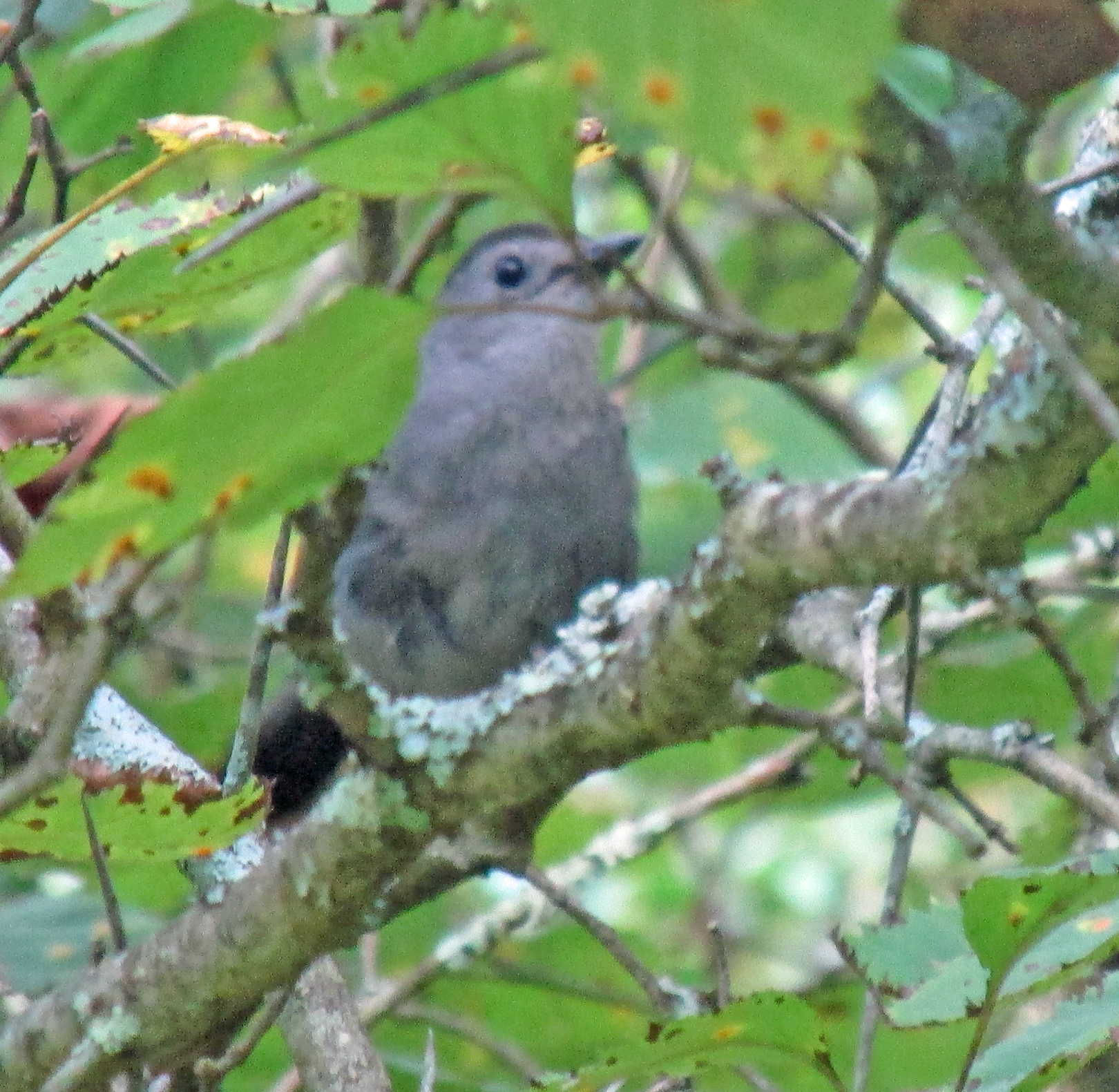
Photo by Bryan Stevens A curious Gray Catbird peeks from dense cover. Attendees at the fall rally can look for catbirds and other species at any of the offered bird hikes.

While not generally considered a bird to visit feeders, people have succeeded in attracting catbirds to feeders designed to offer grape jelly or orange slices. Planting fruit-bearing shrubs and trees is the best means of attracting these fascinating birds to your yard and garden. It’s also best not to clear away brush and tangles from your yard if you wish to attract catbirds. These are shy birds and will avoid areas that are too open and brightly lit.

An occasional catbird lingers in the region into the winter season, but most head out for more comfortable climates by the end of October. Enjoy this entertaining bird while you can but know they’ll return without fail next spring in April and May.

•••

Bryan Stevens has written about birds, birding and birders since 1995. Ask a question, share a sighting or make a comment by emailing him at ahoodedwarbler@aol.com.ahoodedwarbler@aol.com
Brown thrasher helps bid March adieu, welcomes April

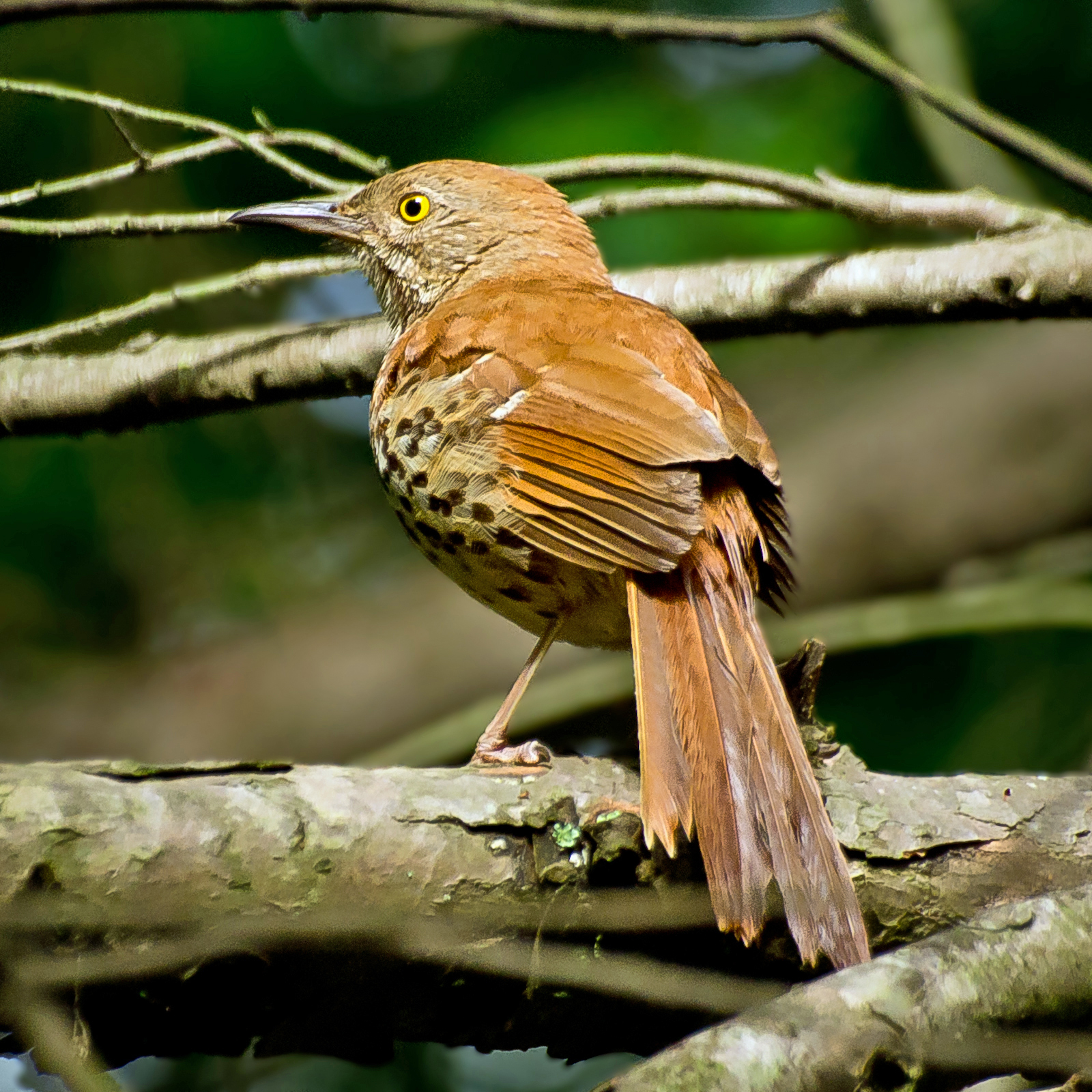
Photo by Ken Thomas • The Brown Thrasher is an alert, sharp-eyed observer of its surroundings.

I heard the paired notes of a signing male brown thrasher on Saturday, March 29, confirming the return of this large songbird. The thrasher was signing from a dead blue spruce tree surrounded by a thicket of forsythia in full golden bloom. I’ve usually celebrated the return of brown thrashers in the final days of March.

This year’s brown thrasher was slightly tardy. For instance, this species returned on March 24 in 2021 and 2023. Back in 2018, I had a “early bird” when a shy brown thrasher put in its first appearance of the year on Feb. 21. Back in 2020, a pair of brown thrashers returned on March 12. Last year, I didn’t see the first brown thrasher until the first week of April.

The brown thrasher (Toxostoma rufum) belongs to the family of “mimic thrushes,” which provides a label for a group of songbirds capable of imitating the songs of other birds. Mimidae, the Latin root for “mimic,” provides the scientific name for the family, which includes mockingbirds and the New World catbirds, as well as thrashers. The Northern mockingbird is best known for the ability to mimic, but relatives like the gray catbird and brown thrasher are also talented mimics.

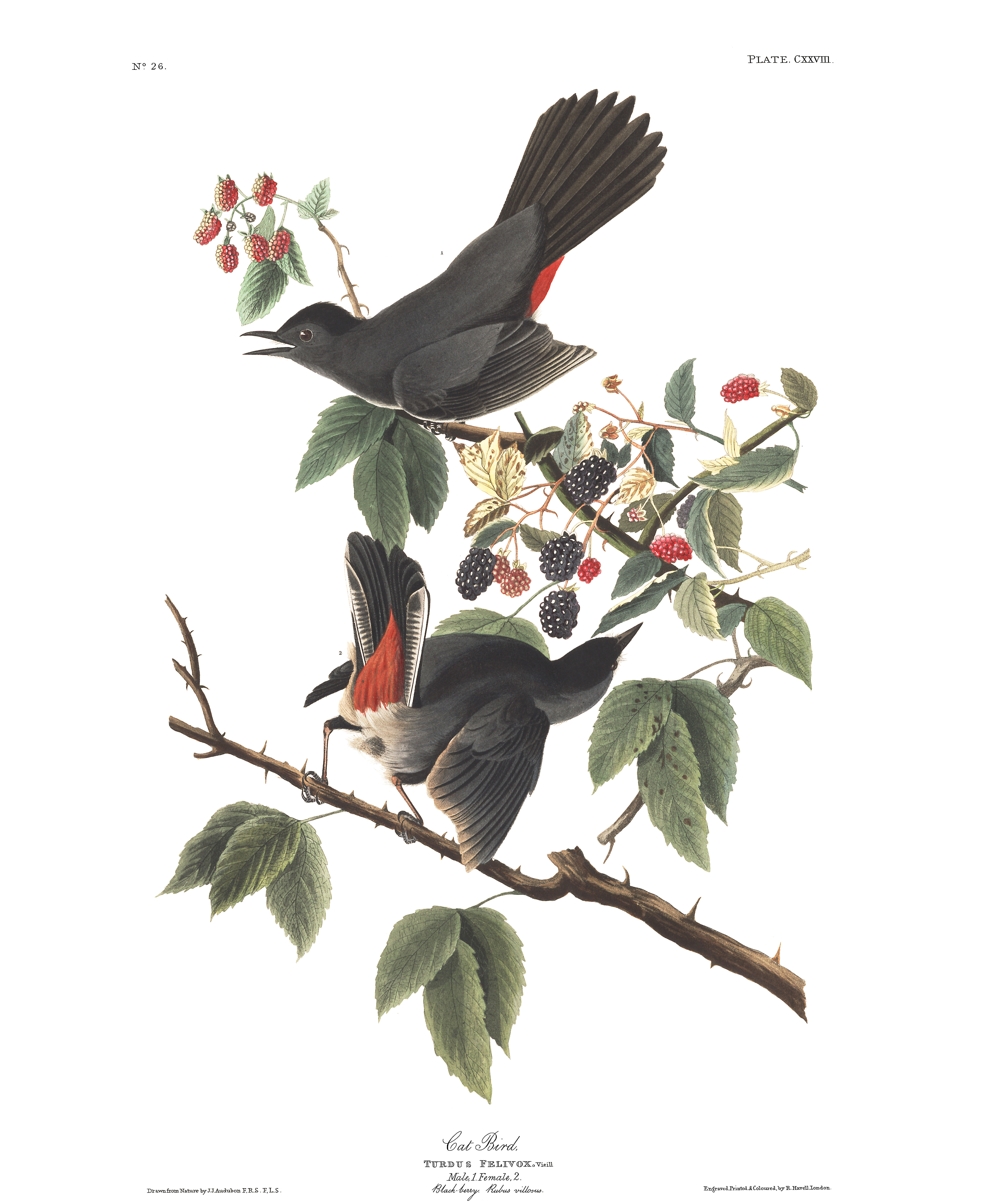
Early American naturalist and artist John James Audubon painted a dramatic scene of Brown Thrashers defending their nest from an attacking snake.

The thrasher is a fairly large songbird about 11.5 inches long with a wingspan of 13 inches. Much of the body length comes from the bird’s long tail feathers. A thrasher weighs, however, only about 2.5 ounces, which is equivalent to a stack of about two dozen pennies. The brown thrasher is not a picky eater. It’s known to eat everything from berries and nuts to insects and small salamanders.

It’s also aggressive in defending its nest and young. John James Audubon, a French-American ornithologist, naturalist and painter, painted quite the dramatic scene of a group of brown thrashers valiantly defending a nest from an attacking snake. The painting is so detailed that one has to imagine Audubon based his work on a real-life experience. His work, originally painted in the early decades of the 1800s, still holds up today.

Incidentally, Audubon knew the brown thrasher as the “ferruginous thrush.” Another former common name for this species was “brown thrush.” The brown thrasher breeds across the United States and Canada east of the Rocky Mountains. Thrashers withdraw from the northern part of their range in the winter months, spending the season in the southeastern United States.

This species is a familiar bird in southern gardens. In fact, the brown thrasher is the official state bird of Georgia and also provided the name for Atlanta’s National Hockey League team, the Atlanta Thrashers. The thrasher became Georgia’s state bird due to passage of a Joint Resolution of the Georgia General Assembly in 1970.

According to the website All About Birds, brown thrashers, like catbirds and mockingbirds, are mimics with extremely varied repertoires consisting of more than 1,100 song types.

According to the website, male brown thrashers sing a loud, long series of doubled phrases with no definite beginning or end. The song has been described as “plant a seed, plant a seed, bury it, bury it, cover it up, cover it up, let it grow, let it grow, pull it up, pull it up, eat it, eat it.” I’m not sure I would have come up with that same phrasing, but I can detect some of it when listening to a singing thrasher.

All About Birds points out that while mockingbirds tend to repeat phrases three or more times, brown thrashers typically sing phrases only twice.

Photo by Bryan Stevens
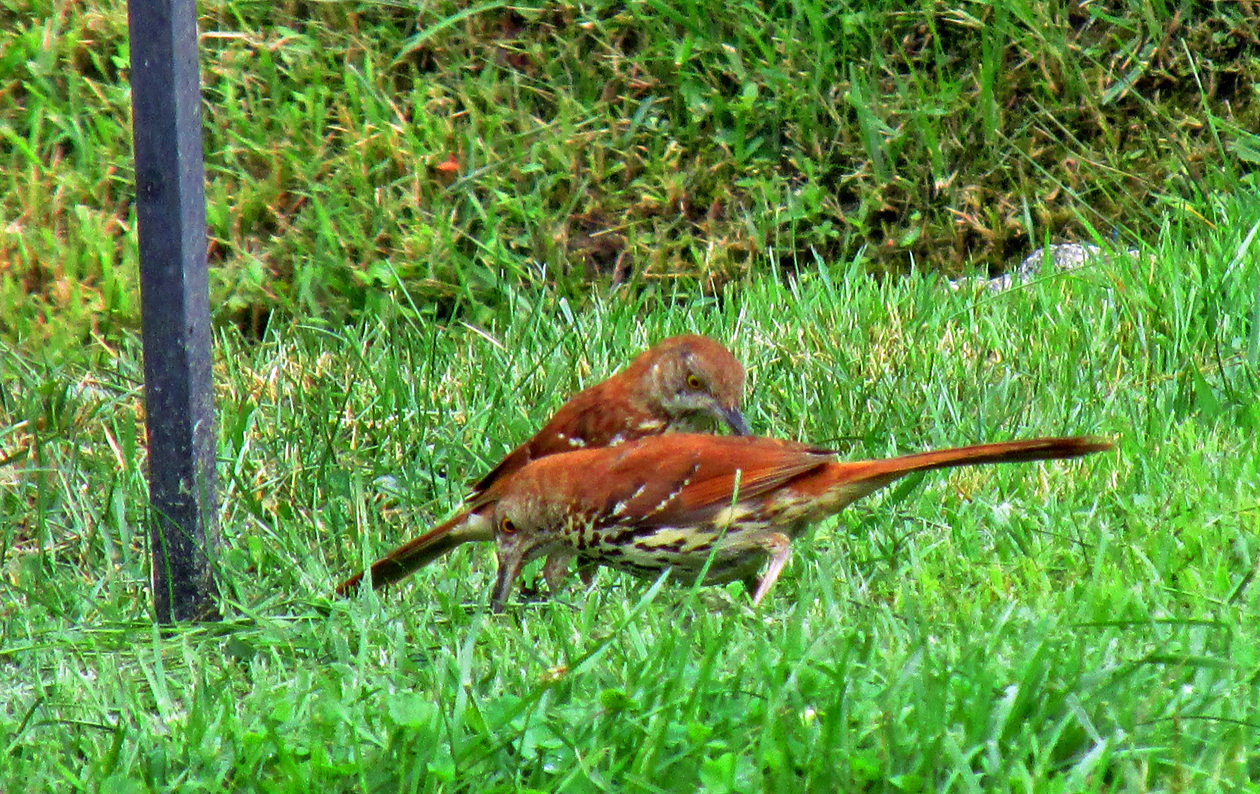
A pair of Brown Thrashers forage for food on the ground below a feeder.

They also mimic the songs of other species, including chuck-will’s-widow, Northern flicker, white-eye vireo, tufted titmouse, wood thrush, and Northern cardinal.

The New World is home to less than a dozen thrasher species. Other relatives of the brown thrasher include Bendire’s thrasher, LeConte’s thrasher, gray thrasher and long-billed thrasher.

Other new arrivals have included blue-grey gnatcatcher, which showed up on April 2. I placed two sugar water feeders outdoors for the hummingbirds on the first day of April. This year, I Have not had to wait long for their return. The first male ruby-throated hummingbird showed up at my feeder on Sunday, April 6. I will write more on this year’s first hummingbird arrivals in next week’s post. Remember to let me know when the hummingbirds arrive at your home. Share your first spring sighting by emailing me at ahoodedwarbler@aol.com.

Brown Thrasher visits a suet feeder. The thrasher diet consists of everything from berries and seeds to insects and even small reptiles.

Among feathered friends, catbirds are individuals

Photo by Bryan Stevens • Although often considered shy, skulking birds, some catbirds show a great deal of curiosity about and trust in humans.

I received an email on June 15 from Linda Durette, who lives in Townsend, Massachusetts, which is on the New Hampshire border.

“I live in a country environment with thickets and fields,” she noted.

Linda informed me that she had run across an article I wrote in 2019 about gray catbirds.
“I have always been mildly intrigued by the catbird,” she wrote. ‘Working around the yard and having a cat myself, I always got a kick out of their vocal annoyance with my cat.”

She said the catbirds begin squawking at her cat the minute he steps out the door.

Photo by by Jennifer Beebe from Pixabay • Gray catbirds have a reputation for being either shy skulkers or bold scolders. In fact, these birds are known for being individuals with unique and distinctive personalities. Like mockingbirds and thrashers, the gray catbird is considered a mimic thrush and can imitate snippets of the songs of other birds.

“I always kept him away from any nesting area, although he isn’t a particularly adventurous cat, anyway,” she noted.

“This year was the same,” she said. “My cat seemed to almost ignore the bird. He just sat there and allowed the bird to squawk loudly. I think the bird was miffed.”

She said she finally put her cat back in the house.

“But I have been noticing that the bird comes very close to me,” she wrote.

She wrote that the catbird appears to watch what she does when she is outdoors.

“I have been talking with him, chattering while I garden,” she wrote. “It’s a riot. He lands on the wheelbarrow handle after I walk away or allows me to walk pretty close to him as he watches.”
Linda concluded that this individual catbird, at least, seems to have quite the personality.
I’d mentioned in my previous column on catbirds about the fondness of these birds for fruit and how I occasionally offered berries to them.

“I will attempt some fruit, too,” she said. “It is so interesting. We’ll see what happens.”
Perhaps readers will recall the folksy expression “sitting in the catbird’s seat” that denotes self-satisfaction and perhaps a degree of smugness. As expressions go, it’s not a bad fit for this charming, somewhat eccentric bird.

Photo by Bryan Stevens A curious Gray Catbird peeks from dense cover. Attendees at the fall rally can look for catbirds and other species at any of the offered bird hikes.

The gray catbird is a baffling bird with a personality that runs the gamut from introverted to extroverted, sometimes depending on the season and at other times seemingly just on a whim. With some gentle persuasion, however, people can gain a catbird’s trust – as Linda has done with the bird in her Massachusetts garden – and develop a fun friendship with these clever songbirds.

One summer, all I needed to do to win over the catbirds was to offer some less-than-perfect strawberries and blueberries. A few blemishes on the fruit didn’t bother the resident catbirds at all, and they soon became accustomed to receiving such treats.

A person’s first introduction to the catbird is likely going to occur when one hears what sounds like an irritable feline hiding in a hedge, thicket or dense shrub. Upon closer examination, observers may get a glimpse of a charcoal gray bird roughly the shape of a Northern mockingbird but smaller. A black cap and a patch of rusty-red feathers under the tail are the only exceptions to this bird’s overall gray plumage.

The catbird is related to thrashers and mockingbirds, but scientists find the gray catbird just different enough to warrant placing it in its own genus. The genus name Dumetella means “small thicket.” It’s an apt name for this secretive skulker. Catbirds only feel secure in dense cover such as hedges, brush piles and dense thickets.

A relative known as the black catbird, which ranges throughout the Yucatan Peninsula of Mexico, as well as northern Guatemala and northern Belize, also belongs to a genus of its own. The genus name Melanoptila for this close relative is a compound word created from two Greek words: melas, meaning “black” and ptilon, meaning “plumage.” Both of these catbirds are classified as “mimic thrushes,” or Mimidae, of which there are about 30 species in the New World. There is a totally unrelated family of catbirds that ranges through Australia, Asia and parts of Africa.

The gray catbird is not as an accomplished mimic as some of its relatives, such as the Northern mockingbird. Males have motivation to constantly expand their repertoire, however, as doing so increases the likelihood of attracting a mate. They imitate other birds, but some have been recorded imitating frogs and other non-avian singers.

The website All About Birds also offers some helpful advice for attracting gray catbirds. To entice these birds, plant native fruit-bearing trees and shrubs such as dogwood, winterberry and serviceberry.

While the closely related brown thrasher and Northern mockingbird have both been honored with recognition as official state birds, this designation has never been bestowed on the gray catbird.

The female catbird constructs the nest, but her mate may helpfully provide some of the nesting materials. She may spend as long as a week building a rather bulky nest. She usually lays one to six eggs, which require an incubation period of about two weeks. Once the young hatch, both parents are kept busy bringing food to the young. Hatchlings will remain in the nest for about 10 days, but parents continue to care for and feed young even after they have fledged and departed the nest. Catbirds nest two or three time in a season.

According to the website All About Birds, the oldest known gray catbird was at least 17 years and 11 months old when it was recaptured and rereleased during banding operations in New Jersey in 2001. That individual had been banded in Maryland in 1984. So, if you do manage to strike up your own friendship with a catbird, there’s a good possibility that it could become a long-term relationship, especially since many birds like to return to a home territory year after year.

To share an observation, make a comment or ask a question, please send email to ahoodedwarbler@aol.com. I enjoy hearing from readers about shared interests in birds.

Gray catbird noisy visitor, but not one of region’s more showy birds

Gray

Photo by Jack Bulmer/Pixabay.com • A gray catbird visits a backyard bird bath for a drink.

Thomas A. Kidd contacted me in late June with a comment about one of my favorite summer birds. “I have lived in the City of Columbia, Tennessee, for 37 years and until this spring and early summer I had never seen the Gray Catbird,” he wrote. “They are very pretty birds that I enjoy watching from my kitchen window at the bird bath.”

Catbirds are experts at concealing themselves from prying eyes. The gray plumage blends into the shadowy sections of the tangles and thickets where the bird likes to hide itself. However, even when gray catbirds are reluctant to be seen, they’re almost eager to be heard. The catbird is extremely vocal with several calls and songs in its repertoire, including the rather faithful rendering of a fussy cat’s meow that provides this bird its common name.

They’re part of a family related to thrushes that are known as “mimic thrushes.” Besides its surprisingly accurate rendition of a feline, the catbird has several other common vocalizations. Despite their shy nature, they’re extremely curious. Imitating their calls or simply producing a squeaky sound will usually persuade the bird to move out of cover and search for the source of the noise.

Catbirds are part of the parade of returning birds each spring that includes species like rose-breasted grosbeaks, scarlet tanagers, Baltimore orioles and indigo buntings, but because they lack the brilliant plumages of these other birds their arrival would probably go unnoticed if not for the fact they are extremely noisy for the first few weeks they are back. Then they go silent again and remain quieter as they take up the serious business of raising young.

Catbirds are experts at concealing themselves from prying eyes. The gray plumage blends into the shadowy sections of the tangles and thickets where the bird likes to hide itself. However, even when gray catbirds are reluctant to be seen, they’re almost eager to be heard. The catbird is extremely vocal, with several calls and songs in its repertoire, including the rather faithful rendering of a fussy cat’s meow that provides this bird its common name.

Photo by Bryan Stevens A curious Gray Catbird peeks from dense cover. Attendees at the fall rally can look for catbirds and other species at any of the offered bird hikes.

They’re part of a family related to thrushes that are known as “mimic thrushes.” Besides its surprisingly accurate rendition of a feline, the catbird has several other common vocalizations. Despite their shy nature, they’re extremely curious. Imitating their calls or simply producing a squeaky sound will usually persuade the bird to move out of cover and search for the source of the noise.

Catbirds are part of the parade of returning birds each spring that includes species like rose-breasted grosbeaks, scarlet tanagers, Baltimore orioles and indigo buntings, but because they lack the brilliant plumages of these other birds their arrival would probably go unnoticed if not for the fact they are extremely noisy for the first few weeks they are back. Then they go silent again and remain quieter as they take up the serious business of raising young.

They are related to thrashers and mockingbirds, but scientists find them just different enough to warrant placing the gray catbird in its own genus. A relative known as the black catbird, which ranges throughout the Yucatan Peninsula of Mexico as well as northern Guatemala and northern Belize, also belongs to a genus of its own. Both catbirds are classified as “mimic thrushes,” or Mimidae, of which there are about 30 species in the New World. There is a totally unrelated family of catbirds that ranges through Australia, Asia and parts of Africa. Some of these birds include the ochre-breasted catbird, tooth-billed catbird and spotted catbird.

The gray catbird is not as an accomplished mimic as some of its relatives, such as the Northern mockingbird. Nevertheless, experts have documented that the gray catbird can produce more than 100 different sounds. Males have motivation to constantly expand their repertoire, however, as doing so increases the likelihood of attracting a mate. They imitate other birds, but some have been recorded imitating frogs and other non-avian singers.

While not generally considered a bird to visit feeders, people have succeeded in attracting catbirds to feeders designed to offer grape jelly or orange slices. Planting fruit-bearing shrubs and trees is the best means of attracting these fascinating birds to your yard and garden. It’s also best not to clear away brush and tangles from your yard if you wish to attract catbirds. These are shy birds and will avoid areas that are too open and spacious. 


Gray catbirds require some gentle coaxing to give up shy habits

The gray catbird is a baffling bird with a personality that runs the gamut from introverted to extroverted, sometimes depending on the season and at other times seemingly just on a whim. With some gentle persuasion, however, people can gain a catbird’s trust and develop a fun friendship with these clever songbirds.

One summer, all I needed to do to win over the catbirds was to offer some less-than-perfect strawberries and blueberries. A few blemishes on the fruit didn’t bother the resident catbirds at all, and they soon became accustomed to receiving such treats.

Your first introduction to the catbird is likely going to occur when you hear what sounds like an irritable feline hiding in a hedge, thicket or dense shrub. Upon closer examination, you may get a glimpse of a charcoal gray bird roughly the shape of a Northern mockingbird but smaller. A black cap and a patch of rusty-red feathers under the tail are the only exceptions to this bird’s overall gray plumage.

Photo by Bryan Stevens A curious Gray Catbird peeks from dense cover. Attendees at the fall rally can look for catbirds and other species at any of the offered bird hikes.

Catbirds are experts at concealing themselves from prying eyes. The gray plumage blends into the shadowy sections of the tangles and thickets where the bird likes to hide itself. However, even when gray catbirds are reluctant to be seen, they’re almost eager to be heard. The catbird is extremely vocal, with several calls and songs in its repertoire, including the rather faithful rendering of a fussy cat’s meow that provides this bird its common name.

They’re part of a family related to thrushes that are known as “mimic thrushes.” Besides its surprisingly accurate rendition of a feline, the catbird has several other common vocalizations. Despite their shy nature, they’re extremely curious. Imitating their calls or simply producing a squeaky sound will usually persuade the bird to move out of cover and search for the source of the noise.

Catbirds are part of the parade of returning birds each spring that includes species like rose-breasted grosbeaks, scarlet tanagers, Baltimore orioles and indigo buntings, but because they lack the brilliant plumages of these other birds their arrival would probably go unnoticed if not for the fact they are extremely noisy for the first few weeks they are back. Then they go silent again and remain quieter as they take up the serious business of raising young.

However, in a mood that appears to swing with the seasons, gray catbirds emerge again in late summer and early fall when they feast on such fruit as elderberries and wild cherries while making their whiny cacophony of calls from any tangle or thicket where they happen to be.

The catbird belongs to the genus Dumetella. The name is based upon the Latin term dūmus, which roughly translated means “thorny thicket.” Dumetella, in turn, means “dweller in the thornbushes” or “small bird of the thornbushes.” It’s a rather apt description for a bird fond of habitats often dominated by thorny vegetation. Older common names for the gray catbird included cat thrush and slate-colored mockingbird.

They are related to thrashers and mockingbirds, but scientists find them just different enough to warrant placing the gray catbird in its own genus. A relative known as the black catbird, which ranges throughout the Yucatan Peninsula of Mexico, as well as northern Guatemala and northern Belize, also belongs to a genus of its own. Both catbirds are classified as “mimic thrushes,” or Mimidae, of which there are about 30 species in the New World. There is a totally unrelated family of catbirds that ranges through Australia, Asia and parts of Africa.

The gray catbird is not as an accomplished mimic as some of its relatives, such as the Northern mockingbird. Males have motivation to constantly expand their repertoire, however, as doing so increases the likelihood of attracting a mate. They imitate other birds, but some have been recorded imitating frogs and other non-avian singers.

While not generally considered a bird to visit feeders, people have succeeded in attracting catbirds to feeders designed to offer grape jelly or orange slices. Planting fruit-bearing shrubs and trees is the best means of attracting these fascinating birds to your yard and garden.