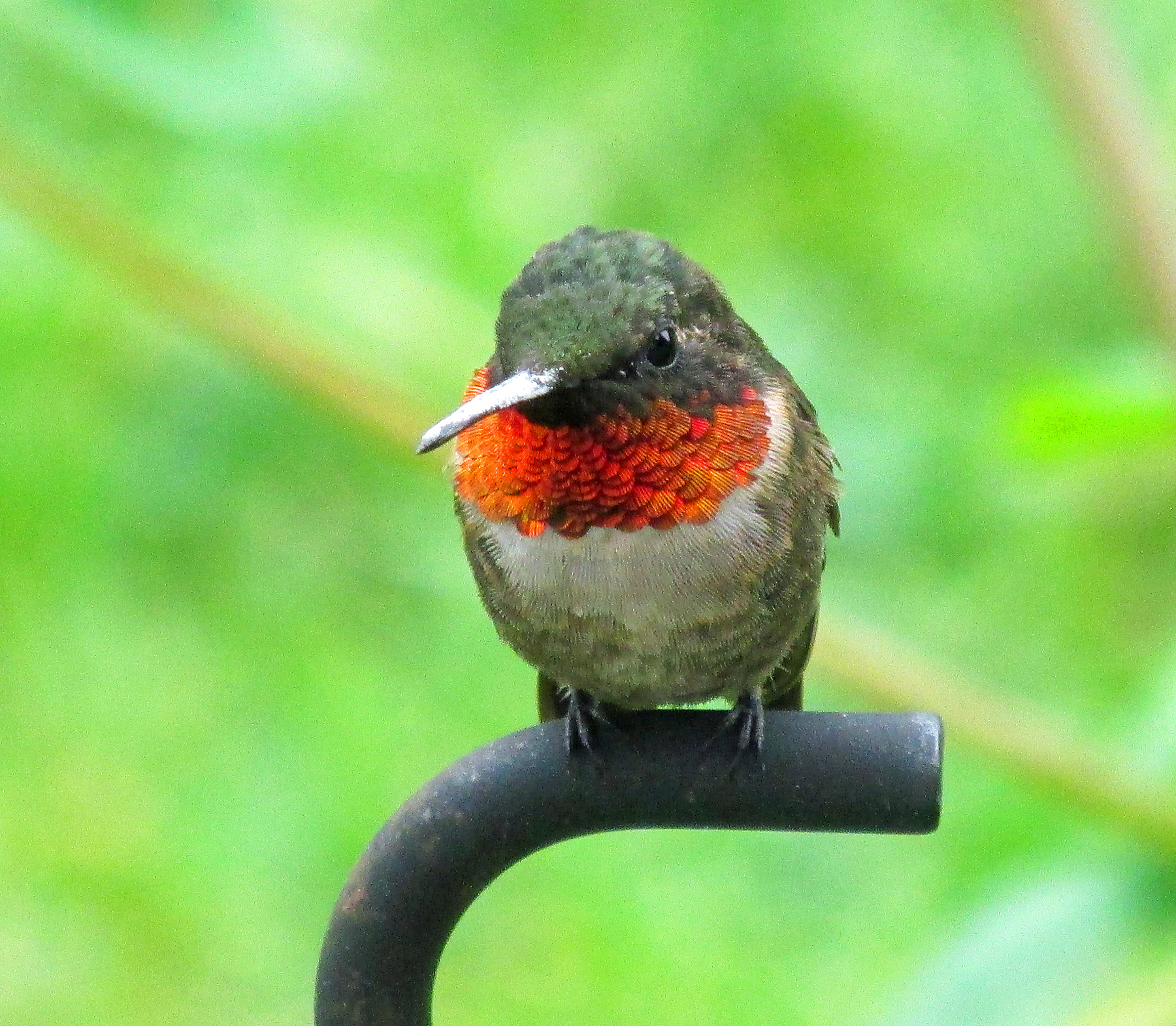
Tag Archives: Ruby-throated Hummingbird

Chasing Zunzun: Bahamas cruise resulted in sightings of flying gems

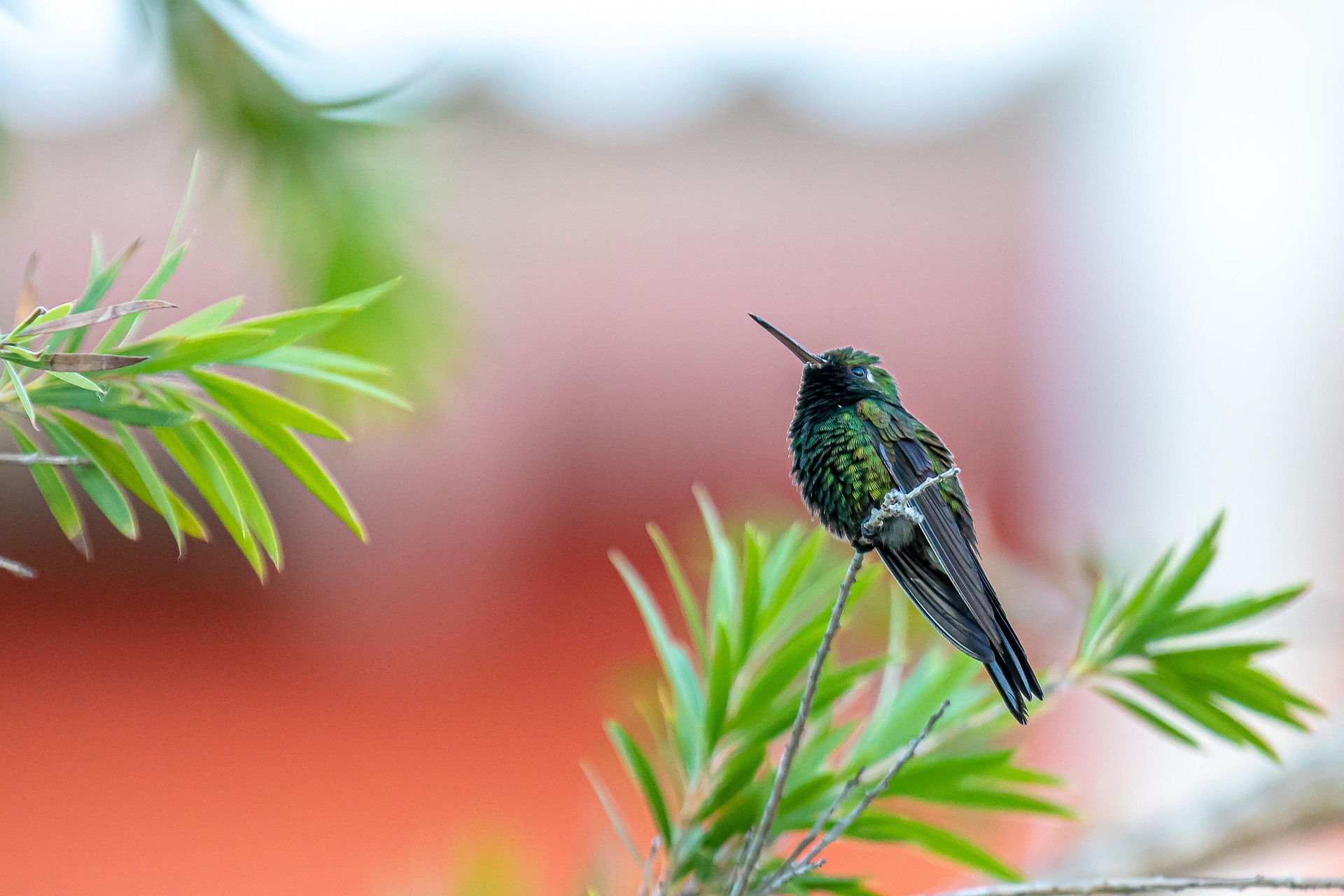
Photo by Pixabay • A Cuban emerald, a species of hummingbird native to Cuba and the Bahamas, perches and surveys its surroundings.

Continuing to bring you some vintage columns, I dug deep into my archives. I’ve traveled outside the United States on only one occasion from Jan. 22-24, 1999, during a family vacation. Sightseeing and shopping took a backseat to birding during a three-day cruise in the Bahamas. I fully documented my sightings in a “Feathered Friends” column published Feb. 14, 1999.

Two scheduled shore excursions during the cruise gave me opportunities to search for birds.

Two hummingbird species can be found in the Bahamas. The Cuban emerald, as its name suggests, is found in Cuba. It’s also found on several islands in the Bahamas. These dazzling birds are found in thickets and woodlands, as well as parks and gardens.

Another hummingbird species, the Bahama woodstar, is found nowhere else in the world.

Without much difficulty, I observed both species during my visit to the Bahamas. My observation of Cuban emeralds took place on Castaway Cay, a small island owned by Disney and reserved for use by those traveling aboard its cruise ships. Much of the island had been kept in a natural state with walking trails perfect for looking for birds. While others enjoyed the beach, I set off with my binoculars on the trails.

My mother and I observed a pair of Cuban emeralds that appeared to be a mother and her male offspring. On two occasions, we watched the female approach the young male for a feeding session. The young bird opened his bill in a wide gape and the female plunged her own long bill into his throat. The spectacle looked rather fearsome, but that’s how hummingbirds feed their young. I’ve observed one of our native ruby-throated hummingbird feeding her young in the same manner. Experts who have researched hummers insist there’s no danger that a mother hummingbird will skewer her offspring.

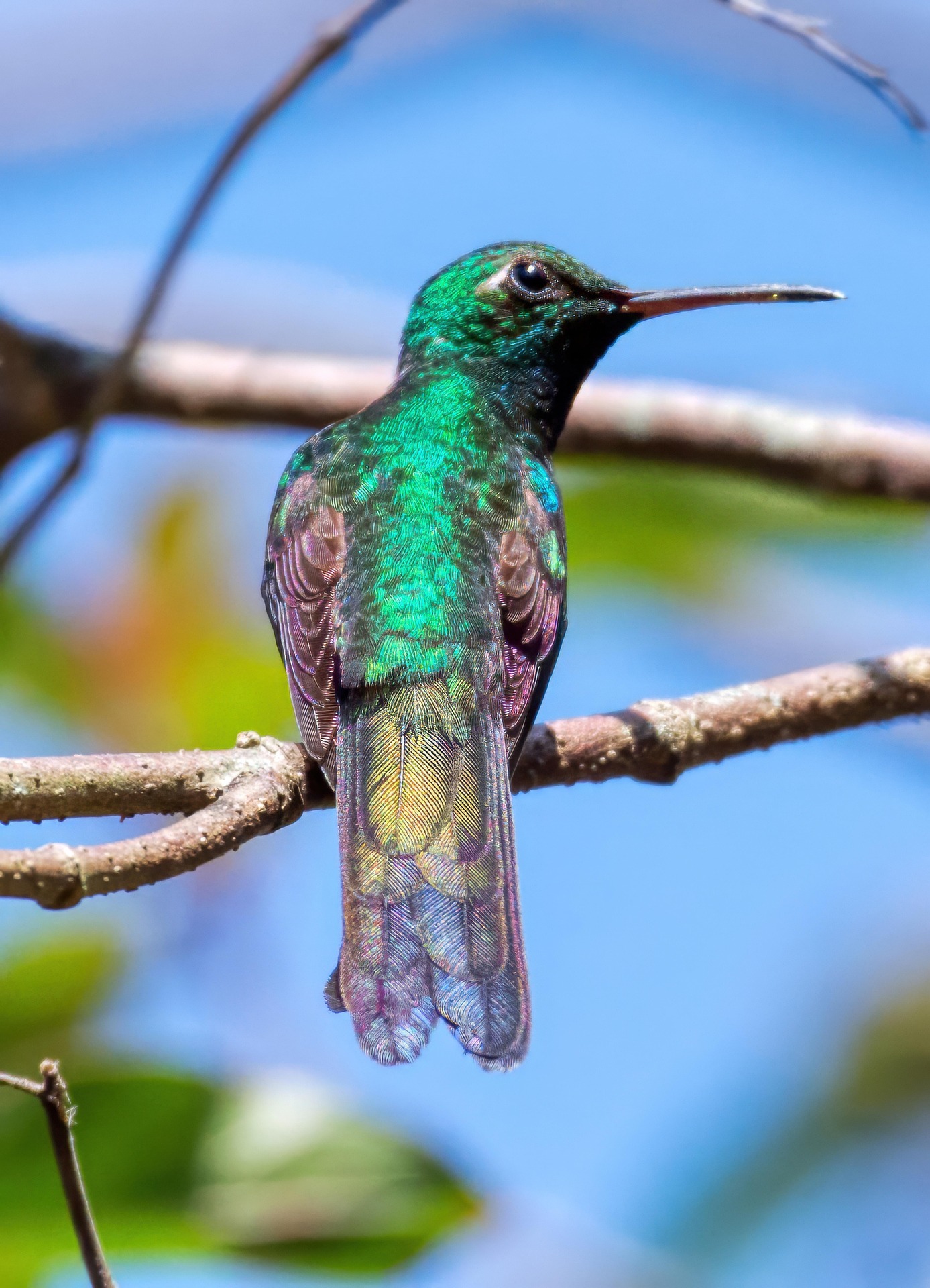
Photo by Daniel Stuhlpfarrer/Pixabay • The Cuban emerald is a vibrant hummingbird of the Caribbean.

The young male being fed put on quite a show. He appeared almost completely lacking in fear and allowed me to approach within inches of his perch. At times, he also exhibited his own curiosity and buzzed around my head and face for a better look of his own.

His mother, not quite as confiding, kept her distance. She perched on branches about 15 feet off the ground. She observed us, but she never descended to feed the young male unless we withdrew to a comfortable distance.

I learned later that my brother and sister-in-law saw some Cuban emeralds at another location on the island, leading me to suspect that the Cuban emerald may be quite common on Castaway Cay in the Bahamas.

Male Cuban emeralds sport an iridescent green throat and breast with a long forked tail, white undertail feathers, and a long thin bill that is black on top and reddish-pink on the underside. Females look similar to males except with green upperparts along with a grayish throat and breast, and a slightly shorter and less forked tail.

The term “emerald” describes many different species of hummingbirds. In the Caribbean, this family includes Hispaniolan emerald and Puerto Rican emerald. These hummingbirds belong to the genus Chlorostilbon, which is Greek for “green glitter,” a perfect description of the metallic green appearance of their feathers. Since my writing of the original column, experts have reconsidered the classification of the Cuban emerald. Based on a molecular phylogenetic study published in 2014 and a 2017 publication, the North American Classification Committee of the American Ornithological Society moved the species to the resurrected genus Riccordia. The Cuban emerald’s scientific name is now Riccordia ricordii.

Prior to seeing the Cuban emeralds I got a brief but close look at a male Bahama woodstar visiting hibiscus and other flowers in a garden surrounding a swimming pool at a resort in Nassau, the capital of the Bahamas located on New Providence Island.

The Bahama woodstar bears a resemblance to our own ruby-throated hummingbird. Male Bahama wood stars boast a reddish-purple throat, green upperparts and a white breast bordered by a tinge of rufous. The bird’s forked tail feathers are also trimmed with rufous color. Males and females have a white spot behind each eye. They also have black bills that curved downward slightly at the tip.

The Bahama woodstar, which is roughly the same size as a ruby-throated hummingbird, is a member of the genus Calliphlox, which is Greek for “beautiful flame.” Since my original writing of this column, the classification of the Bahama woodstar changed after a 2014 study.

A former subspecies of the Bahama woodstar has been made its own species. The Bahama woodstar itself was moved into a new genus and given the scientific name Nesophlox evelynae. That former subspecies was upgraded to full species status and is known as the Inagua woodstar (Nesophlox lyrura), also called the lyre-tailed hummingbird. The species is endemic to the two islands of the Inagua district of the Bahamas.

It’s the Bahama woodstar that occurs in Nassau, so the species I saw in 1999 was truly the Bahama woodstar. The good news is that if I ever travel to the Great or Little Inagua islands in the Bahama archipelago I will have a chance to add a third species of Bahama hummingbird to my life list.

There are many other species of woodstars, including the little woodstar of South America, the purple-throated woodstar restricted to the west slope of the Andes in Colombia and Ecuador, and the endangered Chilean woodstar.

There are about 360 species of hummingbirds, all found in the New World and reaching their greatest diversity in Central and South America.

Both Cuban emeralds and Bahama Woodstars have strayed into nearby Florida, so it is possible to observe these two species outside of the Bahamas. Experts have speculated that the Inagua woodstar had very likely also strayed into Florida.

I’ll always remember my trip to the Bahamas and the opportunity to chase after zunzún, which is a Spanish word, particularly used in the Caribbean, for hummingbird. I greatly enjoyed my observations of the two hummingbird species I observed in the Bahamas. These sightings remain among my most memorable in my nearly four decades of birding.

•••

Bryan Stevens has written about birds, birding and birders since 1995. Email him at ahoodedwarbler@aol.com to ask a question, make a comment or share a sighting. 


Celebrating 30 years of birds, birding and birders

Photo by Bryan Stevens A burrowing owl perches on a sign at Antelope Island State Park in Utah in May 2006.

For the past 29 years, I’ve published my first bird column as close to the anniversary date of its initial publication as possible.

I’m not doing that this year. Instead, in a celebration of writing “Feathered Friends” on a weekly basis for the past 30 years, I am devoting this week’s column to personal reflection.

Has it truly been 30 years? It’s the question I’ve asked myself as the date on the calendar approached, marking 30 years since I began writing my weekly “Feathered Friends” column. The column made its debut in the Elizabethton Star’s Sunday lifestyles section, but since that debut on Nov. 5, 1995, the column has appeared in most of the newspapers in the region, plus a couple in North Carolina.

The column ran from 1999 to 2003 in the Herald & Tribune in Jonesborough and began running in The Erwin Record in 2003. It has mostly run each week in Unicoi County’s weekly newspaper since that time. The column began another run in the Elizabethton Star from 2008 to 2014, followed by a run in the Bristol Herald Courier, as well as in Six Rivers Media publications such as The Tomahawk in Mountain City, as well as Johnson City Press and Kingsport Times.

The column went online via WordPress in 2014 and is still posted weekly on Sundays at ourfinefeatheredfriends.com. I’m still staggered by the fact I’ve been writing this column on a weekly basis for 30 years. Readers have followed my accomplishments in birding, including detailed columns every time I’ve added a new species to my life list.

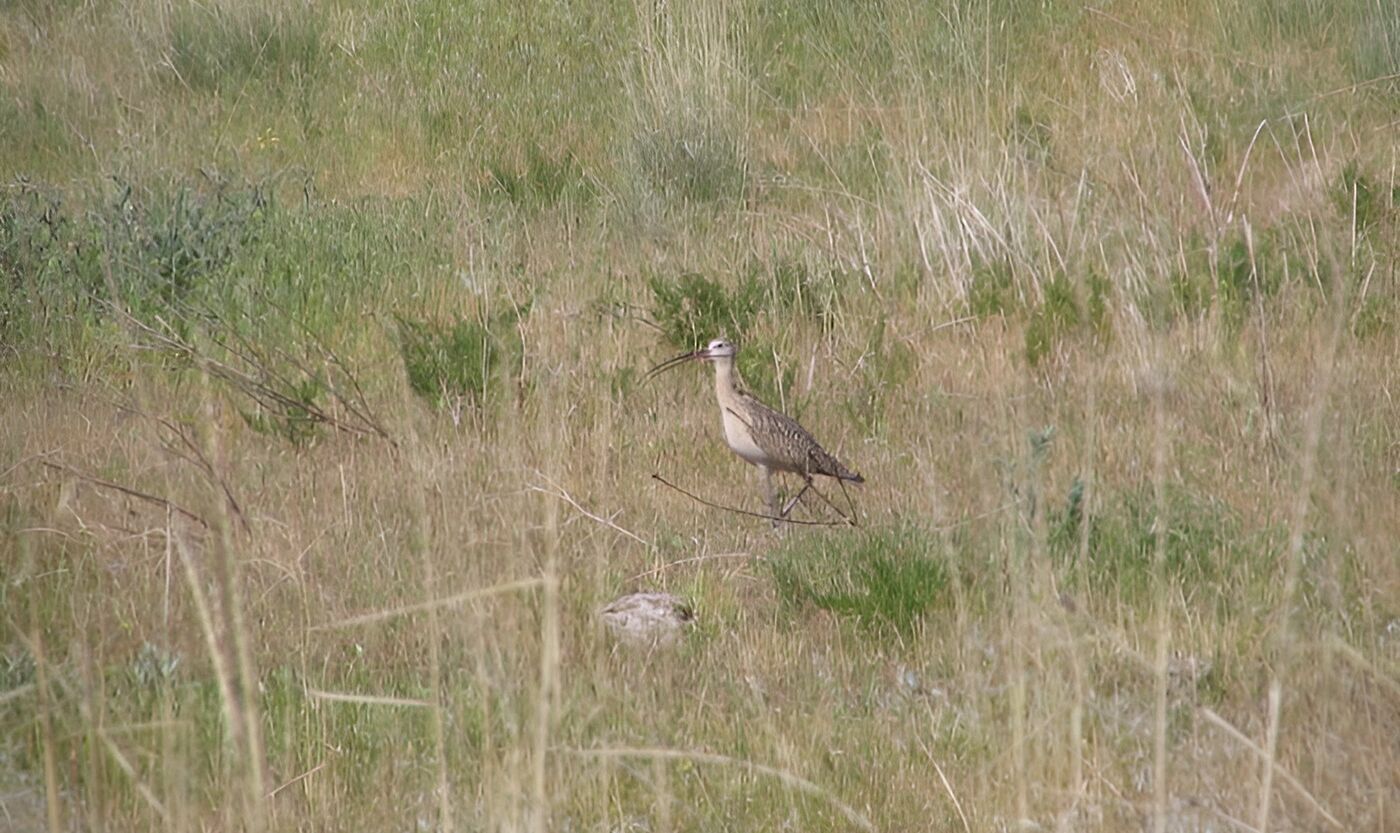
Photo by Bryan Stevens A long-billed curlew calls in a grassland at Utah’s Antelope Island State Park in May 2006.

Those special columns have included birds such as burrowing owl, long-billed curlew, roseate spoonbill, black-necked stilt, Nelson’s sparrow, black rail, swallow-tailed kite, Mississippi kite, grey-cheeked thrush, limpkin, least bittern, American bittern, painted bunting, lazuli bunting, golden eagle, American dipper, Townsend’s solitaire, mourning warbler, clay-colored sparrow, black-headed grosbeak, Western tanager, Northern saw-whet owl, bananaquit and many other memorable species. Just this past summer I added scissor-tailed flycatcher when I observed a female of this species nesting in Jonesborough.

I’ve added several hummingbirds to my list over the years, including Cuban emerald and Bahama woodstar from a trip to the Bahamas in 2000, and black-chinned hummingbird and broad-winged hummingbird from a trip to Utah. I saw a far out-of-range green-breasted mango in Charlotte, North Carolina, and traveled to Nashville to see a Calliope hummingbird, which is also the smallest of North American birds. In Northeast Tennessee, I’ve seen numerous rufous hummingbirds and a couple of Allen’s hummingbirds, both of which are western species with a perplexing habit of migration through the region and showing up in unlikely locations.

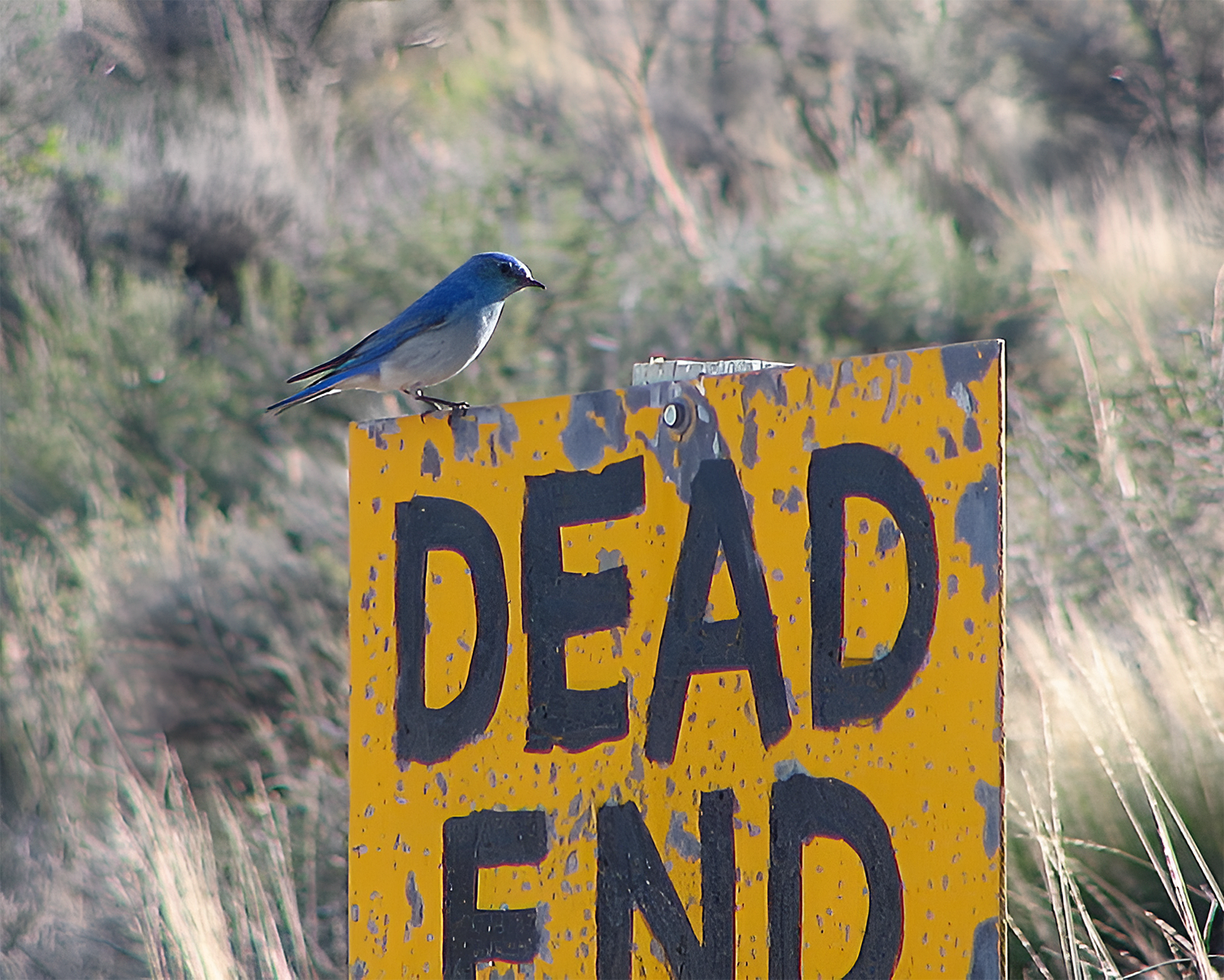
Photo by Bryan Stevens A mountain bluebird at Sweetwater Trailer Park and Campground at Garden City, Utah, on the shores of Bear Lake. Despite the sign, this location was certainly no “dead end” when it came to birding.

Even more than the birds, however, are the people I’ve met through this weekly column. I’ve been able to share stories about birding with people like Howard Langridge, Reece Jamerson, Gilbert Derouen and Wallace Coffey. They’re all gone now, but I have my memories of our time together looking for and finding some memorable birds.

I’ve met people like Brookie and Jean Potter, Tess Cumbie, Gary Wallace, Barbara Lake, Rick Knight, Joe McGuinness, Charles Moore, Fred Alsop, Allan Trently, Brenda Richards, Chris Soto, Rob Biller and Brayden Paulk. I’ve left out names because in all honesty there are too many to list. I’ve shared stories about Tom and Cathy McNeil, a couple who have chased rare birds such as buff-breasted sandpiper, snowy owl and hurricane-displaced American flamingos.

I’ve had adventures. I got stuck in mud at Musick’s Campground with Howard Langridge at Holston Lake as Hurricane Frances passed through the region in 2004, but we got a sooty tern!

Photo by Bryan Stevens A least bittern slips through marsh vegetation at Huntington Beach State Park in South Carolina.

While birding with Reece Jamerson at Austin Springs on Boone Lake, an American bittern walked up to us from a flooded ditch, absolutely fearless, and got so close we didn’t even need binoculars. Of course, we also hadn’t brought cameras.

I stood in freezing conditions for hours with dozens of birders in 2009 Springfield, Tennessee, scanning a field littered with plastic and other debris hoping for a glimpse of a reported snowy owl. Just as everyone was ready to give up hope, the owl, present all along, transformed from a white plastic bag into a fully feathered owl. It even made a short flight as if to reward everyone for their patience.

Visiting Antelope Island State Park in the middle of the Great Salt Lake in May 2006 with David Thometz and his parents, we saw many birds, the highlight being a long-billed curlew. We were driving on a road bordering a huge expanse of grassland facing the Great Salt Lake. I remarked that this looked like great habitat — I had done my homework in advance – for long-billed curlews. The words had barely left my mouth when we heard some whistled notes and saw my first-ever (and, to date, only) long-billed curlew. Even better, I managed to get a photo of the bird. We also saw thousands of horned grebes, as well as a photogenic burrowing owl, Western meadowlarks, chukars, lark sparrows and many other interesting species. Later during that same trip while traveling through Logan Canyon near Salt Lake City, I was mesmerized by an American dipper and then some Townsend’s solitaires that crowded into the scene.

Photo by Bryan Stevens A painted bunting visits feeders at Huntington Beach State Park.

On a November visit to Boone Dam with Wallace Coffey, we scanned a flock of gulls on a sandbar. When these white birds suddenly dispersed, one larger white bird that stayed behind became my first-ever sighting of a snow goose. I think Wallace’s excitement that I had gotten a life bird was even greater than my own.

Of course, my birding memories go farther back than these 30 years I’ve been writing this column. I remember the yellow birds (American goldfinches), the red birds (Northern cardinals) and blue birds (Indigo buntings) that visited each summer of my childhood. I can still hear the nocturnal serenades of whip-poor-wills that called from the woodlands while I saw on the front porch with my paternal grandparents at their home. The headlights of passing vehicles would silence them momentarily, but then one would begin calling again, and soon others rejoined the chorus. When lighting bugs added their visuals to the audio, we had all the makings of a perfect evening in the pre-Internet era.

To offer perspective, my column got its start with a feature on dark-eyed juncos, also known as “snowbirds.” With the recent dip in temperatures, I have a feeling it won’t be long before we start seeing these winter visitors.

I’ve got some plans for digging up some vintage columns as I celebrate 30 years of writing this column during 2026. There may be some other special surprises. Stay tuned and thanks to all who have read these columns over the years.

Photo by Bryan Stevens
Two Black-necked Stilts forage along the causeway wetland at Huntington Beach State Park.


Hollywood, not nature, casts feathered friends in villainous light

Willgard Krause from Pixabay

NOTE: This is a revised version of a column that originally ran in November of 2018.

The ultimate coma victim is the fabled zombie, but that’s not likely to afflict any of our feathered friends, right? Well, consider the great tits of Hungary, which are relatives of our tufted titmouse and Carolina chickadee. These birds — at least the Hungarian ones — have apparently acquired a taste for brains.

Not human brains, thankfully. The victims of these brain-hungry great tits are a species of bat — a flying creature often associated with the modern celebration of Halloween, as well as legends about vampires — that shared the habitat of these birds in the Bükk Mountains of Hungary. As it turns out, the tits only hunted bats, in this case a tiny species known as common pippistrelle, out of dire necessity.

Pixabay Great tits have been documented hunting, killing and then eating the brains of small bats.

Bat ecologists Péter Estók and Björn M. Siemers, after observing the odd behavior of the great tits during some winter seasons, conducted a study to see if great tits are consistent devourers of bats’ brains. They discovered that the birds did hunt the bats and had even learned to detect a special call the bats make as they emerge from hibernation. The ecologists conducted their study over two years and learned that the great tits teach others of their kind the special art of hunting bats. They also learned that the birds made efficient killers, dragging the bats from their roosts and cracking their skulls to get at their brains.

However, when provided with plenty of alternative food, including such favorite items as bacon and sunflower seeds, the great tits chose to eat these items rather than actively hunt bats. The researchers concluded that great tits only resort to harvesting the brains of small bats during times of scarcity during harsh winters. The bizarre story is even featured in the title of a fascinating book by Becky Crew titled “Zombie Birds, Astronaut Fish, and Other Weird Animals.”

So, if humans have nothing to fear from brain-hungry birds, are there any birds that we should fear? Some experts suggest that precautions might be in order if a person comes into close proximity with a southern cassowary, which is the third-tallest and second-heaviest living bird, smaller only than the ostrich and emu.

Photo by lailajuliana / Pixabay.com • The southern cassowary reaches a height of more than five feet and weighs 120 pounds. The bird has a fearsome but perhaps undeserved reputation for attacks on humans.

The cassowary, a native of New Guinea and northeastern Australia, has developed a reputation as a fearsome bird capable of injuring or killing humans. Cassowaries deserve their reputation, according to ornithologist Ernest Thomas Gilliard. In his 1958 book, “Living Birds of the World,” he explained that the second of the three toes of a cassowary is fitted with a long, straight, dagger-like claw which can sever an arm or eviscerate an abdomen with ease. According to Gilliard, there have been many records of natives being killed by this bird.

A thorough study, however, has partly exonerated the cassowary from these misdeeds. In a total of 150 documented attacks against humans, cassowaries often acted in self-defense or in defense of a nest or chicks. The only documented death of a human took place in 1926 when two teenaged brothers attacked a cassowary with clubs. The 13-year-old brother received a serious kick from the bird, but he survived. His 16-year old brother tripped and fell during the attack, which allowed the cassowary to kick him in the neck and sever the boy’s jugular vein.

So we can rest easier knowing that murderous birds that reach a height of almost six feet tall are unlikely to terrorize us should we travel to the lands down under. A more ancient relative of the cassowary, however, might have been a different story had humans lived during the same time period.

An illustration of Gastornis (Terror Bird) on a river’s edge. Gastornis are an extinct genus of large flightless birds that lived during the late Paleocene and Eocene epochs of the Cenozoic era. They grew to a height of 6.6 feet.

Phorusrhacids, also known as “terror birds,” were a group of large carnivorous flightless birds that once had some members reign as an apex predator in South America before they went extinct around two million years ago. The tallest of the terror birds reached a height of almost 10 feet. Titanis walleri, one of the larger species, even ranged into what is now the United States in Texas and Florida.

Terror birds were equipped with large, sharp beaks, powerful necks and sharp talons. Their beaks, which would have been used to kill prey, were attached to exceptionally large skulls. Despite their fearsome appearance, these birds probably fed on prey about the size of rabbits. Perhaps not knowing this, Hollywood has cast these birds as monsters in such films as 2016’s “Terror Birds” and 2008’s “10,000 BC.”

Regardless, the casting of birds as film villains had already been done back in 1963 when Alfred Hitchcock released his film, “The Birds,” based loosely on a short story by Daphne du Maurier. The film, which starred some big Hollywood names such as Rod Taylor, Tippi Hedren, Jessica Tandy, Suzanne Pleshette and Veronica Cartwright, cast a whole new light on a “murder” of crows. Today, the film has achieved the status of a Hollywood classic.

There’s also the tale of the ancient Greek playwright Aeschylus, who died around 456 BC in Sicily, possibly the only known victim of a bird dropping a heavy weight on a human being. According to ancient accounts mentioned by Pliny the Elder in his “Natural History,” Aeschylus was said to have been killed by a tortoise dropped by an eagle after the bird mistook the playwright’s bald head for a stone it could use to crack open the tortoise’s shell. However, this intriguing tale is, alas, likely only a myth. Most scholars have dismissed the account as an embellished, apocryphal story.

I guess we will have to look to Hollywood’s werewolves, zombies and other supernatural monsters for our Halloween chills and thrills instead of our fine feathered friends.

Photo by cocoparisienne/Pixabay.com • A crow lands on a spooky scarecrow at sunset.

56th annual Fall Bird Count finds 120 species in Northeast Tennessee

Photo by Jean Potter A single Wilson’s warbler made it onto the tally for this year’s Fall Bird Count

The 56th annual Elizabethton Fall Bird Count was held Saturday, Oct. 4. A total of 25 observers participated in about 13 parties. The weather was good, with clear skies, no wind and temperatures ranging from 42 to 82 degrees.

This year’s count tallied 120 species, plus two gull species and one Empidonax species of flycatcher. This total is slightly below the recent 30 year average of 124 species, according to compiler Rick Knight The all-time high on this count was 137 species in 1993.

The count is conducted in the Northeast Tennessee counties of Carter, Johnson, Sullivan, Unicoi and Washington.

Photo by Bryan Stevens A total of four pied-billed grebes were found during the recent Fall Bird Count. Numbers of this species will increase as the season advances.

The list:

Canada goose, 466; wood duck, 34; blue-winged teal, 21; mallard, 64; common merganser, 12; wild turkey, 15; and pied-billed grebe, 4.

Rock pigeon, 183; Eurasian collared-dove, 2; mourning dove, 145; yellow-billed cuckoo, 3; chimney swift, 176; and ruby-throated hummingbird, 1.

Killdeer, 41; spotted sandpiper, 3; solitary sandpiper, 2; and two gull species that could not be positively identified.

Double-crested cormorant, 30; green heron, 3; great egret, 5; great blue heron, 26; black vulture, 39; and turkey vulture, 195.

Osprey, 5; sharp-shinned hawk, 1; Cooper’s hawk, 6; bald eagle, 7; red-shouldered hawk, 6; broad-winged hawk, 1; red-tailed hawk, 17; American barn owl, 1; Eastern screech-owl, 24; great horned owl, 5; barred owl, 7; and Northern saw-whet owl, 3.

Belted kingfisher, 22; red-headed woodpecker, 5; red-bellied woodpecker, 71; yellow-bellied sapsucker, 9; downy woodpecker, 41; hairy woodpecker, 17; Northern flicker, 54; and pileated woodpecker, 17.

American kestrel, 14; merlin, 4; Eastern wood-pewee, 17; unidentifiable Empidonax species, 1; Eastern Phoebe, 82; yellow-throated vireo, 6; blue-headed vireo, 23; Philadelphia vireo, 4; red-eyed vireo, 10; and loggerhead shrike, 1.

Blue jay, 360; American crow, 416; fish crow, 4; and common raven, 21.

Carolina chickadee, 158; tufted titmouse, 140; tree swallow, 120; ruby-crowned kinglet, 13; golden-crowned kinglet, 4; cedar waxwing, 126; red-breasted nuthatch, 13; white-breasted nuthatch, 70; and brown creeper, 1.

Carolina wren, 135; house wren, 3; gray catbird, 27; brown thrasher, 9; Northern mockingbird, 74; and European starling, 560.

Photo by Jean Potter A Carolina wren creeps along a fence. A total of 135 of these wrens made it onto the recent Fall Bird Count.

Eastern bluebird, 157; veery, 1; gray-cheeked thrush, 5; Swainson’s thrush, 42; wood thrush, 7; American robin, 233.

House sparrow, 34; house finch, 50; red crossbill, 3; American goldfinch, 64; chipping sparrow, 51; field sparrow, 6; dark-eyed junco, 30; white-crowned sparrow, 1; white-throated sparrow, 2; savannah sparrow, 1; song sparrow, 98; swamp sparrow, 2; Eastern towhee, 47; and yellow-breasted chat, 1.

Eastern meadowlark, 20; red-winged blackbird, 70; brown-headed cowbird, 208; and common grackle, 24.

Ovenbird, 2; Northern waterthrush, 2; black-and-white warbler, 6; Tennessee warbler, 47; orange-crowned warbler, 1; Nashville warbler, 1; common yellowthroat, 12; hooded warbler, 5; American redstart, 21; Cape May warbler, 9; Northern parole, 21; magnolia warbler, 28; bay-breasted warbler, 47; Blackburnian warbler, 4; chestnut-sided warbler, 3; black-throated blue warbler, 11; palm warbler, 26; pine warbler, 4; yellow-rumped warbler, 4; yellow-throated warbler, 2; black-throated green warbler, 14; and Wilson’s warbler, 1.

Photo by Bryan Stevens • Male American redstarts are unmistakable warblers in their orange, black and white plumage.

Scarlet tanager, 9; Northern cardinal, 165; Rose-breasted grosbeak, 13; and indigo bunting, 9.

Some species were noteworthy in their absence. Notable misses included white-eyed vireo, blue-gray gnatcatcher, winter wren, hermit thrush and blue grosbeak.

The count was held a week later than usual due to the fall meeting of the Tennessee Ornithological Society in

Johnson City. This may have accounted for some of the misses or low numbers for some species , such as the single hummingbird. On the other hand, the later date may have contributed to finding some of the later migrants, including orange-crowned warbler and white-throated sparrow.

The count has been held on the first Saturday in October a few times previously.

•••

Bryan Stevens began writing about birds, birders and birding in 1995. To share a sighting, ask a question or make a comment, email him at ahoodedwarbler@aol.com.

Local couple comes to aid of injured hummingbird

Rex and Linda Mathes • Linda and Rex Mathes came to the aid of this injured hummingbird. Most ruby-throated hummingbirds, like other migratory birds, face many perils and obstacles during their migrations.

Erwin resident Linda Mathes emailed me recently to inquire about wildlife rehabilitators who might be able to help an injured ruby-throated hummingbird.

“We found a hummingbird in the backyard yesterday, alive, so brought into house and put in box,” Linda wrote. “We think its wing is damaged.”

Linda noted that she and her husband, Rex, also brought the hummingbird feeder inside.

“My husband picks it up and holds it up to feeder and it drinks,” Linda explained. “He does this several times a day.”

She added that the hummingbird regained enough strength to also sit on Rex’s finger.

“We were worried the bird would not have any nectar during the night,” she added.

The next morning, the bird still seemed fine other than for the injured wing.

“He is very perky,” Linda note. “He/she is a real fighter.”

I provided Linda with some suggestions on wildlife rehabilitaters, but she found one on her own with the help of a friend. Rex and Linda made a trip on Monday, Sept. 29, to deliver the hummingbird into the care of a licensed wildlife rehabilitation professional.

Bryan Stevens • Ruby-throated hummingbirds have usually departed from the region by early October.

“They gave me a patient number so I could call about the bird.”

When she called on the morning of Tuesday, Sept 30, she got a detailed report.

The vet had prescribed muscle relaxers for the hummingbird,” Linda said. “Her condition was listed as guarded but at least she might have a chance.”

As they were leaving the facility, someone brought in an injured chipmunk.

Linda added that there was no charge for caring for the bird but she planned to send a small donation.

I’m hopeful for the hummingbird’s recovery. Over the years, I’ve encountered several injured birds. Several of the birds stunned themselves after impacts with windows, an all-too-common hazard. Rose-breasted grosbeak and Swainson’s thrush have been among some of these. Most of the birds have recovered after a brief rest period in a shoe box covered with a towel. It’s always a relief when they can fly off under their own power.

Migration can be hazardous and arduous for our feathered friends. Birds face various hazards, including collisions with human-made structures like buildings and power lines, habitat loss and degradation, storms, disorienting light pollution and predation from other animals.

They also need to refuel to keep up their strength, and the lack of food along a migration route can deal the chances of their success a serious blow.

Even birds that cannot fly undertake migrations. For instance, flightless penguins swim hundreds or thousands of miles to reach preferred ranges for feeding or nesting. The Australian emu, a smaller relative of the ostrich, makes seasonal migrations on foot to ensure access to abundant food supplies at all seasons.

Ruby-throated hummingbirds make an awe-inspiring and non-stop crossing of the Gulf of Mexico every fall to reach their wintering grounds. Their flight across the waters of the Gulf can take these tiny birds 18 to 22 hours. Even more incredible, they make the trip in reverse in the spring when they return to their nesting grounds across the Eastern United States.

Photo by Bryan Stevens • A ruby-throated hummingbird visits a feeder for a sip of sugar water.

Ruby-throated hummingbirds lead relatively brief lives, which is understandable considering the perils they face and the incredible migrations they stage twice each year. The oldest known ruby-throated hummingbird was a female, according to the website All About Birds. She was at least 9 years, 2 months old when she was recaptured and rereleased in 2014 during banding operations in West Virginia.

The New World is home to about 360 species of hummingbirds. We’ve expended a lot of energy finding adjectives to provide names for all these hummingbirds. Sometimes, words fail. Mere adjectives are somewhat inadequate in providing common names for many of the world’s more hummingbirds, but that doesn’t keep us from trying to give descriptive names to each hummingbird species. For instance, we have the beautiful hummingbird of Mexico; the charming hummingbird of Costa Rica and Panama; the festive coquette of northwestern South America; and the magnificent hummingbird of the southwestern United States.

•••

To share a sighting, make a comment or ask a question, email me at ahoodedwarbler@aol.com.

Gray catbird’s personality veers from shyness to curiosity

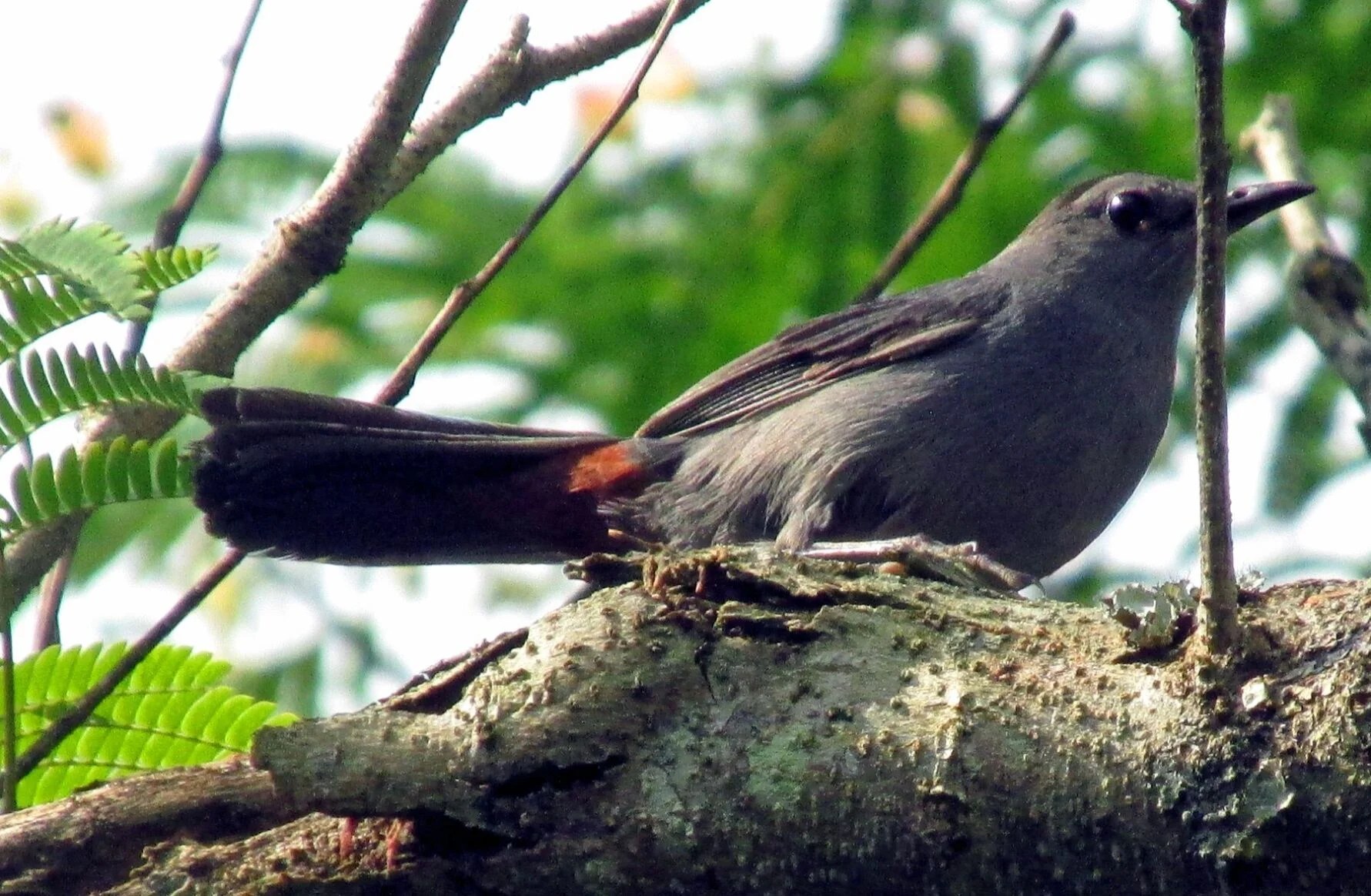
Photo by Bryan Stevens • A gray catbird perches in a mimosa tree. These birds alternate between extreme shyness and determined curiosity.

Catbirds are experts at concealing themselves from prying eyes. This birds charcoal gray plumage blends into the shadowy sections of tangles and thickets where the bird likes to hide itself.

However, even when gray catbirds are reluctant to be seen, they’re almost eager to be heard. The catbird is extremely vocal with several calls and songs in its repertoire, including the rather faithful rendering of a fussy cat’s meow that provides this bird its common name.

This is also a bird with strong curiosity. Despite its retiring nature, curiosity often wins out, as demonstrated when I had a front porch “conversation” with a catbird on a recent morning.

The named catbird came from the fact that this mimic, related to mockingbirds and thrashers, has an uncanny vocalisation that sounds just like a cat’s meow.

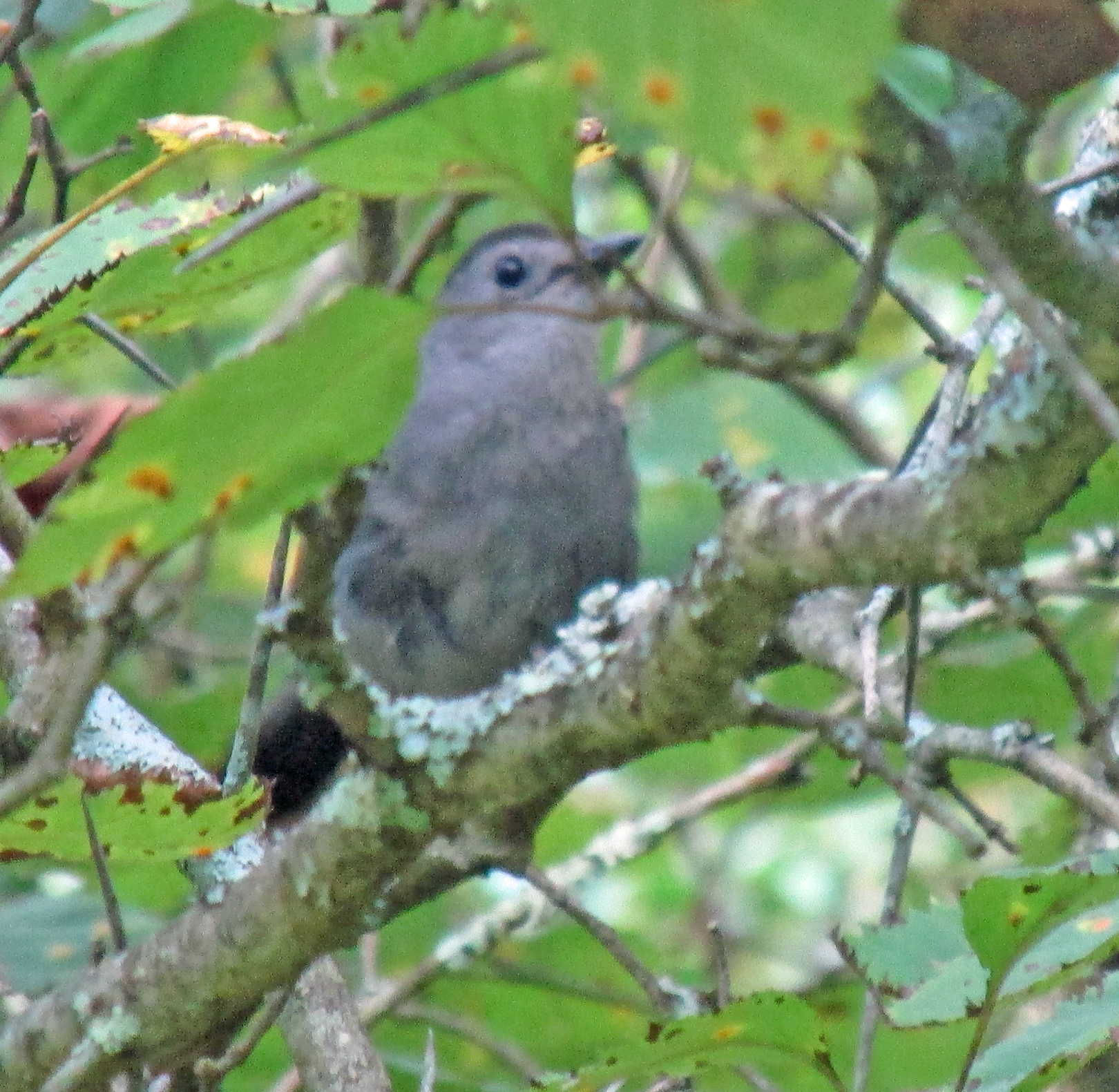
Photo by Bryan Stevens • A gray catbird emerged from cover long enough to have its photo taken.

I’m not particularly good at bird imitations. I can do a decent imitation of Eastern screech owls. I’ve even succeeded at getting these small owls to call back, and I’ve incited a mob of small songbirds, convinced that a “real” owl has gotten far too close for comfort.

And I can also do a passable imitation of the catbirds “meow” vocalization, which I proceeded to spontaneously do as I stood on my front porch on a cool early September morning listening to a gray catbird hidden in the dense foliage of a blooming althea, also known as a “rose of Sharon.”

Every time the catbird meowed, I meowed back. The intervals sped up. Within a short time, the bird popped into view, the better to get a look at me. That’s when something remarkable happened. Clearly still in the bird’s view, I called back. The bird called and continued to stare at me, albeit nervously, from its perch. We continued to converse, although I’m not really sure what we were discussing. I claim to be able to imitate the bird’s language, not understand it. Despite what must have been a strong urge to dive back into cover, the bird continued to remain in the open and meow back every time I returned its meow with one of my own.

Only when I moved to go back inside did the bird plunge back into dense cover. Even as I stepped back inside the house, the catbird continued to meow.

This species is part of a family related to thrushes that are known as “mimic thrushes.” Besides its surprisingly accurate rendition of a feline, the catbird has several other common vocalizations. Despite a shy nature, they’re extremely curious. Imitating their calls or simply producing a squeaky sound will usually persuade the bird to move out of cover and search for the source of the noise.

Photo by Bryan Stevens • The gray catbird resides in Northeast Tennessee April through October, although there are a few winter records for the species. Most depart in fall, choosing to spend the winter months in more hospitable locations.

Catbirds are part of the parade of the departing birds like rose-breasted grosbeaks, scarlet tanagers, Baltimore orioles and indigo buntings that will soon wing their way south for the winter.

Because they lack the brilliant plumages of some of these other summer visitors, catbirds could often go unnoticed if not for the fact they are extremely noisy.

Although the catbird is related to thrashers and mockingbirds, scientists find them just different enough to warrant placing the gray catbird in its own genus. A relative known as the black catbird, which ranges throughout the Yucatan Peninsula of Mexico as well as northern Guatemala and northern Belize, also belongs to a genus of its own. Both catbirds are classified as “mimic thrushes,” or Mimidae, of which there are about 30 species in the New World. There is also a totally unrelated family of catbirds that ranges through Australia, Asia and parts of Africa. Some of these birds include the ochre-breasted catbird, tooth-billed catbird and spotted catbird.

The gray catbird is not as an accomplished mimic as some of its relatives, such as the Northern mockingbird. Nevertheless, experts have documented that the gray catbird can produce more than 100 different sounds. Males have motivation to constantly expand their repertoire, however, as doing so increases the likelihood of attracting a mate. They imitate other birds, but some have been recorded imitating frogs and other non-avian singers.

Photo by Bryan Stevens A curious Gray Catbird peeks from dense cover. Attendees at the fall rally can look for catbirds and other species at any of the offered bird hikes.

While not generally considered a bird to visit feeders, people have succeeded in attracting catbirds to feeders designed to offer grape jelly or orange slices. Planting fruit-bearing shrubs and trees is the best means of attracting these fascinating birds to your yard and garden. It’s also best not to clear away brush and tangles from your yard if you wish to attract catbirds. These are shy birds and will avoid areas that are too open and brightly lit.

An occasional catbird lingers in the region into the winter season, but most head out for more comfortable climates by the end of October. Enjoy this entertaining bird while you can but know they’ll return without fail next spring in April and May.

•••

Bryan Stevens has written about birds, birding and birders since 1995. Ask a question, share a sighting or make a comment by emailing him at ahoodedwarbler@aol.com.ahoodedwarbler@aol.com

Birds boast phenomenal knack for long-distance travel

Hans Toom/Pixabay • The blackpoll warbler has one of the more difficult and lengthy migrations of the family of warblers.

The phenomenon of migration isn’t exclusive to the neotropical migrants of the New World. Birds in other parts of the world migrate, too. Waterfowl, shorebirds and raptors are among some of the families of birds that stage impressive migrations.

Of course, I spent most of my birding within Tennessee, particularly in the Northeast Tennessee region. Since the Volunteer State has no access to the sea, it is sometimes amazing how many birds affiliated with coastal areas can be found if you know when and where to look. Fall’s a good time to scan lakeshores, river banks and the edges of farm ponds for migrating shorebirds and wading birds.

I discussed last week some of the species I hope to see this fall. Every time I see some of these migrants I am impressed by what a phenomenal feat each and every single one of these birds represents. As my mother is fond of asking: “How do they do it?”

For such relatively small creatures, many if our birds are world-class travelers. Here are a few profiles of some of these incredible migrants.

Photo by U.S. Fish & Wildlife Service/Kirk Rogers • The Arctic tern is a world champion among migrating birds.


One good tern deserves another

The Arctic tern, for example, truly takes migration to extremes. This small seabird travels each year from its Arctic nesting grounds to the Antarctic region, where it spends the winter months. Put into terms of mileage, the Arctic tern can travel about 50,000 miles in a single year. For a bird with a body length of about 15 inches and a wingspan of about 28 inches, this incredible migration is an astonishing feat. These statistics permit the Arctic tern to easily lay claim to the title of champion migrant among our feathered friends. According to the website for National Geographic, Arctic terns face a serious threat from climate change. In a profile on the tern at its website, National Geographic warns that Arctic terns are projected to lose 20 to 50 percent of their habitat due to the temperature changes linked to climate change. They also face loss of habitat due to encroachment by human activities such as oil drilling.

Photo by Bryan Stevens • Despite a perceived disadvantage of size, ruby-throated hummingbirds are quite capable of thriving in a giant world.

Size matters less than we think

The ruby-throated hummingbird makes an impressive migration each year. It’s even more awesome when one considers the diminutive size of these small travelers. Just to reach the United States, these tiny birds undertake a strenuous journey. They leave their wintering grounds in Central America to return to the United States and Canada for the nesting season. Most of these tiny birds, which are barely four inches long, make a non-stop flight of more than 500 miles across the Gulf of Mexico. The journey can take almost an entire day. With the end of summer, the entire population of ruby-throated hummingbirds, increased by a new generation of young birds, makes the Gulf crossing for a second time in a year to return to the American tropics for the winter months.

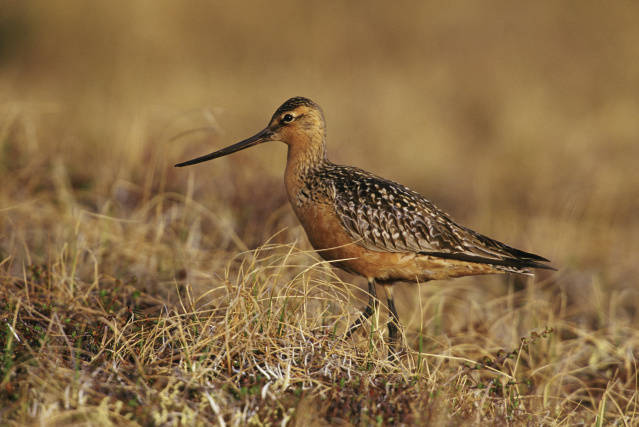
Photo by U.S. Fish & Wildlife Service/Steve Maslowski The bar-tailed godwit stages migrations that can take nine days of non-stop flight spanning nearly 6,000 miles.


Godwits, by Jove!

Shorebirds, which in North America can consist of birds ranging from turnstones and sandpipers to willets and avocets, are champion migrants. For instance, the bar-tailed godwit makes an impressive non-stop migratory flight. This shorebird nests in the United States only in parts of remote Alaska, but this godwit also ranges into Scandinavia and northern Asia. Some of these godwits make a nine-day, non-stop migratory flight that takes them from New Zealand to the Yellow Sea of China and beyond, a distance of almost 6,000 miles each way. Needless to say, since the godwits make no stops along the way, they must also go without food for the duration of their journey. The female godwit is larger than the male, but she still weighs only 12 ounces. The long-billed, long-legged bird is about 17 inches in length from the tip of the bill to its tail. That a creature so small can make such a distant, arduous trip and be the none the worse for wear is truly inspiring.

Bryan Stevens • A broad-winged hawk perches in a woodland in the Southern Appalachians.

A fine kettle of hawks

Many North American raptors migrate, but the broad-winged hawk dislikes the lonely aspects of solitary travel. Instead, these hawks form large flocks, known as kettles, during migration. In autumn the majority of these raptors travel past human-staffed hawk migration observation points, which are dubbed “hawk watches,” during a brief and concentrated period of only a few weeks. Observing the phenomenon locally is possible at the Mendota Fire Tower Hawk Watch site atop Clinch Mountain at an abandoned fire tower near Mendota, Virginia. Broad-winged hawks are part of the family Accipitridae, which includes 224 species of hawks, eagles, vultures and other birds of prey. Broad-winged hawks are truly long-distance migrants. Many hawks passing over Mendota may end their migration as far south as Brazil. These hawks travel in flocks that can consist of hundreds or thousands of individuals. The birds conserve energy by soaring on thermals and mountain updrafts.

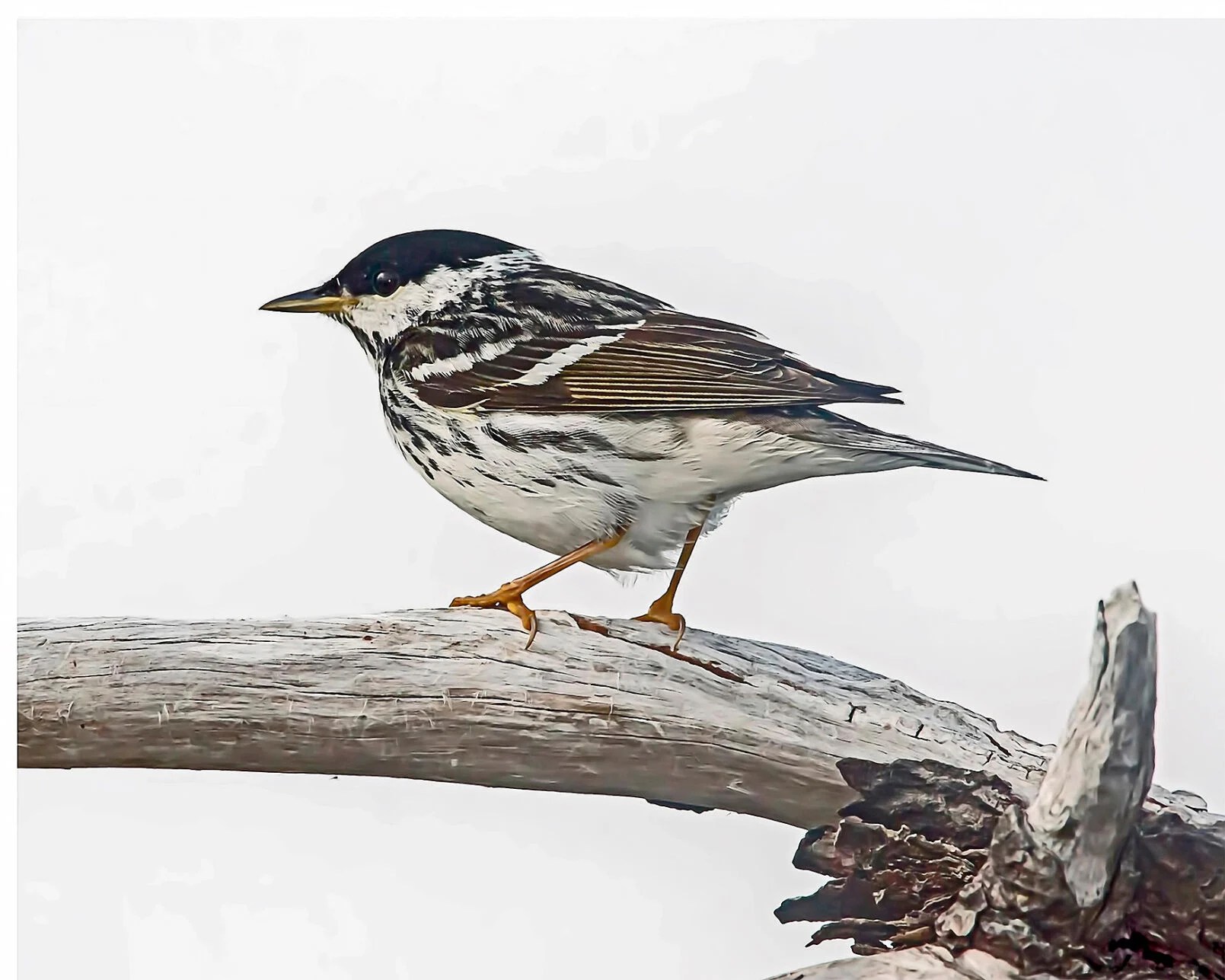
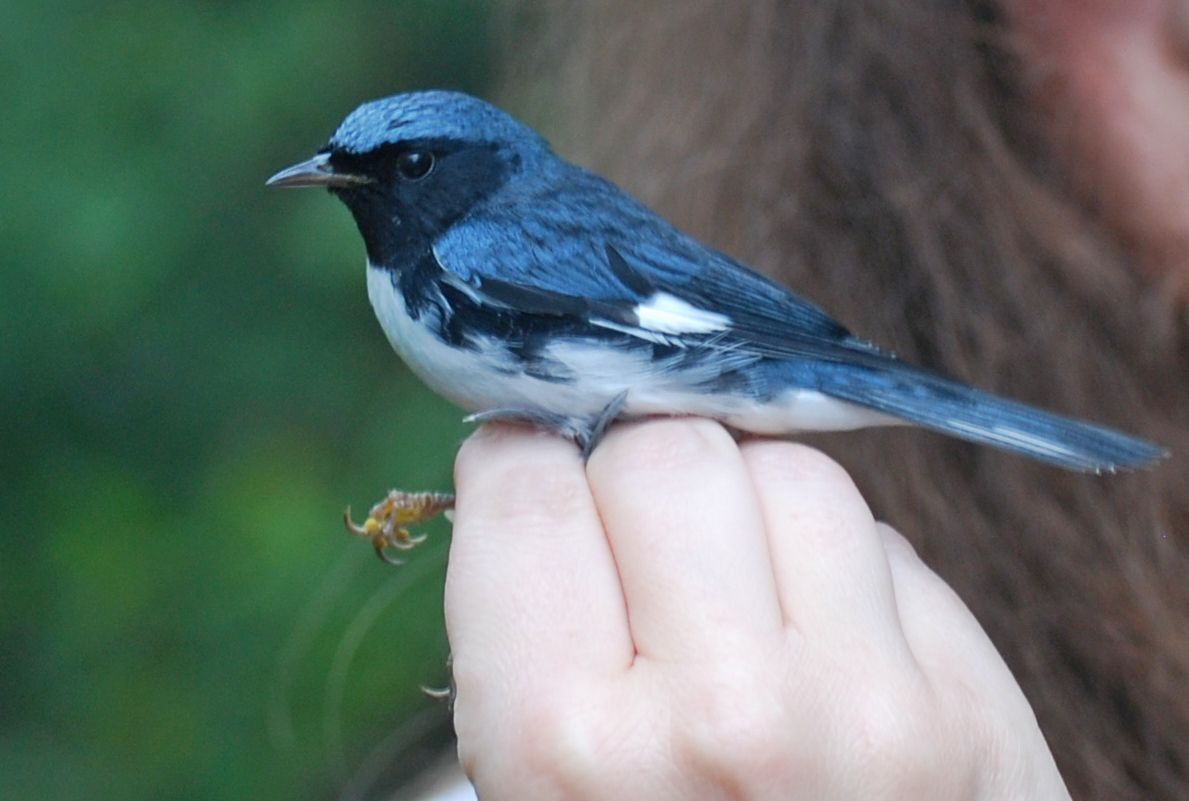
Jean Potter • Warblers, such as this male black-throated blue warbler, migrate into North America each spring to nest and retreat each fall for conditions farther south during the winter.

Traveling in stages

Most of the warblers that nest in North America retreat to Central and South America during the winter months. Few warblers, however, make as great a journey as the blackpoll warbler. Instead of migrating over land, this five-inch-long warbler undertakes a two-stage migration. The first half of the migration is a non-stop flight of about 1,500 miles. Every fall, these tiny birds fly over the ocean during this part of their migration, departing from Canada or the northern United States and not stopping until they reach various locations in the Caribbean. There they will spend some time recovering from the exhausting first half of their journey before they continue their way to such South American countries as Colombia and Venezuela.

•••

Bryan Stevens has written about birds since 1995. To share a sighting, ask a question or make a comment, email him at ahoodedwarbler@aol.com.

Late summer offers interesting birding opportunities for birders

Photo by Steven Arnold/Pixabay • A great blue heron attempts to get a handle on a snake in preparation for swallowing its serpentine prey.

A pair of Carolina wrens has taken advantage of what was meant to be the temporary storage of some boxes on the front porch to claim the interior of one of the cardboard containers as a nesting location.

In the latter days of summer, usually a lackluster period for birdwatching, there are still some interesting behaviors or actions on the part of our feathered friends to provide some points of interest.

Wrens already have a reputation for nesting in some unusual locations. My introduction to the Carolina wren took place in my childhood when a pair of these wrens nested in an old apron my grandmother used as a bag for her clothespins. Other unusual locations for wren nests that I have found over the years included the interior of a plastic shopping bag hanging from a nail in my garage and an attempt to nest in the exhaust vent for my clothes dryer. I’ve also seen them nest in hanging flower baskets.

Photo by Jean Potter • A Carolina wren creeps along a fence.

The world’s 88 species of wrens are, for the most part, the quintessential “little brown birds,” but that hasn’t kept them from acquiring some interesting and descriptive common names. Some examples include the tooth-billed wren, flutist wren, riverside wren, whiskered wren, happy wren, musician wren, timberline wren, speckle-breasted wren, white-breasted wood wren and giant wren. The last species on the list resides in Mexico and is indeed a “giant” among a family of tiny birds, reaching a length of almost nine inches and weighing all of 1.8 ounces.

I’ve also been monitoring a great blue heron lurking along the creek that flows past my home. A collapsed foot bridge (thanks to Helene) still spans the creek and provided, at least from the heron’s perspective, a means of concealment from my prying eyes when I stepped onto the front porch. The heron ducked under the bridge and slowly stepped downstream, out of sight and presumably what the bird thought would be out of mind. But I tricked the heron, stepping back inside the house and waiting for It to reappear. I stepped into view again and the heron, instead of taking flight, repeated its earlier actions, skirting beneath the bridge and wading downstream. I could probably have continued this game of peek-a-boo, but I felt that I had imposed on the heron long enough. The bird evidently desired to try its luck fishing upstream beneath a shady overhang of branches from trees growing along the creek banks. I stepped back inside, peeked out a window and watched the heron move in a slow, stately manner, but this time the bird headed up the creek.

All herons are skillful anglers, so I am confident that the bird probably managed to catch an unwary frog or fish. As the tallest heron in North America, the great blue heron boasts a diverse diet. These birds, armed with a dagger-shaped bill, excellent vision and quick reflexed, prey on rodents, amphibians, snakes, fish and even small alligators. Basically, a great blue heron will eat anything it can swallow.

Photo by Bryan Stevens • A great blue heron’s quick reflexed and dagger-like bill make it a formidable predator.

Other herons around the world with descriptive names include purple heron, white-bellied heron, black-headed heron, great-billed heron, whistling heron, pied heron and Goliath heron. The latter, as its name suggests, is a giant among herons.

There’s more to report on the birding front. Hummingbird numbers are on the rise again. After the usual summer lull, the resident ruby-throated hummingbirds have raised their profile, visiting daily at feeders as well as blooming flowers. Female hummingbirds have had time to raise their young. In fact, many of the hummingbirds visiting your yards and gardens at this time of year are probably birds born earlier in the season. In a couple of months these young birds will make their inaugural migration across the Gulf of Mexico to reach winter grounds in Central America. Until that time, hang a sugar water feeder, grab a lawn chain and enjoy the hours of no-cost entertainment provided by these feisty, flying gems.

So, although the summer doldrums do make birds scarce at times, just know that they’re still out there. In the meantime, nature offers plenty of other engaing wildlife. During the day, it’s fun to look for butterflies and dragonflies. After dark, there’s always moths and lightning bugs.

Keep in mind, it’s not always the visuals. For instance, the past couple of nights I’ve enjoyed listening to an Eastern screech-owl’s nocturnal serenade with its trembling wailing call that gives this small owl its name.

•••

Bryan Stevens has been writing about birds and birding since 1995. Email him at ahoodedwarbler@aol.com to share a sighting, make a comment or ask a question.

Photo by Bryan Stevens • A ruby-throated hummingbird visits a feeder for a sip of sugar water.


Carter County Summer Bird Count tallies 117 species

Hans Toom/Pixabay • A couple of Canada warbler got tallied with this year’s Carter County Summer Bird Count.

The Lee and Lois Herndon Chapter of Tennessee Ornithological Society, also known as the Elizabethton Bird Club, held its 32nd annual Carter County Summer Bird Count on Saturday, June 7 with 20 observers in nine parties.

Participants tallied 117 species, which is slightly above the average of 114 species.

Most unusual was a Mississippi kite seen for the first time on one of the chapter’s summer bird count. The kite was seen in the Toll Branch vicinity, according to the count’s longtime compiler Rick Knight. He also indicated that other notable finds included common merganser and red crossbill. In addition, counter found 18 species of warblers.

The list:

Canada goose, 90; wood duck, 8; mallard, 56; and common merganser, 2.

Wild turkey, 13; rock Pigeon, 36; Eurasian collared-dove, 3; mourning dove, 142; yellow-billed cuckoo, 5; chuck-will’s-widow, 4; Eastern whip-poor-will, 8; chimney swift, 55; and ruby-throated hummingbird, 20.

Killdeer, 8; double-crested cormorant, 5; green heron, 2; great blue heron, 10; black vulture, 14; and turkey vulture, 46.

Osprey, 3; sharp-shinned hawk, 1; Cooper’s hawk, 3.

Bald eagle, 2; Mississippi kite, 1; red-shouldered hawk, 4; broad-winged hawk, 5; red-tailed hawk, 14; Eastern screech owl, 3; great horned owl, 1; and barred owl, 1.

Belted kingfisher, 9; red-bellied woodpecker, 18; downy woodpecker, 10; hairy woodpecker, 1; Northern flicker, 24; and pileated woodpecker, 16.

Simard Francois/Pixabay • A great crested flycatcher perches on a horizontal branch.

American kestrel, 2; great crested flycatcher, 8; Eastern kingbird, 16; Eastern wood-pewee, 26; Acadian flycatcher, 23; alder flycatcher, 1; least flycatcher, 9; and Eastern phoebe, 46.

White-eyed vireo, 11; yellow-throated vireo, 1; blue-headed vireo, 20; warbling vireo, 4; red-eyed vireo, 130; blue jay, 104; American crow, 180; fish crow, 4; and common raven, 2.

Carolina chickadee, 57; tufted titmouse, 78; tree swallow, 101; Northern rough-winged swallow, 58; purple martin, 23; barn swallow, 106; and cliff swallow, 127.

Golden-crowned kinglet, 2; cedar waxwing, 69; red-breasted nuthatch, 3; white-breasted nuthatch, 13; blue-gray gnatcatcher, 13; Carolina wren, 78; house wren, 23; and winter wren, 1.

Gray catbird, 34; brown thrasher, 31; Northern mockingbird, 83; European starling, 660; Eastern bluebird, 102; veery, 10; hermit thrush, 1; wood thrush, 35; and American robin, 417.

House sparrow, 27; house finch, 84; red crossbill, 3; pine siskin, 5; American goldfinch, 117; chipping sparrow, 91; field sparrow, 26; dark-eyed junco, 34; song sparrow, 204; and Eastern towhee, 105.

Yellow-breasted chat, 4; Eastern meadowlark, 11; orrchard oriole, 8; Baltimore oriole, 6; red-winged blackbird, 88; brown-headed cowbird, 43; and common grackle, 109.

Ovenbird, 65; worm-eating warbler, 5; Louisiana waterthrush, 15; golden-winged warbler, 3; black-and-white warbler, 34; Swainson’s warbler, 9; common yellowthroat, 19; hooded warbler, 104; American redstart, 24; Northern parula, 65; Blackburnian warbler, 6; Yellow warbler, 9; chestnut-sided warbler, 31; black-throated blue warbler, 33; pine warbler, 3; yellow-throated warbler, 20; black-throated green warbler, 27; and Canada warbler, 2.

Scarlet tanager, 34; Northern cardinal, 160; rose-breasted grosbeak, 7; blue grosbeak, 6; and indigo bunting, 154.

Knight noted that it seems like a few species are often missed on a one-day count. He explained that these misses are usually low-density or localized species. Weather or other circumstances may contribute to these misses, as well.

Several species of herons were found for this year’s Summer  Bird Count, but yell0w crowned night-heron was missed. 

Missed species this year included ruffed grouse, common nighthawk, America woodcock, yellow-crowned night-heron, yellow-bellied sapsucker, brown creeper, Kentucky warbler and magnolia warbler.

The chapter will resume meeting in September for its 2025-2026 calendar year. Meetings are usually held the first Tuesday of each month on the Elizabethton campus of Northeast State Community College. Meetings are accompanied by a program on birds, birding and other nature-related topics and begin at 7 p.m. For details, or to share a sighting, ask a question or make a comment, email me at ahoodedwarbler@aol.com.

•••

Bryan Stevens has written about birds and birding since 1995. His weekly “Feathered Friends” column will celebrate its 30th anniversary this year.

Regional spring bird count finds 148 species

Photo by Bryan Stevens • Ruby-throated hummingbirds have settled into a comfortable summer routine throughout the Northeast Tennessee region.

The 82nd consecutive spring bird count was held Saturday, May 3, with 44 observers in 15 parties. The survey tallied 148 species, which is slightly below the recent 30 year average of 150 species. The count is conducted by the Elizabehton Bird Club, which will also conduct two summer counts this month. One of these counts is held in Carter County and the other in Unicoi County.

The spring count is a regional survey that includes all Northeast Tennessee counties: Carter, Johnson, Sullivan, Unicoi and Washington.

Compiler Rick Knight shared some observations. Noteworthy sightings included common merganser, black-billed cuckoo, willow flycatcher, vesper sparrow and bobolink, as well as prothonotary and cerulean warblers. A total of 31 species of warblers made this year’s count. A record number (24) for Swainson’s warbler provided an indication that this species is locally abundant during the nesting season.

The 17 fish crows reported by six parties provided a good example of the local expansion of this species. The 17 common ravens, once not so common in the region, were reported by eight of the count parties.

Photo by Bryan Stevens • Young wood ducks share a perch on a submerged log.

The list:

Canada goose, 208; wood duck, 31; blue-winged teal, 2; mallard, 86; and common merganser, 7.

Wild turkey, 16; ruffed grouse, 1; rock pigeon, 92; Eurasian collared-dove, 1; mourning dove, 176; yellow-billed cuckoo, 3; and black-billed cuckoo, 2.

Photo by Hans Toom/Pixabay • A male yellow warbler is aptly named.

Chuck-will’s-widow, 9; Eastern whip-poor-will, 32; Chimney swift, 149; ruby-throated hummingbird, 18.

Killdeer, 32; least sandpiper, 16; pectoral sandpiper; 1; spotted sandpiper, 42; solitary sandpiper, 39; and lesser yellowlegs, 6.


Double-crested cormorant 28; green heron 8; great egret, 1; and great blue heron, 50.

Black vulture, 38; turkey vulture, 96; osprey, 4; Cooper’s hawk, 6; bald eagle, 1; red-shouldered hawk, 4; broad-winged hawk, 7; red-tailed hawk, 14; Eastern screech owl, 15; great horned owl, 2; and barred owl, 4;

Belted kingfisher, 15; red-headed woodpecker, 2; red-bellied woodpecker, 68; yellow-bellied sapsucker, 7; downy woodpecker, 33; hairy woodpecker, 6; Northern flicker, 37; and pileated woodpecker, 36.

Photo by Bryan Stevens • Downy woodpeckers will visit feeders in any season.

American kestrel, 5; great crested flycatcher, 28; Eastern kingbird, 42; Eastern wood-pewee, 16; Acadian flycatcher, 27; willow flycatcher, 1; least flycatcher, 10; and Eastern phoebe, 64.

White-eyed vireo, 19; yellow-throated vireo, 12; blue-headed vireo, 42; warbling vireo, 10; and red-eyed vireo, 364.

Blue jay, 175; American crow, 218; fish crow, 17; and common raven,17.

Tree swallow, 107; Northern rough-winged swallow, 81; purple martin, 29; barn swallow, 144; and cliff swallow, 482.

Carolina chickadee, 144; tufted titmouse, 189; ruby-crowned kinglet, 1; golden-crowned kinglet, 2; red-breasted nuthatch, 9; and white-breasted nuthatch, 26.

Brown creeper, 6; blue-gray gnatcatcher, 62; Carolina wren, 159; house wren, 39; and winter wren, 1.

Gray catbird, 68; brown thrasher, 43; Northern mockingbird, 97; cedar waxwing, 122; Eurasian starling, 539; Eastern bluebird, 97; veery, 15; Swainson’s thrush, 8; wood thrush, 116; and American robin, 654.

House sparrow, 55; house finch, 78; pine siskin, 7; and American goldfinch, 252.

Chipping sparrow, 139; field sparrow, 34; dark-eyed junco, 48; white-crowned sparrow, 3; white-throated sparrow, 4; vesper sparrow, 1; Savannah sparrow, 4; song sparrow, 287; swamp sparrow, 1; and Eastern towhee, 203.

Early American naturalist and painter John James Audubon painting this scene depicting nesting meadowlarks.

Yellow-breasted chat, 9; bobolink, 6; Eastern meadowlark, 108; orchard oriole, 28; Baltimore oriole, 26; red-winged blackbird, 211; brown-headed cowbird, 65; and common grackle, 195.

Ovenbird, 169; worm-eating warbler, 42; Louisiana waterthrush, 45; Northern waterthrush, 4; golden-winged warbler, 2; blue-winged warbler, 1; black-and-white warbler, 104; prothonotary warbler, 1; Swainson’s warbler, 24; Tennessee warbler, 13; Kentucky warbler, 4; common yellowthroat, 25; hooded warbler, 234; American Redstart 27; Cape May warbler, 14; cerulean warbler, 2; Northern parula, 88; magnolia warbler, 4; bay-breasted warbler, 6; Blackburnian warbler, 16; yellow warbler, 10; chestnut-sided warbler, 32; blackpoll warbler, 6; black-throated blue warbler, 97; palm warbler, 5; pine warbler, 7; yellow-rumped warbler, 17; yellow-throated warbler, 52; prairie warbler, 1; black-throated green warbler, 100; and Canada warbler, 50.

Summer tanager, 2; scarlet tanager, 92; Northern cardinal, 284; Rose-breasted grosbeak, 30; blue grosbeak, 11; indigo bunting, 164; and dickcissel, 1.

I counted with Chris Soto and Brookie and Jean Potter around Sycamore Shoals State Historic Park, on the greenbelt along the Watauga River and on Holston Mountain.

•••

To share a sighting, make a comment or ask a question, email me at ahoodedwarbler@aol.com.

Photo by Hans Toom/Pixabay • A male Blackburnian warbler looks splendid in the dappled sunlight that appears to make his orange throat patch almost glow.