Tag Archives: Ruby-throated Hummingbird

Get ready to welcome spring’s returning hummingbirds

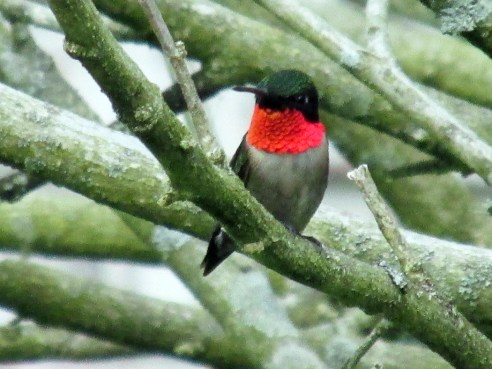
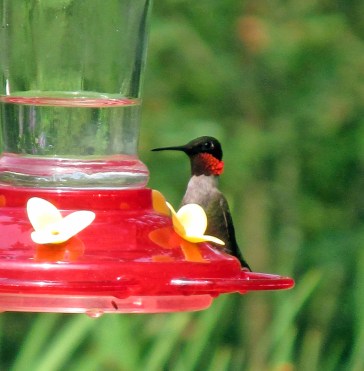
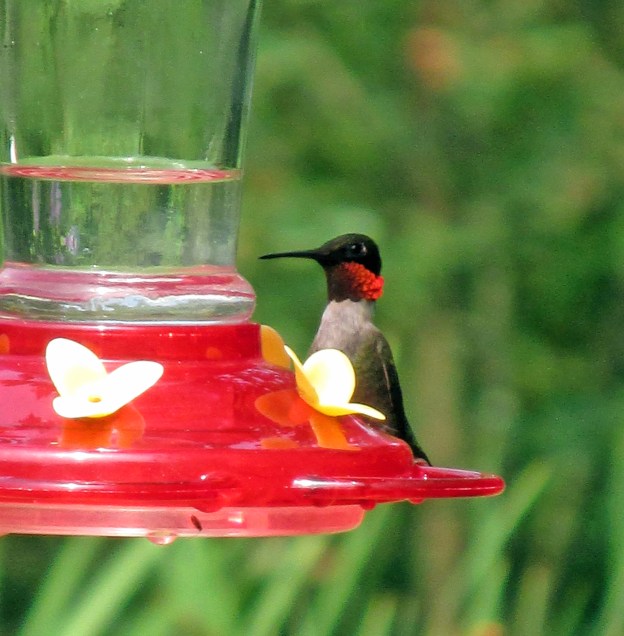
All bird enthusiasts have their personal favorites among our feathered friends. Cardinals, bluebirds, robins and chickadees would certainly find a place in any Top 10 lists. What bird would top the list? I have no qualms predicting that the ruby-throated hummingbird would be a frontrunner for such a ranking.

rubythroated_hummingbird

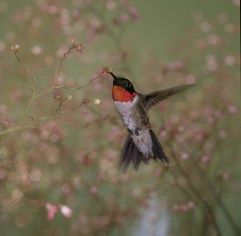
A male Ruby-throated Hummingbird seeks nectar at tiny blooms. — Photo by U.S. Fish & Wildlife Service


The popularity of hummingbirds in general, and the ruby-throated hummingbird specifically, is simple to understand. These tiny birds are perfectly willing to insert themselves into our lives, offering hours of fascinating entertainment as they visit our gardens, duel at our sugar water feeders and occasionally even nest in trees and shrubs in our yards.

Individuals who feed birds know that it can be an expensive undertaking. The cost of providing sunflower seeds and suet cakes for hungry flocks during the winter months can nibble at the monthly budget, but hardly anyone would begrudge the sparrows, finches, wrens and woodpeckers. After all, they return the favor, putting on daily shows just outside our windows.

Attracting hummingbirds is generally much less expensive than feeding other birds. After all, you need only a mixture of sugar water — four parts water to one part sugar — to fill a feeder and catch the attention of a visiting hummer. A few pounds of sugar will last a lot longer than that bag of sunflower seeds and it’s much less expensive to purchase at the grocery store.

If you do want to take extra steps to attract these diminutive, feathered saccharine junkies, consider supplementing your landscape with a variety of flowering plants. To explore some of the best choices for flowers to tempt hummingbirds, visit the website of The Hummingbird Society at http://www.hummingbirdsociety.org.

Hummer-CloserUp

A male ruby-throated hummingbird surveys his territory from a convenient perch. — Photo by Bryan Stevens

Nevertheless, few bird enthusiasts are truly frugal when it comes to our feathered friends. Even if the cost of bringing hummingbirds and other birds was much higher, I don’t think we would abandon the undertaking. Quite simply, the birds mean too much to us. They fascinate us with their speed and agility, their pugnacious relations with each other, and of course their tiny size. The irony is that, although hummingbirds are so small, they don’t seem to recognize that fact as they zig and zag through yard and garden.

While the ruby-throated hummingbird is the only hummer that nests in the eastern United States, which is what brings these tiny birds into our lives every year from April to October, there are more than 300 species of hummingbirds. Much creativity has gone into giving each of these hummingbirds a descriptive common name.

Sometimes, words fail. Mere adjectives are somewhat inadequate in providing common names for many of the world’s more than 300 hummingbirds, but that doesn’t keep us from trying to give descriptive names to each hummingbird species. For instance, we have the beautiful hummingbird of Mexico; the charming hummingbird of Costa Rica and Panama; the festive coquette of northwestern South America; and the magnificent hummingbird of the southwestern United States.

Other names are even more elaborate and occasionally outlandish, such as the white-tufted sunbeam of Peru; the violet-throated metaltail of Ecuador; the violet-throated starfrontlet of Peru and Bolivia; the hyacinth visorbearer of Brazil; and the rainbow-bearded thornbill of Colombia and Ecuador.

RT-Male-April15

A male ruby-throated hummingbird ignores honeybees for a sip of sugar water. — Photo by Bryan Stevens

It would seem then that our own ruby-throated hummingbird is in good company. After spending the winter months in Central America, ruby-throated hummingbirds are already streaming north. Just to reach the United States, these tiny birds undertake an arduous journey. Most of these tiny birds, which are barely four inches long, make a non-stop flight of more than 500 miles across the Gulf of Mexico. The journey can take almost an entire day!

Sightings are already being reported, and ruby-throats typically arrive in the region in early April. In fact, a male ruby-throated hummingbird showed up at my feeders on Saturday, April 15.

If you don’t have your feeders outdoors and waiting for them, it’s time to do so. As always, I love to hear from readers about their first hummingbird sighting of the year. Jot down the time and date and contact me by email at ahoodedwarbler@aol.com. I can hardly wait for one of our favorite birds to get back. Let’s give them a hearty welcome.

••••••

To learn more about birds and other topics from the natural world, friend Bryan Stevens on Facebook at https://www.facebook.com/ahoodedwarbler. He is always posting about local birds, wildlife, flowers, insects and much more.


Arduous migration journeys by some birds represent wondrous natural achievements

grosbeak-photo

Photo by Bryan Stevens                                                          This rose-breasted grosbeak struck a window Monday, Oct. 3, during fall migration. Although this bird rested and later recovered, many birds are felled by similar perils and obstacles as they migrate south each fall.

A stunned rose-breasted grosbeak recuperating on the front porch on Oct. 3 provided a reminder that migrating birds face a variety of perils and obstacles as they wing their way back south. Now that we’re into October, many of the birds of summer — orioles, tanagers, warblers and hummingbirds — are becoming scarce in our yards and gardens. These neotropical migrants are temporary visitors, remaining in North America only long enough to nest and raise young before they take to the wing to return to more tropical regions for the winter months that will grip their summer home in snow and ice for several months.

Some of these birds migrate out of the tropics to avoid competition. Others find North America a land of abundant, albeit temporary, resources. This land of plenty offers a wealth of insects, seeds, fruit and other nourishing, nutritious food to help parent birds keep their strength while they work to ensure their young thrive. The phenomenon of migration isn’t exclusive to the neotropical migrants of the New World. Birds in other parts of the world migrate, too.

rubythroated_hummingbird

Photo by U.S. Fish & Wildlife Service                 The tiny ruby-throated hummingbird crosses the Gulf of Mexico twice yearly to migrate from Central America to North America in the spring and back again in the fall.

The Arctic tern, for example, truly takes migration to extremes. This small seabird travels each year from its Arctic nesting grounds to the Antarctic region, where it spends the winter months. Put into terms of mileage, the Arctic tern can travel about 50,000 miles in a single year. For a bird with a body length of about 15 inches and a wingspan of about 28 inches, this incredible migration is an astonishing feat.

The ruby-throated hummingbird, a favorite of many bird enthusiasts living in the eastern United States, makes an impressive migration each year. Just to reach the United States, these tiny birds undertake a strenuous journey. They leave their wintering grounds in Central America to return to the United States and Canada for the nesting season. Most of these tiny birds, which are barely four inches long, make a non-stop flight of more than 500 miles across the Gulf of Mexico. The journey can take almost an entire day! With the end of summer, the entire population of ruby-throated hummingbirds, increased by a new generation of young birds, makes the Gulf crossing for a second time in a year to return to the American tropics for the winter months.

The broad-winged hawk, a raptor found in the region during the summer, makes a fall migration back to South America every fall that astonishes human onlookers who gather along mountain peaks to witness the spectacle. The hawks form large flocks, also called kettles, that can number thousands of birds.

bartailed_godwit_on_tundra

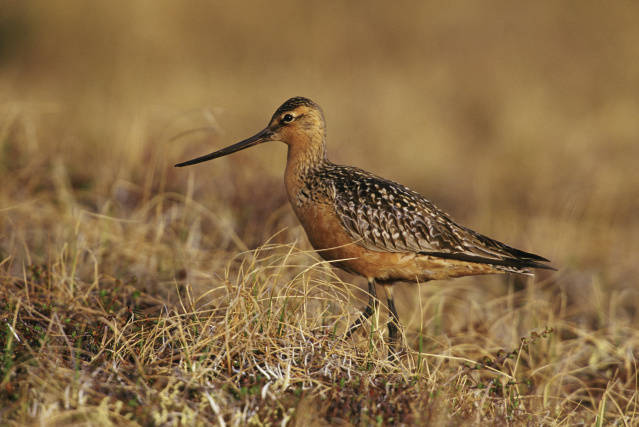
Photo by U.S. Fish & Wildlife Service/Steve Maslowski The bar-tailed godwit stages migrations that can take nine days of non-stop flight spanning nearly 6,000 miles.

Shorebirds, which in North America can consist of birds ranging from plovers and godwits to dowitchers and avocets, are champion migrants. The bar-tailed godwit makes an even more impressive non-stop migratory flight. This shorebird nests in parts of Scandinavia, northern Asia and Alaska. Some of these godwits make a nine-day non-stop migratory flight that takes them from New Zealand to the Yellow Sea of China, a distance of almost 6,000 miles. Needless to say, since the godwits make no stops along the way, they must also go without food for the duration of their journey.

Most of the warblers that nest in North America retreat to Central and South America during the winter months. Few warblers, however, make as great a journey as the blackpoll warbler. Instead of migrating over land, this five-inch-long warbler undertakes a two-stage migration. The first half of the migration is a non-stop flight of about 1,500 miles. Every fall, these tiny birds fly over the ocean during this part of their migration, departing from Canada or the northern United States and not stopping until they reach various locations in the Caribbean. There they will spend some time recovering from the exhausting first half of their journey before they continue their way to such South American countries as Colombia and Venezuela. Once again, during the time they spend flying over open ocean, these tiny warblers do not feed.

Even birds that cannot fly undertake migrations. For instance, flightless penguins swim hundreds or thousands of miles to reach preferred ranges for feeding or nesting. The Australian emu, a smaller relative of the ostrich, makes seasonal migrations on foot to ensure access to abundant food supplies at all seasons.

arctic_tern

Photo by U.S. Fish & Wildlife Service/Kirk Rogers         The Arctic tern’s migration, which takes it from the Arctic to the Antarctic, keeps this small seabird in the sky for about 50,000 miles each year.

Birds are not even the only animals to migrate. Many creatures, from whales and wildebeest to dragonflies and butterflies, impress humans with their endurance as they stage regular migrations.

Even as some of our summer favorites depart, we should prepare to welcome back some winter favorites, including dark-eyed juncos, yellow-rumped warblers, white-throated sparrows and yellow-bellied sapsuckers. Fall is indeed a time of departure for many birds, but it’s also a time to make new friends with the other birds that should soon start arriving in our yards and gardens.

As for the rose-breasted grosbeak on the porch, that story had a happy ending. After taking some time to recover after apparently striking a window, the bird hopped around the porch for a moment and then took wing and flew to nearby hawthorn trees. The bird’s flight — strong and straight — delighted me. The grosbeak could have been badly injured or even killed. I wished it the best for the remainder of its journey.

•••••

I’m dedicating this week’s column to the memory of J. Wallace Coffey, a great birder and wonderful individual who died Tuesday, Sept. 27. I met Wallace, a native of Bristol, Tennessee, back in the late 1990s. He introduced me to some wonderful birding destinations in the region, including such Virginia locations as Burke’s Garden, Steele Creek Park in Bristol, the wetlands of Saltville and Musick’s Campground on Holston Lake. Wallace was a tireless promoter of birds, birding and birders, and he loved to encourage young people to explore nature. He was also a great leader for the Bristol Bird Club, as well as the Elizabethton Bird Club. He will be greatly missed.
•••••

Bryan Stevens lives near Roan Mountain, Tennessee. To learn more about birds and other topics from the natural world, friend Stevens on Facebook at https://www.facebook.com/ahoodedwarbler. He is always posting about local birds, wildlife, flowers, insects and much more. If you have a question, wish to make a comment or share a sighting, email ahoodedwarbler@aol.com.

Returning birds add their songs to the spring’s chorus

Singing-Towhee

Photo by Bryan Stevens                                Eastern Towhee sings from a limb on a sapling.

As we welcome April, I’ve noticed the additions to the early morning chorus produced by the birds in residence around my home. From American robins and Eastern towhees to song sparrows and Carolina chickadees, all our feathered friends produce their own unique serenades to greet each new day.

Songbirds sing to attract mates, discourage rivals, establish territories and for a variety of other reasons.

Of course, the songs of birds play important roles in their daily lives. Half of the world’s bird species are known as passerines, or songbirds; in itself a good indication of the importance of song in the day-to-day routines of birds.

The scientific definition of a songbird is that it is a species with a specialized voice box known as a syrinx. This amazing organ allows for the production of some of the melodic and complex songs characteristic of birds such as wood thrush, Northern cardinal and Carolina wrens. Many of the warblers — a family of birds that should be beginning to returning to the region — produce a diverse range of songs.

Singiong-Grackle

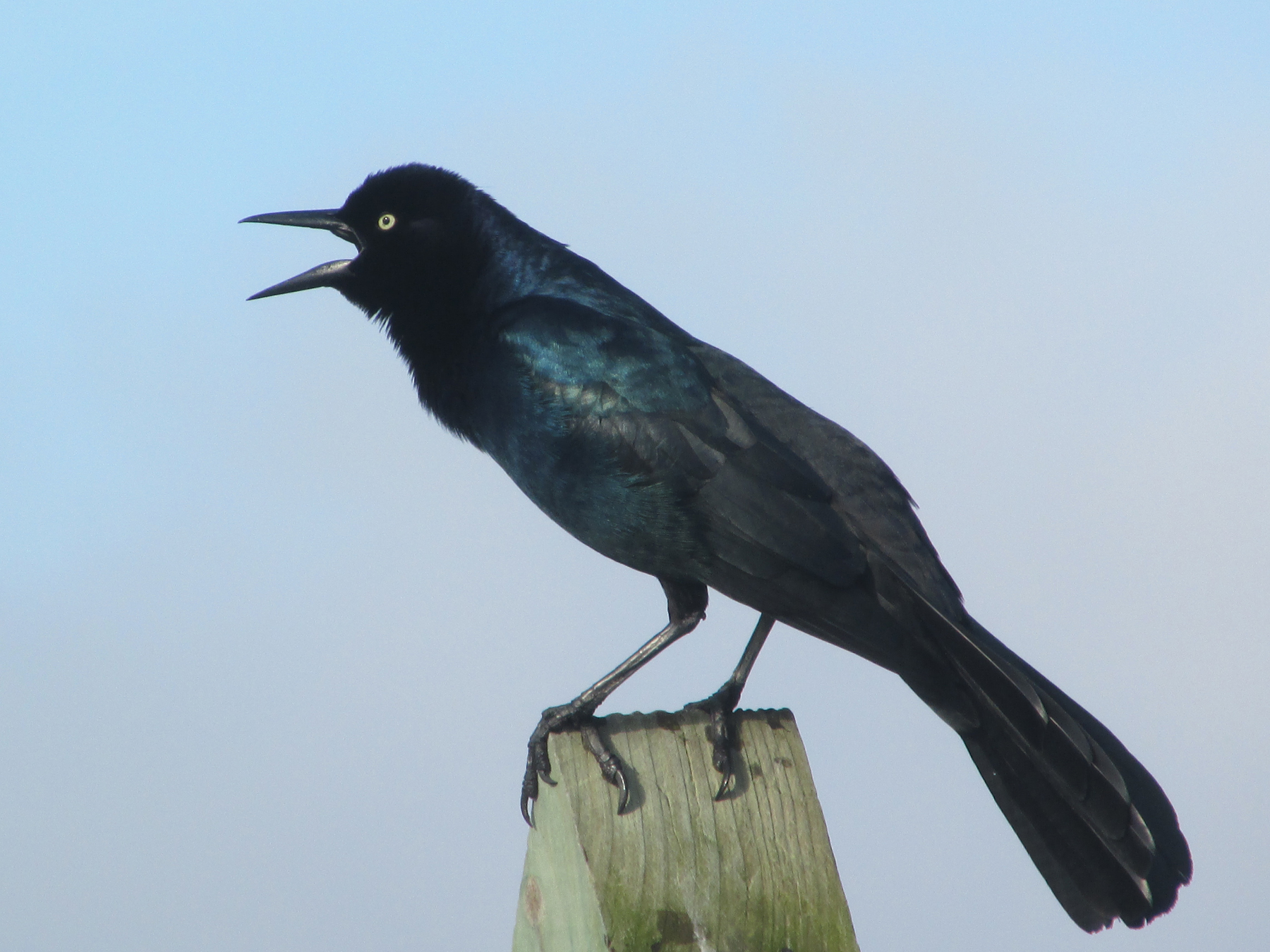
Photo by Bryan Stevens                                        A Boat-tailed Grackle sings from a South Carolina wetland.

Among other purposes, attracting mates, intimidating rivals and signaling territorial borders are some of the reasons birds sing. For human listeners, it’s easy to think that birds also sing for the sheer joy of producing these amazing choruses. That belief, however, is probably based more on the ear of the beholder.

We would probably be unaware of the presence of many birds if it wasn’t for their vocalizations. This fact is particularly true of nocturnal birds or denizens of inaccessible habitats such as swamps and marshes.

I was reminded of this fact when Facebook friend Kenneth Oakes sent me a message on March 23 about the arrival of the first whip-poor-will of the spring.

Caprimulgus_vociferus-Louis-Agassiz-Fuertes-390x264

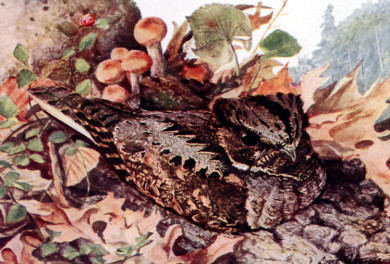
A painting of a Whip-poor-will by the artist Louis Agassiz Fuertes.

“A whip-poor-will has just arrived,” he wrote in his message. “It is about 12 days early.” Kenneth noted that usually the arrival date for whip-poor-wills, as well as for hummingbirds, is about April 5.

“This is the earliest I’ve ever seen them arrive in this area,” Kenneth wrote. For the past two years, he noted that whip-poor-wills have been a week to 12 days late in arriving in the spring.

Kenneth is not the only person who has reported “early bird” whip-poor-wills. Brookie Potter, who lives with his wife, Jean, near Wilbur Lake in Carter County, Tennessee, heard two calling whip-poor-wills near his home on Easter Sunday, March 27. He reported his observation on bristol-birds, an online list-serve forum for sharing area bird sightings.

Ironically, the whip-poor-will is not one of the world’s many passerine, or songbird, species. Nevertheless, this bird’s nocturnal serenades are one of my fondest childhood memories. I remember sitting on my grandparents’ front porch to listen for hours to the whip-poor-wills as they sang the syllables of their own names from the nearby edges of the woodlands.

Kenneth also reported that he thinks the juncos have departed. “Winter is not over until they leave,” he wrote. “Let’s hope for an early spring.”

All indications, such as the early arrivals of birds such as whip-poor-wills, are that an early spring could be in the works. This is also the time of year when I keep my eyes open for the arrival of the first ruby-throated hummingbirds of spring. In fact, I put out my sugar water feeders the last week of March.

According to websites that track the annual northward migration of these tiny birds, the first hummingbirds should start arriving in Tennessee, Virginia and North Carolina any day now. As always, I invite readers to share with me the date and time of these first sightings.

Email me at ahoodedwarbler@aol.com or send me a message on Facebook to notify me when you observe your first hummingbird of spring 2016.

••••••

WoodDucks-1

Photo by Bryan Stevens                                        A pair of Wood Ducks visited the fish pond several times in March and April.

While I haven’t yet seen hummingbirds, plenty of other birds have been making appearances. My fish pond has been visited twice by pairs of wood ducks. My other recent sightings have included tree swallows, brown thrashers and chipping sparrows. I love spring for the simple fact you never know when a new bird will surprise you with an unanticipated arrival.

••••••

Bryan Stevens lives near Roan Mountain, Tennessee. To learn more about birds and other topics from the natural world, friend Stevens on Facebook at https://www.facebook.com/ahoodedwarbler. He is always posting about local birds, wildlife, flowers, insects and much more. If you have a question, wish to make a comment or share a sighting, email ahoodedwarbler@aol.com.

Departures, new arrivals signal approach of winter

October represented a transitional time for the region’s birds. Many of our summer birds have now departed for wintering grounds, which means we won’t be seeing them again until April or May of 2016.

Hummer-Oct17

The last Ruby-throated Hummingbird of 2015.

I saw hummingbirds daily in my yard during October through the 17th day of the month, when I saw only a single bird at the feeders. The following day no hummingbirds appeared in the yard.
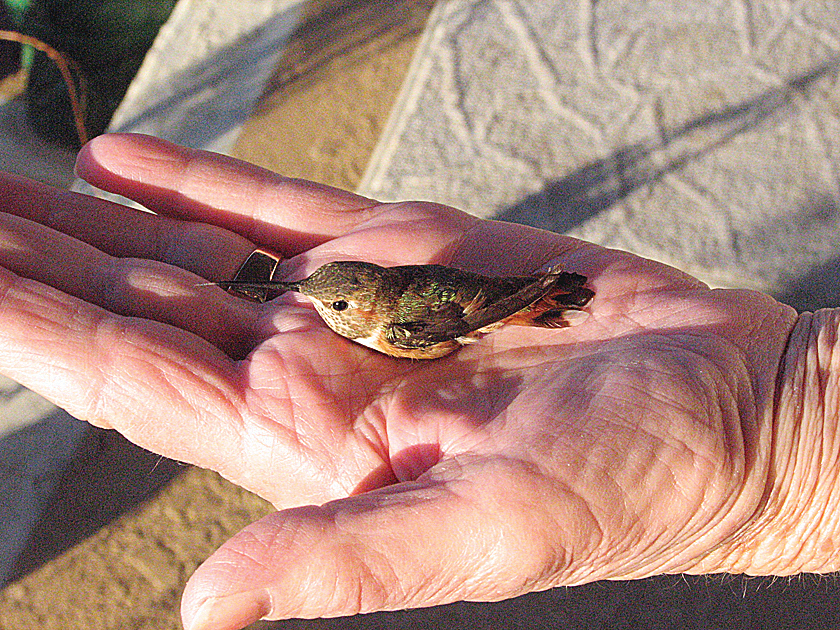
I am still hanging sugar water feeders in the unlikely chance I might attract a visit from one of the Selasphorus hummingbirds, a genus of these tiny birds that spends the nesting season in the western United States. A few of these species appear to migrate through the southeastern United States each fall and early winter. Rufous hummingbird is the species most likely to make an appearance, but other species — Allen’s hummingbird and black-chinned hummingbird — are a possibility.

Rufous-BettyKirby-Three-Program

A Rufous Hummingbird I observed being banded several years ago in Hampton, Tennessee.

These “winter” hummingbirds are easy to recognize. Their plumage is more brown than green, making them quite distinguishable from the usual ruby-throated hummingbird, which is not usually present in the region after the end of October.
•••••
Most of the warblers have also departed. I saw a couple of common yellowthroats on Oct. 10, but they represented the last gasp of warbler migration. Most of the warblers winter in Central America or the Caribbean, although a few travel only as far as Florida.


Yellow-Rump-Frippy

The Yellow-rumped Warbler is one of the few warblers that remains in the region for the winter months.

Of course, there’s always an exception to the rule. The aptly-named yellow-rumped warbler is a winter resident throughout much of Virginia and Tennessee. I had a couple of yellow-rumped warblers in the yard on Oct. 25. The winter diet of this warbler includes the berries of poison ivy, so the bird helps with the spread of this noxious plant.
••••••
I often think of October as the season for sparrows, and this year proved no exception. Three different species marked their return during October.
Of all the birds associated with winter weather, few are as symbolic as the dark-eyed junco, or “snow bird.” The junco occurs in several geographic variations.
John V. Dennis, author of “A Complete Guide to Bird Feeding,” captures the essence of the junco in the following description: “Driving winds and swirling snow do not daunt this plucky bird. The coldest winter days see the junco as lively as ever and with a joie de vivre that bolsters our sagging spirits.” The dark-eyed junco’s scientific name, hyemalis, is New Latin for “wintry,” an apt description of this bird.
Most people look forward to the spring return of some of our brilliant birds — warblers, tanagers and orioles — and I must admit that I also enjoy the arrival of these birds. The junco, in comparison to some of these species, is not in the same league. Nevertheless, the junco is handsome in its slate gray and white plumage, giving rise to the old saying “dark skies above, snow below.”
The first junco showed up this year on Halloween. Sheila Boyd, a Facebook friend who lives in Marion, North Carolina, sent me a message to let me know she saw her first juncos on Oct. 29.


Swamp_Sparrow

The Swamp Sparrow is most often found in wetland habitats.

My junco sighting on Oct. 31 followed observations earlier in the month of some other wintering sparrows. I have allowed a stand of cattails to grow unmolested on my property, and now my action is paying dividends. I’ve seen numerous swamp sparrows in my small cattail marsh, beginning with one that I saw on Oct. 11.
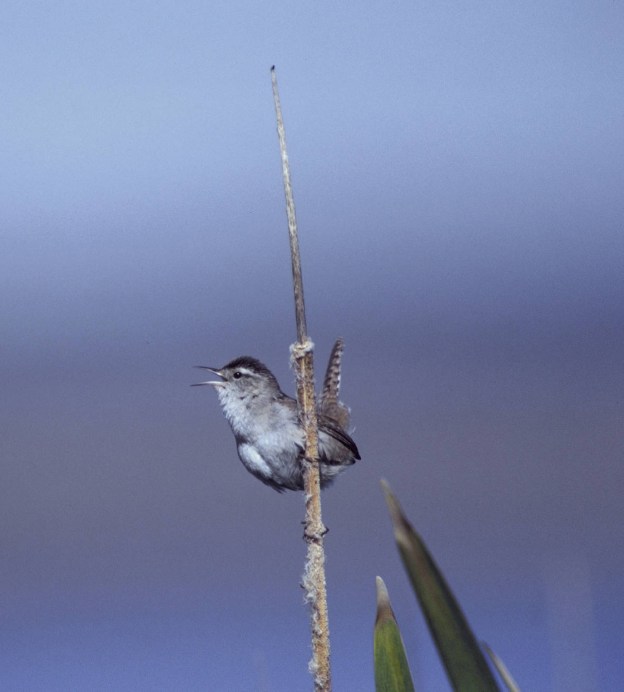
The cattails also persuaded a marsh wren to pay a visit on Oct. 4. Marsh wrens and swamp sparrows are not the only birds fond of cattails. These plants also attract birds as diverse as rails and snipes, as well as red-winged blackbirds, common yellowthroats and various waterfowls.
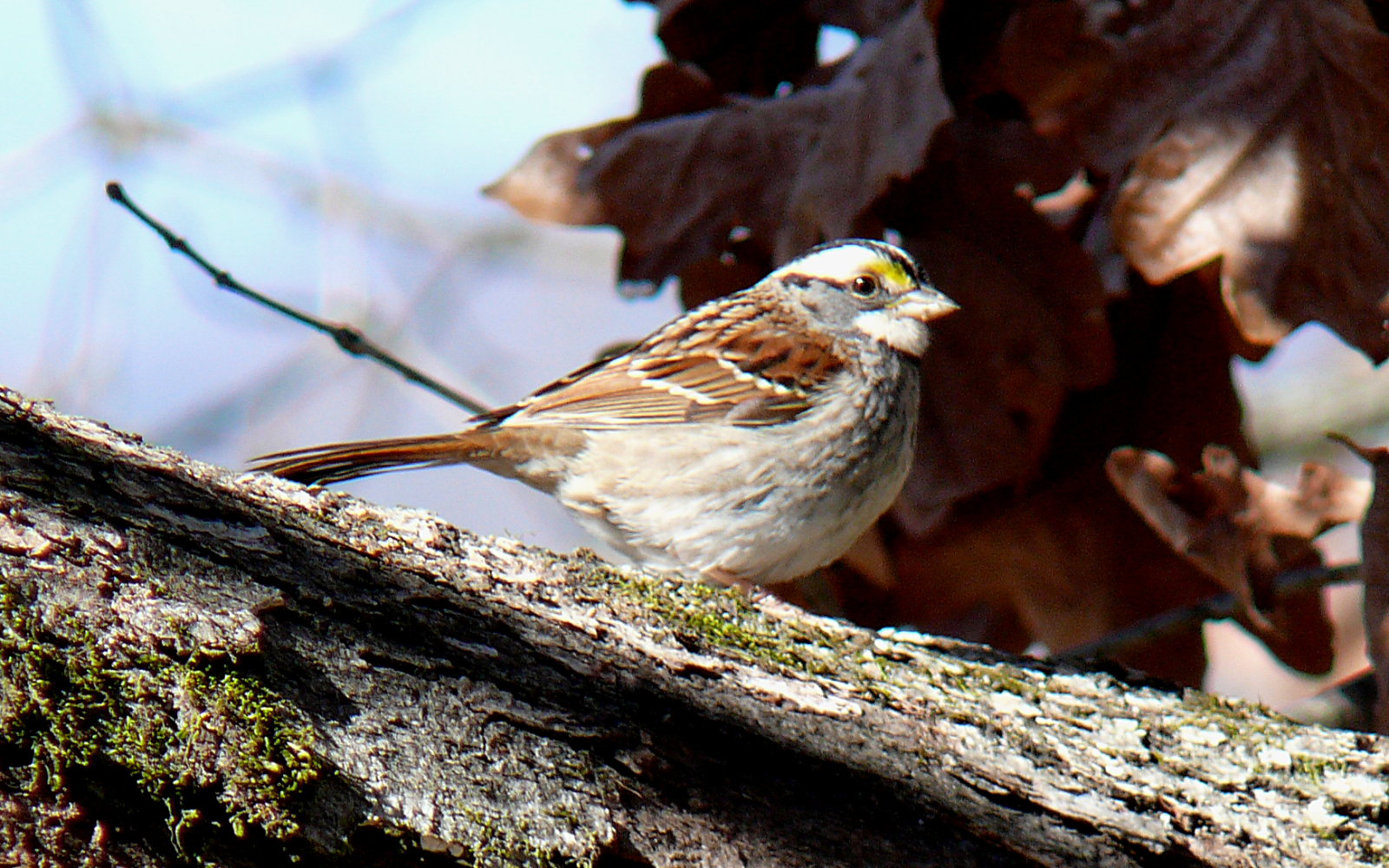
White-throated sparrows showed up on Oct. 15, which is fairly typical for this winter resident. The numbers of this attractive sparrow have been increasing since that date.


White-throated_Sparrow-27527

Photo by Ken Thomas                                            A White-throated Sparrow shows off its namesake white throat.

While I have learned to associate this bird with winter’s arrival, some Native American tribes connected the white-throated sparrow with the annual return of spring. According to Laura C. Martin, author of “The Folklore of Birds,” the Blackfoot Indians called the white-throated sparrows “summer-bringers.” The members of this tribe believed that the message of the sparrow’s song was “the leaves are budding and summer is coming.”
The song of the white-throated sparrow has also earned distinctive translations among the residents of Canada and the United States. Those translations can be described as “Oh sweet Canada, Canada, Canada” or “Old Sam Peabody, Peabody, Peabody.”
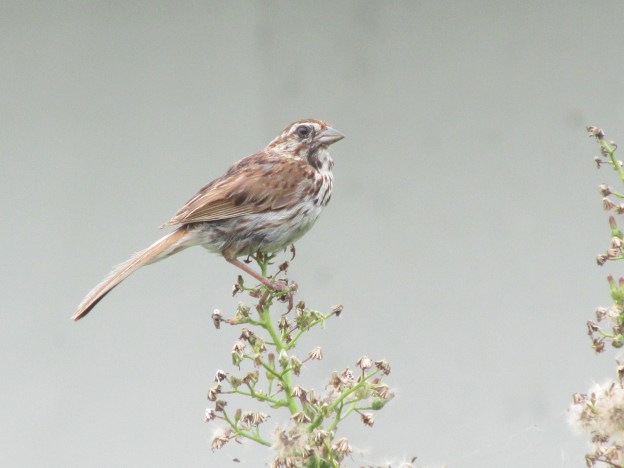
While the shy swamp sparrows usually maintain a reclusive presence in the cattails, white-throated sparrows and dark-eyed juncos are regular visitors at my feeders once they arrive. Both the junco and the white-throated sparrow prefer to feed on the ground beneath the feeders. A few other sparrows will visit feeders, including song sparrow, field sparrow, chipping sparrow and white-crowned sparrow.


SongSparrow-Cattailss

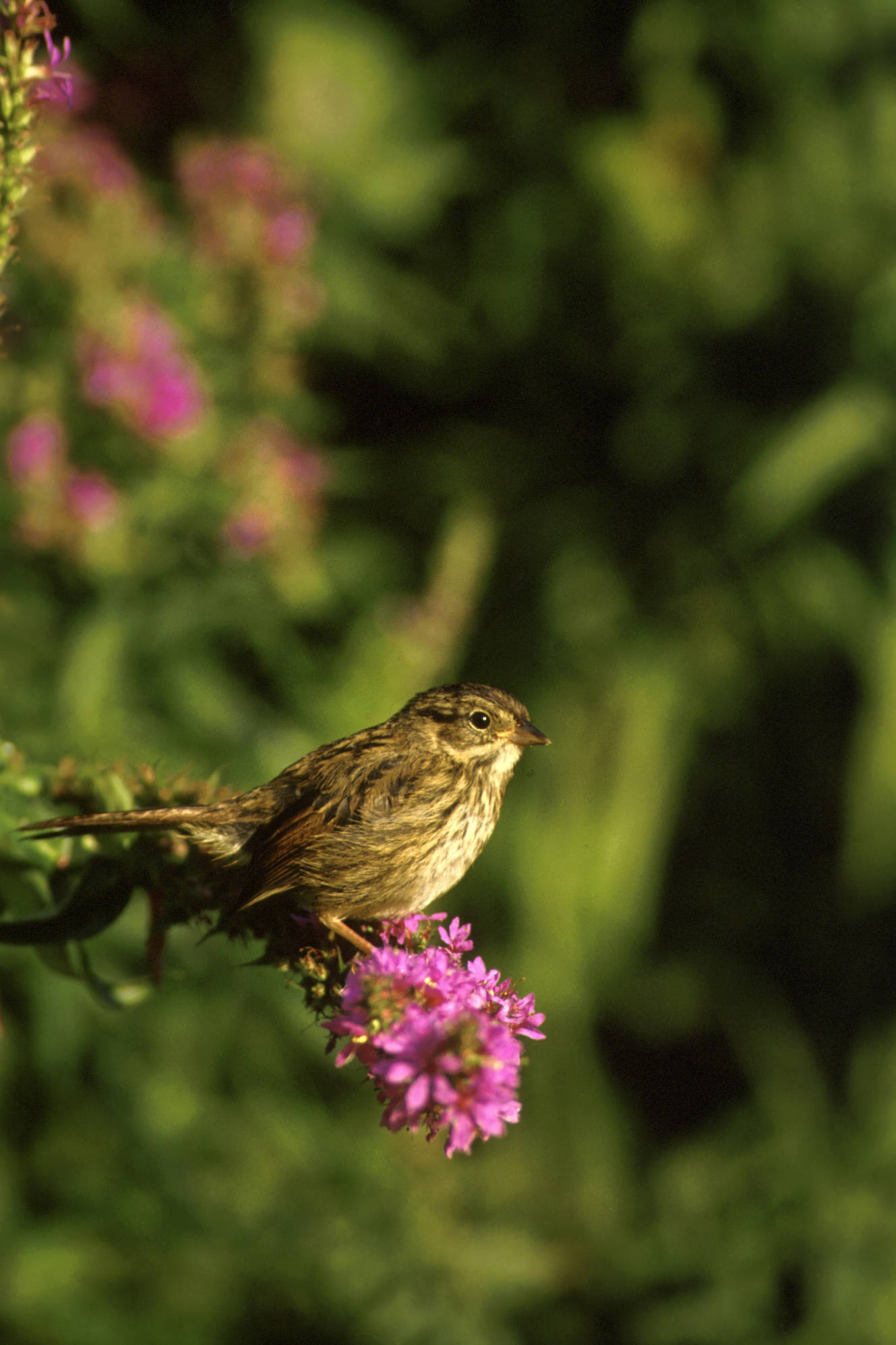
A Song Sparrow perches on a dry cattail stalk.

Of course, the real entertainment from our sparrows comes from their frequent visits to our backyard feeders. When these birds flock to a feeder and began a furious period of eating, I don’t even have to glance skyward or tune in the television weather forecast. I know what they know. Bad weather is on the way!


With our winter birds beginning to arrive, I’d love to hear what readers are seeing at their own feeders. Send me an email at ahoodedwarbler@aol.com to ask questions, share observations or makes a comment.

October brings bird walks and new arrivals

Phoebe-Cove

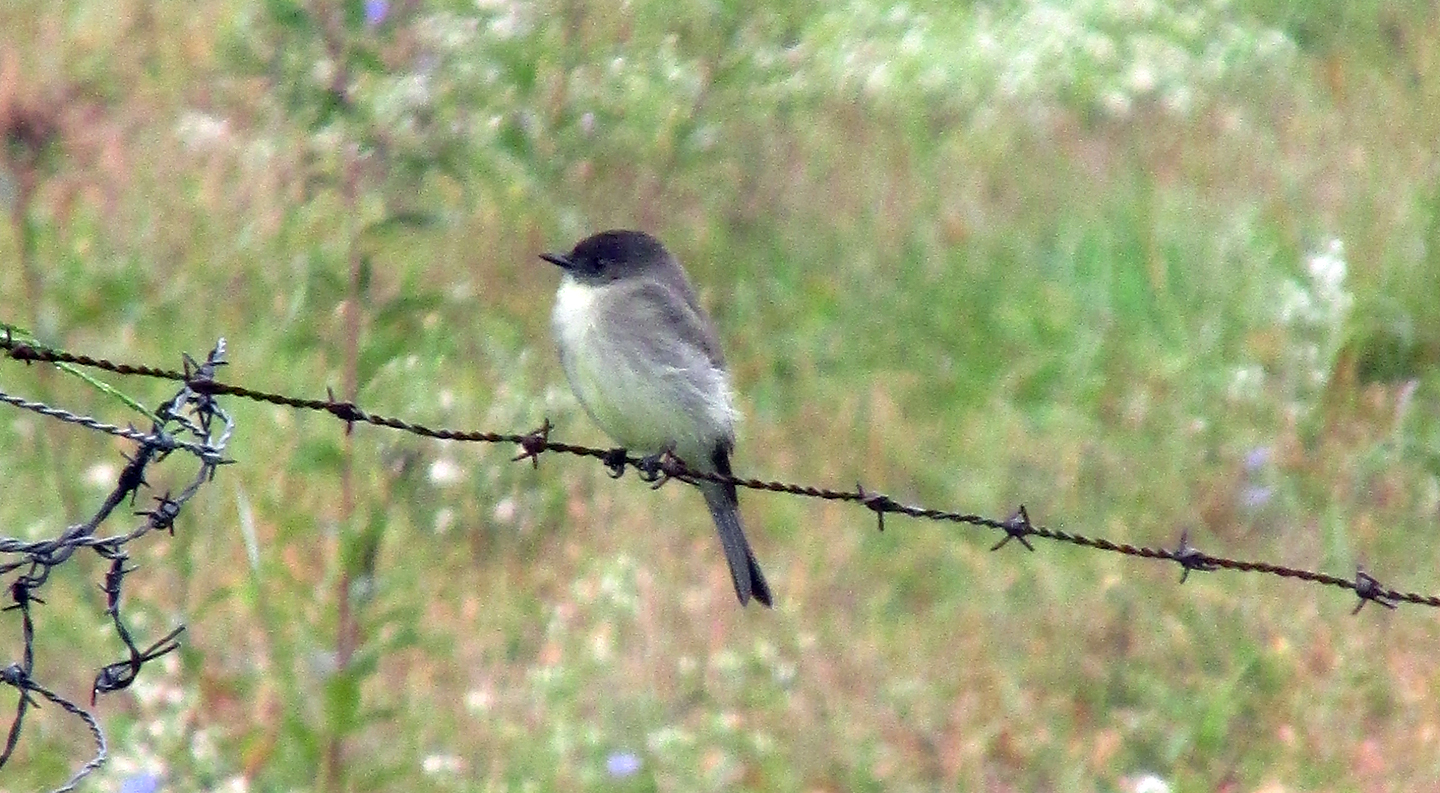
Photo by Bryan Stevens                                      An Eastern Phoebe perched on a barbed wire fence.

The end of October punctuates the annual spectacle of fall migration. By the end of the month, most of the summer residents — hummingbirds, vireos, tanagers, warblers —will have migrated out of the region to distant wintering grounds. In the waning days of October, winter residents — Brown Creepers, Winter Wrens, Dark-eyed Juncos, Hermit Thrushes and much more — take up residence in our yards, where they will keep a low profile during the fewer hours of daylight during the long winter months.

So far, I have already welcomed a Marsh Wren and Winter Wren to my yard, and I am looking forward to the arrival of winter sparrows.

I have once again been leading bird walks every Saturday in October at Sycamore Shoals State Historic Park in Elizabethton. There are still two walks — Oct. 24 and Oct. 31 — for interested persons to attend and try to get a look at some of the late-fall migrants passing through the region. The walks begin at 8 a.m. Bring binoculars to increase your viewing enjoyment.

Hummer-Awake

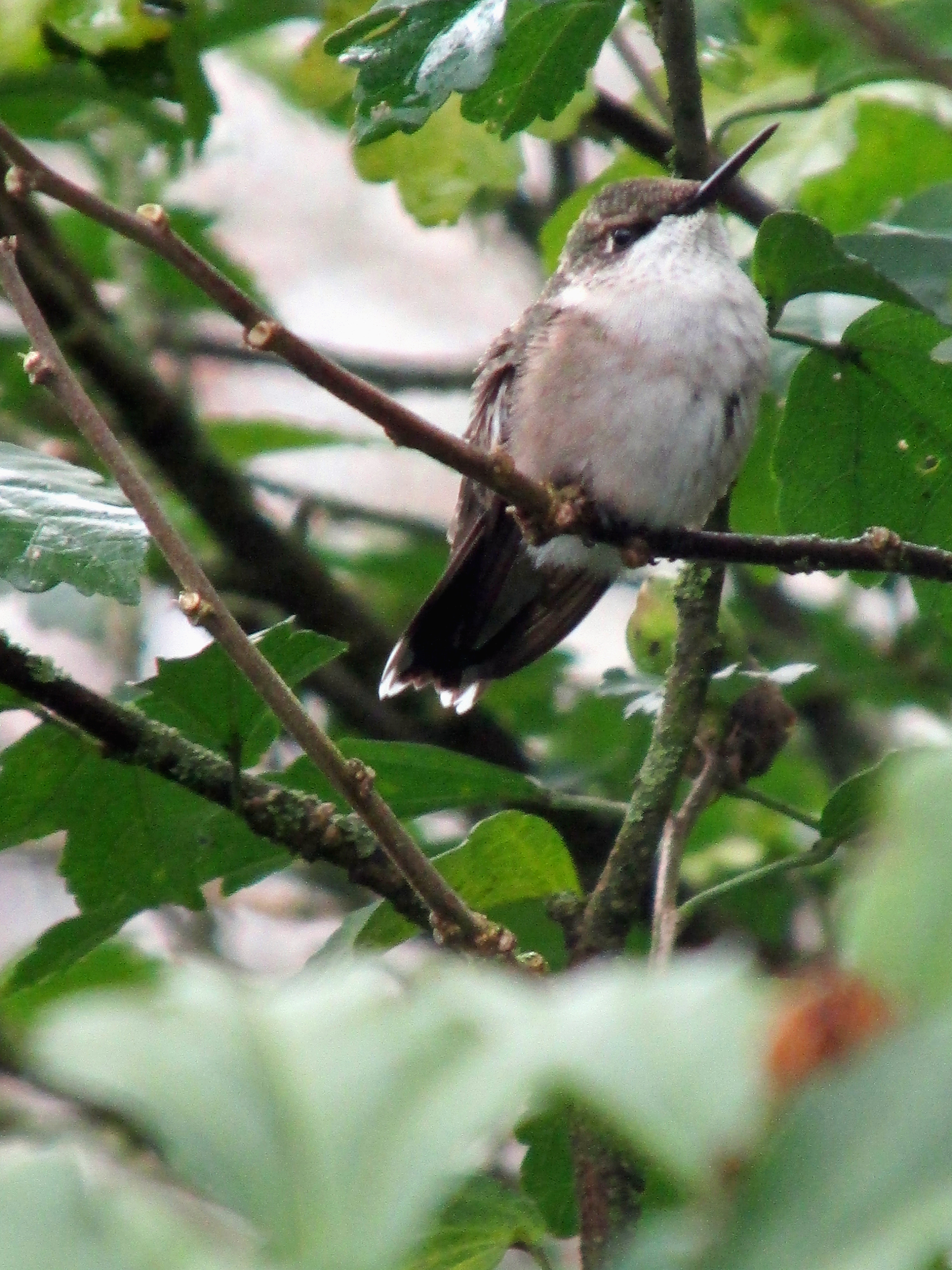
Photo by Bryan Stevens                One of the lingering Ruby-throated Hummingbirds perches in branches near a hanging feeder.

The first two walks were cancelled due to rain, but on a very chilly morning on Oct. 18 the first walk finally commenced. Five participants joined me for a morning stroll on the park trails and along the Watauga River. We saw Wood Ducks, Mallards and Canada Geese, as well as several flocks of Cedar Waxwings, along with Blue-headed Vireo, Yellow-rumped Warbler and several woodpeckers, including Downy, Red-bellied, Pileated, Northern Flicker and Yellow-bellied Sapsucker.

At home, the seasons are definitely shifting. Although a few Ruby-throated Hummingbirds lingered (as of Oct. 18), the first White-throated Sparrow put in an appearance on Oct. 14. Winter residents are gradually displacing departing summer visitors.

Last year’s bird walks at Sycamore Shoals produced some good birds, including a female Common Merganser that was discovered in the Watauga River. Other good finds have been found in past years.

On Sunday, Oct. 11, my mother and I enjoyed watching a female Common Merganser on the Watauga River.

MergAndOthers

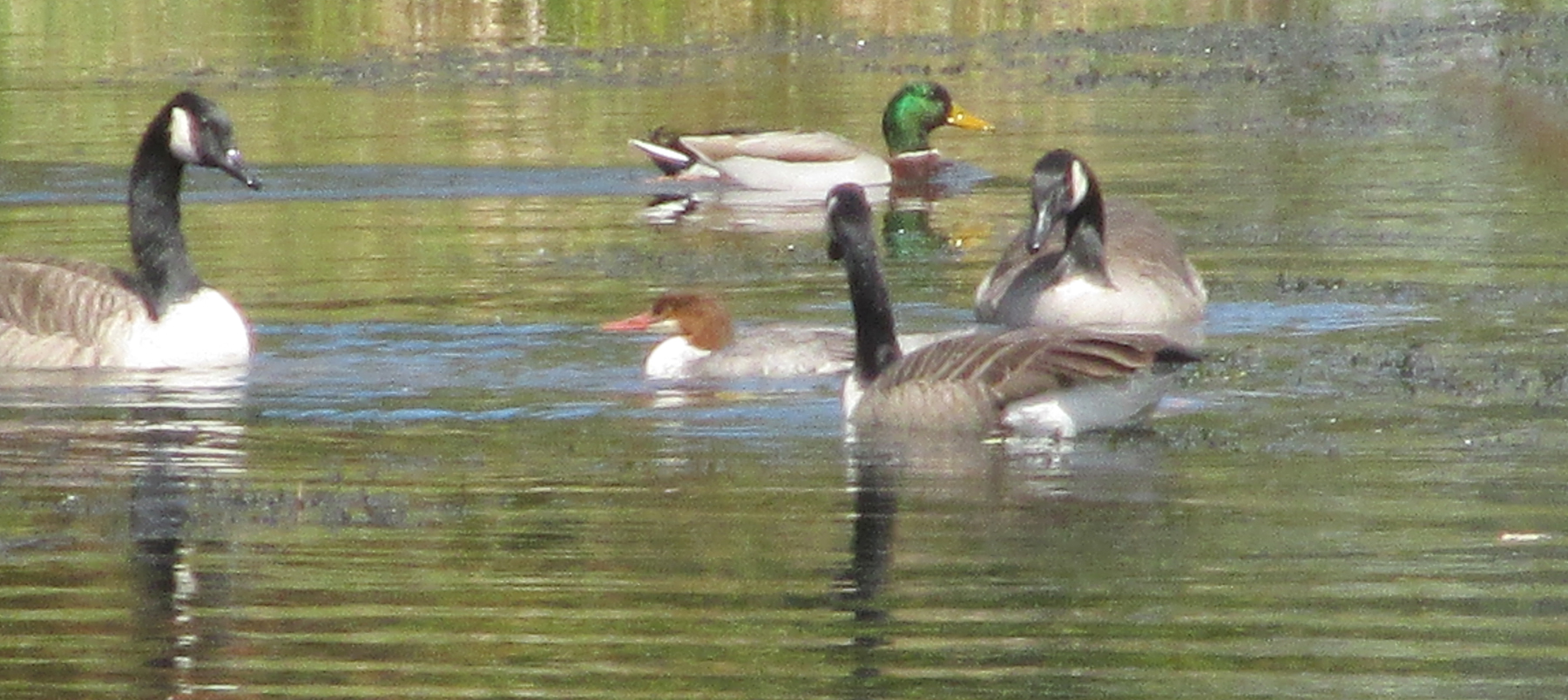
Photo by Bryan Stevens                                                                    A Common Merganser on the Watauga River associated with Canada Geese and Mallards.

In Europe, the Common Merganser is called a Goosander, probably a nod to its large size that makes this bird superficially more similar to geese than ducks. Early naturalists such as John James Audubon also provided this bird with a different name, referring to it as the “Buff-breasted Merganser.”

For many years, the Common Merganser was one of my target birds. Finally, more than 10 years ago, I saw my first Common Mergansers during a visit to Middlebrook Lake in Bristol with Reece Jamerson, Gil Derouen and the late Howard Langridge.

Despite the word “common” in its name, this merganser isn’t particularly common in Northeast Tennessee. Its relatives, Hooded Merganser and Red-breasted Merganser, are much more regular visitors to the region.

Common_Merganser (1)

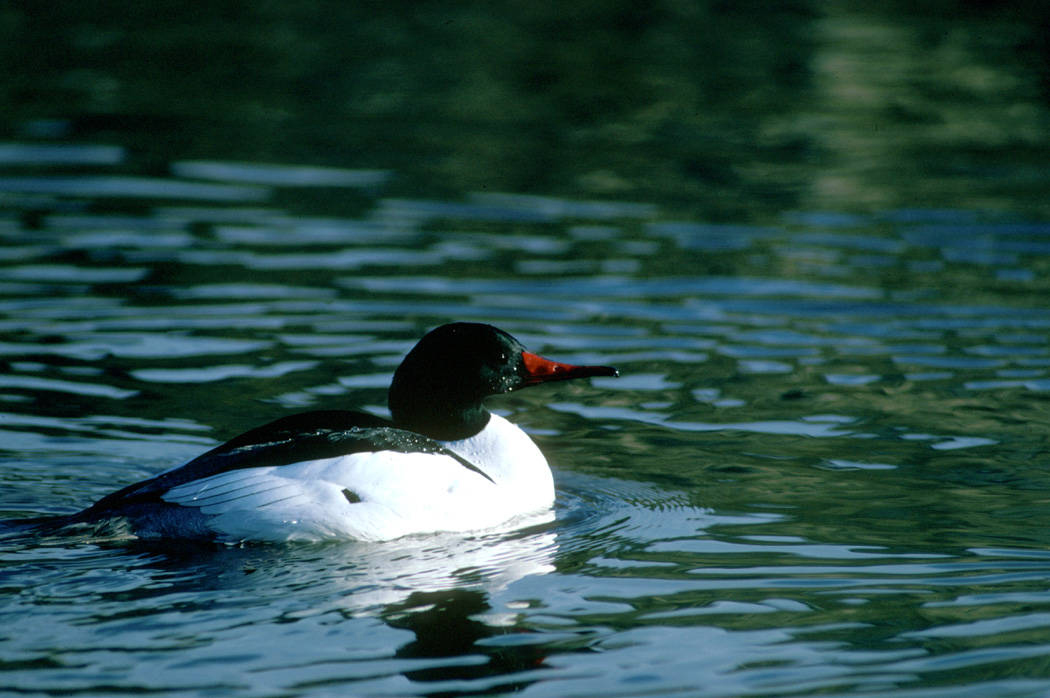
Photo by U.S. Fish & Wildlife Service                    A male Common Merganser takes a swim.

The Common Merganser, particularly the males, are easily identified. Apart from their large size, which is about 26 inches long for males, males of this duck have a dark green head and upper neck. The lower neck, breast and underparts are creamy-white with a varying amounts of a pink or reddish wash. The back is black, while the bill, legs and feet are red. Females are similar to female Red-breasted Mergansers but show a clearly defined white chin patch lacking in their close relative.

According to the website Ducks Unlimited, Common Mergansers breed from Alaska, the southern Yukon, Labrador and Newfoundland south to central California, Arizona, New Mexico, southern Chihuahua and east of the Rockies to Minnesota, Michigan, New York, New England and Nova Scotia.

They are also one of the biggest of North America’s cavity-nesting birds, utilizing natural cavities in trees, as well as man-made nesting boxes. They will also nest on the ground.

Common Mergansers feed mainly on fish, amphibians, crustaceans, mollusks and other aquatic organisms.

The last extensive population surveys of Common Mergansers took place during the 1970s, when the population in North America was estimated at 1.5 million birds.

May population surveys during 1970-’79, suggested a continental population of 1.5 million birds. Population tracking has been lacking in recent decades, but experts believe that Common Mergansers have a stable population.

CommonYellowthroat

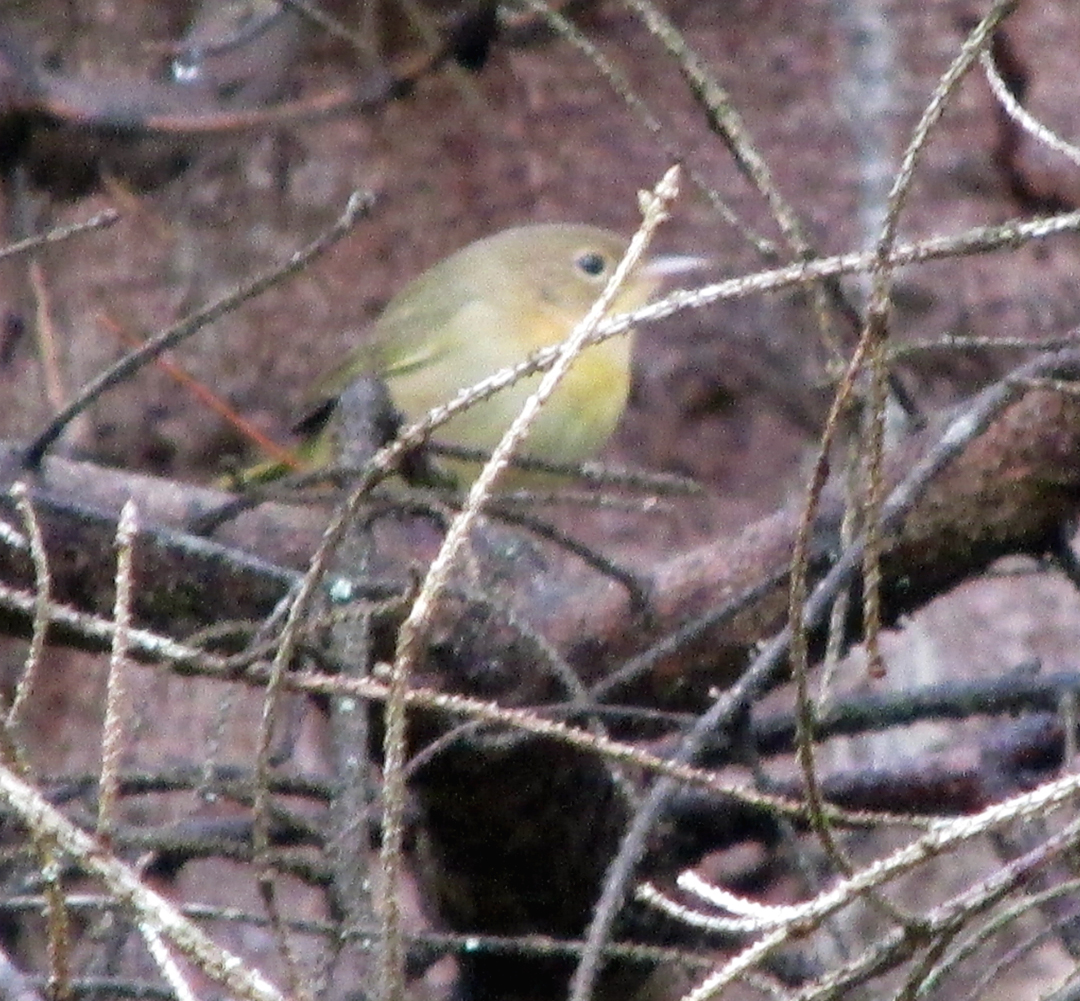
Photo by Bryan Stevens                                        A Common Yellowthroat hides in a tangle of brush during a migration stop.

When November arrives, I’ll be keeping watch for ducks making stops at the pond at Erwin Fishery Park or along the series of ponds located along the linear walking trail in Erwin. I’ll also make a journey to Wilbur Lake, one of my favorite destinations, to look for returning Buffleheads.

•••••

To learn more about birds and other topics from the natural world, “friend” Bryan on Facebook at https://www.facebook.com/ahoodedwarbler. He is always posting about local birds, wildlife, flowers, insects and much more. If you have a question, wish to make a comment or share a sighting, email ahoodedwarbler@aol.com.

Goldenrod

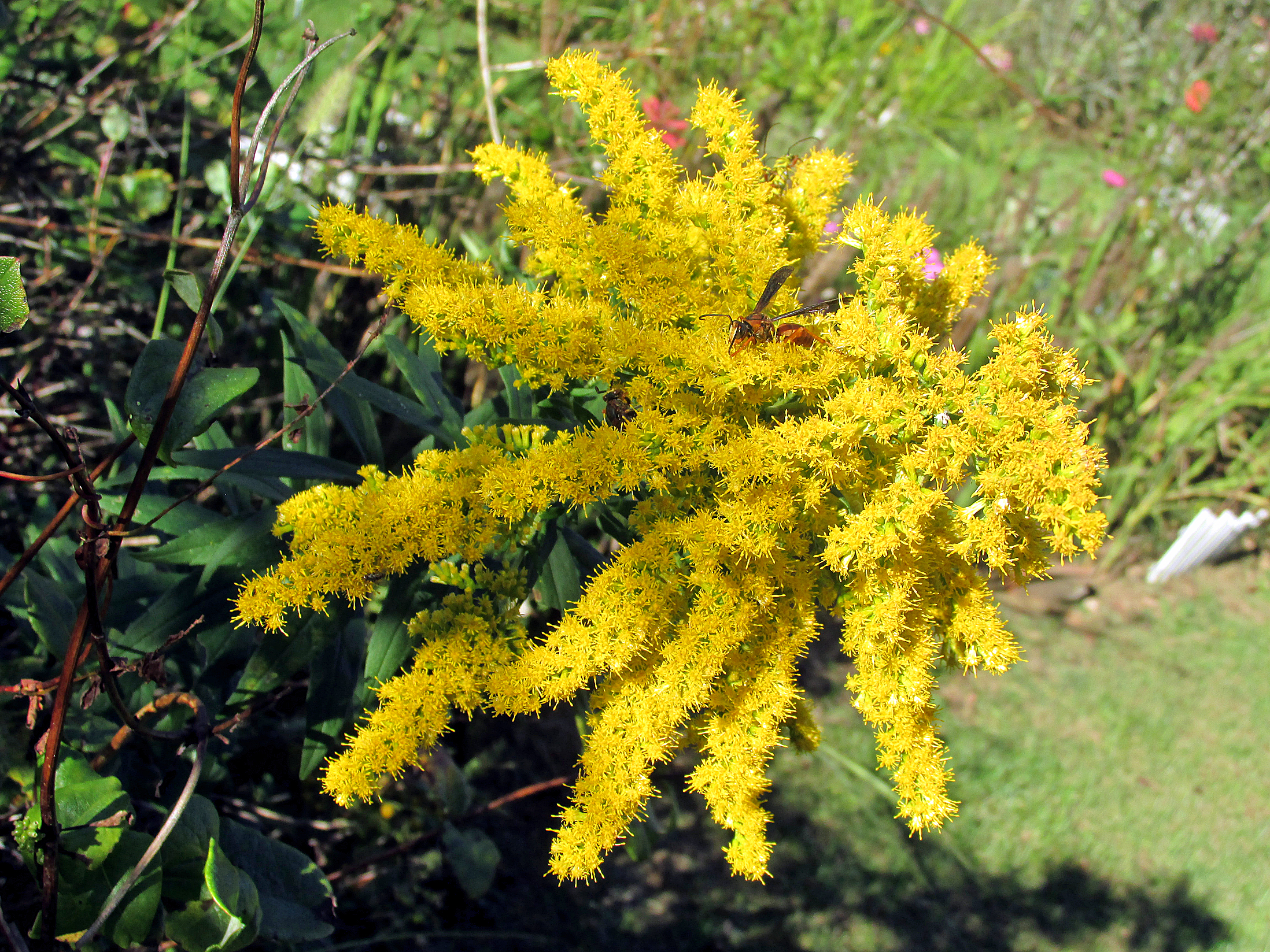
Photo by Bryan Stevens                                                                                        Blooming Goldenrod looks splendid in fall sunshine.

WeirdsHadow

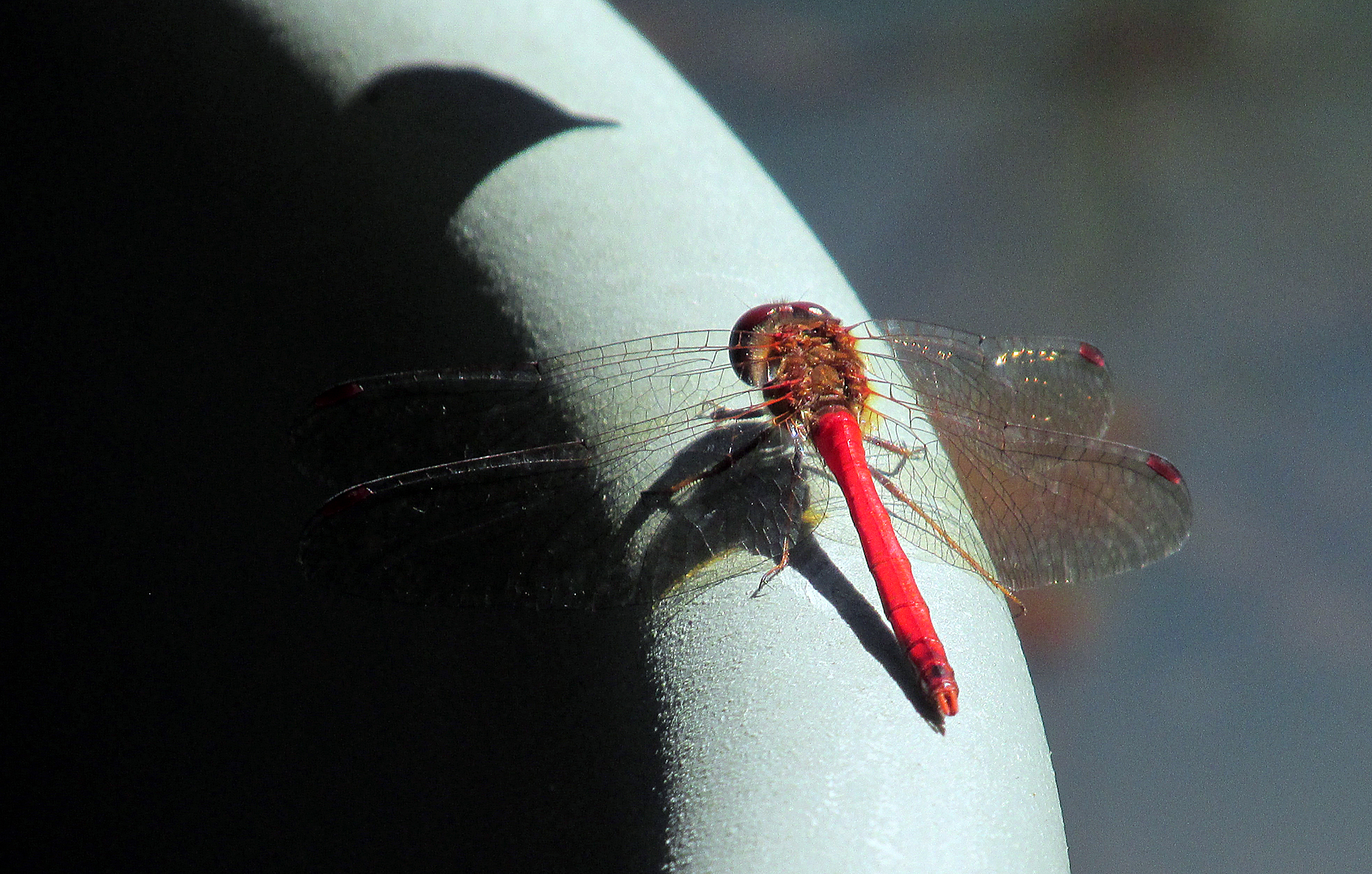
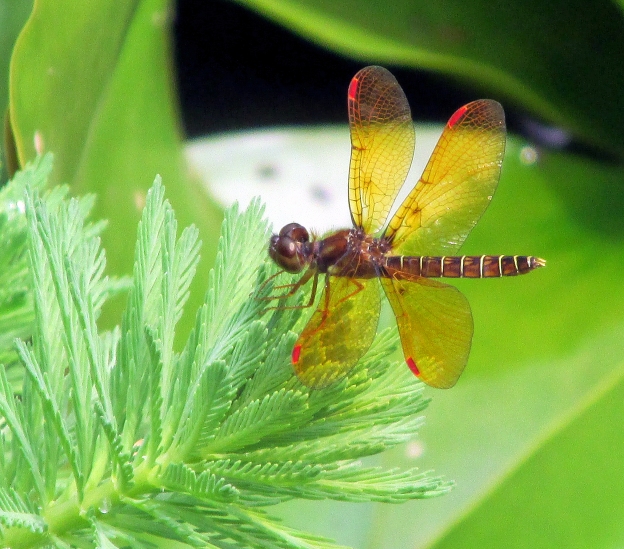
Photo by Bryan Stevens                                      The Autumn Meadowhawk, pictured, and Shadow Darners are some of the final dragonflies flying around the fish pond as cooler weather arrives.

BRYAN-Ruby-crownedKinglet-Oct9

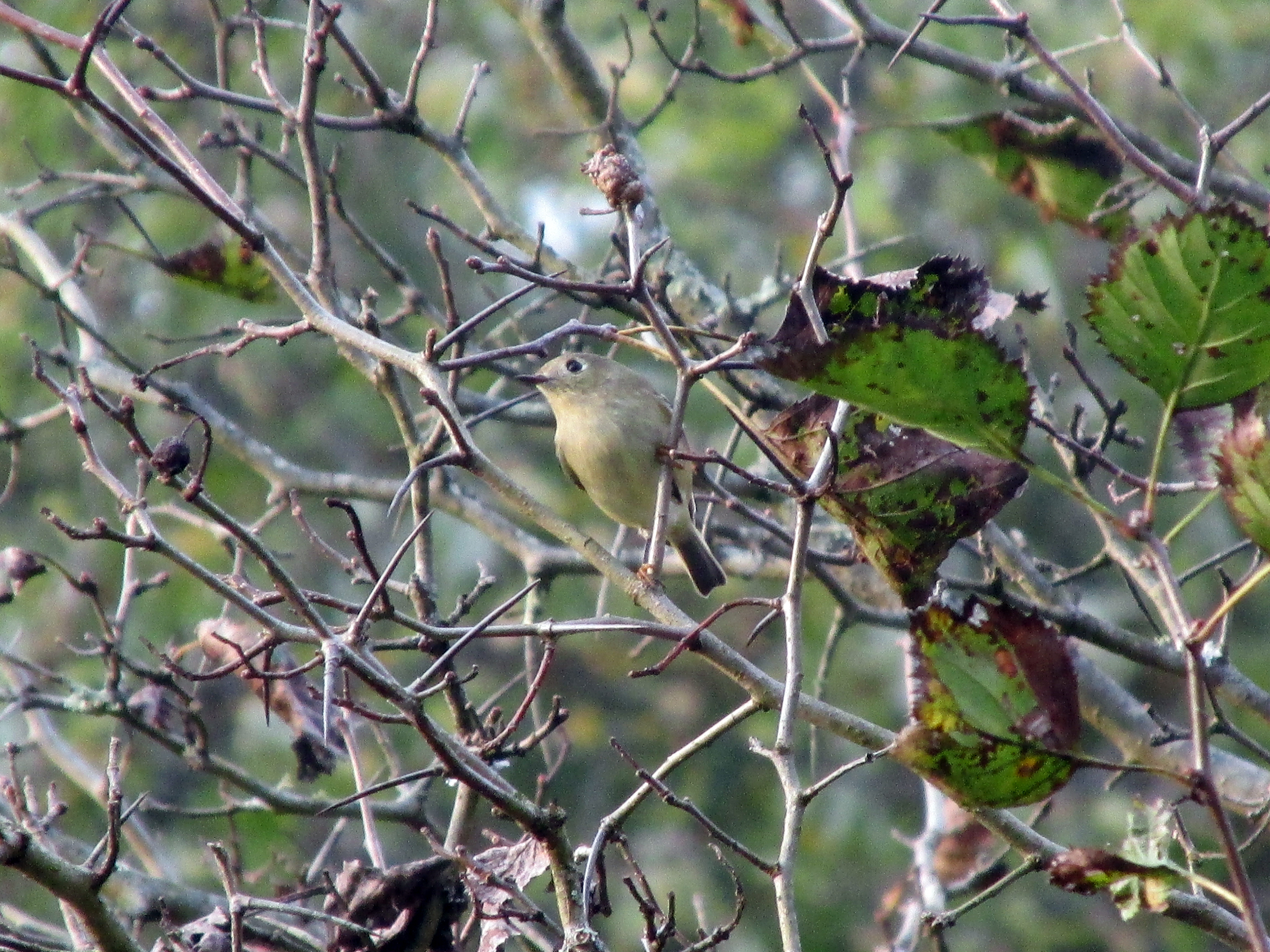
Photo by Bryan Stevens                                                    Some Ruby-crowned Kinglets, such as this individual, may overwinter in Northeast Tennessee.


Birds, dragonflies have more than wings in common

flower-2

The plastic yellow guards are meant to exclude bees and other insects from your sugar water feeders for hummingbirds.

I’ve had some Facebook queries recently from fellow hummingbird enthusiasts hoping I can offer a solution to the problem of bees overwhelming their feeders.

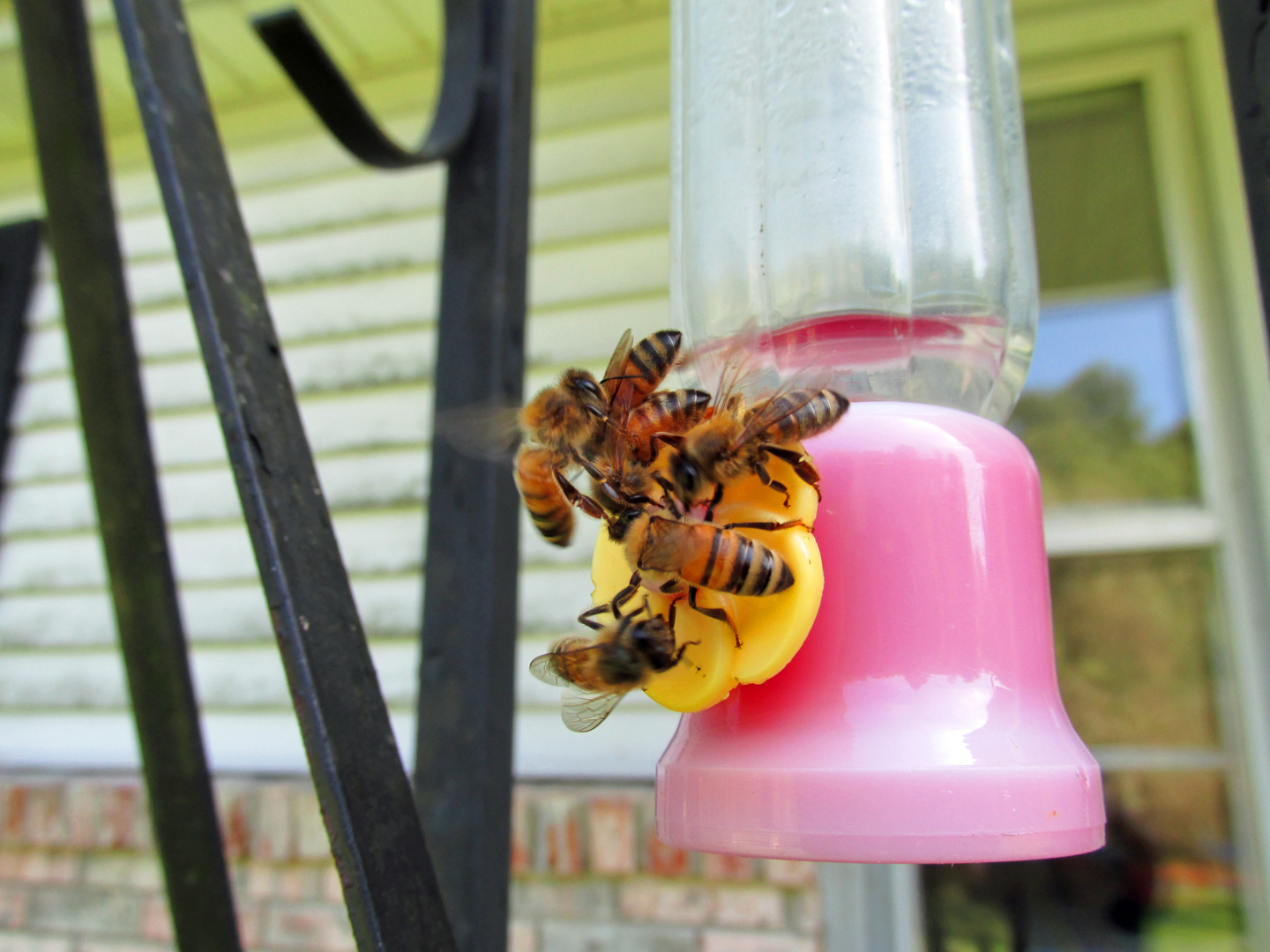
Bees, as well as other insects, are attracted to sugar water. To complicate the problem, bees far outnumber hummingbirds and can quickly make themselves a nuisance. Although hummingbirds are brave enough to challenge one or two bees to a duel, these tiny birds usually shy away from feeders that have attracted swarms of these stinging insects.

Honeybee-Clump

Honeybees can cause problems at feeders; however, methods for dealing with these important pollinators should always be non-lethal.

The most effective solution is to buy a feeder with bee guards, which are simply little plastic shields that allow access for hummingbird bills and tongues but ban bees from squeezing their bodies into a position to reach the nectar solution. Most hummingbird feeders are red, which is supposed to capitalize on the hummingbird attraction to that color, and the bee guards are usually fashioned from yellow plastic. Some of the guards are fashioned to look like tiny yellow flowers to make them more aesthetically pleasing.

Online research also offered a solution that could make everyone (people, hummers and bees) happy. Provide a bowl of sugar water for the bees. They will find it quickly. Gradually move the bowl away from your hummingbird feeders. If this works, both bees and birds can co-exist.

Remember that honeybees are an extremely valuable insect, so any solution to bees invading your hummingbird feeders should definitely be non-lethal.

••••••

DoubleDragon

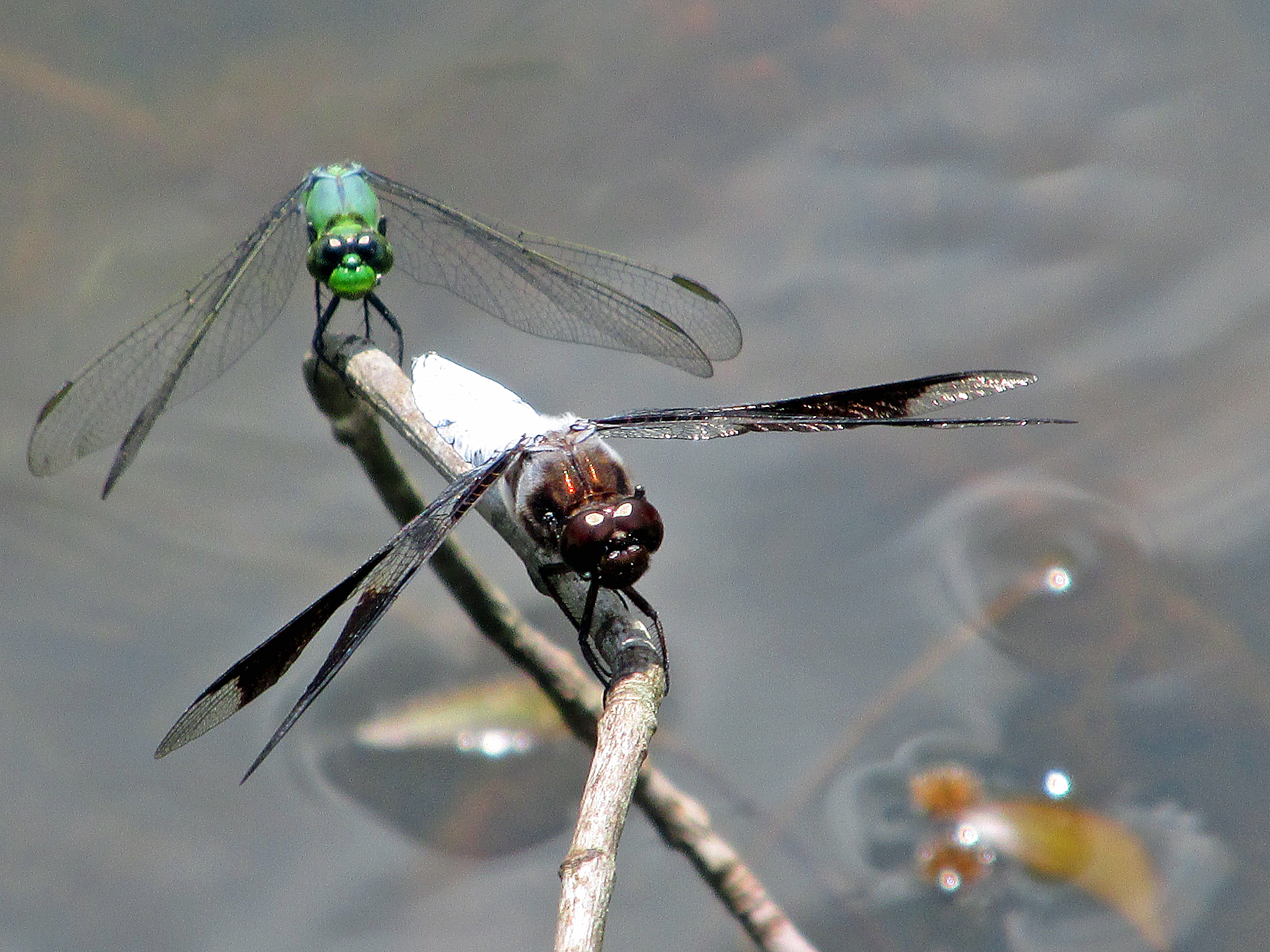
A couple of different dragonflies share a perch at water’s edge.

Since I am already discussing insects, I am taking a hiatus from the birds for one week to introduce readers to some “other things with wings.”

Specifically, I would discuss dragonflies and damselflies, otherwise known as “odes,” or members of the insect order of Odonata. Surprisingly, other than their wings, the odes and birds have a lot in common.

When birds are scarce during the heat of the day, I find that other winged creatures get active and can provide some fun observations. In late summer I spend a great deal of time focused on the dragonflies and damselflies that live along the creek and at the fish pond at my home. The “odonates” are insects with long brightly colored bodies, two pairs of membranous wings and large compound eyes.

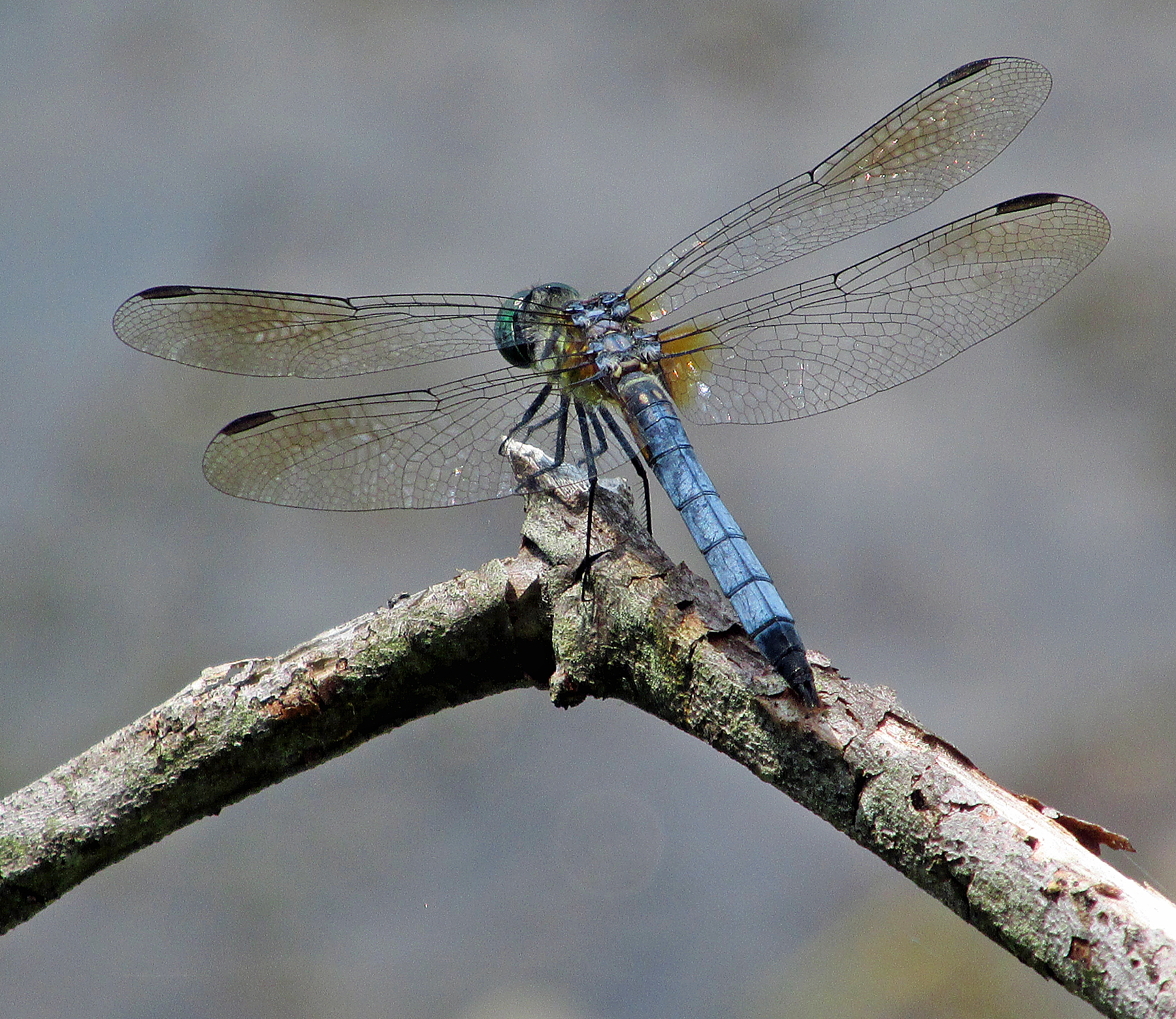
BlueDasher-2015

Blue Dasher chooses a prominent perch at a fish pond.

Some of the more prevalent dragonflies in the region include widow skimmer, common whitetail, Eastern pondhawk, Eastern amberwing and slaty skimmer. I also often find the ebony jewelwing, a species of damselfly, fluttering along the creek. These delicate-looking insects like to find a sunny perch near flowing water. I’ve noticed the ebony jewelwings for many years because they are particularly difficult to miss. They have dark wings and a tapering body that glistens with a metallic blue-green sheen.

Damselflies, which are closely related to dragonflies, are usually smaller and less swift. A dragonfly at rest keeps its wings extended horizontally like an airplane’s wings, but damselflies fold their wings over their backs.

All odes are predators, feeding on other insects, but they are harmless to humans. Despite an enduring myth, they cannot sting. They are capable of biting, but will not do so unless they are handled in a careless manner.

If you observe dragonflies long enough, you will start to notice they share one trait with hummingbirds: they are intolerant of any intrusion into their personal space. In the same manner that hummers constantly chase rivals away from a favorite perch or feeder, dragonflies along the edge of a pond are unceasing in chasing and harassing rivals.

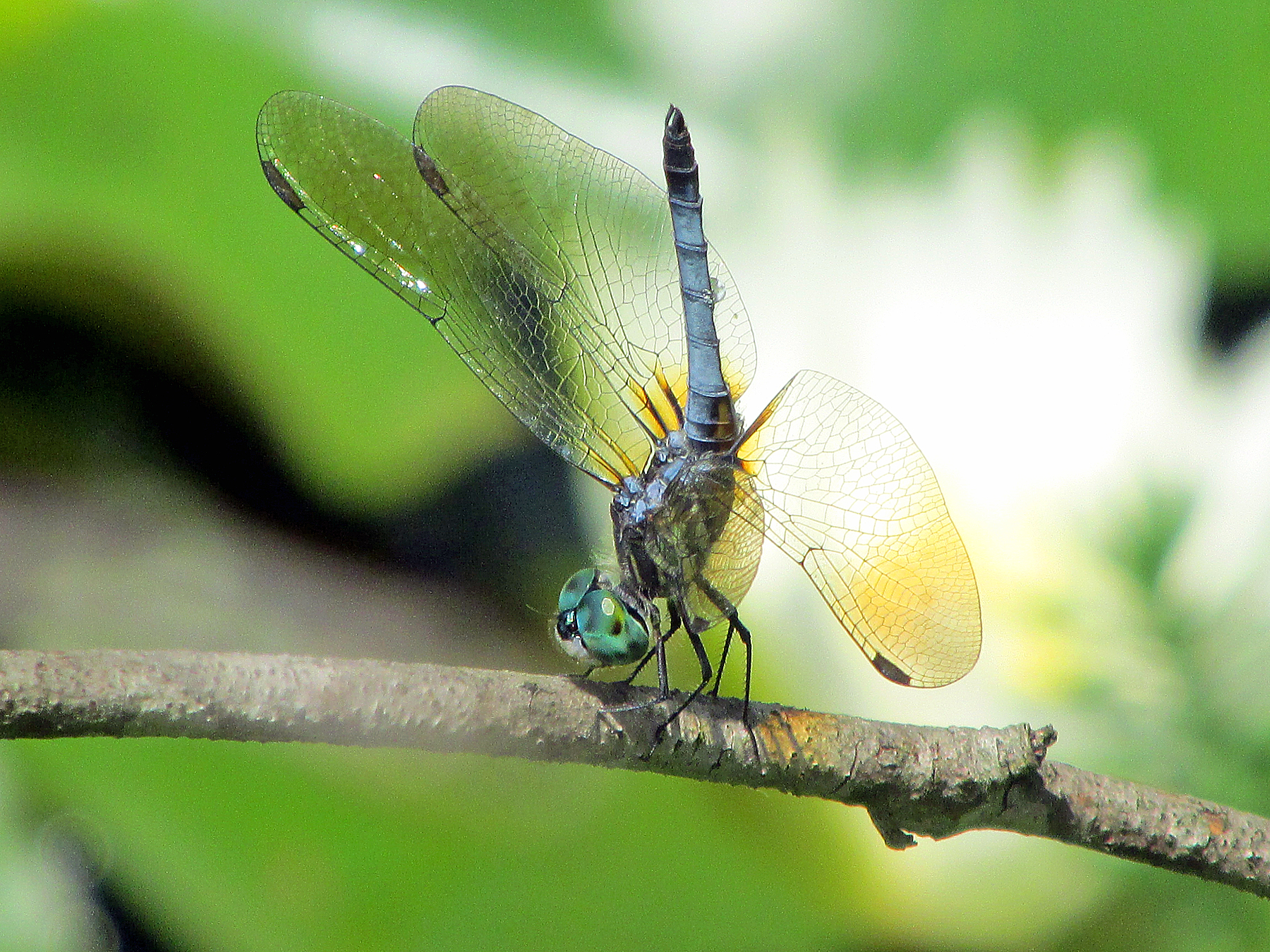
BlueDasher-Balanced

Blue Dasher striking a pose. Despite superstitions about them, dragonflies are harmless. They can’t sting and don’t bite unless provoked.

Some cultures consider a dragonfly landing on a person a sign of good fortune. My sister-in-law would disagree. She has an intense, if irrational, fear of dragonflies. Perhaps she learned too much of the misinformation handed down in various human cultures about dragonflies.

Europeans have long linked dragonflies with sinister forces. Some common names for dragonflies, such as darners, come down from older names such as “devil’s darning needle.” Swedes call dragonflies “troll spindles” and Norwegians refer to them as “eye pokers.” Some cultures in South America call dragonflies “horse killers” and others refer to them as caballito del diablo, or the “devil’s little horse.” Some residents of the Southern United States refer to dragonflies as “snake doctors,” believing these insects can stitch and repair any injuries that a serpent suffers. It’s no wonder some people fear a harmless and rather beneficial insect.

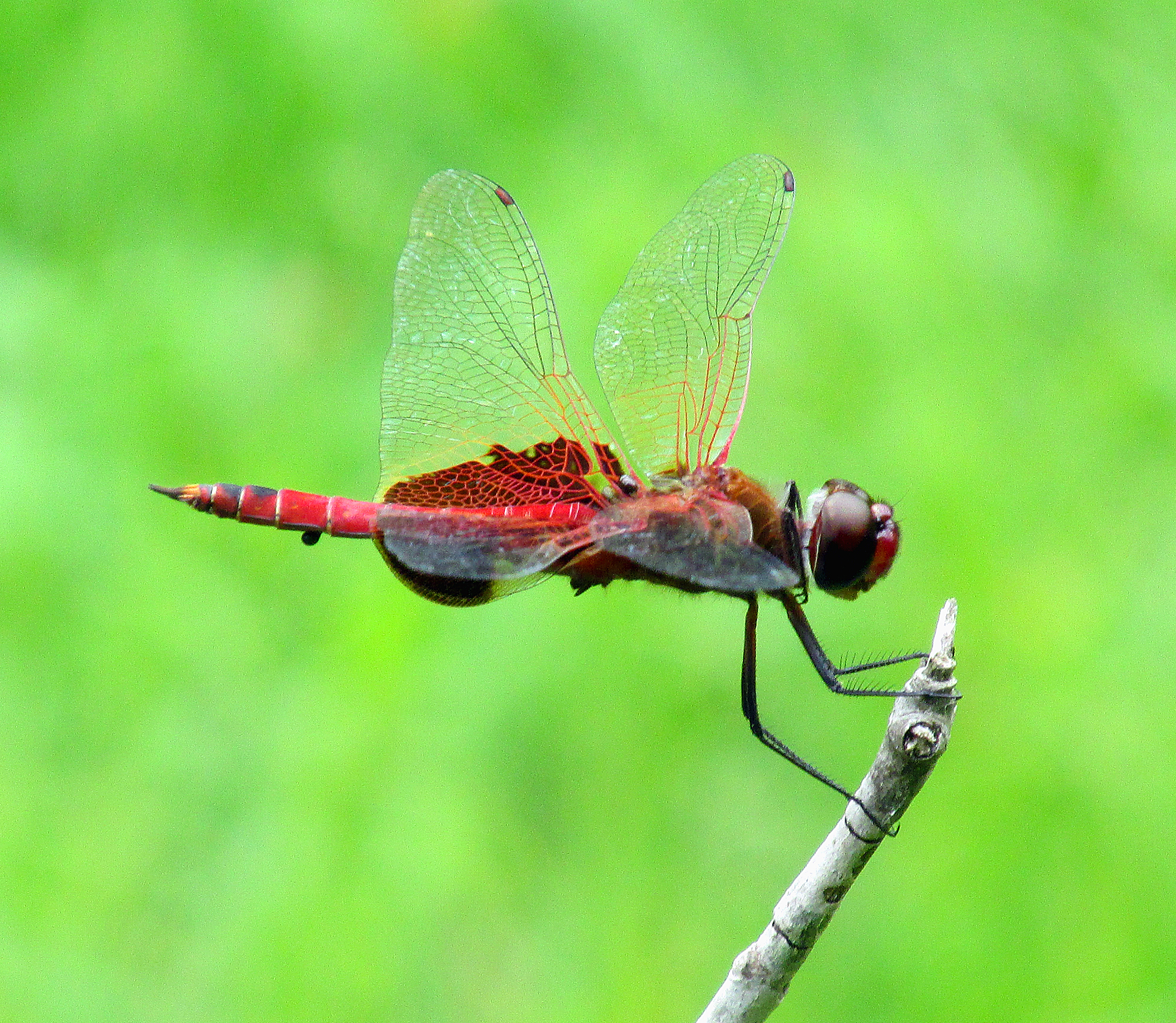
CarolinaSaddlebags

The Carolina Saddlebags, pictured, is one of the species of dragonflies known to migrate.

Native Americans as well as some Asian cultures have a more positive outlook on dragonflies. In Japan, dragonflies represent such concepts as strength, courage and joy. Dragonflies are often depicted in Zuni pottery, and the Navajo use the dragonfly as a symbol to represent “pure water,” which was an important resource for people living in very arid conditions. For both birds and dragonflies, water is also a crucial resource if they are to thrive.

The Hopi and Pueblo tribes also incorporate dragonflies into their art. Many Native Americans consider dragonflies a symbol of renewal. Many others see them as a symbol representing illusion and seeing through deception. I wonder if the use of the dragonfly as a renewal symbol evolved because of the life cycle of dragonflies.

Odes spend the first stage of life as aquatic larvae living below the surface of the water. Later, they emerge as adult dragonflies. During their time spent as larvae, or nymphs, they are voracious predators, tackling other aquatic organisms, including small fish. At the same time, these nymphs are important food sources for some larger fish. Nymphs may spend as long as three years living beneath the water, but adult dragonflies usually live only a few weeks or months.

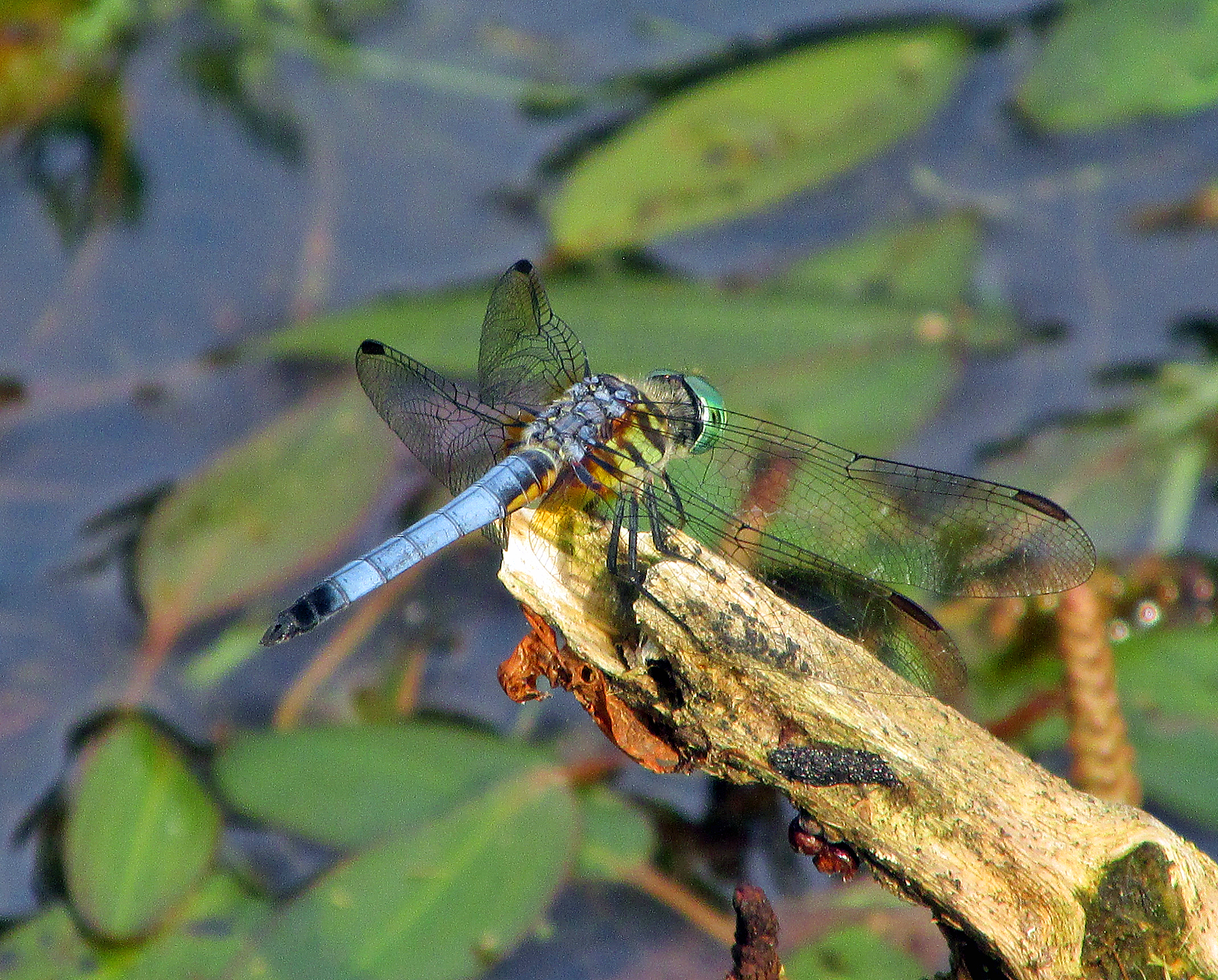
BlueDasher-COlorful

Blue Dasher surveys its territory at a fish pond.

Adult dragonflies continue to consume prey, which is mostly other insects. Among the odes, there are no vegetarians. “Mosquito hawk” is another common name for them because they catch and eat mosquitoes. They also consume gnats, flies and other insects. So, along with birds such as swallows and nighthawks, the dragonflies help keep in check the numbers of many nuisance insects.

Some of the larger dragonflies are also reputed to attack and eat hummingbirds. I tried to find conclusive evidence, but the jury’s still out in my opinion. However, some of the larger species of praying mantis have been documented capturing and consuming hummingbirds, so it is not too far-fetched to believe some dragonflies might be capable of preying on hummers.

Like many birds, some dragonflies migrate. Species such as Carolina saddlebags, green darners and wandering gliders are known to migrate hundreds of miles.

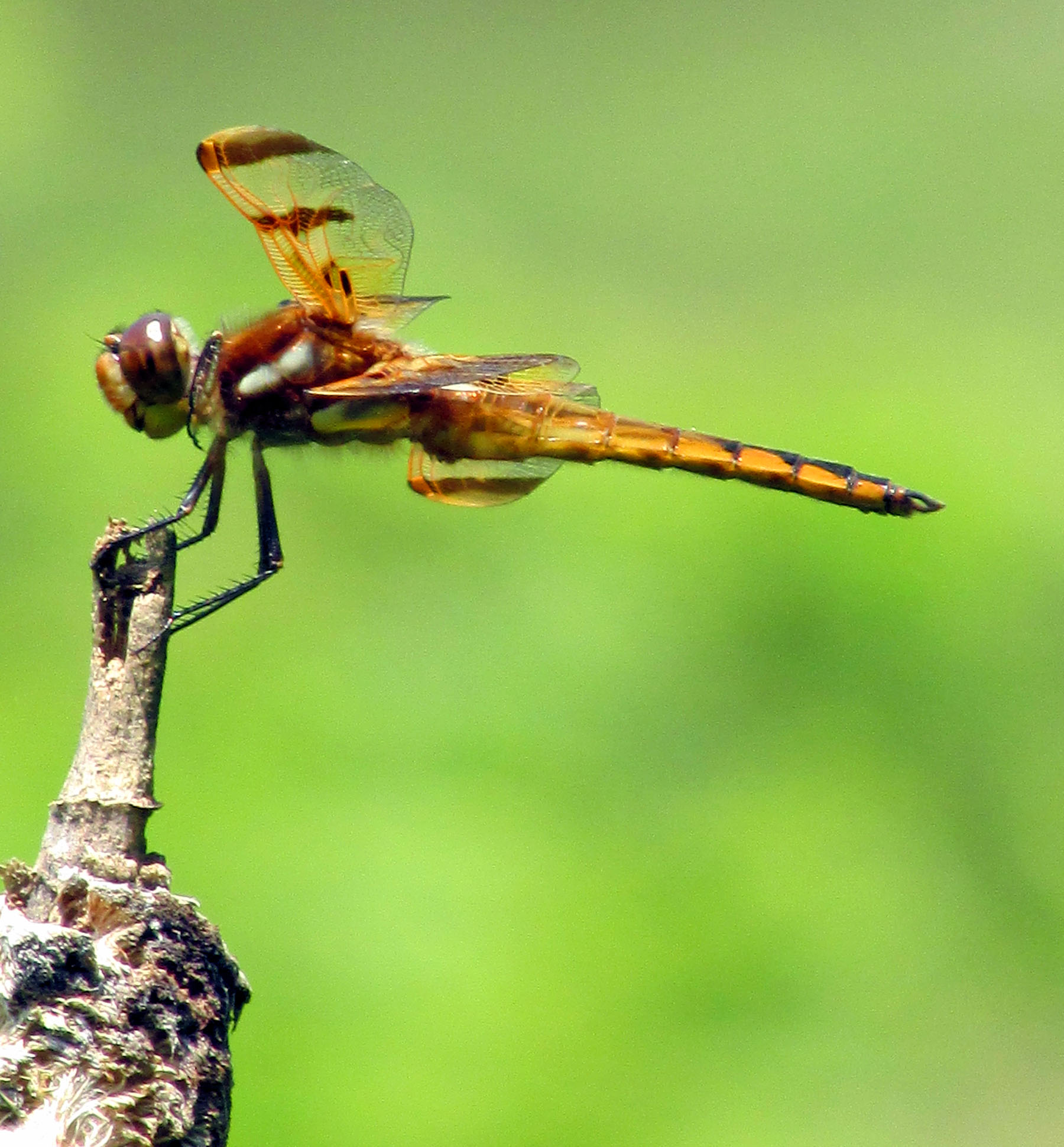
PaintedSkimmer-One

Painted Skimmer clasps a cattail.

In recent years, dragonfly-watching has emerged as a nature pastime to rival the watching of birds and butterflies. Why watch dragonflies? Well, in many ways, they are just as fascinating as birds and other wildlife.
Here’s some fun trivia about dragonflies:

• Odes have excellent eyesight. Their compound eyes have up to 30,000 facets, each of which is a separate light-sensing organ arranged to give nearly a 360 degree field of vision. Their vision also makes it difficult to sneak up on a dragonfly. I have learned this during my attempts to photograph them.

• Dragonflies are built for speed. Many experts credit dragonflies with the ability to fly at speeds between 19 to 38 miles per hour. They have also been documented traveling as much as 85 miles in a single day.

• Dragonflies can hover and fly backwards, a feat achieved by only hummingbirds among our winged friends with feathers.

• Dragonflies are ancient. They appeared 100 million years before dinosaurs and 150 million years before birds.

Pondhawk-Impatiens

Eastern Pondhawk perches on an impatiens bloom.

• The largest dragonfly to ever live was Meganeura monyi, which lived during the Carboniferous period about 300 million years ago. It resembled and was related to present-day dragonflies. With a wingspan of almost 26 inches, it is one of the largest known flying insect species.

• Worldwide, there are about 5,000 species of dragonflies, but only about 400 are found in North America.

More than halfway to my goal of 100 yard birds in 2015

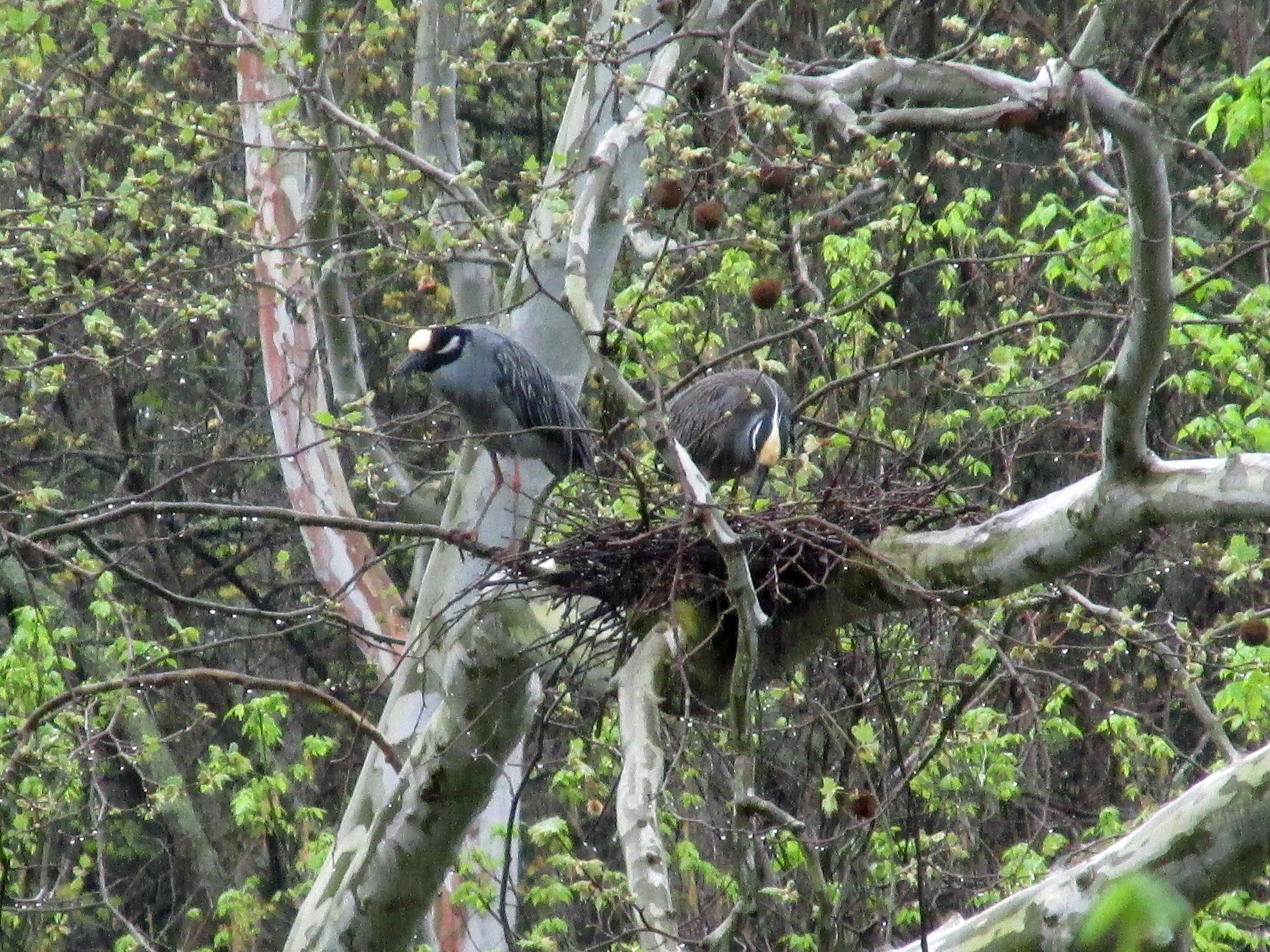
Yellow-Crowns-April19

I would love to add Yellow-crowned Night-Heron to my yard list. Great Blue Herons, Black-crowned Night-Herons, Green Herons and Great Egrets have visited the creek and fish pond at my home, but I’ve never had a visit from a Yellow-crowned Night-Heron. I photographed this pair on a nest along the Watauga River on Blevins Road.

On April 19, a singing male Black-throated Green Warbler became the 50th bird species to make an appearance in my yard this year.

Back at the start of this year, I considered trying for another “big year” in the five-county area of Northeast Tennessee that consists of the counties of Carter, Johnson, Sullivan, Unicoi and Washington.

However, such an undertaking requires a lot of travel and expense, as well as an immense dedication of time. After a 2014 marked by many personal upsets, I didn’t feel capable of making an attempt. Considering I last undertook a “big year” effort back in 2013, I felt it was too soon for me to try this again.

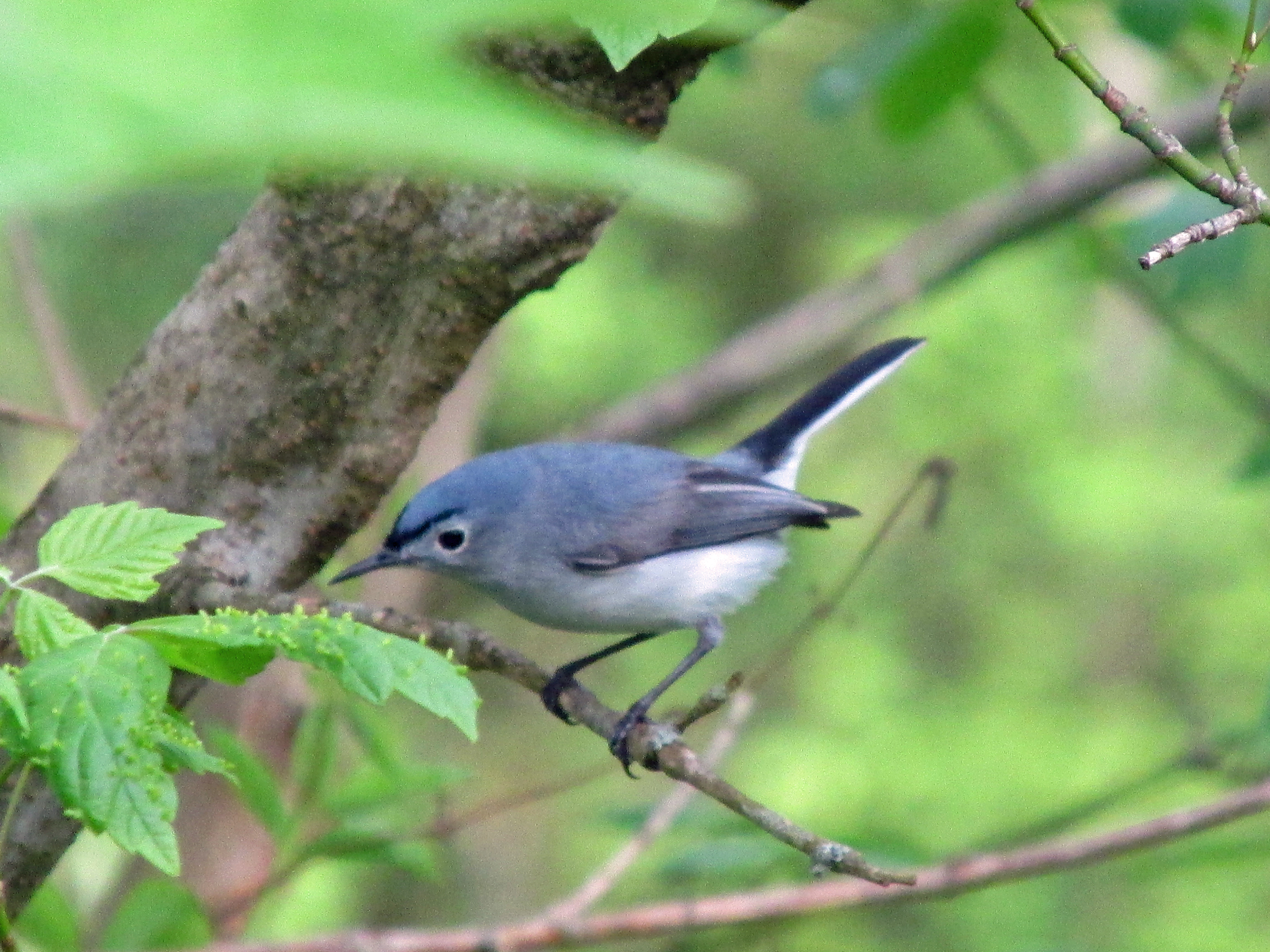
BG-Gnat-April25

The Blue-gray Gnatcatcher, an early bird among spring migrants, arrived on Easter Sunday, April 5, this year. It was Bird No. 42 on my yard list for 2015.

Instead, I’ve focused my attention on the birds that come calling to my yard, fish pond, the creek and the surrounding woodlands. Over the years, I’ve enjoyed some amazing visitors from a variety of feathered friends.

It was an amazing winter, with large flocks of Purple Finches and Pine Siskins at my feeders. In fact, these two species remain present even as the calendar moves closer to May. In fact, I saw a Pine Siskin at the feeders on Saturday, April 25.

Hoodie-April22

My favorite warbler, the Hooded Warbler, returned this spring on April 13. The males are currently singing daily from rhododendron thickets in the woodlands around my home.

As is usually the case here at my Simerly Creek home in Hampton, spring migration is proceeding at a slow pace. For some reason, the fall migration is a more “birdy” time. So, any bird I miss seeing this spring, I will hope to pick up while I continue looking for yard birds this autumn.

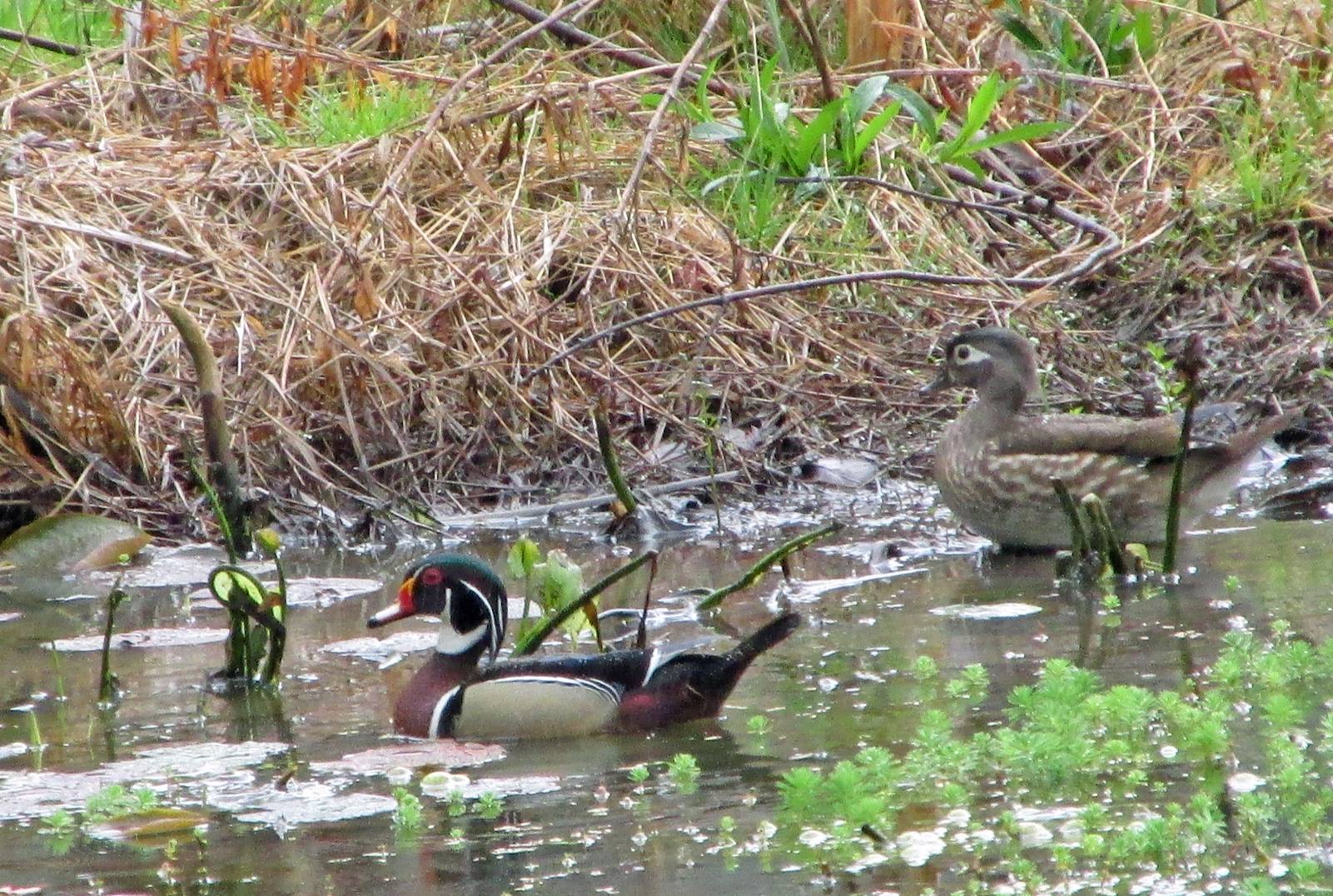
11174272_10205371493639214_6825911444318051913_o

A pair of Wood Ducks visited the pond on a recent rainy morning. Until a decade ago, Wood Ducks were regular spring visitors. For some reason, they have become much more sporadic in their visits over the past 10 years.

Of course, there have been a few spring surprises, including a pair of Wood Ducks that showed up at the fish pond on a rainy morning on Sunday, April 19. Several of the resident warblers have also arrived, including Hooded Warbler, Black-and-white Warbler, Northern Parula, Black-throated Green Warbler and Ovenbird.

As of the time of my sitting down to post this blog entry, I’ve found 52 species in my yard so far this year.

The most recent sightings have been a Wood Thrush (No. 52) and a Northern Parula (No. 53) on my list. These two species showed up on April 20 and April 21, respectively.

Kingbird-ETSU

I have been birding for more than 20 years, but in that time I have only had one Eastern Kingbird visit my yard. Will the second kingbird pay a visit at some point in 2015?

So, wish me luck as I continue this more modest undertaking. Let’s call it a “Big Yard Year.” I am hopeful that I can find 100 species in my yard before Dec. 31. I’ll continue you update occasionally here on my weekly blog.


Annual spring rally on the Roan will offer chance to celebrate birds and other aspects of natural world

For the past 56 springs, nature enthusiasts from throughout the region have gathered on the verdant slopes of Roan Mountain for the annual Naturalists Rally.

 James Neves, who with Jennifer Bauer serves as co-director of the Roan Mountain Spring Naturalists Rally, said that one change for this year’s rally is the date the event is being held. Instead of being held in May, this year’s rally will be held the last weekend of April.
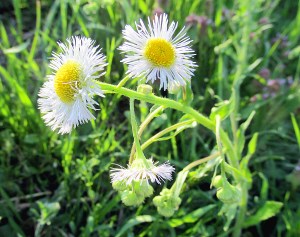
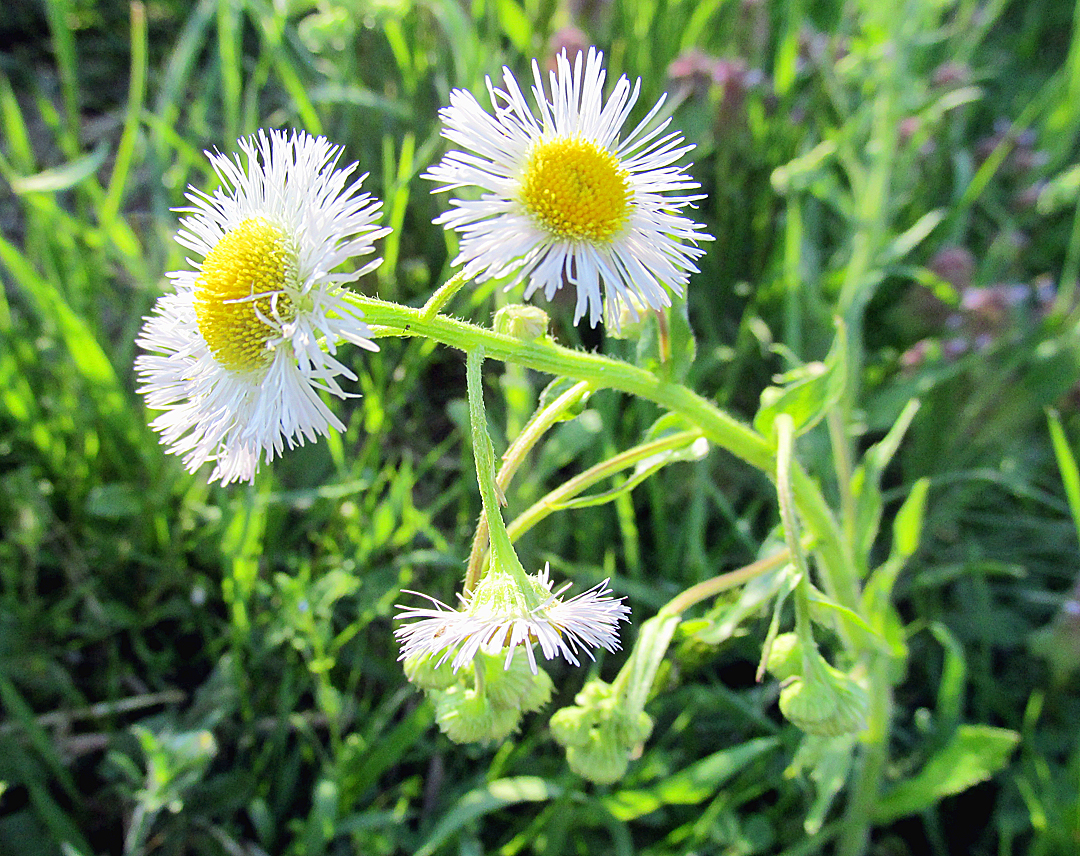
Photo by Bryan Stevens Daisy Fleabane will be among the many blooming wildflowers to welcome rally attendees.

Photo by Bryan Stevens
Daisy Fleabane will be among the many blooming wildflowers to welcome rally attendees.

 This year’s Roan Mountain Spring Naturalists Rally will be held Friday, April 25, through Sunday, April 27.

 “The spring rally is being held a week earlier than its traditional date, but I don’t really see it as a big change,” Neves said. “If you think about it, it’s really an effort to keep things the same. During the last several years, there has been a shift in the timing of the bloom of many of the spring wildflowers, and so I hope that the change will allow for the Naturalists Rally to occur when these wildflowers are blooming.”

 Neves said this year’s speakers for the annual event are Daniel C. Dourson and Bob Hale.

 The Friday evening program by Dourson is titled “Of Ice Thorns, Tree Crotches and Love Darts: Shelled Creatures of the Southern Appalachians.”

Daniel C. Dourson

Daniel C. Dourson

 Dourson will be providing a treasury of little-known facts about snails that inhabit mountains like the Roan.

For instance, did you know that some snails are covered in long “hair-like” structures or that the slime of some snails will fluoresce under ultra-violet light? Or were you aware that slime from some snails is used to treat skin disorders?

Join Dourson, a wildlife biologist, naturalist and natural history author, as he shares his passion for the shelled creatures known as “land snails.” Dourson, who has been studying land snails in the Southern Appalachians for nearly 20 years, recently described four new species of land snails from the area, including the globally endangered Roan Mountain endemic, Roan Covert, or Fumonelix roanensis.

 His program will also let his audience learn of the intricate delicate features that separate these creatures and find out what love darts, ice thorns and tree crotches have to do with these organisms.

Attendees can also join him in the field on Saturday afternoon for an exciting field trip to search for these jewels of the forest leaf litter.

Bob Hale will present the Saturday evening program on “Spring Wildflowers and Native Orchids.” Hale’s interest in wildflowers began with making slides of spring wildflowers in the late 1960s. This interest expanded to photographing wildflowers throughout the growing season. While working as a chemist at Eastman Chemical Company for 33 years, he was a member of the Eastman Camera Club for more than 25 years. He served as president, held several other offices with the club and taught numerous photography classes during that time.

Bob Hale

Bob Hale

Hale has used SLR cameras for many years, taking both slides and negatives for prints. With the coming of the digital age, he switched to that technology in 2004. His program will feature a sampling of his images of wildflowers including a special focus on numerous native orchids. This collection of images was taken from many nearby locations in the Southern Appalachians including Grayson Highlands, the Blue Ridge Parkway, Unaka Mountain, Buffalo Mountain, Cherokee National Forest, the Appalachian Trail, middle Tennessee and the Great Smoky Mountains National Park.

Hale is also an avid gardener, growing a wide variety of annuals, perennials, spring bulbs and shrubs. He has developed a strong interest in daylilies and has been growing, hybridizing and selling them for more than 40 years.

The Friday and Saturday program will be presented at 7:30 p.m. after the 6:30 p.m. dinners that will be catered by City Market of Elizabethton.

The Friday menu includes a choice of breaded or grilled chicken, vegetable selection, salad, bread, dessert and drink. The Saturday menu includes a choice of roast pork or vegetable lasagna, vegetable selection, salad, bread, dessert and drink. Each meal costs $9 for adults and $5 for children 12 and under. Pre-paid reservations are required and must be received by Tuesday, April 22.

After the programs on Friday and Saturday, two late evening programs are scheduled at 9 .m. Local naturalist Larry McDaniel will conduct a “Moth Party” on Friday to look for these nocturnal winged wonders. Gary Henson, director of the Harry D. Powell Observatory and a professor in the Department of Physics, Astronomy and Geology at East Tennessee State University, will conduct a viewing of the summer skies from the nearby Miller Homestead on Saturday.

Neves said a range of people are crucial to the success of the annual spring rally.

“The Friends of Roan Mountain are always grateful for the rangers and staff at Roan Mountain State Park, and they continue to be very involved with the rally,” Neves said. “Park Manager Jacob Young helped us in numerous ways over the years to make the rally a success, and he also leads a reptiles and amphibians field trip, a favorite with many of our young participants.”

Neves noted that Meg Guy, another park ranger, will be leading a new hike that will highlight basic tree identification. In addition, former Park Manager Pat Gagan will lead a Wildlife Walk for Everybody. This walk will allow participants with limited mobility to enjoy the natural beauty at Roan Mountain.
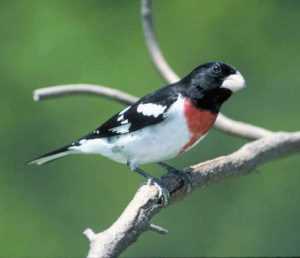
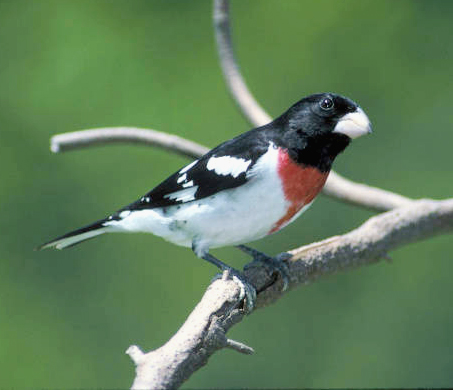
Photo by U.S. Fish & Wildlife Service/ David Brezinski Rose-breasted Grosbeaks will likely be among the colorful birds present for this year's rally.

Photo by U.S. Fish & Wildlife Service/ David Brezinski
Rose-breasted Grosbeaks will likely be among the colorful birds present for this year’s rally.

“We always hope to provide a selection of field trips and programs with a lot of variety and that are accessible to everyone from the novice to avid naturalist,” Neves said. “We have hikes expressly for beginners, such as our Birding for Beginners or Tree Identification Basics, and many of our hikes are specially labeled as kid friendly. That said, all of our field trip leaders try to cater to young participants or people who are new to identifying plants, birds, insects and more.”

 Neves said the rally also offers some early morning field trips and longer hikes for those who are a bit more adventurous.

“Anyone very serious about nature photography should not miss joining Jerry Greer on one of his field trips,” he said. “New photographers are welcome, too, of course.”

Although the hikes have a particular focus, there’s a surprising amount of overlap.

“There will always be flowers to see on a birding field trip, and there will always be birds to hear and see on a wildflower hike,” Neves explained.  “The rally has always been an opportunity for nature lovers, naturalists, to gather together and enjoy being outside, to observe the interesting and beautiful, and to learn together. That is what is really important.”

Neves notes that the Roan Mountain State Park Campground is currently closed while updates and improvements are completed. The work is expected to be finished by mid-May.

Evening programs and the lunch-time workshops will take place in the Roan Mountain State Park’s Conference Center, while all field trips will begin at the field located left of the entrance to the park’s cabins.

Because of the continued support of the Friends of Roan Mountain, Neves said the Naturalists Rallies have the resources they need to prosper and grow. He noted that the Friends of Roan Mountain also provides support for research and restoration projects on the Roan.

He suggests that those who enjoy attending the seasonal rallies should also consider joining the Friends of Roan Mountain, if they are not a member already. Members receive free admission to all Naturalists Rally events and the group’s newsletter, “Friends of Roan Mountain.”

Rally hikes on Saturday include:

• Nature Photography with Jerry Greer. Participants will meet at 6 a.m. at Carver’s Gap.

• Early Birds at Hampton Creek Cove with members of the Lee and Lois Herndon Chapter of Tennessee Ornithological Society. Participants will meet at the RMSP Welcome Center at 6:30 a.m.

The next six hikes will begin at 8:30 a.m. and will include:

• Jones Falls Hike with Marty Silver.

• Birds of Roan Mountain with members of the Herndon Chapter of TOS.

• River and High Mountain Wildflowers with Guy Mauldin.
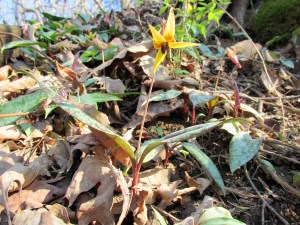
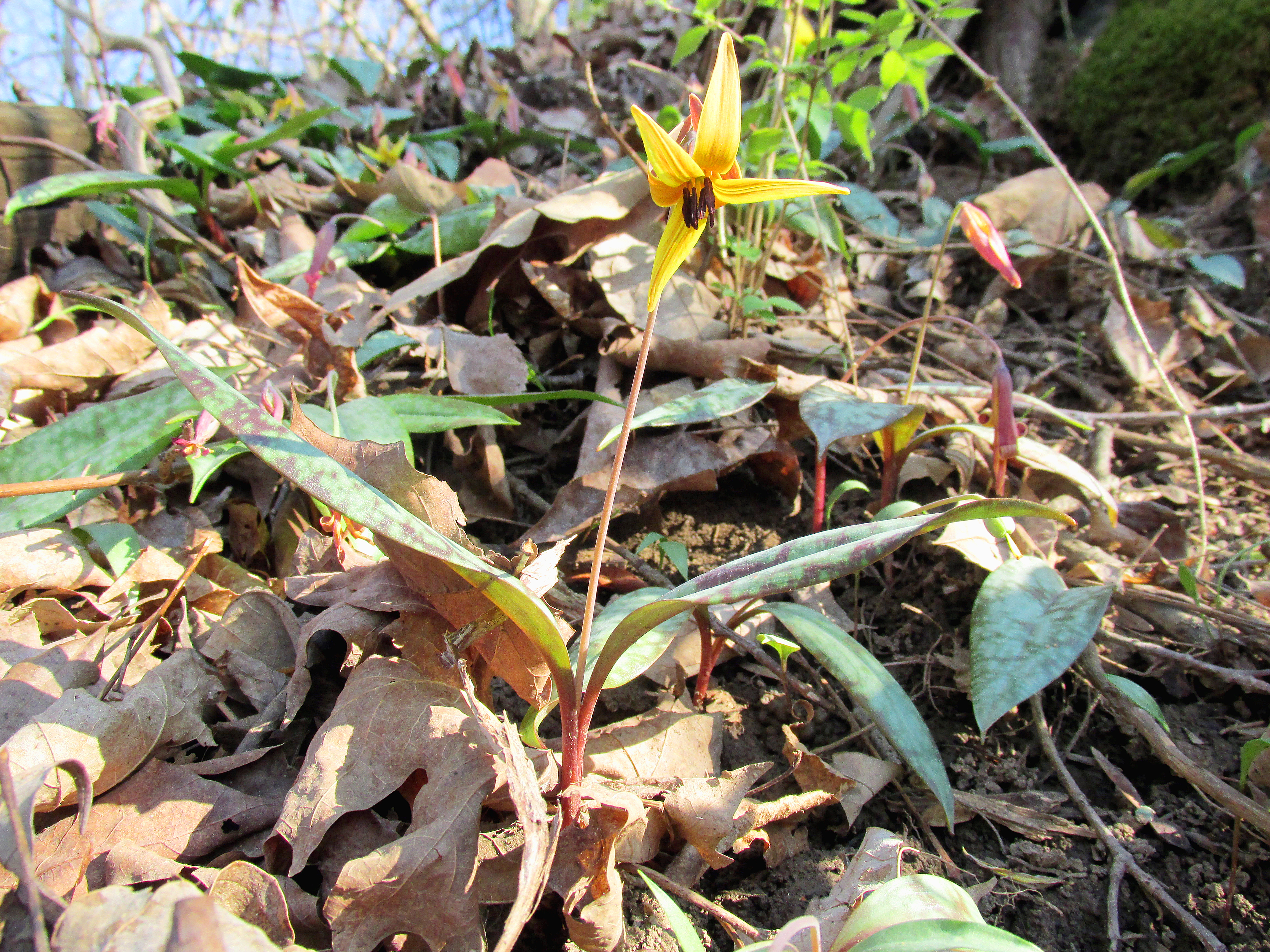
Photo by Bryan Stevens  Wildflowers, such as this Trout Lily, provided the original inspiration for the annual Spring Rally.

Photo by Bryan Stevens
Wildflowers, such as this Trout Lily, provided the original inspiration for the annual Spring Rally.

• Nature Photography with Jerry Greer.

• Tree Identification Basics with Meg Guy.

• Birding for Beginners with Joe McGuiness.

A lunchtime workshop with Mick Whitelaw and members of the East Tennessee State University Department of Geology and Science Club on Fossil Casting for All aAges will be held from 11 a.m. to 1:30 p.m.

A lunch break will provide an interval between hikes. Marty Silver will present a program on dragonflies at 12:30 p.m.

Afternoon hikes will commence at 2 p.m. and will include:

• Land Snails and Invertebrates with Dan Dourson.

• Nature Walk for Everybody with Pat Gagan.

• Wildflowers and Trees of the Twin Springs/Hackline Cross Trail with David Hall.

• Reptiles and Amphibians of the Roan with Jacob Young.

• Baa-tany Goat Project and Roan’s Unique Alder Balds with Jamey Donaldson.

• Aquatic Insects as Water Quality Indicators with Gary Barrigar.

• Butterflies and Insects with Larry McDaniel.

Sunday will offer morning and afternoon hikes, including:

• Birds of Hampton Creek Cove at 8:30 a.m. with James Neves.
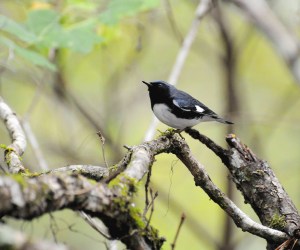
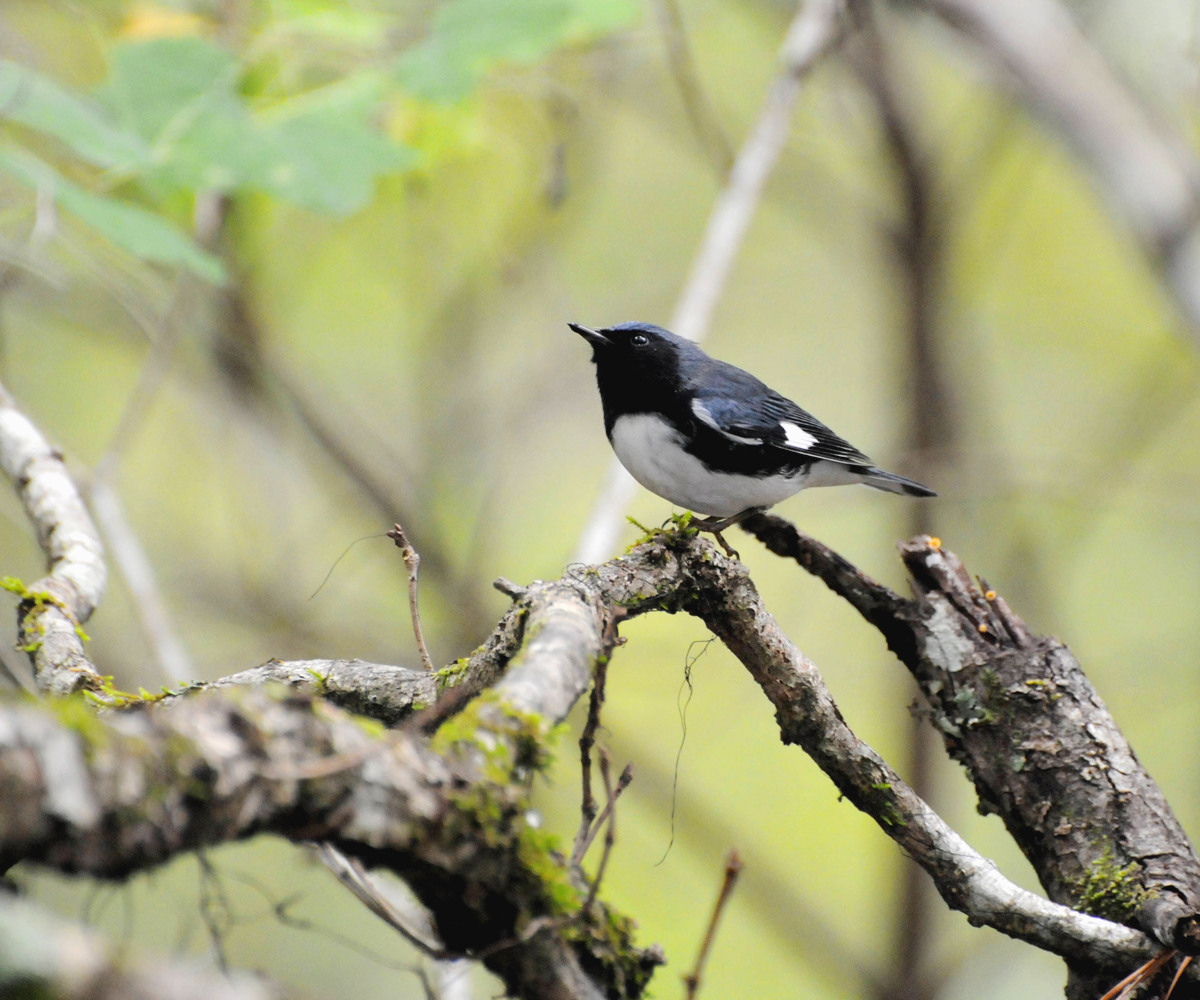
Photo by U.S. Fish & Wildlife Service/Mark Musselman Black-throated Blue Warblers are among the birds than can often be found at Hampton Creek Cove during a Spring Rally.

Photo by U.S. Fish & Wildlife Service/Mark Musselman
Black-throated Blue Warblers are among the birds than can often be found at Hampton Creek Cove during a Spring Rally.

• Doe River Gorge Wildflowers and Geology at 8:30 a.m. with Gabrielle Ziger and Mick Whitelaw. This is an all-day hike. Bring water, lunch and rain gear.

• Salamanders with Dale Ledford at 2 p.m.

• Butterflies and Insects with Don Holt at 2 p.m.

All hikes, unless otherwise noted, will depart from the field on the left of the cabin area entrance.

For more information on this year’s rally, visit http://www.friendsofroanmtn.org or http://www.facebook.com/FriendsOfRoanMountain.

•••••

Barbara and Jerry Lake, Hampton, returned home from a recent trip to Vidalia, La., and Natchez, Miss., to find three nests being built.

Their bluebirds, Blossom and Max, are occupants of a box in the front yard. Carolina Chickadees are in the box at the edge of the woods beside their screened porch.

“I haven’t yet seen the birds in the nest by the driveway, but the nest itself looks like the chickadee’s nest,” Barbara wrote in an email.

They have cameras installed in several of the boxes so they can monitor the progress of their nesting birds.

“Both the porch box and driveway box are hooked to the TV on the porch so I have to switch wires to watch them,” she explained.

The Lakes are also awaiting the arrival of hummingbirds. “I put up a hummingbird feeder before we left, but so far I haven’t seen a hummer,” Barbara wrote.

The couple enjoyed a fun trip, attending the Roadtrek Rally in their Roadtrek motorhome.

“It was our first rally and we’ve owned our motorhome for seven years,” she wrote. “We had a great time and will certainly go on more.  We drove the Natchez Trace Parkway home to Hampton.”

•••••

Brookie and Jean Potter saw a Ruby-throated Hummingbird at their feeders on Wednesday, April 9, at their home near Wilbur Lake in Carter County.

•••••

Marlene Mountain, a Facebook friend, informed me that she saw her first Ruby-throated Hummingbird while looking out the window at her home on Sunday, April 6, at 1:28 p.m. She is also still hosting Dark-eyed Juncos at her feeders.

•••••

Jim and Wanda Lane called me this past week to ask me if I knew about the different Great Blue Herons in various Elizabethton and Carter County locations.

I thanked them for letting my know about them, and let them know that I have visited the two Elizabethton locations on Blevins Road and behind the airport. I’ve enjoyed monitoring these nests before the leaves bud on the trees.

•••••

Here at home on Simerly Creek Road, I saw my first Ruby-throated Hummingbird of spring on Friday, April 11. I’ve also seen a variety of other migrating birds, but I think I will leave them for next week’s post.

It’s been a great time to get outdoors this past week. I hope everyone is seeing some fantastic birds at home and at their favorite birding spots. Thanks for reading!

It’s easy to post comments on my blog at ourfinefeatheredfriends.wordpress.com. You can also reach me on Facebook or send email to ahoodedwarbler@aol.com. Please share the link to the blog with others who might be interested in the topic of birds and birding in Northeast Tennessee.


Gnatcatchers, sparrows among new arrivals in region

The arrival of Ruby-throated Hummingbirds is imminent in the region. If a few of these tiny birds haven’t already found their way into Northeast Tennessee, they almost certainly will have made a first spring appearance within the next week. They invariably arrive in the first week or so of April and have already been spotted in other parts of Tennessee.

Photo by Bryan Stevens Ruby-throated Hummingbirds should be returning to the region within the next few days.

Photo by Bryan Stevens
Ruby-throated Hummingbirds should be returning to the region within the next few days.

 As always, I enjoy hearing from readers about the date and time when they see their first hummingbird of spring. Share your sighting in a comment on this blog, contact me on Facebook, send me an email at ahoodedwarbler@aol.com or call me at 423-725-2666. I have my feeders filled with sugar water and am waiting eagerly for the arrival of that first Ruby-throated Hummingbird of 2014. I’ll report in upcoming posts about the arrival dates of hummingbirds that readers share with me.

 •••••

 New birds continue to arrive at home. For a second year in a row, Chipping Sparrows made their first appearance on the last day of March. Their timing could not have been better. Since I started birding in 1993, Chipping Sparrows have returned reliably from mid-March to early April. I watched recently as two Chipping Sparrows searched for dandelion seeds and other food along the edge of the gravel driveway. They also visited the feeders. They also found elevated perches to deliver their trilling song, which is similar to the songs of Pine Warblers. This can be confusing since the two species often frequent the same habitats.

Photo by Bryan Stevens Chipping Sparrows are returning to feeders across the region.

Photo by Bryan Stevens
Chipping Sparrows are returning to feeders across the region.

 The Chipping Sparrow disrupts the misguided notion that all sparrows are “little brown birds.” The Chipping Sparrow is actually a pretty bird with a crisp plumage of brown and gray that is given a splash of color from its bright rufous cap. A vivid black line along the side of the face runs through the eye. These characteristics make adult Chipping Sparrows — the sexes look alike — fairly easy to identify. Chipping Sparrows are common across North America.

 Their loud, trilling songs are one of the most common sounds of spring woodlands and suburbs. Experts believe that Chipping Sparrows evolved as birds that lived on the edge of coniferous forests. However, as human progress changed the landscape, they adapted and became associated with open habitats, including farmland and pastures.

 Many birders refer to this small sparrow by the affectionate nickname, “Chippie.”

 ••••••

 I’ve also learned that a pair of Eastern Bluebirds have been busy constructing a nest in one of two boxes located at my fish pond.

Photo by Bryan Stevens A female Eastern Bluebird is shown with a beakful of pine needles gathered for nest construction.

Photo by Bryan Stevens
A female Eastern Bluebird is shown with a beakful of pine needles gathered for nest construction.

The bluebirds now have some competition. A pair of Tree Swallows put in their first appearance of the year at my home on April 1. They were a few days early, having made their first 2013 appearance on April 4.

 They immediately began checking out their favorite nesting box next to the fish pond. Their interest put them into conflict with some other Eastern Bluebirds, which recently started showing an interest in that same box.

 ••••••

 On April 2, I saw my first Blue-grey Gnatcatcher of the spring while visiting Winged Deer Park in Johnson City. While at the park, I also enjoyed observing a variety of spring wildflowers, including the bluebells for which this local park is famous.

 Two days later, I saw my first spring Blue-gray Gnatcatcher at home on Simerly Creek Road in Hampton. This bird is a few days later than expected, but it may have been here all along and I just failed to detect it.

 Like Chipping Sparrows, the Blue-Gray Gnatcatchers reliably return every year in the final days of March and first days of April.

Photo Courtesy of Jean Potter Blue-gray Gnatcatchers are tiny, energetic bundles of feathers.

Photo Courtesy of Jean Potter
Blue-gray Gnatcatchers are tiny, energetic bundles of feathers.

A Blue-gray Gnatcatcher put in its first appearance at home on Simerly Creek Road in Hampton on April 2 in 2011. In 2009, I also saw my first Blue-Gray Gnatcatcher on April 2, although in 2008 I had to wait until April 5 for my first spring sighting of a gnatcatcher. In 2007, the Blue-gray Gnatcatcher was an “April Fool’s” bird, arriving on the first day of April.

Arrival dates in March are a little less frequent. For instance, in 2003, a Blue-gray Gnatcatcher arrived on March 28. I saw my first spring Blue-gray Gnatcatcher on March 30 in 1998. In 2006, the arrival date was March 31.

 The Blue-gray Gnatcatcher is a tiny, active bird with noisy habits that make it fairly easy to detect in early spring before foliage has grown dense in the branches of trees.

 This gnatcatcher ranks with the kinglets and hummingbirds as one of the smallest birds to range within the United States. This tiny bird tips the scales at only a fourth of an ounce. A gnatcatcher is an incredible bundle of feathered energy, seemingly always on the move as they snatch small winged insects out of the air or pluck other prey items from leaves or branches. They’re also quite curious birds that, more than once, have given me the feeling that I am the one being observed while watching their antics.

 Like the hummingbirds, the gnatcatchers are an exclusively New World family of birds. They lack the diversity of the hummingbirds. Instead of several hundred species, there are only about a dozen species of gnatcatchers. Of that number, four — Blue-gray Gnatcatcher, California Gnatcatcher, Black-tailed Gnatcatcher and Black-capped Gnatcatcher — range within the United States. The Blue-gray Gnatcatcher is the only member of this family to reside in the eastern United States.

 Other representatives of this family of small songbirds include the Cuban Gnatcatcher, White-lored Gnatcatcher, Creamy-bellied Gnatcatcher, Tropical Gnatcatcher and Masked Gnatcatcher.

 The Blue-gray Gnatcatcher builds an exquisite and compact nest using such materials as spider silk and lichens. I have found many nests over the years by listening for the scolding notes of the parents which, even near their nest, have not learned the virtues of silence.

 The Blue-gray Gnatcatcher is one of the birds that, in my mind, truly kicks off the arrival season of many of my favorite neotropical migrants.

 ••••••

 The most exciting observation of the week took place on April 2 when I noticed a sparrow crouched in the gravel driveway between the garage and the fish pond. When I focused my binoculars on the bird, I discovered it was a Vesper Sparrow.

Photo by Bryan Stevens Vesper Sparrows are uncommon birds in spring and fall in the region, although they do nest on the grassy balds of Roan Mountain.

Photo by Bryan Stevens
Vesper Sparrows are uncommon birds in spring and fall in the region, although they do nest on the grassy balds of Roan Mountain.

 This species has visited in the past, but it has been at least two years since I have seen one. They are considered uncommon spring visitors to Northeast Tennessee. This one was foraging at the edge of the gravel driveway. It seemed quite indifferent to my presence, which allowed me to photograph it with relative ease.

 According to the website, Audubon.org, this sparrow was once known as the “Bay-winged Bunting.”  The naturalist John Burroughs is credited with giving it the name of Vesper Sparrow because he thought the song sounded more melodious in the evening. Vesper refers to the sunset evening prayer service known as vespers in the Catholic Church. Vesper is the Latin word for evening, so this bird’s common name could literally be considered “Evening Sparrow.”

 ••••••

 To share a sighting, ask a question or make a comment, it’s easy to post  on my blog at ourfinefeatheredfriends.wordpress.com. You can also reach me on Facebook at https://www.facebook.com/ahoodedwarbler or send email to ahoodedwarbler@aol.com. Please share the link to the blog with others who might be interested in the topic of birds and birding in Northeast Tennessee. Don’t forget to put out your sugar water feeders and let me know when you see your first Ruby-throated Hummingbird for spring 2014.