Tag Archives: Ruby-throated Hummingbird

Returning ruby-throats, like the rest of world’s hummingbirds, never fail to dazzle

Photo by Anne and Saturnino Miranda/Pixabay.com • The Cuban emerald is a species of hummingbird found in a wide range of semi-open habitats in Cuba, as well as the Isle of Pines and the western Bahamas. Numbering 330 species, the world’s hummingbirds dazzle humans with their incredibly diverse plumages.

Experts estimate that there are 330 species of hummingbirds, all of which are found in the New World. Consider that these dazzling little birds have been given vividly descriptive names, such as cinnamon-throated hermit, red-tailed comet, blue-chinned sapphire, lazuline sabrewing, sparkling violetear, fiery topaz, green-tailed goldenthroat, bronze-tailed plumeleteer,  amethyst-throated mountain-gem, peacock coquette, red-billed emerald, empress brilliant, purple-backed sunbeam, green-backed hillstar, orange-throated sunangel, black metaltail, marvelous spatuletail and blue-tufted starthroat.

The only reliable species to inhabit the eastern United States from spring to fall each year is the ruby-throated hummingbird, which is currently arriving at various points from Florida to Maine and westward to states like Illinois, Minnesota and Oklahoma.

Photo by Bryan Stevens • Numbers of Ruby-throated Hummingbird in the region tend to fluctuate each year, but people should see a spike in their numbers when the hummingbirds end summer nesting and start migrating south again this autumn.
One of my most memorable hummingbird sightings took place in January of 1999 during a cruise in the Bahamas. A stopover in Nassau and a visit to the Paradise Island Resort permitted me a fleeting glimpse of a Bahama woodstar, a small hummingbird with a superficial resemblance to the ruby-throated hummingbird. The real beauty from my visit to the Bahamas, however, took place on a private cay maintained by the Disney Cruise line. While many passengers enjoyed the sun and sand of the beach, I walked nature trails to find birds. 

Photo by Daniel Roberts/Pixabay.com • The calliope hummingbird is the smallest of its kind known to reside in North America.

I found Western spindalis, then known as stripe-headed tanager, as well as black-faced grassquits and bananaquits, and I got several close looks at male and female Cuban emeralds, a hummingbird found in a wide range of semi-open habitats in Cuba, the Isle of Pines and the western Bahamas. The male is almost entirely metallic or iridescent green and measures almost four inches long. The ones I encountered were also curious and quite tame, often flying within inches of my face. 

Other than the two hummingbirds I saw during that trip, my remaining hummingbird observations have been confined to the United States. That hasn’t prevented me from seeing such unexpected hummingbirds as green-breasted mango, calliope hummingbird, black-chinned hummingbird, rufous hummingbird, Allen’s hummingbird, and broad-tailed hummingbird. 

Photo by Anne and Saturnino Miranda/Pixabay.com • It’s not difficult at all to see how the male Cuban emerald in such vibrant green plumage acquired its common name.

If I ever win the lottery, I plan to see as many hummingbirds as I can. For now, I am happy to report that ruby-throated hummingbirds are returning to northeast Tennessee, southwest Virginia, and western North Carolina.

I received an email from Susie Parks, who lives in the North Cove section of McDowell County in North Carolina. “My daughter, Luanne Graham, and I sighted our first hummer on March 28,” Priscilla noted. 

“I read your column in the McDowell News,” she added. “I am 84 years old and have been a birder most of my life.” 

Susie added that she and her daughter are both retired teachers who live next to each other. “We put our feeders out earlier than usual because she had heard that the hummers might be arriving earlier this year,” Susie wrote.

Susie noted that the first hummingbird sighted at her own feeder arrived on the first day of April, a few days after the hummingbird that visited her daughter’s feeder. “I keep a journal and I always note the first sighting,” she added, “and this is the earliest hummer I have ever recorded.”

This sightings by Susie and Luanne are the earliest I’ve had reported to me this year. 

•••••

Facebook friend Jimmie Daniels in Newland, North Carolina, reported on her Facebook page that the first hummingbird of spring arrived at 6:24 p.m. on Wednesday, April 8.  “We just saw our first hummingbird and that always makes me happy,” she wrote. “If you have not put out feeders yet, it is a good time to do that.”

•••••

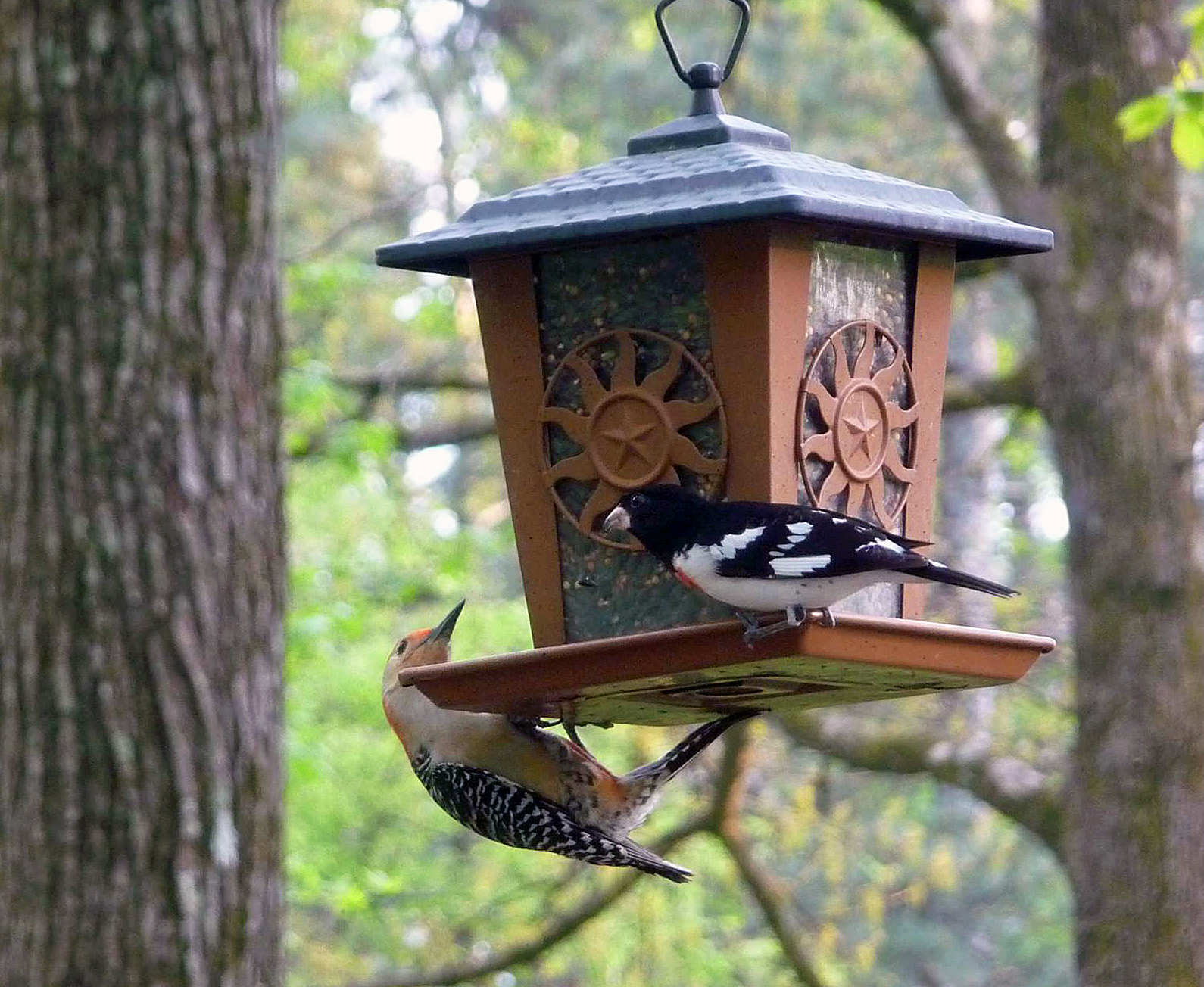
Bob Cheers of Bristol, Virginia, reported a ruby-throated female arrived at his home at 7:55 a.m. on Friday, April 10. He speculated that the hummingbird was possibly “the same gal that arrived last year on the same day but 10 hours later.” Bob added that hummingbirds are amazing and that it was almost inconceivable to him that it could be the same bird. Bob, who had read in previous columns that downy woodpeckers and Carolina chickadees occasionally take a sip of sugar water from hummingbird feeders, also asked if I had ever heard of a red-bellied woodpecker feeding regularly at a hummingbird feeder. I’ve not personally witnessed this, but perhaps some readers have seen red-bellied woodpeckers at sugar water feeders. Let me know!

Photo by Bryan Stevens • Despite a perceived disadvantage of size, ruby-throated hummingbirds are quite capable of thriving in a giant world.

•••••

Brenda Hickman Dishner posted on my Facebook page that she spotted her first hummer of spring on Friday, April 10. “We live near Highway 421 and Houston Dam in Bristol, Tennessee,” she added.

•••••

Philip Laws, who lives in Limestone Cove in Unicoi County, reported to me on Facebook that he saw his first hummingbirds on April 10. “Hummers returned to Limestone Cove on Good Friday,” Philip noted.

•••••

Jeanne Siler Lilly reported her first spring hummingbird with a comment on my Facebook page. “I saw one at my feeder on April 10,” she wrote, adding that the bird visited a couple of times.

•••••

Mary Jones in Johnson City said her first hummingbird this year arrived on April 11. “I had one show up the Saturday before Easter and every day since,” she wrote in a Facebook comment. 

•••••

Dianna Lynne in Elizabethton saw her first hummingbird this spring on April 11. “They stopped in on Easter morning at the porch feeder here in Stoney Creek,” Dianne said in a comment on Facebook.

•••••

Erwin resident Amy Wallin Tipton saw her first ruby-throated hummingbird on Easter Sunday.  “I just wanted to let you know I just saw my first male ruby-throat of the season,” Amy wrote in a Facebook message. “It was at 11:55 a.m.”

•••••

Lia Pritchard saw her first hummer of the season on Easter Sunday at her home in Fall Branch, Tennessee. Her father, Glen Eller, shared the report of Lia’s sighting.

Photo by Bryan Stevens • Keep hummingbirds happy with a sugar water solution of four parts water to one part sugar.

•••••

Lynda Carter, who lives in Jonesborough, saw her first hummingbird at 8:45 a.m. on Monday, April 13, after a stormy night. “The bird may have blown in sideways from Arkansas last night,” Lynda joked in an email.

•••••

Richard Lewis in Bristol sent me a message on Facebook to announce the arrival of his first spring hummingbird. “I had my first ruby-throated hummingbird Monday, April 13, at 6 p.m. at my home in Bristol, Tennessee,” he wrote.

•••••

Joneen Sargent, who lives in Sullivan County west of Holston Lake off Highway 421, emailed me at 8:06 p.m. on Monday, April 13, to report her first spring hummingbird. “Just saw my first hummingbird of the season,” Joneen wrote. “Gives me hope.”

•••••

Jane Arnold emailed me to notify me of her mother’s hummingbird sighting. Her mother, Betty Poole, who lives in Abingdon, Virginia, saw her first hummingbird — a female — on Wednesday, April 15. Jane’s still awaiting her first spring hummer. 

•••••

Priscilla Gutierrez saw the first hummingbirds of spring the morning of Wednesday, April 15. “I put out a feeder and by 6 p.m. they were coming to [the] feeder,” Priscilla added in a comment on my Facebook page. 

•••••

Erwin resident April Kerns Fain posted on her Facebook page at 5:32 p.m. on Thursday, April 16, that she saw her first hummingbird. 

Erwin resident Pattie Rowland posted on my Facebook page that she saw her first ruby-throated hummingbird on Friday, April 17. “Just saw a hummer in Erwin,” Pattie wrote. 

•••••

Sharee Bowman reported her first hummingbird of spring in a Facebook message. “I saw my first hummingbird in Cedar Bluff, Virginia, on Friday, April 17,” she wrote. 

Photo by Bryan Stevens • A ruby-throated hummingbird lifts its wings to shake water droplets off its back.

Ruby-throated hummingbirds make welcome return to region

Photo by TheSOARnet / Pixabay.com • Male ruby-throated hummingbirds usually migrate ahead of females. These tiny birds must cross the Gulf of Mexico, without stopping, to reach their nesting grounds in the eastern United States. The journey across the Gulf can take them 18 to 22 hours, dependent on weather conditions.

Pat Stakely Cook‎ of Marion, North Carolina, reported the earliest spring sighting of a ruby-throated hummingbird.
Pat posted, “Hummingbird is back here in Marion, North Carolina,” on my Facebook page at 5;45 p.m. on Sunday, April 5.
•••••
Sam Jewett emailed me to report a first spring sighting.
“My first red-throated one showed up Monday, April 6, at Lake James in North Carolina, and boy, has he been hungry,” Sam wrote.
•••••
Judy and Bill Beckman, who reside on Springbrook Road in Unicoi, reported their own sighting.
“We just had our first hummingbird visit our feeder at around 5:50 p.m. on Monday, April 6,” the couple wrote in an email to me.
•••••
Joy Patton, who lives in Marion, North Carolina, also reported her first hummingbird on April 6.
“I put my feeder up a few days early this year because the weather has been so nice,” Joy wrote in an email. “The second day, April 6, a male ruby-throated hummingbird visited and ate and ate!”
Joy added that her daughter, Cindy Pierce, who lives near Fayetteville, North Carolina, saw her first hummingbird that same day.

Photo by Bryan Stevens • A ruby-throated hummingbird lifts its wings to shake water droplets off its back.

•••••
Judi Sawyer, a resident of Roan Mountain, Tennessee, reported the first hummingbird arrival on her Facebook page. Judi is a fellow member of the Lee and Lois Herndon Chapter of the Tennessee Ornithological Society. “The hummers are back,” Judi wrote on her page on Tuesday, April 7.
•••••
Bristol resident Vivian C Tester posted on my Facebook page on Wednesday, April 8, about her first sighting. “I just had my first hummer stop by,” Vivian wrote. “So glad I had just put my feeder out.”
•••••
The ruby-throated hummingbird, known by the scientific name of Archilochus colubris, is one of more than 300 species of hummingbirds. All hummingbirds are found in the New World and are completely absent from the Old World. Male ruby-throated hummingbirds launch their spring migration about 10 days prior to female hummingbirds. Most of these tiny birds make an incredible non-stop journey across the Gulf of Mexico each year to return to our yards and gardens across the Eastern United States.

Photo by Bryan Stevens • Despite a perceived disadvantage of size, ruby-throated hummingbirds are quite capable of thriving in a giant world.

Based on the number of people who shared hummingbird sightings with me, these tiny birds have a lot of big fans. If you would like to host your own hummingbirds, here are some crucial tips:
• Make your yard a zone that’s free of insecticides and pesticides. Residues of these chemicals can remain on blossoms, which then run the risk of sickening a hummingbird. In addition, hummingbirds subsist on more than nectar. They consume many tiny insects and spiders. Eating bugs that have been contaminated with dangerous chemicals can also sicken or kill hummingbirds.
• Provide shrubs and trees in your landscape to make your yard more inviting. Hummingbirds claim favorite posts and perches, where they will rest when they are not visiting our gardens or feeders. Shrubs and trees can also provide locations for concealing nests built by female hummingbirds.
• Cultivate plants that offer nectar-producing blooms. While hummingbirds are known to favor the color red, these nectar-sipping birds will also visit blooms of other colors. Some favorite spring blooms include the flowers of red buckeye, wild columbine, crossvine and native varieties of azaleas. As spring advances into summer, the diversity of flowers available to lure hummingbirds into your garden will increase dramatically.

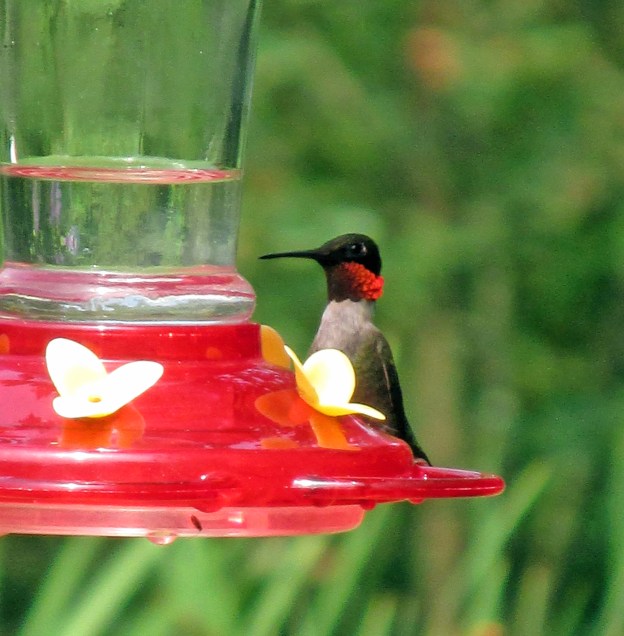
Photo by Bryan Stevens • A male ruby-throated hummingbird perches near a feeder that he is ready to defend from all comers.

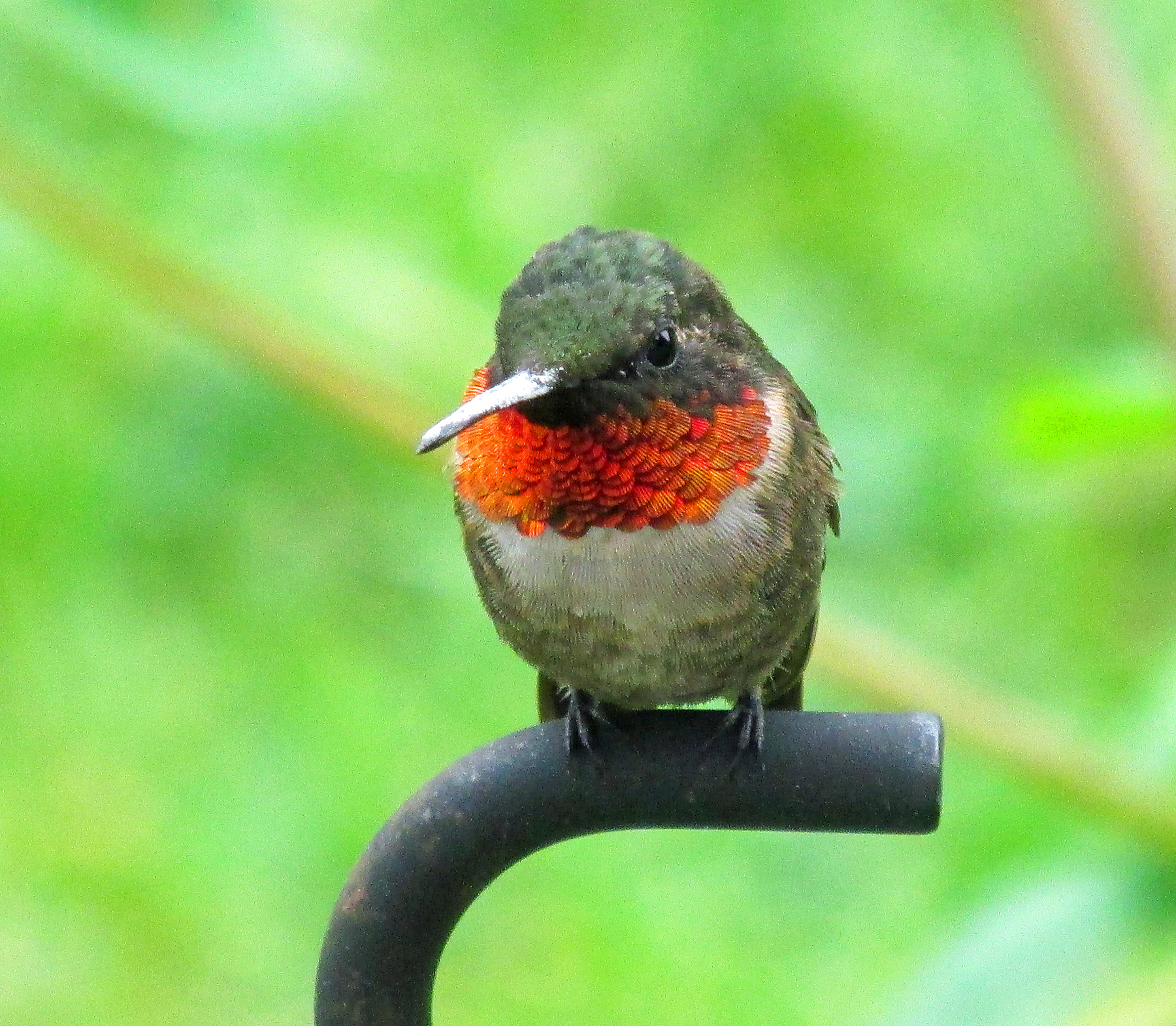
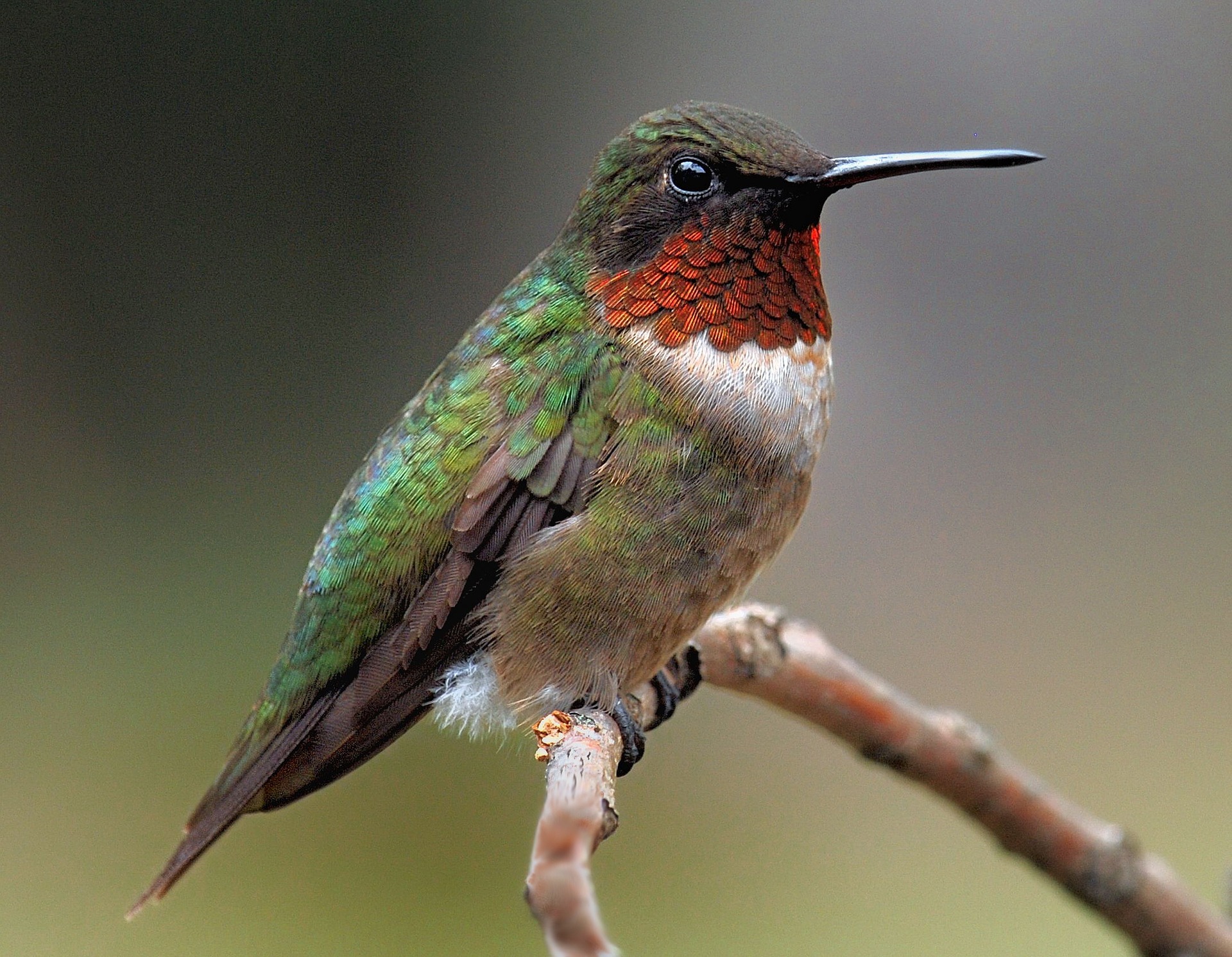
I am still awaiting my first hummingbird of spring. I’m confident it won’t be long. Invariably, the first hummingbird to show up in my yard is a male with the gorget — or throat patch — of red, iridescent feathers that gives his species its common name.
He’ll be especially welcome this particular spring.
•••••
Share a sighting, ask a question, or make a comment by emailing ahoodedwarbler@aol.com.

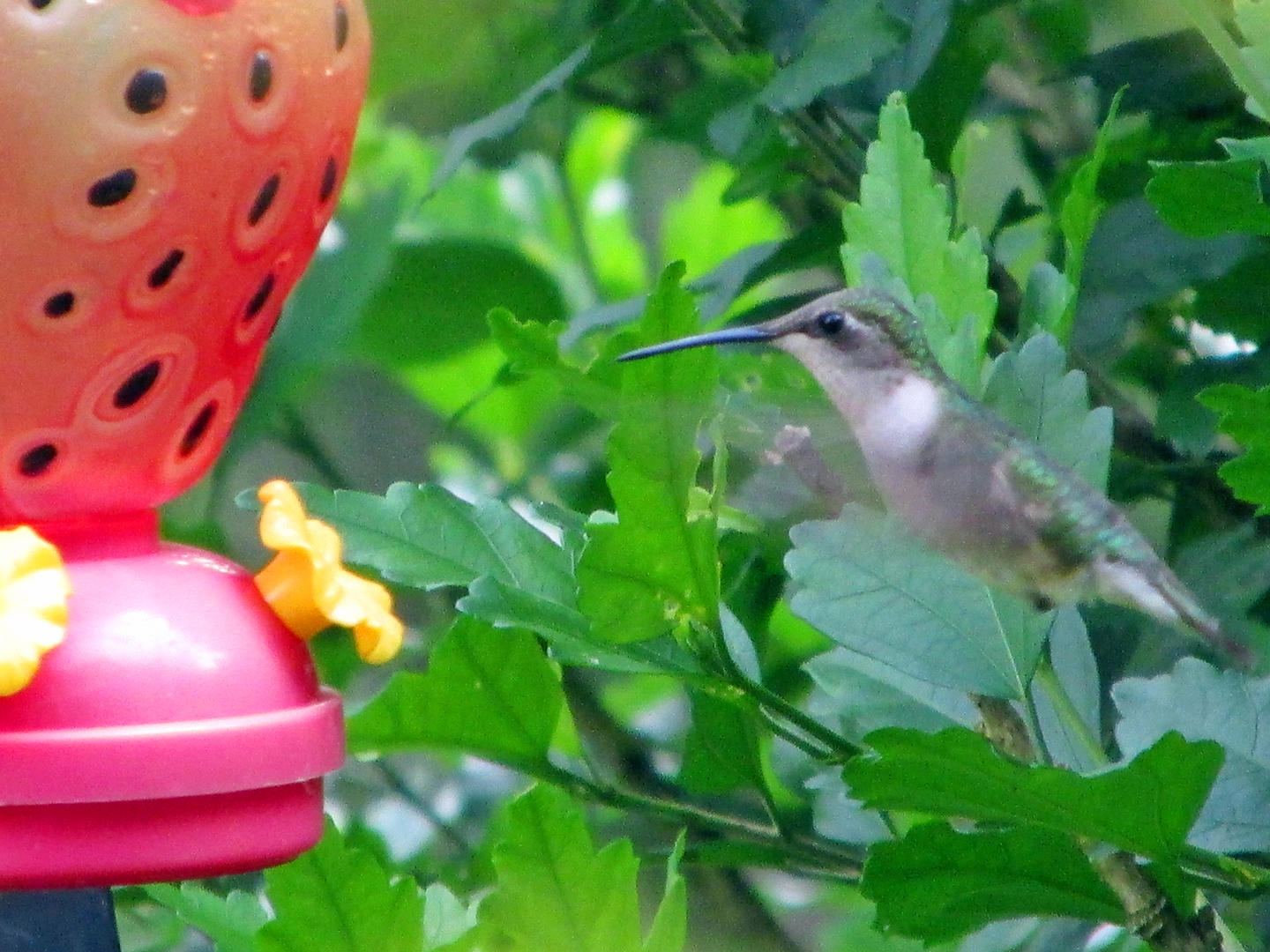
Photo by Bryan Stevens • A female ruby-throated hummingbird approaches a feeder for a sip of sugar water.

Brown thrashers make first spring appearance


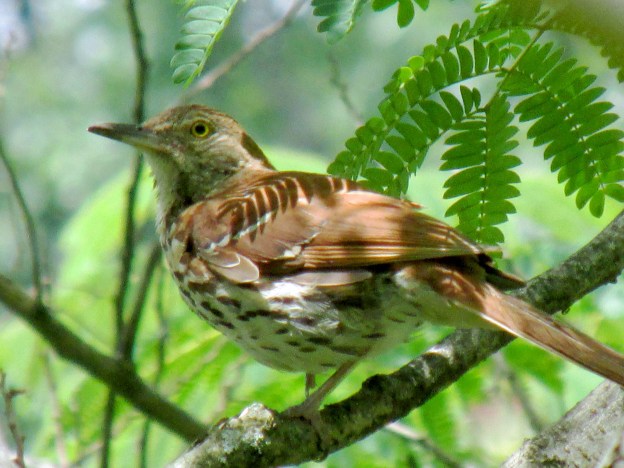
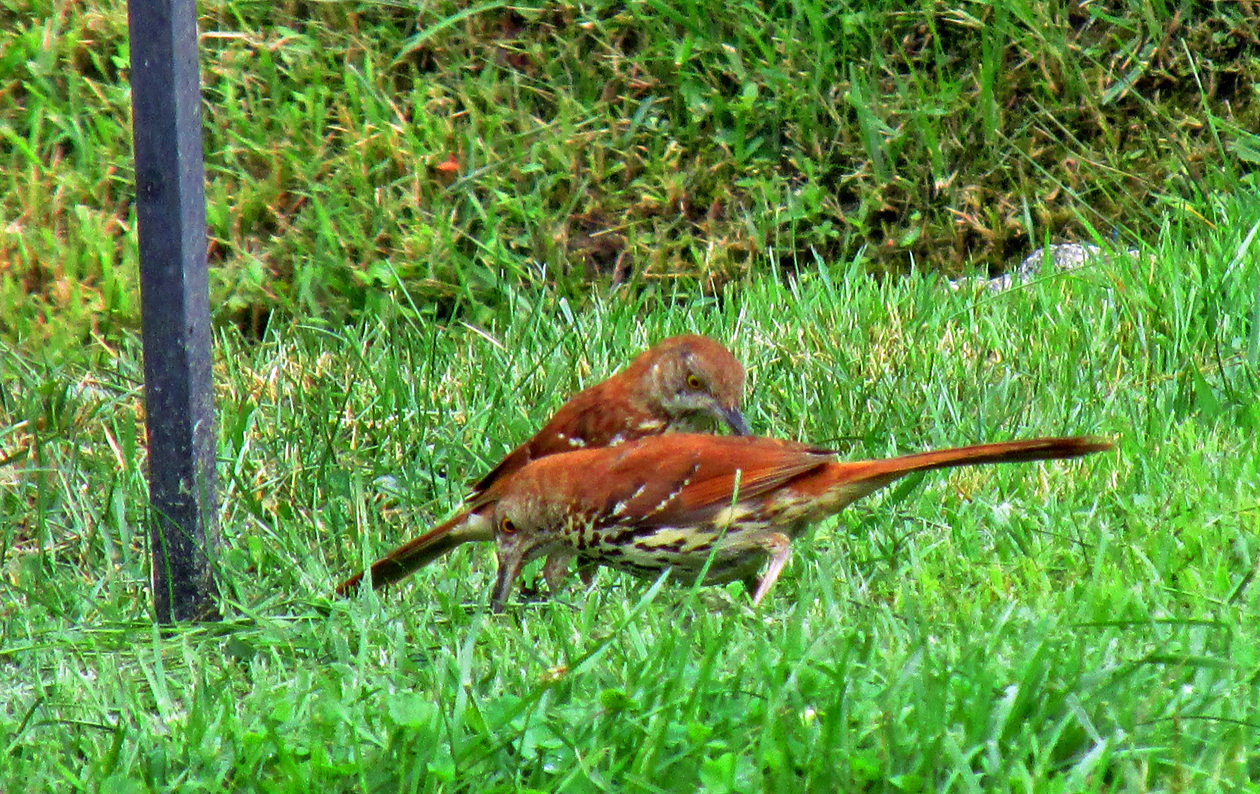
Photo by Bryan Stevens • A brown thrasher visits a feeder for a helping of suet. These large songbirds are usually among spring’s early arrivals.

In this time of social distancing when the daily routine can become flat and dull, I’m rejoicing that many of my favorite birds are returning after their long winter absence. One of the first to return has been brown thrashers, which made a first spring appearance on March 25. I suppose I should use the word “appearance” with reservations since I only heard a thrasher singing from deep in the concealment of a brushy thicket. A few days, later, however, a pair of brown thrashers began visiting my suet feeders.

I posted about the return of this large songbird on Facebook and immediately discovered that the brown thrashers must have returned to the region en masse.

Aubrie Abernethy, a resident of Johnson City, Tennessee, posted that her brown thrasher has arrived a day earlier than mine.

Dianne Draper, a resident of Jonesborough, Tennessee, posted, too. “Ours is back also,” Dianne wrote.

Photo by Ken Thomas
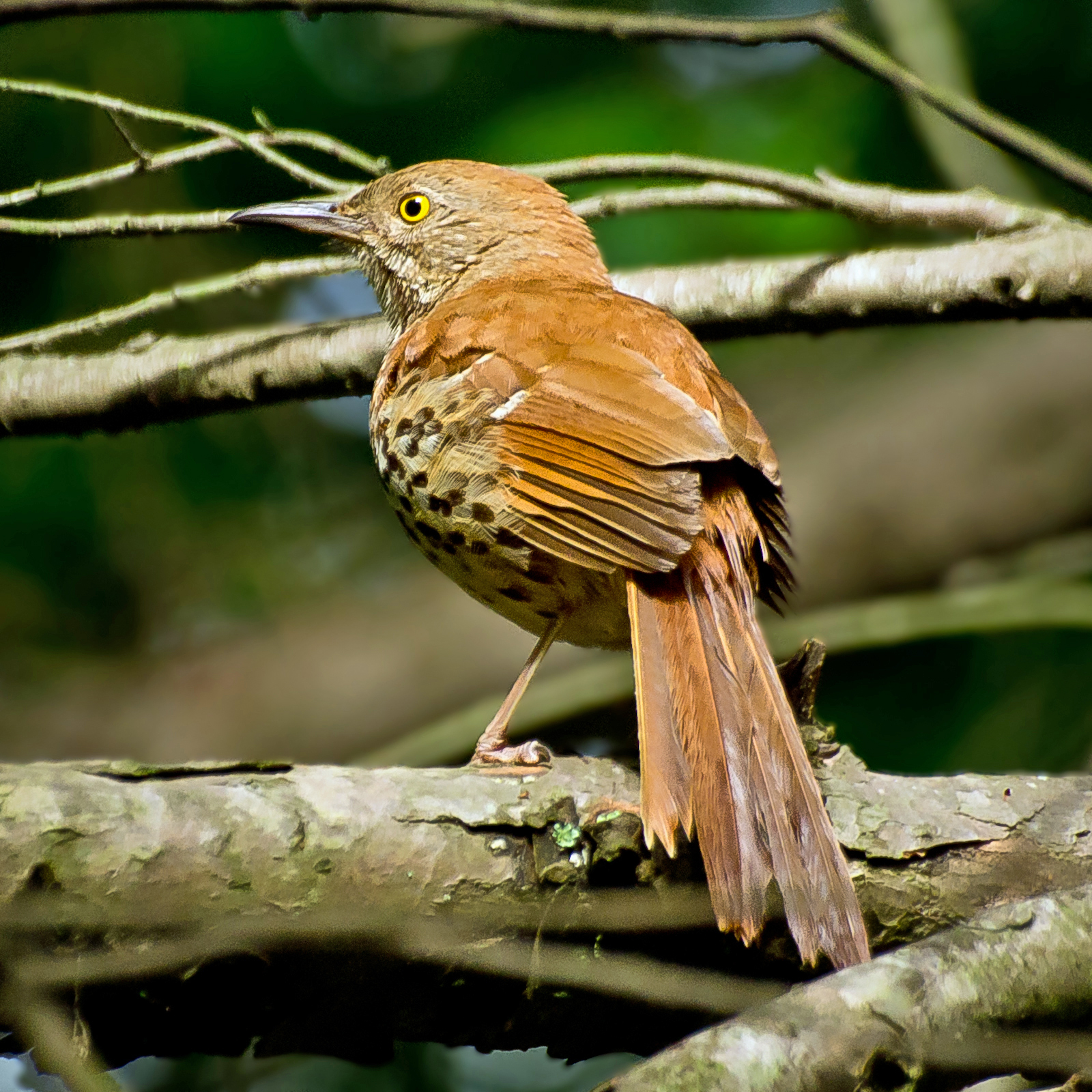
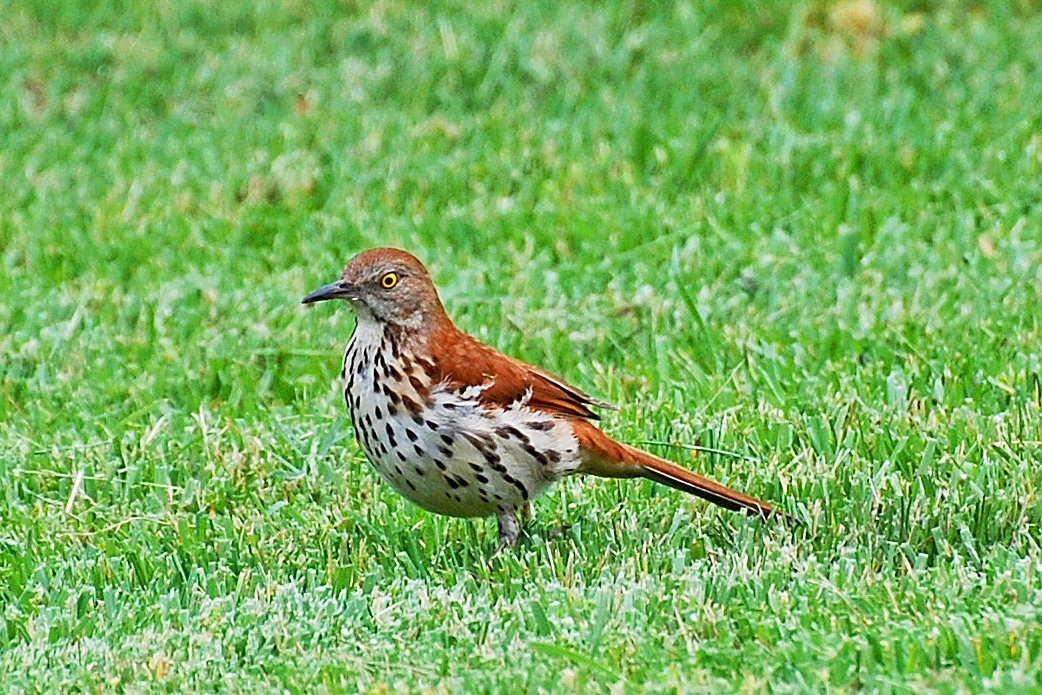
The Brown Thrasher is an alert, sharp-eyed observer of its surroundings.

Michelle Sparks in Bristol, Tennessee, posted on my Facebook page that she had seen her first spring brown thrasher earlier that same week.

Diane Gonzalves from Abingdon, Virginia, responded on the post about brown thrashers by asking about another imminent arrival. “I assume the hummingbirds should be here soon?” Diane asked.

I responded that the first ruby-throated hummingbirds should be arriving at any time. Please watch out for these tiny birds and get your sugar water feeders outside to welcome them. I will do my annual round-up on first hummingbird sightings of the spring again this year. Share your sighting by emailing the time and date of the arrival to ahoodedwarbler@aol.com. Readers can also contact me via Facebook.

The brown thrasher (Toxostoma rufum) belongs to the family of “mimic thrushes,” which provides a label for a group of songbirds capable of imitating the songs of other birds. Mimidae, the Latin root for “mimic,” provides the scientific name for the family, which includes mockingbirds and the New World catbirds, as well as thrashers. The Northern mockingbird is best known for the ability to mimic, but relatives like the gray catbird and brown thrasher are also talented mimics.

The thrasher is a fairly large songbird about 11.5 inches long with a wingspan of 13 inches. Much of the body length comes from the bird’s long tail feathers. A thrasher weighs, however, only about 2.5 ounces.

Photo by Bryan Stevens • A pair of Brown Thrashers forage for food on the ground below a feeder.

The brown thrasher is not a picky eater. It’s known to eat everything from berries and nuts to insects and small lizards. It’s also aggressive in defending its nest and young. John James Audubon, a French-American ornithologist, naturalist and painter, painted quite the dramatic scene of a group of brown thrashers valiantly defending a nest from an attacking snake. The painting is so detailed that one has to imagine Audubon based his work on a real-life experience. His work, originally painted in the early decades of the 1800s, still holds up today.

Early American naturalist and artist John James Audubon painted a dramatic scene of brown thrashers defending their nest from an attacking snake.

Incidentally, Audubon knew the brown thrasher as the “ferruginous thrush.” Another former common name for this species was “brown thrush.” The brown thrasher breeds across the United States and Canada east of the Rocky Mountains. Thrashers withdraw from the northern part of their range in the winter months, spending the season in the southeastern United States.

They are familiar birds in southern gardens. In fact, the brown thrasher is the official state bird of Georgia and also provided the name for Atlanta’s National Hockey League team, the Atlanta Thrashers. The thrasher became Georgia’s state bird due to passage of a Joint Resolution of the Georgia General Assembly in 1970.

Other new arrivals in the closing days of March included blue-gray gnatcatcher, blue-headed vireo and broad-winged hawk. So, what are you seeing? Let me know when the hummingbirds arrive.

Photo Courtesy of Jean Potter • A brown thrasher scans the grass for insect prey.

Wandering flocks of cedar waxwings surprise with their visits

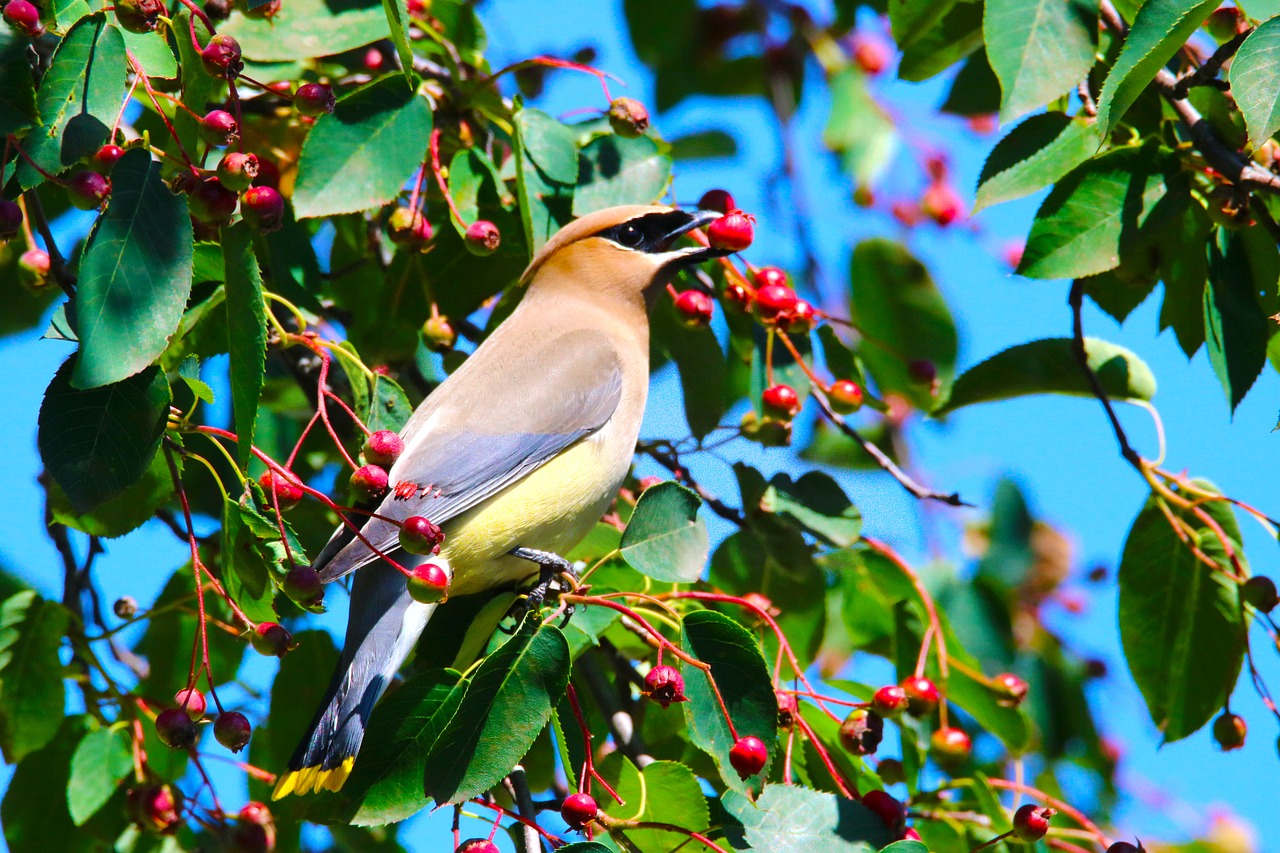
Photo by DivaDan/Pixabay.com • A cedar waxwing plucks a single berry from the laden branches of a fruit-bearing tree.

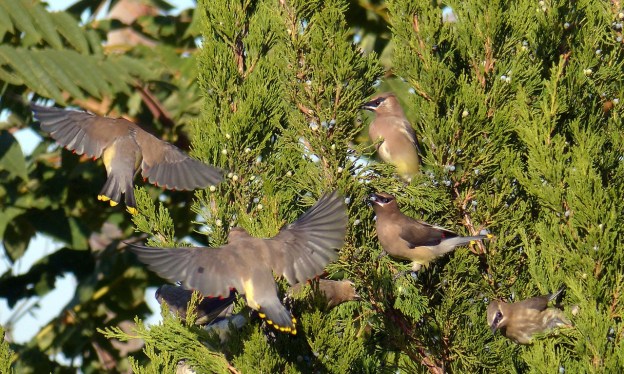
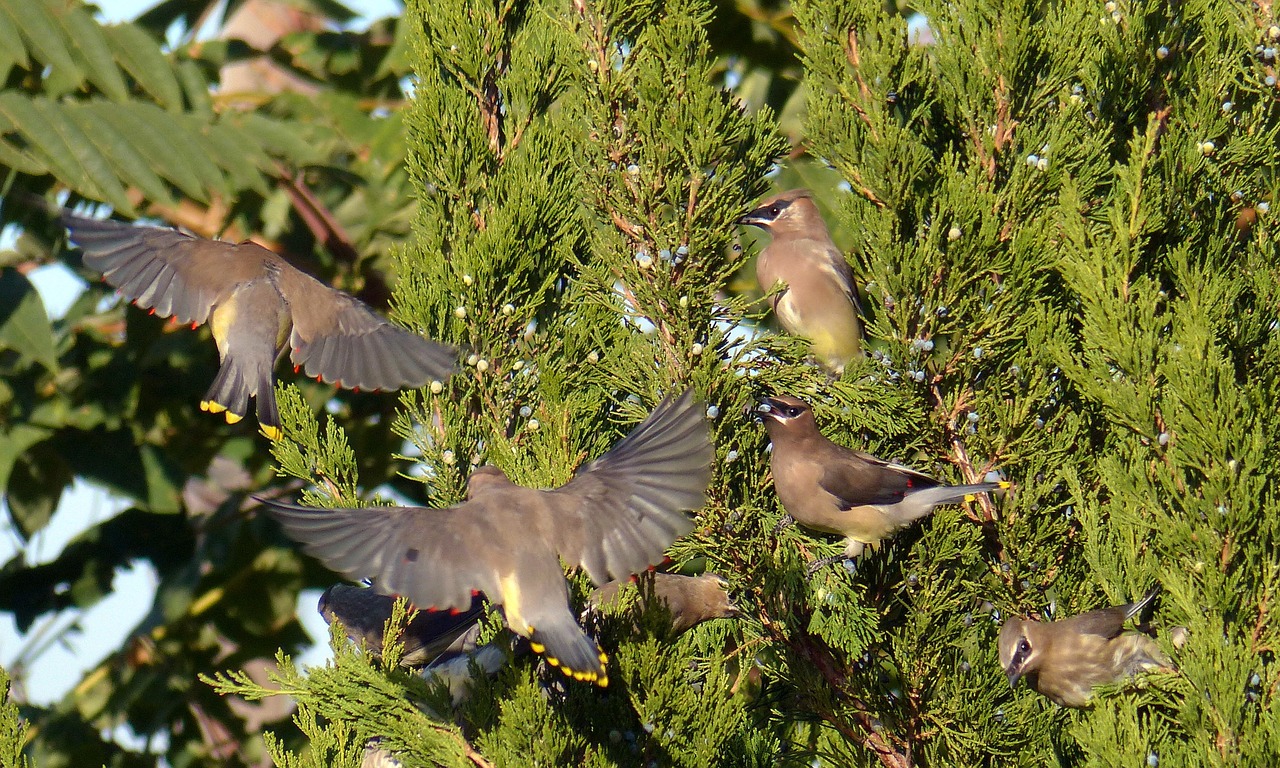
Early last month I received an email from Ernie Marburg about some visitors at his home in Abingdon, Virginia. “Just wanted to let you know that the Cedar Waxwings are in the neighborhood,” he wrote. “The flocks are looking for berries in the holly trees.” 

Waxwings have a brown and gray silky plumage, a black mask and a perky crest. Some of the wing feathers show red tips. The similarity of these wing tips to melted drops of wax gives these birds the common name of waxwing.

Photo by Bryan Stevens • The waxy tips to the wing feathers are evident in this photograph of a cedar waxwing.

The cedar waxwing has few relatives. Worldwide, there are only two other species: the Bohemian waxwing, of the northern forests of Eurasia and North America; and the Japanese waxwing, found in such northeast Asian countries as Japan, Korea and China.

Although it’s classified as a songbird, the cedar waxwing does’t truly produce a vocalization that anyone would contend qualifies as a song. They are, however, very vocal birds, producing shrill, high-pitched notes as they pass through the upper branches of tall trees.

As much as the waxwing has a fondness for fruit, it’s also a bird that would have made an excellent flycatcher. Flocks of these birds will often congregate in trees near the edge of a pond, garden or yard — anywhere winged insects might be found in good numbers — in order to hawk insects on the wing. A waxwing will sally forth from a branch, snatch its prey in mid-air, and return to its perch for a quick snack.

Photo by dmgreen44/Pixabay.com • A flock of cedar waxwings strip berries from the branches of a cedar tree.

Waxwings are rather nomadic, coming and going with a maddening unpredictability. Other birds are more dependable, arriving and departing at roughly the same time year after year. One such bird should soon make its triumphant and welcome return to yards and gardens throughout the region. According to the website Hummingbird Guide, ruby-throated hummingbirds usually return to Tennessee and Virginia the first week of April. These tiny flying jewels arrive earlier in North and South Carolina, typically arriving the third week of March in those states.

Early American naturalist and artist John James Audubon painted this pair of cedar waxwings.

The popularity of hummingbirds in general, and the ruby-throated hummingbird specifically, is simple to understand.

These tiny birds are perfectly willing to insert themselves into our lives, offering hours of fascinating entertainment as they visit our gardens, duel at our sugar water feeders and occasionally even nest in trees and shrubs in our yards.

I’m hoping to hear from readers about their first spring hummingbird observations. Email me at ahoodedwarbler@aol.com. Be sure to include the time and date of your sighting, as well as your locations. You can also find me through Facebook.

Photo by Bryan Stevens • A male ruby-throated hummingbird perches near a feeder that he is ready to defend from all comers.

Long-running Elizabethton Summer Bird Count finds 115 species

The Elizabethton Bird Club holds two summer bird counts to supplement other bird population monitoring efforts on the birdlife of Tennessee.

This count focuses exclusively on locations within Carter County and was held Saturday, June 9, with 16 observers in five parties plus two yard watchers. A total of 115 species was found, which is slightly above the average of 113 per count. The all-time high was 123 species in 2017. Several species restricted to the higher elevations of East Tennessee were found.

The count yielded some surprises and highlights, including the following:

A single Northern bobwhite represented a species that has been increasingly difficult to find in the area.

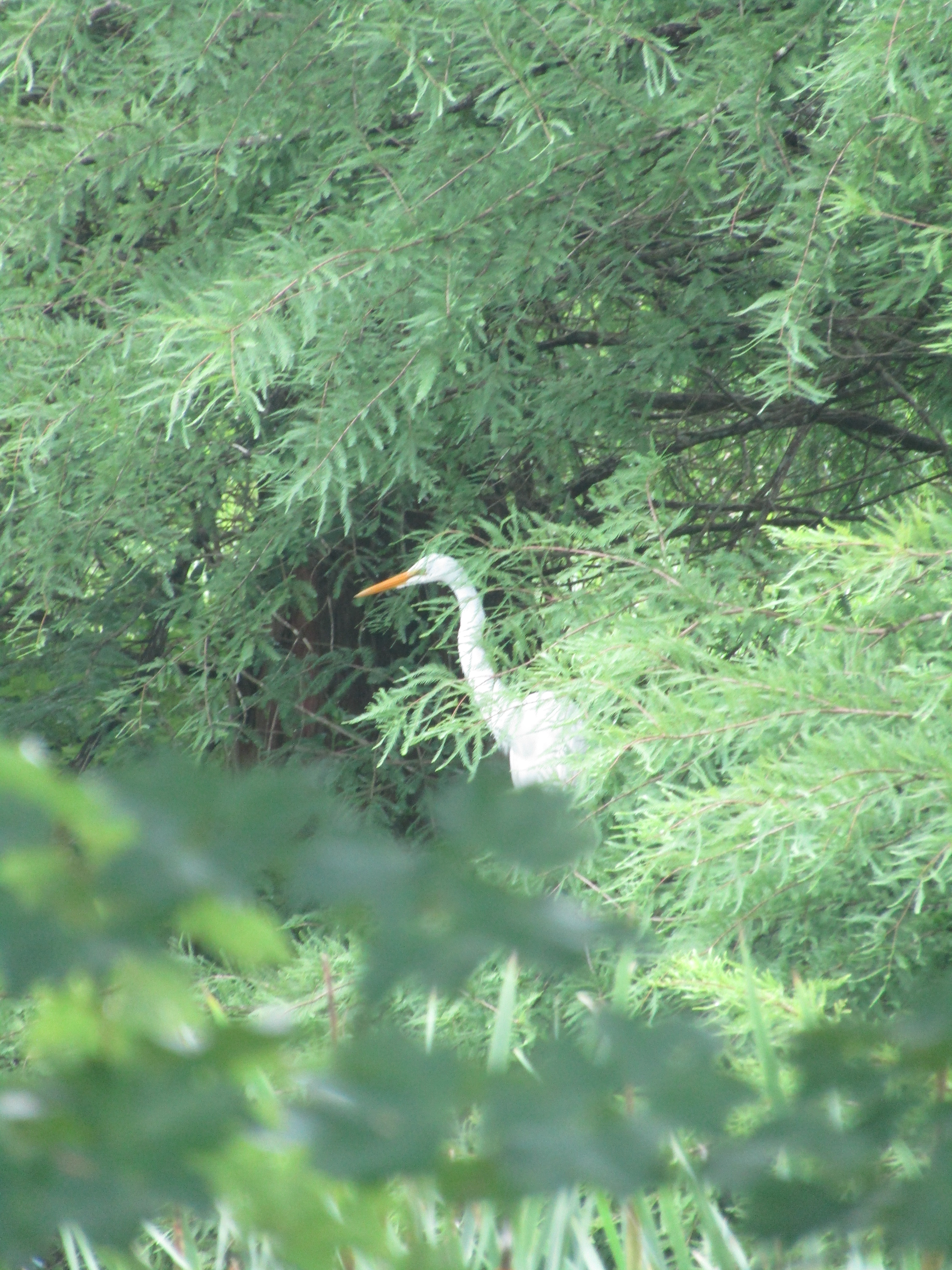
Photo by Bryan Stevens • Great egret, seen here among cypress trees, made the count for the first time this year.

A couple of birds made their debut appearance on this count, including great egret and fish crow, which is expanding its range rapidly in the region.

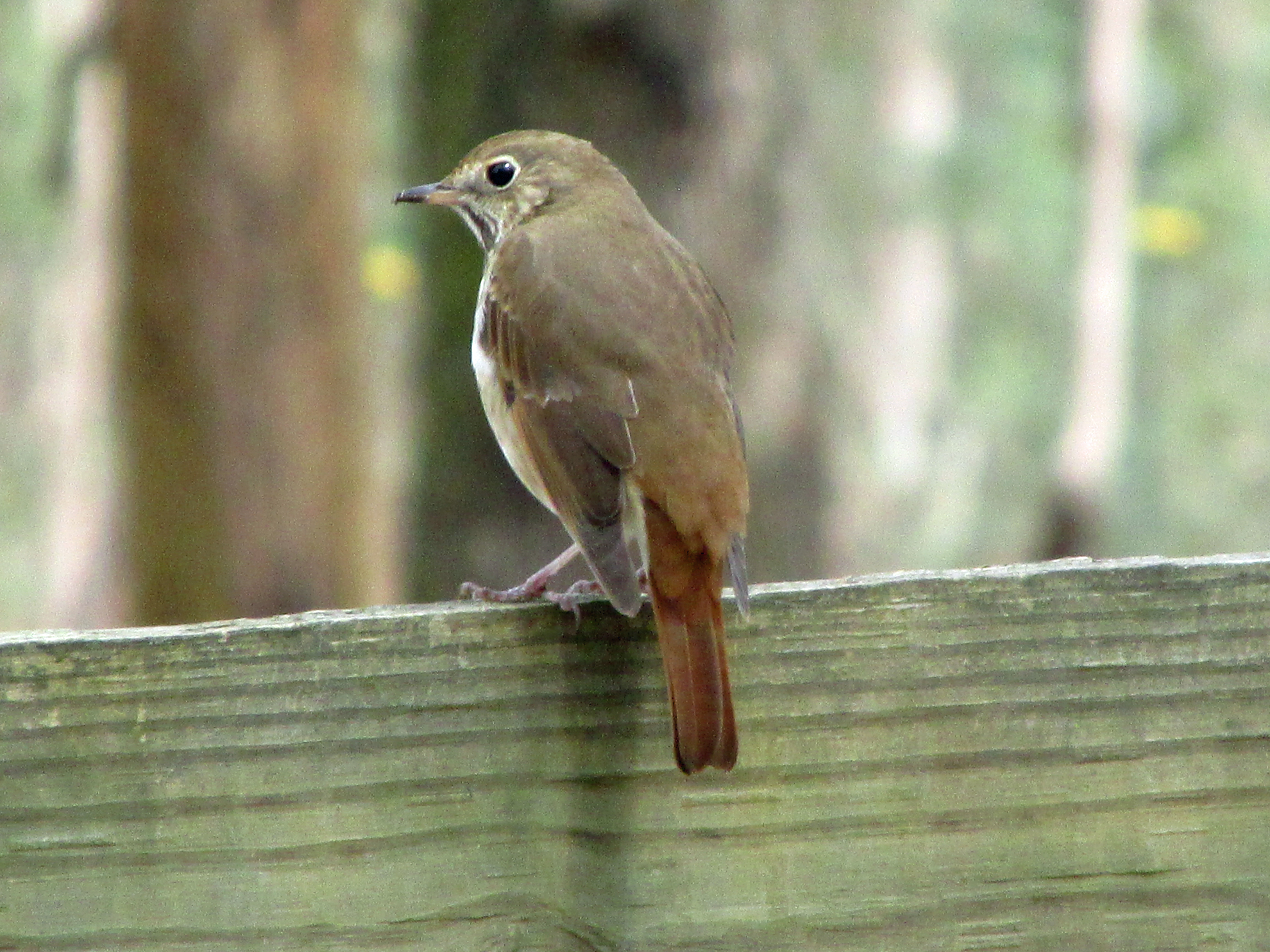
Other good finds included ruffed grouse, sharp-shinned hawk, American woodcock, Eurasian collared-dove, yellow-bellied sapsucker, alder flycatcher, least flycatcher, common raven, red-breasted nuthatch, brown creeper, winter wren, golden-crowned kinglet, hermit thrush, grasshopper sparrow, rose-breasted grosbeak, purple finch and pine siskin.

Photo by Bryan Stevens • Hermit thrush, pictured here, is an uncommon summer nesting bird at high elevations.

The count also found 20 species of warblers, including golden-winged, Swainson’s, magnolia, Blackburnian and yellow-rumped.

Of course, there are always unexpected misses. Birds usually found on summer counts but missed this year included green heron, yellow-crowned night-heron, bald eagle, great horned owl, white-eyed vireo, warbling vireo, purple martin, Kentucky warbler, prairie Warbler and vesper sparrow.

The count total follows:

Canada goose, 91; wood duck, 7; Mallard, 78; Northern bobwhite, 1; ruffed grouse, 2; wild turkey, 35; great blue heron, 42; and great egret, 1.

Black vulture, 2; turkey vulture, 58; sharp-shinned hawk, 1; Cooper’s hawk, 3; broad-winged hawk, 1; red-tailed hawk, 10; American kestrel, 1.

Killdeer, 4; American woodcock, 1; rock pigeon, 69; Eurasian collared-dove, 3; mourning dove, 171; and yellow-billed cuckoo, 3.

Eastern screech-owl, 2; barred owl, 1; chuck-will’s widow, 3; whip-poor-will, chimney swift, 46; ruby-throated hummingbird, 35; and belted kingfisher, 10.

Red-bellied woodpecker, 15; yellow-bellied sapsucker, 3; downy woodpecker, 15; hairy woodpecker, 1; Northern flicker, 9; and pileated woodpecker, 14.

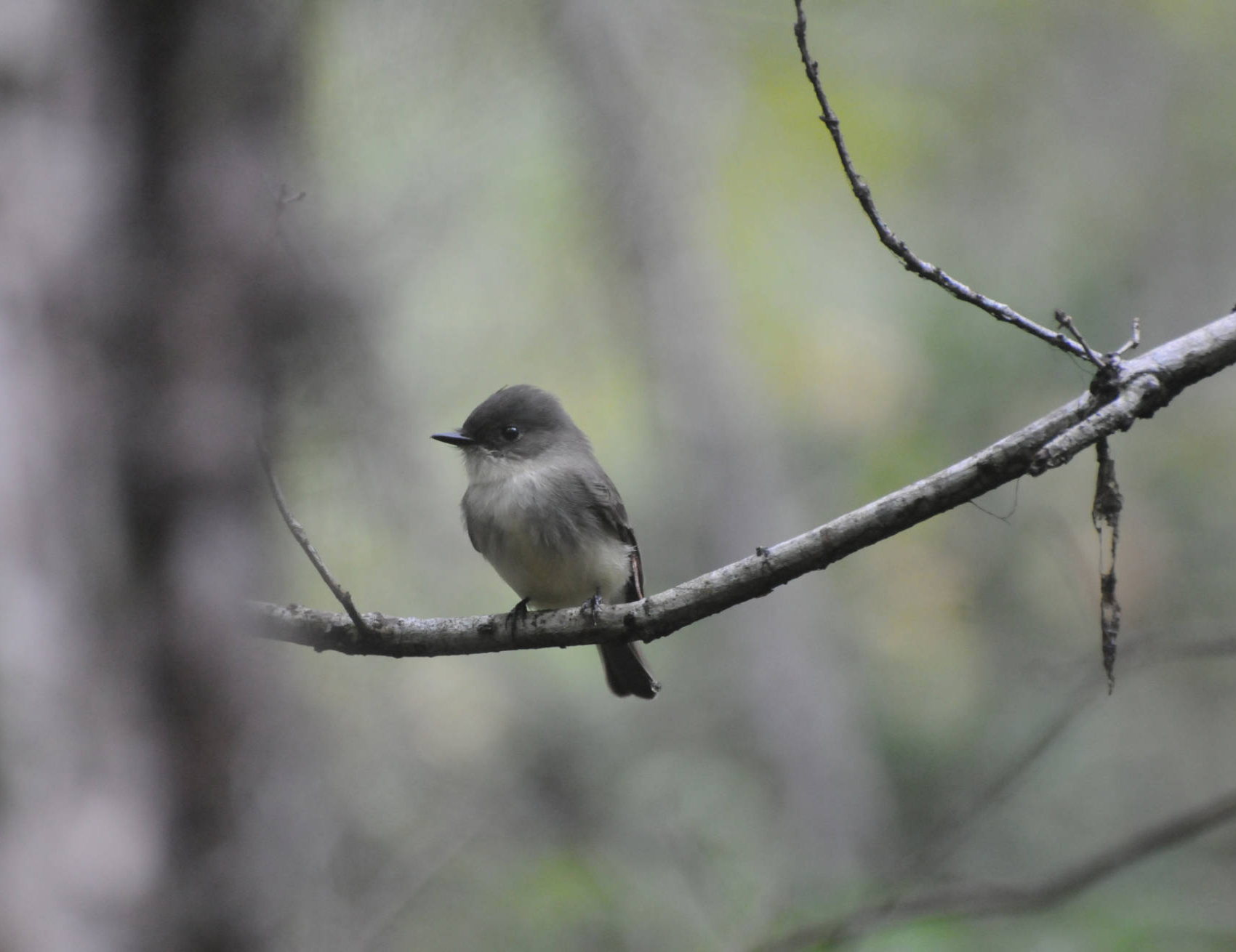
Eastern wood-pewee, 17; Acadian flycatcher, 21; alder flycatcher, 3; least flycatcher, 4; Eastern phoebe, 40; great crested flycatcher, 4; and Eastern kingbird, 15.

Photo by Bryan Stevens • Eastern phoebe is a common flycatcher in the region and abundant on summer counts.

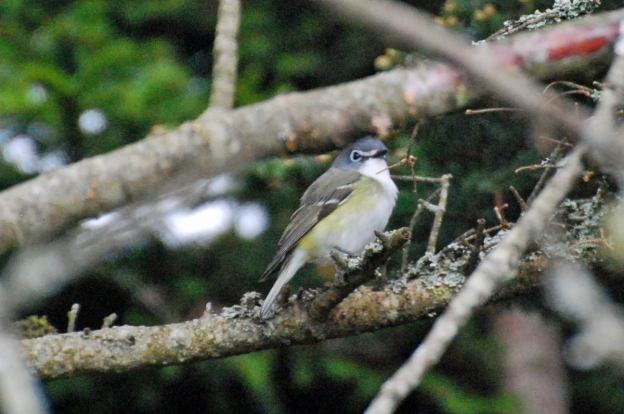
Yellow-throated vireo, 2; blue-headed vireo, 44; red-eyed vireo, 105; blue jay, 66; American crow, 133; fish crow, 1; and common raven, 5.

Northern rough-winged swallow, 21; tree swallow, 123; barn swallow, 106; and cliff swallow, 313.

Carolina chickadee, 63; tufted titmouse, 71; red-breasted nuthatch, white-breasted nuthatch, 15; brown creeper, 3; house wren, 48; winter wren. 8; and Carolina wren, 54.

Blue-gray gnatcatcher, 17; golden-crowned kinglet, 23; Eastern bluebird, 71; veery, 41; hermit thrush, 1; wood thrush, 62; American robin, 245; gray catbird, 44; brown thrasher, 12; Northern mockingbird, 34; European starling, 358; and cedar waxwing, 54.

Overnbird, 47; worm-eating warbler, 6; Louisiana waterthrush, 11, golden-winged warbler, 6; black-and-white warbler, 32; Swainson’s warbler, 3; common yellowthroat, 20; hooded warbler, 76; American redstart, 14; Northern parula, 18; magnolia warbler, 6; Blackburnian warbler, 4; yellow warbler, 2; chestnut-sided warbler, 32; black-throated blue warbler, 39; pine warbler, 1; yellow-rumped warbler, 1; yellow-throated warbler, 7; black-throated green warbler, 29; Canada warbler, 11; and yellow-breasted chat, 3.

Eastern towhee, 73; chipping sparrow, 73; field sparrow, 43; grasshopper sparrow, 1; song sparrow, 151; and dark-eyed junco, 55.

Scarlet tanager, 18; Northern cardinal, 108; rose-breasted grosbeak, 11; blue grosbeak, 6; indigo bunting, 106.

Red-winged blackbird, 79; Eastern meadowlark, 1; common grackle, 74; brown-headed cowbird, 18, orchard oriole, 1; and Baltimore oriole, 1.

House finch, 43; purple finch, 2; pine siskin, 2; American goldfinch, 55; and house sparrow, 6.

Carter County’s Roan Mountain and Holston Mountain offer excellent high elevation habitat. Lower elevations along the Doe and Watauga Rivers also provide plenty of terrain for looking for a variety of birds.

Photo by Bryan Stevens • American goldfinches look their very best for the summer count.

Unicoi County summer survey finds 107 bird species

Photo by JudaM/Pixabay.com • Birds that nest at some high elevations, such as this red-breasted nuthatch, thrive at different locations in Unicoi County. A total of six red-breasted nuthatches were tallied on the recent Unicoi County Summer Bird Count.

The Elizabethton Bird Club holds two summer bird counts to supplement other population monitoring efforts on the birdlife of Tennessee. Six years ago, the club launched an annual survey of summer bird populations in Unicoi County.

The sixth annual Unicoi County Summer Count was held Saturday, June 15, with 16 observers in five parties. A total of 107 species was found, which is slightly below the average of 109 species. Unicoi County offers several high elevation species of birds not easily found in the region, according to compiler Rick Knight.

Knight noted that highlights for the count include sharp-shinned hawk, bald eagle, yellow-bellied sapsucker, least flycatcher, warbling vireo, common raven, red-breasted nuthatch, brown creeper, golden-crowned kinglet and hermit thrush. The count also found 18 species of warblers, including Swainson’s, Kentucky, magnolia and prairie.

Photo by Jean Potter • Golden-crowned kinglet is another high-elevation species found in Unicoi County during the summer.

The most common birds found in the count included American robin (241), European starling (224) indigo bunting (147) and song sparrow (146).

Some expected birds could not be found on the day of the count, including ruffed grouse, great horned owl, winter wren, Blackburnian warbler and pine warbler.

I counted with Dave and Connie Irick, Brookie and Jean Potter and Brenda Richards in the Limestone Cove community of Unicoi County. Some of our best birds included yellow-breasted chat, yellow-bellied sapsucker, rose-breasted grosbeak and Swainson’s warbler.

The total for this year’s Unicoi Bird Count follows:

Canada goose, 90; wood duck, 27; mallard, 33; wild turkey, 5; great blue heron, 2; and green heron, 3.

Photo by Bryan Stevens • Both black and turkey vultures were well represented on the Unicoi County Summer Bird Count.

Black vulture, 7; turkey vulture, 33; sharp-shinned hawk, 1; Cooper’s hawk, 1; bald eagle, 1; broad-winged hawk, 9; red-tailed hawk, 7; and American kestrel, 3.

Killdeer, 9; rock pigeon, 78; mourning dove, 70; yellow-billed cuckoo, 7; Eastern screech-owl, 1; and barred owl, 3.

Chuck-will’s widow, 3; Eastern whip-poor-will, 9; chimney swift, 37; ruby-throated hummingbird, 14; and belted kingfisher, 2.

Red-bellied woodpecker, 8; yellow-bellied sapsucker, 8; downy woodpecker, 17; hairy woodpecker, 1; Northern flicker, 8; and pileated woodpecker, 11.

Eastern wood-pewee, 4; Acadian flycatcher, 26; least flycatcher, 1; Eastern phoebe, 41; great crested flycatcher, 2; and Eastern kingbird, 8.

White-eyed vireo, 3; yellow-throated vireo, 1; blue-headed vireo, 23; warbling vireo, 2; and red-eyed vireo, 105.

Blue jay, 66; American crow, 84; common raven, 8; Northern rough-winged swallow, 53; purple martin, 40; tree swallow, 106; barn swallow, 152; and cliff swallow, 128.

Carolina chickadee, 69; tufted titmouse, 55; red-breasted nuthatch, 6; white-breasted nuthatch, 15; brown creeper, 3; house wren, 22; and Carolina wren, 60.

Blue-gray gnatcatcher, 20; golden-crowned kinglet, 4; Eastern bluebird, 62, veery, 11; hermit thrush, 3; wood thrush, 41; and American robin, 241.

Gray catbird, 25; brown thrasher, 11; Northern mockingbird, 27; European starling, 224; and cedar waxwing, 34.

Ovenbird, 36; worm-eating warbler, 17; Louisiana waterthrush, 10, black-and-white warbler, 15; Swainson’s warbler, 8; Kentucky warbler, 1; common yellowthroat, 10; hooded warbler, 75; American redstart, 2; Northern parula, 20; magnolia warbler, 1; yellow warbler, 6; chestnut-sided warbler, 9; black-throated blue warbler, 19; yellow-throated warbler, 15; prairie warbler, 1; black-throated green warbler, 17; Canada warbler, 8; and yellow-breasted chat, 2.

????????????????????????????????????

Eastern towhee, 46; chipping sparrow, 55; field sparrow, 7; song sparrow, 146; and dark-eyed junco, 17.

Scarlet tanager, 30; Northern cardinal, 64; rose-breasted grosbeak, 5; blue grosbeak, 3; and indigo bunting, 147.

Red-winged blackbird, 70; Eastern meadowlark, 9; common grackle, 71; brown-headed cowbird, 14; orchard oriole, 3; Baltimore oriole, 1; house finch, 19; American goldfinch, 92; and house sparrow, 18.

Unicoi County offers some great habitat for finding birds. In addition to the new state park, the county also offers Erwin Fishery Park and adjacent walking trails, as well as Unaka Mountain. The diversity of birds found on the summer count is a testament to the value of these habitats for birds and other wildlife.

Photo by Bryan Stevens • Green herons, such as this one, are found along the linear trail in Erwin during the summer months.


Now that hummingbirds are back, take some simple steps to keep them healthy

IMG_2786

Photo by Bryan Stevens • Welcoming back hummingbirds also involves making sure that they remain healthy and safe while spending the next six months in our yards and gardens.

Bristol residents Don and Donna Morrell saw their first hummingbird of spring at 10:19 a.m. on Monday, April 15. “My wife put the feeder up last week,” wrote Don in an email to me. “We live behind South Houston Dam.”

Gordon Aiton, who lives on Elm Street in Erwin, Tennessee, saw his first hummingbird of spring at 7:04 p.m. on Friday, April 19.

Phyllis Moore saw her first hummingbird — a male — at 7:50 p.m. on Friday, April 19, at her home in Bristol, Virginia.

Lynda Carter emailed me to report her first spring sighting of a male ruby-throated hummingbird at her feeder after lunch on Monday, April 15, and a second male appeared on Friday, April 19, a little after 1 p.m. Lynda said she lives at the end of Embreeville mountain in the Lamar community near Jonesborough, Tennessee.

Susan Okrasinski, a resident of Kingsport, Tennessee, saw her first hummingbird of spring on Easter Sunday, April 21.

“On my way into the kitchen I just saw (be still my heart) the first hummer of the season — whoo hoo!” Susan wrote in a post on her Facebook page. “It was a female, which is unusual as the males come up first and the females follow.  What a nice Easter surprise!”

Joanne Campbell, who lives at Middlebrook Lake in Bristol, Tennessee, posted on my Facebook page about her first spring hummer. “Had our first hummingbird sweep into our courtyard on Tuesday, April 23,” she wrote in her post.

Rubythroated_Hummingbird

Photo by U.S. Fish & Wildlife Service • A ruby-throated hummingbird seeks nectar from small blooms on a flower.

Every hummingbird’s arrival at our homes after an absence of nearly six months is nothing short of an epic achievement on the part of this tiny bird. According to the website, hummingbird.net, most ruby-throated hummingbirds make a daring journey across the Gulf of Mexico to return to their summer homes in the United States and Canada. They typically depart at dusk for their nonstop Gulf flight of up to 500 miles, which takes 18 to 22 hours, depending on the weather.

Now that we’ve welcomed them back into our yards and gardens after such a harrowing journey, it’s important as good hosts to make sure these tiny wonders are kept safe.

Some ways of ensuring that our hummingbird guests are kept healthy and secure are simply common sense. For instance, don’t use pesticides, herbicides or any other sort of toxin anywhere close to the vicinity of a sugar water feeder or a flower garden. Hummingbirds are such tiny creatures with such intense metabolisms that it only takes a minute amount of any harmful substance to sicken or kill one of these little flying gems.

Feeding hummingbirds is easy, but many people try to complicate the process. Only common, pure cane sugar, mixed to a ratio of four parts water to one part sugar, is a safe choice for these birds.

Hummingbird-Ornament

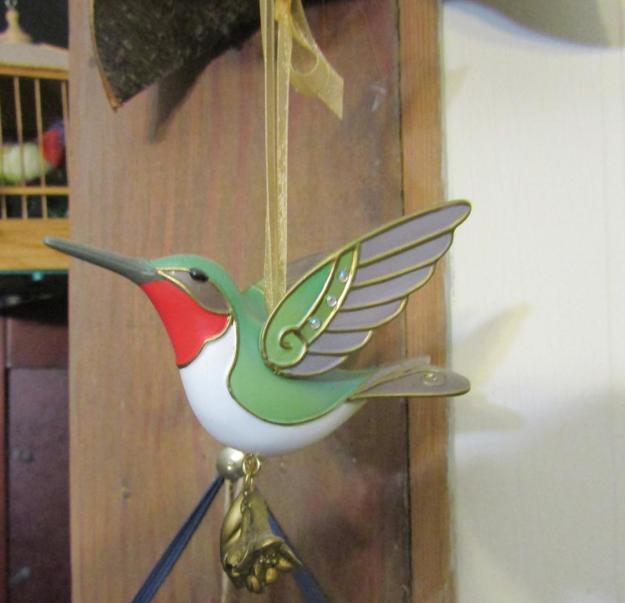
Photo by Bryan Stevens • Hummingbirds have even inspired ornaments and keepsakes in their image, a testament to their popularity and beloved status as yard and garden visitors.

For emphasis, I’ll repeat again that only common, pure cane sugar is safe for hummingbirds. There are no safe substitutes. Do not use organic, raw or brown sugar. Confectioner’s sugar, which contains an anti-caking substance (often corn starch, silicates or stearate salts), is also hazardous to hummingbirds.

There’s also a type of sugar known as turbinado sugar, which is named for the process of spinning the sugar in turbines to crystallize it. The crystals are rich in vitamins and mineral valuable for human health, but they are lethal for hummingbirds. Iron is one of the minerals contained in turbinado sugar. Hummingbird metabolism has a low tolerance for iron, which is present in the molasses added to brown sugar and in agave nectar. These are natural substances, but that doesn’t make them safe for hummingbirds.

The ratio of four parts water to one part sugar utilizing pure cane sugar most closely duplicates the nectar that hummingbirds obtain from some of their favorite flowers. Why try to mess with nature’s perfection?

I cannot imagine why anyone would supplement sugar water for hummingbirds with such human beverages as a sports drink or Kool-aid, but there have been reports of people doing so. Be aware that such additives will only risk the health of these tiny birds.

Hummer-Oct17

Photo by Bryan Stevens • Female ruby-throated hummingbirds must face many demands if they are to be successful at nesting and raising young, both tasks being done without assistance from male hummingbirds.

Honey is another substance, although perfectly natural in its origins, that should be avoided. Honey encourages the growth of fungus, which can quickly incapacitate or kill a hummingbird. A packet of artificial sweetener might taste great in your iced tea, but do not add such substances to the solution in your hummingbird feeder. These artificial sugar substitutes offer nothing of nutritional value for a bird with an extreme metabolism with excessive energy demands. In theory, a hummingbird mistakenly feeding on nothing but an artificial sweetener would soon starve to death.

It’s also important to change out your feeders and clean them as often as every one to three days. In extremely hot weather reaching more than 90 degrees, the sugar solution may need to be changed and the feeder cleaned on a daily basis. That’s not as difficult as it sounds. I prepare sugar water and store it in plastic juice containers. Refrigerated, the solution will last longer and can be doled out on a daily basis until a new supply is needed.

honey-2201210_1920

Photo by sapphir1/Pixabay.com • Although a natural substance, honey should not be fed to hummingbirds as it can promote a fungus harmful to hummingbirds.

Don’t use any type of soap or detergent to clean the feeders. The best advice I’ve read is to stick to hot water and vinegar, which will not leave behind a residue that could potentially harm the hummingbirds.

Do not put any sort of red dye or coloring into the sugar water, and do not purchase commercial solutions that incorporate red dyes. Some scientific studies suggest that red dye is a recipe for disaster with hummingbird. Such dyes are thought to lead to kidney failure and certain death for the hummingbird. There’s also plenty of evidence to suggest that banning red dye is an exaggeration of the peril. Taking that into consideration, I still err on the side of caution. Perhaps the red dye will eventually be proven harmless. Until that time, I prefer not to risk the health of my resident hummingbirds.

I’m often asked if the sugar water feeder itself should be red. There is ample evidence that hummingbirds are attracted to red. According to information from the National Audubon Society website, current thinking is that the red dye, as just mentioned, may not be good for them, nor is it necessary to attract hummingbirds. The color on a feeder is enough to attract them. Most feeders incorporate some red parts into their construction. People can mix their own nectar using 1/4 cup sugar to every 1 cup of water.

It’s a lot of work to attract hummingbirds and keep them safe and healthy. I’d like to think the rewards we get from these small birds make the effort worthwhile.

IMG_2859

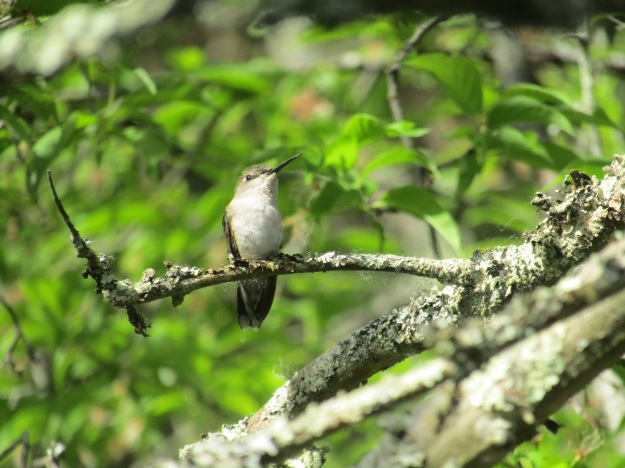
Photo by Bryan Stevens • A female ruby-throated hummingbird, lacking the bright throat patch of a male, surveys her surroundings from a low perch.


April sees the annual return of hummingbirds to the region as readers share their first spring sightings of tiny gems

Hummer-Print_edited-1

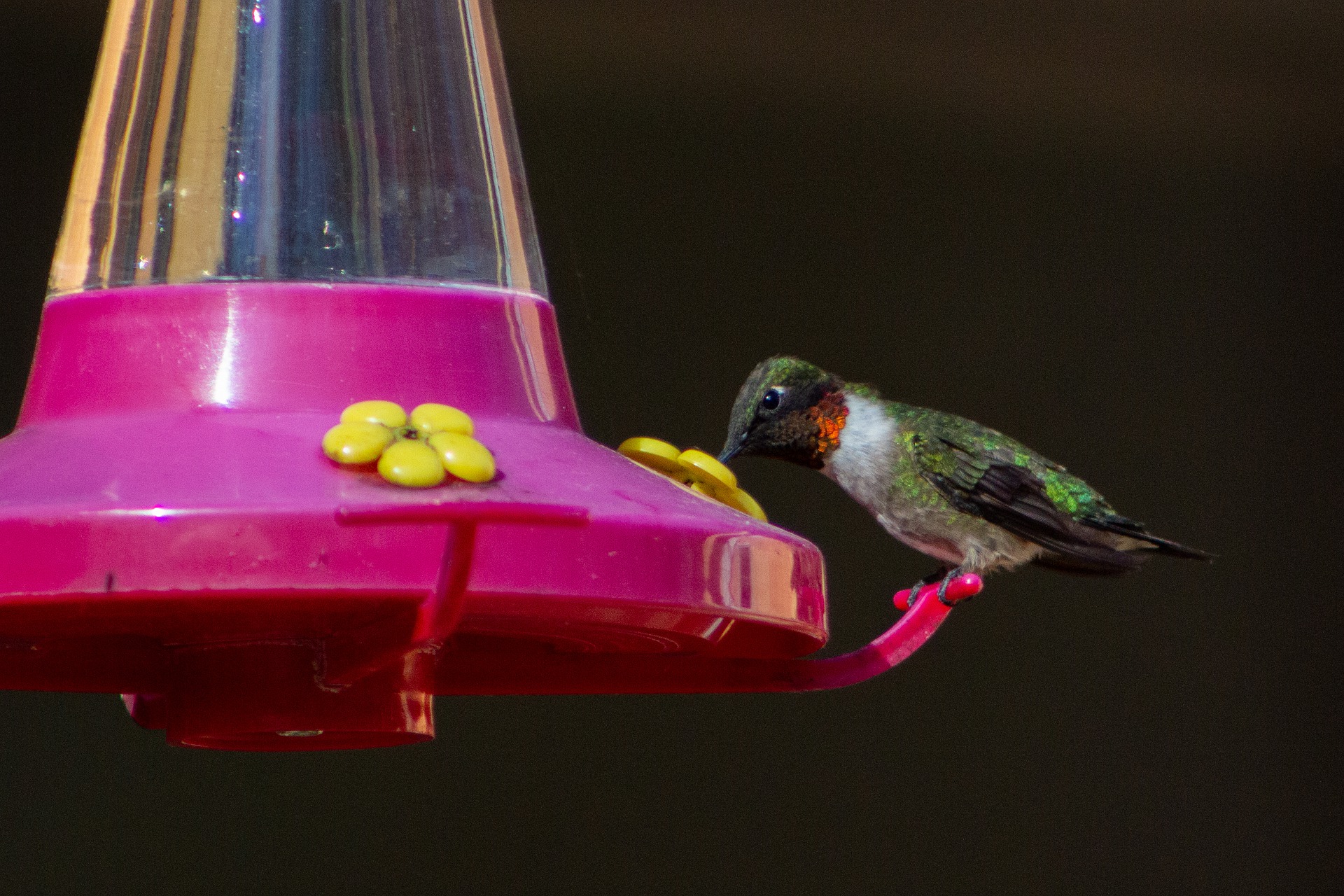
Photo by Bryan Stevens • Male ruby-throated hummingbirds show the namesake red throat. The feathers on a male’s throat are iridescent, which means they can change when seen from different angles. In poor light, the ruby-red throat can look almost black.

Bob Cheers, a resident of Plantation Road in Bristol, Virginia, sent an email to announce the arrival of his first hummingbird of spring at 6:20 p.m. on Wednesday, April 10.

“I put the feeder out April 2, which is earlier than previous years, after reading your March 31 article in the Bristol Herald Courier,” Bob wrote. “It brought to mind the one year that I failed to get the feeder out early and spotted a hummingbird hovering outside of my family room window, in the exact location my feeder has hung for the last 30 plus years. That little guy had to have been a repeat customer.”

Bob wrote that he’s intrigued by the fact that this year’s arrival date falls within the spread that ranges from April 9 to April 14 that he has established since he started recording the returns in 2009. “What triggers their departure from Central America and their guidance system, considering the variable winds encountered, that sends them back to my feeder within a five-day period each year?” Bob asked in his email.

I had to do some digging to find an answer to Bob’s question. According to the website, Hummingbird.net, the phenomenon of migration among hummingbirds is not well understood.

Hummer-Male

Photo by Bryan Stevens • A ruby-throated hummingbird sips from a sugar water feeder.

“Most ruby-throated hummingbirds winter between southern Mexico and northern Panama,” the website reveals. “Since hummingbirds lead solitary lives and neither live nor migrate in flocks, an individual bird may spend the winter anywhere in this range where the habitat is favorable, but probably returns to the same location each winter.”

The time they spend on this wintering range is remarkably brief. “Ruby-throats begin moving north as early as January, and by the end of February, they are at the northern coast of Yucatan, gorging on insects and spiders to add a thick layer of fat in preparation for flying to the United States,” the website notes.

According to the website, some hummingbirds skirt the Gulf of Mexico and follow the Texas coast north, while most apparently cross the Gulf, typically leaving at dusk for a nonstop flight of up to 500 miles, which takes 18 to 22 hours depending on the weather.

The force that compels hundreds of thousands of individual hummingbirds to all migrate at the same time remains mysterious. The reason these birds migrate is simpler. In the eastern half of the United States and Canada, ruby-throated hummingbirds face no competition from their own kind. If they remained in Central America, they would have to compete with dozens of species of hummingbirds during the nesting season. From the standpoint of the ruby-throated hummingbird, why not take a trip and claim a monopoly over some resource-rich terrain? It’s worked for these tiny flying jewels so far.

So, Bob became the first person to report a hummingbird arrival to me this year, but plenty of other people lined up to share their sightings, too.

Amy Wallin Tipton in Erwin, Tennessee, sent a message via Facebook to report her first hummingbird arrival for the spring. “Just saw my first hummer,” she wrote. Amy reported that the hummer, a male, arrived at 6:45 p.m. on Wednesday, April 10. “I’m so glad they are back,” she shared.

Ginger Brackins also reported that she saw her first ruby-throated hummingbird of spring on Wednesday, April 10, at her home in Erwin, Tennessee. She noted that it was a week earlier than last year. Ginger notes the arrival dates each year on her calendar. Ginger’s message about her sighting arrived thanks to her daughter, Gina McKinney, who emailed me on her mother’s behalf

Hummer-Farm

Photo by Bryan Stevens • Ruby-throated hummingbirds returned to the region in early April.

Joneen Sargent reported that her first hummingbird put in an appearance at 10 a.m. on Thursday, April 11, at her home in Bristol, Tennessee. In her email, she also asked if I had heard of downy woodpeckers drinking from sugar water feeders.

I answered her question by informing her that I’ve noticed downy woodpeckers, as well as Carolina chickadees, taking sips from my feeders. The chickadees can get quite acrobatic in their efforts to indulge their taste for sweets.

“We had our first male hummer at the feeder on Thursday, April 11, here in Bristol, Tennessee,” reported Tom and Sue Faucette in an email. “He came back on April 12-13.”

Lynne Reinhard reported that she saw her first hummingbirds of spring on Friday, April 12. “They are back!” Lynne proclaimed in a Facebook message. She wrote that the first hummingbird of the season arrived at 3 p.m. at her home on the upper end of South Holston Lake.

Snad Garrett saw her first hummingbird of spring on Stoney Creek in Elizabethton, Tennessee, on the evening of Friday, April 12.

Merry Jennings in Abingdon, Virginia, saw her first hummingbird on Friday, April  12, around 6 p.m., but hasn’t seen it since. “I put out the feeder on Thursday, April 11,” she noted in the email she sent me.

Lisa Brewer, who lives near Boone Lake in Piney Flats, Tennessee, reported that her first hummer arrived around 3 p.m. on Friday, April 12.

“I put my hummingbird feeders out last Sunday and had been watching every day for the first hummer to arrive,” she wrote in her email. “I was really excited to see a male ruby-throated hummingbird, and I saw what appeared to be the same one on Saturday and Sunday.”

Lisa added that this is the first year she has been able to get her feeders out in time for the first hummingbirds arriving in this area. “So I wanted to be sure to let you know when I saw my first one,” Lisa wrote.

Hummer-CloserUp

Photo by Bryan Stevens • Keep hummingbirds happy with a sugar water solution of four parts water to one part sugar.

Glen Eller saw his first hummingbird for the spring season on Friday, April 12, at 5:55 p.m. at his home in Fall Branch, Tennessee. “it was a male,” Glen reported in an email.

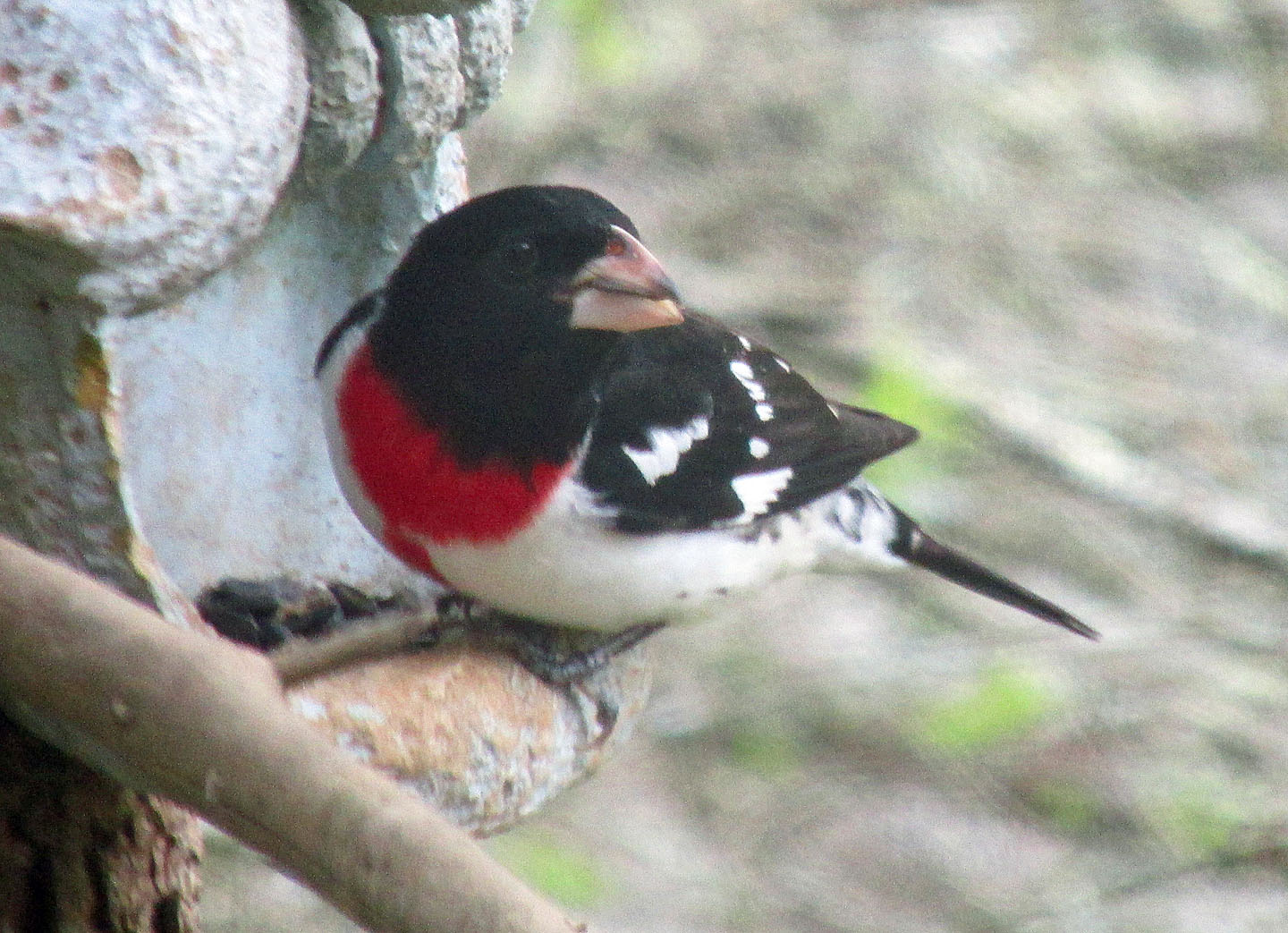
Karen Fouts posted on Facebook that she saw her first hummingbird of 2019 on Friday, April 12, at her home in Marion, Virginia. She also reported rose-breasted grosbeaks at her feeders.

Lois Cox and Wilma Boy reported their first male ruby-throat hummingbird on Saturday, April 13, at 2:30 p.m. at home in Bluff City, Tennessee. In her email, Lois noted that they needed to get out their feeders for the visiting bird. “It was a male,” Lois wrote in the email. “Hope it comes back.”

Deb Clark sent me an email on behalf of her mother and her sighting of a spring hummingbird. “My mother, Louise Tilson, has asked that I send you a message sharing her good news that she’s having hummingbirds at her backdoor feeder,” Deb wrote in the email.

Deb added that her mom lives in the Riverside community near Chilhowie, Virginia, on the banks of the South Fork of the Holston River. “She put out her feeder about a week ago,” Deb wrote. “The first little fellow showed up Friday, April 12, at about three-thirty in the afternoon.”

Deb relayed that her mother said the hummer came and perched on the feeder, drinking like he was starving.

Louise reported multiple visits by solitary male hummingbirds several times through Friday afternoon, but she wasn’t sure whether it was one bird making several trips or different birds.

Lane and Phyllis Duncan, who reside in the Rich Valley community in Smyth, Virginia, sent me an email to report their first hummer of spring on Friday, April 12, at 3:30 p.m.

Karen Shaffer sent me an email to announce the arrival of a hummingbird at her home. “I’m so excited to report we saw our first hummer on Saturday, April 13, at 11 a.m. at our home on Rich Valley Road, Bristol, near the Benhams and Nordyke communities.”

Karen said she heard the bird before she saw it. “It was visiting our blooming yellow holly bush,” she wrote. “Such a tiny thing — but vivid in color at the throat, so a male, I guess. Yay!”

Gloria Walter Blevins reported in a Facebook message that she saw her first hummingbird this spring on Friday, April 12, at her home in Damascus Virginia. The hummingbird — or another one — returned the following morning. Gloria also noted that she has bluebirds building a nest at her home.

Priscilla Gutierrez, Limestone Cove community in Unicoi County, Tennessee, reported on my Facebook page that she saw the first spring hummingbird Friday, April 12, at 6:45 p.m. “They have been coming ever since,” she noted.

April Kerns Fain in Erwin, Tennessee, posted about her hummingbird sightings on Saturday, April 13, on Facebook. “The hummingbirds are back,” she wrote. “I’ve seen a male at my feeders several times today.”

Rubythroat-TheSoarNet

Photo by TheSOARnet / Pixabay.com • Male ruby-throated hummingbirds usually migrate ahead of females. These tiny birds must cross the Gulf of Mexico, without stopping, to reach their nesting grounds in the eastern United States. The journey across the Gulf can take them 18 to 22 hours, dependent on weather conditions.

Jane P. Arnold sent me an email to notify me of her mother’s hummingbird sighting. Her mother, Betty Poole, who lives in Abingdon, Virginia, saw her first hummingbird — a male — on Saturday, April 13. The following day, a female ruby-throated hummingbird also showed up at the feeder.

Jane added that she’s still waiting to see her own first hummingbird for the spring.

Helen Whited of Richlands, Virginia, reported her first spring hummingbird arrived on Saturday, April 13. “I just saw my first hummingbird of the season,” she wrote in her email. “Just one male so far. I have had my feeders out and waiting for a couple days. I thought this warm spring weather might bring in a few. So exciting!”

Sharee Bowman wrote a post on her Facebook page to announce her first spring hummer sighting on Saturday, April 13. “Hummingbird came yesterday to my feeder and, yes, it is the first one I have seen this year,” she wrote.

Felicia Mitchell saw her first spring hummingbird on Saturday, April 13. “He is happy to be home,” she reported in a comment on my Facebook page.

Brenda Hickman Dishner posted on my Facebook page about hummingbird arrivals. “They arrived at our house in Bristol, Tennessee, near Holston Dam on Highway 421, on Saturday, April 13, about 10:30 a.m.,” she wrote in her posting.

Vivian C. Tester sent me a Facebook message to report that she saw her first spring hummer at her home in Bristol, Tennessee, on Sunday, April 14.

Linda Kessinger Rhodes saw her first spring hummingbird visiting her feeders at her home in Tennessee Hills by the Walmart on the Parkway in Bristol, Tennessee, on Sunday, April 14. She posted her sighting on my Facebook page.

RubyRed

Photo by Bryan Stevens • A male ruby-throated hummingbird perches near a feeder that he is ready to defend from all comers.

Rhonda Eller saw her first hummingbird on Sunday, April 14, at 1:20 p.m. In her post on my Facebook page, she noted that she hung the feeder out last Wednesday before heading to Louisville to visit family. “I am always pleasantly surprised for the first spotting of one here on Horseshoe Bend in Chilhowie, Virginia,” she added. “Oh, the bluebirds are here, too, and have a nest with three eggs.”

Cheri Miller posted on my Facebook page about her sighting. “I saw one Sunday, April 14, in the Brown’s Branch community in Hampton, Tennessee, eyeing an orchid blooming in the window,” she wrote in her post.

Ron Bartlett reported by email that a single male showed up at his feeder on Sunday, April 14. “I live in McDowell County, North Carolina,” Ron shared. “This is about a week later than normal. Perhaps he was held up trying to cross the border.”

Donna Barnes Kilday of Erwin, Tennessee, posted to my Facebook page that she saw her first hummingbird of spring on the morning of Monday, April 15.

Janie Compton, a resident of Chesterfield, Virginia, saw her first hummingbird on Monday, April 15. Her friend, Phyllis Moore, posted news of Janie’s sighting on my Facebook page.

Rubythroat

Photo by Bryan Stevens • Despite a perceived disadvantage of size, ruby-throated hummingbirds are quite capable of thriving in a giant world.

Emily Rogers, from Jonesborough, Tennessee, reported on my Facebook page that she had her first hummingbird of spring in Tennessee’s oldest town on Monday, April 15.

Linda K. Sproles of Bristol, Tennessee, got her first visit from a female hummingbird on Monday, April 15, in the late afternoon. Last year, she said her first sighting took place on Apr.14 while in 2017 she first saw a returning hummingbird on April 16.

Philip Laws, a resident of Limestone Cove in Unicoi County, Tennessee, saw his first hummingbird on Tuesday, April 16, at 4:20 p.m.

Tom and Cathy McNeil, who reside in the Piney Grove community of Hampton, Tennessee, reported their first spring hummingbird on Facebook on Tuesday, April 16.

I saw my first hummingbird this spring when a male visited several of my feeders around 5:30 p.m. on Tuesday, April 16. I enjoyed welcoming him home.

Readers are welcome to continue sharing their hummingbird sightings. Plenty of other colorful birds are also making spring migration stops, and I love to hear what everyone is seeing in their own yards. Email me at ahoodedwarbler@aol.com with questions, comments or observations.

Ruby-throatedFemale-EYE

Photo by Bryan Stevens • A female ruby-throated hummingbird settles onto the perch of a sugar water feeder.

April brings flurry of spring migrants to region

Louisiana Waterthrush

Photo by Adobe Stock • Subtle plumage differences, as well as habitat, behavior and seasonal presence, are factors in distinguishing the Louisiana waterthrush, pictured, from the closely related Northern waterthrush. The Louisiana waterthrush nests along fast-moving streams in the area while the Northern waterthrush does not breed in the region.

I’m always happy for the arrival of April because I know the month hails the arrival of some of my favorite birds. The roughly 50 species of New World warblers that occur in the Eastern United States have captivated me from the time I first picked up a pair of binoculars. The warblers offer color, energy, complex songs and much more for the bird enthusiast to enjoy.

The month started out with my first sighting of a purple finch for the year. The finch must have been a harbinger of birds to come because in quick succession I observed many early migrants, including brown thrasher, blue-headed vireo, blue-gray gnatcatcher and chipping sparrow, as well as several warblers.

PurpleFinches

Photo by Bryan Stevens • A study of the facial pattern of a female purple finch helps contrast her from similar female house finches. Again, the notched tail is also a good indication of the bird’s identity.

The first warbler to arrive in the woods around my home this year was a singing male black-throated green warbler. Three others — black-and-white warbler, yellow-throated warbler and Louisiana waterthrush — followed quickly after my sighting of the black-throated green warbler.

The Louisiana waterthrush stood out among these early observations. This warbler is a specialist of creeks and streams, and my sighting took place near a roaring creek swollen by a rainy spring. This water-loving warbler also has a loud, ringing song that can still be hard to hear because of the fact the bird is usually near the background noise of rushing water.

B&WWarbler

Photo by Bryan Stevens • A black-and-white warbler creeps over the bark of a pine in search of insect prey.


While many warblers have shown signs of decline in recent years, the Louisiana waterthrush appears to have bucked that trend. According to the website, “All About Birds,” Louisiana waterthrush populations were stable between 1966 and 2015, based on statistics from the North American Breeding Bird Survey. Partners in Flight, a network of organizations engaged in all aspects of avian conservation, estimates a global breeding population of 360,000, with almost all of those individuals spending at least part of the year in the United States. About a quarter of the population retreats into Mexico during the winter season. The rest winter in Florida and some of the Gulf Coast states, as well as the islands of the Caribbean.

While most songbirds are fortunate to survive two or three years in the wild, at least one Louisiana waterthrush lived to the age of at least 11 years and 11 months. The bird, a male, was seen in New Jersey in the wild and identified by a band on one of his legs. He had been banded in the same state, according to the website, “All About Birds.”

The waterthrushes are the only two species in the genus Parkesia, so named to honor American ornithologist Kenneth C. Parkes, who was for many years curator of birds at Carnegie Museum of Natural History. The common name of the Louisiana waterthrush is not a very apt one, as this bird does not have any special affinity for the state of Louisiana. Someone collected some of the early specimens of the Louisiana waterthrush in its namesake location, and the name has stuck through the years.

The only other warbler in the genus Parkesia is the Northern waterthrush which, unlike its relative, likes to live near quiet, sedate pools, ponds and bogs, not rushing streams.

Hummingbirds getting closer to region

Tommy and Virginia Curtis of Smithville, Tennessee, reported their first ruby-throated hummingbirds of the spring on the email group, “TN-Birds.” The hummingbird arrived on April 7.

“We had two male ruby-throated hummingbirds arrive late Sunday afternoon,” they wrote in their email. “That is a little later than the April 1 arrival times in the past.”

The two visitors had apparently agreed to co-exist.

“So far they are eating peacefully, and neither is attacking or dominating the one feeder,” the couple reported. “We keep wondering when the white-throated sparrows and dark-eyed juncos plan to leave, as we have had many of them all winter.”

white-throated-sparrow-942064_1920 (1)

Photo by Skeeze/Pixabay • A white-throated sparrow perches on a branch to sing its easily recognizable song. Many Americans translate the sparrow’s song as “Ol’ Sam Peabody, Peabody, Peabody.”

The couple also shared that they have been hosting a small flock of purple finches. “They normally don’t show up at our feeders unless there is snow on the ground, but we have enjoyed seeing them daily,” they wrote in their email.

Of course, the Curtises live in DeKalb County in Middle Tennessee. As of press time, I still haven’t received any reports of hummingbirds arriving in East Tennessee or Southwest Virginia. I’m confident these tiny winged gems will arrive soon. I hope to update on hummingbird arrivals in next week’s column.

Remember to share your hummingbird sighting by emailing me the date and time of the sighting to ahoodedwarbler@aol.com. I’m also on Facebook should anyone want to contact me through that social media platform.

RubyRed

Photo by Bryan Stevens • A male ruby-throated hummingbird perches near a feeder that he is ready to defend from all comers.


Prepare to welcome returning hummingbirds as migrating birds make their way back

Rubythroat-TheSoarNet

Photo by TheSOARnet / Pixabay.com • Male ruby-throated hummingbirds usually migrate ahead of females. These tiny birds must cross the Gulf of Mexico, without stopping, to reach their nesting grounds in the eastern United States. The journey across the Gulf can take them 18 to 22 hours, dependent on weather conditions.

As it has done for many years now, the website journeynorth.org is tracking the progress of ruby-throated hummingbirds as they return to the United States.

Most of the first sightings of hummingbirds made each spring are of male hummingbirds. The males arrive first so they can find and defend a choice territory for the purpose of attracting females. Indeed, there are many more sightings this week for male ruby-throated hummingbirds from Journey North citizen scientists who live along the Gulf Coast states.

Hummingbird-Ventral

Photo by Bryan Stevens • A ruby-throated hummingbird perches at a feeder for a sip of sugar water.

On Facebook, I have been doing my own tracking based on posts from friends living farther south. For instance, Marcie McGehee Daniels in Summerville, South Carolina, made a Facebook post on March 22 to share news of her first-of-season ruby-throated hummingbird.

“He drank for a few seconds and then rested in the shade for about 10 minutes, worn out from his trip!” Marcie posted on her Facebook page. She also posted a fantastic photo of the intrepid migrant.

As demonstrated by Marcie’s post, the migration of ruby-throated hummingbirds is drawing closer to our region. They cross the Gulf of Mexico without stopping to reach the Gulf States. Once they make that difficult flight, they will spend some time recuperating before they spread out to make their way northward. Residents in Virginia, Tennessee and North Carolina should soon be making their first sightings of ruby-throated hummingbirds since these tiny flying gems departed last October.

Ruby-throated-WILLOWS

Photo by Bryan Stevens • Numbers of ruby-throated hummingbirds in the region tend to fluctuate each year, but people should see a spike in their numbers as the hummingbirds pass through the region this month as they migrate north for another nesting season.

On a recent visit to Fripp Island, South Carolina, I didn’t see any ruby-throated hummingbirds, but I did observe other birds that reminded me that many of my favorite birds should be returning to my home within the next few weeks. I enjoyed sightings of several species of warblers, as well as various shorebirds. Many warblers return to the region in April, and shorebirds may make migration stops at area lakes and rivers as they push rapidly toward breeding grounds in regions far to the north in Canada and Alaska.

Some of the first of the resident summer birds to return to the region each year includes species such as Louisiana waterthrush, brown thrasher, chipping sparrow, tree swallow and blue-gray gnatcatcher. Not too long after these “early birds” have returned, people can expect to start seeing the vanguard of the ruby-throated hummingbird spring migration as these tiny birds, which weigh no more than a nickel, return to their summer nesting grounds across the eastern United States and Canada.

Jean-Thrasher

Photo Courtesy of Jean Potter •  A brown thrasher scans the grass for insect prey.

As one might imagine, such tiny birds face a range of threats. In addition to offering sugar water feeders and planting gardens with nectar-bearing plants, there are other ways to help ruby-throated hummingbirds thrive.

The American Bird Conservancy recommends paying attention to our buying habits. In the winter months when they are far from their summer homes, ruby-throated hummingbirds are known to winter on shade coffee farms. Unlike today’s typical “sun” coffee farm, which razes all trees but the coffee itself, these traditional farms grow coffee in the shade of native trees. By doing so, they produce superior coffee and provide habitat for dozens of migratory songbirds, according to the ABC.

The importance of shade coffee for migratory birds was confirmed by naturalists Kenn and Kim Kaufman, who estimated that a single shade coffee farm in Nicaragua sheltered more than 1,200 migratory bird species—including the ruby-throated hummingbird—on just 90 acres. The ABC notes that buying bird-friendly coffee is an easy way people can help hummingbirds and many other migratory birds.

rufous-oct13

Photo by Bryan Stevens • A rufous hummingbird hovers nears a feeder.

While the eastern United States is home only to the ruby-throated hummingbird as a nesting hummingbird species, the western half of the United States and Canada can claim about a dozen nesting species, including rufous hummingbird, Allen’s hummingbird, Anna’s hummingbird, broad-tailed hummingbird, black-chinned hummingbird, calliope hummingbird, buff-bellied hummingbird, broad-billed hummingbird and violet-crowned hummingbird.

To track the progress of ruby-throated hummingbird migration for yourself, visit http://www.journeynorth.org to monitor their approach to our region. Ruby-throats typically arrive in our region in early April. The early date for a ruby-throated hummingbird arrival in 2018 took place on April 4. If you don’t have your feeders outdoors and waiting for them, it’s time to do so.

As always, I love to hear from readers about their first hummingbird sighting of the year. Jot down the time and date and contact me by email at ahoodedwarbler@aol.com. You can also report your sightings on Facebook at http://www.facebook.com/ahoodedwarbler. I can hardly wait for one of our favorite birds to get back. Let’s give them a hearty welcome.

Rubythroat

Photo by Bryan Stevens • Despite a perceived disadvantage of size, ruby-throated hummingbirds are quite capable of thriving in a giant world.