Tag Archives: The Erwin Record

Brookgreen Gardens offers wonderful experience for both art and nature enthusiasts

IMG_8617

Photographs by Bryan Stevens Eastern Bluebirds decorate one of the pieces of American sculpture on display at Brookgreen Gardens.

I enjoyed a recent trip to Pawleys Island, South Carolina, which gave me an opportunity to see some birds rarely encountered here at home.
By the end of my seven-day stay, I’d compiled a list of 93 species, most of them seen at Huntington Beach State Park and Brookgreen Gardens. If you ever get an opportunity to visit either of these attractions, I’d encourage you to take it. Even if you’re not a birding enthusiast, the park and gardens are fascinating destinations with a range of activities available to visitors.
In particular, I found my visits to Brookgreen Gardens particularly fascinating. Brookgreen Gardens is a sculpture garden and wildlife preserve, located just south of Murrells Inlet, South Carolina.

IMG_4677

A pontoon boat tour offers additional views of Brookgreen Gardens.

The thousands of acres in Brookgreen’s Lowcountry History and Wildlife Preserve offer a rewarding opportunity to admire native plants and animals of the South Carolina Lowcountry as well as the great rice plantations of the 1800s.

IMG_8732

Great Egret hunts by the edge of a pond at Brookgreen Gardens.

Take a 45-minute tour on a 48-foot pontoon boat along historic rice fields now home to alligators, waterfowl and ospreys as an interpreter elaborates on the distinctive landscape of the rice plantations and educates on the role of enslaved Africans in the cultivation of the rice crop. On my most recent visit, I skipped the boat tour. However, during my March visit, I took the boat tour, which I enjoyed, especially for the good looks at such birds as Anhinga, Northern Harrier and Great Egret.

IMG_4581

Some of the sculptures will be of definite interest to birders.

The website for Brookgreen Gardens specifies the attraction’s mission:
• To collect, conserve and exhibit figurative sculpture by American artists;
• To cultivate a display garden and exhibit sculpture therein;
• To collect, conserve and exhibit the plants, animals and cultural materials of the South Carolina Lowcountry;
• To educate a diverse audience about sculpture, horticulture and the ecology and history of the Lowcountry;
• To provide additional artists and cultural opportunities for members, guests and the community;
• To sustain the institution and all of its assets with visionary leadership, sound management and prudent fiscal policies.

IMG_5742

A captive Black-crowned Night-heron in the aviary within the Low Country Zoo at Brookgreen Gardens. Notice how the heron has perched on a helpful sign.

I also learned from the website that Brookgreen Gardens is one of the few institutions in the United States to earn accreditation from the American Alliance of Museums and the Association of Zoos and Aquariums, as well as being designated a National Historic Landmark and being listed on the National Register of Historic Places.


IMG_0011

An eagle is represented in this dynamic sculpture.

Of course, Brookgreen Gardens is probably more famous for its sculpture displays and art galleries. A combined sculpture garden and wildlife preserve, the 9,100-acre property includes several themed gardens with American figurative sculptures placed in them, as well as the Lowcountry Zoo, and nature trails through several ecosystems in nature reserves on the property.


Brookgreen Gardens was founded by Archer Milton Huntington and his wife, Anna Hyatt Huntington, to feature sculptures by Anna and her sister Harriet Hyatt along with other American sculptors. Brookgreen Gardens was opened in 1932, and is built on four former rice plantations, taking its name from the former Brookgreen Plantation.


IMG_5794

Great Horned Owl in residence within the LowCountry Zoo.

One of the attractive aspects of visiting Brookgreen Gardens is the fact that garden admission tickets are good for seven consecutive days. A one-time admission of $15 meant that I could return each day for seven days after my ticket purchase.


Parking is free and the facility also operates a free shuttle service. There are a few additional costs, including a pontoon boat tour and admission to the butterfly house.


IMG_9045

Flock of Wild Turkeys wanders the grounds at Brookgreen Gardens.

I visited on each of the seven days, which gave me plenty of time to explore almost every nook and cranny along the various nature trails. Of course, don’t overlook the sculpture gardens. I found some of my best birds, including Wild Turkey and Northern Parula, in the themed gardens with their attractive landscaped and admirable artworks.


IMG_4985

A Brown-headed Nuthatch explores a cavity in this pine tree branch.

In total, about 1,445 works of American figurative sculpture are on display at Brookgreen Gardens. The bird life is also quite diverse. During my March and May trips this year, I saw such birds as Little Blue Heron, Great Blue Heron, Great Egret, Prothonotary Warbler, Common Yellowthroat, Pileated Woodpecker, Osprey, Hermit Thrush, Brown-headed Nuthatch, Eastern Bluebird, Barred Owl, Red-tailed Hawk, Great Crested Flycatcher, Blue-gray Gnatcatcher and much more.


IMG_4818

A Great Egret looks resplendent within the aviary in the LowCountry Zoo.

There’s also the fascinating aviary that is part of the LowCountry Zoo. The aviary features a collection of wading birds. The Black-crowned Night-Herons are the most numerous, but the facility also houses captive Great Blue Heron, White Ibises, Cattle Egrets and Snowy Egrets.


IMG_4859

A Red Fox naps inside its habitat in the LowCountry Zoo.

Elsewhere in the zoo, some non-releasable raptors, including Great Horned Owl, Bald Eagle, Red-tailed Hawk and Turkey Vulture, are on display. The zoo also features fun displays of Gray and Red Foxes, River Otters, American Alligators, White-tailed Deer and a few other examples of native fauna.


IMG_4570

Southern Fox Squirrels are common on the grounds of Brookgreen Gardens.

If you’re able to enjoy an extended stay in the Low Country, this is a must-see attraction. I visited for a few hours every day of my trip and saw different things every day. In addition to birds, I saw plenty of beautiful wildflowers, as well as butterflies, dragonflies and lizards. Brookgreen Gardens is also home to an abundance of Southern Fox Squirrels, which are truly charismatic members of the rodent family.
For more information, call (843) 235-6000 or visit http://www.brookgreen.org.
IMG_4676

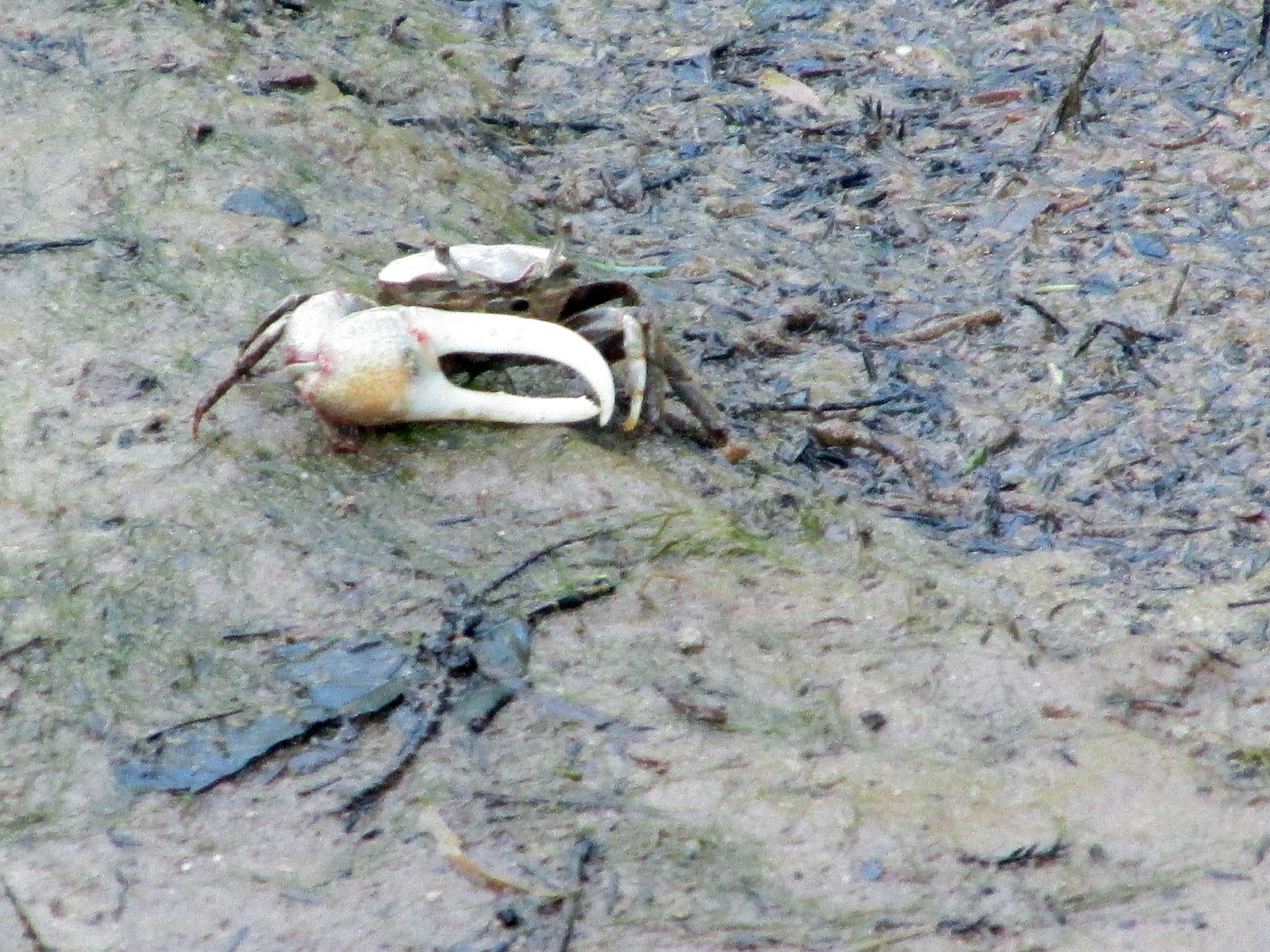
Fiddler Crab in the mud along one of the creeks in Brookgreen Gardens.
IMG_8437

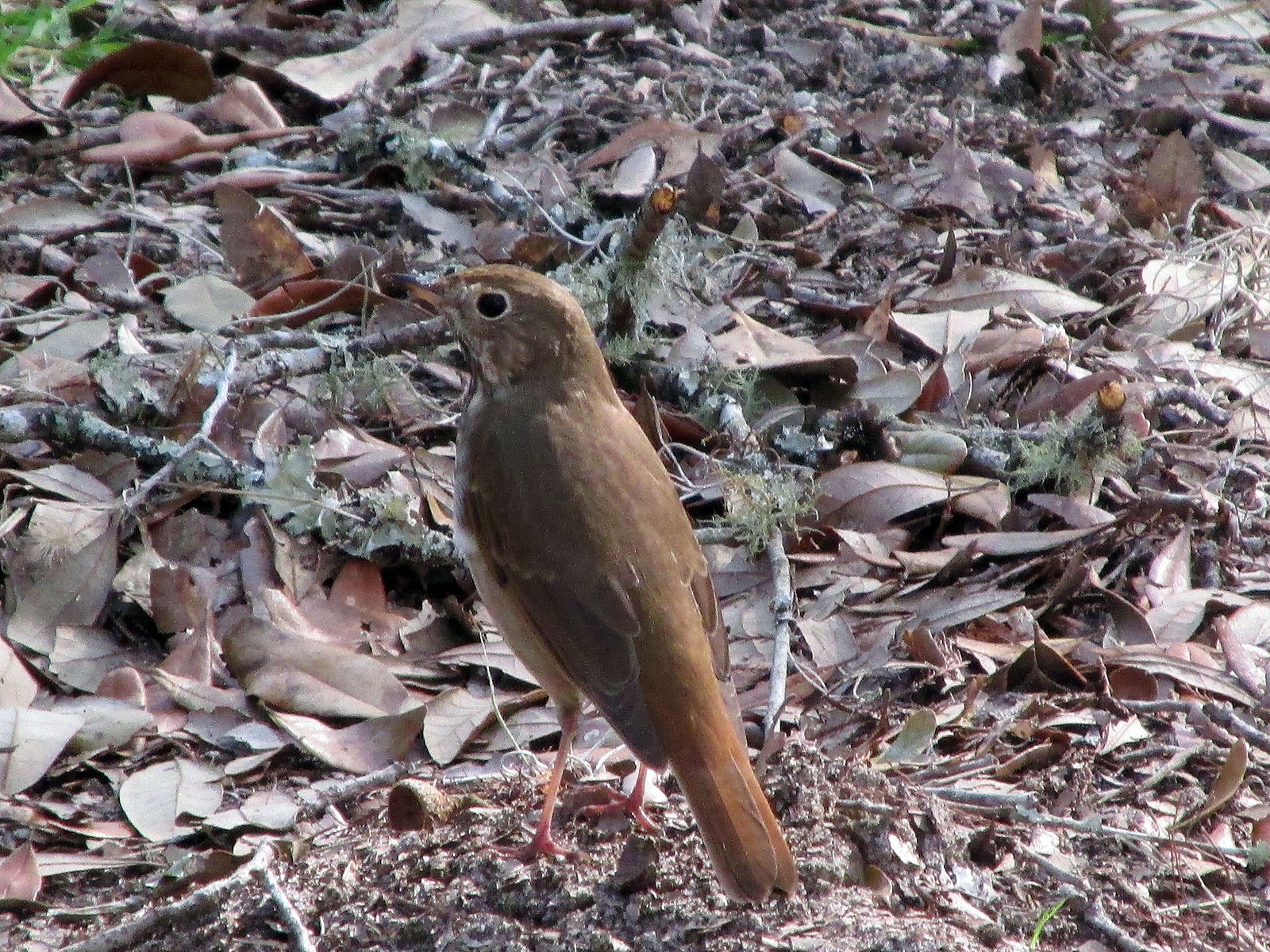
Hermit Thrush encountered along one of the nature trails.

IMG_5805

A Coastal Carolina Spiderlily in bloom in one of the wetlands within Brookgreen Gardens.

IMG_5283

The most common warbler in the spring at Brookgreen Gardens would probably be the Northern Parula, such as the male pictured here.

IMG_5794

Great Horned Owl on display in the zoo.

IMG_5310

Brown Thrashers are a common bird at Brookgreen Gardens.

IMG_5291

Northern Cardinals are quite at home within the well-planted gardens.

IMG_4667

Many wildflowers, such as this wild clematis, are on view along with the blooms in the carefully tended gardens.

IMG_5249

If nothing else does the trick, the charismatic Southern Fox Squirrel will keep you wanting to make return visits to Brookgreen Gardens.
IMG_0005

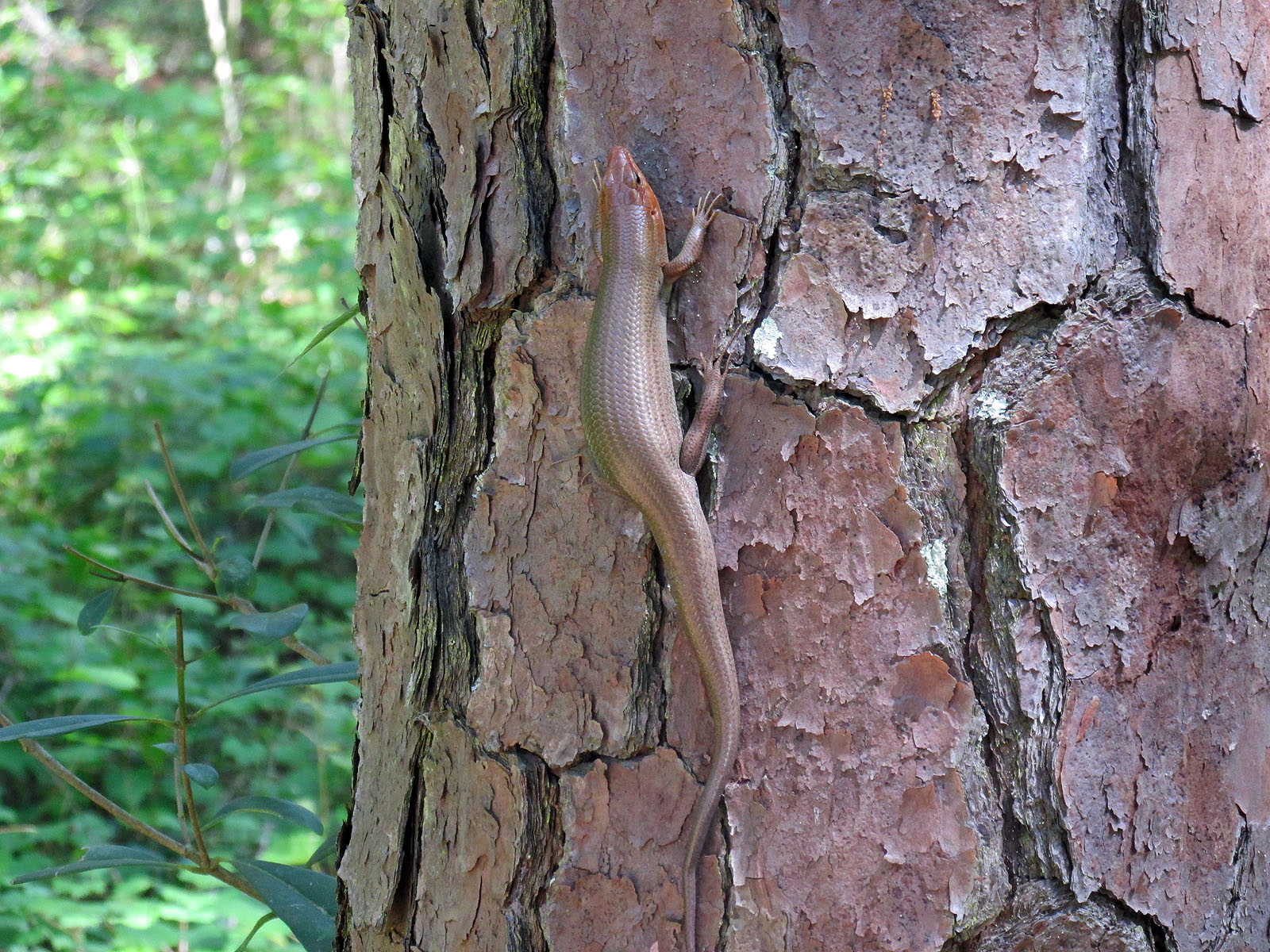
A Broad-headed Skink was one of many reptiles active in the gardens and along the nature trails.



Late-season Spring Bird Count finds 150 species

BG-Gnat-April25

Photo by Bryan Stevens                                                      Blue-gray Gnatcatchers, nesting birds during the summer season, showed up in good numbers for the Spring Bird Count.

The 72nd consecutive Elizabethton Spring Bird Count was conducted on Saturday, May 9, by members and friends of the Lee and Lois Herndon Chapter of Tennessee Ornithological Society.

This year’s count was held about two weeks later than usual, thus altering the occurrence or numbers of some species. Rick Knight, the long-time compiler for the count, noted that there were fewer wintering ducks and sparrows, but more of the late-arriving migrants, such as cuckoos, Empidonax flycatchers, orioles and certain warblers.

ScarTanager-Count

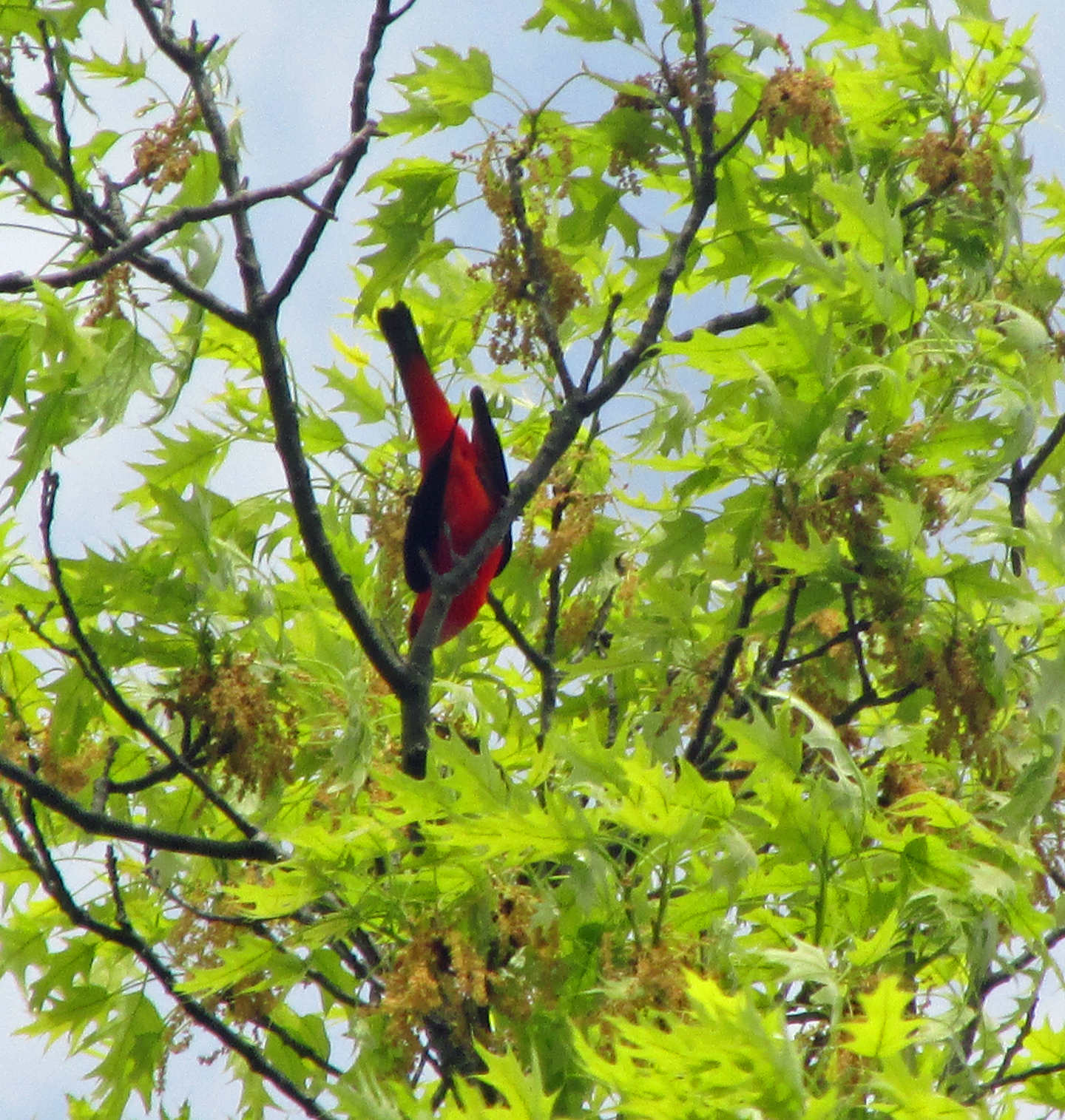
Photo by Bryan Stevens                                                 A male Scarlet Tanager engaged in a mating display in trees growing on the slopes of Holston Mountain.

A total of 43 observers in 10 parties covered Carter County and parts of adjacent Johnson, Sullivan, Unicoi and Washington counties. A total of 150 species was tallied, slightly above the average of 147 over the last 30 years. The all-time high count was 161 species in 2005. A total of 150 species or more has been reached 10 of last 12 years.

I began the morning by leading a bird walk at Sycamore Shoals State Historic Park in Elizabethton, adding the birds seen during the walk to the count total for my group. During the afternoon, my group visited Holston Mountain. I enjoyed seeing several Scarlet Tanagers, American Redstarts, Rose-breasted Grosbeaks and Chestnut-sided Warblers while on the mountain.

IMG_3169

Photo by Bryan Stevens                                      A male Baltimore Oriole sings from the top of a tree.

Nevertheless, there were some notable misses, including Osprey, which was absent for only the second time since 1964, as well as the third miss for Ruby-crowned Kinglet since 1981. Savannah Sparrow was missed for the first time since 1970 while Swamp Sparrow was missed for the fourth time since 1965.
The numbers found of some species set new records. For instance, the 87 Great Blue Herons found on the count was the most ever tallied for a spring count, as were the 77 Black Vultures. Other birds setting new high-count numbers included Chuck-will’s-widow (16), Acadian Flycatcher (48), Great Crested Flycatcher (23), Warbling Vireo (18), Orchard Oriole (42) and Baltimore Oriole (28).
Semipalmated Plover made it onto this year’s count for the first time since 1994. A Black Tern represented only the third occurrence of this species on this annual account.
Some new trends are also becoming evident thanks to data from the annual counts. The local population of Cliff Swallows has exploded in recent years with 1,016 individuals tallied this year. Eurasian Collared-Dove has been found for nine consecutive years. Bald Eagles are nesting more frequently in the area. A total of 12 eagles, including nestlings, were found during the count.


HousieFinch

Photo by Bryan Stevens                                                            Three dozen House Finches, such as this male, were found during the Spring Bird Count.

The total list of species and numbers found follows:
Canada Goose, 322; Wood Duck, 51; American Wigeon, 3; Mallard, 128; Blue-winged Teal, 4; Bufflehead, 3; Ruffed Grouse, 3; Wild Turkey, 27; Common Loon, 2; Double-crested Cormorant, 97; Great Blue Heron, 87; Green Heron, 17; and Yellow-crowned Night-heron, 6.
American Kestrel, 7; Black Vulture, 77; Turkey Vulture, 109; Sharp-shinned Hawk, 1; Cooper’s Hawk, 1; Bald Eagle, 12; Broad-winged Hawk, 17; and Red-tailed Hawk, 18.

Virginia Rail, 1; Sora, 2; American Coot, 1; Semipalmated Plover, 2; Killdeer, 41; Spotted Sandpiper, 55; Solitary Sandpiper, 17; and Least Sandpiper, 5.
Ring-billed Gull, 3; Black Tern, 1; Rock Pigeon, 88; Eurasian Collared-Dove, 3; Mourning Dove, 221; Yellow-billed Cuckoo, 12; and Black-billed Cuckoo, 1.
Barn Owl, 1; Eastern Screech-Owl, 9; Great Horned Owl, 2; Barred Owl, 4; Northern Saw-whet Owl, 1; Common Nighthawk, 2; Chuck-will’s-widow, 16; and Eastern Whip-poor-will, 32.


EBluebird-Spring

Photo by Bryan Stevens              A male Eastern Bluebird perches on a fence post.

Chimney Swift, 179; Ruby-throated Hummingbird, 22; Belted Kingfisher, 10; Red-headed Woodpecker, 2; Red-bellied Woodpecker, 69; Yellow-bellied Sapsucker, 5; Downy Woodpecker, 22; Hairy Woodpecker, 15; Northern Flicker, 18; and Pileated Woodpecker, 29.
Eastern Wood-Pewee, 36; Acadian Flycatcher, 48; Willow Flycatcher, 5; Least Flycatcher, 6; Eastern Phoebe, 54; Great Crested Flycatcher, 23; and Eastern Kingbird, 72.
Loggerhead Shrike, 2; White-eyed Vireo, 10; Yellow-throated Vireo, 12; Blue-headed Vireo, 45; Warbling Vireo, 18; and Red-eyed Vireo, 168.

Grosbeak_Roan

Photo by Bryan Stevens                                      A male Rose-breasted Grosbeak sings from the branches of a tall tree.

Blue Jay, 134; American Crow, 307; Common Raven, 12; Northern Rough-winged Swallow, 84; Purple Martin, 49; Tree Swallow, 174; Barn Swallow, 141; and Cliff Swallow, 1,016.
Carolina Chickadee, 81; Tufted Titmouse, 103; Red-breasted Nuthatch, 5; White-breasted Nuthatch, 21; Brown Creeper, 7; House Wren, 42; Winter Wren, 2; and Carolina Wren, 92.
Blue-gray Gnatcatcher, 69; Golden-crowned Kinglet, 9; Eastern Bluebird, 112; Veery, 22; Gray-cheeked Thrush, 1; Swainson’s Thrush, 2; Hermit Thrush, 2; Wood Thrush, 102; American Robin, 688; Gray Catbird, 65; Northern Mockingbird, 100; and Brown Thrasher, 49.
European Starling, 774; American Pipit, 1; and Cedar Waxwing, 302.
Ovenbird, 135; Worm-eating Warbler, 31; Louisiana Waterthrush, 16; Northern Waterthrush, 2; Golden-winged Warbler, 3; Black-and-white Warbler, 63; Swainson’s Warbler, 6; Kentucky Warbler, 2; Common Yellowthroat, 31; Hooded Warbler, 100; American Redstart, 13; Cape May Warbler, 3; Northern Parula, 29; Magnolia Warbler, 4; Blackburnian Warbler, 5; Yellow Warbler, 14; Chestnut-sided Warbler, 41; Blackpoll Warbler, 2; Black-throated Blue Warbler, 59; Palm Warbler, 1; Pine Warbler, 8; Yellow-rumped Warbler, 3; Yellow-throated Warbler, 31; Prairie Warbler, 5; Black-throated Green Warbler, 54; Canada Warbler, 48; and Yellow-breasted Chat, 7.


Rb-Wood-Nest

Photo by Bryan Stevens                      Year-round resident birds, such as this nesting Red-bellied Woodpecker, were part of the Spring Bird Count.

Eastern Towhee, 169; Chipping Sparrow, 96; Field Sparrow, 50; Grasshopper Sparrow, 3; Song Sparrow, 220; White-throated Sparrow, 1; White-crowned Sparrow, 2; and Dark-eyed Junco, 51.
Summer Tanager, 1; Scarlet Tanager, 71; Northern Cardinal, 203; Rose-breasted Grosbeak, 15; Blue Grosbeak, 7; Indigo Bunting, 174; Dickcissel, 1; Red-winged Blackbird, 269; Eastern Meadowlark, 120; Common Grackle, 233; Brown-headed Cowbird, 81; Orchard Oriole, 42; and Baltimore Oriole, 28.
House Finch, 36; Pine Siskin, 14; American Goldfinch, 155; and House Sparrow, 61.

Diversity of birds a plus for Hungry Mother State Park’s launch of birding festival

IMG_3203

Photo by Bryan Stevens                                                                 A singing male Orchard Oriole entertained festival attendees during a Saturday morning bird walk.

I’m just back from attending the first-ever Birding Festival at Hungry Mother State Park. It was a wonderful weekend filled with exciting observations of birds such as Baltimore Oriole, Orchard’s Oriole, Great Egret, Solitary Sandpiper, Spotted Sandpiper, Red-breasted Mergansers and even a pair of nesting Blue-gray Gnatcatchers.

IMG_3171

Photo by Bryan Stevens                                      “I think we’re safe,” said one Northern Rough-winged Swallow to the other. “Swallows don’t have arms.”

The park is located in Smyth County near the town of Marion, Virginia, and is accessible just off of Route 16 near interstate 81. The park offers visitors more than 2,000 acres of wooded mountainous terrain, a large lake, several miles of trails for hiking and biking, a conference center, camping, picnicking, a lakeside beach for swimming, and a discovery center to learn about the area.

The festival, which was held Friday-Sunday, May 1-3, meshed nicely with other recreational opportunities offered at HMSP. Tanya Hall, the Chief Ranger of Visitor Experience, noted that  Hungry Mother is one of the more popular parks in Virginia.

IMG_3721

Photo by Bryan Stevens                   A kayaker glides across Hungry Mother Lake.

“We have 18 miles of trails that you can either hike or bike and we have a 108-acre lake that has various species of fish available to catch,” Hall noted.

Sport fish in the lake including largemouth, smallmouth and spotted bass, as well as crappie, channel catfish, carp, sunfish, rock bass, muskellunge, and walleye.

The lake is also a favorite destination for swimmers, canoeists, kayakers and paddleboarders, which were all in evidence during this weekend’s events.

Hall said the park is also fortunate to have an “awesome interpretation department” that hosts numerous programs each day that are offered not only to camping and cabin guests, but also to the public.

IMG_3718

Photo by Bryan Stevens                                  The Hungry Mother State Park Restaurant, which offers lunch, dinner and a Sunday brunch.

Hall said the park also has one of the most unique names of all Virginia’s state parks. There’s also a unique legend tied to the name, which is associated with Molly’s Knob, the highest point in the park.

IMG_9078

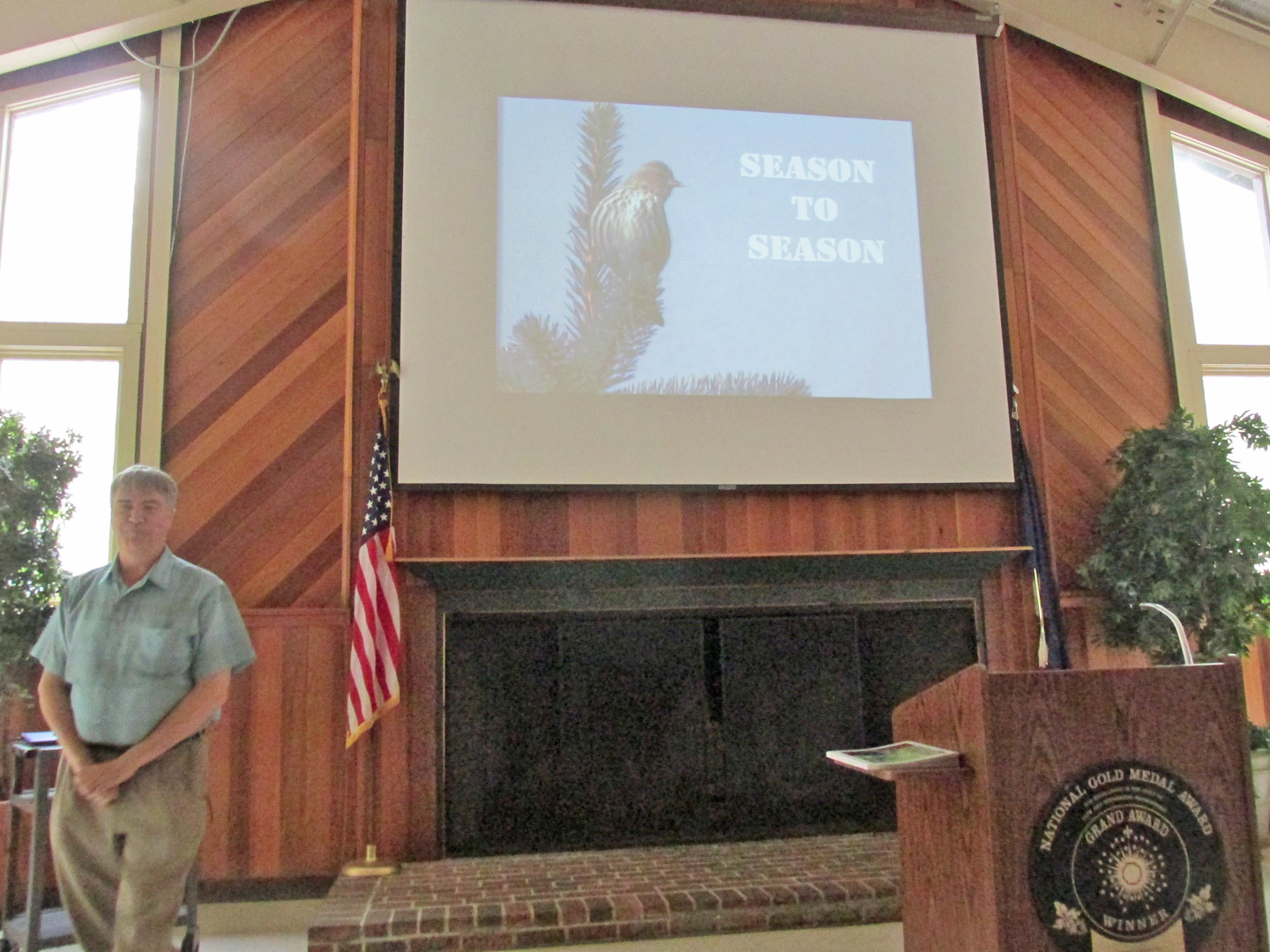
Photo by David Thometz                             Beginning my pictorial program, “Season to Season,” for the Friday evening audience at the Hungry Mother State Park Birding Festival.

According to local legend,  Indians destroyed several settlements on the New River south of the park, resulting in Molly Marley and her small child being taken to the raiders’ base north of the park. Molly and her child eventually escaped and wandered through the wilderness, surviving by eating berries. Molly finally collapsed and her child wandered down a creek until she found help. The only words she could impart to rescuers were “Hungry Mother.” Unfortunately, by the time a rescue party arrived at the foot of the mountain where she had collapsed, they found Molly dead. Today, the mountain is called Molly’s Knob and the stream is known as Hungry Mother Creek. So, when the park was developed in the 1930s, a dam was constructed to block the creek and form Hungry Mother Lake. The legend also provided the name for this very unique park.

IMG_9091

Photo by David Thometz                                                    Looking for Virginia Rails at the wetlands at Saltville.

I presented a program on birds and nature through all four of the seasons. I got to meet many people that I have corresponded with through Facebook and email. I also got to meet some interesting new people.

The festival also featured Richard Moncrief, who is the Birding and Nature Observation Market Manager for Carl Zeiss Sports Optics. Montcrief presented two programs on “Binocular Know How” and a very informative and entertaining “Birding Basics.” Some local Master Naturalists, including Melanie Smith and Randy Smith, gave programs on “Birding by Ear” and “Backyard Birding.”

Another highlight of the festival included an excursion to nearby Saltville to bird the wetlands in that historic southwest Virginia town.

I overheard plenty of discussion that the festival should become an annual event, and I certainly concur with that sentiment. I know I’d like to visit again next May.

IMG_9162

Photo by David Thometz                                                                                                                      Trying to get that perfect angle for a photo.

IMG_3169

Photo by Bryan Stevens                                                                                                                                A male Baltimore Oriole sings from the top of a tall tree.

IMG_9117

Photo by David Thometz                                                                                                                                  If you look in the right corner of this outdoor fireplace, you’ll find a Mallard hen that has chosen an unusual nesting location.

IMG_3206

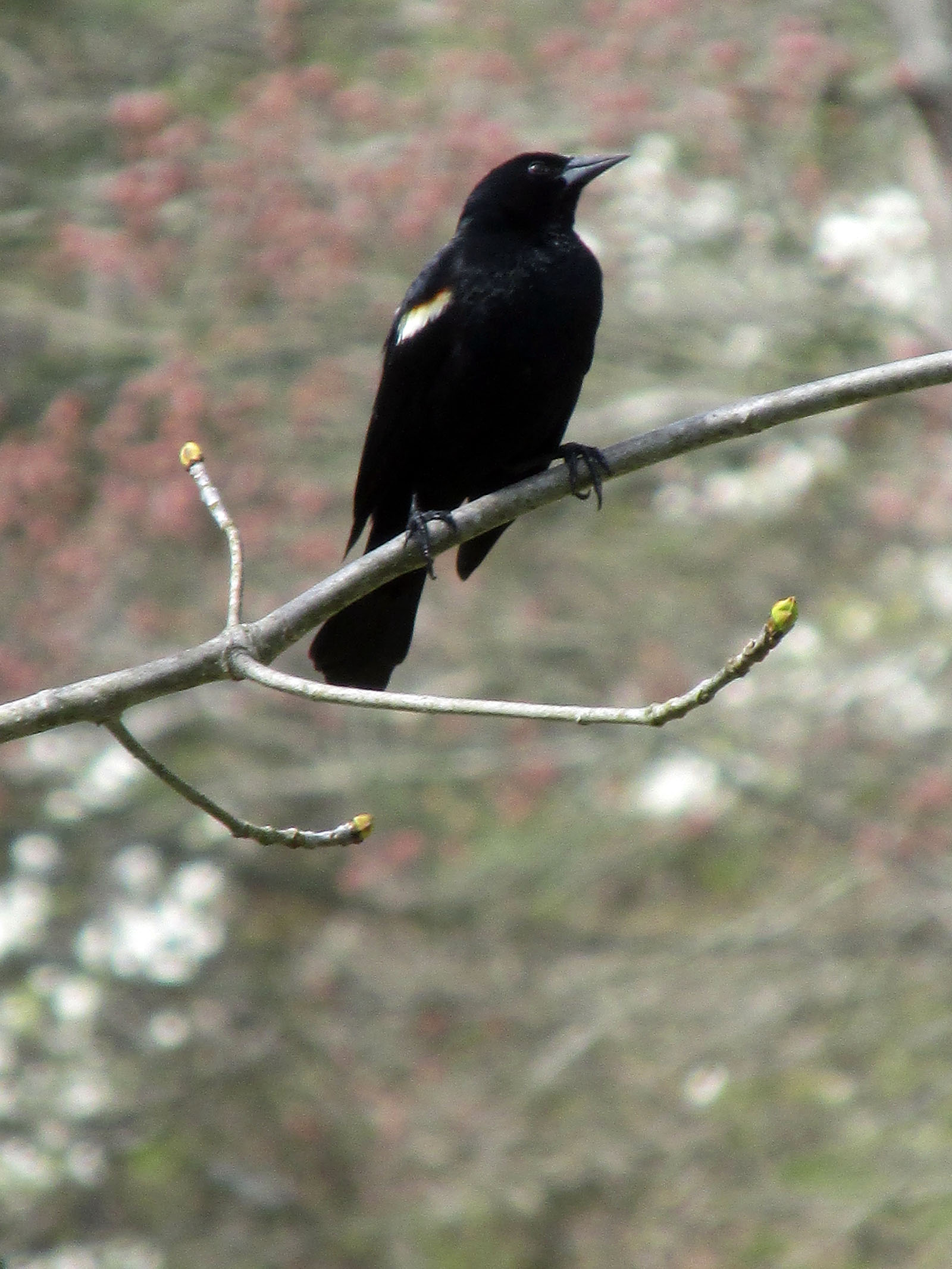
Photo by Bryan Stevens              Red-winged Blackbird

IMG_3162

Orchard Oriole


IMG_3307

Great Egret

IMG_3192

Eastern Kingbird

IMG_3133

Sign promoting activities during the Birding Festival.


Annual rally returning to Roan Mountain for last weekend in April

TroutLily-Drops

Photo by Bryan Stevens                                                         Wildflowers, like this Trout Lily, are always a major draw for the Spring Naturalists Rally.

The 57th annual Roan Mountain Spring Naturalists Rally will continue the tradition of offering nature enthusiasts the opportunity to enjoy field trips and engaging programs that cover many aspects of the natural history of Roan Mountain and the surrounding area. The three-day event is scheduled from Friday-Sunday, April 24-April 26.

Serving as co-directors for the spring event will be Jennifer Bauer and James Neves.

Neves noted that this year’s rally promises many exciting activities.

Crossbill-Two

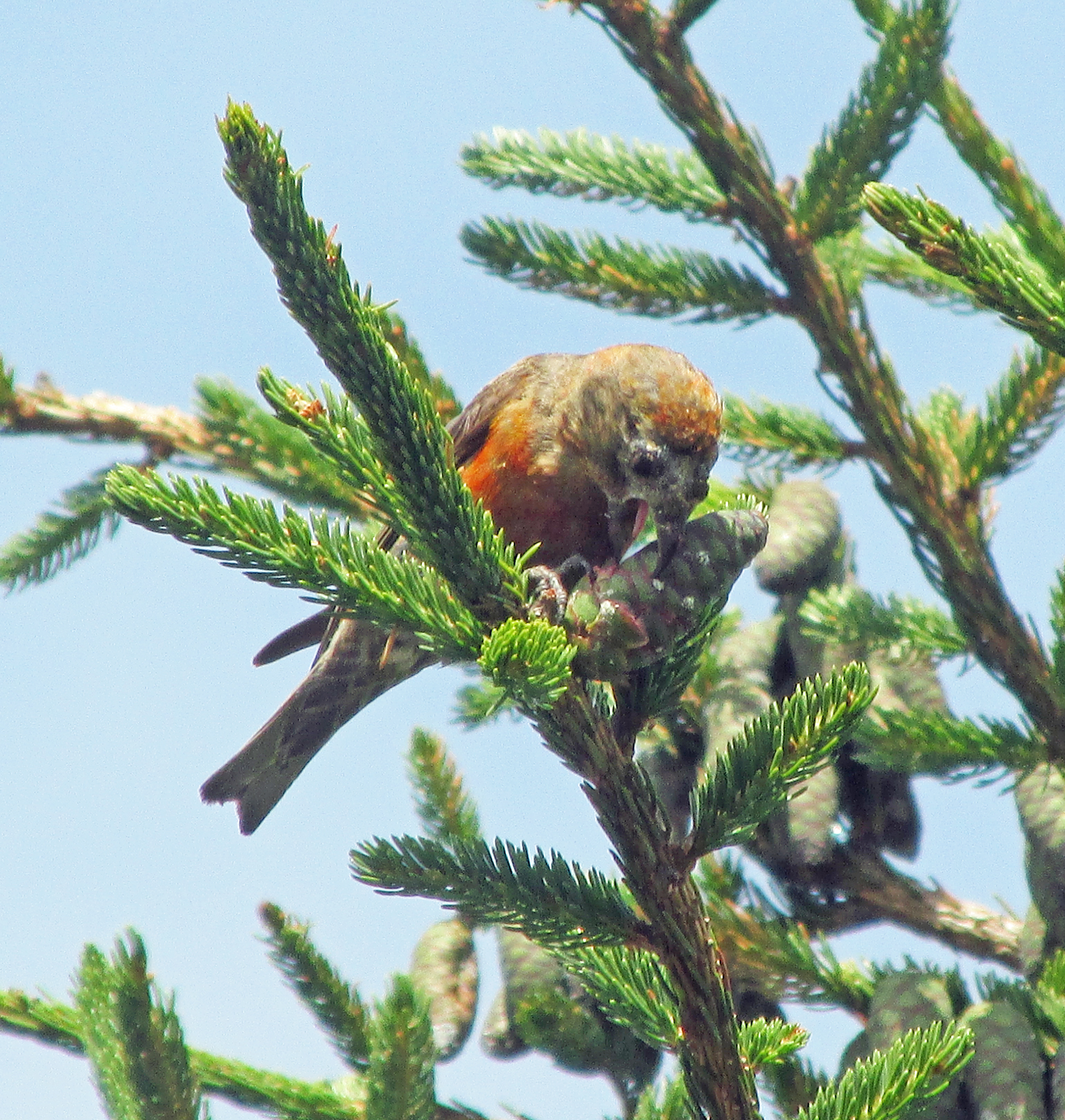
Photo by Bryan Stevens                              Red Crossbills are among the many species of birds that call Roan home.

“Friday night we’ll be honoring the memory and many contributions that Ed Schell made to the Naturalists Rallies and Friends of Roan Mountain, as well as many other organizations that fostered the love the environment such as the Southern Appalachian Highlands Conservancy and Tennessee Native Plant Society,” Neves said. “On Sunday, Gabrielle Zeiger and Mick Whitelaw will lead a memorial hike into the Doe River Gorge, a field trip Ed added to the naturalist rally field trip list.”

For the second consecutive year, the rally is being held on the third weekend of April. “We made the switch because the peak bloom of the early spring wildflowers has been trending to earlier dates,” Neves noted.

The Roan Mountain State Park’s Conference Center will host programs, meals, information booths and registration, while field trips will leave from the field on the left before entrance to the cabins in the park. Registration will also be available at the field prior to the field trip departures.

“A special note should be made that the hike that Marty Silver will lead to Yellow Mountain Gap is about eight miles, longer than the five miles listed in the program mailer,” Neves said. “Participants should bring a lunch and their sense of humor. Marty is not only a great Tennessee Park Ranger and naturalist, he’s also a knowledge bank of jokes and anecdotes.”

Neves said Dan Dourson will return to lead his field trip covering land snails and invertebrates on Saturday afternoon.

“Even the most curious among naturalists might raise an eyebrow wondering how exciting looking at snails can be, but Dan converted us all last year after his wonderful program and entertaining field trip,” Neves said. “We’re very happy he is returning this year.”

Millipede-Rainy

Photo by Bryan Stevens                     A millipede crawls over wet leaves.

Because of the continued support of the Friends of Roan Mountain, the Naturalists Rallies have the resources they need to prosper and grow. The Friends of Roan Mountain also provides support for research and restoration projects on the Roan.

Consider joining the Friends of Roan Mountain, if you are not a member. Members receive free admission to all Naturalists Rally events and our newsletter, “Friends of Roan Mountain.”

“We also thank the staff at Roan Mountain State Park for their time and help in making the rally possible,” Neves said.

“The Spring Naturalists Rally is fun for the whole family,” Neves said. “Our friendly group of hike leaders and volunteers look forward to seeing you.”

Randy+Hedgepath+-The+Naturalist+(2)

Randy Hedgepath

The Friday evening program will be presented by Randy Hedgepath, who will place the spotlight on the Tennessee River. Hedgepath, State Naturalist for Tennessee State Parks, will present a photographic and narrative program on the watershed of Tennessee’s namesake river. Flowing down from the highest mountains in the eastern United States, our streams make a long journey to the largest river in the country. Along the way are outstanding natural landmarks and a cross section of our history and culture. Travel with the water of the Doe and Watauga in this entertaining program.

Hedgepath is a native of West Tennessee where the family farm was just 15 miles from the Tennessee River. After graduating from UT-Martin and working seasonally for several years for the National Park Service, he has spent the last 31 years with state parks. He worked as a ranger/naturalist at South Cumberland State Park on the Cumberland Plateau and at Radnor Lake Natural Area in Nashville until 2007 when he was given the opportunity to be the statewide naturalist for the state park system.

Saturday’s evening program will be presented by Tavia Cathcart Brown, who will educate on the topic of “How Flowers Flirt and Flourish: The Tricks and Trials of Floral Reproduction.”

Tavia%20Cathcart-Brown

Tavia Cathcart Brown

Her presentation will describe how flowers use color, scent, shape, and tricks to attract pollinators. Brown is Executive Director of Creasey Mahan Nature Preserve in Goshen, Ky., where she has established a two-acre Woodland Garden that highlights native wildflowers and ferns. The Nature Preserve hosted a record number of 38,000 visitors in 2014. Brown is highly regarded as a lecturer, educator, writer, and photographer. She routinely offers lectures on wildflowers, flora-lore, creating woodland gardens, and gardening with native plants to regional and national groups that include gardeners, college students, and academic audiences. She is co-author and the lead photographer of Bernheim Arboretum and Research Forest, winner of a 2011 Gold Nautilus Book Award, and co-author of the 16-state field guide Wildflowers of Tennessee, the Ohio Valley, and Southern Appalachians, which covers 16 states, 1,250 wildflowers, and presents 800 photographs.

SongSparrow-April11

Photo by Bryan Stevens                Song Sparrow gets ready to sign from an open perch.

She currently is writing and taking photographs for her third book, titled How Flowers Flirt and Flourish – The Tricks and Trials of Floral Reproduction. She was selected as “Today’s Woman” in the September 2011 issue of Today’s Woman magazine, is serving her third term on the executive board of the Louisville Audubon Society, and is on the board of the Prospect Area Chamber of Commerce. She considers herself a very lucky woman to be married to Matthew H. Brown. They garden and live on a family farm in Louisville.

The rally will kick off with registration at 5:30 p.m., Friday, April 24, at the Roan Mountain State Park Conference Center. Dinner, which will be catered by City Market of Elizabethton, will be served at 6:30 p.m. Hedgepeth’s program on the Tennessee River will commence at 7:30 p.m.

Following the evening program, Larry McDaniel and Merrill Lynch will conduct a “Moth Party” to inform participants about these and other nocturnal insects.

On Saturday, April 25, a variety of morning and afternoon hikes, programs and activities will be held, focusing on a diverse selection of topics, including birds, snails, wildflowers, butterflies, dragonflies, aquatic insects, geology and much more.

On Saturday evening, dinner will once again be held at 6:30 p.m. Brown’s program on wildflower reproduction will commence at 7:30 p.m.

Following the evening program, ETSU professor Gary Henson will conduct a “Viewing of the Summer Skies” from the Dave Miller Homestead. In addition, McDaniel and Lynch will conduct another “Moth Party” at the Conference Center.

DutchmanBreehces

Photo by Bryan Stevens Dutchman’s Breeches are among the many wildflowers that are usually in bloom on the Roan during the annual rally.

On Sunday, April 26, field trips will depart/carpool from the field on the left of the cabin area entrance. Morning field trips will start at 8:30 and include Birds of Hampton Creek Cove by James Neves and the Ed Schell Memorial Doe River Gorge Wildflowers & Geology Hike with Gabrielle Zeiger and Mick Whitelaw. Afternoon field trips starting at 2 p.m. will include Salamanders with Dale Ledford and Butterflies and Dragonflies with Don Holt.

Pre-paid dinner reservations are necessary and must be received by Tuesday, April 21. Cost for each meal is $9 for adults and $5 for children six and under. The Friday menu consists of Grilled or Breaded Chicken, vegetable selection, salad, bread, dessert and drink. The Saturday menu consists of roast pork or veggie lasagna, vegetable selection, salad, bread, dessert and drink. Sandwich bag lunches for Saturday are available for $6.

For a downloadable reservation form, visit http://www.friendsofroanmtn.org/Spring%20Brochure%202015.pdf and mail completed reservation form to Friends of Roan Mountain, Nancy Barrigar, Treasurer, 703 Allen Avenue, Elizabethton, TN 37643.

Friends of Roan Mountain members and children can attend all other Rally events at no charge. There is a $5 charge for non-members. For a full schedule of events, visit http://www.tnstateparks.com/parks/about/roan-mountain or call 772-0190.

This year’s upcoming Fall Naturalists Rally will celebrate the event’s golden anniversary. The 50th annual Roan Mountain Fall Naturalists Rally will be held Sept. 4-6, 2015. Next year, the 58th Annual Roan Mountain Spring Naturalists Rally will be held April 22-24, 2016.

Early March in Coastal South Carolina in Photos

TriColor-Surprise

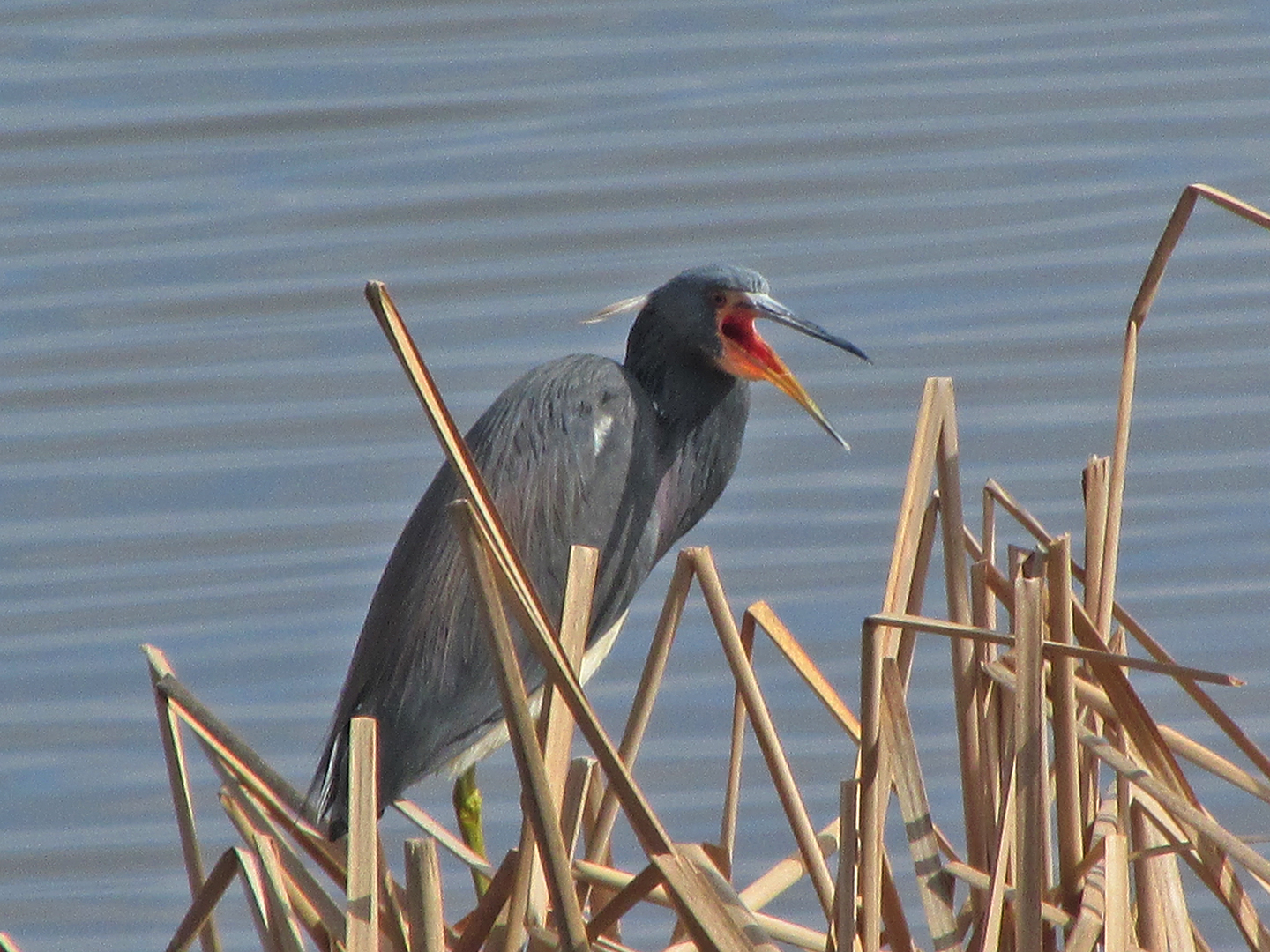
A Tri-Colored Heron gapes in the Carolina sunshine. These members of the heron/egret clan are coming into their nuptial plumage for the upcoming nesting season. During a seven-day state in Pawleys Island, S.C., I observed 100 species of birds, more than I could likely expect to find back in Northeast Tennessee at this time of the year.

Scaup

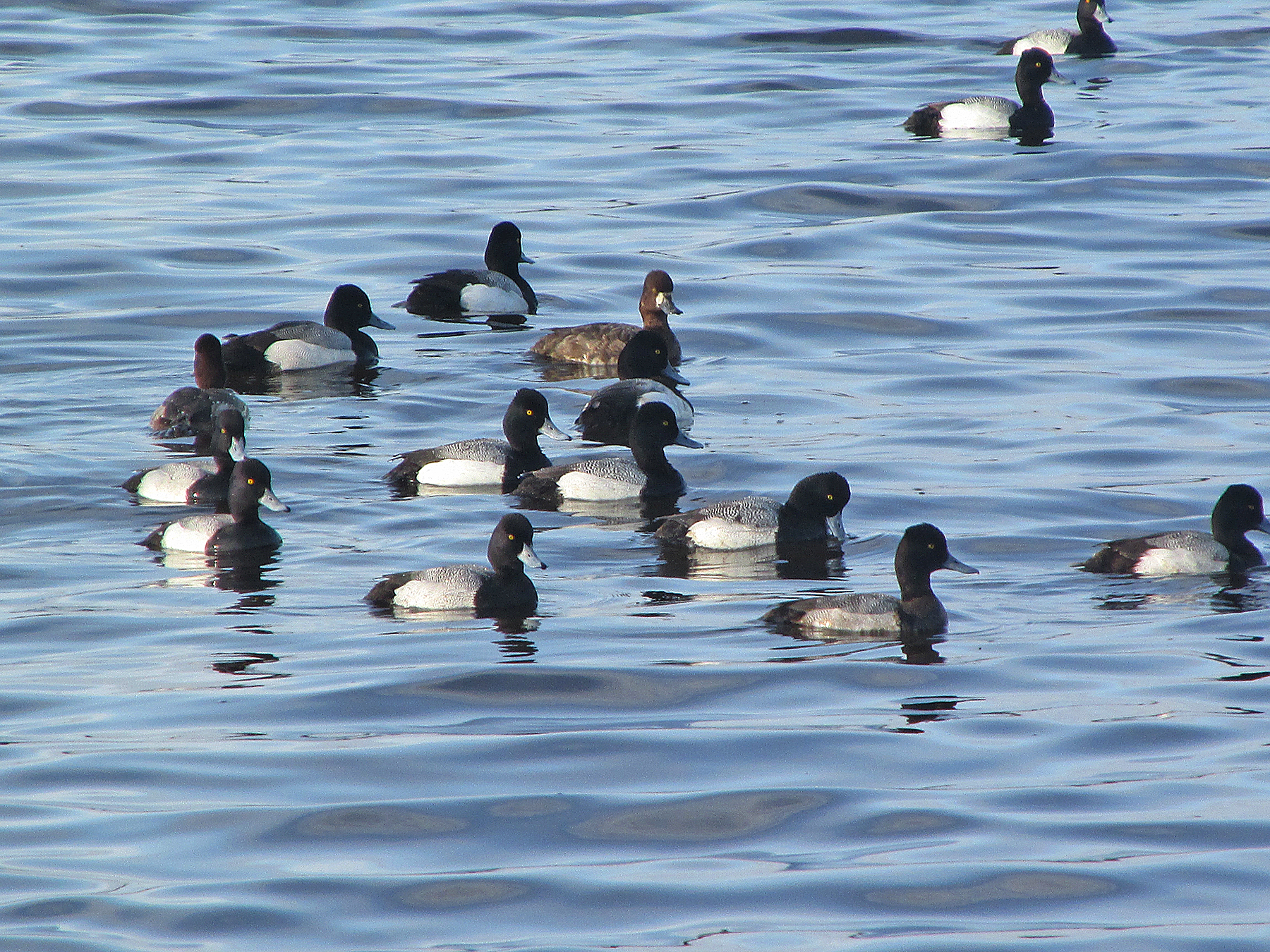
A raft of Lesser Scaup refresh in a shallow pond at Huntington Beach State Park in South Carolina. In early March, this diving duck was one of the most common in the park.


Egreta

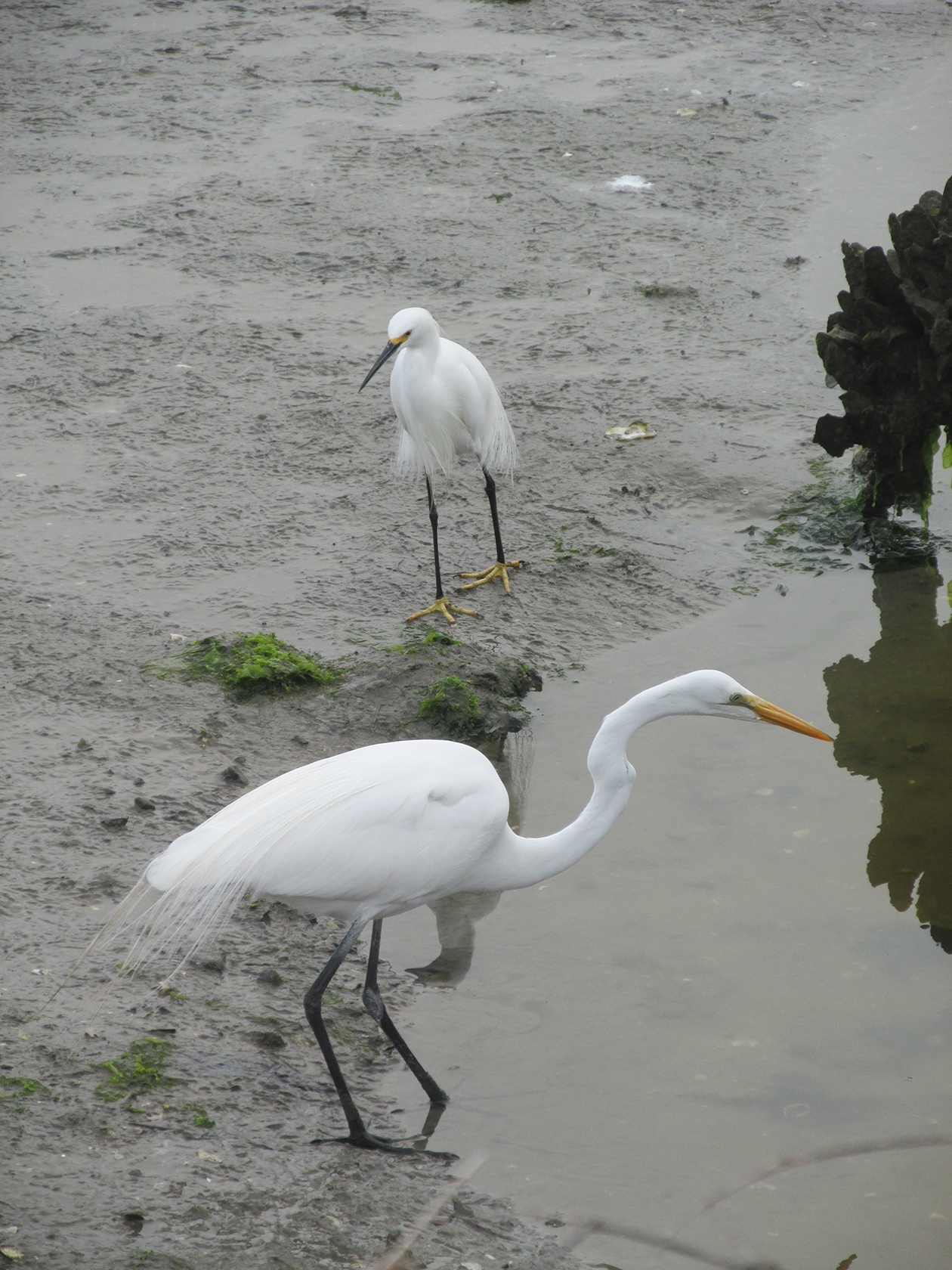
A Snowy Egret and Great Egret fish along the causeway at Huntington Beach State Park.

Yellowlegs

A Greater Yellowlegs forages in a tidal marsh pool during a migratory stop at Huntington Beach State Park. March is the month when many shorebirds start making their way as far north as the Arctic tundra for a brief albeit productive nesting season.

Coot-2

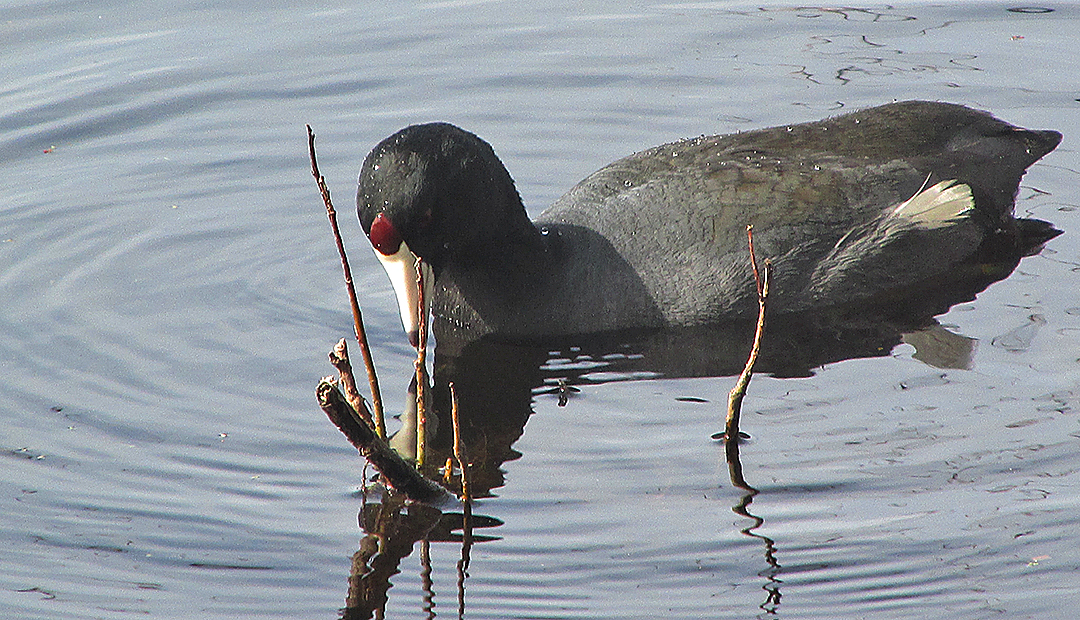
The American Coot is a common species of waterfowl in coastal South Carolina in March.

CommonGallinule

Common Gallinule, formerly known as the Common Moorhen, is fond of some of the flooded woodlands within Huntington Beach State Park.

Dowitchers

Short-billed Dowitchers make a feeding stop at Huntington Beach State Park. These birds were part of a flock that numbers close to 100 birds.

Osprey-Brook

The Osprey, also known as the Fish Eagle or Fish Hawk, is a common sight in the Carolina Low Country.

GreatBlue-Egret

A Great Blue Heron and Great Egret compete for prime fishing turf.

Hermit-Two

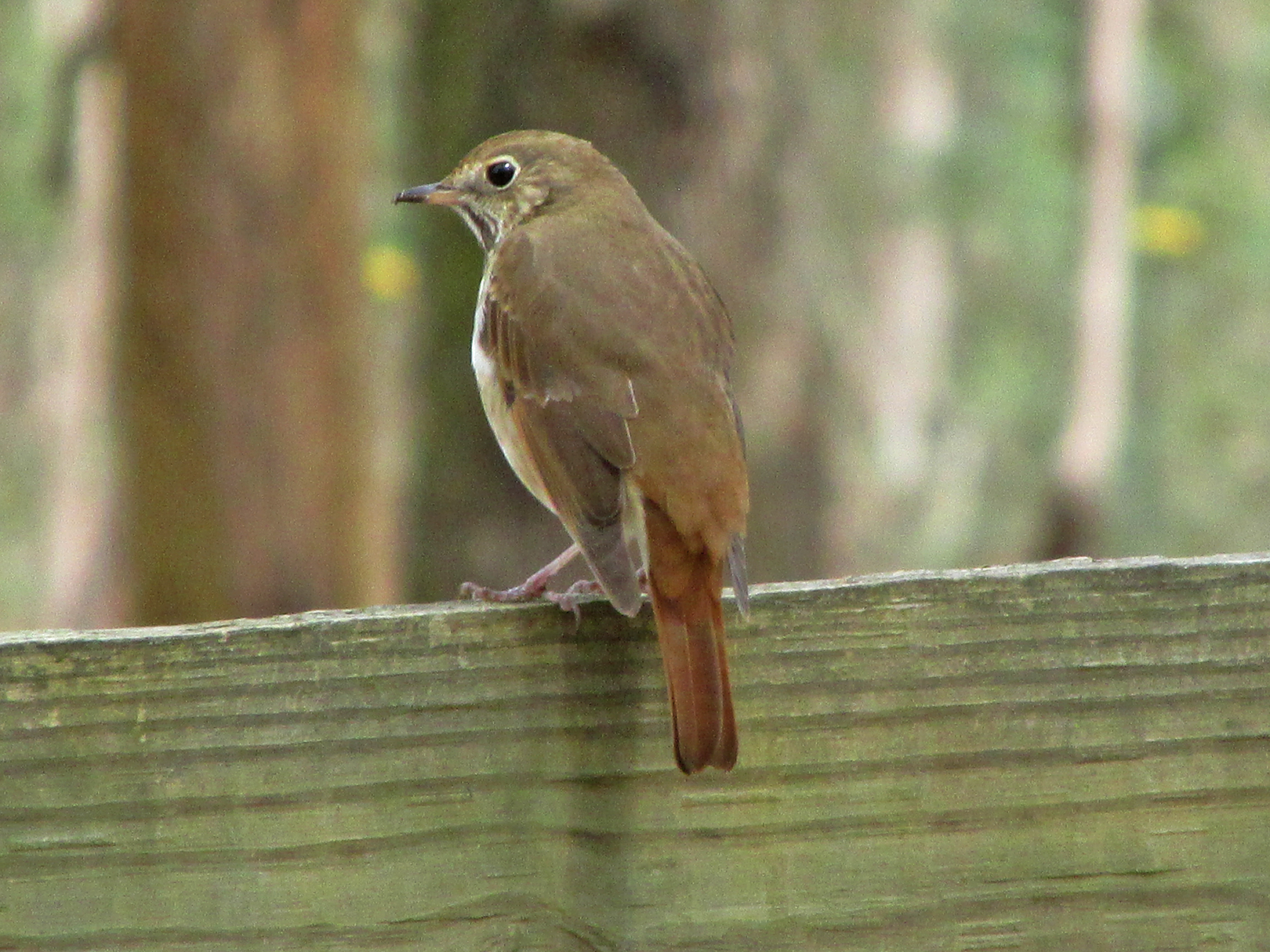
Winter songbirds, such as this Hermit Thrush at Brookgreen Gardens, will soon give way to returning summer nesting birds, such as warblers, vireos and other thrushes.

Snipe-1

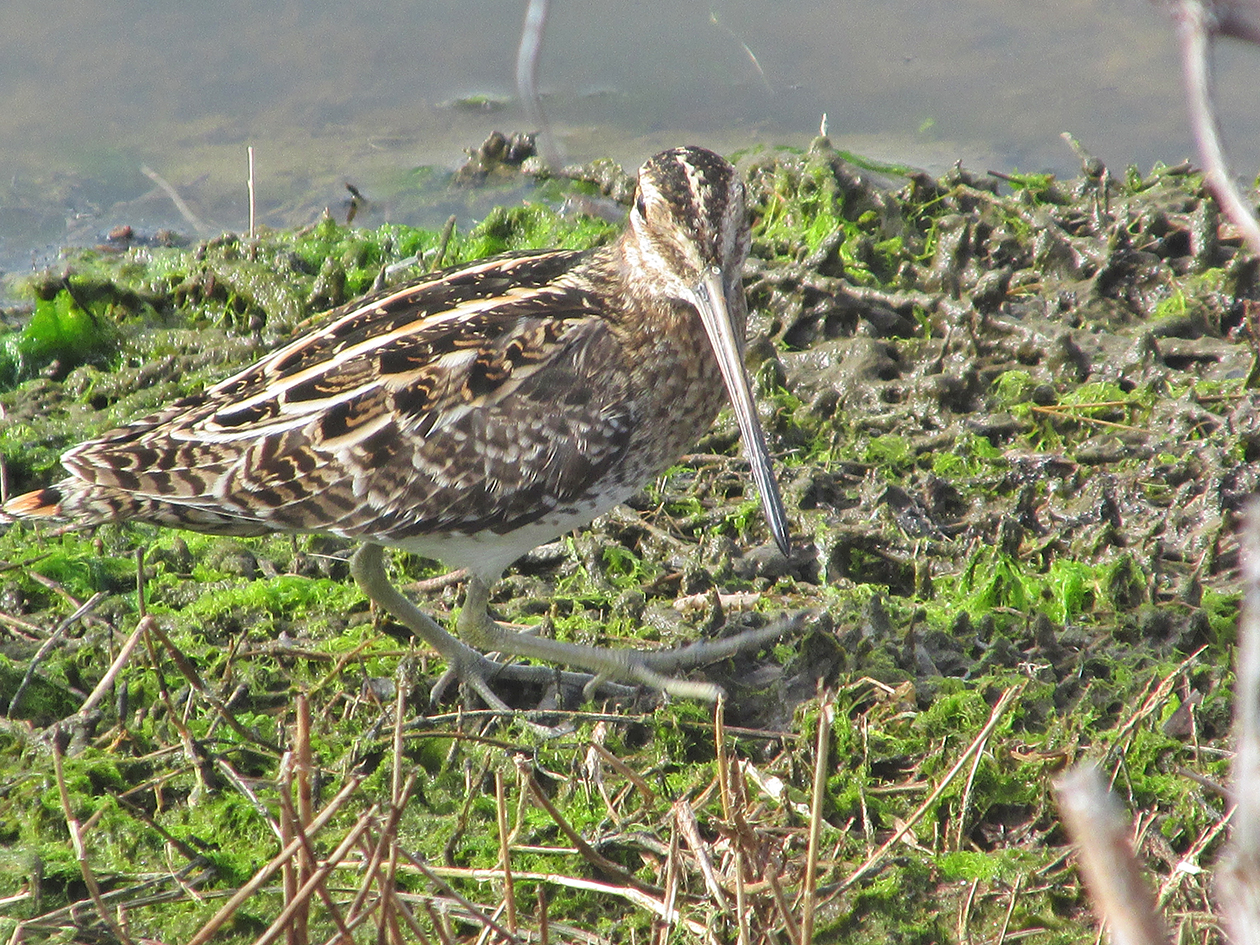
Didn’t think snipes were real? Well, the object of the mythical snipe hunt is very much a real creature. Pictured is a Wilson’s Snipe along the causeway at Huntington Beach State Park.

Sand-Dollar

Redwing-2

Red-winged Blackbirds and their loud calls are again ringing from the wetlands in the South Carolina Low Country.

Pelican=Reflected

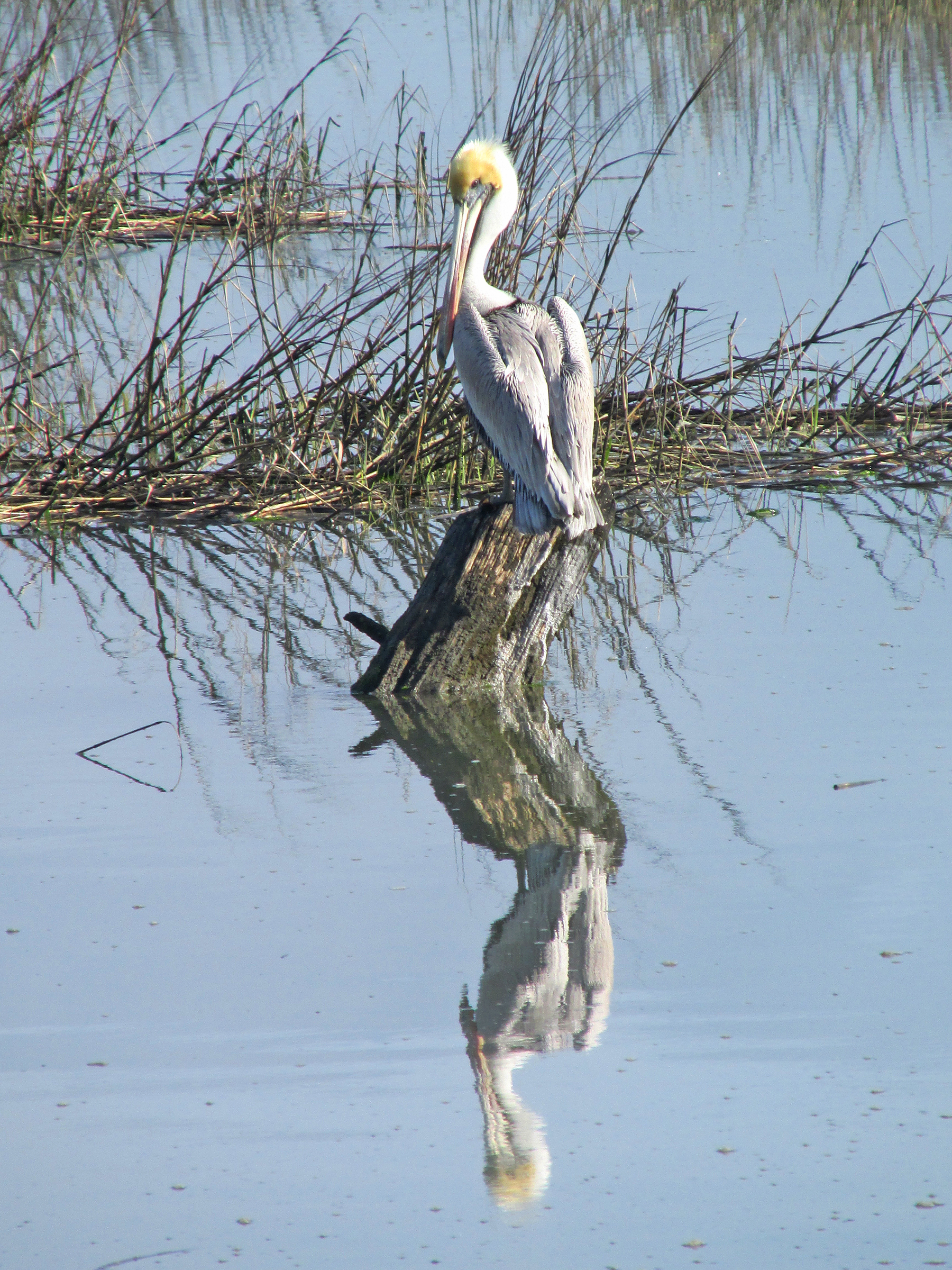
Brown Pelican perches in the marsh at Huntington Beach State Park.

Sculpture-Extra

Brookgreen Gardens is renowned for its display of sculptures. For Eastern Bluebirds, such as this pair, the works of art are simply convenient perches.

Grackles

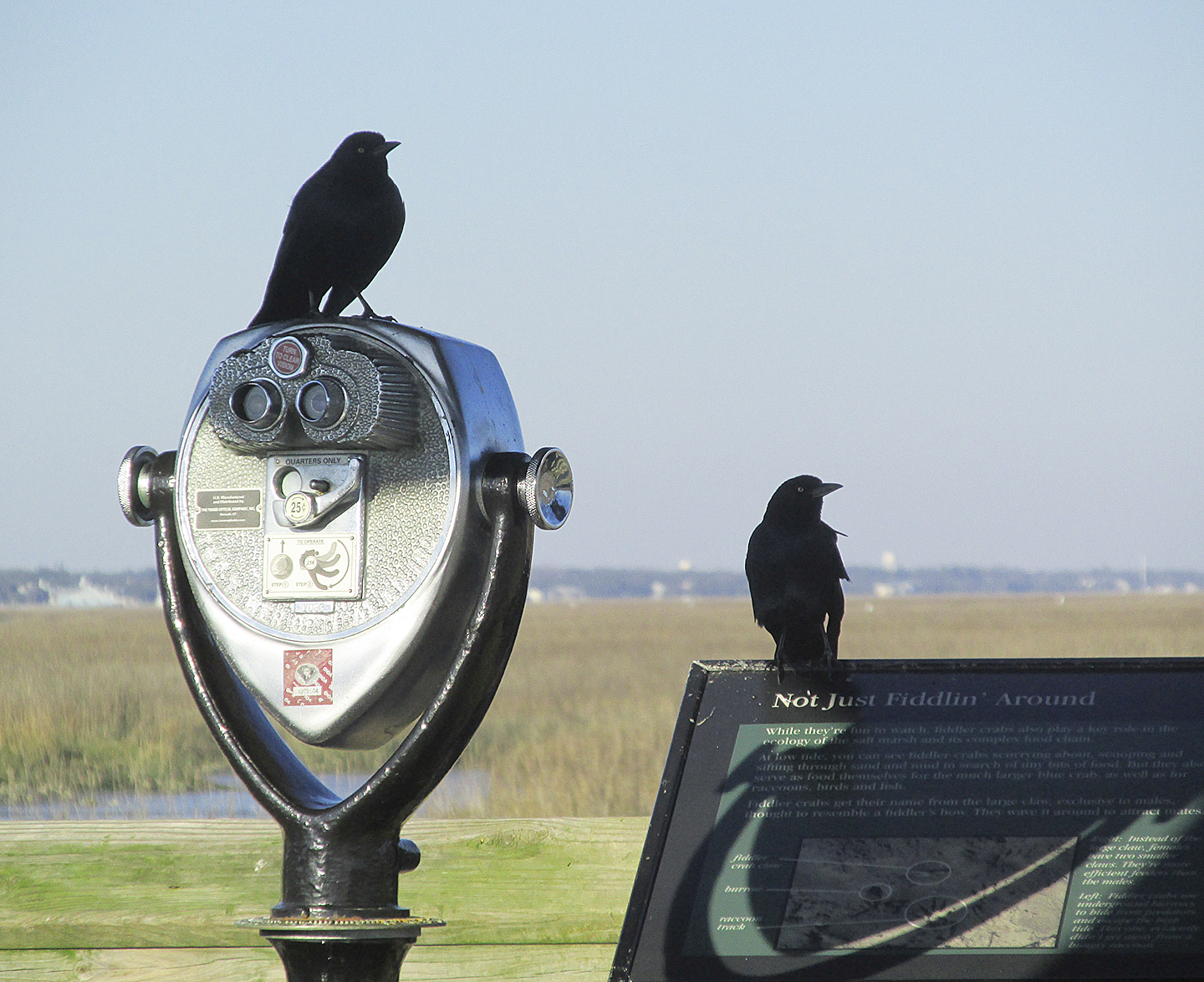
Boat-tailed Grackles perch on a scope and sign at Huntington Beach State Park.

WhitePelican

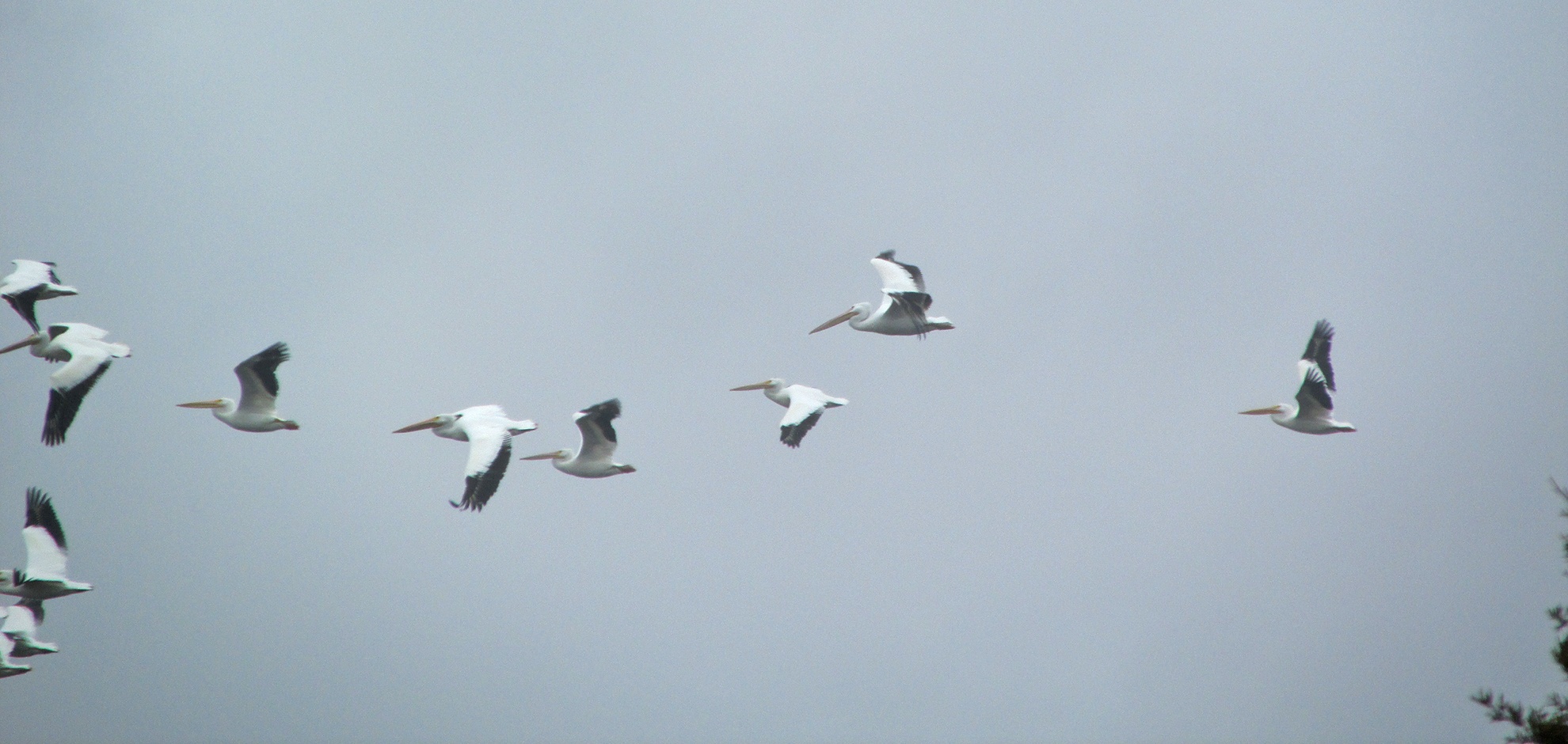
Birding in the transitional period between seasons can also bring unexpected surprises, such as a sighting of White Pelicans at Huntington Beach State Park.

Turkeys-3

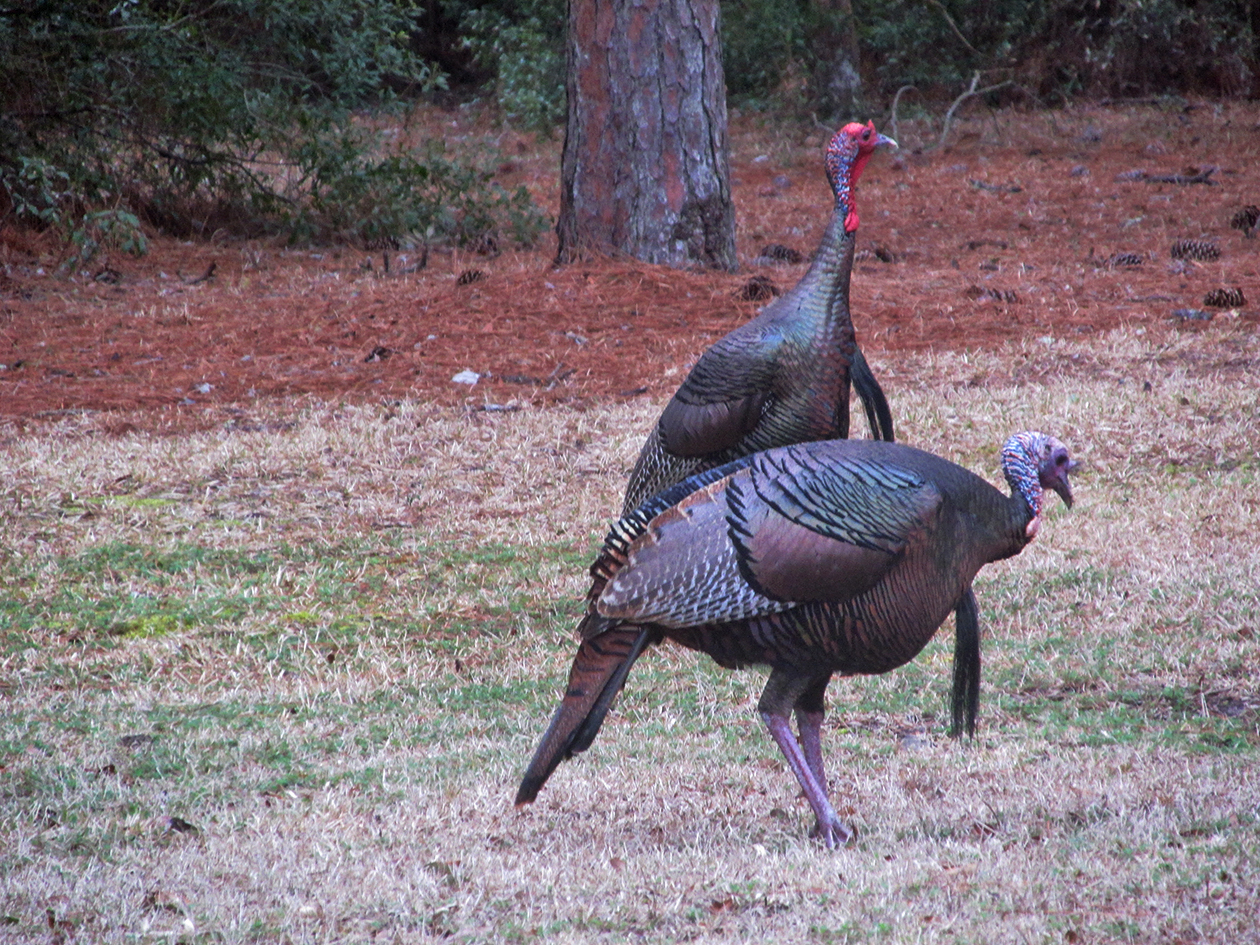
Wild Turkeys stroll the grounds of Brookgreen Gardens.

Grebess-Surf

Horned Grebes ride the rough surf near the jetty at Huntington Beach State Park.

Sunset

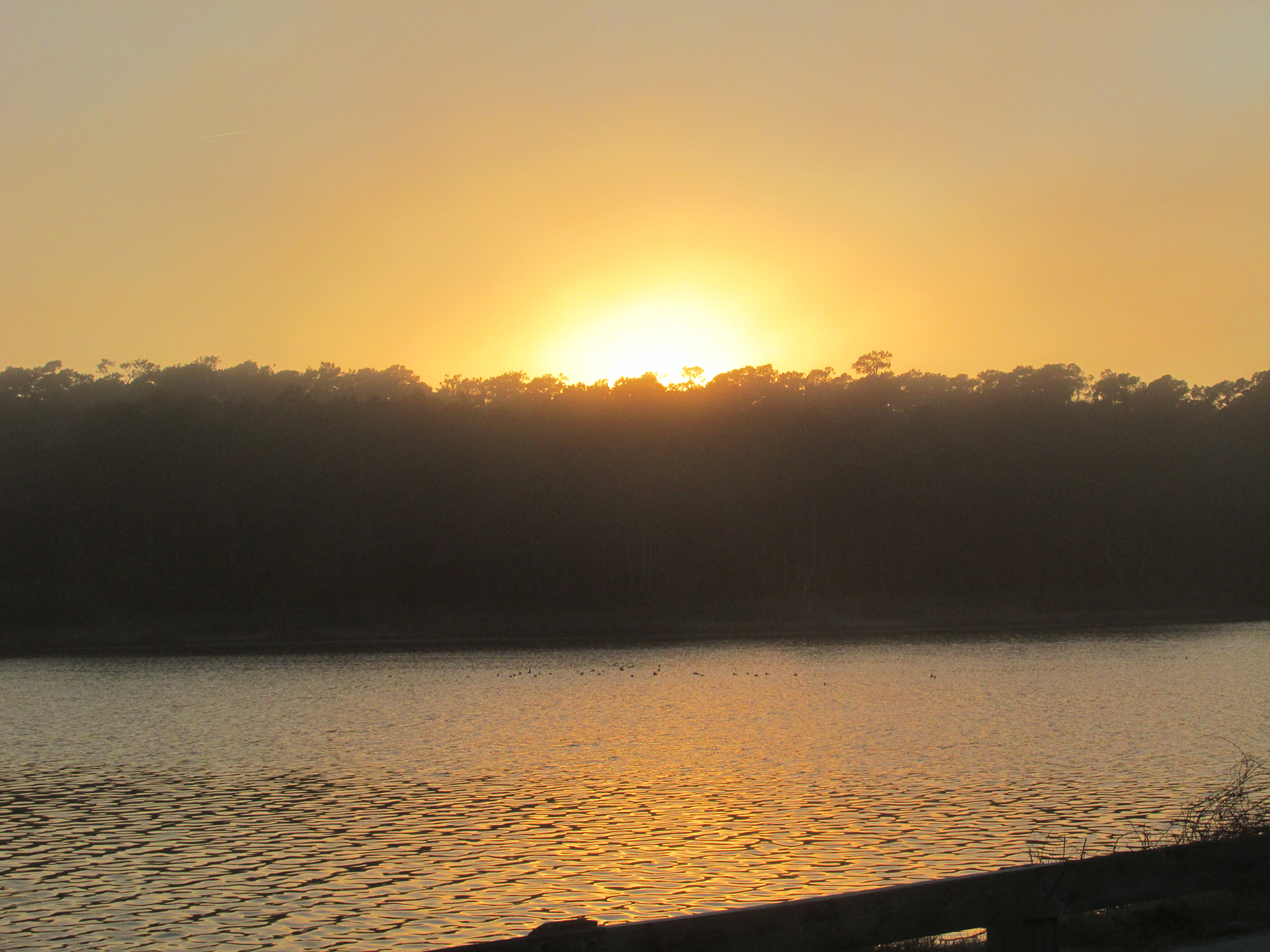
I hope you enjoyed these photos from my recent trip. See you next week back in Northeast Tennessee, just in time for the start of spring migration.


Heavy snow forces fox sparrows to abandon reclusive habits

FoxSparrow-Foot

Photo by Bryan Stevens                                                                A Fox Sparrow lifts one foot into its belly feathers on a cold morning in reaction to bitter cold.The cold weather that closed out the month of February in the region also marked a shift in the seasons. The frigid temperatures, snow and ice also brought increased traffic to feeders.

One of the recent new arrivals at my home during the last of the February storms was a fox sparrow, who fed along with such birds as purple finches, pine siskins, American goldfinches and dark-eyed juncos.

In North America, the sparrows are classified in the Emberizidae family, which also includes the buntings, cardinals, grosbeaks and tanagers. The American, or New World, sparrows are a diverse group of seed-eating songbirds with conical bills. Many of them are brown or gray in color, leading to the term “little brown birds” being used to describe a family of similar birds. On closer study, each species of sparrow is quite unique, with many of them having distinctive head patterns or splashes of color apart from the dull browns and grays.
Fox-Bryan

Photo by Bryan Stevens                                                                  Fox Sparrows prefer to remain in thickets and tangle of thick cover. Heavy snows will often bring this sparrow to backyard feeders.

Although they share the name “sparrow,” American sparrows are more closely related to Old World buntings than they are to the Old World sparrows. In fact, the only true Old World sparrow in Northeast Tennessee is the House Sparrow, which was introduced to the United States and is not a native bird.

Although the label “little brown birds” is somewhat accurate for sparrows, learning to distinguish most of the more common sparrows isn’t that difficult. Observing those sparrows that visit feeders is a good place to start. Other sparrows that will come to feeders include song sparrow, field sparrow, chipping sparrow, white-throated sparrow and white-crowned sparrow. The dark-eyed junco and Eastern towhee are also members of the sparrow family, but their common names do not include the term “sparrow.”

Worldwide, there are many superstitions connected with birds commonly known as “sparrows.” In the book The Folklore of Birds, author Laura C. Martin notes that in China the sparrow is a foreteller of good luck. She also points out that in Japan the sparrow is a symbol for gentleness, gratitude and joy.

Keep in mind, however, that sparrows in Japan and China are not among the same family of birds known as sparrows that are found in the United States. In fact, with a few exceptions, our native sparrows are unique to North America.

Menke-Fox_sparrow (1)

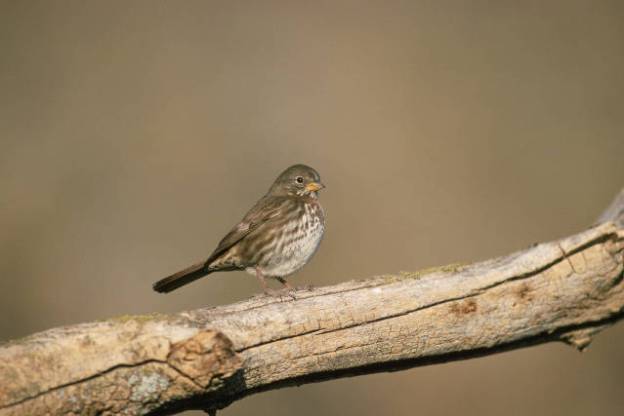
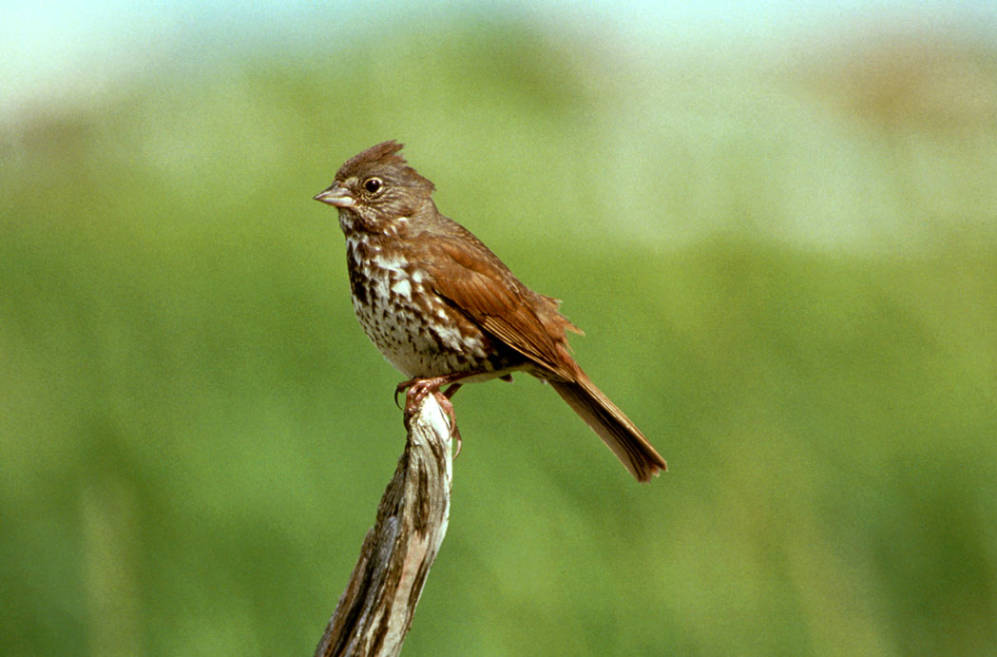
Photo by U.S. Fish & Wildlife Service                                             A Fox Sparrow perches on a bare branch. These large sparrows are only winter visitors in Northeast Tennessee.

For instance, the fox sparrow is a large, plump bird that in many parts of North America is most familiar as a migrant or wintering bird. The fox sparrow has a rusty tail and a streaked breast, evocative of a fox, hence its common name. Its plumage is dominated by brick-red and gray feathers.

In addition to a rather distinctive appearance for one of the so-called “Little Brown Birds,” the fox sparrow can easily be recognized by its behavior, too. This bird has a vigorous, distinctive way of foraging on the ground, kicking backward with both feet to uncover food. In fact, the instinct to forage in this manner means they are most often seen on the ground below a feeder instead of perched on a feeder like other birds.

Fox__Sparrow

Photo by U.S. Fish & Wildlife Service                                 A Fox Sparrow perches on a branch, giving a good view of the rusty-red plumage that inspired its common name.

I’ve noticed over the years that February and March is usually the best time of the year to observe this winter sparrow. Even when these large sparrows are present, it often takes a heavy snow to bring them out of their tangled thickets to our feeders. Other sparrows are less frequent visitors to yards, and can most often be found in the region during the migration season. These sparrows of the transitional periods between the seasons include savannah sparrow, vesper sparrow and swamp sparrow. March and April are good times to look for these sparrows.

Most fox sparrows spend the nesting season in remote, fairly inaccessible locations as far north as Alaska and Canada.  As a result, most people only see these birds during the winter months when they can become very reliable visitors to feeders. The recent heavy snows at the end of February brought a single fox sparrow to my feeders. The bird arrived early each morning and usually didn’t extend its visit beyond mid-afternoon.

•••••

Bryan Stevens lives near Roan Mountain, Tennessee. Friend him on Facebook at https://www.facebook.com/ahoodedwarbler. He is always posting about local birds, wildlife, flowers, insects and much more. If you have a question, wish to make a comment or share a sighting, email ahoodedwarbler@aol.com.

FOXIE

Photo by Bryan Stevens                                                                                                                        A heavy snowfall often prompts Fox Sparrows to visit backyard feeders, although they prefer to feed on the ground below the feeders. They kick vigorously to uncover fallen seeds covered by snow or leaves.

Spruce comes crashing down during recent storm

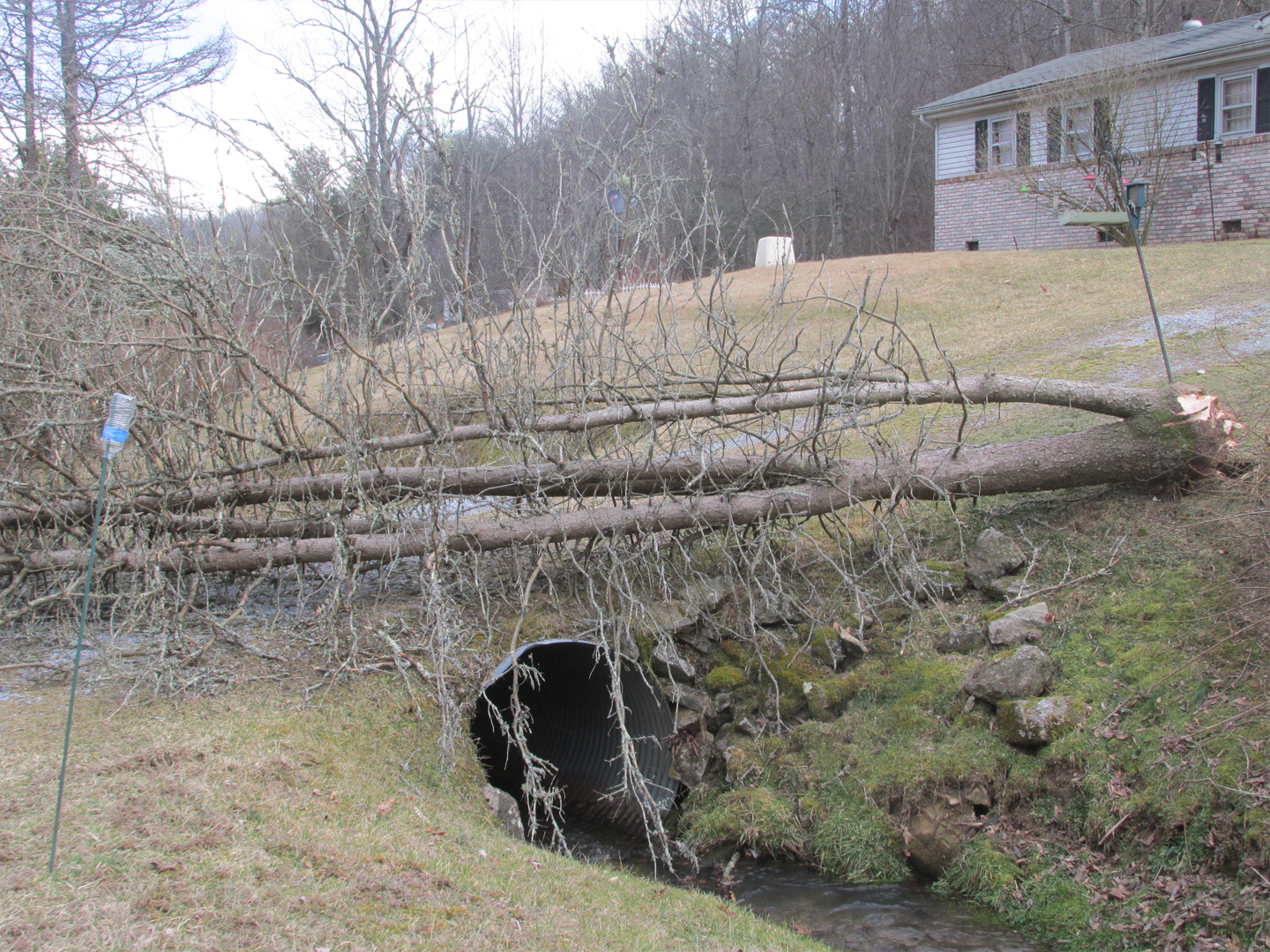
I felt really bad for the birds when one of the larger blue spruce trees in the yard came crashing to the ground on Thursday, Feb. 12. At the same time, I felt fortunate that the tree collapsed while I was at work, mainly because it came to rest at a location where I usually park my automobile.

Fallen-One

Photo by Bryan Stevens                                                                        The collapse of this blue spruce has left some of the local birds feeling somewhat homeless.

The large tree, which still retained a dense growth of stiff, prickly needles on the upper third of its branches, snapped right at ground level. With the horizontal shelter normally provided by the tree suddenly gone vertical, many of the birds looked dazed and confused in the aftermath. In particular, some of the Carolina Chickadees looked somewhat bewildered and baffled. A couple of Pine Siskins looked as if they were confused by the situation.

Winter-Chickadee-Confused

Photo by Bryan Stevens                                                This Carolina Chickadee, perched in the branches of the fallen blue spruce, looked somewhat confused in the immediate aftermath of the large tree’s collapse.

Most of the birds have adjusted. In fact, they have found the branches of the fallen tree just as capable of offering shelter from the elements and hiding places from potential predators.

The blue spruce was one of five planted by my late father and my late grandfather more than 30 years ago. Two of those five trees are still standing, but two others had already fallen several years ago during storms.

The gusts of wind on Feb. 12 proved too much for the tree. I don’t think blue spruce are particularly suited to life here in northeast Tennessee. They seem more vulnerable to pests and disease than many other conifers. At one time, my father planted some on his Christmas tree farm back in the 1980s and early 1990s. Most people didn’t like the sharp, spiky needles of a blue spruce, although the blue-green coloration often brought admiration from observers.

Until they grew more than 12 feet tall, my grandfather used to decorate the two spruces on each side of his home. He would string multi-colored strands of Christmas lights through the branches of the trees every holiday season.

Downy-Chick

Photo by Bryan Stevens                                                  Although located next to the fallen tree, this suet feeder continued to attract birds even after the tree collapsed on Thursday, Feb. 12.

When the trees grew too big to decorate, the birds became the chief beneficiaries. I positioned many of my feeders in the lower branches of several of the remaining spruces. From nuthatches and woodpeckers to chickadees and titmice, a variety of birds liked to congregate within the tree’s branches. A host of other birds, including Eastern Towhees, Dark-eyed Juncos and White-throated Sparrows liked to feed on the ground beneath the tall trees.

In the summer, birds such as Song Sparrows and Northern Cardinals concealed their nests in the thick boughs of some of these blue spruces.

I hate to lose a good tree. With these spruces, there are many memories tied to them. I’ll get over the loss, and I hope that, once the shock wears off, so will the birds.

After all, if your home came crashing down without warning, you might be a little perplexed, too.

•••••••

The Great Backyard Bird Count continues through Monday, Feb. 16. For more information, visit http://gbbc.birdcount.org/

I’ve been counting since Friday, Feb. 13, when this year’s GBBC kicked off. I’ll be sharing more about my participation in upcoming posts.

To learn more about birds and other topics from the natural world, friend me on Facebook at https://www.facebook.com/ahoodedwarbler. I’m always posting about local birds, wildlife, flowers, insects and much more. If you have a question, wish to make a comment or share a sighting, email ahoodedwarbler@aol.com.

Red-breastedNutHatchYAHOO

Photo by Bryan Stevens                                                                                                                               This whimsical feeder is attached to one of the blue spruce trees still standing. Five of these trees were planted about 40 years ago, but only two of them now remain standing. They’ve been magnets for a variety of birds through the years. In this photo, a Red-breasted Nuthatch enjoys some peanuts.


Wrens provide example of resilient spirit of birds

There’s nothing like a wren on a cold, blustery winter’s day to teach a quick lesson in the resilient spirit shared by all our fine feathered friends.

WinterWren

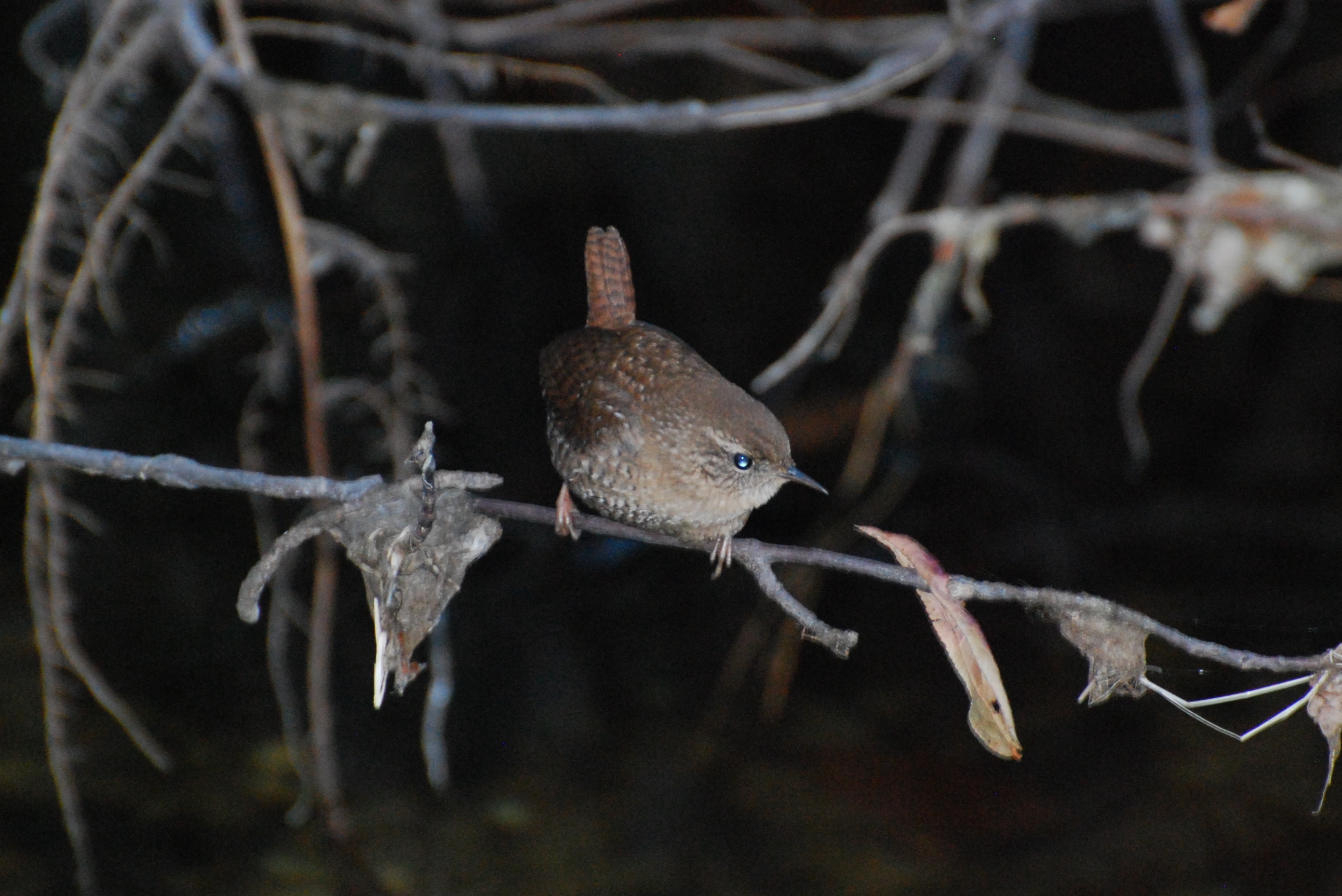
Photo by Jean Potter                                                                  The Winter Wren often skulks near the ground in a manner more in a keeping with a small rodent rather than a bird.

Although not particularly suited to cold temperatures, wrens don’t seem bothered too badly when the mercury sinks in the thermometer. These tiny bundles of feathers move like hyper-active dynamos as they explore tangles of vines or the nooks and crannies of a dark garage as part of their almost constant foraging for food.

Cactus_wren

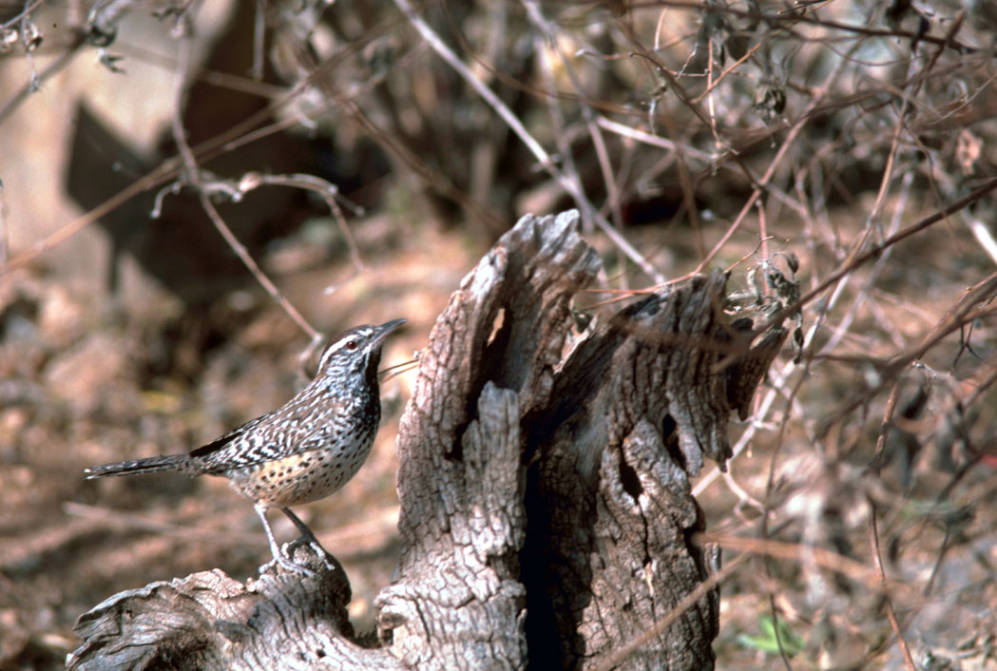
Photo by U.S. Fish & Wildlife Service      The Cactus Wren is a specialist of arid habitats in the American Southwest.

At first glance, many people might be tempted to lump wrens together with the sparrows, or “little brown birds.” There are some key differences and, as with sparrows, there are several different species of wrens. Wrens are (almost) an exclusively New World family of birds with the single exception of the bird that Americans refer to as the winter wren. Across Europe, the same bird is known simply as “wren” and is the only member of the family to occur outside of the New World.

audubon-ix-songsters-and-mimics-house-wren

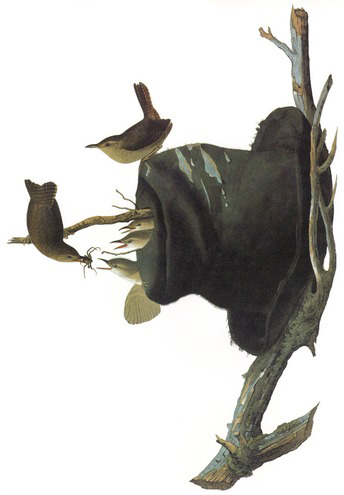
John James Audubon painted House Wrens nesting in an old hat. These small wrens are cavity-nesting birds that choose some surprising nesting locations.

Known by the scientific name of Troglodytes hiemalis, roughly translated as “wintry cave-dweller,” the winter wren is a tiny North American bird and a member of the mainly New World wren family Troglodytidae. The “cave-dwelling” description comes from this bird’s habit of skulking near the ground where it explores nooks, crannies and crevices in search of food.

In our region, the tiny winter wren is most likely to be encountered during the winter months although the species is a nesting bird on some of our higher mountains. Those intending to spend the winter at lower elevations in the region usually arrive in October and depart in early spring.

HouseWren

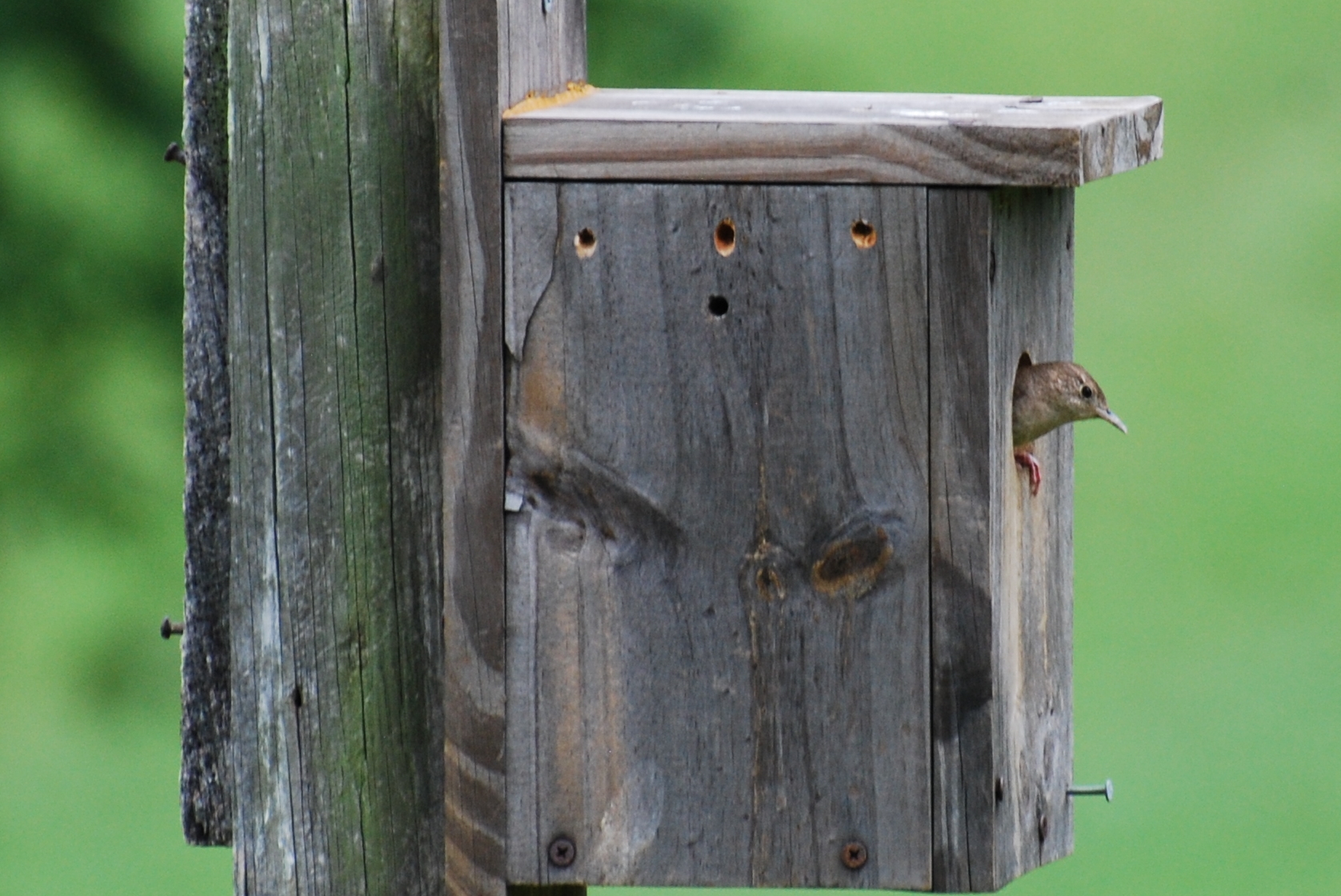
Photo by Jean Potter                                      House Wrens will defend nesting locations from other birds, at times even destroying the eggs or nestlings of other birds.

About the time the winter wren departs, however, a related bird — the house wren — arrives in the region in time for the nesting season. House wrens are native birds, but they often fail to win favor because of their habits of damaging the nests of other cavity-nesting birds such as Eastern bluebirds and Carolina chickadees.

“To a house wren, almost any other nesting bird in its territory threatens competition,” wrote John Eastman in his book, “Birds of Forest, Yard and Thicket.”

Eastman, a wildlife biologist and naturalist, outlined in his chapter on the house wren the territorial nature of the bird. Not only will house wrens puncture the eggs of other birds, they will also kill young birds that are still confined to the nest. Once a pair of house wrens adopts a nesting site, they may remain loyal to it for many years. According to Eastman, these tiny birds display a powerful fidelity to nesting locations from previous seasons.

Marsh_wren

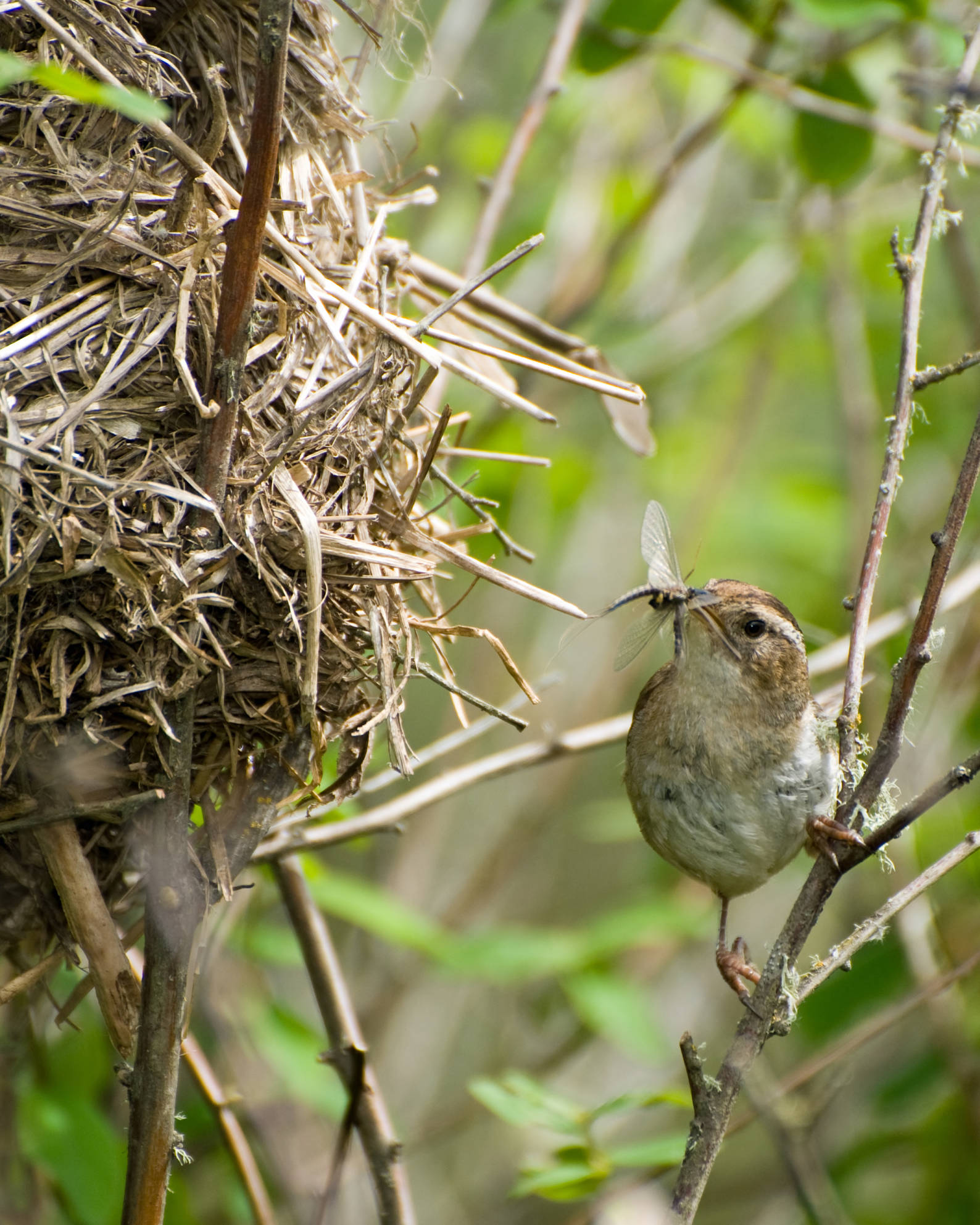
Photo by U.S. Fish & Wildlife Service   A Marsh Wren delivers insects for hungry young in a nest built in a wetland area.

The male house wren will also build several “dummy” nests in his territory, but these nests must be approved by the female. Once she makes her selection, she will line the nest with softer materials and then lay her six to eight eggs.

Other wrens in the United States include Bewick’s wren, rock wren, cactus wren, marsh wren and sedge wren. Several of these wrens are more specialized than the wrens found locally. The marsh and sedge wrens are fond of wetland habitats, while the rock and cactus wrens of the western United States make their home in dry, arid environments.

Wren-vocal

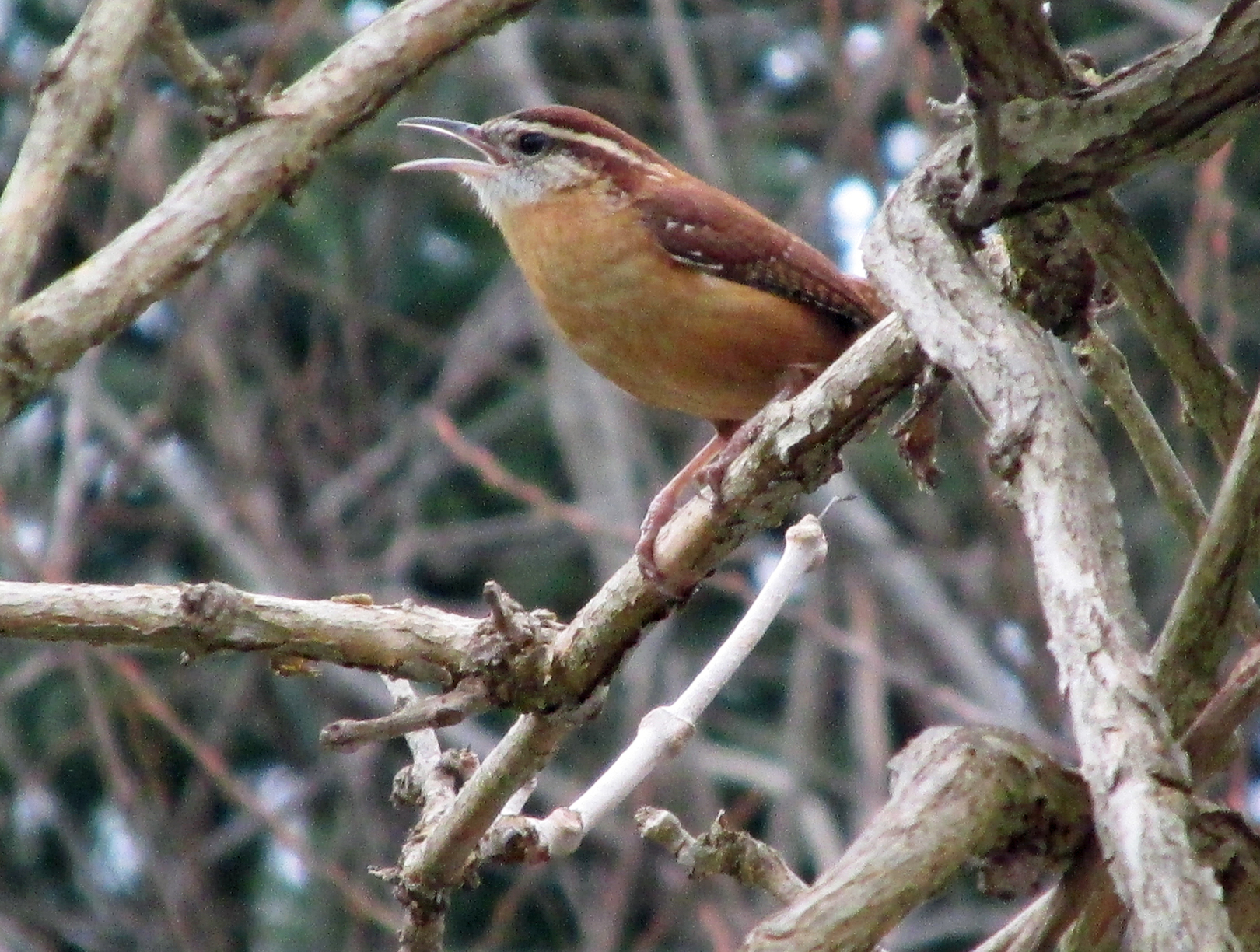
Photo by Bryan Stevens                                                The Carolina Wren is a very vocal bird, scolding and singing quite persistently. Many people have described the song as “tea-kettle, tea-kettle, tea-kettle.”

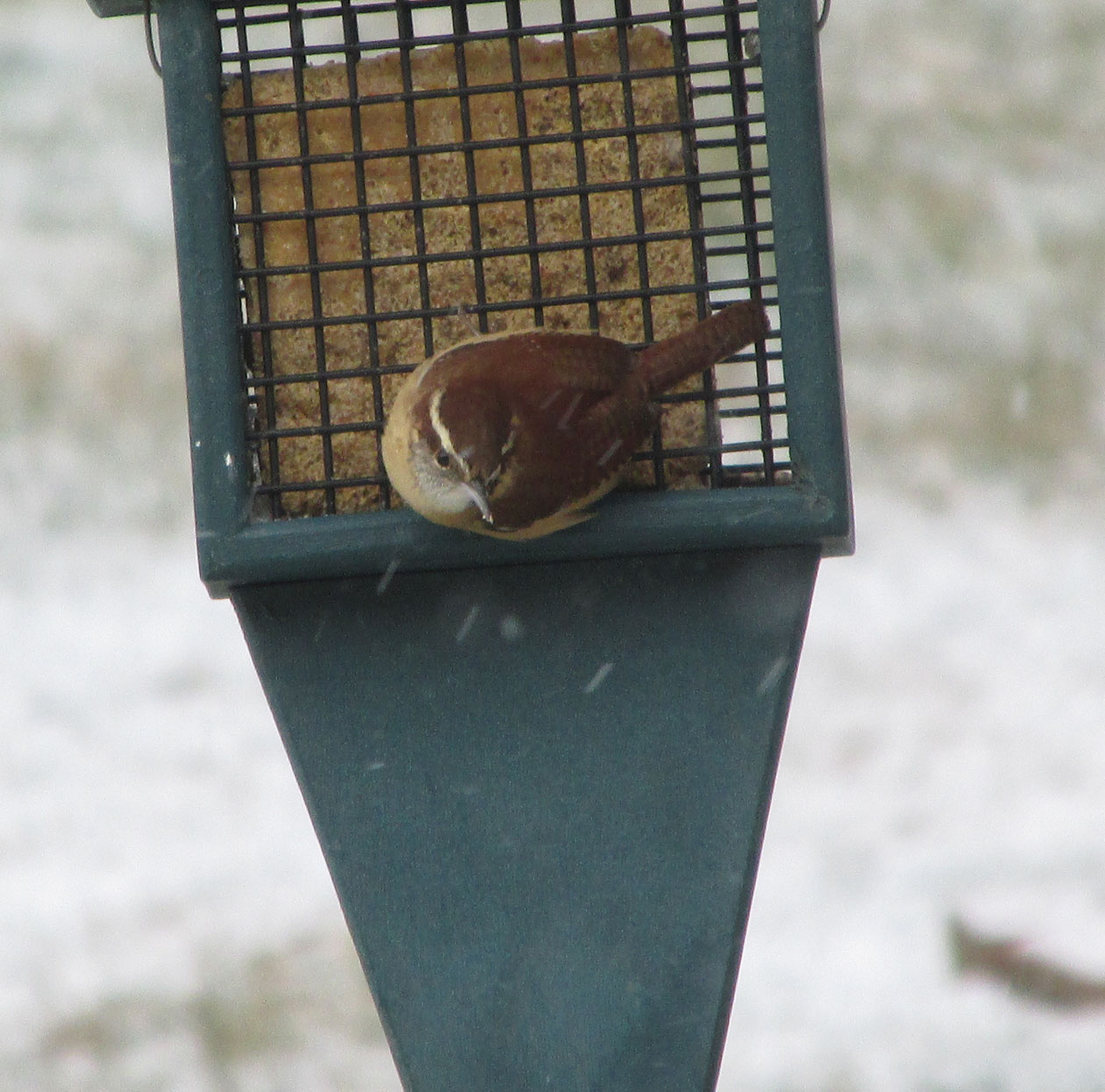
For most residents of Southwest Virginia and Northeast Tennessee, the most common wren is the Carolina wren. I’ve had good luck attracting Carolina wrens to my feeders by offering fare such as suet and shelled, unsalted peanuts. This wren will also feed on sunflower seeds if other birds have completed the task of hulling the kernel from inside the shell.

One of my earliest introductions to a nesting bird took place many years ago when I was a boy. A small brown bird had claimed a cloth bag hanging on a hook on the back porch at the home of my grandparents. My grandmother used the bag to hold her clothes-pins. My grandmother had to make some adjustments to her laundry routine while the bird raised a family of young.

CaroWren-SuetFEED

Photo by Bryan Stevens                           Carolina Wrens will visit feeders for a meal of suet, peanuts or other fare.

I now realize the bird was most likely a Carolina wren. These birds are known to choose some unusual nesting locations, including mailboxes, overturned flower pots and even old boots. A friend of mine shared a story and photos of a Carolina wren that built a nest in her plastic Halloween pumpkin inside a storage shed.

This wren was once considered an almost exclusive southern species, but it has been steadily expanding its range northward for more than a century. The Carolina wren has served as the official state bird of South Carolina since 1948. The wren took the place of the former state bird, the Northern mockingbird. The same state act that elevated the Carolina wren to its official status also made it a misdemeanor to intentionally kill a Carolina wren (or mockingbird) that is punishable with a $100 fine or a 30-day sentence of imprisonment.

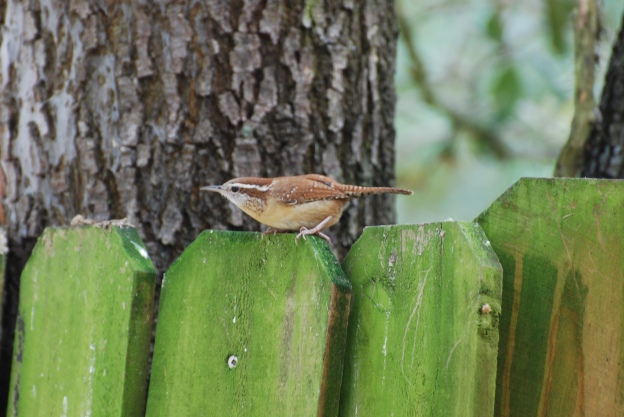
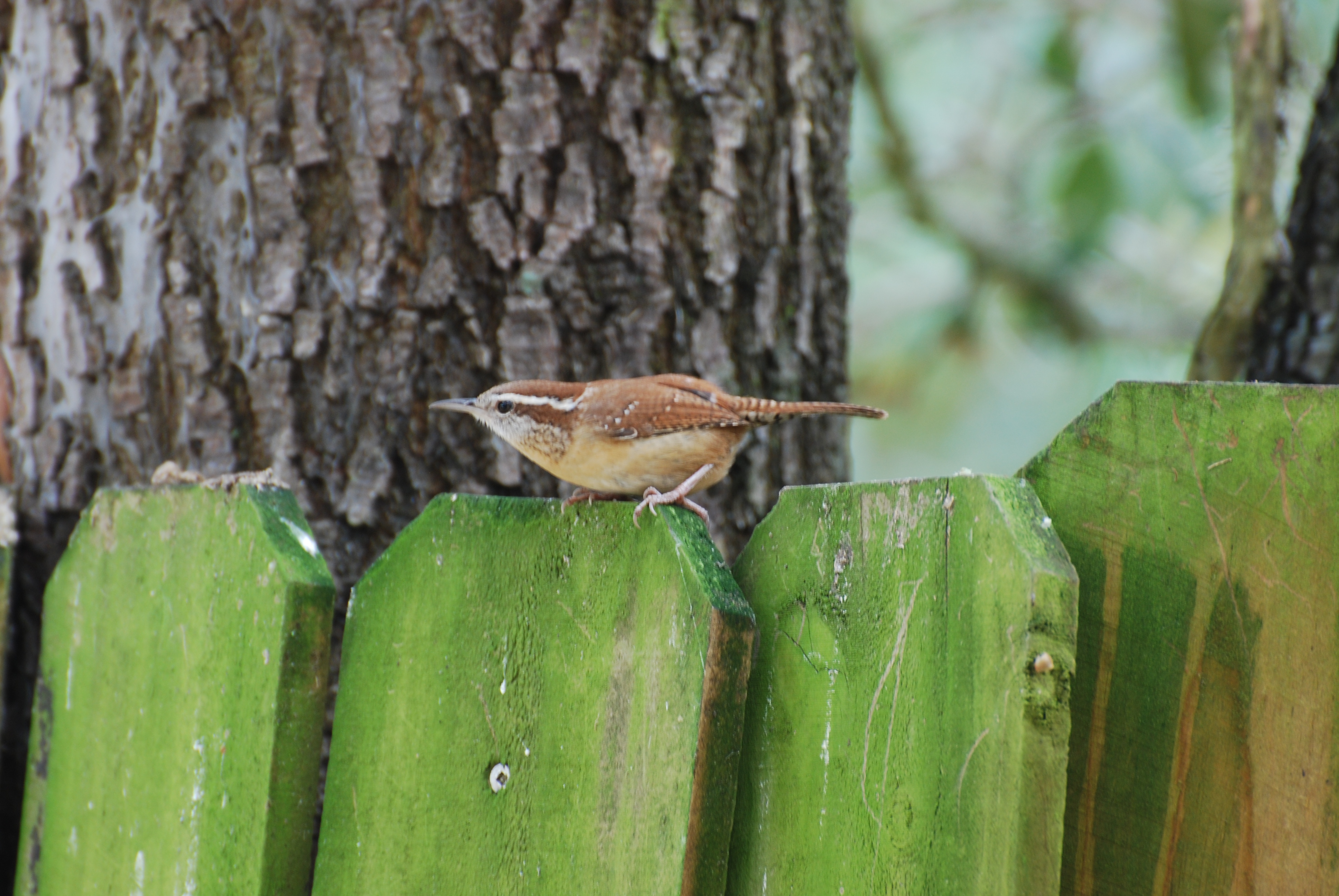
The Carolina wren is a handsome bird with a two-tone plumage of warm brown upperparts and buffy underparts. The sexes are identical in appearance, which includes such traits as a visible white eyebrow and a curved bill. Even more than appearance, the song of this wren helps distinguish it from other wrens. I’ve often heard the song translated as “Tea Kettle, Tea Kettle, Tea Kettle.”

CaroWren

Photo by Jean Potter                                                                                                                                A Carolina Wren creeps along a picket fence. This wren is a common bird in many gardens and yards.

Hoping to invite many birds to my yard in 2015

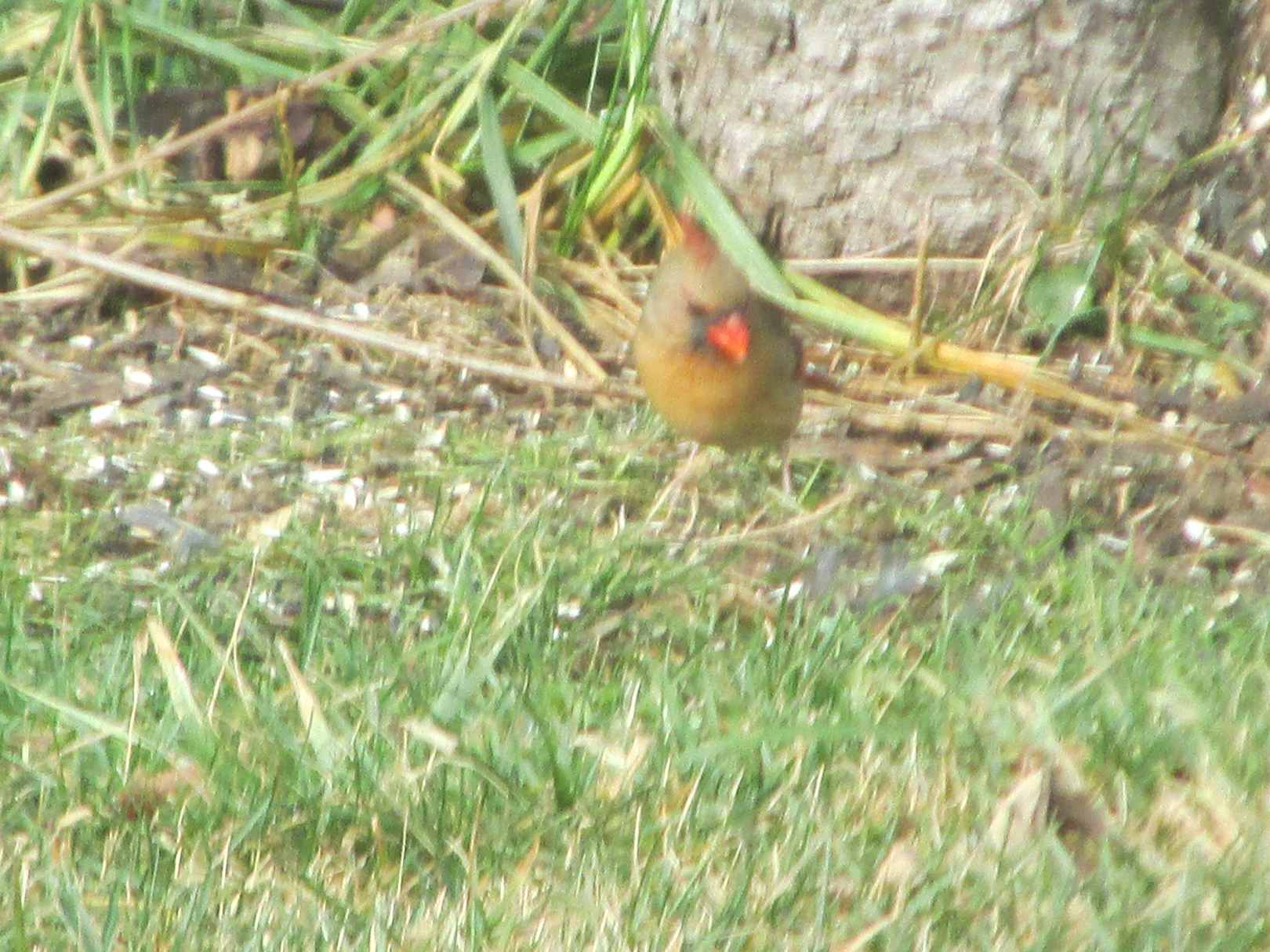
The first day of 2015 produced some excitement in the yard here on Simerly Creek Road. I was watching a female Northern Cardinal — the first cardinal I had observed in the new year — as she foraged on the ground beneath one of the feeders. I even used my camera to take a few photos of her through the window.

FirstCardinal

Photo by Bryan Stevens                                                                         A female Northern Cardinal foraging on the ground beneath a feeder.

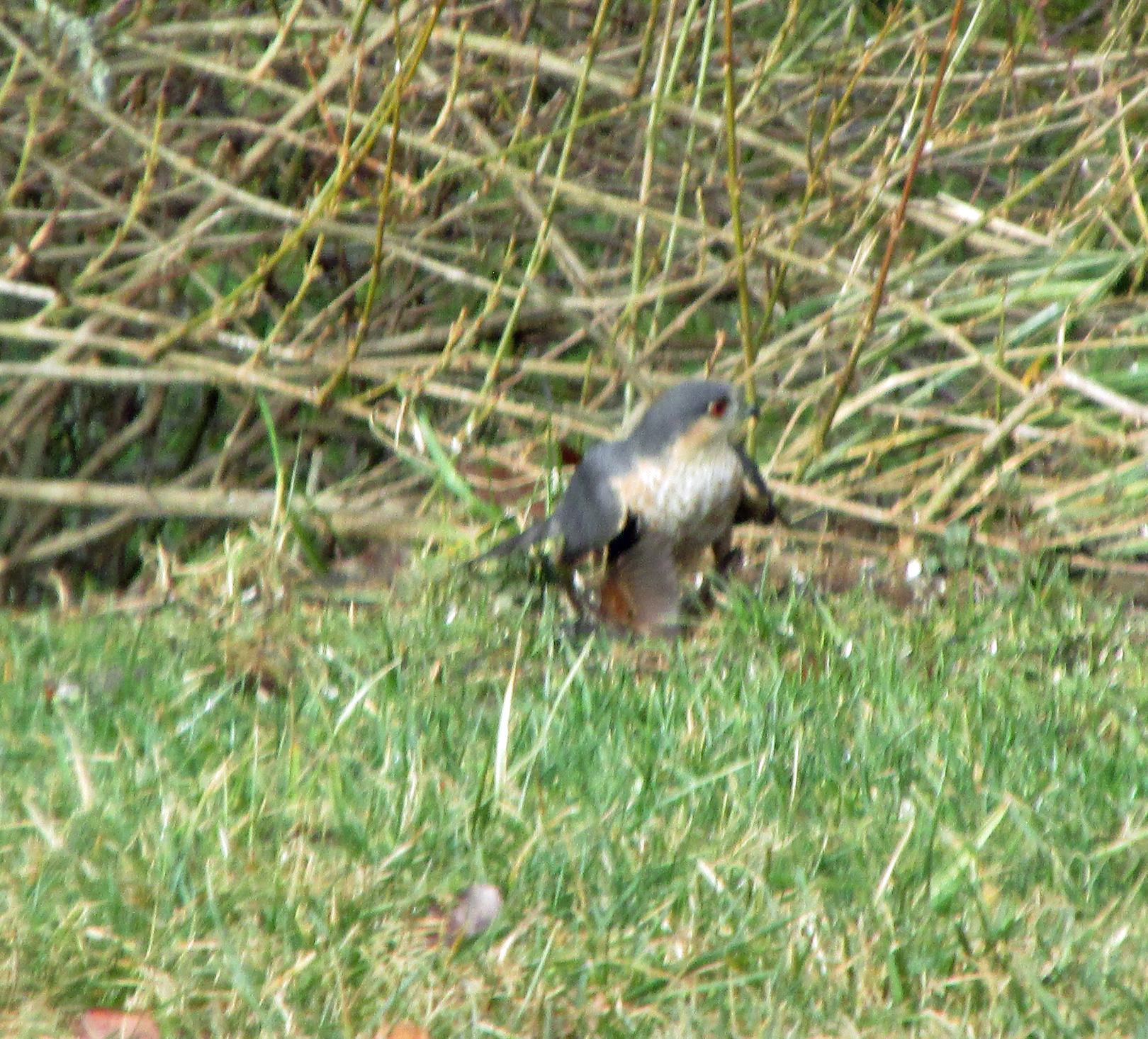
I was getting ready to snap another picture when an intruder violently inserted itself into the scene, scattering other birds at the feeders. Everything happened so quickly I needed an instant to figure out what was happening.

FirstHawk

Photo by Bryan Stevens                                  The visiting Sharp-shinned Hawk is pictured only seconds after capturing the cardinal in its talons.

A pair of spread wings eventually transformed into a full bird as my brain identified the intruder as an adult Sharp-shinned Hawk — and one that had just captured itself a meal, albeit at the expense of the cardinal.
With the cardinal secured in its talons, the hawk looked ready to consume its prey when an American Crow flew to a tree and perched overhead making its displeasure with the hawk very clear. The hawk hesitated and then took off, taking its prey with it and leaving with such velocity that it left the protesting crow far behind.

Sharpie-Two

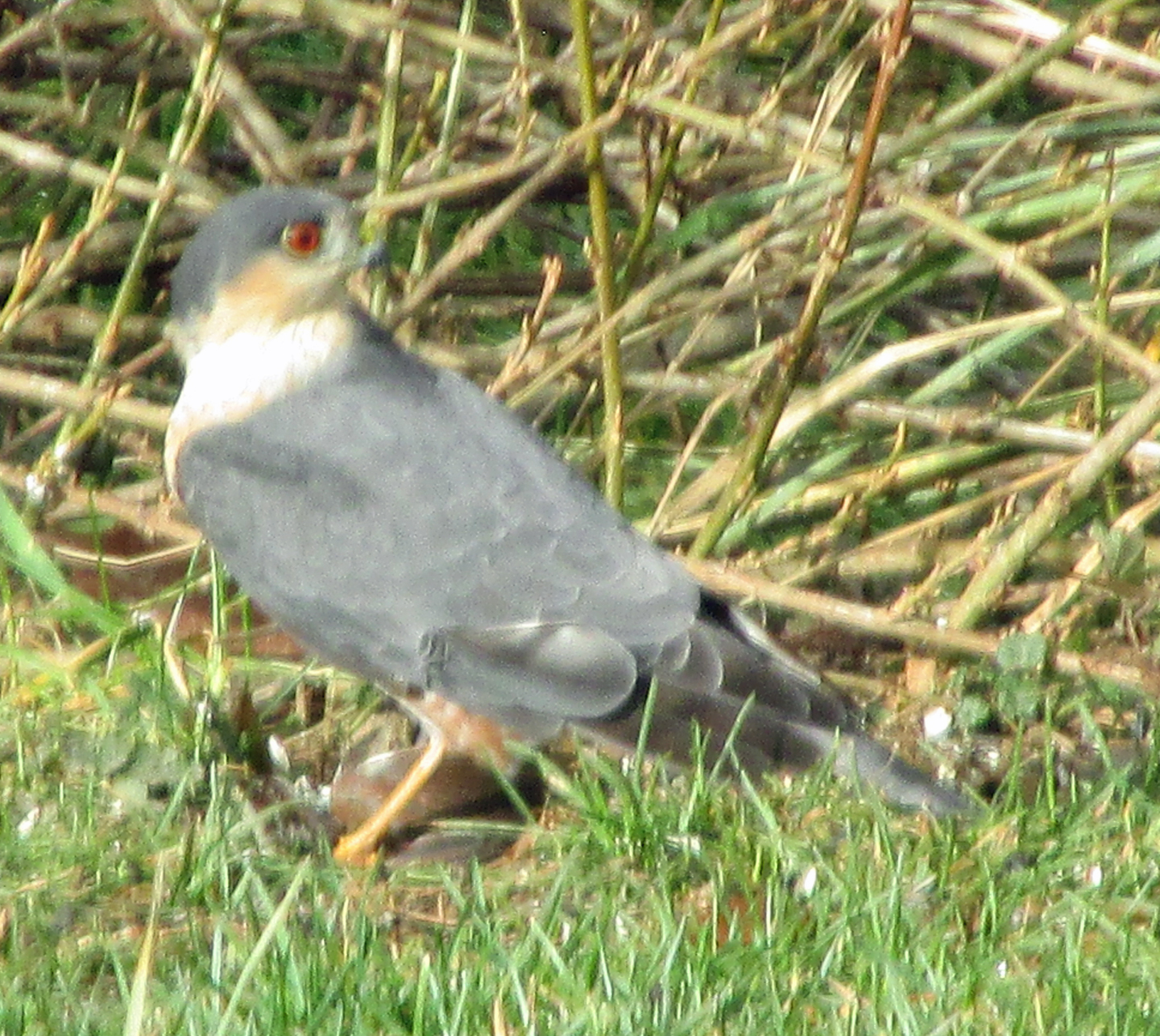
Photo by Bryan Stevens                                  The Sharp-shinned Hawk is a stealthy, efficient and determined predator.

The Sharp-shinned Hawk became one of the first birds on a yard list I will be keeping in 2015. A couple of years ago I did a list of all the species of birds I observed in the five-county area of Northeast Tennessee. Such a list is fun to compile, but it takes a lot of dedication. I figure counting the birds that make an appearance in my yard from Jan. 1 to Dec. 31 in 2015 is a more feasible goal.

Sharpie-Jan1

Photo by Bryan Stevens                                                      The Sharp-shinned Hawk is a small raptor, often described as similar in size to a dove.

In addition to the Sharp-shinned Hawk, Northern Cardinal and American Crow, the other birds I’ve already added to my 2015 yard list are Mourning Dove, Great Horned Owl, Downy Woodpecker, Pileated Woodpecker, Blue Jay, Tufted Titmouse, Carolina Chickadee, White-breasted Nuthatch, Carolina Wren, Eastern Bluebird, Eastern Towhee, Song Sparrow, White-throated Sparrow, Dark-eyed Junco, Purple Finch, House Finch, Pine Siskin and American Goldfinch.

That’s more than 20 species and the year is not yet a week old. My goal is to find at least 100 species in 2015. The tally will probably proceed slowly, but I will provide regular updates as I add new species to the list.

••••••

15947504279_0227db8e25_o

Photo Courtesy of Jean Potter          An immature Sharp-shinned Hawk perches on a limb. These raptors often ambush their prey.

The Sharp-shinned Hawk and its larger relative, the Cooper’s Hawk, are the two raptors most often encountered by people who feed birds. Part of the family of Accipiter hawks, these two species are widespread in woodlands.

The Cooper’s Hawk is larger, often described as similar in size to an American Crow. The Sharp-shinned, on the other hand, is usually described as the size of a dove. There’s some overlap in size, so it is not the only reliable means of identifying these hawks. For example, female Sharp-shinned Hawks are roughly equivalent in size to a male Cooper’s Hawk. As with many raptors, the female is larger than the male in both these species.

There are some other things to look for in telling these species apart. For instance, adult Sharp-shinned Hawks often look like they have a dark cap or hood. The eyes on a Sharp-shinned Hawk also look like they are halfway between the front and back of the head. In addition, the head itself looks small in comparison to the overall size of this hawk’s body.

These two species feed heavily on songbirds, which causes some bird-lovers distress. When I posted photos of the incident with the cardinal and hawk to my Facebook page, a few friends were definitely upset that the cardinal’s stay in 2015 proved so brief.
I like to view these incidents as good examples of proper balance in the natural world. The Sharp-shinned is really beautiful, especially for a hawk. Preying on songbirds doesn’t make them “bad” birds. They’re doing exactly what nature intends for them to do. They’re extremely efficient predators, and I was impressed by both the power and precision deployed by the Sharp-shinned Hawk in capturing the unfortunate cardinal.

In case you’re worried about the cardinal population, later that same day a flock of about a dozen cardinals visited my feeders about a half hour before dusk. Predatory hawks are part of the balance in nature. It’s a balance that we should strive not to upset.

Red-tailed-Field

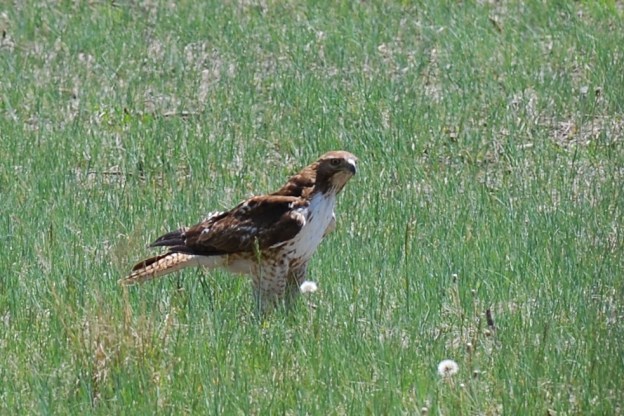
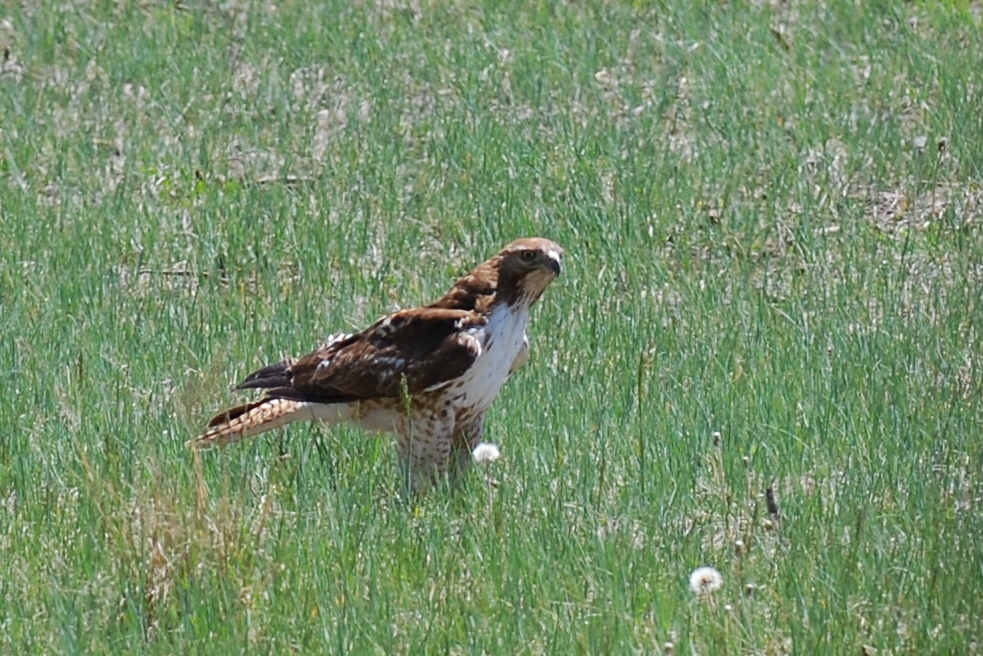
Photo Courtesy of Jean Potter                           A Red-tailed Hawk is shown standing in a field.

In the past few days, I have seen Red-tailed Hawk, Great Horned Owl and Cooper’s Hawk here at home (or within a few miles of my home) and I take that as a good sign. The absence of predators can be a sign that something’s wrong with the food chain. If the chain gets broken, everything (prey and predators) will suffer.

••••••

The Accipiter genus of hawks includes about 50 species. In Northeast Tennessee, as well as across much of North America, the two common species are Sharp-shinned Hawk and Cooper’s Hawk. A third species, the Northern Goshawk, is a rare visitor to the region.

The Northern Goshawk is a large, powerful hawk, and it is also fiercely defensive of its nest. This hawk is known to attack other raptors, mammals and even humans that stray too close to its nesting site.

Goshawk is a term derived from “goose hawk,” referring to the ability of this bird when utilized in falconry to take down such large prey as geese.
Other Accipiter hawks around the world include Spot-tailed Sparrowhawk, Rufous-chested Sparrowhawk, Grey-headed Goshawk, Semi-collared Hawk and Tiny Hawk, which is one of the world’s smallest raptors. This diminutive hawk is about the size of a European Starling and lives in Central and South America.

The Sharp-shinned Hawk will feed on a variety of birds, ranging in size from sparrows, warblers and thrushes to birds as large as Ruffed Grouse and Mourning Dove. This hawk also feeds on small mammals, reptiles and insects.

Hawk-Crowsss

Photo by Bryan Stevens                                     A flock of American Crows mobs a perched Red-tailed Hawk.

••••••

On Dec. 27, the resident flock of American Crows confronted a Red-tailed Hawk, eventually forcing the large raptor to leave it perch and depart the area. I’m hoping the Red-tailed Hawk will soon put in its first 2015 appearance. The first clue is usually a mob of angry and very vocal crows.

With safety in numbers, many smaller birds will gang up on raptors to drive them away. Crows can be quite merciless to both Red-tailed Hawks and any Great Horned Owls that they locate during the day.

Hawk-TakesFlight

Photo by Bryan Stevens                                                                                                               Mobbing crows force a Red-tailed Hawk to take flight from a perch in a tall tree.

Wild turkey epitomizes rugged determination of the American spirit

A Wild Turkey is ama amazingly resilient bird, capable of surviving in a variety of habitats.

A Wild Turkey is an amazingly resilient bird, capable of surviving in a variety of habitats.

Americans will come together this week to celebrate Thanksgiving, so I thought I’d focus this week’s column on the wild turkey.

It’s usually in early November that I begin encountering wild turkey flocks, whether I’m in the field to look for birds or simply driving to and from work. I saw a group of four wild turkeys on Nov. 4 as they foraged in a field near my home. Over the years, I’ve also found other locations that are dependable for turkey sightings. In some areas, flocks comprised of dozens or even hundreds of turkeys are commonplace.

E._migratorius

This bird, one of the last Passenger Pigeons, was photographed in 1899.

Surprisingly, despite its current abundance across North America, the wild turkey almost didn’t survive the 19th century. It’s almost miraculous that the wild turkey didn’t join the unfortunate ranks of such extinct birds as the passenger pigeon and Carolina parakeet. In fact, only an estimated 30,000 wild turkeys were alive about 1930. The same forces that wiped out the immense flocks of passenger pigeons and America’s only wild parakeet almost drove the wild turkey to extinction. Habitat destruction and a merciless commercial slaughter almost claimed the wild turkey, another uniquely American bird.

Passenger_pigeon_shoot (1)

The same market forces that slaughtered Passenger Pigeons nearly decimated America’s Wild Turkey, too.

Ironically, the wild turkey’s valued status as a gamebird helped persuade many Americans to fight for its conservation. It’s an effort that succeeded admirably. Today, there are about seven million wild turkeys roaming North America. The wild turkey is now abundant enough to be legally hunted in most states, including Virginia and Tennessee.

Interest in the wild turkey as a game bird has even inspired the establishment of the National Wild Turkey Federation, which is a national nonprofit organization that serves as a leader in upland wildlife habitat conservation in North America. The NWTF was founded in 1973 in the Commonwealth of Virginia. The NWTF is now headquartered in Edgefield, South Carolina, and has local chapters in every state. The NWTF remains dedicated to the conservation of the wild turkey and the preservation of a sustainable hunting heritage.

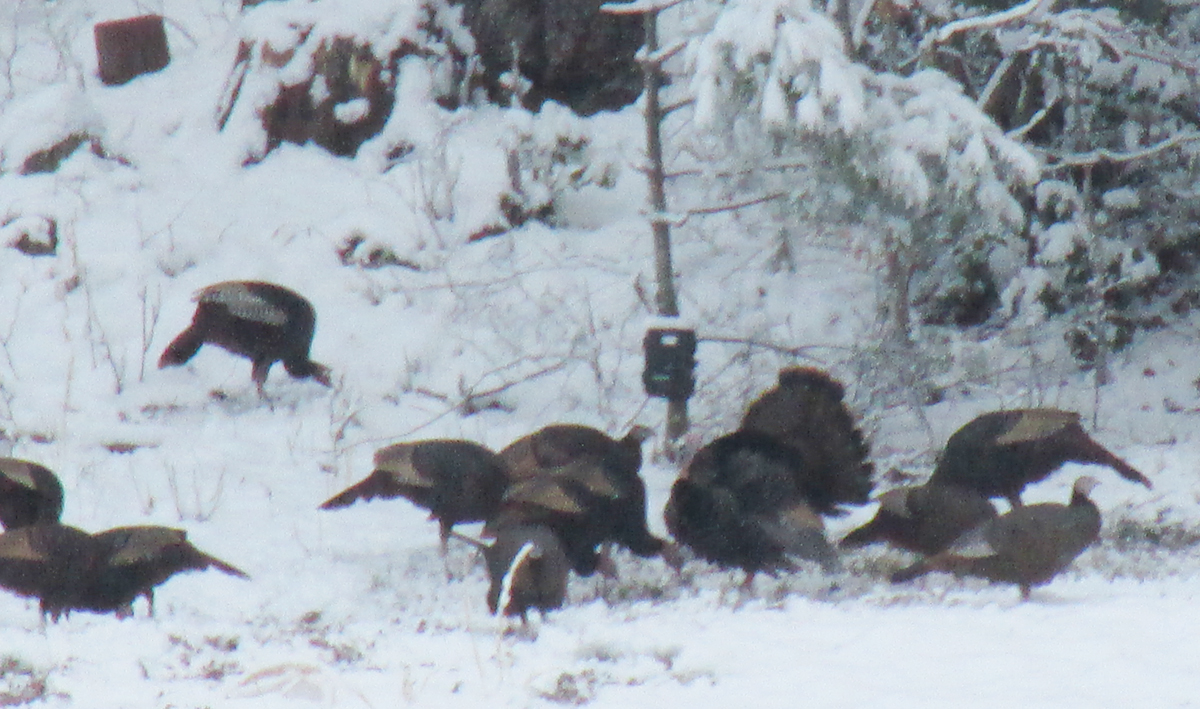
Photo by Bryan Stevens A flock of turkeys forage for food while a few of the males, or Toms, display to attract the attention of females in the flock.

Photo by Bryan Stevens
A flock of turkeys forage for food while a few of the males, or Toms, display to attract the attention of females in the flock.

The wild turkey, for which the NWTF was formed, is a large bird. Males, or tom turkeys, can reach a length of 46 inches, weigh 16 pounds and boast a wingspan of 60 inches. It’s a widely held misconception that the wild turkey cannot fly. The turkey is perfectly capable of flying at speeds up to 55 miles per hour, but they often prefer to walk and run over the ground. They’re good sprinters, in fact, and can reach a running speed of 25 miles per hour.

The female turkey, or hen, nests, incubates eggs and rears young without any help from her mate. The hen may lay as many as a dozen eggs. The clutch usually hatches within a month. Newly-hatched turkeys are known as poults. The poults are capable of finding their own food after leaving the nest, which they do within 12 hours of hatching. They are supervised, however, by the hen. Wild turkeys require a mixture of woodlands with clearings and fields to thrive. They roost in trees at night, but feed in more open habitats.

Early naturalist John James Audubon painted this wild turkey hen accompanied by her poults, or young.

Early naturalist John James Audubon painted this wild turkey hen accompanied by her poults, or young.

The wild turkey’s scientific name is Meleagris gallopavo. The wild bird is exclusively resident in North America, but domesticated turkeys are now raised around the globe.

The wild turkey has only one close relative, the ocellated turkey, or Meleagris ocellata, which ranges throughout the Yucatán Peninsula in Mexico as well as the northern parts of Belize and Guatemala. The extent of this fowl’s range is only about 50,000 square miles while the wild turkey ranges throughout the United States, as well as Canada and Mexico. Tail feathers in both sexes are bluish-gray in color with a well defined, eye-shaped, blue-bronze colored spot near the end followed by a bright gold tip. These “eyespots” in the feathers provide the basis for the use of the term “ocellated” in this fowl’s common name. The tail feather spots are reminiscent of those seen in peacock feathers.

Few birds have featured so prominently in the history of the United States as the wild turkey. In fact, the turkey came close to being named the official bird of the United States.

Benjamin Franklin, who proposed the turkey as the official United States bird, was distraught when the bald eagle was chosen over the turkey. Franklin wrote to his daughter, referring to the eagle’s “bad moral character,” saying, “I wish the bald eagle had not been chosen as the Representative of our country! The turkey is a much more respectable bird, and withal a true original native of America.” George Washington, the nation’s first president, also shared Franklin’s opinion, and pointed out the bald eagle’s lifestyle as a carrion eater.

Photo by Bryan Stevens The Wild Turkey has become closely associated with the Thanksgiving holiday.

Photo by Bryan Stevens
The Wild Turkey has become closely associated with the Thanksgiving holiday.

If not as our national symbol, the wild turkey is still deserving of respect. This bird, found only in North America, is a survivor.

Here’s some additional turkey trivia:

• The Aztecs first domesticated the wild turkey. Spaniards brought this tamed fowl back to Europe with them in the mid-16th century and from Spain, domestic turkeys spread to France and later Britain as a farmyard animal.

• At Thanksgiving, humans consume many turkeys. In the wild, turkeys are preyed upon by coyotes, bobcats, cougars, golden eagles, great horned owls and red foxes.

• Today, the wild turkey population stands at about 7 million. This bird, an adaptable species, now thrives in suburban areas, as well as the rural countryside.

• The feathers of turkeys were important in Native American cultures. Tribes as diverse as the Sioux, the Wampanoag, the Powhatan and the Hopi all wore turkey feathers or used feathers in their rituals.

Photo by Bryan Stevens The thaw after a snow makes it easier for wild turkeys to forage for food.

Photo by Bryan Stevens
The thaw after a snow makes it easier for wild turkeys to forage for food.

• Turkeys belong to an order of birds known as the galliformes, which includes grouse, ptarmigans, pheasants, quail, partridges and chickens. The only other native galliformes in the regions are ruffed grouse and Northern bobwhite.

• The wild turkey is the largest of North America’s game birds. The largest wild turkey on record weighed 37 pounds, but a domestic turkey holds the record, tipping the scales at 86 pounds. That bird certainly could have fed a lot of people gathered around the Thanksgiving dining table.

•••••

To learn more about birds and other topics from the natural world, friend Stevens on Facebook at https://www.facebook.com/ahoodedwarbler. He is always posting about local birds, wildlife, flowers, insects and much more. If you have a question, wish to make a comment or share a sighting, email ahoodedwarbler@aol.com.

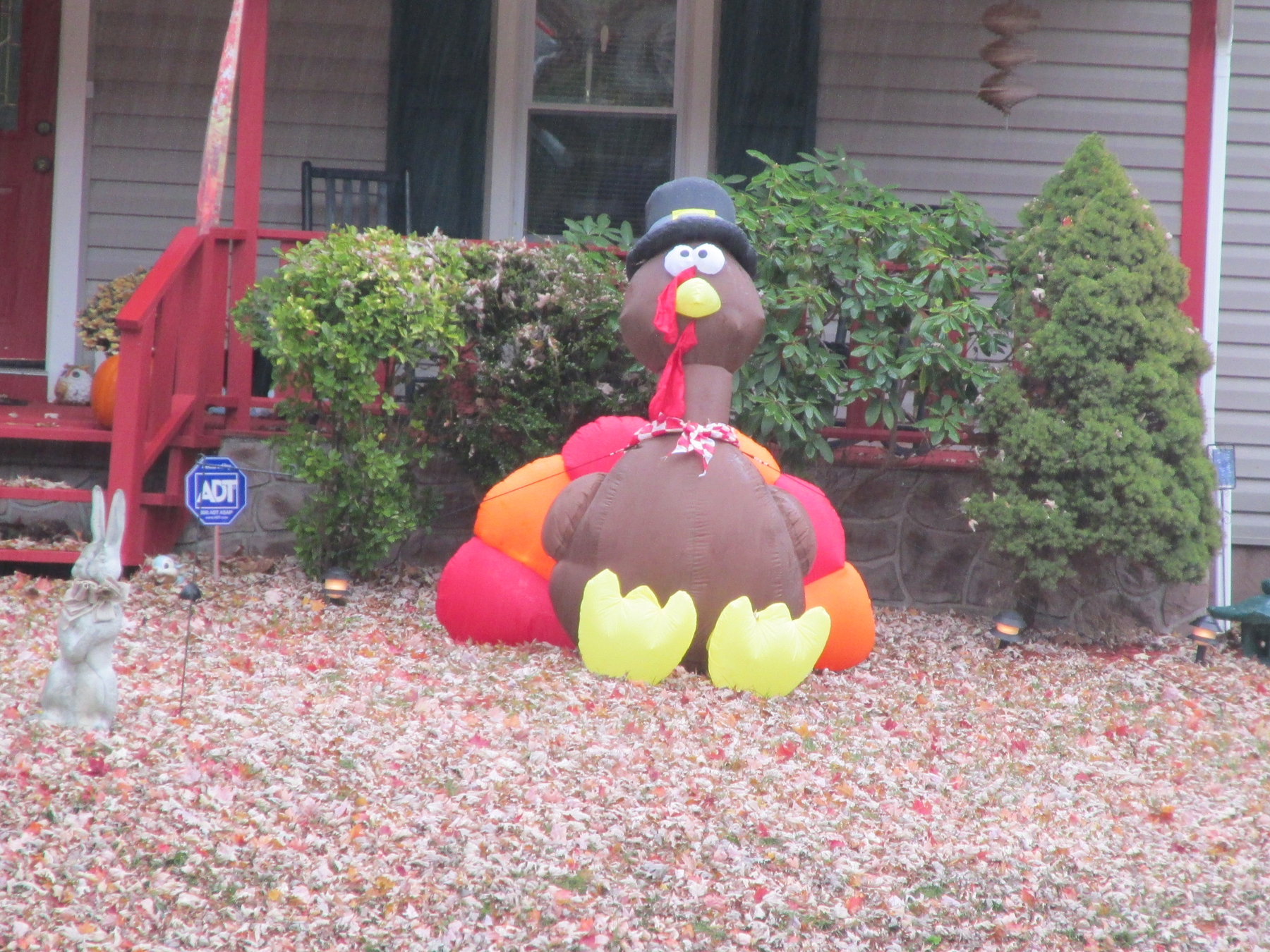
Photo by Bryan Stevens A decorate turkey pays homage to the real bird.

Photo by Bryan Stevens
A decorative turkey made from plywood and a haybale pays homage to the real bird.