Tag Archives: Virginia

Joyas voladoras: Hummingbirds welcomed back to region

Michele Spark • Female ruby-throated hummingbirds lack the red throat patch, known as a gorget, that is present on adult males.

Readers continue to welcome back hummingbirds and share their first spring sightings of these tiny birds.

•••

“My husband Marvin and I saw our first hummingbird March 31 in Rogersville, Tennessee,” Mary Powers wrote in an email.

“We’ve been seeing them most days since then,” she added.

Mary said she put the feeder up a week before her sighting.

“Of course I change the syrup every week and clean it,” she noted.

•••

Kenneth Oakes commented on my Facebook page about his first sighting.

“I’ve just seen my first this year about 30 minutes ago on April 6 in an area near Sunshine, North Carolina,” Kenneth wrote.

•••

Dianne Rebmann emailed me to share her first spring hummingbird sighting.

“I saw my first hummingbird April 8,” she wrote. “There were actually two of them, and I caught them on Trailcam.”

Dianne lives in the Willowbrook community in Kingsport near the Meadowview Convention Center.

•••

Annie Morton and Pete Fredrick emailed me information about their first spring sighting.

“We wanted to share the news that we saw our first ruby-throated hummingbird (male) at home on April 9,” they wrote. “We live off Dry Creek Road in Unicoi County.”

They added that they hung a feeder last week after reading my article in The Erwin Record about the pending arrival time for hummingbirds.

“What a thrill to see the first one at the feeder while eating our breakfast yesterday morning,” they added to the end of their email.

•••

Diane Graham, a Jonesborough resident, spotted her first little one Wednesday morning (April 9) at her feeder.

“I think he was passing through,” she wrote in her email.

Diane also recorded two other visiting hummingbirds, one each on April 10 and April 11.

“None are yet making multiple visits during the day,” she added.

•••

April Kerns Fain commented on my Facebook page about her first sighting. “I saw the first one on April 9,” commented April, who lives in Unicoi.

•••

Sue Schreiner posted on my Facebook page about her first spring sighting.

“Just spotted my first hummingbird today (April 11) in Bluff City. Yay!” Sue wrote.

•••

Felicia Mitchell in Meadowview, Virginia, shared her first spring hummingbird sighing via a Facebook message. Felicia saw her first hummingbird on Sunday, April 13.

•••

In a Facebook comment on April 13, Flag Pond resident Regina Ray reported that she has seen her first spring hummingbird.

•••

Paula Elam Booher commented on my Facebook page that she saw her first hummingbird of spring in Bristol on April 13.

•••

Gina Kinney emailed to let me know that her mom Ginger Brackins saw her first hummingbird on April 14 at 6:25 p.m. in Erwin.

“She wanted me to email you right away,” Gina wrote.

•••

“I’ve had my hummingbird feeders up for a few weeks, but finally this afternoon (April 14) at 4 p.m. a female hummer had one all to herself,” Michelle Sparks, a resident of Bluff City, wrote to me by email.

•••

“Yesterday (April 14) I saw a hummingbird check out our feeder,” Donald Beck emailed me.

“It did not drink and I have not seen it any time since,” Donald, a resident of Bray Road in Stanley Valley in Rogersville, reported.

“Was it just on its way north?” Donald also asked.

It’s true, I noted in my response to his question, that many of these first hummingbird sightings are not the birds that will spend the summer months with us. Many of these “early” hummingbirds will continue migrating farther north, but others will arrive, like what they see and decide to stick around.

•••

Diane Hensley Silvers posted on April 16 in a Facebook comment that hummingbird numbers have only increased since the first one arrived.

“I have several now,” Diane wrote. “They arrived at my house in Washington County about 10 days ago.”

•••

Photo by Bryan Stevens • Ruby-throated hummingbirds such as this male are returning to the region.

Tennessee’s Watchable Wildlife offers an online profile for the ruby-throated hummingbird, including interesting information about how such a tiny bird makes its phenomenal crossing of the Gulf of Mexico each spring to return to the eastern United States.

To accomplish this tremendous migratory crossing, a hummingbird will double its body mass by fattening on nectar and insects in the weeks prior to departure.

No hummingbird species other than ruby-throated hummingbird breeds in Tennessee, but several Western species have been found in the state during the non-breeding season. They arrive anytime after late August and usually depart in April. At least seven western species of hummingbird has been recorded in the Volunteer State, including rufous, black-chinned, Allen’s, Anna’s, calliope and broad-tailed hummingbirds.

There’s also a couple of reports of a green violet-ear, a species that is usually found in forested regions of Mexico and Nicaragua. The species has ventured into Tennessee twice, being documented in Memphis in September of 2007 and in Montgomery County in July of 2020.

I’ve seen several of these western “visitors” throughout the years, but my greatest affection is still attached to the ruby-throated hummingbird.

Most hummingbirds impress with their size, or rather the lack of it. It’s that tiny size that has prompted people to describe them as “miracles” from the time the first European explorers sailed to the New World in the late 1400s. When Spanish explorers first encountered them, they had no equivalent birds in Europe to use as a reference. They referred to hummingbirds as “joyas voladoras,” or flying jewels.

If your yard offers some trees and shrubs, necessary for perching, you can attract ruby-throated hummingbirds. It pays to have a feeder available with a fresh mixture of one part sugar to four parts water. This is the formula that closely matches the sweetness of nectar available from flowers. In warm conditions, you’ll need to change out the mixture every few days. Give the feeders a scrubbing and rinse while changing out the sugar water. Then sit back and enjoy the antics of these pint-sized delights.

•••

To share a sighting, ask a question or make a comment, email me at ahoodedwarbler@aol.com.
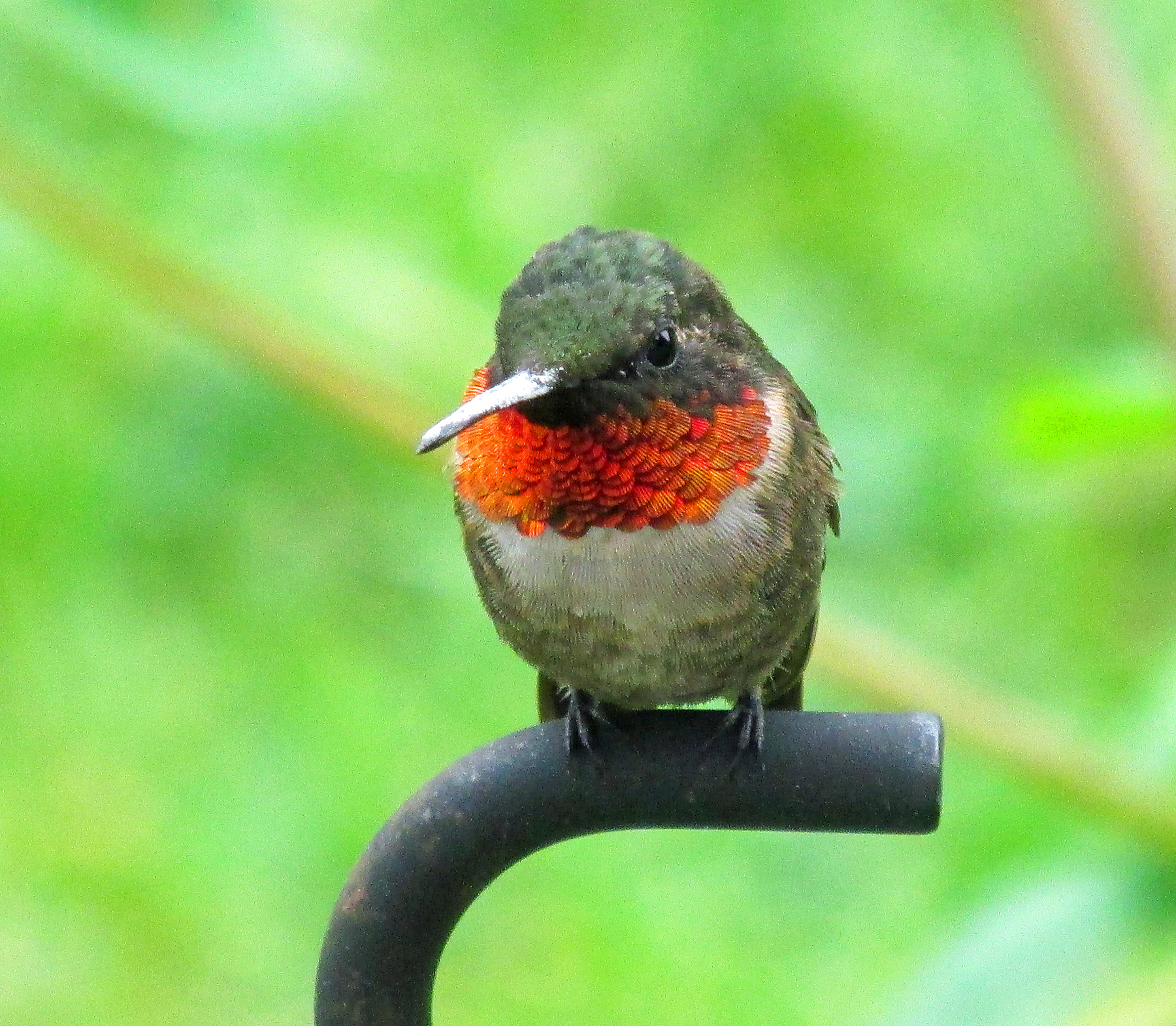
Photo by Bryan Stevens • Despite a perceived disadvantage of size, ruby-throated hummingbirds are quite capable of thriving in a giant world.
Kinglets are tiny birds with huge appeal

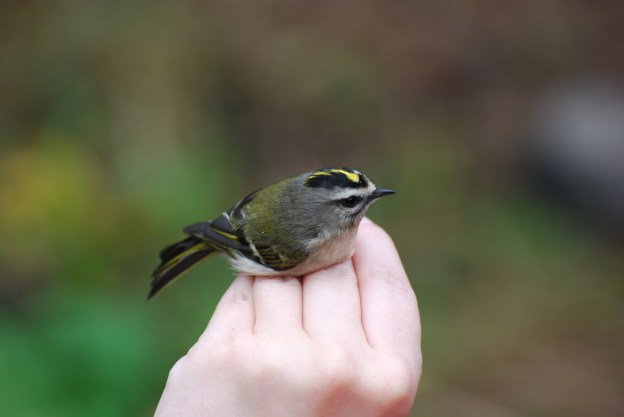
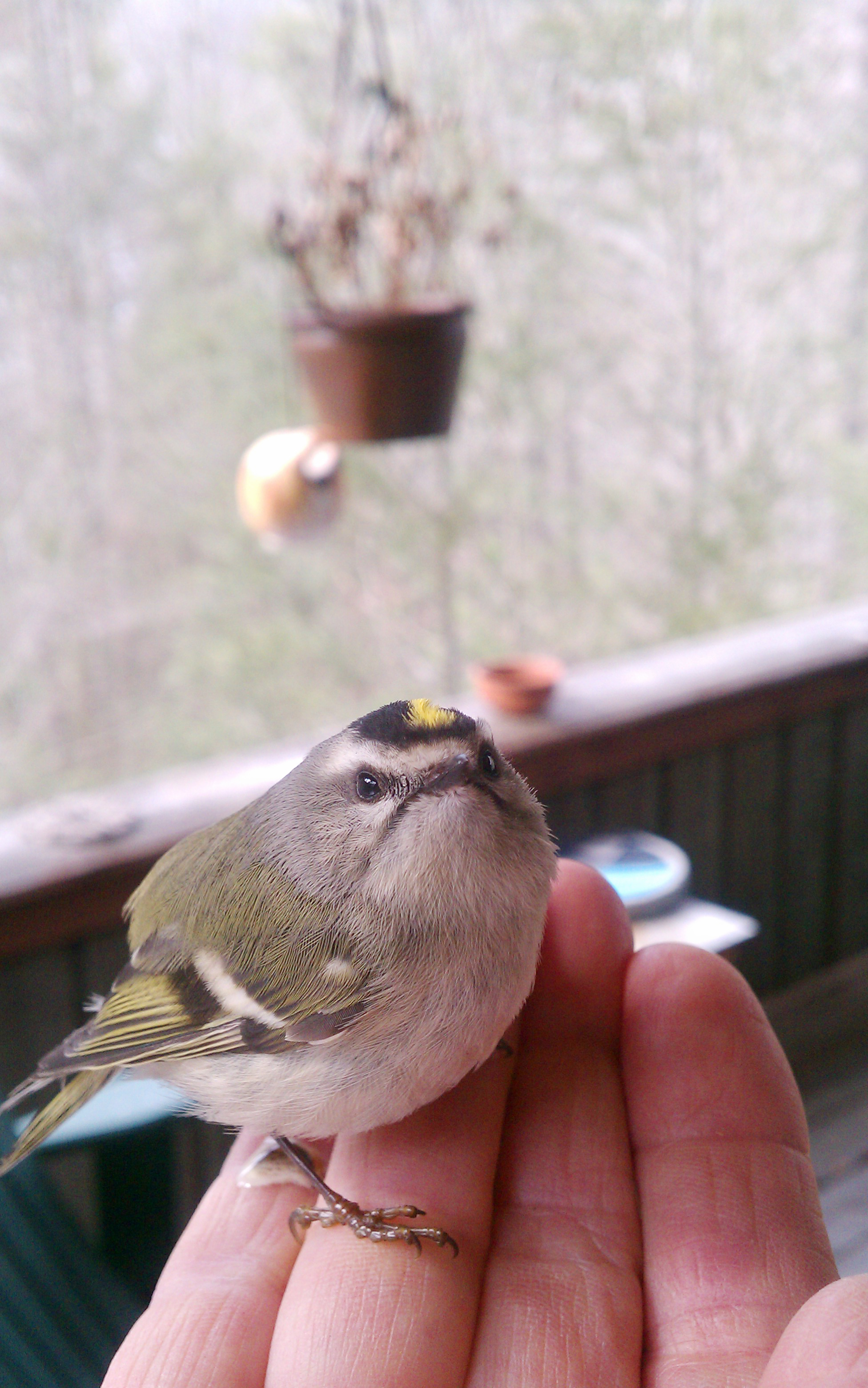
Photo by Beth McPherson • A golden-crowned kinglet recovers in the photographer’s hand after striking a window.

With the recent cold weather, I’ve been seeing a few golden-crowned kinglets, as well as the closely related ruby-crowned kinglet, at my home.

Golden-crowned kinglets are fairly common winter birds. Ruby-crowned kinglets, although not always as common as their relative, also are found in the region during the winter season.

Both the golden-crowned and ruby-crowned kinglets are members of a family of tiny birds known collectively as kinglets and firecrests. They’re such tiny, energetic birds that they absolutely excel with the “cuteness” factor.

All kinglets are very tiny birds, as well as extremely active ones. They are also the only members of this family of birds found in North America. Four other species, however, are native to Europe, Asia and North Africa. The remaining species include goldcrest, common firecrest, Madeira firecrest and flamecrest, which is also known as the Taiwan firecrest.

Kinglets, as their name suggests, are tiny birds. In fact, about the only North American birds smaller than kinglets are some of the hummingbirds. The kinglets belong to the family, Regulidae, and the genus, Regulus. The family and genus names are derived from a Latin word, regulus, which means “rex,” or “king.” The name was apparently inspired by the colorful crown patches, often red, orange or gold, that resemble the royal “crowns” of kings.

Although similar in size and overall coloration, the ruby-crowned and golden-crowned kinglets are easily distinguished from each other. Side by side, the two species of North American kinglets are easy to identify. The golden-crowned kinglet has a striped facial pattern formed by bold black and white stripes. The ruby-crowned kinglet, on the other hand, has a bold white eye ring but no striping.

The golden-crowned kinglet has an orange crown patch, while the ruby-crowned kinglet has a red crown patch that is, more often than not, kept concealed. Both sexes of the golden-crowned kinglet possess an orange crown patch, but only the male ruby-crowned kinglet boasts a scarlet patch of feather atop the head.

Kinglets are active birds, foraging vigorously for small insects and spiders. When foraging, both kinglet species have a habit of flicking their wings over the backs. Even if you can’t get a good look at the birds, this behavior alone helps contrast them from other small birds, including some warblers and wrens.

Golden-crowned kinglets are widespread in the region during the winter. During the summer months, head to the slopes of some of the region’s higher mountains to look for these tiny birds that nest at the higher elevations of the Southern Appalachians.

Ruby-crowned kinglets can also be found in the region during the winter, but extreme cold weather will often force these less cold-hardy birds to eke out the winter months farther south.

Kinglets don’t typically visit feeders, but they do tend to join mixed flocks with membership consisting of such species as tufted titmouse, Carolina chickadee and white-breasted nuthatch. When traveling with such flocks, kinglets may visit the space around feeders but rarely take seeds or other fare offered at feeders.

In recent decades, perhaps assisted by the surge in the popularity of feeding birds, kinglets have been observed sampling such fare as suet cakes, peanut chips and scraps of sunflower seeds that have been shelled and dropped by other birds.

Normally, kinglets have a rather fleeting lifespan. These tiny birds can be considered old if they live three or four years. There are always exceptions. The oldest golden-crowned kinglet on record was six years and four months old. That individual, a male, was documented by a bird bander in 1976, according to the website All About Birds.

Kinglets are surprisingly tame at time and often exhibit as much curiosity about us as we display toward them. They’re very active birds, however, constantly moving from perch to perch. These bursts of hyperactivity can make them difficult to observe with any satisfaction since they so rarely remain still for long.

•••

To learn more about birds and other topics from the natural world, friend me on Facebook at https://www.facebook.com/ahoodedwarbler. I like to post about local birds, wildlife, flowers, insects and other aspects of the natural world.

Seeing Yellow: Visit from an odd cardinal surprises local couple

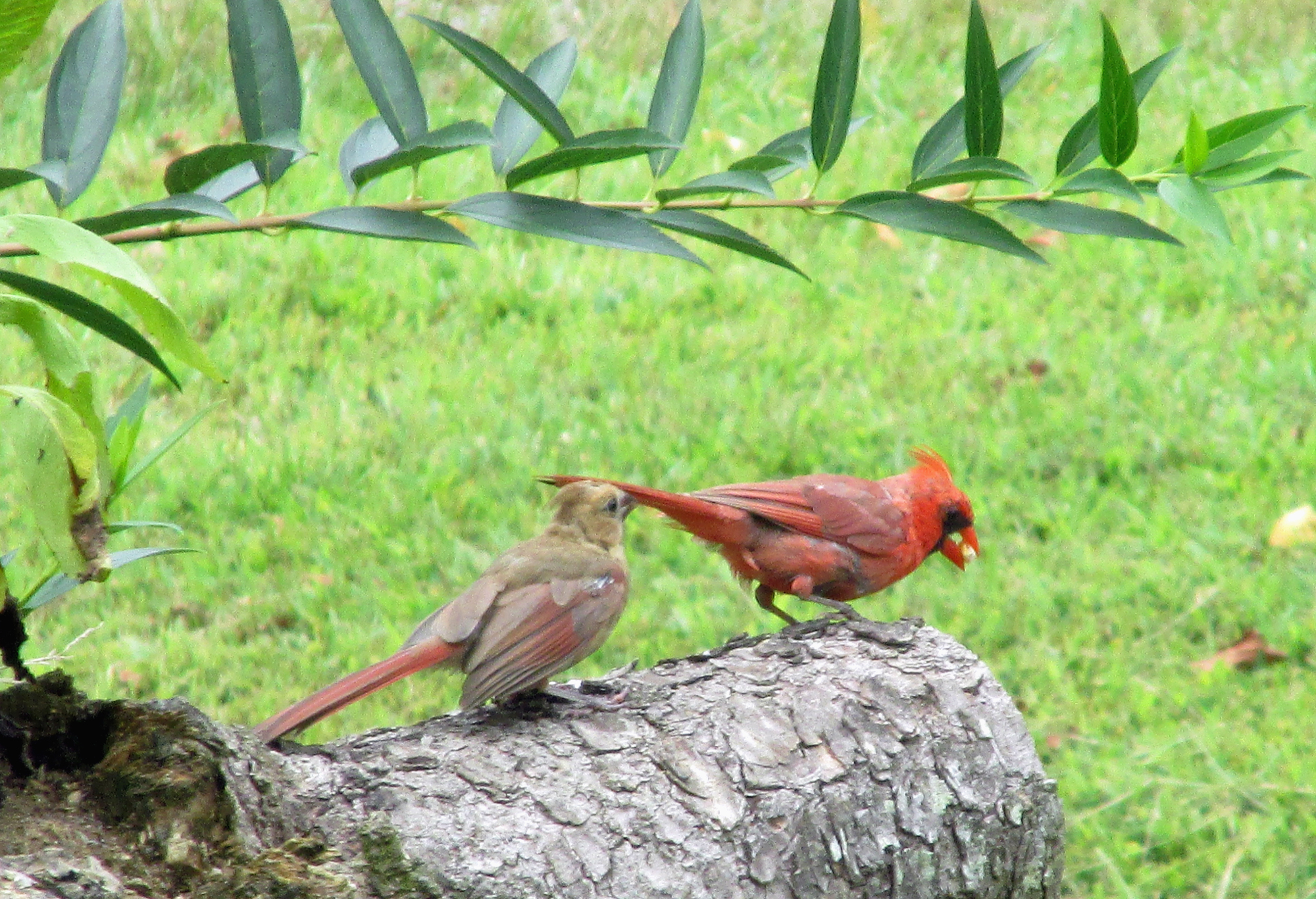
Photo by Bryan Stevens • A male Northern cardinal leads a young cardinal to food sources.

Unicoi resident Bobby Davis called me last week to share news about a sighting of a yellow cardinal. Bobby said that he and his wife, Tressa, have two bird baths and a hummingbird feeder in their yard and are in the habit of watching the comings and goings of their feathered friends. At 1 p.m. on Tuesday, Aug. 8, they noticed a yellow cardinal in the yard near some rhododendrons.

A “yellow” cardinal is simply a Northern cardinal that has inherited a rare genetic condition that causes the bird’s feathers to turn yellow instead of red.

A news item posted to a website for The Wood Thrush Shop in Nashville relates the story of a backyard feeding station in Harriman, Tennessee, in Roane County that was visited by a yellow Northern cardinal on a regular basis.

Yellow Northern cardinals have been seen in at least four different states the last 10 years but remain a rarity.

The article explained that the yellow coloration in affected cardinals is caused by a rare genetic mutation. The colors red, orange and yellow in a bird’s feathers are created with carotenoid pigments derived from the foods they eat. In the male Northern cardinal, yellow pigments from the diet apparently are converted to red by a specific enzyme. In a very rare genetic mutation, probably affecting fewer than one in a million cardinals, that enzyme is lacking, so the conversion to red doesn’t occur and the feathers are bright yellow instead.

Back in May of this year, a yellow cardinal given the name Maize was spotted in Alabama. That sighting took place less than 15 miles from a location that hosted another yellow cardinal in 2018. Was Maize a descendant of that yellow cardinal spotted six years ago?

Perhaps the yellow cardinal will stick around at Bobby and Tressa’s home. Bobby informed me that they have an ordinary pair of red cardinals that resides in their yard, but he noted that the three birds have not interacted.

•••

Interestingly enough, there is a bird with the actual name yellow cardinal, but it is not closely related to the Northern cardinal. This South American bird has the scientific name of Gubernatrix cristata and is a member of the tanager family.

The yellow cardinal was formally described in 1817 by the French ornithologist Louis Pierre Vieillot under the binomial name Coccothraustes cristata. The word “cristata” means crested or plumed.

This yellow cardinal ranges in Argentina, Brazil, Paraguay and Uruguay. Its natural habitats are dry savanna, temperate shrubland, subtropical or tropical moist shrubland and temperate grasslands. The yellow cardinal is threatened by habitat loss and from pet trade trappers for sale as exotic pets. Males are trapped at a higher rate than females, and the yellow cardinal is considered endangered due to the constant entrapment. If recent counts are accurate, only about 1,000 t0 2,000 of these birds still exist.

Photo by U.S. Fish & Wildlife Service
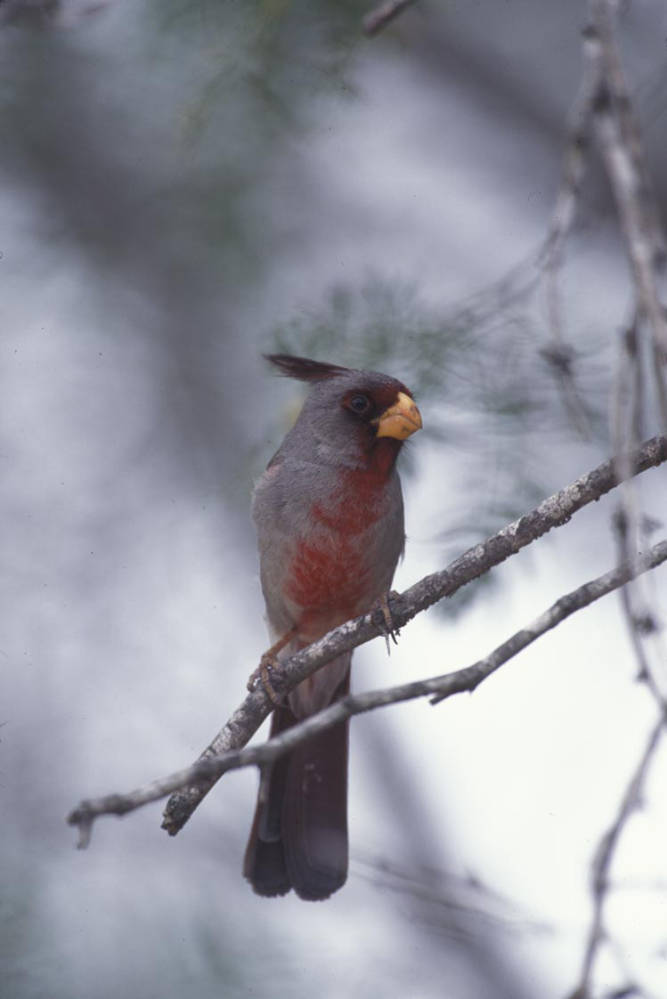
Pyrrhuloxia, also known as desert cardinal, is related to the Northern cardinal. 

The Northern Cardinal, on the other hand, is an abundant, beloved songbird. There’s additional evidence to put forward as testimony to the popularity of the Northern cardinal. It’s the official state bird of seven states: Virginia, North Carolina, West Virginia, Ohio, Illinois, Indiana and Kentucky. Only the Northern mockingbird, which represents five states as official state bird, even comes close to the Northern cardinal in this respect.

Cardinals are a widespread species, ranging westward to the Dakotas and south to the Gulf Coast and Texas. The southeastern United States was once the stronghold of the cardinal population. In the past century, however, cardinals have expanded their range into New England and Canada. These birds have even been introduced to Hawaii.

The Northern cardinal has only two close relative in the genus Cardinalis. The pyrrhuloxia, also known as the desert cardinal, ranges throughout Arizona, New Mexico and Texas, as well as in Mexico. The third relative is known as vermilion cardinal and is found in Colombia and Venezuela. This bird suffers some losses to the exotic pet trade, but its numbers have managed to remain fairly stable.

•••

I’ve been an active birder since the early 1990s. To share a sighting, ask a question or make a comment, email me at ahoodedwarbler@aol.com.

Sandpiper a surprise addition for summer bird count

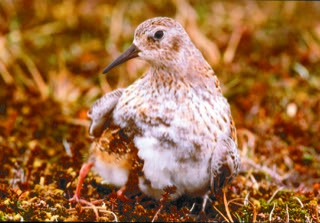
Photo by USFWS • A baby least sandpiper shelters beneath its dutiful mother. The aptly named least sandpiper is the smallest species of shorebird.

It’s not too often I get a chance to make a historic bird sighting, but that’s what happened on a recent Saturday while seated on a bench with Rob Armistead having a breakfast break while taking part in a seasonal bird survey in Elizabethton along the Watauga River.

I chose the location for the break because I knew that it has traditionally been a good spot to observe some unexpected species. Past good birds that I’ve observed along this section of the Watauga River have included orange-crowned warbler, yellow-throated vireo, sora, Baltimore oriole and red-headed woodpecker.

On this occasion, a tiny shorebird made an appearance, settling on some exposed rock formations. In April and May, these same rocks are great locations to find migrating spotted sandpipers and solitary sandpipers. 

The bird was smaller than these sandpipers and immediately stood out as a “peep,” a nickname that birders give to a group of small sandpipers that are all similar in appearance.

The one physical trait that help distinguish a least sandpiper from other “peeps” is leg coloration. Least sandpipers have greenish or yellowish legs in contrast to the black legs of other similar “peeps.”

In good light and at close range, Rob and I confirmed that the bird had greenish legs and were thrilled to add a least sandpiper to our own tally of observed birds.

The least sandpiper, as suggested by its name, is the smallest member of the sandpiper family. In fact, this sandpiper, which is not much bigger than a sparrow, is the world’s smallest shorebird. The least sandpiper weighs only a single ounce and is only five to six inches long. 

According to the website All About Birds, the least sandpiper migrates thousands of miles between its Arctic breeding grounds and wintering grounds as far south as Chile and Brazil.

In releasing the count compilation, official compiler Rick Knight made note of the fact that the least sandpiper represents a late migrant and the first-ever June record for the species in the five-county area. 

During the course of the day, Rob and I joined Brookie and Jean Potter for a trip to Holston Mountain, where we added some mid- to high-elevation species such as scarlet tanager, rose-breasted grosbeak, veery, Eastern wood-pewee, dark-eyed junco, ruffed course and chestnut-sided warbler. 

Photo by Bryan Stevens • A male rose-breasted grosbeak perched on a branch on Roan Mountain, Tennessee.

This year’s survey was the 29th annual Carter County Summer Bird Count and was conducted by members and friends of the Elizabethton Bird Club. I’ve been participating on this yearly survey of local birds since the late 1990s.

This year’s count was held Saturday, June 11. A total of 22 observers took part in this year’s count. 

A total of 116 species was tallied, which is right on average for the last decade and slightly above the average of 114 over the previous 28 years, according to Knight.

He noted that the all-time high for this count was 123 species in 2017.

Here’s the total:

 Canada goose, 131; wood duck, 9; mallard, 53; ruffed grouse, 3; and wild turkey, 20.

Rock pigeon, 49; Eurasian collared-dove, 1; mourning dove, 155; yellow-billed cuckoo, 1; Chuck-will’s-widow, 4; Eastern whip-poor-will, 9; chimney swift, 116; and ruby-throated hummingbird, 22.

Killdeer, 18; least sandpiper, 1; double-crested cormorant, 13; great Blue heron, 22; and green heron, 2.

Black vulture, 5; turkey vulture, 65; Cooper’s hawk, 4; bald eagle, 1; red-shouldered hawk, 2; broad-winged hawk, 5; red-tailed hawk, 5; Eastern screech-owl, 6; and barred owl, 3.

Belted kingfisher, 5; red-bellied woodpecker, 32; downy Woodpecker, 23; hairy woodpecker, 4; Northern flicker, 27; and pileated woodpecker, 16.

American kestrel, 1; great crested flycatcher, 2; Eastern kingbird, 27; Eastern wood-pewee, 31; Acadian flycatcher, 20; alder flycatcher, 2; least flycatcher, 12; and Eastern phoebe, 73.

White-eyed vireo, 5; yellow-throated vireo, 1; blue-headed vireo, 54; warbling vireo, 1; and red-eyed vireo, 165.

Blue jay, 110; American crow, 259; fish crow, 2; and common raven, 10.

Tree swallow, 118; Northern rough-winged swallow, 45; purple martin, 22; barn swallow, 173; and cliff swallow, 265.

Carolina chickadee, 73; tufted titmouse, 93; red-breasted nuthatch, 14; white-breasted nuthatch, 23; house wren, 57; winter wren,  4; and Carolina wren,  116.

Blue-gray gnatcatcher,  23; golden-crowned kinglet, 7; Eastern bluebird, 152; veery,  29; hermit thrush, 1; wood thrush, 66; American robin,  581; gray catbird, 60; brown thrasher,  22; and Northern mockingbird, 70

European starling, 411; cedar waxwing, 61; house sparrow, 98; house finch, 51; pine siskin, 10; and American goldfinch, 170.

Grasshopper sparrow, 1; chipping sparrow,  80; field sparrow, 43, dark-eyed junco, 70; song sparrow, 348; Eastern towhee, 150; yellow-breasted chat, 7.

Eastern meadowlark, 13; orchard oriole, 2; Baltimore oriole , 1; red-winged blackbird, 73; brown-headed cowbird, 49; and common grackle,143.

Ovenbird, 77; worm-eating warbler  3; Louisiana waterthrush, 12; golden-winged warbler,  2; black-&-white warbler, 31; Swainson’s warbler, 6; common yellowthroat, 31; hooded warbler,  110; American redstart , 6; Northern parula, 47; magnolia warbler, 1; Blackburnian warbler,  5; yellow warbler, 3; chestnut-sided warbler, 31; black-throated blue warbler, 49; pine warbler,  3; yellow-rumped warbler, 1; yellow-throated warbler, 16; black-throated green warbler, 19; and Canada warbler,  10.

Scarlet tanager, 42; Northern cardinal, 173; rose-breasted grosbeak, 7; blue grosbeak, 4; and indigo bunting, 161.

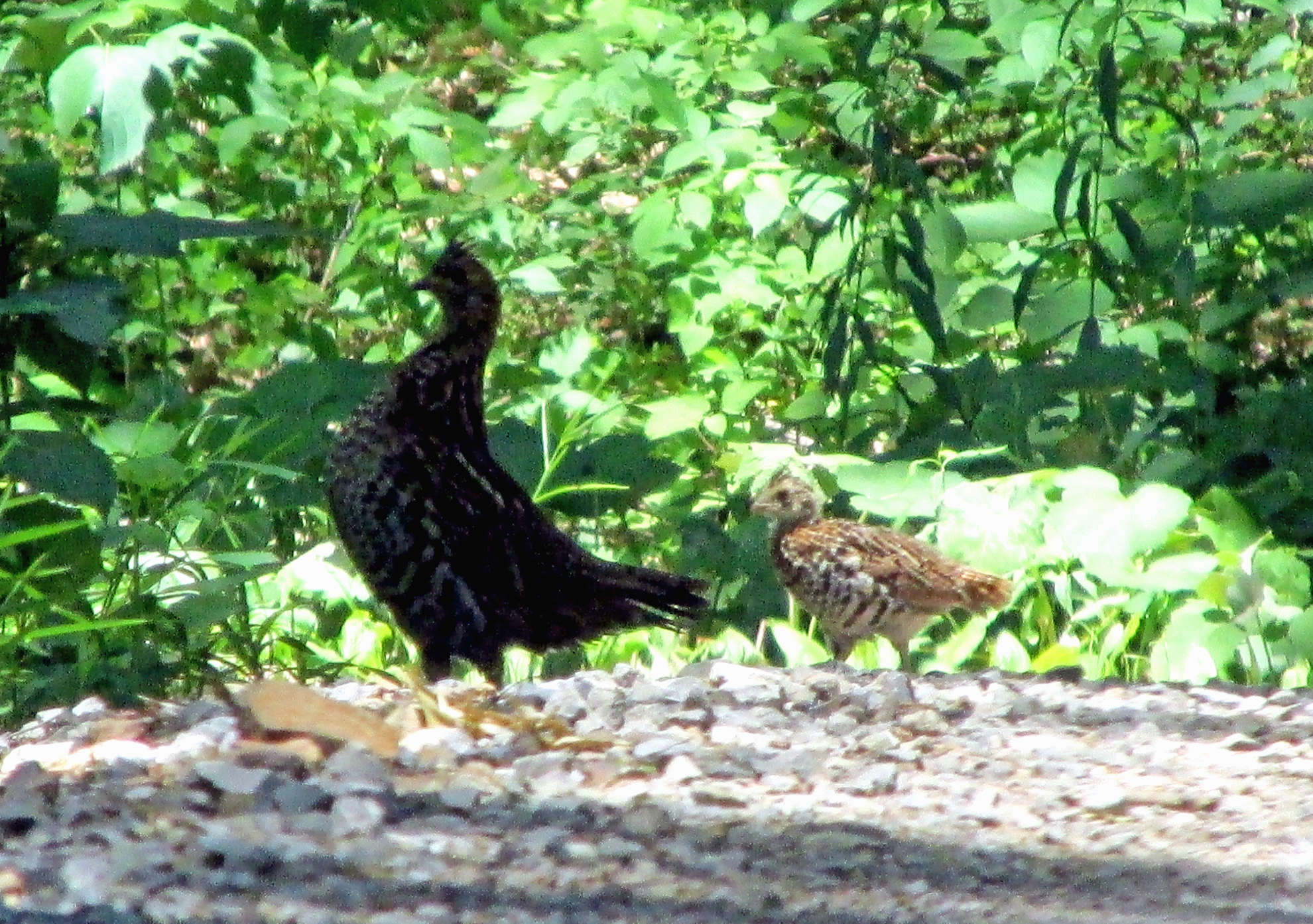
Photo by Bryan Stevens • A young grouse follows its mother into concealment by the edge of a road on Holston Mountain, Tennessee.

My other personal highlight on this count was seeing three young Ruffed Grouse darting  across the road, one at a time, while riding on Panhandle Road to the top of Holston Mountain. Those three young grouse turned out to be the only grouse counted by any participants on the count.

The Unicoi County Summer Bird Count was conducted Saturday, June 18. I’ll provide the results of that count in an upcoming column. 

Tanagers are among world’s most colorful birds

Photo Courtesy of Jean Potter
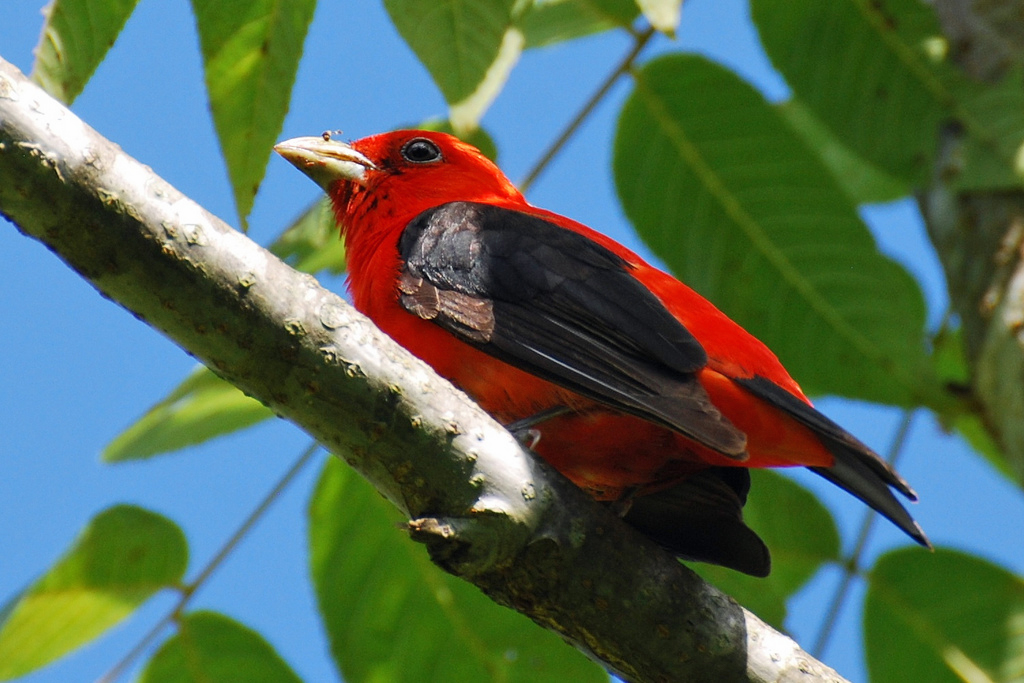
A male scarlet tanager brightens shadowy woodlands with a flash of tropical colors yet remains mostly inconspicuous in the forest canopy.

The daily chorus of songbirds greeting the dawn is usually welcome unless I’m feeling particularly sleepy. Carolina wrens are one of the first birds in residence to sing each day. This time of year they get plenty of accompanists, including American robins, Eastern phoebes, Carolina chickadees, Northern cardinals, Eastern towhees, red-eyed vireos, indigo buntings, hooded warblers, ovenbirds and others.

As June arrived, however, I began to take notice of the absent voice of scarlet tanagers. It wasn’t until June 9 that I heard the first male scarlet tanager of the season singing from the wooded ridge behind my home.

In late April and throughout May, once the oaks, the maples, the poplars and other trees begin spreading out new green leaves to create a concealing woodland canopy, a familiar song can be heard from the treetops. 

Upon first hearing it, listeners might mistake the hidden singer for an American robin. Listen a little closer, however, and the song sounds as if it is being delivered by a robin stricken a bit hoarse with a sore throat.

The producer of the hoarse but melodic song is a scarlet tanager, one of the most showy birds of Eastern woodlands from April to early October. Like the warblers, vireos, flycatchers and other songbirds, the scarlet tanager is migratory. They spend the winter months in the tropical forests of Central and South America. The scarlet tanager is better attired than most birds to provide us a glimpse of what life must be like in the tropical rain forests, which are a riot of color and sound.

It takes only one sighting to sear the vision of these vibrant birds into our retinas, as well as into our memories. The scarlet tanager boasts a brilliant plumage of crimson red paired with black wings and tail. Of course, this is the male. The female scarlet tanager makes no real claim to the common name with her comparatively drab greenish plumage. However, the scientific name, Piranga olivacea, gives a nod to the olive-green plumage of females, young males and even adult males when molting their feathers.

Although once nominated as a candidate for state bird by the school children of Minnesota, the scarlet tanager ultimately failed to gain the designation. Instead, as perhaps is fitting for the “Land of 10,000 Lakes,” the common loon represents Minnesota as official state bird.

The related summer tanager is less widespread in Northeast Tennessee, but males of this species are no less dramatic in appearance than the Scarlet Tanager. Male summer tanagers are a rosy-red over all their body. Females, with a dull greenish plumage, are relegated to the background. She can be distinguished from her counterpart, the scarlet tanager, because of their darker wings and larger bills.

The summer tanager holds the distinction of being the only all-red bird in North America. Birds like Northern cardinals and scarlet tanagers also have some black in their plumage.

I’ve seen summer tanagers at Steele Creek Park in Bristol and Willow Springs Park in Johnson City. Sadly, over the years my sightings of this attractive songbird have been few and far between. My most memorable observation of a male summer tanager took place many years ago during a spring visit to Fripp Island, South Carolina. Most of the summer tanagers I have observed in Northeast Tennessee have been females.

On the other hand, I usually have a few scarlet tanagers in residence around my home during the summer months. If the woodlands at my home fail to attract this bird, I can usually make a visit to higher elevations on Roan Mountain, Unaka Mountain or Holston Mountain to gain an exciting glimpse of this beautiful bird.

Worldwide, there have traditionally been about 240 species of tanagers. Experts have changed some of the ways they classify tanagers, so that figure is no longer set in stone. Tanagers are a New World family of birds, concentrated mainly in the tropics.

In the western United States, the scarlet and summer tanagers are replaced by Western tanagers and hepatic tanagers. During a visit to Salt Lake City in Utah in 2006 I saw several Western tanagers.

Some of the world’s other tanagers are known by extremely descriptive names, including flame-colored tanager, green-headed tanager, golden-chevroned tanager, azure-shouldered tanager, fawn-breasted tanager, saffron-crowned tanager, metallic-green tanager, turquoise tanager, scarlet-bellied mountain tanager and diademed tanager.

A print of Scarlet Tanagers by early North American naturalist and painter John James Audubon.

Scientists have recently given fresh consideration to the relationship of many tanagers to the other birds of the world. As a result, many of the North American tanagers are now closely allied with such birds as Northern cardinal and have been pushed into a tenuous relationship with tropical tanagers.

The scarlet tanager is not typically a feeder visitor, but you can lure these birds with orange slices placed in special feeders or simply spiked onto the branches of backyard trees. As an added bonus, orange slices can also attract birds such as baltimore orioles and gray catbirds.

Fond of fruit, the scarlet tanager incorporates various berries into its diet. Landscape around your home with fruit-bearing trees such as mulberry, serviceberry and wild cherry to make your yard more inviting to these elusive bird.

Yes, the scarlet tanager is more often heard than seen, but it is a bird worth seeking out. A sighting is guaranteed to impress. Seeing a scarlet tanager will almost make observers feel like they’ve been dropped into a tropical jungle instead of standing beneath a woodland canopy in the Southern Appalachians.

I’ll be participating in some summer bird counts over the next few weeks, so I am hopeful that my 2022 drought of scarlet tanager sightings will soon be at an end.

American crow’s dark reputation more from plumage than behavior

There’s something rather autumnal about watching a flock of American crows glean the last scattered kernels of corn from a harvested field as one of the flock stands sentry and ready to utter the alarm with some guttural “caws” should anything potentially threatening appear on the scene. Crows are such a part of the landscape that they would almost escape our notice if they didn’t come with centuries of accumulated baggage that makes us distrust them and suspect their every action.

While seeking birds far afield, I have occasionally spotted some innovative scarecrows standing guard in gardens and agricultural fields. I’m not sure if anyone still erects these human effigies for their original purpose of warding off crows and other feathered agricultural pests. These days, scarecrows likely serve an ornamental purpose and are often part of a yard’s whimsical Halloween or autumn decorations.

The crow, largely thanks to its glossy black feathers, but perhaps also with a nod to its avian intelligence, has long been associated with Halloween. Greeting cards and decorations for the holiday often feature depictions of bats, owls and black cats, as well as the inevitable crow and the accompanying scarecrow. With a brain about as big as a man’s thumb, the crow is renowned among ornithologists and other scientists for its keen intelligence. Crows are not fooled for a second by the charade of a straw-stuffed, brainless friend of Dorothy propped in a field.

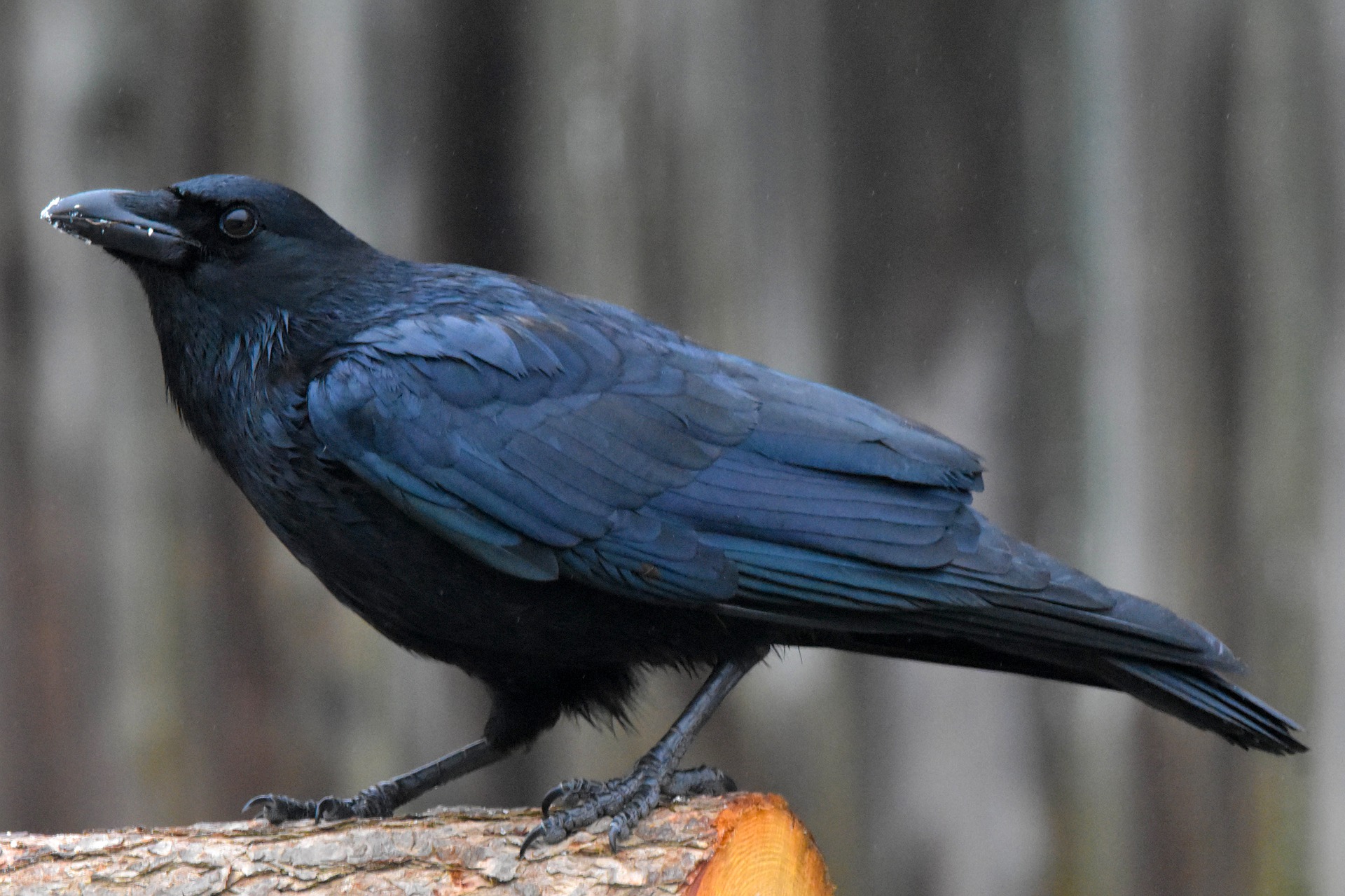
Photo by Jack Bulmer/Pixabay • An American crow perches on a log. Due to its dark coloration, crows have often been associated with evil and other dark forces. In actuality, crows are admirable, highly intelligent birds.

The intelligence of this bird has long been known. Early American naturalist William Bartram wrote about a crow named Tom in a highly entertaining essay titled “Anecdotes of an American Crow.” Bartram, who lived from 1739 to 1823, brought humorous observations and keen insight to his subject as he wrote about the joys — as well as tribulations — of living with Tom, a crow that enjoyed tormenting Bartram’s dog and purloining the writer’s spectacles and trying to hide them.

The essay demonstrates that almost as soon as Europeans arrived in North America, some of those with a bent toward the natural world recognized the intelligence and amazing adaptability of the American crow. As well as writing about the natural world, Bartram earned widespread acclaim for his drawings of botanical and ornithological subjects. Tom, the featured crow in Bartram’s brief essay, certainly exhibited intelligence of an impressive degree. Not only did the crow steal his owner’s eyeglasses, he foiled Bartram’s first attempt to reclaim them. The story makes very humorous reading. To read Bartram’s account, visit http://www.geocities.ws/jswortham/crow.

What else have crows done down through the ages to gain such a dark and much undeserved reputation? It probably doesn’t help matters that a flock of crows is known as a “murder.” Ancient Greeks considered crows as omens, which often foretold death and other disasters. The warrior goddess known as the Morrighan from Celtic mythology often appears in the form of a crow or raven. She is also often portrayed as being accompanied by a group of these black-plumaged birds. Many Native American tribes revere crows as communicators between worlds. Crows have been documented using tools and solving problems, which shows an uncanny ability to analyze and strategize. The early Celtic people also noted and admired these traits in crows.

I think the Celts and Native tribes had the right idea. Crows are admirable birds for many reasons. For instance, they are very social birds, often forming family flocks. They may also form much larger flocks for the purpose of roosting. When nesting, this social behavior comes in useful for a mated pair. Offspring from previous successful nesting efforts often serve as helpers. In addition to gaining their own life experience on successful nesting and caring for chicks, these older siblings may protect the nest site from predators or even deliver food to fill hungry beaks and bellies.

While famous for their associations to humans and our agriculture, crows forage far beyond the cornfield for their food. Many crows scavenge road-killed wildlife, such as squirrels, opossums and rabbits. While they certainly don’t turn up their beaks at the notion of eating carrion, crows do so less often than birds such as turkey vultures, black vultures and the crow’s fellow corvid, the common raven.

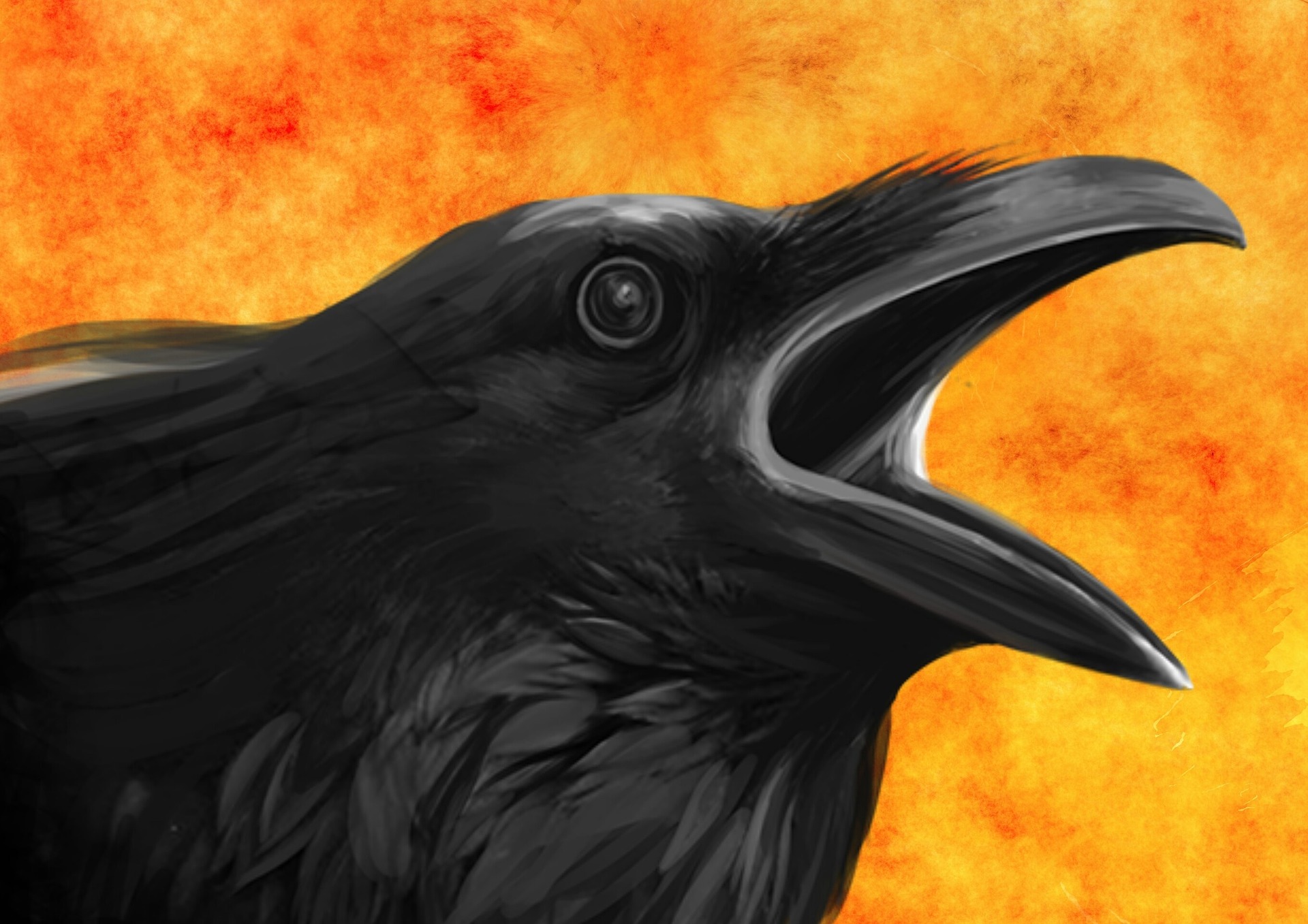
The kinship to the raven is evident, but even moderately experienced birders rarely confuse these similar species. The raven is a large bird with a heavy beak, a distinctive profile and a wedge-shaped tail. In a direct comparison with a raven, a crow looks downright puny. Both are members of the corvid family, which consists of 120 species including jays, rooks, magpies and jackdaws. Some of the world’s other crows include the descriptively named little crow, hooded crow, carrion crow, collared crow, long-billed crow and violet crow. While most of the world’s crows are thriving, the Hawaiian crow has been extinct in the wild since 2002, although the species still exists in captive-breeding programs in various zoos.

Thanks to its resourcefulness and intelligence, the crow is deserving of more respect and even admiration. The American crow is a uniquely American success story. Think more of Bartram’s story about Tom the crow and not the dark, misguided myths and legends about crows this Halloween. Long may the crows fly.

Annual fall bird count tallies 129 species for Northeast Tennessee

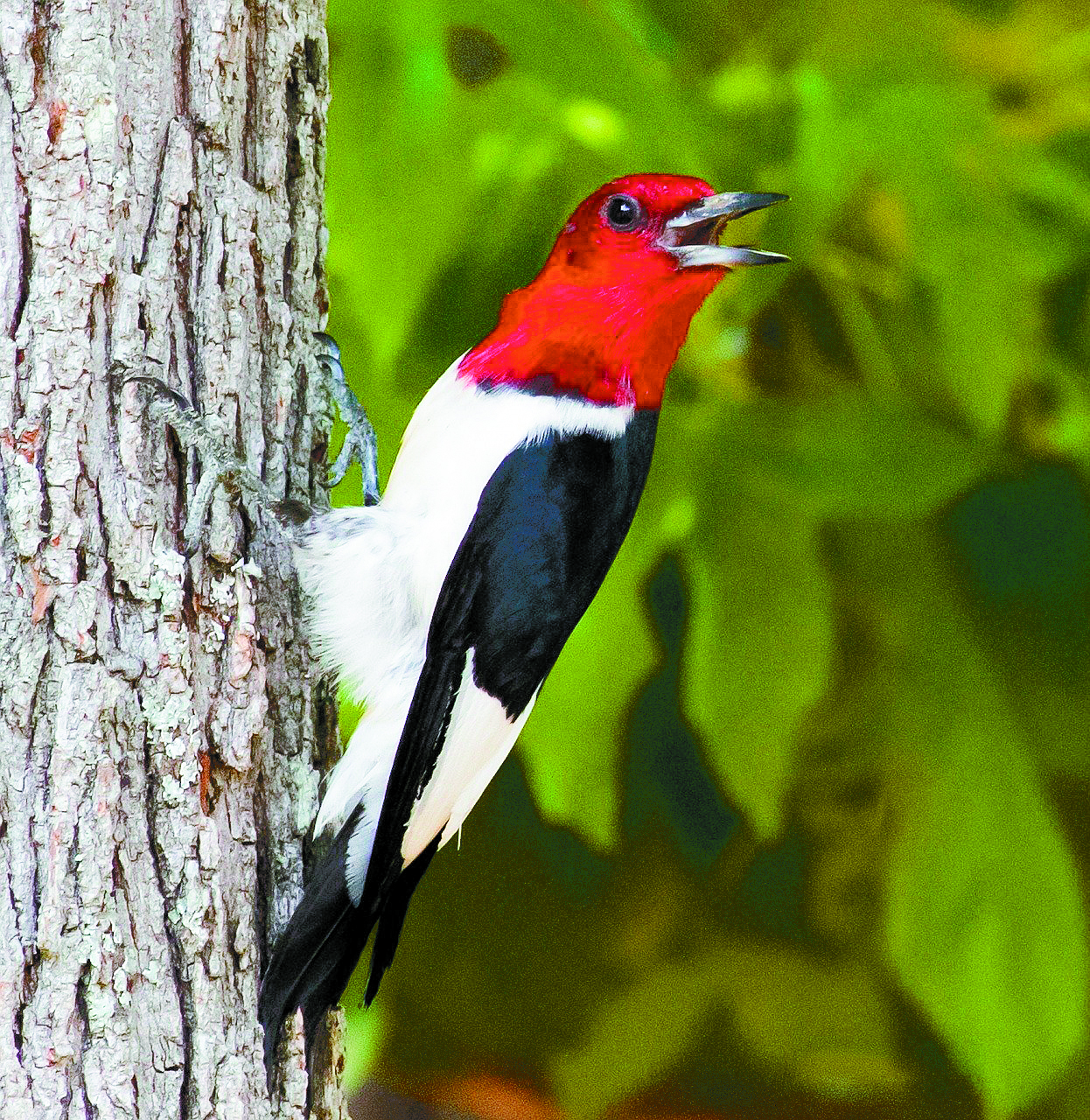
Photo from Pixabay • A red-headed woodpecker clings to the trunk of a tree. During the recent Fall Bird Count for Northeast Tennessee, all the region’s seven woodpecker species were tallied. The medium-sized red-headed woodpecker is found only in isolated locations in the region. They prefer more open country than most of their kin. Habitat containing dead or dying trees is vital if these woodpeckers are to thrive.

I wrote last week about my participation in the recent 52nd annual Fall Bird Count conducted by the Elizabethton Bird Club.

This week I want to dive into the results of what turned out to be a great count. The five-county tally of the birds in Northeast Tennessee was held on Saturday, Sept. 25, with 34 observers in 14 parties, plus two feeder watchers. Participants covered Carter County, as well as parts of adjacent Johnson, Sullivan, Unicoi and Washington counties.

This year’s count tallied 129 species, which is slightly above the recent 30 year average of 125 species. The all-time high was reached in 1993 when 137 species were tallied.

Participants for this year’s count included Fred Alsop, Jerry Bevins, Rob Biller, Debi Campbell, J.G. Campbell, Ron Carrico, Catherine Cummins, Dianne Draper, Cindy Ehrhardt, Harry Lee Farthing, Dave Gardner, Tammy Griffey, Don Holt, Connie Irick, David Irick, David Kirschke, Rick Knight, Roy Knispel, Richard Lewis, Dianne Lynne, Vern Maddux, Joe McGuiness, Tom McNeil, Eric Middlemas, Susan Peters, Brookie Potter, Jean Potter, Pete Range, Judith Reid, Judi Sawyer, Chris Soto, Bryan Stevens, Peggy Stevens, Kim Stroud, Charles Warden and Rex Whitfield.

The four most commonly observed species, in descending order, included European starling, 838; Canada goose, 744; American crow, 502; and blue jay, 437. No surprises there.

Somewhat surprising was the total of 222 brown-headed cowbirds. Other abundant birds that numbered more than 200 individuals included mourning dove (316), rock pigeon (285), chimney swift (227), Eastern bluebird (208), American robin (222), cedar waxwing (230) and American goldfinch (216).

A total of 24 species of warblers was found, including 172 individual Tennessee warblers. These greenish-yellow warblers can be quite abundant as they pass through the region each autumn.

Some families of birds, such as falcons and woodpeckers, were well represented on this count with all the expected species being found by count participants.

Five Empidonax species, often referred to as “empids” by birders were found during the count but do not contribute to the total. These small flycatchers are nearly identical in appearance and silent during the fall. Faced with an inability to positive identify them, birders simply noted that they were seen.

The list follows:

Canada goose, 744; wood duck, 42; mallard, 182; blue-winged teal, 4; Northern shoveler, 2; and common merganser, 4.

Wild turkey, 18; pied-billed grebe, 3; double-crested cormorant, 43; great blue heron, 39; great egret, 4; green heron, 1; black vulture, 61; and turkey vulture, 183.

Osprey, 7; bald eagle, 9; sharp-shinned hawk, 3; Cooper’s hawk, 8; red-shouldered hawk, 6; broad-winged hawk, 11; and red-tailed hawk, 25.

American coot, 1; killdeer, 45; spotted sandpiper, 2; rock pigeon, 285; Eurasian collared-dove, 22; mourning dove,  316; and yellow-billed cuckoo, 2.

Eastern screech-owl, 11; great horned owl  7; barred owl, 3; American kestrel, 28; merlin, 8; and peregrine falcon, 3.

Common nighthawk, 3; chimney swift, 227; ruby-throated hummingbird, 23; and belted kingfisher, 32.

Red-headed woodpecker, 2; red-bellied woodpecker, 83; yellow-bellied sapsucker, 1; downy woodpecker, 51; hairy woodpecker, 11; Northern flicker, 54; and pileated woodpecker, 39.

Eastern wood-pewee, 31; Acadian flycatcher, 1; Eastern phoebe, 92; Eastern kingbird, 1; and loggerhead shrike, 1.

White-eyed vireo, 7; yellow-throated vireo, 5; blue-headed vireo, 21; Philadelphia vireo, 1; and red-eyed vireo, 6.

Blue jay, 437; American crow, 502; fish crow, 3; common raven, 13; tree swallow, 160; barn swallow, 29; and cliff swallow, 1.

Carolina chickadee, 145; tufted titmouse, 109; red-breasted nuthatch, 9; white-breasted nuthatch, 52; brown-headed nuthatch, 3; and brown creeper, 1.

House wren, 8; winter wren, 4; Carolina wren, 179; blue-gray gnatcatcher, 6; golden-crowned kinglet, 5; ruby-crowned kinglet, 9.

Eastern bluebird, 208; veery, 2; gray-cheeked thrush, 2; Swainson’s thrush, 46; wood thrush, 19; American robin, 222; gray catbird, 34; brown thrasher, 14; Northern mockingbird, 80; European starling, 838; and cedar waxwing, 230.

Ovenbird, 2; worm-eating warbler, 4; Northern waterthrush, 1; black-and-white warbler, 3; prothonotary warbler, 1; Tennessee warbler, 172; Nashville warbler, 3; common yellowthroat, 19; hooded warbler, 4; American redstart,  29; Cape May warbler,  40; Northern parula, 5; magnolia warbler, 24; bay-breasted warbler, 76; Blackburnian warbler, 9; chestnut-sided warbler,  9; black-throated blue warbler,  10; palm warbler,  171; pine warbler, 30; yellow-rumped warbler, 2; yellow-throated warbler, 5; prairie warbler  1; black-throated green warbler, 11; and Wilson’s warbler,  1.

Eastern towhee, 71; chipping sparrow, 76; field sparrow, 14; Savannah sparrow, 1; song sparrow, 131; and dark-eyed junco, 45.

Summer tanager, 1; scarlet tanager, 36; Northern cardinal, 160; rose-breasted grosbeak, 89; Blue Grosbeak,  2; and indigo bunting, 13.

Red-winged blackbird  61; Eastern meadowlark, 6; common grackle,  66; and brown-headed cowbird, 222.

House finch, 100; red crossbill, 2; American goldfinch, 216; and house sparrow, 114.

Many of the species observed on this county will be taking a temporary leave of Northeast Tennessee until next spring. Tanagers, warblers, vireos and other birds will seek out locations farther south to spend the winter months.

They’ll be back, though, and just in time for the 2022 Spring Bird Count. To make a comment, ask a question or share an observation, send an email to ahoodedwarbler@aol.com.

Wood duck one of few ducks that’s an area resident in summer months

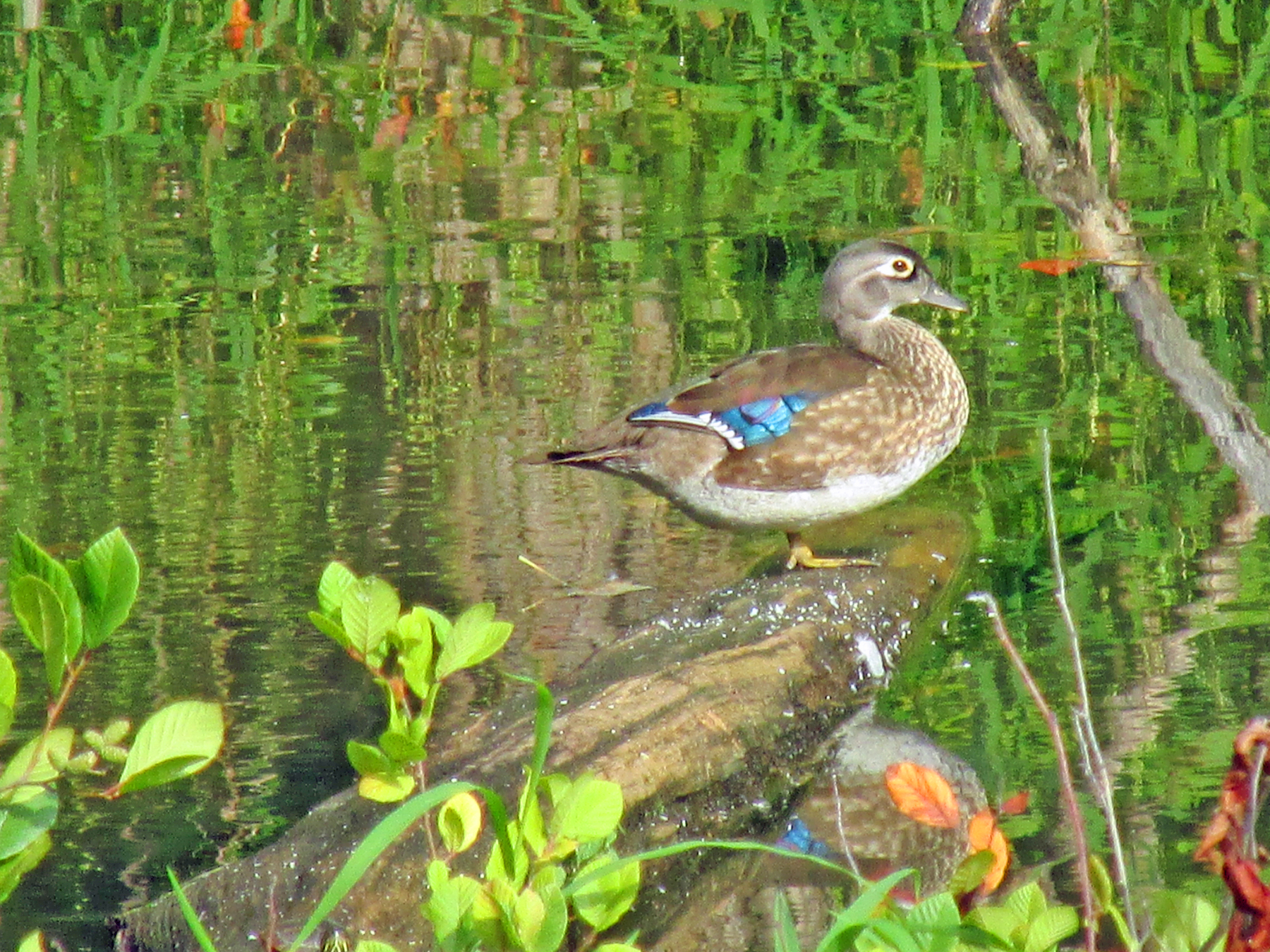
Photo by Bryan Stevens • A wood duck, also known as the summer duck or Carolina duck in some locations, perches on a submerged log.

I’ve enjoyed sporadic observations of a family of wood ducks living at the fish pond this summer. A wood duck hen chose to raise four ducklings at my pond, which is cloaked in abundant cattails and waterlilies. I think the dense vegetation offers concealment that makes the little family feel at ease.

Nevertheless, the ducks have remained elusive. I get glimpses of them, but the moment they become aware of me the ducklings form a single line and file one by one into the stands of cattails. The hen is always the last to seek the shelter of the cattails, no doubt ensuring the safety of her young before she thinks of herself.

Waterfowl are usually scarce in the region in summer aside from the ubiquitous Canada geese and mallards found at ponds, local park, golf courses and many other locations. Waterfowl aren’t entirely absent, however, especially when you add the variety of domesticated waterfowl that are often found with the aforementioned geese and ducks.

Photo by Bryan Stevens • Male wood ducks are one of the most stunning of North America’s waterfowl.

The small wood duck is an exception. This duck is a species of waterfowl that can be found, in suitable habitat, during the summer nesting season throughout the southeastern United States. Unlike Canada geese and mallards, which historically never nested in the region until recent decades, the wood duck is actually supposed to be present during the warmer months of the year. In many parts of their range, wood ducks are known as the “summer duck” since they are the only wild native nesting duck present during the season.

Another common name for this species is the Carolina duck, which refers to the southern stronghold of this species of waterfowl. Wood ducks are year-round residents across much of the southeastern United States, especially in suitable habitat such as small lakes, flooded woodlands, swamps and marshes.

Like a handful of other North American waterfowl, the wood duck is a cavity-nesting bird. These ducks often occupy former nesting cavities created by woodpeckers, but they will also readily accept nesting boxes of suitable dimensions provided by human landlords. Because of their devotion to nesting in cavities, wood ducks have at least something in common with songbirds like Eastern bluebirds, tree swallows and house wrens, as well as larger birds such as American kestrels and Eastern screech-owls. Wood ducks aren’t the only waterfowl that nest in cavities. Buffleheads, hooded mergansers and common goldeneyes are also cavity-nesting ducks. None of those ducks, however, nest in the southeastern United States.

Some wood duck nests can be located far above the ground, which poses a challenge for flightless young. Like most species of waterfowl, young wood ducks are born capable of immediately leaving the nest and being led by their mother to foraging areas. First, however, there’s that giant leap of faith that each of the ducklings must make. Nests are often built over water, so that first jump often ends in a splash-down. Some nests are built over land, but that doesn’t seem an obstacle. The ducklings make that leap without any difficulty. Just like the Abominable Snowmen in the old holiday favorite “Rudolph, The Red-nosed Reindeer,” wood duck babies bounce! Once the ducklings have departed their cozy nesting cavity, their mother will guard them from predators and lead them to prime foraging areas for a period of about two months.

Photo by Jack Bulmer/Pixabay • A wood duck hen keeps watch as one of her ducklings forages in the thick duckweed covering a pond’s surface.

The wood duck belongs to the genus Aix. The only other species in the genus — the Mandarin duck — is native to East Asia. The two are classified as “perching ducks” by biologists. The males of both these species are among the most ornate ducks in the world. The male wood duck has red eyes and a dark-tipped red bill. The colors in a male’s plumage includes glossy, iridescent greens, purples and browns in dramatic patterns. The male also has a distinctive head crest. Female wood ducks also have crests, but their plumage is overall gray and brown with a teardrop-shaped white patch around the eyes, as well as a white chin and throat.

The majority of a wood duck’s diet consists of vegetable matter. In autumn, I’ve observed these ducks foraging with enthusiasm for acorns. Summer, however, is a time for gorging on insects. The wood duck hen, and her ducklings in particular, have been happy to forage for insects and other small invertebrates among the floating lily pads.

In his book, “Birds of Lake, Pond and Marsh,” author John Eastman noted that the wood duck was the most abundant of North American ducks during the 19th century. In the late 19th century, pressures from hunting and habitat destruction combined to dramatically lower the numbers of this exclusively North American duck. Eastman noted that the Federal Migratory Bird Treaty Act of 1918 is largely credited with saving the wood duck from possible extinction.

From 1918 to 1941, it was illegal to hunt wood ducks. Thanks to this temporary hunting ban and other conservation measures, the wood duck population recovered in dramatic fashion. Recent surveys all point to a species on the rebound with numbers of wood ducks rising for the past several decades.

The creek and the fish pond at my home have proven dependable magnets over the years for attracting visiting wood ducks. I also have good luck finding wood ducks at the large pond at Erwin Fishery Park. Most wood ducks in the southeastern United States do not migrate. Those that live farther north during the summer will migrate to areas as far south as Mexico in the fall. We’re fortunate to reside in a region where wood ducks are year-round resident waterfowl.

I feel even more fortunate that a stealthy visit to the fish pond at my home has given me numerous opportunities over the past few months to glimpse the lives of these fascinating ducks of summer.

••••

To share an observation, make a comment or ask a question, email me at ahoodedwarbler@aol.com.

Photo by Bryan Stevens • A wood duck family shares a fallen log.

Wandering birds provide some surprising moments for birders

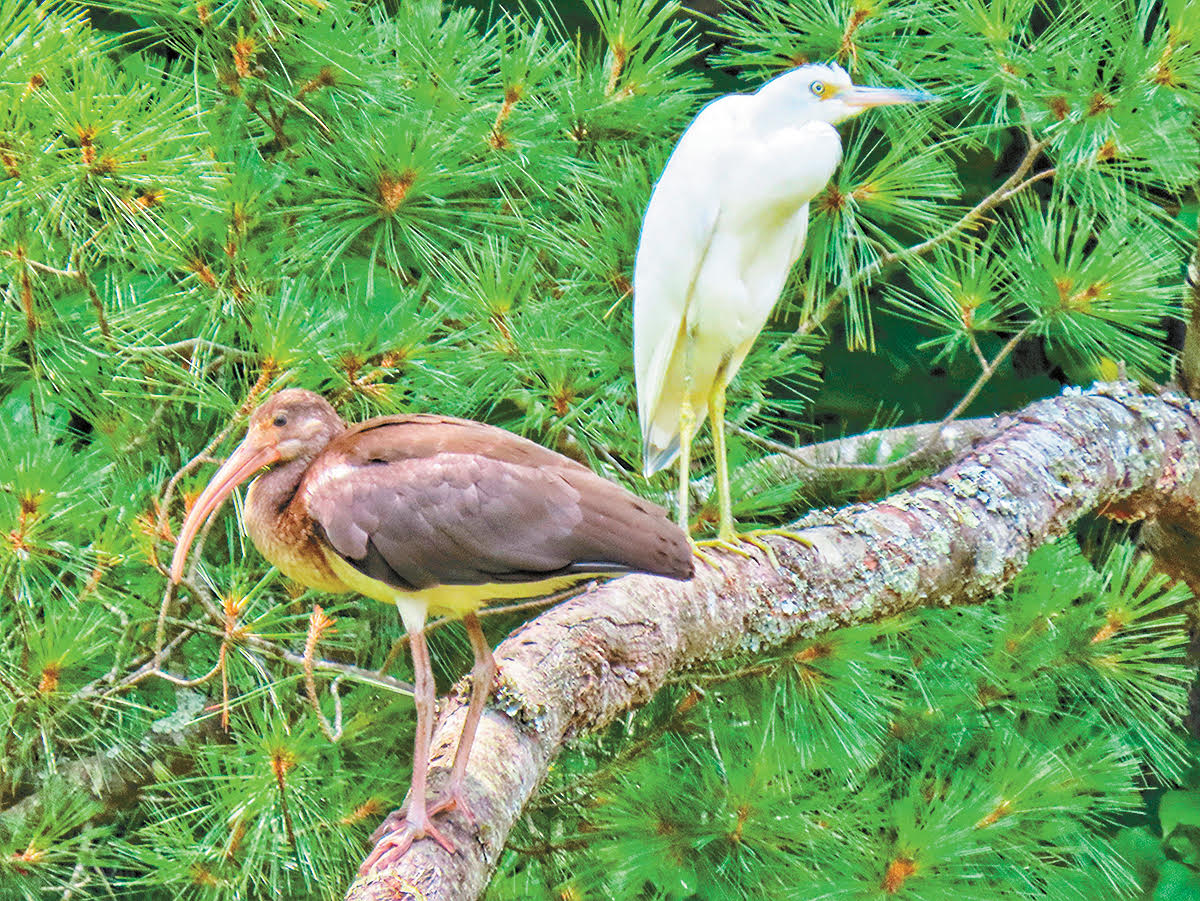
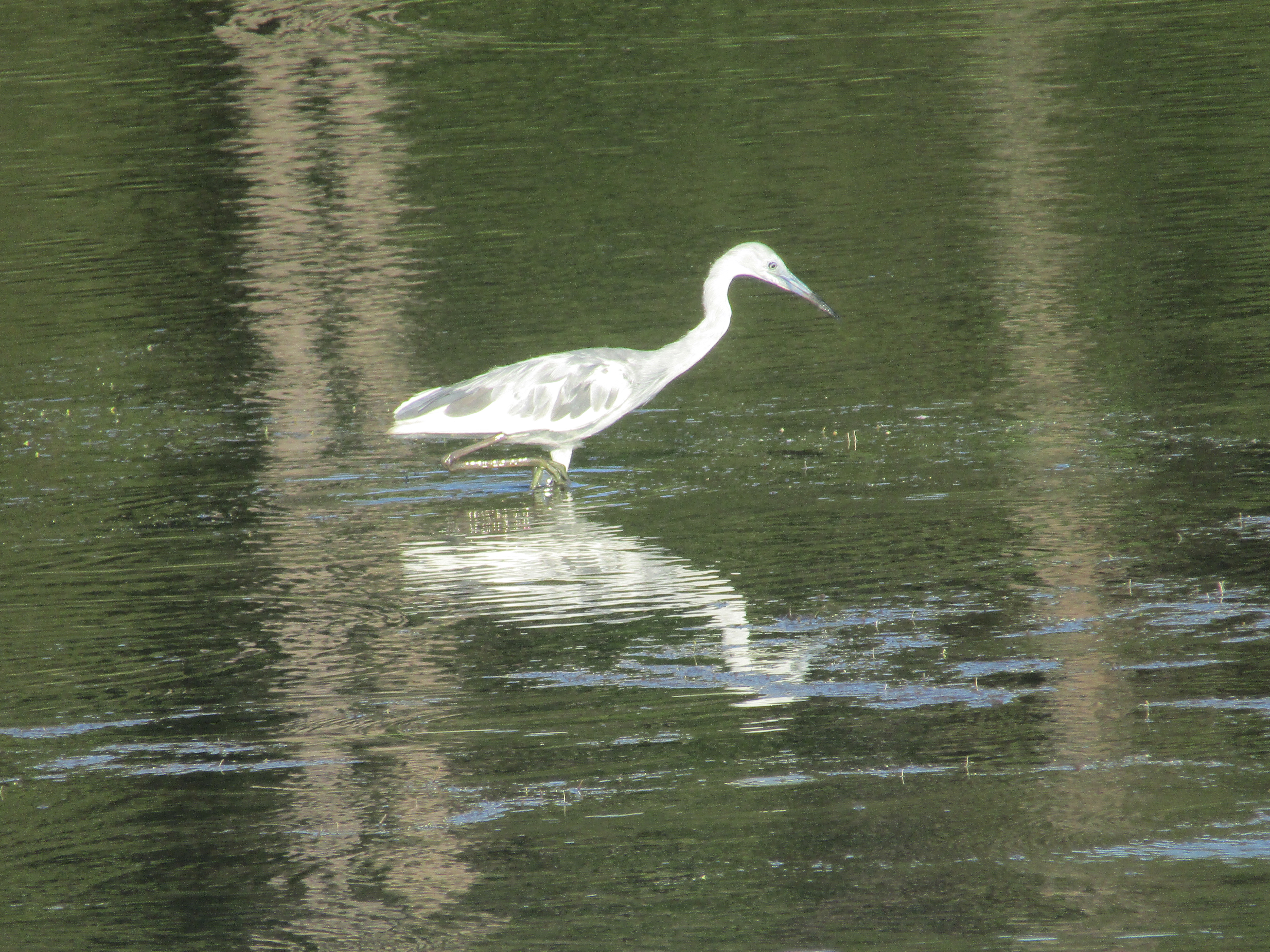
Photo by Roger Mullins • A little blue heron, right, shares a perch with a white ibis at the Buffalo Valley Golf Course in Unicoi. These wading birds are usually found near the coast, but individuals tend to disperse and wander widely after the summer nesting season comes to an end.

Late summer has a sort of lazy feel. Most birds are finishing up their nesting season. Hungry fledglings appear at feeders in the company of adults. In recent weeks, I’m starting to notice a slight uptick in the number of hummingbirds visiting my feeders and garden flowers. It helps that I’ve got dense stands of naturalized bee balm at the edge of my woods. The cedar waxwings have finished off the mulberries, but I suspect they will stick around for the wild cherries. I’ve also noticed the vanguard of migrant birds that are starting to make appearances as fall migration approaches. It’s not just songbirds, however, that are on the move. Some large and rather conspicuous birds have been attracting attention in recent weeks, including a variety of wading birds.

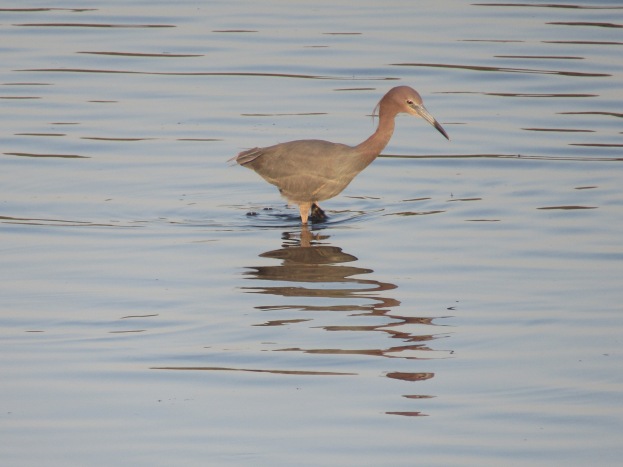
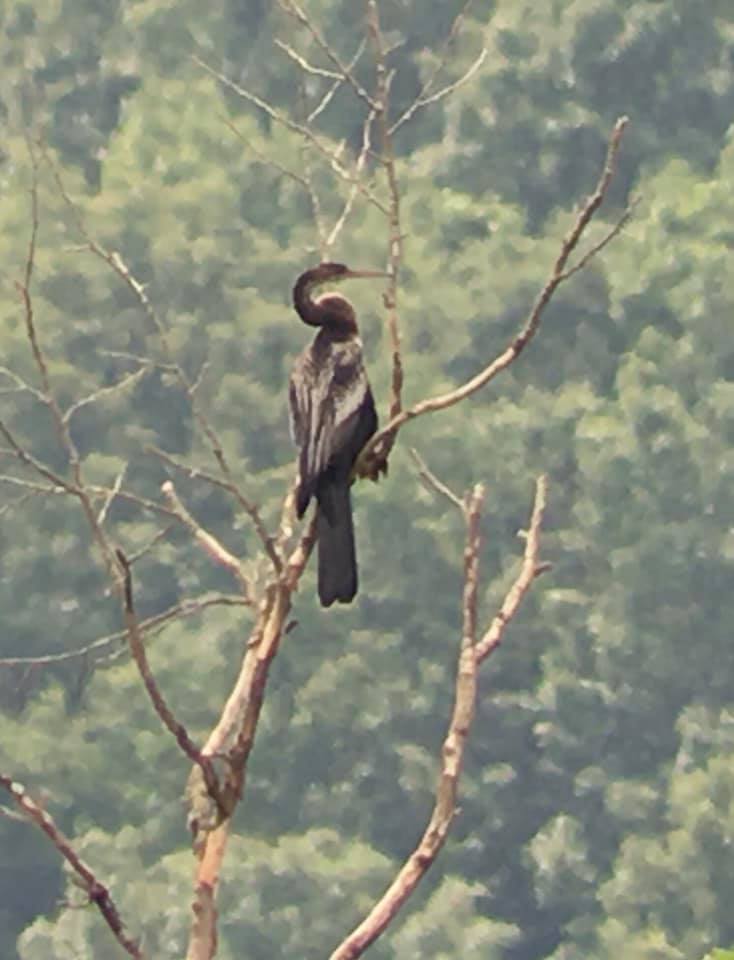
Sightings this summer of long-legged wading birds in Northeast Tennessee that are outside of their usual range have included little blue herons, white ibis and great egrets. The little blue heron and ibis have been recent visitors to Unicoi County. To toss another species into the mix, Tom and Cathy McNeil recently found an American anhinga near Austin Springs at Boone Lake in Washington County. Their anhinga sighting followed their discovery of seven or eight little blue herons and 14 great egrets at this well-known birding hot spot.

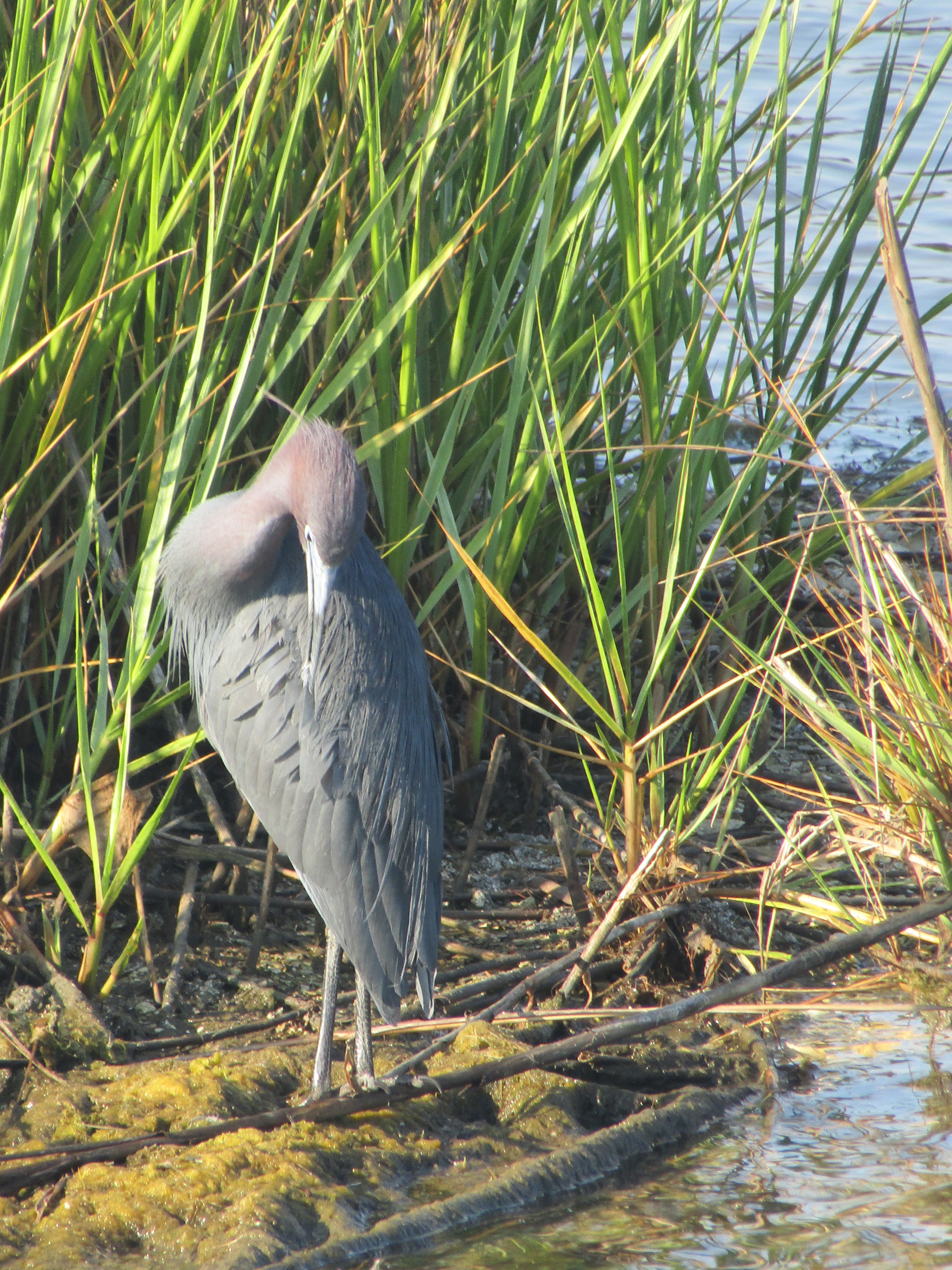
Photo by Bryan Stevens • Adult little blue herons, like this adult preening at Huntington Beach State Park, South Carolina, have a mix of blue and purple feathers.

Roger Mullins discovered both an immature little blue heron and an immature white ibis during one of his regular visits to scan the ponds along the former Buffalo Valley Golf Course in Unicoi.

“I first spotted the little blue on July 5, and then on July 10 I saw the white ibis standing just a few feet away on the same limb.

“Within minutes they were standing next to each other,” he continued. “They were even following each other from place to place, almost like they were siblings.”

Roger noted that the little blue heron gradually learned to trust him, but he could only get so close without making the bird feel uncomfortable.

“Being extremely patient, taking it slow and easy, is pretty much how I approach all wildlife, and it usually pays off well,” Roger shared.

“I first started visiting the golf course ponds back in the winter when someone told me about seeing a male hooded merganser there,” he noted. “There is not always an abundance of wildlife present, but I always check it out just in case. The best thing about these ponds is the consistent peace and tranquility, since people don’t usually go there for family recreation or to walk their dogs.”

Roger added that he doubted that the little blue heron would have lingered at a public park with more activity.

Most of my own observations of little blue herons have taken place in SouthCarolina, Georgia and Florida, although I have seen this species a couple of times in Tennessee. I have also found little blue herons more skittish than some herons and egrets.

Photo by Bryan Stevens • This photo of a little blue heron at Huntington Beach State Park, South Carolina, shows the intermediate phase of plumage that makes identification even more of a challenge.

While diverting storms can’t be ruled out for causing some unexpected birds to detour into the region, it’s also normal behavior for young wading birds to disperse far and wide after leaving the nest. North American waders, or wading birds, include such long-legged species as herons, egrets, bitterns, ibises, storks and spoonbills. Most species are associated with wetlands or coastal areas.

Late summer birding is usually a period of doldrums as heat and humidity can discourage birders as well as diminish bird activity. However, it’s also the time of year when birders can make some unexpected surprises as wandering waders explore uncharted territory.

The great egret – a larger relative of the little blue heron – became a motivational symbol for conservation with the foundation of the National Audubon Society in 1905. Today, the organization has nearly 500 local chapters, each of which is an independent non-profit organization voluntarily affiliated with the National Audubon Society. These chapters often organize birdwatching field trips and conservation-related activities. The National Audubon Society spearheaded efforts to end the mass slaughter of various bird species. Some birds were killed for food, but millions were also killed for their showy feathers that were destined to decorate stylish attire worn as a symbol of high fashion. As early as 1910, some states began passing legislation to abolish trade in bird plumes. The federal government also came to the assistance of birds with the Migratory Bird Treaty Act, which was a law first enacted in 1916 to implement measures to protect and conserve migratory birds.

Photo by Tom McNeil • An American anhinga at Boone Lake found by Tom and Cathy McNeil represents an unusual find for the region. Even more unusual, Tom McNeil found another anhinga in Johnson County, Tennessee, a few days later.

Scientifically speaking, the little blue heron would be more accurately described as an egret. With the scientific name of Egretta caerulea, the little blue heron’s closest relatives are other members of the genus Egretta, which includes such other North American wading birds as snowy egret, reddish egret and tricolored heron. Other members of the genus found in other global localities include little egret, slaty egret and Chinese egret. I’m not sure why the tricolored heron and little blue heron were not named tricolored egret and little blue egret, but there are some Egretta species that also bear the name heron, including black heron, white-faced heron, Pacific reef heron and Western reef heron. It’s probably important to note that there are no real physical differences between herons and egrets. They are all classified together in the family Ardeidae.

I’m fairly confident that Roger’s sighting of a little blue heron is the first documented occurrence of the species in Unicoi County. His white ibis is unexpected but not unprecedented. An immature white ibis spent several days in July of 2011 at the ponds and fields at the home and farm of former Unicoi mayor Johnny Lynch.

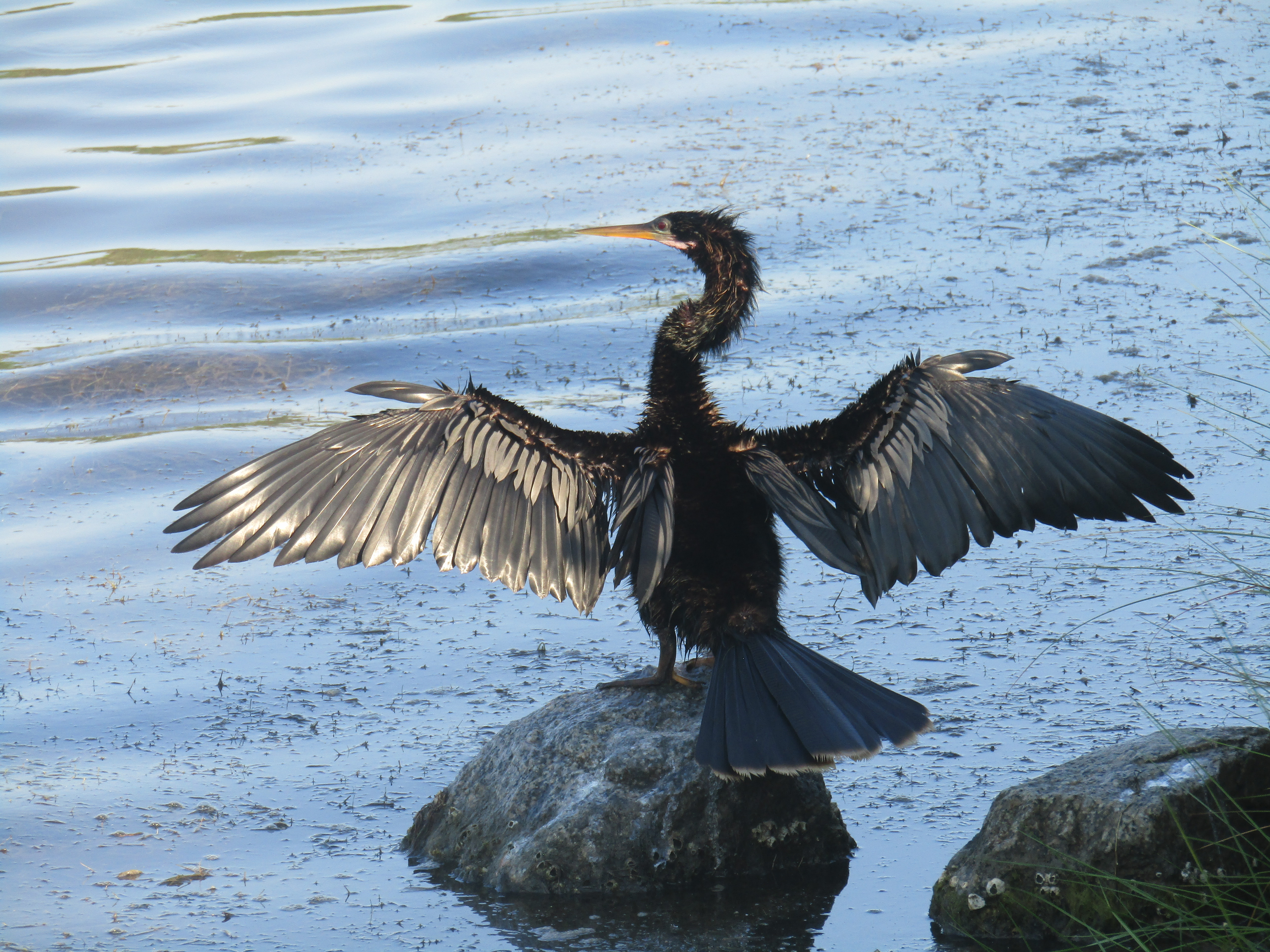
Photo by Bryan Stevens • An American Anhinga dries off feathers after a swim at Huntington Beach State Park in South Carolina.

As for the anhinga spotted by the McNeils, this rare visitor was found the following day by several area birders, including Michelle Sparks who relocated the anhinga from her kayak. The anhinga is a large waterbird with a slender neck and a dagger-shaped bill reminiscent of a heron’s bill. These birds spend much of their time swimming beneath the water, often with only their neck and bill above the surface. Apparently the term “anhinga” comes from a native tribe in Brazil. Anhingas prefer fresh water, but they are often found in coastal areas. Most reports from Tennessee come from near Reelfoot Lake in the western portion of the state. Other common names for the anhinga include “water turkey,” “snake bird,” “American darter” and “devil bird.” Worldwide, there are only four species of anhingas, or darters as they are called in other parts of the world. The other three are the Indian darter, the African darter and the Australian darter.

Tom shared an amusing anecdote on Facebook about their sighting of the anhinga.

“Cathy and I found this bird (the anhinga) yesterday evening out of absolute luck,” he wrote. “We had already birded the area and had some great fun observing the little blue herons and great egrets.  We stopped at the Austin Springs bridge for a few moments and saw four river otters playing under the bridge and then just decided to drive back the way we came.”

On their way back, Cathy had Tom stop so she could look at the “white birds” in the top of the trees across the water.

“We both pulled up our binoculars to look at them, but it was the bird perched below them that was the star of the show,” he reported. “We shouted ‘anhinga’  at the exact same time!”

That’s the beauty of birding – those “anhinga” moments. I’m hoping readers are enjoying some fun birds this summer. Share sightings, ask questions or make comments by emailing me at ahoodedwarbler@aol.com.


Long-running count tallies summer’s nesting bird species

Photo by Jean Potter • Counters found 116 species on the recent Carter County Summer Bird Count, including this female wood duck and ducklings photographed on the Watauga River in Elizabethton, Tennessee. A total of 13 wood ducks were found on the day of the count.

The 28th Carter County Summer Bird Count was held Saturday, June 12, with 28 observers taking part.

The weather, which was less than optimal, challenged observers. Rain held steady for much of the day. The rain, along with dense fog on Roan Mountain and other high elevations, resulted in reduced birdsong in many areas. Thus, numbers of individuals were low for many species, especially songbirds.

Despite these hurdles, the count tallied 116 species, which is just one species shy of the recent 10-year average and actually two above the average of the previous 27 years, so, it was not bad considering the weather.

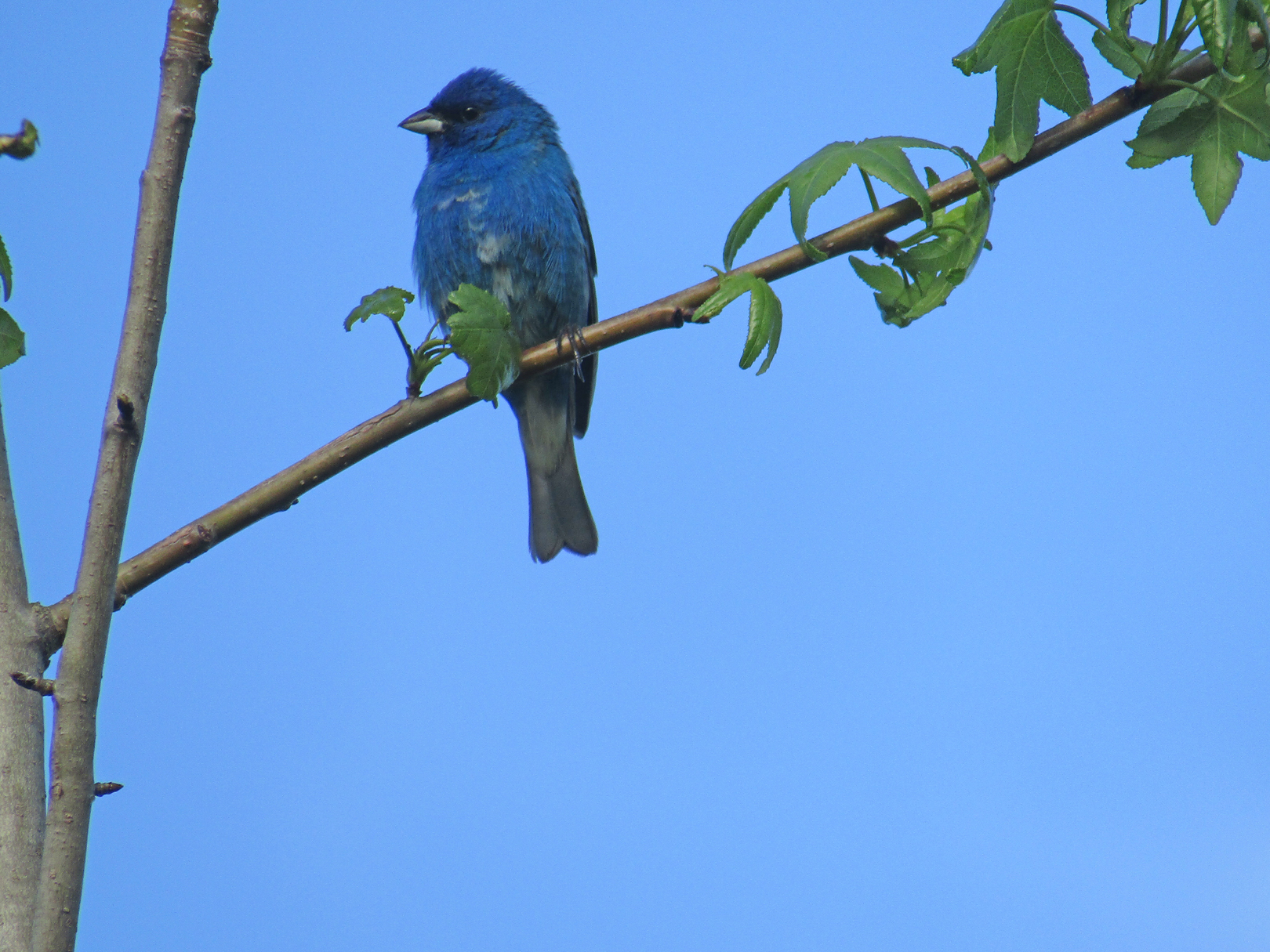
Photo by Bryan Stevens • Nesting neotropical migrants, such as this Indigo Bunting, increased the total number of species for the annual summer count.

Participants included Fred Alsop, Rob Biller, Catherine Cummins, Dianne Draper, Dave Gardner, Tammy Griffey, Don Holt, David Kirschke, Rick Knight (compiler), Roy Knispel, Richard Lewis, Dianna Lynn, Vern Maddux, Larry McDaniel, Joe McGuiness, Tom and Cathy McNeil, Brookie and Jean Potter, Judith Reid, Brenda Richards, Judi Sawyer, Michele Sparks, Bryan Stevens, Kim Stroud, Scott Turner, Charles Warden and John Whinery.

Some species were missed, including yellow-crowned night-heron, great horned owl, chuck-will’s-widow, willow flycatcher, brown creeper, hermit thrush, Kentucky warbler and magnolia warbler. These species are often, but not always, found on this count, according to long-time count compiler Rick Knight.

See if one of your favorite birds was hit or miss, common or uncommon, by scanning over the listing of the total.

The tally follows:
Canada goose, 218; wood duck, 13; mallard, 92; ruffed grouse, 1; wild turkey, 40; double-crested cormorant, 16; great blue heron, 23; and green heron, 2.
Black vulture, 7; turkey vulture, 25; osprey, 1; Cooper’s hawk, 3; bald eagle, 2; red-shouldered hawk, 4; broad-winged hawk, 7; and red-tailed hawk, 10.
Killdeer, 8; American woodcock, 1; rock pigeon, 101; Eurasian collared-dove, 2; mourning dove, 177; yellow-billed cuckoo, 5; Eastern screech-owl, 5; barred owl, 2; common nighthawk, 2; and Eastern whip-poor-will, 7.
Chimney swift, 99; ruby-throated hummingbird, 28; belted kingfisher, 11; red-bellied woodpecker, 24; yellow-bellied sapsucker, 2; downy woodpecker, 19; hairy woodpecker, 3; Northern flicker, 36; pileated woodpecker, 15; and American kestrel, 1.
Eastern wood-pewee, 24; Acadian flycatcher, 9; alder flycatcher, 2; least flycatcher, 13; Eastern phoebe, 48; great crested flycatcher, 7; and Eastern kingbird, 21.
White-eyed vireo, 5; yellow-throated vireo, 2; blue-headed vireo, 38; warbling vireo, 1; red-eyed vireo, 117; blue jay, 77; American crow, 185; fish crow, 4; and common raven, 5.
Purple martin, 38; Northern rough-winged swallow, 34; tree swallow, 109; barn swallow, 154; and cliff swallow, 137.
Carolina chickadee, 32; tufted titmouse, 65; red-breasted nuthatch, 3; white-breasted nuthatch, 10; house wren, 60; winter wren, 3; Carolina wren, 84; blue-gray gnatcatcher, 8; and golden-crowned kinglet, 2.
Eastern bluebird, 113; veery, 23; wood thrush, 35; American robin, 510; gray catbird, 42; brown thrasher, 38; Northern mockingbird, 62; European starling, 1,203; and cedar waxwing, 45.
Ovenbird, 50; worm-eating warbler, 4; Louisiana waterthrush, 10; golden-winged warbler 1; black-and-white warbler 27; Swainson’s warbler, 2; common yellowthroat, 12; hooded warbler, 67; American redstart, 8; Northern parula, 30; Blackburnian warbler, 4; yellow warbler, 1; chestnut-sided warbler, 12; black-throated blue warbler, 20; pine warbler, 2; yellow-throated warbler, 9; prairie warbler, 3; black-throated green warbler, 14; Canada warbler; 5; and yellow-breasted chat, 9.
Eastern towhee; 112; chipping sparrow, 61; field sparrow, 58; savannah sparrow, 1; song sparrow, 253; dark-eyed junco, 46; scarlet tanager, 25; Northern cardinal, 157; rose-breasted grosbeak, 5; blue grosbeak, 5; and indigo bunting, 102.
Red-winged blackbird, 109; Eastern meadowlark, 15; common grackle, 67; brown-headed cowbird, 43; orchard oriole, 4; and Baltimore oriole, 2.
House finch, 132; pine siskin, 1; American goldfinch, 97; and house sparrow, 44.

•••••


I received a phone call from Marian Swanson of Aldie, Virginia, this past week. Marian was looking for advice on feeders for attracting indigo buntings, which she had observed near her home. She was specifically seeking a feeder that would prevent the seed from getting wet during rainstorms.

At her request, I provided Marian with some links to websites offering a variety of feeders for sale.

It’s always great to hear from readers. If you have a bird-related question, email me at bstevens@erwinrecord.net or ahoodedwarbler@aol.com. I also enjoy hearing about bird observations or general comments from readers.