Tag Archives: Wading birds

Diminutive green heron flies beneath the radar but is not uncommon

Photo by Bryan Stevens • A green heron captures a tadpole at a pond’s edge.

Retrieving the mail from my mailbox requires a slight trek, but there’s always something to see in the few minutes it takes to complete this task six out of seven days every week.

On a recent stroll to fetch the mail I startled a green heron from the vegetation surrounding the fish pond. The heron made a startled cry and flew to a horizontal branch in a tree adjacent to the pond.

It’s been so long since I’ve seen this small wading bird up close that I’d forgotten its diminutive nature. Although the official name is green heron, I’ve almost always referred to this species as “little green heron” or simply “little green.” It’s not completely uncalled for. After all, there’s a little blue heron. As far as my research tells me, however, there is no great green heron.

Photo by Bryan Stevens • Upcoming programs in the region will focus on topics such as songbirds, raptors and the basics of beginning birdwatching. Plan to attend one or more of the programs to learn more about birds, such as this green heron.

Green herons are not restricted to coastal areas, but it was still somewhat unexpected. I’m hoping I didn’t frighten the bird too badly and it will continue to haunt the edges of the fish pond. The vegetation around the pond makes it easy for this heron to conceal itself. The pond is also a great place for the heron to forage. There’s an abundance of some of its favorite prey, including tadpoles and dragonflies.

Green herons and other wading birds are usually quite abundant in wetlands across the country in late summer. The scientific name — Butorides virescens – of this bird comes from a mix of Middle English and Ancient Greek and roughly translates as “greenish bittern.”

There are only two other species in the genus Butorides — the lava heron, which occurs on some of the Galapagos Islands of Ecuador, and the striated heron, which is found in wetlands throughout the Old World tropics from West Africa to Japan and Australia. This heron, which is also known as the mangrove heron, also occurs in South America.

The green in the bird’s plumage appears as a dark green cap, as well as a greenish back and wings. Adult birds also have chestnut-colored neck feathers and a line of white feathers along the throat and belly. These herons often assume a hunched position, making them look smaller than they actually are.

It’s been a good summer for wading birds. In addition to the green heron, a great blue heron has been lurking in the creekand at the fish pond. Much larger than the green heron, it’s not as easy for the great blue heron to escape notice.

Other locations to look for both these herons are at the pond at Erwin Fishery Park. You’ll also want to keep alert when walking along the linear trail in Erwin. This is the time of year when interesting herons or egrets are not all that scarce.

Farm ponds in the countryside around Jonesborough, as well as wetland habitat around the town’s Persimmon Ridge Park, are also good places to look for green herons. The wetlands at Sugar Hollow Park in Bristol, Virginia, is another dependable location for seeing this small heron. Most green herons will depart in late September and early October. This small heron retreats from the United States during the winter season but returns each spring in April and May.
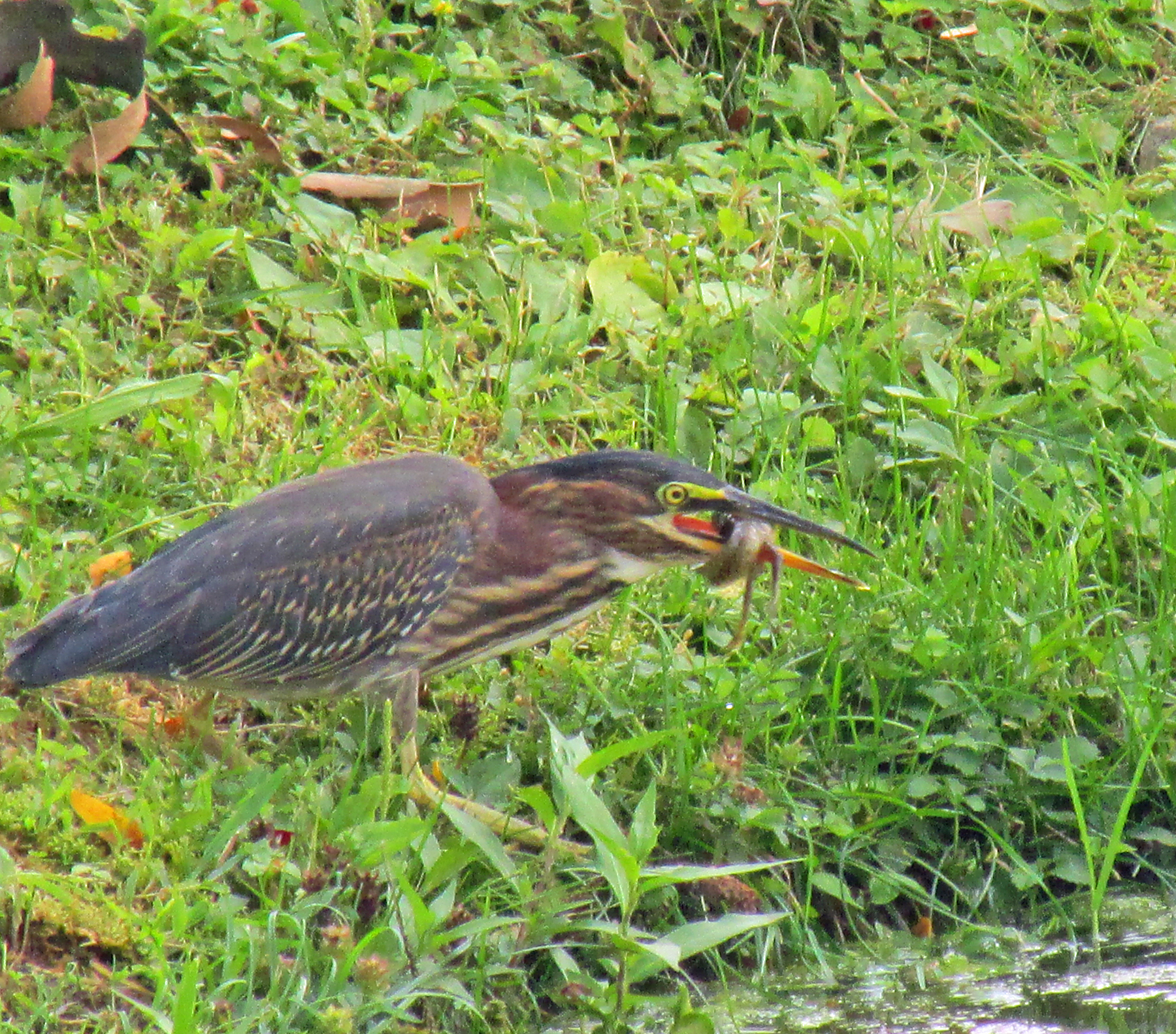
Photo by Bryan Stevens • A green heron finesses a captured tadpole in its bill.

The green heron’s range during the nesting season includes Canada and much of the United States. Green herons will sometimes form loose nesting colonies, but at other times a pair will choose a secluded location as a nest site. The female will usually lay from three to five eggs. Snakes, raccoons and other birds such as crows and grackles are potential threats to eggs.

For the most part, the population migrates to Central and South America for the winter months. A few herons — great blue heron and black-crowned night heron — remain in the region throughout the year, even enduring the cold winter months in Northeast Tennessee, Southwest Virginia and Western North Carolina.

Green herons are probably more common than we realize. They are skilled at blending with their surroundings, but sharp eyes can find these herons around almost any body of water, whether it is pond, marsh, river, creek or lake.

Keep looking for green herons and their larger kin for the next few months. To share a sighting, ask a question or make a comment, send me an email at ahoodedwarbler@aol.com.

•••

Bryan Stevens is the managing editor of The Erwin Record. He has written about birds, birding and birders since 1995.

Photo by Bryan Stevens • A green heron hunches next to a pond.


Looking for fall migrating birds already underway

A male Wilson’s warbler perches in some branches. Many species of warbler migrate through the region each fall.

Summer’s waning. Just look at the calendar. We’re already approaching the midway point in August.

Birders track the transitions as one season merges into another, knowing that these are some of the best times to seek out birds. Fall migration doesn’t wait for a page to turn on a calendar. In fact, some birds are already on the move. I thought I’d devote this week’s column to some of the birds I hope to observe this fall as a mass migration draws many of our summer residents south toward warmer wintering grounds. In no particular order, here are some of the birds I’m hoping to see this autumn.

COMMON NIGHTHAWKS

The name common nighthawk is a misnomer. The species is not strictly nocturnal and it is certainly not a hawk. It’s actually a member of the nightjar family, which includes such birds as chuck-will’s-widow and whip-poor-will. The nighthawk doesn’t offer a serenade like these relatives, but it does produce a “pent” call that sounds much like an electric buzzer. It’s often the first indication of one of these birds swooping overhead. Nighthawks form impressive flocks, often numbering in the dozens or even hundreds. They are often active in evening hours, but I’ve seen large flocks of these migrating birds in mid-afternoon. August and September are the best time to look skyward to enjoy the spectacle of a large flock of swooping nighthawks as they pass overhead.

Photo by U.S. Fish and Wildlife Service
A Common Nighthawk finds a perch for a brief rest.


I didn’t host any of these colorful birds this spring, so I hope to get another opportunity this fall. The males in their vibrant black-and-white plumage and namesake breast patch of rosy-red feathers are slightly less colorful in the fall. I’ve actually had better luck in autumn hosting these birds at feeders. They love sunflower seeds, so keep your feeders stocked with their favorite foods to increase your chances. Females and young birds look different than adult males, but the heavy beak (the word “gros” is German for large) is a good indicator of their identity. Bird banders netting this species to document information for science can testify that these birds are also capable of a nasty nip at careless fingers with that stout bill.

Bryan Stevens • A pine warbler visits a suet feeder.

WARBLERS

These birds are undeniably at their most gorgeous during spring migration, but many species of warbler retain colorful plumage into the fall season. Young birds, often in a plumage entirely different than adult birds, are responsible for the term “confusing fall warblers.” I’ll be looking for the species that are harder to locate in the spring, including bay-breasted warbler, Cape May warbler, Blackburnian warbler and Tennessee warbler. I’ll also be hoping for a rarity such as cerulean warbler or mourning warbler. I will be sad when the parade of warblers produces a palm warbler or a yellow-romped warbler. These last two species are a sure sign that fall migration’s coming to a close for another season.

Photo by Bryan Stevens
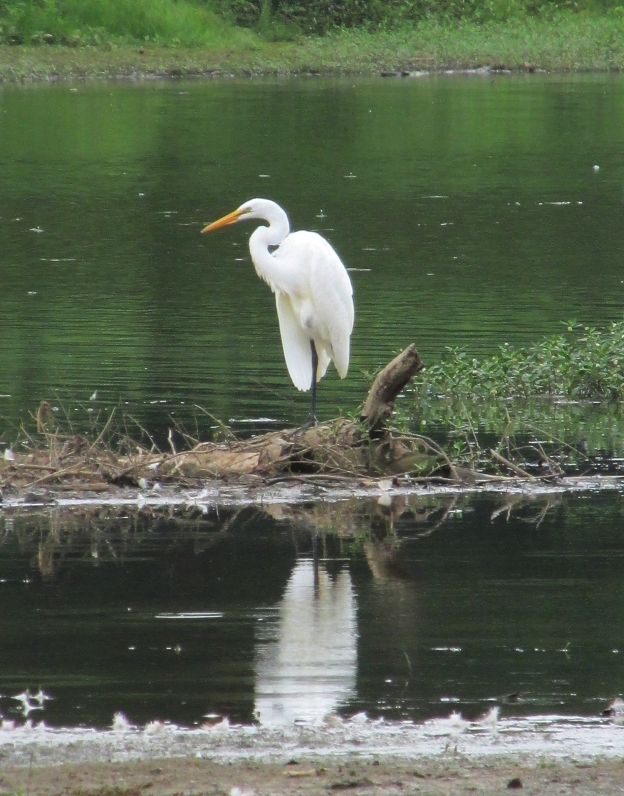
A Great Egret resting on a spit of land in a lake at Murphy Candler Park in Brookhaven, Ga.

WADING BIRDS

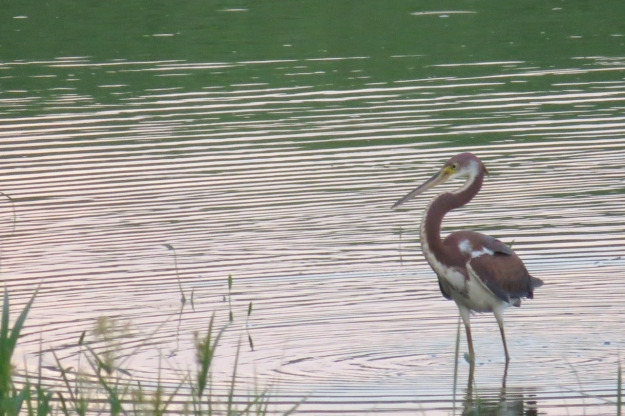
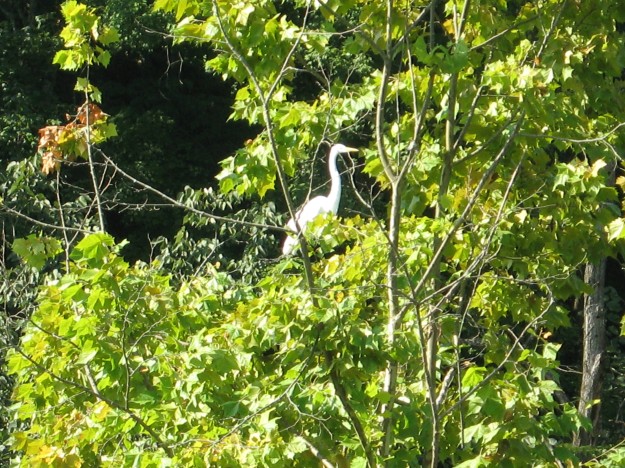
Late summer and early fall can also be a fantastic time for scanning rivers, lakes and farm ponds for wading birds. Hurricanes in recent years have even forcibly relocated American flamingos to Tennessee and other unlikely locations. It’s slightly more reasonable to hope for something unexpected like a wood stork or roseate spoonbill. The more likely candidates for observing in the region are great egrets, tri-colored herons and snowy egrets. It’s also a last chance to view green herons before this small species retreats to warmer locations for the coming winter.

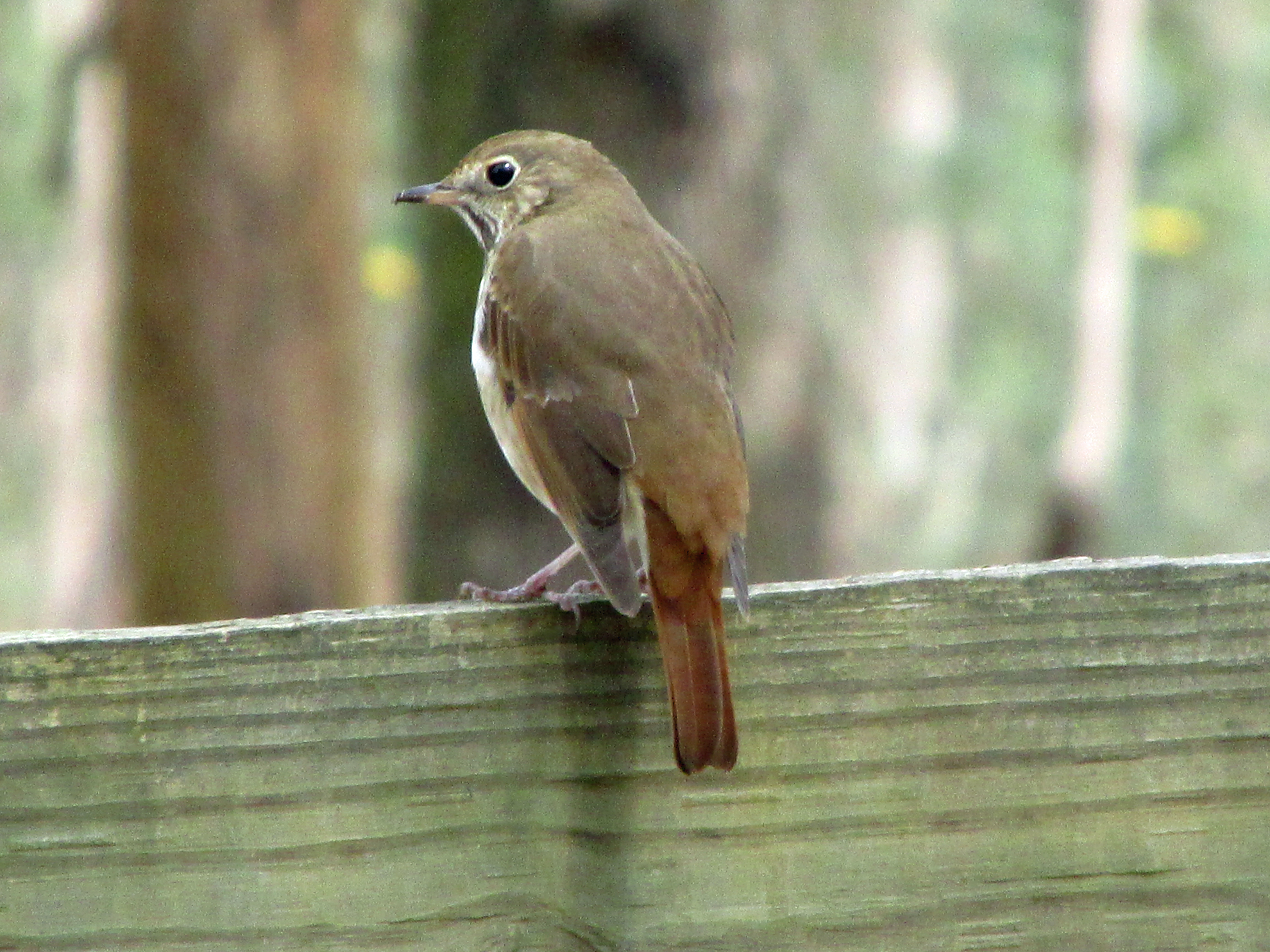
Bryan Stevens • A hermit thrush perches on a fence.

THRUSHES

These medium-sized songbirds are typically brown in plumage, often with spotted white breasts. They’re beautiful singers in spring and summer, but they’ve often cut back on their singing by fall. Nevertheless, they form large migrating flocks that will roam autumn woodlands to rest and refuel during short breaks from migrating. Swainson’s thrush is not difficult to find in the fall. This species is named in honor of 19th century artist and ornithologist William Swainson. Like most birders, I will be hoping for the more difficult species like Bicknell’s thrush and gray-cheeked thrush. Knowing their call notes can help alert you to their presence.

There will be a dazzling diversity of our feathered friends on the move this month. The seasonal phenomenon of migration extends into September and October. Pay attention to the visitors in your yards and gardens.

•••

Share sightings, ask questions or make comments by emailing me at ahoodedwarbler @aol.com.

Photo by Bryan Stevens • This migrating rose-breasted grosbeaks struck a window and spent some time recovering. Later, the bird flew safely back to a row of trees.

Egrets and their kin wander widely in late summer

Late summer has a sort of lazy feel of anticipation to it. Most birds are finishing up their nesting season. Hungry fledglings appear at feeders in the company of adults. In recent weeks, I’ve noticed an explosion in the number of hummingbirds visiting my feeders and garden flowers. I’ve also noticed the vanguard of migrant birds that are starting to make appearances as fall migration approaches. It’s not just songbirds, however, that are on the move. Some large and rather conspicuous birds have been attracting attention in recent weeks, including a variety of wading birds.


Sightings this summer of long-legged wading birds in Tennessee and Virginia that are far outside of their usual range have included cattle egret, white ibis and roseate spoonbill. In addition, Susan Hubley reported on Facebook about a tricolored heron at John Sevier Lake in Rogersville, Tennessee, on July 25.

This heron is not usually found this far inland from the coast. Another tricolored heron showed up at Paddle Creek Pond in Bristol, Tennessee, on July 30. Adrianna Nelson reported the sighting on Bristol-Birds, an email network for sharing unusual bird sightings in the region. She also shared some photographs of the bird.

Tri-Colored-ONE

Photo courtesy of Adrianna Nelson • This tricolored heron spent a few days at Paddle Creek Pond in late July and early August. This large farm pond is managed by Crumley Farms Inc. and the Bristol Bird Club to provide habitat for migrating shorebirds and other birds.

“This is the first time I have seen a tricolored heron in Tennessee,” she wrote in a response to an email I sent her. “It is a long way off from its usual range. I have seen them before on Pinckney Island National Wildlife Refuge in South Carolina.”

She described the refuge as an excellent place to see waders, painted buntings, and many other birds. “I get the chance to go almost every year, since it is so close to where we vacation in Hilton Head,” Adrianna wrote.

She also commented on her unexpected observation.

Tri-colored-TWO

Photo courtesy of Adrianna Nelson • This tricolored heron spent a few days at Paddle Creek Pond in late July and early August.

“It is exciting to see something where it doesn’t usually belong,” Adrianna wrote. “I was definitely surprised to see the heron. That’s part of the fun of birding — you never know what to expect!”

She was also excited to share the sighting on Bristol-Birds. “It’s fun to share sightings with the birding community so they can also enjoy rare or unusual birds in our region,” she wrote.

Adrianna noted that she has been birding since age nine. “It all started when I saw a little gray bird hopping around in our yard,” she recalled. “I noticed it was only at our house around the winter months, and I stared to wonder what the bird was.”

After some searching online, she successfully identified the bird as a dark-eyed junco.

“During my search, I was surprised by the wide variety of birds, and I wanted to find as many as possible,” Adrianna wrote. “Since then, I was hooked!

IMG_9069

Photo by Bryan Stevens • This sign marks the importance of Paddle Creek Pond to migrating shorebirds and wading birds.

While diverting storms can’t be ruled out for causing some of these birds to detour into the region, it’s also normal behavior for young wading birds to disperse far and wide after leaving the nest. North American waders, or wading birds, include such long-legged species as herons, egrets, bitterns, ibises, storks and spoonbills. Most species are associated with wetlands or coastal areas.

Late summer birding is usually a period of doldrums as heat and humidity can discourage birders as well as diminish bird activity. However, it’s also the time of year when birders can make some unexpected surprises as wandering waders explore uncharted territory. Some other recent emails have reminded me of that fact.

James Elliott sent me an email describing a bird that is most likely a great egret. “For the second time in 30 years, I saw a magnificent, all-white heron yesterday on the South Houston River,” James wrote.

“I live at the very terminus of Riverside, Bullock Hollow, and Paddle Creek roads,” he wrote. “Big Springs Road is opposite across the river.”

When the bird departed, he said it flew east. He described the bird as “totally white” and “beautiful in flight.” He expressed regret that he was unable to get photographs.

Egret-Susan-Two

Photo courtesy of Susan Schreiner • This visiting great egret spent some time along the South Holston River in late July. Egrets, herons and other wading birds often wander into some unexpected locations in late summer.

Susan Schreiner, however, did get photographs of a great egret she observed near her home along the South Holston River in Bristol.

“We had a nice visitor today along the South Holston River,” Susan wrote in the email she sent. “When we first spotted it, it was in our tree and then flew down to the water.”

She said the egret has associated with some great blue herons in the vicinity. “It’s quite distinctive,” she wrote of the stately wading bird.

The diversity of the region’s bird life has impressed her. “Coming from Illinois, this is all pretty amazing for me,” she wrote.

Egret_SUSAN 2

Photo courtesy of Susan Schreiner •Egrets and herons, such as this great egret, wander into some unexpected locations in late summer.

The egret is not the only exceptional bird that Susan has observed. “I occasionally see a bald eagle fly down the river that is just breathtaking,” she wrote in her email.

Through email, James and I discussed whether the bird he saw was a great white heron or a great egret. Since he saw the bird and I did not, I am inclined to go with his identification of great white heron. Although rare outside of Florida, this type of heron — simply a great blue heron in an alternative plumage — has over the years been spotted a handful of times in and around Bristol. Whether an egret or heron, his sighting is more evidence of the tendency of wading birds to wander widely in late summer.

The great egret became a motivational symbol for conservation with the foundation of the National Audubon Society in 1905. Today, the organization has nearly 500 local chapters, each of which is an independent non-profit organization voluntarily affiliated with the National Audubon Society. These chapters often organize birdwatching field trips and conservation-related activities. The National Audubon Society spearheaded efforts to end the mass slaughter of various bird species. Some birds were killed for food, but millions were also killed for their showy feathers that were destined to decorate stylish attire worn as a symbol of high fashion. As early as 1910, some states began passing legislation to abolish trade in bird plumes. The federal government also came to the assistance of birds with the Migratory Bird Treaty Act, which was a law first enacted in 1916 to implement measures to protect and conserve migratory birds.220px-National_Audubon_Society_logo

In 1953, a great egret in flight was chosen as the symbol for the official logo of the National Audubon Society, which was formed in part to prevent the killing of birds for their feathers. Birds like great egrets, snowy egrets, roseate spoonbills and other long-legged waders had been decimated before people responded to the wanton destruction being visited upon these beautiful and awe-inspiring creatures.

The great egret belongs to the genus Ardea, which includes various egrets and herons. Other members of this genus include Goliath heron, black-headed heron, purple heron and pied heron.

The tricolored heron belongs to the genus Egretta, which consists of various herons and egrets that mostly breed in warmer climates. In North America, other members of this genus include snowy egret, reddish egret and little blue heron. Older birding field guides may refer to the tricolored heron as the Louisiana heron, which was an older popular name for the species.

GreatBlue-Egret

Photo by Bryan Stevens • A great blue heron and a great egret patrol a tidal creek in South Carolina.

Although many herons and egrets are tall and stately, there are some pint-sized members of this group of birds. In North America, the smallest is the least bittern. The largest of the world’s herons if the aptly named Goliath heron, which is also known as the giant heron. This wading bird can stand five feet tall and weigh 11 pounds. The Goliath heron is native to sub-Saharan Africa but also ranges into southwest and south Asia. The world’s largest heron feeds almost exclusively on fish.

Other descriptive names for some of the world’s herons include boat-billed heron, white-crested tiger heron, zigzag heron, rufous-bellied heron, whistling heron and white-necked heron.

To try your own luck at observing herons and egrets, scout bodies of water such as ponds, rivers, lakes and streams to increase the odds of getting your own binoculars on one of these elegant waders.

Egreta

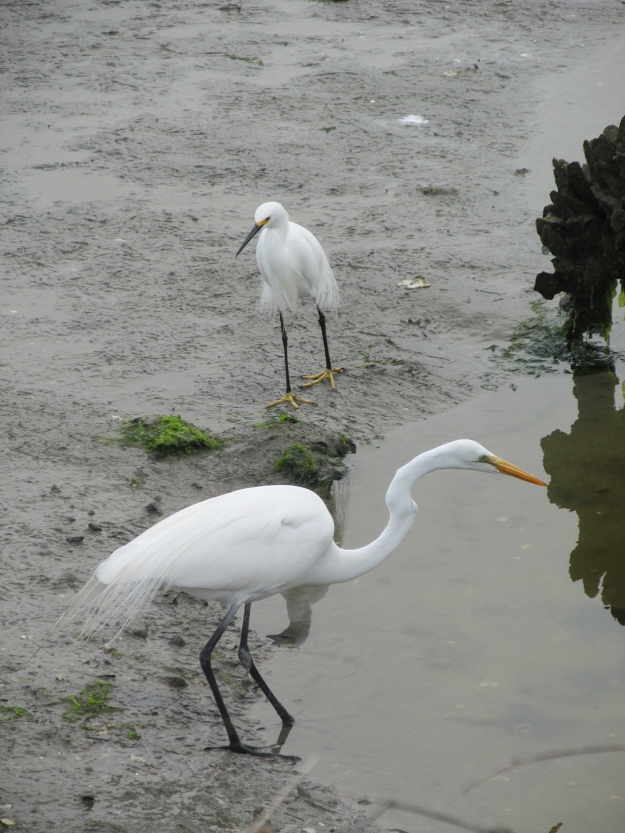
Photo by Bryan Stevens • A snowy egret and a great egret forage for prey on a South Carolina tidal creek.

Keep a look out for wandering waders during late summer season

Summer heat and humidity make the summer season my least favorite one for birding, but every season brings birding surprises. I was reminded of this fact when Larry and Amelia Tipton sent me a recent email asking for help with the identification of some birds near their home.

Attaching a photo with their email, the Tiptons wrote, “These birds showed up a few days ago and we cannot identify them. We would like to know what they are.”

When I opened the photo, I realized that the birds captured in the image would not be considered out of place if the Tiptons lived near the coast of the Carolinas, Georgia or Florida. The birds in the photo, however, were somewhat unexpected in the foothills of western North Carolina near their home in the town of Old Fort.

WhiteIbises

Photo Courtesy of  Larry and Amelia Tipton • Immature white ibises in a field near the Catawba River in North Carolina.

“We live on a farm near the Catawba River but have mostly woodland and fields,” the couple added. “We do not have a pond on our property but have a branch and a larger creek nearby.”

I wrote back and told the Tiptons that the birds they photographed were young white ibises. I informed the Tiptons that the two young ibises are likely testing their wings, so to speak, after leaving the care of their parents. If they like the area, and it sounds like they do, they may decide that the branch and creek are just what they need.

I received a followup email. “We sort of knew these were water birds but were surprised to find them so far away from marsh or wetlands or the ocean,” the Tiptons wrote. “We thought maybe a storm blew them off course during flight.”

While a diverting storm can’t be ruled out, it’s normal behavior for young wading birds to disperse far and wide after leaving the nest. North American waders, or wading birds, include such long-legged species as herons, egrets, bitterns, ibises, storks and spoonbills. Most species are associated with wetlands or coastal areas.

Late summer birding is usually a period of doldrums as heat and humidity can discourage birders as well as diminish bird activity. However, it’s also the time of year when birders can make some unexpected surprises as wandering waders, such as the ibises discovered by the Tiptons, explore uncharted territory.

Other waders this season showing up in unexpected location have included a wood stork found by Linda Walker in Polk County, Tennessee. Likes the ibises in North Carolina, the stork was confining its activities to a small branch bordered by heavy vegetation. These branches are a far cry from the usual wetland haunts of these two species.

Overall, the white ibis and wood stork have some superficial similarities. They are both long-legged white birds with black wing tips and unusual down-turned bills that they use to probe for food, which largely consists of fish and other aquatic prey.

The latter is North America’s only native stork. According to the National Audubon Society, Florida once provided a stronghold for the wood stork in the United States. Unfortunately, the population crashed in the 1990s, decreasing from around 150,000 birds to fewer than 10,000. In recent years, numbers have increased and wood storks have expanded their breeding range into South Carolina. Wood storks are nearly four feet tall, making them one of the tallest of the waders. Wood storks have a dark, featherless heads, giving them a resemblance to vultures. For the most part, they’re rather grotesque birds when observed at close quarters. Soaring overhead on thermal updrafts, wood storks look quite graceful and even majestic thanks to their white plumage and black accents. A wingspan of 65 inches gives them the means to soar easily.

Storks-Two


Photo by Bryan Stevens 
Worldwide there are 19 species of storks, but the wood stork (pictured) is the only native stork   found in the United States.

The Audubon Society identifies the white ibis as one of the most numerous wading birds in Florida, but the bird is common also in other parts of the southeast with appropriate wetland habitat. Like the wood stork, the ibis has declined in Florida in recent decades largely as a result of human encroachment. The white ibis looks like a bird that could have been invented by Dr. Seuss. The all-white plumage is contrasted by pinkish-orange legs, a reddish-pink bill and bright blue eyes. In flight, the white ibis shows black feathers on the edges of its wings.

The affinity for water and wetlands relates to the diet of most waders, which consists of fish and other aquatic prey such as amphibians, crustaceans and even insects. For the remainder of July and into August and September, birders should monitor ponds, small lakes, rivers and even branches and creeks for any wandering waders. For instance, I once made a trip to a park in Greeneville, Tennessee, to observe a pink-hued roseate spoonbill that had made a rare stopover in the region. While that observation took place nearly 20 years ago, I remember vividly finding the pale pink bird playing odd man out among a flock of several dozen Canada geese as a soft rain drizzled from an overcast sky. Although many of the waders cling to coastal habitats, they have wings like other birds and know how to use them. Other waders have been known to show up in unlikely locations, including birds such as tri-colored heron, limpkin and snowy egret.

Of course, I hope to hear from any readers lucky enough to glimpse one of these unanticipated finds. Enjoy your birding.

•••••

Bryan Stevens lives near Roan Mountain, Tennessee. To learn more about birds and other topics from the natural world, friend Stevens on Facebook at https://www.facebook.com/ahoodedwarbler. He is always posting about local birds, wildlife, flowers, insects and much more.