
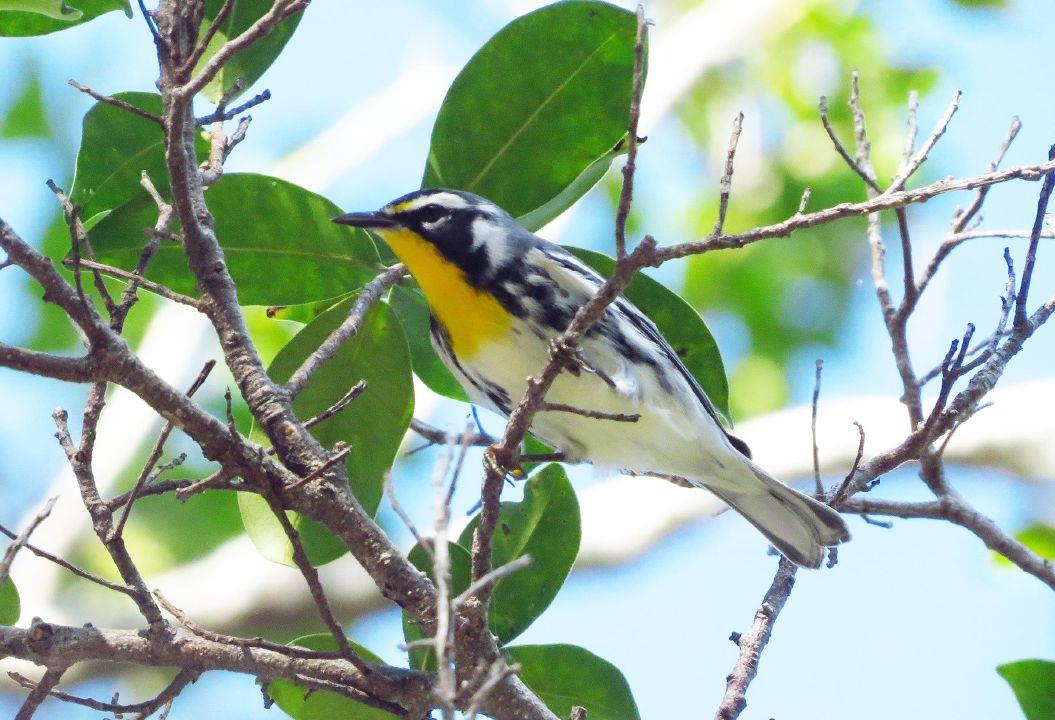
Susan Young/USFWS • The yellow-throated warbler can be a challenge to observe due to its habit of remaining aloft in the tops of tall trees.
You have to admire our feathered friends for always keeping a surprise or two tucked under their wings.
My first warblers of the spring season arrived on April 2, and neither was one of the species I fully expected to be this year’s “early bird” at my home.
A yellow-throated warbler and a pine warbler, both singing from a stand of pine trees, took this year’s early arrival status. This is the first time either of these two warblers has gained that distinction.
The Northern parula has in recent years claimed this honor, which in years past went to species such as hooded warbler or black-throated green warbler.
In 2025, an ovenbird beat all of other warblers to arrive on Friday, April 7, in the woodlands around my home. followed a few days later by a black-throated green warbler.
Technically, I noticed the yellow-throated warbler first, so it gets the honor of being the spring’s first returning warbler. Only a few minutes passed, however, before I also took note of the singing pine warbler. At press time, no other warblers have arrived.
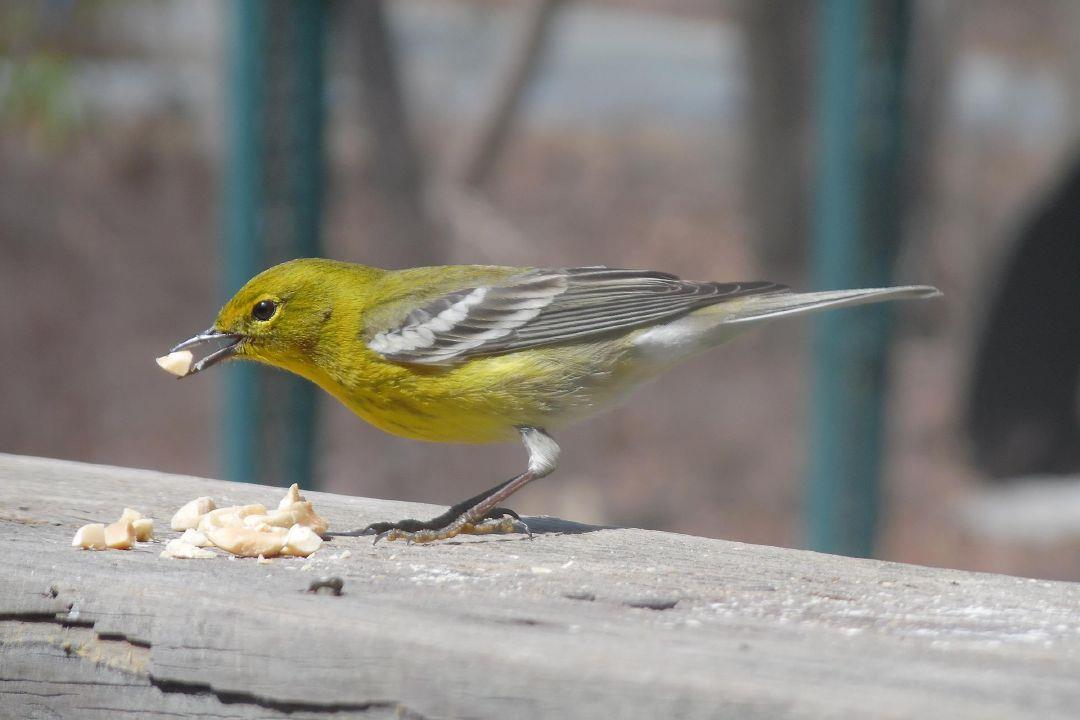
Nikolaus Schultz/Pixabay • Pine warblers can become regular feeder visitors if fare to their liking is available.
I’m still waiting for my first ruby-throated warbler of spring. I’ve not yet heard from any readers, but I fully anticipate hearing about these tiny flying gems arriving any day.
Last year I welcomed back the season’s first ruby-throated hummingbird at 4:14 p.m. on Sunday, April 6. I’m hopeful I can shave a few days off that arrival time this year, but that’s entirely up to the hummingbirds.
As I have for many years, I am asking readers to share their first sightings of hummingbirds. I have tracked arrivals for several years now. To share your first spring sighting of a ruby-throated hummingbird, email me at ahoodedwarbler@aol.com or contact me on Facebook at http://www.facebook.com/ahoodedwarbler. Please include the date and time of your sighting. I also welcome the sharing of other details about your sightings.

Photo by Bryan Stevens • Blue-headed vireos, such as this bird, are high-elevation summer residents in the region. In the spring and fall, they are also common migrants.
Regardless, spring has sprung. Dogwoods are blooming, and their blossoms are beautiful, but it’s also a reminder that our traditional “dogwood winter” with its accompanying dip back into cooler temperatures, is around the corner. Other birds have also been arriving.
A blue-headed vireo put in an appearance on March 29. A chipping sparrow did the same on March 30. When the dam finally breaks, dozens of birds will return or, in some cases, migrate through the region on their way farther north. April and May are exciting times for birders.
As for the two warblers that arrived on April 2, they represent species that have made only occasional appearances at my home. Perhaps the affinity for pine trees that both of these warblers share could have drawn them to visit. There are several stands of large pines thriving on the property.
As its name would indicate, pine warblers are almost always found near pines. These birds have white bellies, two white wing bars, dark legs and thin, relatively long pointed bills. Yellowish “spectacles” around their eyes help contrast them from other warblers. Adult males have olive upperparts and bright yellow throats and breasts; females and immatures display upperparts which are olive-brown.

Bryan Stevens • A pine warbler visits a feeder for a helping of suet.
Pine warblers feed mostly on insects, as well as some seeds and fruit. They tend to forage by probing in crevices on tree trunks and branches, or by poking their beaks into pine cones. Pine warblers spends a great deal of time on the ground, often in the litter of pine needles beneath large trees. They turn over leaves and clusters of pine needles to search for insects concealed beneath them.
The pine warbler doesn’t make the longer migrations of some members of the warbler family. In fact, some pine warblers are resident in the southeastern United States year-round. Visits to wooded suburbs in Atlanta in almost any season is sure to feature sightings. Many pine warblers have also included visits to backyard feeders into their daily routines. They’re fond of offerings such as mealworms, suet cakes and sunflower chips.
The only real requirement needed to attract pine warblers is the presence of pines. These birds utilize various pines, including loblolly, shortleaf, longleaf and white pines.
The yellow-throated warbler is also fond of pine trees. Not quite as common at feeders at pine warblers, the yellow-throated warbler has shifted its behavior to take advantage of the extra resource that a well-maintained feeding station kept supplied with diverse offerings represents.
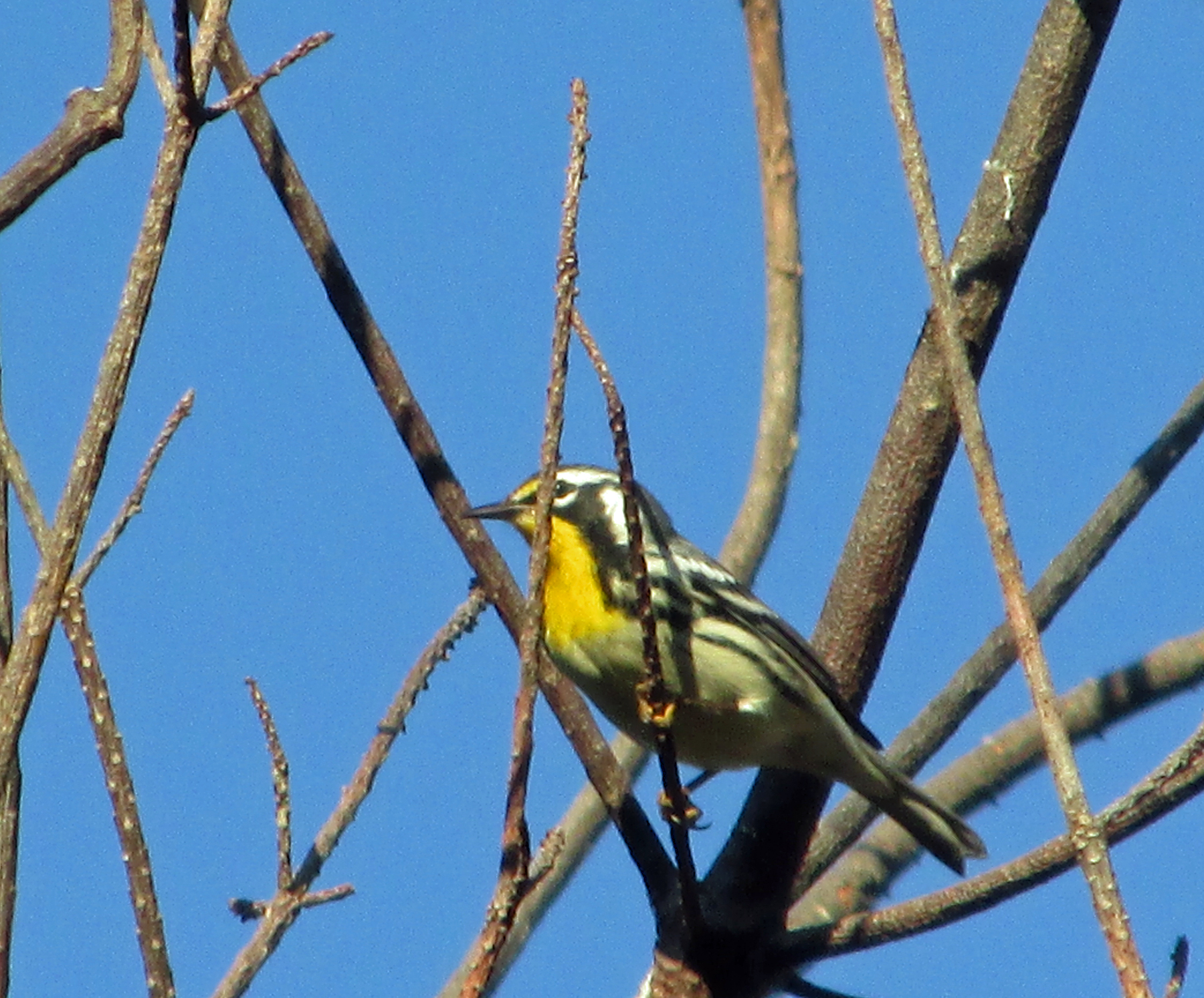
Photo by Bryan Stevens A Yellow-throated Warbler makes a migratory stop in my yard on the first day of September.
The yellow-throated warbler is also commonly associated with mature trees that extend above the canopy. They also prefer that favored trees are located near a water source. Some of the favored trees for the species include sycamore, shortleaf pine, Virginia pine and bald cypress.
I’ll be interested to see if these two species linger or if they’re passing through and simply using my home as a stopping point to forage and rest before continuing on their way.
It’s a great time of year to stay alert to new arrivals. Keep a pair of binoculars at the ready, and don’t forget to share those sightings, especially as the return of ruby-throated hummingbirds is imminent.
•••
Bryan Stevens has written about birds, birding and birders since 1995. Email him at ahoodedwarbler@aol.com to make a comment, ask a question or share a sighting.
 Our Fine Feathered Friends