Category Archives: American goldfinch

56th annual Fall Bird Count finds 120 species in Northeast Tennessee

Photo by Jean Potter A single Wilson’s warbler made it onto the tally for this year’s Fall Bird Count

The 56th annual Elizabethton Fall Bird Count was held Saturday, Oct. 4. A total of 25 observers participated in about 13 parties. The weather was good, with clear skies, no wind and temperatures ranging from 42 to 82 degrees.

This year’s count tallied 120 species, plus two gull species and one Empidonax species of flycatcher. This total is slightly below the recent 30 year average of 124 species, according to compiler Rick Knight The all-time high on this count was 137 species in 1993.

The count is conducted in the Northeast Tennessee counties of Carter, Johnson, Sullivan, Unicoi and Washington.

Photo by Bryan Stevens A total of four pied-billed grebes were found during the recent Fall Bird Count. Numbers of this species will increase as the season advances.

The list:

Canada goose, 466; wood duck, 34; blue-winged teal, 21; mallard, 64; common merganser, 12; wild turkey, 15; and pied-billed grebe, 4.

Rock pigeon, 183; Eurasian collared-dove, 2; mourning dove, 145; yellow-billed cuckoo, 3; chimney swift, 176; and ruby-throated hummingbird, 1.

Killdeer, 41; spotted sandpiper, 3; solitary sandpiper, 2; and two gull species that could not be positively identified.

Double-crested cormorant, 30; green heron, 3; great egret, 5; great blue heron, 26; black vulture, 39; and turkey vulture, 195.

Osprey, 5; sharp-shinned hawk, 1; Cooper’s hawk, 6; bald eagle, 7; red-shouldered hawk, 6; broad-winged hawk, 1; red-tailed hawk, 17; American barn owl, 1; Eastern screech-owl, 24; great horned owl, 5; barred owl, 7; and Northern saw-whet owl, 3.

Belted kingfisher, 22; red-headed woodpecker, 5; red-bellied woodpecker, 71; yellow-bellied sapsucker, 9; downy woodpecker, 41; hairy woodpecker, 17; Northern flicker, 54; and pileated woodpecker, 17.

American kestrel, 14; merlin, 4; Eastern wood-pewee, 17; unidentifiable Empidonax species, 1; Eastern Phoebe, 82; yellow-throated vireo, 6; blue-headed vireo, 23; Philadelphia vireo, 4; red-eyed vireo, 10; and loggerhead shrike, 1.

Blue jay, 360; American crow, 416; fish crow, 4; and common raven, 21.

Carolina chickadee, 158; tufted titmouse, 140; tree swallow, 120; ruby-crowned kinglet, 13; golden-crowned kinglet, 4; cedar waxwing, 126; red-breasted nuthatch, 13; white-breasted nuthatch, 70; and brown creeper, 1.

Carolina wren, 135; house wren, 3; gray catbird, 27; brown thrasher, 9; Northern mockingbird, 74; and European starling, 560.

Photo by Jean Potter A Carolina wren creeps along a fence. A total of 135 of these wrens made it onto the recent Fall Bird Count.

Eastern bluebird, 157; veery, 1; gray-cheeked thrush, 5; Swainson’s thrush, 42; wood thrush, 7; American robin, 233.

House sparrow, 34; house finch, 50; red crossbill, 3; American goldfinch, 64; chipping sparrow, 51; field sparrow, 6; dark-eyed junco, 30; white-crowned sparrow, 1; white-throated sparrow, 2; savannah sparrow, 1; song sparrow, 98; swamp sparrow, 2; Eastern towhee, 47; and yellow-breasted chat, 1.

Eastern meadowlark, 20; red-winged blackbird, 70; brown-headed cowbird, 208; and common grackle, 24.

Ovenbird, 2; Northern waterthrush, 2; black-and-white warbler, 6; Tennessee warbler, 47; orange-crowned warbler, 1; Nashville warbler, 1; common yellowthroat, 12; hooded warbler, 5; American redstart, 21; Cape May warbler, 9; Northern parole, 21; magnolia warbler, 28; bay-breasted warbler, 47; Blackburnian warbler, 4; chestnut-sided warbler, 3; black-throated blue warbler, 11; palm warbler, 26; pine warbler, 4; yellow-rumped warbler, 4; yellow-throated warbler, 2; black-throated green warbler, 14; and Wilson’s warbler, 1.

Photo by Bryan Stevens • Male American redstarts are unmistakable warblers in their orange, black and white plumage.

Scarlet tanager, 9; Northern cardinal, 165; Rose-breasted grosbeak, 13; and indigo bunting, 9.

Some species were noteworthy in their absence. Notable misses included white-eyed vireo, blue-gray gnatcatcher, winter wren, hermit thrush and blue grosbeak.

The count was held a week later than usual due to the fall meeting of the Tennessee Ornithological Society in

Johnson City. This may have accounted for some of the misses or low numbers for some species , such as the single hummingbird. On the other hand, the later date may have contributed to finding some of the later migrants, including orange-crowned warbler and white-throated sparrow.

The count has been held on the first Saturday in October a few times previously.

•••

Bryan Stevens began writing about birds, birders and birding in 1995. To share a sighting, ask a question or make a comment, email him at ahoodedwarbler@aol.com.

Carolina chickadees are cheerful backyard birds

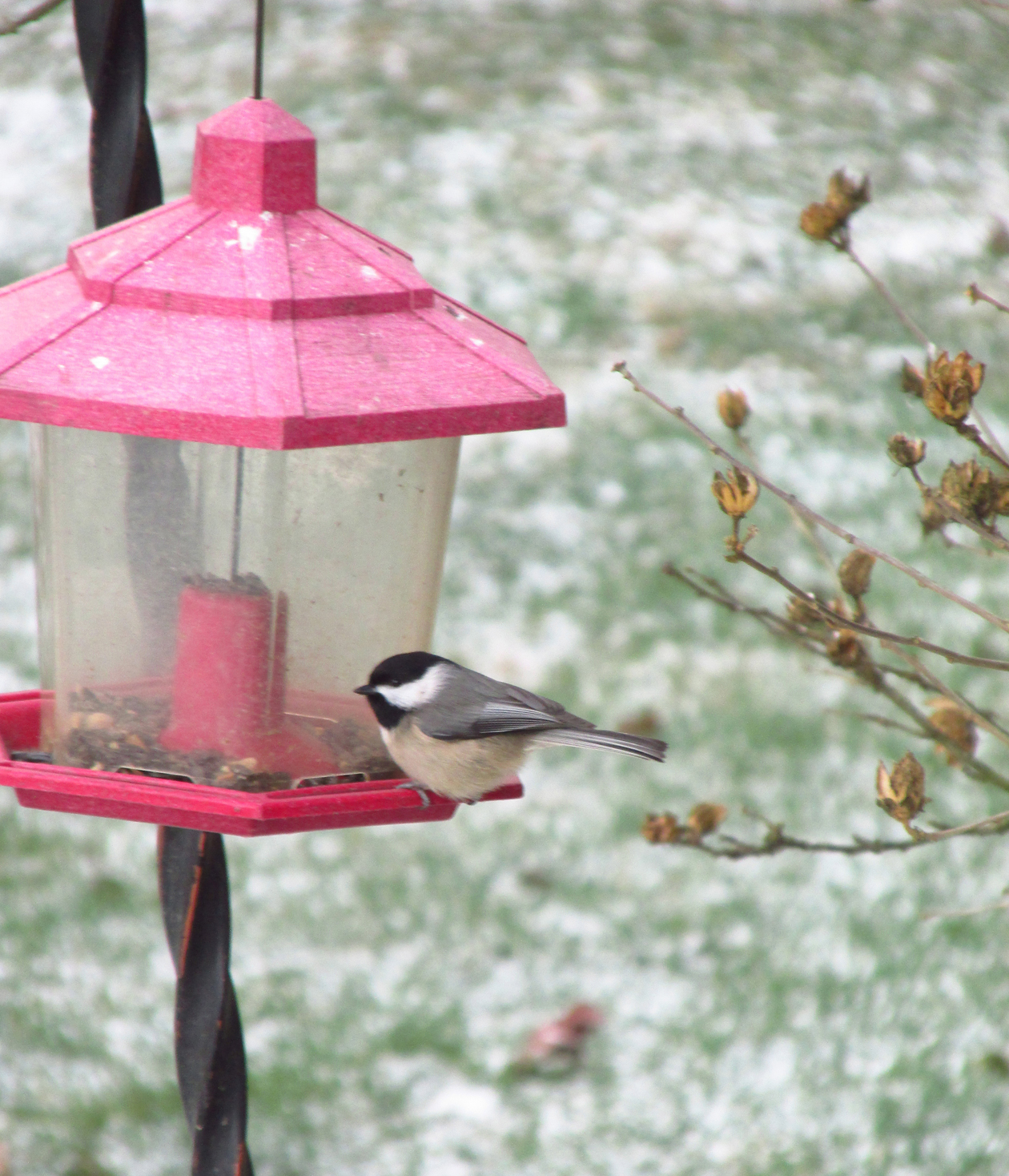
Photo by Bryan Stevens • A Carolina chickadee visits a feeder for sunflower seeds.

I’ve learned not to leave my house without an offering for the local birds. Should I neglect to bring sunflower seed to fill the feeders in the yard as I leave for work in the morning, I must face a scolding from the resident Carolina chickadees.

I think I’ve become familiar enough with these tiny black, white and gray birds that I can tell the difference between a disappointed scolding, the result of leaving the house empty handed, and their jubilant and excited chattering as they invite other birds near and far to come and partake of the bounty when I remember to fill the feeders.

Chickadees have a namesake scolding vocalization — a strident chick-a-dee-dee-dee — that they use to communicate with each other as the move through dreary winter woodlands.

They and the tufted titmice, a closely related species, are among the birds most easily acclimated to human presence and activity.

Photo by Bryan Stevens • A Carolina chickadee endures a cold winter’s day.

On the mornings when I remember their sunflower seeds, the waiting chickadees are doing tiny hoppity dances in the branches of nearby trees and shrubs, barely able to contain their excitement. They barely give me time to move away from the feeders before they dart in, grab a seed and carry it off to quickly shell on a safe perch.

In the spring, the Carolina chickadee has a familiar “fee-bee-fee-bo” song that rings out in the woodlands around my home. Cavity-nesters, chickadees readily take to nest boxes provided by human landlords. We are about five months away from spring of 2025, but that’s all right. Early winter is a great time to make the acquaintance of the Carolina chickadee.

This diminutive songbird is at home in mixed or deciduous woods in the United States from New Jersey west to southern Kansas and south to Florida and Texas. The Carolina chickadee also ranges along the Appalachian Mountains, but on some of the higher peaks they are replaced by their cousin, the black-capped chickadee. In Tennessee, birders need to visit some of the higher peaks in the Great Smoky Mountains National Park in order to find black-capped chickadees.

Sunflower seeds are a favorite offering. They are also attracted by peanuts, suet and other varieties of bird seed. They comprise the nucleus of mixed flocks of various species, so they will also bring other birds into your yard and within easy viewing range. Some other members of the flock might include wrens, nuthatches, titmice and perhaps a couple of kinglets or a downy woodpecker.

It’s easy to attract chickadees to your yard. Shrubs and small trees, feeders stocked with sunflower seeds and perhaps a mesh cage offering a suet cake are sure to make these small birds feel welcome. If you want to witness the family life of chickadees, build or buy a box suitable for wrens and other smaller birds. That task can wait until February of March of next year. Chickadees will happily take up residence in the offered nesting boxes.

Once a pair of chickadees settles down into domestic bliss in the spring, they almost at once start work on the construction of a nest. These little songbirds, looking quite smart in their handsome black, white and gray feathers, build an exquisite nest. The primary nesting material is green moss, which they stuff into a natural cavity or bird box in great quantities. The female chickadee fashions a depression in the collection of moss. She lines this shallow basin with plant fibers as well as strands of fur or hair to provide soft cushioning for her eggs.

A female chickadee can lay a large number of eggs, with the clutch size ranging between three and ten eggs. Once the young hatch, both parents are kept busy delivering food to a large brood of hungry, noisy chicks. The young grow quickly, but they take advantage of the safety of their cavity nest and don’t depart for the wider world until 20 days after their hatching.

North America’s other chickadees include the aforementioned black-capped chickadee, as well as boreal chickadee, chestnut-backed chickadee, grey-headed chickadee, Mexican chickadee, and mountain chickadee. On a trip to Utah in 2003 and 2006, I saw both black-capped chickadees and mountain chickadees.

In other parts of the world, chickadees are known as “tits,” which is from an Old English word denoting small size. Worldwide, there are about 60 species of chickadees and tits, which are classified collectively under the scientific family name, Paridae. Other members of this family range into Europe, Asia and Africa, including species with colorful names like fire-capped tit, yellow-bellied tit, azure tit, green-backed tit and cinnamon-breasted tit.

Alas, in Northeast Tennessee, western North Carolina and southwest Virginia, we have only the Carolina chickadee, but these entertaining birds are sure to become the star attractions in yard and garden once they discover your feeders and begin providing their cheerful antics.

•••

If you have a question, wish to make a comment or share a sighting, email me at ahoodedwarbler@aol.com.
Photo by Bryan Stevens • A young Carolina chickadee, not long out of the nest, explores the world.

Goldfinches much more than another pretty bird

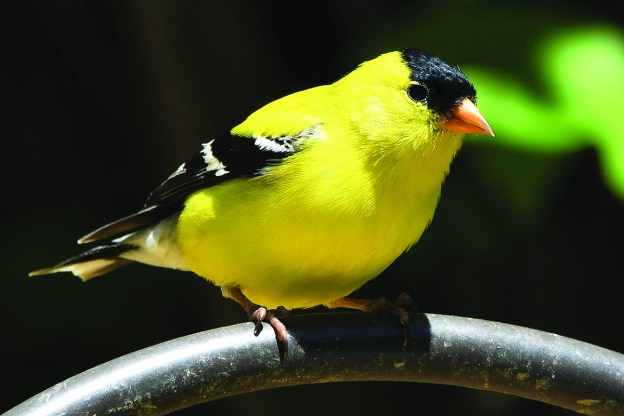
Miles Moody from Pixabay • A male American goldfinch in summer nesting plumage is one of the region’s most vibrant songbirds. 

Johnson City resident Jo Wheeler posted a comment on Facebook on July 15 under a weekly posting promoting the “Feathered Friends” weekly column.

“We saw the American goldfinch in out backyard over the weekend,” Jo wrote. “It was amazing.”

I was so pleased to hear Jo’s excitement about the goldfinch. The American goldfinch is a commonplace bird, but once you take a close look at this bird it’s readily apparent that there’s really noting common about it at all. 

Goldfinches are extraordinary in appearance, particularly at this time of the year. The plumage of the male goldfinch during the nesting season is a bold pattern of black and white against a backdrop of golden-yellow feathers. These birds also form fussy but sociable flocks that congregate at bird feeders or bird baths in many a backyard. 

A sighting of a goldfinch can be memorable. I still retain vivid imagery of these birds from childhood, long before I could identify them by name. They would always appear in late summer, perching atop the three blue spruces in our yard. The trees are no longer standing, but the memories of those colorful yellow and black birds endure.

Summer is the season of plenty for American goldfinches. Roadside ditches are choked with chicory, evening primrose and other seed-producing plants often dismissed as “weeds.” Simply driving local roads can, and often does, produce sightings of flocks of American goldfinches as they forage for seeds.

These small, colorful finches are also regular visitors to my feeders, although they don’t really need my offering of black oil sunflower seeds to supplement the natural smorgasbord available to them.

Their fondness for seeds has inspired many of the common names for this bird, including lettuce bird, thistle-bird, yellow-bird and wild canary. My late grandmother, Bertha Sneyd, introduced me to the term “lettuce bird” as an alternative name for goldfinch. As she explained, the finches would come to gardens once lettuce had gone to seed. 

This fondness and dependence on seeds for its dietary needs has even shaped the nesting habits of this species. The American goldfinch is also one of the last songbirds to nest each season. 

According to a profile of the American goldfinch posted at the website for the Tennessee Wildlife Resources Agency, goldfinches don’t even start to think about nesting until late July and early August. Their nesting season is timed deliberately to coincide with this season of natural abundance. Goldfinches feed their young mostly on seeds, as opposed to most songbirds that work so hard to gather insects to feed their young a protein-rich diet.

It’s a satisfying irony that, although brown-headed cowbird females sometimes slip their eggs into a goldfinch nest, any cowbirds hatched in those nests rarely survive. While goldfinch hatchlings are adapted to thrive on a diet of seeds, the fostered young cowbirds fail to thrive on a diet so lacking in the protein derived from insects.

While the male American goldfinch during the breeding season is unmistakable in his bright yellow, black and white plumage, the female goldfinch is more subdued in coloration. Males also sing a bubbly, cheerful song when seeking to win the attention of a potential mate.  

According to the profile on the TWRA website, the goldfinch’s song is a variable series of musical trills and twitters, often interspersed with a bay beephrase. The distinctive flight call is described as sounding like “potato chip” or “per chicory.”

For these and other reasons, goldfinches are favorites of many bird lovers. There are actually three species of goldfinches in North America. The two related species are Lawrence’s goldfinch of California and the lesser goldfinch, which ranges through the southwestern United States as well as Central and South America.

Lawrence’s goldfinch was named by John Cassin in 1850 for his colleague George Lawrence, a New York businessman and amateur ornithologist. His enthusiasm for birds must have impressed his colleagues. One bird genus and 20 species were named in his honor. Lawrence’s goldfinch, known by the scientific name Spinus lawrencei, honors him doubly with both the scientific and common names for the bird.

The American goldfinch is also known by other common names, including wild canary, yellowbird and willow goldfinch. I’ve also heard the goldfinch referred to as “lettuce bird.” This nickname, which was one my maternal grandmother applied to the bird, relates to the bird’s fondness for seeds. Apparently the goldfinches would flock to lettuce plants in the garden once they had gone to seed.

Photo by Bryan Stevens • A male American goldfinch perched.

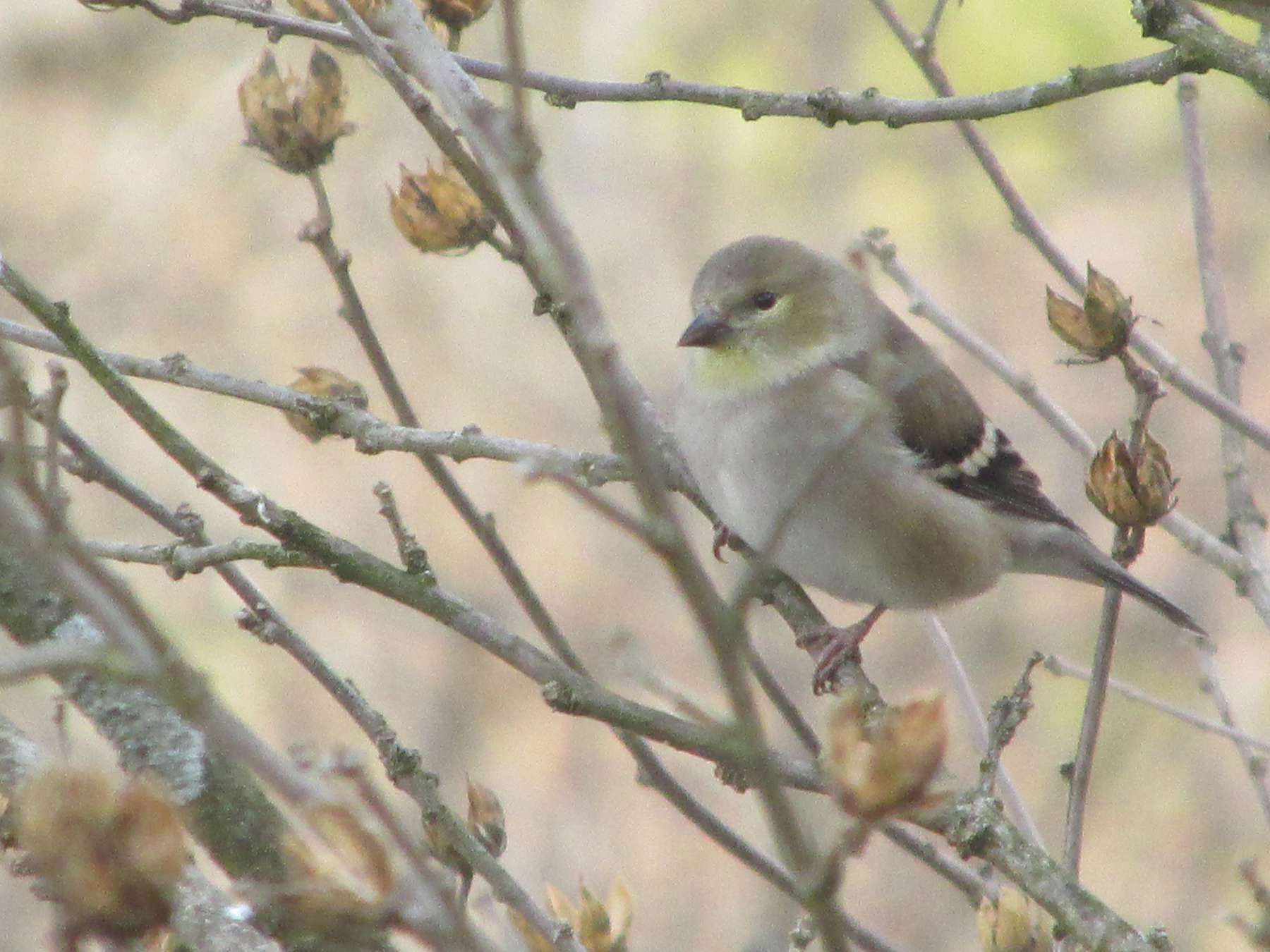
Come winter, this vibrant American goldfinch undergoes a transformation into a dull, drab bird with grayish feather. In fact, this annual molt usually begins in September. During the fall and winter, the American goldfinch looks almost like an entirely different bird.

It’s understandable why people love to entertain flocks of these finches in their yards and gardens. Three states — Washington, Iowa and New Jersey — have gone so far as to make the American goldfinch their official state bird.

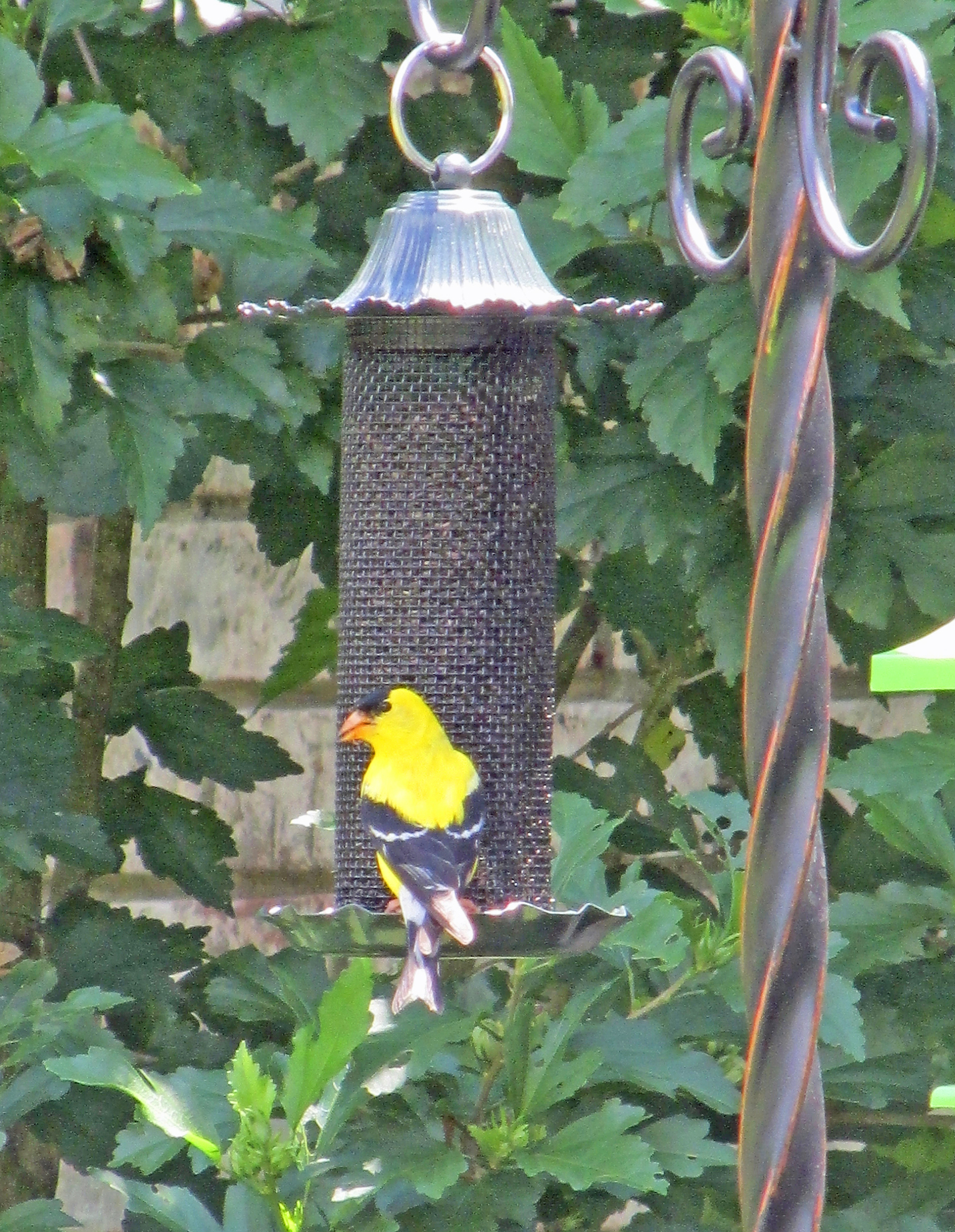
The best strategy for attracting goldfinches is to provide some of their favorite foods. Black oil sunflower seed and the seeds of nyjer thistle are highly favored. The tiny thistle seeds require special feeders. Mesh “socks” can also be used to dispense the thistle seed.

An alternative is to plant a garden that offers an abundance of fresh seeds. A stand of sunflowers will attract goldfinches, as well as other birds such as indigo bunting and house finch. Liatris, also known as gay feather, produces flower spikes that are sought out by goldfinches for their seeds. Other favorites include asters and coneflowers. The bonus is that even after the beautiful blooms are past, the birds can still benefit from the seeds left behind after flowering.

To share an observation, make a comment or ask a question, email me at ahoodedwarbler@aol.com.

Long-running Elizabethton Summer Bird Count finds 115 species

The Elizabethton Bird Club holds two summer bird counts to supplement other bird population monitoring efforts on the birdlife of Tennessee.

This count focuses exclusively on locations within Carter County and was held Saturday, June 9, with 16 observers in five parties plus two yard watchers. A total of 115 species was found, which is slightly above the average of 113 per count. The all-time high was 123 species in 2017. Several species restricted to the higher elevations of East Tennessee were found.

The count yielded some surprises and highlights, including the following:

A single Northern bobwhite represented a species that has been increasingly difficult to find in the area.

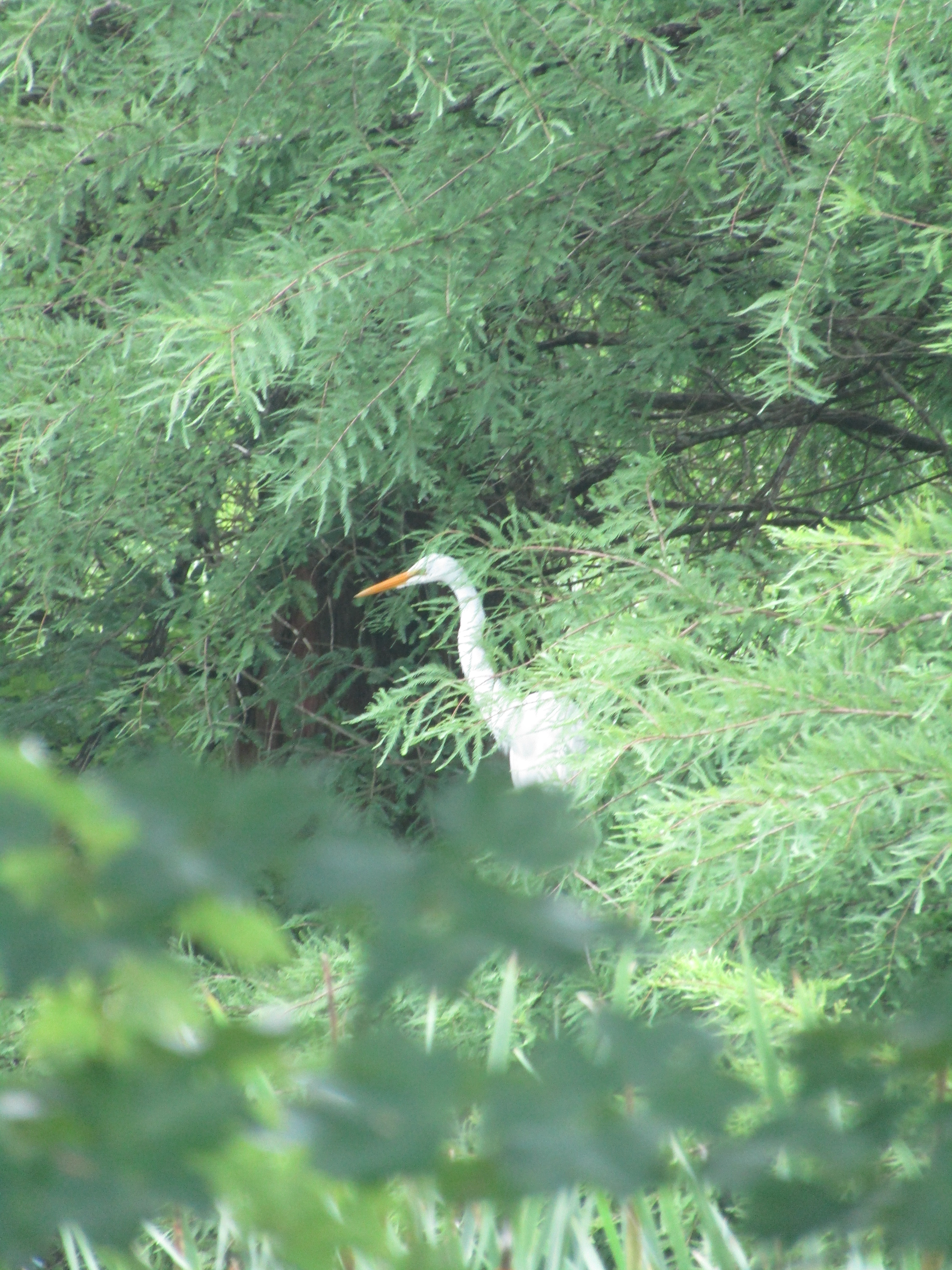
Photo by Bryan Stevens • Great egret, seen here among cypress trees, made the count for the first time this year.

A couple of birds made their debut appearance on this count, including great egret and fish crow, which is expanding its range rapidly in the region.

Other good finds included ruffed grouse, sharp-shinned hawk, American woodcock, Eurasian collared-dove, yellow-bellied sapsucker, alder flycatcher, least flycatcher, common raven, red-breasted nuthatch, brown creeper, winter wren, golden-crowned kinglet, hermit thrush, grasshopper sparrow, rose-breasted grosbeak, purple finch and pine siskin.

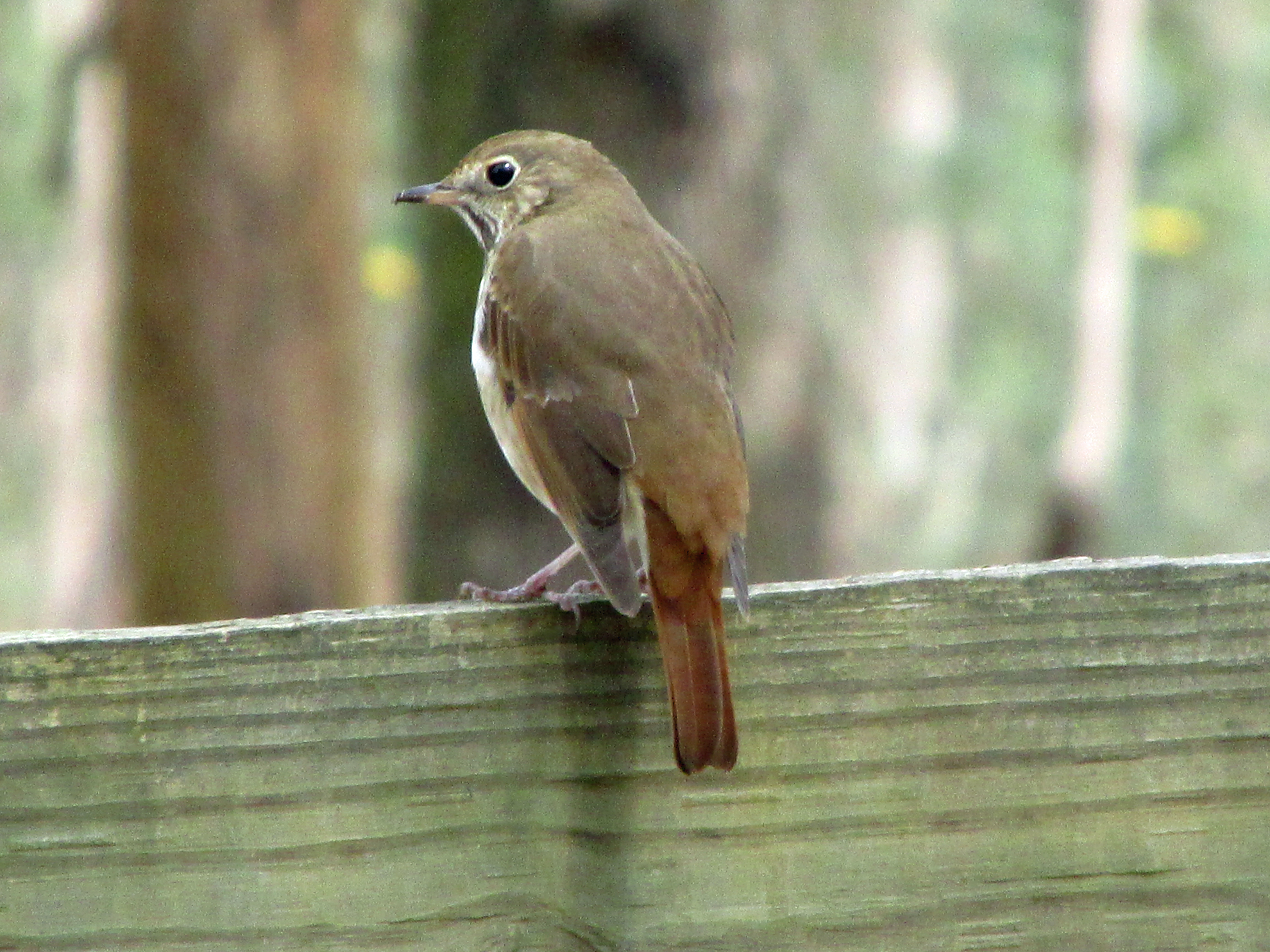
Photo by Bryan Stevens • Hermit thrush, pictured here, is an uncommon summer nesting bird at high elevations.

The count also found 20 species of warblers, including golden-winged, Swainson’s, magnolia, Blackburnian and yellow-rumped.

Of course, there are always unexpected misses. Birds usually found on summer counts but missed this year included green heron, yellow-crowned night-heron, bald eagle, great horned owl, white-eyed vireo, warbling vireo, purple martin, Kentucky warbler, prairie Warbler and vesper sparrow.

The count total follows:

Canada goose, 91; wood duck, 7; Mallard, 78; Northern bobwhite, 1; ruffed grouse, 2; wild turkey, 35; great blue heron, 42; and great egret, 1.

Black vulture, 2; turkey vulture, 58; sharp-shinned hawk, 1; Cooper’s hawk, 3; broad-winged hawk, 1; red-tailed hawk, 10; American kestrel, 1.

Killdeer, 4; American woodcock, 1; rock pigeon, 69; Eurasian collared-dove, 3; mourning dove, 171; and yellow-billed cuckoo, 3.

Eastern screech-owl, 2; barred owl, 1; chuck-will’s widow, 3; whip-poor-will, chimney swift, 46; ruby-throated hummingbird, 35; and belted kingfisher, 10.

Red-bellied woodpecker, 15; yellow-bellied sapsucker, 3; downy woodpecker, 15; hairy woodpecker, 1; Northern flicker, 9; and pileated woodpecker, 14.

Eastern wood-pewee, 17; Acadian flycatcher, 21; alder flycatcher, 3; least flycatcher, 4; Eastern phoebe, 40; great crested flycatcher, 4; and Eastern kingbird, 15.

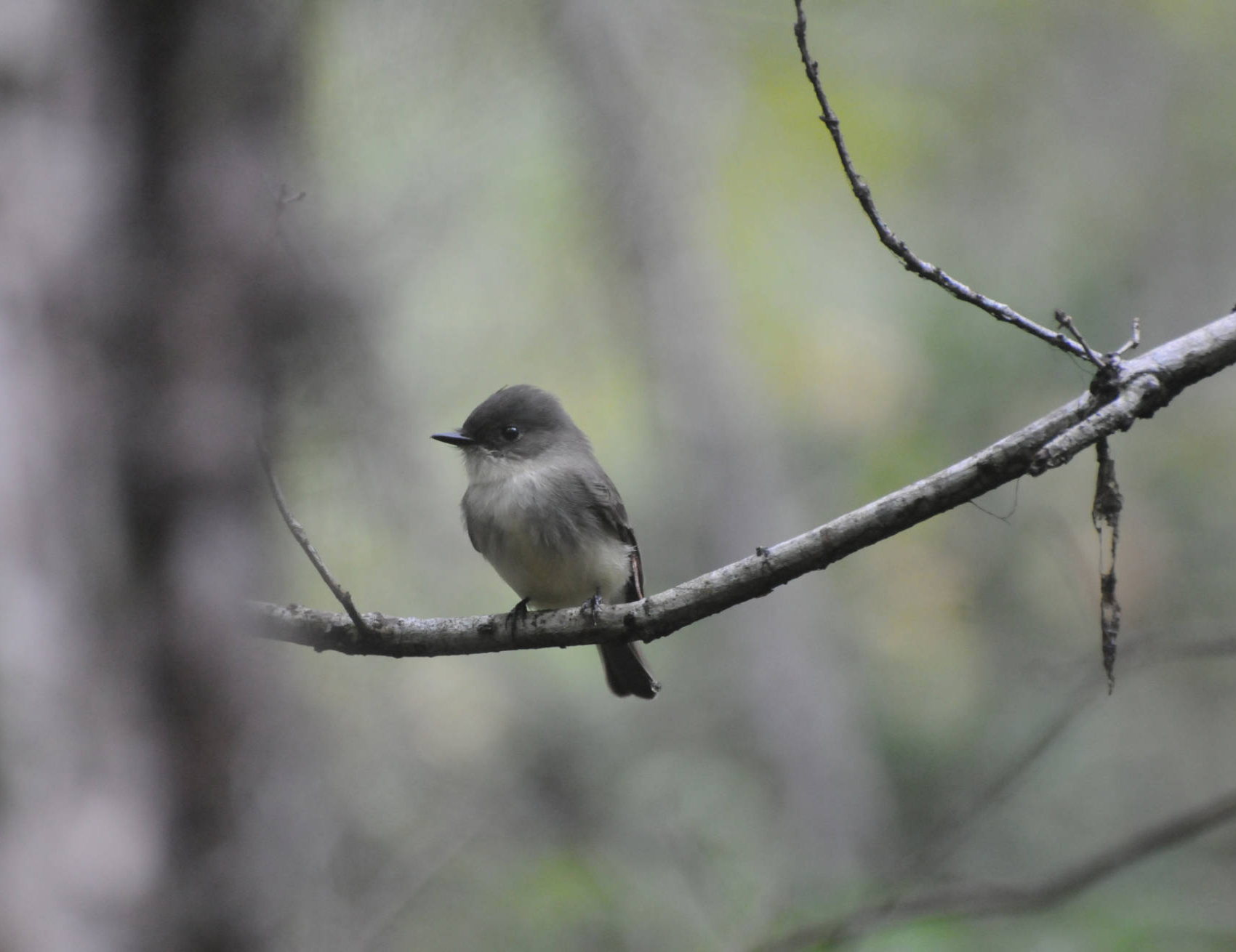
Photo by Bryan Stevens • Eastern phoebe is a common flycatcher in the region and abundant on summer counts.

Yellow-throated vireo, 2; blue-headed vireo, 44; red-eyed vireo, 105; blue jay, 66; American crow, 133; fish crow, 1; and common raven, 5.

Northern rough-winged swallow, 21; tree swallow, 123; barn swallow, 106; and cliff swallow, 313.

Carolina chickadee, 63; tufted titmouse, 71; red-breasted nuthatch, white-breasted nuthatch, 15; brown creeper, 3; house wren, 48; winter wren. 8; and Carolina wren, 54.

Blue-gray gnatcatcher, 17; golden-crowned kinglet, 23; Eastern bluebird, 71; veery, 41; hermit thrush, 1; wood thrush, 62; American robin, 245; gray catbird, 44; brown thrasher, 12; Northern mockingbird, 34; European starling, 358; and cedar waxwing, 54.

Overnbird, 47; worm-eating warbler, 6; Louisiana waterthrush, 11, golden-winged warbler, 6; black-and-white warbler, 32; Swainson’s warbler, 3; common yellowthroat, 20; hooded warbler, 76; American redstart, 14; Northern parula, 18; magnolia warbler, 6; Blackburnian warbler, 4; yellow warbler, 2; chestnut-sided warbler, 32; black-throated blue warbler, 39; pine warbler, 1; yellow-rumped warbler, 1; yellow-throated warbler, 7; black-throated green warbler, 29; Canada warbler, 11; and yellow-breasted chat, 3.

Eastern towhee, 73; chipping sparrow, 73; field sparrow, 43; grasshopper sparrow, 1; song sparrow, 151; and dark-eyed junco, 55.

Scarlet tanager, 18; Northern cardinal, 108; rose-breasted grosbeak, 11; blue grosbeak, 6; indigo bunting, 106.

Red-winged blackbird, 79; Eastern meadowlark, 1; common grackle, 74; brown-headed cowbird, 18, orchard oriole, 1; and Baltimore oriole, 1.

House finch, 43; purple finch, 2; pine siskin, 2; American goldfinch, 55; and house sparrow, 6.

Carter County’s Roan Mountain and Holston Mountain offer excellent high elevation habitat. Lower elevations along the Doe and Watauga Rivers also provide plenty of terrain for looking for a variety of birds.

Photo by Bryan Stevens • American goldfinches look their very best for the summer count.

Bristol’s CBC records low total of species, but still makes some interesting finds

brown-headnuthatch

Photo by SOARnet/Pixabay.com • The brown-headed nuthatch favors stands of loblolly pine, which are not common in the region. A record number of these small nuthatches were found on the recent Bristol TN-VA Christmas Bird Count.

Just before the end of last year, 21 participants gathered to conduct the Bristol TN-VA Christmas Bird Count. Count compiler Richard Lewis noted that the CBC found 71 species and a total of 5,700 individual birds.

“This was the 63rd year the count has been run since 1956,” Lewis posted on Bristol-Birds. “It was the lowest total number of species recorded in 27 years.”

Lewis could not explain the low total of species other than to note that the area doesn’t seem to have the usual influx of wintering birds from up north. In addition, waterfowl numbers were low. “Some species are not coming as far south this year,” he added.

The best find of the count was the discovery of a new bald eagle nest on South Holston Lake. Other noteworthy species recorded were black-crowned night-heron, red-shouldered hawk, merlin and brown-headed nuthatch. The four individuals found represent a new high count for the brown-headed nuthatch on the Bristol CBC. The species had only been seen on the count three other times.

The brown-headed nuthatch is a specialist of pine woodlands throughout the southeastern United States, favoring loblolly-shortleaf pines and longleaf-slash pines. This nuthatch requires standing dead trees for nesting and roosting. They forage for food, however, on live pines. The birds are more abundant in older pine stands.

This small nuthatch is not at all common in the region, but there are some records, including other Bristol records. I’ve had much better luck finding the brown-headed nuthatch during visits to coastal South Carolina or suburban Atlanta in Georgia. In these southern locations, it can be a quite common bird.

Spring-Nuthatch

Photo by Bryan Stevens • In some areas, brown-headed nuthatches are feeder visitors. These small nuthatches are specialists that favor stands of loblolly pine.

These small birds will occasionally forage close to the ground, but they are often in the upper branches of pine trees. Their presence is often revealed by their call, which sounds amazingly like a squeeze toy. They produce their “squeaky toy” call persistently when agitated or curious. Brown-headed nuthatches often associate with mixed flocks in company with Carolina chickadees, tufted titmice, pine warblers and other small songbirds. White-breasted nuthatches and red-breasted nuthatches are more likely visitors to yards and gardens in the region.

Participants in the CBC included Ron Carrico, Rob Biller, Rack Cross, Angela Cross, Robert Hunter, Terry Hunter, Rick Knight, Roy Knispel, Cade Campbell, Larry McDaniel, Ruth Clark, Mary Clark, Randy Smith, Ron Harrington Sam Evans, Kevin Hamed, Rick Phillips, Adrianna Nelson, Michelle Sparks, Richard Lewis and Phillip Lewis.

The total for the Bristol TN-VA CBC follows:

Canada goose, 730; gadwall, 49; American wigeon, 11; American black duck, 1; mallard, 294; ring-necked duck, 245; bufflehead, 51; and hooded merganser, 25.

Wild turkey, 53; common loon, 4; pied-billed grebe, 18; horned grebe, 2; great blue heron, 22; and black-crowned night-heron, 1.

Black vulture, 75; turkey vulture, 52; sharp-shinned hawk, 2; Cooper’s hawk, 5; bald eagle, 2; red-shouldered hawk, 1; and red-tailed hawk, 27.


American coot, 12; killdeer, 14; Bonaparte’s gull, 6; ring-billed gull, 143; rock pigeon, 607; mourning dove, 253; Eastern screech owl, 4; and great horned owl, 2.

Belted kingfisher, 15; red-bellied woodpecker, 30; yellow-bellied sapsucker, 6; down woodpecker, 21; Northern flicker, 12; pileated woodpecker, 12; American kestrel, 11; and merlin, 1.

Eastern phoebe, 5; loggerhead shrike, 1; blue jay, 176; American crow, 404; common raven, 5; Carolina chickadee, 145; tufted titmouse, 93; red-breasted nuthatch, 1; white-breasted nuthatch, 62; and brown-headed nuthatch, 4.

Brown creeper, 5; Carolina wren, 130; winter wren, 5; golden-crowned kinglet, 33; ruby-crowned kinglet, 6; Eastern bluebird, 167; hermit thrush, 8; American robin, 93; Northern mockingbird, 90; European starling, 816; and cedar waxwing, 12.

Yellow-rumped warbler, 18; field sparrow, 15; dark-eyed junco, 41; white-crowned sparrow, 17; white-throated sparrow, 68; song sparrow, 115; swamp sparrow, 7; and Eastern towhee, 22.

Eastern meadowlark, 13; house finch, 47; American goldfinch, 89; and house sparrow, 25.

Glade Spring CBC finds 63 species

A Christmas Bird Count is also conducted annually in Glade Spring, Virginia. This year’s Glade Spring CBC took place Dec. 27 and found a total of 63 species and 6,696 individual birds. The total and individual count both dropped slightly from last year’s count, which found 71 species and 6,891 individual birds. Twenty-three people participated on the 2018 Glade Spring CBC.

Count compiler Ron Harrington noted that one new species — a common loon found on a private pond just off Old Saltworks Road — made its Glade Spring CBC debut. Six common mergansers, a new count circle high, were found on the North Fork of the Holston River. A single common merganser was found in that same river last year for the first time.

rthawk-one

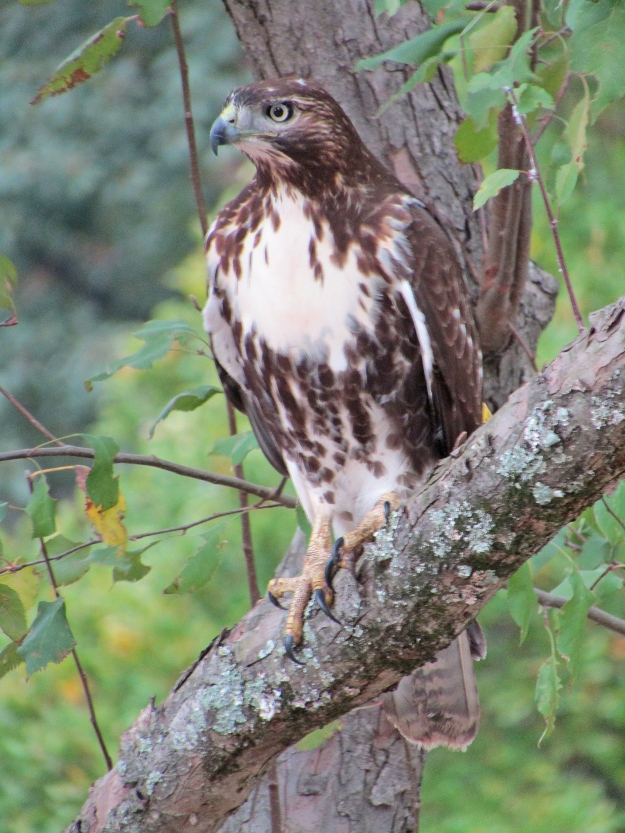
Photo by Bryan Stevens • Raptors, like this Red-tailed Hawk, proved plentiful on Christmas Bird Counts conducted throughout the region.

Other highlights noted by Harrington included 48 red-tailed hawks (a new high count total), 10 hairy woodpeckers (tying the record high) and three palm warblers, which represented a new high count for this warbler species. The CBC also recorded a high count for wood ducks with seven individuals being found. Other notable finds include swamp sparrow, brown creeper, brown thrasher, loggerhead shrike, winter wren, hermit thrush, Eurasian collared dove and common grackle.

•••••

With these snapshots of winter bird populations in the area, readers can use these references to see if they can find some of these same birds visiting their yards, gardens and favorite birding spots. As always, I enjoy hearing from readers about the sightings they are making. Email me at ahoodedwarbler@aol.com to share sightings, make comments or ask questions.

Cardinales

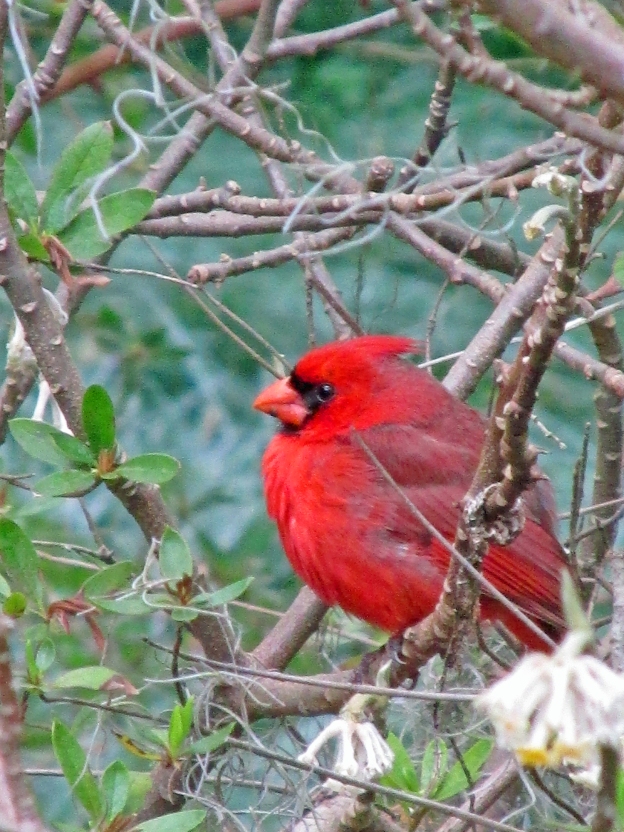
Photo by Bryan Stevens • A male Northern Cardinal perches in a tangle of branches on a rainy day.

Fall Bird Count finds 127 species

rthawk-one

Photo by Bryan Stevens • Raptors, like this Red-tailed Hawk, proved plentiful on count day. Broad-winged Hawk, a relative of the Red-tailed Hawk, even set a new record for most individuals found.

The 49th consecutive Elizabethton Fall Count was held Saturday, Sept. 29, with 50 observers in 13 parties covering parts of five adjacent counties.

According to count compiler Rick Knight, a total of 127 species were tallied (plus Empidonax species), slightly higher than the average of the last 30 years, which was 125. The all-time high was 137 species in 1993.

Two very rare species were found: Purple Gallinule at Meadowview Golf Course in Kingsport and Black-legged Kittiwake on South Holston Lake. The kittiwake had been found Sept. 27 and lingered until count day.

Shorebird habitat was scarce due to high water levels at most sites, thus only one species was found (other than Killdeer).Broad-winged Hawks were numerous, part of a notable late flight likely due to unfavorable weather conditions preceeding the count.
Warblers were generally in low numbers, although 23 species were seen. No migrant sparrows had arrived yet. Blackbirds, too, were scarce. Some regular species were tallied in record high numbers, likely due to the above average number of field parties.

turkey_two

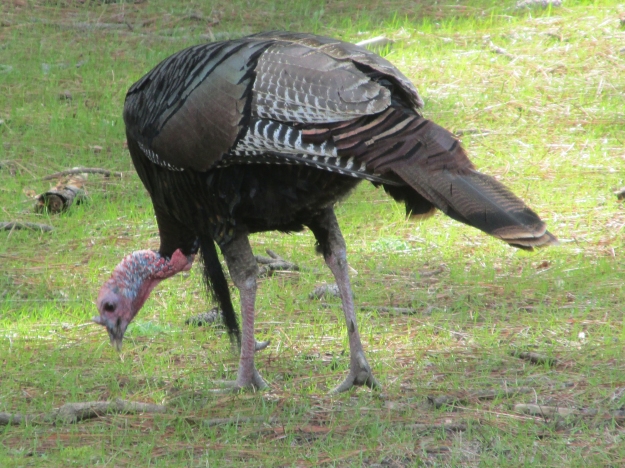
Photo by Bryan Stevens • Wild Turkeys and Ruffed Grouse were found on this year’s count, but participants failed to locate any Northern Bobwhites.

The list of species follows:

Canada Goose, 781; Wood Duck, 79; Mallard, 345; Blue-winged Teal, 110;  Com. Merganser, 2;  Ruffed Grouse, 2; and Wild Turkey, 56.

Pied-billed Grebe 32; Double-crested Cormorant, 78; Great Blue Heron, 49; Great Egret, 2; Green Heron, 2; and Black-crowned Night-Heron, 5.

Wild-NightHeron-Adult

Photo by Bryan Stevens • Several species of herons and egrets were located, including Black-crowned Night Heron.

Black Vulture 71; Turkey Vulture 203; and Osprey, 27. This represented a new record for the number of Osprey found on this count.

 
Bald Eagle 8; Northern Harrier, 1; Sharp-shinned Hawk, 3; Cooper’s Hawk, 9; Red-shouldered Hawk, 6; Broad-winged Hawk, 321; (most ever on this count) and Red-tailed Hawk, 19.

 
Virginia Rail 1; Purple Gallinule, 1; Killdeer, 43; Spotted Sandpiper, 1; Black-legged Kittiwake, 1; Caspian Tern, 1; and Common Tern, 2.


Rock Pigeon, 597; Eurasian Collared-Dove, 2; Mourning Dove, 330; Yellow-billed Cuckoo, 4; E. Screech-Owl, 24; Great Horned Owl, 10; Barred Owl, 5; Northern Saw-whet Owl, 1; and Common Nighthawk, 1.

 
Chimney Swift, 481; Ruby-throated Hummingbird, 31; Belted Kingfisher, 32; Red-headed Woodpecker, 5; Red-bellied Woodpecker, 92; Yellow-bellied Sapsucker, 5; Downy Woodpecker, 59; Hairy Woodpecker, 12; Northern Flicker, 67; Pileated Woodpecker, 54; American Kestrel, 13; and Merlin, 2. The figures for Red-bellied and Pileated Woodpeckers mark new high counts for these two species.

red-bellied-bryan

Photo by Bryan Stevens • A record number of Red-bellied Woodpeckers were found on this year’s Fall Bird Count.

Eastern Wood-Pewee 15; Empidonax species, 2; Eastern Phoebe, 79; Eastern Kingbird, 9; White-eyed Vireo, 1; Yellow-throated Vireo, 2; Blue-headed Vireo, 21; Philadelphia Vireo, 3; Red-eyed Vireo, 4; Blue Jay, 646; American Crow, 364; and Common Raven, 1.
Northern Rough-winged Swallow, 3; Tree Swallow, 465; Barn Swallow, 1; and Cliff Swallow, 3.

Carolina Chickadee, 177; Tufted Titmouse, 133; Red-breasted Nuthatch, 4; White-breasted Nuthatch, 71; Brown Creeper, 1; House Wren, 4; Winter Wren, 1; and Carolina Wren, 218. Both Tufted Titmouse and White-breasted Nuthatch were found in record numbers, as was the Carolina Wren, too

Golden-crowned Kinglet, 8, Eastern Bluebird, 187;  Gray-cheeked, Thrush 12; Swainson’s Thrush, 46;  Wood Thrush, 9; American Robin, 591; Gray Catbird, 64; Brown Thrasher, 23; and Northern Mockingbird, 111; European Starling 1,226;  and Cedar Waxwing, 294. The number of Gray Catbirds set a new record for the species.

Worm-eating Warbler 1; Northern Waterthrush, 1; Black-and-white Warbler, 7; Prothonotary Warbler, 1; Tennessee Warbler, 42; Orange-crowned Warbler, 2; Kentucky Warbler, 2; Common Yellowthroat, 9; Hooded Warbler, 7; American Redstart, 16; Cape May Warbler, 6; Northern Parula, 8; Magnolia Warbler, 18; Bay-breasted Warbler, 15; Blackburnian Warbler, 8; Yellow Warbler, 1; Chestnut-sided Warbler, 1; Black-throated Blue Warbler, 4; Palm Warbler, 63; Pine Warbler, 11; Yellow-throated Warbler, 1; Prairie Warbler, 1; and Black-throated Green Warbler, 7.

Fall-AmRedstart

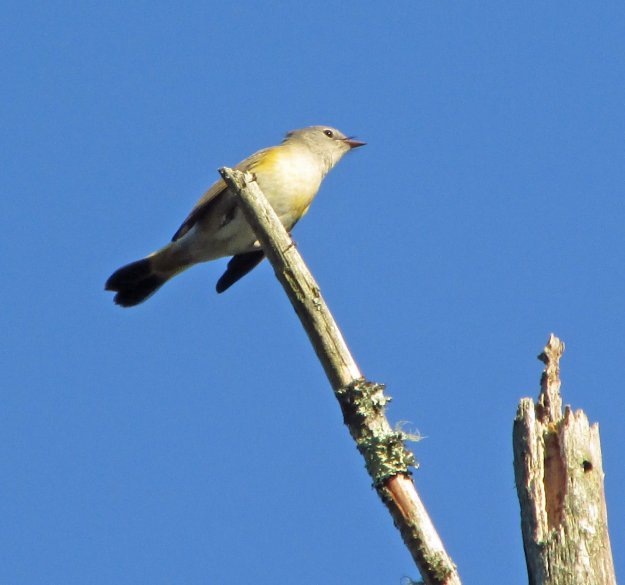
Photo by Bryan Stevens • Participants found a total of 23 different species of warblers, including American Redstarts.

Eastern Towhee, 66; Chipping Sparrow, 94; Field Sparrow, 16; Song Sparrow, 97; and Dark-eyed Junco, 42.

Summer Tanager 2; Scarlet Tanager, 11;  N. Cardinal, 149; Rose-breasted Grosbeak, 125; and Indigo Bunting, 14.

Bobolink, 2; Red-winged Blackbird, 132; Eastern Meadowlark, 7; Common Grackle, 8; Brown-headed Cowbird, 5; House Finch, 41; Pine Siskin, 11; American Goldfinch, 220; and House Sparrow, 69.

Goldfinch 5

Photo by Bryan Stevens • American Goldfinches were among the smaller songbirds found during the annual Fall Bird Count.

What’s in a name? Vernacular designations for some birds lack imagination

I took part in a Christmas Bird Count last month. These annual mid-December surveys of bird populations are not quite as exciting as counts held during the spring or fall migration periods each year, but they can produce some interesting results. One exciting post-count activity after taking part in a CBC is getting together to compile the results tallied by the various participating groups and individuals. The results are usually compiled on field checklists for birds of Tennessee. These checklists, which are produced by the Tennessee Wildlife Resources Agency and the Tennessee Ornithological Society, feature a listing of the common name of every bird species likely to be encountered in the state.

AmKestrel-Flight

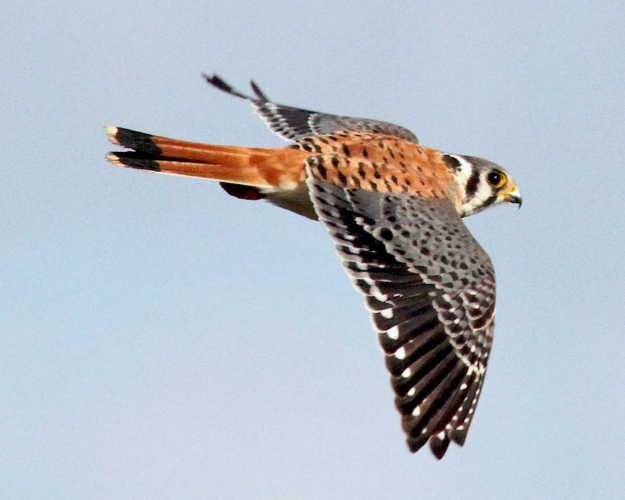
Photo by USFWS/Robert Burton • An American kestrel in flight shows the aerodynamic design that earned this small falcon the common name of sparrow hawk.

The compiler generally reads out the various names on the checklist, which lists all the local birds, beginning with black-bellied whistling duck and ending with house sparrow, and the spokespersons for the various parties respond as each bird’s name is called with the number of birds seen for each species. Over the years, some of the common names of birds featured on the list have changed, as has the position on the list for some of the species. For instance, the American kestrel and other falcons are no longer listed on the card in a grouping with the other raptors found in the state. This doesn’t make much sense to me. But, as I understand it, the falcons have been re-classified for scientific reasons, changing their relationship with the other birds listed on the checklists.

The falcons are not the only birds demoted from the grouping of raptors. The two native vultures — turkey vulture and black vulture — are now listed with herons and ibises instead of raptors. The falcons are now listed between the groupings of woodpeckers and flycatchers.

MaleTowhee-PIC

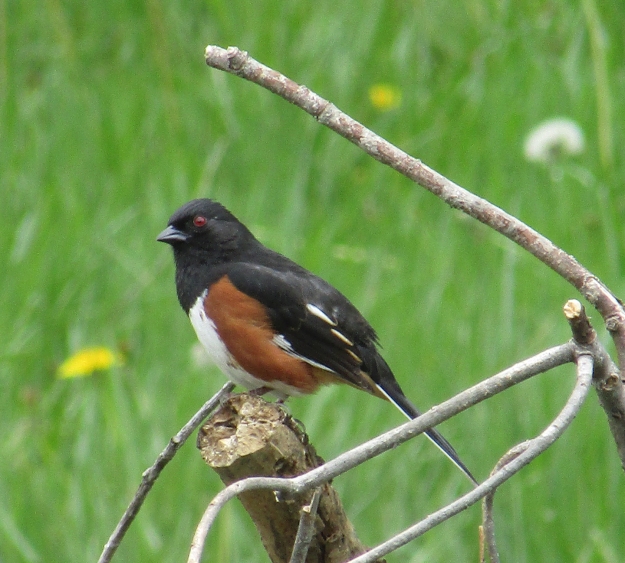
Photo by Bryan Stevens • Former common name rufous-sided towhee became Eastern towhee, which is far less descriptive of the bird’s appearance.

At least no expert has suggested a name change for any of the falcons. I dislike name changes, especially when we lose a descriptive name for a mundane one. That’s how we got relatively bland names like Eastern towhee instead of rufous-sided towhee and Northern flicker in place of yellow-shafted flicker. In fact, the American kestrel was once known as the sparrow hawk. The merlin and peregrine falcon, larger relatives of the kestrel, were once known as the pigeon hawk and duck hawk, respectively.

Common names are also known as “vernacular” names. Vernacular can be defined as the language or dialect spoken by the ordinary people, which contrasts with the scientific names for species of birds that are usually only recognized by ornithologists or other experts. However, just like dialects, there can be a great deal of variety among common names for the same birds. Many of the common names for some of our favorite birds lack any vivid descriptiveness.

IMG_4080

Photo by Bryan Stevens • Northern cardinal seems much less descriptive of this popular bird than such common names as Virginia nightingale and cardinal grosbeak.

For instance, let’s take a look at the Northern cardinal, which has been known by such common names as cardinal bird, cardinal grosbeak, crested redbird, Kentucky cardinal, redbird, Virginia redbird and Virginia nightingale. The first thing that irritates me about the common name of this bird is that there is no Southern cardinal. So, why is this bird the “Northern” cardinal? The only other birds in the Cardinalis genus are the desert cardinal, also known as the pyrrhuloxia, and the vermilion cardinal. Both these relatives have arguably more interesting and descriptive names than their relative, which is a favorite of many birders and arguably better known to many people.

I can understand why Kentucky cardinal and Virginia redbird are not inclusive names since the Northern cardinal ranges far beyond the borders of these two states. On the other hand, cardinal grosbeak with its reference to the cardinal’s large beak, as well as crested redbird, are both more descriptive and creative than the rather nondescript Northern cardinal.

Of course, a literary great summed up the confusing attitude toward common names. “What’s in a name?” William Shakespeare had Juliet ponder. “That which we call a rose by any other name would smell as sweet.”800px-Title_page_William_Shakespeare's_First_Folio_1623

I think The Bard was on to something. Whether we call a cardinal a redbird or a Virginia nightingale, it’s song will sound as sweet to our ears. The appearance of one of these birds on a gloomy day will elevate our mood whether we know the bird as cardinal grosbeak, Kentucky cardinal or, in scientific terminology, Cardinalis cardinalis.


BRISTOL HUMMERS DEPART

As promised, here’s an update on the hummingbirds that proved dutiful daily visitors to a sugar water feeder at the Bristol home of Ralph Beamer through Halloween, Thanksgiving and Christmas.

Early in the new year, Ralph notified me that the hummingbirds departed ahead of 2018’s arrival.

“We had a surprise on New Year’s Day,” Ralph wrote in an email. “The hummingbirds were gone. I am glad they left ahead of the extreme cold we have had the last few days.”

Ralph noted that he had a wonderful time watching them for the past three months. He is hopeful they will come back in the future, but figured that is probably wishful thinking.

Actually, some of these winter hummingbirds, which often turn out to be rufous hummingbirds, have proven quite faithful to favorite locations. Bird banders have recaptured some individual hummingbirds year after year in the same yards. During the stay of his visitors, Ralph shared photographs and videos with me of their visits to his feeders. I enjoyed receiving his periodic updates about them.

I emailed Ralph back and told him that these hummingbirds seem to also have a knack for knowing when to leave and suggested he keep an eye out for them again next fall.

••••••

Bryan Stevens lives near Roan Mountain, Tennessee. To learn more about birds and other topics from the natural world, friend Stevens on Facebook at https://www.facebook.com/ahoodedwarbler. If you have a question, wish to make a comment or share a sighting, email ahoodedwarbler@aol.com.

Summer’s bright American goldfinches will soon transform into their dull winter plumage

goldfinch-thistlefeed

Photo by Bryan Stevens                            An American goldfinch feeds on thistle seeds from a feeder designed to contain these tiny seeds.

I received a phone call recently from Allan Vance, who had a question about American goldfinches. Allan told me he moved back to Bristol about nine years ago after living for about 30 years in Savannah, Georgia. He now resides in the community of Middlebrook, where he feeds the various birds that flock to his yard.

Allan explained that the goldfinches had become conspicuous in their absence from his yard starting a few weeks ago. “I haven’t seen a single one in weeks,” he said.

1451693-center-1

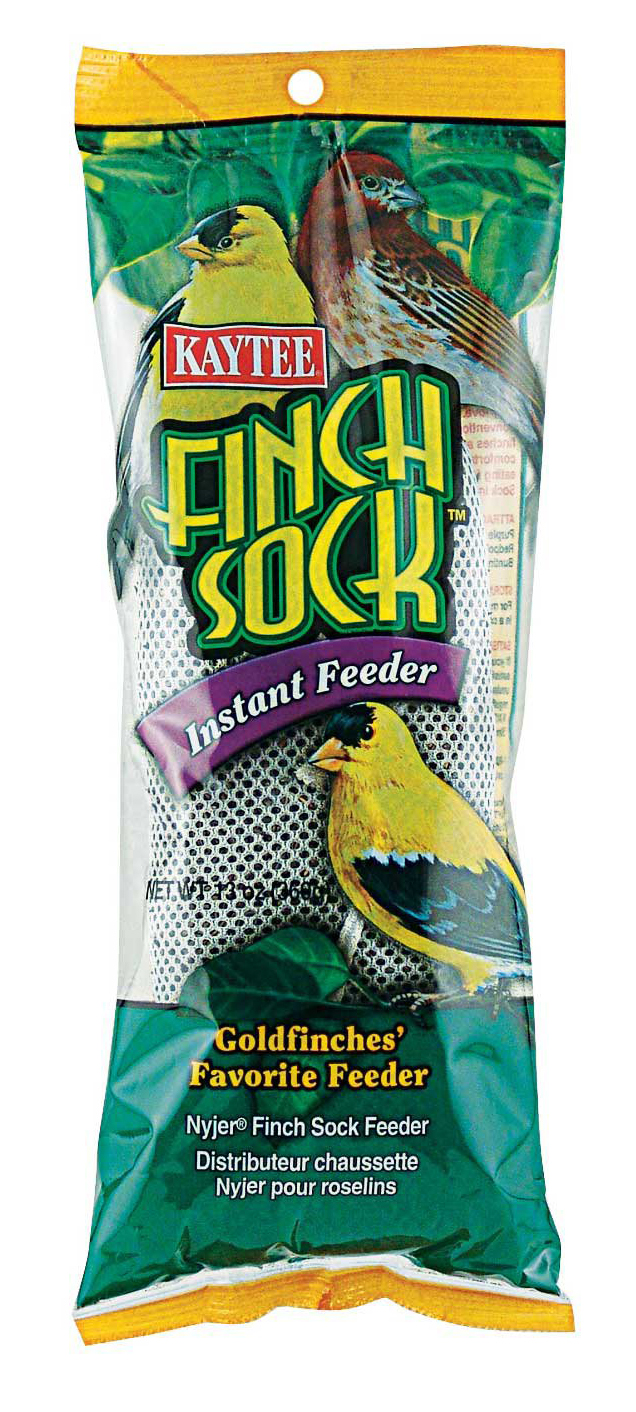
A thistle sock with seeds favored by American goldfinches.

Allan purchases thistle socks for the flock of goldfinches at his home. These “socks” are actually long, mesh bags holding the tiny seeds of the nyjer plant. Although these seeds are also known as thistle seeds, they are not related to the thistle plants that are sometimes classified as noxious weeds. Finches are able to cling to the sides of the mesh socks as they carefully remove the seeds. The tiny seeds are quite securely held within the mesh socks. Special feeders with small ports for dispensing of these tiny seeds are also available.

After he purchased his most recent thistle sock, Allan expected the birds to visit it as is their usual custom.     After several weeks, only one bird — not a goldfinch — had visited the sock. He wondered if there might be some explanation behind the goldfinches suddenly turning their backs on these favorite seeds.

I explained that there were two possible reasons, which are somewhat connected to each other, for the goldfinches suddenly shunning the sock. It’s early fall and there’s an abundance of natural food sources available to fold finches. Many roadside, fields and gardens are filled with plants that are already producing a banquet of fresh seeds for finches and other seed-loving birds. It’s possible that, faced with a smorgasbord of other foods, the goldfinches are no longer quite as reliant on the seeds in Allan’s thistle socks.

goldfinch

Photo by Bryan Stevens                                    An American goldfinch showing its bright summer plumage.

The American goldfinch is also one of the last songbirds to nest each season. Some goldfinches don’t even start to think about nesting until late July and early August. Their nesting season is timed to coincide with a time of natural abundance. Goldfinches feed their young mostly on insects, as opposed to most songbirds that work so hard to gather insects to feed their young a protein-rich diet.

It’s a satisfying irony that, although brown-headed cowbird females sometimes slip their eggs into a goldfinch nest, any young hatched in those nests rarely survive. While goldfinch hatchlings are adapted to thrive on a diet of seeds, the fostered young cowbirds fail to thrive on a diet so lacking in insects.

In addition to feeding birds, his yard serves as a place for them to nest. He noted that wrens have successfully nested at his home over the years. He said a funny memory from years ago involved a white-tailed deer at a feeder. “I saw this doe raiding my feeder,” he said, adding that the deer used its tongue to lick seeds from the feeder.

goldfinch-twigs

Photo by Bryan Stevens                                        A fall American goldfinch looks quite different than it does at the height of summer.

The male American goldfinch during the breeding season is unmistakable in his bright yellow and black plumage. Female goldfinches are more subdued in coloration. Males also sing a bubbly, cheerful song when seeking to win the attention of a potential mate. Outside of the nesting season, goldfinches are quite sociable and form large flocks. Dozens of these small songbirds can descend on feeders at almost any time of the year, but they are primarily attracted to our feeders during the lean times of the winter months.

For these and other reasons, goldfinches are favorites of many bird lovers. There are actually three species of goldfinches in North America. The two related species are Lawrence’s goldfinch of California and the lesser goldfinch, which ranges through the southwestern United States as well as Central and South America.

summer-goldfinch

Photo by Bryan Stevens                                            A male American Goldfinch perches on a barbed wire fence.

The American goldfinch is also known by other common names, including wild canary, yellowbird and willow goldfinch. I’ve also heard the goldfinch referred to as “lettuce bird.” This nickname, which was one my maternal grandmother applied to the bird, relates to the bird’s fondness for seeds. Apparently the goldfinches would flock to lettuce plants in the garden once they had gone to seed.

Come winter, this vibrant bird undergoes a transformation into a dull, drab bird with grayish feather. In fact, this annual molt usually begins in September. During the fall and winter, the American goldfinch looks almost like an entirely different bird.

It’s understandable why people love to entertain flocks of these finches in their yards and gardens. Three states — Washington, Iowa and New Jersey — have made the American goldfinch their official state bird.

•••••

To learn more about birds and other topics from the natural world, friend Stevens on Facebook at https://www.facebook.com/ahoodedwarbler. He is always posting about local birds, wildlife, flowers, insects and much more. If you have a question, wish to make a comment or share a sighting, email ahoodedwarbler@aol.com.

goldfinches-iced

Photo by Bryan Stevens                                                                                                                  Winter goldfinches are not the birds of splendid appearance that they wear during the summer months.