Category Archives: grebes

Christmas Bird Count produces grebes, other finds

Photo by Bryan Stevens
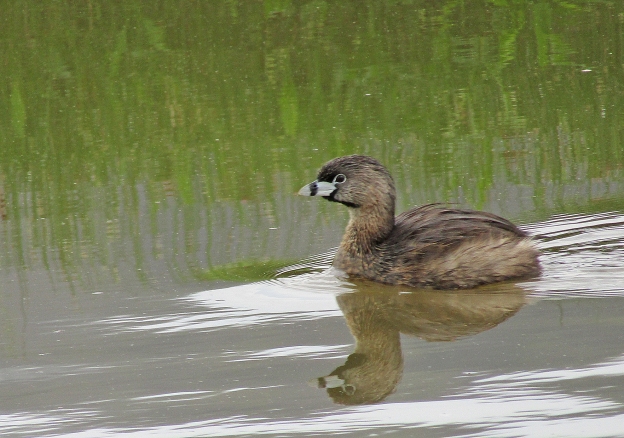
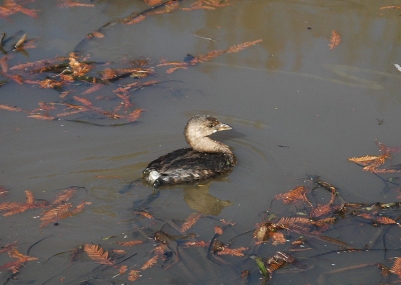
The pied-billed grebe paddles through the water after it was rescued after a stranding on a lawn.

I took part in the Elizabethton Bird Club’s 83rd annual Elizabethton Christmas Bird Count on Dec. 20.

The count focuses on a circle within Carter County with Elizabethton serving as the center. Consider the circle as a pie sliced into six pieces. Different groups bird within those “slices” of terrain. The groups rotate each year to vary the participation. As a result, it had been six years since I last led the count effort for the Butler/Little Milligan area that includes a great deal of Watauga Lake.
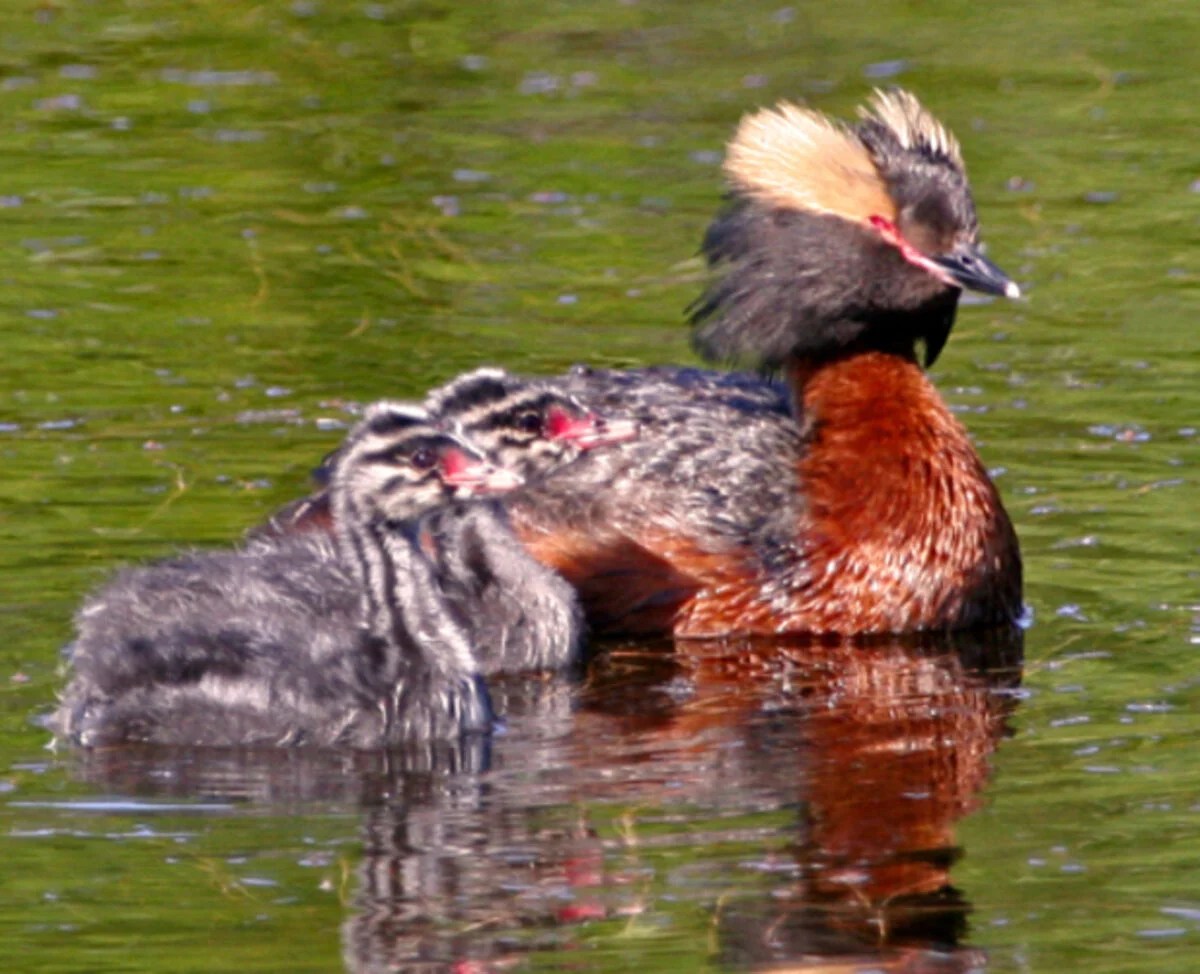
Donna Dewhurst/USFWS • A horned grebe parent tends chicks.

One of my favorite reasons for taking part in this particular count is the great mid-day lunch break at the Dry Run General Store and Deli in Butler. This marked my third time over the last 18 years having lunch at this great spot. The lunch break also gives the participants a chance to study the list of birds seen and calculate what other species can be added and where to best look for those species.

The counts conducted in areas with access to water have the potential for the most species, so it’s always a little more fun to bird around Watauga Lake or Wilbur Lake. The Watauga River in Elizabethton is also good.

We had good weather for this most recent count, but it was a slow effort to add birds to our list. Without a doubt, spring and fall bird counts are much more exciting than a Christmas Bird Count.

Below is the list for my group, which included Rob Armistead, Brookie and Jean Potter, David and Connie Irick and Chris Soto. This is only the list for Little Milligan and Butler. I hope to provide the complete list at a later date.

We found a total of 46 species:

Canada goose, 32; mallard, 7; greater scaup, 2; hooded Merganser, 4; wild turkey, 18; pied-billed grebe, 8; horned grebe, 14; rock pigeon, 52; mourning dove,1; ring-billed gull, 1; common loon, 1; and great blue heron, 2.
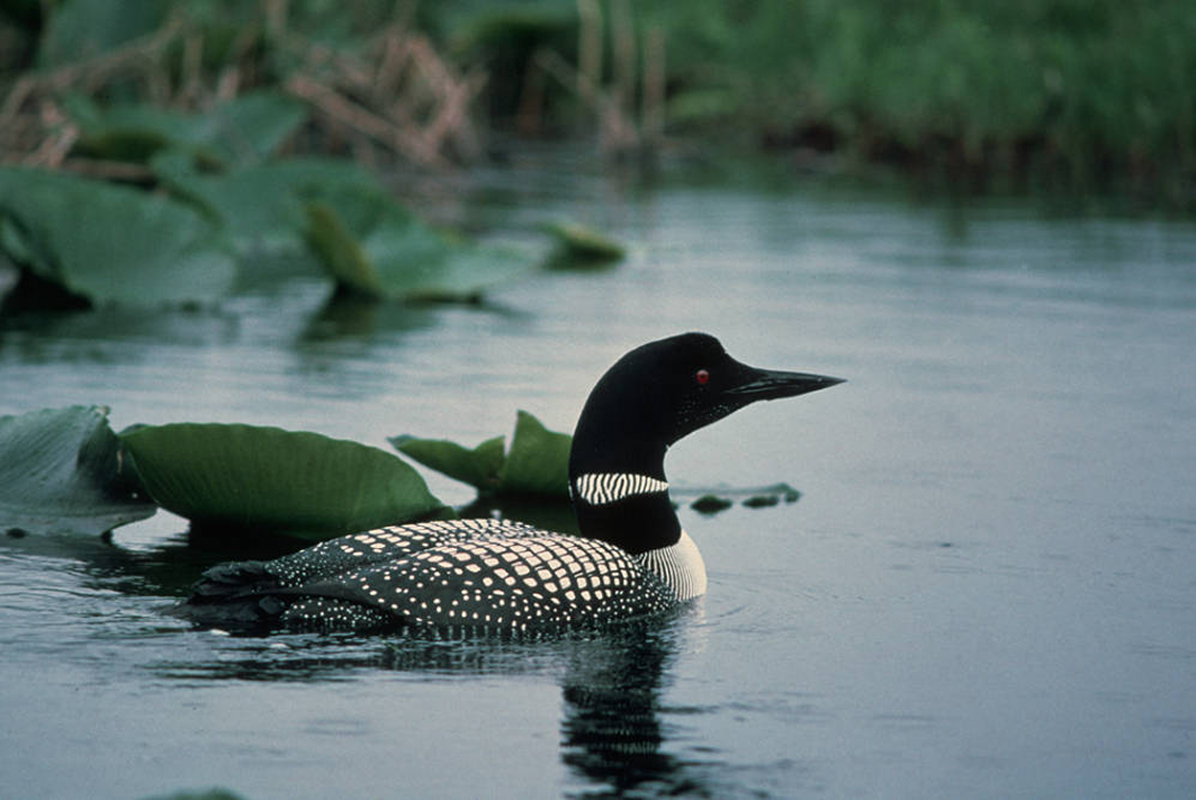
Photo by U.S. Fish & Wildlife Service • Common loons are quite at home in the air and on the water, but these birds are awkward if weather forces them to set down on land.

Red-tailed hawk, 3; belted kingfisher, 3; red-bellied woodpecker, 3; downy woodpecker, 2; Northern flicker, 1; pileated woodpecker, 3; American kestrel, 2; and Eastern phoebe, 1.

Blue jay: 14; American crow, 68; common raven, 2; Carolina chickadee, 2; tufted titmouse, 11; white-breasted nuthatch, 4; winter wren, 1; Carolina wren, 5; golden-crowned kinglet, 1; and ruby-crowned kinglet, 1.

Eastern bluebird, 14; hermit thrush, 1; American robin, 5; brown thrasher, 1; Northern mockingbird, 3; European starling, 43; and cedar waxwing, 2.

House finch, 2; American goldfinch, 25; dark-eyed junco, 5; white-throated sparrow, 8; song sparrow, 3; Eastern towhee, 3; Eastern meadowlark, 1; pine warbler, 1; and Northern cardinal, 7.

While birding in Little Milligan and Butler, we had plenty of views of Watauga Lake and opportunities for spotting birds often affiliated with water. The umbrella term of waterfowl can include such birds as ducks, geese, loons and grebes. We had representatives from all of these groups on our list. I was pleased to finally see some ducks and grebes this winter.

The grebes are a grouping of birds lumped together as waterfowl. Worldwide, there are 22 grebe species. This family also includes three extinct species — Alaotra grebe, Atitlán grebe and Colombian grebe.

Many people are unaware of the grebes. After all, they are oddball birds with not a lot in common with other waterfowl such as loons and ducks. In eastern Tennessee, southwestern Virginia and western North Carolina, the pied-billed grebe is the member of the grebe family most likely to come into contact with humans.

The pied-billed grebe’s scientific name, Podilymbus podiceps, can be roughly translated as “rear-footed diver.” The reference is to the fact that this grebe, as well as others of its kind, have their feet positioned so far back on their bodies that movement on land is difficult and awkward.

In winter, however, horned grebes can be somewhat abundant on area lakes. The common name of horned grebe refers to a yellow crest of feathers located above and behind the eyes, reminiscent of “horns” in the eyes of an imaginative observer. In winter these horns are absent and the colorful horned grebe of the nesting season is replaced by a bird in a dull white and dark gray plumage.

Grebes range in size from the least grebe, which weighs only about six ounces, to the great grebe, which can tip the scales at four pounds. North American grebes include red-necked grebe, horned grebe, eared grebe, Clark’s grebe and Western grebe. In extreme southern Texas, birders can find least grebes in suitable wetland habitats.

Other grebes found around the world include birds with such descriptive names as the great crested grebe, hooded grebe and silvery grebe.

Photo by Bryan Stevens • Brookie Potter spots a “bumble,” otherwise known as an abominable snowman, near Watauga Lake during the Christmas Bird Count.

With the exception of the least grebe, I’ve seen all of North America’s grebes. During visits to Utah in 2003 and 2006, I observed the sleek, long-necked Clark’s grebe and Western grebe. On a 2006 trip to Utah, I visited Antelope Island State Park and observed tens of thousands of eared grebes gathered on the Great Salt Lake for the nesting season. In Tennessee, one of the most reliable locations to find eared grebes is from viewing areas at Musick’s Campground on South Holston Lake, where a small number of these grebes have wintered for many years.

My Christmas Bird Count excursion proved a fun time with friends. We didn’t find a lot of birds, but we enjoyed finding the ones that we did see. Happy New Year to readers. I hope everyone finds some good birds in 2026.

•••

Bryan Stevens has written about birds, birding and birders since 1995.


Birds make use of various strategies to attract and keep mates

Shauna Fletche/Pixabay • Some birds, like waxwings, like to present tasty treats to their potential mates.


With Valentine’s Day around the corner, it’s an opportune time to see how courtship is handled among our fine feathered friends. Most birds don’t bring a box of chocolates or a bouquet of roses when they take up courtship of a prospective mate, but birds have several equivalent behaviors that they employ to attract the attentions of the opposite sex. In honor of Valentine’s Day I thought a look at some of the more unusual courtship rituals of some of our feathered friends would be appropriate.

Aerial acrobatics designed to impress

In late winter and early spring, a true oddball begins courting. The American woodcock, also known by such whimsical names as “bog sucker” and “timberdoodle,” is a shorebird that has completely abandoned the shore in favor of woodlands and fields. Beginning as early as February, American woodcocks in the region conduct nightly courtship displays, starting at dusk, that combine aerial acrobatics with an assortment of unusual acoustical flourishes. Any wet field adjacent to a wooded area could offer a stage for these evening displays, but unless you know where to look and make an effort to do so, the American woodcock might as well remain a phantom of the night.

These mating rituals provide almost the only time of the year during which this bird makes itself available for observation. It’s only during this brief window that opens into their lives that we can be assured a glimpse. Even then, our peeks at woodcocks often consist of a fuzzy twilight escapade as the bird flings itself heavenward only to make a spiraling descent a few seconds later. The displays begin with a distinct vocalization, a type of “pent,” that also has the quality of sounding like some sort of mechanical buzzer.

Once the displays conclude for the season, the birds assume nesting duties, usually unobserved by humans. The rest of the year, almost nothing but blind, sheer luck would allow a birder to stumble across an American woodcock. It’s almost as if they disappear after these spring flights of fancy.

Birds bearing gifts

Many birds present small trinkets to a prospective mate. For instance, many male penguins make a present of a stone or pebble to female penguins. There could be more than a simple bribe behind this gift. Female penguins don’t build elaborate nests. In fact, a scrape on the bare ground, perhaps encircled by a collection of pebbles, marks the extent of their nest construction. So, the perfect pebble could be the way to winning a female penguin’s heart.

The way to the heart is through the stomach

Observant birders may have witnessed a male Northern cardinal slip a female a morsel of food, such as a peanut or a shelled sunflower kernel. It’s a marked change for this bird. During the winter months, a male cardinal is more likely to chase a female away from a feeder rather than share food with her. However, as spring approaches, his behavior undergoes a change and he becomes content to feed next to a female cardinal, often slipping her some choice tidbits.

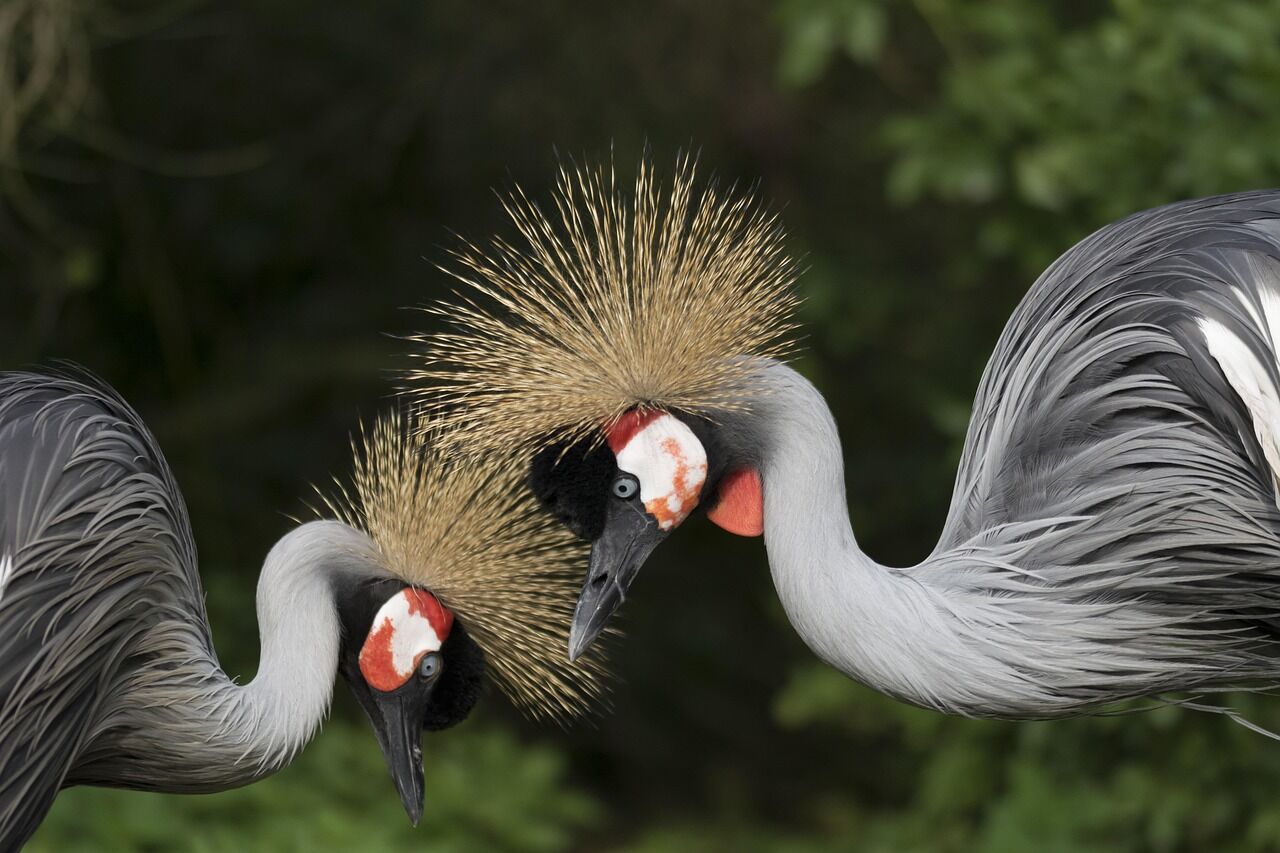
Sabine van Erp/Pixabay • Bow to your partner: Grey-crowned cranes perform an elaborate dance designed to strengthen their bond.

May I have this dance?

Many species of birds perform elaborate and ritualistic dance displays. Among birds known for tripping the light fantastic are flamingoes, cranes, grouse and grebes. Cranes are one of the oldest families of birds on earth. They’re also some of the most accomplished dancers in the animal kingdom. Pairs perform very ritualistic dances that, if the performers were human, would no doubt require the services of an accomplished choreographer. Cranes mate for life and the ritual of dancing is a way to strengthen the bonds between a mated pair. The ability to dance is, apparently, not instinctive. Young cranes must practice their dance moves, a process that can take years before they master the elaborate dance.

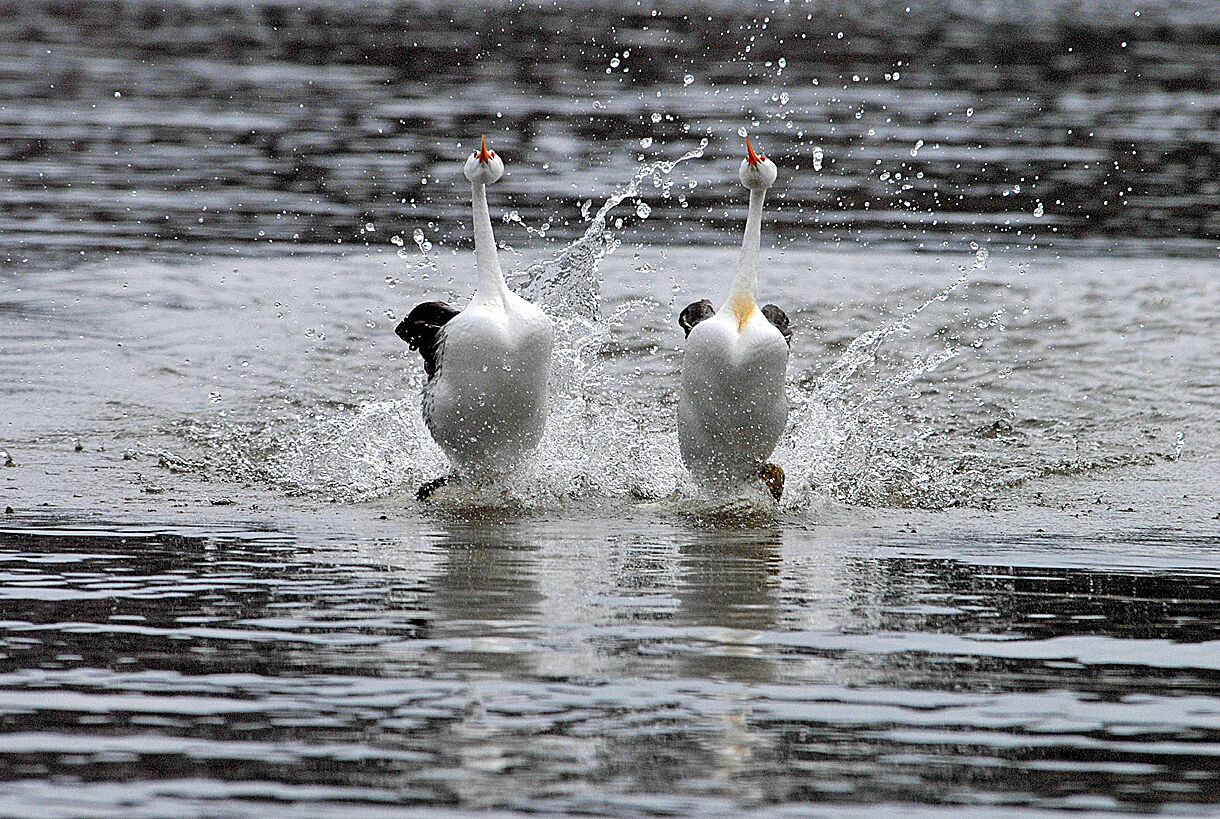
Dave Menke/U.S. Fish & Wildlife Service • A pair of Clark’s Grebes displays in a courtship ritual known as “rushing” or “weed dance.” Birds use a variety of strategies to attract and keep mates.

Synchronized swimming

While many birds dance to impress a mate or strengthen pair bonds, grebes perform a dance that takes place completely on the surface of the water. A pair will engage in this intricate performance, perfectly mirroring the moves of the other as they literally race across the surface of the water. These dances by grebes are also known as “rushing” or “weed dance.” It’s called as a weed dance because at the culmination of the ritual, the birds usually hold some type of aquatic plants in their bills while racing swiftly over the surface of the water. Pairs that perform well together stay together, building a nest and raising young.

Good housekeeping seal of approval

The tropical family of bowerbirds are famous for complex nests built by males and then decorated with bright and colorful objects to catch the eye of a potential mate. The nests of these birds are actually referred to as a “bower.” Usually constructed on the ground, the male will line the approachs to the bower with items such as shells, leaves, flowers, feathers, stones, berries, and even discarded garbage, including plastic scraps or bits of glass. Unusually odd items pressed into these decorative displays have included coins and spent rifle shells. This habit of male bowerbirds must rank as the ultimate in trying to impress a mate with shiny bling.

These are just a few of the inventive ways that birds go about attracting and keeping mates. Perhaps you can pick up some pointers from our feathered friends to ensure you have a great Valentine’s Day this year.

•••

If you have a question, wish to make a comment or share a sighting, email me at ahoodedwarbler@aol.com.

Although graceful in the water, life gets awkward for grebes on land

As the calendar moves into the months of October and November, migrating waterfowl will replace the exodus of songbirds that evacuate the North American continent every fall in preparation for their winter season in the tropics. The umbrella term of waterfowl can include such birds as ducks, geese, loons and grebes.

Pond-Edge-Grebe

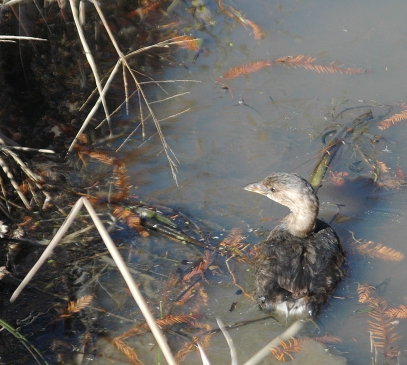
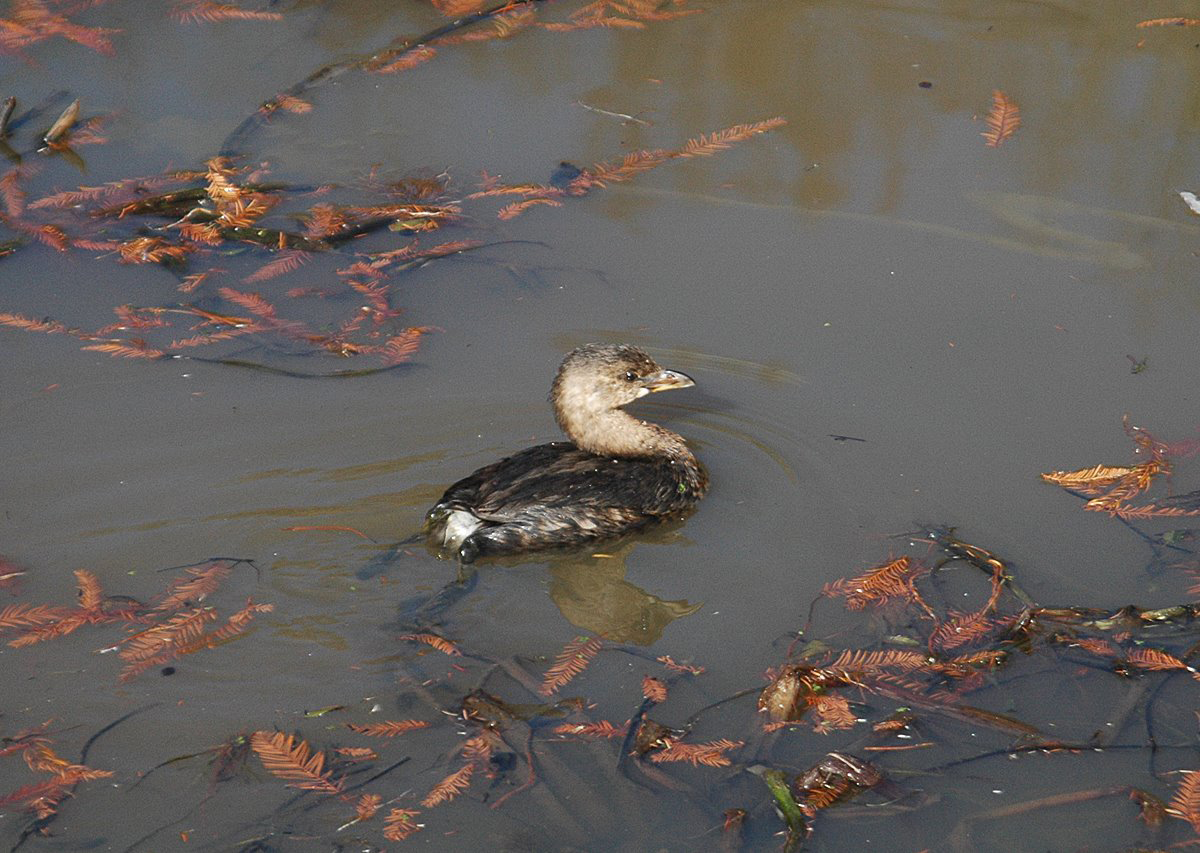
Photo by Bryan Stevens • This pied-billed grebe stranded itself on a wet lawn during fall migration. A grebe’s legs are positioned so far back on their bodies that grebes have difficult walking on land. Once released in a pond, the grebe was able to take flight and continue its migration.

That last family keeps one of the lowest profiles among the grouping of birds lumped together as waterfowl. Worldwide, there are 22 species of grebes. This family also includes three extinct species — Alaotra grebe, Atitlán grebe and Colombian grebe.

Many people are unaware of the grebes. After all, they are oddball birds with not a lot in common with other waterfowl such as loons and ducks. In eastern Tennessee, southwestern Virginia and western North Carolina, the pied-billed grebe is the most likely member of the grebe family to come into contact with humans. The pied-billed grebe’s scientific name, Podilymbus podiceps, can be roughly translated as “rear-footed diver.” The reference is to the fact that this grebe, as well as others of its kind, have their feet positioned so far back on their bodies that movement on land is difficult and awkward.

The pied-billed grebe has inspired a variety of other common names, including American dabchick, dabchick, Carolina grebe, devil-diver, dive-dapper, hell-diver, pied-billed dabchick, pied-bill, thick-billed grebe and water witch, all of which reflect this grebe’s almost exclusively aquatic lifestyle.

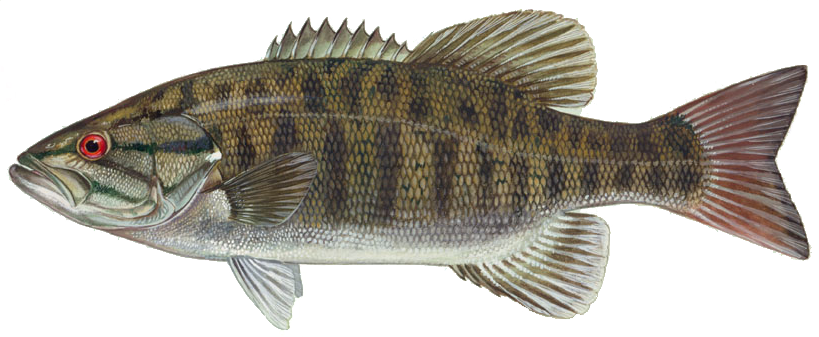
The pied-billed grebe is a world-class survivor. Already a member of an ancient family of birds, this species has outlasted the others in its genus. The Atitlán grebe, which was also known as the giant grebe, went extinct around 1989 after a series of catastrophic setbacks, including a devastating earthquake and the introduction of smallmouth and largemouth bass to Lake Atitlán in Guatemala. The bass consumed the prey this grebe needed for its survival, and large bass occasionally ate young grebes.

Smallmouth bass.png

Bass introduced into Lake Atitlán consumed the small fish that the Atitlán Grebe              required as a food source. Large bass also ate young grebes.


These birds range in size from the least grebe, which weighs only about six ounces, to the great grebe, which can tip the scales at four pounds. North American grebes include red-necked grebe, horned grebe, eared grebe, Clark’s grebe and Western grebe. In extreme southern Texas, birders can find least grebes in suitable wetland habitats.

With the exception of the least grebe, I’ve seen all of North America’s grebes. During visits to Utah in 2003 and 2006, I observed the sleek, long-necked Clark’s grebe and Western grebe. On a 2006 trip to Utah, I visited Antelope Island State Park and observed tens of thousands of Eared Grebes gathered on the Great Salt Lake for the nesting season. In Tennessee, one of the most reliable locations to find eared grebes is from viewing areas at Musick’s Campground on South Holston Lake, where a small number of these grebes have wintered for many years.

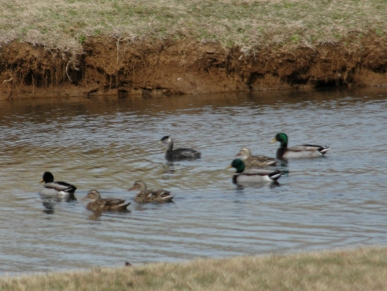
An unusual February fallout back in 2014 resulted in equally unusual numbers of red-necked grebes on area lakes, rivers, and ponds. I’d previously observed this grebe on Boone Lake, South Holston Lake and Watauga Lake in northeast Tennessee.

Grebe-Mallards

Photo by Bryan Stevens • A Red-necked Grebe mixes with Mallards at a pond on the campus of Northeast State Community College in Elizabethton.

Grebes are prone to landing on glistening surfaces — lawns, asphalt parking lots and even paved roads — during migration flights, especially at night during heavy rain. A serious problem arises when the grebe, with those rear-positioned feet, finds itself stranded, unable to take flight again without a paddling run across the surface of a body of water.

One of these strandings was recounted in Rick Knight’s book, The Birds of Northeast Tennessee. On Feb. 13, 1994, a red-necked grebe grounded itself with one of these crash landings onto a parking lot in Elizabethton, Tennessee. The fortunate grebe received a human-assisted rescue, being transported to a small lake near the town for release.

In November of 2011, a neighbor delivered a bird that had landed in his yard and could not take flight. The bird, put into a cardboard box for its own safety, didn’t appear to have any injuries. Once I saw the bird, I realized it was a pied-billed grebe. We released the bird on my fish pond, where the grebe dived and swam extensively before resting for a long period on a muddy edge of the pond. Overnight, the grebe disappeared. I believe the grebe took flight during the night and continued with its fall migration. The incident remains one of my closest encounters with a grebe.

Rescue-GREBE

Photo by Bryan Stevens The pied-billed grebe paddles through the water after it was rescued after a stranding on a lawn.


In the coming weeks and all throughout the winter months, look for pied-bill grebes, as well well as more uncommon grebes like horned grebe and red-necked grebe, on lakes and rivers throughout the region.

•••••
Bryan Stevens lives near Roan Mountain, Tennessee. To ask a question, make a comment or share a sighting, email him at ahoodedwarbler@aol.com.