

Photo Courtesy of Lowell Christian • The female scissor-tailed flycatcher in Jonesborough shows the namesake tail feathers and some colorful plumage while in flight.
It’s been a good while since I’ve seen a new life bird to add to my species list.
“Life birds” are simply a new species that a birder has never encountered. Many birders list their “lifers,” which I do in a casual manner. My “lifers” are always documented in my weekly birding column.
I encountered my last life bird back in May 2020 during the pandemic when I observed my first-ever Mississippi Kite at Sycamore Shoals State Historic Park in Elizabethton.
Now, after a trip to Jonesborough, I’ve added scissor-tailed flycatcher. It’s a bird that I’ve wanted to see since I began birding back in the 1990s. I figured I’d have to make a trip to Texas or Oklahoma to add this to my list, however. I never imagined seeing this bird so close to home.

Photo by Bryan Stevens • The tail of the scissor-tailed flycatcher makes it difficult to confuse this bird with any other.
I actually saw two birds, a mated pair, tending their nest in Tennessee’s oldest town. The scissor-tailed flycatcher is the official state bird of Oklahoma, where this species would normally be expected.
This is the third consecutive summer season that this flycatcher’s been confirmed in Washington County. This streak of annual sightings started in 2023 when Dan Huffine, a sharp-eyed birder, saw one while baling hay.
A profile of the species on the Tennessee Wildlife Resources Agency website observes that the scissor-tailed flycatcher has significantly expanded its breeding range in the past several decades and now nests in Tennessee.
The first scissor-tailed flycatcher was reported in the state in 1964, the first nesting attempt was discovered in 1978 and the first successful nest was documented in 1983 in Rutherford County, according to the TWRA website.
I want to thank fellow birder Lowell Christian for providing great directions for finding the parents and their nest. He’s also a fantastic bird photographer. Check out his photos on his Facebook page.
The scissor-tailed flycatcher feeds largely on winged insects, earning its place within the flycatcher family. However, this species will also eat fruit when its available.

Photo Courtesy of Lowell Christian • The female scissor-tailed flycatcher forages in a parking lot.
This flycatcher is placed by experts within the genus Tyrannus, which includes the kingbirds. Other relatives in North America include Eastern kingbird, Western kingbird, tropical kingbird, Couch’s kingbird and Cassin’s kingbird. There’s also a giant kingbird native to Cuba and a loggerhead kingbird that is found throughout the Caribbean and on rare occasions in Florida.
Kingbirds are famous for their pugnacious behavior, not hesitating to attack larger birds such as hawks, vultures and crows in defense of their territory. Scissor-tailed flycatchers are also considered aggressive toward a variety of other birds.

Photo by Bryan Stevens • An Eastern kingbird perches on a fence post.
According to the website All About Birds, scissor-tailed flycatcher numbers declined by about 31% between 1966 and 2014. The estimate comes from statistics gathered by the North American Breeding Bird Survey.
The website also noted that Partners in Flight estimates a global breeding population of 9.5 million scissor-tailed flycatchers, with 92% breeding in the United States, and 50% spending some part of the year in Mexico.
A scissor-tailed flycatcher is unlikely to be confused with any other bird. Adult males are pale gray birds with blackish wings and black tails with white edges. Adults show salmon-pink flanks that extend to underwing patches that are very conspicuous in flight.
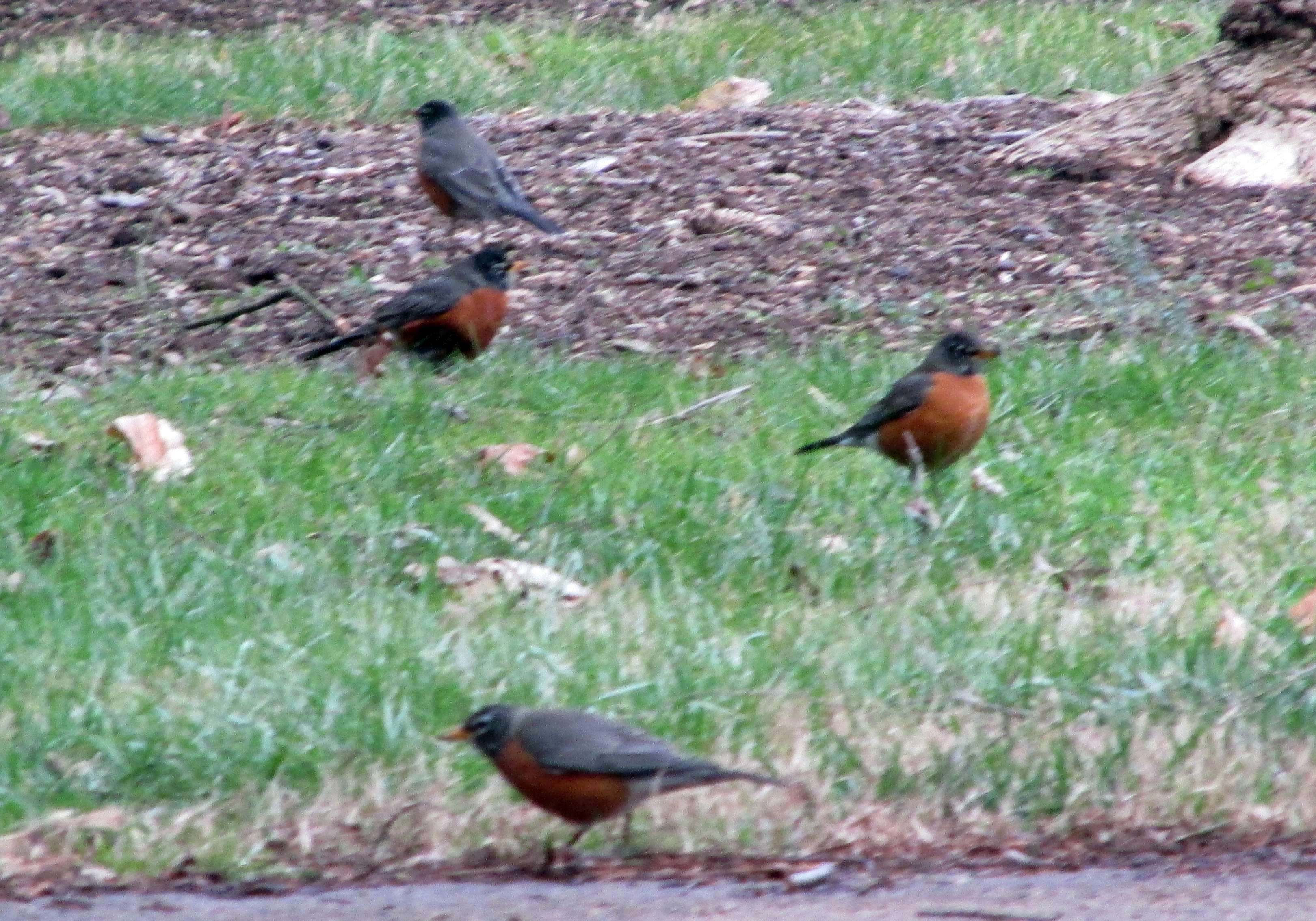
As is the case with so many species of birds, males are more colorful than females. The bird’s body is about the size of an American robin, but it looks bigger due to the long tail that gives this species its common name.
The All About Birds website notes that the scissor-tailed flycatcher isn’t always content to stay within its expected range. As I’ve mention on previous occasions in this column, birds have wings and will fly where they wish to fly.
The species tends “to wander widely on their way to and from the wintering grounds, a habit they share with relatives like the fork-tailed flycatcher and tropical kingbirds,” according to a profile of the species on the website.
Scissor-tailed flycatchers may makes appearances almost anywhere in North America, according to the website. I’m delighted to report that evidently also holds true for Northeast Tennessee.
One place that the bird is definitely expected is Oklahoma. Since May 26, 1951, the scissor-tailed flycatcher has been the officially designated Oklahoma state bird.
Jonesborough is known for storytelling, and I hope you agree that these Oklahoma migrants making a new home for themselves and their young in Tennessee’s oldest town is a terrific tale.
•••
Bryan Stevens has written about birds and birding since 1995. To ask a question, make a comment or share a sighting, email him at ahoodedwarbler@aol.com.





















 Our Fine Feathered Friends