Category Archives: Our Fine Feathered Friends

Dark-eyed junco heralds winter’s approach and marks milestone in weekly bird musings

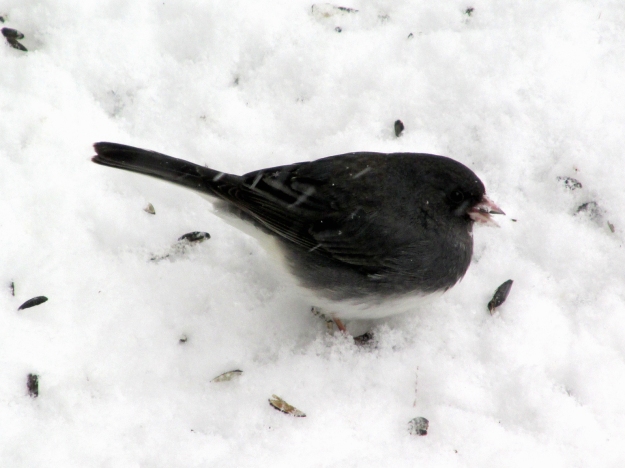
junco-feb9

Photo by Bryan Stevens • A dark-eyed junco, usually a harbinger of wintry weather and snowy days, shells sunflower seeds beneath a feeder.

I wrote my first column about our “feathered friends” on Sunday, Nov. 5, 1995, which means this column will soon celebrate its 23rd anniversary.

This column has appeared on a weekly basis for the last 23 years in a total of five different newspapers, and in recent years it has been syndicated to several more. The column has also been a great conduit for getting to know other people interested birds and birding. I always enjoy hearing from readers, and I hope to continue to do so in the coming years as well. Since February 2014, I’ve also been posting the column as a weekly blog on birds and birding.

I saw my first swamp sparrow of the fall on Oct. 23. Autumn’s a time when many of those so-called “little brown birds,” also known as the sparrows, return to live in the fields, gardens, yards and woodlands around our home. Two of the other anticipated arrivals are white-throated sparrows and dark-eyed juncos.
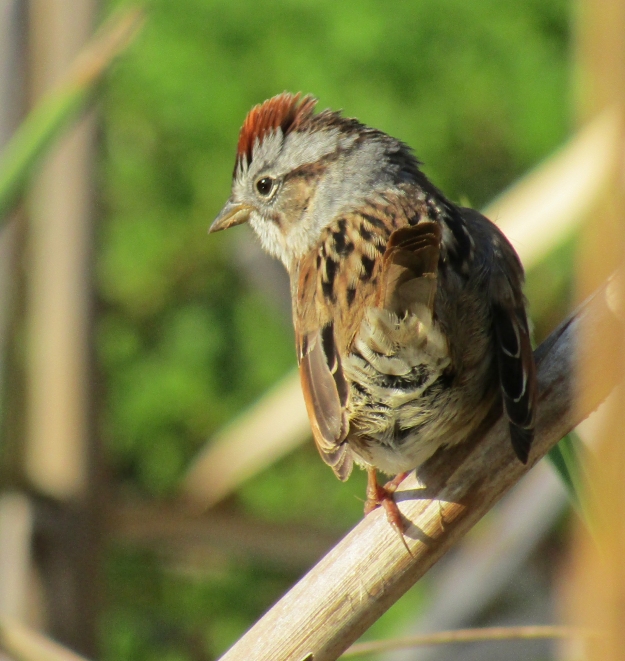
SwampSparrow-April11

Photo by Bryan Stevens • Sparrows, like this swamp sparrow, often spend the winter months in fields, woods, and wetlands, sometimes visiting feeders in our homes and gardens.

In fact, that first column I wrote back in 1995 focused on one of the region’s most prevalent winter residents— the dark-eyed junco. Experts place juncos among the varied sparrow family. All juncos are resident of the New World, ranging throughout North and Central America. Scientists are continually debating precisely how many species of junco exist, with estimates ranging from a mere three species to about a dozen species.

Some of the other juncos include the volcano junco, yellow-eyed junco, Chiapas junco, Guadalupe junco, pink-sided junco, Oregon junco and Baird’s junco, which is named in honor Spencer Fullerton Baird, a 19th century American naturalist and a former Secretary of the Smithsonian Institution.

With that introduction and with some revisions I have made through the years, here is that very first column that I ever wrote about birds.
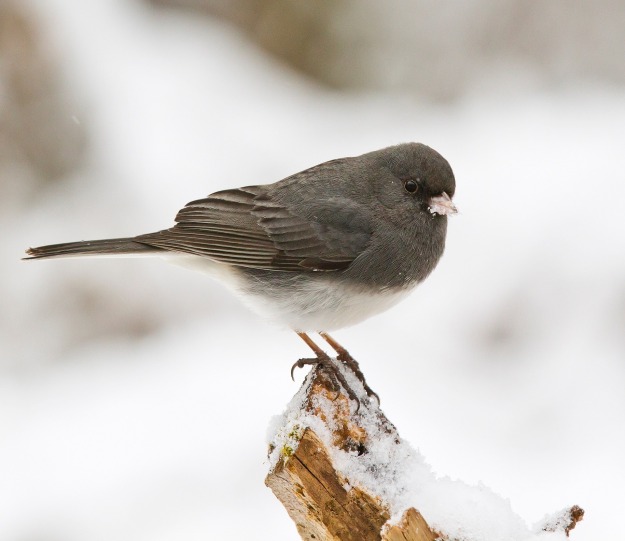
dark-eyed-junco-Skeeze-Pixabay

Photo by Skeeze-Pixabay • A dark-eyed junco clings to a snowy perch.

…..

Of all the birds associated with winter weather, few are as symbolic as the dark-eyed junco, or “snow bird.” The junco occurs in several geographic variations.

John V. Dennis, author of “A Complete Guide to Bird Feeding,” captures the essence of the junco in the following description: “Driving winds and swirling snow do not daunt this plucky bird. The coldest winter days see the junco as lively as ever and with a joie de vivre that bolsters our sagging spirits.” The dark-eyed junco’s scientific name, hyemalis, is New Latin for “wintry,” an apt description of this bird.
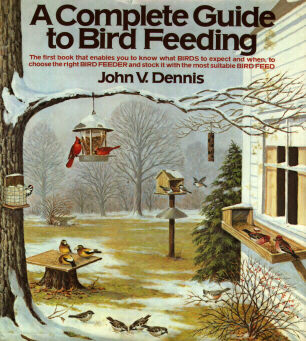
dennisjl 2

Most people look forward to the spring return of some of our brilliant birds — warblers, tanagers and orioles — and I must admit that I also enjoy the arrival of these birds. The junco, in comparison to some of these species, is not in the same league. Nevertheless, the junco is handsome in its slate gray and white plumage, giving rise to the old saying “dark skies above, snow below.”

Just as neotropical migrants make long distance journeys twice a year, the junco is also a migrating species. But in Appalachia, the junco is a special type of migrant. Most people think of birds as “going south for the winter.” In a basic sense this is true. But some juncos do not undertake a long horizontal (the scientific term) migration from north to south. Instead, these birds merely move from high elevations, such as the spruce fir peaks, to the lower elevations. This type of migration is known as vertical migration. Other juncos, such as those that spend their breeding season in northern locales, do make a southern migration and, at times, even mix with the vertical migrants.

Juncos are usually in residence around my home by early November. Once they make themselves at home I can expect to play host to them until at least late April or early May of the following year. So, for at least six months, the snow bird is one of the most common and delightful feeder visitors a bird enthusiast could want.

Juncos flock to feeders where they are rather mild-mannered — except among themselves. There are definite pecking orders in a junco flock, and females are usually on the lower tiers of the hierarchy. Females can sometimes be distinguished from males because of their paler gray or even brown upper plumage.
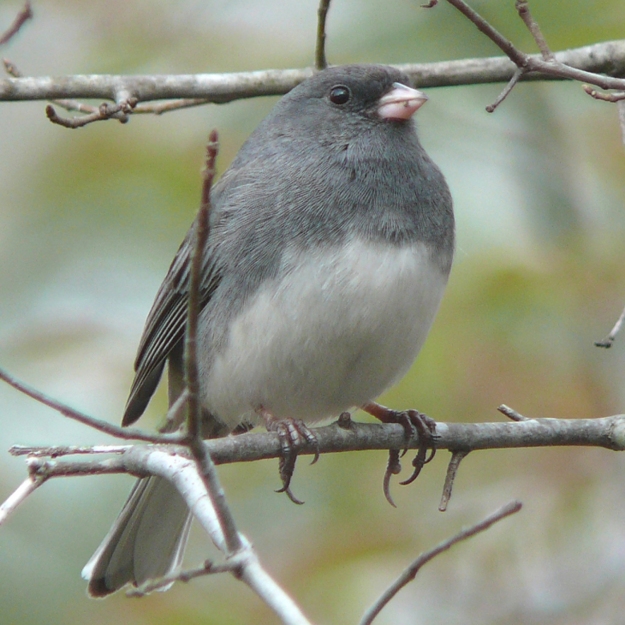
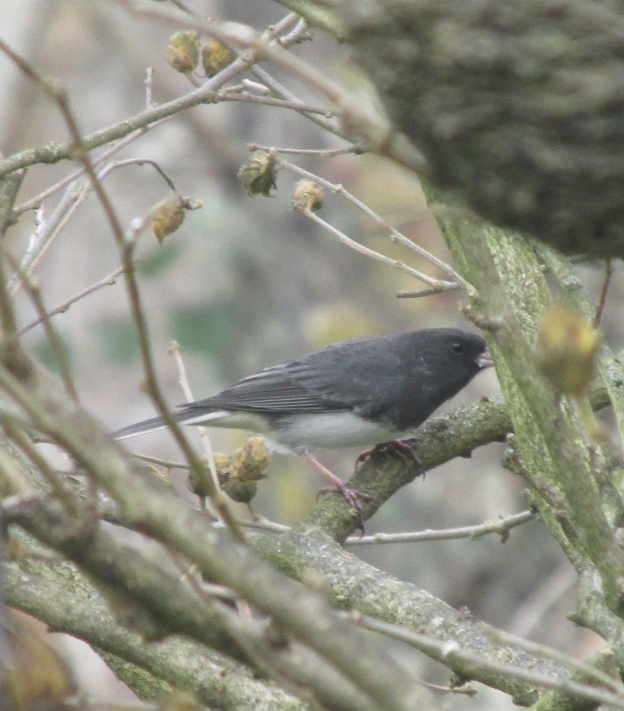
Junco

Photo by Ken Thomas • A dark-eyed junco perches on some bare branches on a winter’s day.

Since juncos are primarily ground feeders, they tend to shun hanging feeders. But one winter I observed a junco that had mastered perching on a hanging “pine cone” feeder to enjoy a suet and peanut butter mixture.

Dark-eyed juncos often are content to glean the scraps other birds knock to the ground. Juncos are widespread. They visit feeders across North America. The junco is the most common species of bird to visit feeding stations. They will sample a variety of fare, but prefer such seeds as millet, cracked corn or black oil sunflower.

There’s something about winter that makes a junco’s dark and light garb an appropriate and even striking choice, particularly against a backdrop of newly fallen snow.
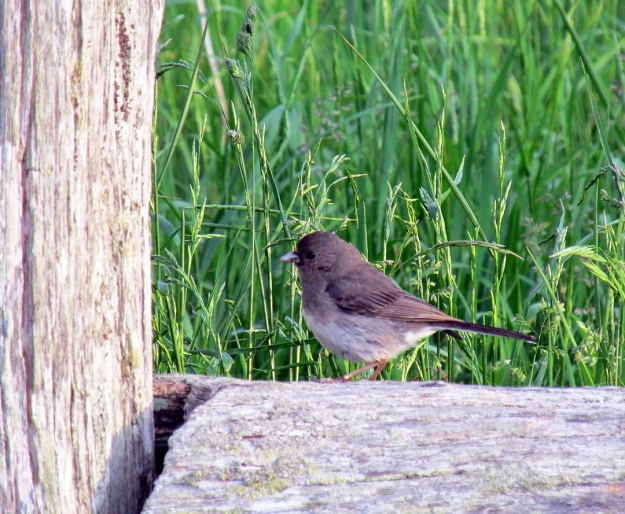
Junco-Carver

Photo by Bryan Stevens • Dark-eyed junco nests on high mountain slopes during the summer month. This dark-eyed junco was photographed at Carver’s Gap on Roan Mountain during the summer nesting season.

Of course, the real entertainment from juncos come from their frequent visits to our backyard feeders. When these birds flock to a feeder and begin a furious period of eating, I don’t even have to glance skyward or tune in the television weather forecast. I know what they know. Bad weather is on the way!

•••••

Back when I wrote that original column, juncos often returned each fall in the final days of October or first days of November. In the last few years, however, their arrival times have grown consistently later in November. At times, it takes a serious snowfall to drive these hardy birds to seek out easy fare at my feeders. I’m hoping they’ll return soon. In the meantime, if you want to share your first dark-eyed junco sighting of the fall, I’d love to hear from you. If you want to share a sighting, have a question or wish to make a comment, email ahoodedwarbler@aol.com.
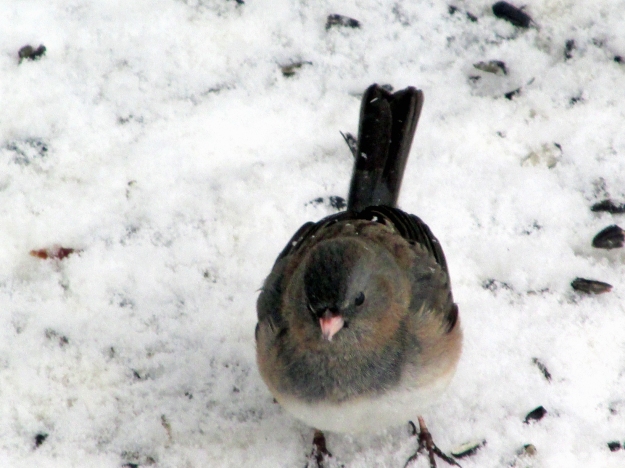
dark-eyedjunco-female

Photo by Bryan Stevens • A female dark-eyed junco scrambles for sunflowers seeds in the snow.

Some birds expert at conjuring Halloween-style thrills and chills

nature bird cute wildlife

The  greater tit, a European relative of the Carolina chickadee, has learned to hunt and kill a species of small bat in the Hungarian mountains. • Photo by Pixabay on Pexels.com

Here’s a repost from November of 2018. The timing seems appropriate. 

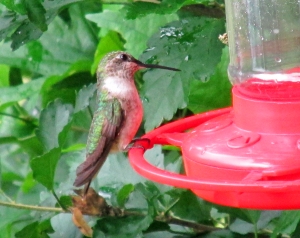
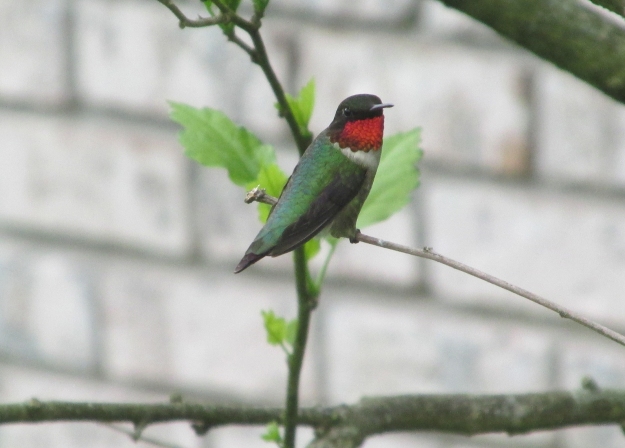
My ruby-throated hummingbirds set a new record this year, lingering until Oct. 17. Although present on the morning of that date, I didn’t see any that evening. The next morning, their absence — quite notable and somewhat saddening — continued. In all likelihood, I won’t see any more ruby-throated hummingbirds until next April. I hope they arrive early.

Carolyn Baker Martin commented on the post I made on Facebook about the departure of the hummers. Carolyn noted that 2018 has been an interesting year for birds and flowers. Carolyn, who lives in Elizabethton, Tennessee, also shared a recent observation she made of a hummingbird behavior that I’ve never personally witnessed.

“I had a hummer recently in torpor,” Carolyn wrote in her post. “It sat on the feeder a long time without moving or feeding. Finally, a tail feather began to move. It fed constantly for one more day and was gone.”

Despite their small size, most hummingbirds, including the ruby-throated hummingbirds, are less frail than they appear. Torpor is a biological adaptation possessed by hummingbirds and some other creatures that lets them survive a serious cold spell. It’s not quite the same thing, but think of these tiny birds as voluntarily going into a coma when they enter torpor. Comatose or catatonic creatures are a staple of some horror and suspense films, so perhaps a look at how some birds can induce shivers along the spine is in order in view of the celebration of Halloween this week.

Image by Josep Monter Martinez from Pixabay • Bats, like birds, have the power of flight. Scientists have also learned that some unlikely birds have also developed a liking for feasting on bat brains.

The ultimate coma victim is the fabled zombie, but that’s not likely to afflict any of our feathered friends, right? Well, consider the great tits of Hungary, which are relatives of our tufted titmouse and Carolina chickadee. These birds — at least the Hungarian ones — have apparently acquired a taste for brains.

Not human brains, thankfully. The victims of these brain-hungry great tits are a species of bat — a flying creature often associated with the modern celebration of Halloween, as well as legends about vampires — that shared the habitat of these birds in the Bükk Mountains of Hungary. As it turns out, the tits only hunted bats, in this case a tiny species known as common pippistrelle, out of dire necessity.

Bat ecologists Péter Estók and Björn M. Siemers, after observing the odd behavior of the great tits during some winter seasons, conducted a study to see if great tits are consistent devourers of bats’ brains. They discovered that the birds did hunt the bats and had even learned to detect a special call the bats make as they emerge from hibernation. The ecologists conducted their study over two years and learned that the great tits teach others of their kind the special art of hunting bats. They also learned that the birds made efficient killers, dragging the bats from their roosts and cracking their skulls to get at their brains.

However, when provided with plenty of alternative food, including such favorite items as bacon and sunflower seeds, the great tits chose to eat these items rather than actively hunt bats. The researchers concluded that great tits only resort to harvesting the brains of small bats during times of scarcity during harsh winters. The bizarre story is even featured in the title of a fascinating book by Becky Crew titled “Zombie Birds, Astronaut Fish, and Other Weird Animals.”

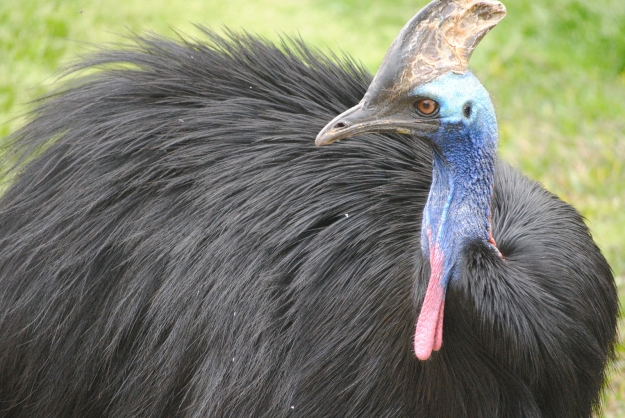
Cassowary

Photo by lailajuliana / Pixabay.com • The southern cassowary reaches a height of more than five feet and weighs 120 pounds. The bird has a fearsome but perhaps undeserved reputation for attacks on humans.

So, if humans have nothing to fear from brain-hungry birds, are there any birds that we should fear? Some experts suggest that precautions might be in order if one expects to come into close proximity with a southern cassowary, which is the third-tallest and second-heaviest living bird, smaller only than the ostrich and emu.

The cassowary, a native of New Guinea and northeastern Australia, has developed a reputation as a fearsome bird capable of injuring or killing humans. According to ornithologist Ernest Thomas Gilliard, cassowaries deserve their reputation. In his 1958 book, “Living Birds of the World,” he explained that the second of the three toes of a cassowary is fitted with a long, straight, dagger-like claw which can sever an arm or eviscerate an abdomen with ease. According to Gilliard, there have been many records of natives being killed by this bird.

A thorough study, however, has partly exonerated the cassowary from these misdeeds. In a total of 150 documented attacks against humans, cassowaries often acted in self-defense or in defense of a nest or chicks. The only documented death of a human took place in 1926 when two teenaged brothers attacked a cassowary with clubs. The 13-year-old brother received a serious kick from the bird, but he survived. His 16-year old brother tripped and fell during the attack, which allowed the cassowary to kick him in the neck and sever the boy’s jugular vein.

Mesembriornis_model

Model of the terror bird Mesembriornis at the Chicago Field Museum, prepared by taxidermist Leon L. Pray, seen on the left.

So we can rest easier knowing that murderous birds that reach a height of almost six feet tall are unlikely to terrorize us should we travel to the lands down under. A more ancient relative of the cassowary, however, might have been a different story had humans lived during the same time period. Phorusrhacids, also known as “terror birds,” were a group of large carnivorous flightless birds that once had some members reign as an apex predator in South America before they went extinct around two million years ago. The tallest of the terror birds reached a height of almost 10 feet. Titanis walleri, one of the larger species, even ranged into what is now the United States in Texas and Florida.

web-terror

Terror birds were equipped with large, sharp beaks, powerful necks and sharp talons. Their beaks, which would have been used to kill prey, were attached to exceptionally large skulls. Despite their fearsome appearance, these birds probably fed on prey about the size of rabbits. Perhaps not knowing this, Hollywood has cast these birds as monsters in such films as 2016’s “Terror Birds” and 2008’s “10,000 BC.”

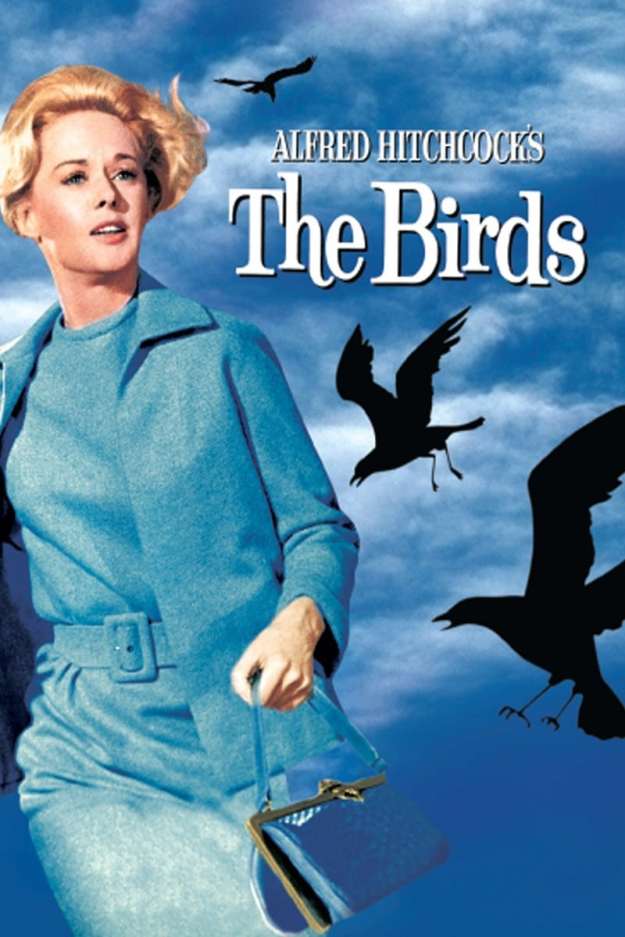
Besides, casting birds as the villains had already been done back in 1963 when Alfred Hitchcock released his film, “The Birds,” based loosely on a short story by Daphne du Maurier. The film, which starred some big Hollywood names such as Rod Taylor, Tippi Hedren, Jessica Tandy, Suzanne Pleshette and Veronica Cartwright, cast a whole new light on a “murder” of crows. Today, the film has achieved the status of a Hollywood classic. I guess it just goes to show that werewolves, zombies, and other Halloween monsters have nothing on our fine feathered friends.

TheBIRDS!

Rally to offer sneak peek at bird migration, other nature activities

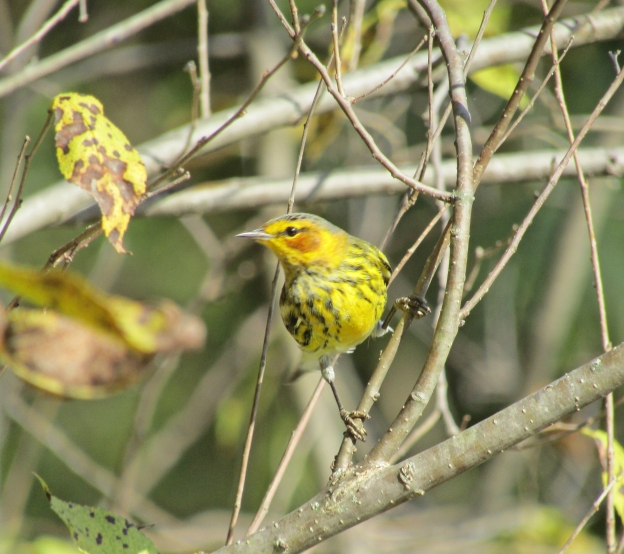
CapeMayWarbler

Photo by Bryan Stevens • While the Cape May warbler doesn’t breed locally, these warblers are fairly common spring and fall migrants in the region.

The 56th Roan Mountain Fall Naturalists Rally will draw nature enthusiasts from far and wide to this jewel of the Southern Appalachians on the first weekend after Labor Day with programs, nature walks, catered meals, and much more.

The annual Fall Naturalists Rally is always a great opportunity to enjoy the outdoors and, for birders, get a sneak peek at fall migration with any of the walks and programs focusing on our fine feathered friends. The best naturalists in the region volunteer their time and energy to make this a landmark event for people of all ages.

This year’s rally, which is scheduled for Friday-Sunday, Sept. 7-9, will feature guest speakers, Gabrielle Zeiger and Dr. Joey Shaw, for the main programs on Friday and Saturday evenings.

Zeiger’s Friday program, “Zen and the Art of Mushroom Hunting,” will get underway at 7:30 p.m. following a catered dinner at 6:30. Zeiger has been studying mushrooms in the region for 23 years. She considers herself more of a mushroom enthusiast than an expert. She is a member of the North American Mycological Association, and attends their national forays. She is involved in the association’s annual Wildacres foray in the Blue Ridge Mountains near Mount Mitchell in North Carolina.


Photos by Bryan Stevens • Mushrooms will feature in one of this year’s evening programs at the Fall Naturalists Rally.


Her program will focus on the two basic approaches — looking for good edibles and scientific study — to mushroom hunting. Her talk will touch on both approaches and include basic information on common mushrooms found in the area, species diversity and poisonous versus edible mushrooms. The program will include various types of fungi from gilled mushrooms, boletes, corals, stinkhorns and polypores, as well as the roles that they play in the environment such as decomposition and forest ecology. She will also talk about what mycologists do at forays. Findings will be included regarding 20 years of record keeping at Roan Mountain and scientific information on studies at Mount Mitchell regarding amount of rainfall and diversity of fruiting.

Photos Contributed • From left: Gabrielle Zeiger and Joey Shaw are this year’s featured speakers.


Saturday’s program on “Digitizing Tennessee’s One Million Herbarium Specimens,” will also start at 7:30 p.m. followed by a catered meal at 6:30. Dr. Joey Shaw received a bachelor’s of science in biology from the University of Tennessee at Chattanooga in 1998, and that same year began his graduate education in the Department of Botany at the University of Tennessee, Knoxville. In 2001, he received his master’s in botany for a floristic investigation of the Big South Fork National River and Recreation Area in Tennessee and Kentucky. In 2005 he received his Ph.D. from the University of Tennessee, Knoxville, for his work on the phylogeny and phylogeography of the North American plums and molecular evolution of different genetic regions of the chloroplast genome.

Shaw is currently serving the Association of Southeastern Biologists as Past President and will rotate off this Executive Committee in April 2019, after having served for over ten years and in all ranks of that committee. He is also serving as Chair of the Wildflower Pilgrimage Organizing Committee, and in this capacity he organizes this annual event that brings together more than 120 professional biologists with 850 members of the public to participate in more than 150 different events over four days every spring in the Great Smoky Mountains National Park.

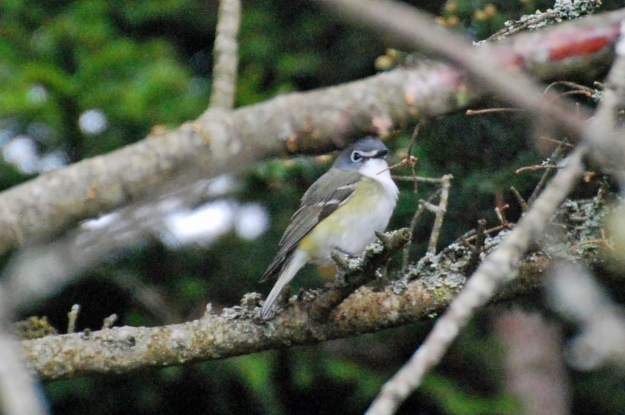
Blue-headedVireo

Photo by Bryan Stevens • Blue-headed vireos, such as this bird, are high-elevation summer residents in the region. In the fall, they are also common migrants.

Evening and lunch programs will take place in Roan Mountain State Park’s Conference Center and unless other noted, field trips will leave from the field on the left before the cabins in the park.

In addition to the programs, morning and afternoon walks will be held Saturday and Sunday on a vast array of subjects, including birds, salamanders, butterflies, spiders, snakes, geology, mosses and liverworts. A “moth party” will be held after the Friday and Saturday programs. Larry McDaniel will host this party taking a look at these winged nocturnal insects outside the Conference Center.

Consider joining the Friends of Roan Mountain, if you are not a member. Members get free admission to all Naturalists Rally events and the newsletter, “Friends of Roan Mountain.”

The rally offers catered evening meals by City Market of Elizabethton, as well as brown bag lunches on Saturday. All meals must be pre-paid in advance.

Registration and payment for meals and other activities can be made at the website for Friends of Roan Mountain at friendsofroanmtn.org. The website can also provide a brochure for download that offers a complete schedule and details all the available activities at this year’s rally. Whatever your interest, the Roan Mountain Fall Naturalists Rally is sure to have an activity available. For local birders, it’s often the kick-off to the fall migration season as warblers, vireos, thrushes, tanagers, birds of prey and many other species pass through the region on their way to their wintering grounds.

Tanager-Sept18

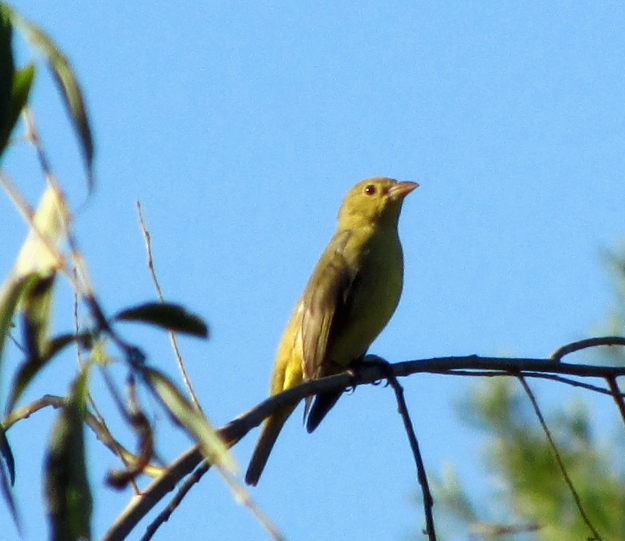
Photo by Bryan Stevens • A female scarlet tanager is a study in contrast from her mate with her dull greenish-yellow plumage being much less vibrant than the male’s bright red and black feathers.

Egrets and their kin wander widely in late summer

Late summer has a sort of lazy feel of anticipation to it. Most birds are finishing up their nesting season. Hungry fledglings appear at feeders in the company of adults. In recent weeks, I’ve noticed an explosion in the number of hummingbirds visiting my feeders and garden flowers. I’ve also noticed the vanguard of migrant birds that are starting to make appearances as fall migration approaches. It’s not just songbirds, however, that are on the move. Some large and rather conspicuous birds have been attracting attention in recent weeks, including a variety of wading birds.


Sightings this summer of long-legged wading birds in Tennessee and Virginia that are far outside of their usual range have included cattle egret, white ibis and roseate spoonbill. In addition, Susan Hubley reported on Facebook about a tricolored heron at John Sevier Lake in Rogersville, Tennessee, on July 25.

This heron is not usually found this far inland from the coast. Another tricolored heron showed up at Paddle Creek Pond in Bristol, Tennessee, on July 30. Adrianna Nelson reported the sighting on Bristol-Birds, an email network for sharing unusual bird sightings in the region. She also shared some photographs of the bird.

Tri-Colored-ONE

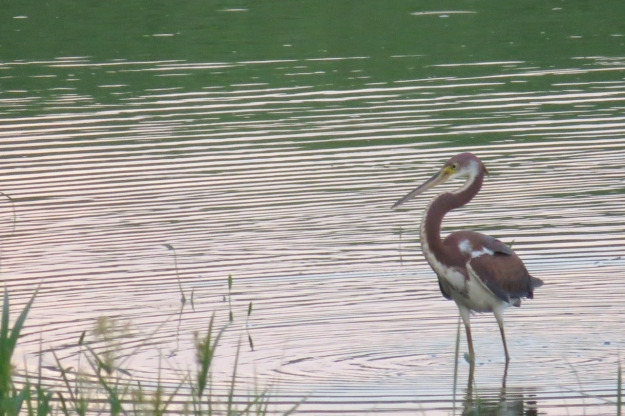
Photo courtesy of Adrianna Nelson • This tricolored heron spent a few days at Paddle Creek Pond in late July and early August. This large farm pond is managed by Crumley Farms Inc. and the Bristol Bird Club to provide habitat for migrating shorebirds and other birds.

“This is the first time I have seen a tricolored heron in Tennessee,” she wrote in a response to an email I sent her. “It is a long way off from its usual range. I have seen them before on Pinckney Island National Wildlife Refuge in South Carolina.”

She described the refuge as an excellent place to see waders, painted buntings, and many other birds. “I get the chance to go almost every year, since it is so close to where we vacation in Hilton Head,” Adrianna wrote.

She also commented on her unexpected observation.

Tri-colored-TWO

Photo courtesy of Adrianna Nelson • This tricolored heron spent a few days at Paddle Creek Pond in late July and early August.

“It is exciting to see something where it doesn’t usually belong,” Adrianna wrote. “I was definitely surprised to see the heron. That’s part of the fun of birding — you never know what to expect!”

She was also excited to share the sighting on Bristol-Birds. “It’s fun to share sightings with the birding community so they can also enjoy rare or unusual birds in our region,” she wrote.

Adrianna noted that she has been birding since age nine. “It all started when I saw a little gray bird hopping around in our yard,” she recalled. “I noticed it was only at our house around the winter months, and I stared to wonder what the bird was.”

After some searching online, she successfully identified the bird as a dark-eyed junco.

“During my search, I was surprised by the wide variety of birds, and I wanted to find as many as possible,” Adrianna wrote. “Since then, I was hooked!

IMG_9069

Photo by Bryan Stevens • This sign marks the importance of Paddle Creek Pond to migrating shorebirds and wading birds.

While diverting storms can’t be ruled out for causing some of these birds to detour into the region, it’s also normal behavior for young wading birds to disperse far and wide after leaving the nest. North American waders, or wading birds, include such long-legged species as herons, egrets, bitterns, ibises, storks and spoonbills. Most species are associated with wetlands or coastal areas.

Late summer birding is usually a period of doldrums as heat and humidity can discourage birders as well as diminish bird activity. However, it’s also the time of year when birders can make some unexpected surprises as wandering waders explore uncharted territory. Some other recent emails have reminded me of that fact.

James Elliott sent me an email describing a bird that is most likely a great egret. “For the second time in 30 years, I saw a magnificent, all-white heron yesterday on the South Houston River,” James wrote.

“I live at the very terminus of Riverside, Bullock Hollow, and Paddle Creek roads,” he wrote. “Big Springs Road is opposite across the river.”

When the bird departed, he said it flew east. He described the bird as “totally white” and “beautiful in flight.” He expressed regret that he was unable to get photographs.

Egret-Susan-Two

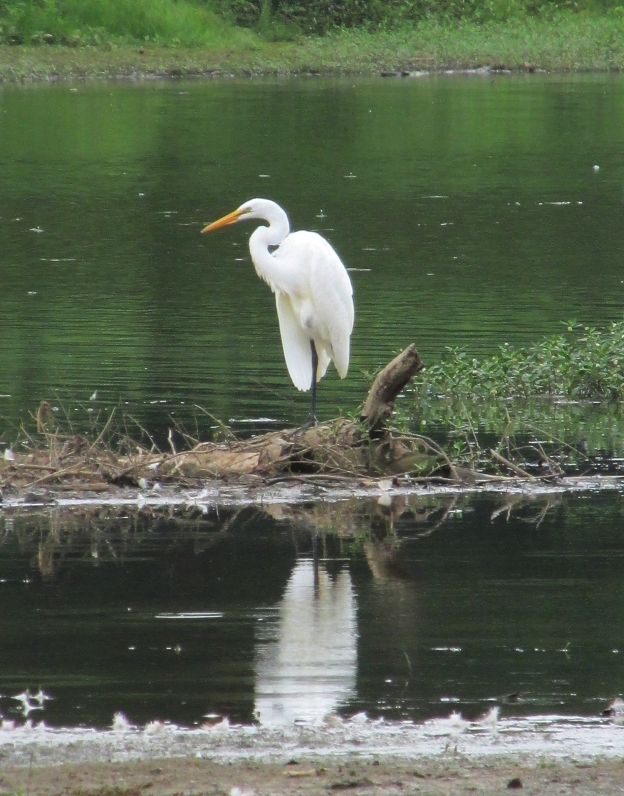
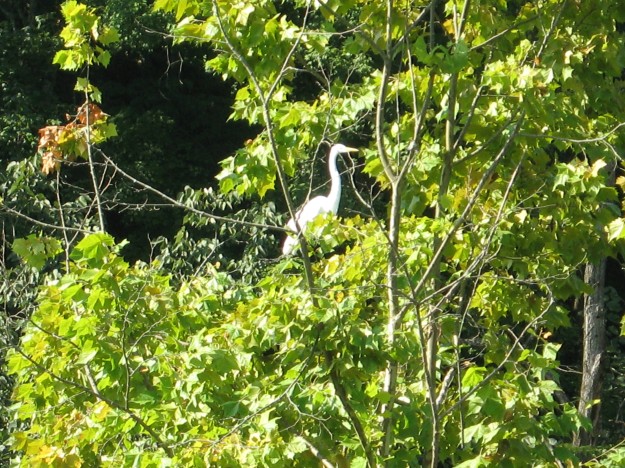
Photo courtesy of Susan Schreiner • This visiting great egret spent some time along the South Holston River in late July. Egrets, herons and other wading birds often wander into some unexpected locations in late summer.

Susan Schreiner, however, did get photographs of a great egret she observed near her home along the South Holston River in Bristol.

“We had a nice visitor today along the South Holston River,” Susan wrote in the email she sent. “When we first spotted it, it was in our tree and then flew down to the water.”

She said the egret has associated with some great blue herons in the vicinity. “It’s quite distinctive,” she wrote of the stately wading bird.

The diversity of the region’s bird life has impressed her. “Coming from Illinois, this is all pretty amazing for me,” she wrote.

Egret_SUSAN 2

Photo courtesy of Susan Schreiner •Egrets and herons, such as this great egret, wander into some unexpected locations in late summer.

The egret is not the only exceptional bird that Susan has observed. “I occasionally see a bald eagle fly down the river that is just breathtaking,” she wrote in her email.

Through email, James and I discussed whether the bird he saw was a great white heron or a great egret. Since he saw the bird and I did not, I am inclined to go with his identification of great white heron. Although rare outside of Florida, this type of heron — simply a great blue heron in an alternative plumage — has over the years been spotted a handful of times in and around Bristol. Whether an egret or heron, his sighting is more evidence of the tendency of wading birds to wander widely in late summer.

The great egret became a motivational symbol for conservation with the foundation of the National Audubon Society in 1905. Today, the organization has nearly 500 local chapters, each of which is an independent non-profit organization voluntarily affiliated with the National Audubon Society. These chapters often organize birdwatching field trips and conservation-related activities. The National Audubon Society spearheaded efforts to end the mass slaughter of various bird species. Some birds were killed for food, but millions were also killed for their showy feathers that were destined to decorate stylish attire worn as a symbol of high fashion. As early as 1910, some states began passing legislation to abolish trade in bird plumes. The federal government also came to the assistance of birds with the Migratory Bird Treaty Act, which was a law first enacted in 1916 to implement measures to protect and conserve migratory birds.220px-National_Audubon_Society_logo

In 1953, a great egret in flight was chosen as the symbol for the official logo of the National Audubon Society, which was formed in part to prevent the killing of birds for their feathers. Birds like great egrets, snowy egrets, roseate spoonbills and other long-legged waders had been decimated before people responded to the wanton destruction being visited upon these beautiful and awe-inspiring creatures.

The great egret belongs to the genus Ardea, which includes various egrets and herons. Other members of this genus include Goliath heron, black-headed heron, purple heron and pied heron.

The tricolored heron belongs to the genus Egretta, which consists of various herons and egrets that mostly breed in warmer climates. In North America, other members of this genus include snowy egret, reddish egret and little blue heron. Older birding field guides may refer to the tricolored heron as the Louisiana heron, which was an older popular name for the species.

GreatBlue-Egret

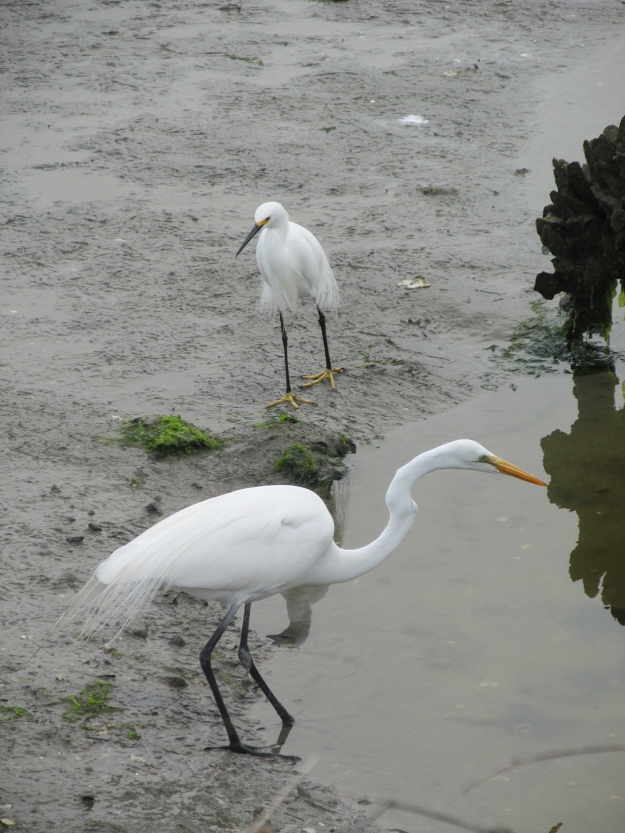
Photo by Bryan Stevens • A great blue heron and a great egret patrol a tidal creek in South Carolina.

Although many herons and egrets are tall and stately, there are some pint-sized members of this group of birds. In North America, the smallest is the least bittern. The largest of the world’s herons if the aptly named Goliath heron, which is also known as the giant heron. This wading bird can stand five feet tall and weigh 11 pounds. The Goliath heron is native to sub-Saharan Africa but also ranges into southwest and south Asia. The world’s largest heron feeds almost exclusively on fish.

Other descriptive names for some of the world’s herons include boat-billed heron, white-crested tiger heron, zigzag heron, rufous-bellied heron, whistling heron and white-necked heron.

To try your own luck at observing herons and egrets, scout bodies of water such as ponds, rivers, lakes and streams to increase the odds of getting your own binoculars on one of these elegant waders.

Egreta

Photo by Bryan Stevens • A snowy egret and a great egret forage for prey on a South Carolina tidal creek.

White-faced ibis creates birding stir with rare visit to region

When I awoke on April 19, I didn’t expect that I’d end up seeing a new state bird before the day ended. Thanks to timely notices of a new bird sighting by email, I used my work break to drive to Elizabethton, Tennessee, to see a white-faced ibis at the Carter County Rescue Squad pond. The opportunity for unexpected appearances by birds like the white-faced ibis is why I love spring migration.

White-FacedIbis

Photo by Bryan Stevens • The red eye of this white-faced ibis allowed observers to confirm the identity of the bird. The similar glossy ibis does not have red eyes.

Tom McNeil spotted the bird at a much larger pond on the campus of Northeast State Community College in Elizabethton. After he reported the bird, I was able to use a work break to travel to the location and find the bird nearby at the smaller pond, where several area birders had already arrived. The ibis had moved to this smaller pond after departing the larger pond where it was first detected.

This is only the second record of a white-faced ibis for Northeast Tennessee.

The white-faced ibis is a widespread wading bird, nesting from the western United States and Canada south through Mexico, as well as from southeastern Brazil and southeastern Bolivia south to central Argentina, and along the coast of central Chile.

I saw white-faced ibises for the first time during a trip to Utah in May of 2006. The state had enjoyed a spring with ample rainfall, and every flooded field and pasture contained flocks of these distinctive wading birds. These flooded fields provided temporary habitat for numerous other birds, including cinnamon teal and Wilson’s phalarope.

UtahIbis

Photo by Bryan Stevens • A flooded field in northern Utah near the border with Wyoming provided foraging habitat for this white-faced ibis.

The white-faced ibis is almost identical in appearance to the glossy ibis, which is the most widespread ibis in the world. The glossy ibis ranges across six continents, absent only from Antarctica. In the United States, the glossy ibis ranges mostly along the southern Atlantic coastal area. I have observed this bird at several locations in South Carolina.

The similar appearances of white-faced and glossy ibis presents challenges to identification, which was the case with this recent visitor. The bird found in Elizabethton lacked the white plumage in the face that gives the species its common name. Fortunately, the bird did plainly show one physical trait — red eyes — that easily distinguishes it from the related glossy ibis. Sometimes, all it takes to clinch an identification is a simple physical characteristic such as, in this case, a red eye.

A third ibis native to North America is the white ibis. The Audubon Society identifies the white ibis as one of the most numerous wading birds in Florida, but the bird is common also in other parts of the southeast with appropriate wetland habitat. Like the wood stork, the ibis has declined in Florida in recent decades largely as a result of human encroachment.

BRYAN-IBIS

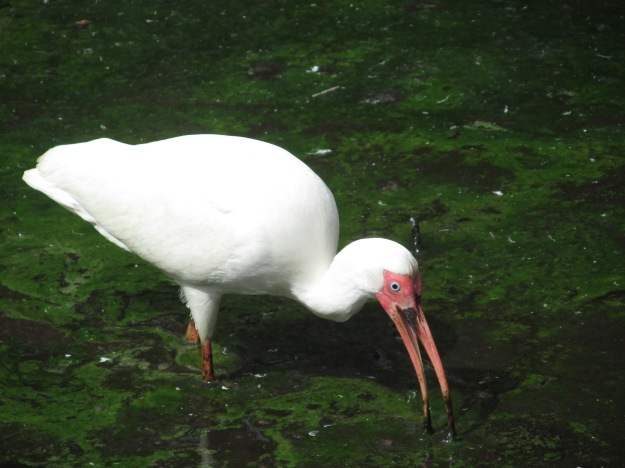
Photo by Bryan Stevens • A white ibis forages for food by probing in water and mud.

The white ibis looks like a humorously absurd bird that could have been invented by Dr. Seuss. The extravagant, all-white plumage is contrasted by pinkish-orange legs, an extremely long, downcurved, reddish-pink bill and bright blue eyes. In flight, the white ibis shows black feathers on the edges of its wings.

I’ve seen white ibises in Tennessee as well as in South Carolina and Florida. In the Sunshine State, another relative — the unmistakable scarlet ibis — is sometimes observed in the wild. The scarlet ibis inhabits tropical South America and islands of the Caribbean, but the species if often held in zoos and other attractions. Escaped birds rather than strays are often the source of sightings in Florida of this vibrant scarlet-feathered ibis.

Glossy-Flock

Photo by Bryan Stevens • A glossy ibis flock feeds in a wetland located at Huntington Beach State Park in South Carolina.

All ibises have long, downcurved bills. These birds usually feed in small flocks, probing wetlands for prey such as crustaceans, small fish, amphibians, insects, and various invertebrates. Worldwide, there are about 34 species of ibis, including the red-naped ibis, black-faced ibis, green ibis, straw-necked ibis and African sacred ibis, which is the bird often depicted in tombs and other monuments of ancient Egypt. This ibis was associated with the Egyptian god, Thoth, who was often depicted as a man with the head of an ibis.

The brief visit from the white-faced ibis provides a good reminder that we’re in the midst of spring migration. Stay alert for those unexpected birds. You never know what you might see.

IMG_5931

Photo by Bryan Stevens • The white-faced ibis found in Elizabethton, Tennessee, is shown walking past a domestic duck and a mallard.

Readers continue to report hummer arrivals

A few other readers have shared their first spring hummingbird sightings.
• Bunny Medeiros of Abingdon, Virginia sent me an email to announce her first sighting. “To my delight, the day after I put out my feeder a hummer appeared,” she wrote. The bird, a male, made his appeared on April 14.
• Rhonda Eller of Chilhowie, Virginia, saw her first ruby-throated hummingbird of spring on April 18. “Surely spring is going to come and stay!” Rhonda predicted on her post of my Facebook page.

Bird survey seeks volunteers

The Virginia Breeding Bird Atlas is getting ready for a third year of surveying the state’s birds. The atlas is a citizen science project, and volunteers conduct most of the key data collection. Organizers are hopeful that Virginia’s strong birding community will partner with the Virginia Ornithological Society and Virginia Department of Game and Inland Fisheries to accomplish the largest bird conservation effort in the state to date.
“This is our third year, and we can always use more volunteers to participate,” said Steven Hopp with Environmental Studies at Emory and Henry College. “Our region down here in the corner is one of the least-covered areas of the state.”
Anyone interested in participating and learning more about the atlas is welcome to email Hopp at shopp@ehc.edu.

IMG_5909

Photo by Bryan Stevens • The white-faced ibis probed the edge of a pond in its search for food, occasionally catching and consuming tadpoles.

Berry-rich diet makes waxwings profuse water drinkers

Waxwing-Sept11

Photo by Bryan Stevens • A cedar waxwing perches on a branch while taking a break from flycatching insect prey near a community park pond.

Ernie Marburg, a resident of Abingdon, Virginia, shared an interesting observation about a flock of cedar waxwings he observed recently in his yard.

Waxwings have a brown and gray silky plumage, a black mask and a perky crest. Some of the wing feathers show red tips. The similarity of these wing tips to melted drops of wax gives these birds the common name of waxwing.

Waxwing-Audubon

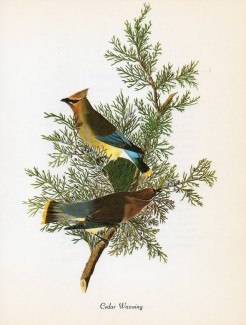
Early American naturalist and artist John James Audubon painted this pair of cedar waxwings.

“The typical flock of waxwings has arrived,” he wrote in his email. He added that the birds exhibited an unusual behavior during their visit.

“From their roosts in the tops of some tall nearby trees, they appeared to be leaving their roosts briefly and returning to the trees as though they were catching flies,” Ernie noted. “There were, however, no flies available.”

The waxwings, he went on to explain, appeared to be going after snowflakes. “Could they have been going after the snowflakes to drink water?” Ernie asked.

While I wasn’t sure that catching snowflakes is an energy-efficient way to relieve thirst, the waxwings might have had a different motivation for their behavior. As I informed Ernie in my reply to his email, waxwings are very social with each other. These birds form large flocks that travel, feed, roost and bathe together. They have also come up with interesting “rituals” to reinforce their social ties with each other.

Waxwing-Erwin

Photo by Bryan Stevens • The waxy tips to the wing feathers are evident in this photograph of a cedar waxwing.

These rituals, or games, they “play” with each other include a flock of perched birds passing a single berry or fruit in a line, one bird to another, without any of the birds eating the item. I speculated that snowflake catching was their idea of a fun game and a way to practice for fly-catching season, which is just around the corner.

Perhaps I should have conducted some research. As it turns out, other people have witnessed this snowflake-catching behavior, which has led those who have studied the birds to determine that the birds do indeed eat snowflakes to ease thirst. Apparently their diet, which is rich in sugar thanks to the various berries that provide a huge percentage of their food, waxwings are often afflicted with intense thirst. In addition to catching snowflakes, they have been observed eating fallen snow. A single Bohemian waxwing — a relative of the cedar waxwing — can gobble down 300 berries in a couple of hours. According to some statistics, one of these birds can eat up to three times its weight in fruit in a single day. The next time I am lucky enough to observe waxwings in a snowstorm, you can bet I will be watching for this snowflake-eating behavior.

The cedar waxwing has few relatives. Worldwide, there are only two other species: the Bohemian waxwing, which is native to the northern forests of Eurasia and North America; and the Japanese waxwing, found in such northeast Asian countries as Japan, Korea and China.

Ruby-throated-WILLOWS

Photo by Bryan Stevens • Numbers of Ruby-throated Hummingbird in the region tend to fluctuate each year, but people should see a spike in their numbers as the hummingbirds end summer nesting and start migrating south again.

Hummingbirds due back soon

Waxwings are rather nomadic, coming and going with a maddening unpredictability. Other birds are more dependable, arriving and departing at roughly the same time year after year. One such bird should soon make its triumphant and welcome return to yards and gardens throughout the region. According to the website Hummingbird Guide, ruby-throated hummingbirds usually return to Tennessee and Virginia the first week of April. These tiny flying jewels arrive earlier in North and South Carolina, typically arriving the third week of March in those states.

The popularity of hummingbirds in general, and the ruby-throated hummingbird specifically, is simple to understand. These tiny birds are perfectly willing to insert themselves into our lives, offering hours of fascinating entertainment as they visit our gardens, duel at our sugar water feeders and occasionally even nest in trees and shrubs in our yards.

Individuals who feed birds know that it can be an expensive undertaking. The cost of providing sunflower seeds and suet cakes for hungry flocks during the winter months can nibble at the monthly budget, but hardly anyone would begrudge the sparrows, finches, wrens and woodpeckers. After all, they return the favor, putting on daily shows just outside our windows.

Rubythroated_Hummingbird

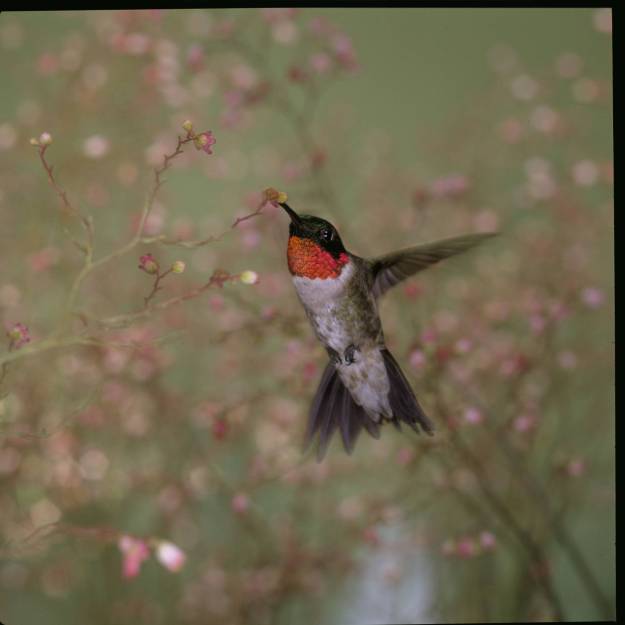
Photo by U.S. Fish & Wildlife Service • A male Ruby-throated Hummingbird hovers in front of the camera as it seeks nectar from tiny flower blossoms.

The same is true of hummingbirds. For a relatively modest investment, people putting out feeders or planting nectar-producing flowers are rewarded with the fun and amusing antics of these pint-sized and hyperactive birds.

Attracting hummingbirds is generally much less expensive than feeding other birds. After all, you need only a mixture of sugar water — four parts water to one part sugar — to fill a feeder and catch the attention of a visiting hummer. A few pounds of sugar will last a lot longer than that bag of sunflower seeds, and it’s much less expensive to purchase at the grocery store.

Do not add red coloring or dyes to your sugar water mixture. Some studies have indicated these substances are harmful to hummingbird health. This means tossing out many of the pre-packaged mixtures sold with sugar water feeders. After all, the entire purpose is to attract hummingbirds. Risking their health is simply not acceptable. If you do want to take extra steps to attract these diminutive, feathered sugar junkies, consider supplementing your landscape with a variety of flowering plants. To explore some of the best choices for flowers to tempt hummingbirds, visit the website of The Hummingbird Society at http://www.hummingbirdsociety.org.

Ruby-throatedFemale-EYE

Photo by Bryan Stevens • A ruby-throated hummingbird visits a feeder for a sip of sugar water.

I always put out my sugar water feeders in early April. I usually end up waiting a couple of weeks before the first hummingbird appears, but it’s worth the wait. I miss these tiny birds during the winter months, which they spend in much warmer surroundings in southern Mexico and Central America. A male with the namesake red throat is usually the first to appear at my feeders. However, female ruby-throated hummingbirds, which lack the dazzling ruby throat patch, are migrating, too. The females usually lag a week or two behind the pace of the migration for the males.

As always, I enjoy hearing from readers about their first spring sighting of a ruby-throated hummingbird. Readers are encouraged to jot down the date and the time of arrival when they observe their first hummingbird of the season. If the sighting’s duration allows you to verify, note whether the hummingbird was a male or female. These reports can be emailed to me at ahoodedwarbler@aol.com. Together, we’ll track the arrival of these tiny birds as they return to the region.


Brown pelicans now thrive along nation’s coasts

Pelican=Reflected

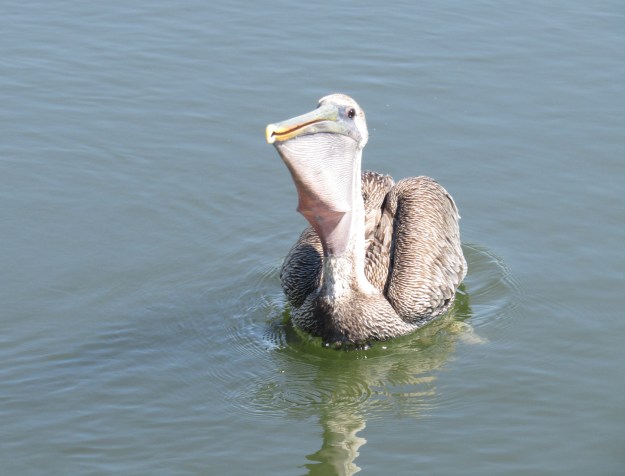
Photo by Bryan Stevens • A young brown pelican fishes along the causeway at Huntington Beach State Park in South Carolina. These pelicans usually dive into the water, capturing prey in a large pouch that is connected to their bill. Pelicans also snatch fish while floating on the surface.

Back in early March I enjoyed a trip to coastal South Carolina, visiting locations near Pawleys Island such as Huntington Beach State Park, Myrtle Beach State Park and Brookgreen Gardens.

During my six-day stay in the South Carolina Low Country, I observed 95 species of birds, including several that should be making their spring return to our region any day now. I saw blue-gray gnatcatchers, yellow-throated warblers and a few shorebirds, including a greater yellowlegs. All of these birds usually migrate through Northeast Tennessee and Southwest Virginia in April and early May.
I also saw some coastal specialties that don’t usually come close to my landlocked home state of Tennessee, including anhinga, tricolored heron and brown pelican.

IMG_4311

Photo by Bryan Stevens • A young brown pelican floats on the water in a salt-water marsh at Huntington Beach State Park in South Carolina.

The brown pelican is the smallest of the world’s eight species of pelicans, which are grouped in the family Pelecanidae. Saying that a brown pelican is small, however, is a relative term. The brown pelican is about half the size of the related white pelican.

The brown pelican lives on both coasts, from around Seattle, Washington, and Cape Cod, Massachusetts, southward to the tropics. This pelican also lives along the Gulf Coast, as well as ranging south as far as the mouth of the Amazon River in South America.

According to the U.S. Fish & Wildlife Service’s website, there are two geographically and genetically distinct regional populations, or subspecies, of brown pelican that occur in North America. They are the California brown pelican, ranging from California to Chile, and the eastern brown pelican, which occurs along the Atlantic and Gulf coasts, as well as the Caribbean and the Central and South American coasts.

Pelicans have been documented living about 30 years in the wild, but the average age may be much less due to factors such as predation, disease and starvation. Many young pelicans, unskilled at catching fish, sadly do not reach adulthood.

DDT, which negatively affected breeding for birds such as bald eagle, osprey and peregrine falcon, also had a detrimental impact on the brown pelican. According to their website, in 1970, the U.S. Fish and Wildlife Service listed the brown pelican as endangered. The listing was possible through a law that had been passed before 1973’s Endangered Species Act. A recovery plan was published in 1983. In November 2009, the pelican was removed from the Endangered Species List, becoming another success story akin to that of the bald eagle.

Summer-Pelicans

Photo by Bryan Stevens • Brown pelicans fly in a line over the Atlantic Ocean on the South Carolina coast, conjuring forth fantasies of ancient flying creatures.

Visitors to beaches along the Atlantic Coast have probably seen the impressive flight of brown pelicans in a single file formation of birds gliding only a few feet above the surf. The span of the wings can reach seven feet six inches. Seen near dusk, an observer could be forgiven a flight of fancy that allows these pelicans and their graceful flying formations to be compared to the long-extinct flying reptiles, the pterosaurs.

At a distance, the birds can readily be described as majestic and even graceful. On closer inspection, some different adjectives come into play to describe the brown pelican. At close quarters, a brown pelican is an ungainly, almost ugly bird. Pelicans have long necks and bills, and on land, they shuffle awkwardly. Young bird are drab brown and gray, often looking much more disheveled than adult birds.

IMG_4340

Photo by Bryan Stevens • A large pouch that is connected to its bill is one physical trait that makes pelicans distinct from other birds. Although these birds often appear ungainly, they are quite skilled at using their pouch-equipped bill to capture fish.

According to the website All About Birds, the brown pelican feeds mostly on small fish such as menhaden, mullet, anchovies, herring, and sailfin mollies. These large birds may plunge from 65 feet above the surface of the water to capture fish in their famous throat pouch. In addition to fish, a pelican can take up to 2.6 gallons of water into its pouch with every dive. The water gets expelled, leaving behind the fish.

When not feeding, pelicans will rest on sandbars, pilings and rock jetties. These “loafing” spots are important places for pelicans to rest and recuperate after the rigors of diving and fishing for their fish meals.

IMG_4342

Photo by Bryan Stevens • A young brown pelican fishes along the causeway at Huntington Beach State Park. These birds capture fish in an elastic pouch that is attached to their bills.

The closest avian relatives of the pelicans are a couple of oddball birds known as the shoebill and hamerkop. The world’s other species of pelicans include Peruvian pelican, great white pelican, Australian pelican, American white pelican, pink-backed pelican, Dalmatian pelican and spot-billed pelican.

One state — Louisiana — has even made the brown pelican its official state bird. Most state birds are songbirds. The brown pelican is one of the exceptions, along with such birds as Minnesota’s common loon and the wild turkey, which has been adopted by Massachusetts.

IMG_4339

Photo by Bryan Stevens • A young brown pelican dips its bill into the water along the causeway at Huntington Beach State Park. Pelicans are skillful at snatching fish while floating on the surface.

On a handful of occasions, brown pelicans have made brief appearances in the region, usually generating a great deal of excitement among birders. White pelicans are also rare visitors, but they make slightly more stops in the region than their smaller relative. For instance, a white pelican spent a few days at Middlebrook Lake in Bristol around Thanksgiving in 2015. To increase your odds of observing a brown pelican in the wild, it will be much more productive to simply spend a few days along the coasts of Virginia, North Carolina, South Carolina, Georgia or Florida.

••••••

If you have a question, wish to make a comment or share a sighting, email ahoodedwarbler@aol.com.

john-james-audubon-brown-pelican_a-l-6043043-0

Early American naturalist and artist John James Audubon painted this representation of a brown pelican. Today, the state of Louisiana has even made the brown pelican its official state bird.

Tufted titmouse small songbird with big personality

In last week’s post I wrote about chickadees. These friendly little birds have an impish cousin that is also a frequent visitor to feeders in the region. If chickadees are active woodland sprites, their relative, the titmouse, is a curious imp with mischievous tendencies.

Titmouse-2

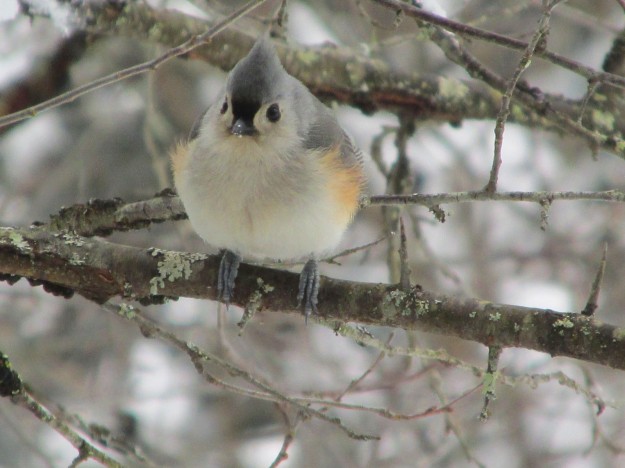
Photo by Bryan Stevens • A tufted titmouse puffs up its feathers on a cold day.

The tufted titmouse’s song — a persistent repetition of “Peter! Peter! Peter!” — is ringing through the woodlands around my home along with the urgent “fee-be fee-bo” of the Carolina chickadee. These birds form mixed flocks with each other and other species to explore their surroundings and search for food. They know that spring, despite the usual false starts, is drawing nearer with each passing day.

In addition to singing, titmice are enthusiastic scolders. They will scold over any transgression, real or imagined, focusing their ire on their fellow titmice or other birds, potential predators and even human observers. They’re quite persistent at their raucous scolding, which is just another reason I label them as imps of the woods.

Titmouse-Suet

Photo by Bryan Stevens • A young titmouse visits a suet feeder.

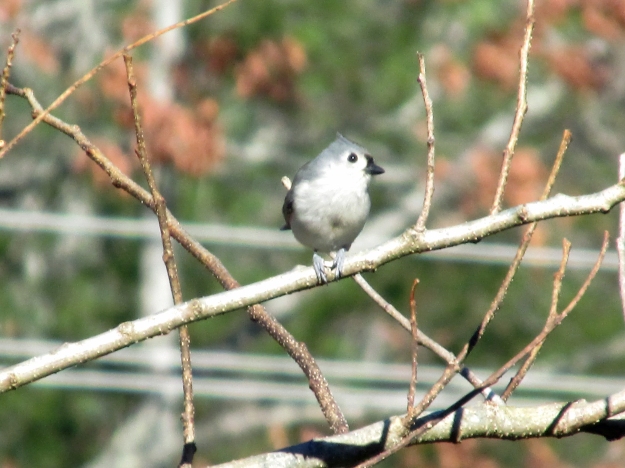
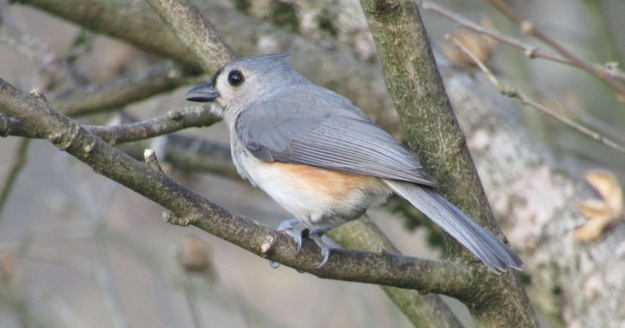
The tufted titmouse is a mostly gray bird with a distinctive crest and a pinkish-rusty coloration along the flanks. Titmouse eyes are black as coal and look large in proportion to their heads, which lends them an expressive appearance as they explore in yards and gardens. The term “titmouse” refers to the old English word “tit” meaning “small,” as well as the old English “mase,” also a reference to small size. Eventually, probably because of the bird’s small size and gray coloration, “mase” evolved into “mouse” and combined to form the word “titmouse.”

The titmice living in my yard visit my house windows at times, which drives my cats to distraction. I’ve wondered if the titmice are curious and trying to peek inside the house, but I believe I have a more down-to-earth explanation. These little birds are very thorough when foraging for food, and I’ve watched them pluck spiders and other insects from the window frames.

Titmouse-Creek

Photo by Bryan Stevens • A tufted titmouse approaches a stream for a quick drink.

Like chickadees, titmice are fond of sunflower seeds. No other offering will so readily lure them to feeders, although they do develop a fondness for suet cakes. I’ve also had great success attracting titmice to my feeders by offering unsalted, shelled peanuts. I sometimes break up the peanuts into smaller, more manageable pieces for the benefit of the titmice. These foods and a few trees or saplings around your home is all you really need to welcome titmice.

In the early 1900s, the tufted titmouse would have been considered a southern bird with its stronghold in states like Tennessee, Virginia, the Carolinas and Georgia. Perhaps it is the titmouse’s innate curiosity that has pushed the species to expand successfully beyond the southern United States. The titmouse has steadily expanded its range northward, thriving in new locations. Experts credit this expansion to more readily available access to supplemental food at feeders.

Titmouse-Eye

Photo by Bryan Stevens • A tufted titmouse turns an eye on the camera.

During the nesting season, titmice forage for a variety of insects. Many spiders, beetles, caterpillars and other small bugs will be fed to hungry young titmice in a tree cavity or a nesting box. Like chickadees, titmice build exquisite nests, often using mostly moss with other materials, such as bark, cloth scraps, dry leaves and shed snakeskins. These small birds line their nests with hair or fur of other animals.

Over the years, many readers have shared observations documenting the fur-collecting skills of tufted titmice. The birds are not content to simply collect shed fur. They seem to prefer collecting the fur fresh from a living animal. Many dogs fall victim to impish titmice that boldly pluck strands of fur from the canine’s coat.

In another funny story, a woman once told me about a titmouse that flew onto her head every time she stepped outside her home. Perhaps the bird sensed her affection for birds since it never failed to pluck strands of hair from her head to carry back to its nest. For any would-be skeptics, the woman provided photographic documentation of the incidents. In addition to dogs and humans, animals ranging from squirrels and opossums to mice and woodchucks have also been observed “sacrificing” fur for the nesting success of tufted titmice.

Titmouse-PHOTO

Photo by Bryan Stevens • The tufted titmouse is a backyard bird with an impish personality.

The female tufted titmouse incubates the eggs. She lays between three and nine eggs, although a usual clutch size is five to six eggs. The female titmouse is protective of her nest and is known for a behavior known as a “snake display.” I’ve observed titmice perform this display when I’ve peeked into nesting boxes. She remains tightly seated on her eggs, or young, while she hisses loudly and strikes in a manner very much like a striking serpent. Not all titmice engage in this display. Some remain still and try to “blend” with the nest, while others will fly away if a nest box is opened. Regardless, it’s a convincing display of bravado on the part of such a small bird. If it looks scary to people, I am sure it could succeed at repelling a squirrel or mouse. I’m uncertain if the behavior would deter an actual snake.

Other titmice in North America include bridled titmouse in Arizona and New Mexico; oak titmouse of the Pacific Coast region; juniper titmouse from the Great Basin, which consists of Wyoming, Idaho, Utah, Nevada, Oregon and California; and the black-crested titmouse, which ranges from Missouri into east-central Mexico.

Titmouse-WithPeanut

Photo by Bryan Stevens • A tufted titmouse pounds at a peanut held in its feet.

Titmice occur exclusively in North America and belong to the genus Baeolophus. Europe, Asia and Africa are home to some other crested birds in the family of chickadees and titmice. For instance, the European crested tit and the grey crested tit are species that sport a crest of feathers like titmice but are more closely related to chickadees.

Yes, the tufted titmouse is one of nature’s imps, but it’s also one of our more entertaining birds. Get to know these visitors by offering sunflower seeds or other fare and, if you want to go the extra step, place some bird boxes around your yard as potential nesting sites. By next winter, you may have an entire flock of these feathered imps as your guests.

•••••

Bryan Stevens lives near Roan Mountain, Tennessee. To learn more about birds and other topics from the natural world, friend Stevens on Facebook at https://www.facebook.com/ahoodedwarbler. If you have a question, wish to make a comment or share a sighting, email ahoodedwarbler@aol.com.

Titmouse-OnSuet

Photo by Bryan Stevens • A tufted titmouse makes a quick visit to a suet feeder.

America’s lost parakeet remains poignant symbol of need to protect our birds

A century ago this week, a caged bird died in Cincinnati, Ohio. However, this was not simply a case of an untimely death of a beloved family pet. Instead, that bird represented the last of its kind.

The bird belonged to the Psittacidae, a family of tropical birds that includes macaws, parrots, caiques, amazons and parrotlets. The bird, a male named Incas, was the last captive Carolina parakeet (the only species of parrot native to the eastern United States) in existence when he died at the Cincinnati Zoo on Feb. 21, 1918, in the same aviary where Martha, the last passenger pigeon, had died four years earlier.


The demise of Incas came about a year after the death of his mate, who had been named Lady Jane by their zookeepers. In a time before the forces of social media and round-the-clock mass media, the death of Incas likely went unnoticed by other than a few people.

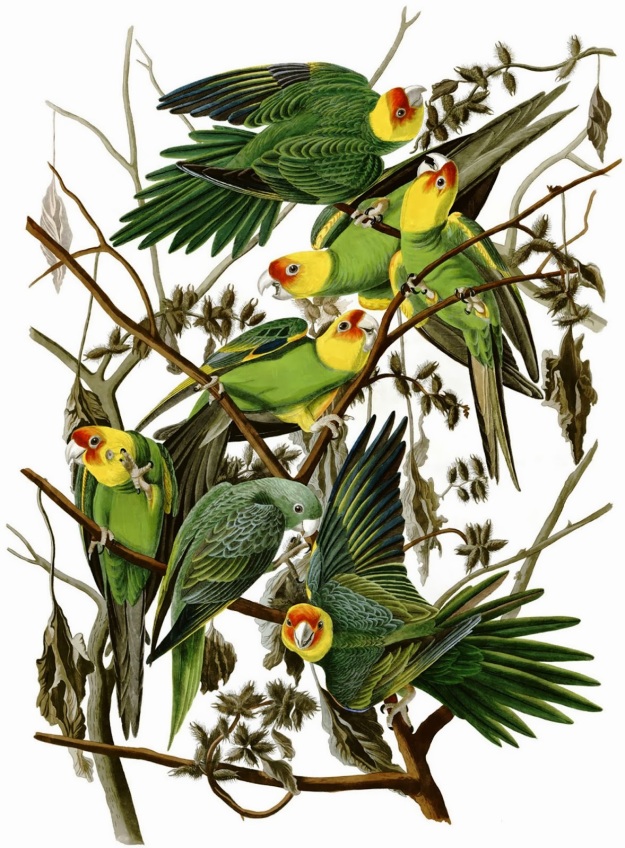
Carolina parakeets, John James Audubon


If few noticed the passing of Incas at the time, surely today we can mourn the loss of one of the most abundant birds to ever roam the continent. Few people even realize that North America was once home to its own species of parakeet. A few individuals — all that remained of once massive flocks of colorful, noisy native parakeets — made it into the 20th century. Despite the death of Incas in 1918, the Carolina parakeet as a species was not officially declared extinct until 1939. It was a classic example of going out with a whimper, not a bang, when the entire population of the Carolina parakeet crashed suddenly and for reasons still not fully understood.

For instance, large flocks of these birds still flew free until the final years of the 1800s, but in the first decade of the 1900s, these flocks disappeared. The only other native parrot — the thick-billed parrot of the American southwest — no longer flies north of the Mexican border. An attempt to re-introduce this parrot to Arizona in the 1980s ended in disappointing failure. Of course, thick-billed parrots still fly free south of the border.

il_fullxfull.603620894_qnpu

It would be wonderful to have native parrots still flying free. The extinct Carolina parakeet ranged throughout the eastern United States, including the states of Virginia, Tennessee and North Carolina. These parrots strayed on occasion as far north as Wisconsin and New York and ranged as far west as Colorado. Florida provided a stronghold for this colorful species, which also made its last stand in the Sunshine State. The last flock of thirteen wild birds was documented in Florida in 1904.

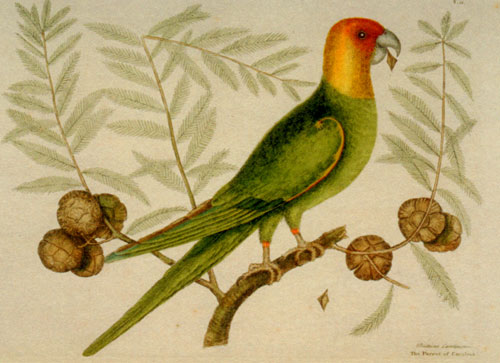
These birds have attracted attention since the arrival of the first Europeans. English explorer George Peckham mentioned the presence of Carolina parakeets in an account he wrote of his 1583 expedition in Florida. In the 1700s, English naturalist Mark Catesby described the species for science in a two-volume work titled “The Natural History of Carolina, Florida and the Bahama Islands.”

The parrots were evidently numerous, often encountered in large flocks. Few early naturalists attempted to properly study them, resulting in a sad dearth of knowledge. Much of what we do know is quite intriguing. The diet of these parakeets made them toxic, as early naturalist and artist John James Audubon observed when cats sickened and died after dining on fresh parakeets. One of the parakeet’s favorite foods — cockleburs —imparted the toxicity into the flesh of the birds.

wilsondummy

Alexander Wilson

An unusual empathy and loyalty may have contributed to the downfall of the species. Early naturalist Alexander Wilson wrote of an 1808 encounter with a large flock of these parakeets. After noting how the bird covered almost every twig in a tree, Wilson raised a gun and shot several of the birds. Some of the shot birds were only wounded. “The whole flock swept repeatedly around their prostrate companions, and again settled on a low tree, within twenty yards of the spot where I stood,” Wilson wrote. “At each successive discharge, although showers of them fell, yet the affection of the survivors seemed rather to increase.”

The same tendency to rally to the side of fallen companions made Carolina parakeets easy targets for people capturing them in the late 1800s for the exotic pet trade. This flocking together and unwillingness to abandon wounded members made the birds easy targets when farmers shot them. It certainly didn’t help matters that the parakeets were also hunted for their brightly colored feathers, which were used to adorn women’s hats. It remains unclear what exactly annihilated a once abundant bird, although it was likely a combination of all of the aforementioned factors.

Changes to the landscape encouraged the parakeets to shift their diet from weed seeds to cultivated fruit, which won them the ire of farmers. Logging of extensive forests may have impacted their numbers, too. Experts have even theorized that the parakeets fell victim to some sort of epidemic spread by domestic fowl.

carolina-parakeet-ii

Painting by Alexander Wilson of a Carolina Parakeet.

If only the dawning of a more environmentally aware age had arrived slightly sooner, the Carolina parakeet might have been saved along with species like the bald eagle and whooping crane. This native parakeet, if it had endured, might today be considered an ordinary backyard bird jostling for space at your feeders with birds like blue jays and purple finches.

Incas and his fellow Carolina parakeets may be gone, but they’ve not been forgotten. Their story is a reminder of why it remains crucial to protect all birds. Let that devotion to preservation be the legacy of America’s lost parakeets.

•••••

Bryan Stevens lives near Roan Mountain, Tennessee. To learn more about birds and other topics from the natural world, friend Stevens on Facebook at https://www.facebook.com/ahoodedwarbler. If you have a question, wish to make a comment or share a sighting, email ahoodedwarbler@aol.com.

BaldEagle-February

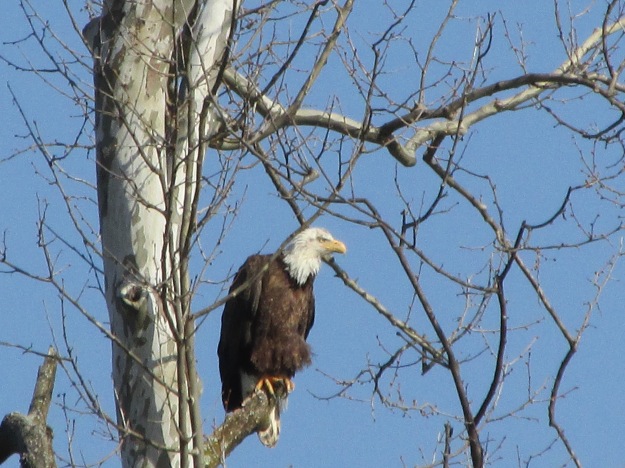
Photo by Bryan Stevens • Although protections came too late to help the Carolina Parakeet, laws like the Endangered Species Act did save birds like the Bald Eagle from possible extinction.


Duck…duck…goose? Winter season good time for finding rare geese in the region

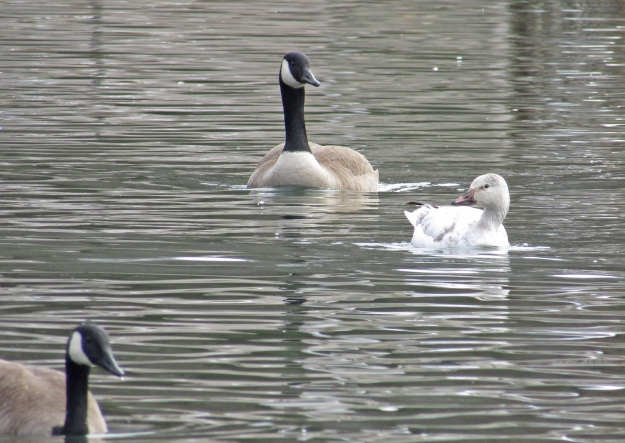
SnowGoose-Jan21

Photo by Bryan Stevens • A snow goose swims amid Canada geese at the pond at Fishery Park in Erwin, Tennessee.


Of the geese found in the region, the well-known Canada goose is nearly ubiquitous. That’s not always been the case. For instance, in his book The Birds of Northeast Tennessee, Rick Knight points out that the geese now present throughout the year resulted from stocking programs conducted in the 1970s and 1980s. In earlier decades, the Canada goose was considered a rare winter visitor to the region.

Seeing the Canada goose in every sort of habitat from golf courses to grassy margins along city walking trails, it’s hard to imagine a time when this goose wasn’t one of the region’s most common waterfowl.

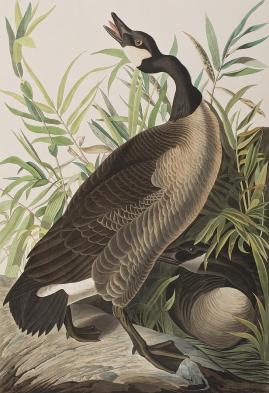
2-canada-goose-john-james-audubon

Early American naturalist and artist John James Audubon captured this pair of Canada geese in a most realistic painting.

The world’s geese are not as numerous as ducks, but there are still about 20 species of geese worldwide, compared to about 120 species of ducks. While both ducks and geese are lumped together as waterfowl, most geese are more terrestrial than ducks. Birders are just as likely to spot geese in a pasture or on the greens of a golf course as they are on a lake or pond.

There have been several species of geese usually considered rare to uncommon in the region that have been spotted by birders thus far this winter season. I personally observed greater white-fronted geese at several different locations in November and December.

The greater white-fronted goose is considerably smaller than a Canada goose. The bird is named for the distinctive white band found at the base of bill. This white band also helps distinguish this goose from similar domestic geese. The sexes are similar in appearance, but females are usually smaller than males. The head, neck and upper back of white-fronted geese are grayish-brown. The lower back and rump are dark brown, and the tail is dark brown and edged with white. The chest and breast are grayish with dark brown to black blotches and bars on the breast, giving this goose the nickname “specklebelly.” The bill is pinkish and the legs and feet are orange.

Canada-Greater

Photo by Bryan Stevens The Greater White-fronted Goose, in background, is much smaller than the typical Canada Goose, which is shown in the foreground of this photograph.

The greater white-fronted goose breeds in North America as well as in Europe and Asia, and they spend the winter throughout the United States and even in Japan. Most nesting in North America takes place on the North Slope of Alaska and across the western and central Canadian Arctic. Wintering habitats include coastal marshes, wet fields and and freshwater wetlands.

Only a couple of weeks ago, I spotted a snow goose at the fish pond located at Erwin Fishery Park. The snow goose is a North American goose known for its white plumage that gives the bird its common name; however, the snow goose actually comes in two versions: the white phase and a blue phase, which is often referred to as a “blue goose.”

The snow goose breeds in regions in the far north, including Alaska, Canada, Greenland and even the northeastern tip of Siberia. They may spend the winter as far south as Texas and Mexico, although some will migrate no farther than southwestern British Columbia in Canada.

The snow goose bucks the trends that show many species of waterfowl declining. Recent surveys show that the population of the snow goose exceeds five million birds, which is an increase of more than 300 percent since the mid-1970s. In fact, this goose is thriving to such a degree that the large population has begun to inflict damage on its breeding habitat in some tundra regions.

A smaller relative to the snow goose is the Ross’s goose, which for all practical purposes looks like a snow goose in miniature. The common name of this goose honors Bernard R. Ross, who was associated with the Hudson’s Bay Company in Canada’s Northwest Territories.

Ross-onWater

Photo by Bryan Stevens • A visiting Ross’s goose takes a swim on the large pond at Northeast State Community College in Elizabethton, Tennessee, a few winters ago.

Here’s a quick history lesson. Hudson’s Bay Company is the oldest commercial corporation in North America. The company has been in continuous operation for more than 340 years, which ranks it as one of the oldest in the world. The company began as a fur-trading enterprise, thanks to an English royal charter in back in 1670 during the reign of King Charles II. These days, Hudson’s Bay Company owns and operates retail stores throughout Canada and the United States.

In addition to his trade in furs, Ross collected specimens for the Smithsonian Institution in Washington, D.C. Ross is responsible for giving the goose that now bears his name one of its early common names – the Horned Wavy Goose of Hearne. I wonder why that never caught on?

Ross repeatedly insisted that this small goose was a species distinct from the related and larger lesser snow goose and greater snow goose. His vouching for this small white goose eventually convinced other experts that this bird was indeed its own species.

Ross was born in Ireland in 1827. He died in Toronto, Ontario, in 1874. He was described by other prominent early naturalists as “enthusiastic” and “a careful observer” in the employ of Hudson’s Bay Company. When John Cassin gave the Ross’s Goose its first scientific name of Anser rossii in 1861, he paid tribute to the Hudson’s Bay Company’s Ross.

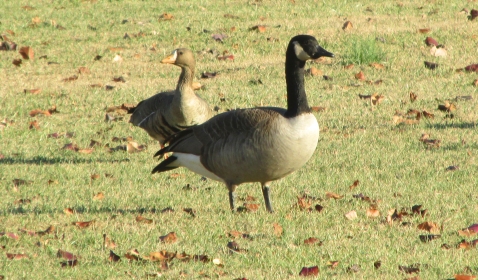
Canada_Geese

Photo by Bryan Stevens • In some areas, Canada geese have become so prevalent that they are considered pests. Human handouts to waterfowl are not always compatible with good health for the birds that receive them.

The Ross’s goose has a “cuteness” factor working in its favor. For a goose, it is rather small. It could best be described as a snow goose in miniature. In fact, it isn’t much larger than such ducks as mallards and is considered the smallest of North America’s geese.

The Ross’s goose has also acquired some other common names, including “galoot” and “scabby-nosed wavey.” This latter name was inspired by the bird’s bill, which is covered with rough bumps around the base. I have to admit that “scabby-nosed wavey” is a name likely to stick in the memory. Today, the Ross’s goose’s scientific name is Chen rossii.

Other geese found worldwide include the pink-footed goose, bar-headed goose, emperor goose, red-breasted goose and barnacle goose.

So, does this inspire you to try a wild goose chase of your own? If it does, best of luck in your efforts.

•••••

To learn more about birds and other topics from the natural world, friend Stevens on Facebook at https://www.facebook.com/ahoodedwarbler. If you have a question, wish to make a comment or share a sighting, email ahoodedwarbler@aol.com.

A-Cackling Goose 1

Photo by Bryan Stevens • A Cackling goose, foreground, is shown in relation to some larger Canada geese, at a pond at Fishery Park in Erwin, Tennessee.