Tag Archives: Elizabethton Star

Looking forward to upcoming Birding Festival at Hungry Mother State Park

Spring-RobinBaby

Photo by Bryan Stevens                                  This fledgling American Robin was photographed last spring during a visit to Hungry Mother State Park.

If you’re as eager as I am to see some new arrivals among our “Feathered Friends” this spring, join me Friday-Sunday, May 1-3, at one of Southwest Virginia’s most popular parks for a full weekend of bird and nature-related events.

Hungry Mother State Park in Marion, Virginia, plans to spotlight many of those opportunities in a brand-new nature festival that organizers have dubbed the Hungry Mother State Park Birding Festival. I will also be taking part in the festival by giving a program on the region’s birds during the festival’s evening program on Friday, May 1, from 6 to 7:30 p.m.

HMSP-Canoes

Photo by Bryan Stevens Canoes await visitors to Hungry Mother State Park, which will hold its first-ever Birding Festival from May 1 to May 3.

The timing for the festival couldn’t be better. Many of our favorite birds have been returning to the region after spending the winter months in warmer climes as far afield as the Caribbean and Central and South America. If you’ve always wanted to learn more about such birds as warblers and tanagers or hummingbirds and vireos, plan to come out to this wonderful new event at one of the region’s most popular parks.

I discussed the upcoming festival with Tanya Hall, who works as the Chief Ranger of Visitor Experience, at HMSP. She informed me that the seed for the festival was planted when Hall and other park personnel heard about the possibility of obtaining grant funding to support the festival.

“Once we heard about the grant being offered, we approached the Friends of Hungry Mother State Park to see if they would want to apply for it, and of course they did,” Hall said.

She praised the work of the Friends group in supporting HMSP.

“We have a wonderfully supportive Friends group here,” she said. “They assist us in many activities with hands on projects throughout the park and they sponsor various events throughout the year.”

IMG_4435

Photo by Bryan Stevens                                                              Woodpeckers, such as this Red-bellied Woodpecker, will be among the birds participants will likely see during the three-day Birding Festival at Hungry Mother State Park.

She gave much of the credit for launching this year’s festival to Glenn Moorer, a Friend of HMSP, as well as a park retiree, who headed up the committee on writing the grant.

“He has a love for birds,” Hall explained.

A festival focused on birds seemed a natural fit. Hall, as well as Education Support Specialist Rachel Toward and dedicated HMSP volunteer Randy Smith all share a passion for birds.

“So, with all of us here with our affinity towards birds, birding was a shoe-in for one of the programs sponsored by this Public Lands Every Day Grant and Toyota,” Hall said. “We want to share our passion so others in the community have an opportunity to see just how special birds are.”

The planning for the festival has occupied several months.

“We have a weekend full of fun-filled bird activities,” Hall said. “We will be starting Friday with school field trips to the park.”

Dock

Photo Courtesy of Hungry Mother State Park Beautiful scenery will also be in the spotlight during the Birding Festival at Hungry Mother State Park.

Some of Friday’s school-related events will feature Dr. Steven Hopp with Emory and Henry College, who will be discussing and demonstrating the banding of birds. In addition, the Blue Ridge Discovery Center will be providing two field trips on Avian Adventures.

“On Saturday we will have hikes geared toward more experienced birders and also beginners,” Hall said. “We have kayaking bird tours and a Saltville Marsh Hike planned also.”

Throughout Saturday, various booths will be set up to distribute information on birds, as well as other activities and agencies, in the area. There will also be a children’s activity tent.
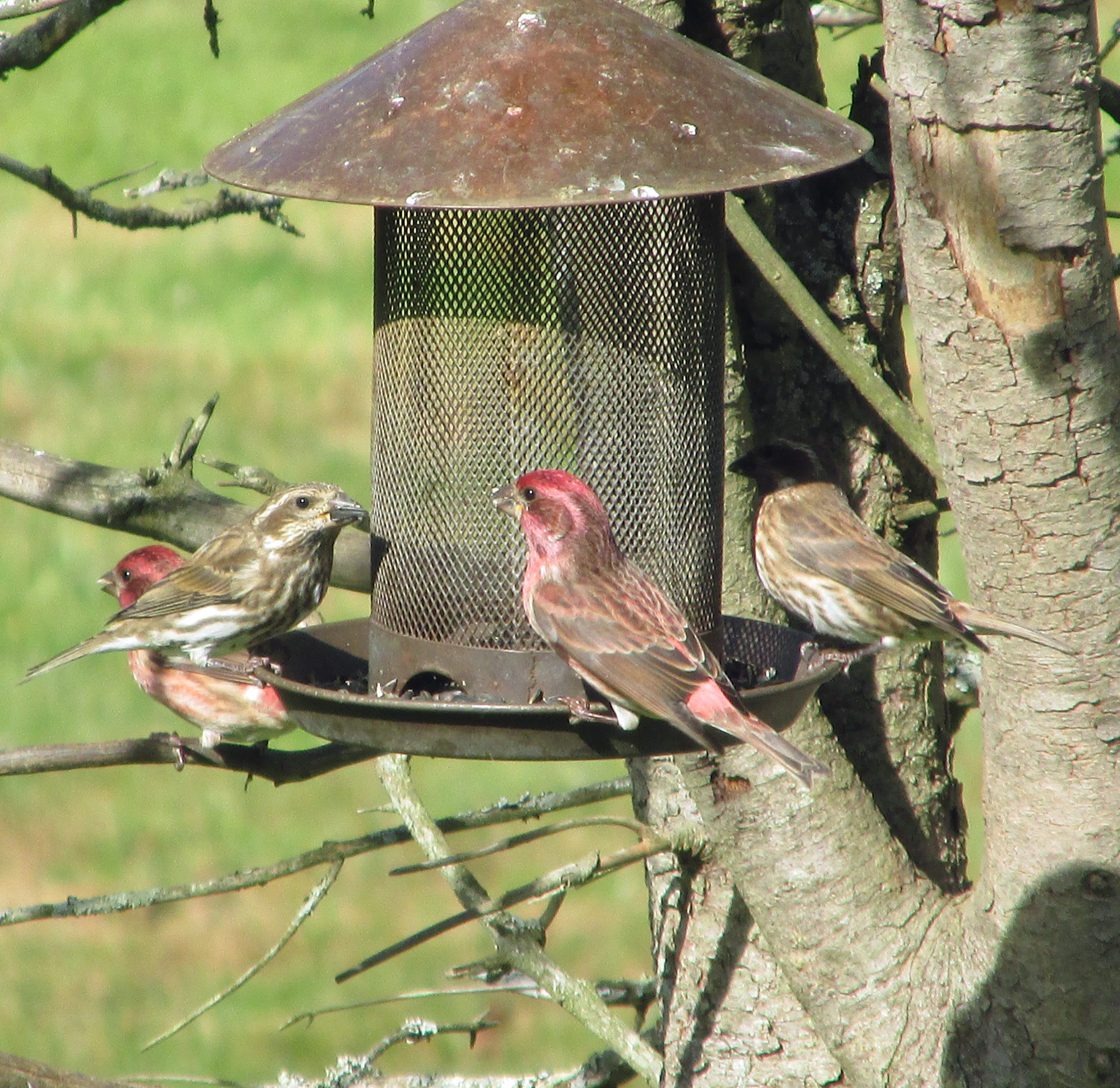
Purple-March30

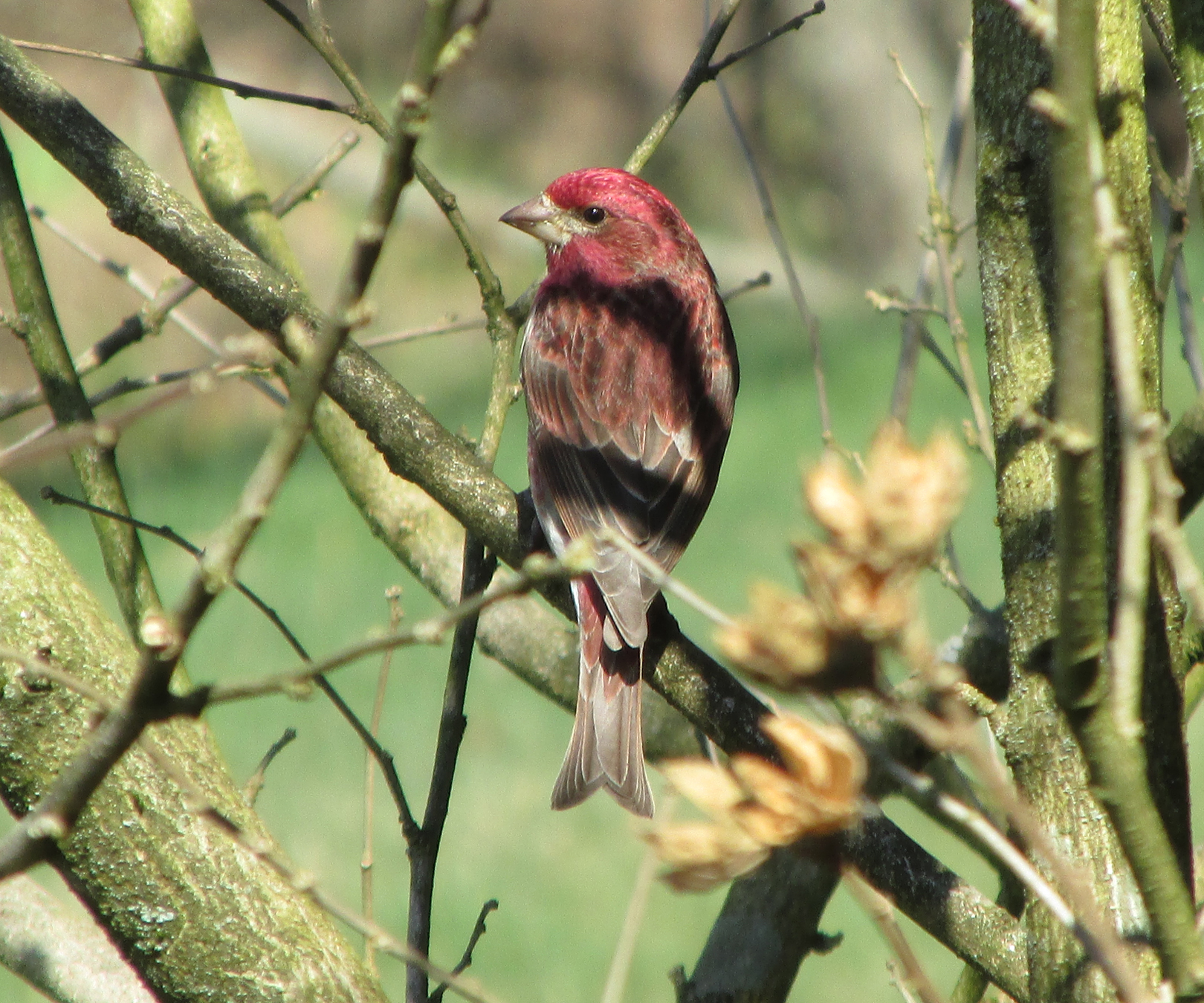
Photo by Bryan Stevens                            Lingering Purple Finches could still be present by the time of Hungry Mother State Park’s Birding Festival.

Another event that Hall is certain many individuals will enjoy will be the live bird presentation, “Wings to Soar,” on Sunday afternoon.

“We have activities throughout the weekend geared to advanced birders and beginners,” Hall said. “By incorporating all ages and degrees of experience, we hope to instill a love of birds in beginners and offer a chance to advanced birders to share their skills with the rest of us and hopefully have the chance to network and meet new people in a hobby they love.”
The festival meshes nicely with other recreational opportunities offered at HMSP.

“Hungry Mother is one of the more popular parks in Virginia,” Hall said. “We have 18 miles of trails that you can either hike or bike and we have a 108-acre lake that has various species of fish available to catch. The lake is also a favorite destination for swimmers, canoeists, kayakers and paddleboarders.”

Hall said the park is also fortunate to have an “awesome interpretation department” that hosts numerous programs each day that are offered not only to camping and cabin guests, but also to the public.

Mallard-March28

Photo by Bryan Stevens                                                      A male Mallard enjoys a spring swim.

“You don’t have to be staying at Hungry Mother State Park to enjoy the activities we offer,” Hall noted. “We probably have the most unique name of all Virginia State parks, and we have a unique legend behind the name which is tied to Molly’s Knob, the highest point in the park.”

Several months ago, Hall also invited me to take part in the debut of the festival. I plan to present a PowerPoint presentation on birds, and perhaps a few other examples of nature’s diverse life, in a program that will spotlight birds throughout all four of the seasons.
Egretta

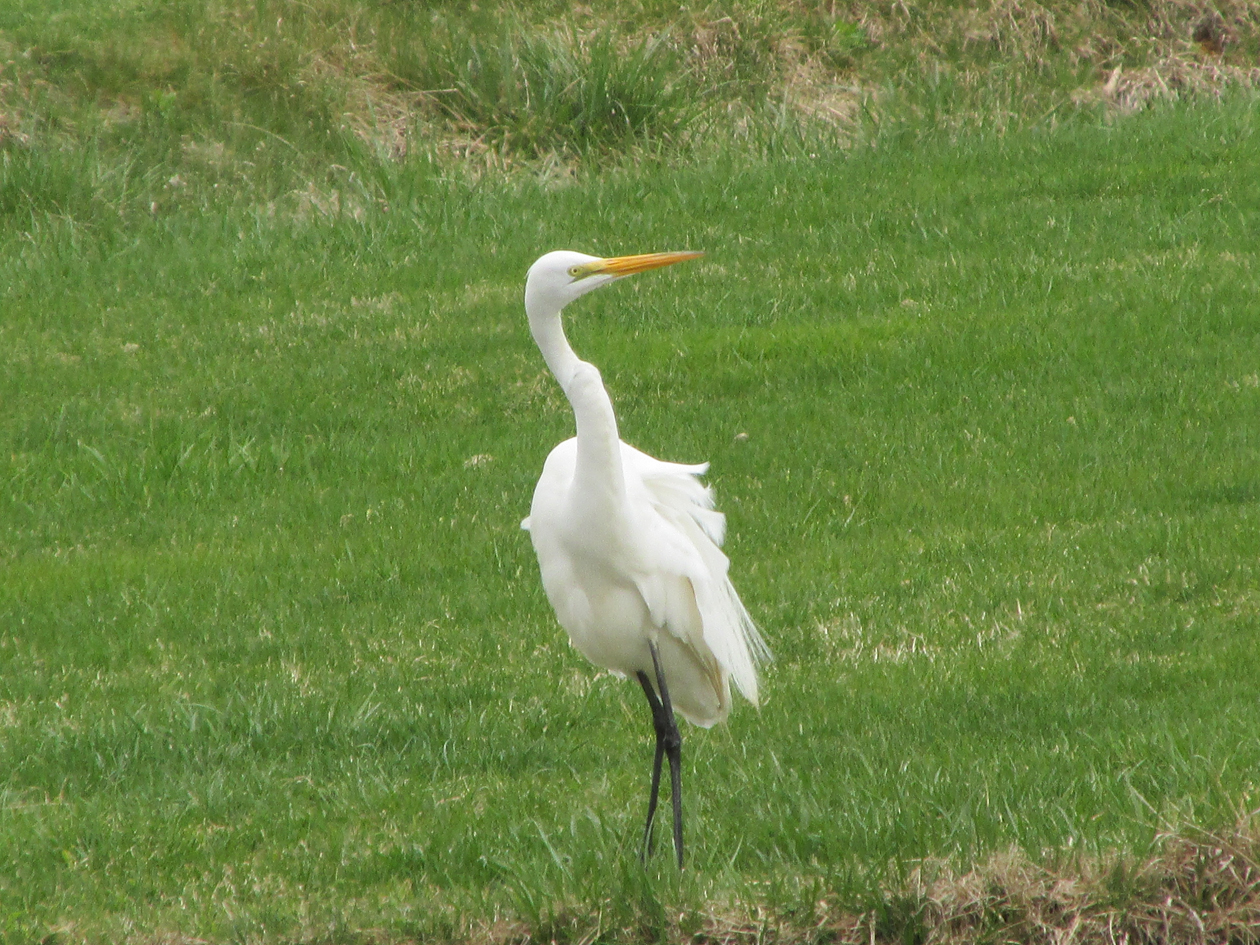
Photo by Bryan Stevens                                                                                When dealing with birds, surprises, such as a visit from a migrating Great Egret, are never off the table.

“Many of us know you through the articles you write for the Bristol Herald Courier,” she said. “We look forward to your articles each week, and we are looking forward to hearing your presentation and to seeing some of nature’s finest animals.”

I’m looking forward to sharing my program with attendees at the first-ever Hungry Mother State Park Birding Festival. It gives me a unique opportunity to meet some of the readers of my weekly column. If you attend, be sure to introduce yourself at some point.

The festival will also feature Richard Moncrief, who is the Birding and Nature Observation Market Manager for Carl Zeiss Sports Optics.

“He will be presenting two programs on Birding Basics and on Binocular Know How,” Hall said. “I know I am always wondering what the differences are between binoculars and which would be the best to buy for what I use them for.”

Some local Master Naturalists, including Melanie Smith and Randy Smith, will be giving programs on Birding by Ear and Backyard Birding.

“All in all, I believe there will be a little something for everyone to enjoy,” Hall said. “We are all so excited about this weekend and hope that everyone will come out and enjoy at least one program, because once you come, you’ll want to stay for another!”

Although she has been employed only a couple of years at HMSP, Hall loves her job and her new home.

“I started in this position as Chief Ranger of Visitor Experience this past November,” she said. “I was hired as the Education Support Specialist or the Interpreter in July of 2013. As an interpreter, we hope to forge a bond with the visitors and our natural resources we have here at Hungry Mother State Park.”

This is accomplished, Hall explained, by “interpreting” the natural, historical and cultural world for park visitors.

SongSparrow-Stick

Photo by Bryan Stevens                                      A Song Sparrow poses for a quick photograph at the water’s edge.

“I have worked in various other jobs; preschool teacher, recreation supervisor for the Blue Ridge Job Corps, and federal Park Ranger for the U.S Army Corps of Engineers,” she said. “I love working here at Hungry Mother with our Friends group, with all the guests that visit our park, and with a staff that truly cares about you and making your stay at a Virginia State Park the very best. I truly enjoy my job.”

All the festival’s programming is free and open to the public. The only fees associated with the festival will be the parking fee at the gate, which will be $3 on Friday and $4 on Saturday and Sunday.

A full schedule of activities can be found on virginiastateparks.gov under the Events tab for Hungry Mother State Park. For more information, call (276) 781-7400.
Towhees greet spring’s arrival with enthusiasm

Towhjee-Sings

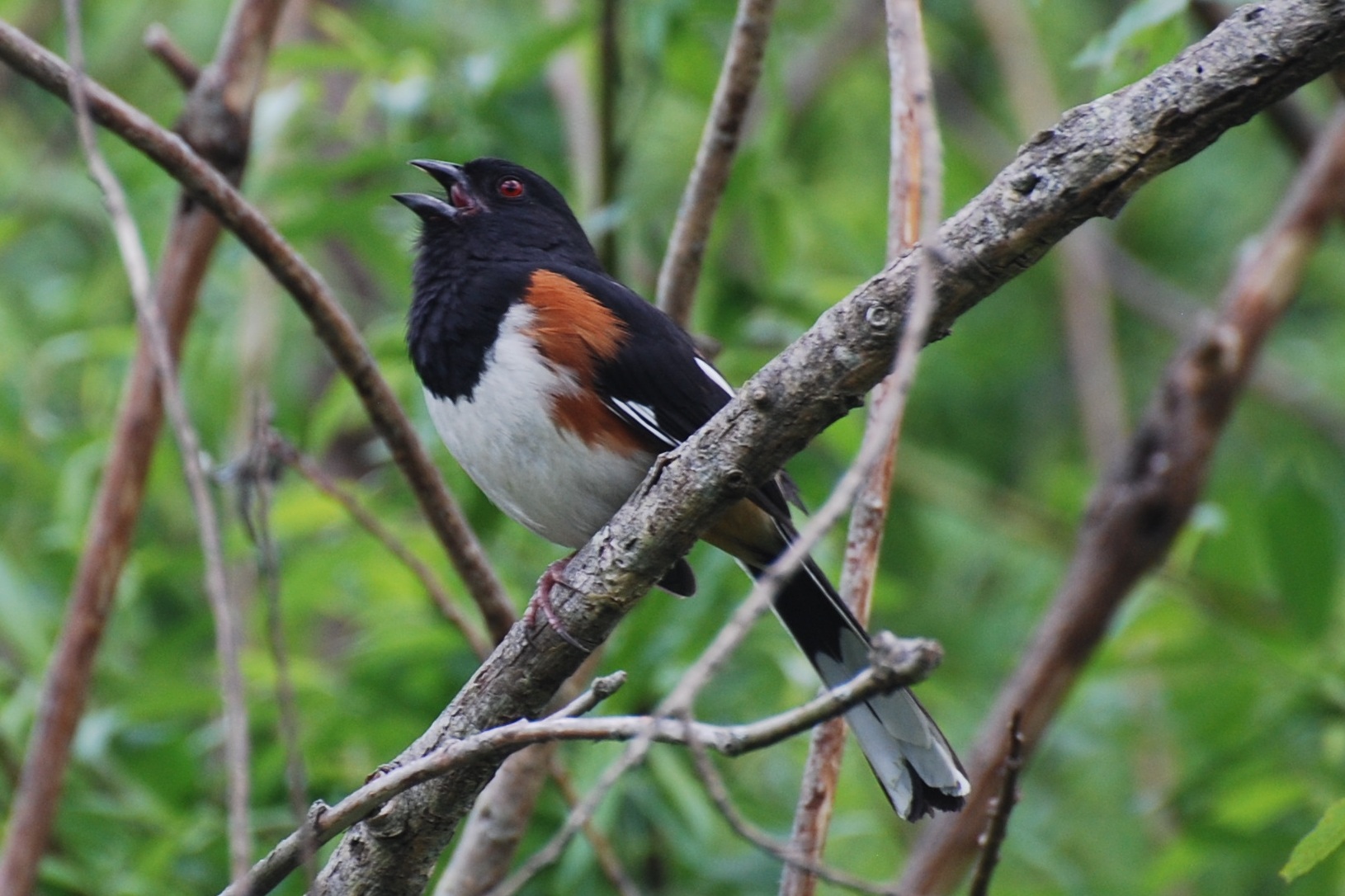
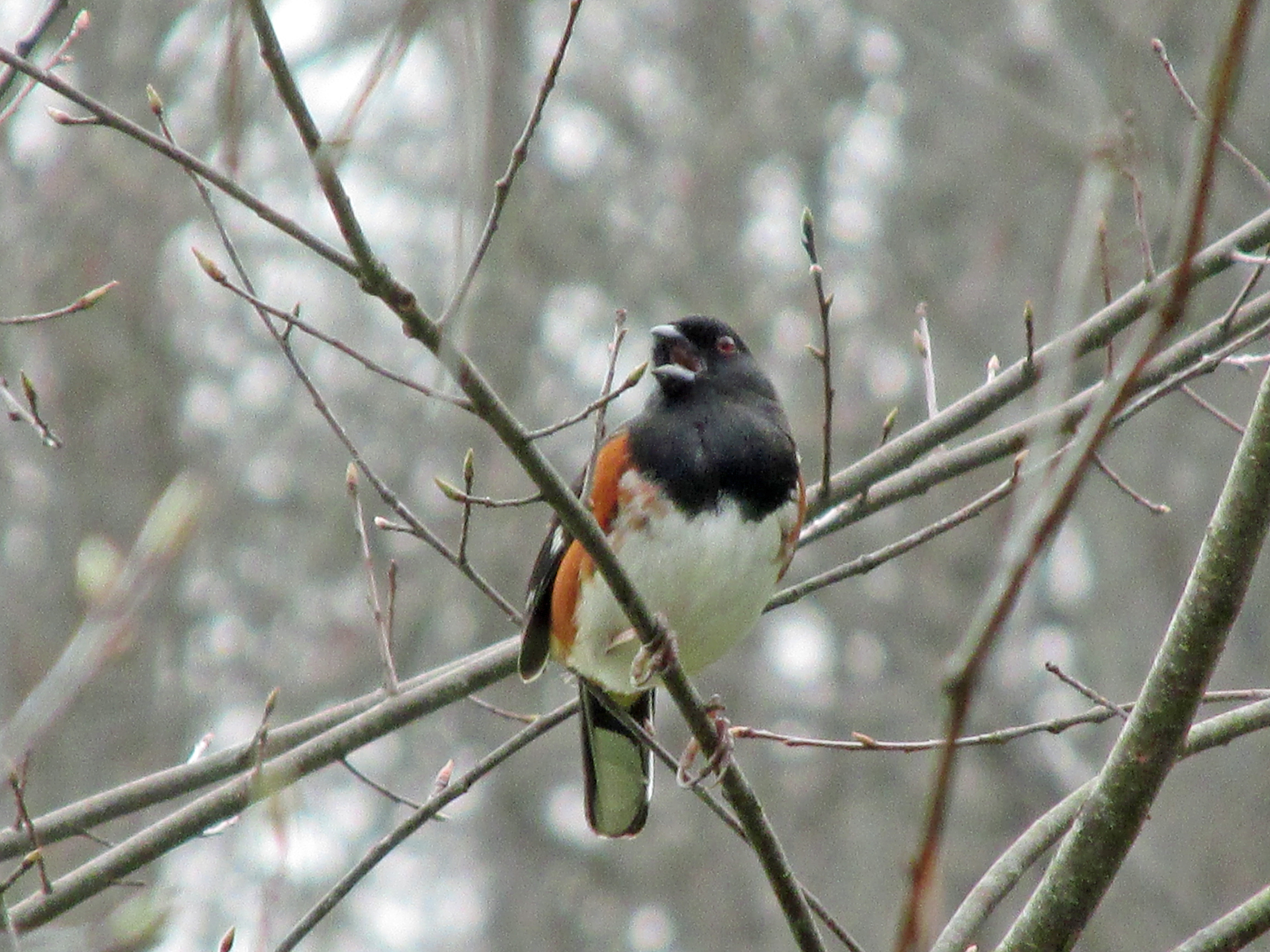
Photo by Bryan Stevens                                                                         A male Eastern Towhee sings from an elevated perch.

The fact that April is already so far advanced has caught me somewhat by surprise, which is surprising since there are plenty of signs letting me know spring’€™s approaching. For instance, each morning when I leave for work I usually hear a cacophony of singing birds, including Eastern Bluebirds, Song Sparrows, Tufted Titmice and Carolina Chickadees.

The birds are stirring, and that always means the seasons are shifting. On bird that has been quite prominent in the yard for the past few weeks has been the Eastern Towhees. We had several individuals, both males and females, spend the winter near the feeders.

I saw and identified my first Eastern Towhee in early spring in 1993. At that time, I was struggling to identify some of the common visitors at my feeders. I was acquainted with White-breasted Nuthatches, Blue Jays, Downy Woodpeckers, Carolina Wrens, Dark-eyed Juncos and a handful of other birds. When I looked out a window and saw this bird feeding on the ground, the morning sun illuminating his dramatic plumage of black, white and rufous red, I was immediately aware this visitor represented something new and unexpected.

il_570xN.742473837_4gwh

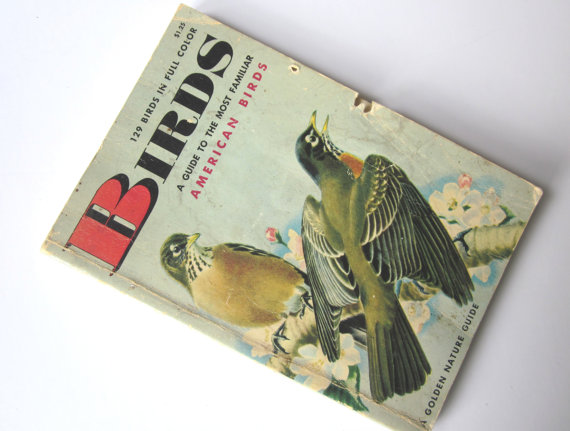
This pocket-sized reference guide helped many beginning birders learn to identify common backyard birds.

Consulting a field guide —€” I was using the Golden Nature Guide to the Most Familiar American Birds — I soon found a painted illustration of a Rufous-sided Towhee that matched in every detail the bird I had just observed on the ground beneath a Blue Spruce in my yard.

Many of the older field guides still list the Eastern Towhee as “€œRufous-sided Towhee,”€ which is actually more descriptive of the bird’s appearance than the word “€œeastern.”

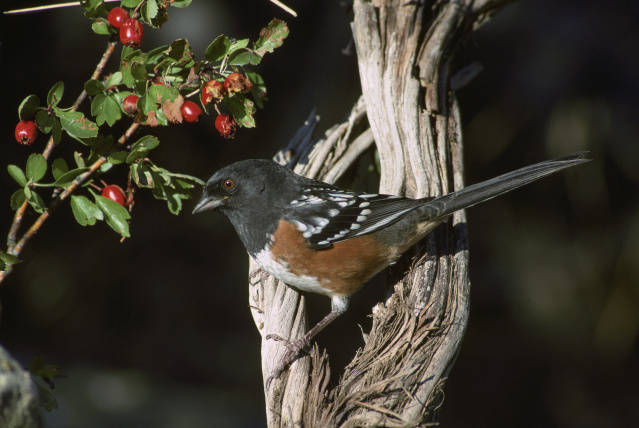
Photo by U.S. Fish & Wildlife Service A male Spotted Towhee shows extensive spotting on its back.

Photo by U.S. Fish & Wildlife Service
A male Spotted Towhee shows extensive spotting on its back.

In 1995, ornithologists renamed the Rufous-sided Towhee to Eastern Towhee and also separated the Eastern Towhee from its western counterpart, the Spotted Towhee. Until that point, these two towhees had been considered different races of the same species.

In 2003, I saw a Spotted Towhee during a visit to Salt Lake City, Utah. The bird looks almost identical to an Eastern Towhee except for considerable white spotting —€” hence its common name — on the bird’€™s back.

Eastern_Towhee

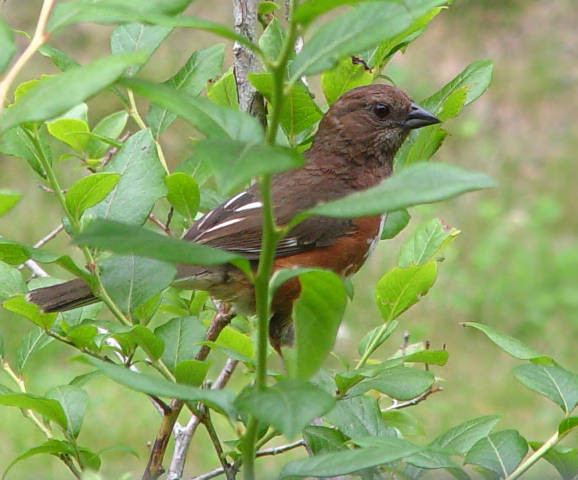
Photo by U.S. Fish & Wildlife Service           The female Eastern Towhee’s plumage is a rich, chocolate brown where the male’s feathers are black.

Eastern Towhees do spend a considerable amount of time on the ground and hidden in thickets and hedges. Other common names for this bird includes “Ground Robin” and “Swamp Robin.”€ They are one of the larger members of the sparrow family, however, and not related to the thrush family, which includes such birds as American Robin, Eastern Bluebird and Wood Thrush.

Towhee1

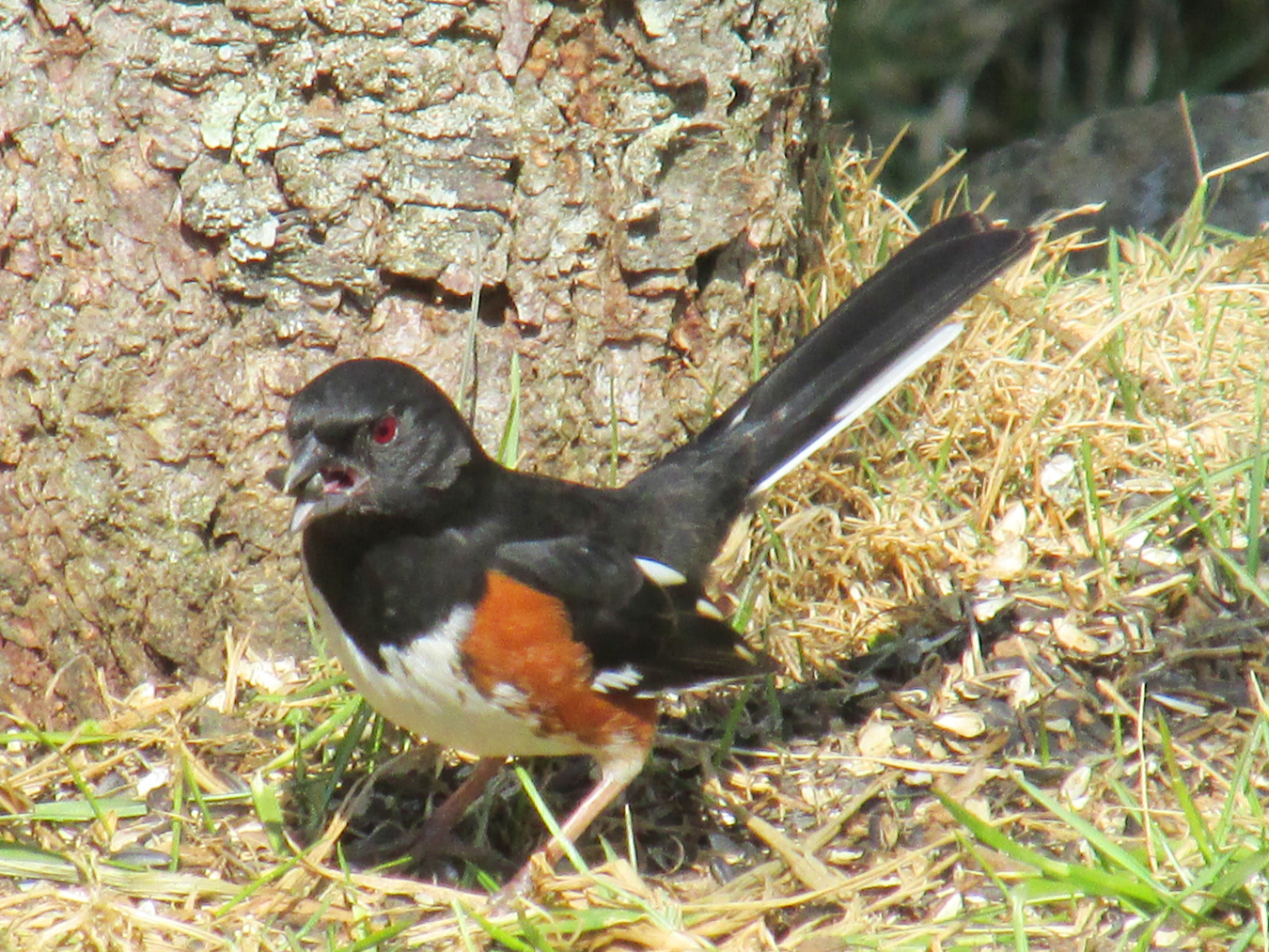
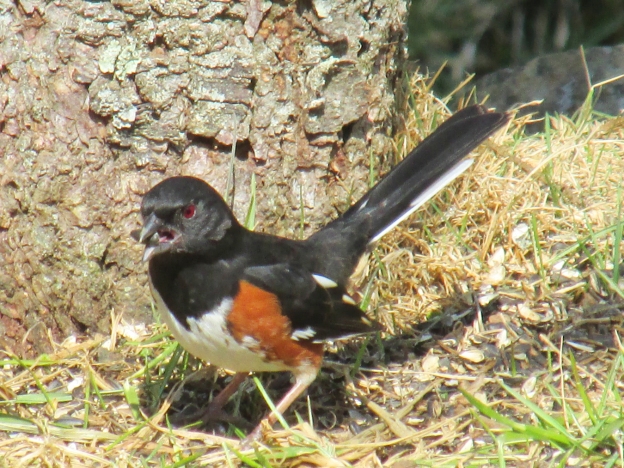
Photo by Bryan Stevens                            Towhees spend much of their time on the ground when searching for food.

Unlike the “€œbrown”€ members of the sparrow family, the Eastern Towhee is a brightly colored bird. Males have a black hood. The black coloration extends into the back and tail. The belly is white and the sides are flanked with a rusty-red color. In flight, their black tails are bordered with white feathers, which produces a dramatic flash of contrasting colors. The female Eastern Towhee is an attractive bird in her own right. She shares the rufous sides and white coloration that are present in the male’s plumage. However, the male’€™s black feathers are replaced by a warm, chocolate brown plumage in the female.

The Eastern Towhee is one of my favorite yard birds, but not just because of its dramatic appearance. These birds also have some instantly recognizable vocalizations. With the arrival of spring, the males will seek elevated perches for extensive singing bouts to attract mates and establish territories. Their song has been interpreted, quite accurately, as “Drink your tea!” They also have some alarm notes, such as “€œChew-ink”€ and “€œToe-Hee,” which is the basis for this bird’s common name.

Greentailed_towhee

Photo by U.S. Fish & Wildlife Service    Although the smallest member of the towhee family, the Green-tailed Towhee is still a larger bird than most members of the sparrow clan.

They are often found in the same sort of tangled habitat favored by Northern Cardinals and Brown Thrashers. To attract these birds, don’€™t manicure every inch of your yard. Leave some wild corners that will provide shelter for birds that thrive under cover. In the southern United States, these birds thrive in scrub palmetto habitats.

Other North American towhees include Green-tailed Towhee, Abert’s Towhee, California Towhee and Canyon Towhee.

••••••••••

I want to close this week’s column by asking for help from readers. I love to document the yearly arrival of Ruby-throated Hummingbirds. I’d appreciate hearing from any readers who would like to share the information about their first hummingbird sighting of the season. Simply send me your name and location, as well as the date and time when your first hummingbird arrived. The best way to contact me is by my email at ahoodedwarbler@aol.com. Messages are also welcome through my Facebook account at http://www.facebook.com/ahoodedwarbler.

3544493082_02f675508f_o

Photo Courtesy of Jean Potter                                                                                                                The male Eastern Towhee sings persistently during the spring season.


Early March in Coastal South Carolina in Photos

TriColor-Surprise

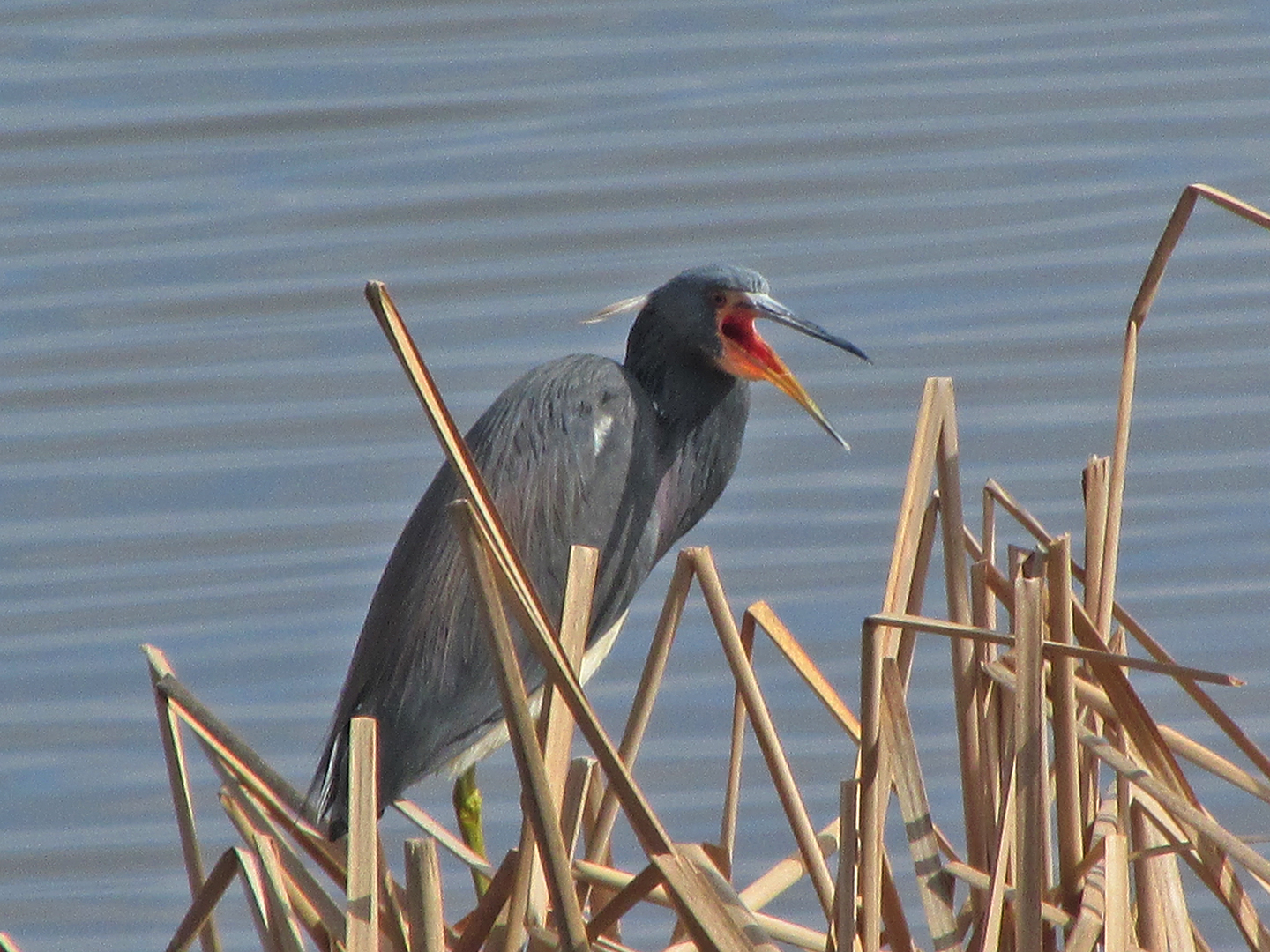
A Tri-Colored Heron gapes in the Carolina sunshine. These members of the heron/egret clan are coming into their nuptial plumage for the upcoming nesting season. During a seven-day state in Pawleys Island, S.C., I observed 100 species of birds, more than I could likely expect to find back in Northeast Tennessee at this time of the year.

Scaup

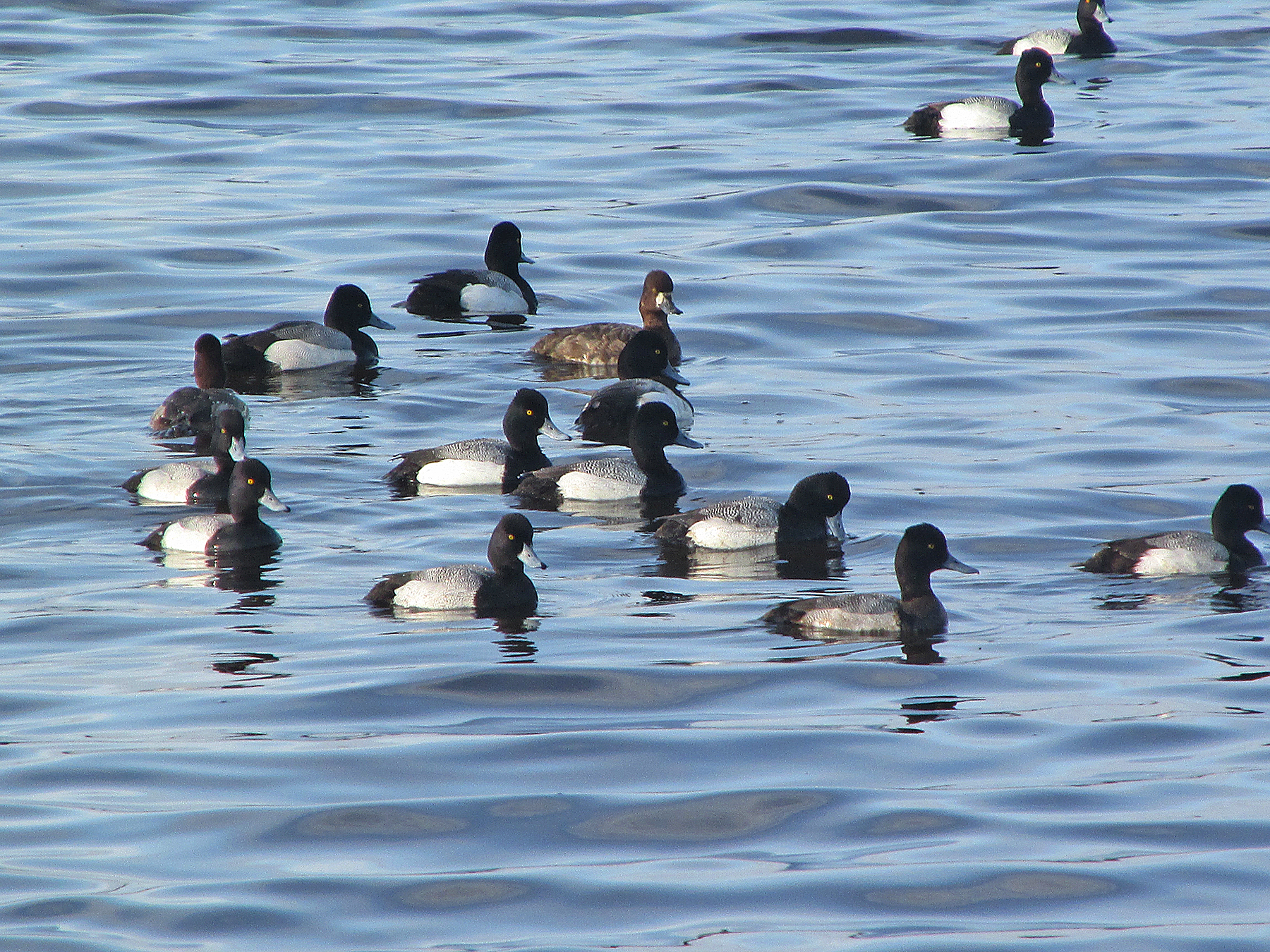
A raft of Lesser Scaup refresh in a shallow pond at Huntington Beach State Park in South Carolina. In early March, this diving duck was one of the most common in the park.


Egreta

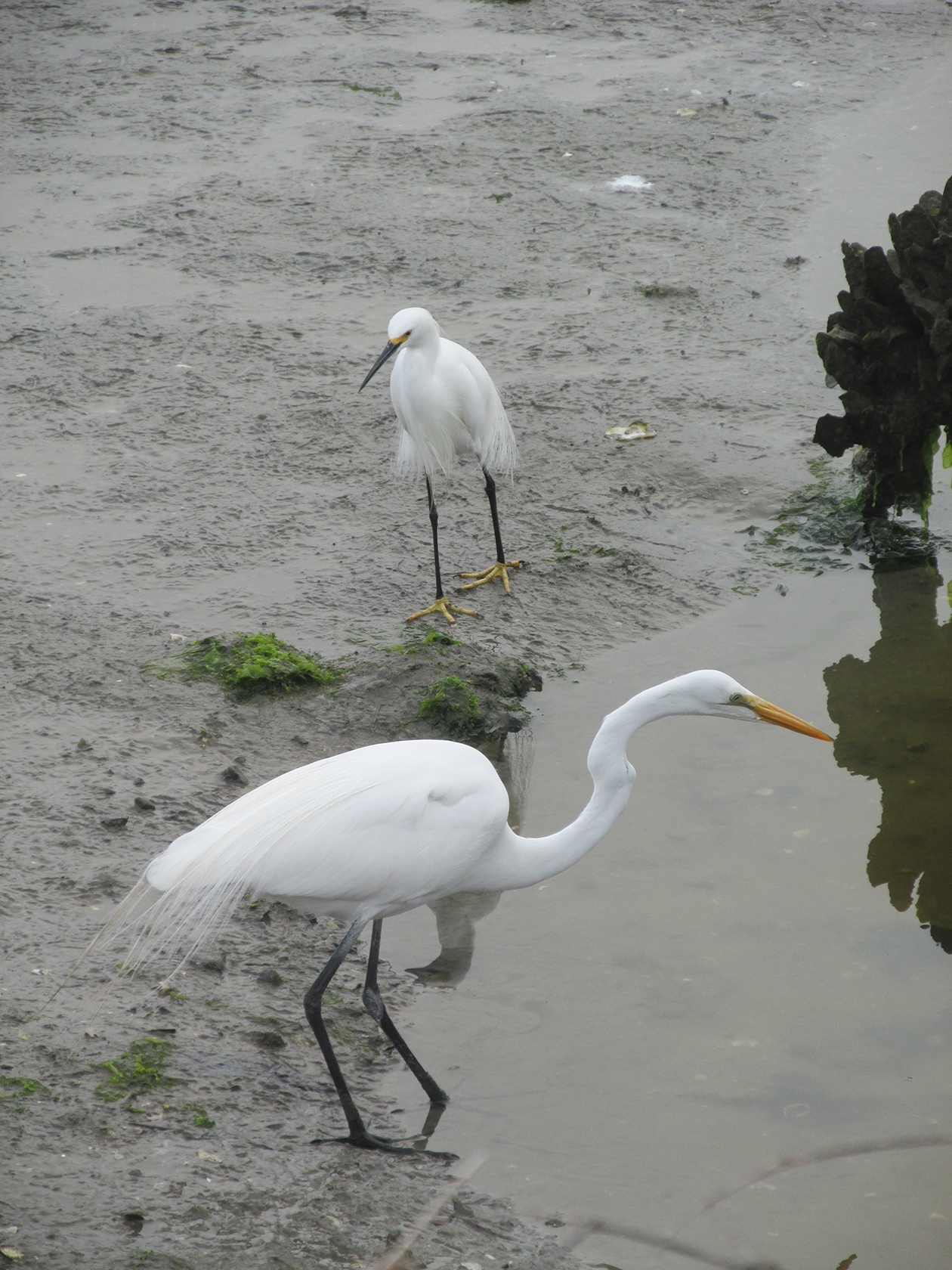
A Snowy Egret and Great Egret fish along the causeway at Huntington Beach State Park.

Yellowlegs

A Greater Yellowlegs forages in a tidal marsh pool during a migratory stop at Huntington Beach State Park. March is the month when many shorebirds start making their way as far north as the Arctic tundra for a brief albeit productive nesting season.

Coot-2

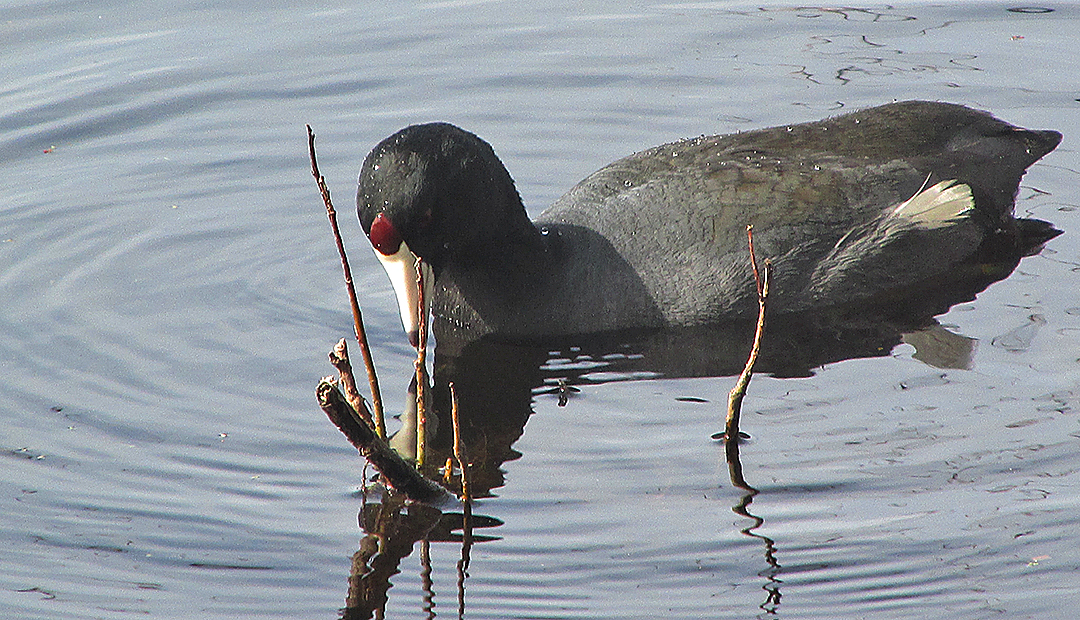
The American Coot is a common species of waterfowl in coastal South Carolina in March.

CommonGallinule

Common Gallinule, formerly known as the Common Moorhen, is fond of some of the flooded woodlands within Huntington Beach State Park.

Dowitchers

Short-billed Dowitchers make a feeding stop at Huntington Beach State Park. These birds were part of a flock that numbers close to 100 birds.

Osprey-Brook

The Osprey, also known as the Fish Eagle or Fish Hawk, is a common sight in the Carolina Low Country.

GreatBlue-Egret

A Great Blue Heron and Great Egret compete for prime fishing turf.

Hermit-Two

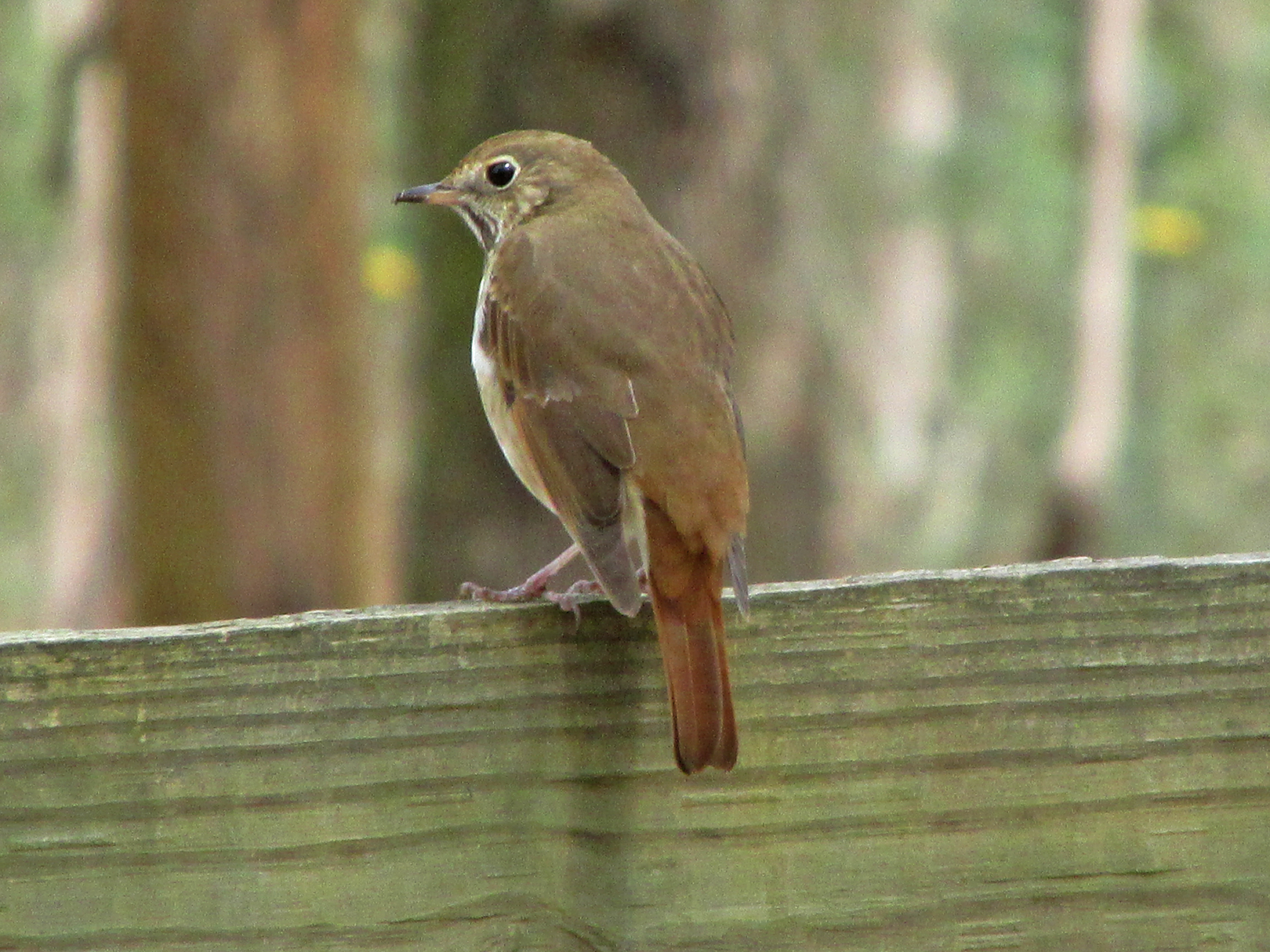
Winter songbirds, such as this Hermit Thrush at Brookgreen Gardens, will soon give way to returning summer nesting birds, such as warblers, vireos and other thrushes.

Snipe-1

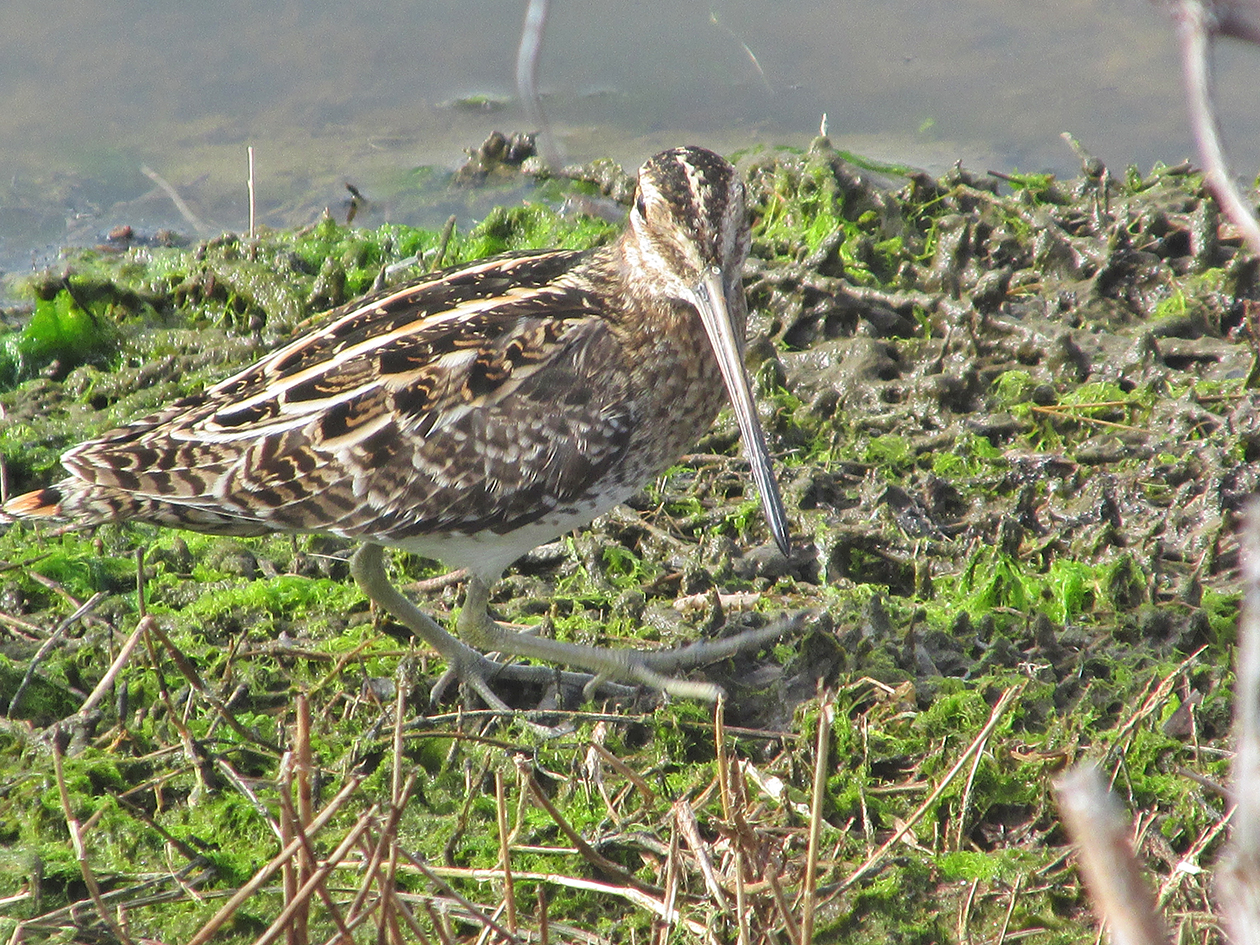
Didn’t think snipes were real? Well, the object of the mythical snipe hunt is very much a real creature. Pictured is a Wilson’s Snipe along the causeway at Huntington Beach State Park.

Sand-Dollar

Redwing-2

Red-winged Blackbirds and their loud calls are again ringing from the wetlands in the South Carolina Low Country.

Pelican=Reflected

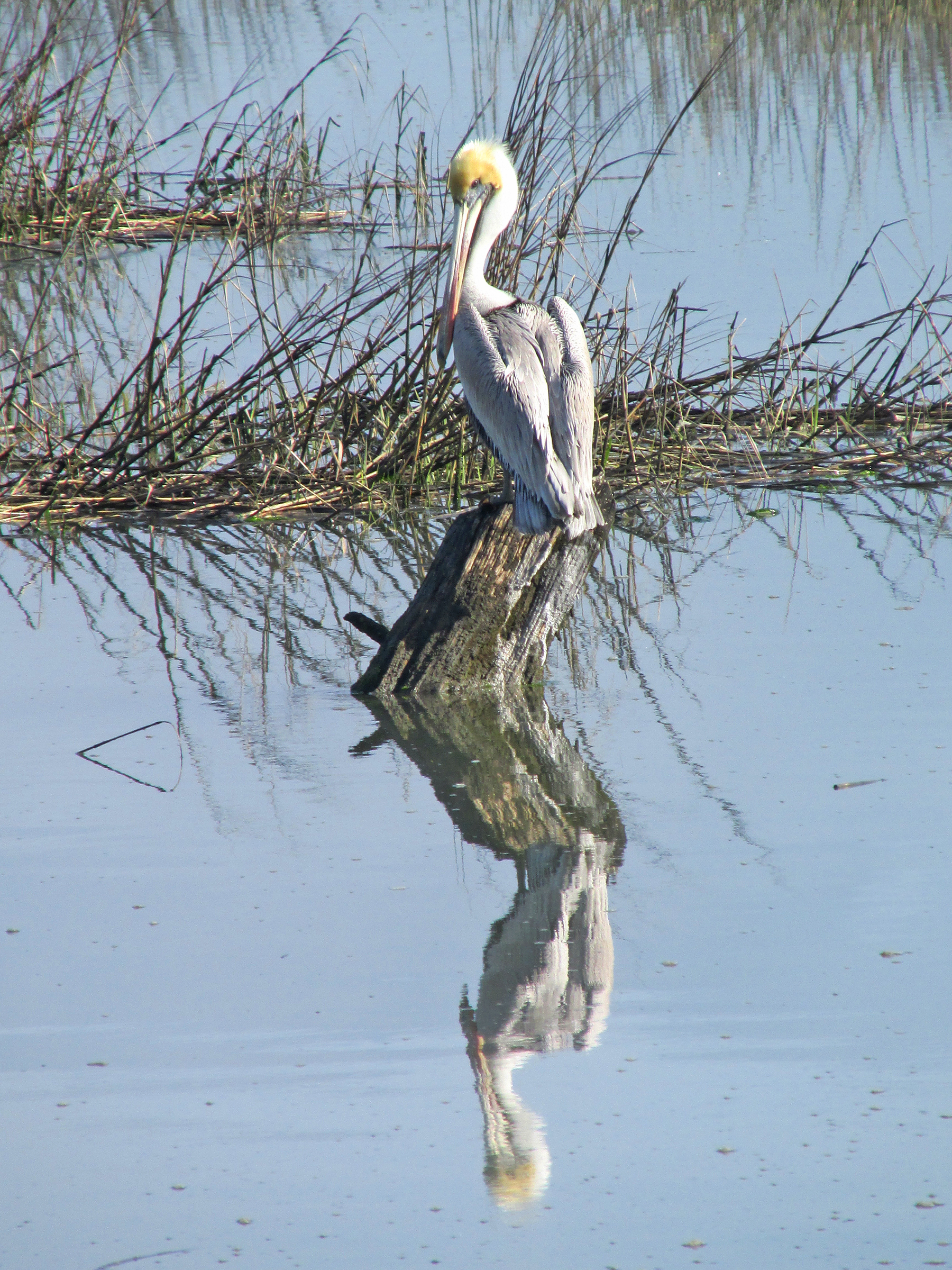
Brown Pelican perches in the marsh at Huntington Beach State Park.

Sculpture-Extra

Brookgreen Gardens is renowned for its display of sculptures. For Eastern Bluebirds, such as this pair, the works of art are simply convenient perches.

Grackles

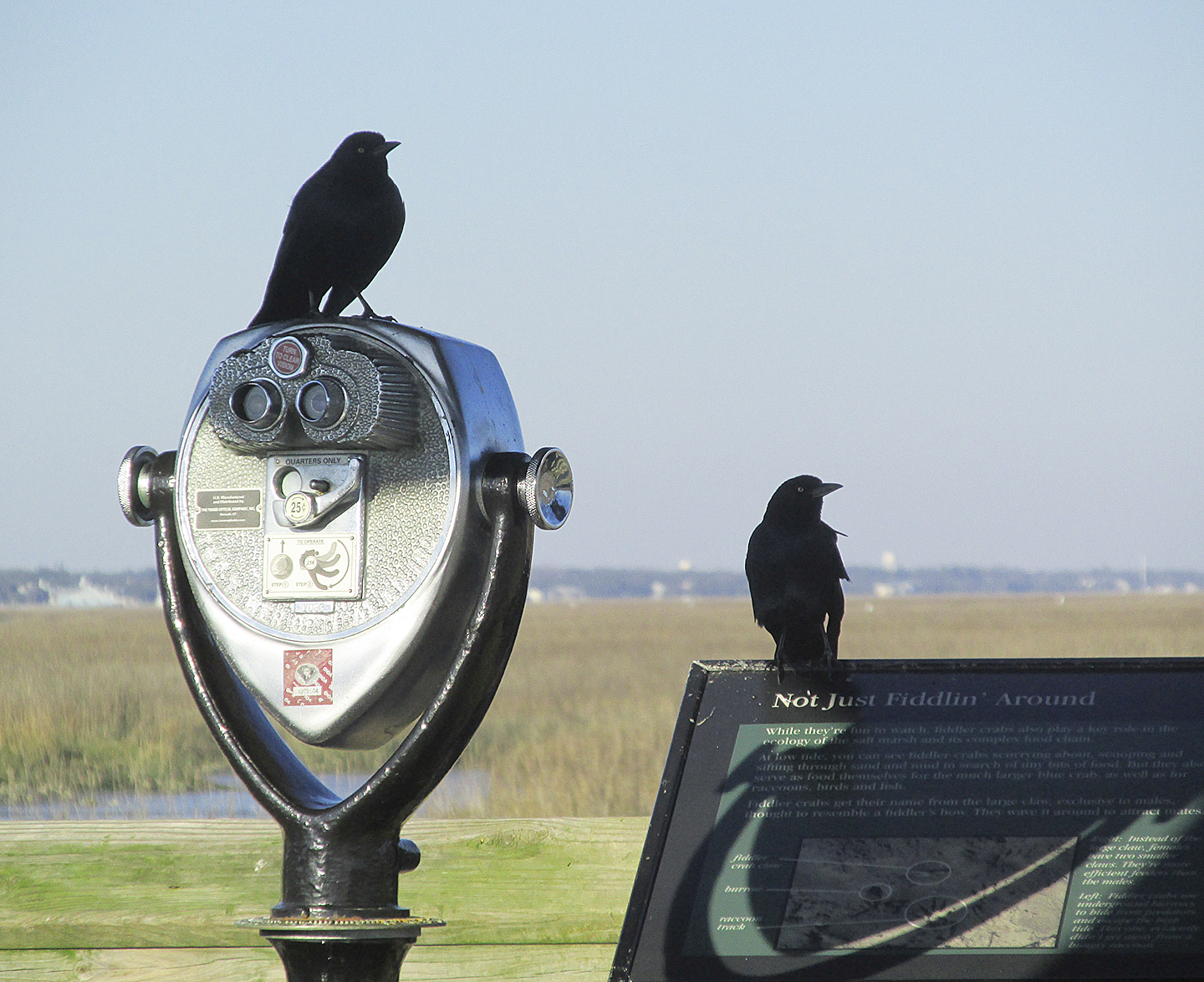
Boat-tailed Grackles perch on a scope and sign at Huntington Beach State Park.

WhitePelican

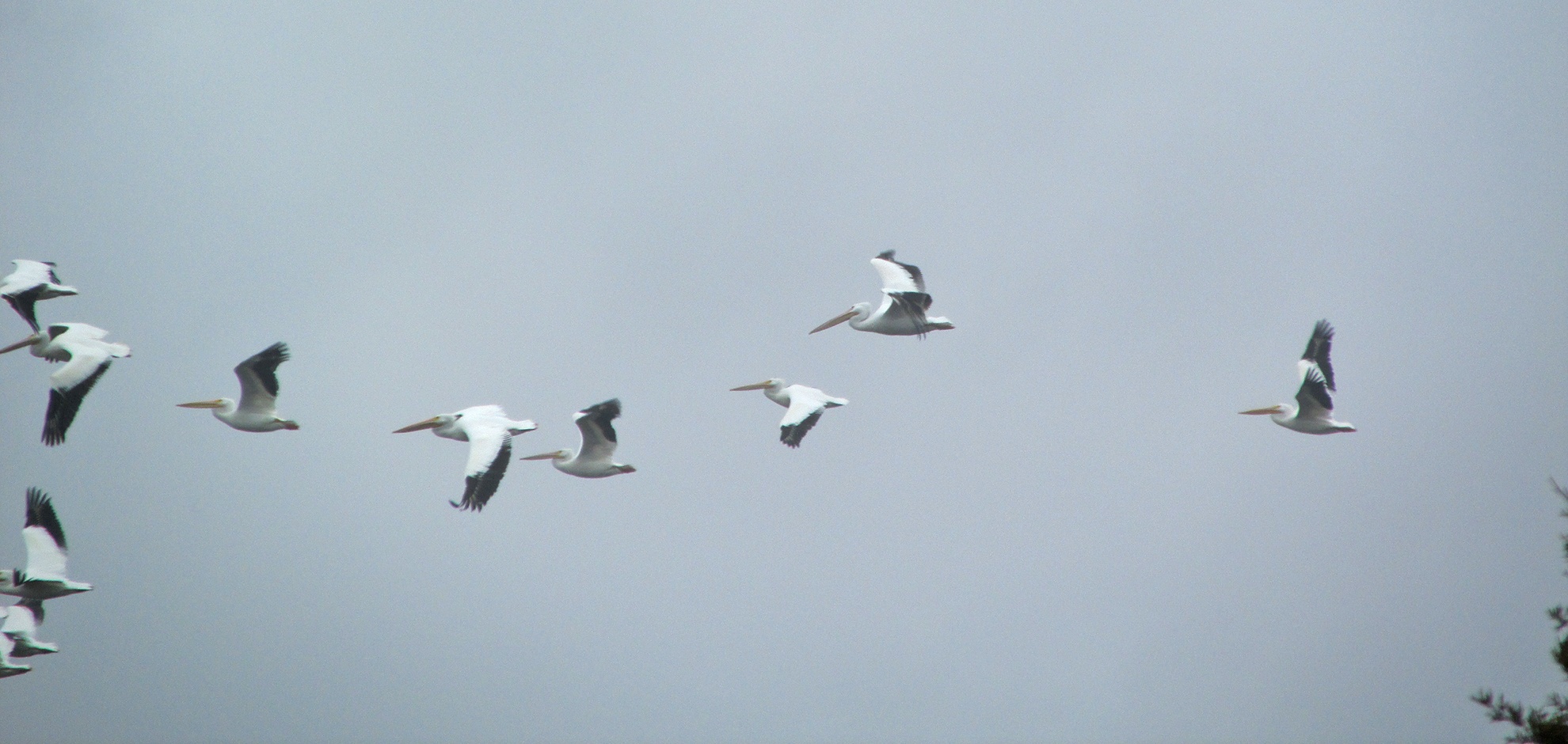
Birding in the transitional period between seasons can also bring unexpected surprises, such as a sighting of White Pelicans at Huntington Beach State Park.

Turkeys-3

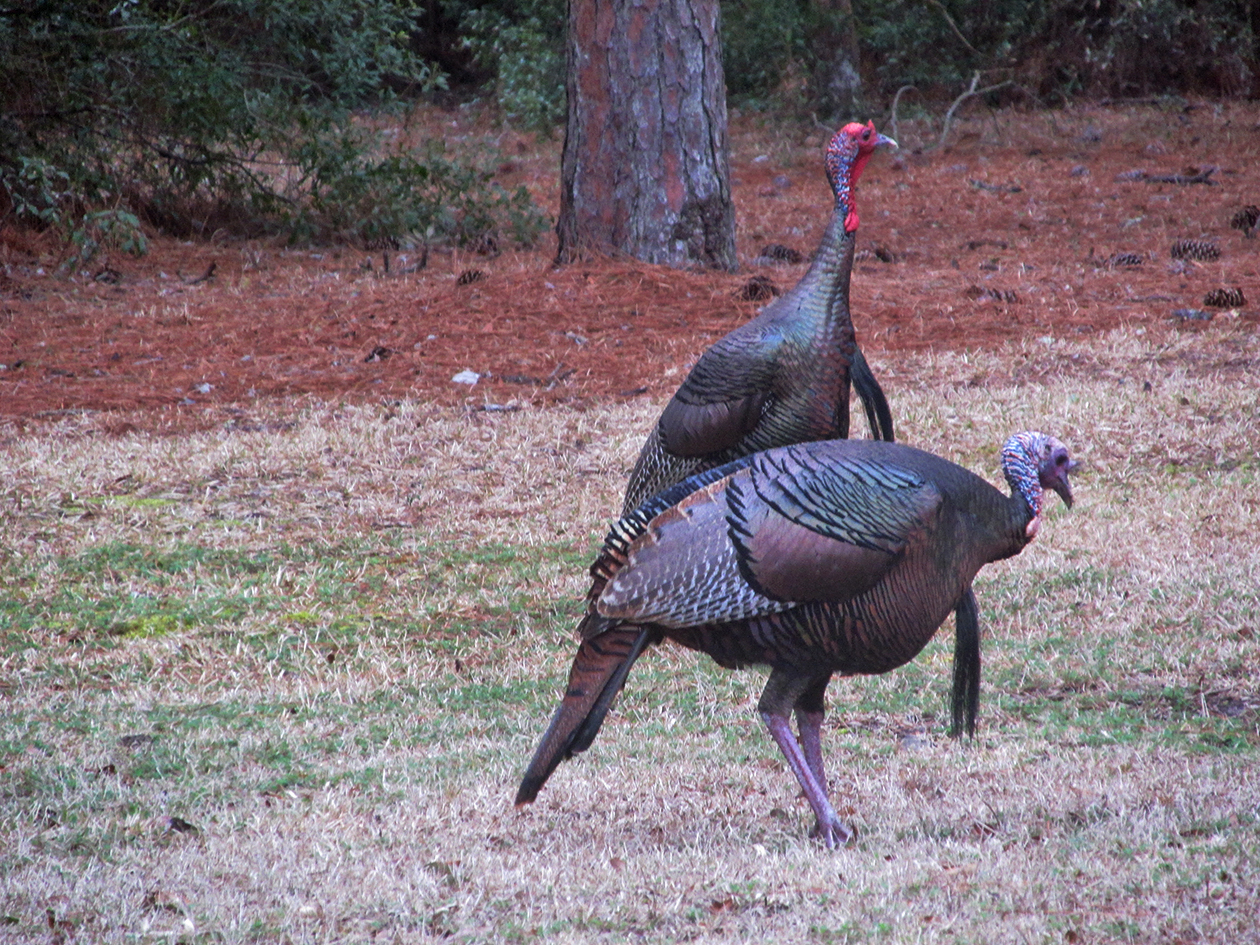
Wild Turkeys stroll the grounds of Brookgreen Gardens.

Grebess-Surf

Horned Grebes ride the rough surf near the jetty at Huntington Beach State Park.

Sunset

I hope you enjoyed these photos from my recent trip. See you next week back in Northeast Tennessee, just in time for the start of spring migration.


Heavy snow forces fox sparrows to abandon reclusive habits

FoxSparrow-Foot

Photo by Bryan Stevens                                                                A Fox Sparrow lifts one foot into its belly feathers on a cold morning in reaction to bitter cold.The cold weather that closed out the month of February in the region also marked a shift in the seasons. The frigid temperatures, snow and ice also brought increased traffic to feeders.

One of the recent new arrivals at my home during the last of the February storms was a fox sparrow, who fed along with such birds as purple finches, pine siskins, American goldfinches and dark-eyed juncos.

In North America, the sparrows are classified in the Emberizidae family, which also includes the buntings, cardinals, grosbeaks and tanagers. The American, or New World, sparrows are a diverse group of seed-eating songbirds with conical bills. Many of them are brown or gray in color, leading to the term “little brown birds” being used to describe a family of similar birds. On closer study, each species of sparrow is quite unique, with many of them having distinctive head patterns or splashes of color apart from the dull browns and grays.

Fox-Bryan

Photo by Bryan Stevens                                                                  Fox Sparrows prefer to remain in thickets and tangle of thick cover. Heavy snows will often bring this sparrow to backyard feeders.

Although they share the name “sparrow,” American sparrows are more closely related to Old World buntings than they are to the Old World sparrows. In fact, the only true Old World sparrow in Northeast Tennessee is the House Sparrow, which was introduced to the United States and is not a native bird.

Although the label “little brown birds” is somewhat accurate for sparrows, learning to distinguish most of the more common sparrows isn’t that difficult. Observing those sparrows that visit feeders is a good place to start. Other sparrows that will come to feeders include song sparrow, field sparrow, chipping sparrow, white-throated sparrow and white-crowned sparrow. The dark-eyed junco and Eastern towhee are also members of the sparrow family, but their common names do not include the term “sparrow.”

Worldwide, there are many superstitions connected with birds commonly known as “sparrows.” In the book The Folklore of Birds, author Laura C. Martin notes that in China the sparrow is a foreteller of good luck. She also points out that in Japan the sparrow is a symbol for gentleness, gratitude and joy.

Keep in mind, however, that sparrows in Japan and China are not among the same family of birds known as sparrows that are found in the United States. In fact, with a few exceptions, our native sparrows are unique to North America.

Menke-Fox_sparrow (1)

Photo by U.S. Fish & Wildlife Service                                             A Fox Sparrow perches on a bare branch. These large sparrows are only winter visitors in Northeast Tennessee.

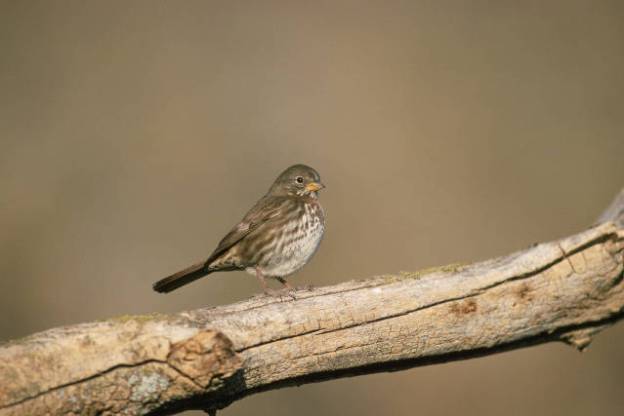
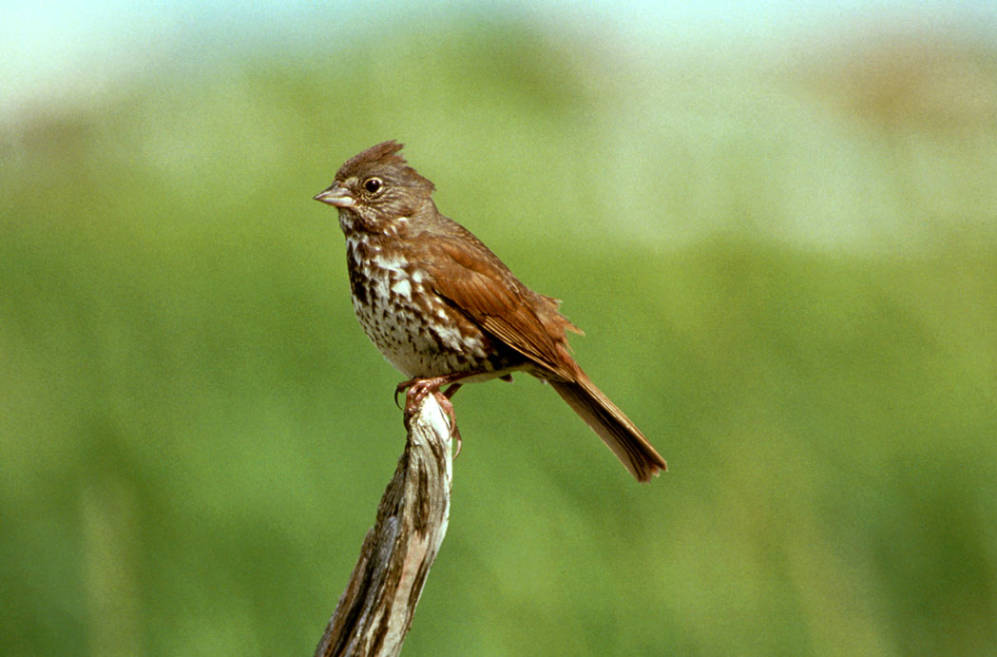
For instance, the fox sparrow is a large, plump bird that in many parts of North America is most familiar as a migrant or wintering bird. The fox sparrow has a rusty tail and a streaked breast, evocative of a fox, hence its common name. Its plumage is dominated by brick-red and gray feathers.

In addition to a rather distinctive appearance for one of the so-called “Little Brown Birds,” the fox sparrow can easily be recognized by its behavior, too. This bird has a vigorous, distinctive way of foraging on the ground, kicking backward with both feet to uncover food. In fact, the instinct to forage in this manner means they are most often seen on the ground below a feeder instead of perched on a feeder like other birds.

Fox__Sparrow

Photo by U.S. Fish & Wildlife Service                                 A Fox Sparrow perches on a branch, giving a good view of the rusty-red plumage that inspired its common name.

I’ve noticed over the years that February and March is usually the best time of the year to observe this winter sparrow. Even when these large sparrows are present, it often takes a heavy snow to bring them out of their tangled thickets to our feeders. Other sparrows are less frequent visitors to yards, and can most often be found in the region during the migration season. These sparrows of the transitional periods between the seasons include savannah sparrow, vesper sparrow and swamp sparrow. March and April are good times to look for these sparrows.

Most fox sparrows spend the nesting season in remote, fairly inaccessible locations as far north as Alaska and Canada.  As a result, most people only see these birds during the winter months when they can become very reliable visitors to feeders. The recent heavy snows at the end of February brought a single fox sparrow to my feeders. The bird arrived early each morning and usually didn’t extend its visit beyond mid-afternoon.

•••••

Bryan Stevens lives near Roan Mountain, Tennessee. Friend him on Facebook at https://www.facebook.com/ahoodedwarbler. He is always posting about local birds, wildlife, flowers, insects and much more. If you have a question, wish to make a comment or share a sighting, email ahoodedwarbler@aol.com.

FOXIE

Photo by Bryan Stevens                                                                                                                        A heavy snowfall often prompts Fox Sparrows to visit backyard feeders, although they prefer to feed on the ground below the feeders. They kick vigorously to uncover fallen seeds covered by snow or leaves.

Meet the gravity-defying nuthatches

WBNuthatch-Poised

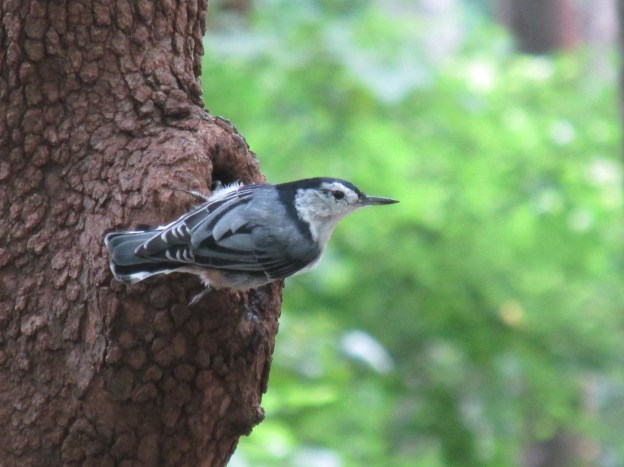
Photo by Bryan Stevens                                                 A White-breasted Nuthatch perches at the end of a branch.

The power of flight gives most birds a perfectly valid reason to disregard the power of gravity. The family of tree-clinging birds known as nuthatches lives an even more topsy-turvy lifestyle than many other of their winged kin. Nuthatches prefer a headfirst stance as they search for food in the nooks and crannies in tree trunks and branches.

The United States is home to four species of nuthatches: white-breasted, red-breasted, brown-headed and pygmy. White-breasted nuthatches are probably the most familiar nuthatch to backyard birders in this area.

WBNuthatch-WithSeed

Photo by Bryan Stevens                                      A White-breasted Nuthatch plucks a sunflower seed from a feeder.

Because of their gravity-defying antics, the white-breasted nuthatch and other members of the family can provide hours of entertainment at our bird feeders. Individual white-breasted nuthatches will follow a single-minded path along the trunk of a tree or a branch on the way to a feeder. An individual nuthatch rarely varies from this path. It’s amusing to watch the jerky progress along the trunk as this bird prepares for a flight to a feeder holding sunflower seeds or a hanging wire basket of suet.

At my home, nuthatches typically remain aloof from the rivalry always ongoing between the chickadees and titmice. The white-breasted nuthatch is also a no-nonsense visitor. Rarely distracted by disturbances among other birds, this nuthatch is content to grab a seed and go or hang on to the wire frame of a suet basket and peck off chunks of suet.

Red-breastedNuthatch

Photo by Bryan Stevens                                A Red-breasted Nuthatch visits a feeder for peanuts.

The more numerous titmice and chickadees give way when a white-breasted nuthatch claims a feeder. At times, however, among the frantic activity, a tufted titmouse or a Carolina chickadee will forget itself and fly to a position on a feeder already claimed by a nuthatch. If surprised enough to retreat to a nearby perch, the nuthatch will go through a rather comical little dance to express its displeasure. Wings spread out in a rigid pose, the bird will turn around in tight circles, showing definite resentment at being displaced by an offending chickadee or titmouse.

These displays are usually brief, unless they are directed toward another white-breasted nuthatch. A male-female pair of these nuthatches can peaceably visit a feeding area at the same time. Two male nuthatches — or two female nuthatches for that matter — show little toleration for each other. Their little dances of defiance are in these cases demonstrated for each other. Eventually, one nuthatch will give way, but these are stubborn birds, much more set in their ways than chickadees and titmice.

Red-breastedNutHatchYAHOO

Photo by Bryan Stevens                                            Red-breasted Nuthatches are occasional winter feeder visitors in Northeast Tennessee.

In our region, the stubby red-breasted nuthatch is another member of the family that occasionally finds its way to our yards. Smaller than the related white-breasted nuthatch and, as far as I can tell, complacent in the company of chickadees and titmice, the red-breasted nuthatch is always a welcome visitor. It has a tell-tale “yank yank” call that it produces when excited that sounds very much like little tin horns. The red-breasted nuthatch, perhaps because it spends so much of the year in more remote areas, can also be amazingly tame when it pays a winter visit.

Spring-Nuthatch

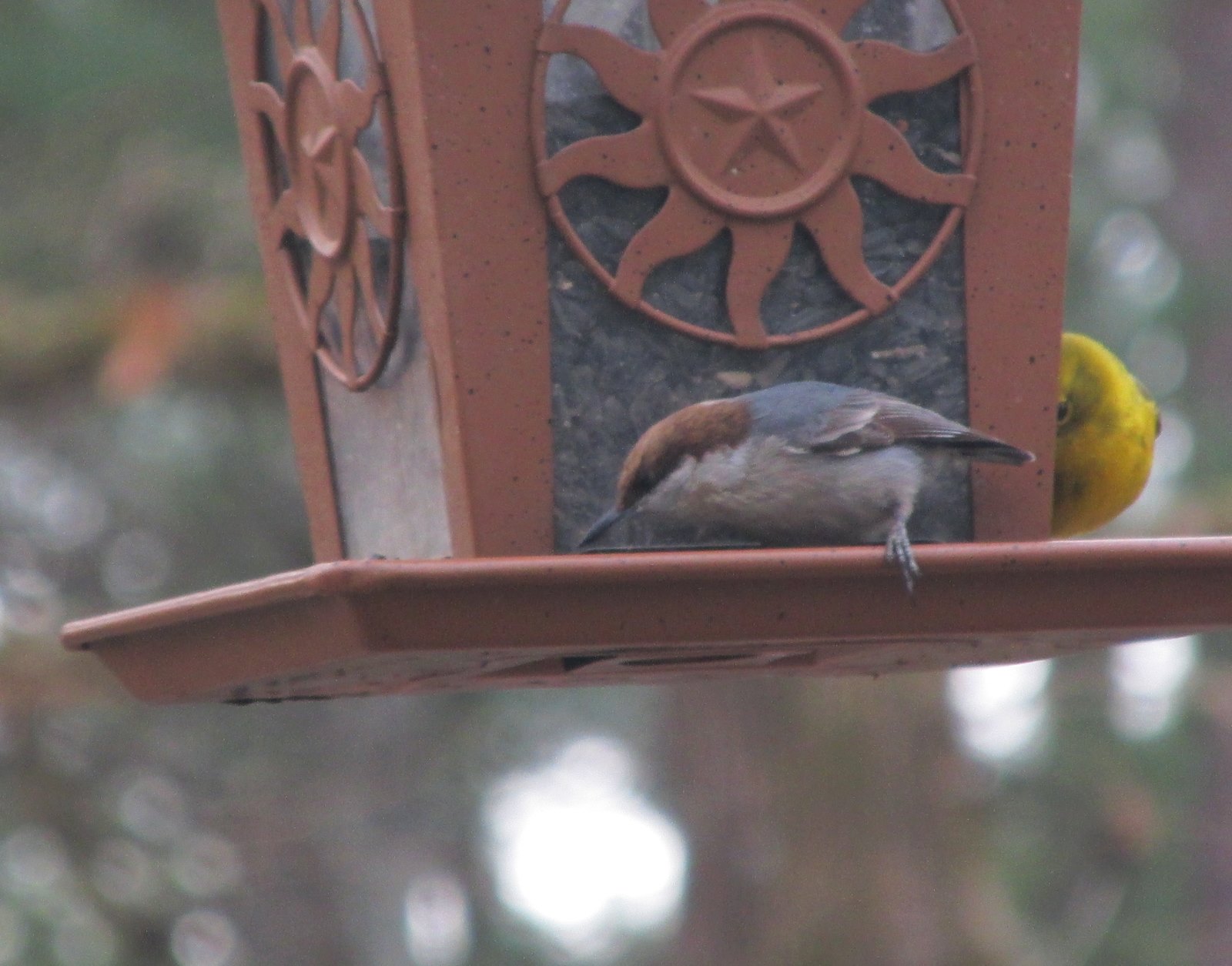
Photo by Bryan Stevens                                     A Brown-headed Nuthatch seeks out a sunflower seed from a feeder.

Both of these nuthatches can be attracted to feeders by offering peanuts, sunflower seeds and suet. They are also cavity-nesting birds, but are more reluctant about accepting a nesting box as a place to rear young. They will gladly accept an old woodpecker hole or other natural cavity in a tree.

The brown-headed nuthatch is a specialist of pine woodlands throughout the southeastern United States, favoring loblolly-shortleaf pines and longleaf-slash pines. This nuthatch requires standing dead trees for nesting and roosting. They forage for food, however, on live pines. The birds are more abundant in older pine stands.

AWC_1051

A painting of Red-breasted Nuthatches by early naturalist John James Audubon.

This small nuthatch is not at all common in the region, but there are some records. I’ve had much better luck finding the brown-headed nuthatch during visits to coastal South Carolina or suburban Atlanta in Georgia. In these southern locations, it can be a quite common bird.

These small birds will occasionally forage close to the ground, but they are often in the upper branches of pine trees. Their presence is often revealed by their call, which sounds amazingly like a squeeze toy. They produce their “squeaky toy” call persistently when agitated or curious. Brown-headed nuthatches often associate with mixed flocks in company with Carolina chickadees, tufted titmice, pine warblers and other small songbirds.

I also want to complete my list of North American nuthatches by adding the fourth species — pygmy nuthatch — to my life list. I have made two trips to western North America, where this species ranges, but haven’t managed to find this bird. Both the pygmy and brown-headed are among the smallest members of the nuthatch family.

On the other end of the size scale is the appropriately named giant nuthatch, which reaches a length of almost eight inches. The giant nuthatch ranges through China, Thailand and Burma. This nuthatch is bigger than a downy woodpecker, one of our more common visitors at backyard feeders in our region.

Worldwide, there are about 25 species of nuthatches, some of which have surprisingly descriptive names for birds that spend most of their lives creeping in obscurity along the trunks and branches of trees. Some of the more creative common names for these little birds include beautiful nuthatch, velvet-fronted nuthatch, sulphur-billed nuthatch, chestnut-bellied nuthatch, snowy-browed nuthatch and chestnut-vented nuthatch.
These birds are named “nuthatch” for the habit of some species to wedge a large seed in a crack and hack at it with their strong bills. I like to refer to them as “upside-down birds” because gravity doesn’t seem much of a factor in their daily lives. They are content to walk headfirst down a tree trunk or probe the underside of a large branch. It must give them an interesting perspective on the world around them.

WhiteBReastedNuthatchie_edited-1

Photo by Bryan Stevens                                                                                                                A White-breasted Nuthatch recovers after striking a window.


Spruce comes crashing down during recent storm

I felt really bad for the birds when one of the larger blue spruce trees in the yard came crashing to the ground on Thursday, Feb. 12. At the same time, I felt fortunate that the tree collapsed while I was at work, mainly because it came to rest at a location where I usually park my automobile.

Fallen-One

Photo by Bryan Stevens                                                                        The collapse of this blue spruce has left some of the local birds feeling somewhat homeless.

The large tree, which still retained a dense growth of stiff, prickly needles on the upper third of its branches, snapped right at ground level. With the horizontal shelter normally provided by the tree suddenly gone vertical, many of the birds looked dazed and confused in the aftermath. In particular, some of the Carolina Chickadees looked somewhat bewildered and baffled. A couple of Pine Siskins looked as if they were confused by the situation.

Winter-Chickadee-Confused

Photo by Bryan Stevens                                                This Carolina Chickadee, perched in the branches of the fallen blue spruce, looked somewhat confused in the immediate aftermath of the large tree’s collapse.

Most of the birds have adjusted. In fact, they have found the branches of the fallen tree just as capable of offering shelter from the elements and hiding places from potential predators.

The blue spruce was one of five planted by my late father and my late grandfather more than 30 years ago. Two of those five trees are still standing, but two others had already fallen several years ago during storms.

The gusts of wind on Feb. 12 proved too much for the tree. I don’t think blue spruce are particularly suited to life here in northeast Tennessee. They seem more vulnerable to pests and disease than many other conifers. At one time, my father planted some on his Christmas tree farm back in the 1980s and early 1990s. Most people didn’t like the sharp, spiky needles of a blue spruce, although the blue-green coloration often brought admiration from observers.

Until they grew more than 12 feet tall, my grandfather used to decorate the two spruces on each side of his home. He would string multi-colored strands of Christmas lights through the branches of the trees every holiday season.

Downy-Chick

Photo by Bryan Stevens                                                  Although located next to the fallen tree, this suet feeder continued to attract birds even after the tree collapsed on Thursday, Feb. 12.

When the trees grew too big to decorate, the birds became the chief beneficiaries. I positioned many of my feeders in the lower branches of several of the remaining spruces. From nuthatches and woodpeckers to chickadees and titmice, a variety of birds liked to congregate within the tree’s branches. A host of other birds, including Eastern Towhees, Dark-eyed Juncos and White-throated Sparrows liked to feed on the ground beneath the tall trees.

In the summer, birds such as Song Sparrows and Northern Cardinals concealed their nests in the thick boughs of some of these blue spruces.

I hate to lose a good tree. With these spruces, there are many memories tied to them. I’ll get over the loss, and I hope that, once the shock wears off, so will the birds.

After all, if your home came crashing down without warning, you might be a little perplexed, too.

•••••••

The Great Backyard Bird Count continues through Monday, Feb. 16. For more information, visit http://gbbc.birdcount.org/

I’ve been counting since Friday, Feb. 13, when this year’s GBBC kicked off. I’ll be sharing more about my participation in upcoming posts.

To learn more about birds and other topics from the natural world, friend me on Facebook at https://www.facebook.com/ahoodedwarbler. I’m always posting about local birds, wildlife, flowers, insects and much more. If you have a question, wish to make a comment or share a sighting, email ahoodedwarbler@aol.com.

Red-breastedNutHatchYAHOO

Photo by Bryan Stevens                                                                                                                               This whimsical feeder is attached to one of the blue spruce trees still standing. Five of these trees were planted about 40 years ago, but only two of them now remain standing. They’ve been magnets for a variety of birds through the years. In this photo, a Red-breasted Nuthatch enjoys some peanuts.


Annual Great Backyard Bird Count gives everyone a chance to contribute to ‘citizen science’

Organizers are inviting citizen scientists around the world to give Mother Nature a valentine this year and show how much they care about birds by counting them for the yearly Great Backyard Bird Count.

16107820406_680b4c4eda_o

Photo by Jean Potter                                      Pine Siskins flock to a sock filled with thistle seed. These finches, prone to irruptions every few years, could be quite common during this year’s Great Backyard Bird Count.

The 18th annual count is taking place Feb.13-16. Anyone in the world can count birds at any location for at least 15 minutes on one or more days during this four-day count and enter their sightings at http://www.BirdCount.org. The information gathered by tens of thousands of volunteers helps track changes in bird populations on a massive scale. The GBBC is a joint project of the Cornell Lab of Ornithology and the National Audubon Society with partner Bird Studies Canada.

Two years ago, the GBBC shattered records after going global for the first time, thanks to integration with the eBird online checklist program launched in 2002 by the Cornell Lab and Audubon. Participants reported their bird sightings from all seven continents, including 111 countries and independent territories. Participants came from a range of far-flung locations from from Afghanistan to Zimbabwe. More than 34.5 million birds and 3,610 species were recorded, thereby documenting nearly one-third of the world’s total bird species in just four days.

Last year, bird watchers fell in love with the magnificent snowy owl when these impressive birds were reported in unprecedented numbers across southeastern Canada, the Great Lakes states, the Northeast, and along the Atlantic Coast. Organizers anticipate snowy owls will show up in higher numbers during this year’s GBBC, too.

Snowy_Owl

Photo by U.S. Fish & Wildlife Service A Snowy Owl, held in captivity after suffering injuries that left it unreleasable, now educates people about the lives of birds of prey.

“It’s called an ‘echo flight,’” explained Marshall Iliff, eBird Project Leader at the Cornell Lab of Ornithology, in a press release promoting the GBBC. “After a huge irruption like we had last winter, the following year often yields higher-than-usual numbers as well. The abundance of lemmings that produced last year’s Snowy Owl irruption likely continued or emerged in new areas of eastern Canada, more owls may have stayed east after last year’s irruption, and some of last year’s birds that came south are returning.”

Owls are not the only birds that will motivate birding enthusiasts to get into the field this February.

“This may also be a big year for finches,” noted Audubon Chief Scientist Gary Langham. “GBBC participants in North America should be on the lookout for larger numbers of Pine Siskins and redpolls. These birds also push farther south when pine cone seed crops fail in the far north of Canada.”

Bird watchers from 135 countries participated in the 2014 count, documenting nearly 4,300 species on more than 144,000 bird checklists – that’s about 43 percent of all the bird species in the world! In addition to the U.S. and Canada, India, Australia, and Mexico led the way with the greatest number of checklists submitted.

“We especially want to encourage people to share their love of birds and bird watching with someone new this year,” says Dick Cannings at Bird Studies Canada. “Take your sweetheart, a child, a neighbor, or a coworker with you while you count birds for the GBBC. Share your passion and you may fledge a brand new bird watcher!”

Downy_woodpecker

Photo by U.S. Fish & Wildlife Service      The popular photography contest will also be open to Great Backyard Bird Count participants again this year. From common birds, such as this Downy Woodpecker, to more exotic ones such as Snowy Owls, photographers can focus their cameras on a variety of birds.

The Great Backyard Bird Count is a great way for people of all ages and backgrounds to connect with nature and show some love for the birds this Valentine”s Day. Participation is free and easy. To learn more about how to join the count, download instructions, a slide show, web buttons and other materials, visit http://www.birdcount.org. While you’re there, get inspired by viewing the winning photos from the 2014 GBBC photo contest.

I’ve taken part in the GBBC for the past 18 years. It’s easy to do. If you have never participated in the GBBC or any other Cornell Lab citizen-science project, you’ll need to create a new account. If you already created an account for last year’s GBBC, or if you’re already registered with eBird or another Cornell Lab citizen-science project, you can use your existing login information.

On any or all of the days of the GBBC, count birds for at least 15 minutes, although you can count for longer than that if you wish. Count birds in as many places and on as many days as you like—one day, two days, or all four days. Submit a separate checklist for each new day, for each new location, or for the same location if you counted at a different time of day. Estimate the number of individuals of each species you saw during your count period.

IMG_1136

Photo by Byron Tucker                                                                  A Red-tailed Hawk visits a backyard in an Atlanta suburb earlier this month. GBBC participants can count the birds in their own yards or visit their favorite birding locations to look for everything from raptors and sparrows to finches and waterfowl.

Enter your results on the GBBC website by clicking “Submit Observations” on the home page. Or download the free GBBC BirdLog app to enter data on a mobile device. If you already participate in the eBird citizen-science project, please use eBird to submit your sightings during the GBBC. Your checklists will count toward the GBBC.

To learn more, again simply visit http://www.birdsource.org. I’m optimistic you’ll join me this year in taking part in the Great Backyard Bird Count.

•••••

To learn more about birds and other topics from the natural world, friend Stevens on Facebook at https://www.facebook.com/ahoodedwarbler. He is always posting about local birds, wildlife, flowers, insects and much more. If you have a question, wish to make a comment or share a sighting, email ahoodedwarbler@aol.com.

Wrens provide example of resilient spirit of birds

There’s nothing like a wren on a cold, blustery winter’s day to teach a quick lesson in the resilient spirit shared by all our fine feathered friends.

WinterWren

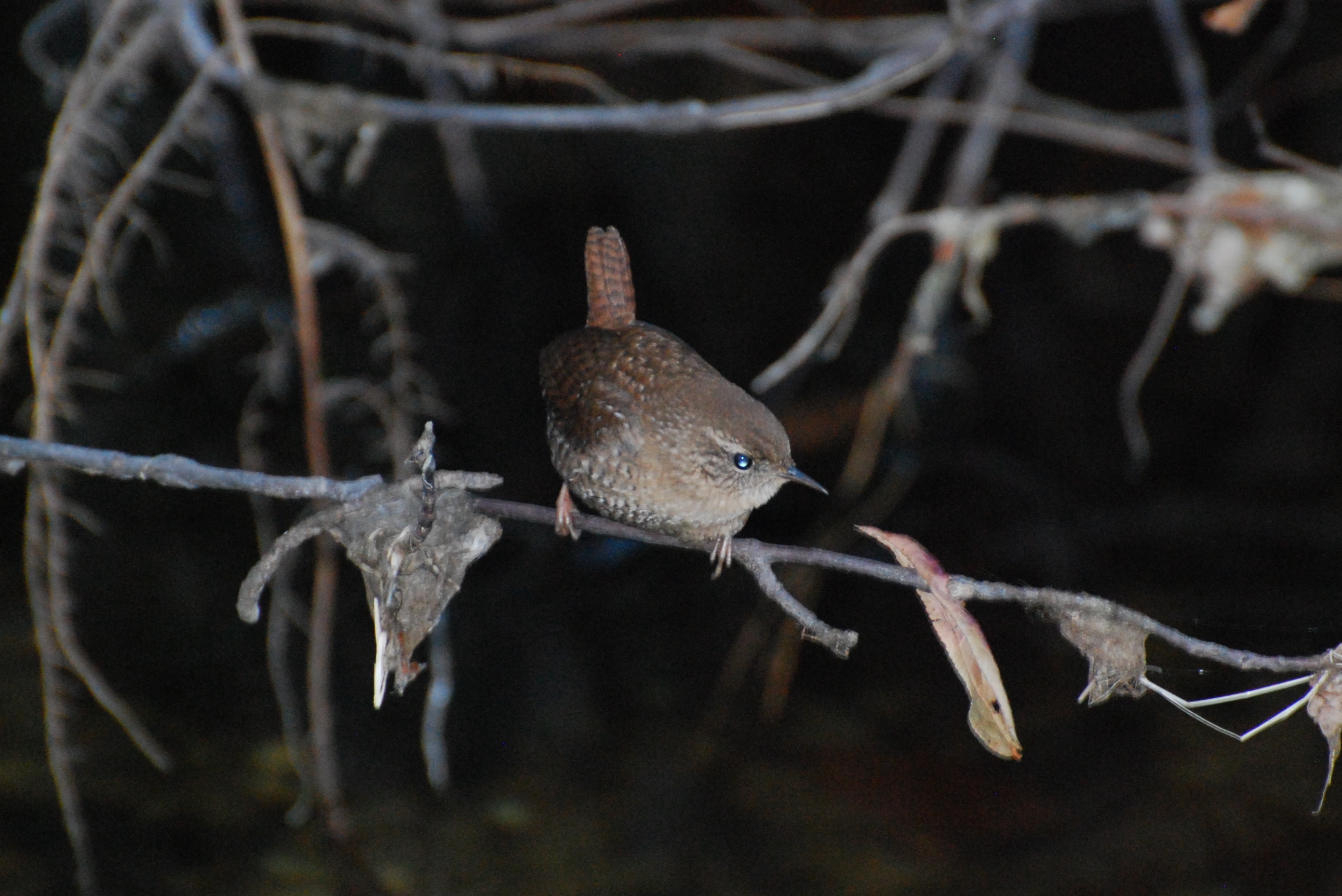
Photo by Jean Potter                                                                  The Winter Wren often skulks near the ground in a manner more in a keeping with a small rodent rather than a bird.

Although not particularly suited to cold temperatures, wrens don’t seem bothered too badly when the mercury sinks in the thermometer. These tiny bundles of feathers move like hyper-active dynamos as they explore tangles of vines or the nooks and crannies of a dark garage as part of their almost constant foraging for food.

Cactus_wren

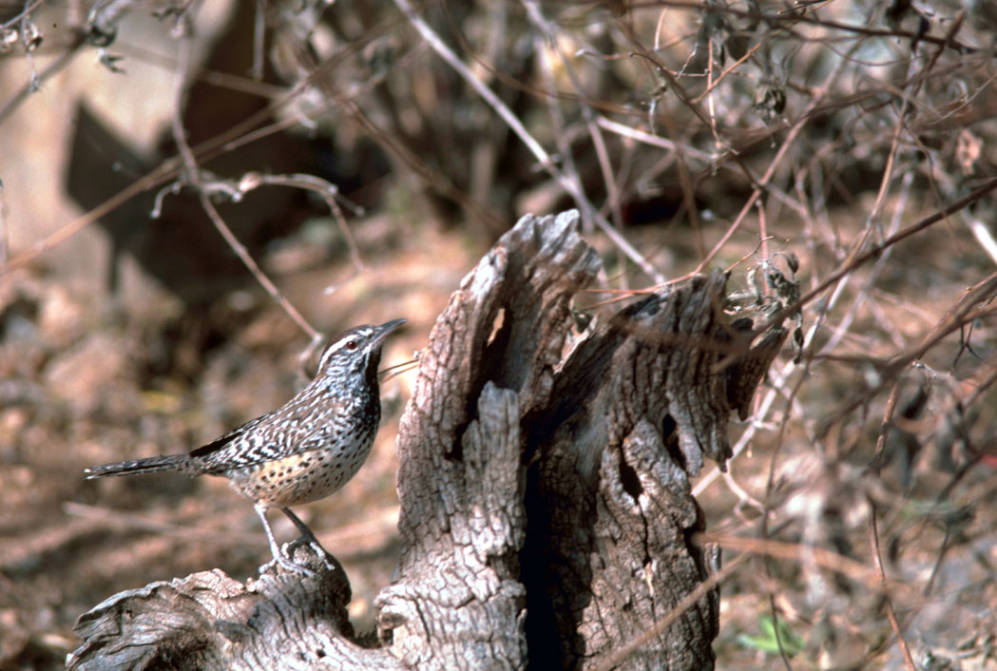
Photo by U.S. Fish & Wildlife Service      The Cactus Wren is a specialist of arid habitats in the American Southwest.

At first glance, many people might be tempted to lump wrens together with the sparrows, or “little brown birds.” There are some key differences and, as with sparrows, there are several different species of wrens. Wrens are (almost) an exclusively New World family of birds with the single exception of the bird that Americans refer to as the winter wren. Across Europe, the same bird is known simply as “wren” and is the only member of the family to occur outside of the New World.

audubon-ix-songsters-and-mimics-house-wren

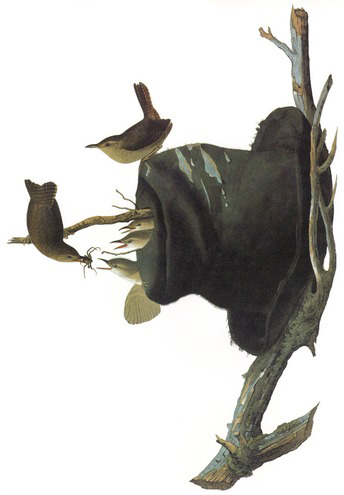
John James Audubon painted House Wrens nesting in an old hat. These small wrens are cavity-nesting birds that choose some surprising nesting locations.

Known by the scientific name of Troglodytes hiemalis, roughly translated as “wintry cave-dweller,” the winter wren is a tiny North American bird and a member of the mainly New World wren family Troglodytidae. The “cave-dwelling” description comes from this bird’s habit of skulking near the ground where it explores nooks, crannies and crevices in search of food.

In our region, the tiny winter wren is most likely to be encountered during the winter months although the species is a nesting bird on some of our higher mountains. Those intending to spend the winter at lower elevations in the region usually arrive in October and depart in early spring.

HouseWren

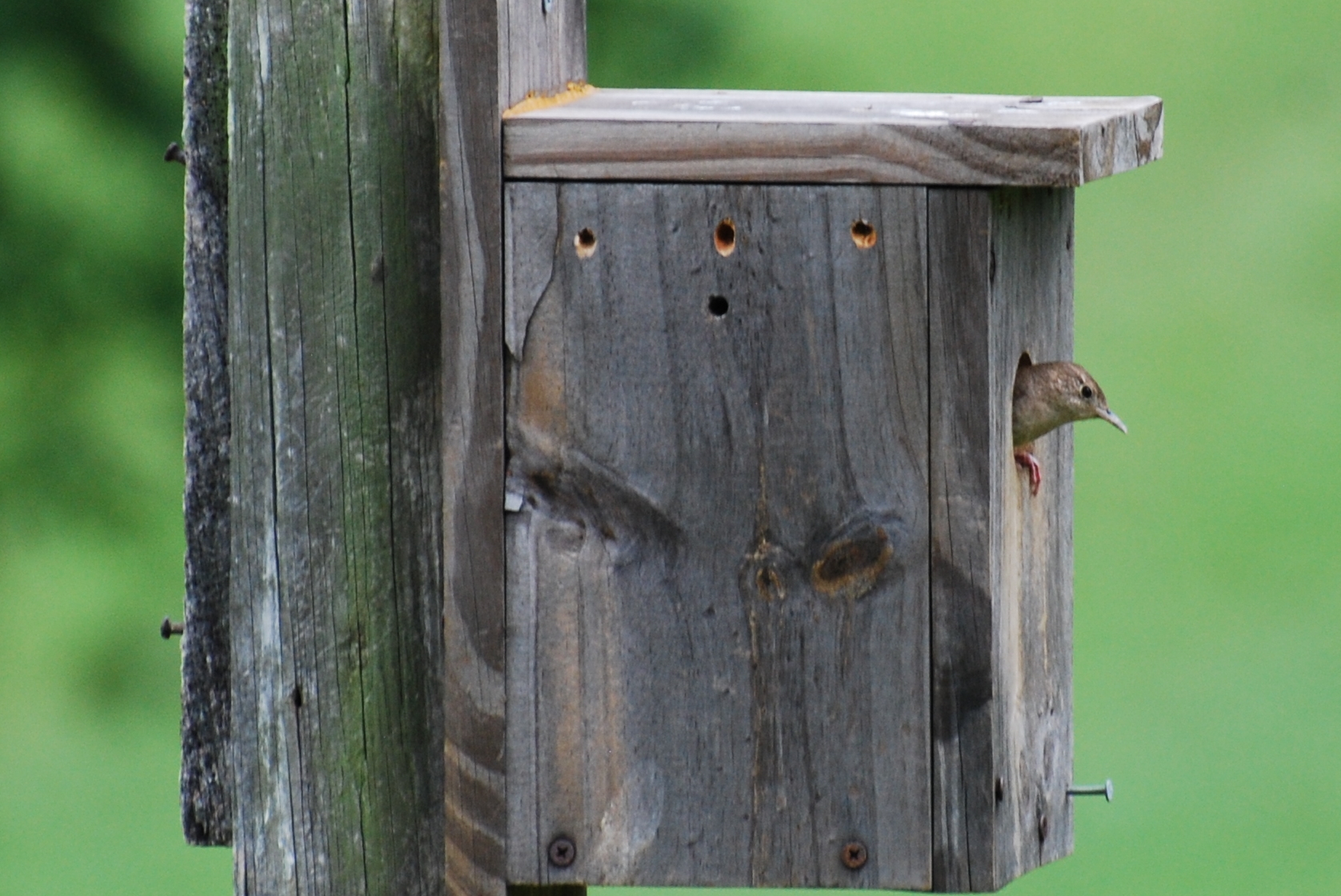
Photo by Jean Potter                                      House Wrens will defend nesting locations from other birds, at times even destroying the eggs or nestlings of other birds.

About the time the winter wren departs, however, a related bird — the house wren — arrives in the region in time for the nesting season. House wrens are native birds, but they often fail to win favor because of their habits of damaging the nests of other cavity-nesting birds such as Eastern bluebirds and Carolina chickadees.

“To a house wren, almost any other nesting bird in its territory threatens competition,” wrote John Eastman in his book, “Birds of Forest, Yard and Thicket.”

Eastman, a wildlife biologist and naturalist, outlined in his chapter on the house wren the territorial nature of the bird. Not only will house wrens puncture the eggs of other birds, they will also kill young birds that are still confined to the nest. Once a pair of house wrens adopts a nesting site, they may remain loyal to it for many years. According to Eastman, these tiny birds display a powerful fidelity to nesting locations from previous seasons.

Marsh_wren

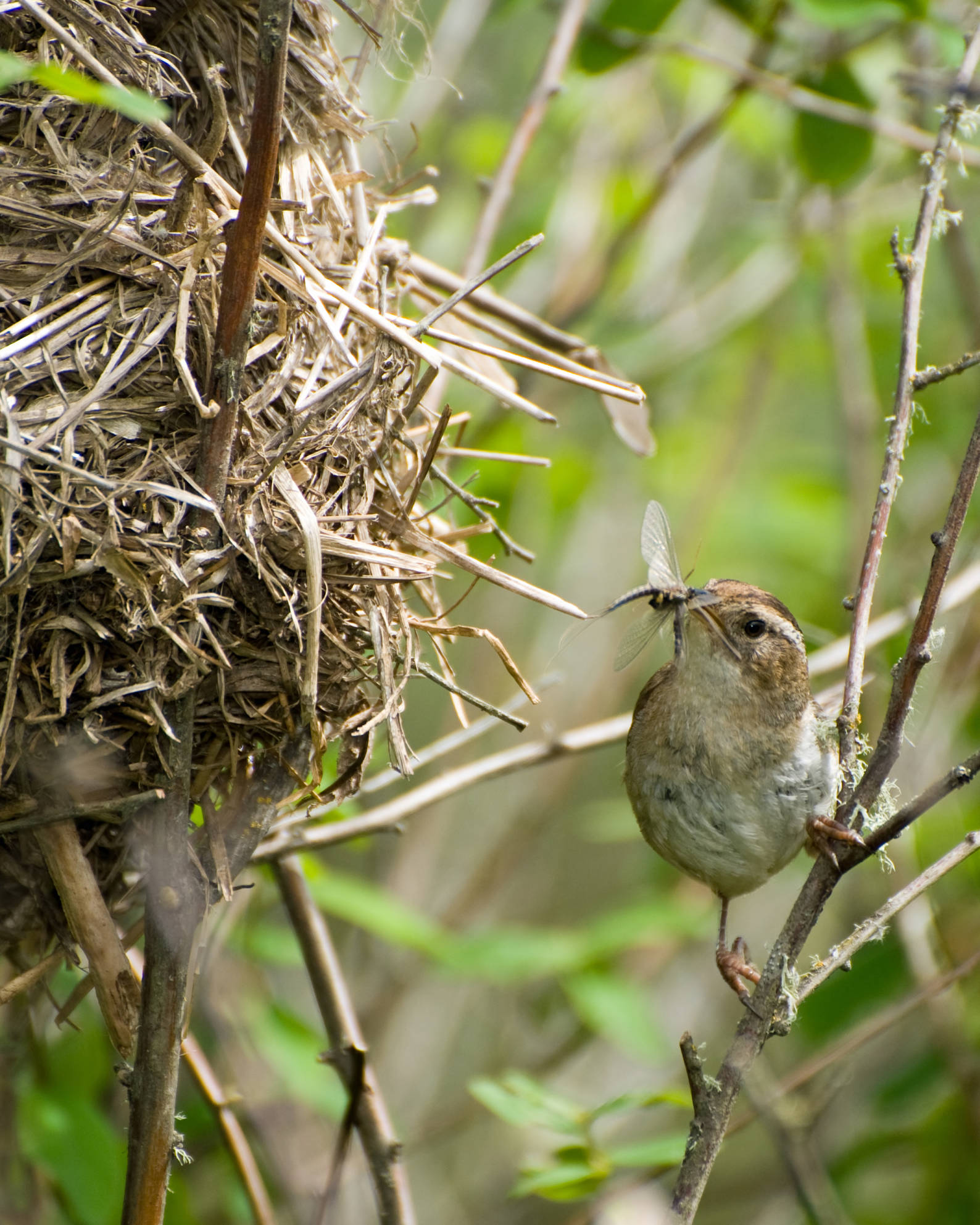
Photo by U.S. Fish & Wildlife Service   A Marsh Wren delivers insects for hungry young in a nest built in a wetland area.

The male house wren will also build several “dummy” nests in his territory, but these nests must be approved by the female. Once she makes her selection, she will line the nest with softer materials and then lay her six to eight eggs.

Other wrens in the United States include Bewick’s wren, rock wren, cactus wren, marsh wren and sedge wren. Several of these wrens are more specialized than the wrens found locally. The marsh and sedge wrens are fond of wetland habitats, while the rock and cactus wrens of the western United States make their home in dry, arid environments.

Wren-vocal

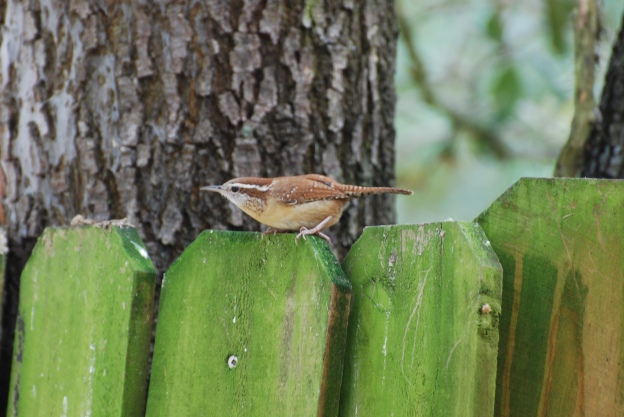
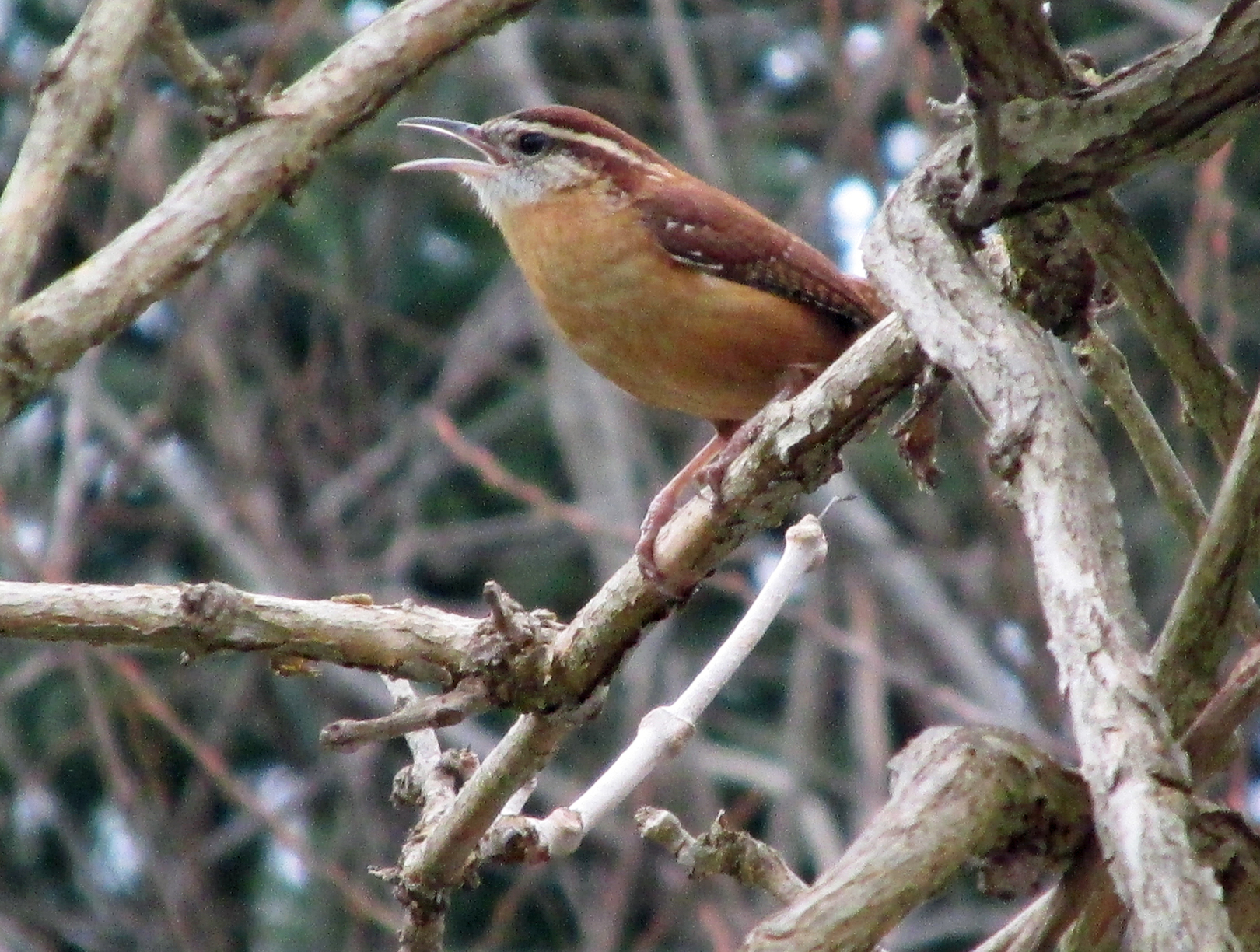
Photo by Bryan Stevens                                                The Carolina Wren is a very vocal bird, scolding and singing quite persistently. Many people have described the song as “tea-kettle, tea-kettle, tea-kettle.”

For most residents of Southwest Virginia and Northeast Tennessee, the most common wren is the Carolina wren. I’ve had good luck attracting Carolina wrens to my feeders by offering fare such as suet and shelled, unsalted peanuts. This wren will also feed on sunflower seeds if other birds have completed the task of hulling the kernel from inside the shell.

One of my earliest introductions to a nesting bird took place many years ago when I was a boy. A small brown bird had claimed a cloth bag hanging on a hook on the back porch at the home of my grandparents. My grandmother used the bag to hold her clothes-pins. My grandmother had to make some adjustments to her laundry routine while the bird raised a family of young.

CaroWren-SuetFEED

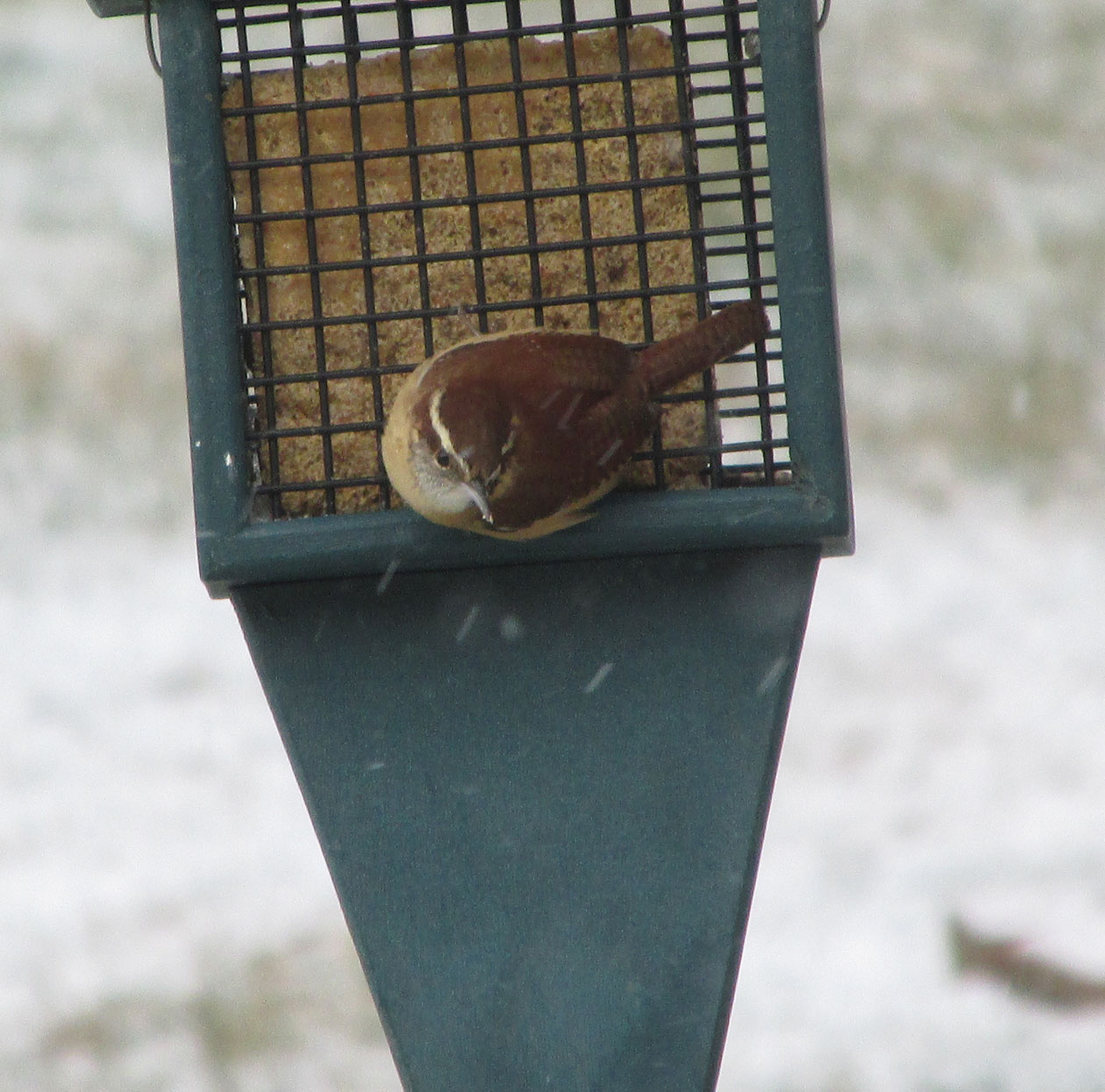
Photo by Bryan Stevens                           Carolina Wrens will visit feeders for a meal of suet, peanuts or other fare.

I now realize the bird was most likely a Carolina wren. These birds are known to choose some unusual nesting locations, including mailboxes, overturned flower pots and even old boots. A friend of mine shared a story and photos of a Carolina wren that built a nest in her plastic Halloween pumpkin inside a storage shed.

This wren was once considered an almost exclusive southern species, but it has been steadily expanding its range northward for more than a century. The Carolina wren has served as the official state bird of South Carolina since 1948. The wren took the place of the former state bird, the Northern mockingbird. The same state act that elevated the Carolina wren to its official status also made it a misdemeanor to intentionally kill a Carolina wren (or mockingbird) that is punishable with a $100 fine or a 30-day sentence of imprisonment.

The Carolina wren is a handsome bird with a two-tone plumage of warm brown upperparts and buffy underparts. The sexes are identical in appearance, which includes such traits as a visible white eyebrow and a curved bill. Even more than appearance, the song of this wren helps distinguish it from other wrens. I’ve often heard the song translated as “Tea Kettle, Tea Kettle, Tea Kettle.”

CaroWren

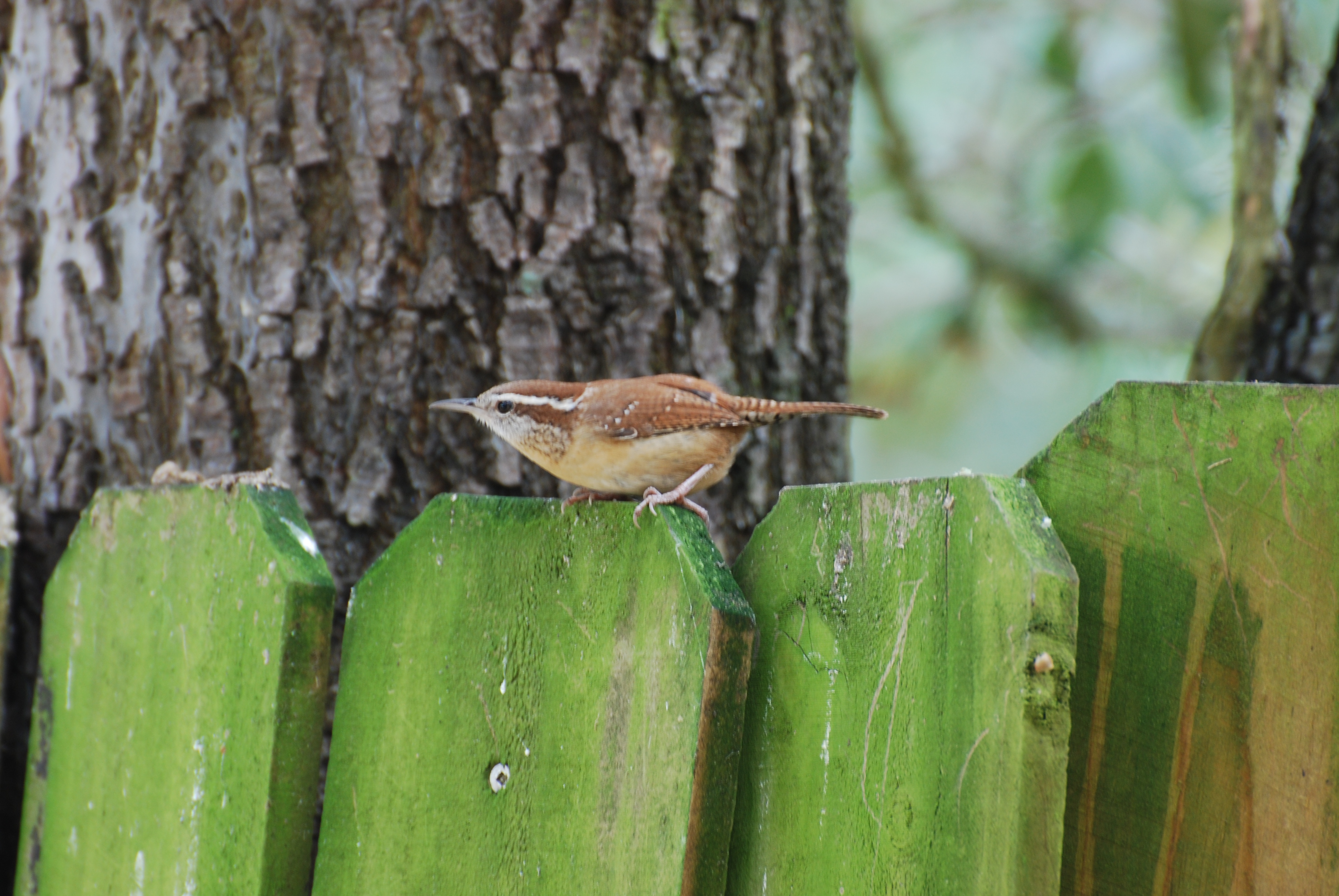
Photo by Jean Potter                                                                                                                                A Carolina Wren creeps along a picket fence. This wren is a common bird in many gardens and yards.

Enjoy these recent birding photos

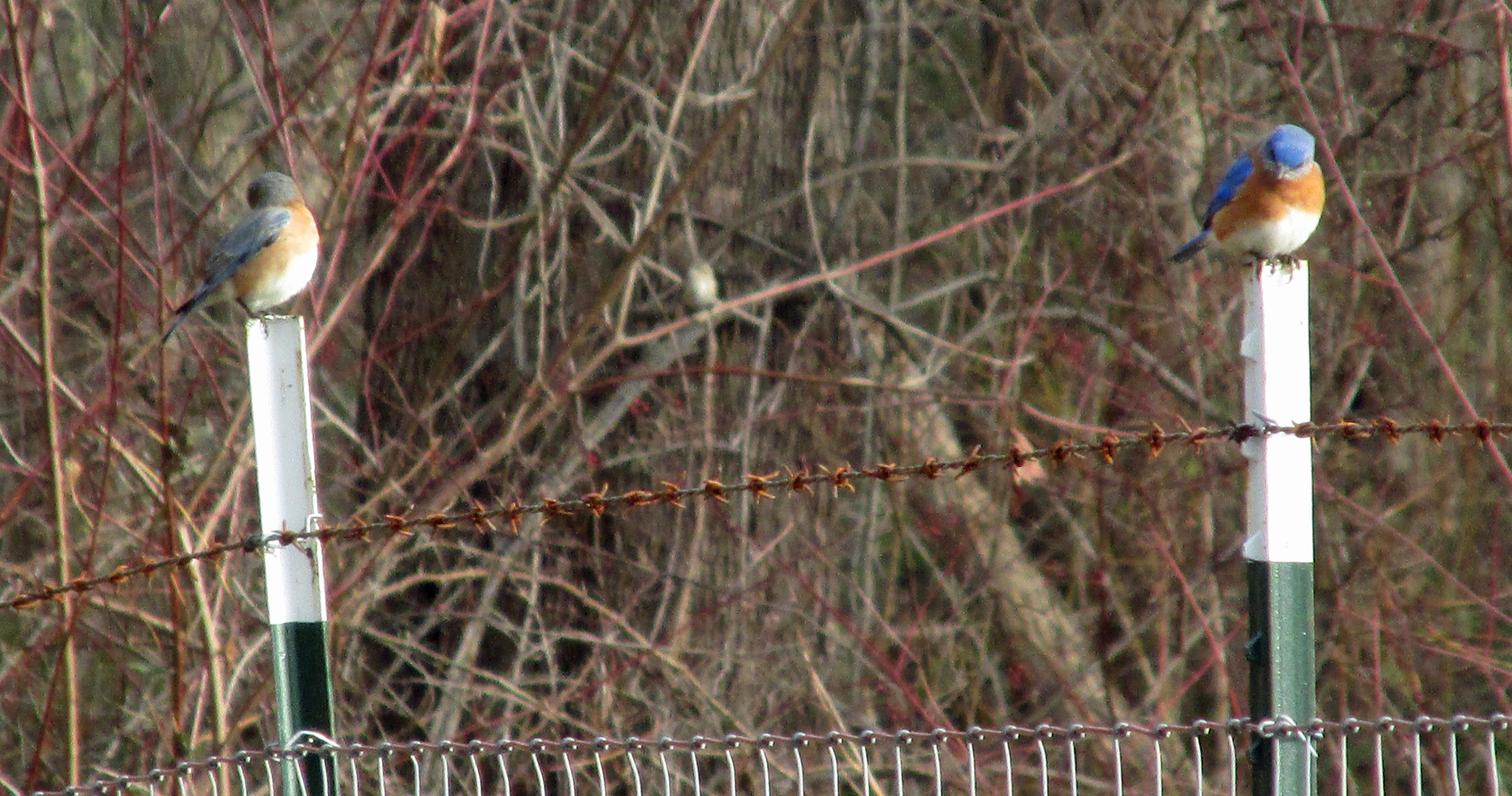
Bluebirds-One

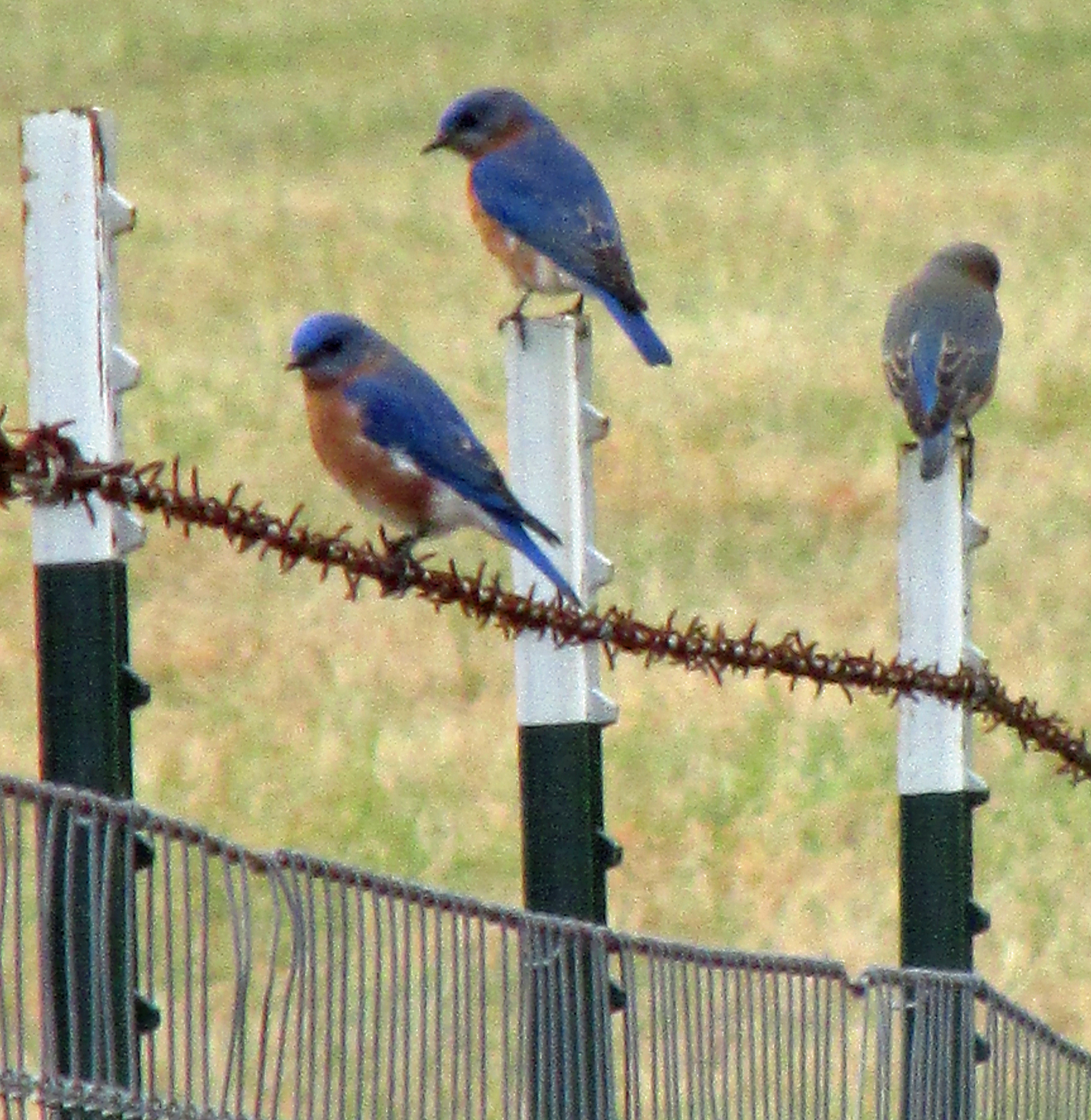
Eastern Bluebirds perch on a fence.

Bluebird-2

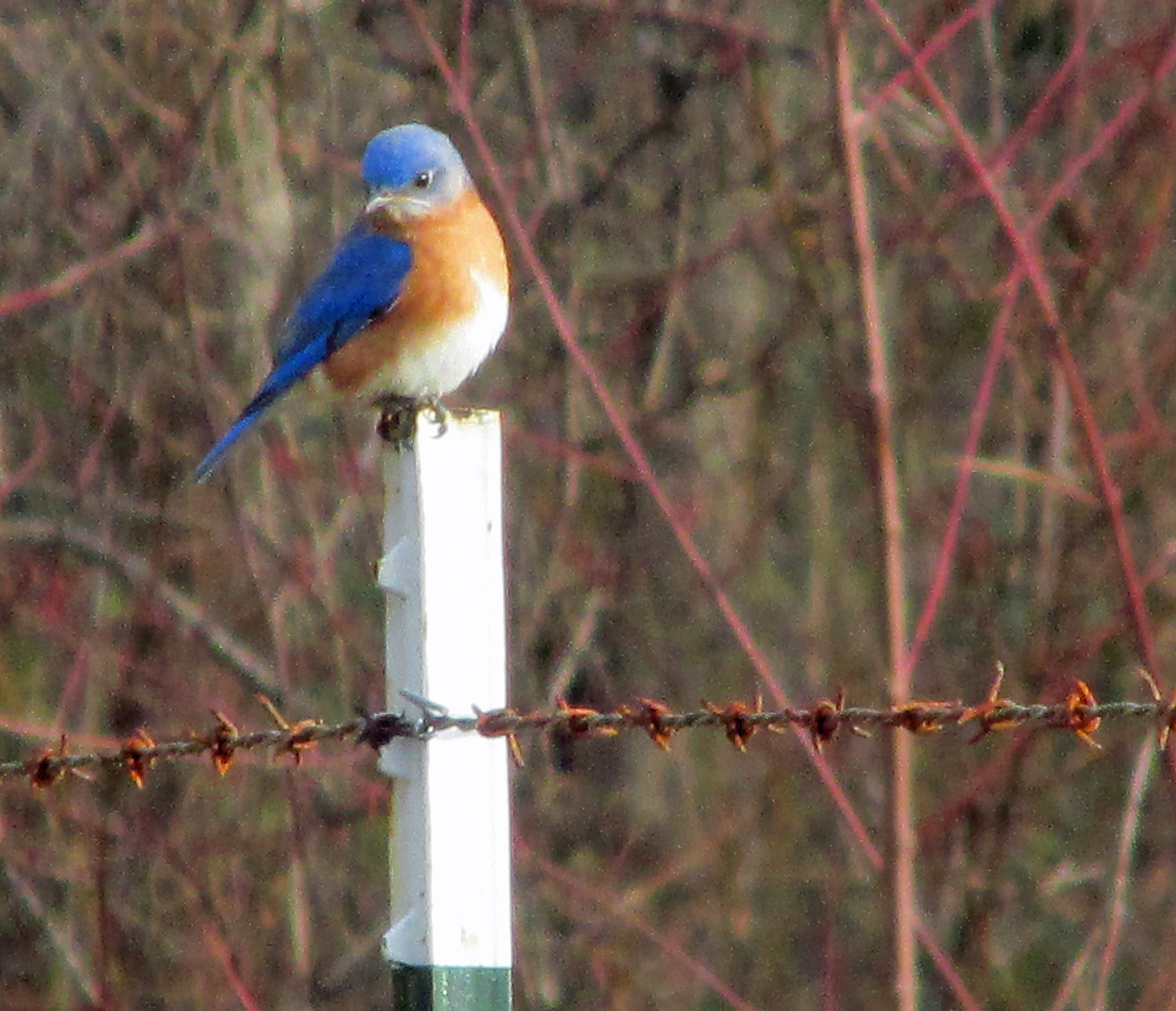
Male Eastern Bluebird surveys his surroundings from a fence post perch.

Bluebirds-Tw0

Eastern Bluebirds enjoy sunshine on a recent January afternoon.

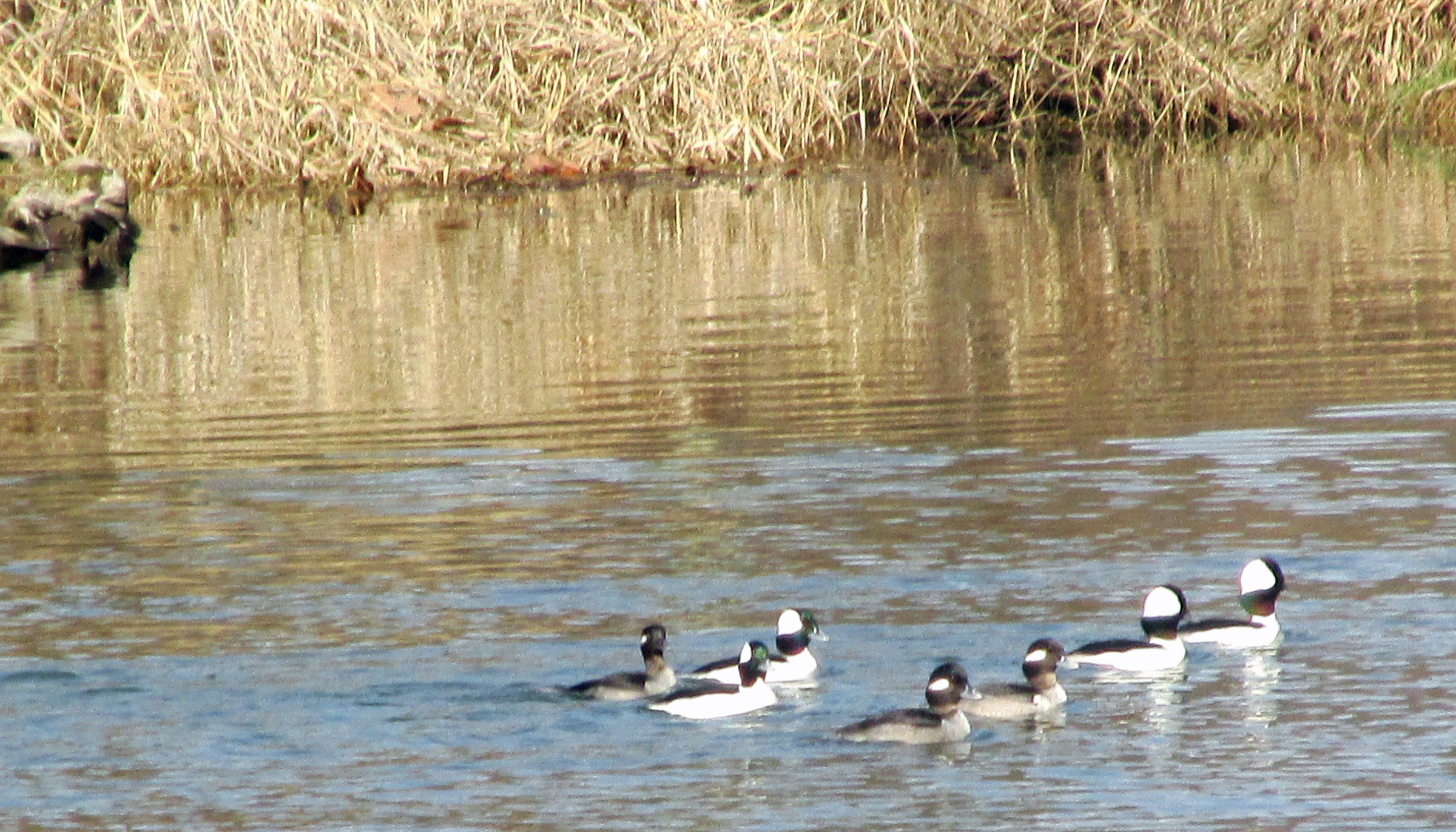
BuffleFlock

A flock of Buffleheads on the Watauga River.

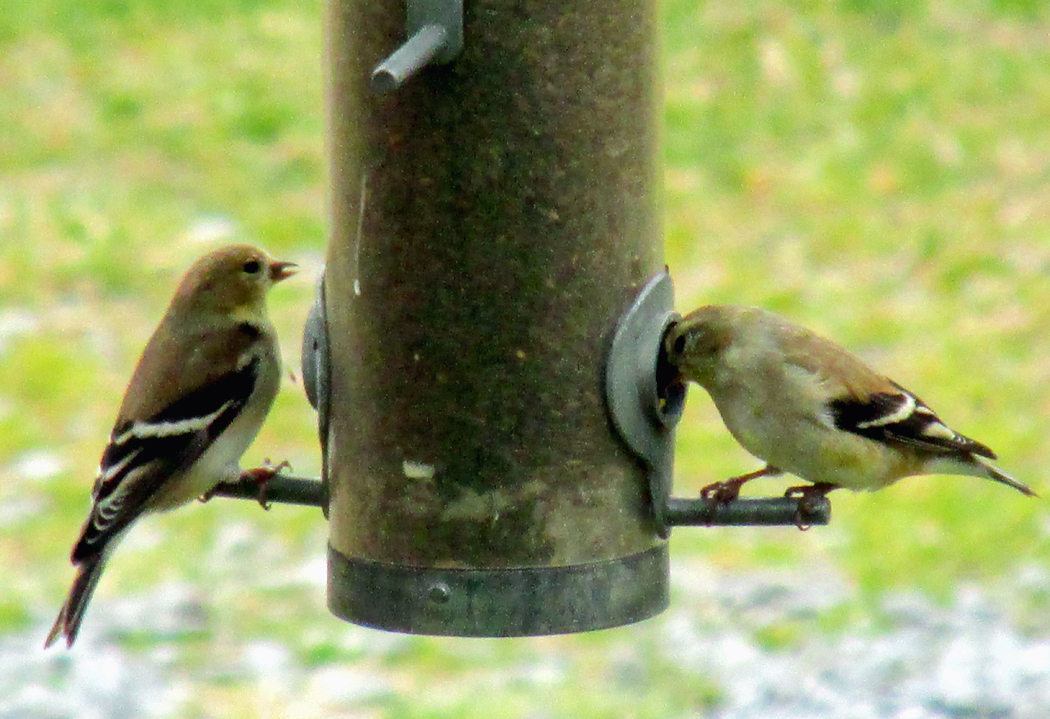
Goldfinches

American Goldfinches visit a feeder.

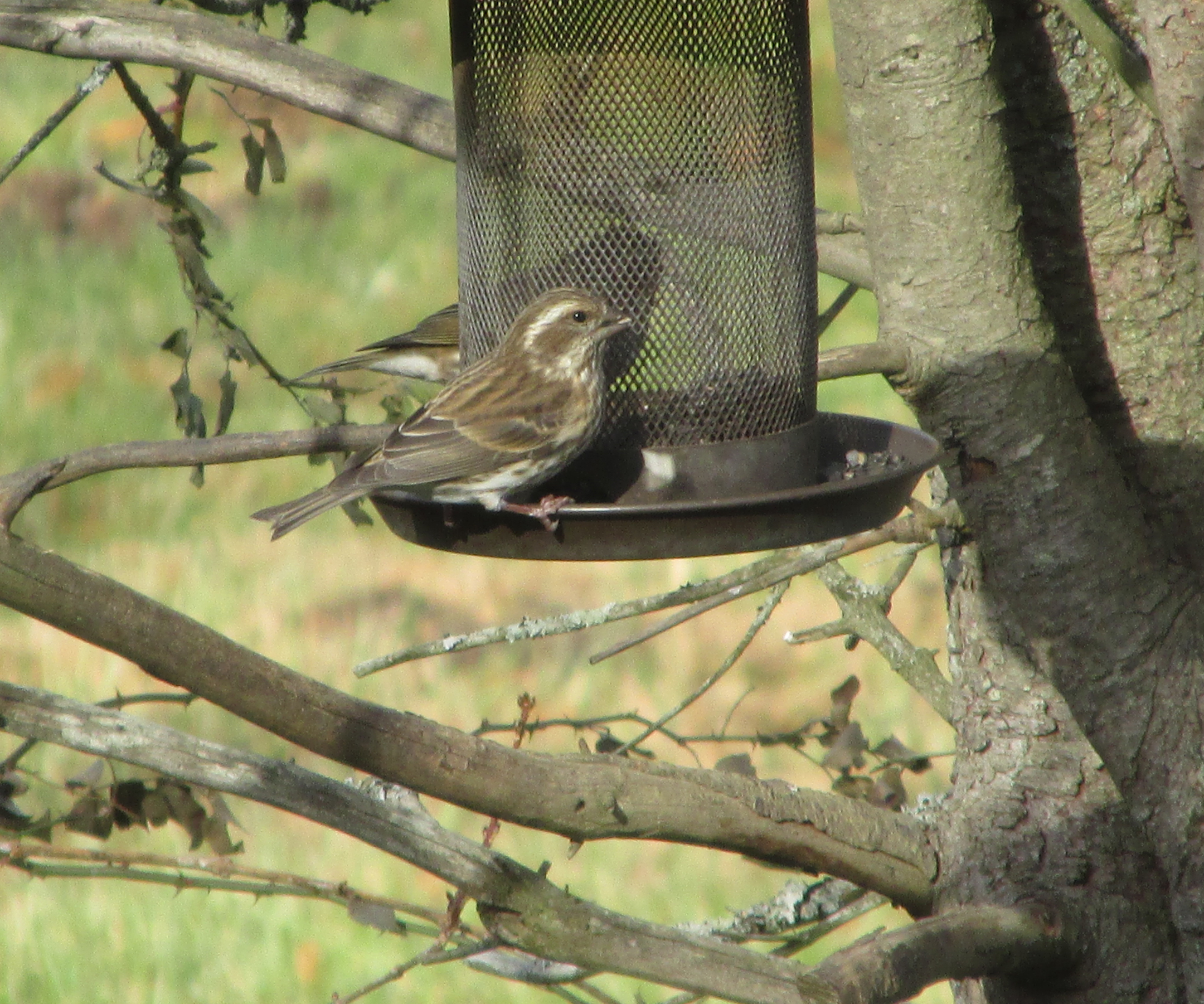
PurpleFinches

Female Purple Finches visit a feeder.

Purples

A flock of Purple Finches share space at a feeder.

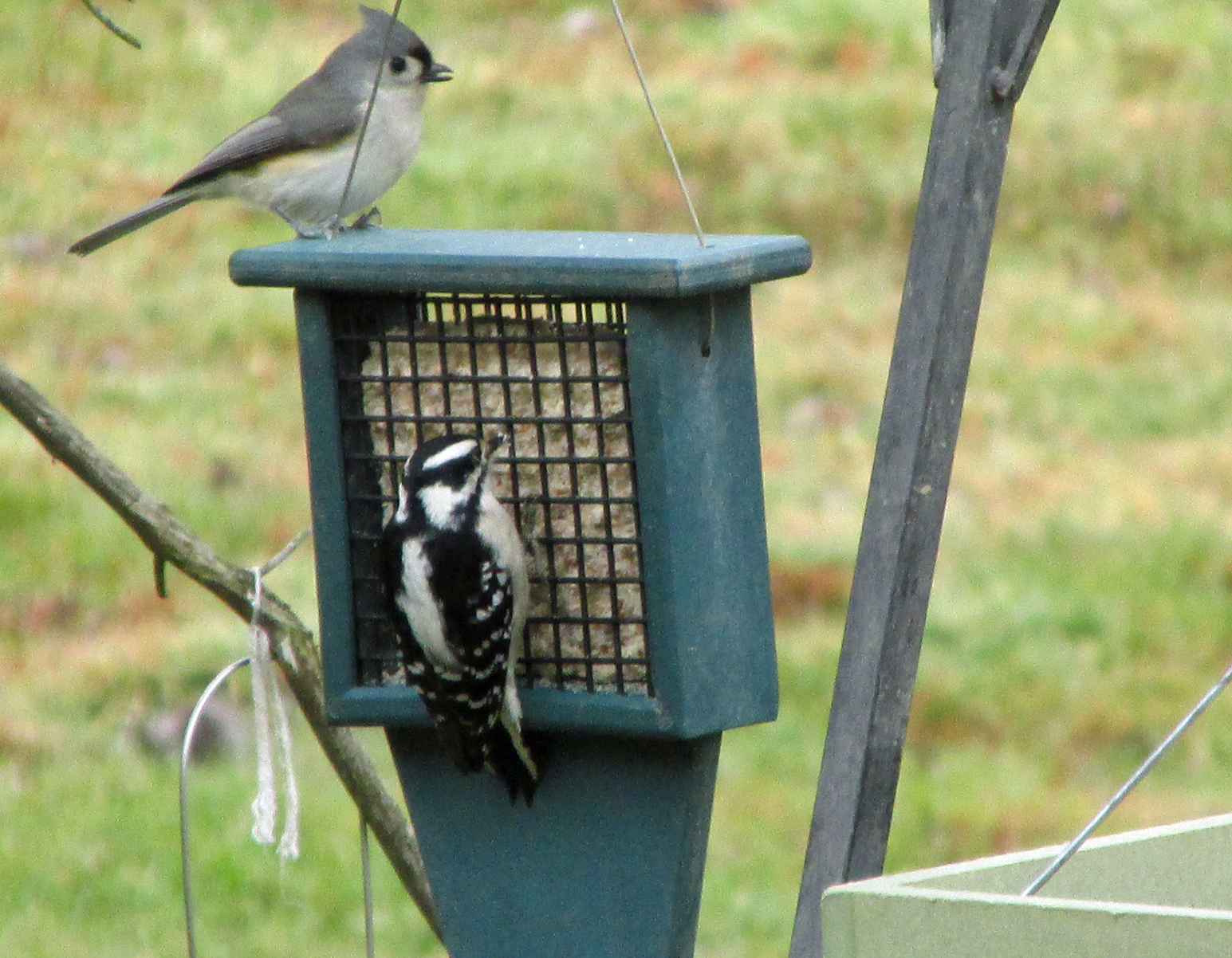
DUo-Downy-Titmouse

Downy Woodpecker and Tufted Titmouse arrive at a suet feeder.


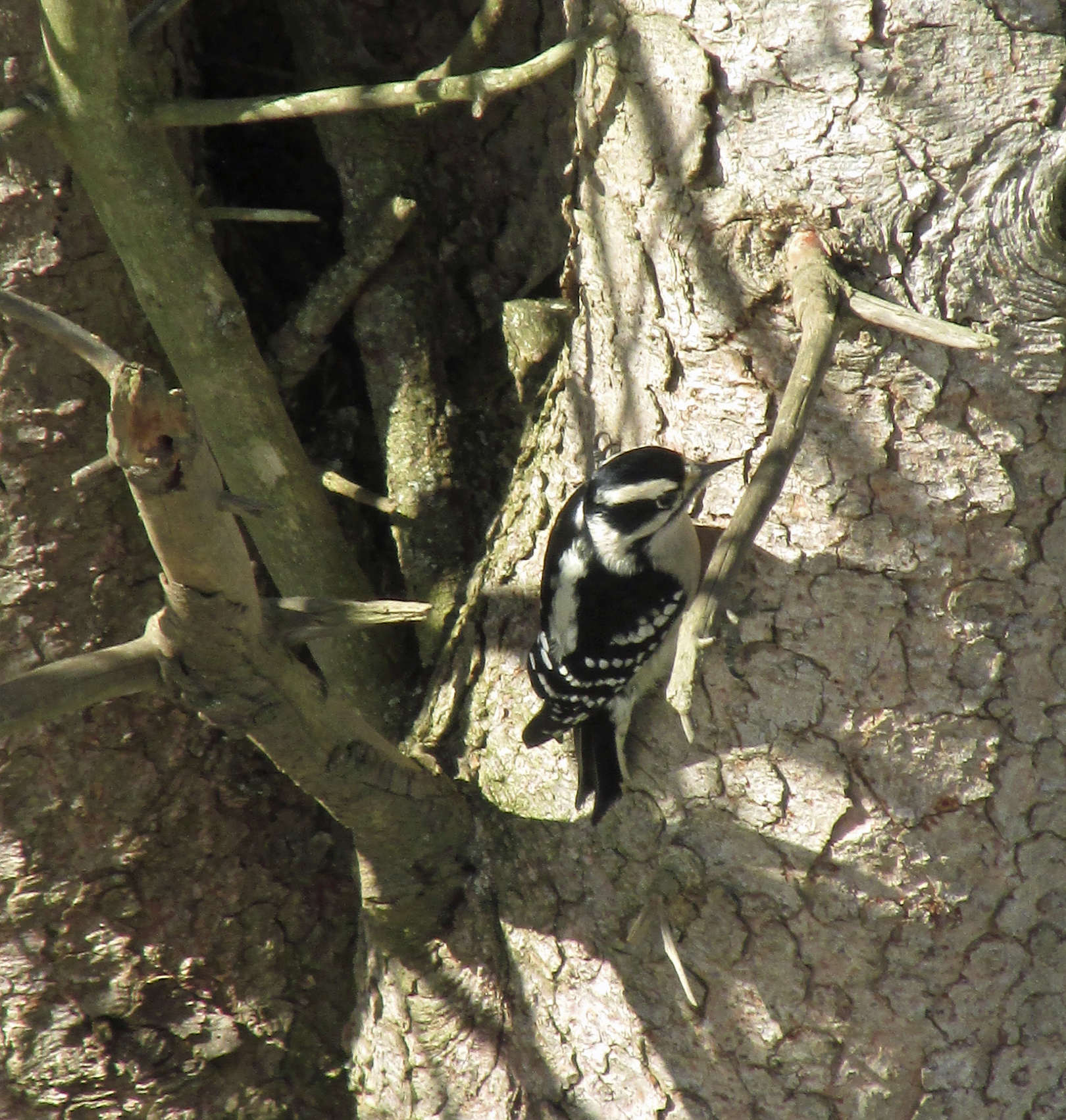
Female-Downy1

A female Downy Woodpecker climbs on a tree trunk.


Wintering hummingbirds are not exclusive to United States

GE DIGITAL CAMERA

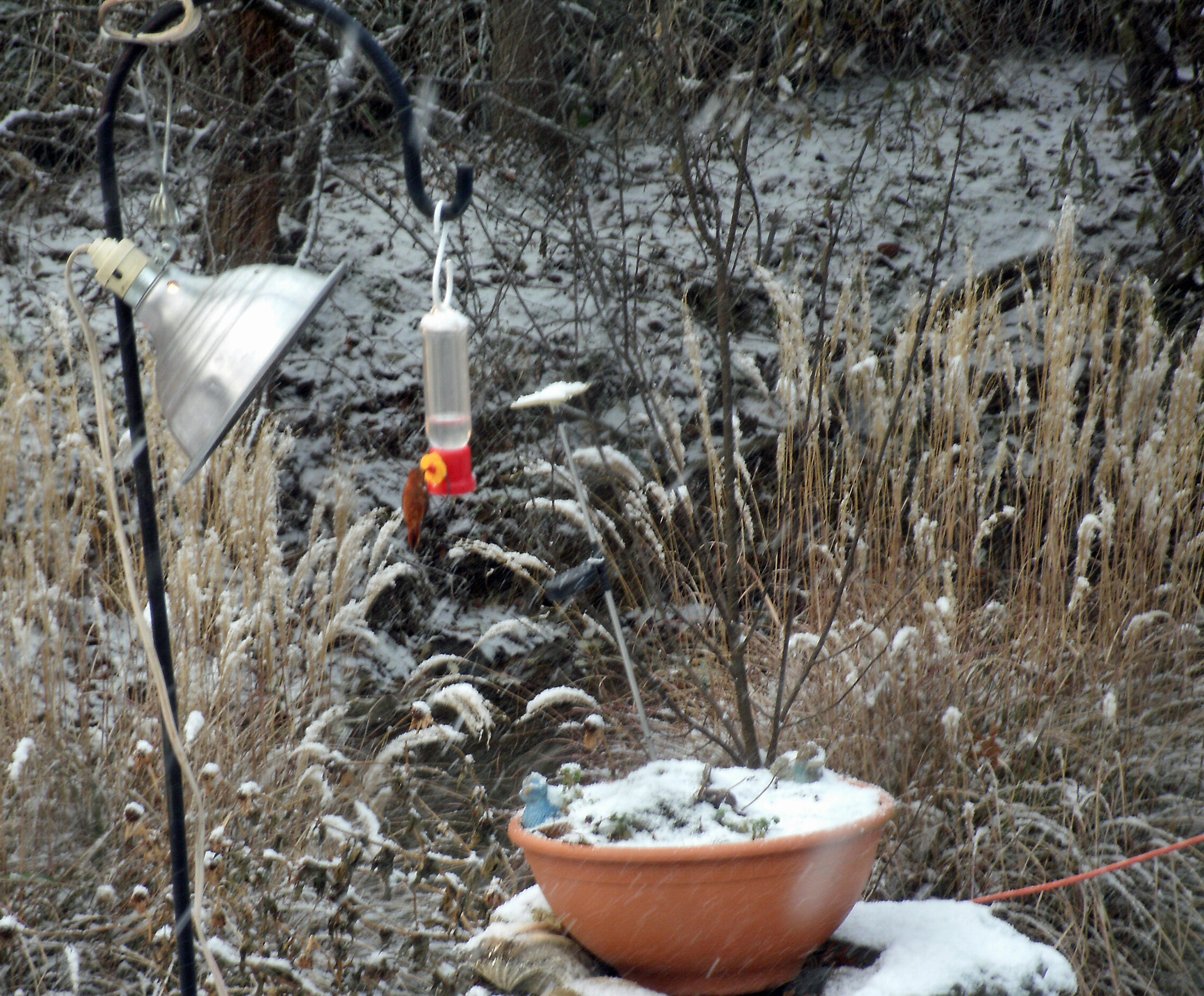
Photo Courtesy of Faye Guinn                  The Rufous Hummingbird is shown visiting a feeder at the Guinn home.

The hummingbird that had been at the home of Howard and Faye Guinn since October departed on Dec. 23. Faye informed me of the bird’s departure in an email.

“I got to have a winter hummingbird for two days of winter,” she wrote. “He surely decided to spend the holidays in Mexico. I hope he finds flowers in bloom there. Hummingbirds and flowers just go together.”

••••••

I had written about wintering hummingbirds in previous blog posts, including the one visiting the Guinn home near Jonesborough, Tennessee. After reading one of my recent blog posts on wintering hummingbirds, I received an email from Oscar, a resident of Vancouver, Canada, and a self-proclaimed “bird-lover.”

He also informed me that wintering hummingbirds are not a phenomenon exclusive to the United States. Some of these tiny birds also spend time north of the border during the winter months.

“We are delighted  to have these beautiful little birds visiting our feeder at our window every day,” Oscar wrote. “Every 10 minutes he drinks and goes back to the same tree branch.”

While Vancouver is a rather temperate city, Oscar said the temperature can get cool on some days.

“He doesn’t  go away for long periods,” Oscar reported. “It seems to look like he is afraid to lose his food to another bird, when his partner tries to feed he chases him away like he is very upset and not sharing his food, no matter what. Is this  behavior common among these birds?”

In my reply, I did note that hummingbirds are usually quite territorial. Any readers who hosts more than one hummingbird at a time is probably familiar with the chasing antics Oscar described in his email.

Annas_hummingbird

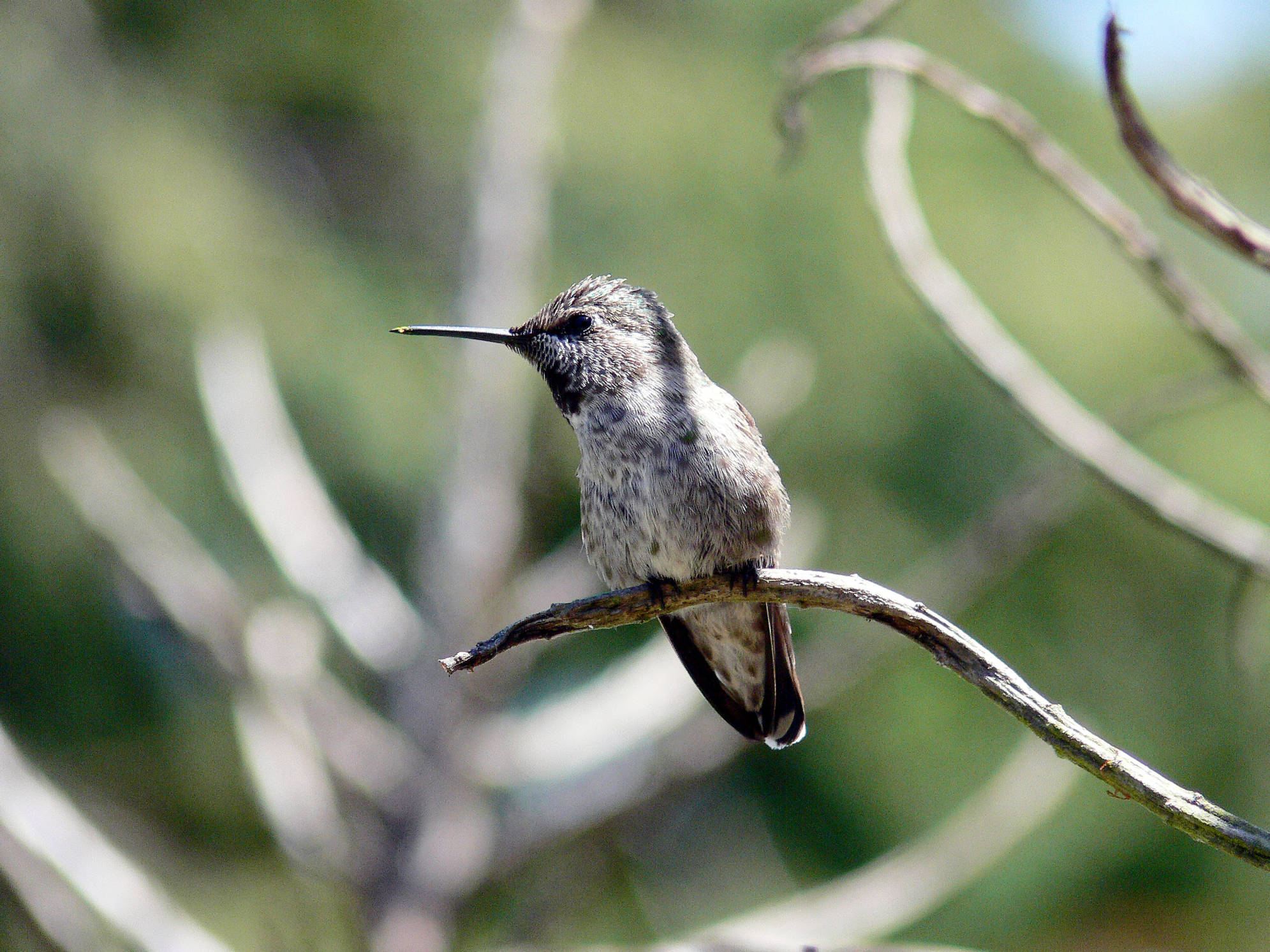
Photo by U.S. Fish and Wildlife Service                        An Anna’s Hummingbird perches on a branch.

“Watching this is so entertaining , like a gift from God,” Oscar shared. “We can’t have enough of it.”

I did some research, which informed me that Oscar’s visiting hummingbirds are likely Anna’s hummingbirds.

A species native to western North America, the Anna’s

hummingbird is a year-round resident of the Pacific Coast. It ranges from northern Baja to points as far north as Vancouver and southern British Columbia.

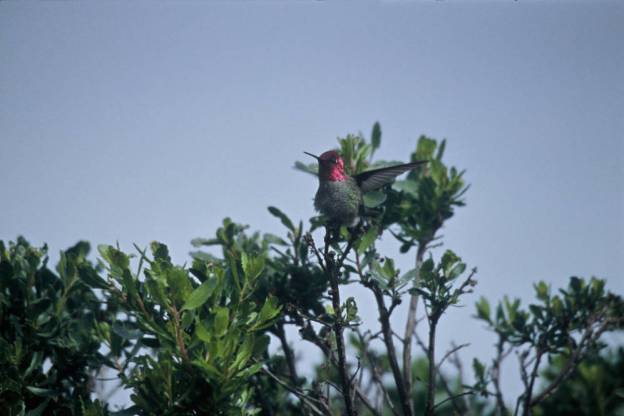
Annas_Hummingbird (1)

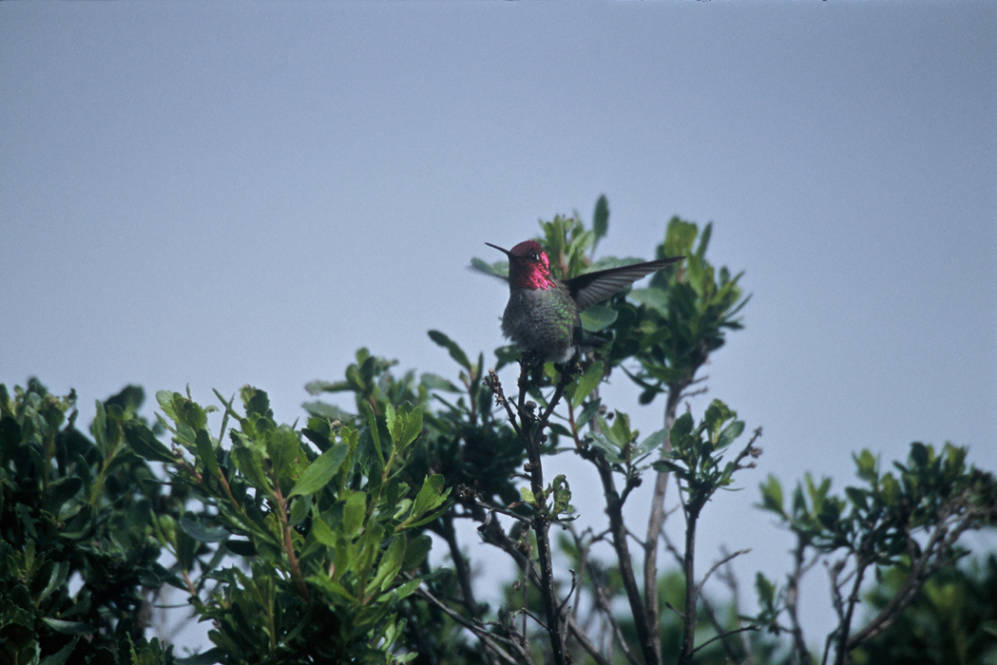
Photo by U.S. Fish and Wildlife Service              A male Anna’s Hummingbird spreads it wings while settling onto a perch.

René Primevère Lesson, a French ornithologist and author of a manual for ornithology, gave the Anna’s Hummingbird its name.

This bird was named after Anna Masséna, Duchess of Rivoli. She served as an attendant for  Empress Eugenie, the wife of Napoleon III and the last Empress consort of the French.

Another hummingbird — the Magnificent Hummingbird — was also named by Lesson to honor François Victor Masséna, the Duke of Rivoli and husband of the Duchess Anna. Until the 1980s this large hummingbird was known as Rivoli’s Hummingbird.

In the early 20th century, Anna’s hummingbird bred only in northern Baja California and southern California. Modern landscaping techniques, including the planting of exotic shrubs and flowers, has helped this hummingbird expand its range north, especially in urban and suburban areas.

James-Audubon-Art-2

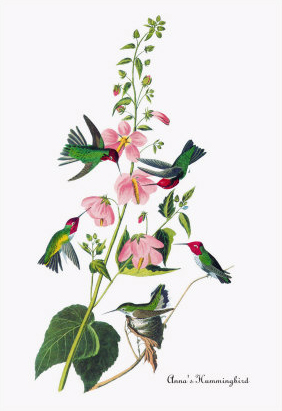
Early naturalist John James Audubon created this painting of Anna’s Hummingbirds.

I’ve seen several of the western species of hummingbirds, but I haven’t had the opportunity to observe an Anna’s Hummingbird. I suppose that species remains near the top of my “bird bucket list.”

•••••••

Until the recent cold snap, it has been a relatively mild winter. Even the Arctic blast produced mostly cold and very little in the way of snow.

The frigid conditions did, not surprisingly, result in increased traffic at my feeders.

DUo-Downy-Titmouse

Photo by Bryan Stevens                                     A Tufted Titmouse and Downy Woodpecker visit a suet feeder.

I haven’t hosted any birds as exotic as an Anna’s Hummingbird this winter, but the flocks of Pine Siskins and Purple Finches continue to grow. The arrival of January has seen as many as 25 Pine Siskins and about a dozen Purple Finches at my feeders.

I always offer suet cakes as well as seeds, an offering that seems much appreciated by birds as diverse as Carolina Chickadees and Downy Woodpeckers to Carolina Wrens and Blue Jays. I usually buy commercially prepared suet/peanut butter cakes, which disappear quickly once the birds find them. The occasional squirrel also helps with making short work of them.

MixedFlock-Gold-Siskens

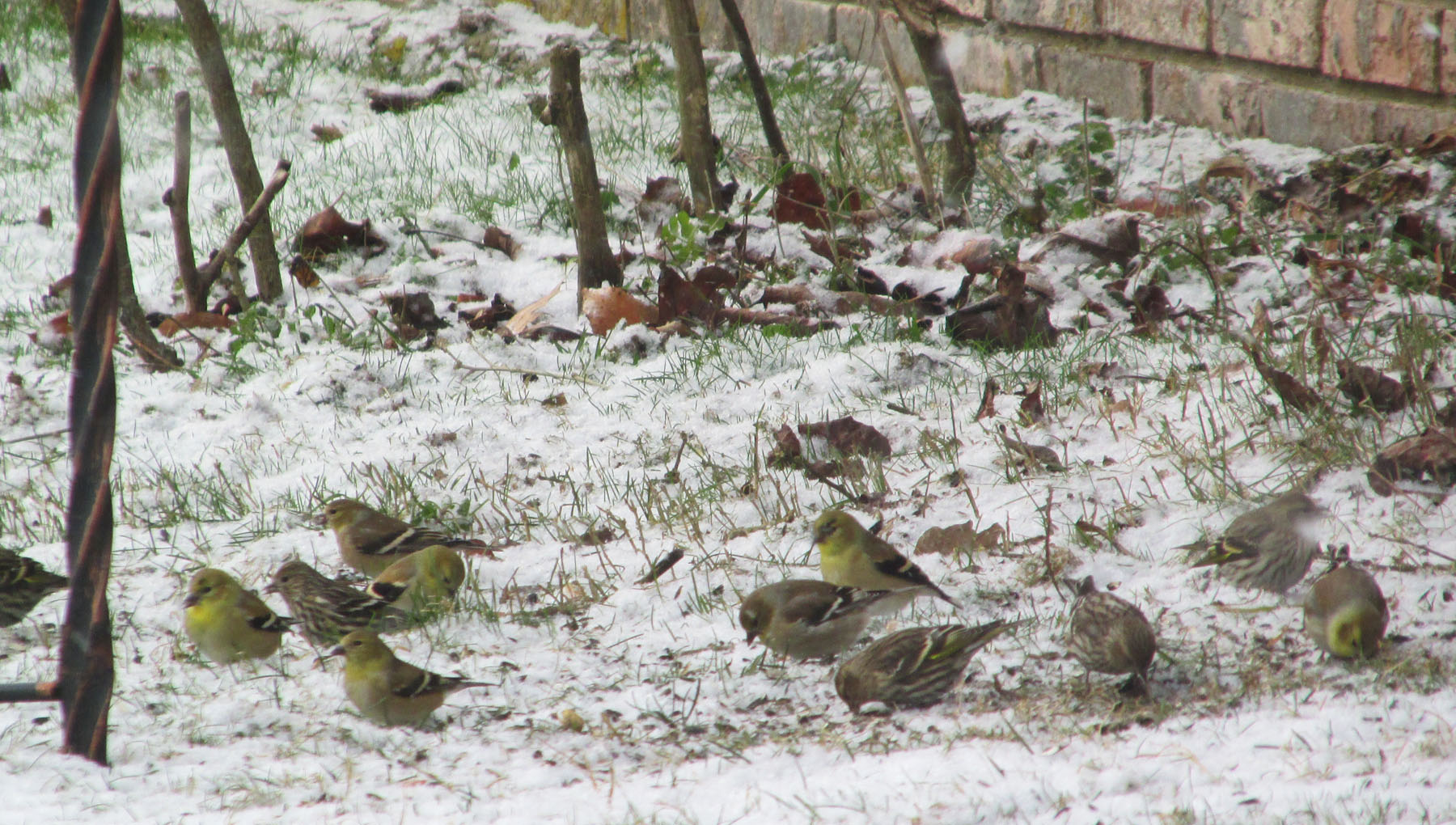
Photo by Bryan Stevens                                                                                                                              A mixed flock of American Goldfinches and Pine Siskins scour the ground beneath a feeder.